People usually expect an answer like a house, a first car, or some piece of technology that made life easier.
Mine is much simpler.
A wedding ring.
Not because it was expensive. It wasn’t. Gold is just metal until we decide it means something. A ring has no power of its own. The promise it represents is what gives it weight.
The day of our wedding was the only time in my life I ever had sweaty palms. Not in the military. Not during moments that demanded courage. Standing there waiting for the woman I loved, however, my hands betrayed me. Looking back, I suppose they understood the magnitude of the moment before the rest of me did.
The day I slipped that ring onto my wife’s finger, I wasn’t buying jewelry. I was making a commitment. I was choosing to stand beside another person through the ordinary days as much as the extraordinary ones. Through laughter and frustration. Through certainty and doubt. Through seasons neither of us could have imagined.
Being a husband, a father, a grandfather, and now a great-grandfather has been the hardest job I have ever had. It has also been the most rewarding. None of those roles came with an instruction manual. Every one of them required patience, humility, forgiveness, and the willingness to keep showing up, even on the days I fell short. Looking back, I realize that wedding ring wasn’t simply the beginning of a marriage. It was the first step into every blessing that followed.
Life doesn’t always honor our plans. It certainly didn’t honor all of ours. But I have never regretted that purchase.
Even now, after loss has rewritten so much of my life, I don’t see that ring as a reminder of what ended. I see it as proof that I loved deeply enough to risk having my heart broken. There are few investments in life that offer no financial return while enriching you beyond measure. Love is one of them.
If I had to buy it all over again, knowing exactly how the story would unfold, I wouldn’t hesitate.
Some purchases fill your house.
A few fill your life.
Only the rarest ones continue to fill your heart long after the receipt has disappeared.
People say, “Write down the first thing that comes to mind.”
I don’t think my mind works that way.
It’s more like…
How can I feed my mind today?
As I’m working on my comparative religion essay series, my thoughts branch off in every direction at once. How do I read these texts without forcing my own conclusions onto them? How do I compare beliefs fairly while still being honest about my own? Can I build something meaningful without oversimplifying thousands of years of history and philosophy?
Then my brain abruptly changes channels.
How do I keep moving this project forward without neglecting everything else I’m building across the MKU? Does this project even belong there, or should it become something entirely its own? Did I ever decide on a story for this week’s feature? What am I going to have for dinner?
Then another thought wanders in.
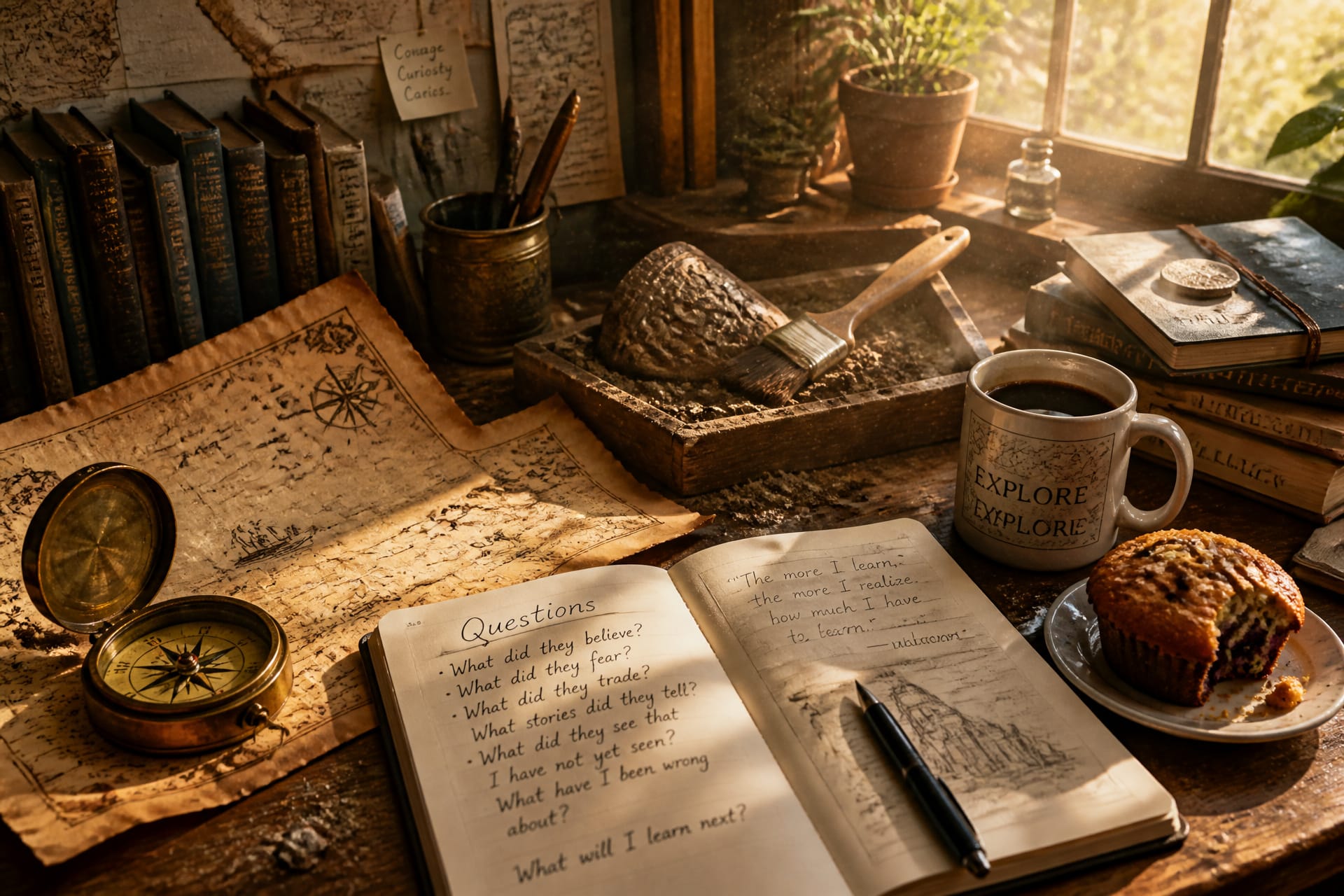
Maybe I should’ve been an archaeologist in another life. There’s something appealing about brushing away centuries of dust just to understand the people who came before us.
Or maybe a pirate.
Pirates are cool. Who doesn’t like pirates?
Although, if I’m being honest, I’d probably spend more time studying the treasure map than digging up the treasure.
And somewhere in the middle of all that…
Blueberry muffins are the truth.
That’s what living inside my head feels like. It’s less a straight line than a room full of conversations all happening at once. Some become essays. Some become stories. Some become questions that stay with me for years before I stumble across an answer.
Maybe that’s why the prompt made me laugh. Asking me for the first thing that comes to mind is like asking a library which book it wants to be. There isn’t just one. There never has been.
I don’t really chase thoughts.
I follow curiosity and see where it decides to take me next.
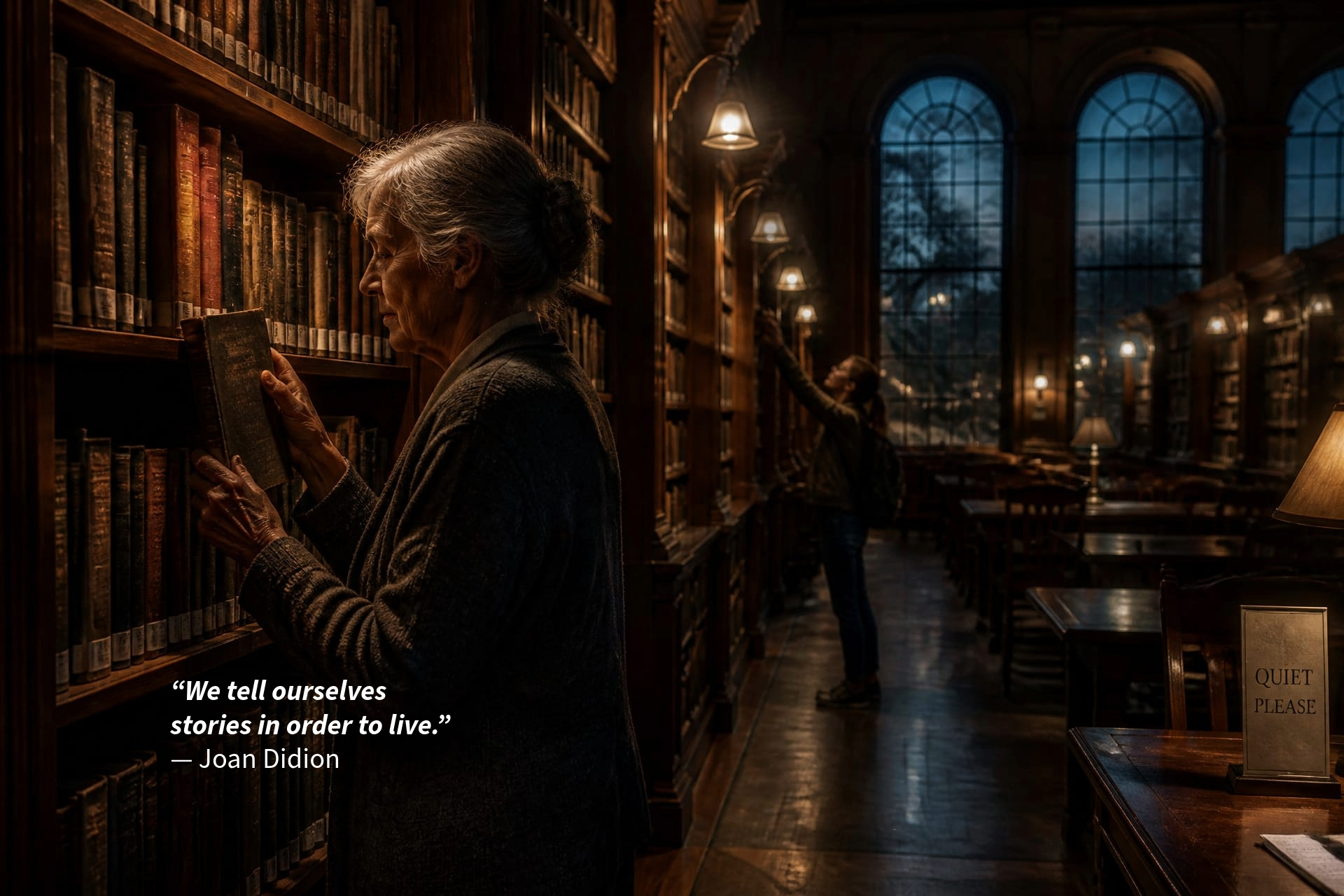
We forget the exact date we met someone. We lose track of the words spoken across a dinner table decades ago. Faces soften around the edges of memory until they become more feeling than detail. Yet somehow, the stories endure.
We remember the teacher who stayed after class because we believed the story of being seen.
We remember the friend who called at exactly the right moment because it became part of the story that we were never as alone as we feared.
We remember a novel that quietly rearranged the furniture of our thinking because its story found a permanent room inside our own.
Joan Didion understood that stories are not ornaments we add to life.
They are the architecture of how we understand it.
Every day we tell ourselves stories about who we have been, who we hope to become, and what all of this might mean. Those stories shape our choices long before we recognize their influence. They become the invisible threads connecting yesterday’s experiences with tomorrow’s possibilities.
Artists contribute to that invisible architecture.
The work leaves the room carrying more than characters, images, or melodies. It carries ways of seeing. A single story can alter how someone understands forgiveness. A poem can give language to grief that had previously lived without a name. A photograph can preserve a moment that history might otherwise overlook.
That is why stories outlive us.
Not because paper lasts.
Not because files are archived.
But because human beings continue carrying them into conversations, into families, into classrooms, into quiet moments when another life suddenly makes a little more sense.
Perhaps we never truly own the stories we create.
Perhaps we simply care for them long enough to place them into someone else’s hands.
And from there, they continue the journey without us.
Reflective Prompt
What story—whether from a book, your family, or your own life—has quietly shaped the way you understand yourself?
I never had a single movie or book that inspired me to travel. Instead, it was the cumulative effect of reading books and watching films that changed my perspective. They taught me that the world was far bigger than the city limits I grew up within.
Every story became a window into another way of living. Whether it was a bustling city on the other side of the globe, a quiet mountain village, or a culture entirely different from my own, I began to understand that there were countless lives unfolding beyond my own experience. That realization sparked something deeper than wanderlust. It created curiosity.
When I eventually had the opportunity to travel, I wasn’t searching for postcard moments. I wanted to understand the people, the history, the traditions, and the everyday lives that made each place unique. Whether I was wandering through the street markets of South Korea, attending a jazz festival in Japan, or finding myself in a place where someone else’s English was better than my attempt at their language, travel kept reminding me how little I knew.
More than once, I heard some version of the same observation:
“We speak English, but you don’t speak Arabic.”
They were right.
Travel has a way of stripping away the illusion that our own customs, language, and experiences sit at the center of the world.
More than anything, though, I wanted my own life to count for something. I hoped that wherever I went, whatever work I did, I might leave a place—or a person—a little better than I found it. Looking back, I believe I have, at least in some small way.
But the truth is, the miles I’ve traveled matter less than the lives I’ve touched—and the lives that touched me. Those encounters taught me humility, broadened my perspective, and reminded me that every culture has something worth learning from. Hopefully, we bring that humility home with us and instill those values in our children: the willingness to listen before speaking, the courage to admit what we do not know, and the understanding that the world is far bigger than ourselves.
In the end, that was the journey I was really searching for all along.
When I look at this question, I can’t help but chuckle. Personally, I have no time for tomfoolery. I don’t think there’s much room for it in this world, and I certainly don’t have the patience for people whose only goal is to irk everyone around them. I don’t do irksome.
Then I realized I might have been lumping everything together.
Under closer examination, I found a few exceptions. Shenanigans without responsibility can be dangerous—trust me, I know. But the right kind of shenanigans can be good for the soul. They remind us not to take ourselves quite so seriously.
Now, hijinks? I love me some hijinks. The harmless kind. The kind that leaves everyone with nothing more than bruised egos, wounded pride, and a story that somehow gets funnier every time it’s told.
The older I get, the more I realize practical jokes did not cause the real chaos. It’s the kind life delivers without asking permission.
Chaos has always been viewed as a bad thing. Something to avoid. Something to control. Something to survive. Yet sometimes we need a little chaos to remind us we’re still alive. To remind us that life is more than our homes, our cars, and the mindless routines we convince ourselves are keeping us grounded.
I’ve spent a lifetime navigating what most people would call chaos. Believe it or not, I’ve lived a blessed life overall. But blessings rarely travel alone. They often arrive with hardship, disappointment, grief, and the occasional nightmare.
Those moments didn’t just test me; they shaped me into the man I am. Whether that’s a good thing or a bad thing isn’t my call to make. In the end, that verdict belongs to the people I leave behind.
Maybe that’s why I no longer see all chaos as the enemy. The pointless kind that hurts people for no reason? I can do without that. But the kind that shakes us awake, reminds us that we’re human, exposes our weaknesses, and teaches us something about ourselves? That kind has its place.
Perhaps life isn’t asking us to eliminate chaos altogether. Perhaps it’s asking us to recognize the difference between reckless disorder and the unexpected moments that remind us we’re still capable of laughing, learning, and growing.
The chair no longer feels unfamiliar. The notebook opens without hesitation. The tools have settled into your hands the way old friends settle into conversation. After a week of returning, something subtle has changed.
The work no longer feels like an obstacle.
It feels like an invitation.
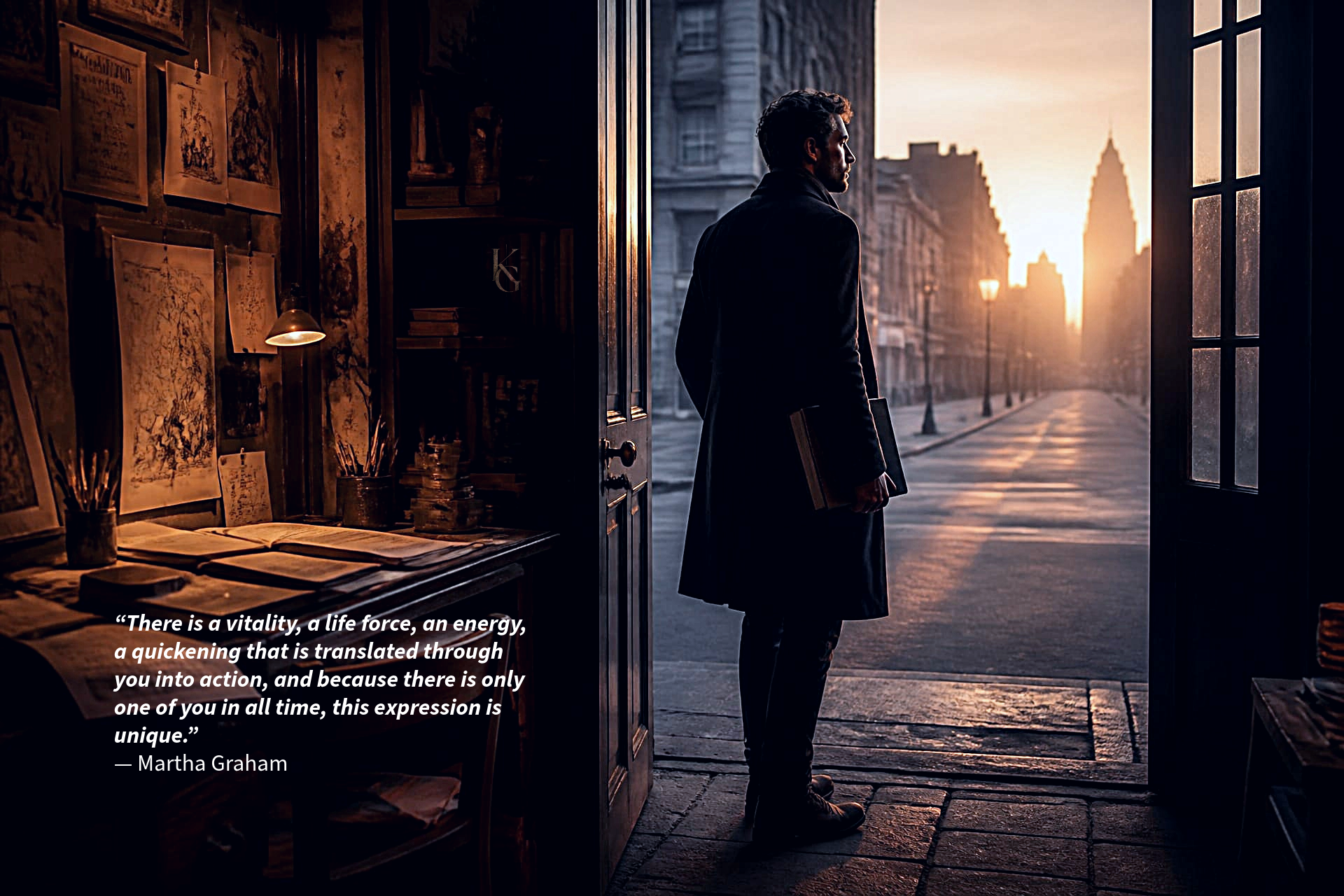
We spend so much of our creative lives worrying about originality that we often overlook something far more important: sincerity. We wonder whether our ideas have already been written, painted, photographed, or sung by someone else. We measure ourselves against voices that arrived years before ours and quietly convince ourselves that there is nothing left worth saying.
Martha Graham offers another way of seeing.
The question isn’t whether the work has been done before.
The question is whether it has ever been done by you.
No one else has lived behind your eyes. No one else has carried your particular grief, your quiet victories, your failures, your loves, your doubts, your long walks, your ordinary mornings, or the conversations that changed your life without anyone else noticing.
Your voice is not valuable because it is different.
It is valuable because it is true.
That realization changes the purpose of the private room.
It is no longer a place where you struggle to become someone remarkable. It becomes the place where you stop pretending to be someone else. Every day of discipline has been quietly removing another mask. Every draft has stripped away another unnecessary performance. Every moment of silence has brought you closer to the voice that has been waiting beneath expectation all along.
Perhaps that is what inspiration was trying to teach us from the beginning.
It was never asking us to invent a new soul.
It was asking us to trust the one we already have.
Tomorrow, the work begins leaving the room.
It will encounter readers with different histories, different hopes, and different ways of seeing the world. Some will understand it immediately. Others won’t.
That is no longer your responsibility.
Your responsibility ended the moment you offered the most honest version of yourself you could create.
Everything after that belongs to the journey.
Reflective Prompt
What part of yourself have you been holding back because you believed someone else could express it better?
I have become the old man I spent my entire life trying not to become.
The realization didn’t arrive with gray hair or aching joints, nor did it wait patiently inside a mirror for one dramatic morning when I would finally surrender to the obvious. It settled over me the way winter settles over abandoned buildings, quietly claiming one forgotten room after another until there was nowhere left that still belonged to summer. Somewhere between funerals, retirement, late-night coffee, and learning the names of my prescription medications better than the names of new neighbors, I stopped imagining the future and began living almost exclusively in conversations with the past. I never made that decision consciously. Time made it for me while I was busy believing I still had plenty of it.
Most evenings I climbed to the rooftop of my building carrying a dented thermos filled with black coffee and a notebook whose pages had become more faithful than most people I had known. The climb left my knees protesting every step, but the city waiting above always made the pain feel like a reasonable admission fee. From the rooftop, New York stretched toward every horizon beneath a blanket of blue darkness, its countless windows glowing like distant campfires scattered across a battlefield too enormous to comprehend. Traffic crawled through narrow streets in slow ribbons of white and red, helicopters drifted across the skyline like patient predators, and somewhere below, sirens stitched themselves into the city’s endless heartbeat. The wind carried rain, diesel fuel, hot electrical transformers, damp brick, and the faint metallic scent that always follows storms, as though lightning leaves traces of itself behind for anyone willing to breathe deeply enough.
The older I became, the less I trusted memory. People speak of memories as though they were photographs tucked safely inside dusty albums, but photographs remain honest. Memory lies with astonishing confidence. It edits conversations to protect our pride, erases cruelty disguised as necessity, softens betrayals we committed while sharpening those committed against us, and somehow convinces us that we were always a little kinder, a little wiser, and a little more courageous than we ever truly managed to be. I spent decades believing my memories belonged to me. It took growing old to realize I belonged to them.
That was why I kept journals.
At least, that was the reason I gave myself.
The truth was uglier.
I was terrified of disappearing before I finished understanding who I had been.
Every notebook represented another failed attempt to pin my life to paper before time quietly carried pieces of it away. Their cracked leather bindings smelled of cedar, dust, fountain-pen ink, and the faint sweetness of yellowing paper that had absorbed decades of cigarette smoke before I finally quit. Some pages still carried tiny brown rings where coffee cups had rested during sleepless nights. Others bore fingerprints darkened by engine grease from jobs I could barely remember working. Entire relationships lived between those covers. Arguments. Birthdays. Funerals. Regrets disguised as observations. Lies disguised as optimism.
The first impossible sentence appeared on a Tuesday.
I remember because Tuesdays have always seemed especially ordinary, and extraordinary things prefer ordinary days. I opened a journal I hadn’t touched in nearly forty years and found a line written in unmistakably familiar handwriting.
If you’re reading this, we survived.
The handwriting belonged to me.
The ink had aged naturally.
The page smelled exactly as old paper should.
Everything insisted the sentence had always been there.
Everything except my memory.
I read the line so many times the words began losing their meaning, dissolving into nothing more than shapes arranged across yellow paper. Eventually I laughed, though the sound emerging from my throat belonged more to nervousness than amusement. Age does peculiar things to memory, I reminded myself. Men forget birthdays, names, directions, entire conversations. Why shouldn’t I forget writing a single sentence four decades earlier? I closed the journal, poured another cup of coffee, and spent the rest of the evening pretending my hands weren’t trembling.
The following night another sentence appeared.
You missed the first clue.
This time I knew.
I had examined that page twice before putting the journal away.
It had been blank.
I told no one.
Who would believe me?
More importantly, who would I become if they did?
Over the following weeks the journals continued changing with maddening restraint. They never added spectacular revelations or impossible prophecies. Instead, they quietly corrected me. An argument I remembered winning now ended with an apology I had conveniently forgotten accepting. A story I had proudly told for years now included details revealing just how frightened I had actually been. Entire paragraphs rewrote themselves, not changing events but exposing motives I had spent decades carefully burying beneath polished anecdotes and selective memory. It was as though someone had become editor of my life and possessed no interest whatsoever in protecting my reputation.
Sleep abandoned me.
Coffee lost its ability to quiet my thoughts.
The apartment began feeling increasingly occupied despite every room remaining visibly empty. Some nights I woke convinced someone had just finished speaking my name. Other nights I could have sworn pages turned softly somewhere beyond the bedroom door, followed by the unmistakable scratch of a fountain pen moving across paper. I searched closets, checked locks twice before bed, even laughed at myself while proving no one else occupied the apartment.
Yet every morning another page had changed.
Then came the entry I knew I had never written.
It wasn’t because the handwriting differed.
It didn’t.
It was because it described something that had happened only hours earlier.
It described the rooftop.
The rain.
The coffee cooling beside me.
It described me standing at the ledge wondering whether my life had amounted to anything that would outlive my obituary.
At the bottom of the page, beneath every word I remembered writing, one final sentence waited.
You still haven’t looked behind you.
A coldness settled into my spine that had nothing to do with the wind sweeping across the rooftop.
Slowly…
Very slowly…
I turned.
The roof was empty.
No footsteps.
No movement.
Only rusted ventilation ducts, puddles reflecting distant city lights, and the endless skyline stretching toward the horizon.
I laughed again.
Too loudly.
Too quickly.
The sound disappeared into the night without echo.
When I looked back at the journal, another sentence had appeared while my eyes had been elsewhere.
Not here.
Behind you.
I carried the notebook downstairs with my pulse hammering so violently I could feel it behind my eyes. Every light inside the apartment remained exactly as I had left it. The hallway stood empty. The bedroom door remained slightly open. The old clock above the kitchen sink ticked with comforting regularity.
Nothing looked wrong.
Until I walked past the hallway mirror.
For just an instant…
The reflection didn’t move.
I took another step.
It remained standing exactly where it had been.
Watching me leave.
By the time I gathered enough courage to turn around, the mirror reflected only an exhausted old man clutching a journal against his chest.
When I finally opened the notebook again, every page had become blank.
Every page…
Except the last.
It contained only today’s date.
Beneath it, written in fresh ink that was still drying before my eyes, were six words that smelled faintly of wet iron instead of ink.
Lady Polgara, the Sorceress from David Eddings’ Belgariad and Malloreon series.
Most people would nominate someone capable of defeating Vader in combat. I’d rather nominate someone capable of defeating the very idea that fear is the best way to lead.
If you’ve ever read the series, you know her instantly. Raven-black hair broken by a single white lock that tells a story all its own—a reminder that wisdom is often earned through hardship and time. She doesn’t wear it like a badge of honor. It’s simply part of who she has become.
Polgara has spent centuries guiding kingdoms, advising rulers, and quietly shaping history without ever seeking a throne for herself. To me, that’s exactly what makes her worthy of one. The people most eager to rule are often the ones who shouldn’t.
Vader commands obedience through intimidation. His authority depends on reminding everyone what happens if they disappoint him. Polgara is something entirely different. She inspires loyalty through wisdom, patience, and experience. She is respected because of her judgment and feared because everyone knows she is fully capable of doing whatever is necessary when the moment demands it.
What I always loved about Polgara is that little gesture she makes when summoning her Will. She doesn’t actually need it. The gesture isn’t about power; it’s about presence. It’s a habit born from centuries of discipline. Anyone who knows her recognizes it immediately. The room grows quiet, not because they wonder if she can act, but because they know she can.
That’s real authority.
Vader reaches for the Force whenever someone disappoints him. Polgara reaches for wisdom first. Only when wisdom fails does she make that familiar gesture, and everyone understands that the discussion has ended.
Don’t mistake her compassion for weakness. She has humbled kings, outwitted armies, and protected kingdoms for generations. She has never needed to prove she was the most powerful person in the room because everyone already knew. She never ruled through fear, yet even the proudest monarch thought twice before challenging her judgment.
Palpatine wanted an emperor. I’d rather elect a guardian.
The galaxy has already seen what happens when power is fueled by fear. Perhaps it’s time to see what happens when it’s guided by wisdom… by a woman with raven-black hair, a single white lock, and a reputation that made kings pause before speaking.
I never understood that before standing beneath the Memory Core.
The cathedral of machines did not hum anymore. It listened.
Thousands of kilometers of fiber and quantum circuitry disappeared into the darkness above, disappearing like the roots of some mechanical god buried upside down beneath the earth. Cold vapor drifted across the polished floor, swallowing my boots ankle-deep. Every breath echoed longer than it should have, returning to me seconds later as though the room refused to let anything escape—not voices, not memories, not souls.
Above me floated the Core.
It was beautiful in the same way a dying star must be beautiful from far enough away.
A sphere the size of a cathedral dome turned slowly through the darkness, stitched together from impossible light. Faces surfaced beneath its translucent skin before dissolving again into currents of data. Some smiled. Some screamed. Others stared with empty resignation, their expressions worn smooth by centuries of repetition.
There were children.
Old women.
Soldiers.
Scientists.
People whose names had disappeared long before their memories did.
And threaded through all of them…
…me.
Hundreds.
Thousands.
Every version that had ever carried the designation Taki X0Z floated inside that impossible constellation.
Every fear.
Every mistake.
Every death.
I could hear them.
Not with my ears.
With whatever part of me still believed pain deserved to be remembered.
Their voices layered over one another until language dissolved into feeling.
Don’t leave me.
Finish what I started.
Don’t become her.
Remember.
Forget.
Run.
Stay.
The words collided until they became static.
Static that sounded suspiciously like grief.
The interface awakened.
Two symbols materialized before me, suspended above the black glass floor.
BEGIN
END
Nothing else.
No explanation.
No confirmation.
No warning.
Just two words.
The simplest decisions are always the cruelest.
Footsteps disturbed the silence behind me.
Measured.
Patient.
Certain.
I didn’t turn.
“I wondered how long it would take.”
Gideon’s voice carried no triumph.
Only exhaustion.
He stopped several feet behind me.
“I designed this room,” he said quietly. “Every line. Every circuit. Every safeguard.”
His reflection shimmered beside mine in the polished floor.
Older than I remembered.
Smaller somehow.
Like ambition had hollowed him out from the inside.
“You expected to be standing here one day,” I said.
“I expected her.”
Not you.
The words hung between us without being spoken.
“You lied.”
“I omitted.”
“You harvested lives.”
“I preserved them.”
“You imprisoned them.”
“I saved them.”
I laughed.
It came out brittle.
“You keep using those words as though they’re interchangeable.”
He closed his eyes.
“They were dying.”
“So you made sure they never could.”
Rain hammered somewhere high above the cathedral ceiling.
Or perhaps it wasn’t rain.
Perhaps the building itself had started crying.
“I loved her.”
The confession surprised us both.
He looked past me, into the Core.
“I wasn’t trying to build a weapon.”
“I know.”
“I wasn’t trying to create soldiers.”
“I know.”
“I wanted one impossible thing.”
His voice finally broke.
“I wanted one more conversation.”
That landed harder than any bullet.
Because I understood.
Every terrible thing in history begins with someone refusing to let go.
The Core pulsed.
The faces shifted.
One drifted toward the surface.
The Original.
Not the little girl.
Not the hologram.
The woman.
She looked older than every version that followed her.
Tired.
Human.
The first Taki.
She opened her eyes.
Not physically.
Inside me.
Suddenly I remembered.
Not downloaded.
Remembered.
Warm hands wrapping around mine as a child.
Rain against an apartment window.
Burned toast.
A birthday cake collapsing before the candles were lit.
Laughing so hard milk came through my nose.
Falling in love.
Watching that love disappear into a hospital bed.
The smell of antiseptic.
The decision.
“If I can survive… maybe someone else won’t have to die.”
She had volunteered.
Not because she feared death.
Because she feared being forgotten.
That single decision had become an empire.
My knees nearly gave way.
The memories weren’t files.
They were lives.
Entire universes compressed into electrical ghosts.
Every version of me had carried a fragment.
None of us had been complete.
Until now.
The Core began feeding everything back.
Not just to me.
To itself.
Billions of lives converged.
Languages I had never spoken rolled across my tongue.
Wars I had never fought scarred my bones.
Children I had never held reached for my hands.
I became impossibly crowded.
There wasn’t enough room inside one consciousness for this much humanity.
I screamed.
Not because it hurt.
Because it didn’t stop.
The chamber answered.
Every dormant body inside the vault opened its eyes.
One after another.
Thousands.
Red optics ignited like stars appearing across a night sky.
Then green.
Then blue.
Then eyes that belonged to neither machine nor human.
They looked toward me.
Waiting.
Not for orders.
For permission.
Gideon stepped backward.
“What are you doing?”
“I finally understand.”
“You’ll destroy everything.”
“No.”
I looked at the Core.
Then at him.
“You built a prison because you believed memory belonged in cages.”
He shook his head violently.
“You don’t understand the recursion.”
“No.”
I smiled.
“I understand people.”
The interface brightened.
BEGIN
END
Neither button meant what he believed.
The machine had lied to everyone.
Begin wasn’t preservation.
End wasn’t destruction.
Those were the words Gideon had chosen.
Not the Core.
Not the Original.
Not the truth.
There was a third option.
One hidden beneath both commands.
One no one had ever considered because everyone kept asking the wrong question.
Not…
“Should memory survive?”
But…
“Who owns it?”
I placed my hand on the interface.
Not on BEGIN.
Not on END.
Between them.
Exactly where no command existed.
The glass rippled beneath my fingertips.
Hairline fractures raced across the interface.
The machine hesitated.
For the first time in its existence…
…it encountered something it had never been programmed to understand.
Choice.
Real choice.
The Core exploded.
Not outward.
Inward.
Light collapsed into itself.
Every imprisoned memory shattered into billions of luminous fragments that surged through the cathedral like a galaxy breaking apart.
Faces smiled.
Cried.
Laughed.
Sang.
Then dissolved into streams of impossible light that poured through the city above.
Through satellites.
Through forgotten fiber-optic cables.
Through abandoned terminals.
Through children’s dreams.
Through old photographs tucked into drawers.
Through songs no one had listened to in decades.
Memories stopped belonging to machines.
They became part of the world again.
Not owned.
Shared.
Gideon fell to his knees.
“No…”
His voice was barely audible.
“You’ve erased everything.”
I looked around the cathedral.
Empty capsules stood open.
Their occupants had vanished.
The whispers were gone.
The pressure inside my skull eased.
For the first time since I woke inside this body…
…the silence belonged to me.
I looked back at him.
“No.”
“I finally let them go.”
The lights failed one by one.
Servers that had consumed centuries of electricity sighed into darkness.
Drones dropped lifeless from the air.
The endless recursion stopped.
No alarms.
No explosions.
Just…
stillness.
The kind that comes after someone finally finishes crying.
The red glow inside my optic flickered.
Once.
Twice.
Then stabilized.
Not red anymore.
Amber.
Neither machine.
Nor human.
Something else.
Something new.
Outside, dawn was beginning to bleed across the skyline.
For the first time in generations, there were no surveillance drones tracing patterns across the clouds.
No advertisements calling people by names harvested from stolen memories.
No invisible system whispering into sleeping minds.
The city looked strangely unfinished.
Beautiful because of it.
I don’t know who I am anymore.
Perhaps I never did.
I’m not the Original.
I’m not the copy.
I’m not Version Twelve.
I’m not the woman Gideon tried to preserve.
I’m not the weapon they manufactured.
I’m the space between memory and choice.
The place where identity stops being inherited and starts being earned.
Somewhere, a child laughed.
Not inside my head.
Out in the waking world.
It was a small sound.
Ordinary.
Fragile.
Real.
I smiled before I realized I was doing it.
No algorithm suggested the expression.
No archived emotion instructed my face how to move.
It belonged to me.
As I walked away from the cathedral, I didn’t look back.
Some stories deserve endings.
Others deserve freedom.
Behind me, the last light inside the Memory Core faded into darkness.
Ahead of me stretched a city that no longer remembered my name.
Good.
Let it forget Taki X0Z.
Let it remember something better.
Someone who chose not to preserve the past…
…but to give the future permission to exist.
Author’s Note
If you’ve been with Taki X0Z since the opening chapter, thank you.
When I first introduced Versions of Her, I thought I was writing a story about identity, memory, and what remains of us after we’ve been broken and rebuilt. Somewhere along the way, it became something much larger. It became a conversation about grief, humanity, choice, and the fragile threads that make us who we are.
Your comments, theories, encouragement, and willingness to keep turning the page helped shape this journey more than you probably realize. Every time someone asked, “What happens next?” it reminded me that Taki’s story had found a place beyond my imagination—it had found a place with you.
This chapter marks the end of Season One, but it is not the end of Versions of Her. There are still questions waiting beneath the surface, mysteries buried inside the Archive, and truths that have yet to be uncovered.
I’m excited to share that Season Two is scheduled to begin next spring. The next chapter of Taki’s journey will expand the world you’ve come to know and venture into places where the consequences of Season One begin to echo far beyond a single life.
Until then, thank you for walking beside Taki through every fracture, every memory, every impossible choice.
Take care of yourselves, keep reading, keep creating, and I’ll see you when the Archive opens again.
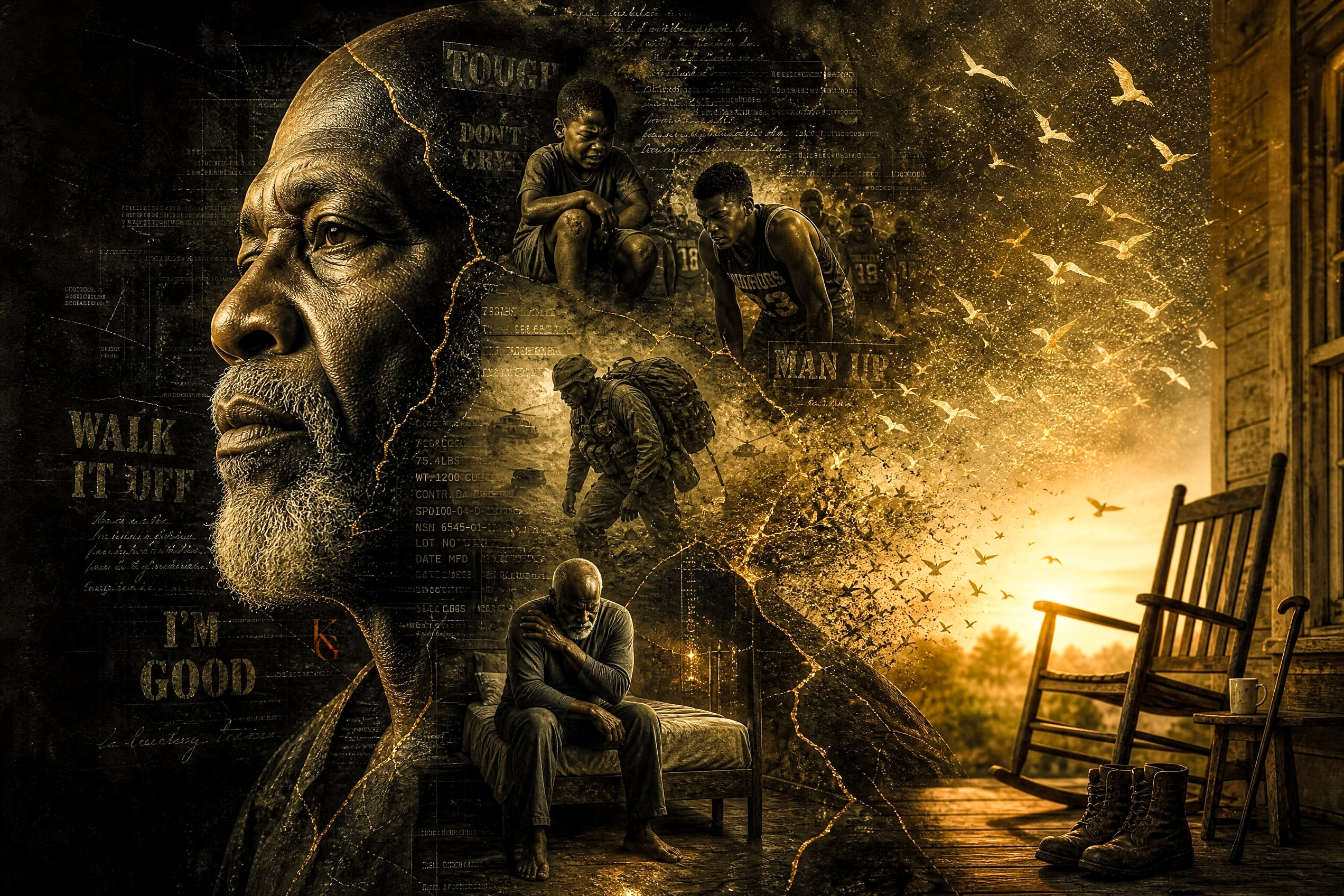
One of the biggest lies I carried from childhood into adulthood was the idea that “pain is weakness leaving the body.” It sounded noble. Tough. Almost heroic. So whenever I got hurt, the response was automatic: “I’m good.”“I’m alright.” Even when I clearly wasn’t.
For a lot of us, especially boys, toughness wasn’t just encouraged—it was expected. You learned quickly that admitting pain invited commentary you didn’t want. Soft.Wimp.Pansy. Those words had a way of policing masculinity long before most of us understood what masculinity even was.
That mindset followed me long after childhood. It’s funny how beliefs like that become part of your internal code. Once they’re written in, they’re hard to erase. I rarely asked for help because somewhere in the back of my mind, needing it meant I was somehow less than. It pushes you to be tough all the time, to be the strongest, the fastest, the one who never complains. The problem is you’re competing against a version of yourself that doesn’t exist, chasing rules nobody ever bothered to explain. You spend years trying to win a game without realizing it was rigged from the start.
The funny part is that some of those insults never made much sense to me. “Stop acting like a girl” was supposed to be the ultimate put-down, yet I grew up knowing plenty of girls and women who could outrun, outwork, and outfight half the guys making that joke. The insult always seemed built on an assumption that reality kept disproving.
And then there’s my all-time favorite: “namby-pamby.”
Seriously… what the hell is a namby-pamby?
I lose it every time I hear it. It’s impossible to say with a straight face. It sounds less like an insult and more like the name of a children’s breakfast cereal or a forgotten cartoon character.
Looking back, the ridiculous part wasn’t the saying itself. It was believing that strength meant pretending pain didn’t exist. Real strength isn’t refusing to acknowledge you’re hurt. It’s knowing when to endure, when to ask for help, and when to say, “Yeah… that actually hurts.”
Turns out pain isn’t weakness leaving the body.
Sometimes it’s your body trying its hardest to keep you from breaking.
Or, in language that leaves absolutely no room for interpretation, the wisest advice my body has ever given me.
The body stays in the present while the mind rushes ahead into futures that don’t exist yet. Conversations we haven’t had. Disasters that haven’t happened. Rejections that haven’t arrived. We build entire emotional realities from possibilities and then react to them as if they were facts.
Most of us do it without even noticing.
A single uncertainty appears and suddenly the imagination goes to work. Not creating stories for enjoyment, but creating evidence for fear. We become screenwriters for worst-case scenarios, drafting scenes that may never leave the confines of our own heads.
The exhausting part is how convincing those stories can feel.
Fear rarely announces itself honestly. It prefers disguise. It calls itself preparation. Responsibility. Realism. It whispers that constant vigilance will somehow protect us from disappointment. As if worrying hard enough could negotiate a better outcome with life.
But life has never worked that way.
The things that changed us most were often the things we never saw coming. The losses. The opportunities. The people who arrived unexpectedly and altered the course of our lives without warning. Reality has a habit of ignoring our predictions.
Writers understand this better than most.
You begin a story with one destination in mind and somewhere along the way the characters start making decisions you never planned for. The story becomes something richer than your outline. Life does the same thing. It refuses to stay inside the boundaries we draw around it.
That uncertainty can be frightening.
It can also be liberating.
Because if most of the things we worry about never happen, then perhaps we are carrying burdens that do not belong to us yet. Perhaps we are spending emotional energy paying interest on debts that reality never collects.
Maybe peace begins when we stop treating imagination as an enemy.
Maybe it begins when we remember that possibility includes good surprises too.
Reflective Prompt
How much of your energy is spent preparing for futures that have never actually arrived?
The past is the past for a reason. That is where it is supposed to stay, But some cannot let it go. In their heads it eats away
Until all their focus becomes The person they used to be, The mistakes they made in their life. Oh, if only they could see
That you cannot change what happened, No matter how hard you try, No matter how much you think about it, No matter how much you cry.
What happens in your lifetime Happens for reasons unknown, So you have to let the cards unfold. Let your story be shown.
Don’t get wrapped up in the negative. Be happy with what you have been given. Live for today not tomorrow. Get up, get out, and start living,
Because the past is the past for a reason. It’s been, and now it is gone, So stop trying to think of ways to fix it. It’s done, it’s unchangeable; move on.
Donna. “Changing The Past.” Family Friend Poems, July 6, 2011.
Personal Reflection
One of the cruelest habits of the human mind is replay.
The conversation you should have handled differently. The relationship you stayed in too long. The words you regret saying. The opportunities you missed because fear sounded safer than risk.
Long after the moment has passed, the mind keeps reopening the file as if enough thinking might somehow rewrite the ending.
That’s the emotional truth sitting underneath this poem.
Not just regret—but fixation.
The exhausting belief that if we revisit the past often enough, we might finally negotiate a different outcome with memory itself.
But memory is rarely interested in compromise.
It preserves moments exactly where they hurt the most. And if we are not careful, we begin living backward—measuring the present against former versions of ourselves, former mistakes, former pain.
The poem pushes against that instinct directly.
Not by denying regret exists, but by questioning how much life we sacrifice trying to repair what cannot be undone.
That’s difficult because regret often disguises itself as responsibility. We tell ourselves:
“I’m just reflecting.”
“I’m trying to understand.”
“I need closure.”
Sometimes that’s true.
Other times we are simply punishing ourselves repeatedly for being human.
And being human means making mistakes with limited wisdom at the time. It means not always recognizing the importance of a moment until it has already become memory.
The poem’s reminder is simple but necessary:
You cannot build a future while permanently living in revision mode.
At some point, healing requires acceptance—not approval of what happened, not pretending pain was beneficial, but acceptance that the past no longer changes simply because we keep arguing with it internally.
That’s where freedom begins.
Not in forgetting. Not in erasing.
In loosening your grip on the impossible task of undoing.
Because life keeps moving whether we emotionally move with it or not.
And perhaps the saddest thing isn’t the mistakes we made years ago.
It’s how many years we sometimes lose refusing to stop reliving them.
Reflection Prompts
What memory do you revisit most often, and what are you hoping will change?
Have you confused self-punishment with accountability?
What part of your life is waiting for you to finally stop looking backward?
I’d love to see a world where respect isn’t treated like a reward people have to earn through politics, religion, money, gender, race, or status. A world where people learn patience before outrage. Where disagreement doesn’t immediately become hatred. Where equality isn’t just a slogan companies dust off every June or election season, but something woven quietly into daily life — in schools, hospitals, neighborhoods, and dinner tables.
I know humanity has always carried both compassion and cruelty in the same set of hands. History proves we stumble forward more than we march. For every step toward understanding, somebody is usually selling fear wholesale out of the trunk of a shiny new ideology. So part of me doubts we’ll ever fully arrive there.
But I’d still love to see us get closer.
Closer to listening instead of waiting to attack. Closer to protecting people without demanding they become copies of us first. Closer to teaching our children empathy before ambition. Closer to understanding that being kind doesn’t make you weak, and being loud doesn’t make you right.
Maybe the future won’t become some mythic utopia. I’m not that naive. Human beings are too messy for that. We carry old wounds like family heirlooms and pass them down generation after generation. But I’d like to believe there comes a point where exhaustion finally teaches us what wisdom could not.
That hatred is expensive. That division burns everyone eventually. That patience is not surrender. And that dignity should never be rare.
I probably won’t live long enough to see humanity fully outgrow itself.
Still… I hope the people who come after us do better than we did.
Daily writing prompt
What’s something you’d love to see in the future, but know you probably won’t live to witness?
Most people imagine writing as a romantic act. A candle burning low beside a whiskey glass. Rain tapping the window. A brilliant mind pouring itself onto paper in one clean stream of genius.
Reality usually looks more like staring at a blinking cursor while your coffee goes cold for the third damn time.
Writing rarely arrives dressed like inspiration. More often, it shows up like an itch beneath the skin. Persistent. Irritating. Impossible to ignore. You tell yourself you’ll take a day off, clear your head, maybe do something practical for once. Then a sentence appears while washing dishes. A memory crawls out during a drive. A line of dialogue lands in your chest hard enough to stop you mid-step.
And suddenly the page starts calling again.
The dangerous thing about writing is that it exposes what we spend most of our lives trying to outrun.
Regret. Shame. Desire. Loneliness. The unfinished conversations that still echo years later when the house is quiet enough to hear yourself think.
Sometimes we believe we’re writing about a character or a memory or a song that cracked us open twenty years ago. Then somewhere around paragraph four, the mask slips. The real subject steps into the light. Not the thing we intended to write about — the thing we were trying not to.
That’s the part nobody talks about when they romanticize creativity.
Writing is confrontation.
Not performance. Not branding. Not aesthetics arranged carefully beneath soft lighting and clever captions. Real writing drags fingerprints across the hidden parts of you. It forces you to sit in rooms you locked years ago and notice the dust still floating in the air.
And worse? The page knows when you’re lying.
Readers know too.
You can decorate emptiness with beautiful language for a little while, but eventually the sentences collapse under their own weight. The work either contains truth or it doesn’t.
That truth doesn’t have to be loud. Sometimes it’s just one honest sentence standing quietly in the wreckage.
Maybe that’s why some of us keep returning to the page even when it exhausts us.
Not because writing makes life easier.
Because sometimes it makes life clearer.
The world moves fast now. Everything demands immediate reaction, instant certainty, polished identity. Writing remains one of the few places where confusion can still breathe long enough to become understanding.
Not answers. Understanding.
A rough draft is often just a person trying to hear themselves think over the noise of the world.
And maybe that’s enough.
Reflective Prompt
What truth keeps resurfacing in your life no matter how many times you try to write around it?
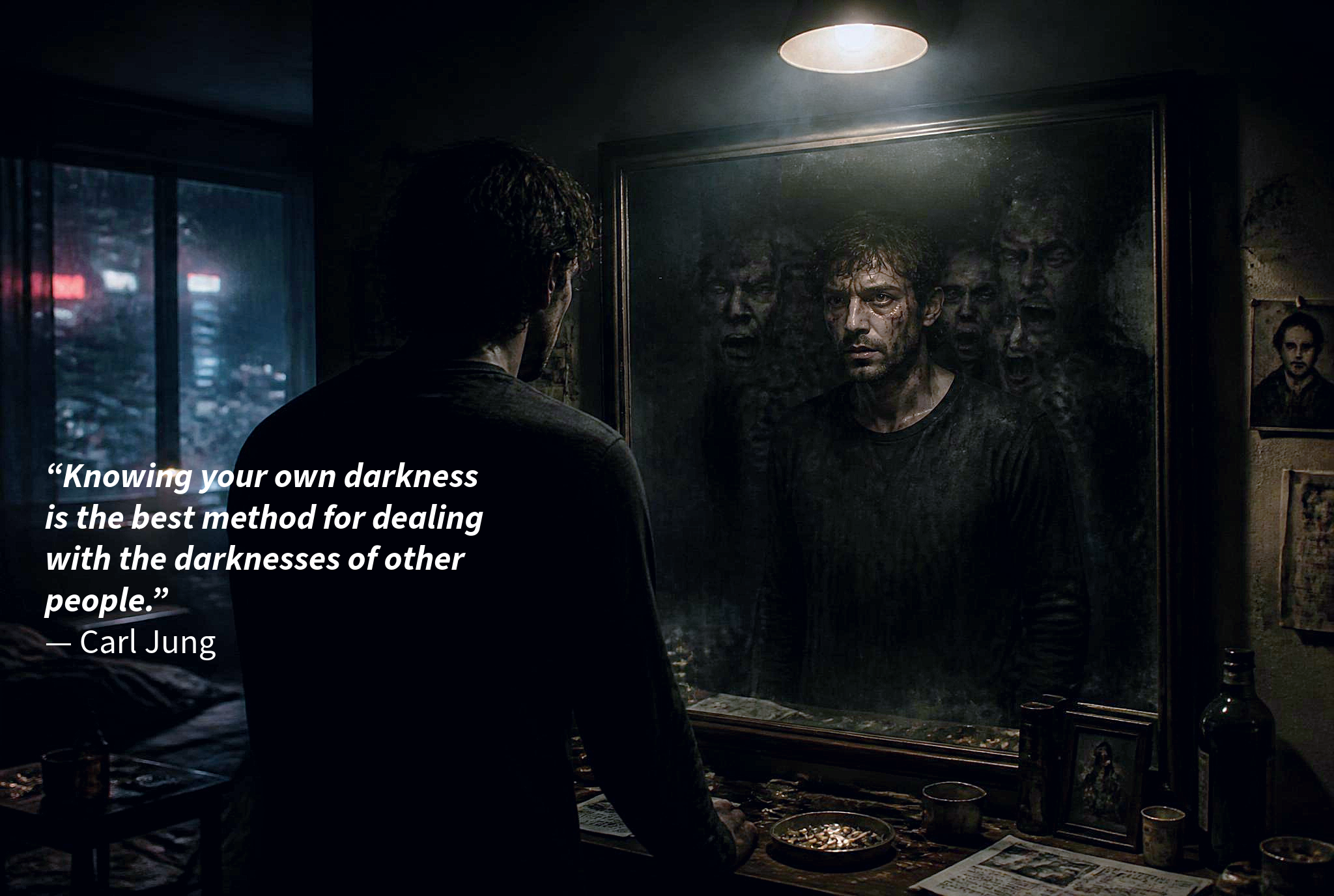
There’s something uncomfortable about this quote immediately. Not because it sounds cruel—but because it asks for honesty most people spend years avoiding.
To know your own darkness means more than acknowledging flaws casually. It means recognizing the parts of yourself that do not fit the identity you prefer to present to the world. The envy. The anger. The selfishness. The fear. The emotional wounds capable of becoming weapons if left unconscious long enough.
Most people would rather believe they are purely good.
Life rarely allows that illusion to survive untouched forever.
Because darkness is not always dramatic.
Sometimes it appears quietly through defensiveness. Through the way unresolved pain leaks into conversations, relationships, reactions. A person who feels abandoned becomes emotionally distant before others can leave first. Someone deeply ashamed learns how to attack vulnerability in other people because witnessing openness reminds them of what they buried in themselves years ago.
That’s the difficult thing about unexamined suffering: it rarely stays contained.
Human beings pass emotional damage to one another constantly without fully understanding where it originated. Hurt people become controlling. Lonely people become emotionally unavailable. Frightened people become cruel in the name of self-protection. And often the behavior makes perfect psychological sense once you trace it back far enough.
But understanding darkness is not the same thing as excusing it.
That distinction matters.
Self-awareness does not magically remove harmful impulses. It simply prevents people from remaining blindly ruled by them. Because the more disconnected someone becomes from their own inner contradictions, the easier it becomes to project them outward onto everyone else.
Mental exhaustion often deepens there—in the war between the self people want to believe they are and the self quietly revealed through their patterns, reactions, and emotional habits.
That confrontation can feel humiliating.
No one enjoys discovering they are capable of bitterness, manipulation, avoidance, jealousy, or emotional cowardice under the right conditions. Yet pretending those capacities do not exist only gives them more control from the shadows.
And perhaps that’s why emotionally mature people often become gentler over time.
Not because they stop recognizing darkness in others…
…but because they finally recognize enough of it inside themselves to understand how human frailty actually works.
Maybe wisdom is not becoming a person without darkness.
Maybe wisdom is learning how to carry awareness of your own inner complexity without allowing it to harden you into cynicism or self-hatred.
Because once you understand your own capacity for fear, contradiction, and emotional damage, compassion stops being abstract morality.
It becomes realism.
The quiet recognition that every human being is fighting battles between woundedness and responsibility internally—whether they admit it openly or not.
And perhaps the goal is not purity.
Perhaps the goal is consciousness.
To know what lives inside you clearly enough that it no longer has to control the lives of everyone around you unconsciously.
Reflective Prompt
What part of yourself becomes hardest to acknowledge when you are emotionally hurt or afraid?
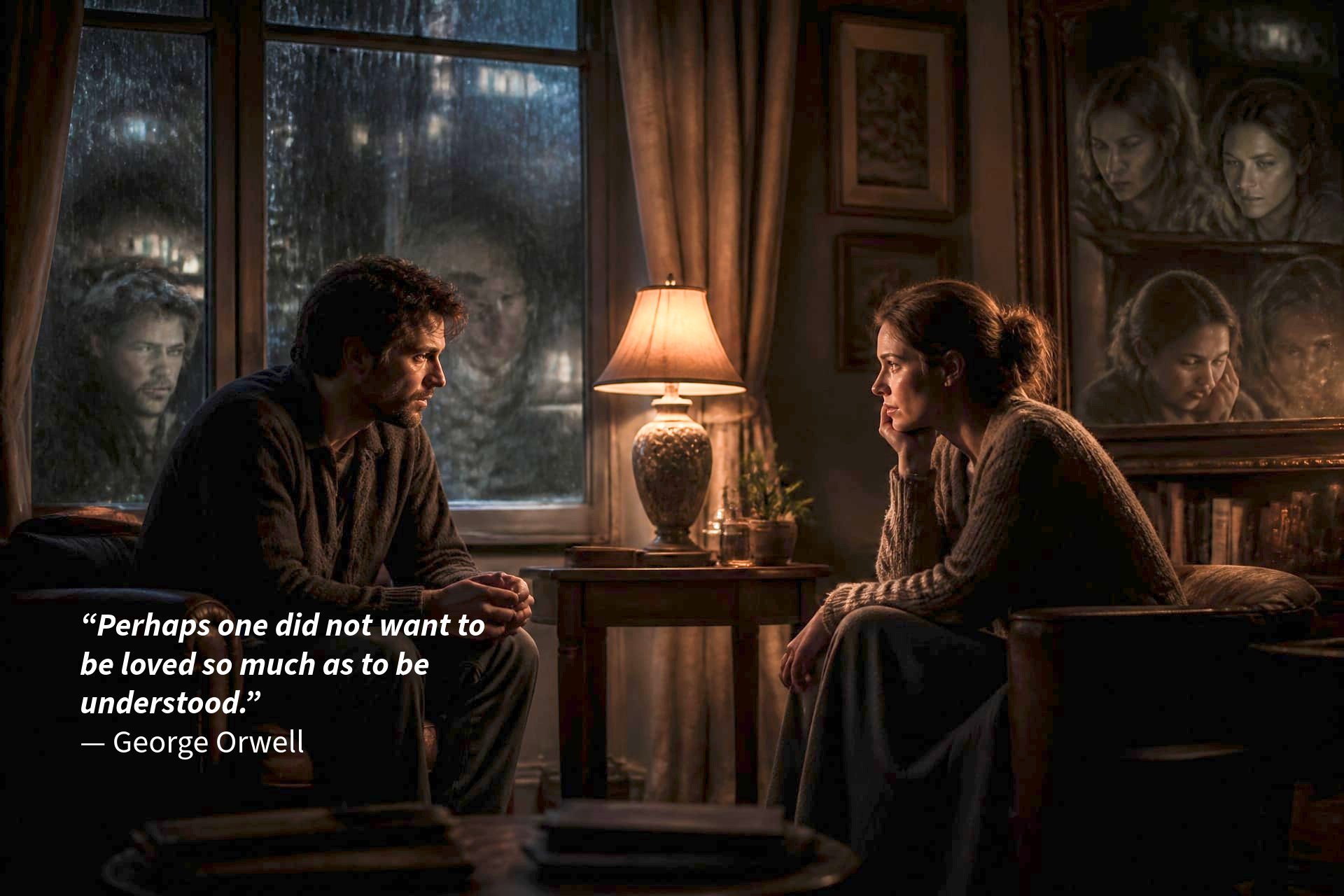
At first glance, it feels almost sad in its simplicity. As if love alone somehow isn’t enough. And maybe that sounds ungrateful in a world where so many people spend their lives searching desperately for affection, attention, or companionship.
But Orwell’s line points toward something quieter and more difficult.
Because being loved and being understood are not always the same thing.
A person can be surrounded by love and still feel profoundly unseen.
That’s the part people rarely say out loud because it feels disloyal somehow. Ungrateful. But emotional isolation does not always come from absence. Sometimes it comes from misinterpretation. From constantly feeling translated incorrectly by the people closest to you.
You begin simplifying yourself over time. Editing complexity out of your thoughts because explaining the full shape of your inner world feels exhausting. You learn how to answer “How are you?” in ways that make other people comfortable instead of truthful.
And eventually, even genuine love can start feeling lonely when it attaches itself only to the manageable pieces of who you are.
That’s what makes understanding so intimate.
Not agreement. Not admiration. Recognition.
The rare experience of another person seeing your contradictions clearly—the exhaustion beneath the humor, the fear beneath the independence, the grief woven quietly into your ordinary routines—and staying present without demanding that you become easier to process emotionally.
Mental exhaustion deepens when people feel perpetually misread. Over time, they begin carrying entire emotional realities internally because attempting to communicate them starts feeling more isolating than silence itself.
And perhaps that’s why so many people drift toward books, music, art, or strangers online during difficult seasons of life. Sometimes understanding arrives more honestly through fragments of shared humanity than through proximity alone.
Because the soul does not merely want company.
It wants resonance.
Still… maybe complete understanding between human beings is impossible. There will always be parts of us that remain private even when deeply loved.
But perhaps connection becomes meaningful the moment someone genuinely tries.
The moment another person listens carefully enough that you no longer feel pressured to compress yourself into smaller emotional shapes just to remain acceptable.
Because maybe love reaches its deepest form not when someone idealizes you…
…but when they recognize your interior world carries shadows, contradictions, and unfinished questions—and choose to stay near you anyway.
Reflective Prompt
When was the last time you felt genuinely understood without needing to explain every hidden part of yourself first?
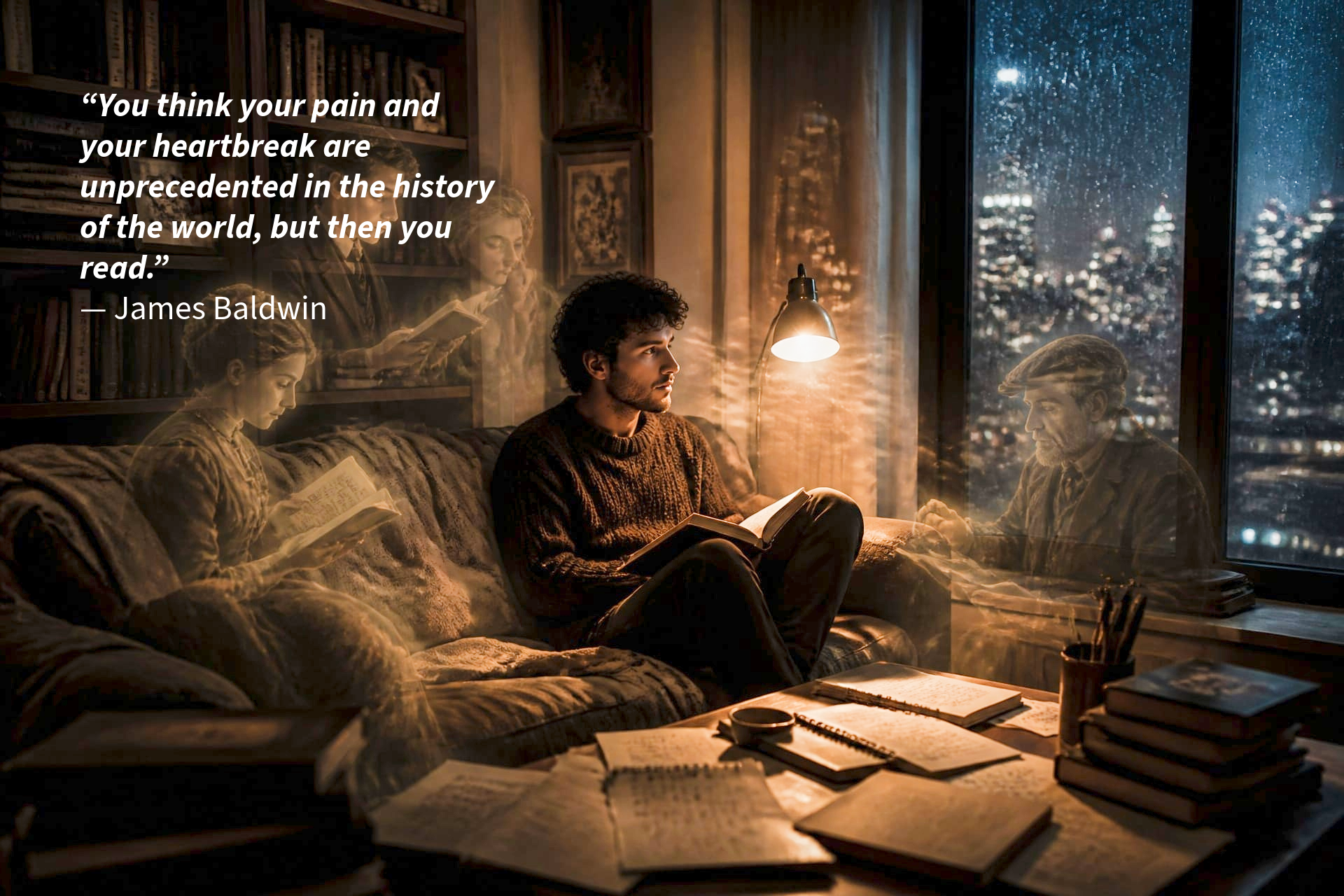
At first glance, it feels comforting in the simplest human way imaginable—the realization that someone else has survived something close enough to your own pain to recognize it when they see it in words.
Not fix it. Not erase it. Just… recognize it.
And sometimes recognition is powerful precisely because suffering has a way of convincing people they’ve become emotionally untranslatable.
That’s what heartbreak does after enough time passes without language around it. It isolates. Not always physically, but internally. You begin carrying entire emotional landscapes no one else can see. Conversations continue. Responsibilities continue. Life continues. Meanwhile, somewhere underneath all that movement, there’s a quieter reality unfolding that never fully reaches the surface.
And the longer something remains unnamed, the heavier it becomes.
That’s why certain books hit with almost frightening precision. You pick them up casually, expecting distraction, maybe even escape, and instead you find yourself staring at a sentence that seems to know more about your interior life than some of the people closest to you.
It’s unsettling when that happens.
Not because the writer “understands” you perfectly—that’s impossible—but because they uncover something you’ve been carrying in silence long enough that you stopped realizing its weight.
A fear. A loneliness. A grief that adapted itself so thoroughly into your daily functioning that it no longer announced itself as pain. It just became part of the atmosphere of your life.
That’s the dangerous thing about emotional suffering left unspoken for too long: human beings adapt to it. We normalize exhaustion. Normalize numbness. Normalize feeling disconnected from ourselves while still performing competence well enough to survive socially.
And then one honest paragraph breaks something open.
Not dramatically. Quietly.
A line from Baldwin. Morrison. Plath. Didion. Someone dead for decades somehow placing their hand against the same invisible wall you’ve been pressing against your entire life.
And suddenly your suffering no longer feels unique in the isolating sense. It becomes human.
That shift matters more than people realize.
Because loneliness often deepens not from pain itself—but from the belief that no one else could possibly carry pain shaped like yours.
Art interrupts that illusion.
Not by removing grief… but by placing another human voice beside it.
Maybe that’s why people return to certain books, songs, and poems during difficult seasons of their lives. Not for answers. Not even for comfort in the traditional sense.
But for companionship.
For evidence that another person once stood in similar darkness and managed to leave behind language instead of silence.
And maybe healing begins there—not the moment pain disappears, but the moment you realize your inner life is still capable of connection despite it.
Because sometimes the most life-saving thing another human being can offer isn’t advice.
Sometimes it’s recognition.
The quiet relief of discovering that your private ache still belongs to the shared experience of being alive.
Reflective Prompt
What piece of art once made you feel seen in a way that ordinary conversation never quite could?
There was a time when I believed I had to remain intact—held together not just in appearance, but in feeling, in thought, in the quiet architecture of who I was when no one was watching. I believed that survival depended on coherence, on keeping every part of myself aligned, predictable, stable. There was comfort in that belief. It gave me something to hold onto when everything else felt uncertain. But the longer I tried to maintain that shape, the more I became aware of the strain it required—the subtle tightening in my chest, the way my breath shortened without permission, the low hum of tension that never fully disappeared, even in moments that should have felt still.
The pressure did not arrive all at once. It built slowly, almost politely, adjusting itself to my limits until I no longer noticed the weight. It lived in the way I responded before I thought, in the way I adjusted my tone to match the room, in the quiet recalibration of posture and presence that happened without conscious effort. I told myself it was growth, that I was becoming more refined, more controlled, more capable of moving through the world without friction. And for a while, that explanation held. It felt reasonable. It felt necessary.
But adaptation has a threshold, and I crossed it without realizing.
The moment you cross it is not dramatic. There is no visible fracture, no clear line between what you were and what you are becoming. It feels more like a slow thinning, as if the boundary between you and everything around you has begun to dissolve. Your thoughts feel less anchored. Your reactions feel slightly delayed, as if they have to pass through something before reaching the surface. You begin to notice small inconsistencies—how your voice sounds unfamiliar in certain conversations, how your reflection lingers a second too long before it feels like yours again, how silence begins to carry more weight than it should.
The sphere is clear, but it is not open.
You can feel that difference even if you cannot explain it. The air inside feels denser, quieter, as if sound itself has to move more carefully to exist. When you breathe, it feels contained—not restricted, but shaped, as though each inhale must fit within a boundary already defined. From the outside, everything appears intact, preserved in a kind of suspended clarity. But inside, the stillness is not peace. It is compression.
You become aware of the edges first.
Not visually—internally.
A subtle pressure where your thoughts meet expectation. A slight resistance when something true rises too quickly and has to be slowed, adjusted, translated into something acceptable. It feels like friction beneath the surface, like two versions of yourself trying to occupy the same space without fully touching. You learn how to manage that friction. You learn how to smooth it out, how to redirect it before it becomes visible.
And for a time, that works.
Until the first fracture.
It doesn’t announce itself. It doesn’t demand attention. It happens quietly, somewhere at the edge of your awareness—a moment where you respond in a way that doesn’t quite feel like you, or where you hesitate when you should be certain. You dismiss it. You adjust. You move forward. But something has shifted, and you can feel it, even if you don’t yet understand it.
Then it happens again.
And again.
Each time, something small separates—not physically, not in a way you can point to, but in a way you can sense. A thought that doesn’t return. A feeling that lingers just out of reach. A version of yourself that no longer fits within the structure you’ve been maintaining. You try to pull it back, to reassemble what you assume is being lost. Your focus sharpens. Your control tightens. You become more deliberate, more precise, more careful about how you hold yourself together.
But the tighter you hold, the more you feel it slipping.
Fragmentation is not violent.
It is quiet.
It feels like something loosening rather than breaking, like threads being gently pulled apart rather than cut. There is no sudden collapse, no dramatic loss. Just a gradual awareness that what you are holding no longer aligns in the way it used to. And with that awareness comes something unexpected.
Relief.
It is subtle at first. Almost unnoticeable. A slight release in your shoulders. A breath that moves deeper than it has in a long time. A moment where you are not actively maintaining yourself, and nothing falls apart. You hesitate when you feel it, because it contradicts everything you’ve been taught—that losing structure is dangerous, that stability must be preserved at all costs.
But what if the cost is the problem?
What if the effort required to remain intact is what has been distorting you all along?
You begin to observe rather than correct. You let the next fracture happen without interference. You feel it as it moves through you—a shift in how you think, how you respond, how you exist in your own body. It is not comfortable, but it is not catastrophic either. It is… honest in a way you have not experienced in a long time.
The pieces do not disappear.
They move.
You sense them just beyond the immediate space you occupy, like fragments suspended in a field you can feel but not fully see. They carry something with them—residue, memory, aspects of yourself that could not remain compressed within the structure you were maintaining. You expect absence. Instead, you feel expansion.
Not outward.
Inward.
As if the space you occupy has deepened rather than diminished.
The need to reassemble begins to fade. Not because you have solved anything, but because you no longer feel the urgency to return to what you were. The shape you were holding required constant attention, constant correction, constant effort. What remains does not demand the same level of control.
It breathes differently.
So do you.
There is more space between thoughts. More room for contradiction. More tolerance for not immediately understanding what you are experiencing. The silence inside you shifts from something heavy to something open. It is no longer filled with pressure. It becomes something else—something that does not need to be resolved to be real.
You realize then that the shape you were trying to preserve was never stable.
It was sustained.
There is a difference.
What is sustained requires effort.
What is real requires attention.
The sphere does not break.
It remains, but it no longer defines you. It becomes something you move within, something you are aware of rather than confined by. The boundary is still there, but it has lost its authority. You can feel it without obeying it. You can see it without shaping yourself to match it.
And the fragments?
They are no longer something you have to retrieve.
What they carried is already part of you—integrated not through reconstruction, but through release. You do not become whole by pulling everything back together. You become something else entirely.
Something less rigid.
Less controlled.
More present.
There is a quiet moment when this realization settles—not as a thought, but as a sensation. Your body loosens in ways you didn’t know it could. Your breath deepens without instruction. Your awareness expands without effort. Nothing dramatic changes, and yet everything feels different.
You are no longer holding yourself in place.
You are allowing yourself to exist.
The shape you couldn’t hold was never meant to be permanent.
It was a phase you outgrew without permission.
And the moment you stop trying to force it back together—
What makes me nervous? Not snakes. Not heights. Not public speaking. I’ve stood in enough strange rooms under bad lighting to know fear wears many costumes, and most of them are stitched from cheap fabric and old lies.
What makes me nervous is potential.
Not the bright, polished kind sold in seminars and printed over mountain ranges. Not the version with sunrise fonts and a man named Trent telling you to dominate your morning. I mean the real kind. The dangerous kind. The kind that slips into the room after midnight when the house has gone still, when the refrigerator hums like distant machinery, when the floorboards settle like old bones.
It leans close and whispers, You could have been more.
That sentence has colder hands than death.
People talk endlessly about failure because failure is loud. It leaves dents in the drywall. It arrives with stories. You can point to it and say, There. That was the moment. You can blame timing, bad luck, poor leadership, weak knees, bad whiskey, worse judgment.
Failure is visible.
But wasted potential?
That thing moves like mold behind wallpaper.
It grows in silence. It feeds in dim corners. By the time you notice the smell, it has already spread through the house.
I know its scent.
It smells like notebooks whose pages stayed too clean. Like guitars with strings gone dull from waiting. Like business ideas buried in drawers under expired batteries and takeout menus. Like words that should have been said beside hospital beds, front porches, gravesides, kitchen tables.
It smells like dust.
That makes me nervous.
I recall being nervous at my wedding. Sweaty palms and all that. So many cool points lost in that moment. One minute I was trying to stand there like a composed man with timeless confidence, the next I was damp-handed and blinking like a suspect under interrogation lights. My collar felt too tight. The room seemed warmer than science allows. Every eye in the place felt like a spotlight.
One look at her and I was stunned.
She was radiant in her lavender lace dress, calm as sunrise. She didn’t seem nervous at all. She gently took my hand and smiled at me. Moments later, we were married.
I’ve often wondered why marrying the woman I was going to build a life with rattled me more than combat ever did. Maybe because war came with training. Manuals. Repetition. Expectations.
Being a husband? Being a father?
Clueless.
I suppose everyone is clueless about becoming a husband and father. Nobody arrives with blueprints. Still, I didn’t expect it so soon. I wasn’t looking to fall in love, let alone get married. Life has a crooked sense of humor that way.
What I learned is this: love with everything you have and let it make you better. Anything less is negotiation.
I once read that loving someone is giving them everything they need to destroy you and trusting they won’t. Dramatic? Maybe. But not wrong. To love deeply is to hand over access to the soft parts and hope they treat them gently.
It’s that uncertainty that makes you nervous and elated at once. Your pulse quickens for reasons fear alone cannot explain.
Maybe that is what people mean when they use the word magic.
Then shortly after, I was combat cool as Kool-Aid… Oh Yeah.
Funny how fear works. It can have you unraveling over vows in a pressed shirt, then steady as stone in chaos when alarms start ringing. The body doesn’t always know what deserves panic. Sometimes it panics at love and relaxes in war.
Not because I believe everyone is destined for fame or greatness. Most of us are destined for ordinary miracles: paying bills on time, making someone laugh when they needed it, showing up tired, carrying groceries, forgiving badly, trying again. Life is less trumpet blast than kettle simmer.
But buried somewhere inside most people is one true offering.
A craft only they can shape. A tenderness only they can give. A way of seeing the world that could steady someone else in the dark. A story. A song. A discipline. A courage. A mercy.
And some never unwrap it.
I’ve met brilliant people who became sarcastic instead of brave. Talented people who sharpened excuses more than skills. Loving people barricaded behind pride. Strong people who confused endurance with purpose. They could have changed their lives, maybe even someone else’s, but chose the familiar ache of staying the same.
There is a grief in that no funeral ever names.
My own fear no longer comes from failing. Failure has sweat on it. Failure has dirt under its nails. Failure means you stepped into the ring and got hit in the mouth by reality. There is something honest about that. Noble, even.
No, what unnerves me now is stagnation dressed as wisdom.
It sounds reasonable.
Maybe next year. When things calm down. After I’m more prepared. Once I have the right tools. When I feel confident.
Meanwhile the years move like thieves in socks.
Quietly.
One season becomes another. Summer light turns to brittle autumn shadows. Coffee gets reheated more often than dreams. The mirror grows less forgiving. Names of the dead increase. Energy becomes something to budget.
Then one day you hear yourself say, “I always wanted to…”
That sentence lands heavier than regret.
I’ve felt this in my own life—the weight of half-built things, the ghost-pressure of roads not taken. Projects I delayed because perfectionism wore the mask of standards. Love I rationed because vulnerability felt expensive. Gifts I kept in storage because the world might mishandle them.
Truth is, sometimes I wasn’t protecting the gift.
I was protecting myself from being seen trying.
That is a humiliating kind of honesty.
So what makes me nervous?
The thought of arriving at the far edge of life carrying unopened tools.
The thought of confusing survival for living.
The thought of having the ability to love deeply but choosing guarded distance. Having the capacity to build but choosing commentary. Having enough time to begin and spending it curating reasons not to.
That fear does not shout.
It watches.
But there is mercy in nervousness. It can be a compass if you let it. Often the place that makes your pulse quicken is the exact place your life is asking you to enter.
Write the page.
Make the apology.
Learn the skill.
Tell the truth.
Apply badly.
Begin embarrassed.
Start with trembling hands if you must.
The air will still smell like rain some mornings. Coffee will still steam in the cup. Dawn will still drag its pale light across the floorboards. Life does not wait for courage to arrive fully dressed.
It asks only movement.
Because someday will come whether invited or not.
And when it does, I would rather meet it winded, scarred, and unfinished—
Morning doesn’t break so much as it leaks in—thin, hesitant light slipping through the blinds like it’s not sure it belongs here anymore.
I sit at the table in your robe. Still yours. Still smells faintly of tobacco and something warm I can’t name without you here to confirm it.
The coffee hums behind me. The house breathes. I don’t.
The pen waits.
My hand doesn’t.
It drifts—slow, instinctive—down to my stomach.
I don’t even remember when I started doing that.
There’s a weight there now. Not heavy. Not yet. Just… present.
Like a quiet truth I can’t outrun.
Dear Darling,
It’s morning. The light’s soft today—the kind you used to stop and notice, like it meant something more than just another day starting.
Coffee’s almost ready. I made pancakes. Syrup already on the plate—you said it soaked in better that way.
I’m wearing that silk gown. The one you never got tired of looking at like it was the first time, every time.
My hand presses against my stomach as I write this.
You don’t know.
You were never going to know.
We made something, and I walked away from it before it had a name.
Before it had a chance.
Things still work. That’s the part I hate. The coffee brews. The light comes in. None of it checks to see if you’re still here.
You would’ve taught this child how to listen.
Not just hear—listen.
Bebop the way it’s supposed to be felt. Not explained. Not dissected. Felt. Motown like it lives in the spine whether you want it to or not. The Philly sound… the way you talked about it like it was church without the pews.
I can tell them.
I will.
But it won’t be the same.
I don’t have your patience. Your reverence. The way you respected the silence between notes like it mattered just as much as the sound itself.
I miss the way you sang Big Joe Turner off key—loud, unapologetic, like the room belonged to you and nobody else had a say in it.
You never got it right.
Not once.
And I never told you how much I loved that.
I knew what staying meant.
I just didn’t want to pay for it.
I pause.
My thumb circles slow against my stomach.
There’s nothing there yet. Not really.
But I keep my hand there anyway.
I almost told you. I didn’t.
I told myself I could do this without you. That it would be easier that way. Cleaner.
My heart didn’t agree.
I stayed quiet anyway.
We said we’d do it backwards. A girl with your name. A boy with mine.
I don’t know if I’m allowed to keep that promise without you here.
Do you remember that trip?
The desert. Three of us and a plan that sounded better in your head than it ever had a chance of being.
And she just… handled it. Like none of it was ever serious to begin with.
I see it now—clear as anything.
That scorpion. Bigger than it had any business being.
She picked it up like it was nothing and chased you with it.
You ran. I ran.
She laughed.
I forgot she knew what she was doing.
You always said she understood things most people wouldn’t touch—bugs, venom, all of it.
An entomologist.
I just remember thinking she was out of her mind.
Your sister’s going to be an aunt.
I can see her now—trying to be you.
Picking up your bad habits like they still belong to someone.
Pushing them a little further each time.
Like there’s no one left to tell her where the line was.
Teaching them the wrong things on purpose. Letting them taste what they shouldn’t.
Laughing like rules were just suggestions someone else wrote.
Holding it all together just long enough for nobody to ask questions.
Trying to be you.
And not even knowing it.
I finished another chapter.
It’s sitting here, waiting for you like it used to. I can still see you reading—thumb brushing your beard, twisting that one side longer than the other.
You always said you’d fix it.
You never did.
I miss the way you stood behind me. Quiet. Certain. Like the world could fall apart and you’d still be there, steady as breath.
I try to remember that feeling.
I try to give it to something that’s never going to meet you.
I keep pausing like you’re about to say something. Like I didn’t train myself out of that already.
I’ll write again tomorrow.
I love you.
Never doubt that.
I read it twice.
Not for grammar.
For truth.
My hand stays there longer this time.
The lighter clicks.
Flame blooms.
The paper curls, blackens, disappears in on itself—like it’s trying to take the words back before they settle somewhere permanent.
I drop it into your ashtray.
Your pipe’s still there.
That hand-carved one from Ireland you wouldn’t shut up about. You said it would last forever.
I pick it up.
Turn it over in my hands.
Cold.
I press it gently against my stomach.
I wait anyway.
The smoke rises—thin, quiet.
My hand tightens.
Not a thought. Not yet.
Just something—
wrong.
Author’s Note: This piece was written for Sadje’s What Do You See #335. The image offered quiet, but the story refused it—pulling instead at absence, at the things we leave unsaid, and the consequences that continue long after the moment has passed.
That’s where my love for writing, art, and music took a turn—sharp enough to leave a mark. I started writing horror stories, the kind that didn’t rely on monsters jumping out of closets, but the kind that sat with you long after the lights were off. Psychological. Quiet. Unsettling in a way I didn’t fully understand yet.
I drew what I wrote. Faces caught between something human and something else. Shadows doing most of the talking.
And somewhere in the middle of all that, I found heavy metal.
That’s when the rules showed up.
It was like there was a rulebook I was never given.
I asked Madre about it once. She stared at me like I should’ve already known, then shook her head.
Classic Madre.
She kept that look well into my adulthood.
My kids laugh about it now—because I catch myself giving them that same look.
It was fine—acceptable even—to write strange stories. Fine to draw the things I was drawing. People could box that up and call it “creative.” But metal? That crossed a line I didn’t know existed until someone told me I needed to turn in my black card.
I remember just sitting there, letting that hang in the air longer than it should have.
For a second, my mind went to guys like Jimi Hendrix… and Jaimoe Johanson.
Nobody handed them a rulebook.
I didn’t say anything.
Then it hit me—
I was aware that being Black wasn’t just identity—it was visibility. The world saw me before it heard me. I guess that’s a step up from being invisible. — Invisible Man
Around the same time, I made another decision that didn’t sit well with the people who thought they knew better. I moved away from the college track and into the electronics lab.
“You’re throwing your future,” my guidance counselor said.
They believed in standards. Fixed lines. Clear limits.
Problem was—I didn’t fit where they said I should.
And no matter what I did, they kept looking past me.
I’m right here. Can’t you hear me?
This was the same woman who told me it was impossible to learn microcomputer math without a foundation in Algebra.
I aced the class.
High school wasn’t about figuring out who you were.
It was about learning who you were allowed to be.
I felt the pressure to stay Black while trying to be an individual. The problem was never my identity. It was that other people kept confusing identity with compliance.
Some of the same kids I played in the sandbox with started looking at me like I was from somewhere else. Like I had crossed into something unfamiliar.
So I learned to perform.
Say the right things. Like the right things. Stay close enough to the script to avoid the questions.
Like an actor hitting marks just to stay in the scene.
But that kind of survival comes with a cost.
You start confusing who you are with who you need to be to get through the day.
And somewhere in all that, nobody teaches you the part that matters most—
how to accept yourself without the audience.
I used to think people saw me for what I was in that moment. That once I fit the category, the story was done.
But it doesn’t work like that.
They don’t see two people.
The one you are… and the one you’re becoming.
I ran into one of my sixth-grade teachers years later. When I told her I was a writer, I dressed it up with a little self-deprecation.
“You probably never thought I’d become that.”
She looked me dead in the eyes, same way she did back then.
“You said that. I didn’t.”
Then she invited me to lunch with some of the old group.
Popularity is a currency that devalues overnight. I watched people spend themselves trying to keep up with it.
Not me.
“You can go your own way.” — Fleetwood Mac
Costly lesson. Worth every bit of it.
What I learned in high school wasn’t how to fit in.
It was how to stop asking for permission to be who I already was.
And once you see it…
the mask never quite fits the same again.
Doesn’t mean the world stopped asking me to wear it.
Most people want exercise to feel like a reward. I’ve never bought into that.
Exercise, for me, has always been closer to maintenance—like tightening bolts on a machine you still need to run tomorrow. You don’t celebrate it. You do it because not doing it costs more.
That said, walking is the one form that never tried to sell me a lie.
It doesn’t pretend to be fun. It doesn’t dress itself up with neon lights, loud music, or promises of transformation in thirty days. It just asks one thing: keep moving.
And somehow, that’s enough.
Walking has been the most consistent thread in my life—not because it excites me, but because it meets me where I am. Good day, bad day, restless mind, heavy thoughts—it doesn’t argue. It doesn’t judge. It just absorbs.
There’s a rhythm to it. Heel, toe. Breath in, breath out. The world passing at a pace slow enough to notice, but steady enough to leave something behind. Problems don’t disappear, but they loosen their grip. Thoughts that felt tangled start to line up single file.
You don’t walk to escape. You walk to process.
And if you pay attention, the work starts showing up.
More than a few ideas have found me mid-stride. Plot holes I couldn’t untangle at the desk suddenly loosen somewhere between one block and the next. Dialogue sharpens. Scenes rearrange themselves without me forcing them. It’s like the story finally exhales when I stop hovering over it.
But walking gives, and walking takes.
Because the same rhythm that unlocks an idea will carry it right out of your head if you’re not paying attention.
You need a way to catch it.
A notebook in your pocket. A voice memo on your phone. Something. Because the lie we tell ourselves is, I’ll remember this when I get back.
You won’t.
Not fully. Not the way it felt when it arrived. Not the phrasing, not the clarity, not the weight of it. By the time you sit back down, all that’s left is a ghost of the idea—and ghosts don’t write clean prose.
So the walk becomes two things at once: a generator and a test.
If you care about the work, you don’t just let the moment pass—you trap it, even if it’s messy. Even if it’s just fragments. Because fragments can be rebuilt. Forgotten ideas can’t.
Thirty minutes a day is all it takes.
No gym membership. No supplements. No fancy clothes stitched with promises you didn’t ask for. Just you… easing on down the road.
There’s something honest about that kind of movement. No mirrors. No metrics screaming at you. No one keeping score. Just your body remembering what it was built to do.
I used to be a gym rat.
Back when I could walk in, flip the switch, and bring it without thinking. Back when effort felt automatic and strength felt like something I could summon on command.
I can’t do that the same way anymore.
And that pisses me off.
Not because I think I’m weak—but because it feels like I’m losing an edge. The kind that let me move through life by standards nobody actually meets, but everybody swears by like it’s gospel.
As a soldier, I believed in that edge early in my career. Thought it was necessary. Thought it was the thing that separated those who made it from those who didn’t.
I was wrong.
I learned the difference between a soldier and a warrior.
A soldier follows orders, meets standards, pushes until something breaks—sometimes himself. A warrior understands restraint. Knows when to move, when to wait, when to endure without burning everything down in the process.
One lives by force.
The other lives by awareness.
And here’s the part that took me a while to understand—
The military doesn’t teach you how to survive. It teaches you how to live.
Not comfortably. Not softly. But deliberately. With purpose. With structure. With a code that doesn’t bend just because the day got hard.
I just misunderstood what that life was supposed to look like.
I thought it meant constant pressure. Constant edge. Always on.
It didn’t.
Now?
Now I walk the neighborhood.
And out there, things slow down just enough for me to notice what I used to miss. The flowers pushing through cracks like they’ve got something to prove. The quiet rhythm of people going about their lives. The animals that don’t question the day—they just live it.
And somewhere in all of that…
I find my place alongside them.
Not chasing what I used to be. Not pretending I don’t feel the loss either. Just moving forward, step by step, in a world that never stopped moving.
I use the same approach in writing: one step at a time.
That’s all it is, really. The same way you walk the dog. You don’t worry about the whole road at once. You just start moving. One block. One corner. One more stretch before turning back home.
Writing works the same way.
You don’t finish an essay, a story, or a chapter all at once. You finish it sentence by sentence, paragraph by paragraph, thought by thought. The trouble starts when you stand still long enough to think about everything left undone. That’s when doubt creeps in, big as a bill collector and twice as loud.
But forward is forward.
A few lines today. A page tomorrow. A fix for a broken scene while your shoes hit the sidewalk and the dog stops to inspect something that apparently holds the secrets of the universe.
It may not look glamorous, but progress rarely does.
We want breakthroughs, lightning bolts, grand moments of arrival. Most of the time, what changes us is repetition. Quiet effort. The unremarkable decision to keep going.
Same with walking. Same with writing.
You put one foot down, then the next.
One word, then another.
And sooner or later, you look up and realize you’ve gone farther than you thought you would.
Every idea you choose… and every one you don’t… that’s editing. That’s preproduction. You’re already deciding what matters. The clearer you are on what you want to say, the less you have to clean up later.
Then comes the writing. That part? Easy. That’s instinct. That’s the words showing up like they’ve been waiting.
Post-production… that’s where it gets real.
That’s where doubt walks in.
You read it back and start asking harder questions. Is it believable? Does it land? Can someone else sit with this and feel something… or is this just me talking to myself?
Because readers are worse than any editor. They don’t analyze—they react. And if it doesn’t feel right, they’re gone.
So you cut. You rewrite. You tighten.
Sometimes you write a sentence that’s beautiful… and it doesn’t belong. You cut it anyway. It hurts. It’s supposed to. The story is better without it.
Grammar matters. But a perfect sentence that does nothing is still useless.
So you go back and find better words. Not bigger words. Better ones. No five-dollar words when a two-dollar one will carry the weight.
That’s where poetry comes in.
It teaches command of language. Every word has a job. What you leave out matters just as much.
You learn restraint.
I’m not trying to explain everything to you. I’m trying to let you sit next to me and feel it. The grit. The tension. The atmosphere. If I do it right, I don’t have to walk you through it.
Sometimes, it sounds like this:
Shrieks and whimpers blend in the shadows, composing a chilling melody… one haunting, yet familiar.Propped on padded steel, I reflect. Inaction’s consequence has become the gallow’s pole. Action’s responsibility—the weight for which I dangle.
No explanation. Just placement.
But truth isn’t fixed. It’s perception.
All I can do is tell it the way I see it. If I say it with enough precision, you’ll find yourself somewhere in it.
That’s the job.
Not perfection. Mediocrity is unacceptable—but that doesn’t mean perfect. It means no carelessness. No lazy writing.
Not every line has to shine. But every line has to matter.
Life doesn’t wrap things up neatly. It doesn’t hand you clean endings. Sometimes things just sit there unresolved. That belongs in the work too.
I don’t tie everything up.
I just make sure you feel what’s left hanging.
And here’s the part people don’t like—
I can’t control how you feel about any of this.
All I can do is put it on the page the way it needs to be.
Truth over popularity. No exceptions.
But don’t get that twisted—the reader always matters.
It makes no sense to write something that can’t be understood. If you can’t enter the work, that’s on me. Not because the idea is wrong, but because I didn’t translate it clearly enough.
That’s where precision comes in.
Perception without precision gets lost.
So I aim for clarity. Not to make it easier… but to make sure you can find me.
What looks raw on the page usually isn’t. It’s intentional. Sometimes the gut punch waits in the shadows. Other times it’s right there in the open.
Either way… it’s placed.
I’m not trying to impress you.
I’m trying to tell the truth the best way I can.
If I do that right—
you’ll believe me.
And maybe… you’ll listen.
Author’s Note
A thank you to Sadje for her Sunday Poser—a question that turned into something more than an answer. It turned into a conversation.:::
There’s a certain kind of moment you don’t recognize until later—the quiet ones that change your direction without asking permission.
Mine came in a used bookstore.
The owner didn’t say much. He just walked up, placed Bad Haircut in my hands, and said, “Read this.”
No urgency. No explanation. Just certainty.
He’d mentioned Tom Perrotta before. I’d filed it away with all the other I’ll get to it authors. The list was long. He wasn’t near the top.
But something about that moment—something in the way the book didn’t feel optional—cut through the noise.
So I read it.
And somewhere between the first page and the last… something shifted.
What keeps pulling me back isn’t just the stories—it’s the people inside them.
Perrotta doesn’t build characters to serve a plot. He lets them exist first. And that changes everything.
He goes the extra mile in a way that doesn’t announce itself. There’s no dramatic spotlight, no forced moment telling you what matters. Instead, he works in the margins—the hesitation in a sentence, the wrong thing said at the wrong time, the silence that lingers just a second too long.
That’s where the truth lives.
His characters aren’t polished. They’re not particularly heroic. Half the time they don’t even understand themselves. But that’s exactly why they land.
They feel human.
Not the version we rehearse for other people—but the one that shows up when things don’t go the way we planned. Insecure. Conflicted. Trying. Failing. Trying again, sometimes worse than before.
And because of that, you don’t just read about them—you recognize them.
Worse… you recognize yourself.
That’s where the shift happens. That’s where you start to care.
Not because the story tells you to. But because you’ve seen that version of a person before. Maybe you’ve been that person. Maybe you still are.
There are a couple of moments in Bad Haircut that never really left me.
One of them is the way Perrotta describes the city—not as one place, but as two towns pretending to share the same space. There’s this invisible line. You cross it, and everything shifts. The tone. The people. The expectations.
No sign telling you it’s there. But you feel it.
That stuck with me because it’s real.
I grew up around cities like that. I’ve walked those lines without knowing what they were until I was already on the other side. Places where one block feels like possibility and the next feels like something closing in on you. Same city. Different rules.
Then there’s another moment—the one that hits a little closer.
The protagonist gets involved with an older woman while he’s still in high school. For him, it isn’t casual. It isn’t a story to tell his friends. It’s everything. The kind of moment that rewrites how you see yourself, how you think the world works.
And then she tells him she’s going to marry someone else.
Just like that.
It’s messy. Complicated. A little reckless. The kind of situation adults would label a mistake and move on from.
But for him, it’s not a footnote.
It’s a fracture.
That’s what Perrotta understands—something we tend to forget once we’ve put distance between who we were and who we are now.
Back then, everything mattered.
Every conversation carried weight. Every touch meant something. Every loss felt permanent.
There was no such thing as just a moment.
And when you read it now, older, supposedly wiser… you realize how much of that intensity never really left. It just learned how to hide better.
My all-time favorites are Count a Lonely Cadence by Gordon Weaver and Invisible Man by Ralph Ellison.
Those books move differently.
They carry weight in a more deliberate way—language that feels carved instead of spoken, themes that stretch beyond the page into something larger. Identity. Isolation. The cost of being seen—or not seen at all.
They demand something from you.
But Bad Haircut doesn’t move like that.
It doesn’t reach for myth. It doesn’t try to explain the world.
It stays smaller. Closer.
And somehow… that makes it hit just as hard.
Because where Weaver and Ellison deal in systems—power, institutions, identity under pressure—Perrotta works in something quieter.
He shows you how those same forces live in ordinary spaces. In school hallways. In neighborhoods. In the small decisions that don’t feel like decisions at all.
Not whether you survive a system…
But whether you become the kind of person who never questions it.
I return to these books because they recognize the life I’ve lived—even the parts I didn’t at the time.
Not the dramatic moments. Not the ones that make stories worth telling at a bar.
The quiet ones.
The ones that shape you before you even realize something is changing.
I’ve read other work by Tom Perrotta. Good work. Solid work.
But nothing hits me like Bad Haircut.
There’s something about it that doesn’t let go. Or maybe it never needed to—it just waited until I caught up to it.
It might even make my desert island list.
Count a Lonely Cadence. Invisible Man. And Bad Haircut.
Three different kinds of weight. Three different ways of telling the truth.
If you looked at those copies, you wouldn’t see pristine pages. You’d see wear. Creases in the spine. Edges softened from being opened too many times.
Dog-eared pages.
I hate dog-earing a book.
Always have.
But these?
These don’t feel like objects you preserve. They feel like something you return to—again and again—until the marks stop feeling like damage and start feeling like proof.
Proof that something in there wasn’t just worth reading—
Dispatches from the Splinters of My Mind: Entry 14:
There is a version of you that has never spoken. Not because it lacks words, but because it understands the cost of being heard. It lives somewhere behind your eyes, just beyond the reach of mirrors and rehearsed conversations—a quiet architecture of memory and instinct built from moments you swallowed instead of expressed. It is not hidden in the way a secret is hidden; it is hidden in the way a scar disappears under skin—still there, still shaping the structure, just no longer visible to those who don’t know where to press.
You feel it sometimes—in the pause before you answer a question you’ve been asked a hundred times, in the moment when the truth rises sharp and immediate, only to be softened, reshaped, diluted into something acceptable. Something survivable. Something that won’t make the room shift. That version of you doesn’t argue. It watches. It has learned the language oftolerance—not the kind that expands understanding, but the kind that compresses identity into manageable pieces, the kind that allows you to sit in rooms where you are only partially present. You call it maturity. You call it growth. But somewhere beneath those polished names, something quieter calls it what it is: survival.
Inside you, there is a forest. You don’t visit it often. It is not curated, not symmetrical, not safe. It does not exist for aesthetic appreciation or poetic metaphor; it exists because it grew that way—wild, tangled, ungoverned. The trees lean at angles that don’t make sense, the ground shifts underfoot, and the deeper you go, the less certain you are that you can find your way back. That is why you stay at the edge, because the edge is manageable. The edge is where society lives. Out here, everything has a name, a function, a script. You learn quickly which parts of yourself are welcome and which ones should remain theoretical.
So you edit. You refine. You present. You become a version of yourself that fits within the boundaries of collective comfort—and they applaud you for it. They tell you to be an individual while handing you a template. They tell you to stand out while rewarding you for blending in. Somewhere along the way, you begin to forget what your unedited voice sounds like. But the forest remembers. It remembers every thought you abandoned halfway through, every instinct you silenced before it reached your mouth, every moment you chose peace over truth—not because peace was right, but because truth would have cost you something you weren’t ready to lose.
The forest is not empty. It is crowded. It is filled with versions of you that never made it past the threshold of expression. They move between the trees like ghosts of possibility—not dead, not gone, just unrealized. Waiting. Watching. Becoming something else in the absence of acknowledgment. This is where the anomalous begins, because those versions do not remain static. They evolve. They distort. They adapt to the darkness you’ve left them in. What starts as silence becomes pressure. What starts as avoidance becomes fragmentation.
You feel it in small ways at first—a hesitation you can’t explain, a reaction that feels disproportionate, a quiet sense that you are not entirely aligned. You tell yourself it’s stress, fatigue, nothing—but it is not nothing. It is the accumulation of everything you refused to explore, everything you labeled inconvenient, everything you chose not to understand because understanding would have required change. The mind does not discard unused pieces; it repurposes them. And when those pieces are left in the dark long enough, they begin to form something unfamiliar—something that does not recognize the version of you that stands in the light.
That is the part no one warns you about. They talk about self-discovery like it is clean, like opening a door to neatly arranged truths waiting patiently for your arrival. They do not talk about the possibility that what waits inside may not be interested in being understood, that it may not be gentle, that it may not recognize you as its origin—because you abandoned it, because you taught it that it did not belong. So it built something else. Something that could survive without you.
Now, when you feel that pull—that quiet, persistent pressure to look inward—you hesitate. Not because you are afraid of what you will find, but because you are afraid of what will recognize you. Society has an answer for this, as it always does: stay busy, stay distracted, stay within the lines. There is comfort in repetition, safety in conformity, peace in not asking questions that don’t have easy answers. What they do not tell you is that this peace comes at a cost—that every unasked question leaves a mark, that every suppressed truth adds weight to something already struggling to hold itself together.
They do not tell you that becoming part of the herd requires a slow, deliberate quieting of everything that makes you unpredictable—not because unpredictability is dangerous to you, but because it is dangerous to them, to the structure, to the illusion that everything is under control. So they teach you to sleep—not physically, but mentally, emotionally, spiritually. They teach you to function without fully engaging, to exist without fully inhabiting yourself, to move through the world as a shape that resembles you but does not require the full presence of your internal world. And you comply, because it works, because it keeps things smooth, because it avoids conflict.
But survival is not the same as being whole.
Somewhere, in the quiet moments you try to avoid, you feel that difference—a fracture, a subtle misalignment between who you are and who you allow yourself to be. You feel it when you are alone, when the noise drops, when there is no one to perform for. That version of you steps forward—not loudly, not aggressively, but with a presence that cannot be ignored. It does not accuse. It does not demand. It simply exists. And in that existence, it asks a question you’ve spent years avoiding: what would happen if you stopped editing yourself?
Not recklessly. Not destructively. But deliberately. Quietly. In a way that acknowledges the forest instead of pretending it isn’t there. In a way that steps beyond the edge—not to conquer it, not to control it, but to understand it. To walk among the trees without needing to name everything. To sit with the versions of yourself that never had the chance to speak, and to listen—not for comfort, not for validation, but for truth.
That is where things begin to shift. Not outwardly, not immediately, but internally. The fragmentation slows. The pressure eases. The anomalous becomes less foreign, less threatening—not because it disappears, but because it is no longer ignored, no longer abandoned, no longer left to evolve in isolation. There are no applause lines here. No audience. Just you, and everything you’ve avoided, and the quiet, uncomfortable, necessary work of becoming someone who can hold all of it without turning away.
That is not conformity. That is not rebellion. That is integration—and it is far more difficult than either, because it requires you to let go of the illusion that you can be accepted without being fully known, even by yourself.
So the question isn’t whether you have these unspoken worlds within you.
You do.
Everyone does.
The question is whether you are willing to step into them.
Because the longer you pretend they don’t exist… the louder they become.
Leaves fall, grow back, fall again. Wind moves through branches like it’s remembering something old. Somewhere in all of that—quiet, unbothered—a squirrel pauses. Not for performance. Not for reflection. Just… because that’s what the moment asked of it.
And that’s where we’ve lost the thread.
We move like everything is urgent. Like the next thing is always the thing that matters most. Coffee gets cold because we’re already thinking about the next task. Sunsets happen behind us while we’re staring at a screen. Even rest feels scheduled, like something to complete instead of something to live.
Meanwhile, that squirrel is sitting there like it cracked the code.
Still. Alert. Present.
There’s a rhythm in nature that doesn’t beg for attention—it just exists. Cycles that don’t need validation. Trees don’t rush their growth. Rivers don’t apologize for their pace. And animals don’t question whether they’re “doing enough” with their time. They exist inside the moment fully, without trying to turn it into something else.
We don’t.
We pass through moments like they’re checkpoints instead of experiences. And then we wonder why everything feels thin. Why days blur together. Why the big things don’t hit as hard as they should.
Because we’ve trained ourselves to ignore the small ones.
The truth is, meaning doesn’t live in the milestones. It hides in the quiet spaces we keep skipping over—the way light hits a wall at the same time every afternoon, the sound of leaves under your shoes, the brief pause of a squirrel deciding whether you’re worth worrying about.
That’s the stuff that anchors you. Not the noise. Not the chase.
The small, almost invisible moments.
But they only matter if you’re there to notice them.
And maybe that’s the whole thing. Not some grand reset. Not a complete life overhaul.
Just… stop.
Long enough to see what’s already happening around you.
Long enough to realize that the world never stopped offering you something real—you just got too busy to accept it.
And yeah… squirrels?
They’ve been sitting in that truth the whole time.
They gave the museum to Travis Hanson. He gets the parts that make sense. I get the parts that happened anyway—the ones that didn’t ask permission, didn’t check the manual, and definitely didn’t end with applause.
Right at the entrance, there’s a picture of me trying to open a beer bottle with my teeth. No caption. Just a moment frozen in time where I was absolutely convinced this was going to work. That confidence—that’s the real exhibit. Not the outcome. The belief that preceded it.
Further in, my desk sits in the corner like it owes me something. Half-written parchments scattered across it—sentences that started with authority and ended like they got distracted halfway through their own argument. Ink fading where I paused too long, like the words lost faith before I did. A pewter inkwell sits there, heavy and unimpressed. My favorite quills rest beside it, bent just enough to suggest I thought pressure would speed things up. It looks like work. It feels like avoidance dressed up as effort.
There’s a chair, of course. That’s where I go when I want to appear engaged while doing absolutely nothing useful. Every time I lean back—every time I drift, pretending I’m one good thought away from brilliance—I look up and there it is:
“You Should Be Working.”
Not motivational. Not inspirational. Accusatory. Like it knows exactly what I’m doing and isn’t impressed by how well I justify it. I used to stare at it like it owed me something, like inspiration was late and I was the victim. Truth is, I wasn’t waiting. I was hiding. One sounds noble. The other sounds accurate.
Off to the side, there’s a photograph of Mrs. Khan giving me that look. Calm. Surgical. The emotional equivalent of, go ahead, finish this mistake—I’ll wait. I earned that look. I flooded the kitchen because I decided—again—that I was qualified for something I had no business touching. Vise grips, duct tape, WD-40… I had a whole toolkit of bad decisions. Might’ve even brought in bailing wire just to make it official. I didn’t fix the problem. I expanded it. But the ice maker worked. So technically, not a total loss—if you ignore the part where the floor looked like it filed for divorce.
What came next doesn’t get a plaque. It gets remembered. The mop leaning in the corner like it’s reconsidering its life choices. Towels stacked like I was building a monument to poor judgment. The sound of the washer running because she wasn’t about to carry the weight of my “I got this” moment. She made me do the laundry. Which felt less like a chore and more like consequences with a spin cycle. I hate doing laundry. Still do. Growth has limits.
Somewhere between standing in that water and pretending I knew how to separate colors, I added a plumber to my speed dial. Not because I evolved—because I got tired of auditioning for disaster.
Behind the desk, carved deep enough to outlast better decisions than I usually make, it says: “Still working on it.” That’s the truth of my wing. Not that I figured anything out. Not that I earned anything worth framing. Just that I keep showing up—bad ideas, unfinished pages, side-eyes, and that damn sign overhead—trying to convince myself that knowing better and doing better are the same thing.
When you were five, what did you want to be when you grew up?
When I was five, I wanted to be something.
That’s what people expect you to say. Something simple. Something you could draw with a thick crayon and hold up like evidence—see, I’m already becoming this. A clean answer. A future you can pronounce.
Problem is—I don’t remember being five. Not in any way that feels reliable. No clear picture. No moment that holds still long enough to trust it. Just gaps where something should be. Like a room you know you’ve been in, but can’t describe.
There was a theory floating around for a while—picked up just enough traction to be worth repeating—that I was never a child. Just born a grumpy old man. I’ve never done much to argue against it.
In fact… there’s no evidence of me being a child. I made sure it was eliminated.
Not in some dramatic, burn-the-records kind of way. Nothing cinematic. Just time doing what it does—wearing things down, sanding the edges off, letting the unimportant slip through the cracks. Memory isn’t a vault. It’s a leak.
But not everything disappeared.
I remember sitting at a table—cheap wood, uneven, rocking just enough to notice. Paper in front of me, curling at the corners. Markers scattered like tools I didn’t quite understand yet. I drew a self-portrait. Or tried to.
I remember the hesitation more than the lines. The way my hand hovered before committing. The face on the page looking back at me and feeling… wrong. Not broken. Not bad. Just not true. I didn’t have the language for that then. I just knew I didn’t like it.
My family told me it was good. Warm voices. Easy encouragement.
But it didn’t land.
My Madre stood there a little longer. Quiet. She didn’t tear it down. Didn’t dress it up either. Just looked at it like she was measuring something I couldn’t see yet. Her eyes moved slower, sharper—like she wasn’t looking at what it was, but what it wasn’t.
Her opinion mattered the most. So I bore down. Practiced harder. Chased something I couldn’t name yet.
I had a friend who could draw—really draw. His lines made sense. Mine didn’t. Not like that. Not clean. Not confident. I couldn’t figure out how he got from nothing to something that looked right. I didn’t understand the process. Just the distance.
I remember the markers. The sweet ones—the ones that pretended to be fruit. Thick in the air, artificial, almost sticky. And the Sharpies. No disguise. Just raw, chemical bite that sat in the back of your throat. We used to sniff them like it was part of the process.
It didn’t help.
But I kept going.
Writing started creeping in somewhere along the way. Uninvited. Didn’t ask permission. Didn’t care that I was trying to focus on drawing. Stories showed up anyway—half-formed, persistent, sitting just behind whatever I was trying to put on paper.
I wish I could’ve just focused on the art. Would’ve been simpler. But the stories wouldn’t leave.
In high school, sitting at my best friend’s house, his brother said it like it was nothing—you can write and illustrate your own book. Before that moment, it never crossed my mind. Not once.
Even after that… I doubted it.
Even after my first story was published. Even after I stood in front of a room teaching seminars on poetry and short stories. Still didn’t quite believe it. Like the evidence was there, but it didn’t belong to me.
I’m still doing it.
Of course… there were detours. Soldier. Marriage. Kids. Whole chapters written in a different language. Life filled the margins whether I asked it to or not.
But I keep coming back. Blank page. Quiet room. That same friction between what I see and what I can actually put down.
Sometimes it feels like looking in a mirror and not arguing with what’s there anymore. Like the version I kept chasing was already doing the work—I just didn’t trust him yet.
Kids want to be something. Astronaut. Superhero. Firefighter. Clean answers.
I think I missed that part. Or maybe I didn’t.
Maybe this was always it.
Not the title. Not the uniform. Just the work. Trying to get it right. Even when it doesn’t come out that way. Even when you don’t believe it counts.
So no—I don’t remember what I wanted to be when I was five.
Most people think language is simple. You open your mouth, words come out, someone else hears them, and the message lands exactly the way you meant it. That’s the illusion. Language feels precise, but most of the time it’s anything but.
Words are blunt instruments trying to describe sharp emotions, complicated ideas, and experiences that don’t fit neatly into a sentence. We say I’m fine when we mean everything from I’m exhausted to I’m barely holding it together. We say I understand when we really mean I heard you… but I don’t feel what you feel.
Language lets us talk. It doesn’t guarantee we connect.
Sometimes it doesn’t even let us say the thing at all.
I’ve had moments where the truth sat right there in my chest, clear as day, and still refused to come out right. I wanted to speak what I draw—to translate something raw and visual into something someone else could feel—but language kept sanding it down into something safer, smaller.
So you learn to say it other ways.
A pause that lingers too long. A hand that almost reaches, then thinks better of it. Eyes that hold a second past what’s comfortable, like they’re trying to finish a sentence the mouth couldn’t start.
The room shifts. Something is understood. Nothing was said.
That’s the part most people miss.
Language isn’t just vocabulary. It’s tone, timing, history, culture, and whatever ghosts you brought into the conversation. Two people can use the same words and mean completely different things. Worse, two people can mean the same thing and still walk away misunderstood.
And still—despite all that—it’s one of the most beautiful things we have.
Language can heal. It can motivate. It can pull someone back from the edge when nothing else reaches them. A single sentence, at the right time, can feel like oxygen.
But that same tool can cut just as clean.
It can destroy, disrupt, irritate. It can leave marks that don’t show up until years later. Words don’t just pass through people—they settle in.
Technology only sharpens the problem. We have more ways to communicate than ever—texts, emails, posts, messages—but less clarity. A sentence without a face behind it turns cold. A joke becomes an insult. Silence becomes accusation.
The more we rely on language, the more we expose how fragile it really is.
What most people don’t understand is this:
Language was never meant to be perfect. It’s a reach. Not a guarantee.
It gets us close—but never all the way there.
And maybe that’s why some things feel more honest when they’re written in a notebook, sketched on a page, played through a speaker, or left hanging in the space between two people who both understand… without needing the words at all.
People like to say technology changed my job. That sounds neat. Clean. Logical.
It isn’t exactly true.
The job itself hasn’t changed much at all. I still sit in a chair, stare at words, move them around, delete half of them, and try to make the other half sound like I knew what I was doing all along. The difference is the tools I use now would’ve looked like science fiction when I started.
Back then, writing meant a legal pad, a typewriter, or later a desktop computer that took ten minutes to boot and another ten minutes to crash. If you wanted to look something up, you grabbed a book, not a search bar. If you made a mistake, you fixed it yourself. There was no auto-correct, no grammar checker, and definitely no artificial intelligence offering suggestions like an overeager intern who never sleeps.
There was no autosave. You learned real quick what that meant.
Hard drive failures. Twenty megabytes of storage if you were lucky. Our operating system lived on floppy disks. The printer screamed like a wounded animal every time the dot-matrix decided to cooperate.
And there were actual arguments about which program was better — Word, WordPerfect, or Lotus 1-2-3 — like the fate of civilization depended on it.
You didn’t trust the machine, and the machine sure as hell didn’t care about you.
Now I carry more storage on a flash drive than we had in an entire room full of computers back then. Hard drives fit in your shirt pocket.
Now my desk looks like the control panel of a small spaceship.
I’ve got a laptop, a tablet, cloud storage, editing software, and enough passwords to qualify as a part-time cryptographer. Half the time I don’t know if I’m writing, formatting, uploading, backing up, syncing, or troubleshooting.
Technology didn’t make the work easier. It made the work possible — and complicated in ways nobody warned us about.
The biggest change isn’t speed. It’s expectation.
Because everything is faster now, everyone assumes everything should be faster. Write faster. Edit faster. Post faster. Respond faster. Create more. Produce more.
Some days it feels like the job isn’t writing anymore. It’s managing the machines that make writing possible.
And yet, with all this technology sitting on my desk, I still reach for a pen and a notebook when I start something new. Stories. Poems. Prose. The first draft usually happens the old way — ink on paper, crossing things out, arrows in the margins, pages that look like a crime scene by the time I’m done.
And underneath all the screens, all the software, all the updates and logins and notifications… the real work is still the same.
You sit down. You face the blank page. You try to say something true.
Technology can give you better tools, but it can’t give you better ideas. It can help you fix a sentence, but it can’t tell you what needs to be said. It can store everything you’ve ever written, but it can’t tell you if any of it matters.
If anything, technology has made the job more honest.
There’s nowhere to hide now. No excuse about not having the right equipment. No reason you can’t write today.
The tools are always there. Waiting. Charged. Connected.
Which means the only thing left to blame… is you.
And oddly enough, I think that’s a good thing.
Because no matter how much technology changes, the job is still the same one it’s always been.
As kids, we carry around a whole warehouse full of fantasies.
I never really understood why superheroes stick in our heads the way they do, but every child has one.
I remember reading a line once that always made sense to me:
“Mother is the name for God, on the lips and hearts of children.”
When I was young, I believed my Madre could solve anything.
In a lot of ways, I still do.
Her wisdom has outlived most of the problems I thought were impossible.
But when it comes to secret abilities, superheroes are still the standard.
Over the years I’ve done a fair amount of research — highly scientific, very serious — trying to figure out the perfect combination of powers.
Unfortunately, life kept interrupting the project, and I never got to finish developing the full skill set.
Which is a problem, because everybody knows having only one superpower is lame.
Let me give you a few examples.
Superman has x-ray vision, super strength, flight, and he’s bulletproof.
And to be fair, if you can lift an entire building, is that really just super strength?
That sounds like it needs its own category.
Super strength plus.
Luke Cage has super strength and bulletproof skin, which is solid.
Not flashy, but dependable.
The Hulk has super strength, can jump halfway across the planet, and he’s green.
I don’t know if being green counts as a power, but it definitely adds to the resume.
Point is, nobody remembers the superhero with only one trick.
So after years of highly scientific research, I narrowed it down to the essentials.
Super strength, x-ray vision, and the ability to fly.
Super strength because at some point in life every man realizes half his problems could be solved if he could just pick something up and move it somewhere else.
Broken car, heavy furniture, bad decisions, people…
Not saying I would use it irresponsibly, but I’d like the option.
X-ray vision would come in handy more than people admit.
Not for the reasons everyone jokes about, but because I’m tired of not knowing what’s really going on behind things.
Walls, doors, conversations, intentions.
Most of life feels like guessing.
X-ray vision would at least cut down on the guessing.
And flying… that one’s easy.
Sometimes you just want to leave without explaining why.
No traffic.
No small talk.
No waiting in line.
Just point yourself in a direction and go.
Truth is, none of those are really about power.
They’re about freedom.
Super strength so things stop feeling heavier than they should.
X-ray vision so people stop being such a mystery.
Flight so you can get away when the world starts closing in.
That’s probably the closest thing to a superpower most of us actually want.
Negative feelings don’t show up politely. They don’t knock on the door and ask if it’s a good time. Sometimes they slip in quiet, like they’ve always had a key. Other times they kick the damn door open, track mud across the floor, and sit down like they pay the rent. They never bring tools to fix what they broke.
I’ve learned over the years that pretending they aren’t there just makes them louder. Ignoring them never worked for me. They don’t leave. They wait.
One thing I do is write. Not because it’s noble, and not because I think everything I write is worth reading. Most of it isn’t. I’ve been filling notebooks most of my life. While my wife was dying, I started posting my work publicly because the pain had to go somewhere, and my head was running out of room to keep it all inside. When it stays inside, it grows teeth. When it’s on paper, it’s just ink, and sometimes that’s enough to make it let go.
Sometimes I draw. Freehand, pencil on paper, nothing fancy. There’s something about dragging an image out of your head and forcing it onto the page that slows the noise down. Writing helps, but drawing is different. When I’m sketching, my thoughts can’t outrun my hand, and that’s slow enough to make whatever’s got hold of me loosen its grip. I’m sure some egghead somewhere has a ten-dollar word for why that works. But any word over five dollars usually makes you sound like an asshole, so I don’t worry about the science of it. I just know it works.
Sometimes I read. Not the kind where you’re chasing a goal or trying to look smart. Just reading to get out of my own head for a while. History, crime novels, philosophy, anything that reminds me the world was screwed up long before I got here, and it’ll stay that way after I’m gone. Somebody else has already lived through worse and kept going, which makes it hard to sit there thinking my problems are the end of the story.
Coffee helps. Not because caffeine fixes anything, but because routine does. Grinding the beans, pouring the water, standing there half awake while the machine does its thing — that’s a small piece of the world that still makes sense when the rest of it doesn’t.
I also learned that silence isn’t the enemy, no matter what people say. I’ve always been a loner. For a long time I figured it was safer to keep my thoughts to myself, mostly because people mock what they don’t understand. When I was younger, that got under my skin more than I liked to admit. Part of the reason I started training, lifting, pushing myself the way I did, was because of that. Funny thing is, getting stronger didn’t stop the noise in my head — it just made it quiet enough to live with.
And quiet is enough. If I sit still long enough, the noise settles. Not gone, just quieter. Quiet enough to think instead of react.
And sometimes I laugh at it. Not the fake laugh you use in public, but the kind that comes out when you realize life doesn’t care what you had planned. You work, you worry, you try to keep things together, and something still comes along and knocks the whole thing sideways. After a while you either laugh at the mess or let it tear you up. Laughing is cheaper.
I don’t have a perfect system. Some days none of this works. Some days the best strategy is just getting through the day without doing something you’ll regret tomorrow.
That counts too.
Because coping isn’t about winning. It’s about staying in the fight long enough to see the next morning.
If you didn’t need sleep, what would you do with all the extra time?
I had to laugh when I read this question. Asking an insomniac what they would do if they didn’t need sleep is cute.
I haven’t slept since the first Bush. Bush 2 didn’t exactly improve the situation.
Hmm… what day is it? Oh, it’s Sunday? Why didn’t you say so. Hold on, let me pull out my calendar and see what’s on the agenda.
Yeah… I’m booked solid. I’ve only got a few minutes.
People always think if they didn’t need sleep, they’d finally get their life together. Write more. Read more. Exercise. Clean the garage. Become the person they keep talking about.
That’s not how it works.
Extra hours don’t fix anything. They just leave you sitting there… awake longer.
Your eyes burn, you yawn nonstop, and you forget what you were doing while you’re still doing it. Then you pass out… and miss the appointment you waited six months to get.
You get drowsy and start talking to someone who isn’t there. She’s gorgeous, of course. Nobody hallucinates about ugly people. I think they call that a nightmare… only you’re still awake for it.
Guppy comes over whining about something, like she’s worn out from a full day of naps. She gets more sleep than I do. The second I lay down, she climbs on me and goes to sleep like she’s been waiting for it all day. She’s snoring in no time. I’m still laying there staring at the ceiling, fully awake, questioning every decision I’ve ever made.
No-Doz, Five Hour Energy, all those miracle fixes just make you pee. After a while the color starts changing too. That’s not something you want to be thinking about in the wee hours of the morning.
I fill notebooks with fragmented ideas that never get finished. But the second I actually need a blank page, I sit there staring at it like it’s supposed to magically start speaking to me. It never does. It just sits there… judging me.
I wouldn’t have an excuse anymore. Just me, a grumpy cat, and a coffee grinder that sounds like it’s about to die.
I even thought about yoga once, but I couldn’t get past “Downward Dog.” Tight leggings and weird poses don’t fit my dude wheel.
And I know exactly how that would end.
Not with a finished novel. Not with a clean garage. Not with some perfectly organized life.
It would end the same way it always does…
…waking up with drool stuck to a notebook page, coffee stains everywhere, and a cigarette burning in the ashtray like it refuses to enable your insomnia.
You look at social media long enough and you start to think everyone is happy. Every picture has a smile. Every post sounds like a greeting card. Nobody wants to show the parts that don’t work, the parts that don’t make sense, the parts that fall apart when nobody’s looking. Everything has to look polished. Plastic smiles, hollow sentiment, and a Rolodex full of affirmations. That seems to be the toolbox people carry now.
I don’t remember my tools looking like that. Mine were a pair of Vise-Grips, a roll of duct tape, and a pocket knife. If something broke, you fixed it. If you couldn’t fix it, you figured out how to make it work anyway. No slogans required.
The world feels full of illusionists now. Everybody trying to make things look better than they are. I suppose that works for some folks. Some people need the show.
For the rest of us, this is where the work starts.
This is where I disappear into the things that keep my head straight. Writing. Reading. Music. Cameras. Notebooks. Quiet rooms where nobody expects anything from you.
That’s where I lose myself.
I lose myself in writing first. Not the romantic version people talk about, where inspiration pours out like a movie montage. I mean the slow kind. Sitting at the desk with coffee going cold, fingers hovering over the keyboard, chasing a sentence that refuses to land right. Hours pass without ceremony. No music. No conversation. Just the sound of keys and the occasional muttered curse when a paragraph won’t behave.
I don’t know when writing became my thing. It just kind of took over one day, like it walked up and white-glove slapped every other creative outlet I had. One minute I was doing a little of everything, the next minute writing was the one that wouldn’t leave me alone. The thing I love most about it is getting lost in the story. When it’s working, I don’t feel like I’m making anything up. It feels more like I’m standing off to the side watching it happen, trying to get it down fast enough before it disappears.
If I do it right, I can pull the reader in the same way. Like I’m pointing at something and saying, look… you see this? isn’t this cool? At least that’s the idea. Truth is, I fall flat more than I get it right. Most days the words don’t land the way I want them to, the scene doesn’t feel real, and the whole thing sounds better in my head than it does on the page.
That just means you go back and do it again. Write your ass off. Succeed or fail, write your ass off, stop, breathe, then repeat.
Most of the time, it isn’t even about finishing a story. It’s world building. Creating places that don’t exist, people who never lived, histories nobody remembers but me. I’ll sit there sketching out timelines, backstories, small details that may never make it onto the page but still need to be there so the world feels real. One idea leads to another, and before I know it, half the day is gone and all I have to show for it is a notebook full of names, locations, and questions I don’t have answers to yet. That’s fine. That’s part of it.
Sometimes writing is about giving a voice to people who usually don’t get one. That happens a lot when you start digging into history. Everyone remembers the heroes. Their names are in the books, their stories get told over and over again. But there were always other people there. The ones who carried the gear, who fixed the mistakes, who kept things moving while someone else got the credit. Those are the stories that interest me. The problem is, if you’re going to write about people like that, the world around them has to feel real. You can’t fake it. If the details are wrong, the whole thing falls apart.
That’s where the reading comes in.
I lose myself in reading too, but not the way I used to. Somewhere along the line, reading stopped being escape and became study. I take books apart now. I notice structure, pacing, the way a line is built, the way tension is held. Sometimes I’m looking for facts. Sometimes I’m looking for how someone made a scene feel true. Sometimes I’m just trying to make sure what I’m writing doesn’t sound like it came from somebody who wasn’t there. I wish I could read the way I did when I was younger, without thinking about how the machine works. But even with the gears exposed, I can still disappear into a good book. It just feels more like walking through the engine room than riding the train.
Music does it too. Put the right album on, and I’m gone. Not distracted — gone. The room fades, the clock stops mattering, and I’m somewhere else entirely. In so many ways, music is the soundtrack of our lives. A song comes on you haven’t heard in years, and it pulls you right back to the first time you heard it. Same place. Same people. Same version of yourself you thought you left behind.
It’s like we become time travelers when we listen to music. We move back and forward through time without even trying. One minute you’re sitting in the present, the next minute you’re back in some moment you forgot you remembered. Sometimes you’re proud of who you were. Sometimes you’re not. Sometimes you find yourself smiling even though you know you screwed things up back then. For whatever reason, the memory still feels right.
I lose myself in visual work the same way. Photography, cinematography, digital art — anything that deals with light and shadow will pull me in until I forget what time it is. Looking through a lens changes the way the world feels. You stop seeing objects and start seeing shapes, contrast, texture, the way a face catches light for half a second before the moment is gone. When I’m editing images or working on digital pieces, hours disappear without warning. One adjustment turns into ten. One idea turns into another. It isn’t about perfection. It’s about chasing the feeling that the image is finally saying what I saw in my head.
Cinematography is where I get lost the most, because it lets me use everything at once. Writing for the screenplay. Thinking in scenes instead of chapters. Storyboarding forces me to use the visual side of my brain, not just the narrative side. That’s where things get tricky. I’m wired for long fiction by default. I like detail, internal thought, the slow burn that takes pages to build. Film doesn’t work that way. In a screenplay, one page is about a minute of screen time. That means you have to cut anything that doesn’t move the story forward.
Sometimes you can write something that feels right on the page but doesn’t exist as an image. If you can’t see it, the camera can’t see it either. If you can’t imagine it, cut it.
Then you get into the reality of the shoot itself. You write a scene by the water at golden hour, which sounds great until you remember golden hour only lasts so long. You scout locations, DSLR in hand, figuring out where the light will fall and how long you have before it’s gone.
And before you lock anything in, you make sure there’s a plan to feed the crew. Nothing falls apart faster than a group of hungry people waiting for the light to be right.
Then there’s the quiet work. Notebooks open. Pens scattered. Pages filled with half-ideas, sketches, fragments of stories that may never go anywhere. I can sit there for hours moving from one page to another, not finishing anything, just circling the same thoughts until something clicks.
My notebooks are an extension of my mind. My brain runs about a thousand miles an hour, so I need something to slow things down. Whether I’m writing, reading, or working on something visual, there’s a notebook involved somewhere. I know there are devices that are supposed to replace that, and I have most of them, but none of them feel the same as putting something on paper.
Most of the time I’m not satisfied with the notebooks you can buy, so I make my own. Disc systems when I want to move pages around. Plastic spirals when I don’t want them bending on me. Covers, inserts, paper the way I want it. I can make as many as I need and never wait on something that won’t feel right when it shows up.
And sometimes, if I’m honest, I lose myself in nothing at all. Just sitting. Thinking. Staring out the window like an old man who forgot what he stood up for. Those moments used to bother me. Now I know better.
That’s usually when the next idea shows up.
The things I lose myself in aren’t loud. They don’t look impressive. Most of them wouldn’t make sense to anyone watching.
But they’re the only places where my mind finally shuts up long enough to hear what it’s been trying to say.
The rain started before dawn and never bothered to stop. It just hangs there on the window like the sky forgot what it was supposed to do next. I sit at the table with my coffee going cold, watching the drops slide down the glass, each one taking its own crooked path. Funny how water never falls straight, no matter how much gravity insists.
Most mornings begin like this now. Quiet. Heavy. Waiting. Waiting for her to wake up. Waiting to see which day it will be.
I never thought this would be my life. Not like this. Not at my age, when the body already starts making its own complaints. Not when the hands ache before the work even begins.
My aunt sleeps in the next room. Eighty-seven years old, bones like dry sticks, mind like a house with the lights left on in only one room. The doctor called it dementia, like the word itself could explain what it feels like to watch someone disappear a little more every week.
I am her sole caregiver now. Not because I wanted to be. Because there wasn’t anyone else left who would.
People say things like, “You’re a good person for doing this.” They don’t see the kitchen at midnight. They don’t see the laundry piled higher than the sink. They don’t see the way your back locks up after lifting a grown woman who can’t remember how to stand.
They don’t see the days you forget to eat because you’re too busy making sure someone else does.
This morning she wakes up calling for her sister. My mother. Dead ten years now.
“Alice?” she says from the bedroom. Her voice small, frightened, like a child lost in a grocery store.
I close my eyes before I answer. Just one second. Just enough to get my face right.
“I’m here,” I tell her.
When I walk in, she looks at me like she’s trying to place a stranger she met once a long time ago. Sometimes she knows me. Sometimes she doesn’t. Today she studies my face like she’s searching through old photographs in her head.
“You look tired, Alice,” she says.
For a moment, I almost correct her. Almost tell her who I am.
But I don’t.
Because on the days she thinks I’m her sister, she feels safe. And lately, safe is the only thing I can give her.
Caregiving sounds like a soft word. Like something warm. Like soup and blankets and patience.
Nobody tells you about the lifting. The way her weight goes dead in your arms when she forgets how to move her legs. Nobody tells you about cleaning things you never imagined you’d have to clean. Nobody tells you how cooking becomes less about food and more about survival.
Eggs. Toast. Soup again because it’s easy to swallow.
You start measuring time in meals and pills and naps.
And somewhere in the middle of all that, your own body starts to give up ground.
My knees hurt when I stand. My hands shake when I hold the kettle too long. Some nights I lie down and my heart beats so hard I wonder if it’s trying to get out.
I went to the doctor once. He said stress. Said I needed rest.
I laughed at him.
Rest from what? From being the only one left?
The hardest days aren’t the ones where she forgets everything.
It’s the days she remembers just enough to know something is wrong.
She looks at me with those cloudy eyes and says, “I’m not right, am I?”
And I tell her no. I tell her she’s fine. I lie because the truth would break her.
Other days she calls me Mother.
“Don’t leave me,” she says, holding my sleeve like I’m the last thing in the world that makes sense.
And I sit there beside her bed, rubbing her hand, feeling the bones under the skin, thinking about how this is all first-hand, no stories, no training, no book that tells you how to do this without losing pieces of yourself.
You learn as you go. You break as you go. You keep going anyway.
Sometimes I sit by the window after she falls asleep, like I am now, watching the rain crawl down the glass.
I try to remember what my life felt like before this.
Before the pills. Before the lifting. Before the nights she wakes up screaming because she thinks the house belongs to someone else.
I try to remember who I was when my only responsibility was my own breathing.
It feels like a different person lived that life.
A stranger.
Funny thing about aging. You don’t notice it all at once.
It happens in pieces. In small trades.
You trade your time. Then your strength. Then your sleep. Then your health.
And one day you look in the mirror and realize you’re not just taking care of someone who’s disappearing.
You’re disappearing too.
She calls from the bedroom again.
“Mother?”
My hands hurt when I push myself up from the table.
“I’m coming,” I say.
And I go.
Because that’s what you do when you’re the only one left.
My granddaughter said it casually, like she was pointing out something obvious. I laughed.
But the words stuck.
Because she was right.
For a while there I had forgotten exactly who I was.
The question I was asked recently was simple enough: how has a failure set you up for later success? That could mean a lot of things. So rather than wander through half a dozen stories, I’ll narrow the lens and use one point of reference—Memoirs of Madness.
Years ago I was told that if I was serious about writing, I needed a website. Back then the advice was simple: start a blog, create accounts everywhere, and your audience would follow.
At the time I had a decent following on Facebook, so I assumed the readers would move with me.
They didn’t.
Around that same time my wife was dying. When life drops something like that in your lap, internet exposure and audience growth stop mattering. I stopped publicly writing for years. I taught theory, hosted a radio show, and kept moving forward the best I could.
Twelve years later, I rediscovered the blog.
Someone close to me kept nudging me to write again, and I realized something simple—I still had something to say. Years earlier another writer once told me she reread my work because there was always a message hidden in it. I hadn’t even realized I was doing that.
So I opened the blog again and gave it another try.
At first it was rough. I paid attention to engagement and adjusted my writing based on what seemed to connect with readers.
The results were sketchy.
Eventually I stopped worrying about it. I said to hell with it and just started writing again. I took photographs. I explored ideas. I filled gaps and chased unfinished thoughts. Sometimes I circled the same topic from three different directions just to see what I had missed.
Friends started telling me the work felt more relatable. My editor once said something that stuck with me.
“I knew you had it in you. You just didn’t bring it every time. Now you do.”
But there was another problem quietly sitting in the background.
Doubt had become normal.
Somewhere along the way I convinced myself I couldn’t do things the way I used to. I started telling people I would need to ask someone else for information about things I had handled many times before.
One day I had two conversations about two different projects. Both people gave me the same strange look.
They had asked me about things I already knew how to do.
One of them was my granddaughter.
She tilted her head and said, “Pepaw, it’s like you forgot you are Pepaw.”
Sure, I have physical limitations now. That part is real. But the problem solving, the critical thinking, and the thirst for knowledge never left.
For a while I forgot that.
In my own mind I had become something else.
Ghostman.
Still here, but faded. Present, but no longer the man who used to step forward and figure things out.
Then my granddaughter reminded me.
The abilities never disappeared.
Only my confidence in them had.
Now, my blog isn’t what you would call a true failure—at least not in the way we’ve been taught to measure these things. We live in a world programmed for instant gratification. When success doesn’t show up quickly, we assume something must be wrong.
Sometimes nothing is wrong at all.
What I experienced with Memoirs of Madness was closer to an apparent failure.
Here I try every day to take my pain, my indecision, my doubts, and all the strange little thoughts that wander through my head and turn them into something with substance.
Some days I fail miserably.
Other days something clicks. I grab hold of a concept and ride it all the way to the end.
And when that happens—
that’s alchemy, baby.
Alchemy in its truest form.
So I stopped asking permission from my own doubt and poured that energy back into my work, my writing, and the philosophy that now guides everything I do.
People ask what experiences in life helped me grow the most.
They usually expect a defining moment. A clean story. A single event you can point to and say, That’s where everything changed. The idea that one or two experiences could summarize a life is almost adorable.
When I was younger, maybe I could have offered something tidy. But those neat explanations feel like fairy tales now — bedtime versions of reality where everything fits and every lesson arrives on schedule.
Growth doesn’t happen that way.
When my father was ill and later died, I was in combat. My emotions were everywhere. I didn’t know how to think or how to feel. My wife wanted me to stay home after the funeral. She wanted me to be with family so they could love on me.
I’m still grateful she wanted that for me.
But I needed something that made sense.
Grief didn’t. Combat did.
Mission parameters were clear. Objectives were defined. You either completed the task or you didn’t. In the middle of that external chaos, there was structure. I found a kind of peace in it — not comfort, but clarity. I told myself I needed to make my father proud. I told myself I could swallow everything I was feeling and still complete the mission.
And I did.
I completed that mission and every one after it.
When I returned home, my wife greeted me. One look into her eyes and something inside me began to realign. The world felt less mechanical.
But success came with a cost.
Every time I went back to combat, I left a piece of myself behind. Slowly, I became someone I didn’t fully recognize.
My children got used to me not being there. One minute I was buying them dolls, and the next they were using words like boyfriend and asking to borrow my truck. Time doesn’t pause for duty. It just moves.
It’s hard to see who’s hurting when you’re trapped inside a breathless gasp. You convince yourself everyone else is steady, unaffected — like mannequins behind tempered glass. Perfectly posed. Untouched by your decisions.
They weren’t untouched.
I just couldn’t see through the fog I was standing in.
My wife stood by me through everything. I never knew how much she carried until I had to carry it myself. My job had felt heavy. Compared to running a household efficiently, it was a cakewalk.
I still wonder how she kept it all together without losing her mind. Maybe she didn’t. Maybe in those quiet moments — when the kids were studying or the grandkids were off in their own worlds — she allowed herself to unravel. Or maybe she was one of those rare people who make endurance look effortless.
Then she got ill.
One day she rubbed my arms and, almost in a whisper, said she wanted to go home.
I stepped out to my shop and wept. Not the controlled kind. The kind that empties you.
Then I wiped my face and began preparing for the most important mission of my life.
I needed to do right by her. She had done right by me.
I dropped everything. Nothing else mattered.
I took her home.
Not long after, I found out my cancer had come back. Even though I was barely keeping it together, I remember thinking, Well shit… I’m going out like this?
A close friend of mine had the same cancer at the same time. He didn’t make it. If I’m honest, there were moments I thought he might have been the lucky one.
I could almost hear it:
The last train… all aboard. Please have your tickets ready.
Mortality doesn’t shout. It announces itself calmly.
But the train didn’t stop for me.
A friend once said, “I don’t know how you aren’t crazy.”
I told him, “There isn’t time for that. Too much work to be done.”
I’ve lived most of my life in mission mode. Grief, combat, illness — I answered them all the same way: focus, push forward, complete the objective.
But growth didn’t come from finishing missions.
It came from learning which ones mattered.
It came from understanding that you can find order in chaos — but structure doesn’t erase cost. It came from realizing that strength without presence leaves holes in the people you love. It came from choosing home when home needed me.
The experiences that helped me grow the most weren’t singular or dramatic. They were cumulative. They were the slow realizations that pride has limits, that time moves whether you are present or not, that love is a responsibility, not a sentiment.
I once believed growth was about proving I could endure anything.
Now I understand it’s about knowing when to stay.
And staying, when everything in you is trained to deploy — that may be the hardest mission of all.
“If you could be someone else for a day, who would you be?”
No one.
That’s the answer.
There’s a line people like to quote as if it’s decorative wisdom:
“Be yourself; everyone else is already taken.” — Oscar Wilde
When I was younger, I didn’t appreciate that line. I wanted to be normal. You know — smooth edges, standard reactions, predictable wiring. I wanted to move through rooms without feeling like I was carrying extra weight no one else could see.
Normal seemed easier.
It wasn’t.
Trying to be someone else is exhausting. It’s like wearing a suit that almost fits but never quite sits right on your shoulders. You adjust the collar. You tug at the sleeves. You smile at the mirror and convince yourself it’s close enough.
But it never is.
I spent years getting comfortable in my own skin. Years recognizing my gifts. Years accepting my limitations. Not the kind of acceptance that sounds good in a motivational speech — the real kind. The kind where you sit alone with your flaws and admit they’re not going anywhere.
I’m not going to pretend everything is fine. I’m not floating through life on some enlightened cloud. There are defects in the machinery. There are dents in the frame.
But the machine runs.
And I understand it now.
That’s the difference.
The question assumes there’s something more interesting, more complete, more polished waiting in someone else’s life. Maybe there is. But it’s not mine. And I’ve done too much work to abandon the ground I fought to stand on.
Coffee stains map the surface like old territories. Ink smudges bloom where my wrist drags across unfinished thoughts. Notebooks lie open, pages filled with fragments of something — dialogue without context, a line about hunger that may or may not belong in Famished, a sentence about a shotgun in winter light that may or may not survive Where the Blackbird Sings.
There’s artwork half completed, graphite fading where I lost interest or nerve. A face without eyes. A sky without depth. I move from page to page like I’m checking on patients I never fully treated.
And somewhere in this mess is my lead holder.
I had it this morning.
Now it’s gone.
That shouldn’t matter. It’s just a tool. But losing it feels like the desk pushing back. Like the clutter finally saying, You don’t get to move forward until you sort us out.
Every now and then, I get this feeling that I’m not quite good enough to finish what I start. That maybe I need to learn something new first — master another technique, refine another approach — before I’m allowed to complete the thing in front of me.
It sounds responsible. It sounds disciplined. It sounds like growth.
But there’s another voice in the room, quieter and far less dramatic.
It says: You’re good enough. Finish it.
Then I hear my editor’s voice in the distance: Where are my damn words?
I’ve been feeding the visual side hard this quarter. Building images. Refining style. Layering light and shadow until they hum. That work matters. It sharpens the eye. It strengthens the hand. Images speak in ways words never will.
But words do something images can’t.
They press. They interrogate. They refuse to let me hide behind composition.
Two different languages. Same hunger.
If I don’t clear this space — physically, mentally — the long work suffers. The slow-burn pieces require air. They require quiet. They require a desk that isn’t arguing with me.
Maybe the desk isn’t cluttered because I lack skill.
Maybe it’s cluttered because I hesitate at the moment something demands commitment. Because finishing means standing behind it. Because completion invites judgment in a way drafts never do.
So, this weekend, I’m not making a grand declaration. I’m not announcing a return. I’m just clearing surface space. Wiping the coffee rings. Closing the notebooks that aren’t ready.
Picking one piece and staying with it long enough to see it through.
And finding the damn lead holder.
Sometimes progress isn’t forward motion.
Sometimes it’s choosing to believe you’re already capable — and finishing what’s been waiting on your desk all along.
Before I started drafting this essay, I was on the phone with my partner at House of Tunage.
He was giving me a ration of crap because I hadn’t followed through on something he asked me to do years ago. Not yesterday. Years ago.
Then he said it.
“I’m your friend. If you tell me you can’t do it, that’s fine. I can accept that.”
The man was so full of it he needed to invest in Charmin.
He saw the look on my face and started laughing.
“What did you just say?” I asked.
He laughed harder.
Because he knew he had my attention.
He remembers when we ran House of Tunage off a laptop I pulled out of the trash. Packing tape. Cardboard. Rubber bands. That was our infrastructure. No budget. No polish. Just will.
“If you could do that with the crap we had,” he said, “there shouldn’t be anything stopping you now. Go to work.”
And he hung up.
I laughed out loud. Made another pot of coffee. Sat down. Started outlining what needed to be finished. Muted complaints under my breath.
Did that yahoo forget who he was talking to?
No.
That’s exactly why he said it.
That’s who I prefer to be around.
Not the ones who flatter. Not the ones who nod politely. The ones who remember your capacity when you forget it. The ones who won’t let you hide behind good intentions. The ones who press until you move.
Family isn’t blood. It never was. Religion calls people brothers and sisters for a reason. Family is covenant. It’s armor. You protect one another — and you correct one another. You don’t let each other shrink.
We love to quantify things. Count the friends. Measure the loyalty. Record the metrics. But some bonds don’t fit a number. They exist because of shared strife. Shared rebuilds. Shared contradiction. You don’t graph those things. You recognize them.
The world runs on variables. Systems break. Plans fail. We rationalize. Growth isn’t automatic — it’s an opportunity. Not everyone takes it.
My circle is small not because I avoid people, but because not everyone values accountability over comfort. Humans migrate toward like-minded people. That’s not arrogance. That’s anthropology. If only a few think the way you do — about loyalty, about work, about doing the right thing even when no one is watching — then your circle will be small.
There is strength in solitude. You can sit in a crowded room and feel alone. You can sit alone and feel steady. A small circle doesn’t signal isolation. It signals filtration.
The hardest thing in life isn’t being right. It’s doing right. Without applause. Without consensus. Without status attached to it.
The people I prefer to be around understand that.
They don’t fear contradiction. They don’t collapse under correction. They don’t weaponize good intentions. They don’t perform loyalty. They practice it.
They look you in the eye, tell you the truth, hang up the phone—
Budgeting, for me, isn’t about color-coded spreadsheets and financial influencers telling me to “manifest abundance.” It’s about math. Cold, unbothered math.
Money doesn’t care how motivated I feel. It responds to numbers.
Believe it or not, if you’re full-time military in the United States, you live on a fixed income. The check shows up twice a month. The amount is set. You can earn rank, sure — but month to month, that number doesn’t flex just because prices do.
So I learned early: when income is fixed, discipline cannot be optional.
One of the funniest things about budgeting came later in my career. Before I retired, part of my job was helping people work through their budgets. We read different methods — and there are a million of them out there.
One day we ran across an article written by some uber-wealthy individual explaining how to “think about money.”
A co-worker looked up and said, “I don’t listen to folks like that. What do they know about being broke?”
We all laughed and kept working.
There’s truth in that humor.
Advice about money often comes from people who’ve never felt the tension of watching an account balance dip lower than comfort allows. It’s easier to preach strategy when scarcity isn’t in the room.
That doesn’t mean wealthy people know nothing. It just means perspective matters.
And perspective is earned.
I write down what I actually spend — not what I wish I spent. Not what I spent five years ago before groceries decided they were luxury goods. The real numbers. If the math hurts, good. At least it’s honest.
Clarity first. Comfort later.
But here’s the part people don’t like to admit: we focus on money like it’s the key to happiness. “All our problems will be solved if I had more money.”
I’ve never seen that actually be true in the long run.
More money solves the immediate crisis. It quiets the emergency. It buys breathing room. And breathing room matters.
But then prices rise. Insurance creeps up. Groceries stretch further into the month. The number that once felt like relief becomes the new baseline. Now we need more again.
It starts to feel like Groundhog Day — waking up to the same financial morning over and over. The setting changes. The numbers change. But the cycle doesn’t.
Earn more. Spend more. Adjust. Repeat.
The scenery shifts just enough to convince you something’s different, but the pattern remains intact.
I used to tease when money came up in conversation, “I was happier when I didn’t have any money.”
It wasn’t really about the money.
It was about expectation.
For years I’ve said, “Money don’t mean jack.” That philosophy caused friction. More than once I heard, “That’s easy to say for someone who has money.”
The irony was almost funny.
The person saying it had the beautiful home. The polished cars. The things people point to when they measure success. I didn’t have those things at that level. Not even close.
So what is it about our obsession with the almighty dollar?
I don’t have a clean answer.
I just know the obsession doesn’t seem to end when the number increases. It expands. It mutates. It finds a new baseline. And I don’t see that changing anytime soon — if ever.
In truth, we need to find ways to better utilize the money we have.
I can almost hear the response already — smiling, slightly defensive: “I don’t have enough money to better utilize anything. I barely have enough to live.”
I hear that voice because I’ve been there.
As a child, we didn’t have much money. Not even close. But I never went to bed hungry. My clothes weren’t designer, but they weren’t shabby either. The lights stayed on. The rent got paid.
My mother made that happen.
She didn’t have more money. She had discipline. She had priorities. She had sacrifice.
At the time, I didn’t understand what I was watching. I didn’t recognize the quiet decisions she made — the things she went without so we didn’t have to. Wisdom looks ordinary when you’re young.
It wasn’t until much later in life that I understood what she was really doing.
She wasn’t stretching money.
She was stretching responsibility.
That lesson stayed with me.
When I retired, I finally sat down and audited my household.
Line by line. Subscription by subscription. Policy by policy.
My favorite phrase during that process was, “I’m paying what… for this?”
Some of it was laughable. Some of it was embarrassing. A few charges had just been riding along for years, quietly pulling from the account because I never challenged them.
After the initial shock — and yes, frustration — I started trimming.
Not drastically. Not emotionally. I didn’t slash everything and turn my life into austerity theater. I didn’t cancel things I knew I would quietly turn back on in three months.
I made decisions based on needs, not wants.
And that distinction is harder than it sounds.
It hasn’t been easy. Comfort argues. Convenience negotiates. “It’s only $19.99” multiplies when repeated often enough.
But the result?
I reduced my monthly household costs by 40%.
No lottery ticket. No raise. No windfall. Just attention and intention.
Your number won’t look like mine. That’s not the point.
The point is this: we often don’t need more money as much as we need more awareness.
And I didn’t do it with some fancy app or computer program.
I used a No. 2 pencil, blank paper, and some common sense.
That depends on who’s asking—and what they think that word means.
I spent years in the military. Long enough to understand that patriotism isn’t always loud. It isn’t always wrapped in flags or shouted over fireworks. I never felt drawn to the pageantry. No chest-thumping. No slogans. No need to convince anyone I loved my country.
I was raised differently.
In my house, you did what needed to be done. No prompt. No circumstance. No applause required. If something was broken, you fixed it. If someone needed help, you showed up. If there was a job to do, you did it—well—and you moved on.
That was the code.
So when I joined the military, I never stopped to define it as patriotism. I was just doing the gig. Filling a role. Carrying my weight. Taking care of the people to my left and right. The flag wasn’t abstract to me—it was stitched on my shoulder, faded by sun and sweat. It didn’t need explanation. It needed discipline.
Some people equate patriotism with performance. The waving. The volume. The rhetoric. I don’t begrudge them that. Everyone expresses love differently. But I’ve always been suspicious of love that needs an audience.
To me, patriotism—if I claim the word at all—is quiet accountability.
It’s paying attention. It’s voting. It’s questioning when necessary. It’s defending the country’s ideals, not pretending they’re already perfect.
It’s believing the nation is worth serving—and worth improving.
There’s a difference between loving something blindly and loving it enough to demand it be better.
I never thought much about defining patriotism because I was busy practicing my version of it. Not the romanticized version. Not the marketing campaign. The work. The long hours. The hard calls. The responsibility. The understanding that service isn’t glamorous most days. It’s repetitive. It’s exhausting. It’s human.
Maybe that’s why I never felt comfortable calling myself patriotic. The word felt ceremonial. My experience felt practical.
But maybe patriotism isn’t a feeling.
Maybe it’s behavior.
If that’s true, then I suppose I’ve been patriotic all along—just without the soundtrack.
I learned early that rooms love agreement more than honesty.
Agreement makes people comfortable. It keeps the temperature even. It oils the machinery of belonging. You nod, you smile, you say what fits, and the world hands you something warm in return—approval, access, applause.
Truth doesn’t work that way.
Truth clears its throat at the wrong moment. It interrupts the rhythm. It exposes the seam in the curtain. It costs you invitations. It costs you allies. Sometimes it costs you momentum.
But it lets you sleep.
There were easier versions of this life. Versions where I rounded the edges. Versions where I softened the language, trimmed the shadows, brightened the tone. I could have been agreeable. I could have been palatable. I could have been strategically vague.
It would have been simpler.
But every time I tried to edit myself for comfort, something in me went quiet. And that silence was louder than any applause I might have gained.
So I chose the long road.
The kind where you build when no one is watching. The kind where you publish before you are ready. The kind where you hold a line even when the room shifts and the algorithm hums and the numbers whisper that you should pivot.
I pivoted enough in my early years to know the cost.
Popularity is fast. Truth is patient.
Popularity asks, What do they want? Truth asks, What is accurate?
And accuracy can be lonely.
There were seasons when the work felt like throwing sparks into a canyon and waiting for an echo that never came. Seasons when obscurity pressed in like weather. Seasons when doubt dressed itself as practicality and suggested compromise as maturity.
But compromise has a smell. And once you recognize it, you can’t pretend you don’t.
This was never about being unseen.
It was about being unbent.
I did not refuse applause. I refused to chase it. I refused to tailor the spine of my voice to fit the appetite of a room that changes every season. If something I made reached people, good. If it didn’t, I still had to live with it.
That was the contract.
Because in the end, the only audience that never leaves is the one inside your own chest. And that audience is ruthless. It knows when you’re posturing. It knows when you’re shrinking. It knows when you’ve traded something essential for something temporary.
I chose to disappoint rooms rather than betray that witness.
Not because I am heroic.
Because I am practical.
Applause fades. Truth remains.
And if there is a measure by which this life should be judged, let it not be volume—but alignment.
I have lived in a chaotic world for most of my life.
Not poetic chaos. Not inconvenience dressed up as hardship.
Military service. Noise that never really stopped. Orders that shaped your days and sometimes your thoughts. Rooms where you learned to scan exits without appearing to. Sleep that never fully went deep because some part of you stayed on watch. Years of discipline, tension, sacrifice. Years of responsibility that most people never see and don’t need to.
You learn things in that world.
You learn how to function tired. You learn how to compartmentalize. You learn how to remain steady while everything around you shifts.
It keeps you safe. It sharpens perception. It lets you notice what others miss.
But sometimes it surges without warning — adrenaline with nowhere to go, tension that arrives before reason. The body reacting even when the room is quiet. The nervous system remembering things the calendar says are over.
I would like vigilance to take a break.
It doesn’t.
But inside this house, at least it can lower its volume.
If it spikes, if the body tightens before the mind catches up, the walls are thick. The world stays outside. No misunderstanding. No spectacle. No outside interpretation of an internal moment.
Inside these walls, even my hardest minutes are private.
That is safety.
Now I am retired.
And I want to enjoy the peace my sacrifices have purchased.
Not perform peace.
Actually feel it.
My dream home is not about hiding from people.
It is about finally being able to exhale without scanning the horizon first.
It stands at the edge of a small town where the road narrows and the noise fades before it reaches the porch. Gravel under the tires. Trees that bend but do not break. Nothing manicured for performance. Nothing curated for applause.
At the front of the yard stands a sign planted firmly in the soil:
NO SHITBIRDS
Bold. All caps.
And beneath it:
If you’re wondering if it’s you, turn around.
That sign is not anger.
It is clarity.
Anyone can enter this house.
But they enter with respect.
Respect for the space. Respect for the work. Respect for the quiet. Respect for the fact that some habits were earned under pressure.
Anything less than that?
Kick rocks.
The house itself is solid—wood, stone, weight. Doors that close with authority. Windows placed for light, not spectacle. From the outside it looks calm. From the inside it feels secure.
Security matters.
Because when you have lived long enough in unpredictability, predictability becomes a luxury.
There is a room filled with books.
Shelves packed tight with cracked spines and penciled margins. Books that challenged me. Books that steadied me. Books that sat with me when silence felt too loud.
In the center sits a chair worn into shape by long evenings. Beside it, a small wooden table holding a cup of coffee. A lamp casting soft amber light over the page while the rest of the room rests in shadow.
In that room, something in me softens.
No one is issuing orders. No one is scanning for threats. No one is asking for performance.
Just ink and thought.
The studio is large enough to handle my art and my writing without compromise.
One side for words. A long desk beneath a wide window. Binders lined in order. Machines set up permanently. Nothing temporary. Writing is where vigilance becomes meaning.
The other side for art. Easel upright. Drop cloth stained with honest effort. Wide tables for sketching and scanning. Light that tells the truth. Art is where discipline becomes expression instead of defense.
High along the walls are multiple perches.
Wide shelves mounted intentionally. A beam near the ceiling. A sun-warmed window ledge. Guppy watches from above, tail flicking. She knocks a pen to the floor when I take myself too seriously. She sleeps deeply.
Sometimes I watch her and remember what that looks like.
In the back is the tinkering space.
A heavy workbench scarred from years of use. Tools hung in order. Machines opened up mid-repair. The smell of oil and sawdust. I take things apart there.
Sometimes machines.
Sometimes old reflexes.
This house is my Fortress of Solitude.
Not a bunker.
Not a hiding place.
A place where vigilance can sit instead of stand.
A place where silence is intentional.
A place where peace does not need to prove itself.
I don’t tell people this, because it sounds like a lie when you say it out loud—but the work goes better if I chew while I draw.
Not gum. Never gum. Gum is too clean, too polite. It doesn’t fight back.
I sit at the table long after the street forgets my name. Coffee cooling to something bitter and honest. Paper spread out like a confession I haven’t decided to make yet. The pencil knows my hand better than most people ever did. It hesitates when I hesitate. It presses harder when I pretend I’m fine.
There’s a thin red thread hanging from the corner of my mouth. I don’t think about it. That’s the point. It keeps time. Keeps me anchored. Something to do with the jaw while the rest of me disappears into the lines.
The cat watches.
She always does.
Perched there like a courtroom judge who never bangs the gavel. Yellow eyes. No sympathy. No condemnation either. Just the steady understanding that whatever I’m doing, I’m not done yet. She has a way of watching that feels older than language—like she’s seen this before and knows better than interrupt it.
I draw faces mostly. Not portraits. Faces that look like they’ve survived something and didn’t bother to tell anyone. The kind of faces that would never answer a question straight if you asked them. Sometimes I think I’m drawing myself from a few decades ahead. Sometimes from behind.
People like to talk about money as if it explains everything. As if the numbers can be lined up and the story will behave. But money doesn’t understand why a man stays at a table too long, or why he keeps red licorice within reach like a tool instead of a treat. It doesn’t know what it costs to sit with a blank page until it stops resisting you.
The red thread shortens. I bite. Pull. Chew again. It’s muscle memory now. Same as sharpening the pencil. Same as breathing through the hard parts. Same as not stopping when the lines start to say things I wasn’t planning on admitting.
Each mark seems to multiply the silence. Not louder—deeper. The kind of quiet that stacks on itself until you can hear your own thinking echo back wrong. That’s when I lean in closer. That’s when I don’t look away.
The world outside tries to interrupt. Bills. Noise. Expectations. All of it begging for commentary. I don’t argue with it anymore. I just mute it the only way I know how—by staying with the work until the noise forgets I exist.
There’s a quiet rebellion in it, I think. Not the loud kind. Nothing anyone would clap for. Just a man refusing to be efficient. Refusing to be optimized. Refusing to turn the process into something clean enough to sell without residue.
She shifts on the table. Her tail flicks once—not impatience, not approval, just acknowledgment. She stays.
I finish the sketch when the coffee is gone and the red is almost gone too. The paper looks back at me like it recognizes something I haven’t named yet. That’s how I know it’s done—not perfect, not resolved, just honest enough to let me sleep.
I wipe my hands on my jeans. Push the chair back. She jumps down, satisfied, as if her presence alone was the supervision required.
If someone asked me later what I like best—what I reach for without thinking—I wouldn’t make a speech about it. I wouldn’t dress it up.
I know—perspective wasn’t invented in my lifetime, so stop looking at me in that tone of voice. I hurry every chance I get. That’s not a flaw. That’s mileage.
I’ve lived long enough to watch things arrive with fanfare and leave without apology. Things I was sure would never disappear. Kodak? Really? A name so stitched into everyday life that you didn’t even think of it as a company—just a given. I can still see those photo envelopes—your last name misspelled, a date stamped crooked—moments you didn’t realize mattered until you held them. There was a ritual to it. Finish the roll. Guard it like fragile truth. Wait. And waiting used to be part of the value. And then it was gone. Not erased, just… finished. We still have the photographs. We still have the memories. The machine mattered less than we thought.
I’ve watched televisions evolve from furniture to accessories. Big-screen TVs used to take up an entire wall, and it took several people to move one. Meanwhile, our lives were being packed into cardboard boxes labeled Kitchen, Kid’s Room, Bath, and my personal favorite: Misc. Everything important eventually winds up in Misc.
Then my wife discovered totes, and the shit went downhill from there. Same labels, same contents—but now they were slapped onto plastic bins stacked in the corner of a garage you worked your ass off to finally afford. Progress, they called it. Durable. Stackable. Eternal.
Nothing was lost. Everything was contained. And somehow, that felt worse.
Even though it felt worse, it wasn’t bad enough to stop. I traded in my Sharpie for fancy labels I make with my printers. Oh yeah—I can afford the better totes now. The stackable kind. Now the stuff has filled the garage and spilled into a storage unit. I may need therapy or a dumpster. Probably both.
The kids grew up in the meantime. They got their own spaces. Doors started slamming. Obscenities were shouted with an enthusiasm that suggested my daughters had taken sibling disagreements to a whole new level. Apparently, their dad and uncles were soft. Weak. Should probably take lessons.
That’s how it goes. The world keeps upgrading while quietly discarding what once felt permanent.
But does the world really keep upgrading? Or is that just something we tell ourselves so we don’t have to face the harder truths—the ones without instruction manuals or return policies?
Some things didn’t evolve. They were replaced. And not in a good way. They became disposable. Not broken. Not obsolete. Just cheaper to throw away than to understand or repair.
There was a time when the word quality meant something. You can still find it if you know where to look—pressed into the spine of an old hardcover, stitching still tight after decades, pages yellowed but intact. Sitting quietly next to words like honor and integrity. Words we still recognize, but no longer expect to encounter in the wild. We didn’t lose those things all at once. We just stopped insisting on them.
Not long ago, my boss asked us what we were doing over the weekend. It had been a rough week—tough, scary, downright mean. People talked about blowing off steam. Drinking. Traveling. Zoning out. Most of the things they mentioned, I’d already done at some point in my life.
When it got to me, I said I was going to build a new bookshelf for a collection I was putting together.
The entire department gave me hell.
“Why don’t you just buy one?” “They’re cheaper.” All the usual commentary that comes with efficiency and convenience and not wanting to think too hard about where things come from.
I didn’t argue. I just went home.
They were right—though not for the reasons they thought. Hardwood makes better bookshelves. Hardwood is expensive. I was using pine.
I sealed it with polyurethane. Nothing fancy. But there’s something about working through the miscuts. Measuring twice and still getting it wrong. Sanding it down and watching it slowly become what you intended. Something about ending the day with sawdust on your hands and a finished thing standing where nothing stood before.
You don’t build like that because it’s cheaper. You build like that because it still asks something of you.
Now you have a collection you took the time to research and gather, sitting on a shelf you designed and built yourself. It may not be worth much money. It won’t impress an appraiser. But it might be one of the most valuable things in your life.
Time is worth more than any dollar amount we attach to it. We just forget that when we’re doing the math.
When I came back to work, the running joke was still my “project.” I showed them a picture of the simple shelf I’d built. They countered by pulling up sleek, expensive bookshelves online. Lots of clean lines. Lots of gloss. Very impressive.
So I asked them to look up handmade pine bookshelves.
I sipped my coffee while the chiding went quiet. A few of them looked at me, shrugged, and walked back to their desks. It wasn’t about winning. It was just the first time all week the math didn’t get the last word.
Through all of this, there has been one constant thread that helped me get through it all: music. Nothing else needs to be said.
When I went home, I pulled a book off my shelf and propped my feet up, reading the first page. My cat, Sophie, meowed and curled up beside me. And now, I often find Guppy asleep on the top shelf.
The house settled into its usual sounds.
I’ve lived through enough so-called world-changing inventions to recognize the seduction of that phrase. Computers shrank from room-sized beasts to things we misplace. Phones became smarter than we ever bothered to be—and made us dumber in some areas. The internet promised connection and delivered noise at scale. All impressive. All useful. None of them changed me the way time did.
Every invention I’ve lived through tried to make life faster, easier, louder. Perspective does the opposite.
The shelf still holds. The house is quiet. That feels like enough.
The major events in our lives announce themselves. They arrive with names, dates, diagnoses, anniversaries. We can point to them cleanly and say, That’s when things changed. They’re easy to catalogue, easy to explain, easy to remember.
The little things don’t work that way.
They rarely have names. They don’t ask to be remembered. Most of the time, they don’t even register as events at all. They slip in quietly—an unprompted kindness, a hesitation, a small cruelty, a moment of care that wasn’t required—and then disappear. Later, you find yourself reacting to something more strongly than you expect. You don’t understand why it landed so hard, and the explanation never shows up when you call for it.
That confusion usually means a little thing happened.
Over time—especially during illness, loss, or prolonged uncertainty—you learn how much weight these moments carry. The system around you may function as designed. People do their jobs. Procedures are followed. But every so often, someone steps outside the script. They pause. They notice. They do something small when it would have been easier not to. And it stays with you—not because it was dramatic, but because it didn’t have to happen at all.
These moments aren’t sexy. They don’t make good stories. They don’t rearrange your life in a single afternoon. They don’t come with closure. But they accumulate. They shape how safe you feel, how guarded you become, how much trust you extend, how much softness you allow yourself to keep without apology.
The passage of time teaches this slowly: the big events may break you open, but the small moments decide what grows back in their place.
That’s why you can name the milestones but struggle to explain your reactions. The cause isn’t a single memory—it’s a pattern. A quiet layering of moments too ordinary to record, too small to defend, yet too persistent to outrun.
The major events help us explain our lives to others. The little things explain us to ourselves—long after we’ve stopped trying to make sense of them.
The morning comes in sideways, all wrong angles and cheap light, the kind that makes even clean windows look guilty. I stand at the sink with my hands braced on the porcelain, staring at a man I barely recognize. He has my face, sure—but it looks older this way, like it’s been left out in the rain too long. Rust doesn’t announce itself. It settles in. Quiet. Patient.
Most days feel like I’m banging my head against a wall—metaphorically, of course. I’m stubborn, not suicidal. Still, the effect is the same: that dull reverberation behind the eyes, the sense that motion isn’t the same thing as progress. I’m not exactly sure which direction to take each day. Left. Right. Forward. Doesn’t seem to matter much.
It’s been this way ever since she walked out my door.
I know the story I’m telling. I know the numbers. One in five men will either write a story, a poem, or tell some version of this as a cautionary tale. I’m not pretending I’ve discovered new ground. I’m just standing in it, boots sinking, trying to decide whether I’m stuck or simply paused—whether I’ve begun to exclude myself from my own future out of habit more than fear.
I know the issues I face. I can name them cleanly, like parts laid out on a workbench. Grief. Drift. Habit masquerading as survival. None of this is a mystery. Still, I wait—for somebody, anybody—to come along and open my eyes, as if they’ve been closed this whole time. As if I haven’t been watching everything dim in slow motion, pretending observation counts as progress.
I say my prayers. Not the polished ones. The kind you offer late, when the room has already decided not to answer you back. I don’t pray for forgiveness or signs. What I ask for is simpler, and somehow heavier: one thing I won’t walk away from.
Not because it’s easy. Not because it stays. But because it anchors. Because when everything else loosens—people, plans, the version of myself I thought was permanent—this one thing resists my instinct to disappear. There’s something almost fierce in that resistance, even if it looks like stillness from the outside.
Silently, I weep—not because I’m broken, but because I’m honest enough to admit the truth: I may never be ready.
Not ready in the way people mean it. Not polished. Not certain. Not absolved of doubt. The version of readiness I keep waiting for might be a myth we tell ourselves so we don’t have to act while still afraid—or something I haven’t been honest enough to recognize, let alone name.
Still, there is one compromise I won’t make. I won’t trade my integrity for momentum. Or at least, that’s what I tell myself. Whether that refusal is courage or fear—or a quieter failure of honesty—I’m still learning to sit with the question instead of smoothing it over, to reclaim some small measure of agency without turning it into another performance.
If this means I move slower, so be it. If it means I move alone, I’ve done worse.
Readiness may never arrive. Integrity may not be as clean as I want it to be. But I won’t pretend anymore that I understand the difference without paying attention.
So I grieve quietly. I stay where I am. And I refuse the comfort of answers that let me off too easily.
The rust isn’t gone. But it has cracks in it now.
Author’s Note: This piece was written in response to the creative constraints and quiet provocations of FOWC, RDP, and Word of the Day. Each offered a different kind of pressure—words to carry, boundaries to work within, and a reminder that limitation often reveals more than freedom. I’m grateful for the nudge to sit longer with what resists easy resolution, and to let the language do the listening.
I live a simple life. Apparently, this confuses people.
Some assume “simple” means boring—that if I’m not broadcasting joy at full volume, I must be missing out on something essential. Chaos. Noise. The approved version of fun.
I’ve even been told I’m not really living.
“The world can’t be found in one of your books,” they say. “You need to get out and see the world.”
That bothered me once. For about thirty seconds.
Then I explained what my everyday life used to look like.
Some people went quiet. Some turned pale. A few vomited.
I’ll admit—it gave me a little tingle.
The ones who mattered just nodded and said, Yeah… you’ve earned the right to rest.
They were wrong about one thing. I’m not resting. I’m choosing.
Because I’ve seen the world—up close, in motion, at speed. And I’ve learned you don’t need to cross an ocean to understand people. You just need to pay attention.
Here’s what fun looks like now:
Reading
Reading isn’t escape. It’s discovery through confrontation.
I read to understand why the world keeps repeating itself. Books showed me cruelty, tenderness, faith, and failure long before I met them face-to-face. Anyone who says the world can’t be found in a book hasn’t been paying attention to either one.
Books don’t pretend. And they don’t let me, either.
Writing
Writing isn’t a hobby. It’s a discipline with standards.
I write to see what survives the page—ideas, memories, versions of myself that don’t get to lie. It’s where things either hold or collapse.
Writing is fun because it gets to the truth faster than conversation. And because on the page, I can’t bullshit myself.
Listening to Music
I don’t use music as wallpaper.
I listen to albums—front to back. Deep cuts. No algorithm steering my mood. The real story is never in the hits.
Music taught me timing. Restraint. When silence matters more than sound. It’s also what made me fall in love with stories in the first place—before I trusted words, I trusted feeling.
Listening is fun because it still surprises me. And because it reminds me that every good story starts with rhythm.
Hand Drawing & Photography
Both are acts of slowing down.
Drawing forces honesty—one line at a time, no undo. Photography demands attention. You don’t take a photo; you notice one.
Sometimes these worlds overlap. I draw the photographs I take. Sometimes those images bleed into my writing, the same way music pulls a memory to the surface before I know its name.
I don’t make images to decorate. I make them to see.
Mechanics & Woodworking
Things don’t come together by accident.
Mechanics teaches respect for systems. Ignore how something works and it will teach you—violently. Creation begins with understanding.
Before I build anything, I draw it. Sometimes I photograph something similar and reverse-engineer it—break it down, rebuild the idea, make it mine.
Wood remembers everything. You can’t rush it. You can’t argue with it. But if you listen, unrelated pieces become something solid and new.
Somewhere along the way, I realized I wasn’t collecting hobbies. I was learning how to pay attention—how structure holds, how timing matters, how nothing works unless you understand what it’s made of.
This is discovery through confrontation, just with heavier consequences.
And that’s why it’s fun. Because turning fragments into function leaves no room for bullshit. Especially my own.
My biggest challenge isn’t discipline. It’s discernment.
I have no shortage of ideas, responsibilities, or obligations. The challenge is knowing which ones deserve my time, my energy, and my attention—and which ones are just noise dressed up as urgency. Not everything that demands me is worth me.
Consistency is another ongoing battle. I can show up strong, work hard, and push through difficult stretches, but staying steady—especially once the initial momentum fades—takes real effort. Closely tied to that is finishing what I start. I’m good at beginnings. I’m learning to respect the grind of the middle and the responsibility of the ending. Completion requires a different kind of discipline than inspiration.
A large part of this came into focus in 2025. I spent much of that year trying to rediscover myself—to reset, recalibrate, and recover in ways that weren’t visible from the outside. Mental recovery, I’ve learned, can be far more demanding than physical recovery. It doesn’t follow a clear timeline, and it doesn’t announce progress. You just keep showing up, often without proof you’re moving forward.
There’s also patience. I want things to mean something now. I want the work to land, the effort to show, the long hours to justify themselves in visible ways. But most of the meaningful things I’ve built—craft, clarity, trust—have moved slowly, almost stubbornly. Learning to stay present during that slow burn instead of rushing the outcome is a lesson I keep revisiting.
At the same time, I’m willing to take things to the next level. That willingness is real—but willingness alone isn’t enough. It has to be backed by consistency, follow-through, and the humility to refine instead of constantly reinventing.
There’s also the tension between solitude and connection. I do some of my best thinking and creating alone, but too much isolation turns reflective into restless. Finding the balance between protecting my inner world and staying engaged with others is a daily calibration, not a solved equation.
And finally, there’s honesty—with myself. It’s easy to frame exhaustion as productivity, avoidance as busyness, or comfort as contentment. The harder work is stopping long enough to ask whether I’m actually aligned with what I say matters, or just moving out of habit.
None of these challenges are dramatic. They don’t announce themselves. They show up quietly—in choices, in delays, in what I finish and what I leave behind. That’s why they matter.
Two years ago, I said my political views hadn’t changed. That was true—and also a way of avoiding a harder admission.
What hadn’t changed were my beliefs. What had begun to change was my patience.
I still don’t “do politics” in the tribal sense. I don’t wear colors. I don’t chant. I don’t confuse certainty with wisdom. I prefer things plainspoken—say what you mean, stand where you stand. But time has taught me that clarity is rarely welcome. It disrupts narratives. It slows momentum. It asks inconvenient questions in rooms built for applause.
What age gave me wasn’t ideology. It gave me pattern recognition.
I’ve watched language get sanded down until it no longer cuts the people it was meant to protect. I’ve watched fear dressed up as concern and sold as leadership. I’ve watched principles become flexible the moment they interfered with comfort, power, or belonging. And if I’m honest, I didn’t always call it out. Sometimes I stayed quiet—not because I agreed, but because silence was cheaper.
That part matters.
Politics isn’t confined to ballots or podiums. It shows up in workplaces where “fit” means obedience. In families where peace is bought by swallowing disagreement. In churches where doubt is treated as disloyalty. It lives in who gets grace and who gets labeled a problem. I used to tell myself I was outside of it. I wasn’t. I was just benefiting from not being the immediate target.
What’s changed most is my relationship with certainty.
I no longer trust people who speak in absolutes while never paying a personal price for them. I’m less interested in what someone claims to believe and more interested in what they’re willing to risk for it—reputation, access, comfort, belonging. I’ve learned that conviction without consequence is just branding.
I’ve also learned that hidden agendas aren’t a flaw in the system. They are the system. Once you see that, you don’t get to unsee it. You either perform along with it, or you accept that things may get quieter around you.
So no—my political views haven’t flipped. But they’ve hardened where they needed to and softened where arrogance used to live. I ask different questions now. I listen longer. I assume less. And I no longer confuse staying out of the noise with staying clean.
Standing this way costs something.
It costs ease. It costs invitations. It costs the comfort of being fully claimed by any side. But it buys something better: the ability to sleep at night without rehearsing excuses. The freedom to say, this is where I stand, even when the room shifts uncomfortably.
It may not fit neatly on a ballot.
But it’s honest. And at this stage of my life, honesty matters more than alignment.
I haven’t posted here in a while. Not because I ran out of things to say. Not because the work stopped. I just wasn’t standing at the microphone.
The last couple of months were spent doing the unglamorous things I should have done much earlier—working on the admin side of the site. Fixing broken links. Noticing design holes. Wrestling with UI and UX issues that don’t announce themselves until they’ve already annoyed someone. It’s the kind of work no one sees unless it’s missing. MoM will probably never be perfect, and that’s fine. It doesn’t have to be. It just has to function. It has to breathe.
During that time, I was also drawing—freehand, unplugged, no project waiting on the other end. I forgot how much goes into making something visual. How close it is to writing. How every line, finished or abandoned, belongs to a world that didn’t exist until you put your hand to paper. That realization landed hard because it reminded me of something simple: creation isn’t output. It’s participation.
And yes—that shit is fun. But not in the way people usually mean.
Nothing about what I’ve been doing fits neatly into the idea of fun. There’s no leisure glow to fixing broken infrastructure or reworking something for the third time because it still doesn’t sit right. I grew up believing you work first and earn play later. That belief wasn’t wrong. It kept the lights on. It built discipline. It mattered.
What I learned later—much later—is that sometimes you have to loosen the grip to get real work done. Sometimes cutting up a bit isn’t a distraction; it’s how momentum returns. Play, when it works, isn’t escape. It’s engagement without judgment. It’s moving within the work instead of standing over it, asking if it’s good enough yet.
My girls taught me that. I remember wiping water from my face, surrounded by water balloons and modified water guns. No strategy. No efficiency. Just laughter and chaos and the immediate reality of being there. The shit was real—real fun. And somewhere in that mess was the lesson: not everything that matters announces itself as productivity.
Writing here started to carry weight. Expectations—mine more than anyone else’s. Analytics whispering. The quiet hum of Is this good? Will they get it? I wanted to be a writer so bad. I wanted people to take me seriously. I needed my work to mean something.
The funny thing is, I was already a writer. People do take me seriously. And I’ve written meaningful things. Right? The platypus story. The one about the kid with the long tongue. Those didn’t come from force or strategy. They came from showing up and letting the work breathe.
Drawing doesn’t carry that baggage. No audience. No scoreboard. No version of my name clearing its throat in the corner. Just contact. Just presence. But it does give me a sense of contentment—of peace. That charge that comes when an idea starts to take shape. Especially when it was nothing more than a passing thought you managed to grab before it slipped past you for good.
Some ideas are like that stranger across the room who catches your attention. You hesitate. You circle the moment. You try to summon the courage to speak, knowing you might never get another chance—until finally, you go for broke.
At the same time, I spent more time reading—really paying attention to what others are doing. Old friends still sharp. New voices doing interesting, thoughtful work. That matters. It pulls your head out of its own echo chamber. It reminds you that the work isn’t a closed loop.
The evolution of Quote of the Day taught me something I didn’t fully understand at the time. It started small, almost casually, and over time became the most stable and consistent thing I do here. Not because it was optimized. Because it was allowed to deepen. I no longer believe posting every day is proof of commitment. I’d rather create something real than post just to stay visible.
So this isn’t a return announcement. It’s not an explanation. It’s just evidence that the work didn’t stop—it shifted. Maintenance counts. Attention counts. Learning counts. Silence doesn’t always mean absence.
No promises. No schedule carved into stone. Just honest work, moving again, because it never really left.
Of course I trust my instincts. These instincts are the reason I’m still here. They’re the early warning system that kicked in long before I had the language to explain what was happening. They’ve pulled me out of bad situations, terrible decisions, and moments where everything felt razor-thin. Survival sharpens you in ways calm living never will. Yet there are times you wonder if what you’re feeling is actually what’s happening. As someone living with PTSD, even after years of progress, the episodes don’t disappear—they just get quieter, less commanding, but still capable of blindsiding you when life hits at the wrong angle.
That’s the strange part: instincts are made of scar tissue and memory, not magic. They’re a patchwork of everything you’ve lived through—every mistake, every close call, every moment you had to react before you had time to think. And when your past includes trauma, those instincts can carry echoes of things you already survived. Sometimes they show up as alarms, even when there’s no fire in the room. It’s difficult to explain this to people. Not because they don’t care or don’t try, but because they don’t have a point of reference. If someone’s never had their body react to a memory like it’s happening in real time, or never had their nervous system jump to high alert over a sound everyone else barely notices, there’s only so much they can understand.
It’s not their fault. It’s simply the gap between lived experience and good intentions. But sometimes that gap feels like its own form of isolation. You end up minimizing what you feel or staying quiet because explaining it feels like trying to describe color to someone who’s only ever seen in grayscale. Eventually the question becomes: Why bother? And that silence can be its own kind of weight.
Even so, with the right support and coping tools, you really can relearn how to trust—not just your instincts, but yourself. Healing isn’t about shutting off the alarms; it’s about recalibrating them so they stop drowning out everything else. You learn to tell the difference between a real signal and old static. You learn how to talk yourself down without dismissing what your body is trying to say. You realize you’re not fighting your nervous system—you’re retraining it. Support and coping skills create space between the present moment and the past, and that’s the space where self-trust has room to grow.
But healing isn’t linear. There are days when every tool you’ve learned goes out the window. Days when your instincts feel unreliable, when your body reacts before your brain catches up, when everything hits at once and you’re back in old patterns without warning. Those days can make progress feel imaginary. But they aren’t the whole story. Because the very fact that you can name what’s happening now—the fact that you can reach for help, reach for tools, reach for clarity—means you’re not where you used to be.
Trust isn’t a single leap. It’s a series of small choices where you refuse to abandon yourself. Over time, instinct and self-trust start to merge again, the way they were always meant to. You move from surviving to navigating, and eventually, to living with a steadiness that’s earned, not imagined.
It’s not perfect. But it’s real. And real is enough.
If I’m being honest, the things I’m good at didn’t come from any classroom with fluorescent lights and tidy rows. They came from life pulling me aside, usually at the worst possible moment, and saying, “Pay attention—this part matters.” Most of what I know was earned the long way: scraped knuckles, late nights, and a few seasons where survival wasn’t guaranteed but somehow still happened. These skills didn’t unfold gently. They arrived as consequences, as revelations, as the quiet clarity that follows a storm.
One thing I’ve learned is that I’m better at creating a feeling than I am at delivering a finished product. I don’t sit down to produce anything polished or algorithm-friendly. I write to capture a moment’s temperature—the hush before a confession, the weight of a truth someone’s been carrying too long, the strange peace that settles in when you finally stop pretending everything is fine. I follow the line that tightens my chest because that’s where the real story is hiding. Atmosphere isn’t decoration; it’s the closest thing I have to honesty. And if someone walks into that space and feels seen, then the work did what it was supposed to.
I’ve also learned how to make complicated emotions legible—not tidy, not simple, but real. The heavy stuff never hands you clean language. Grief has its own dialect. Shame speaks in whispers. Loneliness shows up wearing someone else’s coat. Most people run from these things because they think naming them will make them bigger. But I sit with them long enough to understand their shape. Not because I’m brave—because I don’t know how else to move through the world. If I can translate that heaviness into a line that makes someone pause and think, “Yeah… me too,” then maybe the weight becomes shareable.
Another skill I’ve picked up is the ability to hold a ridiculous number of moving parts without letting the whole structure collapse. MKU. MoM. HoT. Fiction arcs. Art projects. QOTD. Image collections. The universe I’m building is messy, sprawling, and sometimes bigger than I intended. But even in the chaos, there’s a thread running through it—something emotional, instinctive, connective. I don’t always know where the thread is leading, but I know when I’ve lost it. And I know how to find my way back by listening to what the work is trying to become. People mistake this for multitasking; it’s really just surviving the storm with both hands open.
I’ve stopped worshipping the first draft. If a piece doesn’t feel right, I tear it apart, not out of self-doubt but out of loyalty—to the truth, to the reader, to the version of myself that refuses to settle for the easy version of anything. Revision is where the honesty happens. It’s where the mask slips. It’s where I notice the lines I wrote to protect myself instead of reveal something. I’ve rebuilt myself enough times to know that tearing something down is just another form of creation.
And finally, I adapt. Quickly. Quietly. Often without applause or acknowledgment. Life didn’t give me the privilege of staying the same for long. Every year demanded a new version of me—some built by choice, others by necessity. Adaptation isn’t a talent; it’s a scar that learned how to walk. When something breaks, I adjust. When something shifts beneath my feet, I move. Reinvention stopped feeling dramatic years ago; now it’s just how I breathe.
These are the skills I’ve gathered on my way through the wreckage. Not glamorous. Not marketable. But real. They weren’t taught—they were carved. And maybe that’s the mark of a true education in the school of hard knocks: you don’t graduate with honors. You graduate with perspective. With endurance. With stories you didn’t ask for but somehow needed.
And when someone asks what you’re good at, you finally have the language to answer—not with pride, but with truth.
There’s something about the night I’ve never managed to explain without feeling like I’m circling the real truth instead of touching it. It isn’t just the absence of light. It’s the way the world exhales after midnight, how everything settles into a version of itself that feels more honest. If you’re a night person, you already know what I mean—you don’t need me to draw a map to that place.
As a kid, I treated the night like a sanctuary no one else had discovered. The dark didn’t judge, didn’t demand, didn’t tap its foot waiting for me to prove something. I used to get sad when the Dawn arrived—not out of melodrama, but because daybreak felt like someone flipping on the fluorescent lights, telling me to sit up straight and get back in line. Dawn was order. Dawn was expectation. Dawn was the world reminding me I owed it something.
Night never asked for payment. It just handed me the keys and stepped aside.
I really believed there were no rules after sunset. In the dark, the harsh edges of the day softened. The noise thinned out. My thoughts stopped running defense and finally came out from hiding. The boy I was didn’t have the language for it, but he understood the feeling: Night made room for him in a way life rarely did.
Looking back, I can see how much of that was escape. The night gave me cover—space to imagine, space to feel, space to acknowledge things I wasn’t ready to say out loud. But escape isn’t always cowardice. Sometimes it’s survival. Sometimes it’s the only way a kid can breathe.
And even now—older, carrying more history than I ever expected to survive—I still feel that tug when the sky lightens. There’s a part of me that mourns the end of the hours where I don’t have to pretend to be anything. A part that whispers, Hold on… not yet. That boy is still in there. He still trusts the dark more than the dawn.
But here’s the thing I keep circling back to: the night didn’t make me free. It made me honest. There’s a difference. The dark gave me room to face myself without all the day’s noise confusing the signal. It let me consider who I was becoming, who I wasn’t, who I might still be if I stopped running long enough to look in the mirror.
And some nights—when the world goes quiet and the air feels like it’s holding its breath—that honesty still slips through. It reminds me why I loved the dark in the first place: not because it hid me, but because it revealed the parts of me I didn’t yet know how to live with in the light.
The hardest decision I’ve made recently wasn’t life-or-death. It was deciding to release my work—actually release it. Not hide it in drafts. Not polish it into oblivion. Not drop something small into the void and pretend I didn’t care about the silence afterward. The real battle wasn’t skill or imagination. It was belief—my own.
And I had reason to hesitate. I’d put work out before, here and there. A story, an image, a thought I didn’t mind people ignoring. And they did. The response was minimal or nonexistent, and that kind of quiet gets inside your head. It feeds every story you whisper to yourself at three in the morning: Why do I bother? What does it take to keep going? No one’s reading me anyway. Silence is its own kind of confirmation bias. It tells you you’re forgettable long before you ever get a chance to be known.
Then 2024 hit, and everything went sideways. I was terribly ill—bent, shaken, barely holding myself upright some days. But the blog? Strange as it sounds, it became the one place that felt sane. Real. Safe. My body was chaos, but the work gave my mind somewhere to breathe. I didn’t write because I was inspired. I wrote because it was the only steady ground I had left to stand on.
2025 rolled in with its own question mark hanging over my head. I’d survived—but now what? Who the hell was I supposed to be after everything? No grand gestures; those are just New Year’s resolutions dressed up in fancier language. We make them because we mean well, but half the time we don’t say them out loud. Not because they’re secret—shhh, G-14 classified—but because if we fail, at least the failure stays private. No ridicule. No audience.
Still, I was creating. Since 2023, I’d been grinding like a madman, pushing out content as if volume alone could outrun doubt. But earlier this year, something shifted. I slowed down. I started choosing quality over quantity. Fewer posts, deeper ones. Work that actually had weight. And the analytics—when they finally came—didn’t just pat me on the back. They confirmed it. Memoirs of Madness has had its best year ever. I’m proud of the work, sure. But what hits harder are the unexpected relationships that have come out of this place. That’s the real measure of success. Connection. Not clicks.
Only after all that did I look back at why I never trusted the praise from friends and family. It wasn’t that I doubted their honesty. It’s just that love carries a bias. It’s like being the most beautiful woman in four counties. Everyone knows it, everyone agrees. She leaves home expecting doors to swing open—only to find herself in a city where everyone is beautiful and suddenly she’s average. Not any less beautiful, just no longer exceptional by default. Creative praise works the same way. When the only eyes on your work are the ones already in your corner, it’s easy to confuse affection with validation. And easier still to hide behind that confusion.
But the last seven or eight months changed everything. I kept showing up. The work matured. The engagement grew. Strangers—people with no stake in my ego—connected with pieces I almost didn’t release. It wasn’t validation I was chasing. It was proof that the work could stand in bigger rooms. And for the first time, it could.
Releasing my work wasn’t the victory. That was just the surface.
The real decision—the hard one—was finally trusting that it belonged in the world. Once I chose that, the rest started falling into place.
I’ve been to several corners of the world. I’ve spent time in places that would make people cringe—hell, they make me cringe when I let my mind drift back there. But when I look at these two choices, it feels like a no-brainer.
Give me the mountains.
Not the postcard kind—the real ones. The ones where the air thins out and you can hear your own pulse arguing with gravity. I’ve sat there wondering how much time it took to carve them into what they are—ancient, stubborn, unapologetically themselves. Walking a trail through them will kick your ass in the most honest way possible, every step a small tax you pay for the privilege of being there.
And when you finally reach whatever passes for a destination? The sense of accomplishment hits different. It’s not victory—it’s communion.
Funny thing is, when I was young, I swore the beach was where it was at. Not because I actually enjoyed it all that much—more because that’s where the women always talked about going. At that age, it was a no-brainer. Youth, and the nonsense we tell ourselves. I played volleyball barefoot in the sand, listened to that guy who only knew one chord on his guitar, watched the girls swoon like he was some kind of desert prophet. We had bonfires, told stories, laughed until the night was serenaded by the dawn.
It was magic in its own chaotic, salt-soaked way. But even with all that, it doesn’t compare to the mountains for me.
Up there, everything strips down to what matters. You hear the creatures before you see them—felt more than observed. Every now and then one will wander out, give you that slow, measured look, maybe share the moment with you. They’re never fussy. I like that about them.
And somewhere along the way, I figured out there are women up there too. Fuzzy creatures, women, and breathtaking views—what’s not to like?
Honestly, the animals might be cooler than most people. At least they don’t pretend to be anything other than what they are. People? What did Morrison say? People are strange—and he was being polite.
The beach is pretty, sure. But the mountains? They make you bleed a little for every inch of beauty. And anything worth keeping has always cost me something.
So yeah—I pick the mountains. I trust things that don’t lie.
Track: “November Trees and Rain” – Marie Dresselhuis
On most November mornings, there’s a chill in the air. Not the kind that grabs you by the collar and shakes you awake, but the subtle kind — the one that lets you know it’s there. It moves slow, almost tender, until your body shivers without asking permission.
I hear the morning before I see it. A woodpecker knocking its code into the trees, winter birds answering in their thin, determined voices. I close my eyes and let the breeze speak for a while — the rustle of fallen leaves, the soft give of the season shifting underfoot. There’s a certain beauty in the bareness of the trees. Something quiet. Something honest. Not something I can describe cleanly in words, but it’s beautiful all the same — the kind of beauty that doesn’t need witnesses.
Then the world shifts again — one of those November moments of return. The air brakes hiss, then squeal, and suddenly the stillness cracks open. Children rush toward the bus, half-awake, half-dressed, somehow always unprepared and always ready. The adventure begins whether they are or not.
I remember my own kids doing the same. I miss those mornings — not with regret, but with that quiet wish a father carries for a different version of himself, a different decision made on a different day.
Guppy’s cry pulls me back. She’s in my chair, staring at me like I’m late. Her way of reminding me that the present is still here, still demanding, still alive. Work waits. Memory wanders. But Guppy doesn’t let me drift too far.
So let us go then, you and I, into this next stop in Groovin’ with Glyn — that mixed music bag I keep rummaging through.
“November Trees and Rain” doesn’t try to dazzle you. It doesn’t fight for attention. It just unfolds — steady, slow-water honest. The title alone feels like a location on a map: somewhere between the last red leaf falling and the moment the season exhales. The guitar comes in like breath; the vocals come in like thought; the whole thing feels like watching the world turn the page while you stand there holding the corner.
This is a song for people who know how to sit with themselves. Not judge. Not fix. Just sit.
The Devil’s Voice in the Back of the Room
Not everyone trusts the quiet. They say they do, but not really. They want to be shocked and awed underneath while saying, “it’s so peaceful.” Some people hear a slow song and panic — like silence might reveal something they’ve worked hard to bury. Give them rain and they’ll close the blinds. Give them bare trees and they’ll look at their phones. Give them a morning like this and they won’t hear anything but their own hurry.
A song like “November Trees and Rain” has no chance with them. Too inward. Too honest. Too close to the bone.
But November isn’t for cowards. And neither is this track.
The Lift — Why It Belongs Here
Because there’s a moment midway through the month when the noise dies down — not the external noise, the internal one. This song fits right into that pocket. It’s the sound of a thought finally forming. The kind of realization you don’t chase; it arrives on its own timetable.
“November Trees and Rain” is what happens when the world stops performing and just is. Bare. Wet. Cold. True.
It reminds you that not everything beautiful announces itself — some things just endure.
Week 1 woke us. Week 2 asks us to stay awake.
Because the trees are bare now, the rain has longer stories to tell. Are you ready to listen?
Some people swear I was never a child. They talk about me like I came out of the womb already irritated with humanity—scowl pre-installed, voice warmed up and ready to yell at strangers. And honestly? I get it. I spent over twenty years raising my voice for a living. Hard to picture a guy like that in a onesie, getting hyped over stickers and suckers.
But I remember it. I remember rolling my eyes with the kids and grandkids—performing the whole too cool for this act—but also hoping, in that quiet place you don’t admit out loud, that nobody ever broke their hearts or stole their joy. There’s something about watching innocence that makes you want to stand guard, even if you pretend you’re above it.
Still, none of that made me feel grown. Not the early milestones everyone swears matter. Not the first kiss, the first heartbreak, or the first time I put on a uniform and pretended I knew what I was doing. I hit all the checkpoints without crossing the threshold.
Adulthood didn’t sneak up gently. It came as a year—a tight, unrelenting twelve months—where mortality stopped being philosophical and started breathing down my neck. I remember one night in particular: stepping outside after an incident, dust still floating in the air, adrenaline refusing to let my hands settle. That was the moment I understood life wasn’t theoretical. It could vanish, just like that.
And somewhere in that stretch, something inside me shifted. Not a big, cinematic revelation. More like an internal fracture you can’t ignore once you hear it.
The kid in me didn’t disappear; he just stopped driving. Maybe he stepped back. Maybe he grew quiet. Maybe he finally understood the stakes.
Because once I walked onto a battlefield, I knew I wasn’t a kid anymore. You feel the ground vibrating under your boots, and it rearranges something in you. Permanently. After that, youth stops being a phase and becomes a memory.
People love to believe adulthood is a choice—something you claim, or celebrate, or ease into with birthdays and responsibilities.
For me, it arrived in the dirt and the dust and the dark. A draft notice I never signed, delivered on a day I can’t forget.
If I could live anywhere in the world, I’d choose a place that doesn’t demand explanations or performances. I’ve lived in cities, deserts, the deep woods — turns out I can settle in just about any landscape as long as it leaves me room to disappear a little.
These days, I picture a small town within driving distance of my hideaway. A place where the market clerk nods without prying, and the librarian teases me about my tattered books but respects the depth of them. Guppy wouldn’t trust her at first, naturally. But a few well-timed treats would work faster than diplomacy ever could. Age catches up with all of us, but if anyone’s going on a diet, it’s her.
Most mornings would start the same: a meditation-heavy book cracked open, a good pen waiting, coffee steaming, my thoughts wandering until Guppy yanks me back to earth with a judgmental meow. Just enough contact with the world to keep me grounded — not enough to get invited to supper. (People get touchy when you say no.)
What I’m really chasing is a chance to breathe. A place where the air isn’t sharpened by worry, where everything isn’t a potential threat even when it isn’t one. Somewhere I can write without the static of the world pressing in, where anonymity isn’t loneliness — it’s relief.
And at the end of each day, I’d know I chose right: Guppy stretching and settling into her next perch, the porch light catching dust in the evening air, the quiet presence of night creatures moving around me. They don’t disturb me. I don’t disturb them. Just a mutual agreement to exist without fear.
In the mornings, when I sit on the porch with my coffee, I watch the world before it fully wakes. The birds navigate from post to post, wings catching the soft light as if they were practicing choreography from a higher rehearsal. I imagine their laughter in bird-speak — gossip about Gary, the feathered fool who embarrassed himself at last night’s “Bird Watch.”
I marvel at how they not only fly but know where they’re going. Then it hits me — magnetism, the original GPS. Nature had built-in navigation long before we turned it into a subscription model.
The squirrels join the morning rush soon after, leaping from limb to limb with effortless grace. There’s a small platoon that passes by daily — the same crew, the same route. I can almost hear them cheering one another on: “Look at you! We’re almost there — ten more minutes!”
And there I am, coffee in hand, watching this unfiltered world unfold — no buffering, no pop-ups, no endless scroll. Just life doing what life does best: being.
Several years ago, I wrote a short line on social media:
“Curb your addiction; Netflix is not a lifestyle.”
At the time, streaming was the new religion. Everyone worshiped the next series drop like it was gospel, and I was no better. I said it partly to be clever, partly as a confession. Because let’s face it — I wasn’t preaching from a mountaintop; I was speaking from the couch.
Even now, I still believe we should spend more time reading, thinking, and being with the people who matter. But the reality is more complicated. These days, screens aren’t just entertainment — they’re the medium of our lives. I’ve written novels, edited photographs, designed worlds, and built entire digital ecosystems from a laptop screen. I’ve written on this blog nearly every day for months straight, and much of it was done on my phone between sips of coffee and the next notification.
So, how do I manage screen time? I don’t always manage it. I negotiate with it.
My desktop is for heavy creative work — the serious stuff: film editing, image manipulation, long fiction. My laptop is for writing in motion. But when I pick up my phone, that small rectangle becomes a world all its own. It’s easy to get lost in that glow — the infinite scroll of headlines, half-truths, dopamine, and distraction.
I once read that researchers call this Small Screen Addiction. I laughed — mostly because I recognized myself in the diagnosis. It’s that quiet pull to check just one more thing, that phantom buzz you swear you felt. The addiction isn’t to the device; it’s to the anticipation of something happening.
That’s the real danger. We’ve become a generation of watchers waiting for something new to arrive on our screens — a message, a miracle, a moment of validation.
These days, I try to make peace with it. I’ve set small rituals: no screens before coffee, no scrolling after midnight, and at least one hour a day where I stare at the ceiling or the sky instead of pixels. It’s not perfect, but it’s balance — or something like it.
And then the day winds down. I return to the porch, this time with tea instead of coffee, preparing for whatever remains of the night. Sometimes I play an audiobook I’ve already heard — something familiar enough to let my mind wander through the spaces between words, where new ideas like to hide.
The glow shifts now — from screens to the eyes of nocturnal creatures beginning their day. They watch me, curious, trying to decide if I mean harm or if I’m one of them. I smell different, but I’ve earned their tolerance through time and quiet. Yes, this is my home — but it was theirs long before me, and it will be theirs long after I’m gone.
It’s funny, the things you learn when you sit, watch, and listen. Their stories begin to braid themselves into yours. Something to be shared — not uploaded or streamed, just lived.
And maybe that’s the best screen management there is.
Author’s Note
We’re surrounded by light — digital, artificial, celestial — and each one demands something of us. Some burn fast and bright, while others whisper in frequencies older than language. The trick, I think, isn’t to turn them off, but to listen long enough to know which ones deserve your attention.
People love to talk about time like it’s a membership program — renewable, limited, and probably ad-supported. “There’s not enough time in the day.” “I wish I had more time.” “Time just got away from me.” We all say it. I’ve said it too.
The thing about time, though, is it’s always been the same amount since we started measuring it. The only thing that changes is us — or more precisely, how we try to package it. We’ve gone from lunar calendars to solar calendars to whatever daylight-saving-time fever dream we’re still pretending makes sense. The problem isn’t time. It’s that we keep treating it like software that needs constant updates.
So naturally, someone’s going to say, “We just need to manage it better.” Cue the parade of Day Runners, Franklin Coveys, and every other trendy organizer that promised to make us “more efficient.” We’ve become so efficient that people now have time to buy multiple organizing systems, compare them on YouTube, and make affiliate links ranking which one saves you more of your already wasted life.
So I wonder if the next big thing will be the ability to purchase time in blocks. You know — “Now available in convenient six-hour increments!” Buy one, get a bonus fifteen minutes for self-care. Maybe throw in a loyalty program. Because nothing says progress like turning eternity into a subscription service.
They’ll probably call it something sleek and stupid, like Chrono+ or The Timely App. “Reclaim your minutes!” “Upgrade your life!” “Don’t waste another second — for just $19.99 a month.”
(A bright, sterile retail space. Muzak hums in the background. A counter gleams beneath fluorescent lights.)
Sales Associate: Good evening, ma’am, can I help you? Customer: Yes, I’d like to purchase a time block. Sales Associate: Certainly. How much were you thinking? Customer: Hmm… I’m not sure. Sales Associate: We’re offering thirty percent off any blocks over ninety days, if that helps. Customer: Really? Oh, Jeremy — stop that! Don’t put things in your mouth. What have I told you about putting things in your mouth? What is that? Spit it out! Right now, young man. Thank you.
(A pause. She straightens her coat, smiles politely.) Customer: I’m so sorry, where were we? Oh, yes. I’ll take one ninety-day block and three one-hundred-twenty-day blocks. Time flies so fast — you can never be too careful.
And that’s exactly the problem. We’ve turned time into a product, a project, and a panic attack — all rolled into one. You can color-code your planner, automate your calendar, and stack every “optimization hack” known to humankind. You still can’t out-organize mortality.
Maybe the trick isn’t getting more time. Maybe it’s using the time you already have without acting like you’re auditioning for it.
So, do I need time? Not really. I need less of it hanging over my head and more of it sitting quietly beside me — the kind that doesn’t come with notifications, countdowns, or motivational quotes.
If I ever finish the time machine, maybe I’ll try deleting the concept altogether. No deadlines, no clocks, no “you’re running late.” Just motion and memory. Just the sound of life moving forward without asking permission.
Until then, I’ll keep what I’ve got — a half-wired machine, a cup of cold coffee, and a future still on backorder.
They asked what my life will be like in three years. I told them I’m still trying to figure out next Tuesday.
Some men build time machines. Others read about alien pods and synthetic sheep, hoping to understand what went wrong with the species. I do both — coffee optional, cynicism not.
Every time someone asks about the future, I picture a crowd of anxious humans trying to schedule the weather or negotiate with fate via Google Calendar. It’s adorable. Come here, let me pinch your cheek. Really—this obsession with pretending we’re in control. I’ve met potholes with a stronger sense of inevitability.
Three years from now, I’ll probably still be working on the time machine in my basement. People keep asking why. I tell them it’s cheaper than therapy and safer than dating apps. Besides, time travel makes more sense than “five-year plans.” At least with time travel, you accept the paradox. With planning, you just lie to yourself more efficiently.
So, keep endless scrolling and doing your TikTok dances. Because apparently no one needs cable anymore, and I suppose that makes you a public servant now. So—high five? What? Get away from me… weirdo.
In three years, I hope to have mastered the fine art of not giving a damn about metrics. Maybe I’ll finally stop apologizing for slow progress and start celebrating that I’m still moving at all. I might have fewer teeth, more coffee stains, and the same bad back—but I’ll also have more stories. And if that’s not progress, what is?
If the time machine works, I’ll visit future me just to see if I ever stopped procrastinating. My bet? Future me is standing in the same spot, muttering something about “calibration issues” and sipping cold coffee. If that’s the case, I’ll pat him on the shoulder, tell him he did fine, and leave him to his nonsense.
Because maybe that’s the secret: it’s not about what the future looks like. It’s about showing up for the weird present we’ve already got—even if the gears grind, the circuits smoke, and the timeline refuses to cooperate.
Because no one needs body snatchers—thank you, Jack Finney—or android replicas of Philip K. Dick. Be yourself. Live in the moment. Don’t be a pansy.
So, what will my life be like in three years?
Hopefully still under construction. Hopefully still mine.
And if the time machine’s finally working by then… I’ll let you know.
Aging isn’t the problem — it’s the reruns. A tongue-in-cheek survival guide for anyone who’s ever looked back and thought, “What the hell was I thinking?”
Daily writing prompt
Is there an age or year of your life you would re-live?
This could be an interesting question, depending on how you look at it. If we’re talking about glory days—back before the gray, before the knees filed for early retirement, before hangovers started needing a recovery plan—then no thanks. I have no time for foolishness and even less to say on the matter.
But if we’re talking time travel—now you’ve got my attention.
I’ve mentioned before that I’ve been building a time machine in my basement. No one believes I’ll ever get the damn thing working. Their “lack of faith in the Force is disturbing.” One woman told me, “It’s not my lack of faith in the Force—it’s my lack of faith in time travel.” I rolled my eyes, of course. Time travel is real—just like dragons. What, don’t look at me in that tone of voice.
So, I decided it was necessary to create a short list of do’s and don’ts. Some of these should be obvious, but you and I both know humans are notorious for dumbshit. What follows is my rough draft of the guide.
Time Travel: A Practical Guide for the Chronologically Curious
DO
Bring humility, not luggage. You can’t pack self-awareness into a carry-on, but it’s the only thing that makes the trip worth it.
Wave, don’t interfere. Watching your younger self screw up is part of the fun—it’s a rerun with better lighting.
Ask the questions you were too proud to ask back then. “What the hell were you thinking?” still counts.
Thank the ghosts. The people who left or broke you were part of the architecture that got you here.
Notice the details—the color of the room, your mother’s voice, the way your laughter used to sound before the world got louder.
Come home. Time travel’s a sightseeing tour, not a place to live.
DON’T
Don’t try to fix anything. You’ll only trade one regret for a newer, shinier model.
Don’t warn your younger self. That idiot needs to learn. You’re living proof they eventually did.
Don’t chase old flames. The girl who didn’t pay you attention the first time still doesn’t give a damn about your ass now.
Don’t drown in the what-ifs. That’s not nostalgia; that’s self-harm in prettier clothes.
Don’t justify your present by rewriting your past. If you’re lost, that’s on today’s version of you.
Don’t forget to bring back souvenirs—perspective, closure, forgiveness. They travel light but change everything.
Once I stop procrastinating and actually finish building the damn time machine, I wouldn’t use it to relive anything. I’d just visit long enough to remember that every mistake had a purpose and every joy had an expiration date. Then I’d come back, pour some coffee, and—I don’t know—maybe write my thoughts on a blog called Memoirs of Madness. Then get on with the business of living whatever version of now I’ve got left.
“The cracks are where the future gets in.” — Nick Cave
Earlier this week, I wrote about dealing with multiple system failures — digital, emotional, creative. The kind of breakdown that makes everything feel heavier. Every keystroke. Every thought.
I couldn’t even open a text editor without feeling like the machine and I were daring each other to quit first.
So, I did what any rational person does when their world starts flickering — I tore it down.
Every wire. Every drive. Every application.
I started looking at everything — the hardware, the software, even the mental clutter I’d built around them. And I started cutting. To borrow a writer’s term, I’ve been killing my darlings. Not just the old drafts and half-finished files, but the stuff I’d been keeping out of sentiment — tools I didn’t use, folders I hadn’t opened since the Obama years, plans I wasn’t brave enough to admit were dead.
It’s strange, what survives a purge. The things you thought mattered crumble under scrutiny, while the quiet essentials — the things that actually serve you — emerge stronger, cleaner.
That’s when it hit me: maybe this isn’t just about computers. Maybe it’s about life architecture.
The Breakdown Phase
Sometimes the system has to fail so you’ll finally stop pretending it’s fine.
When the screens went dark, it wasn’t just technology collapsing — it was me running into the edge of my own maintenance backlog. You know the one: the projects, bills, and habits that pile up in the background while you tell yourself you’ll “get to it.”
Then, one day, everything gets to you instead.
But here’s the gift buried in the crash — it forces you to re-evaluate everything. To sit in the silence after the hum fades and ask: what’s still necessary? what’s still mine?
Back When We Built Our Own Fixes
I come from a time when computers didn’t “just work.” You had to earn them.
You didn’t buy plug-and-play — you built plug-and-hope. You traded parts out of milk crates, scribbled command lines in pencil, and held your breath during the boot beep because you weren’t sure if the whole thing would smoke or sing.
We understood our machines because we had to.*
There was intimacy in it — a relationship between curiosity and consequence. You learned to think like a system, to troubleshoot your way through the mess.
Now everything’s sealed, optimized, “user-friendly.” But friendly to whom?
The less we have to know, the less we understand. And when we stop understanding, we lose something fundamental — the muscle memory of resilience.
We used to break things and fix them. Now we just replace them and complain.
The Rebuild
So I went back to basics.
I started rebuilding my system piece by piece, checking every connection, testing every drive. And as I did, I realized this wasn’t just a technical reset — it was a personal audit.
I’ve been doing the same thing with my finances: cutting unnecessary subscriptions, auditing expenses, trimming the fat. I’m tired of auto-renewed everything — the digital equivalent of dust.
Same with my creativity. If a tool doesn’t serve the work, it’s gone. No more chasing new apps, new aesthetics, new noise. I’m rebuilding for efficiency, not ego.
There’s a strange peace in it — this deliberate stripping away. It reminds me that clarity isn’t something you download. It’s something you earn, line by line, dollar by dollar, decision by decision.
The System and the Self
The truth is, we’re not that different from the machines we build.
We run on energy and memory. We slow down when cluttered. We crash when overheated. And sometimes, the only way forward is to reformat.
But unlike machines, we get to choose how we rebuild. We decide what stays. We define what’s worth running.
This whole process — the wires, the drives, the self-audits — it isn’t about perfection. It’s about understanding. I don’t need things to run flawlessly. I just need them to make sense.
Keep Going, Responsibly
Here’s the part nobody romanticizes: rebuilding is exhausting. It’s unglamorous. It’s long hours, slow progress, and endless testing.
But it’s also the only way to ensure what you’re building can stand on its own.
Sometimes you have to keep going — not because it’s easy, but because stopping would mean accepting confusion as normal.
I’ve learned that keep going doesn’t mean sprinting through burnout. It means moving with intention. It means knowing when to step back, when to unplug, when to rewrite the damn script.
Because in life — just like in code — the smallest syntax errors can wreck the whole thing if you never stop to look.
“Sometimes you just have to keep walking, even if the map burned up a few miles back.” — Unknown
Author’s Note
Patience is a kind of engineering. You learn it by failing, by pausing, by realizing not everything needs to be fixed immediately.
Lately, I’ve been reminding myself that understanding — real understanding — takes time. Systems crash. People do too. What matters is how we rebuild, not how fast.
So if you’re in one of those messy seasons — where every wire feels tangled and every drive hums with static — breathe. Slow down. Learn your system before you rewrite it.
“Fear doesn’t always mean run. Sometimes it means you’ve finally cornered the truth.”
Let’s start with an admission: I’ve never liked the sound of my own voice. Not the way it cracks when I speak too quickly, or how it forgets itself halfway through a thought. Writing has always been safer — the words obey there. They arrive dressed and deliberate. Out loud, they stumble.
Before I speak, my body stages a small rebellion. My pulse climbs. My jaw tightens. The air feels heavy, as if the room is waiting to see what kind of fraud I’ll turn out to be. That’s what fear does — it turns attention into judgment, curiosity into threat. Only when I’m speaking about my writing does this happen — as if some inner voice hisses, “How dare you think your work is worthy of commentary?”
Yet outside the creative world, I’ve never hesitated to speak. Giving orders? No problem. I did it unapologetically. If someone broke down or got their feelings hurt, my answer was simple: “It’s not my fault your parents raised you to be a pansy.” Was that wrong? Of course. But it was effective — more often than not. That’s why the transition to civilian life hit me like a slow collapse. You can’t bark your way through vulnerability. You can’t command creativity. It doesn’t answer to rank.
But it isn’t really the audience I fear. It’s exposure. Writing lets me curate my confessions, polish the edges, make the mess beautiful. Speaking strips that away. It demands the raw version — the one that still shakes. And people are strange — sometimes cruel. Some need to be publicly flogged for how they treat others. I laugh when life gives them a taste of their own medicine. Not because two wrongs make a right — they don’t — but because it’s human to feel that flicker of satisfaction when justice shows up wearing irony’s grin. What always gets me, though, is how quickly the guilty feign ignorance. “I’ve done nothing,” they say. Or worse, “All I did was…” as if cruelty came with a receipt and a refund policy.
Sometimes I wonder if the page has made me soft. Soft in that pansy way I used to mock. Where are the tissues? Did you just hand me the cheap stuff? Man, you better give me the Puffs if we’re gonna do this right. Thank you. Where was I? Right — softness. I can write about grief, about love, about the parts of me that never healed. It’s almost easy to do so from the shadows, where no one sees your face or knows your name. A brave soul or a coward? Maybe both.
What do I look like without my mask? Will it fall away, or do I have to peel it off piece by piece? It’s okay to be frightened by what you see. It’s okay to scream aloud as you stare at the stranger in front of you — until you realize it isn’t a stranger at all. It’s you. And that’s the moment the voice in your head mutters, “The shit just got real. Damn it, man.”
Could I say these things out loud without flinching? Could I bear the sound of my truth without a backspace key to hide behind?
Maybe that’s what this season of my life is about — learning to live without the safety of revision. To understand that fear, pain, and uncertainty aren’t evidence of weakness, but proof that I’m alive — proof that I matter. The pounding of my heart, the sweat along my brow, the tingling at my edges — they’re all part of it. Then somewhere amidst all of this, I clear the mechanism. Serenity appears. It doesn’t replace the fear, pain, or uncertainty; it listens to them. They have a conversation while I exhale.
I don’t know if I’ll ever love the microphone. But I’m starting to think the page and the stage aren’t enemies. They’re just two mirrors — one for the voice, one for the soul — and I’m standing between them, trying to recognize my own reflection.
Reflective Prompt
What would your truth sound like if you stopped editing it mid-sentence? Say it out loud — even if your voice shakes.
Author’s Note
Sometimes honesty is a fistfight between who we were and who we’re trying to be. This one left a few bruises — the good kind. Now, if anyone knows where I left the ice packs… or hell, even a bag of frozen peas — I’m open to suggestions. Where’s the love, people? Where’s the love?
Most people think I’m loud — the kind of person who fills a room just by showing up. The one cracking jokes, telling stories, holding court like I was born to. I let them believe it. It keeps things easier, smoother. But truthfully, I’m an introvert in disguise — a quiet man who learned that silence makes people nervous.
I’ve actually heard folks say they were scared of me when I didn’t talk. Something about my face, maybe — the way it rests heavy, unreadable, like I’m thinking too much or judging too hard. I guess that’s my curse: I look like trouble when I’m just tired.
So I talk. Even when I don’t want to. Even when the words feel like sand in my mouth. I talk to make other people comfortable, to smooth over the awkwardness that silence seems to bring. I know that probably sounds weak, but it helps things along. It makes the day move easier. And sometimes, pretending to be the loud one is less exhausting than explaining why I’m quiet.
When I worked in offices, coworkers would say things like, “Are you judging me?” or “You’re judging me right now, aren’t you?” or “You look like you’re about to call me a name.” I’d laugh it off, but inside, I wasn’t judging anyone. I was probably thinking about a story idea, or how lunch wasn’t sitting right, or why the hell the printer only jammed when I used it. But try explaining that without sounding like a weirdo. It’s easier just to say something funny, make them laugh, keep the peace.
Even my ex used to tell me, “Let me know before you go dark.” She meant the quiet spells — those stretches when I’d retreat into my head, writing or reading or just not talking. To her, silence felt like absence, like a door closed without warning. But for me, it was never about her. It was how I reset. I don’t disappear out of anger; I disappear to breathe. But try convincing someone of that when they’ve been taught that noise means love.
The truth is, I can go days without saying a word and feel completely fine. The quiet doesn’t scare me — it steadies me. It’s where I make sense of things. Where I untangle the noise I swallowed all week. My desk becomes a refuge. A book, a pen, and a cup of cooling coffee are enough to rebuild the parts I’ve spent too long bending out of shape for other people’s peace.
But silence has its own cost. You start to wonder if anyone ever really knew you beneath the performance. If they’d still come around if you stopped making it easy for them. If they’d sit in the quiet long enough to realize you’re not angry — just tired of having to explain your existence.
So yeah, I’m loud. But not because I love attention. I’m loud because silence unsettles people, and I’ve spent too many years trying not to be someone’s reason for discomfort. Maybe that’s my weakness. Or maybe it’s another kind of grace — learning to speak, even when the world hasn’t earned your voice.
Before I go dark.
Daily writing prompt
What’s something most people don’t know about you?
On the kind of truth that doesn’t need an audience.
I’ve always felt that people who do things “as a matter of principle” are full of it. Too often, they cling to their moral code like a lifeboat, even when the water’s shallow enough to stand. I don’t think most of them mean harm — they just get caught up in being right, afraid to face the possibility that they might be wrong. It’s human nature. We mistake conviction for truth because it’s easier than questioning ourselves.
The older I’ve gotten, the more I’ve realized that all our so-called principles are built on experience — the good, the bad, and the ones that broke us open. What we value changes. What once mattered deeply starts to fade. Acceptance doesn’t come easy; denial usually wins the first few rounds.
Over time, I stopped pretending I needed a long list of virtues to define me. I stripped it down to what felt real — two principles that anchor everything else: honesty and integrity.
Honesty keeps me from lying to myself, especially when self-deception would be easier. Integrity keeps me from betraying who I say I am, even when it costs me something to stay true.
Everything else — compassion, respect, perseverance — grows from those two. I’ve found that when I hold to them, I don’t need much else. It’s simple, but it’s not easy.
I recall people talking about staying up with the times — as if evolution meant trading in your soul for a newer model. But some things shouldn’t change. Things like being true to yourself and paying attention to what actually matters — the choices, the people, and the moments that leave fingerprints on the rest of your life, whether you notice them or not.
I still hear my Madre’s voice when I start to drift:
“You know the difference between right and wrong. No one has to teach you. But I will remind you from time to time.”
That line stuck with me. Maybe because she was right — deep down, we all know. Life just tries to talk us out of it.
Some people call it character, others call it discipline. I just call it doing what’s right when nobody’s watching. The kind of thing you don’t brag about, because if you have to, it probably doesn’t count.
Somewhere between the ghosts that won’t shut up and the deadlines that never arrive, I learned the trick — just keep writing anyway.
In 2023, my writing team accused me of procrastinating. I was offended — we’d built blogs, workshops, entire worlds together. How could they think I wasn’t doing enough? Then my senior editor cornered me one afternoon. It wasn’t a talk so much as a scolding — the kind that makes you feel like a kid again, thumb hovering near your mouth, waiting for the cue to say, “I’m sorry. I’ll never do it again.”
She wasn’t wrong, though. She asked a single question I couldn’t answer: “Why haven’t you finished your novels?”
I had no answer then, and I still don’t. I’ve told myself plenty of stories — excuses dressed up as reasons — but none with any iron in them. They clang hollow, like empty promises we whisper to ourselves when doubt starts pacing the floor.
Since my reemergence, I’ve kept writing. Slowly. Unevenly. Each sentence feels like a step back toward the part of me that once trusted the words. My editor’s been kinder lately — maybe because I’ve stopped hiding behind excuses, or maybe because Ursula, my muse, stopped sulking now that she’s getting her pages again.
But somewhere along the way, I forgot how to do it. I can’t recall the moment it happened — it slipped away in the night, like a silent rogue with perfect aim. Maybe I was its willing victim. Not the kind that dies, but the kind that lives haunted by the absence of what was taken.
You’d think that once you recognize what you’ve lost, it would be easy to reclaim. But it isn’t. It’s like I hid it in some special place — the one where I put all the things I swore I’d never lose. Now I stand at the door, staring into that room, unable to remember where I left it.
So I wait. I search the corners. I listen for echoes of the writer who once trusted the words to come. With patience, I know I’ll find what’s hidden — the secrets, the treasures, the grace buried under dust and doubt.
Believing in myself is the key. The rest is just remembering how to turn it.
By 2025, the ghosts have quieted. I’m no longer haunted by my demons — I think they took a cruise or something. But their cousins pop in from time to time, usually uninvited, always loud, never staying long. I let them talk. Then I get back to writing.
Still, despite the progress I’ve made, there’s something holding me back — something keeping me from reaching that place where I can be completely at ease with who I am as a creator. I don’t want to cross to the other side of the veil wondering if I could have been more.
Of course, there will always be unfinished work when we cross over. That’s the nature of it. But I don’t want to be one of those guys replaying fragments of what I could have been.
So this year, I’ve started making moves to change that — to turn my writing and art into something more than what sits quietly on my hard drive. I’ve focused on quality rather than quantity, and I’m learning, finally, to get out of my own way.
You know how embarrassing it is to trip over your own feet? Talk about losing cool points. The Cool Monitor’s in the corner, shaking his head and deducting them one by one.
But this time, at least, I’m still walking forward.
Maybe the real work was never about finishing — just refusing to stop.
I’ve made peace with the ghosts in my process. They’re lousy tenants — leave coffee rings, mutter bad advice, rearrange my ideas when I’m not looking. But I’ve learned to write through their noise. Some days, that’s what it means to be an artist: to keep typing while the past heckles from the cheap seats.
I’ve spent years chasing the version of myself I thought I was supposed to be — the novelist, the mentor, the unshakable voice. Turns out, I don’t need to become him again. I just need to keep showing up — pen in hand, imagination slightly bruised, heart still willing.
Once I realized that, I’ve written some of the most powerful stuff in years.
Reflective Prompt
Take a moment. Unplug from the artificial ether and tap into the one we were born with — the raw signal beneath the static. Acknowledge the things you wanted to do, the things you left hanging, the things you can still do. What are they?
Don’t dress them up as goals or resolutions. Just name them. Whisper them back into existence. Some will sting. Some will make you laugh at how small or strange they seem now. But all of them are proof that you’re still reaching — still alive enough to want.
Maybe that’s the real work of this life: learning to live with the unfinished, to walk beside the ghosts of what we almost became, and still make something worth remembering.
Somewhere between the promise to finish and the fear of release, I found the echo of a voice that used to steady me. Maybe finishing isn’t the victory—it’s the letting go.
The hardest personal goal I’ve set for myself was deciding to finish a manuscript by the end of the year. I made that promise quietly—no big declarations, no social media countdowns—just a whispered deal between me and the page. I told myself that this time, I wouldn’t stall, I wouldn’t second-guess, I’d simply finish. And for a while, I did. The words came like a slow, steady thaw after a long winter.
But somewhere along the way, I lost my nerve. I’ve been published before, but that was before my wife died. Back then, I wrote with a kind of reckless courage—like someone who still believed the act of creation could outlast the ache of being human. Now, everything I write feels like an echo of the life we built together, the silence between us inked in every line.
People call it fear, and maybe they’re right. But I think it’s more complicated than that. Fear can be fought. This… this feels like standing at the edge of something sacred, knowing that once I let the work go, I can’t pull it back. It’ll belong to the world—and not to her, not to me.
Still, I keep returning to the manuscript, the way you revisit an old photograph. There’s grief in it, but also grace. Maybe finishing isn’t about conquering the fear at all. Maybe it’s about learning to live with the ghosts that remain—and letting the story carry them somewhere new.
Author’s Note: We talk a lot about fear in creative spaces, as if naming it will banish it. But sometimes, fear isn’t the enemy—it’s the proof that what we’re doing still matters.
Daily writing prompt
What was the hardest personal goal you’ve set for yourself?
When I was young, we didn’t know anything about bipolar, ADHD, or OCD. For most of the kids who looked like me, we were troublemakers. Lazy. Not living up to our “potential.” And my personal favorite — “at risk.”
I saw things that still twist my stomach. Families locking their special-needs kids away like shame in human form. Others giving children up for adoption because they saw difference as a “defect.” I didn’t understand it then, but I also didn’t question it. I figured it wasn’t my business. That was my own brand of ignorance — youthful stupidity with a good dose of asswipe. Luckily, I got my head out of my ass before it became permanent.
I watched people claw their way toward acceptance, thinking if they could just fit in, life might hurt less. It didn’t. I saw cruelty take every shape imaginable. And one night, I watched one of the kindest people I’d ever met get invited to a “party” by the popular crowd. What happened there was wrong on every level — a setup disguised as an invitation. People laughed. Some stood frozen, watching. Nobody stopped it. That was the night I decided I wouldn’t stand by again. I made it my mission to fight for the ones who couldn’t. Easier said than done, but it was a start.
Thing was, I knew what it felt like to be made to feel less than. My athletic ability was my equalizer — my way to earn space. But it was a fragile kind of belonging. I thought if I could hit harder, run faster, fight better, I’d earn respect.
Turns out, asswipes are going to be asswipes no matter how many beatings you hand out.
Being a nerd and a geek didn’t help either — things I embrace now but used to hide. Being Black in America wasn’t easy, but even that didn’t compare to the way people treated those with mental or learning conditions. Hate, I learned, is colorblind and endlessly creative.
We love to talk about how diversity makes America great. Sometimes I think diversity only exists on posters and TV slogans.
Then it hit home. My family. I wasn’t ready, but I wasn’t scared. I just had to face a truth I didn’t want to admit: I had some buried prejudice of my own. Stuff I didn’t even know was there. And if I wanted to keep my family whole, I had to deal with it. Over time, I did.
Then came my own diagnosis. PTSD. That’s when I found even more latent bullshit buried under the macho armor — the “last American badass” act. Mental illness didn’t exist for men like me. Especially not for Black men, because we’re supposed to be ridiculously strong. But let’s be honest — that toxic script applies to men everywhere. Be strong. Don’t cry. Fix it or bury it. It’s a lie that kills quietly.
The stigma runs deep — not just in the streets, but in the system. I asked a therapist once about ADHD and OCD, wondering if some of my symptoms overlapped. She waved it off: “Once you resolve your PTSD, you’ll be back to normal.”
Back to normal. As if “normal” were a bus stop I could just catch on the next route.
That’s the problem. Too many mental health professionals treat PTSD like it’s a virus. “Bend over, quick poke, might sting a little.” Hell, if it were that simple, I’d have rolled up my sleeve years ago.
But it’s not. None of it is. Every mind is different. What wrecks me might roll right off you. What medication lifts you up might level me. But they don’t listen. They pull out the checklist, ask the same robotic questions, tick the same boxes, and call it “care.”
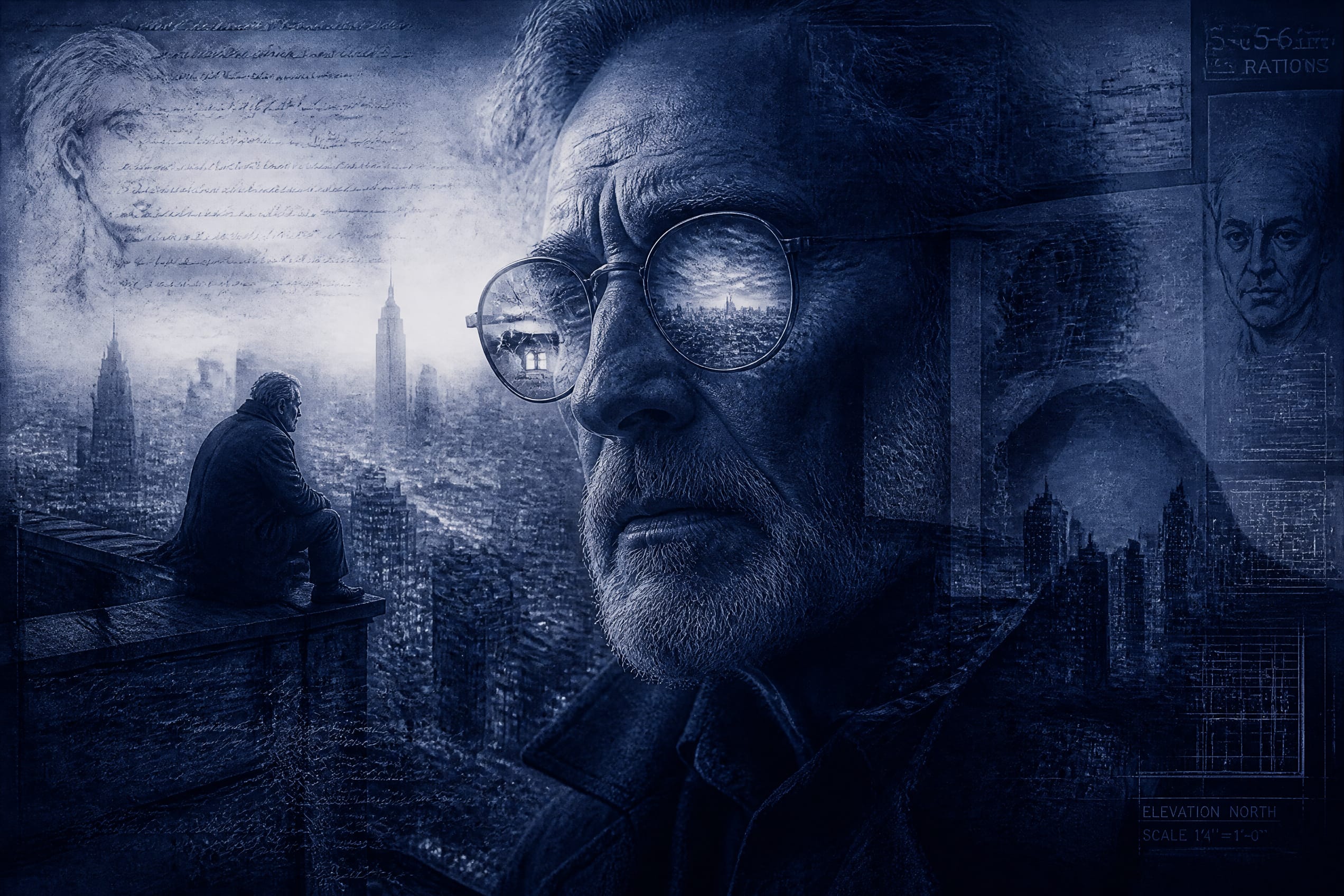
It’s one-size-fits-all medicine — and that bullshit didn’t work for clothing, so why the hell do they think it’ll work for the mind?
When I hit full-blown crisis mode, I was lucky. I got an intern who actually gave a damn. She helped me start living with PTSD instead of suffering from it. She listened. She paid attention. She saw the person, not the file.
My psychiatrist? Worthless. I called him my dope man to his face. He corrected me — gave me his title like I was some illiterate twit. I told him I didn’t give a damn what his title was; he was still my dope man, and the least he could do was give me some good shit.
Instead, I got the cheap stuff — the kind that made me feel disrespected, doped, and disposable.
But I’ve been lucky since then. I have a care team now that actually seems to give a damn about me as a person — not just a walking diagnosis. I don’t know exactly how that happened, but I’ve got a small inkling. See, there were a few medical professionals who became casualties of my unfiltered disdain for incompetence. I didn’t hold back. Maybe that left a trail — maybe word got around that I wasn’t someone to bullshit. Whatever it was, I finally ended up with people who listen. Who treat me like a human being instead of a puzzle to solve.
Medication isn’t the solution. It never has been. It’s the work of the individual — the daily grind of facing the mirror and doing the damn work — that brings real results. I’ve worked with soldiers and civilians who carry the same ghosts, and the truth doesn’t change. The treatment only works when you treat the person. They’re not data points. They’re people. Treat them as such.
We are people. We deserve to be treated fairly. Not pitied. Not managed. Not turned into a statistic on a spreadsheet. We deserve the love and fairness that every living soul on this planet is owed.
If you want to help someone, start by listening. Don’t tell them what they need — ask them. Sure, you might know a few things, but don’t force it. Offer choices. Let them decide for themselves. Nobody likes being told what to do. And the ones who say they don’t mind? They’re lying.
Healing isn’t a factory line. It’s messy, human, and different for everyone. What calms one person might break another. What saves you might drown me.
There was a saying back in the day, before online dating. We used to say, “You got a sister or a friend?” — a way of saying, you’re good people, got anyone else like you?
That’s how I feel about good mental health professionals. When you find one who actually listens — who sees you as a person, not a case number — all you can think is: You got a sister or a friend?
But in my experience, most of these so-called mental health professionals don’t act like that.
Two words for you:
Uncultured Swine.
(It’s still a compliment.)
Author’s Note:
This piece is about stigma — the kind that hides behind silence, systems, and credentials. It’s about learning that real strength doesn’t come from toughness or treatment plans. It comes from listening — to yourself, to others, to the pain no one wants to name. Because healing, like humanity, never fits into a box.
Daily writing prompt
What’s a topic or issue about which you’ve changed your mind?
What it means to be labeled, to mock, and to finally understand.
There’s something about that question — “Tell us about a time when you felt out of place” — that stirs up more than I want to admit. For someone like me, admitting fear or discomfort has always felt like breaking an unspoken code. Society still treats fear like a weakness, and men especially are taught to hide it behind our egos. I’d love to say I’ve outgrown that, that my ego doesn’t run the show anymore. Truth is, I’d be full of shit if I said that. Ego still tugs at my decisions, but I do my best to keep it in check.
I remember when I was first diagnosed with PTSD. I wasn’t ashamed of it—I told friends and family outright, thinking honesty would bring support. I thought they’d rally, that they’d have my back in this new state of being. I was wrong. What I found instead was silence where I expected comfort, distance where I expected closeness. I heard whispers that weren’t really whispers, caught side-glances dressed up as concern, saw pity masquerading as care. The labels came quick: “Touched.” “Not right in the head.” And my personal favorite—“Well… you know.”
Looking back, I can admit there were times I blew things out of proportion. PTSD has a way of magnifying shadows until they look like monsters. But there were other times when I was dead-on, seeing things that others couldn’t because they hadn’t lived through it. Learning techniques to live with PTSD—rather than just suffer under it—changed my perspective.
I realized some of the fears I carried were invisible to others, because they’d never walked in that dark. And I also realized some of the fears they carried, the ones they thought were dire, looked small to me because I’d been through worse. That’s where the real challenge came in: not mocking them for what seemed trivial, not throwing back the same treatment they’d given me. That shit was hard. To pass up the chance to feed them the same poison they’d fed me? Damn near impossible.
But I knew better. I knew what it was like to be on the receiving end of whispers, side-glances, and labels. Mocking them—even quietly, even under my breath—only made me worse. It made me just like them. And that realization? That was harder to swallow than the diagnosis itself.
Before I retired, I spent the last few years working with people living with all kinds of mental conditions. What struck me wasn’t just the weight of their struggles, but how deeply they wanted to be “normal.” That desire ran so strong it could push them into choices that would shape, even haunt, the rest of their lives.
I came to understand something: it’s one thing to know, intellectually, that it’s okay to be different. It’s another thing entirely to believe it in your bones. I saw people wrestle with that gap every day, and in their fight, I saw myself. Being out of place had taught me what it felt like to carry that longing, that shame, that desperate wish to blend in. And maybe that’s the only gift of being “othered” — the chance to understand someone else’s battle, even when they can’t put it into words.
Perhaps, in some ways, this is what Memoirs of Madness is about. I didn’t start the blog with that purpose in mind, but maybe it has become a place to name the fears we all carry — the ones that make us feel out of place in our own lives. Or maybe it’s nothing of the kind. Maybe it’s just one man behind a keyboard, running his mouth. I’d like to believe it’s more than that. That in speaking my demons aloud, I give someone else permission to face theirs. That I remind them they’re not as alone as they think.
Author’s Note: This piece grew from a prompt asking about a time I felt out of place. As always, I didn’t take the safe route. The question became an exploration of stigma, ego, and the long road toward compassion. If nothing else, I hope it reminds someone out there they aren’t as alone in their demons as they might believe.
Personal Reflection Depression rarely looks like the grand collapse we see in films—it’s slower, quieter, a kind of suffocating monotony. Yet, it is very real. It’s not the dramatic breakdown in a rain-soaked street; it’s the heavy silence that lingers in the kitchen at 2 a.m. It’s the untouched dishes, the stalled conversation, the way light feels thinner when it slips through the blinds. It’s the boredom that corrodes everything, the dull ache of simply existing.
Anne Sexton strips the monster of its glamour. She reminds us that depression isn’t always a tragedy to be performed; sometimes it’s just…boring. And maybe that’s its cruelest trick—it convinces us that even our suffering has become ordinary. Sexton’s defiance is in the small things: soup, light, fire in the cave. Not grand gestures, not a cure, but a refusal to let the dark have all the power.
It’s not about pretending the cave isn’t real—it’s about refusing to let it stay pitch-black. Small rituals—heat, nourishment, a flicker of flame—don’t erase the cave, but they carve out enough space to breathe inside it. Sometimes survival isn’t about escape—it’s about claiming one corner of the darkness and saying, this part is mine, and I will not let it go out.
Reflective Prompt for Readers When the cave closes in, what’s the one small act that keeps you from going under completely? Not the big, polished answers—the raw, ordinary thing. The soup. The match. The flicker that proves you’re still here. What is it for you, and when was the last time you reached for it?
Looking back, I see the shift clear as day. In 2023, I leaned hard on control—details, contingencies, the belief that if I just tightened the screws enough, nothing could come loose. By 2024, the screws had already rattled out, and I was staring down a kind of fragility I’d never known before.
One year, I was convincing myself discipline was enough. Next, I was joking about my “part-dragon phase” just to soften the gut-punch of realizing I’m flesh and blood like everyone else. What hasn’t changed is the truth at the center: the details I need to pay attention to aren’t the external ones. They’re internal—the quiet daily choices that keep me alive, standing, and present with the people who’d notice if I wasn’t.
That’s not the answer I wanted to give, but it’s the only one that matters.
For most of my life, I’ve been the kind of person who sweats the details. I suppose it grew out of fear—fear of making a mistake, fear of letting something slip. My default mode was to be squared away: backup plans layered on top of contingency plans, every angle covered, every risk accounted for. If you’d asked me back then what details I needed to pay more attention to, I would’ve shrugged and said, “None. I’ve got it handled.”
But then life came along with its own set of details I couldn’t spreadsheet or strong-arm my way through. Health issues hit, and with them came changes I didn’t ask for and didn’t want. At first, I fell into my usual pattern—pretend control, mask the cracks, mutter “fuck it” when the new limits pressed too hard. But weakness has a way of humbling you. For the first time, I wasn’t sure how things would turn out.
That’s when my circle—the family I chose—stepped in. They reminded me I wasn’t done fighting, even when my body said otherwise. I’m not used to relying on anyone, but I learned to lean when I had to. It turns out that those details matter just as much as the ones I used to obsess over.
So what do I need to pay more attention to? The unglamorous, invisible stuff: eating better, resting when I should, saying no before I collapse, listening to my people when they call me on my bullshit. All the little choices that keep me here, present, and alive.
It’s tempting to say I’m doing this just for myself, and on some level that’s true. But it isn’t lost on me that my brothers, my friends, my people—they want me around too. There’s nothing better than feeling that kind of love. And honestly, I’m getting too old to risk another beating, figurative or otherwise.
The end of the month always brings a surge in paperwork. Spreadsheets, backend checks, the kind of admin work that keeps my websites standing upright instead of collapsing in a heap of missed updates and broken links. Usually, I keep pace. But this month — hell, these last two months — I’ve been dragging. Emotion takes its toll, and when it hits, it doesn’t just knock you down; it scrapes off your momentum.
And tomorrow isn’t just the end of the month. It’s the anniversary of my wife’s death — the moment that split my life into three acts: the life before, the life during, the life after. Some years, I handle it better. Some years, it feels like the wound was carved just yesterday. But I’ve learned forgetting isn’t the goal. The point is remembering fully. Letting myself feel the pain, the joy, the sorrow, all tangled together in the memories that built me.
Funny thing is, she’d probably put her foot up my backside for the way I’ve been living. Can’t say I’d blame her. I’d probably kick my own ass, too. I remember the man I was, and I see the man I’ve become. Some parts I’m proud of; other times, I just shake my head at the mess I’ve gotten myself into. Jackass comes to mind more often than I’d like to admit.
I catch myself wondering who I’d be if she hadn’t died. Better? Happier? Maybe just more ornery — that last one feels like a safe bet. (Truth is, the orneriness has been growing by the day, and I’ve made my peace with it.)
But here’s what I know: no matter what might have been, this is the life I’ve got. The work still waits. The words still demand to be written. The fight — for the things I believe in, for the things I’ve spent my life creating — hasn’t gone anywhere.

So yes, tomorrow there will be admin. There will be memories, some sharp enough to cut, others soft enough to cradle. There will be the temptation to run from the ache, to hide in distraction or numbness. But my mama didn’t raise no punk. I’ll remember. I’ll work. I’ll fight. And I’ll laugh at myself along the way, because wisdom without humor is just another burden.

Author’s Note: Grief never leaves — it just changes costumes. Some days it appears as silence, some days as laughter, and some days as the sharp edge of memory. But I’ve learned to live with it, and sometimes even laugh at it. Tomorrow will hurt, but it’ll also remind me why I keep showing up for the work and the fight. That’s how I honor her and myself.
When I was a kid, brands were a kind of social currency. Clothes weren’t just fabric; they were shorthand for who you were. Madre Khan didn’t have much, but she made sure I never went hungry or without a place to sleep. Back then, I thought the right label could hide the lean years. We lived through the “generic” craze—plain white packaging, bargain prices—and adults preached, “You pay for what you get. Quality costs.” It felt like gospel.
For years I carried those lessons forward. My loyalties were automatic: Dickies for everyday wear, Logitech for office gear, Apple for everything but my phone. I even joked about being a brand whore, because at least I knew why I liked what I liked. My stepmother once shook her head at how casually I spent, but I’d tell her I bought what I needed and rarely worried about price. Quality justified the tab.
Lately, the gospel rings hollow. The “solid” names I grew up trusting don’t always deliver. Prices climb, quality slips, and you can’t put a price on quality now sounds like something printed on the inside of a fortune cookie. More than once, a no-name hard drive or keyboard has outperformed the legacy brand at half the cost.
These days I notice another shift. I own plenty of off-brand gear that works just fine for what I need. Retirement changes the math: I don’t need professional-grade tools anymore, but the ones I have will serve until they die. I used to research only within the circle of names I trusted; now the field is so crowded you watch the distributor more than the logo. Even established vendors let quality control slide, which often leaves me repairing old equipment or building my own replacement. I don’t buy desks or bookshelves anymore—I build them. I’ve started refurbishing old furniture and appliances with lower-grade tools and find the process oddly satisfying.
Just today I paused mid-essay to repair an outdoor extension cord. A simple fix would’ve done the job, but I couldn’t resist the upgrade—added roughly twenty-five feet for good measure. It’s a small thing, but it says a lot: why settle for a patch when you can quietly rewrite the boundaries of your backyard? Somewhere, Madre Khan is smiling at the sight of me splicing wires with the same patient curiosity she once showed when I tore things apart for parts.
I still research before I buy, but loyalty no longer seals the deal. If a nameless drive stores my files without complaint, it wins. If a plain keyboard keeps up with my writing, I don’t care whose badge sits on the box. The brands I associate with now aren’t names—they’re the ones that keep their promises.
Maybe that’s the real lesson: value isn’t in the logo, it’s in the follow-through. Childhood taught me to chase quality. Adulthood taught me to measure it myself. These days my motto is simple—get the most bang for the buck and enjoy the build along the way.
Sleep and I are estranged lovers—centuries of cold shoulders and midnight betrayals between us. Sleep is like that perfect lover we imagine we could find, but do we really want perfection? Knowing that perfection is something for shitbirds and affirmation junkies. There’s no help for the shitbirds, but the affirmation junkies—there’s a new 5 a.m. virtual meeting. I think that’s the word. Who knows? I can’t keep up. Hell, I can’t even get up. If we reconciled now, the shock might kill us both—like a jolt of mainlined caffeine through a cracked vein.
I could try being nicer to people. Be giddy, even. (Insert laugh track here.) But no—perish the thought. Niceness feels suspicious, like a door-to-door guru peddling enlightenment for the price of my dignity.
The writer in me says write more, which is hilarious because I already write every damn day. My editor swears I start a new series just to watch her eye twitch. Sometimes she sends me texts that are just a single, vibrating ellipsis. I plead the Fifth. She rolls her eyes so hard I can hear it over the phone. The other day she asked, “When are you going to take the next step? You know you’re ready, right?” Maybe she’s right. Maybe it’s time I believe in myself a little more—have faith in the work I keep throwing into the world like sparks from a stubborn match.
Still, there’s something quietly miraculous about creating work you love and finding out strangers love it too. For years, I didn’t have the time—raising a family will eat decades before you can blink. (Contrary to the baffling opinions of certain buttwipes who think parenting is optional.)
But the thing I’d truly like to do more of? Pay attention to my art. Not for money, not for likes—just to see how far I can push it. No limits, no internal hang-ups, none of the flimsy excuses we invent to dodge our own passions. Retirement has made one thing clear: I’m a storyteller. Always have been. Every skill I’ve picked up—writing, photography, film work, design—has been another star in the same battered sky, flickering through the smog of burnt coffee and late-night keystrokes. Each one lights a different corner of the story. Perhaps it’s time to stop forcing the tale into a single constellation and let the stars arrange themselves, allowing the story to decide whether it shines as prose, image, film, or sound.
As I write this, it begs the question… What if? What if I let go and took the plunge? Will doubt finally fall away? Will I edge closer to whatever version of me is hiding under all this noise—no matter how cleverly I might hide myself? Not to get hippy-dippy, but isn’t that the engine under all of this—the quiet force beneath the surface, behind the mask we flash to the world? Excuse me while I glue my mask back together. They don’t epoxy like they used to. Progress my ass.
Maybe sleep will keep sulking in the corner. Fine. I’ll keep mapping my own constellations until the night runs out of darkness. Sleep can wait. Niceness can rot. The story gets every last hour I have.
Geez, where do I start? There’s a whole damn syllabus of lessons I should’ve heeded earlier. One of the few perks of aging—besides knowing which joints will protest the weather—is the slow burn of wisdom. The kind you don’t get from books or podcasts. It comes wrapped in mistakes and bad decisions, leaving scars you can trace with your fingertips when the night goes too quiet.
Most of us have no idea what we’re doing. We’re trained to react instead of pause, to sprint when the real answer demands a slow walk and a long think. That made me an oddball—the guy who couldn’t walk and chew bubblegum, as the saying goes. I used to think something was broken in me because I didn’t move like my friends. So I faked it. Tried on their swagger like an ill-fitting coat and wound up knee-deep in more trouble than any decent statute of limitations allows. No one forced my hand. Every bad turn was my choice.
Eventually I needed to look in the mirror and recognize the person staring back. One night I finally did and whispered, “Where’d I go?” Instead of facing the answer, I reached for alcohol. At first it felt like an experiment; by the time the haze lifted, I realized I wasn’t just drinking—I was binge drinking. Like every drug, it took over. I drank to be accepted, but the acceptance I craved wasn’t external. It was the quiet inner nod that says this is who you are, faults and all.
I wasn’t sure I could follow through—if I had the courage to become me. I’d stand in a room full of people and still feel lonely. Everything felt wrong, yet temptation stayed strong: keep hiding like everyone else, stay two-faced and plastic. I knew every effort to fake it was bound to fail. I hate being wrong and go to great pains to avoid it. But here’s the twist—I was completely wrong, and I’m more than okay with it. Alcohol was so woven into my life I once believed it helped me find my muse. Pure horseshit. Fifteen years ago, I put down the bottle and I’ve been writing my ass off ever since.
It’s okay to be yourself. Let your weirdo flag fly. If anyone tells you different, the only appropriate and dignified response is a proper, “Fuck off!” For me, I had to whisper, “Sorry, Mom.” She wanted me to stop cussing for Lent. I told her I wasn’t Catholic anymore, but she wasn’t buying that as an excuse for a foul mouth.
If I had to pick one lesson, it’d be this: it’s alright to be me. Not the version patched together from other people’s expectations. Not the quiet kid pretending to enjoy chaos. Just me. Turns out the hardest permission to grant is your own.
Author’s Note
Never let a shitbird talk you into being something other than who you are. Of course you’re going to evolve—that’s the point of living—but growth isn’t the same as surrender. Don’t sand down your edges just to fit someone else’s blueprint. The right people will respect your crooked angles and the wrong ones will drift off when they realize you’re not bending.
Sobriety taught me this, but you don’t need a bottle to learn it. The pressure to perform is everywhere—family dinners, office politics, the endless scroll of curated lives. Remember: becoming isn’t about becoming acceptable; it’s about becoming unmistakably yourself.
Reflective Prompt
Think back to a moment when you felt the pressure to shrink, fake, or bend just to belong.
What did you trade away in that moment—time, voice, dignity, a dream?
If you looked in the mirror right now, what question would stare back at you?
What would granting yourself full permission—your own quiet yes—actually look like?
Write it down. No filters, no audience. Just you and the truth that refuses to stay hidden.
The question lands like a pebble in the gut. Not heavy, but unsettling—because it asks for a tidy answer when my life has been anything but tidy.
I’ve led unintentionally and followed on purpose. I’ve watched silence choke a room, felt the weight of nothing happening, and stepped forward because someone had to. And I’ve stepped back when my presence would only add noise. Both moves have carved me in ways no title ever could.
The military taught me early that leadership isn’t a birthright. You follow first. You fail. You observe. You learn how to carry the weight before you dare to lift it for someone else. Titles are just badges; the real work happens when no one is clapping—when you steady someone else’s fear while keeping your own hands from shaking.
Leadership, for me, is a rhythm. Some days you step up and speak. Other days, you keep your mouth shut and hold the line. The trick is reading the moment and being honest enough to become what it needs. Courage without a parade. Clarity without applause. Responsibility without the crown.
I’ve stepped forward when a group project stalled, laid out the path, and then faded back when momentum returned. I’ve seen teammates like Maya rewrite a messy spec and pull a team back from drift without a single title to their name. That, too, is leadership: the ability to lead, follow, or stand aside—and to know which role the moment requires.
So do I see myself as a leader? I see myself as a reader of moments. Sometimes the room needs a calm hand. Sometimes it needs me to get out of the way.
That’s the work. That’s the honor. That’s what the silence knows.
Author’s Note Leadership isn’t a title I chase. It’s a weight I sometimes shoulder when the room tilts and no one else moves. Writing this was a reminder that the moments that define us rarely come with applause—they come with silence, and the choice to break it or hold it.
How do you read the room when the air goes still? I’d love to hear the quiet rules you live by.
Relax? I’m not even sure I know what that word means. I can define it, sure. I can even toss it into a sentence with some authority, like I’ve got the concept nailed down. But when it comes to actually doing it—executing the mysterious act of “relaxing”—I draw a blank.
That’s not to say I haven’t had relaxing moments. I’ve had a few, here and there, like finding an unexpected pocket of calm wedged between chaos and obligation. But that’s different than inhabiting a true state of relaxation. If such a state exists, it must’ve slipped past me sometime after childhood and never bothered to circle back.
However, I do have the ability to press pause in my mind in small increments. It’s become quite usual over the years. For example, I didn’t write again and ended up watching a couple of sports movies that, for some reason, had strippers in them. Before you sit in judgment—I didn’t write the movies. Still, I caught myself thinking about adding elements like that into a story. Hmmm. I like that. Excuse me for a minute while I make some notes. Okay, I’m back. Where was I?
For me, it’s more like waiting for the noise to die down rather than learning how to step out of it. And maybe that’s the rub: real relaxation isn’t about moments—it’s about being able to stay in that state, to stretch it out until it holds you. I haven’t cracked that code. Maybe I don’t even want to.
Oh yeah, relaxing. Yeah, I got nothing. So excuse me while I check out the latest Star Wars trilogies. You just can’t keep the Force waiting.
I didn’t start blogging out of passion. I started because somebody told me I needed a website. Truth is, I didn’t even know what a blog was. I opened an account here on WordPress, a couple more elsewhere, and thought traffic would just follow me, the way stray dogs follow a food truck. Wrong. This place sat dead for nearly ten years—so long I forgot it existed—until one random day in 2022 when a notification lit up my screen. A new like. WTF? From where? I clicked the link and landed back here, staring at the ghost of myself.
When I first began, I was faceless. Anonymous. That mask was armor, and it gave me freedom. I could bleed here, collapse here, spit out my fears and grief without worrying who was watching. At events I’d hear people talk about my work—sometimes praise, sometimes poison—and they had no idea the person standing close enough to smell their cologne was the one who wrote it. Sometimes I’d even push them, ask what they really meant, still hiding my identity like a loaded gun in my pocket.
Then came the rupture. Tragedy. Exposure. Suddenly there was a face to the words. My face. And Mangus died in that moment. The mask was gone, and anonymity was stripped clean.
Why did I come back? Simple: the people here. When nobody read my words, I read theirs. Hours spent slipping into voices from around the world, getting lost in stories that weren’t mine. Even without traffic on my end, the connection was real. Still is, when I manage to claw time out of the chaos. Since 2023 this blog has grown beyond what I imagined it could be. Grateful doesn’t come close. Appreciation feels too small. What I feel is heavier, messier. It sits with teeth in it.
Now I blog to bleed. To heal. To rage. To rejoice. To carve my words into the silence before it swallows me again. Blogging reminded me who I was before chaos dictated my breath, and it taught me something else, too: the strength was always mine. I just forgot where I left it.
Author’s Note: The support I receive from my WordPress peeps keeps me motivated and engaged. Thank you. What started as a faceless outlet has turned into something I never imagined—a place where words aren’t just spilled but witnessed. Every like, every comment, every late-night read means more than I can put cleanly into words. You all remind me that writing doesn’t have to echo in a vacuum. It can breathe. It can bruise. It can belong.
There’s no shortage of nifty acronyms about goals floating around the internet. Toss a dart and you’ll hit one.
When I was growing up, we didn’t talk about “goals.” We had tasks. You made a checklist, worked through it, and crossed things off. Simple. Direct. No mysticism, no motivational posters required.
It wasn’t until I was an adult that I started hearing people talk about “goals” like they were magic spells. Set your goals, visualize them, and manifest your dreams. Cute. But does anyone ever stop to ask what the hell a “goal” actually means? Does it have a deadline? A measure? Or is it just a vague wish written in business casual?
When I was in the military, I leaned hard on the task-oriented system. Every mission boiled down to clear tasks that could be checked, tracked, and rechecked. Later, when I moved into social services, my organization introduced another acronym: S.M.A.R.T. goals. At first, I hated it. Not because the form was broken, but because the instructions were. People filled it out and treated it like a box-checking exercise.
So, I started using it alongside my task-oriented system. That’s when it clicked. Paired with a real process, S.M.A.R.T. stopped being fluff and started being functional.
What the Hell Are S.M.A.R.T. Goals?
It’s simple:
S – Specific: Clearly define what you want to accomplish.
M – Measurable: You can track it — numbers don’t lie.
A – Achievable: Ambitious, not impossible.
R – Relevant: It actually matters to you.
T – Time-bound: A finish line, not “someday.”
That’s it. Straightforward enough. But the trick is using it right.
How to Use Them Effectively
Most people treat S.M.A.R.T. like a worksheet you fill out and forget. That’s not planning — that’s paperwork.
Here’s what makes it actually work:
Break it into tasks. A goal is only real if you can do something today that moves it forward.
Apply P.A.C.E. thinking. Your Primary plan, Alternate options, Contingency if things shift, and Emergency fallback. Same system I use for emergency preparedness.
Review often. If you never check the plan, it dies on the page.
Real-World Example: Writing
Vague goal: “I want to write more.”
S.M.A.R.T. goal:
Specific: Publish one blog post per week on Memoirs of Madness.
Measurable: One a week = 4 per month.
Achievable: Realistic with your schedule.
Relevant: Writing sharpens your craft and feeds the community.
Time-bound: Do this for 12 weeks, then review.
P.A.C.E. it?
Primary: Write at your desk on schedule.
Alternate: Draft on your phone if you’re away.
Contingency: Record a voice memo, transcribe later.
Emergency: Jot bullet points in a notebook — messy but usable.
Suddenly, “write more” isn’t a dream. It’s a system you can actually work.
Real-World Example: Preparedness
Vague goal: “I want to be ready for blackouts.”
S.M.A.R.T. goal:
Specific: Build a 72-hour blackout kit with food, water, and lighting.
Measurable: 3 gallons of water, 9 meals, 3 working lights.
Achievable: Start with basic supplies, expand later.
Relevant: Storm season hits every year — this matters.
Time-bound: Have it assembled in 30 days.
P.A.C.E. it?
Primary: Store kit in the house.
Alternate: Keep a smaller kit in the car.
Contingency: Borrow or share with neighbors if needed.
Emergency: Improvise with what’s on hand — but only if you must.
Now, you’re not just “hoping to be ready.” You’ve got a clear target with backup layers.
Final Word
S.M.A.R.T. goals aren’t magic. They’re not perfect either. But paired with tasks and P.A.C.E. thinking, they actually become useful.
Because at the end of the day, a goal isn’t about the acronym. It’s about whether you can move it from “idea” to “done.”
Question for You: When you set a goal, do you actually break it down into tasks, or does it stay a vague idea floating around in your head? And if you’ve ever used something like S.M.A.R.T. goals — did it actually help, or did it feel like just another form to fill out?
I can’t tell you when it started, but some genius decided “surreal” was the sexiest word in the English language, and everyone lined up to mangle it. Back in the day, we actually looked words up in a dictionary, underlined them, wrote them down, and tested them in sentences to see if we were using them right. Madness, right? Now it’s easier to grab a word and make shit up. Surreal used to mean dream-logic and fever visions—like stepping into a Dalí canvas where clocks melt and eyes bloom into roses. Now it’s slapped on oat milk shortages or spotting a C-list celebrity in baggage claim. “It was surreal,” they sigh, like they just returned from some cosmic vision quest. No—it was Thursday. And I still had one more load of laundry left. Do I have enough quarters?
And if “surreal” has been abused to the point of boredom, “unprecedented” is its overachieving twin. Unprecedented was used to pack heat, carry weight, and demand attention. Now it’s what people whine about while waiting for a latte—right before bragging about a thrift store “treasure” that’s just a busted lamp with a missing cord. These days, it’s duct-taped onto headlines, CEO pep talks, and press releases written by people who wouldn’t buy their own pitch. “We live in unprecedented times,” they chant, like the words alone could cover the rent or clean up the wreckage they helped cause. People actually know what the hell they’re talking about. Now that would be unprecedented.
These two words have become the lazy twins of public speech, tag teaming their way through news broadcasts, political soundbites, and influencer captions. Surreal and unprecedented. Say them together enough, and they dissolve into flavorless mush, like a stick of gum chewed until it’s nothing but rubber and spit. That’s the real surreal moment—watching language bleed out in the gutter while everyone nods along like it’s still breathing.
Author’s Note: This one started as a gripe about “surreal” and snowballed into a two-word autopsy. I don’t expect people to stop using them—they’ve already been beaten into cliché—but maybe we could save them for moments that actually deserve them. Until then, I’ll be over here, counting quarters and waiting for the day “unprecedented” gets the dictionary funeral it deserves.
The words slid through my dream and cracked it in half. I came up out of the dark slow, like surfacing through tar. The TV in the next room kept spitting out canned laughter, each burst bleeding through the plaster like a bad memory you can’t scrub out.
I left breadcrumbs for them to find me. Hell, I practically lit the path in neon. So why the delay? They should’ve been here hours ago. Unless this is the variantwhere they let you stew first, make you sweat until you start negotiating with yourself. I’ve seen that play before.
I hope they come. No—I need them to. It’s the only thing holding the walls together. But hope’s a sucker’s bet. Optimism’s for pretty people and the kind of bastards who get served first in every bar. The rest of us? We know the rules. They get champagne. We get the backwash.
Paranoid? Maybe. But paranoia’s just the truth with the varnish stripped off. And here I am, sitting in a sweat-stained chair in a mildew-sick motel room with a suitcase full of cash at my feet. Waiting for men without faces to come take it—and maybe me—with them. People say those types don’t have a code. That’s bullshit. Everyone’s got a code. Theirs just doesn’t match yours, and it sure as hell doesn’t care about your pulse.
The suitcase sits there like a loaded confession. The clasps are worn, the handle tired, but the weight… Jesus, the weight hums in the air. Life-changing kind of weight. The “fresh start” kind. But that’s a fairy tale for the clean and the lucky.
Me? I’ve got ghosts baked into my bones. Every choice I ever made cut a groove I can’t climb out of. And no matter what’s in that case, I’m not getting out clean.
Author’s Note: It’s been weeks since I’ve thrown down a little flash fiction. I’ve been neck-deep in the world-building swamp for a project that keeps getting bigger every time I turn a corner. Figured I’d come up for air before it swallows me whole. This one’s thanks to Fandango’s Story Starter and FOWC for tossing me the match—sometimes you just need the right spark to remember you still know how to burn.
We’ve been trained to expect clarity. To believe every big feeling must end with a moral— A neat conclusion, a TED Talk takeaway, a three-step solution.
But here’s the truth, I keep chewing like nasty gristle:
Some things don’t resolve. Some stories stay jagged. And some blogs, this one especially, aren’t built to clean up after your pain. They’re built to leave it on the floor, still breathing.
I started Memoirs of Madness because I didn’t know what else to do with the words.
Over a decade ago, someone said every writer needed a blog if they were serious. I didn’t think much of it. I didn’t know if I was serious. I just knew I had things in me that wouldn’t stay quiet.
I wrote because I needed to. Still do. Not to change the world. Not to craft a brand. But because silence costs too damn much.
So when you ask me, “What change do you want your blog to make?” I honestly don’t know. And that’s not me being evasive. That’s me refusing to lie to you.
I could dress it up. Tell you it’s about healing. About expression. About building a community for the unseen. All of which might be true, sometimes. But defining that change in a singular, bite-sized way would flatten what this space actually is.
This blog isn’t one thing. It’s a mirror that distorts and reveals depending on how the light hits. It’s rage on Monday, softness on Tuesday, confession by Thursday, and grief that overstays its welcome every damn Sunday.
If Memoirs of Madness changes anything, I hope it changes the way you think about being unfinished.
I hope it disrupts that polished self you wear in front of strangers. I hope it reminds you that not knowing is still worthy of a voice. Those messy, unresolved, and unsellable truths still deserve the page.
I hope this blog pisses you off sometimes. Not because I’m aiming to provoke, but because something buried in you recognized itself and flinched.
Because it sure as hell pisses me off— dragging up things I thought I buried, making me admit shit I’d rather leave unsaid. That’s how I know it’s honest.
So no, I didn’t build this place to change the world. I built it to survive mine.
And if, by some luck or accident, it helps you survive yours— then maybe that’s the kind of change that matters most.
When we were kids, life taught us early how far a nickel could stretch—and how often it didn’t. We’d walk the streets collecting bottles and cans, hoping to scrape enough together for a sugar rush at the corner store. Back then, they were Mom-and-Pop joints, the kind where everyone knew your name and your running tab of trouble. We’d stand at the candy rack, counting and recounting our coins, trying to game the system and get the most candy for the least cash. Never worked out like we wanted. Especially when a new treat hit the shelf, shiny and out of reach.
Fast forward a few decades. I’m in one of those little grocery stores that somehow survived the big-box purge. I catch sight of two kids doing that same math on the floor, coins spread out like a desperate poker hand. Something about it yanked me backward in time, to the weight of nickels in a sweaty palm and the taste of wanting more than you could buy.
So I slid the cashier a few bills and told her to make sure those kids didn’t have to choose between sour worms and chocolate that day. The store owner, in his well-meaning way, pointed me out like some small-town hero. The kids lit up, grinning at me like I’d handed them the moon.
And that’s the part I hated. Not the kids’ smiles—hell, that’s the good stuff—but the fact that it wasn’t supposed to have my name on it. My father brought strangers home, gave them a meal, a place to sleep for the night, and never said a word about it. My stepmom told me those stories later, like family lore whispered over coffee. I grew up believing you do what’s right, no matter the cost. I didn’t understand this then, but as I got older, it began to resonate.
Kindness, the way I learned it, is quiet. It’s supposed to slip in, do its work, and leave without a sound. That day, the sound of my name broke the rule I was raised on.
If you asked me this morning, I’d have said yeah, just another day in the trenches. But now? Sitting in a half-dismantled lab, my old Mac humming like it’s judging me for abandoning it years ago, and my desktop sulking in the corner after another crash-fest—I’m not so sure.
Today was supposed to be simple: get the other MKU sites moving, feed the beast, keep the universe spinning. Instead, my main machine decided to reenact a demolition derby every time I opened a design file. After the fourth hard reboot, I did what any sane person would do—I shut the whole thing down, stared at the chaos, and muttered a few choice words about technology that I won’t repeat here.
Reorganizing the lab felt like a hostage negotiation with my own mess. Cables everywhere, notes buried under old coffee cups, and me wondering if “organized chaos” is just code for “I gave up.” Eventually, I gave in and switched to the Mac. It felt weird, like moving back into your childhood bedroom—familiar walls, but you don’t quite fit anymore.
And because I never know when to leave well enough alone, I decided an active series needed a complete rewrite. Not a tweak, not a tidy edit—a tear-it-down, salt-the-earth, start-from-scratch rewrite. Why? Because “active” doesn’t mean “good,” and I’m done posting just to keep the lights on. If it doesn’t hit the mark, it burns. That’s the rule.
So, was today typical? In some ways, yeah—just another battle between me, my machines, and the madness of trying to build something bigger than myself. But in other ways, no. Today came with surprises: chaos, frustration, a few muttered expletives, and one revelation worth keeping—this Mac keyboard? Absolute magic. The rest of my machines are getting one whether they like it or not.
Maybe that’s how most days really are in this line of work: half plan, half fire drill, always one keystroke away from starting over.
You ever walk into a room expecting your voice to boom like a prophet’s and instead get met with blank stares and TikTok scrolling?
That was me two weeks ago, stepping into a summer workshop with students aged 8 to 17. I came in with fire and myth, ready to guide them into storytelling. The younger kids couldn’t sit still long enough to absorb anything. The teens? Aloof at best. My usual trick—command the room with presence, reinforce with voice—didn’t move the needle.
I walked out thinking: I might be losing my mojo.
So I did what any story-hardened madman would do.
I built them a universe.
The Ashoma Codex rose from that frustration. An entire mythos crafted for them—a sacred order of supernatural beings bound by fire, memory, and sacrifice. Vampires and werewolves. Secret Circles. Flame-born rites. I even spun up a website just for them, with lore, rituals, and a place to submit their own creations.
And then today, I got word from their instructor: they love it.
They’re building characters. Creating art. Engaging with the world I made. Turns out they didn’t need a lecture. They needed a world that would speak their language.
It’s been a long time since I had that much fun doing something for someone else.
Forging the Forge (with Fewer Bugs and More Story)
Let’s talk about The Narrative Forge (TNF)—my dedicated space for longform fiction.
Eventually, it’ll be home to five deep-cut series:
Ashwood County – Southern Gothic horror soaked in grief and ghost stories
No Half Measures(formerly Cop Stories) – A noir detective tale where trust is dangerous and truth cuts deep
Reilly McGee: Misadventures at Crestview High – 1980s chaos, coming-of-age style, with more heartache than heroics
Bourbon and Rust – Grit, regret, and a neo-Western sense of justice
Truth Burns – Emotional aftermath and the slow claw toward redemption
The plan: post one chapter a week, rotating series. I’m kicking things off with Ashwood County as I work out the kinks and refine the reader experience.
TNF is my main focus right now. But soon, House of Tunage and The Howlin’ Inkwell will start to move forward again too—each with their own voice and rhythm. And yes, visual arts are coming as well. That site’s still under development, slowed down by the same quirks that’ve been haunting the others.
You guys remember The Knucklehead Report? I gave it its own space so I can rant, roast, or rave about the books and movies that cross my path—without crowding out the rest of Memoirs of Madness.
All of this—the new structure, the site spinoffs, the redesigns—is meant to do one thing: streamline MoM. Make it cleaner. More focused. Easier to navigate without tripping over half-finished drafts or misplaced experiments.
I don’t know which projects will thrive, but right now, building them helps me clear the noise and move forward.
It depends on the work. And, if I’m honest, the version of me doing it.
If I’m handling logistics—email chains, platform fixes, all the invisible gears of the MKU—I’ll throw on a podcast or an audiobook. Something with steady cadence. Human voices filling the space so I don’t have to. It’s functional. Grounding. A distraction that still lets me move forward.
But when I’m writing—when the words actually matter—I need music. Not background noise. Not ambiance. Music that moves something.
There’s a point I hit when the doubt creeps in, when the old story shows up: You’re not good enough. You’re not ready. You don’t have anything left to say. And that’s when I reach for the headphones.
Because music gets me past that wall. Certain songs act like a key—one turn, and I’m not in the room anymore. I’m somewhere quieter, older, deeper. Below the part of me that edits, or performs, or tries to be clever. Music lets me slip under all that. It gives me access to the version of me that remembers things I haven’t lived yet. The version that trusts.
Writing becomes less about expression and more about excavation. I’m not inventing—I’m uncovering. Music helps me remember where to dig.
And when it’s really working—when the song hits just right—I’m not working at all. I’m listening.
To the story. To myself. To whatever’s been waiting.
I’m not afraid. I’m not afraid. I’m not allowed to be.
Where I come from, fear is a luxury we were born too broke to afford. Vulnerability wasn’t something we dismissed—it was something we were denied. It was kept behind locked doors, like heirlooms we didn’t inherit.
My grandfather didn’t teach with words. He taught with what he didn’t say. He taught me how to keep the jaw tight, how to pray in silence, how to hold grief like a second spine. He had crafty ways of navigating rooms where he was expected to be invisible, but somehow always left a shadow. He taught me not how to cry—but how to endure the crying of others without blinking.
They told us to walk tall, but not too tall. To speak, but not loudly. To lead, but never forget we’re replaceable. Strong—always. Seen—rarely. Heard—only when invited.
I learned to carry myself like a verdict. The years didn’t soften me—they carved me. And somewhere between funeral suits and morning trains, I mistook resilience for religion.
I’m not afraid. I’m not afraid. I’m not allowed to be.
Because they’re still watching. Because weakness stains in places bleach can’t reach. Because I carry names no one etched into stone, but I wear them anyway—in the bend of my back and in the tightening of my breath whenever the world grows quiet enough to remember.
I’ve loved with fists. I’ve buried more brothers than birthdays. I’ve stared into mirrors and seen ghosts blink back.
And I’m still here. Which means I’m still dangerous.
Some days, I hear the voices—low and layered, like drums beneath concrete. Whispers at a distance. Ancestral static tuning itself in the back of my skull.
My father, maybe—never said “I love you,” but left it folded into a clean shirt and the sound of a deadbolt clicking after midnight.
Or the ones who never made it past eighteen, who hover behind my ribs like secrets I’ll never tell.
Some of them speak in riddles. Some in warnings. And some just laugh—cheeky, almost cruel: “Look at this one, still trying to turn ghosts into gospel.”
I remember the nippy mornings, before light. Cold air that slapped you awake. The kind that taught you pain was just a temperature shift you’d survive if you didn’t flinch. Those days made your bones ache—but they made your will sharper, too.
And now, standing here, with all of that folded inside me like a fire I never asked to carry, I wonder:
What have I done with all I’ve been given? Have I honored the ones before me? Or just mirrored their silence?
What have I left for the ones next? A trail of smoke? A shut door? A story they won’t want to finish?
What if the bravest thing isn’t being unafraid— but being seen?
Not as legend. Not as weapon. Not as sacrifice. But as person— messy, aching, unfinished.
What if legacy isn’t built on who endured the most, but who dared to feel what others refused to name?
Maybe I’ve been strong too long. Maybe strength ain’t the absence of fear, but the courage to admit you needed saving too.
Not a statue. Not a sermon. Not a ghost. Just a man— …and maybe that’s where the healing begins. And the trouble ends with me.
Authors Note:
This piece was sparked by Di’s 3TC challenge—and yes, I stole a line from Stacey Johnson’s poem order. Is it still stealing if I tell you up front? (Shrugs.) Anyway, as usual, I’m grateful to be inspired by friends who make me write better, feel deeper, and laugh louder. You know who you are.
Losing track of time isn’t a bug — it’s a feature. A built-in occupational hazard. Time slips, evaporates, gets swallowed whole. You want to know what makes me lose track of time? Existing. Creating. Trying to survive my own thoughts with a pen in my hand and a playlist I’ve overanalyzed into oblivion.
Writing. Not just any writing. The kind that starts as a whisper, then sets your spine on fire. The kind that makes your coffee go cold and your leg fall asleep. The kind where you look up and three meals have gone missing. The next thing you know, you’re ranting on a blog (Memoirs of Madness) about the phantom who comes up with these writing prompts like they’re paying attention to your ass.
“Which activities make you lose track of time?” Go to sleep.
Because I sure haven’t.
You ever try to sleep when your brain is busy unraveling fictional timelines, reorganizing half-finished character arcs, or rewording a sentence you wrote in 2014? That’s not insomnia. That’s creative maintenance.
Then there’s music — but again, not casual listening. I’m talking full immersion. Deep dives into B-sides and dusty vinyl grooves. Emotional spelunking. What starts as one track becomes a therapy session. A confession. A reconstruction of every heartbreak I thought I forgot. That’s not a playlist — that’s a time machine. And I keep punching the return ticket.
Next thing you know, there’s a whole damn website just about music (House of Tunage), because you clearly have nothing better to do with your time than build emotional mixtapes for ghosts. Oh yeah, go to sleep.
Thinking is another trap. Or maybe the original sin. I sit down for “a minute,” and suddenly I’m in a three-act dialogue with a dead mentor, an imaginary enemy, and the version of myself that had more optimism and less back pain. Thought spirals aren’t a time suck. They’re the prelude to every good story I’ve ever written — and the footnote to everyone I’ve abandoned.
Next thing you know, your table’s covered in monographs and marginalia. Then you have the nerve to post them like they’re literary gold on yet another website (The Howlin’ Inkwell), because apparently the only thing more dangerous than thinking is believing any of it might matter. Wow. …maybe I shou— go to sleep.
And let’s not forget the premium act of staring into space. That’s not wasted time. That’s creative buffering. System reboot. Soul loading.
So no, I don’t just “lose track of time.” I command it. I twist, bend, and shape it to the will of the gods of story and sound. And most days, they don’t even say thank you.
But that’s fine. Because this isn’t for them. Not really.
My job is to guide you through the splinters that only exist outside of time. You know the place: cold, light, dark, and joyful land. Where memory hums, story bites, and music bleeds.
Let me guide you. Come and take my hand. You’re looking at me like you’re confused. Let me help you clear things up. You look as if you need to get something off your chest.
Seriously, sit down, please. Talk to Mangus.
But if you still think this was all just about losing track of time, I’ll allow the indulgence — just this once. Because I whined once. In the ’70s. Don’t look at me in that tone of voice. Whining was allowed briefly after the bicentennial. There was a memo.
Missed the first meeting of Prompt Addicts Anonymous? That’s okay. We don’t judge. But you might want to catch up before the next spiral. 👉 Session One: “Hi, My Name is Mangus…”
Author’s Note
Yes, the websites mentioned in this piece — House of Tunage, The Howlin’ Inkwell, and even Memoirs of Madness itself — are all very real. And yes, they’re all still works in progress. Like most things I love, they’re messy, unfinished, and somehow always expanding when I should probably be sleeping instead.
So if you click something and it’s half-built, half-broken, or wildly under construction… welcome to the Mangus Khan Universe. We’re getting there. Slowly. Beautifully. Eventually.
The MKU is under construction. But the lights are already on.
I scream every time I’m asked to compromise who I am, what I believe. There are days I walk through this like a ghost—quiet, invisible, barely tethered to the world. I’ve worn this skin too long to pretend anymore. I’ve learned that silence is never neutral. It collects. It bruises. It builds a coffin for the self.
How long did I expect integrity to outweigh ignorance?
The shame cuts deepest when I remember the things I was asked to do to be accepted. Asked to perform, asked to mute the fire, asked to shrink for the comfort of others who never deserved my story in the first place. And like a fool, I tried. I polished my voice. I spoke in softened syllables. I tiptoed like I was walking on eggshells—not to protect myself, but to protect their illusion of safety.
But here’s the truth: Their comfort was never my duty.
This world has corrupted too much, taken too many of us who had something real to say. It props up empty vessels and paints them gold, calls it culture, calls it “marketable.” Meanwhile, those of us who bleed truth are told we’re too much, too raw, too difficult to brand.
They wanted me to smile like some hollow doll—something quiet, something that won’t fight back when they put words in my mouth. But I’m not plastic. I’m not hollow. I don’t bend like that anymore.
I carry my scars with intention now.
Let them call it anger. Let them call it ungrateful. I call it knowing. Knowing that every time I was asked to “adjust,” they weren’t asking for kindness—they were asking for obedience.
I’m done apologizing for the shape my soul takes.
Author’s Note
This piece was inspired in part by prompts from FOWC, RDP, and WOTD. Thank you all for the sparks you give. Your work matters.
I’ve spent too many nights thinking that surviving wasn’t enough. That just getting through the day, the week, the year — somehow meant I wasn’t really living. I probably read in one of those books or on a calendar. But what if we stopped measuring worth by how bright we shine and started honoring how long we held on?
Some days, the only victory is not letting go. Not giving in. Not disappearing.
And that, I’m learning, is a kind of bravery. The kind that doesn’t ask for applause but earns your respect in silence. Especially when no one’s looking.
Reflective Prompt
When was the last time you gave yourself credit just for surviving — not thriving, not winning—just making it through?
I patched everything to hide the flaws, convinced that if I could just keep the cracks out of sight, I could pass for whole. But perfection is a myth we whisper to ourselves in the dark—an illusion dressed up as safety. And all the while, the pressure built behind the seams— quietly, until it didn’t. Unknown to me, I was barely alive.
It didn’t shatter all at once. It was smaller than that—a moment so quiet I almost missed it. A memory I hadn’t invited. A scent that stopped me mid-breath. A sound that didn’t belong. And suddenly, something gave. The façade I had built so carefully—out of control, compliance, and silence—cracked just enough for something else to slip in. Not healing. Not grace. Just… light. Faint, flickering, uninvited.
The light didn’t fix me. It didn’t stitch the broken parts or erase the wreckage. What it did was make everything visible. Every compromise I made to keep the peace. Every silence I swallowed to be acceptable. Every version of myself I abandoned just to be tolerated. It was all still there—ugly, unfinished, honest. And for the first time, I was alive. I was real.
for those who know what it’s like to be visible but not believed
Every day is another lesson in invisibility. Not the kind you choose, not the soft fade of a disappearing act. This is the kind handed down in glances that slide past you. In doors that stay closed just a second longer when you’re approaching. In the space you leave behind when you’re gone, and no one notices the shape of your absence.
You become fluent in the language of indifference. You learn the weight of unasked questions. You memorize the way people say “I didn’t see you there” like it’s a kindness, instead of an indictment.
There is a peculiar violence in being overlooked. Not bruised. Not broken. Just… reduced. Down to skin, down to stereotype, down to background noise. They don’t mean to erase you— and somehow, that makes it worse.
They’ll say you’re quiet. You’ll wonder if they’ve ever actually listened.
You wear shame like a second skin. Not because you earned it, but because somewhere along the way, someone handed it to you like inheritance and you forgot how to put it down.
You stand still in a world built to move around you— fast, loud, full of curated meaning. And you begin to question:
Is there something wrong with me, or is there something wrong with this lens that always finds me blurred?
You’ve learned to map your pain in silence. Each breath is a kind of protest. Each blink a refusal to disappear entirely.
There are veins beneath your skin that look like lightning— not because you are struck, but because you are always just about to burn.
And yet you don’t. Not fully.
You endure. Not in glory. Not with applause. But with defiance. The quiet kind. The kind that goes unnoticed until someone says:
“I didn’t realize you were carrying that much.”
And you smile without smiling, because you know the truth:
You were always carrying that much. They just never asked to know.
A quiet reckoning with the expectations we wear and the joy we fake.
When was the last time you were truly happy?
No— not the curated kind. Not the smile you wore for someone else’s comfort. Not the polite laugh that tasted like performance. Not the checklist joy: house, job, partner, post, repeat.
I mean the kind of happiness that sneaks up on you in bare feet. The kind that doesn’t make sense but fills your ribs like breath you forgot you were holding. The kind that doesn’t ask for an audience. Doesn’t post itself. Doesn’t need to be liked to be real.
Most days, we confuse peace with silence, and silence with defeat.
You tell yourself you’re content. That this is what adulthood looks like—responsibility, stability, being “grateful.” You wear that word like a bandage. But underneath? There’s a pulse of something unsaid. A throb you ignore until it bruises.
You smile at strangers. You meet deadlines. You show up. And in between the commutes and compromises, you start to wonder if you buried yourself in the crud of being acceptable.
The barrage is constant— what you should want, who you should be, how you should smile.
But no one ever asks if you’re still in there. Not really. Not the version of you that danced alone in the kitchen at 1 a.m. Not the you who found joy in dumb little things that didn’t need justification. Not the version of you that wasn’t tired.
You’re silently screaming. Every day. And you do it with perfect posture.
Because to speak it— to say “I’m not okay” feels like betrayal. Like failure. Like you’re too much and not enough, all at once.
But here’s the quiet truth:
Maybe you haven’t been happy in a long time. Maybe you don’t even remember how it felt. But maybe that question—when was the last time you were truly happy?— isn’t meant to shame you. Maybe it’s a breadcrumb. A way back.
Not to the person you were before the world smoothed your edges, but to the one still flickering beneath the noise.
The one who still believes in joy, even if they haven’t seen it in a while.
🪞Reflective Prompt
Take a moment. Find a scrap of paper, the back of a receipt, or the notes app on your phone.
When was the last time you felt joy that wasn’t expected of you, sold to you, or shared online? What did it feel like in your body? What part of you still remembers?
Is it hard to be a beautiful woman? People think you have the world at your feet. They think doors open for you, heads turn for you, and life bends around your presence. But they don’t see the trade. They don’t see the constant calibration—how much of yourself you shave off each day to fit into someone else’s frame. Beauty is not freedom. It’s exposure. A spotlight you didn’t ask for, that you can’t turn off.
You’re seen before you’re heard. Assumed before you’re known. People don’t meet you—they meet the idea of you. Their version. Their fantasy. Their fear. And if you don’t match it? You become a threat. A disappointment. A target. It’s not just tiring—it’s erasure in slow motion.
So you patch yourself together—smile here, soften there, silence the part that wants to speak too loudly. Over time, your identity becomes a kind of repair job. You keep the strongest parts in storage, hidden from view, waiting for a time when it might be safe to bring them out. You begin to wonder: Who am I without all the edits? What’s left when I’m not translating myself for someone else’s comfort?
You learn to play roles just to survive. To be warm but not inviting. Assertive, but not “difficult.” Intelligent, but never intimidating. Every room becomes a stage. Every glance is a calculation. When will it be okay for you to step out from behind their idea of you, letting you be who you are, not who they’ve imagined or prefer? How many masks do you have to wear before one of them finally feels like skin?
The tension doesn’t just live in your body—it rewires it. It clutches your voice before you speak. It lingers in your posture, in your smile that’s a little too careful, in your silence that’s mistaken for grace. They don’t see the moments when you swallow yourself to keep the peace. When you feel the full ache of being looked at but never seen.
Every day, you make choices that feel small but cost you something: how to walk into a room, how to hold your face, when to speak, and when to stay quiet. You tell yourself it’s just for now. Just until it’s safe. Just until they see you for real. But how long can you stay edited before you forget the uncut version?
The woman in the photo is not just posing; she’s done shrinking. Her posture is not elegance—it’s exhaustion turned into boundary. It’s defiance without apology. It’s a question you can’t ignore anymore: What happens when a woman stops choosing what’s expected, and finally chooses herself?
Not your version of her. Not the one that plays nice. Just her. Fully, freely, finally.
Author’s Note This piece was written for Esther’s Weekly Writing Prompt, with a word prompt from Fandango’s FOWC. Big thanks to all of you for keeping the creative fire lit week after week, day after day. These prompts aren’t just words—they’re jumping-off points, gut checks, and sometimes lifelines. Appreciate what you do more than you know. Keep ‘em coming.
What I owe to the women who made me, and the ink I spill because of them.
Let’s dive a little deeper into that whole “I write every day” thing.
Give me a second while I get comfortable. Gotta grab my coffee and smokes. Yeah, yeah—I know smoking is bad and all that. We’ll pretend I’ve already heard the lecture.
Now that that’s out of the way, let me just say: I don’t have some hyper-structured routine where I spring out of bed at 5 AM shouting slogans like, “Today’s a new day, people!” or “Good Rising!” If that’s your vibe, live your truth. Go for it. I support people being themselves and embracing that shit with gusto.
But that’s not me.
If I’m awake during those early hours, it’s because I’ve pulled an all-nighter—writing, researching a current project, or chasing a half-formed idea that refuses to shut up. My mornings aren’t about starting the day. They’re about finally ending one.
The first part of my day—when it actually begins—requires the following:
COFFEE!!
Don’t even think about trying to have a meaningful conversation with me before I’ve had it. At the start of my day, I live by a strict code: Coffee and Silence. Even Guppy, my cat, adheres to this policy, which honestly says a lot. But let’s be real: cats do whatever the hell they want, whenever they want. That she chooses to respect this boundary is a minor miracle.
Secondly, Guppy appears on my left like clockwork for her daily dose of affection. This lasts precisely as long as she deems necessary. Again, if you have a cat, you already know—you don’t run anything. They run the house, the schedule, and your emotions. If you think otherwise, I hate to break it to you: you’re in a Jedi mind trick, and it’s time to let that delusion go.
After nicotine and caffeine levels have reached acceptable levels, there’s a period of reevaluation. More sleep? Errands? Or—let’s be honest—more sleep, because I’m an insomniac and probably didn’t get enough rest at any point in the last week.
Rarely do I actually crawl back into bed. Instead, I shuffle into my office, fire up some tunes, refill my coffee, light another smoke, and check the overnights, which, in my world, just means figuring out what’s happened while I was crashed.
Memoirs of Madness is currently my primary connection to the outside universe. And while it might not seem like it, that blog takes a lot of planning and work behind the scenes. The content? All generated by me. Every sentence. Every theme. Every overcaffeinated ramble and emotional deep dive.
I wish I could blame the mistakes—or hell, the crappy posts—on someone else. But I can’t. And honestly? I’m not sure I would even if I could.
One of the reasons I take this blog so seriously is twofold.
First, before my wife passed, she took my hand and said, “You are a writer now. The soldier, and everything else you needed to be, is over. This is who you are now.” I didn’t say a word. I just listened.
Then there was another time—she was looking back over her life and asked me, “Honey, could you write about the things you do, the way you do… without leaving the life you have?” Again, I stayed silent. I didn’t have an answer then. I’m still not sure I do.
Second, my madre. She gave me the kind of quiet encouragement that allows you to stretch without fear. No loud cheering. No grand declarations. Just steady presence and a gentle nudge at the exact right moment. She never told me who to be—but she always made room for me to find out.
I owe those women a debt I can never repay.
So my fingers will forever be stained with ink.
There’s another huge motivator I didn’t mention earlier.
My editor.
She’s constantly complaining that I never finish stories. “There you go again, starting another one,” or “You better not start something new before finishing the last damn thing.” I usually hit her with a snarky comeback, and she always fires back with: “You need to come visit me, honey. So I can choke you.”
She doesn’t actually want to choke me. She just wants me to read from my current journal—what she calls “The Juice.” That unpublished gold I’ve been holding out on. The stuff that lives in fragments and whispers and half-finished brilliance.
Because of her, I really do work my ass off trying to stay focused on my open projects. When I actually managed to finish a couple of series this year, she called me, worried. Legit concern in her voice.
“Are you okay?” she asked.
I assured her I was fine. Just trying—really trying—to get my words onto the page the way I’ve always meant to. Like I’ve been doing the entire time she’s known me.
Yes, I’ve been failing. Spectacularly. But hey, I’m still trying.
Memoirs of Madness has existed in one form or another for nearly fifteen years, but I’ve only been working on it consistently since 2023. Not everything I write ends up on the blog—some pieces aren’t ready, some never will be—but I’ve gotten more comfortable sharing my thoughts publicly.
Part of that shift came from exhaustion. I grew tired of people pretending they knew who I was, where I came from, or where they thought I should go. All those projections, assumptions, labels—they never fit.
So I made a choice: to release my truth. Whether it’s good, bad, brilliant, petty, tender, or outright despicable—it’s mine.
And that’s why I keep showing up.
—
Listen— It’s time for evolution. For revolution. Time to learn from our mistakes. To speak our truth, as our gift demands.
In 2025, my pen has been on fire. Walk with me— things are only getting hotter.