
What’s the best way to meet new people while traveling?
View all responses
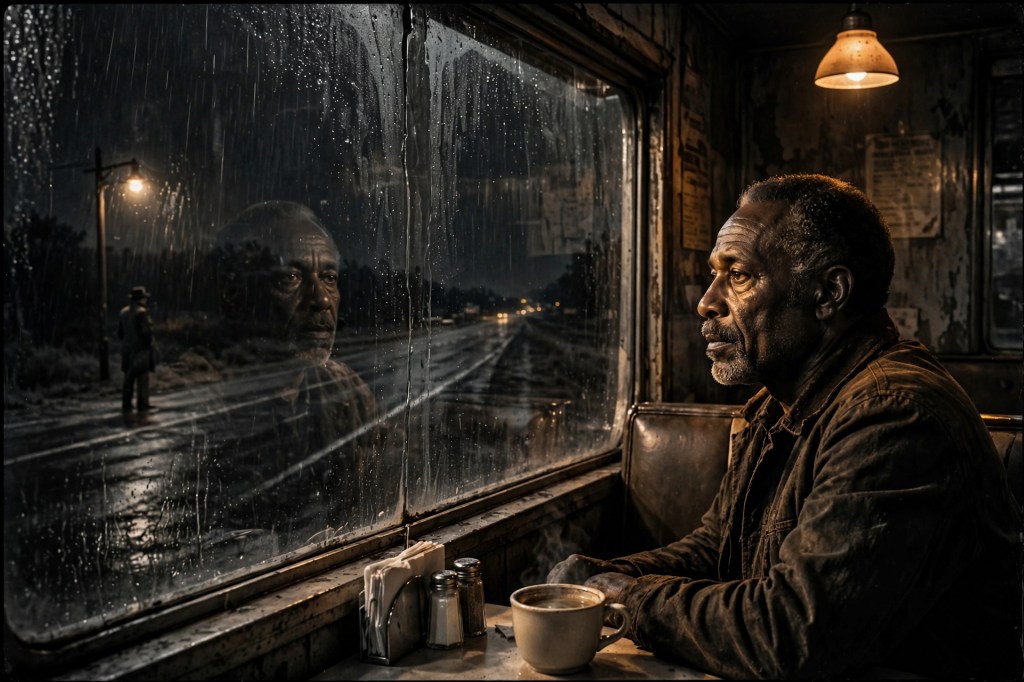
Forty years is a long time to carry an impression of a place. Yet there I was, walking into a restaurant in a town I hadn’t visited in more than four decades, wondering whether history was about to introduce itself all over again.
The area had a history of racial tensions, and I’ll admit that I entered the establishment anticipating the possibility of trouble. Perhaps that wasn’t entirely fair. Four decades is a considerable amount of time, and while history deserves to be remembered, the people living in its shadow shouldn’t automatically be held accountable for everything that happened before them.
Nevertheless, experience has a way of traveling with us, even when we’d prefer to leave some of that baggage behind.
I settled into the restaurant, prepared to have my meal, mind my business, and continue my journey. I wasn’t looking for a philosophical discussion, a religious debate, or an opportunity to examine the condition of humanity. Frankly, I was interested in getting something to eat without adding another chapter to my collection of unfortunate travel experiences.
Then something unexpected happened.
At some point during our interaction, the young server asked whether I was religious. She was quite specific about what she meant, and I answered honestly. Yes, I was a man of faith, although my religious background differed from hers.
What made the encounter particularly interesting was that I happened to be working on an essay about religion.
I’d been wrestling with how to write about God without alienating people who might not share my beliefs. Religion can be a difficult subject to approach, particularly when people become more concerned with defending their interpretation of God than understanding what someone else is trying to express. I wanted to explore something meaningful without turning the essay into an argument about whose beliefs were correct.
I shared some of those difficulties with her.
What followed was a wonderful conversation, although it had surprisingly little to do with our respective religions. Instead, we talked about our relationships with God, the joy and comfort we found in those relationships, and the ways faith influenced how we experienced the world around us.
There was no theological debate or attempt to establish whose understanding was superior. Neither of us felt compelled to persuade the other to change their beliefs. We weren’t particularly interested in discussing the differences between our religions because those differences weren’t what the conversation was about.
We were talking about something far more personal.
Two things struck me afterward. The first was how young she was. Perhaps that’s an unfair observation, but I’ve encountered people considerably older who couldn’t discuss God without eventually turning the conversation into an argument. Yet here was this young woman, comfortable enough in her relationship with God to speak openly about it while allowing me to do the same.
The second was the complete absence of judgment.
Neither of us needed the other to believe exactly as we did to appreciate what was being shared. We simply recognized something meaningful in each other’s experiences.
I couldn’t help appreciating the irony.
There I was, struggling to find a way to write about God without alienating someone, and a young woman in an unfamiliar restaurant had just demonstrated that perhaps the difficulty wasn’t necessarily in discussing God, but in the expectations and judgments we sometimes bring to the conversation.
I’d entered that restaurant carrying concerns rooted in the area’s history, wondering how I might be received. Instead, I found myself having one of the more meaningful conversations of my journey with someone I had never met.
Perhaps the town had changed. Perhaps my expectations needed adjusting. Perhaps both were true.
Whatever the explanation, I left with something considerably more valuable than a meal.
I’ve traveled enough miles over the years to understand that the world is full of strangers, and not all of them are interested in becoming your friend. Some are perfectly content to mind their own business, others are looking for someone to share a conversation with, and a few are probably best left alone. The trick is figuring out which is which without allowing suspicion to rob you of the opportunity to meet someone extraordinary.
We live in a time when distrust seems to arrive long before introductions. I don’t necessarily believe people have become more dangerous than they were in previous generations. What has changed, perhaps, is how readily we expect the worst from people we haven’t met. We find reasons in their appearance, beliefs, or manner of speaking to justify keeping our distance. Sometimes those concerns come from experience, and sometimes we’ve inherited them from people who had experiences of their own.
Either way, they can become difficult habits to break.
During another recent trip, I encountered a different kind of stranger under circumstances that were considerably less pleasant.
We found ourselves broken down along a busy interstate in the middle of the night. Anyone who has spent a considerable amount of time traveling knows that mechanical failures rarely have the decency to occur somewhere convenient. They seem particularly fond of remote locations, inconvenient hours, and moments when your patience has already packed its bags and gone home.
This particular failure was more than an inconvenience. The fan clutch had broken, raising the possibility that damaged components could be thrown through the hood. That was concerning enough, but we were also stranded alongside an interstate where traffic continued moving at highway speeds despite the late hour. There wasn’t much comfort in knowing that the vehicle had stopped moving while everything around us hadn’t.
We needed assistance, and we needed to know that whoever was handling the situation understood what was happening.
The customer service representative who answered our call was a gentleman whose name I unfortunately cannot recall. What I do remember is how he handled the conversation.
I could hear the nervousness and hesitation in his voice. Oddly enough, I found that reassuring. There was something distinctly human in his response, something that suggested he understood the seriousness of our predicament rather than simply treating us as another problem to be processed. He wasn’t just a disembodied voice reading from a script. He was a person trying to help other people through a difficult situation.
Despite the uncertainty I could hear in his voice, he remained courteous, understanding, and thorough, taking the time to explain what needed to happen while making certain I understood the information he was providing. There was a measured patience in his manner and tenor that helped me regain my own composure, even as he acknowledged the seriousness of our circumstances.
He didn’t dismiss our concerns or make promises he couldn’t keep. Instead, he listened, answered our questions, and gave us the sense that someone was taking our predicament seriously.
And as events unfolded, that confidence proved justified.
Now, some might argue that he was merely doing his job. After all, isn’t that what customer service representatives are supposed to do?
Of course it is.
But there’s a considerable difference between what people are supposed to do and what they actually do, particularly when circumstances become complicated.
When you’re sitting comfortably at home, competent customer service is something you appreciate. When you’re stranded along an unfamiliar stretch of highway in the middle of the night, that same competence becomes something considerably more meaningful.
We couldn’t see the man helping us. We knew nothing about him beyond what he communicated during our conversation. Yet through his patience, attention to detail, and willingness to address our concerns, he managed to establish something that isn’t always easy to come by when dealing with strangers.
Trust.
What stayed with me wasn’t simply that he performed his job well. It was that he recognized the human beings behind the problem. We weren’t just another service request or an inconvenience interrupting his evening. We were people in a difficult situation who needed help, and he treated us accordingly.
There is a certain comfort in knowing that, even when things have gone spectacularly sideways, someone you’ve never met is willing to help you navigate the mess.
Being cautious doesn’t require us to become unfriendly.
I’ve lived long enough to understand that vigilance is necessary. Experience has taught me some rather unpleasant lessons about trusting the wrong people, making assumptions, and failing to recognize trouble before it arrives. Some of those lessons have become amusing stories over the years. Others still require a moment of silence and perhaps a change of underwear.
I have no intention of abandoning the caution those experiences taught me. But neither do I intend to allow them to convince me that every unfamiliar face represents a potential threat.
The young server didn’t erase the history of the town where she worked. The customer service representative didn’t eliminate the dangers associated with being stranded along a highway after dark. Neither encounter changed the world, but both reminded me that kindness, understanding, and simple human decency haven’t disappeared from it.
So, what’s the best way to meet new people while traveling?
I don’t know that there’s a single answer. You can strike up conversations in restaurants, exchange greetings at truck stops, or discover common interests while waiting for circumstances beyond your control to resolve themselves. Sometimes the most memorable encounters happen when you aren’t looking for company at all.
What matters, I suspect, is remaining approachable without becoming careless, exercising good judgment without surrendering to suspicion, and remembering that the person standing across from you has a life, a history, and experiences every bit as complicated as your own.
You don’t have to trust everyone you meet, and you certainly don’t have to like everyone you meet. But perhaps we should give people an opportunity to show us who they are before deciding who they must be.
I suppose the road will always have its share of people worth avoiding. Experience has taught me that much, and I have no intention of forgetting those lessons. But occasionally, somewhere between an unfamiliar restaurant and a lonely stretch of highway, someone reminds me that the world hasn’t run out of decent people.
And I’d hate to become so suspicious of strangers that I stopped recognizing them.
Discover more from Memoirs of Madness
Subscribe to get the latest posts sent to your email.

