Quote of the Day – 06162026


Personal Reflection

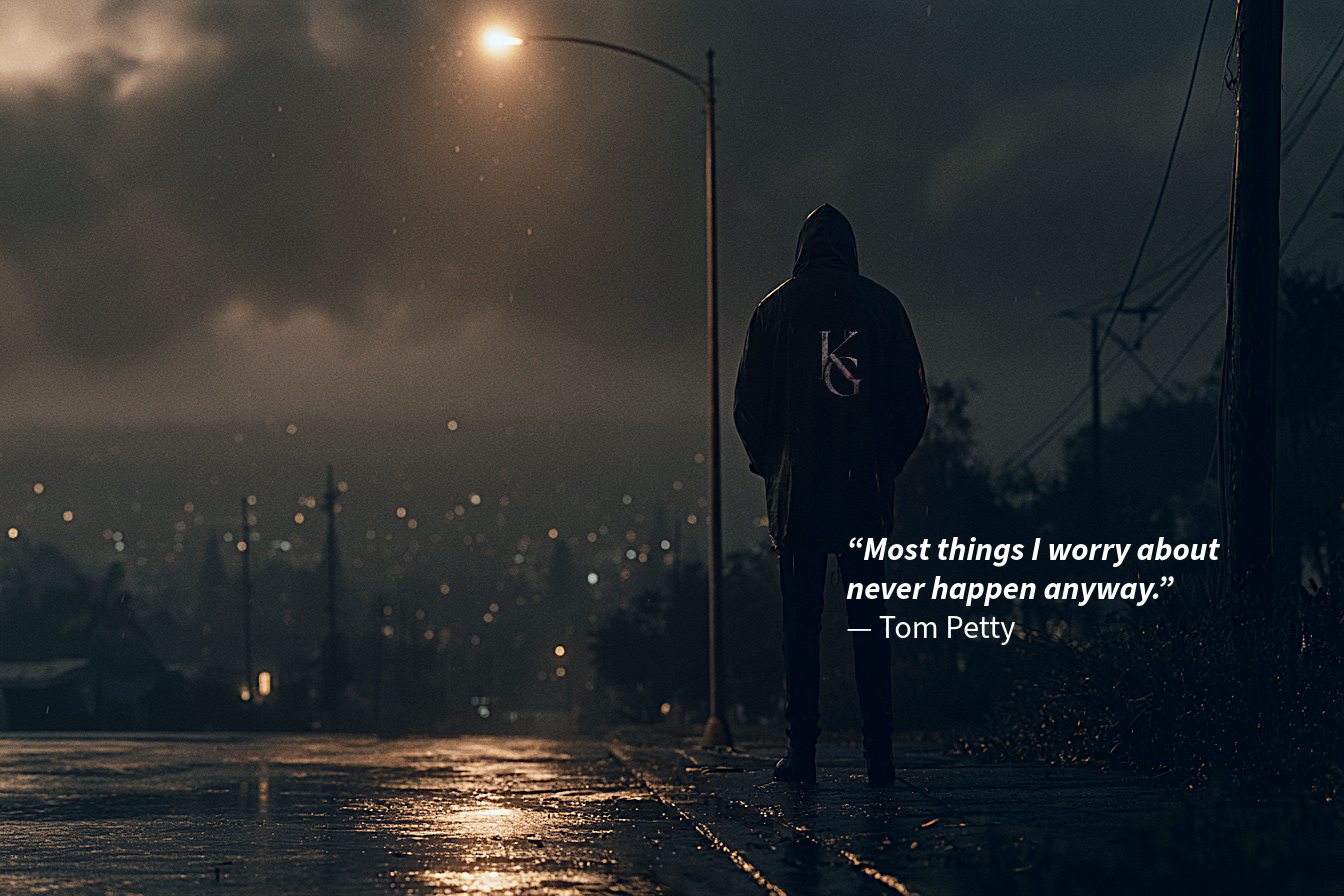
Worry is a strange form of time travel.

The body stays in the present while the mind rushes ahead into futures that don’t exist yet. Conversations we haven’t had. Disasters that haven’t happened. Rejections that haven’t arrived. We build entire emotional realities from possibilities and then react to them as if they were facts.

Most of us do it without even noticing.

A single uncertainty appears and suddenly the imagination goes to work. Not creating stories for enjoyment, but creating evidence for fear. We become screenwriters for worst-case scenarios, drafting scenes that may never leave the confines of our own heads.

The exhausting part is how convincing those stories can feel.

Fear rarely announces itself honestly. It prefers disguise. It calls itself preparation. Responsibility. Realism. It whispers that constant vigilance will somehow protect us from disappointment. As if worrying hard enough could negotiate a better outcome with life.

But life has never worked that way.

The things that changed us most were often the things we never saw coming. The losses. The opportunities. The people who arrived unexpectedly and altered the course of our lives without warning. Reality has a habit of ignoring our predictions.

Writers understand this better than most.

You begin a story with one destination in mind and somewhere along the way the characters start making decisions you never planned for. The story becomes something richer than your outline. Life does the same thing. It refuses to stay inside the boundaries we draw around it.

That uncertainty can be frightening.

It can also be liberating.

Because if most of the things we worry about never happen, then perhaps we are carrying burdens that do not belong to us yet. Perhaps we are spending emotional energy paying interest on debts that reality never collects.

Maybe peace begins when we stop treating imagination as an enemy.

Maybe it begins when we remember that possibility includes good surprises too.

Reflective Prompt

How much of your energy is spent preparing for futures that have never actually arrived?
Poem of the Day – 06062026

Changing The Past by Donna

The past is the past for a reason.
That is where it is supposed to stay,
But some cannot let it go.
In their heads it eats away

Until all their focus becomes
The person they used to be,
The mistakes they made in their life.
Oh, if only they could see

That you cannot change what happened,
No matter how hard you try,
No matter how much you think about it,
No matter how much you cry.

What happens in your lifetime
Happens for reasons unknown,
So you have to let the cards unfold.
Let your story be shown.

Don’t get wrapped up in the negative.
Be happy with what you have been given.
Live for today not tomorrow.
Get up, get out, and start living,

Because the past is the past for a reason.
It’s been, and now it is gone,
So stop trying to think of ways to fix it.
It’s done, it’s unchangeable; move on.

Donna. “Changing The Past.” Family Friend Poems, July 6, 2011.


Personal Reflection

One of the cruelest habits of the human mind is replay.

The conversation you should have handled differently.
The relationship you stayed in too long.
The words you regret saying.
The opportunities you missed because fear sounded safer than risk.

Long after the moment has passed, the mind keeps reopening the file as if enough thinking might somehow rewrite the ending.

That’s the emotional truth sitting underneath this poem.

Not just regret—but fixation.

The exhausting belief that if we revisit the past often enough, we might finally negotiate a different outcome with memory itself.

But memory is rarely interested in compromise.

It preserves moments exactly where they hurt the most. And if we are not careful, we begin living backward—measuring the present against former versions of ourselves, former mistakes, former pain.

The poem pushes against that instinct directly.

Not by denying regret exists, but by questioning how much life we sacrifice trying to repair what cannot be undone.

That’s difficult because regret often disguises itself as responsibility. We tell ourselves:

  • “I’m just reflecting.”
  • “I’m trying to understand.”
  • “I need closure.”

Sometimes that’s true.

Other times we are simply punishing ourselves repeatedly for being human.

And being human means making mistakes with limited wisdom at the time. It means not always recognizing the importance of a moment until it has already become memory.

The poem’s reminder is simple but necessary:

You cannot build a future while permanently living in revision mode.

At some point, healing requires acceptance—not approval of what happened, not pretending pain was beneficial, but acceptance that the past no longer changes simply because we keep arguing with it internally.

That’s where freedom begins.

Not in forgetting.
Not in erasing.

In loosening your grip on the impossible task of undoing.

Because life keeps moving whether we emotionally move with it or not.

And perhaps the saddest thing isn’t the mistakes we made years ago.

It’s how many years we sometimes lose refusing to stop reliving them.


Reflection Prompts

  • What memory do you revisit most often, and what are you hoping will change?
  • Have you confused self-punishment with accountability?
  • What part of your life is waiting for you to finally stop looking backward?

Quote of the Day – 06012026


Personal Reflection

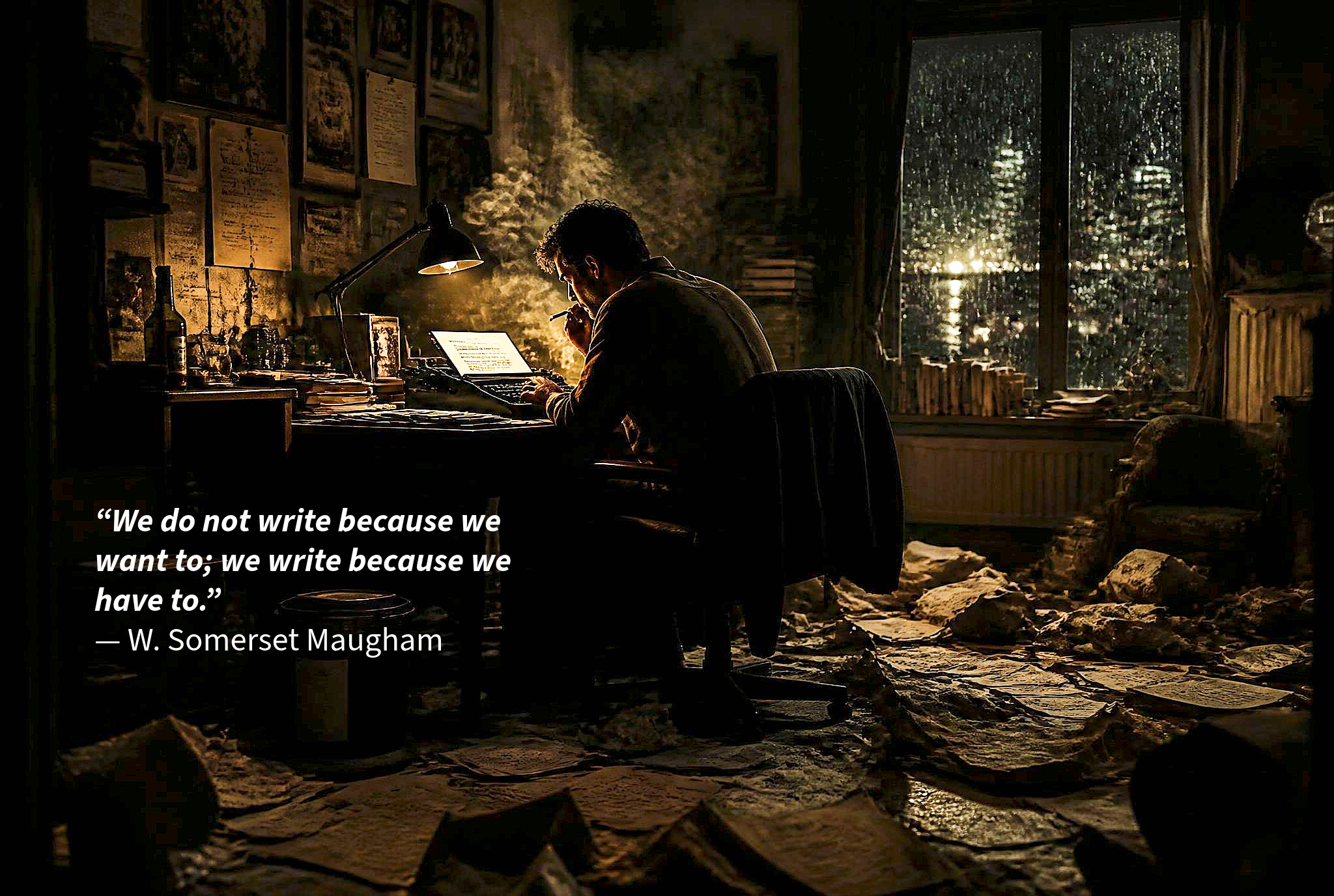
Most people imagine writing as a romantic act. A candle burning low beside a whiskey glass. Rain tapping the window. A brilliant mind pouring itself onto paper in one clean stream of genius.

Reality usually looks more like staring at a blinking cursor while your coffee goes cold for the third damn time.

Writing rarely arrives dressed like inspiration. More often, it shows up like an itch beneath the skin. Persistent. Irritating. Impossible to ignore. You tell yourself you’ll take a day off, clear your head, maybe do something practical for once. Then a sentence appears while washing dishes. A memory crawls out during a drive. A line of dialogue lands in your chest hard enough to stop you mid-step.

And suddenly the page starts calling again.

The dangerous thing about writing is that it exposes what we spend most of our lives trying to outrun.

Regret. Shame. Desire. Loneliness. The unfinished conversations that still echo years later when the house is quiet enough to hear yourself think.

Sometimes we believe we’re writing about a character or a memory or a song that cracked us open twenty years ago. Then somewhere around paragraph four, the mask slips. The real subject steps into the light. Not the thing we intended to write about — the thing we were trying not to.

That’s the part nobody talks about when they romanticize creativity.

Writing is confrontation.

Not performance. Not branding. Not aesthetics arranged carefully beneath soft lighting and clever captions. Real writing drags fingerprints across the hidden parts of you. It forces you to sit in rooms you locked years ago and notice the dust still floating in the air.

And worse? The page knows when you’re lying.

Readers know too.

You can decorate emptiness with beautiful language for a little while, but eventually the sentences collapse under their own weight. The work either contains truth or it doesn’t.

That truth doesn’t have to be loud. Sometimes it’s just one honest sentence standing quietly in the wreckage.

Maybe that’s why some of us keep returning to the page even when it exhausts us.

Not because writing makes life easier.

Because sometimes it makes life clearer.

The world moves fast now. Everything demands immediate reaction, instant certainty, polished identity. Writing remains one of the few places where confusion can still breathe long enough to become understanding.

Not answers. Understanding.

A rough draft is often just a person trying to hear themselves think over the noise of the world.

And maybe that’s enough.


Reflective Prompt

What truth keeps resurfacing in your life no matter how many times you try to write around it?