Once You Know


When I first looked at the question, How does our perspective change our reality? I had no idea how to proceed. It is simple enough on the surface, one of those questions that seems to invite a tidy answer and perhaps a clever sentence at the end. Yet there was something underneath it I couldn’t quite put my finger on. So, as they say, if you want to know how you feel about something, write. Or something like that.

The first thing that came to mind was something I heard decades ago while attending a discussion on religion. It was a lively discussion, I assure you, the sort where everybody arrived carrying convictions and nobody seemed particularly interested in leaving with fewer of them. The leader kept repeating the same phrase:

“Your perception is your reality.”

At the time, I thought it was a cop-out. A philosophical dodge dressed nicely enough to sound profound. I remember thinking, Stand your guns, man. Pick a side. Are you a namby-pansy? It’s okay if you are. It’s all about know thyself, yeah?

Funny thing about getting older: sometimes it takes decades to understand something you were absolutely certain you understood the first time.

The truth is the truth. Our perception does not possess some magical authority to rewrite it. A thing does not become true simply because we believe it, fear it, need it, or repeat it loudly enough. What perception can change is the version of that truth we are willing to accept. Sometimes we don’t have enough information. Sometimes experience hasn’t taught us what we’re looking at yet. Sometimes we are simply wrong.

And sometimes we know damn well it’s a lie.

That last one bothers me.

T.S. Eliot gives us a wonderful example in The Love Song of J. Alfred Prufrock. Prufrock spends so much time trapped within his perception of himself, and imagining how others perceive him, that possibility becomes something he can contemplate but struggles to inhabit. Nothing needs to physically restrain him. His uncertainty, hesitation, and relentless self-examination do much of the work.

How we perceive ourselves can become a prison with no walls.

Those may be the hardest prisons to escape because there is nothing obvious to tear down. No bars to bend. No lock waiting for the right key. There is only the quiet certainty that this is who I am. I can’t do that. I’m too old. I’m not intelligent enough. People like me don’t belong there. Someone like that could never want someone like me. I tried once. I failed. This is simply the hand I’ve been dealt.

Some walls, of course, are real. Poverty is real. Prejudice is real. Age comes collecting whether we answer the door or not. Bodies have limitations, circumstances have consequences, and no amount of positive thinking turns concrete into mist. Pretending otherwise is motivational-poster bullshit.

But sometimes there isn’t a wall.

Sometimes there is only our perception of one.

Worse, sometimes somebody else built it for us.

We often find comfort and safety wrapped inside the ideals of another person. Parents tell us what respectable looks like. Teachers tell us what we’re capable of. Communities tell us where we belong. Lovers tell us what makes us worthy of love. Society hands us categories before we’ve learned enough about ourselves to question them. None of these influences must necessarily be malicious. Some protected us. Some gave us structure when we needed structure. Some taught us things worth keeping.

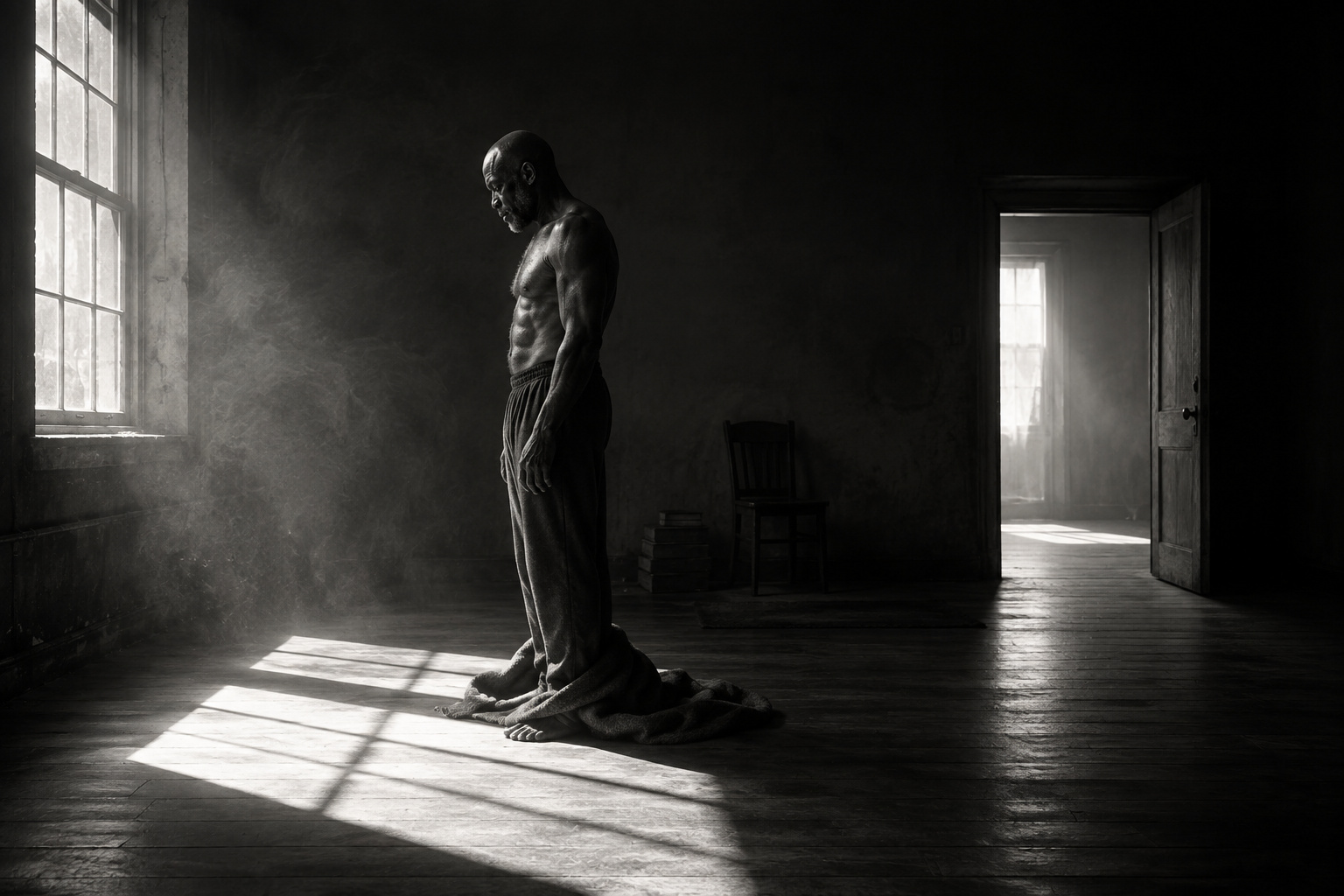
But a blanket can keep you warm long after it has become too small.

We are assembled from fragments: lessons learned, books read, music heard, films watched, conversations remembered, mistakes survived. Each adds something to the information through which we interpret the world. None of us sees from nowhere. We look through everything that came before, carrying what we know alongside everything we don’t know yet.

That raises an uncomfortable possibility. If our perception is shaped by the information available to us, what happens when new information contradicts what we thought we knew? What happens when experience reveals something that had always been there, but we lacked the knowledge—or perhaps the willingness—to recognize?

More importantly, what happens when the new information is about us?

Eventually, we have to decide which fragments still belong.

That is where this gets uncomfortable.

What happens when you shake off the blanket and stand naked before the truth about yourself?

Not your truth. I’ve become suspicious of that phrase here. The truth doesn’t need our ownership. I mean the truth about you, stripped of the flattering explanations, inherited expectations, convenient villains, excuses polished smooth from years of handling, and stories you’ve repeated so often you’ve forgotten you were the one telling them.

Now you’re exposed.

And perhaps the person you’re most exposed to is yourself.

Other people can be dismissed. We can argue with them, avoid them, accuse them of misunderstanding us, decide their opinions don’t matter, and go home feeling wonderfully vindicated. What we know about ourselves is considerably more difficult to escape, particularly when we begin to recognize how much of what confined us was accepted, inherited, or maintained by us.

Seeing that doesn’t make it disappear.

Knowledge isn’t courage.

Awareness isn’t transformation.

And recognizing the truth does not suddenly create responsibility.

You bore that responsibility all along.

Now you simply know it’s there.

Perhaps that’s how perspective changes our reality. It doesn’t change the truth. It changes what we’re capable of seeing, what we’re willing to acknowledge, and eventually what excuses remain available to us. We can learn more. We can look from another angle. We can question the fragments from which we’ve constructed ourselves. We can discover that some limitations are real while others have survived because we never seriously questioned them.

Or we can pull the blanket back over our heads.

That’s still a choice.

So maybe that man all those decades ago wasn’t dodging the question when he kept saying, Your perception is your reality. Maybe I was too busy demanding that he pick a side to understand what he was actually placing in front of us.

The truth was there.

It always had been.

So was the responsibility.

Now that you can see both, do you possess the courage to do something about it?


Author’s Note

Thanks, Sadje, for providing the catalyst that eventually became this essay. I never quite know where one of these Sunday Poser prompts is going to take me, and perhaps that’s part of the fun.

It’s wonderful to step away from fiction from time to time. Fiction gives me plenty of room to explore ideas, but there’s always the additional work of figuring out how to weave a concept into the story without making the characters sound like they suddenly wandered into a philosophy lecture. The idea has to belong there. It has to emerge from the characters, the circumstances, and whatever trouble I’ve gotten them into.

Non-fiction offers a different kind of freedom.

Sometimes you don’t need the character, the dark alley, the suspicious stranger, or somebody standing beneath a streetlamp contemplating all the terrible decisions that brought them there.

Sometimes you can just talk straight.

This question gave me the opportunity to do that. I started with perception, wandered through a memory several decades old, bumped into Eliot along the way, and eventually found myself somewhere considerably more uncomfortable: responsibility.

Apparently, even when I step away from fiction, I still manage to wander into the darker corners.

Thanks for the inspiration, Sadje, and for giving me another excuse to walk into the madness and see what was waiting there.

Tell Yourself Whatever You Need To

Most people think I’m loud — the kind of person who fills a room just by showing up. The one cracking jokes, telling stories, holding court like I was born to. I let them believe it. It keeps things easier, smoother. But truthfully, I’m an introvert in disguise — a quiet man who learned that silence makes people nervous.

I’ve actually heard folks say they were scared of me when I didn’t talk. Something about my face, maybe — the way it rests heavy, unreadable, like I’m thinking too much or judging too hard. I guess that’s my curse: I look like trouble when I’m just tired.

So I talk. Even when I don’t want to. Even when the words feel like sand in my mouth. I talk to make other people comfortable, to smooth over the awkwardness that silence seems to bring. I know that probably sounds weak, but it helps things along. It makes the day move easier. And sometimes, pretending to be the loud one is less exhausting than explaining why I’m quiet.

When I worked in offices, coworkers would say things like, “Are you judging me?” or “You’re judging me right now, aren’t you?” or “You look like you’re about to call me a name.” I’d laugh it off, but inside, I wasn’t judging anyone. I was probably thinking about a story idea, or how lunch wasn’t sitting right, or why the hell the printer only jammed when I used it. But try explaining that without sounding like a weirdo. It’s easier just to say something funny, make them laugh, keep the peace.

Even my ex used to tell me, “Let me know before you go dark.” She meant the quiet spells — those stretches when I’d retreat into my head, writing or reading or just not talking. To her, silence felt like absence, like a door closed without warning. But for me, it was never about her. It was how I reset. I don’t disappear out of anger; I disappear to breathe. But try convincing someone of that when they’ve been taught that noise means love.

The truth is, I can go days without saying a word and feel completely fine. The quiet doesn’t scare me — it steadies me. It’s where I make sense of things. Where I untangle the noise I swallowed all week. My desk becomes a refuge. A book, a pen, and a cup of cooling coffee are enough to rebuild the parts I’ve spent too long bending out of shape for other people’s peace.

But silence has its own cost. You start to wonder if anyone ever really knew you beneath the performance. If they’d still come around if you stopped making it easy for them. If they’d sit in the quiet long enough to realize you’re not angry — just tired of having to explain your existence.

So yeah, I’m loud. But not because I love attention. I’m loud because silence unsettles people, and I’ve spent too many years trying not to be someone’s reason for discomfort. Maybe that’s my weakness. Or maybe it’s another kind of grace — learning to speak, even when the world hasn’t earned your voice.

Before I go dark.

Daily writing prompt
What’s something most people don’t know about you?

Mangus Khan: Exposed, then Reborn

Daily writing prompt
Why do you blog?

I didn’t start blogging out of passion. I started because somebody told me I needed a website. Truth is, I didn’t even know what a blog was. I opened an account here on WordPress, a couple more elsewhere, and thought traffic would just follow me, the way stray dogs follow a food truck. Wrong. This place sat dead for nearly ten years—so long I forgot it existed—until one random day in 2022 when a notification lit up my screen. A new like. WTF? From where? I clicked the link and landed back here, staring at the ghost of myself.

When I first began, I was faceless. Anonymous. That mask was armor, and it gave me freedom. I could bleed here, collapse here, spit out my fears and grief without worrying who was watching. At events I’d hear people talk about my work—sometimes praise, sometimes poison—and they had no idea the person standing close enough to smell their cologne was the one who wrote it. Sometimes I’d even push them, ask what they really meant, still hiding my identity like a loaded gun in my pocket.

Then came the rupture. Tragedy. Exposure. Suddenly there was a face to the words. My face. And Mangus died in that moment. The mask was gone, and anonymity was stripped clean.

Why did I come back? Simple: the people here. When nobody read my words, I read theirs. Hours spent slipping into voices from around the world, getting lost in stories that weren’t mine. Even without traffic on my end, the connection was real. Still is, when I manage to claw time out of the chaos. Since 2023 this blog has grown beyond what I imagined it could be. Grateful doesn’t come close. Appreciation feels too small. What I feel is heavier, messier. It sits with teeth in it.

Now I blog to bleed. To heal. To rage. To rejoice. To carve my words into the silence before it swallows me again. Blogging reminded me who I was before chaos dictated my breath, and it taught me something else, too: the strength was always mine. I just forgot where I left it.


Author’s Note: The support I receive from my WordPress peeps keeps me motivated and engaged. Thank you. What started as a faceless outlet has turned into something I never imagined—a place where words aren’t just spilled but witnessed. Every like, every comment, every late-night read means more than I can put cleanly into words. You all remind me that writing doesn’t have to echo in a vacuum. It can breathe. It can bruise. It can belong.

So yeah—I’ll keep showing up here, scars and all.

How Not to Lose My Mind by 6 A.M.

Daily writing prompt
What are your morning rituals? What does the first hour of your day look like?

DAILY PROMPT RESPONSE

My cat is my alarm clock. Not metaphorically — literally. She’s the first thing I hear every morning, howling like she’s been abandoned in a void, despite living a life of uninterrupted luxury.

There’s no snooze button, no soft chime, no graceful start. Just claws on the floor, judgment in her eyes, and a relentless demand for breakfast.

So I get up. Not because I’m ready to greet the day, but because feline terrorism leaves no room for negotiation.

I feed her. I grind the coffee. These are the sacred rites of passage — the steps that transform me from a disoriented gremlin into someone who can form sentences.

If anything delays this ritual, I take it personally.
Why are you playing with my emotions? Who told you this was cool?

Once caffeine levels are in the green and nicotine’s holding the line — check, check — and the cat has retreated to whatever sun-drenched corner she’s claimed, I begin the real work: protecting my peace.

And look — I didn’t arrive at this approach because I’m naturally serene or some monk-in-disguise.

I got here because of the life I’ve lived. Because of the dents.
Because there are days when my mind goes rogue and starts offering me metaphorical jackets with buckles on the back.

“Give that a new coat,” it says. “It’s very nice. Leather straps. Fastens in the back. Do you want a new coat, Mr. Khan?”

And I answer like I’m seriously weighing the options.

“If you’re good, we’ve got lime Jello for you… You like lime, don’t you?”

And lime Jello is the truth. You don’t mess with lime.
Last time I cut up? They gave me lemon. No one likes lemon Jello.

That’s just mean. Downright mean.

So yeah, I’ve had to learn how to manage my mind, not just for peace — but for survival.

Calm isn’t some Instagram aesthetic for me. It’s a lifeline.
A way to keep the louder voices quiet and the darkness at bay.

That’s why I keep close something Alan Watts once said:

“Muddy water is best cleared by leaving it alone.
What we see as a clear mind is not the result of frantic activity.
It is clear as the morning, not because we scrubbed the sky, but because we left it alone.”

That line sticks with me because it echoes something ancient — something every major religion or philosophy seems to touch on:

The idea of inner stillness.
Of knowing yourself before engaging with the noise of the world.

In Sufism, Rumi wrote:

“There is a voice that doesn’t use words. Listen.”

In Buddhism, from the Dhammapada:

“Better than a thousand hollow words is one word that brings peace.”

And from the Bible, in Psalms:

“Be still, and know that I am God.” (Psalm 46:10)

Different traditions. Same thread.
Peace isn’t something you chase. It’s something you uncover — when you get quiet enough.

That’s what I’m after each morning.

Some days it’s just coffee and silence.
Other days, a bit of journaling or staring into the void like it owes me money.

The practice doesn’t matter as much as the pause. The space.
The reminder that I get to choose how I show up — even if some days, that choice takes everything I’ve got.


But some mornings, I skip it.
The ritual. The silence. The pause.

Maybe I oversleep.
Maybe I pick up my phone before I breathe.
Maybe I think, “I’m fine, I don’t need it today.”

That’s the trap.
(Cue Admiral Ackbar voice: “It’s a trap!” — and yes, it absolutely plays in my head every time I skip my rituals like I’m going to be fine.)

Because when I skip my rituals, life turns to quicksand.
And no one’s coming to save me.

There’s no helpful rope, no dramatic movie rescue.
Just me, slowly sinking, pretending I can claw my way out of the churn.

I’m three seconds from a panic attack — except it doesn’t always look like panic.

Sometimes it’s quiet.
Like holding your breath without realizing it.
Like being trapped inside a breathless gasp, chained in place by something invisible.

A prison with no walls, but no doors either.

The anxiety doesn’t fade. It just lingers. Constant hum, just under the skin.
Everything feels urgent. Every noise too loud. Every thought too fast.

I forget what I was doing mid-sentence. I lose time. I react instead of respond.

And the worst part?
I can’t tell if it’s me or the world — and at that point, it doesn’t matter.


But I have to remember — the power to escape is within.

Not in some motivational-poster way.
Not in the “just breathe and manifest your peace” kind of way.

I mean that literally.

The same rituals I sometimes skip — the breath, the stillness, the silence, the coffee, the pause — they’re the tools.

The rope in the quicksand.
The key to the prison that looks like it has no door.

I have to choose to reach for them. Even when I don’t feel like it.
Especially then.

It’s not about fixing everything in that moment.

It’s about reclaiming one inch of space.
One breath. One clear thought.

Enough to remind myself that I’m not just a body riding out the chaos —
I’m a person with the ability to shift, to respond, to say:
“Not today. We’re not drowning today.”


A new pot sputters.
Serenity in a sip.

The cat breathes easy on her perch beside me, no longer screaming like the world’s on fire.
She’s fed. I’m fed — in my own way.

My eyes open each day at 5 a.m. Not by choice, but by necessity.
That’s when the mind starts. That’s when the first storm rolls in from the backcountry of my brain.

I wade through the madness in the regions of my mind, step by step, breath by breath.
No armor. Just ritual.

This — the coffee, the quiet, the stillness — this is how I survive myself.

I use these rituals to breathe.
To feel.
To live.

It’s 6 a.m.


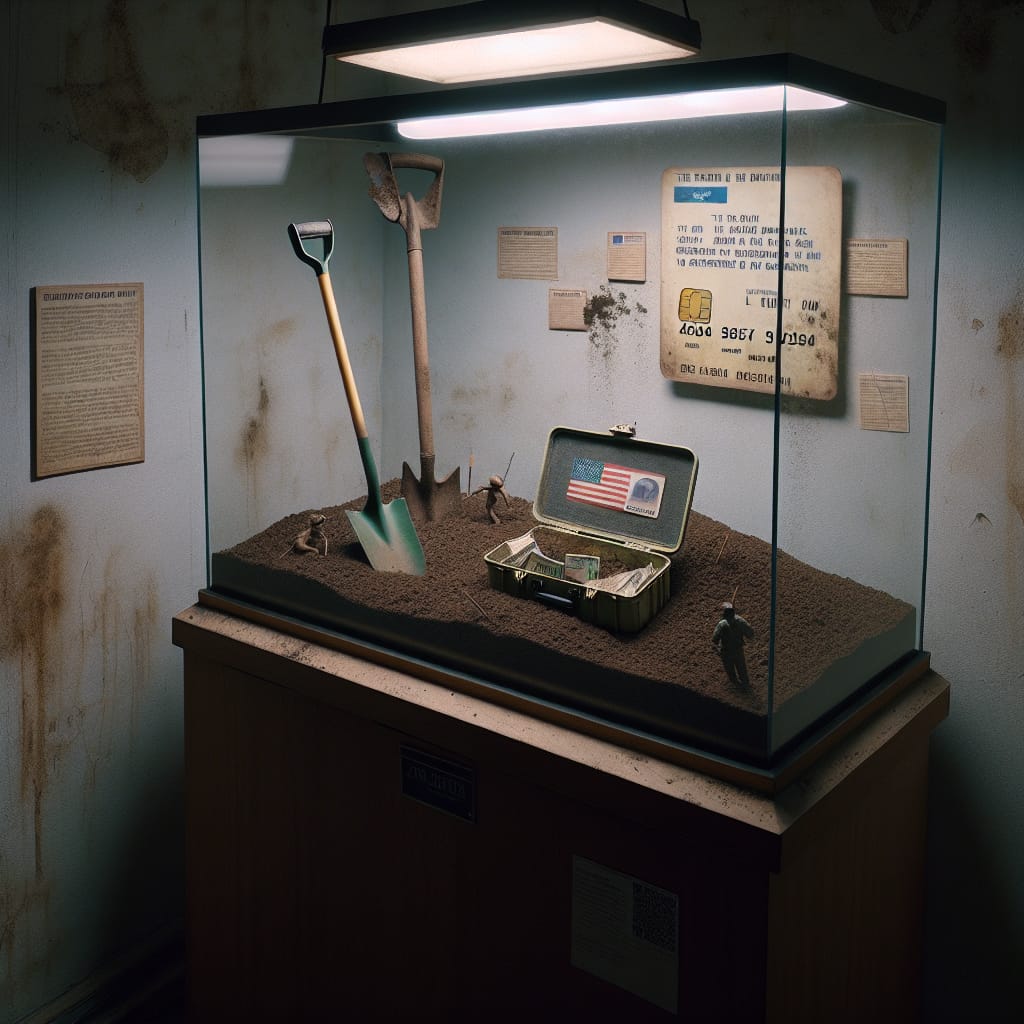
The Museum of Knuckleheads – Exhibit A: The Credit Card Burial

Daily writing prompt
If you could have something named after you, what would it be?

DAILY PROMPT RESPONSE

The last time this question was asked, this was what I had to say about it:

So, I decided today, what if I turned this cute moment between my wife and I into something else? Here’s what I came up with…


Docent Notes, Entry No. 1: Exhibit A – The Credit Card Burial

Welcome to the Museum of Knuckleheads. Admission is free. Consequences are not.

If you’re here, chances are you’re curious, lost, mildly disappointed with your life trajectory—or just trying to kill ten minutes before the Wi-Fi comes back. All valid. This museum wasn’t built for the elite, the wise, or the well-adjusted. It was built for people like me. People like you. People who have stared into the mirror mid-shower and muttered, “Well… that was a choice.”

Let’s begin the tour.

Exhibit A: The Time I Tried to Bury a Credit Card in the Backyard to “Reset My Finances”

Yes, you read that right. That’s an actual dirt-filled display under the buzzing overhead lights. A plastic shovel from a gas station. A laminated credit card. A tiny American flag, for irony.

This was during a phase I call “financial experimentalism,” which is what you call it when you’re broke but still wildly confident. The plan was simple: if burning sage can cleanse a house, why not dig a shallow grave for debt?

I buried the card behind the shed. Said a few words. Patted the soil like it was a dog I was letting go. And then I waited. For what? Honestly, I don’t know. Divine intervention. A good credit score. A sitcom-style reset button.

Spoiler: Capital One does not care if your card is underground. Interest kept growing as if it were photosynthesizing.


Lessons, If You’re the Type Who Learns

  • Debt doesn’t decompose.
  • Just because an idea feels spiritual doesn’t mean it isn’t objectively stupid.
  • Always check where underground sprinklers are before committing to symbolic rituals.

The exhibit still smells faintly like wet dirt and a bad decision you swore you’d only make once. Sometimes, I swear the card shifts positions overnight. Like it’s clawing its way back up.

People laugh when I tell them this one. They assume it’s exaggerated. I let them believe that. It’s easier than admitting it was the most hopeful I’d felt in months.


Closing Notes from the Docent

This museum isn’t here to mock you. It’s here to reflect you—bad choices and all. You may not see yourself in this exhibit. Not yet. But wait a bit. Everyone’s got a shovel moment.

Next time: Exhibit B – Neck Tattoos I Almost Got at 3 A.M.

Until then, take a number. You’ll be up soon.

—Docent, Senior Raconteur
Museum of Knuckleheads


Share your own Exhibit

Ever made a decision so irrational that it felt oddly brilliant at the time? Leave it in the comments. One day, we might just build a wing for you. Don’t be shy …


As always, I’d like to shout out the folks who provided inspiration.

Ragtag Daily Prompt

Fandango

Thank you guys for doing what you do