
What’s the most underrated life skill?
View all responses
We are taught to approach problems in a strangely binary fashion. Right or wrong. This or that. Inside the box or outside of it. Hence that tired old phrase, “Think outside the box.”
There is nothing inherently wrong with looking for a different solution. Some of humanity’s greatest accomplishments came from someone looking at what everyone else accepted and asking, Why are we doing it this way?
The problem comes when everybody is trying so damned hard to discover the next great idea that we overlook the obvious one sitting directly in front of us.
Of course, we can blame technology.
Technology has become the usual suspect whenever we start talking about what has gone wrong with society. The internet ruined communication. Social media destroyed civility. Smartphones killed conversation. There is probably some truth buried in those arguments, but blaming technology is also convenient.
Because this problem is older than automobiles.
Older than television.
Older than radio.
Definitely older than the internet.
We have never completely figured out how to respect one another.
What’s frustrating is that we like to believe we shouldn’t judge one another. We repeat that no person is inherently better than another as though saying it often enough makes it our practice.
It doesn’t.
In some ways, we can’t help ourselves. We are shaped by what we were taught, what we witnessed, and what we experienced growing up. Those lessons don’t disappear simply because we’ve gotten older and learned better words for describing ourselves. Some become so deeply embedded that we don’t recognize them as assumptions anymore.
But even that explanation can become another excuse.
We have accumulated an entire collection of societal wisdom that gets repeated so often we eventually stop asking whether any of it is actually true.
Technology is evil.
Everything must be positive.
Think outside the box.
And one of my personal favorites: the idea that someone who can’t multitask is somehow less capable than someone who can.
Multitasking may be one of the greatest pieces of hokum we’ve managed to turn into a virtue. Somewhere along the way, being distracted in several directions at once became evidence of productivity.
That’s the problem with things everybody knows.
Eventually, nobody remembers to ask how we know them.
We inherit ideas from our families, communities, workplaces, cultures, and experiences. Some contain wisdom. Some contain prejudice. Some were probably bullshit when somebody first said them three generations ago. Yet they can become so deeply embedded that we stop recognizing them as assumptions and begin treating them as facts.
Then we use those assumptions to measure other people.
Perhaps that’s where respect actually begins—not with refusing to judge, because I’m not convinced human beings are capable of that, but with recognizing that the ruler we’re using to measure somebody else might be crooked.
I’m not suggesting that we should live without standards. Nor am I suggesting that we should wander through life refusing to make judgments about people, situations, or behavior. That’s neither realistic nor particularly wise.
I’m suggesting something considerably less dramatic.
Slow down.
Try to get the clearest picture of the situation possible before making a decision, especially when that decision has the potential to alter the course of someone’s life.
Including your own.
Sometimes we have more time than others. That’s reality. There will be moments when circumstances demand a decision before we have every fact we’d like to have. But having less time isn’t an excuse for sloppy or shoddy thinking. It doesn’t excuse rushing to judgment, and it certainly doesn’t excuse rushing blindly into action.
You work with what you have.
You pay attention.
You question what you think you know.
Then you make the best decision the circumstances allow.
Because judgment has consequences in more than one direction.
There is the person being judged, certainly. What we decide about someone can affect how we speak to them, how we treat them, what opportunities we give them, what we deny them, and sometimes how they begin to see themselves.
But there is another person affected by that judgment.
Us.
Every time we reach a conclusion without examining what brought us there, we strengthen the assumptions that produced it. If we’re right, perhaps nothing happens. If we’re wrong and never bother to discover it, the assumption survives. It becomes easier to use the next time. Eventually, we aren’t examining the person standing in front of us at all. We’re examining everything we’ve already decided someone like them must be.
That’s why I don’t particularly care for the phrase don’t judge.
We judge.
We have to.
The responsibility isn’t to somehow stop judging. The responsibility is to make the clearest judgment we can with the information and time available to us—and remain willing to change that judgment when better information arrives.
I was reminded of this during a recent business trip.
My associate thought I was being overly cautious. Perhaps from where he was sitting, I was. I wanted things checked. I wanted contingencies. I wasn’t particularly interested in assuming that because something had worked yesterday, it would work today.
Then we started having breakdowns.
Several of them.
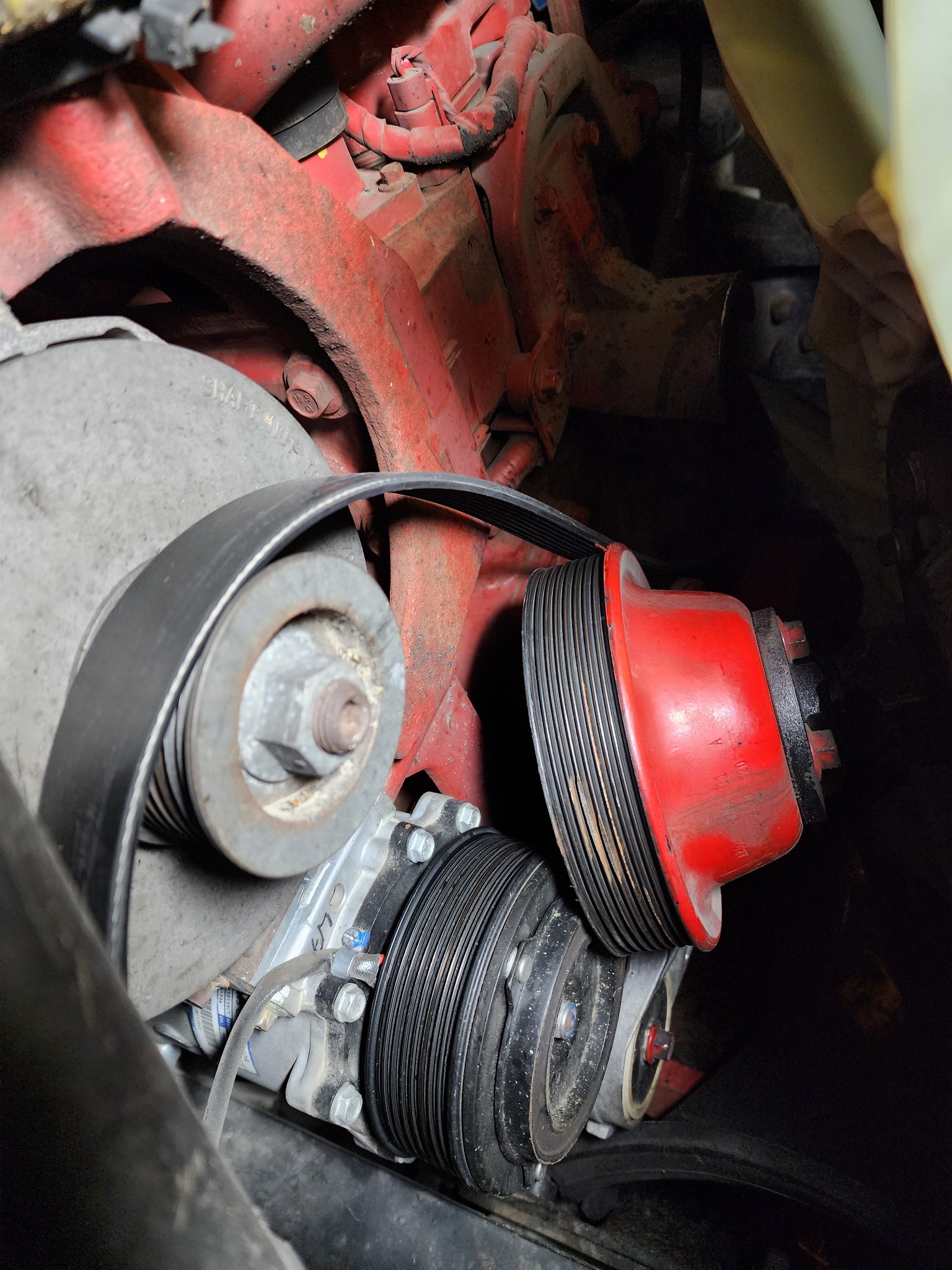
Any one of those situations could have ended considerably differently. What became inconvenience, frustration, and delay could quite easily have resulted in serious injury or the loss of a life.
I didn’t say anything about having been cautious.
There wasn’t anything to say.
Later, my associate came to me and thanked me for being thorough. More importantly, he thanked me for not allowing myself to get caught in the urgency of the moment.
That stayed with me.
It wasn’t as though I had suddenly become some damned guru sitting on a mountaintop dispensing wisdom. Experience has simply taught me several cruel lessons over the years. Some of them we can laugh about now.
Others…
You simply exhale and change your shorts.
That’s the thing about experience. Surviving something doesn’t automatically make you wise. Sometimes all you’ve learned is another way things can go horribly wrong. The wisdom, if there is any, comes afterward—when you’re willing to examine what happened, what you missed, what you got right, and what you damn sure don’t intend to repeat.
Perhaps that’s why I was cautious.
I have lived long enough to know that urgency has a way of convincing us that movement is more important than thought. Something must be done now, therefore whatever we do now must be better than taking another moment to understand what we’re dealing with.
Sometimes urgency is real.
Sometimes we genuinely don’t have much time.
But less time doesn’t lower the standard of care.
If anything, the consequences should make us more deliberate with whatever time we have.
That doesn’t mean freezing when action is necessary. It means refusing to confuse speed with competence. It means working with the information available, paying attention to what is actually happening, questioning assumptions, and then acting.
And if better information arrives afterward?
Have enough sense to reconsider.
Maybe you were wrong.
Maybe the other person was wrong.
Maybe everybody was working with a crooked ruler.
That isn’t weakness. It isn’t surrender. And it certainly isn’t failure.
It’s discernment.
Perhaps that’s the underrated life skill I’ve been trying to describe all along.
Not knowing everything.
Not never making mistakes.
Not somehow becoming enlightened enough to stop judging people altogether.
Just developing the discipline to examine what you think you know before allowing it to determine what you do.
Respect grows from that. Better judgment grows from that. Experience becomes useful because of that.
We spend an extraordinary amount of time looking for clever answers. We celebrate thinking outside the box, breaking conventions, moving faster, doing more, and finding the next great solution.
Sometimes the answer isn’t particularly clever.
Sometimes it’s simply paying attention.
Slow down doesn’t always mean move slowly.
Sometimes it simply means don’t let the moment do your thinking for you.

