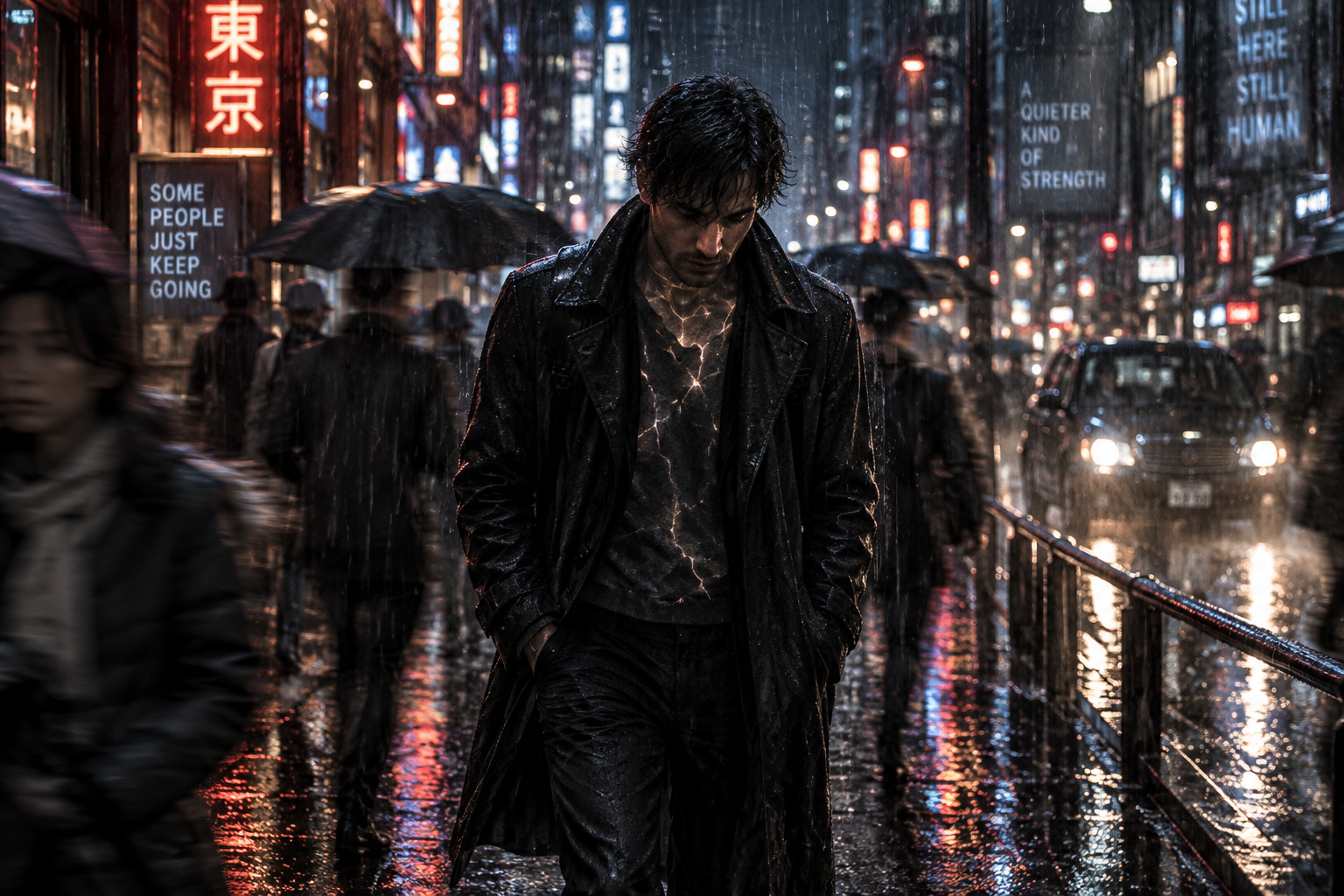
Dispatches from the Splinters of My Mind — Entry #34
I started walking because there wasn’t anything else to do with myself.
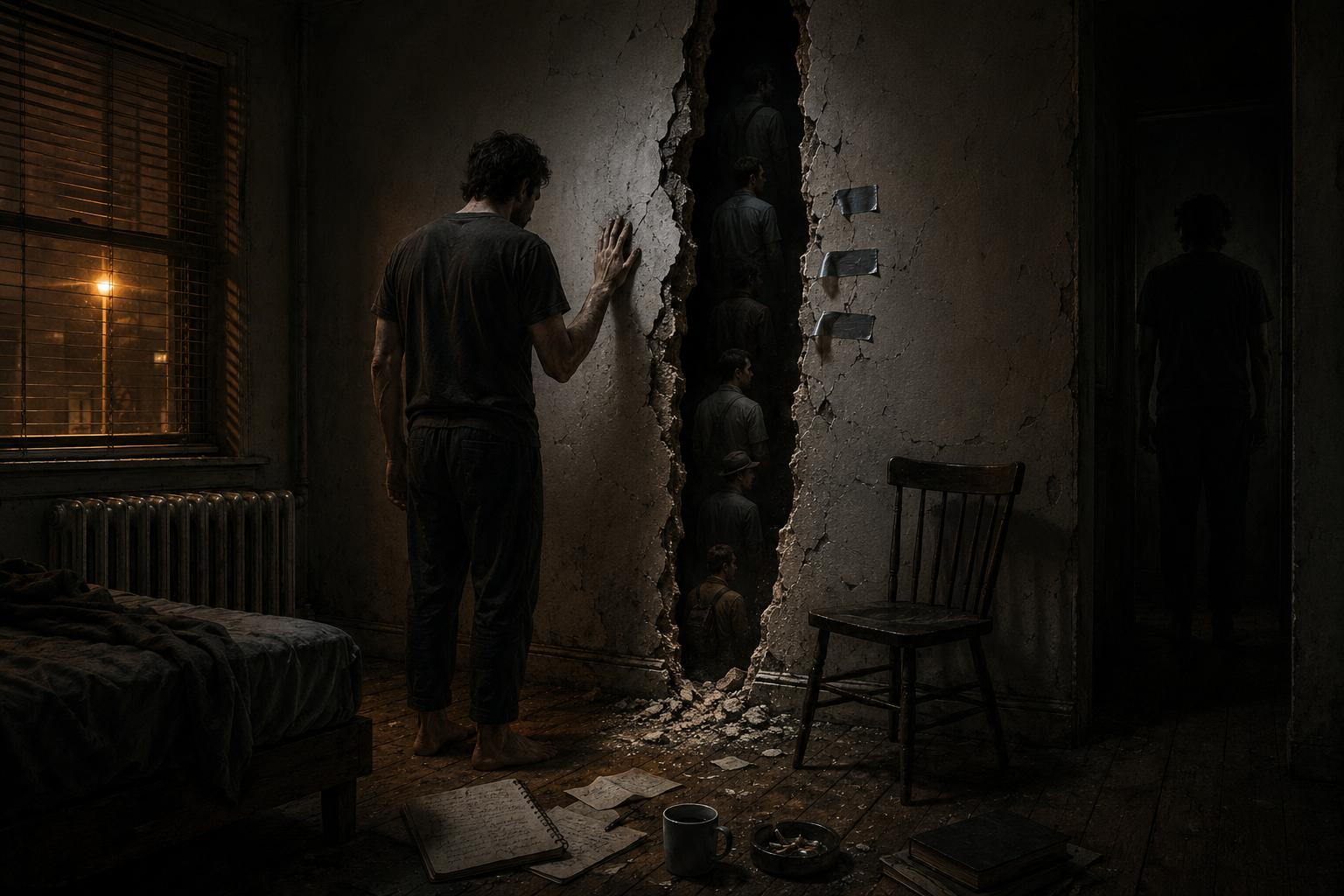
That’s not entirely true. There were dishes in the sink, unopened boxes stacked against the bedroom wall, messages on my phone from people who had gradually stopped asking whether I was all right and started asking whether I was alive. There were forms from the unemployment office, a refrigerator containing mustard, half a carton of eggs, and something in a plastic container I had stopped trusting several days earlier. There were books I could have read, television I could have watched, sleep I could have attempted. There were plenty of things to do.
There just wasn’t anything I wanted to do.
That distinction had become important.
Somewhere during the previous eighteen months, my life had changed from something I participated in to something I maintained. Wake. Shower. Coffee. Applications. Groceries. Bills. Phone calls returned three days late. Laundry when underwear became a logistical concern. Eat because the body apparently insists upon being consulted. Sleep badly. Repeat.
Nothing catastrophic had happened, which somehow made explaining it worse.
Mara left in February. My father died in April. The company eliminated my department in June after seventeen years and thanked me for my service with a cardboard box and a packet explaining COBRA. In August, my oldest friend stopped calling after I canceled dinner for the fourth time. By October, I had moved into an apartment where the previous tenant’s furniture marks remained pressed into the carpet like fossils.
None of those things destroyed me.
That’s what people misunderstand about disappearing.
You don’t always vanish in an explosion. Sometimes you leave yourself the way a shoreline disappears beneath the tide—an inch here, another there, nothing dramatic enough to photograph until somebody notices the house is standing in water.
So I walked.
At first, I called it exercise.
Then stress management.
Then something to help me sleep.
Eventually I stopped lying.
I walked because every night around eleven, my apartment became too quiet to tolerate.
The city was better in the rain.
Rain removed obligation from things. Nobody expected conversation beneath an umbrella. Nobody wondered why you were alone. Everyone walked with purpose even when they had none, shoulders hunched, heads lowered, moving between islands of fluorescent light while tires whispered across black pavement.
I liked becoming anonymous among them.
On dry nights, people had faces. In rain, they became coats and umbrellas, reflections sliding across shop windows, bodies briefly illuminated by headlights before disappearing again.
The first time I saw myself, I was crossing Ninth Street.
He stood on the opposite corner beneath the red glow of a pharmacy sign, hands inside the pockets of a black coat.
My coat.
Not the one I was wearing.
The old one.
Leather, knee-length, ridiculous in retrospect, although at twenty-eight I had believed it made me look dangerous.
The man wearing it looked twenty-eight.
The light changed.
People moved between us.
Someone bumped my shoulder and muttered something.
When the crowd cleared, he was gone.
I stood in the crosswalk until a taxi leaned on its horn.
I told myself resemblance.
Cities manufacture doubles. Give enough strangers similar haircuts and winter coats and eventually somebody will look enough like you to ruin an evening.
I went home.
The next night, I walked the same route.
I didn’t see him.
The night after that, I did.
This version was older.
Thirty-five, maybe thirty-six.
He sat inside a restaurant beside a woman whose face I couldn’t see, laughing so hard his head tilted backward.
I knew that laugh.
Mine before I learned to ration it.
I stopped outside the window.
Rain ran down the glass between us, bending his face.
The woman reached across the table and touched his hand.
He turned.
Saw me.
The laughter disappeared.
For several seconds we stared at each other through the window.
Then a bus passed.
When it cleared, the table was empty.
Not abandoned.
Empty.
No plates.
No glasses.
No woman.
A waiter wiped the spotless surface with a white cloth.
I walked home faster than usual.
The following night, I took a different street.
He was waiting there too.
After that, I began seeing versions of myself everywhere.
One boarded a train as I reached the platform. Another climbed into the back of a taxi. I saw a gray-haired version smoking outside a hotel and a younger one standing beneath an awning kissing somebody whose face disappeared behind an umbrella.
They were never exactly where I could reach them.
Twenty yards.
Half a block.
The opposite platform.
Across four lanes of traffic.
Close enough to recognize.
Far enough to doubt.
I began walking farther.
The city began answering.
At least, that’s what I thought.
The first sign appeared beside a bus shelter.
SOME PEOPLE JUST KEEP GOING.
Advertising, probably.
I couldn’t remember what it was selling.
Three blocks later:
STILL HERE. STILL HUMAN.
I stopped beneath it.
The rain ticked against the metal frame overhead.
“Fuck you,” I said.
A woman waiting for the bus moved several feet away.
Fair enough.
The next evening another billboard read:
A QUIETER KIND OF STRENGTH.
I laughed.
“You’re laying it on a little thick.”
Nobody answered.
Two nights later, the messages changed.
YOU USED TO TURN LEFT HERE.
I stopped.
The sign hung above a closed electronics store.
I had turned left there.
Years ago.
There had been a bar on Jefferson called Milo’s. My friend David and I went every Thursday after work, back when Thursday meant something besides the day before Friday.
I turned left.
Milo’s was gone.
A laundromat occupied the space.
But through its fogged windows, for perhaps three seconds, I saw bar stools.
Pool table.
David waving from the back.
Then somebody opened the laundromat door and warm detergent-scented air rolled across the sidewalk.
Rows of washing machines.
No David.
The next sign said:
YOU DON’T LIKE WHAT’S DOWN THAT STREET.
I went anyway.
Apparently I had retained at least one recognizable personality trait.
The street narrowed.
Neon thinned.
Traffic became distant.
Halfway down the block, a man stood beneath the awning of a closed tailor shop smoking a cigarette.
Black leather coat.
Twenty-eight.
Me.
I stopped.
He looked up.
“You took your time.”
His voice was mine, except younger, carrying an arrogance I’d forgotten possessing.
“Are you me?”
He smiled.
“I used to be.”
I moved closer.
Up close, the differences hurt.
No lines around the eyes. More hair. Shoulders held differently. He inhabited his body as though he’d never considered apologizing for occupying space.
I hated him immediately.
I envied him even faster.
“I’ve been looking for you.”
“Yeah.”
“Why?”
He took a drag.
“Because you think I know where you went.”
Rain drummed against the awning.
“I want my life back.”
He laughed.
Not cruelly.
That somehow irritated me more.
“Which one?”
“The one before all this.”
“Before Mara?”
“Before everything.”
“Your father?”
I said nothing.
“The job?”
Nothing.
“David?”
“Shut up.”
He flicked ash into the gutter.
“You keep talking about losing yourself like I was something worth preserving.”
That landed harder than I expected.
“I was happy.”
“No. You were busy.”
“I had a life.”
“You had momentum. That’s not the same thing.”
I wanted to hit him.
He seemed to know.
“You want me back because you remember me selectively. You remember the coat. The job. The friends. You don’t remember how scared I was all the goddamn time.”
“I wasn’t scared.”
He smiled.
“See?”
A taxi passed, throwing water across the curb.
I turned away.
When I looked back, the awning was empty.
Only a cigarette remained in the gutter, hissing in the rain.
I kept walking.
Not because I expected answers anymore.
Because stopping felt worse.
I met others.
Forty-two stood inside a convenience store staring at lottery tickets.
Fifty sat alone on a bench feeding pieces of bread to pigeons despite a sign prohibiting it.
Thirty-one walked past holding Mara’s hand.
She looked happy.
I didn’t follow them.
The version from the week after my father’s funeral sat on the steps of a church.
I recognized him immediately.
Same shirt I’d worn for three days.
Same beard.
Same vacant expression people mistake for strength when a man doesn’t cry where they can see him.
I sat beside him.
For a while neither of us spoke.
Finally I asked, “Are you the one?”
He shook his head.
“Who am I looking for?”
He pointed down the street.
Of course he did.
Apparently every version of me was committed to being cryptic.
I stood.
Before leaving, I looked back.
“Does it get easier?”
He stared at the rain.
“I wouldn’t know.”
I understood.
He hadn’t survived it yet.
I left him there.
The city grew quieter as I walked.
Storefronts darkened. Traffic disappeared. Even the rain softened until individual drops became audible against my coat.
The signs continued.
NOT THIS ONE.
KEEP WALKING.
YOU ALREADY PASSED HIM.
Then:
STOP LOOKING BACK.
I did.
Nobody.
When I faced forward again, someone stood at the end of the block.
Same coat I was wearing.
Same shoulders.
Same age.
Same tired posture.
Me.
Not younger.
Not older.
I approached slowly.
He waited beneath a streetlight.
Rain streamed from his hair.
“So you’re me.”
He shook his head.
“Not yet.”
I stared at him.
“What does that mean?”
“You know.”
“No, actually, I’m getting pretty goddamn tired of everyone assuming that.”
He almost smiled.
I recognized that too.
“Are you what happens to me?”
“Maybe.”
“How far?”
He shrugged.
“Tomorrow. Ten years. Forty minutes.”
“Do I get better?”
He looked down the empty street.
“Better than what?”
“This.”
I gestured at myself.
He considered me for a long time.
Then said, “You’re still treating yourself like a place you can return to.”
I didn’t answer.
“You keep asking where you went. You didn’t go anywhere.”
“Then why don’t I recognize myself?”
“Because you’re looking for someone who doesn’t exist anymore.”
The words should have hurt.
Instead they felt strangely ordinary.
Like being told a store had closed.
I looked back toward the city.
Somewhere behind us were all the people I’d been.
Twenty-eight beneath the awning.
Thirty-one holding Mara’s hand.
The man outside the funeral.
The husband.
The employee.
The friend.
The son.
All of them temporary.
All of them convinced, while they existed, that they were the permanent version.
When I turned back, the man was walking away.
“Where are you going?”
He didn’t stop.
I followed.
We walked until the rain began thinning into mist.
I stayed perhaps twenty feet behind him.
Every intersection he crossed, I crossed.
Every corner he turned, I turned.
For once I wasn’t trying to catch him.
That mattered.
I don’t know why.
The eastern sky began changing, black becoming charcoal.
He turned one final corner.
I followed.
Empty street.
No man.
No footsteps.
Nothing except shuttered businesses and rainwater running along the curb.
Above a closed shop, a rectangular sign glowed.
YOU ARE HERE.
I stood beneath it.
“No shit.”
The city offered no rebuttal.
Across the street, a dark storefront reflected the sidewalk.
I saw myself.
Wet hair.
Black coat.
Hands inside pockets.
Tired face.
Older than I remembered becoming.
I waited for the reflection to move without me.
It didn’t.
I raised my right hand.
It raised its left.
I stepped closer.
So did he.
Normal.
Perfectly, beautifully normal.
I almost laughed.
Instead I stood there looking at him.
Not the man before Mara.
Not the son before the funeral.
Not the employee before the cardboard box.
Not whoever I had been before things started disappearing.
Just the poor bastard standing in the rain.
For the first time, I didn’t ask whether I recognized him.
A city bus passed behind me.
In the reflection, it passed too.
When it was gone, someone was standing twenty yards behind my reflected self.
Same black coat.
Head lowered.
Walking.
I turned around.
The sidewalk behind me was empty.
When I looked back at the glass, the man was closer.
I didn’t turn again.
He kept walking.
So did I.