Flo’s Last Cigarette


The coffee had gone cold twenty minutes ago.

Flo still held the cup anyway.

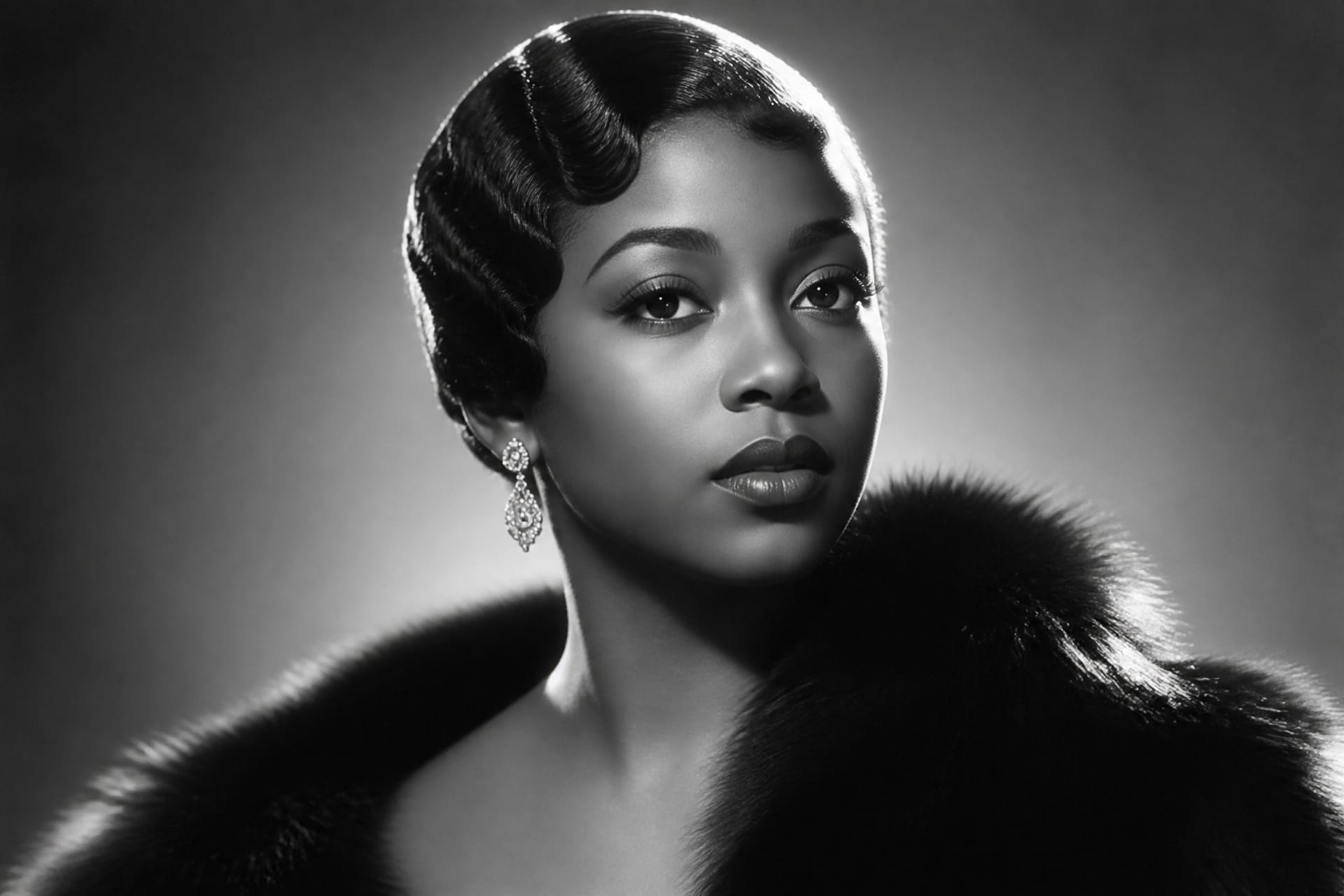
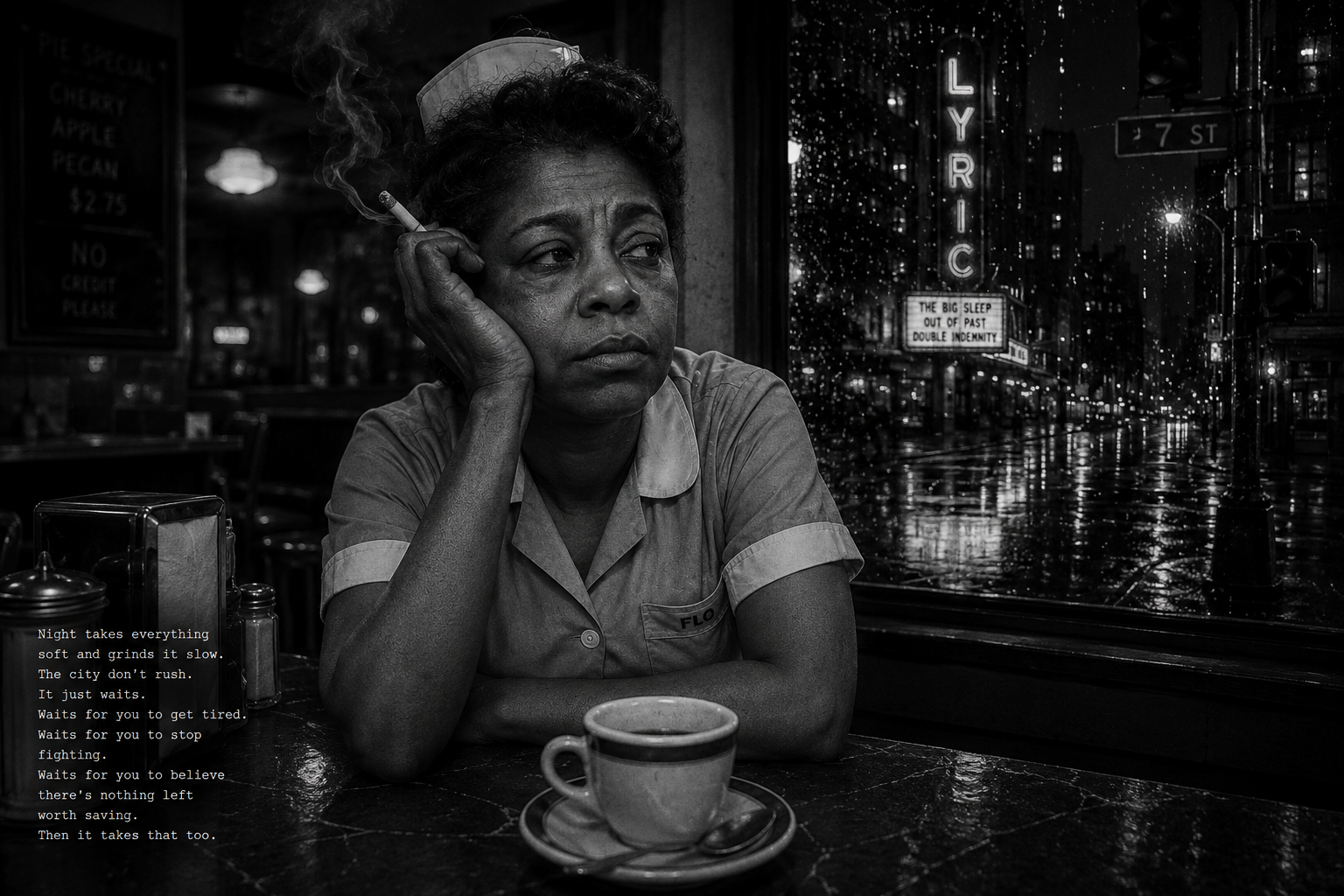
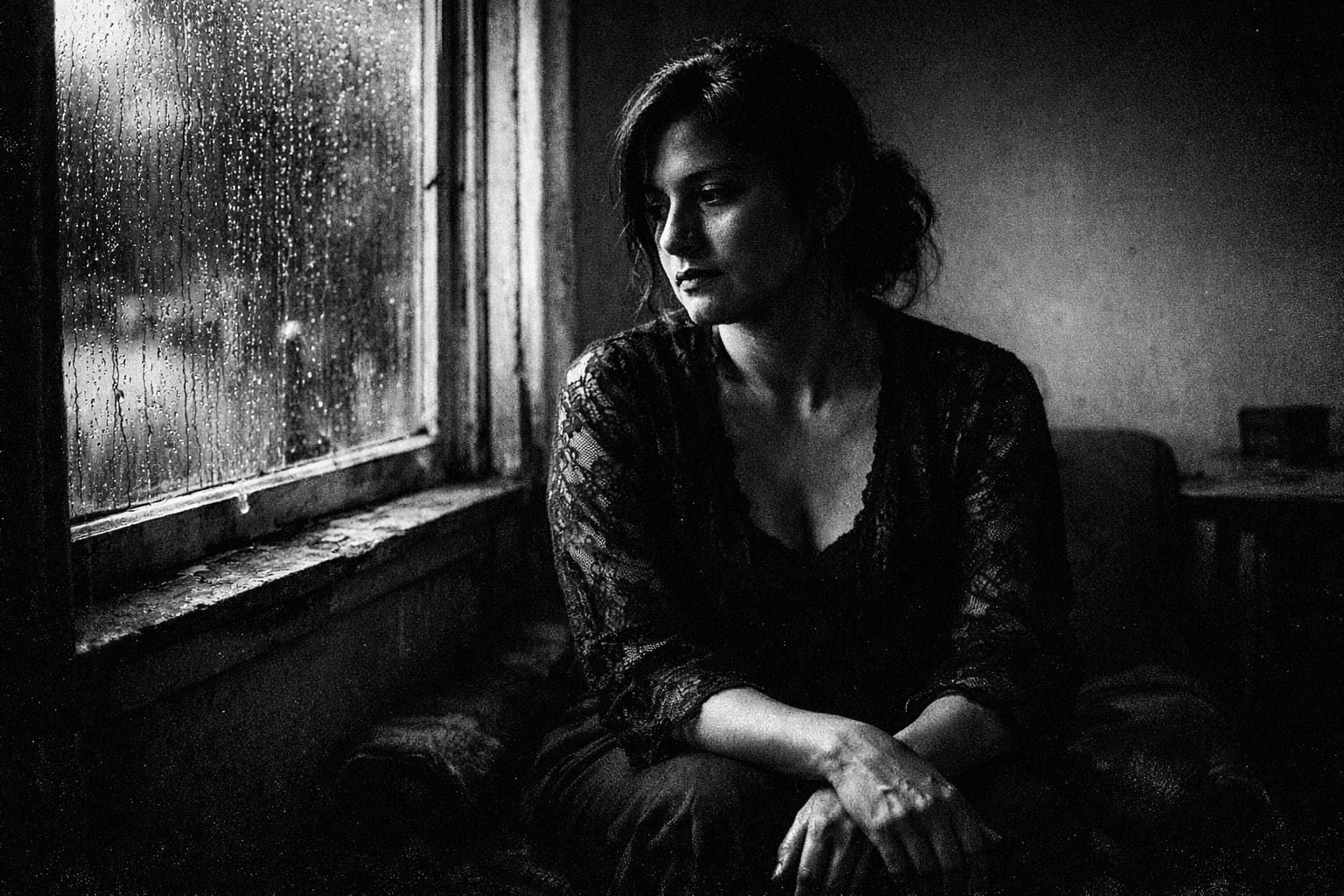
The diner lights hummed softly above her, tired fluorescent halos reflecting against chrome napkin holders and the scratched black countertop worn smooth by decades of elbows, cigarettes, and bad news. Outside, rain glazed the empty intersection in silver-black streaks, turning the city into something half remembered. Neon from the Lyric Theater bled across the wet pavement and trembled whenever the wind shifted hard enough to rattle the glass.

She sat alone in Booth Seven wearing a waitress uniform she hadn’t taken off in almost sixteen hours.

The name stitched above her pocket read:

FLO

Short for Florida Peña.

Nobody called her that anymore.

Not since her mother died.

Not since Raymond started shortening everything he touched.

Not since the city taught her long names carried too much weight for places like this.

Now she was just Flo.

Easy to stitch onto a uniform.

Easy to shout across a greasy kitchen.

Easy to forget.

The cigarette burned between her fingers, ash hanging long and crooked because she’d forgotten to tap it. Smoke drifted upward in slow twisting ribbons, carrying the smell of tobacco, burnt coffee, fryer grease, bleach water, and rain-soaked concrete. The scent had lived in this diner so long it no longer felt separate from the walls.

The diner had emptied an hour ago.

Truckers gone.

Night drunks gone.

Lonely men pretending pie counted as company gone.

Only Flo remained.

And the city outside the glass.

Watching.

She rubbed the ache beneath her eyes with the heel of her palm and stared toward the intersection where the red traffic light blinked against empty streets.

Red.

Black.

Red again.

The city breathed in repetition.

So did she.

Flo had worked nights long enough to know people became honest around two in the morning. Not better. Honest.

That was different.

Two in the morning was when wedding rings came off before entering motel rooms. When exhausted nurses cried inside parked cars before driving home to children who believed strength came naturally. When men in pressed shirts sat alone nursing coffee while staring at nothing at all.

People leaked truth at night.

Slowly.

Like ceilings giving up during hard rain.

She had watched it happen for twenty-three years from behind the counter.

Twenty-three years of refilling cups while strangers unraveled in front of her.

And somewhere in the middle of all that listening, Flo had disappeared too.

Not dramatically.

Quietly.

The way cities erase old buildings.

One brick at a time.

A bus hissed past outside, tires cutting through standing water. Its reflection stretched across the diner window and broke apart in the rain. Flo watched it fade and thought about the apartment waiting for her three blocks away.

If you could call it waiting.

The radiator screamed through winter like it blamed the walls for trapping it there. The wallpaper peeled beside the sink in long curling strips that reminded her of old sunburned skin. The hallway still carried the dent Raymond punched through the drywall after losing his job at the mill fifteen years ago.

She never fixed it.

At first because money was tight.

Later because some damage stops feeling temporary after enough time passes.

Raymond.

Funny how names could still carry weight long after the people attached to them stopped showing up.

She took a slow drag from the cigarette. The smoke scraped her throat and settled heavy in her lungs. Her chest rattled faintly when she exhaled, a sound she pretended not to notice these days.

He used to sit across from her in this very diner after her shift ended. Back when both of them still looked forward to things. He’d steal fries from her plate while talking about buying land somewhere quiet.

“A little place outside the city,” he used to say. “Somewhere you can hear yourself think.”

Flo almost laughed remembering it.

Nobody ever leaves the city the way they imagine.

The city takes pieces first.

Money.

Time.

Sleep.

Then eventually it starts taking softer things.

Marriage.

Patience.

Hope.

The ability to picture a future that doesn’t feel recycled from yesterday.

Raymond left fifteen years ago with another woman and half the furniture.

The strange part wasn’t that he left.

The strange part was how little noise it made when he did.

No screaming.

No dishes shattered against walls.

Just silence settling into rooms where love used to live.

That silence bothered her more than the betrayal ever did.

Silence meant the ending had started long before either of them admitted it.

Flo stubbed the cigarette into the ashtray and immediately lit another from the dying ember.

Bad habit.

But then again, so was staying too long in places that slowly hollowed you out.

Rain struck the windows harder now, tapping the glass like impatient fingers. Somewhere deep in the diner, the refrigerator motor kicked on with a low mechanical growl. Pipes knocked softly in the walls. Ice shifted in the machine behind the counter.

Flo knew every sound this building made.

The fryer settling.

The loose hinge on the front door.

The tired hum of neon outside.

She knew this place better than she knew herself.

That realization settled into her chest heavier than expected.

A police cruiser rolled through the intersection, headlights washing across the diner windows and briefly turning her reflection into a ghost sitting across from her.

Flo looked tired.

Not the kind of tired sleep fixes.

The deeper kind.

Bone tired.

Soul tired.

The kind of exhaustion that gathers quietly inside a person after carrying years they never had the chance to set down.

She stared at her reflection a long moment.

The wrinkles around her eyes looked deeper beneath the fluorescent lights. Her uniform collar sat crooked. Gray strands threaded through her hair near the temples like winter slowly moving in.

For a second, she barely recognized herself.

That frightened her more than loneliness ever had.

Outside, rainwater rushed along the curb carrying cigarette butts, wrappers, and oily rainbow streaks toward drains that swallowed everything without complaint.

The city wasn’t cruel, Flo realized.

Just hungry.

And hunger never apologizes for what it consumes.

The coffee beside her had gone completely cold now, a thin bitter skin forming across the surface. Flo wrapped both hands around the cup anyway, feeling the last small portion of warmth trapped deep in the ceramic.

Sometimes that’s all people become.

Leftover warmth.

People surviving on tiny portions of themselves while they tip-toe through years pretending they aren’t slowly disappearing.

She smoked the cigarette carefully down to the filter and watched the empty streets like she expected someone to return.

Maybe Raymond.

Maybe the woman she used to be before survival became a routine instead of a temporary condition.

Neither came.

The clock above the counter ticked softly toward morning.

Rain kept falling.

The city kept breathing.

And for the first time in years, Florida Peña allowed herself to wonder what would happen if tomorrow night she simply never came back.

The City He Couldn’t Leave


The rain didn’t fall.

It pressed.

Flattened itself against the city like a hand that wouldn’t lift, slicking the streets into black glass, filling the cracks with something that looked too still to be water. The gutters whispered. The buildings held their breath. Even the air felt used—like it had passed through too many lungs before finding his.

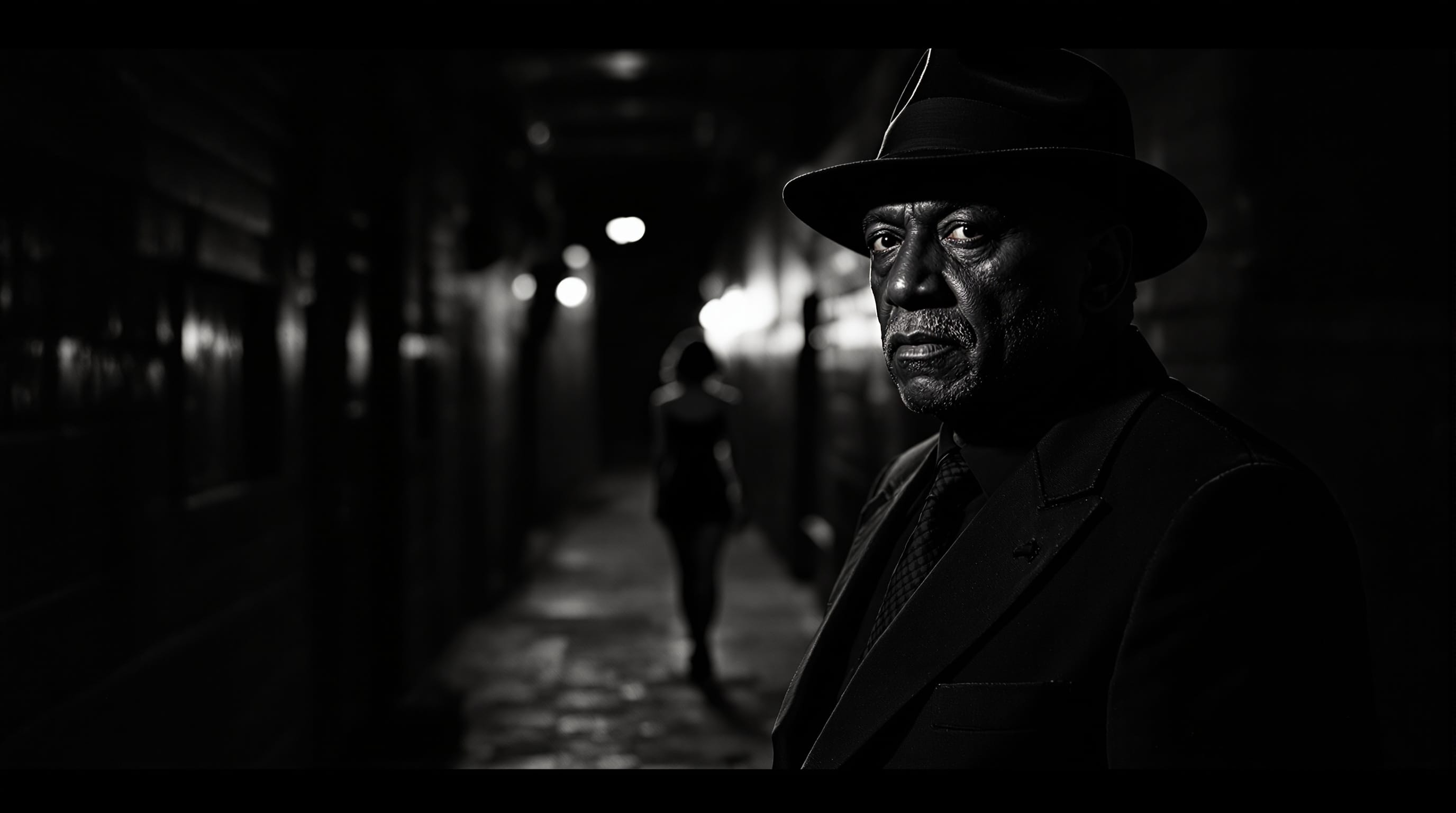
He stood beneath a tired streetlight, hood pulled low, cigarette burning slow between his fingers. The smoke tasted bitter tonight, thicker than usual, like it carried something unfinished in it.

Didn’t matter how far he walked.

The city followed.

Or maybe it never let him go.

A squad car rolled past, tires slicing through pooled rain, the sound sharp and hollow. Red and blue light crawled over the brick walls, bled across the broken windows, then slipped off him like he wasn’t worth holding onto. For a second, his reflection surfaced in the storefront glass beside him—then fractured.

Half of him stood in the rain.

The other half stayed behind the glass.

Behind the broken window.

Behind the place he used to pretend was his.

He didn’t look long.

You learn not to.

That building had once smelled like something alive—coffee, cheap whiskey, sweat, laughter that didn’t last but tried anyway. Now it smelled like rot and damp wood, like time had moved in and stopped paying rent. The door hung crooked, breathing slow with every shift of wind. The inside was gutted. Whatever had mattered there had already been taken.

He drew on the cigarette, let the heat settle in his chest, held it there like he was testing how much he could carry before something gave.

There had been a night.

There’s always a night.

It doesn’t announce itself. Doesn’t ask permission. It just arrives and rearranges everything—quietly, efficiently—until the life you knew feels like something you misremembered.

For him, it came through a phone call.

A voice he knew.

Too calm.

That was the first thing that didn’t sit right. Calm meant distance. Calm meant the damage had already been done.

“You need to come down here.”

No explanation.

No rush.

Just weight.

He went.

Because people like him always go. They tell themselves it’s loyalty, or habit, or doing the right thing. Truth is, they don’t know how not to answer when the past calls them by name.

The street had been quiet when he arrived.

Too quiet.

The kind of quiet that presses against your ears until you start hearing things that aren’t there yet.

Police lights washed the walls in slow, pulsing color. Red. Blue. Red again. The world reduced to warning signs no one could read in time. The rain had already started, soft then, tapping at the pavement like it was testing the ground.

There was a body under a sheet.

He didn’t need to see the face.

Didn’t need to check the shoes.

He knew.

That’s how it works.

The answers come first.

The questions just trail behind, trying to make sense of something that already decided not to make sense.

His stomach had gone cold. Not fear. Not shock. Something quieter than that. Something that settled in and stayed.

The cigarette burned down to the filter between his fingers. He hadn’t noticed. He dropped it, crushed it beneath his boot, and lit another like the motion might keep his hands from remembering.

Bad habit.

Better than remembering.

The city keeps score.

Not with numbers.

With pressure.

With the way your shoulders start to carry things you never agreed to hold. With the faces that show up when you close your eyes. With the places that stop being just places and start feeling like warnings.

He tried leaving once.

Packed a bag that felt too light. Bought a ticket that felt too expensive. Told himself there was nothing left for him here.

That was the lie.

There’s always something left.

A debt that doesn’t need to be spoken.

A memory that refuses to fade clean.

A moment that rewires you in ways you don’t notice until it’s too late to undo it.

He made it two towns over before the quiet got too loud.

Different streets. Different faces. Same weight in his chest.

He stepped off the bus before it fully stopped, boots hitting unfamiliar pavement that didn’t recognize him yet—and felt wrong because of it.

He turned around before the driver even asked.

Walked back.

Didn’t question it.

Some roads don’t lead away.

They circle.

A car slowed as it passed him now, tires hissing through water. He felt the look from inside—measured, uncertain, deciding. People in this city learned to read each other the way others read weather.

He kept walking.

Didn’t offer anything.

That’s another rule.

Never give the city more than it already took.

Still, his steps drifted.

Back to the building.

Or maybe they never left.

The broken window caught him again.

This time he stopped.

Rain streaked the glass, bending the reflection, stretching it into something less certain. His face looked different in it—sharper, older, worn in places that didn’t show up in mirrors.

The skyline bled through him.

Buildings cut across his eyes.

Streetlights ran through his jaw.

Headlights moved behind his thoughts like they were looking for a way out.

For a moment, it didn’t feel like he was looking at himself.

It felt like he was looking at the city wearing him.

Using him.

Remembering through him.

“Yeah,” he said under his breath.

It came out rough, like something dragged up instead of spoken.

That tracked.

Rain hit harder, each drop landing with a small, insistent force. It soaked through his jacket, found his skin, settled there like it planned to stay. The cigarette between his fingers burned uneven, the ember flaring whenever the wind caught it, then dimming again.

Somewhere in the distance, a siren started.

Rose.

Leveled.

Held.

Not urgent.

Not desperate.

Routine.

That’s what this place does best.

It turns everything into routine.

Even the things that should have stopped it cold.

Even the things that should have mattered more.

He dropped the cigarette and crushed it into the pavement, grinding it down until there was nothing left to burn.

He stood there a moment longer than he needed to.

Long enough to feel the weight settle.

Long enough to recognize it.

Then he pulled the hood tighter and stepped away from the glass.

Didn’t look back.

Didn’t need to.

The city wasn’t behind him.

It never was.

It moved when he moved.

Sat in his lungs when he breathed.

Waited in the quiet between thoughts.

And no matter how far he walked, how many streets he crossed, how many nights he tried to outrun—

It was already there.

Waiting.

I Wait Anyway


Morning doesn’t break so much as it leaks in—thin, hesitant light slipping through the blinds like it’s not sure it belongs here anymore.

I sit at the table in your robe.
Still yours.
Still smells faintly of tobacco and something warm I can’t name without you here to confirm it.

The coffee hums behind me. The house breathes. I don’t.

The pen waits.

My hand doesn’t.

It drifts—slow, instinctive—down to my stomach.

I don’t even remember when I started doing that.

There’s a weight there now. Not heavy. Not yet. Just… present.

Like a quiet truth I can’t outrun.


Dear Darling,

It’s morning. The light’s soft today—the kind you used to stop and notice, like it meant something more than just another day starting.

Coffee’s almost ready. I made pancakes. Syrup already on the plate—you said it soaked in better that way.

I’m wearing that silk gown. The one you never got tired of looking at like it was the first time, every time.

My hand presses against my stomach as I write this.

You don’t know.

You were never going to know.

We made something, and I walked away from it before it had a name.

Before it had a chance.

Things still work. That’s the part I hate. The coffee brews. The light comes in. None of it checks to see if you’re still here.

You would’ve taught this child how to listen.

Not just hear—listen.

Bebop the way it’s supposed to be felt. Not explained. Not dissected. Felt.
Motown like it lives in the spine whether you want it to or not.
The Philly sound… the way you talked about it like it was church without the pews.

I can tell them.

I will.

But it won’t be the same.

I don’t have your patience. Your reverence. The way you respected the silence between notes like it mattered just as much as the sound itself.

I miss the way you sang Big Joe Turner off key—loud, unapologetic, like the room belonged to you and nobody else had a say in it.

You never got it right.

Not once.

And I never told you how much I loved that.

I knew what staying meant.

I just didn’t want to pay for it.


I pause.

My thumb circles slow against my stomach.

There’s nothing there yet. Not really.

But I keep my hand there anyway.


I almost told you.
I didn’t.

I told myself I could do this without you. That it would be easier that way. Cleaner.

My heart didn’t agree.

I stayed quiet anyway.

We said we’d do it backwards.
A girl with your name.
A boy with mine.

I don’t know if I’m allowed to keep that promise without you here.

Do you remember that trip?

The desert. Three of us and a plan that sounded better in your head than it ever had a chance of being.

Everything kept going wrong. Heat. Wind. Something always breaking or running out.

And she just… handled it. Like none of it was ever serious to begin with.

I see it now—clear as anything.

That scorpion. Bigger than it had any business being.

She picked it up like it was nothing and chased you with it.

You ran.
I ran.

She laughed.

I forgot she knew what she was doing.

You always said she understood things most people wouldn’t touch—bugs, venom, all of it.

An entomologist.

I just remember thinking she was out of her mind.

Your sister’s going to be an aunt.

I can see her now—trying to be you.

Picking up your bad habits like they still belong to someone.

Pushing them a little further each time.

Like there’s no one left to tell her where the line was.

Teaching them the wrong things on purpose. Letting them taste what they shouldn’t.

Laughing like rules were just suggestions someone else wrote.

Holding it all together just long enough for nobody to ask questions.

Trying to be you.

And not even knowing it.

I finished another chapter.

It’s sitting here, waiting for you like it used to. I can still see you reading—thumb brushing your beard, twisting that one side longer than the other.

You always said you’d fix it.

You never did.

I miss the way you stood behind me. Quiet. Certain. Like the world could fall apart and you’d still be there, steady as breath.

I try to remember that feeling.

I try to give it to something that’s never going to meet you.

I keep pausing like you’re about to say something. Like I didn’t train myself out of that already.

I’ll write again tomorrow.

I love you.

Never doubt that.


I read it twice.

Not for grammar.

For truth.

My hand stays there longer this time.

The lighter clicks.

Flame blooms.

The paper curls, blackens, disappears in on itself—like it’s trying to take the words back before they settle somewhere permanent.

I drop it into your ashtray.

Your pipe’s still there.

That hand-carved one from Ireland you wouldn’t shut up about. You said it would last forever.

I pick it up.

Turn it over in my hands.

Cold.

I press it gently against my stomach.

I wait anyway.

The smoke rises—thin, quiet.

My hand tightens.

Not a thought. Not yet.

Just something—

wrong.


Author’s Note: This piece was written for Sadje’s What Do You See #335. The image offered quiet, but the story refused it—pulling instead at absence, at the things we leave unsaid, and the consequences that continue long after the moment has passed.


The Message That Hadn’t Been Sent Yet

Stories in Monochrome

The storm started before sundown and never bothered to stop. Snow slid sideways across the window like the world was being erased one line at a time. Out here, the weather didn’t arrive politely. It came the way bad news comes — sudden, cold, and without asking if you were ready.

I had been alone in the station since noon.

Most days were like that.
Just me, the wires, and whatever passed through them.

People think telegraph work is exciting because messages travel fast. Truth is, the faster the message moves, the less it has to do with you. You just sit there, tapping out words that belong to other people, lives that never once stop to wonder who carried their news across the miles.

I used to imagine the wires as tethers stretched across the country.
Thin lines tying one lonely place to another.

After a few winters out here, you stop feeling tethered.
You start feeling like the knot nobody checks anymore.

The lamp hissed beside me, throwing a weak circle of light across the desk. The rest of the room sat in shadow, the corners dark enough to swallow a man whole if he leaned back too far. The stove had gone low, and I hadn’t bothered to feed it. Coal was for nights when someone might come through.

No one was coming through tonight.

The key clicked once under my fingers, just to make sure the line was still alive. A habit more than anything. When the storm got bad, the wires sometimes went quiet, and the silence could make a man start hearing things he shouldn’t.

Click.

Nothing back.

Good.

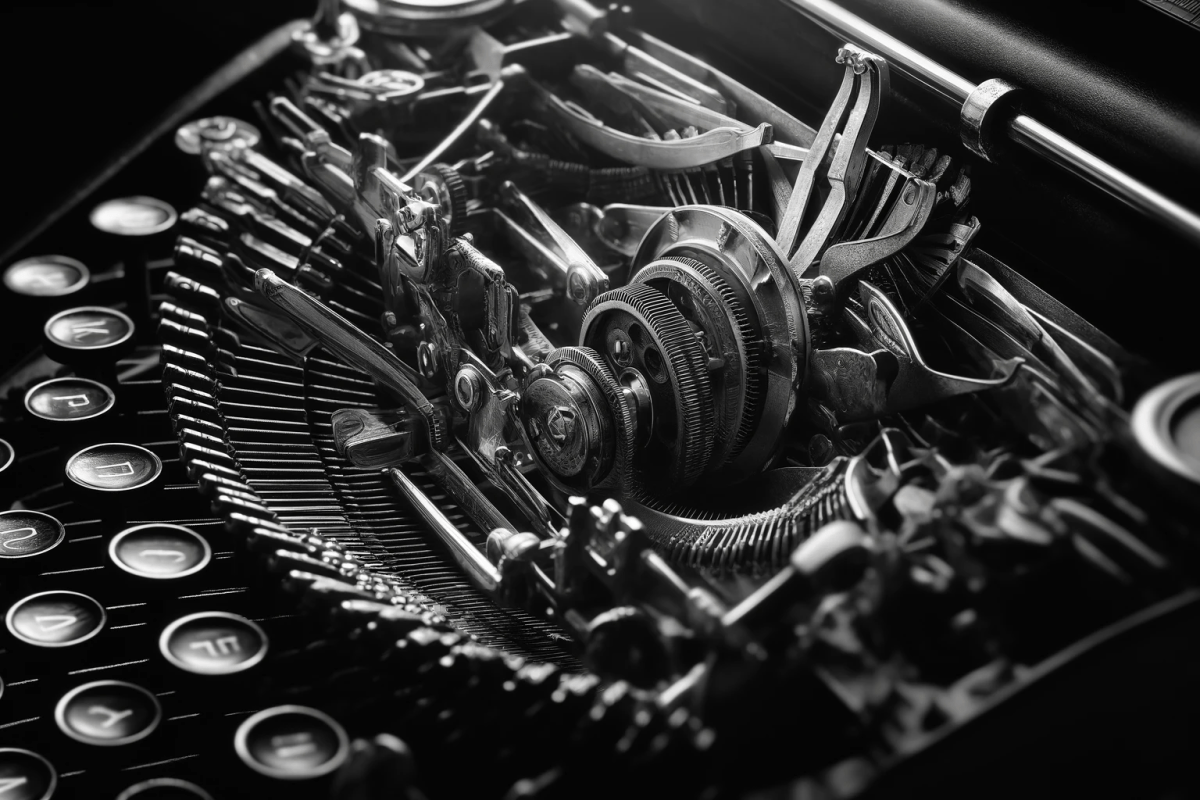
I reached for the paper roll and fed it through the register, listening to the small mechanical chatter that meant the machine still remembered its job, even if nobody else did.

For a while, that was all there was.

Wind.
Lamp.
The soft tick of metal.

Then the register started moving.

Not fast. Not urgent. Just steady.

I frowned and leaned closer, watching the strip of paper curl out across the desk, the punched dots marching along in neat little lines.

No call sign first.

No operator on the line.

Just the message.

I waited for the signal to stop, thinking maybe some fool down the line had bumped his key. It happened sometimes when the weather got bad. Loose hands, tired eyes, a man tapping nonsense because he didn’t feel like going home to whatever waited there.

But the tapping didn’t sound like nonsense.

It sounded careful.

Deliberate.

I pulled the tape free and held it closer to the lamp, squinting at the pattern, letting my fingers run along the holes the way a blind man reads a page.

It took a minute for the words to settle in my head.

STATION 14 WILL CLOSE AFTER FIRE
NO SURVIVORS INSIDE
DO NOT REMAIN

My first thought wasn’t ghosts.

It was the railroad.

Everything out here came down to the railroad.
If the line held, the town held.
If the line broke, the town dried up like a creek in August.

I’d seen it before.

Not here, but back east, when I was still green enough to think grown men knew what they were doing. The summer of the strike, when the yards filled with shouting and smoke and men who hadn’t been paid in weeks. Engines sitting cold on the tracks while soldiers stood guard like the trains were prisoners instead of iron.

We barely held the line together then.

Some towns never did.

I rubbed my thumb along the edge of the tape, feeling the thin paper curl under my hand.

Ten years, the message said.

Ten years from now.

Could the railroad survive another hit like that?

Could this place?

I looked around the station, at the stove, the desk, the little clock the company sent when they built the line through here. Nothing fancy. Nothing worth much to anyone but the men who worked it.

This job was the first thing I’d ever done that didn’t belong to my father.

He’d sent me west with two shirts, a watch that didn’t keep proper time, and a letter of introduction that opened just enough doors to get me out of his house. Said a man ought to learn how to stand on his own legs where nobody knew his name.

Most folks out here still didn’t take me serious.

To them I was the boy shipped west by a railroad man with friends in the company office, another soft-handed son sent out where nobody cared if he failed.

Truth was, I didn’t know if I believed in myself either, not at first.

But the wires made sense.

Dots.
Lines.
Signals that meant the same thing no matter who sent them.

Out here, the machine didn’t care whose son I was.

It only cared if I got the message right.

And this one…

This one I wished I hadn’t.

STATION 14 WILL CLOSE AFTER FIRE
NO SURVIVORS INSIDE
DO NOT REMAIN

I wanted to tell someone.

Supervisor.
Dispatcher.
Anybody.

But the storm had the line half dead already, and even if I got through, what would I say?

A message from ten years ahead says the railroad’s going to fall apart?

Out here in the middle of nowhere, a man could shout the truth into the wires all night long and still sound like a fool on the other end.

The lamp flickered, and the shadows shifted across the wall like the room itself wasn’t sure it believed me either.

Then the tape started moving again.

Slow.

Steady.

No sound from the key this time.

Just the paper sliding forward like something inside the machine had decided it wasn’t finished talking.

I didn’t touch it right away.

Didn’t breathe either.

When the strip finally stopped, I leaned in and pulled it free, holding it up where the lamp could reach it.

This time the message was shorter.

Only one line.

The holes looked clean, sharp, like they’d been punched by a careful hand.

I read it once.

Then again.

Then I looked at the clock on the wall.

January 14.

I lowered my eyes back to the tape.

MESSAGE SENT JANUARY 14
TEN YEARS FROM NOW

The wind hit the side of the station hard enough to rattle the glass, and for a second I thought the whole place might tear loose from the ground and go sliding off into the dark.

I could leave.

The thought came quick.

Just put on my coat.
Walk out.
Let the station sit empty.

Nobody would know until morning.

Nobody would care until later.

I looked at the key.

Looked at the stove.

Looked at the lamp burning low beside the window where the snow kept falling the same way it had all night.

I sat back down.

Fed the tape through again.

Set my fingers on the key.

If the message was coming from ten years ahead, then maybe the line still ran both ways.

Maybe the wires didn’t care what year it was.

My hand hovered before I pressed the lever.

STATION 14 RECEIVED
WHO SENT THIS
WHAT HAPPENS

The machine sat quiet.

The wind howled.

The lamp flickered low enough to make the shadows crawl.

For a moment I thought that was the end of it.

Then the register started again.

Not fast.

Not slow.

Just steady.

I watched the tape roll out across the desk, my hands flat against the wood, afraid if I moved the whole thing might stop.

When it finished, I didn’t want to read it.

But a man alone in a place like this doesn’t get the luxury of not knowing.

I picked up the strip.

Held it to the light.

YOU SENT IT

The lamp sputtered once, then steadied.

Outside, the wires kept singing in the storm, stretched tight across the miles, holding one lonely station to another, same as always.

Only now I couldn’t tell if they were keeping me tethered to the world…

or keeping something else from letting go.

The Night Watches Back


Rain slid down the café window in thin silver lines.

Inside, the lights were low and patient. Bottles stood behind the bar like quiet sentries. A cup of coffee cooled beside an untouched plate, the room carrying the faint smell of roasted beans, wet coats, and something fried hours ago.

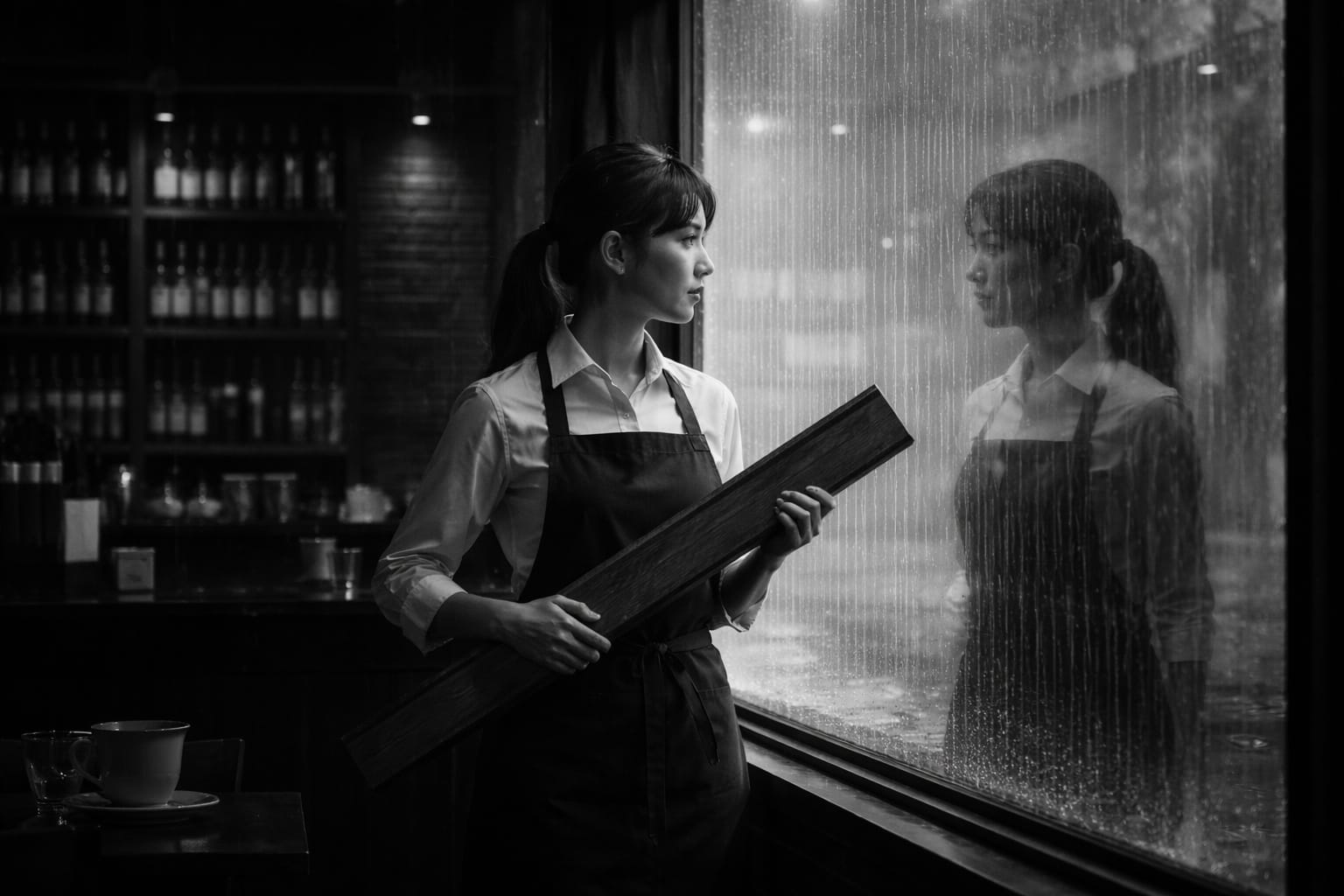
Klaire stood near the glass holding the long wooden board used for slicing bread and meat. The worn wood rested against her hip like it belonged there. Thin knife lines crossed its surface, years of quiet work pressed deep into the grain.

Outside, the streetlights flickered.

The intermittent buzz from their tired wiring drifted through the rain. Moths circled the glowing globe of the nearest lamp, occasionally striking it as if they simply didn’t care what happened next.

Someone’s dogs barked in the distance.

Homes went dark one by one. Somewhere out there people were settling into beds, finishing conversations, turning off televisions.

I suppose it is like that somewhere in some town in the world.

It just doesn’t describe mine.

“The city never sleeps.”

Klaire had heard that phrase all her life. She never knew who said it first, but she knew it was true.

More happens in the night than anyone ever admits.

Young love blooming in the back seat of a borrowed car.
A waitress stepping outside for a cigarette, three pats and a wink away from paying her light bill.
A delivery truck driver staring at a flickering candle stuck into a blueberry muffin while wondering how forty-five years managed to pass him by.

Klaire had seen them all.

Not by name.

By posture.

You learn things when you work nights.

You learn who counts coins before ordering.

You learn who sits too long over a single cup of coffee.

You learn the shape loneliness makes in a person’s shoulders before they ever say a word.

Klaire had seen a woman cry quietly over a plate of eggs once, the tears slipping into the yolk before the fork ever touched it.

A man in a pressed suit once sat where the window light fell hardest, staring into his coffee like it owed him answers his expensive apartment never gave him.

And there was the father who came in every Thursday night, always ten days late on the rent, pretending the slice of pie was for someone waiting at home.

The night carried all of them.

Smoke-filled bars. Back alleys. Neon signs humming over people searching for relief from something they couldn’t quite name.

But pain is patient.

It waits.

And the night always knows where to find it.

Klaire shifted the board in her hands. Tonight it felt heavier than usual, as if the wood had absorbed the quiet mass of every story that had passed across the counter.

Her reflection watched her through the rain.

The glass turned her into two women.

One standing inside.

One trapped in the weather.

For a moment Klaire wondered which one was real.

Maybe the one in the glass was the version who had left this city years ago. The one who found a mate, moved somewhere warm, and forgot what neon light looked like through falling rain.

But life rarely follows the road we draw for it.

Klaire wiped the inside of the glass with her sleeve, though it made no difference. The rain outside didn’t care what she could see.

Somewhere down the street a siren wailed and faded into the dark.

Inside, the clock ticked.

Klaire stood there quietly, still holding the board meant for bread and meat, while the quiet mass of the city pressed against the glass.

Her reflection watched her through the rain.

Klaire didn’t wave.

After a moment, neither woman moved.


Thanks Di

The Quiet Between Storms


Stories in Monochrome
Episode: The Quiet Between Storms

The rain didn’t knock. It pressed itself against the window like it had a right to be there.

She sat in the chair beside the glass, lace sleeves drinking in what little light the afternoon had left. The room was narrow, wood-paneled, holding the smell of old dust and colder days. Outside, the sky had folded in on itself—low, heavy, undecided. Inside, she folded her hands the same way.

There are people who perform their sadness.

She was not one of them.

Her grief was private, disciplined. Almost forensic. She examined it the way some people study fingerprints—turning it under the light, tracing its ridges, asking where it began and who it belonged to. She had once believed that love lived in the body like a pulse. Now she knew better. Love lives in the core. It survives there long after pride burns off and explanations dry up.

The rain sketched restless patterns on the glass. If you watched long enough, it looked like language. A secret code only the sky understood.

She wondered when she had become fluent in silence.

There had been a time—before the hospital corridors, before the unanswered calls—when she believed everything could be repaired with honesty. Say the right words. Hold the right hand. Pull the right emotional cord and the machinery of two hearts would start again.

But some wires don’t reconnect.

Some silences aren’t pauses. They are verdicts.

She shifted in the chair, lace tightening at her elbows. The skin at her wrist was pale where a bracelet used to sit. The absence felt louder than the metal ever had. Objects leave ghosts. So do people.

She wasn’t angry. That would have been easier.

Anger has movement. It gives you something to throw.

This was something else.

This was the long, slow realization that love can end without drama. No slammed doors. No shattered glass. Just a gradual thinning. A quieting. Two people drifting like separate drops of rain, sliding down the same pane, never quite touching again.

Her reflection hovered faintly in the window—half face, half shadow. She studied it the way she once studied him, searching for clues. Was there something she missed? A tremor in his voice? A look that lingered too long somewhere else? Or had the unraveling been mutual—two hands loosening their grip at the same time?

Outside, a car passed. Its tires hissed across wet pavement. The sound felt like a reminder: the world continues. Even when you want it to stall. Even when you sit perfectly still.

She closed her eyes.

There, beneath the ache, beneath the analysis and the restraint, something steady remained. Not hope exactly. Not bitterness either.

Just awareness.

She could survive this.

The rain softened. The sky lightened by a shade no one would notice unless they were watching carefully. She had become good at watching carefully.

Careful is what heartbreak teaches you.

She stood at last and placed her palm against the cool glass. For a moment, the chill startled her. Then it steadied her.

Not everything that breaks you is meant to destroy you.

Some things strip you back to your core so you can see what still beats.

And in the quiet between storms, that is enough.

Dirt You Don’t Swallow


I learned early you don’t eat another man’s dirt.

Not in this city.

Not if you plan on walking it tomorrow.

The alley was narrow enough to hold a secret and long enough to bury one. Rain had passed through an hour ago, left the bricks sweating and the pavement slick like old oil. Streetlamp overhead flickered—weak pulse, tired heart. It painted my shadow tall and crooked against the wall.

She was halfway down the corridor of dark by then.

Didn’t look back.

Heels tapping soft. Measured. Like she’d rehearsed it.

I could’ve called her name. Could’ve let it echo off the brick, let it beg a little. Pride’s a funny thing—it talks loud when you’re alone and goes mute when it’s time to prove itself. I felt it rise in my throat anyway. Bitter. Hot.

I swallowed.

But not that.

There’s a difference between swallowing words and swallowing dirt. Words heal. Dirt settles in your lungs.

I’ve watched men eat it before. Watched them nod and grin while somebody else pressed their face into the ground. They tell themselves it’s strategy. Survival. Temporary.

But dirt multiplies.

You take one mouthful, and before long you’re chewing gravel every morning just to get out of bed. You forget what clean air tastes like.

I’ve done things I don’t talk about. Stood in rooms where the air felt heavy enough to bruise. Bent just enough to keep breathing. But I never knelt long enough for it to stick.

Tonight was close.

The man she chose—he’s got money, reach, hands that don’t shake. He wanted me to step aside quiet. Smile while he erased me. Shake his hand like we were gentlemen and not wolves circling the same scrap of warmth.

All it would’ve taken was one nod.

One concession.

One mouthful.

The light cut across my face and showed me what I’d look like if I agreed.

Smaller.

She slowed near the mouth of the alley. Maybe waiting. Maybe hoping I’d run. That I’d make it messy. Give her something dramatic to carry home.

I stayed where I was.

The city doesn’t reward dignity. It doesn’t hand out medals for restraint. It just keeps moving. Drains fill. Neon hums. Taxis slide past like nothing happened.

But I knew.

Better to go home alone, pride cracked but breathing, than let another man decide how deep you kneel.

She turned the corner.

Gone.

The alley felt wider after that. Or maybe emptier. Hard to tell the difference some nights.

I adjusted my hat. Smoothed the front of my coat. Let the rain-cool air settle into my chest. It stung. That was fine. Pain’s clean compared to shame.

You don’t eat another man’s dirt.

Not for love.

Not for leverage.

Not to stay in a story that isn’t yours anymore.

I stepped out of the alley and into the streetlight like a man who’d lost something.

But not himself.

Winter’s Slow Burn


It’s always easiest in the winter.

The cold stiffens things. Numbs the soft tissue. Makes it easier to pack her away into that special box we build for the things that make us uncomfortable. Regret. Longing. Questions with no return address.

In the summer everything breathes too loud. In the winter, silence feels honest.

I sit here with damp cheeks.

The voices arrive like they always do.

“What kind of man are you? Pull yourself together.”

They mean well. Or they think they do. There’s always a script for men. Be steady. Be solid. Don’t leak.

It would be easier if I had done something obvious. Something unforgivable. Something I could circle in red ink and confess to. At least then the ending would have structure. A cause. A clean narrative.

But ambiguity lingers like breath in cold air.

For weeks I told myself she never really saw me. That I stood there open and she looked past me. It preserved something in me to believe that. Made the ache cleaner.

I move through the world now like a man slightly out of phase. Smiling when required. Laughing on cue. Telling jokes that land just well enough to pass inspection. I even went on a few dates, just to see if the machinery still worked.

“There are plenty of fish in the sea.”

“What you need is someone for the night.”

Advice dispensed like loose change.

Do people even believe the things that come out of their mouths? Or do they just speak because silence makes them nervous?

This isn’t about replacement. It’s about recognition.

I could sit here and say she never saw me.

Perhaps I never saw her.

If I’m honest — for once — it’s probably both.

There were moments I mistook her quiet for contentment. Moments she mistook my restraint for indifference. We were standing inches apart, translating each other poorly.

I thought love meant stability. She might have needed expansion. I thought silence meant peace. She might have heard distance.

No one storms out when this happens.

Things just cool.

An empty room doesn’t echo because someone smashed it. It echoes because no one is speaking inside it anymore.

Winter makes it easier to pretend that’s natural.

But maybe the slow burn was always there — not fire consuming us, but warmth fading a degree at a time until we were both shivering, pretending not to notice.

Maybe being seen begins with learning how to see.

And maybe next time, I’ll look closer.

Writer’s Workshop Prompt – 05312024

CHALLENGE RESPONSE – FICTION

Here is my response to Writer’s Workshop

The sun through the 4th floor glass felt good, It was partly on my shoulder and partly on my face. It was good to the feel the warmth. I’d been so cold lately. Nothing, I did made me warm enough. Even when AC went out and it was 90’s degrees in the house, I was okay everyone was else, but they kept their complaints out of earshot. I appreciated that.

I’m sitting thinking about the one who got away. The one who was supposed to make things better and all that. I never knew if they really happened or was it something said we believed in publicly, but thought was a crock of shit privately. “The One” worked at Aunt Peg’s candy shop in the local mall. I must have spent hundreds of dollars on soft peppermint sticks that summer.

The neighborhood paperboy loved me. He made a dollar for every trip to the candy shop. You see, I never could muster up enough courage to actually go up to the counter and ask for the candy.

“Do you even like peppermint?” Maynard, the paperboy asked

I didn’t answer. I did my best to give him an evil leer. Although, I don’t think it was working very well.

“Look, if this is all about the girl? She’s right there. Just talk to her.” Maynard took his dollar and left. That was the last day of summer and I never said a word to the girl.

I still eat soft peppermint sticks when I can find them. Those puff balls seem to have cornered the market. Some marketing genius started this whole mess.

Yep, Aunt Peg’s soft peppermint sticks were the best!

Brothers in Arms

PROSE – VETERAN’S DAY REFLECTION

I’ve said on this blog that we have two families in life. The one we are born with and the one we choose. This concept has always been more than words for me. It’s been the way I was raised, and I live still. Today, Veteran’s Day, I going to take a moment and showcase my brothers.

These yahoo’s on each side of me are veterans.

The above picture is one of the few times we were together. Our lives are hectic, but we made it happen that day. The gentleman flashing the peace sign is the oldest. He was in the Marine Corps and whipped my skinny butt into shape before Army basic training. On the opposite side, he was in the Army Signal Corps and taught me what it meant to be a member of the Signal Corps. Their guidance and toughness laid the cornerstone of who I am.


Each of these men also served in the military; the top three were in the Navy, and my cousin was in the Army. These men helped me put the pieces back together again after my wife died. They reminded me who I was and what I stood for. I’m indebted to them for life.

As veterans, service and duty aren’t things we are born to; it’s what we learn. In many ways, we are the better for it. In others, that is a cost. Some more than others, but a cost, just the same. During the time we wore the uniform, we did our thang. Nothing or no one can take that away from us. It’s an honor to be among you all.

Happy Veteran’s Day