Quote of the Day – 05262026


Personal Reflection

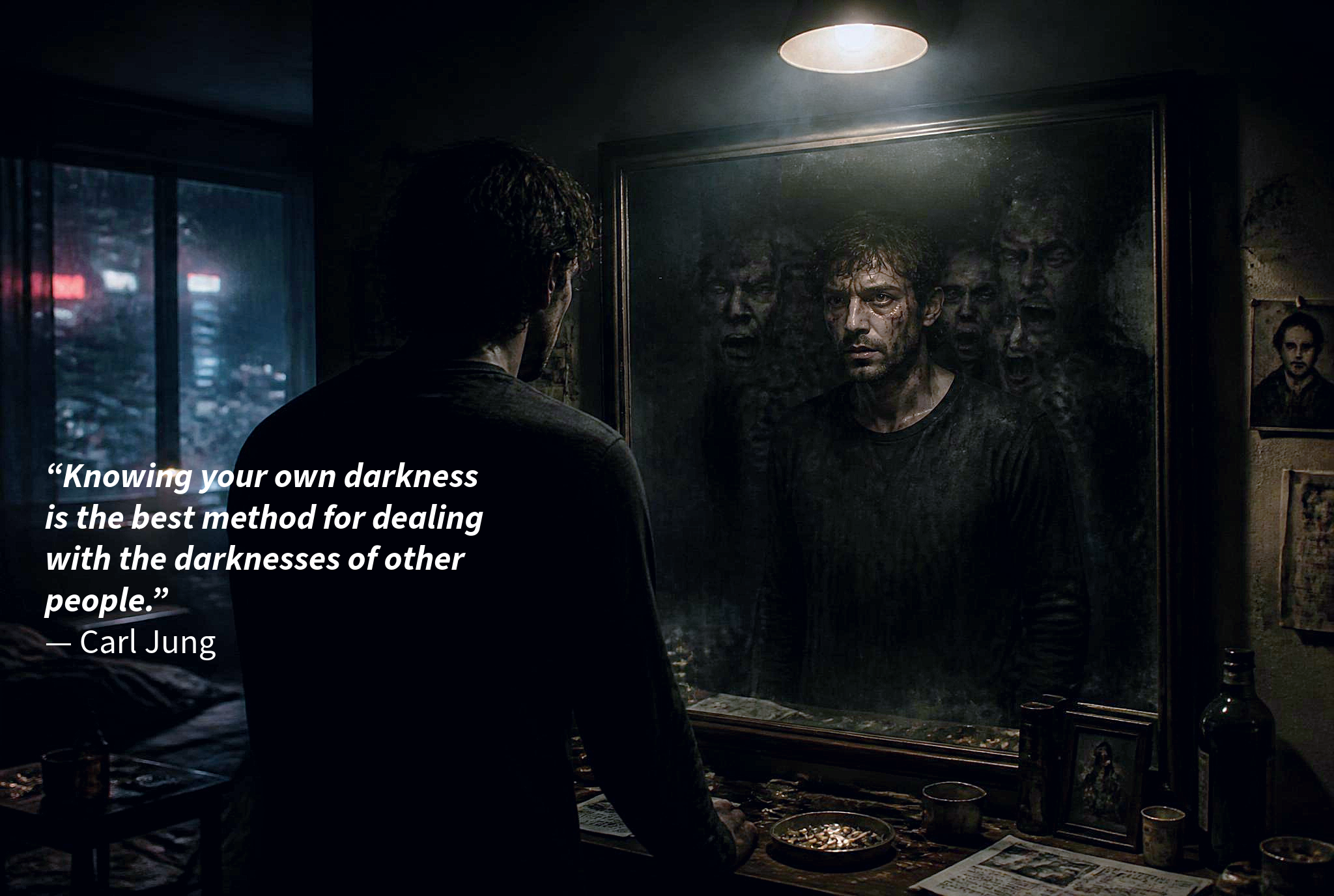
There’s something uncomfortable about this quote immediately. Not because it sounds cruel—but because it asks for honesty most people spend years avoiding.

To know your own darkness means more than acknowledging flaws casually. It means recognizing the parts of yourself that do not fit the identity you prefer to present to the world. The envy. The anger. The selfishness. The fear. The emotional wounds capable of becoming weapons if left unconscious long enough.

Most people would rather believe they are purely good.

Life rarely allows that illusion to survive untouched forever.

Because darkness is not always dramatic.

Sometimes it appears quietly through defensiveness. Through the way unresolved pain leaks into conversations, relationships, reactions. A person who feels abandoned becomes emotionally distant before others can leave first. Someone deeply ashamed learns how to attack vulnerability in other people because witnessing openness reminds them of what they buried in themselves years ago.

That’s the difficult thing about unexamined suffering:
it rarely stays contained.

Human beings pass emotional damage to one another constantly without fully understanding where it originated. Hurt people become controlling. Lonely people become emotionally unavailable. Frightened people become cruel in the name of self-protection. And often the behavior makes perfect psychological sense once you trace it back far enough.

But understanding darkness is not the same thing as excusing it.

That distinction matters.

Self-awareness does not magically remove harmful impulses. It simply prevents people from remaining blindly ruled by them. Because the more disconnected someone becomes from their own inner contradictions, the easier it becomes to project them outward onto everyone else.

Mental exhaustion often deepens there—in the war between the self people want to believe they are and the self quietly revealed through their patterns, reactions, and emotional habits.

That confrontation can feel humiliating.

No one enjoys discovering they are capable of bitterness, manipulation, avoidance, jealousy, or emotional cowardice under the right conditions. Yet pretending those capacities do not exist only gives them more control from the shadows.

And perhaps that’s why emotionally mature people often become gentler over time.

Not because they stop recognizing darkness in others…

…but because they finally recognize enough of it inside themselves to understand how human frailty actually works.

Maybe wisdom is not becoming a person without darkness.

Maybe wisdom is learning how to carry awareness of your own inner complexity without allowing it to harden you into cynicism or self-hatred.

Because once you understand your own capacity for fear, contradiction, and emotional damage, compassion stops being abstract morality.

It becomes realism.

The quiet recognition that every human being is fighting battles between woundedness and responsibility internally—whether they admit it openly or not.

And perhaps the goal is not purity.

Perhaps the goal is consciousness.

To know what lives inside you clearly enough that it no longer has to control the lives of everyone around you unconsciously.


Reflective Prompt

What part of yourself becomes hardest to acknowledge when you are emotionally hurt or afraid?
Quote of the Day – 05032026


Personal Reflection


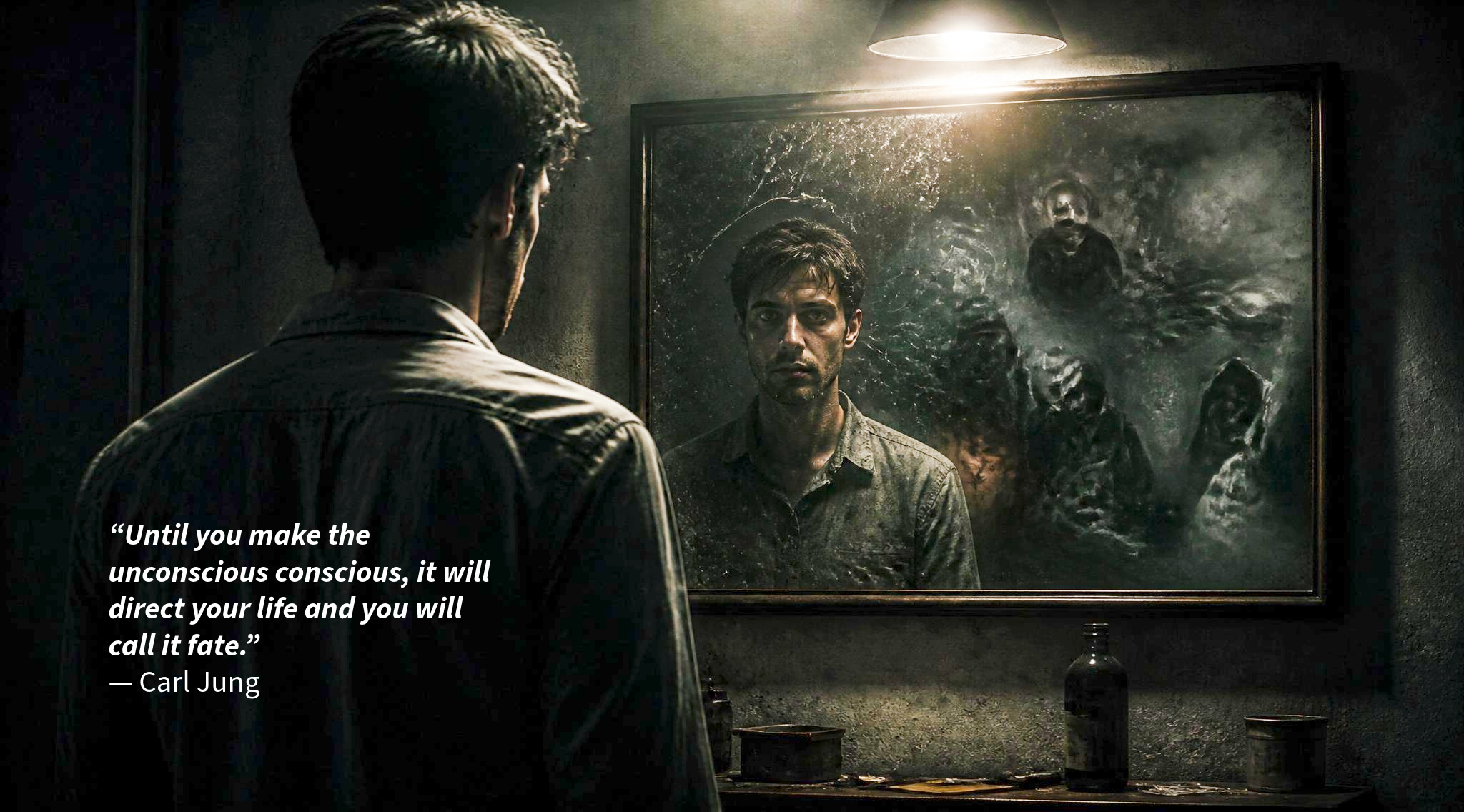
At first glance, it feels like a warning dressed up as wisdom. The idea that something beneath the surface—quiet, unseen—could be pulling the strings without you realizing it. It reframes “fate” from something mystical into something personal… almost uncomfortably so. Like maybe the patterns you keep running into aren’t accidents at all.

That’s where it starts to tighten. Because if it isn’t fate—if it’s you—then there’s nowhere to hide. The same choices, the same outcomes, the same quiet disappointments looping back around like they know your address. It suggests that what we avoid doesn’t disappear—it just finds another way in. And maybe the hardest truth here is that we’re not as self-aware as we like to believe. We move through life thinking we’re in control, while old wounds, buried fears, and unexamined beliefs keep their hands on the wheel. Not loudly. Not dramatically. Just enough to steer.

And calling it fate? That’s the easy way out. It absolves us. Keeps things distant. Because owning it means doing the work—digging through the parts of ourselves we’d rather leave untouched. The parts that don’t look good in the light.

But there’s a strange kind of freedom in that discomfort. If something unconscious can shape your life without your permission… then bringing it into the light gives you a say again. Not total control—nothing that clean—but influence. Awareness doesn’t fix everything. It doesn’t suddenly rewrite your story. But it does this one quiet, powerful thing: it lets you see the pattern before you repeat it.


Reflective Prompt

What pattern in your life have you been calling “fate” that might actually be asking to be understood?

Quote of the Day – 09162025


Reflection:
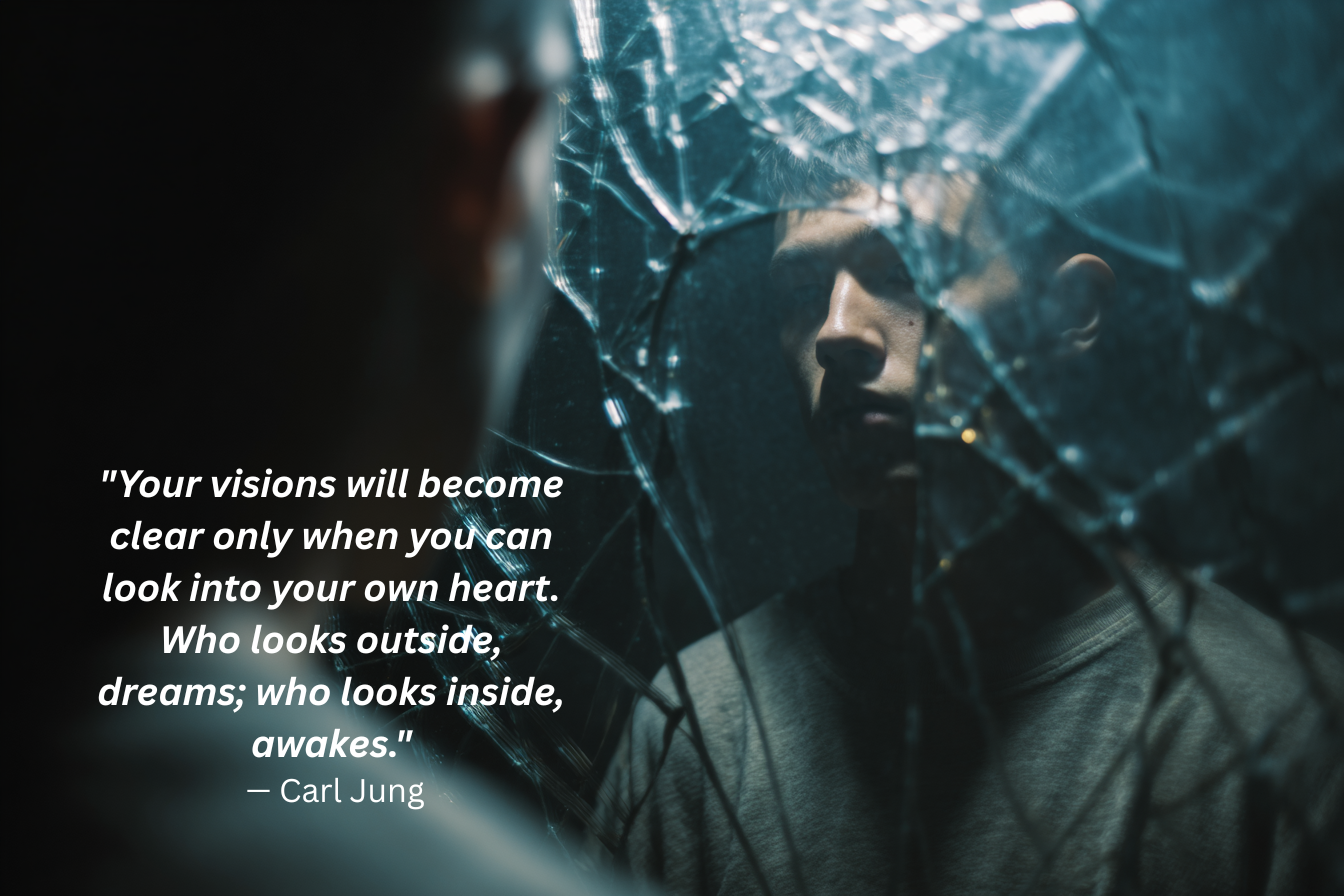
Self-discovery is rarely a clean or graceful process. It isn’t a tidy list of traits or a personality quiz result you can frame on the wall. It’s the uneasy work of sitting with the silence long enough for what you’ve buried to surface. Jung reminds us that the dream lies outside, but the awakening waits within — and that truth is often harder to face than any fantasy.

When we look inward, we don’t just find clarity. We find contradictions: the child we used to be, the wounds we pretend don’t ache anymore, the hunger we try to disguise, the voice that whispers not yet. To awaken is to acknowledge that the self is layered, sometimes jagged, and not always flattering.

But it’s also where the compass lives. The world can give us mirrors, but only we can decide which reflection we claim. Self-discovery isn’t about arriving at a perfect version of ourselves. It’s about stripping away the borrowed identities and false allegiances until we finally recognize the pulse of something undeniably our own.

Prompt for readers:
When you turn inward and strip away the noise, what truth about yourself have you uncovered that both unsettled you and set you free?

Quote of the Day – 09132025


Personal Reflection:
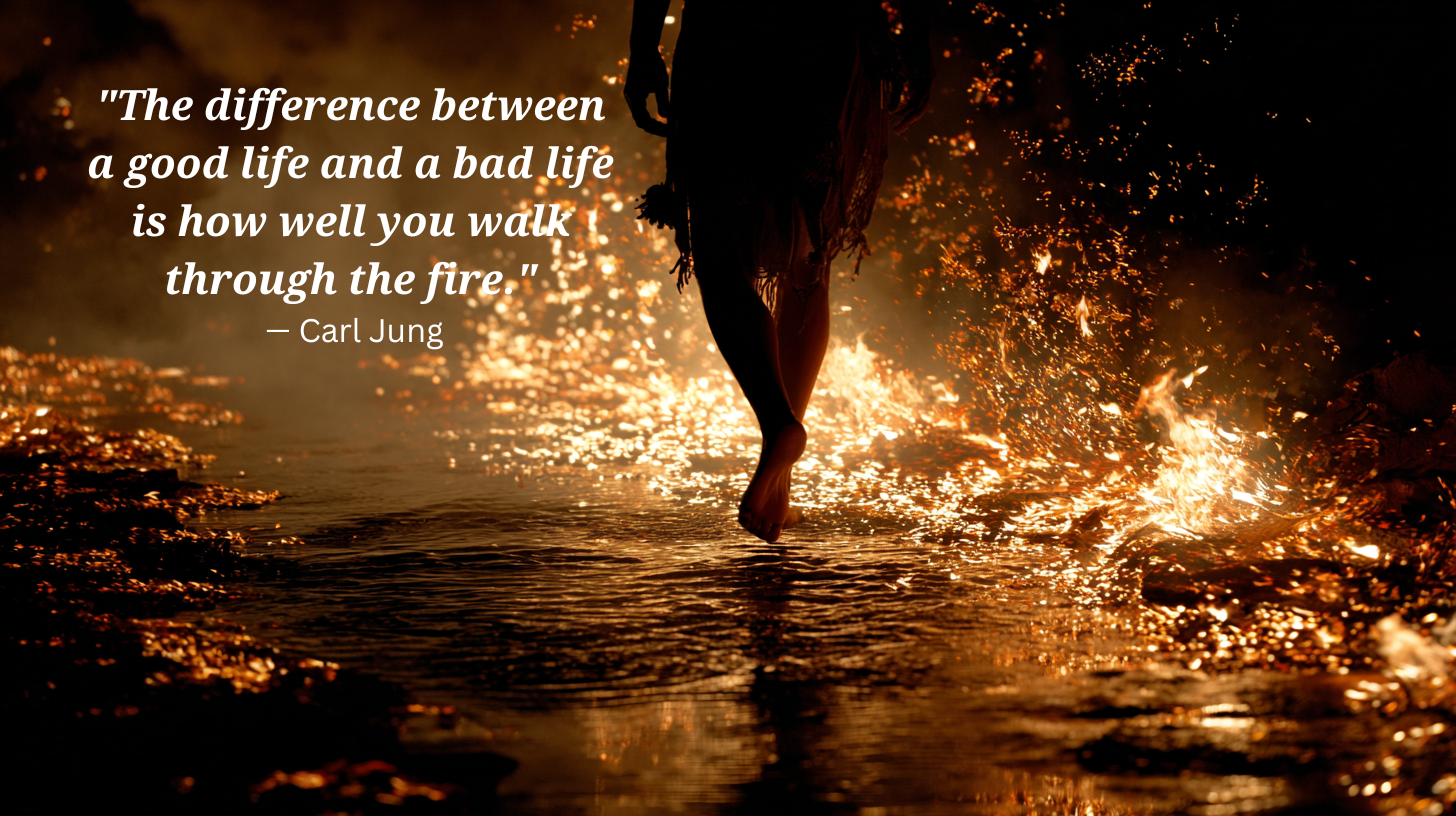
The fire is never optional. It comes in the form of loss, betrayal, heartbreak, failure, the unraveling of everything we thought was solid. Most of us spend half our lives trying to dodge it, building walls, distractions, rituals of avoidance. But Jung makes the truth plain: the flames will find you anyway. The question is not if, but how.

Walking through fire is not about stoicism or bravado. It’s about what we choose to carry with us and what we allow to burn away. Some parts of us can’t make it out — illusions, false identities, the roles we cling to because they feel safe. The fire strips those bare, whether we like it or not. What survives, if we let it, is something closer to the core of who we are.

And yes, we emerge scarred. But scars are not just evidence of pain — they are proof of endurance. They remind us that we walked through something that could have ended us, and we’re still here. The difference between a good life and a bad one isn’t whether you burn; it’s whether you learn to keep walking, carrying the ember of yourself that refuses to be extinguished.

Reflective Prompt:
When you look back at the fires you’ve survived, what parts of you were burned away — and what ember did you carry out that still defines you today?

Quote of the Day – 09032025


Personal Reflection:
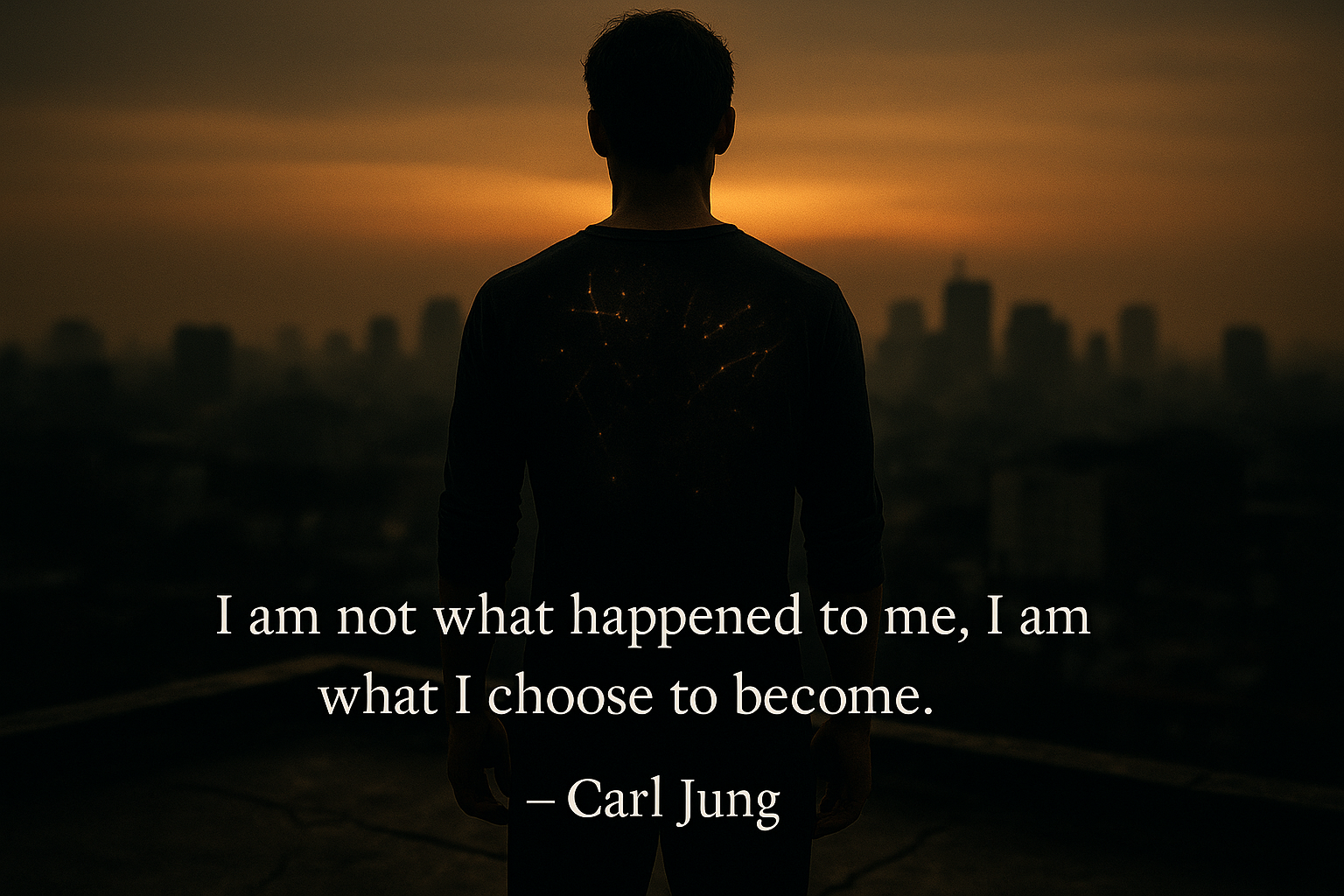
The past has a way of branding itself into the skin, leaving marks you swear will never fade. Some of mine still itch when the weather shifts. But here’s the thing: scars don’t dictate direction, they just remind you of where you’ve been burned. Becoming isn’t about erasing what happened; it’s about refusing to let it keep the pen in its hand. Every morning, I wake up with the choice—am I replaying the same old scene, or am I writing something new?


Reflective Prompt:
What part of your story have you let define you for too long, and how might you reclaim the pen today?

Quote of the Day – 07162025


Personal Reflection

The past doesn’t ask for permission — it sits uninvited, breaks things, it’s a part of us, brands you with its weight.
And too often, we carry those ruins like an identity card.

But Jung flips the script.
We are not our damage — we are our decisions.

There’s power in that pause. The breath between what scarred you and what you shape next. It’s the moment you stop asking “why me?” and start asking, “what now?”

Let your fire be forged from choice, not just consequence.
And remember: even cracked skin glows when the soul’s on fire.


Reflective Prompt

What have you been telling yourself you are — because of what happened? What would it mean to rewrite that truth?