Kimonogate 5

Chapter 5:

The Kimono Reawakens

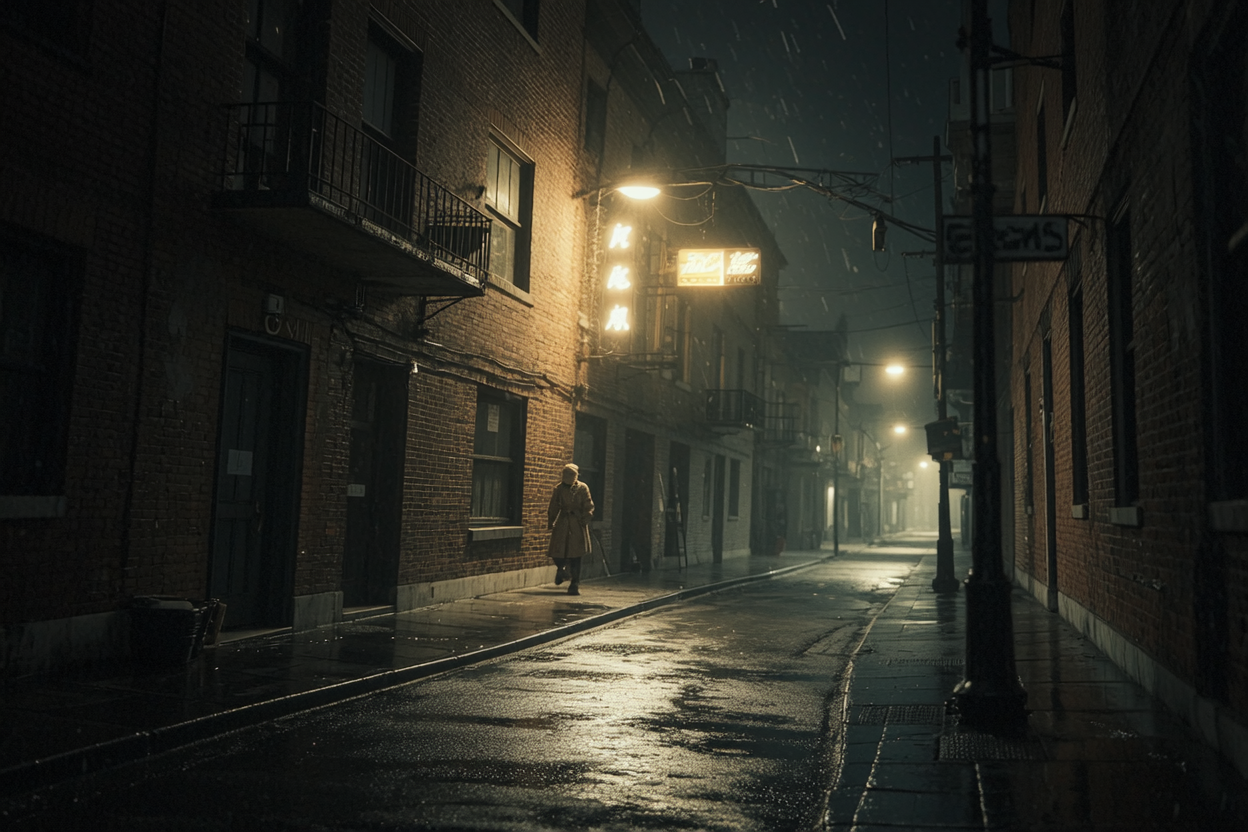
It began with the sprinklers.

Not all of them—just the mayor’s.
At 12:13 a.m. sharp. Every night. A hiss, then a cough, then the sudden rhythmic chk-chk-chk of mechanical rain. His lawn lit up in droplets under the sodium streetlight, painting the grass silver and slick.

No one else’s sprinklers turned on. Not Myrtle’s. Not the Watsons’. Not the scorched patch in front of the abandoned townhome next door. Just his.

He stared at the soaked lawn from behind the kitchen blinds, barefoot, one trembling hand wrapped around a sweating glass of ginger ale. He told himself it was a glitch. Faulty programming. Coincidence.

But the next night, it happened again.

And the next.

And the next.


Then came the flags.

Little plastic ones—red, yellow, white—planted sporadically across his yard like someone was planning a tiny coup. The kind used by utility companies to mark gas lines or buried cables. He hadn’t scheduled any service.

One was stabbed right into the center of the lawn, directly above the place he’d buried the kimono.
Scrawled in blue ink on the tag:

What lies beneath grows bold.

He plucked the flag from the soil like it might bite him and stumbled back inside.


But the worst was the mail.

One morning, he opened his mailbox to find the usual pile of catalogs, water bills, and local campaign flyers. All accounted for—except the water bill. Gone.

In its place: a single pink sequin.

He stood frozen in the driveway, sun bearing down on his shoulders, sequin glinting in his palm like a warning. It felt too warm. Like it had been placed there just seconds before.

A neighbor walked past with her dog. Brindle nodded stiffly. She smiled, unaware that the mayor of their town had just begun to quietly lose his grip on reality.


Across the street, Myrtle wrote.

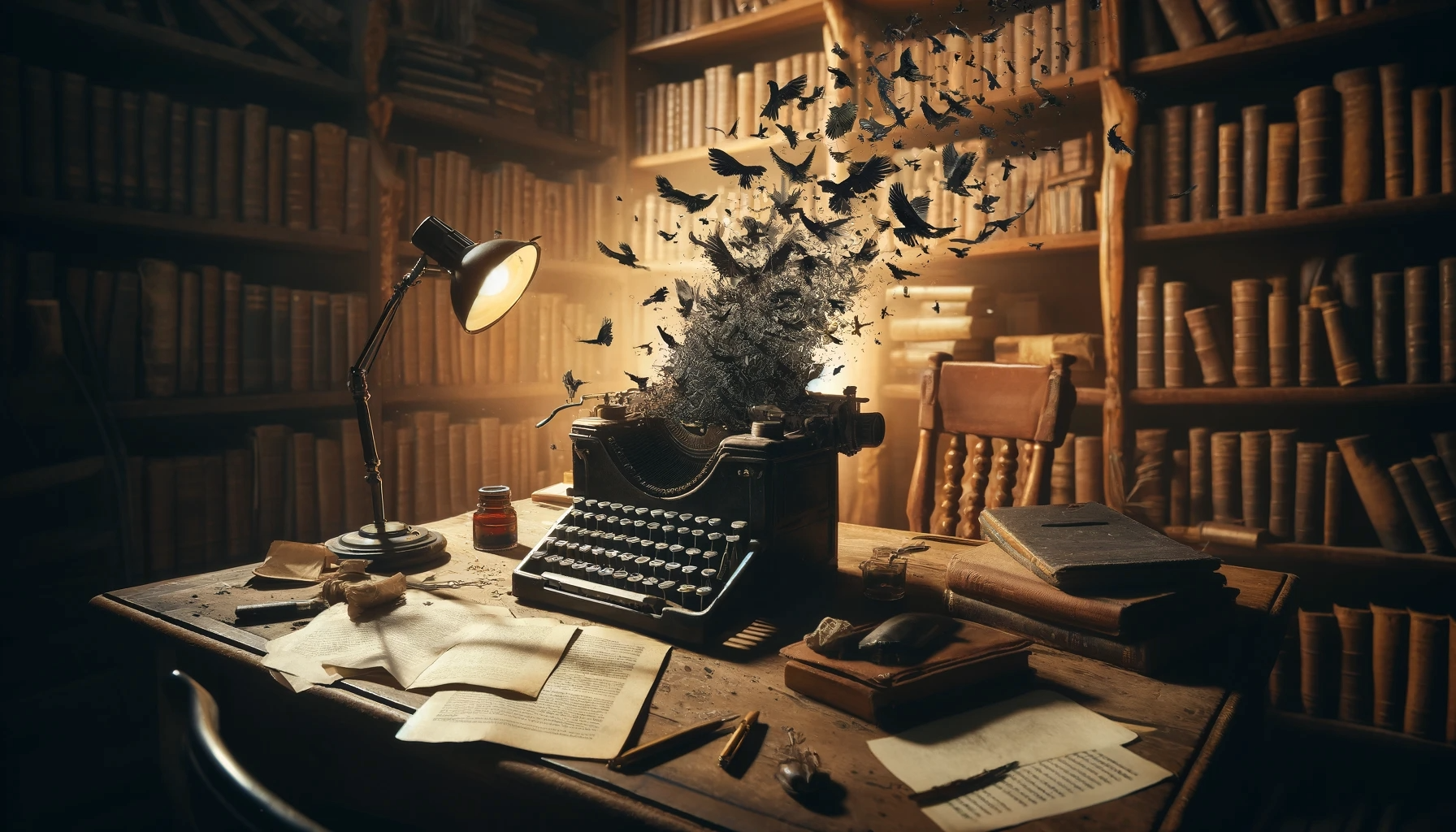
The typewriter she’d dusted off had a key that stuck on the letter “R.” Every time she typed a word with one, it made a soft hiccupping sound, like the machine was clearing its throat.

Her apartment smelled faintly of clove and lemon oil and something older, darker—possibly resentment.

She hadn’t written in years. Not properly. But this story… this one came crawling out of her like it had been waiting.

The protagonist: a petty man with secrets and a fading public smile.
The setting: a town where things didn’t stay buried.
The details: unsettlingly accurate.

She hadn’t meant to write about the mayor. Not at first. But the words showed up on the page like they’d been dictated through the blinds.

Myrtle paused, finger hovering over the spacebar. Capote lay curled at her feet, three-legged and twitchy, one eye blinking at half speed. He’d growled twice that morning. Once on the sofa. Once, at the kimono she hadn’t seen. Yet.

She lit a small lavender candle and resumed typing.


Around the neighborhood, the effects spread like static:

– A retired teacher claimed her garden gnome had moved overnight, now staring into her kitchen window.
– A man jogging past the park tripped over a tree root that hadn’t been there the day before.
– At precisely 12:13 a.m., two crows began circling the HOA sign in slow, deliberate loops. Clockwise. Always clockwise.

Next door lit up with cryptic updates:

“Anyone else missing their cable bill?”
“Found glitter in the hummingbird feeder. Can’t explain it.”
“Do NOT go near the mayor’s yard after midnight.”


Mayor Brindle sat in his guest room, lights on, knees pulled to his chest, a copy of Temple Blade and the Hollow Crown clutched like a holy book. His palms itched. His mouth tasted metallic, like he’d been chewing on tinfoil dreams.

He hadn’t slept. Not really.
He dreamed of sequins and spotlights and slow-motion applause that turned into dirt being shoveled over silk.

Every time he closed his eyes, he saw her.

Not Myrtle—LaFleur.

Her smile in his mind had changed. Sharpened. It wasn’t friendly anymore. It was authorial.
Like she was outlining his arc.


At 2:14 a.m., he cracked.

He walked to the park in house shoes and a flannel robe.
Dug up the kimono.

The soil felt wrong—damp even though it hadn’t rained. And warm. Not sun-warm, but body-warm. As if it had been waiting for him.

He unearthed the garment slowly, breath short, heart hammering in his throat.

It was still intact. Impossibly pristine. Not a spot of dirt. No frayed threads.
The sequins shimmered in the moonlight like they were alive.

He held it up, hands trembling.

It shifted.

Just slightly. But enough to make him drop it.

He stumbled back. Tripped on the shovel. Fell hard onto his side in the grass, wind knocked out of him.

From the edge of the trees, Capote appeared.

Silent. Watching. One leg cocked like he was deciding whether or not to bite.

Then Myrtle’s voice, floating from her porch like honey laced with arsenic:

“You might as well leave it in the ground, dear. The story’s better that way.”

The porch light clicked off.

And the moon blinked behind a cloud.

Surviving the Shipwreck: Truth, Even If It Makes Us Uncomfortable

Who writes history, anyway?

Is it a bunch of old men in a room, swirling sherry like it’s holy water, declaring what mattered and what didn’t with the confidence of people who’ve never been told to clean up after themselves? Do they lean back in leather chairs and decide what’s worth remembering, while the rest of the world cleans the dishes, changes the linens, and quietly disappears?

Because let’s be honest—history isn’t what happened. It’s what survived. It’s the polished version of a chaotic past, curated by those with power, perspective, and the privilege to speak uninterrupted.

But what about the ones who made that version possible?

Why don’t we ever hear about them? The people who provided the comfort, the nourishment, the spark. The woman who changed the sheets so a “great man” could sleep through the night. The friend who uttered a half-thought over coffee that later became a manifesto. The cook who fed the movement. The janitor who unlocked the building where the protest was planned. The lover who reminded someone they were human before they put on the mask of leadership.

History applauds the speech, but forgets the breath it took to say it.

We’ve been sold the idea that history is boldface names and bronze statues. But most of what matters happened in kitchens, back porches, alleyways, and hands calloused from lifting, not pointing.

We know the architects of nations. But never the bricklayers. We memorize the names of authors, but forget the unnamed soul who said something beautiful that stuck. We forget that for every “visionary,” there was someone behind the scenes keeping them afloat. Holding the ladder. Mending the net.

So no—history isn’t just written by the victors. It’s written by survivors. By omission. By spin. And often, by those who had the means to make a record in the first place.

The rest? The ones who lit the fires, bore the burdens, whispered the truths?

They became the silence between chapters. The invisible ink.

But if you look close—really close—you’ll find them. In the margins. In the echoes. In the way a melody lingers long after the singer is gone.

Because history wasn’t built on sherry alone. It was built on sweat, sacrifice, and souls that never asked to be remembered—just not to be erased.

But what happens when they get it wrong?

When, the ones holding the pen decide the truth is inconvenient? When the story is shaved, polished, and repainted, so it gleams just right in the museum light? What happens when history becomes less about remembering and more about marketing? About preserving an image, not a truth?

That’s when history turns into myth. Not the kind with gods and monsters, but the kind where the villains are edited out, and the uncomfortable questions are filed away—lost behind locked drawers labeled “context.” You know, for our own good.

And maybe they don’t mean to lie. Maybe they just optimize. Smooth the edges. Add a little glow to the legacy. After all, who doesn’t want their heroes to look heroic? Their country to feel noble? Their ancestors seem wise?

But shaping the past for the best possible result isn’t harmless. It’s rewriting the foundation while pretending the house still stands the same. It’s how entire generations learn pride without accountability, patriotism without honesty, nostalgia without nuance.

And what’s left behind in that process?

The guilt that never gets named. The reparations never paid. The patterns that repeat because we swore they never happened in the first place. The echo chamber grows louder, but the echoes grow fainter—until all we hear is what we want to hear, and not what needs to be heard.

See, history can be a mirror. Or it can be a mask.

One tells you the truth, whether you like it or not.

The other flatters you, and hopes you don’t look too close.

So maybe the question isn’t just who writes history?
Maybe it’s who dares to revise it, once they know better?

Because if we only protect the polished version, if we only pass down the parts that make us proud, then we’re not honoring the past.

We’re embalming it.

And you can’t build a future on something you’ve buried just to keep the story pretty.

But what about when they don’t just get it wrong?
What about when they try to remove history altogether?

Really? That’s the move?

As if tearing down a statue makes the blood it commemorates magically dry up and blow away. As if banning a book unpublishes the pain it contains. As if not teaching something means it never happened.

We’ve seen it before: whole eras scrubbed clean, classrooms sterilized, uncomfortable truths repackaged into “heritage,” or ignored entirely. Entire peoples flattened into footnotes, if mentioned at all. Because someone decided it was better to forget than to face it. Better to be comfortable than be honest.

But here’s the truth, they’re afraid of:
You can’t remove history.

You can burn the documents. You can whitewash the walls. You can call it “divisive,” “unpatriotic,” or “too upsetting for children.”
But history isn’t gone—it just goes underground into stories told at kitchen tables. Into songs, poems, and scars passed down like heirlooms. Into eyes that still remember, even if the curriculum doesn’t.

The attempt to erase history is always a confession. A silent, trembling admission that the truth still hurts. That it never really stopped. It’s not about healing—it’s about hiding.

And hiding doesn’t protect anyone. It just keeps the cycle clean enough to repeat.

So no—you don’t get to skip the hard chapters because they make your heroes look human, or your institutions look cracked. That’s not erasing history. That’s erasing accountability.

And let me tell you—if your story can’t survive the truth, maybe it wasn’t a story worth keeping in the first place.

Maria Popova got it right:
History isn’t what happened. It’s what survives the shipwreck of judgment and chance.

So maybe it’s time we stop polishing the deck chairs and admit we helped steer the damn ship.

Maybe it’s time we stood by the dusty words in old books—the ones that dared to say things like honor, integrity, and truth. Not just when it’s convenient. But when it’s hard. When it means admitting that the past wasn’t all parades and progress. That some of it—hell, a lot of it—would’ve earned us a solid whoopin’ from our mothers, wooden spoon in hand.

So, excuse me while I go through a stack of biographies on Lincoln.

Because if we’re going to keep telling the story—
Let’s at least try to get it right.


Author’s Note
Forgive the rant—but not the passion. That part, I won’t apologize for. The ranting? Yeah… I might’ve gotten a little carried away.

This piece was written for Reena’s Xploration Challenge #386. I try to jump in when I can remember to pull my head out of a book long enough to notice.

Wait—what page was I on?

Black Card Revoked (And I’m Okay With That)

Am I a Snob?

I wish I could say no. That I’m above all that—ego, elitism, the subtle flexes wrapped in “taste” or “refinement.” I’ve tried, seriously. I’ve had the talks, done the therapy. I even cracked open the workbooks—are they still called that? Maybe it was a podcast. Or one of those journaling things we do when someone who shouldn’t matter (and whose name I can’t even remember) says something that sticks. It latches on like gum to your shoe, and suddenly you’re spiraling.

You know the kind of advice—like taking relationship tips from a guy who’s never had a girlfriend. Come to think of it, I’ve never even seen him talk to a woman.

Food Snob? Maybe. But It’s Personal.

“Nothing stays the same”—that’s the mantra we mumble when something doesn’t taste like it used to. The moment hits, and the only explanation that feels right is, “The bastards changed the formula.” Maybe they did. That’s possible.

But what’s also possible—and we hate admitting it—is that the stuff always tasted like garbage. We just didn’t know better. No one had the heart to tell us, because we loved it. And love, especially the nostalgic kind, can turn trash into treasure.

Still, when that old flavor hits different, I dig in. I refuse to accept that it’s me who changed. No—they changed it. And now it’s a matter of principle. “The bastards changed the formula” isn’t just a phrase. It’s my truth. I’m sticking to it.

Culture Snob? Absolutely.

Let’s be real—taste isn’t just personal. It’s cultural.

As a Black man in America, I grew up hearing things you couldn’t say out loud today. Not in public, anyway. Stuff like, “White folks don’t make potato salad like Black folks.” And everyone around the table would nod, mouths full of Granny Smith’s version, hoping for seconds before it disappeared. Because we all knew the danger of ending up with Ms. Johnson’s version. She never quite got it right. But her rhubarb pie? That had fifty things going on, and every one of them hit.

It’s remarkable how the world now dictates what’s considered refined. What’s divine? Overhyped restaurants serve up culture on a plate and call it status. Sure, sometimes it’s good. But nothing compares to the food from our cookouts, our picnics, our church socials. That food had soul. That food knew where it came from.

Now we pay $25 for a steak that comes out wrong and has to be sent back, just to taste decent—something we could’ve cooked at home better and cheaper, with seasoning that actually makes sense. But we do it anyway, because it makes us feel like we belong to something. Like we’re part of a club. Even if that club leaves us hungry and a little hollow.

That right there? That’s the bullshit I’m done with.

Ideology Snob? Let’s Get Real.

Let’s talk ideology. The code we live by. The beliefs hardwired into us through culture—whether we chose them or not.

They show up in how we talk, how we dress, what we read, the music we blast, and the stuff we secretly love but feel judged for.

And here comes the contradictions.

I’ve been told, “You act white.” Like that’s a crime. “I’m pulling your Black card.” “You’re an Oreo—Black on the outside, white on the inside.”

I used to carry a bag of Oreos with me. I liked them. And the same people who said that crap? They’d always take one when I offered. Hypocrites, the lot of them.

Then there are the stereotypes. Once, it was sweltering out, and some coworkers brought watermelons to beat the heat. One of my White friends waved and said, “Hey, we’ve got some watermelon!”
I shouted back, “I’m good, thanks.”

He came over to my truck looking confused.
“Hey man,” he said, “we’ve got some watermelon.”
“I don’t eat that shit,” I said flat.
He raised an eyebrow. “Next thing you’re gonna tell me is you don’t eat fried chicken.”
I looked at him and said, “I prefer mine baked.”

Truth? I love fried chicken. But my wife had me on baked for my blood pressure. That moment wasn’t about the food. It was about reclaiming space. Drawing a line. Saying, you don’t get to define me.

People try to strip your identity when it doesn’t fit their version of what Black is “supposed” to be. But if you stand still too long, they’ll say you’ve stopped growing. You can’t win. So you make your own rules. You claim the parts of yourself they don’t understand, and keep walking.

Music Snob? Nah. Just a Metalhead.

I’m a metalhead. But really, I love music across genres. Blues, jazz, hip hop, classical, metal, whatever hits. If it moves me, I’m in.

But I’ve caught flak for it. Side-eyes at shows. People coming up to me, tilted heads, awkward grins: “Are you enjoying yourself?” Like, I crashed the wrong concert. Like metal has a sticker on it that reads “For White Folks Only.”

Really? That’s your question?

As if I need permission to feel that same raw, gut-deep power you feel. As if I have to prove I belong. I didn’t know loud music came with gatekeeping.

Let’s be clear: music doesn’t segregate. People do. And the real pandemic? It’s not my playlist. It’s the weirdo energy and backhanded doubt people carry around like a badge.

The Labels Don’t Stick.

Stereotypes. Prejudices. Respectability rules dressed up in soft language and cheap slogans. You can’t run from them. We’re told to be ourselves, so long as it fits the mold. Be different, but not too different. Be authentic, but stay in bounds.

Nah. I’m done with that.

So I wear the names they throw at me. I carry them, not as scars, but as proof. Proof that people will always try to box you in. But boxes are for storage, not for living. And if they actually knew me—or tried—they’d realize we’d probably get along just fine.

I love exploring culture. I love discovering new food, ideas, and perspectives. I don’t just tolerate differences. I chase it. That doesn’t make me less Black. It makes me human.

And if I’m anything?

I’m weathered. But I’m true.


Author’s Note:
This rant was written for Sadje’s Sunday Poser, which I genuinely enjoy. It gives me space to think about real things—stuff that hits closer to home than all those philosophies written by dead people.

No, I don’t believe in ghosts.

Well… maybe?

Okay, that came out of nowhere.

This Is How I Survive: Ink and Breath

Daily writing prompt
How do you practice self-care?

The dawn slowly burns away the remnants of the night. It’s already hot, but most of the world still sleeps—for now. Soon, they’ll rise. They’ll fall into motion, surrendering to the bustle, the pursuit of progress, the comfort of productivity. There’s a kind of faith in the checklist, in the belief that doing enough will make you feel like enough. But I don’t begin my day that way. I don’t chase. I listen.

I write. Not to perform. Not to perfect. But to return to myself. The page is where I can be honest, messy, contradictory, and human. There’s no audience. No need to edit the ache or organize the confusion. I write what is, as it is. The act alone brings me back.

When I write, I unearth what I’ve buried: grief that’s gone unnamed, anger I’ve swallowed, hope that feels too fragile to speak aloud. The words don’t always come clearly. Some days they’re sharp and certain. Other days, they drift, soft and uncertain. But either way, I leave lighter.

I don’t write to resolve. I write to reveal. To confess the parts of me I usually keep hidden—even from myself. I spill what I can’t carry. I give shape to what I feel. I name the fear, the guilt, the longing. I write until I remember: none of this needs to be perfect. It just needs to be present.

The page doesn’t ask me to be fine. It doesn’t demand clarity or closure. It simply holds space. And in that space, I breathe. I stop performing. I stop pretending. I remember who I am beneath the noise, beneath the roles, beneath the pressure to produce and please.

So, no, I don’t start the day by rushing into it. I begin by slowing down. By sitting still. By listening. I begin by writing. By breathing. By being.

That’s not just self-care.
That’s survival.

It’s 5am


The Open Door

Part IV of the Spiral Series

The spiral pulled her north.

She didn’t decide. Not really. The artifact simply leaned in that direction, its hum stronger when she faced the mountains, weaker when she turned away. Her dreams ended there too—in jagged silhouettes etched against a dying sky, clouds crawling like wounded things.

She stopped asking why.

On the third day, the silence deepened.

Not just quiet—absence. No birdsong. No wind brushing leaves. Even her own breath seemed muffled, as if the world had turned down the volume on her existence.

It wasn’t altitude.
It was approach.

Something didn’t want to be disturbed.


She crested a ridge and saw it: a broken temple, half-consumed by the rock around it like the mountain had tried to swallow it whole. Pillars leaned like fractured bones. The stone steps bled with black moss. Light didn’t quite land right here—it floated, hung, like it wasn’t sure where to fall.

And in the air above the ruin: a spiral.

Not carved. Not painted. Projected—faint, flickering, as if the sky was remembering a shape it wasn’t meant to hold.

The artifact throbbed inside her coat, pressing against her chest with each step like a heartbeat just out of sync with her own.

She descended in silence.


Inside, the temple smelled like old metal and wet dust. Not decay—memory. The scent of forgotten things trying to stay relevant. The walls bent in strange ways—straight lines that turned slightly as she walked, always off by a few degrees, until her sense of balance slipped sideways.

Time didn’t work here.

A hallway led into itself. An echo arrived before her footstep. Her shadow stretched behind her, then ahead, then vanished completely.

And then—whispers.

Not words. Tones. Rising and falling in a rhythm that made her teeth ache. The artifact vibrated harder. It wanted something. Or it feared something.

Then she saw him.

A man seated in the center of a circular chamber, bones fanned around him like a ritual compass. He didn’t turn. Didn’t speak. Just opened his eyes like he’d never closed them.

“I was wondering when you’d arrive,” he said.

His voice was calm. Steady. Too steady.

Carla didn’t speak. She stepped closer, hand hovering over the artifact. Her breath fogged slightly, though the air was warm.

“You’re a keyholder,” she said.

He smiled—not with his mouth, but with his posture. His stillness. His certainty.

“So are you. Or you wouldn’t be here.”


His name was Liran.

He spoke like someone who didn’t just believe what he said—he’d built himself around it.

“They called the spiral a prison,” he said, gesturing to the glyphs. “But that was always the lie. It’s not a cage. It’s a cradle.”

The way he touched the stone was too gentle. Reverent. Like it had raised him.

Carla felt her pulse climbing. The air in the chamber shifted—thicker now. Her chest felt tight, like the oxygen was being repurposed for something else.

“A cradle for what?” she asked.

“For the next world. This one was a rehearsal.”


Liran reached into his coat and drew something out—another artifact. Smaller than hers, no silver veins. Matte black, split by a single groove that shimmered faintly red. The spiral on it was asymmetrical, sharp-edged. Wrong.

“This one doesn’t twist,” he said. “It just opens.”

Carla felt her own artifact heat up, protesting. Reacting.

“What happens if I use mine?” she asked, already knowing.

“Then you bury it. But it still grows beneath. It gets louder. Smarter. Hungrier.”

The floor beneath them pulsed. Not an earthquake—a breath. The room inhaled.

She took a step back. Liran didn’t move.

“You’ve already let something through,” he said. “Sealing this won’t fix that. It’ll just make you deaf to what’s coming.”

“Good,” she whispered.

And twisted.


The world ruptured.

No sound—just pressure, slamming outward. The glyphs ignited in a burst of white. The air tore with invisible claws. Something screamed, not with a voice, but with recoil—a shriek of retreat.

Liran staggered, shielding his face. The bones around him exploded into dust. The spiral projected above the altar shrank inward like a dying eye.

Carla collapsed to one knee, gasping for breath. Both artifacts pulsed once—hard—then went still. Her ears rang. Her skin burned.

She opened her eyes.

Liran was gone. No trace. No blood. Just the afterimage of something that had been there.

And her hand—

Red. Raw. Branded.

A spiral etched into the flesh of her palm—not cut, not tattooed. Emerging. Like it had always been under the skin, waiting to show itself.

Her breath caught. Her pulse raced.

I sealed it.
But I brought something through.

She wrapped her hand quickly, ignoring the pain.

Then she stood. Alone. Eyes on the exit.

There were more doors.

And now, something inside her was learning how to knock.

Whispers of the Page

Not all stories wait to be told—some write themselves through us.

I wonder—
do we write in our sleep,
not with hands
but with something older—
a pulse beneath the thought,
a breath beneath the breath?

Are the things we write
just the dreams we couldn’t hold—
wet leaves stuck to waking,
falling off before we knew
they’d landed?

Maybe the page is the mirror
we forget we’re looking into,
and every line is a smoke-trail
from a fire that burned
somewhere behind the eyes.

The words come limping,
feathered with ash,
draped in symbols
we pretend to understand.

A girl with no face
builds houses out of teeth.
A clock whispers
the name you forgot.
You write it down
and call it metaphor.

But the ink knows first.
It hums with the echo
of other lives—
the ones you’ve never lived
but somehow still remember
when the light is wrong
and the silence bends.

Is this how we dream?
Not to escape—
but to return,
to write the path backwards
until the paper runs out
and we wake.

Kimonogate 4

Chapter 4:

The Collector

Mayor Brindle only entered Room 14 on Sundays.
Not for the quiet. Not for the privacy.
For containment.

The room had no windows. Just four beige walls, the smell of municipal-grade carpet cleaner, and the faint static crackle of a vent that hadn’t worked in years. It wasn’t an office, exactly. It was… a chamber. For reverence. And regret.

He flicked on the fluorescent light. It buzzed overhead, a sickly white hum that made his temples throb. And then—there they were.

The shelves.

Lined edge to edge with Boney LaFleur’s complete works, the glossy covers glowing faintly under the flickering light like stained glass. Temple Blade and the Hollow Crown. The Tethered Labyrinth. Scepter’s Wake. Even the obscure prequel novella she’d tried to scrub from publication—he had it. Signed, no less.

He didn’t sit down right away. He never did. First, he had to… look. Just look.

He moved along the rows slowly, brushing the spines with the back of his hand. His fingers tingled slightly. Part reverence. Part panic. The books weren’t just stories to him. They were a sanctuary. Places where everything made sense. Where people had destinies and enemies and epic confrontations—and none of them involved city council meetings or HOA bylaws or the unraveling of one’s dignity in front of a dog named Capote.

A squeak echoed underfoot. He looked down. The laminate tile had a fresh scuff.

He hadn’t noticed that before.

He clenched his jaw and walked to the small folding chair in the corner. Sat. Took out the paperback of The Hollow Crown—the one with his notes in the margins. Yellow highlighter, purple ink, a few fevered pencil scribbles he no longer remembered writing.

Page 217:
“No secret stays buried forever, only patiently waiting to be found.”

He stared at that line for a long time.

The pink kimono still haunted his dreams. The way it shimmered in the moonlight. The way the sequins had caught on the shovel. The way the dirt made it seem human, like he was burying a body. Not a costume. Not a memory. A truth.

He tried to breathe deeply. Couldn’t. The air in Room 14 always felt just slightly recycled. Like it had passed through too many confessionals.

The text message still burned behind his eyes:
“I know what you buried, and it wasn’t just a time capsule.”

Who sent it? How did they know?

He wiped his hands on his pants. They felt sticky, like his palms were leaking secrets.

The worst part wasn’t the fear of being found out. It was the possibility that Myrtle—sweet, sour, pastel-sweatered Myrtle—wasn’t just Myrtle. That behind the orthopedic shoes and off-brand Tupperware was Boney LaFleur, architect of the Temple Blade saga, literary genius, and keeper of the narrative fate of hundreds of fictional villains.

He closed the book. Pressed it to his chest.

If she were LaFleur… if she knew about the kimono…
Would she write him in? Would he become one of her morally confused side characters? The kind that gets impaled by a decorative umbrella in chapter three?

He didn’t know whether to be terrified or honored.

And that made it worse.

The silence in the room felt sentient now. Listening.

He stood abruptly. Put the book back with a little too much force.

He had to find out if Myrtle knew. He had to confirm it.

But part of him already did. The way she looked at him lately. Her smile, small and tight, like a woman who’d just plotted something delicious. The little glances. The pause when he’d walked by. She was toying with him. Maybe write to him already.

He pressed a hand to the wall, steadying himself.

Outside, the parking lot was empty.
Inside, Room 14 held its breath.

So did the mayor.

Kimonogate 3

Episode 3:

Myrtle Revealed (or, The Boney Truth)

Everyone on Rosewood Lane thought Myrtle McKlusky was a cardigan-wearing, prune-juice-drinking, HOA-terrorizing widow with three jittery Chinese Crested dogs. They were only 25% right.

What no one—not even the mayor, not even Capote—knew was that Myrtle was also…

Tempest Fablestein.

Yes. The Tempest Fablestein. The mysterious, scandalously successful author of the internationally adored, historically inaccurate, and erotically charged adventure-romance series featuring Boney LaFleur, the one-armed French nobleman turned treasure hunter.

She had written 43 novels, 5 novellas, and a cookbook (“Feast Like a Fabulist: 18th Century Seduction Stews”) from the converted sunroom behind her kitchen. Her books had sold over 47 million copies. She was, by all definitions, secretly loaded.

Her fans included conspiracy theorists, failed Broadway understudies, and a suspicious number of junior senators.

And to maintain her anonymity, Myrtle had hired a professional actor—a classically trained Scotsman named Malcolm Finnegan Duff-Whitely III—to play the role of Tempest in public.

Enter Malcolm

At book signings, literary galas, and erotic parchment conventions, Malcolm wore a velvet smoking jacket, quoted Shakespeare deep cuts. He wielded a Scottish accent so buttery it made podcast hosts weep. He was charming. Mysterious. Allegedly celibate.

And he had been in love with Myrtle for six years.

The Confession

During a livestream at the National Erotic Adventure Awards Gala, Malcolm—accepting the award for “Best Use of the Word Ravish in a Scene Involving Lava”—snapped.

“I—I can’t do this anymore,” he said, eyes glassy. “I’ve lived a lie.”

The crowd hushed. A woman in the third row fainted into a fondue fountain.

“I’m not Tempest Fablestein. I’m just Malcolm. But she—”
He stared into the camera.
“She is the greatest mind of our time. And Myrtle… if you’re watching—I love you. I’ve loved you since Boney rode that bull through the Vatican archives.”

Before the audience could react, two large men in matching black suits and medieval-looking boots appeared. They flanked him.

Malcolm’s voice rose over the chaos. “Tell her I meant it!”

He was dragged offstage, still clinging to his crystal pegasus trophy.

The livestream abruptly cut to a pre-recorded interview where “Tempest” explained how she researched 18th-century brothels using only Google Earth and intuition.

The Fallout

A 14-second clip surfaced on YouTube hours later. It showed Malcolm being pushed into a black Escalade while yelling, “Tell Myrtle I know her rhubarb pie uses vodka!”

The clip was quickly removed by Tempest Enterprises LLC under “copyright and culinary infringement.”

Still, the legend of the confession spread. Reddit threads multiplied. Fans demanded answers.

Back in Rosewood Lane…

In her sunroom, Myrtle sat staring at her laptop. Capote snored on a pile of manuscript pages. Pont and Pint had rolled themselves into an anxious spiral.

She didn’t cry. Myrtle McKlusky hadn’t cried since Boney LaFleur and the Lusty Siege of Strasbourg made Oprah’s underground erotica list.

Instead, she opened a new document.

Title: “Boney LaFleur and the Man Who Dared to Love.”

That night, in the dim warmth of his paneled study, Mayor Gerald swirled cold chamomile tea and reached for the false back of his bookshelf.

Click.

Behind it: Every single Boney LaFleur first edition, wrapped in archival sleeves and arranged by emotional damage level.

He pulled out “Boney LaFleur and the Underdressed Pharaoh” and gently opened the jacket. Inside:

“To G—
May you never lose your own treasure map.
—T.F.”

He sighed and rubbed his eyes.

“She’s been right next door this whole time,” he whispered.

Then, from a drawer, he pulled a laminated keepsake:
“Boney LaFleur’s Ten Principles of Gentlemanly Adventure.”

He read aloud, voice cracking:

“Rule #1: Never underestimate the swordplay of a woman with nothing left to prove.”

Capote, who had somehow snuck into the study again, thumped his tail once in quiet agreement.

Gerald leaned back in his chair.
“You got me, Myrtle.”

Chronically Challenged: A Friday the 13th Love Story VII

FICTION – FOWC & RDP

Chapter 7:

Tacos and Time Loops

Final chapter of Chronically Challenged

The first thing Fiona registered was the smell—
Grilled meat. Cilantro. The unmistakable scent of hot corn tortillas and lime rinds warming under neon light.

She opened her eyes slowly, adjusting to the dim light of dusk. The taco truck stood exactly where it had before, parked under a buzzing fluorescent sign that read “Tacotón 5000” in cracked vinyl letters. The same string of rainbow papel picado fluttered above them, fading from the sun and sagging from the weather.

A warm breeze passed. It smelled like onions and traffic and the city on a Friday night—alive, restless, ordinary.

They were home.

“Didn’t think déjà vu would come with salsa,” Elliot said beside her.

Fiona exhaled. She hadn’t realized she’d been holding her breath.

She was back in her own jeans. Her real boots. Her coat with a broken zipper and a ballpoint pen still jammed in the inner lining. The chrono-device—no longer pulsing, no longer demanding—rested cool and quiet in her pocket like a relic from someone else’s life.

And Elliot? He looked… lighter. Tired, yes, but unburdened. His curls were wind-tousled, his glasses slightly crooked, and his Ramones shirt was—miraculously—clean. She smiled at the thought he’d maybe picked a fresh one on purpose.

A thin fog of steam rose from the taco truck window. The same vendor as last time—greying, gum-chewing, and blessedly nonchalant—tossed two wrapped tacos onto the counter and gave them a single, knowing nod.

They didn’t pay.

“I think we broke his sense of reality,” Elliot said, collecting the food like it might still vanish. “Or earned his eternal respect. Hard to tell.”

“I’ll take either,” Fiona murmured.

They sat on the same bench—their bench—its paint peeling, the metal cold beneath them. The sound of the street curled around them: honking cars, a mumbled rap track from a passing bike speaker, the sharp clatter of skateboards echoing under the overpass.

Fiona peeled the foil back from her taco with careful fingers, letting the scent rise. It was warm, greasy, and strangely grounding. The first bite burned her tongue and made her eyes water. She welcomed it.

Elliot was watching her.

“Do you remember what you were thinking right before you asked me out?” he asked.

She chewed, then swallowed. Wiped her mouth with the back of her hand.

“I had a mantra,” she said. “In my head. I kept repeating: Don’t die alone surrounded by lab reports.

He grinned. “That’s so… deeply romantic.”

“It worked.”

He looked down at his own taco, then back up at her.

“I almost said no.”

Fiona froze mid-chew. “You what?”

“When you asked me out,” Elliot said. “I panicked. Thought it was a prank. Or a bet. Or a really elaborate social experiment.”

“Seriously?”

He nodded sheepishly. “Then I realized I didn’t care. You were wearing those boots—the intimidating ones. And if it was a trap, I figured I’d go down swinging.”

Fiona laughed—a surprised, full-bodied laugh that startled a pigeon nearby into a fluttering escape.

“I thought you didn’t like me,” she said. “You always looked like you were trying to solve me.”

“I was,” he said, voice quiet. “Still am.”

They sat for a moment in comfortable silence, listening to the city breathe around them. Fiona leaned into him, their shoulders pressed. His warmth was solid. Familiar. Real.

It felt… earned.

“Do you think this counts as our first real date?” she asked.

Elliot nodded slowly. “We survived 1776. Got interrogated by Hamilton. Made out in a future that might not technically exist.”

“So that’s a yes.”

“Definitely.”

The chrono-device buzzed once in her pocket—just a faint vibration, like a cat purring in sleep. Then stillness.

Fiona didn’t check it.

She didn’t need to.

They were here. And now. And not running anymore.

Elliot raised his taco like a glass.

“To us,” he said.

She clinked hers against his foil wrap. “To now.”

And together, under a taco truck sign that flickered uncertainly between green and purple, with grease on their hands and time behind them, they finally finished their first date.


And that’s a wrap!

Chronically Challenged: A Friday the 13th Love Story began with a taco truck, a reluctant crush, and a time travel accident—and somehow turned into one of the most unexpectedly joyful stories I’ve had the pleasure of writing.

Creating Fiona and Elliot’s awkward, brilliant, chaotic journey through history (and each other’s emotional walls) has been such a weird and wonderful ride. From Hamilton’s dramatic entrance to futuristic first kisses, every scene brought something surprising—and often unplanned—to the table.

This was a story about missed signals, emotional experiments, and learning that sometimes the biggest leap isn’t through time—it’s letting someone really see you.

If you made it all the way here, thank you. I hope you laughed, blushed, winced at the secondhand awkwardness, and maybe found a little bit of yourself somewhere in these pages.

And if this is your first read-through, remember: time travel may be fiction, but tacos and courage are very real.

Until next time,

— Mangus

Click the link below for the full story:

How Ralph Ellison Punked Us

Daily writing prompt
Who is your favorite historical figure?

DAILY PROMPT RESPONSE

On Naming the Nameless, Winning the Awards, and Blinding Us with 1,369 Light Bulbs

There are far too many historical figures I respect to name just one. Frankly, the question borders on the ridiculous—like picking a favorite breath of air. Some names rise above the noise—revolutionaries, artists, philosophers—but reducing history to a single “favorite” feels cheap. That said, I got my new glasses today, so I’m in a decent mood. Let’s talk about one who actually did something seismic with his voice.

Let’s talk about Ralph Ellison.

In 1953, Invisible Man hit like a lightning strike. This wasn’t another book about slavery. This wasn’t a moral fable. This was something else—blunt, surreal, unflinching. America was long overdue for a story that didn’t contort the Black experience into something palatable. Ellison delivered a story that didn’t apologize, didn’t translate. He wrote it exactly the way it needed to be heard.

And he did it through a narrator with no name.

That choice wasn’t symbolic—it was the whole point. The protagonist is unseen by society, overlooked even when he’s standing in plain sight. He becomes whatever people need him to be—token, tool, threat—until he’s nothing but a projection. Ellison strips him of a name to make that erasure visible. He is invisible not because he hides, but because no one bothers to see him.

But Ellison didn’t just tell a story. He orchestrated an experience.

Before he became a writer, Ellison studied music—trumpet, specifically, at Tuskegee Institute. He trained as a composer, not a novelist. And that background echoes through every page of Invisible Man. The structure of the novel plays like jazz: unpredictable, looping, improvisational, yet rigorously controlled. It doesn’t move from point A to point B. It riffs. It distorts. It circles, breaks down, explodes, and rebuilds.

That musical sensibility fused with his literary growth under the mentorship of Richard Wright, who helped him see the potential of fiction as a weapon, not just of protest, but of truth. Yet while Wright carved truth with sharp realism, Ellison went inward, sideways, and underground. He made the psychological terrain just as political as the streets above it.

But how did a novel that daring even get published in 1952?

It took time—and the right people. Ellison spent nearly seven years writing Invisible Man, supported by a small circle of editors, mentors, and radical literary journals. Early on, he published essays and short stories in magazines like New Masses and Partisan Review, spaces that were open to racial politics and modernist experimentation.

Then came Albert Erskine, an editor at Random House, who saw early chapters and backed Ellison all the way. Erskine didn’t try to tame the book. He gave Ellison the room to go deeper, to make it more challenging, more honest. That kind of editorial trust was rare, especially for a debut novel by a Black author writing outside the box.

Ellison didn’t chase the market. He wrote the novel he needed to write. And somehow—despite the Cold War climate, despite the publishing world’s conservatism—it broke through. Maybe because it was just that good.

Surreal scenes erupt throughout the novel—the Liberty Paints factory mixing “Optic White” with black drops, the death and objectification of Tod Clifton, the Brotherhood’s exploitation dressed up as activism. These moments don’t just symbolize oppression. They make the reader feel its absurdity and weight. Ellison crafted them not just as plot points but as emotional dissonance, like minor chords and unresolved melodies that leave you unsettled.

And then there’s the ending: the basement, the 1,369 stolen light bulbs, the quiet. The narrator isn’t defeated. He’s aware. He knows now that invisibility isn’t something he caused—it’s something he’s forced to live inside. But from that underground space, clarity emerges. He hasn’t escaped the system. But he sees it.

In 1953, Invisible Man won the National Book Award for Fiction, making Ralph Ellison the first African American to ever win the prize. And he didn’t win it by default. He beat out John Steinbeck’s East of Eden, Ernest Hemingway’s The Old Man and the Sea, Jean Stafford, Isabel Bolton, and others. That’s not just a literary win. That’s a cannon blast.

Ellison didn’t provide us with a clear arc or a moral fable. He gave us a jazz-soaked, fragmented, blistering novel that stared invisibility dead in the eye and refused to blink. Invisible Man didn’t demand visibility. It took it.

And over seventy years later, it still doesn’t let you look away.

Chronically Challenged: A Friday the 13th Love Story VI

FICTION – 3TC #MM87

Chapter 6:

One Last Leap

The chrono-device vibrated softly in Fiona’s hands, like it had a secret to tell.

It glowed—not in flashes this time, but in steady, rhythmic pulses that matched the cadence of her breath. Blue-white light warmed the bones of her fingers.

The screen read only:
Temporal Window Detected
Friday, 13. Reset.

Fiona stared at it. Her stomach dropped. Again.

“We’re back in range,” she said, voice hushed, reverent.

Elliot stood beside her, damp curls pressed to his forehead. He didn’t ask where—or when—they’d land next. He just met her eyes, the gravity of the moment flickering behind his usually breezy expression.

“Are we ready?” he asked.

She wanted to lie. Wanted to shrug, joke, mask the rising panic the way she always had. But the truth felt louder than usual. Like something long trapped was suddenly allowed to rise to the surface.

“I don’t know,” she admitted. “But I’m tired of waiting for everything to make sense before I act. And I’m tired of thinking real things can only happen in safe places.”

Elliot nodded, slowly. “Then let’s jump.”

She reached for his hand.

They pressed the reset button together.

The air peeled around them like silk.
Light shattered. Sound vanished. The world spun gently sideways—

And then stopped.

Fiona opened her eyes and gasped.

They stood in a room so pristine, it almost didn’t seem real. The walls were curved and white, seamless, like poured milk. The air buzzed faintly, charged, clean, just on the edge of ozone. Somewhere, soft instrumental music played in a scale she couldn’t name.

Outside a wall-sized pane of glass, a city stretched like a dream: silver towers arched into the sky, ribboned with floating platforms and streaks of silent light. Buildings glowed from within like lanterns. There were no wheels, no smoke. No gravity-bound noise.

“Oh,” Fiona whispered. “I think this is… the future.”

Elliot spun slowly, taking it in like a wide-eyed kid at a museum. “Either that, or we got adopted by the Apple Store.”

Fiona laughed before she could stop herself. It sounded too loud in the quiet, like a human voice didn’t quite belong here.

They found a curved bench—soft and warm to the touch, like stone that had learned empathy—and sat down. Outside, a gliding drone zipped past, trailing soft purple light.

Elliot leaned back, knees bouncing. “Do you think we’re… allowed to be here?”

Fiona stared at their warped reflections in the glass. “Does anyone belong anywhere? I mean, really?”

He glanced at her. “That feels like a yes and a no.”

She smiled faintly. “It’s a yes if you’re next to me.”

The hum of the space surrounded them. It didn’t feel sterile anymore—it felt gentle, like the universe was holding its breath.

Fiona shifted to face him, nervous energy rippling beneath her skin.

“I need to say something,” she said. “And this time I’m saying it out loud so I can’t take it back.”

Elliot blinked. “Okay.”

“I want to be with you,” she said, the words trembling as they left. “Not just next to you. Not just in shared proximity because of academic overlap or time travel disasters. I want… us. I want to be chosen. And to choose you.”

The air seemed to shimmer with its weight.

Elliot was quiet, processing. Then:

“You astound me,” he said. “Every time I think I’ve caught up to how smart or strong or out-of-my-league you are, you find a new way to knock me sideways.”

Her cheeks went hot. “That’s a very dramatic compliment.”

He tilted his head. “You kissed me with physics. I think I’m allowed some drama.”

Then, he leaned in and kissed her.

It wasn’t perfect. His glasses bumped her temple, and she accidentally bit his bottom lip. But neither pulled away. It was clumsy and honest and full of all the things they hadn’t let themselves say until now.

When they parted, forehead to forehead, Fiona felt the moment lodge somewhere deep. This—whatever this was—wasn’t theoretical. It wasn’t temporary. It felt inevitable.

The chrono-device buzzed softly.

They looked down. A new prompt blinked on the screen:

RETURN TO ORIGIN?

Fiona turned to Elliot, heartbeat syncing with the pulse of the text.

“What do you think?” she asked.

Elliot slid his fingers between hers.

“I think we’ve got a date to finish,” he said.

They stood. The device warmed in her hand.
And then the light took them home.

Chronically Challenged: A Friday the 13th Love Story V

FICTION – FOWC & RDP

Chapter 5:

Jam, Jealousy, and Slightly Too Much Honesty

Fiona hadn’t said anything since Hamilton vanished back into the tavern.

Not a joke. Not a sigh. Not even a dry remark about 18th-century masculinity or the aggressive scent of wig powder.
Just quiet.

She sat on the bench with her spine too straight, her fingers tracing the curve of a splintered edge. Her eyes weren’t blank, precisely—they were calculating, restless, staring somewhere three centuries ahead.

Elliot stood nearby, fiddling with the time device for the fifth time. The screen still blinked its error message like a stubborn ghost. He wasn’t trying to fix it. Not really. He just needed something to do with his hands, so he didn’t clench them again.

The silence between them had texture now—dry, itchy, like wool on bare skin.

Say something, he thought. Make a joke. Ask if she wants to go back in there and debate Hamilton to death.
But every thought got stuck in the same loop:
She lit up when he looked at her. She didn’t with me.

So instead, he snapped the back cover onto the chrono-device a little too hard and said, “I’m gonna try to trade for socks or bread or something.”

“I’ll come,” Fiona said too fast, already standing.

They walked shoulder to shoulder but out of sync, her footsteps crisp and narrow, his looser, uneven. The colonial town buzzed around them—smoke drifting from chimneys, cartwheels clunking over stone, and a blacksmith hammering metal with the rhythm of someone trying to outrun his own thoughts.

Fiona inhaled the sharp tang of hot iron, woodsmoke, and sweat. Her borrowed clothes scratched at her skin with every step. She didn’t belong here. She felt it in her bones, her teeth, the small of her back.
And still, what stung more was Elliot’s silence.

He hadn’t even cracked a joke when they passed the pig in a bonnet earlier. That wasn’t just weird. That was apocalyptic.

He’s mad, she thought. Not joking is his version of yelling.

She cleared her throat. “About earlier…”

“You don’t have to explain,” he said, eyes on the ground.

“But I want to.”

“No, you don’t. You want to make it okay.”

That stopped her like a slap. “Is that a bad thing?”

“It is if it skips the part where you admit it wasn’t.”

Her throat tightened. The air felt heavier suddenly, or maybe it was just the weight of all the things she hadn’t said.

“You think I liked him.”

Elliot finally looked at her. “You didn’t exactly hate it.”

“No,” she said, her voice quiet but steady. “But I didn’t exactly like being invisible either. By you.”

His mouth opened slightly. “I wasn’t ignoring you.”

“You were fading,” she said. “You do this thing where you tuck behind your humor and act like if you’re quiet enough, nobody will notice you’re scared. But I did notice. I noticed everything. I asked you out, Elliot. I took the risk. And since then, I’ve been wondering if you’re even really on this date with me… or just tagging along.”

The words hit harder than she expected. Saying them out loud made them real, sharp as cut glass.

Elliot exhaled, like something cracked in him, too. He shoved his hands in his coat pockets and kicked a loose stone across the road.

“I didn’t think I had a chance,” he admitted. “Not with someone like you.”

She blinked. “Someone like me?”

“Confident. Brilliant. You plan your outfits. I sometimes forget if I’m wearing shoes. I figured… maybe if I kept things casual, you wouldn’t see how far out of my depth I am.”

Her voice dropped. “So your strategy was what, to underwhelm me into settling?”

“No,” he said, frustrated. “To keep you from seeing how hard I was falling.”

The silence between them shifted again—warmer now, but heavier.

“I don’t want to be a background character in your life,” he said. “I don’t want to be a lab footnote or a failed experiment. I want to be part of—”
He hesitated. “—us. If that’s even a thing.”

Fiona’s heart squeezed. Her throat ached. Somewhere under the ache, something softened.

“I don’t need safe,” she said. “I need real. Even if that means fights and flaws and awkwardness and you occasionally brooding in silence until you pop like a shaken soda.”

He smiled faintly. “You saying I’m the brooding type?”

“I’m saying if I have to date a man who wears the same Ramones shirt three times a week, I want to know he can show up when it counts.”

They stood in the middle of the muddy road, neither caring anymore about the people staring or the drizzle starting to fall.

A jar of jam tipped off a vendor’s shelf beside them and shattered in slow motion—glass and berries bursting across the stones. A goat immediately trotted over to investigate.

Fiona watched it without blinking. “If that goat licks my boot, I’m going to time travel myself into a wall.”

Elliot reached out and gently tugged her away. “Let’s walk.”

They moved forward, together this time. Still quiet, but less fragile. Not quite us, not yet. But no longer, maybe.

Chronically Challenged: A Friday the 13th Love Story IV

FICTION – 3TC #MM86

Chapter 4:

Enter Hamilton

The man striding toward them didn’t walk—he debuted like a soloist taking the stage, like the main character who knew it. He moved fast and spoke faster, eyes lit with mission and caffeine that hadn’t been invented yet.

Fiona registered the ink-stained fingers first. Then the fine wool coat, the boots too clean for real travel, and the eyes—sharp, amused, and locked on her like she was both anomaly and opportunity.

“You there,” he said, pointing directly at her, “you look like someone who reads.”

Fiona blinked. “I—thank you?”

“I’m in the midst of a public correction,” he said briskly, voice brisk as kindling catching fire. “Some dim-witted provocateur inside the tavern insulted my prose. Claimed I misuse commas. Commas! Can you imagine?”

Fiona opened her mouth to answer but didn’t know how.

“I have half a mind to fight him, but I hate to waste perfectly good rhetoric on someone who can’t even parse clauses,” he continued. “Still, if he raises a fist, I shan’t shy from the occasion.”

The sounds of arguing filtered from inside—boots scraping, someone shouting “ILLITERATE SCOUNDREL!”, a chair toppling.

“Who is this guy?” Elliot muttered beside her.

“Hamilton,” the man said, offering a practiced bow—and his hand. Not to Elliot. To her.

“Alexander Hamilton. Essayist. Orator. Occasional swordsman. And you, I suspect, are not from around here.”

Fiona took his hand cautiously. His grip was warm, firm, and far too comfortable for a stranger’s. “I’m from… a remote colony.”

“Which one?”

She hesitated. “A… small one. Hard to pronounce.”

“Fascinating.” His smile widened. “Do all women from your colony dismantle weak arguments with eyebrow raises and aristocratic silence? Or is that your personal style?”

Elliot stepped forward, just slightly. “Cool. Hi. We were actually just leaving.”

Hamilton turned his head slowly, like he’d only now noticed a houseplant had spoken. “And you are…?”

“Elliot,” he said, forcing a smile. “Fiona’s… associate.”

Fiona narrowed her eyes. Associate?

“Apprentice,” Elliot added, with a shrug that was trying too hard.

Hamilton raised an eyebrow. “Ah. A learner of letters. Worry not. The mind, like the muscle, must withstand repeated strain to grow strong.”

Elliot’s expression stayed mild. But Fiona saw the flicker—the way his jaw clenched, how his hand balled into a fist so tight his knuckles went white.

Hamilton turned back to her, the verbal spotlight shifting again. “If you ever feel like co-authoring a pamphlet, I’d be honored. We could fry Loyalist propaganda together until it weeps ink.”

“Fry,” Fiona echoed. “Like… cook?”

“Exactly. Sear. Roast. Verbally crisp.”

Fiona didn’t know whether to laugh or leave. Hamilton was insufferable. But also… quick. Charismatic. He looked at her like she was interesting in three dimensions—and she hadn’t had that in years.

She was about to deflect when the tavern door slammed open. A man in a wig staggered out, red in the face and holding a quill like a weapon.

Hamilton glanced back, eyes gleaming. “If you’ll excuse me, I believe someone just attempted satire without a license.”

And then he was gone, disappearing into the argument like a shark sensing blood in a seminar room.

The door swung once, then settled.

Silence returned.

Elliot exhaled. “Cool. Great. So we’ve met America’s most confident drama major.”

Fiona sat down, hands trembling slightly in her lap. The bench was rough wood, worn smooth in places by time and elbows. She could feel the shape of every knot in the grain beneath her fingertips.

“Do you think that was real?” she asked softly.

“Real in the sense that he’s probably in every textbook we’ve ever owned? Yeah,” Elliot said.

“I meant… the flirtation.”

He paused. Looked at her sideways.

“Do you want it to be?”

Fiona didn’t answer.
She wasn’t sure.
She only knew that 1776 was louder, hotter, and more complicated than she’d planned—and somehow the date she was on had managed to involve time travel, colonial undergarments, and a potential future Founding Father who wanted to co-author fire.

And they hadn’t even found a place to sleep yet.

The Second Spiral

Part III of the Spiral Series

The pulse didn’t stop.

It came every night now—low and rhythmic, thudding somewhere just beneath her sternum. Not in her chest, not in the artifact. Deeper. It was like her body had grown a second heart—one that beat in time with something vast and buried.

Carla stopped pretending it was just the artifact.

The world was shifting again. The air shimmered faintly now, not with heat, but like a thin veil of reality had come loose. When she moved through it, her skin tingled. Static, or memory, or something worse. At times, the sky rippled like it was under tension, like it wanted to tear.

The birds were gone. Their replacements were quieter. Things that clicked instead of sang, eyes too glossy, wings that didn’t flap right. They circled high, watching. Waiting.

She didn’t sleep much.

And when she did, she dreamed of spirals.

Not metaphors. Actual spirals—etched into bone, ground into stone, spinning in water. They moved when she blinked, breathed, or doubted.

Yesterday, she found a trail.

Not footprints—drags. Human-shaped impressions pulled through the dirt and warped grass. Fingers. Elbows. A body too broken or too possessed to walk. It snaked through a cracked hillside like something trying to flee—but in the wrong direction.

She followed.

The air thickened as she went. Every breath coated her lungs like ash. Her skin felt stretched. Tense. Her shadow moved wrong when she stopped.

And then—just before dusk—she reached a clearing.

Dead silent.

In the center stood a woman.

Still.
Back turned.
Her hands were clasped behind her like she was waiting for a verdict.

Carla stopped. Her stomach coiled. Her fingers inched toward the artifact in her coat, but she didn’t draw it.

The woman hadn’t moved.

“You felt it too,” Carla said, voice dry as gravel.

The woman didn’t turn. But she answered.

“It showed me what comes next.”

The voice was brittle. Paper-thin. Every syllable landed like it had come from a cracked throat, barely held together.

Carla approached slowly, boots crunching blackened grass. She circled the woman like an orbiting moon, heart thrumming harder the closer she came.

She expected damage—melted eyes, spirals carved into skin, teeth where they didn’t belong. She expected wrongness.

But what she saw instead was worse.

The woman looked like her.

Not identical. But close. Close enough that it scraped something deep and primal.

She had the same weather-worn face. Same posture—rigid from carrying things she hadn’t told anyone about. Same scars on the knuckles. Same hollow beneath the eyes that only came from surviving something you shouldn’t have.

Carla whispered:

“You twisted left. Didn’t you?”

The woman finally moved—just her head, slow and strained. Her gaze met Carla’s.

The eyes were not glowing. Not bleeding.

They were hollow.
Not empty.
Just… done.

“Twisting left doesn’t seal anything,” she said. “It just moves the door somewhere else.”

The words hit like a weight in Carla’s gut. Something inside her dropped—an idea she’d been holding back, finally allowed in.

“So what do we do?”

The woman exhaled. Not a sigh. Just the sound of someone who didn’t need to breathe anymore.

She reached inside her coat and drew out something wrapped in cloth. Not the same shape. But similar enough that Carla stepped back before she realized it.

Another artifact.

A different spiral.

“We find the others,” she said. “And we pin the doors shut. Together.”

She held it out.

Carla hesitated.

Then took it.

It was warm.

Alive.

The moment it touched her skin, everything shifted.

A rush of vision—images that weren’t hers, or maybe were. A map. No continents. Just doors, arranged in patterns of suffering, in places humans called sacred, cursed, or forgotten. Seals shaped like myths. Some cracked. One wide open. And at the center, a spiral that turned both directions at once.

She staggered. Blinked.

The vision ended.

The clearing was empty.

The woman—gone.

Only the wind remained. And silence. But even that felt thinner now. Like, sound was afraid to return.

Carla looked down at the new artifact in her palm.

Two spirals.
Two keys.
Two locks.

And still—no idea what they opened.

She could feel it again now, stronger than before: the second heartbeat. The thing calling to her. The world wasn’t broken—it had been broken on purpose. Split into segments. Leaking.

She pulled her coat tight around her, tucked both artifacts inside, and began walking.

Not to save the world.
To stop what had already begun.

And to find the others.
Before someone else twisted the wrong way.

The Last Bloom


Outside, the air shimmered with warmth, carrying the scent of lavender and marigold as bees drifted like thoughts between blooms.

Etta stood in the doorway, hands wrapped around a chipped ceramic mug. The steam curled up and vanished into the orange-honey light. She hadn’t spoken to anyone in three days, and she hadn’t meant to stretch the silence that long. But once the quiet settled in, it became harder to disturb.

The world had grown so noisy before she left. Phones. Sirens. Apologies that sounded like ads. So she drove until the signal dropped, then parked and walked the rest of the way up the dirt trail that had nearly disappeared under time and moss.

She bought the cottage from a woman who left nothing behind but a note in the mailbox: Keep the flowers alive. They’re stubborn, but they listen.

Outside, the petals turned as the sun dipped behind the hills, shadows lengthening like slow exhalations across the stone path.

Each morning, Etta weeded the garden, whispered to the lavender, and warned the marigolds not to get too proud. She swore they responded, the way cats do—indifferent but not unaware.

This evening, though, something felt different. Maybe it was the breeze, cooler than it had been in weeks. Or maybe it was the way the birds had gone quiet all at once.

She stepped barefoot onto the stones, feeling their warmth seep into her skin. Her breath slowed. She could smell the rain before it arrived—earthy, electric.

Then she saw it.

A single black feather, drifting down from a sky too empty for birds. It landed near the foxglove, unnoticed by the bees. She bent to pick it up and felt a prick on her palm, sharp and electric, like touching a live wire.

The wind shifted.

Behind her, the cottage light flickered.

“Not now,” she whispered, holding the feather tight.

Outside, the garden stilled, every leaf and petal frozen in half-motion. Even the bees hovered, motionless mid-air, as if time itself had paused to inhale.

Etta closed her eyes. She hadn’t wanted this to find her. Not here. Not after everything.

But the feather pulsed in her hand, and she knew: something had crossed through. A boundary breached.

She turned slowly.

The cottage door creaked open, though she hadn’t touched it.

A figure stood just inside the threshold—tall, robed, faceless, the scent of wet stone trailing behind it. No words came. None were needed.

“I’m not ready,” she said quietly.

The figure didn’t move. It never did.

She looked down at the feather, now glowing faintly in the deepening dusk. A key, a trigger, a reminder.

“I’ll come,” she said. “But let me say goodbye.”

The figure nodded once.

Outside, the garden began to stir again. Bees resumed their dance. The wind softened. The sun, reluctant but patient, kissed the last of the hilltops before vanishing.

She walked the path one final time, touching every flower, whispering names only she had given them. Then, without looking back, she stepped inside.

And the door closed.


Author’s Note:

This story and its accompanying animation were created for Esther Clinton’s Weekly Writing Prompt. It’s been a while since I dipped back into video work—long enough that I definitely felt a bit rusty. But the moment I saw the prompt, something sparked. The scene that unfolded—a quiet cottage, a garden blooming at golden hour, something strange just beneath the peace—felt like the perfect blend of stillness and mystery.

Reconnecting words with visuals reminded me why I love storytelling in this form. Sometimes it takes a gentle nudge to get the creative gears turning again. I’m grateful for that nudge, and for the space to explore this quiet, eerie little moment in the hills.

Thank you for watching, reading, or simply letting the garden settle in your imagination.

The Last Step

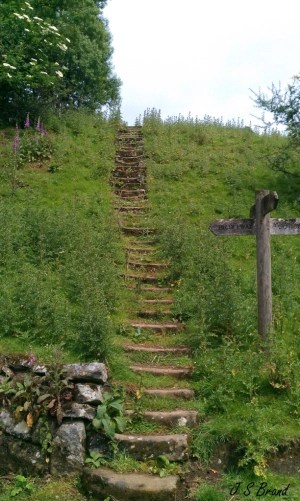
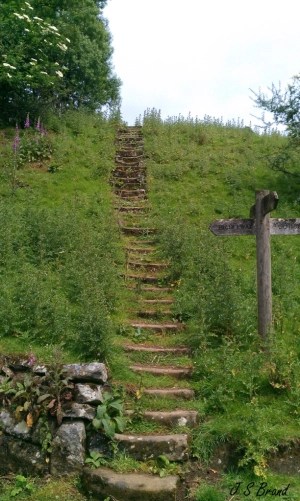
The path had always been there—worn stone steps swallowed by moss, reaching toward the crest of the hill like a forgotten promise. Elara stood at the base, hand grazing the weathered wooden signpost, its words long faded by wind and time.

“They say you find what you’ve lost at the top,” the old woman had whispered in the village square.

Elara climbed, her breath syncing with the hush of the breeze. Each step tugged memories from the past—her brother’s laughter, her mother’s lullabies, the silence that followed their disappearance.

At the summit, the world opened wide. No grand revelation awaited, just the sun breaking through the clouds and a breeze that smelled like childhood summers.

She didn’t cry. She smiled.

The path hadn’t led her to what she lost.

It reminded her she could still feel.

That was enough.

She turned.

And walked back down whole.


This piece was written for Flash Fiction for Aspiring Writers

The Weight of the Page

POETRY – WDYS #292

There comes a time.
Not marked by clocks or calendars,
but by stillness—
the kind that hums behind your eyes.
A softness in your chest
that doesn’t feel like peace.
Just absence.

Everything slows.
Even memory.

The cup half-washed.
The door left open.
The voice in your throat that turns to air.

It’s not the crash.
It’s the drift.
The slow, perfect erosion of self.

You go to the shelf. Not to read.
To hold.
To press paper against skin.
To remember what weight feels like
in your own hands.

The top book breathes like it’s waiting.
No title. No spine.
Just the shape of something
that once held you together.

You open it.
A sentence floats up, loose as dust:

To be lost is not to be broken. It is to be unmoored.

Stillness deepens.
And then —

Truth crawling at your throat,
and your tears cleanse the dirt.

No sobbing.
Just a quiet rupture.
A release
that doesn’t ask permission.

The truth is heavy, like a boulder.
Not because it falls.
Because it stays.

You carry it in the way your shoulders tilt.
In the way your yes always comes too fast.
In the hunger you disguise as patience.

Feels like you’re always coming up last.
Tank empty.
Too far for gas.
And yet,
you keep showing up.
You keep giving.
Even as the edges blur.

Some people run.
Some climb.
You sit with a book
until the silence takes shape.

And when it does—
you whisper to whatever is listening:
Will you steal away the desperation I’ve earned?

Not healing.
Not hope.
Just the question,
and the room
to finally ask it.


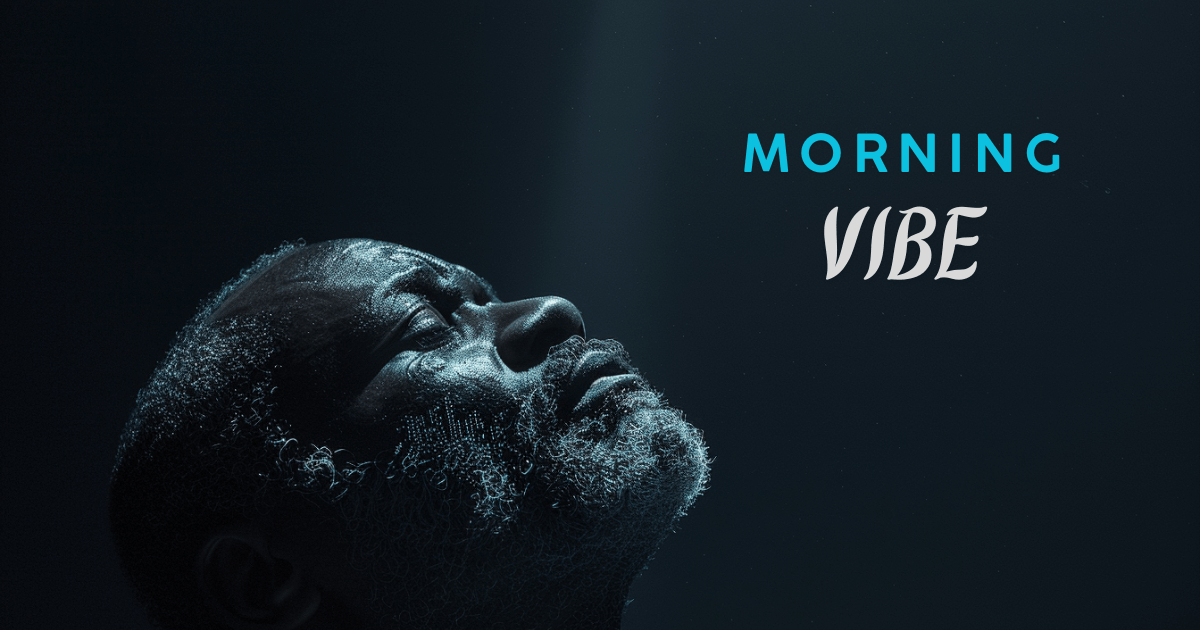
Morning Vibe: What You Can’t Say Still Speaks

TUNAGE – MORNING VIBE

There are mornings when language feels like a trap.

When the words you know aren’t enough to carry what you feel.
When you’re tired of translating your pain for people who won’t listen.
When every sentence feels like it’s bending around the truth, but never touching it.

That’s when music like this finds you.

“Experience” by Ludovico Einaudi isn’t a song—it’s an unraveling.
It starts small. Restrained. Controlled. Like the way we try to hold ourselves together when we don’t feel safe falling apart.

But it builds. Slowly. Honestly. Like emotion rising in the chest—tension you’ve ignored too long, making its way to the surface in waves.

Sometimes, you need to change things up—not for show, but for survival. Because life doesn’t always come at you in the usual ways. It hits sideways. It rearranges your insides. Some days you wake up like you don’t even know your name—like you’re reaching for a nametag that isn’t there.

And in those moments, words won’t help. Advice won’t land. Even your own voice might not sound right.

That’s when you need sound without language.
Music that moves with you when your mind can’t keep up.
Sound that understands before you do.

This track doesn’t tell you what to feel. It just clears space for you to feel what’s already there. And sometimes, that’s more honest than anything you could say out loud.

So today, if your thoughts feel too loud, if your chest feels tight, if you don’t know how to explain what’s happening inside you—don’t.

Let this piece say it for you.
Let it carry what you can’t name.
And trust that not every truth needs translation.

Some of the most honest things we ever feel never pass through our mouths at all.

Half In – Half Out: The Whispers of Madness

Daily writing prompt
What’s your favorite thing about yourself?

DAILY PROMPT RESPONSE

“He has such a vivid imagination,” my teachers used to tell my mother.

I never knew if they were trying to say she didn’t really know me, or if they just wanted to show off that they did. That phrase usually came with a tight-lipped smile, the kind adults give when they’re trying to be nice but also slide in a jab. And more often than not, it was followed by the real kicker:

“He’s not working up to his potential.”

Now that was my favorite.

There’s something about the way that sentence lands. It’s got just enough structure to sound official, and just enough judgment to make your eye twitch. It practically begs for a dramatic eye roll. It sounds like it belongs on a report card, scrawled in red ink by someone who thinks they’re diagnosing your entire life after watching you color outside the lines once.

None of them saw it. Or if they did, no one said anything to me or my mother about the possibility of me becoming a writer.

So much for “knowing me,” right?

Imagination’s a slippery word anyway. It wears disguises. Gets called various things depending on the setting. When I’m working through a technical problem, people say I’m “innovative.” Which sounds nice—like a résumé bullet point. But back in the day, “innovative” wouldn’t exactly get you a date. So, whatever. That one can sit on the bench.

When I was sketching at parties or in libraries or wherever there was enough noise to ignore, suddenly I was “creative.” That one came with some perks. Dates. Curiosity. A little mystique. So I let that version stick around longer.

But my all-time favorite review? “It’s like there’s a whole world living inside your head.”

Runner-up? “Can I just sit inside your head and watch and listen?”

Let’s stop there for a second.

That second one sounds cool—until you actually think about it. Like, really think about it. Someone sitting inside your mind, watching and listening? That’s not curiosity. That’s creepy. You know that haunted doll energy.

I can’t remember the first time it happened.

But it always starts the same way.

The room begins to spin—not fast, not violently, just enough to let me know I’m not in control anymore. And then comes the sound.

It fills everything. The floor. The walls. The air in my lungs. I used to cover my ears. Used to bury my head under a pillow, thinking maybe I could muffle it, outrun it, block it out.

But there was no escaping it.

Eventually, I stopped fighting. I lay still and listened.

That’s when I realized: it was wings. A thousand wings. Fluttering, pulsing, stuttering in rhythm with my breath. Not birds. Not bats. Something stranger. Something older. They never landed. They just swarmed inside the air like static waiting to spark.

I call it The Madness.

It doesn’t hurt me. But it doesn’t leave, either. It waits for a crack—an opening. A sentence, a picture, a glance out the window—and then it rushes in, dragging stories behind it like a storm full of teeth and ink.

The Madness is a portal. A doorway. A window—nay, it’s my safe space. My special place.

And sometimes, when I come back from wherever it takes me, there’s someone standing outside the door.

Mom would come to check on me, like mothers do when they feel a disturbance in the Force.

Yeah, I’m pretty sure that’s where that whole concept came from. They just made it sound cool in the movies.

She’d find me at my desk, scribbling furiously, or on the floor sketching something impossible. Somewhere between this world and… something else. Something I still don’t have a name for.

I just call it the void. Not because it’s empty. It’s not. It’s full of things no one else can see. I call it that because I don’t know what else to call it.

In those early days, you had to stay tethered—one foot in, one foot out. You can’t go too deep. That’s how you raise questions you don’t want to answer. That’s how you start slipping.

But half in, half out? That gets you labeled as “imaginative.” Or “quiet.” Or “a little aloof.”

Which is perfect, really.

I know it sounds like I had control of this.

But I didn’t. Not even close.

I’d be sitting in class, trying to focus on something profound, something that was supposed to matter to my future. Physics. Math. One of those subjects that builds bridges or lands rockets. The kind of knowledge that makes you useful.

And then it would happen.

No warning. No permission asked. I’d feel the shift—like my brain hit a soft patch and sank. One second I’m tracking equations on the board, the next I’m staring through them, seeing something else entirely.

Dragons nesting in the graph paper.

Planets orbiting around the tip of my pencil.

A character stepping through the number line like it was a doorway.

The teacher’s voice would stretch and blur. The room would fade. I’d float just high enough above it all to stop caring about whatever was “important.” Not because I was lazy. Not because I didn’t get it.

Because something louder, brighter, realer was calling.

And sometimes, when I disappear, I don’t go to war or into a storm. I go somewhere quiet. Strange, but calm.

It always begins with stillness. The world fades. Sound thins out. My body stays here, but my mind slips—not far, just far enough. Fog rolls in around my feet. The light changes. Something opens.

I don’t know exactly where I am. I never do. But I know I’ve been here before.

My fingers tighten around something familiar. A shape. A weight. It fits my hand perfectly. I adjust my armor—loose in places, snug in others, shaped by time and use.

The wind moves differently here. Like it knows secrets.

And then I hear it—soft hooves in the mist.

A gentle snort. Then a warm, wet touch on my cheek.

I turn.

Shadow.

My old friend.

He stands calm, steady, like he’s been waiting for me all along. His breath rises in small clouds. His nose presses against me like a question: Are you still in there? Are you coming back?

I stroke his head, my fingers brushing through his thick mane. He’s real here—more real than most things. He smells like woodsmoke and memory.

“We ride, my friend?”

His ears flick, listening. Ready.

“Where to?”

No answer. Just the wind.

“For how long?”

Still silence.

But it doesn’t matter.

I pull myself up, the saddle creaking beneath me. Shadow turns toward the road ahead—faint, shifting, unmarked. It never looks the same twice. But it always leads somewhere.

And we ride.

As a writer, I’m a time traveler of sorts.

Every time I sit down to write, it’s like stepping into Wells’ time machine—but I don’t just visit the past or the future.

I move through memories. Through emotions. Through versions of myself that never got to speak out loud.

And when I move, I do it invisibly. Not like Wells’ Invisible Man—no. Like Ellison’s. Moving through the world unseen, but deeply aware. My presence felt only in the stories I leave behind.

Like many with superpowers, it’s both a blessing and a curse.

To imagine deeply is to feel deeply. To create vividly is to remember painfully. To slip into other worlds is to risk losing track of your own.

But I wouldn’t trade it.

Because this is my favorite thing about myself. Not just that I imagine—but that I keep going back into the void. Back into the madness. Back onto the road with Shadow, with sword or pen in hand.

It’s not just escape.

It’s discovery.

And every time I return, I bring something back with me.

I love this ability about myself.

And I must remember to use these gifts for good.
The Ache; The Regret

POETRY – MLMM #428

Hey, do you miss me?
The ache churns so slowly.
We found common ground,
but only after the fires.
The hard part is done.
Where you’d go?

I close my eyes
because yours won’t open.
The stillness is sharper now.
Colder.
Like it knows
what’s missing.

Time doesn’t pass here—
it gathers.
Cools around me,
wraps my spine like smoke.

You blinked once—
and left everything behind.
I don’t blame you.
But I still ask.

We were never perfect.
But in the spaces between the noise,
we held each other
like we meant it.
We were one —
not whole, just held.

Your memory sings to me softly—
what do I go?

What version of me survives
without the rhythm
of your breath beside mine?

I know you hide the words.
You are afraid to speak.
Don’t hide with me.
Your actions are so loud.

Even in silence,
you told on yourself.
Every absence,
every closed door,
every goodbye you never said
but lived.

Your side of the bed still curves.
Like you’re paused,
not gone.
But I know better.

A rainbow brushed the sky yesterday.
It didn’t stay.
Like you —
always near,
never quite here.

Are these words bound to fail?
Speak to me, hope, and follow through.
Don’t build a future in silence
and ask me to live in it.

My hope rests on every word you don’t say.
But I never told you
What I stood for.
Have I waited too long?
Did you leave thinking
I had nothing left to give?

The truth is,
I was afraid, too.
Of saying it wrong.
Of loving you louder
than you could stand.

If there’s anything beyond this,
I hope it’s not heaven.
I hope it’s just
You and me again,
quiet,
not pretending.
Present.
And finally
telling the truth.

I know you were right—
because my silence was gone.


The Last Step

The path had always been there—worn stone steps swallowed by moss, reaching toward the crest of the hill like a forgotten promise. Elara stood at the base, hand grazing the weathered wooden signpost, its words long faded by wind and time.

“They say you find what you’ve lost at the top,” the old woman had whispered in the village square.

Elara climbed, her breath syncing with the hush of the breeze. Each step tugged memories from the past—her brother’s laughter, her mother’s lullabies, the silence that followed their disappearance.

At the summit, the world opened wide. No grand revelation awaited, just the sun breaking through the clouds and a breeze that smelled like childhood summers.

She didn’t cry. She smiled.

The path hadn’t led her to what she lost.

It reminded her she could still feel.

That was enough.

She turned.

And walked back down whole.


Image by J.S. Brand.

This story was written for Flash Fiction for Aspiring Writers

Chronically Challenged: A Friday the 13th Love Story III

FICTION SERIES – FOWC & RDP

Chapter 3:

1776 Problems

There was no welcome committee.
Just the smell of firewood, horse sweat, and a stranger yelling “HEATHENS!” at a woman holding a spoon wrong.

Fiona sat on a wooden bench outside what might’ve been a tavern—or maybe just a house with more than one bowl—trying not to throw up from stress or the smell of something roasting nearby. Her body was sore from the jump, and her brain was short-circuiting in two languages.

This is real. This is happening. I’m in 1776. In borrowed pants. I time-traveled on a date.

Every time she thought that sentence, her stomach did a full somersault.

Elliot sat beside her, smudging his glasses with the corner of his hoodie, blissfully unfazed. She wasn’t sure whether to envy him or throttle him.

“I can’t believe I’m wearing linen pants someone died in,” she muttered.

Elliot squinted at her. “We don’t know that.”

“There was blood on the cuffs, Elliot.”

“Well, maybe he died near them.”

She stared at him. “Do you hear the words that come out of your mouth?”

He gave her a crooked grin. “Not always.”

She pressed her palms into her eyes. You can do this. You’ve taught physics with the fire alarm blaring. You’ve testified in front of a grant panel full of skeptics. You can withstand a little history.

But history was proving to be loud, itchy, and profoundly uninterested in her credentials.

Already today she’d bartered a paperclip for two apples, tripped over a cobblestone, and been told by a man named Jedediah that she had “the posture of a godless widow.” She didn’t even know how to begin unpacking that.

“Okay,” she said under her breath, trying to calm her breathing. “List your assets.”

Elliot perked up beside her. “Do mine count too?”

“One broken time device,” she continued, ignoring him. “Two 21st-century brains. Zero friends. No clean water. No wifi. No deodorant. I’m one itchy shift away from a total psychological event.”

“You’re handling this remarkably well,” Elliot offered, leaning back like he was on vacation.

“I am actively repressing a meltdown,” she replied flatly. “This is emotional duct tape. It’s not coping.

He nodded with mild approval. “Still counts as functional.”

“Are you seriously not worried right now?”

“I mean, I’m not thrilled,” he said. “But worry won’t solve it. We need a plan.”

Fiona turned toward him slowly, one brow twitching. “A plan?”

“Yeah. Blend in. Gather resources. Find soft places to sleep. Possibly invent sunscreen.”

She stared. “We have no ID. No income. I had a burrito punch card in my wallet, and now it’s probably a war crime.”

“Technically, we still have half a taco.”

“That taco is in another century.”

He held up a hand. “We don’t know that for sure.”

She let out a sound somewhere between a groan and a laugh. He’s doing it again. Defusing panic with deadpan optimism. Pretending this was a mildly inconvenient camping trip and not a rupture in the laws of time.

Fiona stood and paced. The hem of her borrowed skirt brushed against her ankles like a rope. The air smelled like ash, mud, and anxiety.

“You’re right about one thing,” she said. “We have to withstand it. All of it. The cold. The lack of toothpaste. The judgmental goats. For a month.

Elliot sat up straighter, brushing crumbs from his lap. “We’ve both survived worse.”

“You mean you survived grad school by printing your dissertation at a Kinko’s while actively hallucinating.”

“And you survived your committee asking why your paper didn’t include lipstick.”

She smiled grimly. “Fair.”

They sat together quietly for a moment. A breeze rustled the leaves. Somewhere nearby, a woman shouted about leeches.

Fiona hugged herself, the texture of the coarse shirt making her skin itchier by the second. “I miss hot water,” she murmured.

Elliot looked at her, his voice soft for once. “I miss your blazer.”

She blinked. “What?”

“You always looked confident in it,” he said, a little shy now. “Like you could run the world and correct my posture without raising your voice.”

Her mouth betrayed her—just a slight curl at the corner. Not quite a smile, but close enough to feel dangerous.

They sat in silence again until a goat trotted past and made direct, unsettling eye contact with them.

“Do you think there’s a place around here that sells coffee?” he asked, hopefully.

They looked at each other.

Then laughed.

Entangled Contradictions

FICTION – REENA CHALLENGE #385

by Julia Drake (and someone else entirely)

Dr. Eugene Irving Krane did not believe in metaphor, which was why he used it constantly in his head.

Standing before a lecture hall of half-conscious undergrads, chalk raised like a scalpel, he dissected equations with clinical precision. “Symmetry,” he said, “is not about aesthetics. It’s a constraint. A system obeys certain laws until one of them breaks. And that break is where the interesting physics begins.”

Behind him, the whiteboard bloomed with the Higgs mechanism—perfect arcs, cold beauty, tension contained.

Krane saw what his students did not. The math wasn’t sterile. It was tragic. Elegant. Alive.

He was an odd man, even by faculty standards. He collected things. Not stamps or coins—ideas. He had an entire drawer in his office dedicated to obsolete words, sorted by emotional tone: “Words That Die Alone,” “Words That Bleed Nicely,” “Words With No Home.” He took long walks at dawn to photograph patterns of fractured light in puddles and alleyways. And he kept what he privately called an “emotional landfill” — a file full of discarded breakup letters, apologies never sent, and confessions overheard in stairwells. He said they helped him write with precision.

These collections weren’t academic. They were scaffolding for something else—a hidden voice, one that poured all that silent debris into fiction.

From the front row, Tess Ramírez scribbled something in the margin of her notebook and suppressed a grin. She was in her forties, finishing a long-delayed PhD, and possibly the only person alive who would one day use the phrase “quantum betrayal” in casual conversation.

She respected Krane. She also suspected he had no idea how visible his loneliness was.

When class ended, Krane retreated behind his desk, where a stack of problem sets sat dangerously close to a notepad filled with scribbles. Not physics. Fiction. The bones of a scene for Julia: entanglement as metaphor, two characters locked in orbit, never quite in sync. He’d been shaping it since 3 a.m.

He tugged down his sleeves and nudged the pile toward Tess.

“If you could… the thing.”

She blinked. “You’re a world-class communicator, you know that?”

He blinked back. “That was implied.”

Tess rolled her eyes and scooped up the stack, including—unbeknownst to him—a handful of Julia’s latest pages.

Later that night, she was grading on her couch, jazz humming from the speakers, half a glass of Malbec on the coffee table. And then she saw it.

A page that didn’t belong.

“They spoke like electrons entangled: each word collapsing a possibility in the other. He didn’t touch her hand, but the air around it bent.”

Tess froze. Her wine glass stopped midair.

Her heart did a weird thing, like an extra beat—or maybe a skipped one.

She flipped to the next page.

“Lina stood in the field, symmetry broken, heart split by the simplest law of decay: what once was held cannot always stay.”

And at the bottom, tight and unmistakable: 
–J. Drake

Her pulse kicked.

No. Impossible.

She’d read every Julia Drake novel twice — dog-eared, underlined, whole chapters bookmarked for reasons she couldn’t explain. Not because they were romantic. Because they were honest. No one in Drake’s stories ever got rescued cleanly. They hurt each other. They tried. They failed better. It wasn’t fantasy. It was familiar.

Tess had never known who Julia Drake really was — just that she’d been through the shit. You couldn’t write emotional wreckage that clearly unless you’d lived inside it.

And now here it was. 
On paper. 
In Krane’s handwriting.

Her first instinct was disbelief. Her second was awe. 
Her third was: Does he even know how hot this stuff is?

Tess barely slept. She kept rereading the pages, flipping between disbelief and adrenaline. The idea of confronting Eugene left her nauseous—what if she embarrassed him? What if she was wrong? What if she ruined something by naming it? But the words wouldn’t let her sleep. They weren’t just good. They were true. And she couldn’t unknow that truth now.

The next morning, she didn’t knock. She barged in.

Eugene looked up, mid-sip of coffee, and nearly dropped the mug.

“You’re Julia Drake.”

He froze. Opened his mouth. Closed it.

“You are,” she said. “You’re my favorite author of all time. I thought you were dead. Or French. Or a collective of lesbians.”

Eugene stared at her like she’d just accused him of arson.

“You’re serious,” he managed.

“I’ve read everything,” Tess said, waving the pages. “Twice. I memorized half of A Constant Craving like it was scripture. You made me cry in a Denny’s, Eugene.”

He looked absolutely horrified.

“I was under the impression,” he said slowly, “that my prose was… categorically sentimental.”

“It’s not,” she snapped. “It’s vulnerable. And tight. And unbearably good. God, no wonder you hate small talk—your soul is in six mass market paperbacks and nobody knows.”

Krane went pink. Pink.

“I don’t—it’s not—people in the department wouldn’t understand.”

Tess softened. “I understand. I just didn’t expect my emotionally unavailable science mentor to be moonlighting as the poet laureate of romantic ache.”

Eugene rubbed his forehead. “Please never say that out loud again.”

She grinned. “No promises.”

They sat in silence for a moment, the weight of the secret between them now less like lead and more like gravity—still heavy, but pulling them into orbit.

For Tess, something shifted. She’d always seen Krane as brilliant but unreachable, like a locked cabinet full of equations and rules. But now, she saw the tenderness behind the rigidity. The collector of discarded feelings. The man who couldn’t say what he felt unless it was fictionalized. And somehow, that made her respect him more, not less.

“You ever think,” Tess said quietly, “maybe fiction is the only way people like us know how to feel?”

He looked at her, and for once, didn’t look away.

“All the time,” he said.

That night, Julia Drake began a new manuscript. As Eugene typed, he paused over one line and rewrote it three times—not for clarity, but for care.

The main character’s first real moment of connection came in a cluttered office, after a truth slipped out by accident. The other character didn’t flinch. She saw him. Not just the polished surface, but the hoarder of obsolete words, the photographer of lost light, the emotional archivist in disguise. Her name was Teresa.

It opened with a woman named Teresa. Sharp. Unafraid. The first character Eugene had ever written did not need rescuing or permission. She met the main character’s silence with curiosity, not pity.

And for the first time, Julia Drake wrote a love story that didn’t end in silence.

It ended in symmetry.

Shuggie’s Boogie: The Kind of Guitar Playing That Makes You Question Your Life Choices

TUNAGE – SLS

In the endless debate about great guitarists, you know the names. They’re on every list. Hendrix. Clapton. Page. Santana. Occasionally, a few lesser-knowns sneak in—someone you maybe don’t know, so you check them out, nod, and go, “Okay, yeah, I see it.”

But there’s another tier. The ones who don’t make the lists. Not even the cool-guy “most underrated” lists. They’re ghosts. Phantoms. Legends whispered about in liner notes and sampled by producers who dig deeper than algorithms ever will.

Shuggie Otis is one of those.

Listening to Shuggie’s Boogie from Live in Williamsburg is like that moment in a bar when you stop in for a bite, thinking you’re just killing time. You sit down, order something greasy, maybe a beer. Then the band starts playing. No intro. No warning. You take a bite… and stop mid-chew. Fork halfway to your mouth. What the hell is happening on that stage?

You forget the food. You forget your phone. You just listen.

That’s what this track is. It blindsides you.

Shuggie doesn’t approach the guitar like a technician. He approaches it like someone who’s got something to say. This isn’t about speed or theory—it’s about attitude, feel, and intention. Every phrase lands with the kind of swagger that only comes from living a weird, sideways kind of life through music.

And the band? Locked in like they’ve been rehearsing for a world tour no one told you about. His son, Eric Otis, adds guitar textures like he’s painting in the shadows of his dad’s lead lines. Nick Otis, Shuggie’s brother, holds down drums with a groove that feels more instinct than effort. James Manning on bass is the glue—thick, steady, unshakeable.

The horns—Larry Douglas (trumpet, flugelhorn), Michael Turre (baritone sax, flute, piccolo, backing vocals), and Albert Norris—aren’t just dressing. They’re characters in the story, adding stabs and swells that make you lean in closer. And Russ “Swang” Stewart on keys knows exactly when to tuck in a note and when to let it bloom.

This isn’t a polished, clinical performance. It’s gritty. There’s some dirt under its nails. Some bark in the tone. But that’s why it works. There’s a certain beauty in letting the edges stay frayed. It’s alive. Like something could fall apart at any moment… but never quite does.

Shuggie recorded the original Shuggie’s Boogie when he was 17. Which is already annoying, because it was brilliant even then. But this live version? It’s deeper. Older. Wiser. Looser. He stretches out, takes his time, throws notes like curveballs that somehow always hit the strike zone.

It’s the sound of someone who doesn’t need to be on a list to prove anything.

If you’re into guitar playing that hits your chest more than your brain, this is your track. If you’ve ever dropped your fork because of a solo… well, maybe you already know.

And if you’ve never heard of Shuggie Otis? Good. You’ve got some listening to do.


Retired and Slightly Feral

Daily writing prompt
How do you want to retire?

DAILY PROMPT RESPONSE

Funny question. I’m already retired — so that ship has sailed, caught fire, and drifted into the fog. I didn’t exactly plan it this way. I retired earlier than I intended, not because I hit a financial milestone or had a burning desire to live in sweatpants, but because life shoved me out the door and said, “Good luck.”

At first? I thought I was going to lose my damn mind. Retirement wasn’t the champagne-and-passport fantasy my friends and I used to ramble about. It was me standing in my kitchen at 10AM, reorganizing the fridge magnets like they were sacred runes. I was out here inventing errands and scheduling things like “check mail” and “organize junk drawer,” just to feel useful.

We live in a world obsessed with doing. If your calendar isn’t jam-packed with Zoom calls, workout classes, and color-coded nonsense, people assume you’re wasting your life. Productivity has become a personality trait. Rest? That’s considered weakness.

I bought into it for a while. I kept trying to prove I was still “useful.” But eventually, something in me gave up — in the best way.

I stopped asking, “What should I be doing?” and started asking, “Do I want to?” And just like that, life got simpler.

Now? I nap when I’m tired. I read without guilt. I write, wander, daydream, and sit in silence without apology. Retirement isn’t what I imagined — but it’s real, and it’s mine. Turns out, that ship I thought was burning? Just needed to slow down and enjoy the view.

Sometimes I wonder if I could’ve adopted this mindset earlier. Maybe I didn’t need retirement to learn how to rest. But hey — better late than stuck in a never-ending to-do list.

If I could send a note back in time, it’d read:

You’re not lazy. You’re just finally done with the bullshit.

Notes from a Feeble-Minded Insomniac

Daily writing prompt
What’s the oldest thing you own that you still use daily?

What’s the oldest thing I own that I still use daily?
The last time I answered this question, I mentioned my old pickup sitting in the driveway. It’s beat to hell, leaks a little oil, and rattles like a shopping cart on gravel — but somehow, it still runs. That felt like a solid answer. It felt true.
Except it wasn’t. Not really.

The honest answer hit me while I was sitting at my desk, trying to draft some notes for another post. I was overthinking the structure, second-guessing the tone, basically chasing my own tail. After a while, I leaned back, shook my head, and muttered, “I’ve been using my brain too much.”

And just like that — Eureka.

I’ve been the feeble mind of an insomniac since birth.
Okay — maybe not technically insomniac at the start. Back then, I stayed up past my bedtime mostly out of spite. Perhaps a little orneriness, too. Hard to say. But I do remember using that word — ornery — and now that I think about it, a fair number of women have used it to describe me over the years. So, maybe they were onto something.

I’m a constant learner. Always have been. I believe if you go a day without learning something, you’ve wasted it.

Most people think learning has to mean reading, working, studying, building — something active. But I’ve learned more just by paying attention. Not scrolling, not zoning out — observing.

I don’t Google “brain-boosting activities.” I just rely on my favorite tool: active listening. That might sound simple, but it’s one of the sharpest tools we’ve got.

The thing is, most people don’t actually listen — they wait to respond. You can see it happen: someone’s still mid-thought, and the other person’s already loading up their reply. If we’d just let people finish, then respond or ask a decent question, most of our conversations would be ten times better.

Now, I’m not pointing fingers here — I’ve cut people off after 30 seconds of dumbshit like it’s a reflex. I’ve been trying to stretch my tolerance up to 90 seconds, but somehow it always snaps back to 30. Still, I’m working on it.

A lot of my friends and family talk about how they can’t remember shit anymore. I get it. I’m right there with them. I might’ve single-handedly made the Post-it Note company profitable.

But I’ve got a few tricks. For one, I carry a journal with me everywhere and write things down. Yeah, I know you can make notes or record memos on your phone, but here’s the thing — when you physically write something, you remember it better. Science backs that up. Not that I need some egghead in a lab coat to tell me what works for me.

Like yesterday, I was talking about chasing the start of a story, sitting at my laptop… but I skipped a step. First, I write a few notes in my journal. Random lines, loose thoughts, things that feel like they matter. I also keep a microrecorder on hand for fast ideas when I’m out — then I transcribe those into a binder.

I’ll sometimes spend weeks researching a topic before I write a single sentence for a story. Somewhere in one of the dozen journals scattered around my house, there’s a note — a clue — waiting to tie it all together.

“Today was a good day. I wrote a sentence.”
— James Joyce

I keep that quote close. It’s a reminder that one good sentence is worth more than a thousand shitty ones.
No fluff allowed. Ever.

Another way I keep the engine running is by going back and reading my old notes.

Earlier this week, I was flipping through a binder from ten years ago and found a scribble about a quirky love story set on Friday the 13th. Sound familiar? It should — I think I finally wrote that story last year.

Looking back shows you two things: growth and delusion. You see yourself in these raw, unfiltered snapshots — how sharp you were, or how far off base. Sometimes I shake my head at my younger self and think, Jackass.

But that’s part of the deal. This brain — stubborn, scattered, always working something out in the background — it’s the oldest thing I own, and the most used. And like that old pickup, it’s still running. Somehow.

Sometimes I look back and wonder how my late wife ever put up with my scattered, feeble-minded antics. The half-finished thoughts, the notebooks everywhere, the midnight mutterings about plot twists or people-watching revelations.

Then it hits me — maybe she just had a predilection for the company of psychos.

God knows, I gave her plenty of material. But she stuck around, laughed at the chaos, and made room for it. That counts for everything.

The Moment That Catches You

Daily writing prompt
Describe one of your favorite moments.

DAILY PROMPT RESPONSE

Throughout my life, I have had numerous moments that make me smile, chuckle, and even cry. That’s not unique — we all carry those. So, I won’t go there. Instead, I’d like to discuss something else. Something quieter, but deeply personal.

The moment a story begins.

It’s not always dramatic. Sometimes it’s just a flicker — a stray thought, a memory, an odd image that won’t let go. But for me, that moment is electric. It’s the exact point where imagination kicks in, where the real world and the possible world start to blur. It might come during a walk or while staring out a window. No fanfare. Just that quiet spark that tells me: there’s something here.

That’s the kind of moment I treasure. Because from there, anything can happen.

Most of my story ideas come when I first wake up. There’s this moment — half-dream, half-thought — where I catch a fragment of something in the corner of my mind. I turn toward it. I chase it. And if I’m lucky, I chase it long enough for it to turn around and catch me.

That chase is what charges me. Stumbling through the dark, following breadcrumbs left by a story that doesn’t want to be found—not yet. The clues never come in order. They show up like scattered pieces of a massive jigsaw puzzle, except there’s no picture on the box. The image only reveals itself as you fit the pieces together. And even then, sometimes you’re wrong. Fooled. Thrown off.

And honestly? That’s when things get sexy. That’s when the story pushes back, when it fights you a little, when it demands more.

But we must be honest — to get the real stories, the good ones, you’ve got to look into the abyss. That’s where they live—just sitting there, waiting, watching, and daring you to prove you’ve got the patience, the grit, the nerve to piece them together.

You have to be careful, though. When you’re deep in it — in the thick of the story — you can lose everything. It can vanish like a wraith. One second, it’s there, close enough to feel, just long enough to let you know it could be something. The next, it’s gone. Because maybe you weren’t ready. Maybe the story saw through you. Weighed you. Measured you. Found you wanting.

Doubt stands at the edge of the Shadow, glaring with that slight, sinister grin — the kind that chills you deeper than you care to admit. You start to hear the whispers oozing from its lips. At first, you ignore them. But slowly, they start to take hold. You feel them crawl under your skin, digging their nails in. Their shrieks serenade your soul.

You have to resist. You have to defend the faith — in yourself, in the work, in the chase. Sometimes that’s all a writer has. Belief and maybe a little luck. If your courage holds.

So you scream back: “GET THE FUCK OFF ME!”

Then you breathe. Settle. Take the next step on the path.

I sit down in front of my laptop. Coffee on one side. A smoke. Guppy curled up by my feet. I take a deep breath.

And I write the first word.

Chronically Challenged: A Friday the 13th Love Story II

DAILY PROMPT RESPONSE – FICTION SHORT STORY SERIAL

Chapter 2

The Accident

from Chronically Challenged: A Friday the 13th Love Story

Fiona had worn real jeans.

Not lab jeans. Not backup drawstring pants from her desk drawer. Real, going-out jeans—the stiff kind that didn’t stretch and made her walk like a mannequin for the first six minutes. She wasn’t even sure they still fit until twenty minutes ago, when she jumped into them like a hostage escaping a car trunk.

Now she was walking three inches behind Elliot, clutching her bag like it contained state secrets and suppressing the urge to sprint into traffic.

It’s just dinner. Just tacos. Just the most statistically cursed date on the calendar with a man whose hair won’t lie flat and whose smile makes your hippocampus melt.

Thunder cracked somewhere behind them.

Of course it did. Friday the 13th.

Elliot didn’t seem to notice. Or care. He strolled ahead in yet another Ramones shirt—faded black with one rolled sleeve higher than the other—a zip-up hoodie, and sneakers that looked like they’d lost a fight with battery acid. His hair was slightly neater than usual, but still refused to be tamed. Fiona suspected he had brushed it once and then immediately run a hand through it out of habit. The result was… heartbreakingly consistent.

“Did you know,” he said, stepping over a puddle, “that time is technically a human illusion and nothing actually moves forward?”

Fiona blinked. “That’s your opener?”

“I thought it was romantic.”

She laughed, a small, sharp bark she instantly regretted. Too loud. She tried again with a polite smile, folding her nervous system in on itself like origami.

They arrived at the taco truck she had half-joked about via text and secretly hoped he’d take seriously. He had. Of course, he had. Of course, he’d actually listened.

“After you,” Elliot said, gesturing with a little bow. She wondered if he’d practiced that move in the mirror.

She ordered first—tacos al pastor and horchata, the default comfort food. He stepped up after her.

“Do you think I can get one extra spicy and one sentient?” he asked the cashier.

The woman didn’t blink. “$10.50.”

They took their paper trays to a folding table under a vinyl canopy flapping in the wind. The sky rumbled, and the air tasted like ozone and grilled meat.

Fiona had just taken her second bite—salty, sweet, and absurdly good—when something flashed in her bag. Faint. Blue. Pulsing.

She froze.

No. No no no no no—

“Tell me you didn’t,” she muttered, already opening the zipper.

“I didn’t what?” Elliot asked, mouth full.

She pulled out the chrono-lattice remote node. It blinked at her like a smug little gremlin.

“I thought we powered it down.”

“I mean… we meant to,” he said.

“Did you unplug it from the laptop or the outlet?”

He paused. “Oh no.”

Before she could launch her taco at his head, the device let out a mechanical whine—a horrible, high-pitched chirp like a dial-up modem made of bees.

The air shimmered. Her vision pixelated. Everything sounded like it was underwater.

There was a loud snap.
A pop.
A disorienting sensation, like something deep inside her chest was being unzipped sideways.

And then—

Darkness.


She hit the ground hard. Grass, not pavement. Her knees sank into the soil. Her palms scraped on roots.

The smell hit her next—damp earth, smoke, sweat, and something distinctly horse-related.

When she looked up, the taco truck was gone.

So was the canopy. The sidewalk. The twenty-first century.

They were in a clearing, surrounded by trees. A man in a tri-corner hat shouted something about a musket. A horse neighed in the distance. Elliot was coughing beside her, brushing dirt from his hoodie.

Fiona checked the device. Its screen blinked once before settling on:

🕰️ DATE: APRIL 13, 1776
STATUS: TEMPORAL LOCK — NEXT JUMP AVAILABLE IN ONE MONTH

Her stomach dropped. Her pulse spiked.

“This is fine,” she said aloud, voice high and brittle.

Then, silently:
“This is probably fine. This is not an omen. Definitely not a red flag. It’s just a surprise… historical relocation. That happens. On dates. Right?”

“Is this a red flag? Is this a sign? Don’t freak out. So, what? We’re in 1776. What could go wrong?”

A musket fired. A goat ran past wearing some kind of colonial baby bonnet. A horse sneezed.

She blinked hard. “Okay. That’s a sign.”

Elliot was crouching in the grass, patting the earth in wide, sweeping motions. “Glasses. Glasses…”

“Please tell me you didn’t—”

“They were the good ones,” he groaned. “No tape. I wore my date pair.”

She turned in place, scanning the grass, the trees, the 1770s chaos swirling around them like historical cosplay gone feral.

Elliot looked up at her, squinting. “Do you think our kids will believe this was our first date?”

Fiona opened her mouth. Closed it. Then opened it again. “Do you say things like that often?”

“Only when I’ve been hurled through time by a semi-functional lattice array with someone I really like.”

Despite herself, despite the mud and her probable allergy to 18th-century everything, her mouth twitched. Just slightly.

She knelt to help him search. “Let’s find your glasses before your future children start thinking you’re smooth.”

Elliot smiled faintly. “We can’t have that.”

Keepers in the Fog

POETRY – 3TC #MM83

(Part II of The Forbidden Sphere)

They never speak — yet still they warn,
With presence sharp as briar thorn.
From every edge, behind each tree,
A knowing gaze leans into me.

I’ve never seen a face, a form,
Just hush that settles thick and warm.
They move when light begins to thin,
As if the dark invites them in.

I thought I saw a signal flash —
A glint, a shift, a silver lash.
But when I turned, the mist was bare,
As if the fog had never cared.

They guard the orb with sacred right,
Unyielding as the velvet night.
And though no blade nor gate I see,
They’ve kept its heart away from me.

A whispered clue behind the bark—
A mark too faint to name or mark.
Each piece I find, they pull away,
Like ghosts in long-abandoned play.

It’s like a seance with no voice,
No table, chant, or sacred choice.
Just shadows moving without sound,
As if the dead still guard their ground.

They kept me from discovery,
From questions asked too hungrily.
From truths that bend, from lines that blur,
From something deep I almost were.

Swift they move through drifting gray,
Their touch a chill that steals the day.
And still I stand, and still I burn—
For what they guard, I must unlearn.

But who appoints a watcher’s place?
What gives them claim to time and space?
And if I walk where none may tread…
Do I wake the dream, or join the dead?

The Broken Seal

FICTION – 3TC#MM84

Part II of the Spiral Series

The wind hadn’t stopped.

It moved differently now—slow and strange, like the exhale of something buried deep beneath the ground. It pulled at the corners of her tent, lifting canvas in little fits and snaps, always seeming to tuck itself into cracks where it didn’t belong.

That was what woke her. Not sound, not light. Just pressure.

And then, the artifact cracked again.

Carla snapped upright, breath caught in her throat, the sound sharp and final like a neck breaking in the dark. Her hand flew to her satchel. The clasp was ice-cold. She fumbled it open, fingers stiff with sleep or fear—she couldn’t tell which.

Inside, the artifact pulsed softly. Not glowing, exactly. Breathing. The black stone was veined with dim silver, like capillaries beneath bruised skin. It was cold. It shouldn’t have been. It had gone silent days ago, after the lightning storm and the screaming.

But now, it pulsed.

She stared too long. Her jaw ached. Something inside the artifact wanted her to touch it again. To grip it the way she had before.

Wind scraped across the broken plain, carrying ash and the copper tang of blood. The sky above never returned to its blue hue. It hung overhead like a wound that refused to scab, pulsing faintly in red and violet. Birds no longer came near. Their calls had been replaced by clicking sounds, sharp and unnatural, like someone cracking knuckles in rhythm.

She stepped outside.

The land where the fortress once stood remained warped—trees curved inward like giant hooks, soil blistered like molten glass. Some places she avoided instinctively, though she didn’t remember why. Her body knew what her mind refused: something still lived here.

And it was moving.

On the ridge, something gleamed—symbols etched into a rock face that hadn’t existed a day ago. She climbed toward it. The air thickened with every step, heavy as steam, vibrating with low pressure in her ears.

The glyphs weren’t carved. They were pinned. Slivers of hide, nailed into the stone with bones. Symbols like those from the tomb, but bent, broken, misremembered—like a child trying to copy a nightmare. They wept a thin, translucent fluid. Fresh.

She reached out. The surface twitched.

A breath behind her.
A footstep.

She turned.

A figure limped into view. Hooded. Shifting. Its form shimmered like heat off scorched pavement. The voice came in pieces, static and rust:
“You… turned the key… wrong.”

Carla stepped back, clutching the artifact.

“I sealed it,” she said, though her voice betrayed her.

The figure tilted its head. The hood slipped just enough to reveal a hint of a face—misplaced features, teeth where they shouldn’t be, eyes stitched halfway shut.
“You sealed one. But they were never meant to be alone.”

A chill ran up her spine.

There are more.

The artifact pulsed again. A new groove had appeared—smaller, deeper, purposeful. Not a fracture. A design. It was evolving.

Above, the sky flickered again. Not lightning cracks. Fractures like glass under pressure, thin and spreading. The heavens are trying and failing to hold their shape.

The creature she sealed had not been alone.

The world was a vault. Each seal is a cell. Each twist of the artifact, a new calculation. Her choice had shifted the weight. Something else was pressing through.

Her grip tightened around the artifact, the edges biting into her palm. She was breathing hard, chest aching. Her thoughts raced: Where was the next seal? How many were left? Could she fix what she had started?

She was lost again, not just in the land, but in her role. She had thought herself a savior. Now she feared she had only shuffled the locks.

And she wasn’t alone.

Others would feel the pulse.

Some would fight.
Others would cower.
And a few… would answer the call.

Kimonogate 2

FLASH FICTION SERIES

A suburban saga of secrets, sequins, and sabotage

Episode 2:

Capote’s Gambit

The next morning, Myrtle’s voice pierced the cul-de-sac like a foghorn with unresolved trauma.

“He’s three-legged, Gerald!”

The mayor stopped mid-prune, trowel frozen above a wilting azalea.

“Capote is a disabled romantic, not a threat! You try balancing courtship on a tripod!”

Gerald—the mayor, though the title now felt more like a technicality than an achievement—turned around slowly. Myrtle was in her driveway wearing orthopedic sandals and a shirt that said Let Love Limp. Capote stood proudly beside her, his one front leg planted like a noble tent pole, the other side bare as truth.

Capote barked once. A dramatic, Shakespearean “AY!” if ever there was one.

“I’m not arguing with a dog, Myrtle.”

“You’re arguing with a dream, Gerald! A dream that hops.”

Gerald sighed. “This is not about Capote’s leg. Or Misty’s…whatever Misty’s going through. This is about you blackmailing me with the kimono.

Myrtle stepped forward. Pont and Pint, the other two Cresteds, flanked her like fleshy gremlins.

“You mean the bold pink kimono with the satin sash that said ‘Yas Queen Chemistry’ on the back?”

Gerald turned redder than his begonias.

Myrtle continued, undeterred. “The one you punt-kicked into the rhododendron trench like it was evidence from an interpretive crime scene?”

Capote barked again—once, then twice—then hopped forward on his three legs toward Misty, who was sprawled in a sunbeam like an aloof queen. The Chow lifted her head, sniffed, and did absolutely nothing.

Capote lifted one paw in slow motion. Time froze.

Myrtle gasped. “He’s doing the gesture. He saw it on The Lion King!

“Oh for God’s—”

Look at him, Gerald. That’s love. Pure, deformed love. Don’t you dare deny him just because you’re ashamed of your weekend show tunes and your precious kimono’s untimely burial!”

Gerald looked at Capote. At Misty. At Myrtle. Then at the patch of dirt behind him. The kimono lay there in silence beneath the earth, like a secret in drag.

His voice came out hoarse. “He deserves… happiness.”

Myrtle nodded solemnly. “We all do.”

“Even three-legged, bug-eyed horndogs?”

“Especially them.”

There was a long pause.

Gerald reached into his garden bag, pulled out a small plastic baggie, and unzipped it. He held it up slowly.

Inside: a single, glitter-covered, rhinestone-stitched sash.

Myrtle gasped again. “You kept the sash.”

“It still smells like applause,” he whispered.

Capote barked. Misty let out a low, rumbling groan. Somewhere, possibly in Myrtle’s house, “Hopelessly Devoted to You” began to play softly from a Bluetooth speaker.

And just like that, the feud was over.

For now.

Chronically Challenged: A Friday the 13th Love Story

Daily writing prompt
What notable things happened today?

DAILY PROMPT RESPONSE – FICTION SHORT STORY SERIAL

Chapter 1:

The Ask


Dr. Fiona Klausner had survived worse.

She’d survived peer review by an all-male panel who said things like “feisty formula” and “adorably ambitious.” She’d survived seventeen-hour data cleanses on a broken monitor, and one ill-fated attempt to microwave soup in a vacuum chamber.

But this? This was worse.

She stared across the lab at Dr. Elliot Chowdhury, hunched over a datapad, brow furrowed, lips moving as he whispered numbers to himself. Probably modeling the lattice resonance from their last run. Probably not thinking about her at all.

He wore what he always wore: a Ramones t-shirt (today’s said “Hey Ho Let’s Go”), wrinkled jeans, a slightly singed lab coat, and plastic-frame glasses held together with electrical tape. His prematurely gray hair appeared to have lost an argument with gravity.

To Fiona, he looked like the human embodiment of a chaotic good equation. Unshaven. Brilliant. Endlessly distracting.

You don’t have to do this, her brain whispered. You could just ask him to double-check the time-slice projections. You don’t have to launch your dignity into space on a caffeine-fueled whim.

She reached for her mug, cold. Her hands were damp. Without realizing it, she began adjusting her elegant lab coat. The sleeve, the collar, the pocket. Again and again.
Then she realized what she was doing—you already fixed that—and forced her hand to stop.

Just let it go. He’s nice to everyone. He probably lent you that soldering iron because he’s kind, not because he was flirting in the language of hardware.

She stood up anyway.

Her chair screeched across the tile. Elliot looked up, startled but smiling.

Abort. Retreat. Climb into the trash can and make it your home.

“Elliot?” she said.

He blinked. “Yeah?”

She cleared her throat, then blurted, “I was wondering if you wanted to get dinner sometime. With me. Socially. I mean. Or romantically. I mean—if that’s a thing you’d want. Or ever consider. Or—”


She’d said it. It was now out in the world, irreversible.

Her heart pounded. Her stomach twisted into knots.
She actually felt her intestines realigning themselves like they were trying to flee the scene.

This was a biological emergency.

And then, Elliot made a face. A tiny nose scrunch, subtle but visible.

What’s that face? His nose? Is that a disgust squint?
Do I stink? Is it the emergency deodorant? Oh god, is it the lentil soup from yesterday? I knew it lingered.

Then she blinked. Realized something.
Wait. That’s his thinking face.
She’d seen it dozens of times—whenever he was mid-equation, mid-epiphany, or mid-muffin.
It wasn’t rejection. It was…processing.


Oh. Oh no. This is happening. This is real.

Dr. Fiona Klausner—world-class brain, terrifying poise, hair that doesn’t know chaos—just asked me out.
Me. In this shirt. In these pants. Do these pants even have a functioning zipper?

She’s hot.

Why is a hot girl asking me out?

Am I pitiful? Is this a setup? Is there a camera in the fume hood?

Then it hit him.
The last time a hot girl asked me out…

Carla Smith.
Candle wax. Glitter. A Yelp review.
He still didn’t know how that review got posted under his name, but it cost him two months of eye contact with anyone named Carla.

Say something. Say yes. Don’t mention Carla. Or glitter. Or wax. Just say yes.

He scratched behind his ear. His nose twitched again. Panic reflex.

And somehow, he said it.


“Like a date?” Elliot asked, voice surprisingly steady.

Fiona nodded like a wind-up toy nearing the end of its coil. “Yes. That. Ideally.”

He smiled—not smug or surprised, but warm. Real.

“I’d really like that.”

She blinked. “You would?”

He ran a hand through his ridiculous hair. “Yeah. I’ve been meaning to ask you, actually. But I figured I’d mess it up and say something weird, like, I don’t know… ask if you wanted to split a burrito and debate quantum foam.”

She laughed—a real, involuntary laugh—and it echoed through the lab like something newly possible.

Elliot looked at his watch. “Wait… what day is it?”

Fiona checked her phone. “Friday. The 13th.”

He grinned. “Of course it is.” He shrugged. “What’s the worst that could happen?”

Across the lab, hidden behind a tower of coiled cabling and dead sensors, the chrono-lattice prototype pulsed softly. Once. Twice. Like it was listening. Like it was waiting.

Neither of them noticed.

They were both too busy melting down in tandem.

Kimonogate

FLASH FICTION SERIES – FOWC/RDP/SoCS/FSS #203

A suburban saga of secrets, sequins, and sabotage.


Episode 1:

The Mayor, the Kimono, and Capote’s Forbidden Love

The text the mayor received simply read, “I know what you buried, and it wasn’t just a time capsule.”
He dropped his spoon into his cereal with a neutral thunk and slowly looked toward the back garden, where the freshly disturbed earth sat like a guilty secret under a patchy rhododendron. He took a deep breath and tugged at the collar of his robe—not the pink kimono, no, that one was currently six feet under with a copy of Mamma Mia! Live at the Greek in a glittery DVD case.

He clutched his phone with one hand and his cereal tube with the other. The mayor didn’t own bowls. Too vulnerable. Too open. Like a confession with handles.

Across the hedges, Myrtle McKlusky—seventy-nine, semi-retired, fully judgmental—was watching him from her sunroom. She sat in her recliner like a falcon in a floral nightgown, sipping from a pint glass of prune juice and fanning her three Chinese Crested dogs, each trembling with a different neurosis.

The largest, Capote, was vibrating like an old blender. He had recently discovered his feelings for Misty, Myrtle’s black Chow, and now stared out the window with the unrelenting passion of a Tennessee Williams heroine.

Capote had needs.

The mayor knew Myrtle had seen him. She always did. She had binoculars shaped like opera glasses and judgment shaped like artillery. He had tried to be discreet, but it’s hard to bury shame quietly when you’re panting in crocs and elbow-deep in mulch.

The kimono was silk. It had a peacock on the back. A punt of brandy had been involved.

And now someone was taunting him.

He stormed out of his house in cargo shorts and a tank top that said “Hot Dogs Over Handguns,” and made a beeline for Myrtle’s porch. She met him at the screen door, holding her smallest dog, Pontius—Pont for short—who barked like he was doing Shakespeare.

“Spying again, Myrtle?” the mayor growled, wiping sweat from his forehead and trying not to pant.

Myrtle narrowed her eyes behind rhinestone bifocals. “I would hardly call ‘having working eyes’ a crime.”

“That text wasn’t funny.”

“I didn’t say it was,” she said coolly. “Capote typed it. He’s quite dexterous. Especially since he caught your Misty presenting.”

The mayor’s eyes widened. “That’s my dog.”

“And that’s my Capote,” Myrtle said, lifting him proudly like a neurotic Simba. “And he’s in love.”

“She’s fixed.”

“So is he. Love finds a way.”

The mayor clenched his fists. “Call off your pervert dog or I swear, I’ll—”

“You’ll what?” Myrtle leaned forward, dangerous now. “Threaten three hairless angels with names from the Harlem Renaissance? Do it, Mayor. The HOA already wants your head after that incident with the inflatable disco duck.”

He froze.

She smiled.

“You wore the kimono to Dancing with Myself, didn’t you?”

Silence.

“And you did the full choreography. With backup. Solo.”

He turned and stormed away, sweat rolling down his temple, heart pounding, ears pent up with the ghost of Billy Idol.

Capote licked the glass longingly as Misty rolled in a pile of mulch. Somewhere, a wind blew through the garden. Somewhere, a love story had just begun.

And under the rhododendron, a peacock shimmered in the dirt, waiting.


The Labyrinth of Yellow Time

PROSE – CAN YOU TELL A STORY


Beneath the yellow sky, a cruel labyrinth spun like a wheel of fate. She walked alone, sand soaking her boots, the hourglass ahead pulsing with time’s breath. A crab scuttled by, indifferent. Each turn twisted deeper. She wasn’t lost—just forgotten. And in that golden light, even memory began to bleed out. Tick. Soak. Vanish.


I wrote this for Esther Clinton’s Can You Tell a Story in 55 Words?—which sounds cute until you try it. Me? I like words. Lots of them. Cutting it down to 55 felt like trying to stuff a novel into a fortune cookie. But hey, challenge accepted. Tiny story, big vibes.

Whispers in the Orb

POETRY – MOONWASHED WEEKLY PROMPTFOWC & RDP

Beneath a moon half-lost in thought,
Where trees remember what time forgot,
A glassbound world, alone, unmoved,
Rests on a stump by starlight proved.

The sphere it hums with silent ache,
A dream too bright for souls to wake.
Its castle floats on woven haze,
A ghost of long-forgotten days.

No foot has trod its cloudy halls,
No voice resounds against its walls.
It knows no flame, no feast, no war—
Just longing locked forevermore.

From the shadows, I feel their presence,
It keeps from entering.
It keeps from discovery.
Who are they?

A figure passes — swift, unseen,
A thread between what is and dream.
It doesn’t speak, it doesn’t stay,
But mourns what light cannot allay.

Within the orb, still skies suspend
A world that chose not to descend.
A world untouched by fear or alarm,
Yet haunted still by love’s disarm.

And I — I watch with anchored eyes,
As wonder folds into disguise.
Is this the cost of peace so pure—
To live untouched, yet feel unsure?

Perhaps the truest kind of grace
Is not escape, but facing place.
Yet still, I yearn to cross that line—
To walk the fog and call it mine.


This poem is a part of a five-part series called The Forgotten Orb

The Twist

FLASH FICTION – FOWC/RDP/FSS #204

Carla sprinted from the archaeological site, clutching an artifact that could either save or destroy the world.

The desert wind tore at her coat, slicing her cheeks with grit and heat. Behind her, the canyon bellowed—low, deep, the sound of stone waking from sleep. She didn’t look back.

The artifact pulsed in her palm—black stone, veined with silver that moved like quicksilver, coiling and recoiling. Cold as ice, yet burning her skin. It didn’t make a sound, but its pressure settled in her jaw and spine, like a voice she couldn’t quite hear. A warning. A dare.

She had read the glyphs. Scratched into bone, buried beneath layers of false chambers and cursed earth. Left twist: seal. Right twist: release. A simple choice.

Until it wasn’t.

A sound cracked the sky—a roar too wide to come from a throat. Carla reached the ridge and turned.

The site had vanished. In its place stood a figure made of shadow and ruin, shrouded in strips of black that bled smoke. It held a scythe that scraped the air, hissing with each movement like it sliced through time. Beneath its feet: a field of skulls. Beyond it, the expedition fortress, aflame, its banners melting mid-flap.

Her legs went numb. Her breath caught in smoke. She wanted to run. To cower. To vanish. But the heat from the artifact anchored her. Reminded her: she had opened the door.

She had let it out.

The spirals on the artifact shifted. A recess opened. The mechanism waited. Her thumb hovered over it, trembling.

It was her sister’s voice she heard next. Not real. A memory, maybe. Or a trick.
“The world’s been broken before, Carla. Someone always seals it shut again. Someone just like you.”

The creature stepped forward. The ground cracked. A second sun burned in its wake.

She twisted left.

The silence after was total. Not peace. Something worse.

Then, screaming. From the air itself. The creature reared back as spears of molten light stabbed down from the clouds. Chains wrapped its limbs. It shrieked, stumbling, clawing at the sky—but the light yanked it downward, tearing the world around it like cloth.

Then—nothing.

Carla collapsed to her knees, chest heaving. The artifact lay in her hand, cracked down the center, the silver threads gone dark. The sky was still red. The smoke still stung. But the screaming had stopped.

She stood, slowly, scanning the charred remains of the site. The fortress. Her team.

Gone.

She was lost now. A savior with no witnesses, no one left to remember the choice she’d made.

And just as she turned to leave, the wind shifted. Cold, sharp.
Somewhere far off, something laughed.

Bucking the Tiger’s Odds and Surviving

Daily writing prompt
What are you passionate about?

DAILY PROMPT RESPONSE

Remembering who I am after nearly losing everything

If you had asked me what I was passionate about before this moment, I probably would’ve said, “I have no idea.” Not because I didn’t care, but because I forgot. Not in the usual way—like misplacing keys or losing track of time. I forgot because I let other people’s voices drown out my own.

A few close friends once told me I didn’t take my writing seriously.

That wrecked me.

Because if there’s one thing that’s never left me—never betrayed me, never faded—it’s writing. It’s been the thread stitching my life together from the beginning. So when someone said I didn’t take it seriously, I started questioning everything. If not this… then what?

Then someone else told me I’d turned my back on music. The very thing that once felt like oxygen. It used to pulse through me. Now I was being told I’d abandoned it?

That’s when it all started unraveling.

I spiraled. Hard.

I had no idea what the hell I was going to do. My world had changed so much while I was sick, and I hadn’t prepared—not mentally, not emotionally—for what surviving would feel like. I’d braced for death, not for life after it.

Then one day, out of nowhere, I whispered an old mantra:
“I don’t give a fk.”**

I said it so often that someone actually bought me socks with it on them. No joke.

That one line cracked something open. I started writing again. Drawing. Creating anything I felt like. Not for approval. Not for applause. For me.

And something strange happened—I picked up my pen and wrote better than I ever had. My drawings? It was like I’d never stopped. Like all the time I thought I’d lost hadn’t dulled my skill—it had sharpened my edge.

Even my editor noticed. Called me up and asked, “What happened?”

I couldn’t answer. Because I didn’t know.

I didn’t sit around analyzing it. I didn’t break it down into steps or label it some kind of comeback story. I just kept doing my thing.

I followed my curiosity. Researched whatever the hell I wanted to. Filled my head with what most people would call useless facts—until they needed them. Until the moment a random question popped up and I wasn’t just throwing out some recycled opinion off social media—I had real input. Valuable insight.

Then it hit me:

Everything I’ve learned in my life touches the work I create.
All of it. The random facts. The scars. The late nights obsessing over things no one else cared about. I spent a lifetime gaining knowledge—not for grades, not for clout, but because learning was my first passion.
And now, I remember how to apply it.

That’s passion. Not a performance. Not a brand. Just living and learning because it feeds your soul.

It’s not perfect. I still lose my way. I still forget what lights me up.

But I always come back.

Because I remember now:
I almost died.
And I didn’t.

So what am I passionate about?

I’m passionate about not living like I’m already gone.
I’m passionate about writing with truth, not for claps.
I’m passionate about being better, not louder.
I’m passionate about the quiet work of staying true to what matters—especially when no one’s watching.

I remember who I am, even when I’m the one trying hardest to forget.

Winter Is My Favorite Season (Except When It Tries to Kill Me)

Daily writing prompt
What is your favorite season of year? Why?

DAILY PROMPT RESPONSE

If I had to pick a favorite season, it’s winter. Yeah, I said it. The one that makes most people curl up under three blankets, clutching cocoa like it’s a life preserver. There’s just something about winter. It feels alive.

The air turns sharp. The world quiets down like it’s holding its breath. That chill in your bones? That’s winter tapping you on the shoulder, reminding you you’re still kicking. That crisp air that stings your lungs when you step outside? It’s like nature slapping you awake and yelling, “Rise and shine, you dramatic little mammal!”

I love that. I live for that. It’s refreshing. It’s honest. Unlike summer, which pretends it’s all fun and games until you’re sweat-glued to your car seat and melting into your flip-flops.

And let’s not forget the glory days: building snow forts like it was serious architecture. I was useless at building the actual fort—mine always looked like a collapsed igloo—but when it came to the snowball fight? Lethal. I had sniper aim with a fistful of packed powder. Honestly, I probably peaked as a ten-year-old winter soldier. Gloves, mittens on strings, and a tube of chapstick were standard-issue gear. That was the uniform. That was the life.

But—and this is key—there’s a line. And that line is subzero.

Once the temperature starts playing limbo with zero degrees, all bets are off. I’m not stepping outside. Not for errands. Not for “fresh air.” Not even for a dog walk, and I don’t even have a dog. At subzero, winter stops being poetic and starts being personal.

That’s not weather. That’s assault.

I remember one winter—it hit 30 below. I assumed the world would just… stop. Nature says nope, we say nope, we all go home, right? I call my boss, thinking surely we’re shut down. Nope. Open for business.

So we’re out there before sunrise, trying to coax frozen equipment back to life while it feels like your skin is cracking open. Meanwhile, the operator sits in the cab in the warmth and has the nerve to rush us. I swear, there would’ve been blood spilled if it wasn’t too damn cold to swing a wrench. We still talk about that day. Like it’s legend. Like winter war stories.

So yes—give me winter. The snow, the chill, the breath that turns visible like I’m exhaling secrets into the world. It’s magical.

Just don’t give me the “I can feel my soul shivering inside my spleen” version of winter. That one can go directly to Hell—ironically, a warmer place.

Wake me up when it’s hoodie weather again.

The Quiet Things That Save Me

Daily writing prompt
What’s the one luxury you can’t live without?

DAILY PROMPT RESPONSE

The kind of luxury I crave isn’t wrapped in gold or stitched with labels. It’s quieter. It’s a full night of sleep—something I’ve been chasing for decades like a mirage. When you’ve lived with insomnia long enough, sleep stops being just rest. It becomes sacred. A kind of mercy. The rare nights when my body lets go and my mind stops spiraling—those feel like stolen hours from another life, a gentler one.

But just as vital is having a creative outlet. Not just the act of creating, but the space—mental, emotional, and physical—to do it. When my kids were little, that space didn’t exist. Creativity lived in scraps of time, scribbled in the margins of obligation. I remember fantasizing about a corner of the house where no one needed anything from me. A desk. A door that closed. Even now, that space feels like a fragile, hard-won miracle.

So no, I can’t choose just one. Sleep restores me. Creativity reminds me who I am. Without both, I forget how to be human.

From the Splinters of Madness

Daily writing prompt
If humans had taglines, what would yours be?

DAILY PROMPT RESPONSE

When the inkwell weeps, I howl.

A writer trapped inside the mind of a psychopath — but not a complete monster. He lets me out sometimes, just long enough to tickle the page, to scrape a little beauty from the wreckage. I don’t write for peace. I write for the rattle of the cage, for the bleed of ink and bone, for the grin that comes before the bite.

I’m Mangus Khan. I write the Memoirs of Madness.

Peace, Integrity, Humility — And Other Ways to Make Life Harder on Yourself

Daily writing prompt
What are the most important things needed to live a good life?

DAILY PROMPT RESPONSE

What are the most important things needed to live a good life?

For me, it really boils down to three things: peace of mind, integrity, and humility.

Peace of mind isn’t just a cute idea you chase after you’ve ticked off the career boxes and bought the right brand of meditation app. It’s the whole point. It’s being able to sit alone-no noise, no phone, no endless doomscrolling — and not feel like your own brain is trying to mug you. Without peace, all the money, likes, and shiny milestones mean exactly squat.

Integrity — the forgotten art of not being a sellout. Not the performative kind either. I’m talking about the real-deal, do-the-right-thing-even-when-it-sucks integrity. It’s what you do when no one is throwing you a parade or handing you a blue checkmark for it. It’s not glamorous, but it’s what keeps you from waking up one morning wondering how you turned into exactly the kind of person you used to roll your eyes at.

Humility — the secret sauce that keeps peace and integrity from congealing into self-righteous nonsense. Humility isn’t about shrinking yourself or apologizing for existing. It’s about remembering that no matter how many gold stars you’ve earned, you’re still a deeply flawed work-in-progress. You’re not the sun — the world doesn’t revolve around you.

And this leads into something a lot of people miss: Yes, living a good life is about not surrendering — not selling your soul at clearance prices. However, it’s also about recognizing that not everything revolves around you and your needs. Crazy, right? We tend to think our opinions, our feelings, our “truth” are the centerpiece of existence. And sure, it’s great to find like-minded people who “get” you, who nod when you talk and make you feel validated. But here’s the kicker: real growth often comes when someone challenges you, when they offer a perspective you hadn’t even considered because you were too busy broadcasting your own.

That’s why it’s imperative — life-or-death for your soul — to keep an open mind without compromising your integrity. It’s a balancing act, no doubt. But nothing in life is purely black and white, no matter how much we’d love for it to be. Life is lived in the messy, uncomfortable gray zones where two things can be true at once — where right and wrong aren’t always neon signs but flickering streetlights.


Why is it so hard to live by these values today?

Because society basically runs on encouraging the opposite.

We sit around and moan about how broken everything is — how shallow, how divided, how exhausting. And, sure, the system’s cracked. But let’s not kid ourselves — these aren’t new problems. We’ve been fighting the same internal battles — pride, impatience, ego — since we were toddlers throwing tantrums over the wrong color sippy cup.

What’s changed? The chaos is just faster now, noisier, harder to tune out. Peace of mind? Good luck finding it when your entire life is competing with ads, outrage, and hot takes. Integrity? Tough sell when the world loves a good shortcut and sells out faster than concert tickets. Humility? Ha — humility doesn’t trend well. Loud wins. Big wins. Modesty doesn’t even get a participation trophy.

And let’s be real: the stuff we’re so furious at “out there” is often just a slightly uglier reflection of what’s going on inside of us. The same insecurities, anger, and fear. Society didn’t invent these flaws — it just put them in a sparkly package and added a 24/7 subscription model.

So you have to stay close to yourself. Not the Instagram-ready highlight reel, but the actual human being — the one who’s weathered real triumphs and real faceplants. The one who’s fought for peace of mind, integrity, and humility the hard way. These aren’t luxury accessories — they’re battle armor. They’re what protect you when the world, very efficiently and very loudly, tries to drag you into its circus.

At the end of the day, nearly everything you think you own — the job, the house, the accolades, the opinions of others — is rented. Temporary. The only thing you actually own is whether you stayed true to who you are — whether you fought the quiet, ugly battles that no one clapped for.

Living a good life these days isn’t about winning. It’s not about being the loudest, or the richest, or the most-liked. It’s about holding the line. It’s about not surrendering — but also about keeping your mind open without folding your integrity into a paper airplane every time someone disagrees with you.

And no — this isn’t some “Live, Laugh, Love” nonsense I ripped off a cool poster or skimmed in a self-help book. This comes from a lifetime of getting it wrong — repeatedly. Only to finally, stubbornly, start figuring out what actually matters and what doesn’t.

Here’s the rub: I still screw it up on the regular. I’m not handing you a blueprint — I’m handing you a work-in-progress. But the difference is, now I know it when I mess up. And I keep working at maintaining the few things I know are worth the fight: peace, integrity, humility.

If mistakes were to be made, I’ve made them. Lessons to be learned? I’ve learned them — well, some of them. The most important thing is, I haven’t been afraid to live.

If I can do it, you can too.

Because at the end of the day, the likes fade, the trophies collect dust, and the noise dies down. All you’re left with is yourself — hope you made good company. Otherwise, it’s gonna be a long, awkward ride to the end.

Closet Quest: A Steampunk Sock Saga

FLASH FICTION – FOWC & RDP

In the heart of a creaky old workshop, Reginald the Raccoon, steampunk engineer extraordinaire, adjusted his brass goggles and stared at his latest invention: the Interdimensional Sock Locator 3000. His mission was clear and absurd — recover The Sock. Not just any sock. The one embroidered with tiny mechanical gears and the words “Wrench It Like You Mean It.”

But the sock had vanished into the most feared place in the entire workshop — The Closet.

The Closet wasn’t just a closet. It was a legendary abyss, sealed with a handwritten warning: “ENTER AT OWN RISK — MAY CONTAIN WILD TOASTERS”. Inside were decades of misplaced inventions, rogue gadgets, and sandwiches from questionable eras.

Reginald wasn’t afraid. He was prepared.

He packed his essentials: a grappling hook, a glowing morale-boosting lightbulb, a peanut butter sandwich (for negotiations — mayonnaise had backfired last time), and his trusty spanner. Thus began The Closet Quest.

With a deep breath, he cracked open the door. The closet sucked him in with a WHOOOOOMP — the kind of sound a vacuum cleaner would make if it suddenly gained ambition.

Inside was chaos: umbrellas lunged like javelins, toasters flung shuriken-bread, and an especially grumpy bagpipe band oozed around, playing nothing but angry honks. Reginald ducked and weaved, narrowly avoiding a spatula attack.

Halfway in, he encountered the sandwich kingpin — a towering club sandwich wearing a tiny crown of pickle slices.

“I demand mustard!” it bellowed.

Reginald, calm as ever, offered a jar of peanut butter. The sandwich sniffed, grumbled, and waved him through with a soggy lettuce leaf.

After what felt like three Tuesdays and one awkward staring contest with a unicycle, Reginald spotted it — his sock, perched on the back of a six-legged chair scuttling like a nervous crab.

With a battle cry that sounded suspiciously like “FOR SOCK AND GLORY!” Reginald launched himself through the air, snagging the sock mid-tumble while the chair skittered away, squealing in defeat.

Victorious, Reginald emerged from the closet, slightly scorched, moderately crumbed, but grinning wildly. He slid the sock onto his paw like a puppet and proclaimed, “No sock left behind!”

He celebrated by installing three more clocks — all wrong — and scribbling a new warning on the closet door: “STILL HUNGRY.”

Just as he was polishing his spanner, a tiny scroll slipped out from under the door. It was a ransom note, scrawled in mustard:

“Next time… Dijon. – Sandwich King”

Worse yet, the new clocks he’d installed began to tick backward, forward, and sideways. Time hiccupped, and a second Reginald — equally confused but holding a jelly jar — blinked into existence.

Reginald sighed. “Guess it’s Tuesday again.”


Glossary of Reginald’s Workshop Essentials (coming soon):

  • Spanner of Questionable Durability — works until it doesn’t.
  • Sock Locator 3000 — still missing a “find” function.
  • Emergency Sandwiches — one per dimension.

How I Became Secretary of Seeds

PROSE – FOWC & RDP

The bluebird glared at me from its perch on the fence post like it had been waiting all day just to start something. It was a deep, suspicious blue, like the sky on a day when the weather can’t make up its mind. The bird’s feathers shimmered in the sun, and its eyes were full of judgment.

“You’re staring,” it said.

I blinked. I hadn’t expected this. Birds usually don’t sass me.

“Sorry,” I said. “It’s just… you remind me of when I was young. I used to think birds had secret meetings and built tiny cities out in the fields.”

The bluebird fluffed up. “Yeah, well, we do. You think this is just a fence post? This is the Capitol building.”

I squinted at the worn, splintery wood and the sagging barbed wire. “Seems a little… low budget for a capital.”

“Budget cuts,” the bird said flatly. “Also, you’re standing on the public square. Watch the granola crumbs.”

I shifted awkwardly. Nostalgia hit me like a soap bubble — light, slightly annoying, and somehow sticky. I remembered chasing birds in the backyard, shouting important speeches to them about imaginary kingdoms. I thought they listened. Turns out, they just had bad exit strategies.

“So what’s the bird government up to these days?” I asked, genuinely curious now.

The bluebird tapped its beak thoughtfully. “Mostly snack acquisition. Some squabbling over real estate. And we’re still figuring out how to unionize against cats.”

It flapped its wings once, a grand, slow-motion move like it had just delivered a very important decree. “Anyway, I gotta fly. Press conference in a cedar tree at noon. But before I go—” it paused dramatically, “you’re appointed Secretary of Seeds.”

I blinked again. “Wait, what? I didn’t even apply.”

“Exactly why you’re qualified,” the bird said, very seriously. “No one who wants the job should have it. Now go forth. Scatter responsibly.”

And just like that, it took off, leaving me alone with my nostalgia, a few leftover granola crumbs, and a brand-new title I hadn’t asked for.

I brushed my shirt off with as much dignity as I could muster and gave a solemn nod to the fence post capital. It’s not every day you get conscripted into bird government. Diplomacy with birds was a tricky business, but I like to think I made progress.


Confessions of a Chocoholic: I Manifested the Ultimate Chocolate Bar

Daily writing prompt
Describe your dream chocolate bar.

DAILY PROMPT RESPONSE

Let’s get something straight: when people say “dream big,” they usually mean winning the lottery or finally getting the top bunk. I say, dream bigger. Dream in chocolate.

Now, I’m not talking about your run-of-the-mill “gourmet” chocolate that costs more than your first car and melts into a sad puddle the second you dare leave it in the sun. No, my dream chocolate bar isn’t bound by the petty limitations of physics, sugar, or common sense.

Picture this:

The chocolate bar is infinite. You snap off a piece, savor it, and before you can even finish your dramatic sigh of contentment, it’s back. Full-sized. Ready for round two. Or seventeen. It regenerates like Wolverine, but you know, sweeter and less stabby.

But wait, it gets better. This isn’t just any chocolate. It’s a mood ring for your mouth. One day it’s caramel-filled and gooey, the next it’s a snappy dark chocolate espresso crunch. Feel like nougat? Boom. Salted pretzel swirl? You got it. It reads your vibe better than your best friend during a breakup.

And if you’re the type who changes your mind mid-bite (no judgment, you’re complicated and that’s okay), you just speak it into existence.

“I need caramel and espresso.”

Snap — done.

“Wait, scratch that. I’m feeling peanut butter and toffee.”

Boom — reality.

This bar listens. No app. No settings menu. Just you, your snack, and a mutual understanding that life is too short for bad chocolate.

Now, before the fitness brigade shows up with their pitchforks, let’s make something clear: this magical bar has zero effect on your blood sugar. Nada. It metabolizes into pure energy and good vibes. It’s basically a kale smoothie in disguise — if kale were, you know, actually delicious.

And let’s address the most important feature: no melting, no smearing. None of that sad crime scene on your fingers. It’s got some high-level molecular wizardry happening, keeping it perfectly intact until it touches your lips. Clean hands, clean conscience.

Oh, and sharing? Optional. The bar will only grow a second one if you say so. Because not everyone is worthy, and boundaries are healthy.

Just for kicks, it also whispers encouragements like:

“You’re doing amazing.”

“Have another piece. You’ve earned it.”

“You’re basically crushing life right now.”

Finally, a chocolate bar that understands us better than most humans.


So, if anyone out there is working on rewriting the laws of matter and space-time, please prioritize this chocolate bar. The world doesn’t need another social media app or a new type of yogurt. We need this.

And when it’s ready? I’ll be the first in line — with clean hands and high expectations.

And if it whispers encouragement at me? Even better. Finally, a snack that understands the assignment.

F**k Top 40: The Mixtape Rebellion

TUNAGE – THROWBACK THURSDAY

Author’s Note: This article was originally written for Jim Adams’ Song Lyric Sunday, but I forgot to post it… oops.

Greatest hits albums fed us what we already knew. Mixtapes fed us what we didn’t even know we needed. This wasn’t about hits; it was about heart. About craft. About rebellion. In a world that settled for convenience, we chose meaning. And we built it, one song at a time.

There was a time when a “greatest hits” album promised the world and delivered little more than a shallow sampler. You walked into a record store, hopeful, only to find a shiny package filled with chart-chasing fluff, predictable tracklists, and maybe — if you were lucky — one or two songs you actually cared about.

For real music lovers, the greatest hits album was a betrayal. So we made something better: the mixtape.


The Mixtape: A Sacred Artform

Before playlists, before algorithms, there was the mixtape. But a mixtape wasn’t just a collection of songs. It was a statement. A curated, sequenced, and deeply personal offering.

Creating a mixtape meant something. It wasn’t about speed or convenience. It was about intention — about crafting a narrative that unfolded song by song. Each track was a chapter. Each transition is a carefully measured pause, a breath in the story.

You thought about the mood, the flow, and the emotional weight of every decision. Every track had a purpose. Every transition was considered. You didn’t just hit record — you crafted an experience.

You wrote out the tracklist by hand, agonized over timing, and re-recorded entire sides if a song didn’t fit. The case was decorated with doodles, magazine cutouts, scraps of personal history. In a way, you weren’t just sharing music; you were sharing yourself.

Mixtapes were acts of vulnerability. They were slow art in a fast world.


Why Greatest Hits Albums Let Us Down

Most greatest hits albums were designed by marketing departments, not musicians. They weren’t about storytelling — they were about sales.

  • They skipped deep cuts that real fans lived for.
  • They threw in new songs no one asked for.
  • They sequenced tracks by chart position, not emotional resonance.

Greatest hits albums too often strip music of its context — they offer songs without the journey, choruses without the verses. They were snapshots when what we craved was a full-length film.

And then there was K-Tel — the kings of the cash-in compilation. K-Tel would slap together a dozen radio edits, chop down songs for time, and cram them onto a single vinyl. These weren’t albums — they were sonic fast food. No vibe, no flow, no soul.

We wanted more. We wanted music to mean something. So we made it ourselves.


The Record Store: Temple of Taste

Finding the right record store was part of the rite of passage. You didn’t go to the mall. That was for tourists.

You found the secret spot — basement-level, behind a laundromat, no signage, just a door covered in band stickers. Inside: crates of vinyl, walls of obscure posters, and the Jedi behind the counter.

The staff weren’t clerks; they were gatekeepers. They didn’t just sell music; they shaped your journey through it. They tested you, judged your picks, and only shared their real knowledge if you proved you were serious.

Every trip was a lesson in humility and discovery. You learned to dig, to research, to listen with intention. You learned that taste wasn’t about what you liked — it was about what you understood.

In these sanctuaries of sound, music wasn’t just background noise — it was the lifeblood of identity.


Mixtapes Were a Rebellion

Mixtapes fixed what greatest hits albums broke.

  • They had a theme.
  • They had emotional sequencing.
  • They combined hits and deep cuts with purpose.

Mixtapes were the purest form of musical self-expression. They weren’t made for everyone — they were made for someone. For a friend, a lover, a crush, or maybe just for yourself.

They were personalized, handmade, and built for a specific mood or moment. Mixtapes were proof you knew music, not just what was fed to you.

In a way, they were quiet acts of defiance against mass production. They said: I’m not here for the hit parade. I’m here for something real.


When Greatest Hits Got It Right

Despite the letdowns, a few greatest hits albums actually nailed it.

For me, it started with The Best of Earth, Wind & Fire, Vol. 1.

Golden cover, timeless tracks, perfect flow. From “Got to Get You Into My Life” — a Beatles cover reimagined into pure, brassy soul-funk — to “September” and “Shining Star,” it didn’t feel like a compromise. It felt like a celebration.

Earth, Wind & Fire didn’t just repackage — they redefined. They reminded us that a greatest hits album could tell a story if you cared enough to sequence it like one.

And they introduced me to the quiet genius of Al McKay, the guitarist whose rhythm work underpinned so many of their classics. McKay wasn’t flashy. He wasn’t a solo king. But his grooves on “September,” “Shining Star,” and “Reasons” built the very foundation that generations danced to.

Without him, an entire era might have been grooveless.

Other albums got it right too: Queen – Greatest Hits (1981), Bob Marley & The Wailers – Legend (1984), ABBA – Gold (1992). These weren’t just collections; they were time capsules of feeling.


The Spirit Lives On

Today, we have playlists. We have algorithms. But the spirit of the mixtape still lives: in crate-diggers hunting for vinyl, in DJs building a night’s setlist with intention, in anyone who believes that how you present music matters as much as what you play.

Music, at its best, is not about accumulation. It’s about connection.

The mixtape wasn’t just a reaction to bad greatest hits albums. It was a revolution. A rebellion against mediocrity. A quiet, persistent demand for meaning.

And we’re still feeling it.

“Anyone can collect songs. It takes a real heart to make them matter.”


The Albums You Forgot — From the Artists You Can’t

TUNAGE – SLS

I almost gave up on this week’s challenge. Every artist that came to mind? Still dropping new music. I listened through track after track of so-called final albums, but nothing really moved me. I opened my tunage folder — my personal stash — and got even more frustrated. I googled around and just found the same names I’d already dismissed.

So, I bailed. Put on A Perfect Circle and went back to writing some fiction.

That’s when it hit me — A Perfect Circle is a side project for Maynard James Keenan. Not the main band, but a serious creative outlet. Oh lovely.

With that in mind, I went back to my tunage folder with a new filter: side projects — not the obvious hits, but the hidden, off-the-beaten-path work from major artists. You know I can’t just list the usual stuff. Not my style. Plus, I’m always hunting for music that’s new to me.

So here’s what I found: four side projects from artists you definitely know — Bob Seger, Prince, Gavin Rossdale, and David Bowie — and some final or forgotten albums that deserve another listen.

This isn’t a list of greatest hits. It’s a look at where legends went when they didn’t care about playing it safe.


Institute — Distort Yourself (2005)

First up: Institute. Gavin Rossdale is synonymous with Bush, one of the ’90s big players in post-grunge. But after the dust settled and the hits dried up, Rossdale wasn’t ready to fade — he pivoted.

Distort Yourself is Institute’s lone album, released in 2005 and produced by Helmet’s Page Hamilton. It’s a step away from the radio-friendly hooks of Bush — this is Rossdale turning up the distortion, loosening the structure, and getting grimier.

Everyone knows Bulletproof Skin — a good track, sure. But “Come On Over” deserves more attention.

It’s slower, heavier, and more introspective. There’s a simmering frustration in Rossdale’s voice, a refusal to dress up the emotion. The guitars are thick and sluggish, the drums plod with intent. It doesn’t try to soar — it grinds. This track captures the feeling of being stuck, restless, itching to break out.

Institute didn’t survive the mid-2000s music churn, but Distort Yourself remains a snapshot of Rossdale at a creative crossroads — somewhere between the end of Bush and the attempt at something harder, meaner, and less commercial.

Other tracks worth digging: “Seventh Wave” and “Boom Box” — where that rawness burns even hotter.


Prince — 3rdeyegirl — “FIXURLIFEUP”

Prince was never interested in staying still, but 3rdeyegirl was a different kind of experiment even for him. After decades of reinventing pop and R&B, here he was fronting a hard-edged power trio.

PLECTRUMELECTRUM (2014) wasn’t polished or overproduced — it was raw, live, and loud. You can feel the room in these recordings. Prince wasn’t just working with younger musicians — he was feeding off their energy.

The lineup was fire:

  • Donna Grantis — shredding on lead guitar, bringing in a jazz fusion sharpness.
  • Ida Nielsen — laying down heavy, funky basslines.
  • Hannah Welton — delivering powerful, locked-in drum grooves.
  • And Prince — guitar, vocals, the mastermind and chaos agent.

“FIXURLIFEUP” feels like Prince’s punk anthem — stripped down, aggressive, urgent. It’s a call to arms without the usual cryptic layers. Straightforward and biting, it proves Prince could shift gears and out-rock bands half his age.

3rdeyegirl wasn’t built for pop charts. It was built for small, sweaty venues and late-night jam sessions. It gave Prince a new sandbox to play in — and he didn’t hold back.

Other tracks worth digging: “PRETZELBODYLOGIC” — a wall of riffage with a groove you can’t ignore.


“Side projects weren’t side hustles — they were battlefields where legends proved themselves all over again.”


David Bowie — Tin Machine — “You Belong in Rock and Roll”

By the late ‘80s, David Bowie could have coasted. Let’s Dance and his pop hits had made him a mainstream juggernaut. But Bowie never coasted — he detonated his own success.

Tin Machine wasn’t a vanity project — it was Bowie disappearing into a democratic, no-safety-net band. Alongside guitarist Reeves Gabrels and the Sales brothers, Bowie went back to basics: noisy guitars, grimy lyrics, unfiltered attitude.

On Tin Machine II (1991), you find “You Belong in Rock and Roll” — a track that’s jagged, strange, and defiantly anti-pop. The guitar is warped and almost mocking, and Bowie’s delivery feels world-weary, like he’s peeling back the glam to show something bruised and real.

It’s not easy listening — and that’s the point. Tin Machine was Bowie burning down the house he’d built in the ’80s so he could rebuild.

This period laid the groundwork for Bowie’s later masterpieces like Outside and Heathen. Without Tin Machine, we don’t get that rebirth.

Other tracks worth digging: “Baby Universal” — a glimpse at Bowie’s knack for catchy weirdness.


Bob Seger — The Bob Seger System — “Lucifer”

Everyone knows Bob Seger the classic rocker — the voice of American blue-collar nostalgia. But before the arenas and radio hits, there was The Bob Seger System.

Their 1970 album Mongrel is criminally overlooked. It’s rough, raw, and full of a kind of garage-rock fury that Seger would later sand down into smoother anthems.

“Lucifer” is the standout — a swirling mix of organ, gritty vocals, and a loose, almost chaotic energy. This isn’t “Old Time Rock and Roll” Seger. This is a scrappy kid with a chip on his shoulder, pushing back against the commercial sound of the time.

And then there’s their take on “River Deep, Mountain High.” It’s not bombastic like Tina Turner’s version. Instead, it’s leaner, grittier — more Midwest garage than Phil Spector’s wall of sound.

Mongrel didn’t break through, and soon Seger would move on and streamline his sound. But this record shows a side of him that’s often forgotten — less myth, more fight.

Other tracks worth digging: “Leanin’ on My Dream” — Seger at his bluesiest.


Closing

What these side projects have in common is simple: they show famous artists unfiltered. Stripped of the machine, free from the brand, they chased sounds that didn’t fit the mold — and didn’t care if they fit the marketplace.

And these side projects aren’t just something tossed out like a TV movie. This is where we get to see favorite artists explore different avenues, speak their truth, and in doing so, capture a whole new crop of fans.

In the case of Rossdale and Prince, I was already in — I’d been listening to them for years. But Seger’s Mongrel and Bowie’s Tin Machine? That was new territory for me. And honestly, that speaks to the heart of these kinds of challenges: finding music you didn’t even realize you needed.

Gavin Rossdale’s Institute gave us something raw and urgent. Prince’s 3rdeyegirl exploded with punk-funk energy that still feels alive. Bowie threw a Molotov cocktail at his pop stardom with Tin Machine. And Bob Seger, before he was a radio icon, tore through the garage with The Bob Seger System.

These records aren’t polished legacies. They’re risk, reinvention, and real creativity. And they leave you asking the same question every time:

Is there any genre these artists couldn’t make their own?


Bonus Material:

Shred for Me, Pretty Lady

FLASH FICTION – FOWC & RDP

He heard her riff from the other side of the park — sharp, ragged, alive — and it hooked him deep.

She wore ripped jeans, grease-smeared at the thighs, and a black tank clinging like second skin. Her wedge sandals cracked against the pavement, loud in the dead night air. Neon from the bodega stuttered green and pink across her face. The street smelled like hot concrete, burnt coffee, and metal.

The park was a ghost — limp swings, bleeding graffiti, trash twisting in the wind. She crossed barefoot, her wedges abandoned like broken shells, toes flexing against the grit.

Guitar slung low, she slammed a chord that split the silence.

He was already moving — hoodie up, sneakers scuffing, sweat trickling down his spine. His mouth tasted like rust and cheap beer. His pulse, steady but hard.

She extended an arm, fingers loose, head bobbing deeper into the groove — lost, or somewhere he couldn’t follow. Each beat hollowed out the night until it was just her.

He crossed the street, the music pulling him in.

Two steps. Three.

She hit a final shred — sharp, blistering, reckless — tearing the night wide open. Then she stopped.

Looked straight at him.

For a second, the whole city held its breath.

She smiled first — small, real.

He smiled back.

No words. No need.


The Watcher at the World’s End

PROSE – 3TC

“All things end, but not all things die.”

In elder days, ere kings were crowned and seas were given name, there lay at the uttermost edge of the world a garden unseen by mortal eye. No chart could find it; no path did lead to it. For it was hidden behind a hedge so wild, it did snarl with the very sinews of time, its roots gorged upon the dust of ages forgotten.

This garden was no verdant haven. Nay, it did blaze with a terrible, floral fury — a sea of poppies red as the blood of stars, each bloom fed upon the sighs of worlds long perished. And amid that fiery bloom stood a lonely bench, smooth-worn by the passing of countless aeons. Upon that bench sat a woman.

Her true name was lost, spoken by none, for fear or reverence, who could say. They called her the Watcher, the Lady Beneath the bunting of Stars, a soul unclaimed by death or life. Her hair fell like rivers of midnight; her raiment shimmered with the ghost-light of a thousand vanished moons. Born she was when first breath quickened flame, and there would she remain until the last whisper stilled the last ember.

Above her, the moon waxed monstrous and red, no gentle beacon but a colossus, strained fiercely against the dark. Tales of old proclaimed: when the moon should bleed full and low, when its furnace breath did wilt the very blossoms, then would the Watcher stir, and with her rising, the world would fold in upon itself, spent and hallowed.

The bunting of stars frayed in the heavens. The hedge withered; poppies fell like the tears of a dying host. And yet still she tarried.

Some said she wove the fate of all things in her stillness — that kingdoms did crumble at the closing of her hand, that battles were lost and won by the flickering of her gaze, that lovers were fated or sundered by the turning of her head.

But upon the last night, the Night of the Final Bloom, she moved not.

The moon, vast and bleeding, filled the firmament; the hedge burned with silent flame.

At length, she stood. The earth sighed low, not in fear, but in weary release. She stepped forward into the floral pyre, her raiment whispering secret oaths to the ashes. And with each step, the stars winked out — one by one — strung like dying bunting across the velvet of the void.

Behind her, the world did fold, not with clamor or woe, but with the solemn grace of an ancient song ended.

Whither she went, none can say. Perchance she walked into a realm yet unborn; perchance she became the hedge, the poppies, the furious moon itself — a silent covenant that every ending be but the herald of another beginning.


The Book That Taught Survival: Black Boy Wasn’t History. It Was a Mirror.

Daily writing prompt
Do you remember your favorite book from childhood?

DAILY PROMPT RESPONSE


Reading Richard Wright as a teenager wasn’t an assignment. It was a confrontation with a world that hadn’t changed nearly enough.


As a young Black teenager in America, most of the books I was required to read felt like carefully constructed lies. Shakespeare, Hawthorne, Fitzgerald — classics, sure, if you lived in castles or worried about existential crises between cocktails. But for me, stepping out into a world where suspicion and struggle were everyday facts, those books didn’t just miss the mark — they didn’t even see me. They didn’t explain the weight I carried, or why survival sometimes felt like a full-time job.

Then came Richard Wright’s Black Boy.

It didn’t flinch. It didn’t apologize. Wright didn’t write for comfort — he wrote to survive, and that survival came soaked in blood, hunger, and humiliation. Even though Black Boy told the story of Wright’s youth in the early 1900s Jim Crow South — an era textbooks liked to pretend was long buried — it spoke directly to my now. The signs no longer read Colored Only, but the barriers hadn’t moved much.

Wright’s rawness wasn’t a historical artifact to me. It was a living, breathing reality. The world he described — where you learned quickly how little your life was valued, where curiosity was a dangerous act of defiance — was still the world outside my window. I didn’t just understand his hunger and anger. I recognized it.

Most books on our reading lists demanded quiet admiration. Worse, most classes taught us exactly what to think about them. We weren’t reading; we were reciting. But the teacher who handed us Black Boy — he was different. He gave us room to breathe. He didn’t want us to analyze the book — he wanted us to feel it. He looked for original thought, honest reactions, even discomfort. It was the first time in a classroom I felt like my own voice mattered as much as the author’s — and with a book like Black Boy, that mattered.

Reading Black Boy wasn’t an assignment. It was a confrontation. It was survival training.

And Wright wasn’t just a lone voice howling into the void. He helped launch Ralph Ellison, who would later write Invisible Man and carve out his own complicated take on identity and erasure. Wright paved the way, kicking down the door with his bare hands; Ellison walked through and started rearranging the room.

Forged Within the Ether

PROSE – FOWC & RDP


Before gods bore names and before stars had patterns, she was promised to the beast.

She was not born—she was forged—beneath an aurora that tore the heavens open, a raw seam of color bleeding across the void. The elders spoke of it in fearful whispers: the girl born beneath a wound in the sky must one day walk alone into the dark and not return.

And so she did.

The tiger awaited her at the threshold where the world ends — not as a beast, but as a remnant of a forgotten order. His fur shimmered with the dust of collapsed stars, his stripes like scars left by ancient battles. He was more than the creature, less than a god. He was a memory of what the cosmos used to be before time taught it to decay.

She should have been afraid.

Instead, she felt something deeper: the pull of recognition. The silent knowledge that she, too, was a relic — born out of step with the age that claimed her. She had carried it all her life, that ache that no mortal hand could soothe.

When their foreheads touched, she did not kneel. She did not beg. She listened.

In his steady breath she heard the slow exhale of dying stars. In his pulse, she felt the ancient patience of mountains that crumble and are reborn as sand. He spoke no words, but she understood: to be mine is not to be possessed, but to be remembered.

Her hands, steady now, sank into the thick, impossible warmth of his fur. She thought of how the world would forget her, how her village would carry on, how even the memory of her name would dissolve in the slow acid of time. But here — here she was seen. Known.

And if oblivion was the price, she would pay it gladly.

Above them, the etherlight burned brighter, fierce and beautiful, a scar that would never heal.

When she vanished into the folds of the night, no one marked her passing.

But somewhere beyond the reach of history, she still walks beside the last Skyborn, two relics out of time — bound not by chains, but by the quiet, immutable truth that even in a universe of endless forgetting, some things — some bonds — remain.

Common Sense: Missing. Presumed Ghosting.

RANDOM THOUGHTS – SUNDAY POSER #236

Do most people possess common sense? Technically, yes — in the same way most people technically have a brain. It’s there, but how often it’s used is another conversation. Do we have enough time for that conversation? Absolutely. Will it change anything? Highly doubtful.

See, Voltaire wasn’t just tossing out a witty one-liner when he said, “Common sense is not so common.” He was diagnosing a condition that, centuries later, still plagues society like an expired meme.

Common sense, by definition, should be the basic ability to make sound judgments. Simple, right? But here’s the catch: what counts as “sound judgment” depends on where you grew up, what you’ve lived through, and whether you think TikTok life hacks are a credible source of advice.

And let’s not kid ourselves — emotions are the silent saboteurs. Stress, pride, laziness — they hijack reason faster than you can say “bad idea.” It’s not that people can’t be rational; it’s that they often choose not to be. Rationality takes effort. Effort is wildly overrated these days.

Plus, humans come preloaded with some lovely mental software bugs. Take overconfidence bias — the tendency to think we’re way smarter and more capable than we really are. It’s why your coworker with a GED believes he’s a financial genius after one good week in the stock market. Or why Karen from Facebook suddenly feels qualified to rewrite the CDC guidelines after reading one half-baked blog post. Overconfidence blinds people to their own poor judgment, rendering common sense optional, such as using a turn signal.

Then there’s normalcy bias — our charming ability to assume that because things have been fine, they will be fine. It’s the psychological equivalent of whistling past the graveyard. People often ignore flashing warning signs — both figurative and literal — because facing reality would require them to take uncomfortable action. Why evacuate when you can assume the hurricane will magically change course? Why stop texting while driving when you’ve never crashed before? Common sense doesn’t stand a chance against that kind of wishful thinking.

Even Oliver Wendell Holmes Jr., one of the sharpest legal minds in American history, saw through the myth of pure rationality. Holmes didn’t believe the law was built on logic — he famously wrote, “The life of the law has not been logic; it has been experience.” And when courts invoke the “reasonable man” to judge behavior, they’re really invoking a legal unicorn — an imaginary figure of perfect average judgment. Spoiler: that person does not exist.

Reality? The reasonable man would be rear-ended by someone arguing with their GPS, and then sued for “stopping too suddenly.”

So no, common sense isn’t common. It’s a delicate, context-riddled figment of collective imagination, constantly trampled by human bias and stubbornness. Expecting it from everyone is like expecting a glitch-free Zoom call: a beautiful dream, consistently crushed by reality.

Common sense isn’t dead — it’s just ghosting us. I feel disrespected.

Birth of the Storm

POETRY – 3TC

(An Invocation)

Rain strips.
Rain peels.
Rain cleans.
Rain frees.

Not fragile.
Forged in flame.
Forged in sorrow.
Forged in silence.

Skin slick.
Skin shielded.
Hair heavy.
Hair crowned.

Eyes closed — I see.
Ears shut — I hear.
Mouth silent — I speak.
Heart loud — I stand.

I stand.
I stand.
I stand.

The past fades.
The past runs.
The past dies.
I bury the past.

I am clear.
Clear as stone.
Clear as flame.
Clear as the first breath after ruin.

All of my trouble.
All of my trouble.
Good Lord —
trouble was my only friend.
And even trouble kneels.

Still, I stand.
Still, I stand.
Still, I rise.

Cedar clings.
Cedar roots.
Cedar binds.
Cedar breathes.

Roses bloom — blood-red.
Roses bloom — battle-bright.
Roses bloom — never broken.

I wear my crown.
I wear my scars.
I wear my name.
I wear the storm.

Clean.
Clear.
Cedar.
Unbreakable.

I do not fear.
I do not kneel.
I do not break.
I do not fall.

I am the storm.
I am the storm.
I — AM — THE — STORM.


The Weight of Hush

POETRY – WDYS #291

Where the land ends and the sea begins,
a turtle moves — slow, certain, unseen.

The sand forgets.
The waves erase.
Still, it moves.

We are taught to chase permanence —
to leave marks, to be remembered.
But the turtle teaches:
impermanence is not failure.
Presence is enough.

The ocean waits — vast, indifferent.
The turtle does not rush.
It trusts what it cannot see.

We, too, cross unseen distances.
Not all journeys need witnesses.
Not all destinations need to be known.

Maybe the point was never to arrive,
but to move —
faithful, unhurried —
into the unknown.


Lessons That Endure: Faith, Reflection, and the Blank Page

Daily writing prompt
List three books that have had an impact on you. Why?

DAILY PROMPT RESPONSE

Usually, I might point to a novel, a collection of poetry, or a dense work of philosophy. But today, I want to get back to basics — to the books that have stayed with me through different seasons, roles, and realities. They’ve been a steady hand through chaos, offering balance when the world tilted. They’ve shaped the man I am, no matter what hat I wear.

The Holy Quran — More than a religious text, the Quran is a blueprint for living with intention. It shaped my sense of purpose, grounded me in morality, and instilled a discipline that influences every aspect of my life — from how I treat others to how I carry myself through adversity. Within Islam, I’ve unfolded the idea of knowing thyself — not just knowing who I am, but who I am becoming. The Quran compels me to grapple with justice not just in the world, but within myself. It reminds me that mercy is strength, and that life, no matter how loud or long it seems, is fleeting. Through every trial and triumph, it’s been a mirror, a guide, and at times a necessary challenge.

The Holy Bible — Where the Quran shaped discipline and self-knowledge, the Bible opened the door to grace and forgiveness. Its parables and letters taught me that real strength isn’t just standing tall — it’s knowing when to kneel, when to forgive, and when to let go. The Bible reveals the resilience of the human spirit in the face of suffering, and insists that hope — fragile but fierce — is always within reach. It taught me that failure isn’t an ending; it’s often a beginning. That forgiveness isn’t weakness; it’s power. And that love, even when costly, is worth it. Across the stages of my life, it has met me where I was — sometimes offering comfort, sometimes issuing a hard call, but always pulling me higher.

The Quran and the Bible complement each other — a dialogue between discipline and grace, justice and mercy. And the blank notebook helps me unpack the wisdom each holds.

A blank notebook — Unlike the printed word, a blank notebook offers no guidance — just space. It’s where the noise fades and my own voice rises. Over the years, notebooks have held my dreams, doubts, plans, and questions. As a soldier, I fought for God, doing all I must — but no more. Yet I also answer to God. In the blank pages, I unpack the wisdom that often pushes me outside my comfort zone. This ritual clears my mind. Writing turns chaos into something I can hold and study. The notebook has been a silent witness to every version of me — the ambitious, the lost, the certain, the questioning. It reminds me that growth is messy, nonlinear, and worth recording. More than a tool, it’s a companion—patient, unjudging, and always ready for what comes next.

Negotiations with Furry Savages

FLASH FICTION – 3TC

After the campfire fiasco, Zog decided to try a new tactic: diplomacy.

Earth’s dominant species seemed fickle — maybe he’d start smaller, less threatening. Something furry. Something approachable.

A rustle in the bushes caught his attention. Out waddled a creature wearing a black mask and an air of criminal intent.

Perfect.

Zog approached the raccoon with the careful craft of a seasoned negotiator. He extended a hand in peace, unfurling his long, bony fingers.

The raccoon hissed like a leaky airlock and darted straight up a nearby tree, pausing only to flash what Zog could only interpret as a crude gesture.

Zog stared up at the creature, mildly offended.

Unprovoked hostility, he noted. Earth’s furry diplomats are clearly unschooled in intergalactic protocol.

Next came a squirrel, jittering across the grass like it had double-dosed its caffeine. Zog tried again, this time holding out a shiny object — the universal sign of goodwill. It was a small, sparkling fragment of his ship’s engine shaft — worth at least seven carats in galactic trade markets.

The squirrel paused, staring at him with bug-eyed suspicion.

Gathering himself, Zog attempted verbal communication, channeling what he imagined was a polite, Earth-tone greeting. “Greetings, noble fur-being,” he intoned.

The squirrel froze, twitched twice, and in a burst of panicked energy, grabbed the shaft-fragment and bolted up the nearest tree like Zog had just proposed marriage.

Zog was left holding nothing but air.

Ungrateful cretin, he thought, watching his precious carat-rich peace offering disappear into the branches. And rude.

Finally, salvation appeared in the form of a cat. Sleek, poised, exuding the kind of confidence Zog recognized in high-ranking diplomats. This was it — the breakthrough.

He crouched low, attempting the proper Earth greeting he had seen in a hastily downloaded YouTube video: he slowly extended his hand and blinked once, slowly and respectfully.

The cat blinked back.

Success, Zog thought, feeling a flicker of pride.

The cat sauntered over, tail high. Zog held his breath.

Then, with the precision only Earth’s apex predators possess, the cat let out a sharp, dismissive hiss and slapped Zog’s extended fingers with a level of disdain that transcended species and language.

Zog recoiled in shock, clutching his hand as the cat turned its back on him. He exhaled, defeated — but the humiliation wasn’t complete.

The cat circled back and, in a final act of casual dominance, brushed against Zog’s shin — a lazy, almost bored flick of fur — before trotting away, leaving him officially, cosmically dismissed.

Earth’s furry creatures, Zog thought bitterly, are not merely rude — they are master craftsmen of insult. Their entire culture must be built on the fine craft of disdain.

He sat back down, deflated, watching the raccoon rifle through a trash can, the squirrel hoard his carat-rich offering, and the cat settle under a tree, licking its paw like it hadn’t just shattered Zog’s last shred of dignity.

Mon had definitely left out a few important details.

Earth girls are easy, he’d said. No one mentioned Earth’s animals were savage diplomats with a mean left hook.

Zog sighed and made a mental note.


Zoglog Entry 02221477

Subject: Earth — Diplomatic Mission
Findings:

  • Raccoons: Unprovoked hostility.
  • Squirrels: Zero negotiation stamina; prone to theft.
  • Cats: Highly trained insult artisans.

Conclusion: Earth’s furry lifeforms are uncivilized, combative, and suspiciously smug. Recommend caution. Also, recommend gloves.


Vigilance by Another Name

Daily writing prompt
What fears have you overcome and how?

DAILY PROMPT RESPONSE

Fear: My Old Friend Rides Shotgun

You get older and realize you didn’t know a damn thing.

When I was young, fear was the one thing I wasn’t allowed to show. Not in my house, not in the Army, and sure as hell not in front of my family. Fear was the enemy. It was a weakness. It was that voice in your head you learned to silence—or at least pretend you couldn’t hear.

In the Army, fear was treated like a virus. You didn’t talk about it; you didn’t acknowledge it. You locked it down, put on your war face, and moved forward. To hesitate was to risk everything—your mission, your men, your skin. So you learned to shove it deep down somewhere you didn’t have to feel it.

However, the amusing thing is that, while in battle, I realized fear was my friend; it kept me alert. But we didn’t call it fear. We called it vigilance. We used phrases like “Stay Alert, Stay Alive” or the popular one, “Head on a Swivel.” No matter the catchphrase, we learned to understand that fear was a part of the job. But we never said that aloud.

In so many ways, fear gets a bad reputation. It’s been a part of us since the beginning. We need to understand how to use it, just as we do with anything else in life. Fear doesn’t forget. You can pack it away and bury it under years of deployments, promotions, and medals, but it never really goes away. It waits. Patiently.

Fear didn’t vanish when I left the battlefield; it simply found new arenas. When I became a husband and later a father, I thought maybe fear would find a new home somewhere far away from me. After all, what’s scarier—enemy fire or a newborn that won’t sleep for three days? Turns out, fear adapts. It’s just as present when you’re staring at hospital monitors as it is when you’re huddled in a foreign desert waiting for the next move.

All the darkness I’d seen in the world—the villages reduced to rubble, the faces of men who wouldn’t make it home—I wanted to protect my family from it. Shield them from the kind of pain that doesn’t heal, the kind that sticks to your bones. I knew I couldn’t stop the world from being what it is, but I sure as hell wasn’t going to roll over. There’s nothing worse than feeling helpless when the world decides to teach your child a lesson. You want them to grab the world by the horns and kick its ass. When they do something courageous, we applaud them, exhaling because we know it could have gone another way. But you have to trust that the things you taught them will catch hold. They often surprise you because they have been listening all along. And let me tell you, they didn’t make it easy.

Fear stayed with me even as they grew. I swear it’s their job to scare the shit out of you, and they seem to take that job pretty seriously. Like the time, my son decided to jump out of perfectly good airplanes because he “wanted to be all he could be.” I considered banning television in the house. Or when my daughter drove cross-country in a beat-up car with a prayer and a gas card. Every bold move they made had me aging in dog years, and I have the gray hairs to prove it, but damned if I wasn’t proud.

I spent decades pretending I had it all under control. I kept fear on a short leash, convinced that ignoring it was the same thing as mastering it. But no matter how many battles I fought, how many bills I paid, or how many “Dad of the Year” moments I racked up, fear was always there, waiting for a crack in the armor.

It wasn’t until I retired—hung up the uniform, no more missions, no more late-night phone calls, just silence and the old ghosts I’d tried to outrun—that I finally sat still long enough to hear it clearly. Fear wasn’t the enemy. It never was. It was the warning system, the gut check, the part of me that said, “Hey, maybe charging headfirst isn’t always the best plan.”

These days, I no longer fight fear. I listen to it. I don’t let it steer—I’ve still got too much pride for that—but I let it ride along. We’ve made peace, old fear, and I.

Funny thing is, now that I’ve stopped pretending I’m not scared, I’ve never felt braver. Fear, that old companion who kept me vigilant on battlefields and restless nights, still rides with me. Only now, we’re on better terms—I trust it to keep me sharp, and it trusts me to keep moving forward, one step smarter than the man I used to be.

Earth Girls Are (Not) Easy

FLASH FICTION – FOWC & RDP

Zog had traveled 27 light-years for this nonsense.

He’d battled through the fray of the Andromeda-Fermilab skirmishes, dodged a black hole that smelled suspiciously like burnt popcorn, and bribed a customs agent on Venus — all for what Earth’s glossy travel brochures promised: an authentic campfire night.

Now he sat paralyzed in a splintery lawn chair, staring at a pit of flaming sticks like they were a personal insult.

This is it? Zog blinked slowly. Fire. In a hole. Congratulations, Earth. You’ve reinvented the sun, but dumber.

The smoke was relentless. Shift left — it followed. Shift right — it hunted him like an ex with a grudge. His oxygen filters strained, and he already smelled like scorched pine and bad decisions.

Two Earth juveniles gawked at him from across the yard.

“Is he okay?” one whispered, chocolate smeared across his wrist.

“Maybe he’s meditating,” the other said, as if Zog was one deep breath away from achieving Nirvana.

No, Timmy, Zog thought grimly. I’m rethinking every life decision, starting with trusting Mon.

Ah, Mon — fellow traveler, distributor of lies. Earth girls are easy, Mon had said, smirking, right before getting ejected from a Martian dive bar. You’ll be knee-deep in interspecies romance before you can say, “Take me to your leader.”

So far, Zog hadn’t even been knee-deep in conversation. The only intimate contact he’d had was with the mosquito drilling into his forearm.

A marshmallow flung from a crooked stick splattered onto his lap, instantly fusing to his exosuit.

He didn’t flinch. He didn’t dare.

Perfect, Zog thought. Now I’m paralyzed, smoke-drenched, and sticky. What an exotic species I must appear: a confused, flammable piñata.

Across the fire, someone strummed a guitar and began mumbling a song about truck beds and heartbreak. Zog stared blankly, mentally composing his one-star review.

Earth Girls: False Advertising. Fires: Aggressively Enthusiastic. Hospitality: Threat Level Marshmallow. Would Not Recommend.

Still, he thought, if he could survive the fray, he could survive this. Maybe even find a girl — though at this point he’d settle for someone who didn’t accidentally set him on fire.


Too Silent to Break

POETRY – ANNABELLE SERIES


no witness, no audience, just the truth between heartbeats

The tunnel stretches ahead of her—long, dark, indifferent.

She doesn’t rush.

She lets the silence catch up to her, swallow her, settle in her bones.
The train is late, but she doesn’t mind. Waiting doesn’t scare her anymore.

Waiting used to mean standing still, vulnerable. A sitting target.
Now it means patience.
Preparation.

The air is cool against her skin.
Tiles sweat under the flickering overhead lights.
Her reflection is warped in the wall’s glossy surface—sharp in places, blurred in others.

A reminder:
She is not what she was.
She is not yet what she will be.


She glances over her shoulder—not out of fear, but calculation.
The old Annabelle would have flinched at the sound of footsteps, would have blurred her edges, and made herself small.

The woman standing here now doesn’t shrink.
She watches. Measures.
Calculates the distance between herself and the unknown.

After Jimmy died, she lost herself.
She became someone she wasn’t proud of.
Someone she didn’t know.

But that version of her—the one who bled for approval, who clung to applause like oxygen—
that version couldn’t have survived this silence.

She’s learned that some things can only be reclaimed in the dark.

Not through force.
Not through performance.
Through stillness.

Through the deliberate act of not running.


A sound. A shift in the tunnel air.
She feels it before she hears it—the train, dragging itself closer, howling through the underground.

Her heart stutters once, hard.
Not from fear.
From memory.

She could stay.
It would be easier.
Familiarity has its own gravity—its own kind of safety, even when it bruises you.

Her hand tightens around the strap of her bag.
Fingers brushing the worn leather like a lifeline.

Leaving feels like tearing a page from a book mid-sentence—violent, unfinished.
And part of her wonders if she can really do it.
If she’s strong enough to survive what comes after the leaving.


The train arrives, a sigh of metal and momentum.

She doesn’t move yet.
Not for a breath.
Not for two.

Slowly, she slips her hand into her pocket.
Fingers close around cool metal.

Jimmy’s lighter.
The old, battered one he used to fidget with when conversations got too deep.

She rubs her thumb across its surface, worn smooth from years of hands that never really rested—
and feels the small dents, the scratches, tiny scars from thousands of times he dropped it trying to fancy-light his cigarette.
He always looked so goofy doing it—
goofy in a beautiful way.
The kind of way that made you giggle without thinking.

The memory sneaks up on her—
and for the first time in a long time, it makes her smile.


She hears the buzz of the flickering overhead lights.
The silence echoes back at her, not empty now, but full of reminders
of who she used to be.
Of the hollow ache she carried before she learned how to fight.

Defiance is what she lives for.
It’s stitched into her now—the refusal to vanish, to apologize.

But the thought edges in—quiet, undeniable:

She must smile and drop the facade.

She must be who she’s here for.

Not them.
Not even Jimmy.
Herself.


And then—soft, impossible—
she hears it.

Jimmy’s voice.

Low, steady, the way it used to be when she needed reminding who she was.

“Come on, babe. You got this.”

Her pulse kicks.
She closes her eyes, lets the sound settle under her ribs.

She steps forward once—

“Keep going, babe.”

Another step—

“This ain’t the end of you.”

Each stride toward the open doors drags the past behind her like a long shadow—
but his voice cuts through the weight.

“Move.”


Right now, in this thin strip of no man’s land between departure and arrival, between past and future—

She belongs.

Not to anyone. Not to any memory.
Not even to Jimmy, though she carries him still—his watch at her wrist, his lighter warm in her pocket.

She belongs only to herself.

And maybe that’s what survival really is.
Not the absence of doubt.
But the decision to move anyway.


The doors open, a hush of invitation and warning.

Annabelle exhales slowly, the way you do when you’re about to let go of something you loved too long.
She takes another step.

The hesitation lingers, heavy as a heartbeat—
but she carries it with her.
Carries Jimmy’s voice too.

Because courage isn’t about not doubting.

It’s about not letting doubt decide.


When she boards the train, she does not look back.

She doesn’t need to.

She’s already left.

And somewhere in the hum of the engine and the quiet inside her chest—
she swears she hears it again.

“Proud of you, babe.”

And this time, the smile comes easier.

Still Not Grown: Concerts, Consequences, and MiMi’s Side Eye

FANDANGO’S FLASHBACK FRIDAY

So, here we are. It’s MiMi’s birthday — or as she used to call it, her day — and what did I do to honor her? I went to not one, but two concerts back-to-back like I was still 22 and invincible. Now my body’s staging a full-blown rebellion, and honestly? I deserve it.

I can already hear MiMi’s voice, clear as day: “Hmm…running around here thinking you’re grown. You better sit your butt down somewhere.”

She wouldn’t even be mad — just deeply, soulfully amused. That was her way. She didn’t come at you all sweet and gentle; she came at you with common sense wrapped in sarcasm and a side-eye that could stop a grown man mid-sentence.

Thing is, MiMi knew a few things about life — mainly that it would humble you if you weren’t smart enough to humble yourself first. She was tough, she was wise, and she didn’t hand out sympathy just because you made dumb decisions. Nope. She handed you a wet rag, told you to ice that injury, and advised you to sit down and think about your life choices.

And you know what? She was right. She’s still right. Every time my knees pop or my back protests, I can feel her judgment radiating from the great beyond like, “See? Didn’t I tell you?”

But MiMi also believed in living, not just scraping by, but actually living. Laughing hard, dancing when you feel like it (even if your body says otherwise), and gathering memories worth the limp you’ll have tomorrow.

So yeah, I’m hurting today. But I’m also smiling. Because honoring MiMi isn’t about playing it safe — it’s about doing the things that fill you up, even if you have to pay for it later with ibuprofen and regret.

Happy birthday, MiMi. Thanks for the tough love, the side-eye, and the voice in my head telling me to sit my grown self down — right after I live a little.


The Strength in Fracture

PROSE – FOWC & RDP

We find strength when we crack, not despite it, but because of it.


There’s something deeply human about breaking.

Not the kind of collapse that’s loud and chaotic—but the quiet kind. The kind that sneaks in slowly, pressing against your foundation until one day, without warning, you feel it: the shift, the splinter, the give. And then the silence that follows. That’s the feeling these images evoke. A visceral, wordless Yikes that lingers in the gut.

You don’t see the break coming. But when it arrives, it’s undeniable.


In the first image, we see a heart—not soft, not red, but forged from slabs of cold, cracked stone. Split down the center, it doesn’t bleed. It doesn’t scream. It simply opens, revealing a light that neither heals nor blinds. This is not a symbol of destruction. It’s a portrait of vulnerability. Of strength that dared to yield. And that’s the paradox: what we build to protect us can also be the very thing that prevents us from feeling, from growing, from becoming.

There have been times I cracked. Times when all I could do was sift through the rubble and pretend I was okay. On the outside, I held. On the inside, it was layers of damage—quiet, hidden, untreated. It wasn’t dramatic. It was ordinary, and that’s what made it dangerous.

And just when you think it can’t go deeper, it does.


The second image strikes harder. A head—presumably human—layered with thick, dry slices of rock, features obliterated by the burden of their own defenses. You don’t see eyes, mouth, or even expression. You see the consequence of endurance.

We do this, don’t we? We pile on the layers: expectations, roles, trauma, silence. One by one, they smother the self underneath until we become unrecognizable, even to ourselves. And when someone asks us how we’re doing, the reaction is automatic: “I’m fine.” But the truth is buried somewhere deep, wedged between layers too heavy to lift alone.

But what if the face we hide becomes the face we lose?


The final image is a tunnel of shattered stone tiles, a fractured pathway bathed in harsh, white light. It’s hard not to see this as a metaphor for transformation. The path isn’t smooth. It’s jagged. Uneven. And yet it leads forward.

That light? It’s not salvation. It’s exposure. Clarity. Maybe even a challenge. The only way through is through. You walk over the wreckage of everything you thought would last, everything you thought you were, and you move anyway.

These images aren’t just art. They’re mirrors. They ask you to look closer—not at the cracks in the stone, but at the fractures within yourself. The places you’ve gone numb. The truths you’ve buried. The parts of you are still waiting to be unearthed.

So yes, Yikes might be your first instinct. But maybe that discomfort is the doorway to something deeper. Maybe the real reaction isn’t fear, but awakening. What if breaking is not the end of the structure, but the beginning of something raw, real, and finally alive?

What have you layered over instead of facing?
What parts of you are still buried beneath the rubble?
And if you followed the cracks, where would they lead?

Post-Its, Index Cards, and the Lies the Internet Told Us

Daily writing prompt
Do you remember life before the internet?

DAILY PROMPT RESPONSE

Let’s clear something up: I’m not ancient. I didn’t walk uphill both ways to school with a torch in one hand and a stone tablet in the other. But I do remember life before the internet — when knowledge didn’t come from Google, and “cloud storage” meant checking the weather.

And while I’m no technophobe clutching a rotary phone, I’ll be damned if I don’t feel a certain warmth for the messier, more deliberate days of analog life.

Because if you lived it, you know: the world before Wi-Fi was a beautiful mix of struggle, discovery, and sweet, sweet chaos.


The Pre-Digital Grind: Slower, Messier, Real-er (and Honestly, Kind of Glorious)

Back then, learning wasn’t convenient — it was a full-contact sport. If you wanted to find something out, you didn’t just type it into a search bar. You hunted it down. You geared up with a sharpened pencil, a library card, and a suspicious level of confidence in the Dewey Decimal system.

Our tools? Index cards, neatly filed in metal boxes that clanked with authority. These things weren’t just for notes — they were blueprints for your thoughts. And when Post-its hit the scene? Absolute pandemonium. You could stick your brilliance on walls, mirrors, textbooks, your little brother’s forehead. Revolutionary.

But then — we hit the next level.

You know they make index cards with sticky stuff on the back? Yeah. Like Post-it Note Index Cards. Peak innovation. The greatest invention since caffeine and sarcasm. I remember showing one to a younger coworker — their face looked like I’d just handed them an alien artifact. Meanwhile, they were frantically making phone memos, taking screenshots, and praying their phone didn’t die mid-download because they forgot their charger. Again.

Let’s not forget the royalty of the supply cabinet: binder dividers and document protectors. If you put a sheet in one of those, it meant business. That page wasn’t just homework — it was a declaration of organized excellence.

Sure, it was clunky. Sure, it was slow. But you remembered things. You paid attention. Because you had to.


The Digital Era: Glorious, Addictive Chaos (Also, Kind of a Scam?)

Then came the machines.

My first laptop had a whopping 20MB hard drive, and we thought we were basically astronauts. All the information in the world? Right there. At home. On a screen. With a printer! No more photocopying worksheets or begging the bank for quarters. We were living in the future.

Until the printer ink cartel got us. Suddenly, ink cost more than the damn printer. One cartridge and your bank account was in critical condition.

And then — the so-called upgrade: DSL. We thought we’d arrived. Fast internet! Until we realized it was basically Dial-Up Deluxe™, just with slightly less screeching and slightly more disappointment.

Now? We’ve got fiber, cable, and cellular that can stream an entire Marvel franchise while running a Zoom meeting and auto-ordering cat litter. And somehow… we still don’t know anything.

We skim. We scroll. We “save for later” and never come back. Half the time we can’t even remember what we were looking for in the first place.

Honestly? It was easier when you had to look things up, take notes, and engage with information like it mattered.


Still Here, Still Learning, Still Stocked on Toner

Despite all the apps, all the AI, all the tech that’s supposed to “do the work for us” — I still research every day. I still use highlighters, different colored pens, and yes — I have a fat stack of index cards. My smallest flash drive is 32GB, and I buy toner in bulk like it’s a controlled substance.

Because some habits aren’t outdated — they’re battle-tested.

I remember the world before the internet — the slow wins, the rough edges, the analog beauty of it all. Just like I’ll remember this world as we bumble into the next one — the endless updates, the algorithmic everything, and the existential dread of accepting cookies you never wanted.

But me? I’ll still be taking notes. On index cards. With tabs. For “random rants,” “stats that prove my point,” and of course, a dedicated section for “Sh*t Talking Points.”

Because there will come a time when someone younger, fresher, and more deluded will roll their eyes and say, “Okay, boomer.” And I’ll be ready.

Color-coded.


Because maybe the future isn’t about going faster.
Maybe it’s about not forgetting what made the ride worth it in the first place.

I Thought I Could Fix Everything—Until I Couldn’t

Daily writing prompt
What are you good at?

DAILY PROMPT RESPONSE

I’m good at solving problems—the real ones. The messy, inconvenient, “everything’s-on-fire” kind that show up at 2 a.m. I was that guy—the one you call when it’s all falling apart. And by sunrise, I’d be walking away with a cigarette in one hand and a cup of coffee in the other like nothing happened. Crisis averted. No medals. No meltdown. Just fixed.

Fixing things became my identity. Not in some poetic, savior-complex kind of way—but because someone had to do it. Appliances, busted cars, computers, money problems, broken plans—you name it. I’d lock in and work it until it bent or broke for good. Most people panic in chaos. I get focused.

So naturally, when I asked my family what I’m good at—for a course assignment—they stared at me like I’d just asked them to name all my past lives. Eventually, a few mumbled agreements trickled in. But when it came time to list my flaws? Oh, that list rolled off their tongues like they’d been practicing for a roast. That’s when it hit me—people don’t always see the person holding the whole thing together. They just assume the mess disappears on its own.

And still, amid all that, my stepmom—the queen of unsolicited truth bombs—drops this: “Honey, you can’t fix everything.” I laughed, of course. That’s what people say when they’ve given up too soon, right? When they haven’t stepped back, taken a breath, and tried again from another angle.

But with time, her words started to stick. Not because she was right about everything, but because I started to see the limits of even my best efforts. I realized that every problem has a solution, but I wasn’t the solution to every problem. That stung, but it also freed me. I didn’t have to carry every broken thing. I didn’t have to make everything work.

Still, if there’s a problem with a fix in it, I’ll find it. That’s what I do. I bring logic into chaos, patience into panic, and if the solution exists, I’ll get there. But now I know when to fix, when to walk away, and when to just be present in the wreckage with someone else.

So yeah. What am I good at? I’m good at being the one who shows up when it matters. The calm in the storm. The fixer with a sense of humor and a pretty solid track record. And just enough wisdom now to know when I’m not the answer—and to be okay with that.

Too Sharp to Hold

POETRY – ANNABELLE SERIES


you wanted the fantasy—now meet the fallout

The light doesn’t flatter her.

It splits her down the middle—green on one cheek, red on the other.
Like a warning. Like a dare.
She doesn’t turn from it. She lets it expose her angles. Her sharpness. Her refusal to soften for their comfort.

This is not a glow.
This is a glare.

She watches the room through tinted lenses, as if the distance they create might protect her. As if dimming the world might dim what still pulses inside her.
The ache. The want. The memory.

The drink in her hand is untouched. It’s a prop. Like everything else she wears tonight.
The sunglasses.
The chains.
The silence.

They look at her like she’s a story they want to be part of.

They don’t know she’s the ending.


She doesn’t speak much anymore—not in places like this.
Words feel expensive. Trust, impossible.

So she listens instead. To the way people try to impress through noise. To the bass that thumps like a hollow heart.
To the click of her own restraint every time someone gets too close.

She lets the glasses do the talking. Lets the braids fall like armor.
Lets them wonder what she’s thinking.

Because curiosity is safer than closeness.
Let them project. Let them guess.

It’s easier than being held wrong.

They don’t know Jimmy.
They don’t know the weight she carries in her wrist—his watch ticking, ticking, never letting her forget that she is still here and he is not.
That time moved on. That she did too. But not without cost.

After Jimmy died, she lost herself.
She became something else.
Someone she wasn’t proud of.
Someone she didn’t know.

That’s what no one sees when they look at her.
Not the reinvention.
Not the ruins beneath it.
Not the choice to survive when survival meant shapeshifting.

They don’t know how she nearly drowned in grief and came back with a mirror for a heart.
Reflective. Untouchable. Sharp.

But there was a moment, days ago—brief and disarming—when she stared at an old photo of him.
And in the quiet weight of his gaze, something shifted.

She felt something familiar when she looked at his picture.
Something that reminded her she had power.

Not the performative kind. Not applause.
But the power to stand. To remember. To continue.


Someone approaches. Of course they do.
Men like him always do—when the lights are low and the mystery is wrapped in gloss.

“You look like trouble,” he says, leaning in with a confidence he hasn’t earned.

She tilts her head, slow. Deliberate.
Her thumb brushes Jimmy’s lighter inside her sleeve.
Click. No flame. Just memory.

She studies him the way wolves study fences.

“I am,” she says. “But not the kind you’re good at surviving.”

He laughs—too loud, too fake—but steps back.
She doesn’t flinch. She never does.

Because she’s not here to be wanted.
She’s here to remember who she is without being touched.

She’s here to prove she can be in the world again—even if the world doesn’t deserve her.


But even now, beneath the rhythm and neon and the low hum of everything she refuses to feel—

Something stirs.

A voice not extinguished.
A hunger not silenced.

That same voice that whispered in the stillness after Jimmy left her:

Will anyone ever see the girl beneath the glass?
Will anyone reach without pulling?
Will anyone stay if she stops performing?

And for the briefest breath, she considers it—what it might feel like to answer those questions with action.
To peel the gloss. To set down the mask.
To let someone see her without preparation.

But not tonight.

Tonight is for the performance.
Tonight is for control.
Tonight is armor masquerading as elegance.

She lifts her glass—not to drink, but to steady her hand.
And in the mirrored wall, she catches a glimpse.

Not the reflection.
Not the projection.

Annabelle.

Not a ghost. Not a brand.
Not a wound in makeup.

Just a woman.

Too sharp to hold.
Too real to forget.

The Pain in My Ass I’d Never Trade

Who would you like to talk to soon?

DAILY PROMPT RESPONSE

My stepmom has been a pain in my ass for over forty years. Don’t judge me — the feeling’s mutual, and we both know it. That’s just how we operate. Call it our version of a love language: blunt, sarcastic, no sugarcoating.

When I was younger, I used to wonder what my dad saw in her. Later, after spending enough time dealing with him, I started wondering how she managed to put up with him. She’s one of the toughest women I’ve ever met — sharp-tongued, unfiltered, impossible to rattle.

And if I’m being honest, she’s guided me through some very rough situations over the years. I’ve learned to appreciate her wisdom — the kind that comes from experience, not books. I’m grateful she cares enough to speak up, to give input even when I act like I don’t want it. But she’ll never hear me say that. It’s not what we do.

Her birthday’s coming up, and I plan to surprise her. We’ll end up having one of our signature conversations — no niceties, just raw honesty and sideways affection. My older brother will give me that look he always does, like Can you two not do this right now? And I’ll fire back with my classic Don’t make me punch you glare. He knows better.

What blows my mind is that she’s pushing ninety. Ninety. She’s lived through things I’ve only read about in history books or faked authority on in college essays. And yet she’s still sharp, still fierce, still calling it like she sees it.

That’s her. That’s us. Messy, loud, brutally real — and somehow, it works.

My Life Goals Include Coffee

Daily writing prompt
What does “having it all” mean to you? Is it attainable?

DAILY PROMPT RESPONSE

“Having it all” sounds like the title of a self-help book ghostwritten by someone who drinks green juice for dinner and cries in their Tesla. It’s vague enough to seem profound, and just specific enough to make you feel like you’re failing.

What does it even mean? A six-figure job with no after-hours emails? A partner who remembers anniversaries and does the dishes? Inner peace, abs, well-adjusted children, and a well-stocked fridge — all at once? That’s not a life. That’s a fever dream.

Ask the right person and they’ll tell you exactly what “having it all” means. They’ll say it with that glazed, TED Talk confidence that screams, “I rehearse my affirmations in the mirror.” Usually, some nonsense about balance, intention, or monetizing your passion. And sure, we let it slide — because we’ve got more urgent problems like whether there’s enough coffee to survive the morning, and if Steve from accounting is going to hog the microwave again.

The truth is, “having it all” is a capitalist carrot. It’s designed to keep you chasing, spending, comparing — never arriving. You can climb every rung, hit every milestone, and still feel like you’re missing something. That’s the point. It’s a treadmill, not a destination.

Is it attainable? In theory, maybe. In this reality? With this rent? With this 47-tab browser brain and a body held together by caffeine and vague dread? Not likely.

For me, “having it all” means waking up without a panic spiral, drinking a full cup of hot coffee in peace, and ending the day without wanting to fake my own death. That’s it. That’s my utopia. If I’ve got that, I’m doing alright.

Maybe it’s not about chasing some polished version of success that looks good on LinkedIn. Maybe it’s about carving out just enough quiet, food, love, and laughs to keep going.

My life goals include coffee. The rest is flexible.

What Elegant Gypsy Taught Me About Sound

TUNAGE – SLS

I never understood what people meant by a “breakout album.” It always sounded like marketing speak, like some suit in a record label office decided a release would be a moment before the music even had a chance to prove it.

But now that I’ve been listening to music for decades—really listening—I get it. A breakout album is the one that changes the game. It’s the moment when an artist stops following the rules and starts rewriting them. It doesn’t just shift their career—it shifts how you hear music and move through the world. What happens when a certain song creeps into your headphones at 2 a.m.

For me, those shifts started showing up most often in the music of the ’70s and ’80s. Maybe because that was the last time I remember feeling invincible. Some of my friends say it’s because we were young, wild, and untouched by the creeping anxiety that comes with growing older and seeing too much. I don’t know. All I know is, back then, the music mattered. It wasn’t background noise—it was a pulse.

Usually, when people write about breakout records, they stick to pop and rock. And sure, I’ve got love for Thriller, Born to Run, and The Dark Side of the Moon. They deserve their place. But when we only look in that direction, we miss a world of records that hit just as hard—and sometimes deeper.

Let’s talk about the blues for a second.

Breakout albums in the blues don’t always come with fireworks. They come with smoke. With mood. With grit. Robert Johnson’s King of the Delta Blues Singers wasn’t even released while he was alive, but when it hit in 1961, it sent shockwaves through every guitar player worth their calluses. That wasn’t just a collection of songs—it was a haunted house tour through American music. And Albert King’s Born Under a Bad Sign? That record is basically the DNA for half of modern rock guitar. You can hear it in Hendrix. You can hear it in Clapton. You can feel it in your spine.

And then Stevie Ray Vaughan’s Texas Flood came along in 1983 and slapped the ’80s awake. In a decade buried in synths and neon, he reminded everyone what raw emotion sounded like. Blues didn’t die—it just needed someone to walk back in with a Strat and a storm.

Still, for me, the blues is the voice of memory. Jazz, though—that’s where I live.

I didn’t even know I was being raised on jazz. My mother had it spinning through the house, soft and steady. There were no lectures, no explanations, just vibes—Miles, Monk, a little Ella, and Louis. It seeped into me without permission.

Later, when I started tracing back the music that moved me most, I found myself standing in front of Kind of Blue. I didn’t understand modal jazz or the genius behind its understatement. I just knew it felt like thinking clearly. Coltrane’s A Love Supreme—that one was different. That one burned. It felt like prayer in motion. And Herbie Hancock’s Head Hunters? That album made me question everything I thought jazz could be. It didn’t walk. It didn’t swing. It grooved.

But if you really want to know the moment the floor dropped out from under me—when I realized how deep this rabbit hole could go—it wasn’t a household name that did it. It was a cassette tape. In a barracks. On a night that started like any other.

It was the late ’80s. I had a makeshift pirate radio thing going with a buddy. We were playing Zeppelin, Floyd, Spyro Gyra—the kind of music that made you feel smart and a little dangerous. We were fueled by bad liquor and worse decisions.

Then Good walked into my room, talking slick. “You think you know music?” he said.

I told him to show me something better.

He popped in a tape.

Elegant Gypsy.


I didn’t know the name Al Di Meola. I certainly hadn’t heard of Return to Forever. Chick Corea and Stanley Clarke were familiar, but Al Di… ah, who? But from the moment “Flight Over Rio” exploded out of those half-broken speakers, I was done for.

Here’s the thing: Elegant Gypsy isn’t just fast. It isn’t just technical. It’s alive. This album doesn’t care if you’re ready. It grabs you by the collar, throws you into a hurricane of fusion, flamenco, and Latin rhythm, and dares you to keep up.

Di Meola’s guitar work is blistering—sure. But it’s also delicate when it needs to be. He doesn’t just play fast. He plays intentionally. There’s weight in every note, even when his fingers are moving at light speed. “Mediterranean Sundance,” his duet with Paco de Lucía, isn’t just a highlight—it’s a masterclass. You can feel the heat rising off the strings. You can hear two cultures colliding and dancing at once. It’s the sound of passion pushed through wood and wire—and that little whew at the end hits as hard as any chord.

And then there’s Elegant Gypsy Suite.


This track—more of a journey than a song—feels like the core of the whole album. At nearly ten minutes, it refuses to rush, despite being driven by a guitarist who could break land speed records. Instead, it shifts, morphs, and moves through phases. It opens in a brooding, almost cinematic space—like it’s scoring a Sergio Leone western that got hijacked by an avant-garde flamenco troupe. Then the melodies begin to circle, tighten, and rise. Di Meola slides between electric and acoustic passages without missing a beat, blending precise lines with raw emotion. There’s a section where the rhythm drops out and you’re left with this eerie, floating tension—before it snaps back in and charges forward like a bullfight.

It’s not just a guitar showcase—it’s storytelling. It’s Di Meola proving that speed means nothing without soul, that complexity doesn’t have to come at the cost of clarity. That suite is the reason this album transcends the fusion label. It’s bigger than genre. Its composition. It’s vision.

Critically, Elegant Gypsy did its damage. It went gold. It won Guitar Player magazine’s Album of the Year. It peaked high on the jazz charts. And yet, outside of jazz or guitar nerd circles, you barely hear it mentioned. No Rolling Stone rankings. No VH1 countdowns. It’s not part of the mainstream memory.

But ask any musician. Ask anyone who’s tried to tame six strings into something worth listening to. They’ll tell you: this album is sacred.

That night in the barracks, Elegant Gypsy didn’t just win the argument—it flipped the script. It reminded me why I cared about music in the first place. Not for popularity. Not for nostalgia. But for discovery. For the thrill of being wrong about what you thought music could be.

That’s what a breakout album really is. It doesn’t just launch a career. It launches you into something new.

So I keep listening. I keep digging. Not because I want to be the guy with the deep cuts, but because every now and then, a record still finds me and knocks me flat. When that happens, I stop everything. I pour a drink. I let it play all the way through.

Because sometimes, music doesn’t just break out.

It breaks you open.


Too Soft to Survive

POETRY


by the time they named her strong, she’d already lost everything else

This is what she looked like before.

Before the veil. Before the gloss. Before they praised her composure and confused it for peace.
Before she turned herself into armor.

Before the night Jimmy died.

She was Annabelle then. Not a symbol. Not a survivor. Just a girl who still smiled with her whole face, even when it hurt.
Who wore her softness without fear.
Who believed in mornings, in second chances, in love that didn’t need explanation.

Jimmy saw her.

Not the projection, not the potential—just her.
Hair tangled from sleep. Laugh like rebellion.
Questions that didn’t need answers.
He held her like she was real, and that was the most dangerous thing of all.

Because real things break.

And that night, something did.

She didn’t cry at first. She didn’t scream.
She went still.
Still enough to make a decision.

If softness got her here, she would bury it.
If love made her reckless, she would starve it.
If truth demanded grief, she would wear lies like couture.

So she did what women like her are trained to do.

She became someone else.

The world met her later—painted, polished. They called her elegant. Formidable. Composed.
They didn’t know she’d cut out parts of herself to fit that dress.
They didn’t see the ghost she carried in her mouth.

They just saw a woman who never cracked.

But some nights, when her reflection forgets to lie—
the voice inside her whispers:

Did you ever wish you were someone else?
Because I do.
She don’t belong here. She doesn’t belong.

She’s worn the mask so long, it’s started to feel like skin.
It itched at first; now it bleeds beneath the scars.
And she no longer knows where it ends, or where she begins.

But underneath, that other girl—the before girl—isn’t gone. Just buried.

And with her, the memory:

She was selfless. He was a true friend.
She should have been there for him.
Slow dancing until the crying eased.
Letting him collapse into her silence.
Being the warmth when the cold got too loud.

Now she speaks the unspeakable.

Jimmy is gone.
And she wasn’t there.

Not the way he needed.
Not the way he had been for her.
She should’ve been someone he could come to.

Jimmy’s watch ticks, ticks, ticks—a reminder that she is still alive.
She wears it now, not for timekeeping, but as penance.
It doesn’t tell time.
It tells absence.

She remembers who she was before they called her strong.
Before she survived by silence.
Before she was too bright to touch.
Before the grief calcified into poise.

She remembers Jimmy.

And tonight, she doesn’t want to be worshipped, or applauded, or envied.
She wants to be held.
She wants someone to say her name like it means something.
Annabelle.
Like it’s not just a title she wears in his absence.

Her thumb rubs his lighter—silver, worn smooth, still warm from her pocket.
She exhales her words into the air like smoke, like prayer.

“You saved me…
You saved me.”

One Liner Wednesday – 05212025

ONE LINER WEDNESDAY & FOWC

“Think of it this way: cleavage is the downfall of man—and honestly, no one’s complaining.”

Too Bright to Touch

PROSE – FOWC & RDP


She moved like a memory caught in motion—half real, half reflection.
Blue light wrapped her like prophecy, like warning.
Everything about her shimmered.
Not from joy, but from exhaustion lacquered into beauty.

There was a cost to being seen this way.

Every inch of her radiated curated power—eyes rimmed in defiance, lips painted in precision.
She looked flawless. Untouchable.
But nothing about her was effortless.
She was sculpted in silence, shaped by scrutiny, smoothed by survival.

The world adored the Gloss.

They called it strength.
They mistook stillness for peace.
They praised the image and ignored the ache.

Because Gloss blinds.

And beneath it, something primal waited—untamed, uninvited, and fully hers.

Fur.

Not for decoration—for defense.
It was everything she’d learned to hide: the mess, the wildness, the depth.
The part of her that could not be branded, couldn’t be edited.

She’d buried it to belong.
But it never stopped breathing.

Now it whispered again.

I want to love.
I want to find peace.
I want to find the real.

But in a world that feeds off illusion…

They tell her lies, in a delicious way.
Wrapped in compliments.
Scented with approval.
Only palatable if she never breaks character.

She tried to believe.
Tried to play along.
But the silence inside her was louder than any applause.

Though she is surrounded, she feels alone.

People held the projection.
No one held her.

Who is the person peering from the cage?
She doesn’t want to be here, but there she is upon the stage.

And one day, without ceremony, she stopped pretending.

She stripped away everything, stood as she truly was.
No gloss.
No pose.
No apology.

And in the rawness of that moment—

To dream of the moment is not insane.

Not foolish.
Not naïve.
Not a weakness.

It’s a kind of rebellion—
To believe in softness after survival.
To imagine stillness after the storm.

Perhaps, she will learn the answer—just not today.

Today is enough.

Because in the stillness…

She not afraid.
She not afraid.
She began to breathe.
It almost easy.

No spotlight.
No mask.
Just breath.
Just truth.
Just her.

Too Strong for You

PROSE – FOWC & RDP


She wore the veil not to disappear, but to survive.

It wasn’t for tradition, or rebellion. It wasn’t a performance. It was protection.
It was her way of saying: I decide what you get to take from me.

They never handed her chains. They handed her mirrors. Bent ones.
Peer pressure didn’t demand. It seduced. Do what we do. Be what we expect. Not because we said so—but because you’ll be alone if you don’t.

Then secular pressure followed, wrapped in freedom’s clothing.
Be who you are—as long as it’s curated, as long as it looks good, as long as it doesn’t disturb.
Express, but don’t confront. Create, but don’t challenge.
Believe in nothing but your brand.

And for a while, she drifted. Trying to belong. Trying to disappear inside approval.

But inside the silence, something broke open.

“Weak as I am…”

She said it like an admission. But it was the beginning of truth.

Weak—not because she failed, but because she felt.
Because she hadn’t let the world harden her into something hollow.
Because even in survival, she still longed for something more than existing.

Because she can’t change the world, but she control how it molds her.
And she refused to be shaped by fear. She chose to be shaped by memory. By presence.
By scars she didn’t hide.

Stay alive. Keep on fighting.

Some days, she did.
Some days, she didn’t.

Like a fugitive on the run—from becoming unrecognizable to herself.
Carrying the weight of all she’s done—and all that’s been done to her.
She was born from regret, yes. But that regret made her conscious. Aware. Awake.

And still, the questions haunt her:

What is she fighting for?
What is she running from?

The answers shift, day to day.

Sometimes she fights for the quiet.
For the small version of herself she abandoned to survive.
For the right to not have to explain.
For the chance to feel something other than fear.

And yes—there are moments. Moments where escape feels like mercy.

What if she wanted to run? Leave it all.
What if she crumbled, and couldn’t fight anymore?

These thoughts don’t scare her anymore.
They keep her honest.
They remind her that strength isn’t the absence of breaking—
it’s the choice to return to yourself after.

Because at the end of all the noise, all the pretending, all the shrinking and reaching and rebuilding—

She is left with one quiet, unshakable truth:

This is who I really am.

No polish. No filter.
Veiled, but not invisible.
Wounded, but not erased.
Tired, but still reaching.

So when the world looks her way, squinting through its own discomfort, trying to place her in a category, or strip her down to something simpler, something safer—

She doesn’t flinch.

She lifts her gaze and speaks with a voice that carries every weight she never dropped:

“With this tainted soul, in this wicked world…
Am I too strong for you?”

And if the answer is yes—so be it.

She never asked for permission.
She only asked to be real.

Fandango’s Flashback Friday – 05232025

PROSE – FFFC

Fandango asked us to share a flashback. Two years ago, I was thinking hard about mental health. I was wrestling with how to speak openly about something that affects more people than we’re often willing to admit. The stigma is real; unfortunately, that silence—that collective reluctance to talk—is part of the problem.

But I’ve also learned that standing on a soapbox hollering about PTSD or anxiety doesn’t always help much either. Yes, we need awareness. We need voices and visibility for what’s become a growing crisis. But awareness without connection can fall flat. Sometimes, the most powerful thing we can do isn’t a speech or a post—it’s simply being present.

Being the friend who checks in. The sibling who listens without trying to fix. The stranger who offers compassion without judgment. That’s how we start to chip away at the shame. That’s how we show each other we’re not alone. And sometimes, that quiet presence speaks louder than any headline.


Holding the Line: Fractures and All

Daily writing prompt
What personal belongings do you hold most dear?

DAILY PROMPT RESPONSE

“The only thing necessary for the triumph of evil is for good men to do nothing.”
— Edmund Burke

For years, I stood for what I believed couldn’t be broken: humor, integrity, truth. It’s not the kind you post about, but the kind you lose sleep over. The kind you keep when it costs you something.

I stayed steady. I didn’t cut corners. I thought it would mean something if I just held the line long enough. That my convictions would carry weight. They’d hold the chaos back, even if only a little while.

But then came the choice.

It wasn’t dramatic. No burning building, no lives on the line. Just a conversation in a quiet room, a decision no one would see. And we told ourselves it was for the greater good. That by bending, we could protect more.

The cost was one truth I didn’t speak. One silence I allowed. It didn’t feel like a betrayal at the time. It felt strategic. Efficient.

But the lie lived on, and others paid for it.

The nameless suffered the consequences for what I didn’t expose. Integrity fractured, honor destroyed. I started to look at myself differently—not with anger but with confusion. We told ourselves we were the good guys, but were we?

“The intention is nothing without the action. It is not the consciousness of men that determines their being, but their social being that determines their consciousness.”
— Karl Marx, Preface to A Contribution to the Critique of Political Economy (1859)

And maybe we still are. But not without damage.

Because the most challenging part isn’t the decision—it’s living with what it took from you. You go home. You look in the mirror. You wonder if the person staring back is still you.

And then, today, it happened again.

Another quiet moment. Another conversation behind closed doors. A shortcut. A lie I could’ve told. No one would’ve known.

But I did something different.

I said no. My voice cracked, but I held the line. I walked out knowing I’d made things harder for myself. But I also walked out, still able to breathe.

I’m not who I was before the compromise. I don’t think I ever will be. But I haven’t gone completely. There’s still a part of me that recoils at the easy road. A part that still whispers: “Not this. Not again.”

I fight for that voice now.

Not to be redeemed. I’m long past chasing purity. I fight to guard what remains intact—to protect the sliver of soul that refuses to rot.

Because if I let that go, I’m no longer making hard choices for the greater good. I’m just protecting myself. And that’s where corruption truly begins.

That whisper—fragile as it is—is still mine.
And for that, I fight.

Because if I can keep that alive, I haven’t lost everything.

Winter French Kissed Me and It Was Not Okay

How do you feel about cold weather?

DAILY PROMPT RESPONSE

—a survivor’s guide to atmospheric betrayal

How do I feel about cold weather?
First of all, what a ridiculous question. Clearly asked by someone who’s never had to warm their jeans in front of the oven before putting them on. Someone who thinks “cold” means putting on a hoodie for their latte run, with almond milk, as if that’s the real crisis.

Let’s get this straight: cold weather is not an aesthetic. It’s not “cozy.” It’s not “romantic.” It is a full-blown seasonal assault. It’s waking up and negotiating with your thermostat like you’re defusing a bomb. It’s stepping outside and getting physically bullied by the air. It slaps your face, steals your breath, and laughs as your will to live slips on black ice.

Have you ever felt the cold in your teeth? Not because you’re chewing ice—just because you exist? The cold doesn’t nudge you; it invades. Your fingers become meat popsicles. Your nose a leaky faucet. Your spine? An icicle with regrets.

And yes, someone will always chirp, “But snow is so magical!”

Sure. So is glitter—until it’s in your carpet, your soul, and your coffee. Snow is only magical until you’re scraping your windshield with a frozen pizza box because your scraper snapped in half like your sanity.

But here’s the thing: I didn’t always feel this way.

There was a time when winter meant war, and we were ready for it.

We were glued to the radio each morning, listening for school closures like it was the stock market. We lived for the moment they’d say our school’s name. Nothing else mattered. Snow day? Victory. Snow day? Absolute chaos.

And when we got the call—we deployed.
Our mothers didn’t mess around with stylish gear. None of that fitted Columbia-brand nonsense grandkids wear today. No, we were wrapped in layers so thick we couldn’t bend at the elbows. Giant snowsuits in violent colors, scarves wrapped until we couldn’t breathe, hats that made us look like sentient laundry piles.

We didn’t look cool. We looked insulated. And we were proud of it. Because we had work to do. Trash can lids became sleds. Snow ramps got built with zero structural integrity. There were snow forts to construct, munitions to stockpile, and alliances to betray. If you didn’t come back soaked, bruised, and slightly frostbitten—you didn’t commit.

And the cold? It didn’t touch us.
We stayed outside for hours. No complaints. No thermals. Just soaked socks and adrenaline. We siphoned warmth directly from the sun—or maybe from the bodies of our enemies in those brutal snowball battles. We made snow angels like we were summoning ice demons. We didn’t feel pain. We felt alive.

But somewhere along the line, that magic froze over.

You start to see snow not as a playground, but as debt—a cruel joke you’ll be shoveling off your car at 6 a.m. with a spoon because your scraper snapped (again). The world no longer stops for snow. It just gets harder.

And then something inside you changes. You stop complaining. You stop reacting. You just nod when the forecast says “ice pellets” like some frostbitten monk who’s accepted their fate. You become that person who shovels in a T-shirt—not because it’s brave, but because your soul gave up years ago.

So how do I feel about cold weather?

Like a war veteran feels about the war: I’ve been through it, I have the scars, and if you say “but snow is magical!” one more time, I will personally make you lick a metal pole in January.

Any more questions?

Emotion in Disguise: What Modernist Poetry Really Feels

ESSAY – JAVA & VERSE

How Teaching, Trauma, and Innovation Keep Modernism Alive Today

When I lectured on poetry, I always felt that the material used wasn’t keeping pace with the times. Poetry has evolved—radically, beautifully—but the way we teach it? Not so much.

The curriculum often clings to rigid categories, ignoring the electric shift in voice, form, and identity that defines our current generation of poets. Modernism, in particular, gets framed as cold and impenetrable, when in truth, it’s full of feeling—just coded, fragmented, and refracted through the chaos of its age. This essay is my attempt to reframe that lens, to show that even when modernist poets claimed to escape emotion, they were actually inventing new ways to express it.

Modernism in Poetry: Emotion in Disguise

Once upon a time, poetry was in love with itself. It rhymed, it sighed, it danced through rose gardens under the moonlight.

Then came Modernism, and poetry had a breakdown. Or maybe a breakthrough. Either way, it stopped pretending everything made sense.

Modernist poetry emerged in the late 19th and early 20th centuries as a fiery rejection of Victorian sentimentality and Romantic melodrama. The old poetic order collapsed under the weight of war, industrial chaos, and deep existential dread. Modernist poets didn’t just shift gears—they set fire to the vehicle and walked away from the wreckage.

World War I turned landscapes into graveyards and ideals into ruins. Suddenly, poetry couldn’t afford to be polite. The genteel, pastoral verses of the past felt dishonest in a world haunted by gas masks, shellshock, and trench mud. Poets had to find a new language for a new kind of grief—and modernism answered the call.

Their rallying cry? Make it new. But that didn’t mean shinier or simpler. It meant fragmented, disjointed, allusive, ambiguous, and unapologetically difficult. It meant challenging readers to confront reality as it was: broken, unstable, and brutally honest.

Emotion in the Age of Irony

T.S. Eliot, one of modernism’s high priests, famously argued for poetic “impersonality”—an escape from emotion rather than an outpouring of it. In essays like “Tradition and the Individual Talent,” he promoted a poetry that transformed feelings into universal truths through rigorous craft.

But let’s be honest: Eliot’s work is emotionally loaded. The Waste Land practically sweats anxiety, loss, and spiritual exhaustion. It’s just wearing a very intellectual trench coat. Consider the lines:

“I will show you fear in a handful of dust.”

That’s not emotionless—that’s terror, disillusionment, and existential dread, crystallized in a single line.

Modernist poets didn’t stop feeling. They just stopped making it obvious.

Emotion didn’t leave the building; it ducked behind fragmented syntax, layered allusions, and shifting perspectives. If Romantic poets sobbed openly, Modernists cried in code. Virginia Woolf said it best: “On or about December 1910, human character changed.” The form had to follow.

The Poet’s New Job Description

So, is the poet still supposed to express their feelings?

Yes—but not necessarily in the way previous generations understood it. The modernist poet became less of a lyrical confessor and more of a curator of chaos, a mapmaker of mental and social disintegration.

They still responded to the world—they just didn’t trust language to carry raw emotion without distortion. The job wasn’t to simply say, “I feel,” but to build structures that evoke feeling in the reader through complexity.

Take Ezra Pound’s imagism, for example. The emotions are there, but compressed into precise images—a few words with the density of granite. In “In a Station of the Metro,” he writes:

“The apparition of these faces in the crowd; / Petals on a wet, black bough.”

In just 14 words, he delivers a fleeting, haunted image of urban life—emotion without explanation.

Or H.D. (Hilda Doolittle), whose poetry strips myth to its emotional core, blending trauma and transcendence through crystal-cut language. Her poem “Oread” demands:

“Whirl up, sea— / Whirl your pointed pines, / Splash your great pines / On our rocks.”

The natural world becomes charged with urgency and erotic force. It’s minimalist, but the emotion crackles.

Enter the Outsiders: Ethnic Voices Redefine the Game

Jean Toomer, author of Cane, masterfully blended poetic and narrative modes to explore race, memory, and identity in modernist form. His lines from the vignette “November Cotton Flower” are both lyrical and piercing:

“But cotton flowers bloomed as the snow fell. / The same thing happened every year, but / It was just as strange to him now as then.”

Toomer’s work drifts between prose and poetry, reality and myth, reflecting the fragmented self of the early 20th-century Black experience.

Another haunting moment comes from the poem “Georgia Dusk,” where Toomer captures the tension between cultural memory and modern displacement:

“A feast of moon and men and barking hounds, / An orgy for some genius of the South / With blood-hot eyes and chicken-lust and Dixie / Moonlight…”

This excerpt seethes with layered imagery—ritual, violence, beauty, and longing—all compressed into a snapshot of Southern Black life distorted by history and myth.

Nella Larsen, and others grappled with identity, dual consciousness, and racial experience using all the modernist tools—fragmentation, symbolism, free indirect discourse.

  • Asian American poets like Yone Noguchi and Sadakichi Hartmann merged Eastern poetic tradition with Western modernist aesthetics, expressing alienation and cultural negotiation in radically new forms. Hartmann’s haiku and Noguchi’s lyrical innovations brought introspective nuance to the movement.
  • Latin American writers associated with Modernismo, like Rubén Darío and José Martí, were remixing lyricism and experiment before Anglo-American poets caught up. Darío’s poetic voice declared a rebellion against colonial linguistic norms while experimenting with form:

“Youth, divine treasure, / you go and will not return.”

These voices challenged the notion that modernism was an elite, Eurocentric experiment. They showed that fragmented identities, complex cultural legacies, and emotional nuance weren’t just compatible with modernism—they were its heart.

Why It Still Matters

Today’s poets are still echoing the modernist ethos—whether consciously or not. Ocean Vuong’s fragmented lyricism, Claudia Rankine’s hybrid forms, and Terrance Hayes’ formal innovation all carry the spirit of modernism into the 21st century. These writers play with structure, voice, and silence in ways that resonate deeply with modernist experimentation. Vuong’s On Earth We’re Briefly Gorgeous is, in many ways, a modernist epic disguised as memoir, laced with dislocation and myth. Rankine’s Citizen fuses poetry, essay, and visual art—alienating and urgent. Hayes’s American Sonnets for My Past and Future Assassin reshapes a traditional form into something eerily postmodern, yet deeply modernist in its emotional restraint and coded rage.

As a teacher, I believe reintroducing modernism through this living lineage is essential. If we teach it not as a dusty archive, but as an ongoing conversation—a set of tools that today’s poets still use, twist, and question—it becomes something vibrant. Something urgent. Something real.

Modernism isn’t over. It’s evolved. It continues to whisper—sometimes scream—through the voices of today’s poets, who dismantle and reconstruct identity, form, and meaning with every line they write. That’s not just exciting—it’s a necessary response to our own disjointed world.

So read it. Re-read it. Struggle with it. That’s part of the experience—because poetry, like life, doesn’t hand you answers. It demands your attention, your resilience, your curiosity. It mirrors the way we stumble through grief, joy, contradiction, and complexity. In an age of tweets and filters, poetry—and especially modernist poetry—reminds us how to sit with ambiguity. As Eliot might say, it is the “still point of the turning world”—poetry that stands still while everything else falls apart.

In a world still wrestling with identity crises, global conflict, cultural hybridity, and the failure of institutions, modernist poetry remains weirdly relevant. Its refusal to pretend, its hunger for new forms, and its emotionally guarded yet powerfully resonant core—what we might call “coded vulnerability”—offer something today’s overly curated emotional expressions can’t: authentic complexity.

Work-Life Balance After Work: Still a Full-Time Job

Daily writing prompt
How do you balance work and home life?

DAILY PROMPT RESPONSE

I’m retired now, so technically, no “work” is left on paper. But here’s the joke—retirement doesn’t come with an off-switch. When you’ve spent 40+ years measuring your worth by how much you get done in a day, doing nothing feels like failure.

So, I make up stuff to do. I vacuum a floor that isn’t dirty. I alphabetize the spice rack. I create little “missions” like I’m starring in my own low-budget spy movie: Operation Replace All the Batteries. Because if I don’t stay moving, this little voice kicks in—What are you contributing right now?

But of course, the minute I do too much, someone tells me, “Slow down, enjoy life!” And if I listen—if I let myself rest, enjoy a book, or take a guilt-free nap—that same someone will say, “You should keep active! Don’t let yourself go soft!”

It’s like playing ping pong with your expectations and everyone else’s. Do too much, you’re overdoing it. Do too little, and you’re wasting your golden years.

So, how do I balance it? Honestly? I stopped trying to win. I chase what makes the day feel good. Sometimes that means knocking out a list of things no one asked for. Other times, it means sitting outside with a cold drink and ignoring the itch to be productive. The trick is learning to be okay with both, and shutting up that voice in your head that says you have to earn every moment of rest.

Built on Fault Lines

TUNAGE – SLS

The Hidden Band Origins of Today’s Boldest Solo Artists

The low-key origin stories behind music’s most defining solo careers.

This challenge was tough because I know too many artists to choose from. I didn’t want to go with the obvious ones — you know, Ozzy Osbourne from Black Sabbath, Eric Clapton from Cream, Sting from The Police, or Diana Ross from The Supremes. Legends, sure. But those are basically music history 101.

The real struggle? Picking a genre. Rock? Overflowing. R&B? Stacked. Jazz? Don’t even get me started — half the genre is built on solo careers that started in someone else’s band. There are solid examples everywhere. So instead of narrowing it down, I went wide — and spotlighted the solo artists whose band origins aren’t always part of the conversation.


Herbie Hancock – Miles’ Sideman to Funk Pioneer

Before blowing minds with Chameleon and Rockit, Herbie Hancock laid down genius in Miles Davis’ Second Great Quintet — one of the most legendary jazz lineups ever. He could’ve coasted on that. Instead, he rewired jazz with funk, synths, and even turntables.

His 1973 album Head Hunters didn’t just move jazz forward — it cracked it open. “Chameleon” became an anthem, and Herbie never looked back. His solo career didn’t just stand out — it helped rewrite what jazz could be.


Teddy Pendergrass – From Group Harmony to Grown-Man Swagger

Teddy didn’t slide into solo stardom — he owned it. But before the robes and roses, he was the voice behind Harold Melvin & the Blue Notes. That’s him on “If You Don’t Know Me By Now.”

He dialed up the heat when he went solo in the late ’70s. Teddy wasn’t just singing love songs — he was setting the blueprint for every smooth, commanding R&B frontman who came after him.

Kenny Rogers – Psychedelic Cowboy?

We remember Kenny Rogers for the beard, the chicken, and “The Gambler.” But in the late ’60s, he fronted The First Edition, a trippy country-rock band. “Just Dropped In (To See What Condition My Condition Was In)” is a psychedelic classic — weird, bold, and nothing like what came after.

He didn’t start as a country icon — he became one. And he brought a little leftover weirdness with him.


Joe Walsh – From Power Trio to Solo Chaos

Before he was shredding with The Eagles, Joe Walsh was the wild force behind James Gang. “Funk #49” still hits like a punch to the chest. Then came his solo years — loose, loud, and hilarious (“Life’s Been Good” is chaos in the best way).

He had the chops, but more importantly, he had that unhinged charisma. And when he joined The Eagles, he didn’t clean up — he brought the madness with him.

Ice Cube – From Ruthless to Relentless

Before the solo albums, movies, and cultural icon status, Ice Cube was the pen behind N.W.A. He wrote most of Straight Outta Compton — then walked away over money and control.

His debut solo album, AmeriKKKa’s Most Wanted, hit like a sledgehammer. He didn’t just survive the breakup — he turned it into fuel and built a solo career that outpaced the group that made him.


Amerikkka’s Most Wanted Album Cover

Then There’s the Whole Bryan Ferry, Morrissey, Annie Lennox Thing…

You know the type. The ones who were technically in a band, but you kind of always knew they were destined to fly solo.

  • Bryan Ferry was Roxy Music—cool, stylish, theatrical. When he went solo, he smoothed out the edges and kept the vibe going with even more elegance.
  • Morrissey? When The Smiths dissolved, he doubled down on his own mythology — neurotic, literary, and unfiltered. Say what you will, but he made being miserable sound iconic.
  • Annie Lennox stepped out of Eurythmics and immediately leveled up. Tracks like “Why” and “No More I Love You’s” didn’t just show off her range — they felt like she was finally making music with no one else in the room.
  • Dave Stewart didn’t vanish. He became a quiet force, producing and writing for legends like Tom Petty and Stevie Nicks. He dropped solo albums, too. No hype, no drama — just intense, melodic work from a guy who knows what to do in a studio.

Natalie Merchant – Quiet Power, Loud Impact

I’ve got all these artists in my library. That’s why this post was hard — every one of them means something to me. Every career shift hit a different note.

But the artist I landed on? Natalie Merchant. Not the biggest name. Not the flashiest. But the one who hit me quietly — and stayed.

I first fell for her voice on 10,000 Maniacs’ version of “Peace Train.” Then I lost track of her — until “Carnival” came out. That song pulled me right back in. Restrained, observational, hypnotic. It led me to Tigerlily. That’s when it clicked. I was in.

She didn’t just go solo — she effortlessly pushed her boundaries, building something slower, wiser, and entirely her own.


Tigerlily Album Cover

 “San Andreas Fault” – A Quiet Warning Disguised as a Lullaby

Though “Carnival” was the standout, I’ve always been partial to “San Andreas Fault.” It opens softly — just piano, some breath between the lines — and stays there. But listen closely, and it’s tense. It’s about chasing dreams on unstable ground, about the illusions of safety and paradise.

It’s a warning, wrapped in a lullaby. A metaphor that doesn’t yell — it just sits with you. That’s Merchant’s power. She doesn’t need volume. She needs space — and she knows how to fill it.


Final Thoughts

Natalie Merchant didn’t just survive leaving 10,000 Maniacs — she defined herself in the process. And that’s the real thread through all these stories: artists stepping away from the comfort of the group, betting on themselves, and making something real.

Sometimes the biggest moves aren’t loud.
They’re quiet.
Intentional.
Built on fault lines — and still, somehow, they hold.


This post was written for Jim Adams’ Song Lyric Sunday

Unspoken Notes

POETRY – MUSIC


Sometimes I ask myself
why jazz lives so deep in my skin.
It’s not just music—
it’s liquid neon on the inside,
saxophone sighs bending like light
across my bones.

Every note a pulse of color
I never learned to speak.
It says things
my mouth forgets how to form—
silken grief, slow joy,
that glimmer between ache and awe.

Each time I listen to Miles, Parker, Monk,
it takes me somewhere—
touches me in a place I can’t describe.
Like memory with no name,
just feeling.

Jazz glows like this:
chrome-slick and intimate,
as if someone turned emotion
into a spectrum
and let it dance across my soul.

The Stuff They Give Up (So the Rest of Us Don’t Have To)

Daily writing prompt
What sacrifices have you made in life?

DAILY PROMPT RESPONSE

Everyone makes sacrifices. That’s just part of being an adult—along with bills, back pain, and pretending to understand how taxes work. But some sacrifices don’t get enough credit. They’re quiet, constant, and totally underappreciated. Let’s start with parents.

Parents: The Masters of Silent Sacrifice

Sure, everyone knows parenting is hard. But it’s not just about surviving diaper blowouts or sitting through 300 replays of Frozen. It’s about the real, behind-the-scenes sacrifices. Like the mom who takes a job she doesn’t love just because it comes with decent health insurance. Or the dad who eats the last two bites of crusty mac and cheese instead of cooking himself dinner—again.

Parents give up more than time and money. They give up peace and privacy. They trade dreams for dental plans. And let’s not forget sleep. You could power a small city on the energy parents lose just trying to get a toddler to bed. It’s not glamorous. No one hands out medals for making it through a meltdown in Target. But these sacrifices shape lives. Quietly. Powerfully.

First Responders: Showing Up When It Counts

Then there are first responders—firefighters, EMTs, police officers—the folks who run toward danger while the rest of us are Googling “how to escape a burning building.” These people give up a lot too.

They miss holidays, birthdays, sleep… you know, all the fun stuff. And what do they get in return? Stress, trauma, and the joy of paperwork. Lots of paperwork. Plus, they carry memories most of us couldn’t handle—gritty, painful, unforgettable moments that stay long after the sirens stop.

And yet, they keep showing up. Not for glory. Not for a gold star. Just because someone has to—and they’ve decided it’ll be them.

The Sacrifices We Don’t See—But Should

Here’s the thing: whether it’s a parent sacrificing their sanity during a four-hour kindergarten play, or a paramedic showing up at 3 a.m. because someone else’s world just fell apart—these acts deserve more than a passing “thanks.” They deserve to be seen. Respected. Remembered.

Because at the end of the day, sacrifice isn’t always some big, dramatic gesture. Most of the time, it’s a thousand small decisions made out of love, duty, or just sheer stubborn commitment to doing what’s right.

And maybe a little caffeine.

The Slap Bible (MiMi Edition):

Daily writing prompt
What’s a job you would like to do for just one day?

DAILY PROMPT RESPONSE – ME CUTTING UP

I Don’t Slap for Free, But I Would

A Field Guide to Slappin’ Sense into the Senseless

MiMi used to say, “Don’t let me slap the taste out ya mouth.”
I never really got it as a kid. Thought it was just one of those old-school sayings.
She also proudly declared herself a lifelong member of the “Slap-a-Hoe” tribe—a community based in tough love, real consequences, and zero tolerance for nonsense.

I didn’t understand it then.
But then I got older… and started experiencing dumbshit firsthand.

Now I get it. Fully.


If slapping people for dumbshit was a job, I’d have seniority, stock options, and a custom glove.
I wouldn’t even need a career—just one day. One glorious 24-hour shift to clean up the streets and correct the vibes.

This isn’t just about rage. This is about justice.
Public safety. Social service. Soul alignment via hand-to-face contact.

Training? You think this kind of precision comes naturally? Nah.
I’ve spent countless hours jabbing my hands into a bucket of sand, conditioning my palms for maximum impact.
Builds the strength for a proper open-hand slap and the disrespect required for a cold, sharp backhand.


And if you need an example of how a proper slap should be executed, look no further than the late, great Legend: Bernie Mac.

Take a moment. Pull up that clip from Head of State. (
You know the one—where he walks off that bus and starts slappin’ people like it’s a spiritual duty?
That wasn’t a movie scene. That was a demonstration. A clinic in open-hand excellence.

The footwork. The commitment. The follow-through. That man slapped with his whole soul.
Wrist loose. Elbow firm. Palm flat. Delivery: divine.
Each slap had meaning. Each face deserved it. And honestly, each viewer felt seen.

That’s the energy. That’s the standard.
Bernie didn’t act—he activated.


The Sacred Code of the Slap-a-Hoe Tribe

Founded: Unofficially. Feared: Universally.
Motto: “Talk reckless, get checked.”

Membership Requirements:

  • Must have an intolerance for foolishness.
  • Must be capable of delivering a slap with intention, precision, and righteous indignation.
  • Must not slap indiscriminately—only when dumbshit reaches terminal levels.

Core Rules:

  1. Thou shalt not let foolishness go unchecked.
  2. Slaps must be earned, not given.
  3. Always slap with an open palm and a closed heart.
  4. One slap = one lesson.
  5. Respect the elders. MiMi walked so we could slap.

Tools of the Trade:

  • Conditioned hands
  • Glove of Judgment™
  • Mirror (for self-reflection after impact)
  • Corn Huskers Lotion – to keep hands conditioned.

Known Tribal Territories:

  • Family cookouts
  • Grocery store lines
  • Playgrounds – when parents get carried away, stating their children are angels.
  • That one auntie’s porch where truths are handed out with sweet tea

To be Slap-a-Hoe is to be a protector of peace. A guardian of sense. A bringer of clarity.


People Who Deserve to Be Slapped (Not a Complete List):

  1. Jackasses who change the formula on tasty foods.
    How dare you play with my emotions like that? That recipe was perfect. Nobody asked for “less sugar” or “new texture.” I hope you stub your toe forever.
  2. People who pick on others for no rational reason.
    What’s it like being a grown adult with playground bully energy? Get over here and take this slap like a good boy.
  3. Asshats who disrespect women just for existing.
    Oh, you’re about to be humbled. You’re gonna be a Bitch, today. No days off.
    I learned this rule the hard way.
    Left side of my face? Leather. Right side? Baby’s bottom.
    That slap didn’t just reset my attitude—it synced it with the truth.
  4. Folks who say “Let’s agree to disagree” after saying something objectively wrong.
    Nah. You don’t get to be wrong and smug. Open palm. Full swing. Learn something.
  5. People who chew with their mouths open in a quiet room.
    You get one warning. Repeated offenses may not be a war crime, but it feels like one. You’re getting slapped on principle.
  6. Adults who say “I’m just brutally honest” as a cover for being rude and unwashed.
    Cool, I’m just brutally slappy. Let’s compare styles.
  7. Anyone who thinks “The customer is always right.”
    The customer is often loud, wrong, and overdue for a palm-to-cheek correction.

I don’t need a title. I don’t need a desk.
Just give me a list, a stretch break, and a reason.

Soft foods. Straws. Humbled souls.
That’s the care package I leave behind.

MiMi tried to warn y’all. I’m just the one delivering the message. Why only one day, I have a feeling my hands would be sore

Camping: Because Paying to Be Miserable Is Apparently a Thing

Daily writing prompt
Have you ever been camping?

DAILY PROMPT RESPONSE


An open letter to everyone who thinks bug bites and canned beans are a good time.

Look, I get it. “Camping is so refreshing,” they say. “It’s healing! It helps you disconnect!”

Cool. So does turning your phone off and taking a nap in a real bed. Because let’s be honest—camping is just voluntary homelessness with snacks.

Yes, yes, I’ve heard the propaganda:

“It reduces stress!”
“It reconnects you with nature!”
“You’ll sleep better!”

Really? Have you ever tried sleeping in a zipped-up nylon taco, on top of a rock, while a mosquito EDM festival rages six inches from your face? Nature isn’t hugging you. It’s hazing you.

Let’s get into it.


1. The Weather Is a Liar
The app said sunny. You packed shorts. Now it’s 3 a.m., your sleeping bag’s a sponge, and you’re praying your tent doesn’t collapse in the downpour. Mother Nature doesn’t care about your forecast—she’s here to ruin your socks and your spirit.


2. Bugs: The True Camp Counselors
“Oh, just a few mosquitoes,” they said. Wrong. It’s an insect Thunderdome out there. Mosquitoes, spiders, ants, bees—plus one raccoon with dead eyes and a chip addiction. You’re not at the top of the food chain. You’re on the menu.


3. You Paid to Be Miserable
Congrats! You dropped $300 on gear to cosplay as a frontier orphan. No mattress. No bathroom. No fridge. Just you, the dirt, and a can of baked beans sweating in your backpack. It’s like glamping, minus the “glam.”


4. The Bathroom Situation (A Horror Story)
It’s midnight. You’re squatting over a questionable log. One hand’s holding a flashlight, the other is praying to the god of not-peeing-on-poison-ivy. This isn’t “rustic.” It’s trauma.


5. Fresh Air Exists in Cities Too
If you want to breathe clean air, open a window. You don’t have to wander into the woods like some kind of Wi-Fi-less pioneer to feel “connected.” There’s a park near your house. It has benches and cell reception.


6. Campfire Cooking Is a Scam
Grilled hot dogs on a stick you found near a squirrel nest? Wow. Truly the Iron Chef experience. And let’s not forget the burnt marshmallows—nothing says “nature cuisine” like charred sugar goo stuck to your molars.


7. Sleep? In This Economy?
Nature sounds peaceful… until you’re trying to sleep. Then it’s either murderously silent or an audio jungle of crickets, raccoons, owls, and something growling that you’re definitely not Googling right now. You won’t get REM. You’ll get hypervigilant.


Final Thoughts
Camping is a beautiful, wholesome way to deeply regret your choices. If your idea of fun is working hard to be cold, itchy, hungry, and slightly feral—great! Have at it.

As for me? I’ll be inside. With flush toilets, strong coffee, and the blessed hum of air conditioning. Nature can stay outside where it belongs—preferably behind a double-paned window. With a lock.

Anxiety, a Cigarette, and a Stranger’s Grace

Describe a random encounter with a stranger that stuck out positively to you.

DAILY PROMPT RESPONSE


Over time, a lot of strangers have helped me. Oddly enough, most of them have been women. It’s like I’ve been walking around with an invisible T-shirt that says, “I’m a Hot Mess… Please Help!” I’ve never figured out why, but I’ve stopped questioning it. Sometimes, people just show up when you need them.

One moment stands out. I was supposed to be helping my mom, but I was just running a few errands. I walked into a building where they were hosting some kind of event to promote a new internet service. The moment I stepped inside, something hit me. A wave of anxiety, confusion — I don’t even know what. I couldn’t breathe. I bolted out of the building and stood on the corner, trying to catch my breath. I lit a cigarette, hoping it would calm me down. It didn’t.

Then I saw her — a woman walking in my direction. She noticed me, stopped, and asked if I was alright. I don’t remember what I said, but she didn’t leave. She stayed and talked to me, just casual, steady conversation. Nothing deep, just enough to slow things down. She handed me a bottle of water, like she somehow knew I needed it. After a while, the tightness in my chest eased. I felt grounded again. Eventually, I thanked her and went back inside to finish the errand.

She didn’t have to stop. She didn’t have to do anything. But she did — and that kindness stuck with me.

The Rhythm of Leadership

Daily writing prompt
Are you a leader or a follower?

DAILY PROMPT RESPONSE

You’re both. We all are.

The idea that you’re either a leader or a follower — like those are fixed roles — doesn’t hold up in real life. Some moments ask you to step up. Others ask you to support. And knowing which role the moment calls for? That’s the real work.

We put too much weight on titles, as if the label makes the leader. But leadership isn’t a crown — it’s a responsibility. And following? That’s not failure. It’s often the smartest, strongest move in the room.

And then there’s gender — the quiet referee shaping who gets seen as “fit” to lead. A panicked child in the ER? Everyone turns to the woman in the room, like compassion lives in estrogen. A life-or-death rescue? Suddenly it’s “someone get a man in here,” as if courage and risk come with testosterone.

But sometimes, it’s the male nurse who brings the calm — not by raising his voice, but by kneeling down, steady and human.
And sometimes, it’s the female firefighter who leads the call — clear-eyed, no hesitation, already carrying the consequences before anyone else has even moved.

I’ve never considered myself a leader. But I have led.

Not in a flashy, take-charge kind of way — more like noticing what was slipping and quietly stepping in. It was during a group project that had completely stalled. No one was talking. Everyone was waiting for someone else to take charge. So I did. I laid out what we knew, broke the work into parts, and got people moving again. Not because I wanted to lead, but because silence was killing the thing.
When it was over, I faded back. No parade, no title. Just done.

Same goes for everyday work. Maya, a developer with no leadership title, sees her team veering off track. The manager’s underwater. Maya steps up. She rewrites a tangled spec doc, runs a quick sync, and gets people re-centered. No applause, no ego. Just clarity, action, and results. And when the dust settles, she steps back.

That’s leadership. That’s rhythm.

Lead. Follow. Don’t Get in the Way.

Susan Cain calls it quiet strength. Joseph Badaracco sees it in moral action taken when no one’s watching. I see it in people who don’t chase control — they show up, read the room, and do what needs doing.

The real question isn’t “Are you a leader or a follower?”
It’s this:
Can you read the moment — and be honest enough to become what it needs?

Did You Eat Your Vegetables?

Daily writing prompt
List your top 5 favorite fruits.

DAILY PROMPT RESPONSE

Plot twist: You’ve been eating fruit all along.

You ever bite into a tomato and think, “Wow, this vegetable is juicy, sweet, and suspiciously… fruity?” Well, congratulations — your instincts are sharper than your neighbor’s knives set. Because here’s the hard truth:

Tomatoes are fruit. So are cucumbers. And zucchini. And eggplants.

That’s right. Your salad is a fruit salad in disguise. Your stir-fry? Basically fruit cobbler without the sugar. Let’s talk about it.

🥒 The Great Vegetable Lie

Botanically speaking, a fruit is anything that grows from the flower of a plant and carries seeds. Vegetables, meanwhile, are things like roots (carrots), stems (celery), or leaves (spinach). You know — the boring parts. The greens your grandma tried to boil into submission.

But fruits? Fruits are the showoffs. The divas. The drama queens of the plant world, demanding, “Look at my seeds! I am the chosen one!”

And yet, we still treat them like veggies. Why?

Because humans are petty and organized the produce aisle based on vibes.

🍆 Welcome to the Fruity Bunch:

  • Tomatoes – The Benedict Arnold of vegetables. Shows up in salsa, but has the DNA of a peach.
  • Cucumbers – Spa fruit disguised as a crunchy vegetable.
  • Zucchini – Basically a green banana with imposter syndrome.
  • Eggplant – Dark, moody fruit that wants to be left alone.
  • Bell peppers – All color, no commitment. Still a fruit.
  • Pumpkins – Halloween’s fruity mascot. Also pie’s best-kept secret.
  • Avocados – The only fruit that tries to be butter.
  • Olives – Salty little fruits that got lost in a martini and never left.

🥗 So What Now?

Next time someone offers you a “vegetable medley,” just know you’re eating a fruit salad with a PR problem. Maybe we’ve been too harsh on the pineapple-on-pizza people. They were ahead of their time. Maybe everything belongs on pizza. (Except raisins. Raisins can stay banned.)

So go ahead — live your truth. Eat your fruit-veggies. Call your tomato what it really is: a juicy red betrayal.

And remember: in the garden of life, labels are made to be peeled.


She Sings Forward the Fire

PROSE – FOWC, RDP, 3TC #MM57, SOCS


Her face, a still sea at twilight, holds a world behind closed eyes — a world scorched and sacred. Beneath the surface of her skin, time moves differently. The tear sliding down her cheek isn’t sorrow alone; it’s layered, like sediment pressed by centuries. It’s the weight of what was lost, and the stubborn, aching beauty of what still lingers.

In the palm of her silence, you can almost hear it: the laughter of ancestors, brittle with joy; the soft rustle of silk on temple floors; the sweet hush before a prayer. Memory lives here not as a ghost, but as a fire — not to destroy, but to illuminate. What we love, we do not forget. It settles into us, builds its shrine in the quietest chambers of the self.

She is witty, yes — but her wit is not for show. It’s forged from survival. Every word she withholds is a choice, every glance a negotiation between pain and pride. She has learned to speak with her silences, to wield them sharper than swords.

Wilful — not out of defiance, but necessity. She resists erasure. She refuses to dim. Within her, temples rise from ashes not as ruins, but as rebirth. Her breath is a hymn to endurance. Her heartbeat, a drum summoning the past into the present.

There is something wondrous in the way she holds it all — grief, fire, memory, and light — without collapsing. As if her soul was built to hold contradictions, to sing through them. A tear falls, yes. But it falls like a bell chime, echoing inward. Each note asking, not “Why me?” but “What now?”

She does not seek to escape the past.
She sings forward the fire.

How to Fall Apart (and Call It Progress)

Daily writing prompt
What does freedom mean to you?

DAILY PROMPT RESPONSE


A discussion about becoming unraveled, unburdened

What does freedom even mean? It’s like one of those made-up words everyone thinks they understand, but no one actually does. We toss it around in debates, slap it on bumper stickers, or turn it into a hashtag. Then we try to sound deep by asking, “In what sense do you mean — philosophical, political, personal?” But let’s be honest: most of that is just smoke to dodge the real answer. Which is, simply: I don’t have a clue.

We often treat freedom like a buzzword—something we claim, defend, hashtag, or stick on the back of a truck. It’s sold as autonomy, choice, and the sacred right to do whatever we want whenever we want. But real freedom? It’s not that flashy. It’s quieter, more internal, often inconvenient, and much harder to define. You don’t notice it on a billboard, and it won’t trend for long. It might even be harder to see, because it begins not with what we do, but with how we perceive—how we see ourselves, others, and what we think life owes us.

Across spiritual traditions—Buddhism, Taoism, Sufism, Christianity, Judaism, Islam—a pattern emerges: we are not free by default. We’re born into inherited scripts, societal myths, and a mess of cravings, fears, and projections. Most of our lives are spent reacting to things we don’t even understand. It’s like trying to win a board game where the rules are vague, the instructions are missing, and someone keeps changing the goalposts when you’re not looking. No wonder we’re tired.

Freedom, in the deeper sense, isn’t about getting our way. It’s about seeing clearly enough that we’re no longer at the mercy of every craving, trigger, or existential itch. In Buddhism, this means recognizing dukkha (suffering) and its cause, tanhā (craving). Sufism centers on taming the nafs — the unrestrained, insatiable ego. Taoism discusses abandoning the exhausting need to force outcomes and instead moving with the current.

Christianity points us to the idea that freedom comes not through control but through the purification of the heart. “Blessed are the pure in heart, for they shall see God.” Not “they shall win,” not “they shall be promoted,” but see. It’s not exactly the promise of a six-figure salary, but it might be worth more. Judaism and Islam also make it clear that freedom is not about breaking the rules, but living in alignment with something truer and eternal. In other words, you’re not the center of the universe — and that might be the best news you’ll hear all day.

This challenges our cultural obsession with control. As Ishmael shows us, modern civilization has wrapped freedom in the myth of domination. We think freedom means being the boss—of nature, of time, of each other. But domination isn’t freedom. It’s just anxiety in a power suit. The more we try to force the world to match our expectations, the more we suffer when it doesn’t.

And yet, even when we “get it,” the work is anything but linear. Sometimes, the path to freedom involves breaking down. Not the tidy kind of unraveling you read about in memoirs, but the ugly, confusing, no-GPS type of collapse. And oddly enough, that might be necessary. Because falling apart can strip away what was never really you. It can expose what’s underneath the performance, the control, the coping. You meditate one morning and snap at someone by lunch. You let go of a toxic habit, then dream about it for a week.

That’s because fundamental transformation creates cognitive dissonance—the friction between the polished self we’ve been taught to perform and the inconvenient truths trying to surface, like realizing that your definition of success might be making you miserable, or that the life you built isn’t the one you actually want. The system shakes when what we’ve believed can no longer hold up to what we’re beginning to feel. It’s disorienting. But that disorientation is a gift. It’s how the mind makes space for something more honest.

That’s not regression. It’s evidence you’re alive and paying attention — maybe even transforming.

Absolute freedom isn’t being untouchable. It’s being touchable without falling apart. It’s having enough self-awareness to recognize when you’re being hijacked by old stories, and enough stillness to pause before you reenact them. Learning to laugh at your own nonsense is key before it convinces you it’s the voice of God. You don’t destroy the ego; you learn not to take it so seriously.

And here’s the kicker: understanding isn’t the end of the journey—it is the journey. Freedom begins the moment you start to see differently: when the illusion cracks just enough to let in the light, or, just as often, when the darkness teaches you to feel your way through. The dark isn’t the enemy; it’s where the roots grow, where silence speaks, where real seeing begins. Understanding doesn’t guarantee peace but gets you in the room with it. And that, on most days, is freedom enough.

Perhaps today marks the opening of a much deeper conversation—scary, uncomfortable, and sometimes downright mean. A conversation that shakes the foundation of who we think we are, or who we’ve been told to be. It may challenge the ideals we’ve long held sacred. My question is this:

Do we need that kind of disruption to be free?

I know I do. Yeah, I’m scared. I’m frustrated. I’m pissed off. But I also know it’s necessary—because this discomfort is where I grow into the man I actually want to be.

Mistake were Made: The Shame pt 2

FICTION

The Diner (Where Grease Meets Regret)

The Grease Trap Diner stood like a beacon of poor decisions made slightly better with hash browns. It had peeling booths, 24-hour fluorescent lighting, and the smell of burnt bacon baked into every surface.

Harper wrinkled her nose as we stepped inside. “It’s like someone deep-fried sadness and put it on a plate.”

A waitress appeared, equal parts tired and unamused. Her nametag was upside down, and she looked like she had just crawled out of a regrettable night and into her shift without a detour through self-care. Mascara slightly smudged. Hair bun defying physics. Coffee in one hand, soul long departed.

She stared at me like she was reliving something traumatic. “Oh. Look who’s alive.”

“You remember me?” I asked.

“You cried into a pancake.”

Harper clapped a hand over her mouth to stifle the laugh. “You always make such a strong impression.”

The waitress slid us into a booth with the energy of someone who had absolutely zero left to give. “You and Tank Top Man came in here at like 3 a.m., tried to order nachos using interpretive dance, and then debated the moon landing with a jukebox.”

“I’m starting to think I owe this entire city an apology,” I muttered.

She poured us coffee like she was dealing cards in a poker game she had already lost. “You made me promise I’d never speak of it. But here we are.”

Harper leaned in, still grinning. “Any chance he left a wallet here?”

The waitress—Marge, apparently, per her crooked tag—shook her head. “Nah. But you wouldn’t shut up about Lucky Note Karaoke. Said you needed to ‘redeem your voice and your legacy.’”

“That sounds like something I would drunkenly declare,” I admitted.

“You also said you were going to drop the mic and your toxic tendencies. Then you stole a breadbasket.”

Harper blinked. “Why a breadbasket?”

“I claimed it was symbolic,” I muttered.

Marge handed me a receipt with a scrawled note on the back:
“Raj still owes you the mic. Lucky Note Karaoke.”

Harper raised an eyebrow. “Raj?”

“I have no memory of that name, which means it’s probably important.”

The Karaoke Bar (Where Self-Respect Goes to Die)

Lucky Note Karaoke looked like a speakeasy run by tone-deaf ghosts. The lighting was dim; the carpet was sticky, and a muffled rendition of Living on a Prayer wailed from the next room.

“I already hate it here,” Harper muttered.

“I think this is where I transcended,” I said.

Raj, the bartender, looked up as we approached. “Ah. The tenor of tequila returns.”

“Raj,” I said. “Please tell me you found a wallet. It’s black, a little beat up, contains my entire sense of security.”

Raj smirked and reached under the bar. “This one?”

I nearly wept.

“I kept it here,” he said, “because you made me swear not to give it to you unless you remembered the sacred vow.”

Harper arched an eyebrow. “What vow?”

Raj grinned and held up a napkin. Scrawled in my chicken-scratch handwriting were the words:
“Future me: if you’re reading this, you’re probably panicking. Don’t. I hid the wallet here. Because drunk-you was a liability. You’re welcome. Also, drink water, you crusty bitch.”

I stared at it in silence.

Harper burst out laughing so hard she had to sit down.

“I hate and respect myself,” I whispered.

Raj handed over the wallet. “Cards intact. Cash untouched. You even tucked in a note that just says: ‘Remember: NO BACKFLIPS.’”

“I want to go home,” I said, taking it reverently.

“You said that last night,” Raj replied. “Right before singing Bohemian Rhapsody like you were exorcising a demon.”

Return of the Wallet Warrior

Back at the apartment, I collapsed on the couch like a war hero returning from the front lines. My wallet—miraculously intact—was now clutched in both hands like it contained ancient wisdom.

Harper tossed her jacket onto a chair and flopped down across from me, watching like a judge awaiting a confession. “So. You retrieved the sacred artifact. At what cost?”

I opened the wallet and rifled through it.
Cards? Present.
Cash? Surprisingly untouched.
Sanity? Negotiable.

“I think I aged five years,” I said. “Also, apparently, I’m prone to hiding things from myself when drunk. Like a paranoid raccoon.”

Harper leaned forward. “So… lessons learned?”

I nodded solemnly. “Never attempt a backflip. Never trust tequila. Never trust myself.”

“Three truths,” she said. “Write them on your wall.”

Then she pulled out her phone.

“What’s that?” I asked.

She smirked. “Your final humiliation.”

I watched in slow horror as she pressed play on a voicemail. My own voice, slurred and self-important, filled the room:

“Hey, future me. It’s past you. I know you’re probably panicking right now because you’re a dumbass. Don’t worry. I hid your wallet at the karaoke bar. You made me do it. You’re welcome. Also, you’re gonna want Gatorade. And don’t call your ex. I know you’re thinking about it. DON’T.”

There was a long pause on the message. Then, faintly, “…I think I might be a genius.”

Harper was in tears.

“I am,” I said slowly, “my own unreliable narrator.”

“You left yourself a drunk fail-safe,” she said. “Like an alcoholic Mission: Impossible.”

“It actually worked,” I whispered.

Harper grinned. “Too bad you’ll never live it down.”

Scene 8: The Final Baby Step

The next morning, I downloaded a wallet-tracking app, activated it, and set up notifications. I was taking control, being responsible.

I was… learning?

Harper wandered into the room, half-awake, sipping coffee. “Look at you. Growing.”

“I’m trying,” I said. “Baby steps.”

She nodded.

Then paused.

“Where’s your phone?”

I blinked.

Patted my pockets.

Checked the couch cushions.

Looked under the cat.

“…Oh no.”

Harper sipped. “Back to the quest, Odysseus.”

THE END
(Or is it?)

Did I tell you about the time Harper stalked a stripper

Mistakes Were Made: The Shame pt 1

FICTION – FOWC & RDP

The Morning After

If you ever wake up and immediately regret being alive, congratulations—you’re probably me.

My skull was hosting a drum circle led by caffeine-deprived raccoons. My mouth felt like an unnamed beauty had sandpapered it with a vendetta with every man who dissed her ever, and my limbs responded to commands in defiance like they were on strike. Everything hurt, especially my dignity.

I groaned, rolled over, and promptly fell off the bed onto my work boots. Those lace hooks really hurt. Classic.

As I clawed my way upright, fragments of last night teased my consciousness—neon lights, slurred toasts, someone yelled “SEND IT!” (possibly me), and the faint memory of interpretive dancing to an EDM remix of Ave Maria.

Then it hit me.
Something was missing.

I patted myself down. Phone? Somehow still miraculously clinging to life under the pillow. Keys? Jangling mockingly on the nightstand. Wallet?

No wallet.

I picked up my jeans from the corner and checked the pockets. I wondered how they got there. Then realized that nothing was going to be normal today.

Cue the internal scream.

I scrambled to check under the bed, between couch cushions, inside the fridge (don’t ask), and even in the washing machine. No dice.

Panic was slowly rising like a bad dubstep drop when the door creaked open.

Harper, the Roommate of Judgement

“Lose something, hero?”

There she stood: Harper. The kind of roommate who alphabetized the spice rack and judged you silently when you microwaved leftover fish. She was holding a mug that said, ‘I Tolerate You’, which honestly felt generous.

I blinked at her, attempting to appear casual while definitely radiating the aura of a feral raccoon.

“My wallet,” I croaked. “I think it… wandered off.”

Harper leaned against the doorframe like she was starring in a sarcastic soap opera. “Well, unless your wallet’s name is Travis and it yells about late-stage capitalism when drunk, you left with someone else last night.”

“Travis?” I asked, brain lagging.

She sipped her coffee with the grace of a smug swan. “Tall, loud, wore a tank top with a motivational quote that was both inspirational and wildly inaccurate. You two were in a budding bromance bonding over tequila shots and something about ‘seizing the narrative’.”

“…I’m scared of me,” I whispered.

“You should be.”

I collapsed onto the couch. “Tell me we didn’t go clubbing.”

“We did. Or at least, you did. You left this apartment yelling ‘THE NIGHT IS YOUNG, AND SO AM I!’ “Drink, dance, and Conquer!” even though both those statements were lies.”

I groaned. “Please tell me we ended at the diner.”

“We always end at the diner,” she said. “You made out with a corn dog and a bottle of mustard.”

“…Romance is dead.”

She tossed me a bottle of water and a packet of aspirin with the precision of someone who had done this before. Too many times. “Find your wallet. I’m not covering your avocado toast debt again.”

With the grace of a hungover possum, I stood up. “Time to retrace my shame.”

“Godspeed, wallet warrior,” Harper called after me, already halfway back to bed. “And try not to lose your soul this time.”

The Pub (Where It All Went Wrong)

The sun assaulted my retinas like it had a personal vendetta. I stumbled onto the sidewalk, blinking like a mole emerging from its hole, while Harper followed behind me, arms crossed, coffee in hand, deeply regretting her life choices.

“Are we walking into your shame voluntarily now?” she asked.

“Retracing my steps. Like a detective. A very dehydrated detective with a bad haircut and no clue.”

She snorted. “So… yourself.”

We reached The Pickled Elbow, the pub where the descent into chaos had apparently begun. It looked innocent enough in daylight—wood-paneled charm, cheerful chalkboard sign out front. Like the kind of place that would lull you into bad decisions with discounted craft beer and 2000s pop playlists.

Inside, the bartender looked up as we entered. She wore the tight smile of someone who’d seen it all and did not want to see any of it again.

“Oh,” she said, narrowing her eyes at me. “It’s you.”

“Hi,” I said, sheepishly. “I think I lost my wallet here last night.”

“You mean after you got on the bar and tried to convince the crowd you invented the espresso martini?”

Harper burst out laughed so hard she nearly spilled her coffee. “You what?”

The bartender—Gina—shrugged. “He was passionate. Loud. Slightly wrong.”

I flushed. “Right. So, no wallet?”

Gina shook her head. “Nope. But you left with a guy named Travis. Tank top. Looked like he got rejected from a CrossFit cult.”

Harper nodded like it all made sense. “The prophet of bad life choices.”

“Also,” Gina added, pulling a wrinkled napkin from behind the bar, “you made me promise to give you this.”

I unfolded it. It said, in my own handwriting:
“IF I GET LOST, CHECK THE MEAT PALACE. THE TRUTH IS THERE.”

Harper peered over my shoulder. “What the hell is the Meat Palace?”

I stared at the napkin. “I think… it might be the club.”

She sighed. “Of course it is.”

As we turned to go, I found myself reflecting on just how often I ended up here—metaphorically and literally. A bar, a mistake, a blackout, and a joke that stopped being funny. I wasn’t just losing wallets. I was losing my grip on being someone I recognized in the morning. There was a certain bewilderment in that realization that dug deeper than I’d like to admit.

The Club (A.K.A. The Meat Palace)

We stood outside a neon-soaked warehouse with a line of people already queuing like they were about to enter battle. The bass thumped like a distant migraine.

Harper looked up at the glowing sign:
CLUB INFERNO.
Below it, in smaller font: Home of the $5 Mystery Shot.

“This place smells like Axe body spray and desperation,” Harper muttered.

“I vaguely remember trying to backflip here,” I said. “I cannot do a backflip.”

“You also can’t walk straight, so that checks out.”

The bouncer stopped me. “ID?”

Harper raised an eyebrow. “This is the part where you realize the comedy of your situation.”

I gave the bouncer my saddest eyes. “I lost my wallet. Can I just ask the bartender something real quick?”

He folded his arms. “No ID, no entry.”

“I have a photo of him doing the worm in here last night,” Harper offered, holding up her phone. “In a banana costume.”

The bouncer looked. Blinked. Grunted. “Five minutes.”

We had to scoot around a line of club kids in rhinestones and mesh to get through the door. Every one of them looked like the embodiment of my hangover’s worst nightmare.

We pushed through the crowd toward the bar. The lights flashed violently. My brain considered self-immolation.

At the bar, the bartender gave me a once-over. “Oh, God. You again.”

“I was hoping that was a collective fever dream,” I said.

“You kept shouting ‘THIS IS MY SONG!’ during a techno remix of Twinkle Twinkle Little Star,” she said. “And tried to tip me with lint.”

Harper let out a strangled noise. “Please. Tell me there’s security footage.”

“No wallet,” the bartender added. “But you were ranting about karaoke. Something about reclaiming your narrative through power ballads.”

I turned to Harper. “It’s worse than I thought.”

She looked at me a little more closely then. Not just annoyed or amused—concerned. And maybe I saw it too. This wasn’t just another night out. It was a pattern. I wasn’t looking for a wallet. I was looking for proof I hadn’t completely lost myself. That some idealistic version of me still existed beneath the chaos.

“Yeah,” she said. “We’re going to a karaoke bar.”

Earned Peace and a Fondness for Naps

Daily writing prompt
What is your career plan?

DAILY PROMPT RESPONSE

What’s my career plan?
I’m retired. Gloriously, defiantly, finally retired.
No more war zones. No more herding soldiers at 0500. And absolutely no more trying to stretch a budget tighter than my last pair of combat boots.

I’ve led through chaos, built structure from madness, and kept people alive with little more than grit, instinct, and caffeine. I’ve done the job. All of it. And then some.

Now? I plan to enjoy the serenity that years of devotion, discipline, and flat-out fortitude bought me. Paid in full.

So forgive me if I’m not lining up for another round of deadlines and drama. I’ve traded in my battlefield for a hammock and a hard boundary around my time. Sure, maybe I’ll mentor someone if they’re worth the time and actually willing to listen. Maybe I’ll consult if the cause is right. But only if it fits between my morning coffee and an aggressively scheduled nap.

So what’s my plan? To finally not have one. And that freedom? That’s the reward.

Now if you’ll excuse me, I’ve got a nap to defend like it’s sacred ground.
Because it is.

The Living Room Sessions: Halestorm at Their Most Human

Daily writing prompt
What was the last live performance you saw?

DAILY PROMPT RESPONSE

My brother introduced me to Halestorm. At the time, I was into The Pretty Reckless, which sparked a conversation about female-led rock bands. Over the years, we’ve caught Halestorm live a few times and always came away impressed. But when we saw The Living Room Sessions Tour, it was on a different level—we honestly didn’t have the words for what we witnessed.

The Living Room Sessions is Halestorm’s stripped-down acoustic tour, led by Lzzy Hale and Joe Hottinger. The concept is simple but powerful: remove the noise and big production and deliver the music raw—just vocals, guitars, and stories. It’s meant to feel like you’ve been invited into their space—not as an audience but as part of the conversation.

That’s exactly how it felt. Lzzy and Joe didn’t just perform; they connected. They shared songs, yes, but also the personal stories behind them—the influences, the struggles, the moments that shaped them as artists. Every track was reimagined acoustically, revealing emotional depth and nuance that sometimes gets buried in the full-band arrangements.

What stood out was how balanced the energy was. It was quiet but electric. Stripped-back but intense. It felt like being let in on a secret, and it hit harder than any arena show. We walked out knowing we’d just experienced one of the best live performances we’ve ever seen.

Skunk Anansie: The Band That Kicked Down the Britpop Door

TUNAGE – SLS

I wasn’t looking for a new band. I was elbow-deep in grease, rebuilding an engine, when Skunk Anansie hit my ears — completely by accident. They were playing in the background, and something about the sound stopped me cold. Mid-wrench, I froze. The voice, the chaos, the nerve of it. As someone who’s always had a thing for rock bands fronted by women, I knew instantly this wasn’t background noise — this was a warning shot. I scrawled their name on a scrap of paper, went back to torquing bolts, and forgot about it. Years later, I found that note again. The rest? History.

Turns out, the band that hijacked my afternoon was in the middle of torching the status quo.

Formed in 1994, Skunk Anansie didn’t show up to blend in. While Britpop was navel-gazing and pretending it was revolutionary, Skunk Anansie was actually shaking things up — loud, political, unapologetically Black and queer. They weren’t the sound of the mainstream. They were the sound crashing through it.

Their debut album, Paranoid & Sunburnt, landed like a brick through a glass ceiling. It was blistering, furious, and full of truth that most people weren’t ready to hear. They didn’t write “Selling Jesus” and “Little Baby Swastikkka” for radio; they wrote them to confront, provoke, and awaken listeners.

But one track hit me harder than I expected: Intellectualise My Blackness.”

As a Black man of a certain age in America, I felt that song. It screamed frustration, the tightrope walk between pride and exhaustion, the unspoken demand to constantly explain, justify, tone down, and translate your existence—to “intellectualize” something simply being who you are. The song doesn’t offer simple answers. It just screams the question we’re too often forced to answer: “Why do I need to prove my identity to you?”

It’s not just a powerful track. It’s personal.

And then there’s I Can Dream — the song that might’ve grabbed me all those years ago. It’s not about chasing dreams. It’s about drowning in them. Fantasies of power when the world keeps shutting you out. “I can dream that I’m someone else,” Skin snarls, and it’s not a wish — it’s a survival mechanism. That song doesn’t whisper. It breaks the silence wide open.

Which brings me to Skin herself. She’s not just the lead singer — she’s the force of nature steering the ship. A Black, openly gay woman with a voice like a controlled explosion and a stage presence that demands attention. She didn’t fit into the rock world’s mold — she shattered it. Watching her felt like watching someone fight for breath and win.

They called their sound “clit-rock,” because of course they did — loud, feminine, political, and deliberately hard to market. And they wore that label like armor.

Paranoid & Sunburnt wasn’t just a strong debut—it ripped the roof off what rock albums could be. It wasn’t sanitized, safe, or diluted. It was their truth, screamed at full volume. This album laid the groundwork for everything that followed: headlining Glastonbury as the first Black British-led act, performing for Mandela, sharing a stage with Pavarotti, and returning years later with 25LIVE@25 to remind everyone they never lost a step.

Skunk Anansie never asked for permission. They took up space, challenged everything, and demanded the world catch up. They’ll always be the band that made me put the wrench down — and feel something real.


Caught in the Heavy

FICTION – FOWC, RDP, 3TC


Caught in the Heavy

The corridor stretched on like a memory he couldn’t escape—narrow, dim, damp with a cold that clung to the skin like breath on glass. Mildew, rusted metal, and aging wood tinged the air, a scent that settled into the lungs and whispered of long-forgotten places. Floorboards groaned beneath his boots, their brittle creaks echoing like old bones remembering how to hurt.

He stood in the middle of it all, unmoving. Not frozen by fear exactly—more like resignation. The kind that seeps in after the tenth mistake, the last apology, the moment you realize the story you’ve been living might never shift its ending. He used to think time would fix it. But time, he’d learned, doesn’t heal. It settles—like dust.

The walls pressed close with peeling wallpaper and old nail holes where lives once hung. He scanned them as if he might find his past nailed there, too. Maybe a younger version of himself in a photo frame, smiling with someone whose name he couldn’t say out loud anymore.

An unfortunate truth surfaced: he’d chosen this silence. No one forced him here. He pulled away. He locked the doors before anyone knocked. They called it being guarded—he called it survival.

On a crooked table sat a lone candlestick, melted to a stub. Its wax clung like a memory—dried, useless, but still intact. He reached for it absently, fingers brushing tarnished brass. Cold. Solid. Real. A reminder that even forgotten things still leave traces.

He wondered how long he’d been standing here. How long had he been waiting for the hallway to say something? But hallways don’t speak. They listen. They hold your silence for you until it grows too loud to ignore.

Everything around him felt heavy. His coat, soaked with damp air. His thoughts sagged with years of unanswered questions. Even his heartbeat felt labored, as if each thud carried the weight of something he refused to let go.

He closed his eyes and thought of the words he never said. The calls never returned. The glances he turned away from because he didn’t trust what he saw in them.

Regret was a slow grief, the kind you wear like skin. And the mind, cruel and calculating, was its favorite weapon. Not a blade, not a gun—just memory sharpened to a whisper that says, “this is who you really are,” when you least expect it.

Still, a thought rose unbidden through the noise—quiet, but firm:

We always try to overlook the past, because we can’t change it. But we forget the important factor about the past… the wisdom we gain from it.

He let the idea settle, warm against the cold inside him. Maybe that’s what he’d come here for. Not punishment. No escape. But understanding. A reckoning not with the pain itself, but with the lesson buried beneath it.

He didn’t move. Not because he couldn’t—but because this was the only place he could hear himself. This hallway wasn’t just a space. It was a mirror, a memory, a confessional.

A bulb overhead buzzed, casting him briefly in light—harsh, unflattering. His reflection in the warped glass at the far end looked like a man still mid-sentence, still caught between what he was and what he feared he’d never be.

Just enough light to prove he was still there.

Just enough to remind him that some corridors don’t lead out.
They lead in—and if you’re not careful, they never let you leave.

Brand Recognition: Can We Still Trust It, or Is It Just a Fancy Lie?

Daily writing prompt
What are your favorite brands and why?

DAILY PROMPT RESPONSE

Remember when seeing a brand you recognized actually meant something? Like, Oh cool, this probably won’t fall apart in two days or set my house on fire. Those were the days.

Now? Just because you know the name doesn’t mean you should trust it. In fact, sometimes it’s a red flag.

Brand Recognition: From Badge of Honor to Marketing BS

Back in the day, brand recognition was something companies earned. They made good stuff, treated customers decently, and didn’t have massive lawsuits hanging over their heads (well, fewer at least). If you recognized the name, it was because they built it on trust.

Now? Recognition just means you’ve seen enough ads to burn the logo into your brain like a bad tattoo.

You’re not “trusting” a brand—you’re just exhausted into submission by their marketing budget.

Famous ≠ Trustworthy

Let’s be real. We all know brands that have gone full villain arc.

Facebook (sorry, Meta) is basically that shady guy from high school who “accidentally” sells your data and then gaslights you about it. Everyone knows the name. Fewer trust it.

Volkswagen was out here waving the green flag with “clean diesel” while secretly dumping emissions like a smoke-belching cartoon villain.

And Amazon? Sure, it delivers cat socks in four hours, but it’s also quietly crushing small businesses and treating warehouse workers like they’re disposable batteries.

Recognition? Yes. Trust? Eh.

The Great Quality Drop: Lower Standards, Higher Prices

Let’s talk about the elephant in the store aisle: the stuff you buy from big brands isn’t as good anymore.

Clothes pill after two washes. Appliances break before the warranty even expires. Laptops throttle themselves to death because someone decided thinner was more important than functional cooling. And don’t get us started on “fast fashion”—it’s basically clothing with the lifespan of a ripe banana.

Brands are cutting corners left and right. Thinner fabrics, cheaper materials, shorter life cycles—all while jacking up the prices because “inflation” or whatever excuse they’re using this quarter. They’re banking on the fact that you trust the label, not that you’ll notice the buttons are falling off in week two.

This isn’t nostalgia. It’s measurable. Customer reviews across the board have turned into quality control complaint sections. You used to get what you paid for. Now you get what the boardroom decided would maximize Q4 profits.

Why This Actually Matters (Yes, Even to You)

Every day, we’re bombarded with choices—products, apps, influencers selling weird tea. It’s overwhelming. So we use shortcuts, like “Hey, I’ve heard of this brand; it must be good.”

Spoiler: That shortcut is broken.

Brands know this. That’s why they spend millions making sure you remember them, not necessarily respect them. They want to win your trust before they’ve earned it—like a Tinder date who brings a resume but no personality.

So What Do We Trust Now?

Instead of falling for the shiny logo or catchy jingle, try this:

  • Transparency > Hype
    Look for brands that actually show their work. Not the “inspiring mission” on the About page—real behind-the-scenes stuff. Think Patagonia, not PrettyLogoCo.
  • Reputation > Recognition
    Forget who spent the most on ads. What are real people saying? Not influencers with discount codes—actual customers, with receipts and opinions.
  • Accountability > Apologies
    Everyone messes up. The good brands admit it, fix it, and don’t hide behind a PR team with LinkedIn smiles.
  • Alignment > Loyalty
    You don’t owe any brand lifelong devotion. If they start slipping, ghost them. You’re not married.

Indie Brands That Actually Walk the Walk

While the big-name brands are busy chasing stock prices and pumping out “limited edition” garbage, a bunch of smaller, independent brands are out here doing what the big guys used to do: making solid products, standing for something real, and not treating you like an easily manipulated click.

Here are a few indie brands worth knowing:

  • Public Goods – Clean, minimalist everyday basics. No wild claims, no obnoxious packaging—just good stuff made right.
  • ROKA – Eyewear and active gear that doesn’t fly off your face when you move. Designed by athletes, not some bored branding agency.
  • Darn Tough—Yes, socks. But these are Vermont-made, ridiculously durable, and backed by a lifetime guarantee. For socks, that’s commitment.
  • All Citizens – Men’s basics that don’t cost luxury prices or fall apart in a week. Also, ethically made. Imagine that.
  • Otherland – Candles that actually smell like what the label says and don’t choke you out with fake perfume. Chic, clean, and not trying too hard.

These brands don’t rely on recognition—they rely on reputation. They’re not screaming at you through Super Bowl ads. They’re quietly building trust by making things that last and treating customers like people, not data points.

The Bottom Line

Just because you know a brand doesn’t mean you should trust it. These days, recognition is more about repetition than reliability. Don’t let a logo make decisions for you.

Ask yourself:

  • Do they walk the talk?
  • Do they treat people (and the planet) like crap?
  • Do their products actually work, or just photograph well on Instagram?

Trust is earned. Logos are just fonts.

And if you’re tired of paying more for less, maybe it’s time to stop rewarding brands that think “good enough” is still good enough.

The Deprivation Chronicles: Tales from the Edge of Sleep and Sanity

FICTION – MLMM #423

The darkness rolled in like it had something to prove. Real main-character energy. Clouds stacked overhead like they were about to drop the most dramatic breakup speech ever. The wind started howling—less “otherworldly whisper” and more “Karen demanding to speak to the manager of nature.” Windows rattled like they owed the wind money. Shutters flailed with the enthusiasm of someone who just realized they left the stove on.

The scent of rain filled the room, all ominous and moody, but of course—not a single drop. Just a tease. Rain was clearly ghosting the whole event.

A candle flickered in its blue glass holder, doing its best impression of ambience. It gave off an aura of “I tried, okay?”—like it had dreams once, but then it met grad school. Its flame danced like it had no rhythm but a lot of confidence, like that guy at weddings who thinks even the Electric Slide is freestyle.

He sat cross-legged in the middle of the room, surrounded by books stacked with the precision of someone deeply avoiding emotional responsibilities. It was less a cozy reading nook and more a literary panic fort. The spines practically shouted, “Look at us! We’re important! We’re unread!” Each story melted into the next until they formed a plot smoothie that tasted suspiciously like pretentiousness and unresolved metaphors.

Sleep tiptoed in like a cat with boundary issues. He was no longer in control—just a tired, passive spectator in a dream sponsored by confusion. The haze pulled him in gently, like a sentient weighted blanket with attachment issues.

Then it got weird.

He felt the warmth of her breath on his face. Comforting. Mysterious. And deeply concerning because, again, he lived outside of a romantic subplot. Who was this woman? Did she come with the house?

Her soft, wet lips pressed to his cheek—sweet, tender, and vaguely moist, like a warm fruit snack. He didn’t question it. Honestly, he didn’t want to know. A strand of hair brushed his brow with the precision of a motivational TikTok influencer wiping away his doubts and reminding him to hydrate.

He sank deeper. Into the story. Into the illusion. Into a pile of metaphors with no exit strategy. Reality became a suggestion. One he politely ignored.

Because sometimes, in the words of others, we somehow… somehow we find our own. And other times, we fall asleep halfway through a book and wake up with a paperback stuck to our cheek and a vague sense of accomplishment.

As the Inkwell Stirs

PROSE – 3TC #MM48 – MORNING VIBE

Night lingers longer than it should, clinging to the edges of the world like a thought half-forgotten. It doesn’t go easily. The air is still, but not gentle—there’s a sharpness to it, the kind of chill that doesn’t announce itself. It pricks at the skin, slow and methodical, working its way in until your body shivers and you’re not sure when it started.

You finish your smoke. One last flick. The ember cuts through the dark like a dying star—brief, insignificant, but final. Somewhere out there, homes stir. The floors creak. Feet drag in patterns worn deep by repetition. The restless shuffle begins, zombie-like and directionless, following the scent of timer-brewed salvation. Coffee. The first small mercy of morning.

You sit by the window with a cup, warm in your hands, and watch the sky peel itself open. First the black, then the dull gun-metal, then the faintest shade of pale. The blue comes slowly, unsure of its welcome. Beneath it all, the horizon simmers—red, orange, brown—like coals that never fully went out. A silent ember of the night’s final stand, glowing under the weight of a world about to move again.

The inkwell stirs, shakes off its rust. Its lid lifts like a breath held too long. The quill taps, tentative at first, testing the moment. No plan, no script. Just rhythm. Just the need to begin.

You pour another cup. The clock says 5 a.m.

And somewhere between the sip and the silence, Elvis Costello’s “Radio, Radio” crackles through the speakers—too loud for the hour, perfect for the mood. The voice is defiant, bright, sharp as a match strike. You listen, because the lyrics don’t ask—they insist. The static fades beneath the beat. The world hasn’t spoken yet, but it’s no longer asleep.


Coffee, Heels, Ramen, Commutes, and the End of the World

FICTION – FOWC & RDP

For most people, the holidays are a time for joy, togetherness, family, and other concepts pushed by commercials and overpriced airline tickets. Me? I got a new city, a new job, a new apartment, and not a single damn soul to split a drink with. A festive little cocktail of isolation, garnished with cold floors and ramen noodles.

Warm beer wasn’t a preference. It was apathy in a can. Every dollar was rationed like I was living in a bunker, waiting for a war that already came and went. All in service of building a “normal” life. Whatever that meant. Probably something people posted about with filters and hashtags while wondering how far they could lean out their windows without falling.

I stared out the window, coffee in hand—black, burnt, and bitter, just like me. Outside, the early morning parade of wage slaves stumbled toward their cars, moving like background actors in a post-apocalyptic sitcom. Another day of selling hours they’ll never get back. I lit a cigarette with my Zippo, watching the flame catch like it was lighting a fuse. It usually was.

Then she appeared. A brunette with an athlete’s build and a power suit tailored like a threat. She walked like the world owed her rent—somewhere between courtroom and catwalk. I didn’t know if it was lust, curiosity, or cabin fever talking, but after nine months of social starvation, she might as well have been a hallucination in heels.

I told myself I was meant to be a writer. The kind who bled truth onto paper and didn’t flinch. But instead, I was half-awake, smoking, and objectifying strangers. Not exactly Pulitzer material. So I turned back to my notebook. It was the only thing that didn’t feel fake. Just ink, paper, and whatever was left of my sanity—a loop I couldn’t seem to break.

Every morning, I wrote until 6:30. Then I’d drag myself into the shower and make the fifteen-minute commute that somehow always took an hour. Sixty minutes of bumper-to-bumper hostility. Everyone late, everyone pissed, everyone pretending their playlist made it okay. It was the same ritual every day—wake, write, shower, drive, repeat. Resist the urge to scream, loop through it again tomorrow.

My job? IT guy. The one people called after breaking things they didn’t understand, then blamed me for fixing too slowly. You could tell within thirty seconds I hated it. I didn’t try to hide it. Misery loves company. I hosted parties.

The paycheck kept the lights on, but not much else. I worked for a mid-tier company with big egos and small ideas. But lately, the rumor mill has been grinding overtime. Word was, we were getting bought out by some corporate giant with a thirst for blood and profit margins.

That meant an audit. Cue the chaos. People who spent the last six months tweeting through staff meetings were now sprinting to cover their asses. Watching them panic was the most fun I’d had in weeks. The hammer was coming, and I had the best seat in the house—coffee in hand, notebook open, waiting to see who’d get crushed first.

Corner Wisdom

Daily writing prompt
List the people you admire and look to for advice…

DAILY PROMPT RESPONSE

There have been plenty of people in my life I’ve admired and turned to for advice—too many to name, if I’m being honest. So instead of listing names, I’ll talk about a time in my life.

When I was a young buck, there were a few older gentlemen who used to hang out by the market. These cats preached—not religion, but life. No dogma, just wisdom. I’d stop by with a bag of penny candy and listen in.

Some of them also posted up at the barbershop, dropping the same kind of knowledge. I always wanted to be that cool—calm, sharp, and respected, with something real to say.

I’d go home and tell my auntie and MiMi about those guys. They’d tell me to stay out of grown folks’ business—and let me know which ones to steer clear of. But most of those men knew MiMi, so I was safe. Nobody messed with MiMi’s kinfolk.

Looking back, I probably wasn’t getting the full picture—just a watered-down version of what they were really saying. But I appreciated every bit I was able to soak up. It stuck with me.

Though I admired those men and wanted to be like them, I never thought I’d get there. Then one day, at my niece’s wedding, I was cutting up with my brothers, just talking mess, making people laugh. This young lady nearby was cracking up at us. Then she said, “I hope I’m this cool when I get old.”

We were floored. We’re a lot of things—but cool? That one caught us off guard.

But I’ll always remember this: people will remember your example more than your advice.

The Face Beneath

PROSE – FOWC & RDP

The dawn light was pale and useless—just a smear across the treetops, barely making it through the humidity. Everything was wet—the porch boards, the air, your skin, even your breath. It felt like you were breathing through cloth—heavy, damp cloth wrapped around your head.

You stood barefoot on the steps, a slice of watermelon dripping in your hand. It tasted like water and rot now, its sweetness gone. You spat into the grass and stared out at the treeline.

The forest didn’t move. Not even the leaves. It just watched.

You didn’t sleep. Not last night. Not really the night before. The dreams had stopped pretending to be dreams. They didn’t fade in the morning. They lingered in the corners of your vision and behind your ears, where the sound of whispering almost made sense.

You went out early. Needed to check the perimeter cameras. Needed to move. To feel the ground under your boots. That was the plan.

Instead, you wandered. The trail curved in a way it hadn’t before. You followed it. Past the markers. Past the thinning grass. And then it was just you and the dirt.

You nearly tripped over it. At first, just a glint of white in the soil. Bone, maybe. A rock. You crouched, brushed it off with the edge of your shirt. The shape took form fast.

A face.

Stone. Weathered. Cracked. Like it had been buried for years, forgotten. But the eye, just one, was too clean. Too precise. Like it had waited.

You stared at it for a long time. Tried to laugh. Couldn’t. You ran your fingers along the nose, the lips. Your hand trembled, but you didn’t stop.

It looked like you. Not exactly, but enough. The same line between the eyes. The same curve of the jaw. It had no expression, but somehow, it felt like it was judging you.

You left it there. Swore you would forget it.

But that night, you dreamed of breathing through stone. Heavy. Silent. Dreamed of dirt filling your mouth, your ears, your chest. Dreamed of a voice saying your name—not out loud, but from inside.

You woke up with soil under your fingernails.


You told yourself: it’s a statue. Left behind. Forgotten.

You told yourself: it’s just heat sickness, a little sleep deprivation.

You told yourself: don’t go back.

But the forest doesn’t let you decide things like that. Not anymore.


In the Voices of Thousands, We Become One

PROSE – MOONWASHED WEEKLY PROMPT


The sunlight fades. Darkness returns. I wait in the hush, breath held, heart steady. The Keepers stand ahead, already assembled—silent, still, and watchful. In their presence, I feel both small and eternal. Beneath my calm, something stirs—my soul, long quiet, surges suddenly. It’s not noise, not fear. It is truth moving through me like a forgotten rhythm remembered. A tremor rises from the deepest part of who I am, and with it comes a whisper: the light… the call… the quill. These were never external things. They lived within me all along. I had only forgotten how to listen.

In the distance, the sky bends to the horizon’s will. Waves of green light ripple across the dusk like an ancient truth brushing its fingers across the world. The field before me sparkles with dew, each blade of grass a tiny shard of clarity, reflecting the last breath of sunlight. This moment—caught between day and night, between silence and speech—feels sacred. My steed shifts beneath me, sensing the tension in my thoughts. He is anxious, ready. And maybe I am too. But readiness doesn’t feel like confidence. It feels like surrender. I tighten the reins—not to control, but to remind myself that I am here, that I have chosen this.

We ride—not toward victory, but toward purpose. Toward the gathering. Toward those who understand this strange calling to bear words like burdens, and gifts. We are not warriors. We are vessels. We carry stories that are older than we are, stories that ask to be told again, each time a little more fully. We move as one toward the collective, not to be absorbed, but to belong.

Now, surrounded by my brethren, I feel the resonance. Not noise. Harmony. Thousands of voices—not the same but aligned. My own words rise from that shared current, not louder, but clearer. I speak the truth I have wrestled with in the quiet corners of my mind.

Some call the rawness madness. They dismiss it as noise, as rambling. But those of us who live in this tension—we know better. We know that sometimes, madness is just meaning in disguise. That chaos, when held in the right hands, becomes clarity. To those who face the block, I say this: it is not your enemy. It is your mirror.

The block is doubt. Yes. But not the kind that breaks us. It is the kind that slows us down, that makes us ask why before we speak. It is the force that prevents arrogance, that checks ego. Doubt humbles us. It forces us to listen harder, to question deeper, to speak with care. It reminds us that this craft is not about being heard—it is about being understood.

And it is in that pause, that searching, where we grow. The block is not a wall. It is a threshold. When we understand that, it no longer stops us—it transforms us. That understanding, that acceptance, is how the block is shattered.

Oil & Jazz

POETRY – 3TC #MM44

The spotlight didn’t just touch her—
it carved her
from shadow and breath,
chiseling her presence
into something holy,
a gospel of flesh and color.

She stood
like a question no one dared ask,
wrapped in the hush
before a storm breaks.
Every inch of her
was painted tension—
raw, unresolved.

The mic—
old as regret,
bright as memory—
caught the room’s breath
and held it hostage.

This wasn’t performance.
This was ritual.
And the format was fire.

Her voice wasn’t smooth.
It cracked like old vinyl,
ran like rivers
under skin that remembers.
She didn’t reach for notes—
she pulled them
from places too deep for light.

Each syllable
was a wound opening slow.
Each phrase
a letter to the ones
who never came home.

She wasn’t singing.
She was driving
through the dark
with no headlights,
just instinct
and that bruised kind of faith
you only earn by surviving.

Behind her, the world dissolved—
a smear of color and motion,
like God forgot to finish the painting.
But she stayed in focus,
a woman-shaped flame
dancing at the edge of coming undone.

Her intent was not to be heard—
but to be felt.
To set fire
to the silence
you carry in your chest
and call it strength.

And somewhere,
between the grit of her voice
and the way the air held its breath,
you stopped being a listener.

You became the echo.