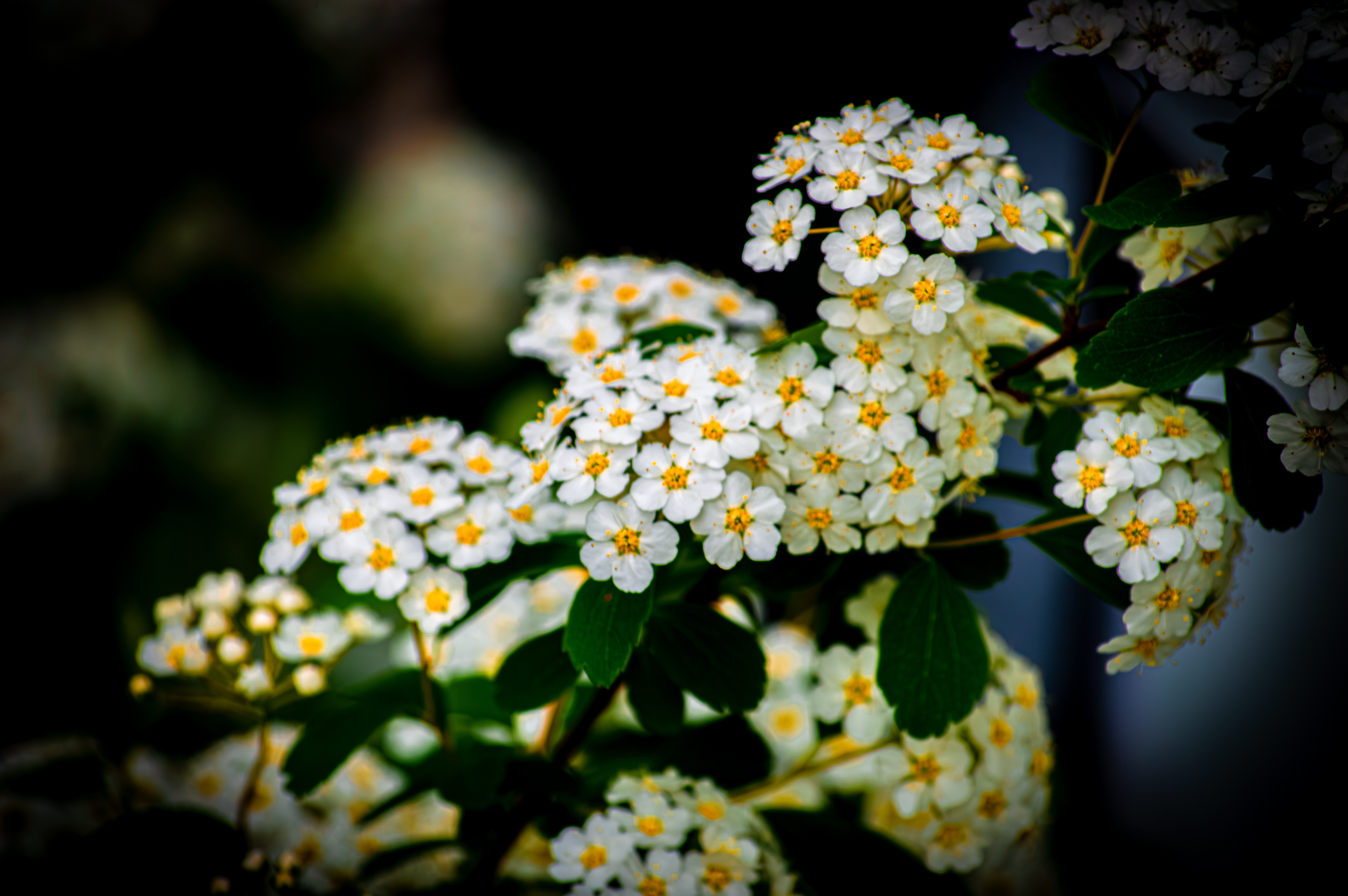
I’ve always enjoyed the little things most people walk past without giving them a second thought. A cluster of flowers. The way sunlight catches a leaf. The shadows that gather beneath something beautiful.
Sometimes, all it takes is slowing down long enough to notice.
Photography has taught me that beauty doesn’t always arrive dressed for the occasion. Sometimes it’s hiding in plain sight, waiting for somebody with a camera and a little curiosity.
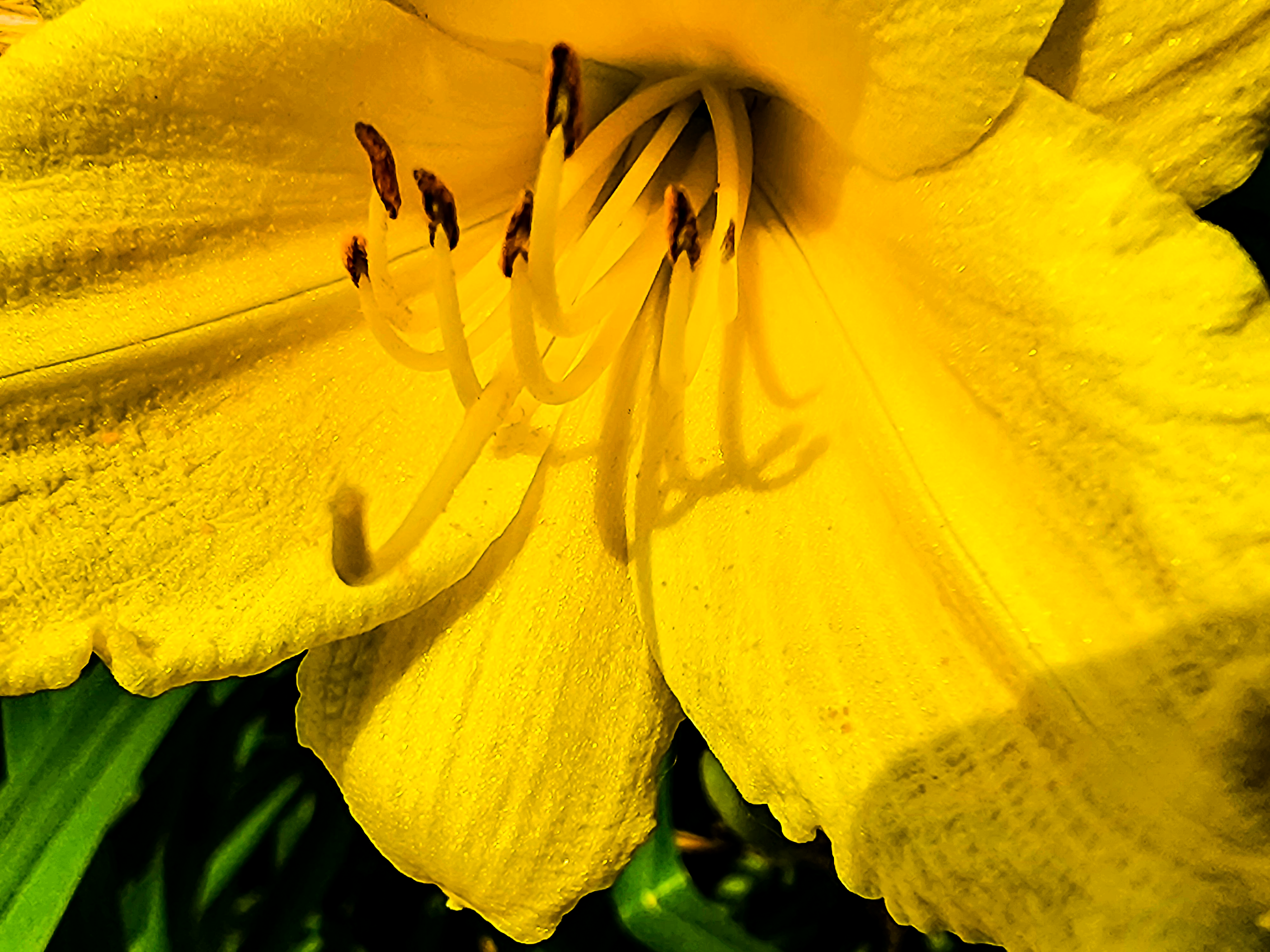
These tiny white blossoms caught my attention because of the way they stood against the darkness. Nothing particularly dramatic about them. Just a little white, a little yellow, and a whole lot of shadow.
But that’s the thing about photography. You’re not always looking for something extraordinary. Sometimes you’re discovering that the ordinary was extraordinary all along.
And perhaps that’s not such a bad way to look at life, either.
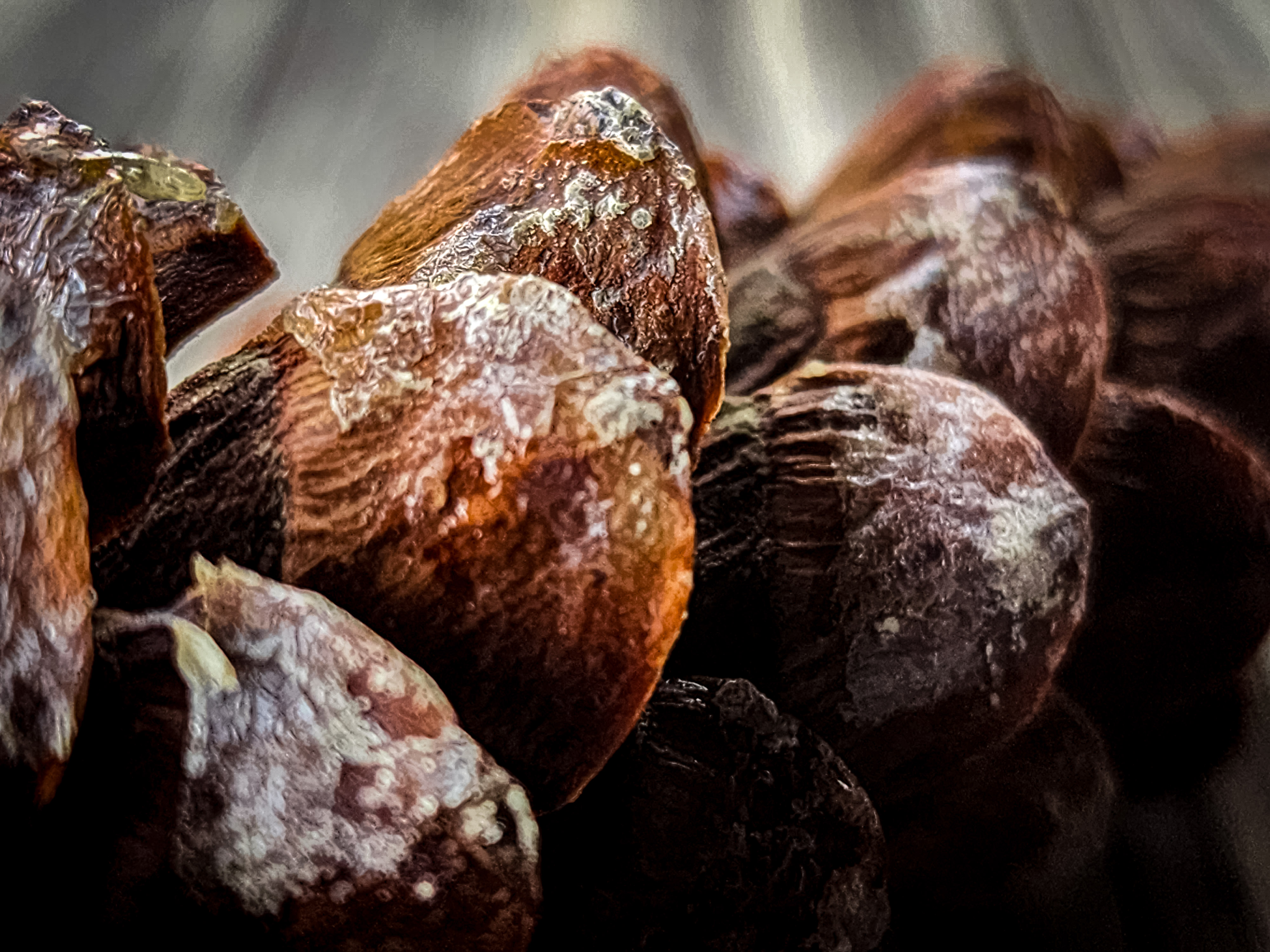
Macro Monday | October 26, 2026 There is an entire world hidden beneath the surface of things we barely notice. Sometimes, it takes a camera lens and a few moments of curiosity to remind us just how much we overlook. Take these little fellows, for example. A collection of nuts, huddled together as though they’re attending some clandestine meeting beneath the autumn sun. Nothing particularly remarkable about them at first glance. Brown, weathered, a little rough around the edges, and certainly not the sort of thing that would stop traffic. Yet, when I moved closer and began examining their surfaces through my camera, an entirely different landscape emerged. There were ridges, fractures, subtle variations in color, and intricate patterns that reminded me of weathered mountain ranges. Each carried its own imperfections, its own history, and something hidden beneath an exterior that offered very few clues about what might be waiting inside.
I suppose that’s the trouble with appearances. They tell us just enough to convince us we understand something, while withholding nearly everything that might prove us wrong.
We humans are particularly talented at making judgments based on appearances. Give us a few seconds with a stranger, and we’ll construct an entire biography without so much as exchanging a greeting. Clothing, posture, facial expressions, the vehicle someone drives, or even the neighborhood they happen to live in become evidence in a trial nobody knew was taking place. We examine the packaging, reach a conclusion, and congratulate ourselves on our remarkable powers of observation. Never mind that we might be spectacularly wrong. Apparently, confidence and accuracy are not required to occupy the same room.
I’ve encountered enough people throughout my life to understand that the most interesting things about someone are rarely visible when you first meet them. A quiet person might possess an extraordinary imagination. Someone who appears confident may be holding together a thousand private uncertainties. The fellow sitting alone at the end of the counter, drinking coffee and minding his own business, might have enough stories to fill a library. Or perhaps he’s simply waiting for his eggs. Both possibilities deserve consideration, although I suspect he’d prefer you leave him alone until breakfast arrives.
The point is that we seldom know what another person carries.
Some carry ambitions they’ve never spoken aloud. Others carry regrets, unfinished conversations, memories of people who no longer occupy a place at their dinner table, and dreams that have survived long after circumstances suggested they should have been abandoned. There are people walking among us who have endured things we cannot imagine, yet they continue showing up for work, buying groceries, laughing at ridiculous jokes, and participating in the ordinary business of living. Their burdens don’t announce themselves. Neither do their strengths. Both remain tucked away beneath the surface, waiting for circumstances that may or may not reveal them.
And that brings me back to these humble little nuts.
Depending on the species, a seed can contain the beginnings of something far larger than itself. Beneath that unassuming exterior lies a remarkably complicated arrangement of stored energy, biological instructions, and the machinery necessary to begin another stage of life. Under suitable conditions, what appears to be a dormant object can become a living plant. Given enough time, favorable circumstances, and a fair amount of luck, something small enough to fit between two fingers might eventually become something that casts a shadow across the ground.
Of course, that’s the romantic version.
Nature, as it turns out, is considerably less sentimental about potential than we are. Not every seed germinates. Some are eaten, some decay, and others find themselves deposited somewhere so inhospitable that even a determined weed would consider relocating. Potential is not a promise. It is a possibility, and possibilities require more than simply existing.
I think we sometimes forget that when talking about people.
We’re fond of telling one another that we can become anything we want if we work hard enough, believe strongly enough, and refuse to surrender. It’s an appealing sentiment, particularly when printed across a photograph of a mountain at sunrise. Unfortunately, mountains have never been especially forthcoming about the realities of rent, medical bills, family obligations, or the countless circumstances that influence what a person can accomplish.
Determination matters. So does opportunity. So does timing. And occasionally, so does having someone willing to open a door that has remained stubbornly closed.
I’ve known people with extraordinary talents who never received the opportunity to develop them. I’ve also known individuals who were handed every conceivable advantage and somehow managed to accomplish remarkably little beyond making everyone else’s life more complicated. Life has never been particularly interested in distributing its resources according to merit. If it were, we’d probably have considerably fewer incompetent people occupying positions of authority.
But I digress.
What fascinates me about these small, weathered objects is how little their surfaces reveal about what they contain. Their rough exteriors suggest age and exposure, but they tell us almost nothing about what remains viable inside. One might hold the beginning of new growth. Another might be empty, damaged, or long past its opportunity. Looking at them from the outside, we cannot always distinguish between the two.
And perhaps that is where the photograph begins to say something about us.
We are not seeds, of course. Human lives are infinitely more complicated than the biological instructions tucked inside a protective shell. Our possibilities are shaped by experience, relationships, choices, circumstances, and the occasional catastrophic lapse in judgment. We grow in unexpected directions. Sometimes, we discover abilities late in life that would have surprised our younger selves. Other times, we spend years pursuing something only to realize that what we wanted at twenty bears little resemblance to what matters at fifty.
I can certainly attest to that last part.
The younger version of me had some rather interesting ideas about how life was supposed to unfold. He was confident, occasionally reckless, and possessed the remarkable ability to make decisions without consulting anyone who might have known better. I suspect that if we met today, we’d have a lengthy discussion about priorities, patience, and the wisdom of occasionally keeping one’s mouth shut. He would probably ignore most of my advice, which would explain a great deal about how I arrived here in the first place.
Still, I wouldn’t dismiss him.
That younger fellow carried possibilities I hadn’t yet discovered. Some developed into things I value deeply. Others disappeared along the way, either through circumstance or choices that seemed perfectly reasonable at the time. A few remain tucked away somewhere, waiting for me to stop making excuses and give them another look.
Perhaps that’s another misconception we carry about potential. We imagine it belongs primarily to the young, as though possibilities come with an expiration date printed somewhere beneath the packaging. Childhood is filled with questions about what we want to become, while adulthood gradually replaces those questions with inquiries about what we’ve accomplished. Eventually, if we live long enough, people begin asking what we used to do.
Used to.
Two small words capable of making an entire lifetime sound like a completed transaction.
I have never particularly cared for that arrangement. There is something fundamentally absurd about suggesting that curiosity, creativity, or the desire to discover something new should diminish simply because we’ve accumulated a few decades of experience. If anything, those experiences ought to give us more material to work with. We may not possess the same energy we had at twenty, and certain parts of the body have developed an unfortunate habit of filing complaints without consulting management, but that doesn’t mean the mind has surrendered its capacity for discovery.
Sometimes, the things we carry inside ourselves are not waiting to become something entirely new. They’re waiting to be recognized for what they have already become.
That distinction matters.
We live in a culture fascinated by transformation. Reinvent yourself. Become a better version. Unlock your potential. Apparently, being a reasonably decent human being who is still figuring things out isn’t sufficiently marketable. There must always be another level, another achievement, another mountain waiting to be conquered. Somewhere along the way, we began treating existence as though it were a never-ending performance evaluation.
And heaven forbid we simply enjoy an afternoon without accomplishing something that can be entered into a spreadsheet.
Yet, the more I examine the world through my camera, the less convinced I become that everything needs to justify its existence through accomplishment. These nuts don’t have to become towering trees to deserve a moment of attention. Their textures are interesting now. Their shapes and imperfections have value within the photograph regardless of what might eventually emerge from them. Whatever possibilities they contain do not erase the significance of what they already are.
The same consideration ought to extend to people.
A person’s worth should not depend entirely upon what they might accomplish tomorrow, any more than it should be reduced to what they accomplished yesterday. There is dignity in simply being, in surviving difficult seasons, in maintaining kindness when circumstances have provided every excuse to abandon it. There is value in the quiet work of raising a family, caring for someone who cannot care for themselves, listening when another person needs to be heard, or finding the courage to begin again after life has thoroughly rearranged the furniture.
Not everything meaningful announces itself with applause.
Some of the most important things we carry remain invisible to everyone except those who have taken the time to know us. Compassion developed through suffering. Patience learned through disappointment. Wisdom acquired by making mistakes we’d rather not discuss in polite company. A sense of humor that somehow survived experiences that weren’t particularly funny at the time.
And yes, occasionally, a stubborn streak that refuses to acknowledge when the universe has made a perfectly reasonable argument against our plans.
I may know a little something about that.
When I look at this photograph, I see more than a collection of weathered surfaces. I see layers, contradictions, and possibilities that cannot be determined by appearance alone. The light reveals the smallest fractures and ridges, but it cannot penetrate the shells to tell me everything they contain. There are limits to what even the finest lens can reveal.
Photography teaches us to look more carefully, but it should also remind us that seeing something clearly is not the same as understanding it completely.
That’s a lesson worth carrying beyond the viewfinder.
We can examine the world in extraordinary detail and still misunderstand what we’re looking at. We can know someone’s history without knowing their heart. We can recognize their accomplishments without appreciating their sacrifices. We can witness their struggles without understanding the strength required to endure them. And we can spend years believing we understand ourselves, only to discover another possibility waiting beneath a layer we hadn’t thought to examine.
Perhaps that is why I continue reaching for my camera.
Not because I expect every photograph to reveal some profound universal truth. Sometimes, I’m simply fascinated by the way sunlight catches an interesting surface. Sometimes, the subject is there, the camera is handy, and curiosity gets the better of me. There doesn’t always have to be a philosophical explanation for taking a picture.
Although, considering how often I manage to turn an innocent photograph into several pages of reflection, I suspect my camera might disagree.
Nevertheless, I’m grateful for these little interruptions. They remind me that the world contains more than what we notice during our hurried passage through it. Every ordinary object has details we haven’t examined. Every person has experiences we haven’t heard. And somewhere beneath the familiar surfaces of our own lives, there may still be possibilities we haven’t considered.
Not all of them will develop into something extraordinary. Some may never amount to anything beyond a passing thought or an unfinished experiment.
That’s all right.
Possibility doesn’t need to become greatness to have meaning. Sometimes, its greatest gift is reminding us that the story isn’t necessarily finished.
I don’t know what these little nuts contain, or what circumstances brought them together. I only know that their weathered surfaces caught my attention long enough for me to stop, look closer, and appreciate something I might otherwise have ignored.
And perhaps that’s enough for one Monday morning.
After all, there’s no telling what we might discover if we stop judging everything by its packaging and take a little time to consider what lies beneath.
Including ourselves.
Because the things we carry inside are not always burdens, regrets, or memories of what has been lost.
Sometimes, they’re the beginnings of something we haven’t yet imagined.
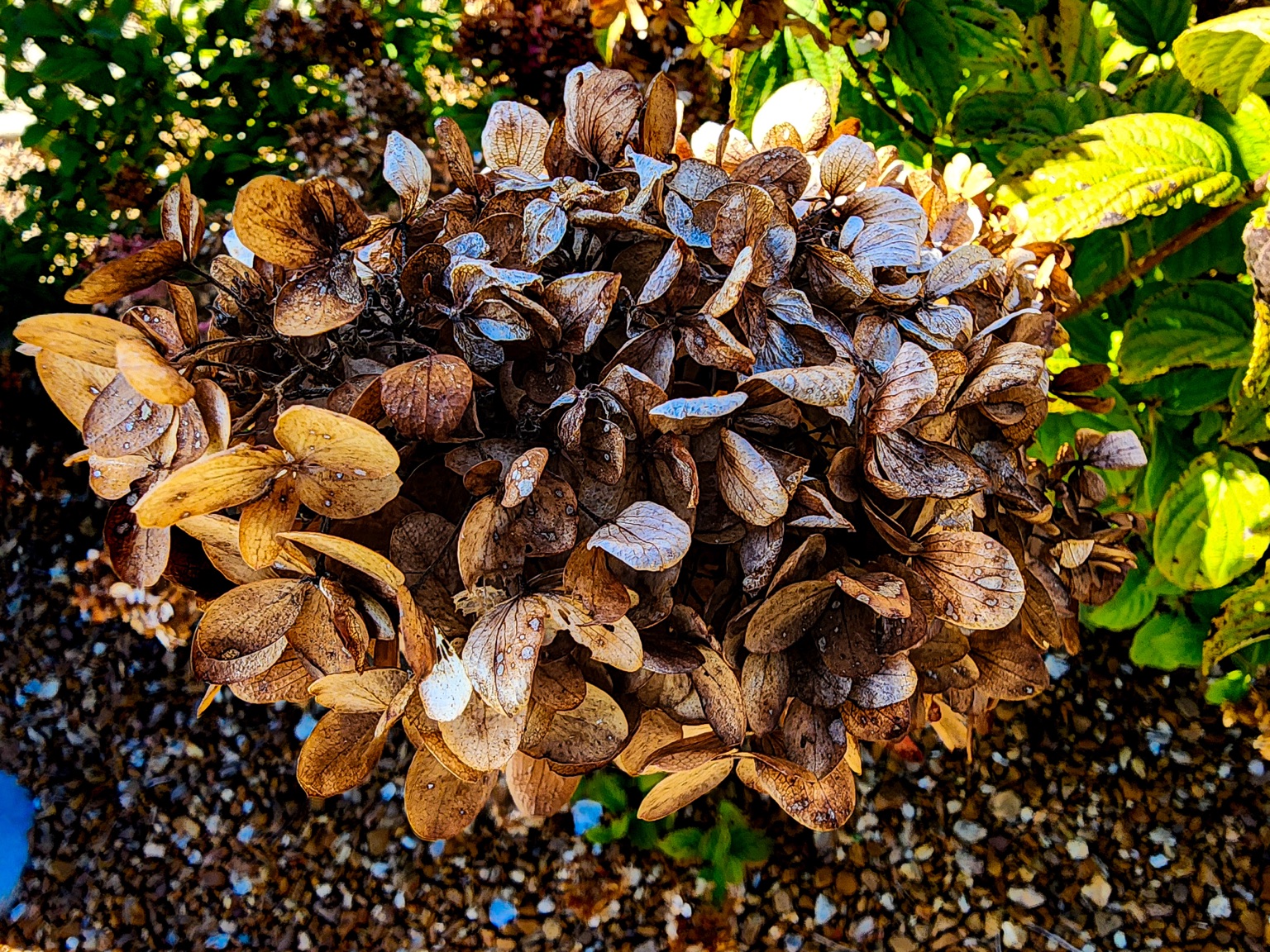
There is something rather stubborn about a flower that refuses to disappear simply because its season has ended. Long after the vibrant colors have surrendered to the changing weather, after the bees have moved on to more promising neighborhoods and the butterflies have abandoned their summer romances, these hydrangeas remain. Their petals have curled, their colors have faded into shades of bronze and weathered parchment, and the soft elegance that once defined them has given way to something considerably more rugged. Yet, standing there beneath the autumn sunlight, they possess a character that their younger selves could never have imagined.
I have always found it interesting how quickly we dismiss something once it no longer resembles what we believe it should be. A flower is supposed to bloom, a tree is supposed to provide shade, and people, apparently, are supposed to spend their entire lives pretending they haven’t aged a day beyond thirty-five. We have developed an extraordinary talent for celebrating beginnings while treating everything that follows as a slow march toward irrelevance. There are entire industries dedicated to convincing us that growing older is some sort of personal failure. Wrinkles must be erased, gray hair concealed, and every visible indication of a life actually lived treated as an unfortunate manufacturing defect.
Meanwhile, nature appears entirely unconcerned with our ridiculous expectations.
These hydrangeas have no intention of apologizing for their appearance. Their petals bear the marks of sunlight, wind, and changing temperatures. Some have folded inward, others have developed tiny imperfections, and a few appear to be hanging on through sheer determination. The delicate veins running through their papery surfaces have become more pronounced, revealing details that were less noticeable when the blossoms were younger and their colors more vibrant. What was once soft has become textured. What was once delicate has developed a certain rough dignity.
And I find that rather beautiful.
Perhaps it has something to do with getting older myself. There comes a point in life when you begin to appreciate things differently. The shine of something new becomes less impressive than the character of something that has endured. You begin to understand that perfection is often a temporary condition, assuming it ever existed in the first place. A weathered wooden bench, an old leather jacket, the creases surrounding someone’s eyes when they laugh—these things carry stories. They have been somewhere, survived something, and returned with evidence of the journey.
Of course, I wouldn’t mind if my knees would occasionally stop reminding me of every questionable decision I’ve made since the age of twelve. Apparently, the human body maintains a remarkably detailed accounting system, and the collection department has no interest in negotiating.
But I digress.
Looking closely at these dried blossoms, I was struck by how much detail remained after their most celebrated qualities had disappeared. The colors may have changed, but the intricate structure of each petal was still there. The overlapping layers created pockets of shadow, while the sunlight caught the curled edges and illuminated their delicate veins. Against the surrounding green leaves, the faded blossoms seemed almost defiant, as though they were making one final argument against the notion that beauty belongs exclusively to spring and summer.
Photography has a way of revealing these quiet contradictions. Through the lens, things we might ordinarily dismiss become worthy of examination. The cracked surface of an old wall, the weathered hands of someone who has worked for decades, or a cluster of blossoms that most gardeners would have removed weeks ago. Each contains a kind of honesty that polished perfection often lacks. There is no pretense in the texture of something that has endured the elements. It simply exists as it has become.
I suppose that is what makes autumn such an interesting season. Spring arrives with promises, summer spends them extravagantly, and autumn comes along to examine what remains. It is a season of reckoning, but not necessarily one of sorrow. There is generosity in its fading light, richness in its subdued colors, and a peculiar sort of freedom in the realization that not everything must remain as it once was.
We sometimes confuse change with loss because we are so attached to familiar appearances. We remember the blossom at its brightest and assume everything afterward must be a lesser version of the same thing. Yet these flowers are not attempting to recreate their summer glory. They have entered another stage of their existence, one with its own textures, colors, and quiet significance.
There is a lesson somewhere in that, although I hesitate to suggest that every flower, fallen leaf, and crooked branch is secretly waiting to deliver a philosophical lecture. Sometimes a dried flower is simply a dried flower, and the universe has no obligation to provide commentary.
Still, I cannot help wondering how much of life we overlook because we have already decided its finest moments are behind it.
We do this with places, with possessions, and sometimes, rather cruelly, with people. We assign value according to usefulness, appearance, or the promise of what something might become. Once those expectations are no longer met, our attention wanders elsewhere. We forget that usefulness is not the same as worth, that beauty can exist without an audience, and that a thing does not become meaningless simply because its purpose has changed.
These hydrangeas will eventually crumble. The wind will carry away their fragile petals, the stems will weaken, and winter will finish what autumn has begun. There is no avoiding that conclusion, nor would I particularly want to. Nature does not preserve everything indefinitely, and perhaps that is part of what makes these moments worth noticing. Their impermanence gives them a certain urgency. We have this morning, this patch of sunlight, these weathered petals, and the opportunity to look before the scene changes again.
I raised my camera because something about those faded blossoms caught my attention. Not because they were perfect, not because they were particularly colorful, and certainly not because they were trying to impress anyone. They had simply remained long enough for me to notice what time had written upon them.
And perhaps that is enough.
Autumn does not keep the brilliance of summer, nor does it promise to restore what has already passed. What it keeps is the evidence—the textures, the scars, the quiet dignity of things that have lived through their season and become something different.
There is beauty in that transformation, even when we are reluctant to recognize it.
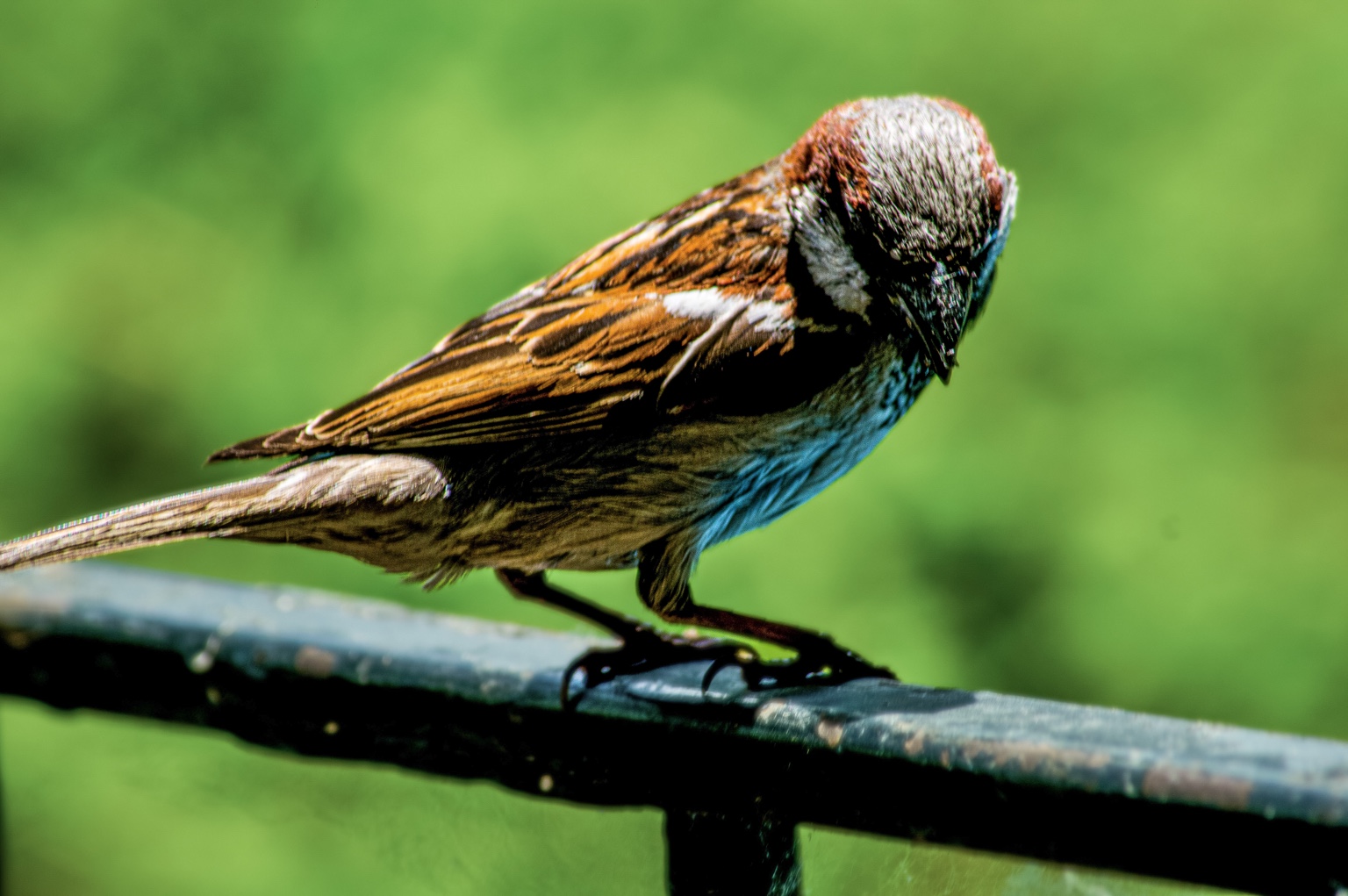
Sometimes, the smallest creatures seem to carry the greatest mysteries. A sparrow pauses upon an old iron railing, its head bowed beneath the morning sun, seemingly oblivious to the world unfolding around it. There is no grand spectacle, no dramatic display of nature’s magnificence, only a handful of feathers, a fragile heartbeat, and a moment of stillness in a world that rarely bothers to stand still.
I watched this little fellow for a moment, wondering what had captured his attention. Perhaps he had spotted something beneath his feet, or maybe he was simply enjoying a brief respite from the endless business of being a sparrow. After all, life cannot be particularly easy when you spend your days dodging predators, searching for your next meal, and arguing with every other bird in the neighborhood over who owns a particular patch of dirt. Come to think of it, that doesn’t sound terribly different from being human.
There is something remarkable about the details we overlook. The intricate arrangement of his feathers, each one overlapping another with a precision no human hand could easily duplicate. The delicate claws wrapped around weathered iron, holding a creature that weighs next to nothing against a world considerably larger than itself. Even the subtle variations of brown, charcoal, and cream tell a story written by nature long before we invented words to describe its beauty.
Perhaps that is what draws me to photography. Not merely the opportunity to capture something beautiful, but the chance to interrupt my own hurried existence long enough to notice what has been there all along. We spend so much of our lives searching for extraordinary things that we sometimes forget how much wonder exists in the ordinary. A bird on a railing. A shaft of sunlight. A quiet morning when nothing particularly important seems to be happening.
And yet, something important is happening. Life is continuing, quietly and without ceremony, whether we acknowledge it or not.
I cannot tell you what this sparrow was thinking, or whether birds contemplate anything beyond their next meal and the occasional disagreement with a neighbor. Perhaps I am guilty of assigning human emotions to a creature that would undoubtedly prefer I mind my own business. Fair enough. I suspect he would have a few choice words about the fellow standing nearby with a camera, too.
Still, I like to imagine that, for one fleeting moment, we were both doing the same thing.
Taking stock of the world.
And finding a little peace in the weight of small things.
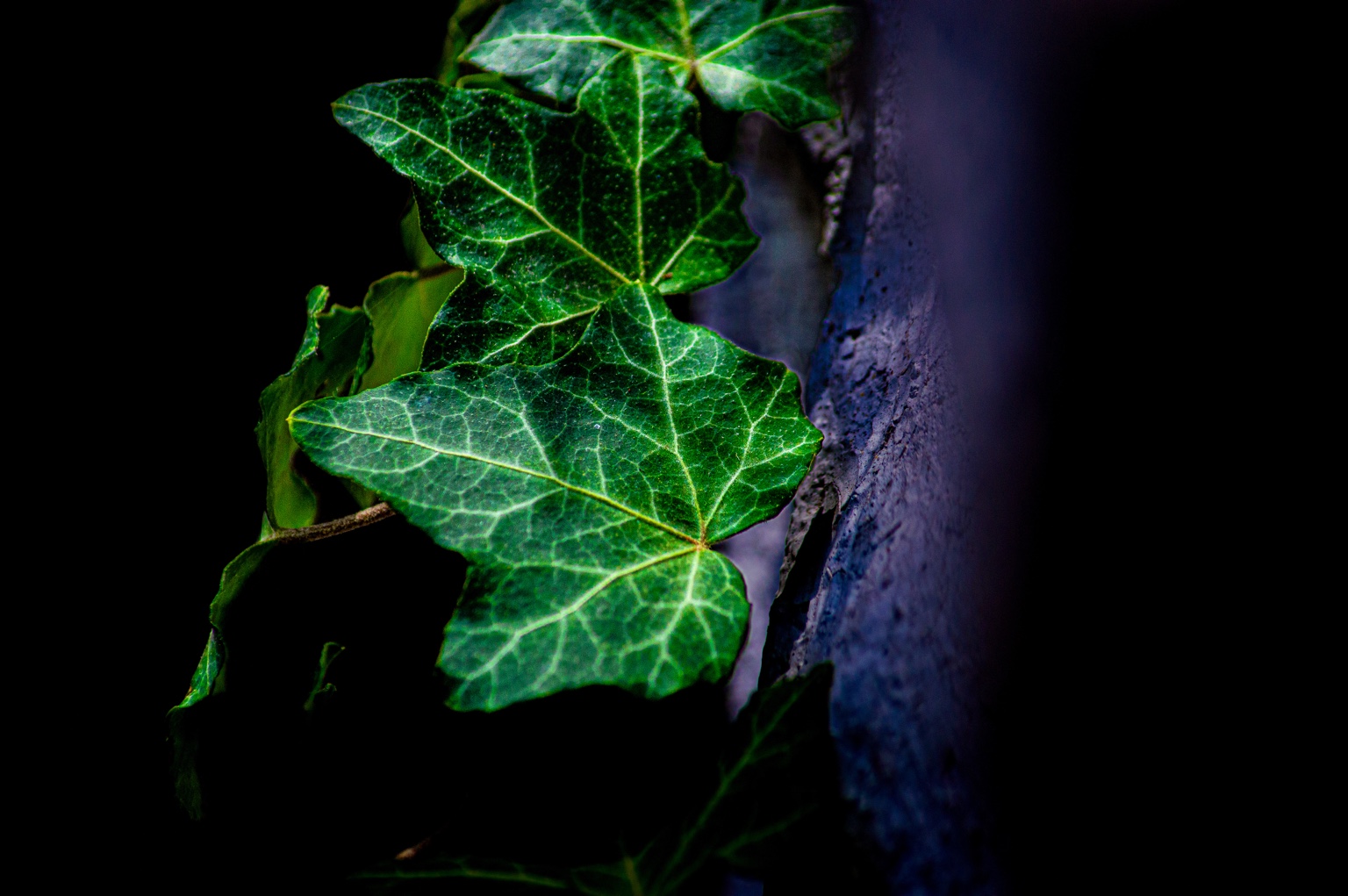
Corners where stone stays cold, where rain lingers in the cracks, and the world seems to have decided nothing beautiful belongs there. Yet something always reaches through.
A root finds purchase. A vine catches hold. A leaf unfolds where no one thought to look.
Growth has never required permission.
It does not wait for better weather, softer ground, or someone to declare the conditions favorable. It simply works with what remains—an inch of soil, a scar in the concrete, a sliver of light slipping beneath the door.
Perhaps we have misunderstood darkness.
We treat it as an ending when sometimes it is merely the place where our eyes have not adjusted yet. Beneath it, things are still moving. Still becoming. Still pushing themselves toward whatever warmth they can find.
The darkness may slow the growing.
It may twist the branches and leave scars along the way.
But it does not get the final word.
The dark does not stop the growing.
Sometimes, it teaches us how badly we want the light.
Marlow started staring at the corner three nights after we buried my mother.
Not the window. Not the door. The corner.
There was nothing there except two walls meeting behind an old floor lamp I had inherited from her because apparently grief came with furniture. The lamp hadn’t worked in years, but I kept forgetting to throw it away, which was how most of my mother’s things had survived her.
The first night, I didn’t think anything of it.
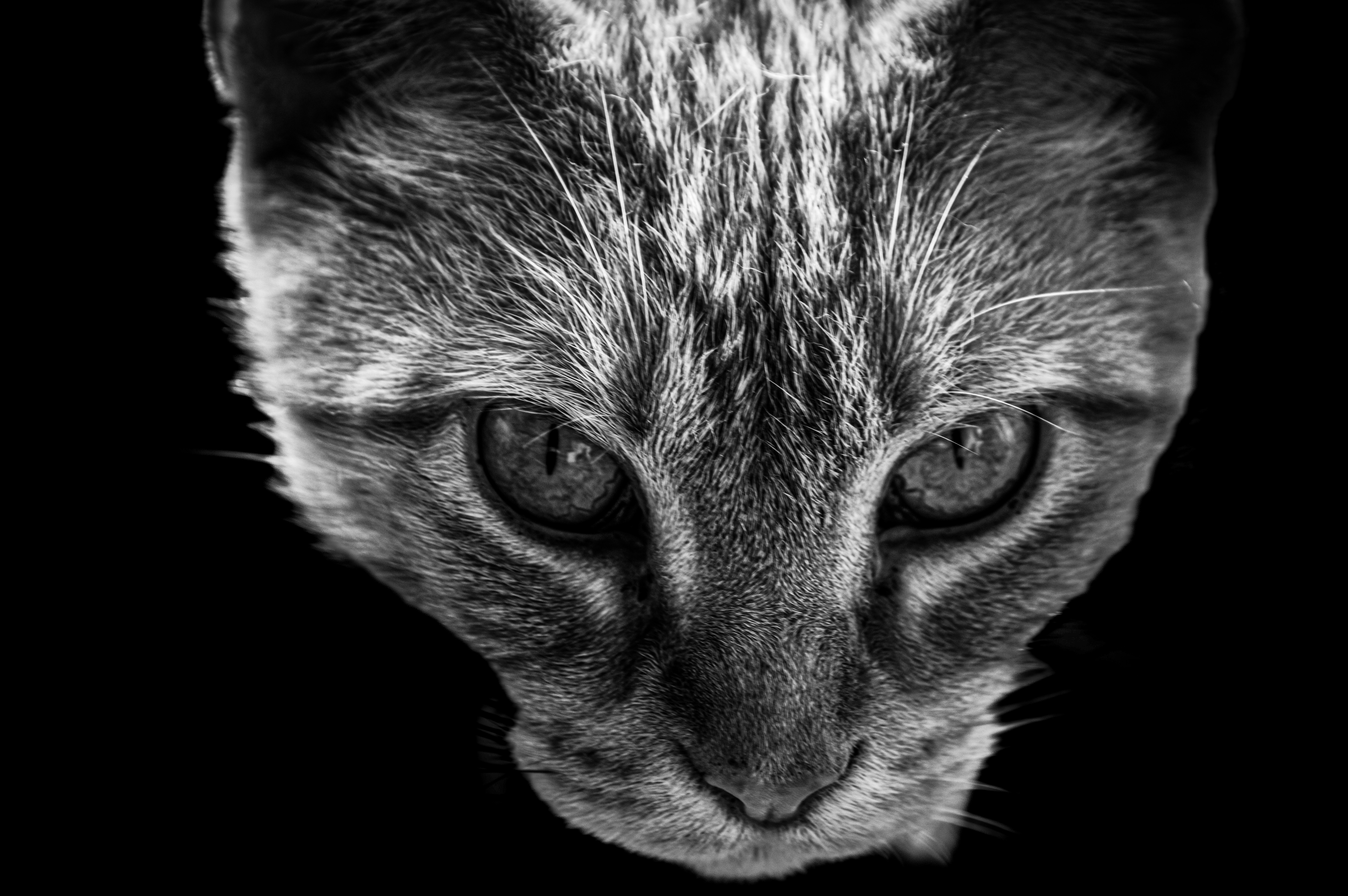
Cats stare at things.
They stare at dust. They stare at insects. They stare at walls with the solemn concentration of priests deciphering scripture. Once, I watched Marlow spend forty minutes studying a grocery bag before climbing inside and falling asleep. I wasn’t about to assign cosmic significance to the habits of an animal who occasionally became frightened by his own tail.
But the second night he was there again.
Same place.
Same position.
Front paws together. Body perfectly still. Eyes fixed on the corner.
“Marlow.”
His ears moved toward me.
His eyes didn’t.
I followed his gaze.
Nothing.
“Good talk.”
I went to bed.
The third night I woke at 3:17 because something had knocked over a glass in the kitchen.
At least, that’s what I told myself.
I lay there listening to the house settle around me. Pipes contracting. Refrigerator humming. Wind worrying something loose along the gutter. The collection of ordinary noises every old house makes when it wants to remind you that silence doesn’t actually exist.
Then I heard Marlow growl.
I’d owned him eleven years.
I had never heard him growl.
I found him in the living room.
He wasn’t sitting anymore.
His belly was pressed against the floor. His shoulders were raised. Every strand of fur along his spine stood rigid.
He was staring at the corner.
I turned on the light.
Nothing.
I walked over and put my hand against the wall.
Cold.
Not cool.
Cold.
The kind of cold that hurts your teeth.
Marlow hissed.
I jerked my hand away.
“Okay.”
He looked at me then.
Just for a second.
There was something in his expression I didn’t like. Something beyond fear. I know people say we project human emotions onto animals, and they’re probably right, but I knew that cat.
Marlow wasn’t afraid.
He was warning me.
I unplugged the lamp.
I don’t know why.
It hadn’t worked since 2019.
The bulb flashed.
Once.
Marlow screamed.
I stumbled backward hard enough to knock a photograph from the wall. The frame struck the hardwood and broke. By the time I looked toward the corner again, Marlow was gone.
The lamp was dark.
I found him beneath my bed twenty minutes later.
He wouldn’t come out.
The photograph on the floor was of my mother.
Of course it was.
I left it there until morning.
For the next four nights, Marlow refused to enter the living room.
On the fifth, he returned to his spot.
Sat down.
Watched the corner.
Whatever had frightened him apparently wasn’t frightening anymore.
That should have made me feel better.
It didn’t.
Because now, every night at exactly 3:17, Marlow walks into the living room and sits facing that dead lamp.
Sometimes his tail moves.
Sometimes his ears twitch.
Once, I swear he purred.
Last night, I sat beside him.
We stayed there together for almost an hour.
Nothing happened.
Eventually I felt ridiculous and stood to leave.
That’s when Marlow looked up at me.
Then back toward the corner.
And from somewhere behind the dead lamp, my mother whispered,
“He can see me.”
Marlow blinked.
Slowly.
Then he looked at me again.
And for the first time since this started, I understood.
He hadn’t been watching the corner.
He’d been watching her.
And judging by the way his eyes moved toward the empty chair beside me—
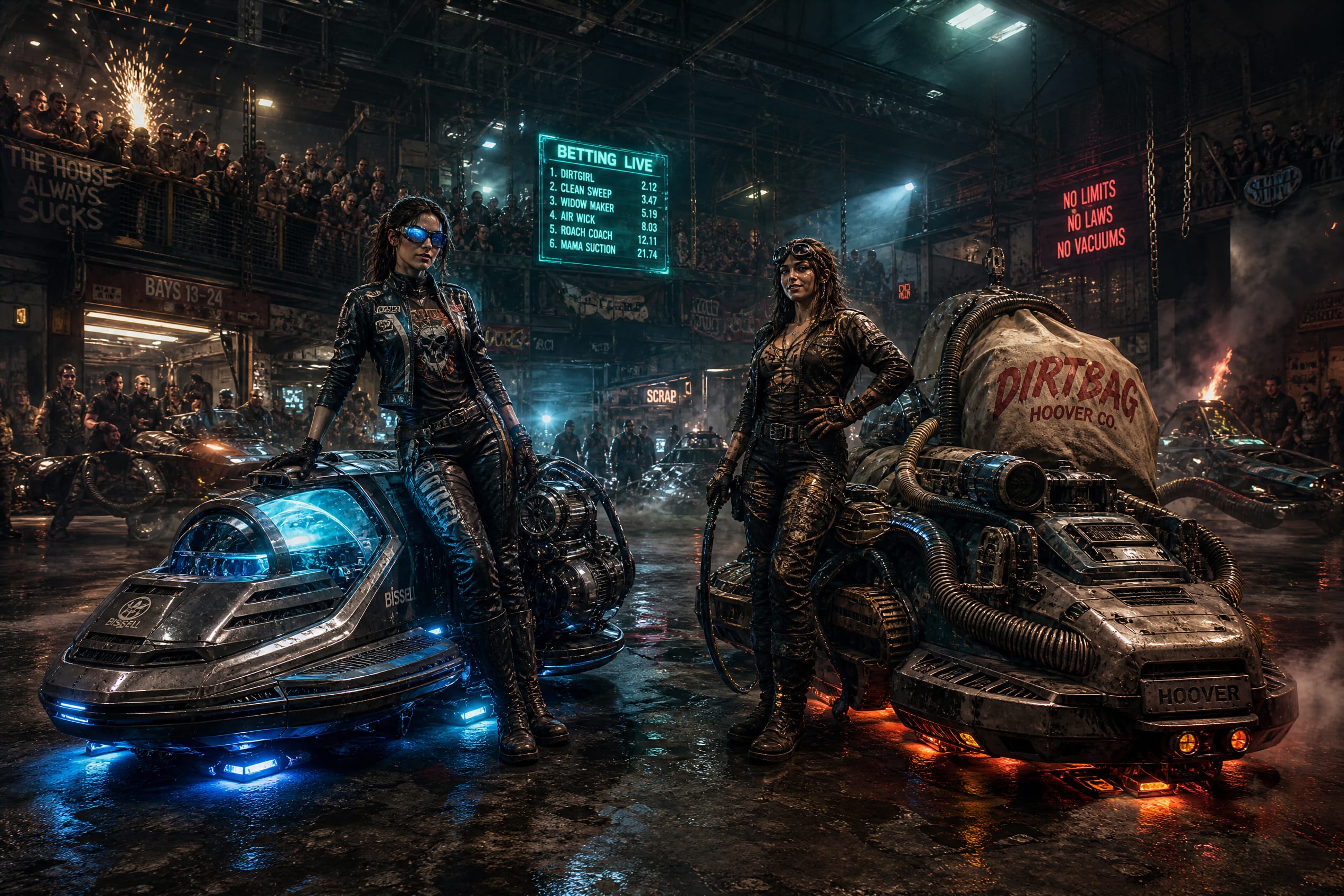
Everyone thinks underground vacuum racing is about speed.
Those people have never smelled a burned-out motor at two hundred miles an hour while someone’s modified Hoover explodes into a confetti storm of HEPA filters and bad decisions.
Maxy says that’s when the sport gets interesting.
Joan says that’s when the insurance paperwork starts.
Neither of them is wrong.
The first rule of the Underground Vacuum Racing League is simple.
Never ask where the machines came from.
The second rule is even simpler.
Never laugh at another racer’s vacuum until you’ve beaten it.
Maxy leaned against The Bissell Banshee, her midnight-blue hover vacuum humming with enough illegal upgrades to make an engineer cry. The transparent dust chamber glowed electric blue, mostly because she’d replaced the dirt sensor with a plasma reactor she’d “found” behind an abandoned appliance repair shop.
“Found” was one of Maxy’s favorite words.
Joan rested a boot against her pride and joy—a hulking Hoover nicknamed The Dirtbag. It looked less like a household appliance and more like a small tank that had swallowed an entire hardware store. Hoses snaked across its armored shell like mechanical pythons, and the oversized collection bag proudly displayed DIRTBAG HOOVER CO.
“It ain’t pretty,” Joan often said.
“It ain’t supposed to be.”
The crowd roared from rusted catwalks suspended above the track. Sparks rained from broken welders. Neon betting boards flashed impossible odds.
1. Dirtgirl 2. Clean Sweep 3. Widow Maker
Maxy sighed.
“They still have me listed as Dirtgirl.”
Joan grinned.
“Considering you once vacuumed a man’s eyebrows off, I think it’s earned.”
“That happened one time.”
“Twice.”
“The second guy leaned too close.”
Their rivalry had started five years earlier over the last industrial shop vacuum at a flea market.
Neither woman had backed down.
The argument escalated.
Somebody suggested a race.
Nobody remembered who.
Now they owned a garage together.
Life was strange like that.
The announcer’s voice boomed through rusty speakers.
“Ladies and gentlemen, tonight’s feature race!”
The crowd erupted.
“The Widow Maker versus…”
A dramatic pause.
“…THE DIRTBAG!”
Joan rolled her eyes.
“They never let me race anybody normal.”
Maxy patted the Hoover affectionately.
“That’s because normal people value self-preservation.”
The starting lights blinked.
Red.
Red.
Red.
Green.
Both machines launched forward with the unmistakable scream of overworked electric motors being pushed far beyond what any respectable manufacturer had intended.
Dust exploded behind them.
Loose bolts flew.
Someone’s toupee vanished into Joan’s intake hose.
She’d return it later.
Probably.
Halfway through the course, Maxy’s dashboard lit up.
WARNING: UNKNOWN OBJECT DETECTED.
She frowned.
“What now?”
Joan’s voice crackled over the radio.
“Don’t inhale it!”
“What is it?”
“I don’t know!”
The mysterious object bounced across the track.
Every racer swerved.
The audience held its breath.
The object rolled to a stop beneath a spotlight.
It was…
…a single LEGO brick.
Every veteran racer gasped.
“Dear Lord,” whispered Joan.
“The most dangerous obstacle known to humanity,” Maxy replied.
Neither woman dared drive over it.
There were limits.
Joan sacrificed the race.
She fired her emergency debris hose.
With a thunderous WHOOMP, the LEGO brick disappeared into The Dirtbag’s collection bag.
The audience exploded into applause.
One spectator actually wiped away a tear.
Heroes weren’t born.
Sometimes they simply had more suction.
Joan crossed the finish line second.
Maxy finished third after stopping to make sure Joan still had all her tires.
The prize money barely covered replacement filters.
As usual.
Back in their garage, they split a pizza while cleaning enough dirt from the vacuums to start a respectable compost pile.
Maxy raised her soda.
“Same time next Friday?”
Joan clinked her bottle against it.
“Absolutely.”
“What if we actually win one?”
Joan looked thoughtfully at The Dirtbag, then at The Bissell Banshee.
“Maxy…”
“Yeah?”
“I think we’re having way too much fun to become champions.”
Maxy smiled.
That was the thing about underground vacuum racing.
Nobody got rich.
Nobody got famous.
But if you found someone willing to spend a Friday night risking life and dignity on a heavily modified household appliance…
…you hung onto them tighter than a shop vac clinging to a bowling ball.
Because friends like that didn’t come along every day.
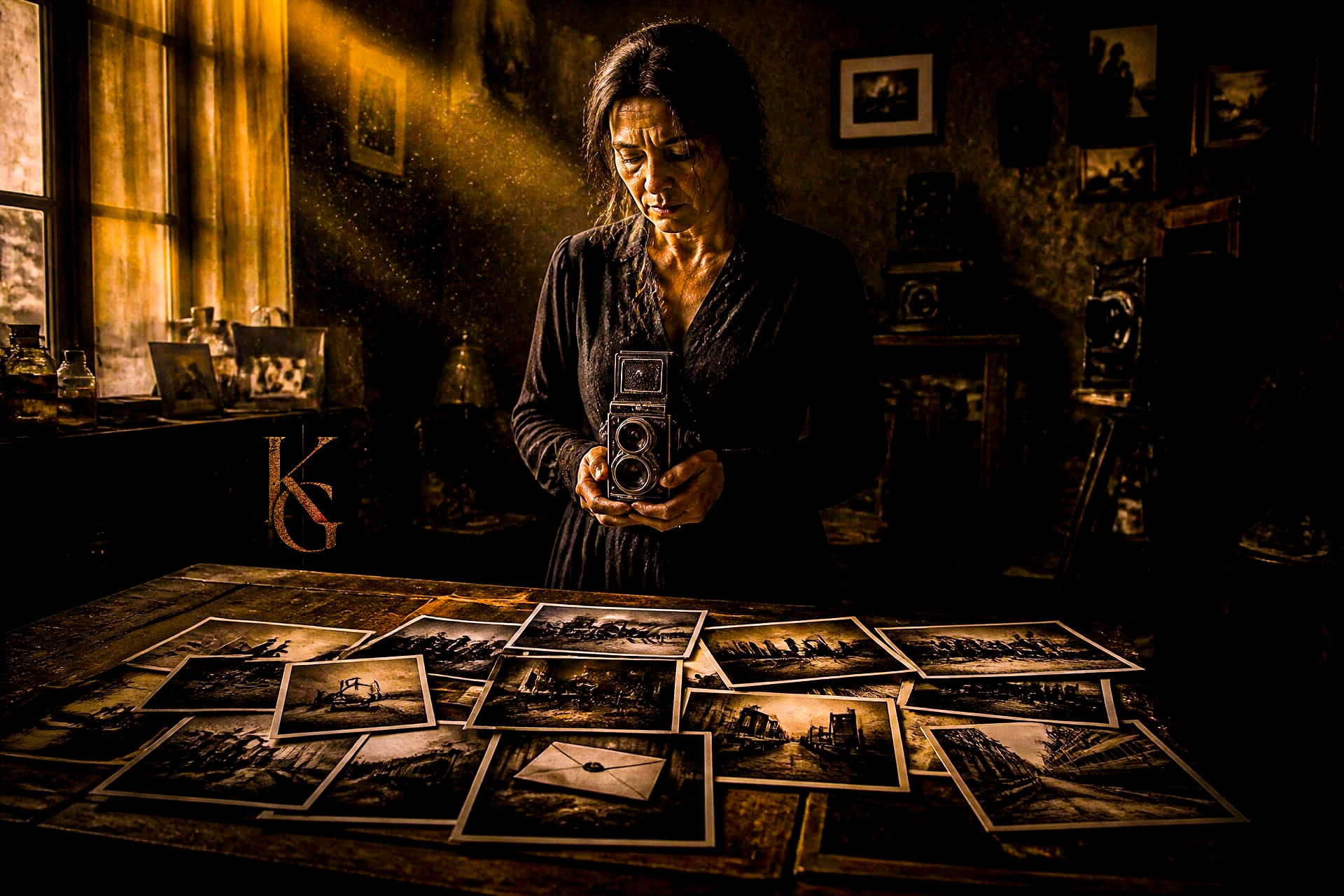
Martha had spent most of her life believing photographs existed to preserve memories, although age had slowly taught her that memories rarely stayed preserved for long. They softened around the edges, shed inconvenient details, exaggerated others, and eventually became stories we told ourselves rather than faithful records of what had happened. Yet photographs seemed different. They offered proof. They captured a fraction of a second and held it still while everything else continued moving forward. For decades she had trusted them more than she trusted herself. Family albums lined her bookshelves. Framed portraits occupied every hallway in her home. Boxes of old snapshots sat in closets and drawers, each one a small attempt to rescue something from the relentless current of time. That belief survived weddings, funerals, birthdays, and countless ordinary afternoons until the day she inherited her grandfather’s camera, an object so unremarkable at first glance that she nearly left it buried among the rest of his belongings.
The camera sat in her hands now, heavier than its size suggested, its cracked leather carrying the scent of dust, old wood, and the faint chemical traces of a darkroom long abandoned. Sunlight poured through the tall studio windows in pale golden shafts, illuminating countless dust motes that drifted lazily through the air like fragments of forgotten years. The room itself felt untouched by time, preserved in much the same way photographs attempted to preserve moments. Shelves sagged beneath the weight of albums and negatives. Wooden drawers housed decades of undeveloped film. The wallpaper had faded into muted shades of brown and amber, and the floorboards creaked softly beneath her feet whenever she shifted her weight. Everything in the room seemed to exist in a state of quiet suspension, as though her grandfather had merely stepped out for a moment and might return at any time to continue his work.
Spread across the table before her lay dozens of photographs, and despite examining them repeatedly over the past week, they continued to unsettle her in ways she struggled to articulate. The images possessed the strange familiarity of dreams, recognizable and alien at the same time. None of them contained faces. They should have. Martha knew people had stood before the lens. She remembered taking some of the photographs herself. Yet wherever a face should have appeared, there was something else entirely. A weathered envelope rested unopened beneath the glow of a lamp. A child’s bicycle lay abandoned in a field overtaken by summer weeds. An empty chair sat beside a hospital bed washed in pale morning light. A wedding ring rested alone on a rain-streaked windowsill while storm clouds gathered beyond the glass. Individually, each image appeared mundane. Together, they carried an emotional weight that seemed almost physical, pressing against her chest each time she looked at them.
The longer she studied the photographs, the more she understood that they were not capturing people at all. They were capturing absences. They recorded the shape left behind when something important failed to happen. They documented conversations abandoned midway through a sentence, opportunities dismissed out of fear, forgiveness withheld until it was no longer possible to offer. Looking at the photographs felt disturbingly intimate, as though she had been invited into the private chambers people rarely visited themselves. Most regrets did not announce their arrival dramatically. They settled quietly into a person’s life and remained there, becoming part of the furniture of the soul. Years passed. Careers were built. Families were raised. Entire lives unfolded around them. Yet beneath everything, the regret remained, patient and persistent, waiting for a sleepless night or an unexpected memory to remind its owner that it had never truly left.
The first time Martha used the camera, she had done so out of simple curiosity. She remembered standing before an old mirror near the darkroom, feeling vaguely foolish as she adjusted the focus and pressed the shutter. She expected an awkward self-portrait. What emerged instead left her sitting awake until dawn. The developed photograph showed no reflection. Instead, it revealed a train platform she had not seen in more than twenty years. The memory struck with such force that she could almost hear the station announcements echoing overhead and smell the diesel fumes drifting through the summer heat. She remembered the humidity clinging to her skin, the weight of uncertainty pressing against her ribs, and Daniel standing a few feet away asking her to leave town with him. He had spoken about possibilities with the reckless confidence only youth can sustain. New cities. New jobs. New adventures. A future that existed beyond the boundaries of everything she had ever known.
At the time, Martha had convinced herself she was being practical. She had responsibilities. Stability mattered. Dreams did not pay bills. Risk belonged to people with fewer obligations and less to lose. Those explanations had sounded reasonable then. They still sounded reasonable now. Yet as the years accumulated, she began to understand that reason and regret often occupied the same space. Daniel left. Life continued. She married someone else. Built a career. Purchased a home. Paid her bills on time. Accomplished all the things practical people were supposed to accomplish. Yet every now and then she would hear a train whistle in the distance or see a photograph of some city she had never visited, and a small part of her would wonder who she might have become had she boarded that train.
The camera had not shown her Daniel.
It had shown her the life she still mourned.
That realization changed everything.
Once she understood the language the camera spoke, the rest of the photographs became impossible to dismiss. The local baker’s portrait revealed an adoption form folded carefully inside a kitchen drawer. A retired sheriff’s image showed a revolver resting beside a handwritten confession yellowed with age. A schoolteacher’s photograph became a packed suitcase hidden beneath a bed, covered in a thin layer of dust accumulated over decades. Again and again the camera stripped away appearances and exposed the invisible burdens people carried beneath their carefully curated identities. It did not reveal sins. It revealed sorrows. It exposed the quiet places where fear had disguised itself as wisdom and where pride had masqueraded as strength.
Among all the photographs scattered across the table, however, one image unsettled Martha more than the others because she had no memory of taking it. The photograph depicted a simple kitchen table positioned beside a sunlit window draped with lace curtains. Morning light spilled across the surface, warming the wood with shades of amber and gold. Two coffee mugs rested opposite one another. One was full. Steam curled gently upward, caught forever in the stillness of the image. The other sat empty, waiting. There was nothing remarkable about the scene until Martha noticed the date scratched faintly into the corner.
Tomorrow.
A chill moved through her despite the warmth of the room. She turned the photograph over several times, searching for an explanation hidden somewhere beyond the image itself. There was none. No message. No note. No clue regarding who might sit across from her when morning arrived. Yet the longer she stared at the photograph, the more she felt something shifting inside her. Unlike the others, this image was not documenting a wound. It was documenting a crossroads.
For years she had treated regret as though it were an unavoidable consequence of aging, something every person accumulated alongside wrinkles and gray hair. Looking at the photograph now, she began to wonder if regret was not created by time at all. Perhaps regret was born in the moments when fear persuaded us to postpone the difficult conversation, delay the vulnerable gesture, or ignore the opportunity standing directly in front of us. Perhaps tomorrow’s regrets were being created today.
Her gaze drifted toward the telephone hanging on the wall.
The number remained exactly where it had always been, tucked away in a corner of her memory she visited less often than she pretended. She had not spoken to Daniel in decades. Entire lifetimes had unfolded between them. They had become strangers connected only by history and imagination. Yet as she sat there surrounded by photographs of other people’s unfinished stories, Martha realized that the possibility of rejection no longer frightened her nearly as much as the certainty of silence.
Outside, the afternoon sun continued its slow descent across the sky while shadows stretched along the floorboards like dark rivers. The studio smelled of dust, old paper, and fading chemicals. Somewhere beyond the walls, a dog barked. A screen door slammed. Life carried on with its usual indifference. Yet for the first time in years, Martha felt fully present inside a moment instead of trapped inside a memory.
The camera, she suddenly realized, had never been interested in the past. The past was simply the only language people understood well enough to hear its warning.
With trembling fingers, she reached for the telephone, lifted the receiver, and listened to the dial tone humming softly in her ear. It sounded strangely like possibility.
My first record player was one of those Mickey Mouse things. I thought it was incredibly cool, back then. Now? I’ve probably lost several thousand cool points just for admitting this publicly. But that was the start—the first time I realized music could be mine, portable, spinning on plastic grooves under a cartoon mouse’s nose.
I never wondered about the first record player until years later, standing in a museum, staring at a Victrola like it had just rolled off a time machine. It was gorgeous—mahogany, brass, that air of weighty dignity machines used to have. And of course, the museum folks wouldn’t let me touch it. I was pissed. I ranted the whole way home, arms flailing like some deranged conductor, until my mother gave me that look that said, Boy, you’ve lost your damn mind. A look I would see many times over the years. My wife eventually perfected the same expression. Some conspiracies never die.
But that Victrola stuck with me.
A Box That Made Music Respectable
Before 1906, phonographs were awkward beasts. Giant horns jutting out like mechanical tumors, gathering dust and dominating living rooms. Eldridge R. Johnson—mechanic, dreamer, and founder of the Victor Talking Machine Company—had the audacity to fold the horn inside a cabinet. A simple trick of design that turned a noisy contraption into something you could sit beside polished furniture without shame.
It wasn’t just sound anymore. It was respectability.
The Price of Belonging
The first model, the VTLA, hit the market for $200—nearly half the average American’s yearly income. That’s about $5,700 today. Imagine explaining that to your spouse: “Honey, I spent half our wages on a box that sings.”
And yet every one of the first 500 units sold.
Because what people were really buying wasn’t a machine. They were buying belongings. Owning a Victrola meant you weren’t just grinding away at life—you were plugged into something larger, a signal that beauty belonged in your home.
Tone Doors, Drawers, and Dignity
The Victrola invented volume control—tone doors you could swing open for a flood of sound, or close when you didn’t want the neighbors to know you were spinning opera instead of hymns. It came with a drawer for needles, record storage built in, and even a lid to hush the surface noise.
What Johnson built wasn’t just a phonograph. It was an alibi. “See, dear—it’s furniture, not folly.”
From Freak Show to Fixture
By 1913, annual production had jumped to 250,000 units. The Victrola transformed the phonograph from curiosity to necessity. Music wasn’t just heard—it was hosted. Families gathered around it the way we gather around glowing screens today.
And the industry bent to Victor’s design. Competitors copied the hidden horn, patents expired, and suddenly, the parlor was the stage where the world’s voices arrived.
The Ghost in the Mahogany
That’s why I can’t shake the Victrola’s ghost. Because every time I hit play on Spotify, I feel it humming under the surface—the memory of when music had weight. When it wasn’t disposable, when it demanded space, when it carried dignity just by existing in the room.
My Mickey Mouse player may have sparked it, but the Victrola taught me the truth: music was never just about sound. It was about what you were willing to make room for.
And maybe that’s the real question—not what deserves that kind of space now, but what you’ve quietly pushed out to make room for noise.
Author’s Note
This piece was inspired by Jim Adams’s Thursday Inspiration #294 prompt: Suddenly. His weekly challenges have a way of shaking loose odd corners of memory and letting them bloom into something unexpected. Today it was a Mickey Mouse record player, a museum rant, and a Victrola that refused to leave my head.
As always, these posts are written as part of the ongoing experiment that is Memoirs of Madness—where history, memory, and a little grit collide. If the story sparks something for you, I’d love to hear it in the comments or see your own take on the prompt. Writing is always better when it’s a conversation, not a monologue.
Adidas, the local jazz flautist, was found slumped behind the espresso bar, mouth still puckered mid-note, a splash of Granny Asics’ signature dark roast dripping from his shirt.
Granny Asics didn’t flinch. “I hate jazz flutes, dear. There’s a difference.”
Detective Huarache arrived five lugs late, trench coat dusted with eraser shavings and cinnamon. He inspected the brew line, sniffed the milk steamer, poked a biscotti. “Hmm. Notes of nutmeg, regret, and… cyanide.”
Gasps. Granny blinked once. Twice. Then turned slowly to her spice rack. “Impossible. I use almond syrup, not arsenic.”
But the label on the tiny bottle said otherwise: ALMONDINE™ – Sweet with a lethal kick. Someone had swapped her stash.
Security footage (stored in the heel’s AirPod case) revealed the culprit: Fila, the lounge pianist, in a sequin hoodie, sneaking behind the counter after hours.
“Motive?” Huarache asked.
“Adidas slept with his metronome,” Vans muttered, as thunder rolled across the outsole—someone upstairs was walking again.
Granny sighed, wiped the counter, and started a fresh pot. “Jazz’ll be the death of us all.”
The Chuck Stop Chronicles
A Micro-Murder Mystery Series Inside a Shoe
Tucked inside a dusty, size 11 Converse lives The Chuck Stop—a secret world of stitched souls, rogue eyelets, and jazz-fueled drama. What appears to be an old sneaker to the outside world is, on the inside, a buzzing speakeasy for misfit footwear and threadbare legends.
But when Jordan—the local harmonica king—is found crushed in the toe box, the sole sanctuary unravels. Enter Detective Huarache, a trench-coated sleuth with a limp and a grudge, determined to lace together the truth. As the mysteries deepen, one thing becomes clear: this shoe holds more than music and espresso. It holds secrets. Dark ones. Ones that walk.
Each episode is a 200-word burst of stylish chaos—part murder mystery, part surreal comedy, part soft-padded existential crisis. Expect faulty AI resurrections, foam cults, toe-box tombs, and thunder that isn’t thunder.
Because in The Chuck Stop, nothing’s dead forever— Not your past. Not your rival. Not even your laces.
The 1960 DiDia 150 is a one-of-a-kind, hand-built luxury car designed by Detroit clothing designer Andy DiDia. Taking seven years to complete (1953–1960) and costing over $150,000 (around $1.5 million today), the car was known for its bold, unconventional style. It became the dream car of singer Bobby Darin, who drove it to the Academy Awards and featured it in movies. Darin donated the car to the Museum of Transportation in 1970, three years before his death. The vehicle features a V8 engine, a 125-inch wheelbase, and was originally built in Detroit, Michigan.
In the heart of a creaky old workshop, Reginald the Raccoon, steampunk engineer extraordinaire, adjusted his brass goggles and stared at his latest invention: the Interdimensional Sock Locator 3000. His mission was clear and absurd — recover The Sock. Not just any sock. The one embroidered with tiny mechanical gears and the words “Wrench It Like You Mean It.”
But the sock had vanished into the most feared place in the entire workshop — The Closet.
The Closet wasn’t just a closet. It was a legendary abyss, sealed with a handwritten warning: “ENTER AT OWN RISK — MAY CONTAIN WILD TOASTERS”. Inside were decades of misplaced inventions, rogue gadgets, and sandwiches from questionable eras.
Reginald wasn’t afraid. He was prepared.
He packed his essentials: a grappling hook, a glowing morale-boosting lightbulb, a peanut butter sandwich (for negotiations — mayonnaise had backfired last time), and his trusty spanner. Thus began The Closet Quest.
With a deep breath, he cracked open the door. The closet sucked him in with a WHOOOOOMP — the kind of sound a vacuum cleaner would make if it suddenly gained ambition.
Inside was chaos: umbrellas lunged like javelins, toasters flung shuriken-bread, and an especially grumpy bagpipe band oozed around, playing nothing but angry honks. Reginald ducked and weaved, narrowly avoiding a spatula attack.
Halfway in, he encountered the sandwich kingpin — a towering club sandwich wearing a tiny crown of pickle slices.
“I demand mustard!” it bellowed.
Reginald, calm as ever, offered a jar of peanut butter. The sandwich sniffed, grumbled, and waved him through with a soggy lettuce leaf.
After what felt like three Tuesdays and one awkward staring contest with a unicycle, Reginald spotted it — his sock, perched on the back of a six-legged chair scuttling like a nervous crab.
With a battle cry that sounded suspiciously like “FOR SOCK AND GLORY!” Reginald launched himself through the air, snagging the sock mid-tumble while the chair skittered away, squealing in defeat.
Victorious, Reginald emerged from the closet, slightly scorched, moderately crumbed, but grinning wildly. He slid the sock onto his paw like a puppet and proclaimed, “No sock left behind!”
He celebrated by installing three more clocks — all wrong — and scribbling a new warning on the closet door: “STILL HUNGRY.”
Just as he was polishing his spanner, a tiny scroll slipped out from under the door. It was a ransom note, scrawled in mustard:
“Next time… Dijon. – Sandwich King”
Worse yet, the new clocks he’d installed began to tick backward, forward, and sideways. Time hiccupped, and a second Reginald — equally confused but holding a jelly jar — blinked into existence.
Reginald sighed. “Guess it’s Tuesday again.”
Glossary of Reginald’s Workshop Essentials (coming soon):
Spanner of Questionable Durability — works until it doesn’t.
Sock Locator 3000 — still missing a “find” function.
After the campfire fiasco, Zog decided to try a new tactic: diplomacy.
Earth’s dominant species seemed fickle — maybe he’d start smaller, less threatening. Something furry. Something approachable.
A rustle in the bushes caught his attention. Out waddled a creature wearing a black mask and an air of criminal intent.
Perfect.
Zog approached the raccoon with the careful craft of a seasoned negotiator. He extended a hand in peace, unfurling his long, bony fingers.
The raccoon hissed like a leaky airlock and darted straight up a nearby tree, pausing only to flash what Zog could only interpret as a crude gesture.
Zog stared up at the creature, mildly offended.
Unprovoked hostility, he noted. Earth’s furry diplomats are clearly unschooled in intergalactic protocol.
Next came a squirrel, jittering across the grass like it had double-dosed its caffeine. Zog tried again, this time holding out a shiny object — the universal sign of goodwill. It was a small, sparkling fragment of his ship’s engine shaft — worth at least seven carats in galactic trade markets.
The squirrel paused, staring at him with bug-eyed suspicion.
Gathering himself, Zog attempted verbal communication, channeling what he imagined was a polite, Earth-tone greeting. “Greetings, noble fur-being,” he intoned.
The squirrel froze, twitched twice, and in a burst of panicked energy, grabbed the shaft-fragment and bolted up the nearest tree like Zog had just proposed marriage.
Zog was left holding nothing but air.
Ungrateful cretin, he thought, watching his precious carat-rich peace offering disappear into the branches. And rude.
Finally, salvation appeared in the form of a cat. Sleek, poised, exuding the kind of confidence Zog recognized in high-ranking diplomats. This was it — the breakthrough.
He crouched low, attempting the proper Earth greeting he had seen in a hastily downloaded YouTube video: he slowly extended his hand and blinked once, slowly and respectfully.
The cat blinked back.
Success, Zog thought, feeling a flicker of pride.
The cat sauntered over, tail high. Zog held his breath.
Then, with the precision only Earth’s apex predators possess, the cat let out a sharp, dismissive hiss and slapped Zog’s extended fingers with a level of disdain that transcended species and language.
Zog recoiled in shock, clutching his hand as the cat turned its back on him. He exhaled, defeated — but the humiliation wasn’t complete.
The cat circled back and, in a final act of casual dominance, brushed against Zog’s shin — a lazy, almost bored flick of fur — before trotting away, leaving him officially, cosmically dismissed.
Earth’s furry creatures, Zog thought bitterly, are not merely rude — they are master craftsmen of insult. Their entire culture must be built on the fine craft of disdain.
He sat back down, deflated, watching the raccoon rifle through a trash can, the squirrel hoard his carat-rich offering, and the cat settle under a tree, licking its paw like it hadn’t just shattered Zog’s last shred of dignity.
Mon had definitely left out a few important details.
Earth girls are easy, he’d said. No one mentioned Earth’s animals were savage diplomats with a mean left hook.
Zog sighed and made a mental note.
Zoglog Entry 02221477
Subject: Earth — Diplomatic Mission Findings:
Raccoons: Unprovoked hostility.
Squirrels: Zero negotiation stamina; prone to theft.
Cats: Highly trained insult artisans.
Conclusion: Earth’s furry lifeforms are uncivilized, combative, and suspiciously smug. Recommend caution. Also, recommend gloves.
I spent a lot of time taking crappy photos before I got lucky and snapped a good one—total fluke. That’s when I realized I had no idea what actually made a photo work. If that sounds familiar, this post is for you. Whether you’re just starting out or you’ve been at it for years and need a refresher, it breaks down simple, practical composition tips—like leading lines, framing, and the Rule of Thirds—that actually make your shots look better. Doesn’t matter if you’re shooting with a phone or a DSLR. Check it out—you’ll be surprised how much a few small changes can improve your photos.
When it comes to love, I discovered it arrives in varying shades of peculiar. Initially, I assumed my lady cherished me for the conventional checklist – you know, the usual suspects: ruggedly handsome (if you squint just right), that winning smile (courtesy of years of orthodontic torture), or that ever-reliable “he’s so goofy he’s adorable” card that seems to work for some inexplicable reason. But my lady, bless her arachnophobic heart, marches to the beat of her own peculiar drum. Like every man who’s ever claimed his significant other is “different,” I too fell into that trap – except my situation actually warranted the label.
You see, she loves me for my prowess as an arthropod assassin. I ran through the usual litany of my supposed charms – my wit, my charm, my ability to reach things on high shelves – but she dismissed them with all the interest of a cat watching paint dry. No, my superhero cape, according to her, is a simple flyswatter.
One fateful afternoon, I heard the familiar banshee shriek that had become my bat signal. With the weary resignation of a seasoned veteran, I trudged to my weapon of choice hanging in its place of honor. Entering the living room, I encountered what my lady dramatically declared was “the biggest jumpy spider in the known universe and possibly several parallel dimensions.” Plot twist – it wasn’t flying solo. There were two of these eight-legged terrorists, probably plotting world domination from behind our couch.
A quick flick of the wrist, a satisfying thwack, and the threat to humanity was neutralized. Just another day in the life of your friendly neighborhood spider slayer. As I headed to the kitchen to clean my trusty weapon, I caught my lady staring at me with a look that could only be described as a mixture of relief and unbridled admiration.
“You’re so sexy to me right now. I love you so much,” she breathed, as if I’d just single-handedly saved Earth from an alien invasion rather than squashed a couple of wayward arachnids.
I smiled, finished sanitizing my instrument of justice, and hung it back in its sacred spot. Then, in what might be the most confident decision of my life, I canceled our pest control contract. Who needs professional bug hunters when you’ve got love’s own exterminator on speed dial? Besides, why pay someone else for what’s apparently my most attractive quality? Some men have six-pack abs; I have deadly accurate swatter reflexes. I’ll take it.
The things I know about love could be scribbled on a matchbook’s blank side with room left for a bad limerick. Truth is, the original matchstick instructions—strike here, light fuse, watch things burn—hold more practical wisdom. Over years of singed fingers and smoldered hopes, I’ve gathered scraps of survival tactics. Never trust words spoken in dim light or daylight; most folks peddle lies they’ve yet to realize themselves. Study their hands—the way they flutter like trapped moths when spinning tales. Watch for the split-second flicker in their eyes when truth barges in uninvited. But don’t stare too long, or you’ll become the mirror they’re desperate to avoid.
This isn’t some grand philosophy unearthed in a desert monastery. Just rusty tools to patch the hull when the ship’s taking water. Save the “real men don’t cry” bravado for locker rooms—we all drown the ache somehow. A twelve-pack of Bud, a heart-to-heart with Jack Daniel’s, or sobbing into a motel pillow while Springsteen croons about highways on the tinny alarm clock radio. At least tears don’t leave you waking to that look: a woman recoiling under crumpled sheets, eyes wide as a spooked deer’s. She’ll mutter something about quitting gin as she retreats to the bathroom, and you’ll mumble back about swearing off scotch, both knowing neither promise will outlast the coffee brewing in the stained pot.
The real art lies in the exit. You hand her a chipped mug, steam curling like a question mark between you. She sips, eyebrows lifting—not at the bitterness, but at the shock of you still being there. You brace for the verdict: Is the coffee better than the sex? A half-smile. A nod toward the door. No words, just the unspoken script we all memorize by 30. Dignity intact, you slip into the dawn, both already drafting tomorrow’s excuses.
Gypsy—my ‘65 Ford pickup—taught me more about commitment than any human. She’s been my co-conspirator since high school, back when her engine purred and her bench seat fit two (or three, if we got creative). These days, her love language is breaking down at cinematic moments: snowy backroads, midnight escapes from jealous husbands, and that one time outside Tulsa when her transmission gave up just as Margo’s daddy’s headlights crested the hill. The split lip was worth it. Can’t pay child support if you’re always in the rearview, right?
But the road—Christ, the road. It’s a confession booth on wheels. Twenty miles in, the hum of asphalt strips away the bullshit. Past regrets roll by like telephone poles: Lisa’s laugh in ‘08, the stillborn promise to quit smoking, your father’s hands on the steering wheel that last July. By mile 200, you’re raw enough to pull over and let the tears come—not the pretty kind, but the ugly, snot-dripping ones that scald your cheeks. You cry for the man you thought you’d be, for the love letters burned, for the quiet horror of becoming exactly what you mocked at 22. Then you wipe your face on a gas station napkin, buy a lukewarm Dr Pepper and a honeybun, and drive until the road starts making sense again. Or until it doesn’t. Either way, you keep moving.
I faced many challenges during that year. These challenges have reminded me that there are more important things than I ever imagined. It is very easy to get lost in the mayhem of life. One of the most important things we overlook is remaining young at heart. It’s important to remember to enjoy every opportunity.
Throughout my adult life, I have often lost sight of enjoying the little things. But I’ve learned to appreciate them in the past year, and I’ve rediscovered my love for the creative arts. So, “playtime” for me is diving deeper into my creativity. I love to see what I can create. The creative arts have helped me heal and kept me sane during one of the most trying times in my life. So, pick up what you use to enjoy yourself, then go crazy.
Excuse me while I make up a silly story and create bizarre images.
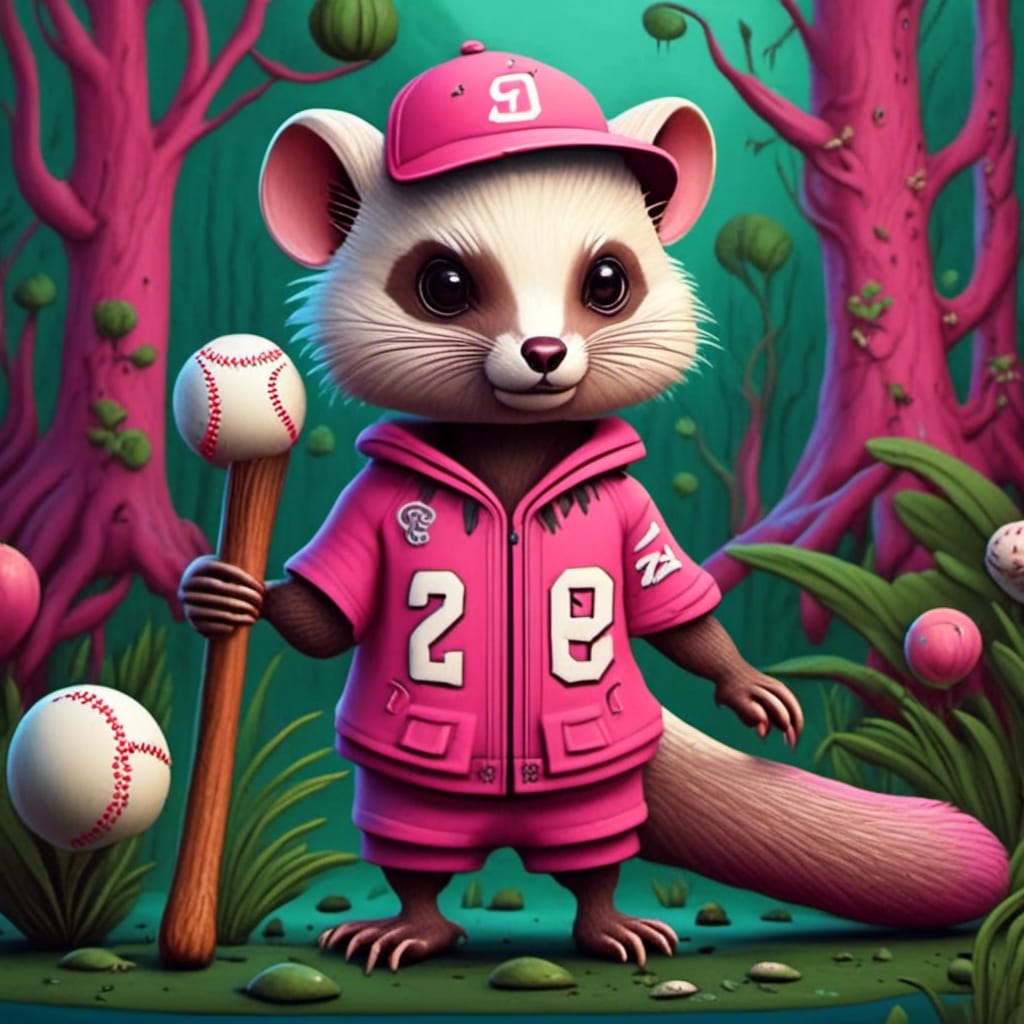
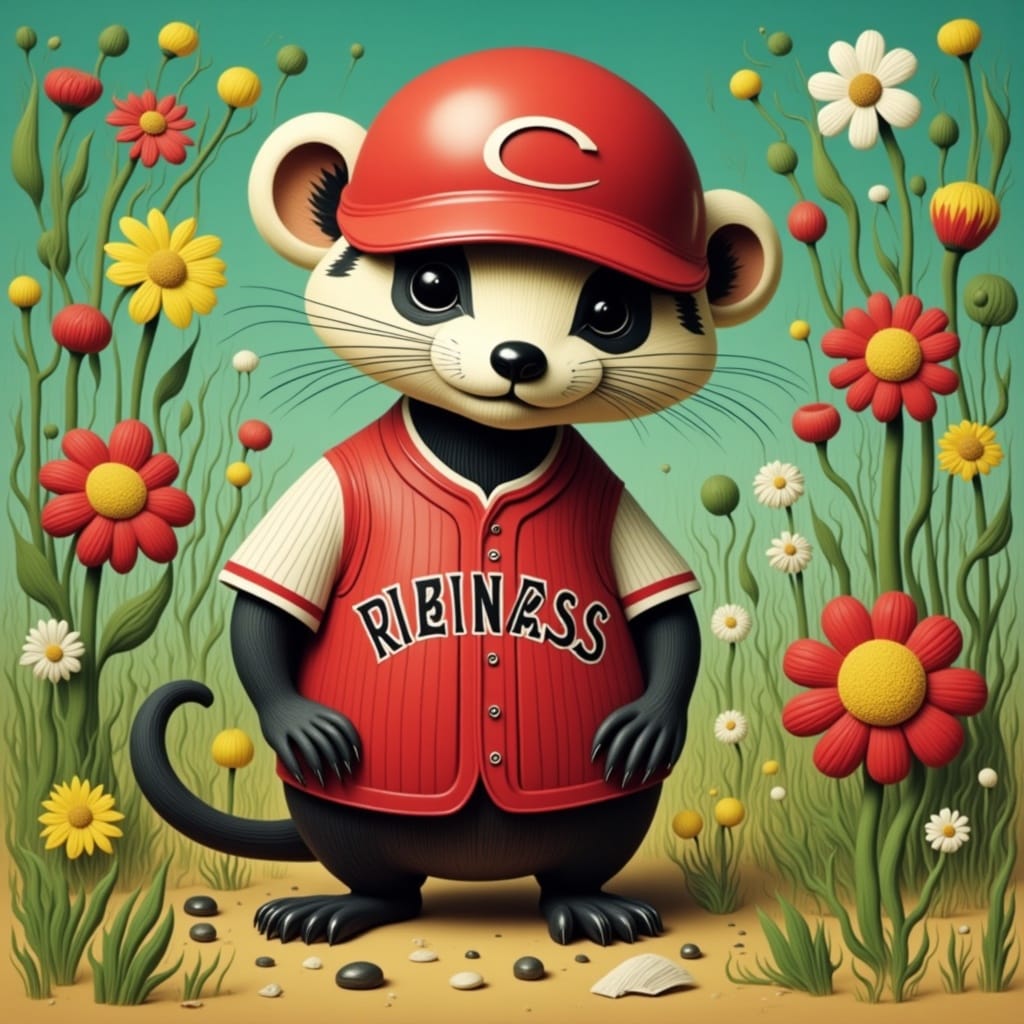
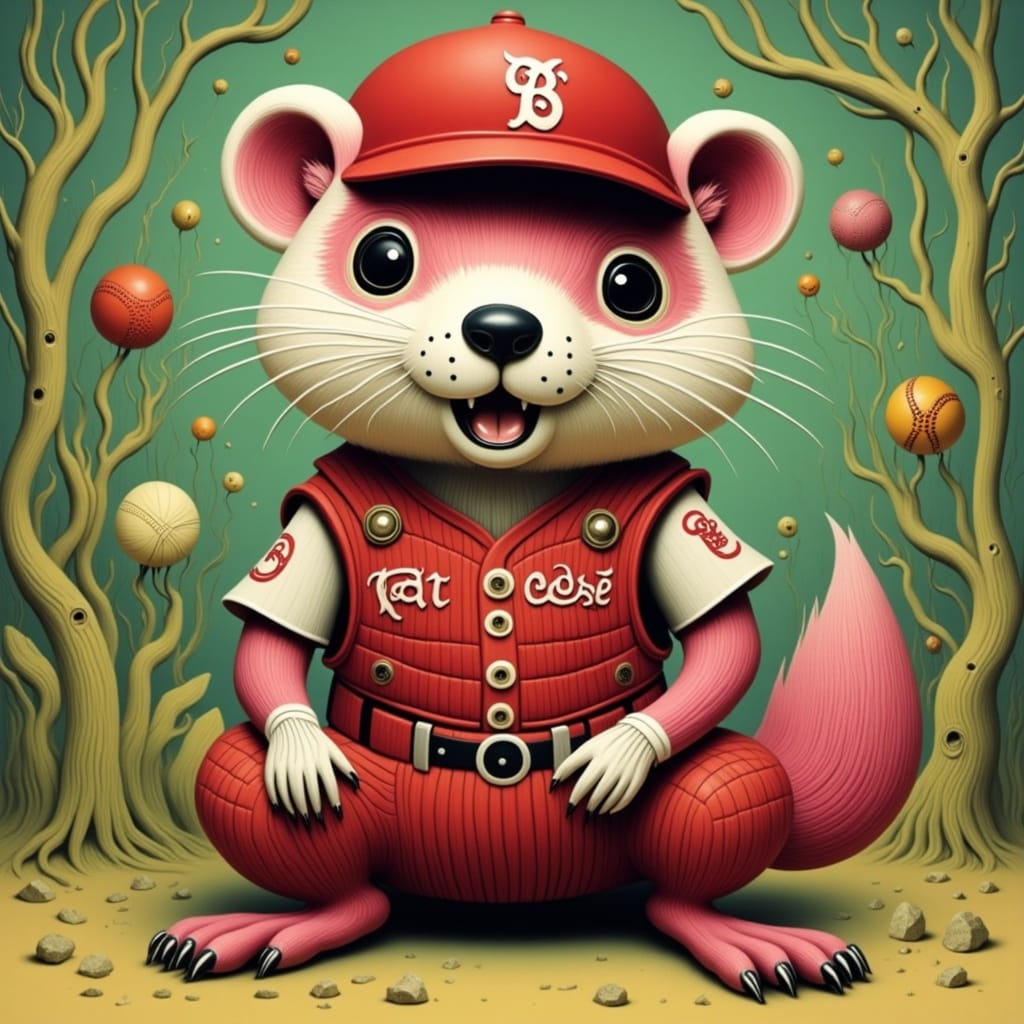
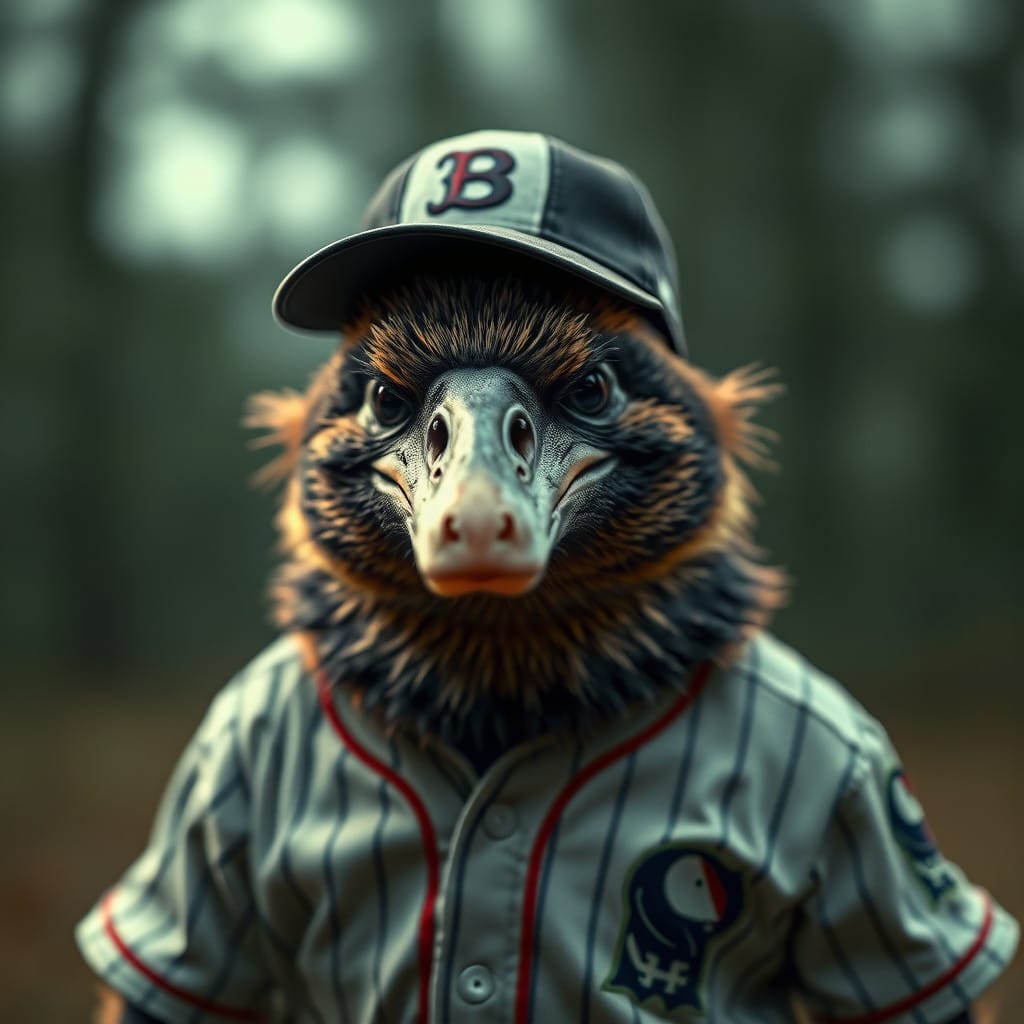
I never anticipated the response to the story. It blew me away. It was just a little idea I came up with, and I decided to write something. However, the comment that struck me the most was my brother’s comment that he wanted to see more artwork featuring pink ferrets and angry platypuses. I told him there was an image already with the story. He nodded as he peered over his glasses.
“I want to see what they would like now, seeing you are better with computer art.”
I laughed and said I would, but I never got around to it. Well, the prompt appeared again. Now, I need to reimage the graphics for the story. So, I sat down and created a roster for the Rico Strong Traveling Pink Ferrets and Angry Platypus. I will probably rewrite the story, but we start with the graphics first.
Many years ago, I learned that no one has all the answers. This revelation also led me to discover that wisdom can be found in the oddest places or with the strangest people. As I struggled to answer this prompt, I found an answer that said it all. The truth of this post moved me and helped me find my way to an answer.
I rely on my faith in my journey through the chaos we call life. It has guided me through some of the toughest situations. Without it, I’m not sure who or what I would be. I talked to many people as I’ve walked this journey searching for peace. Only to discover that the peace sought had resided within the entire time. I cannot remember the name of the person who pointed me toward this path, but I’m thankful.
Through my travels, I realize the potential of love resides in each of us, no matter the faith. I’ve seen people of different faiths band together to perform majestic things. It is a wonderful experience to witness and to feel. I don’t have the words to adequately describe its wonder. I’m inspired by people who are steadfast and true in their beliefs and commitment to help their fellow man.
Throughout my journey, I’ve studied several different texts in the hope of gaining a deeper understanding of the world. Though I have stumbled and sometimes questioned certain events, I feel that each step has been worth taking. I remember my father posing a query as he held up his tattered Bible.
A year ago, I had just begun dealing with my health issues and thought everything would be over in a few weeks. I just wanted everything to be over, and I could return to my life. Friends and family were on my case about taking a step back and focusing on my health. Of course, this advice was like a thousand spikes hammered into my ears. I didn’t want to step back from work, retire, or any other nonsense in that arena. Do you think I’m soft? I got this! Who are you calling soft? No one was calling me soft, but that was my mindset.
A few months later, I got better, like I said from the beginning. However, my health improvement was short-lived. It was non-existent if I’m honest about it. Nothing more than a figment of my imagination. The characters I create for my stories are closer to reality than my reprieve from illness. My condition worsened, forcing me into retirement, and I was pissed. Here’s the problem: I wasn’t sure what I was actually upset about. I had prepared financially for retirement in a year or so. 2026 was the target year, but I could retire at any time before that. However, I didn’t like the idea of being forced to do something. However, health-wise, I was in no condition to do anything but try to get better.
Well, it turns out that my condition was worse than I thought, to the point where it was almost impossible for me to make this post or any others. Yeah, the shit had got real. So, no, where I am today versus a year ago. Not even close. I’m blessed
The forest stood still, ancient and unyielding as if defying time itself. But now, a strange silence hung in the air—not the serene quiet of life breathing gently, but the uneasy hush of something amiss. The once-crystal stream that wound through the heart of the woods, a lifeline to countless creatures, was no longer clear. Its waters, tainted with an oily sheen, seemed to pollute the very essence of the forest’s soul.
A deer approached hesitantly, its hooves crunching softly on the brittle grass. It bent to drink but recoiled, sensing something wrong. The poison ran deeper than just the water; it was in the air, the earth, the whispers of the leaves. Who had done this? Who could destroy something so pure, so vital?
Perhaps it was the folly of man, always reaching, always taking. It was greed that sought to conquer instead of coexist. Or perhaps—just perhaps—it was the forest itself, tired of centuries of neglect, silently fighting back in ways no one yet understood.
The trees shivered as if sharing a secret, their shadows casting long and mournful patterns across the poisoned ground. And as the sun dipped below the horizon, the forest seemed to sigh, wondering if salvation was still possible in a world so carelessly polluted by those who claimed to love it.
One of my favorite parts of writing is the creation of the story. To listen to the story being told to my soul. I know that sounds a little strange, zany even, but this is how I feel whenever I pick up a pen and start writing a story. In this instance, I’m more of a recorder than a writer. Strange, I know, but it is like my pen has a mind of its own. Telling the story in bits and pieces. Sometimes, these fragments make sense, but for others, I have no idea where the fragments come from. It sounds exciting and a blast but isn’t the best part.
Editing is the best part. Once she reads this, my editor will tap into her editor’s magic and send thousands of those dreaded red marks to ensure my happiness. It will bring her joy as I scream in frustration and try to unravel the madness these red marks always bring. I can see her now. Her eyebrow raised, peering over her glasses, muttering something like the following …
“Really?” she says, looking at me bewildered. Which frightens me a bit because she doesn’t do bewilderment.
I look at her with all the confidence I can muster, hoping she buys it. I respond, “Yep!”
She holds my gaze, clearly not buying it. She picks up my latest draft and begins doing her thing. The once-white paper is now red with the faintest glimmers of white remaining. She tosses the draft on the table beside me, smirking, “Have fun!”
“What the f…” I reply
She chuckles harder, “Teaspoon.”
Of course, I don’t find the situation humorous at all. However, I begin the process. I clear the mechanism of doubt and start the next part of the journey.
Editing is the portion where, as writers, we shape our creation into something unexpected and unintended. If we are lucky, we allow it to grow into something magical. So many times, I’ve written things telling one story, but by the time I’m finished editing, it has become something else. Because of this, I’ve been able to reuse concepts to establish foundations or fill in gaps as needed.
There’s something about finding another storyline within a sentence or paragraph or scribbling a note on a napkin. So, excuse me as I prepare to get my butt kicked.
If you were to ask my late wife this question, she would respond that my favorite place to visit was my house. I was never home. It didn’t matter what country we lived in; it seemed like I dropped off her and the kids and then left. In many ways, she would be wrong. Often, I wonder how I didn’t end up a member of statistics concerning service members and the divorce rate. Military life isn’t for everyone. I’ve seen it break some of the nicest people. I watched them become caught in the churn of military life and drown in a slow, miserable death. Both service members and their families. I suppose I was lucky to a degree.
I don’t have a favorite place, per se; I have more like a region I enjoy spending time in, the Pacific Northwest. I have hundreds of stories about my travels in that area, but none accurately convey my feelings about traveling on Highway 101. I’ve traveled up and down that highway more than I could count. Once you start traveling north on that highway, the world changes. Northern California is completely different than Southern California. Once you cross the border into Oregon, the world changes. This magic repeats itself as you enter Washington.
I also enjoy the time I spent traveling through Montana, Wyoming, and even Idaho. The scenery is breathtaking. All one has to do to feel better is just breathe
What alternative career paths have you considered or are interested in?
DAILY PROMPT RESPONSE
I’m satisfied with the career path I chose. Could I have done something different? Definitely! However, the goal was to provide for my family, and I did that. So, in this regard, I’m good. I have always wanted to write, and I’m a writer. I wanted to make a difference or do something that mattered. I was a soldier. The best job ever is being a parent. It doesn’t get any better than that for me.
I’ve retired young, so I could return to work once my health improves if I want. The question is, what would I do? It would be something I enjoy, something that brings joy and meaning to my life and others.
I could play Watermelon Man or Blinded by the Light and get a second. It would be expected, even appreciated.
Here’s a sample of the stuff that would be playing over the loudspeakers …
List three books that have had an impact on you. Why?
DAILY PROMPT RESPONSE
The Green Mile – To be haunted by the actions of your past. To see everything you know and love die. To be left on this earth and witness their demise. One realizes the dead were the lucky ones. To feel the blessing of a long life is a curse. Perhaps, a punishment for a hideous act.
Invisible Man – In this novel, we follow the actions of an unnamed protagonist living in a society that chooses not to recognize him as a man. The winner of the National Book Award in 1953, this novel should depict an outdated social construct, but it doesn’t, sadly.
11/22/63 – This book addresses something we all may have wanted to do from time to time. A chance to go back in time and change something we have done. However, the most powerful part for me, was how it laid out the hazards of time travel. I will continue working on the time machine in my basement.
If you can’t trust yourself, who can you trust? This is the question that comes to mind when I read this prompt. With the social climate of the last few decades, many have made fortunes in the “Doubt” business. I talked to one of these individuals once, and when I questioned their motives, I quickly became a nonbeliever and radiated large amounts of negative energy. I looked around to see if they had some device that measured energy levels. I was asked to leave when I asked them to present this device. I’m still sad about the event, not at all.
My intuition has saved my butt more times than I can count. So, I trust it. However, I must admit there have been times it has stirred me wrong, mainly partly due to my lack of knowledge of the situation. The other part was the person in charge of the situation seemed shady. I don’t do shady people, as a general rule. However, sometimes they can be rather useful. In cases like these, I adjust the settings on my shade – meter. Overexposure can be harmful, and it takes a while to recover from its effects.
Believing in yourself or trusting yourself are useful tools in building self-reliance, developing personal growth, and strengthening one’s emotional intelligence. I’ve heard people mock the use of gut feelings and demand the use of actual data or science. This is funny because when people use their gut feelings, they combine their knowledge, experiences, and science. Yep, I said science. The issue resides in people’s inability to articulate why they feel a particular way. So, continue trusting your instincts.
Let me provide an example; my editor can read something of mine and say something like this.
“I don’t like it. Don’t ask me why, but there’s something not right.”
When we first started working together, this was some frustrating shit. However, I’ve learned to keep my mouth shut and listen over the years. More times than not, there’s, sure enough, something jacked in my draft.
Smart people say gut feelings are like using a muscle; the more you use it, the stronger it becomes. They recommend continuing to gain knowledge and experience and living life. So, believe and trust yourself; you may very be justified in having pause. So, when someone asks me whether or not I trust my gut. My response is always:
I always read several books at once. I’ve never been able to keep my focus on one book for any length of time. To help with this, I usually do some research on a particular subject to give my mind a rest. As I research, I usually read several books on the subject I’m studying. Despite this, I still have trouble slowing my mind down enough to enjoy a single. On the rare this occurs, I typically read the book a second time as a writer to see what the writer did to capture my attention.
Here is my current reading list for pleasure:
Duma Key by Stephen King – I’m a sucker for magical realism
Inferno by Dan Brown – I enjoy a bit of historical fiction wrapped in conspiracy from time to time.
Strega by Andrew Vachss – No one does gritty crime fiction better than Vachss. James Ellroy comes close, but not entirely.
My Mom had transferred me to a new school. Not only was I the new kid, but I was also the only Black kid, so things were immediately interesting. The world wasn’t as inclusive then as it is now. Despite these challenges, I made a friend. Most of the children were polite, but this guy was my friend for a while. We’d play after school, shooting baskets, skipping rocks, etc. Well, one day, we found a rabbit’s foot. It was exciting and all that, but I quickly forgot about it.
A few years ago, one of the girls from that school reached out on one of the socials. Once she discovered me, she broadcast to the rest of the class. So, my friend contacted me. He sent me a picture of that same rabbit’s foot we found over 40 years old. That picture officially made that rabbit’s foot cool. This story may not be the coolest thing I have found, but it makes me smile every time I think about it. Our lives are made up of tiny moments like these, and we should cherish them.
I’ve always liked this challenge but haven’t participated in it in a while.
1. If reincarnation exists, would you like to come back as a domestic pet or a wild animal? I don’t think reincarnation works this way, but it would be cool if it did. However, I can’t decide which one. As domestic pet life is sweet, just ask my cat. Yet, as a wild animal, all that power and freedom.
2. Do you think Zoos are a good idea? As a child, the zoo was within walking distance and free. I spent time watching the wild cats and the monkeys, so I loved them. However, now I don’t feel the same way. I can’t stand watching them in that environment, none of them. I think all species should be free in their own habitat.
3. Have you ever been to a safari park? Nope, never wanted to go. I’ve seen my share of wild animals. Sometimes, I was freaked out. They look smaller on television and in magazines. I know this example isn’t a safari, but watching wild mustangs run wild was one of the most beautiful things I have ever seen. I considered letting a mountain lion eat my little brother once, but I figured I would have trouble explaining to his mother how I let this happen to her baby.
4. Have you visited an oceanarium? Once, it was so freaking cool, but I still think about them as I do about zoos. They should be free no matter how cool they are swimming around stuff. Oh my gosh, the dolphins.
I read this question and wondered what they meant. I’ve said it a thousand times if I’ve said it once.
“I don’t have time”
or
“I need more time.”
In the military, we have said, “We train to standard, not to time.”. One of those really cool sayings doesn’t always apply. However, as I progressed in ranks, I realized that prior planning or proper planning removes most of the anxiety associated with time constraints. We used a system called After Action Reviews (AAR’s) and later became lessons learned. We would evaluate an exercise and make note of things that went well as well as our failures.
The purpose of this action was to devise a plan to achieve a greater degree of success. Ideally, this plan was placed in a binder for review at a later date. The binder also served as a guide in case of a personnel change. The problem with every system isn’t the system itself, although that is sometimes the case. Rather, the lack of personnel utilizing the system results in the utterance of the above-listed questions.
Now, I won’t sit here and say there weren’t instances where we needed to make adjustments on the fly—there were plenty. However, the majority of the situations when we felt a time crunch were due to a lack of planning or learning from previous mistakes. I have developed an expansion of this philosophy as I have aged.
We have the same amount of time today as yesterday and tomorrow. The first time I said this idea about time to someone, I was told that Daylight Saving Time defeats my logic. I laugh because I feel it isn’t true. The key to successful time management is how we utilize the time we have, which is a constant. So, whatever system or techniques you may use, don’t worry about if you have enough time because you do.
Is there an age or year of your life you would re-live?
DAILY PROMPT RESPONSE
Fortunately, I’ve reached the age where the heyday has become a part of the conversation. However, with that age, I also have times when talking to the family and other younger people when I have no idea what the hell they are talking about. especially when they tell you a phrase you have been using before they were born, “Doesn’t mean what you think it means,” as if history has been erased. But, to be fair, I often say things where they are completely clueless. One of my last co-workers used to shake, smile, and shake her head like she understood. I confronted her about it after she didn’t do what I asked. Her response, “I’m not going lie, I heard words, but didn’t know what the hell you were talking about.”
Sure, I can remember some amazing moments and horrific ones. These moments shape us into the people we are. So, when it comes to reliving stuff, why would I want to do that?
Answering this question correctly depends on the definition of artist. Like many Jetpak questions, it fails to be specific. It’s almost like they have a dumb ass question generator or something. However, I like this question well enough to answer with minimal disdain. To do so, I need to provide myself a definition.
noun
a person who produces paintings or drawings as a profession or hobby.
Similar: creator originator, designer producer, old master
A person who practices any of the various creative arts, such as a sculptor, novelist, poet, or filmmaker.
a person skilled at a particular task or occupation: “a surgeon who is an artist with the scalpel.”
Similar: expert, master, maestro, past master, adept
performer, such as a singer, actor, or dancer.
informal
a habitual practitioner of a specified reprehensible activity: “a con artist” · “rip-off artist.”
As you may have guessed, I’m in a bit of a mood today, but now I have something to base my answer on. So here goes.
As a writer, my first thoughts about the creative arts are about works of literature. However, this presents an issue for me. I can rattle on for days about different works of literature and their importance without breaking a sweat. But, for the purposes of this post I will discuss some of my favorites.
Novels
Ralph Ellison
Gordon Weaver
Stephen King
Poetry
Dante Alighieri
Langston Hughes
Adrienne Rich
Painting and such
Francisco Goya
Sandro Botticelli
Jean-Michel Basquiat
Photography
Gordon Parks
Annie Lieberwitz
Vivian Maier
Comic and such
Luis Royo
Tim Bradstreet
Al Jaffee
Here is the short list off the top of my head. Looking back over this post, I chuckle a bit because I remember my wife asking me a question after I had answered her questions. Why can’t you answer a question like a normal question?
When you think of the word “successful,” who’s the first person that comes to mind and why?
DAILY PROMPT RESPONSE
“Successful” can have different meanings depending on the context, but broadly speaking, being successful refers to achieving goals or desired outcomes. Here are some ways success can be defined in different areas:
Personal Success: Achieving personal goals, happiness, fulfillment, or growth. It might involve self-improvement, achieving work-life balance, or cultivating meaningful relationships.
Professional Success: Accomplishing career objectives, such as gaining promotions, excelling in one’s field, building a reputable business, or making significant contributions to a profession.
Financial Success: Attaining financial stability, wealth, or independence, defined by income level, savings, investments, or the ability to support a particular lifestyle.
Creative Success: For artists, writers, and creators, success might involve producing meaningful work, gaining recognition, influencing others, or feeling satisfied with creative expression.
Social Success: This could be defined by having strong relationships, a positive social impact, or being recognized for contributions to a community..
As an administrator, I can provide several definitions of success, as well as examples, plans, and whatever is necessary for a deeper understanding of the meaning of success. However, despite temptation, we must try not to push one’s personal definition on the others around us. I say to myself more than anyone else. As I have gotten older, I’ve learned to appreciate that measuring success is a matter of interpretation.
Now that I’m retired, there is so much to do. I find myself making up shit to do. However, recently, I decided to put my free time to better use. While convalescing, I explored different ways to explore my creative outlets. Many of you probably noticed I’ve been posting AI images. I learned digital art skills. However, my education isn’t complete. I’d like to learn more about the digital world. I’ve spent years existing within it. I thought I knew how it worked, but it has changed. My grandchildren have taught me.
“Peepaw, you aren’t current with stuff.”
I’ve gone from being the in-house IT guy to the guy who tells them stories about his precious memories of them when they were young. So, I need to update my skills to figure out what they are talking about half the time. I’ve got nothing better to do.
I’ve lived by a simple code not my own. Despite this truth, this code has served me well. Provided me a strength to develop my own. My parents worked hard their whole lives. Somehow, they didn’t seem to be tainted by this devotion. I’ve seen many succumb to the strain. If I’m honest, it’s easier than I’d like it to be. I’ve been choked by the tentacles of temptation from time to time.
Many of the elders, worked their whole lives to accomplish their individual goals. Each family having their own. I watched them in amazement. I wondered if they would make it. As I got older, I asked how they stayed focused and not lose hope.
“You focused on wrong thing. You can’t worry about that. All you can do is work hard and live right.”
This was code I subscribed to. The code based my entire life on. My personal code isn’t much different than the one I grew up with. The elder who taught me his code, hadn’t lived the life I have. I’ve had too make some adjustments over time. However, I always feel good if I work hard and live right.
For the past few months, I have been looking over how I handle things, and they totally screwed up. What upsets me is that they have broken for quite some time. Things that should not have broken in the first place. First, I must acknowledge that despite my best efforts, I am still just human. I used to think I was a cybernetic being, but then I went through the part-dragon phase. Alas, I’m just human. The last year’s health issues taught me that lesson tenfold.
I’ve never felt weakness like this before. It’s hard to wrap my head around it. Being in this state blows, to say the least. There were times when I wasn’t sure how things would turn out. I had to rely on the strength of my brothers as well as my own. I’m not used to this, but my people reminded me that my fight isn’t over. I will do well to pay more attention to that.
PROSE – RANDOM THOUGHTS/REFLECTION – THE STATE OF THINGS
Hello everyone,
You may have noticed that things here at the Memoirs of Madness have been a little spotty. I apologize for that; I really do. It’s been a rough year for me health-wise, and though I’m much better, I’ve been dealing with the emotional side of things. I’ve been wondering how the hell I made it through all this and other questions that arise when dealing with health issues as one ages.
So, in the next few weeks, I will be making some changes to the blog. More precisely, I will focus on cleaning up dead links, adding new pages, removing old pages, and such. This is an attempt to improve the blog’s UI/UX. I will announce the changes as they happen; please let me know if I muck something up. Any suggestions are welcome. Until next time … wish me luck.
I’m not sure if I know what the word really means. I know the definition and how it’s used, but I haven’t been able to relax for most of my life. I’ve always had a vivid imagination, so I tend to retreat inside my mind when I need to take a break. However, you can probably see the problem with this technique. As a writer, I think of various scenes in my mind. I can tell you many of them aren’t rather relaxing. I discussed the concept of relaxation with my editor, and she laughed. When she regained her composure, she provided me some advice. She talked about the avenues of my creative expression and how I should not create content for my blog, portfolio, or anything else I’m into. So, I thought about the places that make me happy.
Here’s what I came up with:
I’ve always found gardening really relaxing, so I can imagine my idea of relaxation involving some sort of garden. I’d have to keep my brain out of it, though. I can see myself trying to figure out the soil composition to plan which flowers grew best in my region.
I’ve also felt at home in the mountains.
However, the activity requiring the least amount of preparation is reading.
Within the pages of a book, I imagine different lands, worlds, and periods of time. After which, a nap is appropriate.
I’ve been immersed in the world of Generative AI and have found myself simultaneously frustrated and enchanted. Typically, for Macro Monday, I use an actual photo, but this week, I thought I would present one of the things I’ve been working on. Quickly, I discovered the lack of macro work in my AI portfolio—oops. So, I found this cute image I created for something I can’t remember. It felt like when one comes across a photo on the card that you don’t remember taking.
I’m impressed by the amount of intricate detail in this creation, which was created about a month ago. I didn’t have a handle on prompt engineering at the time, so if I were to try to reverse engineer this creation, my approach would be different. I probably wouldn’t get the same image, but there are some things I would add and a few things I’d remove.
Feel free to express your candid thoughts about this creation or the use of AI in digital art. I love hearing opinions about stuff.
Yesterday, before the sky opened up and unleashed all kinds of nastiness, it was a beautiful serene day. Though, it was a little on the hot, I pulled out my phone and took a few shots. It felt good.
“You can’t use up creativity. The more you use, the more you have.” — Maya Angelou
I remember my mother saying, “Boy, you’re in your own little world … ain’t you?” She said this with an amused and proud expression. Later, I learned my mother had been an artist in her youth, and I guess she remembered what it was like to be on another plane of existence. Other than life, I believe passing on her creative mojo was one of the greatest she gave me. Thanks, Mom!
Lately, I’ve been enthralled with the world of artificial intelligence, specifically image generation. Somehow, this artistic expression has woken up something I considered a thing of the past. I sketched long ago, and I started telling stories. I remember using my Big Chief notebook and filling it with random drawings. My teachers would scold me because I had no paper to do my lesson. After all, I had drawn all over them. However, the teacher called my mother and suggested she get a sketchbook. Mom brought me a Mead unruled pad, and the rest was history.
It seemed like everyone was an artist in those days. We tried everything; crayons, colored pencils, watercolors, etc. You named it, and we tried it. Quickly, I discovered I didn’t have a knack for anything color. So, I stuck to sketching. I listened to the accolades my friend’s parents would bestow on their creations. My Mom would simply shrug and go back to what she was doing. It may seem like she wasn’t interested in what I was doing, but that wasn’t the case. I never had to ask for a new pad or notebook. My supplies never seemed to run out. Even when I started stories, there was always plenty of paper and writing instruments.
It seems so long ago, yet I still return to this plane after a good session. Ever since my wife passed, my episodes have gotten worse. No mystery sandwich appeared on my desk, flickering lights letting me know it was time for bed, or my favorite, the warm blanket I nestled under while falling asleep in my chair, scribbling my latest stint into madness. However, I try my best to return in a reasonable amount of time.
Perhaps in enough time to post a story, picture, or photo. Who knows? Because most of the time, I’m in my own world.
I always liked it when MiMi called me Mister. It made me feel grown-up or something. Maybe special would be a better word. However, this excitement was only temporary. For the word Mister meant trouble. It wasn’t like she had every minute planned or anything, but you weren’t going to be sitting on your butt while she was working; no, sir!
So, I wondered how she would feel about sitting around and wondering how I would spend my day. I recently retired and haven’t gotten the hang of these as of yet. I still feel I need to be doing something. I’ve worked since I was 13, so sitting on my butt isn’t how I’m built. So, I suppose I waste most of my time these days figuring out what I will do.
You know, things like, what story am I working on? What kind of image should I create?
AI-Generated with Vivago.AI by author MK
I’m constantly pestered with my choices to the endless questions that arise arbitrarily. For example, “Does that flower look real enough?” Should I grab my camera and go take some photos of real flowers? So, much time and so many different things to do. I would call my brother and ask him about my dilemma, but he isn’t retired yet. He makes a face when my other friend and I mention we are.
If I’m writing …
As I stood in what I now know to be the regions of my mind, the pathways guided me to the stories; vibrant globes were precious memories. I took a step, and I was frisked into a story. The whirl came into focus, and I was upon a horse galloping down a dirt path.
Does this opening have enough punch? I shake my head and go back to playing with images.
AI-Generated with Vivago.AI by author MK
Is she who I envisioned when I created her?
So, you see, I spend most of my time wondering about stuff. Were there female pirates? If so, what did they really look like? Because Hollywood gets everything wrong. As I finish this post, I’ll leave you with MiMi’s immortal words.
“Boy, if you have time to wonder about all that, [pause] Whew! You need a job!”
She sips her coffee, thinking about her first great love—that love she could never talk about—the love that fills her with joy and pain all at once. The joy is knowing what love truly is, not that stuff you read in romance novels or movies. Pain, well, if you know love, you know pain.
There were throwaways—well, that’s what folks called them back then. It meant no one wanted them. She felt that way until she met the woman who changed her life. She also fell in love with a boy who lived with the woman. He was like her, a throwaway. She knew she shouldn’t love him but couldn’t help herself. They spent one night together before he left for the war, and the war took him.
She’ll never forget how she felt the next morning. It felt like she was glowing from the inside. For it was the first day she felt whole.
What are the most important things needed to live a good life?
DAILY PROMPT RESPONSE
Typically, questions like these, I would have some philosophical response intended to make you pause and consider the state of the world. But, it isn’t that kind of day.
Everything I need is right there in that photo. At least that’s how I feel at the moment. Tomorrow’s another story, now isn’t it?
When I found these photos, I had chucked them up as a loss. There wasn’t anything I was going to use them for. I’m surprised I hadn’t deleted them. Then, this morning I saw this challenge and remembered I had these shots.
Most of the time, my brothers and I don’t have any problems. We deal with the normal issues in this strange, cryptic thing called life. However, from time to time, an asshat appears out of nowhere. It’s almost like they waiting in the shadows for the precise moment to be a nuisance. It’s quite difficult to avoid asshats because you can recognize them from sight. However, once open their mouths, they are now easily recognizable.
They say things like, “How are guys related?” Or some other variant of dumbness.
I felt good the other day and decided to take a walk at a local park. It was spur of the moment thing, so I didn’t have my Nikon. I whipped my trusty Samsung and started snapping away. Before I knew it, I was looking up at the picturesque sky because I had tripped over the pavers, falling right into a nearby flower bed. I looked around to see if anyone had noticed, and the entire affair was witnessed. Is it a requirement for someone to witness someone fall to be a fall? Otherwise, a firm denial works. Here is what I got before I bit the dust.
i listened to track as collected myself. A Stevie can do wonders for the soul.
I enjoy taking two types of photos more than any other composition; candids and close-ups. In these photos are close-ups of a project my brother worked on last fall. He was working on a fuel tank for a motorcycle. I kept getting in the way of photographing the entire process. I complained about not being able to catch the shot I wanted. Sometimes, you get lucky a find something you weren’t looking for.
I love to drive. It is one of the most relaxing things for me. However, I usually can’t take pictures of what I see while on the road. Here are a few I was able to catch.
One of things I enjoy about photography is the ability to make the mundane into something interesting. Well, it works out that way sometimes. I compare it writing. Sometimes you just can’t get a sentence the way you want. Or you write this complicated sentence when a simple will do just fine.
So, this is what I come with for today…
Top of a toolbox
I was walking into an office and saw this toolbox. Nothing about it is unique. I’ve owned several of the years. However, that day I just stopped snapped a photo. I wondered what I would do with it. I’m sure I’m not finished with it either. Well, at least I don’t think so.
As I look at this picture, I’m drawn to the symmetry of the pattern and the surface’s texture. I also notice a slight reflection of the adjacent building I hadn’t noticed before. At any rate, to me, what I’m seeing just illustrates the point I’m trying to make.
Insomnia has a hold on me, so I decided to play around with image generation. I used the text from the post In the Wee Hours and it generated the following images. I enjoyed difference within each image, but the general concept is the same.
I haven’t been taking many photos for the last few months. However, last month, I snapped a couple of decent images. They aren’t my best work but call it me working my way back into it.
I love this challenge. Although, I probably have never done it correctly. I find it challenging to find a photo that truly speaks for itself. However, each week, I attempt to discover the undiscovered.
In the heart of an attic, amidst a treasure trove of forgotten gadgets, an argument of epochal proportions was unfolding. Oliver, an old, venerable camera with a penchant for nostalgia, found himself at odds with Dexter, a high-tech digital camera with more settings than a spaceship.
“Back in my day, we captured the essence of life, one click at a time,” Oliver boasted, his lens gleaming under the dim attic light.
“Pfft, the essence of life? I can capture, edit, and share a photo before you even figure out your aperture,” Dexter retorted, his LED screen flashing in disdain.
The debate might have ended there if a cheeky squirrel had not chosen that moment to dart across the attic floor, pausing only to strike a pose.
A light bulb flickered to life above Oliver’s viewfinder. “I propose a challenge! Let’s see who can take the best photo of that squirrel,” he declared, adjusting his focus.
Dexter beeped in amusement. “You’re on, grandpa. Prepare to be pixelated.”
Oliver took his time, calculating the light, adjusting his focus, and waiting… waiting for the moment when the squirrel, enticed by a nut left on the windowsill, struck a majestic pose. Click. The sound resonated through the attic, capturing a moment in time.
Meanwhile, Dexter, with the efficiency of a modern marvel, snapped approximately 47 photos in burst mode, applied a “Squirrel-Enhance” filter, and even photoshopped a tiny superhero cape onto the squirrel in one of the shots. “Done. And I’ve already shared it on SquirrelGram,” Dexter announced triumphantly.
They turned to the attic’s old computer to judge their work. Oliver’s photo was a masterpiece of timing and light, showcasing the squirrel in a moment of serene beauty. The soft lighting gave it an almost ethereal quality.
Dexter’s photos were sharp, vivid, and varied, with the superhero squirrel garnering a particular chuckle. “Look at that! It’s going viral among the attic spiders,” Dexter bragged.
Just then, the squirrel, having completed its snack, scampered over to see what all the fuss was about. It peered at the screen, then at the two competitors. With a decisive nod, it grabbed a forgotten paintbrush with its tiny paws. It dashed off a squirrelly masterpiece on a piece of scrap paper: Oliver and Dexter, lenses crossed in friendship, capturing the squirrel in a heroic pose.
The two cameras, old and new, realized that the best photos come from seeing the world through each other’s lenses. They laughed, a sound of mechanical clicks and digital beeps, united in their newfound friendship and respect for each other’s techniques.
As the sun set, casting a golden hue over the attic, Oliver and Dexter understood that photography isn’t just about the camera—it’s about the vision, the moment, and sometimes, a squirrel with a flair for the dramatic.
And so, amidst the dust and memories, two cameras from different generations found common ground, proving once and for all that when it comes to capturing life’s beautiful moments, the best approach is a shared one. As for the squirrel, it became an honorary member of their photographic adventures, always ready for its next close-up—cape and all.
Over the last several weeks, I have been playing catch-up. Since retiring, I’ve sat back and enjoyed the wonderful world of blogging. I don’t have to tell you about the fantastic posts from around the world. When it came to finding images for this post, I had to do a little digging. Trust me, that was the fun part. Here is what I discovered.
Random shot of a body of WaterWater Fountain Wallclock Texture
I was trying to get my camera to focus during a shoot and had no idea I accidentally snapped this shot. I remember hearing the shutter. I immediately went to work and did not pay attention to all the pictures.
I was doing research last week and discovered groundhogs are also called woodchucks. So, here is one of the first pictures I took of my woodchuck, “Emmitt.” He was so shy back then. We’ve come a long way together over the years.
Woodchuck
This last photo fits several categories. It basically depends on the mood I’m in at the moment. So, today, As I gaze upon this photo of me and a few of my granddaughters, I think “Weirdo’s”.
You’re going on a cross-country trip. Airplane, train, bus, car, or bike?
DAILY PROMPT RESPONSE
I’ve more time behind the wheel than any other mode of transportation. Driving has always relaxed me. I prefer driving alone to think in peace, but I’m not opposed to traveling with someone else. I’ve developed some of my best storylines driving. There’s nothing like working out a difficult scene while gliding across the asphalt sea. The only problem is that I never seem to have a device to capture my thoughts as they come. Yes, yes, I’ve tried the microcassette recorder thing, but I never seem to remember to bring spare tapes. When the digital ones hit the market, the problem is solved, right? Nope, I forget to download to my computer, and when I do, I forget where the hell I put them.
The essentials for a proper road trip: This list varies based on your individual needs, but here are a few suggestions to help you consider what you might need.
Two coolers – one for beverages and the other for food. Truck stop or gas station food is not kind to your digestive system. This may not affect you now, but you will understand what I mean as you age. Not to mention, the prices are ridiculous.
Thermos – coffee or tea. Most thermos can hold up to 10 -12 cups.
A go bag—the contents are at your discretion. However, I suggest a complete change of clothes and a spare pill box for current medications if you take any. Have enough undergarments for at least a week. Also, having somecash and a burner may be a good idea. The cash is handy; not every place is set up for debit or credit cards. I discovered this on my last road trip. The burner; cellphones break all the time.
Emergency Kit – Standard items include flares, first-aid kit, reflective triangles, and blankets. However, emergency food may come in handy. Examples include tuna or chicken pouches, bottles of water, and mayonnaise packets; these items keep pretty well. Also, I almost forgot that you need a good flashlight. Preferably, a rechargeable one; alkaline batteries tend to leak or are dead when you needed.
A small toolkit—Even if you aren’t mechanically inclined, you’d be surprised at what you can fix with a pair of pliers or a screwdriver.
A road atlas – I know I risk sounding like a weirdo, but GPS is NOT the truth. That shit be wonky. Just saying.
The most important thing
Whether you listen to music, podcasts, audiobooks, or talk radio, some items are saved locally on your device for times when you don’t have cell coverage.
If not, you may be forced to listen to stuff like this:
Some of you may enjoy these tracks, so you look at me strangely. However, on one of my road trips, before streaming services were a thing, I found myself listening to a Juice Newton marathon. Now, I ask you, how is this even a thing? It was that day. Some DJ, apparently a huge Juice Newton fan, played all her music. To make matters worse, he had a booming radio station that blasted for miles.
However, you get lucky and get some fun songs like these:
Play that shit Norman
An Anthem for every frustrated worker
This was my jam
By answering this post when I’m supposed to be sleeping, I’m subject to say anything. I couldn’t resist!
Despite the title, the rain is my favorite type of weather. I never understood why people ran from the rain but spent hours in the shower over a lifetime. They swim laps, surf, and waterski, yet the first raindrops they beat feet for shelter. Trust me, I’m not making fun of anyone. I was just like everyone else until I joined the military.
If it ain’t raining, we ain’t training
If it ain’t raining, ain’t, training became our mantra after just a few weeks in service. At my first duty station in Korea, I survived the monsoon season. Trust me, you will stop worrying about the rain after surviving monsoon season. We are soaked to the epidermis, which was wrinkled by the time you were able to put on dry clothes. I can’t remember the last time I ran from the rain.
At any rate, I love the rain. Its something about it I never could put my finger on. Here are some of my favorite songs with rain in the title. I know, it’s Eddie Rabbit’s fault.
When I hear the word tools, I immediately think of the various instruments I’ve used over the years for countless projects. So, for this post, I wanted to look at things a little different. Today, I will not only display tools, you know standard one’s people know. I’m display some pictures of things created by various tools.
Brother preparing a fender for painting.
Pop working on a car Me mixing old and new techniquesUs wondering if crazy idea was going to work A new fuel primed for paint Brother airbrushing
As a tradesman we use so many tools and sometimes we have to make the tools we need in order to complete the job. We use a sander in body work. I use a different type of sander in woodworking. Those drivers you see in the picture of the wood project, in that shop I’ve used those drivers in various other projects, such as mechanical, hydraulics, electrical, and pneumatics.
Writer of all things:
As a writer, one of my most important tools is a laptop. I do most of writing, research, and general clowning on it. Also, I edit video and photos on it. I love my laptop and iPad, but the tool I use for writing the most are books. I can’t describe how valuable books have made a better craftsman, writer, and visual artist.
Visual Arts
Cinematography
As a visual artist, I spend a ridiculous amount of time behind the camera. In cinematography, I’m involved in aspects of filmmaking, such as Pre-production, production, and postproduction.
Still Photography
Initially, I doubted my abilities as a still photographer. So, I would hire a photographer for location scouting and various shots I needed. I found myself arguing with them more than getting any work done. This disagreement occurred because I had vision in my mind, and they weren’t capturing what I wanted for the project. Each of them were good photographers, but I couldn’t get them to understand what I wanted.
One day, I worked on a project where I was just a camera operator. I got an opportunity to work with a couple of still photographers. One photographer handed me a camera and said ” show me”. I started taking pictures. Now my framing and composition was a little off, because I was used to video where we would just cut out the useable portions. They gave me some tips and told to go buy a camera and the rest is history.
The most important tool I have learned over the years is that every skill I learn is another tool in my toolbox. I just have to remember to be patient enough to use the right tool for the job.
In the tapestry of human endeavor, threads shimmer with unyielding tenacity woven from the fiber of women with grit. These women, from varied walks of life and corners of the earth, share a common trait—a relentless fortitude that propels them through adversity, enabling them to emerge not only unscathed but stronger and more resolute.
Consider the woman who rises before dawn, her day stretching ahead like an uncharted expanse, demanding her sweat, intellect, and care. Yet, she meets each challenge undaunted, fueled by an inner fire that refuses to be extinguished. She could be the single mother who juggles multiple jobs to provide for her children, ensuring they receive the opportunities she never had. Or the scientist in a lab, her eyes alight with the spark of discovery, tirelessly pushing against the frontiers of knowledge despite the voices questioning her place in such a world.
Reflect on the women in history who stood firm against the gales of their times, refusing to bend. They are the suffragettes who endured mockery and imprisonment, their eyes fixed on the horizon of equality. They are the trailblazers in arts, sciences, politics, and activism who dismantled barriers and defied conventions to etch their indelible marks on the annals of time.
Women with grit embody resilience, a quality that resonates through their every action, a silent strength that speaks louder than words. They navigate life’s storms with a steely grace, their resolve a beacon for others to follow. In their perseverance, they weave a legacy of inspiration, a call to each of us to harness our own potential, face our battles with courage, and emerge not just enduring but triumphant.
In celebrating these women, we recognize the grit within ourselves, a testament to the enduring power of the human spirit embodied in the resilience and determination of women across ages and the world.
My mother was such a woman. She had grit, but she referred to it as gumption. I’ve always liked that word. Despite the challenges of raising me on her own, she refused to surrender the chaos surrounding us, no matter how tempting it had been. She remained steady in all that we faced. A lesson I tried to demonstrate to her grandchildren and great-grandchildren. I’m honored to be a steward of her legacy. No different than the others who have courageous women in their lives.
A boy named Timmy Sinclair lived in a bustling city named Licksville, known far and wide for his extraordinarily large tongue. Timmy was no ordinary boy, and his tongue was no ordinary tongue. It was the size of a baguette, supple like a gymnast’s and versatile like an artist’s palette.
From an early age, Timmy realized that his large tongue was not a curse but a blessing. He discovered he could use his tongue for tasks that others could not. He could taste the subtlest of flavors in food, making him the best judge in town for cooking competitions. He could also use his large tongue to help clean out jars and reach places his hands could not.
In school, Timmy was the star of the science fair. He used his tongue to demonstrate how taste buds worked, making science fun and exciting. His classmates admired him, and his teachers praised him for his creativity. Unfortunately, not everyone saw Timmy’s tongue that way.
Summer ended, and school began. Timmy was excited. He couldn’t wait for his next adventures. When he arrived at homeroom on the first day, there were two new students: one girl and one boy. Timmy took a seat and waited. He wanted to know everything about the girl. She had long raven hair, caramel-colored skin, and the most enchanting eyes he had ever seen.
Ms. Rowster came into the room, and they settled down for attendance. Timmy barely could contain himself as he anxiously waited to hear the name of this beautiful girl. When Ms. Rowster got to her name, she asked her to stand up and tell the class a little about herself. She did.
“Hello. My name is Simin Karimi, and I’m from Detriot,” Simin said, then sat down. Timmy felt she had the most beautiful voice to accompany the rest of her beauty.
Ms. Rowster did the same with the new boy as well. He stood and cleared his throat, “I’m Brad Zigler from Ohio. I know everyone has heard of Zigler cheese, right? Brad asked. A few nodded in agreement while the others sat in quiet bewilderment.
They were all sixteen, but Brad stood over 6 feet and had a large nose, freckles, and a fiery beard. Due to his size and attitude, he had already started gaining friends. Timmy knew he would be one of the most popular kids in school before long.
At lunch, Timmy sat at his usual table, watching Simin’s every move, hoping she would sit at his table. Marcy Busch slapped Timmy on the shoulder.
“Who’s that?” Marcy asked.
“S S S imin,” Timmy shuttered. He was a little tongue-tied, as they say. He felt strange because he never shuttered a day in his life. Marcy looked puzzled at Timmy, then Simin. Marcy motioned for Simin to sit with them. Timmy shifted uncomfortably but managed a smile. Marcy introduced herself.
Marcy and Simin chatted away while eating, picking at their food, if you can call it eating. They were well on their way to being fast friends. Timmy sat quietly, nodding and smiling at the appropriate times. Timmy noticed Simin kept glancing and smiling at him. This made Timmy nervous. Here is the most beautiful girl, and he’s suddenly tongue-tied.
“Stop being rude!” Marcy said as she nudged on the shoulder. Timmy tried to say something, but his tongue got in the way. It felt like it filled his entire mouth. Timmy had never experienced this before. Marcy’s comment didn’t help matters.
“So, you see a pretty girl, huh?” Marcy asked.
“You’ve been talking my ear off since first grade. Geez, thanks,” she smiled. Her cobalt blue eyes sparkled when she smiled, and her smile always seemed to do the trick when Timmy got nervous. Marcy made him feel safe.
“Oh my god! So you’re the freak people have been whispering about!” a voice exclaimed. They looked up, and it was Brad Zigler with a horrified expression.
“What are you? Some sort of lizard?” he exclaimed.
Timmy blushed, and his eyes filled with tears. Before he knew it, Marcy had sprung from the table, kneeing Brad, and delivered a well-practiced right cross—the signature move she picked up when she developed breasts at 12. Marcy explained that once all the women in her family had a nice set of girls, her mother, and grandmother taught her the move in case the boys got handsy. Nanna said boys “always get handsy.”
Marcy stood Brad silently, her brunette hair tied in a ponytail. Brad groaned in pain as he clutched his private area. Marcy stepped toward him, and Brad scooted away with his held up in surrender. Marcy turned to look at Timmy. Her pale alabaster skin was rose-colored. Her eyes were like fire. Yet, they softened when Timmy looked up at her. She stood 5 feet even.
“Bullies give me the sweet ass!” she exclaimed as she retook her seat. Marcy didn’t make eye contact with anyone, then whispered, “Sorry.” Simin squeezed her hand. “Marcy, you’re wicked fast. Next time, can you save me some?” Simin asked jokingly. They all chuckled as they left the lunchroom.
Author’s Note:
Today, I felt good enough to write a little fiction. I hope you don’t mind. So, I combined a couple of hosted challenges I felt worked for the story. The third challenge was one I had for myself, and it was two-fold. Primarily, I’ve been writing light non-fiction for the last few weeks. I needed to know if my fiction tools still worked in something light. I also challenged myself to see if my depictions of the characters in this could used with AI image generation. The answer to the latter is yes. Overall, I’m pleased with the image outcome. As for the former, it felt good writing, but I will leave it up to you guys. Should I continue this corky tale? I wrote more, in case you are wondering. Or hit delete and move on to another project?
Prompts used for this story:
SocS: Hosted by Linda Hill – Words starting with “signa”
If I’m being honest, there are far too many I would hate to give up. I guess I’ve got soft over the years. However, if I absolutely had these three items I couldn’t live without.
2. iPad Pro 12.9 – This is such a versatile tool. I can read books, Listen to audiobooks, write, and take and edit photos. I’ve been using an iPad model for over a decade. It’s hard to imagine working without one. I even tried out several versions of the Samsung tablets and compared them. Though Samsung makes a solid product, I prefer the iPad.