What’s the longest book you’ve ever read?
View all responses
I don’t know.
That probably isn’t the answer the question was looking for, but after more than five decades of reading, I have never kept score by page count. I couldn’t tell you which book was the longest any more than I could tell you how many cups of coffee I drank while reading them. There have been novels thick enough to make a respectable doorstop, technical manuals on engines and oilfield tools, books on theory that required me to read the same damned paragraph three times before deciding whether I understood it or merely admired the author’s ability to confuse me, and books I have willingly picked up again after already knowing how they ended.
So, when someone asks me what the longest book I’ve ever read was, my first instinct is to ask another question.
What exactly do we mean by long?
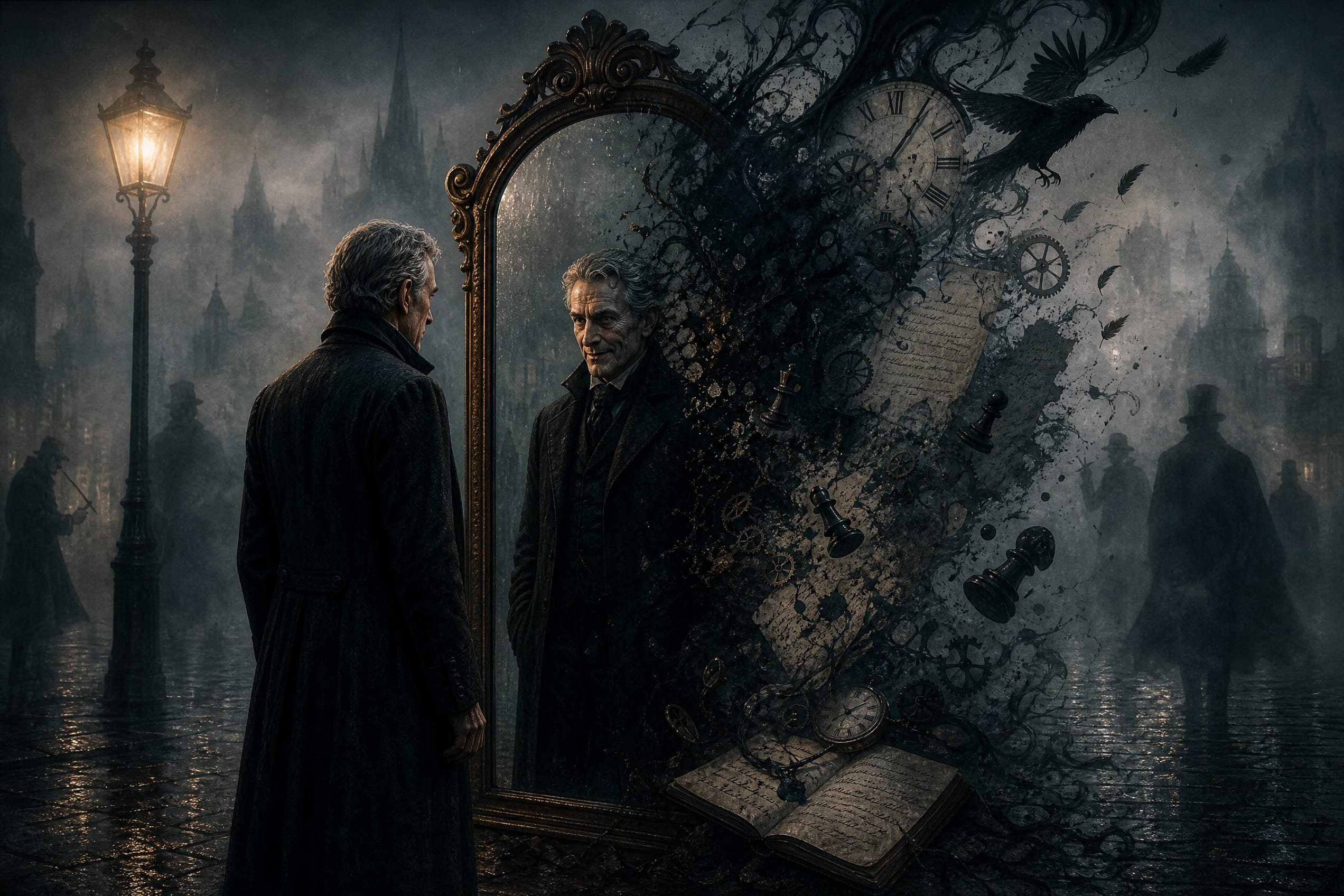
If we are talking strictly about novels, Stephen King probably deserves a chair at the front of the room. I have read The Stand, Under the Dome, Bag of Bones, and 11/22/63 at least twice each. These aren’t books you casually tuck under your arm before heading to the doctor’s office unless you intend to defend yourself with one in the parking lot. The Stand, particularly in its uncut form, is enormous, but I don’t remember experiencing it as an enormous book. I remember the people. I remember the world King built around them, the choices they made, and that peculiar sensation that comes when a fictional place has held you long enough that closing the book feels a little like leaving town.
That, I think, is where page count begins to fail us. I have also read Susanna Clarke’s Jonathan Strange & Mr Norrell, another substantial piece of real estate between two covers, and eventually started through it again. Then there are David and Leigh Eddings’ The Belgariad and The Malloreon, ten novels spread across a continuous journey. At some point, counting pages becomes less useful than admitting that I apparently have no objection to moving into a fictional world for a while, provided the landlord keeps things interesting.
That’s what I love about reading fiction. Every time I open a book, there is the possibility of discovering somewhere else, of becoming immersed in a world that didn’t exist until another writer imagined it onto the page. Streets appear where there were none. People begin breathing who never existed. Histories accumulate, grudges develop, families fracture, governments rise, towns acquire secrets, and somewhere along the way I stop seeing words printed on paper and begin seeing a place. For however long the writer can sustain the illusion, I get to live there.
Perhaps that’s also why I spend so much time trying to create worlds that make sense to my own readers. I know what it feels like from the other side of the page. I know the pleasure of beginning a new journey without knowing where I’m being taken, and I know the different pleasure of opening another chapter in an existing storyline and returning to people and places that have somehow become familiar. When I write, I’m chasing some version of that experience for my readers. I want them to cross that invisible boundary where they’re no longer merely reading about the world I’ve created. They’re standing inside it.
Perhaps that is the first distinction worth making. A long novel doesn’t necessarily feel long. When the characters matter, when curiosity survives another hundred pages, and when you find yourself reaching for the book instead of looking at how much remains, length becomes almost invisible. The book isn’t demanding your time anymore.
You’re giving it willingly.
Technical reading is another animal entirely.
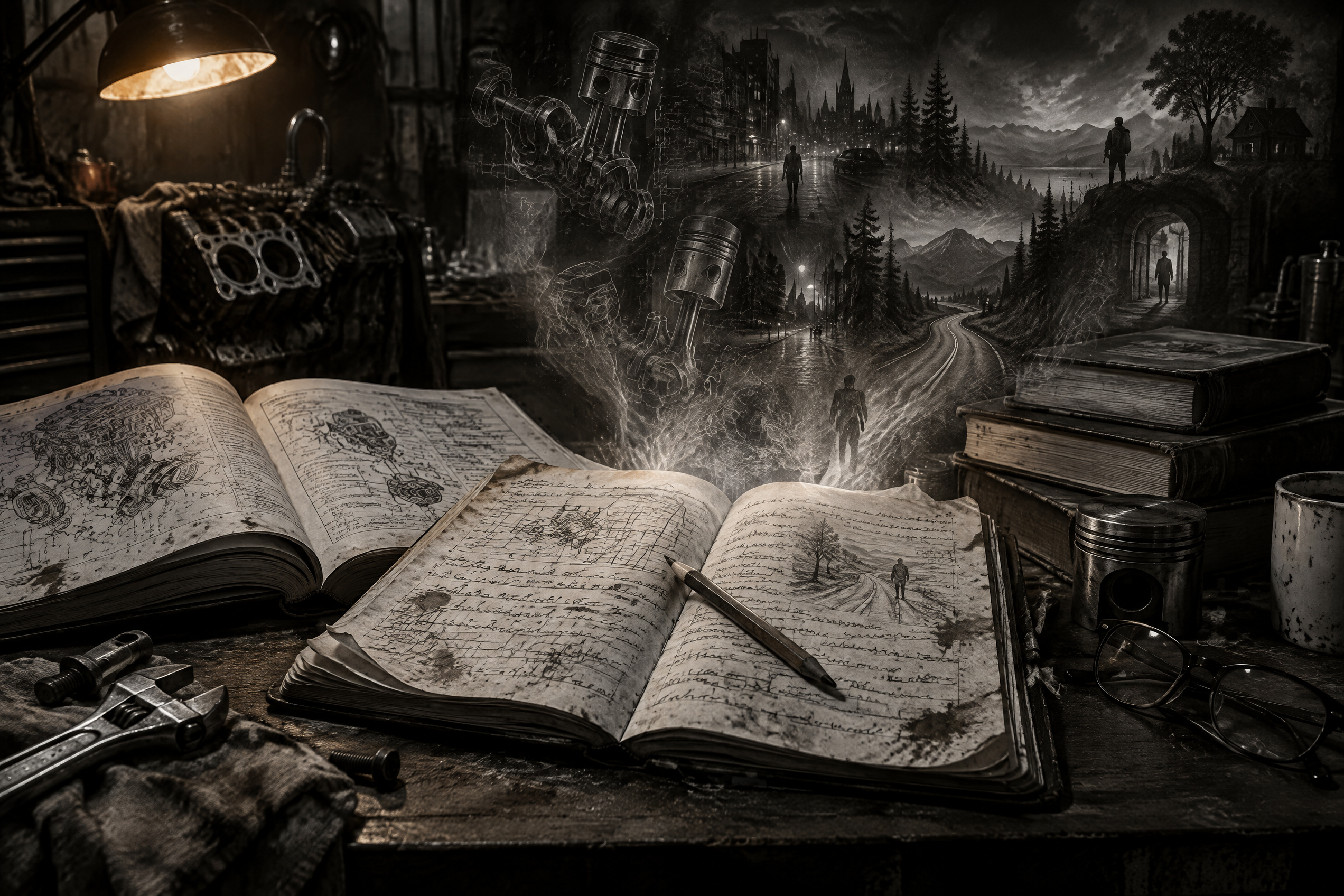
I have spent plenty of time with manuals concerning engines, oilfield tools, and machinery that did not particularly care whether I was entertained. There was no villain waiting in chapter seventeen, no mystery dangling just beyond the next page, and certainly no author whispering, “Just one more chapter.” There was simply something I needed to understand, usually because somewhere outside the book was a very real piece of equipment that expected me to know what the hell I was doing.
You don’t always read those books from beginning to end. You attack them. You follow diagrams, specifications, procedures, tolerances, warnings, and cross-references. You flip backward because something on page 412 assumes you remember what was explained on page 173. You stare at an illustration until the collection of lines stops looking like somebody dropped a plate of spaghetti onto graph paper and begins to resemble an actual mechanical system. And let’s not forget the notebook sitting beside you, gradually filling with arrows, diagrams, question marks, scratched-out assumptions, and increasingly irritated scribbles as you try to make sense of why B goes into J when every bit of common sense you possess is telling you the damned thing ought to go into M.
Eventually, something clicks. The drawing stops being a drawing. You can see the system behind it: what moves, what connects, what transfers force, pressure, signal, or power, and what happens downstream when one component decides it no longer wants to cooperate. Then you take what you’ve learned and test it against the real thing.
That’s when the notebook changes.
Those scribbles become gospel—not because everything written there is sacred or even particularly pretty, but because they contain the lessons the manual couldn’t give you. Here is what happened when we followed the procedure exactly. Here is the shortcut that isn’t really a shortcut but saves twenty minutes because somebody finally figured out you don’t have to remove that entire assembly. Here is the workaround for the problem the manufacturer apparently never imagined happening, although everyone who has actually worked on the damned thing has seen it twice before lunch. The margins collect warnings, corrections, measurements, little diagrams, and those precious sentences beginning with, “Next time…”
Eventually, you’re no longer trying to understand why B goes into J. You know why. More importantly, you know what happens when it doesn’t.
Then somebody new comes along.
You hand them the manual because that’s where they’re supposed to start. But somewhere nearby is that battered notebook, its pages stained, folded, scribbled over, and filled with years of arguments between what the book said should happen and what the machine actually did. That’s where lessons learned become knowledge worth passing along. You show the next person what you discovered, explain the mistakes that cost you hours so they don’t have to repeat them, and perhaps watch them add a few scribbles of their own.
At that point, you aren’t simply reading anymore.
You’re teaching.
And somewhere along the way, the book you were trying so damned hard to understand became the beginning of another book—one written by everyone who had to make the first one work in the real world.
Books of theory can be just as demanding, though for different reasons. A machine will eventually reveal whether you understand it. An idea isn’t always so courteous. Philosophy, literary theory, history, religion, science, and the countless other subjects I’ve wandered through over the years have taught me that ten difficult pages can demand more from a reader than a hundred pages of good fiction. Sometimes a single paragraph requires stopping, rereading, arguing with it, walking away, and returning later to discover whether the problem was the writer’s explanation or my understanding.
That kind of reading changed my definition of a long book.
Sometimes length isn’t measured by how many pages you turn.
Sometimes it’s measured by how long you have to remain on one.