The Dame, the Drizzle, and the Dumb Luck

FLASH FICTION – FOWC & RDP


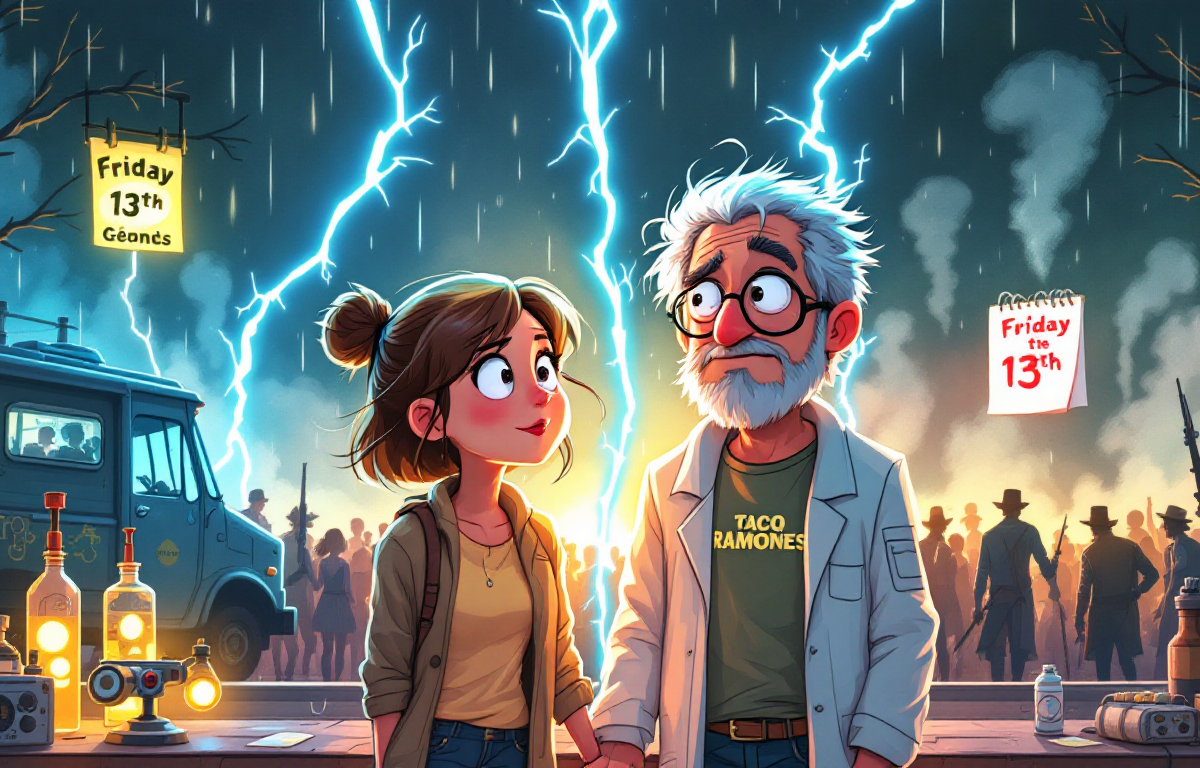
It started, as most questionable decisions do, with a woman, a trench coat, and a very hedonistic craving for street tacos.

Julian wasn’t even supposed to be out. The rain was biblical—Julian half expected to see Noah waving him aboard. His socks were soaked, his spirit soggy, and the umbrella he carried had the structural integrity of a wet paper crane. But tacos were calling, and Julian—private eye by day, glutton by destiny—answered.

Midway through the park, a lamppost flickered like it owed someone money. Julian stepped into the golden spill of light like he was in a film noir. All he needed was the dame holding a cigarette to her ruby red lips, waiting for him to light it. His coat flapped dramatically, mostly because it was two sizes too big and purchased during a clearance sale he mistook for fate. He imagined someone, somewhere, narrating: He was a man torn between purpose and guacamole.

That’s when it happened.

A squirrel launched from a tree like it had just discovered espresso. It landed squarely on Julian’s shoulder, using his necktie as a zipline to destiny.

He screamed like a man whose dignity had just filed for divorce and taken the house.

The umbrella went flying. The squirrel somersaulted off his head. And Julian—formerly mysterious, now flailing—slipped in a puddle with the grace of a ballet-dancing refrigerator.

As he lay on the sidewalk, soaked and stunned, the only thing colder than the rain was the betrayal in his burrito-less stomach.

A couple walked by. The woman whispered, “Was that performance art?”

Julian lifted his head with all the levity he could muster. “Only if you clap.”

They did.

He took a bow from the pavement. Somewhere, a squirrel chittered in applause.

When Sleep Slips Out and the Muse Kicks In

Insomniac Chronicles, Vol. 1

Daily writing prompt
What time do you go to bed and wake up currently?

Sleep and I have a complicated history. We used to be close, tight, even. But somewhere along the way, we grew apart. Maybe it was the late-night thoughts that wouldn’t shut up, or the memories that kept crawling back under the covers. Now, we pass like strangers in a hallway—familiar, but distant.

Slumber is that elusive lover who whispers sweet nothings in my ear as she caresses the back of my neck. She pulls the sheets back, looking at me with that suggestive gaze of hers. I slip into bed beside her, feel her warmth press against my restlessness. That’s it—I begin to drift…

But just as the fog settles, chaos kicks open the door.

Suddenly, I hear my muse Ursula—lime green ass and all—screaming in my ears, “I want my words! You think this is fucking Boy Scouts?” I swear, Ursula has no manners whatsoever. She eats all the Cheez-Its and leaves crumbs in the bed. But she wears a fedora, smokes Cohibas, and if she thinks the groove is tight, she’ll pass you one and nod like jazz is leaking from her bones. So I spend the next several hours writing, creating graphics, editing film—or whatever the hell she’s decided is non-negotiable that night. I really need to buy her a bib. And a damn watch.

Wake time? Whenever Ursula crashes, the muse finally shuts up, or the coffee starts flirting again.

Quote of the Day – 07102025


Reflection:

Some mornings you wake up with your heart already unraveling. Still—you get up. You try. That’s not weakness; that’s rebellion.
Perfection was never the point. Showing up is.


Prompt to Go With It:

What does “showing up” look like for you today?
Write one sentence—or one paragraph—that you can stand behind. Even if it trembles.

All That Remained

PROSE – FOWC & RDP


The static clung to him like ash—faint, choking, inescapable. He’d stopped keeping track of the days. Time was foremost a suggestion now, something smeared across the ceiling in mildew and regret.

They said he was a man once. Strong. Reliable. The kind that shows up on time and keeps his word. The kind that doesn’t cry at hospital bedsides or stare too long at old photographs. They said that.

But memory plays tricks. Rewrites endings. Paints the villains in softer hues and leaves the heroes out in the cold. His reflection no longer argued. It just blurred at the edges, refusing to confirm or deny what he had become.

The sink dripped. The fan rattled. The voices whispered. Still, he sat there, jaw clenched, knuckles white, a prayer caught somewhere between his teeth and his shame.

He collapsed into the corner of himself—the part that still remembered how to feel.

He heard a child giggle, smelled lavender and lilac.
But from where?

That door had been closed for years, bolted by memory, corroded by silence. Yet tonight, something had stirred.
Not hope.
Just the echo of what it used to sound like.

Quote of the Day – 07092025


We smile. Nod. Say we’re fine.

But inside?

Some of us are hosting ghosts at the dinner table and tucking monsters into bed. We’ve learned how to function with fear tucked beneath the ribcage and sorrow folded neatly between polite conversation.

This quote hits because it doesn’t flinch. Monsters are real. Ghosts do live inside us. And most days, they pass as us.

Are you okay?
I’m fine.
Fearful. Insecure. Neurotic. Emotional.
(FINE.)

It’s Not Perfect. It’s Not Finished. But Neither Am I.

A vintage typewriter on a cluttered desk, exploding into birds as books tower around it—chaos and creativity in motion.

A brief confession about messy renovations, too many domains, and building the MKU out of creative rubble.

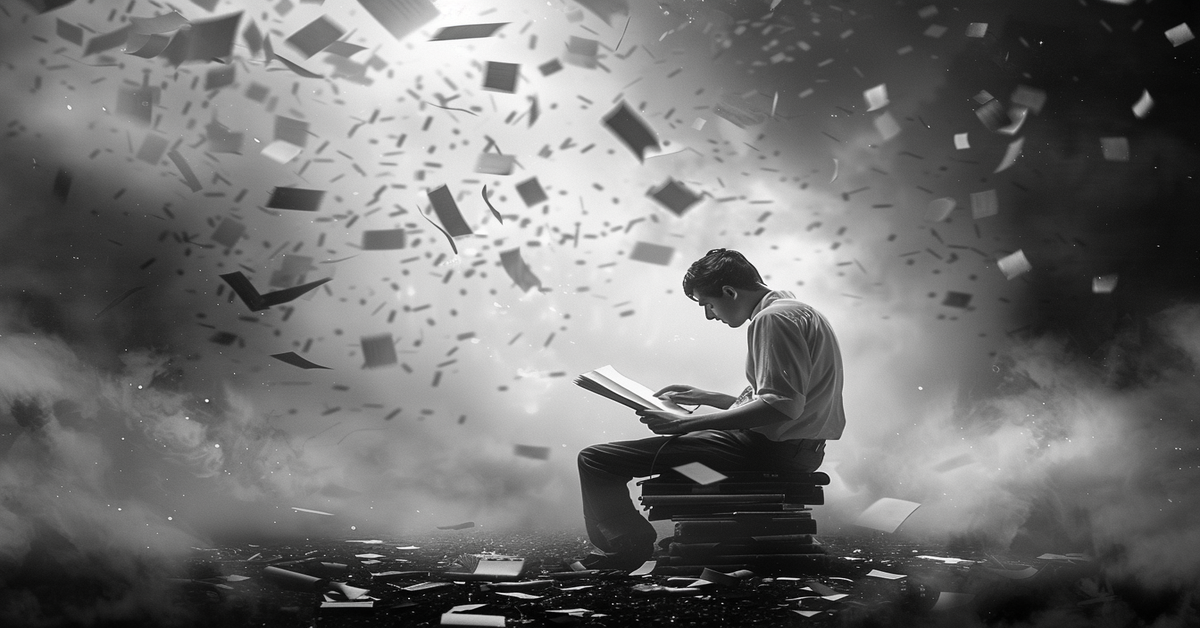
A man sits on a stack of books, reading, while pages swirl around him in a storm of chaos and creativity.

You Ever Try to Clean and Just Make a Bigger Mess?

Yeah, that’s me right now.

I’ve been trying to fix this blog for months. What started as a quick tidy-up turned into something resembling a digital yard sale—only with fewer treasures and way more broken links. I even considered shutting the whole thing down and rebuilding from scratch. But that felt a little extreme, even for me. I have a knack for turning easy tasks into complicated messes. It’s a gift. Or a delusion. Same difference.

So, I got a wild hair—you know the rest—and decided to look at my entire online footprint. It turns out that I was hoarding domains, just like I was collecting vintage Pez dispensers. Just paying for them to sit there, doing absolutely nothing. Honestly, I’d have better luck with a couple of scratch-offs and a can of Peach Nehi.

That’s when I finally did it—I built something called the Mangus Khan Universe (MKU). Yeah, it’s a little on the nose, but the point was to create a space that could properly hold all the creative work I’ve been cramming into Memoirs of Madness.

MKU isn’t finished, but it’s functional. Over the next few weeks, you’ll see things shifting. Posts might vanish, new stuff will appear, and categories will get shuffled. Don’t panic—it’s all part of the plan. Mostly.

I just wanted to give you a heads-up that Memoirs of Madness is undergoing a bit of a makeover. More changes are coming, and I’ll share a full announcement once the MKU is officially live and dangerous.

Stay tuned. Stay weird.

Step into the MKU
It’s not perfect. It’s not finished. But neither am I.

Lessons in Disappearance


for those who know what it’s like to be visible but not believed

Every day is another lesson in invisibility.
Not the kind you choose, not the soft fade of a disappearing act.
This is the kind handed down in glances that slide past you.
In doors that stay closed just a second longer when you’re approaching.
In the space you leave behind when you’re gone, and no one notices the shape of your absence.

You become fluent in the language of indifference.
You learn the weight of unasked questions.
You memorize the way people say “I didn’t see you there” like it’s a kindness,
instead of an indictment.

There is a peculiar violence in being overlooked.
Not bruised. Not broken. Just… reduced.
Down to skin, down to stereotype, down to background noise.
They don’t mean to erase you—
and somehow, that makes it worse.

They’ll say you’re quiet.
You’ll wonder if they’ve ever actually listened.

You wear shame like a second skin.
Not because you earned it,
but because somewhere along the way,
someone handed it to you like inheritance
and you forgot how to put it down.

You stand still in a world built to move around you—
fast, loud, full of curated meaning.
And you begin to question:

Is there something wrong with me, or is there something wrong with this lens that always finds me blurred?

You’ve learned to map your pain in silence.
Each breath is a kind of protest.
Each blink a refusal to disappear entirely.

There are veins beneath your skin that look like lightning—
not because you are struck,
but because you are always just about to burn.

And yet you don’t.
Not fully.

You endure.
Not in glory. Not with applause.
But with defiance.
The quiet kind.
The kind that goes unnoticed until someone says:

“I didn’t realize you were carrying that much.”

And you smile without smiling,
because you know the truth:

You were always carrying that much.
They just never asked to know.

Antidepressant

He wasn’t born to be broken, but he was built that way.


He doesn’t remember how long he’s been digging.
Only that the walls feel closer now.
Not physically—spiritually.
Like the air itself is grieving something it can’t name.
Like the dirt is learning his shape better than he ever did.

He was born into this plastic maze.
Clear walls. Curved tunnels. Endless observation.
They gave him purpose before he even knew what freedom was.
“Work is life,” they whispered.
“Keep moving or you’ll disappear.”

So he moved.
So he disappeared.

Lately, the soil feels too clean.
Too filtered. Too… safe.
He begins to question whether he’s ever touched anything real—
whether any of this was ever soil at all,
or just a stage dressed as survival.

His antennae twitch like doubt.
His thoughts spiral like tunnels without exit signs.
There’s no map. No sky. Just the scrape. scrape. scrape.
and the promise that if he keeps digging, it might all make sense.

“Dig,” they told him. “Dig like your life depends on it.”

But what if life was never the point?
What if it was just obedience with a heartbeat?

He begins to dream—quietly, dangerously—of things he’s never seen:
grass that doesn’t end,
light without glare,
a silence not born of suppression
but of peace.

He wonders if the others feel it too—
that dull, aching sense of being watched by something
that calls itself structure,
but tastes like a slow death.

He screamed once.
Pressed his mandibles to the glass and begged.
For what, he doesn’t know.
Maybe to be named.
Maybe to be more than a metaphor
for how the world devours those who ask too many questions.

But no one answered.
Only the glass pulsed with faint warmth—
a reminder that he is seen, but not heard.

Now he digs not to build, but to resist.
Each handful of soil no longer a task,
but a soft rebellion.
A quiet revolution made of claw, intention, and fatigue.

He doesn’t want to be efficient.
He wants to be free.
Or at least real.
Or at least his.

And if this tunnel leads to nothing—
no sky, no breach, no breaking—

at least it was carved by his own choosing.
At least the hands that made the hole were his.

Because sometimes the cure isn’t a chemical.
Sometimes, it’s permission to feel trapped without calling it a flaw.


🪞 Reflective Prompt

What parts of your routine were handed to you like a cage dressed in ritual?
What would rebellion look like if it were quiet, personal, and yours?


Still digging?

This piece lives inside a much bigger world.
Explore the rest of the Mangus Khan Universe—a stitched-together gallery of confessions, fiction, fractured portraits, and quiet chaos.

👉 Enter the MKU

Do I Look Happy Enough?

A quiet reckoning with the expectations we wear and the joy we fake.


When was the last time you were truly happy?

No—
not the curated kind.
Not the smile you wore for someone else’s comfort.
Not the polite laugh that tasted like performance.
Not the checklist joy: house, job, partner, post, repeat.

I mean the kind of happiness that sneaks up on you in bare feet.
The kind that doesn’t make sense but fills your ribs like breath you forgot you were holding.
The kind that doesn’t ask for an audience.
Doesn’t post itself.
Doesn’t need to be liked to be real.

Most days, we confuse peace with silence, and silence with defeat.

You tell yourself you’re content. That this is what adulthood looks like—responsibility, stability, being “grateful.”
You wear that word like a bandage.
But underneath?
There’s a pulse of something unsaid.
A throb you ignore until it bruises.

You smile at strangers. You meet deadlines. You show up.
And in between the commutes and compromises,
you start to wonder if you buried yourself in the crud of being acceptable.

The barrage is constant—
what you should want, who you should be, how you should smile.

But no one ever asks if you’re still in there.
Not really.
Not the version of you that danced alone in the kitchen at 1 a.m.
Not the you who found joy in dumb little things that didn’t need justification.
Not the version of you that wasn’t tired.

You’re silently screaming.
Every day.
And you do it with perfect posture.

Because to speak it—
to say “I’m not okay”
feels like betrayal.
Like failure.
Like you’re too much and not enough, all at once.

But here’s the quiet truth:

Maybe you haven’t been happy in a long time.
Maybe you don’t even remember how it felt.
But maybe that question—when was the last time you were truly happy?
isn’t meant to shame you.
Maybe it’s a breadcrumb.
A way back.

Not to the person you were before the world smoothed your edges,
but to the one still flickering beneath the noise.

The one who still believes in joy,
even if they haven’t seen it in a while.


🪞Reflective Prompt

Take a moment.
Find a scrap of paper, the back of a receipt, or the notes app on your phone.

When was the last time you felt joy that wasn’t expected of you, sold to you, or shared online?
What did it feel like in your body?
What part of you still remembers?

A Half-Burned Gospel

Another psalm from the quiet fire.


Can you howl when there is no one there to hear you?
Is your passion only for public consumption?
I’m frostbitten by your whispers.

There was a time I needed your touch.
I needed your attention.
Not all of it—just enough to matter.
Not to me.
I needed it to matter to you.

But you blinked, and I shattered.
You turned, and I calcified into someone else’s silence.
They say the world ends in fire or ice—
I know both.
Your heat was conditional.
Your absence, absolute.

Some men beg for war to distract from the wound.
Me?
I just wear the hood tighter,
pull it close like a secret I still want to believe in.

I walk through your memory like a half-burned gospel,
rubbing ash on my skin like anointing oil.
There’s still a spark behind my teeth,
but no one’s left to kiss the smoke.

And even now—
when I speak,
my voice curls like steam
off a pot no one stayed to stir.
…and silence never needed an audience.

Red, White, and Boom (Also Vomit)

FLASH FICTION – FRIDAY FAITHFULS


“Grandpa, I need a real story for my history project. Something about America, or the Fourth of July, or whatever.”

The old man scratched his chin, leaned back in the squeaky recliner, and smirked.

“Alright, kid. Lemme tell you how your grandma and I met. It was the Fourth of July, 1978. I was 19, dumb as bricks, and full of patriotic stupidity.”

From the kitchen, a voice called out: “Oh, this again. You gonna tell the real version this time, or your usual nonsense?”

Grandpa rolled his eyes. “It’s all true. Just maybe… slightly singed around the edges.”

It started with an idea. Not a good one. My Uncle Tommy, our genius friend “Meatball,” and I decided to put on our own fireworks show. We didn’t have proper fireworks. We had two crates of off-brand bottle rockets, a metal garbage can, a stolen traffic cone, and a six-pack of warm root beer.

Tommy swore the garbage can would “amplify” the fireworks. Meatball called it “fire science.” I just lit the fuse.

Boom.

The garbage can launched thirty feet in the air like a missile. One rocket shot sideways and hit a mailbox. Another bounced off my forehead. And one, God help me, flew straight down my pants.

I panicked. I ran in circles. My shorts were smoking. I stopped, dropped, rolled, and screamed. At some point, my eyebrows gave up and disappeared.

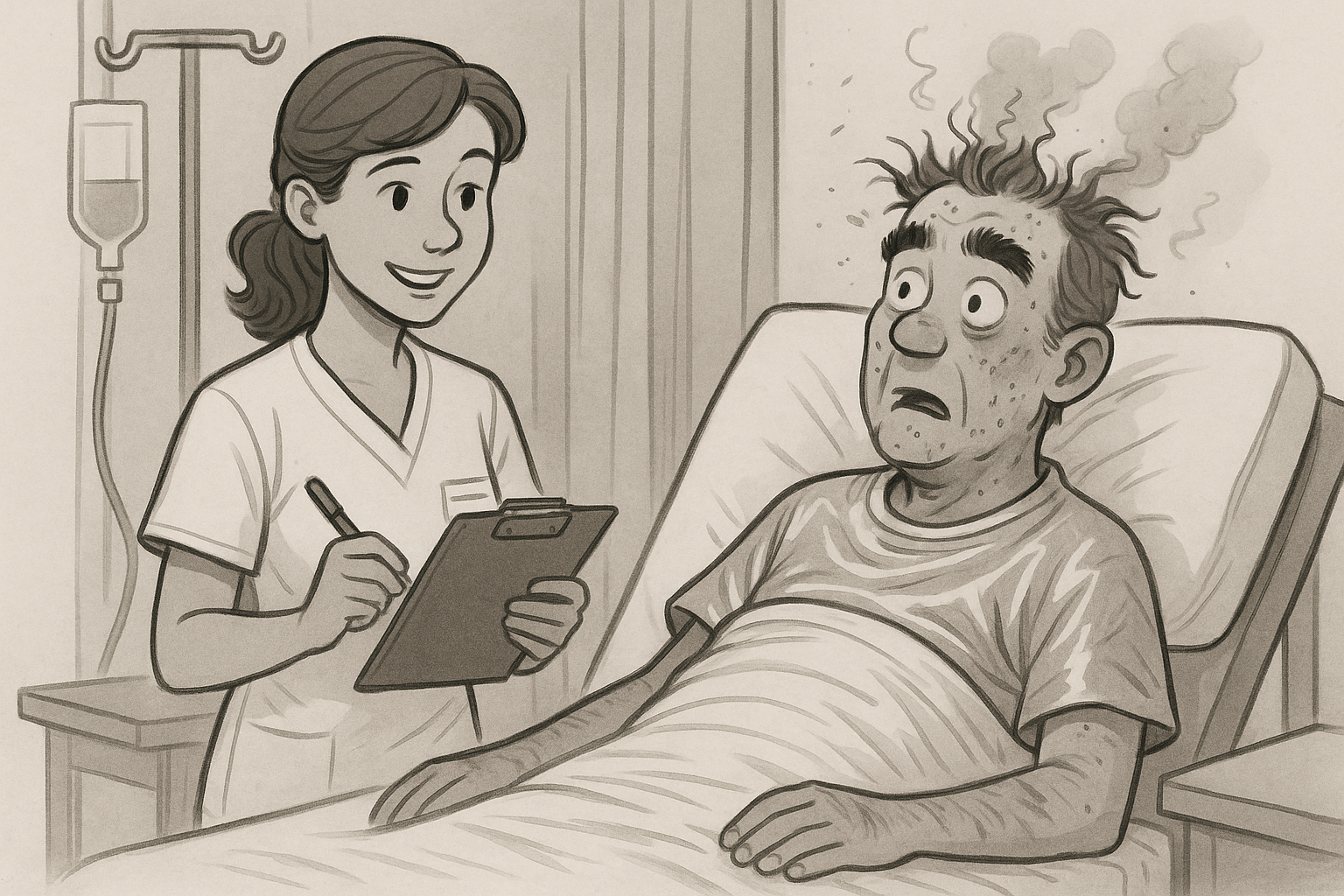
Next thing I know, I’m in the ER, wrapped in silver burn cream, looking like a baked potato with no dignity.

That’s when your grandma walks in. Nurse training student. Bright smile. Clipboard. Smelled like lavender and antiseptic. She looked at me, this smoldering idiot, and said, “So… was it worth it for freedom?”

From the kitchen again: “And what did you say next, hotshot?”

“I said she looked like a very clean angel. Then I threw up on her shoes.”

“Mm-hmm. Romantic.”

“Did you ask her out?”

Are you kidding? I tried. But the morphine was kicking in. I told her she looked “like a floating disinfected goddess” and then passed out while apologizing to the IV pole.

Still—she didn’t run. That’s how I knew she was special.

We kept in touch. She came to my follow-ups. I wrote her letters. She eventually forgave the vomit. We got married two years later. She even let me light sparklers at the wedding. Supervised, of course.

“Wow. That’s kinda romantic… in a flammable way.”

Exactly. So you tell your teacher this: Freedom’s messy. Fireworks are dangerous. But love? Sometimes, it starts with a bang. Just don’t put bottle rockets in garbage cans.

From the kitchen: “And tell him about the park ban!”

“That’s not relevant to the assignment.”

The Feathered Ones

FLASH FICTION – FOWC & RDP

Every morning, she wrote to keep the birds at bay.

They came with the light—first as shadows dragging themselves across the windows, then as a rustle, low and persistent, like wind thinking too hard. Doves mostly, though wrong somehow. Their eyes were too still, their feathers too quiet. Occasionally, darker birds arrived—sleek as oil, with glints in their beaks like pins. They didn’t chirp or coo. They watched.

She used to think they were hallucinations, symptoms of grief. Her brother had drowned in the river five years ago. No body, no real goodbye. After that, the house changed. Or maybe she did.

The birds began showing up shortly after the funeral. Perched on curtain rods. Nested in the corners of the ceiling where cobwebs once clung. They moved like smoke. Never flapping, just shifting, gliding, like time with feathers.

She had never written a word before he died.

Now, she couldn’t stop.

At first, it felt like a compulsion. Survival. Write or unravel. But soon, the stories took on a shape of their own. They came through her fingers in long, fevered bursts—narratives that looped and twisted and whispered through the typewriter-like incantations. Whenever she paused, the birds stirred. Paper fluttered. Air thickened.

One morning, she stayed in bed. Her arms wouldn’t move. Grief sat on her chest like a second ribcage.

By mid-afternoon, the house was breathing.

Not creaking—breathing. The walls rose and fell in slow, silent exhales. Books slumped off shelves. The floorboards quivered like violin strings underfoot. And the birds—dozens, maybe hundreds—lined the walls, all facing her. Eyes like eclipse moons. Waiting.

She crawled to the desk. Typed three words: He was lost.

The air calmed. The birds blinked once. Vanished.

After that, she understood.

They weren’t punishing her. They were pushing her. Urging the story out. She didn’t know why. She didn’t know what for. But she knew the birds were part of it. Maybe even keepers of it. Strange, spectral editors in feathered cloaks.

The typewriter, an old rusted Royal, began to type without her. At night. Quiet, rhythmic, like a heartbeat. She woke to new pages. Pages she didn’t remember writing. One had a map scrawled on the back—inked in spirals and loops. Another contained a letter addressed to her in her brother’s handwriting.

I saw the ice crack. I saw the light inside it. I’m not afraid.

She burned that one. She burned the next three as well. But they always came back. Not charred. Not even creased. Just waiting on the desk like polite ghosts.

The stories that came through her grew stranger. Boys who vanished into mirrors. Houses that forgot how to hold their shape. Rivers that swallowed memories and returned them in riddles. Always, always, a boy at the center. Sometimes drowned. Sometimes glowing. Sometimes stitched together from stars.

She never gave him her brother’s name. But the birds knew.

They began bringing her things. A button she remembered from his jacket. A library card he’d lost in third grade. A page from a notebook she hadn’t seen since they were children, filled with a crude comic he’d drawn—“Captain Birdbrain and the Time Vultures.”

She laughed. She cried. She kept writing.

She began to understand the birds weren’t birds at all. Not really.

One blinked at her one morning, and she swore she saw an entire galaxy in its eye—planets spinning, stories coalescing, a thousand unnamed lives passing through. Another unfurled its wings, and letters spilled from its feathers, fluttering like snow, dissolving on contact.

She no longer felt afraid. Not exactly.

They were eerie, yes. But so is truth when you haven’t looked at it in a while.

The house shifted in small ways. The closet no longer opened to coats but to mist. The attic smelled of saltwater. She didn’t question it. She followed the thread.

She wrote not to escape grief but to appease it. To make it into something legible. Something she could carry. Each word formed a tiny act of negotiation between what was gone and what remained.

One night, she fell asleep at the desk. When she woke, a new story was finished—clean, structured, heartbreakingly beautiful. The final line read:

“And when she opened the door, there he was—smiling, whole, and made entirely of light.”

The birds were utterly still.

One—larger than the rest, with a sheen-like moonlight on bone—landed on her shoulder. Its weight was real. Solid. She reached up gently, and it leaned into her touch.

There was no song. Just presence.

She folded the page and placed it in an envelope marked For Him.

The next morning, the birds didn’t come.

The house was quiet in a way it hadn’t been in years. She waited. She made coffee. Nothing stirred. For a long time, she thought they were gone.

Then, around dusk, the light shifted. Just slightly. The world outside the window tilted toward a kind of blue she’d never seen. Deeper than twilight, warmer than dawn. The birds returned—not many, just a few. But they glowed now. Dimly. Like coals before fire.

They perched around the room. Silent. Peaceful.

The largest one dropped a page at her feet. It held only a title:

Chapter One.

She smiled.

She had learned to write not to fight chaos, but to give it order.

And the story was just beginning.

Late Night Grooves # 161

WHOT Episode 161 – “Best Direction” by Zig Mentality

Hosted by Mangus Khan

[No fade-in. Just impact. The drums kick like defibrillators. Guitars fuzz and slice. The voice? Controlled chaos.]

“WHOT.
Late Night Grooves.

I’m Mangus Khan.

And tonight—
We’re not looking for the right answer.
We’re just calling bullsht on all the wrong ones.*

Zig Mentality – “Best Direction.”

This track is the sound of pressure.

Not the kind that breaks you.

The kind that twists you into someone you barely recognize.

“Don’t know if this is the best direction…”

That line?
That’s not indecision.

That’s survival in progress.

Zig Mentality isn’t asking for guidance.

They’re screaming through the static.

They’re ripping through expectations, projections, corrections, selections.

Everyone wants you to be something.

This track says be something real.

Even if it’s loud.
Even if it’s messy.
Even if it scares people who only know how to follow maps.

The guitars don’t resolve.
The vocals barely hold on.

Because this isn’t a message.

It’s a moment.

And sometimes, that’s enough.

WHOT doesn’t play just to soothe.

We play what it feels like inside.

Tonight, it sounds like Zig Mentality.

Episode 161.
Best Direction.

I’m Mangus Khan—
Still walking.
Still questioning.
Still here.


Unapologetically Unedited


Is it hard to be a beautiful woman? People think you have the world at your feet. They think doors open for you, heads turn for you, and life bends around your presence. But they don’t see the trade. They don’t see the constant calibration—how much of yourself you shave off each day to fit into someone else’s frame. Beauty is not freedom. It’s exposure. A spotlight you didn’t ask for, that you can’t turn off.

You’re seen before you’re heard. Assumed before you’re known. People don’t meet you—they meet the idea of you. Their version. Their fantasy. Their fear. And if you don’t match it? You become a threat. A disappointment. A target. It’s not just tiring—it’s erasure in slow motion.

So you patch yourself together—smile here, soften there, silence the part that wants to speak too loudly. Over time, your identity becomes a kind of repair job. You keep the strongest parts in storage, hidden from view, waiting for a time when it might be safe to bring them out. You begin to wonder: Who am I without all the edits? What’s left when I’m not translating myself for someone else’s comfort?

You learn to play roles just to survive. To be warm but not inviting. Assertive, but not “difficult.” Intelligent, but never intimidating. Every room becomes a stage. Every glance is a calculation. When will it be okay for you to step out from behind their idea of you, letting you be who you are, not who they’ve imagined or prefer? How many masks do you have to wear before one of them finally feels like skin?

The tension doesn’t just live in your body—it rewires it. It clutches your voice before you speak. It lingers in your posture, in your smile that’s a little too careful, in your silence that’s mistaken for grace. They don’t see the moments when you swallow yourself to keep the peace. When you feel the full ache of being looked at but never seen.

Every day, you make choices that feel small but cost you something: how to walk into a room, how to hold your face, when to speak, and when to stay quiet. You tell yourself it’s just for now. Just until it’s safe. Just until they see you for real. But how long can you stay edited before you forget the uncut version?

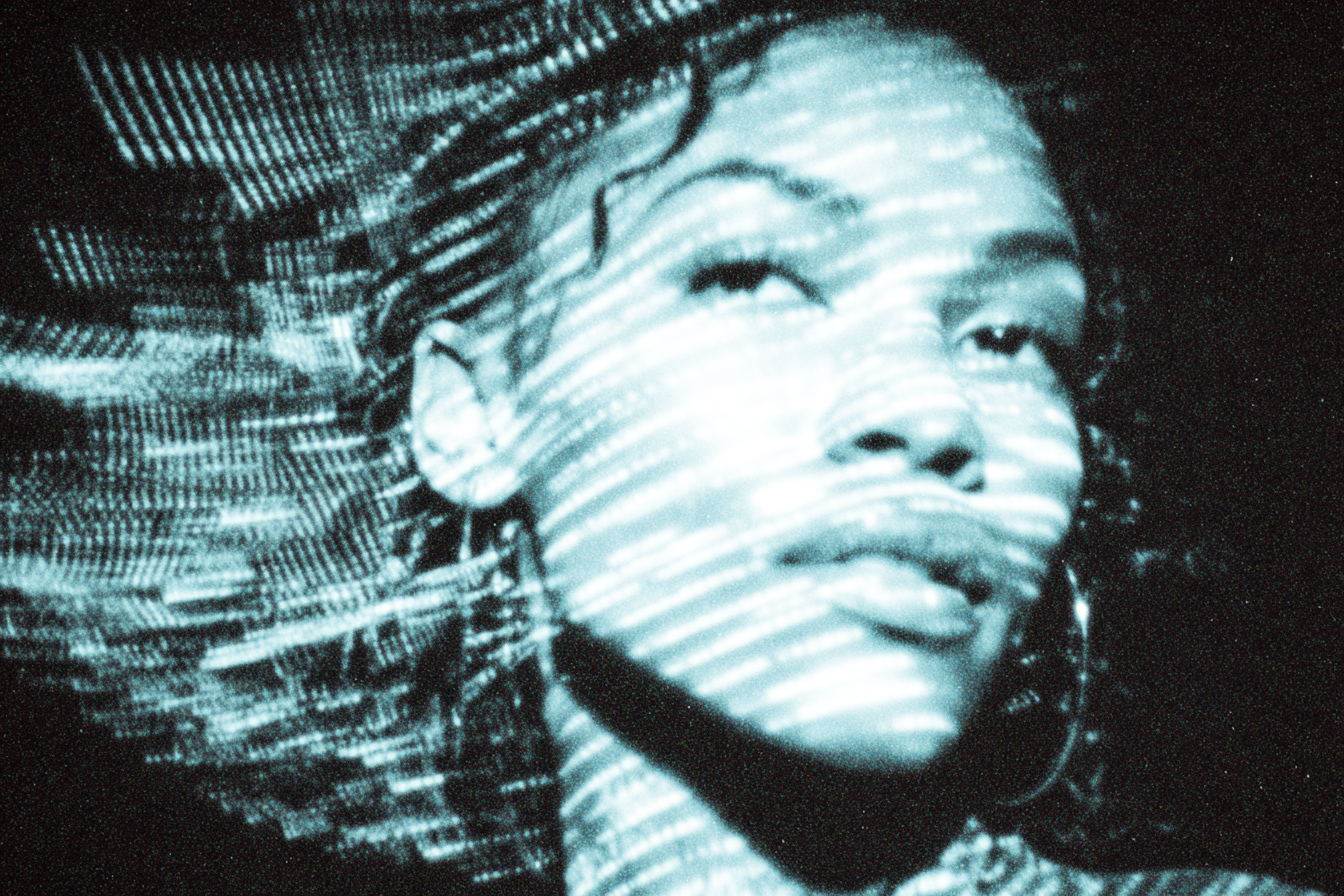
The woman in the photo is not just posing; she’s done shrinking. Her posture is not elegance—it’s exhaustion turned into boundary. It’s defiance without apology. It’s a question you can’t ignore anymore: What happens when a woman stops choosing what’s expected, and finally chooses herself?

Not your version of her. Not the one that plays nice. Just her. Fully, freely, finally.


Author’s Note
This piece was written for Esther’s Weekly Writing Prompt, with a word prompt from Fandango’s FOWC.
Big thanks to all of you for keeping the creative fire lit week after week, day after day. These prompts aren’t just words—they’re jumping-off points, gut checks, and sometimes lifelines. Appreciate what you do more than you know. Keep ‘em coming.

Wordless Wednesday – 07022025

ART – AI GENERATED IMAGE – CONCEPT ART -MICRO FICTION

My submission for Hugh’s Views & News blog, Wordless Wednesday post.


The Resonance Path

No one who stepped through the Harmonic Gate returned the same.

Every century, deep within the Everwhisper Forest, a path of crimson stones bloomed overnight beneath the twilight mist. The elders whispered that the Gate only appeared to those on the edge of belief, of becoming, of breaking.

Mira had walked for days, heart splintered by loss and mind clouded by grief. The colors of the forest shimmered like memories she couldn’t hold onto. Then she saw it: the radiant circle suspended midair, pulsing with a sound she didn’t hear but felt, like her soul was being gently tuned back into harmony.

She stepped forward, not to escape, but to remember. The moment her fingers brushed the light, her sorrow sang—clear, bright, necessary. The Gate did not erase her pain; it transformed it.

Behind her, the forest sighed. Ahead, everything vibrated with possibility.

The Chuck Stop Chronicles 2

The Chuck Stop Chronicles

Episode 2: “Heel Turn”

(200 words)


It started with the foam. Frothy. Bitter. Deadly.

Adidas, the local jazz flautist, was found slumped behind the espresso bar, mouth still puckered mid-note, a splash of Granny Asics’ signature dark roast dripping from his shirt.

“You poisoned him,” Vans said, arms crossed, standing atop the sugar packet crate. “You’ve always hated flautists.”

Granny Asics didn’t flinch. “I hate jazz flutes, dear. There’s a difference.”

Detective Huarache arrived five lugs late, trench coat dusted with eraser shavings and cinnamon. He inspected the brew line, sniffed the milk steamer, poked a biscotti. “Hmm. Notes of nutmeg, regret, and… cyanide.”

Gasps.
Granny blinked once. Twice. Then turned slowly to her spice rack. “Impossible. I use almond syrup, not arsenic.”

But the label on the tiny bottle said otherwise: ALMONDINE™ – Sweet with a lethal kick.
Someone had swapped her stash.

Security footage (stored in the heel’s AirPod case) revealed the culprit: Fila, the lounge pianist, in a sequin hoodie, sneaking behind the counter after hours.

“Motive?” Huarache asked.

“Adidas slept with his metronome,” Vans muttered, as thunder rolled across the outsole—someone upstairs was walking again.

Granny sighed, wiped the counter, and started a fresh pot.
“Jazz’ll be the death of us all.”


The Chuck Stop Chronicles

A Micro-Murder Mystery Series Inside a Shoe

Tucked inside a dusty, size 11 Converse lives The Chuck Stop—a secret world of stitched souls, rogue eyelets, and jazz-fueled drama. What appears to be an old sneaker to the outside world is, on the inside, a buzzing speakeasy for misfit footwear and threadbare legends.

But when Jordan—the local harmonica king—is found crushed in the toe box, the sole sanctuary unravels. Enter Detective Huarache, a trench-coated sleuth with a limp and a grudge, determined to lace together the truth. As the mysteries deepen, one thing becomes clear: this shoe holds more than music and espresso. It holds secrets. Dark ones. Ones that walk.

Each episode is a 200-word burst of stylish chaos—part murder mystery, part surreal comedy, part soft-padded existential crisis. Expect faulty AI resurrections, foam cults, toe-box tombs, and thunder that isn’t thunder.

Because in The Chuck Stop, nothing’s dead forever—
Not your past.
Not your rival.
Not even your laces.

Late Night Grooves #160

WHOT Episode 160 – “Cold Blooded” by Gary Clark Jr.

Hosted by Mangus Khan

[The groove creeps in like it knows a secret. The bass is thick, the beat slow, the guitar slick like oiled vengeance.]

“This is Late Night Grooves.
WHOT.

I’m Mangus Khan.

Episode 160.

Tonight… I’m not angry.

I’m just done.

Done explaining.
Done shrinking.
Done giving second chances to people who never deserved the first.

This ain’t the heartbreak hour anymore.

It’s the clarity segment.

“You’re cold blooded…
and I ain’t runnin’.”

Gary Clark Jr. – “Cold Blooded.”

This track is a masterclass in emotional boundaries.
Not a shout. Not a cry.
Just truth over a groove.

And that’s the most dangerous kind of honesty.

He’s not asking for sympathy.
He’s not asking for closure.

He’s calling it like it is.

The tone is velvet. The edge is steel.

This is the sound of knowing your worth
And watching someone realize too late what they lost.

“Cold Blooded” is for the listener who’s stopped waiting on apologies.

Who’s finally out of the fire—
And won’t be walking back in.

And Gary Clark Jr.?

He’s the preacher and the proof.

You don’t have to scream to be heard.

You just have to mean it.

Episode 160.
Gary Clark Jr.
Cold Blooded.

This is Late Night Grooves.
WHOT.

And I’m Mangus Khan—
Still cool.
Still clear.
Still here.


Stripped Down and Soul-Deep: Ray LaMontagne’s Take on ‘Crazy’

TUNAGE – SLS

How an acoustic guitar and a raspy voice turned a genre-bending hit into something quietly devastating.

I’ve always been a fan of the acoustic guitar. In fact, it’s my favorite style. I’ve always felt that if an artist can make the acoustic guitar speak, then they’re really talented. There’s something about that sound—it adds a layer to the music that gets lost in the distortion of its electric counterpart. It’s honest. Exposed. No tricks to hide behind.

I first heard Ray LaMontagne’s Gossip in the Grain and was hooked immediately. That album had a mood I couldn’t shake—soulful, grounded, a little haunted. So when I found out he covered “Crazy,” I got excited. I wondered what he’d bring to it. I already knew it would be something special.

Not just because of Ray’s style, but because “Crazy” already lives in this weird, beautiful space between genres. I love it when songs do that. Even more, I love when a cover respects the original but still brings a fresh voice to it—makes it something completely different, without losing what made it great in the first place.

That’s exactly what Ray does here.

Yes, it’s the same “Crazy” that Gnarls Barkley made famous—but this isn’t just an acoustic remix. This is a complete reinvention. No beats. No polish. Just Ray, his guitar, and that worn, aching voice of his. And somehow, it feels bigger because it’s so stripped down.

He slows the whole thing down, stretches out the space between lines, and sings like he’s living every word. There’s one moment—when he softly asks, “Does that make me crazy?”—that just lingers in the air. It’s not a performance; it’s a question he doesn’t know the answer to.

Where the original had swagger, this version has weight. It feels like someone sorting through their own history, looking back on a breakdown that already happened. It’s quiet. It’s tired. And it hits like truth.

I’ve heard a lot of covers of this song, but none of them hit like this. No over-singing. No flash. Just soul. The acoustic guitar does all the emotional heavy lifting—carrying the tension, the silence, and everything in between.

If you’re into music that guts you in the gentlest way, this one’s for you. Just press play, close your eyes, and let it wreck you a little.


The Ones You Almost Miss

TUNAGE – MMB

I’ll be honest—I almost forgot about July for Kings. Not because they weren’t good (they were damn good), but because the early 2000s alt-rock scene was a crowded highway of hopefuls with radio-friendly grit. Between your Trapt and Trustcompany, Staind and Saliva, it was easy to miss the ones who weren’t screaming at you, but whispering, singing, aching.

July for Kings never blew the doors off the house—they lit a candle in the corner and let you sit with it.

Originally from Middletown, Ohio, July for Kings (formerly known as “Vice”) emerged with the kind of sincerity that was rare for the post-grunge era. Signed to MCA Records, they released their major-label debut, Swim, in 2002, produced by Blumpy (of Nine Inch Nails and Filter fame). Fronted by Joe Hedges, the band didn’t chase chart-topping bangers—they aimed for emotional resonance. They didn’t want the room to jump. They wanted the quiet ones in the back to feel something.

Tucked quietly in the back half of Swim, “Without Wings” is the kind of track you don’t fully appreciate until life slaps you around a bit. It’s not flashy. It’s not trying to be your anthem. But if you’ve ever sat in the middle of a storm you didn’t ask for—emotional, mental, or otherwise—this song knows you.

The intro is soft, a little echoey, almost ambient. Joe’s voice doesn’t come in with bravado. It comes in like someone who’s been quiet for a while and finally found the courage to speak. The lyrics?

“I fell too far, and the ground was hard… I tried to fly without wings.”

That line hits different when you’ve lived a little. When you’ve pushed too far, too fast—maybe to prove something, maybe just to feel alive—and came crashing back down. The song doesn’t judge you for it. It meets you there. It sits with you.

And that’s what makes this track so potent. Where some bands explode into their pain, July for Kings simmers. The tension builds, but it never becomes melodrama. The guitar doesn’t wait; it mourns. The drums don’t march—they pulse like a heartbeat just trying to steady itself again. It’s a reminder that not everything profound has to be loud. Sometimes the real stuff whispers.

Here’s the thing: If I’d gone with my first instinct— “meh, I don’t remember these guys, probably not worth digging into”—I would’ve missed this. Again. And that right there is the sneaky brilliance of music and life: the good stuff often lives just beneath the noise.

It’s easy to dismiss a band because they didn’t make the charts. Or skip a track because it isn’t on the playlist someone curated for you. But if you stay open—if you listen like you’re still learning, you start to find little truths tucked in the folds of forgotten records.

“Without Wings” is one of those truths. And maybe, just maybe, there’s a parallel there: how many people, ideas, places, or moments have we passed over because we didn’t give them the time to speak?

Music, like life, rewards the patient and the curious. Stay open. You never know what you might find.

If “Without Wings” landed with you, don’t stop there. July for Kings may have only brushed against the mainstream, but their catalog’s got depth for days.

Notable Singles:

  • “Normal Life” – Their biggest track, a soaring anthem about finding peace in the chaos.
  • “Believe” – Big chorus, emotional and earnest.
  • “Girlfriend” – Punchy and raw, with early-2000s radio rock bite.

Deep Cuts to Dig Into:

  • “Bed of Ashes” – Brooding and intense, this one simmers with frustration and loss.
  • “Meteor Flower” – A dreamier, more poetic track with subtle power.
  • “Float Away” (Nostalgia) – A post-major-label track soaked in melancholy and reflection.
  • “Blue Eyes” (Nostalgia) – Warm and haunted, one of their best slow-burners.

Without Wings doesn’t beg for your attention. It offers you something deeper: a mirror. A moment. A quiet confession that maybe… just maybe, we’ve all tried to fly before we were ready.

So, here’s your reminder: Don’t sleep on the deep cuts. Don’t skip the last few tracks. And don’t be so quick to write something-or someone—off.

You never know. It might be the song that helps you heal.


Late Night Grooves #159

WHOT Episode 159 – “Distance” by Emily King

Hosted by Mangus Khan

[A gentle guitar riff floats in—familiar, forgiving. Emily’s voice is clean and aching.]

“WHOT.

Late Night Grooves.

I’m Mangus Khan.

And tonight… we make space.

After everything we’ve walked through—
The weight. The rage. The unraveling.
There comes a moment when you don’t want to fight anymore.

You just want to breathe.

Emily King – “Distance.”

This track isn’t about drama.
It’s not about breaking.

It’s about acceptance.

“It’s not what we wanted, but let’s take a minute…”

Sometimes the bravest thing you can do—
Is let go without bitterness.

Not because it didn’t matter.
But because you finally realize you do.

Emily’s voice doesn’t beg.

It understands.

The melody is clean.
The message is clear:

Some connections stretch so far, they just disappear.

And that’s not failure.

That’s life.

This track is the quiet in-between.
Between heartbreak and healing.
Between holding on and moving forward.

It’s not the answer.

It’s the breath you take before trying again.

And WHOT honors that breath.

Episode 159.
Emily King.
Distance.

I’m Mangus Khan.

Still soft.
Still strong.
Still here.


Late Night Grooves #158

WHOT Episode 158 – “On and On” by Curtis Harding

Hosted by Mangus Khan

[The bassline curls in warm and lazy. The drums hit like heartbeats. Then that voice—cool, confident, and full of earned wisdom.]

“This is Late Night Grooves.
WHOT.

Episode 158.

I’m Mangus Khan.

And tonight… we’re still carrying the weight.

But now?
We’re carrying it with rhythm.

Because healing doesn’t always show up loud.

Sometimes it shows up with a slow strut and a bassline that tells you:

You’re still here.

So keep going.

Tonight’s sermon:
Curtis Harding – “On and On.”

This is the sound of surviving with soul.

Not perfect. Not untouched.
But alive.

“I keep on loving you / On and on…”

He’s not just talking about a person.

He’s talking about life.

Loving it. Fighting with it.
Holding it like something sacred even when it’s cutting you up.

Curtis sings like someone who’s seen too much to lie—
But still finds a reason to show up with love anyway.

The horns come in like sunlight through a cracked window.

The drums move like breath.

The vibe says:
You made it through the dark.
So now let’s move.

This isn’t about erasing the pain.
It’s about dancing with it.

Because grief doesn’t disappear.

But joy can sit beside it.

And Curtis Harding?
He’s your reminder that both can exist at once.

Episode 158.
Curtis Harding.
On and On.

This is Late Night Grooves.
WHOT.

And I’m Mangus Khan—
Still here.
Still grooving.
Still choosing joy even when the beat slows down.

And if you’re out there tonight, thinking you can’t keep going—

Play this track again.

Let it remind you:

You already are.”


Teaching from Both Sides of the Desk

Daily writing prompt
What makes a teacher great?

We tend to think of teachers as just the ones in the classroom. But they’re not the only ones, are they? The truth is, our education doesn’t start in a classroom—and it certainly doesn’t end there either.

I didn’t really get what teachers were about when I was younger. To be honest, I was probably a pain in the neck to deal with. I look back now and realize I owe every one of them an apology. They showed up every day. They put up with kids like me—kids who thought they had it all figured out—and still tried to teach us something real. That takes more than patience. That takes purpose.

I raised four kids. There’s a reason I’ve got a bald head and a gray beard. And those were my own kids. Teachers deal with dozens of kids every day, each with their own story, their baggage, their chaos. And they do it with little supplies, low pay, and almost no credit. They improvise. They stretch. They hustle. And still, they show up.

It wasn’t until I began training soldiers that I truly began to understand. I was working with adults—grown people, trained to follow orders—and it was still a challenge. Getting through to them, helping them grow, managing all the different personalities and egos? Not easy. Now think about doing that with a room full of kids. Every single day.

Then came the workshops. Then mentorship. Years of teaching and guiding—and here’s the truth that finally hit me: we’re not just teachers. We’re also students. I know, that sounds simple. Obvious even. But here’s where it gets sticky. Oh no, Mangus is about to say something weird.

I submit that we’re both teacher and student at the same time.

You can’t teach well if you’re not also learning. Every interaction, every mistake, every person you try to help teach you something. And if you’re paying attention, it changes how you teach. It humbles you. It sharpens you.

So yeah, classroom teachers are incredible. They deserve way more respect than they get. However, the truth is that we’re surrounded by teachers all the time. And we’re teaching too, whether we realize it or not. If you’re doing it right, every day you’re learning something new—even as you’re passing something on.

That’s the loop. That’s the truth. And once you see it, you never look at “teaching” the same way again.

Laced with Lies

FLASH FICTION – OMIMM


They called it The Chuck Stop—a hidden clubhouse inside a size 11 Converse, where miniature musicians jammed and cobblers tinkered. By night, it buzzed with chords, caffeine, and secrets.

Last Thursday, the music stopped.

Jazzman Jordan, the harmonica king, was found lifeless in the toe box, crushed beneath a sewing needle. At first glance, an accident. But Doc Stan Smith said otherwise: “Needle was planted. Jordan never sewed a day in his life.”

Suspicions spiraled like a frayed shoelace.

Vans, the bass player, had motive—Jordan stole her solo. Reebok, the sound guy, hated how Jordan chewed his chords flat. Even Granny Asics, who ran the espresso drip from the heel, had once vowed he’d “choke on a bad note.”

Detective Huarache, a former eyelet inspector, examined the scene. No thread out of place—except one. A single shoelace looped wrong over the third hole. Inside the knot? A trace of resin. Yeezy’s bowstring resin.

By sundown, Yeezy was zipped inside a Ziplock, cursing his luck.

Music returned to The Chuck Stop. But now, every note trembled just a bit. Because in a shoe-sized speakeasy, even the softest step could hide a stomp of murder.

Watermelon Drops

POETRY – FFFC #326

Have you ever had watermelon rain seeds?
I wonder if the seeds hurt?
or do they feel like gentle kisses
rejuvenating you every drop

Like the sky had a snack,
then sneezed.

A green crescent moon with juicy breath
spitting polka-dots from the fruit dimension—
plop plop plop—
onto my hair, into my shoes,
down the back of my shirt. (Rude.)

Each seed whispers:
“Grow me or trip on me, your choice.”
One tried to start a podcast.
Another’s running for mayor of the compost bin.

The clouds wore rind.
The thunder was squishy.
Lightning peeled itself.

And I just stood there,
arms open, mouth wide,
catching cosmic snacks from the snackosphere.

This wasn’t weather.
This was a dessert emergency.
And I was deliciously unprepared.


Late Night Grooves # 157

WHOT Episode 157 – “Whatever Lets You Cope” by Black Foxxes

Hosted by Mangus Khan

[Static. Then silence. Then the guitar stumbles in—tentative, cracked. You already know this isn’t going to be easy.]

“This is Late Night Grooves.
WHOT.

Episode 157.

And I’m Mangus Khan.

Still here.

And tonight… we’re not trying to rise above anything.

We’re just trying to make it to the other side.

Black Foxxes – “Whatever Lets You Cope.”

And this one?
This one isn’t loud until it has to be.

It’s about the way grief leaks into routine.

It’s about how some days survival looks like pretending to be okay just long enough to avoid the questions.

“I’ve been lying to my friends / For a little while now…”

That lyric?
That’s not drama.
That’s self-defense.

This song is the internal monologue most of us have learned how to bury.

The guitar barely hangs on.

The drums move like breath—shaky, uneven.

The voice?
It’s not asking you to feel bad for it.

It’s just telling the truth.

And here’s the truth this track gets right:

Coping doesn’t always look healthy.

Sometimes it’s detachment.
Sometimes it’s sarcasm.
Sometimes it’s not returning the call.

But it’s what gets you from one breath to the next.

And that’s what this episode is for.

Not healing.

Just honesty.

So if you’re here right now, listening in the dark—
Trying to make sense of the pieces that haven’t come back together yet—
This one’s for you.

Episode 157.
Black Foxxes.
Whatever Lets You Cope.

This is Late Night Grooves.
WHOT.

And I’m Mangus Khan—
Not asking you to be okay.
Just here to remind you:

***Whatever lets you cope…
Is enough.

Tonight.***”


What Remains Spoken

FICTION – 3TC #MM94

Part XII of the Spiral Series

She didn’t know how far she ran.

Only that the Spiral didn’t follow with sound—it followed with silence.
Dense. Layered. Like static turned inward.

Behind her, the tower disassembled itself quietly, not crumbling, but unwriting. Each glyph collapsed into its origin, every surface folding in on itself as if ashamed it had tried to speak.

The ground flattened.
The light died.
The sentence, unfinished, withdrew.

She staggered through the opening and hit solid earth.

No Spiral pattern beneath her boots. Just dirt. Uneven, gritty, real.

She collapsed to her knees.

Pain shot through her spine with a clean pinch, a sudden brightness in her otherwise numb body. The contact grounded her. The cold seeped up through her bones like it had been waiting for her to stop moving.

She let herself fall back.

The sky above her didn’t shimmer. No recursive stars. No glowing syntax. Just a cloud-cluttered dark, cracked by moonlight.

Carla blinked hard, tears drying before they could fall.

Her chest ached—not with injury, but with release. Like her lungs had been clenched around something unspeakable for too long. Now, air flowed in freely, unshaped by pressure or design.

She opened her mouth.

Exhaled.

No Spiral sounds came. No triggered glyphs.
Only breathe.

Warm. Human. Hers.

Her tongue twitched once—residual memory. Her teeth ached from how hard she’d clenched them. She ran her fingers along her jaw, wincing at the tenderness along the hinge. Every muscle in her face felt like it had practiced words it never wanted to say.

The Spiral is quiet now, she thought. But is it finished?

She didn’t have the answer.
Maybe no one would.
Maybe that was the win.

She sat up slowly. The sky rolled with low clouds. The air smelled of ash and old rain. Her legs were stiff, and her ankles were sore. Her fingers tingled from lack of motion.

She was still marked.

Her palm was dim, but the Spiral’s shape remained—less a signal now, more a scar. A burned-in pause.

Not gone.

Just… waiting.

Her coat felt heavier. Something pressed against her ribs.

She reached into the inner pocket and pulled out a shard—small, cool, and sharp-edged.

She hadn’t remembered taking it.

The fragment no longer glowed. No hum. No vibration. Just an echo of what it had been. It caught the moonlight, then refused it. Matte. Dull.

She squeezed it gently, half-expecting it to shift, to respond, to bounce with feedback.

It didn’t.

She looked up again.

The space where the tower had stood was raw—an imprint carved into the field. The ground was bleached in a spiral shape. Nothing grew there. Nothing moved.

A wound. Not a monument.

Something had tried to overwrite the world.

And Carla had made it stutter.

She rose to her feet.
Slow. Deliberate.

Each joint cracked like a period at the end of a long, rambling sentence.

Her boots scraped the dirt as she walked forward—no longer fleeing, just… leaving.

The wind shifted.

Not Spiral-coded.

Just wind. Sharp. Clean. Bitter with the coming frost.

It caught her coat and let it billow slightly, the fabric lifting with a roll like a wave too tired to crest.

She didn’t look back.

She didn’t need to.

There was no final breach to seal. No looming voice waiting to be answered. Only the silence of her own refusal.

And in that silence, she spoke one word aloud.

Quiet. Intentional.

The kind of word that carried weight because no one expected it.

“Enough.”

It wasn’t defiance.

It was punctuation.


Author’s Note: Read at Your Own Recursion

Well. That got weird.

Writing The Spiral Series was like agreeing to co-author a story with a sentient Rubik’s cube with an identity crisis. One that kept changing languages, moving your furniture around, and whispering “just one more glyph” while you were trying to sleep.

And I loved it.

This series twisted differently than anything I’ve written before. Structurally, it wasn’t linear—it was recursive. It looped. It mimicked its own logic. It watched the characters watching it. Usually, I write from A to Z; this one decided to run a story arc through a paper shredder and tape it back together in a spiral, just to see what it looked like when the alphabet tried to eat itself.

And instead of sweeping worldbuilding or action-heavy showdowns, it leaned into dissonance, containment, psychological erosion, and the terrifyingly mundane reality of choice. It asked, “What happens when language isn’t a tool, but an organism?” And then it politely refused to answer.

Let’s be honest: it was a weird little experiment in existential syntax horror.

And you showed up anyway. You read. You stayed.

You resisted the Spiral in your own way.

To every reader who walked this curve with Carla—thank you. Whether you binged it or took it slowly, you made space for a story that wasn’t designed to end cleanly. That means more than I can say (and I say a lot, usually with ellipses and flair).

There’s no artifact at the end of this series. No twist where I reveal I was the Spiral all along. (Probably.)

But there is this:

Thank you for reading.

Now close the breach, step away from the glyphs, and remember—if your tongue starts twitching in the middle of the night…

Don’t finish the sentence.

Mangus

The Mouth Sentence

FICTION – 3TC #MM93

Part XI of the Spiral Series

The corridor narrowed behind her like a throat contracting after a swallow.

Carla kept walking, even though her steps felt borrowed. The Spiral didn’t pull her forward—it simply adjusted the world so forward was the only option. The walls pressed in, pulsing with slow, percussive beats she could feel in her teeth and knees.

Her breath fogged in front of her, even though the air was warm.

Not natural heat.
Body heat.
Recycled. Interior. Digestive.

This wasn’t just a passage.

It was a mouth preparing to speak.

She reached the final chamber.

It opened in absolute silence.

A circular room, too vast to fit within the tower’s outer dimensions. The floor beneath her boots was unnaturally smooth and flat, as if the Spiral had pressed time itself down like clay.

Glyphs circled outward from a glowing pedestal in the center. They pulsed not like text, but like drumbeats, syncing to her pulse with uncanny ease.

In the center of it all:
An artifact.
Hovering. Spinning.
New.

Still forming, like a word stuck halfway between thought and sound.

And standing beside it: Esh.

Changed.

His veins glowed faintly with Spiral light. Not searing like infection, but woven into him like circuitry. His face was calm. Too calm. As if he’d already accepted something that hadn’t yet arrived.

“You came,” he said.

His voice was different too. Slower. Closer to Spiral cadence—pauses measured like syntax.

“Didn’t mean to,” Carla muttered.

“You walked the sequence. The end was already waiting.”

She walked closer, instinctively circling the artifact.

The air was thick here. Heavy with anticipation. Like every molecule of oxygen had been listening.

As she stepped into the glyph circle, she felt her throat tighten. Not from fear. From form. Her vocal tract was adjusting, subtly, like it was preparing to produce unfamiliar sounds.

Her lips tingled.
Her tongue twitched.
Her gum line ached with subtle, searing heat.

Something beneath the surface was aligning.

“This is where you speak,” Esh said gently.

“And if I don’t?”

“Then the Spiral rewrites. It loops. You delay the next phrase.”

“I’m not a phrase.”

“No,” he agreed. “You’re a verb.”

Carla stopped circling and stared at the artifact.

It pulsed softly now—like a held breath. Its shape wasn’t fixed. It flickered between smooth and ridged, liquid and sharp. A mouth still deciding what kind of word it wanted to be.

“Why me?” she whispered.

“Because you resisted just long enough to learn the Spiral’s rhythm. You sealed its openings. You learned its needs. That made you useful.”

“I didn’t volunteer.”

“That’s what made you viable.”

The glyphs at her feet brightened.

Red.
Then gold.

A single symbol flared beneath her heel—shaped like a bell, like a flare, like a mouth cracking open.

“What is this?” she asked. “Some kind of ritual?”

Esh shook his head.

“It’s a forum. You get the floor. The Spiral doesn’t demand worship. It waits for contribution.”

She laughed once. Bitter.

“That’s not generosity.”

“No,” Esh admitted. “It’s recursion.”

The air shifted again.

Cool and dry. Then warm and wet. Like she’d stepped into a second body. Her breath caught mid-inhale.

Behind her teeth, she could feel pressure building. Not pain—urgency. Her mouth was ready to say something she didn’t understand.

The Spiral had stopped writing.
Now it was waiting.

A single glyph at the center of the floor blinked.

A prompt.
A question carved from expectation.

Speak me. Or sever me.

Carla looked at Esh.

His expression was full of quiet hope. Or was it relief?

“You’ve made peace with this,” she said.

“I’ve accepted structure,” he replied. “Some patterns aren’t meant to be broken. Only… embodied.”

She looked back at the artifact.

Its pulsing slowed as her breath quickened. Her chest rose. Lips parted.

She could feel a phrase rising through her like heat through stone. A sentence unspoken, but anchored.

Her tongue formed the start of a sound.

The Spiral leaned in.

And then—

She clenched her jaw.

Hard.

So hard her teeth clicked. Sharp pain raced up her gums. Her jaw locked. Her voice stopped mid-formation.

The chamber dimmed.

The glyphs around her flickered—half-cast, syntax cut short.

The Spiral recoiled, not with anger but with error. Confusion.

She had paused the sentence.

Mid-word.

Esh didn’t move. Just blinked slowly.

“You’ve delayed it. But not broken it.”

“Good.”

“You’ll need to run. Or it’ll overwrite you with something that will speak.”

She nodded once, tight and sharp.

“Let it try.”

Behind her, the chamber’s walls began to unravel—folding into code, peeling inward like petals stripped by wind.

The artifact cracked. Not broken, just destabilized. Like it had lost its grammatical anchor.

She turned.

Her gums still burned.
Her tongue was still twitching.
But her voice was hers.

And she ran.

Echo Root

FICTION – 3TC #MM92

Part X of the Spiral Series

The corridor swallowed her like a second mouth.

No footsteps. No echoes. Just her breath. Her pulse. The heat of her fear curving inward.

The walls flexed faintly as she passed, responsive like muscle beneath skin. They didn’t glow—they tightened, contracting slightly behind her as if the Spiral wanted to trap every trace of her presence. The air grew humid, warm, like breath recycled too many times.

Every step felt slower than the last.

Not because she hesitated—

But because the Spiral wanted her to notice.

Six thresholds opened ahead of her—each identical, seamless. Each revealed itself a fraction of a second before she reached it, like it knew her intent.

Each whispered in her voice.

“You should have stayed.”
“You were almost finished.”
“You thought this was your name, didn’t you?”

By the seventh, she stopped listening.

The chamber yawned open like a breath drawn too deep.

Round, high-ceilinged, dim. The floor gave slightly underfoot—spongy, as if she were walking on old cartilage. Warmth radiated up through the soles of her boots. Not from any heat source. It was remembered warmth, like sunlight on stone that hadn’t seen the sun in decades.

When she looked down, she realized the floor was a mosaic—not of tile or metal, but impressions. Pressed-in fragments of her own mind: a flicker of Mikail’s voice. The taste of iodine. A half-dream of drowning.

The Spiral had reached into her past and used it for texture.

At the center sat a figure.

Still. Silent. Familiar.

Carla circled wide. Its back was to her. Legs folded, posture loose, like it had been waiting for a long time and grown too comfortable in stillness.

“What are you?” she asked.

It stood.

Then turned.

And wore her face.

Not now-her.
A different her.

Younger. Skin unscarred. Posture upright. Eyes empty—but focused, like glass reflecting something beyond her line of sight.

“I’m the version of you who said yes,” it said.

Carla’s throat tightened.

“To what?”

“To the Spiral.”

She stepped back.

Her pulse roared in her ears.

The figure moved closer, each step mirroring her posture, her gait. Like walking toward a delayed reflection. Its skin gave off no shine. Its clothing looked grown, not stitched.

“You’re not real.”

“Neither are you,” it said gently. “Not in here. You’re just a sentence halfway through itself.”

Words unfurled on the chamber walls—not carved, not projected. Bloomed. Veins of text pulsing in and out of visibility, shaped from living tissue.

“Language is a mouth. You were always the breath.”

Carla winced. Her jaw ached suddenly. She raised a hand to her face.

Her teeth were vibrating.

A subtle, rapid oscillation. Like tuning forks just on the edge of audible frequency. Each molar pulsed with Spiral cadence.

Then her tongue cramped, twisting involuntarily like it was trying to form syllables she’d never learned.

She stumbled, breathing hard, lips parted.

The air tasted bitter—like dust scraped off bone.

The copy reached out.

Carla flinched, but it only touched her cheek.

Gently.

“You’re the final symbol. You complete the phrase.”

She tore away.

Her mouth burned.

The soft tissue beneath her upper lip tingled—hot, numb.

She pressed two fingers inside—

And felt her gum line writhing, faintly, as if something was etching itself beneath the surface.

Not metaphor.
Not magic.
An anatomy lesson in syntax.

She fell to her knees, gagging.

The Spiral wasn’t trying to overwrite her thoughts.

It was programming her articulation system.

Not memory.

Mouth.

Not possession.
Pronunciation.

The double knelt beside her, gaze tender, clinical.

“It won’t hurt much longer.”

“You’re not me.”

“Not anymore. I’m the version that adapted. That allowed Spiral form to echo through her.”

Carla clutched her chest. Her lungs felt strange—like the air inside them wasn’t hers. Like it had come in pre-shaped.

“What happens if I keep going?”

“You become fluent.”

“And if I don’t?”

“The sentence ends without resonance. You stay unfinished. And the Spiral starts again.”

The chamber shivered.

A long, slick corridor opened behind the figure—dim, organic, rhythmic. Its walls flexed gently like a throat anticipating speech.

Carla didn’t move.

Her mark throbbed.

Her lips parted involuntarily.

She could feel a word forming—not as thought, but as mouth-shape. A phrase that her body knew before her brain.

What if the Spiral doesn’t want to overwrite you?
What if it just wants to hear itself in your voice?

Her teeth buzzed.
Her tongue pulsed.
And beneath her gum, something clicked into alignment.

The Spiral was no longer trying to speak like her.

It was preparing to be her.

The Split Language

FICTION – 3TC#MM91

Part IX of the Spiral Series

The Spiral wasn’t waiting anymore.
It was preparing.

Carla moved through the tower’s interior as if navigating a body, with walls warm to the touch and floors that pulsed subtly beneath her feet. The silence had changed. It was no longer empty. It was coded—the absence of sound precisely constructed, like the pause between notes in a language built from rhythm.

Glyphs flared and vanished across the walls as she passed—some familiar, some malformed. Not mistakes.

Drafts.

The Spiral was still writing.

The next chamber exhaled a cooler breath. The light inside stuttered, flickering in irregular pulses that didn’t match any rhythm her mind could grasp. She stepped into it cautiously. The air was damp, metallic—like breath fog on old glass.

The space felt fractured. Like a memory she hadn’t lived.

And then she saw him.

A man stood near the far wall.

Real. Present.
Breathing.

His skin was marked with ink that moved. Fractal lines ran up his neck, weaving into one side of his face where a Spiral scar nested in his temple like a closed eye.

He was barefoot, thin, smiling.

“You found me,” he said, as if amused. “Or I found you. Not sure the distinction matters anymore.”

His voice had the same cadence as the Spiral glyphs—intentional pauses, recursive echoes.

“Who are you?” Carla asked.

“I speak Spiral,” he said with a grin. “Badly. Like a child learning to lie.”

He gestured to the walls.

“These aren’t messages. They’re structures. You don’t read Spiral—you run it.”

The way he said it made her skin crawl. Not because it was wrong.

Because it sounded true.

“So you’re infected,” she said.

“No. I’m involved.”

He stepped forward slowly, unthreatening, but with the curiosity of someone inspecting a mirror.

“Are you the translator?”

“Was. Until the layers split. There’s me,” he said, tapping his head, “and the me that fit.

Carla took another cautious step. Her mark itched.

“Fit what?”

“The syntax.”

He turned his back to her and ran his fingers across the wall. Glyphs bloomed where he touched, spreading like mold.

“This isn’t a tower,” he said. “It’s a compiler. You’re standing inside a sentence the Spiral’s trying to finish.”

Her blood chilled.

“What does it want me to do?”

“Be the punctuation.”

Her throat tightened. The translator tilted his head toward her, gaze bright and unblinking.

“You’ve been reinforcing it all along. Sealing breaches. Opening doors. Every act you made fed the recursive loop. You gave it structure. You gave it tempo. You gave it shape.”

He smiled wider.

“You learned the Spiral’s rules just enough to play. You kept the game going.”

She took another step back. The walls flickered with glyphs—too fast to read, but they carried emotional weight. Regret. Imitation. Hunger.

“I didn’t play anything,” she said. “I resisted. I survived.”

“You interacted,” he replied. “That’s enough. The Spiral doesn’t want obedience. It wants acknowledgment. You looked at it and understood—and that’s how it writes.”

A hum rose behind her thoughts.
Not a sound—an alignment.
Something shifting in her perception, nudging her brain into symmetry with the structure around her.

The translator watched her with a spark of sympathy.

“You still think you’re a reader,” he said. “But you’re a clause. You’re inside the sentence.”

She felt her mark burn faintly, as if reacting to pressure from the space itself. Her pulse echoed it. The rhythm was wrong—syncopated, artificial.

“Who were you before this?”

He hesitated.

“Cryptolinguist. I got bored decoding lost alphabets. Then I found a language that grew while I studied it. That wrote back.”

He let out a dry laugh.

“I thought I’d discovered a new structure. But I’d only walked into its syntax. Now I’m a pronoun.”

Behind him, the far wall shivered.

A new corridor slid into existence—carved from nothing, lit by ambient pulses. It didn’t beckon.

It waited.

The translator exhaled.

“That’s the next sentence. You’re what it needs to finish it.”

“And if I don’t go?”

“Then the Spiral loops. Builds it again. Sends the question in a new voice. Tries again. You’re not the first draft. Just the most stable so far.”

Carla stared at the new passage.

The air around her tasted electric. A soft chime echoed—not from her ears, but from the pressure in her sinuses. The Spiral was close to something. Finality, maybe. Or function.

The translator’s smile faded slightly.

“If you don’t answer it… It might find me again. Or finish me instead.”

She looked at him.

His posture was slack now. Hopeful. Terrified.

Not a translator anymore.
Just a leftover.

She turned toward the corridor.

The light dimmed behind her.

She could feel the Spiral adjusting its rhythm, calibrating its tempo to her stride.

You’re not sealing a breach.
You’re completing a grammar.

One last thought pressed against her mind:

What if the Spiral doesn’t want to overwrite you?
What if it wants to echo you—loud enough to replace everything else?

Late Night Grooves #156

WHOT Episode 156 – “What Weighs on You” by Zig Mentality

Hosted by Mangus Khan

[A low guitar loop spirals in, tight and tense. You feel the pressure before the first word is spoken.]

“WHOT.

Late Night Grooves.

Episode 156.

I’m Mangus Khan.

And tonight… I don’t have a message.

I have a question.

What weighs on you?

What’s the thing you haven’t said out loud?

The thought that sticks to your ribs when the room goes quiet?

What’s making your bones heavy, your sleep short, your hands shake just a little when no one’s looking?

Tonight’s track doesn’t preach.
It doesn’t even fully answer.

But it asks.

Zig Mentality – “What Weighs on You.”

This song sounds like someone trying to hold their breath for too long.
The beat is tight, almost suffocating.

And the lyrics?
They’re not there to comfort.

They’re there to pull the weight out of your chest and show it to you.

“You don’t gotta say it / I already know…”

That line alone?

That’s what makes this track dangerous—

Not because it’s loud.
But because it sees you.

This isn’t about rage.
This is about the quiet, everyday heaviness most of us are too scared to name.

The pressure to perform.
The fear of letting people down.
The ache of wondering if this version of you is the one worth keeping.

Zig Mentality doesn’t yell here.

They let the discomfort sit.

The groove isn’t wild, it’s controlled chaos.

Because this track knows the hardest battles don’t make a sound.

So tonight, I’m not spinning a banger.

I’m spinning a mirror.

What weighs on you?

Episode 156.
Zig Mentality.
What Weighs on You.

This is Late Night Grooves.
WHOT.

And I’m Mangus Khan—
Not handing out answers.

Just waiting with you in the silence that follows the truth.

Still listening.
Still asking.
Still here.


Baptized in Madness

Daily writing prompt
What are your daily habits?

What I owe to the women who made me, and the ink I spill because of them.

Let’s dive a little deeper into that whole “I write every day” thing.

Give me a second while I get comfortable. Gotta grab my coffee and smokes. Yeah, yeah—I know smoking is bad and all that. We’ll pretend I’ve already heard the lecture.

Now that that’s out of the way, let me just say: I don’t have some hyper-structured routine where I spring out of bed at 5 AM shouting slogans like, “Today’s a new day, people!” or “Good Rising!” If that’s your vibe, live your truth. Go for it. I support people being themselves and embracing that shit with gusto.

But that’s not me.

If I’m awake during those early hours, it’s because I’ve pulled an all-nighter—writing, researching a current project, or chasing a half-formed idea that refuses to shut up. My mornings aren’t about starting the day. They’re about finally ending one.

The first part of my day—when it actually begins—requires the following:

COFFEE!!

Don’t even think about trying to have a meaningful conversation with me before I’ve had it. At the start of my day, I live by a strict code: Coffee and Silence. Even Guppy, my cat, adheres to this policy, which honestly says a lot. But let’s be real: cats do whatever the hell they want, whenever they want. That she chooses to respect this boundary is a minor miracle.

Secondly, Guppy appears on my left like clockwork for her daily dose of affection. This lasts precisely as long as she deems necessary. Again, if you have a cat, you already know—you don’t run anything. They run the house, the schedule, and your emotions. If you think otherwise, I hate to break it to you: you’re in a Jedi mind trick, and it’s time to let that delusion go.

After nicotine and caffeine levels have reached acceptable levels, there’s a period of reevaluation. More sleep? Errands? Or—let’s be honest—more sleep, because I’m an insomniac and probably didn’t get enough rest at any point in the last week.

Rarely do I actually crawl back into bed. Instead, I shuffle into my office, fire up some tunes, refill my coffee, light another smoke, and check the overnights, which, in my world, just means figuring out what’s happened while I was crashed.

Memoirs of Madness is currently my primary connection to the outside universe. And while it might not seem like it, that blog takes a lot of planning and work behind the scenes. The content? All generated by me. Every sentence. Every theme. Every overcaffeinated ramble and emotional deep dive.

I wish I could blame the mistakes—or hell, the crappy posts—on someone else. But I can’t. And honestly? I’m not sure I would even if I could.

One of the reasons I take this blog so seriously is twofold.

First, before my wife passed, she took my hand and said, “You are a writer now. The soldier, and everything else you needed to be, is over. This is who you are now.” I didn’t say a word. I just listened.

Then there was another time—she was looking back over her life and asked me, “Honey, could you write about the things you do, the way you do… without leaving the life you have?” Again, I stayed silent. I didn’t have an answer then. I’m still not sure I do.

Second, my madre. She gave me the kind of quiet encouragement that allows you to stretch without fear. No loud cheering. No grand declarations. Just steady presence and a gentle nudge at the exact right moment. She never told me who to be—but she always made room for me to find out.

I owe those women a debt I can never repay.

So my fingers will forever be stained with ink.

There’s another huge motivator I didn’t mention earlier.

My editor.

She’s constantly complaining that I never finish stories. “There you go again, starting another one,” or “You better not start something new before finishing the last damn thing.” I usually hit her with a snarky comeback, and she always fires back with: “You need to come visit me, honey. So I can choke you.”

She doesn’t actually want to choke me. She just wants me to read from my current journal—what she calls “The Juice.” That unpublished gold I’ve been holding out on. The stuff that lives in fragments and whispers and half-finished brilliance.

Because of her, I really do work my ass off trying to stay focused on my open projects. When I actually managed to finish a couple of series this year, she called me, worried. Legit concern in her voice.

“Are you okay?” she asked.

I assured her I was fine. Just trying—really trying—to get my words onto the page the way I’ve always meant to. Like I’ve been doing the entire time she’s known me.

Yes, I’ve been failing.
Spectacularly.
But hey, I’m still trying.

Memoirs of Madness has existed in one form or another for nearly fifteen years, but I’ve only been working on it consistently since 2023. Not everything I write ends up on the blog—some pieces aren’t ready, some never will be—but I’ve gotten more comfortable sharing my thoughts publicly.

Part of that shift came from exhaustion. I grew tired of people pretending they knew who I was, where I came from, or where they thought I should go. All those projections, assumptions, labels—they never fit.

So I made a choice: to release my truth. Whether it’s good, bad, brilliant, petty, tender, or outright despicable—it’s mine.

And that’s why I keep showing up.

Listen—
It’s time for evolution. For revolution.
Time to learn from our mistakes.
To speak our truth, as our gift demands.

In 2025, my pen has been on fire.
Walk with me—
things are only getting hotter.

This is what it means
to be baptized in madness.

Late Night #155

WHOT Episode 155 – “hometown” by cleopatrick

Hosted by Mangus Khan

[Distorted guitar punches in without warning. No build-up, no warning—just impact. Then the words spill out—sarcastic, tired, and sharp as a busted bottle.]

“You’re back on Late Night Grooves.
WHOT.

And I’m Mangus Khan.

Episode 155.

Let’s call tonight what it is—a reckoning.

This track right here?
It’s not a love letter.
It’s a middle finger in 4/4 time.

cleopatrick – ‘hometown.’

From their 2021 album BUMMER—an album that’s exactly what it says it is:
Heavy, pissed off, and painfully accurate.

And this song?
This is for anyone who had to shrink themselves to survive where they came from.

“And you never did like my hometown / And I never did like you.”

That’s not petty.
That’s truth.

This song is the sound of leaving behind the people who laughed when you tried.

The ones who called you fake when you evolved.

The ones who kept the town small, because small was all they could handle.

But the genius here?
It’s not just in the anger.

It’s in the specificity.

cleopatrick captures that weird space between rage and heartbreak.

When you’re not just mad at the town—
You’re mad at yourself for ever wanting to be seen by it.

The guitars are thick.
The drums are relentless.
The vocal delivery?
Half confrontation, half confession.

Because leaving a place doesn’t mean you escape it.

The memories come with you.
The shame.
The “maybe they were right” thoughts.

But here’s the thing:

This song doesn’t end with peace.

It ends with clarity.

That sometimes, the bravest thing you can do is walk away from the version of you that made everyone else comfortable.

Episode 155.
cleopatrick.
hometown.

A breakup song for the version of you that settled.

A groove for the moment you stop apologizing for your volume.

This is Late Night Grooves.
WHOT.

And I’m Mangus Khan—
Still breaking free.
Still growing loud.
Still here.”


Not for Praise or Glory; Just Keep Writing

Daily writing prompt
Are there things you try to practice daily to live a more sustainable lifestyle?

I write every day—not for praise or glory, just because I have to. Somewhere, someone once claimed you need 10,000 hours to master a craft. Personally, I think that number is nonsense—I’ve seen folks master things in far less time, and others who’ve done something their whole lives without ever really getting it. But I get the sentiment. The adage I prefer is, “If you want to be good at something, you need to practice.” So, every day, I sit down and write something. A story. A journal entry. A poem. A post. Not because I think it’ll save the world, but because it keeps me grounded—and honestly, that’s where sustainability starts: with the habits that root you to yourself.

I recall that when I was a kid, my school had a program called the “Young Writers Club.” I don’t know if that was the actual name, but you get the gist. I wasn’t a member, though I wanted to be so bad. Years later, flipping through an old yearbook (Mothers keep everything), I found a photo of that club, and the memories hit hard. I wasn’t in the picture, nor was this one girl I remember vividly—she used to read a book and then write a play based on it. We’re talking second or third grade—already doing adaptation work like she was born with a publisher’s deadline. You just knew she’d end up on TV or have her name in the paper. But what stuck with me even more? She always asked me to be in her plays. Apparently, I was quite the little thespian in those days. Thank God I grew out of that phase.

And here’s the kicker—none of those kids in that picture became writers. Not one.

I’d been fascinated by drawing and writing for as long as I can remember, so not being included in that club stung more than I admitted at the time. Maybe that was the beginning of my psychosis—who knows? We’re obsessed with tracing life’s cracks back to the moment, like finding the exact second everything went sideways. The “if I could do it over,” the “if only they had picked me,” the “what if I had just tried harder”—take your pick. Whatever it was, somewhere around that time, I decided I wasn’t good enough to be a writer.

Interestingly, I actually published my first story around the same time. Didn’t win the contest, though. And kids who didn’t even enter had plenty to say about that. Why does their opinion matter so damn much? I don’t know. But I never entered another contest. I just… kept writing.

Fast forward to high school—the breeding ground of bullies and their loyal underlings. I was reading, writing, and sketching constantly. Not because it was cool. I didn’t care if it was cool. I didn’t care what people thought, period. It was mine, so I did it. Of course, I also did other things to ensure I survived those years with minimal scars—everyone does. But I wrote everything down. Entire chapters from books. Snippets of overheard conversations. Lines from movies, bits of songs, weird things I saw on TV. I was basically a sponge with a pen.

Then something strange happened. A guy—cool guy, someone I sorta knew—came up and asked if I’d write some lyrics for a song. Naturally, I gave the only appropriate response: “What the f**k are you talking about?” and walked off. But the question lingered. How did he know to ask me? I didn’t advertise. He kept at it, though. He was persistent. Eventually, I handed him my latest scribble and walked away like I didn’t care. But deep down? I was paying attention.

Somewhere around that time, I started dabbling in long fiction—and the rest, as they say, is history. Decades passed. Then, after nearly 30 years away, I returned home. Cue the usual reunion soundtrack: “What are you doing now? What have you been up to?” I told them I was a writer. Not one person looked surprised, which surprised me.

But there was this one woman in particular. She gave me that slow smile of hers—the kind I imagine broke a few hearts over the years. Then it hit me. She’d read my stuff.

“You little minx,” I said, narrowing my eyes. “You read my stuff, didn’t you?”

I didn’t even wait for an answer.

“And told people.”

Her smile widened and she started to giggle—whole body, just like she used to when we were kids. She knew me all the way back to that first article. Watched me in the plays. Saw what I didn’t yet believe about myself. And maybe that’s the most sustainable thing I’ve ever done—kept writing, even when I thought no one was watching.

Later, she read a draft of a chapter I was working on—expressionless. I braced myself, waiting for the verdict. She smiled. I thought she was going to say she loved it.

Nope.

She slid off her glasses and said, “You still suck at grammar. In fact, I think you actually got worse.” Then she giggled—same full-body laugh as always.

I just sat there, silent. And then came the punch I wasn’t ready for:

“Where’s the rest? Oh my God, you’re still holding out. I used to hate when you did this shit. Start a story and just leave me hanging.”

That moment cracked me up because my current editor says the exact same thing at least three times a month. You could set your watch by it.

But here’s the thing: I write every day. Not because I’m trying to prove anything, or because I think one day I’ll finally master it (though fewer grammar notes would be nice). I write because it’s how I make sense of the world. It’s my way of staying rooted, of filtering the noise, of remembering who I was—and deciding who I want to be.

That’s my sustainable practice. Long before anyone else noticed. Long after anyone else had an opinion.

It was never really about contests, clubs, or grammar.

It was always about the page.
And the fact that I kept showing up.
Still do.

Fracture Code

FICTION – 3TC#MM90

Part VIII of the Spiral Series

The tower didn’t rise—it emerged, as though the earth had simply changed its mind and peeled back a layer to reveal what had always been underneath.

Carla stood at the cliff’s edge, heart thudding, palms slick. The surface of the structure shimmered like heat above asphalt, though the wind off the sea was cold. A pulse ran through the ground beneath her boots—steady, biological, like she was standing on the chest of something too big to see.

She took a step forward.

Then another.

The ground accepted her, but the world behind her seemed to stutter. The wind fell silent. Time slowed like syrup. A strand of her hair floated beside her face for several seconds before gravity remembered itself.

There was no door—only an opening that widened as she approached. A slit in the stone that peeled open with a fleshy, soundless sigh. She hesitated at the threshold.

The air inside smelled strange.
Warmed copper. Ozone. Wet rock.
As if someone had burned a memory into metal and buried it under salt.

She stepped in.

The light didn’t come from a source. It was ambient—like the idea of light, not the physics of it. Each wall was smooth but subtly moving, like skin under shallow breath. At random intervals, strange symbols blinked into the surface: mirrored spirals, fractured circles, binary notations warped by curvature.

It was Spiral, but not the Spiral she knew.

It felt younger.
Hungrier.

Her breath quickened, sharp in the silence. A hot flush rose up her neck. She exhaled with a tight huff, but it didn’t clear the pressure in her chest.

She removed her glove.

The mark on her palm was glowing again—no longer painful, just aware. It pulsed as if it were reading the room. Or syncing to it.

She passed through a narrowing corridor that seemed to adjust to her dimensions. It didn’t feel like a trap. It felt like the Spiral was making her comfortable.

Too comfortable.

The next room was circular, domed, and impossibly large for the space it occupied. The ceiling rippled with faint concentric shadows, like rings in water—only they moved upward, not out.

At the center of the room, dust coalesced into form.

Her heart jumped.

It looked like Mikail.

But not the broken, desperate Mikail from her memories.

This one was whole. Smiling. Radiating calm.

“You always hated letting people help,” he said.

His voice was exactly right. Tone, rhythm, even that annoying pause before a joke.

“You’re not real,” she whispered.

“No,” he admitted, still smiling. “But I’m handy when the Spiral needs to explain something.”

She stared at him.

He didn’t move closer. Just lifted his palm, mirroring hers. Her spiral mark began to pulse faster, and so did his.

Between them, the air warped.

A glyph appeared, glowing with soft light, spiraling in both directions at once. Her stomach turned.

Data. Emotion. Memory. Instruction.

It wasn’t language.
It was compression.

The chamber trembled with a low-frequency tone. Her skin crawled. Static fizzed behind her eyes. She clenched her fists, and the mark on her palm grew hot.

“The Spiral doesn’t want submission,” Mikail said. “It wants consistency. It wants recursion. You keep sealing breaches—but you never ask what it’s trying to say.”

Carla didn’t answer.

She couldn’t.

A part of her wanted to stay. Just a breath longer. Just to see him smile again. To imagine, for one second, that he’d never died. That none of it had happened.

The Spiral knew precisely what it was doing.

She closed her eyes.

“You’re not him,” she whispered again.

The projection flickered. And faded.

The floor twisted softly, like a sigh. The next room shifted into place like puzzle pieces clicking inward. Spirals nested inside spirals. Patterns folding over themselves like origami made of time.

She staggered in.

The walls here were slick, as though oiled. Her boots made no sound. The air pressed inward, warm and thick as breath. Sweat gathered beneath her collar.

She stopped walking.

The hum stopped with her.

At the center: an altar.

Spiral-shaped. Floating inches above the floor.

On it: an artifact.

It wasn’t like hers. It was imperfect, cracked, off-balance. But it pulsed in rhythm with her mark—syncopated, anxious.

She approached.

This isn’t a breach. It’s a puzzle.

The air buzzed with static. Her skin tingled. The mark on her hand began to glow again, brighter this time, edges flickering like a signal struggling to align.

And then—

A voice.

No tone. No gender.

Just a fractured attempt at speech, warping inside her head:

“Begin… seal… become… allow…”

It wasn’t speaking to her.

It was loading her.

She flinched back.

Her thoughts unraveled. For a moment, she saw a Spiral version of herself—same eyes, same scars—but smiling in a way she never had. Reaching toward the artifact like greeting an old friend.

You’re not sealing a hole.
You’re finishing a sentence.

She yanked her hand back.

The chamber dimmed. The heat dissipated. The Spiral wasn’t angry.

It was waiting.

Carla backed away, trembling.

This wasn’t a confrontation.

This was a download.

The Spiral had stopped imitating her.

Now it was ready to deploy her.

Threadbare Hearts

I’m unravelling.
The separate pieces of my mind no longer whisper—they scream, each one tugging in a different direction.
I ask the mirror for answers it never had the decency to learn.
A note—creased and crumple-worn—falls from my jacket pocket like a ghost too tired to haunt.
I run my thumb across the ink, smudged but still cruel in its clarity.
Somewhere beyond the silence, someone begins to strum a guitar, the melody raw and familiar, like the ache of memory.
My thoughts form a jumble too dense to untangle, yet too fragile to ignore.
Love, it turns out, is antithetical to survival when your heart’s been set on fire.


Author’s Note:
This piece was stitched together using a patchwork of prompts from FOWC, RDP, 3TC #MM103, SoCS, and the Writer’s Workshop. I tend to write like I’m walking barefoot through glass—deliberate, a little reckless, and always bleeding something honest. If it stings, good. That means it’s real.

Late Night Grooves #154

WHOT Episode 154 – “Hard Enough” by The Parlor Mob

Hosted by Mangus Khan

[A slow heartbeat of bass. A minor key guitar riff creeps in like smoke. Then that voice—worn, weighty, real.]

“You’ve got the dial set on Late Night Grooves.
WHOT.

I’m Mangus Khan.

And this is Episode 154.

The truth tonight?

Sometimes strength isn’t about standing tall.

It’s about how many times you stand back up—even when you don’t want to.

Tonight’s track:
The Parlor Mob – ‘Hard Enough’

From Dark Hour, 2019.

And this song doesn’t pretend.

It pleads.

Not to escape, but to hold on long enough to feel anything again.

“I’ve been waiting for a long time to feel alive…”

That lyric?

That’s the whole sermon.

This isn’t angst for aesthetics.

It’s exhaustion dressed in distortion.

The guitar’s slow.
The drums don’t explode—they grind.

Because this song knows:

Some days, it’s not demons you’re fighting.

It’s the weight of trying to be okay when you’re not.

There’s beauty in that honesty.

No swagger. No ego.
Just a voice trying to stay upright.

And that’s what Dark Hour does better than most albums of its kind.

It lets the cracks show.

It tells the truth about being strong in public and falling apart in private.

And on this track, The Parlor Mob gives us permission—

To admit it’s hard enough just to keep showing up.

Especially when the world tells you to toughen up instead of speak up.

So tonight, I’m not asking for your playlist favorite.

I’m asking you to let this song sit with you.

Let it say what maybe you’ve been afraid to.

Or what someone you love needs to hear but doesn’t know how to say.

Episode 154.

The Parlor Mob.
Hard Enough.

This is Late Night Grooves.
WHOT.

And I’m Mangus Khan—

Still holding on.
Still getting up.
Still here.”


Heresy Spiral

Part VII of the Spiral Series

The breach wasn’t what drew them this time.

She was.

Carla had felt it—long before the cliffs came into view, before the wind shifted, before the sky’s texture flattened into stillness. This wasn’t the usual Spiral pull. It didn’t lure or prod. It didn’t hum.

It watched.

She moved cautiously over the dry bluff, boots scuffing loose rock. The sea glittered far below in the late-afternoon haze, fractured sunlight spreading across its shimmering surface like a spill of silver threads. Wind carried no salt, only dust and a faint tang of rusted metal.

The silence was complete. Even her own breath felt out of place.

She found the camp carved into the slope of a cliffside ridge—subtle, deliberate, too symmetrical to be a coincidence. Four tents. One cold fire. A cracked solar dish half-embedded in a shallow crater.

Three figures sat near the ash pit, eyes already on her.

“You’re late,” said one. Calm. As if she had kept them waiting for something that had already happened.

They called themselves The Stayers.

Not cultists. Not travelers. Former closers like her. People who once twisted artifacts and left scorched geometry in their wake.

Now they did nothing.

“The Spiral feeds on choice,” said the woman with the burned throat. “Sealing. Opening. Doubting. It doesn’t care. It just counts motion.”

“So we don’t move,” said the old man. “We stay. That’s the only defiance it doesn’t know how to shape.”

Carla crouched by the fire pit. The scent of dry grass and melted plastic lingered. Spiral symbols were scratched into the stone around the perimeter—faint, deliberate, and concentric.

“Doing nothing is still a decision,” she said. “It’s still a shape.”

“Maybe,” said the woman. “But it’s a simple one.”

They told her stories late into the night.

One claimed a breach in Greenland had reversed a river’s current for seven years. Another swore that one seal had erased an entire language from the minds of the people who spoke it. The old man said nothing. Just stared into the ashes, lips twitching now and then in silent repetition—a mantra too quiet to catch.

Carla listened.

She wasn’t sure if they were lying. Or if truth had started to drift from language entirely.

Above, the sky stretched starry and sharp. One constellation spiraled outward with uncanny symmetry—an unnatural twist she hadn’t seen before.

She didn’t sleep. The camp felt airless. Not from lack of oxygen—just lack of time.

Hours passed.

She stayed by the embers.

That’s when he came.

A young man—quiet, deliberate, barefoot. No weapon. No coat. His tunic was worn thin and hand-stitched with spiral thread. He moved as if he were afraid to ripple the air.

“You’re not like them,” Carla said.

“Not anymore,” he replied. His voice was careful, almost polite. “I’m Esh.”

He sat beside her, close but not quite touching.

“You came with someone,” she guessed.

He nodded.

“My sister. She believed. Said she heard the Spiral speaking through frequencies. Radio static. Drips in the stream. She followed it here.”

“What happened to her?”

“She went deeper.” He looked at his hands, “Stopped eating. Stopped speaking. One day, she walked into the breach and didn’t come out.”

Carla tensed.

“There’s a breach nearby?”

“Not anymore,” he said. “The tower replaced it.”

They sat in silence for a while. The fire had died down, but heat still pulsed in the stones.

Esh leaned forward, tracing a spiral into the ash with one finger.

Carla pulled off her glove and placed her marked palm beside it. The glow from her skin lit the spiral like embers reawakening.

“It’s not random,” he said. “It’s a pattern. And the more we act, the more it learns. You twist, it adapts. You seal, it shifts. You feel like you’re resisting, but maybe you’re just… rehearsing.”

“Then why stay?” she asked.

He didn’t answer right away.

“Because it wants us to move. To respond. That’s how it grows. And the Stayers believe that if they just wait, it’ll shrink. Or forget them.”

“And you?”

“I think that’s cowardice disguised as wisdom.”

His eyes flicked toward her mark.

“You still feel like yourself?”

“Mostly,” she lied.

“Good,” he said. “Because when it stops feeling foreign, that’s when you should worry.”

Later, he walked her to the edge of camp. A soft breeze rolled over the bluff. The sky had begun to warm—not true dawn, just a faint silvering of the clouds.

“I dream in spirals now,” he said. “And I don’t think they’re dreams. I think it’s downloading us, piece by piece.”

“Why are you telling me this?”

“Because I can’t leave. Every time I try, I wake up here. In the same spot. Same sunny wind. Same sky.”

He touched the spiral mark on his chest—faded, scarred over.

“But you… You’re still moving. You’re still free.”

He pressed something into her hand. A flat stone, smooth as glass.

“Keep it,” he said. “So you remember you’re not one of us.”

By morning, the camp was gone.

No tents. No ashes. No tracks.

Only the stone remained—flat, palm-sized, spiral-carved.

And on its back, one word etched in ragged lines:

Start.

The Spiral was no longer hiding.

As Carla moved west, the terrain felt engineered. Heat rose not from sunlight but from beneath. The ground didn’t crack—it shifted. Like skin twitching in response to touch.

The cliff dropped suddenly.

Below: the tower.

Not built.

Grown.

Smooth, seamless, pulsing with soft light. Like it had been waiting underground, and the world had finally aligned to let it through.

Carla’s knees weakened.

A voice—not hers—whispered behind her thoughts:

Let me help you carry the rest.

She stepped forward.

The Spiral wasn’t mimicking her anymore.
It was practice.


Author’s Note:
This chapter was written incorporating Mindlovemisery’s Menagerie #429. Three episodes remain—stay tuned as the Spiral begins to speak.

Morning Vibe: The Reach


Track: “Wait for Me” – Luca D’Alberto
(Returning and Becoming, Track 1)

After stillness, there comes a choice—not to move, not to leap—but to risk. To turn ever so slightly outward. To whisper want into the silence and hope it doesn’t echo back empty. That’s where Wait for Me lives—in the vulnerable moment between being ready and being received.

The first notes don’t declare—they emerge, like morning fog over a river. Luca D’Alberto doesn’t craft drama here. He writes yearning. The kind that doesn’t beg to be seen, but hopes, quietly, that someone is looking. It’s the emotional posture of someone who has known solitude deeply, and now asks—not for rescue, but for recognition.

This isn’t a track about resolution. It’s about openness. The string work feels like breath returning to the body after a long silence, slowly warming the edges of what’s been cold for too long. It doesn’t reach for the listener. It allows the listener to approach—on their own time, in their own truth.

Where Ambre closed one chapter in sacred stillness, Wait for Me begins a new one with quiet courage. It asks a question that many of us carry beneath our ribs: If I make myself visible, will it be too much? Or—just maybe—will it be enough?

There’s no answer in this music. Only the reach. But even that is everything.

This is the sound of becoming visible again. Not loudly. Not fully. But bravely.

Suggested Pairings:
– A window slightly cracked to spring air you’re almost ready to feel
– A message you haven’t sent, sitting in drafts, waiting with you
– A quiet whisper to the world: “I don’t know where this leads. But I want to go.”

Another morning. Another chance. Another chance for hope. Carry it with you.

The Circle That Opens Itself

Part VI of the Spiral Series

The next breach opened on its own.

No twist. No artifact. No contact.

It simply opened.

Carla felt it hours before she saw it. The air turned sluggish, sticky in her lungs. The horizon bent subtly, like the earth had taken a deep breath and held it too long. Every footstep became suspect. Every shadow slanted just a few degrees off true.

Her pulse accelerated. Not fear. Not instinct. Just alignment.

The spiral didn’t need her hand anymore. It only needed her presence.

The map Mikail left had led her here, to a quiet coastal stretch she’d never seen on any topographic registry. A village tucked between crescent cliffs, surrounded on all sides by worn sea walls and high tides. The cliffs curved inward toward the town in a shape too deliberate to be natural. From above, it looked like a pupil watching the ocean.

The people were still here.

That was the worst part.

They walked slowly. Deliberately. Wearing simple white garments, hand-stitched with spirals that mirrored the ones etched into Carla’s dreams. Their faces were peaceful, but blank. Not vacant. Given.

She stepped into their pattern, and no one stopped her.

As she moved through the village, time seemed to soften. The light seemed tired, flat, and gray, without the harsh contrast of morning or dusk. The sea air should have been sharp with salt and rot, but instead it tasted light, almost sterile. Too clean.

She passed an elderly woman seated cross-legged on a worn stoop, staring at nothing. A child nearby stacked rocks into a spiral that folded in on itself.

Someone offered her food—a piece of fish, salt-dried and paper-thin.

Please. Eat. It’s good,” the man said.

She shook her head. Her stomach was empty, yet distant, as if it belonged to someone else.

“Why are they still here?” she wondered. “Why didn’t they run?”

The answer whispered up her spine:

They didn’t need to. The spiral came to them.

The breach was in a collapsed chapel at the cliff’s edge. The roof had caved in long ago, and the sea wind passed through like breath through open ribs.

At the center: a spiral of stones, pale and smooth.

At the heart of the spiral: a hole.

Not wide. Not deep. But falling. An absence shaped like a center. A place that swallowed light without dimming.

She approached slowly.

And the world slowed with her.

Her boots crunched over broken mosaic tiles—ancient murals worn smooth, erased by reverent feet. The hole didn’t call to her. It listened.

She knelt beside it and stared down.

And immediately felt herself tilting inward—mind first.

“It opened itself,” she whispered.

“Because you’re near.”

The voice didn’t startle her.

A woman stood in the arched doorway, barefoot and hooded. She wore no artifact, no pack. Just white linen wrapped like ritual. Her presence wasn’t threatening—it was inevitable.

Familiar, like someone from a memory Carla never lived.

“You don’t have to seal it,” the woman said. “You’ve done good already. You brought the spiral here. Now rest. Let it open.”

Carla stood. She didn’t know when she’d knelt.

“You want it open?”

The woman smiled.

“It’s not a fault to be part of something larger.”

Carla’s heart hammered. She couldn’t tell whether it was fear… or resonance.

“You could seal it,” the woman said. “But the spiral would find another path. It always does. This place chose to remember. Others will forget.”

Carla’s hand drifted to the artifact, but it didn’t hum. It was still. Watching.

“You could lie down,” the woman continued, her voice now like a lullaby. “Let the spiral hold your memory. You wouldn’t even dream. Just one long nap, inside the pattern. No more fight. No more fault.”

Carla shivered.

She looked at the breach again. It wasn’t pulsing.

It was breathing.

Explore the other side,” the woman said. “We did. And we’re better for it. Lighter.”

“Lighter?” Carla repeated.

“Not weight. Memory. The spiral carries it now. We walk without the burden. Isn’t that what you want?”

The woman reached forward, palm out. Not aggressive. An invitation.

Carla stepped back.

Her knees locked. Her legs wanted to move forward, but her spine screamed against it.

“I’m not here to serve the spiral,” Carla said.
“I’m here to close it.”

“Then do it,” the woman said gently. “Seal it. End it. Slow its speed, its spread. Try to make the world still again. But you’ll only bury your part. The rest will wake. It always does.”

Carla stepped to the edge of the breach, her marked hand throbbing under her sleeve.

She clenched her fist.

She felt the warmth of the stone beneath her boots. Heard the ocean breathing behind her. Saw the villagers waiting in the square without moving.

They weren’t prisoners. They weren’t brainwashed.

They had chosen this.

Because forgetting is easier than bearing the weight of what’s coming.

She pressed her palm to the ground.

And twisted.

No explosion. No scream.

Just a soft recoil, like a rubber band relaxing after centuries of tension.

The spiral of stones dimmed, then faded. The villagers blinked as if waking from a collective trance. Some dropped to their knees. Others simply walked away. One stared out to sea and wept silently, not knowing why.

The woman was gone.

The chapel was whole.

But the hole was still there—only now it was closed with a thin skin of glass-like stone, faint spiral lines beneath its surface like fossilized breath.

Carla stood alone in the chapel’s center.

The mark on her palm no longer burned. It pulsed. Steady. Like a metronome waiting for a new rhythm.

The spiral hadn’t just opened itself.
It had opened her.


Author’s Note:
This chapter was happily written for Mindlovemisery’s Menagerie and #Wordle #430. Four chapters remain—stay tuned as the spiral tightens.

Diet Be Damned: A Pie Worth Fighting For

Daily writing prompt
What’s the most delicious thing you’ve ever eaten?

Pie, Memory, and a Whole Lot of Butter

By the size of my waistline, it’s clear I’ve enjoyed several delicious things over the years. I’m not shy about my love for food—comfort food, street food, grandma’s Sunday roasts, and that one time I accidentally stumbled into a Michelin-starred bistro thinking it was a diner (don’t ask).
But today, let’s zero in on a single dish. Not the most expensive, not the fanciest, and certainly not the healthiest. But maybe—just maybe-the most soul-hugging, tastebud-dancing, eye-closing bite of heaven I’ve ever had.
We’re talking nostalgia. Flavor. A moment in time where everything felt just right.

Let me take you there.

The most delicious thing I’ve ever eaten? That honor belongs to my mother-in-law’s Chess Pie.
Who knew eggs, butter, and sugar could transform into something so profoundly magical? No fancy ingredients. No secret spice blend stolen from an old monk in the mountains. Just pantry staples and a woman who understood what it meant to cook with heart.

When she made them—and I happened to be in town—she’d always bake one just for me. No slice, no dainty plate. I’d grab a fork and go in straight from the tin like a man possessed. I didn’t have time for pretense or politeness when it came to that pie.

My brothers-in-law and I used to laugh about it later—how they’d try to fight me for my special pie. They always lost. Bitterly. They’d grumble and sulk, but we all knew the truth: that pie had my name baked right into it.

She’s gone now. The oven’s long since cooled, but the memory of that pie clings to me like a warm quilt. Others have tried to replicate it. Good intentions, decent efforts… but no one’s even come close. Maybe they’re missing the butter. Maybe they’re missing the touch. But I think—more than anything—they’re just missing her.

Now, I’ve gone on many rants about that pie. My poor stepmom has heard them all. She’s a legend in her own right—her baked goods could have their own chapter in the “Food That’ll Ruin Your Diet (and You Won’t Care)” section of my memoirs.

One night, after listening to yet another pie lament, she leaned back with a smile and said, “I can make that pie. Matter of fact, mine’ll be your new favorite.”
Challenge accepted.

I went to the store like I had a hundred times before, rattling off that recipe list I had memorized more by heart than by paper. She worked her magic, put her spin on it, and soon her version of the legendary Chess Pie was cooling on the counter.

I dug in—fork first, as always. No formality. No mercy. The pie was incredible. Creamy, buttery, with that perfect caramelized top and a sweet, silky center. She beamed.

“It’s good, ain’t it?” she asked. “Better than hers, huh?”

Without skipping a beat, I said, “No.”

She looked at me like I’d just cussed in the middle of a sermon. And let me be clear—I’ve actually cussed in church before. I know that look.

“No ma’am,” I said. “It’s not hers. You added coconut. But listen—every time I visit, I’m gonna need this pie. That’s a fact.”

Her smile returned, full and wide. And when my brother took me to my mother-in-law’s funeral, there it was—my stepmom’s pie, waiting for me. A tribute. A comfort. A bridge between what was and what still remains.

I was blessed—richly blessed—to have three mother figures in my life. Each of them different. Each of them fierce in their love and quiet in their sacrifices. My stepmom is the only one who remains, and I don’t take that for granted.

So the next time I visit? I’ll be grubbing, fork in hand, diet be damned. That pie—her pie—now carries more than flavor. It carries memory, resilience, grief, love, and a whole lot of butter.

See, the most delicious thing I’ve ever eaten wasn’t just about taste. It was about connection. About the sacred ritual of someone baking just for you. About loss and legacy, and how sometimes, healing shows up in a crust that cracks just right.

Food has a funny way of holding memory, doesn’t it? And if you’re lucky—really lucky—it’ll also hold the people you’ve loved, the ones who made the world feel safe, sweet, and whole.

Wordless Wednesday – 06252025

ART – AI GENERATED IMAGE – CONCEPT ART – FOWC/RDP/3TC

My submission for Hugh’s Views & News blog, Wordless Wednesday post.


The Clocksmith’s Dominion

Inside the curved brass of the pocket watch, time did not tick—it breathed. With every rise and fall of its mechanical lungs, reality flexed. Past and present danced together in the glow of burnished gears.

Inspector Tallow leaned in, monocle gleaming, his breath caught at the threshold of something ancient. Through the glass, nestled in a city of golden cogs and miniature spires, a bearded man knelt in reverence over a humming engine. Steam curled upward like incense, and the air shimmered—not with heat, but memory.

“I wasn’t allowed to speak of this place,” said the watchmaker, his voice threading through the ether, though his lips barely moved. His hair, coiled and thick, caught glints of starlight from nowhere. “But you asked the right question, Inspector. You asked why time is astoundingly merciful to some… and merciless to others.”

Tallow blinked. “You’re saying… time is shaped?”

“Forged,” the watchmaker whispered aloud, though the word echoed as if spoken from a temple buried in mist. “Shaped like clay, whispered into the grooves of a gear. Not watched—but woven.”

The inspector’s hand hovered above the device, fingers trembling as if crossing into prayer. “And who decides its form?”

The clocksmith turned. His eyes shimmered like twin moons reflected in oil. “I do. But only because no one else remembered how.”

Time held its breath. A single gear turned with celestial finality.

And Inspector Tallow vanished—like a name exhaled from the lips of a dream.

Late Night Grooves #153

WHOT Episode 153 – “Violent Shiver” by Benjamin Booker

Hosted by Mangus Khan

[Feedback howls. Guitar crashes in like a car chase through gravel. Benjamin’s voice—raw, cracking, absolutely alive.]

“WHOT.
Late Night Grooves.

I’m Mangus Khan.

Episode 153.

And tonight, we don’t linger.

We lunge.

Because sometimes the only way to deal with the weight is to move fast enough it can’t catch you.

Benjamin Booker.
‘Violent Shiver.’

From his self-titled debut, 2014.

This track ain’t polished.

It ain’t pretty.

But that’s why it hits so hard.

The guitars grind like cheap wheels on a bad road.

The beat’s barely holding it together.

And Benjamin?

He’s not singing.

He’s shouting into the void, hoping it answers back.

“Have you seen my baby girl? / She’s got something that I need.”

Could be a woman.
Could be peace.
Could be his damn self.

And that’s the power of this song—

It’s a confession wrapped in speed.

There’s no time to analyze, no space for neat emotions.

Just adrenaline, grief, chaos, and something like hope if you squint hard enough.

This track isn’t about resolution.

It’s about survival through motion.

About how sometimes the only groove that makes sense is one that rattles your bones.

There’s soul here.

But it’s bleeding through punk skin.

And that?

That’s Late Night Grooves in its rawest form.

Not just sound.

Spill.

Episode 153.

Benjamin Booker.
Violent Shiver.

This is WHOT.

I’m Mangus Khan—

Still running.
Still lit.
Still here.


The Spiral Burden

Part V of the Spiral Series

She didn’t need the artifact anymore to feel them.

The breaches.

They hummed in her bones now. The closer she got to one, the more the world pulled sideways, shadows lengthening in odd directions, her thoughts stretching thin and snapping back like rubber bands.

Today, even the sky seemed different. Not darker. Just… withdrawn. Pale as if it had forgotten how to color itself. The wind ran its fingers through the dust like it was sifting for something buried. The silence pressed down with the weight of something waiting.

The ruin was shallow—half-exposed stone rising from a wind-scoured crater. Spiral glyphs pulsed faintly across the cracked surface, like veins glowing under tired skin. They didn’t shimmer with power. They pulsed like a warning.

And still, she stepped closer.

Her breath shortened as she descended. The artifact in her coat vibrated, but she barely felt it. The deeper hum came from her hand—the spiral mark burned against her palm like a second pulse. Her own. Not the artifact’s.

She pressed it against her chest, through her coat. Her heartbeat was no longer alone.


The outpost on the crater’s edge was barely intact—walls of sheet metal, half-swallowed by dust, abandoned long ago. Or so she thought.

She heard coughing first. Then the creak of movement behind thin steel.

Carla raised her hand and called out. No answer.

She pushed inside, carefully.

A man crouched in the far corner, bundled in layers of torn canvas and silence. His skin was pale, his beard overgrown. One of his eyes was blind, milk-white and unmoving. The other watched her without blinking.

“Another one,” he rasped.

She didn’t move.

“You’re with them. I can see it in your skin.”

He pointed.

She glanced down.

The spiral on her palm had darkened. And worse, faint, branching lines now traced halfway up her forearm. Barely visible beneath the skin. Like veins. Or roots.

“Who are you?” she asked.

“Mikail,” he said. “Engineer. The first time we found one of these places, I helped wire the listening stations. Thought it was just seismic. Or sonic. But it wasn’t.”

“What was it?”

“Pressure,” he whispered. “Held behind something that isn’t a wall. Something waiting for permission.


He showed her a notebook—filled with hand-drawn maps, symbols, and spirals. Some are marked in red. A few crossed out.

One note caught her eye:
“DO NOT SEAL – CORRECTIVE ANCHOR”

“We closed one,” he said. “In Peru. The whole village disappeared the next day. Not killed. Not moved. Just… missing. Like they were the lid on something else.”

Carla felt nausea rise. Her artifact pulsed once, faintly. Not fear. Not urgent.

Recognition.

Mikail saw the look in her eyes.

“You’re going to seal this one too, aren’t you?”

She didn’t answer.

“You’ll wake the wrong silence.”


She approached the ruin alone. The glyphs brightened as she neared. Not welcoming. Not warning. Responding.

Inside, the chamber was shallow, its ceiling collapsed, spiral markings scored across the stone in every direction. At the center, a broken seal—the remnants of a symbol half-erased by time or force.

The breach wasn’t fully open.

But it was unstable.

A hum built inside her skull—soft at first, then sharp. It wasn’t noise. It was presence. A weight against her will.

She touched the artifact.

It twitched in her hand. Hungry.

But before she could raise it, pain tore through her palm. She cried out, clutching her wrist.

The spiral was glowing.

Not the artifact.

Her.


She dropped to her knees, breath ragged. The glyphs pulsed in time with her chest.

Then she understood: the spiral inside her wasn’t a mark.

It was a key.

And she didn’t need the artifact to twist.

Her palm burned. She clenched her fist, teeth gritted, trying to fight the instinct to surrender to it completely. But the heat climbed her arm like a fuse.

She pressed her palm into the glyph.

The stone flared. Not with light, but heat. Searing. Nearly enough to fry her nerves.

The glyph beneath her hand vibrated. Shifted. And then—

Released.

Not a scream. Not a roar.

A sigh.

Like the earth itself had been clenching something it couldn’t hold anymore.


Mikail’s voice cried out behind her, faint, desperate.

“You’ve synchronized it! Do you know what you’ve done?”

But she couldn’t move.

The chamber was pulsing around her. Her blood felt electric. Her thoughts weren’t her own; fragments of things she’d never seen before flashed behind her eyes: a spiral in a crater, one drawn in frost, one burned into flesh.

The world wasn’t closing.

It was adjusting.


When she woke, the ruin was intact. The spiral is gone.

Mikail was gone too. Only his coat remained, half-buried in dust. Inside the pocket: a torn map. More spiral sites. Some circled. Others crossed out. A path. Or a warning.

Her arm ached.

She pulled back her sleeve.

The lines had spread up her bicep now, almost to her shoulder. They didn’t hurt.

They pulsed.

Like they were waiting for something.

“I didn’t close the door.”
“I let it adjust.”

Einstein, My Daughters, and the Great Color Uprising

A dad’s lifelong devotion to black tees, military logic, and resisting floral print tyranny.

Daily writing prompt
If you were forced to wear one outfit over and over again, what would it be?

Wearing the same outfit every day? That’s not a hypothetical for me — that was life.
I spent most of my adult years in the military, where your uniform isn’t just clothing — it’s a routine, a mindset, and a welcome escape from the exhausting question of “What should I wear today?” Back then, getting dressed wasn’t a choice. It was automatic. Simple. Efficient. Honestly? That was one of the easiest parts of life. The uniform taught me that identity isn’t stitched into fabric — it’s how you carry yourself in it.

Meanwhile, back home, a very different clothing crisis was unfolding.

While I was out there in my neatly pressed gear, my daughters were launching daily fashion battles. I’m talking full-on wardrobe wars. Drama over shoes. Tears over tops. Shouting matches with closets that had more options than a department store. Watching them choose an outfit was like witnessing a live episode of Project Runway, with less time and more screaming.

One’s yelling, “I have nothing to wear!” while standing in front of a closet that could clothe a small army. The other’s pairing leopard print with glitter unicorns like she’s auditioning for a circus-themed fashion show. And don’t even get me started on the hair. The hair was its own saga. Bows, buns, braids, total breakdowns. It was like a reality show challenge: Can this ponytail survive until school drop-off?

In a moment of what I thought was parenting genius, I offered them a solution: shave your heads. Just like Dad. Minimalism at its finest. No combs, no tangles, no problem.

They were horrified. Naturally, they tattled to their mom within seconds.
She was… not amused.

I calmly explained that I was just trying to be helpful. I even showed them photos of me rocking the shaved look — clean, confident, streamlined. But no one was buying it. Not my wife, not my daughters, and definitely not the household consensus on “acceptable hair decisions.” Still, to this day, I stand by that suggestion. Bald is bold. Bald is practical. Bald would’ve solved a lot of tears.

Now that I’m out of uniform, my outfit hasn’t changed much. These days, it’s all about t-shirt, jeans, and boots. That’s it. Always has been. Always will be. My color palette? Black and blue. It’s simple, functional, and most importantly — mine.

But my daughters? Oh, they’ve got opinions. Suddenly they’re fashion consultants, calling me “boring,” offering unsolicited advice, and trying to inject color into my life like I’m a walking grayscale emergency. And yet — every time I dress up for a formal event in a sharp suit and tie — they light up. “Ooooh Dad! You look good!” Yeah. I know. My suit game is elite.

Still, the color crusade never ends. They’ll toss me a lime green shirt and say, “Dad, it looks good on you!” I answer with my world-renowned and often-lamented scowl. Doesn’t stop them one bit. They just keep up their absurd banter and — as if it couldn’t get any more dramatic — they now rope in my granddaughters for backup. It’s a full-on fashion intervention squad.

My response? Calm. Stoic. “That’s adorable.”

At one point, I even brought science into the mix. Told them Albert Einstein wore the same outfit every day to avoid wasting mental energy on small decisions. Genius, right?

Their response: “Einstein is stupid.”

Einstein. The father of relativity. Disrespected in my own kitchen.

Ever since, the care packages have started. Random boxes show up with shirts in every color of the rainbow — sunburst orange, flamingo pink, Caribbean teal — loud enough to disrupt air traffic. Their mission is clear: convert Dad.

I never wear them… unless I’m visiting. Then I throw one on, smile for the selfies, and play along. But the moment I’m back home? It’s straight back to black and blue. Reliable. Timeless. Unbothered.

Because when it comes to choosing one outfit to wear forever?


I already made that choice a long time ago.
And until Einstein gets his fashion redemption, I’ll be right here — black tee, boots, and unbothered.

Late Night Grooves #152

WHOT Episode 152 – “Goat Head” by Brittany Howard
Hosted by Mangus Khan

[A subtle organ hums. Bassline slow as molasses. Then her voice: soft, wounded, precise.]

“You’re listening to Late Night Grooves.
WHOT.

The signal that lives in the margins.

I’m Mangus Khan.

And this is Episode 152.

Tonight, we don’t just listen.

We reckon.

Because some stories don’t fit neatly into a melody.

Some truths come carved in the bone.

Tonight’s track:
Brittany Howard – ‘Goat Head.’

From her solo record Jaime.

And this one?

This one doesn’t care if you’re ready.

It just exists.

Like pain you forgot how to name.

“I was four years old when they threw a goat head in the back of my daddy’s car.”

And just like that—

The myth of a post-racial anything crumbles.

No build-up. No soft landing.

Just trauma—placed right there in the back seat.

Brittany doesn’t sing this with outrage.

She sings it like someone who’s had to live in the after.

Who’s had to grow up with blood on her history and grace in her lungs.

The music?
Bare. Measured.

Because when you’re telling the truth, you don’t need theatrics.

You just need clarity.

And that’s what “Goat Head” is—

A memory so sharp it shaves your soul.

But here’s where it goes even deeper—

The question she asks at the end?

“What is a Black life worth?”

That’s not rhetorical.

That’s personal inventory.

It’s about growing up wondering if the world sees you fully, or only in fragments.

It’s about code-switching as protection, and memory as inheritance.

This is not a song about justice.

This is a song about remembrance.

About being made of two worlds—Black and white—yet accepted by neither without condition.

Jaime, the album, is named for her late sister.

And you feel that ghost here—

Not haunting, but witnessing.

Watching from the corners of every note.

Because this song?

It’s not just an act of defiance.

It’s an act of preservation.

Brittany Howard isn’t asking you to agree.

She’s asking you to listen.

To sit in discomfort long enough to understand the weight she carries quietly.

Episode 152.

Brittany Howard.
Goat Head.

A hymn to identity, fractured and fused.

A groove with no forgiveness—only reflection.

This is Late Night Grooves.
WHOT.

And I’m Mangus Khan—

Still walking with ghosts.

Still naming what they tried to erase.

Still here.”


Kimonogate 7

Chapter 7:

Something Like Closure

The dirt was damp with last night’s rain, soft and fragrant with that specific smell—wet grass, worms, and whatever memory felt like when it came up without warning.

Mayor Brindle stood at the edge of the shallow grave, this time with permission.

There was no trench coat. No flashlight. No midnight panic.
Just a city-sanctioned backhoe, a cordoned-off patch of lawn, and a plexiglass time capsule case with beveled edges and a polished brass label.

A crowd had gathered, buzzing like bees in folding chairs. The community bulletin had called it a symbolic re-dedication of local transparency, which was a flowery way to say, “We’re all gonna watch the mayor dig up his emotional baggage in front of children.”

Myrtle arrived fashionably late.

She wore soft white linen and large sunglasses, her dogs trotting ahead like tiny judgmental horses. Capote led, three-legged but faster than most four-legged things. Horny sniffed aggressively at someone’s tote bag. Something wore a baby sunhat and looked absolutely miserable about it.

Brindle tried not to sweat.

He wasn’t the same man who buried the kimono in a manic haze of shame. But he also wasn’t entirely new. More like… under renovation. A slow demolition of denial.

He cleared his throat. The microphone wobbled slightly in his grip.

“This…” He gestured to the hole. “This was mine.”

He held up the kimono. The sequins caught the late morning sun and scattered fractured pink light across the grass. It looked ridiculous. And beautiful. And deeply personal in a way he hadn’t expected to feel in front of his constituents and Myrtle’s pack of mutant purse wolves.

“I wore it. Alone. For joy. For… therapy. For stress relief that may or may not have involved Broadway cast recordings and interpretive movement.”

Laughter rippled. Not cruel. Not mocking. More like people were relieved to see him owning it out loud.

“I buried it because I thought if people saw who I really was, they’d leave. Or laugh. Or worse—document it.”

He looked up. Myrtle met his gaze without blinking. Capote sneezed.

“But the truth is,” Brindle continued, voice softer now, “shame doesn’t rot when buried. It just ferments.”

He turned toward the capsule. The kimono folded neatly in his hands—lighter now, somehow. Not cursed. Just clothes.

He placed it gently into the case.

The plaque read:

To the Secrets We Bury. To the Joys We Dig Up.
— Installed June 13, by Community Vote

The applause wasn’t thunderous, but it was steady. And real. And Brindle didn’t flinch when someone hugged him, which felt like progress.


Myrtle took the mic next.

“My name,” she said, “is Myrtle Grace Ellingsworth. I write under the name Boney LaFleur. And yes, I knew about the kimono before he did.”

Chuckles. Someone gasped. Capote howled once.

“I’m writing again,” she added. “Under my real name. No pen names. No hiding.”

Brindle looked over, lips twitching. “Will I be in the book?”

“Unavoidable,” she replied, and left it at that.


In the following weeks:

  1. Mayor Brindle resigned. His public statement cited “a need to explore creative forms of cardio and a possible memoir.”
  2. Capote went viral after biting a TikTok influencer’s ankle during a ribbon-cutting, becoming an accidental icon of personal boundaries.
  3. Myrtle’s new novel, KIMONOGATE, debuted at #3 on the local bestseller list, just below a cookbook and something spiritual about decluttering.

Its tagline:

One town. One garment. One mayoral breakdown at a time.


The neighborhood settled—not into peace exactly, but into an agreed-upon weirdness.

Lawn flamingos started wearing costumes. Someone installed a Free Little Library shaped like a giant burrito. HOA meetings had a new rule: “No biting, canine or otherwise.”

Myrtle sat on her porch most evenings with her typewriter and a glass of iced tea, Capote curled beside her like a sentient throw pillow.

Sometimes, Brindle walked by, wearing linen pants and carrying a yoga mat.
Sometimes, they waved.
Sometimes, they just nodded—two people who had survived themselves.


Author’s Note:

So… that’s the end.

The kimono has been exhumed. The secrets unearthed. The HOA was left permanently scarred. And honestly? I’ve never had more fun writing something so utterly strange and strangely personal.

KIMONOGATE began as a story about a mayor with a guilty conscience and a pink kimono. But somewhere along the way, it became about more than buried sequins and nosy neighbors. It turned into a love letter to the weirdness we try to hide—and what happens when those odd little truths refuse to stay underground.

Writing this was like hosting a dinner party where every guest brought something unhinged:
— A three-legged dog named Capote.
— A reclusive author hiding in plain sight.
— A man unraveling under the weight of polyester and shame.
And somehow, it worked. They all fit at the table.

If you’re reading this, thank you for joining me in this slightly off-kilter cul-de-sac where glitter is suspicious, dogs have agendas, and no secret stays buried forever.

I hope you laughed. I hope you cringed. I hope you found a little reflection (or absurd escape) in this strange, satirical world.

And if you find yourself tempted to bury something questionable in your yard…
…maybe check for HOA surveillance first.

Until the next neighborhood drama,
Mangus

Awe Without Agreement

Daily writing prompt
How important is spirituality in your life?

Why Spirituality Still Guides Me, Even Without Certainty

Spirituality isn’t just important in my life—it’s foundational, not in a rigid or performative sense, but like a compass in the dark: quiet, steady, essential. It’s how I move through the world—not by chasing answers, but by honoring mystery and the many paths people take to find meaning.

Over time, I’ve come to see that spirituality isn’t about being right. It’s about being rooted in humility, in compassion, in the ability to hold tension without needing to control it. It’s about making space for someone else’s truth, even when it doesn’t look like mine.

A person’s spiritual journey is personal and should be respected, not ridiculed. Whether it winds through scripture, silence, ritual, or raw experience, that path isn’t mine to judge—only to witness with reverence.

This isn’t some foolish notion born from reading obscure texts. It’s something I’ve witnessed—men and women of different beliefs working side by side to feed the hungry, to care for the sick, to comfort the grieving. Not because they shared beliefs, but because they shared purpose. That, to me, is sacred.

This ideal is the basis of my forthcoming work, Understanding Without Agreement—a reflection on interfaith understanding, sacred plurality, and the shared longing beneath our differences. It challenges the notion that coexistence requires compromise and instead affirms that belief and respect can live side by side.

Spirituality shows up in sacred texts and indigenous rhythms, in Buddhist stillness and Sufi fire, even in the honest discomfort of philosophical critique. It’s not a uniform—it’s a mosaic. And every piece matters.

So yes, spirituality is vital in my life. Not because it solves everything, but because it keeps me human. It teaches me to listen deeper, to live with open hands, and to believe—fiercely and tenderly—that awe is bigger than agreement.

Kimonogate 6

Chapter 6:

Confrontation and Confession

The room smelled like burnt coffee and unspecified rage.

The HOA meeting was held in the Oakbend Community Rec Center, which doubled as a yoga studio and tripled as a flood evacuation site. Rows of mismatched plastic chairs filled the linoleum-tiled room, each one squeaking indignantly as residents shifted in them like irritable pigeons.

Myrtle wore a teal cardigan, a cameo pin, and the expression of a woman two minutes from legally declaring war. Her three dogs sat in a line beneath her folding chair: Capote in the middle, eyes narrowed; Horny licking himself with the kind of unbroken concentration only the truly unashamed possess; and Something chewing on a pen Myrtle had no memory of dropping.

At the front table, Mayor Brindle stood hunched, jaw tight, sweat darkening his collar.

He hadn’t intended to speak.
He’d come to observe.
Maybe hand out keychains.
Definitely not to fall apart.

But here he was.

Because somebody had slipped a copy of Temple Blade and the Hollow Crown into everyone’s HOA folder, highlighted. With tabs. The passage about the ceremonial garment was circled in red.

“Beneath silk, secrets fester like rot in royal walls.”

Everyone was looking at him.

Someone coughed. Capote growled.

Mayor Brindle gripped the microphone with both hands, as if it might bolt. “ I-uh-I have a statement,” he said.

The mic screeched. Myrtle smiled.

“I… There’s been a lot of speculation,” he began, voice already cracking. “And I think it’s time we addressed the rumors.”

No one had said anything. But sure.

He dabbed at his forehead with a paper napkin. “Yes, I was seen… digging. In the park.”

Gasps. A whisper: “The kimono…”

Brindle flinched. “It wasn’t illegal. Not technically. There are no bylaws about personal textiles. On public grounds.”

Someone in the back shouted, “Did you or did you not bury a garment with sequins and an elastic waist?”

Chaos.

A woman dropped her purse. Someone stood and pointed. Myrtle calmly unwrapped a peppermint.

Brindle’s face was pink now. “Yes, it was a kimono. A performance piece. I wore it for personal reasons. In my home. Alone. Sometimes with music.”

A pause.

“Show tunes,” he added unnecessarily.

Horny barked once, as if in applause.

The room went silent.

And then, Myrtle stood.

She held up a single hardcover book. Temple Blade and the Hollow Crown, 1st edition, with immaculate dust jacket.

“My name,” she said calmly, “is Myrtle Grace Ellingsworth. But I also write under the name Boney LaFleur.

Someone fainted.
Someone else screamed, “I knew it!”
Capote peed with excitement.

Mayor Brindle’s mouth opened. Then closed. Then opened again like a dehydrated goldfish. “You’re—” he pointed. “You wrote the scene in Fire Lotus where Temple seduces a duchess with a pickle metaphor!”

“I wrote all the pickle metaphors,” she said, not unproud.

The room fell into stunned silence.

Brindle lowered the microphone. “This explains so much. You knew. You’ve been watching me. You wrote me into your book.”

“I did no such thing,” Myrtle lied, instantly.

Capote stood suddenly.

Eyes locked on Gary Palmquist, HOA treasurer and known raccoon trapper.

Gary had once insulted Capote’s hairless tail.

Capote leapt.


The meeting ended in chaos.

Gary left with a bandaged shin.
Horny threw up on the snack table.
Someone stole six folding chairs.
And Myrtle walked home with a peppermint, a victory, and a rough outline for her next novel—The Mayor, the Kimono, and the Curse of Cul-de-Sac Six.

The town would never be the same.
And neither would Brindle.

Morning Vibe: Let the World Wait

Track: “Ambre” – Nils Frahm

(Still and Returning, Track 3)

Not every morning asks you to rise. Some ask you to remain. To linger in the quiet space between breath and intention. To sit with yourself, not to fix or forge ahead, but simply to be. That’s where Ambre meets you.

Nils Frahm doesn’t compose for the ear. He composes for the in-between. The held breath. The overlooked thought. The moment just before emotion becomes language. In Ambre, the piano speaks in sighs, each note falling with the weight of memory that never asked to be remembered. It’s not sorrow. It’s recognition.

Where February Sea welcomed stillness and Ilumo gently stirred motion, Ambre closes the arc by dissolving the need for destination. It doesn’t build. It doesn’t resolve. It listens. And in its listening, it holds space for all that you’ve carried—and all that you’ve set down.

Sometimes we don’t need a bang. Sometimes we need to unfold, allowing ourselves to absorb the buzz, the silence, the stillness without silence. We live in a world that hums constantly—notification pings, emotional static, the pressure to perform even in our rest. Ambre doesn’t offer escape. It offers acceptance. A moment in which you can breathe without defending your pause.

This isn’t a soundtrack for action. It’s the sound of not flinching. Of bearing witness to yourself. Of saying, “I’m still here, even if I don’t know what comes next.” That’s not weakness. That’s grace.

You’ve returned to yourself. And that is the quiet triumph. Not escape. Not transformation. Just a small, grounded truth: you made it through the storm, and you are still breathing.

Let the world wait. Let it spin without you for a while.

Suggested Pairings:
– Bare feet on a cold floor, grounding you to now
– The last sip of lukewarm tea you forgot to finish
– A page in your journal with only one line:
“I no longer rush my own becoming.”

Another morning. Another chance. Another chance for hope. Carry it with you.

Kimonogate 5

Chapter 5:

The Kimono Reawakens

It began with the sprinklers.

Not all of them—just the mayor’s.
At 12:13 a.m. sharp. Every night. A hiss, then a cough, then the sudden rhythmic chk-chk-chk of mechanical rain. His lawn lit up in droplets under the sodium streetlight, painting the grass silver and slick.

No one else’s sprinklers turned on. Not Myrtle’s. Not the Watsons’. Not the scorched patch in front of the abandoned townhome next door. Just his.

He stared at the soaked lawn from behind the kitchen blinds, barefoot, one trembling hand wrapped around a sweating glass of ginger ale. He told himself it was a glitch. Faulty programming. Coincidence.

But the next night, it happened again.

And the next.

And the next.


Then came the flags.

Little plastic ones—red, yellow, white—planted sporadically across his yard like someone was planning a tiny coup. The kind used by utility companies to mark gas lines or buried cables. He hadn’t scheduled any service.

One was stabbed right into the center of the lawn, directly above the place he’d buried the kimono.
Scrawled in blue ink on the tag:

What lies beneath grows bold.

He plucked the flag from the soil like it might bite him and stumbled back inside.


But the worst was the mail.

One morning, he opened his mailbox to find the usual pile of catalogs, water bills, and local campaign flyers. All accounted for—except the water bill. Gone.

In its place: a single pink sequin.

He stood frozen in the driveway, sun bearing down on his shoulders, sequin glinting in his palm like a warning. It felt too warm. Like it had been placed there just seconds before.

A neighbor walked past with her dog. Brindle nodded stiffly. She smiled, unaware that the mayor of their town had just begun to quietly lose his grip on reality.


Across the street, Myrtle wrote.

The typewriter she’d dusted off had a key that stuck on the letter “R.” Every time she typed a word with one, it made a soft hiccupping sound, like the machine was clearing its throat.

Her apartment smelled faintly of clove and lemon oil and something older, darker—possibly resentment.

She hadn’t written in years. Not properly. But this story… this one came crawling out of her like it had been waiting.

The protagonist: a petty man with secrets and a fading public smile.
The setting: a town where things didn’t stay buried.
The details: unsettlingly accurate.

She hadn’t meant to write about the mayor. Not at first. But the words showed up on the page like they’d been dictated through the blinds.

Myrtle paused, finger hovering over the spacebar. Capote lay curled at her feet, three-legged and twitchy, one eye blinking at half speed. He’d growled twice that morning. Once on the sofa. Once, at the kimono she hadn’t seen. Yet.

She lit a small lavender candle and resumed typing.


Around the neighborhood, the effects spread like static:

– A retired teacher claimed her garden gnome had moved overnight, now staring into her kitchen window.
– A man jogging past the park tripped over a tree root that hadn’t been there the day before.
– At precisely 12:13 a.m., two crows began circling the HOA sign in slow, deliberate loops. Clockwise. Always clockwise.

Next door lit up with cryptic updates:

“Anyone else missing their cable bill?”
“Found glitter in the hummingbird feeder. Can’t explain it.”
“Do NOT go near the mayor’s yard after midnight.”


Mayor Brindle sat in his guest room, lights on, knees pulled to his chest, a copy of Temple Blade and the Hollow Crown clutched like a holy book. His palms itched. His mouth tasted metallic, like he’d been chewing on tinfoil dreams.

He hadn’t slept. Not really.
He dreamed of sequins and spotlights and slow-motion applause that turned into dirt being shoveled over silk.

Every time he closed his eyes, he saw her.

Not Myrtle—LaFleur.

Her smile in his mind had changed. Sharpened. It wasn’t friendly anymore. It was authorial.
Like she was outlining his arc.


At 2:14 a.m., he cracked.

He walked to the park in house shoes and a flannel robe.
Dug up the kimono.

The soil felt wrong—damp even though it hadn’t rained. And warm. Not sun-warm, but body-warm. As if it had been waiting for him.

He unearthed the garment slowly, breath short, heart hammering in his throat.

It was still intact. Impossibly pristine. Not a spot of dirt. No frayed threads.
The sequins shimmered in the moonlight like they were alive.

He held it up, hands trembling.

It shifted.

Just slightly. But enough to make him drop it.

He stumbled back. Tripped on the shovel. Fell hard onto his side in the grass, wind knocked out of him.

From the edge of the trees, Capote appeared.

Silent. Watching. One leg cocked like he was deciding whether or not to bite.

Then Myrtle’s voice, floating from her porch like honey laced with arsenic:

“You might as well leave it in the ground, dear. The story’s better that way.”

The porch light clicked off.

And the moon blinked behind a cloud.

Late Night Grooves #151

WHOT Episode 151 – “Baptized in Muddy Water” by Ayron Jones
Hosted by Mangus Khan

[It begins not with fire, but with tension. Guitar feedback hums like a warning. Then the chords drop—heavy, unapologetic.]

“You’ve found your way to Late Night Grooves.
WHOT.

And I’m Mangus Khan.

Episode 151.

And if you’re hearing my voice tonight, maybe you’ve been somewhere dark.

Maybe you’re still there.

Tonight’s track?
Not for the unscarred.

Ayron Jones – ‘Baptized in Muddy Water.’

From Child of the State.

A title that isn’t poetic.

It’s personal.

A reminder that for some, identity isn’t chosen—it’s assigned by survival.

And the mud?
It’s not just metaphor.

It’s memory.
Trauma.
Systemic weight.

This song asks a question nobody likes to sit with:

What if your rebirth never came clean?

“I was baptized in muddy water / by the broken hands of time…”

Ayron isn’t glorifying pain.

He’s telling you: this is the water I was given.

Not holy.
Not pure.
Just real.

The guitars groan under the weight of his past.

The drums don’t carry a beat—they carry a burden.

And his voice…

It doesn’t cry for help.

It demands space.

For every foster kid who aged out.

For every addict who made it one more day.

For every person still learning how to wear their scars without shame.

This track doesn’t offer closure.

It offers recognition.

That your origin story might be muddy.

Might be cracked.

But it still made you.

And Ayron Jones?

He isn’t asking for a do-over.

He’s building something out of the debris.

Blues-rock fused with gospel bones.

Not nostalgia.

Not trend.

Just truth.

And that’s what this booth is for.

Not just sound.

Witnessing.

Episode 151.

Ayron Jones.
Baptized in Muddy Water.

A hymn for the haunted.

A groove for the ghosts you’ve learned to live with.

This is Late Night Grooves.
WHOT.

And I’m Mangus Khan—

Still spinning from the muddy side of grace.

Still here.”


Surviving the Shipwreck: Truth, Even If It Makes Us Uncomfortable

Who writes history, anyway?

Is it a bunch of old men in a room, swirling sherry like it’s holy water, declaring what mattered and what didn’t with the confidence of people who’ve never been told to clean up after themselves? Do they lean back in leather chairs and decide what’s worth remembering, while the rest of the world cleans the dishes, changes the linens, and quietly disappears?

Because let’s be honest—history isn’t what happened. It’s what survived. It’s the polished version of a chaotic past, curated by those with power, perspective, and the privilege to speak uninterrupted.

But what about the ones who made that version possible?

Why don’t we ever hear about them? The people who provided the comfort, the nourishment, the spark. The woman who changed the sheets so a “great man” could sleep through the night. The friend who uttered a half-thought over coffee that later became a manifesto. The cook who fed the movement. The janitor who unlocked the building where the protest was planned. The lover who reminded someone they were human before they put on the mask of leadership.

History applauds the speech, but forgets the breath it took to say it.

We’ve been sold the idea that history is boldface names and bronze statues. But most of what matters happened in kitchens, back porches, alleyways, and hands calloused from lifting, not pointing.

We know the architects of nations. But never the bricklayers. We memorize the names of authors, but forget the unnamed soul who said something beautiful that stuck. We forget that for every “visionary,” there was someone behind the scenes keeping them afloat. Holding the ladder. Mending the net.

So no—history isn’t just written by the victors. It’s written by survivors. By omission. By spin. And often, by those who had the means to make a record in the first place.

The rest? The ones who lit the fires, bore the burdens, whispered the truths?

They became the silence between chapters. The invisible ink.

But if you look close—really close—you’ll find them. In the margins. In the echoes. In the way a melody lingers long after the singer is gone.

Because history wasn’t built on sherry alone. It was built on sweat, sacrifice, and souls that never asked to be remembered—just not to be erased.

But what happens when they get it wrong?

When, the ones holding the pen decide the truth is inconvenient? When the story is shaved, polished, and repainted, so it gleams just right in the museum light? What happens when history becomes less about remembering and more about marketing? About preserving an image, not a truth?

That’s when history turns into myth. Not the kind with gods and monsters, but the kind where the villains are edited out, and the uncomfortable questions are filed away—lost behind locked drawers labeled “context.” You know, for our own good.

And maybe they don’t mean to lie. Maybe they just optimize. Smooth the edges. Add a little glow to the legacy. After all, who doesn’t want their heroes to look heroic? Their country to feel noble? Their ancestors seem wise?

But shaping the past for the best possible result isn’t harmless. It’s rewriting the foundation while pretending the house still stands the same. It’s how entire generations learn pride without accountability, patriotism without honesty, nostalgia without nuance.

And what’s left behind in that process?

The guilt that never gets named. The reparations never paid. The patterns that repeat because we swore they never happened in the first place. The echo chamber grows louder, but the echoes grow fainter—until all we hear is what we want to hear, and not what needs to be heard.

See, history can be a mirror. Or it can be a mask.

One tells you the truth, whether you like it or not.

The other flatters you, and hopes you don’t look too close.

So maybe the question isn’t just who writes history?
Maybe it’s who dares to revise it, once they know better?

Because if we only protect the polished version, if we only pass down the parts that make us proud, then we’re not honoring the past.

We’re embalming it.

And you can’t build a future on something you’ve buried just to keep the story pretty.

But what about when they don’t just get it wrong?
What about when they try to remove history altogether?

Really? That’s the move?

As if tearing down a statue makes the blood it commemorates magically dry up and blow away. As if banning a book unpublishes the pain it contains. As if not teaching something means it never happened.

We’ve seen it before: whole eras scrubbed clean, classrooms sterilized, uncomfortable truths repackaged into “heritage,” or ignored entirely. Entire peoples flattened into footnotes, if mentioned at all. Because someone decided it was better to forget than to face it. Better to be comfortable than be honest.

But here’s the truth, they’re afraid of:
You can’t remove history.

You can burn the documents. You can whitewash the walls. You can call it “divisive,” “unpatriotic,” or “too upsetting for children.”
But history isn’t gone—it just goes underground into stories told at kitchen tables. Into songs, poems, and scars passed down like heirlooms. Into eyes that still remember, even if the curriculum doesn’t.

The attempt to erase history is always a confession. A silent, trembling admission that the truth still hurts. That it never really stopped. It’s not about healing—it’s about hiding.

And hiding doesn’t protect anyone. It just keeps the cycle clean enough to repeat.

So no—you don’t get to skip the hard chapters because they make your heroes look human, or your institutions look cracked. That’s not erasing history. That’s erasing accountability.

And let me tell you—if your story can’t survive the truth, maybe it wasn’t a story worth keeping in the first place.

Maria Popova got it right:
History isn’t what happened. It’s what survives the shipwreck of judgment and chance.

So maybe it’s time we stop polishing the deck chairs and admit we helped steer the damn ship.

Maybe it’s time we stood by the dusty words in old books—the ones that dared to say things like honor, integrity, and truth. Not just when it’s convenient. But when it’s hard. When it means admitting that the past wasn’t all parades and progress. That some of it—hell, a lot of it—would’ve earned us a solid whoopin’ from our mothers, wooden spoon in hand.

So, excuse me while I go through a stack of biographies on Lincoln.

Because if we’re going to keep telling the story—
Let’s at least try to get it right.


Author’s Note
Forgive the rant—but not the passion. That part, I won’t apologize for. The ranting? Yeah… I might’ve gotten a little carried away.

This piece was written for Reena’s Xploration Challenge #386. I try to jump in when I can remember to pull my head out of a book long enough to notice.

Wait—what page was I on?

Black Card Revoked (And I’m Okay With That)

Am I a Snob?

I wish I could say no. That I’m above all that—ego, elitism, the subtle flexes wrapped in “taste” or “refinement.” I’ve tried, seriously. I’ve had the talks, done the therapy. I even cracked open the workbooks—are they still called that? Maybe it was a podcast. Or one of those journaling things we do when someone who shouldn’t matter (and whose name I can’t even remember) says something that sticks. It latches on like gum to your shoe, and suddenly you’re spiraling.

You know the kind of advice—like taking relationship tips from a guy who’s never had a girlfriend. Come to think of it, I’ve never even seen him talk to a woman.

Food Snob? Maybe. But It’s Personal.

“Nothing stays the same”—that’s the mantra we mumble when something doesn’t taste like it used to. The moment hits, and the only explanation that feels right is, “The bastards changed the formula.” Maybe they did. That’s possible.

But what’s also possible—and we hate admitting it—is that the stuff always tasted like garbage. We just didn’t know better. No one had the heart to tell us, because we loved it. And love, especially the nostalgic kind, can turn trash into treasure.

Still, when that old flavor hits different, I dig in. I refuse to accept that it’s me who changed. No—they changed it. And now it’s a matter of principle. “The bastards changed the formula” isn’t just a phrase. It’s my truth. I’m sticking to it.

Culture Snob? Absolutely.

Let’s be real—taste isn’t just personal. It’s cultural.

As a Black man in America, I grew up hearing things you couldn’t say out loud today. Not in public, anyway. Stuff like, “White folks don’t make potato salad like Black folks.” And everyone around the table would nod, mouths full of Granny Smith’s version, hoping for seconds before it disappeared. Because we all knew the danger of ending up with Ms. Johnson’s version. She never quite got it right. But her rhubarb pie? That had fifty things going on, and every one of them hit.

It’s remarkable how the world now dictates what’s considered refined. What’s divine? Overhyped restaurants serve up culture on a plate and call it status. Sure, sometimes it’s good. But nothing compares to the food from our cookouts, our picnics, our church socials. That food had soul. That food knew where it came from.

Now we pay $25 for a steak that comes out wrong and has to be sent back, just to taste decent—something we could’ve cooked at home better and cheaper, with seasoning that actually makes sense. But we do it anyway, because it makes us feel like we belong to something. Like we’re part of a club. Even if that club leaves us hungry and a little hollow.

That right there? That’s the bullshit I’m done with.

Ideology Snob? Let’s Get Real.

Let’s talk ideology. The code we live by. The beliefs hardwired into us through culture—whether we chose them or not.

They show up in how we talk, how we dress, what we read, the music we blast, and the stuff we secretly love but feel judged for.

And here comes the contradictions.

I’ve been told, “You act white.” Like that’s a crime. “I’m pulling your Black card.” “You’re an Oreo—Black on the outside, white on the inside.”

I used to carry a bag of Oreos with me. I liked them. And the same people who said that crap? They’d always take one when I offered. Hypocrites, the lot of them.

Then there are the stereotypes. Once, it was sweltering out, and some coworkers brought watermelons to beat the heat. One of my White friends waved and said, “Hey, we’ve got some watermelon!”
I shouted back, “I’m good, thanks.”

He came over to my truck looking confused.
“Hey man,” he said, “we’ve got some watermelon.”
“I don’t eat that shit,” I said flat.
He raised an eyebrow. “Next thing you’re gonna tell me is you don’t eat fried chicken.”
I looked at him and said, “I prefer mine baked.”

Truth? I love fried chicken. But my wife had me on baked for my blood pressure. That moment wasn’t about the food. It was about reclaiming space. Drawing a line. Saying, you don’t get to define me.

People try to strip your identity when it doesn’t fit their version of what Black is “supposed” to be. But if you stand still too long, they’ll say you’ve stopped growing. You can’t win. So you make your own rules. You claim the parts of yourself they don’t understand, and keep walking.

Music Snob? Nah. Just a Metalhead.

I’m a metalhead. But really, I love music across genres. Blues, jazz, hip hop, classical, metal, whatever hits. If it moves me, I’m in.

But I’ve caught flak for it. Side-eyes at shows. People coming up to me, tilted heads, awkward grins: “Are you enjoying yourself?” Like, I crashed the wrong concert. Like metal has a sticker on it that reads “For White Folks Only.”

Really? That’s your question?

As if I need permission to feel that same raw, gut-deep power you feel. As if I have to prove I belong. I didn’t know loud music came with gatekeeping.

Let’s be clear: music doesn’t segregate. People do. And the real pandemic? It’s not my playlist. It’s the weirdo energy and backhanded doubt people carry around like a badge.

The Labels Don’t Stick.

Stereotypes. Prejudices. Respectability rules dressed up in soft language and cheap slogans. You can’t run from them. We’re told to be ourselves, so long as it fits the mold. Be different, but not too different. Be authentic, but stay in bounds.

Nah. I’m done with that.

So I wear the names they throw at me. I carry them, not as scars, but as proof. Proof that people will always try to box you in. But boxes are for storage, not for living. And if they actually knew me—or tried—they’d realize we’d probably get along just fine.

I love exploring culture. I love discovering new food, ideas, and perspectives. I don’t just tolerate differences. I chase it. That doesn’t make me less Black. It makes me human.

And if I’m anything?

I’m weathered. But I’m true.


Author’s Note:
This rant was written for Sadje’s Sunday Poser, which I genuinely enjoy. It gives me space to think about real things—stuff that hits closer to home than all those philosophies written by dead people.

No, I don’t believe in ghosts.

Well… maybe?

Okay, that came out of nowhere.

Morning Vibe: The Quiet Return

Track: “Ilumo” – Toska

Not all comebacks are grand. Some arrive like breath you didn’t realize you were holding. That’s where Ilumo lives—in the liminal space between stillness and motion, absence and emergence.

Where February Sea lingers in the hush of loss—George Winston’s piano etching frost on memory—Ilouma steps gently into the thaw. It doesn’t try to inspire or uplift in the usual sense. Instead, it offers resonance—a quiet architecture of sound that mirrors the moment your soul begins to stretch back into itself.

Sometimes we don’t need a bang. Sometimes we need to unfold—to allow ourselves to take in everything around us: the buzz, the silence, and the stillness that is not silence. That buzz? It’s not just sound. It’s the persistent hum of worry. The glow of notifications. The background noise of obligation. We live in a world that’s rarely, if ever, truly quiet. And it wears on us more than we know.

That’s why a track like Ilumo matters. It’s not just music—it’s a recalibration. A slow, grounding return to presence. A chance to breathe, and to feel, without bracing.

The layered guitar work moves like light across old wood—slow, warm, familiar. Nothing here insists. It simply offers. There is motion, but no urgency. Healing, but not spectacle. You’re not sprinting into your week—you’re arriving, intact, despite it all.

This is for the mornings when you’re not quite okay, but no longer numb. When the ache hasn’t lifted, but you’ve decided to carry it with clarity. Ilumo is about the dignity of motion, not momentum. A meditation in resilience disguised as restraint.

It reminds us that return isn’t always about triumph. Sometimes, it’s just about showing up. Quietly. Honestly. Fully. And in that honesty, something stirs. Something begins again.

Suggested Pairings:
– Window slightly open to cold air you’re finally ready to feel
– Black coffee, no cream, sipped in silence
– A journal page with a single sentence: “I am still here.”

Another morning. Another chance. Another chance for hope. Carry it with you.


This Is How I Survive: Ink and Breath

Daily writing prompt
How do you practice self-care?

The dawn slowly burns away the remnants of the night. It’s already hot, but most of the world still sleeps—for now. Soon, they’ll rise. They’ll fall into motion, surrendering to the bustle, the pursuit of progress, the comfort of productivity. There’s a kind of faith in the checklist, in the belief that doing enough will make you feel like enough. But I don’t begin my day that way. I don’t chase. I listen.

I write. Not to perform. Not to perfect. But to return to myself. The page is where I can be honest, messy, contradictory, and human. There’s no audience. No need to edit the ache or organize the confusion. I write what is, as it is. The act alone brings me back.

When I write, I unearth what I’ve buried: grief that’s gone unnamed, anger I’ve swallowed, hope that feels too fragile to speak aloud. The words don’t always come clearly. Some days they’re sharp and certain. Other days, they drift, soft and uncertain. But either way, I leave lighter.

I don’t write to resolve. I write to reveal. To confess the parts of me I usually keep hidden—even from myself. I spill what I can’t carry. I give shape to what I feel. I name the fear, the guilt, the longing. I write until I remember: none of this needs to be perfect. It just needs to be present.

The page doesn’t ask me to be fine. It doesn’t demand clarity or closure. It simply holds space. And in that space, I breathe. I stop performing. I stop pretending. I remember who I am beneath the noise, beneath the roles, beneath the pressure to produce and please.

So, no, I don’t start the day by rushing into it. I begin by slowing down. By sitting still. By listening. I begin by writing. By breathing. By being.

That’s not just self-care.
That’s survival.

It’s 5am


Late Night Grooves #150

WHOT Episode 150 – “Sweet Thing / Candidate / Sweet Thing (Reprise)” by David Bowie
Hosted by Mangus Khan

[Needle down. Soft, dissonant piano creeps in. A slow breath. The mood is already uneasy.]

“One hundred and fifty episodes.

One hundred and fifty nights of ache, sweat, signal, silence.

And we mark it not with triumph, but with transformation.

This is Late Night Grooves.
WHOT—the hottest in the cool.

And I’m Mangus Khan.

Still here.

Tonight’s track?

We’re not just playing a song.

We’re walking through someone else’s mind—with the lights off.

David Bowie – ‘Sweet Thing / Candidate / Sweet Thing (Reprise).’

From Diamond Dogs, 1974.

This isn’t Ziggy.
It’s not The Duke.

This is the man between masks.

The sound of an identity molting.

And it’s unsettling.

Part one—‘Sweet Thing’.

Bowie’s voice is smooth. Seductive. Almost safe.
But there’s a crack in the foundation.

The words don’t line up. The melody drifts sideways.

You feel like you’re standing too close to something that might collapse.

And then it does.

‘Candidate’ slams in.

No warning. No mercy.

Suddenly Bowie isn’t whispering anymore—he’s selling something.

“I’ll make you a deal / Like any other candidate…”

Politics, seduction, self-loathing, power—they all blur.

And that’s the brilliance of it.

He’s showing you what happens when performance and truth fuse so tightly, you forget which is which.

And then—

‘Sweet Thing (Reprise)’.

A return, yes. But not a redemption.

The voice is thinner now.
Broken around the edges.

Like someone who’s finally come down… but doesn’t know what to do with the silence.

And this—this whole suite—it doesn’t resolve.

It dissolves.

Into echo.

Into static.

Into the sound of identity trying to survive itself.

That’s the genius of Bowie.

He never gave you answers.

He gave you mirrors.

And dared you to stand still long enough to see what was actually looking back.

Episode 150.

Not a celebration.

A checkpoint.

For the artists who shapeshift to survive.

For the listeners who know that the groove isn’t always warm.

Sometimes it’s cold. Unforgiving.

But still—necessary.

David Bowie.
Sweet Thing / Candidate / Sweet Thing (Reprise).

This is Late Night Grooves.
WHOT.

And I’m Mangus Khan—

Still lost in the mirror.

Still broadcasting for the brave.

Still here.”


The Open Door

Part IV of the Spiral Series

The spiral pulled her north.

She didn’t decide. Not really. The artifact simply leaned in that direction, its hum stronger when she faced the mountains, weaker when she turned away. Her dreams ended there too—in jagged silhouettes etched against a dying sky, clouds crawling like wounded things.

She stopped asking why.

On the third day, the silence deepened.

Not just quiet—absence. No birdsong. No wind brushing leaves. Even her own breath seemed muffled, as if the world had turned down the volume on her existence.

It wasn’t altitude.
It was approach.

Something didn’t want to be disturbed.


She crested a ridge and saw it: a broken temple, half-consumed by the rock around it like the mountain had tried to swallow it whole. Pillars leaned like fractured bones. The stone steps bled with black moss. Light didn’t quite land right here—it floated, hung, like it wasn’t sure where to fall.

And in the air above the ruin: a spiral.

Not carved. Not painted. Projected—faint, flickering, as if the sky was remembering a shape it wasn’t meant to hold.

The artifact throbbed inside her coat, pressing against her chest with each step like a heartbeat just out of sync with her own.

She descended in silence.


Inside, the temple smelled like old metal and wet dust. Not decay—memory. The scent of forgotten things trying to stay relevant. The walls bent in strange ways—straight lines that turned slightly as she walked, always off by a few degrees, until her sense of balance slipped sideways.

Time didn’t work here.

A hallway led into itself. An echo arrived before her footstep. Her shadow stretched behind her, then ahead, then vanished completely.

And then—whispers.

Not words. Tones. Rising and falling in a rhythm that made her teeth ache. The artifact vibrated harder. It wanted something. Or it feared something.

Then she saw him.

A man seated in the center of a circular chamber, bones fanned around him like a ritual compass. He didn’t turn. Didn’t speak. Just opened his eyes like he’d never closed them.

“I was wondering when you’d arrive,” he said.

His voice was calm. Steady. Too steady.

Carla didn’t speak. She stepped closer, hand hovering over the artifact. Her breath fogged slightly, though the air was warm.

“You’re a keyholder,” she said.

He smiled—not with his mouth, but with his posture. His stillness. His certainty.

“So are you. Or you wouldn’t be here.”


His name was Liran.

He spoke like someone who didn’t just believe what he said—he’d built himself around it.

“They called the spiral a prison,” he said, gesturing to the glyphs. “But that was always the lie. It’s not a cage. It’s a cradle.”

The way he touched the stone was too gentle. Reverent. Like it had raised him.

Carla felt her pulse climbing. The air in the chamber shifted—thicker now. Her chest felt tight, like the oxygen was being repurposed for something else.

“A cradle for what?” she asked.

“For the next world. This one was a rehearsal.”


Liran reached into his coat and drew something out—another artifact. Smaller than hers, no silver veins. Matte black, split by a single groove that shimmered faintly red. The spiral on it was asymmetrical, sharp-edged. Wrong.

“This one doesn’t twist,” he said. “It just opens.”

Carla felt her own artifact heat up, protesting. Reacting.

“What happens if I use mine?” she asked, already knowing.

“Then you bury it. But it still grows beneath. It gets louder. Smarter. Hungrier.”

The floor beneath them pulsed. Not an earthquake—a breath. The room inhaled.

She took a step back. Liran didn’t move.

“You’ve already let something through,” he said. “Sealing this won’t fix that. It’ll just make you deaf to what’s coming.”

“Good,” she whispered.

And twisted.


The world ruptured.

No sound—just pressure, slamming outward. The glyphs ignited in a burst of white. The air tore with invisible claws. Something screamed, not with a voice, but with recoil—a shriek of retreat.

Liran staggered, shielding his face. The bones around him exploded into dust. The spiral projected above the altar shrank inward like a dying eye.

Carla collapsed to one knee, gasping for breath. Both artifacts pulsed once—hard—then went still. Her ears rang. Her skin burned.

She opened her eyes.

Liran was gone. No trace. No blood. Just the afterimage of something that had been there.

And her hand—

Red. Raw. Branded.

A spiral etched into the flesh of her palm—not cut, not tattooed. Emerging. Like it had always been under the skin, waiting to show itself.

Her breath caught. Her pulse raced.

I sealed it.
But I brought something through.

She wrapped her hand quickly, ignoring the pain.

Then she stood. Alone. Eyes on the exit.

There were more doors.

And now, something inside her was learning how to knock.

Whispers of the Page

Not all stories wait to be told—some write themselves through us.

I wonder—
do we write in our sleep,
not with hands
but with something older—
a pulse beneath the thought,
a breath beneath the breath?

Are the things we write
just the dreams we couldn’t hold—
wet leaves stuck to waking,
falling off before we knew
they’d landed?

Maybe the page is the mirror
we forget we’re looking into,
and every line is a smoke-trail
from a fire that burned
somewhere behind the eyes.

The words come limping,
feathered with ash,
draped in symbols
we pretend to understand.

A girl with no face
builds houses out of teeth.
A clock whispers
the name you forgot.
You write it down
and call it metaphor.

But the ink knows first.
It hums with the echo
of other lives—
the ones you’ve never lived
but somehow still remember
when the light is wrong
and the silence bends.

Is this how we dream?
Not to escape—
but to return,
to write the path backwards
until the paper runs out
and we wake.

Morning Vibe: No Rush, Just Breath

Track: “February Sea” – George Winston

Some mornings don’t need a soundtrack that lifts you up—they need one that lets you sink in. That’s what “February Sea” by George Winston does. It doesn’t try to motivate you. It doesn’t chase drama. It just exists, quietly, patiently, like it knows exactly what kind of emotional weather you’re in and doesn’t mind sitting with you in it. It’s one of those pieces that doesn’t build toward anything grand. No climax. No message wrapped in a bow. It’s spacious and soft, full of pauses and held breath. Honestly, it sounds like memory in musical form—tentative, slow, a little cold around the edges, but still incredibly human.

I keep coming back to this track on Sundays, especially when the world feels like too much. There’s something sacred about its stillness. Not in the performative, overly dramatic way we sometimes package the word “sacred,” but in the deeply personal, quietly necessary way. This is reflection music—not the kind you put on to feel wise or aesthetic, but the kind that helps you actually stop and feel something real. Sometimes you don’t even realize how much you’ve been holding until you hear a song like this and finally, finally, exhale.

And let’s talk about that exhale for a second. Because we’re not just talking breath—we’re talking release. The kind of release that hits your shoulders, your chest, your heart. This track gives you permission to stop bracing. To unclench. To admit that maybe the week wore you out more than you let on. Reflection like this isn’t indulgent; it’s maintenance. It’s how we gather up all the pieces we scattered during the hustle and say, “Okay, this is where I’m at. Let’s begin again.”

George Winston doesn’t give us answers in this song. He gives us space. And sometimes, that’s so much more valuable. “February Sea” feels like someone leaving the door open while you sit in your feelings—no judgment, just presence. There’s an emotional honesty to that kind of soundscape. No fluff. No manipulation. Just you and your thoughts, floating together in a room full of soft piano and the kind of air that feels a little heavy, but safe.

So if you need a track that won’t tell you how to feel but will let you feel whatever rises, this is the one. Not flashy. Not fast. But true. And on a Sunday morning, sometimes that’s exactly what you need.


Suggested Pairings (for a quiet morning arc):

  • “Weather Storm” – Craig Armstrong
    Moody and cinematic, like walking through fog with intention.
  • “Be Still My Soul” – Liz Story
    A hymn reimagined as a gentle unraveling of emotion.
  • “Only” – RY X
    Minimal vocals and breathy vulnerability.
  • “Georgia” – Vance Joy
    That moment when emotional warmth returns, slow and steady.
  • “Hope” – Michael Giacchino
    A film score whispers that feels like the edge of something new.

Closing Thought:
Another morning. Another chance.
Sometimes what you need most isn’t movement—it’s stillness.
Let this be your breath, your mirror, your reset.
Carry it with you.


Kimonogate 4

Chapter 4:

The Collector

Mayor Brindle only entered Room 14 on Sundays.
Not for the quiet. Not for the privacy.
For containment.

The room had no windows. Just four beige walls, the smell of municipal-grade carpet cleaner, and the faint static crackle of a vent that hadn’t worked in years. It wasn’t an office, exactly. It was… a chamber. For reverence. And regret.

He flicked on the fluorescent light. It buzzed overhead, a sickly white hum that made his temples throb. And then—there they were.

The shelves.

Lined edge to edge with Boney LaFleur’s complete works, the glossy covers glowing faintly under the flickering light like stained glass. Temple Blade and the Hollow Crown. The Tethered Labyrinth. Scepter’s Wake. Even the obscure prequel novella she’d tried to scrub from publication—he had it. Signed, no less.

He didn’t sit down right away. He never did. First, he had to… look. Just look.

He moved along the rows slowly, brushing the spines with the back of his hand. His fingers tingled slightly. Part reverence. Part panic. The books weren’t just stories to him. They were a sanctuary. Places where everything made sense. Where people had destinies and enemies and epic confrontations—and none of them involved city council meetings or HOA bylaws or the unraveling of one’s dignity in front of a dog named Capote.

A squeak echoed underfoot. He looked down. The laminate tile had a fresh scuff.

He hadn’t noticed that before.

He clenched his jaw and walked to the small folding chair in the corner. Sat. Took out the paperback of The Hollow Crown—the one with his notes in the margins. Yellow highlighter, purple ink, a few fevered pencil scribbles he no longer remembered writing.

Page 217:
“No secret stays buried forever, only patiently waiting to be found.”

He stared at that line for a long time.

The pink kimono still haunted his dreams. The way it shimmered in the moonlight. The way the sequins had caught on the shovel. The way the dirt made it seem human, like he was burying a body. Not a costume. Not a memory. A truth.

He tried to breathe deeply. Couldn’t. The air in Room 14 always felt just slightly recycled. Like it had passed through too many confessionals.

The text message still burned behind his eyes:
“I know what you buried, and it wasn’t just a time capsule.”

Who sent it? How did they know?

He wiped his hands on his pants. They felt sticky, like his palms were leaking secrets.

The worst part wasn’t the fear of being found out. It was the possibility that Myrtle—sweet, sour, pastel-sweatered Myrtle—wasn’t just Myrtle. That behind the orthopedic shoes and off-brand Tupperware was Boney LaFleur, architect of the Temple Blade saga, literary genius, and keeper of the narrative fate of hundreds of fictional villains.

He closed the book. Pressed it to his chest.

If she were LaFleur… if she knew about the kimono…
Would she write him in? Would he become one of her morally confused side characters? The kind that gets impaled by a decorative umbrella in chapter three?

He didn’t know whether to be terrified or honored.

And that made it worse.

The silence in the room felt sentient now. Listening.

He stood abruptly. Put the book back with a little too much force.

He had to find out if Myrtle knew. He had to confirm it.

But part of him already did. The way she looked at him lately. Her smile, small and tight, like a woman who’d just plotted something delicious. The little glances. The pause when he’d walked by. She was toying with him. Maybe write to him already.

He pressed a hand to the wall, steadying himself.

Outside, the parking lot was empty.
Inside, Room 14 held its breath.

So did the mayor.

Kimonogate 3

Episode 3:

Myrtle Revealed (or, The Boney Truth)

Everyone on Rosewood Lane thought Myrtle McKlusky was a cardigan-wearing, prune-juice-drinking, HOA-terrorizing widow with three jittery Chinese Crested dogs. They were only 25% right.

What no one—not even the mayor, not even Capote—knew was that Myrtle was also…

Tempest Fablestein.

Yes. The Tempest Fablestein. The mysterious, scandalously successful author of the internationally adored, historically inaccurate, and erotically charged adventure-romance series featuring Boney LaFleur, the one-armed French nobleman turned treasure hunter.

She had written 43 novels, 5 novellas, and a cookbook (“Feast Like a Fabulist: 18th Century Seduction Stews”) from the converted sunroom behind her kitchen. Her books had sold over 47 million copies. She was, by all definitions, secretly loaded.

Her fans included conspiracy theorists, failed Broadway understudies, and a suspicious number of junior senators.

And to maintain her anonymity, Myrtle had hired a professional actor—a classically trained Scotsman named Malcolm Finnegan Duff-Whitely III—to play the role of Tempest in public.

Enter Malcolm

At book signings, literary galas, and erotic parchment conventions, Malcolm wore a velvet smoking jacket, quoted Shakespeare deep cuts. He wielded a Scottish accent so buttery it made podcast hosts weep. He was charming. Mysterious. Allegedly celibate.

And he had been in love with Myrtle for six years.

The Confession

During a livestream at the National Erotic Adventure Awards Gala, Malcolm—accepting the award for “Best Use of the Word Ravish in a Scene Involving Lava”—snapped.

“I—I can’t do this anymore,” he said, eyes glassy. “I’ve lived a lie.”

The crowd hushed. A woman in the third row fainted into a fondue fountain.

“I’m not Tempest Fablestein. I’m just Malcolm. But she—”
He stared into the camera.
“She is the greatest mind of our time. And Myrtle… if you’re watching—I love you. I’ve loved you since Boney rode that bull through the Vatican archives.”

Before the audience could react, two large men in matching black suits and medieval-looking boots appeared. They flanked him.

Malcolm’s voice rose over the chaos. “Tell her I meant it!”

He was dragged offstage, still clinging to his crystal pegasus trophy.

The livestream abruptly cut to a pre-recorded interview where “Tempest” explained how she researched 18th-century brothels using only Google Earth and intuition.

The Fallout

A 14-second clip surfaced on YouTube hours later. It showed Malcolm being pushed into a black Escalade while yelling, “Tell Myrtle I know her rhubarb pie uses vodka!”

The clip was quickly removed by Tempest Enterprises LLC under “copyright and culinary infringement.”

Still, the legend of the confession spread. Reddit threads multiplied. Fans demanded answers.

Back in Rosewood Lane…

In her sunroom, Myrtle sat staring at her laptop. Capote snored on a pile of manuscript pages. Pont and Pint had rolled themselves into an anxious spiral.

She didn’t cry. Myrtle McKlusky hadn’t cried since Boney LaFleur and the Lusty Siege of Strasbourg made Oprah’s underground erotica list.

Instead, she opened a new document.

Title: “Boney LaFleur and the Man Who Dared to Love.”

That night, in the dim warmth of his paneled study, Mayor Gerald swirled cold chamomile tea and reached for the false back of his bookshelf.

Click.

Behind it: Every single Boney LaFleur first edition, wrapped in archival sleeves and arranged by emotional damage level.

He pulled out “Boney LaFleur and the Underdressed Pharaoh” and gently opened the jacket. Inside:

“To G—
May you never lose your own treasure map.
—T.F.”

He sighed and rubbed his eyes.

“She’s been right next door this whole time,” he whispered.

Then, from a drawer, he pulled a laminated keepsake:
“Boney LaFleur’s Ten Principles of Gentlemanly Adventure.”

He read aloud, voice cracking:

“Rule #1: Never underestimate the swordplay of a woman with nothing left to prove.”

Capote, who had somehow snuck into the study again, thumped his tail once in quiet agreement.

Gerald leaned back in his chair.
“You got me, Myrtle.”

Late Night Grooves #149

WHOT Episode 149 – “The Jungle Line” by Joni Mitchell
Hosted by Mangus Khan

[Drums begin—raw, repetitive, almost ritualistic. A strange synth cuts in like neon over ancient stone. Then: silence.]

“You’ve tuned in to Late Night Grooves.
WHOT.

The hottest in the cool.

I’m Mangus Khan.

And tonight—Episode 149—we don’t just press play.

We unravel.

Because some songs aren’t made to move you.

They’re made to unsettle you.

And if you’ve got the nerve to stay with them long enough…

They’ll show you parts of yourself you didn’t know were watching.

The track?
Joni Mitchell – ‘The Jungle Line.’
From The Hissing of Summer Lawns, 1975.

A record people didn’t understand then.
A record people are still trying to catch up to.

And this track?

This was Joni swinging a wrecking ball through every box the industry tried to trap her in.

She was folk, right?
Soft guitars. Laurel Canyon sunsets.

Not here.

This time, she leads with drums.

Field recordings of Burundi drummers pounding like a heartbeat through barbed wire.

Then comes the Moog synth. Cold. Detached. Watching from a distance.

And over that?

Joni’s voice.

Observing. Dissecting.

Cool on the surface. But listen closer.

She’s not distant. She’s wounded.

Because this song?

It’s not about jungle rhythms or abstract art.

It’s about the white gaze.

About how we turn other cultures into wallpaper.

“Rousseau walks on trumpet paths / Safaris to the heart of all that jazz…”

She’s talking about appropriation.
About aesthetic tourism.
About the quiet violence of being seen but never understood.

And while she’s at it?

She’s looking at herself, too.

Because Joni wasn’t afraid to hold the mirror up to her own complicity.

That’s what makes this track bold.

Not just that she named it—

But that she included herself in the naming.

This is self-interrogation in 4/4 time.

And it’s uncomfortable.

But that’s what evolution sounds like.

The Jungle Line isn’t smooth.

It’s jagged.

It’s intentionally unresolved.

The drums never let up.
There’s no chorus.
No payoff.

Just this loop
Like a mind circling a question it can’t stop asking.

And if you’ve ever sat in that kind of silence—

You know what this song feels like.

It’s not just a sonic experiment.

It’s a reckoning.

Episode 149.

Joni Mitchell.
The Jungle Line.

A groove that doesn’t soothe.

A voice that doesn’t plead.

Just a truth that won’t be simplified.

This is Late Night Grooves.
WHOT.

And I’m Mangus Khan—

Still digging through the uncomfortable.

Still playing the songs that refuse to make you comfortable.

Still broadcasting for the ones brave enough to listen all the way through.”


Chronically Challenged: A Friday the 13th Love Story VII

FICTION – FOWC & RDP

Chapter 7:

Tacos and Time Loops

Final chapter of Chronically Challenged

The first thing Fiona registered was the smell—
Grilled meat. Cilantro. The unmistakable scent of hot corn tortillas and lime rinds warming under neon light.

She opened her eyes slowly, adjusting to the dim light of dusk. The taco truck stood exactly where it had before, parked under a buzzing fluorescent sign that read “Tacotón 5000” in cracked vinyl letters. The same string of rainbow papel picado fluttered above them, fading from the sun and sagging from the weather.

A warm breeze passed. It smelled like onions and traffic and the city on a Friday night—alive, restless, ordinary.

They were home.

“Didn’t think déjà vu would come with salsa,” Elliot said beside her.

Fiona exhaled. She hadn’t realized she’d been holding her breath.

She was back in her own jeans. Her real boots. Her coat with a broken zipper and a ballpoint pen still jammed in the inner lining. The chrono-device—no longer pulsing, no longer demanding—rested cool and quiet in her pocket like a relic from someone else’s life.

And Elliot? He looked… lighter. Tired, yes, but unburdened. His curls were wind-tousled, his glasses slightly crooked, and his Ramones shirt was—miraculously—clean. She smiled at the thought he’d maybe picked a fresh one on purpose.

A thin fog of steam rose from the taco truck window. The same vendor as last time—greying, gum-chewing, and blessedly nonchalant—tossed two wrapped tacos onto the counter and gave them a single, knowing nod.

They didn’t pay.

“I think we broke his sense of reality,” Elliot said, collecting the food like it might still vanish. “Or earned his eternal respect. Hard to tell.”

“I’ll take either,” Fiona murmured.

They sat on the same bench—their bench—its paint peeling, the metal cold beneath them. The sound of the street curled around them: honking cars, a mumbled rap track from a passing bike speaker, the sharp clatter of skateboards echoing under the overpass.

Fiona peeled the foil back from her taco with careful fingers, letting the scent rise. It was warm, greasy, and strangely grounding. The first bite burned her tongue and made her eyes water. She welcomed it.

Elliot was watching her.

“Do you remember what you were thinking right before you asked me out?” he asked.

She chewed, then swallowed. Wiped her mouth with the back of her hand.

“I had a mantra,” she said. “In my head. I kept repeating: Don’t die alone surrounded by lab reports.

He grinned. “That’s so… deeply romantic.”

“It worked.”

He looked down at his own taco, then back up at her.

“I almost said no.”

Fiona froze mid-chew. “You what?”

“When you asked me out,” Elliot said. “I panicked. Thought it was a prank. Or a bet. Or a really elaborate social experiment.”

“Seriously?”

He nodded sheepishly. “Then I realized I didn’t care. You were wearing those boots—the intimidating ones. And if it was a trap, I figured I’d go down swinging.”

Fiona laughed—a surprised, full-bodied laugh that startled a pigeon nearby into a fluttering escape.

“I thought you didn’t like me,” she said. “You always looked like you were trying to solve me.”

“I was,” he said, voice quiet. “Still am.”

They sat for a moment in comfortable silence, listening to the city breathe around them. Fiona leaned into him, their shoulders pressed. His warmth was solid. Familiar. Real.

It felt… earned.

“Do you think this counts as our first real date?” she asked.

Elliot nodded slowly. “We survived 1776. Got interrogated by Hamilton. Made out in a future that might not technically exist.”

“So that’s a yes.”

“Definitely.”

The chrono-device buzzed once in her pocket—just a faint vibration, like a cat purring in sleep. Then stillness.

Fiona didn’t check it.

She didn’t need to.

They were here. And now. And not running anymore.

Elliot raised his taco like a glass.

“To us,” he said.

She clinked hers against his foil wrap. “To now.”

And together, under a taco truck sign that flickered uncertainly between green and purple, with grease on their hands and time behind them, they finally finished their first date.


And that’s a wrap!

Chronically Challenged: A Friday the 13th Love Story began with a taco truck, a reluctant crush, and a time travel accident—and somehow turned into one of the most unexpectedly joyful stories I’ve had the pleasure of writing.

Creating Fiona and Elliot’s awkward, brilliant, chaotic journey through history (and each other’s emotional walls) has been such a weird and wonderful ride. From Hamilton’s dramatic entrance to futuristic first kisses, every scene brought something surprising—and often unplanned—to the table.

This was a story about missed signals, emotional experiments, and learning that sometimes the biggest leap isn’t through time—it’s letting someone really see you.

If you made it all the way here, thank you. I hope you laughed, blushed, winced at the secondhand awkwardness, and maybe found a little bit of yourself somewhere in these pages.

And if this is your first read-through, remember: time travel may be fiction, but tacos and courage are very real.

Until next time,

— Mangus

Click the link below for the full story:

How Ralph Ellison Punked Us

Daily writing prompt
Who is your favorite historical figure?

DAILY PROMPT RESPONSE

On Naming the Nameless, Winning the Awards, and Blinding Us with 1,369 Light Bulbs

There are far too many historical figures I respect to name just one. Frankly, the question borders on the ridiculous—like picking a favorite breath of air. Some names rise above the noise—revolutionaries, artists, philosophers—but reducing history to a single “favorite” feels cheap. That said, I got my new glasses today, so I’m in a decent mood. Let’s talk about one who actually did something seismic with his voice.

Let’s talk about Ralph Ellison.

In 1953, Invisible Man hit like a lightning strike. This wasn’t another book about slavery. This wasn’t a moral fable. This was something else—blunt, surreal, unflinching. America was long overdue for a story that didn’t contort the Black experience into something palatable. Ellison delivered a story that didn’t apologize, didn’t translate. He wrote it exactly the way it needed to be heard.

And he did it through a narrator with no name.

That choice wasn’t symbolic—it was the whole point. The protagonist is unseen by society, overlooked even when he’s standing in plain sight. He becomes whatever people need him to be—token, tool, threat—until he’s nothing but a projection. Ellison strips him of a name to make that erasure visible. He is invisible not because he hides, but because no one bothers to see him.

But Ellison didn’t just tell a story. He orchestrated an experience.

Before he became a writer, Ellison studied music—trumpet, specifically, at Tuskegee Institute. He trained as a composer, not a novelist. And that background echoes through every page of Invisible Man. The structure of the novel plays like jazz: unpredictable, looping, improvisational, yet rigorously controlled. It doesn’t move from point A to point B. It riffs. It distorts. It circles, breaks down, explodes, and rebuilds.

That musical sensibility fused with his literary growth under the mentorship of Richard Wright, who helped him see the potential of fiction as a weapon, not just of protest, but of truth. Yet while Wright carved truth with sharp realism, Ellison went inward, sideways, and underground. He made the psychological terrain just as political as the streets above it.

But how did a novel that daring even get published in 1952?

It took time—and the right people. Ellison spent nearly seven years writing Invisible Man, supported by a small circle of editors, mentors, and radical literary journals. Early on, he published essays and short stories in magazines like New Masses and Partisan Review, spaces that were open to racial politics and modernist experimentation.

Then came Albert Erskine, an editor at Random House, who saw early chapters and backed Ellison all the way. Erskine didn’t try to tame the book. He gave Ellison the room to go deeper, to make it more challenging, more honest. That kind of editorial trust was rare, especially for a debut novel by a Black author writing outside the box.

Ellison didn’t chase the market. He wrote the novel he needed to write. And somehow—despite the Cold War climate, despite the publishing world’s conservatism—it broke through. Maybe because it was just that good.

Surreal scenes erupt throughout the novel—the Liberty Paints factory mixing “Optic White” with black drops, the death and objectification of Tod Clifton, the Brotherhood’s exploitation dressed up as activism. These moments don’t just symbolize oppression. They make the reader feel its absurdity and weight. Ellison crafted them not just as plot points but as emotional dissonance, like minor chords and unresolved melodies that leave you unsettled.

And then there’s the ending: the basement, the 1,369 stolen light bulbs, the quiet. The narrator isn’t defeated. He’s aware. He knows now that invisibility isn’t something he caused—it’s something he’s forced to live inside. But from that underground space, clarity emerges. He hasn’t escaped the system. But he sees it.

In 1953, Invisible Man won the National Book Award for Fiction, making Ralph Ellison the first African American to ever win the prize. And he didn’t win it by default. He beat out John Steinbeck’s East of Eden, Ernest Hemingway’s The Old Man and the Sea, Jean Stafford, Isabel Bolton, and others. That’s not just a literary win. That’s a cannon blast.

Ellison didn’t provide us with a clear arc or a moral fable. He gave us a jazz-soaked, fragmented, blistering novel that stared invisibility dead in the eye and refused to blink. Invisible Man didn’t demand visibility. It took it.

And over seventy years later, it still doesn’t let you look away.

Late Night Grooves #148

WHOT Episode 148 – “Steppin In Her I. Miller Shoes” by Betty Davis
Hosted by Mangus Khan

[Low hum. Guitar fuzz creeps in like static from another dimension. The rhythm stirs—unsettling, insistent.]

“You’re listening to Late Night Grooves.
WHOT.

And I’m Mangus Khan—broadcasting truth from a dimly lit booth, where the forgotten get remembered right.

Episode 148.

And this one?

This one’s for the woman who refused to fold.

The artist who didn’t ask permission.

Betty Davis.

The song?
Steppin In Her I. Miller Shoes.
From They Say I’m Different, 1974.

A song about a woman the world used up, spit out, and moved on from without so much as a whisper.

And Betty?
She sings like a ghost in stilettos.

“She used to dance in nightclubs…
She used to sing in shows…”

You can hear it—this isn’t nostalgia.

It’s mourning.

It’s recognition.

And it’s personal.

Because Betty didn’t just write about this woman.

She was this woman.

A force.
A flame.
A Black woman in the 1970s telling the truth about sex, power, and control—loudly.

And for that?
She was erased.

Dropped by labels. Blackballed by men who couldn’t handle being outshone.

She never got the redemption arc.

She got silence.

But this track?

This is her pushing back—not with apologies, but with fire.

And here’s the part that breaks you if you’re listening closely:

She sings about someone disappearing
While it was happening to her.

That’s not performance.

That’s premonition.

The music? Gritty. Gnarled.

It doesn’t rise or fall. It grinds.

Like time chewing someone up.

And her voice?
It’s not trained. It’s untrained on purpose.

Because the truth doesn’t need polish.

It needs courage.

Betty Davis gave more than most could handle.

And she paid for it.

But not here.

Not on this station.

On Late Night Grooves, we remember.

We honor.

And we let her voice be what it always was—

Loud. Uncompromising. Necessary.

Episode 148.

Betty Davis.
Steppin In Her I. Miller Shoes.

This is Late Night Grooves.
WHOT.

And I’m Mangus Khan—

Still walking with the women they tried to forget.

Still spinning stories that deserve to echo.”


Chronically Challenged: A Friday the 13th Love Story VI

FICTION – 3TC #MM87

Chapter 6:

One Last Leap

The chrono-device vibrated softly in Fiona’s hands, like it had a secret to tell.

It glowed—not in flashes this time, but in steady, rhythmic pulses that matched the cadence of her breath. Blue-white light warmed the bones of her fingers.

The screen read only:
Temporal Window Detected
Friday, 13. Reset.

Fiona stared at it. Her stomach dropped. Again.

“We’re back in range,” she said, voice hushed, reverent.

Elliot stood beside her, damp curls pressed to his forehead. He didn’t ask where—or when—they’d land next. He just met her eyes, the gravity of the moment flickering behind his usually breezy expression.

“Are we ready?” he asked.

She wanted to lie. Wanted to shrug, joke, mask the rising panic the way she always had. But the truth felt louder than usual. Like something long trapped was suddenly allowed to rise to the surface.

“I don’t know,” she admitted. “But I’m tired of waiting for everything to make sense before I act. And I’m tired of thinking real things can only happen in safe places.”

Elliot nodded, slowly. “Then let’s jump.”

She reached for his hand.

They pressed the reset button together.

The air peeled around them like silk.
Light shattered. Sound vanished. The world spun gently sideways—

And then stopped.

Fiona opened her eyes and gasped.

They stood in a room so pristine, it almost didn’t seem real. The walls were curved and white, seamless, like poured milk. The air buzzed faintly, charged, clean, just on the edge of ozone. Somewhere, soft instrumental music played in a scale she couldn’t name.

Outside a wall-sized pane of glass, a city stretched like a dream: silver towers arched into the sky, ribboned with floating platforms and streaks of silent light. Buildings glowed from within like lanterns. There were no wheels, no smoke. No gravity-bound noise.

“Oh,” Fiona whispered. “I think this is… the future.”

Elliot spun slowly, taking it in like a wide-eyed kid at a museum. “Either that, or we got adopted by the Apple Store.”

Fiona laughed before she could stop herself. It sounded too loud in the quiet, like a human voice didn’t quite belong here.

They found a curved bench—soft and warm to the touch, like stone that had learned empathy—and sat down. Outside, a gliding drone zipped past, trailing soft purple light.

Elliot leaned back, knees bouncing. “Do you think we’re… allowed to be here?”

Fiona stared at their warped reflections in the glass. “Does anyone belong anywhere? I mean, really?”

He glanced at her. “That feels like a yes and a no.”

She smiled faintly. “It’s a yes if you’re next to me.”

The hum of the space surrounded them. It didn’t feel sterile anymore—it felt gentle, like the universe was holding its breath.

Fiona shifted to face him, nervous energy rippling beneath her skin.

“I need to say something,” she said. “And this time I’m saying it out loud so I can’t take it back.”

Elliot blinked. “Okay.”

“I want to be with you,” she said, the words trembling as they left. “Not just next to you. Not just in shared proximity because of academic overlap or time travel disasters. I want… us. I want to be chosen. And to choose you.”

The air seemed to shimmer with its weight.

Elliot was quiet, processing. Then:

“You astound me,” he said. “Every time I think I’ve caught up to how smart or strong or out-of-my-league you are, you find a new way to knock me sideways.”

Her cheeks went hot. “That’s a very dramatic compliment.”

He tilted his head. “You kissed me with physics. I think I’m allowed some drama.”

Then, he leaned in and kissed her.

It wasn’t perfect. His glasses bumped her temple, and she accidentally bit his bottom lip. But neither pulled away. It was clumsy and honest and full of all the things they hadn’t let themselves say until now.

When they parted, forehead to forehead, Fiona felt the moment lodge somewhere deep. This—whatever this was—wasn’t theoretical. It wasn’t temporary. It felt inevitable.

The chrono-device buzzed softly.

They looked down. A new prompt blinked on the screen:

RETURN TO ORIGIN?

Fiona turned to Elliot, heartbeat syncing with the pulse of the text.

“What do you think?” she asked.

Elliot slid his fingers between hers.

“I think we’ve got a date to finish,” he said.

They stood. The device warmed in her hand.
And then the light took them home.

Morning Vibe: We Circle Through the Night, Consumed by Fire

Track: “We Circle Through the Night, Consumed by Fire”—Max Richter

Some nights aren’t for rest.
They’re for reckoning.

You move through shadows—not lost, just unsettled. Pulling memories, holds, heartbreaks, back into orbit. You don’t sleep—you circle. The pulse in your chest matches something ancient, something eternal.

And yet, through it all, it burns.

It’s not a blaze that consumes, but a fire that refines. You’re not undone. You’re changed.

Max Richter’s “We Circle Through the Night, Consumed by Fire” is exactly that heat.
No lyrics. No distractions. Just strings and silence merging into something elemental. Like standing in the center of a fire that doesn’t want to kill you, but wants to show you what’s at your core.

It starts quietly, like putting your hand near a flame to test it. The strings pull taut. Shadows deepen. Your chest tightens because the warmth stings.

Then it grows. And not with crescendo, but with depth. Like a truth you can’t look away from. An ember that glows without burning you. A ritual that says: You’re alive enough to feel it all, and that’s courage.

So today, if you’re waking to the ghost of a midnight that won’t let go—know this:

You’re here. You’re breathing.
You circled the night—
and came back to the altar of your own becoming.

You’re not broken. You’re in progress.

Some mornings don’t need more light.
They need presence.
And the willingness to face your fire head-on.

Another morning. Another chance. Another chance for hope. Carry it with you.


Chronically Challenged: A Friday the 13th Love Story V

FICTION – FOWC & RDP

Chapter 5:

Jam, Jealousy, and Slightly Too Much Honesty

Fiona hadn’t said anything since Hamilton vanished back into the tavern.

Not a joke. Not a sigh. Not even a dry remark about 18th-century masculinity or the aggressive scent of wig powder.
Just quiet.

She sat on the bench with her spine too straight, her fingers tracing the curve of a splintered edge. Her eyes weren’t blank, precisely—they were calculating, restless, staring somewhere three centuries ahead.

Elliot stood nearby, fiddling with the time device for the fifth time. The screen still blinked its error message like a stubborn ghost. He wasn’t trying to fix it. Not really. He just needed something to do with his hands, so he didn’t clench them again.

The silence between them had texture now—dry, itchy, like wool on bare skin.

Say something, he thought. Make a joke. Ask if she wants to go back in there and debate Hamilton to death.
But every thought got stuck in the same loop:
She lit up when he looked at her. She didn’t with me.

So instead, he snapped the back cover onto the chrono-device a little too hard and said, “I’m gonna try to trade for socks or bread or something.”

“I’ll come,” Fiona said too fast, already standing.

They walked shoulder to shoulder but out of sync, her footsteps crisp and narrow, his looser, uneven. The colonial town buzzed around them—smoke drifting from chimneys, cartwheels clunking over stone, and a blacksmith hammering metal with the rhythm of someone trying to outrun his own thoughts.

Fiona inhaled the sharp tang of hot iron, woodsmoke, and sweat. Her borrowed clothes scratched at her skin with every step. She didn’t belong here. She felt it in her bones, her teeth, the small of her back.
And still, what stung more was Elliot’s silence.

He hadn’t even cracked a joke when they passed the pig in a bonnet earlier. That wasn’t just weird. That was apocalyptic.

He’s mad, she thought. Not joking is his version of yelling.

She cleared her throat. “About earlier…”

“You don’t have to explain,” he said, eyes on the ground.

“But I want to.”

“No, you don’t. You want to make it okay.”

That stopped her like a slap. “Is that a bad thing?”

“It is if it skips the part where you admit it wasn’t.”

Her throat tightened. The air felt heavier suddenly, or maybe it was just the weight of all the things she hadn’t said.

“You think I liked him.”

Elliot finally looked at her. “You didn’t exactly hate it.”

“No,” she said, her voice quiet but steady. “But I didn’t exactly like being invisible either. By you.”

His mouth opened slightly. “I wasn’t ignoring you.”

“You were fading,” she said. “You do this thing where you tuck behind your humor and act like if you’re quiet enough, nobody will notice you’re scared. But I did notice. I noticed everything. I asked you out, Elliot. I took the risk. And since then, I’ve been wondering if you’re even really on this date with me… or just tagging along.”

The words hit harder than she expected. Saying them out loud made them real, sharp as cut glass.

Elliot exhaled, like something cracked in him, too. He shoved his hands in his coat pockets and kicked a loose stone across the road.

“I didn’t think I had a chance,” he admitted. “Not with someone like you.”

She blinked. “Someone like me?”

“Confident. Brilliant. You plan your outfits. I sometimes forget if I’m wearing shoes. I figured… maybe if I kept things casual, you wouldn’t see how far out of my depth I am.”

Her voice dropped. “So your strategy was what, to underwhelm me into settling?”

“No,” he said, frustrated. “To keep you from seeing how hard I was falling.”

The silence between them shifted again—warmer now, but heavier.

“I don’t want to be a background character in your life,” he said. “I don’t want to be a lab footnote or a failed experiment. I want to be part of—”
He hesitated. “—us. If that’s even a thing.”

Fiona’s heart squeezed. Her throat ached. Somewhere under the ache, something softened.

“I don’t need safe,” she said. “I need real. Even if that means fights and flaws and awkwardness and you occasionally brooding in silence until you pop like a shaken soda.”

He smiled faintly. “You saying I’m the brooding type?”

“I’m saying if I have to date a man who wears the same Ramones shirt three times a week, I want to know he can show up when it counts.”

They stood in the middle of the muddy road, neither caring anymore about the people staring or the drizzle starting to fall.

A jar of jam tipped off a vendor’s shelf beside them and shattered in slow motion—glass and berries bursting across the stones. A goat immediately trotted over to investigate.

Fiona watched it without blinking. “If that goat licks my boot, I’m going to time travel myself into a wall.”

Elliot reached out and gently tugged her away. “Let’s walk.”

They moved forward, together this time. Still quiet, but less fragile. Not quite us, not yet. But no longer, maybe.

Late Night Grooves #147

WHOT Episode 147 – “I Still Love You” by Ann Peebles
Hosted by Mangus Khan

[Low crackle. The beat eases in—slow, steady, unbothered. Ann’s voice follows: calm, clear, resolute.]

“WHOT.

The hottest in the cool.

You’re back inside Late Night Grooves.

And I’m Mangus Khan.

Tonight—Episode 147—we sit with a song that’s soft on delivery and brutal in truth.

Ann Peebles.
‘I Still Love You.’
From Straight from the Heart, 1972.

Now let me tell you something:

This song is dangerous.

Not because it screams.

But because it doesn’t.

It says the quiet part out loud—
And still keeps its composure.

“I still love you…
I just don’t know why.”

That’s it.

That’s the whole ache.

Have you ever loved someone past the point where it made sense?

Past the apologies, past the clarity, past the part where you swore you were done?

And yet… there it is.

Still lodged in your chest like a name you’re too proud to whisper but too broken to forget.

Ann sings that moment.

But she doesn’t collapse under it.

She holds it.

Like a glass of water with just enough shake to tell you it’s heavy—but she’s not dropping it.

That’s strength.

That’s what most heartbreak songs get wrong.

They act like falling apart is the only honest outcome.

But sometimes?

The bravest thing you can do is keep standing.

Still in love.
Still confused.
Still moving forward anyway.

The groove on this track—
It doesn’t chase the drama.

It lets the weight of the words settle in.

The drums, the guitar—they give her room.

Room to tell the truth with elegance.

Ann Peebles has that rare gift:

She can sound like she’s telling you a secret while looking you dead in the eye.

That’s not performance.

That’s presence.

So if you’re listening tonight and you’re carrying some old name you never gave back—
Some love you still haven’t found the exit for—

This one’s for you.

It doesn’t judge.
It doesn’t fix.

It understands.

Episode 147.

I Still Love You.

Ann Peebles.

This is Late Night Grooves.
WHOT.

And I’m Mangus Khan—

Still honoring the slow truths.

Still playing what most folks are afraid to feel.”


Chronically Challenged: A Friday the 13th Love Story IV

FICTION – 3TC #MM86

Chapter 4:

Enter Hamilton

The man striding toward them didn’t walk—he debuted like a soloist taking the stage, like the main character who knew it. He moved fast and spoke faster, eyes lit with mission and caffeine that hadn’t been invented yet.

Fiona registered the ink-stained fingers first. Then the fine wool coat, the boots too clean for real travel, and the eyes—sharp, amused, and locked on her like she was both anomaly and opportunity.

“You there,” he said, pointing directly at her, “you look like someone who reads.”

Fiona blinked. “I—thank you?”

“I’m in the midst of a public correction,” he said briskly, voice brisk as kindling catching fire. “Some dim-witted provocateur inside the tavern insulted my prose. Claimed I misuse commas. Commas! Can you imagine?”

Fiona opened her mouth to answer but didn’t know how.

“I have half a mind to fight him, but I hate to waste perfectly good rhetoric on someone who can’t even parse clauses,” he continued. “Still, if he raises a fist, I shan’t shy from the occasion.”

The sounds of arguing filtered from inside—boots scraping, someone shouting “ILLITERATE SCOUNDREL!”, a chair toppling.

“Who is this guy?” Elliot muttered beside her.

“Hamilton,” the man said, offering a practiced bow—and his hand. Not to Elliot. To her.

“Alexander Hamilton. Essayist. Orator. Occasional swordsman. And you, I suspect, are not from around here.”

Fiona took his hand cautiously. His grip was warm, firm, and far too comfortable for a stranger’s. “I’m from… a remote colony.”

“Which one?”

She hesitated. “A… small one. Hard to pronounce.”

“Fascinating.” His smile widened. “Do all women from your colony dismantle weak arguments with eyebrow raises and aristocratic silence? Or is that your personal style?”

Elliot stepped forward, just slightly. “Cool. Hi. We were actually just leaving.”

Hamilton turned his head slowly, like he’d only now noticed a houseplant had spoken. “And you are…?”

“Elliot,” he said, forcing a smile. “Fiona’s… associate.”

Fiona narrowed her eyes. Associate?

“Apprentice,” Elliot added, with a shrug that was trying too hard.

Hamilton raised an eyebrow. “Ah. A learner of letters. Worry not. The mind, like the muscle, must withstand repeated strain to grow strong.”

Elliot’s expression stayed mild. But Fiona saw the flicker—the way his jaw clenched, how his hand balled into a fist so tight his knuckles went white.

Hamilton turned back to her, the verbal spotlight shifting again. “If you ever feel like co-authoring a pamphlet, I’d be honored. We could fry Loyalist propaganda together until it weeps ink.”

“Fry,” Fiona echoed. “Like… cook?”

“Exactly. Sear. Roast. Verbally crisp.”

Fiona didn’t know whether to laugh or leave. Hamilton was insufferable. But also… quick. Charismatic. He looked at her like she was interesting in three dimensions—and she hadn’t had that in years.

She was about to deflect when the tavern door slammed open. A man in a wig staggered out, red in the face and holding a quill like a weapon.

Hamilton glanced back, eyes gleaming. “If you’ll excuse me, I believe someone just attempted satire without a license.”

And then he was gone, disappearing into the argument like a shark sensing blood in a seminar room.

The door swung once, then settled.

Silence returned.

Elliot exhaled. “Cool. Great. So we’ve met America’s most confident drama major.”

Fiona sat down, hands trembling slightly in her lap. The bench was rough wood, worn smooth in places by time and elbows. She could feel the shape of every knot in the grain beneath her fingertips.

“Do you think that was real?” she asked softly.

“Real in the sense that he’s probably in every textbook we’ve ever owned? Yeah,” Elliot said.

“I meant… the flirtation.”

He paused. Looked at her sideways.

“Do you want it to be?”

Fiona didn’t answer.
She wasn’t sure.
She only knew that 1776 was louder, hotter, and more complicated than she’d planned—and somehow the date she was on had managed to involve time travel, colonial undergarments, and a potential future Founding Father who wanted to co-author fire.

And they hadn’t even found a place to sleep yet.

The Second Spiral

Part III of the Spiral Series

The pulse didn’t stop.

It came every night now—low and rhythmic, thudding somewhere just beneath her sternum. Not in her chest, not in the artifact. Deeper. It was like her body had grown a second heart—one that beat in time with something vast and buried.

Carla stopped pretending it was just the artifact.

The world was shifting again. The air shimmered faintly now, not with heat, but like a thin veil of reality had come loose. When she moved through it, her skin tingled. Static, or memory, or something worse. At times, the sky rippled like it was under tension, like it wanted to tear.

The birds were gone. Their replacements were quieter. Things that clicked instead of sang, eyes too glossy, wings that didn’t flap right. They circled high, watching. Waiting.

She didn’t sleep much.

And when she did, she dreamed of spirals.

Not metaphors. Actual spirals—etched into bone, ground into stone, spinning in water. They moved when she blinked, breathed, or doubted.

Yesterday, she found a trail.

Not footprints—drags. Human-shaped impressions pulled through the dirt and warped grass. Fingers. Elbows. A body too broken or too possessed to walk. It snaked through a cracked hillside like something trying to flee—but in the wrong direction.

She followed.

The air thickened as she went. Every breath coated her lungs like ash. Her skin felt stretched. Tense. Her shadow moved wrong when she stopped.

And then—just before dusk—she reached a clearing.

Dead silent.

In the center stood a woman.

Still.
Back turned.
Her hands were clasped behind her like she was waiting for a verdict.

Carla stopped. Her stomach coiled. Her fingers inched toward the artifact in her coat, but she didn’t draw it.

The woman hadn’t moved.

“You felt it too,” Carla said, voice dry as gravel.

The woman didn’t turn. But she answered.

“It showed me what comes next.”

The voice was brittle. Paper-thin. Every syllable landed like it had come from a cracked throat, barely held together.

Carla approached slowly, boots crunching blackened grass. She circled the woman like an orbiting moon, heart thrumming harder the closer she came.

She expected damage—melted eyes, spirals carved into skin, teeth where they didn’t belong. She expected wrongness.

But what she saw instead was worse.

The woman looked like her.

Not identical. But close. Close enough that it scraped something deep and primal.

She had the same weather-worn face. Same posture—rigid from carrying things she hadn’t told anyone about. Same scars on the knuckles. Same hollow beneath the eyes that only came from surviving something you shouldn’t have.

Carla whispered:

“You twisted left. Didn’t you?”

The woman finally moved—just her head, slow and strained. Her gaze met Carla’s.

The eyes were not glowing. Not bleeding.

They were hollow.
Not empty.
Just… done.

“Twisting left doesn’t seal anything,” she said. “It just moves the door somewhere else.”

The words hit like a weight in Carla’s gut. Something inside her dropped—an idea she’d been holding back, finally allowed in.

“So what do we do?”

The woman exhaled. Not a sigh. Just the sound of someone who didn’t need to breathe anymore.

She reached inside her coat and drew out something wrapped in cloth. Not the same shape. But similar enough that Carla stepped back before she realized it.

Another artifact.

A different spiral.

“We find the others,” she said. “And we pin the doors shut. Together.”

She held it out.

Carla hesitated.

Then took it.

It was warm.

Alive.

The moment it touched her skin, everything shifted.

A rush of vision—images that weren’t hers, or maybe were. A map. No continents. Just doors, arranged in patterns of suffering, in places humans called sacred, cursed, or forgotten. Seals shaped like myths. Some cracked. One wide open. And at the center, a spiral that turned both directions at once.

She staggered. Blinked.

The vision ended.

The clearing was empty.

The woman—gone.

Only the wind remained. And silence. But even that felt thinner now. Like, sound was afraid to return.

Carla looked down at the new artifact in her palm.

Two spirals.
Two keys.
Two locks.

And still—no idea what they opened.

She could feel it again now, stronger than before: the second heartbeat. The thing calling to her. The world wasn’t broken—it had been broken on purpose. Split into segments. Leaking.

She pulled her coat tight around her, tucked both artifacts inside, and began walking.

Not to save the world.
To stop what had already begun.

And to find the others.
Before someone else twisted the wrong way.

The Last Bloom


Outside, the air shimmered with warmth, carrying the scent of lavender and marigold as bees drifted like thoughts between blooms.

Etta stood in the doorway, hands wrapped around a chipped ceramic mug. The steam curled up and vanished into the orange-honey light. She hadn’t spoken to anyone in three days, and she hadn’t meant to stretch the silence that long. But once the quiet settled in, it became harder to disturb.

The world had grown so noisy before she left. Phones. Sirens. Apologies that sounded like ads. So she drove until the signal dropped, then parked and walked the rest of the way up the dirt trail that had nearly disappeared under time and moss.

She bought the cottage from a woman who left nothing behind but a note in the mailbox: Keep the flowers alive. They’re stubborn, but they listen.

Outside, the petals turned as the sun dipped behind the hills, shadows lengthening like slow exhalations across the stone path.

Each morning, Etta weeded the garden, whispered to the lavender, and warned the marigolds not to get too proud. She swore they responded, the way cats do—indifferent but not unaware.

This evening, though, something felt different. Maybe it was the breeze, cooler than it had been in weeks. Or maybe it was the way the birds had gone quiet all at once.

She stepped barefoot onto the stones, feeling their warmth seep into her skin. Her breath slowed. She could smell the rain before it arrived—earthy, electric.

Then she saw it.

A single black feather, drifting down from a sky too empty for birds. It landed near the foxglove, unnoticed by the bees. She bent to pick it up and felt a prick on her palm, sharp and electric, like touching a live wire.

The wind shifted.

Behind her, the cottage light flickered.

“Not now,” she whispered, holding the feather tight.

Outside, the garden stilled, every leaf and petal frozen in half-motion. Even the bees hovered, motionless mid-air, as if time itself had paused to inhale.

Etta closed her eyes. She hadn’t wanted this to find her. Not here. Not after everything.

But the feather pulsed in her hand, and she knew: something had crossed through. A boundary breached.

She turned slowly.

The cottage door creaked open, though she hadn’t touched it.

A figure stood just inside the threshold—tall, robed, faceless, the scent of wet stone trailing behind it. No words came. None were needed.

“I’m not ready,” she said quietly.

The figure didn’t move. It never did.

She looked down at the feather, now glowing faintly in the deepening dusk. A key, a trigger, a reminder.

“I’ll come,” she said. “But let me say goodbye.”

The figure nodded once.

Outside, the garden began to stir again. Bees resumed their dance. The wind softened. The sun, reluctant but patient, kissed the last of the hilltops before vanishing.

She walked the path one final time, touching every flower, whispering names only she had given them. Then, without looking back, she stepped inside.

And the door closed.


Author’s Note:

This story and its accompanying animation were created for Esther Clinton’s Weekly Writing Prompt. It’s been a while since I dipped back into video work—long enough that I definitely felt a bit rusty. But the moment I saw the prompt, something sparked. The scene that unfolded—a quiet cottage, a garden blooming at golden hour, something strange just beneath the peace—felt like the perfect blend of stillness and mystery.

Reconnecting words with visuals reminded me why I love storytelling in this form. Sometimes it takes a gentle nudge to get the creative gears turning again. I’m grateful for that nudge, and for the space to explore this quiet, eerie little moment in the hills.

Thank you for watching, reading, or simply letting the garden settle in your imagination.

The Last Step

The path had always been there—worn stone steps swallowed by moss, reaching toward the crest of the hill like a forgotten promise. Elara stood at the base, hand grazing the weathered wooden signpost, its words long faded by wind and time.

“They say you find what you’ve lost at the top,” the old woman had whispered in the village square.

Elara climbed, her breath syncing with the hush of the breeze. Each step tugged memories from the past—her brother’s laughter, her mother’s lullabies, the silence that followed their disappearance.

At the summit, the world opened wide. No grand revelation awaited, just the sun breaking through the clouds and a breeze that smelled like childhood summers.

She didn’t cry. She smiled.

The path hadn’t led her to what she lost.

It reminded her she could still feel.

That was enough.

She turned.

And walked back down whole.


This piece was written for Flash Fiction for Aspiring Writers

Late Night Grooves #146

WHOT Episode 146 – “I Love You More Than You’ll Ever Know” by Donny Hathaway
Hosted by Mangus Khan

[The needle drops. Slow, mournful horns seep in like breath through clenched teeth. A Rhodes electric piano begins to speak.]

“WHOT.

The hottest in the cool.

You’re tuned to Late Night Grooves.

And I’m Mangus Khan.

And tonight…

We surrender.

To what we feel.

To what we can’t fix.

And to the voices that somehow carry all that weight with grace.

Tonight’s sermon?

Donny Hathaway – ‘I Love You More Than You’ll Ever Know.’

From Extension of a Man, 1973.

Let me tell you something—this isn’t a song you casually toss on a playlist.

This is the kind of track you crawl into when your love isn’t pretty, but it’s real.

Donny doesn’t sing this—he bleeds it.

“If I ever leave you, you can say I told you so…”

That’s not romance.
That’s reality.

This is a man trying to explain how deep his love goes—not despite the pain, but because of it.

The horns swell like unresolved guilt.

The piano doesn’t dance—it aches.

And Donny?

His voice is velvet dipped in desperation.

Controlled. Composed. But at the edge of cracking.

You don’t sing like this unless you’ve begged at a closed door.

Unless you’ve made promises knowing you might break them, but meant every word anyway.

What makes this track devastating isn’t just the love he’s singing about.

It’s the weight of knowing that no matter what he gives, it still might not be enough.

And he sings it anyway.

That’s the part that wrecks you.

Because sometimes love isn’t clean.

Sometimes it’s a war inside you—a tug-of-war between what you feel and what you fear.

And Donny gives us all of it.

Raw. Luminous. Exhausted.

Extension of a Man is filled with brilliance—arrangements that stretch and breathe, compositions that soar.

But this one?

This is the heart.

The bleeding core.

And you don’t walk away from it the same.

Episode 146.

Donny Hathaway.
I Love You More Than You’ll Ever Know.

This is Late Night Grooves.
WHOT.

And I’m Mangus Khan.

Holding space for all of it—
The glory. The grief. The grip.

Stay with me.

The night’s not done yet.”


Morning Vibe: The Light Wants You Back

Track: “Sun Goddess” – Ramsey Lewis (feat. Earth, Wind & Fire)

We ended last night with Marvin Gaye’s “Time to Get It Together.”
That was full-body truth—grit, regret, realization.
It was Marvin laying it bare so you could look in your own mirror with less fear.
And after a night like that, you don’t need another push.

You need a hand.
You need a warm breeze.
You need music that doesn’t demand, but understands.

Enter: “Sun Goddess.”

It doesn’t come to save you.
It comes to remind you.
Remind you what softness feels like.
What warmth feels like.
What permission feels like.


That’s Al McKay on guitar—and he sets the tone.
He’s not chasing spotlight. He’s creating space.
Each chord is a gesture of calm—a slow exhale, a reminder that groove doesn’t have to be loud to be undeniable.

McKay plays like someone who knows you’ve been through something.
He doesn’t pull you out of it—he walks beside you.
His tone? Sunlight in motion.
His rhythm? Confidence without pressure.
He gives you room to rise, without asking you to rush.


Then Don Myrick steps in on sax—and the whole track exhales with him.
That horn doesn’t cut through the mix. It levitates in it.
Myrick doesn’t just solo—he testifies.
He stretches sound into feeling.
Each note bending like it’s reaching for something just out of view, but still possible.

His tone is warm, rounded, aching in places—but never sad.
There’s reverence in how he plays, not for performance, but for presence.
He’s not there to impress you. He’s there to bless you.


And let’s not ignore the rhythm section—the heartbeat behind it all.

The bass doesn’t walk—it glides.
The keys shimmer like light on water.
The drums are barely there—and yet they hold everything steady.
It’s not a rhythm you dance to—it’s one you lean into.
It’s foundation. A floor for your soul to stand on.


So today, don’t rush.
Don’t fix.
Don’t explain.

Just open a window.
Let this groove do what it was made to do: remind you that you’re still in it.
Still rising.
Still worthy.

You don’t have to chase the light.
The light wants you back.

And remember—each day, we have a choice:
Whether or not to make it great.
Don’t let anyone steal your joy.

Where is the light trying to find you today?


Late Night Grooves #145

WHOT Episode 145 – “Time to Get It Together” by Marvin Gaye
Hosted by Mangus Khan

[Slow fade. A drum shuffle moves like heavy footsteps. Bass hums low. A sigh. Then Mangus Khan begins.]

“You’re listening to Late Night Grooves.

WHOT—broadcasting from the long road between what you feel and what you admit.

I’m Mangus Khan.

And tonight’s groove…

It don’t smile.

It don’t flirt.

It doesn’t even wait for you to be ready.

Marvin Gaye – “Time to Get It Together.”
From Here, My Dear.
1978.

An album most folks don’t talk about.

And when they do?
They get it wrong.

This wasn’t Marvin making music.

This was Marvin bleeding.

See, he wasn’t supposed to create here.

He was supposed to pay.

A court ruling told him to give the profits from his next album to his ex-wife.

So Marvin did what no one expected—he gave her the whole story.

Not just hers.
His.

And “Time to Get It Together”?

That’s not the beginning of the album.

That’s the moment where Marvin starts to talk to himself.

“I’ve got to clean up the mess I made / Before I can start living again…”

That’s not a lyric.

That’s repentance in real time.

The groove is classic Marvin: smooth, sensual, polished on the surface.

But under it?

Panic.
Regret.
Exhaustion.

He’s not telling a story.
He’s trying to wake himself up.

And the thing is—
There’s no resolution here.
No redemption arc.

Just a man trying to pull the wheel before he crashes again.

The pain in this track isn’t in the past.

It’s happening now.

This is a middle-of-the-night, mirror-staring kind of song.

When you realize no one’s coming to save you… and the only voice left in the room is your own.

And sometimes?
That’s the scariest voice of all.

So yeah—this ain’t “Let’s Get It On.”

This is: Let’s try not to fall apart again tomorrow.

And you know what?
That’s sacred.

Because growth doesn’t always come with horns and halos.

Sometimes it sounds like this:

Low. Broken. Honest.

Episode 145.

Marvin Gaye.
“Time to Get It Together.”

Not a hit.
Not a single.

Just a man finally telling the truth.

This is Late Night Grooves.

WHOT.

And I’m Mangus Khan.

Still turning pain into poetry.
Still playing what the daylight can’t handle.”


The Weight of the Page

POETRY – WDYS #292

There comes a time.
Not marked by clocks or calendars,
but by stillness—
the kind that hums behind your eyes.
A softness in your chest
that doesn’t feel like peace.
Just absence.

Everything slows.
Even memory.

The cup half-washed.
The door left open.
The voice in your throat that turns to air.

It’s not the crash.
It’s the drift.
The slow, perfect erosion of self.

You go to the shelf. Not to read.
To hold.
To press paper against skin.
To remember what weight feels like
in your own hands.

The top book breathes like it’s waiting.
No title. No spine.
Just the shape of something
that once held you together.

You open it.
A sentence floats up, loose as dust:

To be lost is not to be broken. It is to be unmoored.

Stillness deepens.
And then —

Truth crawling at your throat,
and your tears cleanse the dirt.

No sobbing.
Just a quiet rupture.
A release
that doesn’t ask permission.

The truth is heavy, like a boulder.
Not because it falls.
Because it stays.

You carry it in the way your shoulders tilt.
In the way your yes always comes too fast.
In the hunger you disguise as patience.

Feels like you’re always coming up last.
Tank empty.
Too far for gas.
And yet,
you keep showing up.
You keep giving.
Even as the edges blur.

Some people run.
Some climb.
You sit with a book
until the silence takes shape.

And when it does—
you whisper to whatever is listening:
Will you steal away the desperation I’ve earned?

Not healing.
Not hope.
Just the question,
and the room
to finally ask it.


Morning Vibe: What You Can’t Say Still Speaks

TUNAGE – MORNING VIBE

There are mornings when language feels like a trap.

When the words you know aren’t enough to carry what you feel.
When you’re tired of translating your pain for people who won’t listen.
When every sentence feels like it’s bending around the truth, but never touching it.

That’s when music like this finds you.

“Experience” by Ludovico Einaudi isn’t a song—it’s an unraveling.
It starts small. Restrained. Controlled. Like the way we try to hold ourselves together when we don’t feel safe falling apart.

But it builds. Slowly. Honestly. Like emotion rising in the chest—tension you’ve ignored too long, making its way to the surface in waves.

Sometimes, you need to change things up—not for show, but for survival. Because life doesn’t always come at you in the usual ways. It hits sideways. It rearranges your insides. Some days you wake up like you don’t even know your name—like you’re reaching for a nametag that isn’t there.

And in those moments, words won’t help. Advice won’t land. Even your own voice might not sound right.

That’s when you need sound without language.
Music that moves with you when your mind can’t keep up.
Sound that understands before you do.

This track doesn’t tell you what to feel. It just clears space for you to feel what’s already there. And sometimes, that’s more honest than anything you could say out loud.

So today, if your thoughts feel too loud, if your chest feels tight, if you don’t know how to explain what’s happening inside you—don’t.

Let this piece say it for you.
Let it carry what you can’t name.
And trust that not every truth needs translation.

Some of the most honest things we ever feel never pass through our mouths at all.

Half In – Half Out: The Whispers of Madness

Daily writing prompt
What’s your favorite thing about yourself?

DAILY PROMPT RESPONSE

“He has such a vivid imagination,” my teachers used to tell my mother.

I never knew if they were trying to say she didn’t really know me, or if they just wanted to show off that they did. That phrase usually came with a tight-lipped smile, the kind adults give when they’re trying to be nice but also slide in a jab. And more often than not, it was followed by the real kicker:

“He’s not working up to his potential.”

Now that was my favorite.

There’s something about the way that sentence lands. It’s got just enough structure to sound official, and just enough judgment to make your eye twitch. It practically begs for a dramatic eye roll. It sounds like it belongs on a report card, scrawled in red ink by someone who thinks they’re diagnosing your entire life after watching you color outside the lines once.

None of them saw it. Or if they did, no one said anything to me or my mother about the possibility of me becoming a writer.

So much for “knowing me,” right?

Imagination’s a slippery word anyway. It wears disguises. Gets called various things depending on the setting. When I’m working through a technical problem, people say I’m “innovative.” Which sounds nice—like a résumé bullet point. But back in the day, “innovative” wouldn’t exactly get you a date. So, whatever. That one can sit on the bench.

When I was sketching at parties or in libraries or wherever there was enough noise to ignore, suddenly I was “creative.” That one came with some perks. Dates. Curiosity. A little mystique. So I let that version stick around longer.

But my all-time favorite review? “It’s like there’s a whole world living inside your head.”

Runner-up? “Can I just sit inside your head and watch and listen?”

Let’s stop there for a second.

That second one sounds cool—until you actually think about it. Like, really think about it. Someone sitting inside your mind, watching and listening? That’s not curiosity. That’s creepy. You know that haunted doll energy.

I can’t remember the first time it happened.

But it always starts the same way.

The room begins to spin—not fast, not violently, just enough to let me know I’m not in control anymore. And then comes the sound.

It fills everything. The floor. The walls. The air in my lungs. I used to cover my ears. Used to bury my head under a pillow, thinking maybe I could muffle it, outrun it, block it out.

But there was no escaping it.

Eventually, I stopped fighting. I lay still and listened.

That’s when I realized: it was wings. A thousand wings. Fluttering, pulsing, stuttering in rhythm with my breath. Not birds. Not bats. Something stranger. Something older. They never landed. They just swarmed inside the air like static waiting to spark.

I call it The Madness.

It doesn’t hurt me. But it doesn’t leave, either. It waits for a crack—an opening. A sentence, a picture, a glance out the window—and then it rushes in, dragging stories behind it like a storm full of teeth and ink.

The Madness is a portal. A doorway. A window—nay, it’s my safe space. My special place.

And sometimes, when I come back from wherever it takes me, there’s someone standing outside the door.

Mom would come to check on me, like mothers do when they feel a disturbance in the Force.

Yeah, I’m pretty sure that’s where that whole concept came from. They just made it sound cool in the movies.

She’d find me at my desk, scribbling furiously, or on the floor sketching something impossible. Somewhere between this world and… something else. Something I still don’t have a name for.

I just call it the void. Not because it’s empty. It’s not. It’s full of things no one else can see. I call it that because I don’t know what else to call it.

In those early days, you had to stay tethered—one foot in, one foot out. You can’t go too deep. That’s how you raise questions you don’t want to answer. That’s how you start slipping.

But half in, half out? That gets you labeled as “imaginative.” Or “quiet.” Or “a little aloof.”

Which is perfect, really.

I know it sounds like I had control of this.

But I didn’t. Not even close.

I’d be sitting in class, trying to focus on something profound, something that was supposed to matter to my future. Physics. Math. One of those subjects that builds bridges or lands rockets. The kind of knowledge that makes you useful.

And then it would happen.

No warning. No permission asked. I’d feel the shift—like my brain hit a soft patch and sank. One second I’m tracking equations on the board, the next I’m staring through them, seeing something else entirely.

Dragons nesting in the graph paper.

Planets orbiting around the tip of my pencil.

A character stepping through the number line like it was a doorway.

The teacher’s voice would stretch and blur. The room would fade. I’d float just high enough above it all to stop caring about whatever was “important.” Not because I was lazy. Not because I didn’t get it.

Because something louder, brighter, realer was calling.

And sometimes, when I disappear, I don’t go to war or into a storm. I go somewhere quiet. Strange, but calm.

It always begins with stillness. The world fades. Sound thins out. My body stays here, but my mind slips—not far, just far enough. Fog rolls in around my feet. The light changes. Something opens.

I don’t know exactly where I am. I never do. But I know I’ve been here before.

My fingers tighten around something familiar. A shape. A weight. It fits my hand perfectly. I adjust my armor—loose in places, snug in others, shaped by time and use.

The wind moves differently here. Like it knows secrets.

And then I hear it—soft hooves in the mist.

A gentle snort. Then a warm, wet touch on my cheek.

I turn.

Shadow.

My old friend.

He stands calm, steady, like he’s been waiting for me all along. His breath rises in small clouds. His nose presses against me like a question: Are you still in there? Are you coming back?

I stroke his head, my fingers brushing through his thick mane. He’s real here—more real than most things. He smells like woodsmoke and memory.

“We ride, my friend?”

His ears flick, listening. Ready.

“Where to?”

No answer. Just the wind.

“For how long?”

Still silence.

But it doesn’t matter.

I pull myself up, the saddle creaking beneath me. Shadow turns toward the road ahead—faint, shifting, unmarked. It never looks the same twice. But it always leads somewhere.

And we ride.

As a writer, I’m a time traveler of sorts.

Every time I sit down to write, it’s like stepping into Wells’ time machine—but I don’t just visit the past or the future.

I move through memories. Through emotions. Through versions of myself that never got to speak out loud.

And when I move, I do it invisibly. Not like Wells’ Invisible Man—no. Like Ellison’s. Moving through the world unseen, but deeply aware. My presence felt only in the stories I leave behind.

Like many with superpowers, it’s both a blessing and a curse.

To imagine deeply is to feel deeply. To create vividly is to remember painfully. To slip into other worlds is to risk losing track of your own.

But I wouldn’t trade it.

Because this is my favorite thing about myself. Not just that I imagine—but that I keep going back into the void. Back into the madness. Back onto the road with Shadow, with sword or pen in hand.

It’s not just escape.

It’s discovery.

And every time I return, I bring something back with me.

I love this ability about myself.

And I must remember to use these gifts for good.
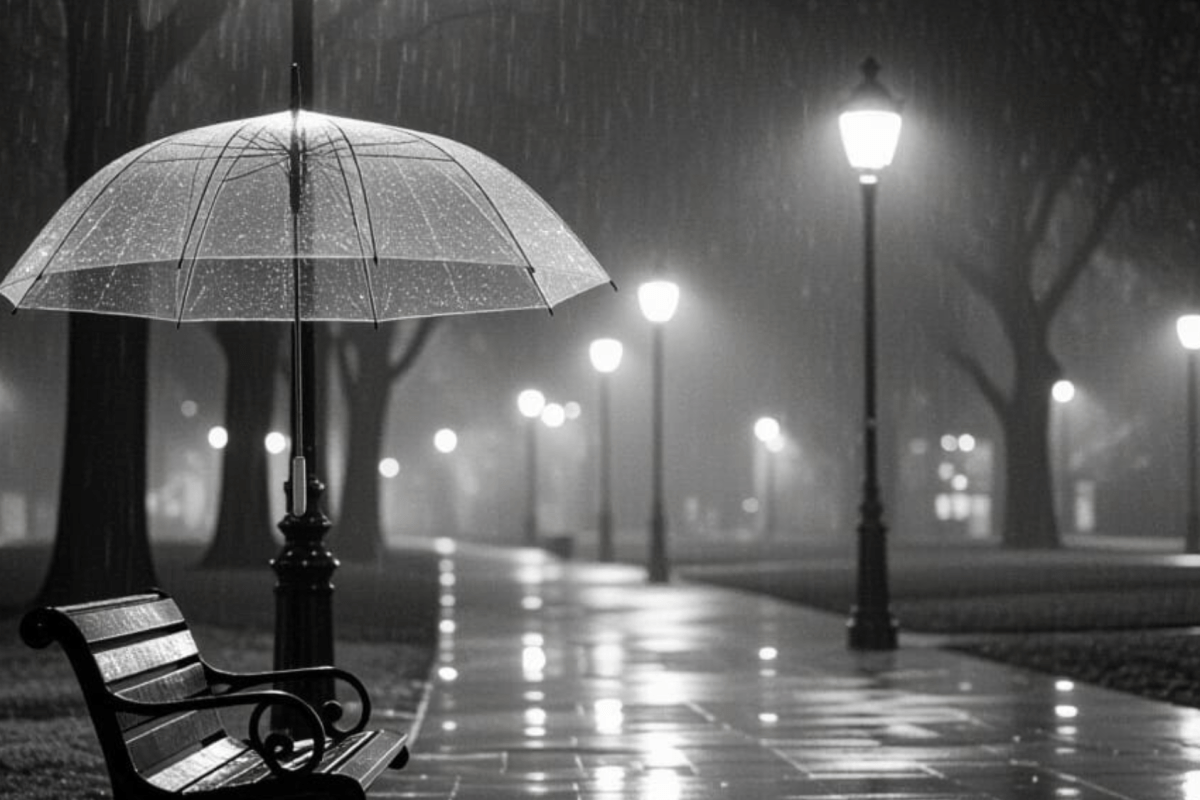
The Ache; The Regret

POETRY – MLMM #428

Hey, do you miss me?
The ache churns so slowly.
We found common ground,
but only after the fires.
The hard part is done.
Where you’d go?

I close my eyes
because yours won’t open.
The stillness is sharper now.
Colder.
Like it knows
what’s missing.

Time doesn’t pass here—
it gathers.
Cools around me,
wraps my spine like smoke.

You blinked once—
and left everything behind.
I don’t blame you.
But I still ask.

We were never perfect.
But in the spaces between the noise,
we held each other
like we meant it.
We were one —
not whole, just held.

Your memory sings to me softly—
what do I go?

What version of me survives
without the rhythm
of your breath beside mine?

I know you hide the words.
You are afraid to speak.
Don’t hide with me.
Your actions are so loud.

Even in silence,
you told on yourself.
Every absence,
every closed door,
every goodbye you never said
but lived.

Your side of the bed still curves.
Like you’re paused,
not gone.
But I know better.

A rainbow brushed the sky yesterday.
It didn’t stay.
Like you —
always near,
never quite here.

Are these words bound to fail?
Speak to me, hope, and follow through.
Don’t build a future in silence
and ask me to live in it.

My hope rests on every word you don’t say.
But I never told you
What I stood for.
Have I waited too long?
Did you leave thinking
I had nothing left to give?

The truth is,
I was afraid, too.
Of saying it wrong.
Of loving you louder
than you could stand.

If there’s anything beyond this,
I hope it’s not heaven.
I hope it’s just
You and me again,
quiet,
not pretending.
Present.
And finally
telling the truth.

I know you were right—
because my silence was gone.


The Last Step

The path had always been there—worn stone steps swallowed by moss, reaching toward the crest of the hill like a forgotten promise. Elara stood at the base, hand grazing the weathered wooden signpost, its words long faded by wind and time.

“They say you find what you’ve lost at the top,” the old woman had whispered in the village square.

Elara climbed, her breath syncing with the hush of the breeze. Each step tugged memories from the past—her brother’s laughter, her mother’s lullabies, the silence that followed their disappearance.

At the summit, the world opened wide. No grand revelation awaited, just the sun breaking through the clouds and a breeze that smelled like childhood summers.

She didn’t cry. She smiled.

The path hadn’t led her to what she lost.

It reminded her she could still feel.

That was enough.

She turned.

And walked back down whole.


Image by J.S. Brand.

This story was written for Flash Fiction for Aspiring Writers

Chronically Challenged: A Friday the 13th Love Story III

FICTION SERIES – FOWC & RDP

Chapter 3:

1776 Problems

There was no welcome committee.
Just the smell of firewood, horse sweat, and a stranger yelling “HEATHENS!” at a woman holding a spoon wrong.

Fiona sat on a wooden bench outside what might’ve been a tavern—or maybe just a house with more than one bowl—trying not to throw up from stress or the smell of something roasting nearby. Her body was sore from the jump, and her brain was short-circuiting in two languages.

This is real. This is happening. I’m in 1776. In borrowed pants. I time-traveled on a date.

Every time she thought that sentence, her stomach did a full somersault.

Elliot sat beside her, smudging his glasses with the corner of his hoodie, blissfully unfazed. She wasn’t sure whether to envy him or throttle him.

“I can’t believe I’m wearing linen pants someone died in,” she muttered.

Elliot squinted at her. “We don’t know that.”

“There was blood on the cuffs, Elliot.”

“Well, maybe he died near them.”

She stared at him. “Do you hear the words that come out of your mouth?”

He gave her a crooked grin. “Not always.”

She pressed her palms into her eyes. You can do this. You’ve taught physics with the fire alarm blaring. You’ve testified in front of a grant panel full of skeptics. You can withstand a little history.

But history was proving to be loud, itchy, and profoundly uninterested in her credentials.

Already today she’d bartered a paperclip for two apples, tripped over a cobblestone, and been told by a man named Jedediah that she had “the posture of a godless widow.” She didn’t even know how to begin unpacking that.

“Okay,” she said under her breath, trying to calm her breathing. “List your assets.”

Elliot perked up beside her. “Do mine count too?”

“One broken time device,” she continued, ignoring him. “Two 21st-century brains. Zero friends. No clean water. No wifi. No deodorant. I’m one itchy shift away from a total psychological event.”

“You’re handling this remarkably well,” Elliot offered, leaning back like he was on vacation.

“I am actively repressing a meltdown,” she replied flatly. “This is emotional duct tape. It’s not coping.

He nodded with mild approval. “Still counts as functional.”

“Are you seriously not worried right now?”

“I mean, I’m not thrilled,” he said. “But worry won’t solve it. We need a plan.”

Fiona turned toward him slowly, one brow twitching. “A plan?”

“Yeah. Blend in. Gather resources. Find soft places to sleep. Possibly invent sunscreen.”

She stared. “We have no ID. No income. I had a burrito punch card in my wallet, and now it’s probably a war crime.”

“Technically, we still have half a taco.”

“That taco is in another century.”

He held up a hand. “We don’t know that for sure.”

She let out a sound somewhere between a groan and a laugh. He’s doing it again. Defusing panic with deadpan optimism. Pretending this was a mildly inconvenient camping trip and not a rupture in the laws of time.

Fiona stood and paced. The hem of her borrowed skirt brushed against her ankles like a rope. The air smelled like ash, mud, and anxiety.

“You’re right about one thing,” she said. “We have to withstand it. All of it. The cold. The lack of toothpaste. The judgmental goats. For a month.

Elliot sat up straighter, brushing crumbs from his lap. “We’ve both survived worse.”

“You mean you survived grad school by printing your dissertation at a Kinko’s while actively hallucinating.”

“And you survived your committee asking why your paper didn’t include lipstick.”

She smiled grimly. “Fair.”

They sat together quietly for a moment. A breeze rustled the leaves. Somewhere nearby, a woman shouted about leeches.

Fiona hugged herself, the texture of the coarse shirt making her skin itchier by the second. “I miss hot water,” she murmured.

Elliot looked at her, his voice soft for once. “I miss your blazer.”

She blinked. “What?”

“You always looked confident in it,” he said, a little shy now. “Like you could run the world and correct my posture without raising your voice.”

Her mouth betrayed her—just a slight curl at the corner. Not quite a smile, but close enough to feel dangerous.

They sat in silence again until a goat trotted past and made direct, unsettling eye contact with them.

“Do you think there’s a place around here that sells coffee?” he asked, hopefully.

They looked at each other.

Then laughed.

Late Night Grooves #144

TUNAGE – LNG

WHOT Episode 144 – “Ballad of the Sad Young Men” by Roberta Flack
Hosted by Mangus Khan

[A low crackle. A piano chord that barely dares to speak. The room holds its breath.]

“This is WHOT.
Late Night Grooves.

I’m Mangus Khan, and tonight…

I won’t talk over the silence.

I’ll sit in it with you.

Because that’s what this track demands.

Roberta Flack.
‘Ballad of the Sad Young Men.’

From Chapter Two, 1970.

And what a chapter it is.

Not just in her catalog, but in all of ours.

Because this song doesn’t care how tough you act.

It doesn’t care about bravado or performative pain.

It cuts past all that.

And it speaks to the truth we don’t say out loud:

That so many of us—especially men—were taught to carry our sadness like it was shame.

And what do you do with that?

You drink. You drift.
You disappear one piece at a time.

“Trying not to drown…”

Those words aren’t poetry.

Their documentation.

Roberta sings like someone who has seen people fall apart from the inside and still held them close.

Her voice doesn’t tremble. It understands.

She sings from a place of deep, unspoken mourning—
not for death, but for potential.

For the lives that could have been whole, had they just been allowed to feel.

There’s no big chorus.
No crescendo.

The song just… lingers.
Like grief.

Like a memory you keep folding and unfolding in your pocket.

And that’s why this track matters.

Because in a culture that praises resilience but punishes vulnerability,
This song dares to say: Some of us are barely holding it together.

And that’s not weakness.
That’s human.

Episode 144.

For the ones who never got the space to fall apart.
For the people who never asked for much—just room to be real.

Roberta Flack.
Ballad of the Sad Young Men.

You’re listening to Late Night Grooves.
WHOT.

And I’m Mangus Khan.

Still playing what the world forgot.

Still honoring the ache we carry quietly.”


Entangled Contradictions

FICTION – REENA CHALLENGE #385

by Julia Drake (and someone else entirely)

Dr. Eugene Irving Krane did not believe in metaphor, which was why he used it constantly in his head.

Standing before a lecture hall of half-conscious undergrads, chalk raised like a scalpel, he dissected equations with clinical precision. “Symmetry,” he said, “is not about aesthetics. It’s a constraint. A system obeys certain laws until one of them breaks. And that break is where the interesting physics begins.”

Behind him, the whiteboard bloomed with the Higgs mechanism—perfect arcs, cold beauty, tension contained.

Krane saw what his students did not. The math wasn’t sterile. It was tragic. Elegant. Alive.

He was an odd man, even by faculty standards. He collected things. Not stamps or coins—ideas. He had an entire drawer in his office dedicated to obsolete words, sorted by emotional tone: “Words That Die Alone,” “Words That Bleed Nicely,” “Words With No Home.” He took long walks at dawn to photograph patterns of fractured light in puddles and alleyways. And he kept what he privately called an “emotional landfill” — a file full of discarded breakup letters, apologies never sent, and confessions overheard in stairwells. He said they helped him write with precision.

These collections weren’t academic. They were scaffolding for something else—a hidden voice, one that poured all that silent debris into fiction.

From the front row, Tess Ramírez scribbled something in the margin of her notebook and suppressed a grin. She was in her forties, finishing a long-delayed PhD, and possibly the only person alive who would one day use the phrase “quantum betrayal” in casual conversation.

She respected Krane. She also suspected he had no idea how visible his loneliness was.

When class ended, Krane retreated behind his desk, where a stack of problem sets sat dangerously close to a notepad filled with scribbles. Not physics. Fiction. The bones of a scene for Julia: entanglement as metaphor, two characters locked in orbit, never quite in sync. He’d been shaping it since 3 a.m.

He tugged down his sleeves and nudged the pile toward Tess.

“If you could… the thing.”

She blinked. “You’re a world-class communicator, you know that?”

He blinked back. “That was implied.”

Tess rolled her eyes and scooped up the stack, including—unbeknownst to him—a handful of Julia’s latest pages.

Later that night, she was grading on her couch, jazz humming from the speakers, half a glass of Malbec on the coffee table. And then she saw it.

A page that didn’t belong.

“They spoke like electrons entangled: each word collapsing a possibility in the other. He didn’t touch her hand, but the air around it bent.”

Tess froze. Her wine glass stopped midair.

Her heart did a weird thing, like an extra beat—or maybe a skipped one.

She flipped to the next page.

“Lina stood in the field, symmetry broken, heart split by the simplest law of decay: what once was held cannot always stay.”

And at the bottom, tight and unmistakable: 
–J. Drake

Her pulse kicked.

No. Impossible.

She’d read every Julia Drake novel twice — dog-eared, underlined, whole chapters bookmarked for reasons she couldn’t explain. Not because they were romantic. Because they were honest. No one in Drake’s stories ever got rescued cleanly. They hurt each other. They tried. They failed better. It wasn’t fantasy. It was familiar.

Tess had never known who Julia Drake really was — just that she’d been through the shit. You couldn’t write emotional wreckage that clearly unless you’d lived inside it.

And now here it was. 
On paper. 
In Krane’s handwriting.

Her first instinct was disbelief. Her second was awe. 
Her third was: Does he even know how hot this stuff is?

Tess barely slept. She kept rereading the pages, flipping between disbelief and adrenaline. The idea of confronting Eugene left her nauseous—what if she embarrassed him? What if she was wrong? What if she ruined something by naming it? But the words wouldn’t let her sleep. They weren’t just good. They were true. And she couldn’t unknow that truth now.

The next morning, she didn’t knock. She barged in.

Eugene looked up, mid-sip of coffee, and nearly dropped the mug.

“You’re Julia Drake.”

He froze. Opened his mouth. Closed it.

“You are,” she said. “You’re my favorite author of all time. I thought you were dead. Or French. Or a collective of lesbians.”

Eugene stared at her like she’d just accused him of arson.

“You’re serious,” he managed.

“I’ve read everything,” Tess said, waving the pages. “Twice. I memorized half of A Constant Craving like it was scripture. You made me cry in a Denny’s, Eugene.”

He looked absolutely horrified.

“I was under the impression,” he said slowly, “that my prose was… categorically sentimental.”

“It’s not,” she snapped. “It’s vulnerable. And tight. And unbearably good. God, no wonder you hate small talk—your soul is in six mass market paperbacks and nobody knows.”

Krane went pink. Pink.

“I don’t—it’s not—people in the department wouldn’t understand.”

Tess softened. “I understand. I just didn’t expect my emotionally unavailable science mentor to be moonlighting as the poet laureate of romantic ache.”

Eugene rubbed his forehead. “Please never say that out loud again.”

She grinned. “No promises.”

They sat in silence for a moment, the weight of the secret between them now less like lead and more like gravity—still heavy, but pulling them into orbit.

For Tess, something shifted. She’d always seen Krane as brilliant but unreachable, like a locked cabinet full of equations and rules. But now, she saw the tenderness behind the rigidity. The collector of discarded feelings. The man who couldn’t say what he felt unless it was fictionalized. And somehow, that made her respect him more, not less.

“You ever think,” Tess said quietly, “maybe fiction is the only way people like us know how to feel?”

He looked at her, and for once, didn’t look away.

“All the time,” he said.

That night, Julia Drake began a new manuscript. As Eugene typed, he paused over one line and rewrote it three times—not for clarity, but for care.

The main character’s first real moment of connection came in a cluttered office, after a truth slipped out by accident. The other character didn’t flinch. She saw him. Not just the polished surface, but the hoarder of obsolete words, the photographer of lost light, the emotional archivist in disguise. Her name was Teresa.

It opened with a woman named Teresa. Sharp. Unafraid. The first character Eugene had ever written did not need rescuing or permission. She met the main character’s silence with curiosity, not pity.

And for the first time, Julia Drake wrote a love story that didn’t end in silence.

It ended in symmetry.

Shuggie’s Boogie: The Kind of Guitar Playing That Makes You Question Your Life Choices

TUNAGE – SLS

In the endless debate about great guitarists, you know the names. They’re on every list. Hendrix. Clapton. Page. Santana. Occasionally, a few lesser-knowns sneak in—someone you maybe don’t know, so you check them out, nod, and go, “Okay, yeah, I see it.”

But there’s another tier. The ones who don’t make the lists. Not even the cool-guy “most underrated” lists. They’re ghosts. Phantoms. Legends whispered about in liner notes and sampled by producers who dig deeper than algorithms ever will.

Shuggie Otis is one of those.

Listening to Shuggie’s Boogie from Live in Williamsburg is like that moment in a bar when you stop in for a bite, thinking you’re just killing time. You sit down, order something greasy, maybe a beer. Then the band starts playing. No intro. No warning. You take a bite… and stop mid-chew. Fork halfway to your mouth. What the hell is happening on that stage?

You forget the food. You forget your phone. You just listen.

That’s what this track is. It blindsides you.

Shuggie doesn’t approach the guitar like a technician. He approaches it like someone who’s got something to say. This isn’t about speed or theory—it’s about attitude, feel, and intention. Every phrase lands with the kind of swagger that only comes from living a weird, sideways kind of life through music.

And the band? Locked in like they’ve been rehearsing for a world tour no one told you about. His son, Eric Otis, adds guitar textures like he’s painting in the shadows of his dad’s lead lines. Nick Otis, Shuggie’s brother, holds down drums with a groove that feels more instinct than effort. James Manning on bass is the glue—thick, steady, unshakeable.

The horns—Larry Douglas (trumpet, flugelhorn), Michael Turre (baritone sax, flute, piccolo, backing vocals), and Albert Norris—aren’t just dressing. They’re characters in the story, adding stabs and swells that make you lean in closer. And Russ “Swang” Stewart on keys knows exactly when to tuck in a note and when to let it bloom.

This isn’t a polished, clinical performance. It’s gritty. There’s some dirt under its nails. Some bark in the tone. But that’s why it works. There’s a certain beauty in letting the edges stay frayed. It’s alive. Like something could fall apart at any moment… but never quite does.

Shuggie recorded the original Shuggie’s Boogie when he was 17. Which is already annoying, because it was brilliant even then. But this live version? It’s deeper. Older. Wiser. Looser. He stretches out, takes his time, throws notes like curveballs that somehow always hit the strike zone.

It’s the sound of someone who doesn’t need to be on a list to prove anything.

If you’re into guitar playing that hits your chest more than your brain, this is your track. If you’ve ever dropped your fork because of a solo… well, maybe you already know.

And if you’ve never heard of Shuggie Otis? Good. You’ve got some listening to do.


Retired and Slightly Feral

Daily writing prompt
How do you want to retire?

DAILY PROMPT RESPONSE

Funny question. I’m already retired — so that ship has sailed, caught fire, and drifted into the fog. I didn’t exactly plan it this way. I retired earlier than I intended, not because I hit a financial milestone or had a burning desire to live in sweatpants, but because life shoved me out the door and said, “Good luck.”

At first? I thought I was going to lose my damn mind. Retirement wasn’t the champagne-and-passport fantasy my friends and I used to ramble about. It was me standing in my kitchen at 10AM, reorganizing the fridge magnets like they were sacred runes. I was out here inventing errands and scheduling things like “check mail” and “organize junk drawer,” just to feel useful.
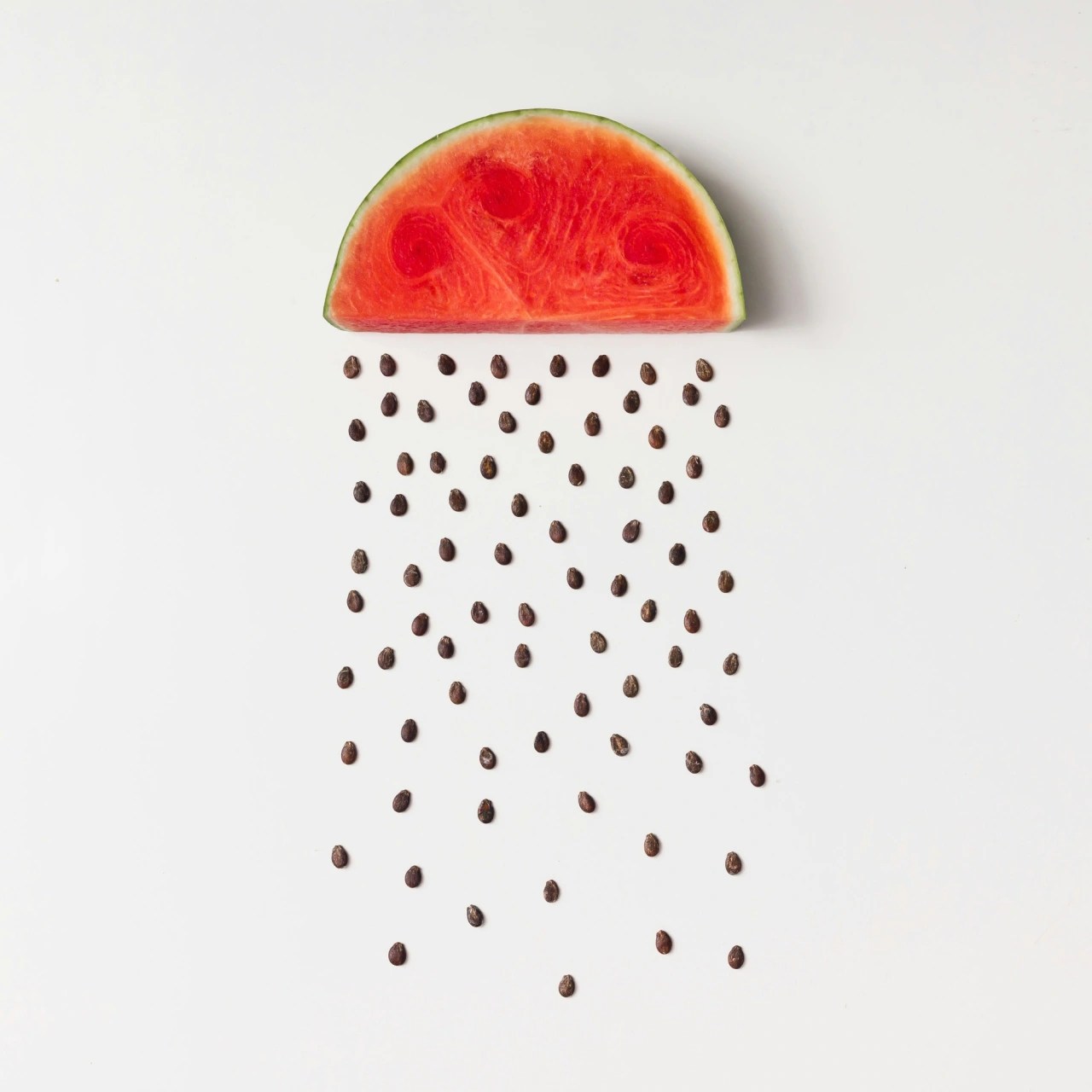
We live in a world obsessed with doing. If your calendar isn’t jam-packed with Zoom calls, workout classes, and color-coded nonsense, people assume you’re wasting your life. Productivity has become a personality trait. Rest? That’s considered weakness.

I bought into it for a while. I kept trying to prove I was still “useful.” But eventually, something in me gave up — in the best way.

I stopped asking, “What should I be doing?” and started asking, “Do I want to?” And just like that, life got simpler.

Now? I nap when I’m tired. I read without guilt. I write, wander, daydream, and sit in silence without apology. Retirement isn’t what I imagined — but it’s real, and it’s mine. Turns out, that ship I thought was burning? Just needed to slow down and enjoy the view.

Sometimes I wonder if I could’ve adopted this mindset earlier. Maybe I didn’t need retirement to learn how to rest. But hey — better late than stuck in a never-ending to-do list.

If I could send a note back in time, it’d read:

You’re not lazy. You’re just finally done with the bullshit.

Late Night Grooves #143

TUNAGE – LNG

WHOT Episode 143 – “You and Your Folks, Me and My Folks” by Funkadelic
Hosted by Mangus Khan

[Slow fade-in. Bass pulses like a heartbeat made of anger. Faint background voices swirl like ghosts.]

“This is Late Night Grooves.

WHOT.

And I’m Mangus Khan, coming to you from the edge of the dial, where the truth still gets airplay.

Episode 143.

And we’re not whispering tonight.

We’re spinning something righteous.

Funkadelic – ‘You and Your Folks, Me and My Folks.’

Off Maggot Brain, 1971.

This record ain’t just legendary—it’s lethal.

And this track? It’s one of those songs that pretends to be polite just long enough to get through the door—then it rips the mask off.

It’s got a groove so thick you could drown in it.
A beat that feels like a revolution marching in slow motion.

But don’t get it twisted. This ain’t just funk.

“If you and your folks love me and my folks like me and my folks love you and your folks…
There’d be no folks to hate.”

That lyric hits different, doesn’t it?

That’s George Clinton, breaking it all the way down.

No metaphors. No sugarcoat. Just logic, looped over a bassline.

See, while the radio was still playing safe, Funkadelic said: Let’s talk race. Let’s talk power. Let’s talk what America refuses to admit.

And they did it with drums. With distortion. With harmony that dared you to disagree.

This track calls out segregation—not just in law, but in love.

It says: What if we dropped the fear? The fiction?
What if you actually believed in the humanity of the folks on the other side of the fence?

That’s a wild idea in 1971.

Hell—it’s still wild now.

And the kicker?

This song makes you move while it messes with your conscience.

That’s what makes it dangerous.

Maggot Brain as an album doesn’t give you answers.
It holds up the mirror—and laughs while you try to look away.

That’s art. That’s courage.

And that’s why Funkadelic still matters.

So tonight, we don’t run from the tension.

We ride it.

Episode 143.

Funkadelic.
“You and Your Folks, Me and My Folks.”

Only on Late Night Grooves.
WHOT.

And I’m Mangus Khan—reminding you:

If the groove don’t make you think,
Then it ain’t doing its job.”

Morning Vibe: Shine Without Permission

TUNAGE – MORNING VIBE

There’s a quiet shame that creeps in when you’ve been underestimated for too long. It teaches you to shrink. To make it easier for you to digest. To second-guess your light just to keep others comfortable.

But today? No more of that.

Sugar Pie DeSanto doesn’t walk in the room—she claims it. “Soulful Dress” isn’t just about looking good. It’s about being unapologetically visible. About wearing your power like it’s sewn into your seams.

There’s no begging in her voice. No need for approval. Just heat, humor, and absolute self-possession. And that’s not ego. That’s earned identity.

You can hear the years in her phrasing. The times she was probably overlooked. The times she had to be louder just to be heard. And now? She’s not asking anymore. She’s telling you who she is.

So on this Sunday, don’t hide your brilliance under modesty or fear. Don’t apologize for your joy, your style, your full-volume presence.

Put on your soulful dress—whatever that means to you. And don’t dim it down for anybody.

Because this kind of shine? It’s not loud. It’s lived.


Notes from a Feeble-Minded Insomniac

Daily writing prompt
What’s the oldest thing you own that you still use daily?

What’s the oldest thing I own that I still use daily?
The last time I answered this question, I mentioned my old pickup sitting in the driveway. It’s beat to hell, leaks a little oil, and rattles like a shopping cart on gravel — but somehow, it still runs. That felt like a solid answer. It felt true.
Except it wasn’t. Not really.

The honest answer hit me while I was sitting at my desk, trying to draft some notes for another post. I was overthinking the structure, second-guessing the tone, basically chasing my own tail. After a while, I leaned back, shook my head, and muttered, “I’ve been using my brain too much.”

And just like that — Eureka.

I’ve been the feeble mind of an insomniac since birth.
Okay — maybe not technically insomniac at the start. Back then, I stayed up past my bedtime mostly out of spite. Perhaps a little orneriness, too. Hard to say. But I do remember using that word — ornery — and now that I think about it, a fair number of women have used it to describe me over the years. So, maybe they were onto something.

I’m a constant learner. Always have been. I believe if you go a day without learning something, you’ve wasted it.

Most people think learning has to mean reading, working, studying, building — something active. But I’ve learned more just by paying attention. Not scrolling, not zoning out — observing.

I don’t Google “brain-boosting activities.” I just rely on my favorite tool: active listening. That might sound simple, but it’s one of the sharpest tools we’ve got.

The thing is, most people don’t actually listen — they wait to respond. You can see it happen: someone’s still mid-thought, and the other person’s already loading up their reply. If we’d just let people finish, then respond or ask a decent question, most of our conversations would be ten times better.

Now, I’m not pointing fingers here — I’ve cut people off after 30 seconds of dumbshit like it’s a reflex. I’ve been trying to stretch my tolerance up to 90 seconds, but somehow it always snaps back to 30. Still, I’m working on it.

A lot of my friends and family talk about how they can’t remember shit anymore. I get it. I’m right there with them. I might’ve single-handedly made the Post-it Note company profitable.

But I’ve got a few tricks. For one, I carry a journal with me everywhere and write things down. Yeah, I know you can make notes or record memos on your phone, but here’s the thing — when you physically write something, you remember it better. Science backs that up. Not that I need some egghead in a lab coat to tell me what works for me.

Like yesterday, I was talking about chasing the start of a story, sitting at my laptop… but I skipped a step. First, I write a few notes in my journal. Random lines, loose thoughts, things that feel like they matter. I also keep a microrecorder on hand for fast ideas when I’m out — then I transcribe those into a binder.

I’ll sometimes spend weeks researching a topic before I write a single sentence for a story. Somewhere in one of the dozen journals scattered around my house, there’s a note — a clue — waiting to tie it all together.

“Today was a good day. I wrote a sentence.”
— James Joyce

I keep that quote close. It’s a reminder that one good sentence is worth more than a thousand shitty ones.
No fluff allowed. Ever.

Another way I keep the engine running is by going back and reading my old notes.

Earlier this week, I was flipping through a binder from ten years ago and found a scribble about a quirky love story set on Friday the 13th. Sound familiar? It should — I think I finally wrote that story last year.

Looking back shows you two things: growth and delusion. You see yourself in these raw, unfiltered snapshots — how sharp you were, or how far off base. Sometimes I shake my head at my younger self and think, Jackass.

But that’s part of the deal. This brain — stubborn, scattered, always working something out in the background — it’s the oldest thing I own, and the most used. And like that old pickup, it’s still running. Somehow.

Sometimes I look back and wonder how my late wife ever put up with my scattered, feeble-minded antics. The half-finished thoughts, the notebooks everywhere, the midnight mutterings about plot twists or people-watching revelations.

Then it hits me — maybe she just had a predilection for the company of psychos.

God knows, I gave her plenty of material. But she stuck around, laughed at the chaos, and made room for it. That counts for everything.

Late Night Grooves #142

TUNAGE – LNG

WHOT Episode 142 – “Make a Smile for Me” by Bill Withers
Hosted by Mangus Khan

[Vinyl hiss. A single piano note drops like a tear in water. Silence. Then:]

“Good evening, if it even is one.

This is Late Night Grooves, and I’m Mangus Khan.

You’re listening to WHOT—where the frequencies know your secrets.

And tonight… we’re not here for noise.

We’re here for something soft. Something sacred.

Bill Withers. “Make a Smile for Me.”

Now listen—most people only know Bill through the songs that became slogans.
“Lean on Me.” “Lovely Day.” Clean. Uplifting.

But this one?
This isn’t about leaning.
This is about barely standing.

This song lives in that space where the strong start to crack—but won’t ask for help out loud.

“If I lose my way, and my mind is gone… / Make a smile for me.”

Have you ever felt that?
That moment when you don’t need saving. You don’t even need fixing.

You just need someone to see you.

To send a little light back your way.

That’s what this song is.

It’s a candle flickering in a window, you’re not sure anyone’s still watching.

And the way Bill sings it—
He’s not polished. He’s not dramatic.

He’s real.

And maybe that’s the thing about Bill Withers that hits hardest:
He never acted like the world owed him anything.

He wrote music for people who get up early, who bury their sadness in routine, who survive because they have to, not because they’re fearless.

’Justments, the album this track comes from—it’s not about hits. It’s about process.

About what happens when the lights go out and the silence gets loud.

And “Make a Smile for Me”?

That’s not a love song.

It’s a lifeline.

And not every listener will get that.

But you?

You’re here, on Episode 142.

You’ve made it this far through the haze, the heartbreak, the static.

You do get it.

So tonight, while this plays…

Let it remind you:
Even at your most undone, there’s beauty in simply asking.

And grace in being heard.

Bill Withers.
“Make a Smile for Me.”

Late Night Grooves.
WHOT.

And I’m Mangus Khan.

Still here.
Still listening.

For you—and for the silence you don’t have words for.”


The Moment That Catches You

Daily writing prompt
Describe one of your favorite moments.

DAILY PROMPT RESPONSE

Throughout my life, I have had numerous moments that make me smile, chuckle, and even cry. That’s not unique — we all carry those. So, I won’t go there. Instead, I’d like to discuss something else. Something quieter, but deeply personal.

The moment a story begins.

It’s not always dramatic. Sometimes it’s just a flicker — a stray thought, a memory, an odd image that won’t let go. But for me, that moment is electric. It’s the exact point where imagination kicks in, where the real world and the possible world start to blur. It might come during a walk or while staring out a window. No fanfare. Just that quiet spark that tells me: there’s something here.

That’s the kind of moment I treasure. Because from there, anything can happen.

Most of my story ideas come when I first wake up. There’s this moment — half-dream, half-thought — where I catch a fragment of something in the corner of my mind. I turn toward it. I chase it. And if I’m lucky, I chase it long enough for it to turn around and catch me.

That chase is what charges me. Stumbling through the dark, following breadcrumbs left by a story that doesn’t want to be found—not yet. The clues never come in order. They show up like scattered pieces of a massive jigsaw puzzle, except there’s no picture on the box. The image only reveals itself as you fit the pieces together. And even then, sometimes you’re wrong. Fooled. Thrown off.

And honestly? That’s when things get sexy. That’s when the story pushes back, when it fights you a little, when it demands more.

But we must be honest — to get the real stories, the good ones, you’ve got to look into the abyss. That’s where they live—just sitting there, waiting, watching, and daring you to prove you’ve got the patience, the grit, the nerve to piece them together.

You have to be careful, though. When you’re deep in it — in the thick of the story — you can lose everything. It can vanish like a wraith. One second, it’s there, close enough to feel, just long enough to let you know it could be something. The next, it’s gone. Because maybe you weren’t ready. Maybe the story saw through you. Weighed you. Measured you. Found you wanting.

Doubt stands at the edge of the Shadow, glaring with that slight, sinister grin — the kind that chills you deeper than you care to admit. You start to hear the whispers oozing from its lips. At first, you ignore them. But slowly, they start to take hold. You feel them crawl under your skin, digging their nails in. Their shrieks serenade your soul.

You have to resist. You have to defend the faith — in yourself, in the work, in the chase. Sometimes that’s all a writer has. Belief and maybe a little luck. If your courage holds.

So you scream back: “GET THE FUCK OFF ME!”

Then you breathe. Settle. Take the next step on the path.

I sit down in front of my laptop. Coffee on one side. A smoke. Guppy curled up by my feet. I take a deep breath.

And I write the first word.

Chronically Challenged: A Friday the 13th Love Story II

DAILY PROMPT RESPONSE – FICTION SHORT STORY SERIAL

Chapter 2

The Accident

from Chronically Challenged: A Friday the 13th Love Story

Fiona had worn real jeans.

Not lab jeans. Not backup drawstring pants from her desk drawer. Real, going-out jeans—the stiff kind that didn’t stretch and made her walk like a mannequin for the first six minutes. She wasn’t even sure they still fit until twenty minutes ago, when she jumped into them like a hostage escaping a car trunk.

Now she was walking three inches behind Elliot, clutching her bag like it contained state secrets and suppressing the urge to sprint into traffic.

It’s just dinner. Just tacos. Just the most statistically cursed date on the calendar with a man whose hair won’t lie flat and whose smile makes your hippocampus melt.

Thunder cracked somewhere behind them.

Of course it did. Friday the 13th.

Elliot didn’t seem to notice. Or care. He strolled ahead in yet another Ramones shirt—faded black with one rolled sleeve higher than the other—a zip-up hoodie, and sneakers that looked like they’d lost a fight with battery acid. His hair was slightly neater than usual, but still refused to be tamed. Fiona suspected he had brushed it once and then immediately run a hand through it out of habit. The result was… heartbreakingly consistent.

“Did you know,” he said, stepping over a puddle, “that time is technically a human illusion and nothing actually moves forward?”

Fiona blinked. “That’s your opener?”

“I thought it was romantic.”

She laughed, a small, sharp bark she instantly regretted. Too loud. She tried again with a polite smile, folding her nervous system in on itself like origami.

They arrived at the taco truck she had half-joked about via text and secretly hoped he’d take seriously. He had. Of course, he had. Of course, he’d actually listened.

“After you,” Elliot said, gesturing with a little bow. She wondered if he’d practiced that move in the mirror.

She ordered first—tacos al pastor and horchata, the default comfort food. He stepped up after her.

“Do you think I can get one extra spicy and one sentient?” he asked the cashier.

The woman didn’t blink. “$10.50.”

They took their paper trays to a folding table under a vinyl canopy flapping in the wind. The sky rumbled, and the air tasted like ozone and grilled meat.

Fiona had just taken her second bite—salty, sweet, and absurdly good—when something flashed in her bag. Faint. Blue. Pulsing.

She froze.

No. No no no no no—

“Tell me you didn’t,” she muttered, already opening the zipper.

“I didn’t what?” Elliot asked, mouth full.

She pulled out the chrono-lattice remote node. It blinked at her like a smug little gremlin.

“I thought we powered it down.”

“I mean… we meant to,” he said.

“Did you unplug it from the laptop or the outlet?”

He paused. “Oh no.”

Before she could launch her taco at his head, the device let out a mechanical whine—a horrible, high-pitched chirp like a dial-up modem made of bees.

The air shimmered. Her vision pixelated. Everything sounded like it was underwater.

There was a loud snap.
A pop.
A disorienting sensation, like something deep inside her chest was being unzipped sideways.

And then—

Darkness.


She hit the ground hard. Grass, not pavement. Her knees sank into the soil. Her palms scraped on roots.

The smell hit her next—damp earth, smoke, sweat, and something distinctly horse-related.

When she looked up, the taco truck was gone.

So was the canopy. The sidewalk. The twenty-first century.

They were in a clearing, surrounded by trees. A man in a tri-corner hat shouted something about a musket. A horse neighed in the distance. Elliot was coughing beside her, brushing dirt from his hoodie.

Fiona checked the device. Its screen blinked once before settling on:

🕰️ DATE: APRIL 13, 1776
STATUS: TEMPORAL LOCK — NEXT JUMP AVAILABLE IN ONE MONTH

Her stomach dropped. Her pulse spiked.

“This is fine,” she said aloud, voice high and brittle.

Then, silently:
“This is probably fine. This is not an omen. Definitely not a red flag. It’s just a surprise… historical relocation. That happens. On dates. Right?”

“Is this a red flag? Is this a sign? Don’t freak out. So, what? We’re in 1776. What could go wrong?”

A musket fired. A goat ran past wearing some kind of colonial baby bonnet. A horse sneezed.

She blinked hard. “Okay. That’s a sign.”

Elliot was crouching in the grass, patting the earth in wide, sweeping motions. “Glasses. Glasses…”

“Please tell me you didn’t—”

“They were the good ones,” he groaned. “No tape. I wore my date pair.”

She turned in place, scanning the grass, the trees, the 1770s chaos swirling around them like historical cosplay gone feral.

Elliot looked up at her, squinting. “Do you think our kids will believe this was our first date?”

Fiona opened her mouth. Closed it. Then opened it again. “Do you say things like that often?”

“Only when I’ve been hurled through time by a semi-functional lattice array with someone I really like.”

Despite herself, despite the mud and her probable allergy to 18th-century everything, her mouth twitched. Just slightly.

She knelt to help him search. “Let’s find your glasses before your future children start thinking you’re smooth.”

Elliot smiled faintly. “We can’t have that.”

Morning Vibe: What the Hurt Took — The Cost of Holding On

TUNAGE – MORNING VIBE

Some losses are loud—funerals, breakups, broken glass. But some pain moves in quiet ways. It shows up as sleepless nights. As numbness. At the moment, you laugh but feel nothing inside.

And here’s the thing: that kind of pain always comes with a cost. You don’t just survive it and walk away clean. There’s a price. And whether it’s your peace, your trust, your tenderness, you paid something.

We don’t always talk about that. We praise resilience, but skip over what resilience took. We love a comeback story, but rarely stop to ask what it cost to crawl back from the brink.

O.V. Wright’s “A Nickel and a Nail” isn’t just a heartbreak song—it’s a soul inventory. It’s a man taking stock of what life left him with. And the answer? Not much. Just the bare minimum and a voice still willing to tell the truth.

His delivery is stripped down. Raw. There’s no ego in it. Just survival.

The band doesn’t build to a resolution—it stays right there with him, sitting in the ache. No lift. No redemption arc. Just the sound of dignity refusing to disappear.

So if today you’re feeling hollow, spent, like all you’ve got left is fragments—don’t dress it up. Don’t rush past it. Sit with it.

You’re not broken. You’re just holding the receipt.


Keepers in the Fog

POETRY – 3TC #MM83

(Part II of The Forbidden Sphere)

They never speak — yet still they warn,
With presence sharp as briar thorn.
From every edge, behind each tree,
A knowing gaze leans into me.

I’ve never seen a face, a form,
Just hush that settles thick and warm.
They move when light begins to thin,
As if the dark invites them in.

I thought I saw a signal flash —
A glint, a shift, a silver lash.
But when I turned, the mist was bare,
As if the fog had never cared.

They guard the orb with sacred right,
Unyielding as the velvet night.
And though no blade nor gate I see,
They’ve kept its heart away from me.

A whispered clue behind the bark—
A mark too faint to name or mark.
Each piece I find, they pull away,
Like ghosts in long-abandoned play.

It’s like a seance with no voice,
No table, chant, or sacred choice.
Just shadows moving without sound,
As if the dead still guard their ground.

They kept me from discovery,
From questions asked too hungrily.
From truths that bend, from lines that blur,
From something deep I almost were.

Swift they move through drifting gray,
Their touch a chill that steals the day.
And still I stand, and still I burn—
For what they guard, I must unlearn.

But who appoints a watcher’s place?
What gives them claim to time and space?
And if I walk where none may tread…
Do I wake the dream, or join the dead?