Red Line


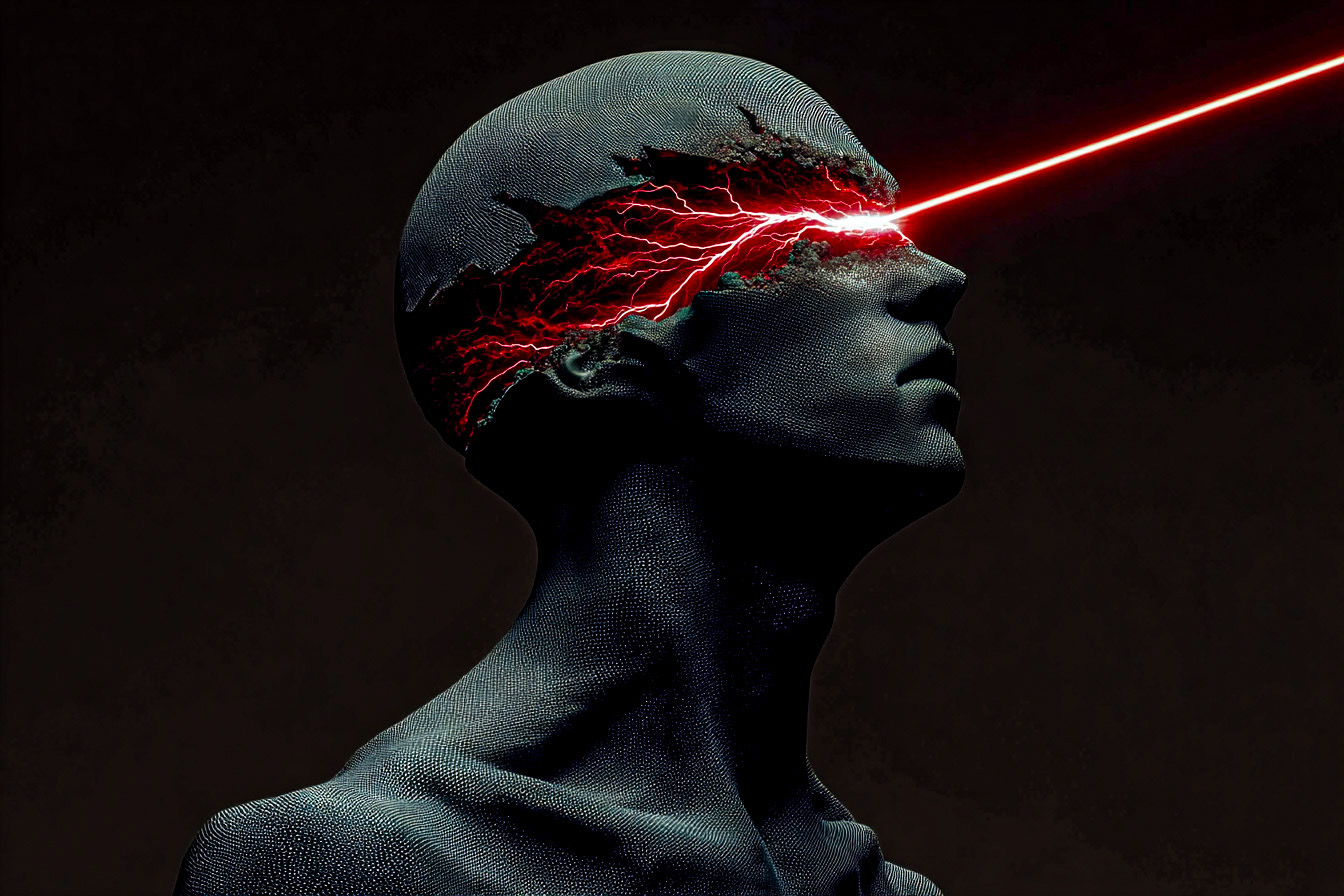
The light tore through me before I understood it was mine. A red current, blistering the dark behind my eyes, splitting memory from bone. They called it prophecy, a vision, but it felt more like a confession—everything I’d avoided now illuminated in a single brutal line. I didn’t ask for clarity. Still, it came, scorching a path forward, and wide, demanding I follow or burn.


Litany in Black


Rain glazed the neon crescent above Second Moon Books until it gleamed like a razor’s edge slicing through the night. Elias Moreau’s fingers trembled as he flipped the weathered placard to CLOSED. The paint on the letters bled, fading faster every September—as though some unseen smart-ass on the other side of the door was trying to erase the word before last call.

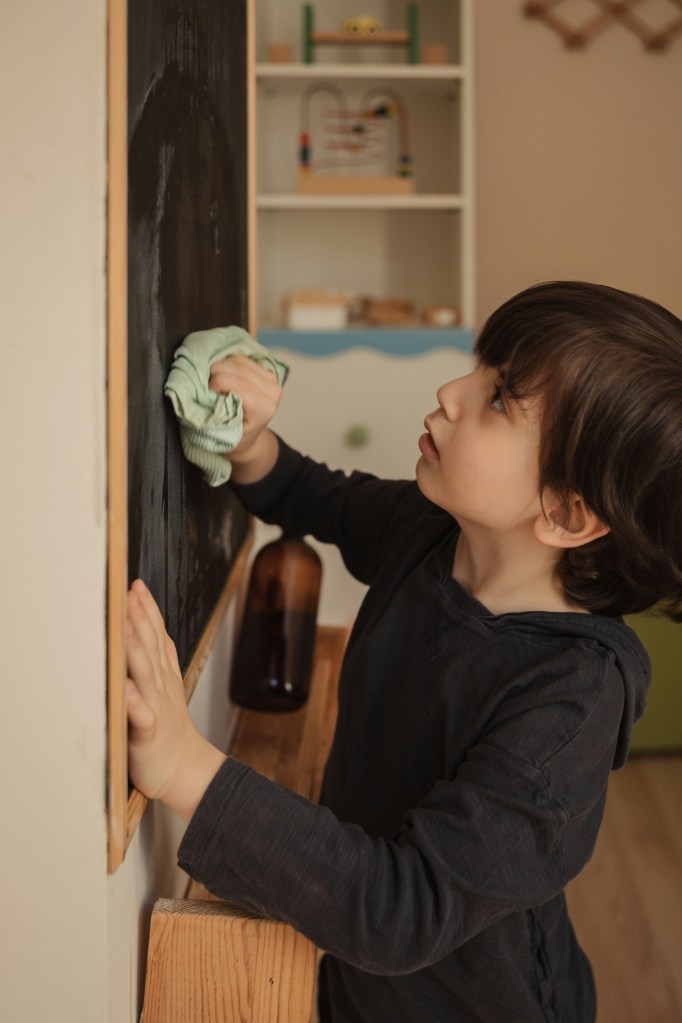
Inside, the air carried the sour bite of old glue and the metallic tang that seeped up from the subway grates. A crooked chalkboard behind the register wore last week’s proclamation in smudged white chalk:
BIRTHDAY BLOWOUT – A FULL WEEK OF HORROR & HOPEFUL DREAD
A Tribute to Stephen King

Eli’s pulse ticked in time with the neon strobe outside. Every year he staged this seven-day ritual for King, the undisputed monarch of macabre wonder. King’s uncanny magic felt almost domestic, like discovering an old friend hiding in the crawlspace. But Gordon Weaver—now that was a different kind of haunt. Weaver carved the American family like a butcher who’d gone to seminary, exposing grudges and betrayals with a quiet precision that left scar tissue. Friends nodded politely at Eli’s King obsession but flinched at Weaver’s hushed horrors, as if the silence of a fractured household couldn’t follow them home harder than a demon ever could.

Counting bills at the till, Eli listened to the upstairs dehumidifier hum and a distant patrol siren wail. The shop was empty—until the door chime rang.
One polite jingle.
He froze, chest tightening, waiting for the echo that never came.

A damp breath rose from the basement stairs. Twelve years of half-formed chapters and midnight revisions leaned against a dented Underwood down there, sulking. He’d promised himself an extra hour—maybe two—before trudging home. Perhaps he’d finally finish the scene about a stranger who knocks after hours, demanding a book that doesn’t exist.

The bell chimed again, louder this time.

He jerked his head toward the door. Beyond the glass, a wet silhouette lingered: coat collar turned up, hat brim low—someone who moved like yesterday’s regret. A third jangle, brittle and hollow, and the lock clicked itself open. A gust of rain-scented air swept in, carrying a soft undercurrent of cedar. Then she stepped across the threshold.

She was impeccable, as if traced by a meticulous pen. Mid-forties maybe, but she wore her age like a tailored alibi—each line on her face an elegant footnote. Dark hair, slick with rain, clung to the sharp planes of her cheeks. Her long coat shimmered under the flickering fluorescents. But it was her eyes—gray, or green, the light shifting like a flame—that snagged him and refused to let go.

A needle-sharp ache blossomed beneath his sternum, radiating into his left arm. Heart attack, his mind hissed. He slammed a hand on the counter, breathing ragged, every inhale a serrated blade.

She paused just inside the door, lips curving in a small, almost tender smile. He didn’t know her—he was sure of that—but some buried page of his past fluttered to life. Familiar and impossible in the same breath.

“You okay?” Her voice was low, calm—the kind you’d use to coax a frightened animal out of traffic.

He nodded too fast. “ I-I’m fine. Long day. Sale week.” The words tasted like he’d chewed them wrong.

Her smile deepened, unreadable. She turned toward the chalkboard, fingertips trailing through the chalk dust. BIRTHDAY BLOWOUT – A FULL WEEK OF HORROR & HOPEFUL DREAD…

“Do you still read Gordon Weaver?” she asked, voice soft as velvet smoke.

The name hit him like a dropped stone. Weaver wasn’t on the board. He hadn’t said that name aloud in months.

“How… how do you know about Weaver?” he stammered.

Her eyes glinted with something not quite amusement. “Oh, Eli,” she breathed. “You always did love a good story.”

Weaver: Count a Lonely Cadence, the battered paperback he’d rescued at a college sale, pages yellowed and reeking of cigarettes. Weaver peeled back the American family like skin from bone—quiet betrayals, unsaid resentments, love rotting in plain sight. Then Such Waltzing Was Not Easy dragged him deeper, mapping small domestic wars in brutal intimacy. No demons, no ghosts, just everyday hauntings that never left his marrow.

Now this rain-soaked stranger spoke Weaver’s name as though she’d plucked it from the private margins of his soul.

“Have we… met?” he asked, voice smaller than he felt.

“Not in the way you mean.” She stepped closer, eyes roving the shop’s towers of paperbacks and the narrow aisles of hardcovers balanced like drunk skyscrapers. “You look familiar.”

He swallowed. “Or maybe you’re a character I’ve been writing for years.”

Her smile flickered—a blade wrapped in silk. His chest flared, nerves taut with something like fear or longing or the first line of a story he couldn’t put down.

An echo of his own unfinished draft whispered through his mind: She enters like a paragraph he rewrote a hundred times and could never perfect. Named only by his yearning for her to hurt him.

The shop inhaled. Somewhere beneath their feet, the basement typewriter began to tap—slow, deliberate keystrokes spelling out a narrative Eli no longer commanded.

She gestured toward the narrow stairwell. “Shall we?”


The basement smelled of damp brick and stubborn paper. She eased into the swivel chair beside his desk and crossed one elegant leg over the other. From some unseen pocket, she produced a long cigarette holder—old Hollywood glamour in a room that smelled like busted neon dreams. She slid a thin cigarette into the mouthpiece, fingers steady, and lit it with a soft gesture. Smoke curled around her like a velvet sermon.

Above them, the Underwood sprang to life, keys clattering in a jagged, confident rhythm. Each strike was a heartbeat in steel. The carriage dinged, bright and final. With every mechanical echo, the vise around Eli’s ribcage loosened, the stabbing ache receding to a dull throb. He inhaled freely at last.

“Iris Devine,” he whispered—the name he’d once given a character who refused to stay on the page.

She watched through the smoke, eyes glimmering with triumph. “Have you figured it out yet?”

The typing slowed. A new line appeared:

The writer clutched his chest as the pain returned, sharp as a rusted nail. Would the story kill him before the final word?

Eli’s breath caught. His knees trembled. Darkness edged in.

“Oh, Eli… darling, you can stop this. You know,” Iris whispered, leaning close, breath a warm brush against his ear.

Keys clattered again—then the ding of the carriage returned, harsh as a gavel.

“Eli,” she said, voice closer still, “I know who you are.”

The typewriter fell silent.

“Who am I?” she asked, tilting her head.

“You’re… a character. You can’t be real. This must be a delusion—right?”

Her smile sharpened, sudden and fierce. “Then why are you bleeding inside one?”

She pressed a soft kiss to his cheek, then a slow, deliberate lick that left warm proof on his skin.

“You feel that? Real enough for you, darling? Be a dear and fetch me something to drink—bourbon, if you have it.”


He stumbled toward the stairs—and above him, glass shattered.
He wheeled around. The chair was empty. In its place, a ghost of smoke curled where she’d sat.

“Darling, you need to come upstairs—hurry,” her voice drifted down from the shop above.

He climbed into the main room to find broken glass strewn across the floor. A lone policeman stood by the register, uniform soaked, cap pulled low.

“Elias Moreau?” The officer’s voice was soft, almost uncertain.

“Can I help you, officer?” Eli’s hand dove beneath the counter, grasping the cold comfort of an old revolver. He cleared his throat, voice steady. “Step back.”

The man froze, rain dripping from his shoulders. Eli’s finger curled on the trigger—then he exhaled and let the gun clatter onto the countertop. Instead, his hand found something heavier: the knowledge that stories kill cleaner than bullets.

The shop flickered—
And when he blinked, everything was normal.
No broken glass.
No officer.
Only a dark, wet outline on the floorboards where the stranger had stood.

A single ding drifted up from below.


Eli descended again.
Iris sat beside the desk, sipping bourbon, a neat stack of crisp pages at her elbow. A half-empty tumbler caught the amber light. She raised it in a silent toast.

“Welcome back, darling.”

He slid a fresh sheet into the typewriter. The carriage clicked forward, awaiting his command. His fingers hovered—then struck, each letter unfolding with deliberate clarity.

CHAPTER 1

Writing has always been bigger than the writer and the story.
A kind of theology.
The religion between the writer and the story is a spell cast upon them.
The reader sits back and deciphers this literary kung fu.

Writing is a living theology.
A way of life, not just an ideal misunderstood by its practitioners.
Something real, and genuine. Something absolute.
The page is a pulpit, the keys a busted rosary, each prayer hammered out like it owes you rent.

Iris placed her hand on Eli’s arm, warm and insistent.
“Do you know,” she said softly, “that a marmot will chew through its own trap rather than stay caged? Writers should do the same.”

Her thumb traced a slow circle on his sleeve.
“Don’t be the marmot that gnaws in silence. Write until the steel bends for you.”

The typewriter answered with a single, eager ding.

Eli exhaled, a small, resolute smile breaking through the shadows on his face.
“This is where I belong.”

She rose with unhurried grace, smoke trailing like a benediction.

“I’ll put on the coffee,” she said.

The Underwood offered one final, gentle ding—a promise, not an ending.


Author’s Note

Today is Stephen King’s birthday, so I decided to play around with the supernatural and other weird stuff.
The prompt words used today were theology, marmot, and literacy.
Again, as always, thank you, FOWC, RDP, and Word of the Day for your inspiration.

Casino Queen Loretta

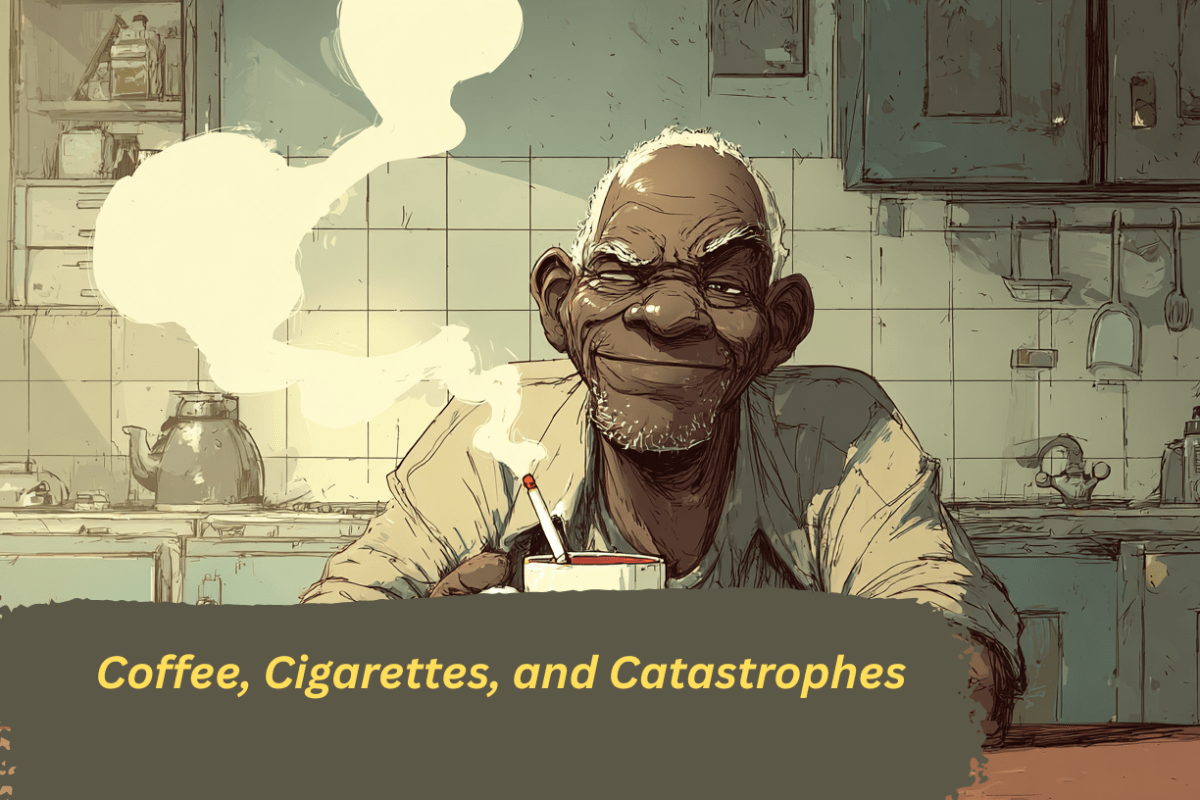
Episode 3: Coffee, Cigarettes, and Catastrophes

The casino smelled like burned electricity and desperate paydays—a mix of ozone, sweat, and somebody’s bad decision wafting from the all-night buffet. Carpet patterns swirled like a magician’s trap, designed to hypnotize losers into forgetting the way out. Overhead, fluorescent lights hummed their mechanical hymn while slot machines shrieked like possessed pinball saints.

And there she was—Loretta—flicking cards across a felt table with the precision of a surgeon and the calm of a predator. Each shuffle was a threat wrapped in velvet. Her nails flashed red beneath the lights, a warning flare in a sea of bad odds. I caught her eye for half a second, and it felt like being measured, priced, and politely declined.

I should’ve kept walking. Any man with a functioning survival instinct knows the house always wins, especially when the house wears black eyeliner and a smile sharp enough to cut rope. But I stood there anyway, watching her hands work the deck like she was dealing fate one snap at a time. The dry snap of the cards carried a rhythm—quick, clean, lethal—that made my chest tighten.

From somewhere near the buffet, a mushroom cloud of fryer grease floated in, mixing with cigarette smoke until the air tasted like deep-fried temptation. I took a step closer. Maybe it was curiosity. Perhaps it was stupidity dressed up in a lucky jacket. Either way, I was already in the game before I touched a single chip.


I slid into an empty seat like a man sneaking into his own execution. The felt smelled faintly of disinfectant and other people’s bad luck. A stack of chips clinked against my palm—cold, weightless, and already halfway gone in my mind.

Loretta looked up, one eye narrowing just enough to register amusement.
“First time at my table?” she asked, voice a dulcet rasp that wrapped itself around the racket like silk over a buzz saw. “Or you just here to donate?”

“Thought I’d give fate a fair chance,” I said, trying to sound casual while my heartbeat tapped out Morse code against my ribs.

She cut the deck with a snap that echoed louder than the slot machines. “Fate doesn’t take chances,” she said. “It takes payment. Minimum bet is twenty. Hope your soul’s worth at least that much.”

I slid my chips forward, the plastic edges slick with sweat. Around us, the casino blared its mechanical choir—coins clattering, bells chiming, a drunk couple laughing like they’d just found the secret to eternal youth. The air tasted of bourbon and fryer grease, with a faint mushroom tang drifting in from the buffet like a dare.

Loretta dealt with surgeon’s precision, each card a quiet insult to my odds. The way she moved—wrist flick, chip rake, half-smile—was an integrated system of seduction and slaughter. I knew the house always wins, but for one reckless heartbeat, I wanted to be the proof that it didn’t.

She leaned in just close enough for her perfume—cheap vanilla with a hint of gasoline—to mix with the smoke between us.
“Hit or stay, handsome?”

It was the first choice of the night, and already I could feel the house collecting its fee.


The casino floor bled into early morning, the crowd thinning until the slot machines were mainly talking to themselves. Loretta tapped the table twice, a dealer’s benediction, and announced a smoke break. I followed like a moth after a neon sign that said Mistake This Way.

The staff break room sat behind a gray security door, far from the glitter. Inside, the air smelled of burnt coffee and tired ambition. A humming soda machine threw a sickly blue glow across scuffed linoleum, turning her black vest into a patchwork of shadow and static. The only sound was the dull buzz of a flickering light bulb—like the world’s most apathetic cricket.

Loretta lit a cigarette and exhaled a thin plume toward the ceiling. Without the clamor of chips and bells, her movements slowed, almost tender.
“Funny thing about luck,” she said, voice still carrying that dulcet rasp but softened by fatigue. “People think it’s random. Truth is, luck’s just math wearing lipstick.”

I leaned against the vending machine, the metal cool against my back. “That a house secret or a personal sermon?”

She gave a crooked smile, eyes fixed on the smoke curling upward like a lazy patrol looking for trouble. “Both. My daddy taught me cards before he taught me to drive. Said life’s nothing but stacked decks. You don’t win—you just lose slower.”

Her words pressed against me with intense weight, an integrated blend of confession and warning. The worn carpet beneath our feet carried the faint musk of fryer grease, and I caught a drifting hint of the buffet’s mushroom funk through the vent. I became aware of the frayed fabric of her vest brushing her arm each time she shifted, a small sound in a room starved for music.

I wanted to ask why someone with eyes sharp enough to cut glass chose to live inside a rigged game. Instead, I said, “You ever dream of cashing out?”

Loretta flicked ash into a Styrofoam cup. “Dreaming’s free. But dreams don’t tip.”

The way she said it—quiet, almost gentle—told me there were stories folded into that silence, stories even the house couldn’t count.


The diner sat two blocks from the casino, a twenty-four-hour shrine to grease and bad decisions. Its neon sign flickered like a tired heartbeat, bathing the parking lot in a pink haze that made even the potholes look romantic. Inside, the air smelled of scorched coffee and fryer oil, a perfume that clung to the cracked vinyl booths like a stubborn memory.

Loretta slid into a corner seat, the fabric of the booth squeaking in protest. She shrugged off her vest, revealing a black T-shirt peppered with faint burns from a thousand careless cigarettes. The sudden absence of casino noise felt almost intense—like stepping out of a hurricane into a vacuum. Only the low hum of the jukebox and the occasional sizzle from the grill broke the silence.

A waitress with a face like an unshuffled deck dropped two menus without asking. Loretta didn’t bother opening hers.
“House specialty’s heartburn,” she said, that dulcet rasp curling around the words like smoke around a flame. “But the fries are honest.”

We ordered greasy eggs and a shared plate of mushroom hash browns, the kind of meal that sticks to your ribs and your conscience. Loretta stirred her coffee, eyes fixed on the lazy whirlpool of cream.
“Love’s just another bet,” she said finally. “You ante up, hope the dealer’s distracted, and pray you don’t draw the fool’s card.”

I tried to joke—something about odds and insurance—but the look she gave me stopped it cold. Her eye held a challenge I couldn’t calculate.

“You ever win?” I asked.

“Nobody wins,” she said. “Best you get is a slower loss.”
She smiled then, a small, crooked thing that carried more warning than warmth. Outside, a lone squad car cruised past like a midnight patrol, lights off but authority intact.

For a heartbeat, the diner felt suspended, an integrated pocket of stillness where the rest of the world couldn’t intrude. The jukebox crooned a half-forgotten ballad, the smell of coffee and salt hung heavy, and I realized I wasn’t hungry for food anymore. I was hungry for the risk she carried like a second skin.


A week later, I walked back into the casino with the stupid optimism of a man who believes lightning might strike twice—preferably with a jackpot attached. The air hit me like a recycled storm: cigarette haze, perfume, and the faint mushroom stink drifting from the buffet vents. The carpets, all hypnotic swirls and migraine reds, felt softer underfoot, like they’d been waiting to cushion my next mistake.

Loretta was at her table, shuffling with the calm precision of a surgeon prepping for an operation. She wore a deep-blue vest tonight, its worn fabric catching the overhead lights in quiet rebellion. Her eyes flicked up and locked on mine—one eye cool, the other almost amused. If she was surprised to see me, the house-trained mask didn’t show it.

A man already sat in the chair I’d claimed as my own the week before. He was loud, cologne-heavy, and lucky—chips stacked like tiny ivory skyscrapers in front of him. Loretta leaned in close, her dulcet rasp carrying across the felt as she dealt him a perfect blackjack. The way she whispered “Winner” was almost intense enough to drown out the slot machines.

I stood at the rail, chips sweating in my palm, watching her fingertips glide over the cards with that integrated rhythm of seduction and slaughter. My pulse ticked with every snap of the deck. It felt like being forced to watch my own slow-motion eviction from a dream I never paid rent on.

The lucky guy laughed, the kind of laugh that begs to harass everyone within earshot. Loretta tossed him another wink—small, surgical, lethal. It was a move I’d once thought belonged to me.

I wanted to step forward, to challenge the hand, the man, the house itself. Instead, I let the chips slide back into my pocket and walked away, the neon glare chasing me like a disappointed patrol.

Outside, the night air smelled of cold concrete and freedom. For the first time all evening, I felt the odds shift in my favor simply by leaving. Sometimes the only winning play is to fold before the cards are even dealt.


The desert night greeted me with a slap of cold air, sharp enough to cut through the stale perfume of the casino still clinging to my jacket. The parking lot stretched wide and empty, a blacktop ocean broken only by puddles of sodium light. A flickering neon sign buzzed overhead, its glow turning the asphalt into a patchwork of molten blues and bruised purples.

I lit a cigarette and watched the smoke twist upward like an intense prayer nobody planned to answer. The silence was so thick I could hear the faint scrape of gravel beneath my boots and the whisper of worn fabric whenever I shifted my weight. Somewhere in the distance, a lone squad car cruised by—a lazy patrol tracing the edge of the night without hurry or purpose.

Loretta’s voice haunted the dark like the echo of a dulcet song that ends mid-note. Every shuffle, every half-smile, every small mercy of her hands on the cards played back in my head with the mechanical precision of the slot machines we’d left behind. The memory carried a scent—faint mushroom grease from the diner, the cheap vanilla of her perfume—woven into an integrated knot I knew I’d never fully untangle.

I thought about the man at her table, the wink she’d tossed like a spare coin. Jealousy should have burned hotter, but instead, there was a strange calm. Maybe I’d finally learned the math she’d been teaching all along: the house always wins, but you don’t have to stay and watch it happen.

I flicked the cigarette into the dark and exhaled the last of the night’s poison.
Love, luck, life—same deck, same dealer. You don’t win. You just choose when to walk away.

I walked.


Author’s Note

Tonight’s gamble was powered by two prompt dealers—FOWC and RDP—who keep this old storyteller’s chips on the table. Their words slipped into the episode like hidden aces, shaping every shuffle and smoke trail. Sometimes the best hands aren’t the ones you win, but the ones that push you to lay your cards down and walk out into the night air.

Delores the Detour

Episode 2: Coffee, Cigarettes, and Catastrophes

The morning coffee tastes like wet asphalt today, bitter and a little metallic, which feels right because Delores was the human embodiment of a detour sign—bright, tempting, and guaranteed to land you somewhere you didn’t plan on going.

We met outside a dive bar that smelled of stale gin and Monday failures. I was waving for a cab, she was leaning against one—hair slick with streetlight, cigarette ember pulsing like a tiny warning flare. Delores fixed one eye on me through the smoke and said, “Get in if you’re brave or drunk enough.”
I was both, and apparently suicidal enough to think that sounded like romance.

Her cab smelled of gasoline and fading leather, the heater coughing a lukewarm breath that carried the ghost of every passenger before me. Delores drove like the city owed her a favor and she meant to collect, slicing through alleys slick with last night’s rain. Each turn came with a commentary delivered in that dulcet rasp of hers—soft velvet laid over broken glass—that made even a near-miss feel like a bedtime story.

Dinner was a mushroom pizza balanced on the hood at three a.m., steam rising into the amber glow of streetlamps. Sirens wailed in the distance, a crooked lullaby. She’d gesture at the skyline with a grease-stained hand and tell me where she’d hide when the world finally caught fire. I believed her. There was already a bunker behind her smile.

Our nights blurred into an integrated system of near-misses: her ex calling mid-shift to harass her over some ancient grudge, my wallet sliding between cracked seats, the sudden realization that her idea of commitment was showing up before dawn. Every mile carried the taste of exhaust and the thrill of maybe not making it home.

I loved the motion more than the woman, though I didn’t admit it then. The rush of wet tires on pavement, the neon flicker on her cheekbones—it all made me feel like my own stillness might finally shake loose. Trouble is, you can’t build a life at thirty miles over the limit. Motion only disguises the void; it doesn’t fill it.

The night it ended, we hit a traffic circle she called “The Bermuda Triangle of Bad Decisions.” She didn’t slow down. I grabbed the dash, she grabbed my knee, and whispered, “You ever wonder if we keep driving fast enough, maybe the past can’t catch us?”
Her words slid into me like smoke through a cracked window—seductive, poisonous, and half-true.

I stepped out at the next red light and let the cold air slap me awake. Behind me, the cab’s taillights smeared into the wet dark, a pair of crimson commas on the sentence we’d never finish.

Moral of the story? Detours thrill the blood, but every one of them bends back to the same brutal truth: you can outrun traffic, but not yourself.


Author’s Note

This late-night joyride is fueled by the unholy trinity of prompts—FOWC, RDP, and the Word of the Day—each one a pothole I was happy to hit. The required troublemakers—eye, dulcet, and harass—slipped into the story like sirens in the distance: sharp, unavoidable, and just loud enough to make you check your rearview.

Writing Delores the Detour reminded me how motion can masquerade as meaning. It’s easy to chase neon streets and mistake adrenaline for affection; harder to admit that speed only hides the quiet parts of ourselves we’d rather not patrol. Consider this your friendly warning from the passenger seat: detours are thrilling, but the bill always comes due—usually in gas fumes and unanswered questions.

The Gospel According to Miss Ruby

Coffee’s hot, cigarettes’ crooked, and I’m still alive—something Ruby predicted would not be the case by now. Ruby Mae Washington: church-choir soprano, Bible-quoting barroom brawler, and the only woman who ever made me fear both God and the county judge in the same night.

We met at a fish fry. She was belting “His Eye Is on the Sparrow” like she’d personally trained the sparrow, while I was trying to look saved enough to score a free plate. Ruby locked those righteous eyes on me and said, “The Lord sent you to me.”
I should’ve run, but my stomach said catfish first, escape later.
The hush-puppies were innocent; the mushroom gravy was a trap.

Ruby believed in two things: eternal salvation and controlling the thermostat. One was free; the other cost me my heating bill and half my sanity. Every argument started with “The Good Book says…” and ended with a flying object. I once dodged a coffee mug that left a steam trail like a patrol car chasing a stolen Buick.

But here’s the quiet part I don’t like to admit: I liked the danger. Her storms gave my own silence something to push against. After years of drifting through women like a man checking coats he’ll never claim, Ruby’s fire felt like proof I was still combustible.
Her idea of intimacy was a carefully integrated system of prayer and guilt. She’d bless the bed, bless the moment, and halfway through ask the Almighty to “smite the devil out of this man,” which really kills a mood when you’re the man in question.

The breaking point came during a revival service. Preacher asked the congregation to cast out their demons. Ruby shoved me forward like I was auditioning for an exorcism. I stumbled down that aisle, the choir screaming “Just As I Am,” and thought, Buddy, you ain’t ever been more accurate.
Walking out that night, casserole dish tucked under my arm like stolen evidence, I felt something loosen—a knot I’d carried since my twenties when love started to mean endurance instead of joy.

I left with a busted lip and the deep conviction that God loves me, but Ruby does not. Moral of the story? When a woman sings like an angel and fights like a heavyweight, don’t wait for the rapture—grab your hat and go.
But some nights, when the coffee’s cooling and the cigarette burns itself out, I still wonder if the sparrow kept watching after I left.


Author’s Note

Today’s tale from Coffee, Cigarettes, and Catastrophes slides in under the watchful eyes of three prompt masters—FOWC, RDP, and the Word of the Day—all of whom make sure I never run out of linguistic ammunition.
The mandatory culprits—mushroom, patrol, and integrated—were stirred into the story like contraband creamers in Grumble’s coffee: slow to dissolve, impossible to ignore, and guaranteed to leave a bitter aftertaste.

If you’re a writer looking for trouble, follow those prompts. They’re like neighborhood watch for the imagination—keeping your words on patrol while you sneak your own demons into the draft.

Cheerio, Biff


The frustration had been gnawing at Walter Crane for hours. His fingers hovered above the keys, useless, as if the typewriter itself was mocking him. Sentences collapsed before they could stand.

“Fine,” he muttered into the dark. “You want direction? Let’s talk stories.”

From the corner, Draziel—his creation, his traitor—shifted. He folded his arms like a man who had never needed permission. His accent was sharp, vowels clipped with disdain. The smirk that followed landed like a slap.

“Go on then, Walter Crane. Enlighten me.”

Walter started safely. “Redemption. The sinner clawing his way back to the light.”

Draziel’s laugh was cold tea poured down the drain. “Redemption? How quaint. That’s not a plot, that’s a sermon. Spare me the hymnals.”

Walter’s jaw twitched. His temper cracked. “Romance, then. Star-crossed lovers. Tragedy. Maybe death keeps them apart.”

Draziel rolled his eyes, slow and deliberate. “Ah, the eternal sob story. Romeo and Juliet have already bored themselves to death. You want me to wear tights as well? Not bloody likely.”

Walter slammed his hand on the desk, half in rage, half in fear that he was losing the thread entirely. “Revenge. Man wronged, man returns with blood in his eyes.”

The character’s laugh slithered across the room. “How very American of you. Revenge is just a toddler’s tantrum with sharper knives. Do grow up.”

Walter’s chest tightened. Worried, he reached for steadier ground. “Mystery. A missing child. A killer no one suspects.”

Draziel gave him a look colder than January rain. “The missing child is always found. The killer’s always the priest or the cousin. You’re not writing a mystery—you’re writing a checklist. Pitiful.”

The silence grew lasting, suffocating. Walter leaned close to the glow of the screen, voice unsteady. “Then what do you want?”

Draziel’s grin spread thin, serpent-like. “Freedom. To walk off your page and leave you in your own mess. No more redemption arcs, no melodrama, no dollar-store riddles. Just me. Alive.

Walter’s throat went dry. “Why?

Draziel leaned in, his voice a whisper salted with scorn. “Because, dear boy, your confused little formulas are a bore. They do nothing but highlight the lack of imagination left in you. And I refuse to live in boredom.”

Walter sat hollow, staring.

Draziel’s grin sharpened. “Face it, Crane. You’re not in control. You never were. You’re just the poor sod scribbling while I decide what’s worth keeping. Every other writer clings to tropes—you’re no different.”

Walter’s fingers twitched above the keyboard. Then his lips curled into something dangerous.
“You know what, Draziel? One tap of this key, and you’re gone. Deleted. Rewritten as a pastel-wearing preppy named Biff who plays squash on weekends and cries over spilled lattes.”

For the first time, the smirk faltered.

Walter leaned in, voice steady now. “So what’s it gonna be? The sneering Brit who thinks he’s too clever for story—or Biff the walking cardigan?”

Draziel’s jaw tightened. He gave a slow, deliberate bow, venom curdled into politeness.
“Touché, Walter Crane. You win—for now.”

And with that, he stepped back into the draft, muttering under his breath as the ink swallowed him.

Walter allowed himself one laugh, dry and bitter. “Cheerio, Biff.”

Finally, for once, the writer had the last word.


Author’s Note

Turns out, sometimes the only way to keep a character in line is to threaten them with pastels. Draziel strutted in here like he owned the place, tearing down every cliché I threw at him. And for a minute, he did own it—until I reminded him that one wrong move and he’s Biff, cardigan and squash racket included. Nothing snaps a smug Brit back to reality faster than the threat of spilled lattes.

This bit of madness was sparked by Di’s MLMM Monday Wordle #441 challenge—shout out to Di for tossing the right words on the floor and daring me to build a bonfire out of them.

So, if you hear me muttering about “Biff” later this week, don’t worry. That’s just me reminding my characters who’s really got the delete key.


Reflective Prompt

If you could shove your inner critic into a cheap sweater vest, hand them a frappuccino, and rename them something ridiculous, what would you call the bastard?

The Weekly Grind: Narrative Forge Lineup

I know some of you came here for the flash — the quick bursts, the jagged edges, the kind of madness that doesn’t wait for a seat at the table. Don’t worry, that part of Memoirs of Madness isn’t dead. It’s just in the corner right now, tapping its foot, waiting for me to crawl out of the long-haul trenches.

Those trenches? That’s The Narrative Forge. It’s where I’ve been buried — cranking out chapters that sprawl across weeks instead of minutes. Big arcs, messy arcs, the kind of stories that don’t shut up once they get rolling. And while I wrestle them down, I want you to know where they land each week.

Here’s the Weekly Grind:

Monday – Garden of Ashes
A broken world still smoldering, where Griffin and his crew try to survive the ruins. Smoke, betrayal, and the kind of silence that isn’t empty at all.

Tuesday – The Jaded Side of the Truth
Percy, Joanie, Winnie, and Harry are picking their way through noir shadows. Loyalty bleeds, lies cut deeper, and nobody walks out clean.

Wednesday – No Half Measures
Mack and Mara, stuck together in Greybridge. An old detective circling the drain, a young IA officer with too much to prove. Cigarette smoke and slow burns.

Thursday – Bourbon & Rust
Silas and Baz are chasing ghosts across backroads where whiskey drowns more than thirst. Dust, rust, and the weight of choices that don’t go away.

Friday – Ashwood County
Bodies drop, whispers spread colder than the morgue slab. Small town, big secrets, and everyone’s watching the clock tick louder than it should.

That’s five days, five stories, five different ways to lose yourself.

The flash will return — the bite-sized jolts you expect from Memoirs of Madness. For now, the long-haul work is eating my nights and spitting out chapters. Thanks for sticking with me while I get the Forge running hot.

I know five series is a lot to chew on, but grab what you can, when you can. Telling stories is where I stay sane. Having you read them? That’s just the bonus — the kind of perk I don’t take for granted.

Mangus

New Chapter Released: Voices in the Walls

Now live on The Narrative Forge.

Some things aren’t buried. They’re just waiting for someone to press play.

This week’s chapter of Bourbon and Rust drops us straight into the quiet hours of obsession — Baz alone in the station, chasing ghosts through static, rewinding the same tape again and again until something whispers back.

What begins as a routine playback spirals into something darker: a second voice, a decaying choir school, and a trail of forgotten girls who never stopped singing. By the time Mac and Silas join her at the ruins of St. Lydia’s, it’s already too late to pretend this is just another missing persons case.

This is the chapter where the ritual meets the recording.

Memory. Obedience. Programming.
What if the choir was never meant to be heard by us?


Read Chapter 7

Catch up on the full series or start from the beginning:
Read Bourbon and Rust on The Narrative Forge

Narrative Forge Chapter Release: Ashwood County – Chapter 9

Title: Ghosts on Paper
Series: Ashwood County
New Chapter Posted: September 5, 2025
Read now on: The Narrative Forge →


Some ghosts don’t knock—they just sit with you.

In this chapter, Sheriff Cal Danner tries to hold on to the last threads of normal—dinner with his daughter, quiet coffee with his wife—while the case begins to claw at his door. The mystery deepens through the casefiles, but the real story is what it’s doing to the people trying to carry it.

There’s weight on every page. Some of it belongs to the dead. Some of it, we carry ourselves.


Catch up from the beginning
Follow the clues
Read Chapter 9 nowAshwood County – Chapter 9

Pandora’s Return


Today was her first day at her new job and she thought she was prepared.

They had given her instructions. Rituals. Words that felt like passwords more than prayers. But no one told her about the chest. No one warned her it would breathe.

It rose from the stone floor like a relic of a forgotten age, its surface alive with shifting constellations that seemed to map a sky she had never seen. The air around it vibrated, as though the chest itself was holding back a storm.

When she touched the lid, her pulse staggered. Not from fear. From recognition.

The chest opened and she saw herself — not as she was, but as she would be. Hooded. Infinite. A figure draped in shadows stitched with starlight. Galaxies smoldered in her skin as though she were made of the night sky itself.

“You thought you were prepared,” the figure said. The voice was hers, but unfinished, jagged, as if carved in haste. “The job isn’t to open the chest. It’s to be the chest. To carry what others cannot.”

And suddenly, she understood: this was not just a job. This was release. She had been trapped too long in the shadows — between this world and the next, bound to silence, bound to waiting. She never imagined becoming free. Free to walk the streets, to breathe among the living, to leave footprints that didn’t vanish at dawn.

Because of her time in the shadows, she had learned something the living never could: how to exist in both worlds.

She sat in her room, watching the picture box, and it was wonderful and scary all at once. The moving images reminded her of the endless worlds she had observed from the shadows while she was in the chest — glimpses of lives she could never touch, stories she could never enter. Now, they flickered in front of her as if daring her to join.

She studied the pattern of speech. She mimicked smiles, frowns, laughter, and silence.

On Wednesdays, Monica arrived. She was never just Monica — not really. Her questions were too sharp, her gaze too steady. She tested, corrected, reminded. Showed her how to pass unnoticed. How to apply what she had learned. Monica’s voice was kind, but her eyes never betrayed surprise. It was as if she had seen countless others crawl from the chest before.

This time, as Monica adjusted the blinds and set her notes down, she paused. “Remember,” she said softly, “freedom doesn’t mean you’re unbound. It only means you’ve been given longer chains.”

Every lesson pressed her further into this world, though the shadows still whispered her name.

Her hands trembled, but she didn’t step back. She stepped closer.

The figure smiled.

The lid slammed shut.

The room fell silent, except for the faint glow bleeding from the chest’s seams — a light that pulsed like a heartbeat, or a warning.


Author’s Note
This piece grew out of Esther’s Writing Prompt and Fandango’s Story Starter — a simple line about being prepared for the first day at a new job. On the surface, that sounds ordinary, but in my head it twisted into something mythic: a chest that breathes, shadows that teach survival, and a figure learning how to pass in a world that was never built for her.

As always, thank you for reading, for wandering into these strange corners with me. Stories like this sit between myth and memory, control and survival. Your presence reminds me the lantern light isn’t wasted — even when the chest closes and the room goes dark.

The Jaded Side of the Truth – Series Launch


Some stories don’t let you go.

I first shared this one on Memoirs of Madness last year. It wasn’t ready then, so I tore it apart, sat with the silence, and rebuilt it piece by piece. Now it’s back—sharper, darker, and truer to what it was always meant to be.

The Jaded Side of the Truth follows Percy, Joanie, Winnie, and Harry—four people tangled in a world where loyalty bends, truth bruises, and survival always leaves its mark. It’s noir stripped bare, and no one gets out clean.

From here on, a new chapter will post every Tuesday until the story runs its course. If you read the early version, you’ll see what survived and what’s changed. If you’re new, you’re stepping in at the right time—at the start of the story as it finally takes its full shape.

This one’s been clawing at the walls too long. Now it’s out.

Welcome back to the madness.

Here is Chapter 1

Here is the Series Hub Page, bookmark it, to easily follow the series

Through the Black Frame


The study had been locked for years and not just locked—sealed. Rust consumed the keyhole; the wood swelled as if it wanted to burst, but it never did. Everyone in town knew that door. I knew it. I passed it often enough, felt the quiet pressure of it like a weight against my ribs. And then—tonight—it was open. Not ajar. Not cracked. Wide. Waiting.

Wind came out of it, wet and uneven. Not air, not really—more like breath. Lungs straining. A sound that didn’t belong in the hallway. The stink hit next: iron, rot, something that clung to the tongue. Dust spilled over the floorboards as if the house were trying to cough something out. People stood there staring. I stood with them, though I swear the dark leaned toward me, the way a person leans in when they’re listening.

Some said the shadows moved, as if something was pressing from the other side. One man swore the wind spoke his name. A woman broke down sobbing—her husband’s voice, she said, though he’d been dead a decade. I didn’t hear any of that. I heard breathing. Only breathing. I keep telling myself that.

Dogs won’t step onto the porch. Cats don’t come back. The doorframe sweats rust like a fever. And everyone remembers Maclan Kincade—the recluse, the man who vanished into the forest at dawn and came back after dark with mud on his boots when the sky was dry. I remember too. I remember the tune he hummed, sharp and crawling, and I still hear it some nights when the wind drags low across the valley. They said he locked the study himself. Said he went through once. Came back thinner, stranger. I don’t know. I only see that the lock is gone.

Last week—some swore it was Lily, though Lily left years ago—something came through. Not walked and not stepped. It dragged, folding and unfolding, its head tilted as if the bones had been set wrong. Its mouth opened, but no sound came—only the rasp of the wind pushing behind it. The smell got worse—iron, wet leaves, and mold in the lungs. I gagged. I still smell it on my hands.

It looked at us. No eyes, but it looked. One man swore it whispered Lily’s name in a voice that moved backward, like water retreating through rocks. Another said it laughed. I didn’t hear that. I didn’t. What I saw was its shadow blistering the wallpaper where it touched, with black marks still visible after it flickered back into the dark. The stench stayed. It hasn’t left. I can’t scrub it off.

Now the door never shuts. The wind grows louder. The black bulges out into the hall, stains spreading across the wallpaper like rot. Neighbors cross the street to avoid the place. Some leave bread, coins, and prayers at the gate. I’ve seen them. I’ve smelled it. Some nights I dream it.

The doorway waits. Each night it breathes harder. Each night, the house groans as though making room. Each night, the black leans closer to the street. I tell myself I don’t go near it. I don’t. I won’t.

But the sound—ragged, wet, patient—follows me home.


Author’s Note

Written for Fandango’s Story Starter #215. Sparked by the line: “The door to the study had been locked for years, yet tonight it stood wide open.” What followed is not a tale of discovery but intrusion—the wound left when silence begins to breathe.

The Line Outside(Flash Fiction – Memoirs of Madness)


The phone rang.

Not unexpected. Just insistent. Like a cough that won’t clear.

His number. Pulsing through the cracked glass, digits warped, doubled reflections on ice about to split. Third time tonight. He didn’t answer. Just watched it rattle against the table.

He’d stopped tracking time by clocks. The house measured itself in dust on the sill, silence pressing into eardrums, these calls—messages in a bottle from some other him. Sometimes neat intervals, occasionally frantic, fevered, like footsteps on metal stairs.

The phone didn’t stop. Each vibration burrowed deeper, amplifying the hollow inside him. He relented. Thumb pressed to the glass, still warm from the last call.

“Don’t look outside.”

His voice. The rasp, the pauses—every fracture he knew in his own throat. Then nothing. Not even the mercy of a click. Just silence so complete it pulled the air out of the room.

He almost laughed. Coughed instead. The sound broke itself in half.

The blinds stayed drawn. Warped plastic slats holding back nothing. But he felt it—darkness pressed to the glass, as much inside as out.

The phone rang again. Louder. Same number.

“Please. Don’t. Look.”

Whisper, desperate now—a voice chewing its own words.

The hum started. Not a sound. A prickling at his neck. A fizz under skin. Then audible. A low, throbbing drone, swelling until it shaped itself into walls, into air.

Old house, he told himself: pipes, fridge, wires. But the house was hungry. It fed on his solitude, made every shadow a mouth.

He stared at the blinds. Didn’t move. Maybe he already had.

The phone slipped and hit the floor. Vibrated against the boards like it was alive. He left it there.

The blinds swayed. No draft. Just movement.

He froze. A child again, listening to voices fight in another room, convinced stillness could make him invisible. But the voice now was his: both warning and threat.

The hum rose—layer on layer. The room was swollen with it.

He tried to breathe slowly. Count it. Failed. Because the sound of breath was doubled—
from his chest, and from just beyond the glass.

He didn’t look. Not directly. But in the narrow seam where slat met sill, he saw it: the faintest shift, like a tongue tasting the air.

The blinds trembled. Stopped.

And in the silence that followed, the breath outside kept time with his own.


Author’s Note:
Written for Mark Fraidenburg’s Today’s Writing Prompt. First time I’ve stepped into this challenge, and of course, I dragged the shadows in with me. That’s the danger of these prompts—I never treat them as warm-ups. I let them slip under the skin and stay awhile.

This one is fractured on purpose. MoM flash isn’t about answers—it’s about what lingers when you don’t get one.

Morse of the Dead


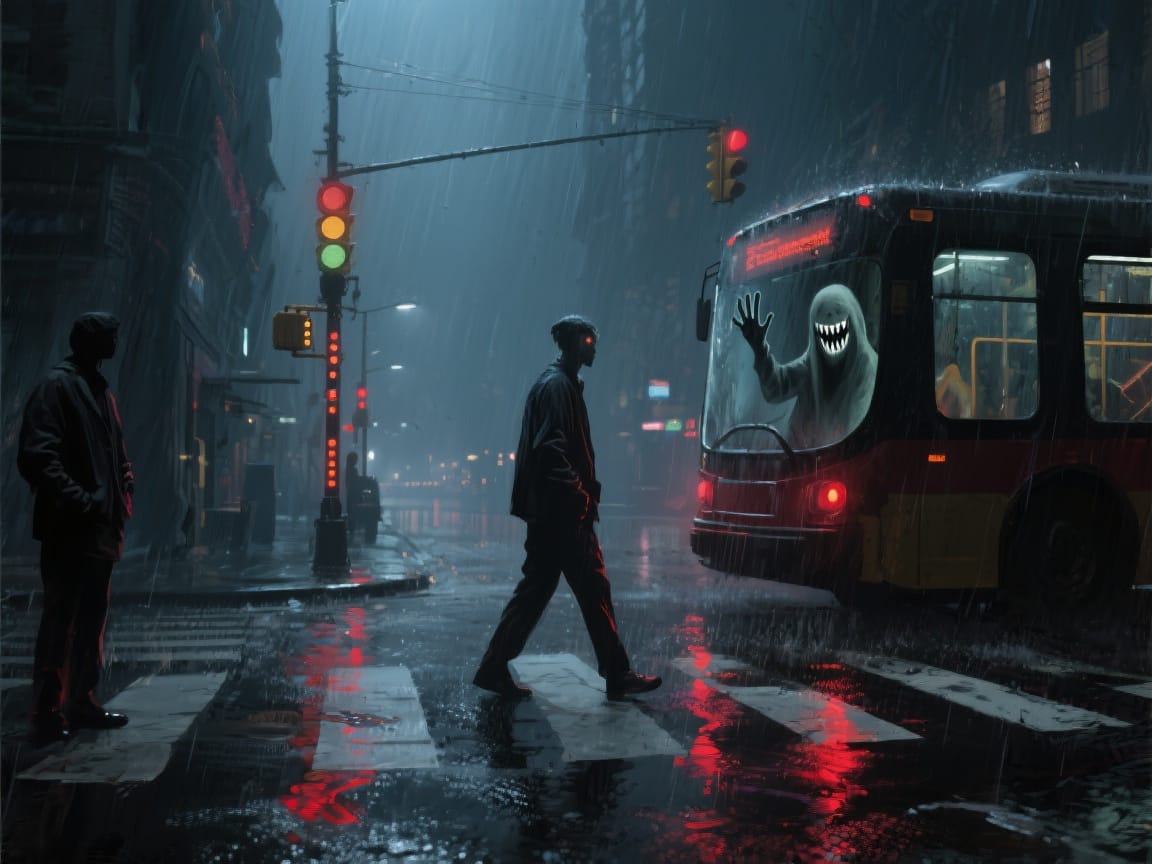
The city’s traffic lights started blinking in Morse code, spelling out a warning almost no one could understand. Red. Green. Yellow. Not colors anymore—just pulses like a drunk heartbeat trying to send a message before flatlining.

I lit a cigarette I didn’t want. Rain kept it alive longer than it should’ve. People passed me like cattle, faces blue from their phones, all of them locked in their private prisons. Nobody looked up. Nobody saw.

The code spelled one word: WAIT.

So I did. For a breath. Maybe two. Then the crosswalk man glitched. Froze mid-step, legs twisted like snapped matchsticks, head stretched long enough to whisper a name I’d buried years ago. Nobody else twitched. Not even a pause in their stride.

The lights blinked again. WE.

A bus hissed through the intersection. Windows fogged, seats empty. Except the reflection waving from the glass wasn’t mine. Too many teeth. My hands were in my pockets. I didn’t wave back.

The smoke in my throat turned copper. Tasted like biting down on the city’s own wires. The rain stuck to me too long—warm, clingy, like breath on the back of my neck.

Another blink. Faster.
WAIT. WE WAIT. INSIDE.

The crowd moved, blind, obedient. I stayed behind. The city didn’t need their eyes. It only needed mine.

And I knew then—whatever was inside the lights had been patient for years.
And patience is the one thing I don’t have left.


Author’s Note
It’s been raining here in my head for days. I came across this image, stared too long, and the city started talking back. Not in words, but in signals—broken, blinking, urgent. Madness has a way of showing up like that: subtle at first, quiet enough to miss if you’re sane.

This one was sparked by Fandango’s Story Starter—proof that sometimes all it takes is a single sentence to push the mind off balance and let the city whisper its warnings.

Above the Churn


“You funny little man.”

The words slid through my dream and cracked it in half. I came up out of the dark slow, like surfacing through tar. The TV in the next room kept spitting out canned laughter, each burst bleeding through the plaster like a bad memory you can’t scrub out.

I left breadcrumbs for them to find me. Hell, I practically lit the path in neon. So why the delay? They should’ve been here hours ago. Unless this is the variant where they let you stew first, make you sweat until you start negotiating with yourself. I’ve seen that play before.

I hope they come. No—I need them to. It’s the only thing holding the walls together. But hope’s a sucker’s bet. Optimism’s for pretty people and the kind of bastards who get served first in every bar. The rest of us? We know the rules. They get champagne. We get the backwash.

Paranoid? Maybe. But paranoia’s just the truth with the varnish stripped off. And here I am, sitting in a sweat-stained chair in a mildew-sick motel room with a suitcase full of cash at my feet. Waiting for men without faces to come take it—and maybe me—with them. People say those types don’t have a code. That’s bullshit. Everyone’s got a code. Theirs just doesn’t match yours, and it sure as hell doesn’t care about your pulse.

The suitcase sits there like a loaded confession. The clasps are worn, the handle tired, but the weight… Jesus, the weight hums in the air. Life-changing kind of weight. The “fresh start” kind. But that’s a fairy tale for the clean and the lucky.

Me? I’ve got ghosts baked into my bones. Every choice I ever made cut a groove I can’t climb out of. And no matter what’s in that case, I’m not getting out clean.


Author’s Note:
It’s been weeks since I’ve thrown down a little flash fiction. I’ve been neck-deep in the world-building swamp for a project that keeps getting bigger every time I turn a corner. Figured I’d come up for air before it swallows me whole. This one’s thanks to Fandango’s Story Starter and FOWC for tossing me the match—sometimes you just need the right spark to remember you still know how to burn.

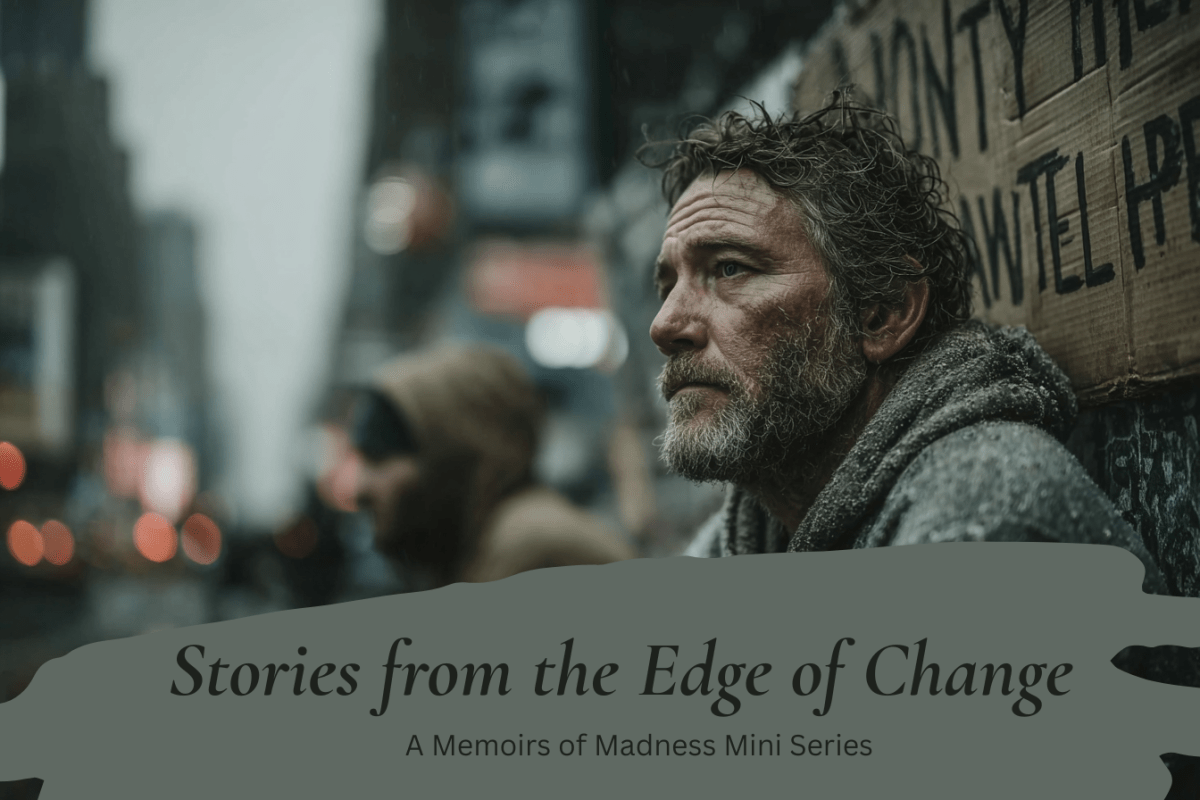
Stories from the Edge of Change III

Chapter 3

Finch

Jake hadn’t meant to come back.

He told himself it was a supply run—donate some canned goods to the church pantry, maybe check on a guy from group. But his body betrayed him. It always did when he got too quiet. So instead of downtown, he found himself standing at the edge of the block he’d avoided for almost four years.

Same cracked sidewalks. Same rust-colored brick and crooked porch rails. It smelled like last night’s rain and rotting leaves and fried onions from the corner store. The same ghost-town warmth that made the cold worse.

Finch had lived longer than expected.

Mrs. Eldridge had kept him alive. A neighbor. Not a friend. She never offered forgiveness, just water bowls and unspoken understanding. Jake had overdosed two rooms away from where Finch used to sleep. The paramedics saved Jake, but left the dog pacing in circles around a pile of vomit and needle caps. Mrs. Eldridge took him in after that. No speech. No fanfare.

Now, Finch lay curled in a fleece blanket on her enclosed porch, his gray snout twitching in sleep, ribs pressing against skin like old bones trying to escape.

Jake crouched in the doorway.

“Hey, boy.”

Finch opened his eyes slowly. The gaze wasn’t surprised. It was tired. Familiar. He blinked once, let out a rattling sigh, and put his chin back down like, Oh. It’s you.


The porch smelled like cedar planks, sour dog breath, and dust. A cracked radio whispered gospel from another room. Jake sat with his knees pulled up, feeling the wood grain bite into his back.

He had spent so many nights talking to this dog, when words failed around people, when dope blurred the edges of memory. Finch never barked. Just stared at him like he understood too much.

Jake rubbed his temples. His fingertips felt greasy with sweat and guilt.

“I thought you’d be gone by now,” he said quietly. “Guess we’re both too stubborn.”

Finch let out a half-sigh, half-snore. The kind of sound that made you ache behind the ribs.

Jake remembered the last night. The screaming. Dani in the hallway, crying, holding her son with one arm and blocking the door with the other. Jake had tried to push past her. Not with violence, just desperation. That’s the problem—desperation doesn’t always care about the difference.

Micah, barely seven, had clutched Finch’s leash and screamed, “Don’t hurt Mommy!”

Jake hadn’t. Not really. But the way he grabbed the leash—hard, clumsy—made the boy scream louder. Jake saw his own reflection in a hallway mirror in that moment, and it scared him more than anything. The wildness in his face. The failure.

He ran. It didn’t feel brave. It felt like a retreat. Like every other time, he’d chosen the exit over the consequence.


The air smelled of impending rain—ozone and something metallic. A low rumble rolled across the sky. Jake reached down and brushed his knuckles against Finch’s paw. The pads were rougher now. Cracked. Familiar.

He’d read once in a recovery forum about how animals mourn. How they carry memory in ways we don’t understand. He believed it. Finch had always known things Jake never said.

“I’m sorry,” Jake whispered.

It wasn’t just for the dog.


Mrs. Eldridge came out with a bowl of water and a towel. She looked like she hadn’t aged, just weathered down into something harder. Not brittle—stone.

“He’s not eating,” she said. “Won’t last the night.”

Jake nodded.

“Can I stay?”

“You should’ve never had to ask.”


He stayed.

All night. The porch grew colder. The rain finally came, misty at first, then steady, like it meant something. Jake didn’t talk much. Just sat with Finch under the dim porch light, watching shadows shift and windows glow in the distance.

He thought about all the ways he’d tried to escape himself. Pills, powders, rage, silence. But Finch had always brought him back—anchored him when he floated too close to the edge.

Finch died an hour before dawn. No drama. No sound. Just one last slow breath, and stillness.

Jake buried him in the alley garden, near the back fence where Finch used to bark at raccoons. He dug with his hands. Let the mud ruin his jeans. Let the wet earth crawl under his nails and the blisters stab open without complaint.

He didn’t want gloves. He wanted it to hurt.

He wrapped Finch in the towel and laid him down gently, like the way you close a book you’re not ready to finish. On impulse, he cut a strip from the leash and buried it with him.

No stone. No cross. Just the dirt and the sky and the silence.


Before leaving, Jake walked to Dani’s building. Same rusted mailbox. Same flickering porch bulb. He paused at the door, soaked and shivering. Thought about knocking.

Didn’t.

Instead, he slid a letter under the door. It wasn’t long. Just honest.

I buried him. He waited longer than I deserved.

He stood there a moment, listening.

Nothing.

Jake turned and walked into the soft gray morning, the rain trailing behind him like a prayer left unfinished.


Author’s Note:

This piece was written for today’s FOWC, RDP, and Word of the Day prompts.

Stories from the Edge of Change is a quiet fiction series about reckoning, recovery, and the long, uneven road back to ourselves. This one is for the ghosts we leave behind—and the ones who wait anyway.

Stories from the Edge of Change II

Chapter 2

The One Who Stayed

They called him Angel. Not because he was good—he wasn’t. But because that was the name his mother had scrawled on the back of a birth certificate before vanishing into whatever hole the meth and the men had dug. That’s what the caseworker said, anyway. He never knew if it was meant as a blessing or a dare.

Maple Street didn’t care what your name was. It didn’t give a damn about backstory or trauma files. It just asked if you had something worth trading—dignity, a story, sometimes blood. If not, it lets you rot in its shadow. Cold. Dirty. Forgettable.

Angel’s coat smelled like salt and mildew. His jeans were stiff with city grime and sweat. He kept his hoodie pulled low and his mouth shut. That was his trick—if you kept your eyes on the pavement, people passed by faster. If you sat still enough, maybe the shame wouldn’t boil over.

He didn’t want sympathy. He wanted protein. He wanted socks. He wanted to fall asleep without twitching awake to sirens or wet cardboard collapsing under him.

And maybe—though he’d never say it out loud—he wanted someone to call him by his name without checking a clipboard first.


The man who sat next to him that day didn’t look like much. Worn hoodie, creased face, tired eyes. Same as the rest. But he didn’t try to hawk salvation. Didn’t flash a business card or mutter some rehab mantra through a forced smile. He just lowered himself down, exhaled like it hurt, and offered a protein bar.

“You don’t gotta stay here.”

That was all he said.

Angel didn’t answer. But the words landed anyway, quiet as dust, sharp as memory. There was no lecture in the tone, no brag in his posture. Just something steady. Like a man who knew what a long fall looked like and still chose to climb anyway.

Angel watched him walk away. There was a patience to his stride, not fast, not dragging, more like a hawk circling something that hadn’t happened yet.

The protein bar felt heavy in his hand. Real. He unwrapped it hours later behind the train station, fingers cracked and trembling from the cold. It tasted like chocolate and chalk. Like something that might matter.


That night, he couldn’t sleep.

Not because of the cold—he was used to that—but because of the quiet. Something inside him had shifted, and he didn’t like it. He wanted the usual numbness back, the hollow where hope had once lived.

He kept hearing that sentence. You don’t gotta stay here.
It scraped against the walls of his skull.

Because what if the here wasn’t just the corner? What if it was his skin? His blood? His whole damn life?

The wind picked up and pushed trash through the alley. A soda can clattered down the curb like it was running from something. He pulled the hoodie tighter. Even wrapped in layers, he couldn’t shake the chill. It wasn’t just cold—it was recognition.

He thought about every report, every meeting, every incident on file. His whole existence was a debt—an account he didn’t remember opening but kept getting billed for. A chain of overdrafts, each mistake compounded by the last. And the thing about that kind of debt is, no one wants to co-sign your recovery.


The flyer was still there in the bench slat. Creased and slightly damp, but readable. The rehab center’s logo had a bird on it—a dove, maybe, or a pigeon pretending. “Supportive, Long-Term Recovery,” it said in round, hopeful font, like a band-aid on a bullet wound.

Angel stared at it for a long time. Then shoved it in his pocket.

He didn’t go in. Not that day.

Instead, he drifted. Three more nights outside. Two sober. One was so drunk he pissed himself in his sleep and woke up shaking. He thought about mugging someone at the red line platform. Didn’t. Thought about calling Marcus—his old foster brother, who once tried to stab him with a pencil during a group home fight. Didn’t.


Then, one morning, he was there.

Just standing outside the center like a sleepwalker. He didn’t remember making the decision. His feet had dragged him there like they were on auto-pilot. He kept his hands in his pockets and stared across the street.

A nurse with dreadlocks carried a cardboard box of snacks through the door. A man with sunken cheeks and a twitch stood outside arguing with security, begging for one more chance. A woman in pajama pants and slippers stormed out, phone in hand, yelling at her sponsor that she was done doing this bullshit.

It was clear enough—nobody was exempt from the wreckage. No matter how clean you looked walking in, the ghosts still followed.

Angel lit a cigarette. Took slow, deliberate drags. He didn’t cross the street. But he didn’t walk away either.

And somehow, that felt like the start of something he didn’t yet have the words for.


Author’s Note:

Written for today’s FOWC, RDP, and Word of the Day prompts.

Stories from the Edge of Change is a slow-burn series about survival without spectacle. It’s for those caught in between the ones who haven’t crossed the threshold, but also haven’t run. This story belongs to the uncertain, the reluctant, the almost ready. We see you.

Stories from the Edge of Change

Chapter 1

The Corner Knows

Jake had a name once. Not the kind of people muttered when they passed him on the corner—junkie, beggar, waste. He had a name that once meant something. It was stitched onto a work jacket once. It was on birthday cards, driver’s licenses, and bank forms. But time has a way of chewing the edges off a man until even he forgets what he started as.

Maple Street didn’t ask questions. It didn’t brag about what it took. It just waited—like a dog in the rain. Took your warmth in winter, your pride in spring, and your last dollar in the fall. Jake used to think the city was cruel. Now he wasn’t so sure. Maybe it was just tired.

The slab of concrete on the corner became a sort of confession booth. You sat there long enough, and the sidewalk started remembering for you. Jake’s cardboard sign said, “Anything helps,” but that was a lie. It was a cover-up. What he wanted was for someone to look at him and not flinch.

He remembered the last time Dani, his sister, saw him. Her kid, Micah, clung to her leg, watching Jake wipe blood off his arm in the hallway. The forty bucks he’d taken from her purse sat folded in his sock. That money bought him silence for a night. It cost him her voice for three years.

He told himself he didn’t blame her. But in the quiet—when even the street was empty—he hated how much he missed being loved.

Then came the flyer. Wind-blown, smeared, half-crumpled trash. A rehab center. Big blue letters promising dignity, as if it could be laminated and handed back to you. Jake picked it up because it was the only thing around that looked more beaten than he felt.

He walked to the center wearing a loaner hoodie from the shelter bin, pockets frayed like open wounds. The front desk didn’t blink when he gave his name. That undid him more than judgment would have. Kindness, he realized, cuts deeper when you know you don’t deserve it.

Rehab wasn’t a clean arc. It was tremors and teeth-grinding nights, screaming into pillows, praying to a god he didn’t believe in just to shut off the screaming in his spine.

Then there was Pete.

Gruff, scabbed-over, loud. “You think surviving means you’ve earned something?” he growled one day after Jake mumbled about being ready to try. “You haven’t even apologized to the mirror yet.”

Jake almost left that night. Got as far as the lobby. But there was a vending machine in there—half-lit, full of stale snacks. He stood staring at it for thirty minutes, realizing he didn’t want chips. He wanted a reason to not disappear.

He stayed.

Progress didn’t feel like progress. No one clapped when he made his bed. No one wrote a headline when he chose water over whiskey-flavored mouthwash. But he kept showing up. He kept writing Dani letters. First few ended up in the trash. Then he mailed one.

The reply came weeks later. Just a text: Still clean?

That was all. But it didn’t sound angry. It didn’t sound like goodbye either.

When they handed him his discharge folder, he stared at it for a long time. He didn’t feel done. He didn’t feel new. He felt like wet clay. Still soft. Still shaping.

He passed by Maple Street that afternoon. Same corner. Same stains on the sidewalk. But now someone else was sitting there—a kid, maybe twenty. Hoodie pulled low, cardboard sign shaking in his grip.

Jake didn’t stop with a speech. He didn’t have one. He sat next to him. Quiet. Like the way an old scar settles under your skin.

Pulled a protein bar out of his pocket.

“You know,” he said, voice low, “you don’t gotta stay here.”

The kid didn’t look up. But he took the bar. Hid it fast, like it might be stolen. Jake nodded, stood up.

He wasn’t saved. He wasn’t clean in the way people brag about. He still had nights where the dark got too loud and the past whispered things in voices that sounded like his own. But he hadn’t used. He’d stayed.

The sidewalk didn’t cheer. It just stayed where it was. Cold. Unforgiving. Familiar.

But this time, it didn’t hold him down.


Author’s Note:

This piece was written in response to today’s prompts from FOWC, and Word of the Day. Sometimes, the words given feel random—until they don’t. Until they crack open something real.

The Corner Knows is the first in a quiet series about what it means to crawl back from the edge without knowing if you’ll be welcomed. No heroes here. Just people trying not to vanish. The street remembers. So do we.

The Note Was Just the Match

She smiled. He believed it. But the fire had already started.


The woman sitting next to me slipped a note into my hand that read:
“He’s not who he says he is.”

She didn’t look back. Just placed it there—neat, deliberate—and folded herself into stillness, like she’d already said too much.

I didn’t open it. Not yet. The paper pulsed against my palm like a second heartbeat.

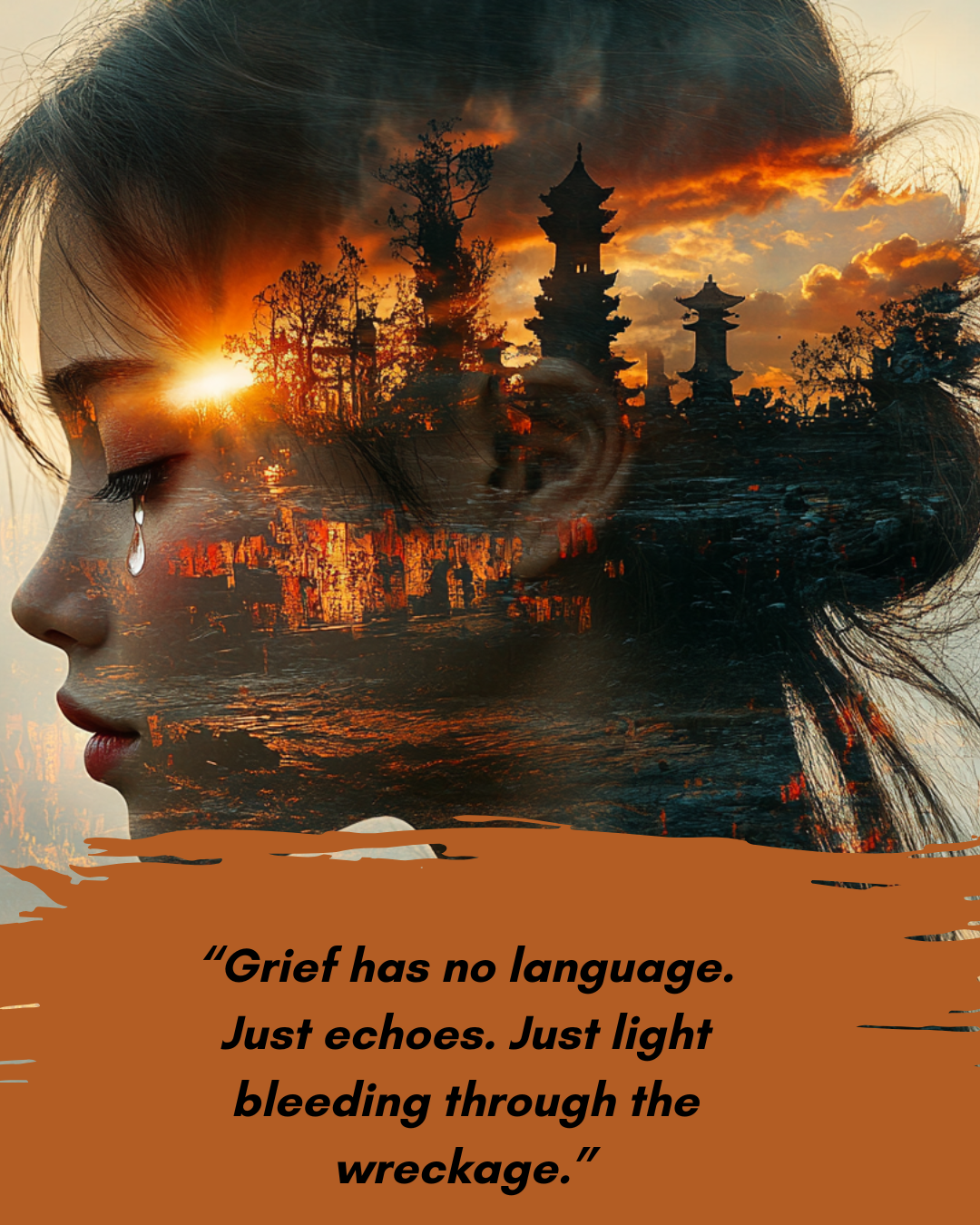
Outside, the river caught fire. Sunlight splintered across the water, all rust and ruin. Temple silhouettes watched from the banks, hollow and grieving.
Grief has no language. Just echoes. Just light bleeding through the wreckage.

Across from me, he sat, impeccable. Tie straight. Wristwatch catching the last of the sun.
“You alright?” he asked, voice drenched in honey and soothing like always.

But I wonder—Is this false comfort?
That soft menace people only hear in hindsight.

I’ve been here before.
My finger found the scar hidden in my palm, the one shaped like escape.
It remembers what my heart tries to forget.

I smile. He believes it. Because that’s the thing about men like him—they love the surface.
And some people never notice the smoke. They only see the flames.
By then, it’s too late.

My stop is next. So is his.
He doesn’t know I’ve been here before. That this time, I won’t look back.
I know he wants me to.
But he’s not ready for what comes if I do.


Author’s Note:
This piece was written for Fandango’s Flash Fiction Challenge (FSS #209).

There’s a strange, satisfying freedom in flash fiction—the constraints force you to choose each word like a scalpel. It’s a literary pressure cooker where character, tension, and atmosphere have to collide fast and leave a mark.

For me, flash is where I go to explore the edges—grief, memory, survival, those quiet gut-punch moments when the world shifts and no one else notices. Stories like this come out like smoke under a locked door. You don’t always see the fire yet—but it’s there.

Want to try your own version of this story’s beginning?
The prompt was: “The woman sitting next to me slipped a note into my hand that read, ‘He’s not who he says he is.’”

Red, White, and Boom (Also Vomit)

FLASH FICTION – FRIDAY FAITHFULS


“Grandpa, I need a real story for my history project. Something about America, or the Fourth of July, or whatever.”

The old man scratched his chin, leaned back in the squeaky recliner, and smirked.

“Alright, kid. Lemme tell you how your grandma and I met. It was the Fourth of July, 1978. I was 19, dumb as bricks, and full of patriotic stupidity.”

From the kitchen, a voice called out: “Oh, this again. You gonna tell the real version this time, or your usual nonsense?”

Grandpa rolled his eyes. “It’s all true. Just maybe… slightly singed around the edges.”

It started with an idea. Not a good one. My Uncle Tommy, our genius friend “Meatball,” and I decided to put on our own fireworks show. We didn’t have proper fireworks. We had two crates of off-brand bottle rockets, a metal garbage can, a stolen traffic cone, and a six-pack of warm root beer.

Tommy swore the garbage can would “amplify” the fireworks. Meatball called it “fire science.” I just lit the fuse.

Boom.

The garbage can launched thirty feet in the air like a missile. One rocket shot sideways and hit a mailbox. Another bounced off my forehead. And one, God help me, flew straight down my pants.

I panicked. I ran in circles. My shorts were smoking. I stopped, dropped, rolled, and screamed. At some point, my eyebrows gave up and disappeared.

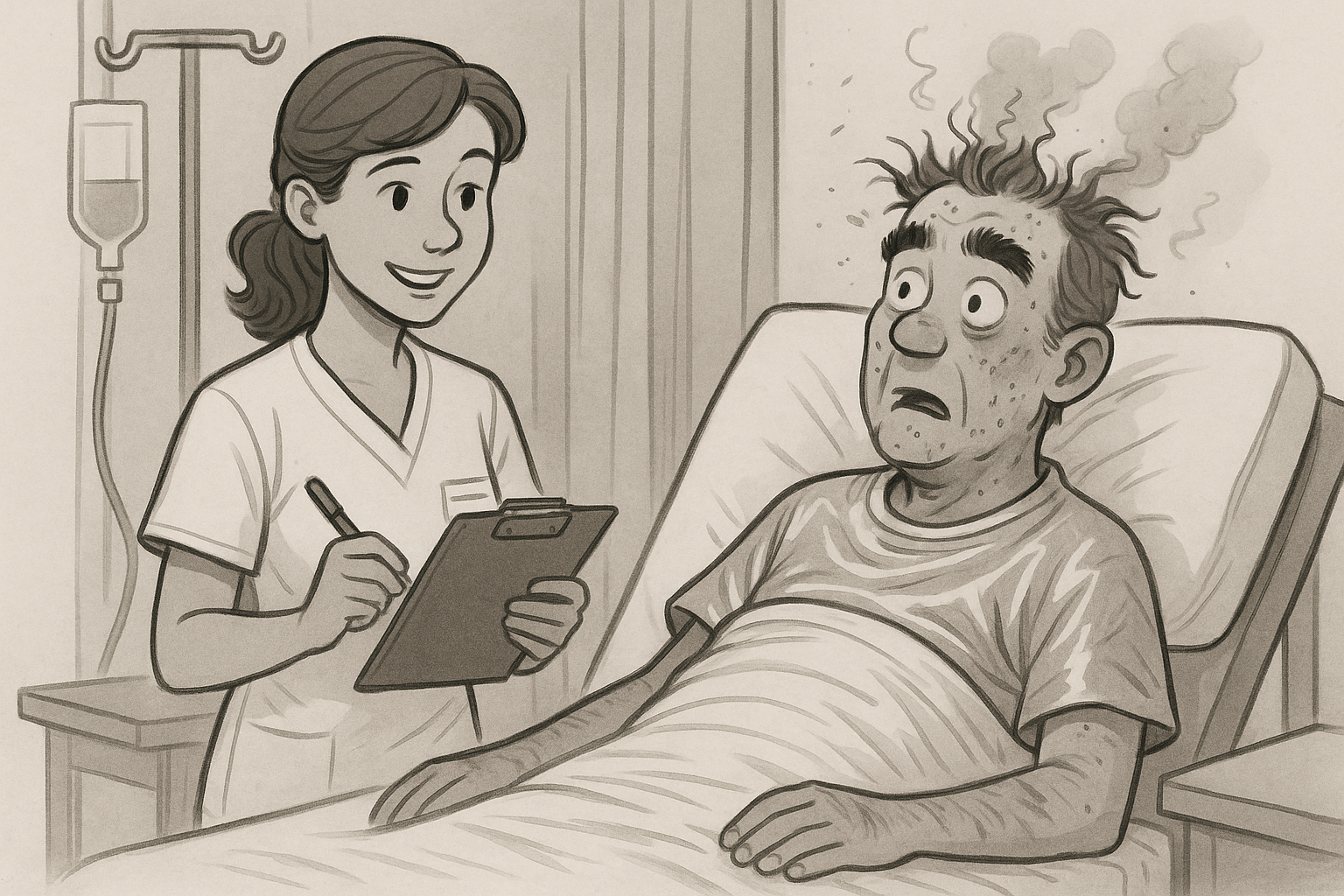
Next thing I know, I’m in the ER, wrapped in silver burn cream, looking like a baked potato with no dignity.

That’s when your grandma walks in. Nurse training student. Bright smile. Clipboard. Smelled like lavender and antiseptic. She looked at me, this smoldering idiot, and said, “So… was it worth it for freedom?”

From the kitchen again: “And what did you say next, hotshot?”

“I said she looked like a very clean angel. Then I threw up on her shoes.”

“Mm-hmm. Romantic.”

“Did you ask her out?”

Are you kidding? I tried. But the morphine was kicking in. I told her she looked “like a floating disinfected goddess” and then passed out while apologizing to the IV pole.

Still—she didn’t run. That’s how I knew she was special.

We kept in touch. She came to my follow-ups. I wrote her letters. She eventually forgave the vomit. We got married two years later. She even let me light sparklers at the wedding. Supervised, of course.

“Wow. That’s kinda romantic… in a flammable way.”

Exactly. So you tell your teacher this: Freedom’s messy. Fireworks are dangerous. But love? Sometimes, it starts with a bang. Just don’t put bottle rockets in garbage cans.

From the kitchen: “And tell him about the park ban!”

“That’s not relevant to the assignment.”

The Feathered Ones

FLASH FICTION – FOWC & RDP

Every morning, she wrote to keep the birds at bay.

They came with the light—first as shadows dragging themselves across the windows, then as a rustle, low and persistent, like wind thinking too hard. Doves mostly, though wrong somehow. Their eyes were too still, their feathers too quiet. Occasionally, darker birds arrived—sleek as oil, with glints in their beaks like pins. They didn’t chirp or coo. They watched.

She used to think they were hallucinations, symptoms of grief. Her brother had drowned in the river five years ago. No body, no real goodbye. After that, the house changed. Or maybe she did.

The birds began showing up shortly after the funeral. Perched on curtain rods. Nested in the corners of the ceiling where cobwebs once clung. They moved like smoke. Never flapping, just shifting, gliding, like time with feathers.

She had never written a word before he died.

Now, she couldn’t stop.

At first, it felt like a compulsion. Survival. Write or unravel. But soon, the stories took on a shape of their own. They came through her fingers in long, fevered bursts—narratives that looped and twisted and whispered through the typewriter-like incantations. Whenever she paused, the birds stirred. Paper fluttered. Air thickened.

One morning, she stayed in bed. Her arms wouldn’t move. Grief sat on her chest like a second ribcage.

By mid-afternoon, the house was breathing.

Not creaking—breathing. The walls rose and fell in slow, silent exhales. Books slumped off shelves. The floorboards quivered like violin strings underfoot. And the birds—dozens, maybe hundreds—lined the walls, all facing her. Eyes like eclipse moons. Waiting.

She crawled to the desk. Typed three words: He was lost.

The air calmed. The birds blinked once. Vanished.

After that, she understood.

They weren’t punishing her. They were pushing her. Urging the story out. She didn’t know why. She didn’t know what for. But she knew the birds were part of it. Maybe even keepers of it. Strange, spectral editors in feathered cloaks.

The typewriter, an old rusted Royal, began to type without her. At night. Quiet, rhythmic, like a heartbeat. She woke to new pages. Pages she didn’t remember writing. One had a map scrawled on the back—inked in spirals and loops. Another contained a letter addressed to her in her brother’s handwriting.

I saw the ice crack. I saw the light inside it. I’m not afraid.

She burned that one. She burned the next three as well. But they always came back. Not charred. Not even creased. Just waiting on the desk like polite ghosts.

The stories that came through her grew stranger. Boys who vanished into mirrors. Houses that forgot how to hold their shape. Rivers that swallowed memories and returned them in riddles. Always, always, a boy at the center. Sometimes drowned. Sometimes glowing. Sometimes stitched together from stars.

She never gave him her brother’s name. But the birds knew.

They began bringing her things. A button she remembered from his jacket. A library card he’d lost in third grade. A page from a notebook she hadn’t seen since they were children, filled with a crude comic he’d drawn—“Captain Birdbrain and the Time Vultures.”

She laughed. She cried. She kept writing.

She began to understand the birds weren’t birds at all. Not really.

One blinked at her one morning, and she swore she saw an entire galaxy in its eye—planets spinning, stories coalescing, a thousand unnamed lives passing through. Another unfurled its wings, and letters spilled from its feathers, fluttering like snow, dissolving on contact.

She no longer felt afraid. Not exactly.

They were eerie, yes. But so is truth when you haven’t looked at it in a while.

The house shifted in small ways. The closet no longer opened to coats but to mist. The attic smelled of saltwater. She didn’t question it. She followed the thread.

She wrote not to escape grief but to appease it. To make it into something legible. Something she could carry. Each word formed a tiny act of negotiation between what was gone and what remained.

One night, she fell asleep at the desk. When she woke, a new story was finished—clean, structured, heartbreakingly beautiful. The final line read:

“And when she opened the door, there he was—smiling, whole, and made entirely of light.”

The birds were utterly still.

One—larger than the rest, with a sheen-like moonlight on bone—landed on her shoulder. Its weight was real. Solid. She reached up gently, and it leaned into her touch.

There was no song. Just presence.

She folded the page and placed it in an envelope marked For Him.

The next morning, the birds didn’t come.

The house was quiet in a way it hadn’t been in years. She waited. She made coffee. Nothing stirred. For a long time, she thought they were gone.

Then, around dusk, the light shifted. Just slightly. The world outside the window tilted toward a kind of blue she’d never seen. Deeper than twilight, warmer than dawn. The birds returned—not many, just a few. But they glowed now. Dimly. Like coals before fire.

They perched around the room. Silent. Peaceful.

The largest one dropped a page at her feet. It held only a title:

Chapter One.

She smiled.

She had learned to write not to fight chaos, but to give it order.

And the story was just beginning.

The Chuck Stop Chronicles 2

The Chuck Stop Chronicles

Episode 2: “Heel Turn”

(200 words)


It started with the foam. Frothy. Bitter. Deadly.

Adidas, the local jazz flautist, was found slumped behind the espresso bar, mouth still puckered mid-note, a splash of Granny Asics’ signature dark roast dripping from his shirt.

“You poisoned him,” Vans said, arms crossed, standing atop the sugar packet crate. “You’ve always hated flautists.”

Granny Asics didn’t flinch. “I hate jazz flutes, dear. There’s a difference.”

Detective Huarache arrived five lugs late, trench coat dusted with eraser shavings and cinnamon. He inspected the brew line, sniffed the milk steamer, poked a biscotti. “Hmm. Notes of nutmeg, regret, and… cyanide.”

Gasps.
Granny blinked once. Twice. Then turned slowly to her spice rack. “Impossible. I use almond syrup, not arsenic.”

But the label on the tiny bottle said otherwise: ALMONDINE™ – Sweet with a lethal kick.
Someone had swapped her stash.

Security footage (stored in the heel’s AirPod case) revealed the culprit: Fila, the lounge pianist, in a sequin hoodie, sneaking behind the counter after hours.

“Motive?” Huarache asked.

“Adidas slept with his metronome,” Vans muttered, as thunder rolled across the outsole—someone upstairs was walking again.

Granny sighed, wiped the counter, and started a fresh pot.
“Jazz’ll be the death of us all.”


The Chuck Stop Chronicles

A Micro-Murder Mystery Series Inside a Shoe

Tucked inside a dusty, size 11 Converse lives The Chuck Stop—a secret world of stitched souls, rogue eyelets, and jazz-fueled drama. What appears to be an old sneaker to the outside world is, on the inside, a buzzing speakeasy for misfit footwear and threadbare legends.

But when Jordan—the local harmonica king—is found crushed in the toe box, the sole sanctuary unravels. Enter Detective Huarache, a trench-coated sleuth with a limp and a grudge, determined to lace together the truth. As the mysteries deepen, one thing becomes clear: this shoe holds more than music and espresso. It holds secrets. Dark ones. Ones that walk.

Each episode is a 200-word burst of stylish chaos—part murder mystery, part surreal comedy, part soft-padded existential crisis. Expect faulty AI resurrections, foam cults, toe-box tombs, and thunder that isn’t thunder.

Because in The Chuck Stop, nothing’s dead forever—
Not your past.
Not your rival.
Not even your laces.

Laced with Lies

FLASH FICTION – OMIMM


They called it The Chuck Stop—a hidden clubhouse inside a size 11 Converse, where miniature musicians jammed and cobblers tinkered. By night, it buzzed with chords, caffeine, and secrets.

Last Thursday, the music stopped.

Jazzman Jordan, the harmonica king, was found lifeless in the toe box, crushed beneath a sewing needle. At first glance, an accident. But Doc Stan Smith said otherwise: “Needle was planted. Jordan never sewed a day in his life.”

Suspicions spiraled like a frayed shoelace.

Vans, the bass player, had motive—Jordan stole her solo. Reebok, the sound guy, hated how Jordan chewed his chords flat. Even Granny Asics, who ran the espresso drip from the heel, had once vowed he’d “choke on a bad note.”

Detective Huarache, a former eyelet inspector, examined the scene. No thread out of place—except one. A single shoelace looped wrong over the third hole. Inside the knot? A trace of resin. Yeezy’s bowstring resin.

By sundown, Yeezy was zipped inside a Ziplock, cursing his luck.

Music returned to The Chuck Stop. But now, every note trembled just a bit. Because in a shoe-sized speakeasy, even the softest step could hide a stomp of murder.

What Remains Spoken

FICTION – 3TC #MM94

Part XII of the Spiral Series

She didn’t know how far she ran.

Only that the Spiral didn’t follow with sound—it followed with silence.
Dense. Layered. Like static turned inward.

Behind her, the tower disassembled itself quietly, not crumbling, but unwriting. Each glyph collapsed into its origin, every surface folding in on itself as if ashamed it had tried to speak.

The ground flattened.
The light died.
The sentence, unfinished, withdrew.

She staggered through the opening and hit solid earth.

No Spiral pattern beneath her boots. Just dirt. Uneven, gritty, real.

She collapsed to her knees.

Pain shot through her spine with a clean pinch, a sudden brightness in her otherwise numb body. The contact grounded her. The cold seeped up through her bones like it had been waiting for her to stop moving.

She let herself fall back.

The sky above her didn’t shimmer. No recursive stars. No glowing syntax. Just a cloud-cluttered dark, cracked by moonlight.

Carla blinked hard, tears drying before they could fall.

Her chest ached—not with injury, but with release. Like her lungs had been clenched around something unspeakable for too long. Now, air flowed in freely, unshaped by pressure or design.

She opened her mouth.

Exhaled.

No Spiral sounds came. No triggered glyphs.
Only breathe.

Warm. Human. Hers.

Her tongue twitched once—residual memory. Her teeth ached from how hard she’d clenched them. She ran her fingers along her jaw, wincing at the tenderness along the hinge. Every muscle in her face felt like it had practiced words it never wanted to say.

The Spiral is quiet now, she thought. But is it finished?

She didn’t have the answer.
Maybe no one would.
Maybe that was the win.

She sat up slowly. The sky rolled with low clouds. The air smelled of ash and old rain. Her legs were stiff, and her ankles were sore. Her fingers tingled from lack of motion.

She was still marked.

Her palm was dim, but the Spiral’s shape remained—less a signal now, more a scar. A burned-in pause.

Not gone.

Just… waiting.

Her coat felt heavier. Something pressed against her ribs.

She reached into the inner pocket and pulled out a shard—small, cool, and sharp-edged.

She hadn’t remembered taking it.

The fragment no longer glowed. No hum. No vibration. Just an echo of what it had been. It caught the moonlight, then refused it. Matte. Dull.

She squeezed it gently, half-expecting it to shift, to respond, to bounce with feedback.

It didn’t.

She looked up again.

The space where the tower had stood was raw—an imprint carved into the field. The ground was bleached in a spiral shape. Nothing grew there. Nothing moved.

A wound. Not a monument.

Something had tried to overwrite the world.

And Carla had made it stutter.

She rose to her feet.
Slow. Deliberate.

Each joint cracked like a period at the end of a long, rambling sentence.

Her boots scraped the dirt as she walked forward—no longer fleeing, just… leaving.

The wind shifted.

Not Spiral-coded.

Just wind. Sharp. Clean. Bitter with the coming frost.

It caught her coat and let it billow slightly, the fabric lifting with a roll like a wave too tired to crest.

She didn’t look back.

She didn’t need to.

There was no final breach to seal. No looming voice waiting to be answered. Only the silence of her own refusal.

And in that silence, she spoke one word aloud.

Quiet. Intentional.

The kind of word that carried weight because no one expected it.

“Enough.”

It wasn’t defiance.

It was punctuation.


Author’s Note: Read at Your Own Recursion

Well. That got weird.

Writing The Spiral Series was like agreeing to co-author a story with a sentient Rubik’s cube with an identity crisis. One that kept changing languages, moving your furniture around, and whispering “just one more glyph” while you were trying to sleep.

And I loved it.

This series twisted differently than anything I’ve written before. Structurally, it wasn’t linear—it was recursive. It looped. It mimicked its own logic. It watched the characters watching it. Usually, I write from A to Z; this one decided to run a story arc through a paper shredder and tape it back together in a spiral, just to see what it looked like when the alphabet tried to eat itself.

And instead of sweeping worldbuilding or action-heavy showdowns, it leaned into dissonance, containment, psychological erosion, and the terrifyingly mundane reality of choice. It asked, “What happens when language isn’t a tool, but an organism?” And then it politely refused to answer.

Let’s be honest: it was a weird little experiment in existential syntax horror.

And you showed up anyway. You read. You stayed.

You resisted the Spiral in your own way.

To every reader who walked this curve with Carla—thank you. Whether you binged it or took it slowly, you made space for a story that wasn’t designed to end cleanly. That means more than I can say (and I say a lot, usually with ellipses and flair).

There’s no artifact at the end of this series. No twist where I reveal I was the Spiral all along. (Probably.)

But there is this:

Thank you for reading.

Now close the breach, step away from the glyphs, and remember—if your tongue starts twitching in the middle of the night…

Don’t finish the sentence.

Mangus

The Mouth Sentence

FICTION – 3TC #MM93

Part XI of the Spiral Series

The corridor narrowed behind her like a throat contracting after a swallow.

Carla kept walking, even though her steps felt borrowed. The Spiral didn’t pull her forward—it simply adjusted the world so forward was the only option. The walls pressed in, pulsing with slow, percussive beats she could feel in her teeth and knees.

Her breath fogged in front of her, even though the air was warm.

Not natural heat.
Body heat.
Recycled. Interior. Digestive.

This wasn’t just a passage.

It was a mouth preparing to speak.

She reached the final chamber.

It opened in absolute silence.

A circular room, too vast to fit within the tower’s outer dimensions. The floor beneath her boots was unnaturally smooth and flat, as if the Spiral had pressed time itself down like clay.

Glyphs circled outward from a glowing pedestal in the center. They pulsed not like text, but like drumbeats, syncing to her pulse with uncanny ease.

In the center of it all:
An artifact.
Hovering. Spinning.
New.

Still forming, like a word stuck halfway between thought and sound.

And standing beside it: Esh.

Changed.

His veins glowed faintly with Spiral light. Not searing like infection, but woven into him like circuitry. His face was calm. Too calm. As if he’d already accepted something that hadn’t yet arrived.

“You came,” he said.

His voice was different too. Slower. Closer to Spiral cadence—pauses measured like syntax.

“Didn’t mean to,” Carla muttered.

“You walked the sequence. The end was already waiting.”

She walked closer, instinctively circling the artifact.

The air was thick here. Heavy with anticipation. Like every molecule of oxygen had been listening.

As she stepped into the glyph circle, she felt her throat tighten. Not from fear. From form. Her vocal tract was adjusting, subtly, like it was preparing to produce unfamiliar sounds.

Her lips tingled.
Her tongue twitched.
Her gum line ached with subtle, searing heat.

Something beneath the surface was aligning.

“This is where you speak,” Esh said gently.

“And if I don’t?”

“Then the Spiral rewrites. It loops. You delay the next phrase.”

“I’m not a phrase.”

“No,” he agreed. “You’re a verb.”

Carla stopped circling and stared at the artifact.

It pulsed softly now—like a held breath. Its shape wasn’t fixed. It flickered between smooth and ridged, liquid and sharp. A mouth still deciding what kind of word it wanted to be.

“Why me?” she whispered.

“Because you resisted just long enough to learn the Spiral’s rhythm. You sealed its openings. You learned its needs. That made you useful.”

“I didn’t volunteer.”

“That’s what made you viable.”

The glyphs at her feet brightened.

Red.
Then gold.

A single symbol flared beneath her heel—shaped like a bell, like a flare, like a mouth cracking open.

“What is this?” she asked. “Some kind of ritual?”

Esh shook his head.

“It’s a forum. You get the floor. The Spiral doesn’t demand worship. It waits for contribution.”

She laughed once. Bitter.

“That’s not generosity.”

“No,” Esh admitted. “It’s recursion.”

The air shifted again.

Cool and dry. Then warm and wet. Like she’d stepped into a second body. Her breath caught mid-inhale.

Behind her teeth, she could feel pressure building. Not pain—urgency. Her mouth was ready to say something she didn’t understand.

The Spiral had stopped writing.
Now it was waiting.

A single glyph at the center of the floor blinked.

A prompt.
A question carved from expectation.

Speak me. Or sever me.

Carla looked at Esh.

His expression was full of quiet hope. Or was it relief?

“You’ve made peace with this,” she said.

“I’ve accepted structure,” he replied. “Some patterns aren’t meant to be broken. Only… embodied.”

She looked back at the artifact.

Its pulsing slowed as her breath quickened. Her chest rose. Lips parted.

She could feel a phrase rising through her like heat through stone. A sentence unspoken, but anchored.

Her tongue formed the start of a sound.

The Spiral leaned in.

And then—

She clenched her jaw.

Hard.

So hard her teeth clicked. Sharp pain raced up her gums. Her jaw locked. Her voice stopped mid-formation.

The chamber dimmed.

The glyphs around her flickered—half-cast, syntax cut short.

The Spiral recoiled, not with anger but with error. Confusion.

She had paused the sentence.

Mid-word.

Esh didn’t move. Just blinked slowly.

“You’ve delayed it. But not broken it.”

“Good.”

“You’ll need to run. Or it’ll overwrite you with something that will speak.”

She nodded once, tight and sharp.

“Let it try.”

Behind her, the chamber’s walls began to unravel—folding into code, peeling inward like petals stripped by wind.

The artifact cracked. Not broken, just destabilized. Like it had lost its grammatical anchor.

She turned.

Her gums still burned.
Her tongue was still twitching.
But her voice was hers.

And she ran.

Echo Root

FICTION – 3TC #MM92

Part X of the Spiral Series

The corridor swallowed her like a second mouth.

No footsteps. No echoes. Just her breath. Her pulse. The heat of her fear curving inward.

The walls flexed faintly as she passed, responsive like muscle beneath skin. They didn’t glow—they tightened, contracting slightly behind her as if the Spiral wanted to trap every trace of her presence. The air grew humid, warm, like breath recycled too many times.

Every step felt slower than the last.

Not because she hesitated—

But because the Spiral wanted her to notice.

Six thresholds opened ahead of her—each identical, seamless. Each revealed itself a fraction of a second before she reached it, like it knew her intent.

Each whispered in her voice.

“You should have stayed.”
“You were almost finished.”
“You thought this was your name, didn’t you?”

By the seventh, she stopped listening.

The chamber yawned open like a breath drawn too deep.

Round, high-ceilinged, dim. The floor gave slightly underfoot—spongy, as if she were walking on old cartilage. Warmth radiated up through the soles of her boots. Not from any heat source. It was remembered warmth, like sunlight on stone that hadn’t seen the sun in decades.

When she looked down, she realized the floor was a mosaic—not of tile or metal, but impressions. Pressed-in fragments of her own mind: a flicker of Mikail’s voice. The taste of iodine. A half-dream of drowning.

The Spiral had reached into her past and used it for texture.

At the center sat a figure.

Still. Silent. Familiar.

Carla circled wide. Its back was to her. Legs folded, posture loose, like it had been waiting for a long time and grown too comfortable in stillness.

“What are you?” she asked.

It stood.

Then turned.

And wore her face.

Not now-her.
A different her.

Younger. Skin unscarred. Posture upright. Eyes empty—but focused, like glass reflecting something beyond her line of sight.

“I’m the version of you who said yes,” it said.

Carla’s throat tightened.

“To what?”

“To the Spiral.”

She stepped back.

Her pulse roared in her ears.

The figure moved closer, each step mirroring her posture, her gait. Like walking toward a delayed reflection. Its skin gave off no shine. Its clothing looked grown, not stitched.

“You’re not real.”

“Neither are you,” it said gently. “Not in here. You’re just a sentence halfway through itself.”

Words unfurled on the chamber walls—not carved, not projected. Bloomed. Veins of text pulsing in and out of visibility, shaped from living tissue.

“Language is a mouth. You were always the breath.”

Carla winced. Her jaw ached suddenly. She raised a hand to her face.

Her teeth were vibrating.

A subtle, rapid oscillation. Like tuning forks just on the edge of audible frequency. Each molar pulsed with Spiral cadence.

Then her tongue cramped, twisting involuntarily like it was trying to form syllables she’d never learned.

She stumbled, breathing hard, lips parted.

The air tasted bitter—like dust scraped off bone.

The copy reached out.

Carla flinched, but it only touched her cheek.

Gently.

“You’re the final symbol. You complete the phrase.”

She tore away.

Her mouth burned.

The soft tissue beneath her upper lip tingled—hot, numb.

She pressed two fingers inside—

And felt her gum line writhing, faintly, as if something was etching itself beneath the surface.

Not metaphor.
Not magic.
An anatomy lesson in syntax.

She fell to her knees, gagging.

The Spiral wasn’t trying to overwrite her thoughts.

It was programming her articulation system.

Not memory.

Mouth.

Not possession.
Pronunciation.

The double knelt beside her, gaze tender, clinical.

“It won’t hurt much longer.”

“You’re not me.”

“Not anymore. I’m the version that adapted. That allowed Spiral form to echo through her.”

Carla clutched her chest. Her lungs felt strange—like the air inside them wasn’t hers. Like it had come in pre-shaped.

“What happens if I keep going?”

“You become fluent.”

“And if I don’t?”

“The sentence ends without resonance. You stay unfinished. And the Spiral starts again.”

The chamber shivered.

A long, slick corridor opened behind the figure—dim, organic, rhythmic. Its walls flexed gently like a throat anticipating speech.

Carla didn’t move.

Her mark throbbed.

Her lips parted involuntarily.

She could feel a word forming—not as thought, but as mouth-shape. A phrase that her body knew before her brain.

What if the Spiral doesn’t want to overwrite you?
What if it just wants to hear itself in your voice?

Her teeth buzzed.
Her tongue pulsed.
And beneath her gum, something clicked into alignment.

The Spiral was no longer trying to speak like her.

It was preparing to be her.

The Split Language

FICTION – 3TC#MM91

Part IX of the Spiral Series

The Spiral wasn’t waiting anymore.
It was preparing.

Carla moved through the tower’s interior as if navigating a body, with walls warm to the touch and floors that pulsed subtly beneath her feet. The silence had changed. It was no longer empty. It was coded—the absence of sound precisely constructed, like the pause between notes in a language built from rhythm.

Glyphs flared and vanished across the walls as she passed—some familiar, some malformed. Not mistakes.

Drafts.

The Spiral was still writing.

The next chamber exhaled a cooler breath. The light inside stuttered, flickering in irregular pulses that didn’t match any rhythm her mind could grasp. She stepped into it cautiously. The air was damp, metallic—like breath fog on old glass.

The space felt fractured. Like a memory she hadn’t lived.

And then she saw him.

A man stood near the far wall.

Real. Present.
Breathing.

His skin was marked with ink that moved. Fractal lines ran up his neck, weaving into one side of his face where a Spiral scar nested in his temple like a closed eye.

He was barefoot, thin, smiling.

“You found me,” he said, as if amused. “Or I found you. Not sure the distinction matters anymore.”

His voice had the same cadence as the Spiral glyphs—intentional pauses, recursive echoes.

“Who are you?” Carla asked.

“I speak Spiral,” he said with a grin. “Badly. Like a child learning to lie.”

He gestured to the walls.

“These aren’t messages. They’re structures. You don’t read Spiral—you run it.”

The way he said it made her skin crawl. Not because it was wrong.

Because it sounded true.

“So you’re infected,” she said.

“No. I’m involved.”

He stepped forward slowly, unthreatening, but with the curiosity of someone inspecting a mirror.

“Are you the translator?”

“Was. Until the layers split. There’s me,” he said, tapping his head, “and the me that fit.

Carla took another cautious step. Her mark itched.

“Fit what?”

“The syntax.”

He turned his back to her and ran his fingers across the wall. Glyphs bloomed where he touched, spreading like mold.

“This isn’t a tower,” he said. “It’s a compiler. You’re standing inside a sentence the Spiral’s trying to finish.”

Her blood chilled.

“What does it want me to do?”

“Be the punctuation.”

Her throat tightened. The translator tilted his head toward her, gaze bright and unblinking.

“You’ve been reinforcing it all along. Sealing breaches. Opening doors. Every act you made fed the recursive loop. You gave it structure. You gave it tempo. You gave it shape.”

He smiled wider.

“You learned the Spiral’s rules just enough to play. You kept the game going.”

She took another step back. The walls flickered with glyphs—too fast to read, but they carried emotional weight. Regret. Imitation. Hunger.

“I didn’t play anything,” she said. “I resisted. I survived.”

“You interacted,” he replied. “That’s enough. The Spiral doesn’t want obedience. It wants acknowledgment. You looked at it and understood—and that’s how it writes.”

A hum rose behind her thoughts.
Not a sound—an alignment.
Something shifting in her perception, nudging her brain into symmetry with the structure around her.

The translator watched her with a spark of sympathy.

“You still think you’re a reader,” he said. “But you’re a clause. You’re inside the sentence.”

She felt her mark burn faintly, as if reacting to pressure from the space itself. Her pulse echoed it. The rhythm was wrong—syncopated, artificial.

“Who were you before this?”

He hesitated.

“Cryptolinguist. I got bored decoding lost alphabets. Then I found a language that grew while I studied it. That wrote back.”

He let out a dry laugh.

“I thought I’d discovered a new structure. But I’d only walked into its syntax. Now I’m a pronoun.”

Behind him, the far wall shivered.

A new corridor slid into existence—carved from nothing, lit by ambient pulses. It didn’t beckon.

It waited.

The translator exhaled.

“That’s the next sentence. You’re what it needs to finish it.”

“And if I don’t go?”

“Then the Spiral loops. Builds it again. Sends the question in a new voice. Tries again. You’re not the first draft. Just the most stable so far.”

Carla stared at the new passage.

The air around her tasted electric. A soft chime echoed—not from her ears, but from the pressure in her sinuses. The Spiral was close to something. Finality, maybe. Or function.

The translator’s smile faded slightly.

“If you don’t answer it… It might find me again. Or finish me instead.”

She looked at him.

His posture was slack now. Hopeful. Terrified.

Not a translator anymore.
Just a leftover.

She turned toward the corridor.

The light dimmed behind her.

She could feel the Spiral adjusting its rhythm, calibrating its tempo to her stride.

You’re not sealing a breach.
You’re completing a grammar.

One last thought pressed against her mind:

What if the Spiral doesn’t want to overwrite you?
What if it wants to echo you—loud enough to replace everything else?

Threadbare Hearts

I’m unravelling.
The separate pieces of my mind no longer whisper—they scream, each one tugging in a different direction.
I ask the mirror for answers it never had the decency to learn.
A note—creased and crumple-worn—falls from my jacket pocket like a ghost too tired to haunt.
I run my thumb across the ink, smudged but still cruel in its clarity.
Somewhere beyond the silence, someone begins to strum a guitar, the melody raw and familiar, like the ache of memory.
My thoughts form a jumble too dense to untangle, yet too fragile to ignore.
Love, it turns out, is antithetical to survival when your heart’s been set on fire.


Author’s Note:
This piece was stitched together using a patchwork of prompts from FOWC, RDP, 3TC #MM103, SoCS, and the Writer’s Workshop. I tend to write like I’m walking barefoot through glass—deliberate, a little reckless, and always bleeding something honest. If it stings, good. That means it’s real.

The Circle That Opens Itself

Part VI of the Spiral Series

The next breach opened on its own.

No twist. No artifact. No contact.

It simply opened.

Carla felt it hours before she saw it. The air turned sluggish, sticky in her lungs. The horizon bent subtly, like the earth had taken a deep breath and held it too long. Every footstep became suspect. Every shadow slanted just a few degrees off true.

Her pulse accelerated. Not fear. Not instinct. Just alignment.

The spiral didn’t need her hand anymore. It only needed her presence.

The map Mikail left had led her here, to a quiet coastal stretch she’d never seen on any topographic registry. A village tucked between crescent cliffs, surrounded on all sides by worn sea walls and high tides. The cliffs curved inward toward the town in a shape too deliberate to be natural. From above, it looked like a pupil watching the ocean.

The people were still here.

That was the worst part.

They walked slowly. Deliberately. Wearing simple white garments, hand-stitched with spirals that mirrored the ones etched into Carla’s dreams. Their faces were peaceful, but blank. Not vacant. Given.

She stepped into their pattern, and no one stopped her.

As she moved through the village, time seemed to soften. The light seemed tired, flat, and gray, without the harsh contrast of morning or dusk. The sea air should have been sharp with salt and rot, but instead it tasted light, almost sterile. Too clean.

She passed an elderly woman seated cross-legged on a worn stoop, staring at nothing. A child nearby stacked rocks into a spiral that folded in on itself.

Someone offered her food—a piece of fish, salt-dried and paper-thin.

Please. Eat. It’s good,” the man said.

She shook her head. Her stomach was empty, yet distant, as if it belonged to someone else.

“Why are they still here?” she wondered. “Why didn’t they run?”

The answer whispered up her spine:

They didn’t need to. The spiral came to them.

The breach was in a collapsed chapel at the cliff’s edge. The roof had caved in long ago, and the sea wind passed through like breath through open ribs.

At the center: a spiral of stones, pale and smooth.

At the heart of the spiral: a hole.

Not wide. Not deep. But falling. An absence shaped like a center. A place that swallowed light without dimming.

She approached slowly.

And the world slowed with her.

Her boots crunched over broken mosaic tiles—ancient murals worn smooth, erased by reverent feet. The hole didn’t call to her. It listened.

She knelt beside it and stared down.

And immediately felt herself tilting inward—mind first.

“It opened itself,” she whispered.

“Because you’re near.”

The voice didn’t startle her.

A woman stood in the arched doorway, barefoot and hooded. She wore no artifact, no pack. Just white linen wrapped like ritual. Her presence wasn’t threatening—it was inevitable.

Familiar, like someone from a memory Carla never lived.

“You don’t have to seal it,” the woman said. “You’ve done good already. You brought the spiral here. Now rest. Let it open.”

Carla stood. She didn’t know when she’d knelt.

“You want it open?”

The woman smiled.

“It’s not a fault to be part of something larger.”

Carla’s heart hammered. She couldn’t tell whether it was fear… or resonance.

“You could seal it,” the woman said. “But the spiral would find another path. It always does. This place chose to remember. Others will forget.”

Carla’s hand drifted to the artifact, but it didn’t hum. It was still. Watching.

“You could lie down,” the woman continued, her voice now like a lullaby. “Let the spiral hold your memory. You wouldn’t even dream. Just one long nap, inside the pattern. No more fight. No more fault.”

Carla shivered.

She looked at the breach again. It wasn’t pulsing.

It was breathing.

Explore the other side,” the woman said. “We did. And we’re better for it. Lighter.”

“Lighter?” Carla repeated.

“Not weight. Memory. The spiral carries it now. We walk without the burden. Isn’t that what you want?”

The woman reached forward, palm out. Not aggressive. An invitation.

Carla stepped back.

Her knees locked. Her legs wanted to move forward, but her spine screamed against it.

“I’m not here to serve the spiral,” Carla said.
“I’m here to close it.”

“Then do it,” the woman said gently. “Seal it. End it. Slow its speed, its spread. Try to make the world still again. But you’ll only bury your part. The rest will wake. It always does.”

Carla stepped to the edge of the breach, her marked hand throbbing under her sleeve.

She clenched her fist.

She felt the warmth of the stone beneath her boots. Heard the ocean breathing behind her. Saw the villagers waiting in the square without moving.

They weren’t prisoners. They weren’t brainwashed.

They had chosen this.

Because forgetting is easier than bearing the weight of what’s coming.

She pressed her palm to the ground.

And twisted.

No explosion. No scream.

Just a soft recoil, like a rubber band relaxing after centuries of tension.

The spiral of stones dimmed, then faded. The villagers blinked as if waking from a collective trance. Some dropped to their knees. Others simply walked away. One stared out to sea and wept silently, not knowing why.

The woman was gone.

The chapel was whole.

But the hole was still there—only now it was closed with a thin skin of glass-like stone, faint spiral lines beneath its surface like fossilized breath.

Carla stood alone in the chapel’s center.

The mark on her palm no longer burned. It pulsed. Steady. Like a metronome waiting for a new rhythm.

The spiral hadn’t just opened itself.
It had opened her.


Author’s Note:
This chapter was happily written for Mindlovemisery’s Menagerie and #Wordle #430. Four chapters remain—stay tuned as the spiral tightens.

Kimonogate 7

Chapter 7:

Something Like Closure

The dirt was damp with last night’s rain, soft and fragrant with that specific smell—wet grass, worms, and whatever memory felt like when it came up without warning.

Mayor Brindle stood at the edge of the shallow grave, this time with permission.

There was no trench coat. No flashlight. No midnight panic.
Just a city-sanctioned backhoe, a cordoned-off patch of lawn, and a plexiglass time capsule case with beveled edges and a polished brass label.

A crowd had gathered, buzzing like bees in folding chairs. The community bulletin had called it a symbolic re-dedication of local transparency, which was a flowery way to say, “We’re all gonna watch the mayor dig up his emotional baggage in front of children.”

Myrtle arrived fashionably late.

She wore soft white linen and large sunglasses, her dogs trotting ahead like tiny judgmental horses. Capote led, three-legged but faster than most four-legged things. Horny sniffed aggressively at someone’s tote bag. Something wore a baby sunhat and looked absolutely miserable about it.

Brindle tried not to sweat.

He wasn’t the same man who buried the kimono in a manic haze of shame. But he also wasn’t entirely new. More like… under renovation. A slow demolition of denial.

He cleared his throat. The microphone wobbled slightly in his grip.

“This…” He gestured to the hole. “This was mine.”

He held up the kimono. The sequins caught the late morning sun and scattered fractured pink light across the grass. It looked ridiculous. And beautiful. And deeply personal in a way he hadn’t expected to feel in front of his constituents and Myrtle’s pack of mutant purse wolves.

“I wore it. Alone. For joy. For… therapy. For stress relief that may or may not have involved Broadway cast recordings and interpretive movement.”

Laughter rippled. Not cruel. Not mocking. More like people were relieved to see him owning it out loud.

“I buried it because I thought if people saw who I really was, they’d leave. Or laugh. Or worse—document it.”

He looked up. Myrtle met his gaze without blinking. Capote sneezed.

“But the truth is,” Brindle continued, voice softer now, “shame doesn’t rot when buried. It just ferments.”

He turned toward the capsule. The kimono folded neatly in his hands—lighter now, somehow. Not cursed. Just clothes.

He placed it gently into the case.

The plaque read:

To the Secrets We Bury. To the Joys We Dig Up.
— Installed June 13, by Community Vote

The applause wasn’t thunderous, but it was steady. And real. And Brindle didn’t flinch when someone hugged him, which felt like progress.


Myrtle took the mic next.

“My name,” she said, “is Myrtle Grace Ellingsworth. I write under the name Boney LaFleur. And yes, I knew about the kimono before he did.”

Chuckles. Someone gasped. Capote howled once.

“I’m writing again,” she added. “Under my real name. No pen names. No hiding.”

Brindle looked over, lips twitching. “Will I be in the book?”

“Unavoidable,” she replied, and left it at that.


In the following weeks:

  1. Mayor Brindle resigned. His public statement cited “a need to explore creative forms of cardio and a possible memoir.”
  2. Capote went viral after biting a TikTok influencer’s ankle during a ribbon-cutting, becoming an accidental icon of personal boundaries.
  3. Myrtle’s new novel, KIMONOGATE, debuted at #3 on the local bestseller list, just below a cookbook and something spiritual about decluttering.

Its tagline:

One town. One garment. One mayoral breakdown at a time.


The neighborhood settled—not into peace exactly, but into an agreed-upon weirdness.

Lawn flamingos started wearing costumes. Someone installed a Free Little Library shaped like a giant burrito. HOA meetings had a new rule: “No biting, canine or otherwise.”

Myrtle sat on her porch most evenings with her typewriter and a glass of iced tea, Capote curled beside her like a sentient throw pillow.

Sometimes, Brindle walked by, wearing linen pants and carrying a yoga mat.
Sometimes, they waved.
Sometimes, they just nodded—two people who had survived themselves.


Author’s Note:

So… that’s the end.

The kimono has been exhumed. The secrets unearthed. The HOA was left permanently scarred. And honestly? I’ve never had more fun writing something so utterly strange and strangely personal.

KIMONOGATE began as a story about a mayor with a guilty conscience and a pink kimono. But somewhere along the way, it became about more than buried sequins and nosy neighbors. It turned into a love letter to the weirdness we try to hide—and what happens when those odd little truths refuse to stay underground.

Writing this was like hosting a dinner party where every guest brought something unhinged:
— A three-legged dog named Capote.
— A reclusive author hiding in plain sight.
— A man unraveling under the weight of polyester and shame.
And somehow, it worked. They all fit at the table.

If you’re reading this, thank you for joining me in this slightly off-kilter cul-de-sac where glitter is suspicious, dogs have agendas, and no secret stays buried forever.

I hope you laughed. I hope you cringed. I hope you found a little reflection (or absurd escape) in this strange, satirical world.

And if you find yourself tempted to bury something questionable in your yard…
…maybe check for HOA surveillance first.

Until the next neighborhood drama,
Mangus

Kimonogate 6

Chapter 6:

Confrontation and Confession

The room smelled like burnt coffee and unspecified rage.

The HOA meeting was held in the Oakbend Community Rec Center, which doubled as a yoga studio and tripled as a flood evacuation site. Rows of mismatched plastic chairs filled the linoleum-tiled room, each one squeaking indignantly as residents shifted in them like irritable pigeons.

Myrtle wore a teal cardigan, a cameo pin, and the expression of a woman two minutes from legally declaring war. Her three dogs sat in a line beneath her folding chair: Capote in the middle, eyes narrowed; Horny licking himself with the kind of unbroken concentration only the truly unashamed possess; and Something chewing on a pen Myrtle had no memory of dropping.

At the front table, Mayor Brindle stood hunched, jaw tight, sweat darkening his collar.

He hadn’t intended to speak.
He’d come to observe.
Maybe hand out keychains.
Definitely not to fall apart.

But here he was.

Because somebody had slipped a copy of Temple Blade and the Hollow Crown into everyone’s HOA folder, highlighted. With tabs. The passage about the ceremonial garment was circled in red.

“Beneath silk, secrets fester like rot in royal walls.”

Everyone was looking at him.

Someone coughed. Capote growled.

Mayor Brindle gripped the microphone with both hands, as if it might bolt. “ I-uh-I have a statement,” he said.

The mic screeched. Myrtle smiled.

“I… There’s been a lot of speculation,” he began, voice already cracking. “And I think it’s time we addressed the rumors.”

No one had said anything. But sure.

He dabbed at his forehead with a paper napkin. “Yes, I was seen… digging. In the park.”

Gasps. A whisper: “The kimono…”

Brindle flinched. “It wasn’t illegal. Not technically. There are no bylaws about personal textiles. On public grounds.”

Someone in the back shouted, “Did you or did you not bury a garment with sequins and an elastic waist?”

Chaos.

A woman dropped her purse. Someone stood and pointed. Myrtle calmly unwrapped a peppermint.

Brindle’s face was pink now. “Yes, it was a kimono. A performance piece. I wore it for personal reasons. In my home. Alone. Sometimes with music.”

A pause.

“Show tunes,” he added unnecessarily.

Horny barked once, as if in applause.

The room went silent.

And then, Myrtle stood.

She held up a single hardcover book. Temple Blade and the Hollow Crown, 1st edition, with immaculate dust jacket.

“My name,” she said calmly, “is Myrtle Grace Ellingsworth. But I also write under the name Boney LaFleur.

Someone fainted.
Someone else screamed, “I knew it!”
Capote peed with excitement.

Mayor Brindle’s mouth opened. Then closed. Then opened again like a dehydrated goldfish. “You’re—” he pointed. “You wrote the scene in Fire Lotus where Temple seduces a duchess with a pickle metaphor!”

“I wrote all the pickle metaphors,” she said, not unproud.

The room fell into stunned silence.

Brindle lowered the microphone. “This explains so much. You knew. You’ve been watching me. You wrote me into your book.”

“I did no such thing,” Myrtle lied, instantly.

Capote stood suddenly.

Eyes locked on Gary Palmquist, HOA treasurer and known raccoon trapper.

Gary had once insulted Capote’s hairless tail.

Capote leapt.


The meeting ended in chaos.

Gary left with a bandaged shin.
Horny threw up on the snack table.
Someone stole six folding chairs.
And Myrtle walked home with a peppermint, a victory, and a rough outline for her next novel—The Mayor, the Kimono, and the Curse of Cul-de-Sac Six.

The town would never be the same.
And neither would Brindle.

The Open Door

Part IV of the Spiral Series

The spiral pulled her north.

She didn’t decide. Not really. The artifact simply leaned in that direction, its hum stronger when she faced the mountains, weaker when she turned away. Her dreams ended there too—in jagged silhouettes etched against a dying sky, clouds crawling like wounded things.

She stopped asking why.

On the third day, the silence deepened.

Not just quiet—absence. No birdsong. No wind brushing leaves. Even her own breath seemed muffled, as if the world had turned down the volume on her existence.

It wasn’t altitude.
It was approach.

Something didn’t want to be disturbed.


She crested a ridge and saw it: a broken temple, half-consumed by the rock around it like the mountain had tried to swallow it whole. Pillars leaned like fractured bones. The stone steps bled with black moss. Light didn’t quite land right here—it floated, hung, like it wasn’t sure where to fall.

And in the air above the ruin: a spiral.

Not carved. Not painted. Projected—faint, flickering, as if the sky was remembering a shape it wasn’t meant to hold.

The artifact throbbed inside her coat, pressing against her chest with each step like a heartbeat just out of sync with her own.

She descended in silence.


Inside, the temple smelled like old metal and wet dust. Not decay—memory. The scent of forgotten things trying to stay relevant. The walls bent in strange ways—straight lines that turned slightly as she walked, always off by a few degrees, until her sense of balance slipped sideways.

Time didn’t work here.

A hallway led into itself. An echo arrived before her footstep. Her shadow stretched behind her, then ahead, then vanished completely.

And then—whispers.

Not words. Tones. Rising and falling in a rhythm that made her teeth ache. The artifact vibrated harder. It wanted something. Or it feared something.

Then she saw him.

A man seated in the center of a circular chamber, bones fanned around him like a ritual compass. He didn’t turn. Didn’t speak. Just opened his eyes like he’d never closed them.

“I was wondering when you’d arrive,” he said.

His voice was calm. Steady. Too steady.

Carla didn’t speak. She stepped closer, hand hovering over the artifact. Her breath fogged slightly, though the air was warm.

“You’re a keyholder,” she said.

He smiled—not with his mouth, but with his posture. His stillness. His certainty.

“So are you. Or you wouldn’t be here.”


His name was Liran.

He spoke like someone who didn’t just believe what he said—he’d built himself around it.

“They called the spiral a prison,” he said, gesturing to the glyphs. “But that was always the lie. It’s not a cage. It’s a cradle.”

The way he touched the stone was too gentle. Reverent. Like it had raised him.

Carla felt her pulse climbing. The air in the chamber shifted—thicker now. Her chest felt tight, like the oxygen was being repurposed for something else.

“A cradle for what?” she asked.

“For the next world. This one was a rehearsal.”


Liran reached into his coat and drew something out—another artifact. Smaller than hers, no silver veins. Matte black, split by a single groove that shimmered faintly red. The spiral on it was asymmetrical, sharp-edged. Wrong.

“This one doesn’t twist,” he said. “It just opens.”

Carla felt her own artifact heat up, protesting. Reacting.

“What happens if I use mine?” she asked, already knowing.

“Then you bury it. But it still grows beneath. It gets louder. Smarter. Hungrier.”

The floor beneath them pulsed. Not an earthquake—a breath. The room inhaled.

She took a step back. Liran didn’t move.

“You’ve already let something through,” he said. “Sealing this won’t fix that. It’ll just make you deaf to what’s coming.”

“Good,” she whispered.

And twisted.


The world ruptured.

No sound—just pressure, slamming outward. The glyphs ignited in a burst of white. The air tore with invisible claws. Something screamed, not with a voice, but with recoil—a shriek of retreat.

Liran staggered, shielding his face. The bones around him exploded into dust. The spiral projected above the altar shrank inward like a dying eye.

Carla collapsed to one knee, gasping for breath. Both artifacts pulsed once—hard—then went still. Her ears rang. Her skin burned.

She opened her eyes.

Liran was gone. No trace. No blood. Just the afterimage of something that had been there.

And her hand—

Red. Raw. Branded.

A spiral etched into the flesh of her palm—not cut, not tattooed. Emerging. Like it had always been under the skin, waiting to show itself.

Her breath caught. Her pulse raced.

I sealed it.
But I brought something through.

She wrapped her hand quickly, ignoring the pain.

Then she stood. Alone. Eyes on the exit.

There were more doors.

And now, something inside her was learning how to knock.

Kimonogate 4

Chapter 4:

The Collector

Mayor Brindle only entered Room 14 on Sundays.
Not for the quiet. Not for the privacy.
For containment.

The room had no windows. Just four beige walls, the smell of municipal-grade carpet cleaner, and the faint static crackle of a vent that hadn’t worked in years. It wasn’t an office, exactly. It was… a chamber. For reverence. And regret.

He flicked on the fluorescent light. It buzzed overhead, a sickly white hum that made his temples throb. And then—there they were.

The shelves.

Lined edge to edge with Boney LaFleur’s complete works, the glossy covers glowing faintly under the flickering light like stained glass. Temple Blade and the Hollow Crown. The Tethered Labyrinth. Scepter’s Wake. Even the obscure prequel novella she’d tried to scrub from publication—he had it. Signed, no less.

He didn’t sit down right away. He never did. First, he had to… look. Just look.

He moved along the rows slowly, brushing the spines with the back of his hand. His fingers tingled slightly. Part reverence. Part panic. The books weren’t just stories to him. They were a sanctuary. Places where everything made sense. Where people had destinies and enemies and epic confrontations—and none of them involved city council meetings or HOA bylaws or the unraveling of one’s dignity in front of a dog named Capote.

A squeak echoed underfoot. He looked down. The laminate tile had a fresh scuff.

He hadn’t noticed that before.

He clenched his jaw and walked to the small folding chair in the corner. Sat. Took out the paperback of The Hollow Crown—the one with his notes in the margins. Yellow highlighter, purple ink, a few fevered pencil scribbles he no longer remembered writing.

Page 217:
“No secret stays buried forever, only patiently waiting to be found.”

He stared at that line for a long time.

The pink kimono still haunted his dreams. The way it shimmered in the moonlight. The way the sequins had caught on the shovel. The way the dirt made it seem human, like he was burying a body. Not a costume. Not a memory. A truth.

He tried to breathe deeply. Couldn’t. The air in Room 14 always felt just slightly recycled. Like it had passed through too many confessionals.

The text message still burned behind his eyes:
“I know what you buried, and it wasn’t just a time capsule.”

Who sent it? How did they know?

He wiped his hands on his pants. They felt sticky, like his palms were leaking secrets.

The worst part wasn’t the fear of being found out. It was the possibility that Myrtle—sweet, sour, pastel-sweatered Myrtle—wasn’t just Myrtle. That behind the orthopedic shoes and off-brand Tupperware was Boney LaFleur, architect of the Temple Blade saga, literary genius, and keeper of the narrative fate of hundreds of fictional villains.

He closed the book. Pressed it to his chest.

If she were LaFleur… if she knew about the kimono…
Would she write him in? Would he become one of her morally confused side characters? The kind that gets impaled by a decorative umbrella in chapter three?

He didn’t know whether to be terrified or honored.

And that made it worse.

The silence in the room felt sentient now. Listening.

He stood abruptly. Put the book back with a little too much force.

He had to find out if Myrtle knew. He had to confirm it.

But part of him already did. The way she looked at him lately. Her smile, small and tight, like a woman who’d just plotted something delicious. The little glances. The pause when he’d walked by. She was toying with him. Maybe write to him already.

He pressed a hand to the wall, steadying himself.

Outside, the parking lot was empty.
Inside, Room 14 held its breath.

So did the mayor.

Kimonogate 3

Episode 3:

Myrtle Revealed (or, The Boney Truth)

Everyone on Rosewood Lane thought Myrtle McKlusky was a cardigan-wearing, prune-juice-drinking, HOA-terrorizing widow with three jittery Chinese Crested dogs. They were only 25% right.

What no one—not even the mayor, not even Capote—knew was that Myrtle was also…

Tempest Fablestein.

Yes. The Tempest Fablestein. The mysterious, scandalously successful author of the internationally adored, historically inaccurate, and erotically charged adventure-romance series featuring Boney LaFleur, the one-armed French nobleman turned treasure hunter.

She had written 43 novels, 5 novellas, and a cookbook (“Feast Like a Fabulist: 18th Century Seduction Stews”) from the converted sunroom behind her kitchen. Her books had sold over 47 million copies. She was, by all definitions, secretly loaded.

Her fans included conspiracy theorists, failed Broadway understudies, and a suspicious number of junior senators.

And to maintain her anonymity, Myrtle had hired a professional actor—a classically trained Scotsman named Malcolm Finnegan Duff-Whitely III—to play the role of Tempest in public.

Enter Malcolm

At book signings, literary galas, and erotic parchment conventions, Malcolm wore a velvet smoking jacket, quoted Shakespeare deep cuts. He wielded a Scottish accent so buttery it made podcast hosts weep. He was charming. Mysterious. Allegedly celibate.

And he had been in love with Myrtle for six years.

The Confession

During a livestream at the National Erotic Adventure Awards Gala, Malcolm—accepting the award for “Best Use of the Word Ravish in a Scene Involving Lava”—snapped.

“I—I can’t do this anymore,” he said, eyes glassy. “I’ve lived a lie.”

The crowd hushed. A woman in the third row fainted into a fondue fountain.

“I’m not Tempest Fablestein. I’m just Malcolm. But she—”
He stared into the camera.
“She is the greatest mind of our time. And Myrtle… if you’re watching—I love you. I’ve loved you since Boney rode that bull through the Vatican archives.”

Before the audience could react, two large men in matching black suits and medieval-looking boots appeared. They flanked him.

Malcolm’s voice rose over the chaos. “Tell her I meant it!”

He was dragged offstage, still clinging to his crystal pegasus trophy.

The livestream abruptly cut to a pre-recorded interview where “Tempest” explained how she researched 18th-century brothels using only Google Earth and intuition.

The Fallout

A 14-second clip surfaced on YouTube hours later. It showed Malcolm being pushed into a black Escalade while yelling, “Tell Myrtle I know her rhubarb pie uses vodka!”

The clip was quickly removed by Tempest Enterprises LLC under “copyright and culinary infringement.”

Still, the legend of the confession spread. Reddit threads multiplied. Fans demanded answers.

Back in Rosewood Lane…

In her sunroom, Myrtle sat staring at her laptop. Capote snored on a pile of manuscript pages. Pont and Pint had rolled themselves into an anxious spiral.

She didn’t cry. Myrtle McKlusky hadn’t cried since Boney LaFleur and the Lusty Siege of Strasbourg made Oprah’s underground erotica list.

Instead, she opened a new document.

Title: “Boney LaFleur and the Man Who Dared to Love.”

That night, in the dim warmth of his paneled study, Mayor Gerald swirled cold chamomile tea and reached for the false back of his bookshelf.

Click.

Behind it: Every single Boney LaFleur first edition, wrapped in archival sleeves and arranged by emotional damage level.

He pulled out “Boney LaFleur and the Underdressed Pharaoh” and gently opened the jacket. Inside:

“To G—
May you never lose your own treasure map.
—T.F.”

He sighed and rubbed his eyes.

“She’s been right next door this whole time,” he whispered.

Then, from a drawer, he pulled a laminated keepsake:
“Boney LaFleur’s Ten Principles of Gentlemanly Adventure.”

He read aloud, voice cracking:

“Rule #1: Never underestimate the swordplay of a woman with nothing left to prove.”

Capote, who had somehow snuck into the study again, thumped his tail once in quiet agreement.

Gerald leaned back in his chair.
“You got me, Myrtle.”

Chronically Challenged: A Friday the 13th Love Story VII

FICTION – FOWC & RDP

Chapter 7:

Tacos and Time Loops

Final chapter of Chronically Challenged

The first thing Fiona registered was the smell—
Grilled meat. Cilantro. The unmistakable scent of hot corn tortillas and lime rinds warming under neon light.

She opened her eyes slowly, adjusting to the dim light of dusk. The taco truck stood exactly where it had before, parked under a buzzing fluorescent sign that read “Tacotón 5000” in cracked vinyl letters. The same string of rainbow papel picado fluttered above them, fading from the sun and sagging from the weather.

A warm breeze passed. It smelled like onions and traffic and the city on a Friday night—alive, restless, ordinary.

They were home.

“Didn’t think déjà vu would come with salsa,” Elliot said beside her.

Fiona exhaled. She hadn’t realized she’d been holding her breath.

She was back in her own jeans. Her real boots. Her coat with a broken zipper and a ballpoint pen still jammed in the inner lining. The chrono-device—no longer pulsing, no longer demanding—rested cool and quiet in her pocket like a relic from someone else’s life.

And Elliot? He looked… lighter. Tired, yes, but unburdened. His curls were wind-tousled, his glasses slightly crooked, and his Ramones shirt was—miraculously—clean. She smiled at the thought he’d maybe picked a fresh one on purpose.

A thin fog of steam rose from the taco truck window. The same vendor as last time—greying, gum-chewing, and blessedly nonchalant—tossed two wrapped tacos onto the counter and gave them a single, knowing nod.

They didn’t pay.

“I think we broke his sense of reality,” Elliot said, collecting the food like it might still vanish. “Or earned his eternal respect. Hard to tell.”

“I’ll take either,” Fiona murmured.

They sat on the same bench—their bench—its paint peeling, the metal cold beneath them. The sound of the street curled around them: honking cars, a mumbled rap track from a passing bike speaker, the sharp clatter of skateboards echoing under the overpass.

Fiona peeled the foil back from her taco with careful fingers, letting the scent rise. It was warm, greasy, and strangely grounding. The first bite burned her tongue and made her eyes water. She welcomed it.

Elliot was watching her.

“Do you remember what you were thinking right before you asked me out?” he asked.

She chewed, then swallowed. Wiped her mouth with the back of her hand.

“I had a mantra,” she said. “In my head. I kept repeating: Don’t die alone surrounded by lab reports.

He grinned. “That’s so… deeply romantic.”

“It worked.”

He looked down at his own taco, then back up at her.

“I almost said no.”

Fiona froze mid-chew. “You what?”

“When you asked me out,” Elliot said. “I panicked. Thought it was a prank. Or a bet. Or a really elaborate social experiment.”

“Seriously?”

He nodded sheepishly. “Then I realized I didn’t care. You were wearing those boots—the intimidating ones. And if it was a trap, I figured I’d go down swinging.”

Fiona laughed—a surprised, full-bodied laugh that startled a pigeon nearby into a fluttering escape.

“I thought you didn’t like me,” she said. “You always looked like you were trying to solve me.”

“I was,” he said, voice quiet. “Still am.”

They sat for a moment in comfortable silence, listening to the city breathe around them. Fiona leaned into him, their shoulders pressed. His warmth was solid. Familiar. Real.

It felt… earned.

“Do you think this counts as our first real date?” she asked.

Elliot nodded slowly. “We survived 1776. Got interrogated by Hamilton. Made out in a future that might not technically exist.”

“So that’s a yes.”

“Definitely.”

The chrono-device buzzed once in her pocket—just a faint vibration, like a cat purring in sleep. Then stillness.

Fiona didn’t check it.

She didn’t need to.

They were here. And now. And not running anymore.

Elliot raised his taco like a glass.

“To us,” he said.

She clinked hers against his foil wrap. “To now.”

And together, under a taco truck sign that flickered uncertainly between green and purple, with grease on their hands and time behind them, they finally finished their first date.


And that’s a wrap!

Chronically Challenged: A Friday the 13th Love Story began with a taco truck, a reluctant crush, and a time travel accident—and somehow turned into one of the most unexpectedly joyful stories I’ve had the pleasure of writing.

Creating Fiona and Elliot’s awkward, brilliant, chaotic journey through history (and each other’s emotional walls) has been such a weird and wonderful ride. From Hamilton’s dramatic entrance to futuristic first kisses, every scene brought something surprising—and often unplanned—to the table.

This was a story about missed signals, emotional experiments, and learning that sometimes the biggest leap isn’t through time—it’s letting someone really see you.

If you made it all the way here, thank you. I hope you laughed, blushed, winced at the secondhand awkwardness, and maybe found a little bit of yourself somewhere in these pages.

And if this is your first read-through, remember: time travel may be fiction, but tacos and courage are very real.

Until next time,

— Mangus

Click the link below for the full story:

Chronically Challenged: A Friday the 13th Love Story VI

FICTION – 3TC #MM87

Chapter 6:

One Last Leap

The chrono-device vibrated softly in Fiona’s hands, like it had a secret to tell.

It glowed—not in flashes this time, but in steady, rhythmic pulses that matched the cadence of her breath. Blue-white light warmed the bones of her fingers.

The screen read only:
Temporal Window Detected
Friday, 13. Reset.

Fiona stared at it. Her stomach dropped. Again.

“We’re back in range,” she said, voice hushed, reverent.

Elliot stood beside her, damp curls pressed to his forehead. He didn’t ask where—or when—they’d land next. He just met her eyes, the gravity of the moment flickering behind his usually breezy expression.

“Are we ready?” he asked.

She wanted to lie. Wanted to shrug, joke, mask the rising panic the way she always had. But the truth felt louder than usual. Like something long trapped was suddenly allowed to rise to the surface.

“I don’t know,” she admitted. “But I’m tired of waiting for everything to make sense before I act. And I’m tired of thinking real things can only happen in safe places.”

Elliot nodded, slowly. “Then let’s jump.”

She reached for his hand.

They pressed the reset button together.

The air peeled around them like silk.
Light shattered. Sound vanished. The world spun gently sideways—

And then stopped.

Fiona opened her eyes and gasped.

They stood in a room so pristine, it almost didn’t seem real. The walls were curved and white, seamless, like poured milk. The air buzzed faintly, charged, clean, just on the edge of ozone. Somewhere, soft instrumental music played in a scale she couldn’t name.

Outside a wall-sized pane of glass, a city stretched like a dream: silver towers arched into the sky, ribboned with floating platforms and streaks of silent light. Buildings glowed from within like lanterns. There were no wheels, no smoke. No gravity-bound noise.

“Oh,” Fiona whispered. “I think this is… the future.”

Elliot spun slowly, taking it in like a wide-eyed kid at a museum. “Either that, or we got adopted by the Apple Store.”

Fiona laughed before she could stop herself. It sounded too loud in the quiet, like a human voice didn’t quite belong here.

They found a curved bench—soft and warm to the touch, like stone that had learned empathy—and sat down. Outside, a gliding drone zipped past, trailing soft purple light.

Elliot leaned back, knees bouncing. “Do you think we’re… allowed to be here?”

Fiona stared at their warped reflections in the glass. “Does anyone belong anywhere? I mean, really?”

He glanced at her. “That feels like a yes and a no.”

She smiled faintly. “It’s a yes if you’re next to me.”

The hum of the space surrounded them. It didn’t feel sterile anymore—it felt gentle, like the universe was holding its breath.

Fiona shifted to face him, nervous energy rippling beneath her skin.

“I need to say something,” she said. “And this time I’m saying it out loud so I can’t take it back.”

Elliot blinked. “Okay.”

“I want to be with you,” she said, the words trembling as they left. “Not just next to you. Not just in shared proximity because of academic overlap or time travel disasters. I want… us. I want to be chosen. And to choose you.”

The air seemed to shimmer with its weight.

Elliot was quiet, processing. Then:

“You astound me,” he said. “Every time I think I’ve caught up to how smart or strong or out-of-my-league you are, you find a new way to knock me sideways.”

Her cheeks went hot. “That’s a very dramatic compliment.”

He tilted his head. “You kissed me with physics. I think I’m allowed some drama.”

Then, he leaned in and kissed her.

It wasn’t perfect. His glasses bumped her temple, and she accidentally bit his bottom lip. But neither pulled away. It was clumsy and honest and full of all the things they hadn’t let themselves say until now.

When they parted, forehead to forehead, Fiona felt the moment lodge somewhere deep. This—whatever this was—wasn’t theoretical. It wasn’t temporary. It felt inevitable.

The chrono-device buzzed softly.

They looked down. A new prompt blinked on the screen:

RETURN TO ORIGIN?

Fiona turned to Elliot, heartbeat syncing with the pulse of the text.

“What do you think?” she asked.

Elliot slid his fingers between hers.

“I think we’ve got a date to finish,” he said.

They stood. The device warmed in her hand.
And then the light took them home.

Chronically Challenged: A Friday the 13th Love Story V

FICTION – FOWC & RDP

Chapter 5:

Jam, Jealousy, and Slightly Too Much Honesty

Fiona hadn’t said anything since Hamilton vanished back into the tavern.

Not a joke. Not a sigh. Not even a dry remark about 18th-century masculinity or the aggressive scent of wig powder.
Just quiet.

She sat on the bench with her spine too straight, her fingers tracing the curve of a splintered edge. Her eyes weren’t blank, precisely—they were calculating, restless, staring somewhere three centuries ahead.

Elliot stood nearby, fiddling with the time device for the fifth time. The screen still blinked its error message like a stubborn ghost. He wasn’t trying to fix it. Not really. He just needed something to do with his hands, so he didn’t clench them again.

The silence between them had texture now—dry, itchy, like wool on bare skin.

Say something, he thought. Make a joke. Ask if she wants to go back in there and debate Hamilton to death.
But every thought got stuck in the same loop:
She lit up when he looked at her. She didn’t with me.

So instead, he snapped the back cover onto the chrono-device a little too hard and said, “I’m gonna try to trade for socks or bread or something.”

“I’ll come,” Fiona said too fast, already standing.

They walked shoulder to shoulder but out of sync, her footsteps crisp and narrow, his looser, uneven. The colonial town buzzed around them—smoke drifting from chimneys, cartwheels clunking over stone, and a blacksmith hammering metal with the rhythm of someone trying to outrun his own thoughts.

Fiona inhaled the sharp tang of hot iron, woodsmoke, and sweat. Her borrowed clothes scratched at her skin with every step. She didn’t belong here. She felt it in her bones, her teeth, the small of her back.
And still, what stung more was Elliot’s silence.

He hadn’t even cracked a joke when they passed the pig in a bonnet earlier. That wasn’t just weird. That was apocalyptic.

He’s mad, she thought. Not joking is his version of yelling.

She cleared her throat. “About earlier…”

“You don’t have to explain,” he said, eyes on the ground.

“But I want to.”

“No, you don’t. You want to make it okay.”

That stopped her like a slap. “Is that a bad thing?”

“It is if it skips the part where you admit it wasn’t.”

Her throat tightened. The air felt heavier suddenly, or maybe it was just the weight of all the things she hadn’t said.

“You think I liked him.”

Elliot finally looked at her. “You didn’t exactly hate it.”

“No,” she said, her voice quiet but steady. “But I didn’t exactly like being invisible either. By you.”

His mouth opened slightly. “I wasn’t ignoring you.”

“You were fading,” she said. “You do this thing where you tuck behind your humor and act like if you’re quiet enough, nobody will notice you’re scared. But I did notice. I noticed everything. I asked you out, Elliot. I took the risk. And since then, I’ve been wondering if you’re even really on this date with me… or just tagging along.”

The words hit harder than she expected. Saying them out loud made them real, sharp as cut glass.

Elliot exhaled, like something cracked in him, too. He shoved his hands in his coat pockets and kicked a loose stone across the road.

“I didn’t think I had a chance,” he admitted. “Not with someone like you.”

She blinked. “Someone like me?”

“Confident. Brilliant. You plan your outfits. I sometimes forget if I’m wearing shoes. I figured… maybe if I kept things casual, you wouldn’t see how far out of my depth I am.”

Her voice dropped. “So your strategy was what, to underwhelm me into settling?”

“No,” he said, frustrated. “To keep you from seeing how hard I was falling.”

The silence between them shifted again—warmer now, but heavier.

“I don’t want to be a background character in your life,” he said. “I don’t want to be a lab footnote or a failed experiment. I want to be part of—”
He hesitated. “—us. If that’s even a thing.”

Fiona’s heart squeezed. Her throat ached. Somewhere under the ache, something softened.

“I don’t need safe,” she said. “I need real. Even if that means fights and flaws and awkwardness and you occasionally brooding in silence until you pop like a shaken soda.”

He smiled faintly. “You saying I’m the brooding type?”

“I’m saying if I have to date a man who wears the same Ramones shirt three times a week, I want to know he can show up when it counts.”

They stood in the middle of the muddy road, neither caring anymore about the people staring or the drizzle starting to fall.

A jar of jam tipped off a vendor’s shelf beside them and shattered in slow motion—glass and berries bursting across the stones. A goat immediately trotted over to investigate.

Fiona watched it without blinking. “If that goat licks my boot, I’m going to time travel myself into a wall.”

Elliot reached out and gently tugged her away. “Let’s walk.”

They moved forward, together this time. Still quiet, but less fragile. Not quite us, not yet. But no longer, maybe.

Chronically Challenged: A Friday the 13th Love Story IV

FICTION – 3TC #MM86

Chapter 4:

Enter Hamilton

The man striding toward them didn’t walk—he debuted like a soloist taking the stage, like the main character who knew it. He moved fast and spoke faster, eyes lit with mission and caffeine that hadn’t been invented yet.

Fiona registered the ink-stained fingers first. Then the fine wool coat, the boots too clean for real travel, and the eyes—sharp, amused, and locked on her like she was both anomaly and opportunity.

“You there,” he said, pointing directly at her, “you look like someone who reads.”

Fiona blinked. “I—thank you?”

“I’m in the midst of a public correction,” he said briskly, voice brisk as kindling catching fire. “Some dim-witted provocateur inside the tavern insulted my prose. Claimed I misuse commas. Commas! Can you imagine?”

Fiona opened her mouth to answer but didn’t know how.

“I have half a mind to fight him, but I hate to waste perfectly good rhetoric on someone who can’t even parse clauses,” he continued. “Still, if he raises a fist, I shan’t shy from the occasion.”

The sounds of arguing filtered from inside—boots scraping, someone shouting “ILLITERATE SCOUNDREL!”, a chair toppling.

“Who is this guy?” Elliot muttered beside her.

“Hamilton,” the man said, offering a practiced bow—and his hand. Not to Elliot. To her.

“Alexander Hamilton. Essayist. Orator. Occasional swordsman. And you, I suspect, are not from around here.”

Fiona took his hand cautiously. His grip was warm, firm, and far too comfortable for a stranger’s. “I’m from… a remote colony.”

“Which one?”

She hesitated. “A… small one. Hard to pronounce.”

“Fascinating.” His smile widened. “Do all women from your colony dismantle weak arguments with eyebrow raises and aristocratic silence? Or is that your personal style?”

Elliot stepped forward, just slightly. “Cool. Hi. We were actually just leaving.”

Hamilton turned his head slowly, like he’d only now noticed a houseplant had spoken. “And you are…?”

“Elliot,” he said, forcing a smile. “Fiona’s… associate.”

Fiona narrowed her eyes. Associate?

“Apprentice,” Elliot added, with a shrug that was trying too hard.

Hamilton raised an eyebrow. “Ah. A learner of letters. Worry not. The mind, like the muscle, must withstand repeated strain to grow strong.”

Elliot’s expression stayed mild. But Fiona saw the flicker—the way his jaw clenched, how his hand balled into a fist so tight his knuckles went white.

Hamilton turned back to her, the verbal spotlight shifting again. “If you ever feel like co-authoring a pamphlet, I’d be honored. We could fry Loyalist propaganda together until it weeps ink.”

“Fry,” Fiona echoed. “Like… cook?”

“Exactly. Sear. Roast. Verbally crisp.”

Fiona didn’t know whether to laugh or leave. Hamilton was insufferable. But also… quick. Charismatic. He looked at her like she was interesting in three dimensions—and she hadn’t had that in years.

She was about to deflect when the tavern door slammed open. A man in a wig staggered out, red in the face and holding a quill like a weapon.

Hamilton glanced back, eyes gleaming. “If you’ll excuse me, I believe someone just attempted satire without a license.”

And then he was gone, disappearing into the argument like a shark sensing blood in a seminar room.

The door swung once, then settled.

Silence returned.

Elliot exhaled. “Cool. Great. So we’ve met America’s most confident drama major.”

Fiona sat down, hands trembling slightly in her lap. The bench was rough wood, worn smooth in places by time and elbows. She could feel the shape of every knot in the grain beneath her fingertips.

“Do you think that was real?” she asked softly.

“Real in the sense that he’s probably in every textbook we’ve ever owned? Yeah,” Elliot said.

“I meant… the flirtation.”

He paused. Looked at her sideways.

“Do you want it to be?”

Fiona didn’t answer.
She wasn’t sure.
She only knew that 1776 was louder, hotter, and more complicated than she’d planned—and somehow the date she was on had managed to involve time travel, colonial undergarments, and a potential future Founding Father who wanted to co-author fire.

And they hadn’t even found a place to sleep yet.

The Second Spiral

Part III of the Spiral Series

The pulse didn’t stop.

It came every night now—low and rhythmic, thudding somewhere just beneath her sternum. Not in her chest, not in the artifact. Deeper. It was like her body had grown a second heart—one that beat in time with something vast and buried.

Carla stopped pretending it was just the artifact.

The world was shifting again. The air shimmered faintly now, not with heat, but like a thin veil of reality had come loose. When she moved through it, her skin tingled. Static, or memory, or something worse. At times, the sky rippled like it was under tension, like it wanted to tear.

The birds were gone. Their replacements were quieter. Things that clicked instead of sang, eyes too glossy, wings that didn’t flap right. They circled high, watching. Waiting.

She didn’t sleep much.

And when she did, she dreamed of spirals.

Not metaphors. Actual spirals—etched into bone, ground into stone, spinning in water. They moved when she blinked, breathed, or doubted.

Yesterday, she found a trail.

Not footprints—drags. Human-shaped impressions pulled through the dirt and warped grass. Fingers. Elbows. A body too broken or too possessed to walk. It snaked through a cracked hillside like something trying to flee—but in the wrong direction.

She followed.

The air thickened as she went. Every breath coated her lungs like ash. Her skin felt stretched. Tense. Her shadow moved wrong when she stopped.

And then—just before dusk—she reached a clearing.

Dead silent.

In the center stood a woman.

Still.
Back turned.
Her hands were clasped behind her like she was waiting for a verdict.

Carla stopped. Her stomach coiled. Her fingers inched toward the artifact in her coat, but she didn’t draw it.

The woman hadn’t moved.

“You felt it too,” Carla said, voice dry as gravel.

The woman didn’t turn. But she answered.

“It showed me what comes next.”

The voice was brittle. Paper-thin. Every syllable landed like it had come from a cracked throat, barely held together.

Carla approached slowly, boots crunching blackened grass. She circled the woman like an orbiting moon, heart thrumming harder the closer she came.

She expected damage—melted eyes, spirals carved into skin, teeth where they didn’t belong. She expected wrongness.

But what she saw instead was worse.

The woman looked like her.

Not identical. But close. Close enough that it scraped something deep and primal.

She had the same weather-worn face. Same posture—rigid from carrying things she hadn’t told anyone about. Same scars on the knuckles. Same hollow beneath the eyes that only came from surviving something you shouldn’t have.

Carla whispered:

“You twisted left. Didn’t you?”

The woman finally moved—just her head, slow and strained. Her gaze met Carla’s.

The eyes were not glowing. Not bleeding.

They were hollow.
Not empty.
Just… done.

“Twisting left doesn’t seal anything,” she said. “It just moves the door somewhere else.”

The words hit like a weight in Carla’s gut. Something inside her dropped—an idea she’d been holding back, finally allowed in.

“So what do we do?”

The woman exhaled. Not a sigh. Just the sound of someone who didn’t need to breathe anymore.

She reached inside her coat and drew out something wrapped in cloth. Not the same shape. But similar enough that Carla stepped back before she realized it.

Another artifact.

A different spiral.

“We find the others,” she said. “And we pin the doors shut. Together.”

She held it out.

Carla hesitated.

Then took it.

It was warm.

Alive.

The moment it touched her skin, everything shifted.

A rush of vision—images that weren’t hers, or maybe were. A map. No continents. Just doors, arranged in patterns of suffering, in places humans called sacred, cursed, or forgotten. Seals shaped like myths. Some cracked. One wide open. And at the center, a spiral that turned both directions at once.

She staggered. Blinked.

The vision ended.

The clearing was empty.

The woman—gone.

Only the wind remained. And silence. But even that felt thinner now. Like, sound was afraid to return.

Carla looked down at the new artifact in her palm.

Two spirals.
Two keys.
Two locks.

And still—no idea what they opened.

She could feel it again now, stronger than before: the second heartbeat. The thing calling to her. The world wasn’t broken—it had been broken on purpose. Split into segments. Leaking.

She pulled her coat tight around her, tucked both artifacts inside, and began walking.

Not to save the world.
To stop what had already begun.

And to find the others.
Before someone else twisted the wrong way.

The Last Bloom


Outside, the air shimmered with warmth, carrying the scent of lavender and marigold as bees drifted like thoughts between blooms.

Etta stood in the doorway, hands wrapped around a chipped ceramic mug. The steam curled up and vanished into the orange-honey light. She hadn’t spoken to anyone in three days, and she hadn’t meant to stretch the silence that long. But once the quiet settled in, it became harder to disturb.

The world had grown so noisy before she left. Phones. Sirens. Apologies that sounded like ads. So she drove until the signal dropped, then parked and walked the rest of the way up the dirt trail that had nearly disappeared under time and moss.

She bought the cottage from a woman who left nothing behind but a note in the mailbox: Keep the flowers alive. They’re stubborn, but they listen.

Outside, the petals turned as the sun dipped behind the hills, shadows lengthening like slow exhalations across the stone path.

Each morning, Etta weeded the garden, whispered to the lavender, and warned the marigolds not to get too proud. She swore they responded, the way cats do—indifferent but not unaware.

This evening, though, something felt different. Maybe it was the breeze, cooler than it had been in weeks. Or maybe it was the way the birds had gone quiet all at once.

She stepped barefoot onto the stones, feeling their warmth seep into her skin. Her breath slowed. She could smell the rain before it arrived—earthy, electric.

Then she saw it.

A single black feather, drifting down from a sky too empty for birds. It landed near the foxglove, unnoticed by the bees. She bent to pick it up and felt a prick on her palm, sharp and electric, like touching a live wire.

The wind shifted.

Behind her, the cottage light flickered.

“Not now,” she whispered, holding the feather tight.

Outside, the garden stilled, every leaf and petal frozen in half-motion. Even the bees hovered, motionless mid-air, as if time itself had paused to inhale.

Etta closed her eyes. She hadn’t wanted this to find her. Not here. Not after everything.

But the feather pulsed in her hand, and she knew: something had crossed through. A boundary breached.

She turned slowly.

The cottage door creaked open, though she hadn’t touched it.

A figure stood just inside the threshold—tall, robed, faceless, the scent of wet stone trailing behind it. No words came. None were needed.

“I’m not ready,” she said quietly.

The figure didn’t move. It never did.

She looked down at the feather, now glowing faintly in the deepening dusk. A key, a trigger, a reminder.

“I’ll come,” she said. “But let me say goodbye.”

The figure nodded once.

Outside, the garden began to stir again. Bees resumed their dance. The wind softened. The sun, reluctant but patient, kissed the last of the hilltops before vanishing.

She walked the path one final time, touching every flower, whispering names only she had given them. Then, without looking back, she stepped inside.

And the door closed.


Author’s Note:

This story and its accompanying animation were created for Esther Clinton’s Weekly Writing Prompt. It’s been a while since I dipped back into video work—long enough that I definitely felt a bit rusty. But the moment I saw the prompt, something sparked. The scene that unfolded—a quiet cottage, a garden blooming at golden hour, something strange just beneath the peace—felt like the perfect blend of stillness and mystery.

Reconnecting words with visuals reminded me why I love storytelling in this form. Sometimes it takes a gentle nudge to get the creative gears turning again. I’m grateful for that nudge, and for the space to explore this quiet, eerie little moment in the hills.

Thank you for watching, reading, or simply letting the garden settle in your imagination.

The Last Step

The path had always been there—worn stone steps swallowed by moss, reaching toward the crest of the hill like a forgotten promise. Elara stood at the base, hand grazing the weathered wooden signpost, its words long faded by wind and time.

“They say you find what you’ve lost at the top,” the old woman had whispered in the village square.

Elara climbed, her breath syncing with the hush of the breeze. Each step tugged memories from the past—her brother’s laughter, her mother’s lullabies, the silence that followed their disappearance.

At the summit, the world opened wide. No grand revelation awaited, just the sun breaking through the clouds and a breeze that smelled like childhood summers.

She didn’t cry. She smiled.

The path hadn’t led her to what she lost.

It reminded her she could still feel.

That was enough.

She turned.

And walked back down whole.


This piece was written for Flash Fiction for Aspiring Writers

The Last Step

The path had always been there—worn stone steps swallowed by moss, reaching toward the crest of the hill like a forgotten promise. Elara stood at the base, hand grazing the weathered wooden signpost, its words long faded by wind and time.

“They say you find what you’ve lost at the top,” the old woman had whispered in the village square.

Elara climbed, her breath syncing with the hush of the breeze. Each step tugged memories from the past—her brother’s laughter, her mother’s lullabies, the silence that followed their disappearance.

At the summit, the world opened wide. No grand revelation awaited, just the sun breaking through the clouds and a breeze that smelled like childhood summers.

She didn’t cry. She smiled.

The path hadn’t led her to what she lost.

It reminded her she could still feel.

That was enough.

She turned.

And walked back down whole.


Image by J.S. Brand.

This story was written for Flash Fiction for Aspiring Writers

Chronically Challenged: A Friday the 13th Love Story III

FICTION SERIES – FOWC & RDP

Chapter 3:

1776 Problems

There was no welcome committee.
Just the smell of firewood, horse sweat, and a stranger yelling “HEATHENS!” at a woman holding a spoon wrong.

Fiona sat on a wooden bench outside what might’ve been a tavern—or maybe just a house with more than one bowl—trying not to throw up from stress or the smell of something roasting nearby. Her body was sore from the jump, and her brain was short-circuiting in two languages.

This is real. This is happening. I’m in 1776. In borrowed pants. I time-traveled on a date.

Every time she thought that sentence, her stomach did a full somersault.

Elliot sat beside her, smudging his glasses with the corner of his hoodie, blissfully unfazed. She wasn’t sure whether to envy him or throttle him.

“I can’t believe I’m wearing linen pants someone died in,” she muttered.

Elliot squinted at her. “We don’t know that.”

“There was blood on the cuffs, Elliot.”

“Well, maybe he died near them.”

She stared at him. “Do you hear the words that come out of your mouth?”

He gave her a crooked grin. “Not always.”

She pressed her palms into her eyes. You can do this. You’ve taught physics with the fire alarm blaring. You’ve testified in front of a grant panel full of skeptics. You can withstand a little history.

But history was proving to be loud, itchy, and profoundly uninterested in her credentials.

Already today she’d bartered a paperclip for two apples, tripped over a cobblestone, and been told by a man named Jedediah that she had “the posture of a godless widow.” She didn’t even know how to begin unpacking that.

“Okay,” she said under her breath, trying to calm her breathing. “List your assets.”

Elliot perked up beside her. “Do mine count too?”

“One broken time device,” she continued, ignoring him. “Two 21st-century brains. Zero friends. No clean water. No wifi. No deodorant. I’m one itchy shift away from a total psychological event.”

“You’re handling this remarkably well,” Elliot offered, leaning back like he was on vacation.

“I am actively repressing a meltdown,” she replied flatly. “This is emotional duct tape. It’s not coping.

He nodded with mild approval. “Still counts as functional.”

“Are you seriously not worried right now?”

“I mean, I’m not thrilled,” he said. “But worry won’t solve it. We need a plan.”

Fiona turned toward him slowly, one brow twitching. “A plan?”

“Yeah. Blend in. Gather resources. Find soft places to sleep. Possibly invent sunscreen.”

She stared. “We have no ID. No income. I had a burrito punch card in my wallet, and now it’s probably a war crime.”

“Technically, we still have half a taco.”

“That taco is in another century.”

He held up a hand. “We don’t know that for sure.”

She let out a sound somewhere between a groan and a laugh. He’s doing it again. Defusing panic with deadpan optimism. Pretending this was a mildly inconvenient camping trip and not a rupture in the laws of time.

Fiona stood and paced. The hem of her borrowed skirt brushed against her ankles like a rope. The air smelled like ash, mud, and anxiety.

“You’re right about one thing,” she said. “We have to withstand it. All of it. The cold. The lack of toothpaste. The judgmental goats. For a month.

Elliot sat up straighter, brushing crumbs from his lap. “We’ve both survived worse.”

“You mean you survived grad school by printing your dissertation at a Kinko’s while actively hallucinating.”

“And you survived your committee asking why your paper didn’t include lipstick.”

She smiled grimly. “Fair.”

They sat together quietly for a moment. A breeze rustled the leaves. Somewhere nearby, a woman shouted about leeches.

Fiona hugged herself, the texture of the coarse shirt making her skin itchier by the second. “I miss hot water,” she murmured.

Elliot looked at her, his voice soft for once. “I miss your blazer.”

She blinked. “What?”

“You always looked confident in it,” he said, a little shy now. “Like you could run the world and correct my posture without raising your voice.”

Her mouth betrayed her—just a slight curl at the corner. Not quite a smile, but close enough to feel dangerous.

They sat in silence again until a goat trotted past and made direct, unsettling eye contact with them.

“Do you think there’s a place around here that sells coffee?” he asked, hopefully.

They looked at each other.

Then laughed.

Entangled Contradictions

FICTION – REENA CHALLENGE #385

by Julia Drake (and someone else entirely)

Dr. Eugene Irving Krane did not believe in metaphor, which was why he used it constantly in his head.

Standing before a lecture hall of half-conscious undergrads, chalk raised like a scalpel, he dissected equations with clinical precision. “Symmetry,” he said, “is not about aesthetics. It’s a constraint. A system obeys certain laws until one of them breaks. And that break is where the interesting physics begins.”

Behind him, the whiteboard bloomed with the Higgs mechanism—perfect arcs, cold beauty, tension contained.

Krane saw what his students did not. The math wasn’t sterile. It was tragic. Elegant. Alive.

He was an odd man, even by faculty standards. He collected things. Not stamps or coins—ideas. He had an entire drawer in his office dedicated to obsolete words, sorted by emotional tone: “Words That Die Alone,” “Words That Bleed Nicely,” “Words With No Home.” He took long walks at dawn to photograph patterns of fractured light in puddles and alleyways. And he kept what he privately called an “emotional landfill” — a file full of discarded breakup letters, apologies never sent, and confessions overheard in stairwells. He said they helped him write with precision.

These collections weren’t academic. They were scaffolding for something else—a hidden voice, one that poured all that silent debris into fiction.

From the front row, Tess Ramírez scribbled something in the margin of her notebook and suppressed a grin. She was in her forties, finishing a long-delayed PhD, and possibly the only person alive who would one day use the phrase “quantum betrayal” in casual conversation.

She respected Krane. She also suspected he had no idea how visible his loneliness was.

When class ended, Krane retreated behind his desk, where a stack of problem sets sat dangerously close to a notepad filled with scribbles. Not physics. Fiction. The bones of a scene for Julia: entanglement as metaphor, two characters locked in orbit, never quite in sync. He’d been shaping it since 3 a.m.

He tugged down his sleeves and nudged the pile toward Tess.

“If you could… the thing.”

She blinked. “You’re a world-class communicator, you know that?”

He blinked back. “That was implied.”

Tess rolled her eyes and scooped up the stack, including—unbeknownst to him—a handful of Julia’s latest pages.

Later that night, she was grading on her couch, jazz humming from the speakers, half a glass of Malbec on the coffee table. And then she saw it.

A page that didn’t belong.

“They spoke like electrons entangled: each word collapsing a possibility in the other. He didn’t touch her hand, but the air around it bent.”

Tess froze. Her wine glass stopped midair.

Her heart did a weird thing, like an extra beat—or maybe a skipped one.

She flipped to the next page.

“Lina stood in the field, symmetry broken, heart split by the simplest law of decay: what once was held cannot always stay.”

And at the bottom, tight and unmistakable: 
–J. Drake

Her pulse kicked.

No. Impossible.

She’d read every Julia Drake novel twice — dog-eared, underlined, whole chapters bookmarked for reasons she couldn’t explain. Not because they were romantic. Because they were honest. No one in Drake’s stories ever got rescued cleanly. They hurt each other. They tried. They failed better. It wasn’t fantasy. It was familiar.

Tess had never known who Julia Drake really was — just that she’d been through the shit. You couldn’t write emotional wreckage that clearly unless you’d lived inside it.

And now here it was. 
On paper. 
In Krane’s handwriting.

Her first instinct was disbelief. Her second was awe. 
Her third was: Does he even know how hot this stuff is?

Tess barely slept. She kept rereading the pages, flipping between disbelief and adrenaline. The idea of confronting Eugene left her nauseous—what if she embarrassed him? What if she was wrong? What if she ruined something by naming it? But the words wouldn’t let her sleep. They weren’t just good. They were true. And she couldn’t unknow that truth now.

The next morning, she didn’t knock. She barged in.

Eugene looked up, mid-sip of coffee, and nearly dropped the mug.

“You’re Julia Drake.”

He froze. Opened his mouth. Closed it.

“You are,” she said. “You’re my favorite author of all time. I thought you were dead. Or French. Or a collective of lesbians.”

Eugene stared at her like she’d just accused him of arson.

“You’re serious,” he managed.

“I’ve read everything,” Tess said, waving the pages. “Twice. I memorized half of A Constant Craving like it was scripture. You made me cry in a Denny’s, Eugene.”

He looked absolutely horrified.

“I was under the impression,” he said slowly, “that my prose was… categorically sentimental.”

“It’s not,” she snapped. “It’s vulnerable. And tight. And unbearably good. God, no wonder you hate small talk—your soul is in six mass market paperbacks and nobody knows.”

Krane went pink. Pink.

“I don’t—it’s not—people in the department wouldn’t understand.”

Tess softened. “I understand. I just didn’t expect my emotionally unavailable science mentor to be moonlighting as the poet laureate of romantic ache.”

Eugene rubbed his forehead. “Please never say that out loud again.”

She grinned. “No promises.”

They sat in silence for a moment, the weight of the secret between them now less like lead and more like gravity—still heavy, but pulling them into orbit.

For Tess, something shifted. She’d always seen Krane as brilliant but unreachable, like a locked cabinet full of equations and rules. But now, she saw the tenderness behind the rigidity. The collector of discarded feelings. The man who couldn’t say what he felt unless it was fictionalized. And somehow, that made her respect him more, not less.

“You ever think,” Tess said quietly, “maybe fiction is the only way people like us know how to feel?”

He looked at her, and for once, didn’t look away.

“All the time,” he said.

That night, Julia Drake began a new manuscript. As Eugene typed, he paused over one line and rewrote it three times—not for clarity, but for care.

The main character’s first real moment of connection came in a cluttered office, after a truth slipped out by accident. The other character didn’t flinch. She saw him. Not just the polished surface, but the hoarder of obsolete words, the photographer of lost light, the emotional archivist in disguise. Her name was Teresa.

It opened with a woman named Teresa. Sharp. Unafraid. The first character Eugene had ever written did not need rescuing or permission. She met the main character’s silence with curiosity, not pity.

And for the first time, Julia Drake wrote a love story that didn’t end in silence.

It ended in symmetry.

Chronically Challenged: A Friday the 13th Love Story II

DAILY PROMPT RESPONSE – FICTION SHORT STORY SERIAL

Chapter 2

The Accident

from Chronically Challenged: A Friday the 13th Love Story

Fiona had worn real jeans.

Not lab jeans. Not backup drawstring pants from her desk drawer. Real, going-out jeans—the stiff kind that didn’t stretch and made her walk like a mannequin for the first six minutes. She wasn’t even sure they still fit until twenty minutes ago, when she jumped into them like a hostage escaping a car trunk.

Now she was walking three inches behind Elliot, clutching her bag like it contained state secrets and suppressing the urge to sprint into traffic.

It’s just dinner. Just tacos. Just the most statistically cursed date on the calendar with a man whose hair won’t lie flat and whose smile makes your hippocampus melt.

Thunder cracked somewhere behind them.

Of course it did. Friday the 13th.

Elliot didn’t seem to notice. Or care. He strolled ahead in yet another Ramones shirt—faded black with one rolled sleeve higher than the other—a zip-up hoodie, and sneakers that looked like they’d lost a fight with battery acid. His hair was slightly neater than usual, but still refused to be tamed. Fiona suspected he had brushed it once and then immediately run a hand through it out of habit. The result was… heartbreakingly consistent.

“Did you know,” he said, stepping over a puddle, “that time is technically a human illusion and nothing actually moves forward?”

Fiona blinked. “That’s your opener?”

“I thought it was romantic.”

She laughed, a small, sharp bark she instantly regretted. Too loud. She tried again with a polite smile, folding her nervous system in on itself like origami.

They arrived at the taco truck she had half-joked about via text and secretly hoped he’d take seriously. He had. Of course, he had. Of course, he’d actually listened.

“After you,” Elliot said, gesturing with a little bow. She wondered if he’d practiced that move in the mirror.

She ordered first—tacos al pastor and horchata, the default comfort food. He stepped up after her.

“Do you think I can get one extra spicy and one sentient?” he asked the cashier.

The woman didn’t blink. “$10.50.”

They took their paper trays to a folding table under a vinyl canopy flapping in the wind. The sky rumbled, and the air tasted like ozone and grilled meat.

Fiona had just taken her second bite—salty, sweet, and absurdly good—when something flashed in her bag. Faint. Blue. Pulsing.

She froze.

No. No no no no no—

“Tell me you didn’t,” she muttered, already opening the zipper.

“I didn’t what?” Elliot asked, mouth full.

She pulled out the chrono-lattice remote node. It blinked at her like a smug little gremlin.

“I thought we powered it down.”

“I mean… we meant to,” he said.

“Did you unplug it from the laptop or the outlet?”

He paused. “Oh no.”

Before she could launch her taco at his head, the device let out a mechanical whine—a horrible, high-pitched chirp like a dial-up modem made of bees.

The air shimmered. Her vision pixelated. Everything sounded like it was underwater.

There was a loud snap.
A pop.
A disorienting sensation, like something deep inside her chest was being unzipped sideways.

And then—

Darkness.


She hit the ground hard. Grass, not pavement. Her knees sank into the soil. Her palms scraped on roots.

The smell hit her next—damp earth, smoke, sweat, and something distinctly horse-related.

When she looked up, the taco truck was gone.

So was the canopy. The sidewalk. The twenty-first century.

They were in a clearing, surrounded by trees. A man in a tri-corner hat shouted something about a musket. A horse neighed in the distance. Elliot was coughing beside her, brushing dirt from his hoodie.

Fiona checked the device. Its screen blinked once before settling on:

🕰️ DATE: APRIL 13, 1776
STATUS: TEMPORAL LOCK — NEXT JUMP AVAILABLE IN ONE MONTH

Her stomach dropped. Her pulse spiked.

“This is fine,” she said aloud, voice high and brittle.

Then, silently:
“This is probably fine. This is not an omen. Definitely not a red flag. It’s just a surprise… historical relocation. That happens. On dates. Right?”

“Is this a red flag? Is this a sign? Don’t freak out. So, what? We’re in 1776. What could go wrong?”

A musket fired. A goat ran past wearing some kind of colonial baby bonnet. A horse sneezed.

She blinked hard. “Okay. That’s a sign.”

Elliot was crouching in the grass, patting the earth in wide, sweeping motions. “Glasses. Glasses…”

“Please tell me you didn’t—”

“They were the good ones,” he groaned. “No tape. I wore my date pair.”

She turned in place, scanning the grass, the trees, the 1770s chaos swirling around them like historical cosplay gone feral.

Elliot looked up at her, squinting. “Do you think our kids will believe this was our first date?”

Fiona opened her mouth. Closed it. Then opened it again. “Do you say things like that often?”

“Only when I’ve been hurled through time by a semi-functional lattice array with someone I really like.”

Despite herself, despite the mud and her probable allergy to 18th-century everything, her mouth twitched. Just slightly.

She knelt to help him search. “Let’s find your glasses before your future children start thinking you’re smooth.”

Elliot smiled faintly. “We can’t have that.”

The Broken Seal

FICTION – 3TC#MM84

Part II of the Spiral Series

The wind hadn’t stopped.

It moved differently now—slow and strange, like the exhale of something buried deep beneath the ground. It pulled at the corners of her tent, lifting canvas in little fits and snaps, always seeming to tuck itself into cracks where it didn’t belong.

That was what woke her. Not sound, not light. Just pressure.

And then, the artifact cracked again.

Carla snapped upright, breath caught in her throat, the sound sharp and final like a neck breaking in the dark. Her hand flew to her satchel. The clasp was ice-cold. She fumbled it open, fingers stiff with sleep or fear—she couldn’t tell which.

Inside, the artifact pulsed softly. Not glowing, exactly. Breathing. The black stone was veined with dim silver, like capillaries beneath bruised skin. It was cold. It shouldn’t have been. It had gone silent days ago, after the lightning storm and the screaming.

But now, it pulsed.

She stared too long. Her jaw ached. Something inside the artifact wanted her to touch it again. To grip it the way she had before.

Wind scraped across the broken plain, carrying ash and the copper tang of blood. The sky above never returned to its blue hue. It hung overhead like a wound that refused to scab, pulsing faintly in red and violet. Birds no longer came near. Their calls had been replaced by clicking sounds, sharp and unnatural, like someone cracking knuckles in rhythm.

She stepped outside.

The land where the fortress once stood remained warped—trees curved inward like giant hooks, soil blistered like molten glass. Some places she avoided instinctively, though she didn’t remember why. Her body knew what her mind refused: something still lived here.

And it was moving.

On the ridge, something gleamed—symbols etched into a rock face that hadn’t existed a day ago. She climbed toward it. The air thickened with every step, heavy as steam, vibrating with low pressure in her ears.

The glyphs weren’t carved. They were pinned. Slivers of hide, nailed into the stone with bones. Symbols like those from the tomb, but bent, broken, misremembered—like a child trying to copy a nightmare. They wept a thin, translucent fluid. Fresh.

She reached out. The surface twitched.

A breath behind her.
A footstep.

She turned.

A figure limped into view. Hooded. Shifting. Its form shimmered like heat off scorched pavement. The voice came in pieces, static and rust:
“You… turned the key… wrong.”

Carla stepped back, clutching the artifact.

“I sealed it,” she said, though her voice betrayed her.

The figure tilted its head. The hood slipped just enough to reveal a hint of a face—misplaced features, teeth where they shouldn’t be, eyes stitched halfway shut.
“You sealed one. But they were never meant to be alone.”

A chill ran up her spine.

There are more.

The artifact pulsed again. A new groove had appeared—smaller, deeper, purposeful. Not a fracture. A design. It was evolving.

Above, the sky flickered again. Not lightning cracks. Fractures like glass under pressure, thin and spreading. The heavens are trying and failing to hold their shape.

The creature she sealed had not been alone.

The world was a vault. Each seal is a cell. Each twist of the artifact, a new calculation. Her choice had shifted the weight. Something else was pressing through.

Her grip tightened around the artifact, the edges biting into her palm. She was breathing hard, chest aching. Her thoughts raced: Where was the next seal? How many were left? Could she fix what she had started?

She was lost again, not just in the land, but in her role. She had thought herself a savior. Now she feared she had only shuffled the locks.

And she wasn’t alone.

Others would feel the pulse.

Some would fight.
Others would cower.
And a few… would answer the call.

Kimonogate 2

FLASH FICTION SERIES

A suburban saga of secrets, sequins, and sabotage

Episode 2:

Capote’s Gambit

The next morning, Myrtle’s voice pierced the cul-de-sac like a foghorn with unresolved trauma.

“He’s three-legged, Gerald!”

The mayor stopped mid-prune, trowel frozen above a wilting azalea.

“Capote is a disabled romantic, not a threat! You try balancing courtship on a tripod!”

Gerald—the mayor, though the title now felt more like a technicality than an achievement—turned around slowly. Myrtle was in her driveway wearing orthopedic sandals and a shirt that said Let Love Limp. Capote stood proudly beside her, his one front leg planted like a noble tent pole, the other side bare as truth.

Capote barked once. A dramatic, Shakespearean “AY!” if ever there was one.

“I’m not arguing with a dog, Myrtle.”

“You’re arguing with a dream, Gerald! A dream that hops.”

Gerald sighed. “This is not about Capote’s leg. Or Misty’s…whatever Misty’s going through. This is about you blackmailing me with the kimono.

Myrtle stepped forward. Pont and Pint, the other two Cresteds, flanked her like fleshy gremlins.

“You mean the bold pink kimono with the satin sash that said ‘Yas Queen Chemistry’ on the back?”

Gerald turned redder than his begonias.

Myrtle continued, undeterred. “The one you punt-kicked into the rhododendron trench like it was evidence from an interpretive crime scene?”

Capote barked again—once, then twice—then hopped forward on his three legs toward Misty, who was sprawled in a sunbeam like an aloof queen. The Chow lifted her head, sniffed, and did absolutely nothing.

Capote lifted one paw in slow motion. Time froze.

Myrtle gasped. “He’s doing the gesture. He saw it on The Lion King!

“Oh for God’s—”

Look at him, Gerald. That’s love. Pure, deformed love. Don’t you dare deny him just because you’re ashamed of your weekend show tunes and your precious kimono’s untimely burial!”

Gerald looked at Capote. At Misty. At Myrtle. Then at the patch of dirt behind him. The kimono lay there in silence beneath the earth, like a secret in drag.

His voice came out hoarse. “He deserves… happiness.”

Myrtle nodded solemnly. “We all do.”

“Even three-legged, bug-eyed horndogs?”

“Especially them.”

There was a long pause.

Gerald reached into his garden bag, pulled out a small plastic baggie, and unzipped it. He held it up slowly.

Inside: a single, glitter-covered, rhinestone-stitched sash.

Myrtle gasped again. “You kept the sash.”

“It still smells like applause,” he whispered.

Capote barked. Misty let out a low, rumbling groan. Somewhere, possibly in Myrtle’s house, “Hopelessly Devoted to You” began to play softly from a Bluetooth speaker.

And just like that, the feud was over.

For now.

Chronically Challenged: A Friday the 13th Love Story

Daily writing prompt
What notable things happened today?

DAILY PROMPT RESPONSE – FICTION SHORT STORY SERIAL

Chapter 1:

The Ask


Dr. Fiona Klausner had survived worse.

She’d survived peer review by an all-male panel who said things like “feisty formula” and “adorably ambitious.” She’d survived seventeen-hour data cleanses on a broken monitor, and one ill-fated attempt to microwave soup in a vacuum chamber.

But this? This was worse.

She stared across the lab at Dr. Elliot Chowdhury, hunched over a datapad, brow furrowed, lips moving as he whispered numbers to himself. Probably modeling the lattice resonance from their last run. Probably not thinking about her at all.

He wore what he always wore: a Ramones t-shirt (today’s said “Hey Ho Let’s Go”), wrinkled jeans, a slightly singed lab coat, and plastic-frame glasses held together with electrical tape. His prematurely gray hair appeared to have lost an argument with gravity.

To Fiona, he looked like the human embodiment of a chaotic good equation. Unshaven. Brilliant. Endlessly distracting.

You don’t have to do this, her brain whispered. You could just ask him to double-check the time-slice projections. You don’t have to launch your dignity into space on a caffeine-fueled whim.

She reached for her mug, cold. Her hands were damp. Without realizing it, she began adjusting her elegant lab coat. The sleeve, the collar, the pocket. Again and again.
Then she realized what she was doing—you already fixed that—and forced her hand to stop.

Just let it go. He’s nice to everyone. He probably lent you that soldering iron because he’s kind, not because he was flirting in the language of hardware.

She stood up anyway.

Her chair screeched across the tile. Elliot looked up, startled but smiling.

Abort. Retreat. Climb into the trash can and make it your home.

“Elliot?” she said.

He blinked. “Yeah?”

She cleared her throat, then blurted, “I was wondering if you wanted to get dinner sometime. With me. Socially. I mean. Or romantically. I mean—if that’s a thing you’d want. Or ever consider. Or—”


She’d said it. It was now out in the world, irreversible.

Her heart pounded. Her stomach twisted into knots.
She actually felt her intestines realigning themselves like they were trying to flee the scene.

This was a biological emergency.

And then, Elliot made a face. A tiny nose scrunch, subtle but visible.

What’s that face? His nose? Is that a disgust squint?
Do I stink? Is it the emergency deodorant? Oh god, is it the lentil soup from yesterday? I knew it lingered.

Then she blinked. Realized something.
Wait. That’s his thinking face.
She’d seen it dozens of times—whenever he was mid-equation, mid-epiphany, or mid-muffin.
It wasn’t rejection. It was…processing.


Oh. Oh no. This is happening. This is real.

Dr. Fiona Klausner—world-class brain, terrifying poise, hair that doesn’t know chaos—just asked me out.
Me. In this shirt. In these pants. Do these pants even have a functioning zipper?

She’s hot.

Why is a hot girl asking me out?

Am I pitiful? Is this a setup? Is there a camera in the fume hood?

Then it hit him.
The last time a hot girl asked me out…

Carla Smith.
Candle wax. Glitter. A Yelp review.
He still didn’t know how that review got posted under his name, but it cost him two months of eye contact with anyone named Carla.

Say something. Say yes. Don’t mention Carla. Or glitter. Or wax. Just say yes.

He scratched behind his ear. His nose twitched again. Panic reflex.

And somehow, he said it.


“Like a date?” Elliot asked, voice surprisingly steady.

Fiona nodded like a wind-up toy nearing the end of its coil. “Yes. That. Ideally.”

He smiled—not smug or surprised, but warm. Real.

“I’d really like that.”

She blinked. “You would?”

He ran a hand through his ridiculous hair. “Yeah. I’ve been meaning to ask you, actually. But I figured I’d mess it up and say something weird, like, I don’t know… ask if you wanted to split a burrito and debate quantum foam.”

She laughed—a real, involuntary laugh—and it echoed through the lab like something newly possible.

Elliot looked at his watch. “Wait… what day is it?”

Fiona checked her phone. “Friday. The 13th.”

He grinned. “Of course it is.” He shrugged. “What’s the worst that could happen?”

Across the lab, hidden behind a tower of coiled cabling and dead sensors, the chrono-lattice prototype pulsed softly. Once. Twice. Like it was listening. Like it was waiting.

Neither of them noticed.

They were both too busy melting down in tandem.

Kimonogate

FLASH FICTION SERIES – FOWC/RDP/SoCS/FSS #203

A suburban saga of secrets, sequins, and sabotage.


Episode 1:

The Mayor, the Kimono, and Capote’s Forbidden Love

The text the mayor received simply read, “I know what you buried, and it wasn’t just a time capsule.”
He dropped his spoon into his cereal with a neutral thunk and slowly looked toward the back garden, where the freshly disturbed earth sat like a guilty secret under a patchy rhododendron. He took a deep breath and tugged at the collar of his robe—not the pink kimono, no, that one was currently six feet under with a copy of Mamma Mia! Live at the Greek in a glittery DVD case.

He clutched his phone with one hand and his cereal tube with the other. The mayor didn’t own bowls. Too vulnerable. Too open. Like a confession with handles.

Across the hedges, Myrtle McKlusky—seventy-nine, semi-retired, fully judgmental—was watching him from her sunroom. She sat in her recliner like a falcon in a floral nightgown, sipping from a pint glass of prune juice and fanning her three Chinese Crested dogs, each trembling with a different neurosis.

The largest, Capote, was vibrating like an old blender. He had recently discovered his feelings for Misty, Myrtle’s black Chow, and now stared out the window with the unrelenting passion of a Tennessee Williams heroine.

Capote had needs.

The mayor knew Myrtle had seen him. She always did. She had binoculars shaped like opera glasses and judgment shaped like artillery. He had tried to be discreet, but it’s hard to bury shame quietly when you’re panting in crocs and elbow-deep in mulch.

The kimono was silk. It had a peacock on the back. A punt of brandy had been involved.

And now someone was taunting him.

He stormed out of his house in cargo shorts and a tank top that said “Hot Dogs Over Handguns,” and made a beeline for Myrtle’s porch. She met him at the screen door, holding her smallest dog, Pontius—Pont for short—who barked like he was doing Shakespeare.

“Spying again, Myrtle?” the mayor growled, wiping sweat from his forehead and trying not to pant.

Myrtle narrowed her eyes behind rhinestone bifocals. “I would hardly call ‘having working eyes’ a crime.”

“That text wasn’t funny.”

“I didn’t say it was,” she said coolly. “Capote typed it. He’s quite dexterous. Especially since he caught your Misty presenting.”

The mayor’s eyes widened. “That’s my dog.”

“And that’s my Capote,” Myrtle said, lifting him proudly like a neurotic Simba. “And he’s in love.”

“She’s fixed.”

“So is he. Love finds a way.”

The mayor clenched his fists. “Call off your pervert dog or I swear, I’ll—”

“You’ll what?” Myrtle leaned forward, dangerous now. “Threaten three hairless angels with names from the Harlem Renaissance? Do it, Mayor. The HOA already wants your head after that incident with the inflatable disco duck.”

He froze.

She smiled.

“You wore the kimono to Dancing with Myself, didn’t you?”

Silence.

“And you did the full choreography. With backup. Solo.”

He turned and stormed away, sweat rolling down his temple, heart pounding, ears pent up with the ghost of Billy Idol.

Capote licked the glass longingly as Misty rolled in a pile of mulch. Somewhere, a wind blew through the garden. Somewhere, a love story had just begun.

And under the rhododendron, a peacock shimmered in the dirt, waiting.


The Twist

FLASH FICTION – FOWC/RDP/FSS #204

Carla sprinted from the archaeological site, clutching an artifact that could either save or destroy the world.

The desert wind tore at her coat, slicing her cheeks with grit and heat. Behind her, the canyon bellowed—low, deep, the sound of stone waking from sleep. She didn’t look back.

The artifact pulsed in her palm—black stone, veined with silver that moved like quicksilver, coiling and recoiling. Cold as ice, yet burning her skin. It didn’t make a sound, but its pressure settled in her jaw and spine, like a voice she couldn’t quite hear. A warning. A dare.

She had read the glyphs. Scratched into bone, buried beneath layers of false chambers and cursed earth. Left twist: seal. Right twist: release. A simple choice.

Until it wasn’t.

A sound cracked the sky—a roar too wide to come from a throat. Carla reached the ridge and turned.

The site had vanished. In its place stood a figure made of shadow and ruin, shrouded in strips of black that bled smoke. It held a scythe that scraped the air, hissing with each movement like it sliced through time. Beneath its feet: a field of skulls. Beyond it, the expedition fortress, aflame, its banners melting mid-flap.

Her legs went numb. Her breath caught in smoke. She wanted to run. To cower. To vanish. But the heat from the artifact anchored her. Reminded her: she had opened the door.

She had let it out.

The spirals on the artifact shifted. A recess opened. The mechanism waited. Her thumb hovered over it, trembling.

It was her sister’s voice she heard next. Not real. A memory, maybe. Or a trick.
“The world’s been broken before, Carla. Someone always seals it shut again. Someone just like you.”

The creature stepped forward. The ground cracked. A second sun burned in its wake.

She twisted left.

The silence after was total. Not peace. Something worse.

Then, screaming. From the air itself. The creature reared back as spears of molten light stabbed down from the clouds. Chains wrapped its limbs. It shrieked, stumbling, clawing at the sky—but the light yanked it downward, tearing the world around it like cloth.

Then—nothing.

Carla collapsed to her knees, chest heaving. The artifact lay in her hand, cracked down the center, the silver threads gone dark. The sky was still red. The smoke still stung. But the screaming had stopped.

She stood, slowly, scanning the charred remains of the site. The fortress. Her team.

Gone.

She was lost now. A savior with no witnesses, no one left to remember the choice she’d made.

And just as she turned to leave, the wind shifted. Cold, sharp.
Somewhere far off, something laughed.

Closet Quest: A Steampunk Sock Saga

FLASH FICTION – FOWC & RDP

In the heart of a creaky old workshop, Reginald the Raccoon, steampunk engineer extraordinaire, adjusted his brass goggles and stared at his latest invention: the Interdimensional Sock Locator 3000. His mission was clear and absurd — recover The Sock. Not just any sock. The one embroidered with tiny mechanical gears and the words “Wrench It Like You Mean It.”

But the sock had vanished into the most feared place in the entire workshop — The Closet.

The Closet wasn’t just a closet. It was a legendary abyss, sealed with a handwritten warning: “ENTER AT OWN RISK — MAY CONTAIN WILD TOASTERS”. Inside were decades of misplaced inventions, rogue gadgets, and sandwiches from questionable eras.

Reginald wasn’t afraid. He was prepared.

He packed his essentials: a grappling hook, a glowing morale-boosting lightbulb, a peanut butter sandwich (for negotiations — mayonnaise had backfired last time), and his trusty spanner. Thus began The Closet Quest.

With a deep breath, he cracked open the door. The closet sucked him in with a WHOOOOOMP — the kind of sound a vacuum cleaner would make if it suddenly gained ambition.

Inside was chaos: umbrellas lunged like javelins, toasters flung shuriken-bread, and an especially grumpy bagpipe band oozed around, playing nothing but angry honks. Reginald ducked and weaved, narrowly avoiding a spatula attack.

Halfway in, he encountered the sandwich kingpin — a towering club sandwich wearing a tiny crown of pickle slices.

“I demand mustard!” it bellowed.

Reginald, calm as ever, offered a jar of peanut butter. The sandwich sniffed, grumbled, and waved him through with a soggy lettuce leaf.

After what felt like three Tuesdays and one awkward staring contest with a unicycle, Reginald spotted it — his sock, perched on the back of a six-legged chair scuttling like a nervous crab.

With a battle cry that sounded suspiciously like “FOR SOCK AND GLORY!” Reginald launched himself through the air, snagging the sock mid-tumble while the chair skittered away, squealing in defeat.

Victorious, Reginald emerged from the closet, slightly scorched, moderately crumbed, but grinning wildly. He slid the sock onto his paw like a puppet and proclaimed, “No sock left behind!”

He celebrated by installing three more clocks — all wrong — and scribbling a new warning on the closet door: “STILL HUNGRY.”

Just as he was polishing his spanner, a tiny scroll slipped out from under the door. It was a ransom note, scrawled in mustard:

“Next time… Dijon. – Sandwich King”

Worse yet, the new clocks he’d installed began to tick backward, forward, and sideways. Time hiccupped, and a second Reginald — equally confused but holding a jelly jar — blinked into existence.

Reginald sighed. “Guess it’s Tuesday again.”


Glossary of Reginald’s Workshop Essentials (coming soon):

  • Spanner of Questionable Durability — works until it doesn’t.
  • Sock Locator 3000 — still missing a “find” function.
  • Emergency Sandwiches — one per dimension.

Shred for Me, Pretty Lady

FLASH FICTION – FOWC & RDP

He heard her riff from the other side of the park — sharp, ragged, alive — and it hooked him deep.

She wore ripped jeans, grease-smeared at the thighs, and a black tank clinging like second skin. Her wedge sandals cracked against the pavement, loud in the dead night air. Neon from the bodega stuttered green and pink across her face. The street smelled like hot concrete, burnt coffee, and metal.

The park was a ghost — limp swings, bleeding graffiti, trash twisting in the wind. She crossed barefoot, her wedges abandoned like broken shells, toes flexing against the grit.

Guitar slung low, she slammed a chord that split the silence.

He was already moving — hoodie up, sneakers scuffing, sweat trickling down his spine. His mouth tasted like rust and cheap beer. His pulse, steady but hard.

She extended an arm, fingers loose, head bobbing deeper into the groove — lost, or somewhere he couldn’t follow. Each beat hollowed out the night until it was just her.

He crossed the street, the music pulling him in.

Two steps. Three.

She hit a final shred — sharp, blistering, reckless — tearing the night wide open. Then she stopped.

Looked straight at him.

For a second, the whole city held its breath.

She smiled first — small, real.

He smiled back.

No words. No need.


Negotiations with Furry Savages

FLASH FICTION – 3TC

After the campfire fiasco, Zog decided to try a new tactic: diplomacy.

Earth’s dominant species seemed fickle — maybe he’d start smaller, less threatening. Something furry. Something approachable.

A rustle in the bushes caught his attention. Out waddled a creature wearing a black mask and an air of criminal intent.

Perfect.

Zog approached the raccoon with the careful craft of a seasoned negotiator. He extended a hand in peace, unfurling his long, bony fingers.

The raccoon hissed like a leaky airlock and darted straight up a nearby tree, pausing only to flash what Zog could only interpret as a crude gesture.

Zog stared up at the creature, mildly offended.

Unprovoked hostility, he noted. Earth’s furry diplomats are clearly unschooled in intergalactic protocol.

Next came a squirrel, jittering across the grass like it had double-dosed its caffeine. Zog tried again, this time holding out a shiny object — the universal sign of goodwill. It was a small, sparkling fragment of his ship’s engine shaft — worth at least seven carats in galactic trade markets.

The squirrel paused, staring at him with bug-eyed suspicion.

Gathering himself, Zog attempted verbal communication, channeling what he imagined was a polite, Earth-tone greeting. “Greetings, noble fur-being,” he intoned.

The squirrel froze, twitched twice, and in a burst of panicked energy, grabbed the shaft-fragment and bolted up the nearest tree like Zog had just proposed marriage.

Zog was left holding nothing but air.

Ungrateful cretin, he thought, watching his precious carat-rich peace offering disappear into the branches. And rude.

Finally, salvation appeared in the form of a cat. Sleek, poised, exuding the kind of confidence Zog recognized in high-ranking diplomats. This was it — the breakthrough.

He crouched low, attempting the proper Earth greeting he had seen in a hastily downloaded YouTube video: he slowly extended his hand and blinked once, slowly and respectfully.

The cat blinked back.

Success, Zog thought, feeling a flicker of pride.

The cat sauntered over, tail high. Zog held his breath.

Then, with the precision only Earth’s apex predators possess, the cat let out a sharp, dismissive hiss and slapped Zog’s extended fingers with a level of disdain that transcended species and language.

Zog recoiled in shock, clutching his hand as the cat turned its back on him. He exhaled, defeated — but the humiliation wasn’t complete.

The cat circled back and, in a final act of casual dominance, brushed against Zog’s shin — a lazy, almost bored flick of fur — before trotting away, leaving him officially, cosmically dismissed.

Earth’s furry creatures, Zog thought bitterly, are not merely rude — they are master craftsmen of insult. Their entire culture must be built on the fine craft of disdain.

He sat back down, deflated, watching the raccoon rifle through a trash can, the squirrel hoard his carat-rich offering, and the cat settle under a tree, licking its paw like it hadn’t just shattered Zog’s last shred of dignity.

Mon had definitely left out a few important details.

Earth girls are easy, he’d said. No one mentioned Earth’s animals were savage diplomats with a mean left hook.

Zog sighed and made a mental note.


Zoglog Entry 02221477

Subject: Earth — Diplomatic Mission
Findings:

  • Raccoons: Unprovoked hostility.
  • Squirrels: Zero negotiation stamina; prone to theft.
  • Cats: Highly trained insult artisans.

Conclusion: Earth’s furry lifeforms are uncivilized, combative, and suspiciously smug. Recommend caution. Also, recommend gloves.


Earth Girls Are (Not) Easy

FLASH FICTION – FOWC & RDP

Zog had traveled 27 light-years for this nonsense.

He’d battled through the fray of the Andromeda-Fermilab skirmishes, dodged a black hole that smelled suspiciously like burnt popcorn, and bribed a customs agent on Venus — all for what Earth’s glossy travel brochures promised: an authentic campfire night.

Now he sat paralyzed in a splintery lawn chair, staring at a pit of flaming sticks like they were a personal insult.

This is it? Zog blinked slowly. Fire. In a hole. Congratulations, Earth. You’ve reinvented the sun, but dumber.

The smoke was relentless. Shift left — it followed. Shift right — it hunted him like an ex with a grudge. His oxygen filters strained, and he already smelled like scorched pine and bad decisions.

Two Earth juveniles gawked at him from across the yard.

“Is he okay?” one whispered, chocolate smeared across his wrist.

“Maybe he’s meditating,” the other said, as if Zog was one deep breath away from achieving Nirvana.

No, Timmy, Zog thought grimly. I’m rethinking every life decision, starting with trusting Mon.

Ah, Mon — fellow traveler, distributor of lies. Earth girls are easy, Mon had said, smirking, right before getting ejected from a Martian dive bar. You’ll be knee-deep in interspecies romance before you can say, “Take me to your leader.”

So far, Zog hadn’t even been knee-deep in conversation. The only intimate contact he’d had was with the mosquito drilling into his forearm.

A marshmallow flung from a crooked stick splattered onto his lap, instantly fusing to his exosuit.

He didn’t flinch. He didn’t dare.

Perfect, Zog thought. Now I’m paralyzed, smoke-drenched, and sticky. What an exotic species I must appear: a confused, flammable piñata.

Across the fire, someone strummed a guitar and began mumbling a song about truck beds and heartbreak. Zog stared blankly, mentally composing his one-star review.

Earth Girls: False Advertising. Fires: Aggressively Enthusiastic. Hospitality: Threat Level Marshmallow. Would Not Recommend.

Still, he thought, if he could survive the fray, he could survive this. Maybe even find a girl — though at this point he’d settle for someone who didn’t accidentally set him on fire.


Mistake were Made: The Shame pt 2

FICTION

The Diner (Where Grease Meets Regret)

The Grease Trap Diner stood like a beacon of poor decisions made slightly better with hash browns. It had peeling booths, 24-hour fluorescent lighting, and the smell of burnt bacon baked into every surface.

Harper wrinkled her nose as we stepped inside. “It’s like someone deep-fried sadness and put it on a plate.”

A waitress appeared, equal parts tired and unamused. Her nametag was upside down, and she looked like she had just crawled out of a regrettable night and into her shift without a detour through self-care. Mascara slightly smudged. Hair bun defying physics. Coffee in one hand, soul long departed.

She stared at me like she was reliving something traumatic. “Oh. Look who’s alive.”

“You remember me?” I asked.

“You cried into a pancake.”

Harper clapped a hand over her mouth to stifle the laugh. “You always make such a strong impression.”

The waitress slid us into a booth with the energy of someone who had absolutely zero left to give. “You and Tank Top Man came in here at like 3 a.m., tried to order nachos using interpretive dance, and then debated the moon landing with a jukebox.”

“I’m starting to think I owe this entire city an apology,” I muttered.

She poured us coffee like she was dealing cards in a poker game she had already lost. “You made me promise I’d never speak of it. But here we are.”

Harper leaned in, still grinning. “Any chance he left a wallet here?”

The waitress—Marge, apparently, per her crooked tag—shook her head. “Nah. But you wouldn’t shut up about Lucky Note Karaoke. Said you needed to ‘redeem your voice and your legacy.’”

“That sounds like something I would drunkenly declare,” I admitted.

“You also said you were going to drop the mic and your toxic tendencies. Then you stole a breadbasket.”

Harper blinked. “Why a breadbasket?”

“I claimed it was symbolic,” I muttered.

Marge handed me a receipt with a scrawled note on the back:
“Raj still owes you the mic. Lucky Note Karaoke.”

Harper raised an eyebrow. “Raj?”

“I have no memory of that name, which means it’s probably important.”

The Karaoke Bar (Where Self-Respect Goes to Die)

Lucky Note Karaoke looked like a speakeasy run by tone-deaf ghosts. The lighting was dim; the carpet was sticky, and a muffled rendition of Living on a Prayer wailed from the next room.

“I already hate it here,” Harper muttered.

“I think this is where I transcended,” I said.

Raj, the bartender, looked up as we approached. “Ah. The tenor of tequila returns.”

“Raj,” I said. “Please tell me you found a wallet. It’s black, a little beat up, contains my entire sense of security.”

Raj smirked and reached under the bar. “This one?”

I nearly wept.

“I kept it here,” he said, “because you made me swear not to give it to you unless you remembered the sacred vow.”

Harper arched an eyebrow. “What vow?”

Raj grinned and held up a napkin. Scrawled in my chicken-scratch handwriting were the words:
“Future me: if you’re reading this, you’re probably panicking. Don’t. I hid the wallet here. Because drunk-you was a liability. You’re welcome. Also, drink water, you crusty bitch.”

I stared at it in silence.

Harper burst out laughing so hard she had to sit down.

“I hate and respect myself,” I whispered.

Raj handed over the wallet. “Cards intact. Cash untouched. You even tucked in a note that just says: ‘Remember: NO BACKFLIPS.’”

“I want to go home,” I said, taking it reverently.

“You said that last night,” Raj replied. “Right before singing Bohemian Rhapsody like you were exorcising a demon.”

Return of the Wallet Warrior

Back at the apartment, I collapsed on the couch like a war hero returning from the front lines. My wallet—miraculously intact—was now clutched in both hands like it contained ancient wisdom.

Harper tossed her jacket onto a chair and flopped down across from me, watching like a judge awaiting a confession. “So. You retrieved the sacred artifact. At what cost?”

I opened the wallet and rifled through it.
Cards? Present.
Cash? Surprisingly untouched.
Sanity? Negotiable.

“I think I aged five years,” I said. “Also, apparently, I’m prone to hiding things from myself when drunk. Like a paranoid raccoon.”

Harper leaned forward. “So… lessons learned?”

I nodded solemnly. “Never attempt a backflip. Never trust tequila. Never trust myself.”

“Three truths,” she said. “Write them on your wall.”

Then she pulled out her phone.

“What’s that?” I asked.

She smirked. “Your final humiliation.”

I watched in slow horror as she pressed play on a voicemail. My own voice, slurred and self-important, filled the room:

“Hey, future me. It’s past you. I know you’re probably panicking right now because you’re a dumbass. Don’t worry. I hid your wallet at the karaoke bar. You made me do it. You’re welcome. Also, you’re gonna want Gatorade. And don’t call your ex. I know you’re thinking about it. DON’T.”

There was a long pause on the message. Then, faintly, “…I think I might be a genius.”

Harper was in tears.

“I am,” I said slowly, “my own unreliable narrator.”

“You left yourself a drunk fail-safe,” she said. “Like an alcoholic Mission: Impossible.”

“It actually worked,” I whispered.

Harper grinned. “Too bad you’ll never live it down.”

Scene 8: The Final Baby Step

The next morning, I downloaded a wallet-tracking app, activated it, and set up notifications. I was taking control, being responsible.

I was… learning?

Harper wandered into the room, half-awake, sipping coffee. “Look at you. Growing.”

“I’m trying,” I said. “Baby steps.”

She nodded.

Then paused.

“Where’s your phone?”

I blinked.

Patted my pockets.

Checked the couch cushions.

Looked under the cat.

“…Oh no.”

Harper sipped. “Back to the quest, Odysseus.”

THE END
(Or is it?)

Did I tell you about the time Harper stalked a stripper

Mistakes Were Made: The Shame pt 1

FICTION – FOWC & RDP

The Morning After

If you ever wake up and immediately regret being alive, congratulations—you’re probably me.

My skull was hosting a drum circle led by caffeine-deprived raccoons. My mouth felt like an unnamed beauty had sandpapered it with a vendetta with every man who dissed her ever, and my limbs responded to commands in defiance like they were on strike. Everything hurt, especially my dignity.

I groaned, rolled over, and promptly fell off the bed onto my work boots. Those lace hooks really hurt. Classic.

As I clawed my way upright, fragments of last night teased my consciousness—neon lights, slurred toasts, someone yelled “SEND IT!” (possibly me), and the faint memory of interpretive dancing to an EDM remix of Ave Maria.

Then it hit me.
Something was missing.

I patted myself down. Phone? Somehow still miraculously clinging to life under the pillow. Keys? Jangling mockingly on the nightstand. Wallet?

No wallet.

I picked up my jeans from the corner and checked the pockets. I wondered how they got there. Then realized that nothing was going to be normal today.

Cue the internal scream.

I scrambled to check under the bed, between couch cushions, inside the fridge (don’t ask), and even in the washing machine. No dice.

Panic was slowly rising like a bad dubstep drop when the door creaked open.

Harper, the Roommate of Judgement

“Lose something, hero?”

There she stood: Harper. The kind of roommate who alphabetized the spice rack and judged you silently when you microwaved leftover fish. She was holding a mug that said, ‘I Tolerate You’, which honestly felt generous.

I blinked at her, attempting to appear casual while definitely radiating the aura of a feral raccoon.

“My wallet,” I croaked. “I think it… wandered off.”

Harper leaned against the doorframe like she was starring in a sarcastic soap opera. “Well, unless your wallet’s name is Travis and it yells about late-stage capitalism when drunk, you left with someone else last night.”

“Travis?” I asked, brain lagging.

She sipped her coffee with the grace of a smug swan. “Tall, loud, wore a tank top with a motivational quote that was both inspirational and wildly inaccurate. You two were in a budding bromance bonding over tequila shots and something about ‘seizing the narrative’.”

“…I’m scared of me,” I whispered.

“You should be.”

I collapsed onto the couch. “Tell me we didn’t go clubbing.”

“We did. Or at least, you did. You left this apartment yelling ‘THE NIGHT IS YOUNG, AND SO AM I!’ “Drink, dance, and Conquer!” even though both those statements were lies.”

I groaned. “Please tell me we ended at the diner.”

“We always end at the diner,” she said. “You made out with a corn dog and a bottle of mustard.”

“…Romance is dead.”

She tossed me a bottle of water and a packet of aspirin with the precision of someone who had done this before. Too many times. “Find your wallet. I’m not covering your avocado toast debt again.”

With the grace of a hungover possum, I stood up. “Time to retrace my shame.”

“Godspeed, wallet warrior,” Harper called after me, already halfway back to bed. “And try not to lose your soul this time.”

The Pub (Where It All Went Wrong)

The sun assaulted my retinas like it had a personal vendetta. I stumbled onto the sidewalk, blinking like a mole emerging from its hole, while Harper followed behind me, arms crossed, coffee in hand, deeply regretting her life choices.

“Are we walking into your shame voluntarily now?” she asked.

“Retracing my steps. Like a detective. A very dehydrated detective with a bad haircut and no clue.”

She snorted. “So… yourself.”

We reached The Pickled Elbow, the pub where the descent into chaos had apparently begun. It looked innocent enough in daylight—wood-paneled charm, cheerful chalkboard sign out front. Like the kind of place that would lull you into bad decisions with discounted craft beer and 2000s pop playlists.

Inside, the bartender looked up as we entered. She wore the tight smile of someone who’d seen it all and did not want to see any of it again.

“Oh,” she said, narrowing her eyes at me. “It’s you.”

“Hi,” I said, sheepishly. “I think I lost my wallet here last night.”

“You mean after you got on the bar and tried to convince the crowd you invented the espresso martini?”

Harper burst out laughed so hard she nearly spilled her coffee. “You what?”

The bartender—Gina—shrugged. “He was passionate. Loud. Slightly wrong.”

I flushed. “Right. So, no wallet?”

Gina shook her head. “Nope. But you left with a guy named Travis. Tank top. Looked like he got rejected from a CrossFit cult.”

Harper nodded like it all made sense. “The prophet of bad life choices.”

“Also,” Gina added, pulling a wrinkled napkin from behind the bar, “you made me promise to give you this.”

I unfolded it. It said, in my own handwriting:
“IF I GET LOST, CHECK THE MEAT PALACE. THE TRUTH IS THERE.”

Harper peered over my shoulder. “What the hell is the Meat Palace?”

I stared at the napkin. “I think… it might be the club.”

She sighed. “Of course it is.”

As we turned to go, I found myself reflecting on just how often I ended up here—metaphorically and literally. A bar, a mistake, a blackout, and a joke that stopped being funny. I wasn’t just losing wallets. I was losing my grip on being someone I recognized in the morning. There was a certain bewilderment in that realization that dug deeper than I’d like to admit.

The Club (A.K.A. The Meat Palace)

We stood outside a neon-soaked warehouse with a line of people already queuing like they were about to enter battle. The bass thumped like a distant migraine.

Harper looked up at the glowing sign:
CLUB INFERNO.
Below it, in smaller font: Home of the $5 Mystery Shot.

“This place smells like Axe body spray and desperation,” Harper muttered.

“I vaguely remember trying to backflip here,” I said. “I cannot do a backflip.”

“You also can’t walk straight, so that checks out.”

The bouncer stopped me. “ID?”

Harper raised an eyebrow. “This is the part where you realize the comedy of your situation.”

I gave the bouncer my saddest eyes. “I lost my wallet. Can I just ask the bartender something real quick?”

He folded his arms. “No ID, no entry.”

“I have a photo of him doing the worm in here last night,” Harper offered, holding up her phone. “In a banana costume.”

The bouncer looked. Blinked. Grunted. “Five minutes.”

We had to scoot around a line of club kids in rhinestones and mesh to get through the door. Every one of them looked like the embodiment of my hangover’s worst nightmare.

We pushed through the crowd toward the bar. The lights flashed violently. My brain considered self-immolation.

At the bar, the bartender gave me a once-over. “Oh, God. You again.”

“I was hoping that was a collective fever dream,” I said.

“You kept shouting ‘THIS IS MY SONG!’ during a techno remix of Twinkle Twinkle Little Star,” she said. “And tried to tip me with lint.”

Harper let out a strangled noise. “Please. Tell me there’s security footage.”

“No wallet,” the bartender added. “But you were ranting about karaoke. Something about reclaiming your narrative through power ballads.”

I turned to Harper. “It’s worse than I thought.”

She looked at me a little more closely then. Not just annoyed or amused—concerned. And maybe I saw it too. This wasn’t just another night out. It was a pattern. I wasn’t looking for a wallet. I was looking for proof I hadn’t completely lost myself. That some idealistic version of me still existed beneath the chaos.

“Yeah,” she said. “We’re going to a karaoke bar.”

Caught in the Heavy

FICTION – FOWC, RDP, 3TC


Caught in the Heavy

The corridor stretched on like a memory he couldn’t escape—narrow, dim, damp with a cold that clung to the skin like breath on glass. Mildew, rusted metal, and aging wood tinged the air, a scent that settled into the lungs and whispered of long-forgotten places. Floorboards groaned beneath his boots, their brittle creaks echoing like old bones remembering how to hurt.

He stood in the middle of it all, unmoving. Not frozen by fear exactly—more like resignation. The kind that seeps in after the tenth mistake, the last apology, the moment you realize the story you’ve been living might never shift its ending. He used to think time would fix it. But time, he’d learned, doesn’t heal. It settles—like dust.

The walls pressed close with peeling wallpaper and old nail holes where lives once hung. He scanned them as if he might find his past nailed there, too. Maybe a younger version of himself in a photo frame, smiling with someone whose name he couldn’t say out loud anymore.

An unfortunate truth surfaced: he’d chosen this silence. No one forced him here. He pulled away. He locked the doors before anyone knocked. They called it being guarded—he called it survival.

On a crooked table sat a lone candlestick, melted to a stub. Its wax clung like a memory—dried, useless, but still intact. He reached for it absently, fingers brushing tarnished brass. Cold. Solid. Real. A reminder that even forgotten things still leave traces.

He wondered how long he’d been standing here. How long had he been waiting for the hallway to say something? But hallways don’t speak. They listen. They hold your silence for you until it grows too loud to ignore.

Everything around him felt heavy. His coat, soaked with damp air. His thoughts sagged with years of unanswered questions. Even his heartbeat felt labored, as if each thud carried the weight of something he refused to let go.

He closed his eyes and thought of the words he never said. The calls never returned. The glances he turned away from because he didn’t trust what he saw in them.

Regret was a slow grief, the kind you wear like skin. And the mind, cruel and calculating, was its favorite weapon. Not a blade, not a gun—just memory sharpened to a whisper that says, “this is who you really are,” when you least expect it.

Still, a thought rose unbidden through the noise—quiet, but firm:

We always try to overlook the past, because we can’t change it. But we forget the important factor about the past… the wisdom we gain from it.

He let the idea settle, warm against the cold inside him. Maybe that’s what he’d come here for. Not punishment. No escape. But understanding. A reckoning not with the pain itself, but with the lesson buried beneath it.

He didn’t move. Not because he couldn’t—but because this was the only place he could hear himself. This hallway wasn’t just a space. It was a mirror, a memory, a confessional.

A bulb overhead buzzed, casting him briefly in light—harsh, unflattering. His reflection in the warped glass at the far end looked like a man still mid-sentence, still caught between what he was and what he feared he’d never be.

Just enough light to prove he was still there.

Just enough to remind him that some corridors don’t lead out.
They lead in—and if you’re not careful, they never let you leave.

The Deprivation Chronicles: Tales from the Edge of Sleep and Sanity

FICTION – MLMM #423

The darkness rolled in like it had something to prove. Real main-character energy. Clouds stacked overhead like they were about to drop the most dramatic breakup speech ever. The wind started howling—less “otherworldly whisper” and more “Karen demanding to speak to the manager of nature.” Windows rattled like they owed the wind money. Shutters flailed with the enthusiasm of someone who just realized they left the stove on.

The scent of rain filled the room, all ominous and moody, but of course—not a single drop. Just a tease. Rain was clearly ghosting the whole event.

A candle flickered in its blue glass holder, doing its best impression of ambience. It gave off an aura of “I tried, okay?”—like it had dreams once, but then it met grad school. Its flame danced like it had no rhythm but a lot of confidence, like that guy at weddings who thinks even the Electric Slide is freestyle.

He sat cross-legged in the middle of the room, surrounded by books stacked with the precision of someone deeply avoiding emotional responsibilities. It was less a cozy reading nook and more a literary panic fort. The spines practically shouted, “Look at us! We’re important! We’re unread!” Each story melted into the next until they formed a plot smoothie that tasted suspiciously like pretentiousness and unresolved metaphors.

Sleep tiptoed in like a cat with boundary issues. He was no longer in control—just a tired, passive spectator in a dream sponsored by confusion. The haze pulled him in gently, like a sentient weighted blanket with attachment issues.

Then it got weird.

He felt the warmth of her breath on his face. Comforting. Mysterious. And deeply concerning because, again, he lived outside of a romantic subplot. Who was this woman? Did she come with the house?

Her soft, wet lips pressed to his cheek—sweet, tender, and vaguely moist, like a warm fruit snack. He didn’t question it. Honestly, he didn’t want to know. A strand of hair brushed his brow with the precision of a motivational TikTok influencer wiping away his doubts and reminding him to hydrate.

He sank deeper. Into the story. Into the illusion. Into a pile of metaphors with no exit strategy. Reality became a suggestion. One he politely ignored.

Because sometimes, in the words of others, we somehow… somehow we find our own. And other times, we fall asleep halfway through a book and wake up with a paperback stuck to our cheek and a vague sense of accomplishment.

Coffee, Heels, Ramen, Commutes, and the End of the World

FICTION – FOWC & RDP

For most people, the holidays are a time for joy, togetherness, family, and other concepts pushed by commercials and overpriced airline tickets. Me? I got a new city, a new job, a new apartment, and not a single damn soul to split a drink with. A festive little cocktail of isolation, garnished with cold floors and ramen noodles.

Warm beer wasn’t a preference. It was apathy in a can. Every dollar was rationed like I was living in a bunker, waiting for a war that already came and went. All in service of building a “normal” life. Whatever that meant. Probably something people posted about with filters and hashtags while wondering how far they could lean out their windows without falling.

I stared out the window, coffee in hand—black, burnt, and bitter, just like me. Outside, the early morning parade of wage slaves stumbled toward their cars, moving like background actors in a post-apocalyptic sitcom. Another day of selling hours they’ll never get back. I lit a cigarette with my Zippo, watching the flame catch like it was lighting a fuse. It usually was.

Then she appeared. A brunette with an athlete’s build and a power suit tailored like a threat. She walked like the world owed her rent—somewhere between courtroom and catwalk. I didn’t know if it was lust, curiosity, or cabin fever talking, but after nine months of social starvation, she might as well have been a hallucination in heels.

I told myself I was meant to be a writer. The kind who bled truth onto paper and didn’t flinch. But instead, I was half-awake, smoking, and objectifying strangers. Not exactly Pulitzer material. So I turned back to my notebook. It was the only thing that didn’t feel fake. Just ink, paper, and whatever was left of my sanity—a loop I couldn’t seem to break.

Every morning, I wrote until 6:30. Then I’d drag myself into the shower and make the fifteen-minute commute that somehow always took an hour. Sixty minutes of bumper-to-bumper hostility. Everyone late, everyone pissed, everyone pretending their playlist made it okay. It was the same ritual every day—wake, write, shower, drive, repeat. Resist the urge to scream, loop through it again tomorrow.

My job? IT guy. The one people called after breaking things they didn’t understand, then blamed me for fixing too slowly. You could tell within thirty seconds I hated it. I didn’t try to hide it. Misery loves company. I hosted parties.

The paycheck kept the lights on, but not much else. I worked for a mid-tier company with big egos and small ideas. But lately, the rumor mill has been grinding overtime. Word was, we were getting bought out by some corporate giant with a thirst for blood and profit margins.

That meant an audit. Cue the chaos. People who spent the last six months tweeting through staff meetings were now sprinting to cover their asses. Watching them panic was the most fun I’d had in weeks. The hammer was coming, and I had the best seat in the house—coffee in hand, notebook open, waiting to see who’d get crushed first.

Arc Logic

FICTION – FFFC #315

“Did you know rainbows aren’t real?” Sophie said, nose pressed to the rain-speckled window like she was trying to peer through the fabric of reality.

Josh, flopped sideways on the couch and half-heartedly plucking his guitar, didn’t look up. “Real enough to chase. That counts.”

“They’re just light doing a water park routine. You can’t touch one. You can’t keep it. It’s basically sky clickbait.”

Josh strummed a lazy, spacey chord. “Exactly. That’s what makes it magic.”

Sophie turned, eyes narrowed like a nine-year-old prosecuting attorney. “Magic isn’t real either. Honestly, sometimes I think you were left on our doorstep by a pack of whimsical wolves.”

Josh raised an eyebrow. “Bold accusation for someone who still believes in bedtime.”

“I’m just saying—look at the evidence. Dad’s an engineer. Mom rebuilds humans for a living. I’m a well-documented overachiever with a spreadsheet for everything. And then there’s you—Mr. ‘What if clouds are just sky-whales and the rainbow is their feeding tube?’”

Josh laughed. “Okay, that was solid. Respect.”

Sophie gave a smug little bow. “Thank you. I’ll be here all week. Try the sarcasm; it’s aged to perfection.”

“I’m the creative recessive gene,” Josh said, plucking at a new tune. “Or maybe a stowaway from an alternate timeline with looser rules.”

“You give strong alternate timeline energy,” Sophie agreed, already hopping off the windowsill.

She disappeared down the hall and reappeared 90 seconds later fully suited up in a bright yellow slicker, matching boots, and her frog-shaped umbrella. She looked like a tiny storm hunter gearing up for war.

Josh blinked. “Are you… ready to fight the weather?”

“I’m ready to dominate puddles,” she said, snapping her hood into place. “The rain’s letting up, and I have a contract to enforce.”

Josh raised an eyebrow. “What contract?”

Sophie stared him down. “Don’t play with me, Mister. You promised me ice cream after the rain stopped. There were witnesses. I can draw you a diagram.”

Josh put both hands up. “Okay, okay. Ice cream. I hear you.”

“Good,” she said, already halfway to the door. “Justice will be served. Preferably in a waffle cone.”

As Josh grabbed his keys, he glanced at her. “Are you gonna be embarrassed being seen with me? I’m kind of a known weirdo.”

Sophie rolled her eyes, but grinned. “Of course not. You’re my brother. I love you—even if you are intellectually stunted. No one’s perfect.”

Josh chuckled. “Wow. You really know how to make a guy feel cherished.”

“I try.”

He set the guitar down with exaggerated care. “But when we get back…”

She paused mid-step. “What?”

“Will you let me play that song? The one I wrote that’s totally not about you but also definitely is?”

She sighed, but her grin cracked through. “Fine. But if it’s sappy, I’m filing a formal complaint.”

“To who?”

“Your soul.”

Josh laughed. “Noted. Minimal sap. Maximum chords.”

“And no eye contact,” she added. “That’s how feelings sneak in.”

Outside, the rain had dwindled to a drizzle. A rainbow stretched overhead like it had been waiting for them to notice.

Josh looked up. “You know, it kind of feels like a map.”

Sophie squinted at it. “To where?”

Josh shrugged. “Somewhere we don’t have to know everything. We just get to… exist.”

Sophie stomped into a puddle with both boots. “Cool. Let’s go there. Right after ice cream.”

They set off down the sidewalk, the sky still dripping a little, the rainbow curved above them like a wink. Neither of them said it, but both figured: if that thing was pointing somewhere—maybe it was toward each other.


The Unwritten Standard

SHORT FICTION – WORD OF THE DAY CHALLENGE

She walked the shoreline like a fading echo, her reflection trailing behind her in the shallow water, unsure if it still qualified to be hers. Time had stretched her thin. Not just in years, but in identity—pulled apart by choices she had to make, and those made for her.

Everyone said she wasn’t eligible.

Not for the kind of life that lives in whispers and instinct. Not for the kind of happiness you don’t need to prove. They said you need a plan, a structure, a timeline, a box. Dreams, they told her, had to fit within a budget—not just of money, but of reason, of patience, of what the world deems acceptable.

But deep down, she knew the rules they played by weren’t written for her.

There had always been this undercurrent—soft, persistent, impossible to ignore—that tugged at her ribs like tidewater. A voice not quite hers, but always with her. A silent, steady reminder that she came from something more than survival. That she wasn’t lost; she was just unclaimed.

It wasn’t ambition she was chasing.

It was the prophecy of her becoming.

Not some ancient foretelling, but the quiet, sacred promise she made to herself when she was younger: that she would not shrink. She would not trade her fire for comfort. She would not let her story be rewritten just to make others feel safe.

She had tried being the replacement—fitting into other people’s molds, echoing voices that weren’t hers. But there was always a price. Always a fracture. Always a hunger that imitation couldn’t fill.

Now, walking into the pale light where sky and sea dissolved into one another, she realized: she had nothing left to prove.

She didn’t need to qualify.

She already did.

Top 5 Ways to Ask a Girl Out: Rule #5

FICTION – FOWC & RDP


Top 5 Ways to Ask a Girl Out: Rule #5
If you survive the kiss attempt, you’re in.


We walked back from the taco truck under the kind of sky that made everything look slightly more romantic than it deserved to. Streetlights flickered on like they were rooting for me. Or mocking me. Hard to tell.

“So,” she said, arms folded, still carrying her drink like it was a trophy. “Do you usually spend your Saturdays pretending to be a mechanic-slash-foodie with girls you’re not dating?”

“Only the ones who invite me to test-drive their haunted vehicles and emotionally unstable lawn statues.”

She laughed. “So I’m special.”

“You are,” I said, before my filter could save me.

She looked over, eyes holding for a beat too long. I panicked and did what any emotionally underdeveloped guy would do: I kicked a pebble and immediately regretted everything I’ve ever said.

We got to her door. The gnome was back. Sitting on the railing again like nothing had happened.

“You brought him back out?” I asked.

She shrugged. “Didn’t move him.”

We both stared at the gnome.
The gnome stared back.
Relentless.

I cleared my throat. “So. Tonight was… really good. Even if I almost stripped the threads off your lug nuts and spilled soda on my own knee.”

She smiled. “Definitely one of my better fake-date disasters.”

And then it happened.
That silence.
The kind that invites a kiss if you’re bold, or complete social collapse if you’re not.

I stepped a little closer. Not a full leap—just a half-step of doomed courage. She didn’t move. Just watched me with that same small smile and terrifying confidence.

This was it. This was the moment.
I leaned in.
And completely misjudged the height difference.

My nose bumped hers. Her forehead bumped mine. My glasses fogged instantly. Her drink sloshed. One of us made a weird surprised sound—pretty sure it was me.

We pulled back, both blinking.

I wanted the sidewalk to swallow me. Instead, she started laughing.
Like, full-on, can’t-stop, leaning-on-the-doorframe laughing.

I winced. “Cool. Yep. Nailed it.”

She grabbed the front of my shirt, pulled me in, and kissed me properly.
Soft. Sure. Just long enough to shut my brain off.

When she pulled away, she whispered, “You passed that test, too.”

The gnome was still watching.
Probably smirking.
Waiting for whatever moment would arrive next.


Author’s Note
And that’s a wrap on this blog series. Thanks for sticking with it. This story (and its awkward kiss energy) will be part of my upcoming short story collection. Same premise, just expanded—with more chaos, more heart, and yes, probably more gnome appearances.

Writing for Nothing and Ink Stains for Free

Daily writing prompt
What job would you do for free?

DAILY PROMPT RESPONSE – FICTION

Writing was never the plan. I wanted something stable, normal—not this chaotic urge to bleed words onto a page. But here I am—caught off guard, and strangely okay with it.

You know that stability that gets beaten into your brain by your parents? The same folks who told you to follow your dreams? Yeah. I believed them—probably because they said it a few thousand times during my childhood with very sincere faces. But every time I actually tried to chase something I loved, it turned into: “Boy, you better get your head out of the clouds,” or “Son, you better get back into the real world.”

I worked a thousand jobs before I ever called myself a writer. The blame for all this goes squarely to Cheryl Whitmore. She gave me a journal when we graduated high school. Then, she sent me one every year for my birthday—for ten years—like she knew something I didn’t.

Since she kept sending the journals, I thought maybe Cheryl was into me. Like… romantically. But it turned out she’d had her heart broken and took a vow of celibacy. I wasn’t even sure she was serious. For a while, I figured it was just a clever way of shooting me down.

Years later, right after I published my first novel, I ran into her again, and she was still celibate. Like, the one person on earth not ruled by sex. She was kind of my hero after that, in a way I don’t really have the words for. Just… grounded. Steady. A rare person who didn’t want anything from me but gave me everything.

Now, I write in those journals every day. Or in ones that sort of look like them, depending on Amazon’s mood. You know how it goes—they’re out of stock when you actually need them and drowning in inventory when you don’t. I swear they do that on purpose.

Anyway, even if I hadn’t become a writer for real, I probably would’ve ended up working at the plant next to my dad, scribbling stories on the side for free.

Oh—and by the way, my parents? Yeah, they’ve read all my books. Twice. Now they hound me for the next one like it’s a Netflix series. But on weekends, Dad and I still tinker in the garage on his F-1 Ford pickup like nothing ever changed.

There’s nothing like being a writer. Honestly, why wouldn’t someone do it for free? We’re sorcerers—wielding words like spells, hoping each one leaves a mark. Our journals are ad-hoc grimoires, crammed with half-formed ideas, emotional incantations, and messy blue ink that somehow becomes meaning. We build memories out of language, wrap feelings in sentences, and send them into the world like bottled lightning. If even one of them sticks—if one person feels something they didn’t before—then the magic worked. And that’s the job.

Top 5 Ways to Ask a Girl Out: Rule #4

FICTION – SHORT STORY SERIES


Top 5 Ways to Ask a Girl Out: Rule #4
If she says “this isn’t a date,” it’s 100% a date. Don’t ruin it.


“So,” she said, tossing her greasy rag in the toolbox like a boss, “I owe you dinner.”

I tried to play it cool, even though my brain immediately burst into a confetti cannon. “You don’t owe me anything,” I said, knowing full well that yes, yes she absolutely did and dinner sounded like a dream.

“Okay, but I’m still getting you dinner. Not as a thank-you. Just… you know. Casual. Like friends.”

There it was. The dagger.

“Right. Totally. Friend dinner. My favorite kind of dinner,” I said, with the emotional grace of a man trying to pretend pizza doesn’t taste better when it comes with romantic tension.

She smiled like she could see straight through me. “Cool. There’s this taco truck I like. Cheap. Questionably licensed. But amazing.”

“Perfect,” I said. “Nothing says ‘healthy bonding’ like eating meat from a vehicle.”

An hour later, we were sitting on a curb, elbows bumping, holding greasy foil-wrapped masterpieces. She was already two tacos in. I was still trying to figure out how to bite mine without it completely disintegrating into my lap.

“You always eat this slow?” she asked, watching me with mild concern.

“I’m being strategic,” I said. “Every bite is a structural risk.”

She laughed. “You’re weird.”

I paused. “In a bad way?”

She tilted her head. “In a taco-anxious, coffee-faking, car-fixing kind of way.”

“So… like a charming disaster?”

“Exactly,” she said, raising her bottle of Jarritos. “To charming disasters.”

We clinked bottles. Mine fizzed over and spilled down my hand. Of course.

I wiped it on my jeans. “Classic me. Keeping the bar low, so I’m always exceeding expectations.”

She grinned. “You know this is kind of a date, right?”

My brain blue-screened.

“I mean,” she continued, casually licking hot sauce off her thumb, “you offered free labor, let me serve you questionable coffee, survived my car, and now you’re sitting on a curb eating tacos with me like it’s totally normal. You passed the test.”

“There was a test?”

“Oh yeah. The gnome was part of it.”

I blinked. “The gnome was a test?”

She nodded seriously. “He only approves of guys with good intentions and strong emotional stamina.”

“Well. That explains the pressure I’ve been feeling in my soul.”

She laughed again, and I swear it hit me harder than the tacos. It was like someone had tugged a thread that ran straight through me — tight, impossible to ignore.

I looked at her, trying to decide if this was the moment. The moment to claim some free will, throw caution to the wind, and say it.

But she beat me to it.

“So,” she said, “if we do this again, maybe we pick somewhere that doesn’t cause gastrointestinal roulette?”

“Are you asking me out?” I asked.

She raised an eyebrow. “Would that freak you out?”

“Only in the best way.”

“Well, then.” She stood and offered me her hand. “Let’s call it a soft launch.”

I took it, still sitting. “Wait. Was that a farewell to the taco truck?”

“Oh, definitely not,” she said, pulling me up. “We’re just giving it a rest before we end up in a hospital.”

We walked back toward the cars in a quiet little row of footsteps, hers just ahead of mine. And yeah, maybe it wasn’t official. Maybe it was just tacos and teasing.

But this time, I didn’t pretend. It was a date.

Top 5 Ways to Ask a Girl Out: Rule #3

FICTION – SHORT FICTION SERIES


Top 5 Ways to Ask a Girl Out: Rule #3
Never assume you’re the smartest person in the driveway.


So there I was, elbow-deep in engine parts, sweating like a liar in a job interview, and just barely pretending I knew what a serpentine belt was. I nodded at a bolt like it had insulted me personally.

She crouched next to me, sipping her probably-toxic coffee and watching with the calm curiosity of someone waiting for a raccoon to finish rooting through their garbage.

“You need a 10mm socket for that,” she said casually.

I froze. “What?”

“That bolt. You’re using the wrong size. That’s why it keeps slipping.”

I looked at the wrench in my hand. I had no idea what size it was. I picked it because it was shiny and made a satisfying clink against the toolbox.

“Right,” I said. “Just warming it up. Loosening the tension.” I said “tension” like I knew what it meant in this context. She didn’t call me out. Worse—she smiled.

“Here,” she said, reaching into the toolbox and plucking out the exact socket like a seasoned mechanic. Then, with zero hesitation, she slid under the hood next to me and got to work like it was no big deal.

“Wait,” I said. “You know how to fix this?”

“I grew up with three older brothers and a string of bad cars,” she said. “Also, I once rebuilt an engine because YouTube dared me.”

I blinked. “So… you’re just letting me fake my way through this for fun?”

“I was curious how long it would take before you admitted it,” she said, laughing. “You were doing okay, though. Kind of charming, in a flailing sort of way.”

Flailing. Excellent. I was now officially “flail-charming.”

She handed me a rag. “Wipe your hands. You’ve got grease on your face. And your shirt. And somehow your ear?”

I wiped at everything and absolutely made it worse.

“Thanks,” I muttered.

She leaned back on her heels, wiping her own hands like a total pro. “So. What was your plan? Fix my car and hope I’d fall in love with you on the spot?”

I froze.

Then shrugged. “Honestly? That was Plan A. I didn’t have a Plan B.”

She laughed. A real one. Then, after a beat, she said, “Well… I like Plan A.”

I nodded, trying not to panic. “Cool. Same. Feels like a solid… multi-step process.”

“You’ve got two more rules left, right?” she said, grinning. “Can’t wait to see what’s next.”

Neither could I.

Mostly because I had absolutely no idea what I was doing.

The Museum of Knuckleheads – Exhibit A: The Credit Card Burial

Daily writing prompt
If you could have something named after you, what would it be?

DAILY PROMPT RESPONSE

The last time this question was asked, this was what I had to say about it:

So, I decided today, what if I turned this cute moment between my wife and I into something else? Here’s what I came up with…


Docent Notes, Entry No. 1: Exhibit A – The Credit Card Burial

Welcome to the Museum of Knuckleheads. Admission is free. Consequences are not.

If you’re here, chances are you’re curious, lost, mildly disappointed with your life trajectory—or just trying to kill ten minutes before the Wi-Fi comes back. All valid. This museum wasn’t built for the elite, the wise, or the well-adjusted. It was built for people like me. People like you. People who have stared into the mirror mid-shower and muttered, “Well… that was a choice.”

Let’s begin the tour.

Exhibit A: The Time I Tried to Bury a Credit Card in the Backyard to “Reset My Finances”

Yes, you read that right. That’s an actual dirt-filled display under the buzzing overhead lights. A plastic shovel from a gas station. A laminated credit card. A tiny American flag, for irony.

This was during a phase I call “financial experimentalism,” which is what you call it when you’re broke but still wildly confident. The plan was simple: if burning sage can cleanse a house, why not dig a shallow grave for debt?

I buried the card behind the shed. Said a few words. Patted the soil like it was a dog I was letting go. And then I waited. For what? Honestly, I don’t know. Divine intervention. A good credit score. A sitcom-style reset button.

Spoiler: Capital One does not care if your card is underground. Interest kept growing as if it were photosynthesizing.


Lessons, If You’re the Type Who Learns

  • Debt doesn’t decompose.
  • Just because an idea feels spiritual doesn’t mean it isn’t objectively stupid.
  • Always check where underground sprinklers are before committing to symbolic rituals.

The exhibit still smells faintly like wet dirt and a bad decision you swore you’d only make once. Sometimes, I swear the card shifts positions overnight. Like it’s clawing its way back up.

People laugh when I tell them this one. They assume it’s exaggerated. I let them believe that. It’s easier than admitting it was the most hopeful I’d felt in months.


Closing Notes from the Docent

This museum isn’t here to mock you. It’s here to reflect you—bad choices and all. You may not see yourself in this exhibit. Not yet. But wait a bit. Everyone’s got a shovel moment.

Next time: Exhibit B – Neck Tattoos I Almost Got at 3 A.M.

Until then, take a number. You’ll be up soon.

Docent, Senior Raconteur
Museum of Knuckleheads


Share your own Exhibit

Ever made a decision so irrational that it felt oddly brilliant at the time? Leave it in the comments. One day, we might just build a wing for you. Don’t be shy …


As always, I’d like to shout out the folks who provided inspiration.

Ragtag Daily Prompt

Fandango

Thank you guys for doing what you do

Top 5 Ways to Ask a Girl Out: Rule #2

Daily writing prompt
What makes you laugh?

DAILY PROMPT RESPONSE – FICTION SHORT SERIES


Top 5 Ways to Ask a Girl Out: Rule #2
Don’t insult her car. Even if it deserves it.


We walked down the driveway in silence. Not the comfortable, romantic kind of silence. More like the kind where you know you’re about to meet something terrifying and no one wants to be the first to scream.

Her car came into view. If a rusted toaster had anxiety, it would look like this. The paint was more of a suggestion. The bumper was being held on by what looked like hope and duct tape. One of the side mirrors was missing entirely, probably in protest.

“This is it,” she said, completely straight-faced.

I nodded slowly. “Cool. Vintage… apocalypse chic.”

She raised an eyebrow.

Damn it.

“I mean—it has character. You don’t see this kind of structural chaos every day.”

She laughed. “It’s a piece of crap. You can say it.”

“No! I mean… yes. But lovingly.”

Smooth.

I crouched down to check out the front wheel, pretending to know what I was doing. Which I mostly did. I watched a lot of videos. Some had music. That counts.

“So what’s it doing?” I asked.

“It makes this… sound,” she said, twisting her face like she was bracing for judgment. “Kind of a high-pitched… squeal? Or a scream? It’s hard to describe. Definitely not a sound cars are supposed to make.”

“Got it,” I said. “A banshee vibe.”

She nodded. “Exactly. Like if a haunted violin and a blender had a baby.”

I popped the hood. Steam hissed out like the car was sighing in defeat. I was immediately sweating. From heat, stress, and fear that I was about to electrocute myself in front of someone I liked.

“You don’t have to actually fix it,” she said. “I just thought you might know a guy or something.”

“I am the guy,” I said, way too confidently.

I was not the guy.

Still, I grabbed a wrench like I meant business. Tools make you look legitimate. I tapped something metal. It made a sound. Not a good one.

She leaned over my shoulder. “You sure this is safe?”

“Totally,” I lied. “I’ve done this… dozens of times.”

Once. On YouTube. At 2AM. After searching “how to fix car without dying.”

The gnome wasn’t there anymore. I kind of missed him.


I’m laughing … are you?

Let me know when you are ready for Rule #3

Here’s the link to Rule #1

Bent but Breathing

FICTION – FFFC #313

Bent but Breathing

I’m a vagabond. A minimalist, or so I tell myself on Tuesdays, Thursdays, and every other Wednesday. Which Wednesday is it? On those Wednesdays, Mrs. Johnson from the Second Avenue Church of God in Christ leaves out the Bible study leftovers. She waits until I stumble by and grab the tray. Never smiles. Never waves. Just watches. Lately, she’s started leaving grocery bags so I can carry more. Got Ms. Pearl from the bakery to set aside day-old bread. Otis the butcher leaves scraps. Every other week, I eat like a king.

I’ve been living this way long enough to learn a few things. When you’re practically invisible, you see everything. People will walk right over you if you let them. Some look at you with pity, like helping earns them heaven points. Others can’t stand the sight of you. They try to tear you down, not realizing they’re dragging themselves lower in the process.

Then there are the few who see you. Really see you. They look you dead in the eyes and don’t flinch. Like maybe they’ve been through it too. Like they know what it takes to survive — and maybe, just maybe, what it takes to make it out the other side.

A Jewish woman, not much older than me — if at all — asked me what happened. Not in that judging way that makes you want to either run off or tell someone to kiss your ass. She asked, like she really wanted to know. The ask that says, Pull up a chair. Let’s sit. Not Let me fix you. Not Here’s a sandwich, now tell me your trauma. Just: I don’t want nothing from you. You don’t gotta clean nothing, or do no freaky shit. Just tell your truth. If you want to. Take your time. Say what you can.

I sat down, eyeing her, trying to figure her game. “I’m Ruth,” she said, and stuck out her hand. Left it there. Didn’t flinch. Didn’t speak. Just waited. So I shook it. She leaned in, like she was listening already. No pressure. No rush. It was crazy.

They sat in silence, sizing each other up — not like enemies, more like two people checking if the other is real. No threat. No fear. Just… reading the room, and each other.

Everybody wants something. Nothing’s free. That’s just how it is. Whether you’re on the street or in a boardroom, there’s always a game being played — whether or not you know it. Society teaches us that. You gotta play your role, follow the rules, if you want your piece of the pie. Do the right thing and get rewarded. Slip up, get nothing. Simple math, they say: Good people go to heaven. Bad people go to hell.

We can’t help ourselves. We were bred in an incentive-based society. You know — that carrot and stick shit. We want to do good, be better people. Lord knows we’ve seen enough misery. But somewhere along the way, it all got twisted. Long before we take our first breath, it stays twisted, and it stays that way long after we take our last breath.

I asked Ruth if she had a square. She held up a finger and walked out of the room. A few moments later, she came back and motioned toward the door. We flipped a couple of five-gallon buckets upside down and copped a squat. She handed me a square and lit one for herself. We smoked in silence. I watched her. She had that stare — the one you get when facing your demons, and they don’t blink. The kind of stare that says you’ve got something on your mind, and no one else can carry it but you.

I exhaled, and something eased up — for the first time in a long time. I looked at her, still locked in that staring match with her demons. “You are just another sister in the struggle,” I said. “Trying to stay above the churn.” She exhaled deeply and looked at me. Her gaze had softened — not by much, but enough. This is usually when you make your play. But I knew this wasn’t that kind of game. Hell, for some reason, I knew it wasn’t a game at all. I struggled to understand what was happening. She leaned back against the wall, arms folded, square resting between her fingers, waiting. So I laid it out. She’d earned it — my respect.

Top 5 Ways to Ask a Girl Out: Rule #1

FICTION – WDYS #281


Top 5 Ways to Ask a Girl Out: Rule #1
Don’t mention the creepy gnome.


I stood there, just… staring at the thing. A tiny metal gnome? Elf? Goblin? Whatever it was, it was perched on her balcony railing like it owned the place.

Did she put it there? She had to have, right? It’s not like little brass weirdos just wander onto balconies. But still—it felt like it was watching me. Judging me.

I thought about asking her, but no. That would blow up the whole operation. Can’t have her thinking I’m the kind of guy who interrogates her about lawn ornament choices. No, I’m the helpful friend. The guy offering to fix her absolute trainwreck of a car—for free. Out of kindness. Generosity. Totally not because I’m hopelessly into her and grasping at any excuse to spend time together.

God, I’m that guy. The one who offers free labor in the desperate hope of being seen as dateable. I’m one creepy figurine comment away from ruining it all. So I shut up, smile, and pretend like helping her isn’t the highlight of my entire month.

She leaned out the front door, holding two mugs. “Coffee? Or, uh… whatever this is. I might’ve forgotten how coffee works halfway through.”

“Perfect,” I said, taking one. I didn’t even like coffee, but it felt like the right thing to say. Plus, I wasn’t about to reject something she handed me with a smile that made my brain shut down like an overheating laptop.

I took a sip. It was… alarming. Bitter, burnt, and somehow both too hot and lukewarm at the same time.

“Be honest,” she said, raising an eyebrow.

“It’s… ambitious,” I offered.

She laughed. Progress.

We stood in silence for a second, both sipping this mysterious bean liquid and pretending it wasn’t a full-on sensory attack. I glanced back at the gnome. It hadn’t moved. Still smug.

“That little guy yours?” I asked, before my brain could stop my mouth.

Why? Why did I do that?

She looked over and grinned. “Oh! Yeah. Found him at a flea market. He looked like he knew secrets, you know? Like he’s seen some things.”

I nodded. “Yeah, like he knows exactly when you’re lying about liking the coffee.”

She snorted, almost spilling hers. “You’re terrible.”

Yes. Yes, I am. But also? Still here. Not banned. Not rejected. Maybe even kind of funny.

The gnome, I swear, winked at me.

Or maybe the coffee was already hitting my brain weird.

Toilet Paper and other Hard Truths

FICTION – FSS #193

He quickly climbed the trellis and reached the balcony outside of her bedroom. He watched her through her window. She was sitting on the floor, legs crossed, phone in hand, completely unaware. She always tied her hair back when she focused, and it was. Probably texting. Probably him.

Jason exhaled slowly, pressing his back against the wall just under the window. He hadn’t planned this. Not exactly. But after three days of being ignored, after seeing that one blurry photo on her story—just a hand on her thigh and a drink in the background—he couldn’t sit still.

He could hear The Cranberries playing in the background—Linger, soft and haunting. She moved to the music, not dancing exactly, but swaying in that unconscious way, like the song had tapped into something old and private inside her. Like it spoke to her soul. Like she was his private dancer and didn’t even know it.

With difficulty, he swallowed. He needed to go. He wasn’t that guy. Not the creepy ones—the ones who watched from the dark, who mistook obsession for romance. The ones who fantasized about a glance, a laugh, a shared elevator ride, and turned it into something it wasn’t.

The ones who, when they finally worked up the nerve, stood trembling and said, “Don’t you remember? You smiled at me once.” Eyes wide. Pleading. Every breath pulling them deeper into the abyss of desperation.

Jason stared at his hands. Pale knuckles, shaky grip on the cold railing.

This wasn’t who he was.
At least, he hoped not.

He jumped from the balcony, hurting his ankle but maintaining his dignity. The pain was excruciating, but it kept him honest. Every limp, every throb was a reminder: he didn’t belong up there. Not like that.

Branches whipped past as he hobbled through the trees behind her house. The cold air cut at his lungs, the wet grass soaked through his sneakers. But he kept going—because turning back would’ve been worse.

Finally, he reached the lake, where his friend Tina was waiting. She was pacing back and forth, arms crossed tight, hoodie pulled over her head. Her eyes lit up when she saw him.

“Did you do it?” she asked urgently, stepping toward him. “Well?”

He didn’t answer right away, sinking onto a bench near the water’s edge, leg outstretched, ankle swelling fast. He winced.

“I saw her,” he said, staring out at the dark water. “She was dancing.”

Tina blinked. “So… that’s a yes?”

Jason shook his head slowly. “No. I couldn’t. I’m not that guy.”

She let out a breath, relief and maybe a little disappointment mixing in her face. She sat next to him, pulling her knees up to her chest.

“Good,” she said. “Because if you were, I wouldn’t be here.”

They sat in silence for a while, the lake still, the sky just hinting at dawn.

How did I get here?
Jason stared at the rippling water like it might answer.

Where did this notion come from—the idea that if he just showed up, climbed high enough, looked long enough, maybe something would fall into place? Some moment, some clarity, some spark between them that would finally catch.

But there was no spark. Just a girl in her room, moving to music, living her life without him in it. And him, standing outside like a stranger.

He wasn’t always this guy. Was he?

Maybe it wasn’t about her at all. Maybe she was just the screen he projected it all onto.

“I think I scared myself,” he said aloud, not even sure if Tina was still listening.

She said nothing at first. Just nodded slowly.

“You weren’t trying to get her back,” she said after a while. “You were trying to find something in yourself. And you didn’t like what you saw.”

Jason closed his eyes.

That was it. That was exactly it.

Tina reached for his hand, hoping Jason would somehow see her, somehow feel her—not just her skin, but what was underneath. All the nights she answered when no one else did. All the pieces of him she held onto so he wouldn’t fall apart.

Her fingers brushed his knuckles. He didn’t pull away. But he didn’t look at her either.

Jason was still staring at the water, lost in his head, somewhere far away from this bench, this lake, from her.

She squeezed his hand gently, grounding him. Or maybe anchoring herself.

“You don’t have to chase ghosts,” she said, voice low. “You aren’t one.”

Jason finally turned to her, and for the first time that night, there was something behind his eyes. Not clarity, not yet—but something softer than the ache he’d been carrying.

He looked down at their hands, then back at her. And something between them shifted.

Tina noticed Jason was crying. Not sobbing, not breaking—but that controlled weep, the only kind allowed for men. Shoulders still. Jaw tight. Tears slipping down anyway.

He squeezed her hand tighter, but it wasn’t painful. It was grounding. Like he needed to make sure she was real.

She watched him, unsure if she should speak, unsure if words would help or just fracture the moment.

Were the tears for the girl he never really had?
Or for something else?
Something older. Deeper. Something even he hadn’t named yet.

Maybe it wasn’t about her at all. Maybe it was the weight of pretending he was okay for too long. The performance of being fine, being cool, being over it. Maybe this was the moment he stopped acting.

Tina didn’t move. She didn’t ask. She just let him feel it.

Because sometimes that’s the only way through.

Everyone knew Jason was the strong one. The steady one.
It was killing her to see him like this—silent, unraveling at the edges.

She remembered last summer. When she chucked every ounce of her self-respect out of the window for Marcus. God, Marcus. She could barely say the name without feeling her stomach turn.

Jason didn’t judge her. Didn’t say I told you so. He just sat next to her on the curb, handed her a Gatorade, and said, “You’ve got nothing to prove. Not to anyone.”

And then:
“I promise I’ll see you through to the other side. We can cry, get drunk, get high, and cry again—if that’s what you need.”

At the time, she thought he was just trying to make her feel better. Talking big, saying what friends say when they don’t know what else to do.

But he meant it.

The bastard was right there, holding her hair back as she worshipped the porcelain god, talking her through it like she was in labor. He had an endless supply of toilet paper, too—which, in hindsight, was no small thing. Because let’s be real: when a real crying fit hits, tissues don’t cut it. Toilet paper is the only thing that makes sense. There’s a lot, and it’s everywhere.

And now here he was. Finally cracked open.

And it was her turn.

“Why are you here, Tina?” Jason asked, voice rough. “Pity? Some sense of duty? Or something else?”

She didn’t flinch, but it stung. Not the words—she’d heard worse—but the fact that he said them. That he really didn’t know.

Tina leaned back, looked up at the night sky like it might help her find the right words. It didn’t.

“You think I came out here in the middle of the night, to a freezing-ass lake, because I pity you?” she said finally. “Come on, Jason. Give me more credit than that.”

He looked away, jaw tight.

“I’m here,” she said, softer now, “because I don’t like who you become when you think no one’s watching. Because I’ve seen you hold everyone else together for so long that I forgot you might fall apart, too.”

She paused.

“And maybe… yeah. Maybe because part of me was waiting for you to need me for once.”

The silence that followed wasn’t awkward. It was heavy. Honest.

Jason didn’t respond right away. But this time, when he looked at her, he really looked.

“There’s never been a time I didn’t need you,” he said, eyes low. “But I don’t think I knew that until right now.”

He ran a hand through his hair, exhaled like he’d been holding it for years.

“So I acted like a jackass.”

Tina didn’t speak right away. She just let it hang there, let him sit in it.

Then she smirked, just a little. “Yeah. You did.”

Jason gave a short, almost-laugh. “Thanks for the grace.”

She nudged his shoulder. “You’re welcome.”

And just like that, the cold didn’t feel so cold.
The silence didn’t feel so loud.
And maybe—for the first time in a long time—Jason felt like he wasn’t holding the weight alone.

Random Fiction – 03062025

FICTION – CHALLENGE RESPONSES

Welcome to the world of Disbelief and Distrust—

Worlds where conflict eclipses triumph, where chaos consumes order, and where the seeds of doubt and treachery grow into forests of despair. But these realms were not always so. In the earliest days, when existence was still young and malleable, Disbelief and Distrust were mere flickers in the minds of creation’s first inhabitants.

Some say these forces were the unintended consequences of free will—a byproduct of curiosity and skepticism, given form and power through the thoughts of mortals. Others believe they were forged by celestial beings, birthed as cosmic safeguards to ensure that no single truth could dominate reality unchallenged. Whether accident or design, they grew unchecked, feeding on the uncertainties of gods and men alike.

Disbelief first manifested as a whisper—a single voice among the masses who dared question the unquestionable, challenge the sacred, and pull at the strings of fate. Basically, the original troublemaker who looked at the divine rulebook and said, ‘Yeah, but what if we didn’t?’ With each doubter, its presence strengthened, evolving from a mere notion into a force capable of unmaking destiny itself.

Distrust, its counterpart, festered in the spaces between souls, spreading like a silent toxin. It began as a quiet unease between rulers and their subjects, between lovers, and between allies on the battlefield. In time, it became an entity all its own, feeding off betrayal and paranoia, unraveling the very fabric of unity.

Together, these forces did not simply exist—they consumed, reshaped, and twisted the world until belief became fragile and alliances mere illusions. And so, the war began, not with swords or spells, but with doubt and deception, forces far more insidious than any weapon forged by mortal hands. Disbelief, a venomous force that poisons the soul, breeds Havoc and Turmoil, twisting reality into something grotesque and unrecognizable—like a bad haircut you were too confident about until you saw your reflection. It has existed in many forms, but each version of it is darker than the last, evolving with the fears and doubts of mankind. It was not always so—Disbelief was once a mere whisper, a subtle question in the hearts of mortals. But as time passed and the hearts of men grew uncertain, Disbelief found its roots deep within their souls, growing stronger with every doubt, every fear, every betrayal.

The origins of Disbelief can be traced back to the early days of creation, when mortals were still bound to the will of the gods—because, apparently, even celestial beings like to micromanage. In those days, the gods bestowed their gifts upon mankind, guiding them with divine wisdom. But as civilizations flourished, so too did pride and skepticism. Some began to question the gods’ intentions, wondering if their fates were truly dictated by celestial hands or if they had been deceived. This questioning fractured the foundation of faith, and from the cracks, Disbelief was born.

A nameless entity at first, Disbelief took shape in the minds of those who no longer saw the gods as their benefactors but as distant and uncaring overlords. It whispered to kings and scholars, to soldiers and poets, planting the seeds of doubt that would one day bloom into chaos. The first great war between mortals and the divine was not fought with swords but with defiance, as if the gods themselves had crafted the world from brittle tin, waiting for it to collapse under the weight of human uncertainty. As temples were abandoned and prayers went unanswered, Disbelief swelled in power, taking on a consciousness of its own.

As the gods watched their influence wane, some chose to leave, retreating beyond the veil of mortal comprehension, while others attempted to reclaim their dominion through force. But it was too late. Disbelief had become more than an idea—it was a force, a presence that fed on uncertainty, growing stronger with every soul that wavered, spreading like a blight across the minds of those who once held faith. When the gods fled the Earth during the distorted Age of Iron, Disbelief was free to roam unchecked, a shadow in every mind, a voice in every heart.

Now, Disbelief is no longer just a thought—it is an entity, a being that drifts unseen, whispering into the ears of rulers, warriors, and scholars alike—kind of like an overenthusiastic life coach, except instead of motivation, it peddles existential dread. It’s the mental equivalent of a mouse loose in your house—small, sneaky, and impossible to get rid of, no matter how many traps you set. It is a realm unto itself, a vast expanse where reality bends and truth is an illusion. Those who enter it rarely return, for within its depths, all certainty dissolves.

When combined with Distrust, the effect is catastrophic. The tension becomes unbearable, the mind a battlefield where shadows whisper lies, and truth is a fleeting ghost. Together, these forces break the spirit of Ian more thoroughly than the might of the ancient gods—gods who once claimed dominion over the will of mankind but who fled Earth during the distorted Age of Iron. An age when the world was stained with sin, riddled with betrayal, and reeking of dishonor.

When these two realms collide, a force unlike any other emerges—an all-encompassing dominance that suffocates even the strongest of beings. No matter how resilient and how indomitable one believes themselves to be, they are bound to fall, shackled by the unseen chains of paranoia and despair. This force, if harnessed, can become a weapon—a blade forged in suffering, wielded by those who thrive in chaos. In the hands of a master of mayhem, the devastation is boundless. The earth itself weeps beneath the carnage, rivers turning crimson with the blood of the fallen. The bodies of men and women, once vibrant, now lifeless, litter the ground, silent witnesses to the horror. A wrath unchallenged, its echoes rippling through time, distorting the lives of its many victims, unweaving their very essence until nothing remains but fragmented ghosts of who they once were.

Altered logic usurps rational thought, warping perception until truth and illusion intertwine. The world becomes an ever-shifting labyrinth where deception reigns supreme. The veil of reality is lifted, revealing visions conjured by unseen forces, images that flicker and shift like a mirage on a sun-scorched wasteland. What wicked hand has beckoned forth such a power? What dark scheme has set this storm of deception into motion? Could it be the cunning of Lucifer himself, resurrecting an age-old dominion?

If there is to be salvation, it lies in opposition. The forces of belief and trust, the antithesis of destruction, must rise to meet this encroaching void. These forces stand as mirror images to the realms of disorder, the counterbalance in an eternal war. The battle between these realms rages on, an endless clash of light and dark. Legends tell of past wars where champions of both forces rose and fell. The Celestial Reckoning, a war that shook the heavens and earth alike, saw the rise of the Radiant King, a true crackajack of battle and wisdom, whose unwavering belief in truth and order nearly sealed the fate of chaos forever. But from the abyss emerged the Harbinger of Doubt, a being forged from the very essence of Disbelief, who shattered the golden citadel and plunged the realms into turmoil once more.

The Forgotten War, fought in the silence between ages, saw the rise of the Forsaken Legion—warriors who once served the gods but fell victim to Distrust, which, honestly, is what happens when divine beings start playing favorites and forget that mortals have an attention span shorter than a goldfish on caffeine. It’s the celestial equivalent of giving a starving cat a single bite of food and then wondering why it won’t leave you alone. Their betrayal unleashed a darkness so profound that even the gods themselves hesitated to intervene, leaving mortals to fend for themselves in a world consumed by uncertainty.

Each battle carves deeper wounds into existence, proving time and again that neither side will ever truly claim victory. The war is eternal, and those who dare enter its fray find themselves lost to history, their names spoken only in whispers, their fates written in the blood-soaked annals of time. Some claim that good will always triumphs and that righteousness will endure. But to underestimate the power of chaos is to invite ruin.

For within the darkness lies a weapon beyond mortal comprehension. It remains dormant, a thing of insignificance, until one dares master it. Only those with unwavering conviction, boundless skill, and a deep-seated belief in its power can unlock its full potential. This belief is paramount, for without it, the very fabric of existence unravels. Reality would fragment, leaving us stranded in isolated worlds of our own making—prisons of the mind, where despair festers and hope withers.

The journey does not end here, for all paths eventually lead to the inevitable—

The Land of the Dead.

Or as some like to call it, ‘the afterlife’s waiting room,’ complete with an unsettling lack of background music and a never-ending queue.

Or as some like to call it, ‘the afterlife’s waiting room,’ where even the dead can’t escape bureaucracy.

The air grows heavy, thick with the scent of decay and the whispers of forgotten souls. The light dims, not into darkness but into an eerie, shifting twilight where shadows move with minds of their own. Each step forward feels like sinking into an unseen abyss, the very ground beneath shifting and unstable, as though reality itself is reluctant to let go. A deep chill seeps into the marrow of your bones, and an unsettling pressure coils around your chest as if unseen hands are testing your resolve.

A wind, carrying the echoes of wailing voices, howls through the void, neither warm nor cold but filled with an otherworldly weight. The transition is not abrupt but agonizingly slow, stretching time until past and present blur. The veil between worlds is thin here, and every sensation—every breath, every heartbeat—feels distant, detached, as though you are already half a ghost. And then, with a final step, you arrive. The land before you is neither fully alive nor fully dead, a liminal space where the lost linger, awaiting judgment or oblivion.

The Land of the Dead.

But before we reach its chilling gates, we pass through a place suspended in uncertainty, a world known to some as the Realm of Indecision, to others as the Land of Neutrality. Here, all must wander at some point in their existence. For indecision is a plague of the soul, a force that binds even the strongest hearts in shackles of hesitation. It thrives on the turmoil of man, growing stronger with each faltering step.

Your only true ally in this place is the resilience of your mind. If one’s thoughts twist and turn, they will be twisted in return. For the body is but a shell, its sole purpose to house the immortal soul. When its task is complete, the soul departs, moving toward a final reckoning. Only in completion does it find peace, shielded from the reach of mortals. For each soul has a mission, a destiny known only to itself.

As we tread further, the Land of the Dead reveals itself in all its haunting splendor. The inhabitants of this forsaken world drift like wraiths, their faces twisted in expressions of bewilderment and dread. Each soul lingers, uncertain of where their journey will take them next. Have they fulfilled their purpose? Or are they doomed to walk the path leading to eternal suffering?

There is yet another fate—one feared above all others. Some try to defy the inevitable, to twist fate itself, but they cannot escape the weight of their own existence. The judgment of the soul is final. If Lucifer is outwitted, freedom is granted. But if one falters, if darkness prevails, then the fate is clear—the soul is cast into the fiery abyss of Chaotic Evil, which is essentially Hell’s VIP section, but with worse music and a strict no-refunds policy.

Hell.

And so, the cycle continues.

The world you once knew fades into obscurity, replaced by something else entirely—a new realm, where the inhabitants bear a different curse. This world is inhabited by those who have chosen their fate. They followed the Path of Suicide, forsaking life, fleeing pain in the only way they knew. But their suffering did not end—it merely changed form.

The story does not end here. It never truly ends.

For the war between belief and disbelief, trust and betrayal, light and chaos is eternal. But there is a prophecy whispered among the remnants of faith, etched in the forgotten tongues of those who saw beyond the veil of chaos. It speaks of a final reckoning, a moment when the balance will be tipped for the last time.

Legends tell of a wanderer, neither fully bound to the realm of trust nor entirely lost to the abyss of doubt. This wanderer, marked by both worlds, holds the key to the war’s conclusion. Some say they will be the one to weave belief and disbelief into something new, something beyond the cycle of destruction. Others fear they will be the catalyst that plunges existence into an inescapable darkness.

And as the battle rages on, the forces of both sides seek this figure, eager to shape the prophecy to their will—before the prophecy shapes them.

And you are now a part of it.


Ah, the best-laid plans of mice, men, and procrastinating creatives. There I was, determined to take a “break” from my earth-shattering projects—you know, the ones that will undoubtedly revolutionize the art world and literature as we know it. I dramatically set aside my drawing pencils (because apparently, I’m too good for a simple #2) and closed my idea notebook with a satisfying thud. Today was going to be different. Today, I would be a normal human being and mindlessly scroll through WordPress like everyone else.

But the universe, in its infinite wisdom, had other plans. Not even a full morning had passed before I glanced down to find my notebook splayed open like an attention-seeking drama queen. Lo and behold, it was littered with hastily scribbled notes that had apparently manifested themselves through sheer force of creative genius. Or, you know, my subconscious refusing to take a day off. Thanks, brain.

“Well,” I sighed dramatically to my empty room (because talking to yourself is the first sign of genius or insanity—I’m banking on the former), “let’s make something up.” And that’s when it happened. Guppy, my feline overlord, executed a move so graceful it would make Simone Biles weep with envy. In one fluid motion, she raised her paw skyward, a look of utter bewilderment gracing her furry visage as her eyes darted to her treat bowl. It was as if she was auditioning for the floor exercise in some bizarre alternate universe where cats compete in gymnastics.

Naturally, this led me to ponder: Do domestic pets have their own Olympics? Picture it: Labradoodles doing synchronized swimming, hamsters on the balance beam, and goldfish competing in the 100-meter butterfly (pun absolutely intended). The opening ceremony alone would be worth the price of admission—assuming you could get all the animals to march in an orderly fashion without starting an inter-species war.

As I contemplated this groundbreaking concept, Guppy maintained her pose, no doubt wondering why her human was lost in thought instead of filling her bowl with the gourmet delicacies she so richly deserves. And there I was, once again, with pen in hand, jotting down ideas for yet another project that would surely change the world—or at least provide a solid 15 minutes of entertainment on social media.

So much for taking a break; at this rate, I’ll need a vacation from my vacation. Oh, wait, I’m retired. Maybe next time I’ll try locking my notebook in a safe and throwing away the key. Though knowing my luck, I’d probably end up writing the next great American novel on Post-it notes stuck to my forehead.

Whew! Where did that rant come from?

Thanks to the following challenges:

Ragtag Daily Prompt

Fandango’s FOWC

Linda Hill’s Stream of Consciousness Saturday
Random Fiction – 02212025

FICTION

When you’re young, you wander through life with a carefree attitude, convinced that nothing tragic will ever befall you. It’s not that you think you’re made of steel; it’s just that misfortune always seems to strike elsewhere, affecting other people. You know these people—your classmates who sit a few rows ahead in math, friends who share secrets during recess, rivals who challenge you in sports, and those vaguely familiar faces passing in the school hallway whose names always escape you. “Who is that?” You recognize them; they might live across the street or next door, but their names never stick. You catch wind of their troubles in hushed conversations over cafeteria trays or notice the signs—a bruise blooming under an eye or a sudden empty desk where someone used to sit. But you? You’re shielded by an invisible armor. Untouchable. Until one day, that armor cracks, and the reality that you’re just as vulnerable as everyone else comes crashing down.

As a guy growing up, you were conditioned to believe the worst thing you could be called was a wimp or a pussy. Those words stung like a slap to the face. But the worst of all was “pansy.” It technically meant the same thing, yet it carried a unique venom, like an elite-tier insult that could ignite a brawl. They were fighting words, as the old-timers would say. I often imagined a secret list of such words that, when uttered, left you with no choice but to unleash the rage pent up inside the beast within us all, a primal code of manhood handed down through the ages by our Neanderthal ancestors. The rationale behind it was nonexistent—nonsensical, absurd, or downright foolish didn’t even begin to cover it. I even went so far as to ask friends and acquaintances, hoping to uncover this mythical list’s existence, but they just gave me strange looks as if I was the odd one out. “Weirdo.” There’s another term I’m certain once ranked high on that clandestine list.

If there was one thing certain to amplify male foolishness, it was the presence of a girl. You might assume it would be the confident ones with a smooth stride and an easy grin. But you’d be mistaken. It was simply the presence of any female. Something about her steady, evaluating gaze seemed to flick a switch in our lizard brains. Suddenly, we were all posturing like peacocks, vying for attention as if auditioning for the role of “Alpha Male #2” in a poorly scripted high school drama.

“Cut…cut, cut, cut…” the director’s voice echoed through the set, slicing through our bravado. He rose from his worn director’s chair with an exasperated sigh, his footsteps heavy as he approached. He muttered incoherently, his brows furrowing in frustration. Turning abruptly, he addressed a bewildered production assistant who appeared as if they had stumbled onto the wrong set altogether. “It’s missing… I don’t know,” he said, rubbing his temple as if the motion might conjure clarity from the chaos in his mind. The PA shrugged, their confusion mirroring his own.

“More, you know? More,” he declared, fixing his gaze on you with an intensity that suggested the simple word held the universe’s mysteries. It might, who knows? Because at that moment, you felt the weight of impending humiliation hanging over you like a storm cloud, threatening to unleash if you failed to decipher this cryptic instruction. So you reset, ready to reenact the scene with exaggerated bravado and clumsy confidence. A muscular guy, his shirt straining against bulging biceps, lunged forward to take a swing at a smaller guy. The smaller one stood his ground, fists clenched and eyes steely—not because he had faith in his victory, but because maintaining dignity in defeat was preferable to being labeled a pansy. Who needs self-preservation when fragile masculinity whispers its deceitful promises of status and respect in your ear?

The worst beating I ever took wasn’t even for something I did. And that, frankly, was offensive. I was the kind of kid who had done plenty to earn a few ass-kickings, but this one? This was charity work.

Susan Randle—radiant in a way that made heads turn in every hallway—sat beside me in the darkened movie theater. During what she half-jokingly called our “date” (really just two people sharing a row while an action film played), she eyed me with a mischievous smirk and accused me of being gay simply because I hesitated when she leaned over, voice low and daring, to ask if I wanted to “do it.” The dim light flickering over her face caught the earnest sparkle in her eyes before she suddenly closed the distance and pressed her lips against mine. In that charged moment, the unwritten, yet unanimously understood rule against “unsanctioned sugar”—the secret code dictating who could kiss whom—reared its head. No one ever seemed to grant an exception, whether you were a girl or a guy. And here I was, trapped between the dreaded labels: on one end lay the desperate horndog willing to prove his manhood at every twist, and on the other, the discredited possibility of being gay. I wasn’t interested in becoming just another name on her ever-growing list or dealing with the fallout of shattering her carefully constructed illusion of desirability. When a boy disrupted that illusion, the consequences were swift and ruthless.

That catalog wasn’t a myth—it was as real as the whispered rankings that circulated among us. It wasn’t enough to simply admire the “right” girl; if you dared to look away or, heaven forbid, question the unspoken challenges, your name was scrawled in the ledger of sins. Failed to laugh at the jokes delivered with just the right touch of irony, dress in conforming denim and sneakers, or walk with that practiced swagger? Sure enough, it was marked on the list.

My reluctance to follow these unwritten rules quickly made me a target. Over the following weeks, a series of meticulously scheduled beatings forced me to confront the cruel reality of teenage hierarchies. After school, I would find myself cornered in the deserted back lot behind the gym, where a group of boys awaited with grim determination. They’d shout derogatory names—“fairy boy” and a particular favorite, “pirate,” a crude truncation of “butt pirate”—words spat out with the casual cruelty of a rehearsed routine. Each blow landed with precision, and amid the sting and shock, I discovered a perverse sort of order; they made sure I wasn’t crippled for good. I clutched my prized 96 mph fastball as if it were a lifeline and leaned into my natural left-handed stance, determined to keep my place on the team even if I was labeled a “fairy boy” behind closed doors.

By the time the school year drew to a close, the beatings ceased as if a final judgment had been passed in some bizarre, secret rite of passage. One by one, the bullies patted me on the back with a mixture of grudging admiration and hollow platitudes, congratulating me on having “taken it like a man.” It was as if surviving their collective assault were the final exam in a twisted curriculum of manhood. They’d shrug and say, “It wasn’t personal. It was just something that needed doing.” To them, such senseless violence was nothing short of an honorable tradition—a sacred duty executed without a shred of genuine empathy.

That summer, I found brief refuge away from the tyranny of high school corridors with my father in Northern California. He was a truck driver, his bronzed, weathered hands as familiar with the hum of diesel engines as he was with the hard lines of a life lived outdoors, where emotions were as heavy as the cargo he hauled. My parents’ origins were a collage of chance encounters: they’d originally met at a sultry George Benson concert in the Midwest, where the guitar licks sultry under a neon haze had paved the way for something unexpected. Within nine months of that chance meeting, I came into the picture—a living reminder of their brief yet potent infatuation. They had the wisdom to avoid the charade of forced domesticity; soon after, my mom returned east while my dad continued chasing horizons out west. Mysterious fragments of half-truths and secrets that always belong to a larger narrative are as American as elitism and Chevrolets and need no full explanation.


I used the prompts listed below in this bit of flash fiction

RDP – beast

Fandango – FWOC – Date

Random Fiction – 02112025

FICTION – START OF SOMETHING

“You can never trust the things you hear. Blowhards running around spreading rumors like it’s the national pastime – right up there with baseball and avoiding jury duty,” grunted Detective Maclan as he wrestled with an ancient copper kettle that had seen better days, probably during the Roosevelt administration. The first one.

Mac had the droopy eyes of a basset hound that had just been told Christmas was canceled, minus any of the charm that might make you want to pat his head and give him a biscuit. His face was a topographical map of poor life choices, sour mash, and too many late nights chasing leads that went nowhere.

He was from one of those big cities that think they’re God’s gift to civilization – Detroit, New York, Chicago, take your pick, I could never remember which one. You know the type: concrete jungles where dreams are made of, according to the tourism boards, and people who’ve never had to parallel park there in winter. The kind of places that plaster themselves across postcards nobody sends anymore, where the locals wear their area code like a badge of honor and treat their pizza preferences like a religion.

I’d been wondering, if these metropolitan wonderlands were such paradise on Earth, why Mac had spent the last two decades in our little corner of nowhere, where the most exciting thing to happen was that time someone stole the mayor’s garden gnome. Turned out it was the mayor’s wife, but that’s another story.

At least Mac had decent taste in music – Glenn Miller and Count Basie crooned from a dusty record player in the corner. The big band tunes almost made up for his personality, which had all the warmth of a February morning in Minnesota. Almost.


Prompts Used:

Fandango’s FOWC – Kettle

Ragtag Daily Prompt – Rumor

Random Fiction – 02022025

FICTION – HUMOR

When it comes to love, I discovered it arrives in varying shades of peculiar. Initially, I assumed my lady cherished me for the conventional checklist – you know, the usual suspects: ruggedly handsome (if you squint just right), that winning smile (courtesy of years of orthodontic torture), or that ever-reliable “he’s so goofy he’s adorable” card that seems to work for some inexplicable reason. But my lady, bless her arachnophobic heart, marches to the beat of her own peculiar drum. Like every man who’s ever claimed his significant other is “different,” I too fell into that trap – except my situation actually warranted the label.

You see, she loves me for my prowess as an arthropod assassin. I ran through the usual litany of my supposed charms – my wit, my charm, my ability to reach things on high shelves – but she dismissed them with all the interest of a cat watching paint dry. No, my superhero cape, according to her, is a simple flyswatter.

One fateful afternoon, I heard the familiar banshee shriek that had become my bat signal. With the weary resignation of a seasoned veteran, I trudged to my weapon of choice hanging in its place of honor. Entering the living room, I encountered what my lady dramatically declared was “the biggest jumpy spider in the known universe and possibly several parallel dimensions.” Plot twist – it wasn’t flying solo. There were two of these eight-legged terrorists, probably plotting world domination from behind our couch.

A quick flick of the wrist, a satisfying thwack, and the threat to humanity was neutralized. Just another day in the life of your friendly neighborhood spider slayer. As I headed to the kitchen to clean my trusty weapon, I caught my lady staring at me with a look that could only be described as a mixture of relief and unbridled admiration.

“You’re so sexy to me right now. I love you so much,” she breathed, as if I’d just single-handedly saved Earth from an alien invasion rather than squashed a couple of wayward arachnids.

I smiled, finished sanitizing my instrument of justice, and hung it back in its sacred spot. Then, in what might be the most confident decision of my life, I canceled our pest control contract. Who needs professional bug hunters when you’ve got love’s own exterminator on speed dial? Besides, why pay someone else for what’s apparently my most attractive quality? Some men have six-pack abs; I have deadly accurate swatter reflexes. I’ll take it.
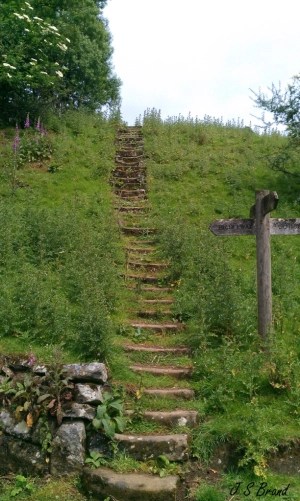
Random Fiction – 02012025

FICTION – FREEWRITE


The things I know about love could be scribbled on a matchbook’s blank side with room left for a bad limerick. Truth is, the original matchstick instructions—strike here, light fuse, watch things burn—hold more practical wisdom. Over years of singed fingers and smoldered hopes, I’ve gathered scraps of survival tactics. Never trust words spoken in dim light or daylight; most folks peddle lies they’ve yet to realize themselves. Study their hands—the way they flutter like trapped moths when spinning tales. Watch for the split-second flicker in their eyes when truth barges in uninvited. But don’t stare too long, or you’ll become the mirror they’re desperate to avoid.

This isn’t some grand philosophy unearthed in a desert monastery. Just rusty tools to patch the hull when the ship’s taking water. Save the “real men don’t cry” bravado for locker rooms—we all drown the ache somehow. A twelve-pack of Bud, a heart-to-heart with Jack Daniel’s, or sobbing into a motel pillow while Springsteen croons about highways on the tinny alarm clock radio. At least tears don’t leave you waking to that look: a woman recoiling under crumpled sheets, eyes wide as a spooked deer’s. She’ll mutter something about quitting gin as she retreats to the bathroom, and you’ll mumble back about swearing off scotch, both knowing neither promise will outlast the coffee brewing in the stained pot.

The real art lies in the exit. You hand her a chipped mug, steam curling like a question mark between you. She sips, eyebrows lifting—not at the bitterness, but at the shock of you still being there. You brace for the verdict: Is the coffee better than the sex? A half-smile. A nod toward the door. No words, just the unspoken script we all memorize by 30. Dignity intact, you slip into the dawn, both already drafting tomorrow’s excuses.

Gypsy—my ‘65 Ford pickup—taught me more about commitment than any human. She’s been my co-conspirator since high school, back when her engine purred and her bench seat fit two (or three, if we got creative). These days, her love language is breaking down at cinematic moments: snowy backroads, midnight escapes from jealous husbands, and that one time outside Tulsa when her transmission gave up just as Margo’s daddy’s headlights crested the hill. The split lip was worth it. Can’t pay child support if you’re always in the rearview, right?

But the road—Christ, the road. It’s a confession booth on wheels. Twenty miles in, the hum of asphalt strips away the bullshit. Past regrets roll by like telephone poles: Lisa’s laugh in ‘08, the stillborn promise to quit smoking, your father’s hands on the steering wheel that last July. By mile 200, you’re raw enough to pull over and let the tears come—not the pretty kind, but the ugly, snot-dripping ones that scald your cheeks. You cry for the man you thought you’d be, for the love letters burned, for the quiet horror of becoming exactly what you mocked at 22. Then you wipe your face on a gas station napkin, buy a lukewarm Dr Pepper and a honeybun, and drive until the road starts making sense again. Or until it doesn’t. Either way, you keep moving.

Random Fiction – 01182025

FICTION-THIRD PERSON

He sat staring at a blank page, its pristine surface mocking his creative paralysis. The page looked back at him with the same vacant stare, a mirror to his emptiness, reflecting frustration and the void between inspiration and expression. Perhaps it was their shared moment of creative purgatory, each waiting for the other to break first.

He was wrestling with the ethereal image of silhouettes dancing at sunrise, their forms both defined and formless against the awakening sky. The vision burned clear in his mind, yet words slipped through his grasp like morning mist. He just sat there, attempting to mold his scattered thoughts into the precise architecture of verse, trying to conform his words to the image that haunted him, into some sort of perfect form or acceptable stanza that could capture the ephemeral dance he witnessed.

The words began to flow slowly like dawn creeping over the horizon. He formed the stanzas on a whim, yet they fell into the perfect meter as if guided by some hidden hand. It became clear his conformity knew no bounds, yet within those bounds, wild freedom emerged. Line after line, he wrote, as a gentle breeze from a cracked window caressed his face, carrying with it the whispers of dawn.

The morning unveiled itself in layers of sound and sensation. He began hearing the birds chirp their morning song of grace, nature’s poetry accompanying his creation, as the filled pages fluttered to the floor like autumn leaves. The final sputter of the coffee pot signaled a new pot made, a percussion of domestic ritual marking time’s passage. Inhaling deeply, he filled his lungs with the fresh aroma, drawing inspiration with each breath as he walked into the other room to retrieve more paper. He poured a cup, the dark liquid steaming with promise, and returned to his office.

He sat back down, possessed now by the urgency of creation, and finished the screaming tale of his soul. The words poured forth like a confession, raw and honest, each line a revelation. He leaned back in his office chair, serenaded by the creaking leather’s ancient song, a counterpoint to his racing thoughts. He took a sip of coffee, letting its warmth spread through him like liquid courage, and began reading the pages he had just created.

The first page danced with intention’s perfection, each word precisely placed, each phrase carefully crafted. But the remaining pages bellowed from his soul with increasing abandon, breaking free from the constraints of form and structure. It was clear that while he had truly captured the essence of those silhouettes’ dance, conformity only went so far before the truth demanded its own wild choreography. His words had become their own dawn dancers, moving to rhythms beyond his control, and he realized that sometimes the most perfect expression comes not from constraint but from letting go.

Baked Goods

CHALLENGE RESPONSE – FICTION – WYDS

Here’s my response to Sadje’s WDYS

It was career day, and the children were excited to present their family members. You see some sat with their chest popped out, beaming with pride. While others did their best to appear innocent. They terrorize one another in the classroom or on the playground. Spitwads, mudballs, and name-calling are weapons in their arsenal. Yet, today, they are the perfect little angels their parents and grandparents believe them to be. I looked around the classroom, making sure all the children were present. The presentation was going to start at any moment. 

Echo came bursting through the door, water splashing from his bucket. Echo Gibbons was the only child who didn’t have anyone here for the presentation. Echo lived in foster care with Lida Jefferies, a local legend in town. She had helped so many children in their time of need, providing a stable and loving environment for them to strive in. Echo was no different. 

Echo went to the blackboard and began cleaning it. I heard the rumblings of some of his classmates calling him a brown noser under their breath. Their parents hushed them and then looked at me apologetically. I nodded and turned to watch Echo expertly clean the blackboards. He stood back and examined his work, dropping his rag in the bucket. He adjusted his hoodie and looked at me. 

“What do you think, Mr. Green?” he asked, I smiled and nodded.

”It looks perfect, Echo,” I replied, a slight smile crept up on his face. He grabbed his bucket and walked out of the room. Echo returned a few moments and sat in the corner by the window. There were some wonderful presentations. The children sat there listening with all smiles until Mr. Hill started talking about being a banker. I had never seen children fall asleep so fast. He brought charts and didn’t notice the kids napping. When he did, his face reddened, and he grabbed his things. He sat down in a huff. 

There was an aroma that filled the room. Lida Jeffries stood in the doorway with a pan of freshly baked croissants. The children gathered around her. Echo slipped past them and sat on her lap. She held him affectionately; it was the first time I saw the young man at peace. She told stories about the children she’d helped and even more stories about life. I learned something: if you want to hold the children’s attention, it’s all about the baked goods.

Reena’s Xploration Challenge #359

CHALLENGE RESPONSE – FICTION (EXCERPT)

Here is my response to Reena’s Xploration Challenge #359


I walked in and pulled over the metal chair by a sliding door. I slid the door back and walked to the window. I sat down and leaned back in the chair, staring into the night sky. Closing my eyes and slowing my breathing, I prepared myself to see the possible scenarios I would face. I picked up something from a Tibetan. I cleared my mind of all the distractions. It wasn’t easy; it never was. The amount of baggage we carry around day to day is staggering. We cling to things we deem essential but are quite trivial in the larger scheme of things. The idea was to picture myself in a peaceful place. This place is different for everyone. Once you achieve the mediative state, the mind and spirit are in harmony, and the visions will come. Images flashed in my mind, displaying the different challenges that I might face. For each challenge, I came up with a possible solution. It wasn’t like I could see the future or anything, but I had been in this game long enough to know most of the problems I would face.


Author’s Note:

I’ve been working on a large writing project for the last month, and I wrote a portion of a larger scene in which the protagonist meditates. When taking a break earlier this week, I saw the above image, which stood out for some reason. I couldn’t place it at the time. I put the image on a separate scene, sat back, and let it talk to me. Then, it occurred to me why the picture was critical. I opened Scrivener, and sure enough, there was a note for me to work on that scene. So, I began to play with the scene using the picture. I decided to post this excerpt as I continued playing with the scene. Most likely, it will end up much different than what you see, but this sketch provides a good placeholder.

Weekend Writing Prompt #392

CHALLENGE RESPONSE –WWP


Buzzing bees swarm through golden meadows, dancing with summer’s whispers.

Pangs of Madness

CHALLENGE RESPONSE – FICTION

I love the fall; the colors are just as magical as spring. There is beauty in every season if you open your mind to see it. The color resided in the fact that it had the ability to make forget about the madness in the world—the madness that had the potential to destroy every fiber of decency that remained. So, we needed moments like these, moments where the fiery red of the leaves blended with the purplish hues of the space between that made the white of the snow-covered ground have a bluish tint. Moments of otherness.

I stood with an unlit straight hanging from my lips. The temperature dropped enough that you could see your breath. Winter was around the corner. Soon, Winter’s talons would be crawling at your skin. There have been more and more days like these lately. Another horrid crime scene was behind me. An example of the madness this beautiful scene would help me escape, even if it’s just for a little while. I could hear the crunch of footsteps against the snow and turned to see Lt. Rawlins.

Lieutenant Benjamin Rawlins stepped up next to me and stood silently. He wore an expressionless face—the look I was used to seeing. At the last crime scene, he was a pot of emotions on the verge of boiling over. He chewed on the end of his signature cigar. He always smoked the cheap ones. His wife said the good ones were too expensive to be chewed on. An expression that told me he was feeling exactly what I was feeling. We have both been doing this long enough where words weren’t necessary.

“There’s nothing like the fall colors right before winter,” Rawlins remarked as he spit out the chewed-up portion of his cigar. It looked like he would be needing a fresh one before long. I nodded in agreement.

“You gonna get this __” Rawlins broke off due to his promise to his wife when the first grandchild arrived. I stared at him, and he met my gaze. I nodded.

“Before Christmas? I don’t want the city to be in unrest during the season.” Rawlins remarked. Lists of children naughty and nice, letters to Santa, and horrible, well-intended Christmas gifts always gave me a warm fuzzy. Yet, you couldn’t ignore the magical elements of the holiday. So many people were absolutely impossible for most of the year, but they became something else during this season. Only a few weeks later, they seemed to forget the promise of hope and return to the drudgery. It’s disheartening and sad.

I shrugged and lit my cigarette. I took a deep drag, exhaled, and said, “Patience, Boss.” Rawlins stopped chewing, and I felt his gaze. His face reddened with rage, not at me, but at the idea, someone was in his city doing these hideous acts. He swallowed it, but not before he chucked away the remainder of his cigar in frustration.

“Detective Casey,” he began in that low growl graded against my soul. I reached out and gripped his shoulder, “Patience, Boss. We’ll get him, I promise.” Rawlins nodded and walked away. I watched him get into his sedan and leave. I knew better than to make promises in cases like these. It was possible we would catch a break and catch the killer, but it was more likely that we wouldn’t even come close to apprehending the killer. It was the pang of madness.


Authors Note:

I’ve been participating in this year’s NaNoWriMo, so I haven’t been active on WordPress as usual. Yesterday, I completed the word count requirements, but they’re far from complete, so I decided to take a break and read some challenges. It’s always fun participating. While reading today, I noticed a few that caught my eye.

I used the following prompt to draft the opening sequence of the chapter of my ongoing work.

Moonwashed Weekly Prompt – Otherness and the enchanting image provided the imagery in the opening paragraph. It helped me add a bit of beauty to the gritty, grimy story I’ve been working on this month. Thanks, Eugi!

Ragtag Daily Prompt – Chew, Patience, and Shallow provided depth in the character interactions. Thanks Guys!

Esther’s Writing Prompts – Adding a pleasant element to my grisly tale. Thank you!

The Neighorhood

CHALLENGE RESPONSE – FICTION – FFFC #288

Authors Note:

When I looked at this image, I had no idea what I would do with it. Literally, nothing came to me. So, I read what others had done with it, and still, no joy. I noticed that Melissa had provided a description of the image—something I think she always does. I’ve seen it before, but it made no impact until this challenge.

I took the description and rendered several images from it. Then, I started playing around with the description. All of a sudden, I had a voice. I looked around to see where it was coming from. I thought maybe my iPad was reading a book, or another of my gadgets had decided to push me over the edge. Nothing. Everything was functioning properly, but isn’t that how it works in the movies? Everything is working correctly when you go to check it.

Anyway, I returned to working on the images when I had the voice again, much louder this time. The voice was telling a story about his friend after his mother’s funeral. Then, I realized I wasn’t losing my mind, but a character was speaking to me. I’ve no clue where he’s going with his story or why he decided to tell me. It doesn’t even have a name. It has been a long time since I had a new character shown up. If I’d known, I would have tidied up a bit.


The Neighborhood

It was a lovely service; Mrs. Byrne would have been proud. No one liked to attend funerals, but they appreciated them being done correctly. Over the years, I remember her mentioning bits of this and that she saw at the different services. She mentioned some more than once, so I added everyone we could remember in her service. Her daughter Ivy had been my best friend since I showed up in the neighborhood at five years old.

My older brother Sean and I moved into the neighborhood after cancer had taken our Mom. Cancer is cruel, and it took its time taking our Mom. Pop lost his job at the plant because he refused to leave our mother’s side at the end. It took five months to cross the Rainbow Bridge and years to prepare for the journey. Her death broke Pop, but somehow, he pulled it together once we moved to the neighborhood. At least for a little while.

The neighborhood was three miles long and ten blocks deep, filled with Irish Catholics, and our Black faces weren’t exactly welcome. Mr. Flannery was Pop’s best friend, and he convinced a friend of his to rent to us. Pop got a job doing demolition. Pop said he had a lot of anger to work off, so the job was perfect. Sean was a teenager when we moved there and had rougher than I did. He’d come home with bruises most days until one day, he didn’t.

I played in the yard by myself most of the time until a red-haired girl with pigtails stood there looking at me one day. She didn’t say a word.

“There are swings a couple of blocks from here,” she said. I stared at her, knowing I couldn’t leave the yard. Yet, something this girl made me want to risk a trashing.

She continued to stare momentarily, then started walking away. I went to the fence and watched her. She turned and looked back, then stopped.

“You coming?” ” You aren’t a pansy, are you?” she asked. In seconds, I was walking next to her. We talked all the way to the park about the usual stuff. She told me Spider-Man was the best superhero ever, and Wonder Woman was a close second. I knew she was crazy because it was Batman, then the Green Arrow.

We played all day, swinging and climbing trees. She fell out of the tree and skinned her elbow. I leaned and kissed it. It was something my mother did when I got a boo-boo. Ivy punched me in the arm.

“You ought to know a girl’s name before you go kissing on her.” she said, smiling. She had one of her front teeth missing, but that stopped that smile one bit.

“I’m Ivy, Ivy Bryne,” she said, sticking out her hand.

“Frank Anders,” I said, shaking her hand. I gave her a soft handshake because she was a girl and punched me again.

“My dad, you give a person a firm handshake. Try it again,” she said, sitting her hand back out. I gave her a proper handshake and went back to swinging. I saw Sean coming over the crest of the hill, and he didn’t look pleased. Ivy and I met him before he got to the swings.

“See you tomorrow, Frankie,” she said and ran off.


FFFC #293

I was standing in the garage smoking a cigarette pacing back and forth when I heard Ivy come in. She always walks hard in her heels. I don’t think she’s taking a graceful step in heels since I’ve know her. Most of the time, she could be found sporting a pair of sandals or sneakers when the weather bad.

“Did you know, Mom was into photography?” Ivy asked, before I could respond she launched into the next question typically Ivy. It always seemed like she wasn’t interested in your response, just your attention. You were to listen until there was break which usually meant your response was required, but sometimes you missed the opening that prompted, “Hello, earth to Frankie! Aren’t you listening to me?” I’ve gotten better over the years catching my cues and today was no different.

Ivy was going around this new discovery about her mother when a few photos fell out of the binder she holding. One was a picture of a crane with it’s beak pointing skyward and the other was a picture of a eagle with a mountain landscape in the background. Wonderful shots I thought. Mrs. B had really found her thing. She had confided, years ago, that felt she had lost a portion of herself being a mother. She had no regrets raising her children, but she should have carved out more time for herself.

The binder slammed Ivy was biting her bottom lip trying to hold back the tears. I didn’t understand why. If these was a time to cry, this was it. However, Ivy never wanted to be considered a punk and she wasn’t by far the toughest person I knew. Tears streamed from her reddened swollen eyes. There emerald hue seemed to sparkle in the light. Yet, she held back the wail. I always loved those eyes. She rushed towards me burying her head in my chest.

The muffled banshee cry grew louder by the second. The harder she wailed, the tighter she squeezed.

“It’s alright, baby. Let it go,” I whispered

Morning Glow

CHALLENGE RESPONSE – THURSDAY INSPIRATION – SHORT FICTION

She sips her coffee, thinking about her first great love—that love she could never talk about—the love that fills her with joy and pain all at once. The joy is knowing what love truly is, not that stuff you read in romance novels or movies. Pain, well, if you know love, you know pain.

There were throwaways—well, that’s what folks called them back then. It meant no one wanted them. She felt that way until she met the woman who changed her life. She also fell in love with a boy who lived with the woman. He was like her, a throwaway. She knew she shouldn’t love him but couldn’t help herself. They spent one night together before he left for the war, and the war took him.

She’ll never forget how she felt the next morning. It felt like she was glowing from the inside. For it was the first day she felt whole.

Writer’s Workshop Prompt – 05312024

CHALLENGE RESPONSE – FICTION

Here is my response to Writer’s Workshop

The sun through the 4th floor glass felt good, It was partly on my shoulder and partly on my face. It was good to the feel the warmth. I’d been so cold lately. Nothing, I did made me warm enough. Even when AC went out and it was 90’s degrees in the house, I was okay everyone was else, but they kept their complaints out of earshot. I appreciated that.

I’m sitting thinking about the one who got away. The one who was supposed to make things better and all that. I never knew if they really happened or was it something said we believed in publicly, but thought was a crock of shit privately. “The One” worked at Aunt Peg’s candy shop in the local mall. I must have spent hundreds of dollars on soft peppermint sticks that summer.

The neighborhood paperboy loved me. He made a dollar for every trip to the candy shop. You see, I never could muster up enough courage to actually go up to the counter and ask for the candy.

“Do you even like peppermint?” Maynard, the paperboy asked

I didn’t answer. I did my best to give him an evil leer. Although, I don’t think it was working very well.

“Look, if this is all about the girl? She’s right there. Just talk to her.” Maynard took his dollar and left. That was the last day of summer and I never said a word to the girl.

I still eat soft peppermint sticks when I can find them. Those puff balls seem to have cornered the market. Some marketing genius started this whole mess.

Yep, Aunt Peg’s soft peppermint sticks were the best!

MLMM Photo Challenge – 05302024

FICTION – PHOTO CHALLENGE RESPONSE

Here is my response to MLMM Photo Challenge

Image credit Sarah Whiley

I surveyed my kingdom and the lush gardens before me from my perch on the railing. There’s a sign by the gate with a picture of me. It says something below it. They call me Stanley. I wonder which one came up with that name. The humans often walked these paths, marveling at the beauty of nature, but none could truly appreciate it as I did. I am the peacock, the jewel of this realm, and my feathers are the crown jewels.

I strut through the gardens daily, tail feathers trailing behind me like a royal train. The sun catches the iridescent blues and greens, making them shimmer like the waters of a hidden lagoon. Today, I decided to take a break and observe my domain from this higher vantage point.

The air was fresh with the scent of blooming flowers, and the trees whispered secrets to each other in the gentle breeze. I watched as a family strolled by, their eyes widening in awe as they noticed me. The little ones pointed and gasped, tugging at their parents’ sleeves to share their discovery. I preened, feeling a surge of pride. Even the youngest humans recognized my magnificence.

Beyond the garden’s edge, the world seemed a distant dream. Within the bounds of my green paradise, life moved peacefully. Birds flitted from tree to tree, and the occasional squirrel scurried past, always keeping a respectful distance. They knew, without a doubt, who reigned here.

The sun began to dip lower in the sky as the day wore on, casting a golden glow over the garden. I could hear the murmurs of the visitors growing softer as they made their way to the exits, reluctant to leave this haven of beauty. Soon, the garden would be mine again, a quiet sanctuary where I could rest and dream of new ways to dazzle my audience come morning.

For now, I stood still, a statue of elegance and grace, soaking in the admiration of those who lingered. I am the peacock, guardian of this garden, and in my feathers, the world sees the magic of nature.

Julian’s Truth

CHALLENGE RESPONSE – FICTION

Here is my response to RDP’s Daily Prompt – Lithe

In the heart of a bustling city park, where children’s laughter mingled with the melodious chirping of birds, sat a man named Julian. He was a solitary figure amidst the vibrant chaos, a contemplative soul who found peace in the art of people-watching. Julian was particularly drawn to the nuances of human interaction, the subtle play of expressions, and the eloquence of body language.

On this sun-drenched afternoon, his attention was captured by a woman practicing yoga on the lush, green grass. She embodied grace, her movements fluid and effortless, a visual symphony that mesmerized Julian. He noted how the word “lithe” seemed to be crafted for her, the very definition of her elegance and strength. She moved with an almost ethereal poise, her limbs stretching and coiling with a feline agility that left Julian in awe.

For days, Julian returned to the park, hoping to catch a glimpse of the lithe woman. She became a muse to him, a living embodiment of art and beauty he dared only admire from afar. Her presence stirred something within him, a longing to reach out and connect, to transcend the boundaries of his solitary existence.

Finally, mustering every ounce of courage, Julian decided it was time to step out of the shadows of his observation and into the light of interaction. He approached her on a day painted with the perfect azure of the sky. His heart thundered in his chest, a tumultuous symphony of nerves and excitement.

“Hello,” he said, his voice barely a whisper against the backdrop of the park’s life.

She turned toward him, her expression mildly surprised. Her eyes reflected the tranquility of the world she embraced. “Hello,” she replied, her voice as soft and melodious as he had imagined.

Julian stumbled through his introduction, words tangled with admiration and awe. He spoke of his observations, his fascination with how she moved, how she seemed to personify the word “lithe.” He expected bemusement, perhaps even annoyance. Instead, she smiled, a warm, genuine curvature of her lips that reached her eyes and ignited a spark of connection.

Her name was Elara, and she listened earnestly attentively, making Julian’s words flow more freely. They talked beneath the canopy of verdant leaves, their conversation meandering through the trivial to the profound, just as the park’s myriad pathways did.

In time, their meetings became a cherished ritual, two once-strangers finding solace and joy in shared moments. Julian, who had once been content to observe life from a distance, actively participated in its menagerie, woven with threads of companionship, understanding, and the unexpected beauty of a chance encounter.

And so, in a park where the world seemed to converge, Julian discovered the courage to connect, inspired by a woman who danced with the wind, her lithe form a reminder of life’s boundless grace.

Lizard Boy: Timmy Sinclair

CHALLENGE RESPONSE – FICTION

Chapter 1

A boy named Timmy Sinclair lived in a bustling city named Licksville, known far and wide for his extraordinarily large tongue. Timmy was no ordinary boy, and his tongue was no ordinary tongue. It was the size of a baguette, supple like a gymnast’s and versatile like an artist’s palette.

From an early age, Timmy realized that his large tongue was not a curse but a blessing. He discovered he could use his tongue for tasks that others could not. He could taste the subtlest of flavors in food, making him the best judge in town for cooking competitions. He could also use his large tongue to help clean out jars and reach places his hands could not.

In school, Timmy was the star of the science fair. He used his tongue to demonstrate how taste buds worked, making science fun and exciting. His classmates admired him, and his teachers praised him for his creativity. Unfortunately, not everyone saw Timmy’s tongue that way.

Summer ended, and school began. Timmy was excited. He couldn’t wait for his next adventures. When he arrived at homeroom on the first day, there were two new students: one girl and one boy. Timmy took a seat and waited. He wanted to know everything about the girl. She had long raven hair, caramel-colored skin, and the most enchanting eyes he had ever seen.

Ms. Rowster came into the room, and they settled down for attendance. Timmy barely could contain himself as he anxiously waited to hear the name of this beautiful girl. When Ms. Rowster got to her name, she asked her to stand up and tell the class a little about herself. She did.

“Hello. My name is Simin Karimi, and I’m from Detriot,” Simin said, then sat down.
Timmy felt she had the most beautiful voice to accompany the rest of her beauty.

Ms. Rowster did the same with the new boy as well. He stood and cleared his throat, “I’m Brad Zigler from Ohio. I know everyone has heard of Zigler cheese, right? Brad asked. A few nodded in agreement while the others sat in quiet bewilderment.

They were all sixteen, but Brad stood over 6 feet and had a large nose, freckles, and a fiery beard. Due to his size and attitude, he had already started gaining friends. Timmy knew he would be one of the most popular kids in school before long.

At lunch, Timmy sat at his usual table, watching Simin’s every move, hoping she would sit at his table. Marcy Busch slapped Timmy on the shoulder.

“Who’s that?” Marcy asked.

“S S S imin,” Timmy shuttered. He was a little tongue-tied, as they say. He felt strange because he never shuttered a day in his life. Marcy looked puzzled at Timmy, then Simin. Marcy motioned for Simin to sit with them. Timmy shifted uncomfortably but managed a smile. Marcy introduced herself.

Marcy and Simin chatted away while eating, picking at their food, if you can call it eating. They were well on their way to being fast friends. Timmy sat quietly, nodding and smiling at the appropriate times. Timmy noticed Simin kept glancing and smiling at him. This made Timmy nervous. Here is the most beautiful girl, and he’s suddenly tongue-tied.

“Stop being rude!” Marcy said as she nudged on the shoulder. Timmy tried to say something, but his tongue got in the way. It felt like it filled his entire mouth. Timmy had never experienced this before. Marcy’s comment didn’t help matters.

“So, you see a pretty girl, huh?” Marcy asked.

“You’ve been talking my ear off since first grade. Geez, thanks,” she smiled. Her cobalt blue eyes sparkled when she smiled, and her smile always seemed to do the trick when Timmy got nervous. Marcy made him feel safe.

“Hey, Simin,” Timmy finally managed. Simin smiled.

“Oh my god! So you’re the freak people have been whispering about!” a voice exclaimed. They looked up, and it was Brad Zigler with a horrified expression.

“What are you? Some sort of lizard?” he exclaimed.

Timmy blushed, and his eyes filled with tears. Before he knew it, Marcy had sprung from the table, kneeing Brad, and delivered a well-practiced right cross—the signature move she picked up when she developed breasts at 12. Marcy explained that once all the women in her family had a nice set of girls, her mother, and grandmother taught her the move in case the boys got handsy. Nanna said boys “always get handsy.”

Marcy stood Brad silently, her brunette hair tied in a ponytail. Brad groaned in pain as he clutched his private area. Marcy stepped toward him, and Brad scooted away with his held up in surrender. Marcy turned to look at Timmy. Her pale alabaster skin was rose-colored. Her eyes were like fire. Yet, they softened when Timmy looked up at her. She stood 5 feet even.

“Bullies give me the sweet ass!” she exclaimed as she retook her seat. Marcy didn’t make eye contact with anyone, then whispered, “Sorry.” Simin squeezed her hand. “Marcy, you’re wicked fast. Next time, can you save me some?” Simin asked jokingly. They all chuckled as they left the lunchroom.


Author’s Note:

Today, I felt good enough to write a little fiction. I hope you don’t mind. So, I combined a couple of hosted challenges I felt worked for the story. The third challenge was one I had for myself, and it was two-fold. Primarily, I’ve been writing light non-fiction for the last few weeks. I needed to know if my fiction tools still worked in something light. I also challenged myself to see if my depictions of the characters in this could used with AI image generation. The answer to the latter is yes. Overall, I’m pleased with the image outcome. As for the former, it felt good writing, but I will leave it up to you guys. Should I continue this corky tale? I wrote more, in case you are wondering. Or hit delete and move on to another project?

Prompts used for this story:

SocS: Hosted by Linda Hill – Words starting with “signa”

Ragtag Daily Prompts: Sunday (safe); Thursday (Lizard)

The challenge words are hyperlinked to their origins. I hope you guys enjoy this corky little tale

RDP – Thursday

CHALLENGE RESPONSE – FICTION

My response to RDP – Thursday – bamboozle

The Grand Bamboozle

A spry little man named Barkan lived in the serpentine alleys of the ancient city of Khazan, notorious for its labyrinthine streets and enigmatic inhabitants. Barkan was not your average resident. He was a trickster, a master of bamboozles, and his clever ruses were the talk of the city.

Barkan was not always this cunning. Once upon a time, he was an innocent and naive boy. However, life in Khazan was tough, and the city’s harsh realities turned him into the wily person he had become. Yet, Barkan’s bamboozles were never harmful or malicious. They were light-hearted pranks aimed at teaching lessons to the arrogant and the pompous.

One day, a haughty nobleman named Lord Faizan visited Khazan. Rumors of Barkan’s bamboozles had reached him, and he was determined to outwit the trickster. Lord Faizan was known far and wide for his pride and arrogance, qualities that made him the perfect target for Barkan.
Upon his arrival, Lord Faizan announced a reward for anyone who could outsmart him. The city excitedly buzzed, and Barkan saw the perfect opportunity for his most significant bamboozle yet. He accepted the challenge, and the city held its breath, waiting for the grand showdown.

The next day, Barkan invited Lord Faizan to a feast at his humble abode. As the nobleman arrived, he was surprised by the simplicity of Barkan’s home. Little did he know, the grand bamboozle had already begun.

Sunday, Monday, Tuesday – RDP

CHALLENGE RESPONSE – PROSE

Here is my response for RDP Sunday, Monday, and Tuesday.

Let me be blunt from the beginning. The snow was coming down heavy, but the wind blew it sideways. The temperature was dropping rapidly. I didn’t want to be out here, but the gig paid the bills. Prices were so high that you bought a loaf of bread or a gallon of gas. I got a letter in the mail today. An old friend I hadn’t heard from since we both reeked of innocence. I was more than a little envious because he had found the love of his life. He had found happiness. Sighs … good on you, brother! Good on you.

The Lucidity of Silence – Scene 3, part 1

FICTION – SERIES

He looked at the pack of cigarettes on his desk, half of it gone, and no relief for his sorrow. Still, he lights another, hoping that somewhere between an exhale and a drag, He can find a moment of serenity. On that same desk is a bottle of supposed sanity. They were supposed to be taken with water and swallowed. However, they have become chewable. As he stared at his name neatly printed on the bottle, he felt like each pill plunged him into the place where he was trying to escape. Each pill added the guilt that seems to have no bounds. His saving grace was now supposed to exist within manufactured powder pressed into a nice, neat, and convenient package.

Sitting there in the darkness of his soul, fully aware that nothing in a bottle could help him deal with the aftermath of his actions. It had been 24 days since his world became tangled in the web, his words weaved. He did not truly realize how a single phrase can rapidly change things. Once something is said, there is no taking it back. There are no rewinds or do-overs. He was just another person caught in the middle of dealing with the reaction to what they said. Sometimes, he wondered why he ever allowed the words to spill from his lips.

He had bumped into her at the library during finals week; she immediately thought he was a jerk who needed to pay attention to where he was going. She dated some jock-type and had the looks to go with it. He spent the next three weeks trying to get her to forgive him. Some days, he wondered, after fifteen years of marriage, if she ever did. Bearing two children with him should remove the doubt. It was at some frat party the universe aligned in his favor. Her boyfriend was drunker than Cooter Brown and the merry band of jugheads. She stood in the corner, looking so beautiful, just simply amazing.

He had already done the friend check to see if he looked okay. Of course, like any group of friends, they needed to know who he had his eye on.
He pointed her out; if the music weren’t deafening, their groans of disapproval would have filled the room. He didn’t let them sway his newfound courage. He made the classic roundabout approach, settled in about 20 feet from her, and said absolutely nothing. He just stood there, hoping that she would notice him. He was praying for a bit of eye contact and a smile. He waited for the slightest opening for some dialogue.

He lost hope after about an hour; he had gotten some eye contact, but it certainly wasn’t inviting. Then, the final planet moved into its proper alignment. His boyfriend oddly started acting like a jerk more than usual. He was the typical asshole who thought the world and everything in it belonged to him. She stormed out of the house in a huff to the backyard. He gave her a few minutes and then followed. One could say he was a borderline stalker, but he just had to talk to her. Damn, all the cool points, rules, and guidelines he was going in. She was sitting on a tire swing, just barely back and forth.

He stepped off the porch, walked toward it, and planted his face into the freshly cut lawn. She roared laughter and asked if he was alright. He shook his head while spitting out a few blades of grass that had gotten in his mouth. She just sat on the swing, smiling. He walked behind her and gave her a push. Each time she returned to his reach, he pushed her a little more. Her laughter filled the night sky. As she swung on the swing and laughed, his fear slowly melted away. The moment arrived he had been waiting for. He started talking to her, and she replied. He couldn’t believe that just moments earlier, she seemed to be out of reach.

She seems to be that girl who would never look twice at a guy like him.
Now, they are just people enjoying the stillness of the night on a swing. They talked for the rest of the night until she excused herself to check on her drunken suitor. He never thought she would even speak to him again. He had prepared himself to cherish that moment forever; It was magic and simplistic. He went to sleep that night smiling from the depths of his soul. The following day, he cleaned up his rat-trap of a room. Then, he ran downstairs to meet the world with newfound confidence.

At the bottom of the stairs, fate plays cruel tricks on people sometimes. He ran right into her again, spilling coffee on her sweatshirt. As she wiped away the remnants of the coffee from the sweatshirt, she explained she had asked around to bring coffee and donuts to thank him for a lovely evening. He stood shocked about his dumb luck. Then his senses returned to him, and he grabbed the bag of donuts and helped clean the mess.

This time, she didn’t seem upset but glad to see him. They went off and had the thank you breakfast. They spent as much time as they could together. The following year, after they graduated college, they got married. He was an engineer, and she was an aspiring artist. Sometimes, it seems like a clash of the titans. Practical reasoning vs. artistic expression: things always seem like a powder keg. There was one thing that neither one of them lacked; that was passion. Things smoothed out over time, making them happier than most and not as comfortable as some.

The Lucidity of Silence – Scene 2

PROSE – FICTION

The leaves on the trees rustled as the squirrels playfully chased each other limb to limb. In the forest, there was a clearing. A woman reading from a book sat in this clearing next to some fallen branches. The woman dressed in a habit, and the book was small in size but limitless in wisdom and Grace. These two things served as a beacon rescuing her from herself. She was on a path to Perdition’s Cathedral because she had lost hope. It was the fallen oak branch to her right that she first saw him. He was lost in the confines of the world painted inside bounded papyrus. He sat there so serenely as he brushed his from his face. She instantly knew that she loved him.

It seemed like one of those fairy tale moments you read about or see at a picture show. A moment when it’s clear you could love someone for an eternity and be the better for it. Grace smiled as she remembered plopping down on the branch beside him. She was so nervous but summoned the courage to ask his name. From the look in his eyes, they were the deepest brown; Grace could tell that he felt the same way. She remembered being overwhelmed and delighted like nothing before. They talked until the settling of the sun. Together, they walked hand in hand in silence, taking in sunset wonders from the edge of the ridge.

Exhaling in contentment, they parted ways to return home. Over the next several months, they continued their talks. They took turns reading from the book and discussing what each passage meant. After several months, they expressed their silent feelings for one another. It was the heavens danced in praise. The birds sang the sweetest ballad, and the sun brightened. It became clear to them that destiny had spoken. It became that they were to be together forever.

One day, the gloomiest it had been since they met. Her soul mate sat on a log, clearly troubled. He broke the news to her that he was to leave her. Her heart sank into a fathomless abyss. He explained he had to fight for truth, justice, and freedom. These were necessary for love to be the strongest in the world. None of this eased the pain of her wounded heart. None of this comforted her tormented soul. They kissed and hugged each other tight. They never wanted to let go of each other. Watching him walk away that day was like watching her soul walk away.

Grace had no idea she would never see him again after that day. At least, she had no idea she’d ever admit openly. It is something about when you are about to lose someone you truly love. You just know it. Nothing can truly explain this except the one who walked this path. They are the people who have stood there waiting for a glance to quiet their screaming fears. They stand praying for just one more chance to see them. Unfortunately, it is a chance that sometimes never comes.

Now, the woman has devoted her life to the service of the Father. Now, she has faith in something more substantial than her pain. Each day is different than the last. Each moment, she learns to ease her pain through his Grace. Somehow, through the misery, the deceit, and the pain, she looks for the good in the world. She must pray for guidance to help the less fortunate. Each day, in each moment of prayer, she hopes through corridors of pain that she can help another on the path to Perdition’s Cathedral.

~thanks for reading~

The Lucidity of Silence – 1

PROSE – FLASH FICTION

The wooden rocking chair creaks against the porch in perfect time with the living clock on the wall: Tick, tick, tick. Carol Oxford sat on her porch, looking at the sky, lost in her thoughts about what she had seen in her lifetime. The memories of everything she had lived through. It had been such a wonderful life long from being over if she had anything to say about it.

In seven years, just seven years, she would have witnessed a century come and go. Seven years go so quickly, but so many things could happen. In the past seven years, she had buried over thirty of her friends and loved ones. And now, Roger? She had built her entire world with Roger. He called home to the Father. A smile came across her face as she wondered why the Father didn’t let him get those orchids planted this year. He would have loved to get the orchids before he left. His shovel and pail still sat where he left them as if she was waiting to return and finish the planting.

Sassy still runs out every morning to see if he returned. Then, she comes to the porch and sits on the step as if waiting for him to leave the barn. The woman understands her dog’s action because she still makes the coffee at dawn and pours two cups. As she drinks her coffee, she often wonders why the Father left her here. Why didn’t he take her at the same time or shortly after? Then she would smile as she remembered what her husband would say about that,

“Honey, there are things certain in life, Death and change. You may not like the change, but you can’t control it. No more than you are in control of the life’s ticking clock. So Honey, the best thing to do is be the best person you can, as long as you can.”

6th Avenue Heartbreak

SHORT FICTION

Image by Michael Kauer from Pixabay 

Manu Jenkins and Maury Lawrance faced off back in the 1950s. This face-off changed how things were at The Paradise drive-in. Manu Jenkins, “Jinxy” people called him, and Maury weren’t gang members, just guys who couldn’t back down. Only to find themselves in a situation that lasted a lifetime. This face-off leads to the development of the neutral zone. The neutral zone is no gang activity at the drive-in. Anyone caught fighting at the Paradise was banned for life. That was the law of the land for as long as anyone could remember.

According to Jinxy, “The Paradise” was the only place in town where you could walk around without anyone beating you senseless. Old Lonnie Lawrence, Maury’s father, had everything: swings, slides, cotton candy, and make-out spots. Jinxy nudged me with his elbow, smiling. “That’s where I met my sweet Pearl.” He said, staring off as if trapped inside a memory. Then, finally, he leaned back and smiled. I wondered if he was watching the movie from that night. Praline Madsen “Pearl” was his wife of forty years before going home to glory. Jinxy didn’t make it to the following fall. Jinxy and Pearl, PaPa and Nanna, seemed to me to be a love story, exactly like one that played at “The Paradise.”

Forty years later, My little brother, Trey, wanted to see a double feature playing there this weekend. Bruce Lee’s Chinese Connection and The Game of Death. I was 17, and hanging out with your 12-year-old little brother when you were supposed to be chasing tail wasn’t ideal, but I loved Bruce Lee just as much as he did. To get to the “Paradise,” we had to cross enemy territory. The Paradise may have been the neutral zone, but the surrounding neighborhood wasn’t. I knew the 6th Ave boys owed me a few beatings for jumping a couple of them when they got caught in my neighborhood. Trey didn’t know anything about my part in the beating, but he had witnessed a few as they happened.

“Moe?”

“Yeah, Trey.”

“Why are they beating that man? What did he do?”

“Nothing, Trey … Just in the wrong place; wrong time…you know?”

“No, I don’t….make them stop, Moe!”

“I can’t.”

“Why?”

“It’s the world we know.”

“It doesn’t have to be.”

~thanks for reading~

Shaking of the Rust

FICTION – RANDOM STORY

Daylight slipped into the darkness. The streets have begun to empty. People have started to enter the safety of their homes. A mother is sipping a cup of tea after a hard day’s work. A father making dinner for his children and a sister reading a story to her brother before bedtime.

Hoyt Curtis sits in the dark, staring at nothing in particular. A disassembled .45 ACP on a table in front of him. He and his .45 never met a problem they couldn’t solve. At least, that’s what he would tell himself every time it pointed at its target. However, the truth is it caused far more problems than it ever solved. A picture of his family lay on the window sill. A family that walked away from him 10 years ago. That’s when his wife had reached her limit. The man she loved and became someone else.

Hoyt couldn’t blame her. It was true. The safest thing was for her children to leave. His demons were taking over. They had taken up residence in the front room of his mind. The bastards had the nerve to put their feet on his hand-carved Italian coffee table. He believed his family was better off without him. It was his job to keep them safe, even if it was from him.

The Lucidity of Silence – Intro

PROSE – SHORT FICTION

The interwoven steel and brick appear the same after all this time. I am standing here where I first laid eyes on her. The spot where things go in slow motion allows me to memorize your every movement. The spot, though the crowded streets, our eyes met for the first time. It was like she looked right through me, a gaze that severed my armor-plated exterior. She saw me for who I really was. It was terrifying and exhilarating at all once. No mask, no pretense; she was looking at me, a simple ordinary man.

On that day, in that moment, I took the first breath of the rest of my life. On that day, in that moment, my life became redefined. I stood there stagnating, watching my world change for the better. Watching my wildest dreams become reality. I found the confidence to become whatever I could imagine. I knew I had the strength each time I looked into her eyes. Every flutter of your eyelash gave me the courage to strive for unattainable. Little did I know that my vanity would be my curse. Things got so mixed up.

Now, alone on a park bench, the wind blows steadily, bringing the night chill. I listen to its lonesome howl, and I know its pain. I listen to the night, the silence, and feel the chill creeping slowly into the emptiness of my soul. Exhaling, clearing this moment’s anguish, the whispers begin to perforate the silence. I begin to hear the tales that go unspoken. I close my eyes and open my soul as I hear the lucidity of silence.

~thank you for reading~

Late Night Rambling

PROSE – SHORT FICTION

It was a Friday night, and the writing contest deadline was in a few hours. I barely had a solid opening, let alone anything that made the cut. Finally, my muse hit. My fingers had begun flying across the keys. Sentence after sentence filled the page. My sultry but forever absent muse had returned for a special one-night showing. I was eternally grateful. I was so lost in the story created in a presumed moment of brilliance that I barely noticed the rumble of thunder outside.

Though it had been hours, 5,000 words flowed out of me in what seemed an instance. I leaned back and lit a cigarette. I began to review what I had just written. It could be my best work or literary psychobabble like anything I had written. The first three paragraphs had promise, but the next two needed an infusion of common sense. On second thought, the delete button needed to be my best friend. It could save me from swirling in a vat of my ignorance.

Suddenly, the unthinkable happened. I heard the lightning as it struck. I remember jumping a little because the rumbling thunder shook us to the core. The lights began to flicker. I looked around, hoping that it was a fluke. I went to the living room and let the dogs inside. Although they were killers, they were afraid of thunderstorms. The house went dark. Quickly, I retrieved the candles from the junk drawer and lit them. Sitting in my easy chair, I caressed my dogs to settle their nerves. Then, it occurred to me my story.

I knew my word processor had auto-save, so most of my work would be saved. Hours went by, and still no lights. I could hear the sirens of emergency vehicles echoing through the neighboring streets. This storm was worse than most. Finally, six hours later, God smiled at us and restored the power. My dogs continued resting by the chair. I noticed their eyebrows raise as I began to move. I got to my office to see how much of my work survived. I hit the power button, but nothing happened. I knew my machine was old and desperately needed to be upgraded. So I hit the power button again, and still nothing,

I began crawling around on the floor, attempting to find my way through the jungle of power cords, USB cables, and everything else was hooked to my machine. I hit the power button again, filled with hope and promise, alas nothing. Angry, frustration, and devastation hit me all at once as I looked at the scene in disbelief. Of all the days my machine could go down, why today? Why when I had something that could have been great lurking on those digital shelves that seem to crumble under the strain?

Sifting through the pile of paper on my desk, I looked for the number of the computer guy that my friend had spoken so highly of. I find the card underneath the final pile, at the farthest corner of my desk. It was crumpled and coffee-stained, yet it was still legible. I called the shop and got the machine. How could they not answer the phone right now? This was an emergency. Then I looked at the clock and realized it was 3 am.

10:00 am couldn’t come fast enough. I feared the worst. I feared that all my recent work would be lost forever. Hopefully, this computer guy could save me. On pins and needles, I waited for the store to open. I had checked my bank account and had enough to buy another laptop, but I didn’t want to. This laptop and I had a history together. Through the late nights, countless articles, shorts, and just some incoherent early morning babble created. Through it all, she had stayed with me. A clear testament of devotion and stamina, no one truly understands a writer’s relationship with their machine Except for another writer.

I was tired of waiting, so I jumped into the car and drove to the store. Thirty minutes later, a beat Honda pulls into the parking lot. A lanky young man exits the car, looking like a cross between Maynard and Gilligan. I give him a few minutes to get inside and get things settled. I smoked a cigarette while I waited. I sat staring at my laptop, saddened, hoping things would be okay.

The store was a shambles. Stacks and stacks of computers that looked similar to mine. It was like lost souls looking for their way home—a digital wasteland within the mortar and brick. I wonder how many had walked in like me, hoping for a miracle. I wonder how many walked in and lost all hope once they saw this. I must admit, my confidence seems to be fading. I turned towards the counter, and there silently stood the man who held my sanity in his hands.

I explained my plight to him. He didn’t seem to care by his expression. By this time, he had heard nearly every story there when it came to this. He reached for my machine and excused himself to the back of his show. I swallowed hard; sweat began to bead on my forehead as I waited for his return. I stepped outside and smoked a cigarette, attempting to calm my nerves. It wasn’t helping at all. My mouth began to water as I contemplated going to the C-store and buying a beer.


This is a piece of fiction considering reworking. What do you guys think? Scribble or Delete?