I Thought I Could Fix Everything—Until I Couldn’t

Daily writing prompt
What are you good at?

DAILY PROMPT RESPONSE

I’m good at solving problems—the real ones. The messy, inconvenient, “everything’s-on-fire” kind that show up at 2 a.m. I was that guy—the one you call when it’s all falling apart. And by sunrise, I’d be walking away with a cigarette in one hand and a cup of coffee in the other like nothing happened. Crisis averted. No medals. No meltdown. Just fixed.

Fixing things became my identity. Not in some poetic, savior-complex kind of way—but because someone had to do it. Appliances, busted cars, computers, money problems, broken plans—you name it. I’d lock in and work it until it bent or broke for good. Most people panic in chaos. I get focused.

So naturally, when I asked my family what I’m good at—for a course assignment—they stared at me like I’d just asked them to name all my past lives. Eventually, a few mumbled agreements trickled in. But when it came time to list my flaws? Oh, that list rolled off their tongues like they’d been practicing for a roast. That’s when it hit me—people don’t always see the person holding the whole thing together. They just assume the mess disappears on its own.

And still, amid all that, my stepmom—the queen of unsolicited truth bombs—drops this: “Honey, you can’t fix everything.” I laughed, of course. That’s what people say when they’ve given up too soon, right? When they haven’t stepped back, taken a breath, and tried again from another angle.

But with time, her words started to stick. Not because she was right about everything, but because I started to see the limits of even my best efforts. I realized that every problem has a solution, but I wasn’t the solution to every problem. That stung, but it also freed me. I didn’t have to carry every broken thing. I didn’t have to make everything work.

Still, if there’s a problem with a fix in it, I’ll find it. That’s what I do. I bring logic into chaos, patience into panic, and if the solution exists, I’ll get there. But now I know when to fix, when to walk away, and when to just be present in the wreckage with someone else.

So yeah. What am I good at? I’m good at being the one who shows up when it matters. The calm in the storm. The fixer with a sense of humor and a pretty solid track record. And just enough wisdom now to know when I’m not the answer—and to be okay with that.

The Pain in My Ass I’d Never Trade

Who would you like to talk to soon?

DAILY PROMPT RESPONSE

My stepmom has been a pain in my ass for over forty years. Don’t judge me — the feeling’s mutual, and we both know it. That’s just how we operate. Call it our version of a love language: blunt, sarcastic, no sugarcoating.

When I was younger, I used to wonder what my dad saw in her. Later, after spending enough time dealing with him, I started wondering how she managed to put up with him. She’s one of the toughest women I’ve ever met — sharp-tongued, unfiltered, impossible to rattle.

And if I’m being honest, she’s guided me through some very rough situations over the years. I’ve learned to appreciate her wisdom — the kind that comes from experience, not books. I’m grateful she cares enough to speak up, to give input even when I act like I don’t want it. But she’ll never hear me say that. It’s not what we do.

Her birthday’s coming up, and I plan to surprise her. We’ll end up having one of our signature conversations — no niceties, just raw honesty and sideways affection. My older brother will give me that look he always does, like Can you two not do this right now? And I’ll fire back with my classic Don’t make me punch you glare. He knows better.

What blows my mind is that she’s pushing ninety. Ninety. She’s lived through things I’ve only read about in history books or faked authority on in college essays. And yet she’s still sharp, still fierce, still calling it like she sees it.

That’s her. That’s us. Messy, loud, brutally real — and somehow, it works.

My Life Goals Include Coffee

Daily writing prompt
What does “having it all” mean to you? Is it attainable?

DAILY PROMPT RESPONSE

“Having it all” sounds like the title of a self-help book ghostwritten by someone who drinks green juice for dinner and cries in their Tesla. It’s vague enough to seem profound, and just specific enough to make you feel like you’re failing.

What does it even mean? A six-figure job with no after-hours emails? A partner who remembers anniversaries and does the dishes? Inner peace, abs, well-adjusted children, and a well-stocked fridge — all at once? That’s not a life. That’s a fever dream.

Ask the right person and they’ll tell you exactly what “having it all” means. They’ll say it with that glazed, TED Talk confidence that screams, “I rehearse my affirmations in the mirror.” Usually, some nonsense about balance, intention, or monetizing your passion. And sure, we let it slide — because we’ve got more urgent problems like whether there’s enough coffee to survive the morning, and if Steve from accounting is going to hog the microwave again.

The truth is, “having it all” is a capitalist carrot. It’s designed to keep you chasing, spending, comparing — never arriving. You can climb every rung, hit every milestone, and still feel like you’re missing something. That’s the point. It’s a treadmill, not a destination.

Is it attainable? In theory, maybe. In this reality? With this rent? With this 47-tab browser brain and a body held together by caffeine and vague dread? Not likely.

For me, “having it all” means waking up without a panic spiral, drinking a full cup of hot coffee in peace, and ending the day without wanting to fake my own death. That’s it. That’s my utopia. If I’ve got that, I’m doing alright.

Maybe it’s not about chasing some polished version of success that looks good on LinkedIn. Maybe it’s about carving out just enough quiet, food, love, and laughs to keep going.

My life goals include coffee. The rest is flexible.

Too Strong for You

PROSE – FOWC & RDP


She wore the veil not to disappear, but to survive.

It wasn’t for tradition, or rebellion. It wasn’t a performance. It was protection.
It was her way of saying: I decide what you get to take from me.

They never handed her chains. They handed her mirrors. Bent ones.
Peer pressure didn’t demand. It seduced. Do what we do. Be what we expect. Not because we said so—but because you’ll be alone if you don’t.

Then secular pressure followed, wrapped in freedom’s clothing.
Be who you are—as long as it’s curated, as long as it looks good, as long as it doesn’t disturb.
Express, but don’t confront. Create, but don’t challenge.
Believe in nothing but your brand.

And for a while, she drifted. Trying to belong. Trying to disappear inside approval.

But inside the silence, something broke open.

“Weak as I am…”

She said it like an admission. But it was the beginning of truth.

Weak—not because she failed, but because she felt.
Because she hadn’t let the world harden her into something hollow.
Because even in survival, she still longed for something more than existing.

Because she can’t change the world, but she control how it molds her.
And she refused to be shaped by fear. She chose to be shaped by memory. By presence.
By scars she didn’t hide.

Stay alive. Keep on fighting.

Some days, she did.
Some days, she didn’t.

Like a fugitive on the run—from becoming unrecognizable to herself.
Carrying the weight of all she’s done—and all that’s been done to her.
She was born from regret, yes. But that regret made her conscious. Aware. Awake.

And still, the questions haunt her:

What is she fighting for?
What is she running from?

The answers shift, day to day.

Sometimes she fights for the quiet.
For the small version of herself she abandoned to survive.
For the right to not have to explain.
For the chance to feel something other than fear.

And yes—there are moments. Moments where escape feels like mercy.

What if she wanted to run? Leave it all.
What if she crumbled, and couldn’t fight anymore?

These thoughts don’t scare her anymore.
They keep her honest.
They remind her that strength isn’t the absence of breaking—
it’s the choice to return to yourself after.

Because at the end of all the noise, all the pretending, all the shrinking and reaching and rebuilding—

She is left with one quiet, unshakable truth:

This is who I really am.

No polish. No filter.
Veiled, but not invisible.
Wounded, but not erased.
Tired, but still reaching.

So when the world looks her way, squinting through its own discomfort, trying to place her in a category, or strip her down to something simpler, something safer—

She doesn’t flinch.

She lifts her gaze and speaks with a voice that carries every weight she never dropped:

“With this tainted soul, in this wicked world…
Am I too strong for you?”

And if the answer is yes—so be it.

She never asked for permission.
She only asked to be real.

Holding the Line: Fractures and All

Daily writing prompt
What personal belongings do you hold most dear?

DAILY PROMPT RESPONSE

“The only thing necessary for the triumph of evil is for good men to do nothing.”
— Edmund Burke

For years, I stood for what I believed couldn’t be broken: humor, integrity, truth. It’s not the kind you post about, but the kind you lose sleep over. The kind you keep when it costs you something.

I stayed steady. I didn’t cut corners. I thought it would mean something if I just held the line long enough. That my convictions would carry weight. They’d hold the chaos back, even if only a little while.

But then came the choice.

It wasn’t dramatic. No burning building, no lives on the line. Just a conversation in a quiet room, a decision no one would see. And we told ourselves it was for the greater good. That by bending, we could protect more.

The cost was one truth I didn’t speak. One silence I allowed. It didn’t feel like a betrayal at the time. It felt strategic. Efficient.

But the lie lived on, and others paid for it.

The nameless suffered the consequences for what I didn’t expose. Integrity fractured, honor destroyed. I started to look at myself differently—not with anger but with confusion. We told ourselves we were the good guys, but were we?

“The intention is nothing without the action. It is not the consciousness of men that determines their being, but their social being that determines their consciousness.”
— Karl Marx, Preface to A Contribution to the Critique of Political Economy (1859)

And maybe we still are. But not without damage.

Because the most challenging part isn’t the decision—it’s living with what it took from you. You go home. You look in the mirror. You wonder if the person staring back is still you.

And then, today, it happened again.

Another quiet moment. Another conversation behind closed doors. A shortcut. A lie I could’ve told. No one would’ve known.

But I did something different.

I said no. My voice cracked, but I held the line. I walked out knowing I’d made things harder for myself. But I also walked out, still able to breathe.

I’m not who I was before the compromise. I don’t think I ever will be. But I haven’t gone completely. There’s still a part of me that recoils at the easy road. A part that still whispers: “Not this. Not again.”

I fight for that voice now.

Not to be redeemed. I’m long past chasing purity. I fight to guard what remains intact—to protect the sliver of soul that refuses to rot.

Because if I let that go, I’m no longer making hard choices for the greater good. I’m just protecting myself. And that’s where corruption truly begins.

That whisper—fragile as it is—is still mine.
And for that, I fight.

Because if I can keep that alive, I haven’t lost everything.

The Stuff They Give Up (So the Rest of Us Don’t Have To)

Daily writing prompt
What sacrifices have you made in life?

DAILY PROMPT RESPONSE

Everyone makes sacrifices. That’s just part of being an adult—along with bills, back pain, and pretending to understand how taxes work. But some sacrifices don’t get enough credit. They’re quiet, constant, and totally underappreciated. Let’s start with parents.

Parents: The Masters of Silent Sacrifice

Sure, everyone knows parenting is hard. But it’s not just about surviving diaper blowouts or sitting through 300 replays of Frozen. It’s about the real, behind-the-scenes sacrifices. Like the mom who takes a job she doesn’t love just because it comes with decent health insurance. Or the dad who eats the last two bites of crusty mac and cheese instead of cooking himself dinner—again.

Parents give up more than time and money. They give up peace and privacy. They trade dreams for dental plans. And let’s not forget sleep. You could power a small city on the energy parents lose just trying to get a toddler to bed. It’s not glamorous. No one hands out medals for making it through a meltdown in Target. But these sacrifices shape lives. Quietly. Powerfully.

First Responders: Showing Up When It Counts

Then there are first responders—firefighters, EMTs, police officers—the folks who run toward danger while the rest of us are Googling “how to escape a burning building.” These people give up a lot too.

They miss holidays, birthdays, sleep… you know, all the fun stuff. And what do they get in return? Stress, trauma, and the joy of paperwork. Lots of paperwork. Plus, they carry memories most of us couldn’t handle—gritty, painful, unforgettable moments that stay long after the sirens stop.

And yet, they keep showing up. Not for glory. Not for a gold star. Just because someone has to—and they’ve decided it’ll be them.

The Sacrifices We Don’t See—But Should

Here’s the thing: whether it’s a parent sacrificing their sanity during a four-hour kindergarten play, or a paramedic showing up at 3 a.m. because someone else’s world just fell apart—these acts deserve more than a passing “thanks.” They deserve to be seen. Respected. Remembered.

Because at the end of the day, sacrifice isn’t always some big, dramatic gesture. Most of the time, it’s a thousand small decisions made out of love, duty, or just sheer stubborn commitment to doing what’s right.

And maybe a little caffeine.

The Slap Bible (MiMi Edition):

Daily writing prompt
What’s a job you would like to do for just one day?

DAILY PROMPT RESPONSE – ME CUTTING UP

I Don’t Slap for Free, But I Would

A Field Guide to Slappin’ Sense into the Senseless

MiMi used to say, “Don’t let me slap the taste out ya mouth.”
I never really got it as a kid. Thought it was just one of those old-school sayings.
She also proudly declared herself a lifelong member of the “Slap-a-Hoe” tribe—a community based in tough love, real consequences, and zero tolerance for nonsense.

I didn’t understand it then.
But then I got older… and started experiencing dumbshit firsthand.

Now I get it. Fully.


If slapping people for dumbshit was a job, I’d have seniority, stock options, and a custom glove.
I wouldn’t even need a career—just one day. One glorious 24-hour shift to clean up the streets and correct the vibes.

This isn’t just about rage. This is about justice.
Public safety. Social service. Soul alignment via hand-to-face contact.

Training? You think this kind of precision comes naturally? Nah.
I’ve spent countless hours jabbing my hands into a bucket of sand, conditioning my palms for maximum impact.
Builds the strength for a proper open-hand slap and the disrespect required for a cold, sharp backhand.


And if you need an example of how a proper slap should be executed, look no further than the late, great Legend: Bernie Mac.

Take a moment. Pull up that clip from Head of State. (
You know the one—where he walks off that bus and starts slappin’ people like it’s a spiritual duty?
That wasn’t a movie scene. That was a demonstration. A clinic in open-hand excellence.

The footwork. The commitment. The follow-through. That man slapped with his whole soul.
Wrist loose. Elbow firm. Palm flat. Delivery: divine.
Each slap had meaning. Each face deserved it. And honestly, each viewer felt seen.

That’s the energy. That’s the standard.
Bernie didn’t act—he activated.


The Sacred Code of the Slap-a-Hoe Tribe

Founded: Unofficially. Feared: Universally.
Motto: “Talk reckless, get checked.”

Membership Requirements:

  • Must have an intolerance for foolishness.
  • Must be capable of delivering a slap with intention, precision, and righteous indignation.
  • Must not slap indiscriminately—only when dumbshit reaches terminal levels.

Core Rules:

  1. Thou shalt not let foolishness go unchecked.
  2. Slaps must be earned, not given.
  3. Always slap with an open palm and a closed heart.
  4. One slap = one lesson.
  5. Respect the elders. MiMi walked so we could slap.

Tools of the Trade:

  • Conditioned hands
  • Glove of Judgment™
  • Mirror (for self-reflection after impact)
  • Corn Huskers Lotion – to keep hands conditioned.

Known Tribal Territories:

  • Family cookouts
  • Grocery store lines
  • Playgrounds – when parents get carried away, stating their children are angels.
  • That one auntie’s porch where truths are handed out with sweet tea

To be Slap-a-Hoe is to be a protector of peace. A guardian of sense. A bringer of clarity.


People Who Deserve to Be Slapped (Not a Complete List):

  1. Jackasses who change the formula on tasty foods.
    How dare you play with my emotions like that? That recipe was perfect. Nobody asked for “less sugar” or “new texture.” I hope you stub your toe forever.
  2. People who pick on others for no rational reason.
    What’s it like being a grown adult with playground bully energy? Get over here and take this slap like a good boy.
  3. Asshats who disrespect women just for existing.
    Oh, you’re about to be humbled. You’re gonna be a Bitch, today. No days off.
    I learned this rule the hard way.
    Left side of my face? Leather. Right side? Baby’s bottom.
    That slap didn’t just reset my attitude—it synced it with the truth.
  4. Folks who say “Let’s agree to disagree” after saying something objectively wrong.
    Nah. You don’t get to be wrong and smug. Open palm. Full swing. Learn something.
  5. People who chew with their mouths open in a quiet room.
    You get one warning. Repeated offenses may not be a war crime, but it feels like one. You’re getting slapped on principle.
  6. Adults who say “I’m just brutally honest” as a cover for being rude and unwashed.
    Cool, I’m just brutally slappy. Let’s compare styles.
  7. Anyone who thinks “The customer is always right.”
    The customer is often loud, wrong, and overdue for a palm-to-cheek correction.

I don’t need a title. I don’t need a desk.
Just give me a list, a stretch break, and a reason.

Soft foods. Straws. Humbled souls.
That’s the care package I leave behind.

MiMi tried to warn y’all. I’m just the one delivering the message. Why only one day, I have a feeling my hands would be sore

Camping: Because Paying to Be Miserable Is Apparently a Thing

Daily writing prompt
Have you ever been camping?

DAILY PROMPT RESPONSE


An open letter to everyone who thinks bug bites and canned beans are a good time.

Look, I get it. “Camping is so refreshing,” they say. “It’s healing! It helps you disconnect!”

Cool. So does turning your phone off and taking a nap in a real bed. Because let’s be honest—camping is just voluntary homelessness with snacks.

Yes, yes, I’ve heard the propaganda:

“It reduces stress!”
“It reconnects you with nature!”
“You’ll sleep better!”

Really? Have you ever tried sleeping in a zipped-up nylon taco, on top of a rock, while a mosquito EDM festival rages six inches from your face? Nature isn’t hugging you. It’s hazing you.

Let’s get into it.


1. The Weather Is a Liar
The app said sunny. You packed shorts. Now it’s 3 a.m., your sleeping bag’s a sponge, and you’re praying your tent doesn’t collapse in the downpour. Mother Nature doesn’t care about your forecast—she’s here to ruin your socks and your spirit.


2. Bugs: The True Camp Counselors
“Oh, just a few mosquitoes,” they said. Wrong. It’s an insect Thunderdome out there. Mosquitoes, spiders, ants, bees—plus one raccoon with dead eyes and a chip addiction. You’re not at the top of the food chain. You’re on the menu.


3. You Paid to Be Miserable
Congrats! You dropped $300 on gear to cosplay as a frontier orphan. No mattress. No bathroom. No fridge. Just you, the dirt, and a can of baked beans sweating in your backpack. It’s like glamping, minus the “glam.”


4. The Bathroom Situation (A Horror Story)
It’s midnight. You’re squatting over a questionable log. One hand’s holding a flashlight, the other is praying to the god of not-peeing-on-poison-ivy. This isn’t “rustic.” It’s trauma.


5. Fresh Air Exists in Cities Too
If you want to breathe clean air, open a window. You don’t have to wander into the woods like some kind of Wi-Fi-less pioneer to feel “connected.” There’s a park near your house. It has benches and cell reception.


6. Campfire Cooking Is a Scam
Grilled hot dogs on a stick you found near a squirrel nest? Wow. Truly the Iron Chef experience. And let’s not forget the burnt marshmallows—nothing says “nature cuisine” like charred sugar goo stuck to your molars.


7. Sleep? In This Economy?
Nature sounds peaceful… until you’re trying to sleep. Then it’s either murderously silent or an audio jungle of crickets, raccoons, owls, and something growling that you’re definitely not Googling right now. You won’t get REM. You’ll get hypervigilant.


Final Thoughts
Camping is a beautiful, wholesome way to deeply regret your choices. If your idea of fun is working hard to be cold, itchy, hungry, and slightly feral—great! Have at it.

As for me? I’ll be inside. With flush toilets, strong coffee, and the blessed hum of air conditioning. Nature can stay outside where it belongs—preferably behind a double-paned window. With a lock.

The Rhythm of Leadership

Daily writing prompt
Are you a leader or a follower?

DAILY PROMPT RESPONSE

You’re both. We all are.

The idea that you’re either a leader or a follower — like those are fixed roles — doesn’t hold up in real life. Some moments ask you to step up. Others ask you to support. And knowing which role the moment calls for? That’s the real work.

We put too much weight on titles, as if the label makes the leader. But leadership isn’t a crown — it’s a responsibility. And following? That’s not failure. It’s often the smartest, strongest move in the room.

And then there’s gender — the quiet referee shaping who gets seen as “fit” to lead. A panicked child in the ER? Everyone turns to the woman in the room, like compassion lives in estrogen. A life-or-death rescue? Suddenly it’s “someone get a man in here,” as if courage and risk come with testosterone.

But sometimes, it’s the male nurse who brings the calm — not by raising his voice, but by kneeling down, steady and human.
And sometimes, it’s the female firefighter who leads the call — clear-eyed, no hesitation, already carrying the consequences before anyone else has even moved.

I’ve never considered myself a leader. But I have led.

Not in a flashy, take-charge kind of way — more like noticing what was slipping and quietly stepping in. It was during a group project that had completely stalled. No one was talking. Everyone was waiting for someone else to take charge. So I did. I laid out what we knew, broke the work into parts, and got people moving again. Not because I wanted to lead, but because silence was killing the thing.
When it was over, I faded back. No parade, no title. Just done.

Same goes for everyday work. Maya, a developer with no leadership title, sees her team veering off track. The manager’s underwater. Maya steps up. She rewrites a tangled spec doc, runs a quick sync, and gets people re-centered. No applause, no ego. Just clarity, action, and results. And when the dust settles, she steps back.

That’s leadership. That’s rhythm.

Lead. Follow. Don’t Get in the Way.

Susan Cain calls it quiet strength. Joseph Badaracco sees it in moral action taken when no one’s watching. I see it in people who don’t chase control — they show up, read the room, and do what needs doing.

The real question isn’t “Are you a leader or a follower?”
It’s this:
Can you read the moment — and be honest enough to become what it needs?

How to Fall Apart (and Call It Progress)

Daily writing prompt
What does freedom mean to you?

DAILY PROMPT RESPONSE


A discussion about becoming unraveled, unburdened

What does freedom even mean? It’s like one of those made-up words everyone thinks they understand, but no one actually does. We toss it around in debates, slap it on bumper stickers, or turn it into a hashtag. Then we try to sound deep by asking, “In what sense do you mean — philosophical, political, personal?” But let’s be honest: most of that is just smoke to dodge the real answer. Which is, simply: I don’t have a clue.

We often treat freedom like a buzzword—something we claim, defend, hashtag, or stick on the back of a truck. It’s sold as autonomy, choice, and the sacred right to do whatever we want whenever we want. But real freedom? It’s not that flashy. It’s quieter, more internal, often inconvenient, and much harder to define. You don’t notice it on a billboard, and it won’t trend for long. It might even be harder to see, because it begins not with what we do, but with how we perceive—how we see ourselves, others, and what we think life owes us.

Across spiritual traditions—Buddhism, Taoism, Sufism, Christianity, Judaism, Islam—a pattern emerges: we are not free by default. We’re born into inherited scripts, societal myths, and a mess of cravings, fears, and projections. Most of our lives are spent reacting to things we don’t even understand. It’s like trying to win a board game where the rules are vague, the instructions are missing, and someone keeps changing the goalposts when you’re not looking. No wonder we’re tired.

Freedom, in the deeper sense, isn’t about getting our way. It’s about seeing clearly enough that we’re no longer at the mercy of every craving, trigger, or existential itch. In Buddhism, this means recognizing dukkha (suffering) and its cause, tanhā (craving). Sufism centers on taming the nafs — the unrestrained, insatiable ego. Taoism discusses abandoning the exhausting need to force outcomes and instead moving with the current.

Christianity points us to the idea that freedom comes not through control but through the purification of the heart. “Blessed are the pure in heart, for they shall see God.” Not “they shall win,” not “they shall be promoted,” but see. It’s not exactly the promise of a six-figure salary, but it might be worth more. Judaism and Islam also make it clear that freedom is not about breaking the rules, but living in alignment with something truer and eternal. In other words, you’re not the center of the universe — and that might be the best news you’ll hear all day.

This challenges our cultural obsession with control. As Ishmael shows us, modern civilization has wrapped freedom in the myth of domination. We think freedom means being the boss—of nature, of time, of each other. But domination isn’t freedom. It’s just anxiety in a power suit. The more we try to force the world to match our expectations, the more we suffer when it doesn’t.

And yet, even when we “get it,” the work is anything but linear. Sometimes, the path to freedom involves breaking down. Not the tidy kind of unraveling you read about in memoirs, but the ugly, confusing, no-GPS type of collapse. And oddly enough, that might be necessary. Because falling apart can strip away what was never really you. It can expose what’s underneath the performance, the control, the coping. You meditate one morning and snap at someone by lunch. You let go of a toxic habit, then dream about it for a week.

That’s because fundamental transformation creates cognitive dissonance—the friction between the polished self we’ve been taught to perform and the inconvenient truths trying to surface, like realizing that your definition of success might be making you miserable, or that the life you built isn’t the one you actually want. The system shakes when what we’ve believed can no longer hold up to what we’re beginning to feel. It’s disorienting. But that disorientation is a gift. It’s how the mind makes space for something more honest.

That’s not regression. It’s evidence you’re alive and paying attention — maybe even transforming.

Absolute freedom isn’t being untouchable. It’s being touchable without falling apart. It’s having enough self-awareness to recognize when you’re being hijacked by old stories, and enough stillness to pause before you reenact them. Learning to laugh at your own nonsense is key before it convinces you it’s the voice of God. You don’t destroy the ego; you learn not to take it so seriously.

And here’s the kicker: understanding isn’t the end of the journey—it is the journey. Freedom begins the moment you start to see differently: when the illusion cracks just enough to let in the light, or, just as often, when the darkness teaches you to feel your way through. The dark isn’t the enemy; it’s where the roots grow, where silence speaks, where real seeing begins. Understanding doesn’t guarantee peace but gets you in the room with it. And that, on most days, is freedom enough.

Perhaps today marks the opening of a much deeper conversation—scary, uncomfortable, and sometimes downright mean. A conversation that shakes the foundation of who we think we are, or who we’ve been told to be. It may challenge the ideals we’ve long held sacred. My question is this:

Do we need that kind of disruption to be free?

I know I do. Yeah, I’m scared. I’m frustrated. I’m pissed off. But I also know it’s necessary—because this discomfort is where I grow into the man I actually want to be.

Brand Recognition: Can We Still Trust It, or Is It Just a Fancy Lie?

Daily writing prompt
What are your favorite brands and why?

DAILY PROMPT RESPONSE

Remember when seeing a brand you recognized actually meant something? Like, Oh cool, this probably won’t fall apart in two days or set my house on fire. Those were the days.

Now? Just because you know the name doesn’t mean you should trust it. In fact, sometimes it’s a red flag.

Brand Recognition: From Badge of Honor to Marketing BS

Back in the day, brand recognition was something companies earned. They made good stuff, treated customers decently, and didn’t have massive lawsuits hanging over their heads (well, fewer at least). If you recognized the name, it was because they built it on trust.

Now? Recognition just means you’ve seen enough ads to burn the logo into your brain like a bad tattoo.

You’re not “trusting” a brand—you’re just exhausted into submission by their marketing budget.

Famous ≠ Trustworthy

Let’s be real. We all know brands that have gone full villain arc.

Facebook (sorry, Meta) is basically that shady guy from high school who “accidentally” sells your data and then gaslights you about it. Everyone knows the name. Fewer trust it.

Volkswagen was out here waving the green flag with “clean diesel” while secretly dumping emissions like a smoke-belching cartoon villain.

And Amazon? Sure, it delivers cat socks in four hours, but it’s also quietly crushing small businesses and treating warehouse workers like they’re disposable batteries.

Recognition? Yes. Trust? Eh.

The Great Quality Drop: Lower Standards, Higher Prices

Let’s talk about the elephant in the store aisle: the stuff you buy from big brands isn’t as good anymore.

Clothes pill after two washes. Appliances break before the warranty even expires. Laptops throttle themselves to death because someone decided thinner was more important than functional cooling. And don’t get us started on “fast fashion”—it’s basically clothing with the lifespan of a ripe banana.

Brands are cutting corners left and right. Thinner fabrics, cheaper materials, shorter life cycles—all while jacking up the prices because “inflation” or whatever excuse they’re using this quarter. They’re banking on the fact that you trust the label, not that you’ll notice the buttons are falling off in week two.

This isn’t nostalgia. It’s measurable. Customer reviews across the board have turned into quality control complaint sections. You used to get what you paid for. Now you get what the boardroom decided would maximize Q4 profits.

Why This Actually Matters (Yes, Even to You)

Every day, we’re bombarded with choices—products, apps, influencers selling weird tea. It’s overwhelming. So we use shortcuts, like “Hey, I’ve heard of this brand; it must be good.”

Spoiler: That shortcut is broken.

Brands know this. That’s why they spend millions making sure you remember them, not necessarily respect them. They want to win your trust before they’ve earned it—like a Tinder date who brings a resume but no personality.

So What Do We Trust Now?

Instead of falling for the shiny logo or catchy jingle, try this:

  • Transparency > Hype
    Look for brands that actually show their work. Not the “inspiring mission” on the About page—real behind-the-scenes stuff. Think Patagonia, not PrettyLogoCo.
  • Reputation > Recognition
    Forget who spent the most on ads. What are real people saying? Not influencers with discount codes—actual customers, with receipts and opinions.
  • Accountability > Apologies
    Everyone messes up. The good brands admit it, fix it, and don’t hide behind a PR team with LinkedIn smiles.
  • Alignment > Loyalty
    You don’t owe any brand lifelong devotion. If they start slipping, ghost them. You’re not married.

Indie Brands That Actually Walk the Walk

While the big-name brands are busy chasing stock prices and pumping out “limited edition” garbage, a bunch of smaller, independent brands are out here doing what the big guys used to do: making solid products, standing for something real, and not treating you like an easily manipulated click.

Here are a few indie brands worth knowing:

  • Public Goods – Clean, minimalist everyday basics. No wild claims, no obnoxious packaging—just good stuff made right.
  • ROKA – Eyewear and active gear that doesn’t fly off your face when you move. Designed by athletes, not some bored branding agency.
  • Darn Tough—Yes, socks. But these are Vermont-made, ridiculously durable, and backed by a lifetime guarantee. For socks, that’s commitment.
  • All Citizens – Men’s basics that don’t cost luxury prices or fall apart in a week. Also, ethically made. Imagine that.
  • Otherland – Candles that actually smell like what the label says and don’t choke you out with fake perfume. Chic, clean, and not trying too hard.

These brands don’t rely on recognition—they rely on reputation. They’re not screaming at you through Super Bowl ads. They’re quietly building trust by making things that last and treating customers like people, not data points.

The Bottom Line

Just because you know a brand doesn’t mean you should trust it. These days, recognition is more about repetition than reliability. Don’t let a logo make decisions for you.

Ask yourself:

  • Do they walk the talk?
  • Do they treat people (and the planet) like crap?
  • Do their products actually work, or just photograph well on Instagram?

Trust is earned. Logos are just fonts.

And if you’re tired of paying more for less, maybe it’s time to stop rewarding brands that think “good enough” is still good enough.

Coffee, Heels, Ramen, Commutes, and the End of the World

FICTION – FOWC & RDP

For most people, the holidays are a time for joy, togetherness, family, and other concepts pushed by commercials and overpriced airline tickets. Me? I got a new city, a new job, a new apartment, and not a single damn soul to split a drink with. A festive little cocktail of isolation, garnished with cold floors and ramen noodles.

Warm beer wasn’t a preference. It was apathy in a can. Every dollar was rationed like I was living in a bunker, waiting for a war that already came and went. All in service of building a “normal” life. Whatever that meant. Probably something people posted about with filters and hashtags while wondering how far they could lean out their windows without falling.

I stared out the window, coffee in hand—black, burnt, and bitter, just like me. Outside, the early morning parade of wage slaves stumbled toward their cars, moving like background actors in a post-apocalyptic sitcom. Another day of selling hours they’ll never get back. I lit a cigarette with my Zippo, watching the flame catch like it was lighting a fuse. It usually was.

Then she appeared. A brunette with an athlete’s build and a power suit tailored like a threat. She walked like the world owed her rent—somewhere between courtroom and catwalk. I didn’t know if it was lust, curiosity, or cabin fever talking, but after nine months of social starvation, she might as well have been a hallucination in heels.

I told myself I was meant to be a writer. The kind who bled truth onto paper and didn’t flinch. But instead, I was half-awake, smoking, and objectifying strangers. Not exactly Pulitzer material. So I turned back to my notebook. It was the only thing that didn’t feel fake. Just ink, paper, and whatever was left of my sanity—a loop I couldn’t seem to break.

Every morning, I wrote until 6:30. Then I’d drag myself into the shower and make the fifteen-minute commute that somehow always took an hour. Sixty minutes of bumper-to-bumper hostility. Everyone late, everyone pissed, everyone pretending their playlist made it okay. It was the same ritual every day—wake, write, shower, drive, repeat. Resist the urge to scream, loop through it again tomorrow.

My job? IT guy. The one people called after breaking things they didn’t understand, then blamed me for fixing too slowly. You could tell within thirty seconds I hated it. I didn’t try to hide it. Misery loves company. I hosted parties.

The paycheck kept the lights on, but not much else. I worked for a mid-tier company with big egos and small ideas. But lately, the rumor mill has been grinding overtime. Word was, we were getting bought out by some corporate giant with a thirst for blood and profit margins.

That meant an audit. Cue the chaos. People who spent the last six months tweeting through staff meetings were now sprinting to cover their asses. Watching them panic was the most fun I’d had in weeks. The hammer was coming, and I had the best seat in the house—coffee in hand, notebook open, waiting to see who’d get crushed first.

Corner Wisdom

Daily writing prompt
List the people you admire and look to for advice…

DAILY PROMPT RESPONSE

There have been plenty of people in my life I’ve admired and turned to for advice—too many to name, if I’m being honest. So instead of listing names, I’ll talk about a time in my life.

When I was a young buck, there were a few older gentlemen who used to hang out by the market. These cats preached—not religion, but life. No dogma, just wisdom. I’d stop by with a bag of penny candy and listen in.

Some of them also posted up at the barbershop, dropping the same kind of knowledge. I always wanted to be that cool—calm, sharp, and respected, with something real to say.

I’d go home and tell my auntie and MiMi about those guys. They’d tell me to stay out of grown folks’ business—and let me know which ones to steer clear of. But most of those men knew MiMi, so I was safe. Nobody messed with MiMi’s kinfolk.

Looking back, I probably wasn’t getting the full picture—just a watered-down version of what they were really saying. But I appreciated every bit I was able to soak up. It stuck with me.

Though I admired those men and wanted to be like them, I never thought I’d get there. Then one day, at my niece’s wedding, I was cutting up with my brothers, just talking mess, making people laugh. This young lady nearby was cracking up at us. Then she said, “I hope I’m this cool when I get old.”

We were floored. We’re a lot of things—but cool? That one caught us off guard.

But I’ll always remember this: people will remember your example more than your advice.

In the Voices of Thousands, We Become One

PROSE – MOONWASHED WEEKLY PROMPT


The sunlight fades. Darkness returns. I wait in the hush, breath held, heart steady. The Keepers stand ahead, already assembled—silent, still, and watchful. In their presence, I feel both small and eternal. Beneath my calm, something stirs—my soul, long quiet, surges suddenly. It’s not noise, not fear. It is truth moving through me like a forgotten rhythm remembered. A tremor rises from the deepest part of who I am, and with it comes a whisper: the light… the call… the quill. These were never external things. They lived within me all along. I had only forgotten how to listen.

In the distance, the sky bends to the horizon’s will. Waves of green light ripple across the dusk like an ancient truth brushing its fingers across the world. The field before me sparkles with dew, each blade of grass a tiny shard of clarity, reflecting the last breath of sunlight. This moment—caught between day and night, between silence and speech—feels sacred. My steed shifts beneath me, sensing the tension in my thoughts. He is anxious, ready. And maybe I am too. But readiness doesn’t feel like confidence. It feels like surrender. I tighten the reins—not to control, but to remind myself that I am here, that I have chosen this.

We ride—not toward victory, but toward purpose. Toward the gathering. Toward those who understand this strange calling to bear words like burdens, and gifts. We are not warriors. We are vessels. We carry stories that are older than we are, stories that ask to be told again, each time a little more fully. We move as one toward the collective, not to be absorbed, but to belong.

Now, surrounded by my brethren, I feel the resonance. Not noise. Harmony. Thousands of voices—not the same but aligned. My own words rise from that shared current, not louder, but clearer. I speak the truth I have wrestled with in the quiet corners of my mind.

Some call the rawness madness. They dismiss it as noise, as rambling. But those of us who live in this tension—we know better. We know that sometimes, madness is just meaning in disguise. That chaos, when held in the right hands, becomes clarity. To those who face the block, I say this: it is not your enemy. It is your mirror.

The block is doubt. Yes. But not the kind that breaks us. It is the kind that slows us down, that makes us ask why before we speak. It is the force that prevents arrogance, that checks ego. Doubt humbles us. It forces us to listen harder, to question deeper, to speak with care. It reminds us that this craft is not about being heard—it is about being understood.

And it is in that pause, that searching, where we grow. The block is not a wall. It is a threshold. When we understand that, it no longer stops us—it transforms us. That understanding, that acceptance, is how the block is shattered.

Maggot Brain: Where Beauty and Despair Collide (and Punch You in the Gut)

TUNAGE – SLS

Funkadelic’s Maggot Brain isn’t just a record — it’s a reckoning. Released in 1971, it captured the psychic temperature of a country unraveling. War abroad, decay at home, distrust in the air, and the so-called counterculture burning out in real time. Maggot Brain took all that noise, that grief, that disillusionment — and turned it into one of the most brutally honest LPs ever pressed.

It wasn’t neat. It wasn’t safe. It was spiritual, political, cynical, funky as hell, and deeply weird — like a sermon preached from the edge of a nervous breakdown.

Maggot Brain captured the attitude of the entire country within a single LP. There was literally a track that spoke for everyone. If you were angry, it had you. If you were confused, it held you. If you just wanted to dance your way through the end times, Funkadelic had you covered. Every track hit a different nerve, and none of them asked permission.

There are songs that groove hard (You and Your Folks, Me and My Folks), others that mock the stupidity of it all (Super Stupid), and ones that crack open a deeper existential dread (Wars of Armageddon). But all of it orbits the title track. Maggot Brain isn’t just the opener. It’s the altar. It’s the cry at the center of the storm.

Eddie Hazel doesn’t play Maggot Brain. He doesn’t even perform it in the traditional sense. He haunts it. Possesses it. Bleeds into it. And once it begins, you don’t get to be a casual listener anymore. You’re drafted. No warning. No warm-up. Just a single, ghost-drenched guitar note that slides into your chest like a whisper you weren’t supposed to hear.

It’s not loud. It’s not fast. It just is. And that’s more terrifying than any distortion pedal at full blast. Hazel creeps in like a rogue spirit — smooth, silent, uninvited — and by the time you realize what’s happening, you’re already in it, stripped of cool and composure, emotionally pantsed.

You don’t get a beat to grab onto. No vocals to decode. Just a guitar screaming in slow motion. It’s like standing in the middle of a storm you can’t see but definitely feel. The grief is palpable. The rage is buried just deep enough to make you nervous. And right when you think you’ve got it figured out, the damn thing shifts and you’re spiraling again. Welcome to Maggot Brain — cognitive dissonance with a six-string.

Because let’s be real: this song shouldn’t work. It’s ten minutes, mostly one instrument. No verse. No chorus. Not even a satisfying drop. But for ten minutes, Eddie Hazel demolishes every “rule” about what music is supposed to be, and you love him for it. Or maybe you hate him for making you love it. Either way, you’re in it.

And no, you don’t walk away saying, “cool solo, bro.” You walk away dazed, like you just remembered a dream you never had. Or like your soul got mugged, politely. This is the kind of music that picks a fight with your expectations and then hugs you while you cry.

I still remember the first time I heard it — in a smoke-filled room full of strangers pretending not to be high. No one talked. No one moved. We were all just… held. Not by the music, exactly, but by whatever was trying to speak through it. We didn’t share a moment. We survived one. And we were better for it, or at least quieter.

Hazel doesn’t “solo.” He confesses, and we are his priests. Every bend, every scream from those strings is a sin laid bare. And by the end of the song, we have no choice but to grant absolution. Not because we’re qualified, but because he earned it. Because whatever he was holding, he handed it to us. And in some strange, sacred transaction, we took it.

His playing doesn’t follow any tidy roadmap. It stumbles through grief and grace, melting down and pulling itself back together like a nervous breakdown that found religion. There are moments where you think he’s going to lose it entirely — and maybe he does. But somehow, that’s the point.

You want to make sense of it, but your brain is two steps behind the whole time. Because it’s pretty and ugly. Gentle and violent. Hopeful and hopeless. Your heart’s trying to lean in while your head’s going, “Are we okay??” That’s the dissonance. That’s the magic. That’s why it hits harder than any perfect pop chorus ever could.

And George Clinton, cosmic genius and probable chaos wizard, gave Hazel just one instruction: “Play like your mother just died.” Which is both tragic and kind of a dick move, but clearly — it worked. What came out wasn’t a song. It was a slow, spiritual detonation. Hazel didn’t perform grief — he offered it. Raw. Untuned. Unfiltered. The kind of thing most of us spend our lives trying not to feel.

The track never resolves. No big finale. No grand crescendo. Just a long fade into silence, like a memory slipping back under the surface. It’s not done with you — it’s just gone. Until the next time you’re reckless enough to press play.

And I wonder: for those ten minutes, did Eddie Hazel serve as a guide to enlightenment?
Not the neat, monk-on-a-mountain kind.
The messier kind. The gut-punch kind.
The kind that grabs you by the heart, shakes something loose, and leaves without saying a word.


Maggot Brain #479 on 2003 list

Chronoholics Anonymous: The Tragicomic Life of Mangus

Daily writing prompt
What topics do you like to discuss?

DAILY PROMPT RESPONSE

Everyone knows me as the guy who talks about writing, music, and “normal” human things. But the truth is… I have a problem.

I’m addicted to time-travel discussions.

Seriously.

I even attend meetings now. It’s called Chronologically Confused Anonymous — CCA for short.

Every Tuesday night, a ragtag group of us gathers in a dusty church basement, folding chairs circling a busted time machine that someone swears they almost fixed with duct tape and tears.

We take turns.

“Hi, I’m Dave, and I can’t stop arguing about paradoxes on Reddit.” “Hi, Dave.”

“Thanks for letting me share.” “Thanks for sharing.”

“Hi, I’m Sheila, and I tried to marry a Victorian ghost.” “Hi, Sheila.”

“Thanks for letting me share.” “Thanks for sharing.”

“Hi, I’m Lou. My smartwatch accidentally started a Renaissance art movement.”

Then it’s my turn. All eyes on me. I sweat even though it’s cold enough inside to hang meat.

“Hi, I’m Mangus… and I spent four hours last night explaining why making a list of historical villains, rogues, and scoundrels could create catastrophic timeline disturbances.”

Polite applause. Sad nods.

“We’ve all been there.”

Someone hands me a cookie. Snickerdoodle. Proof there is still a God.

I try to stay normal. I talk about music, writing, and TV shows. I nod during conversations about taxes like a domesticated human.

But you mention “wormhole” within 30 feet of me? Boom.

Suddenly, I’m on the floor, diagramming alternate futures on napkins, losing friends like loose change.

Every week, I tell myself it’ll be different. I’ll drink coffee, smile politely, and resist.

Then it happens.

Usually, Carol, the group leader, casually drops “time loops” into the conversation.

Next thing you know, I’m dramatically unrolling laminated charts like a deranged, time-obsessed librarian.

“Here’s Joseph Bridgeman!” I shout, slamming down Nick Jones’s series about a guy emotionally wrecked by his attempts to fix the past.

“Here’s Quinn Black!” I declare, tossing Roy Huff’s “Seven Rules of Time Travel” across the table — a man rebooting his life like a glitchy video game.

“And if you’ll just admire these visual aids,” I say, shoving diagrams under noses — expertly crafted flowcharts warning of butterfly effects, grandfather paradoxes, and existential doom, backed up by The Time Machine, 11/22/63, Replay, and thirty-seven other carefully curated sources.

Someone tries to intervene. I shush them. “No touching the exhibits.”

Carol sighs. Stage 2 of my intervention: the Official List of Things You’re Not Supposed to Do While Time Traveling.

(Yes. We made a list.)

Rules like:

  • Don’t fall in love with someone from the past (because heartbreak and paradoxes are a double whammy).
  • Don’t leave your iPhone in the 1800s (unless you want steampunk TikTok).
  • Absolutely, under no circumstances, meet your past self (unless you enjoy cosmic implosions and punching your own face).

I nod furiously. Because mentally? I’ve broken all those rules. Repeatedly. For fun.

The real tragedy isn’t the napkin diagrams, or the laminated charts. It’s what you don’t see:

Friends invite me to barbecues, but I turn them down because I’m “in the middle of analyzing closed time-like curves.”

Family asked why I’m single, and I answered with a thirty-minute rant about temporal dislocation and the tragic love lives of doomed time travelers.

At some point, you realize you’re not just losing hours; you’re losing actual time you can’t ever get back. Irony, meet Mangus.

But it’s fine.

The first step is admitting you have a problem.

The second step is admitting you secretly keep a copy of Timeline by Michael Crichton under your pillow for “comfort reading.”

My recovery plan? It’s ambitious:

  • Only historical fiction without time travel for a month.
  • No arguing about causality unless provoked by at least three separate people.
  • Emergency cooldown word: “Quantumly.” If someone says it, I must cease all time-travel discourse immediately.

So yeah, I talk about writing and music and normal-person hobbies.

But deep down? I’m one poorly timed wormhole away from disappearing into a Victorian murder mystery or trying to stop the butterfly effect with a pool noodle.

Pray for me.

Carol asked if I could assemble a pamphlet for the new members. I wondered why she asked me to do this, but then remembered she was also a member of my writing circle.

For those of you who are building a time machine, the end of each semester in your local college town is a gold mine. Those kids just sit stuff on the curb. They look at you strangely and probably mock you, but they have no idea how hard it is to get quality parts these days.

Here is a working draft of the pamphlet:

Official Pamphlet for: Chronologically Confused Anonymous


Welcome, New Chronoholic!

Congratulations on taking the first step toward temporal responsibility. Your membership kit includes:

  • An emergency “Timeline Stability” manual (written in erasable ink)
  • A “Do Not Date Renaissance People,” bumper sticker
  • One vintage “I Survived a Causality Loop, and All I Got Was This Lousy T-shirt” shirt
  • A pocket-sized “Temporal Incident Report,” form

Remember, if you ever feel the urge to “just take a quick peek” at the future, call your sponsor immediately.


The 12 Steps of Chronoholics Anonymous

(because “one minute at a time” is too much pressure)

  1. We admitted we were powerless over time travel — that our timelines had become unmanageable.
  2. Came to believe that a Power greater than us (aka Physics) could restore us to sanity.
  3. Made a decision to surrender our paradoxes and bootstrap loops to the universe’s natural laws.
  4. Made a fearless moral inventory of all the pasts, presents, and futures we’ve accidentally wrecked.
  5. Admitted to ourselves, another traveler, and at least one confused historian the exact nature of our timeline violations.
  6. Were entirely ready to have Physics remove all defects of character — or at least stop us from trying to kill Hitler again.
  7. Humbly asked Quantum Mechanics to correct our spontaneous wormhole-generating habits.
  8. Made a list of all alternate versions of ourselves we had harmed, and became willing to apologize (even to the evil clones).
  9. Made direct amends to such people wherever possible, unless doing so would collapse the multiverse.
  10. Continued to take temporal inventory and, when we messed up, promptly set a fixed point.
  11. Sought through meditation and time-loop journaling to improve our conscious contact with Present Moment Awareness.
  12. Having had a paradox-free awakening, we tried to carry this message to other chocoholics and practice stable timeline maintenance in all our affairs.

Step 13: Learn from the Ancient Screw-Ups

Before Doc Brown, before The Continuum, before that one cousin who “totally invented” the flux capacitor at Burning Man, there were… Mythological Time Travelers.

  • King Kakudmi (Hindu Mythology): Time-travel sin: Visited Brahma for a matchmaking consult. Returned to Earth, and whoops, millennia had passed. Chronoholics Verdict: 5,000 years late to dinner = automatic probation.
  • Urashima Tarō (Japanese Folklore): Time-travel sin: Took a “short” vacation to an underwater palace. Opened a magic box. Aged 300 years instantly. Chronoholics’ Verdict: Violation of Rule #5: Never trust mysterious free vacations.
  • Oisín (Irish Mythology): Time-travel sin: Ran off with Niamh to Tír na nÓg, where no one ages. Came back, instantly turned into a 300-year-old man. Chronoholics Verdict: Violation of Rule #4: No cross-temporal romances.
  • The Dreamtime (Aboriginal Mythology): Time-travel sin: Existence where past, present, and future are all layered together. Basically, quantum physics without equations. Chronoholics’ Verdict: Legal loophole. Proceedings postponed indefinitely.
  • Rip Van Winkle (Okay, not myth, but classic): Time-travel sin: Took the longest nap in literary history. Woke up decades later, confused, broke, and trending on TikTok. Chronoholics Verdict: Violation of Rule #10: Always set your alarm clock.

Moral of the Story: If ancient myths teach us anything, it’s this: If someone offers you magical food, glowing objects, or a “harmless little trip” across realities, just say no. (Or at least make sure your insurance covers temporal anomalies.)


Slogans We Shout Over Lukewarm Coffee:

  • “Keep it Present!”
  • “Easy does it… unless you’re in a collapsing singularity.”
  • “Don’t time-jump before you’re ready.”
  • “One timeline at a time.”
  • “No paradox today — maybe tomorrow!”

The Time Traveler’s Serenity Prayer

Universe, grant me the serenity to accept the past I cannot change, the courage to alter the futures I must, and the wisdom to know when I’m creating a paradox.

Living one stable timeline at a time, enjoying the moment as it exists, accepting disruptions as part of cosmic design, taking this distorted continuum as it bends, not as I would have it, trusting that black holes, wormholes, and rogue agents are part of the plan.

I may be reasonably happy in this present, and supremely careful with all alternate versions of myself, forever and ever. Amen.


Important Reminder:

Time travel is a privilege, not a right. Misuse can cause spontaneous disappearance, angry alternate versions of yourself, or cosmic-level grounding.


Chronoholics Anonymous: Protecting the timeline, one grave decision at a time.

How to Lose, Fight, and Write Anyway

Daily writing prompt
When is the last time you took a risk? How did it work out?

DAILY PROMPT RESPONSE

The last time I took a real risk, I didn’t jump out of a plane—or onto one with three Camel cigarettes, a dime, a suit a size too small, and a half-whispered prayer. You know the kind of move you make when desperation’s gnawing at your ribs and pride’s already dead.
No, I did something worse.
I posted my writing online.
Voluntarily.
Like a lunatic begging for public execution, dragging my entire bloodline down with me.
Go ahead. Pile up the rocks. Light the torches.
Here comes some fool named Mangus Khan—half dead from alcohol withdrawal, twitching on caffeine, clinging to bad decisions and a blog password like they’re body armor.


You’re not just tossing words into the void—you’re stepping out from cover, wide open, daring every hidden sniper in your own mind to take the shot.
The ground gives out beneath you, and suddenly you’re swallowed by a wraith screaming, “Disrespectful twit!”
PTSD flares up like a tripwire.
You can’t do that. You’ve got to stay safe. You can’t expose yourself like that.
Then comes the voice—the one that always shows up.
The one that tells you, “You’re a fraud, that you’re embarrassing yourself, that no one asked for this, and no one cares.”
It’s all there. Waiting.
It feels less like posting and more like being a fugitive, hunted for the crime of being seen.


Self-doubt is a masked assassin, cutting you a thousand times and spraying iodine on every wound.
You feel the burn every time you open a document. Some days, it’s enough to make you scream.
And yet—there’s something stubborn. Something deep down.
A fire that refuses to die, screaming, “Come on! Face me!”
Still swinging, no matter how much shame you pour on it.
It spits back at the doubt.
It says: Maybe this isn’t perfect. Maybe it’s not even good. But it’s mine. And it’s real.
The fight never ends. Some days you lose. Some days you swing back harder.
But if you’re lucky, you stop waiting for the permission slip that’s never coming—and you start writing anyway.


I clicked the button.
Not because I felt brave. Not because I silenced the voices.
I clicked it because if I didn’t, they would win.
It wasn’t some Hollywood moment. No slow clap. No flood of praise.
Just the hollow thud of silence at first.
I startled like I’d been caught doing something I wasn’t supposed to.
What was that?
Could it be?
A sound. A signal. A crack in the wall I thought would never break.
If you’re lucky—and if your courage holds—you hear something.
A whisper from the ether.
I see you.


I’m not fearless now. I never will be.
To think otherwise is the act of a fool.
I am a great many things, but a fool isn’t one of them.
Every time I sit down to write, Doubt whispers sweet nothings in my ear, stroking my hair like an old lover.
I moan at the comfort of it. Yes, that’s it. A little to the left.
But I know something she doesn’t:
I made it through once.
I can do it again.
Sentence after sentence.
And that’s enough.

The outcome? Unknown to me.
It’s entirely up to you.

One thing’s certain:
I am Mangus Khan.
And I write the Memoirs of Madness.


Strategic Withdrawal

Daily writing prompt
What makes you nervous?

DAILY PROMPT RESPONSE – FICTION

I never meant for things to turn out like this. Not that I had a plan—God forbid I be that organized. Life just… happened. Like a lopsided bundt cake with all the chocolate chips sunk to the bottom. Turns out you’re supposed to mix them into the batter. Would’ve been good to know before I tried to impress Rachel Largo—the most beautiful girl in three counties, maybe the entire eastern seaboard under the right lighting.

I didn’t check the expiration dates either. The cake tasted like regret and powdered disappointment. Rachel smiled and said it was “very creative,” which is high school girl code for this is awful, but I admire the attempt. She took one bite, chewed like she was processing trauma, and excused herself to “call her mom”—translation: you’ll never see me again.

I stood there in my mom’s kitchen, holding a dented bundt pan, wondering what exactly had led me to that moment. And I realized maybe I was just that guy. Not the one who gets the girl—just the one who learns not to bake without instructions.

Most of my life’s been like that. Spent in service to others. Not because I’m noble. I wasn’t raised by monks. No lightning bolt of altruism hit me over a bowl of cereal. If anything, I swore I wouldn’t end up outside a convenience store with a paper bag and a cigarette, crashing on my mother’s couch.

Spoiler: I did. More than once.

But service? That just kind of… happened. One favor turned into another. One crisis became two. Suddenly people were looking at me like I had answers. Like I was someone you could lean on. A functional adult. Which was optimistic, honestly.

Do I regret it? No. Do I feel good about it? Also no. I made mistakes—some loud and theatrical, others slow and corrosive. The loud ones make for stories. The quiet ones wear you down. And despite my best efforts and my many failures—usually delivered in the same week—it all still feels like it adds up to… nothing.

And that’s the part that really sticks. I might be the only one who thinks that. Everyone else moved on. I’m still here, counting ghosts.

I was in the Philly airport once when I saw her. The girl in uniform. Back then we traveled in dress—polished boots, pressed collars, trying to look like recruitment posters. She had that look: sharp, composed, untouchable. Every guy nearby tried to catch her attention. I didn’t bother. I wasn’t nervous—I was realistic. Women like her didn’t talk to guys like me. We carried bags. Maybe threw a punch if needed. But conversation? That wasn’t in the playbook.

Then the flight got canceled.

Instead of sleeping on a chair under fluorescent lights, they put us up in a hotel. Which meant one thing: party. Some guy who needed attention like oxygen threw a room bash together. I wasn’t old enough to buy beer, but I’d been doing it long enough to qualify as a supplier. I grabbed a few six-packs and slipped outside to the pool, which was closed for the season—quiet, gated, empty.

That’s where she found me.

Out of uniform, hoodie up, hair tied back. She looked more real than before. She spotted me, gave a half-smile, and walked over.

“You hiding too?” she asked.

“Strategic withdrawal,” I said.

She laughed. Sat down next to me. I handed her a beer.

We didn’t talk about much—music, food, home. No names. No stories. Just two strangers in the quiet, trading small things. But for the first time in a long time, I didn’t feel like background noise. I felt seen.

That should’ve been it. A memory, sealed off and fading. But a few years later, after deployment, I was sitting on an exam table at the clinic, in a paper gown, waiting for some overworked doc to clear me.

The door opened.

Rachel walked in.

Yes, that Rachel. Bundt cake Rachel.

And behind her? The nurse?

The girl from the pool.

I didn’t know whether to laugh, panic, or check if I was still in the desert hallucinating. Rachel was flipping through my chart. The nurse was wrapping a cuff around my arm like this was just another Tuesday.

And then she asked, casually, “How’ve you been sleeping?”

Like we hadn’t shared a beer under dead stars. Like we hadn’t sat together in silence while the world spun out behind us.

I opened my mouth. Lied like I’d been trained to.

“Sleeping fine,” I said.

But the truth?

I would never sleep again.

Swallowed, then Speak

POETRY – DEFIANCE

What is the moment when I scream into silence?

But I’m silent, really—
no sound, no voice,
just a mouth stretched wide around something too big to name.
My eyes glaze—not with calm, but with shock.
A thin film of disbelief over everything.
My heart races.
I’m wrecked like a tsunami with no quarter,
flung breathless against the shore.

It’s not quiet.
Not truly.
It’s a silence that throbs,
that undresses me,
strips me down to the rawest nerve.

Why?
Am I afraid to speak what I feel?
I push it down until I crack.
Swallow the pain, the misery, the grief—
like that’s what strength is.
As if silence means control.

But inside, it never stops screaming.

I’ve built a prison with no walls.
I’m both prisoner and warden.
Every emotion I swallow—another brick.
My tears, the mortar.
The longer I hold on,
the harder the mortar sets.

Letting go should be simple.
But I can’t.
I won’t.
I have to be strong.
Another brick.

The chains tear into me.
I pull and pull,
begging for clemency I know isn’t coming.
Skin breaks.
Something deeper frays.
Still I pull.
Still I scream.
Another brick.
How did I get here?

I slump into the abyss of agony.
Its waves strangely soft,
almost soothing.
The ghosts of my past wrap around me,
pulling me under.

Is this peace?
Is this what I deserve?

No.

I scream NOOOOO!!!
A final act of defiance.
A rupture in the silence.
A crack in the wall.

I scream again—louder.
Louder than the pain.
Louder than the ghosts.
Louder than everything that told me to stay quiet.

The final word is no longer a whisper.
The silence and I become one.
And we finally—

SPEAK.


Ego, Snacks, and the Search for Peace

PROSE – REFLECTION – SUNDAY POSER #230


At my core? Still me. Still sarcastic. Still curious. Still low-key allergic to group think and people who say “per my last email.” But life—especially this past year—shifted something in me. A life-altering moment has a way of stripping you down to the truth, whether you’re ready or not.

It made me realize I’ve been sitting on a set of gifts I’ve treated like party tricks. I can do more. I should do more. Sure, I could keep yelling into the void about the uncultured swine running the world (still baffled by how that happened). And if I accidentally handed them the keys somewhere along the way, then yeah—I’ve got some things to atone for. Maybe even finish the time machine in the basement.

But mostly, I’ve just changed in the way that matters: I’ve started trying. Less coasting, more choosing. Less needing to be right, more needing to be honest.

Wisdom? Not exactly my department. I’ll never be that guy. Never been that smart, and I’m okay with that. What I am is honest enough to admit I’m a deeply flawed man. Whatever good I carry, I got from my mother. The rest is a work in progress.

Marcus Aurelius said, “Waste no more time arguing what a good man should be. Be one.” I’m trying. Some days better than others. And like in Sufism, where they speak of the nafs—the lower ego—it’s a constant fight. Not to eliminate your ego, but to tame it. To bring it into balance. Peace doesn’t come from pretending to be pure—it comes from wrestling with your own chaos and not letting it win.

And honestly? If King Solomon—the wisest man to ever live—couldn’t get it all right…

I think I’m good.


Chronicles of a Social Media Peepaw

Daily writing prompt
How do you use social media?

DAILY PROMPT RESPONSE

Episode 1: Apparently, I’m “Doing It Wrong”

I don’t know how to use social media. That’s not false modesty—it’s a fact. And my grandkids make sure I never forget it.

“Peepaw, I just don’t understand,” is something I hear far too often, usually after I’ve posted something harmless like a photo of my cat licking a plate of spaghetti. The photo’s blurry (again), the caption’s too long, and apparently I’m using hashtags like I just discovered them yesterday. Which, to be fair, I kind of did.

What really riles them up are those blurry photos. “You literally have a good camera!” they protest, as if I’m dishonoring a sacred artifact. And they’re not wrong. I do have a good camera—it’s a sturdy old DSLR that doesn’t connect to the cloud, but it’s seen more family moments than most smartphones. It just takes a little work to upload. That’s what USB cables are for, right?

And let’s not forget—they got their start in tech by watching me work. I had wires running through the garage office before they could spell “HTML.” I was the one patching together PCs, fixing drivers, and explaining what RAM was. Now they’ve got degrees and job titles like “UI/UX designer,” and suddenly I’m the tech-challenged grandparent who needs an intervention.

I never set out to be the cool grandpa. I just wanted to share a few thoughts. Maybe post a picture of my chili (my chili is the truth). I wanted to cheer them on when they land a new job or adopt another rescue dog. But apparently, there are rules—unspoken, constantly shifting rules—and I’m breaking all of them.

That’s okay. I’ve made peace with being their favorite internet punchline. If “Peepaw doesn’t get it” gives them something to laugh about, I’m happy to play the part.

Besides, this is just the beginning. There’s a whole internet out there for me to misunderstand.


Memoirs of Madness: Writing Is the Only Way Through

PROSE – MOONWASHED WEEKLY PROMPT

Mind, body, and spirit—it’s not just a slogan on a t-shirt or a phrase tossed around in self-help books. It’s a lived, gritty process. It doesn’t happen in a straight line. It doesn’t always feel peaceful. It asks to be practiced daily, especially in the moments when we’re coming apart.

When my wife was dying, I was unraveling. There was no calm breath, no quiet meditation that could hold me. The pain was too loud, too sharp. I couldn’t go to the dojo—I knew I might hurt someone. So I turned to the only thing left that didn’t require restraint: writing.

That’s where Memoirs of Madness was born—not from ambition, but necessity. I wrote because if I didn’t, I was going to explode. Writing became my release valve. My attempt to find balance in a world that no longer made sense. It wasn’t polished. It wasn’t composed. But it was honest. It was survival.

Healing doesn’t always look like light. Sometimes it’s just sitting with the darkness long enough to stop being afraid of it. Writing gave me a place to do that. Not to escape pain, but to face it with something steady under my hands—a pen, a page, a place to speak freely.

People like to talk about acceptance, about “new normals,” especially when you’re going through something irreversible. I’ve been told I may never return to the person I was before. And maybe that’s true. But I also know it’s not the whole truth. I know there’s more to me than what’s been broken.

Throughout my life, I’ve encountered teachings I didn’t ask for. Moments of awe, loss, surrender, and grace. I didn’t always understand why they came, but something in me knew not to reject them. Writing became the way I made sense of them. The way I honored them.

It’s not therapy, exactly. It’s more like a mirror. Each word reflects something back at me—something raw, something I need to see. Writing doesn’t heal like medicine. It heals like movement. Like breath after being underwater too long.

Writers tell the truths we were taught to keep quiet. We witness the small miracles—flowers bending to the breeze, the call of a bird we can’t see, the still gaze of an animal watching us. We notice the laughter of children that vibrates with something pure and untouchable. We let it all into our bones. But writing is how we let it back out. How we stay connected—not digitally, but spiritually, viscerally.

Every sentence I write is a thread that connects me to the person I’ve always been beneath the layers of grief, anger, and expectation. Not the old self. Not the broken self. But the essential one. The one that endures.

I once asked: Who’s smarter—the adult or the infant? Predictably, everyone said the adult. When I pressed them, they said the child doesn’t know anything. But I disagreed. I said the infant. They laughed, of course. All but one. That one asked me, “Why?”

“Because the infant sees everything,” I said. “They feel everything. They haven’t learned to numb themselves yet. They haven’t picked up the habit of pretending. They are unfiltered truth.”

That’s what writing brings me back to. That clarity. That honesty. That wholeness before the world taught us to break ourselves into pieces.

Healing through writing isn’t a return to what was. It’s a return to what’s real. And sometimes, that’s more than enough.


Author’s Note:

I sat looking at the challenge image, thinking about the beauty of that moment frozen in time. I found myself wondering how to capture something like that in words. Lately, I’ve been studying Buddhism—not because I want to become a Buddhist, but because I’m wise enough to know that truth can’t be found with a closed mind.

Next thing I knew, this piece came through me.

It’s not all I have to say on the subject, but it’s a beginning.

Thanks, Eugi.

Nothing, Babe: A Travel Philosophy

Daily writing prompt
What place in the world do you never want to visit? Why?

DAILY PROMPT RESPONSE

To me, this is a loaded question. Like there’s just one place you’d never want to visit, as if you hear a name like Topeka and just decide: absolutely not.

I’ve been around. I’ve seen beauty in unexpected places and tension in spots that looked picture-perfect. So saying I’d never go somewhere feels rigid, and life’s too unpredictable for rigid rules.

But I won’t lie—there are places I instinctively avoid.

Some of that’s just gut feeling. I avoid places with names that don’t sit right—Bone Gap, Jim Falls, Slidell. Part of it is how they sound, part of it is associations I can’t quite shake. Sounds silly, but names carry weight. They trigger memory, emotion, or sometimes just a weird vibe that tells you to keep moving.

Then there are practical reasons. I don’t mess with places where monkeys outnumber people. That’s not fear—it’s realism. Monkeys throw things. I know myself well enough to admit I wouldn’t handle that gracefully. I don’t believe in animal cruelty, and I don’t want to find myself in a moral showdown with a macaque.

Then there’s the deeper stuff. As an American soldier, I’ve seen how quick misunderstandings can turn into something worse—especially when we didn’t know the customs or context. That always struck me as ironic, considering how much we pride ourselves on our ‘attention to detail.’ It taught me to respect where I go and to prepare before I get there. It also taught me that sometimes, respecting a place means knowing when not to go.

When my ex-girlfriend said, “No places with a history of cannibalism,” I didn’t laugh it off. That was her line, and I respected it.
But I couldn’t help myself—I looked at her and said, “So… just to be clear—California’s out, right? That whole Donner Party thing. Colorado too. Can’t forget Alfred Packer. Oh—and Virginia. Jamestown had a real rough winter.”
She stared at me, confused. “Wait… what happened in Virginia?”
I took a long sip of my drink, nodded slowly, and said, “Nothing, babe. Just history being weird again.”

Some places carry histories that deserve reflection, not vacation photos.

So no, I don’t have a definitive “never” on the map. But I have instincts, boundaries, and experiences that shape how I move through the world. That’s not fear—it’s awareness. And in a world this big, I think that’s fair.

What My Mother Taught Me, What My Family Gave Me

Daily writing prompt
Describe a positive thing a family member has done for you.

DAILY PROMPT RESPONSE

“Do as I say, not as I do,” the classic parental phrase, never touched my mother’s lips. However, “Because I said so,” not only repeated — it seemed like it should be on a plaque above the door. I even used it with my children, and they used it with theirs. However, this isn’t the most important lesson she gave me. What she demonstrated my entire life is how to be steady, even in the most challenging situations life has to offer.

She raised me by herself, so every bump, scrape, and broken bone — she was steady. Honestly, I don’t know how she did it. I remember being on the verge of losing it with my own kids, and I had a wife to back me up. To do it all alone? I don’t have the words.

That steadiness she showed me has served me well throughout my entire life. No matter what, I stay steady. I might be pissed off while I’m doing it — that trait definitely comes from my father. He had two modes: super cool or absolute death. Nothing in between. He kept people guessing because you never knew how he’d react. People say I do that too. I always swore I’d never be anything like him… well, oops.

It’s said that in life you have two families: the one you’re born into and the one you choose. My mother gave me the tools to build both. Her steadiness became my anchor, and whether I was dealing with work, parenting, or just the everyday chaos of life, I leaned on what she taught me — stay calm, handle your business, don’t fall apart.

And yeah, maybe I inherited some of my dad’s unpredictability too. But thanks to her, the foundation underneath is solid. That balance — between calm and chaos, between knowing when to hold it together and when to let it fly — that’s something I’ve carried into every relationship I’ve built, chosen or otherwise.

My chosen family has shown up for me in ways I never could’ve imagined. I’m truly blessed to have them in my life. Like all my family, they’ve been incredibly patient with me. I can be a lot sometimes — I know that. But they hang in there.

The challenges in life never really stop coming. But when you’ve got people who stick with you, who steady you, who love you even when you’re not at your best — you can get through anything.

In life, we have two families: the one we’re born into and the one we choose. I’m grateful for both.

The Change That Brought Me Back

Daily writing prompt
Describe one positive change you have made in your life.

DAILY PROMPT RESPONSE

After my health started to improve, I made a quiet promise to myself: take it slow, do it right, and make the changes stick. Not just another sprint followed by burnout. Not another performance. Just something real.

To be honest, I didn’t have much choice. Getting my strength back has been a crawl, not a comeback montage. The days of jumping up, yelling “I’m okay, I’m okay!” while secretly scanning the room for lost cool points—those are done. By the time I realized chasing cool points was just another layer of nonsense, the damage was already in motion.

So I made a deal with myself: if I ever got my strength back, I’d write my butt off. Not for validation. Not to prove something. Just because I have things to say, and writing is how I say them best.

My editor always believed in me—even when I didn’t believe in myself. I’d whine about low engagement, tweak my style constantly, chasing some imaginary formula for success. I forgot the quote a dear friend gave me when I first started posting:
“Better to write for yourself and have no public than to write for the public and have no self.” — Cyril Connolly.

Now I get it. And I’m not just writing again—I’m enjoying it. Actually enjoying it. Not refreshing analytics or stressing over reach. Just creating.

And it’s not just writing, either. I’ve been drawing again. Editing film. Playing with my cat—who may or may not have been a dog in a past life. (I’ll get into that another day. It’s a whole thing.)

But yeah, I’m creating again. Fully. Freely.
And that’s the change that brought me back.

Cut That Shit Out!

Daily writing prompt
What’s the most fun way to exercise?

DAILY PROMPT RESPONSE


A journey through fitness, false identities, and finally figuring your shit out


Fun Way to Exercise, You Say? Let’s Get Delusional.

Let’s start here: Olivia Newton-John basically rewired an entire generation’s brains with “Let’s Get Physical.” She morphed from wholesome sweetheart to headband-wearing fever dream, and somehow we all collectively agreed that writhing in a leotard was fitness. We never really recovered, emotionally or sartorially.

Then there was Jennifer Beals in Flashdance, reminding us that it’s totally fine—encouraged, even—to be obsessive about your passions. Especially if your passion includes dumping water on yourself mid-dance. That “Maniac” scene wasn’t just exercise—it was aspirational chaos. It made sweating look like a personality trait.

Even Popeye tried to get in on it. He wasn’t just pushing spinach; he was pushing the idea that vegetables could give you freakish forearm strength and the confidence to punch boats. No one wanted to be the 90-pound weakling on the beach getting sand kicked in their face. We worked out—not for health, not for longevity—but for the attention of a girl who may or may not even know our name.

Jane Fonda came along and made aerobics a spiritual obligation. Suddenly we were all cult members, grapevining for our lives, and gym bros looked at us like we were losing our minds. You tried aerobics? RESPECT. That’s not cardio. That’s performance art.

And Richard Simmons? That was a whole vibe we still don’t fully understand. Sequins, shouting, sincere encouragement—somewhere between motivational speaker and glitter elemental. Whatever it was, it worked. People moved. They sweat. They cried. They believed.

My step-madre? She was in the trenches with Tae-Bo. Billy Blanks screaming from the TV, and her throwing punches in the living room like a woman possessed. I still don’t know if it was for fitness or because she thought Billy was fine. She’ll never say. She holds secrets like a vault, and no one has the access code.


Supplements & Shenanigans

Just when you thought the movement was enough—enter the supplement era.

We started popping Flintstone Chewables like they were candy (because they were), then graduated to Centrum when we wanted to feel like grownups who still couldn’t swallow pills. Then came Geritol Tonic—that was the truth. Took a sip and blacked out in enlightenment.

Protein shakes replaced food. Creatine replaced logic. Ginseng, ginkgo biloba, and questionable powders scooped into shaker bottles at 6am because someone on the internet said it would “enhance vitality.”

We were building bodies. Fueling potential.
And slowly, maybe accidentally, getting nowhere near wholeness.


Mind, Body, Spirit… and Other Marketing Buzzwords

(Now With 12 Unnecessary Challenges, Just Like Hercules!)

Eventually, the workouts and pills and VHS tapes weren’t enough. People started exercising their minds. Started researching things like inner peace, balance, self-actualization—whatever that is. People wanted to genuinely like themselves. Be whole. Mind, body, and spirit.

Sounds good, right?

But come on—is that even real?
Is that obtainable?
With the flood of curated nonsense, the influencers, the unsolicited life advice, the algorithmic chaos—how does anyone even begin to weed out the bullshit?

Hercules had twelve trials. You? You’ve got:

  • Unread emails,
  • Burnout,
  • Repressed childhood trauma,
  • And a morning routine you’re too tired to follow after Day 3.

He had to slay lions and capture magical deer. You have to:

  • Journal without spiraling,
  • Set boundaries with your toxic cousin,
  • And drink water instead of iced coffee for once.

Same energy.

We all want to feel better. More “aligned.” But instead of holy quests, we get wellness content. Instead of oracles, we have mood boards and moon water. Instead of epiphanies, we get an Instagram carousel of “ways to raise your vibration.”

You started exercising your body.
Then your mind.
Then your spirit—probably via breathwork, moon phases, or a yoga class in a converted warehouse with exposed brick and emotional lighting.

And when that didn’t quite fix the aching void?

People started turning to God.
Or the Universe. Or Source. Or the Vibe Manager in the Sky, depending on your belief system.

Every path, every name—people started reaching out, up, and through, looking for a way to cleanse the demons and purify their spirits. Not just the metaphorical demons either—like, the real ones. The ones whispering, “You’re not enough,” while you’re trying to do a downward dog and not weep into your yoga mat.

Prayer, meditation, sacred texts, incense, tarot, gospel, gospel-adjacent YouTube playlists—anything to feel like you’re not just a sentient to-do list trying to find peace in a collapsing world.

Because after you’ve tried all the earthbound answers, sometimes the only thing left is the divine shrug of surrender.


The Real Labor: Showing Up For Yourself

So here’s the thing.

Exercising isn’t fun.
If you think it is—cut that shit out. Seriously. Stop lying to the rest of us who are dragging our carcasses through spin class wondering if our souls are leaking out with every drop of sweat.

But exercising your entire being?
Taking the time to figure out what you actually need?
That’s different.
That’s hard. That’s a process. That’s showing up and sitting in the silence. It’s being real enough with yourself to stop pretending. And yeah, you need to cut that shit out, too.

This isn’t a 30-day fix.
It’s a lifelong pursuit.
One that changes as you do. One that requires you to keep showing up, even when you don’t feel like it, even when no playlist or dopamine hit is waiting.

But if you do it?

If you do the real work?

The reward… it has no words.

It’s a feeling.
Quiet. Deep.
Solid as bedrock.

The feeling of becoming whole—not perfect, not pure, not finished—just complete in the way only honesty can make you.

And at the center of all of this is one simple truth:
The point of this is to Do You.
No qualifiers. No “better” or “best” or whatever recycled buzzword is trending this week. Just you, fully and unapologetically.

As the great Oscar Wilde said,

“Be yourself; everyone else is already taken.”

You are enough. You always have been.

And if someone tries to tell you otherwise, or if your own brain starts slipping back into that goofy self-hating soundtrack?

Cut that shit out.


About the Author

Mangus Khan did a yoga pose once, and it hurt like hellrespect to anyone still doing that on purpose. He owns a towering stack of unread self-help books, which now function as either a faux end table or a regal perch for his cat, who loves him unconditionally despite the obvious madness. He believes in growth, sort of. He believes in showing up, sometimes. And he definitely believes in cutting that shit out.

Things We Couldn’t Say, But That’s the Job

PROSE – MOONWASHED WEEKLY PROMPT


“Duty is what we carry in silence, long after the reasons stop making sense.”

They said, Be all you can be, and we believed them. But we didn’t know at what cost.

There is a line—not drawn, but implied. A hush between steps, a rule never spoken aloud but lived as law. It was my job to hold the line. To guard it. Uphold it. Even on the days I couldn’t see it. Even when I wasn’t sure it was ever really there.

We lied to everyone that mattered. Spoke in half-truths, offered polished answers to unspoken questions. And over time, the lies started to sound like loyalty. We even convinced ourselves. Still—we held the line. We sacrificed everything for it. Time. Peace. Parts of ourselves no apology will ever retrieve. But we believed our sacrifices had meaning. And maybe they did. Maybe meaning isn’t always clean.

There were things we couldn’t say—not because we didn’t want to, but because the job required silence. Duty demanded presence, not explanation. We chose service over clarity. Responsibility over release. That’s what no one tells you: sometimes loyalty means carrying the truth quietly so others don’t have to.

When the dust settled, we tried to find something to hold on to—something we could trust, something true, something pure. Not perfect. Just real. Something that wouldn’t dissolve when we stopped performing.

And yes—we sometimes lived in the dark. Operated in shadows. Did things we could never speak of. Things people will never know. But there was always a light. A flicker. A guide, buried deep, pulling us back. Even when we wandered, even when we hardened. Some of our paths were rockier than others, but still—there was hope. Always hope.

I traced the curve of the line out of habit, out of fear, out of love for something I couldn’t name anymore. The line is not a fence. It’s a suggestion, soft as a breath on glass, sharp as memory. You learn to shape yourself around it—to fold your hunger, to tailor your voice. To make small beautiful, and still wonder why it feels like vanishing.

Some days, it glows. Other days, it disappears, but you still feel it—in the pause before truth, in the way your shoulders remember how to shrink. Still, I held it. With both hands. Tired hands. Loyal hands.

And then one day, without rebellion, without even deciding, I stepped. Nothing broke. No thunder. No light. Just space. Quiet and wide. I waited for collapse. It didn’t come. The air was different here. Not sweeter, not easier—just honest. There was wind, and with it, direction.

I looked back. The line was still there, but fainter now, as if it never meant to stay. And I understood: it was never a barrier, only a shadow cast by belief. And belief, like shadow, can shift with the sun.

We did what we thought was right. We held the line, lived in the shadows, and told the stories people needed to hear. And through it all, we tried to provide hope—while quietly, desperately, trying to hold onto our own.

War, Wisdom, and Other Lies I Tell Myself at Dawn

PROSE – FOWC, RDP, SoCS

“Damn, you’re ancient! What was it like to be one of Teddy Roosevelt’s Rough Riders?”

One of the kids on my team tossed that gem at me this morning. Smirking like he just reinvented comedy. I wanted to fire back—something about his hairline already surrendering—but I let it ride. Not because I’m mature. I’m just tired. And honestly? The way the squad erupted in laughter… it was worth the hit. They needed the laugh more than I needed the win.

I’ve never really understood the logic of soldiers. Still don’t. We sign up to follow orders we don’t write, from people we’ll never meet, for goals we’re not allowed to fully understand. And we’re supposed to be fine with that.

Back when I was their age, I like to think I was different. Noble. Thoughtful. Maybe even angelic. (Okay, maybe not angelic. More like… less of a jackass?) But that could just be the rose-colored fog of memory, or the result of years spent rewriting my own origin story like a drunk screenwriter.

There’s something ritualistic about the way the morning unfolds out here. The dawn eats the night. First sip of bitter coffee. First cigarette. The world still quiet enough to pretend it’s not completely unhinged. I watch them wake up—slow, clumsy, half-zombies with bedhead and bad attitudes. Too young to have rituals, too new to know those rituals might one day keep them sane.

I remember one morning, I hit them with Sweet Leaf by Black Sabbath. Volume up, sun barely over the ridge. Half of them looked like they’d been shot in their sleep. The other half just looked confused. I let it rip while running them through live-fire scenarios. Brains not even warmed up, bodies still clunky from the cold.

It wasn’t for fun. Okay—it was a little fun. But mostly it was about pressure. Teaching them to operate before they’re ready, because the world doesn’t care if you’re ready. Expect the unexpected, I told them. It’s a cliché until you’re bleeding because you didn’t.

Eventually, they’ll get it. Or they won’t. Some learn the rhythm. Others burn out trying.

Each day, we stand there like portraits—young faces with old eyes—propping up a cause that shapeshifts depending on who’s holding the microphone. Marching to the beat of some distant desk jockey who calls themselves a leader because they can attach a PDF to an email. And no one questions it.

That’s the part I can’t let go of. No one questions it.

“War is peace. Freedom is slavery. Ignorance is strength.”
— George Orwell, 1984

I’ve never fully understood that quote. I’ve got pages of half-drunk, sleep-deprived ramblings trying to unpack it. You’d think, with age, I’d get closer. Clarity, wisdom, all that crap they promise you comes with gray hair. But no. The notes get weirder. The handwriting worse. The questions louder.

Maybe that’s the point. Maybe wisdom isn’t about finding answers. Maybe it’s just about asking better questions—and knowing when to shut up and pass the coffee.

Sun’s up. Time to pretend we’ve got it all figured out again.


This post was written for Ragtag Daily Prompt, Fandango, and Stream of Conscious Saturday.

Covid-19: When the Shit Got Real

Daily writing prompt
How have you adapted to the changes brought on by the Covid-19 pandemic?

DAILY PROMPT RESPONSE

Remember when “unprecedented times” became everyone’s favorite phrase? A true statement for the memories of most of the world’s inhabitants, but it still got on my nerves. I held my breath, waiting for someone to throw in the word surreal and say something like, “It’s so surreal, these are unprecedented times.” I swear, I would’ve walked away screaming as someone gently muttered, “Poor fella, everyone’s so overwhelmed.”

So—real talk: How did you adapt to the chaos Covid-19 dropped into our lives?
Did you start baking sourdough? Rethink your entire career? Form a codependent relationship with your couch? Go over your data plan because Netflix, RPGs, and Zoom somehow became a lifestyle?
Grow a beard that now has its own personality? (How’s that going, by the way?) Man, that time produced some truly unfortunate facial hair. Mine looked like a depressed squirrel had taken up residence on my face for a solid month. Eventually, it evened out—but the trauma lingers.

For me, my home became my fortress of solitude—equal parts sanctuary, bunker, and blanket fort. I was lucky: my stepmother, who lived through WWII, told me to stock up on essentials before the lockdown. And I listened.

The provisions—dry goods, paper products, all the basics you don’t think about until they vanish—were stacked neatly and inventoried like I was prepping for the end times. All of it sat on those hideous, industrial metal shelves that belong in basements or crime scenes, not in the middle of a living room.

But they got the job done. Ugly, but reliable. Kind of like the year itself.

I still can’t believe I actually listened, but it made all the difference. It was like the world we knew vanished before our eyes. People became mean and rude for what seemed like no reason.

But looking back, I think it was fear. Everyone just wanted something—anything—they could control. A place that felt safe.

While the world panicked under a double pandemic—Covid, that beast right there in your face that you had no idea which way it would attack, and Hysteria, the silent rogue creeping in from the shadows—I stayed still, battling my own fears.

Even though I was stocked, prepared, trained—it only provided the illusion of calm. A false sense of control.

I knew it. But I leaned on it anyway.

Because sometimes pretending you’re okay is the only way to survive long enough to actually be okay.

But I’ve been here before—in a different kind of war.

In battle, I was surrounded by people who didn’t just know how to survive. We knew what it took to live—no matter how damn hard it got.

That kind of clarity doesn’t leave you. It changes how you move through silence, how you handle fear, how you hold yourself when no one else is watching.

And because of the kind of isolation that comes with PTSD, I didn’t mind being cut off from people. If anything, it gave me space to finally look at my life without distraction.

I realized medication couldn’t fix everything. I had to put in the work. I had to face the demons—even when it felt like I was the demon.

It’s wild, the stories we tell ourselves about what happened to us. Over time, they twist. They shape how we react, instead of letting us respond.

I saw people pretend they were fine—but you could see the cracks.

You offer to help, because you know that darkness. You’ve walked alone in it. And you don’t want anyone else to be there if they’re not ready.

But the rub?

Sometimes, ready or not, you have to walk it anyway.

We’ve made strides in breaking the stigma around mental health. But no one wants to admit they need help—because no one wants to feel different. Or maybe the better word is broken.

But here’s the truth:

It’s okay to be broken. Everyone is. Some more, some less—but broken just the same.

And so we cope. We sip something, cry in the car, buy stuff we don’t need, gamble what we shouldn’t, scroll endlessly, smile when it’s easier than explaining.

All of it—just trying to hold the pieces together.

The world is big. So vast. And we are connected in so many different ways.

So I have to ask—why do we live it so small?

Speak your truth. As Uncle Walt said: sound your barbaric yawp over the rooftops of the world.

You never know when your words will reach someone at just the right moment—when they need it most—to begin to heal.

We are not alone.


How Not to Lose My Mind by 6 A.M.

Daily writing prompt
What are your morning rituals? What does the first hour of your day look like?

DAILY PROMPT RESPONSE

My cat is my alarm clock. Not metaphorically — literally. She’s the first thing I hear every morning, howling like she’s been abandoned in a void, despite living a life of uninterrupted luxury.

There’s no snooze button, no soft chime, no graceful start. Just claws on the floor, judgment in her eyes, and a relentless demand for breakfast.

So I get up. Not because I’m ready to greet the day, but because feline terrorism leaves no room for negotiation.

I feed her. I grind the coffee. These are the sacred rites of passage — the steps that transform me from a disoriented gremlin into someone who can form sentences.

If anything delays this ritual, I take it personally.
Why are you playing with my emotions? Who told you this was cool?

Once caffeine levels are in the green and nicotine’s holding the line — check, check — and the cat has retreated to whatever sun-drenched corner she’s claimed, I begin the real work: protecting my peace.

And look — I didn’t arrive at this approach because I’m naturally serene or some monk-in-disguise.

I got here because of the life I’ve lived. Because of the dents.
Because there are days when my mind goes rogue and starts offering me metaphorical jackets with buckles on the back.

“Give that a new coat,” it says. “It’s very nice. Leather straps. Fastens in the back. Do you want a new coat, Mr. Khan?”

And I answer like I’m seriously weighing the options.

“If you’re good, we’ve got lime Jello for you… You like lime, don’t you?”

And lime Jello is the truth. You don’t mess with lime.
Last time I cut up? They gave me lemon. No one likes lemon Jello.

That’s just mean. Downright mean.

So yeah, I’ve had to learn how to manage my mind, not just for peace — but for survival.

Calm isn’t some Instagram aesthetic for me. It’s a lifeline.
A way to keep the louder voices quiet and the darkness at bay.

That’s why I keep close something Alan Watts once said:

“Muddy water is best cleared by leaving it alone.
What we see as a clear mind is not the result of frantic activity.
It is clear as the morning, not because we scrubbed the sky, but because we left it alone.”

That line sticks with me because it echoes something ancient — something every major religion or philosophy seems to touch on:

The idea of inner stillness.
Of knowing yourself before engaging with the noise of the world.

In Sufism, Rumi wrote:

“There is a voice that doesn’t use words. Listen.”

In Buddhism, from the Dhammapada:

“Better than a thousand hollow words is one word that brings peace.”

And from the Bible, in Psalms:

“Be still, and know that I am God.” (Psalm 46:10)

Different traditions. Same thread.
Peace isn’t something you chase. It’s something you uncover — when you get quiet enough.

That’s what I’m after each morning.

Some days it’s just coffee and silence.
Other days, a bit of journaling or staring into the void like it owes me money.

The practice doesn’t matter as much as the pause. The space.
The reminder that I get to choose how I show up — even if some days, that choice takes everything I’ve got.


But some mornings, I skip it.
The ritual. The silence. The pause.

Maybe I oversleep.
Maybe I pick up my phone before I breathe.
Maybe I think, “I’m fine, I don’t need it today.”

That’s the trap.
(Cue Admiral Ackbar voice: “It’s a trap!” — and yes, it absolutely plays in my head every time I skip my rituals like I’m going to be fine.)

Because when I skip my rituals, life turns to quicksand.
And no one’s coming to save me.

There’s no helpful rope, no dramatic movie rescue.
Just me, slowly sinking, pretending I can claw my way out of the churn.

I’m three seconds from a panic attack — except it doesn’t always look like panic.

Sometimes it’s quiet.
Like holding your breath without realizing it.
Like being trapped inside a breathless gasp, chained in place by something invisible.

A prison with no walls, but no doors either.

The anxiety doesn’t fade. It just lingers. Constant hum, just under the skin.
Everything feels urgent. Every noise too loud. Every thought too fast.

I forget what I was doing mid-sentence. I lose time. I react instead of respond.

And the worst part?
I can’t tell if it’s me or the world — and at that point, it doesn’t matter.


But I have to remember — the power to escape is within.

Not in some motivational-poster way.
Not in the “just breathe and manifest your peace” kind of way.

I mean that literally.

The same rituals I sometimes skip — the breath, the stillness, the silence, the coffee, the pause — they’re the tools.

The rope in the quicksand.
The key to the prison that looks like it has no door.

I have to choose to reach for them. Even when I don’t feel like it.
Especially then.

It’s not about fixing everything in that moment.

It’s about reclaiming one inch of space.
One breath. One clear thought.

Enough to remind myself that I’m not just a body riding out the chaos —
I’m a person with the ability to shift, to respond, to say:
“Not today. We’re not drowning today.”


A new pot sputters.
Serenity in a sip.

The cat breathes easy on her perch beside me, no longer screaming like the world’s on fire.
She’s fed. I’m fed — in my own way.

My eyes open each day at 5 a.m. Not by choice, but by necessity.
That’s when the mind starts. That’s when the first storm rolls in from the backcountry of my brain.

I wade through the madness in the regions of my mind, step by step, breath by breath.
No armor. Just ritual.

This — the coffee, the quiet, the stillness — this is how I survive myself.

I use these rituals to breathe.
To feel.
To live.

It’s 6 a.m.


You’re Not Just One Thing

Daily writing prompt
Which aspects do you think makes a person unique?

DAILY PROMPT RESPONSE

We hear it all the time—be yourself, own your story, embrace what makes you different. But underneath all the self-help slogans lies a tougher set of questions:

What actually makes a person unique?
Do we truly want to be different—or has “being unique” just become another trend to follow?

In a world where authenticity is marketed, curated, and hashtagged, it’s easy to confuse standing out with just fitting into a different mold. Sometimes, the pressure to be different starts to feel like pressure to be the same kind of different as everyone else.

And if your values or beliefs don’t match the current narrative? Suddenly, you’re not seen as “authentic”—you’re outdated. It’s become almost unpopular to carry forward ideas from previous generations, even if they still ring true for you.

So maybe the better question is this: What genuinely sets someone apart—not just on the surface, but underneath?

Let’s break it down.


It’s Not Just Traits—It’s the Mix

We like to think people are unique because of specific traits—talent, personality, interests, quirks. But that’s only part of the story. Lots of people are funny. Lots of people are driven. Lots of people love photography, or books, or fitness, or whatever else fills their feed.

What actually makes someone unique isn’t what they have—it’s how it all comes together.

Think about it—we’ve got all these phrases and ideals that define what’s considered attractive or impressive: “She’s out of my league,” “He’s the total package,” “Tall, dark, and yummy.” But what makes someone stand out isn’t universal. It’s a matter of perspective—and perspective is as unique as the person doing the observing.

Two women can look at the same man and see completely different things. One might be drawn to his confidence. The other might notice the way he listens. Sure, they might agree on some traits, but certain qualities hit differently for each of them. The same goes for men looking at women. It’s not just about who someone is, but how they’re seen.

That’s the thing about uniqueness—it’s not just defined by the individual. It’s also shaped by how others experience them.


What Actually Makes Someone Unique?

If it’s not just traits or appearances, then what does shape a person’s uniqueness?

Here’s the real mix:


1. Life Experiences
Where you’ve been and what you’ve been through leaves a mark. Not just the big, dramatic moments—but the subtle stuff, too. The way you were raised, the schools you went to, the losses you’ve dealt with, the opportunities you got—or didn’t get. Two people can share the same background on paper and still have completely different stories because the details matter. How you felt in those moments, what you took from them—that’s what shapes you.

“We are not the same person we were a year ago, a month ago, or a week ago. We’re constantly evolving.” – Bob Dylan


2. Values and Beliefs
What do you care about? What would you stand up for—or walk away from? Your internal compass, even if it evolves over time, sets you apart. Especially when you’re not afraid to hold onto a belief that’s no longer trendy or socially rewarded.

But here’s the thing—our values don’t come out of thin air. They’re shaped by what we’ve lived through. The hard lessons, the turning points, the people who’ve impacted us (for better or worse)—they all influence what we believe is right, what we think matters, and what we refuse to compromise on.

“Don’t let the noise of others’ opinions drown out your own inner voice.” – Steve Jobs


3. Perspective
You and someone else could be in the same room, hearing the same words, living through the same event—and walk away with two completely different takeaways. That’s perspective. It’s built on your experiences, your beliefs, and your personality. It’s what makes your voice different when you tell a story, give advice, or solve a problem. It’s the lens through which you see the world, and no one else has that exact lens.

“We don’t see things as they are, we see them as we are.” – Anaïs Nin


4. Habits and Patterns
It’s easy to overlook, but the way you move through daily life says a lot. How you react to stress. How you celebrate wins. Whether you overthink or dive in headfirst. How you communicate. How you rest. These patterns—formed over time through repetition, trauma, trial and error—become part of your personal rhythm. And even if they seem small, they help define how others experience you.

“First we make our habits, then our habits make us.” – Charles C. Noble


5. Choices
This is where it all comes together. Every day, you make choices—what to do with your time, who to keep close, what to speak up about, what to ignore. And over time, those decisions stack up and start to shape the path you’re on. Some people let life decide for them. Others step in and make intentional moves. Either way, your choices are the clearest expression of who you are—and who you’re becoming.

“You are free to choose, but you are not free from the consequences of your choice.” – Anonymous


The Myth of a Fixed Identity

We act like identity is something you’re born with. Like it’s a fixed list of traits you carry for life: shy or outgoing, creative or logical, introvert or extrovert. But real life doesn’t work like that.

People change.

And not just in surface-level ways. The core of who you are—your beliefs, your boundaries, your goals—can shift over time. Sometimes because of trauma. Sometimes because of growth. Sometimes because you simply outgrow the story you’ve been telling yourself.

The idea that there’s one “real you” hiding somewhere, waiting to be discovered, is a nice thought. But it’s not that simple. You don’t find yourself—you build yourself. Bit by bit. Choice by choice. Day by day.

“The self is not something ready-made, but something in continuous formation through choice of action.” – John Dewey

So if you feel like you’re changing, evolving, rethinking things—that’s not a crisis of identity. That’s you becoming more you.


Why This Matters in Real Life

All this talk about uniqueness isn’t just for introspection or personality quizzes. It has real weight in how you live.

Knowing what makes you unique helps you stop chasing someone else’s version of success. You stop comparing yourself to people who are on completely different paths. You start making decisions that actually align with you—not just what looks good on paper or plays well on social media.

It also changes how you connect with others. When you understand that everyone’s shaped by a different mix of experience, values, and perspective, you build empathy. You listen differently. You judge less. You become more curious and less quick to assume.

And here’s the kicker: knowing your own uniqueness helps you spot your strengths—even the ones you didn’t know you had. The way you solve problems. The way you see people. The way you stay calm under pressure. These things might feel ordinary to you, but they’re often what make you valuable to others.

“Too many people overvalue what they are not and undervalue what they are.” – Malcolm Forbes

So this isn’t just about self-discovery—it’s about self-awareness that leads to better choices, stronger relationships, and a life that feels more like yours.


Final Thoughts

All of this is easier said than done. Truth is, no matter how open-minded we are or how willing we are to stand out from the crowd, life has a way of pulling us back into old habits. Not because we’re ignorant. Not because we think those habits are right. We go back because they feel safe.

Comfort is familiar. Change isn’t.

And sometimes, even the most self-aware people still choose the version of themselves that feels known—even if it’s smaller than who they’re becoming.

“Consistency is the last refuge of the unimaginative.” – Oscar Wilde

So yes, being unique takes effort. It takes intention. But the point isn’t to be different for the sake of it—it’s to be honest about who you are, even when it’s inconvenient, even when it’s uncomfortable.

That’s what makes someone truly stand out.
The Museum of Knuckleheads – Exhibit A: The Credit Card Burial

Daily writing prompt
If you could have something named after you, what would it be?

DAILY PROMPT RESPONSE

The last time this question was asked, this was what I had to say about it:

So, I decided today, what if I turned this cute moment between my wife and I into something else? Here’s what I came up with…


Docent Notes, Entry No. 1: Exhibit A – The Credit Card Burial

Welcome to the Museum of Knuckleheads. Admission is free. Consequences are not.

If you’re here, chances are you’re curious, lost, mildly disappointed with your life trajectory—or just trying to kill ten minutes before the Wi-Fi comes back. All valid. This museum wasn’t built for the elite, the wise, or the well-adjusted. It was built for people like me. People like you. People who have stared into the mirror mid-shower and muttered, “Well… that was a choice.”

Let’s begin the tour.

Exhibit A: The Time I Tried to Bury a Credit Card in the Backyard to “Reset My Finances”

Yes, you read that right. That’s an actual dirt-filled display under the buzzing overhead lights. A plastic shovel from a gas station. A laminated credit card. A tiny American flag, for irony.

This was during a phase I call “financial experimentalism,” which is what you call it when you’re broke but still wildly confident. The plan was simple: if burning sage can cleanse a house, why not dig a shallow grave for debt?

I buried the card behind the shed. Said a few words. Patted the soil like it was a dog I was letting go. And then I waited. For what? Honestly, I don’t know. Divine intervention. A good credit score. A sitcom-style reset button.

Spoiler: Capital One does not care if your card is underground. Interest kept growing as if it were photosynthesizing.


Lessons, If You’re the Type Who Learns

  • Debt doesn’t decompose.
  • Just because an idea feels spiritual doesn’t mean it isn’t objectively stupid.
  • Always check where underground sprinklers are before committing to symbolic rituals.

The exhibit still smells faintly like wet dirt and a bad decision you swore you’d only make once. Sometimes, I swear the card shifts positions overnight. Like it’s clawing its way back up.

People laugh when I tell them this one. They assume it’s exaggerated. I let them believe that. It’s easier than admitting it was the most hopeful I’d felt in months.


Closing Notes from the Docent

This museum isn’t here to mock you. It’s here to reflect you—bad choices and all. You may not see yourself in this exhibit. Not yet. But wait a bit. Everyone’s got a shovel moment.

Next time: Exhibit B – Neck Tattoos I Almost Got at 3 A.M.

Until then, take a number. You’ll be up soon.

Docent, Senior Raconteur
Museum of Knuckleheads


Share your own Exhibit

Ever made a decision so irrational that it felt oddly brilliant at the time? Leave it in the comments. One day, we might just build a wing for you. Don’t be shy …


As always, I’d like to shout out the folks who provided inspiration.

Ragtag Daily Prompt

Fandango

Thank you guys for doing what you do

Still Flying

Daily writing prompt
When you were five, what did you want to be when you grew up?

DAILY PROMPT RESPONSE

When you’re five, everything feels big.
The world, your dreams, your backpack.

But as you get older, you can’t always hold onto things without a little help.

That’s what happened when I found it—
a flash of memory caught in an old photo,
a school project that somehow survived.
Battered, scarred, but solid.
Like the dreams taped inside it.

I just wanted to fly.
I couldn’t explain why, not then.
I just did.

To see the world.
The wonders from our primers,
the postcard places that looked too perfect to be real.

Maybe I’d discover new lands,
find cool toys, read comics in French.
Were mummies scary? I needed to know.

Was riding a motorcycle as cool as it looked in the movies?
Could I jump cars like Evel Knievel?
Would I one day ride with a girl on the back,
smiling like it was the best thing ever?

I knew I wasn’t old enough for that part.
Maybe when I get big.

Would I be able to sing and dance?
Be cool like Elvis?
Tough like G.I. Joe?
Stretch like Stretch Armstrong?
Or maybe I’d just build the wild stuff I made with my Legos.

But mostly…
Mostly, I wanted to make my mom proud.

And now—
I did fly.

France, Italy, Spain, Japan—majestic in ways no book ever captured.
There’s nothing like flying over treetops with the chopper doors open.
Heart racing.
Then pounding.
Blood surging through my veins.
I felt something I still can’t describe with words.

I never jumped cars,
but I had that girl on the back.
Her arms around me,
her heartbeat against mine,
that sharp little yelp when things got wild.
Yeah, that was something.

I don’t sing, but boy, did I dance.
And when I stopped… I got fat.

Some say I was tougher than G.I. Joe.
And somehow, my influence stretched across the globe.
But no one will ever know my name.

What I remember most—
Mom’s smile as she talked about “the grands,”
each one certain they were her favorite.
Each one knowing they were loved.

As for me…
Did I make her proud?

God, I hope so.

The Joy of Losing Yourself in Writing and Art

Daily writing prompt
What activities do you lose yourself in?

DAILY PROMPT RESPONSE

The last time I answered this prompt, I think I went with something obnoxiously grand like “A Good Story.” I should be shot for sounding so pretentious. But I wasn’t lying—just leaving out the messier bits of the truth.

When I’m in creation mode, the real world ceases to exist. I don’t hear, see, or care about anything other than the story I’m writing or the drawing I’m working on. It’s like my brain switches dimensions, and all outside stimuli become irrelevant. This used to drive my late wife insane. She’d be talking, calling my name, possibly setting the house on fire, and I’d be sitting there, oblivious, lost in whatever imaginary world had taken hold of me. I’d come back to reality only to find her standing there, arms crossed, staring daggers into my soul. And honestly? Fair. It’s a miracle I survived as long as I did.

Writers have been called time travelers, and I think that’s dead-on. But it makes me wonder—when we write, are we building new worlds or excavating old memories? Because when I write, the worlds feel real. I don’t mean in an “I have a well-thought-out setting with consistent internal logic” way. No, I mean in an I can hear the wind howling through the trees, smell the rain-soaked earth, and feel the blood on my hands kind of way. It’s a full-blown sensory experience. I write down everything I see, hear, and feel, but don’t ask me to explain where it all comes from because I genuinely have no clue.

And then there’s the time warp. I sit down to write, and suddenly, five hours have passed. Meals have been skipped. Hydration? Forgotten. Responsibilities? Who’s she? But in exchange for this self-imposed neglect, I get The Surge. The best way I’ve ever found to describe it comes from the movie Highlander. I call it The Quickening. It’s this electric, all-consuming rush—pure creative adrenaline surging through every nerve in my body. I’d say it’s better than drugs, but let’s be real, I wouldn’t know. It’s definitely better than caffeine, though. And I say that as someone whose blood type is probably espresso.

Drawing, however, is a completely different beast. I still lose track of time, but the sensation isn’t electric—it’s tranquil. A deep, bone-melting calm settles over me. My heartbeat slows, my breathing evens out, and for those few hours, the chaos of existence takes a backseat. If writing is an untamed storm, then drawing is a slow, meditative drift down a lazy river. It’s the only thing that relaxes me more than pretending I don’t have responsibilities.

So yeah, I love getting lost in a good story. But really, I just love getting lost. Period. Maybe that’s why I do what I do—because the real world is often too loud, too dull, or just too much. And if I’m going to vanish into another reality, it might as well be one of my own making.

Song Lyric Sunday – 011152025

MINI BIO – SLS

Immersing myself in the musical offerings of my fellow melody enthusiasts has been an absolute delight. Each shared track opened new doors, introducing me to artists I’d never encountered and fresh interpretations of beloved classics. The experience was a powerful reminder of music’s eternal nature and remarkable ability to mend the soul. As I pondered my contribution to this musical exchange, I drew blanks beyond the familiar territory of standards. Rather than force a conventional choice, I ventured into uncharted waters. Taking a bold step away from my usual selections, I dove deep into my carefully curated blues collection – a genre I rarely explore in these challenges. What I discovered there was nothing short of magical – a hidden treasure patiently waiting for its moment to shine. Like a dusty gem catching the light for the first time, this blues piece emerged from the depths of my collection, ready to share its brilliance.


Let me share with you this incredible musical journey that starts with “Work with Me, Annie,” a deliciously cheeky rhythm and blues gem that burst onto the scene in 1954. Hank Ballard and The Midnighters crafted this irresistible tune with its playful winks and nudges, wrapped in an infectious melody that just makes you want to move. The song’s magic lies in its teasing nature – never crossing the line but dancing right up to it with a mischievous grin.

But here’s where my musical adventure takes an exciting turn. While exploring the blues rabbit hole, I stumbled upon Snooky Pryor’s take on this classic from his 1999 album “Shake My Hand.” Oh, what a discovery! Pryor takes this already spicy number and adds his own special sauce – that soul-stirring harmonica of his weaves through the melody like a river of pure blues feeling. He doesn’t just cover the song; he reimagines it, breathing new life into those suggestive lyrics with his raw, authentic blues voice while his harmonica tells stories of its own.

It’s like finding a cherished vintage photograph that’s been lovingly restored and enhanced, keeping all its original charm while adding new layers of depth and character. Pryor’s version is a beautiful testament to how great music can evolve while staying true to its roots, creating something that feels both wonderfully familiar and excitingly fresh.


Lyrics:

Song by Hank Ballard

(guitar intro)

(Oooh!)
Work with me, Annie
(a-um, a-um, a-um, a-um)
Work with me, Annie
Ooo-wee!
Work with me, Annie
Work with me, Annie

Work with me, Ann-ie-e
Let’s get it while the gettin’ is good

(So good, so good, so good, so good)

Annie, please don’t cheat
(va-oom, va-oom, va-oom, va-oom)
Give me all my meat (ooo!)
Ooo-hoo-wee
So good to me

Work with me Ann-ie-e
Now, let’s get it while the gettin’ is good

(So good, so good, so good, so good)

A-ooo, my-ooo
My-ooo-ooo-wee
Annie, oh how you thrill me
Make my head go round and round
And all my love come dow-ow-own
(Ooo!)

Work with me, Annie
(a-um, a-um, a-um, a-um)
Work with me, Annie
Don’t be ‘shamed
To work with me, Annie
Call my name
Work with me, Annie

A-work with me, Ann-ie-e
Let’s get it while the gettin’ is good

(So good, so good, so good, so good)

So Good!

(guitar & instrumental)

Oh, our hot lips kissing
(a-um, a-um, a-um, a-um)
Girl, I’ll beg mercy
Oh, hugging and more teasing
Don’t want no freezing

A-work with me, Ann-ie-e
Let’s get it while the gettin’ is good

(So good, so good, so good, so good)

Ooo-ooo
Umm-mmm-mmm
Ooo-ooo-ooo

FADES

Ooo-ooo-ooo-ooo.


While treasure hunting in my blues archive, something magical happened – you know how music just grabs you sometimes? There I was, ready to wrap things up, when the blues spirits themselves seemed to whisper, “Hold up now, we’ve got more stories to tell!” And just like that, this hypnotic groove reached out and caught me, channeling the spirit of the legendary John Lee Hooker himself. That unmistakable rhythm, that raw, pulsing energy – it was impossible to resist.

And I wasn’t the only one feeling it! There was Guppy, my faithful furry companion, already swaying to the beat. In a moment of pure joy, I reached for her paws, and we shared this impromptu dance party. Reality (and our respective ages) quickly reminded us to take a seat, but that groove? Oh, it wasn’t letting go! So there we were, two old souls – me in my trusty chair, Guppy on her favorite pillow – still caught up in the rhythm, still moving and grooving, still feeling that blues magic work its way through our bones.

You know those perfect little moments when music just takes over, and age becomes just a number? This was one of those precious times when the blues reached out and reminded us that you’re never too old to feel the rhythm, never too dignified to let loose and wiggle along with the beat. Guppy and I might not be spring chickens anymore, but in that moment, we were timeless dancers in our own little blues club.


Let me tell you about this absolute gem I uncovered – “Got to Have Money” by Luther “Guitar Junior” Johnson. Talk about finding the perfect blues treasure! This piece just oozes that authentic Chicago blues spirit, the kind that grabs you by the soul and doesn’t let go. Johnson doesn’t just play the blues; he lives and breathes it through every note, every guitar lick, every word that flows from his lips.

You know those songs that just tell it like it is? This is one of those honest-to-goodness truth-tellers. Johnson wraps his gritty, soulful voice around a story we all know too well – that endless dance with the almighty dollar. But it’s not just about the message; it’s how he delivers it. Those guitar riffs? Pure magic! They weave through the song like a conversation, sometimes whispering, sometimes crying out, but always speaking straight to the heart.

And that groove! Oh my goodness, that groove! It’s the kind that gets under your skin and makes your feet move whether you want them to or not. Johnson has this incredible way of taking something as universal as money troubles and turning it into this beautiful, moving piece of art that makes you feel less alone in your struggles. It’s like he’s sitting right there with you, nodding his head and saying, “Yeah, I’ve been there too, friend.”

This is exactly why I love diving into these blues archives – you never know when you’ll surface with a piece that speaks such raw truth while making your spirit dance at the same time.


Lyrics:

Yes, a little drive by upon the hill
And this is where It begin to start
Mama told Papa, said “Pack up son!”
“We gonna leave this sow land again”


I was just a little bitty boy
′Bout the age of five
Too much work
Not enough money
This what it’s all about


Got to have money
Got to have some money, y′all
Got to have money
Got to have some money, y’all


Muddy Waters got money
Lightnin’ Hopkins got it too
Tyrone got money
Want me some money too


Got to have money
Can′t get along without it
Got to have some money
Can′t get along without it


I used to have you water
15 bottles
For 15 cents a day
Shame a boy my age
Worked so hard everyday


But now I’m grown
I′m on my own
And this I want you to know
If you want me to work for you, baby
You got to give me big dough


‘Cause I got to have money
Got to have money, y′all
Can’t get along without it
Got to have money, y′all


They say money is a sign for sympathy
The root of all evil
If this is what money really is
Call the Doctor ’cause I got a fever

I got to have money
Got to have money, y’all
Can′t get along without it
Got to have money, y′all

Got to have some money
I got to have some money


Writer(s): John T Williams

Here is the link to the challenge. Thanks Jim for hosting I had blast with one.

Mixed Music Bag and Song Lyric Sunday

TUNAGE ARTICLE

After reading some music posts this morning, I realized I have the opportunity to combine Glyn’s and Jim’s challenges. Let’s get at it…

Here is my response to Glyn’s Mixed Music Bag

In 1998, I was on assignment in Wisconsin, and during my downtime, I attended several music festivals. One night, the fellows and I were captured by a funky bassline. We followed the sound, expecting a black guy jamming on the bass, but that wasn’t what we saw.

We were shocked and later pushed aside our stereotypes and prejudices. We stood listening to a long-haired, tall caucasian male pumping the bass with everything he had. The joyful expression on his face was captivating. Yet, he wasn’t the star of the show. A short-haired woman belted out a bluesy rock rendition of the Aretha Franklin classic Respect.

It was one of the most powerful, energetic, and soulful performances I ever saw from a smaller band. Immediately, I became a fan and grooved the entire set. My musical taste varies depending on my mood, but I wasn’t expecting my companions to enjoy the show. I knew the music they listened to regularly, and it wasn’t anything like this.

“Who are these guys?” we shouted.

They were Tina and the B-Side Movement.

Here are the particulars:

Tina and the B-Side Movement, later known simply as Tina and the B-Sides, emerged as one of Minneapolis’s most influential and beloved rock bands in the late 1980s and 1990s. Led by the charismatic and talented Tina Schlieske, the group carved out a unique space in the Midwest music scene with its blend of bluesy rock, folk-inspired Americana, and raw energy.

Origins and Early Years

The band’s story begins with Tina Schlieske, who caught the music bug early in life. Growing up in the suburb of Apple Valley, Minnesota, Schlieske was drawn to the vibrant Minneapolis music scene of the 1980s. Inspired by a diverse range of artists, including Aretha Franklin, David Bowie, Janis Joplin, and Elvis Presley, Schlieske began sneaking into clubs to perform as early as 1984, well before she was of legal age.

Gradually, Schlieske assembled a band that would become Tina and the B-Side Movement. The group’s name evolved over time, starting as a joke referencing “bowel movement” before settling on the B-Side Movement, a nod to the B-side of records that often contained hidden gems.

Musical Style and Influences

Tina and the B-Sides developed a sound that defied easy categorization. Their music was a tight fusion of bluesy rock, folk-inspired melodies, and roughly hewn Americana[1]. This eclectic mix reflected Schlieske’s diverse musical influences and her desire to avoid being pigeonholed into any one genre.

Schlieske’s powerful vocals were at the heart of the band’s sound. Her sister Laura Schlieske also contributed vocals, creating a dynamic that often evoked the spirit of a tent revival[2]. The band’s lineup evolved over the years but typically included guitars, bass, drums, and keyboards, creating a full, robust sound that could fill any venue, from small clubs to large outdoor amphitheaters.

Rise to Prominence

Tina and the B-Sides built their reputation through relentless touring and energetic live performances. They played every club that would have them, gradually building a devoted following across the Midwest[1]. Their popularity proliferated, particularly in cities like Chicago, Milwaukee, and Madison, as well as throughout their home state of Minnesota.

The band’s DIY ethos was evident in their early releases. Their debut album, “Tina and the B-Side Movement,” was released in 1989 on Schlieske’s own label, Movement Records. This was followed by “Young Americans” in 1992 and “Monster” in 1994, all self-released and promoted through grassroots efforts and constant touring.

Live Performances and Reputation

Throughout the 1990s, Tina and the B-Sides became known for their electrifying live shows. They earned a reputation as one of the best bar bands in America, packing venues wherever they played[2]. The chemistry between band members, particularly between Tina and Laura Schlieske, was a highlight of their performances.

Their popularity in Minneapolis was particularly notable. The band played multiple sold-out shows at the famous First Avenue venue, earning them a coveted star on the club’s exterior wall. This honor placed them alongside Minnesota music legends like Prince, The Replacements, and Hüsker Dü.

Here is one of my favorite tracks…


Song Lyric Sunday

You’re my daughter and my son
You are my chosen one
You will always be
Unconditional love
Lifetime to learn
Maybe somehow
We will learn to love again
You’re my daughter and my son

You’re my daughter and you are my son
Not too hard to understand
You’re my brother and my sister too
All about the point of view
I can see it in your eyes sometimes
You afraid and so am I
Only love will be the only way
One day you will understand
You’re my daughter and my son
We are so out of place
Me you and them
And then all our fears
All hidden tears
Maybe somehow
We will learn to love again
You’re my daughter and my son
You’re my daughter and you are my son
Not too hard to understand
You’re my brother and my sister too
All about the point of view
I can see it in your eyes sometimes
You afraid and so am I
Only love will be the only way
One day you will understand
You’re my daughter and my son
You’re my daughter and you are my son
Not too hard to understand
You’re my brother and my sister too
All about the point of view
I can see it in your eyes sometimes
You afraid and so am I
Only love will be the only way

One day you will understand
You’re my daughter and my son


I’ve hundreds of bands live and witnessed several unforgettable performances. However, I say confidently that Tina and the B-Sides is still one of my favorites.

Things aren’t like they used to be …

Daily writing prompt
What brands do you associate with?

DAILY PROMPT RESPONSE

A year ago, I could name brands I use regularly without hesitation. I’ve been using them for most of my life. However, I’ve noticed recently that the brands we used to think were solid have fallen to the wayside. Increasingly, I’ve become more disappointed with the products offered by the brands I’m used to using. My brothers and I, on several occasions, went with a less expensive option instead of using the brands we’ve used most of our lives. I can point to two reasons for this shift.

First, quality and price point: It makes no sense to pay top dollar for an inferior product. In several cases, our work has a no-skimping motto.

“You can’t put a price on quality!” This is very true in some cases, but it’s becoming hollow words found in old books.

This statement rings in my head whenever I look for a replacement or an addition for the shop or the lab. As a writer, I find it necessary to replace equipment as much as some other industries. In my opinion, as long as you can open a word processor program, the keyboard works, and you have a decent laser printer, you’re golden. As a visual artist, things become complicated rather quickly.

Processing video, editing photos, or creating composition art can be done on older machines, but the necessity of a “Dammit Doll” becomes apparent. A “Dammit Doll” is a stuffed doll that comes in various forms whose purpose is to bang it against something (your choice) while screaming dammit. My Irish twin bought me one a few years back, and I might need to give her a call to get a new one. Every year, she gives me a new device to relieve my stress; perhaps she’s trying to tell me something.

The point of this is I needed to replace my external drives. I had to consider different manufacturers because the brands I have been using for decades are crap. So, I found less expensive options. They’re designed for something else but will do nicely for video, photo, and writing draft storage. With the money I saved, I was able to purchase two. I had enough left for a guilty pleasure. It’s always nice to buy a guilty pleasure from time to time.

Products aren’t made like they used to be, too, though brand loyalty has beaten into our heads. Be open-minded and select the best product to fit your needs. Here are a few things I use. Perhaps they will help.

  • Determine your need—This is the most crucial step of the process. You can’t establish a budget or begin researching products without knowing exactly what you need. It makes no sense to buy something that doesn’t fulfill your needs just because its price fits your budget. “I can get by with this,” or “This is just as good.” Yeah, I hear you. Been there several times. Here’s what I have to say about it … Cut that shit out!
  • Establish a budget—I have a budget in mind before I purchase anything. However, I can’t do this without determining my needs. By determining my needs, I know how much money I need to raise. I try to never go over my budget. However, sometimes, when you start researching a product, you find it is more expensive than you initially thought. It may change based on your needs. Be flexible.
  • Do your research – With information readily available, there is no longer an excuse for not being an informed consumer. Read the product reviews from other consumers, and be careful; there is much misinformation out there. Also, there are videos on YouTube about products that can be useful. Many manufacturers provide user manuals on their websites. You read about the product before purchasing anything.

Until next time …Peace

I’m Richer than I’ve Ever Been

Daily writing prompt
What would you do if you lost all your possessions?

DAILY PROMPT RESPONSE

This question reminds me of times when I was a youngster. I remember those horrible confrontations about stealing something; you have no idea what the other person was talking about. That special toy or prized possession has mysteriously vanished, and the only logical explanation is that you stole it. It doesn’t matter how much you profess your innocence; the injured party is convinced. Friendships are destroyed over something that may have cost less than five dollars. The battle between them is bad enough, but when the parents got involved, the issue seemed to be about something other than the vanished item.
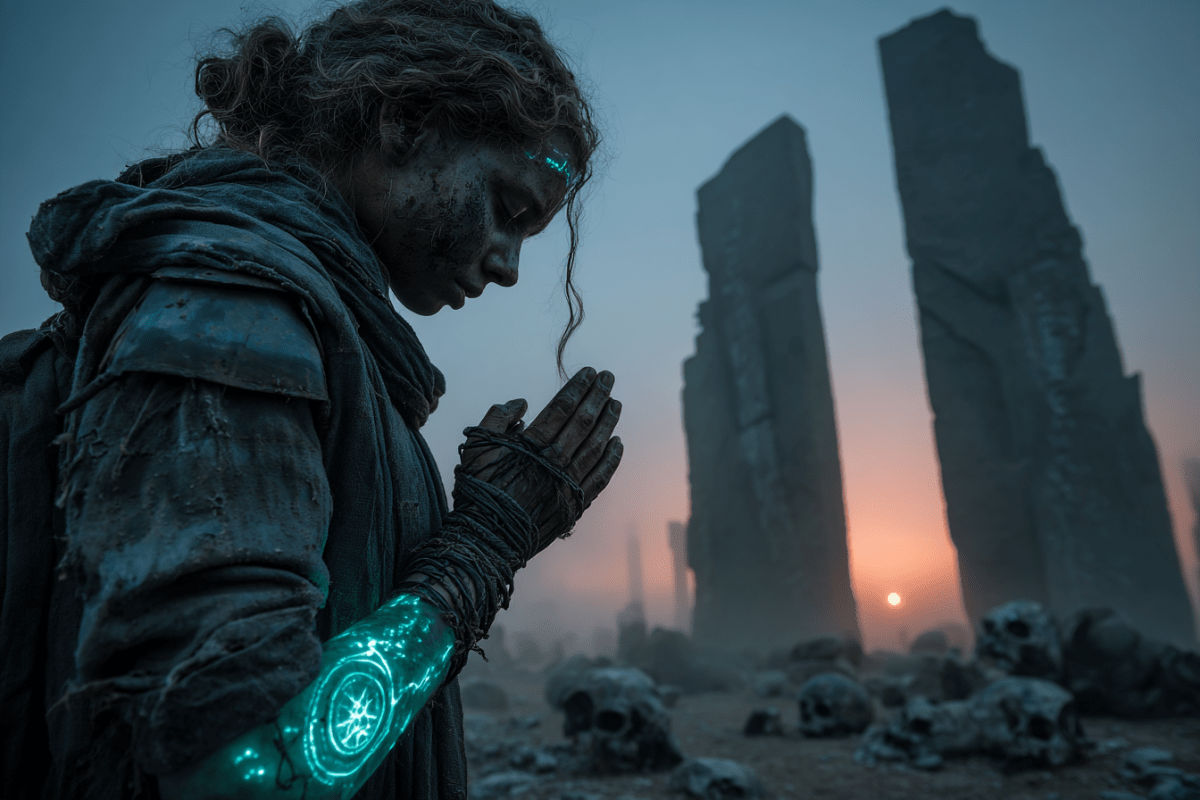
I wish this scenario I described was limited to childhood, but sadly, it isn’t. I’ve seen longtime friends destroyed over something like this. I’ve seen people beaten over the loss of possessions. The strangest thing is that most of the time, vanished items either turn up or are taken by someone other than the accused. However, the damage has already been done. Some relationships recover, but they never were like they were before. That’s true, the actual loss… the friendship.

I’ve learned this concept through my own loss. I’ve lost all my possessions several times over the years. Some items aren’t replaceable. I can say honestly that losing some of these items was very painful. I remember a friend was Native American, he carried a leather pouch filled with pebbles. There wasn’t anything special about those pebbles that I could see. However, one day, I asked him about it. I was curious. Other friends told me to mine my own business. So, I dropped it.

At the time, I carried something from each of my children in a zip-lock bag. During the quiet moments, I would pull them out, look at them, and remember what I was fighting for; every mile I walked, every sleepless night, and the duties performed for God and Country so my family could have a better life. I believed that. It’s what held me together. I did this privately. One of those moments, my friend came and sat next to them. He was quiet for a long time. We just sat in the peace of the moment.

After a while, he pulled his pouch from his hip and began to tell me about it. He said each pebble contained a memory of an event that happened in his life. I listened with a perplexed expression. He smiled and said, “Dick Tracy”. I was holding a Dick Tracy trading card in my hand. My youngest daughter had given it to me before deployment. Then I got it.


Throughout my studies, I have learned a great deal about spirituality. I came across this passage some time ago, and it is relevant to this prompt:

Ibrahim Adham said, “Faith in God will be firmly established if three veils are cast aside:

  1. “Feeling pleasure in possessing anything;
  2. “Lamenting over the loss of anything;
  3. “Enjoying self-praise.”


al-Ghazzali

Fadiman, James. Essential Sufism (p. 173). HarperCollins. Kindle Edition.

Living up to this philosophy is very difficult. I struggle with it constantly. However, I still maintain the possessions that mean the most to me. These are the relationships I have developed over the years. Most material things can be replaced. Each person we interact with is unique, and our relationships with them are also exceptional. As I’ve said, I have had to rebuild several times. It’s hard work and not fun, but it can be done if you’re still breathing. Because life is our most important possession. The relationships you develop within that lifetime can be the difference between living and existing. Because of this, I’m richer than I’ve ever been.

Boy, you part squirrel?

Daily writing prompt
What’s the most delicious thing you’ve ever eaten?

DAILY PROMPT RESPONSE

As a kid, my idea of fresh fruit came from the market on a white tray wrapped in Saran Wrap. Of course, I ate apples from apple trees and stuff. However, I ran into many apples that needed to be ripe more or were too ripe. So, to solve this problem, the stuff on the tray was always right—well, at least of the time.

I married a southern woman, where dinner was a specific time and all that. I always looked at her strangely because I was hungry when I was hungry. One day, we were at her mother’s for dinner. Of course, my wife and her sisters had to show up early to assist in preparing the meal. The “men folk” had to sit on the carport until they sent for us. I was the youngest and the newest in the group. I sat there listening to garbage that older men sling at younger ones.

Suddenly, I was starving, so I went to tell my wife I would get something to eat while waiting for them to finish. You would think I had committed a cardinal sin or something. All my sister-inlaws started having a conniption about what I just said. Now, I was newly married, and my sister – inlaw’s had absolutely no sway. However, my mother-in-law made a sound in a tone that I recognized from my own mother. Quickly, I prepared myself for an exit. However, I came to my rescue, seeing my death was imminent. I didn’t know. I swear. How dare I walk into a kitchen of southern women cooking dinner and announce I was getting food from someplace. I want to point out here that making this announcement in any kitchen, anywhere in the world, most likely will have the same effect. Let’s just chalk this mistake to youthful ignorance.

My wife matched right outside, past the “men folk” laughing about something. I was hungry, and I got mean when I got hungry. There was a peach tree at the end of the driveway. My wife suggested I eat a few peaches to hold me over.

“From where?” I asked, looking confused and worried at once.

My wife returned my look. “The tree babe,” she said, pointing at the tree with several peaches on the ground around the trunk. I looked at my wife sternly.
“I’m not eating those,” I said firmly and began walking away, muttering over my shoulder, ” I only eat fresh peaches, you know, the ones on the white tray!” I had the classic duh expression on my face. It was something I used regularly back then.

My wife stood shaking her head and started laughing. She was holding her side and everything. I know I could occasionally be the source of extreme levity, and I didn’t feel this was one of those moments.

“They don’t get any fresher than these, hun, right off the tree,” she continued as she walked away. So, I tasted a peach. I was fully prepared to render I proper, “Woman, I told you.” However, I needed to be corrected. Those peaches were the best thing I had ever tasted. I ate one, then another, and another. Suddenly, I snapped out of my euphoric bliss.

“Boy, get down from there!” I hear a voice shout as I’m continuing stuffing more peaches down my throat.

“Girl, get your husband!” my mother-in-law told her daughter and looked back up at me. Boy, you part squirrel?”

Song Lyric Sunday – The Ohio Players – 04/14/2024

TUNAGE – SLS

I got excited when I saw the prompt for this post. There are so many songs I love that fit the category. I could go on a rant about these songs, but I will behave. Tonight, I will just provide five of my favorites in this category.

2. Disco Inferno – The Trammps (1976)

3. The Roof is on Fire – Rock Master Scott & The Dynamic Three (1984)

4. Beds are Burning – Midnight Oil (1987)

5. Fire Woman – The Cult (1989)

My all-time favorite song is none other than The Ohio Players. I remember sitting in front of my mother’s HiFi, flipping through records. I found this album cover and was mesmerized by it. I listened to this as much as I could. I never understood the meaning of the song until much later in life. Even today, I still enjoy the funk sound of this track. This track was recorded in 1974. Fire reached No. 10 on the disco/dance chart.

Lyrics:

Hey, now, huh-huh
Hey, hey, hey, no, (Ow, now)
Hey, now, huh-huh
Hey, hey, hey, no
Fire (Uh) Fire (Its all about) Fire (Woo, woo, woo)
Fire
The way you walk and talk really sets me off
To a fuller love, child, yes, it does, uh
The way you squeeze and tease, knocks to me my knees
Cause Im smokin’ baby, baby
The way you swerve and curve, really wrecks my nerves
And Im so excited, child, woo, woo
The way you push, push lets me know that you’re good
Oh, yeah
Fire (What I said, child, ow)
Fire (Uh-huh)
Got me burnin’ burnin’ burnin’
Ooh. Ooh, ooh, ooh
Burnin’, burnin’ baby
Oh, baby
When you shake what you got, and girl, you’ve got a lot
You’re really somethin’ child, yes, you are
When you’re hot you’re hot, you really shoot your shot
You’re dyn-o-mite, child, yeah
Well, I can tell by your game, you’re gonna start a flame
Love, baby, baby
I’m not gon’ choke from the smoke, got me tightenin’ up my stroke
Do you feel it, girl, yeah
Songwriters: Clarence Satchell, Marshall Jones, Leroy Bonner, Willie Beck, James L. Williams, Marvin Pierce, Ralph Middlebrooks. For non-commercial use only.


Thank you, Jim, for hosting this challenge. Thank you, Nancy, for suggesting this wonderful theme.

Shutter Wars: Two Cameras and a Squirrel

CHALLENGE RESPONSE – FICTION – RDP SATURDAY

In the heart of an attic, amidst a treasure trove of forgotten gadgets, an argument of epochal proportions was unfolding. Oliver, an old, venerable camera with a penchant for nostalgia, found himself at odds with Dexter, a high-tech digital camera with more settings than a spaceship.

“Back in my day, we captured the essence of life, one click at a time,” Oliver boasted, his lens gleaming under the dim attic light.

“Pfft, the essence of life? I can capture, edit, and share a photo before you even figure out your aperture,” Dexter retorted, his LED screen flashing in disdain.

The debate might have ended there if a cheeky squirrel had not chosen that moment to dart across the attic floor, pausing only to strike a pose.

A light bulb flickered to life above Oliver’s viewfinder. “I propose a challenge! Let’s see who can take the best photo of that squirrel,” he declared, adjusting his focus.

Dexter beeped in amusement. “You’re on, grandpa. Prepare to be pixelated.”

Oliver took his time, calculating the light, adjusting his focus, and waiting… waiting for the moment when the squirrel, enticed by a nut left on the windowsill, struck a majestic pose. Click. The sound resonated through the attic, capturing a moment in time.

Meanwhile, Dexter, with the efficiency of a modern marvel, snapped approximately 47 photos in burst mode, applied a “Squirrel-Enhance” filter, and even photoshopped a tiny superhero cape onto the squirrel in one of the shots. “Done. And I’ve already shared it on SquirrelGram,” Dexter announced triumphantly.

They turned to the attic’s old computer to judge their work. Oliver’s photo was a masterpiece of timing and light, showcasing the squirrel in a moment of serene beauty. The soft lighting gave it an almost ethereal quality.

Dexter’s photos were sharp, vivid, and varied, with the superhero squirrel garnering a particular chuckle. “Look at that! It’s going viral among the attic spiders,” Dexter bragged.

Just then, the squirrel, having completed its snack, scampered over to see what all the fuss was about. It peered at the screen, then at the two competitors. With a decisive nod, it grabbed a forgotten paintbrush with its tiny paws. It dashed off a squirrelly masterpiece on a piece of scrap paper: Oliver and Dexter, lenses crossed in friendship, capturing the squirrel in a heroic pose.

The two cameras, old and new, realized that the best photos come from seeing the world through each other’s lenses. They laughed, a sound of mechanical clicks and digital beeps, united in their newfound friendship and respect for each other’s techniques.

As the sun set, casting a golden hue over the attic, Oliver and Dexter understood that photography isn’t just about the camera—it’s about the vision, the moment, and sometimes, a squirrel with a flair for the dramatic.

And so, amidst the dust and memories, two cameras from different generations found common ground, proving once and for all that when it comes to capturing life’s beautiful moments, the best approach is a shared one. As for the squirrel, it became an honorary member of their photographic adventures, always ready for its next close-up—cape and all.

Song Lyric Sunday: God – 03102024

CHALLENGE RESPONSE – SLS

This challenge was tough for me, not because I didn’t know a song that fit the parameters, but because I knew too many to choose one. So, I decided to cheat a little, just a tad. I’m going to list my Top 3 favorites within the parameters. However, I will only deep drive on the first song. My Top 3 are as follows:

  • God Bless the Child – Billie Holiday
  • God is a Bullet – Concrete Blonde
  • Dear God – XTC

God Bless the Child is my favorite because of the dear memories it holds within the melody and lyrics—memories I rarely recall until I hear the song. Immediately, I’m teleported back into my childhood, listening to my mother playing the track on the HiFi. For the longest time, she only played Diana Ross’s cover of the song. I memorized and sang it along with her. I found the original when I was old enough and brought the 45 for Mom. Here are the particulars about the song.


The Meaning of “God Bless the Child”

“God Bless the Child” is a song that carries profound meanings, intertwining themes of independence, self-reliance, and the harsh realities of inequality and economic disparity. Originating as a jazz standard, it was famously performed by Billie Holiday, who co-wrote the song with Arthur Herzog Jr. in 1939. Through its poignant lyrics and soul-stirring melody, the song delves into the complexities of financial dependency and social stratification, resonating across generations with its timeless relevance.

Interpretation of Lyrics

At its core, “God Bless the Child” emphasizes the value of self-sufficiency. The opening lines, “Them that’s got shall get, Them that’s not shall lose,” reflect a stark observation of societal dynamics, where the rich grow richer and the poor face continual hardship. This sets the stage for the song’s central message, advocating for personal strength and independence in a world rife with inequities.

The chorus, “God bless the child that’s got his own,” underscores the dignity and empowerment found in self-reliance. It suggests a divine favor or resilience bestowed upon those who can stand on their own feet, contrasting the vulnerability of those who depend on the charity or whims of others. This message is particularly poignant, considering Billie Holiday’s own struggles with poverty and racial discrimination, adding a layer of personal testimony to the song’s narrative.

Cultural and Historical Context

“God Bless the Child” emerged during significant social and economic upheaval in the United States, reflecting the hardships of the Great Depression and the subsequent recovery period. Its themes resonated with many who experienced financial insecurity and witnessed the disparities between social classes. Over the decades, the song has been interpreted by numerous artists across various genres, each bringing their own perspective but retaining the core message of autonomy and resilience.

Philosophical and Ethical Considerations

Beyond its commentary on economic issues, “God Bless the Child” also touches on deeper philosophical and ethical questions. It prompts listeners to consider the values of independence versus interdependence and the moral responsibilities of the fortunate towards the less privileged. In this light, the song can be seen as a call to introspection and empathy, encouraging individuals to find their strength while recognizing the interconnectedness of society.

Legacy and Influence

The enduring appeal of “God Bless the Child” lies in its universal message and emotional depth. It has transcended its original context to become an anthem of perseverance and dignity, inspiring listeners to reflect on their circumstances and society. The song’s influence extends beyond music, permeating cultural discussions and academic analyses, attesting to its profound impact and relevance.

In conclusion, “God Bless the Child” is more than a musical composition; it reflects human resilience, social justice, and the quest for dignity. Its message of self-reliance amidst adversity resonates, offering inspiration and insight to each new generation that discovers its timeless verses.

God Bless the Child Lyrics (1956 Version)

Them that’s got shall have
Them that’s not shall lose
So the Bible said and it still is news

Mama may have, Papa may have
But God bless the child that’s got his own, that’s got his own

Yes, the strong get smart
While the weak ones fade
Empty pockets don’t ever make the grade

Mama may have, Papa may have
But God bless the child that’s got his own, that’s got his own

Money, you’ve got lots of friends
They’re crowding around the door
But when you’re gone and spending ends
They don’t come no more
Rich relations give crusts of bread and such
You can help yourself, but don’t take too much

Mama may have, Papa may have
But God bless the child that’s got his own, that’s got his own

Mama may have, Papa may have
But God bless the child that’s got his own, that’s got his own

He just don’t worry ’bout nothing, ’cause he’s got his own


You guys already know how I feel about Concrete Blonde. However, XTC’s Skylarking was packed with amazing songs, and I spent a lot of time listening to it.

Thanks to Jim Andrews for hosting this challenge. Such a fantastic suggestion, Nancy, aka The Sicilian Storyteller.

Where Do I Start?

Bloganuary writing prompt
What do you complain about the most?

DAILY PROMPT RESPONSE

I’ve reached the age where complaining seems like a superpower. Of course, this expands my current superpower of ranting at the drop of a hat. Not to mention, I drop a few justified gripes when it’s called for. Yet, there are times when I remain silent, but I can’t be held accountable for facial expressions. So, if I think you’re jackass; I don’t have to say a word. My face says it all.

However, lately, the thing that chaps my ass the most is people’s lack of compassion for others. It seems we don’t care about each other like we used to. I get it! Times are different. People are different. I’m no better. I can go days without talking to another person. I’ve always been that way. Anti-social is what they called me. So, trust me, I’m not casting any stones.

I’m sure you have noticed people are walling themselves off more now than ever. As if they prefer interactions on their devices rather than actual human conversation. Another thing I’ve seen is that when you are having these conversations, they aren’t actually listening. There are a lot of head nods and other indicators they aren’t paying attention to, but they are meant to fool you into thinking you’re having a meaningful conversation.

Alas, don’t fret. I, too, have been fooled. We need to slow down, stop, listen, and help one another.

We have to do better; we are better!

No Pressure

Bloganuary writing prompt
Write about your first name: its meaning, significance, etymology, etc.

DAILY PROMPT RESPONSE

Like many people our names are chosen with no idea why? Several of us are named after a relative we never met. Sometimes we carry names of relative that has been deceased for generations. Most of the people I know don’t a clue of etymology of their names. Madre Khan said she heard someone with my name and thought it was cool. So, today when I looked into the origin of my name. I was taken back a little. Let’s take a look at what I found.

The Meaning of Mangus

Mangus, a derivative of its Latin roots, holds a profound and significant meaning – “great.” This single term encapsulates many virtues, such as strength, honor, and greatness, depicting a person of high stature or noble character. The Latin lineage of the name lends it a timeless appeal, resonating with an aura of power, dignity, and regality. The name Mangus, therefore, transcends beyond just being a name; it mirrors character and virtue.

Cultural Implications of Mangus

Cultures worldwide often attribute a profound influence to names, shaping the character and destiny of the individual. Mangus, with its inherent connotation of greatness, can be perceived as a blessing and an expectation set upon the individual. It can be a guiding beacon, nudging the individual towards virtues of strength, honor, and nobleness. Consequently, the cultural implications of the name Mangus are significant and far-reaching, potentially influencing the individual’s life path and destiny.

Historical Significance of Mangus

The annals of history are replete with references to the name Mangus, associating it with figures of power, nobility, and great stature. This name has weathered the tests of time, retaining its relevance, significance, and reverence across different eras and epochs. The name’s historical significance further magnifies its meaning, reinforcing its virtues and attributes. Hence, Mangus symbolizes a rich historical legacy of power and greatness, etching its mark in the sands of time.

The Impact of Mangus in Contemporary Times

In today’s world, the name Mangus inspires awe and respect. Its timeless appeal and powerful meaning make it a popular choice for those seeking a name with depth and significance. The virtues associated with Mangus – strength, honor, and greatness – are universally admired and sought after, making the name a beacon of aspiration and inspiration. Moreover, the rich historical legacy and cultural implications associated with Mangus add depth, making the name even more appealing in the modern context.

Mangus in the Modern World

In the modern world, where names are often chosen based on their meaning and significance, the name Mangus remains popular. Its profound meaning of “greatness” and its historical and cultural importance make it a meaningful and inspiring name. Those who bear the name Mangus carry a sense of strength, honor, and greatness – virtues that are admired and respected in today’s society.

With my name meaning all this … wow, no pressure!

Sitting Still Long Enough

Bloganuary writing prompt
Where can you reduce clutter in your life?

DAILY PROMPT RESPONSE

What I’ve learned over the years in regards to clutter is you never know how much crap you have accumulated until you get ready to move. Also, I discovered the things in the basement, the storage unit, and the garage. You probably don’t need it. I’m aware that somehow we find justification to keep these forgotten treasures or the unknown items contained inside labeled “Misc.” So do your best to load the unnecessary items and take them to your local charity or consignment store.

Let’s change direction for a minute. We are still discussing the reduction of clutter but in a different way.

“The unexamined life is not worth living”
― Socrates

I’ve come to realize that the area with the greatest need for decluttering is one’s self. I’ve been ill these last few months, and it doesn’t seem I’m going to get any relief in the near future. However, I’ve had an opportunity for self-reflection. Let me tell you, some wickedness has been passing through my mind. Despite this, I’ve had moments of clarity.

I’ve taken the time to really look at what I need to live my best life. I need to take the time to let go of my preconceptions about myself and the world around me. This isn’t as easy as it sounds. I find self-examination to be the most challenging endeavor I ever embarked on. It’s going to be a work in progress. Yet, it is a task worth doing.

Once you let go of your internal baggage, I believe you can tackle the basement, storage unit, or garage with a clear mind and spirit. You just might be able to get something done.

~thank you for reading~

Glowing in the Sun

Photo by Johannes Plenio on Pexels.com

POETRY – REFLECTION

There is a silence in the room
No words spoken, emotions so thick one could smother
Fighting back the tears, as you look back at her face.
She’s sitting on the steps, glowing in the sun.


Your bag is packed, yet you search for a reason not to leave.
Standing the final stance before departure…knowing too well it is time
Feeling the tenderness of her touch
Followed by the warmth of her lips.

Exhaling in the moment, the next is unknown

Walking out the door, never turning around
Not wanting your tears to show.
The ride to post was longer today than any others
Your brothers and sisters in arms have the same upon their faces

Equipment and manifest checks … moments away from destiny
Chatter fills the room, but no one speaks of why we are here
As if you speak its name, you give it power.
To speak its name, the illusion would be over

We muster on the flight line, trying to stay strong
We look through the crowd, watching your brethren summoning the courage
Moments away from fighting an unknown cause
Fighting with undying zeal and without pause

The plane is loaded, and slumber takes over
Getting all we can get while we can
Waken by the plane’s descent, our nerves on fire
Knowing that the illusion is over and dues need to be paid

We flick the switch ….

Boom boom….boom boom ….boom boom
Can you hear it?

Boom boom…boom boom ….boom boom
War drums sound off

Boom boom…boom boom ….boom boom
Our soul screams!!!!

YEEEEAAAAAAHHHHHH!!!!!

Now we embrace our beast and let them out

Fighting relentlessly ….

Stained with essence ….

Innocence shattered ….

Desperately searching for the next thing that is keeping you away
Through bloodshot eyes, we see all the enemies have vanished
No one else to fight … no more orphans caused
At least no more today

We flick off the switch ….

Leaning in the doorway, standing there looking
Looking at the most breathtaking thing that these eyes have seen
In what seems to be a lifetime

I see you ….

Glowing in the sun

~thank you for reading~