War, Wisdom, and Other Lies I Tell Myself at Dawn

PROSE – FOWC, RDP, SoCS

“Damn, you’re ancient! What was it like to be one of Teddy Roosevelt’s Rough Riders?”

One of the kids on my team tossed that gem at me this morning. Smirking like he just reinvented comedy. I wanted to fire back—something about his hairline already surrendering—but I let it ride. Not because I’m mature. I’m just tired. And honestly? The way the squad erupted in laughter… it was worth the hit. They needed the laugh more than I needed the win.

I’ve never really understood the logic of soldiers. Still don’t. We sign up to follow orders we don’t write, from people we’ll never meet, for goals we’re not allowed to fully understand. And we’re supposed to be fine with that.

Back when I was their age, I like to think I was different. Noble. Thoughtful. Maybe even angelic. (Okay, maybe not angelic. More like… less of a jackass?) But that could just be the rose-colored fog of memory, or the result of years spent rewriting my own origin story like a drunk screenwriter.

There’s something ritualistic about the way the morning unfolds out here. The dawn eats the night. First sip of bitter coffee. First cigarette. The world still quiet enough to pretend it’s not completely unhinged. I watch them wake up—slow, clumsy, half-zombies with bedhead and bad attitudes. Too young to have rituals, too new to know those rituals might one day keep them sane.

I remember one morning, I hit them with Sweet Leaf by Black Sabbath. Volume up, sun barely over the ridge. Half of them looked like they’d been shot in their sleep. The other half just looked confused. I let it rip while running them through live-fire scenarios. Brains not even warmed up, bodies still clunky from the cold.

It wasn’t for fun. Okay—it was a little fun. But mostly it was about pressure. Teaching them to operate before they’re ready, because the world doesn’t care if you’re ready. Expect the unexpected, I told them. It’s a cliché until you’re bleeding because you didn’t.

Eventually, they’ll get it. Or they won’t. Some learn the rhythm. Others burn out trying.

Each day, we stand there like portraits—young faces with old eyes—propping up a cause that shapeshifts depending on who’s holding the microphone. Marching to the beat of some distant desk jockey who calls themselves a leader because they can attach a PDF to an email. And no one questions it.

That’s the part I can’t let go of. No one questions it.

“War is peace. Freedom is slavery. Ignorance is strength.”
— George Orwell, 1984

I’ve never fully understood that quote. I’ve got pages of half-drunk, sleep-deprived ramblings trying to unpack it. You’d think, with age, I’d get closer. Clarity, wisdom, all that crap they promise you comes with gray hair. But no. The notes get weirder. The handwriting worse. The questions louder.

Maybe that’s the point. Maybe wisdom isn’t about finding answers. Maybe it’s just about asking better questions—and knowing when to shut up and pass the coffee.

Sun’s up. Time to pretend we’ve got it all figured out again.


This post was written for Ragtag Daily Prompt, Fandango, and Stream of Conscious Saturday.

Writing for Nothing and Ink Stains for Free

Daily writing prompt
What job would you do for free?

DAILY PROMPT RESPONSE – FICTION

Writing was never the plan. I wanted something stable, normal—not this chaotic urge to bleed words onto a page. But here I am—caught off guard, and strangely okay with it.

You know that stability that gets beaten into your brain by your parents? The same folks who told you to follow your dreams? Yeah. I believed them—probably because they said it a few thousand times during my childhood with very sincere faces. But every time I actually tried to chase something I loved, it turned into: “Boy, you better get your head out of the clouds,” or “Son, you better get back into the real world.”

I worked a thousand jobs before I ever called myself a writer. The blame for all this goes squarely to Cheryl Whitmore. She gave me a journal when we graduated high school. Then, she sent me one every year for my birthday—for ten years—like she knew something I didn’t.

Since she kept sending the journals, I thought maybe Cheryl was into me. Like… romantically. But it turned out she’d had her heart broken and took a vow of celibacy. I wasn’t even sure she was serious. For a while, I figured it was just a clever way of shooting me down.

Years later, right after I published my first novel, I ran into her again, and she was still celibate. Like, the one person on earth not ruled by sex. She was kind of my hero after that, in a way I don’t really have the words for. Just… grounded. Steady. A rare person who didn’t want anything from me but gave me everything.

Now, I write in those journals every day. Or in ones that sort of look like them, depending on Amazon’s mood. You know how it goes—they’re out of stock when you actually need them and drowning in inventory when you don’t. I swear they do that on purpose.

Anyway, even if I hadn’t become a writer for real, I probably would’ve ended up working at the plant next to my dad, scribbling stories on the side for free.

Oh—and by the way, my parents? Yeah, they’ve read all my books. Twice. Now they hound me for the next one like it’s a Netflix series. But on weekends, Dad and I still tinker in the garage on his F-1 Ford pickup like nothing ever changed.

There’s nothing like being a writer. Honestly, why wouldn’t someone do it for free? We’re sorcerers—wielding words like spells, hoping each one leaves a mark. Our journals are ad-hoc grimoires, crammed with half-formed ideas, emotional incantations, and messy blue ink that somehow becomes meaning. We build memories out of language, wrap feelings in sentences, and send them into the world like bottled lightning. If even one of them sticks—if one person feels something they didn’t before—then the magic worked. And that’s the job.

Top 5 Ways to Ask a Girl Out: Rule #4

FICTION – SHORT STORY SERIES


Top 5 Ways to Ask a Girl Out: Rule #4
If she says “this isn’t a date,” it’s 100% a date. Don’t ruin it.


“So,” she said, tossing her greasy rag in the toolbox like a boss, “I owe you dinner.”

I tried to play it cool, even though my brain immediately burst into a confetti cannon. “You don’t owe me anything,” I said, knowing full well that yes, yes she absolutely did and dinner sounded like a dream.

“Okay, but I’m still getting you dinner. Not as a thank-you. Just… you know. Casual. Like friends.”

There it was. The dagger.

“Right. Totally. Friend dinner. My favorite kind of dinner,” I said, with the emotional grace of a man trying to pretend pizza doesn’t taste better when it comes with romantic tension.

She smiled like she could see straight through me. “Cool. There’s this taco truck I like. Cheap. Questionably licensed. But amazing.”

“Perfect,” I said. “Nothing says ‘healthy bonding’ like eating meat from a vehicle.”

An hour later, we were sitting on a curb, elbows bumping, holding greasy foil-wrapped masterpieces. She was already two tacos in. I was still trying to figure out how to bite mine without it completely disintegrating into my lap.

“You always eat this slow?” she asked, watching me with mild concern.

“I’m being strategic,” I said. “Every bite is a structural risk.”

She laughed. “You’re weird.”

I paused. “In a bad way?”

She tilted her head. “In a taco-anxious, coffee-faking, car-fixing kind of way.”

“So… like a charming disaster?”

“Exactly,” she said, raising her bottle of Jarritos. “To charming disasters.”

We clinked bottles. Mine fizzed over and spilled down my hand. Of course.

I wiped it on my jeans. “Classic me. Keeping the bar low, so I’m always exceeding expectations.”

She grinned. “You know this is kind of a date, right?”

My brain blue-screened.

“I mean,” she continued, casually licking hot sauce off her thumb, “you offered free labor, let me serve you questionable coffee, survived my car, and now you’re sitting on a curb eating tacos with me like it’s totally normal. You passed the test.”

“There was a test?”

“Oh yeah. The gnome was part of it.”

I blinked. “The gnome was a test?”

She nodded seriously. “He only approves of guys with good intentions and strong emotional stamina.”

“Well. That explains the pressure I’ve been feeling in my soul.”

She laughed again, and I swear it hit me harder than the tacos. It was like someone had tugged a thread that ran straight through me — tight, impossible to ignore.

I looked at her, trying to decide if this was the moment. The moment to claim some free will, throw caution to the wind, and say it.

But she beat me to it.

“So,” she said, “if we do this again, maybe we pick somewhere that doesn’t cause gastrointestinal roulette?”

“Are you asking me out?” I asked.

She raised an eyebrow. “Would that freak you out?”

“Only in the best way.”

“Well, then.” She stood and offered me her hand. “Let’s call it a soft launch.”

I took it, still sitting. “Wait. Was that a farewell to the taco truck?”

“Oh, definitely not,” she said, pulling me up. “We’re just giving it a rest before we end up in a hospital.”

We walked back toward the cars in a quiet little row of footsteps, hers just ahead of mine. And yeah, maybe it wasn’t official. Maybe it was just tacos and teasing.

But this time, I didn’t pretend. It was a date.

Top 5 Ways to Ask a Girl Out: Rule #3

FICTION – SHORT FICTION SERIES


Top 5 Ways to Ask a Girl Out: Rule #3
Never assume you’re the smartest person in the driveway.


So there I was, elbow-deep in engine parts, sweating like a liar in a job interview, and just barely pretending I knew what a serpentine belt was. I nodded at a bolt like it had insulted me personally.

She crouched next to me, sipping her probably-toxic coffee and watching with the calm curiosity of someone waiting for a raccoon to finish rooting through their garbage.

“You need a 10mm socket for that,” she said casually.

I froze. “What?”

“That bolt. You’re using the wrong size. That’s why it keeps slipping.”

I looked at the wrench in my hand. I had no idea what size it was. I picked it because it was shiny and made a satisfying clink against the toolbox.

“Right,” I said. “Just warming it up. Loosening the tension.” I said “tension” like I knew what it meant in this context. She didn’t call me out. Worse—she smiled.

“Here,” she said, reaching into the toolbox and plucking out the exact socket like a seasoned mechanic. Then, with zero hesitation, she slid under the hood next to me and got to work like it was no big deal.

“Wait,” I said. “You know how to fix this?”

“I grew up with three older brothers and a string of bad cars,” she said. “Also, I once rebuilt an engine because YouTube dared me.”

I blinked. “So… you’re just letting me fake my way through this for fun?”

“I was curious how long it would take before you admitted it,” she said, laughing. “You were doing okay, though. Kind of charming, in a flailing sort of way.”

Flailing. Excellent. I was now officially “flail-charming.”

She handed me a rag. “Wipe your hands. You’ve got grease on your face. And your shirt. And somehow your ear?”

I wiped at everything and absolutely made it worse.

“Thanks,” I muttered.

She leaned back on her heels, wiping her own hands like a total pro. “So. What was your plan? Fix my car and hope I’d fall in love with you on the spot?”

I froze.

Then shrugged. “Honestly? That was Plan A. I didn’t have a Plan B.”

She laughed. A real one. Then, after a beat, she said, “Well… I like Plan A.”

I nodded, trying not to panic. “Cool. Same. Feels like a solid… multi-step process.”

“You’ve got two more rules left, right?” she said, grinning. “Can’t wait to see what’s next.”

Neither could I.

Mostly because I had absolutely no idea what I was doing.

The Museum of Knuckleheads – Exhibit A: The Credit Card Burial

Daily writing prompt
If you could have something named after you, what would it be?

DAILY PROMPT RESPONSE

The last time this question was asked, this was what I had to say about it:

So, I decided today, what if I turned this cute moment between my wife and I into something else? Here’s what I came up with…


Docent Notes, Entry No. 1: Exhibit A – The Credit Card Burial

Welcome to the Museum of Knuckleheads. Admission is free. Consequences are not.

If you’re here, chances are you’re curious, lost, mildly disappointed with your life trajectory—or just trying to kill ten minutes before the Wi-Fi comes back. All valid. This museum wasn’t built for the elite, the wise, or the well-adjusted. It was built for people like me. People like you. People who have stared into the mirror mid-shower and muttered, “Well… that was a choice.”

Let’s begin the tour.

Exhibit A: The Time I Tried to Bury a Credit Card in the Backyard to “Reset My Finances”

Yes, you read that right. That’s an actual dirt-filled display under the buzzing overhead lights. A plastic shovel from a gas station. A laminated credit card. A tiny American flag, for irony.

This was during a phase I call “financial experimentalism,” which is what you call it when you’re broke but still wildly confident. The plan was simple: if burning sage can cleanse a house, why not dig a shallow grave for debt?

I buried the card behind the shed. Said a few words. Patted the soil like it was a dog I was letting go. And then I waited. For what? Honestly, I don’t know. Divine intervention. A good credit score. A sitcom-style reset button.

Spoiler: Capital One does not care if your card is underground. Interest kept growing as if it were photosynthesizing.


Lessons, If You’re the Type Who Learns

  • Debt doesn’t decompose.
  • Just because an idea feels spiritual doesn’t mean it isn’t objectively stupid.
  • Always check where underground sprinklers are before committing to symbolic rituals.

The exhibit still smells faintly like wet dirt and a bad decision you swore you’d only make once. Sometimes, I swear the card shifts positions overnight. Like it’s clawing its way back up.

People laugh when I tell them this one. They assume it’s exaggerated. I let them believe that. It’s easier than admitting it was the most hopeful I’d felt in months.


Closing Notes from the Docent

This museum isn’t here to mock you. It’s here to reflect you—bad choices and all. You may not see yourself in this exhibit. Not yet. But wait a bit. Everyone’s got a shovel moment.

Next time: Exhibit B – Neck Tattoos I Almost Got at 3 A.M.

Until then, take a number. You’ll be up soon.

Docent, Senior Raconteur
Museum of Knuckleheads


Share your own Exhibit

Ever made a decision so irrational that it felt oddly brilliant at the time? Leave it in the comments. One day, we might just build a wing for you. Don’t be shy …


As always, I’d like to shout out the folks who provided inspiration.

Ragtag Daily Prompt

Fandango

Thank you guys for doing what you do

Top 5 Ways to Ask a Girl Out: Rule #2

Daily writing prompt
What makes you laugh?

DAILY PROMPT RESPONSE – FICTION SHORT SERIES


Top 5 Ways to Ask a Girl Out: Rule #2
Don’t insult her car. Even if it deserves it.


We walked down the driveway in silence. Not the comfortable, romantic kind of silence. More like the kind where you know you’re about to meet something terrifying and no one wants to be the first to scream.

Her car came into view. If a rusted toaster had anxiety, it would look like this. The paint was more of a suggestion. The bumper was being held on by what looked like hope and duct tape. One of the side mirrors was missing entirely, probably in protest.

“This is it,” she said, completely straight-faced.

I nodded slowly. “Cool. Vintage… apocalypse chic.”

She raised an eyebrow.

Damn it.

“I mean—it has character. You don’t see this kind of structural chaos every day.”

She laughed. “It’s a piece of crap. You can say it.”

“No! I mean… yes. But lovingly.”

Smooth.

I crouched down to check out the front wheel, pretending to know what I was doing. Which I mostly did. I watched a lot of videos. Some had music. That counts.

“So what’s it doing?” I asked.

“It makes this… sound,” she said, twisting her face like she was bracing for judgment. “Kind of a high-pitched… squeal? Or a scream? It’s hard to describe. Definitely not a sound cars are supposed to make.”

“Got it,” I said. “A banshee vibe.”

She nodded. “Exactly. Like if a haunted violin and a blender had a baby.”

I popped the hood. Steam hissed out like the car was sighing in defeat. I was immediately sweating. From heat, stress, and fear that I was about to electrocute myself in front of someone I liked.

“You don’t have to actually fix it,” she said. “I just thought you might know a guy or something.”

“I am the guy,” I said, way too confidently.

I was not the guy.

Still, I grabbed a wrench like I meant business. Tools make you look legitimate. I tapped something metal. It made a sound. Not a good one.

She leaned over my shoulder. “You sure this is safe?”

“Totally,” I lied. “I’ve done this… dozens of times.”

Once. On YouTube. At 2AM. After searching “how to fix car without dying.”

The gnome wasn’t there anymore. I kind of missed him.


I’m laughing … are you?

Let me know when you are ready for Rule #3

Here’s the link to Rule #1

Bent but Breathing

FICTION – FFFC #313

Bent but Breathing

I’m a vagabond. A minimalist, or so I tell myself on Tuesdays, Thursdays, and every other Wednesday. Which Wednesday is it? On those Wednesdays, Mrs. Johnson from the Second Avenue Church of God in Christ leaves out the Bible study leftovers. She waits until I stumble by and grab the tray. Never smiles. Never waves. Just watches. Lately, she’s started leaving grocery bags so I can carry more. Got Ms. Pearl from the bakery to set aside day-old bread. Otis the butcher leaves scraps. Every other week, I eat like a king.

I’ve been living this way long enough to learn a few things. When you’re practically invisible, you see everything. People will walk right over you if you let them. Some look at you with pity, like helping earns them heaven points. Others can’t stand the sight of you. They try to tear you down, not realizing they’re dragging themselves lower in the process.

Then there are the few who see you. Really see you. They look you dead in the eyes and don’t flinch. Like maybe they’ve been through it too. Like they know what it takes to survive — and maybe, just maybe, what it takes to make it out the other side.

A Jewish woman, not much older than me — if at all — asked me what happened. Not in that judging way that makes you want to either run off or tell someone to kiss your ass. She asked, like she really wanted to know. The ask that says, Pull up a chair. Let’s sit. Not Let me fix you. Not Here’s a sandwich, now tell me your trauma. Just: I don’t want nothing from you. You don’t gotta clean nothing, or do no freaky shit. Just tell your truth. If you want to. Take your time. Say what you can.

I sat down, eyeing her, trying to figure her game. “I’m Ruth,” she said, and stuck out her hand. Left it there. Didn’t flinch. Didn’t speak. Just waited. So I shook it. She leaned in, like she was listening already. No pressure. No rush. It was crazy.

They sat in silence, sizing each other up — not like enemies, more like two people checking if the other is real. No threat. No fear. Just… reading the room, and each other.

Everybody wants something. Nothing’s free. That’s just how it is. Whether you’re on the street or in a boardroom, there’s always a game being played — whether or not you know it. Society teaches us that. You gotta play your role, follow the rules, if you want your piece of the pie. Do the right thing and get rewarded. Slip up, get nothing. Simple math, they say: Good people go to heaven. Bad people go to hell.

We can’t help ourselves. We were bred in an incentive-based society. You know — that carrot and stick shit. We want to do good, be better people. Lord knows we’ve seen enough misery. But somewhere along the way, it all got twisted. Long before we take our first breath, it stays twisted, and it stays that way long after we take our last breath.

I asked Ruth if she had a square. She held up a finger and walked out of the room. A few moments later, she came back and motioned toward the door. We flipped a couple of five-gallon buckets upside down and copped a squat. She handed me a square and lit one for herself. We smoked in silence. I watched her. She had that stare — the one you get when facing your demons, and they don’t blink. The kind of stare that says you’ve got something on your mind, and no one else can carry it but you.

I exhaled, and something eased up — for the first time in a long time. I looked at her, still locked in that staring match with her demons. “You are just another sister in the struggle,” I said. “Trying to stay above the churn.” She exhaled deeply and looked at me. Her gaze had softened — not by much, but enough. This is usually when you make your play. But I knew this wasn’t that kind of game. Hell, for some reason, I knew it wasn’t a game at all. I struggled to understand what was happening. She leaned back against the wall, arms folded, square resting between her fingers, waiting. So I laid it out. She’d earned it — my respect.

Top 5 Ways to Ask a Girl Out: Rule #1

FICTION – WDYS #281


Top 5 Ways to Ask a Girl Out: Rule #1
Don’t mention the creepy gnome.


I stood there, just… staring at the thing. A tiny metal gnome? Elf? Goblin? Whatever it was, it was perched on her balcony railing like it owned the place.

Did she put it there? She had to have, right? It’s not like little brass weirdos just wander onto balconies. But still—it felt like it was watching me. Judging me.

I thought about asking her, but no. That would blow up the whole operation. Can’t have her thinking I’m the kind of guy who interrogates her about lawn ornament choices. No, I’m the helpful friend. The guy offering to fix her absolute trainwreck of a car—for free. Out of kindness. Generosity. Totally not because I’m hopelessly into her and grasping at any excuse to spend time together.

God, I’m that guy. The one who offers free labor in the desperate hope of being seen as dateable. I’m one creepy figurine comment away from ruining it all. So I shut up, smile, and pretend like helping her isn’t the highlight of my entire month.

She leaned out the front door, holding two mugs. “Coffee? Or, uh… whatever this is. I might’ve forgotten how coffee works halfway through.”

“Perfect,” I said, taking one. I didn’t even like coffee, but it felt like the right thing to say. Plus, I wasn’t about to reject something she handed me with a smile that made my brain shut down like an overheating laptop.

I took a sip. It was… alarming. Bitter, burnt, and somehow both too hot and lukewarm at the same time.

“Be honest,” she said, raising an eyebrow.

“It’s… ambitious,” I offered.

She laughed. Progress.

We stood in silence for a second, both sipping this mysterious bean liquid and pretending it wasn’t a full-on sensory attack. I glanced back at the gnome. It hadn’t moved. Still smug.

“That little guy yours?” I asked, before my brain could stop my mouth.

Why? Why did I do that?

She looked over and grinned. “Oh! Yeah. Found him at a flea market. He looked like he knew secrets, you know? Like he’s seen some things.”

I nodded. “Yeah, like he knows exactly when you’re lying about liking the coffee.”

She snorted, almost spilling hers. “You’re terrible.”

Yes. Yes, I am. But also? Still here. Not banned. Not rejected. Maybe even kind of funny.

The gnome, I swear, winked at me.

Or maybe the coffee was already hitting my brain weird.

Toilet Paper and other Hard Truths

FICTION – FSS #193

He quickly climbed the trellis and reached the balcony outside of her bedroom. He watched her through her window. She was sitting on the floor, legs crossed, phone in hand, completely unaware. She always tied her hair back when she focused, and it was. Probably texting. Probably him.

Jason exhaled slowly, pressing his back against the wall just under the window. He hadn’t planned this. Not exactly. But after three days of being ignored, after seeing that one blurry photo on her story—just a hand on her thigh and a drink in the background—he couldn’t sit still.

He could hear The Cranberries playing in the background—Linger, soft and haunting. She moved to the music, not dancing exactly, but swaying in that unconscious way, like the song had tapped into something old and private inside her. Like it spoke to her soul. Like she was his private dancer and didn’t even know it.

With difficulty, he swallowed. He needed to go. He wasn’t that guy. Not the creepy ones—the ones who watched from the dark, who mistook obsession for romance. The ones who fantasized about a glance, a laugh, a shared elevator ride, and turned it into something it wasn’t.

The ones who, when they finally worked up the nerve, stood trembling and said, “Don’t you remember? You smiled at me once.” Eyes wide. Pleading. Every breath pulling them deeper into the abyss of desperation.

Jason stared at his hands. Pale knuckles, shaky grip on the cold railing.

This wasn’t who he was.
At least, he hoped not.

He jumped from the balcony, hurting his ankle but maintaining his dignity. The pain was excruciating, but it kept him honest. Every limp, every throb was a reminder: he didn’t belong up there. Not like that.

Branches whipped past as he hobbled through the trees behind her house. The cold air cut at his lungs, the wet grass soaked through his sneakers. But he kept going—because turning back would’ve been worse.

Finally, he reached the lake, where his friend Tina was waiting. She was pacing back and forth, arms crossed tight, hoodie pulled over her head. Her eyes lit up when she saw him.

“Did you do it?” she asked urgently, stepping toward him. “Well?”

He didn’t answer right away, sinking onto a bench near the water’s edge, leg outstretched, ankle swelling fast. He winced.

“I saw her,” he said, staring out at the dark water. “She was dancing.”

Tina blinked. “So… that’s a yes?”

Jason shook his head slowly. “No. I couldn’t. I’m not that guy.”

She let out a breath, relief and maybe a little disappointment mixing in her face. She sat next to him, pulling her knees up to her chest.

“Good,” she said. “Because if you were, I wouldn’t be here.”

They sat in silence for a while, the lake still, the sky just hinting at dawn.

How did I get here?
Jason stared at the rippling water like it might answer.

Where did this notion come from—the idea that if he just showed up, climbed high enough, looked long enough, maybe something would fall into place? Some moment, some clarity, some spark between them that would finally catch.

But there was no spark. Just a girl in her room, moving to music, living her life without him in it. And him, standing outside like a stranger.

He wasn’t always this guy. Was he?

Maybe it wasn’t about her at all. Maybe she was just the screen he projected it all onto.

“I think I scared myself,” he said aloud, not even sure if Tina was still listening.

She said nothing at first. Just nodded slowly.

“You weren’t trying to get her back,” she said after a while. “You were trying to find something in yourself. And you didn’t like what you saw.”

Jason closed his eyes.

That was it. That was exactly it.

Tina reached for his hand, hoping Jason would somehow see her, somehow feel her—not just her skin, but what was underneath. All the nights she answered when no one else did. All the pieces of him she held onto so he wouldn’t fall apart.

Her fingers brushed his knuckles. He didn’t pull away. But he didn’t look at her either.

Jason was still staring at the water, lost in his head, somewhere far away from this bench, this lake, from her.

She squeezed his hand gently, grounding him. Or maybe anchoring herself.

“You don’t have to chase ghosts,” she said, voice low. “You aren’t one.”

Jason finally turned to her, and for the first time that night, there was something behind his eyes. Not clarity, not yet—but something softer than the ache he’d been carrying.

He looked down at their hands, then back at her. And something between them shifted.

Tina noticed Jason was crying. Not sobbing, not breaking—but that controlled weep, the only kind allowed for men. Shoulders still. Jaw tight. Tears slipping down anyway.

He squeezed her hand tighter, but it wasn’t painful. It was grounding. Like he needed to make sure she was real.

She watched him, unsure if she should speak, unsure if words would help or just fracture the moment.

Were the tears for the girl he never really had?
Or for something else?
Something older. Deeper. Something even he hadn’t named yet.

Maybe it wasn’t about her at all. Maybe it was the weight of pretending he was okay for too long. The performance of being fine, being cool, being over it. Maybe this was the moment he stopped acting.

Tina didn’t move. She didn’t ask. She just let him feel it.

Because sometimes that’s the only way through.

Everyone knew Jason was the strong one. The steady one.
It was killing her to see him like this—silent, unraveling at the edges.

She remembered last summer. When she chucked every ounce of her self-respect out of the window for Marcus. God, Marcus. She could barely say the name without feeling her stomach turn.

Jason didn’t judge her. Didn’t say I told you so. He just sat next to her on the curb, handed her a Gatorade, and said, “You’ve got nothing to prove. Not to anyone.”

And then:
“I promise I’ll see you through to the other side. We can cry, get drunk, get high, and cry again—if that’s what you need.”

At the time, she thought he was just trying to make her feel better. Talking big, saying what friends say when they don’t know what else to do.

But he meant it.

The bastard was right there, holding her hair back as she worshipped the porcelain god, talking her through it like she was in labor. He had an endless supply of toilet paper, too—which, in hindsight, was no small thing. Because let’s be real: when a real crying fit hits, tissues don’t cut it. Toilet paper is the only thing that makes sense. There’s a lot, and it’s everywhere.

And now here he was. Finally cracked open.

And it was her turn.

“Why are you here, Tina?” Jason asked, voice rough. “Pity? Some sense of duty? Or something else?”

She didn’t flinch, but it stung. Not the words—she’d heard worse—but the fact that he said them. That he really didn’t know.

Tina leaned back, looked up at the night sky like it might help her find the right words. It didn’t.

“You think I came out here in the middle of the night, to a freezing-ass lake, because I pity you?” she said finally. “Come on, Jason. Give me more credit than that.”

He looked away, jaw tight.

“I’m here,” she said, softer now, “because I don’t like who you become when you think no one’s watching. Because I’ve seen you hold everyone else together for so long that I forgot you might fall apart, too.”

She paused.

“And maybe… yeah. Maybe because part of me was waiting for you to need me for once.”

The silence that followed wasn’t awkward. It was heavy. Honest.

Jason didn’t respond right away. But this time, when he looked at her, he really looked.

“There’s never been a time I didn’t need you,” he said, eyes low. “But I don’t think I knew that until right now.”

He ran a hand through his hair, exhaled like he’d been holding it for years.

“So I acted like a jackass.”

Tina didn’t speak right away. She just let it hang there, let him sit in it.

Then she smirked, just a little. “Yeah. You did.”

Jason gave a short, almost-laugh. “Thanks for the grace.”

She nudged his shoulder. “You’re welcome.”

And just like that, the cold didn’t feel so cold.
The silence didn’t feel so loud.
And maybe—for the first time in a long time—Jason felt like he wasn’t holding the weight alone.

Reflections on Society: The Weight of Words and Actions

PROSE – RANDOM THOUGHTS

In 1988, Chuck D hit us with this unforgettable line: “I got a letter from the government.” That line has lived rent-free in my head ever since, resurfacing when I least expect it—usually when I need it most. Those moments when I need a reminder of the mess we’re in.

I think it stuck with me because of its quiet punch. Public Enemy was known for sonically assaulting your eardrums and shaking your soul, but the opening of “Black Steel in the Hour of Chaos” starts like a casual conversation, just a couple of guys rapping about something that was on everyone’s mind.

“Man, can you believe this shit?”

Every time I got a letter from the government, that same question echoed in my head. It wasn’t some tinfoil-hat paranoia—it was my job. I was the source of that dread and anxiety. I was the one delivering news people didn’t want to hear, the harbinger of bureaucracy, the bearer of all things stamped, sealed, and official.

And you know what? That shit weighs on you.

Driving to an appointment one day, I saw someone I consider a member of “The Homeless”—and yes, I call homelessness a government-sanctioned movement because the fact that we even have a homelessness problem in this country is absurd. We act like it’s some unavoidable force of nature, like hurricanes or earthquakes, instead of a system we built and continue to uphold. We hold charity galas where rich people sip champagne and bid on paintings to “raise awareness,” while outside, a guy is digging through a trash can for half a sandwich. Cities spend millions not on housing solutions but on hostile architecture—park benches with dividers so no one can lie down and spikes under bridges to keep people from taking shelter. We pretend to care just enough to feel good about ourselves, but not enough to actually fix anything.

Some people have sacrificed everything to make this country function, and yet, this is the best we can offer them?

“Is this shit… the best?”

Really? This is it? The pinnacle of civilization? Get the fuck outta here!

But then I saw her. A woman draped in a mink blanket, rocking a floppy hat, standing on the corner like she owned the world. The traffic light changed as I drove past her, and she didn’t flinch. She was unbothered. Cool as she wanted to be. It was almost poetic.

I muttered to myself, “Yes.”


“You’re quite hostile.”

“I got a right to be hostile. My people are persecuted.”

Public Enemy said it best.

For me, “My people” has never been about race, color, or creed. It extends to everyone, no matter how they see me. We like to pat ourselves on the back for how “connected” we are, how much “progress” we’ve made, but let’s be real—we are more divided than ever. Dignity, honor, and respect? Those are punchlines now. If you’re lucky, someone will just forget them entirely instead of twisting them into a joke at your expense.

And “persecuted” doesn’t always come with fire and brimstone. Sometimes, it’s death by a thousand inconveniences. It’s getting pulled over for a busted taillight and knowing you’re about to make some cop’s day more exciting than it needs to be. Seeing corporations celebrate diversity initiatives while their leadership remains overwhelmingly homogenous is infuriating. It’s working twice as hard for half as much, and if you dare complain, you’re labeled “difficult.”

People lie to the very ones they claim to love. We open ourselves and share something close to us; we let them see us, only to be judged, only for them to rip our hearts out, show them to us, and then crush them just to make sure we know who did it and why. And then, just to rub salt in the wound, we’re told we have to be strong. We have to rise above. Sure. No problem. Let me just pop on my superhero cape and pretend I didn’t see that betrayal coming from a mile away.

But what really gets me, what keeps me up at night, is the way some people pick on the weak like it’s a sport. The sheer audacity of it, the cruelty, the absolute bullshit of it all.

Why can’t we just let people be who they are? Love them as they are? No adjustments required.

A movement preaches this very thing, and while it’s well-intended, undoing a hundred years of supreme malarkey is no small task. I admit that I used to be one of those people who judged unfairly. I can’t undo my past, but I can control who I choose to be moving forward. And that, at least, feels like something.


How cool would it be if we could bob in and out of time, cruising in a pink Cadillac with plush velvet seats, Robert Plant belting out the opening verse to “Heartbreaker”? Traveling back to the moment before we became assholes, before bitterness took root. Imagine if we could just press eject and launch all that baggage out the window like a bad mixtape.

But it doesn’t work that way.

Nothing lasts forever. Not even earth and sky.

Random Fiction – 03062025

FICTION – CHALLENGE RESPONSES

Welcome to the world of Disbelief and Distrust—

Worlds where conflict eclipses triumph, where chaos consumes order, and where the seeds of doubt and treachery grow into forests of despair. But these realms were not always so. In the earliest days, when existence was still young and malleable, Disbelief and Distrust were mere flickers in the minds of creation’s first inhabitants.

Some say these forces were the unintended consequences of free will—a byproduct of curiosity and skepticism, given form and power through the thoughts of mortals. Others believe they were forged by celestial beings, birthed as cosmic safeguards to ensure that no single truth could dominate reality unchallenged. Whether accident or design, they grew unchecked, feeding on the uncertainties of gods and men alike.

Disbelief first manifested as a whisper—a single voice among the masses who dared question the unquestionable, challenge the sacred, and pull at the strings of fate. Basically, the original troublemaker who looked at the divine rulebook and said, ‘Yeah, but what if we didn’t?’ With each doubter, its presence strengthened, evolving from a mere notion into a force capable of unmaking destiny itself.

Distrust, its counterpart, festered in the spaces between souls, spreading like a silent toxin. It began as a quiet unease between rulers and their subjects, between lovers, and between allies on the battlefield. In time, it became an entity all its own, feeding off betrayal and paranoia, unraveling the very fabric of unity.

Together, these forces did not simply exist—they consumed, reshaped, and twisted the world until belief became fragile and alliances mere illusions. And so, the war began, not with swords or spells, but with doubt and deception, forces far more insidious than any weapon forged by mortal hands. Disbelief, a venomous force that poisons the soul, breeds Havoc and Turmoil, twisting reality into something grotesque and unrecognizable—like a bad haircut you were too confident about until you saw your reflection. It has existed in many forms, but each version of it is darker than the last, evolving with the fears and doubts of mankind. It was not always so—Disbelief was once a mere whisper, a subtle question in the hearts of mortals. But as time passed and the hearts of men grew uncertain, Disbelief found its roots deep within their souls, growing stronger with every doubt, every fear, every betrayal.

The origins of Disbelief can be traced back to the early days of creation, when mortals were still bound to the will of the gods—because, apparently, even celestial beings like to micromanage. In those days, the gods bestowed their gifts upon mankind, guiding them with divine wisdom. But as civilizations flourished, so too did pride and skepticism. Some began to question the gods’ intentions, wondering if their fates were truly dictated by celestial hands or if they had been deceived. This questioning fractured the foundation of faith, and from the cracks, Disbelief was born.

A nameless entity at first, Disbelief took shape in the minds of those who no longer saw the gods as their benefactors but as distant and uncaring overlords. It whispered to kings and scholars, to soldiers and poets, planting the seeds of doubt that would one day bloom into chaos. The first great war between mortals and the divine was not fought with swords but with defiance, as if the gods themselves had crafted the world from brittle tin, waiting for it to collapse under the weight of human uncertainty. As temples were abandoned and prayers went unanswered, Disbelief swelled in power, taking on a consciousness of its own.

As the gods watched their influence wane, some chose to leave, retreating beyond the veil of mortal comprehension, while others attempted to reclaim their dominion through force. But it was too late. Disbelief had become more than an idea—it was a force, a presence that fed on uncertainty, growing stronger with every soul that wavered, spreading like a blight across the minds of those who once held faith. When the gods fled the Earth during the distorted Age of Iron, Disbelief was free to roam unchecked, a shadow in every mind, a voice in every heart.

Now, Disbelief is no longer just a thought—it is an entity, a being that drifts unseen, whispering into the ears of rulers, warriors, and scholars alike—kind of like an overenthusiastic life coach, except instead of motivation, it peddles existential dread. It’s the mental equivalent of a mouse loose in your house—small, sneaky, and impossible to get rid of, no matter how many traps you set. It is a realm unto itself, a vast expanse where reality bends and truth is an illusion. Those who enter it rarely return, for within its depths, all certainty dissolves.

When combined with Distrust, the effect is catastrophic. The tension becomes unbearable, the mind a battlefield where shadows whisper lies, and truth is a fleeting ghost. Together, these forces break the spirit of Ian more thoroughly than the might of the ancient gods—gods who once claimed dominion over the will of mankind but who fled Earth during the distorted Age of Iron. An age when the world was stained with sin, riddled with betrayal, and reeking of dishonor.

When these two realms collide, a force unlike any other emerges—an all-encompassing dominance that suffocates even the strongest of beings. No matter how resilient and how indomitable one believes themselves to be, they are bound to fall, shackled by the unseen chains of paranoia and despair. This force, if harnessed, can become a weapon—a blade forged in suffering, wielded by those who thrive in chaos. In the hands of a master of mayhem, the devastation is boundless. The earth itself weeps beneath the carnage, rivers turning crimson with the blood of the fallen. The bodies of men and women, once vibrant, now lifeless, litter the ground, silent witnesses to the horror. A wrath unchallenged, its echoes rippling through time, distorting the lives of its many victims, unweaving their very essence until nothing remains but fragmented ghosts of who they once were.

Altered logic usurps rational thought, warping perception until truth and illusion intertwine. The world becomes an ever-shifting labyrinth where deception reigns supreme. The veil of reality is lifted, revealing visions conjured by unseen forces, images that flicker and shift like a mirage on a sun-scorched wasteland. What wicked hand has beckoned forth such a power? What dark scheme has set this storm of deception into motion? Could it be the cunning of Lucifer himself, resurrecting an age-old dominion?

If there is to be salvation, it lies in opposition. The forces of belief and trust, the antithesis of destruction, must rise to meet this encroaching void. These forces stand as mirror images to the realms of disorder, the counterbalance in an eternal war. The battle between these realms rages on, an endless clash of light and dark. Legends tell of past wars where champions of both forces rose and fell. The Celestial Reckoning, a war that shook the heavens and earth alike, saw the rise of the Radiant King, a true crackajack of battle and wisdom, whose unwavering belief in truth and order nearly sealed the fate of chaos forever. But from the abyss emerged the Harbinger of Doubt, a being forged from the very essence of Disbelief, who shattered the golden citadel and plunged the realms into turmoil once more.

The Forgotten War, fought in the silence between ages, saw the rise of the Forsaken Legion—warriors who once served the gods but fell victim to Distrust, which, honestly, is what happens when divine beings start playing favorites and forget that mortals have an attention span shorter than a goldfish on caffeine. It’s the celestial equivalent of giving a starving cat a single bite of food and then wondering why it won’t leave you alone. Their betrayal unleashed a darkness so profound that even the gods themselves hesitated to intervene, leaving mortals to fend for themselves in a world consumed by uncertainty.

Each battle carves deeper wounds into existence, proving time and again that neither side will ever truly claim victory. The war is eternal, and those who dare enter its fray find themselves lost to history, their names spoken only in whispers, their fates written in the blood-soaked annals of time. Some claim that good will always triumphs and that righteousness will endure. But to underestimate the power of chaos is to invite ruin.

For within the darkness lies a weapon beyond mortal comprehension. It remains dormant, a thing of insignificance, until one dares master it. Only those with unwavering conviction, boundless skill, and a deep-seated belief in its power can unlock its full potential. This belief is paramount, for without it, the very fabric of existence unravels. Reality would fragment, leaving us stranded in isolated worlds of our own making—prisons of the mind, where despair festers and hope withers.

The journey does not end here, for all paths eventually lead to the inevitable—

The Land of the Dead.

Or as some like to call it, ‘the afterlife’s waiting room,’ complete with an unsettling lack of background music and a never-ending queue.

Or as some like to call it, ‘the afterlife’s waiting room,’ where even the dead can’t escape bureaucracy.

The air grows heavy, thick with the scent of decay and the whispers of forgotten souls. The light dims, not into darkness but into an eerie, shifting twilight where shadows move with minds of their own. Each step forward feels like sinking into an unseen abyss, the very ground beneath shifting and unstable, as though reality itself is reluctant to let go. A deep chill seeps into the marrow of your bones, and an unsettling pressure coils around your chest as if unseen hands are testing your resolve.

A wind, carrying the echoes of wailing voices, howls through the void, neither warm nor cold but filled with an otherworldly weight. The transition is not abrupt but agonizingly slow, stretching time until past and present blur. The veil between worlds is thin here, and every sensation—every breath, every heartbeat—feels distant, detached, as though you are already half a ghost. And then, with a final step, you arrive. The land before you is neither fully alive nor fully dead, a liminal space where the lost linger, awaiting judgment or oblivion.

The Land of the Dead.

But before we reach its chilling gates, we pass through a place suspended in uncertainty, a world known to some as the Realm of Indecision, to others as the Land of Neutrality. Here, all must wander at some point in their existence. For indecision is a plague of the soul, a force that binds even the strongest hearts in shackles of hesitation. It thrives on the turmoil of man, growing stronger with each faltering step.
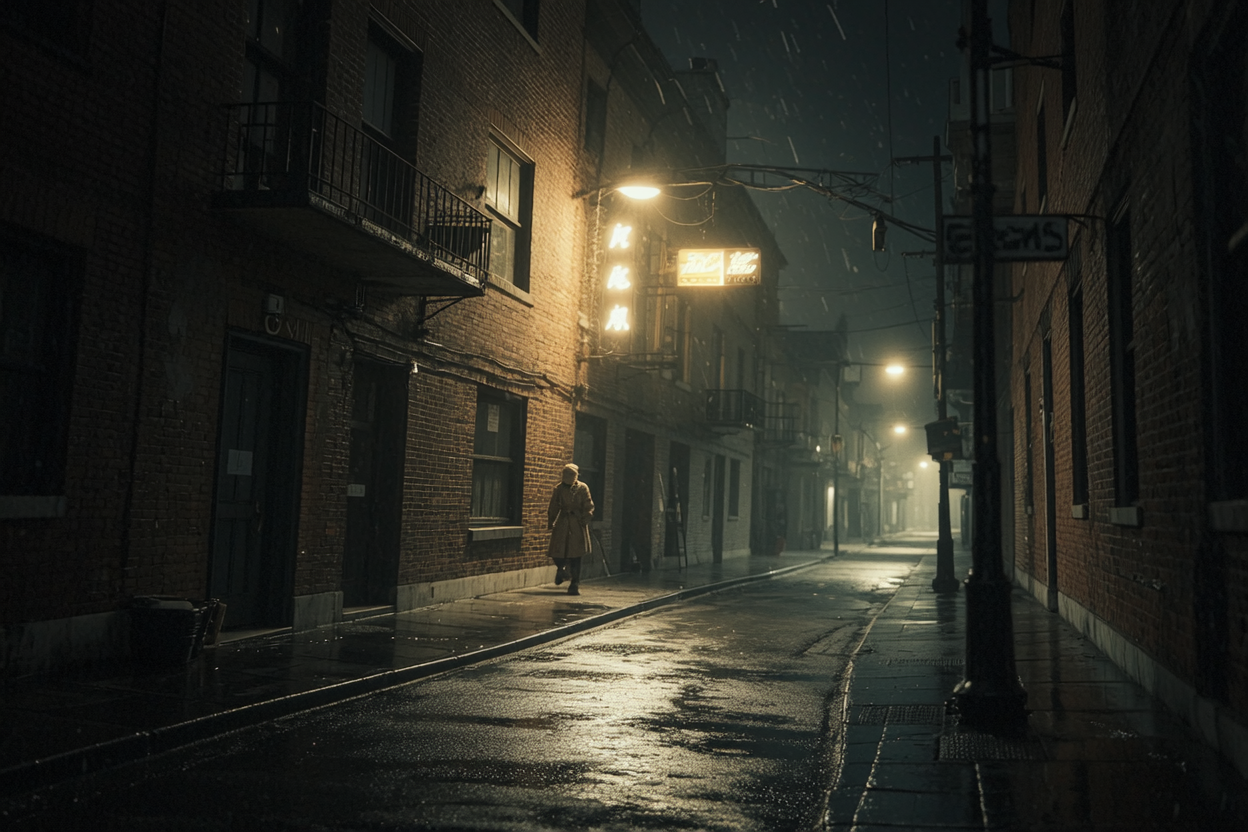
Your only true ally in this place is the resilience of your mind. If one’s thoughts twist and turn, they will be twisted in return. For the body is but a shell, its sole purpose to house the immortal soul. When its task is complete, the soul departs, moving toward a final reckoning. Only in completion does it find peace, shielded from the reach of mortals. For each soul has a mission, a destiny known only to itself.

As we tread further, the Land of the Dead reveals itself in all its haunting splendor. The inhabitants of this forsaken world drift like wraiths, their faces twisted in expressions of bewilderment and dread. Each soul lingers, uncertain of where their journey will take them next. Have they fulfilled their purpose? Or are they doomed to walk the path leading to eternal suffering?

There is yet another fate—one feared above all others. Some try to defy the inevitable, to twist fate itself, but they cannot escape the weight of their own existence. The judgment of the soul is final. If Lucifer is outwitted, freedom is granted. But if one falters, if darkness prevails, then the fate is clear—the soul is cast into the fiery abyss of Chaotic Evil, which is essentially Hell’s VIP section, but with worse music and a strict no-refunds policy.

Hell.

And so, the cycle continues.

The world you once knew fades into obscurity, replaced by something else entirely—a new realm, where the inhabitants bear a different curse. This world is inhabited by those who have chosen their fate. They followed the Path of Suicide, forsaking life, fleeing pain in the only way they knew. But their suffering did not end—it merely changed form.

The story does not end here. It never truly ends.

For the war between belief and disbelief, trust and betrayal, light and chaos is eternal. But there is a prophecy whispered among the remnants of faith, etched in the forgotten tongues of those who saw beyond the veil of chaos. It speaks of a final reckoning, a moment when the balance will be tipped for the last time.

Legends tell of a wanderer, neither fully bound to the realm of trust nor entirely lost to the abyss of doubt. This wanderer, marked by both worlds, holds the key to the war’s conclusion. Some say they will be the one to weave belief and disbelief into something new, something beyond the cycle of destruction. Others fear they will be the catalyst that plunges existence into an inescapable darkness.

And as the battle rages on, the forces of both sides seek this figure, eager to shape the prophecy to their will—before the prophecy shapes them.

And you are now a part of it.


Ah, the best-laid plans of mice, men, and procrastinating creatives. There I was, determined to take a “break” from my earth-shattering projects—you know, the ones that will undoubtedly revolutionize the art world and literature as we know it. I dramatically set aside my drawing pencils (because apparently, I’m too good for a simple #2) and closed my idea notebook with a satisfying thud. Today was going to be different. Today, I would be a normal human being and mindlessly scroll through WordPress like everyone else.

But the universe, in its infinite wisdom, had other plans. Not even a full morning had passed before I glanced down to find my notebook splayed open like an attention-seeking drama queen. Lo and behold, it was littered with hastily scribbled notes that had apparently manifested themselves through sheer force of creative genius. Or, you know, my subconscious refusing to take a day off. Thanks, brain.

“Well,” I sighed dramatically to my empty room (because talking to yourself is the first sign of genius or insanity—I’m banking on the former), “let’s make something up.” And that’s when it happened. Guppy, my feline overlord, executed a move so graceful it would make Simone Biles weep with envy. In one fluid motion, she raised her paw skyward, a look of utter bewilderment gracing her furry visage as her eyes darted to her treat bowl. It was as if she was auditioning for the floor exercise in some bizarre alternate universe where cats compete in gymnastics.

Naturally, this led me to ponder: Do domestic pets have their own Olympics? Picture it: Labradoodles doing synchronized swimming, hamsters on the balance beam, and goldfish competing in the 100-meter butterfly (pun absolutely intended). The opening ceremony alone would be worth the price of admission—assuming you could get all the animals to march in an orderly fashion without starting an inter-species war.

As I contemplated this groundbreaking concept, Guppy maintained her pose, no doubt wondering why her human was lost in thought instead of filling her bowl with the gourmet delicacies she so richly deserves. And there I was, once again, with pen in hand, jotting down ideas for yet another project that would surely change the world—or at least provide a solid 15 minutes of entertainment on social media.

So much for taking a break; at this rate, I’ll need a vacation from my vacation. Oh, wait, I’m retired. Maybe next time I’ll try locking my notebook in a safe and throwing away the key. Though knowing my luck, I’d probably end up writing the next great American novel on Post-it notes stuck to my forehead.

Whew! Where did that rant come from?

Thanks to the following challenges:

Ragtag Daily Prompt

Fandango’s FOWC

Linda Hill’s Stream of Consciousness Saturday

Random Fiction – 02212025

FICTION

When you’re young, you wander through life with a carefree attitude, convinced that nothing tragic will ever befall you. It’s not that you think you’re made of steel; it’s just that misfortune always seems to strike elsewhere, affecting other people. You know these people—your classmates who sit a few rows ahead in math, friends who share secrets during recess, rivals who challenge you in sports, and those vaguely familiar faces passing in the school hallway whose names always escape you. “Who is that?” You recognize them; they might live across the street or next door, but their names never stick. You catch wind of their troubles in hushed conversations over cafeteria trays or notice the signs—a bruise blooming under an eye or a sudden empty desk where someone used to sit. But you? You’re shielded by an invisible armor. Untouchable. Until one day, that armor cracks, and the reality that you’re just as vulnerable as everyone else comes crashing down.

As a guy growing up, you were conditioned to believe the worst thing you could be called was a wimp or a pussy. Those words stung like a slap to the face. But the worst of all was “pansy.” It technically meant the same thing, yet it carried a unique venom, like an elite-tier insult that could ignite a brawl. They were fighting words, as the old-timers would say. I often imagined a secret list of such words that, when uttered, left you with no choice but to unleash the rage pent up inside the beast within us all, a primal code of manhood handed down through the ages by our Neanderthal ancestors. The rationale behind it was nonexistent—nonsensical, absurd, or downright foolish didn’t even begin to cover it. I even went so far as to ask friends and acquaintances, hoping to uncover this mythical list’s existence, but they just gave me strange looks as if I was the odd one out. “Weirdo.” There’s another term I’m certain once ranked high on that clandestine list.

If there was one thing certain to amplify male foolishness, it was the presence of a girl. You might assume it would be the confident ones with a smooth stride and an easy grin. But you’d be mistaken. It was simply the presence of any female. Something about her steady, evaluating gaze seemed to flick a switch in our lizard brains. Suddenly, we were all posturing like peacocks, vying for attention as if auditioning for the role of “Alpha Male #2” in a poorly scripted high school drama.

“Cut…cut, cut, cut…” the director’s voice echoed through the set, slicing through our bravado. He rose from his worn director’s chair with an exasperated sigh, his footsteps heavy as he approached. He muttered incoherently, his brows furrowing in frustration. Turning abruptly, he addressed a bewildered production assistant who appeared as if they had stumbled onto the wrong set altogether. “It’s missing… I don’t know,” he said, rubbing his temple as if the motion might conjure clarity from the chaos in his mind. The PA shrugged, their confusion mirroring his own.

“More, you know? More,” he declared, fixing his gaze on you with an intensity that suggested the simple word held the universe’s mysteries. It might, who knows? Because at that moment, you felt the weight of impending humiliation hanging over you like a storm cloud, threatening to unleash if you failed to decipher this cryptic instruction. So you reset, ready to reenact the scene with exaggerated bravado and clumsy confidence. A muscular guy, his shirt straining against bulging biceps, lunged forward to take a swing at a smaller guy. The smaller one stood his ground, fists clenched and eyes steely—not because he had faith in his victory, but because maintaining dignity in defeat was preferable to being labeled a pansy. Who needs self-preservation when fragile masculinity whispers its deceitful promises of status and respect in your ear?

The worst beating I ever took wasn’t even for something I did. And that, frankly, was offensive. I was the kind of kid who had done plenty to earn a few ass-kickings, but this one? This was charity work.

Susan Randle—radiant in a way that made heads turn in every hallway—sat beside me in the darkened movie theater. During what she half-jokingly called our “date” (really just two people sharing a row while an action film played), she eyed me with a mischievous smirk and accused me of being gay simply because I hesitated when she leaned over, voice low and daring, to ask if I wanted to “do it.” The dim light flickering over her face caught the earnest sparkle in her eyes before she suddenly closed the distance and pressed her lips against mine. In that charged moment, the unwritten, yet unanimously understood rule against “unsanctioned sugar”—the secret code dictating who could kiss whom—reared its head. No one ever seemed to grant an exception, whether you were a girl or a guy. And here I was, trapped between the dreaded labels: on one end lay the desperate horndog willing to prove his manhood at every twist, and on the other, the discredited possibility of being gay. I wasn’t interested in becoming just another name on her ever-growing list or dealing with the fallout of shattering her carefully constructed illusion of desirability. When a boy disrupted that illusion, the consequences were swift and ruthless.

That catalog wasn’t a myth—it was as real as the whispered rankings that circulated among us. It wasn’t enough to simply admire the “right” girl; if you dared to look away or, heaven forbid, question the unspoken challenges, your name was scrawled in the ledger of sins. Failed to laugh at the jokes delivered with just the right touch of irony, dress in conforming denim and sneakers, or walk with that practiced swagger? Sure enough, it was marked on the list.

My reluctance to follow these unwritten rules quickly made me a target. Over the following weeks, a series of meticulously scheduled beatings forced me to confront the cruel reality of teenage hierarchies. After school, I would find myself cornered in the deserted back lot behind the gym, where a group of boys awaited with grim determination. They’d shout derogatory names—“fairy boy” and a particular favorite, “pirate,” a crude truncation of “butt pirate”—words spat out with the casual cruelty of a rehearsed routine. Each blow landed with precision, and amid the sting and shock, I discovered a perverse sort of order; they made sure I wasn’t crippled for good. I clutched my prized 96 mph fastball as if it were a lifeline and leaned into my natural left-handed stance, determined to keep my place on the team even if I was labeled a “fairy boy” behind closed doors.

By the time the school year drew to a close, the beatings ceased as if a final judgment had been passed in some bizarre, secret rite of passage. One by one, the bullies patted me on the back with a mixture of grudging admiration and hollow platitudes, congratulating me on having “taken it like a man.” It was as if surviving their collective assault were the final exam in a twisted curriculum of manhood. They’d shrug and say, “It wasn’t personal. It was just something that needed doing.” To them, such senseless violence was nothing short of an honorable tradition—a sacred duty executed without a shred of genuine empathy.

That summer, I found brief refuge away from the tyranny of high school corridors with my father in Northern California. He was a truck driver, his bronzed, weathered hands as familiar with the hum of diesel engines as he was with the hard lines of a life lived outdoors, where emotions were as heavy as the cargo he hauled. My parents’ origins were a collage of chance encounters: they’d originally met at a sultry George Benson concert in the Midwest, where the guitar licks sultry under a neon haze had paved the way for something unexpected. Within nine months of that chance meeting, I came into the picture—a living reminder of their brief yet potent infatuation. They had the wisdom to avoid the charade of forced domesticity; soon after, my mom returned east while my dad continued chasing horizons out west. Mysterious fragments of half-truths and secrets that always belong to a larger narrative are as American as elitism and Chevrolets and need no full explanation.


I used the prompts listed below in this bit of flash fiction

RDP – beast

Fandango – FWOC – Date

Random Fiction – 02012025

FICTION – FREEWRITE


The things I know about love could be scribbled on a matchbook’s blank side with room left for a bad limerick. Truth is, the original matchstick instructions—strike here, light fuse, watch things burn—hold more practical wisdom. Over years of singed fingers and smoldered hopes, I’ve gathered scraps of survival tactics. Never trust words spoken in dim light or daylight; most folks peddle lies they’ve yet to realize themselves. Study their hands—the way they flutter like trapped moths when spinning tales. Watch for the split-second flicker in their eyes when truth barges in uninvited. But don’t stare too long, or you’ll become the mirror they’re desperate to avoid.

This isn’t some grand philosophy unearthed in a desert monastery. Just rusty tools to patch the hull when the ship’s taking water. Save the “real men don’t cry” bravado for locker rooms—we all drown the ache somehow. A twelve-pack of Bud, a heart-to-heart with Jack Daniel’s, or sobbing into a motel pillow while Springsteen croons about highways on the tinny alarm clock radio. At least tears don’t leave you waking to that look: a woman recoiling under crumpled sheets, eyes wide as a spooked deer’s. She’ll mutter something about quitting gin as she retreats to the bathroom, and you’ll mumble back about swearing off scotch, both knowing neither promise will outlast the coffee brewing in the stained pot.

The real art lies in the exit. You hand her a chipped mug, steam curling like a question mark between you. She sips, eyebrows lifting—not at the bitterness, but at the shock of you still being there. You brace for the verdict: Is the coffee better than the sex? A half-smile. A nod toward the door. No words, just the unspoken script we all memorize by 30. Dignity intact, you slip into the dawn, both already drafting tomorrow’s excuses.

Gypsy—my ‘65 Ford pickup—taught me more about commitment than any human. She’s been my co-conspirator since high school, back when her engine purred and her bench seat fit two (or three, if we got creative). These days, her love language is breaking down at cinematic moments: snowy backroads, midnight escapes from jealous husbands, and that one time outside Tulsa when her transmission gave up just as Margo’s daddy’s headlights crested the hill. The split lip was worth it. Can’t pay child support if you’re always in the rearview, right?

But the road—Christ, the road. It’s a confession booth on wheels. Twenty miles in, the hum of asphalt strips away the bullshit. Past regrets roll by like telephone poles: Lisa’s laugh in ‘08, the stillborn promise to quit smoking, your father’s hands on the steering wheel that last July. By mile 200, you’re raw enough to pull over and let the tears come—not the pretty kind, but the ugly, snot-dripping ones that scald your cheeks. You cry for the man you thought you’d be, for the love letters burned, for the quiet horror of becoming exactly what you mocked at 22. Then you wipe your face on a gas station napkin, buy a lukewarm Dr Pepper and a honeybun, and drive until the road starts making sense again. Or until it doesn’t. Either way, you keep moving.

Random Fiction – 01182025

FICTION-THIRD PERSON

He sat staring at a blank page, its pristine surface mocking his creative paralysis. The page looked back at him with the same vacant stare, a mirror to his emptiness, reflecting frustration and the void between inspiration and expression. Perhaps it was their shared moment of creative purgatory, each waiting for the other to break first.

He was wrestling with the ethereal image of silhouettes dancing at sunrise, their forms both defined and formless against the awakening sky. The vision burned clear in his mind, yet words slipped through his grasp like morning mist. He just sat there, attempting to mold his scattered thoughts into the precise architecture of verse, trying to conform his words to the image that haunted him, into some sort of perfect form or acceptable stanza that could capture the ephemeral dance he witnessed.

The words began to flow slowly like dawn creeping over the horizon. He formed the stanzas on a whim, yet they fell into the perfect meter as if guided by some hidden hand. It became clear his conformity knew no bounds, yet within those bounds, wild freedom emerged. Line after line, he wrote, as a gentle breeze from a cracked window caressed his face, carrying with it the whispers of dawn.

The morning unveiled itself in layers of sound and sensation. He began hearing the birds chirp their morning song of grace, nature’s poetry accompanying his creation, as the filled pages fluttered to the floor like autumn leaves. The final sputter of the coffee pot signaled a new pot made, a percussion of domestic ritual marking time’s passage. Inhaling deeply, he filled his lungs with the fresh aroma, drawing inspiration with each breath as he walked into the other room to retrieve more paper. He poured a cup, the dark liquid steaming with promise, and returned to his office.

He sat back down, possessed now by the urgency of creation, and finished the screaming tale of his soul. The words poured forth like a confession, raw and honest, each line a revelation. He leaned back in his office chair, serenaded by the creaking leather’s ancient song, a counterpoint to his racing thoughts. He took a sip of coffee, letting its warmth spread through him like liquid courage, and began reading the pages he had just created.

The first page danced with intention’s perfection, each word precisely placed, each phrase carefully crafted. But the remaining pages bellowed from his soul with increasing abandon, breaking free from the constraints of form and structure. It was clear that while he had truly captured the essence of those silhouettes’ dance, conformity only went so far before the truth demanded its own wild choreography. His words had become their own dawn dancers, moving to rhythms beyond his control, and he realized that sometimes the most perfect expression comes not from constraint but from letting go.

Reena’s Xploration Challenge #359

CHALLENGE RESPONSE – FICTION (EXCERPT)

Here is my response to Reena’s Xploration Challenge #359


I walked in and pulled over the metal chair by a sliding door. I slid the door back and walked to the window. I sat down and leaned back in the chair, staring into the night sky. Closing my eyes and slowing my breathing, I prepared myself to see the possible scenarios I would face. I picked up something from a Tibetan. I cleared my mind of all the distractions. It wasn’t easy; it never was. The amount of baggage we carry around day to day is staggering. We cling to things we deem essential but are quite trivial in the larger scheme of things. The idea was to picture myself in a peaceful place. This place is different for everyone. Once you achieve the mediative state, the mind and spirit are in harmony, and the visions will come. Images flashed in my mind, displaying the different challenges that I might face. For each challenge, I came up with a possible solution. It wasn’t like I could see the future or anything, but I had been in this game long enough to know most of the problems I would face.


Author’s Note:

I’ve been working on a large writing project for the last month, and I wrote a portion of a larger scene in which the protagonist meditates. When taking a break earlier this week, I saw the above image, which stood out for some reason. I couldn’t place it at the time. I put the image on a separate scene, sat back, and let it talk to me. Then, it occurred to me why the picture was critical. I opened Scrivener, and sure enough, there was a note for me to work on that scene. So, I began to play with the scene using the picture. I decided to post this excerpt as I continued playing with the scene. Most likely, it will end up much different than what you see, but this sketch provides a good placeholder.

Pangs of Madness

CHALLENGE RESPONSE – FICTION

I love the fall; the colors are just as magical as spring. There is beauty in every season if you open your mind to see it. The color resided in the fact that it had the ability to make forget about the madness in the world—the madness that had the potential to destroy every fiber of decency that remained. So, we needed moments like these, moments where the fiery red of the leaves blended with the purplish hues of the space between that made the white of the snow-covered ground have a bluish tint. Moments of otherness.

I stood with an unlit straight hanging from my lips. The temperature dropped enough that you could see your breath. Winter was around the corner. Soon, Winter’s talons would be crawling at your skin. There have been more and more days like these lately. Another horrid crime scene was behind me. An example of the madness this beautiful scene would help me escape, even if it’s just for a little while. I could hear the crunch of footsteps against the snow and turned to see Lt. Rawlins.

Lieutenant Benjamin Rawlins stepped up next to me and stood silently. He wore an expressionless face—the look I was used to seeing. At the last crime scene, he was a pot of emotions on the verge of boiling over. He chewed on the end of his signature cigar. He always smoked the cheap ones. His wife said the good ones were too expensive to be chewed on. An expression that told me he was feeling exactly what I was feeling. We have both been doing this long enough where words weren’t necessary.

“There’s nothing like the fall colors right before winter,” Rawlins remarked as he spit out the chewed-up portion of his cigar. It looked like he would be needing a fresh one before long. I nodded in agreement.

“You gonna get this __” Rawlins broke off due to his promise to his wife when the first grandchild arrived. I stared at him, and he met my gaze. I nodded.

“Before Christmas? I don’t want the city to be in unrest during the season.” Rawlins remarked. Lists of children naughty and nice, letters to Santa, and horrible, well-intended Christmas gifts always gave me a warm fuzzy. Yet, you couldn’t ignore the magical elements of the holiday. So many people were absolutely impossible for most of the year, but they became something else during this season. Only a few weeks later, they seemed to forget the promise of hope and return to the drudgery. It’s disheartening and sad.

I shrugged and lit my cigarette. I took a deep drag, exhaled, and said, “Patience, Boss.” Rawlins stopped chewing, and I felt his gaze. His face reddened with rage, not at me, but at the idea, someone was in his city doing these hideous acts. He swallowed it, but not before he chucked away the remainder of his cigar in frustration.

“Detective Casey,” he began in that low growl graded against my soul. I reached out and gripped his shoulder, “Patience, Boss. We’ll get him, I promise.” Rawlins nodded and walked away. I watched him get into his sedan and leave. I knew better than to make promises in cases like these. It was possible we would catch a break and catch the killer, but it was more likely that we wouldn’t even come close to apprehending the killer. It was the pang of madness.


Authors Note:

I’ve been participating in this year’s NaNoWriMo, so I haven’t been active on WordPress as usual. Yesterday, I completed the word count requirements, but they’re far from complete, so I decided to take a break and read some challenges. It’s always fun participating. While reading today, I noticed a few that caught my eye.

I used the following prompt to draft the opening sequence of the chapter of my ongoing work.

Moonwashed Weekly Prompt – Otherness and the enchanting image provided the imagery in the opening paragraph. It helped me add a bit of beauty to the gritty, grimy story I’ve been working on this month. Thanks, Eugi!

Ragtag Daily Prompt – Chew, Patience, and Shallow provided depth in the character interactions. Thanks Guys!

Esther’s Writing Prompts – Adding a pleasant element to my grisly tale. Thank you!

The Coffee List

Daily writing prompt
If you could meet a historical figure, who would it be and why?

DAILY PROMPT RESPONSE

When I was younger, I made two lists. One was famous people I would have a conversation with over a cup of coffee. The other list of historical people that I thought needed to be throat punched. Now, my wife wasn’t a fan of either list. In fact, every time she caught me making an entry, she gave me something to do. Sighs, the misplaced passion of youth. Where would we be without it?

As a track & field athlete, this photo meant a great deal to me.

The establishment of my era still turned their noses up each time they saw this photo. This photo and others were considered taboo, or if I use the phrase I heard the most, they were “troublemakers.” Martin Luther King, Jesus, or “The Last Supper” in most of my friends’ homes. However, I spent most of my time reading about people who stood against injustice. This was the beginning of the coffee list.

Recently, I had the pleasure of rehashing the glory days with some old friends. The above came up. We all were athletes, and it was important to us. However, I didn’t care much for it, but I understood its significance in the movement. We discussed the civil rights movement at length that day, even though none of us were alive to participate during critical periods. We talked about what we were doing to fulfill MLK’s dream. We questioned whether how our sacrifices would benefit our children and grandchildren. As you can imagine, this was a very long conversation and was getting heavier by the second. So, I decided to lighten the mood.

I held up my phone with the above photo and asked, “Who’s the white guy?” None of us knew, but of course, we had the guy that sputters

“Oh man, I can’t remember his name…Damn!”

We have two of these individuals in our group, and they take turns uttering that phrase. Once, I wanted to see which one said it the most. After several months of observing, it was a tie, and I figured the game was rigged just to skew my data. Yes, I’m the guy who always gathers data.

Well, the gentleman’s name was Peter Norman. Here are a few facts about him.


Peter George Norman was an Australian track athlete born in Melbourne, Australia, on June 15, 1942. He grew up in a devout Salvation Army family and worked as an apprentice butcher before becoming a physical education teacher.

Norman’s athletic career began when he joined the Melbourne Harriers, and he won his first major title, the Victoria junior 200m championship, in 1960. He excelled in sprinting, becoming a five-time national 200-meter champion and representing Australia at the 1966 Commonwealth Games in Jamaica, where he won bronze medals in the 220-yard and 4×110-yard relay.

The defining moment of Norman’s career came at the 1968 Summer Olympics in Mexico City. In the 200-metre final, he stunned everyone by claiming the silver medal with a personal best time of 20.06 seconds, setting an Oceanic record that still stands today. However, the events that followed on the medal podium would forever change Norman’s life and cement his place in history.

As Norman stood on the podium alongside gold medalist Tommie Smith and bronze medalist John Carlos, the two American athletes raised their black-gloved fists in a Black Power salute while playing the U.S. national anthem. This powerful gesture was intended to highlight systemic segregation and racism in the United States. Though not raising his fist, Norman chose to stand in solidarity with Smith and Carlos by wearing an Olympic Project for Human Rights badge on his jacket.

Norman’s decision to support the protest was not without consequences. Upon returning to Australia, he faced unofficial sanctions and was ridiculed as the “forgotten man” of the Black Power salute. Despite qualifying for the 1972 Munich Olympics, Norman was not selected to represent Australia and never competed in the Olympics again.

Throughout his life, Norman remained committed to his beliefs in human rights and never regretted his actions on the podium. He continued to be involved in athletics administration and Olympic fundraising and even worked on organizing the 2000 Sydney Olympics.

Norman passed away on October 3, 2006, at the age of 64, due to a heart attack. In a poignant tribute, Smith and Carlos served as pallbearers at his funeral.

In the years following his death, Norman’s role in the historic protest has gained increased recognition. In 2012, the Australian Parliament formally apologized for the treatment he received after the 1968 Olympics. In 2019, a statue of Norman was unveiled in Albert Park, Melbourne, honoring his athletic achievements and his stand for human rights.

Peter Norman’s legacy extends far beyond his athletic accomplishments. His courageous decision to stand in solidarity with Smith and Carlos during a pivotal moment in the civil rights movement demonstrates the power of allyship and the importance of standing up for one’s beliefs, even in the face of adversity. Norman’s story serves as a reminder that sometimes, the most significant acts of bravery occur not in the spotlight but in quiet moments of support and solidarity.


After reading articles about Mr. Norman, I wondered how I missed him. Better yet, why was his namen’t mentioned like everyone else’s? At any rate, Peter Norman makes The Coffee List.

The Neighorhood

CHALLENGE RESPONSE – FICTION – FFFC #288

Authors Note:

When I looked at this image, I had no idea what I would do with it. Literally, nothing came to me. So, I read what others had done with it, and still, no joy. I noticed that Melissa had provided a description of the image—something I think she always does. I’ve seen it before, but it made no impact until this challenge.

I took the description and rendered several images from it. Then, I started playing around with the description. All of a sudden, I had a voice. I looked around to see where it was coming from. I thought maybe my iPad was reading a book, or another of my gadgets had decided to push me over the edge. Nothing. Everything was functioning properly, but isn’t that how it works in the movies? Everything is working correctly when you go to check it.

Anyway, I returned to working on the images when I had the voice again, much louder this time. The voice was telling a story about his friend after his mother’s funeral. Then, I realized I wasn’t losing my mind, but a character was speaking to me. I’ve no clue where he’s going with his story or why he decided to tell me. It doesn’t even have a name. It has been a long time since I had a new character shown up. If I’d known, I would have tidied up a bit.


The Neighborhood

It was a lovely service; Mrs. Byrne would have been proud. No one liked to attend funerals, but they appreciated them being done correctly. Over the years, I remember her mentioning bits of this and that she saw at the different services. She mentioned some more than once, so I added everyone we could remember in her service. Her daughter Ivy had been my best friend since I showed up in the neighborhood at five years old.

My older brother Sean and I moved into the neighborhood after cancer had taken our Mom. Cancer is cruel, and it took its time taking our Mom. Pop lost his job at the plant because he refused to leave our mother’s side at the end. It took five months to cross the Rainbow Bridge and years to prepare for the journey. Her death broke Pop, but somehow, he pulled it together once we moved to the neighborhood. At least for a little while.

The neighborhood was three miles long and ten blocks deep, filled with Irish Catholics, and our Black faces weren’t exactly welcome. Mr. Flannery was Pop’s best friend, and he convinced a friend of his to rent to us. Pop got a job doing demolition. Pop said he had a lot of anger to work off, so the job was perfect. Sean was a teenager when we moved there and had rougher than I did. He’d come home with bruises most days until one day, he didn’t.

I played in the yard by myself most of the time until a red-haired girl with pigtails stood there looking at me one day. She didn’t say a word.

“There are swings a couple of blocks from here,” she said. I stared at her, knowing I couldn’t leave the yard. Yet, something this girl made me want to risk a trashing.

She continued to stare momentarily, then started walking away. I went to the fence and watched her. She turned and looked back, then stopped.

“You coming?” ” You aren’t a pansy, are you?” she asked. In seconds, I was walking next to her. We talked all the way to the park about the usual stuff. She told me Spider-Man was the best superhero ever, and Wonder Woman was a close second. I knew she was crazy because it was Batman, then the Green Arrow.

We played all day, swinging and climbing trees. She fell out of the tree and skinned her elbow. I leaned and kissed it. It was something my mother did when I got a boo-boo. Ivy punched me in the arm.

“You ought to know a girl’s name before you go kissing on her.” she said, smiling. She had one of her front teeth missing, but that stopped that smile one bit.

“I’m Ivy, Ivy Bryne,” she said, sticking out her hand.

“Frank Anders,” I said, shaking her hand. I gave her a soft handshake because she was a girl and punched me again.

“My dad, you give a person a firm handshake. Try it again,” she said, sitting her hand back out. I gave her a proper handshake and went back to swinging. I saw Sean coming over the crest of the hill, and he didn’t look pleased. Ivy and I met him before he got to the swings.

“See you tomorrow, Frankie,” she said and ran off.


FFFC #293

I was standing in the garage smoking a cigarette pacing back and forth when I heard Ivy come in. She always walks hard in her heels. I don’t think she’s taking a graceful step in heels since I’ve know her. Most of the time, she could be found sporting a pair of sandals or sneakers when the weather bad.

“Did you know, Mom was into photography?” Ivy asked, before I could respond she launched into the next question typically Ivy. It always seemed like she wasn’t interested in your response, just your attention. You were to listen until there was break which usually meant your response was required, but sometimes you missed the opening that prompted, “Hello, earth to Frankie! Aren’t you listening to me?” I’ve gotten better over the years catching my cues and today was no different.

Ivy was going around this new discovery about her mother when a few photos fell out of the binder she holding. One was a picture of a crane with it’s beak pointing skyward and the other was a picture of a eagle with a mountain landscape in the background. Wonderful shots I thought. Mrs. B had really found her thing. She had confided, years ago, that felt she had lost a portion of herself being a mother. She had no regrets raising her children, but she should have carved out more time for herself.

The binder slammed Ivy was biting her bottom lip trying to hold back the tears. I didn’t understand why. If these was a time to cry, this was it. However, Ivy never wanted to be considered a punk and she wasn’t by far the toughest person I knew. Tears streamed from her reddened swollen eyes. There emerald hue seemed to sparkle in the light. Yet, she held back the wail. I always loved those eyes. She rushed towards me burying her head in my chest.

The muffled banshee cry grew louder by the second. The harder she wailed, the tighter she squeezed.

“It’s alright, baby. Let it go,” I whispered

One Word Sunday – The Rain

CHALLENGE RESPONSE – FICTION – FIRST PERSON NARRATIVE

Here’s my response to Debbie’s One Word Sunday – Rain

The monsoon season had come, and I wasn’t ready. I was assigned to a forward position and tasked with repairing the abandoned radio station. Once I got there, all the equipment was in a foreign language. For hours, I tried to figure out how to make the equipment. Finally, I could contact my unit. I attached my handheld to the terminal and informed them of my status. They told me a soldier was arriving to assist me. I wasn’t thrilled, but I needed help. I barely put the mic down when the door flew open, and my help had arrived.

She was as soaked as I was. It would have been a miracle if there was a dry spot on her. Rain gear was no match for the monsoon. She introduced herself and put on some fancy music. We worked side by side until the darkness began to swallow the light. The radio station was up, and everything was fine. She removed her wet clothing, placing it by the vent. She motioned for me to do the same. I sat there, not sure what to do. I could see the steam rising from her clothes. She looked at me and started to undress. I have to admit there’s nothing worse than wearing wet clothes. Well, maybe wearing wet clothes in the middle of the winter, but I didn’t find that out until years later.

We stuffed newspaper in our boots and sat them by the heater. The newspaper draws moisture from the boots. We sat there, strangers, eating our rations in our underwear. After we finished eating, she walked out in the rain. This woman was insane. She stood there, her head tilted back, letting the rain wash over her. It was as if she was letting the rain wash away her demons. Watching her, I began to understand why women were so beautiful. She was the perfect blend of beauty and nature. Before then, women were beautiful; that’s just how it was. But it meant more; I can’t really explain it. They just did.

I found myself standing in the rain next to her. She turned and looked at me momentarily and then said,

Some days, I crave the rain.

Things aren’t like they used to be …

Daily writing prompt
What brands do you associate with?

DAILY PROMPT RESPONSE

A year ago, I could name brands I use regularly without hesitation. I’ve been using them for most of my life. However, I’ve noticed recently that the brands we used to think were solid have fallen to the wayside. Increasingly, I’ve become more disappointed with the products offered by the brands I’m used to using. My brothers and I, on several occasions, went with a less expensive option instead of using the brands we’ve used most of our lives. I can point to two reasons for this shift.

First, quality and price point: It makes no sense to pay top dollar for an inferior product. In several cases, our work has a no-skimping motto.

“You can’t put a price on quality!” This is very true in some cases, but it’s becoming hollow words found in old books.

This statement rings in my head whenever I look for a replacement or an addition for the shop or the lab. As a writer, I find it necessary to replace equipment as much as some other industries. In my opinion, as long as you can open a word processor program, the keyboard works, and you have a decent laser printer, you’re golden. As a visual artist, things become complicated rather quickly.

Processing video, editing photos, or creating composition art can be done on older machines, but the necessity of a “Dammit Doll” becomes apparent. A “Dammit Doll” is a stuffed doll that comes in various forms whose purpose is to bang it against something (your choice) while screaming dammit. My Irish twin bought me one a few years back, and I might need to give her a call to get a new one. Every year, she gives me a new device to relieve my stress; perhaps she’s trying to tell me something.

The point of this is I needed to replace my external drives. I had to consider different manufacturers because the brands I have been using for decades are crap. So, I found less expensive options. They’re designed for something else but will do nicely for video, photo, and writing draft storage. With the money I saved, I was able to purchase two. I had enough left for a guilty pleasure. It’s always nice to buy a guilty pleasure from time to time.

Products aren’t made like they used to be, too, though brand loyalty has beaten into our heads. Be open-minded and select the best product to fit your needs. Here are a few things I use. Perhaps they will help.

  • Determine your need—This is the most crucial step of the process. You can’t establish a budget or begin researching products without knowing exactly what you need. It makes no sense to buy something that doesn’t fulfill your needs just because its price fits your budget. “I can get by with this,” or “This is just as good.” Yeah, I hear you. Been there several times. Here’s what I have to say about it … Cut that shit out!
  • Establish a budget—I have a budget in mind before I purchase anything. However, I can’t do this without determining my needs. By determining my needs, I know how much money I need to raise. I try to never go over my budget. However, sometimes, when you start researching a product, you find it is more expensive than you initially thought. It may change based on your needs. Be flexible.
  • Do your research – With information readily available, there is no longer an excuse for not being an informed consumer. Read the product reviews from other consumers, and be careful; there is much misinformation out there. Also, there are videos on YouTube about products that can be useful. Many manufacturers provide user manuals on their websites. You read about the product before purchasing anything.

Until next time …Peace

Art

Daily writing prompt
Describe one simple thing you do that brings joy to your life.

DAILY PROMPT RESPONSE

I came up with potential responses to this prompt. Either would have been fine. However, I spent most of the night and a good part of the wee hours working. As a multi-genre artist, work could mean anything. Well, last night, I worked on character descriptions for my fiction. It’s nothing to conjure up a person and make them do stuff. However, sometimes I don’t have a clear picture of their appearance. If I don’t have a clear idea of how I can expect the reader to have one, so I worked on my descriptions.

I fed these descriptions into AI to see what it would render. First, I had to find an image generator that provided realistic renderings. I wasn’t looking for photo quality or anything, just potential mock-ups of the characters. After hours of tweaking, I don’t care how good your chair is; your body will tell you enough is enough. So, I called it quits and went to bed.

I realized something this morning while I had coffee. I truly enjoyed myself last night, but my realization didn’t stop there. It occurred to me that creating art is my jam. It’s the one simple thing that brings me joy.


Here are a few examples of the concepts I worked on last night

Leroy Grime

Female Private Investigator

Surrogate Daughter (take 1)

Surrogate Daughter (take 2)

None of these renderings are final, but they provide direction as I continue to develop the appearance of these characters.

Writer’s Workshop Prompt – 05312024

CHALLENGE RESPONSE – FICTION

Here is my response to Writer’s Workshop

The sun through the 4th floor glass felt good, It was partly on my shoulder and partly on my face. It was good to the feel the warmth. I’d been so cold lately. Nothing, I did made me warm enough. Even when AC went out and it was 90’s degrees in the house, I was okay everyone was else, but they kept their complaints out of earshot. I appreciated that.

I’m sitting thinking about the one who got away. The one who was supposed to make things better and all that. I never knew if they really happened or was it something said we believed in publicly, but thought was a crock of shit privately. “The One” worked at Aunt Peg’s candy shop in the local mall. I must have spent hundreds of dollars on soft peppermint sticks that summer.

The neighborhood paperboy loved me. He made a dollar for every trip to the candy shop. You see, I never could muster up enough courage to actually go up to the counter and ask for the candy.

“Do you even like peppermint?” Maynard, the paperboy asked

I didn’t answer. I did my best to give him an evil leer. Although, I don’t think it was working very well.

“Look, if this is all about the girl? She’s right there. Just talk to her.” Maynard took his dollar and left. That was the last day of summer and I never said a word to the girl.

I still eat soft peppermint sticks when I can find them. Those puff balls seem to have cornered the market. Some marketing genius started this whole mess.

Yep, Aunt Peg’s soft peppermint sticks were the best!

MLMM Photo Challenge – 05302024

FICTION – PHOTO CHALLENGE RESPONSE

Here is my response to MLMM Photo Challenge

Image credit Sarah Whiley

I surveyed my kingdom and the lush gardens before me from my perch on the railing. There’s a sign by the gate with a picture of me. It says something below it. They call me Stanley. I wonder which one came up with that name. The humans often walked these paths, marveling at the beauty of nature, but none could truly appreciate it as I did. I am the peacock, the jewel of this realm, and my feathers are the crown jewels.

I strut through the gardens daily, tail feathers trailing behind me like a royal train. The sun catches the iridescent blues and greens, making them shimmer like the waters of a hidden lagoon. Today, I decided to take a break and observe my domain from this higher vantage point.

The air was fresh with the scent of blooming flowers, and the trees whispered secrets to each other in the gentle breeze. I watched as a family strolled by, their eyes widening in awe as they noticed me. The little ones pointed and gasped, tugging at their parents’ sleeves to share their discovery. I preened, feeling a surge of pride. Even the youngest humans recognized my magnificence.

Beyond the garden’s edge, the world seemed a distant dream. Within the bounds of my green paradise, life moved peacefully. Birds flitted from tree to tree, and the occasional squirrel scurried past, always keeping a respectful distance. They knew, without a doubt, who reigned here.

The sun began to dip lower in the sky as the day wore on, casting a golden glow over the garden. I could hear the murmurs of the visitors growing softer as they made their way to the exits, reluctant to leave this haven of beauty. Soon, the garden would be mine again, a quiet sanctuary where I could rest and dream of new ways to dazzle my audience come morning.

For now, I stood still, a statue of elegance and grace, soaking in the admiration of those who lingered. I am the peacock, guardian of this garden, and in my feathers, the world sees the magic of nature.

Julian’s Truth

CHALLENGE RESPONSE – FICTION

Here is my response to RDP’s Daily Prompt – Lithe

In the heart of a bustling city park, where children’s laughter mingled with the melodious chirping of birds, sat a man named Julian. He was a solitary figure amidst the vibrant chaos, a contemplative soul who found peace in the art of people-watching. Julian was particularly drawn to the nuances of human interaction, the subtle play of expressions, and the eloquence of body language.

On this sun-drenched afternoon, his attention was captured by a woman practicing yoga on the lush, green grass. She embodied grace, her movements fluid and effortless, a visual symphony that mesmerized Julian. He noted how the word “lithe” seemed to be crafted for her, the very definition of her elegance and strength. She moved with an almost ethereal poise, her limbs stretching and coiling with a feline agility that left Julian in awe.

For days, Julian returned to the park, hoping to catch a glimpse of the lithe woman. She became a muse to him, a living embodiment of art and beauty he dared only admire from afar. Her presence stirred something within him, a longing to reach out and connect, to transcend the boundaries of his solitary existence.

Finally, mustering every ounce of courage, Julian decided it was time to step out of the shadows of his observation and into the light of interaction. He approached her on a day painted with the perfect azure of the sky. His heart thundered in his chest, a tumultuous symphony of nerves and excitement.

“Hello,” he said, his voice barely a whisper against the backdrop of the park’s life.

She turned toward him, her expression mildly surprised. Her eyes reflected the tranquility of the world she embraced. “Hello,” she replied, her voice as soft and melodious as he had imagined.

Julian stumbled through his introduction, words tangled with admiration and awe. He spoke of his observations, his fascination with how she moved, how she seemed to personify the word “lithe.” He expected bemusement, perhaps even annoyance. Instead, she smiled, a warm, genuine curvature of her lips that reached her eyes and ignited a spark of connection.

Her name was Elara, and she listened earnestly attentively, making Julian’s words flow more freely. They talked beneath the canopy of verdant leaves, their conversation meandering through the trivial to the profound, just as the park’s myriad pathways did.

In time, their meetings became a cherished ritual, two once-strangers finding solace and joy in shared moments. Julian, who had once been content to observe life from a distance, actively participated in its menagerie, woven with threads of companionship, understanding, and the unexpected beauty of a chance encounter.

And so, in a park where the world seemed to converge, Julian discovered the courage to connect, inspired by a woman who danced with the wind, her lithe form a reminder of life’s boundless grace.

RDP – Monday -02262024

CHALLENGE RESPONSE – PROSE/FICTION

Here is my response to RDP’s Trifling

Elara

A quaint village nestled between rolling hills and whispering woods lived a trifling spirit named Elara. Mischievous and light-hearted, she danced through the villagers’ lives like a playful breeze, her presence barely more substantial than a fleeting shadow. With a penchant for harmless pranks, Elara often left a trail of bewildered smiles and gentle laughter in her wake. She’d whisper riddles in the wind, tie shoelaces together unseen, and sometimes, in a whimsical mood, cause the flowers to bloom out of season, painting the world in unexpected splendor.

Yet, despite her whimsy, Elara held a deeper purpose. Her antics served as gentle reminders not to take life too seriously and to find joy in the small, unexpected moments. In her own trivial way, Elara wove a thread of light-heartedness into the fabric of the village, teaching that sometimes, the heart needs the relief of laughter and the soul the lightness of just being.

Lizard Boy: Timmy Sinclair

CHALLENGE RESPONSE – FICTION

Chapter 1

A boy named Timmy Sinclair lived in a bustling city named Licksville, known far and wide for his extraordinarily large tongue. Timmy was no ordinary boy, and his tongue was no ordinary tongue. It was the size of a baguette, supple like a gymnast’s and versatile like an artist’s palette.

From an early age, Timmy realized that his large tongue was not a curse but a blessing. He discovered he could use his tongue for tasks that others could not. He could taste the subtlest of flavors in food, making him the best judge in town for cooking competitions. He could also use his large tongue to help clean out jars and reach places his hands could not.

In school, Timmy was the star of the science fair. He used his tongue to demonstrate how taste buds worked, making science fun and exciting. His classmates admired him, and his teachers praised him for his creativity. Unfortunately, not everyone saw Timmy’s tongue that way.

Summer ended, and school began. Timmy was excited. He couldn’t wait for his next adventures. When he arrived at homeroom on the first day, there were two new students: one girl and one boy. Timmy took a seat and waited. He wanted to know everything about the girl. She had long raven hair, caramel-colored skin, and the most enchanting eyes he had ever seen.

Ms. Rowster came into the room, and they settled down for attendance. Timmy barely could contain himself as he anxiously waited to hear the name of this beautiful girl. When Ms. Rowster got to her name, she asked her to stand up and tell the class a little about herself. She did.

“Hello. My name is Simin Karimi, and I’m from Detriot,” Simin said, then sat down.
Timmy felt she had the most beautiful voice to accompany the rest of her beauty.

Ms. Rowster did the same with the new boy as well. He stood and cleared his throat, “I’m Brad Zigler from Ohio. I know everyone has heard of Zigler cheese, right? Brad asked. A few nodded in agreement while the others sat in quiet bewilderment.

They were all sixteen, but Brad stood over 6 feet and had a large nose, freckles, and a fiery beard. Due to his size and attitude, he had already started gaining friends. Timmy knew he would be one of the most popular kids in school before long.

At lunch, Timmy sat at his usual table, watching Simin’s every move, hoping she would sit at his table. Marcy Busch slapped Timmy on the shoulder.

“Who’s that?” Marcy asked.

“S S S imin,” Timmy shuttered. He was a little tongue-tied, as they say. He felt strange because he never shuttered a day in his life. Marcy looked puzzled at Timmy, then Simin. Marcy motioned for Simin to sit with them. Timmy shifted uncomfortably but managed a smile. Marcy introduced herself.

Marcy and Simin chatted away while eating, picking at their food, if you can call it eating. They were well on their way to being fast friends. Timmy sat quietly, nodding and smiling at the appropriate times. Timmy noticed Simin kept glancing and smiling at him. This made Timmy nervous. Here is the most beautiful girl, and he’s suddenly tongue-tied.

“Stop being rude!” Marcy said as she nudged on the shoulder. Timmy tried to say something, but his tongue got in the way. It felt like it filled his entire mouth. Timmy had never experienced this before. Marcy’s comment didn’t help matters.

“So, you see a pretty girl, huh?” Marcy asked.

“You’ve been talking my ear off since first grade. Geez, thanks,” she smiled. Her cobalt blue eyes sparkled when she smiled, and her smile always seemed to do the trick when Timmy got nervous. Marcy made him feel safe.

“Hey, Simin,” Timmy finally managed. Simin smiled.

“Oh my god! So you’re the freak people have been whispering about!” a voice exclaimed. They looked up, and it was Brad Zigler with a horrified expression.

“What are you? Some sort of lizard?” he exclaimed.

Timmy blushed, and his eyes filled with tears. Before he knew it, Marcy had sprung from the table, kneeing Brad, and delivered a well-practiced right cross—the signature move she picked up when she developed breasts at 12. Marcy explained that once all the women in her family had a nice set of girls, her mother, and grandmother taught her the move in case the boys got handsy. Nanna said boys “always get handsy.”

Marcy stood Brad silently, her brunette hair tied in a ponytail. Brad groaned in pain as he clutched his private area. Marcy stepped toward him, and Brad scooted away with his held up in surrender. Marcy turned to look at Timmy. Her pale alabaster skin was rose-colored. Her eyes were like fire. Yet, they softened when Timmy looked up at her. She stood 5 feet even.

“Bullies give me the sweet ass!” she exclaimed as she retook her seat. Marcy didn’t make eye contact with anyone, then whispered, “Sorry.” Simin squeezed her hand. “Marcy, you’re wicked fast. Next time, can you save me some?” Simin asked jokingly. They all chuckled as they left the lunchroom.


Author’s Note:

Today, I felt good enough to write a little fiction. I hope you don’t mind. So, I combined a couple of hosted challenges I felt worked for the story. The third challenge was one I had for myself, and it was two-fold. Primarily, I’ve been writing light non-fiction for the last few weeks. I needed to know if my fiction tools still worked in something light. I also challenged myself to see if my depictions of the characters in this could used with AI image generation. The answer to the latter is yes. Overall, I’m pleased with the image outcome. As for the former, it felt good writing, but I will leave it up to you guys. Should I continue this corky tale? I wrote more, in case you are wondering. Or hit delete and move on to another project?

Prompts used for this story:

SocS: Hosted by Linda Hill – Words starting with “signa”

Ragtag Daily Prompts: Sunday (safe); Thursday (Lizard)

The challenge words are hyperlinked to their origins. I hope you guys enjoy this corky little tale

The Burden of Leadership

Bloganuary writing prompt
What makes a good leader?

DAILY PROMPT RESPONSE

When we have a conversation about leadership, one can find opinions and ideals with a few keystrokes. There are seminars, books, and articles thoroughly covering the subject. During my time in the military I read several in an attempt to find everything I could about becoming a better leader. I’ve listed a few below.

Principles of Leadership

  1. Lead by Example: Leaders should act in ways they expect their team members to emulate. The actions of a leader set the standards for their team.
  2. Be Transparent: This involves being open about plans, decisions, and challenges. Transparency encourages trust and creates an open work environment.
  3. Communicate Effectively: Leaders should provide clear, concise, and consistent communication. They should also be ready to listen and consider the input of their team members.
  4. Empower Your Team: Give your team the authority to make decisions. This promotes trust and loyalty and helps your team members to grow professionally.
  5. Show Empathy: Leaders should understand and share the feelings of their team members. A leader who shows empathy can build strong relationships.
  6. Encourage Creativity and Innovation: Leaders should foster an environment encouraging team members to think outside the box and develop innovative solutions.
  7. Be Adaptable: Leaders should be flexible and ready to change their plans. Being adaptable allows a leader to respond effectively to changes and challenges.
  8. Foster a Positive Environment: Leaders should create a positive and inclusive work environment. This can boost morale and productivity.
  9. Encourage Continuous Learning: Leaders should promote a culture of continuous learning and development. This helps team members to improve their skills and knowledge.
  10. Build Trust: Trust is crucial for effective leadership. Leaders can build trust by being reliable, honest, and open.

Key leadership traits, each with a brief description:

  • Integrity: This trait involves being honest and having strong moral principles. Leaders with integrity are trustworthy and ethical.
  • Confidence: Leaders need to show confidence in their decisions and actions. This helps to instill confidence in their team members.
  • Decisiveness: Good leaders can make decisions quickly and effectively, especially under pressure.
  • Courage: Leaders often need to take risks and make difficult decisions. This requires courage.
  • Passion: Leaders should be passionate about their work and their team. This passion can inspire their team members.
  • Humility: Effective leaders understand that they are not superior to their team members. They should be humble and ready to listen to others’ ideas.
  • Empathy: Leaders should understand and share the feelings of their team members. This can help to build strong relationships.
  • Resilience: Leaders often face challenges and setbacks. They need to be resilient to keep going and remain positive.
  • Self-awareness: Good leaders understand their strengths and weaknesses. They are open to feedback and willing to make changes.
  • Accountability: Leaders should take responsibility for their actions and decisions. They should also hold their team members accountable for their performance.

Being a leader is more than the things found in books or articles. Leaders aren’t born. They are developed. Titles or positions don’t make you a leader. Learning how to handle the burden of leadership does. Good luck!

RDP – Thursday

CHALLENGE RESPONSE – FICTION

My response to RDP – Thursday – bamboozle

The Grand Bamboozle

A spry little man named Barkan lived in the serpentine alleys of the ancient city of Khazan, notorious for its labyrinthine streets and enigmatic inhabitants. Barkan was not your average resident. He was a trickster, a master of bamboozles, and his clever ruses were the talk of the city.

Barkan was not always this cunning. Once upon a time, he was an innocent and naive boy. However, life in Khazan was tough, and the city’s harsh realities turned him into the wily person he had become. Yet, Barkan’s bamboozles were never harmful or malicious. They were light-hearted pranks aimed at teaching lessons to the arrogant and the pompous.

One day, a haughty nobleman named Lord Faizan visited Khazan. Rumors of Barkan’s bamboozles had reached him, and he was determined to outwit the trickster. Lord Faizan was known far and wide for his pride and arrogance, qualities that made him the perfect target for Barkan.
Upon his arrival, Lord Faizan announced a reward for anyone who could outsmart him. The city excitedly buzzed, and Barkan saw the perfect opportunity for his most significant bamboozle yet. He accepted the challenge, and the city held its breath, waiting for the grand showdown.

The next day, Barkan invited Lord Faizan to a feast at his humble abode. As the nobleman arrived, he was surprised by the simplicity of Barkan’s home. Little did he know, the grand bamboozle had already begun.

Sunday, Monday, Tuesday – RDP

CHALLENGE RESPONSE – PROSE

Here is my response for RDP Sunday, Monday, and Tuesday.

Let me be blunt from the beginning. The snow was coming down heavy, but the wind blew it sideways. The temperature was dropping rapidly. I didn’t want to be out here, but the gig paid the bills. Prices were so high that you bought a loaf of bread or a gallon of gas. I got a letter in the mail today. An old friend I hadn’t heard from since we both reeked of innocence. I was more than a little envious because he had found the love of his life. He had found happiness. Sighs … good on you, brother! Good on you.

Questions Like These…

Daily writing prompt
What could you do differently?

DAILY PROMPT RESPONSE

Questions like these make me roll my eyes and shake my head. It seems like the next thing they will be asking is,

“What does it all mean?”

What’s my place in the world?”

And more nonsense questions. I have this attitude because it is the decisions we make that cause us to become who we are.

Sure, we have situations in life we would like to do-over or take back. It’s just the nature of life. However, neither of those things are possible. So, when someone asks questions like these. I respond with the following question:

“You’ve had your entire life to prepare for this moment … why aren’t you ready?”

Every decision we have made in life has led to where we are … the good, the bad, and the ugly. Do we really want to change anything?

As always,

~thanks for reading~

Real American Heroes

What’s your favorite cartoon?

DAILY PROMPT RESPONSE

I watched so many cartoons as a child I can’t remember them all. Of course, the classics like Scrooby-Do and Bugs Bunny. However, there was one cartoon that appeared later. GI-Joe ended up being my jam. It might have sparked from having the action figure GI Joe with the kung-fu grip. Whatever the reason, I enjoyed every episode I was able to catch. What’s cool is that YouTube has all the episodes.

The Lucidity of Silence – Scene 2

PROSE – FICTION

The leaves on the trees rustled as the squirrels playfully chased each other limb to limb. In the forest, there was a clearing. A woman reading from a book sat in this clearing next to some fallen branches. The woman dressed in a habit, and the book was small in size but limitless in wisdom and Grace. These two things served as a beacon rescuing her from herself. She was on a path to Perdition’s Cathedral because she had lost hope. It was the fallen oak branch to her right that she first saw him. He was lost in the confines of the world painted inside bounded papyrus. He sat there so serenely as he brushed his from his face. She instantly knew that she loved him.

It seemed like one of those fairy tale moments you read about or see at a picture show. A moment when it’s clear you could love someone for an eternity and be the better for it. Grace smiled as she remembered plopping down on the branch beside him. She was so nervous but summoned the courage to ask his name. From the look in his eyes, they were the deepest brown; Grace could tell that he felt the same way. She remembered being overwhelmed and delighted like nothing before. They talked until the settling of the sun. Together, they walked hand in hand in silence, taking in sunset wonders from the edge of the ridge.

Exhaling in contentment, they parted ways to return home. Over the next several months, they continued their talks. They took turns reading from the book and discussing what each passage meant. After several months, they expressed their silent feelings for one another. It was the heavens danced in praise. The birds sang the sweetest ballad, and the sun brightened. It became clear to them that destiny had spoken. It became that they were to be together forever.

One day, the gloomiest it had been since they met. Her soul mate sat on a log, clearly troubled. He broke the news to her that he was to leave her. Her heart sank into a fathomless abyss. He explained he had to fight for truth, justice, and freedom. These were necessary for love to be the strongest in the world. None of this eased the pain of her wounded heart. None of this comforted her tormented soul. They kissed and hugged each other tight. They never wanted to let go of each other. Watching him walk away that day was like watching her soul walk away.

Grace had no idea she would never see him again after that day. At least, she had no idea she’d ever admit openly. It is something about when you are about to lose someone you truly love. You just know it. Nothing can truly explain this except the one who walked this path. They are the people who have stood there waiting for a glance to quiet their screaming fears. They stand praying for just one more chance to see them. Unfortunately, it is a chance that sometimes never comes.

Now, the woman has devoted her life to the service of the Father. Now, she has faith in something more substantial than her pain. Each day is different than the last. Each moment, she learns to ease her pain through his Grace. Somehow, through the misery, the deceit, and the pain, she looks for the good in the world. She must pray for guidance to help the less fortunate. Each day, in each moment of prayer, she hopes through corridors of pain that she can help another on the path to Perdition’s Cathedral.

~thanks for reading~

The Lucidity of Silence – 1

PROSE – FLASH FICTION

The wooden rocking chair creaks against the porch in perfect time with the living clock on the wall: Tick, tick, tick. Carol Oxford sat on her porch, looking at the sky, lost in her thoughts about what she had seen in her lifetime. The memories of everything she had lived through. It had been such a wonderful life long from being over if she had anything to say about it.

In seven years, just seven years, she would have witnessed a century come and go. Seven years go so quickly, but so many things could happen. In the past seven years, she had buried over thirty of her friends and loved ones. And now, Roger? She had built her entire world with Roger. He called home to the Father. A smile came across her face as she wondered why the Father didn’t let him get those orchids planted this year. He would have loved to get the orchids before he left. His shovel and pail still sat where he left them as if she was waiting to return and finish the planting.

Sassy still runs out every morning to see if he returned. Then, she comes to the porch and sits on the step as if waiting for him to leave the barn. The woman understands her dog’s action because she still makes the coffee at dawn and pours two cups. As she drinks her coffee, she often wonders why the Father left her here. Why didn’t he take her at the same time or shortly after? Then she would smile as she remembered what her husband would say about that,

“Honey, there are things certain in life, Death and change. You may not like the change, but you can’t control it. No more than you are in control of the life’s ticking clock. So Honey, the best thing to do is be the best person you can, as long as you can.”

Shaking of the Rust

FICTION – RANDOM STORY

Daylight slipped into the darkness. The streets have begun to empty. People have started to enter the safety of their homes. A mother is sipping a cup of tea after a hard day’s work. A father making dinner for his children and a sister reading a story to her brother before bedtime.

Hoyt Curtis sits in the dark, staring at nothing in particular. A disassembled .45 ACP on a table in front of him. He and his .45 never met a problem they couldn’t solve. At least, that’s what he would tell himself every time it pointed at its target. However, the truth is it caused far more problems than it ever solved. A picture of his family lay on the window sill. A family that walked away from him 10 years ago. That’s when his wife had reached her limit. The man she loved and became someone else.

Hoyt couldn’t blame her. It was true. The safest thing was for her children to leave. His demons were taking over. They had taken up residence in the front room of his mind. The bastards had the nerve to put their feet on his hand-carved Italian coffee table. He believed his family was better off without him. It was his job to keep them safe, even if it was from him.