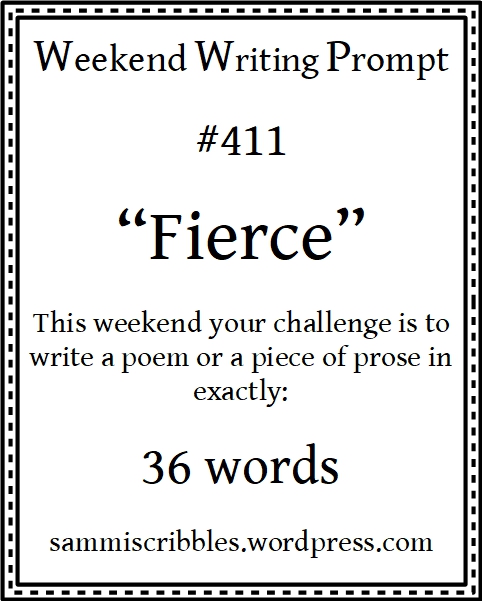
PROSE – WEEKEND WRITING PROMPT #411

Fierce burned in her chest—not anger, but resolve. Each setback was fuel. She didn’t flinch, didn’t fold. Determination wasn’t loud; it was steady. Quiet steps forward, no matter what. That’s how she wins.
A place where I post unscripted, unedited, soulless rants of a insomniac madman
Fierce burned in her chest—not anger, but resolve. Each setback was fuel. She didn’t flinch, didn’t fold. Determination wasn’t loud; it was steady. Quiet steps forward, no matter what. That’s how she wins.

“Did you know rainbows aren’t real?” Sophie said, nose pressed to the rain-speckled window like she was trying to peer through the fabric of reality.
Josh, flopped sideways on the couch and half-heartedly plucking his guitar, didn’t look up. “Real enough to chase. That counts.”
“They’re just light doing a water park routine. You can’t touch one. You can’t keep it. It’s basically sky clickbait.”
Josh strummed a lazy, spacey chord. “Exactly. That’s what makes it magic.”
Sophie turned, eyes narrowed like a nine-year-old prosecuting attorney. “Magic isn’t real either. Honestly, sometimes I think you were left on our doorstep by a pack of whimsical wolves.”
Josh raised an eyebrow. “Bold accusation for someone who still believes in bedtime.”
“I’m just saying—look at the evidence. Dad’s an engineer. Mom rebuilds humans for a living. I’m a well-documented overachiever with a spreadsheet for everything. And then there’s you—Mr. ‘What if clouds are just sky-whales and the rainbow is their feeding tube?’”
Josh laughed. “Okay, that was solid. Respect.”
Sophie gave a smug little bow. “Thank you. I’ll be here all week. Try the sarcasm; it’s aged to perfection.”
“I’m the creative recessive gene,” Josh said, plucking at a new tune. “Or maybe a stowaway from an alternate timeline with looser rules.”
“You give strong alternate timeline energy,” Sophie agreed, already hopping off the windowsill.
She disappeared down the hall and reappeared 90 seconds later fully suited up in a bright yellow slicker, matching boots, and her frog-shaped umbrella. She looked like a tiny storm hunter gearing up for war.
Josh blinked. “Are you… ready to fight the weather?”
“I’m ready to dominate puddles,” she said, snapping her hood into place. “The rain’s letting up, and I have a contract to enforce.”
Josh raised an eyebrow. “What contract?”
Sophie stared him down. “Don’t play with me, Mister. You promised me ice cream after the rain stopped. There were witnesses. I can draw you a diagram.”
Josh put both hands up. “Okay, okay. Ice cream. I hear you.”
“Good,” she said, already halfway to the door. “Justice will be served. Preferably in a waffle cone.”
As Josh grabbed his keys, he glanced at her. “Are you gonna be embarrassed being seen with me? I’m kind of a known weirdo.”
Sophie rolled her eyes, but grinned. “Of course not. You’re my brother. I love you—even if you are intellectually stunted. No one’s perfect.”
Josh chuckled. “Wow. You really know how to make a guy feel cherished.”
“I try.”
He set the guitar down with exaggerated care. “But when we get back…”
She paused mid-step. “What?”
“Will you let me play that song? The one I wrote that’s totally not about you but also definitely is?”
She sighed, but her grin cracked through. “Fine. But if it’s sappy, I’m filing a formal complaint.”
“To who?”
“Your soul.”
Josh laughed. “Noted. Minimal sap. Maximum chords.”
“And no eye contact,” she added. “That’s how feelings sneak in.”
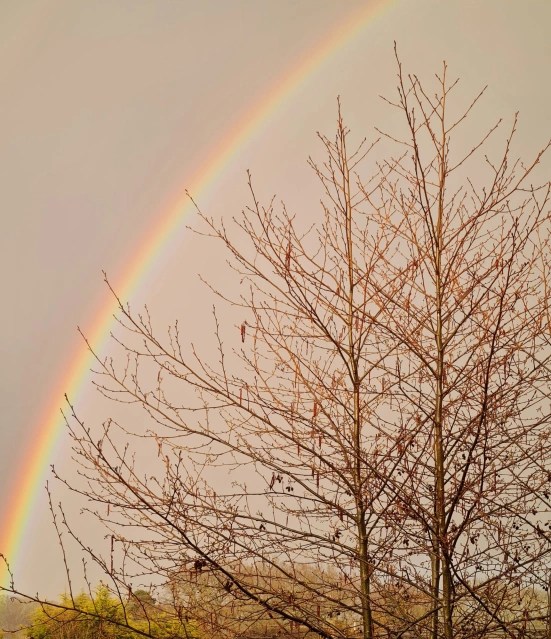
Outside, the rain had dwindled to a drizzle. A rainbow stretched overhead like it had been waiting for them to notice.
Josh looked up. “You know, it kind of feels like a map.”
Sophie squinted at it. “To where?”
Josh shrugged. “Somewhere we don’t have to know everything. We just get to… exist.”
Sophie stomped into a puddle with both boots. “Cool. Let’s go there. Right after ice cream.”
They set off down the sidewalk, the sky still dripping a little, the rainbow curved above them like a wink. Neither of them said it, but both figured: if that thing was pointing somewhere—maybe it was toward each other.
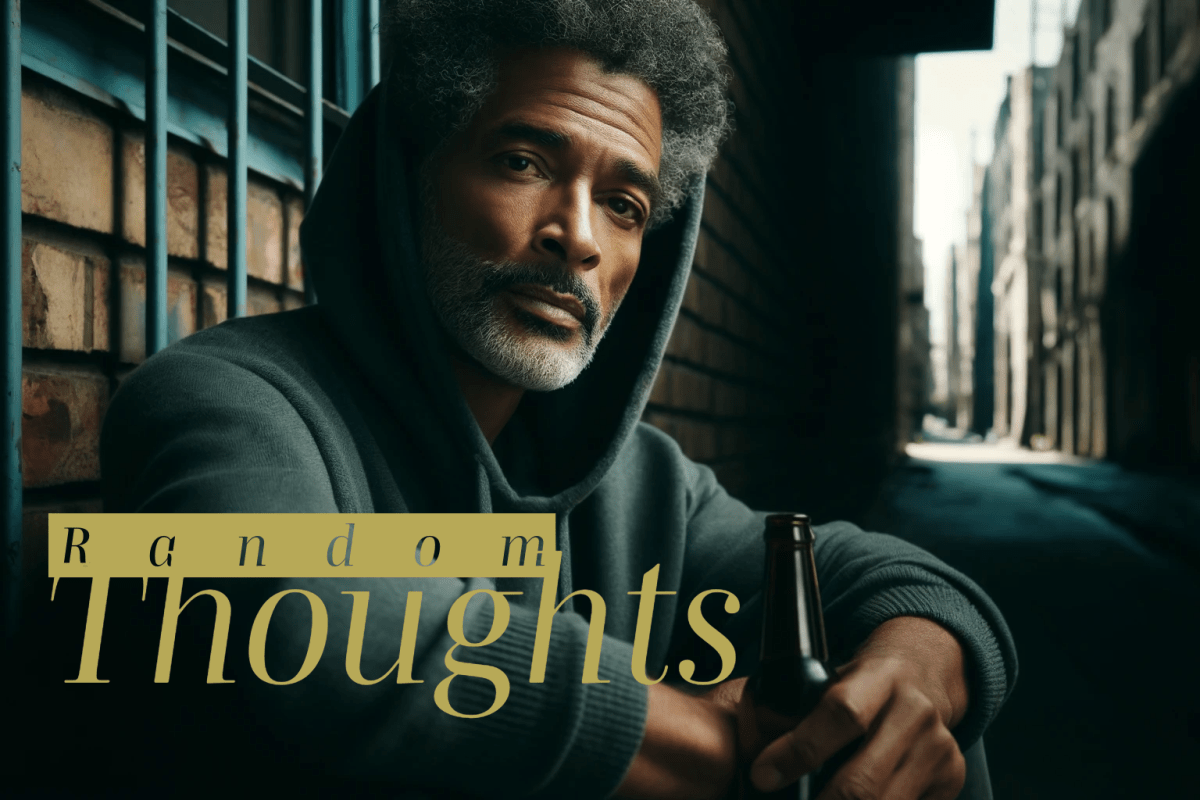
It’s not always the staggering drunk on a sidewalk.
Sometimes, it’s the friend who always shows up, the parent who keeps it together, or the coworker who “just likes to unwind.”
But behind closed doors, they’re shrinking. Fighting. Breaking.
Alcoholism doesn’t always look like what we expect. And that’s the problem.
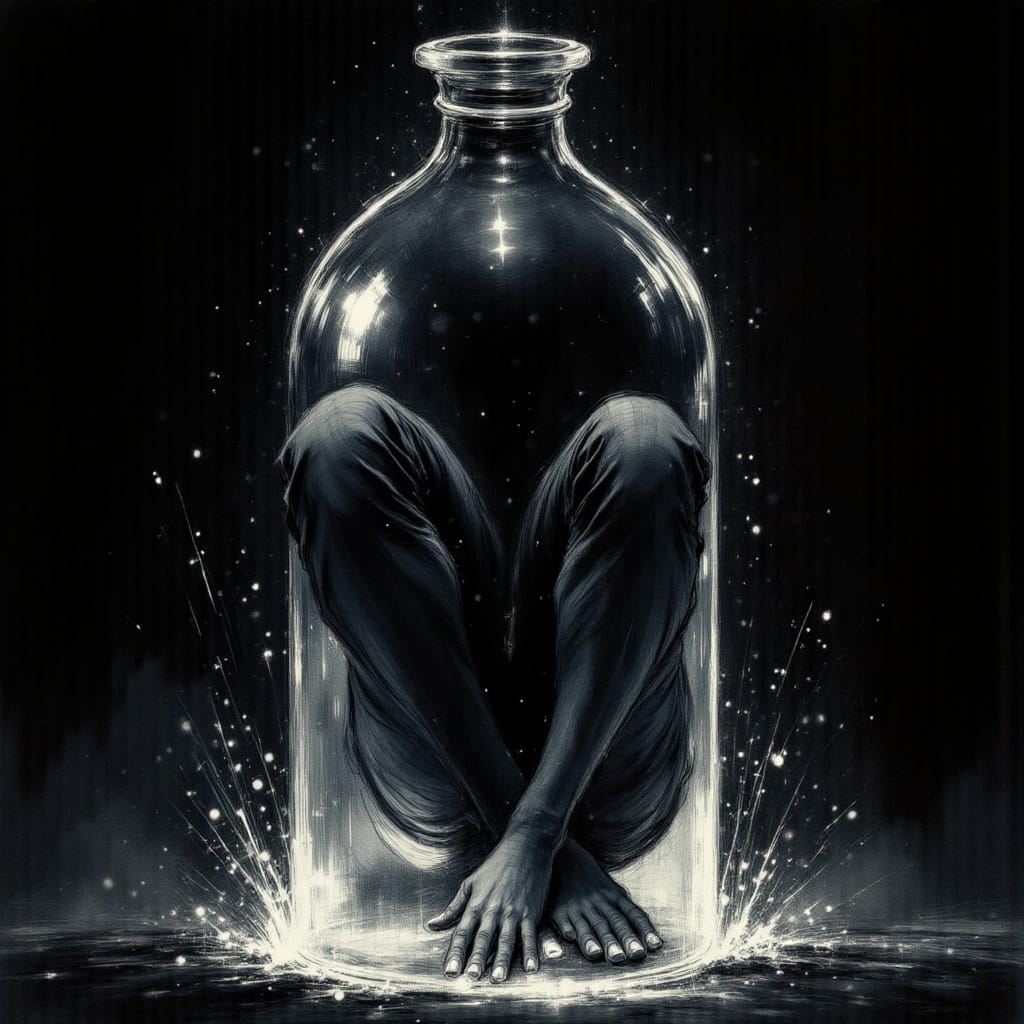
We call it “just a drink.”
But alcohol is the most lethal drug in the world—more deadly than opioids, meth, or cocaine.
And yet… it’s everywhere.
It’s legal.
It’s glorified.
It’s handed out at every wedding, every weekend, every wound.
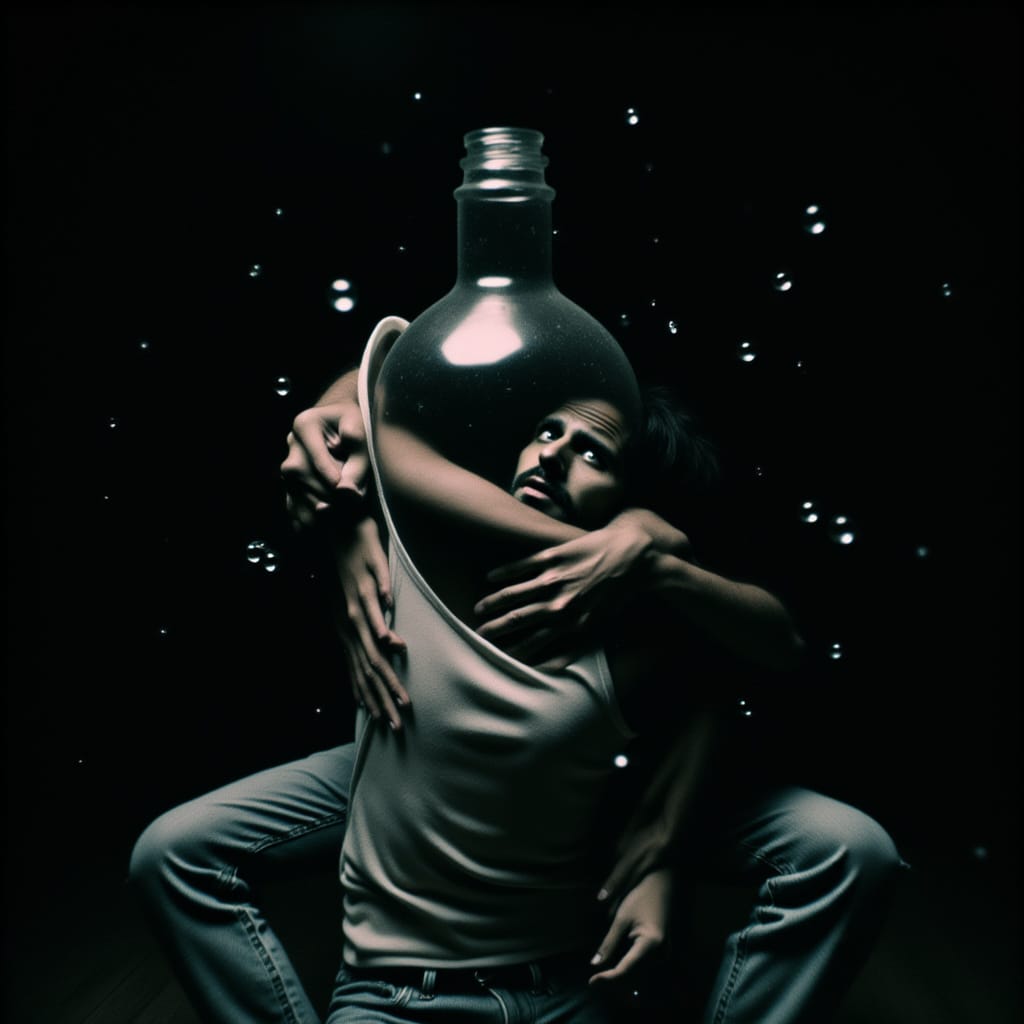
Addiction doesn’t start with rock bottom.
It often begins with social acceptance.
A drink to relax. A drink to celebrate. A drink to cope.
Until the bottle isn’t an option—it’s a cage.
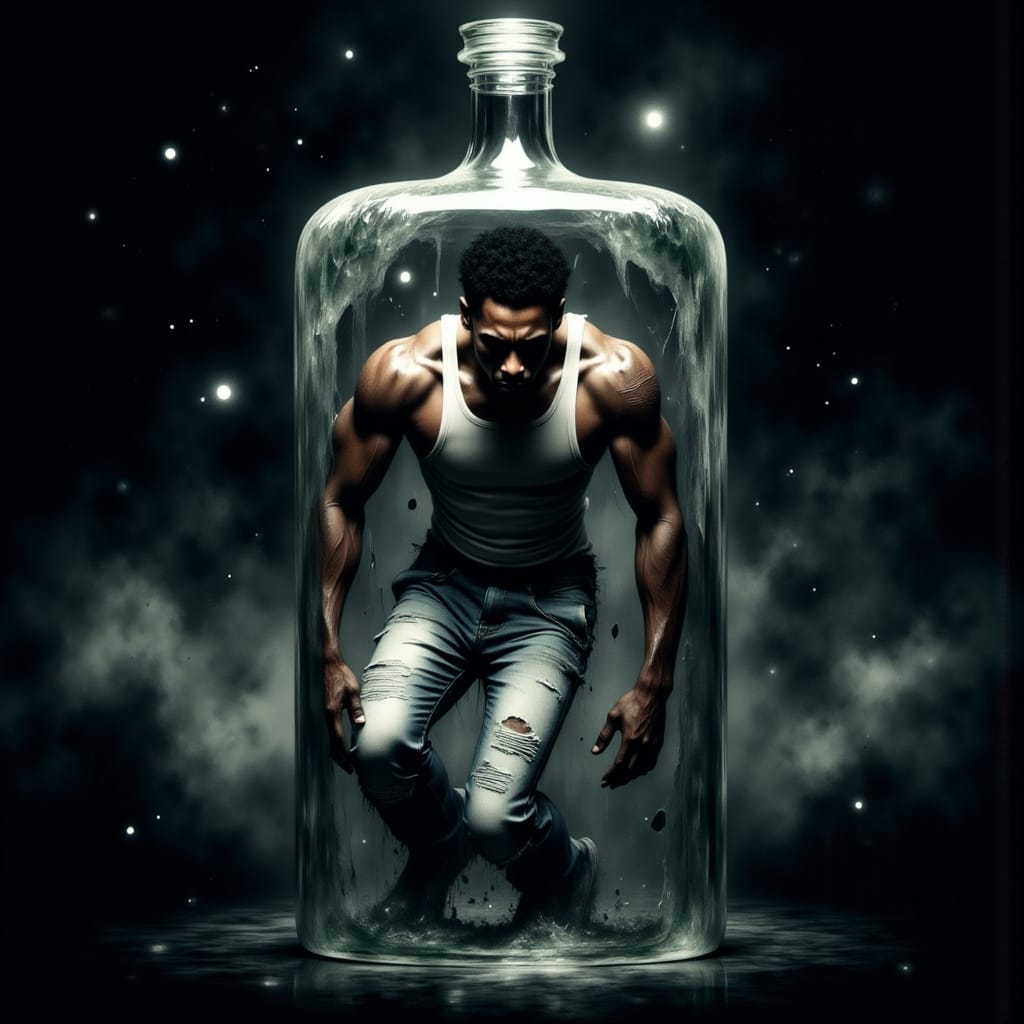
What makes alcohol so dangerous isn’t just the physical toll.
It’s the silence.
The shame.
The way we minimize it, laugh it off, ignore the signs.

You are not alone.
There is help.
There is life outside the bottle.
📞 [Insert helpline or resource link – e.g., SAMHSA’s National Helpline: 1-800-662-HELP]
💬 Share this post. You never know who needs to see it.
Everyone has high school stories. Some are boring. Some are embarrassing. Some are the kind you only tell your best friend at 2 a.m.
Here are five story titles from my high school years. Each one has a real lesson behind it—some funny, some rough, some surprisingly honest.
But I’m only telling one of them. And you get to pick which.
Vote below for the story you want to hear most. The one with the most votes? I’ll post it next.
Pick the story you want to hear:
(And yeah, they’re all true.)
The First Encounter – Lost in the Woods (and the Footnotes)
The first time I read The Divine Comedy was sparked by an argument—an intellectual back-and-forth with someone who, as it turned out, didn’t know much about the book. But he was passionate. His conviction was hypnotic. I didn’t buy his analysis, but I understood why he was obsessed.
I picked up the book out of curiosity and a little competitive pride. I didn’t finish it. We got called out on a mission, and you don’t take library books on missions. Fines are one thing—charred pages are another.
Still, even unfinished, it stuck with me. Something about Dante’s voice—strange, serious, deliberate—lingered.
That first attempt, though brief, planted a seed. When I returned to it later, I had more patience, a better dictionary, and no librarian breathing down my neck.
Even then, Inferno was dense. Layers of references. Historical names I barely recognized. Theology deep enough to drown in. I was flipping between footnotes and old library texts like I was defusing a bomb. The nine circles of Hell were vivid, yes—but they felt more like a museum exhibit than a lived experience. I was watching Dante, not walking with him.
It felt like homework. Necessary, maybe. But distant.
Still, something about the structure—the cold logic behind every punishment—got under my skin. Sin wasn’t just bad behavior. It had a shape. A weight. I didn’t have the words for it then, but the idea that justice wasn’t arbitrary began to settle in.
I didn’t love the poem yet. But I was starting to hear it.
Warzones and Infernos – Dante in Combat Boots
When I returned to The Divine Comedy after combat, it hit differently. Dante wasn’t just a poet anymore—he sounded like someone I knew. Maybe even like me.
Inferno started to make more sense. Hell wasn’t about fire and demons—it was about clarity. Brutal, stripped-down moral logic. A world where actions had consequences that couldn’t be bargained with.
In combat, you live in that gray zone between judgment and survival. Right and wrong don’t show up in clean lines. Sometimes you do the right thing, and it haunts you. Sometimes, it felt like there was no God—at least not the one we heard about in Sunday school. We believed in the integrity of what we were doing. We questioned it, sure. But our resolve stayed intact. Sometimes, surviving was all you could do. And that didn’t always feel like redemption.
Dante’s Hell isn’t just punishment—it’s paralysis. People stuck in their choices, their pride, their rage. No growth. No movement. Just a reflection in the worst kind of mirror.
That rang true.
Some turned to a higher power for guidance. We knew—we were fighting for God. But we also knew the limits. We were required to do what was asked of us—but no more. We fought for God. And we had to answer to Him too.
Not just for the people we encountered. Sometimes for what we became.
Purgatorio – The Long Climb Back
Purgatorio doesn’t get the same attention as Inferno. It’s not as dramatic. No fire. No famous sinners frozen in ice. But it’s the part that felt most real to me.
Because after war, after any real descent, what follows isn’t glory—it’s work. Quiet, repetitive, soul-grinding work. That’s Purgatorio.
Dante climbs a mountain, terrace by terrace, confronting the seven deadly sins. Each level is a mirror—less about judgment, more about recognition. It’s not punishment anymore. It’s penance. The difference matters.
After combat, reintegration isn’t just about coming home. It’s about stripping away the armor you lived in. Unpacking things you didn’t have the luxury to process while they were happening—and you don’t have the luxury to process them now. You’re thrust back into your life like nothing happened. You lie to the ones you love to keep them safe, to spare them from the world you know exists but no one is talking about. You keep that secret.
You make a valid attempt to let go of habits that kept you alive but will not help you live. It’s exhausting.
That’s why Purgatorio hit me so hard. I didn’t expect it to. But there’s something deeply honest in the idea that healing doesn’t feel holy. It feels like discipline. Like carrying your own burden up the hill with no end in sight. Some days, you move a little higher. Some days, you just don’t slip backward.
There’s no audience. No headline. Just effort.
And yet—it’s hopeful. The whole mountain is built on the assumption that you can be made whole. That ascent is possible. Redemption is a process, not a prize.
Paradiso – The Light We Try to Name
Paradiso is the hardest part.
Not just to read—but to believe in. It’s abstract, layered with theology and geometry, full of light and music and spheres. Dante is trying to describe the indescribable. He’s chasing God through language; the closer he gets, the less the words hold.
For a long time, I didn’t connect to this part. It felt like too much, too far, too clean.
But after Purgatorio, after the work of climbing, carrying, and unlearning, I started to understand what Paradiso was reaching for—not perfection, not purity, but peace.
And peace—real peace—is foreign when you’ve lived inside chaos. It’s not some cinematic moment of triumph. It’s quieter. It’s the ability to be still, without needing to be numb. It’s presence, not performance. It’s the moment you stop bracing for the next thing to go wrong.
Dante meets Beatrice here—his guide into the divine, his symbol of grace. We all have our Beatrices, if we’re lucky. People who held the line for us when we couldn’t. People who reminded us we weren’t lost forever.
Am I worthy of this grace? Will God forgive me for what I’ve done? I find myself waiting—searching—for that one thing that could wipe away all the havoc of my making. Is that a thing? You know the scales will have an answer.
In the background of all this light, I still imagine the scales. The old ones—Egyptian, Christian, Islamic. The image of your life being weighed. Every choice, every silence. Your hands held out, waiting to see which way it tips.
We fought for God. We made peace with that. But we also knew we’d stand in front of Him one day. And maybe that’s what Paradiso is really about—not escaping judgment, but understanding it. Accepting it. Trusting that there’s a kind of justice that doesn’t crush you, but completes you.
I don’t claim to understand everything Dante saw in Heaven. But I understand the desire to see it.
And that’s something.
Full Circle – Still Listening
I’ve read The Divine Comedy more than once now. Not in a straight line, not as a scholar, but as someone who’s lived with it—left it, returned to it, wrestled with it. And the strange thing is, it keeps changing. Or maybe I do.
What started as a challenge—half a debate, half an ego trip—turned into a mirror. Dante’s journey through Hell, up the mountain, into the light, isn’t just theology or poetry. It’s a blueprint. A map of what it means to go through something, to come back from something, and to wonder if you’re still whole on the other side.
I never read it looking for answers. Not really. But I keep coming back to it for the questions.
Am I worthy of grace? Is peace possible? Can the scales ever truly balance?
I don’t know.
But I’m still listening.
And that’s something too.
Author’s Note:
This was written as a result of a post by alexander87writer. I was going to leave a comment, and just kept writing. My two sentences became this. I’m so extra at times.
After my health started to improve, I made a quiet promise to myself: take it slow, do it right, and make the changes stick. Not just another sprint followed by burnout. Not another performance. Just something real.
To be honest, I didn’t have much choice. Getting my strength back has been a crawl, not a comeback montage. The days of jumping up, yelling “I’m okay, I’m okay!” while secretly scanning the room for lost cool points—those are done. By the time I realized chasing cool points was just another layer of nonsense, the damage was already in motion.
So I made a deal with myself: if I ever got my strength back, I’d write my butt off. Not for validation. Not to prove something. Just because I have things to say, and writing is how I say them best.
My editor always believed in me—even when I didn’t believe in myself. I’d whine about low engagement, tweak my style constantly, chasing some imaginary formula for success. I forgot the quote a dear friend gave me when I first started posting:
“Better to write for yourself and have no public than to write for the public and have no self.” — Cyril Connolly.
Now I get it. And I’m not just writing again—I’m enjoying it. Actually enjoying it. Not refreshing analytics or stressing over reach. Just creating.
And it’s not just writing, either. I’ve been drawing again. Editing film. Playing with my cat—who may or may not have been a dog in a past life. (I’ll get into that another day. It’s a whole thing.)
But yeah, I’m creating again. Fully. Freely.
And that’s the change that brought me back.
Plenty of books fall into this category. I’d love to say I have a strict system for what earns a reread, but let’s be honest: the rules shift every time. Sometimes it’s the writing, sometimes it’s a character who won’t shut up in my head, and other times it’s because the book whispered something suspicious from the shelf—like it knows things. Rereading isn’t a choice at that point. It’s a compulsion. Like the story implanted a post-hypnotic trigger in my brain that activates randomly. And when it does, I drop everything—sleep, obligations, dignity—and reread. Again.
Now, my particular brand of obsession comes with a twist: time travel. I don’t just read about it—I research it. Because yes, I’m building a time machine in my basement. And no, I’m not joking. I know what you’re thinking. This person is completely unhinged. Stop looking at me in that tone of voice. Don’t judge me—I’m backed by science.
Stephen Hawking once said, “Time travel used to be thought of as just science fiction, but Einstein’s theory of general relativity allows for the possibility that we could warp space-time so much that you could go off in a rocket and return before you set out.” So, technically, I’m not crazy—I’m just early.
And Einstein himself—our time-bending MVP—once said, “The distinction between past, present, and future is only a stubbornly persistent illusion.” That quote haunts me. Because if time really is just an illusion, then maybe my late-night diagrams and basement scribbles aren’t completely absurd. Maybe I’m just trying to see through the illusion. With tools. And snacks.
Some books feel like accomplices in this mission. Einstein’s Dreams is one of them. It’s not a novel in the traditional sense—it’s more like a collection of speculative time experiments disguised as dreams. Time slows, speeds up, loops, fractures. Each version reveals how fragile we are, how much we lean on the idea that time is stable. It made me wonder if I want to manipulate time or if I just want to understand why it controls me so completely.
Then there’s The Psychology of Time Travel, which sounds quirky but plays out like a cautionary tale. It’s brilliant, and it doesn’t flinch. Time travel in that book isn’t just a shiny toy—it messes with identity, memory, and even reality. It shows the mental strain of knowing too much about your own timeline. Honestly, it made me stop mid-chapter and ask, Do I actually want to succeed at this, or do I just like the chase?
This is probably why I’ve started keeping my own book—a messy, ever-growing volume of experiments, part science, part psychology. Charts, notes, theories, emotional meltdowns—it’s all in there. It’s not publishable (yet), but it’s real. And it’s mine. Some people journal. I document the potential collapse of linear time. To each their own.
And then there’s the part no one wants to discuss—the mythic weight of time. The ancient beings who ruled it long before clocks or quantum theory. Chronos, the Greek god who devoured his children just to keep time moving in his favor. The Moirai, weaving destinies and snipping threads when they feel like it. Kāla, the Hindu personification of time, is both destroyer and renewer. Even the Norse Norns, sitting beneath the world tree, are casually deciding fates like it’s a hobby. These entities weren’t just metaphors—they were warnings. Time is power, and it doesn’t like to be tampered with.
The more I study, the more I feel like time isn’t linear—it’s layered. Some theorists say time can fold over itself like a sheet of paper, bringing two distant moments into contact. Others call it fluid, a river that bends, swells, evaporates, and returns in strange new forms. Honestly, I’ve felt both. There are days where the past bleeds into the present like ink on wet paper. There are moments I swear I’ve already lived. Maybe I’m stuck in a fold. Maybe I’m just bad at time management. Either way, I write it all down.¹
And Then She Vanished wasn’t just another trip down the wormhole—it rerouted my entire approach. The way it plays with memory, causality, and the emotional cost of screwing with time? It hit differently. I went in looking for narrative patterns, maybe a clever paradox or two. What I got was a punch to the gut and a blueprint for moral consequences. The book didn’t just mess with time—it made me rethink why I want to.
And maybe that’s the real loop. Because every time I pick up a pen, I feel it. Writing bends time, too. It stretches memory, warps emotion, and compresses decades into a sentence. Every time we write, are we building new worlds, or are we just reconstructing something we have already lived? Maybe stories are our version of time machines. Just paper ones. Slightly safer than the one in my basement.
¹ Excerpt from my “Working Theories of Time” notebook, vol. 3:
This is why I track time like a conspiracy theorist with a mood disorder. It’s all connected. Probably.
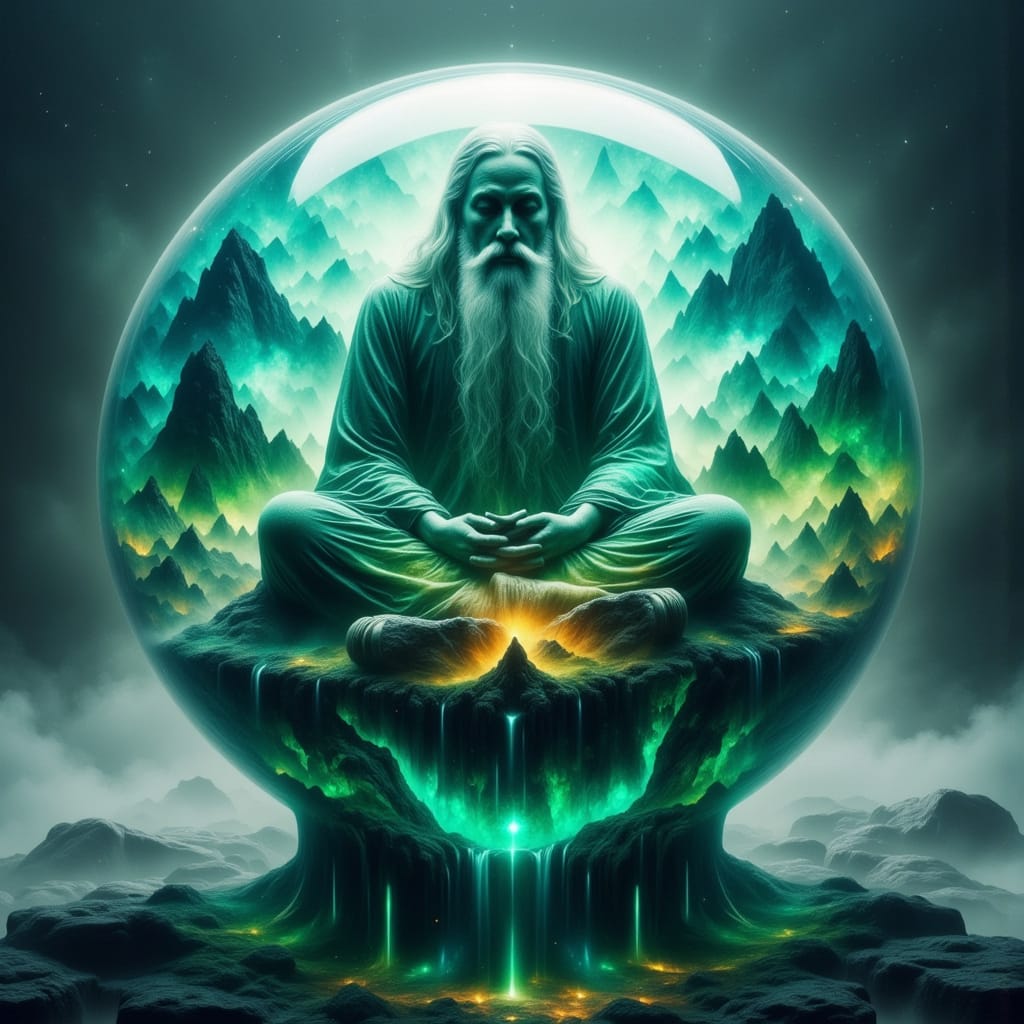
In the heart of the Hollow Mountains, where the air hummed with silence and time forgot to tick, a being older than wind sat. Encased in a sphere of shimmering energy—neither glass nor light, but something between—the Oracle meditated above a chasm that pulsed with ancient fire.
He had not spoken in centuries. He didn’t need to.
The mountains around him were carved not by water but by will. Their jagged silhouettes, emerald-tipped and layered like echoes, were born from his breath. Each ridge was a memory. Each peak was a vow. He had once been flesh, bone, and fire. Now, he was purpose wrapped in the illusion of form.
To the outside world, he appeared as a man—if a man could be sculpted from starlight and storms. His robes flowed like liquid fog, and his long, tangled beard bore streaks of silver like splotches of moonlight left behind by the gods.
Pilgrims had tried to reach him, climbing in silence, their mouths dry from reverence or fear. None returned unchanged. Most didn’t return at all.
Inside the sphere, reality bent. Time curled inward like smoke. The Oracle sat cross-legged on a throne of molten stone that neither burned nor aged. Beneath him, streams of liquid light cascaded into the void—knowledge pouring endlessly into the earth’s soul, never wasted, never full.
He was more than a seer. He was a medium between worlds—the silent conduit through which forgotten truths passed. Not a messenger, not a prophet, but something more elemental, something that watched as stories ended and began again.
He waited—not out of impatience but design. Somewhere, someone would be ready to ask the right question. Not about destiny or death. Those were too easy. But the one that mattered. The one that cracked the world open.
Until then, he breathed. And in that breath, universes whispered.
An aggressively personal breakdown of alter egos, revenge spirals, and why fictional characters are one emotional snap away from disaster.
Ever watch a movie, read a book, or binge a show and think, Wow, this character really needs therapy? Like… immediately. They have pills for that. And boundaries. And emotional support animals. But instead of signing up for BetterHelp, fictional characters usually take the scenic route: they grow an alter ego, light their lives on fire, and call it “justice.”
Sometimes you’re just sitting there, watching a perfectly normal person start talking to their dead father’s ghost, and all you can think is: They are so fucked.
Let’s talk about that.
The Alter Ego: Fancy Latin for “Oh no, he’s talking to himself again”
There’s something darkly satisfying about a character cracking right down the middle. Not like “oops, I’m having a rough day” cracking—but full-blown talking to their reflection in the mirror and the reflection talks back cracking.
Dr. Jekyll doesn’t just dabble in science—he mainlines Victorian repression and conjures a walking midlife crisis named Hyde. And Tyler Durden? He’s what happens when toxic masculinity drinks four espressos and finds Nietzsche on Reddit.
“Man is something that shall be overcome.” – Nietzsche
Too bad most characters take that as an invitation to become unhinged vigilantes instead of, say, doing the shadow work.
Alter egos don’t just show what characters fear—they show what they secretly want: power, escape, freedom from polite society. It’s the part of them that isn’t okay with playing nice anymore. It’s also the part that starts the fires and says “oops” later.
Holmes and Moriarty: A Gentleman’s Guide to Mutual Obsession
Sherlock Holmes and Professor Moriarty are technically enemies. But let’s be honest: they’re intellectual soulmates with unresolved tension and no HR department to report to. If Holmes is logic in a waistcoat, Moriarty is chaos in a cravat. One solves crimes. The other is the crime.
Holmes says he’s repulsed by Moriarty’s criminal mind. But let’s call it what it is: obsession. Like, we-should-talk-about-this-in-couples-therapy obsession.
“He who fights with monsters should be careful lest he thereby become a monster.” – Nietzsche again, because of course.
Their final tango at Reichenbach Falls? That’s not a climax—it’s a breakup scene disguised as a death drop.
Werewolves, Hulks, and People Who Should Not Be Left Unsupervised
Let’s talk about werewolves: the OG metaphor for “Oops, my emotions got out.” Classic lit was obsessed with this stuff. Guy seems chill—until the moon rises and suddenly he’s shirtless, hairy, and eating villagers. It’s like puberty, but worse.
And then there’s Bruce Banner. Poor guy just wants to be left alone to do his science. But noooo—every time someone provokes him, he turns into a giant green rage machine in cut-off jeans. He told them not to make him angry. They did. Now there’s structural damage.
Each transformation screams what Carl Jung quietly suggested:
“Until you make the unconscious conscious, it will direct your life and you will call it fate.”
Which is a very classy way of saying, “Congrats, you’re the werewolf now.”
But let’s not forget—masks don’t just hide. Sometimes they liberate.
“The mask is the instrument of the power that makes one see and speak.” – Michel Foucault
In other words: sometimes putting on the cape, the claws, or the face paint isn’t about hiding who you are—it’s about finally saying what you were never allowed to. That’s why Batman isn’t just Bruce in costume. He’s Bruce off-leash.
The real question is: when the mask comes off… what’s left?
Revenge: It’s Like Therapy, But With Body Counts
Here’s the thing about revenge stories: they used to be neat and tidy. Somebody wrongs you, you plot, you avenge, you feel… better? At least that’s how it worked in the classics. The Count of Monte Cristo is the gold standard of “I was wrongfully imprisoned, now I’m back with receipts.”
But modern revenge stories? Oh, they’re emotionally messy. There’s no neat payoff. Just guilt, trauma, and a long trail of ex-friends.
Walter White didn’t just want to “provide for his family.” He wanted to feel like the universe owed him something—and when it didn’t pay up, he became the universe’s problem. Watching him morph into Heisenberg is like watching your dad get really into crypto and start calling himself an “alpha.”
Amanda Clarke from Revenge isn’t much better. She goes full Machiavelli in heels. She infiltrates high society to take down the people who framed her dad—and in the process, slowly turns into one of them. You know it’s bad when even your revenge plot has subplots.
“Before you embark on a journey of revenge, dig two graves.” – Confucius (or at least the internet version of him)
Revenge doesn’t heal. It haunts. And if your therapist charges $200 an hour, revenge charges your soul.
Why Can’t We Be More Like Shaft?
Let’s take a breather from all the tortured brooding and talk about someone who handles his business without spiraling into an existential crisis every five minutes: John Shaft.
Shaft is revenge fiction’s cool older cousin who doesn’t need an alter ego because he’s already whole. He doesn’t slip into madness, grow claws, or adopt a second name—he just walks into a room, says something smooth, and gets stuff done. No inner monologue. No moral agony. Just grit, justice, and style.
Here’s what makes Shaft different: he’s angry, sure—but he owns it. His anger doesn’t consume him; it fuels him. He doesn’t lose himself in vengeance because he never lets anyone else define who he is. He knows the system is broken. He knows justice is often DIY. But he doesn’t get lost in it. He stays Shaft—and somehow makes leather trench coats look like emotional armor.
Honestly? Watching most of these fictional characters unravel, you start to wonder:
*Are psychiatrists who Curtis Mayfield was talking about in his classic song “I’m Your Pusherman”?
Because half these people don’t need a gun—they need a prescription and a twice-weekly check-in with someone who says:
“Know thyself.” – Socrates, probably side-eyeing half the MCU right now.
And here’s the kicker: Shaft doesn’t need a mask to be powerful. He doesn’t hide behind a symbol. He is the symbol. While most characters fracture under the weight of dual identities, Shaft walks in fully integrated—what Foucault might call power without disguise.
“Power is not an institution, and not a structure… it is the name that one attributes to a complex strategical situation.” – Foucault, probably watching Shaft with admiration and fear.
Shaft is the complex strategical situation. Everyone else is just playing dress-up.
Final Thoughts: You vs. You (And Sometimes a Werewolf)
At the end of the day, alter egos and revenge stories aren’t really about villains. They’re about us—our insecurities, our grudges, our late-night fantasies of telling someone off and walking away in slow motion while something explodes in the background.
These stories hit because they remind us how hard it is to be a person. A person with baggage. With rage we swallow. With wounds we dress up as ambition. We all want to believe we’d be the Shaft in our own story—cool, unshakable, morally centered with a killer soundtrack—but let’s be honest: most of us are two stressful emails away from turning into Mr. Hyde.
“Where there is power, there is resistance.” – Foucault
Whether it’s the beast inside, the grief-fueled vendetta, or the charming psychopath in your mirror, every character in these stories is resisting something: society, morality, themselves.
And some of them lose.
Most of them do.
But then there’s Shaft—no split self, no mask, no melodrama. Just a man who knows the system’s rigged, knows who he is, and shows up anyway.
Maybe that’s the real power.
Maybe the rest of us are just monologuing in the dark.
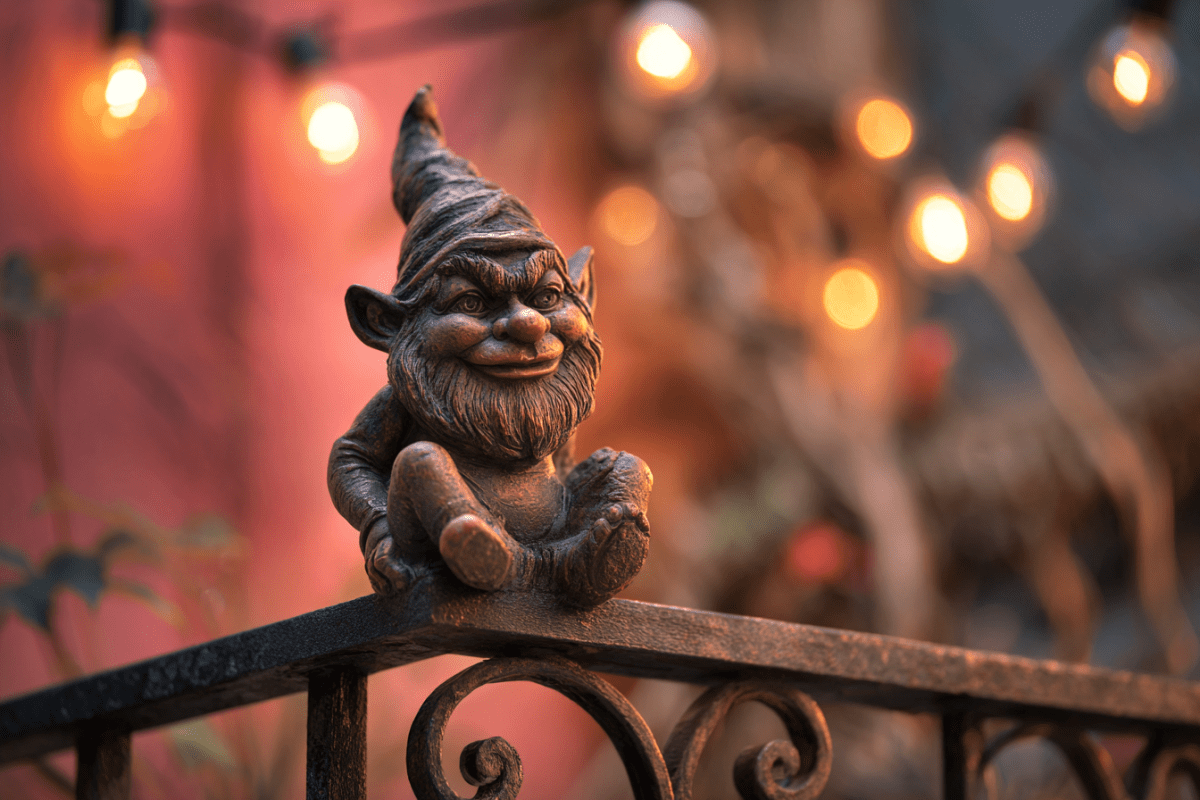
Top 5 Ways to Ask a Girl Out: Rule #5
If you survive the kiss attempt, you’re in.
We walked back from the taco truck under the kind of sky that made everything look slightly more romantic than it deserved to. Streetlights flickered on like they were rooting for me. Or mocking me. Hard to tell.
“So,” she said, arms folded, still carrying her drink like it was a trophy. “Do you usually spend your Saturdays pretending to be a mechanic-slash-foodie with girls you’re not dating?”
“Only the ones who invite me to test-drive their haunted vehicles and emotionally unstable lawn statues.”
She laughed. “So I’m special.”
“You are,” I said, before my filter could save me.
She looked over, eyes holding for a beat too long. I panicked and did what any emotionally underdeveloped guy would do: I kicked a pebble and immediately regretted everything I’ve ever said.
We got to her door. The gnome was back. Sitting on the railing again like nothing had happened.
“You brought him back out?” I asked.
She shrugged. “Didn’t move him.”
We both stared at the gnome.
The gnome stared back.
Relentless.
I cleared my throat. “So. Tonight was… really good. Even if I almost stripped the threads off your lug nuts and spilled soda on my own knee.”
She smiled. “Definitely one of my better fake-date disasters.”
And then it happened.
That silence.
The kind that invites a kiss if you’re bold, or complete social collapse if you’re not.
I stepped a little closer. Not a full leap—just a half-step of doomed courage. She didn’t move. Just watched me with that same small smile and terrifying confidence.
This was it. This was the moment.
I leaned in.
And completely misjudged the height difference.
My nose bumped hers. Her forehead bumped mine. My glasses fogged instantly. Her drink sloshed. One of us made a weird surprised sound—pretty sure it was me.
We pulled back, both blinking.
I wanted the sidewalk to swallow me. Instead, she started laughing.
Like, full-on, can’t-stop, leaning-on-the-doorframe laughing.
I winced. “Cool. Yep. Nailed it.”
She grabbed the front of my shirt, pulled me in, and kissed me properly.
Soft. Sure. Just long enough to shut my brain off.
When she pulled away, she whispered, “You passed that test, too.”
The gnome was still watching.
Probably smirking.
Waiting for whatever moment would arrive next.
Author’s Note
And that’s a wrap on this blog series. Thanks for sticking with it. This story (and its awkward kiss energy) will be part of my upcoming short story collection. Same premise, just expanded—with more chaos, more heart, and yes, probably more gnome appearances.

A whispered secret crawls through alleyways, laced with smoke and static.
Neon blinks like a warning.
You turn the first page, not knowing what’s coming.
This debut is the gateway to madness.
Remember when “unprecedented times” became everyone’s favorite phrase? A true statement for the memories of most of the world’s inhabitants, but it still got on my nerves. I held my breath, waiting for someone to throw in the word surreal and say something like, “It’s so surreal, these are unprecedented times.” I swear, I would’ve walked away screaming as someone gently muttered, “Poor fella, everyone’s so overwhelmed.”
So—real talk: How did you adapt to the chaos Covid-19 dropped into our lives?
Did you start baking sourdough? Rethink your entire career? Form a codependent relationship with your couch? Go over your data plan because Netflix, RPGs, and Zoom somehow became a lifestyle?
Grow a beard that now has its own personality? (How’s that going, by the way?) Man, that time produced some truly unfortunate facial hair. Mine looked like a depressed squirrel had taken up residence on my face for a solid month. Eventually, it evened out—but the trauma lingers.
For me, my home became my fortress of solitude—equal parts sanctuary, bunker, and blanket fort. I was lucky: my stepmother, who lived through WWII, told me to stock up on essentials before the lockdown. And I listened.
The provisions—dry goods, paper products, all the basics you don’t think about until they vanish—were stacked neatly and inventoried like I was prepping for the end times. All of it sat on those hideous, industrial metal shelves that belong in basements or crime scenes, not in the middle of a living room.
But they got the job done. Ugly, but reliable. Kind of like the year itself.
I still can’t believe I actually listened, but it made all the difference. It was like the world we knew vanished before our eyes. People became mean and rude for what seemed like no reason.
But looking back, I think it was fear. Everyone just wanted something—anything—they could control. A place that felt safe.
While the world panicked under a double pandemic—Covid, that beast right there in your face that you had no idea which way it would attack, and Hysteria, the silent rogue creeping in from the shadows—I stayed still, battling my own fears.
Even though I was stocked, prepared, trained—it only provided the illusion of calm. A false sense of control.
I knew it. But I leaned on it anyway.
Because sometimes pretending you’re okay is the only way to survive long enough to actually be okay.
But I’ve been here before—in a different kind of war.
In battle, I was surrounded by people who didn’t just know how to survive. We knew what it took to live—no matter how damn hard it got.
That kind of clarity doesn’t leave you. It changes how you move through silence, how you handle fear, how you hold yourself when no one else is watching.
And because of the kind of isolation that comes with PTSD, I didn’t mind being cut off from people. If anything, it gave me space to finally look at my life without distraction.
I realized medication couldn’t fix everything. I had to put in the work. I had to face the demons—even when it felt like I was the demon.
It’s wild, the stories we tell ourselves about what happened to us. Over time, they twist. They shape how we react, instead of letting us respond.
I saw people pretend they were fine—but you could see the cracks.
You offer to help, because you know that darkness. You’ve walked alone in it. And you don’t want anyone else to be there if they’re not ready.
But the rub?
Sometimes, ready or not, you have to walk it anyway.
We’ve made strides in breaking the stigma around mental health. But no one wants to admit they need help—because no one wants to feel different. Or maybe the better word is broken.
But here’s the truth:
It’s okay to be broken. Everyone is. Some more, some less—but broken just the same.
And so we cope. We sip something, cry in the car, buy stuff we don’t need, gamble what we shouldn’t, scroll endlessly, smile when it’s easier than explaining.
All of it—just trying to hold the pieces together.
The world is big. So vast. And we are connected in so many different ways.
So I have to ask—why do we live it so small?
Speak your truth. As Uncle Walt said: sound your barbaric yawp over the rooftops of the world.
You never know when your words will reach someone at just the right moment—when they need it most—to begin to heal.
We are not alone.
Top 5 Ways to Ask a Girl Out: Rule #3
Never assume you’re the smartest person in the driveway.
So there I was, elbow-deep in engine parts, sweating like a liar in a job interview, and just barely pretending I knew what a serpentine belt was. I nodded at a bolt like it had insulted me personally.
She crouched next to me, sipping her probably-toxic coffee and watching with the calm curiosity of someone waiting for a raccoon to finish rooting through their garbage.
“You need a 10mm socket for that,” she said casually.
I froze. “What?”
“That bolt. You’re using the wrong size. That’s why it keeps slipping.”
I looked at the wrench in my hand. I had no idea what size it was. I picked it because it was shiny and made a satisfying clink against the toolbox.
“Right,” I said. “Just warming it up. Loosening the tension.” I said “tension” like I knew what it meant in this context. She didn’t call me out. Worse—she smiled.
“Here,” she said, reaching into the toolbox and plucking out the exact socket like a seasoned mechanic. Then, with zero hesitation, she slid under the hood next to me and got to work like it was no big deal.
“Wait,” I said. “You know how to fix this?”
“I grew up with three older brothers and a string of bad cars,” she said. “Also, I once rebuilt an engine because YouTube dared me.”
I blinked. “So… you’re just letting me fake my way through this for fun?”
“I was curious how long it would take before you admitted it,” she said, laughing. “You were doing okay, though. Kind of charming, in a flailing sort of way.”
Flailing. Excellent. I was now officially “flail-charming.”
She handed me a rag. “Wipe your hands. You’ve got grease on your face. And your shirt. And somehow your ear?”
I wiped at everything and absolutely made it worse.
“Thanks,” I muttered.
She leaned back on her heels, wiping her own hands like a total pro. “So. What was your plan? Fix my car and hope I’d fall in love with you on the spot?”
I froze.
Then shrugged. “Honestly? That was Plan A. I didn’t have a Plan B.”
She laughed. A real one. Then, after a beat, she said, “Well… I like Plan A.”
I nodded, trying not to panic. “Cool. Same. Feels like a solid… multi-step process.”
“You’ve got two more rules left, right?” she said, grinning. “Can’t wait to see what’s next.”
Neither could I.
Mostly because I had absolutely no idea what I was doing.
Top 5 Ways to Ask a Girl Out: Rule #2
Don’t insult her car. Even if it deserves it.
We walked down the driveway in silence. Not the comfortable, romantic kind of silence. More like the kind where you know you’re about to meet something terrifying and no one wants to be the first to scream.
Her car came into view. If a rusted toaster had anxiety, it would look like this. The paint was more of a suggestion. The bumper was being held on by what looked like hope and duct tape. One of the side mirrors was missing entirely, probably in protest.
“This is it,” she said, completely straight-faced.
I nodded slowly. “Cool. Vintage… apocalypse chic.”
She raised an eyebrow.
Damn it.
“I mean—it has character. You don’t see this kind of structural chaos every day.”
She laughed. “It’s a piece of crap. You can say it.”
“No! I mean… yes. But lovingly.”
Smooth.
I crouched down to check out the front wheel, pretending to know what I was doing. Which I mostly did. I watched a lot of videos. Some had music. That counts.
“So what’s it doing?” I asked.
“It makes this… sound,” she said, twisting her face like she was bracing for judgment. “Kind of a high-pitched… squeal? Or a scream? It’s hard to describe. Definitely not a sound cars are supposed to make.”
“Got it,” I said. “A banshee vibe.”
She nodded. “Exactly. Like if a haunted violin and a blender had a baby.”
I popped the hood. Steam hissed out like the car was sighing in defeat. I was immediately sweating. From heat, stress, and fear that I was about to electrocute myself in front of someone I liked.
“You don’t have to actually fix it,” she said. “I just thought you might know a guy or something.”
“I am the guy,” I said, way too confidently.
I was not the guy.
Still, I grabbed a wrench like I meant business. Tools make you look legitimate. I tapped something metal. It made a sound. Not a good one.
She leaned over my shoulder. “You sure this is safe?”
“Totally,” I lied. “I’ve done this… dozens of times.”
Once. On YouTube. At 2AM. After searching “how to fix car without dying.”
The gnome wasn’t there anymore. I kind of missed him.
I’m laughing … are you?
Let me know when you are ready for Rule #3
Here’s the link to Rule #1
My hands still ache, but in a different way now. My fingers still get stained—just for different reasons. I’m typing with the same number of fingers, making the same amount of mistakes.
Change has happened, but I’m starting to see the benefit.
I don’t have to press down hard to make triplekits anymore, but now the paper’s cheaper—it tears at the slightest pull. Speed replaced accuracy. People don’t bother learning the whole craft, just a piece of it. Then they turn around and make a video about how to do what they just learned, but they don’t know shit.
Now 24,000 people watched that video and walked away worse off than before. Would’ve been better if the person just said, “I don’t know—let a professional handle it.”
Shoddy work leads to crappy parts, which means more downtime, more delays. But hey, you got it in two days. That’s cool, right?
The last time I answered this prompt, I think I went with something obnoxiously grand like “A Good Story.” I should be shot for sounding so pretentious. But I wasn’t lying—just leaving out the messier bits of the truth.
When I’m in creation mode, the real world ceases to exist. I don’t hear, see, or care about anything other than the story I’m writing or the drawing I’m working on. It’s like my brain switches dimensions, and all outside stimuli become irrelevant. This used to drive my late wife insane. She’d be talking, calling my name, possibly setting the house on fire, and I’d be sitting there, oblivious, lost in whatever imaginary world had taken hold of me. I’d come back to reality only to find her standing there, arms crossed, staring daggers into my soul. And honestly? Fair. It’s a miracle I survived as long as I did.
Writers have been called time travelers, and I think that’s dead-on. But it makes me wonder—when we write, are we building new worlds or excavating old memories? Because when I write, the worlds feel real. I don’t mean in an “I have a well-thought-out setting with consistent internal logic” way. No, I mean in an I can hear the wind howling through the trees, smell the rain-soaked earth, and feel the blood on my hands kind of way. It’s a full-blown sensory experience. I write down everything I see, hear, and feel, but don’t ask me to explain where it all comes from because I genuinely have no clue.
And then there’s the time warp. I sit down to write, and suddenly, five hours have passed. Meals have been skipped. Hydration? Forgotten. Responsibilities? Who’s she? But in exchange for this self-imposed neglect, I get The Surge. The best way I’ve ever found to describe it comes from the movie Highlander. I call it The Quickening. It’s this electric, all-consuming rush—pure creative adrenaline surging through every nerve in my body. I’d say it’s better than drugs, but let’s be real, I wouldn’t know. It’s definitely better than caffeine, though. And I say that as someone whose blood type is probably espresso.
Drawing, however, is a completely different beast. I still lose track of time, but the sensation isn’t electric—it’s tranquil. A deep, bone-melting calm settles over me. My heartbeat slows, my breathing evens out, and for those few hours, the chaos of existence takes a backseat. If writing is an untamed storm, then drawing is a slow, meditative drift down a lazy river. It’s the only thing that relaxes me more than pretending I don’t have responsibilities.
So yeah, I love getting lost in a good story. But really, I just love getting lost. Period. Maybe that’s why I do what I do—because the real world is often too loud, too dull, or just too much. And if I’m going to vanish into another reality, it might as well be one of my own making.
In 1988, Chuck D hit us with this unforgettable line: “I got a letter from the government.” That line has lived rent-free in my head ever since, resurfacing when I least expect it—usually when I need it most. Those moments when I need a reminder of the mess we’re in.
I think it stuck with me because of its quiet punch. Public Enemy was known for sonically assaulting your eardrums and shaking your soul, but the opening of “Black Steel in the Hour of Chaos” starts like a casual conversation, just a couple of guys rapping about something that was on everyone’s mind.
“Man, can you believe this shit?”
Every time I got a letter from the government, that same question echoed in my head. It wasn’t some tinfoil-hat paranoia—it was my job. I was the source of that dread and anxiety. I was the one delivering news people didn’t want to hear, the harbinger of bureaucracy, the bearer of all things stamped, sealed, and official.
And you know what? That shit weighs on you.
Driving to an appointment one day, I saw someone I consider a member of “The Homeless”—and yes, I call homelessness a government-sanctioned movement because the fact that we even have a homelessness problem in this country is absurd. We act like it’s some unavoidable force of nature, like hurricanes or earthquakes, instead of a system we built and continue to uphold. We hold charity galas where rich people sip champagne and bid on paintings to “raise awareness,” while outside, a guy is digging through a trash can for half a sandwich. Cities spend millions not on housing solutions but on hostile architecture—park benches with dividers so no one can lie down and spikes under bridges to keep people from taking shelter. We pretend to care just enough to feel good about ourselves, but not enough to actually fix anything.
Some people have sacrificed everything to make this country function, and yet, this is the best we can offer them?
“Is this shit… the best?”
Really? This is it? The pinnacle of civilization? Get the fuck outta here!
But then I saw her. A woman draped in a mink blanket, rocking a floppy hat, standing on the corner like she owned the world. The traffic light changed as I drove past her, and she didn’t flinch. She was unbothered. Cool as she wanted to be. It was almost poetic.
I muttered to myself, “Yes.”
“You’re quite hostile.”
“I got a right to be hostile. My people are persecuted.”
Public Enemy said it best.
For me, “My people” has never been about race, color, or creed. It extends to everyone, no matter how they see me. We like to pat ourselves on the back for how “connected” we are, how much “progress” we’ve made, but let’s be real—we are more divided than ever. Dignity, honor, and respect? Those are punchlines now. If you’re lucky, someone will just forget them entirely instead of twisting them into a joke at your expense.
And “persecuted” doesn’t always come with fire and brimstone. Sometimes, it’s death by a thousand inconveniences. It’s getting pulled over for a busted taillight and knowing you’re about to make some cop’s day more exciting than it needs to be. Seeing corporations celebrate diversity initiatives while their leadership remains overwhelmingly homogenous is infuriating. It’s working twice as hard for half as much, and if you dare complain, you’re labeled “difficult.”
People lie to the very ones they claim to love. We open ourselves and share something close to us; we let them see us, only to be judged, only for them to rip our hearts out, show them to us, and then crush them just to make sure we know who did it and why. And then, just to rub salt in the wound, we’re told we have to be strong. We have to rise above. Sure. No problem. Let me just pop on my superhero cape and pretend I didn’t see that betrayal coming from a mile away.
But what really gets me, what keeps me up at night, is the way some people pick on the weak like it’s a sport. The sheer audacity of it, the cruelty, the absolute bullshit of it all.
Why can’t we just let people be who they are? Love them as they are? No adjustments required.
A movement preaches this very thing, and while it’s well-intended, undoing a hundred years of supreme malarkey is no small task. I admit that I used to be one of those people who judged unfairly. I can’t undo my past, but I can control who I choose to be moving forward. And that, at least, feels like something.
How cool would it be if we could bob in and out of time, cruising in a pink Cadillac with plush velvet seats, Robert Plant belting out the opening verse to “Heartbreaker”? Traveling back to the moment before we became assholes, before bitterness took root. Imagine if we could just press eject and launch all that baggage out the window like a bad mixtape.
But it doesn’t work that way.
Nothing lasts forever. Not even earth and sky.

The things I know about love could be scribbled on a matchbook’s blank side with room left for a bad limerick. Truth is, the original matchstick instructions—strike here, light fuse, watch things burn—hold more practical wisdom. Over years of singed fingers and smoldered hopes, I’ve gathered scraps of survival tactics. Never trust words spoken in dim light or daylight; most folks peddle lies they’ve yet to realize themselves. Study their hands—the way they flutter like trapped moths when spinning tales. Watch for the split-second flicker in their eyes when truth barges in uninvited. But don’t stare too long, or you’ll become the mirror they’re desperate to avoid.
This isn’t some grand philosophy unearthed in a desert monastery. Just rusty tools to patch the hull when the ship’s taking water. Save the “real men don’t cry” bravado for locker rooms—we all drown the ache somehow. A twelve-pack of Bud, a heart-to-heart with Jack Daniel’s, or sobbing into a motel pillow while Springsteen croons about highways on the tinny alarm clock radio. At least tears don’t leave you waking to that look: a woman recoiling under crumpled sheets, eyes wide as a spooked deer’s. She’ll mutter something about quitting gin as she retreats to the bathroom, and you’ll mumble back about swearing off scotch, both knowing neither promise will outlast the coffee brewing in the stained pot.
The real art lies in the exit. You hand her a chipped mug, steam curling like a question mark between you. She sips, eyebrows lifting—not at the bitterness, but at the shock of you still being there. You brace for the verdict: Is the coffee better than the sex? A half-smile. A nod toward the door. No words, just the unspoken script we all memorize by 30. Dignity intact, you slip into the dawn, both already drafting tomorrow’s excuses.
Gypsy—my ‘65 Ford pickup—taught me more about commitment than any human. She’s been my co-conspirator since high school, back when her engine purred and her bench seat fit two (or three, if we got creative). These days, her love language is breaking down at cinematic moments: snowy backroads, midnight escapes from jealous husbands, and that one time outside Tulsa when her transmission gave up just as Margo’s daddy’s headlights crested the hill. The split lip was worth it. Can’t pay child support if you’re always in the rearview, right?
But the road—Christ, the road. It’s a confession booth on wheels. Twenty miles in, the hum of asphalt strips away the bullshit. Past regrets roll by like telephone poles: Lisa’s laugh in ‘08, the stillborn promise to quit smoking, your father’s hands on the steering wheel that last July. By mile 200, you’re raw enough to pull over and let the tears come—not the pretty kind, but the ugly, snot-dripping ones that scald your cheeks. You cry for the man you thought you’d be, for the love letters burned, for the quiet horror of becoming exactly what you mocked at 22. Then you wipe your face on a gas station napkin, buy a lukewarm Dr Pepper and a honeybun, and drive until the road starts making sense again. Or until it doesn’t. Either way, you keep moving.
He sat staring at a blank page, its pristine surface mocking his creative paralysis. The page looked back at him with the same vacant stare, a mirror to his emptiness, reflecting frustration and the void between inspiration and expression. Perhaps it was their shared moment of creative purgatory, each waiting for the other to break first.
He was wrestling with the ethereal image of silhouettes dancing at sunrise, their forms both defined and formless against the awakening sky. The vision burned clear in his mind, yet words slipped through his grasp like morning mist. He just sat there, attempting to mold his scattered thoughts into the precise architecture of verse, trying to conform his words to the image that haunted him, into some sort of perfect form or acceptable stanza that could capture the ephemeral dance he witnessed.
The words began to flow slowly like dawn creeping over the horizon. He formed the stanzas on a whim, yet they fell into the perfect meter as if guided by some hidden hand. It became clear his conformity knew no bounds, yet within those bounds, wild freedom emerged. Line after line, he wrote, as a gentle breeze from a cracked window caressed his face, carrying with it the whispers of dawn.
The morning unveiled itself in layers of sound and sensation. He began hearing the birds chirp their morning song of grace, nature’s poetry accompanying his creation, as the filled pages fluttered to the floor like autumn leaves. The final sputter of the coffee pot signaled a new pot made, a percussion of domestic ritual marking time’s passage. Inhaling deeply, he filled his lungs with the fresh aroma, drawing inspiration with each breath as he walked into the other room to retrieve more paper. He poured a cup, the dark liquid steaming with promise, and returned to his office.
He sat back down, possessed now by the urgency of creation, and finished the screaming tale of his soul. The words poured forth like a confession, raw and honest, each line a revelation. He leaned back in his office chair, serenaded by the creaking leather’s ancient song, a counterpoint to his racing thoughts. He took a sip of coffee, letting its warmth spread through him like liquid courage, and began reading the pages he had just created.
The first page danced with intention’s perfection, each word precisely placed, each phrase carefully crafted. But the remaining pages bellowed from his soul with increasing abandon, breaking free from the constraints of form and structure. It was clear that while he had truly captured the essence of those silhouettes’ dance, conformity only went so far before the truth demanded its own wild choreography. His words had become their own dawn dancers, moving to rhythms beyond his control, and he realized that sometimes the most perfect expression comes not from constraint but from letting go.
Here is my response to Kymber’s Get to Know You
I reread my comments from a year ago, and they are as valid now as they were then. Here is what I had to say.
Many years ago, I learned that no one has all the answers. This revelation also led me to discover that wisdom can be found in the oddest places or with the strangest people. As I struggled to answer this prompt, I found an answer that said it all. The truth of this post moved me and helped me find my way to an answer.
I rely on my faith in my journey through the chaos we call life. It has guided me through some of the toughest situations. Without it, I’m not sure who or what I would be. I talked to many people as I’ve walked this journey searching for peace. Only to discover that the peace sought had resided within the entire time. I cannot remember the name of the person who pointed me toward this path, but I’m thankful.
Through my travels, I realize the potential of love resides in each of us, no matter the faith. I’ve seen people of different faiths band together to perform majestic things. It is a wonderful experience to witness and to feel. I don’t have the words to adequately describe its wonder. I’m inspired by people who are steadfast and true in their beliefs and commitment to help their fellow man.
Throughout my journey, I’ve studied several different texts in the hope of gaining a deeper understanding of the world. Though I have stumbled and sometimes questioned certain events, I feel that each step has been worth taking. I remember my father posing a query as he held up his tattered Bible.
Have you read this?
I’ve always been a fan of history. I can babble about various eras throughout at a moment’s notice. I once had a secretary tell me I could do things that happened 3000 years ago, but I can’t remember to check my email or voicemail. I laughed my butt off when she said it because it was entirely accurate. Despite all the things in history I researched, I never looked into the year I was born.
So, spent most of the day researching events of 1969 and discovered I did, in fact, know many of them. So, the excitement I was feeling sort of dwindled. Then I kept digging and found some cool stuff that requires further research so things are right in the universe again. I would have had this post out earlier, but I fell into the rabbit hole and started reading newspaper articles about the events I was researching. I also started following local events that were only important to the people involved. So deep, I became jittery from the lack of coffee. So, I had to stop and get my caffeine and nicotine levels back in tolerance.
I’m not even close to finishing my research in 1969, but I thought I had better stop and post the research outline I had composed. I fully expect several from the stoop and knucklehead reports to stem from my research.
I suppose everyone would love to say yes to the prompt question, and that would be correct, generally speaking. We have had a lifetime of experiences to teach about the content of one’s character—a lifetime of trial and error, a lifetime of being hoodwinked. Hoodwinked was the title of my response to this question a year ago. That post can be found here.
I think we want to take people at their word. For centuries, we have judged people based on so many different aspects that it would make your head spin. We’ve judged people by race, creed, religion, and sexual orientation. We never even bothered to find out what kind of person they were at the core. We have relied on stereotypes and preconceptions taught to us by society. Societal standards aren’t altogether false; we all have certain beliefs based on these standards. However, we have to be strong enough to stand up against the things that have proven false.
Let me take a moment and list a few things I have heard over the years. These examples should provide a clearer picture of the point I’m trying to illustrate.
I’ve heard this nonsense in the last year, and it’s hard to believe that some of it is still being said. I won’t even touch some things I see on social media. The hardest pill to swallow is when the mess comes out of the mouth of someone you thought you knew. Events like these make you question your judgment. We sometimes change our opinion of someone based on a single action or statement. However, I suggest not reacting in haste because everyone has a bad day. Also, we have no idea of their struggles and haven’t shared.
Dr. Maya Angelou offers this advice.
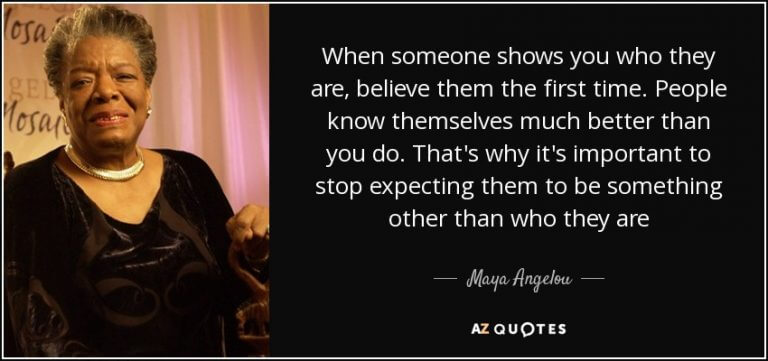
I’ve found this quote to be quite helpful over the years. I’ve tried to minimize placing my expectations or principles on individuals and allowed them to be themselves. In some cases, you will be surprised by someone’s actions. I’ve been in situations where the least likely person came to my aid. You just never know. The only I can hope for is not to be hoodwinked.
A year ago, I had just begun dealing with my health issues and thought everything would be over in a few weeks. I just wanted everything to be over, and I could return to my life. Friends and family were on my case about taking a step back and focusing on my health. Of course, this advice was like a thousand spikes hammered into my ears. I didn’t want to step back from work, retire, or any other nonsense in that arena. Do you think I’m soft? I got this! Who are you calling soft? No one was calling me soft, but that was my mindset.
A few months later, I got better, like I said from the beginning. However, my health improvement was short-lived. It was non-existent if I’m honest about it. Nothing more than a figment of my imagination. The characters I create for my stories are closer to reality than my reprieve from illness. My condition worsened, forcing me into retirement, and I was pissed. Here’s the problem: I wasn’t sure what I was actually upset about. I had prepared financially for retirement in a year or so. 2026 was the target year, but I could retire at any time before that. However, I didn’t like the idea of being forced to do something. However, health-wise, I was in no condition to do anything but try to get better.
Well, it turns out that my condition was worse than I thought, to the point where it was almost impossible for me to make this post or any others. Yeah, the shit had got real. So, no, where I am today versus a year ago. Not even close. I’m blessed


Last year, I told the story of my first day in the military, which I thought would be appropriate for today’s prompt.
Here is my previous response to the prompt
WordPress says I have already answered today’s prompt. Again, there is no sense repeating myself, so it’s REBLOG time.
Here is my response to the Weekend Writing Prompt – Diamond

Fractured light danced through the diamond’s heart, each facet holding a universe of trapped rainbows and whispered secrets.
Here is my response to the Weekend Writing Prompt – Occident


Amidst the fading twilight of the Occident, ancient stories whispered through cobblestone streets, carrying echoes of empires long surrendered to time’s embrace.
As it turns out, my favorite cartoon hasn’t changed in a year. Imagine that! I suppose I could make up something about how I loved SpaceGhost or He-Man, but I’d be lying, and you guys would see right through it
uld see right through it

Here is my response to Reena’s Xploration Challenge #359
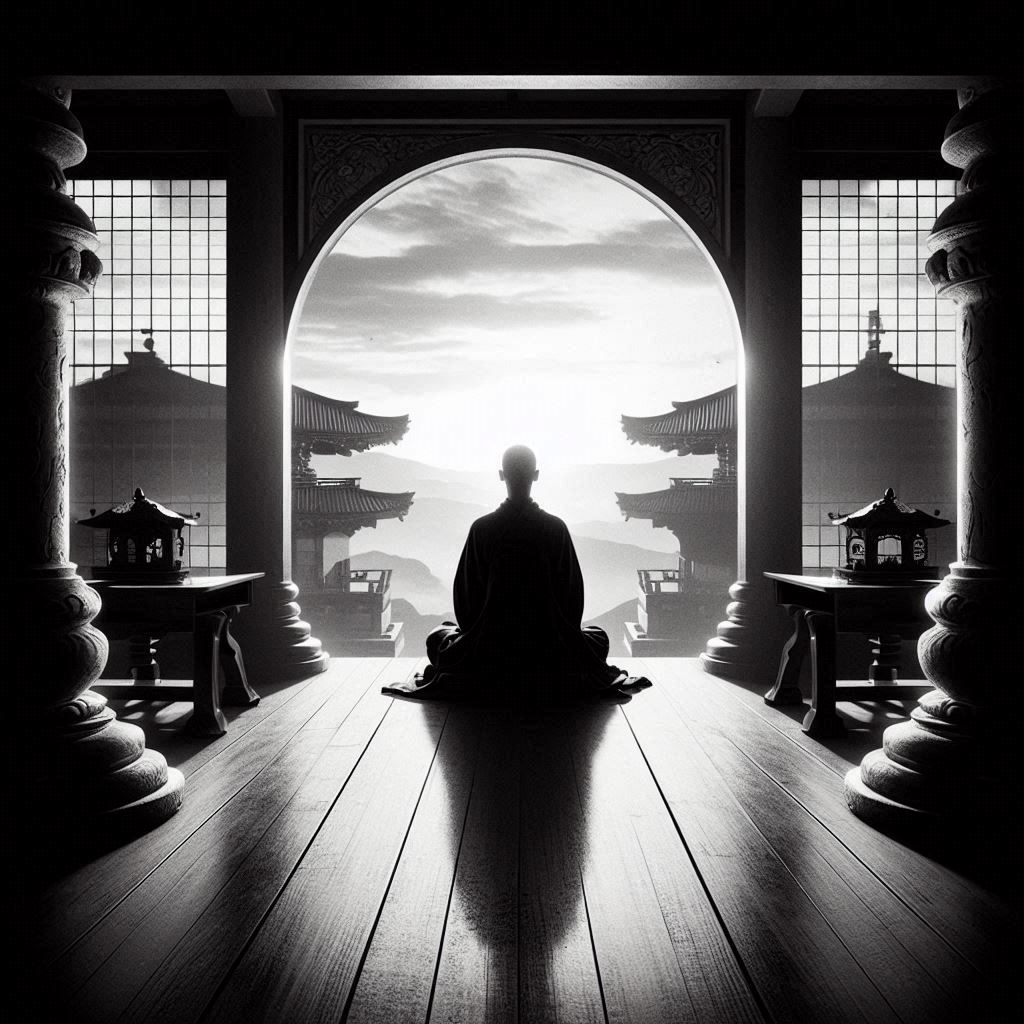
I walked in and pulled over the metal chair by a sliding door. I slid the door back and walked to the window. I sat down and leaned back in the chair, staring into the night sky. Closing my eyes and slowing my breathing, I prepared myself to see the possible scenarios I would face. I picked up something from a Tibetan. I cleared my mind of all the distractions. It wasn’t easy; it never was. The amount of baggage we carry around day to day is staggering. We cling to things we deem essential but are quite trivial in the larger scheme of things. The idea was to picture myself in a peaceful place. This place is different for everyone. Once you achieve the mediative state, the mind and spirit are in harmony, and the visions will come. Images flashed in my mind, displaying the different challenges that I might face. For each challenge, I came up with a possible solution. It wasn’t like I could see the future or anything, but I had been in this game long enough to know most of the problems I would face.
Author’s Note:
I’ve been working on a large writing project for the last month, and I wrote a portion of a larger scene in which the protagonist meditates. When taking a break earlier this week, I saw the above image, which stood out for some reason. I couldn’t place it at the time. I put the image on a separate scene, sat back, and let it talk to me. Then, it occurred to me why the picture was critical. I opened Scrivener, and sure enough, there was a note for me to work on that scene. So, I began to play with the scene using the picture. I decided to post this excerpt as I continued playing with the scene. Most likely, it will end up much different than what you see, but this sketch provides a good placeholder.
Over the last several years, I’ve been constantly complaining about the amount of time I don’t have. I can’t wait to retire so I can do what the hell I want… I remember going on about several times over the years. However, not that I’m here I find I have too much time on my hands. I occupy it with ridiculous projects. I’ve might have mentioned character analysis of the character’s in Superman universe. Now, let me ask you, if I were to write a post with my findings about the Superman’s character … would you care? I mean really?
Yes, I long for the days of being overworked and underappreciated by “the man” or wait… can we say, “the man” anymore?
The forest stood still, ancient and unyielding as if defying time itself. But now, a strange silence hung in the air—not the serene quiet of life breathing gently, but the uneasy hush of something amiss. The once-crystal stream that wound through the heart of the woods, a lifeline to countless creatures, was no longer clear. Its waters, tainted with an oily sheen, seemed to pollute the very essence of the forest’s soul.
A deer approached hesitantly, its hooves crunching softly on the brittle grass. It bent to drink but recoiled, sensing something wrong. The poison ran deeper than just the water; it was in the air, the earth, the whispers of the leaves. Who had done this? Who could destroy something so pure, so vital?
Perhaps it was the folly of man, always reaching, always taking. It was greed that sought to conquer instead of coexist. Or perhaps—just perhaps—it was the forest itself, tired of centuries of neglect, silently fighting back in ways no one yet understood.
The trees shivered as if sharing a secret, their shadows casting long and mournful patterns across the poisoned ground. And as the sun dipped below the horizon, the forest seemed to sigh, wondering if salvation was still possible in a world so carelessly polluted by those who claimed to love it.
When the war moved in, not the day it started, but the day it became real.
There are no bullets, no sound to remind you that you’re not home.
It’s the silence that creeps into your pores; now you know what unsettling means.
You taste the blood of the unhealed wounds, neath the scars you cleverly hide.
Sunlight radiates against your skin. You’re hot to the touch, drenched with sweat.
Yet, you stumble as you try to find your way through the darkness.
Searching for that light of hope, that fairytale, that legend we were taught to believe.
Something to cling to as we crash against the waves of uncertainty beating us into submission.
Suddenly, in the distance, we see it …
The Lighthouse of Hope
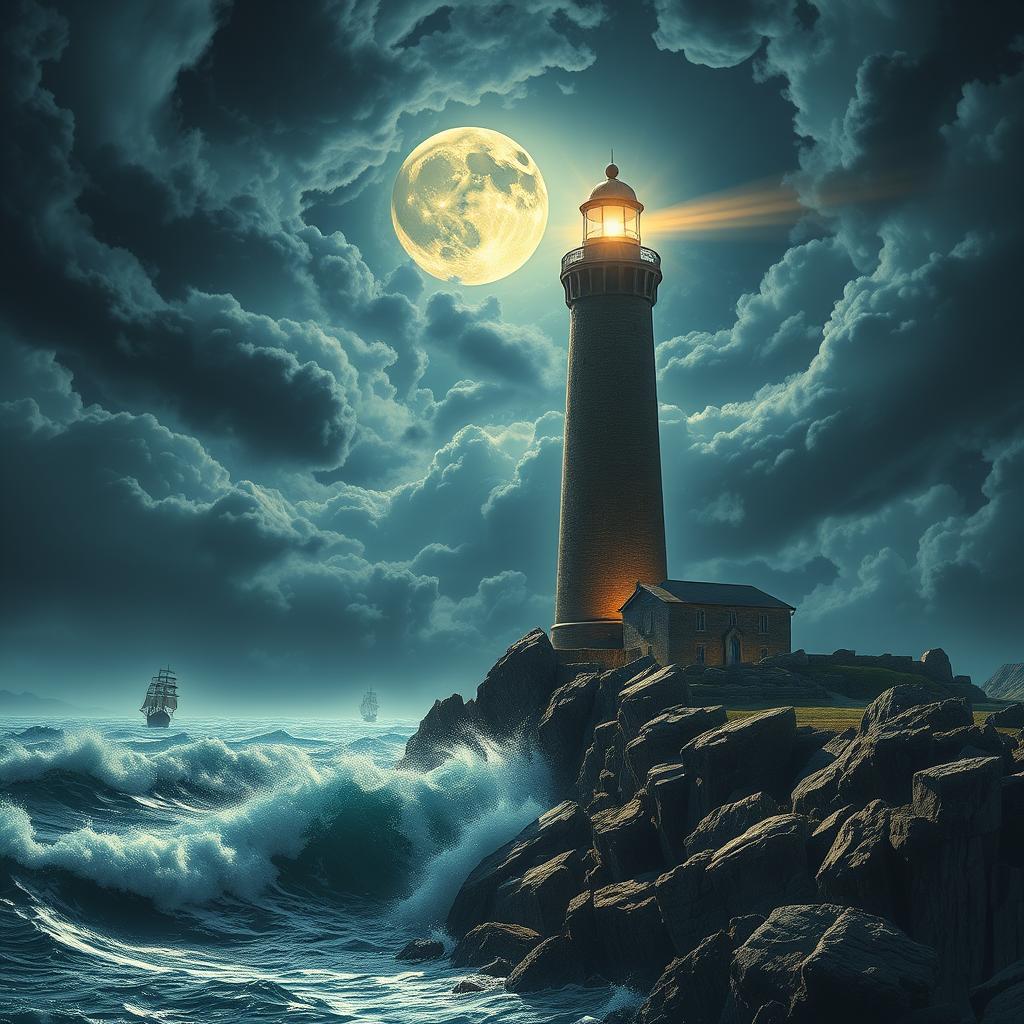
Authors note:
This piece was partially inspired by the opening line of Stacey C. Johnson’s piece called shelled.
For some reason, Jetpak likes to recycle questions for their prompts. Usually, when this happens, I either ignore the question or provide a different answer. However, my previous response is still valid since this prompt was only asked a few months ago.
If you were to ask my late wife this question, she would respond that my favorite place to visit was my house. I was never home. It didn’t matter what country we lived in; it seemed like I dropped off her and the kids and then left. In many ways, she would be wrong. Often, I wonder how I didn’t end up a member of statistics concerning service members and the divorce rate. Military life isn’t for everyone. I’ve seen it break some of the nicest people. I watched them become caught in the churn of military life and drown in a slow, miserable death. Both service members and their families. I suppose I was lucky to a degree.
I don’t have a favorite place, per se; I have more like a region I enjoy spending time in, the Pacific Northwest. I have hundreds of stories about my travels in that area, but none accurately convey my feelings about traveling on Highway 101. I’ve traveled up and down that highway more than I could count. Once you start traveling north on that highway, the world changes. Northern California is completely different than Southern California. Once you cross the border into Oregon, the world changes. This magic repeats itself as you enter Washington.
I also enjoy the time I spent traveling through Montana, Wyoming, and even Idaho. The scenery is breathtaking. All one has to do to feel better is just breathe
I remember being at an age when I took stock of my skills and abilities and wondered if these things defined the person I was supposed to become. Over the years, I have realized that titles, lists, or attributes aren’t what shape you. Our strengths and weaknesses change over time. Things we were good at when we were young may seem impossible to accomplish now. We may not even figure out how we did them in the first place. As we age, new abilities surface we never knew we possessed. Hopefully, we have gained wisdom along with experiences in life. We do the best we can with what we have to work with.
I sit smiling, remembering when this stuff mattered.

What does your ideal home look like?

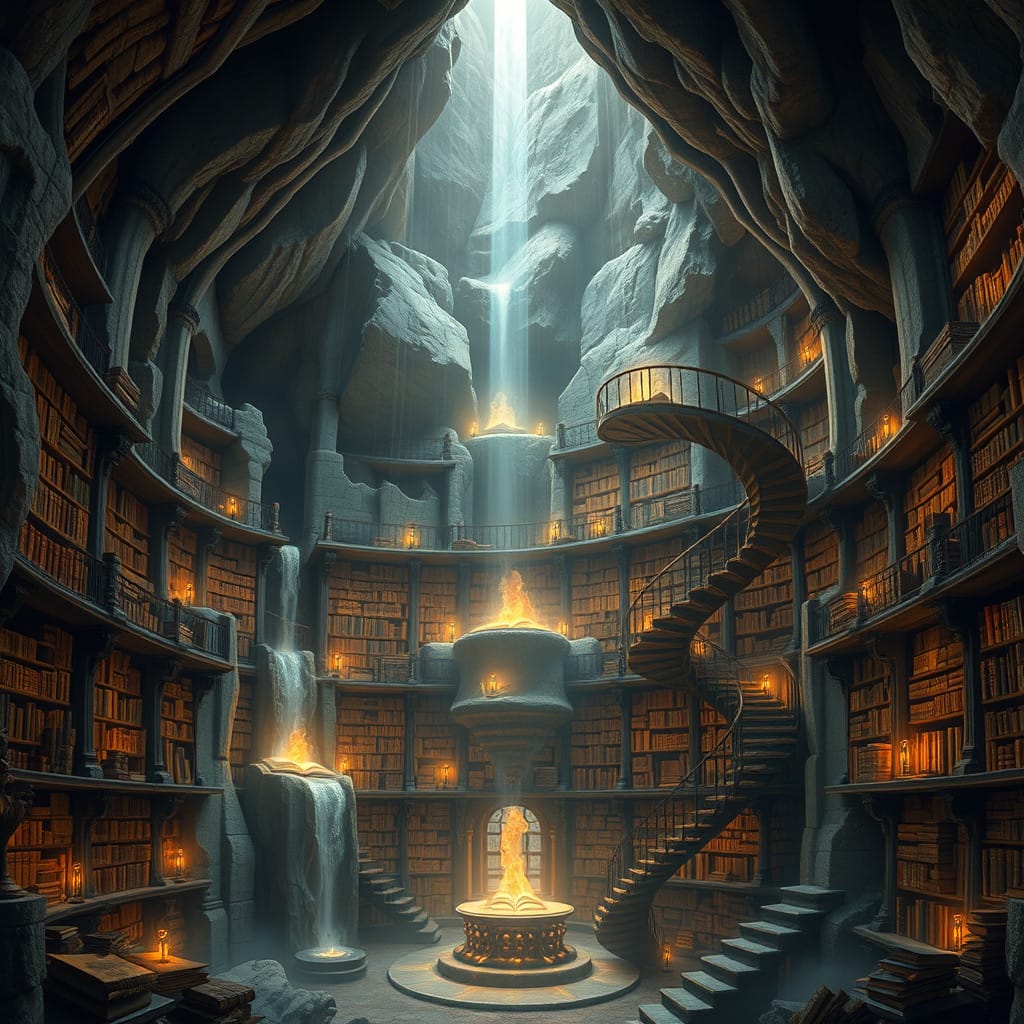
Not exactly, but something like this since we dreaming and all
What alternative career paths have you considered or are interested in?
I’m satisfied with the career path I chose. Could I have done something different? Definitely! However, the goal was to provide for my family, and I did that. So, in this regard, I’m good. I have always wanted to write, and I’m a writer. I wanted to make a difference or do something that mattered. I was a soldier. The best job ever is being a parent. It doesn’t get any better than that for me.
I’ve retired young, so I could return to work once my health improves if I want. The question is, what would I do? It would be something I enjoy, something that brings joy and meaning to my life and others.

I could play Watermelon Man or Blinded by the Light and get a second. It would be expected, even appreciated.
Here’s a sample of the stuff that would be playing over the loudspeakers …
I used to have a bedtime that I fought tooth and nail. I couldn’t wait until I became an adult to do what I wanted. You know, to stay up until the roosters crow and all that. Then, I got a job where four hours of sleep was a luxury. I spent most of my time working through the night. I’d pass out when the dawn came. Things seemed to be quieter in the daytime. Well, at least until after morning coffee. I’ve been wired that way for so long that it’s hard to be any other way.
Now that I’m older, I enjoy the stillness of the night. It is so peaceful and quiet. I can get a lot done during this time.
List three books that have had an impact on you. Why?
I love the fall; the colors are just as magical as spring. There is beauty in every season if you open your mind to see it. The color resided in the fact that it had the ability to make forget about the madness in the world—the madness that had the potential to destroy every fiber of decency that remained. So, we needed moments like these, moments where the fiery red of the leaves blended with the purplish hues of the space between that made the white of the snow-covered ground have a bluish tint. Moments of otherness.
I stood with an unlit straight hanging from my lips. The temperature dropped enough that you could see your breath. Winter was around the corner. Soon, Winter’s talons would be crawling at your skin. There have been more and more days like these lately. Another horrid crime scene was behind me. An example of the madness this beautiful scene would help me escape, even if it’s just for a little while. I could hear the crunch of footsteps against the snow and turned to see Lt. Rawlins.
Lieutenant Benjamin Rawlins stepped up next to me and stood silently. He wore an expressionless face—the look I was used to seeing. At the last crime scene, he was a pot of emotions on the verge of boiling over. He chewed on the end of his signature cigar. He always smoked the cheap ones. His wife said the good ones were too expensive to be chewed on. An expression that told me he was feeling exactly what I was feeling. We have both been doing this long enough where words weren’t necessary.
“There’s nothing like the fall colors right before winter,” Rawlins remarked as he spit out the chewed-up portion of his cigar. It looked like he would be needing a fresh one before long. I nodded in agreement.
“You gonna get this __” Rawlins broke off due to his promise to his wife when the first grandchild arrived. I stared at him, and he met my gaze. I nodded.
“Before Christmas? I don’t want the city to be in unrest during the season.” Rawlins remarked. Lists of children naughty and nice, letters to Santa, and horrible, well-intended Christmas gifts always gave me a warm fuzzy. Yet, you couldn’t ignore the magical elements of the holiday. So many people were absolutely impossible for most of the year, but they became something else during this season. Only a few weeks later, they seemed to forget the promise of hope and return to the drudgery. It’s disheartening and sad.
I shrugged and lit my cigarette. I took a deep drag, exhaled, and said, “Patience, Boss.” Rawlins stopped chewing, and I felt his gaze. His face reddened with rage, not at me, but at the idea, someone was in his city doing these hideous acts. He swallowed it, but not before he chucked away the remainder of his cigar in frustration.
“Detective Casey,” he began in that low growl graded against my soul. I reached out and gripped his shoulder, “Patience, Boss. We’ll get him, I promise.” Rawlins nodded and walked away. I watched him get into his sedan and leave. I knew better than to make promises in cases like these. It was possible we would catch a break and catch the killer, but it was more likely that we wouldn’t even come close to apprehending the killer. It was the pang of madness.
I’ve been participating in this year’s NaNoWriMo, so I haven’t been active on WordPress as usual. Yesterday, I completed the word count requirements, but they’re far from complete, so I decided to take a break and read some challenges. It’s always fun participating. While reading today, I noticed a few that caught my eye.
I used the following prompt to draft the opening sequence of the chapter of my ongoing work.
Moonwashed Weekly Prompt – Otherness and the enchanting image provided the imagery in the opening paragraph. It helped me add a bit of beauty to the gritty, grimy story I’ve been working on this month. Thanks, Eugi!
Ragtag Daily Prompt – Chew, Patience, and Shallow provided depth in the character interactions. Thanks Guys!
Esther’s Writing Prompts – Adding a pleasant element to my grisly tale. Thank you!
My camel smolders between my index and forefingers
I drink the last drop of Guinness. I close my eyes as its taste lingers.
I order another, drinking it down, trying to drown my despair.
However, it takes me nowhere.
I stand up, trying my best to be cool.
I swagger across the floor, looking like a complete fool.
I cross the room, grabbing anything necessary
Stopping when I needed to be stationary
Finally, I reach the glow of the box.
I hold it while my eyes slowly focus.
I look for anything that rocks.
I dig in my pocket and fish for some quarters
while I try desperately to complete my order.
I drop the coin in their slot,
Clickity,
Clickity,
Clack
metallic splash
the coins reach their new home.
I weave from side to side, waiting for the sounds of madness
The guitar plays a power chord through my soul.
My arms outstretched, and my fingers pop.
My head and hips sway to the rhythm of its melody.
Two steps forward, three steps back.
My eyes squeezed tight as the sound soothed me just right.
I danced by myself in the dark and didn’t give it another thought.
Thank you for readng
My favorite spot in my city is the park. It serves as my outer office. I’ve worked on countless stories and come up with just as many ideas. I sit and watch the things that happen in the park. Some days, I break out my camera and take pictures of the things around me. Some of these photos aren’t of anything special, but for some reason, they evoke a thought or conjure an idea. On other days, I sit and allow nature to cleanse my soul. A reboot, if you will. There are numerous parks in my area. All of them offer something different. So, I never run out of inspiration.

As a young man, I had this insane desire to be liked. I wanted to be considered cool and all that. Then, one day, something peculiar happened. I stopped giving a s**t about what people thought of me and focused on becoming the person I was destined to be. Of course, I didn’t have any philosophical phrasing back then, but the sentiment and emotion driving it remain true. However, despite my severe lack of interest in what others thought of me, something kept me in line. I needed to be a son my Mom could be proud of. I never wanted to let her down. She made far too many sacrifices to be a disappointment to her. So, most of the decisions I have made in life. I keep in mind what my mom would say about this. Make no mistake, I’m my own man; Mom raised me that way. But I use her example as a guide.
I always read several books at once. I’ve never been able to keep my focus on one book for any length of time. To help with this, I usually do some research on a particular subject to give my mind a rest. As I research, I usually read several books on the subject I’m studying. Despite this, I still have trouble slowing my mind down enough to enjoy a single. On the rare this occurs, I typically read the book a second time as a writer to see what the writer did to capture my attention.
Here is my current reading list for pleasure:
My Mom had transferred me to a new school. Not only was I the new kid, but I was also the only Black kid, so things were immediately interesting. The world wasn’t as inclusive then as it is now. Despite these challenges, I made a friend. Most of the children were polite, but this guy was my friend for a while. We’d play after school, shooting baskets, skipping rocks, etc. Well, one day, we found a rabbit’s foot. It was exciting and all that, but I quickly forgot about it.
A few years ago, one of the girls from that school reached out on one of the socials. Once she discovered me, she broadcast to the rest of the class. So, my friend contacted me. He sent me a picture of that same rabbit’s foot we found over 40 years old. That picture officially made that rabbit’s foot cool. This story may not be the coolest thing I have found, but it makes me smile every time I think about it. Our lives are made up of tiny moments like these, and we should cherish them.
Several years ago, I posted the following somewhere on one of my socials.
“Curb your addiction; Netflix is not a lifestyle.”
I said this because, at the time, Netflix was the hottest new thing. I believe we should read and spend with our families instead of having faces glued to a screen. It remains my opinion on the matter. However, the current trends and versatility of mobile devices aren’t lost on me. I read the other day and posted on this blog every day for over six months. Looking back at that period, I realize it was done using one of my mobile devices.
My preferences are my desktop for any major creative endeavor, such as video or photo editing, and my laptop when I’m writing fiction. One can’t go anywhere without observing someone lost on their screens. I suppose it is the way of the world, as they say. However, I was amazed when I discovered that someone studied this behavior and named it. It’s called Small Screen Addiction.
Here are the particulars:
Overview of the Issue:
Small screen addiction, often referred to as screen dependency disorder, is a growing concern among children and adolescents. This phenomenon encompasses excessive use of devices such as smartphones, tablets, and computers, leading to compulsive behaviors that can negatively impact mental and physical health. As technology becomes increasingly integrated into daily life, understanding the implications of screen addiction is crucial for parents, educators, and health professionals.
Extent of Screen Addiction:
Research indicates that a significant number of young people exhibit signs of screen addiction. A 2021 survey by Common Sense Media revealed that 75% of teenagers felt compelled to respond immediately to notifications, while another study found that teens checked their smartphones a median of 51 times per day. Symptoms of screen addiction include preoccupation with screens, withdrawal symptoms when not using devices, and a loss of interest in activities previously enjoyed. The American Academy of Pediatrics has raised alarms about the detrimental effects of excessive screen time on children’s development and well-being.
Mental and Physical Health Consequences:
The consequences of small screen addiction are multifaceted. Physically, children may experience issues such as insomnia, back pain, vision problems, and headaches due to prolonged screen exposure. Psychologically, increased screen time is linked to higher rates of anxiety, depression, and social isolation. Studies have shown that children who spend excessive time gaming or on social media are at greater risk for mental health issues. Furthermore, the addictive nature of screens can disrupt normal brain development in children, affecting areas responsible for impulse control and empathy.
Behavioral Indicators:
Parents and guardians should be vigilant for signs that may indicate a child is struggling with screen addiction. Key indicators include:
Strategies for MitigationTo combat small screen addiction, experts recommend several strategies:
When reading this information, I was taken back primarily by the initial data focusing on the small-scene addiction effect on children. It makes me want to visit all the grandchildren and snatch their phones away. “Gave a damn book!” I see myself yelling in my rant. Of course, my grandchildren would look at me and wonder what Peepaw was going on as they glanced up from their screens. I’d have no hope of assistance from my children because they would wonder about the recipe, outfit, and lifestyle of a person they haven’t a clue about.
However, this got me wondering about the effects of small-screen addiction in adults. Here’s what I found.
Eye Strain and Vision Problems
Musculoskeletal Issues
Sleep Disruption
Sedentary Lifestyle
Anxiety and Depression
Cognitive Changes
Social Isolation
Stress and Mood Disturbances
Reduced Productivity
Attention and Focus Issues
Dopamine Feedback Loop
Altered Brain Chemistry
Well damn! This is the only thing I could say after reading this data. Excuse me while I charge my phone and iPad and process this data.
I read this question and wondered what they meant. I’ve said it a thousand times if I’ve said it once.
“I don’t have time”
or
“I need more time.”
In the military, we have said, “We train to standard, not to time.”. One of those really cool sayings doesn’t always apply. However, as I progressed in ranks, I realized that prior planning or proper planning removes most of the anxiety associated with time constraints. We used a system called After Action Reviews (AAR’s) and later became lessons learned. We would evaluate an exercise and make note of things that went well as well as our failures.
The purpose of this action was to devise a plan to achieve a greater degree of success. Ideally, this plan was placed in a binder for review at a later date. The binder also served as a guide in case of a personnel change. The problem with every system isn’t the system itself, although that is sometimes the case. Rather, the lack of personnel utilizing the system results in the utterance of the above-listed questions.
Now, I won’t sit here and say there weren’t instances where we needed to make adjustments on the fly—there were plenty. However, the majority of the situations when we felt a time crunch were due to a lack of planning or learning from previous mistakes. I have developed an expansion of this philosophy as I have aged.
We have the same amount of time today as yesterday and tomorrow. The first time I said this idea about time to someone, I was told that Daylight Saving Time defeats my logic. I laugh because I feel it isn’t true. The key to successful time management is how we utilize the time we have, which is a constant. So, whatever system or techniques you may use, don’t worry about if you have enough time because you do.
Answering this question correctly depends on the definition of artist. Like many Jetpak questions, it fails to be specific. It’s almost like they have a dumb ass question generator or something. However, I like this question well enough to answer with minimal disdain. To do so, I need to provide myself a definition.
noun
As you may have guessed, I’m in a bit of a mood today, but now I have something to base my answer on. So here goes.
As a writer, my first thoughts about the creative arts are about works of literature. However, this presents an issue for me. I can rattle on for days about different works of literature and their importance without breaking a sweat. But, for the purposes of this post I will discuss some of my favorites.
Novels
Poetry
Painting and such
Photography
Comic and such
Here is the short list off the top of my head. Looking back over this post, I chuckle a bit because I remember my wife asking me a question after I had answered her questions. Why can’t you answer a question like a normal question?
For the past few months, I have been looking over how I handle things, and they totally screwed up. What upsets me is that they have broken for quite some time. Things that should not have broken in the first place. First, I must acknowledge that despite my best efforts, I am still just human. I used to think I was a cybernetic being, but then I went through the part-dragon phase. Alas, I’m just human. The last year’s health issues taught me that lesson tenfold.
I’ve never felt weakness like this before. It’s hard to wrap my head around it. Being in this state blows, to say the least. There were times when I wasn’t sure how things would turn out. I had to rely on the strength of my brothers as well as my own. I’m not used to this, but my people reminded me that my fight isn’t over. I will do well to pay more attention to that.

How long will my words echo in an empty hall?
How long will I sway to its melody alone?
How will silence swallow my cries?
How long will my essence seep from the cracks of my shattered shells?
Oh, how I long to be deafened by the screams
How I long to be drenched in their pain
To feel the passion of the tale, so eloquently crafted
To soak the page with tears of a depicted sorrow
I yearn for the warmth of the lover’s flame
To be memorized by its dance
To be enchanted by its unscripted ballad
The uncontrollable churn of my soul to its mythic rhythm
To feel the surge from the heartfelt turning into a pound
The sensation of my chest tightening, the pause of that breathless gasp just before the pant
The anticipation of the splash from the bead forged in the embers of the moment
The feel of slickness on my palms right as I turn the page to the next chapter of my life
To be filled with pride from your look of approval
To be filled with passion from the same eyes but a different glance
To know love to the core, standing firm in its goodness, as well as un-wavered by its pain
To understand by knowing it, I will be the better for it
For any man experiencing these and so many more…
Of that man, I am envious.
To feel any of these things, in that instant, I will cease being
The
Hollow Man
Since I retired, I’ve been trying to figure out what I’m doing with myself most days. However, I have developed a few new habits. For some reason, I suddenly felt it was important to do self-care. When I was a young man, you were supposed to be based on the principle of good single malt and bad decisions. However, I try to eat better and enjoy the things I didn’t do when I was young.
Recently, I returned to creating art. I figured that part of my life was over since I hadn’t explored it in decades. So, every day, I brew a pot of coffee and start working on creating something. It doesn’t matter to me which avenue I decide to explore. Lately, I have been sketching out ideas for the creations I’m trying to render. Frequently, I start with character development and work on their backstories. I work until I get worn out and then nap. Napping is a new daily habit.
At the end of the day, I feel good if I have created something.
Most people I meet think my favorite genre of music is rock and roll. Based on the music I play on this blog, those reading this may be inclined to agree with that assessment. The truth is there is entirely too much music out there to be narrowed down or pigeonholed.
However, there are a few genres in which I have a soft spot: jazz, Blues, and old-school R&B. These are the music I grew up listening to. My first concert was a jazz concert. My Madre dragged me to see George Benson. I can’t remember the show, but I’ve spent my life listening to his music. The jazz record I remember listening to was Ramsey Lewis’s Sun Goddess. I didn’t know it was jazz, but I still loved it.
Madre also played Motown, the Philly sound, and other R&B artists, such as Billy Paul, Barry White, and Teddy Pendergrass. My Mother also introduced me to rock and roll. She played Doobie Brothers, Steely Dan, Linda Ronstadt, and others. So, it would seem that I was destined to be eclectic with my music choices.
I’ve spent ridiculous amounts of money on this supposedly fine cuisine. More times than not, I’ve been severely disappointed with the outcome. I took my late wife to a fancy steakhouse that she had going on about for months. In the hope of some sanity, I took her to the restaurant. She made me get dressed up and everything.
The restaurant’s atmosphere was majestic, but the food was mediocre. My wife put on a smile as she ate her dinner. I wanted to ask for a refund, but I sat there with her, watching her enjoy her meal. After she finished, we sat and chatted a bit, enjoying the atmosphere. When we returned home, she went to the refrigerator and pulled out some ground beef. She stood there in her fancy dress cooking the ground beef.
She toasted a couple of buns with butter and garlic, then sat down at the table with her famous cheeseburgers for the both of us.
She took a bite of her burger and sighed, “That place was sure nice, but the food was horrible.”
I laughed as I ate my burger.
“We spent all that money and ended up eating cheeseburgers to get filled.”, she mused while smoking a cigarette.
“Yeah, but you’re sure wearing that dress,” I said deadpan. She chuckled and smiled mischievously.
The fancy restaurant wasn’t worth it, but sitting in our kitchen and spending time together was.
Good Afternoon, I opened with this line this morning
“I watched the dawn burn away the night.”
I asked my cat what she thought of that line.
This was her response …

Everyone’s a damn critic. I shook my head, and of course, she was unaffected.
Really? I asked
Her response

You a little sh**! My muse had decided to take the form of my cat. My actual cat, Sophie, looks at me as if I have finally lost my mind.

Well, I do write the Memoirs of Madness…

I always liked it when MiMi called me Mister. It made me feel grown-up or something. Maybe special would be a better word. However, this excitement was only temporary. For the word Mister meant trouble. It wasn’t like she had every minute planned or anything, but you weren’t going to be sitting on your butt while she was working; no, sir!
So, I wondered how she would feel about sitting around and wondering how I would spend my day. I recently retired and haven’t gotten the hang of these as of yet. I still feel I need to be doing something. I’ve worked since I was 13, so sitting on my butt isn’t how I’m built. So, I suppose I waste most of my time these days figuring out what I will do.
You know, things like, what story am I working on? What kind of image should I create?

I’m constantly pestered with my choices to the endless questions that arise arbitrarily. For example, “Does that flower look real enough?” Should I grab my camera and go take some photos of real flowers? So, much time and so many different things to do. I would call my brother and ask him about my dilemma, but he isn’t retired yet. He makes a face when my other friend and I mention we are.
If I’m writing …
As I stood in what I now know to be the regions of my mind, the pathways guided me to the stories; vibrant globes were precious memories. I took a step, and I was frisked into a story. The whirl came into focus, and I was upon a horse galloping down a dirt path.
Does this opening have enough punch? I shake my head and go back to playing with images.

Is she who I envisioned when I created her?
So, you see, I spend most of my time wondering about stuff. Were there female pirates? If so, what did they really look like? Because Hollywood gets everything wrong. As I finish this post, I’ll leave you with MiMi’s immortal words.
“Boy, if you have time to wonder about all that, [pause] Whew! You need a job!”
What’s the oldest thing you own that you still use daily?

For whatever reason, AI has something against generating an image of a Dodge Ram, but whatever. I drive an old Dodge Ram that’s 19 years old. She needs some loving, but she still gets me where I need to go. I will start repairs sometime in the next few weeks. Hopefully, if the issues aren’t too severe.
A waitress stands outside, grabbing a smoke. She was three pats and a wink away from paying her light bill, but if that red fat-faced fuck touched her one more time, she’d scream.
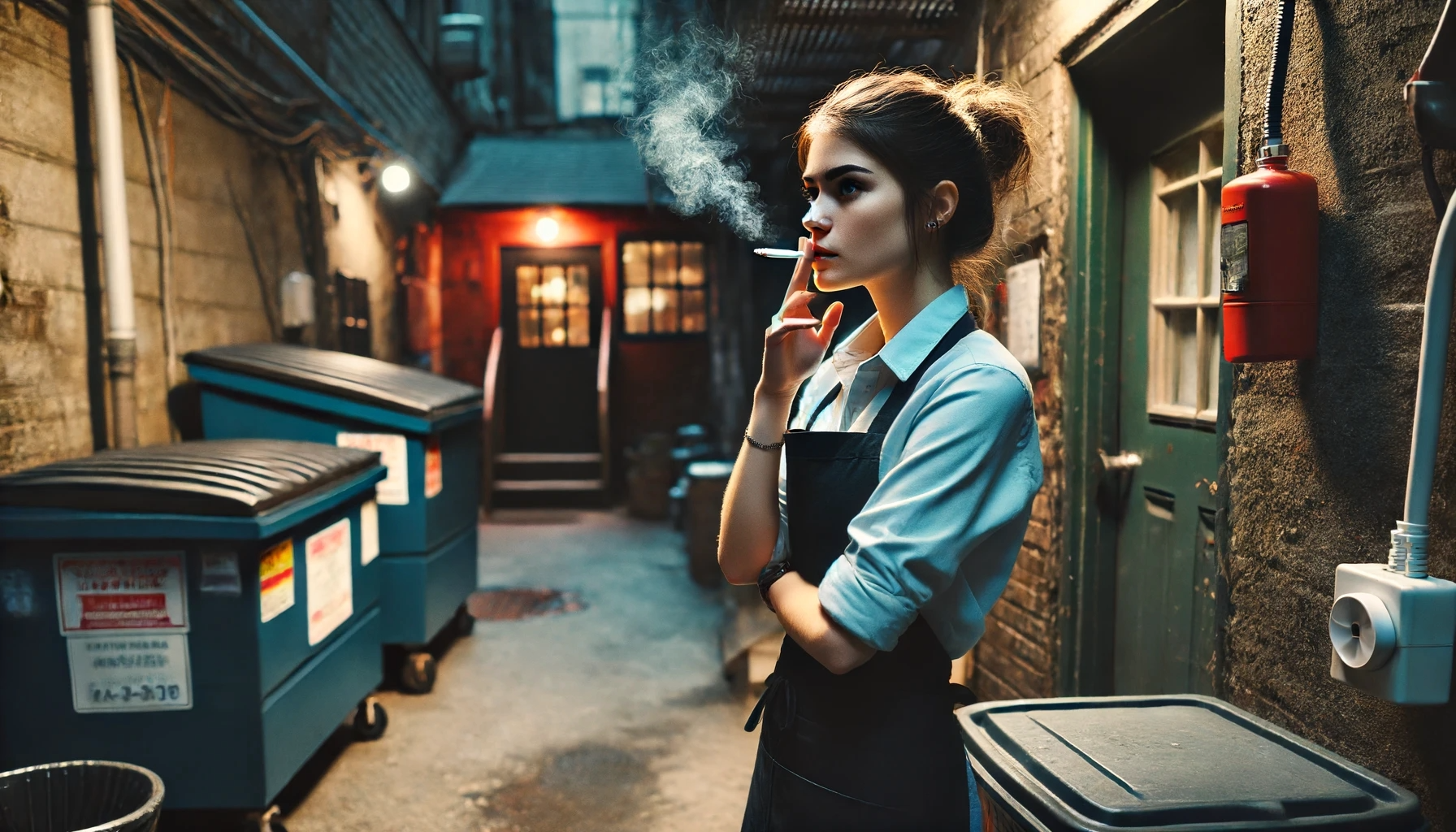

Good Morning …Dawn is coming, and birds chirp a ballad about the people you don’t capture in verse. Those blessed & cursed Those looked upon with disgust. Without question, they fight for us. Tell their story today … its 4am
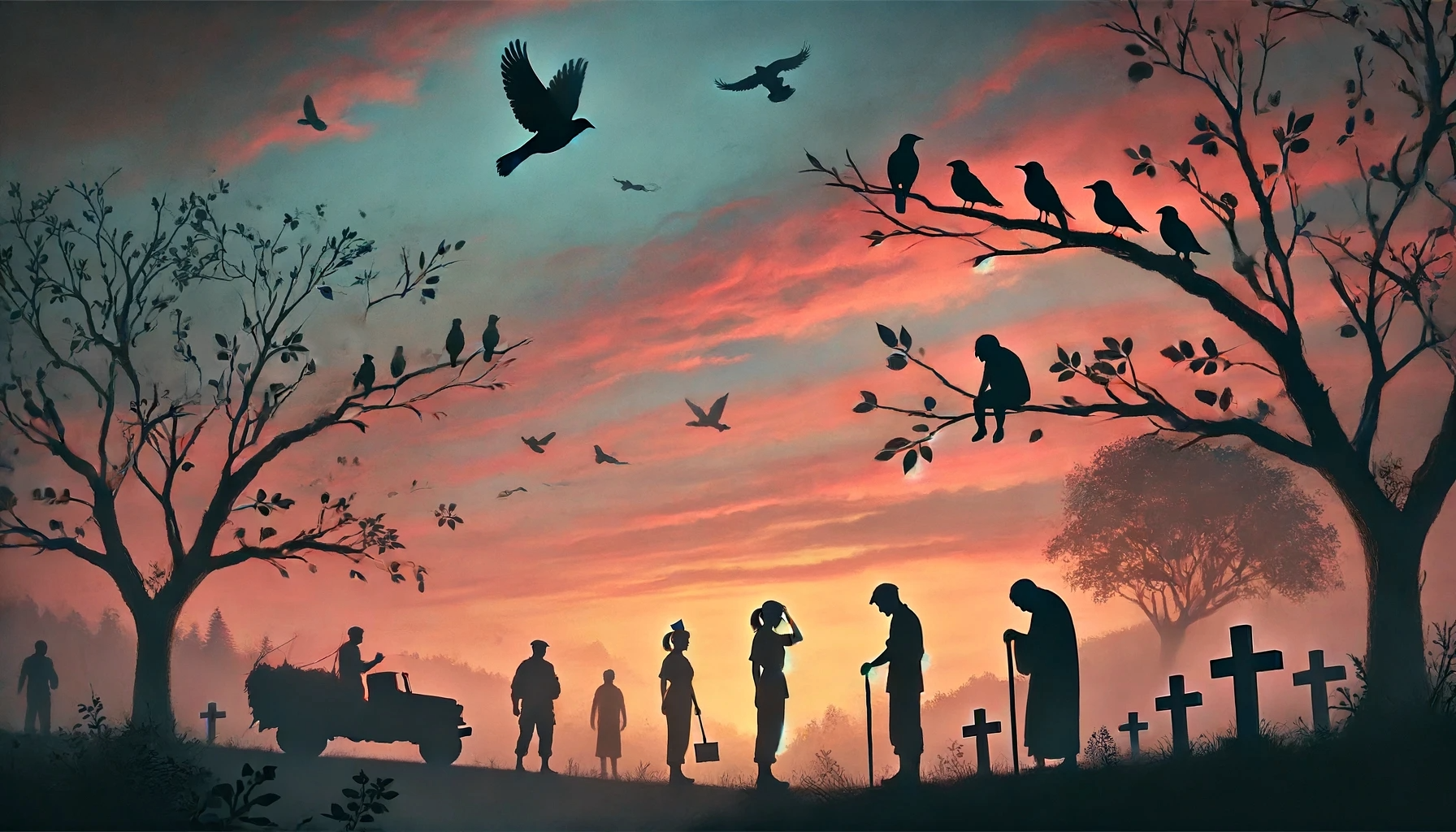

Though they may never admit it, all a man needs in his mate is a safe place to cry. No tear ever needs to plummet, but the sure fact he can, if desired, means everything.
Here is my response to the PCGuyIV’s Truthful Tuesday
If my editor knew I was responding to this post, I can envision her holding her breath, hoping I didn’t dive right into a full-on uncensored rant about book adaptations. Lord knows, she has endured more than her share over the years. Partly, I can’t seem to understand the cuts or changes they make. It’s like they never actually read the book, not to mention understood the author’s message. Breathe, Mangus, breathe!
1…2…3…4 … 5..0…7…6 [exhales sharply]
Screenwriting was a part of my training as a cinematographer. So, in theory, I understand the necessity of removing portions of the book as long as it doesn’t sacrifice the story. If it can’t be filmed, then it needs to be cut from the script, was the rule of thumb in class. So, I get it. However, there are still times when things just don’t make sense.
In graduate school, we task to adapt a novel into a full length motion picture. Finally, my chance to show these folks how it’s done. I was determined to get this right.
Let me explain screenwriting first. This explanation is simple overview, but you get the point. For every page of script, equals one minute of film. Put simply, 2 and half hour movie is a 150 page script. What? Write an 150 pages? That’s nothing! [scoffs].
So, I sat at my desk and pumped myself up with all the necessary bravado one would need on any given occasion.
“I got this!”
“I’ve written all kinds of stuff, please!”
and so on! This is about the time my brothers would look at me, shaking their heads, and uttering in unison, “Jackass!” I often wondered if they were in a barbershop quartet in previous life. The dissonance of their voices blends together harmoniously. Despite their chiding, I would look continue to display “my determined look,” I will not bow to adversity!

Yes, my hair grew out and I rearranged my office, but I was still determined to write the masterpiece. A friend called and needed a favor, so I packed my gear and went and shot a short film, then a commercial, and then another short film. Then the pandemic arrived and the world changed. I never finished my masterpiece. Incidentally, I was adapting Ellison’s Invisible Man, which if adapted uncut would equal a 9 1/2 film. Yeah, I was definitely what my brother’s called me for tackling such a major work of literature on my first stab at full length screenplay. There’s a good reason its never been done before. However, I did learn something.
For motion pictures, novellas, short stories, and stuff work great. It is much easier to say closer to the book. Examples, of this working on well are Shawshank Redemption, Inventing the Abbotts, and Stand by Me. Each of these examples were based on shorter fiction. Two of these films are considered classics.
For novels, it’s better to adapt them for television, if sticking close to the source material is a goal. You have the time to tell a more complete story. In other words, you can put some meat on those bones. However, you have to keep in my mind, if you can’t film it, cut it.
Last thing about screenplays. Screenplays, are basically the movie written on paper. It’s the blueprint to the entire project. The cuts, fades in and out, and those things you think about while you are watching a movie are written in the screenplay. Yes, adjustments will be made, but the screenplay is where it all starts.
Above, I answered the question from the point of view of a writer. Now I will talk to you as a fan. I was fan long before I ever thought about making movies or writing them. As a fan, I chose TV. Over time and throughout the years, they have done a better job with the adaptations. With the improvement of production quality of television programming, further solidifies my opinion.
Some of my favorite adaptations for television are Bosch, Justified, Dublin Murders, and Lincoln Rhyme: The Hunt for Bone Collector. With Bosch we really get to see who Harry Bosch is as a person. The script has made changes, but Michael Connelly has hand in the show so the character integrity is present. Justified is a adaption of Elmore Leonard’s short story “Fire In The Hole.” However, there are several Raylan Givens novels that pulled elements from for the series. Timothy Olyphant’s portrayal of Raylen Givens is excellent. He brings to the screen that you couldn’t write.
In the Bone Collector (TV series), we really for the first time were introduced to the Lincoln Rhyme of the Jeffrey Deaver series. Lincoln Rhyme is a brilliant, exetremely difficult man with tremendous chip on his shoulder. To say, he was bitter about his circumstances is a understatement. We get a hint of Lincoln’s character in the Denzel protrayal, but it shows through in the series with Russell Hornby protraying Lincoln Rhyme.
Most important of about the Bone Collector (TV Series), this is the first time Amelia Sachs appears in a live action role. Now, in the feature film, Angelina Jolie, protrays a character based on Amelia Sachs, whose first name was Amelia, but she wasn’t Amelia Sachs from the books. Arielle Kebbel protrays Amelia Sachs in the series. We witness Sachs battling her own demons while developing a relationship with Rhyme. She challenges him. This is the Amelia Sachs from the novels.

Where did you hide the ship?


As the sun began to set, the world, usually at 1000 mph, seemed quiet. The hustle and bustle of life, the constant noise, and chatter fade. It was as if the earth had taken a deep breath, letting it out slowly. Then, it repeated it. At that moment, everything was calm; everything was still. It was a moment of perfect pause.
If you had to change your name, what would your new name be?
When i think of this question it reminds me of this ridiculous scene from back in the day.
If had to change my name … it just wouldn’t be me. I’ve gotten used to my crusty self. I’m frayed around a few edges and plump tattered around the rest. But, I’m me. My creaky bones sound off louder than ever. That’s because I’ve used them. I’ve laughed, cried and fought.

Typically, when comes to film adaptations, we got two categories:
“Oh my god that was horrible! The book is so much better!”
“Can you believe they did that? That’s not in the book!”
The majority of the film adaptation I’ve seen into these categories. I’m a huge Shawshank Redemption fan. I was a fan of the movie, before I knew it was an adaptation. I found it was based on a Stephen King novella, immediately I was turned off. Have you seen some of film adaptations of Stephen King’s stuff? I’m not talking about the recent adaptations or reboots. There were horrible. I’ve read several King books before seeing this film and enjoyed them. However, for some reason, King fell out of favor with me until I read his book about writing. Single malt scotch rained from the heavens, and all was right in the world again. I was back to being a fan.
So, I read Rita Haywood and the Shawshank Redemption, one of four novellas in Different Seasons collection. I fell in love with the movie even more. They did an amazing job with this adaptation. The casting of Morgan Freeman was a stroke of genius. I saw the picture above online somewhere and had to write something about what I could describe as my favorite movie. 30 years can you believe it!
Where would you go on a shopping spree?
Shopping Sprees? I’m bold, daring, and a tad bit reckless. Slinging money left and right. Yep, that’s me. Three places I make it rain at. Amazon, local used bookstore, and local used record shop. I know it’s crazy, and I need to contain myself. Yes, I’ve thought about therapy. Perhaps, even joining some sort of support group. You know, stand up there sharing my tales of how I spent my money on a first-edition Poe. Perhaps I tell them about the thingamajig I got on the lighting deal. I saved so much I can’t believe I got it. What a bargain. You know, “that deal” sitting in the junk drawer, and you can’t even know what it is, not to mention why you brought it? Tell this to a perfect stranger? I don’t think so!
But I’ll go anyway because I have nothing to do on Fridays at 6:00 p.m. St. John’s has a lovely meeting room, and they spare no expense on the refreshments. However, the guy who leads the Thursday meeting at St. Agnes has a booming voice and stares at you with penetrating eyes. I find myself sliding down in my chair by the time he’s done. I’m thinking my shopping sprees aren’t diddlysquat compared to him. I’m just a cute little furry kitten.
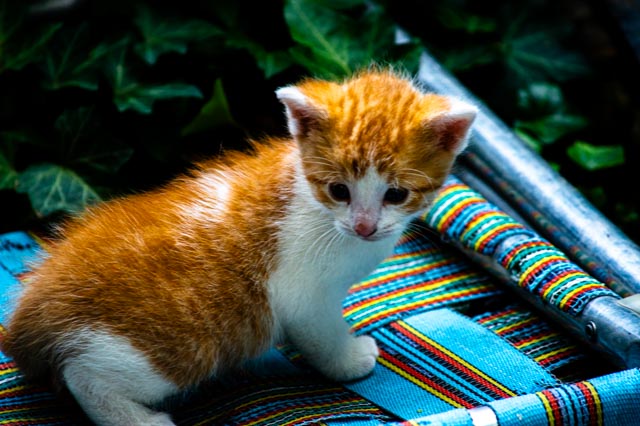
When you were five, what did you want to be when you grew up?
When I was five, huh? I just wanted to fly. Then, jump motorcycles, run fast, be GI Joe, be a singer in a Rock & Roll band, and make my Mom proud.
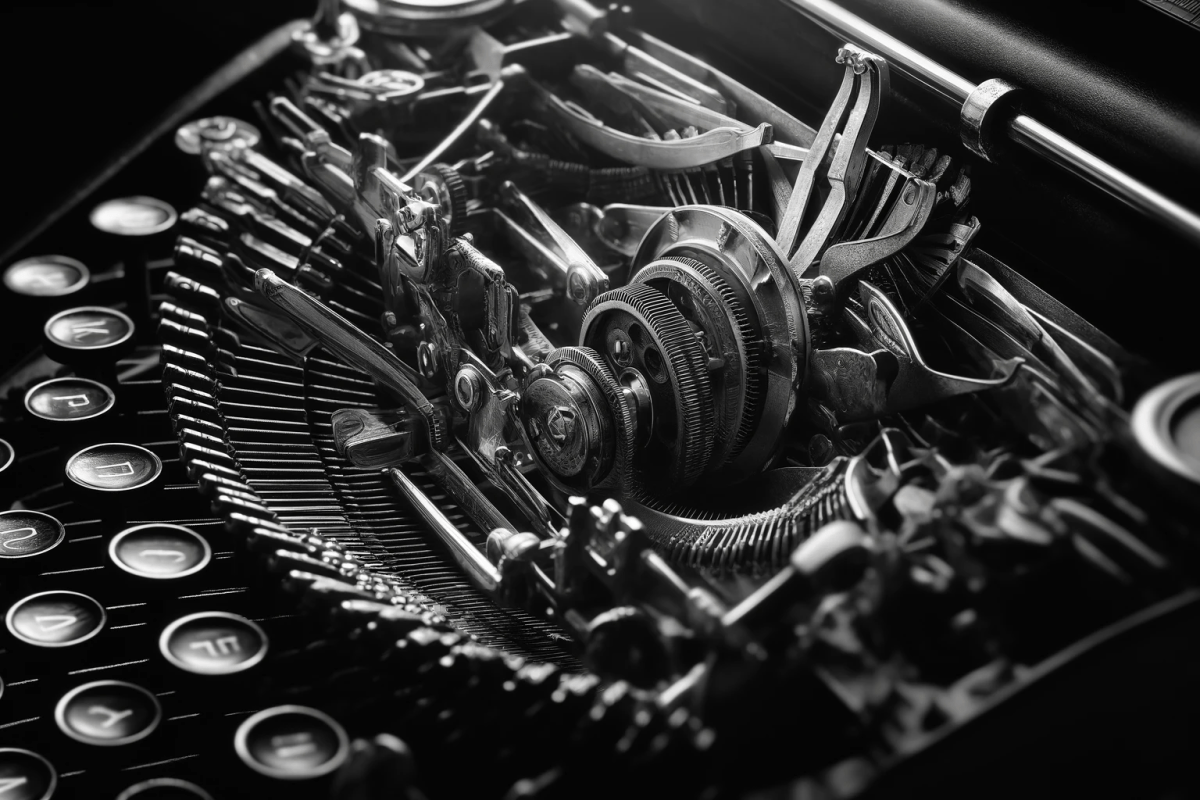
Here is my response to Writer’s Workshop
The sun through the 4th floor glass felt good, It was partly on my shoulder and partly on my face. It was good to the feel the warmth. I’d been so cold lately. Nothing, I did made me warm enough. Even when AC went out and it was 90’s degrees in the house, I was okay everyone was else, but they kept their complaints out of earshot. I appreciated that.
I’m sitting thinking about the one who got away. The one who was supposed to make things better and all that. I never knew if they really happened or was it something said we believed in publicly, but thought was a crock of shit privately. “The One” worked at Aunt Peg’s candy shop in the local mall. I must have spent hundreds of dollars on soft peppermint sticks that summer.
The neighborhood paperboy loved me. He made a dollar for every trip to the candy shop. You see, I never could muster up enough courage to actually go up to the counter and ask for the candy.
“Do you even like peppermint?” Maynard, the paperboy asked
I didn’t answer. I did my best to give him an evil leer. Although, I don’t think it was working very well.
“Look, if this is all about the girl? She’s right there. Just talk to her.” Maynard took his dollar and left. That was the last day of summer and I never said a word to the girl.
I still eat soft peppermint sticks when I can find them. Those puff balls seem to have cornered the market. Some marketing genius started this whole mess.
Yep, Aunt Peg’s soft peppermint sticks were the best!
Here is my response to MLMM Photo Challenge

I surveyed my kingdom and the lush gardens before me from my perch on the railing. There’s a sign by the gate with a picture of me. It says something below it. They call me Stanley. I wonder which one came up with that name. The humans often walked these paths, marveling at the beauty of nature, but none could truly appreciate it as I did. I am the peacock, the jewel of this realm, and my feathers are the crown jewels.
I strut through the gardens daily, tail feathers trailing behind me like a royal train. The sun catches the iridescent blues and greens, making them shimmer like the waters of a hidden lagoon. Today, I decided to take a break and observe my domain from this higher vantage point.
The air was fresh with the scent of blooming flowers, and the trees whispered secrets to each other in the gentle breeze. I watched as a family strolled by, their eyes widening in awe as they noticed me. The little ones pointed and gasped, tugging at their parents’ sleeves to share their discovery. I preened, feeling a surge of pride. Even the youngest humans recognized my magnificence.
Beyond the garden’s edge, the world seemed a distant dream. Within the bounds of my green paradise, life moved peacefully. Birds flitted from tree to tree, and the occasional squirrel scurried past, always keeping a respectful distance. They knew, without a doubt, who reigned here.
The sun began to dip lower in the sky as the day wore on, casting a golden glow over the garden. I could hear the murmurs of the visitors growing softer as they made their way to the exits, reluctant to leave this haven of beauty. Soon, the garden would be mine again, a quiet sanctuary where I could rest and dream of new ways to dazzle my audience come morning.
For now, I stood still, a statue of elegance and grace, soaking in the admiration of those who lingered. I am the peacock, guardian of this garden, and in my feathers, the world sees the magic of nature.
Do you remember life before the internet?
This is sort of a tricky question. It’s tricky because a version of the internet has been around since the 60’s. However, this version of the internet, wasn’t available to the public. To be honest, only the select few even knew of it existence. Now, the version that this prompt is properly referring to became public in late 80’s. I already a working adult, so I remember the beginning of the transition well.
I also remember life prior to this transition. In the age of technical ignorance, things were quite simple, but very time consuming. We did things by hand. In the 80’s we had computers, but we did not have hard drives or cloud storage. Instead of carrying a flash drive in my pocket. I carried a library card, bus pass, and a floppy disk stuffed between the pages of my notebook with my stories in it.
In the pictures below represent what we used for research before the internet. We had ideas scribbled in our notebooks or index cards. We spent hours going through these drawers of cards sorted by subject and author. We would read passages from several books trying to narrow down the subject matter.


We would spend time in these shelves trying to find the perfect passage for your research. It usually ended up learning something that you never intended to learn. Often, it reshaped your entire direction of your research. So much time spent going into the new direction, only to scrape it because it just became too big for the parameters of your paper. Your notebooks are filled with information to be researched another time.
My Uncle taught me a coding system for notes that I still use today. I found an old notebook from high school and it had so many notations on various subjects it was crazy the stuff I researched back then. There were theories in there that were so far off, but there were a few that I wished I had the notebook during developing a few theorems. It would have saved me some time.


We went to the movie theater and watched matinee because they were cheaper. Face it everyone was poor as hell back then. Well, at least everyone I knew. We had negatives from the photos we took nearly organized in boxes. No one got hacked and private information wasn’t exposed. At least, not by a stranger on the other side of the world.
We sat at uncomfortable desks watching dudes that talked funny telling us how we supposed to think about what we just read written by a dude that his last breath three centuries prior. We had talking ponies named “Patch” telling us not to take candy from stranger. We passed notes under the desk and scribbled the names of our crushes on our notebooks.


We read actual books until our eyes burned. Bookbags filled with pens, pencils, and erasers. Plastic bags with zippers held our sanity and security. It nothing like your pen running in the middle of drafting a paper. Your hands start to ache, and your stomach is growling. Your nowhere close to being to finding what your were looking for. We expressed our thoughts within the pages of these notebooks. For aspiring writers stories begin to blossom from the words of others. It funny how that happens sometimes.
It’s almost like its a part of the writer’s job is to inspire other writers. I don’t think this thoughtful gift is intentional. I think it happens somewhere in the act of telling the story. Often, I wonder if my work has done this for another writer. Then, I decide it’s not important. It’s not something I need to worry about. It will only get in the way.
There was a certain freedom to writing before the internet. Just you, your thoughts, and your aspirations confined in the binds of the notebook of the time. You hope you have written something people want to read. You hope you wrote something that will make a difference for at least reader, even if that reader is you. Sometimes we write something that absolutely doesn’t belong in the thing we are writing. That sentence that appears out of nowhere, but man you know you have something special. I miss writing before the internet. I miss portions of life before the web.
Yes, I remember life before the internet. I recognize how much it has helped so many people, but I’m cognizant of the fact it has also destroyed so many.


Do you practice religion?

My relationship with the Master is a personal one. I believe we must coexist with one another.
It was such a gorgeous sky today. So, I played around in PS Express. This is what I came up with this evening


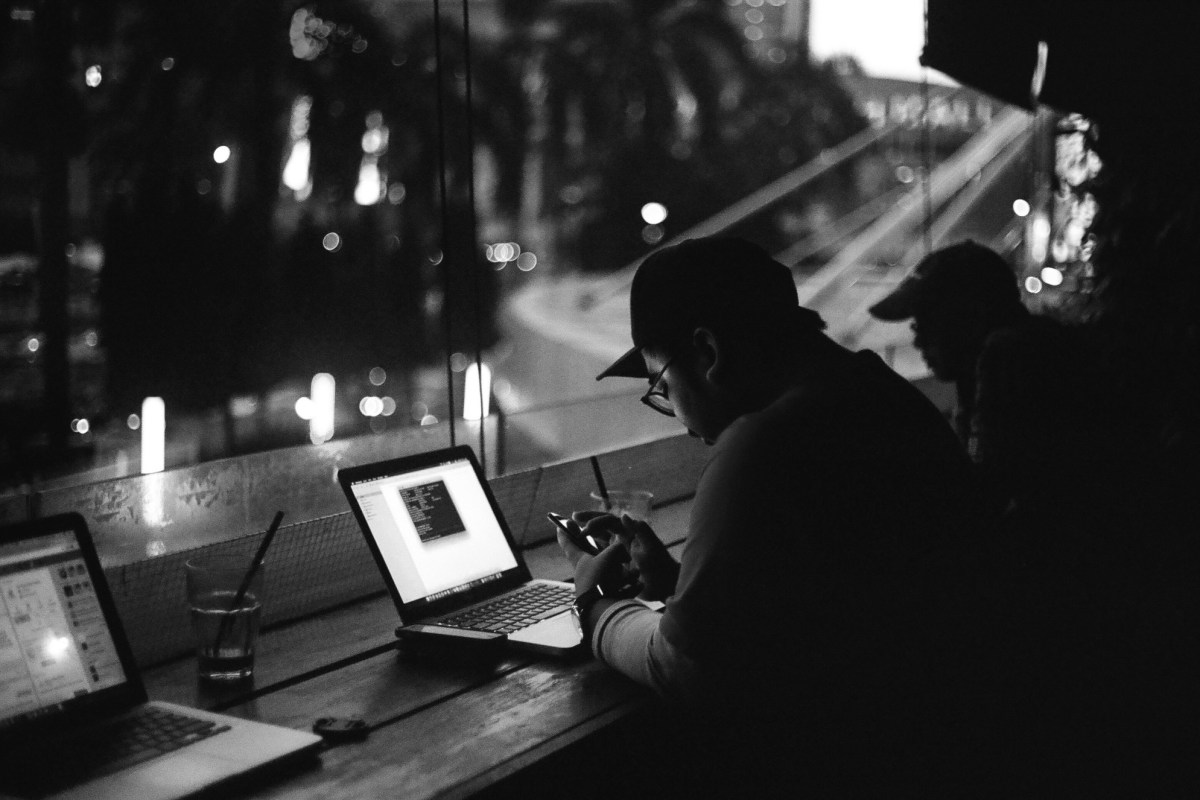
I’ve seen evil. Hell, I’ve been evil. We are so intimate that we can be found slow dancing by candlelight to the melody of the whispering darkness. Can you hear it?
My health has improved, but my writing is struggling for some reason. Just give me a moment. I will come up with something. It may not be my best work, but it will probably do in a pinch. My cat keeps finding new places to nap. I admit I’m jealous because she can plop her butt anywhere and sleep. I’ve been considered a large fellow, so my plopping is limited. This meme sums up my feelings about my writing as of late.

What sacrifices have you made in life?
We all make sacrifices. It’s just a fact of life. Some make more than others, but we all make them. There is one sacrifice that stands out more than others: the moment I sacrificed my innocence. I didn’t know what was happening, but now I understand completely. Now, I mourn the loss of the bliss of ignorance.
What’s one small improvement you can make in your life?
I suppose when you reach a certain age, you wonder about trying to make a change or improvement—old dogs and alike. Yet, hopefully, with that age comes a bit of wisdom. I know for years I’ve banged my head against the wall for various reasons, all of them valid at the time. However, looking back, I struggle to find the logic. Over the years, I discovered the simplest strategy.
I need to accept that I cannot control everything. Some life events have nothing to do with me or my actions. Yes, I realize I sound a bit like a narcissist; however, this is not my intent. I’m trying to have an honest moment with myself. Can you at least wait until I finish to call horseshit? Seriously, I’m doing my level best to make a change.
I guess we see how it goes …
Do you vote in political elections?
As child, I watched the elders of my community banned together and brave the elements for their chance to be heard. I remember the rumbling of the younger generations about elections being rigged and didn’t matter if they voted or not. The elders wouldn’t hear this foolishness. We have sacrificed so much for this right. How dare you belittle our efforts. This stance changed the minds of some, but others continued in protest. However, they did so silently, because no one wanted to incur the wrath of the elders. I listened to stories of separate bathrooms and drinking fountains. They were hard to believe because it was so different from the world I knew. Unfortunately, the injustice remained vigilant. The methods changed, but the theme remained the same. So, I couldn’t wait to do my part. For years, I waited for my chance to vote. I participated in the voting process in all the school elections. I felt it was civic duty to make a choice. Although I had pledged my devotion to the process, I didn’t really understand why the elders were so committed. So, I looked into it at my grandmother’s request. She never wanted us to do something just because everyone else did it. One of her frequent sayings “If someone jumped off a bridge, you gonna jump too?” “You have the right to do whatever you want, but understand what hell you’re doing. Don’t be a dumbass.” As my research continued, I quickly discovered that the level of injustice ran deeper than I initially thought. Now, I vote at most opportunities. I know this wouldn’t be good enough for the elders, but their legacy is intact. I provided a brief overview of the injustice concerning the right to vote.
The right to vote is often hailed as one of the most fundamental aspects of a democratic society. It is the mechanism through which citizens exercise their sovereignty, choose leaders, and shape the laws that govern them. This right, however, has not always been universally accessible. Its evolution has been marked by struggle, activism, and significant legal reforms. Today, as we strive for more inclusive and fair electoral systems, it is crucial to reflect on the history, importance, and contemporary challenges associated with the right to vote.
The journey toward universal suffrage has been long and arduous. In the early days of democracy, voting rights were typically restricted to a privileged few. In ancient Athens, often cited as the cradle of democracy, only male citizens with property could vote. Women, slaves, and non-property owners were excluded. Similarly, in the early years of the United States, voting was predominantly a right reserved for white, land-owning men.
The first significant wave of expansion in voting rights came in the 19th century with the abolition of property requirements. This change was driven by a growing belief in the principle that all men, regardless of wealth, should have a say in governance. The 15th Amendment to the U.S. Constitution, ratified in 1870, marked another crucial milestone by prohibiting denying the right to vote based on race, color, or previous condition of servitude. Despite this amendment, African Americans, particularly in the Southern states, faced discriminatory practices like literacy tests, poll taxes, and violent intimidation aimed at disenfranchising them.
Women’s suffrage was another significant battle in the history of voting rights. The movement gained momentum in the late 19th and early 20th centuries, culminating in the ratification of the 19th Amendment to the U.S. Constitution in 1920, which granted women the right to vote. This victory was a pivotal moment in the fight for gender equality and marked the beginning of a broader struggle for women’s rights.
In the mid-20th century, the civil rights movement brought renewed focus to the disenfranchisement of African Americans. The Civil Rights Act of 1964 and the Voting Rights Act of 1965 were landmark pieces of legislation that sought to eliminate racial discrimination in voting. These laws prohibited practices like literacy tests and provided federal oversight of voter registration in areas with a history of discriminatory practices.
Voting is more than just a right; it is a powerful tool for enacting change and holding governments accountable. Through the ballot, citizens can influence policy decisions on issues ranging from healthcare and education to climate change and social justice. It is a means of expressing consent and dissent, giving voice to diverse perspectives within a society.
Moreover, voting is a critical component of political legitimacy. Governments derive their authority from the consent of the governed, and regular, free, and fair elections are the primary mechanism through which this consent is gauged. When citizens participate in elections, they validate the democratic process and reinforce the principle that political power is derived from the will of the people.
Voting also plays a vital role in promoting social cohesion and civic engagement. It encourages individuals to become informed about political issues, candidates, and policies. This engagement fosters a more educated and active citizenry, which is essential for the health and vibrancy of a democracy.
Despite the progress made over the centuries, the right to vote faces numerous challenges in the contemporary era. Voter suppression, electoral fraud, gerrymandering, and disenfranchisement of marginalized groups are issues that continue to undermine the integrity of democratic systems.
To safeguard and strengthen the right to vote, several measures can be implemented:
The right to vote is a cornerstone of democracy, embodying the principles of equality, representation, and political participation. While significant progress has been made in expanding and protecting this right, ongoing challenges necessitate continued vigilance and action. By promoting voter education, enacting electoral reforms, and fostering civic engagement, we can ensure that the right to vote remains a powerful and accessible tool for all citizens. As we navigate the complexities of contemporary democracy, the collective effort to uphold and strengthen this fundamental right will be crucial in shaping a just and equitable society.
One minute, you sleep too long, and the next you can’t sleep at all. I suppose somehow, some way we search for the balance. You haven’t seen it so long you forget it east. I suppose it’s the way things do it. Or else it is just something else to fail at. Just another thing to let you down.
List your top 5 favorite fruits.
When I was a child, candy was truly a treat. Holidays like Easter, Halloween, and Christmas were awesome because we were allowed to eat candy for days. However, the remainder of the time, fruit served as our treat or snack. After wonderful years of sampling different types of fruit, I came up with the following list of favorites.
I actually have a ten, but the response asked for just five. Although I love my candy and went through a period as an adult where I kept a jar full, now I prefer fruit in a way that is better because I choose it.
In the dimly lit room, an ancient cabinet stood solemnly against the wall. Its wood, dark and glossy, whispered tales of forgotten eras. As the key turned in its lock, a soft sigh escaped, revealing secrets nestled within its heart.

Do you ever see wild animals?
Sometimes, it feels like I’m Marlon Perkins from that show Mutual of Omaha’s Wild Kingdom. It all started when I was invaded by two raccoons, Louie and Smiley. I was visiting my folks, and when I returned, Louie was sitting in my office chair reading the Douay-Rheims version of the bible. Smiley came out of the kitchen with a loaf of bread and a pack of cheese. He didn’t notice me at first.
“Louie! I’ve found the mother lode.” Smiley exclaimed, then went chewing on a slice of bread.
“Shut up, Smiley.” Louie warned, then he looked up and saw me standing there.
“Louie! He’s back! He’s back!”
Louie dropped the bible, and they scurried off past and out the door. I sat at my desk and examined my bible. I was expecting tiny paw prints on the pages, but surprisingly they were clean. However, throughout my kitchen there were paw prints everywhere. I went out to the porch, but there was no sign of the raccoons.
Frequently, I see rabbits, raccoons, and opossums on my property, but they never stay and visit. They see me and run off. I wonder if I’m as nice as I think I am.
Have you ever been camping?
I’ve spent a great deal of time in the woods, sleeping under the stars and even being chased by a family of wild boars, so the idea of going back to the woods for “fun” didn’t really appeal to me. However, I’m aware of oodles of fun had at the campfire, smores, and the guy serenading some girl while playing a single chord on his guitar. I’m so sorry that I missed that; not really!
We mustn’t get lost in its despair, we mustn’t be swallowed before the pain, and we must be careful not to be cut by beauty’s dual edge. But is that even possible? How can we embrace beauty without becoming its victim, without becoming its prey?
I’m beginning to get used to it. It’s almost like it’s second nature or something. Each day is not much different than the last; each day we are closer to being engulfed by the evil charms of its subtle beauty; bright pale blue lore is deceiving; it masks the wickedness that lurks neath its smiles: we are bitten by its breath
What topics do you like to discuss?
I find this a bit difficult since I go days without uttering a single word. There’s something about the serenity of silence that soothes me, and most times, I’m not willing to compromise my serenity for the sake of prattle. I have found that my fondness for silence makes people around me unnerved. Nervous people make me irksome. I don’t do irksome. However, I do enjoy a meaningful and civil conversation on the following topics.
Writing – I love to talk about writing. It’s interesting to hear the different approaches my contemporaries take to express their thoughts. If I lucky, they may be a novice writer among the group. To hear the frustration of trying to find the end of their tale. Not to mention, the excitement of finishing a draft of something they are proud of.
Music—I’d say music was my first love. Lyrics served as a spell that enthralled me in this spooky art of writing. The need to convey an emotion, discuss a topic, or simply groove you. I can’t get enough of it. I especially enjoy the different music challenges on WordPress. It’s like I get to geek out and not be judged. Music is a fusion of so many aspects of creativity; it’s breathtaking.
Nonsense – There is something to be said about bullshitting with your buddies. I can’t express the number of times chopping it up has been cathartic.
CHALLENGE RESPONSE – RDP WING

Each word, each verse, or each sentence we write. Is an attempt to learn to fly.
Every time I write a story, it’s like doodling in my mind.
Which aspects do you think makes a person unique?
In the discussion of what makes a person unique, it’s a short one. However -, the forced subtopics or categories lengthen the discussion and become a slow grind. The answer is simple. An individual’s personality sets them apart from everyone else. I concede there are aspects about individuals we need to include, but really it isn’t necessary.
CHALLENGE RESPONSE – MOONWASHED MUSING’S – STAR-FLECKED
He was enchanted by a woman whose eyes mirrored the night sky—dotted with constellations and shimmering with the light of distant stars. The kind of eyes depicted in storybooks and legend. Each glance into her eyes he fell deeper into their boundless and mesmerizing sea. He was powerless and that was okay. The specks of light slow danced with hope and mystique, a testament to the mysteries and beauties of fantasy. Her gaze was the key to stories untold, worlds unexplored, and the promise of adventure.
“Harold, are you going stand there gawking, my god boy! Close your mouth before you let flies in!”
Harold face redden, “Yes Nanna.”
“Give her the coupons.” Nanna continued. Harold’s embarrassment deepened. He makes eye contact again and her face reddened as well. She is smiling shyly.
“HI! I’m Lucy”
What was the last thing you did for play or fun?
A couple of months back a few co workers had this hair brain scheme to go a local watering hole to I don’t know, hang out? or some just as an annoying social construct. So, under protest, I showed up. To my dismay, I enjoyed myself.
I think it was the willingness of the participants to engage in karaoke. I sat and listened to beloved songs from my childhood butchered unapologetically. It was as if they walked into my memories and randomly snatched out a cut.
It reminds me of public version of singing the shower. You sing your beloved song and don’t give damn. This is the fun part. After returning home, I sat laughing and jotted down a few tracks that fall into the parameters. Here’s my short list
I find most of these songs you only really know the chorus. You mumble your way through the verses and when the chorus you let it rip. If with friends this is the part where eyes closed, drinks hoisted, and heads ended up on shoulders while that songs sung off key beget another cherished memory
How have you adapted to the changes brought on by the Covid-19 pandemic?
In many ways I viewed the quarantine as a god send. Let me be clear, I wished anything harmful on anyone, but I was dealing with emotionally issues and wanted to be alone. So I was. I encrypted everything and basically dropped on the face of the earth smack in the middle of town. Most of my provisions were stocked, except for fresh vegetables. I brought them fresh every couple of days, then I had to switch to frozen vegetables.
AAAAAHHHHHH!!!!!
Due to this development, I was absolutely convinced the world was ending. No, I hadn’t completely flipped my lid. I spent several decades eating my meals out of pouches and cans, so idea of returning back to lifestyle was horrendous.
How have I adjusted ?
I’ve haven’t really, but I’ve made a few concessions in the following areas.
– I no longer expect 2 – Day shipping from Amazon
– My butcher is my homey and I get the best cuts.
– I started in herb and vegetable garden.
My soils sucks and nothing grows well enough to eat. Back to frozen
AAAAAAHHHHHHHHHH!!!!!

Mabel McGee lived in the quiet town of Willow Creek in a quaint cottage that seemed to hold more memories than objects. To the townsfolk, she was known as the elderly woman with a penchant for mixing up dates and events, often speaking of historical happenings as if she’d lived through them herself. Some whispered about dementia, others about a life too lonely. But little did they know, Mabel’s supposed confusion was not a symptom of her age but rather a consequence of her extraordinary past as a retired time traveler.
Mabel’s journey began in 2045 in a world where time travel was possible and regulated by a strict code. She was one of the elite, a ChronoNavigator tasked with maintaining the integrity of the timeline. Her missions had taken her from the bustling streets of ancient Rome to the futuristic landscapes of the 22nd century, each adventure embedding itself into the fabric of her being.
As the years passed, the toll of her travels grew heavier. The lines between times began to blur, not just in her mind but in her heart. Mabel realized that she yearned for something the vast expanse of time could not give her—a place to call home. And so, she chose to retire in the one era that had always felt like a balm to her soul—the early 21st century.
The townsfolk of Willow Creek knew none of this. To them, Mabel was the eccentric old woman who lived alone, her house filled with strange artifacts and her conversation sprinkled with anachronisms. Children dared each other to peek through her windows, hoping to catch a glimpse of her rumored collection of “antiques” that seemed too out of place, even for a collector. They didn’t realize that each piece in Mabel’s home was a memento from her travels—a Roman coin, a futuristic gadget that no longer worked in this timeline, a painting from an artist who wouldn’t be born for centuries. And the stories she told, dismissed as confused ramblings, were indeed true accounts of historical events she had witnessed firsthand.
One day, a new family moved into Willow Creek, and with them came young Ellie, a curious and bright girl with an insatiable appetite for stories. Unlike the others, Ellie found herself enchanted by Mabel’s tales. She listened, wide-eyed, as Mabel spoke of walking with dinosaurs, witnessing the signing of the Declaration of Independence, and even attending a speech by a future president yet to be elected.
Over time, the seasoned time traveler and the young girl formed a unique friendship. Mabel saw in Ellie a kindred spirit who understood the value of time not by its weight but by its wonders. For Ellie, Mabel was the gateway to a world far beyond the confines of Willow Creek—a world where anything was possible. As their bond deepened, Mabel decided to change Ellie’s life forever. She decided to share her greatest secret, the time device that had been dormant for years. Together, they embarked on a journey that spanned centuries, a final adventure for Mabel and the beginning of a lifetime of wonders for Ellie
In the end, Mabel McGee’s legacy in Willow Creek was not that of a confused old woman but of a mentor who opened the door to the universe for a young girl. As for the townsfolk, they would never look at their world the same way again, always wondering if the stranger passing through was just a visitor or a traveler from another time, inspired by the tales of Mabel McGee, the retired ChronoNavigator who found her home not in time, but in the hearts of those she touched.

In the heart of an attic, amidst a treasure trove of forgotten gadgets, an argument of epochal proportions was unfolding. Oliver, an old, venerable camera with a penchant for nostalgia, found himself at odds with Dexter, a high-tech digital camera with more settings than a spaceship.
“Back in my day, we captured the essence of life, one click at a time,” Oliver boasted, his lens gleaming under the dim attic light.
“Pfft, the essence of life? I can capture, edit, and share a photo before you even figure out your aperture,” Dexter retorted, his LED screen flashing in disdain.
The debate might have ended there if a cheeky squirrel had not chosen that moment to dart across the attic floor, pausing only to strike a pose.
A light bulb flickered to life above Oliver’s viewfinder. “I propose a challenge! Let’s see who can take the best photo of that squirrel,” he declared, adjusting his focus.
Dexter beeped in amusement. “You’re on, grandpa. Prepare to be pixelated.”
Oliver took his time, calculating the light, adjusting his focus, and waiting… waiting for the moment when the squirrel, enticed by a nut left on the windowsill, struck a majestic pose. Click. The sound resonated through the attic, capturing a moment in time.
Meanwhile, Dexter, with the efficiency of a modern marvel, snapped approximately 47 photos in burst mode, applied a “Squirrel-Enhance” filter, and even photoshopped a tiny superhero cape onto the squirrel in one of the shots. “Done. And I’ve already shared it on SquirrelGram,” Dexter announced triumphantly.
They turned to the attic’s old computer to judge their work. Oliver’s photo was a masterpiece of timing and light, showcasing the squirrel in a moment of serene beauty. The soft lighting gave it an almost ethereal quality.
Dexter’s photos were sharp, vivid, and varied, with the superhero squirrel garnering a particular chuckle. “Look at that! It’s going viral among the attic spiders,” Dexter bragged.
Just then, the squirrel, having completed its snack, scampered over to see what all the fuss was about. It peered at the screen, then at the two competitors. With a decisive nod, it grabbed a forgotten paintbrush with its tiny paws. It dashed off a squirrelly masterpiece on a piece of scrap paper: Oliver and Dexter, lenses crossed in friendship, capturing the squirrel in a heroic pose.
The two cameras, old and new, realized that the best photos come from seeing the world through each other’s lenses. They laughed, a sound of mechanical clicks and digital beeps, united in their newfound friendship and respect for each other’s techniques.
As the sun set, casting a golden hue over the attic, Oliver and Dexter understood that photography isn’t just about the camera—it’s about the vision, the moment, and sometimes, a squirrel with a flair for the dramatic.
And so, amidst the dust and memories, two cameras from different generations found common ground, proving once and for all that when it comes to capturing life’s beautiful moments, the best approach is a shared one. As for the squirrel, it became an honorary member of their photographic adventures, always ready for its next close-up—cape and all.


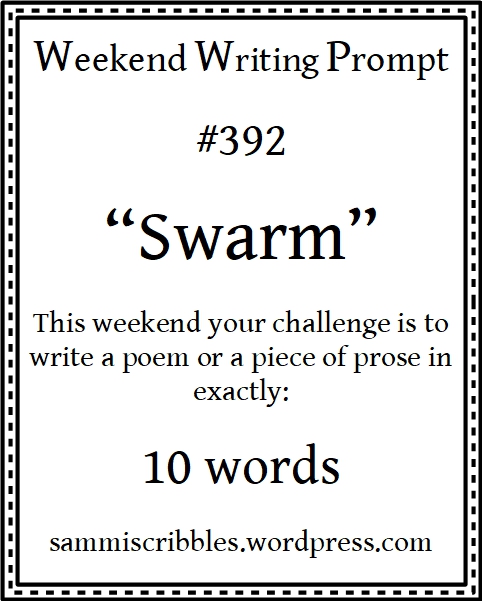



 Memoirs of Madness