Mingus and Mitchell’s Rebellion

TUNAGE – THROWBACK THURSDAY

A jazz legend. A folk icon. One final act of creative defiance.

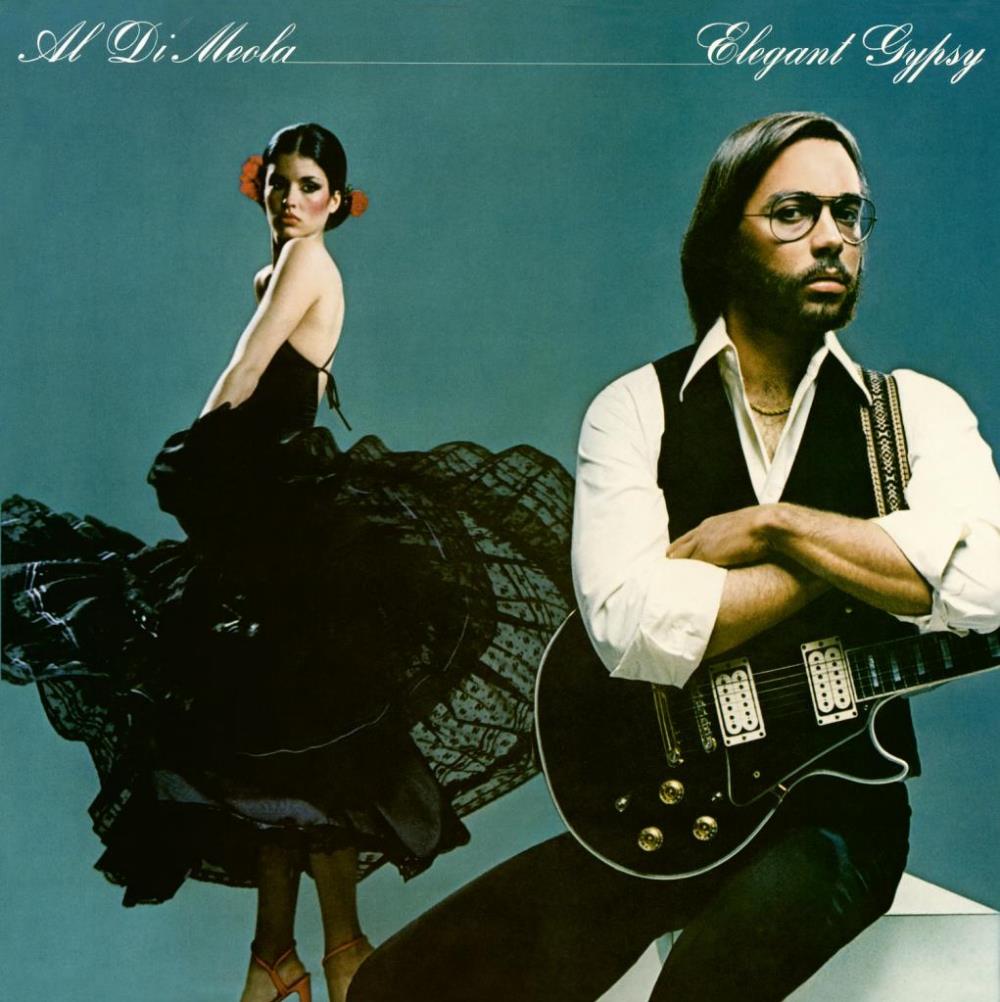
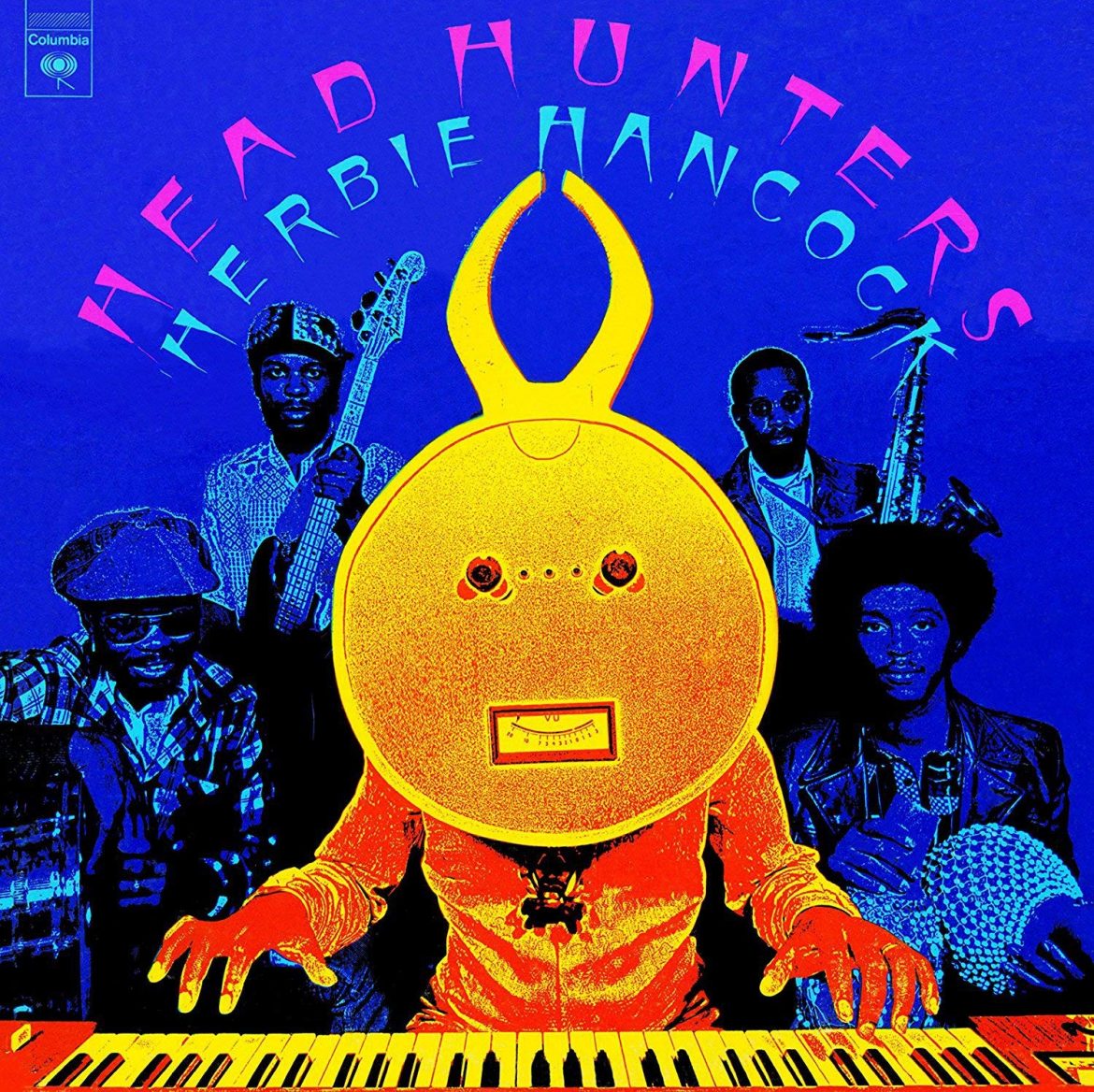
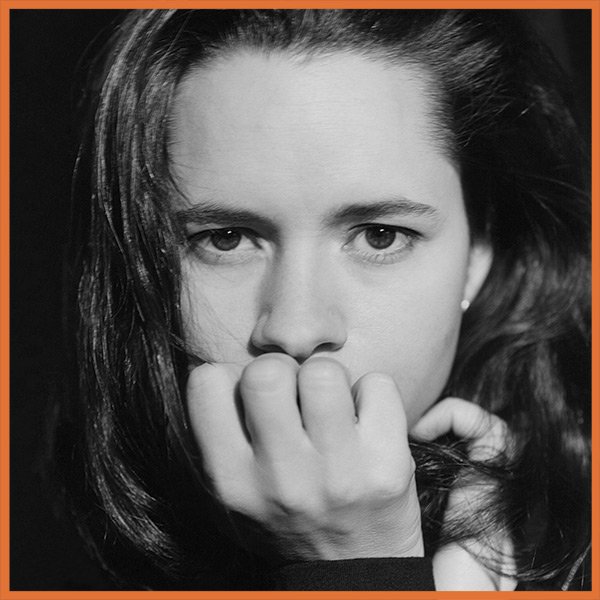
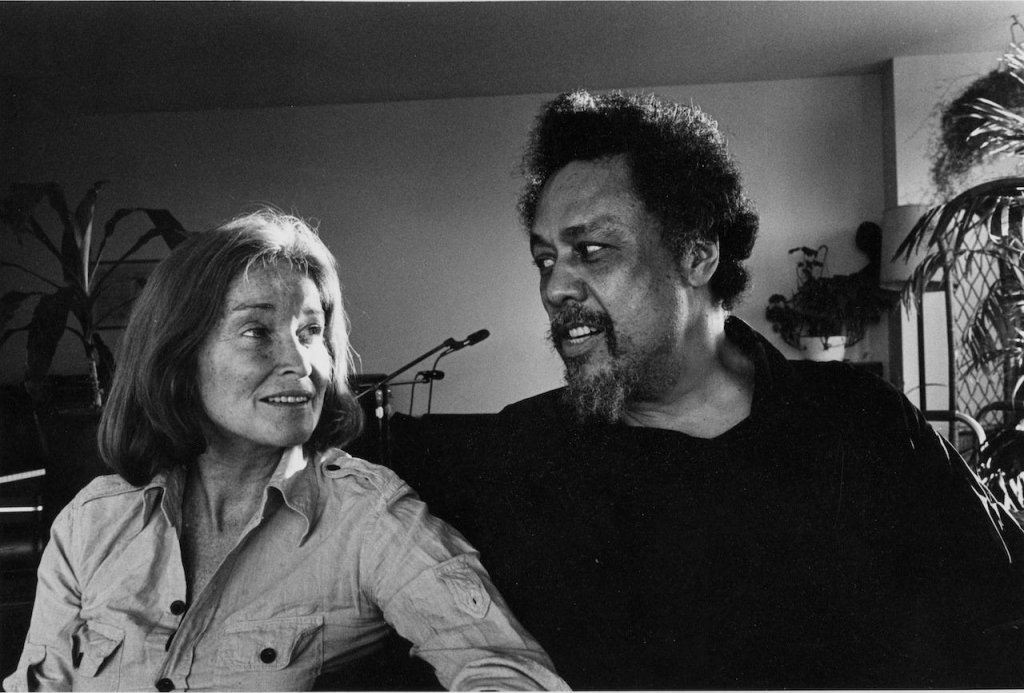
When Joni Mitchell dropped Mingus in 1979, it threw everyone for a loop. Critics scratched their heads; fans wondered where the dulcimer had gone. It didn’t sound like Blue, or Court and Spark, or anything even remotely close to her folk-pop reputation. And honestly? Joni didn’t care.

“This wasn’t just a genre crossover — it was a genre collision.”

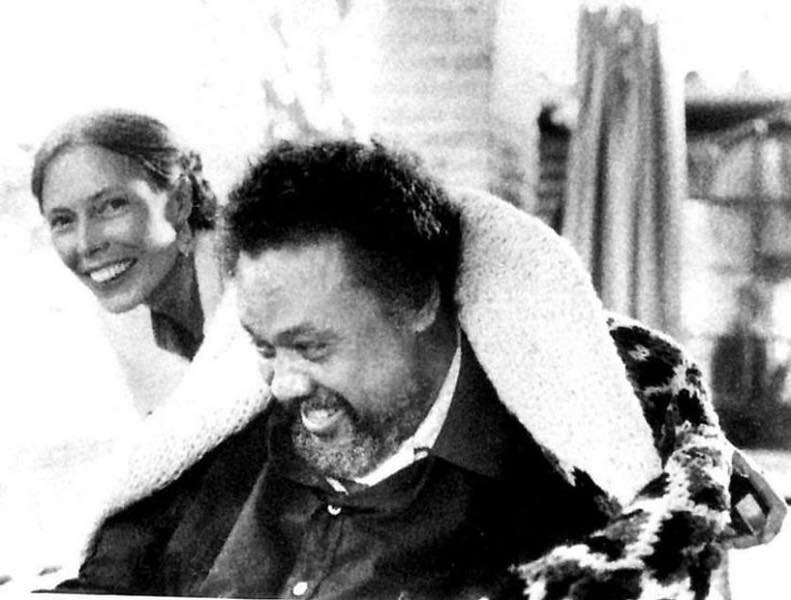
This was Charles Mingus’s final project. ALS had stolen his ability to play, but not his impulse to push boundaries. So instead of retreating into legend, he reached out to Joni Mitchell — the queen of tunings, lyrics, and curveballs — and asked her to set words to some of his compositions. She said yes.

The result was a challenging listen — five spoken-word “raps,” interludes pulled from their conversations, woven between rich, angular jazz compositions. It was intimate, raw, and not made for background listening. You don’t just hear music — you hear mortality, mischief, and Mingus grumbling like a jazz prophet in a wheelchair.

“Mingus couldn’t play anymore, but he wasn’t done.”

Mitchell described their first meeting like this:

“The first time I saw his face it shone up at me with a joyous mischief… Charlie came by and pushed me in—‘sink or swim’—him laughing at me dog paddling around in the currents of black classical music.”

Translation: Mingus didn’t want a tribute. He wanted a partner with nerve.

The lineup was no joke:

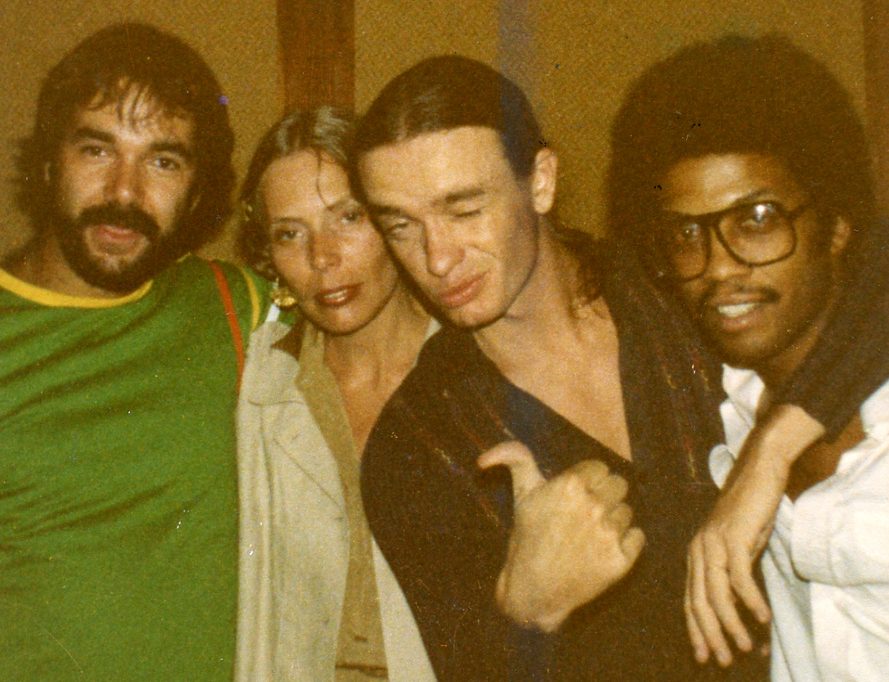
  • Jaco Pastorius on bass (melting frets like butter)
  • Wayne Shorter on sax (bending the air around him)
  • Herbie Hancock on electric piano (tickling the keys like he invented them)
  • Peter Erskine and Don Alias holding down rhythm
  • Plus wolves — yes, wolves — on “The Wolf That Lives in Lindsey”

“She didn’t smooth the edges — she leaned into the mess.”

This isn’t dinner-party jazz. It’s messy, meandering, occasionally maddening. But it has guts. At one point, Mingus told her she was singing the wrong note.
She replied, “That note’s been square so long it’s hip again.”
Mingus, without missing a beat: “Put in your note, my note, and two grace notes too.”

That’s the whole album right there — layered, irreverent, and unbothered by convention.


From Skeptic to Fan

My journey into Joni Mitchell’s world didn’t start with a musical epiphany. It started with a woman — one who casually mentioned that Prince was a fan of Joni Mitchell. I made a face. Possibly several. My inner monologue said: Oh great, another misunderstood-genius folk artist I’m supposed to pretend to like.

But then I saw her vinyl collection.

Not a greatest-hits graveyard. Not recycled top 40 safe bets. Her shelves were full of weird, daring, intentional records — the kind people own because they listen, not just display. I started paying attention.

I got home, looked up Joni’s discography, and there it was: Mingus. Charles Mingus? With her? I hit play.

Then I heard him — the voice. The Maestro. Laughing, breathing, alive. For a second, I thought I’d stumbled onto a secret Mingus record.

Then the bass came in. And I paused.

This isn’t Mingus on bass. But the lines were liquid, wild.
Then the piano hit. I stopped. “Who’s tickling the keys like that?” I muttered. I knew that sound. Herbie Hancock.

This was no crossover fluff. This was a full-on creative risk with real players and real weight.

I stopped the record, called her, and said:
“Okay — what’s the Joni Mitchell starter kit?”

She gave it to me. Blue. Hejira. Court and Spark.

I listened. And suddenly, the whole picture came into focus.

I came back to Mingus later — and this time, I didn’t feel lost. I was ready. I didn’t need it to make sense immediately. I just needed to meet it where it was.


Critical Reception: Then and Now

Upon its release in 1979, Mingus got a lukewarm reception.
Stereo Review said it had “no improvisation.” Robert Christgau gave it a C+, calling it a “brave experiment” that didn’t quite succeed.

Folk fans missed the softness. Jazz critics missed Mingus’s hands. Everyone expected something different — and Mingus gave them none of it.

But over time, things changed. Today, Mingus is respected for what it is: bold, strange, and ahead of its time.

“After four decades, the deeply personal and experimental Mingus has grown into one of the most important titles in the Mitchell catalog.”
— Ron Hart, GRAMMY.com

Even those who played on it are reflecting differently now:

“It was and remains a brave project and statement… an essential piece of not only Joni’s library of music, but of American music in the late 1970s.”
— Peter Erskine, drummer on Mingus

Funny how time — and maybe a little patience — can change everything.


Final Word

Mingus isn’t cozy. It’s not an easy listen. It’s not even especially likable at first.

But it’s real.

Two artists — one dying, one evolving — making something on their own terms. No pandering. No hand-holding. Just music, conversation, and courage.

I started listening to Joni Mitchell because of a woman.
But I kept listening because Mingus didn’t try to win me over.
It made me meet it halfway.

And once I did, I never looked at music — or Mitchell — the same way again.


Maggot Brain: Where Beauty and Despair Collide (and Punch You in the Gut)

TUNAGE – SLS

Funkadelic’s Maggot Brain isn’t just a record — it’s a reckoning. Released in 1971, it captured the psychic temperature of a country unraveling. War abroad, decay at home, distrust in the air, and the so-called counterculture burning out in real time. Maggot Brain took all that noise, that grief, that disillusionment — and turned it into one of the most brutally honest LPs ever pressed.

It wasn’t neat. It wasn’t safe. It was spiritual, political, cynical, funky as hell, and deeply weird — like a sermon preached from the edge of a nervous breakdown.

Maggot Brain captured the attitude of the entire country within a single LP. There was literally a track that spoke for everyone. If you were angry, it had you. If you were confused, it held you. If you just wanted to dance your way through the end times, Funkadelic had you covered. Every track hit a different nerve, and none of them asked permission.

There are songs that groove hard (You and Your Folks, Me and My Folks), others that mock the stupidity of it all (Super Stupid), and ones that crack open a deeper existential dread (Wars of Armageddon). But all of it orbits the title track. Maggot Brain isn’t just the opener. It’s the altar. It’s the cry at the center of the storm.

Eddie Hazel doesn’t play Maggot Brain. He doesn’t even perform it in the traditional sense. He haunts it. Possesses it. Bleeds into it. And once it begins, you don’t get to be a casual listener anymore. You’re drafted. No warning. No warm-up. Just a single, ghost-drenched guitar note that slides into your chest like a whisper you weren’t supposed to hear.

It’s not loud. It’s not fast. It just is. And that’s more terrifying than any distortion pedal at full blast. Hazel creeps in like a rogue spirit — smooth, silent, uninvited — and by the time you realize what’s happening, you’re already in it, stripped of cool and composure, emotionally pantsed.

You don’t get a beat to grab onto. No vocals to decode. Just a guitar screaming in slow motion. It’s like standing in the middle of a storm you can’t see but definitely feel. The grief is palpable. The rage is buried just deep enough to make you nervous. And right when you think you’ve got it figured out, the damn thing shifts and you’re spiraling again. Welcome to Maggot Brain — cognitive dissonance with a six-string.

Because let’s be real: this song shouldn’t work. It’s ten minutes, mostly one instrument. No verse. No chorus. Not even a satisfying drop. But for ten minutes, Eddie Hazel demolishes every “rule” about what music is supposed to be, and you love him for it. Or maybe you hate him for making you love it. Either way, you’re in it.

And no, you don’t walk away saying, “cool solo, bro.” You walk away dazed, like you just remembered a dream you never had. Or like your soul got mugged, politely. This is the kind of music that picks a fight with your expectations and then hugs you while you cry.

I still remember the first time I heard it — in a smoke-filled room full of strangers pretending not to be high. No one talked. No one moved. We were all just… held. Not by the music, exactly, but by whatever was trying to speak through it. We didn’t share a moment. We survived one. And we were better for it, or at least quieter.

Hazel doesn’t “solo.” He confesses, and we are his priests. Every bend, every scream from those strings is a sin laid bare. And by the end of the song, we have no choice but to grant absolution. Not because we’re qualified, but because he earned it. Because whatever he was holding, he handed it to us. And in some strange, sacred transaction, we took it.

His playing doesn’t follow any tidy roadmap. It stumbles through grief and grace, melting down and pulling itself back together like a nervous breakdown that found religion. There are moments where you think he’s going to lose it entirely — and maybe he does. But somehow, that’s the point.

You want to make sense of it, but your brain is two steps behind the whole time. Because it’s pretty and ugly. Gentle and violent. Hopeful and hopeless. Your heart’s trying to lean in while your head’s going, “Are we okay??” That’s the dissonance. That’s the magic. That’s why it hits harder than any perfect pop chorus ever could.

And George Clinton, cosmic genius and probable chaos wizard, gave Hazel just one instruction: “Play like your mother just died.” Which is both tragic and kind of a dick move, but clearly — it worked. What came out wasn’t a song. It was a slow, spiritual detonation. Hazel didn’t perform grief — he offered it. Raw. Untuned. Unfiltered. The kind of thing most of us spend our lives trying not to feel.

The track never resolves. No big finale. No grand crescendo. Just a long fade into silence, like a memory slipping back under the surface. It’s not done with you — it’s just gone. Until the next time you’re reckless enough to press play.

And I wonder: for those ten minutes, did Eddie Hazel serve as a guide to enlightenment?
Not the neat, monk-on-a-mountain kind.
The messier kind. The gut-punch kind.
The kind that grabs you by the heart, shakes something loose, and leaves without saying a word.


Maggot Brain #479 on 2003 list

In Every Breath, There’s Poetry

PROSE – NATIONAL POETRY MONTH

Today marks the end of National Poetry Month—a celebration we rarely celebrate yet live through daily. Every breath carries it. In a single line, past, present, and future meet. Poets give shape to that breath, making it something we can hold: a line that lingers, a memory that stirs, a feeling too deep for words but not for remembrance. And sometimes, it brings a smile—small, unspoken, but real.

It occurs to me that people are connected because of the stories we carry inside. One can’t help but notice the familiarity of movement and thought. On the surface, they appear to have nothing in common, random even. Yet, one can never tell what the truth of a person is: their passions, their fears, their deepest secrets. We witness those who lose their way, those who rise from the ashes, or the calamity of those who need to prove themselves to people who don’t even know their names—the ones who, like me, are numb.

Poetry

I’ve discovered that it is an entity of its own, composed of laughter, sorrow, joy, tears, family, the before, the in-between, the undiscovered; everything—all of it.

It’s a poem

Only YOU can write.

The Quiet of the Moment

PROSE – 3TC #MM43


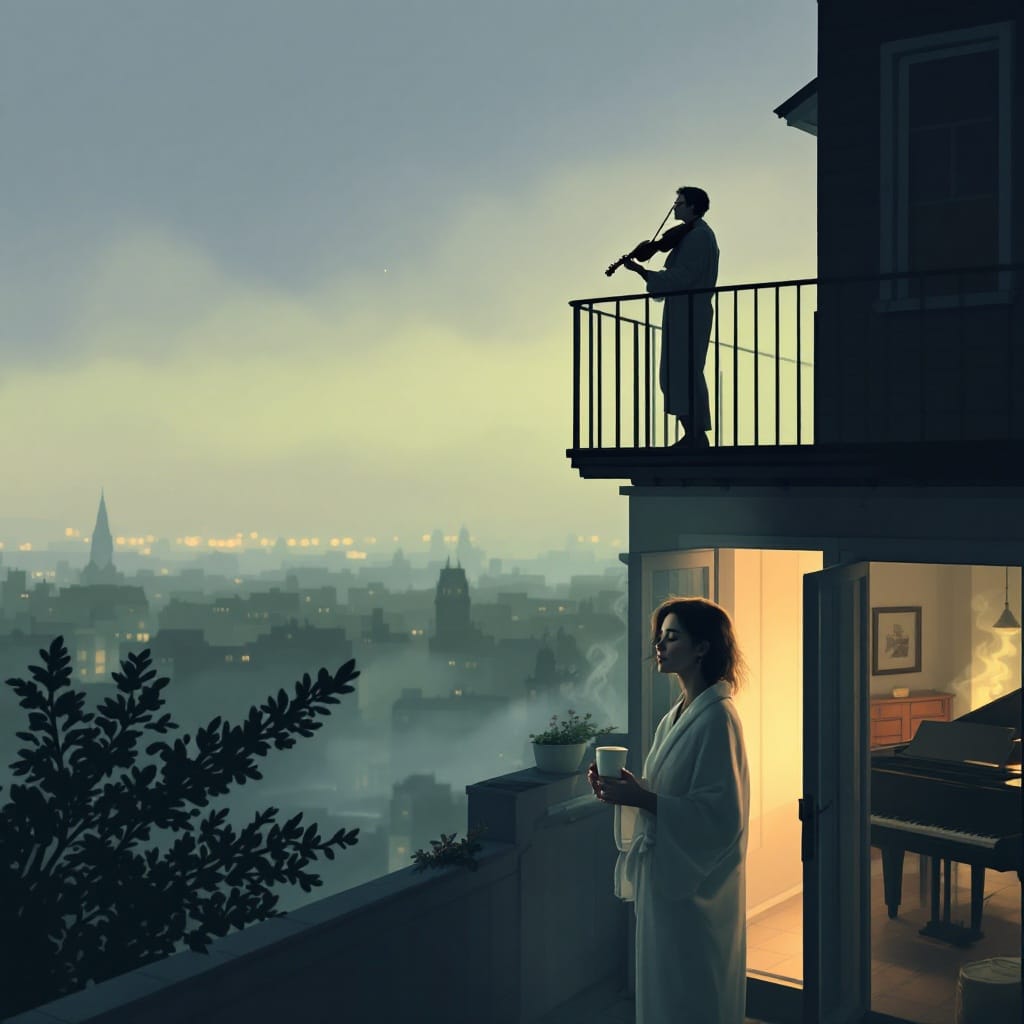
The morning began like it had countless times before—but today, it felt different. There was a stillness that lingered just a second longer. A hush in the air that made you listen more closely. The slow fade from darkness to grey had its own rhythm, its own muted pulse. It was that fragile aspect of dawn—neither night nor day—when everything feels suspended, as if the world is holding its breath.

You hear the familiar rush of cars below, life going about its business, unaware of the quiet reverence unfolding above. You step onto the terrace not out of habit, but out of something harder to name. A need, maybe. Or a yearning to be part of something unspoken. You don’t search for a view. You let your gaze fall into the sky, into nothing. Into everything.

Then the sound begins. The piano. Tentative at first, like a thought forming. Fingers move over ivory and black, finding phrases that don’t need words. The melody doesn’t push—it drifts. You close your eyes, and it takes you somewhere. Or perhaps it helps you retrieve something lost in the static of everyday: a gentleness, a memory, a forgotten truth.

You lift your bow, not to perform, but to respond. To join. Your hands move, not with effort but with instinct, the strings vibrating beneath your fingers like a second heartbeat. There’s no audience, no need. Just the sound, the sky, and you.

Then you see her.

She’s there, just below, wrapped in morning light, coffee in hand, eyes somewhere far away. She doesn’t notice you yet. She doesn’t have to. She’s inside the moment too. Something about her stillness makes the entire world feel composed. As if her quiet presence is the final note that makes the music whole.

You watch her for a beat, caught in the beauty of her being, the unforced motion of her simply existing. The way she breathes. The way the steam rises from her cup. How the breeze toys with the loose strand of her hair. It’s ordinary, yet nothing could be more profound.

And in that moment, I understood what beauty and love was—
and it didn’t have a damn thing to do with sex.

You play on. And she listens—without effort, without expectation. Just as you play—without reason, without resistance. The world outside blurs. Time bends. You’re no longer trying to capture the moment. You’re inside it. You are it.

And for once, that’s enough.

The Rocket Lawn-chair Chronicles

PROSE – WWP #412


Larry built a rocket from lawn chairs, soda bottles, and sheer idiocy. “NASA’s overrated,” he said, seconds before launch. It flew for two glorious seconds. Then gravity reminded him who’s boss. The neighbors applauded politely. Larry, dazed but grinning, shouted, “Next time: chickens for thrust!” He’s now banned from Home Depot.


Perforated Silence

POETRY – FOWC & RDP

Why do I bother to write?

Each word drifts into the void—unanswered, unheard.
They vanish like smoke—transparent. Gone.
Not because they’re sacred or encrypted in G-14 code—
but because no one’s looking. No one’s listening.

There was a time when that silenced me.

“Why speak?”
“No one listens.”
“Does it even matter?”

Do you matter?

Some days, that voice won.
It slid into my bones, curled behind my ribs, and whispered me into silence.
Told me I was just scribbling into darkness.
That my pain was recycled. That I was nothing new. Nothing needed.

But even then, something fought back.

A flicker. A breath that refused to die.

I had forgotten why I came here.
Lost the thread. Lost myself in fog.

But I remember now.

I write because I must.
To survive the war within.
Not the loud, cinematic kind—
but a silent, grinding, bloody war.
Fought in mirrors. In 3 a.m. thoughts.
In doubts that circle like vultures.
In guilt that clings like wet ash.

We don’t talk about it. Not really.
But we all feel it.
That private battlefield behind the eyes.
The endless rummage through our own wreckage,
hoping to find something still whole. Something still true.

I’m not here to prove I exist.
I’m here to understand why I keep breathing through the wreckage.
Not seeking praise—seeking peace.

To sift through ruins.
To bleed on the page.
To let the shards of memory cut me clean,
and the embers of regret burn what no longer serves me.

There is hope in the fire.

And I have not walked alone.
Some of you were there—watching, listening,
fighting your own quiet wars beside me.
We faced Lunacy like pilgrims, eyes wide, daring her to do her worst.

You stayed.

For that, I owe everything.

So I write.
Not because I’m whole—
but because I’m becoming.

Page after page.
Sentence after sentence.
Word after word.

Until the silence breaks.

And something holy rises
from the blood.

No Clock, No Rules, Just Coffee and Smokes

Daily writing prompt
When do you feel most productive?

DAILY PROMPT RESPONSE

When I think about when I feel most productive these days, it’s not about some magical hour on the clock anymore.
When I worked, mornings were sacred—mostly because if I waited, life and other people’s drama would kick the door down.

Now that I’m retired, the rules have pretty much evaporated.
Productivity shows up whenever two things happen: I have a cup of strong java in one hand and a nice trail of smoke curling in the air. That’s it. That’s the list. Everything else — time of day, cosmic alignment, mood rings — is optional.

I also stopped setting up little landmines for myself, which I used to call “parameters”—imaginary rules about how things should look or be received. Now, I just build whatever I want without asking permission from the internal committee.
I’ve ditched worrying about the final product or whether someone will like it (spoiler: someone always doesn’t).
Now, I actually enjoy the process, like I should have all along.

In short: smoke, coffee, and the freedom to not give a damn about anything else.
Turns out, that’s the real productivity formula nobody bothered to put in the handbook.

Chronoholics Anonymous: The Tragicomic Life of Mangus

Daily writing prompt
What topics do you like to discuss?

DAILY PROMPT RESPONSE

Everyone knows me as the guy who talks about writing, music, and “normal” human things. But the truth is… I have a problem.

I’m addicted to time-travel discussions.

Seriously.

I even attend meetings now. It’s called Chronologically Confused Anonymous — CCA for short.

Every Tuesday night, a ragtag group of us gathers in a dusty church basement, folding chairs circling a busted time machine that someone swears they almost fixed with duct tape and tears.

We take turns.

“Hi, I’m Dave, and I can’t stop arguing about paradoxes on Reddit.” “Hi, Dave.”

“Thanks for letting me share.” “Thanks for sharing.”

“Hi, I’m Sheila, and I tried to marry a Victorian ghost.” “Hi, Sheila.”

“Thanks for letting me share.” “Thanks for sharing.”

“Hi, I’m Lou. My smartwatch accidentally started a Renaissance art movement.”

Then it’s my turn. All eyes on me. I sweat even though it’s cold enough inside to hang meat.

“Hi, I’m Mangus… and I spent four hours last night explaining why making a list of historical villains, rogues, and scoundrels could create catastrophic timeline disturbances.”

Polite applause. Sad nods.

“We’ve all been there.”

Someone hands me a cookie. Snickerdoodle. Proof there is still a God.

I try to stay normal. I talk about music, writing, and TV shows. I nod during conversations about taxes like a domesticated human.

But you mention “wormhole” within 30 feet of me? Boom.

Suddenly, I’m on the floor, diagramming alternate futures on napkins, losing friends like loose change.

Every week, I tell myself it’ll be different. I’ll drink coffee, smile politely, and resist.

Then it happens.

Usually, Carol, the group leader, casually drops “time loops” into the conversation.

Next thing you know, I’m dramatically unrolling laminated charts like a deranged, time-obsessed librarian.

“Here’s Joseph Bridgeman!” I shout, slamming down Nick Jones’s series about a guy emotionally wrecked by his attempts to fix the past.

“Here’s Quinn Black!” I declare, tossing Roy Huff’s “Seven Rules of Time Travel” across the table — a man rebooting his life like a glitchy video game.

“And if you’ll just admire these visual aids,” I say, shoving diagrams under noses — expertly crafted flowcharts warning of butterfly effects, grandfather paradoxes, and existential doom, backed up by The Time Machine, 11/22/63, Replay, and thirty-seven other carefully curated sources.

Someone tries to intervene. I shush them. “No touching the exhibits.”

Carol sighs. Stage 2 of my intervention: the Official List of Things You’re Not Supposed to Do While Time Traveling.

(Yes. We made a list.)

Rules like:

  • Don’t fall in love with someone from the past (because heartbreak and paradoxes are a double whammy).
  • Don’t leave your iPhone in the 1800s (unless you want steampunk TikTok).
  • Absolutely, under no circumstances, meet your past self (unless you enjoy cosmic implosions and punching your own face).

I nod furiously. Because mentally? I’ve broken all those rules. Repeatedly. For fun.

The real tragedy isn’t the napkin diagrams, or the laminated charts. It’s what you don’t see:

Friends invite me to barbecues, but I turn them down because I’m “in the middle of analyzing closed time-like curves.”

Family asked why I’m single, and I answered with a thirty-minute rant about temporal dislocation and the tragic love lives of doomed time travelers.

At some point, you realize you’re not just losing hours; you’re losing actual time you can’t ever get back. Irony, meet Mangus.

But it’s fine.

The first step is admitting you have a problem.

The second step is admitting you secretly keep a copy of Timeline by Michael Crichton under your pillow for “comfort reading.”

My recovery plan? It’s ambitious:

  • Only historical fiction without time travel for a month.
  • No arguing about causality unless provoked by at least three separate people.
  • Emergency cooldown word: “Quantumly.” If someone says it, I must cease all time-travel discourse immediately.

So yeah, I talk about writing and music and normal-person hobbies.

But deep down? I’m one poorly timed wormhole away from disappearing into a Victorian murder mystery or trying to stop the butterfly effect with a pool noodle.

Pray for me.

Carol asked if I could assemble a pamphlet for the new members. I wondered why she asked me to do this, but then remembered she was also a member of my writing circle.

For those of you who are building a time machine, the end of each semester in your local college town is a gold mine. Those kids just sit stuff on the curb. They look at you strangely and probably mock you, but they have no idea how hard it is to get quality parts these days.

Here is a working draft of the pamphlet:

Official Pamphlet for: Chronologically Confused Anonymous


Welcome, New Chronoholic!

Congratulations on taking the first step toward temporal responsibility. Your membership kit includes:

  • An emergency “Timeline Stability” manual (written in erasable ink)
  • A “Do Not Date Renaissance People,” bumper sticker
  • One vintage “I Survived a Causality Loop, and All I Got Was This Lousy T-shirt” shirt
  • A pocket-sized “Temporal Incident Report,” form

Remember, if you ever feel the urge to “just take a quick peek” at the future, call your sponsor immediately.


The 12 Steps of Chronoholics Anonymous

(because “one minute at a time” is too much pressure)

  1. We admitted we were powerless over time travel — that our timelines had become unmanageable.
  2. Came to believe that a Power greater than us (aka Physics) could restore us to sanity.
  3. Made a decision to surrender our paradoxes and bootstrap loops to the universe’s natural laws.
  4. Made a fearless moral inventory of all the pasts, presents, and futures we’ve accidentally wrecked.
  5. Admitted to ourselves, another traveler, and at least one confused historian the exact nature of our timeline violations.
  6. Were entirely ready to have Physics remove all defects of character — or at least stop us from trying to kill Hitler again.
  7. Humbly asked Quantum Mechanics to correct our spontaneous wormhole-generating habits.
  8. Made a list of all alternate versions of ourselves we had harmed, and became willing to apologize (even to the evil clones).
  9. Made direct amends to such people wherever possible, unless doing so would collapse the multiverse.
  10. Continued to take temporal inventory and, when we messed up, promptly set a fixed point.
  11. Sought through meditation and time-loop journaling to improve our conscious contact with Present Moment Awareness.
  12. Having had a paradox-free awakening, we tried to carry this message to other chocoholics and practice stable timeline maintenance in all our affairs.

Step 13: Learn from the Ancient Screw-Ups

Before Doc Brown, before The Continuum, before that one cousin who “totally invented” the flux capacitor at Burning Man, there were… Mythological Time Travelers.

  • King Kakudmi (Hindu Mythology): Time-travel sin: Visited Brahma for a matchmaking consult. Returned to Earth, and whoops, millennia had passed. Chronoholics Verdict: 5,000 years late to dinner = automatic probation.
  • Urashima Tarō (Japanese Folklore): Time-travel sin: Took a “short” vacation to an underwater palace. Opened a magic box. Aged 300 years instantly. Chronoholics’ Verdict: Violation of Rule #5: Never trust mysterious free vacations.
  • Oisín (Irish Mythology): Time-travel sin: Ran off with Niamh to Tír na nÓg, where no one ages. Came back, instantly turned into a 300-year-old man. Chronoholics Verdict: Violation of Rule #4: No cross-temporal romances.
  • The Dreamtime (Aboriginal Mythology): Time-travel sin: Existence where past, present, and future are all layered together. Basically, quantum physics without equations. Chronoholics’ Verdict: Legal loophole. Proceedings postponed indefinitely.
  • Rip Van Winkle (Okay, not myth, but classic): Time-travel sin: Took the longest nap in literary history. Woke up decades later, confused, broke, and trending on TikTok. Chronoholics Verdict: Violation of Rule #10: Always set your alarm clock.

Moral of the Story: If ancient myths teach us anything, it’s this: If someone offers you magical food, glowing objects, or a “harmless little trip” across realities, just say no. (Or at least make sure your insurance covers temporal anomalies.)


Slogans We Shout Over Lukewarm Coffee:

  • “Keep it Present!”
  • “Easy does it… unless you’re in a collapsing singularity.”
  • “Don’t time-jump before you’re ready.”
  • “One timeline at a time.”
  • “No paradox today — maybe tomorrow!”

The Time Traveler’s Serenity Prayer

Universe, grant me the serenity to accept the past I cannot change, the courage to alter the futures I must, and the wisdom to know when I’m creating a paradox.

Living one stable timeline at a time, enjoying the moment as it exists, accepting disruptions as part of cosmic design, taking this distorted continuum as it bends, not as I would have it, trusting that black holes, wormholes, and rogue agents are part of the plan.

I may be reasonably happy in this present, and supremely careful with all alternate versions of myself, forever and ever. Amen.


Important Reminder:

Time travel is a privilege, not a right. Misuse can cause spontaneous disappearance, angry alternate versions of yourself, or cosmic-level grounding.


Chronoholics Anonymous: Protecting the timeline, one grave decision at a time.

Perception Blue

PROSE – 3TC #MM40 & SoCS


The room softened into mist, and time slipped its tether. He saw only her, standing beneath a net of soft lights, her head bowed, lashes dipped in silver. She looked like a secret the universe had forgotten to keep.

He watched her, hardly breathing. There was a stillness about her, as if even the air itself had fallen into orbit around her glow.

Was she real? Or just a dream stitched out of loneliness and hope? He blinked, but she didn’t vanish.

He let himself linger, caught between wonder and a trembling kind of fear. She was too much—too bright, too distant, too beautiful in a way that had nothing to do with the glitter at her temples or the jewels at her brow.

And him? He was just a man standing in the dark, bones full of small regrets, heart patched with quiet scars.

For a moment, he hesitated, sinking into the pause, that heavy moment when you question if you are enough to even be seen. If you are worthy to stand before something so inexplicably beautiful.

His hands shook at his sides, almost imperceptibly. His voice, he feared, would betray him worse.

He closed his eyes and tried to listen — not to the noise of the room, but to the stubborn, fragile hope still alive inside him.

When he opened them, she was still there. Still breathing. Still real.

He stepped forward, heart battering against the cage of his ribs, and found the smallest, truest word:

“Hi,” he said, almost a prayer.

For half a second, the universe hung suspended. Then —

She lifted her head, and the faintest, brightest smile tugged at her lips.

“Hi,” she answered.

And in that small, electric exchange, the stars seemed to exhale, and the night leaned closer around them.

One for Mono, Two for Stereo

Daily writing prompt
What are your favorite emojis?

DAILY PROMPT RESPONSE

What are my favorite emojis?
None. Seriously — none.

People can’t even handle words anymore, and now we’re tossing little cartoon faces into the chaos. Half the time, they’re not listening; they’re just nodding like bobbleheads, waiting to drop some half-baked hot take.

Actual listening — staying quiet long enough to understand — is basically extinct. We replaced it with fake smiles, buzzwords, and “uh-huh” filler before someone cuts you off to argue about something you didn’t even say.

And emojis? Yeah, because nothing says I’m here for you like a crying-laughing face while you’re spilling your guts. Humanity, you’re doing amazing, sweetie.

Favorite emoji?
Middle finger.
One for mono. Two for stereo.


Things Found in the Fire

PROSE – FOWC & RDP

The alley wasn’t picturesque, but it was honest. Cracked brick walls caught the last tired light of the day, holding it like a secret. She leaned against them, letting the roughness bite through the fabric of her shirt — a small reminder she was still here, still standing.

People always skipped places like this. Skipped the alleys, skipped the worn faces that carried too many losses. She used to believe that if she fought hard enough, worked long enough, she could save something — a home, a love, herself. She thought effort could outmatch entropy.

But slowly, we turn the page and walk away from everything. We worked so hard to save. Must we start all over and find another shoulder to lean on?

The question pressed into her like ash on skin. Maybe survival wasn’t about saving what was burning. Maybe it was about knowing when to let it burn. About sifting through the ashes for the pieces that could still hold weight.

The sun folded into the horizon, leaving behind the thick hum of a city settling into itself. She didn’t move quickly. She didn’t look back. Some fires you didn’t put out. Some things you simply let burn and walked away from — lighter, fiercer, more your own.

She stepped out of the alley and into the dusk, steady and unafraid, carrying only what survived the fire.


The Dishwashing Incident

CHALLENGE RESPONSE – WWP #394


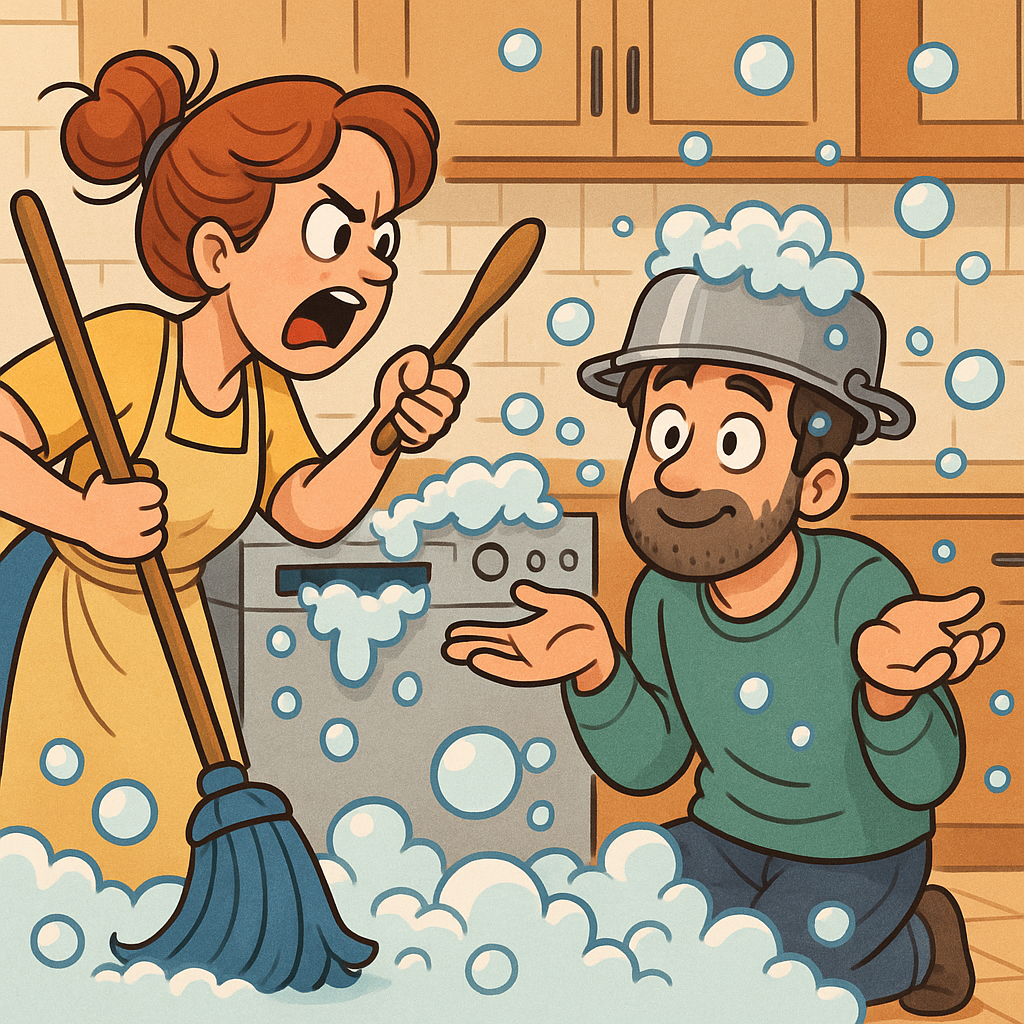
She stood in the kitchen, wielding a wooden spoon like a magic wand. “You’ve done it again!” she bellowed, eyes wide. “You turned the dishwasher into a science experiment!” He peeked over the counter, wearing a saucepan as a helmet. “It was…for science.” Soap bubbles floated through the air like tiny traitors. She poked a bubble mid-sentence. “Science doesn’t berate its assistants!” He shrugged, bubbles clinging to his head. She sighed, plopped the spoon down, and grabbed a mop. “Next time, at least invent a self-cleaning floor.”
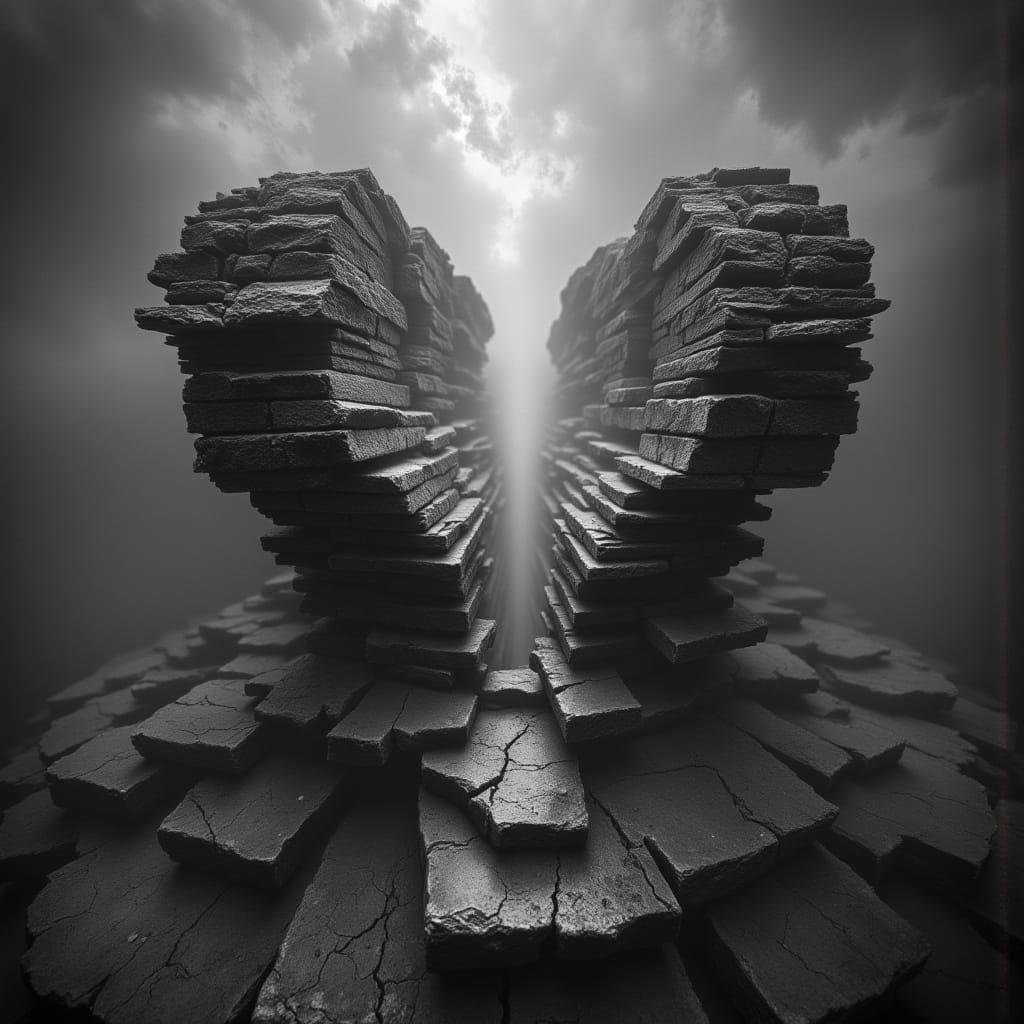
How to Lose, Fight, and Write Anyway

Daily writing prompt
When is the last time you took a risk? How did it work out?

DAILY PROMPT RESPONSE

The last time I took a real risk, I didn’t jump out of a plane—or onto one with three Camel cigarettes, a dime, a suit a size too small, and a half-whispered prayer. You know the kind of move you make when desperation’s gnawing at your ribs and pride’s already dead.
No, I did something worse.
I posted my writing online.
Voluntarily.
Like a lunatic begging for public execution, dragging my entire bloodline down with me.
Go ahead. Pile up the rocks. Light the torches.
Here comes some fool named Mangus Khan—half dead from alcohol withdrawal, twitching on caffeine, clinging to bad decisions and a blog password like they’re body armor.


You’re not just tossing words into the void—you’re stepping out from cover, wide open, daring every hidden sniper in your own mind to take the shot.
The ground gives out beneath you, and suddenly you’re swallowed by a wraith screaming, “Disrespectful twit!”
PTSD flares up like a tripwire.
You can’t do that. You’ve got to stay safe. You can’t expose yourself like that.
Then comes the voice—the one that always shows up.
The one that tells you, “You’re a fraud, that you’re embarrassing yourself, that no one asked for this, and no one cares.”
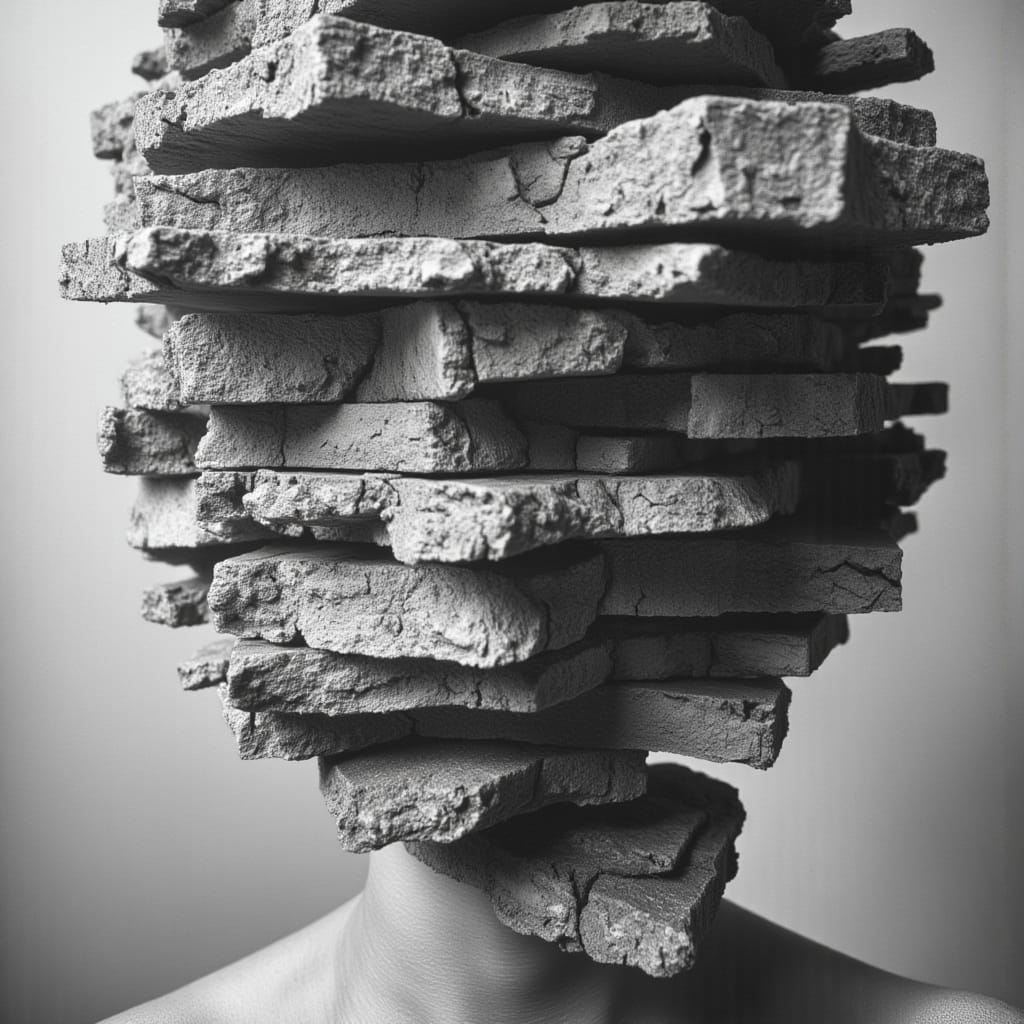
It’s all there. Waiting.
It feels less like posting and more like being a fugitive, hunted for the crime of being seen.


Self-doubt is a masked assassin, cutting you a thousand times and spraying iodine on every wound.
You feel the burn every time you open a document. Some days, it’s enough to make you scream.
And yet—there’s something stubborn. Something deep down.
A fire that refuses to die, screaming, “Come on! Face me!”
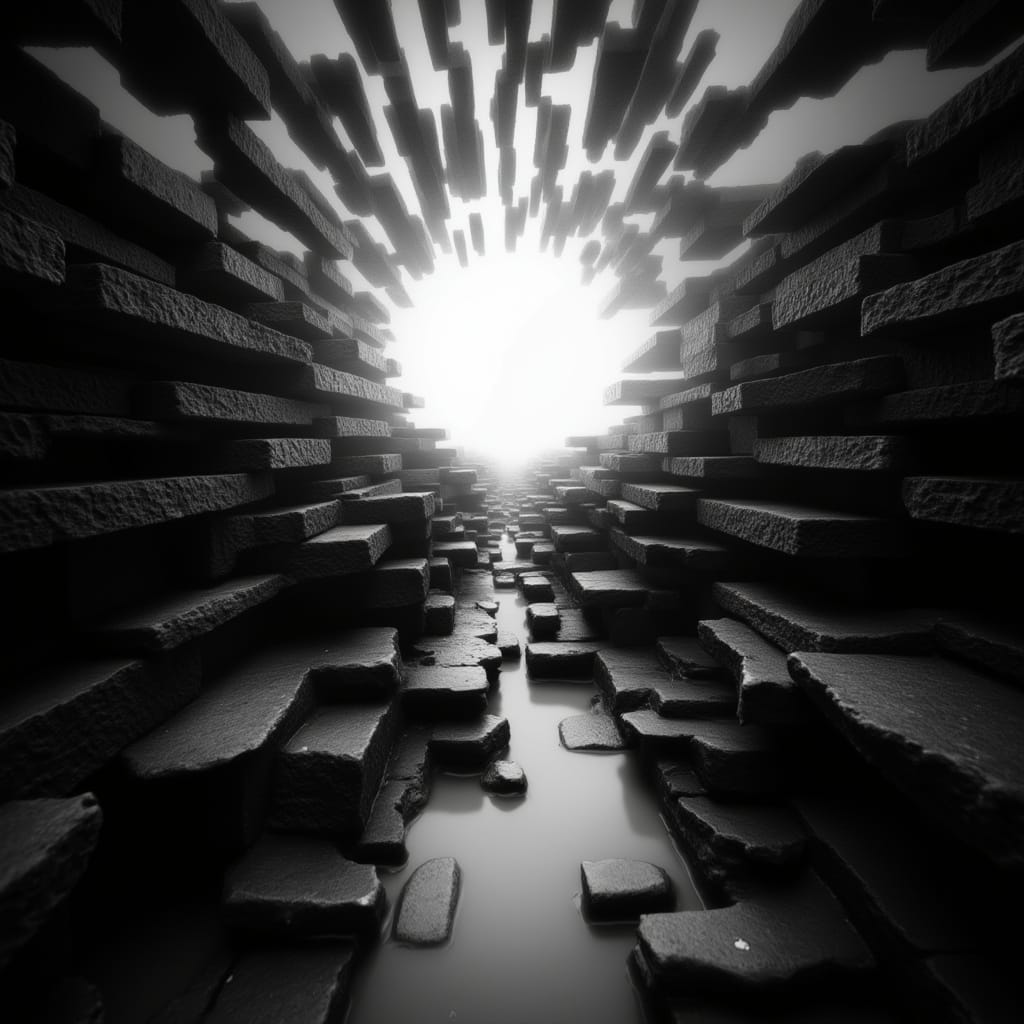
Still swinging, no matter how much shame you pour on it.
It spits back at the doubt.
It says: Maybe this isn’t perfect. Maybe it’s not even good. But it’s mine. And it’s real.
The fight never ends. Some days you lose. Some days you swing back harder.
But if you’re lucky, you stop waiting for the permission slip that’s never coming—and you start writing anyway.


I clicked the button.
Not because I felt brave. Not because I silenced the voices.
I clicked it because if I didn’t, they would win.
It wasn’t some Hollywood moment. No slow clap. No flood of praise.
Just the hollow thud of silence at first.
I startled like I’d been caught doing something I wasn’t supposed to.
What was that?
Could it be?
A sound. A signal. A crack in the wall I thought would never break.
If you’re lucky—and if your courage holds—you hear something.
A whisper from the ether.
I see you.


I’m not fearless now. I never will be.
To think otherwise is the act of a fool.
I am a great many things, but a fool isn’t one of them.
Every time I sit down to write, Doubt whispers sweet nothings in my ear, stroking my hair like an old lover.
I moan at the comfort of it. Yes, that’s it. A little to the left.
But I know something she doesn’t:
I made it through once.
I can do it again.
Sentence after sentence.
And that’s enough.

The outcome? Unknown to me.
It’s entirely up to you.

One thing’s certain:
I am Mangus Khan.
And I write the Memoirs of Madness.


T. S. Eliot’s Cold, Snobby Guide to Poetry (Now with 90% More Dead Guys)

ESSAY – JAVA & VERSE

What if greatness in poetry isn’t about your feelings, but your ability to disappear? T. S. Eliot thought so. And he said it with the intellectual force of a literary wrecking ball.


The Essay That Keeps Haunting Me

An English professor once handed me a stack of literary theories, as if they were polite interventions. I was emotionally raw, so naturally, I assumed the worst. One of the texts was T. S. Eliot’s Tradition and the Individual Talent—a dense, icy essay I’ve come back to over the years, especially when I start thinking my writing is getting good.

Spoiler: Eliot never lets me feel good for long.

Tradition: Now with 90% More Dead Guys

Eliot opens by dragging the English for treating “tradition” as a brag or an excuse to never change. He’s not here for that. For him, tradition isn’t a safety blanket—it’s literary CrossFit. You don’t inherit it; you earn it. You read so much Dante and Shakespeare that their ghosts start charging rent in your brain. That’s Eliot’s idea of a “historical sense.”

“The historical sense involves a perception, not only of the pastness of the past, but of its presence.”

If you’re not writing while haunted by the canon, Eliot’s judging you from his perch in the great library in the sky.

Your Poem Isn’t That Special

Next, Eliot drops the literary version of “you didn’t build that.” Your new poem? Cute. But it only matters in relation to what came before it. Tradition isn’t a one-way street—it’s a remix. Every time you drop a new metaphor, the canon must make room, like a snobby dinner party where you just showed up in a hoodie. The past adjusts—but only if your work is good enough to make it flinch.

Kill Your Ego, Save the Poem

Now for Eliot’s hottest take: great poetry isn’t about you. It’s not your diary entry. It’s not your breakup in verse. The poet should be like platinum in a chemical reaction—an invisible catalyst. You cause the emotional explosion, but leave no trace of yourself.

“The progress of an artist is a continual self-sacrifice, a continual extinction of personality.”

Your angst? Irrelevant. Your personality? A liability. Eliot’s poetic hero is the anti-snowflake: invisible, ego-free, and built like a Greek grammar book.

He’s not just dunking on confessional poets—he’s challenging the cult of authenticity. Writing as therapy? Valid. Writing as art? That’s a different game. Great poetry doesn’t wallow in feeling; it refines it. And yes, it takes someone deeply emotional to understand the need to flee from emotion. Cue the mic drop.

Feelings? Meh.

Eliot closes by swinging at sincerity. Feeling something doesn’t mean you’ve written something worth reading. You can mean every word and still write a dud.

“Poetry is not a turning loose of emotion, but an escape from emotion.”

The emotion belongs to the poem, not the poet. So if you’re writing about your fifth breakup in six months, maybe skip the sad-girl sonnet and channel Ovid’s exile or the fall of Rome instead. Just a thought.

Final Thoughts: Eliot vs. Instagram Poets

In a world obsessed with “finding your voice” and “speaking your truth,” Eliot reads like a literary curmudgeon with a PhD in gatekeeping. But there’s a weird freedom in his elitism. He doesn’t want you to be original—he wants you to be excellent. That means burying your ego, studying like a maniac, and writing like you’ve time-traveled through the entire Western canon.

So, don’t ask, “How do I feel next time you write?” Ask, “Would this make Virgil roll over in his grave?”

And if that sounds exhausting, good. Eliot didn’t write for quitters. He wrote for ghosts with PhDs.


This post was written for Reena’s Xploration Challenge #378

“True Love Way” — Because Apparently Love Is a Muddy, Slow-Dragging Southern Funeral

MORNING VIBE – THURSDAY INSPIRATION #227

You ever hear a song and think, “Wow, this really makes me want to lay in a ditch and feel things”? Enter: “True Love Way” by Kings of Leon, the musical equivalent of watching the rainfall on a rusted-out pickup truck while chain-smoking Marlboros and remembering a girl who ghosted you in 2006.

Let’s be honest—this track didn’t show up to party. It showed up to sulk on the porch at 2 a.m., crying into the void while a symbolic tumbleweed rolls by… in the middle of your city apartment courtyard. Cigarettes smolder in an overstuffed ashtray like tiny, bitter torches of regret, and the acrid stench of burning filters assaults your senses like a personal attack. Your dog and your cat sit nearby, silently judging you—united for the first time in weeks by their mutual disappointment in your life choices.

The vibe? Sluggish Southern heartbreak, dragged across gravel and dipped in bourbon. The tempo moves like it’s legally not allowed to go over 25 BPM. Caleb Followill’s voice sounds like he gargled sandpaper and emotion for three days straight—so pretty on brand.

The lyrics are vague enough to mean everything and nothing, which is perfect for when you’re too emotionally exhausted to explain what you’re feeling, so you just say, “this song gets it” and stare at the wall.

“True Love Way” doesn’t hold your hand through heartbreak. It drags you by the collar through a swamp of longing, stares deep into your soul, and says, “Yeah… you do still miss her.”
So naturally, once you’ve hit emotional rock bottom, it’s time to switch to “Molly’s Chambers.” Because if you’re going to wallow in your feelings, you might as well wallow while dancing like a drunken tumbleweed in boots that don’t fit anymore.
You’re out there on the porch, hips moving like you’re being exorcised, spinning under a streetlight like a sad little moth. And now your neighbor’s lights flick on. Curtains rustle. There’s Mr. Patel, confused. There’s Mrs. Johnson, concerned. They’re all watching—but they say nothing. Because they feel your pain. Or possibly they’re filming you. It’s unclear.

And let’s not forget: Mrs. Johnson is absolutely going to show up at your door at 6:47 a.m. with a basket of “feel-good muffins,” as if carbs can fix whatever’s going on with you emotionally (which, let’s be honest, they absolutely can). Because apparently, octogenarians don’t sleep. They just hover near windows like maternal ghosts waiting to pounce with baked goods and unsolicited life advice.


Introducing: Emotional Support Carbs™
The real MVPs of any midnight breakdown. Move over therapy dogs—there’s a new comfort system in town and it’s made entirely of banana bread and passive-aggressive neighborly concern.

Picture this:

You’re standing on your porch, barefoot, emotionally disheveled, probably wearing a bathrobe that hasn’t known joy since 2019. the dog looks embarrassed for you, and “Molly’s Chambers” is blasting like it’s a personal exorcism. Then—ding dong—it happens.

Mrs. Johnson, 84 years old and running on pure fiber and divine intuition, shows up with a basket lined in a gingham cloth. Inside? Emotional Support Carbs.

  • Pumpkin bread.
  • Three snickerdoodles and a judgmental smile.
  • A muffin so dry it absorbs your tears.
  • A laminated Bible verse tucked under the scones, just in case.

She doesn’t say a word. She just looks at you, nods in a way that says, “I, too, once had a porch breakdown,” and vanishes into the mist like some sort of suburban baked-goods cryptid.

This is your life now. And honestly? You earned that muffin.

This is the morning vibe …


The Ridge Where Silence Waits

PROSE – FOWC & RDP


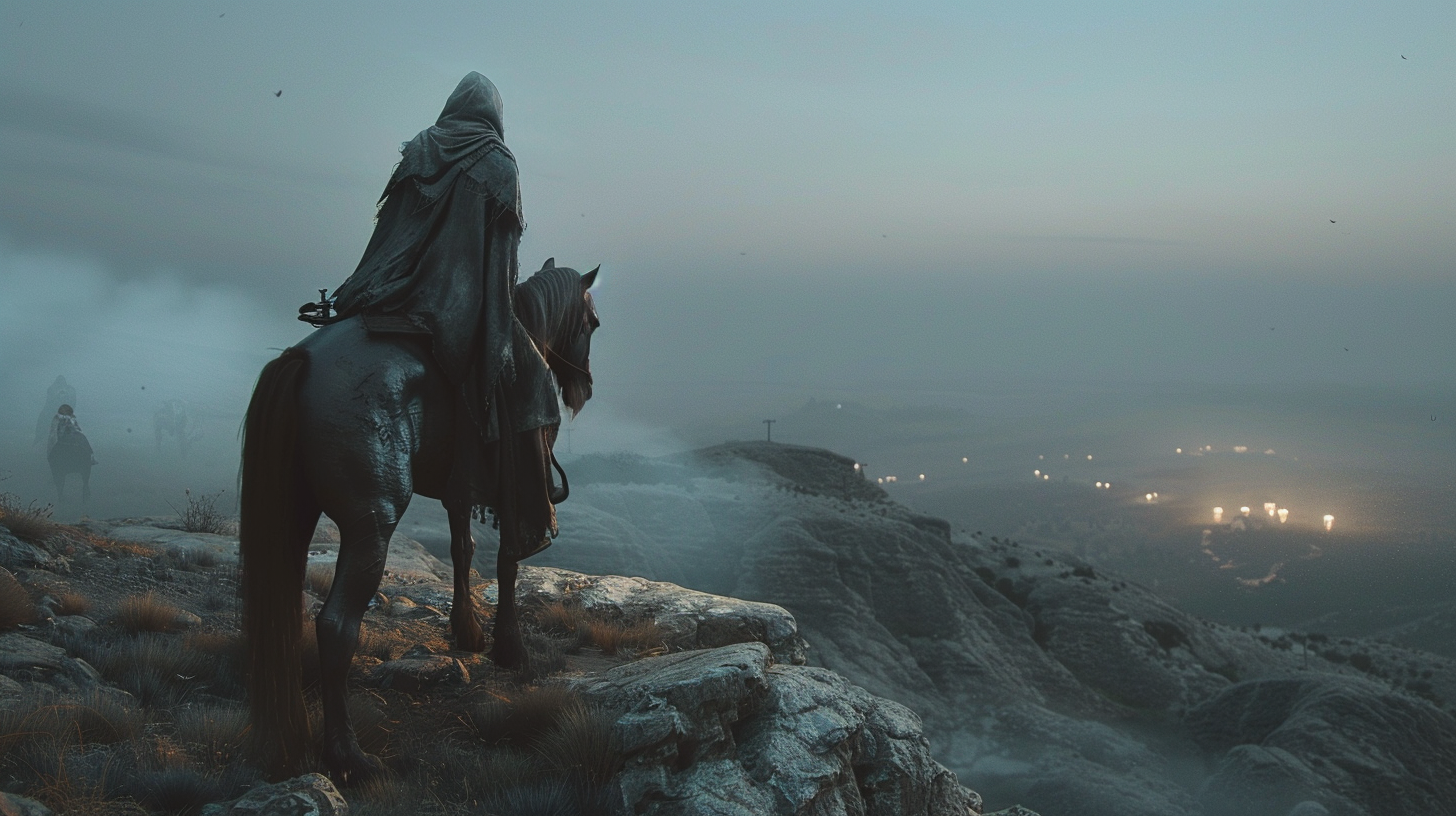
Dawn unfolds like a hesitant prayer, its soft light unspooling over the bones of the hills. The stars, one by one, retreat into the folds of daylight, as though ashamed of what they bore witness to through the long, silent hours. Still, I remain at the crest of the ridge, a lone silhouette etched against the slow bloom of morning. I have not slept. I could not—not with the weight of forgotten omens pressing down on me like ancient armor.

The saddle beneath me creaks as I shift, leather complaining in a language only the wind can answer. My limbs ache, not just from the vigil, but from something deeper—an unraveling. I am more wreck than man, hollowed by longing and the quiet violence of loss. My voice, once sure, now drifts somewhere in the ether, unreachable. Even if I could summon the will to speak, I no longer trust the shape of my own words.

Below, the keepers stir. I hear the sharp clash of their voices, rising in petty squabble over rituals they no longer question. Their movements are brisk, their concerns tethered to earth and duty. I do not begrudge them this. But I cannot descend, not yet. I am no longer bound to the cadence of the living. Not while something in me still listens for a call that may never come again.

For I have lost the vision.

Once, it came to me like thunder through a cathedral—blinding, holy, terrible in its beauty. It lit my mind with purpose, set my hands aflame with creation. But that light has dimmed, flickered, vanished. Last night it sang, soft and clear through the bones of the wind. Now it is gone, and in its place: silence, vast and unrelenting.

I reach inward, desperate for a glimmer, a fragment of that divine echo, but find only echoes of my own fear. My compass is shattered. My quill is waiting in some distant place I no longer know how to reach. The path to it—if it still exists—has been swallowed by mist and regret.

And yet, there is no peace in surrender. Only the chill of a fate whispered by unseen mouths, breath like ice on the back of my neck. They murmur not of endings, but of reckonings. Of a soul unmoored of a promise made long ago beneath stranger skies.

Perhaps this is what becoming untethered feels like—not a fall, but a float. Not a silence, but a waiting breath.

The ridge hums beneath me, and I close my eyes.

If the light returns, I will know it by the way the wind shifts. I will feel it in the marrow. I will rise, not with certainty, but with faith scorched into my bones like forgotten scripture.

But until then, I remain.
A shadow made flesh.
A watcher at the edge of memory.
A ghost, listening for the sound of his own return.

The Lip, the Dirt, and the Question That Won’t Die

Daily writing prompt
Describe a risk you took that you do not regret.

DAILY PROMPT RESPONSE

​I can’t believe WordPress repeatedly asks the same question: “Describe a risk you took that you do not regret.” But this post is still valid, because it was the catalyst for so much more.​

In “Boy! What’s that Sh** on your lip, dirt?” I recount my first day in the military, highlighting my challenges and fears. Despite the repetitive nature of the prompt, the story remains relevant as it marks the beginning of a transformative journey.

So, while WordPress may be stuck in a loop, this post is a testament to the enduring power of personal growth.

Bark and Blood

PROSE – WWP #395


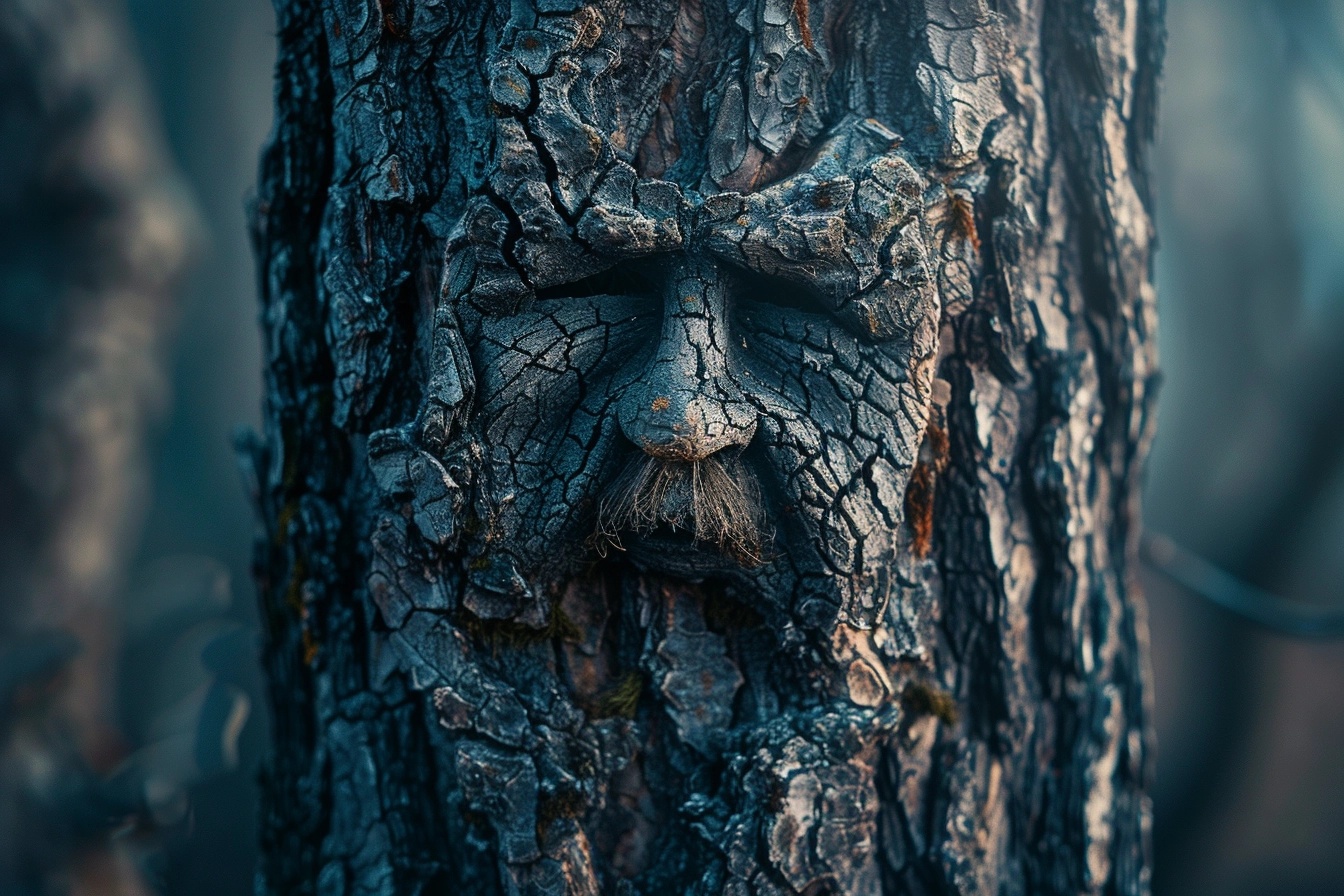
Every morning, Elías stood before the vow tree—the one with his father’s face etched in bark. Its eyes never moved, but somehow, it watched. When Elías broke a promise, the mouth curled in silent disapproval. He learned to speak carefully, act deliberately. To commit was no longer abstract. It was rooted, ancient, and watching. The tree remembered. And it never forgave.


The Inheritance of Purple

POETRY – GROWTH


They say purple was born
from crushed murex shells—
a thousand lives
for a single thread
worthy of gods.

It was never meant for the ordinary.
Worn by emperors,
draped on deities,
spoken only in whispers
or prayers.

But you—
you carry it quiet
in the marrow,
like something ancient remembered
not with words,
but with ache.

Growth, in purple,
is not soft.
It is ceremonial.
A coronation no one sees—
a crown of silence,
not gold.

It is the color of trials,
of nights that stretch too long
and still end in morning.
Of scars turned sacred
and stories no longer told
for approval.

You are not blooming.
You are being
enthroned.

In every slow step,
every time you chose stillness
over spectacle,
you stitched yourself
in the lineage
of the violet divine.

And when you sit now,
not reaching—
just radiating—
it is not peace you’ve found,
but power
disguised as peace.


This piece was written for Eugi’s Moonwashed Weekly Prompts and Weekly Prompts Wednesday

Strategic Withdrawal

Daily writing prompt
What makes you nervous?

DAILY PROMPT RESPONSE – FICTION

I never meant for things to turn out like this. Not that I had a plan—God forbid I be that organized. Life just… happened. Like a lopsided bundt cake with all the chocolate chips sunk to the bottom. Turns out you’re supposed to mix them into the batter. Would’ve been good to know before I tried to impress Rachel Largo—the most beautiful girl in three counties, maybe the entire eastern seaboard under the right lighting.

I didn’t check the expiration dates either. The cake tasted like regret and powdered disappointment. Rachel smiled and said it was “very creative,” which is high school girl code for this is awful, but I admire the attempt. She took one bite, chewed like she was processing trauma, and excused herself to “call her mom”—translation: you’ll never see me again.

I stood there in my mom’s kitchen, holding a dented bundt pan, wondering what exactly had led me to that moment. And I realized maybe I was just that guy. Not the one who gets the girl—just the one who learns not to bake without instructions.

Most of my life’s been like that. Spent in service to others. Not because I’m noble. I wasn’t raised by monks. No lightning bolt of altruism hit me over a bowl of cereal. If anything, I swore I wouldn’t end up outside a convenience store with a paper bag and a cigarette, crashing on my mother’s couch.

Spoiler: I did. More than once.

But service? That just kind of… happened. One favor turned into another. One crisis became two. Suddenly people were looking at me like I had answers. Like I was someone you could lean on. A functional adult. Which was optimistic, honestly.

Do I regret it? No. Do I feel good about it? Also no. I made mistakes—some loud and theatrical, others slow and corrosive. The loud ones make for stories. The quiet ones wear you down. And despite my best efforts and my many failures—usually delivered in the same week—it all still feels like it adds up to… nothing.

And that’s the part that really sticks. I might be the only one who thinks that. Everyone else moved on. I’m still here, counting ghosts.

I was in the Philly airport once when I saw her. The girl in uniform. Back then we traveled in dress—polished boots, pressed collars, trying to look like recruitment posters. She had that look: sharp, composed, untouchable. Every guy nearby tried to catch her attention. I didn’t bother. I wasn’t nervous—I was realistic. Women like her didn’t talk to guys like me. We carried bags. Maybe threw a punch if needed. But conversation? That wasn’t in the playbook.

Then the flight got canceled.

Instead of sleeping on a chair under fluorescent lights, they put us up in a hotel. Which meant one thing: party. Some guy who needed attention like oxygen threw a room bash together. I wasn’t old enough to buy beer, but I’d been doing it long enough to qualify as a supplier. I grabbed a few six-packs and slipped outside to the pool, which was closed for the season—quiet, gated, empty.

That’s where she found me.

Out of uniform, hoodie up, hair tied back. She looked more real than before. She spotted me, gave a half-smile, and walked over.

“You hiding too?” she asked.

“Strategic withdrawal,” I said.

She laughed. Sat down next to me. I handed her a beer.

We didn’t talk about much—music, food, home. No names. No stories. Just two strangers in the quiet, trading small things. But for the first time in a long time, I didn’t feel like background noise. I felt seen.

That should’ve been it. A memory, sealed off and fading. But a few years later, after deployment, I was sitting on an exam table at the clinic, in a paper gown, waiting for some overworked doc to clear me.

The door opened.

Rachel walked in.

Yes, that Rachel. Bundt cake Rachel.

And behind her? The nurse?

The girl from the pool.

I didn’t know whether to laugh, panic, or check if I was still in the desert hallucinating. Rachel was flipping through my chart. The nurse was wrapping a cuff around my arm like this was just another Tuesday.

And then she asked, casually, “How’ve you been sleeping?”

Like we hadn’t shared a beer under dead stars. Like we hadn’t sat together in silence while the world spun out behind us.

I opened my mouth. Lied like I’d been trained to.

“Sleeping fine,” I said.

But the truth?

I would never sleep again.

Swallowed, then Speak

POETRY – DEFIANCE

What is the moment when I scream into silence?

But I’m silent, really—
no sound, no voice,
just a mouth stretched wide around something too big to name.
My eyes glaze—not with calm, but with shock.
A thin film of disbelief over everything.
My heart races.
I’m wrecked like a tsunami with no quarter,
flung breathless against the shore.

It’s not quiet.
Not truly.
It’s a silence that throbs,
that undresses me,
strips me down to the rawest nerve.

Why?
Am I afraid to speak what I feel?
I push it down until I crack.
Swallow the pain, the misery, the grief—
like that’s what strength is.
As if silence means control.

But inside, it never stops screaming.

I’ve built a prison with no walls.
I’m both prisoner and warden.
Every emotion I swallow—another brick.
My tears, the mortar.
The longer I hold on,
the harder the mortar sets.

Letting go should be simple.
But I can’t.
I won’t.
I have to be strong.
Another brick.

The chains tear into me.
I pull and pull,
begging for clemency I know isn’t coming.
Skin breaks.
Something deeper frays.
Still I pull.
Still I scream.
Another brick.
How did I get here?

I slump into the abyss of agony.
Its waves strangely soft,
almost soothing.
The ghosts of my past wrap around me,
pulling me under.

Is this peace?
Is this what I deserve?

No.

I scream NOOOOO!!!
A final act of defiance.
A rupture in the silence.
A crack in the wall.

I scream again—louder.
Louder than the pain.
Louder than the ghosts.
Louder than everything that told me to stay quiet.

The final word is no longer a whisper.
The silence and I become one.
And we finally—

SPEAK.


Drives, Tea, and Other Stories of Unraveling Rituals

Daily writing prompt
How do you unwind after a demanding day?

DAILY PROMPT RESPONSE

I’ve never had a set way to unwind. It depends on the day. A long drive helps—something about being on the highway, the hypnotic rhythm of the road. It pulls the weight off your shoulders. You end up having a conversation with yourself, and for once, you actually listen.

Other days, it’s music and a large cup of coffee. You sit back and let the artist take you on a ten-minute adventure. When the album’s good, each track feels like a new chapter in a bigger story. What’s beautiful is that the story shifts every time you hear it. Same songs, different journey.

There are moments when I turn to tea. I use the Chinese tea ceremony. It’s a slow, methodical process—but that’s what makes it calming. There’s peace in the ritual, and the tea is always worth it. Some of what I have is aged, so there’s history in every sip. For me, the experience has a quiet, mystical quality.

And at times, I just pick up a pen and start scribbling. Maybe a story begins to take shape, or a sketch forms. I let myself drift into the corners of my mind to see what’s there. On a good day, I snap a few photos and fold them into whatever narrative is growing with each stroke of the pen.

Whatever the method, I do my best to find peace.

Ego, Snacks, and the Search for Peace

PROSE – REFLECTION – SUNDAY POSER #230


At my core? Still me. Still sarcastic. Still curious. Still low-key allergic to group think and people who say “per my last email.” But life—especially this past year—shifted something in me. A life-altering moment has a way of stripping you down to the truth, whether you’re ready or not.

It made me realize I’ve been sitting on a set of gifts I’ve treated like party tricks. I can do more. I should do more. Sure, I could keep yelling into the void about the uncultured swine running the world (still baffled by how that happened). And if I accidentally handed them the keys somewhere along the way, then yeah—I’ve got some things to atone for. Maybe even finish the time machine in the basement.

But mostly, I’ve just changed in the way that matters: I’ve started trying. Less coasting, more choosing. Less needing to be right, more needing to be honest.

Wisdom? Not exactly my department. I’ll never be that guy. Never been that smart, and I’m okay with that. What I am is honest enough to admit I’m a deeply flawed man. Whatever good I carry, I got from my mother. The rest is a work in progress.

Marcus Aurelius said, “Waste no more time arguing what a good man should be. Be one.” I’m trying. Some days better than others. And like in Sufism, where they speak of the nafs—the lower ego—it’s a constant fight. Not to eliminate your ego, but to tame it. To bring it into balance. Peace doesn’t come from pretending to be pure—it comes from wrestling with your own chaos and not letting it win.

And honestly? If King Solomon—the wisest man to ever live—couldn’t get it all right…

I think I’m good.


Chronicles of a Social Media Peepaw

Daily writing prompt
How do you use social media?

DAILY PROMPT RESPONSE

Episode 1: Apparently, I’m “Doing It Wrong”

I don’t know how to use social media. That’s not false modesty—it’s a fact. And my grandkids make sure I never forget it.

“Peepaw, I just don’t understand,” is something I hear far too often, usually after I’ve posted something harmless like a photo of my cat licking a plate of spaghetti. The photo’s blurry (again), the caption’s too long, and apparently I’m using hashtags like I just discovered them yesterday. Which, to be fair, I kind of did.

What really riles them up are those blurry photos. “You literally have a good camera!” they protest, as if I’m dishonoring a sacred artifact. And they’re not wrong. I do have a good camera—it’s a sturdy old DSLR that doesn’t connect to the cloud, but it’s seen more family moments than most smartphones. It just takes a little work to upload. That’s what USB cables are for, right?

And let’s not forget—they got their start in tech by watching me work. I had wires running through the garage office before they could spell “HTML.” I was the one patching together PCs, fixing drivers, and explaining what RAM was. Now they’ve got degrees and job titles like “UI/UX designer,” and suddenly I’m the tech-challenged grandparent who needs an intervention.

I never set out to be the cool grandpa. I just wanted to share a few thoughts. Maybe post a picture of my chili (my chili is the truth). I wanted to cheer them on when they land a new job or adopt another rescue dog. But apparently, there are rules—unspoken, constantly shifting rules—and I’m breaking all of them.

That’s okay. I’ve made peace with being their favorite internet punchline. If “Peepaw doesn’t get it” gives them something to laugh about, I’m happy to play the part.

Besides, this is just the beginning. There’s a whole internet out there for me to misunderstand.


In The Struggle, We Find Each Other.

MORNING VIBE – REFLECTION

How can we feel peace in a society based on fear? A society where hysteria is the most addictive drug on the planet.

It’s not sold in bags or bottles—it’s pumped through headlines, algorithms, and dinner table arguments. Fear keeps people alert, afraid, and obedient. It tells them who to hate, what to buy, and why they should never trust their neighbor. It whispers that safety is submission, and freedom is recklessness.

We scroll, we panic, we comply.

Peace isn’t profitable. Fear is. Fear sells protection. It sells security systems, surveillance, wars, and pills. A calm population doesn’t need saving. But a frightened one? They’ll beg for chains if you tell them it keeps the monsters out.

Is inner peace an illusion? Has the idea become a fairy tale, a bedtime story we whisper to ourselves as we tuck in under stress and screens, pretending we’re safe, pretending we’re okay?

We meditate between emails. We chase mindfulness through apps that send push notifications. We breathe in for four, hold for four, exhale—and then doomscroll five more minutes. The world burns and we light candles, hoping the smell of lavender will cancel out the sirens.

Maybe peace isn’t a state anymore. Maybe it’s a product. Packaged and branded. Just another goal in the endless self-improvement hamster wheel—be calmer, be better, be less angry, be more forgiving, as if serenity is another checkbox.

But if the world never stops screaming, how long can silence survive in our heads?

Technology isn’t evil. It never has been. It’s a mirror. It reflects exactly who we are and what we crave. The chaos, the noise—that’s on us. But so is the potential.

We’ve never had more ways to find each other in the dark. To say, me too, to share the ache, to build something human across lines that once divided us. The screen doesn’t have to isolate. It can become a bridge—if we let it.

We have an opportunity like never before to connect within the struggle. Not in spite of it, but because of it. To stop pretending we’re fine and start showing up as we are—uncertain, overwhelmed, genuine.

Not curated. Not filtered. Just real.

Because the truth is, everyone’s carrying something. We’re all bruised in places we’ve learned to hide. But maybe the hiding is the problem. Maybe if we showed the cracks, others might too—and suddenly, we’re not alone anymore. Suddenly, it’s not just my anxiety, my grief, my confusion. It’s ours.

That’s where the healing lives—not in perfect answers or polished advice, but in the shared breath of I see you. In the quiet courage of me too.

This moment, this fractured now—it’s begging for honesty. Not the weaponized kind, but the kind that invites someone in. The kind that breaks the cycle of fear with something as simple as presence.

This is the Morning Vibe with a little Miles Davis for effect.


The Edge of Becoming: Refusal to Disappear

PROSE – REFLECTION


The light crept in, not with purpose, but inevitability. It pooled over the floorboards in pale streaks, slipped across the rumpled sheets, and found her where she sat—curled in on herself at the edge of the bed like something unfinished. The curtain shifted with a lazy sigh, stirred by the hum of a world already moving without her.

She didn’t move. Just blinked slowly, eyes still heavy. Her hair was a mess—coiled and wild, clinging to the nape of her neck with sweat. The air felt thick, damp from last night’s rain, and carried a faint trace of coffee drifting in from the apartment next door. It reminded her she wasn’t entirely alone in the world—just sealed off from it.

Her phone buzzed on the nightstand. She didn’t look. She already knew the message: “You okay? You were pretty quiet last night.”

She had gone to that rooftop gathering. Smiled on cue. Nodded politely as someone explained a startup idea for the third time. But when the conversation shifted to politics, to “people being too sensitive,” to jokes with teeth she wasn’t supposed to flinch at—she had gone quiet. Not out of agreement. Out of calculation.

It wasn’t fear of confrontation. It was exhaustion.

The kind that seeps into your bones when you’ve spent years editing yourself in real time.

Why can’t you just be easier?

The voice came sharp, cutting through the fog. Familiar. Not hers exactly—but forged in her. It spoke in the tone of her third-grade teacher, the one who called her “bossy” for speaking with certainty. The one who wrote on her report card, “bright, but disruptive.” That was the first time she learned that being loud and being wrong were seen as the same thing.

She had been shrinking ever since. A slow erosion.

And now, this morning, she felt caught between the shrinking and the wanting—wanting to take up space and fearing the cost of it.

You think you’re different? That the rules don’t apply to you?

She flexed her jaw, let the thought sit. The worst part of that voice was how reasonable it sounded. How it wrapped itself in concern. In survival.

Outside the window, a billboard stood tall above the bus stop: a model in spotless white jeans and a tagline in all caps—LIVE YOUR TRUTH™. She almost laughed. As if truth came clean and neatly styled.

Her own truth felt messy. Unmarketable. Like morning breath and ragged nails and questions without answers.

She looked at her hands—real, rough, hers. Last night she had come home and typed a long apology to the group chat. “Sorry I was off. Just tired. Hope I didn’t kill the vibe.”

She hovered over the send button.

Then she didn’t.

Now, she picked up the phone, screen still glowing with the unsent draft. She tapped and held. Delete.

It wasn’t a revolution. Just refusal.

A small, quiet defiance.

She wasn’t whole. There were still bruises beneath her calm, still doubts threading her thoughts. But she was done apologizing for needing more than performance.

The light had shifted again, stronger now. Not demanding. Just there.

She wasn’t sure what came next.

But this—this stillness, this pause, this decision not to disappear—was a start.

Not Feeling it !

Daily writing prompt
Jot down the first thing that comes to your mind.

DAILY PROMPT RESPONSE

“Man, I don’t feel like writing today!”

[Whining … Whining Complete]

Back to work … high speed

Memoirs of Madness: Writing Is the Only Way Through

PROSE – MOONWASHED WEEKLY PROMPT

Mind, body, and spirit—it’s not just a slogan on a t-shirt or a phrase tossed around in self-help books. It’s a lived, gritty process. It doesn’t happen in a straight line. It doesn’t always feel peaceful. It asks to be practiced daily, especially in the moments when we’re coming apart.

When my wife was dying, I was unraveling. There was no calm breath, no quiet meditation that could hold me. The pain was too loud, too sharp. I couldn’t go to the dojo—I knew I might hurt someone. So I turned to the only thing left that didn’t require restraint: writing.

That’s where Memoirs of Madness was born—not from ambition, but necessity. I wrote because if I didn’t, I was going to explode. Writing became my release valve. My attempt to find balance in a world that no longer made sense. It wasn’t polished. It wasn’t composed. But it was honest. It was survival.

Healing doesn’t always look like light. Sometimes it’s just sitting with the darkness long enough to stop being afraid of it. Writing gave me a place to do that. Not to escape pain, but to face it with something steady under my hands—a pen, a page, a place to speak freely.

People like to talk about acceptance, about “new normals,” especially when you’re going through something irreversible. I’ve been told I may never return to the person I was before. And maybe that’s true. But I also know it’s not the whole truth. I know there’s more to me than what’s been broken.

Throughout my life, I’ve encountered teachings I didn’t ask for. Moments of awe, loss, surrender, and grace. I didn’t always understand why they came, but something in me knew not to reject them. Writing became the way I made sense of them. The way I honored them.

It’s not therapy, exactly. It’s more like a mirror. Each word reflects something back at me—something raw, something I need to see. Writing doesn’t heal like medicine. It heals like movement. Like breath after being underwater too long.

Writers tell the truths we were taught to keep quiet. We witness the small miracles—flowers bending to the breeze, the call of a bird we can’t see, the still gaze of an animal watching us. We notice the laughter of children that vibrates with something pure and untouchable. We let it all into our bones. But writing is how we let it back out. How we stay connected—not digitally, but spiritually, viscerally.

Every sentence I write is a thread that connects me to the person I’ve always been beneath the layers of grief, anger, and expectation. Not the old self. Not the broken self. But the essential one. The one that endures.

I once asked: Who’s smarter—the adult or the infant? Predictably, everyone said the adult. When I pressed them, they said the child doesn’t know anything. But I disagreed. I said the infant. They laughed, of course. All but one. That one asked me, “Why?”

“Because the infant sees everything,” I said. “They feel everything. They haven’t learned to numb themselves yet. They haven’t picked up the habit of pretending. They are unfiltered truth.”

That’s what writing brings me back to. That clarity. That honesty. That wholeness before the world taught us to break ourselves into pieces.

Healing through writing isn’t a return to what was. It’s a return to what’s real. And sometimes, that’s more than enough.


Author’s Note:

I sat looking at the challenge image, thinking about the beauty of that moment frozen in time. I found myself wondering how to capture something like that in words. Lately, I’ve been studying Buddhism—not because I want to become a Buddhist, but because I’m wise enough to know that truth can’t be found with a closed mind.

Next thing I knew, this piece came through me.

It’s not all I have to say on the subject, but it’s a beginning.

Thanks, Eugi.

The Weight of Stillness

PROSE – FOWC & RDP

I drift through the mist of life’s abyss, not falling, not flying—just suspended. Time doesn’t move here; it folds in on itself, leaving me trapped in a silence that isn’t peace, but ritual. Dutiful. Respectful. A silence learned over years of swallowing words and measuring breaths. It’s the kind of silence that makes you forget the sound of your own voice.

The air around me stirs, barely. Still, I hear the whispers—low, deliberate, cold. They speak not in sentences, but in suggestions, in warnings that curl around my ears and settle in my chest. They speak of fate, of choices already made, of a path too worn to change.

In my hand, the quill waits, poised like it knows the weight of what it might say. But it’s grown unwieldy—too much meaning, too much memory packed into such a fragile thing. I grip it, unsure whether to write or release. Each word feels like it could be the last. Maybe this sentence is where I stop. Maybe this is where I finally let go.

But still I hover, caught in that space between thought and surrender, listening to the hush of everything I’ve never said.

Where the Sky Remembers Her

She stood still, her profile etched in the quiet glow of imagined worlds. Galaxies spun behind her eyes, each one holding a memory she hadn’t spoken aloud in years. Moons drifted close, brushing her skin with light that wasn’t light, warmth that didn’t burn. The clouds moved through her like thoughts, slow and tangled, as if the sky itself had cracked open to whisper her name.

Her expression didn’t shift. It didn’t need to. She wasn’t here to perform. She was caught in that weightless place between who she’d been and who she might become. And in that stillness, even the planets seemed to orbit slower, listening.

Someone once told her she looked too serious, too distant. But they only gave her a bland kind of attention—the kind that never reached deeper than skin. The type that skimmed her surface and missed the storm beneath.

Now, she let her thoughts roam in this quiet collision of sky and soul. Not forward. Not back. Just… outward. And for a fleeting second, she caught a flicker of something—possibility, maybe—out of the corner of her eye.

A glance, nothing more.

But it was enough to remind her that she was more than what the world saw, more than the shadows cast by fading light. She was part of the cosmos now, and maybe, just maybe, the cosmos was part of her, too.

Nothing, Babe: A Travel Philosophy

Daily writing prompt
What place in the world do you never want to visit? Why?

DAILY PROMPT RESPONSE

To me, this is a loaded question. Like there’s just one place you’d never want to visit, as if you hear a name like Topeka and just decide: absolutely not.

I’ve been around. I’ve seen beauty in unexpected places and tension in spots that looked picture-perfect. So saying I’d never go somewhere feels rigid, and life’s too unpredictable for rigid rules.

But I won’t lie—there are places I instinctively avoid.

Some of that’s just gut feeling. I avoid places with names that don’t sit right—Bone Gap, Jim Falls, Slidell. Part of it is how they sound, part of it is associations I can’t quite shake. Sounds silly, but names carry weight. They trigger memory, emotion, or sometimes just a weird vibe that tells you to keep moving.

Then there are practical reasons. I don’t mess with places where monkeys outnumber people. That’s not fear—it’s realism. Monkeys throw things. I know myself well enough to admit I wouldn’t handle that gracefully. I don’t believe in animal cruelty, and I don’t want to find myself in a moral showdown with a macaque.

Then there’s the deeper stuff. As an American soldier, I’ve seen how quick misunderstandings can turn into something worse—especially when we didn’t know the customs or context. That always struck me as ironic, considering how much we pride ourselves on our ‘attention to detail.’ It taught me to respect where I go and to prepare before I get there. It also taught me that sometimes, respecting a place means knowing when not to go.

When my ex-girlfriend said, “No places with a history of cannibalism,” I didn’t laugh it off. That was her line, and I respected it.
But I couldn’t help myself—I looked at her and said, “So… just to be clear—California’s out, right? That whole Donner Party thing. Colorado too. Can’t forget Alfred Packer. Oh—and Virginia. Jamestown had a real rough winter.”
She stared at me, confused. “Wait… what happened in Virginia?”
I took a long sip of my drink, nodded slowly, and said, “Nothing, babe. Just history being weird again.”

Some places carry histories that deserve reflection, not vacation photos.

So no, I don’t have a definitive “never” on the map. But I have instincts, boundaries, and experiences that shape how I move through the world. That’s not fear—it’s awareness. And in a world this big, I think that’s fair.

What My Mother Taught Me, What My Family Gave Me

Daily writing prompt
Describe a positive thing a family member has done for you.

DAILY PROMPT RESPONSE

“Do as I say, not as I do,” the classic parental phrase, never touched my mother’s lips. However, “Because I said so,” not only repeated — it seemed like it should be on a plaque above the door. I even used it with my children, and they used it with theirs. However, this isn’t the most important lesson she gave me. What she demonstrated my entire life is how to be steady, even in the most challenging situations life has to offer.

She raised me by herself, so every bump, scrape, and broken bone — she was steady. Honestly, I don’t know how she did it. I remember being on the verge of losing it with my own kids, and I had a wife to back me up. To do it all alone? I don’t have the words.

That steadiness she showed me has served me well throughout my entire life. No matter what, I stay steady. I might be pissed off while I’m doing it — that trait definitely comes from my father. He had two modes: super cool or absolute death. Nothing in between. He kept people guessing because you never knew how he’d react. People say I do that too. I always swore I’d never be anything like him… well, oops.

It’s said that in life you have two families: the one you’re born into and the one you choose. My mother gave me the tools to build both. Her steadiness became my anchor, and whether I was dealing with work, parenting, or just the everyday chaos of life, I leaned on what she taught me — stay calm, handle your business, don’t fall apart.

And yeah, maybe I inherited some of my dad’s unpredictability too. But thanks to her, the foundation underneath is solid. That balance — between calm and chaos, between knowing when to hold it together and when to let it fly — that’s something I’ve carried into every relationship I’ve built, chosen or otherwise.

My chosen family has shown up for me in ways I never could’ve imagined. I’m truly blessed to have them in my life. Like all my family, they’ve been incredibly patient with me. I can be a lot sometimes — I know that. But they hang in there.

The challenges in life never really stop coming. But when you’ve got people who stick with you, who steady you, who love you even when you’re not at your best — you can get through anything.

In life, we have two families: the one we’re born into and the one we choose. I’m grateful for both.

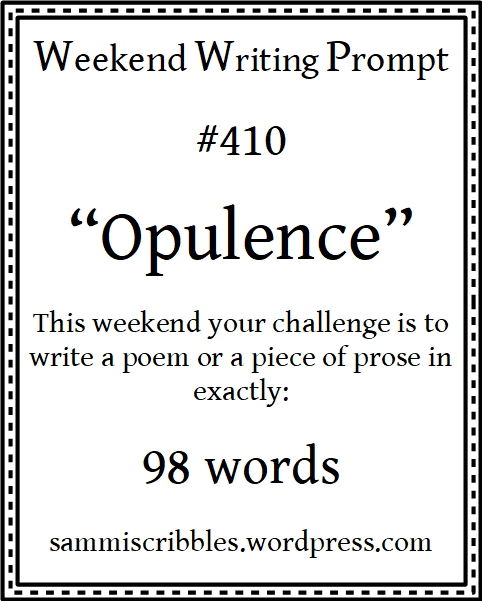
The Silence of Excess

PROSE – WEEKEND WRITING PROMPT #410

Opulence dazzles, but it doesn’t fill the void. Gilded walls, luxury cars, designer clothes—they impress, not satisfy. The chase for more becomes endless: bigger homes, flashier jewels, louder status. Yet behind the gloss is silence. Relationships shallow. Laughter forced. Meaning fades. Surrounded by everything, the soul starves for something real. Comfort becomes a cage, and abundance numbs. The high of acquisition dulls fast, and stillness creeps in. Opulence, once a dream, becomes a mirror—reflecting what’s missing, not what’s gained. In the echo of excess, we find the truth: wealth can buy things, but not worth.


Warrior’s Creed

PROSE – WEEKEND WRITING PROMPT #411

Fierce burned in her chest—not anger, but resolve. Each setback was fuel. She didn’t flinch, didn’t fold. Determination wasn’t loud; it was steady. Quiet steps forward, no matter what. That’s how she wins.


Arc Logic

FICTION – FFFC #315

“Did you know rainbows aren’t real?” Sophie said, nose pressed to the rain-speckled window like she was trying to peer through the fabric of reality.

Josh, flopped sideways on the couch and half-heartedly plucking his guitar, didn’t look up. “Real enough to chase. That counts.”

“They’re just light doing a water park routine. You can’t touch one. You can’t keep it. It’s basically sky clickbait.”

Josh strummed a lazy, spacey chord. “Exactly. That’s what makes it magic.”

Sophie turned, eyes narrowed like a nine-year-old prosecuting attorney. “Magic isn’t real either. Honestly, sometimes I think you were left on our doorstep by a pack of whimsical wolves.”

Josh raised an eyebrow. “Bold accusation for someone who still believes in bedtime.”

“I’m just saying—look at the evidence. Dad’s an engineer. Mom rebuilds humans for a living. I’m a well-documented overachiever with a spreadsheet for everything. And then there’s you—Mr. ‘What if clouds are just sky-whales and the rainbow is their feeding tube?’”

Josh laughed. “Okay, that was solid. Respect.”

Sophie gave a smug little bow. “Thank you. I’ll be here all week. Try the sarcasm; it’s aged to perfection.”

“I’m the creative recessive gene,” Josh said, plucking at a new tune. “Or maybe a stowaway from an alternate timeline with looser rules.”

“You give strong alternate timeline energy,” Sophie agreed, already hopping off the windowsill.

She disappeared down the hall and reappeared 90 seconds later fully suited up in a bright yellow slicker, matching boots, and her frog-shaped umbrella. She looked like a tiny storm hunter gearing up for war.

Josh blinked. “Are you… ready to fight the weather?”

“I’m ready to dominate puddles,” she said, snapping her hood into place. “The rain’s letting up, and I have a contract to enforce.”

Josh raised an eyebrow. “What contract?”

Sophie stared him down. “Don’t play with me, Mister. You promised me ice cream after the rain stopped. There were witnesses. I can draw you a diagram.”

Josh put both hands up. “Okay, okay. Ice cream. I hear you.”

“Good,” she said, already halfway to the door. “Justice will be served. Preferably in a waffle cone.”

As Josh grabbed his keys, he glanced at her. “Are you gonna be embarrassed being seen with me? I’m kind of a known weirdo.”

Sophie rolled her eyes, but grinned. “Of course not. You’re my brother. I love you—even if you are intellectually stunted. No one’s perfect.”

Josh chuckled. “Wow. You really know how to make a guy feel cherished.”

“I try.”

He set the guitar down with exaggerated care. “But when we get back…”

She paused mid-step. “What?”

“Will you let me play that song? The one I wrote that’s totally not about you but also definitely is?”

She sighed, but her grin cracked through. “Fine. But if it’s sappy, I’m filing a formal complaint.”

“To who?”

“Your soul.”

Josh laughed. “Noted. Minimal sap. Maximum chords.”

“And no eye contact,” she added. “That’s how feelings sneak in.”

Outside, the rain had dwindled to a drizzle. A rainbow stretched overhead like it had been waiting for them to notice.

Josh looked up. “You know, it kind of feels like a map.”

Sophie squinted at it. “To where?”

Josh shrugged. “Somewhere we don’t have to know everything. We just get to… exist.”

Sophie stomped into a puddle with both boots. “Cool. Let’s go there. Right after ice cream.”

They set off down the sidewalk, the sky still dripping a little, the rainbow curved above them like a wink. Neither of them said it, but both figured: if that thing was pointing somewhere—maybe it was toward each other.


Alcoholism: The Drug Hiding in Plain Sight

It’s not always the staggering drunk on a sidewalk.
Sometimes, it’s the friend who always shows up, the parent who keeps it together, or the coworker who “just likes to unwind.”

But behind closed doors, they’re shrinking. Fighting. Breaking.

Alcoholism doesn’t always look like what we expect. And that’s the problem.


Folded into himself. Silent. Alone. Crushed under the pressure of needing something he hates needing.

We call it “just a drink.”
But alcohol is the most lethal drug in the world—more deadly than opioids, meth, or cocaine.

And yet… it’s everywhere.
It’s legal.
It’s glorified.
It’s handed out at every wedding, every weekend, every wound.


Not a habit. A fight. Against himself. Against the silence. Against the pressure to act like everything’s fine.

Addiction doesn’t start with rock bottom.
It often begins with social acceptance.
A drink to relax. A drink to celebrate. A drink to cope.
Until the bottle isn’t an option—it’s a cage.


Even the strong get trapped. Alcohol doesn’t care how tough you are.

What makes alcohol so dangerous isn’t just the physical toll.
It’s the silence.
The shame.
The way we minimize it, laugh it off, ignore the signs.


This is what addiction feels like. Rage, regret, and no way out. But always another drink.

The Truth:

  • Alcohol kills more than 3 million people globally each year.
  • Withdrawal from alcohol can be fatal.
  • It destroys bodies, families, and lives—and we rarely talk about it.

If you or someone you know is struggling:

You are not alone.
There is help.
There is life outside the bottle.


CTA (Call to Action):

📞 [Insert helpline or resource link – e.g., SAMHSA’s National Helpline: 1-800-662-HELP]
💬 Share this post. You never know who needs to see it.

What’s One High School Story You Actually Want to Hear?

Daily writing prompt
Describe something you learned in high school.

DAILY PROMPT RESPONSE

Everyone has high school stories. Some are boring. Some are embarrassing. Some are the kind you only tell your best friend at 2 a.m.

Here are five story titles from my high school years. Each one has a real lesson behind it—some funny, some rough, some surprisingly honest.

But I’m only telling one of them. And you get to pick which.

Vote below for the story you want to hear most. The one with the most votes? I’ll post it next.


Pick the story you want to hear:
(And yeah, they’re all true.)

  1. I Couldn’t Kiss Worth a Damn
  2. No Drunk Chicks
  3. All You Need Is One True Friend
  4. I Might Be a Time Traveler
  5. I Survived

Dante in Combat Boots: My Journey Through the Divine Comedy

ESSAY – RANDOM THOUGHTS

The First Encounter – Lost in the Woods (and the Footnotes)

The first time I read The Divine Comedy was sparked by an argument—an intellectual back-and-forth with someone who, as it turned out, didn’t know much about the book. But he was passionate. His conviction was hypnotic. I didn’t buy his analysis, but I understood why he was obsessed.

I picked up the book out of curiosity and a little competitive pride. I didn’t finish it. We got called out on a mission, and you don’t take library books on missions. Fines are one thing—charred pages are another.

Still, even unfinished, it stuck with me. Something about Dante’s voice—strange, serious, deliberate—lingered.

That first attempt, though brief, planted a seed. When I returned to it later, I had more patience, a better dictionary, and no librarian breathing down my neck.

Even then, Inferno was dense. Layers of references. Historical names I barely recognized. Theology deep enough to drown in. I was flipping between footnotes and old library texts like I was defusing a bomb. The nine circles of Hell were vivid, yes—but they felt more like a museum exhibit than a lived experience. I was watching Dante, not walking with him.

It felt like homework. Necessary, maybe. But distant.

Still, something about the structure—the cold logic behind every punishment—got under my skin. Sin wasn’t just bad behavior. It had a shape. A weight. I didn’t have the words for it then, but the idea that justice wasn’t arbitrary began to settle in.

I didn’t love the poem yet. But I was starting to hear it.


Warzones and Infernos – Dante in Combat Boots

When I returned to The Divine Comedy after combat, it hit differently. Dante wasn’t just a poet anymore—he sounded like someone I knew. Maybe even like me.

Inferno started to make more sense. Hell wasn’t about fire and demons—it was about clarity. Brutal, stripped-down moral logic. A world where actions had consequences that couldn’t be bargained with.

In combat, you live in that gray zone between judgment and survival. Right and wrong don’t show up in clean lines. Sometimes you do the right thing, and it haunts you. Sometimes, it felt like there was no God—at least not the one we heard about in Sunday school. We believed in the integrity of what we were doing. We questioned it, sure. But our resolve stayed intact. Sometimes, surviving was all you could do. And that didn’t always feel like redemption.

Dante’s Hell isn’t just punishment—it’s paralysis. People stuck in their choices, their pride, their rage. No growth. No movement. Just a reflection in the worst kind of mirror.

That rang true.

Some turned to a higher power for guidance. We knew—we were fighting for God. But we also knew the limits. We were required to do what was asked of us—but no more. We fought for God. And we had to answer to Him too.

Not just for the people we encountered. Sometimes for what we became.


Purgatorio – The Long Climb Back

Purgatorio doesn’t get the same attention as Inferno. It’s not as dramatic. No fire. No famous sinners frozen in ice. But it’s the part that felt most real to me.

Because after war, after any real descent, what follows isn’t glory—it’s work. Quiet, repetitive, soul-grinding work. That’s Purgatorio.

Dante climbs a mountain, terrace by terrace, confronting the seven deadly sins. Each level is a mirror—less about judgment, more about recognition. It’s not punishment anymore. It’s penance. The difference matters.

After combat, reintegration isn’t just about coming home. It’s about stripping away the armor you lived in. Unpacking things you didn’t have the luxury to process while they were happening—and you don’t have the luxury to process them now. You’re thrust back into your life like nothing happened. You lie to the ones you love to keep them safe, to spare them from the world you know exists but no one is talking about. You keep that secret.

You make a valid attempt to let go of habits that kept you alive but will not help you live. It’s exhausting.

That’s why Purgatorio hit me so hard. I didn’t expect it to. But there’s something deeply honest in the idea that healing doesn’t feel holy. It feels like discipline. Like carrying your own burden up the hill with no end in sight. Some days, you move a little higher. Some days, you just don’t slip backward.

There’s no audience. No headline. Just effort.

And yet—it’s hopeful. The whole mountain is built on the assumption that you can be made whole. That ascent is possible. Redemption is a process, not a prize.


Paradiso – The Light We Try to Name

Paradiso is the hardest part.

Not just to read—but to believe in. It’s abstract, layered with theology and geometry, full of light and music and spheres. Dante is trying to describe the indescribable. He’s chasing God through language; the closer he gets, the less the words hold.

For a long time, I didn’t connect to this part. It felt like too much, too far, too clean.

But after Purgatorio, after the work of climbing, carrying, and unlearning, I started to understand what Paradiso was reaching for—not perfection, not purity, but peace.

And peace—real peace—is foreign when you’ve lived inside chaos. It’s not some cinematic moment of triumph. It’s quieter. It’s the ability to be still, without needing to be numb. It’s presence, not performance. It’s the moment you stop bracing for the next thing to go wrong.

Dante meets Beatrice here—his guide into the divine, his symbol of grace. We all have our Beatrices, if we’re lucky. People who held the line for us when we couldn’t. People who reminded us we weren’t lost forever.

Am I worthy of this grace? Will God forgive me for what I’ve done? I find myself waiting—searching—for that one thing that could wipe away all the havoc of my making. Is that a thing? You know the scales will have an answer.

In the background of all this light, I still imagine the scales. The old ones—Egyptian, Christian, Islamic. The image of your life being weighed. Every choice, every silence. Your hands held out, waiting to see which way it tips.

We fought for God. We made peace with that. But we also knew we’d stand in front of Him one day. And maybe that’s what Paradiso is really about—not escaping judgment, but understanding it. Accepting it. Trusting that there’s a kind of justice that doesn’t crush you, but completes you.

I don’t claim to understand everything Dante saw in Heaven. But I understand the desire to see it.

And that’s something.


Full Circle – Still Listening

I’ve read The Divine Comedy more than once now. Not in a straight line, not as a scholar, but as someone who’s lived with it—left it, returned to it, wrestled with it. And the strange thing is, it keeps changing. Or maybe I do.

What started as a challenge—half a debate, half an ego trip—turned into a mirror. Dante’s journey through Hell, up the mountain, into the light, isn’t just theology or poetry. It’s a blueprint. A map of what it means to go through something, to come back from something, and to wonder if you’re still whole on the other side.

I never read it looking for answers. Not really. But I keep coming back to it for the questions.

Am I worthy of grace? Is peace possible? Can the scales ever truly balance?

I don’t know.

But I’m still listening.

And that’s something too.


Author’s Note:
This was written as a result of a post by alexander87writer. I was going to leave a comment, and just kept writing. My two sentences became this. I’m so extra at times.

The Change That Brought Me Back

Daily writing prompt
Describe one positive change you have made in your life.

DAILY PROMPT RESPONSE

After my health started to improve, I made a quiet promise to myself: take it slow, do it right, and make the changes stick. Not just another sprint followed by burnout. Not another performance. Just something real.

To be honest, I didn’t have much choice. Getting my strength back has been a crawl, not a comeback montage. The days of jumping up, yelling “I’m okay, I’m okay!” while secretly scanning the room for lost cool points—those are done. By the time I realized chasing cool points was just another layer of nonsense, the damage was already in motion.

So I made a deal with myself: if I ever got my strength back, I’d write my butt off. Not for validation. Not to prove something. Just because I have things to say, and writing is how I say them best.

My editor always believed in me—even when I didn’t believe in myself. I’d whine about low engagement, tweak my style constantly, chasing some imaginary formula for success. I forgot the quote a dear friend gave me when I first started posting:
“Better to write for yourself and have no public than to write for the public and have no self.” — Cyril Connolly.

Now I get it. And I’m not just writing again—I’m enjoying it. Actually enjoying it. Not refreshing analytics or stressing over reach. Just creating.

And it’s not just writing, either. I’ve been drawing again. Editing film. Playing with my cat—who may or may not have been a dog in a past life. (I’ll get into that another day. It’s a whole thing.)

But yeah, I’m creating again. Fully. Freely.
And that’s the change that brought me back.

Cut That Shit Out!

Daily writing prompt
What’s the most fun way to exercise?

DAILY PROMPT RESPONSE


A journey through fitness, false identities, and finally figuring your shit out


Fun Way to Exercise, You Say? Let’s Get Delusional.

Let’s start here: Olivia Newton-John basically rewired an entire generation’s brains with “Let’s Get Physical.” She morphed from wholesome sweetheart to headband-wearing fever dream, and somehow we all collectively agreed that writhing in a leotard was fitness. We never really recovered, emotionally or sartorially.

Then there was Jennifer Beals in Flashdance, reminding us that it’s totally fine—encouraged, even—to be obsessive about your passions. Especially if your passion includes dumping water on yourself mid-dance. That “Maniac” scene wasn’t just exercise—it was aspirational chaos. It made sweating look like a personality trait.

Even Popeye tried to get in on it. He wasn’t just pushing spinach; he was pushing the idea that vegetables could give you freakish forearm strength and the confidence to punch boats. No one wanted to be the 90-pound weakling on the beach getting sand kicked in their face. We worked out—not for health, not for longevity—but for the attention of a girl who may or may not even know our name.

Jane Fonda came along and made aerobics a spiritual obligation. Suddenly we were all cult members, grapevining for our lives, and gym bros looked at us like we were losing our minds. You tried aerobics? RESPECT. That’s not cardio. That’s performance art.

And Richard Simmons? That was a whole vibe we still don’t fully understand. Sequins, shouting, sincere encouragement—somewhere between motivational speaker and glitter elemental. Whatever it was, it worked. People moved. They sweat. They cried. They believed.

My step-madre? She was in the trenches with Tae-Bo. Billy Blanks screaming from the TV, and her throwing punches in the living room like a woman possessed. I still don’t know if it was for fitness or because she thought Billy was fine. She’ll never say. She holds secrets like a vault, and no one has the access code.


Supplements & Shenanigans

Just when you thought the movement was enough—enter the supplement era.

We started popping Flintstone Chewables like they were candy (because they were), then graduated to Centrum when we wanted to feel like grownups who still couldn’t swallow pills. Then came Geritol Tonic—that was the truth. Took a sip and blacked out in enlightenment.

Protein shakes replaced food. Creatine replaced logic. Ginseng, ginkgo biloba, and questionable powders scooped into shaker bottles at 6am because someone on the internet said it would “enhance vitality.”

We were building bodies. Fueling potential.
And slowly, maybe accidentally, getting nowhere near wholeness.


Mind, Body, Spirit… and Other Marketing Buzzwords

(Now With 12 Unnecessary Challenges, Just Like Hercules!)

Eventually, the workouts and pills and VHS tapes weren’t enough. People started exercising their minds. Started researching things like inner peace, balance, self-actualization—whatever that is. People wanted to genuinely like themselves. Be whole. Mind, body, and spirit.

Sounds good, right?

But come on—is that even real?
Is that obtainable?
With the flood of curated nonsense, the influencers, the unsolicited life advice, the algorithmic chaos—how does anyone even begin to weed out the bullshit?

Hercules had twelve trials. You? You’ve got:

  • Unread emails,
  • Burnout,
  • Repressed childhood trauma,
  • And a morning routine you’re too tired to follow after Day 3.

He had to slay lions and capture magical deer. You have to:

  • Journal without spiraling,
  • Set boundaries with your toxic cousin,
  • And drink water instead of iced coffee for once.

Same energy.

We all want to feel better. More “aligned.” But instead of holy quests, we get wellness content. Instead of oracles, we have mood boards and moon water. Instead of epiphanies, we get an Instagram carousel of “ways to raise your vibration.”

You started exercising your body.
Then your mind.
Then your spirit—probably via breathwork, moon phases, or a yoga class in a converted warehouse with exposed brick and emotional lighting.

And when that didn’t quite fix the aching void?

People started turning to God.
Or the Universe. Or Source. Or the Vibe Manager in the Sky, depending on your belief system.

Every path, every name—people started reaching out, up, and through, looking for a way to cleanse the demons and purify their spirits. Not just the metaphorical demons either—like, the real ones. The ones whispering, “You’re not enough,” while you’re trying to do a downward dog and not weep into your yoga mat.

Prayer, meditation, sacred texts, incense, tarot, gospel, gospel-adjacent YouTube playlists—anything to feel like you’re not just a sentient to-do list trying to find peace in a collapsing world.

Because after you’ve tried all the earthbound answers, sometimes the only thing left is the divine shrug of surrender.


The Real Labor: Showing Up For Yourself

So here’s the thing.

Exercising isn’t fun.
If you think it is—cut that shit out. Seriously. Stop lying to the rest of us who are dragging our carcasses through spin class wondering if our souls are leaking out with every drop of sweat.

But exercising your entire being?
Taking the time to figure out what you actually need?
That’s different.
That’s hard. That’s a process. That’s showing up and sitting in the silence. It’s being real enough with yourself to stop pretending. And yeah, you need to cut that shit out, too.

This isn’t a 30-day fix.
It’s a lifelong pursuit.
One that changes as you do. One that requires you to keep showing up, even when you don’t feel like it, even when no playlist or dopamine hit is waiting.

But if you do it?

If you do the real work?

The reward… it has no words.

It’s a feeling.
Quiet. Deep.
Solid as bedrock.

The feeling of becoming whole—not perfect, not pure, not finished—just complete in the way only honesty can make you.

And at the center of all of this is one simple truth:
The point of this is to Do You.
No qualifiers. No “better” or “best” or whatever recycled buzzword is trending this week. Just you, fully and unapologetically.

As the great Oscar Wilde said,

“Be yourself; everyone else is already taken.”

You are enough. You always have been.

And if someone tries to tell you otherwise, or if your own brain starts slipping back into that goofy self-hating soundtrack?

Cut that shit out.


About the Author

Mangus Khan did a yoga pose once, and it hurt like hellrespect to anyone still doing that on purpose. He owns a towering stack of unread self-help books, which now function as either a faux end table or a regal perch for his cat, who loves him unconditionally despite the obvious madness. He believes in growth, sort of. He believes in showing up, sometimes. And he definitely believes in cutting that shit out.

Fold Theory & Fiction: Confessions of a Rereader

Daily writing prompt
What book could you read over and over again?

DAILY PROMPT RESPONSE

Plenty of books fall into this category. I’d love to say I have a strict system for what earns a reread, but let’s be honest: the rules shift every time. Sometimes it’s the writing, sometimes it’s a character who won’t shut up in my head, and other times it’s because the book whispered something suspicious from the shelf—like it knows things. Rereading isn’t a choice at that point. It’s a compulsion. Like the story implanted a post-hypnotic trigger in my brain that activates randomly. And when it does, I drop everything—sleep, obligations, dignity—and reread. Again.

Now, my particular brand of obsession comes with a twist: time travel. I don’t just read about it—I research it. Because yes, I’m building a time machine in my basement. And no, I’m not joking. I know what you’re thinking. This person is completely unhinged. Stop looking at me in that tone of voice. Don’t judge me—I’m backed by science.

Stephen Hawking once said, “Time travel used to be thought of as just science fiction, but Einstein’s theory of general relativity allows for the possibility that we could warp space-time so much that you could go off in a rocket and return before you set out.” So, technically, I’m not crazy—I’m just early.

And Einstein himself—our time-bending MVP—once said, “The distinction between past, present, and future is only a stubbornly persistent illusion.” That quote haunts me. Because if time really is just an illusion, then maybe my late-night diagrams and basement scribbles aren’t completely absurd. Maybe I’m just trying to see through the illusion. With tools. And snacks.

Some books feel like accomplices in this mission. Einstein’s Dreams is one of them. It’s not a novel in the traditional sense—it’s more like a collection of speculative time experiments disguised as dreams. Time slows, speeds up, loops, fractures. Each version reveals how fragile we are, how much we lean on the idea that time is stable. It made me wonder if I want to manipulate time or if I just want to understand why it controls me so completely.

Then there’s The Psychology of Time Travel, which sounds quirky but plays out like a cautionary tale. It’s brilliant, and it doesn’t flinch. Time travel in that book isn’t just a shiny toy—it messes with identity, memory, and even reality. It shows the mental strain of knowing too much about your own timeline. Honestly, it made me stop mid-chapter and ask, Do I actually want to succeed at this, or do I just like the chase?

This is probably why I’ve started keeping my own book—a messy, ever-growing volume of experiments, part science, part psychology. Charts, notes, theories, emotional meltdowns—it’s all in there. It’s not publishable (yet), but it’s real. And it’s mine. Some people journal. I document the potential collapse of linear time. To each their own.

And then there’s the part no one wants to discuss—the mythic weight of time. The ancient beings who ruled it long before clocks or quantum theory. Chronos, the Greek god who devoured his children just to keep time moving in his favor. The Moirai, weaving destinies and snipping threads when they feel like it. Kāla, the Hindu personification of time, is both destroyer and renewer. Even the Norse Norns, sitting beneath the world tree, are casually deciding fates like it’s a hobby. These entities weren’t just metaphors—they were warnings. Time is power, and it doesn’t like to be tampered with.

The more I study, the more I feel like time isn’t linear—it’s layered. Some theorists say time can fold over itself like a sheet of paper, bringing two distant moments into contact. Others call it fluid, a river that bends, swells, evaporates, and returns in strange new forms. Honestly, I’ve felt both. There are days where the past bleeds into the present like ink on wet paper. There are moments I swear I’ve already lived. Maybe I’m stuck in a fold. Maybe I’m just bad at time management. Either way, I write it all down.¹

And Then She Vanished wasn’t just another trip down the wormhole—it rerouted my entire approach. The way it plays with memory, causality, and the emotional cost of screwing with time? It hit differently. I went in looking for narrative patterns, maybe a clever paradox or two. What I got was a punch to the gut and a blueprint for moral consequences. The book didn’t just mess with time—it made me rethink why I want to.

And maybe that’s the real loop. Because every time I pick up a pen, I feel it. Writing bends time, too. It stretches memory, warps emotion, and compresses decades into a sentence. Every time we write, are we building new worlds, or are we just reconstructing something we have already lived? Maybe stories are our version of time machines. Just paper ones. Slightly safer than the one in my basement.


¹ Excerpt from my “Working Theories of Time” notebook, vol. 3:

  • Time is a crumpled map, not a straight road. Folds = déjà vu. Rips = blackout years.
  • Fluid time isn’t just poetic—it leaks. Time gets messy around emotional events—breakups, funerals, weird Tuesdays.
  • The body remembers time differently than the mind. Proof: muscle memory, grief anniversaries, and spontaneous panic attacks for no logical reason.
  • Clocks lie. This isn’t a theory. Just a fact.

This is why I track time like a conspiracy theorist with a mood disorder. It’s all connected. Probably.

The Unwritten Standard

SHORT FICTION – WORD OF THE DAY CHALLENGE

She walked the shoreline like a fading echo, her reflection trailing behind her in the shallow water, unsure if it still qualified to be hers. Time had stretched her thin. Not just in years, but in identity—pulled apart by choices she had to make, and those made for her.

Everyone said she wasn’t eligible.

Not for the kind of life that lives in whispers and instinct. Not for the kind of happiness you don’t need to prove. They said you need a plan, a structure, a timeline, a box. Dreams, they told her, had to fit within a budget—not just of money, but of reason, of patience, of what the world deems acceptable.

But deep down, she knew the rules they played by weren’t written for her.

There had always been this undercurrent—soft, persistent, impossible to ignore—that tugged at her ribs like tidewater. A voice not quite hers, but always with her. A silent, steady reminder that she came from something more than survival. That she wasn’t lost; she was just unclaimed.

It wasn’t ambition she was chasing.

It was the prophecy of her becoming.

Not some ancient foretelling, but the quiet, sacred promise she made to herself when she was younger: that she would not shrink. She would not trade her fire for comfort. She would not let her story be rewritten just to make others feel safe.

She had tried being the replacement—fitting into other people’s molds, echoing voices that weren’t hers. But there was always a price. Always a fracture. Always a hunger that imitation couldn’t fill.

Now, walking into the pale light where sky and sea dissolved into one another, she realized: she had nothing left to prove.

She didn’t need to qualify.

She already did.

The Gauntlet of Fog and Stone

PROSE – FOWC & RDP

The mist clung to the earth like old sorrow, curling around boots and stones, swallowing sound. Two figures stood before the monolith, cloaked in black, their outlines blurred by fog and fate. The stone towered above them, carved from the mountain’s spine. Its surface was worn by centuries but still bore the mark—an eye within a jagged star—that pulsed faintly, like something alive and watching.

They had come a long way to find it. Through dead forests that whispered their names. Across plains littered with the bones of better men. Not for glory. Not even for vengeance. Just the promise of an answer, or maybe an end.

Behind them, the others waited. Hooded. Silent. A dozen warriors who had followed them without question, bound by old oaths and older regrets. No one asked what lay on the other side of the fog. The question had been buried with the first man who hesitated.

The taller of the two stepped forward, boots crunching on frost-hardened gravel. His hand hovered near the hilt of his sword, fingers twitching like they remembered every fight that hadn’t gone his way. “We stand at the edge,” he said, low and certain.

His companion didn’t look at him, just stared at the monolith. “And what waits beyond?”

“Only those who boldly engage the old magic will know.”

The other figure stepped closer to the stone, his silhouette ragged with wear but upright and determined. He placed a gloved hand on the carving. The stone felt warm—too warm—as if it hadn’t forgotten.

The ground answered—not with light but with a deep, resonant hum that rolled through the valley like a warning. The fog began to move, twisting into strange shapes, pulling backward to reveal what waited deeper in the pass—a path, a gate, shadows shifting on the other side.

The second man drew his blade slowly, the sound of steel slicing the stillness. “Then we put on the gauntlet,” he said, quiet but resolved. “And we walk into whatever comes next.”

Not for glory. Not for vengeance. But for truth. And for the ones they couldn’t bring back.

Together, they stepped forward as the stone split open, the mountain groaning with ancient memory. Finally, the fog began to part.

Why “Sometimes It Snows in April” Still Hurts So Good

CHALLENGE RESPONSE – MMB

One of my nephews stopped to visit. We talked about philosophy, music, and a bunch of other things. Almost like he knew I needed to get out of my own head for a moment and be reminded of something that’s always been soothing—music.
After he had left, I plugged in the headphones and got to work.


Prince’s music has left a mark on humanity.
However, the music I enjoyed the most was songs seldom played on the radio—the tracks only discussed quietly among the fans who kept searching for the ones that touched them deepest.

For me, “Sometimes It Snows in April” is one of those songs.

It’s not built for the charts. No booming drums or flashy guitar solos. Just a delicate piano, soft guitar, and Prince’s voice—fragile, almost whispering. It’s stripped down in a way that makes you sit still. Makes you feel.

The song was part of the Parade album in 1986, which doubled as the soundtrack to Under the Cherry Moon. Prince played Christopher Tracy in the film—a charming romantic who dies too soon. The song is what comes after: mourning, confusion, and the quiet heartbreak of losing someone who wasn’t supposed to be gone yet.

And Prince didn’t try to clean it up. He kept the raw demo. You can hear creaking chairs and fingers sliding on strings. Those imperfections? They’re what make it real.

The lyrics hit like a conversation you didn’t want to have but needed:
“Sometimes it snows in April / Sometimes I feel so bad, so bad.”
Simple words, but when Prince sings them, they carry weight. It’s not performance—it’s confession.

Then came April 21, 2016. Prince passed away. Suddenly, a song about losing someone too soon became eerily personal. It was recorded in April. He died in April. And just like that, it sounded like he’d written his own farewell without knowing it.

And here’s the part that always gets me—I often wonder why we don’t truly appreciate an artist until after their transition.
Why do we wait?
Why do the tributes flood in only once they’re gone?
It’s a question that’s never been answered—at least not a good one.

Maybe it’s human nature. Maybe we think there’ll always be time. Maybe we don’t realize what someone gave us until we can’t get more of it.

With Prince, we had a genius in real-time. But songs like “Sometimes It Snows in April” remind us that his deepest gifts weren’t always the loudest. They were the quiet truths tucked in between the hits—the kind you don’t hear until you’re really listening.

“Sometimes It Snows in April” isn’t just about death. It’s about love, memory, and the strange ache of time. It’s about the moments we don’t talk about much—but feel the deepest.

And that’s why it still hurts. In the best kind of way.


Oracle of Hollow Peak

PROSE – CONCEPT ART – DOUBLE EXPOSURE

In the heart of the Hollow Mountains, where the air hummed with silence and time forgot to tick, a being older than wind sat. Encased in a sphere of shimmering energy—neither glass nor light, but something between—the Oracle meditated above a chasm that pulsed with ancient fire.

He had not spoken in centuries. He didn’t need to.

The mountains around him were carved not by water but by will. Their jagged silhouettes, emerald-tipped and layered like echoes, were born from his breath. Each ridge was a memory. Each peak was a vow. He had once been flesh, bone, and fire. Now, he was purpose wrapped in the illusion of form.

To the outside world, he appeared as a man—if a man could be sculpted from starlight and storms. His robes flowed like liquid fog, and his long, tangled beard bore streaks of silver like splotches of moonlight left behind by the gods.

Pilgrims had tried to reach him, climbing in silence, their mouths dry from reverence or fear. None returned unchanged. Most didn’t return at all.

Inside the sphere, reality bent. Time curled inward like smoke. The Oracle sat cross-legged on a throne of molten stone that neither burned nor aged. Beneath him, streams of liquid light cascaded into the void—knowledge pouring endlessly into the earth’s soul, never wasted, never full.

He was more than a seer. He was a medium between worlds—the silent conduit through which forgotten truths passed. Not a messenger, not a prophet, but something more elemental, something that watched as stories ended and began again.

He waited—not out of impatience but design. Somewhere, someone would be ready to ask the right question. Not about destiny or death. Those were too easy. But the one that mattered. The one that cracked the world open.

Until then, he breathed. And in that breath, universes whispered.

I’d Be Shaft, Obviously (Everyone Else Needs Therapy)

Daily writing prompt
If you could be a character from a book or film, who would you be? Why?

DAILY PROMPT RESPONSE

An aggressively personal breakdown of alter egos, revenge spirals, and why fictional characters are one emotional snap away from disaster.

Ever watch a movie, read a book, or binge a show and think, Wow, this character really needs therapy? Like… immediately. They have pills for that. And boundaries. And emotional support animals. But instead of signing up for BetterHelp, fictional characters usually take the scenic route: they grow an alter ego, light their lives on fire, and call it “justice.”

Sometimes you’re just sitting there, watching a perfectly normal person start talking to their dead father’s ghost, and all you can think is: They are so fucked.

Let’s talk about that.


The Alter Ego: Fancy Latin for “Oh no, he’s talking to himself again”

There’s something darkly satisfying about a character cracking right down the middle. Not like “oops, I’m having a rough day” cracking—but full-blown talking to their reflection in the mirror and the reflection talks back cracking.

Dr. Jekyll doesn’t just dabble in science—he mainlines Victorian repression and conjures a walking midlife crisis named Hyde. And Tyler Durden? He’s what happens when toxic masculinity drinks four espressos and finds Nietzsche on Reddit.

“Man is something that shall be overcome.” – Nietzsche

Too bad most characters take that as an invitation to become unhinged vigilantes instead of, say, doing the shadow work.

Alter egos don’t just show what characters fear—they show what they secretly want: power, escape, freedom from polite society. It’s the part of them that isn’t okay with playing nice anymore. It’s also the part that starts the fires and says “oops” later.


Holmes and Moriarty: A Gentleman’s Guide to Mutual Obsession

Sherlock Holmes and Professor Moriarty are technically enemies. But let’s be honest: they’re intellectual soulmates with unresolved tension and no HR department to report to. If Holmes is logic in a waistcoat, Moriarty is chaos in a cravat. One solves crimes. The other is the crime.

Holmes says he’s repulsed by Moriarty’s criminal mind. But let’s call it what it is: obsession. Like, we-should-talk-about-this-in-couples-therapy obsession.

“He who fights with monsters should be careful lest he thereby become a monster.” – Nietzsche again, because of course.

Their final tango at Reichenbach Falls? That’s not a climax—it’s a breakup scene disguised as a death drop.


Werewolves, Hulks, and People Who Should Not Be Left Unsupervised

Let’s talk about werewolves: the OG metaphor for “Oops, my emotions got out.” Classic lit was obsessed with this stuff. Guy seems chill—until the moon rises and suddenly he’s shirtless, hairy, and eating villagers. It’s like puberty, but worse.

And then there’s Bruce Banner. Poor guy just wants to be left alone to do his science. But noooo—every time someone provokes him, he turns into a giant green rage machine in cut-off jeans. He told them not to make him angry. They did. Now there’s structural damage.

Each transformation screams what Carl Jung quietly suggested:

“Until you make the unconscious conscious, it will direct your life and you will call it fate.”

Which is a very classy way of saying, “Congrats, you’re the werewolf now.”

But let’s not forget—masks don’t just hide. Sometimes they liberate.

“The mask is the instrument of the power that makes one see and speak.” – Michel Foucault

In other words: sometimes putting on the cape, the claws, or the face paint isn’t about hiding who you are—it’s about finally saying what you were never allowed to. That’s why Batman isn’t just Bruce in costume. He’s Bruce off-leash.

The real question is: when the mask comes off… what’s left?


Revenge: It’s Like Therapy, But With Body Counts

Here’s the thing about revenge stories: they used to be neat and tidy. Somebody wrongs you, you plot, you avenge, you feel… better? At least that’s how it worked in the classics. The Count of Monte Cristo is the gold standard of “I was wrongfully imprisoned, now I’m back with receipts.”

But modern revenge stories? Oh, they’re emotionally messy. There’s no neat payoff. Just guilt, trauma, and a long trail of ex-friends.

Walter White didn’t just want to “provide for his family.” He wanted to feel like the universe owed him something—and when it didn’t pay up, he became the universe’s problem. Watching him morph into Heisenberg is like watching your dad get really into crypto and start calling himself an “alpha.”

Amanda Clarke from Revenge isn’t much better. She goes full Machiavelli in heels. She infiltrates high society to take down the people who framed her dad—and in the process, slowly turns into one of them. You know it’s bad when even your revenge plot has subplots.

“Before you embark on a journey of revenge, dig two graves.” – Confucius (or at least the internet version of him)

Revenge doesn’t heal. It haunts. And if your therapist charges $200 an hour, revenge charges your soul.


Why Can’t We Be More Like Shaft?

Let’s take a breather from all the tortured brooding and talk about someone who handles his business without spiraling into an existential crisis every five minutes: John Shaft.

Shaft is revenge fiction’s cool older cousin who doesn’t need an alter ego because he’s already whole. He doesn’t slip into madness, grow claws, or adopt a second name—he just walks into a room, says something smooth, and gets stuff done. No inner monologue. No moral agony. Just grit, justice, and style.

Here’s what makes Shaft different: he’s angry, sure—but he owns it. His anger doesn’t consume him; it fuels him. He doesn’t lose himself in vengeance because he never lets anyone else define who he is. He knows the system is broken. He knows justice is often DIY. But he doesn’t get lost in it. He stays Shaft—and somehow makes leather trench coats look like emotional armor.

Honestly? Watching most of these fictional characters unravel, you start to wonder:

*Are psychiatrists who Curtis Mayfield was talking about in his classic song “I’m Your Pusherman”?
Because half these people don’t need a gun—they need a prescription and a twice-weekly check-in with someone who says:

“Know thyself.” – Socrates, probably side-eyeing half the MCU right now.

And here’s the kicker: Shaft doesn’t need a mask to be powerful. He doesn’t hide behind a symbol. He is the symbol. While most characters fracture under the weight of dual identities, Shaft walks in fully integrated—what Foucault might call power without disguise.

“Power is not an institution, and not a structure… it is the name that one attributes to a complex strategical situation.” – Foucault, probably watching Shaft with admiration and fear.

Shaft is the complex strategical situation. Everyone else is just playing dress-up.


Final Thoughts: You vs. You (And Sometimes a Werewolf)

At the end of the day, alter egos and revenge stories aren’t really about villains. They’re about us—our insecurities, our grudges, our late-night fantasies of telling someone off and walking away in slow motion while something explodes in the background.

These stories hit because they remind us how hard it is to be a person. A person with baggage. With rage we swallow. With wounds we dress up as ambition. We all want to believe we’d be the Shaft in our own story—cool, unshakable, morally centered with a killer soundtrack—but let’s be honest: most of us are two stressful emails away from turning into Mr. Hyde.

“Where there is power, there is resistance.” – Foucault

Whether it’s the beast inside, the grief-fueled vendetta, or the charming psychopath in your mirror, every character in these stories is resisting something: society, morality, themselves.

And some of them lose.

Most of them do.

But then there’s Shaft—no split self, no mask, no melodrama. Just a man who knows the system’s rigged, knows who he is, and shows up anyway.

Maybe that’s the real power.
Maybe the rest of us are just monologuing in the dark.

Top 5 Ways to Ask a Girl Out: Rule #5

FICTION – FOWC & RDP


Top 5 Ways to Ask a Girl Out: Rule #5
If you survive the kiss attempt, you’re in.


We walked back from the taco truck under the kind of sky that made everything look slightly more romantic than it deserved to. Streetlights flickered on like they were rooting for me. Or mocking me. Hard to tell.

“So,” she said, arms folded, still carrying her drink like it was a trophy. “Do you usually spend your Saturdays pretending to be a mechanic-slash-foodie with girls you’re not dating?”

“Only the ones who invite me to test-drive their haunted vehicles and emotionally unstable lawn statues.”

She laughed. “So I’m special.”

“You are,” I said, before my filter could save me.

She looked over, eyes holding for a beat too long. I panicked and did what any emotionally underdeveloped guy would do: I kicked a pebble and immediately regretted everything I’ve ever said.

We got to her door. The gnome was back. Sitting on the railing again like nothing had happened.

“You brought him back out?” I asked.

She shrugged. “Didn’t move him.”

We both stared at the gnome.
The gnome stared back.
Relentless.

I cleared my throat. “So. Tonight was… really good. Even if I almost stripped the threads off your lug nuts and spilled soda on my own knee.”

She smiled. “Definitely one of my better fake-date disasters.”

And then it happened.
That silence.
The kind that invites a kiss if you’re bold, or complete social collapse if you’re not.

I stepped a little closer. Not a full leap—just a half-step of doomed courage. She didn’t move. Just watched me with that same small smile and terrifying confidence.

This was it. This was the moment.
I leaned in.
And completely misjudged the height difference.

My nose bumped hers. Her forehead bumped mine. My glasses fogged instantly. Her drink sloshed. One of us made a weird surprised sound—pretty sure it was me.

We pulled back, both blinking.

I wanted the sidewalk to swallow me. Instead, she started laughing.
Like, full-on, can’t-stop, leaning-on-the-doorframe laughing.

I winced. “Cool. Yep. Nailed it.”

She grabbed the front of my shirt, pulled me in, and kissed me properly.
Soft. Sure. Just long enough to shut my brain off.

When she pulled away, she whispered, “You passed that test, too.”

The gnome was still watching.
Probably smirking.
Waiting for whatever moment would arrive next.


Author’s Note
And that’s a wrap on this blog series. Thanks for sticking with it. This story (and its awkward kiss energy) will be part of my upcoming short story collection. Same premise, just expanded—with more chaos, more heart, and yes, probably more gnome appearances.

The Quiet Break

POETRY – BARK OF THE DAY CHALLENGE

A whispered secret crawls through alleyways, laced with smoke and static.
Neon blinks like a warning.
You turn the first page, not knowing what’s coming.
This debut is the gateway to madness.

Things We Couldn’t Say, But That’s the Job

PROSE – MOONWASHED WEEKLY PROMPT


“Duty is what we carry in silence, long after the reasons stop making sense.”

They said, Be all you can be, and we believed them. But we didn’t know at what cost.

There is a line—not drawn, but implied. A hush between steps, a rule never spoken aloud but lived as law. It was my job to hold the line. To guard it. Uphold it. Even on the days I couldn’t see it. Even when I wasn’t sure it was ever really there.

We lied to everyone that mattered. Spoke in half-truths, offered polished answers to unspoken questions. And over time, the lies started to sound like loyalty. We even convinced ourselves. Still—we held the line. We sacrificed everything for it. Time. Peace. Parts of ourselves no apology will ever retrieve. But we believed our sacrifices had meaning. And maybe they did. Maybe meaning isn’t always clean.

There were things we couldn’t say—not because we didn’t want to, but because the job required silence. Duty demanded presence, not explanation. We chose service over clarity. Responsibility over release. That’s what no one tells you: sometimes loyalty means carrying the truth quietly so others don’t have to.

When the dust settled, we tried to find something to hold on to—something we could trust, something true, something pure. Not perfect. Just real. Something that wouldn’t dissolve when we stopped performing.

And yes—we sometimes lived in the dark. Operated in shadows. Did things we could never speak of. Things people will never know. But there was always a light. A flicker. A guide, buried deep, pulling us back. Even when we wandered, even when we hardened. Some of our paths were rockier than others, but still—there was hope. Always hope.

I traced the curve of the line out of habit, out of fear, out of love for something I couldn’t name anymore. The line is not a fence. It’s a suggestion, soft as a breath on glass, sharp as memory. You learn to shape yourself around it—to fold your hunger, to tailor your voice. To make small beautiful, and still wonder why it feels like vanishing.

Some days, it glows. Other days, it disappears, but you still feel it—in the pause before truth, in the way your shoulders remember how to shrink. Still, I held it. With both hands. Tired hands. Loyal hands.

And then one day, without rebellion, without even deciding, I stepped. Nothing broke. No thunder. No light. Just space. Quiet and wide. I waited for collapse. It didn’t come. The air was different here. Not sweeter, not easier—just honest. There was wind, and with it, direction.

I looked back. The line was still there, but fainter now, as if it never meant to stay. And I understood: it was never a barrier, only a shadow cast by belief. And belief, like shadow, can shift with the sun.

We did what we thought was right. We held the line, lived in the shadows, and told the stories people needed to hear. And through it all, we tried to provide hope—while quietly, desperately, trying to hold onto our own.

War, Wisdom, and Other Lies I Tell Myself at Dawn

PROSE – FOWC, RDP, SoCS

“Damn, you’re ancient! What was it like to be one of Teddy Roosevelt’s Rough Riders?”

One of the kids on my team tossed that gem at me this morning. Smirking like he just reinvented comedy. I wanted to fire back—something about his hairline already surrendering—but I let it ride. Not because I’m mature. I’m just tired. And honestly? The way the squad erupted in laughter… it was worth the hit. They needed the laugh more than I needed the win.

I’ve never really understood the logic of soldiers. Still don’t. We sign up to follow orders we don’t write, from people we’ll never meet, for goals we’re not allowed to fully understand. And we’re supposed to be fine with that.

Back when I was their age, I like to think I was different. Noble. Thoughtful. Maybe even angelic. (Okay, maybe not angelic. More like… less of a jackass?) But that could just be the rose-colored fog of memory, or the result of years spent rewriting my own origin story like a drunk screenwriter.

There’s something ritualistic about the way the morning unfolds out here. The dawn eats the night. First sip of bitter coffee. First cigarette. The world still quiet enough to pretend it’s not completely unhinged. I watch them wake up—slow, clumsy, half-zombies with bedhead and bad attitudes. Too young to have rituals, too new to know those rituals might one day keep them sane.

I remember one morning, I hit them with Sweet Leaf by Black Sabbath. Volume up, sun barely over the ridge. Half of them looked like they’d been shot in their sleep. The other half just looked confused. I let it rip while running them through live-fire scenarios. Brains not even warmed up, bodies still clunky from the cold.

It wasn’t for fun. Okay—it was a little fun. But mostly it was about pressure. Teaching them to operate before they’re ready, because the world doesn’t care if you’re ready. Expect the unexpected, I told them. It’s a cliché until you’re bleeding because you didn’t.

Eventually, they’ll get it. Or they won’t. Some learn the rhythm. Others burn out trying.

Each day, we stand there like portraits—young faces with old eyes—propping up a cause that shapeshifts depending on who’s holding the microphone. Marching to the beat of some distant desk jockey who calls themselves a leader because they can attach a PDF to an email. And no one questions it.

That’s the part I can’t let go of. No one questions it.

“War is peace. Freedom is slavery. Ignorance is strength.”
— George Orwell, 1984

I’ve never fully understood that quote. I’ve got pages of half-drunk, sleep-deprived ramblings trying to unpack it. You’d think, with age, I’d get closer. Clarity, wisdom, all that crap they promise you comes with gray hair. But no. The notes get weirder. The handwriting worse. The questions louder.

Maybe that’s the point. Maybe wisdom isn’t about finding answers. Maybe it’s just about asking better questions—and knowing when to shut up and pass the coffee.

Sun’s up. Time to pretend we’ve got it all figured out again.


This post was written for Ragtag Daily Prompt, Fandango, and Stream of Conscious Saturday.

Writing for Nothing and Ink Stains for Free

Daily writing prompt
What job would you do for free?

DAILY PROMPT RESPONSE – FICTION

Writing was never the plan. I wanted something stable, normal—not this chaotic urge to bleed words onto a page. But here I am—caught off guard, and strangely okay with it.

You know that stability that gets beaten into your brain by your parents? The same folks who told you to follow your dreams? Yeah. I believed them—probably because they said it a few thousand times during my childhood with very sincere faces. But every time I actually tried to chase something I loved, it turned into: “Boy, you better get your head out of the clouds,” or “Son, you better get back into the real world.”

I worked a thousand jobs before I ever called myself a writer. The blame for all this goes squarely to Cheryl Whitmore. She gave me a journal when we graduated high school. Then, she sent me one every year for my birthday—for ten years—like she knew something I didn’t.

Since she kept sending the journals, I thought maybe Cheryl was into me. Like… romantically. But it turned out she’d had her heart broken and took a vow of celibacy. I wasn’t even sure she was serious. For a while, I figured it was just a clever way of shooting me down.

Years later, right after I published my first novel, I ran into her again, and she was still celibate. Like, the one person on earth not ruled by sex. She was kind of my hero after that, in a way I don’t really have the words for. Just… grounded. Steady. A rare person who didn’t want anything from me but gave me everything.

Now, I write in those journals every day. Or in ones that sort of look like them, depending on Amazon’s mood. You know how it goes—they’re out of stock when you actually need them and drowning in inventory when you don’t. I swear they do that on purpose.

Anyway, even if I hadn’t become a writer for real, I probably would’ve ended up working at the plant next to my dad, scribbling stories on the side for free.

Oh—and by the way, my parents? Yeah, they’ve read all my books. Twice. Now they hound me for the next one like it’s a Netflix series. But on weekends, Dad and I still tinker in the garage on his F-1 Ford pickup like nothing ever changed.

There’s nothing like being a writer. Honestly, why wouldn’t someone do it for free? We’re sorcerers—wielding words like spells, hoping each one leaves a mark. Our journals are ad-hoc grimoires, crammed with half-formed ideas, emotional incantations, and messy blue ink that somehow becomes meaning. We build memories out of language, wrap feelings in sentences, and send them into the world like bottled lightning. If even one of them sticks—if one person feels something they didn’t before—then the magic worked. And that’s the job.

Top 5 Ways to Ask a Girl Out: Rule #4

FICTION – SHORT STORY SERIES


Top 5 Ways to Ask a Girl Out: Rule #4
If she says “this isn’t a date,” it’s 100% a date. Don’t ruin it.


“So,” she said, tossing her greasy rag in the toolbox like a boss, “I owe you dinner.”

I tried to play it cool, even though my brain immediately burst into a confetti cannon. “You don’t owe me anything,” I said, knowing full well that yes, yes she absolutely did and dinner sounded like a dream.

“Okay, but I’m still getting you dinner. Not as a thank-you. Just… you know. Casual. Like friends.”

There it was. The dagger.

“Right. Totally. Friend dinner. My favorite kind of dinner,” I said, with the emotional grace of a man trying to pretend pizza doesn’t taste better when it comes with romantic tension.

She smiled like she could see straight through me. “Cool. There’s this taco truck I like. Cheap. Questionably licensed. But amazing.”

“Perfect,” I said. “Nothing says ‘healthy bonding’ like eating meat from a vehicle.”

An hour later, we were sitting on a curb, elbows bumping, holding greasy foil-wrapped masterpieces. She was already two tacos in. I was still trying to figure out how to bite mine without it completely disintegrating into my lap.

“You always eat this slow?” she asked, watching me with mild concern.

“I’m being strategic,” I said. “Every bite is a structural risk.”

She laughed. “You’re weird.”

I paused. “In a bad way?”

She tilted her head. “In a taco-anxious, coffee-faking, car-fixing kind of way.”

“So… like a charming disaster?”

“Exactly,” she said, raising her bottle of Jarritos. “To charming disasters.”

We clinked bottles. Mine fizzed over and spilled down my hand. Of course.

I wiped it on my jeans. “Classic me. Keeping the bar low, so I’m always exceeding expectations.”

She grinned. “You know this is kind of a date, right?”

My brain blue-screened.

“I mean,” she continued, casually licking hot sauce off her thumb, “you offered free labor, let me serve you questionable coffee, survived my car, and now you’re sitting on a curb eating tacos with me like it’s totally normal. You passed the test.”

“There was a test?”

“Oh yeah. The gnome was part of it.”

I blinked. “The gnome was a test?”

She nodded seriously. “He only approves of guys with good intentions and strong emotional stamina.”

“Well. That explains the pressure I’ve been feeling in my soul.”

She laughed again, and I swear it hit me harder than the tacos. It was like someone had tugged a thread that ran straight through me — tight, impossible to ignore.

I looked at her, trying to decide if this was the moment. The moment to claim some free will, throw caution to the wind, and say it.

But she beat me to it.

“So,” she said, “if we do this again, maybe we pick somewhere that doesn’t cause gastrointestinal roulette?”

“Are you asking me out?” I asked.

She raised an eyebrow. “Would that freak you out?”

“Only in the best way.”

“Well, then.” She stood and offered me her hand. “Let’s call it a soft launch.”

I took it, still sitting. “Wait. Was that a farewell to the taco truck?”

“Oh, definitely not,” she said, pulling me up. “We’re just giving it a rest before we end up in a hospital.”

We walked back toward the cars in a quiet little row of footsteps, hers just ahead of mine. And yeah, maybe it wasn’t official. Maybe it was just tacos and teasing.

But this time, I didn’t pretend. It was a date.

Covid-19: When the Shit Got Real

Daily writing prompt
How have you adapted to the changes brought on by the Covid-19 pandemic?

DAILY PROMPT RESPONSE

Remember when “unprecedented times” became everyone’s favorite phrase? A true statement for the memories of most of the world’s inhabitants, but it still got on my nerves. I held my breath, waiting for someone to throw in the word surreal and say something like, “It’s so surreal, these are unprecedented times.” I swear, I would’ve walked away screaming as someone gently muttered, “Poor fella, everyone’s so overwhelmed.”

So—real talk: How did you adapt to the chaos Covid-19 dropped into our lives?
Did you start baking sourdough? Rethink your entire career? Form a codependent relationship with your couch? Go over your data plan because Netflix, RPGs, and Zoom somehow became a lifestyle?
Grow a beard that now has its own personality? (How’s that going, by the way?) Man, that time produced some truly unfortunate facial hair. Mine looked like a depressed squirrel had taken up residence on my face for a solid month. Eventually, it evened out—but the trauma lingers.

For me, my home became my fortress of solitude—equal parts sanctuary, bunker, and blanket fort. I was lucky: my stepmother, who lived through WWII, told me to stock up on essentials before the lockdown. And I listened.

The provisions—dry goods, paper products, all the basics you don’t think about until they vanish—were stacked neatly and inventoried like I was prepping for the end times. All of it sat on those hideous, industrial metal shelves that belong in basements or crime scenes, not in the middle of a living room.

But they got the job done. Ugly, but reliable. Kind of like the year itself.

I still can’t believe I actually listened, but it made all the difference. It was like the world we knew vanished before our eyes. People became mean and rude for what seemed like no reason.

But looking back, I think it was fear. Everyone just wanted something—anything—they could control. A place that felt safe.

While the world panicked under a double pandemic—Covid, that beast right there in your face that you had no idea which way it would attack, and Hysteria, the silent rogue creeping in from the shadows—I stayed still, battling my own fears.

Even though I was stocked, prepared, trained—it only provided the illusion of calm. A false sense of control.

I knew it. But I leaned on it anyway.

Because sometimes pretending you’re okay is the only way to survive long enough to actually be okay.

But I’ve been here before—in a different kind of war.

In battle, I was surrounded by people who didn’t just know how to survive. We knew what it took to live—no matter how damn hard it got.

That kind of clarity doesn’t leave you. It changes how you move through silence, how you handle fear, how you hold yourself when no one else is watching.

And because of the kind of isolation that comes with PTSD, I didn’t mind being cut off from people. If anything, it gave me space to finally look at my life without distraction.

I realized medication couldn’t fix everything. I had to put in the work. I had to face the demons—even when it felt like I was the demon.

It’s wild, the stories we tell ourselves about what happened to us. Over time, they twist. They shape how we react, instead of letting us respond.

I saw people pretend they were fine—but you could see the cracks.

You offer to help, because you know that darkness. You’ve walked alone in it. And you don’t want anyone else to be there if they’re not ready.

But the rub?

Sometimes, ready or not, you have to walk it anyway.

We’ve made strides in breaking the stigma around mental health. But no one wants to admit they need help—because no one wants to feel different. Or maybe the better word is broken.

But here’s the truth:

It’s okay to be broken. Everyone is. Some more, some less—but broken just the same.

And so we cope. We sip something, cry in the car, buy stuff we don’t need, gamble what we shouldn’t, scroll endlessly, smile when it’s easier than explaining.

All of it—just trying to hold the pieces together.

The world is big. So vast. And we are connected in so many different ways.

So I have to ask—why do we live it so small?

Speak your truth. As Uncle Walt said: sound your barbaric yawp over the rooftops of the world.

You never know when your words will reach someone at just the right moment—when they need it most—to begin to heal.

We are not alone.


How Not to Lose My Mind by 6 A.M.

Daily writing prompt
What are your morning rituals? What does the first hour of your day look like?

DAILY PROMPT RESPONSE

My cat is my alarm clock. Not metaphorically — literally. She’s the first thing I hear every morning, howling like she’s been abandoned in a void, despite living a life of uninterrupted luxury.

There’s no snooze button, no soft chime, no graceful start. Just claws on the floor, judgment in her eyes, and a relentless demand for breakfast.

So I get up. Not because I’m ready to greet the day, but because feline terrorism leaves no room for negotiation.

I feed her. I grind the coffee. These are the sacred rites of passage — the steps that transform me from a disoriented gremlin into someone who can form sentences.

If anything delays this ritual, I take it personally.
Why are you playing with my emotions? Who told you this was cool?

Once caffeine levels are in the green and nicotine’s holding the line — check, check — and the cat has retreated to whatever sun-drenched corner she’s claimed, I begin the real work: protecting my peace.

And look — I didn’t arrive at this approach because I’m naturally serene or some monk-in-disguise.

I got here because of the life I’ve lived. Because of the dents.
Because there are days when my mind goes rogue and starts offering me metaphorical jackets with buckles on the back.

“Give that a new coat,” it says. “It’s very nice. Leather straps. Fastens in the back. Do you want a new coat, Mr. Khan?”

And I answer like I’m seriously weighing the options.

“If you’re good, we’ve got lime Jello for you… You like lime, don’t you?”

And lime Jello is the truth. You don’t mess with lime.
Last time I cut up? They gave me lemon. No one likes lemon Jello.

That’s just mean. Downright mean.

So yeah, I’ve had to learn how to manage my mind, not just for peace — but for survival.

Calm isn’t some Instagram aesthetic for me. It’s a lifeline.
A way to keep the louder voices quiet and the darkness at bay.

That’s why I keep close something Alan Watts once said:

“Muddy water is best cleared by leaving it alone.
What we see as a clear mind is not the result of frantic activity.
It is clear as the morning, not because we scrubbed the sky, but because we left it alone.”

That line sticks with me because it echoes something ancient — something every major religion or philosophy seems to touch on:

The idea of inner stillness.
Of knowing yourself before engaging with the noise of the world.

In Sufism, Rumi wrote:

“There is a voice that doesn’t use words. Listen.”

In Buddhism, from the Dhammapada:

“Better than a thousand hollow words is one word that brings peace.”

And from the Bible, in Psalms:

“Be still, and know that I am God.” (Psalm 46:10)

Different traditions. Same thread.
Peace isn’t something you chase. It’s something you uncover — when you get quiet enough.

That’s what I’m after each morning.

Some days it’s just coffee and silence.
Other days, a bit of journaling or staring into the void like it owes me money.

The practice doesn’t matter as much as the pause. The space.
The reminder that I get to choose how I show up — even if some days, that choice takes everything I’ve got.


But some mornings, I skip it.
The ritual. The silence. The pause.

Maybe I oversleep.
Maybe I pick up my phone before I breathe.
Maybe I think, “I’m fine, I don’t need it today.”

That’s the trap.
(Cue Admiral Ackbar voice: “It’s a trap!” — and yes, it absolutely plays in my head every time I skip my rituals like I’m going to be fine.)

Because when I skip my rituals, life turns to quicksand.
And no one’s coming to save me.

There’s no helpful rope, no dramatic movie rescue.
Just me, slowly sinking, pretending I can claw my way out of the churn.

I’m three seconds from a panic attack — except it doesn’t always look like panic.

Sometimes it’s quiet.
Like holding your breath without realizing it.
Like being trapped inside a breathless gasp, chained in place by something invisible.

A prison with no walls, but no doors either.

The anxiety doesn’t fade. It just lingers. Constant hum, just under the skin.
Everything feels urgent. Every noise too loud. Every thought too fast.

I forget what I was doing mid-sentence. I lose time. I react instead of respond.

And the worst part?
I can’t tell if it’s me or the world — and at that point, it doesn’t matter.


But I have to remember — the power to escape is within.

Not in some motivational-poster way.
Not in the “just breathe and manifest your peace” kind of way.

I mean that literally.

The same rituals I sometimes skip — the breath, the stillness, the silence, the coffee, the pause — they’re the tools.

The rope in the quicksand.
The key to the prison that looks like it has no door.

I have to choose to reach for them. Even when I don’t feel like it.
Especially then.

It’s not about fixing everything in that moment.

It’s about reclaiming one inch of space.
One breath. One clear thought.

Enough to remind myself that I’m not just a body riding out the chaos —
I’m a person with the ability to shift, to respond, to say:
“Not today. We’re not drowning today.”


A new pot sputters.
Serenity in a sip.

The cat breathes easy on her perch beside me, no longer screaming like the world’s on fire.
She’s fed. I’m fed — in my own way.

My eyes open each day at 5 a.m. Not by choice, but by necessity.
That’s when the mind starts. That’s when the first storm rolls in from the backcountry of my brain.

I wade through the madness in the regions of my mind, step by step, breath by breath.
No armor. Just ritual.

This — the coffee, the quiet, the stillness — this is how I survive myself.

I use these rituals to breathe.
To feel.
To live.

It’s 6 a.m.


You’re Not Just One Thing

Daily writing prompt
Which aspects do you think makes a person unique?

DAILY PROMPT RESPONSE

We hear it all the time—be yourself, own your story, embrace what makes you different. But underneath all the self-help slogans lies a tougher set of questions:

What actually makes a person unique?
Do we truly want to be different—or has “being unique” just become another trend to follow?

In a world where authenticity is marketed, curated, and hashtagged, it’s easy to confuse standing out with just fitting into a different mold. Sometimes, the pressure to be different starts to feel like pressure to be the same kind of different as everyone else.

And if your values or beliefs don’t match the current narrative? Suddenly, you’re not seen as “authentic”—you’re outdated. It’s become almost unpopular to carry forward ideas from previous generations, even if they still ring true for you.

So maybe the better question is this: What genuinely sets someone apart—not just on the surface, but underneath?

Let’s break it down.


It’s Not Just Traits—It’s the Mix

We like to think people are unique because of specific traits—talent, personality, interests, quirks. But that’s only part of the story. Lots of people are funny. Lots of people are driven. Lots of people love photography, or books, or fitness, or whatever else fills their feed.

What actually makes someone unique isn’t what they have—it’s how it all comes together.

Think about it—we’ve got all these phrases and ideals that define what’s considered attractive or impressive: “She’s out of my league,” “He’s the total package,” “Tall, dark, and yummy.” But what makes someone stand out isn’t universal. It’s a matter of perspective—and perspective is as unique as the person doing the observing.

Two women can look at the same man and see completely different things. One might be drawn to his confidence. The other might notice the way he listens. Sure, they might agree on some traits, but certain qualities hit differently for each of them. The same goes for men looking at women. It’s not just about who someone is, but how they’re seen.

That’s the thing about uniqueness—it’s not just defined by the individual. It’s also shaped by how others experience them.


What Actually Makes Someone Unique?

If it’s not just traits or appearances, then what does shape a person’s uniqueness?

Here’s the real mix:


1. Life Experiences
Where you’ve been and what you’ve been through leaves a mark. Not just the big, dramatic moments—but the subtle stuff, too. The way you were raised, the schools you went to, the losses you’ve dealt with, the opportunities you got—or didn’t get. Two people can share the same background on paper and still have completely different stories because the details matter. How you felt in those moments, what you took from them—that’s what shapes you.

“We are not the same person we were a year ago, a month ago, or a week ago. We’re constantly evolving.” – Bob Dylan


2. Values and Beliefs
What do you care about? What would you stand up for—or walk away from? Your internal compass, even if it evolves over time, sets you apart. Especially when you’re not afraid to hold onto a belief that’s no longer trendy or socially rewarded.

But here’s the thing—our values don’t come out of thin air. They’re shaped by what we’ve lived through. The hard lessons, the turning points, the people who’ve impacted us (for better or worse)—they all influence what we believe is right, what we think matters, and what we refuse to compromise on.

“Don’t let the noise of others’ opinions drown out your own inner voice.” – Steve Jobs


3. Perspective
You and someone else could be in the same room, hearing the same words, living through the same event—and walk away with two completely different takeaways. That’s perspective. It’s built on your experiences, your beliefs, and your personality. It’s what makes your voice different when you tell a story, give advice, or solve a problem. It’s the lens through which you see the world, and no one else has that exact lens.

“We don’t see things as they are, we see them as we are.” – Anaïs Nin


4. Habits and Patterns
It’s easy to overlook, but the way you move through daily life says a lot. How you react to stress. How you celebrate wins. Whether you overthink or dive in headfirst. How you communicate. How you rest. These patterns—formed over time through repetition, trauma, trial and error—become part of your personal rhythm. And even if they seem small, they help define how others experience you.

“First we make our habits, then our habits make us.” – Charles C. Noble


5. Choices
This is where it all comes together. Every day, you make choices—what to do with your time, who to keep close, what to speak up about, what to ignore. And over time, those decisions stack up and start to shape the path you’re on. Some people let life decide for them. Others step in and make intentional moves. Either way, your choices are the clearest expression of who you are—and who you’re becoming.

“You are free to choose, but you are not free from the consequences of your choice.” – Anonymous


The Myth of a Fixed Identity

We act like identity is something you’re born with. Like it’s a fixed list of traits you carry for life: shy or outgoing, creative or logical, introvert or extrovert. But real life doesn’t work like that.

People change.

And not just in surface-level ways. The core of who you are—your beliefs, your boundaries, your goals—can shift over time. Sometimes because of trauma. Sometimes because of growth. Sometimes because you simply outgrow the story you’ve been telling yourself.

The idea that there’s one “real you” hiding somewhere, waiting to be discovered, is a nice thought. But it’s not that simple. You don’t find yourself—you build yourself. Bit by bit. Choice by choice. Day by day.

“The self is not something ready-made, but something in continuous formation through choice of action.” – John Dewey

So if you feel like you’re changing, evolving, rethinking things—that’s not a crisis of identity. That’s you becoming more you.


Why This Matters in Real Life

All this talk about uniqueness isn’t just for introspection or personality quizzes. It has real weight in how you live.

Knowing what makes you unique helps you stop chasing someone else’s version of success. You stop comparing yourself to people who are on completely different paths. You start making decisions that actually align with you—not just what looks good on paper or plays well on social media.

It also changes how you connect with others. When you understand that everyone’s shaped by a different mix of experience, values, and perspective, you build empathy. You listen differently. You judge less. You become more curious and less quick to assume.

And here’s the kicker: knowing your own uniqueness helps you spot your strengths—even the ones you didn’t know you had. The way you solve problems. The way you see people. The way you stay calm under pressure. These things might feel ordinary to you, but they’re often what make you valuable to others.

“Too many people overvalue what they are not and undervalue what they are.” – Malcolm Forbes

So this isn’t just about self-discovery—it’s about self-awareness that leads to better choices, stronger relationships, and a life that feels more like yours.


Final Thoughts

All of this is easier said than done. Truth is, no matter how open-minded we are or how willing we are to stand out from the crowd, life has a way of pulling us back into old habits. Not because we’re ignorant. Not because we think those habits are right. We go back because they feel safe.

Comfort is familiar. Change isn’t.

And sometimes, even the most self-aware people still choose the version of themselves that feels known—even if it’s smaller than who they’re becoming.

“Consistency is the last refuge of the unimaginative.” – Oscar Wilde

So yes, being unique takes effort. It takes intention. But the point isn’t to be different for the sake of it—it’s to be honest about who you are, even when it’s inconvenient, even when it’s uncomfortable.

That’s what makes someone truly stand out.

Top 5 Ways to Ask a Girl Out: Rule #3

FICTION – SHORT FICTION SERIES


Top 5 Ways to Ask a Girl Out: Rule #3
Never assume you’re the smartest person in the driveway.


So there I was, elbow-deep in engine parts, sweating like a liar in a job interview, and just barely pretending I knew what a serpentine belt was. I nodded at a bolt like it had insulted me personally.

She crouched next to me, sipping her probably-toxic coffee and watching with the calm curiosity of someone waiting for a raccoon to finish rooting through their garbage.

“You need a 10mm socket for that,” she said casually.

I froze. “What?”

“That bolt. You’re using the wrong size. That’s why it keeps slipping.”

I looked at the wrench in my hand. I had no idea what size it was. I picked it because it was shiny and made a satisfying clink against the toolbox.

“Right,” I said. “Just warming it up. Loosening the tension.” I said “tension” like I knew what it meant in this context. She didn’t call me out. Worse—she smiled.

“Here,” she said, reaching into the toolbox and plucking out the exact socket like a seasoned mechanic. Then, with zero hesitation, she slid under the hood next to me and got to work like it was no big deal.

“Wait,” I said. “You know how to fix this?”

“I grew up with three older brothers and a string of bad cars,” she said. “Also, I once rebuilt an engine because YouTube dared me.”

I blinked. “So… you’re just letting me fake my way through this for fun?”

“I was curious how long it would take before you admitted it,” she said, laughing. “You were doing okay, though. Kind of charming, in a flailing sort of way.”

Flailing. Excellent. I was now officially “flail-charming.”

She handed me a rag. “Wipe your hands. You’ve got grease on your face. And your shirt. And somehow your ear?”

I wiped at everything and absolutely made it worse.

“Thanks,” I muttered.

She leaned back on her heels, wiping her own hands like a total pro. “So. What was your plan? Fix my car and hope I’d fall in love with you on the spot?”

I froze.

Then shrugged. “Honestly? That was Plan A. I didn’t have a Plan B.”

She laughed. A real one. Then, after a beat, she said, “Well… I like Plan A.”

I nodded, trying not to panic. “Cool. Same. Feels like a solid… multi-step process.”

“You’ve got two more rules left, right?” she said, grinning. “Can’t wait to see what’s next.”

Neither could I.

Mostly because I had absolutely no idea what I was doing.

The Museum of Knuckleheads – Exhibit A: The Credit Card Burial

Daily writing prompt
If you could have something named after you, what would it be?

DAILY PROMPT RESPONSE

The last time this question was asked, this was what I had to say about it:

So, I decided today, what if I turned this cute moment between my wife and I into something else? Here’s what I came up with…


Docent Notes, Entry No. 1: Exhibit A – The Credit Card Burial

Welcome to the Museum of Knuckleheads. Admission is free. Consequences are not.

If you’re here, chances are you’re curious, lost, mildly disappointed with your life trajectory—or just trying to kill ten minutes before the Wi-Fi comes back. All valid. This museum wasn’t built for the elite, the wise, or the well-adjusted. It was built for people like me. People like you. People who have stared into the mirror mid-shower and muttered, “Well… that was a choice.”

Let’s begin the tour.

Exhibit A: The Time I Tried to Bury a Credit Card in the Backyard to “Reset My Finances”

Yes, you read that right. That’s an actual dirt-filled display under the buzzing overhead lights. A plastic shovel from a gas station. A laminated credit card. A tiny American flag, for irony.

This was during a phase I call “financial experimentalism,” which is what you call it when you’re broke but still wildly confident. The plan was simple: if burning sage can cleanse a house, why not dig a shallow grave for debt?

I buried the card behind the shed. Said a few words. Patted the soil like it was a dog I was letting go. And then I waited. For what? Honestly, I don’t know. Divine intervention. A good credit score. A sitcom-style reset button.

Spoiler: Capital One does not care if your card is underground. Interest kept growing as if it were photosynthesizing.


Lessons, If You’re the Type Who Learns

  • Debt doesn’t decompose.
  • Just because an idea feels spiritual doesn’t mean it isn’t objectively stupid.
  • Always check where underground sprinklers are before committing to symbolic rituals.

The exhibit still smells faintly like wet dirt and a bad decision you swore you’d only make once. Sometimes, I swear the card shifts positions overnight. Like it’s clawing its way back up.

People laugh when I tell them this one. They assume it’s exaggerated. I let them believe that. It’s easier than admitting it was the most hopeful I’d felt in months.


Closing Notes from the Docent

This museum isn’t here to mock you. It’s here to reflect you—bad choices and all. You may not see yourself in this exhibit. Not yet. But wait a bit. Everyone’s got a shovel moment.

Next time: Exhibit B – Neck Tattoos I Almost Got at 3 A.M.

Until then, take a number. You’ll be up soon.

Docent, Senior Raconteur
Museum of Knuckleheads


Share your own Exhibit

Ever made a decision so irrational that it felt oddly brilliant at the time? Leave it in the comments. One day, we might just build a wing for you. Don’t be shy …


As always, I’d like to shout out the folks who provided inspiration.

Ragtag Daily Prompt

Fandango

Thank you guys for doing what you do

Top 5 Ways to Ask a Girl Out: Rule #2

Daily writing prompt
What makes you laugh?

DAILY PROMPT RESPONSE – FICTION SHORT SERIES


Top 5 Ways to Ask a Girl Out: Rule #2
Don’t insult her car. Even if it deserves it.


We walked down the driveway in silence. Not the comfortable, romantic kind of silence. More like the kind where you know you’re about to meet something terrifying and no one wants to be the first to scream.

Her car came into view. If a rusted toaster had anxiety, it would look like this. The paint was more of a suggestion. The bumper was being held on by what looked like hope and duct tape. One of the side mirrors was missing entirely, probably in protest.

“This is it,” she said, completely straight-faced.

I nodded slowly. “Cool. Vintage… apocalypse chic.”

She raised an eyebrow.

Damn it.

“I mean—it has character. You don’t see this kind of structural chaos every day.”

She laughed. “It’s a piece of crap. You can say it.”

“No! I mean… yes. But lovingly.”

Smooth.

I crouched down to check out the front wheel, pretending to know what I was doing. Which I mostly did. I watched a lot of videos. Some had music. That counts.

“So what’s it doing?” I asked.

“It makes this… sound,” she said, twisting her face like she was bracing for judgment. “Kind of a high-pitched… squeal? Or a scream? It’s hard to describe. Definitely not a sound cars are supposed to make.”

“Got it,” I said. “A banshee vibe.”

She nodded. “Exactly. Like if a haunted violin and a blender had a baby.”

I popped the hood. Steam hissed out like the car was sighing in defeat. I was immediately sweating. From heat, stress, and fear that I was about to electrocute myself in front of someone I liked.

“You don’t have to actually fix it,” she said. “I just thought you might know a guy or something.”

“I am the guy,” I said, way too confidently.

I was not the guy.

Still, I grabbed a wrench like I meant business. Tools make you look legitimate. I tapped something metal. It made a sound. Not a good one.

She leaned over my shoulder. “You sure this is safe?”

“Totally,” I lied. “I’ve done this… dozens of times.”

Once. On YouTube. At 2AM. After searching “how to fix car without dying.”

The gnome wasn’t there anymore. I kind of missed him.


I’m laughing … are you?

Let me know when you are ready for Rule #3

Here’s the link to Rule #1

Reach

CHALLENGE RESPONSE – POETRY

problems left behind you—
ghosts with no mouths left to speak.
you walked on,
didn’t flinch.

bare your soul.
not for them.
for you.
because silence
never saved anyone.

whenever i look at the ocean,
i see a version of myself
that doesn’t need fixing.
just space.
just time.
just tide.

home—is
a sound you remember,
not a place you stand.
it’s warm light on old walls.
the echo of your name
spoken like love,
not demand.

reach for infinity.
not to conquer it,
but to know
you were never meant to fit in the lines.


This piece was written for Reena’s Xploration Challenge #374. This week, she asked us to pick a blog or more to write something. I was surprised that I hadn’t written for her challenge before. I hope I got it right. Anyway, I chose the following:

Eugenia’s Moonwashed Musings, and then I ran into her challenge, Moonwashed Weekly Prompts. I don’t participate often, but I always enjoy myself when I get over there. This week is no different. Her poem for this week struck a chord, so I scribbled a few notes. It served as the bones of this piece.

Sadje’s KeepitAlive is another blog I read regularly when I decide to keep it out of my head. In her piece “Homecoming,” her line “home is” has quiet power and hits hard. As an old soldier, I remember the importance of “home.” So, I scribbled some more, and the bones got thicker.

Melissa’s Mom With a Blog hosts these flash fiction challenges, which I enjoy. Often, I scribble pieces for them, but they are used in something else. Every now and again, I manage to finish one just for that challenge and post it. This week, I found her piece, “coming home” whose opening line pushed me over the edge. So, I started scribbling a little more. Her image inspired by the graphics for this piece. I love the feel of that image; I will probably write something for it. And we’ll see if it actually makes it out of my notebook.

I haven’t written any new poetry in quite a while. My brain seems to be churning out the longer stuff. Thanks, ladies, for helping me find my way back.

Eshe

POETRY – FREEVERSE

She was the kind of woman you never really get over.
Sure, you move on.
Build a good life, one full of blessings by any measure.
But somewhere beneath the memories—
Woven into the joy and the pain,
Tucked among the totems of a life well lived—
She’s still there.
Sitting quietly. Unmoved.

Time shifts, and I have a moment of return.
No warning, no ceremony.
Just a scent, a song, a slant of light—
And there I am again.
Back where she was.
Back where I was, too.

The first time I noticed her,
The room was buzzing with chatter and I was minding my own business.
Then she turned—head tilted,
Hair falling in that certain way—
And looked straight at me.
I held my breath.
Years later, I exhale.

Time shifts again.
The room was dark,
But dawn’s light peeked through the blinds and yawned.
I watched her eyelids flutter,
Saw the twitch at the corner of her mouth.
She was lost in a dream.
Was she dreaming of me?
Was I good enough to deserve that?

Time shifts again.
The look in her eyes when she said the words—
It told me she needed to hear them back.
But that same look told me:
If I said them,
She’d never let me take them back.

I knew she deserved better.
Knew she had the kind of soul
That life should greet with its best.
And I wasn’t it.

Time shifts back.
Things aligned and proper.
Decisions made—
Whether wrong or right,
You make them.
You live with them.
No regrets.


Still Flying

Daily writing prompt
When you were five, what did you want to be when you grew up?

DAILY PROMPT RESPONSE

When you’re five, everything feels big.
The world, your dreams, your backpack.

But as you get older, you can’t always hold onto things without a little help.

That’s what happened when I found it—
a flash of memory caught in an old photo,
a school project that somehow survived.
Battered, scarred, but solid.
Like the dreams taped inside it.

I just wanted to fly.
I couldn’t explain why, not then.
I just did.

To see the world.
The wonders from our primers,
the postcard places that looked too perfect to be real.

Maybe I’d discover new lands,
find cool toys, read comics in French.
Were mummies scary? I needed to know.

Was riding a motorcycle as cool as it looked in the movies?
Could I jump cars like Evel Knievel?
Would I one day ride with a girl on the back,
smiling like it was the best thing ever?

I knew I wasn’t old enough for that part.
Maybe when I get big.

Would I be able to sing and dance?
Be cool like Elvis?
Tough like G.I. Joe?
Stretch like Stretch Armstrong?
Or maybe I’d just build the wild stuff I made with my Legos.

But mostly…
Mostly, I wanted to make my mom proud.

And now—
I did fly.

France, Italy, Spain, Japan—majestic in ways no book ever captured.
There’s nothing like flying over treetops with the chopper doors open.
Heart racing.
Then pounding.
Blood surging through my veins.
I felt something I still can’t describe with words.

I never jumped cars,
but I had that girl on the back.
Her arms around me,
her heartbeat against mine,
that sharp little yelp when things got wild.
Yeah, that was something.

I don’t sing, but boy, did I dance.
And when I stopped… I got fat.

Some say I was tougher than G.I. Joe.
And somehow, my influence stretched across the globe.
But no one will ever know my name.

What I remember most—
Mom’s smile as she talked about “the grands,”
each one certain they were her favorite.
Each one knowing they were loved.

As for me…
Did I make her proud?

God, I hope so.

Understanding Yourself Costs Nothing—But Changes Everything

Daily writing prompt
What’s something most people don’t understand?

DAILY PROMPT RESPONSE

It seems like most people don’t really understand themselves—not deep down, not at the core. We’re constantly hit with ads telling us to “live our best life” or “be our best self.” Sure, there are things we’d like to change. But we rarely have the resources to make those changes. Ask anyone what they need most to improve their life, and they’ll probably say: more money. And honestly, they’re not wrong. More money could solve a lot. But it also brings its own set of problems.

What we really need is a better understanding of ourselves. That alone could make a huge difference. And guess what? It doesn’t cost a thing—except time and the willingness to take an honest look inward. Then comes the hard part: doing the actual work to change. That’s tough, especially when we’ve been conditioned to look outside ourselves for answers. Blame is our default setting—blame the system, the job, the partner, the timing.

On the flip side, some people internalize everything. I’ve done that. I’ve paid the price for it too—meds meant to manage the fallout of swallowing emotions and ignoring my own needs. But here’s the truth: just realizing that about myself has helped more than any prescription ever could.

Weekend Writing Prompt #408

PROSE – WWP #408

Her heart whispered secrets and dreams only understood by the Moon.


From Craft to Clicks: Tech’s Effect on Careers

Daily writing prompt
How has technology changed your job?

DAILY PROMPT RESPONSE

My hands still ache, but in a different way now. My fingers still get stained—just for different reasons. I’m typing with the same number of fingers, making the same amount of mistakes.

Change has happened, but I’m starting to see the benefit.

I don’t have to press down hard to make triplekits anymore, but now the paper’s cheaper—it tears at the slightest pull. Speed replaced accuracy. People don’t bother learning the whole craft, just a piece of it. Then they turn around and make a video about how to do what they just learned, but they don’t know shit.

Now 24,000 people watched that video and walked away worse off than before. Would’ve been better if the person just said, “I don’t know—let a professional handle it.”

Shoddy work leads to crappy parts, which means more downtime, more delays. But hey, you got it in two days. That’s cool, right?

Bent but Breathing

FICTION – FFFC #313

Bent but Breathing

I’m a vagabond. A minimalist, or so I tell myself on Tuesdays, Thursdays, and every other Wednesday. Which Wednesday is it? On those Wednesdays, Mrs. Johnson from the Second Avenue Church of God in Christ leaves out the Bible study leftovers. She waits until I stumble by and grab the tray. Never smiles. Never waves. Just watches. Lately, she’s started leaving grocery bags so I can carry more. Got Ms. Pearl from the bakery to set aside day-old bread. Otis the butcher leaves scraps. Every other week, I eat like a king.

I’ve been living this way long enough to learn a few things. When you’re practically invisible, you see everything. People will walk right over you if you let them. Some look at you with pity, like helping earns them heaven points. Others can’t stand the sight of you. They try to tear you down, not realizing they’re dragging themselves lower in the process.

Then there are the few who see you. Really see you. They look you dead in the eyes and don’t flinch. Like maybe they’ve been through it too. Like they know what it takes to survive — and maybe, just maybe, what it takes to make it out the other side.

A Jewish woman, not much older than me — if at all — asked me what happened. Not in that judging way that makes you want to either run off or tell someone to kiss your ass. She asked, like she really wanted to know. The ask that says, Pull up a chair. Let’s sit. Not Let me fix you. Not Here’s a sandwich, now tell me your trauma. Just: I don’t want nothing from you. You don’t gotta clean nothing, or do no freaky shit. Just tell your truth. If you want to. Take your time. Say what you can.

I sat down, eyeing her, trying to figure her game. “I’m Ruth,” she said, and stuck out her hand. Left it there. Didn’t flinch. Didn’t speak. Just waited. So I shook it. She leaned in, like she was listening already. No pressure. No rush. It was crazy.

They sat in silence, sizing each other up — not like enemies, more like two people checking if the other is real. No threat. No fear. Just… reading the room, and each other.

Everybody wants something. Nothing’s free. That’s just how it is. Whether you’re on the street or in a boardroom, there’s always a game being played — whether or not you know it. Society teaches us that. You gotta play your role, follow the rules, if you want your piece of the pie. Do the right thing and get rewarded. Slip up, get nothing. Simple math, they say: Good people go to heaven. Bad people go to hell.

We can’t help ourselves. We were bred in an incentive-based society. You know — that carrot and stick shit. We want to do good, be better people. Lord knows we’ve seen enough misery. But somewhere along the way, it all got twisted. Long before we take our first breath, it stays twisted, and it stays that way long after we take our last breath.

I asked Ruth if she had a square. She held up a finger and walked out of the room. A few moments later, she came back and motioned toward the door. We flipped a couple of five-gallon buckets upside down and copped a squat. She handed me a square and lit one for herself. We smoked in silence. I watched her. She had that stare — the one you get when facing your demons, and they don’t blink. The kind of stare that says you’ve got something on your mind, and no one else can carry it but you.

I exhaled, and something eased up — for the first time in a long time. I looked at her, still locked in that staring match with her demons. “You are just another sister in the struggle,” I said. “Trying to stay above the churn.” She exhaled deeply and looked at me. Her gaze had softened — not by much, but enough. This is usually when you make your play. But I knew this wasn’t that kind of game. Hell, for some reason, I knew it wasn’t a game at all. I struggled to understand what was happening. She leaned back against the wall, arms folded, square resting between her fingers, waiting. So I laid it out. She’d earned it — my respect.

Top 5 Ways to Ask a Girl Out: Rule #1

FICTION – WDYS #281


Top 5 Ways to Ask a Girl Out: Rule #1
Don’t mention the creepy gnome.


I stood there, just… staring at the thing. A tiny metal gnome? Elf? Goblin? Whatever it was, it was perched on her balcony railing like it owned the place.

Did she put it there? She had to have, right? It’s not like little brass weirdos just wander onto balconies. But still—it felt like it was watching me. Judging me.

I thought about asking her, but no. That would blow up the whole operation. Can’t have her thinking I’m the kind of guy who interrogates her about lawn ornament choices. No, I’m the helpful friend. The guy offering to fix her absolute trainwreck of a car—for free. Out of kindness. Generosity. Totally not because I’m hopelessly into her and grasping at any excuse to spend time together.

God, I’m that guy. The one who offers free labor in the desperate hope of being seen as dateable. I’m one creepy figurine comment away from ruining it all. So I shut up, smile, and pretend like helping her isn’t the highlight of my entire month.

She leaned out the front door, holding two mugs. “Coffee? Or, uh… whatever this is. I might’ve forgotten how coffee works halfway through.”

“Perfect,” I said, taking one. I didn’t even like coffee, but it felt like the right thing to say. Plus, I wasn’t about to reject something she handed me with a smile that made my brain shut down like an overheating laptop.

I took a sip. It was… alarming. Bitter, burnt, and somehow both too hot and lukewarm at the same time.

“Be honest,” she said, raising an eyebrow.

“It’s… ambitious,” I offered.

She laughed. Progress.

We stood in silence for a second, both sipping this mysterious bean liquid and pretending it wasn’t a full-on sensory attack. I glanced back at the gnome. It hadn’t moved. Still smug.

“That little guy yours?” I asked, before my brain could stop my mouth.

Why? Why did I do that?

She looked over and grinned. “Oh! Yeah. Found him at a flea market. He looked like he knew secrets, you know? Like he’s seen some things.”

I nodded. “Yeah, like he knows exactly when you’re lying about liking the coffee.”

She snorted, almost spilling hers. “You’re terrible.”

Yes. Yes, I am. But also? Still here. Not banned. Not rejected. Maybe even kind of funny.

The gnome, I swear, winked at me.

Or maybe the coffee was already hitting my brain weird.

Toilet Paper and other Hard Truths

FICTION – FSS #193

He quickly climbed the trellis and reached the balcony outside of her bedroom. He watched her through her window. She was sitting on the floor, legs crossed, phone in hand, completely unaware. She always tied her hair back when she focused, and it was. Probably texting. Probably him.

Jason exhaled slowly, pressing his back against the wall just under the window. He hadn’t planned this. Not exactly. But after three days of being ignored, after seeing that one blurry photo on her story—just a hand on her thigh and a drink in the background—he couldn’t sit still.

He could hear The Cranberries playing in the background—Linger, soft and haunting. She moved to the music, not dancing exactly, but swaying in that unconscious way, like the song had tapped into something old and private inside her. Like it spoke to her soul. Like she was his private dancer and didn’t even know it.

With difficulty, he swallowed. He needed to go. He wasn’t that guy. Not the creepy ones—the ones who watched from the dark, who mistook obsession for romance. The ones who fantasized about a glance, a laugh, a shared elevator ride, and turned it into something it wasn’t.

The ones who, when they finally worked up the nerve, stood trembling and said, “Don’t you remember? You smiled at me once.” Eyes wide. Pleading. Every breath pulling them deeper into the abyss of desperation.

Jason stared at his hands. Pale knuckles, shaky grip on the cold railing.

This wasn’t who he was.
At least, he hoped not.

He jumped from the balcony, hurting his ankle but maintaining his dignity. The pain was excruciating, but it kept him honest. Every limp, every throb was a reminder: he didn’t belong up there. Not like that.

Branches whipped past as he hobbled through the trees behind her house. The cold air cut at his lungs, the wet grass soaked through his sneakers. But he kept going—because turning back would’ve been worse.

Finally, he reached the lake, where his friend Tina was waiting. She was pacing back and forth, arms crossed tight, hoodie pulled over her head. Her eyes lit up when she saw him.

“Did you do it?” she asked urgently, stepping toward him. “Well?”

He didn’t answer right away, sinking onto a bench near the water’s edge, leg outstretched, ankle swelling fast. He winced.

“I saw her,” he said, staring out at the dark water. “She was dancing.”

Tina blinked. “So… that’s a yes?”

Jason shook his head slowly. “No. I couldn’t. I’m not that guy.”

She let out a breath, relief and maybe a little disappointment mixing in her face. She sat next to him, pulling her knees up to her chest.

“Good,” she said. “Because if you were, I wouldn’t be here.”

They sat in silence for a while, the lake still, the sky just hinting at dawn.

How did I get here?
Jason stared at the rippling water like it might answer.

Where did this notion come from—the idea that if he just showed up, climbed high enough, looked long enough, maybe something would fall into place? Some moment, some clarity, some spark between them that would finally catch.

But there was no spark. Just a girl in her room, moving to music, living her life without him in it. And him, standing outside like a stranger.

He wasn’t always this guy. Was he?

Maybe it wasn’t about her at all. Maybe she was just the screen he projected it all onto.

“I think I scared myself,” he said aloud, not even sure if Tina was still listening.

She said nothing at first. Just nodded slowly.

“You weren’t trying to get her back,” she said after a while. “You were trying to find something in yourself. And you didn’t like what you saw.”

Jason closed his eyes.

That was it. That was exactly it.

Tina reached for his hand, hoping Jason would somehow see her, somehow feel her—not just her skin, but what was underneath. All the nights she answered when no one else did. All the pieces of him she held onto so he wouldn’t fall apart.

Her fingers brushed his knuckles. He didn’t pull away. But he didn’t look at her either.

Jason was still staring at the water, lost in his head, somewhere far away from this bench, this lake, from her.

She squeezed his hand gently, grounding him. Or maybe anchoring herself.

“You don’t have to chase ghosts,” she said, voice low. “You aren’t one.”

Jason finally turned to her, and for the first time that night, there was something behind his eyes. Not clarity, not yet—but something softer than the ache he’d been carrying.

He looked down at their hands, then back at her. And something between them shifted.

Tina noticed Jason was crying. Not sobbing, not breaking—but that controlled weep, the only kind allowed for men. Shoulders still. Jaw tight. Tears slipping down anyway.

He squeezed her hand tighter, but it wasn’t painful. It was grounding. Like he needed to make sure she was real.

She watched him, unsure if she should speak, unsure if words would help or just fracture the moment.

Were the tears for the girl he never really had?
Or for something else?
Something older. Deeper. Something even he hadn’t named yet.

Maybe it wasn’t about her at all. Maybe it was the weight of pretending he was okay for too long. The performance of being fine, being cool, being over it. Maybe this was the moment he stopped acting.

Tina didn’t move. She didn’t ask. She just let him feel it.

Because sometimes that’s the only way through.

Everyone knew Jason was the strong one. The steady one.
It was killing her to see him like this—silent, unraveling at the edges.

She remembered last summer. When she chucked every ounce of her self-respect out of the window for Marcus. God, Marcus. She could barely say the name without feeling her stomach turn.

Jason didn’t judge her. Didn’t say I told you so. He just sat next to her on the curb, handed her a Gatorade, and said, “You’ve got nothing to prove. Not to anyone.”

And then:
“I promise I’ll see you through to the other side. We can cry, get drunk, get high, and cry again—if that’s what you need.”

At the time, she thought he was just trying to make her feel better. Talking big, saying what friends say when they don’t know what else to do.

But he meant it.

The bastard was right there, holding her hair back as she worshipped the porcelain god, talking her through it like she was in labor. He had an endless supply of toilet paper, too—which, in hindsight, was no small thing. Because let’s be real: when a real crying fit hits, tissues don’t cut it. Toilet paper is the only thing that makes sense. There’s a lot, and it’s everywhere.

And now here he was. Finally cracked open.

And it was her turn.

“Why are you here, Tina?” Jason asked, voice rough. “Pity? Some sense of duty? Or something else?”

She didn’t flinch, but it stung. Not the words—she’d heard worse—but the fact that he said them. That he really didn’t know.

Tina leaned back, looked up at the night sky like it might help her find the right words. It didn’t.

“You think I came out here in the middle of the night, to a freezing-ass lake, because I pity you?” she said finally. “Come on, Jason. Give me more credit than that.”

He looked away, jaw tight.

“I’m here,” she said, softer now, “because I don’t like who you become when you think no one’s watching. Because I’ve seen you hold everyone else together for so long that I forgot you might fall apart, too.”

She paused.

“And maybe… yeah. Maybe because part of me was waiting for you to need me for once.”

The silence that followed wasn’t awkward. It was heavy. Honest.

Jason didn’t respond right away. But this time, when he looked at her, he really looked.

“There’s never been a time I didn’t need you,” he said, eyes low. “But I don’t think I knew that until right now.”

He ran a hand through his hair, exhaled like he’d been holding it for years.

“So I acted like a jackass.”

Tina didn’t speak right away. She just let it hang there, let him sit in it.

Then she smirked, just a little. “Yeah. You did.”

Jason gave a short, almost-laugh. “Thanks for the grace.”

She nudged his shoulder. “You’re welcome.”

And just like that, the cold didn’t feel so cold.
The silence didn’t feel so loud.
And maybe—for the first time in a long time—Jason felt like he wasn’t holding the weight alone.

Quo Vadis

Rarely have I collaborated with other poets. This was the first one I actually enjoyed working on.

An Andy Scott/Mangus Khan Collaboration

It was not suppose to be like this
when we took our cries to the streets
it was suppose to start a revelation for us all
where we would give freedom’s wall a kiss
living past the years of defeats
lifting the smothering shawl

I close my eyes to the truth
Mesmerized by freedom’s illusion
I close my eyes to the smoke
From smoldering cinders of liberty

I begin to choke …

Begin to choke …

Crying out, for my fears are becoming true
Denial, such a lovely color for you
Crying out, for my guilt is bleeding through
As the lies just sit and glare at you

How deep I don’t want to know…

I feel the knife of greed scrape to my bone
Grinding past where there is no more blood to bleed
All of the meat is gone from underneath my skin

Scream from my dried, chapped lips

“How much more to be taken?”
“There is nothing more to be taken!”

On my knees with defeated independence
a withered, empty body
with belief of tomorrow that will not escape
until, step by step, the embers rise again

My Master’s grace I beckon …

As I shudder, for I feel its warmth growing
I feel it creeping through every fiber of my being
Help me understand! What is this?
This is not the way I want to live!

Help me withstand this … Would you please?
Give me the strength to stomp out Hatred’s fiery desires
Give me the strength to stop this, before it
seduces my soul and engulfs my heart

Help me to stand with the courage of my beliefs
May I have the wisdom to have the understanding,
that the tomorrow I seek …Begins with me

The Joy of Losing Yourself in Writing and Art

Daily writing prompt
What activities do you lose yourself in?

DAILY PROMPT RESPONSE

The last time I answered this prompt, I think I went with something obnoxiously grand like “A Good Story.” I should be shot for sounding so pretentious. But I wasn’t lying—just leaving out the messier bits of the truth.

When I’m in creation mode, the real world ceases to exist. I don’t hear, see, or care about anything other than the story I’m writing or the drawing I’m working on. It’s like my brain switches dimensions, and all outside stimuli become irrelevant. This used to drive my late wife insane. She’d be talking, calling my name, possibly setting the house on fire, and I’d be sitting there, oblivious, lost in whatever imaginary world had taken hold of me. I’d come back to reality only to find her standing there, arms crossed, staring daggers into my soul. And honestly? Fair. It’s a miracle I survived as long as I did.

Writers have been called time travelers, and I think that’s dead-on. But it makes me wonder—when we write, are we building new worlds or excavating old memories? Because when I write, the worlds feel real. I don’t mean in an “I have a well-thought-out setting with consistent internal logic” way. No, I mean in an I can hear the wind howling through the trees, smell the rain-soaked earth, and feel the blood on my hands kind of way. It’s a full-blown sensory experience. I write down everything I see, hear, and feel, but don’t ask me to explain where it all comes from because I genuinely have no clue.

And then there’s the time warp. I sit down to write, and suddenly, five hours have passed. Meals have been skipped. Hydration? Forgotten. Responsibilities? Who’s she? But in exchange for this self-imposed neglect, I get The Surge. The best way I’ve ever found to describe it comes from the movie Highlander. I call it The Quickening. It’s this electric, all-consuming rush—pure creative adrenaline surging through every nerve in my body. I’d say it’s better than drugs, but let’s be real, I wouldn’t know. It’s definitely better than caffeine, though. And I say that as someone whose blood type is probably espresso.

Drawing, however, is a completely different beast. I still lose track of time, but the sensation isn’t electric—it’s tranquil. A deep, bone-melting calm settles over me. My heartbeat slows, my breathing evens out, and for those few hours, the chaos of existence takes a backseat. If writing is an untamed storm, then drawing is a slow, meditative drift down a lazy river. It’s the only thing that relaxes me more than pretending I don’t have responsibilities.

So yeah, I love getting lost in a good story. But really, I just love getting lost. Period. Maybe that’s why I do what I do—because the real world is often too loud, too dull, or just too much. And if I’m going to vanish into another reality, it might as well be one of my own making.

Reflections on Society: The Weight of Words and Actions

PROSE – RANDOM THOUGHTS

In 1988, Chuck D hit us with this unforgettable line: “I got a letter from the government.” That line has lived rent-free in my head ever since, resurfacing when I least expect it—usually when I need it most. Those moments when I need a reminder of the mess we’re in.

I think it stuck with me because of its quiet punch. Public Enemy was known for sonically assaulting your eardrums and shaking your soul, but the opening of “Black Steel in the Hour of Chaos” starts like a casual conversation, just a couple of guys rapping about something that was on everyone’s mind.

“Man, can you believe this shit?”

Every time I got a letter from the government, that same question echoed in my head. It wasn’t some tinfoil-hat paranoia—it was my job. I was the source of that dread and anxiety. I was the one delivering news people didn’t want to hear, the harbinger of bureaucracy, the bearer of all things stamped, sealed, and official.

And you know what? That shit weighs on you.

Driving to an appointment one day, I saw someone I consider a member of “The Homeless”—and yes, I call homelessness a government-sanctioned movement because the fact that we even have a homelessness problem in this country is absurd. We act like it’s some unavoidable force of nature, like hurricanes or earthquakes, instead of a system we built and continue to uphold. We hold charity galas where rich people sip champagne and bid on paintings to “raise awareness,” while outside, a guy is digging through a trash can for half a sandwich. Cities spend millions not on housing solutions but on hostile architecture—park benches with dividers so no one can lie down and spikes under bridges to keep people from taking shelter. We pretend to care just enough to feel good about ourselves, but not enough to actually fix anything.

Some people have sacrificed everything to make this country function, and yet, this is the best we can offer them?

“Is this shit… the best?”

Really? This is it? The pinnacle of civilization? Get the fuck outta here!

But then I saw her. A woman draped in a mink blanket, rocking a floppy hat, standing on the corner like she owned the world. The traffic light changed as I drove past her, and she didn’t flinch. She was unbothered. Cool as she wanted to be. It was almost poetic.

I muttered to myself, “Yes.”


“You’re quite hostile.”

“I got a right to be hostile. My people are persecuted.”

Public Enemy said it best.

For me, “My people” has never been about race, color, or creed. It extends to everyone, no matter how they see me. We like to pat ourselves on the back for how “connected” we are, how much “progress” we’ve made, but let’s be real—we are more divided than ever. Dignity, honor, and respect? Those are punchlines now. If you’re lucky, someone will just forget them entirely instead of twisting them into a joke at your expense.

And “persecuted” doesn’t always come with fire and brimstone. Sometimes, it’s death by a thousand inconveniences. It’s getting pulled over for a busted taillight and knowing you’re about to make some cop’s day more exciting than it needs to be. Seeing corporations celebrate diversity initiatives while their leadership remains overwhelmingly homogenous is infuriating. It’s working twice as hard for half as much, and if you dare complain, you’re labeled “difficult.”

People lie to the very ones they claim to love. We open ourselves and share something close to us; we let them see us, only to be judged, only for them to rip our hearts out, show them to us, and then crush them just to make sure we know who did it and why. And then, just to rub salt in the wound, we’re told we have to be strong. We have to rise above. Sure. No problem. Let me just pop on my superhero cape and pretend I didn’t see that betrayal coming from a mile away.

But what really gets me, what keeps me up at night, is the way some people pick on the weak like it’s a sport. The sheer audacity of it, the cruelty, the absolute bullshit of it all.

Why can’t we just let people be who they are? Love them as they are? No adjustments required.

A movement preaches this very thing, and while it’s well-intended, undoing a hundred years of supreme malarkey is no small task. I admit that I used to be one of those people who judged unfairly. I can’t undo my past, but I can control who I choose to be moving forward. And that, at least, feels like something.


How cool would it be if we could bob in and out of time, cruising in a pink Cadillac with plush velvet seats, Robert Plant belting out the opening verse to “Heartbreaker”? Traveling back to the moment before we became assholes, before bitterness took root. Imagine if we could just press eject and launch all that baggage out the window like a bad mixtape.

But it doesn’t work that way.

Nothing lasts forever. Not even earth and sky.

Random Fiction – 03062025

FICTION – CHALLENGE RESPONSES

Welcome to the world of Disbelief and Distrust—

Worlds where conflict eclipses triumph, where chaos consumes order, and where the seeds of doubt and treachery grow into forests of despair. But these realms were not always so. In the earliest days, when existence was still young and malleable, Disbelief and Distrust were mere flickers in the minds of creation’s first inhabitants.

Some say these forces were the unintended consequences of free will—a byproduct of curiosity and skepticism, given form and power through the thoughts of mortals. Others believe they were forged by celestial beings, birthed as cosmic safeguards to ensure that no single truth could dominate reality unchallenged. Whether accident or design, they grew unchecked, feeding on the uncertainties of gods and men alike.

Disbelief first manifested as a whisper—a single voice among the masses who dared question the unquestionable, challenge the sacred, and pull at the strings of fate. Basically, the original troublemaker who looked at the divine rulebook and said, ‘Yeah, but what if we didn’t?’ With each doubter, its presence strengthened, evolving from a mere notion into a force capable of unmaking destiny itself.

Distrust, its counterpart, festered in the spaces between souls, spreading like a silent toxin. It began as a quiet unease between rulers and their subjects, between lovers, and between allies on the battlefield. In time, it became an entity all its own, feeding off betrayal and paranoia, unraveling the very fabric of unity.

Together, these forces did not simply exist—they consumed, reshaped, and twisted the world until belief became fragile and alliances mere illusions. And so, the war began, not with swords or spells, but with doubt and deception, forces far more insidious than any weapon forged by mortal hands. Disbelief, a venomous force that poisons the soul, breeds Havoc and Turmoil, twisting reality into something grotesque and unrecognizable—like a bad haircut you were too confident about until you saw your reflection. It has existed in many forms, but each version of it is darker than the last, evolving with the fears and doubts of mankind. It was not always so—Disbelief was once a mere whisper, a subtle question in the hearts of mortals. But as time passed and the hearts of men grew uncertain, Disbelief found its roots deep within their souls, growing stronger with every doubt, every fear, every betrayal.

The origins of Disbelief can be traced back to the early days of creation, when mortals were still bound to the will of the gods—because, apparently, even celestial beings like to micromanage. In those days, the gods bestowed their gifts upon mankind, guiding them with divine wisdom. But as civilizations flourished, so too did pride and skepticism. Some began to question the gods’ intentions, wondering if their fates were truly dictated by celestial hands or if they had been deceived. This questioning fractured the foundation of faith, and from the cracks, Disbelief was born.

A nameless entity at first, Disbelief took shape in the minds of those who no longer saw the gods as their benefactors but as distant and uncaring overlords. It whispered to kings and scholars, to soldiers and poets, planting the seeds of doubt that would one day bloom into chaos. The first great war between mortals and the divine was not fought with swords but with defiance, as if the gods themselves had crafted the world from brittle tin, waiting for it to collapse under the weight of human uncertainty. As temples were abandoned and prayers went unanswered, Disbelief swelled in power, taking on a consciousness of its own.

As the gods watched their influence wane, some chose to leave, retreating beyond the veil of mortal comprehension, while others attempted to reclaim their dominion through force. But it was too late. Disbelief had become more than an idea—it was a force, a presence that fed on uncertainty, growing stronger with every soul that wavered, spreading like a blight across the minds of those who once held faith. When the gods fled the Earth during the distorted Age of Iron, Disbelief was free to roam unchecked, a shadow in every mind, a voice in every heart.

Now, Disbelief is no longer just a thought—it is an entity, a being that drifts unseen, whispering into the ears of rulers, warriors, and scholars alike—kind of like an overenthusiastic life coach, except instead of motivation, it peddles existential dread. It’s the mental equivalent of a mouse loose in your house—small, sneaky, and impossible to get rid of, no matter how many traps you set. It is a realm unto itself, a vast expanse where reality bends and truth is an illusion. Those who enter it rarely return, for within its depths, all certainty dissolves.

When combined with Distrust, the effect is catastrophic. The tension becomes unbearable, the mind a battlefield where shadows whisper lies, and truth is a fleeting ghost. Together, these forces break the spirit of Ian more thoroughly than the might of the ancient gods—gods who once claimed dominion over the will of mankind but who fled Earth during the distorted Age of Iron. An age when the world was stained with sin, riddled with betrayal, and reeking of dishonor.

When these two realms collide, a force unlike any other emerges—an all-encompassing dominance that suffocates even the strongest of beings. No matter how resilient and how indomitable one believes themselves to be, they are bound to fall, shackled by the unseen chains of paranoia and despair. This force, if harnessed, can become a weapon—a blade forged in suffering, wielded by those who thrive in chaos. In the hands of a master of mayhem, the devastation is boundless. The earth itself weeps beneath the carnage, rivers turning crimson with the blood of the fallen. The bodies of men and women, once vibrant, now lifeless, litter the ground, silent witnesses to the horror. A wrath unchallenged, its echoes rippling through time, distorting the lives of its many victims, unweaving their very essence until nothing remains but fragmented ghosts of who they once were.

Altered logic usurps rational thought, warping perception until truth and illusion intertwine. The world becomes an ever-shifting labyrinth where deception reigns supreme. The veil of reality is lifted, revealing visions conjured by unseen forces, images that flicker and shift like a mirage on a sun-scorched wasteland. What wicked hand has beckoned forth such a power? What dark scheme has set this storm of deception into motion? Could it be the cunning of Lucifer himself, resurrecting an age-old dominion?

If there is to be salvation, it lies in opposition. The forces of belief and trust, the antithesis of destruction, must rise to meet this encroaching void. These forces stand as mirror images to the realms of disorder, the counterbalance in an eternal war. The battle between these realms rages on, an endless clash of light and dark. Legends tell of past wars where champions of both forces rose and fell. The Celestial Reckoning, a war that shook the heavens and earth alike, saw the rise of the Radiant King, a true crackajack of battle and wisdom, whose unwavering belief in truth and order nearly sealed the fate of chaos forever. But from the abyss emerged the Harbinger of Doubt, a being forged from the very essence of Disbelief, who shattered the golden citadel and plunged the realms into turmoil once more.

The Forgotten War, fought in the silence between ages, saw the rise of the Forsaken Legion—warriors who once served the gods but fell victim to Distrust, which, honestly, is what happens when divine beings start playing favorites and forget that mortals have an attention span shorter than a goldfish on caffeine. It’s the celestial equivalent of giving a starving cat a single bite of food and then wondering why it won’t leave you alone. Their betrayal unleashed a darkness so profound that even the gods themselves hesitated to intervene, leaving mortals to fend for themselves in a world consumed by uncertainty.

Each battle carves deeper wounds into existence, proving time and again that neither side will ever truly claim victory. The war is eternal, and those who dare enter its fray find themselves lost to history, their names spoken only in whispers, their fates written in the blood-soaked annals of time. Some claim that good will always triumphs and that righteousness will endure. But to underestimate the power of chaos is to invite ruin.

For within the darkness lies a weapon beyond mortal comprehension. It remains dormant, a thing of insignificance, until one dares master it. Only those with unwavering conviction, boundless skill, and a deep-seated belief in its power can unlock its full potential. This belief is paramount, for without it, the very fabric of existence unravels. Reality would fragment, leaving us stranded in isolated worlds of our own making—prisons of the mind, where despair festers and hope withers.

The journey does not end here, for all paths eventually lead to the inevitable—

The Land of the Dead.

Or as some like to call it, ‘the afterlife’s waiting room,’ complete with an unsettling lack of background music and a never-ending queue.

Or as some like to call it, ‘the afterlife’s waiting room,’ where even the dead can’t escape bureaucracy.

The air grows heavy, thick with the scent of decay and the whispers of forgotten souls. The light dims, not into darkness but into an eerie, shifting twilight where shadows move with minds of their own. Each step forward feels like sinking into an unseen abyss, the very ground beneath shifting and unstable, as though reality itself is reluctant to let go. A deep chill seeps into the marrow of your bones, and an unsettling pressure coils around your chest as if unseen hands are testing your resolve.

A wind, carrying the echoes of wailing voices, howls through the void, neither warm nor cold but filled with an otherworldly weight. The transition is not abrupt but agonizingly slow, stretching time until past and present blur. The veil between worlds is thin here, and every sensation—every breath, every heartbeat—feels distant, detached, as though you are already half a ghost. And then, with a final step, you arrive. The land before you is neither fully alive nor fully dead, a liminal space where the lost linger, awaiting judgment or oblivion.

The Land of the Dead.

But before we reach its chilling gates, we pass through a place suspended in uncertainty, a world known to some as the Realm of Indecision, to others as the Land of Neutrality. Here, all must wander at some point in their existence. For indecision is a plague of the soul, a force that binds even the strongest hearts in shackles of hesitation. It thrives on the turmoil of man, growing stronger with each faltering step.

Your only true ally in this place is the resilience of your mind. If one’s thoughts twist and turn, they will be twisted in return. For the body is but a shell, its sole purpose to house the immortal soul. When its task is complete, the soul departs, moving toward a final reckoning. Only in completion does it find peace, shielded from the reach of mortals. For each soul has a mission, a destiny known only to itself.

As we tread further, the Land of the Dead reveals itself in all its haunting splendor. The inhabitants of this forsaken world drift like wraiths, their faces twisted in expressions of bewilderment and dread. Each soul lingers, uncertain of where their journey will take them next. Have they fulfilled their purpose? Or are they doomed to walk the path leading to eternal suffering?

There is yet another fate—one feared above all others. Some try to defy the inevitable, to twist fate itself, but they cannot escape the weight of their own existence. The judgment of the soul is final. If Lucifer is outwitted, freedom is granted. But if one falters, if darkness prevails, then the fate is clear—the soul is cast into the fiery abyss of Chaotic Evil, which is essentially Hell’s VIP section, but with worse music and a strict no-refunds policy.

Hell.

And so, the cycle continues.

The world you once knew fades into obscurity, replaced by something else entirely—a new realm, where the inhabitants bear a different curse. This world is inhabited by those who have chosen their fate. They followed the Path of Suicide, forsaking life, fleeing pain in the only way they knew. But their suffering did not end—it merely changed form.

The story does not end here. It never truly ends.

For the war between belief and disbelief, trust and betrayal, light and chaos is eternal. But there is a prophecy whispered among the remnants of faith, etched in the forgotten tongues of those who saw beyond the veil of chaos. It speaks of a final reckoning, a moment when the balance will be tipped for the last time.

Legends tell of a wanderer, neither fully bound to the realm of trust nor entirely lost to the abyss of doubt. This wanderer, marked by both worlds, holds the key to the war’s conclusion. Some say they will be the one to weave belief and disbelief into something new, something beyond the cycle of destruction. Others fear they will be the catalyst that plunges existence into an inescapable darkness.

And as the battle rages on, the forces of both sides seek this figure, eager to shape the prophecy to their will—before the prophecy shapes them.

And you are now a part of it.


Ah, the best-laid plans of mice, men, and procrastinating creatives. There I was, determined to take a “break” from my earth-shattering projects—you know, the ones that will undoubtedly revolutionize the art world and literature as we know it. I dramatically set aside my drawing pencils (because apparently, I’m too good for a simple #2) and closed my idea notebook with a satisfying thud. Today was going to be different. Today, I would be a normal human being and mindlessly scroll through WordPress like everyone else.

But the universe, in its infinite wisdom, had other plans. Not even a full morning had passed before I glanced down to find my notebook splayed open like an attention-seeking drama queen. Lo and behold, it was littered with hastily scribbled notes that had apparently manifested themselves through sheer force of creative genius. Or, you know, my subconscious refusing to take a day off. Thanks, brain.

“Well,” I sighed dramatically to my empty room (because talking to yourself is the first sign of genius or insanity—I’m banking on the former), “let’s make something up.” And that’s when it happened. Guppy, my feline overlord, executed a move so graceful it would make Simone Biles weep with envy. In one fluid motion, she raised her paw skyward, a look of utter bewilderment gracing her furry visage as her eyes darted to her treat bowl. It was as if she was auditioning for the floor exercise in some bizarre alternate universe where cats compete in gymnastics.

Naturally, this led me to ponder: Do domestic pets have their own Olympics? Picture it: Labradoodles doing synchronized swimming, hamsters on the balance beam, and goldfish competing in the 100-meter butterfly (pun absolutely intended). The opening ceremony alone would be worth the price of admission—assuming you could get all the animals to march in an orderly fashion without starting an inter-species war.

As I contemplated this groundbreaking concept, Guppy maintained her pose, no doubt wondering why her human was lost in thought instead of filling her bowl with the gourmet delicacies she so richly deserves. And there I was, once again, with pen in hand, jotting down ideas for yet another project that would surely change the world—or at least provide a solid 15 minutes of entertainment on social media.

So much for taking a break; at this rate, I’ll need a vacation from my vacation. Oh, wait, I’m retired. Maybe next time I’ll try locking my notebook in a safe and throwing away the key. Though knowing my luck, I’d probably end up writing the next great American novel on Post-it notes stuck to my forehead.

Whew! Where did that rant come from?

Thanks to the following challenges:

Ragtag Daily Prompt

Fandango’s FOWC

Linda Hill’s Stream of Consciousness Saturday

Random Fiction – 02212025

FICTION

When you’re young, you wander through life with a carefree attitude, convinced that nothing tragic will ever befall you. It’s not that you think you’re made of steel; it’s just that misfortune always seems to strike elsewhere, affecting other people. You know these people—your classmates who sit a few rows ahead in math, friends who share secrets during recess, rivals who challenge you in sports, and those vaguely familiar faces passing in the school hallway whose names always escape you. “Who is that?” You recognize them; they might live across the street or next door, but their names never stick. You catch wind of their troubles in hushed conversations over cafeteria trays or notice the signs—a bruise blooming under an eye or a sudden empty desk where someone used to sit. But you? You’re shielded by an invisible armor. Untouchable. Until one day, that armor cracks, and the reality that you’re just as vulnerable as everyone else comes crashing down.

As a guy growing up, you were conditioned to believe the worst thing you could be called was a wimp or a pussy. Those words stung like a slap to the face. But the worst of all was “pansy.” It technically meant the same thing, yet it carried a unique venom, like an elite-tier insult that could ignite a brawl. They were fighting words, as the old-timers would say. I often imagined a secret list of such words that, when uttered, left you with no choice but to unleash the rage pent up inside the beast within us all, a primal code of manhood handed down through the ages by our Neanderthal ancestors. The rationale behind it was nonexistent—nonsensical, absurd, or downright foolish didn’t even begin to cover it. I even went so far as to ask friends and acquaintances, hoping to uncover this mythical list’s existence, but they just gave me strange looks as if I was the odd one out. “Weirdo.” There’s another term I’m certain once ranked high on that clandestine list.

If there was one thing certain to amplify male foolishness, it was the presence of a girl. You might assume it would be the confident ones with a smooth stride and an easy grin. But you’d be mistaken. It was simply the presence of any female. Something about her steady, evaluating gaze seemed to flick a switch in our lizard brains. Suddenly, we were all posturing like peacocks, vying for attention as if auditioning for the role of “Alpha Male #2” in a poorly scripted high school drama.

“Cut…cut, cut, cut…” the director’s voice echoed through the set, slicing through our bravado. He rose from his worn director’s chair with an exasperated sigh, his footsteps heavy as he approached. He muttered incoherently, his brows furrowing in frustration. Turning abruptly, he addressed a bewildered production assistant who appeared as if they had stumbled onto the wrong set altogether. “It’s missing… I don’t know,” he said, rubbing his temple as if the motion might conjure clarity from the chaos in his mind. The PA shrugged, their confusion mirroring his own.

“More, you know? More,” he declared, fixing his gaze on you with an intensity that suggested the simple word held the universe’s mysteries. It might, who knows? Because at that moment, you felt the weight of impending humiliation hanging over you like a storm cloud, threatening to unleash if you failed to decipher this cryptic instruction. So you reset, ready to reenact the scene with exaggerated bravado and clumsy confidence. A muscular guy, his shirt straining against bulging biceps, lunged forward to take a swing at a smaller guy. The smaller one stood his ground, fists clenched and eyes steely—not because he had faith in his victory, but because maintaining dignity in defeat was preferable to being labeled a pansy. Who needs self-preservation when fragile masculinity whispers its deceitful promises of status and respect in your ear?

The worst beating I ever took wasn’t even for something I did. And that, frankly, was offensive. I was the kind of kid who had done plenty to earn a few ass-kickings, but this one? This was charity work.

Susan Randle—radiant in a way that made heads turn in every hallway—sat beside me in the darkened movie theater. During what she half-jokingly called our “date” (really just two people sharing a row while an action film played), she eyed me with a mischievous smirk and accused me of being gay simply because I hesitated when she leaned over, voice low and daring, to ask if I wanted to “do it.” The dim light flickering over her face caught the earnest sparkle in her eyes before she suddenly closed the distance and pressed her lips against mine. In that charged moment, the unwritten, yet unanimously understood rule against “unsanctioned sugar”—the secret code dictating who could kiss whom—reared its head. No one ever seemed to grant an exception, whether you were a girl or a guy. And here I was, trapped between the dreaded labels: on one end lay the desperate horndog willing to prove his manhood at every twist, and on the other, the discredited possibility of being gay. I wasn’t interested in becoming just another name on her ever-growing list or dealing with the fallout of shattering her carefully constructed illusion of desirability. When a boy disrupted that illusion, the consequences were swift and ruthless.

That catalog wasn’t a myth—it was as real as the whispered rankings that circulated among us. It wasn’t enough to simply admire the “right” girl; if you dared to look away or, heaven forbid, question the unspoken challenges, your name was scrawled in the ledger of sins. Failed to laugh at the jokes delivered with just the right touch of irony, dress in conforming denim and sneakers, or walk with that practiced swagger? Sure enough, it was marked on the list.

My reluctance to follow these unwritten rules quickly made me a target. Over the following weeks, a series of meticulously scheduled beatings forced me to confront the cruel reality of teenage hierarchies. After school, I would find myself cornered in the deserted back lot behind the gym, where a group of boys awaited with grim determination. They’d shout derogatory names—“fairy boy” and a particular favorite, “pirate,” a crude truncation of “butt pirate”—words spat out with the casual cruelty of a rehearsed routine. Each blow landed with precision, and amid the sting and shock, I discovered a perverse sort of order; they made sure I wasn’t crippled for good. I clutched my prized 96 mph fastball as if it were a lifeline and leaned into my natural left-handed stance, determined to keep my place on the team even if I was labeled a “fairy boy” behind closed doors.

By the time the school year drew to a close, the beatings ceased as if a final judgment had been passed in some bizarre, secret rite of passage. One by one, the bullies patted me on the back with a mixture of grudging admiration and hollow platitudes, congratulating me on having “taken it like a man.” It was as if surviving their collective assault were the final exam in a twisted curriculum of manhood. They’d shrug and say, “It wasn’t personal. It was just something that needed doing.” To them, such senseless violence was nothing short of an honorable tradition—a sacred duty executed without a shred of genuine empathy.

That summer, I found brief refuge away from the tyranny of high school corridors with my father in Northern California. He was a truck driver, his bronzed, weathered hands as familiar with the hum of diesel engines as he was with the hard lines of a life lived outdoors, where emotions were as heavy as the cargo he hauled. My parents’ origins were a collage of chance encounters: they’d originally met at a sultry George Benson concert in the Midwest, where the guitar licks sultry under a neon haze had paved the way for something unexpected. Within nine months of that chance meeting, I came into the picture—a living reminder of their brief yet potent infatuation. They had the wisdom to avoid the charade of forced domesticity; soon after, my mom returned east while my dad continued chasing horizons out west. Mysterious fragments of half-truths and secrets that always belong to a larger narrative are as American as elitism and Chevrolets and need no full explanation.


I used the prompts listed below in this bit of flash fiction

RDP – beast

Fandango – FWOC – Date

Weekend Writing Prompt #403

Here is my response to the Weekend Writing Prompt


The Theory of Everything eluded him, dancing just beyond his grasp like starlight through fog. In his cluttered office, equations sprawled across chalkboards, each variable a stepping stone toward universal truth. Years of research had led to this moment, yet certainty remained a stranger. Coffee grew cold beside scattered papers, forgotten in the pursuit of understanding. Perhaps, he thought, watching dust motes spiral in the afternoon light, the beauty lay not in finding the answer but in the endless quest itself.

Weekend Writing Prompt #402

Here is my response to the Weekend Writing Prompt


The old swing creaked in the autumn wind, a spook of childhood laughter echoing through the empty yard. Shadows stretched long, whispering secrets only the moon could understand. The house remembered everything.

Random Fiction – 02112025

FICTION – START OF SOMETHING

“You can never trust the things you hear. Blowhards running around spreading rumors like it’s the national pastime – right up there with baseball and avoiding jury duty,” grunted Detective Maclan as he wrestled with an ancient copper kettle that had seen better days, probably during the Roosevelt administration. The first one.

Mac had the droopy eyes of a basset hound that had just been told Christmas was canceled, minus any of the charm that might make you want to pat his head and give him a biscuit. His face was a topographical map of poor life choices, sour mash, and too many late nights chasing leads that went nowhere.

He was from one of those big cities that think they’re God’s gift to civilization – Detroit, New York, Chicago, take your pick, I could never remember which one. You know the type: concrete jungles where dreams are made of, according to the tourism boards, and people who’ve never had to parallel park there in winter. The kind of places that plaster themselves across postcards nobody sends anymore, where the locals wear their area code like a badge of honor and treat their pizza preferences like a religion.

I’d been wondering, if these metropolitan wonderlands were such paradise on Earth, why Mac had spent the last two decades in our little corner of nowhere, where the most exciting thing to happen was that time someone stole the mayor’s garden gnome. Turned out it was the mayor’s wife, but that’s another story.

At least Mac had decent taste in music – Glenn Miller and Count Basie crooned from a dusty record player in the corner. The big band tunes almost made up for his personality, which had all the warmth of a February morning in Minnesota. Almost.


Prompts Used:

Fandango’s FOWC – Kettle

Ragtag Daily Prompt – Rumor

Daily Doodle – 02042025

ART – PENCIL SKETCH – RANT

In my usual digital existence, I conjure AI-birthed masterpieces from the depths of my imagination, letting algorithms do the heavy lifting while I play puppet master of pixels. But the other day, something snapped in my perfectly curated technological sanctuary. After weeks of wrestling with an inexplicable urge – like a cat trying to resist knocking things off a table – I finally surrendered to my baser artistic instincts.

In a fit of creative madness, I dismantled my pristine computer lab, a temple of processing power and blinking lights, transforming it into something almost prehistoric: an actual art studio. The horror. I excavated long-buried art supplies like an archaeologist unearthing artifacts from a civilization that knew how to function without Wi-Fi. The sketch pad emerged from its tomb, probably wondering what year it was, while dried-up markers and dusty pencils rolled around like confused time travelers.

My reluctance to embrace traditional art wasn’t unfounded – my last serious artistic endeavor predated the invention of social media. Since then, my artistic expressions had been limited to absent-minded scribbles during those endless phone calls with customer service, where “your call is important to us” plays on a loop that would make Dante reconsider the circles of Hell. These masterpieces typically featured abstract demons and nameless entities that looked like they’d been rejected from a budget horror movie’s creature department.

Yet here I stood, analog tools in hand, facing the blank white void of possibility – or possibly just facing the void of my artistic abilities. The paper stared back, judging me with its pristine emptiness, daring me to make my mark. It knew, as did I, that this could either be the renaissance of my artistic journey or just another reason why I should stick to pressing buttons and letting AI do the heavy lifting.


I’m discovering that artistic atrophy is real – like trying to do splits after decades of couch-surfing real. The muscle memory in my fingers has apparently retired to a beach somewhere, sipping cocktails and laughing at my current predicament. I’d conveniently forgotten about the sheer labor involved in sketching, the way it demands patience that my Twitter-trained attention span no longer possesses.

Here I am, yanking out what precious few strands remain on my increasingly reflective dome, while my fingers are stained with pretentious charcoal imported from some artisanal mine in the depths of European forests. Because apparently, American charcoal is too pedestrian, too lacking in that je ne sais quoi that only comes from being excavated by third-generation charcoal artisans who whisper sweet nothings to each piece before packaging. Meanwhile, the humble No. 2 pencil, that faithful companion that birthed countless doodles and masterpieces alike, now sits in the corner like a neglected relic, deemed too barbaric for my evolved artistic sensibilities.

The absurdity isn’t lost on me as I sit here, surrounded by tools that cost more than my first car, trying to remember how I ever managed to create anything with those basic supplies in my youth. It’s like watching a master chef refuse to cook without their imported Japanese knife collection, completely forgetting they first learned to slice vegetables with a butter knife in their mother’s kitchen.

We’re masters at this kind of self-deception, aren’t we? Convincing ourselves that we need the finest tools, the most expensive equipment, the most exotic supplies to create something worthwhile. Meanwhile, our younger selves were out there making magic with crayons and notebook paper, blissfully unaware that their tools were “inferior.” They were too busy having fun, too engrossed in the pure joy of creation to worry about the pedigree of their materials.

Sure, as we develop our craft, better tools can enhance our capabilities – like upgrading from a tricycle to a mountain bike. But somewhere along the way, we’ve started believing that the tools make the artist, rather than the other way around. We’ve forgotten that creativity doesn’t flow from the price tag of our supplies but from that childlike spark that made us pick up a pencil in the first place – that pure, unadulterated joy of making something exist that didn’t before, even if it looked like it was drawn by a caffeinated squirrel, named Ennis.


Let’s be honest – half the time I’m sitting here with the artistic confidence of a drunk penguin attempting interpretive dance. My lines wobble like a politician’s promises, and my attempts at perspective make M.C. Escher look like a strict realist. But here’s the beautiful paradox: I couldn’t care less if I tried. The sheer audacity of not knowing what I’m doing has become its own kind of superpower.

There’s something magnificently liberating about embracing your artistic incompetence with the enthusiasm of a golden retriever chasing its own tail. I’m scribbling away like a mad scientist’s journal entries, creating shapes that probably violate several laws of physics and maybe a few of geometry. My art style could best be described as “enthusiastic chaos meets questionable life choices,” with a dash of “what even is that supposed to be?”

But sweet heavens, am I having fun! The kind of unadulterated joy that usually requires either a prescription or a warning label. I’m doodling with the abandoned glee of a toddler who’s found an unguarded Sharpie, minus the property damage, inevitable time-out, and the utterance in unknown language from my mother. My creative process has all the sophistication of a sugar-rushed squirrel with an art degree, and I’m absolutely here for it.

In this moment, I’ve achieved a state of zen that monks spend decades trying to reach – the perfect balance of complete cluelessness and total contentment. It turns out that sometimes the secret to happiness is just letting your hand do whatever questionable things it wants to do on paper, while your inner art critic takes a much-needed vacation to somewhere far, far away.

Random Fiction – 02012025

FICTION – FREEWRITE


The things I know about love could be scribbled on a matchbook’s blank side with room left for a bad limerick. Truth is, the original matchstick instructions—strike here, light fuse, watch things burn—hold more practical wisdom. Over years of singed fingers and smoldered hopes, I’ve gathered scraps of survival tactics. Never trust words spoken in dim light or daylight; most folks peddle lies they’ve yet to realize themselves. Study their hands—the way they flutter like trapped moths when spinning tales. Watch for the split-second flicker in their eyes when truth barges in uninvited. But don’t stare too long, or you’ll become the mirror they’re desperate to avoid.

This isn’t some grand philosophy unearthed in a desert monastery. Just rusty tools to patch the hull when the ship’s taking water. Save the “real men don’t cry” bravado for locker rooms—we all drown the ache somehow. A twelve-pack of Bud, a heart-to-heart with Jack Daniel’s, or sobbing into a motel pillow while Springsteen croons about highways on the tinny alarm clock radio. At least tears don’t leave you waking to that look: a woman recoiling under crumpled sheets, eyes wide as a spooked deer’s. She’ll mutter something about quitting gin as she retreats to the bathroom, and you’ll mumble back about swearing off scotch, both knowing neither promise will outlast the coffee brewing in the stained pot.

The real art lies in the exit. You hand her a chipped mug, steam curling like a question mark between you. She sips, eyebrows lifting—not at the bitterness, but at the shock of you still being there. You brace for the verdict: Is the coffee better than the sex? A half-smile. A nod toward the door. No words, just the unspoken script we all memorize by 30. Dignity intact, you slip into the dawn, both already drafting tomorrow’s excuses.

Gypsy—my ‘65 Ford pickup—taught me more about commitment than any human. She’s been my co-conspirator since high school, back when her engine purred and her bench seat fit two (or three, if we got creative). These days, her love language is breaking down at cinematic moments: snowy backroads, midnight escapes from jealous husbands, and that one time outside Tulsa when her transmission gave up just as Margo’s daddy’s headlights crested the hill. The split lip was worth it. Can’t pay child support if you’re always in the rearview, right?

But the road—Christ, the road. It’s a confession booth on wheels. Twenty miles in, the hum of asphalt strips away the bullshit. Past regrets roll by like telephone poles: Lisa’s laugh in ‘08, the stillborn promise to quit smoking, your father’s hands on the steering wheel that last July. By mile 200, you’re raw enough to pull over and let the tears come—not the pretty kind, but the ugly, snot-dripping ones that scald your cheeks. You cry for the man you thought you’d be, for the love letters burned, for the quiet horror of becoming exactly what you mocked at 22. Then you wipe your face on a gas station napkin, buy a lukewarm Dr Pepper and a honeybun, and drive until the road starts making sense again. Or until it doesn’t. Either way, you keep moving.

Random Fiction – 01182025

FICTION-THIRD PERSON

He sat staring at a blank page, its pristine surface mocking his creative paralysis. The page looked back at him with the same vacant stare, a mirror to his emptiness, reflecting frustration and the void between inspiration and expression. Perhaps it was their shared moment of creative purgatory, each waiting for the other to break first.

He was wrestling with the ethereal image of silhouettes dancing at sunrise, their forms both defined and formless against the awakening sky. The vision burned clear in his mind, yet words slipped through his grasp like morning mist. He just sat there, attempting to mold his scattered thoughts into the precise architecture of verse, trying to conform his words to the image that haunted him, into some sort of perfect form or acceptable stanza that could capture the ephemeral dance he witnessed.

The words began to flow slowly like dawn creeping over the horizon. He formed the stanzas on a whim, yet they fell into the perfect meter as if guided by some hidden hand. It became clear his conformity knew no bounds, yet within those bounds, wild freedom emerged. Line after line, he wrote, as a gentle breeze from a cracked window caressed his face, carrying with it the whispers of dawn.

The morning unveiled itself in layers of sound and sensation. He began hearing the birds chirp their morning song of grace, nature’s poetry accompanying his creation, as the filled pages fluttered to the floor like autumn leaves. The final sputter of the coffee pot signaled a new pot made, a percussion of domestic ritual marking time’s passage. Inhaling deeply, he filled his lungs with the fresh aroma, drawing inspiration with each breath as he walked into the other room to retrieve more paper. He poured a cup, the dark liquid steaming with promise, and returned to his office.

He sat back down, possessed now by the urgency of creation, and finished the screaming tale of his soul. The words poured forth like a confession, raw and honest, each line a revelation. He leaned back in his office chair, serenaded by the creaking leather’s ancient song, a counterpoint to his racing thoughts. He took a sip of coffee, letting its warmth spread through him like liquid courage, and began reading the pages he had just created.

The first page danced with intention’s perfection, each word precisely placed, each phrase carefully crafted. But the remaining pages bellowed from his soul with increasing abandon, breaking free from the constraints of form and structure. It was clear that while he had truly captured the essence of those silhouettes’ dance, conformity only went so far before the truth demanded its own wild choreography. His words had become their own dawn dancers, moving to rhythms beyond his control, and he realized that sometimes the most perfect expression comes not from constraint but from letting go.

Still the Same

Daily writing prompt
What is the greatest gift someone could give you?

DAILY PROMPT RESPONSE

I reread my comments from a year ago, and they are as valid now as they were then. Here is what I had to say.

Hoodwinked – Revisited (Year Later)

Daily writing prompt
Are you a good judge of character?

DAILY PROMPT RESPONSE

I suppose everyone would love to say yes to the prompt question, and that would be correct, generally speaking. We have had a lifetime of experiences to teach about the content of one’s character—a lifetime of trial and error, a lifetime of being hoodwinked. Hoodwinked was the title of my response to this question a year ago. That post can be found here.

I think we want to take people at their word. For centuries, we have judged people based on so many different aspects that it would make your head spin. We’ve judged people by race, creed, religion, and sexual orientation. We never even bothered to find out what kind of person they were at the core. We have relied on stereotypes and preconceptions taught to us by society. Societal standards aren’t altogether false; we all have certain beliefs based on these standards. However, we have to be strong enough to stand up against the things that have proven false.

Let me take a moment and list a few things I have heard over the years. These examples should provide a clearer picture of the point I’m trying to illustrate.

  1. “The whole family has been trouble since I’ve known them. There isn’t a good one in the lot!”
  2. “Those Muslims are trying to kill us. It’s in their book.”
  3. “They chose to be that way. They are going to burn in hell.”
  4. “Shiftless and lazy has been my experience with them. They aren’t smart enough to understand what is really going on.
  5. “What do you expect from a woman?”

I’ve heard this nonsense in the last year, and it’s hard to believe that some of it is still being said. I won’t even touch some things I see on social media. The hardest pill to swallow is when the mess comes out of the mouth of someone you thought you knew. Events like these make you question your judgment. We sometimes change our opinion of someone based on a single action or statement. However, I suggest not reacting in haste because everyone has a bad day. Also, we have no idea of their struggles and haven’t shared.


Dr. Maya Angelou offers this advice.


I’ve found this quote to be quite helpful over the years. I’ve tried to minimize placing my expectations or principles on individuals and allowed them to be themselves. In some cases, you will be surprised by someone’s actions. I’ve been in situations where the least likely person came to my aid. You just never know. The only I can hope for is not to be hoodwinked.

Who, you calling soft?

Daily writing prompt
Is your life today what you pictured a year ago?

DAILY PROMPT RESPONSE

A year ago, I had just begun dealing with my health issues and thought everything would be over in a few weeks. I just wanted everything to be over, and I could return to my life. Friends and family were on my case about taking a step back and focusing on my health. Of course, this advice was like a thousand spikes hammered into my ears. I didn’t want to step back from work, retire, or any other nonsense in that arena. Do you think I’m soft? I got this! Who are you calling soft? No one was calling me soft, but that was my mindset.

A few months later, I got better, like I said from the beginning. However, my health improvement was short-lived. It was non-existent if I’m honest about it. Nothing more than a figment of my imagination. The characters I create for my stories are closer to reality than my reprieve from illness. My condition worsened, forcing me into retirement, and I was pissed. Here’s the problem: I wasn’t sure what I was actually upset about. I had prepared financially for retirement in a year or so. 2026 was the target year, but I could retire at any time before that. However, I didn’t like the idea of being forced to do something. However, health-wise, I was in no condition to do anything but try to get better.

Well, it turns out that my condition was worse than I thought, to the point where it was almost impossible for me to make this post or any others. Yeah, the shit had got real. So, no, where I am today versus a year ago. Not even close. I’m blessed


Same Ole Stuff

Daily writing prompt
List your top 5 grocery store items.

DAILY PROMPT RESPONSE

  • Raw or Frozen Vegetables: This stems from nibbling on items grown in MiMi’s garden. No matter how many threats of death she hollered at me, I continued to nibble. However, I do remember there was a pepper on the counter that looked rather tasty and bit into it without a care. It burned my mouth somethings terrible. By the expression on MiMi’s face I always wondered if she set me up.
  • Canned Meat: I eat a ridiculous amount of tuna and white chicken chucks
  • Fresh Meat: Salmon, chicken, ground turkey and beef is brought regularly
  • Cat Food: Guppy sure eats alot for a cat that isn’t an aggressive eater. This is what the shelter said when I adopted her.
  • Sugary Treats: I typically eat rather healthy, but I find somehow these sugary treats keep appearing in the house. I think the shoppers feel sorry for me and slip these things into my order. I certainly don’t buy them, because they are “bad” for me.

A Notebook and Pen

Daily writing prompt
Your life without a computer: what does it look like?

DAILY PROMPT RESPONSE

I can remember a world when the personal computer was something we saw on television. Interestingly enough, computers were often portrayed as villains. So, I smile when I read this prompt, thinking about how much our world has become intertwined with computers. I spend a considerable amount of time working on one of my computers daily. My life without a computer will be significantly affected, but not as much as you might think.

Today, I spent most of the day working with a notebook and a pen. I was collecting my thoughts about a post I want to publish here. I used several references to gather the information I needed to establish the point I was trying to make. Yet, these references weren’t a product of a Google search but rather from my personal library. I reviewed various volumes of information about philosophy, religion, and psychology. I didn’t have to use my computer once. All I needed was a notebook and a pen.

REBLOG: Boy! What’s that Sh** on your lip, dirt?

Daily writing prompt
Tell us about your first day at something — school, work, as a parent, etc.

DAILY PROMPT RESPONSE

Last year, I told the story of my first day in the military, which I thought would be appropriate for today’s prompt.

REBLOG: Let George Do It

Daily writing prompt
Have you ever performed on stage or given a speech?

DAILY PROMPT RESPONSE

Here is my previous response to the prompt

REBLOG: Walk, Don’t walk

Daily writing prompt
What are your favorite physical activities or exercises?

WordPress says I have already answered today’s prompt. Again, there is no sense repeating myself, so it’s REBLOG time.

Weekend Writing Prompt #390

Here is my response to the Weekend Writing Prompt – Diamond


Fractured light danced through the diamond’s heart, each facet holding a universe of trapped rainbows and whispered secrets.

Weekend Writing Prompt #389

Here is my response to the Weekend Writing Prompt – Hunter


The hunter moved through mist that tasted of stardust and forgotten dreams. Her arrows, woven from moonbeams, hung weightless in a quiver made of twilight shadows. Each step left crystalline footprints that bloomed into phosphorescent flowers, their petals humming ancient lullabies. Above, constellations rearranged themselves like curious children watching her passage. She was hunting something that existed between heartbeats, a creature born in the space between reality and imagination. Its trail was a ribbon of liquid silver, leading her deeper into a forest where trees whispered in languages lost to time.

Weekend Writing Prompt #393

CHALLENGE RESPONSE – PROSE

Here is my response to the Weekend Writing Prompt – Occident


Amidst the fading twilight of the Occident, ancient stories whispered through cobblestone streets, carrying echoes of empires long surrendered to time’s embrace.

Baked Goods

CHALLENGE RESPONSE – FICTION – WYDS

Here’s my response to Sadje’s WDYS

It was career day, and the children were excited to present their family members. You see some sat with their chest popped out, beaming with pride. While others did their best to appear innocent. They terrorize one another in the classroom or on the playground. Spitwads, mudballs, and name-calling are weapons in their arsenal. Yet, today, they are the perfect little angels their parents and grandparents believe them to be. I looked around the classroom, making sure all the children were present. The presentation was going to start at any moment. 

Echo came bursting through the door, water splashing from his bucket. Echo Gibbons was the only child who didn’t have anyone here for the presentation. Echo lived in foster care with Lida Jefferies, a local legend in town. She had helped so many children in their time of need, providing a stable and loving environment for them to strive in. Echo was no different. 

Echo went to the blackboard and began cleaning it. I heard the rumblings of some of his classmates calling him a brown noser under their breath. Their parents hushed them and then looked at me apologetically. I nodded and turned to watch Echo expertly clean the blackboards. He stood back and examined his work, dropping his rag in the bucket. He adjusted his hoodie and looked at me. 

“What do you think, Mr. Green?” he asked, I smiled and nodded.

”It looks perfect, Echo,” I replied, a slight smile crept up on his face. He grabbed his bucket and walked out of the room. Echo returned a few moments and sat in the corner by the window. There were some wonderful presentations. The children sat there listening with all smiles until Mr. Hill started talking about being a banker. I had never seen children fall asleep so fast. He brought charts and didn’t notice the kids napping. When he did, his face reddened, and he grabbed his things. He sat down in a huff. 

There was an aroma that filled the room. Lida Jeffries stood in the doorway with a pan of freshly baked croissants. The children gathered around her. Echo slipped past them and sat on her lap. She held him affectionately; it was the first time I saw the young man at peace. She told stories about the children she’d helped and even more stories about life. I learned something: if you want to hold the children’s attention, it’s all about the baked goods.

REBLOG: Real American Heroes

Daily writing prompt
What’s your favorite cartoon?

As it turns out, my favorite cartoon hasn’t changed in a year. Imagine that! I suppose I could make up something about how I loved SpaceGhost or He-Man, but I’d be lying, and you guys would see right through it

uld see right through it

Reena’s Xploration Challenge #359

CHALLENGE RESPONSE – FICTION (EXCERPT)

Here is my response to Reena’s Xploration Challenge #359


I walked in and pulled over the metal chair by a sliding door. I slid the door back and walked to the window. I sat down and leaned back in the chair, staring into the night sky. Closing my eyes and slowing my breathing, I prepared myself to see the possible scenarios I would face. I picked up something from a Tibetan. I cleared my mind of all the distractions. It wasn’t easy; it never was. The amount of baggage we carry around day to day is staggering. We cling to things we deem essential but are quite trivial in the larger scheme of things. The idea was to picture myself in a peaceful place. This place is different for everyone. Once you achieve the mediative state, the mind and spirit are in harmony, and the visions will come. Images flashed in my mind, displaying the different challenges that I might face. For each challenge, I came up with a possible solution. It wasn’t like I could see the future or anything, but I had been in this game long enough to know most of the problems I would face.


Author’s Note:

I’ve been working on a large writing project for the last month, and I wrote a portion of a larger scene in which the protagonist meditates. When taking a break earlier this week, I saw the above image, which stood out for some reason. I couldn’t place it at the time. I put the image on a separate scene, sat back, and let it talk to me. Then, it occurred to me why the picture was critical. I opened Scrivener, and sure enough, there was a note for me to work on that scene. So, I began to play with the scene using the picture. I decided to post this excerpt as I continued playing with the scene. Most likely, it will end up much different than what you see, but this sketch provides a good placeholder.

I Can’t Believe I’m Saying This…

Daily writing prompt
What could you do less of?

DAILY PROMPT RESPONSE

Over the last several years, I’ve been constantly complaining about the amount of time I don’t have. I can’t wait to retire so I can do what the hell I want… I remember going on about several times over the years. However, not that I’m here I find I have too much time on my hands. I occupy it with ridiculous projects. I’ve might have mentioned character analysis of the character’s in Superman universe. Now, let me ask you, if I were to write a post with my findings about the Superman’s character … would you care? I mean really?

Yes, I long for the days of being overworked and underappreciated by “the man” or wait… can we say, “the man” anymore?

Three Things Challenge – 12072024

CHALLENGE RESPONSE – 3TC – FICTION

The forest stood still, ancient and unyielding as if defying time itself. But now, a strange silence hung in the air—not the serene quiet of life breathing gently, but the uneasy hush of something amiss. The once-crystal stream that wound through the heart of the woods, a lifeline to countless creatures, was no longer clear. Its waters, tainted with an oily sheen, seemed to pollute the very essence of the forest’s soul.

A deer approached hesitantly, its hooves crunching softly on the brittle grass. It bent to drink but recoiled, sensing something wrong. The poison ran deeper than just the water; it was in the air, the earth, the whispers of the leaves. Who had done this? Who could destroy something so pure, so vital?

Perhaps it was the folly of man, always reaching, always taking. It was greed that sought to conquer instead of coexist. Or perhaps—just perhaps—it was the forest itself, tired of centuries of neglect, silently fighting back in ways no one yet understood.

The trees shivered as if sharing a secret, their shadows casting long and mournful patterns across the poisoned ground. And as the sun dipped below the horizon, the forest seemed to sigh, wondering if salvation was still possible in a world so carelessly polluted by those who claimed to love it.

My Editor will kill me when she reads this …

Daily writing prompt
What do you enjoy most about writing?

DAILY PROMPT RESPONSE

One of my favorite parts of writing is the creation of the story. To listen to the story being told to my soul. I know that sounds a little strange, zany even, but this is how I feel whenever I pick up a pen and start writing a story. In this instance, I’m more of a recorder than a writer. Strange, I know, but it is like my pen has a mind of its own. Telling the story in bits and pieces. Sometimes, these fragments make sense, but for others, I have no idea where the fragments come from. It sounds exciting and a blast but isn’t the best part.

Editing is the best part. Once she reads this, my editor will tap into her editor’s magic and send thousands of those dreaded red marks to ensure my happiness. It will bring her joy as I scream in frustration and try to unravel the madness these red marks always bring. I can see her now. Her eyebrow raised, peering over her glasses, muttering something like the following …

“Really?” she says, looking at me bewildered. Which frightens me a bit because she doesn’t do bewilderment.

I look at her with all the confidence I can muster, hoping she buys it. I respond, “Yep!”

She holds my gaze, clearly not buying it. She picks up my latest draft and begins doing her thing. The once-white paper is now red with the faintest glimmers of white remaining. She tosses the draft on the table beside me, smirking, “Have fun!”

“What the f…” I reply

She chuckles harder, “Teaspoon.”

Of course, I don’t find the situation humorous at all. However, I begin the process. I clear the mechanism of doubt and start the next part of the journey.

Editing is the portion where, as writers, we shape our creation into something unexpected and unintended. If we are lucky, we allow it to grow into something magical. So many times, I’ve written things telling one story, but by the time I’m finished editing, it has become something else. Because of this, I’ve been able to reuse concepts to establish foundations or fill in gaps as needed.

There’s something about finding another storyline within a sentence or paragraph or scribbling a note on a napkin. So, excuse me as I prepare to get my butt kicked.

Lighthouse of Hope

POETRY – REFLECTION


When the war moved in, not the day it started, but the day it became real.
There are no bullets, no sound to remind you that you’re not home.
It’s the silence that creeps into your pores; now you know what unsettling means.
You taste the blood of the unhealed wounds, neath the scars you cleverly hide.

Sunlight radiates against your skin. You’re hot to the touch, drenched with sweat.
Yet, you stumble as you try to find your way through the darkness.
Searching for that light of hope, that fairytale, that legend we were taught to believe.
Something to cling to as we crash against the waves of uncertainty beating us into submission.

Suddenly, in the distance, we see it …

The Lighthouse of Hope


Authors note:

This piece was partially inspired by the opening line of Stacey C. Johnson’s piece called shelled.

REBLOG: Mangus’s Wild Kingdom

Daily writing prompt
Do you ever see wild animals?

For some reason, Jetpak likes to recycle questions for their prompts. Usually, when this happens, I either ignore the question or provide a different answer. However, my previous response is still valid since this prompt was only asked a few months ago.

Just Breathe

Daily writing prompt
Do you have a favorite place you have visited? Where is it?

DAILY PROMPT RESPONSE

If you were to ask my late wife this question, she would respond that my favorite place to visit was my house. I was never home. It didn’t matter what country we lived in; it seemed like I dropped off her and the kids and then left. In many ways, she would be wrong. Often, I wonder how I didn’t end up a member of statistics concerning service members and the divorce rate. Military life isn’t for everyone. I’ve seen it break some of the nicest people. I watched them become caught in the churn of military life and drown in a slow, miserable death. Both service members and their families. I suppose I was lucky to a degree.

I don’t have a favorite place, per se; I have more like a region I enjoy spending time in, the Pacific Northwest. I have hundreds of stories about my travels in that area, but none accurately convey my feelings about traveling on Highway 101. I’ve traveled up and down that highway more than I could count. Once you start traveling north on that highway, the world changes. Northern California is completely different than Southern California. Once you cross the border into Oregon, the world changes. This magic repeats itself as you enter Washington.

I also enjoy the time I spent traveling through Montana, Wyoming, and even Idaho. The scenery is breathtaking. All one has to do to feel better is just breathe

Splendor

CHALLENGE RESPONSE – POETRY – MOONWASHED WEEKLY PROMPT

I traveled the world,
looking, searching
for the beauty promised
to us all.

The beauty often
overlooked, under appreaciated
perhaps, I don’t know
take a moment

To bask the beauty
of it’s splendor