The Boy Who Wasn’t Afraid of the Dark

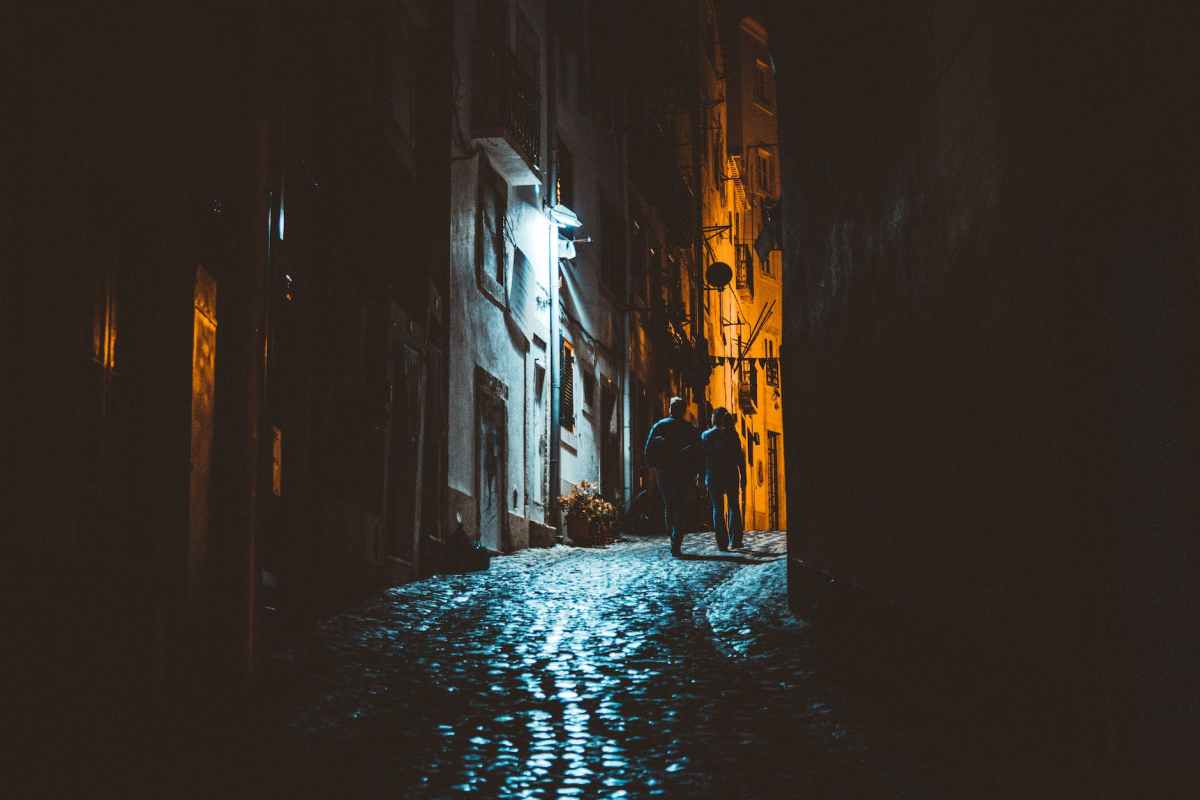
There’s something about the night I’ve never managed to explain without feeling like I’m circling the real truth instead of touching it. It isn’t just the absence of light. It’s the way the world exhales after midnight, how everything settles into a version of itself that feels more honest. If you’re a night person, you already know what I mean—you don’t need me to draw a map to that place.

As a kid, I treated the night like a sanctuary no one else had discovered. The dark didn’t judge, didn’t demand, didn’t tap its foot waiting for me to prove something. I used to get sad when the Dawn arrived—not out of melodrama, but because daybreak felt like someone flipping on the fluorescent lights, telling me to sit up straight and get back in line. Dawn was order. Dawn was expectation. Dawn was the world reminding me I owed it something.

Night never asked for payment.
It just handed me the keys and stepped aside.

I really believed there were no rules after sunset. In the dark, the harsh edges of the day softened. The noise thinned out. My thoughts stopped running defense and finally came out from hiding. The boy I was didn’t have the language for it, but he understood the feeling: Night made room for him in a way life rarely did.

Looking back, I can see how much of that was escape. The night gave me cover—space to imagine, space to feel, space to acknowledge things I wasn’t ready to say out loud. But escape isn’t always cowardice. Sometimes it’s survival. Sometimes it’s the only way a kid can breathe.

And even now—older, carrying more history than I ever expected to survive—I still feel that tug when the sky lightens. There’s a part of me that mourns the end of the hours where I don’t have to pretend to be anything. A part that whispers, Hold on… not yet.
That boy is still in there. He still trusts the dark more than the dawn.

But here’s the thing I keep circling back to: the night didn’t make me free. It made me honest. There’s a difference. The dark gave me room to face myself without all the day’s noise confusing the signal. It let me consider who I was becoming, who I wasn’t, who I might still be if I stopped running long enough to look in the mirror.

And some nights—when the world goes quiet and the air feels like it’s holding its breath—that honesty still slips through. It reminds me why I loved the dark in the first place: not because it hid me, but because it revealed the parts of me I didn’t yet know how to live with in the light.

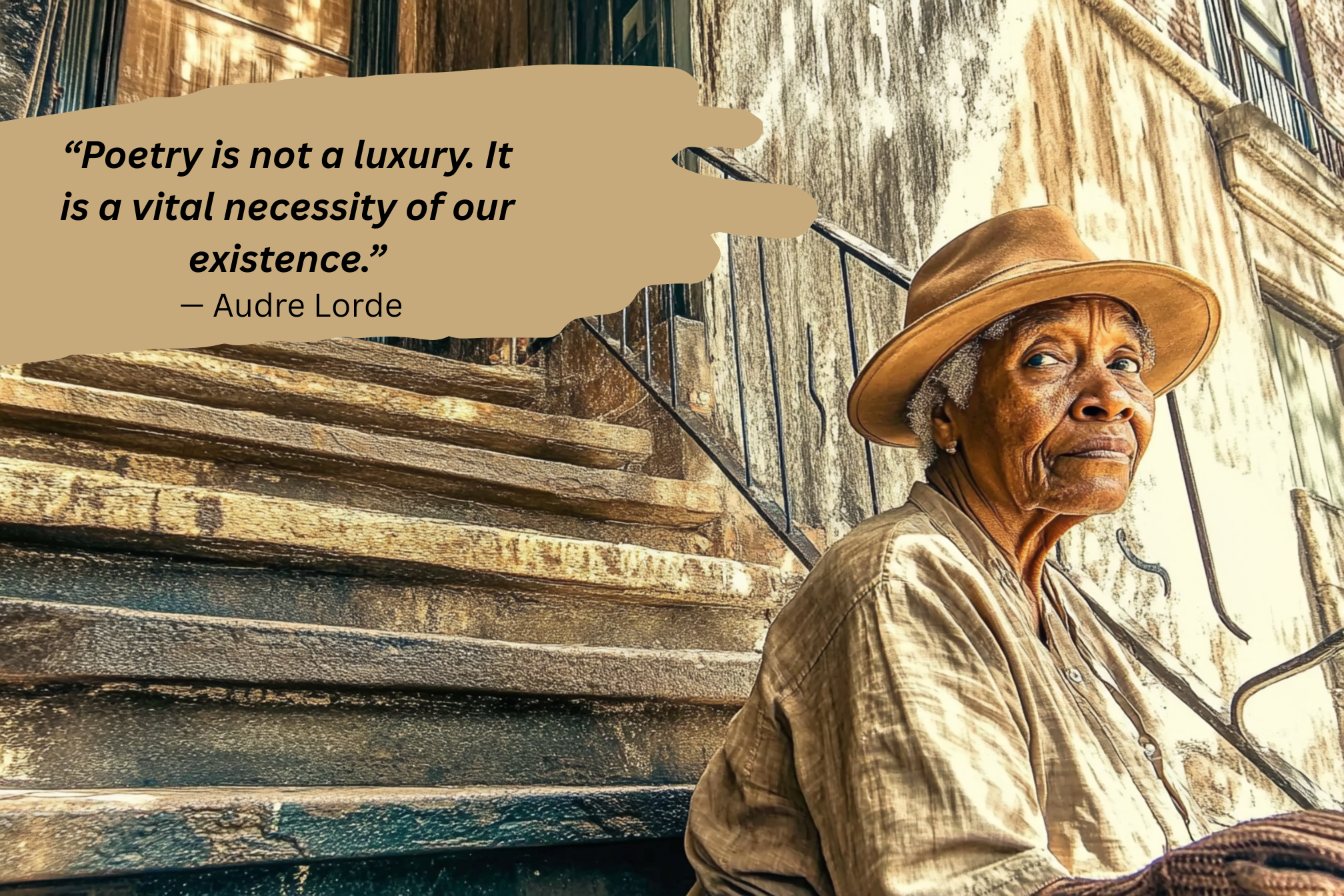
Quote of the Day – 11052025


Personal Reflection

There’s a strange kind of bravery in simply being visible. Not loud, not armored — just seen. Even braver is to allow yourself to be seen. One can stand quietly and visible, but still move within the shadows of the environment. Put simply, one blends in. There’s an old Nordic tradition that says when a person visits, they should allow themselves to be seen — so the people know they aren’t ghosts or spirits. It’s a way of saying, I’m real. I’m here. In a world addicted to performance, that kind of presence feels like rebellion. Estés reminds us that courage doesn’t always roar; sometimes it just refuses to vanish.

We’re conditioned to protect the softest parts of ourselves — to hide them behind humor, intellect, or distraction. One is taught, the more you know about me, the more you can use against me. Let me tell you, that’s a very true statement. However, we as a society crave connection. There’s data linking mortality rates to isolation — people who live without meaningful interaction die sooner than those who don’t. I know that sounds like hulcum — my grandmother’s word for nonsense — but I’ve read the data. It’s real. The problem is that because of our performance addiction, people can be ruthless. We’ve learned to turn vulnerability into spectacle or weaponry, not intimacy. But soul doesn’t survive in hiding. Every time you show it, even trembling, you steady the ground beneath someone else’s feet. That’s the quiet power of authenticity: it ripples outward, unannounced, and changes the room.

To show your soul isn’t a performance — it’s an offering. It’s saying, I’m still here, even after the storm tried to erase me. And maybe that’s what resilience really is: not surviving untouched, but standing — cracked, luminous, and unashamed — in full view of the world. In the stillness of simply being, you dare the ones around you to get to know who you really are. And if they don’t like what they see? Then they can kick rocks — because you don’t need any additional madness. Everyone’s got enough already.


Reflective Prompt

When was the last time you showed your soul — not your strength, not your mask, but your unguarded self?

Quote of the Day – 10142025


Personal Reflection

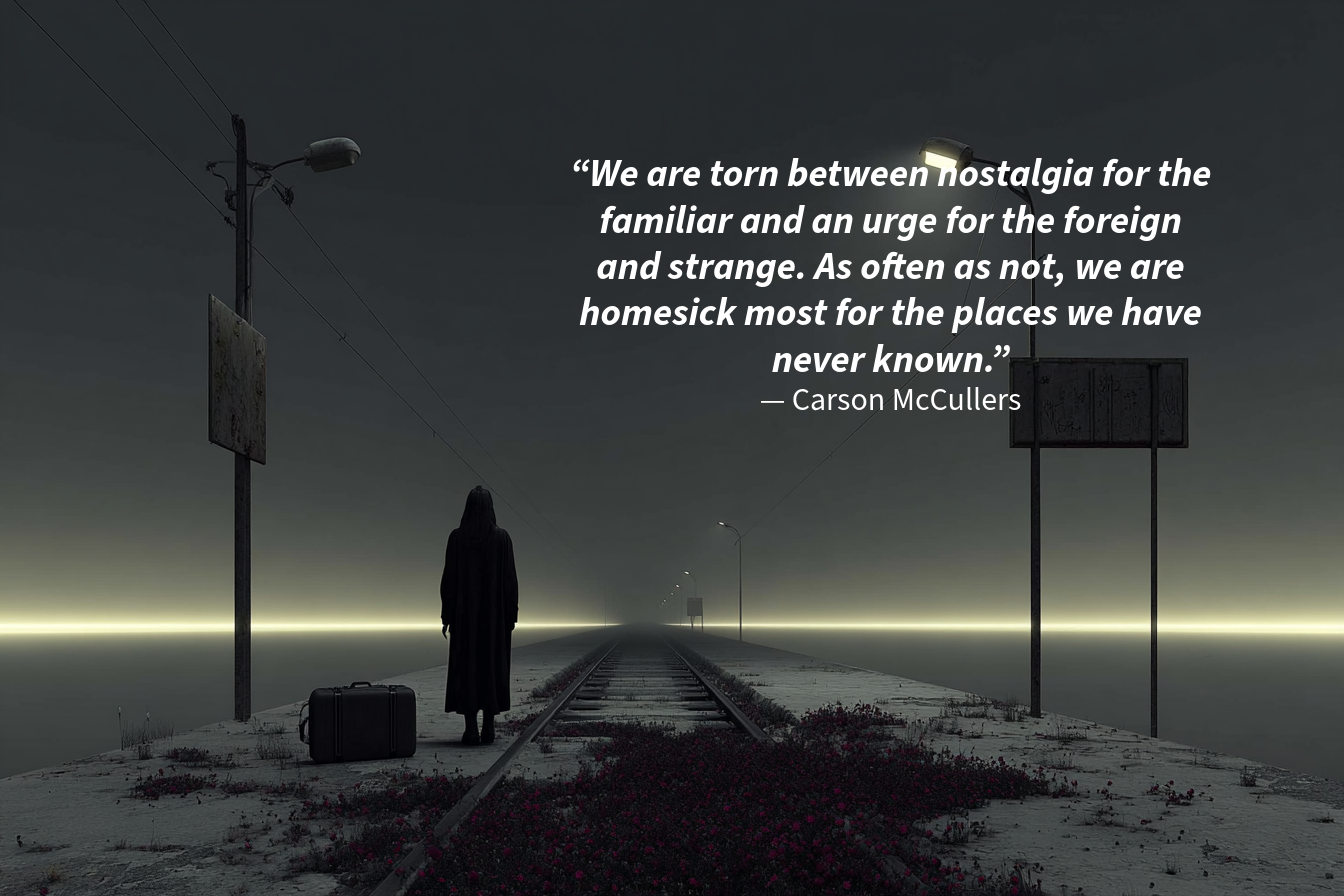
McCullers was never writing about geography. She was writing about that quiet fracture between who we are and who we ache to become — the homes we build in imagination because the real ones never fit quite right. There’s a particular loneliness in that, a nostalgia not for the past but for the version of ourselves we lost along the way. We crave a place that holds our contradictions without judgment — something both foreign and familiar, like memory speaking in a language we almost remember.

We carry our restlessness like an heirloom. It shows up in the urge to move, to start over, to burn everything and begin again. But what if the places we long for aren’t physical at all? What if they’re the internal landscapes we abandoned — the wonder we traded for control, the softness we sacrificed to survive? Maybe the “foreign and strange” McCullers speaks of isn’t elsewhere — maybe it’s the uninhabited corners of ourselves we’ve been too afraid to enter.

We mistake longing for direction. We chase what’s distant because it feels safer than sitting still with our own ghosts. But the truth is, we’re all homesick for something intangible — the feeling of being entirely known, entirely unhidden. And perhaps the work of living isn’t about finding that home, but creating it — brick by tender brick — inside the ruins we already occupy.


Reflective Prompt

When you trace the map of your own life, what places do you return to — not the ones on any atlas, but the ones that live behind your ribs? Where does your spirit feel most unfinished, most in-between? And if the home you long for has never existed, what would it look like if you began to build it within yourself — from memory, imagination, and the fragments of everything you’ve survived?

The Weekly Grind: Narrative Forge Lineup

I know some of you came here for the flash — the quick bursts, the jagged edges, the kind of madness that doesn’t wait for a seat at the table. Don’t worry, that part of Memoirs of Madness isn’t dead. It’s just in the corner right now, tapping its foot, waiting for me to crawl out of the long-haul trenches.

Those trenches? That’s The Narrative Forge. It’s where I’ve been buried — cranking out chapters that sprawl across weeks instead of minutes. Big arcs, messy arcs, the kind of stories that don’t shut up once they get rolling. And while I wrestle them down, I want you to know where they land each week.

Here’s the Weekly Grind:

Monday – Garden of Ashes
A broken world still smoldering, where Griffin and his crew try to survive the ruins. Smoke, betrayal, and the kind of silence that isn’t empty at all.

Tuesday – The Jaded Side of the Truth
Percy, Joanie, Winnie, and Harry are picking their way through noir shadows. Loyalty bleeds, lies cut deeper, and nobody walks out clean.

Wednesday – No Half Measures
Mack and Mara, stuck together in Greybridge. An old detective circling the drain, a young IA officer with too much to prove. Cigarette smoke and slow burns.

Thursday – Bourbon & Rust
Silas and Baz are chasing ghosts across backroads where whiskey drowns more than thirst. Dust, rust, and the weight of choices that don’t go away.

Friday – Ashwood County
Bodies drop, whispers spread colder than the morgue slab. Small town, big secrets, and everyone’s watching the clock tick louder than it should.

That’s five days, five stories, five different ways to lose yourself.

The flash will return — the bite-sized jolts you expect from Memoirs of Madness. For now, the long-haul work is eating my nights and spitting out chapters. Thanks for sticking with me while I get the Forge running hot.

I know five series is a lot to chew on, but grab what you can, when you can. Telling stories is where I stay sane. Having you read them? That’s just the bonus — the kind of perk I don’t take for granted.

Mangus

The Victrola and the Strange Business of Bringing Music Home

My first record player was one of those Mickey Mouse things. I thought it was incredibly cool, back then. Now? I’ve probably lost several thousand cool points just for admitting this publicly. But that was the start—the first time I realized music could be mine, portable, spinning on plastic grooves under a cartoon mouse’s nose.

I never wondered about the first record player until years later, standing in a museum, staring at a Victrola like it had just rolled off a time machine. It was gorgeous—mahogany, brass, that air of weighty dignity machines used to have. And of course, the museum folks wouldn’t let me touch it. I was pissed. I ranted the whole way home, arms flailing like some deranged conductor, until my mother gave me that look that said, Boy, you’ve lost your damn mind. A look I would see many times over the years. My wife eventually perfected the same expression. Some conspiracies never die.

But that Victrola stuck with me.


A Box That Made Music Respectable

Before 1906, phonographs were awkward beasts. Giant horns jutting out like mechanical tumors, gathering dust and dominating living rooms. Eldridge R. Johnson—mechanic, dreamer, and founder of the Victor Talking Machine Company—had the audacity to fold the horn inside a cabinet. A simple trick of design that turned a noisy contraption into something you could sit beside polished furniture without shame.

It wasn’t just sound anymore. It was respectability.


The Price of Belonging

The first model, the VTLA, hit the market for $200—nearly half the average American’s yearly income. That’s about $5,700 today. Imagine explaining that to your spouse: “Honey, I spent half our wages on a box that sings.”

And yet every one of the first 500 units sold.

Because what people were really buying wasn’t a machine. They were buying belongings. Owning a Victrola meant you weren’t just grinding away at life—you were plugged into something larger, a signal that beauty belonged in your home.


Tone Doors, Drawers, and Dignity

The Victrola invented volume control—tone doors you could swing open for a flood of sound, or close when you didn’t want the neighbors to know you were spinning opera instead of hymns. It came with a drawer for needles, record storage built in, and even a lid to hush the surface noise.

What Johnson built wasn’t just a phonograph. It was an alibi. “See, dear—it’s furniture, not folly.”


From Freak Show to Fixture

By 1913, annual production had jumped to 250,000 units. The Victrola transformed the phonograph from curiosity to necessity. Music wasn’t just heard—it was hosted. Families gathered around it the way we gather around glowing screens today.

And the industry bent to Victor’s design. Competitors copied the hidden horn, patents expired, and suddenly, the parlor was the stage where the world’s voices arrived.


The Ghost in the Mahogany

That’s why I can’t shake the Victrola’s ghost. Because every time I hit play on Spotify, I feel it humming under the surface—the memory of when music had weight. When it wasn’t disposable, when it demanded space, when it carried dignity just by existing in the room.

My Mickey Mouse player may have sparked it, but the Victrola taught me the truth: music was never just about sound. It was about what you were willing to make room for.

And maybe that’s the real question—not what deserves that kind of space now, but what you’ve quietly pushed out to make room for noise.


Author’s Note

This piece was inspired by Jim Adams’s Thursday Inspiration #294 prompt: Suddenly. His weekly challenges have a way of shaking loose odd corners of memory and letting them bloom into something unexpected. Today it was a Mickey Mouse record player, a museum rant, and a Victrola that refused to leave my head.

As always, these posts are written as part of the ongoing experiment that is Memoirs of Madness—where history, memory, and a little grit collide. If the story sparks something for you, I’d love to hear it in the comments or see your own take on the prompt. Writing is always better when it’s a conversation, not a monologue.

She Kissed Me Hard and Left Me Staggering

Some truths don’t need eyes to see. You feel them in the weight of a man’s silence.

Daily writing prompt
How would you describe yourself to someone who can’t see you?


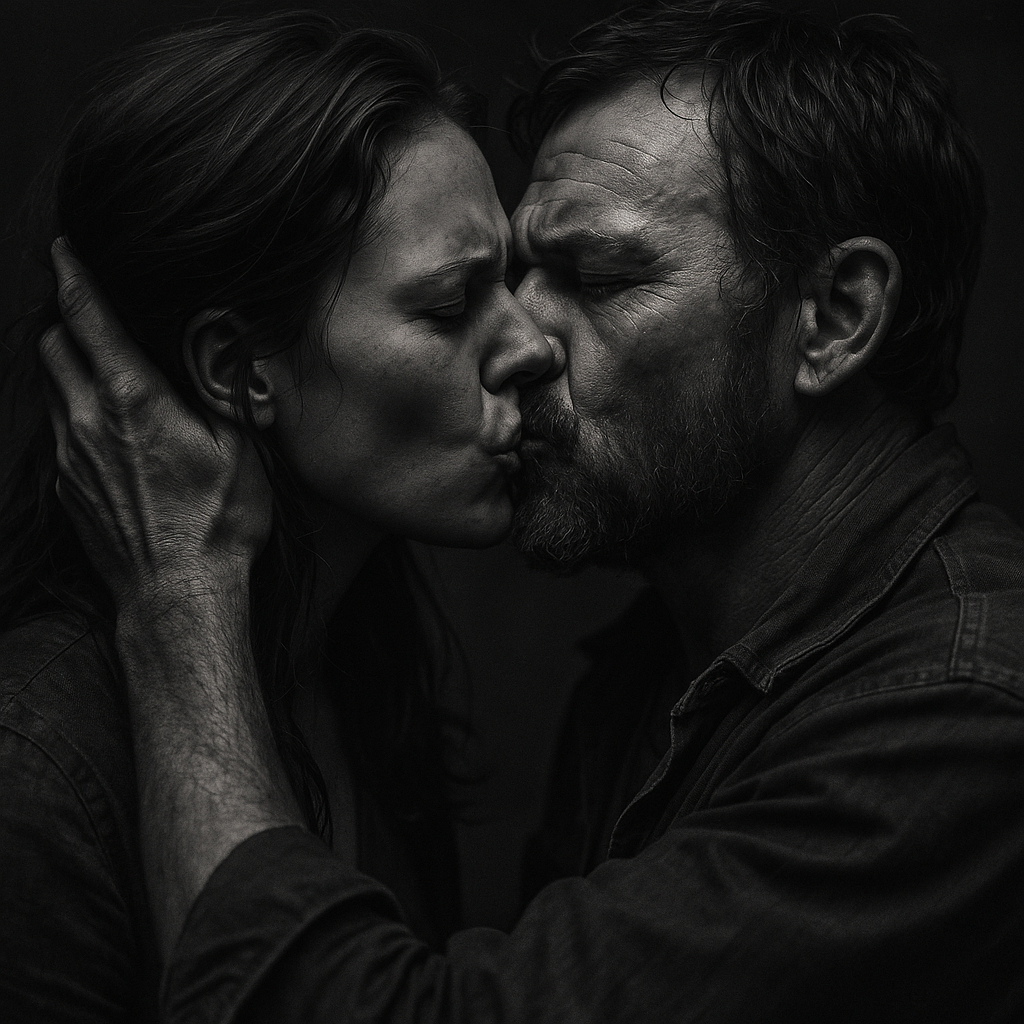
What good is a physical description to someone blind? They won’t get lost in your eyes. They won’t grin at your sculpted muscle or at that little pudge on your waistline. A woman once told me that’s what made the “cute guys” irresistible—that pudge. Then she kissed me hard, with enough heat that it said she meant every damn word. So, without sight, how can anyone truly see you?

I’m the one brooding in the corner. Always there if you need me, never in your way. You can tell my size by the weight of my breathing. You can tell I’m a troubled man by how it stumbles—half regret, half resolve.

Blindness isn’t just losing sight. It’s what we refuse to see even with both eyes open. If you can’t see me, maybe you’re not missing much. I’m not built on appearances. You’d know me by how the air shifts when I walk in.

Before I say a word, you’ll feel the drag of boots on old floorboards, the kind of silence that’s got teeth. My laugh, when it comes, sounds like it fought its way through smoke. I keep my distance but stay close enough that you know you’re not alone in the dark.

So don’t picture my face. Picture the weight of a man who’s been through fire and stayed standing. Picture silence with sharp edges and breath that’s seen too many long nights. That’s me. If you need me, you won’t need eyes to find me—you’ll feel the shadow that doesn’t leave until you’re safe.


Tarab & Bone

Prose – 3TC


I’m not afraid.
I’m not afraid.
I’m not allowed to be.

Where I come from, fear is a luxury we were born too broke to afford. Vulnerability wasn’t something we dismissed—it was something we were denied. It was kept behind locked doors, like heirlooms we didn’t inherit.

My grandfather didn’t teach with words. He taught with what he didn’t say. He taught me how to keep the jaw tight, how to pray in silence, how to hold grief like a second spine. He had crafty ways of navigating rooms where he was expected to be invisible, but somehow always left a shadow. He taught me not how to cry—but how to endure the crying of others without blinking.

They told us to walk tall, but not too tall. To speak, but not loudly. To lead, but never forget we’re replaceable. Strong—always. Seen—rarely. Heard—only when invited.

I learned to carry myself like a verdict. The years didn’t soften me—they carved me. And somewhere between funeral suits and morning trains, I mistook resilience for religion.

I’m not afraid.
I’m not afraid.
I’m not allowed to be.

Because they’re still watching.
Because weakness stains in places bleach can’t reach.
Because I carry names no one etched into stone, but I wear them anyway—in the bend of my back and in the tightening of my breath whenever the world grows quiet enough to remember.

I’ve loved with fists.
I’ve buried more brothers than birthdays.
I’ve stared into mirrors and seen ghosts blink back.

And I’m still here.
Which means I’m still dangerous.

Some days, I hear the voices—low and layered, like drums beneath concrete. Whispers at a distance. Ancestral static tuning itself in the back of my skull.

Who is speaking?

My father, maybe—never said “I love you,” but left it folded into a clean shirt and the sound of a deadbolt clicking after midnight.

Or the ones who never made it past eighteen, who hover behind my ribs like secrets I’ll never tell.

Some of them speak in riddles. Some in warnings.
And some just laugh—cheeky, almost cruel:
“Look at this one, still trying to turn ghosts into gospel.”

I remember the nippy mornings, before light. Cold air that slapped you awake. The kind that taught you pain was just a temperature shift you’d survive if you didn’t flinch. Those days made your bones ache—but they made your will sharper, too.

And now, standing here, with all of that folded inside me like a fire I never asked to carry, I wonder:

What have I done with all I’ve been given?
Have I honored the ones before me?
Or just mirrored their silence?

What have I left for the ones next?
A trail of smoke?
A shut door?
A story they won’t want to finish?

What if the bravest thing
isn’t being unafraid—
but being seen?

Not as legend.
Not as weapon.
Not as sacrifice.
But as person
messy, aching, unfinished.

What if legacy
isn’t built on who endured the most,
but who dared to feel
what others refused to name?

Maybe I’ve been strong too long.
Maybe strength
ain’t the absence of fear,
but the courage to admit
you needed saving too.


Not a statue.
Not a sermon.
Not a ghost.
Just a man—
…and maybe that’s where the healing begins. And the trouble ends with me.


Authors Note:

This piece was sparked by Di’s 3TC challenge—and yes, I stole a line from Stacey Johnson’s poem order. Is it still stealing if I tell you up front? (Shrugs.) Anyway, as usual, I’m grateful to be inspired by friends who make me write better, feel deeper, and laugh louder. You know who you are.

I Scream Every Time I’m Asked to Compromise


I scream every time I’m asked to compromise who I am, what I believe.
There are days I walk through this like a ghost—quiet, invisible, barely tethered to the world. I’ve worn this skin too long to pretend anymore. I’ve learned that silence is never neutral. It collects. It bruises. It builds a coffin for the self.

How long did I expect integrity to outweigh ignorance?

The shame cuts deepest when I remember the things I was asked to do to be accepted. Asked to perform, asked to mute the fire, asked to shrink for the comfort of others who never deserved my story in the first place. And like a fool, I tried. I polished my voice. I spoke in softened syllables. I tiptoed like I was walking on eggshells—not to protect myself, but to protect their illusion of safety.

But here’s the truth:
Their comfort was never my duty.

This world has corrupted too much, taken too many of us who had something real to say. It props up empty vessels and paints them gold, calls it culture, calls it “marketable.” Meanwhile, those of us who bleed truth are told we’re too much, too raw, too difficult to brand.

They wanted me to smile like some hollow doll—something quiet, something that won’t fight back when they put words in my mouth. But I’m not plastic. I’m not hollow. I don’t bend like that anymore.

I carry my scars with intention now.

Let them call it anger. Let them call it ungrateful. I call it knowing. Knowing that every time I was asked to “adjust,” they weren’t asking for kindness—they were asking for obedience.

I’m done apologizing for the shape my soul takes.


Author’s Note

This piece was inspired in part by prompts from FOWC, RDP, and WOTD. Thank you all for the sparks you give. Your work matters.

Lessons in Disappearance


for those who know what it’s like to be visible but not believed

Every day is another lesson in invisibility.
Not the kind you choose, not the soft fade of a disappearing act.
This is the kind handed down in glances that slide past you.
In doors that stay closed just a second longer when you’re approaching.
In the space you leave behind when you’re gone, and no one notices the shape of your absence.

You become fluent in the language of indifference.
You learn the weight of unasked questions.
You memorize the way people say “I didn’t see you there” like it’s a kindness,
instead of an indictment.

There is a peculiar violence in being overlooked.
Not bruised. Not broken. Just… reduced.
Down to skin, down to stereotype, down to background noise.
They don’t mean to erase you—
and somehow, that makes it worse.

They’ll say you’re quiet.
You’ll wonder if they’ve ever actually listened.

You wear shame like a second skin.
Not because you earned it,
but because somewhere along the way,
someone handed it to you like inheritance
and you forgot how to put it down.

You stand still in a world built to move around you—
fast, loud, full of curated meaning.
And you begin to question:

Is there something wrong with me, or is there something wrong with this lens that always finds me blurred?

You’ve learned to map your pain in silence.
Each breath is a kind of protest.
Each blink a refusal to disappear entirely.

There are veins beneath your skin that look like lightning—
not because you are struck,
but because you are always just about to burn.

And yet you don’t.
Not fully.

You endure.
Not in glory. Not with applause.
But with defiance.
The quiet kind.
The kind that goes unnoticed until someone says:

“I didn’t realize you were carrying that much.”

And you smile without smiling,
because you know the truth:

You were always carrying that much.
They just never asked to know.

Antidepressant

He wasn’t born to be broken, but he was built that way.


He doesn’t remember how long he’s been digging.
Only that the walls feel closer now.
Not physically—spiritually.
Like the air itself is grieving something it can’t name.
Like the dirt is learning his shape better than he ever did.

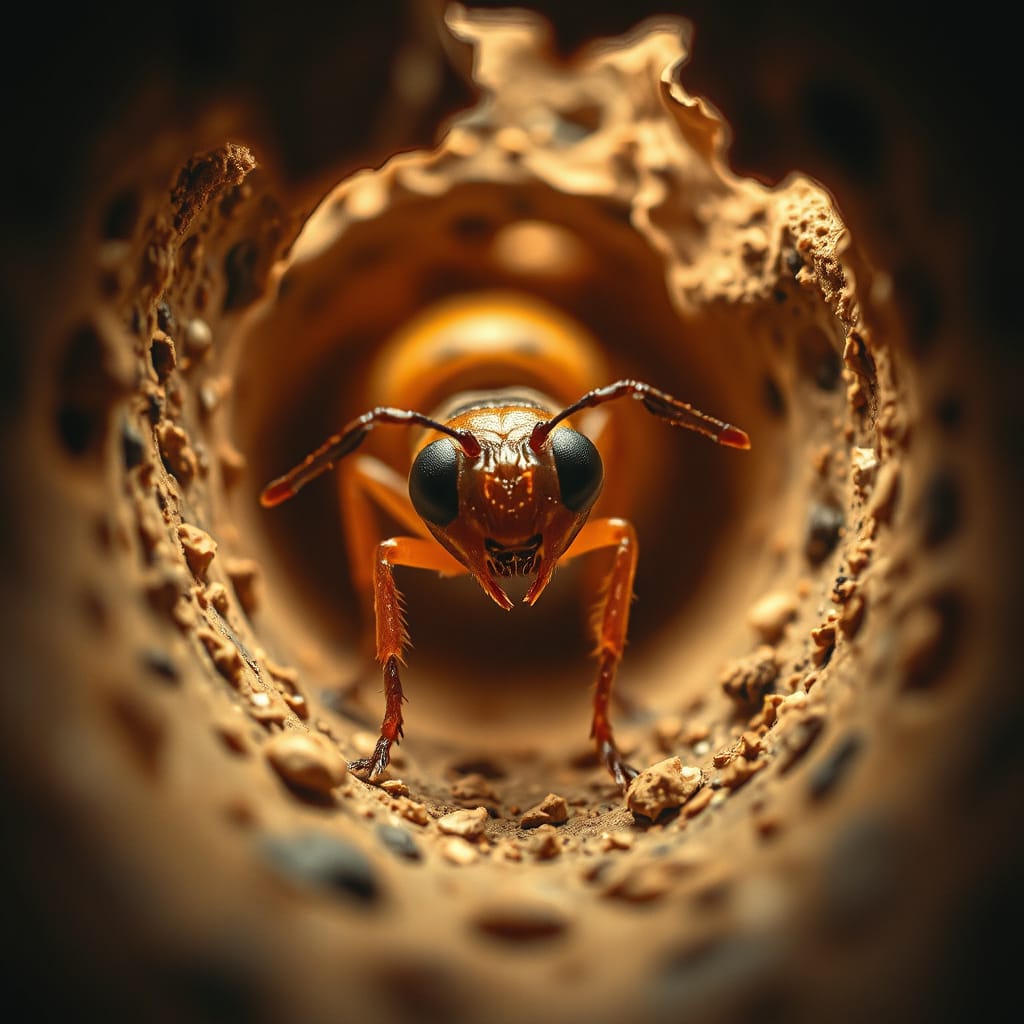
He was born into this plastic maze.
Clear walls. Curved tunnels. Endless observation.
They gave him purpose before he even knew what freedom was.
“Work is life,” they whispered.
“Keep moving or you’ll disappear.”

So he moved.
So he disappeared.

Lately, the soil feels too clean.
Too filtered. Too… safe.
He begins to question whether he’s ever touched anything real—
whether any of this was ever soil at all,
or just a stage dressed as survival.

His antennae twitch like doubt.
His thoughts spiral like tunnels without exit signs.
There’s no map. No sky. Just the scrape. scrape. scrape.
and the promise that if he keeps digging, it might all make sense.

“Dig,” they told him. “Dig like your life depends on it.”

But what if life was never the point?
What if it was just obedience with a heartbeat?

He begins to dream—quietly, dangerously—of things he’s never seen:
grass that doesn’t end,
light without glare,
a silence not born of suppression
but of peace.

He wonders if the others feel it too—
that dull, aching sense of being watched by something
that calls itself structure,
but tastes like a slow death.

He screamed once.
Pressed his mandibles to the glass and begged.
For what, he doesn’t know.
Maybe to be named.
Maybe to be more than a metaphor
for how the world devours those who ask too many questions.

But no one answered.
Only the glass pulsed with faint warmth—
a reminder that he is seen, but not heard.

Now he digs not to build, but to resist.
Each handful of soil no longer a task,
but a soft rebellion.
A quiet revolution made of claw, intention, and fatigue.

He doesn’t want to be efficient.
He wants to be free.
Or at least real.
Or at least his.

And if this tunnel leads to nothing—
no sky, no breach, no breaking—

at least it was carved by his own choosing.
At least the hands that made the hole were his.

Because sometimes the cure isn’t a chemical.
Sometimes, it’s permission to feel trapped without calling it a flaw.


🪞 Reflective Prompt

What parts of your routine were handed to you like a cage dressed in ritual?
What would rebellion look like if it were quiet, personal, and yours?


Still digging?

This piece lives inside a much bigger world.
Explore the rest of the Mangus Khan Universe—a stitched-together gallery of confessions, fiction, fractured portraits, and quiet chaos.

👉 Enter the MKU

A Half-Burned Gospel

Another psalm from the quiet fire.


Can you howl when there is no one there to hear you?
Is your passion only for public consumption?
I’m frostbitten by your whispers.

There was a time I needed your touch.
I needed your attention.
Not all of it—just enough to matter.
Not to me.
I needed it to matter to you.

But you blinked, and I shattered.
You turned, and I calcified into someone else’s silence.
They say the world ends in fire or ice—
I know both.
Your heat was conditional.
Your absence, absolute.

Some men beg for war to distract from the wound.
Me?
I just wear the hood tighter,
pull it close like a secret I still want to believe in.

I walk through your memory like a half-burned gospel,
rubbing ash on my skin like anointing oil.
There’s still a spark behind my teeth,
but no one’s left to kiss the smoke.

And even now—
when I speak,
my voice curls like steam
off a pot no one stayed to stir.
…and silence never needed an audience.

The Chuck Stop Chronicles 2

The Chuck Stop Chronicles

Episode 2: “Heel Turn”

(200 words)


It started with the foam. Frothy. Bitter. Deadly.

Adidas, the local jazz flautist, was found slumped behind the espresso bar, mouth still puckered mid-note, a splash of Granny Asics’ signature dark roast dripping from his shirt.

“You poisoned him,” Vans said, arms crossed, standing atop the sugar packet crate. “You’ve always hated flautists.”

Granny Asics didn’t flinch. “I hate jazz flutes, dear. There’s a difference.”

Detective Huarache arrived five lugs late, trench coat dusted with eraser shavings and cinnamon. He inspected the brew line, sniffed the milk steamer, poked a biscotti. “Hmm. Notes of nutmeg, regret, and… cyanide.”

Gasps.
Granny blinked once. Twice. Then turned slowly to her spice rack. “Impossible. I use almond syrup, not arsenic.”

But the label on the tiny bottle said otherwise: ALMONDINE™ – Sweet with a lethal kick.
Someone had swapped her stash.

Security footage (stored in the heel’s AirPod case) revealed the culprit: Fila, the lounge pianist, in a sequin hoodie, sneaking behind the counter after hours.

“Motive?” Huarache asked.

“Adidas slept with his metronome,” Vans muttered, as thunder rolled across the outsole—someone upstairs was walking again.

Granny sighed, wiped the counter, and started a fresh pot.
“Jazz’ll be the death of us all.”


The Chuck Stop Chronicles

A Micro-Murder Mystery Series Inside a Shoe

Tucked inside a dusty, size 11 Converse lives The Chuck Stop—a secret world of stitched souls, rogue eyelets, and jazz-fueled drama. What appears to be an old sneaker to the outside world is, on the inside, a buzzing speakeasy for misfit footwear and threadbare legends.

But when Jordan—the local harmonica king—is found crushed in the toe box, the sole sanctuary unravels. Enter Detective Huarache, a trench-coated sleuth with a limp and a grudge, determined to lace together the truth. As the mysteries deepen, one thing becomes clear: this shoe holds more than music and espresso. It holds secrets. Dark ones. Ones that walk.

Each episode is a 200-word burst of stylish chaos—part murder mystery, part surreal comedy, part soft-padded existential crisis. Expect faulty AI resurrections, foam cults, toe-box tombs, and thunder that isn’t thunder.

Because in The Chuck Stop, nothing’s dead forever—
Not your past.
Not your rival.
Not even your laces.

Watermelon Drops

POETRY – FFFC #326

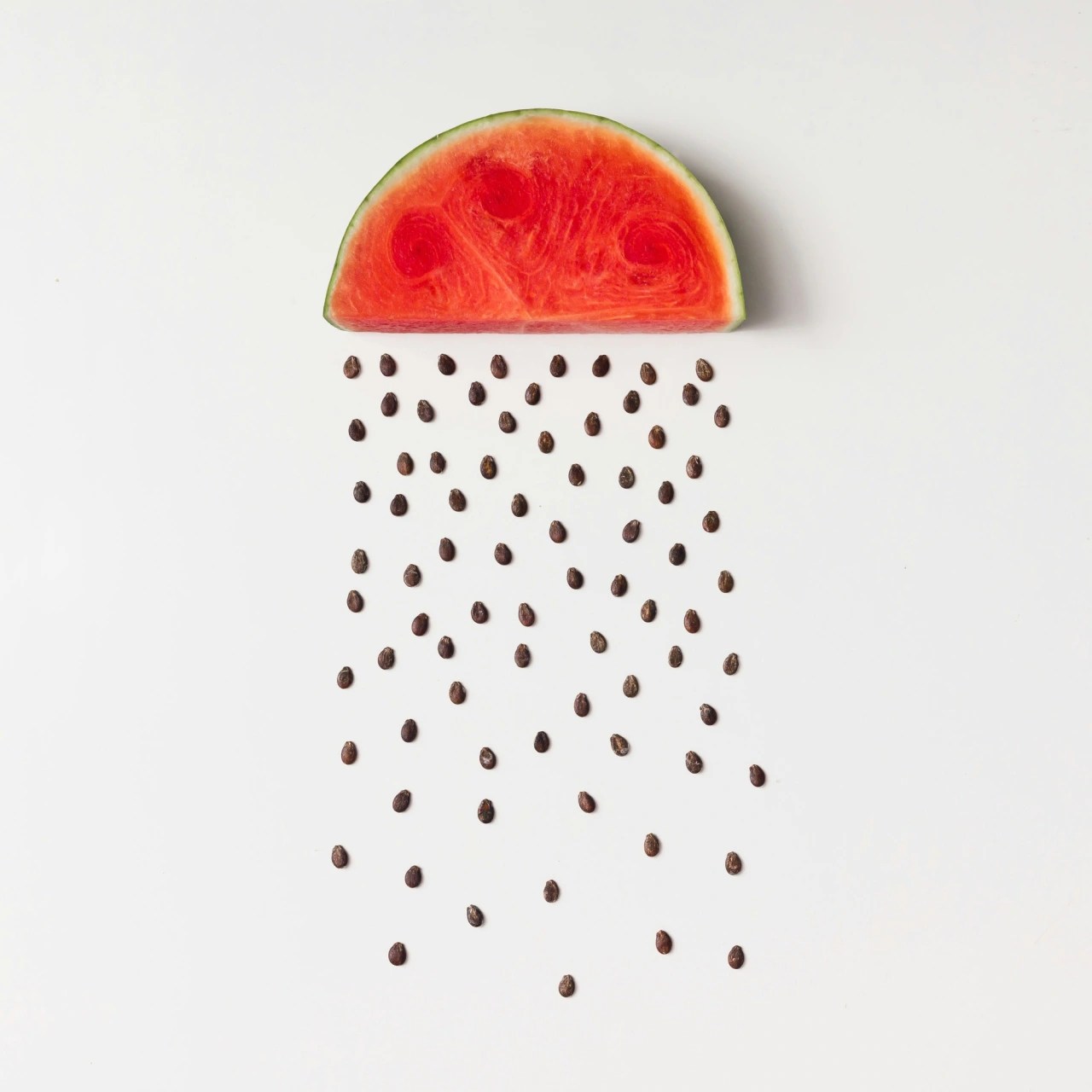
Have you ever had watermelon rain seeds?
I wonder if the seeds hurt?
or do they feel like gentle kisses
rejuvenating you every drop

Like the sky had a snack,
then sneezed.

A green crescent moon with juicy breath
spitting polka-dots from the fruit dimension—
plop plop plop—
onto my hair, into my shoes,
down the back of my shirt. (Rude.)

Each seed whispers:
“Grow me or trip on me, your choice.”
One tried to start a podcast.
Another’s running for mayor of the compost bin.

The clouds wore rind.
The thunder was squishy.
Lightning peeled itself.

And I just stood there,
arms open, mouth wide,
catching cosmic snacks from the snackosphere.

This wasn’t weather.
This was a dessert emergency.
And I was deliciously unprepared.


Whispers of the Page

Not all stories wait to be told—some write themselves through us.

I wonder—
do we write in our sleep,
not with hands
but with something older—
a pulse beneath the thought,
a breath beneath the breath?

Are the things we write
just the dreams we couldn’t hold—
wet leaves stuck to waking,
falling off before we knew
they’d landed?

Maybe the page is the mirror
we forget we’re looking into,
and every line is a smoke-trail
from a fire that burned
somewhere behind the eyes.

The words come limping,
feathered with ash,
draped in symbols
we pretend to understand.

A girl with no face
builds houses out of teeth.
A clock whispers
the name you forgot.
You write it down
and call it metaphor.

But the ink knows first.
It hums with the echo
of other lives—
the ones you’ve never lived
but somehow still remember
when the light is wrong
and the silence bends.

Is this how we dream?
Not to escape—
but to return,
to write the path backwards
until the paper runs out
and we wake.

The Weight of the Page

POETRY – WDYS #292

There comes a time.
Not marked by clocks or calendars,
but by stillness—
the kind that hums behind your eyes.
A softness in your chest
that doesn’t feel like peace.
Just absence.

Everything slows.
Even memory.

The cup half-washed.
The door left open.
The voice in your throat that turns to air.

It’s not the crash.
It’s the drift.
The slow, perfect erosion of self.

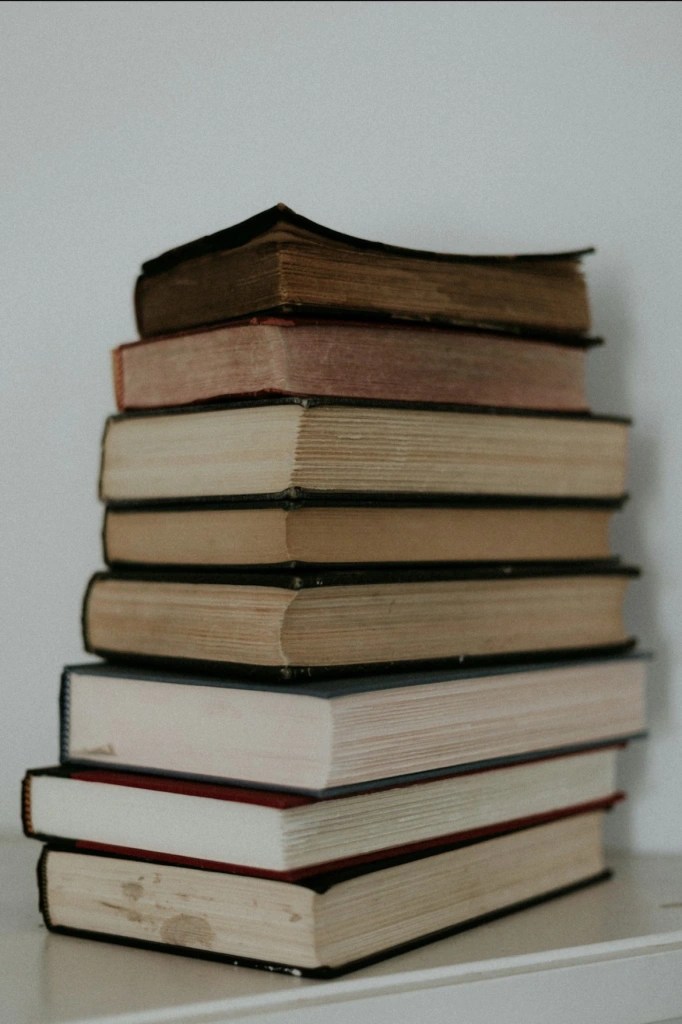
You go to the shelf. Not to read.
To hold.
To press paper against skin.
To remember what weight feels like
in your own hands.

The top book breathes like it’s waiting.
No title. No spine.
Just the shape of something
that once held you together.

You open it.
A sentence floats up, loose as dust:

To be lost is not to be broken. It is to be unmoored.

Stillness deepens.
And then —

Truth crawling at your throat,
and your tears cleanse the dirt.

No sobbing.
Just a quiet rupture.
A release
that doesn’t ask permission.

The truth is heavy, like a boulder.
Not because it falls.
Because it stays.

You carry it in the way your shoulders tilt.
In the way your yes always comes too fast.
In the hunger you disguise as patience.

Feels like you’re always coming up last.
Tank empty.
Too far for gas.
And yet,
you keep showing up.
You keep giving.
Even as the edges blur.

Some people run.
Some climb.
You sit with a book
until the silence takes shape.

And when it does—
you whisper to whatever is listening:
Will you steal away the desperation I’ve earned?

Not healing.
Not hope.
Just the question,
and the room
to finally ask it.


The Ache; The Regret

POETRY – MLMM #428

Hey, do you miss me?
The ache churns so slowly.
We found common ground,
but only after the fires.
The hard part is done.
Where you’d go?

I close my eyes
because yours won’t open.
The stillness is sharper now.
Colder.
Like it knows
what’s missing.

Time doesn’t pass here—
it gathers.
Cools around me,
wraps my spine like smoke.

You blinked once—
and left everything behind.
I don’t blame you.
But I still ask.

We were never perfect.
But in the spaces between the noise,
we held each other
like we meant it.
We were one —
not whole, just held.

Your memory sings to me softly—
what do I go?

What version of me survives
without the rhythm
of your breath beside mine?

I know you hide the words.
You are afraid to speak.
Don’t hide with me.
Your actions are so loud.

Even in silence,
you told on yourself.
Every absence,
every closed door,
every goodbye you never said
but lived.

Your side of the bed still curves.
Like you’re paused,
not gone.
But I know better.

A rainbow brushed the sky yesterday.
It didn’t stay.
Like you —
always near,
never quite here.

Are these words bound to fail?
Speak to me, hope, and follow through.
Don’t build a future in silence
and ask me to live in it.

My hope rests on every word you don’t say.
But I never told you
What I stood for.
Have I waited too long?
Did you leave thinking
I had nothing left to give?

The truth is,
I was afraid, too.
Of saying it wrong.
Of loving you louder
than you could stand.

If there’s anything beyond this,
I hope it’s not heaven.
I hope it’s just
You and me again,
quiet,
not pretending.
Present.
And finally
telling the truth.

I know you were right—
because my silence was gone.


Keepers in the Fog

POETRY – 3TC #MM83

(Part II of The Forbidden Sphere)

They never speak — yet still they warn,
With presence sharp as briar thorn.
From every edge, behind each tree,
A knowing gaze leans into me.

I’ve never seen a face, a form,
Just hush that settles thick and warm.
They move when light begins to thin,
As if the dark invites them in.

I thought I saw a signal flash —
A glint, a shift, a silver lash.
But when I turned, the mist was bare,
As if the fog had never cared.

They guard the orb with sacred right,
Unyielding as the velvet night.
And though no blade nor gate I see,
They’ve kept its heart away from me.

A whispered clue behind the bark—
A mark too faint to name or mark.
Each piece I find, they pull away,
Like ghosts in long-abandoned play.

It’s like a seance with no voice,
No table, chant, or sacred choice.
Just shadows moving without sound,
As if the dead still guard their ground.

They kept me from discovery,
From questions asked too hungrily.
From truths that bend, from lines that blur,
From something deep I almost were.

Swift they move through drifting gray,
Their touch a chill that steals the day.
And still I stand, and still I burn—
For what they guard, I must unlearn.

But who appoints a watcher’s place?
What gives them claim to time and space?
And if I walk where none may tread…
Do I wake the dream, or join the dead?

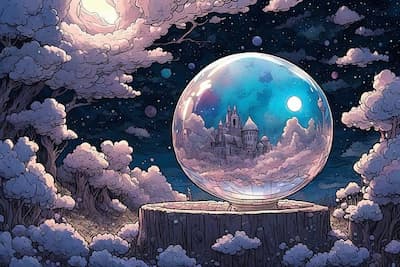
Whispers in the Orb

POETRY – MOONWASHED WEEKLY PROMPTFOWC & RDP

Beneath a moon half-lost in thought,
Where trees remember what time forgot,
A glassbound world, alone, unmoved,
Rests on a stump by starlight proved.

The sphere it hums with silent ache,
A dream too bright for souls to wake.
Its castle floats on woven haze,
A ghost of long-forgotten days.

No foot has trod its cloudy halls,
No voice resounds against its walls.
It knows no flame, no feast, no war—
Just longing locked forevermore.

From the shadows, I feel their presence,
It keeps from entering.
It keeps from discovery.
Who are they?

A figure passes — swift, unseen,
A thread between what is and dream.
It doesn’t speak, it doesn’t stay,
But mourns what light cannot allay.

Within the orb, still skies suspend
A world that chose not to descend.
A world untouched by fear or alarm,
Yet haunted still by love’s disarm.

And I — I watch with anchored eyes,
As wonder folds into disguise.
Is this the cost of peace so pure—
To live untouched, yet feel unsure?

Perhaps the truest kind of grace
Is not escape, but facing place.
Yet still, I yearn to cross that line—
To walk the fog and call it mine.


This poem is a part of a five-part series called The Forgotten Orb

Grooving with Glyn: Weekly Finds – June 10

TUNAGE – MMB

Here we are, another week of our musical journey in the month of June.

Today in music history, the blues legend Howlin’ Wolf was born on June 10, 1910. A towering figure in electric blues, his voice was gravel and thunder, his presence unmatched. His influence still echoes through generations of rock and blues musicians.

Also on this day in 1966, Janis Joplin gave her first concert at the Avalon Ballroom in San Francisco. That night lit the fuse on a career that would burn fast, fierce, and unforgettable, cementing her place in the rock and soul pantheon.

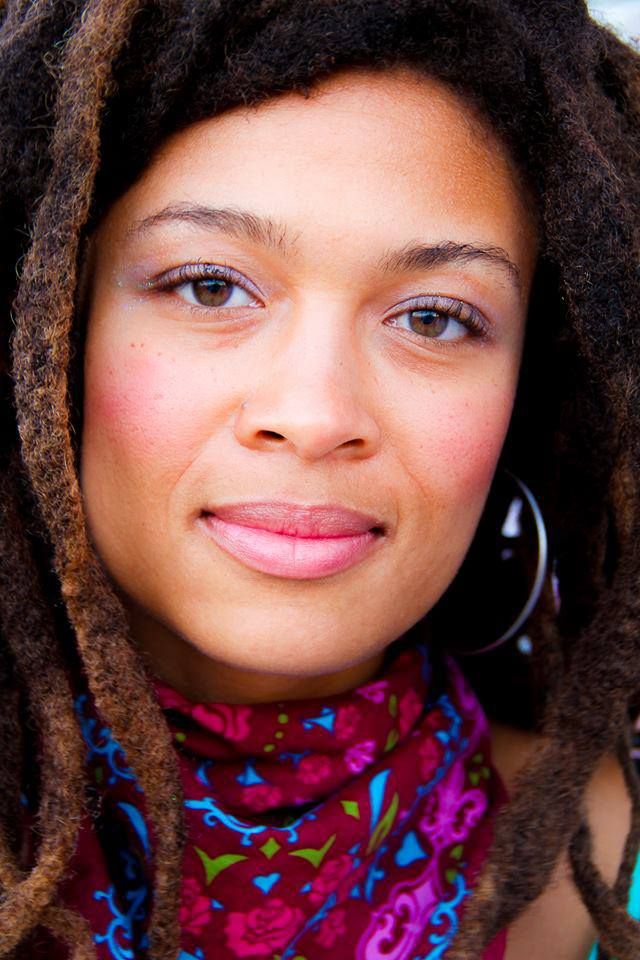
Let’s dive into this week’s find and see how today’s sounds connect with yesterday’s legends. Much like Janis and Howlin’ Wolf, Valerie June doesn’t just perform — she inhabits the music.

Today, we’re diving into Valerie June’s cover of the Mazzy Star classic, “Fade Into You.”

Now, let’s get this straight: covering Mazzy Star is no small task. The original is moody, slow-burning, and wrapped in a haze of ‘90s dream-pop melancholy. Hope Sandoval’s vocals practically sigh through the track like she’s floating down a foggy hallway in velvet boots. It’s hypnotic. Intimate. Like someone whispering in your ear from the other side of a memory.

Valerie June? She didn’t just walk into that vibe — she brought her own stardust. The similarities are there: both versions are slow, spacious, and draped in a gentle sadness that doesn’t wallow but wanders. June respects the skeletal structure of the original. She doesn’t try to reinvent the wheel, and thank the musical gods for that. Some songs are temples; you don’t bulldoze them, you light a candle inside.

But here’s where Valerie June makes it unmistakably hers: that voice. Her voice is a peculiar kind of magic — cosmic, earthy, otherworldly. It stretches vowels like taffy and flickers like candlelight. She leans into the vulnerability but sprinkles in this ethereal, Appalachian soul that Mazzy Star never aimed for. It’s less haze and more starlight.

She trades the desert dusk of the original for something a little more astral-folk. June holds true to lines like:

“I want to hold the hand inside you / I want to take a breath that’s true”

— not just in delivery, but in spirit. She breathes them out like a slow exhale across constellations. You still get lost in it, but this time it’s like drifting through a Southern night sky instead of a grungy twilight bedroom.

This cover doesn’t try to outdo the original. It honors it. And then it subtly shifts the lens, showing us the same heartbreak and yearning from a different angle. It’s like hearing an old friend tell you a familiar story in a way you’ve never quite heard before.

Valerie June didn’t just cover “Fade Into You” — she communed with it. And lucky for us, she brought back something beautiful.

Hit play, close your eyes, and let yourself fade. See you next week with another pick that deserves your ears.


Closet Quest: A Steampunk Sock Saga

FLASH FICTION – FOWC & RDP

In the heart of a creaky old workshop, Reginald the Raccoon, steampunk engineer extraordinaire, adjusted his brass goggles and stared at his latest invention: the Interdimensional Sock Locator 3000. His mission was clear and absurd — recover The Sock. Not just any sock. The one embroidered with tiny mechanical gears and the words “Wrench It Like You Mean It.”

But the sock had vanished into the most feared place in the entire workshop — The Closet.

The Closet wasn’t just a closet. It was a legendary abyss, sealed with a handwritten warning: “ENTER AT OWN RISK — MAY CONTAIN WILD TOASTERS”. Inside were decades of misplaced inventions, rogue gadgets, and sandwiches from questionable eras.

Reginald wasn’t afraid. He was prepared.

He packed his essentials: a grappling hook, a glowing morale-boosting lightbulb, a peanut butter sandwich (for negotiations — mayonnaise had backfired last time), and his trusty spanner. Thus began The Closet Quest.

With a deep breath, he cracked open the door. The closet sucked him in with a WHOOOOOMP — the kind of sound a vacuum cleaner would make if it suddenly gained ambition.

Inside was chaos: umbrellas lunged like javelins, toasters flung shuriken-bread, and an especially grumpy bagpipe band oozed around, playing nothing but angry honks. Reginald ducked and weaved, narrowly avoiding a spatula attack.

Halfway in, he encountered the sandwich kingpin — a towering club sandwich wearing a tiny crown of pickle slices.

“I demand mustard!” it bellowed.

Reginald, calm as ever, offered a jar of peanut butter. The sandwich sniffed, grumbled, and waved him through with a soggy lettuce leaf.

After what felt like three Tuesdays and one awkward staring contest with a unicycle, Reginald spotted it — his sock, perched on the back of a six-legged chair scuttling like a nervous crab.

With a battle cry that sounded suspiciously like “FOR SOCK AND GLORY!” Reginald launched himself through the air, snagging the sock mid-tumble while the chair skittered away, squealing in defeat.

Victorious, Reginald emerged from the closet, slightly scorched, moderately crumbed, but grinning wildly. He slid the sock onto his paw like a puppet and proclaimed, “No sock left behind!”

He celebrated by installing three more clocks — all wrong — and scribbling a new warning on the closet door: “STILL HUNGRY.”

Just as he was polishing his spanner, a tiny scroll slipped out from under the door. It was a ransom note, scrawled in mustard:

“Next time… Dijon. – Sandwich King”

Worse yet, the new clocks he’d installed began to tick backward, forward, and sideways. Time hiccupped, and a second Reginald — equally confused but holding a jelly jar — blinked into existence.

Reginald sighed. “Guess it’s Tuesday again.”


Glossary of Reginald’s Workshop Essentials (coming soon):

  • Spanner of Questionable Durability — works until it doesn’t.
  • Sock Locator 3000 — still missing a “find” function.
  • Emergency Sandwiches — one per dimension.

Birth of the Storm

POETRY – 3TC

(An Invocation)

Rain strips.
Rain peels.
Rain cleans.
Rain frees.

Not fragile.
Forged in flame.
Forged in sorrow.
Forged in silence.

Skin slick.
Skin shielded.
Hair heavy.
Hair crowned.

Eyes closed — I see.
Ears shut — I hear.
Mouth silent — I speak.
Heart loud — I stand.

I stand.
I stand.
I stand.

The past fades.
The past runs.
The past dies.
I bury the past.

I am clear.
Clear as stone.
Clear as flame.
Clear as the first breath after ruin.

All of my trouble.
All of my trouble.
Good Lord —
trouble was my only friend.
And even trouble kneels.

Still, I stand.
Still, I stand.
Still, I rise.

Cedar clings.
Cedar roots.
Cedar binds.
Cedar breathes.

Roses bloom — blood-red.
Roses bloom — battle-bright.
Roses bloom — never broken.

I wear my crown.
I wear my scars.
I wear my name.
I wear the storm.

Clean.
Clear.
Cedar.
Unbreakable.

I do not fear.
I do not kneel.
I do not break.
I do not fall.

I am the storm.
I am the storm.
I — AM — THE — STORM.


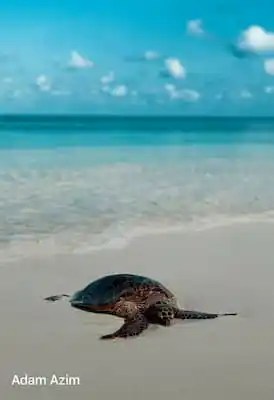
The Weight of Hush

POETRY – WDYS #291

Where the land ends and the sea begins,
a turtle moves — slow, certain, unseen.

The sand forgets.
The waves erase.
Still, it moves.

We are taught to chase permanence —
to leave marks, to be remembered.
But the turtle teaches:
impermanence is not failure.
Presence is enough.

The ocean waits — vast, indifferent.
The turtle does not rush.
It trusts what it cannot see.

We, too, cross unseen distances.
Not all journeys need witnesses.
Not all destinations need to be known.

Maybe the point was never to arrive,
but to move —
faithful, unhurried —
into the unknown.


Too Silent to Break

POETRY – ANNABELLE SERIES


no witness, no audience, just the truth between heartbeats

The tunnel stretches ahead of her—long, dark, indifferent.

She doesn’t rush.

She lets the silence catch up to her, swallow her, settle in her bones.
The train is late, but she doesn’t mind. Waiting doesn’t scare her anymore.

Waiting used to mean standing still, vulnerable. A sitting target.
Now it means patience.
Preparation.

The air is cool against her skin.
Tiles sweat under the flickering overhead lights.
Her reflection is warped in the wall’s glossy surface—sharp in places, blurred in others.

A reminder:
She is not what she was.
She is not yet what she will be.


She glances over her shoulder—not out of fear, but calculation.
The old Annabelle would have flinched at the sound of footsteps, would have blurred her edges, and made herself small.

The woman standing here now doesn’t shrink.
She watches. Measures.
Calculates the distance between herself and the unknown.

After Jimmy died, she lost herself.
She became someone she wasn’t proud of.
Someone she didn’t know.

But that version of her—the one who bled for approval, who clung to applause like oxygen—
that version couldn’t have survived this silence.

She’s learned that some things can only be reclaimed in the dark.

Not through force.
Not through performance.
Through stillness.

Through the deliberate act of not running.


A sound. A shift in the tunnel air.
She feels it before she hears it—the train, dragging itself closer, howling through the underground.

Her heart stutters once, hard.
Not from fear.
From memory.

She could stay.
It would be easier.
Familiarity has its own gravity—its own kind of safety, even when it bruises you.

Her hand tightens around the strap of her bag.
Fingers brushing the worn leather like a lifeline.

Leaving feels like tearing a page from a book mid-sentence—violent, unfinished.
And part of her wonders if she can really do it.
If she’s strong enough to survive what comes after the leaving.


The train arrives, a sigh of metal and momentum.

She doesn’t move yet.
Not for a breath.
Not for two.

Slowly, she slips her hand into her pocket.
Fingers close around cool metal.

Jimmy’s lighter.
The old, battered one he used to fidget with when conversations got too deep.

She rubs her thumb across its surface, worn smooth from years of hands that never really rested—
and feels the small dents, the scratches, tiny scars from thousands of times he dropped it trying to fancy-light his cigarette.
He always looked so goofy doing it—
goofy in a beautiful way.
The kind of way that made you giggle without thinking.

The memory sneaks up on her—
and for the first time in a long time, it makes her smile.


She hears the buzz of the flickering overhead lights.
The silence echoes back at her, not empty now, but full of reminders
of who she used to be.
Of the hollow ache she carried before she learned how to fight.

Defiance is what she lives for.
It’s stitched into her now—the refusal to vanish, to apologize.

But the thought edges in—quiet, undeniable:

She must smile and drop the facade.

She must be who she’s here for.

Not them.
Not even Jimmy.
Herself.


And then—soft, impossible—
she hears it.

Jimmy’s voice.

Low, steady, the way it used to be when she needed reminding who she was.

“Come on, babe. You got this.”

Her pulse kicks.
She closes her eyes, lets the sound settle under her ribs.

She steps forward once—

“Keep going, babe.”

Another step—

“This ain’t the end of you.”

Each stride toward the open doors drags the past behind her like a long shadow—
but his voice cuts through the weight.

“Move.”


Right now, in this thin strip of no man’s land between departure and arrival, between past and future—

She belongs.

Not to anyone. Not to any memory.
Not even to Jimmy, though she carries him still—his watch at her wrist, his lighter warm in her pocket.

She belongs only to herself.

And maybe that’s what survival really is.
Not the absence of doubt.
But the decision to move anyway.


The doors open, a hush of invitation and warning.

Annabelle exhales slowly, the way you do when you’re about to let go of something you loved too long.
She takes another step.

The hesitation lingers, heavy as a heartbeat—
but she carries it with her.
Carries Jimmy’s voice too.

Because courage isn’t about not doubting.

It’s about not letting doubt decide.


When she boards the train, she does not look back.

She doesn’t need to.

She’s already left.

And somewhere in the hum of the engine and the quiet inside her chest—
she swears she hears it again.

“Proud of you, babe.”

And this time, the smile comes easier.

The Strength in Fracture

PROSE – FOWC & RDP

We find strength when we crack, not despite it, but because of it.


There’s something deeply human about breaking.

Not the kind of collapse that’s loud and chaotic—but the quiet kind. The kind that sneaks in slowly, pressing against your foundation until one day, without warning, you feel it: the shift, the splinter, the give. And then the silence that follows. That’s the feeling these images evoke. A visceral, wordless Yikes that lingers in the gut.

You don’t see the break coming. But when it arrives, it’s undeniable.


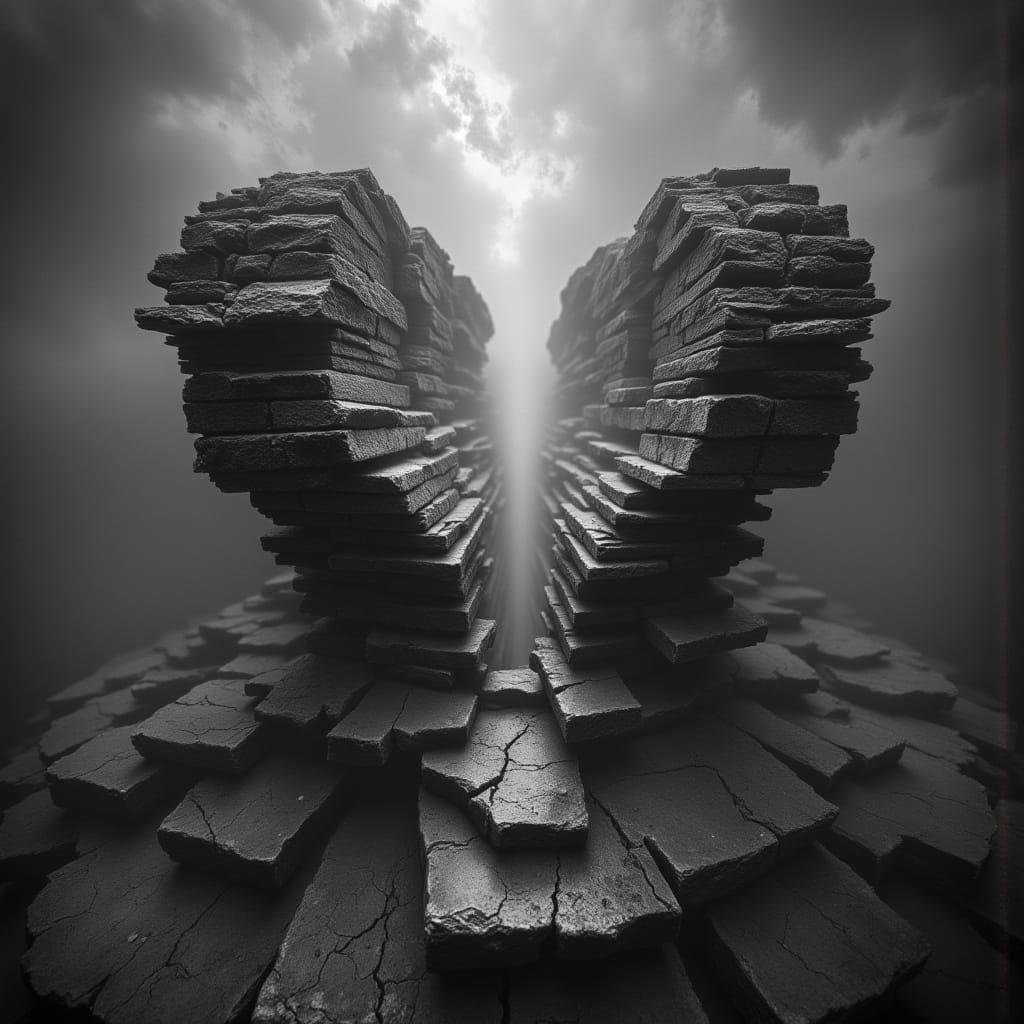
In the first image, we see a heart—not soft, not red, but forged from slabs of cold, cracked stone. Split down the center, it doesn’t bleed. It doesn’t scream. It simply opens, revealing a light that neither heals nor blinds. This is not a symbol of destruction. It’s a portrait of vulnerability. Of strength that dared to yield. And that’s the paradox: what we build to protect us can also be the very thing that prevents us from feeling, from growing, from becoming.

There have been times I cracked. Times when all I could do was sift through the rubble and pretend I was okay. On the outside, I held. On the inside, it was layers of damage—quiet, hidden, untreated. It wasn’t dramatic. It was ordinary, and that’s what made it dangerous.

And just when you think it can’t go deeper, it does.


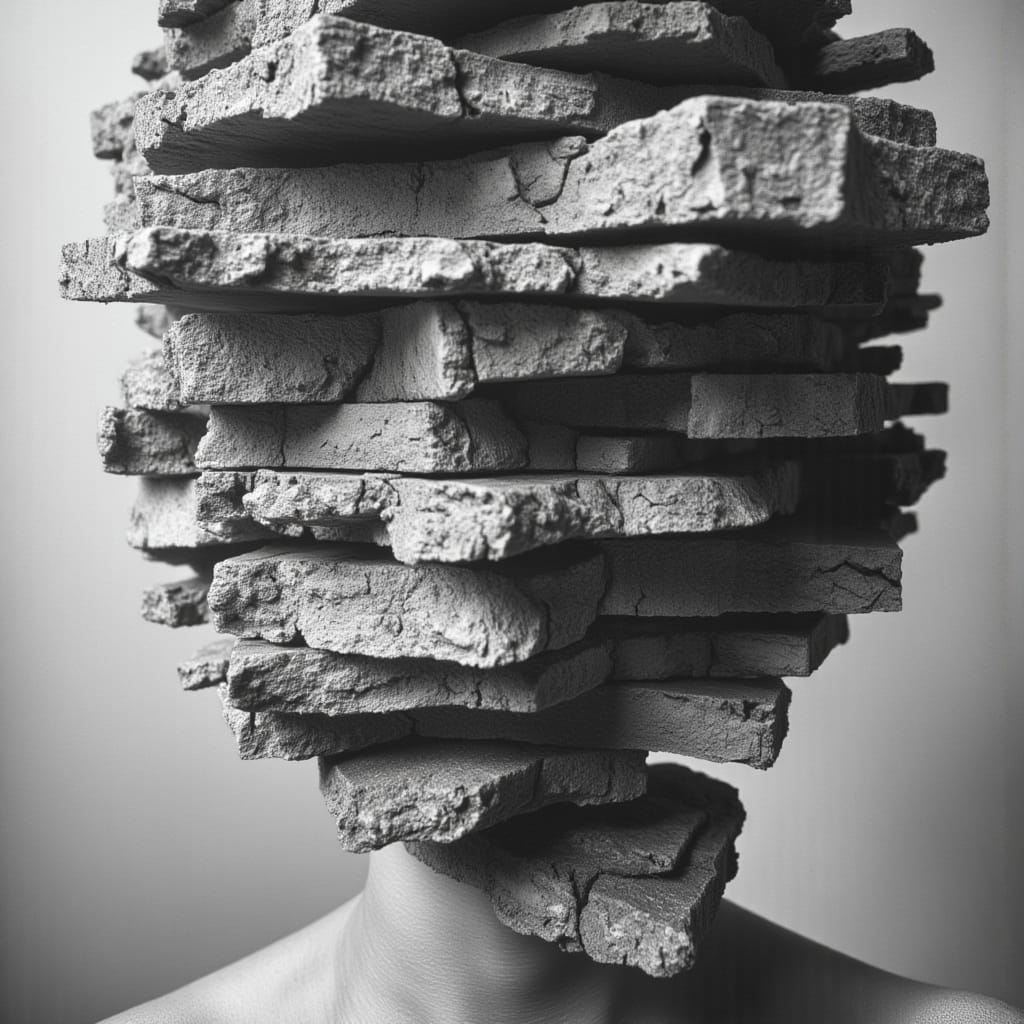
The second image strikes harder. A head—presumably human—layered with thick, dry slices of rock, features obliterated by the burden of their own defenses. You don’t see eyes, mouth, or even expression. You see the consequence of endurance.

We do this, don’t we? We pile on the layers: expectations, roles, trauma, silence. One by one, they smother the self underneath until we become unrecognizable, even to ourselves. And when someone asks us how we’re doing, the reaction is automatic: “I’m fine.” But the truth is buried somewhere deep, wedged between layers too heavy to lift alone.

But what if the face we hide becomes the face we lose?


The final image is a tunnel of shattered stone tiles, a fractured pathway bathed in harsh, white light. It’s hard not to see this as a metaphor for transformation. The path isn’t smooth. It’s jagged. Uneven. And yet it leads forward.

That light? It’s not salvation. It’s exposure. Clarity. Maybe even a challenge. The only way through is through. You walk over the wreckage of everything you thought would last, everything you thought you were, and you move anyway.

These images aren’t just art. They’re mirrors. They ask you to look closer—not at the cracks in the stone, but at the fractures within yourself. The places you’ve gone numb. The truths you’ve buried. The parts of you are still waiting to be unearthed.

So yes, Yikes might be your first instinct. But maybe that discomfort is the doorway to something deeper. Maybe the real reaction isn’t fear, but awakening. What if breaking is not the end of the structure, but the beginning of something raw, real, and finally alive?

What have you layered over instead of facing?
What parts of you are still buried beneath the rubble?
And if you followed the cracks, where would they lead?

Too Sharp to Hold

POETRY – ANNABELLE SERIES


you wanted the fantasy—now meet the fallout

The light doesn’t flatter her.

It splits her down the middle—green on one cheek, red on the other.
Like a warning. Like a dare.
She doesn’t turn from it. She lets it expose her angles. Her sharpness. Her refusal to soften for their comfort.

This is not a glow.
This is a glare.

She watches the room through tinted lenses, as if the distance they create might protect her. As if dimming the world might dim what still pulses inside her.
The ache. The want. The memory.

The drink in her hand is untouched. It’s a prop. Like everything else she wears tonight.
The sunglasses.
The chains.
The silence.

They look at her like she’s a story they want to be part of.

They don’t know she’s the ending.


She doesn’t speak much anymore—not in places like this.
Words feel expensive. Trust, impossible.

So she listens instead. To the way people try to impress through noise. To the bass that thumps like a hollow heart.
To the click of her own restraint every time someone gets too close.

She lets the glasses do the talking. Lets the braids fall like armor.
Lets them wonder what she’s thinking.

Because curiosity is safer than closeness.
Let them project. Let them guess.

It’s easier than being held wrong.

They don’t know Jimmy.
They don’t know the weight she carries in her wrist—his watch ticking, ticking, never letting her forget that she is still here and he is not.
That time moved on. That she did too. But not without cost.

After Jimmy died, she lost herself.
She became something else.
Someone she wasn’t proud of.
Someone she didn’t know.

That’s what no one sees when they look at her.
Not the reinvention.
Not the ruins beneath it.
Not the choice to survive when survival meant shapeshifting.

They don’t know how she nearly drowned in grief and came back with a mirror for a heart.
Reflective. Untouchable. Sharp.

But there was a moment, days ago—brief and disarming—when she stared at an old photo of him.
And in the quiet weight of his gaze, something shifted.

She felt something familiar when she looked at his picture.
Something that reminded her she had power.

Not the performative kind. Not applause.
But the power to stand. To remember. To continue.


Someone approaches. Of course they do.
Men like him always do—when the lights are low and the mystery is wrapped in gloss.

“You look like trouble,” he says, leaning in with a confidence he hasn’t earned.

She tilts her head, slow. Deliberate.
Her thumb brushes Jimmy’s lighter inside her sleeve.
Click. No flame. Just memory.

She studies him the way wolves study fences.

“I am,” she says. “But not the kind you’re good at surviving.”

He laughs—too loud, too fake—but steps back.
She doesn’t flinch. She never does.

Because she’s not here to be wanted.
She’s here to remember who she is without being touched.

She’s here to prove she can be in the world again—even if the world doesn’t deserve her.


But even now, beneath the rhythm and neon and the low hum of everything she refuses to feel—

Something stirs.

A voice not extinguished.
A hunger not silenced.

That same voice that whispered in the stillness after Jimmy left her:

Will anyone ever see the girl beneath the glass?
Will anyone reach without pulling?
Will anyone stay if she stops performing?

And for the briefest breath, she considers it—what it might feel like to answer those questions with action.
To peel the gloss. To set down the mask.
To let someone see her without preparation.

But not tonight.

Tonight is for the performance.
Tonight is for control.
Tonight is armor masquerading as elegance.

She lifts her glass—not to drink, but to steady her hand.
And in the mirrored wall, she catches a glimpse.

Not the reflection.
Not the projection.

Annabelle.

Not a ghost. Not a brand.
Not a wound in makeup.

Just a woman.

Too sharp to hold.
Too real to forget.

Too Soft to Survive

POETRY


by the time they named her strong, she’d already lost everything else

This is what she looked like before.

Before the veil. Before the gloss. Before they praised her composure and confused it for peace.
Before she turned herself into armor.

Before the night Jimmy died.

She was Annabelle then. Not a symbol. Not a survivor. Just a girl who still smiled with her whole face, even when it hurt.
Who wore her softness without fear.
Who believed in mornings, in second chances, in love that didn’t need explanation.

Jimmy saw her.

Not the projection, not the potential—just her.
Hair tangled from sleep. Laugh like rebellion.
Questions that didn’t need answers.
He held her like she was real, and that was the most dangerous thing of all.

Because real things break.

And that night, something did.

She didn’t cry at first. She didn’t scream.
She went still.
Still enough to make a decision.

If softness got her here, she would bury it.
If love made her reckless, she would starve it.
If truth demanded grief, she would wear lies like couture.

So she did what women like her are trained to do.

She became someone else.

The world met her later—painted, polished. They called her elegant. Formidable. Composed.
They didn’t know she’d cut out parts of herself to fit that dress.
They didn’t see the ghost she carried in her mouth.

They just saw a woman who never cracked.

But some nights, when her reflection forgets to lie—
the voice inside her whispers:

Did you ever wish you were someone else?
Because I do.
She don’t belong here. She doesn’t belong.

She’s worn the mask so long, it’s started to feel like skin.
It itched at first; now it bleeds beneath the scars.
And she no longer knows where it ends, or where she begins.

But underneath, that other girl—the before girl—isn’t gone. Just buried.

And with her, the memory:

She was selfless. He was a true friend.
She should have been there for him.
Slow dancing until the crying eased.
Letting him collapse into her silence.
Being the warmth when the cold got too loud.

Now she speaks the unspeakable.

Jimmy is gone.
And she wasn’t there.

Not the way he needed.
Not the way he had been for her.
She should’ve been someone he could come to.

Jimmy’s watch ticks, ticks, ticks—a reminder that she is still alive.
She wears it now, not for timekeeping, but as penance.
It doesn’t tell time.
It tells absence.

She remembers who she was before they called her strong.
Before she survived by silence.
Before she was too bright to touch.
Before the grief calcified into poise.

She remembers Jimmy.

And tonight, she doesn’t want to be worshipped, or applauded, or envied.
She wants to be held.
She wants someone to say her name like it means something.
Annabelle.
Like it’s not just a title she wears in his absence.

Her thumb rubs his lighter—silver, worn smooth, still warm from her pocket.
She exhales her words into the air like smoke, like prayer.

“You saved me…
You saved me.”

Emotion in Disguise: What Modernist Poetry Really Feels

ESSAY – JAVA & VERSE

How Teaching, Trauma, and Innovation Keep Modernism Alive Today

When I lectured on poetry, I always felt that the material used wasn’t keeping pace with the times. Poetry has evolved—radically, beautifully—but the way we teach it? Not so much.

The curriculum often clings to rigid categories, ignoring the electric shift in voice, form, and identity that defines our current generation of poets. Modernism, in particular, gets framed as cold and impenetrable, when in truth, it’s full of feeling—just coded, fragmented, and refracted through the chaos of its age. This essay is my attempt to reframe that lens, to show that even when modernist poets claimed to escape emotion, they were actually inventing new ways to express it.

Modernism in Poetry: Emotion in Disguise

Once upon a time, poetry was in love with itself. It rhymed, it sighed, it danced through rose gardens under the moonlight.

Then came Modernism, and poetry had a breakdown. Or maybe a breakthrough. Either way, it stopped pretending everything made sense.

Modernist poetry emerged in the late 19th and early 20th centuries as a fiery rejection of Victorian sentimentality and Romantic melodrama. The old poetic order collapsed under the weight of war, industrial chaos, and deep existential dread. Modernist poets didn’t just shift gears—they set fire to the vehicle and walked away from the wreckage.

World War I turned landscapes into graveyards and ideals into ruins. Suddenly, poetry couldn’t afford to be polite. The genteel, pastoral verses of the past felt dishonest in a world haunted by gas masks, shellshock, and trench mud. Poets had to find a new language for a new kind of grief—and modernism answered the call.

Their rallying cry? Make it new. But that didn’t mean shinier or simpler. It meant fragmented, disjointed, allusive, ambiguous, and unapologetically difficult. It meant challenging readers to confront reality as it was: broken, unstable, and brutally honest.

Emotion in the Age of Irony

T.S. Eliot, one of modernism’s high priests, famously argued for poetic “impersonality”—an escape from emotion rather than an outpouring of it. In essays like “Tradition and the Individual Talent,” he promoted a poetry that transformed feelings into universal truths through rigorous craft.

But let’s be honest: Eliot’s work is emotionally loaded. The Waste Land practically sweats anxiety, loss, and spiritual exhaustion. It’s just wearing a very intellectual trench coat. Consider the lines:

“I will show you fear in a handful of dust.”

That’s not emotionless—that’s terror, disillusionment, and existential dread, crystallized in a single line.

Modernist poets didn’t stop feeling. They just stopped making it obvious.

Emotion didn’t leave the building; it ducked behind fragmented syntax, layered allusions, and shifting perspectives. If Romantic poets sobbed openly, Modernists cried in code. Virginia Woolf said it best: “On or about December 1910, human character changed.” The form had to follow.

The Poet’s New Job Description

So, is the poet still supposed to express their feelings?

Yes—but not necessarily in the way previous generations understood it. The modernist poet became less of a lyrical confessor and more of a curator of chaos, a mapmaker of mental and social disintegration.

They still responded to the world—they just didn’t trust language to carry raw emotion without distortion. The job wasn’t to simply say, “I feel,” but to build structures that evoke feeling in the reader through complexity.

Take Ezra Pound’s imagism, for example. The emotions are there, but compressed into precise images—a few words with the density of granite. In “In a Station of the Metro,” he writes:

“The apparition of these faces in the crowd; / Petals on a wet, black bough.”

In just 14 words, he delivers a fleeting, haunted image of urban life—emotion without explanation.

Or H.D. (Hilda Doolittle), whose poetry strips myth to its emotional core, blending trauma and transcendence through crystal-cut language. Her poem “Oread” demands:

“Whirl up, sea— / Whirl your pointed pines, / Splash your great pines / On our rocks.”

The natural world becomes charged with urgency and erotic force. It’s minimalist, but the emotion crackles.

Enter the Outsiders: Ethnic Voices Redefine the Game

Jean Toomer, author of Cane, masterfully blended poetic and narrative modes to explore race, memory, and identity in modernist form. His lines from the vignette “November Cotton Flower” are both lyrical and piercing:

“But cotton flowers bloomed as the snow fell. / The same thing happened every year, but / It was just as strange to him now as then.”

Toomer’s work drifts between prose and poetry, reality and myth, reflecting the fragmented self of the early 20th-century Black experience.

Another haunting moment comes from the poem “Georgia Dusk,” where Toomer captures the tension between cultural memory and modern displacement:

“A feast of moon and men and barking hounds, / An orgy for some genius of the South / With blood-hot eyes and chicken-lust and Dixie / Moonlight…”

This excerpt seethes with layered imagery—ritual, violence, beauty, and longing—all compressed into a snapshot of Southern Black life distorted by history and myth.

Nella Larsen, and others grappled with identity, dual consciousness, and racial experience using all the modernist tools—fragmentation, symbolism, free indirect discourse.

  • Asian American poets like Yone Noguchi and Sadakichi Hartmann merged Eastern poetic tradition with Western modernist aesthetics, expressing alienation and cultural negotiation in radically new forms. Hartmann’s haiku and Noguchi’s lyrical innovations brought introspective nuance to the movement.
  • Latin American writers associated with Modernismo, like Rubén Darío and José Martí, were remixing lyricism and experiment before Anglo-American poets caught up. Darío’s poetic voice declared a rebellion against colonial linguistic norms while experimenting with form:

“Youth, divine treasure, / you go and will not return.”

These voices challenged the notion that modernism was an elite, Eurocentric experiment. They showed that fragmented identities, complex cultural legacies, and emotional nuance weren’t just compatible with modernism—they were its heart.

Why It Still Matters

Today’s poets are still echoing the modernist ethos—whether consciously or not. Ocean Vuong’s fragmented lyricism, Claudia Rankine’s hybrid forms, and Terrance Hayes’ formal innovation all carry the spirit of modernism into the 21st century. These writers play with structure, voice, and silence in ways that resonate deeply with modernist experimentation. Vuong’s On Earth We’re Briefly Gorgeous is, in many ways, a modernist epic disguised as memoir, laced with dislocation and myth. Rankine’s Citizen fuses poetry, essay, and visual art—alienating and urgent. Hayes’s American Sonnets for My Past and Future Assassin reshapes a traditional form into something eerily postmodern, yet deeply modernist in its emotional restraint and coded rage.

As a teacher, I believe reintroducing modernism through this living lineage is essential. If we teach it not as a dusty archive, but as an ongoing conversation—a set of tools that today’s poets still use, twist, and question—it becomes something vibrant. Something urgent. Something real.

Modernism isn’t over. It’s evolved. It continues to whisper—sometimes scream—through the voices of today’s poets, who dismantle and reconstruct identity, form, and meaning with every line they write. That’s not just exciting—it’s a necessary response to our own disjointed world.

So read it. Re-read it. Struggle with it. That’s part of the experience—because poetry, like life, doesn’t hand you answers. It demands your attention, your resilience, your curiosity. It mirrors the way we stumble through grief, joy, contradiction, and complexity. In an age of tweets and filters, poetry—and especially modernist poetry—reminds us how to sit with ambiguity. As Eliot might say, it is the “still point of the turning world”—poetry that stands still while everything else falls apart.

In a world still wrestling with identity crises, global conflict, cultural hybridity, and the failure of institutions, modernist poetry remains weirdly relevant. Its refusal to pretend, its hunger for new forms, and its emotionally guarded yet powerfully resonant core—what we might call “coded vulnerability”—offer something today’s overly curated emotional expressions can’t: authentic complexity.

Unspoken Notes

POETRY – MUSIC


Sometimes I ask myself
why jazz lives so deep in my skin.
It’s not just music—
it’s liquid neon on the inside,
saxophone sighs bending like light
across my bones.

Every note a pulse of color
I never learned to speak.
It says things
my mouth forgets how to form—
silken grief, slow joy,
that glimmer between ache and awe.

Each time I listen to Miles, Parker, Monk,
it takes me somewhere—
touches me in a place I can’t describe.
Like memory with no name,
just feeling.

Jazz glows like this:
chrome-slick and intimate,
as if someone turned emotion
into a spectrum
and let it dance across my soul.

Did You Eat Your Vegetables?

Daily writing prompt
List your top 5 favorite fruits.

DAILY PROMPT RESPONSE

Plot twist: You’ve been eating fruit all along.

You ever bite into a tomato and think, “Wow, this vegetable is juicy, sweet, and suspiciously… fruity?” Well, congratulations — your instincts are sharper than your neighbor’s knives set. Because here’s the hard truth:

Tomatoes are fruit. So are cucumbers. And zucchini. And eggplants.

That’s right. Your salad is a fruit salad in disguise. Your stir-fry? Basically fruit cobbler without the sugar. Let’s talk about it.

🥒 The Great Vegetable Lie

Botanically speaking, a fruit is anything that grows from the flower of a plant and carries seeds. Vegetables, meanwhile, are things like roots (carrots), stems (celery), or leaves (spinach). You know — the boring parts. The greens your grandma tried to boil into submission.

But fruits? Fruits are the showoffs. The divas. The drama queens of the plant world, demanding, “Look at my seeds! I am the chosen one!”

And yet, we still treat them like veggies. Why?

Because humans are petty and organized the produce aisle based on vibes.

🍆 Welcome to the Fruity Bunch:

  • Tomatoes – The Benedict Arnold of vegetables. Shows up in salsa, but has the DNA of a peach.
  • Cucumbers – Spa fruit disguised as a crunchy vegetable.
  • Zucchini – Basically a green banana with imposter syndrome.
  • Eggplant – Dark, moody fruit that wants to be left alone.
  • Bell peppers – All color, no commitment. Still a fruit.
  • Pumpkins – Halloween’s fruity mascot. Also pie’s best-kept secret.
  • Avocados – The only fruit that tries to be butter.
  • Olives – Salty little fruits that got lost in a martini and never left.

🥗 So What Now?

Next time someone offers you a “vegetable medley,” just know you’re eating a fruit salad with a PR problem. Maybe we’ve been too harsh on the pineapple-on-pizza people. They were ahead of their time. Maybe everything belongs on pizza. (Except raisins. Raisins can stay banned.)

So go ahead — live your truth. Eat your fruit-veggies. Call your tomato what it really is: a juicy red betrayal.

And remember: in the garden of life, labels are made to be peeled.


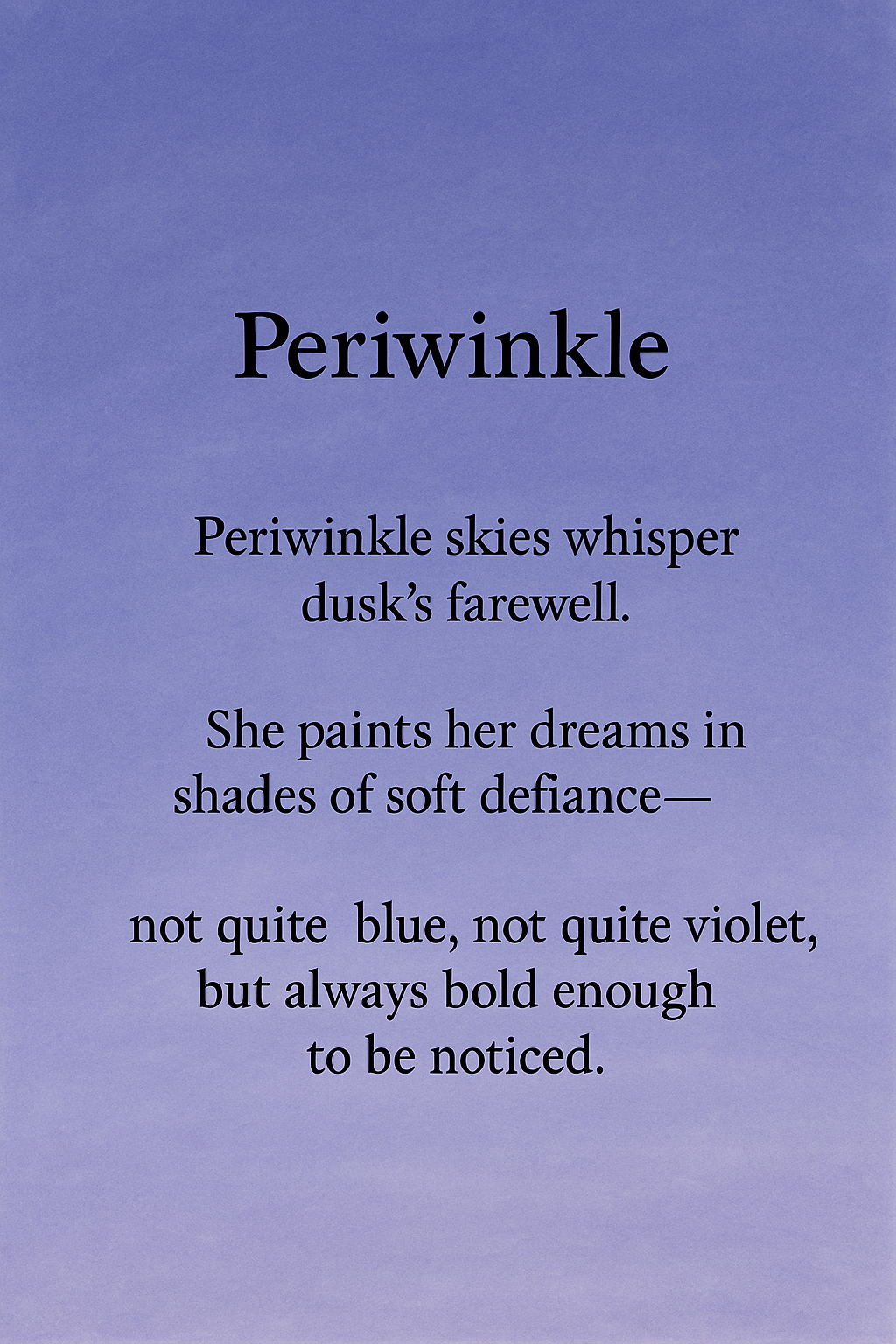
Soft Defiance

POETRY – WWP#414

As the Inkwell Stirs

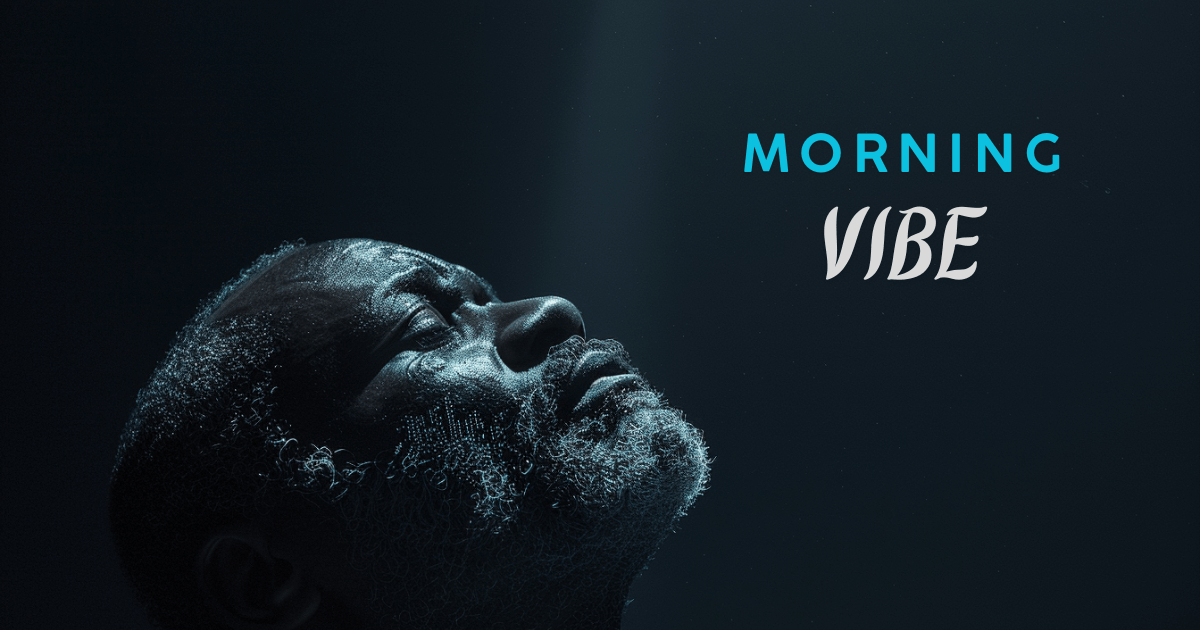
PROSE – 3TC #MM48 – MORNING VIBE

Night lingers longer than it should, clinging to the edges of the world like a thought half-forgotten. It doesn’t go easily. The air is still, but not gentle—there’s a sharpness to it, the kind of chill that doesn’t announce itself. It pricks at the skin, slow and methodical, working its way in until your body shivers and you’re not sure when it started.

You finish your smoke. One last flick. The ember cuts through the dark like a dying star—brief, insignificant, but final. Somewhere out there, homes stir. The floors creak. Feet drag in patterns worn deep by repetition. The restless shuffle begins, zombie-like and directionless, following the scent of timer-brewed salvation. Coffee. The first small mercy of morning.

You sit by the window with a cup, warm in your hands, and watch the sky peel itself open. First the black, then the dull gun-metal, then the faintest shade of pale. The blue comes slowly, unsure of its welcome. Beneath it all, the horizon simmers—red, orange, brown—like coals that never fully went out. A silent ember of the night’s final stand, glowing under the weight of a world about to move again.

The inkwell stirs, shakes off its rust. Its lid lifts like a breath held too long. The quill taps, tentative at first, testing the moment. No plan, no script. Just rhythm. Just the need to begin.

You pour another cup. The clock says 5 a.m.

And somewhere between the sip and the silence, Elvis Costello’s “Radio, Radio” crackles through the speakers—too loud for the hour, perfect for the mood. The voice is defiant, bright, sharp as a match strike. You listen, because the lyrics don’t ask—they insist. The static fades beneath the beat. The world hasn’t spoken yet, but it’s no longer asleep.


The Face Beneath

PROSE – FOWC & RDP

The dawn light was pale and useless—just a smear across the treetops, barely making it through the humidity. Everything was wet—the porch boards, the air, your skin, even your breath. It felt like you were breathing through cloth—heavy, damp cloth wrapped around your head.

You stood barefoot on the steps, a slice of watermelon dripping in your hand. It tasted like water and rot now, its sweetness gone. You spat into the grass and stared out at the treeline.

The forest didn’t move. Not even the leaves. It just watched.

You didn’t sleep. Not last night. Not really the night before. The dreams had stopped pretending to be dreams. They didn’t fade in the morning. They lingered in the corners of your vision and behind your ears, where the sound of whispering almost made sense.

You went out early. Needed to check the perimeter cameras. Needed to move. To feel the ground under your boots. That was the plan.

Instead, you wandered. The trail curved in a way it hadn’t before. You followed it. Past the markers. Past the thinning grass. And then it was just you and the dirt.

You nearly tripped over it. At first, just a glint of white in the soil. Bone, maybe. A rock. You crouched, brushed it off with the edge of your shirt. The shape took form fast.

A face.

Stone. Weathered. Cracked. Like it had been buried for years, forgotten. But the eye, just one, was too clean. Too precise. Like it had waited.

You stared at it for a long time. Tried to laugh. Couldn’t. You ran your fingers along the nose, the lips. Your hand trembled, but you didn’t stop.

It looked like you. Not exactly, but enough. The same line between the eyes. The same curve of the jaw. It had no expression, but somehow, it felt like it was judging you.

You left it there. Swore you would forget it.

But that night, you dreamed of breathing through stone. Heavy. Silent. Dreamed of dirt filling your mouth, your ears, your chest. Dreamed of a voice saying your name—not out loud, but from inside.

You woke up with soil under your fingernails.


You told yourself: it’s a statue. Left behind. Forgotten.

You told yourself: it’s just heat sickness, a little sleep deprivation.

You told yourself: don’t go back.

But the forest doesn’t let you decide things like that. Not anymore.


In the Voices of Thousands, We Become One

PROSE – MOONWASHED WEEKLY PROMPT


The sunlight fades. Darkness returns. I wait in the hush, breath held, heart steady. The Keepers stand ahead, already assembled—silent, still, and watchful. In their presence, I feel both small and eternal. Beneath my calm, something stirs—my soul, long quiet, surges suddenly. It’s not noise, not fear. It is truth moving through me like a forgotten rhythm remembered. A tremor rises from the deepest part of who I am, and with it comes a whisper: the light… the call… the quill. These were never external things. They lived within me all along. I had only forgotten how to listen.

In the distance, the sky bends to the horizon’s will. Waves of green light ripple across the dusk like an ancient truth brushing its fingers across the world. The field before me sparkles with dew, each blade of grass a tiny shard of clarity, reflecting the last breath of sunlight. This moment—caught between day and night, between silence and speech—feels sacred. My steed shifts beneath me, sensing the tension in my thoughts. He is anxious, ready. And maybe I am too. But readiness doesn’t feel like confidence. It feels like surrender. I tighten the reins—not to control, but to remind myself that I am here, that I have chosen this.

We ride—not toward victory, but toward purpose. Toward the gathering. Toward those who understand this strange calling to bear words like burdens, and gifts. We are not warriors. We are vessels. We carry stories that are older than we are, stories that ask to be told again, each time a little more fully. We move as one toward the collective, not to be absorbed, but to belong.

Now, surrounded by my brethren, I feel the resonance. Not noise. Harmony. Thousands of voices—not the same but aligned. My own words rise from that shared current, not louder, but clearer. I speak the truth I have wrestled with in the quiet corners of my mind.

Some call the rawness madness. They dismiss it as noise, as rambling. But those of us who live in this tension—we know better. We know that sometimes, madness is just meaning in disguise. That chaos, when held in the right hands, becomes clarity. To those who face the block, I say this: it is not your enemy. It is your mirror.

The block is doubt. Yes. But not the kind that breaks us. It is the kind that slows us down, that makes us ask why before we speak. It is the force that prevents arrogance, that checks ego. Doubt humbles us. It forces us to listen harder, to question deeper, to speak with care. It reminds us that this craft is not about being heard—it is about being understood.

And it is in that pause, that searching, where we grow. The block is not a wall. It is a threshold. When we understand that, it no longer stops us—it transforms us. That understanding, that acceptance, is how the block is shattered.

Oil & Jazz

POETRY – 3TC #MM44

The spotlight didn’t just touch her—
it carved her
from shadow and breath,
chiseling her presence
into something holy,
a gospel of flesh and color.

She stood
like a question no one dared ask,
wrapped in the hush
before a storm breaks.
Every inch of her
was painted tension—
raw, unresolved.

The mic—
old as regret,
bright as memory—
caught the room’s breath
and held it hostage.

This wasn’t performance.
This was ritual.
And the format was fire.

Her voice wasn’t smooth.
It cracked like old vinyl,
ran like rivers
under skin that remembers.
She didn’t reach for notes—
she pulled them
from places too deep for light.

Each syllable
was a wound opening slow.
Each phrase
a letter to the ones
who never came home.

She wasn’t singing.
She was driving
through the dark
with no headlights,
just instinct
and that bruised kind of faith
you only earn by surviving.

Behind her, the world dissolved—
a smear of color and motion,
like God forgot to finish the painting.
But she stayed in focus,
a woman-shaped flame
dancing at the edge of coming undone.

Her intent was not to be heard—
but to be felt.
To set fire
to the silence
you carry in your chest
and call it strength.

And somewhere,
between the grit of her voice
and the way the air held its breath,
you stopped being a listener.

You became the echo.

In Every Breath, There’s Poetry

PROSE – NATIONAL POETRY MONTH

Today marks the end of National Poetry Month—a celebration we rarely celebrate yet live through daily. Every breath carries it. In a single line, past, present, and future meet. Poets give shape to that breath, making it something we can hold: a line that lingers, a memory that stirs, a feeling too deep for words but not for remembrance. And sometimes, it brings a smile—small, unspoken, but real.

It occurs to me that people are connected because of the stories we carry inside. One can’t help but notice the familiarity of movement and thought. On the surface, they appear to have nothing in common, random even. Yet, one can never tell what the truth of a person is: their passions, their fears, their deepest secrets. We witness those who lose their way, those who rise from the ashes, or the calamity of those who need to prove themselves to people who don’t even know their names—the ones who, like me, are numb.

Poetry

I’ve discovered that it is an entity of its own, composed of laughter, sorrow, joy, tears, family, the before, the in-between, the undiscovered; everything—all of it.

It’s a poem

Only YOU can write.

Perforated Silence

POETRY – FOWC & RDP

Why do I bother to write?

Each word drifts into the void—unanswered, unheard.
They vanish like smoke—transparent. Gone.
Not because they’re sacred or encrypted in G-14 code—
but because no one’s looking. No one’s listening.

There was a time when that silenced me.

“Why speak?”
“No one listens.”
“Does it even matter?”

Do you matter?

Some days, that voice won.
It slid into my bones, curled behind my ribs, and whispered me into silence.
Told me I was just scribbling into darkness.
That my pain was recycled. That I was nothing new. Nothing needed.

But even then, something fought back.

A flicker. A breath that refused to die.

I had forgotten why I came here.
Lost the thread. Lost myself in fog.

But I remember now.

I write because I must.
To survive the war within.
Not the loud, cinematic kind—
but a silent, grinding, bloody war.
Fought in mirrors. In 3 a.m. thoughts.
In doubts that circle like vultures.
In guilt that clings like wet ash.

We don’t talk about it. Not really.
But we all feel it.
That private battlefield behind the eyes.
The endless rummage through our own wreckage,
hoping to find something still whole. Something still true.

I’m not here to prove I exist.
I’m here to understand why I keep breathing through the wreckage.
Not seeking praise—seeking peace.

To sift through ruins.
To bleed on the page.
To let the shards of memory cut me clean,
and the embers of regret burn what no longer serves me.

There is hope in the fire.

And I have not walked alone.
Some of you were there—watching, listening,
fighting your own quiet wars beside me.
We faced Lunacy like pilgrims, eyes wide, daring her to do her worst.

You stayed.

For that, I owe everything.

So I write.
Not because I’m whole—
but because I’m becoming.

Page after page.
Sentence after sentence.
Word after word.

Until the silence breaks.

And something holy rises
from the blood.

The Ridge Where Silence Waits

PROSE – FOWC & RDP


Dawn unfolds like a hesitant prayer, its soft light unspooling over the bones of the hills. The stars, one by one, retreat into the folds of daylight, as though ashamed of what they bore witness to through the long, silent hours. Still, I remain at the crest of the ridge, a lone silhouette etched against the slow bloom of morning. I have not slept. I could not—not with the weight of forgotten omens pressing down on me like ancient armor.

The saddle beneath me creaks as I shift, leather complaining in a language only the wind can answer. My limbs ache, not just from the vigil, but from something deeper—an unraveling. I am more wreck than man, hollowed by longing and the quiet violence of loss. My voice, once sure, now drifts somewhere in the ether, unreachable. Even if I could summon the will to speak, I no longer trust the shape of my own words.

Below, the keepers stir. I hear the sharp clash of their voices, rising in petty squabble over rituals they no longer question. Their movements are brisk, their concerns tethered to earth and duty. I do not begrudge them this. But I cannot descend, not yet. I am no longer bound to the cadence of the living. Not while something in me still listens for a call that may never come again.

For I have lost the vision.

Once, it came to me like thunder through a cathedral—blinding, holy, terrible in its beauty. It lit my mind with purpose, set my hands aflame with creation. But that light has dimmed, flickered, vanished. Last night it sang, soft and clear through the bones of the wind. Now it is gone, and in its place: silence, vast and unrelenting.

I reach inward, desperate for a glimmer, a fragment of that divine echo, but find only echoes of my own fear. My compass is shattered. My quill is waiting in some distant place I no longer know how to reach. The path to it—if it still exists—has been swallowed by mist and regret.

And yet, there is no peace in surrender. Only the chill of a fate whispered by unseen mouths, breath like ice on the back of my neck. They murmur not of endings, but of reckonings. Of a soul unmoored of a promise made long ago beneath stranger skies.

Perhaps this is what becoming untethered feels like—not a fall, but a float. Not a silence, but a waiting breath.

The ridge hums beneath me, and I close my eyes.

If the light returns, I will know it by the way the wind shifts. I will feel it in the marrow. I will rise, not with certainty, but with faith scorched into my bones like forgotten scripture.

But until then, I remain.
A shadow made flesh.
A watcher at the edge of memory.
A ghost, listening for the sound of his own return.

The Inheritance of Purple

POETRY – GROWTH


They say purple was born
from crushed murex shells—
a thousand lives
for a single thread
worthy of gods.

It was never meant for the ordinary.
Worn by emperors,
draped on deities,
spoken only in whispers
or prayers.

But you—
you carry it quiet
in the marrow,
like something ancient remembered
not with words,
but with ache.

Growth, in purple,
is not soft.
It is ceremonial.
A coronation no one sees—
a crown of silence,
not gold.

It is the color of trials,
of nights that stretch too long
and still end in morning.
Of scars turned sacred
and stories no longer told
for approval.

You are not blooming.
You are being
enthroned.

In every slow step,
every time you chose stillness
over spectacle,
you stitched yourself
in the lineage
of the violet divine.

And when you sit now,
not reaching—
just radiating—
it is not peace you’ve found,
but power
disguised as peace.


This piece was written for Eugi’s Moonwashed Weekly Prompts and Weekly Prompts Wednesday

Swallowed, then Speak

POETRY – DEFIANCE

What is the moment when I scream into silence?

But I’m silent, really—
no sound, no voice,
just a mouth stretched wide around something too big to name.
My eyes glaze—not with calm, but with shock.
A thin film of disbelief over everything.
My heart races.
I’m wrecked like a tsunami with no quarter,
flung breathless against the shore.

It’s not quiet.
Not truly.
It’s a silence that throbs,
that undresses me,
strips me down to the rawest nerve.

Why?
Am I afraid to speak what I feel?
I push it down until I crack.
Swallow the pain, the misery, the grief—
like that’s what strength is.
As if silence means control.

But inside, it never stops screaming.

I’ve built a prison with no walls.
I’m both prisoner and warden.
Every emotion I swallow—another brick.
My tears, the mortar.
The longer I hold on,
the harder the mortar sets.

Letting go should be simple.
But I can’t.
I won’t.
I have to be strong.
Another brick.

The chains tear into me.
I pull and pull,
begging for clemency I know isn’t coming.
Skin breaks.
Something deeper frays.
Still I pull.
Still I scream.
Another brick.
How did I get here?

I slump into the abyss of agony.
Its waves strangely soft,
almost soothing.
The ghosts of my past wrap around me,
pulling me under.

Is this peace?
Is this what I deserve?

No.

I scream NOOOOO!!!
A final act of defiance.
A rupture in the silence.
A crack in the wall.

I scream again—louder.
Louder than the pain.
Louder than the ghosts.
Louder than everything that told me to stay quiet.

The final word is no longer a whisper.
The silence and I become one.
And we finally—

SPEAK.


Ego, Snacks, and the Search for Peace

PROSE – REFLECTION – SUNDAY POSER #230


At my core? Still me. Still sarcastic. Still curious. Still low-key allergic to group think and people who say “per my last email.” But life—especially this past year—shifted something in me. A life-altering moment has a way of stripping you down to the truth, whether you’re ready or not.

It made me realize I’ve been sitting on a set of gifts I’ve treated like party tricks. I can do more. I should do more. Sure, I could keep yelling into the void about the uncultured swine running the world (still baffled by how that happened). And if I accidentally handed them the keys somewhere along the way, then yeah—I’ve got some things to atone for. Maybe even finish the time machine in the basement.

But mostly, I’ve just changed in the way that matters: I’ve started trying. Less coasting, more choosing. Less needing to be right, more needing to be honest.

Wisdom? Not exactly my department. I’ll never be that guy. Never been that smart, and I’m okay with that. What I am is honest enough to admit I’m a deeply flawed man. Whatever good I carry, I got from my mother. The rest is a work in progress.

Marcus Aurelius said, “Waste no more time arguing what a good man should be. Be one.” I’m trying. Some days better than others. And like in Sufism, where they speak of the nafs—the lower ego—it’s a constant fight. Not to eliminate your ego, but to tame it. To bring it into balance. Peace doesn’t come from pretending to be pure—it comes from wrestling with your own chaos and not letting it win.

And honestly? If King Solomon—the wisest man to ever live—couldn’t get it all right…

I think I’m good.


Poem of the Day – 04182025

Dante in Combat Boots: My Journey Through the Divine Comedy

ESSAY – RANDOM THOUGHTS

The First Encounter – Lost in the Woods (and the Footnotes)

The first time I read The Divine Comedy was sparked by an argument—an intellectual back-and-forth with someone who, as it turned out, didn’t know much about the book. But he was passionate. His conviction was hypnotic. I didn’t buy his analysis, but I understood why he was obsessed.

I picked up the book out of curiosity and a little competitive pride. I didn’t finish it. We got called out on a mission, and you don’t take library books on missions. Fines are one thing—charred pages are another.

Still, even unfinished, it stuck with me. Something about Dante’s voice—strange, serious, deliberate—lingered.

That first attempt, though brief, planted a seed. When I returned to it later, I had more patience, a better dictionary, and no librarian breathing down my neck.

Even then, Inferno was dense. Layers of references. Historical names I barely recognized. Theology deep enough to drown in. I was flipping between footnotes and old library texts like I was defusing a bomb. The nine circles of Hell were vivid, yes—but they felt more like a museum exhibit than a lived experience. I was watching Dante, not walking with him.

It felt like homework. Necessary, maybe. But distant.

Still, something about the structure—the cold logic behind every punishment—got under my skin. Sin wasn’t just bad behavior. It had a shape. A weight. I didn’t have the words for it then, but the idea that justice wasn’t arbitrary began to settle in.

I didn’t love the poem yet. But I was starting to hear it.


Warzones and Infernos – Dante in Combat Boots

When I returned to The Divine Comedy after combat, it hit differently. Dante wasn’t just a poet anymore—he sounded like someone I knew. Maybe even like me.

Inferno started to make more sense. Hell wasn’t about fire and demons—it was about clarity. Brutal, stripped-down moral logic. A world where actions had consequences that couldn’t be bargained with.

In combat, you live in that gray zone between judgment and survival. Right and wrong don’t show up in clean lines. Sometimes you do the right thing, and it haunts you. Sometimes, it felt like there was no God—at least not the one we heard about in Sunday school. We believed in the integrity of what we were doing. We questioned it, sure. But our resolve stayed intact. Sometimes, surviving was all you could do. And that didn’t always feel like redemption.

Dante’s Hell isn’t just punishment—it’s paralysis. People stuck in their choices, their pride, their rage. No growth. No movement. Just a reflection in the worst kind of mirror.

That rang true.

Some turned to a higher power for guidance. We knew—we were fighting for God. But we also knew the limits. We were required to do what was asked of us—but no more. We fought for God. And we had to answer to Him too.

Not just for the people we encountered. Sometimes for what we became.


Purgatorio – The Long Climb Back

Purgatorio doesn’t get the same attention as Inferno. It’s not as dramatic. No fire. No famous sinners frozen in ice. But it’s the part that felt most real to me.

Because after war, after any real descent, what follows isn’t glory—it’s work. Quiet, repetitive, soul-grinding work. That’s Purgatorio.

Dante climbs a mountain, terrace by terrace, confronting the seven deadly sins. Each level is a mirror—less about judgment, more about recognition. It’s not punishment anymore. It’s penance. The difference matters.

After combat, reintegration isn’t just about coming home. It’s about stripping away the armor you lived in. Unpacking things you didn’t have the luxury to process while they were happening—and you don’t have the luxury to process them now. You’re thrust back into your life like nothing happened. You lie to the ones you love to keep them safe, to spare them from the world you know exists but no one is talking about. You keep that secret.

You make a valid attempt to let go of habits that kept you alive but will not help you live. It’s exhausting.

That’s why Purgatorio hit me so hard. I didn’t expect it to. But there’s something deeply honest in the idea that healing doesn’t feel holy. It feels like discipline. Like carrying your own burden up the hill with no end in sight. Some days, you move a little higher. Some days, you just don’t slip backward.

There’s no audience. No headline. Just effort.

And yet—it’s hopeful. The whole mountain is built on the assumption that you can be made whole. That ascent is possible. Redemption is a process, not a prize.


Paradiso – The Light We Try to Name

Paradiso is the hardest part.

Not just to read—but to believe in. It’s abstract, layered with theology and geometry, full of light and music and spheres. Dante is trying to describe the indescribable. He’s chasing God through language; the closer he gets, the less the words hold.

For a long time, I didn’t connect to this part. It felt like too much, too far, too clean.

But after Purgatorio, after the work of climbing, carrying, and unlearning, I started to understand what Paradiso was reaching for—not perfection, not purity, but peace.

And peace—real peace—is foreign when you’ve lived inside chaos. It’s not some cinematic moment of triumph. It’s quieter. It’s the ability to be still, without needing to be numb. It’s presence, not performance. It’s the moment you stop bracing for the next thing to go wrong.

Dante meets Beatrice here—his guide into the divine, his symbol of grace. We all have our Beatrices, if we’re lucky. People who held the line for us when we couldn’t. People who reminded us we weren’t lost forever.

Am I worthy of this grace? Will God forgive me for what I’ve done? I find myself waiting—searching—for that one thing that could wipe away all the havoc of my making. Is that a thing? You know the scales will have an answer.

In the background of all this light, I still imagine the scales. The old ones—Egyptian, Christian, Islamic. The image of your life being weighed. Every choice, every silence. Your hands held out, waiting to see which way it tips.

We fought for God. We made peace with that. But we also knew we’d stand in front of Him one day. And maybe that’s what Paradiso is really about—not escaping judgment, but understanding it. Accepting it. Trusting that there’s a kind of justice that doesn’t crush you, but completes you.

I don’t claim to understand everything Dante saw in Heaven. But I understand the desire to see it.

And that’s something.


Full Circle – Still Listening

I’ve read The Divine Comedy more than once now. Not in a straight line, not as a scholar, but as someone who’s lived with it—left it, returned to it, wrestled with it. And the strange thing is, it keeps changing. Or maybe I do.

What started as a challenge—half a debate, half an ego trip—turned into a mirror. Dante’s journey through Hell, up the mountain, into the light, isn’t just theology or poetry. It’s a blueprint. A map of what it means to go through something, to come back from something, and to wonder if you’re still whole on the other side.

I never read it looking for answers. Not really. But I keep coming back to it for the questions.

Am I worthy of grace? Is peace possible? Can the scales ever truly balance?

I don’t know.

But I’m still listening.

And that’s something too.


Author’s Note:
This was written as a result of a post by alexander87writer. I was going to leave a comment, and just kept writing. My two sentences became this. I’m so extra at times.

The Quiet Break

POETRY – BARK OF THE DAY CHALLENGE

A whispered secret crawls through alleyways, laced with smoke and static.
Neon blinks like a warning.
You turn the first page, not knowing what’s coming.
This debut is the gateway to madness.

Reach

CHALLENGE RESPONSE – POETRY

problems left behind you—
ghosts with no mouths left to speak.
you walked on,
didn’t flinch.

bare your soul.
not for them.
for you.
because silence
never saved anyone.

whenever i look at the ocean,
i see a version of myself
that doesn’t need fixing.
just space.
just time.
just tide.

home—is
a sound you remember,
not a place you stand.
it’s warm light on old walls.
the echo of your name
spoken like love,
not demand.

reach for infinity.
not to conquer it,
but to know
you were never meant to fit in the lines.


This piece was written for Reena’s Xploration Challenge #374. This week, she asked us to pick a blog or more to write something. I was surprised that I hadn’t written for her challenge before. I hope I got it right. Anyway, I chose the following:

Eugenia’s Moonwashed Musings, and then I ran into her challenge, Moonwashed Weekly Prompts. I don’t participate often, but I always enjoy myself when I get over there. This week is no different. Her poem for this week struck a chord, so I scribbled a few notes. It served as the bones of this piece.

Sadje’s KeepitAlive is another blog I read regularly when I decide to keep it out of my head. In her piece “Homecoming,” her line “home is” has quiet power and hits hard. As an old soldier, I remember the importance of “home.” So, I scribbled some more, and the bones got thicker.

Melissa’s Mom With a Blog hosts these flash fiction challenges, which I enjoy. Often, I scribble pieces for them, but they are used in something else. Every now and again, I manage to finish one just for that challenge and post it. This week, I found her piece, “coming home” whose opening line pushed me over the edge. So, I started scribbling a little more. Her image inspired by the graphics for this piece. I love the feel of that image; I will probably write something for it. And we’ll see if it actually makes it out of my notebook.

I haven’t written any new poetry in quite a while. My brain seems to be churning out the longer stuff. Thanks, ladies, for helping me find my way back.

Eshe

POETRY – FREEVERSE

She was the kind of woman you never really get over.
Sure, you move on.
Build a good life, one full of blessings by any measure.
But somewhere beneath the memories—
Woven into the joy and the pain,
Tucked among the totems of a life well lived—
She’s still there.
Sitting quietly. Unmoved.

Time shifts, and I have a moment of return.
No warning, no ceremony.
Just a scent, a song, a slant of light—
And there I am again.
Back where she was.
Back where I was, too.

The first time I noticed her,
The room was buzzing with chatter and I was minding my own business.
Then she turned—head tilted,
Hair falling in that certain way—
And looked straight at me.
I held my breath.
Years later, I exhale.

Time shifts again.
The room was dark,
But dawn’s light peeked through the blinds and yawned.
I watched her eyelids flutter,
Saw the twitch at the corner of her mouth.
She was lost in a dream.
Was she dreaming of me?
Was I good enough to deserve that?

Time shifts again.
The look in her eyes when she said the words—
It told me she needed to hear them back.
But that same look told me:
If I said them,
She’d never let me take them back.

I knew she deserved better.
Knew she had the kind of soul
That life should greet with its best.
And I wasn’t it.

Time shifts back.
Things aligned and proper.
Decisions made—
Whether wrong or right,
You make them.
You live with them.
No regrets.


Still Flying

Daily writing prompt
When you were five, what did you want to be when you grew up?

DAILY PROMPT RESPONSE

When you’re five, everything feels big.
The world, your dreams, your backpack.

But as you get older, you can’t always hold onto things without a little help.

That’s what happened when I found it—
a flash of memory caught in an old photo,
a school project that somehow survived.
Battered, scarred, but solid.
Like the dreams taped inside it.

I just wanted to fly.
I couldn’t explain why, not then.
I just did.

To see the world.
The wonders from our primers,
the postcard places that looked too perfect to be real.

Maybe I’d discover new lands,
find cool toys, read comics in French.
Were mummies scary? I needed to know.

Was riding a motorcycle as cool as it looked in the movies?
Could I jump cars like Evel Knievel?
Would I one day ride with a girl on the back,
smiling like it was the best thing ever?

I knew I wasn’t old enough for that part.
Maybe when I get big.

Would I be able to sing and dance?
Be cool like Elvis?
Tough like G.I. Joe?
Stretch like Stretch Armstrong?
Or maybe I’d just build the wild stuff I made with my Legos.

But mostly…
Mostly, I wanted to make my mom proud.

And now—
I did fly.

France, Italy, Spain, Japan—majestic in ways no book ever captured.
There’s nothing like flying over treetops with the chopper doors open.
Heart racing.
Then pounding.
Blood surging through my veins.
I felt something I still can’t describe with words.

I never jumped cars,
but I had that girl on the back.
Her arms around me,
her heartbeat against mine,
that sharp little yelp when things got wild.
Yeah, that was something.

I don’t sing, but boy, did I dance.
And when I stopped… I got fat.

Some say I was tougher than G.I. Joe.
And somehow, my influence stretched across the globe.
But no one will ever know my name.

What I remember most—
Mom’s smile as she talked about “the grands,”
each one certain they were her favorite.
Each one knowing they were loved.

As for me…
Did I make her proud?

God, I hope so.

Quo Vadis

Rarely have I collaborated with other poets. This was the first one I actually enjoyed working on.

An Andy Scott/Mangus Khan Collaboration

It was not suppose to be like this
when we took our cries to the streets
it was suppose to start a revelation for us all
where we would give freedom’s wall a kiss
living past the years of defeats
lifting the smothering shawl

I close my eyes to the truth
Mesmerized by freedom’s illusion
I close my eyes to the smoke
From smoldering cinders of liberty

I begin to choke …

Begin to choke …

Crying out, for my fears are becoming true
Denial, such a lovely color for you
Crying out, for my guilt is bleeding through
As the lies just sit and glare at you

How deep I don’t want to know…

I feel the knife of greed scrape to my bone
Grinding past where there is no more blood to bleed
All of the meat is gone from underneath my skin

Scream from my dried, chapped lips

“How much more to be taken?”
“There is nothing more to be taken!”

On my knees with defeated independence
a withered, empty body
with belief of tomorrow that will not escape
until, step by step, the embers rise again

My Master’s grace I beckon …

As I shudder, for I feel its warmth growing
I feel it creeping through every fiber of my being
Help me understand! What is this?
This is not the way I want to live!

Help me withstand this … Would you please?
Give me the strength to stomp out Hatred’s fiery desires
Give me the strength to stop this, before it
seduces my soul and engulfs my heart

Help me to stand with the courage of my beliefs
May I have the wisdom to have the understanding,
that the tomorrow I seek …Begins with me

Reflections on Society: The Weight of Words and Actions

PROSE – RANDOM THOUGHTS

In 1988, Chuck D hit us with this unforgettable line: “I got a letter from the government.” That line has lived rent-free in my head ever since, resurfacing when I least expect it—usually when I need it most. Those moments when I need a reminder of the mess we’re in.

I think it stuck with me because of its quiet punch. Public Enemy was known for sonically assaulting your eardrums and shaking your soul, but the opening of “Black Steel in the Hour of Chaos” starts like a casual conversation, just a couple of guys rapping about something that was on everyone’s mind.

“Man, can you believe this shit?”

Every time I got a letter from the government, that same question echoed in my head. It wasn’t some tinfoil-hat paranoia—it was my job. I was the source of that dread and anxiety. I was the one delivering news people didn’t want to hear, the harbinger of bureaucracy, the bearer of all things stamped, sealed, and official.

And you know what? That shit weighs on you.

Driving to an appointment one day, I saw someone I consider a member of “The Homeless”—and yes, I call homelessness a government-sanctioned movement because the fact that we even have a homelessness problem in this country is absurd. We act like it’s some unavoidable force of nature, like hurricanes or earthquakes, instead of a system we built and continue to uphold. We hold charity galas where rich people sip champagne and bid on paintings to “raise awareness,” while outside, a guy is digging through a trash can for half a sandwich. Cities spend millions not on housing solutions but on hostile architecture—park benches with dividers so no one can lie down and spikes under bridges to keep people from taking shelter. We pretend to care just enough to feel good about ourselves, but not enough to actually fix anything.

Some people have sacrificed everything to make this country function, and yet, this is the best we can offer them?

“Is this shit… the best?”

Really? This is it? The pinnacle of civilization? Get the fuck outta here!

But then I saw her. A woman draped in a mink blanket, rocking a floppy hat, standing on the corner like she owned the world. The traffic light changed as I drove past her, and she didn’t flinch. She was unbothered. Cool as she wanted to be. It was almost poetic.

I muttered to myself, “Yes.”


“You’re quite hostile.”

“I got a right to be hostile. My people are persecuted.”

Public Enemy said it best.

For me, “My people” has never been about race, color, or creed. It extends to everyone, no matter how they see me. We like to pat ourselves on the back for how “connected” we are, how much “progress” we’ve made, but let’s be real—we are more divided than ever. Dignity, honor, and respect? Those are punchlines now. If you’re lucky, someone will just forget them entirely instead of twisting them into a joke at your expense.

And “persecuted” doesn’t always come with fire and brimstone. Sometimes, it’s death by a thousand inconveniences. It’s getting pulled over for a busted taillight and knowing you’re about to make some cop’s day more exciting than it needs to be. Seeing corporations celebrate diversity initiatives while their leadership remains overwhelmingly homogenous is infuriating. It’s working twice as hard for half as much, and if you dare complain, you’re labeled “difficult.”

People lie to the very ones they claim to love. We open ourselves and share something close to us; we let them see us, only to be judged, only for them to rip our hearts out, show them to us, and then crush them just to make sure we know who did it and why. And then, just to rub salt in the wound, we’re told we have to be strong. We have to rise above. Sure. No problem. Let me just pop on my superhero cape and pretend I didn’t see that betrayal coming from a mile away.

But what really gets me, what keeps me up at night, is the way some people pick on the weak like it’s a sport. The sheer audacity of it, the cruelty, the absolute bullshit of it all.

Why can’t we just let people be who they are? Love them as they are? No adjustments required.

A movement preaches this very thing, and while it’s well-intended, undoing a hundred years of supreme malarkey is no small task. I admit that I used to be one of those people who judged unfairly. I can’t undo my past, but I can control who I choose to be moving forward. And that, at least, feels like something.


How cool would it be if we could bob in and out of time, cruising in a pink Cadillac with plush velvet seats, Robert Plant belting out the opening verse to “Heartbreaker”? Traveling back to the moment before we became assholes, before bitterness took root. Imagine if we could just press eject and launch all that baggage out the window like a bad mixtape.

But it doesn’t work that way.

Nothing lasts forever. Not even earth and sky.

Random Fiction – 03062025

FICTION – CHALLENGE RESPONSES

Welcome to the world of Disbelief and Distrust—

Worlds where conflict eclipses triumph, where chaos consumes order, and where the seeds of doubt and treachery grow into forests of despair. But these realms were not always so. In the earliest days, when existence was still young and malleable, Disbelief and Distrust were mere flickers in the minds of creation’s first inhabitants.

Some say these forces were the unintended consequences of free will—a byproduct of curiosity and skepticism, given form and power through the thoughts of mortals. Others believe they were forged by celestial beings, birthed as cosmic safeguards to ensure that no single truth could dominate reality unchallenged. Whether accident or design, they grew unchecked, feeding on the uncertainties of gods and men alike.

Disbelief first manifested as a whisper—a single voice among the masses who dared question the unquestionable, challenge the sacred, and pull at the strings of fate. Basically, the original troublemaker who looked at the divine rulebook and said, ‘Yeah, but what if we didn’t?’ With each doubter, its presence strengthened, evolving from a mere notion into a force capable of unmaking destiny itself.

Distrust, its counterpart, festered in the spaces between souls, spreading like a silent toxin. It began as a quiet unease between rulers and their subjects, between lovers, and between allies on the battlefield. In time, it became an entity all its own, feeding off betrayal and paranoia, unraveling the very fabric of unity.

Together, these forces did not simply exist—they consumed, reshaped, and twisted the world until belief became fragile and alliances mere illusions. And so, the war began, not with swords or spells, but with doubt and deception, forces far more insidious than any weapon forged by mortal hands. Disbelief, a venomous force that poisons the soul, breeds Havoc and Turmoil, twisting reality into something grotesque and unrecognizable—like a bad haircut you were too confident about until you saw your reflection. It has existed in many forms, but each version of it is darker than the last, evolving with the fears and doubts of mankind. It was not always so—Disbelief was once a mere whisper, a subtle question in the hearts of mortals. But as time passed and the hearts of men grew uncertain, Disbelief found its roots deep within their souls, growing stronger with every doubt, every fear, every betrayal.

The origins of Disbelief can be traced back to the early days of creation, when mortals were still bound to the will of the gods—because, apparently, even celestial beings like to micromanage. In those days, the gods bestowed their gifts upon mankind, guiding them with divine wisdom. But as civilizations flourished, so too did pride and skepticism. Some began to question the gods’ intentions, wondering if their fates were truly dictated by celestial hands or if they had been deceived. This questioning fractured the foundation of faith, and from the cracks, Disbelief was born.

A nameless entity at first, Disbelief took shape in the minds of those who no longer saw the gods as their benefactors but as distant and uncaring overlords. It whispered to kings and scholars, to soldiers and poets, planting the seeds of doubt that would one day bloom into chaos. The first great war between mortals and the divine was not fought with swords but with defiance, as if the gods themselves had crafted the world from brittle tin, waiting for it to collapse under the weight of human uncertainty. As temples were abandoned and prayers went unanswered, Disbelief swelled in power, taking on a consciousness of its own.

As the gods watched their influence wane, some chose to leave, retreating beyond the veil of mortal comprehension, while others attempted to reclaim their dominion through force. But it was too late. Disbelief had become more than an idea—it was a force, a presence that fed on uncertainty, growing stronger with every soul that wavered, spreading like a blight across the minds of those who once held faith. When the gods fled the Earth during the distorted Age of Iron, Disbelief was free to roam unchecked, a shadow in every mind, a voice in every heart.

Now, Disbelief is no longer just a thought—it is an entity, a being that drifts unseen, whispering into the ears of rulers, warriors, and scholars alike—kind of like an overenthusiastic life coach, except instead of motivation, it peddles existential dread. It’s the mental equivalent of a mouse loose in your house—small, sneaky, and impossible to get rid of, no matter how many traps you set. It is a realm unto itself, a vast expanse where reality bends and truth is an illusion. Those who enter it rarely return, for within its depths, all certainty dissolves.

When combined with Distrust, the effect is catastrophic. The tension becomes unbearable, the mind a battlefield where shadows whisper lies, and truth is a fleeting ghost. Together, these forces break the spirit of Ian more thoroughly than the might of the ancient gods—gods who once claimed dominion over the will of mankind but who fled Earth during the distorted Age of Iron. An age when the world was stained with sin, riddled with betrayal, and reeking of dishonor.

When these two realms collide, a force unlike any other emerges—an all-encompassing dominance that suffocates even the strongest of beings. No matter how resilient and how indomitable one believes themselves to be, they are bound to fall, shackled by the unseen chains of paranoia and despair. This force, if harnessed, can become a weapon—a blade forged in suffering, wielded by those who thrive in chaos. In the hands of a master of mayhem, the devastation is boundless. The earth itself weeps beneath the carnage, rivers turning crimson with the blood of the fallen. The bodies of men and women, once vibrant, now lifeless, litter the ground, silent witnesses to the horror. A wrath unchallenged, its echoes rippling through time, distorting the lives of its many victims, unweaving their very essence until nothing remains but fragmented ghosts of who they once were.

Altered logic usurps rational thought, warping perception until truth and illusion intertwine. The world becomes an ever-shifting labyrinth where deception reigns supreme. The veil of reality is lifted, revealing visions conjured by unseen forces, images that flicker and shift like a mirage on a sun-scorched wasteland. What wicked hand has beckoned forth such a power? What dark scheme has set this storm of deception into motion? Could it be the cunning of Lucifer himself, resurrecting an age-old dominion?

If there is to be salvation, it lies in opposition. The forces of belief and trust, the antithesis of destruction, must rise to meet this encroaching void. These forces stand as mirror images to the realms of disorder, the counterbalance in an eternal war. The battle between these realms rages on, an endless clash of light and dark. Legends tell of past wars where champions of both forces rose and fell. The Celestial Reckoning, a war that shook the heavens and earth alike, saw the rise of the Radiant King, a true crackajack of battle and wisdom, whose unwavering belief in truth and order nearly sealed the fate of chaos forever. But from the abyss emerged the Harbinger of Doubt, a being forged from the very essence of Disbelief, who shattered the golden citadel and plunged the realms into turmoil once more.

The Forgotten War, fought in the silence between ages, saw the rise of the Forsaken Legion—warriors who once served the gods but fell victim to Distrust, which, honestly, is what happens when divine beings start playing favorites and forget that mortals have an attention span shorter than a goldfish on caffeine. It’s the celestial equivalent of giving a starving cat a single bite of food and then wondering why it won’t leave you alone. Their betrayal unleashed a darkness so profound that even the gods themselves hesitated to intervene, leaving mortals to fend for themselves in a world consumed by uncertainty.

Each battle carves deeper wounds into existence, proving time and again that neither side will ever truly claim victory. The war is eternal, and those who dare enter its fray find themselves lost to history, their names spoken only in whispers, their fates written in the blood-soaked annals of time. Some claim that good will always triumphs and that righteousness will endure. But to underestimate the power of chaos is to invite ruin.

For within the darkness lies a weapon beyond mortal comprehension. It remains dormant, a thing of insignificance, until one dares master it. Only those with unwavering conviction, boundless skill, and a deep-seated belief in its power can unlock its full potential. This belief is paramount, for without it, the very fabric of existence unravels. Reality would fragment, leaving us stranded in isolated worlds of our own making—prisons of the mind, where despair festers and hope withers.

The journey does not end here, for all paths eventually lead to the inevitable—

The Land of the Dead.

Or as some like to call it, ‘the afterlife’s waiting room,’ complete with an unsettling lack of background music and a never-ending queue.

Or as some like to call it, ‘the afterlife’s waiting room,’ where even the dead can’t escape bureaucracy.

The air grows heavy, thick with the scent of decay and the whispers of forgotten souls. The light dims, not into darkness but into an eerie, shifting twilight where shadows move with minds of their own. Each step forward feels like sinking into an unseen abyss, the very ground beneath shifting and unstable, as though reality itself is reluctant to let go. A deep chill seeps into the marrow of your bones, and an unsettling pressure coils around your chest as if unseen hands are testing your resolve.

A wind, carrying the echoes of wailing voices, howls through the void, neither warm nor cold but filled with an otherworldly weight. The transition is not abrupt but agonizingly slow, stretching time until past and present blur. The veil between worlds is thin here, and every sensation—every breath, every heartbeat—feels distant, detached, as though you are already half a ghost. And then, with a final step, you arrive. The land before you is neither fully alive nor fully dead, a liminal space where the lost linger, awaiting judgment or oblivion.

The Land of the Dead.

But before we reach its chilling gates, we pass through a place suspended in uncertainty, a world known to some as the Realm of Indecision, to others as the Land of Neutrality. Here, all must wander at some point in their existence. For indecision is a plague of the soul, a force that binds even the strongest hearts in shackles of hesitation. It thrives on the turmoil of man, growing stronger with each faltering step.

Your only true ally in this place is the resilience of your mind. If one’s thoughts twist and turn, they will be twisted in return. For the body is but a shell, its sole purpose to house the immortal soul. When its task is complete, the soul departs, moving toward a final reckoning. Only in completion does it find peace, shielded from the reach of mortals. For each soul has a mission, a destiny known only to itself.

As we tread further, the Land of the Dead reveals itself in all its haunting splendor. The inhabitants of this forsaken world drift like wraiths, their faces twisted in expressions of bewilderment and dread. Each soul lingers, uncertain of where their journey will take them next. Have they fulfilled their purpose? Or are they doomed to walk the path leading to eternal suffering?

There is yet another fate—one feared above all others. Some try to defy the inevitable, to twist fate itself, but they cannot escape the weight of their own existence. The judgment of the soul is final. If Lucifer is outwitted, freedom is granted. But if one falters, if darkness prevails, then the fate is clear—the soul is cast into the fiery abyss of Chaotic Evil, which is essentially Hell’s VIP section, but with worse music and a strict no-refunds policy.

Hell.

And so, the cycle continues.

The world you once knew fades into obscurity, replaced by something else entirely—a new realm, where the inhabitants bear a different curse. This world is inhabited by those who have chosen their fate. They followed the Path of Suicide, forsaking life, fleeing pain in the only way they knew. But their suffering did not end—it merely changed form.

The story does not end here. It never truly ends.

For the war between belief and disbelief, trust and betrayal, light and chaos is eternal. But there is a prophecy whispered among the remnants of faith, etched in the forgotten tongues of those who saw beyond the veil of chaos. It speaks of a final reckoning, a moment when the balance will be tipped for the last time.

Legends tell of a wanderer, neither fully bound to the realm of trust nor entirely lost to the abyss of doubt. This wanderer, marked by both worlds, holds the key to the war’s conclusion. Some say they will be the one to weave belief and disbelief into something new, something beyond the cycle of destruction. Others fear they will be the catalyst that plunges existence into an inescapable darkness.

And as the battle rages on, the forces of both sides seek this figure, eager to shape the prophecy to their will—before the prophecy shapes them.

And you are now a part of it.


Ah, the best-laid plans of mice, men, and procrastinating creatives. There I was, determined to take a “break” from my earth-shattering projects—you know, the ones that will undoubtedly revolutionize the art world and literature as we know it. I dramatically set aside my drawing pencils (because apparently, I’m too good for a simple #2) and closed my idea notebook with a satisfying thud. Today was going to be different. Today, I would be a normal human being and mindlessly scroll through WordPress like everyone else.

But the universe, in its infinite wisdom, had other plans. Not even a full morning had passed before I glanced down to find my notebook splayed open like an attention-seeking drama queen. Lo and behold, it was littered with hastily scribbled notes that had apparently manifested themselves through sheer force of creative genius. Or, you know, my subconscious refusing to take a day off. Thanks, brain.

“Well,” I sighed dramatically to my empty room (because talking to yourself is the first sign of genius or insanity—I’m banking on the former), “let’s make something up.” And that’s when it happened. Guppy, my feline overlord, executed a move so graceful it would make Simone Biles weep with envy. In one fluid motion, she raised her paw skyward, a look of utter bewilderment gracing her furry visage as her eyes darted to her treat bowl. It was as if she was auditioning for the floor exercise in some bizarre alternate universe where cats compete in gymnastics.

Naturally, this led me to ponder: Do domestic pets have their own Olympics? Picture it: Labradoodles doing synchronized swimming, hamsters on the balance beam, and goldfish competing in the 100-meter butterfly (pun absolutely intended). The opening ceremony alone would be worth the price of admission—assuming you could get all the animals to march in an orderly fashion without starting an inter-species war.

As I contemplated this groundbreaking concept, Guppy maintained her pose, no doubt wondering why her human was lost in thought instead of filling her bowl with the gourmet delicacies she so richly deserves. And there I was, once again, with pen in hand, jotting down ideas for yet another project that would surely change the world—or at least provide a solid 15 minutes of entertainment on social media.

So much for taking a break; at this rate, I’ll need a vacation from my vacation. Oh, wait, I’m retired. Maybe next time I’ll try locking my notebook in a safe and throwing away the key. Though knowing my luck, I’d probably end up writing the next great American novel on Post-it notes stuck to my forehead.

Whew! Where did that rant come from?

Thanks to the following challenges:

Ragtag Daily Prompt

Fandango’s FOWC

Linda Hill’s Stream of Consciousness Saturday
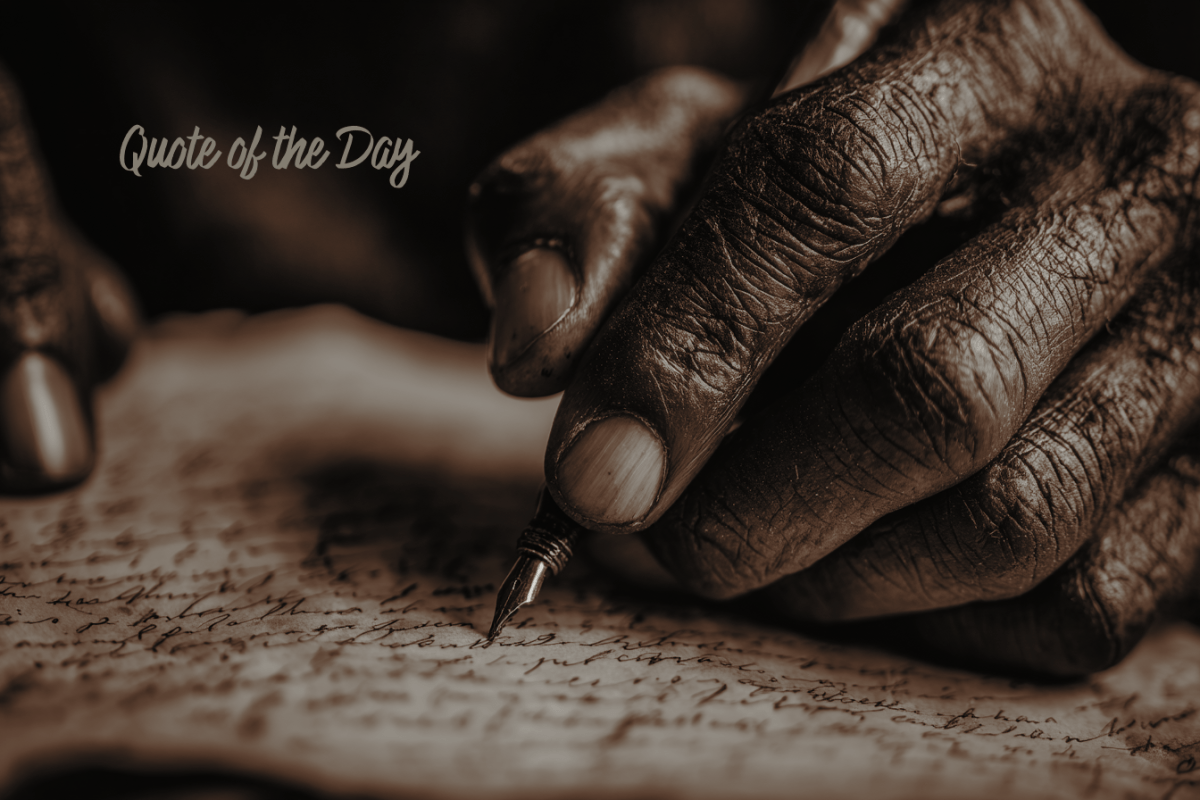
Random Fiction – 02012025

FICTION – FREEWRITE


The things I know about love could be scribbled on a matchbook’s blank side with room left for a bad limerick. Truth is, the original matchstick instructions—strike here, light fuse, watch things burn—hold more practical wisdom. Over years of singed fingers and smoldered hopes, I’ve gathered scraps of survival tactics. Never trust words spoken in dim light or daylight; most folks peddle lies they’ve yet to realize themselves. Study their hands—the way they flutter like trapped moths when spinning tales. Watch for the split-second flicker in their eyes when truth barges in uninvited. But don’t stare too long, or you’ll become the mirror they’re desperate to avoid.

This isn’t some grand philosophy unearthed in a desert monastery. Just rusty tools to patch the hull when the ship’s taking water. Save the “real men don’t cry” bravado for locker rooms—we all drown the ache somehow. A twelve-pack of Bud, a heart-to-heart with Jack Daniel’s, or sobbing into a motel pillow while Springsteen croons about highways on the tinny alarm clock radio. At least tears don’t leave you waking to that look: a woman recoiling under crumpled sheets, eyes wide as a spooked deer’s. She’ll mutter something about quitting gin as she retreats to the bathroom, and you’ll mumble back about swearing off scotch, both knowing neither promise will outlast the coffee brewing in the stained pot.

The real art lies in the exit. You hand her a chipped mug, steam curling like a question mark between you. She sips, eyebrows lifting—not at the bitterness, but at the shock of you still being there. You brace for the verdict: Is the coffee better than the sex? A half-smile. A nod toward the door. No words, just the unspoken script we all memorize by 30. Dignity intact, you slip into the dawn, both already drafting tomorrow’s excuses.

Gypsy—my ‘65 Ford pickup—taught me more about commitment than any human. She’s been my co-conspirator since high school, back when her engine purred and her bench seat fit two (or three, if we got creative). These days, her love language is breaking down at cinematic moments: snowy backroads, midnight escapes from jealous husbands, and that one time outside Tulsa when her transmission gave up just as Margo’s daddy’s headlights crested the hill. The split lip was worth it. Can’t pay child support if you’re always in the rearview, right?

But the road—Christ, the road. It’s a confession booth on wheels. Twenty miles in, the hum of asphalt strips away the bullshit. Past regrets roll by like telephone poles: Lisa’s laugh in ‘08, the stillborn promise to quit smoking, your father’s hands on the steering wheel that last July. By mile 200, you’re raw enough to pull over and let the tears come—not the pretty kind, but the ugly, snot-dripping ones that scald your cheeks. You cry for the man you thought you’d be, for the love letters burned, for the quiet horror of becoming exactly what you mocked at 22. Then you wipe your face on a gas station napkin, buy a lukewarm Dr Pepper and a honeybun, and drive until the road starts making sense again. Or until it doesn’t. Either way, you keep moving.

To be Young at Heart

Daily writing prompt
Do you play in your daily life? What says “playtime” to you?

DAILY PROMPT RESPONSE

A year ago, WordPress asked this same question. I responded with the post below.

I faced many challenges during that year. These challenges have reminded me that there are more important things than I ever imagined. It is very easy to get lost in the mayhem of life. One of the most important things we overlook is remaining young at heart. It’s important to remember to enjoy every opportunity.

Throughout my adult life, I have often lost sight of enjoying the little things. But I’ve learned to appreciate them in the past year, and I’ve rediscovered my love for the creative arts. So, “playtime” for me is diving deeper into my creativity. I love to see what I can create. The creative arts have helped me heal and kept me sane during one of the most trying times in my life. So, pick up what you use to enjoy yourself, then go crazy.

Excuse me while I make up a silly story and create bizarre images.


Have you read this?

Daily writing prompt
Who are the biggest influences in your life?

DAILY PROMPT RESPONSE

Many years ago, I learned that no one has all the answers. This revelation also led me to discover that wisdom can be found in the oddest places or with the strangest people. As I struggled to answer this prompt, I found an answer that said it all. The truth of this post moved me and helped me find my way to an answer.

I rely on my faith in my journey through the chaos we call life. It has guided me through some of the toughest situations. Without it, I’m not sure who or what I would be. I talked to many people as I’ve walked this journey searching for peace. Only to discover that the peace sought had resided within the entire time. I cannot remember the name of the person who pointed me toward this path, but I’m thankful.

Through my travels, I realize the potential of love resides in each of us, no matter the faith. I’ve seen people of different faiths band together to perform majestic things. It is a wonderful experience to witness and to feel. I don’t have the words to adequately describe its wonder. I’m inspired by people who are steadfast and true in their beliefs and commitment to help their fellow man.

Throughout my journey, I’ve studied several different texts in the hope of gaining a deeper understanding of the world. Though I have stumbled and sometimes questioned certain events, I feel that each step has been worth taking. I remember my father posing a query as he held up his tattered Bible.

Have you read this?

Who, you calling soft?

Daily writing prompt
Is your life today what you pictured a year ago?

DAILY PROMPT RESPONSE

A year ago, I had just begun dealing with my health issues and thought everything would be over in a few weeks. I just wanted everything to be over, and I could return to my life. Friends and family were on my case about taking a step back and focusing on my health. Of course, this advice was like a thousand spikes hammered into my ears. I didn’t want to step back from work, retire, or any other nonsense in that arena. Do you think I’m soft? I got this! Who are you calling soft? No one was calling me soft, but that was my mindset.

A few months later, I got better, like I said from the beginning. However, my health improvement was short-lived. It was non-existent if I’m honest about it. Nothing more than a figment of my imagination. The characters I create for my stories are closer to reality than my reprieve from illness. My condition worsened, forcing me into retirement, and I was pissed. Here’s the problem: I wasn’t sure what I was actually upset about. I had prepared financially for retirement in a year or so. 2026 was the target year, but I could retire at any time before that. However, I didn’t like the idea of being forced to do something. However, health-wise, I was in no condition to do anything but try to get better.

Well, it turns out that my condition was worse than I thought, to the point where it was almost impossible for me to make this post or any others. Yeah, the shit had got real. So, no, where I am today versus a year ago. Not even close. I’m blessed


A Notebook and Pen

Daily writing prompt
Your life without a computer: what does it look like?

DAILY PROMPT RESPONSE

I can remember a world when the personal computer was something we saw on television. Interestingly enough, computers were often portrayed as villains. So, I smile when I read this prompt, thinking about how much our world has become intertwined with computers. I spend a considerable amount of time working on one of my computers daily. My life without a computer will be significantly affected, but not as much as you might think.

Today, I spent most of the day working with a notebook and a pen. I was collecting my thoughts about a post I want to publish here. I used several references to gather the information I needed to establish the point I was trying to make. Yet, these references weren’t a product of a Google search but rather from my personal library. I reviewed various volumes of information about philosophy, religion, and psychology. I didn’t have to use my computer once. All I needed was a notebook and a pen.

Three Things Challenge – 12072024

CHALLENGE RESPONSE – 3TC – FICTION

The forest stood still, ancient and unyielding as if defying time itself. But now, a strange silence hung in the air—not the serene quiet of life breathing gently, but the uneasy hush of something amiss. The once-crystal stream that wound through the heart of the woods, a lifeline to countless creatures, was no longer clear. Its waters, tainted with an oily sheen, seemed to pollute the very essence of the forest’s soul.

A deer approached hesitantly, its hooves crunching softly on the brittle grass. It bent to drink but recoiled, sensing something wrong. The poison ran deeper than just the water; it was in the air, the earth, the whispers of the leaves. Who had done this? Who could destroy something so pure, so vital?

Perhaps it was the folly of man, always reaching, always taking. It was greed that sought to conquer instead of coexist. Or perhaps—just perhaps—it was the forest itself, tired of centuries of neglect, silently fighting back in ways no one yet understood.

The trees shivered as if sharing a secret, their shadows casting long and mournful patterns across the poisoned ground. And as the sun dipped below the horizon, the forest seemed to sigh, wondering if salvation was still possible in a world so carelessly polluted by those who claimed to love it.

My Editor will kill me when she reads this …

Daily writing prompt
What do you enjoy most about writing?

DAILY PROMPT RESPONSE

One of my favorite parts of writing is the creation of the story. To listen to the story being told to my soul. I know that sounds a little strange, zany even, but this is how I feel whenever I pick up a pen and start writing a story. In this instance, I’m more of a recorder than a writer. Strange, I know, but it is like my pen has a mind of its own. Telling the story in bits and pieces. Sometimes, these fragments make sense, but for others, I have no idea where the fragments come from. It sounds exciting and a blast but isn’t the best part.

Editing is the best part. Once she reads this, my editor will tap into her editor’s magic and send thousands of those dreaded red marks to ensure my happiness. It will bring her joy as I scream in frustration and try to unravel the madness these red marks always bring. I can see her now. Her eyebrow raised, peering over her glasses, muttering something like the following …

“Really?” she says, looking at me bewildered. Which frightens me a bit because she doesn’t do bewilderment.

I look at her with all the confidence I can muster, hoping she buys it. I respond, “Yep!”

She holds my gaze, clearly not buying it. She picks up my latest draft and begins doing her thing. The once-white paper is now red with the faintest glimmers of white remaining. She tosses the draft on the table beside me, smirking, “Have fun!”

“What the f…” I reply

She chuckles harder, “Teaspoon.”

Of course, I don’t find the situation humorous at all. However, I begin the process. I clear the mechanism of doubt and start the next part of the journey.

Editing is the portion where, as writers, we shape our creation into something unexpected and unintended. If we are lucky, we allow it to grow into something magical. So many times, I’ve written things telling one story, but by the time I’m finished editing, it has become something else. Because of this, I’ve been able to reuse concepts to establish foundations or fill in gaps as needed.

There’s something about finding another storyline within a sentence or paragraph or scribbling a note on a napkin. So, excuse me as I prepare to get my butt kicked.

Lighthouse of Hope

POETRY – REFLECTION


When the war moved in, not the day it started, but the day it became real.
There are no bullets, no sound to remind you that you’re not home.
It’s the silence that creeps into your pores; now you know what unsettling means.
You taste the blood of the unhealed wounds, neath the scars you cleverly hide.

Sunlight radiates against your skin. You’re hot to the touch, drenched with sweat.
Yet, you stumble as you try to find your way through the darkness.
Searching for that light of hope, that fairytale, that legend we were taught to believe.
Something to cling to as we crash against the waves of uncertainty beating us into submission.

Suddenly, in the distance, we see it …

The Lighthouse of Hope


Authors note:

This piece was partially inspired by the opening line of Stacey C. Johnson’s piece called shelled.

Just Breathe

Daily writing prompt
Do you have a favorite place you have visited? Where is it?

DAILY PROMPT RESPONSE

If you were to ask my late wife this question, she would respond that my favorite place to visit was my house. I was never home. It didn’t matter what country we lived in; it seemed like I dropped off her and the kids and then left. In many ways, she would be wrong. Often, I wonder how I didn’t end up a member of statistics concerning service members and the divorce rate. Military life isn’t for everyone. I’ve seen it break some of the nicest people. I watched them become caught in the churn of military life and drown in a slow, miserable death. Both service members and their families. I suppose I was lucky to a degree.

I don’t have a favorite place, per se; I have more like a region I enjoy spending time in, the Pacific Northwest. I have hundreds of stories about my travels in that area, but none accurately convey my feelings about traveling on Highway 101. I’ve traveled up and down that highway more than I could count. Once you start traveling north on that highway, the world changes. Northern California is completely different than Southern California. Once you cross the border into Oregon, the world changes. This magic repeats itself as you enter Washington.

I also enjoy the time I spent traveling through Montana, Wyoming, and even Idaho. The scenery is breathtaking. All one has to do to feel better is just breathe

Splendor

CHALLENGE RESPONSE – POETRY – MOONWASHED WEEKLY PROMPT

I traveled the world,
looking, searching
for the beauty promised
to us all.

The beauty often
overlooked, under appreaciated
perhaps, I don’t know
take a moment

To bask the beauty
of it’s splendor

Khan’s Records & Tapes

What alternative career paths have you considered or are interested in?

DAILY PROMPT RESPONSE

I’m satisfied with the career path I chose. Could I have done something different? Definitely! However, the goal was to provide for my family, and I did that. So, in this regard, I’m good. I have always wanted to write, and I’m a writer. I wanted to make a difference or do something that mattered. I was a soldier. The best job ever is being a parent. It doesn’t get any better than that for me.

I’ve retired young, so I could return to work once my health improves if I want. The question is, what would I do? It would be something I enjoy, something that brings joy and meaning to my life and others.


I could play Watermelon Man or Blinded by the Light and get a second. It would be expected, even appreciated.

Here’s a sample of the stuff that would be playing over the loudspeakers …

Reading That Shaped My World

List three books that have had an impact on you. Why?

DAILY PROMPT RESPONSE

  • The Green Mile – To be haunted by the actions of your past. To see everything you know and love die. To be left on this earth and witness their demise. One realizes the dead were the lucky ones. To feel the blessing of a long life is a curse. Perhaps, a punishment for a hideous act.
  • Invisible Man – In this novel, we follow the actions of an unnamed protagonist living in a society that chooses not to recognize him as a man. The winner of the National Book Award in 1953, this novel should depict an outdated social construct, but it doesn’t, sadly.
  • 11/22/63 – This book addresses something we all may have wanted to do from time to time. A chance to go back in time and change something we have done. However, the most powerful part for me, was how it laid out the hazards of time travel. I will continue working on the time machine in my basement.

You’re Kidding, right?

Do you trust your instincts?

DAILY PROMPT RESPONSE

If you can’t trust yourself, who can you trust? This is the question that comes to mind when I read this prompt. With the social climate of the last few decades, many have made fortunes in the “Doubt” business. I talked to one of these individuals once, and when I questioned their motives, I quickly became a nonbeliever and radiated large amounts of negative energy. I looked around to see if they had some device that measured energy levels. I was asked to leave when I asked them to present this device. I’m still sad about the event, not at all.

My intuition has saved my butt more times than I can count. So, I trust it. However, I must admit there have been times it has stirred me wrong, mainly partly due to my lack of knowledge of the situation. The other part was the person in charge of the situation seemed shady. I don’t do shady people, as a general rule. However, sometimes they can be rather useful. In cases like these, I adjust the settings on my shade – meter. Overexposure can be harmful, and it takes a while to recover from its effects.

Believing in yourself or trusting yourself are useful tools in building self-reliance, developing personal growth, and strengthening one’s emotional intelligence. I’ve heard people mock the use of gut feelings and demand the use of actual data or science. This is funny because when people use their gut feelings, they combine their knowledge, experiences, and science. Yep, I said science. The issue resides in people’s inability to articulate why they feel a particular way. So, continue trusting your instincts.

Let me provide an example; my editor can read something of mine and say something like this.

“I don’t like it. Don’t ask me why, but there’s something not right.”

When we first started working together, this was some frustrating shit. However, I’ve learned to keep my mouth shut and listen over the years. More times than not, there’s, sure enough, something jacked in my draft.

Smart people say gut feelings are like using a muscle; the more you use it, the stronger it becomes. They recommend continuing to gain knowledge and experience and living life. So, believe and trust yourself; you may very be justified in having pause. So, when someone asks me whether or not I trust my gut. My response is always:

“You’re Kidding, Right?”

Dancing in the Dark

POETRY – RELEASING

My camel smolders between my index and forefingers
I drink the last drop of Guinness. I close my eyes as its taste lingers.
I order another, drinking it down, trying to drown my despair.
However, it takes me nowhere.
I stand up, trying my best to be cool.
I swagger across the floor, looking like a complete fool.
I cross the room, grabbing anything necessary
Stopping when I needed to be stationary
Finally, I reach the glow of the box.
I hold it while my eyes slowly focus.
I look for anything that rocks.
I dig in my pocket and fish for some quarters
while I try desperately to complete my order.
I drop the coin in their slot,
Clickity,
Clickity,
Clack
metallic splash
the coins reach their new home.
I weave from side to side, waiting for the sounds of madness
The guitar plays a power chord through my soul.
My arms outstretched, and my fingers pop.
My head and hips sway to the rhythm of its melody.
Two steps forward, three steps back.
My eyes squeezed tight as the sound soothed me just right.
I danced by myself in the dark and didn’t give it another thought.

Thank you for readng

My Favorite Pastime

Daily writing prompt
What book are you reading right now?

DAILY PROMPT RESPONSE

I always read several books at once. I’ve never been able to keep my focus on one book for any length of time. To help with this, I usually do some research on a particular subject to give my mind a rest. As I research, I usually read several books on the subject I’m studying. Despite this, I still have trouble slowing my mind down enough to enjoy a single. On the rare this occurs, I typically read the book a second time as a writer to see what the writer did to capture my attention.

Here is my current reading list for pleasure:

  1. Duma Key by Stephen King – I’m a sucker for magical realism
  2. Inferno by Dan Brown – I enjoy a bit of historical fiction wrapped in conspiracy from time to time.
  3. Strega by Andrew Vachss – No one does gritty crime fiction better than Vachss. James Ellroy comes close, but not entirely.

Rabbit’s Foot – Are they really lucky?

Daily writing prompt
What’s the coolest thing you’ve ever found (and kept)?

DAILY PROMPT RESPONSE

My Mom had transferred me to a new school. Not only was I the new kid, but I was also the only Black kid, so things were immediately interesting. The world wasn’t as inclusive then as it is now. Despite these challenges, I made a friend. Most of the children were polite, but this guy was my friend for a while. We’d play after school, shooting baskets, skipping rocks, etc. Well, one day, we found a rabbit’s foot. It was exciting and all that, but I quickly forgot about it.

A few years ago, one of the girls from that school reached out on one of the socials. Once she discovered me, she broadcast to the rest of the class. So, my friend contacted me. He sent me a picture of that same rabbit’s foot we found over 40 years old. That picture officially made that rabbit’s foot cool. This story may not be the coolest thing I have found, but it makes me smile every time I think about it. Our lives are made up of tiny moments like these, and we should cherish them.

Share Your World – 11112024

CHALLENGE RESPONSE – SHARE YOUR WORLD

I’ve always liked this challenge but haven’t participated in it in a while.

1.  If reincarnation exists, would you like to come back as a domestic pet or a wild animal? I don’t think reincarnation works this way, but it would be cool if it did. However, I can’t decide which one. As domestic pet life is sweet, just ask my cat. Yet, as a wild animal, all that power and freedom.

2. Do you think Zoos are a good idea? As a child, the zoo was within walking distance and free. I spent time watching the wild cats and the monkeys, so I loved them. However, now I don’t feel the same way. I can’t stand watching them in that environment, none of them. I think all species should be free in their own habitat.

3.  Have you ever been to a safari park? Nope, never wanted to go. I’ve seen my share of wild animals. Sometimes, I was freaked out. They look smaller on television and in magazines. I know this example isn’t a safari, but watching wild mustangs run wild was one of the most beautiful things I have ever seen. I considered letting a mountain lion eat my little brother once, but I figured I would have trouble explaining to his mother how I let this happen to her baby.

4.  Have you visited an oceanarium? Once, it was so freaking cool, but I still think about them as I do about zoos. They should be free no matter how cool they are swimming around stuff. Oh my gosh, the dolphins.

If You Have Enough Time? … You do!

Daily writing prompt
Do you need time?

DAILY PROMPT RESPONSE

I read this question and wondered what they meant. I’ve said it a thousand times if I’ve said it once.

“I don’t have time”

or

“I need more time.”

In the military, we have said, “We train to standard, not to time.”. One of those really cool sayings doesn’t always apply. However, as I progressed in ranks, I realized that prior planning or proper planning removes most of the anxiety associated with time constraints. We used a system called After Action Reviews (AAR’s) and later became lessons learned. We would evaluate an exercise and make note of things that went well as well as our failures.

The purpose of this action was to devise a plan to achieve a greater degree of success. Ideally, this plan was placed in a binder for review at a later date. The binder also served as a guide in case of a personnel change. The problem with every system isn’t the system itself, although that is sometimes the case. Rather, the lack of personnel utilizing the system results in the utterance of the above-listed questions.

Now, I won’t sit here and say there weren’t instances where we needed to make adjustments on the fly—there were plenty. However, the majority of the situations when we felt a time crunch were due to a lack of planning or learning from previous mistakes. I have developed an expansion of this philosophy as I have aged.

We have the same amount of time today as yesterday and tomorrow. The first time I said this idea about time to someone, I was told that Daylight Saving Time defeats my logic. I laugh because I feel it isn’t true. The key to successful time management is how we utilize the time we have, which is a constant. So, whatever system or techniques you may use, don’t worry about if you have enough time because you do.
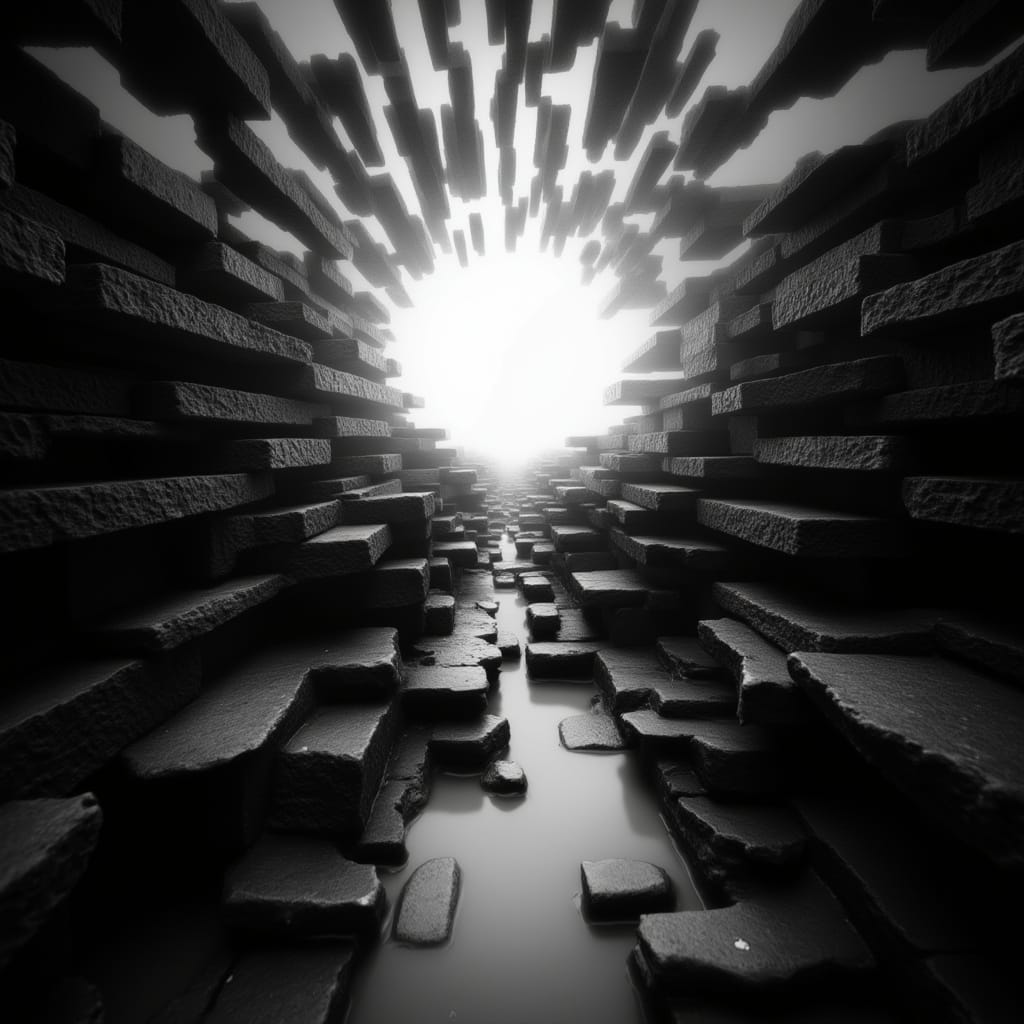
Why would I want to do that?

Is there an age or year of your life you would re-live?

DAILY PROMPT RESPONSE

Fortunately, I’ve reached the age where the heyday has become a part of the conversation. However, with that age, I also have times when talking to the family and other younger people when I have no idea what the hell they are talking about. especially when they tell you a phrase you have been using before they were born, “Doesn’t mean what you think it means,” as if history has been erased. But, to be fair, I often say things where they are completely clueless. One of my last co-workers used to shake, smile, and shake her head like she understood. I confronted her about it after she didn’t do what I asked. Her response, “I’m not going lie, I heard words, but didn’t know what the hell you were talking about.”
Sure, I can remember some amazing moments and horrific ones. These moments shape us into the people we are. So, when it comes to reliving stuff, why would I want to do that?


Why Can’t you Answer Questions like a Normal Person?

Daily writing prompt
Who are your favorite artists?

DAILY PROMPT RESPONSE

Answering this question correctly depends on the definition of artist. Like many Jetpak questions, it fails to be specific. It’s almost like they have a dumb ass question generator or something. However, I like this question well enough to answer with minimal disdain. To do so, I need to provide myself a definition.

noun

  1. a person who produces paintings or drawings as a profession or hobby.
    • Similar: creator originator, designer producer, old master
    • A person who practices any of the various creative arts, such as a sculptor, novelist, poet, or filmmaker.
      • Similar: entertainer performer, trouper, showman, player,
    • a person skilled at a particular task or occupation: “a surgeon who is an artist with the scalpel.”
      • Similar: expert, master, maestro, past master, adept
    • performer, such as a singer, actor, or dancer.
    • informal
      • a habitual practitioner of a specified reprehensible activity: “a con artist” · “rip-off artist.”

As you may have guessed, I’m in a bit of a mood today, but now I have something to base my answer on. So here goes.

As a writer, my first thoughts about the creative arts are about works of literature. However, this presents an issue for me. I can rattle on for days about different works of literature and their importance without breaking a sweat. But, for the purposes of this post I will discuss some of my favorites.

Novels

  1. Ralph Ellison
  2. Gordon Weaver
  3. Stephen King

Poetry

  1. Dante Alighieri
  2. Langston Hughes
  3. Adrienne Rich

Painting and such

  1. Francisco Goya
  2. Sandro Botticelli
  3. Jean-Michel Basquiat

Photography

  1. Gordon Parks
  2. Annie Lieberwitz
  3. Vivian Maier

Comic and such

  1. Luis Royo
  2. Tim Bradstreet
  3. Al Jaffee

Here is the short list off the top of my head. Looking back over this post, I chuckle a bit because I remember my wife asking me a question after I had answered her questions. Why can’t you answer a question like a normal question?

REBLOG: Nguyễn Thị Phương Trâm’s

I read this piece last year and enjoyed it immensely. It asked a question that keeps me honest.

Do you need 5 people to love you or 5000 followers?

A poem in Vietnamese by Lê Vĩnh TàiTranslator: Nguyễn Thị Phương TrâmPhotography: Nguyễn Thị Phương Trâm The Strand NYC A poet was taking a …

Do you need 5 people to love you or 5000 followers?

A Matter of Interpretation

When you think of the word “successful,” who’s the first person that comes to mind and why?

DAILY PROMPT RESPONSE

“Successful” can have different meanings depending on the context, but broadly speaking, being successful refers to achieving goals or desired outcomes. Here are some ways success can be defined in different areas:

  1. Personal Success: Achieving personal goals, happiness, fulfillment, or growth. It might involve self-improvement, achieving work-life balance, or cultivating meaningful relationships.
  2. Professional Success: Accomplishing career objectives, such as gaining promotions, excelling in one’s field, building a reputable business, or making significant contributions to a profession.
  3. Financial Success: Attaining financial stability, wealth, or independence, defined by income level, savings, investments, or the ability to support a particular lifestyle.
  4. Creative Success: For artists, writers, and creators, success might involve producing meaningful work, gaining recognition, influencing others, or feeling satisfied with creative expression.
  5. Social Success: This could be defined by having strong relationships, a positive social impact, or being recognized for contributions to a community..

As an administrator, I can provide several definitions of success, as well as examples, plans, and whatever is necessary for a deeper understanding of the meaning of success. However, despite temptation, we must try not to push one’s personal definition on the others around us. I say to myself more than anyone else. As I have gotten older, I’ve learned to appreciate that measuring success is a matter of interpretation.

One Word Sunday – The Rain

CHALLENGE RESPONSE – FICTION – FIRST PERSON NARRATIVE

Here’s my response to Debbie’s One Word Sunday – Rain

The monsoon season had come, and I wasn’t ready. I was assigned to a forward position and tasked with repairing the abandoned radio station. Once I got there, all the equipment was in a foreign language. For hours, I tried to figure out how to make the equipment. Finally, I could contact my unit. I attached my handheld to the terminal and informed them of my status. They told me a soldier was arriving to assist me. I wasn’t thrilled, but I needed help. I barely put the mic down when the door flew open, and my help had arrived.

She was as soaked as I was. It would have been a miracle if there was a dry spot on her. Rain gear was no match for the monsoon. She introduced herself and put on some fancy music. We worked side by side until the darkness began to swallow the light. The radio station was up, and everything was fine. She removed her wet clothing, placing it by the vent. She motioned for me to do the same. I sat there, not sure what to do. I could see the steam rising from her clothes. She looked at me and started to undress. I have to admit there’s nothing worse than wearing wet clothes. Well, maybe wearing wet clothes in the middle of the winter, but I didn’t find that out until years later.

We stuffed newspaper in our boots and sat them by the heater. The newspaper draws moisture from the boots. We sat there, strangers, eating our rations in our underwear. After we finished eating, she walked out in the rain. This woman was insane. She stood there, her head tilted back, letting the rain wash over her. It was as if she was letting the rain wash away her demons. Watching her, I began to understand why women were so beautiful. She was the perfect blend of beauty and nature. Before then, women were beautiful; that’s just how it was. But it meant more; I can’t really explain it. They just did.

I found myself standing in the rain next to her. She turned and looked at me momentarily and then said,

Some days, I crave the rain.

I’m Richer than I’ve Ever Been

Daily writing prompt
What would you do if you lost all your possessions?

DAILY PROMPT RESPONSE

This question reminds me of times when I was a youngster. I remember those horrible confrontations about stealing something; you have no idea what the other person was talking about. That special toy or prized possession has mysteriously vanished, and the only logical explanation is that you stole it. It doesn’t matter how much you profess your innocence; the injured party is convinced. Friendships are destroyed over something that may have cost less than five dollars. The battle between them is bad enough, but when the parents got involved, the issue seemed to be about something other than the vanished item.

I wish this scenario I described was limited to childhood, but sadly, it isn’t. I’ve seen longtime friends destroyed over something like this. I’ve seen people beaten over the loss of possessions. The strangest thing is that most of the time, vanished items either turn up or are taken by someone other than the accused. However, the damage has already been done. Some relationships recover, but they never were like they were before. That’s true, the actual loss… the friendship.

I’ve learned this concept through my own loss. I’ve lost all my possessions several times over the years. Some items aren’t replaceable. I can say honestly that losing some of these items was very painful. I remember a friend was Native American, he carried a leather pouch filled with pebbles. There wasn’t anything special about those pebbles that I could see. However, one day, I asked him about it. I was curious. Other friends told me to mine my own business. So, I dropped it.

At the time, I carried something from each of my children in a zip-lock bag. During the quiet moments, I would pull them out, look at them, and remember what I was fighting for; every mile I walked, every sleepless night, and the duties performed for God and Country so my family could have a better life. I believed that. It’s what held me together. I did this privately. One of those moments, my friend came and sat next to them. He was quiet for a long time. We just sat in the peace of the moment.

After a while, he pulled his pouch from his hip and began to tell me about it. He said each pebble contained a memory of an event that happened in his life. I listened with a perplexed expression. He smiled and said, “Dick Tracy”. I was holding a Dick Tracy trading card in my hand. My youngest daughter had given it to me before deployment. Then I got it.


Throughout my studies, I have learned a great deal about spirituality. I came across this passage some time ago, and it is relevant to this prompt:

Ibrahim Adham said, “Faith in God will be firmly established if three veils are cast aside:

  1. “Feeling pleasure in possessing anything;
  2. “Lamenting over the loss of anything;
  3. “Enjoying self-praise.”


al-Ghazzali

Fadiman, James. Essential Sufism (p. 173). HarperCollins. Kindle Edition.

Living up to this philosophy is very difficult. I struggle with it constantly. However, I still maintain the possessions that mean the most to me. These are the relationships I have developed over the years. Most material things can be replaced. Each person we interact with is unique, and our relationships with them are also exceptional. As I’ve said, I have had to rebuild several times. It’s hard work and not fun, but it can be done if you’re still breathing. Because life is our most important possession. The relationships you develop within that lifetime can be the difference between living and existing. Because of this, I’m richer than I’ve ever been.

Nothing Better to Do

Daily writing prompt
What skill would you like to learn?

DAILY PROMPT RESPONSE

Now that I’m retired, there is so much to do. I find myself making up shit to do. However, recently, I decided to put my free time to better use. While convalescing, I explored different ways to explore my creative outlets. Many of you probably noticed I’ve been posting AI images. I learned digital art skills. However, my education isn’t complete. I’d like to learn more about the digital world. I’ve spent years existing within it. I thought I knew how it worked, but it has changed. My grandchildren have taught me.

“Peepaw, you aren’t current with stuff.”

I’ve gone from being the in-house IT guy to the guy who tells them stories about his precious memories of them when they were young. So, I need to update my skills to figure out what they are talking about half the time. I’ve got nothing better to do.

Work Hard and Live Right

Daily writing prompt
In what ways does hard work make you feel fulfilled?

DAILY PROMPT RESPONSE

I’ve lived by a simple code not my own. Despite this truth, this code has served me well. Provided me a strength to develop my own. My parents worked hard their whole lives. Somehow, they didn’t seem to be tainted by this devotion. I’ve seen many succumb to the strain. If I’m honest, it’s easier than I’d like it to be. I’ve been choked by the tentacles of temptation from time to time.

Many of the elders, worked their whole lives to accomplish their individual goals. Each family having their own. I watched them in amazement. I wondered if they would make it. As I got older, I asked how they stayed focused and not lose hope.

“You focused on wrong thing. You can’t worry about that. All you can do is work hard and live right.”

This was code I subscribed to. The code based my entire life on. My personal code isn’t much different than the one I grew up with. The elder who taught me his code, hadn’t lived the life I have. I’ve had too make some adjustments over time. However, I always feel good if I work hard and live right.

The Whisper Journal

POETRY – JOURNAL ENTRY STYLE

April 6,

With the cleansing of spring, everyone has a sense of joy about them. Even on the gloomiest days, we listen to the perforated silence as the rain splatters against a shudder not quite fastened. That’s when you see her. For some unknown reason, you know to look. You stare in silence as the cool mist caresses your face. You remember that section of the park when the beauty and the path she walks weren’t born yet. You close your eyes, partaking in its wonder. You whisper a spell to the beauty, hoping it will last.

A lot of things

Daily writing prompt
What details of your life could you pay more attention to?

DAILY PROMPT RESPONSE

For the past few months, I have been looking over how I handle things, and they totally screwed up. What upsets me is that they have broken for quite some time. Things that should not have broken in the first place. First, I must acknowledge that despite my best efforts, I am still just human. I used to think I was a cybernetic being, but then I went through the part-dragon phase. Alas, I’m just human. The last year’s health issues taught me that lesson tenfold.

I’ve never felt weakness like this before. It’s hard to wrap my head around it. Being in this state blows, to say the least. There were times when I wasn’t sure how things would turn out. I had to rely on the strength of my brothers as well as my own. I’m not used to this, but my people reminded me that my fight isn’t over. I will do well to pay more attention to that.

Hollow Man

POETRY – INTROSPECTION

​How long will my words echo in an empty hall?
How long will I sway to its melody alone?
How will silence swallow my cries?
How long will my essence seep from the cracks of my shattered shells? 

Oh, how I long to be deafened by the screams
How I long to be drenched in their pain
To feel the passion of the tale, so eloquently crafted
To soak the page with tears of a depicted sorrow

​I yearn for the warmth of the lover’s flame
To be memorized by its dance
To be enchanted by its unscripted ballad
The uncontrollable churn of my soul to its mythic rhythm

To feel the surge from the heartfelt turning into a pound
The sensation of my chest tightening, the pause of that breathless gasp just before the pant
The anticipation of the splash from the bead forged in the embers of the moment
The feel of slickness on my palms right as I turn the page to the next chapter of my life

To be filled with pride from your look of approval
To be filled with passion from the same eyes but a different glance
To know love to the core, standing firm in its goodness, as well as un-wavered by its pain
To understand by knowing it, I will be the better for it

For any man experiencing these and so many more…
Of that man, I am envious.
To feel any of these things, in that instant, I will cease being

The

Hollow Man

Random Thoughts – 09242024

PROSE – RANDOM THOUGHTS/REFLECTION – THE STATE OF THINGS

Hello everyone,

You may have noticed that things here at the Memoirs of Madness have been a little spotty. I apologize for that; I really do. It’s been a rough year for me health-wise, and though I’m much better, I’ve been dealing with the emotional side of things. I’ve been wondering how the hell I made it through all this and other questions that arise when dealing with health issues as one ages.

So, in the next few weeks, I will be making some changes to the blog. More precisely, I will focus on cleaning up dead links, adding new pages, removing old pages, and such. This is an attempt to improve the blog’s UI/UX. I will announce the changes as they happen; please let me know if I muck something up. Any suggestions are welcome. Until next time … wish me luck.

My Happy Place

Daily writing prompt
How do you relax?

DAILY PROMPT RESPONSE

I’m not sure if I know what the word really means. I know the definition and how it’s used, but I haven’t been able to relax for most of my life. I’ve always had a vivid imagination, so I tend to retreat inside my mind when I need to take a break. However, you can probably see the problem with this technique. As a writer, I think of various scenes in my mind. I can tell you many of them aren’t rather relaxing. I discussed the concept of relaxation with my editor, and she laughed. When she regained her composure, she provided me some advice. She talked about the avenues of my creative expression and how I should not create content for my blog, portfolio, or anything else I’m into. So, I thought about the places that make me happy.

Here’s what I came up with:

I’ve always found gardening really relaxing, so I can imagine my idea of relaxation involving some sort of garden. I’d have to keep my brain out of it, though. I can see myself trying to figure out the soil composition to plan which flowers grew best in my region.


I’ve also felt at home in the mountains.


However, the activity requiring the least amount of preparation is reading.

Within the pages of a book, I imagine different lands, worlds, and periods of time. After which, a nap is appropriate.

My Own World

Daily writing prompt
Which activities make you lose track of time?

DAILY PROMPT RESPONSE

“You can’t use up creativity. The more you use, the more you have.”
— Maya Angelou

I remember my mother saying, “Boy, you’re in your own little world … ain’t you?” She said this with an amused and proud expression. Later, I learned my mother had been an artist in her youth, and I guess she remembered what it was like to be on another plane of existence. Other than life, I believe passing on her creative mojo was one of the greatest she gave me. Thanks, Mom!


Lately, I’ve been enthralled with the world of artificial intelligence, specifically image generation. Somehow, this artistic expression has woken up something I considered a thing of the past. I sketched long ago, and I started telling stories. I remember using my Big Chief notebook and filling it with random drawings. My teachers would scold me because I had no paper to do my lesson. After all, I had drawn all over them. However, the teacher called my mother and suggested she get a sketchbook. Mom brought me a Mead unruled pad, and the rest was history.

It seemed like everyone was an artist in those days. We tried everything; crayons, colored pencils, watercolors, etc. You named it, and we tried it. Quickly, I discovered I didn’t have a knack for anything color. So, I stuck to sketching. I listened to the accolades my friend’s parents would bestow on their creations. My Mom would simply shrug and go back to what she was doing. It may seem like she wasn’t interested in what I was doing, but that wasn’t the case. I never had to ask for a new pad or notebook. My supplies never seemed to run out. Even when I started stories, there was always plenty of paper and writing instruments.


It seems so long ago, yet I still return to this plane after a good session. Ever since my wife passed, my episodes have gotten worse. No mystery sandwich appeared on my desk, flickering lights letting me know it was time for bed, or my favorite, the warm blanket I nestled under while falling asleep in my chair, scribbling my latest stint into madness. However, I try my best to return in a reasonable amount of time.

Perhaps in enough time to post a story, picture, or photo. Who knows? Because most of the time, I’m in my own world.

Defense of Poetry

PROSE – RANDOM THOUGHT

To defend poetry effectively, we must first address a fundamental question: what is poetry? Only by answering this can we adequately defend it. My initial observation is that poetry itself requires no defense; it is the expression of poetry that sometimes needs defending. This notion may be provocative to some poets and poetry lovers, but I aim to clarify my point.

Poetry embodies the life we live; it surrounds us in every moment, from the warmth of a smile to the pain of loss. All of this is poetry. Humanity tends to categorize and label things, trying to define them to understand them better. This is a natural part of our daily lives. As we sort things into their rightful places, we find that some things fit effortlessly—poetry is one of those things. To me, poetry is like a butterfly that flutters unpredictably. We chase it, knowing we might never catch it, but the pursuit itself is joyful.

Suppose we do catch the butterfly. We place it in a jar with holes in the lid, displaying it for all to see. We admire its beauty daily, its vibrant colors that lie somewhere between soft and crisp. However, we often forget the most enchanting aspect of the butterfly: its flight. With the wings no longer spreading and the butterfly immobilized, it becomes a lifeless specimen on display—a reflection on a painted wall, devoid of the life that once captivated us.

The challenge arises in the expression of poetry. People start using words like “hate” or even stronger terms because, while they understand the essence of poetry as part of their lived experience, they feel alienated by its formal expressions. Terms like sonnet, haiku, and other forms can make us cringe or shy away, burdened by preconceived notions about what we will read or refuse to read. What we need is poetry—life—written in a way that people can appreciate, understand, and perhaps even come to love.

Thus, poetry doesn’t need defending; it needs to be set free. We should all have the chance to chase butterflies. I know I would love to.

Morning Glow

CHALLENGE RESPONSE – THURSDAY INSPIRATION – SHORT FICTION

She sips her coffee, thinking about her first great love—that love she could never talk about—the love that fills her with joy and pain all at once. The joy is knowing what love truly is, not that stuff you read in romance novels or movies. Pain, well, if you know love, you know pain.

There were throwaways—well, that’s what folks called them back then. It meant no one wanted them. She felt that way until she met the woman who changed her life. She also fell in love with a boy who lived with the woman. He was like her, a throwaway. She knew she shouldn’t love him but couldn’t help herself. They spent one night together before he left for the war, and the war took him.

She’ll never forget how she felt the next morning. It felt like she was glowing from the inside. For it was the first day she felt whole.

Art

Daily writing prompt
Describe one simple thing you do that brings joy to your life.

DAILY PROMPT RESPONSE

I came up with potential responses to this prompt. Either would have been fine. However, I spent most of the night and a good part of the wee hours working. As a multi-genre artist, work could mean anything. Well, last night, I worked on character descriptions for my fiction. It’s nothing to conjure up a person and make them do stuff. However, sometimes I don’t have a clear picture of their appearance. If I don’t have a clear idea of how I can expect the reader to have one, so I worked on my descriptions.

I fed these descriptions into AI to see what it would render. First, I had to find an image generator that provided realistic renderings. I wasn’t looking for photo quality or anything, just potential mock-ups of the characters. After hours of tweaking, I don’t care how good your chair is; your body will tell you enough is enough. So, I called it quits and went to bed.

I realized something this morning while I had coffee. I truly enjoyed myself last night, but my realization didn’t stop there. It occurred to me that creating art is my jam. It’s the one simple thing that brings me joy.


Here are a few examples of the concepts I worked on last night

Leroy Grime

Female Private Investigator

Surrogate Daughter (take 1)

Surrogate Daughter (take 2)

None of these renderings are final, but they provide direction as I continue to develop the appearance of these characters.

In the Wee Hours – 05262024

PROSE – RANDOM THOUGHT

Sometimes, it seems like we addicts are trying to duplicate the euphoria from the first fix. It may not last more than a moment, but you never forget how it felt and desperately try to regain that feeling. Yet, we become lost in searching for something we were only supposed to experience once. Perhaps we meant to simply capture these moments and stitch them into a quilt of sanctuary our mothers used to make. Each square represents a euphoric memory.

However, it never seems to work out that way. We waste so much time chasing the dragon we eventually feel cheated. We wind up facing ultimatums concerning the things we have unintentionally neglected. We try to rally but end up a headline below the fold or caption scrolling across the bottom screen with the volume on mute.

Is this what has become my life?

Is this the madness I’ve created?

I have faith that my brothers will hold me up until I can stand on my own. The battle against my demons is real. I sit here in the churn of madness, thinking of everything I was supposed to be—a stranger to myself, a shadow of yesterday. On my soul is a tattoo of the ghost of who I used to be. Memories of yesterday fill the present with fear, and a map to nowhere will be upon my face.

Is this what become of my life?

In the madness I created

I pray to God to help me find my strength within.
I pray to God for the patience that day to begin.
I pray to God to help me find myself again.
Find me again

Justice

POETRY – INTROSPECTION

In this moment…
the righteous
simply
wait …

Transgressors
plea their
fate …

Black robed, white wigged beaks
decree…

Which is which

Shattering
Souls …

At the hammer’s fall

Echo…

JUSTICE!

Ode to My Addiction

POETRY – RANDOM THOUGHTS

Peering out from under the crevasses of my splintered psyche,
Still riding a euphoric high from about That Night,
Collaborative expressions have put my hypothalamus into overdrive.
My serotonin overflowing

Yeah… swaying to that lyrical grove, high on 1000cc of that poetic shit

Leaning back in my chair
Pulling up my sleeve,
Applying the tourniquet
Tap, tap, tap, and then rub

My vein is ready…

Opening my works, a quill and a hypodermic
I pull back the plunger slowly.
Their ink seeps in

Tap…Tap…tap…
No bubbles …

Just a quick push to fill in the gaps
A squirt, then a single drop oozes…
My mouth salivates in anticipation
So close; it won’t be long now

I feel the cold metal against my skin
A quick prick and a sharp pain,
Slowly, I push the plunger part of the way
The ink is warm as it travels through my bloodstream.

Shadows surround me
As my head spins,
A single drop of drool falls from my shuddering lips
Yes…I feel it in my leg now…

I shake from the chill.
The bathroom floor tile is so cold.
It is as if life is spilling out of me, but the floor is dry
My body feels empty and hollow, like my heart

If I am to live in loneliness
There is no need to live anymore

I push the plunger in a little further…

I am warmth from the sight of the glistening sweat that painted her body
I mimic her labored breathing
The rigidness of her bosom tells the tale
Her crossed legs and popping toes echo the sentiment.

Her body trembles though she cannot see me
But her quivering whimpers
Her flow of nectar
Confirms that I am near

She swallows hard and then gasps.
As I whisper the words she needs,

I push the plunger to the hilt…

Standing in front of a mirror
I wonder who it is before me
Baffled, for I am submerged in silence
Closing my eyes for a moment

Only to open to an image that hasn’t changed
A single tear falls from my swollen eyes
Realizing I didn’t recognize myself,
Knowing I have stripped away my identity,

The single tear is now a stream.
Through my sadness, I find the courage to breathe my name.

Mangus Khan

Poem of the Day – 04302024

She Was a Phantom of Delight
BY WILLIAM WORDSWORTH


She was a Phantom of delight
When first she gleamed upon my sight;
A lovely Apparition, sent
To be a moment’s ornament;
Her eyes as stars of Twilight fair;
Like Twilight’s, too, her dusky hair;
But all things else about her drawn
From May-time and the cheerful Dawn;
A dancing Shape, an Image gay,
To haunt, to startle, and way-lay.
I saw her upon nearer view,
A Spirit, yet a Woman too!
Her household motions light and free,
And steps of virgin-liberty;
A countenance in which did meet
Sweet records, promises as sweet;
A Creature not too bright or good
For human nature’s daily food;
For transient sorrows, simple wiles,
Praise, blame, love, kisses, tears, and smiles.
And now I see with eye serene
The very pulse of the machine;
A Being breathing thoughtful breath,
A Traveller between life and death;
The reason firm, the temperate will,
Endurance, foresight, strength, and skill;
A perfect Woman, nobly planned,
To warn, to comfort, and command;
And yet a Spirit still, and bright
With something of angelic light.

Poem of the Day – 04282024

Ode on the Spring BY THOMAS GRAY


Lo! where the rosy-bosom’d Hours,
Fair Venus’ train appear,
Disclose the long-expecting flowers,
And wake the purple year!
The Attic warbler pours her throat,
Responsive to the cuckoo’s note,
The untaught harmony of spring:
While whisp’ring pleasure as they fly,
Cool zephyrs thro’ the clear blue sky
Their gather’d fragrance fling.

Where’er the oak’s thick branches stretch
A broader, browner shade;
Where’er the rude and moss-grown beech
O’er-canopies the glade,
Beside some water’s rushy brink
With me the Muse shall sit, and think
(At ease reclin’d in rustic state)
How vain the ardour of the crowd,
How low, how little are the proud,
How indigent the great!

Still is the toiling hand of Care:
The panting herds repose:
Yet hark, how thro’ the peopled air
The busy murmur glows!
The insect youth are on the wing,
Eager to taste the honied spring,
And float amid the liquid noon:
Some lightly o’er the current skim,
Some show their gaily-gilded trim
Quick-glancing to the sun.

To Contemplation’s sober eye
Such is the race of man:
And they that creep, and they that fly,
Shall end where they began.
Alike the busy and the gay
But flutter thro’ life’s little day,
In fortune’s varying colours drest:
Brush’d by the hand of rough Mischance,
Or chill’d by age, their airy dance
They leave, in dust to rest.

Methinks I hear in accents low
The sportive kind reply:
Poor moralist! and what art thou?
A solitary fly!
Thy joys no glitt’ring female meets,
No hive hast thou of hoarded sweets,
No painted plumage to display:
On hasty wings thy youth is flown;
Thy sun is set, thy spring is gone—
We frolic, while ’tis May.

Poem of the Day – 04272024

homage to my hips BY LUCILLE CLIFTON

these hips are big hips
they need space to
move around in.
they don’t fit into little
petty places. these hips
are free hips.
they don’t like to be held back.
these hips have never been enslaved,
they go where they want to go
they do what they want to do.
these hips are mighty hips.
these hips are magic hips.
i have known them
to put a spell on a man and
spin him like a top!

Personal Reflection:

When I first heard this poem, it was on audio. It was so different from What I thought poetry was supposed to be. While in school, we had Frost, Whitman, and others shoved down our throats. Though I had grown to appreciate the classics, I definitely had a bad taste in my mouth when it came to poetry. I discovered the beauty and complexity of poetry. Thank you, Lucille Clifton and the many other poets in my library.

Quote of the Day – 04272024

Poem of the Day – 04252024

A Tear And A Smile by Khalil Gibran


I would not exchange the sorrows of my heart
For the joys of the multitude.
And I would not have the tears that sadness makes
To flow from my every part turn into laughter.

I would that my life remain a tear and a smile.

A tear to purify my heart and give me understanding
Of life’s secrets and hidden things.
A smile to draw me nigh to the sons of my kind and
To be a symbol of my glorification of the gods.

A tear to unite me with those of broken heart;
A smile to be a sign of my joy in existence.

I would rather that I died in yearning and longing than that I live weary and despairing.

I want the hunger for love and beauty to be in the
Depths of my spirit,for I have seen those who are
Satisfied the most wretched of people.
I have heard the sigh of those in yearning and longing, and it is sweeter than the sweetest melody.

With evening’s coming the flower folds her petals
And sleeps, embracing her longing.
At morning’s approach she opens her lips to meet
The sun’s kiss.

The life of a flower is longing and fulfilment.
A tear and a smile.

The waters of the sea become vapor and rise and come
Together and are a cloud.

And the cloud floats above the hills and valleys
Until it meets the gentle breeze, then falls weeping
To the fields and joins with brooks and rivers to return to the sea, its home.

The life of clouds is a parting and a meeting.
A tear and a smile.

And so does the spirit become separated from
The greater spirit to move in the world of matter
And pass as a cloud over the mountain of sorrow
And the plains of joy to meet the breeze of death
And return whence it came.

To the ocean of Love and Beauty—-to God.

Poem of the Day – 04232024

Mother to Son by Langston Hughes

Well, son, I’ll tell you:
Life for me ain’t been no crystal stair.
It’s had tacks in it,
And splinters,
And boards torn up,
And places with no carpet on the floor—
Bare.
But all the time
I’se been a-climbin’ on,
And reachin’ landin’s,
And turnin’ corners,
And sometimes goin’ in the dark
Where there ain’t been no light.
So boy, don’t you turn back.
Don’t you set down on the steps
’Cause you finds it’s kinder hard.
Don’t you fall now—
For I’se still goin’, honey,
I’se still climbin’,
And life for me ain’t been no crystal stair.

Poem of the Day – 04142024

Introduction to Poetry BY BILLY COLLINS


I ask them to take a poem
and hold it up to the light
like a color slide

or press an ear against its hive.

I say drop a mouse into a poem
and watch him probe his way out,

or walk inside the poem’s room
and feel the walls for a light switch.

I want them to waterski
across the surface of a poem
waving at the author’s name on the shore.

But all they want to do
is tie the poem to a chair with rope
and torture a confession out of it.

They begin beating it with a hose
to find out what it really means.

Quote of the Day – 04122024