Quote of the Day – 07032026


Personal Reflection

There comes a moment when the romance has to leave the room.

The idea still matters. The spark still matters. But eventually, every dream arrives at the same place: an ordinary day with ordinary hours and a decision to either keep going or quietly walk away.

That’s where professionals are made.

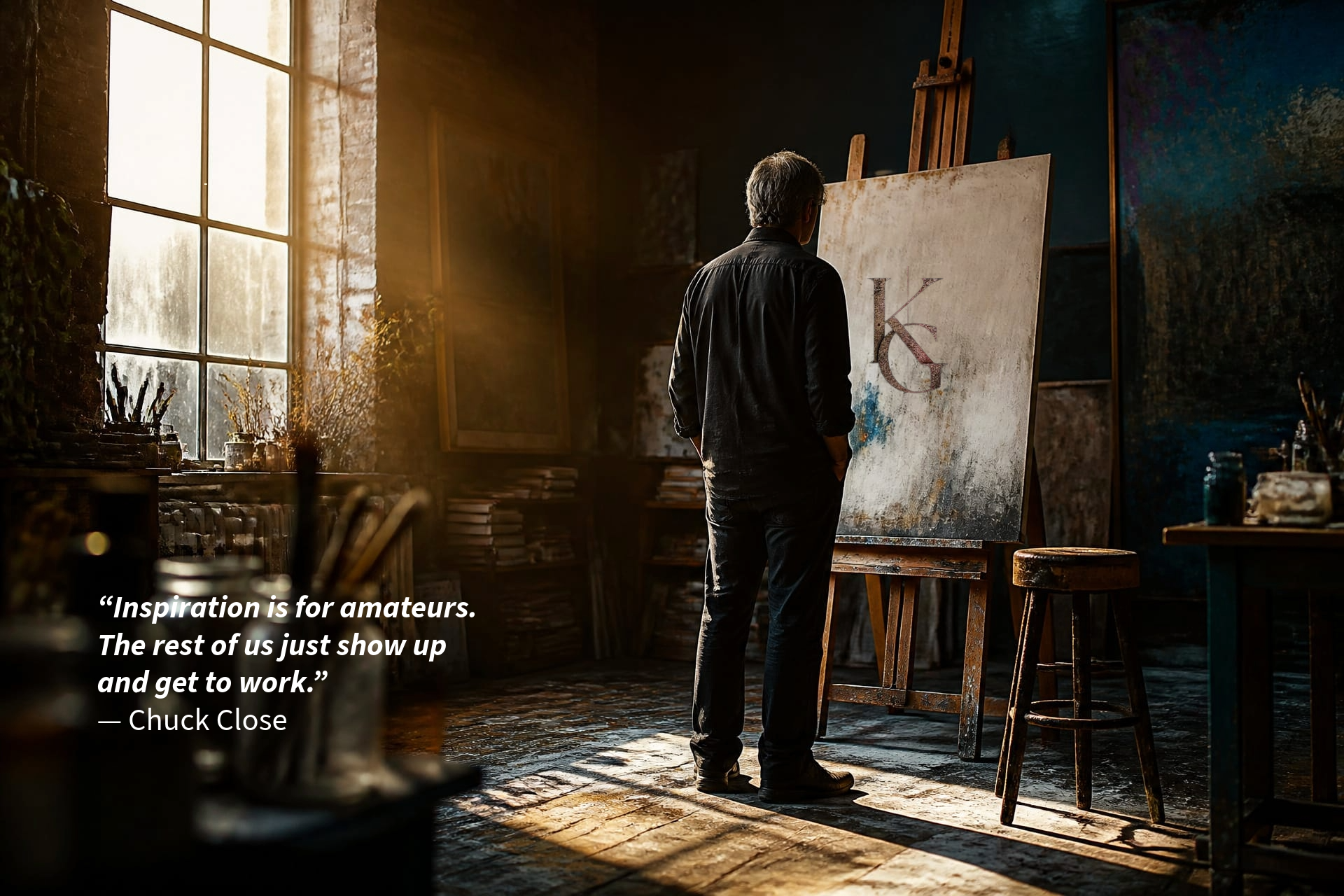
Chuck Close wasn’t dismissing inspiration. He was challenging our dependence on it. Too often we treat inspiration like a supervisor whose approval we need before we can begin. We wait for the right mood, the right weather, the right playlist, the right amount of confidence—as if creativity only works under perfect conditions.

Life has never been that accommodating.

There will always be reasons to postpone the work. The dishes can wait in the sink until tomorrow, but deadlines rarely do. The body grows tired. The mind wanders. Doubt arrives early and leaves late. Some days the words refuse to cooperate. Other days they come so easily you wonder why yesterday felt impossible.

The difference isn’t talent.

The difference is returning.

Showing up becomes its own quiet act of rebellion in a culture that celebrates results but rarely honors repetition. Nobody applauds the hundred ordinary mornings that produced a remarkable piece of work. They only see the finished painting, the published novel, the song that finally found its audience. They miss the thousands of invisible decisions that made those moments possible.

Perhaps that’s why the private room is so important.

It teaches you to work without witnesses.

To create without applause.

To trust that today’s small effort is laying another brick beneath a foundation no one else can yet see.

One day, the work will leave the room.

Readers will discover it. Viewers will interpret it. Some will praise it. Some will misunderstand it. That part is beyond your control.

Today’s responsibility is much smaller.

Pull out the chair.

Open the notebook.

Begin again.


Reflective Prompt

What would change if you treated your calling like a commitment instead of a mood?
Quote of the Day – 06172026


Personal Reflection

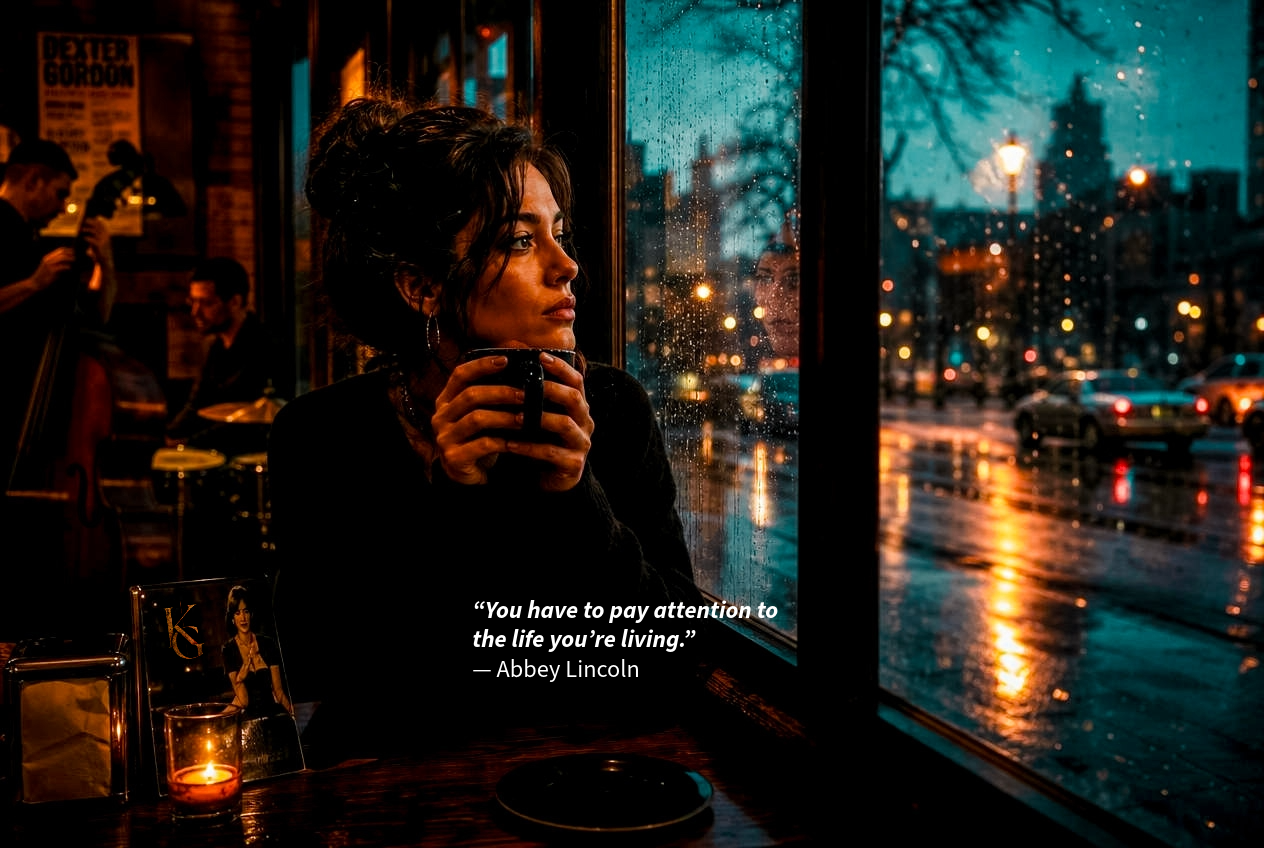
Attention may be one of the most undervalued skills left in the modern world.

Not productivity.
Not efficiency.
Not optimization.

Attention.

The ability to fully inhabit a moment without immediately reaching for distraction.

Most days pass faster than we realize. One obligation rolls into another. One notification interrupts the next. We move from task to task so quickly that entire seasons disappear before we’ve fully noticed we were living them.

Then something happens.

A song from twenty years ago comes on the radio.
A familiar scent drifts through the air.
An old photograph falls from a book.

Suddenly time slows down.

And for a moment, we’re confronted with a question that can be both beautiful and unsettling:

Where have I been while my life was happening?

Abbey Lincoln’s quote sounds simple because the deepest truths often do.

Pay attention.

Not just to milestones and achievements. Not just to crises and heartbreaks. Pay attention to ordinary Tuesday afternoons. To conversations that seem insignificant until years later when you realize they changed something inside you. To the way sunlight falls across the kitchen table. To the people who make your shoulders relax when they walk into a room.

Life rarely announces its important moments beforehand.

Most arrive disguised as ordinary days.

Writers understand this instinctively.

The best stories aren’t usually built from grand events alone. They’re built from observations. Tiny emotional details collected over time. A glance. A hesitation. A silence that means more than the words surrounding it.

The same is true for living.

Meaning often accumulates quietly.

One cup of coffee.
One conversation.
One sunset.
One act of kindness.

None seem monumental on their own.

Together, they become a life.

And maybe that’s why attention matters so much.

Because whatever we consistently pay attention to eventually becomes our experience of reality.

If we focus only on what’s missing, life begins to feel empty.

If we notice what’s present, life becomes richer than we expected.

Not easier.

Not perfect.

Just fuller.

Reflective Prompt

What small part of your daily life deserves more of your attention than you’ve been giving it?

Quote of the Day – 06032026


Personal Reflection

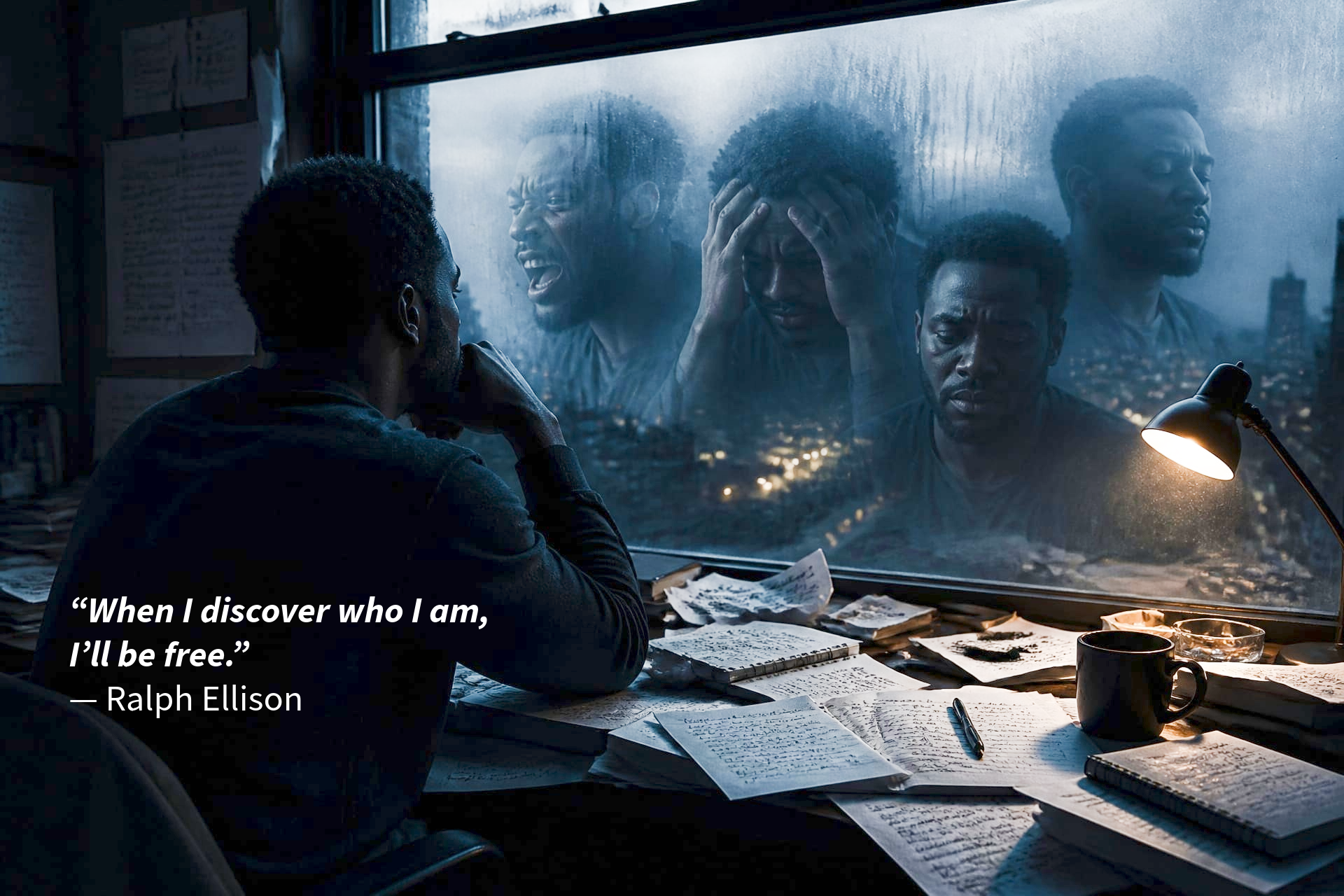
Most people think writing is about expression.

Saying something. Explaining something. Telling a story clean enough for other people to understand.

But a lot of writing starts somewhere far less certain than that.

Confusion.

A sentence appears before the meaning does. A character says something that feels uncomfortably familiar. A memory surfaces while writing about something completely unrelated. You sit down believing you’re in control of the narrative, only to realize the narrative has quietly turned around and started examining you instead.

That’s the strange intimacy of writing. Sometimes the page introduces you to yourself before life does.

The older you get, the harder it becomes to separate identity from performance.

We build versions of ourselves to survive. The reliable one. The funny one. The angry one. The strong one. The quiet one who keeps everything buried beneath competence and routine.

After a while, even we start believing the mask.

Writing has a nasty habit of cracking that illusion open.

Because real writing doesn’t care about the version of yourself you rehearsed for public consumption. It pulls toward contradiction. Toward hidden hunger. Toward the truths sitting beneath years of adaptation and self-editing.

That’s why some drafts feel exhausting long before they become good.

Not because the writing is difficult technically.

Because honesty is difficult spiritually.

You begin a story thinking you’re documenting the world, then slowly realize you’ve been documenting your fears the entire time. Your loneliness. Your resentment. Your unfinished grief. Your desperate need to matter to someone before the lights go out.

And maybe that’s why so many people avoid silence now. Noise protects identity from inspection.

Writing removes the noise.

Then suddenly there you are.

Unedited.

But maybe freedom was never about becoming someone entirely new.

Maybe it’s about finally recognizing the person who’s been speaking beneath all the disguises.

Not perfectly. Not completely.

Just enough to stop running from your own reflection.

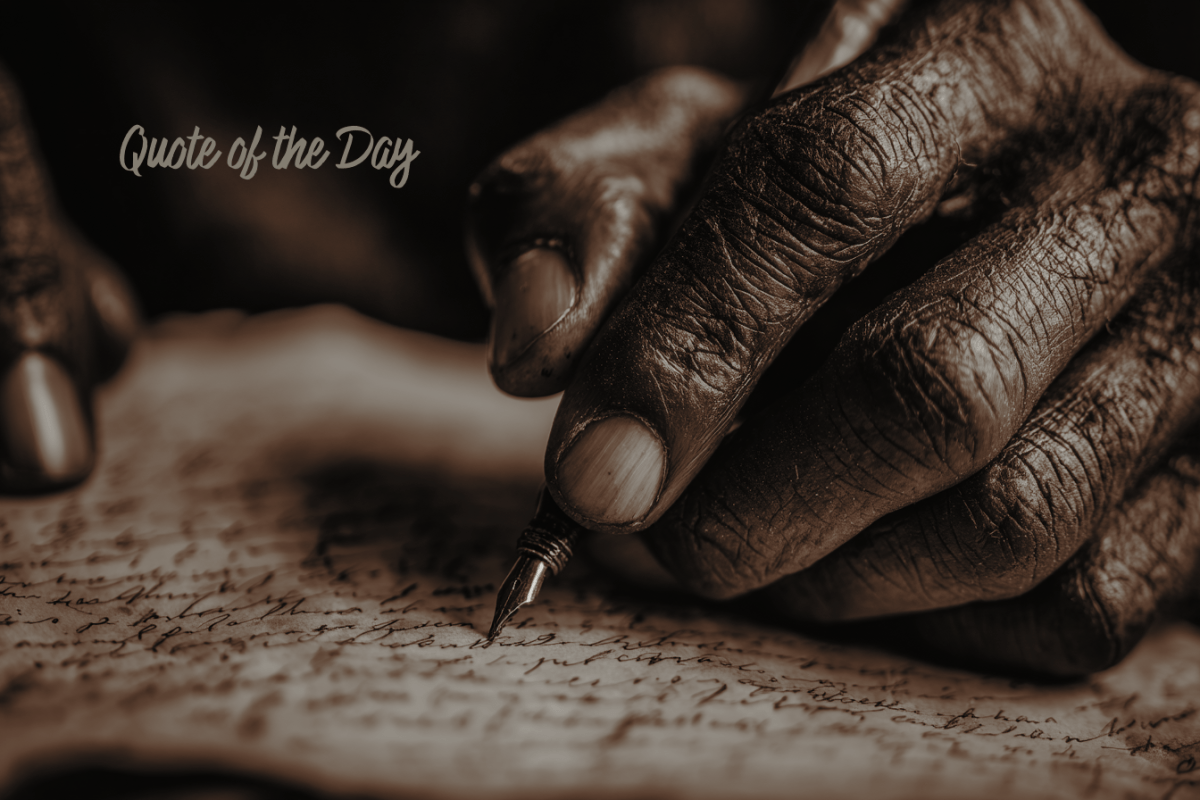
The page can’t solve a life. It can’t heal every fracture or untangle every contradiction. But sometimes it offers something quieter than healing.

Recognition.

A moment where the voice in your head and the words on the page stop feeling like strangers to each other.

And for a little while, that’s enough to breathe easier.


Reflective Prompt

What version of yourself do you perform most often — and what version keeps surfacing when you write alone?

Quote of the Day – 11052025


Personal Reflection

There’s a strange kind of bravery in simply being visible. Not loud, not armored — just seen. Even braver is to allow yourself to be seen. One can stand quietly and visible, but still move within the shadows of the environment. Put simply, one blends in. There’s an old Nordic tradition that says when a person visits, they should allow themselves to be seen — so the people know they aren’t ghosts or spirits. It’s a way of saying, I’m real. I’m here. In a world addicted to performance, that kind of presence feels like rebellion. Estés reminds us that courage doesn’t always roar; sometimes it just refuses to vanish.

We’re conditioned to protect the softest parts of ourselves — to hide them behind humor, intellect, or distraction. One is taught, the more you know about me, the more you can use against me. Let me tell you, that’s a very true statement. However, we as a society crave connection. There’s data linking mortality rates to isolation — people who live without meaningful interaction die sooner than those who don’t. I know that sounds like hulcum — my grandmother’s word for nonsense — but I’ve read the data. It’s real. The problem is that because of our performance addiction, people can be ruthless. We’ve learned to turn vulnerability into spectacle or weaponry, not intimacy. But soul doesn’t survive in hiding. Every time you show it, even trembling, you steady the ground beneath someone else’s feet. That’s the quiet power of authenticity: it ripples outward, unannounced, and changes the room.

To show your soul isn’t a performance — it’s an offering. It’s saying, I’m still here, even after the storm tried to erase me. And maybe that’s what resilience really is: not surviving untouched, but standing — cracked, luminous, and unashamed — in full view of the world. In the stillness of simply being, you dare the ones around you to get to know who you really are. And if they don’t like what they see? Then they can kick rocks — because you don’t need any additional madness. Everyone’s got enough already.


Reflective Prompt

When was the last time you showed your soul — not your strength, not your mask, but your unguarded self?