Quote of the Day – 06172026


Personal Reflection

Attention may be one of the most undervalued skills left in the modern world.

Not productivity.
Not efficiency.
Not optimization.

Attention.

The ability to fully inhabit a moment without immediately reaching for distraction.

Most days pass faster than we realize. One obligation rolls into another. One notification interrupts the next. We move from task to task so quickly that entire seasons disappear before we’ve fully noticed we were living them.

Then something happens.

A song from twenty years ago comes on the radio.
A familiar scent drifts through the air.
An old photograph falls from a book.

Suddenly time slows down.

And for a moment, we’re confronted with a question that can be both beautiful and unsettling:

Where have I been while my life was happening?

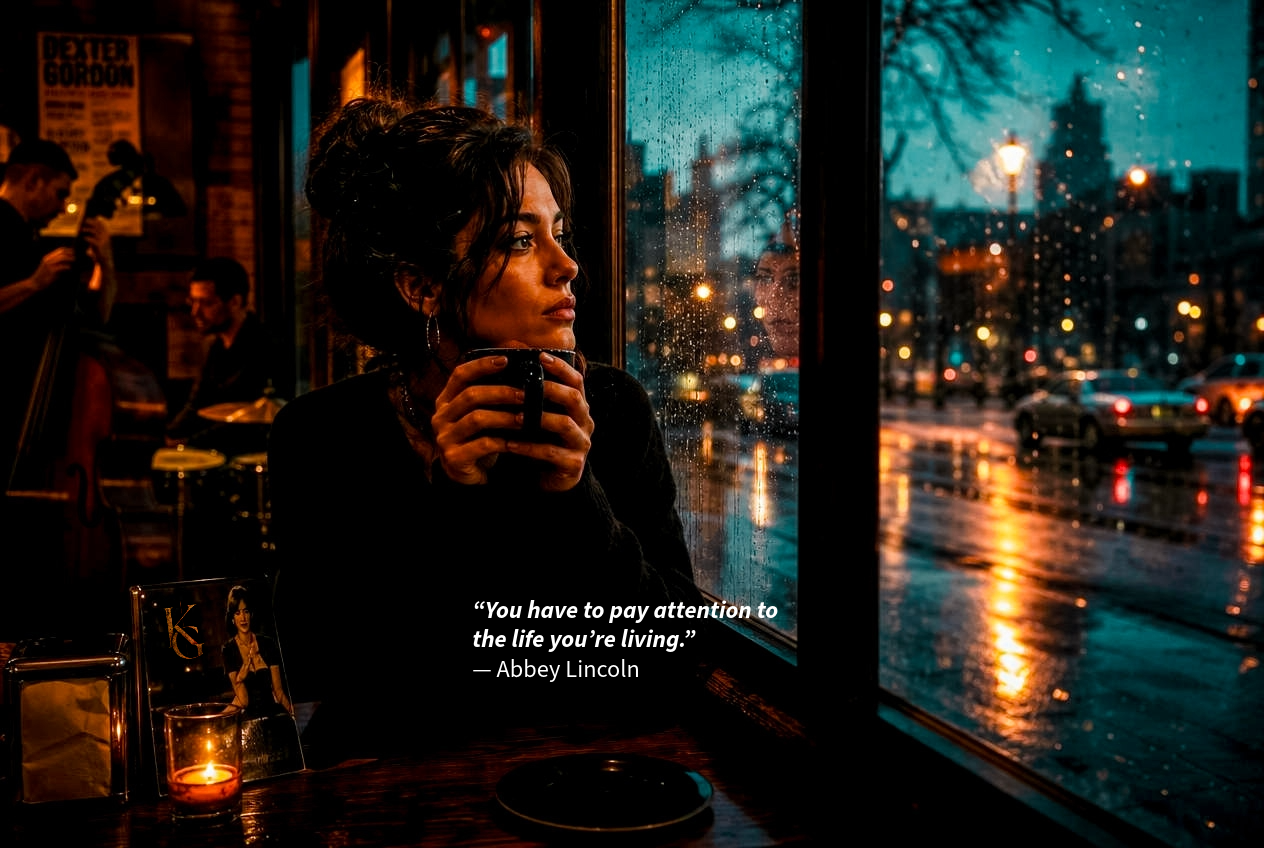
Abbey Lincoln’s quote sounds simple because the deepest truths often do.

Pay attention.

Not just to milestones and achievements. Not just to crises and heartbreaks. Pay attention to ordinary Tuesday afternoons. To conversations that seem insignificant until years later when you realize they changed something inside you. To the way sunlight falls across the kitchen table. To the people who make your shoulders relax when they walk into a room.

Life rarely announces its important moments beforehand.

Most arrive disguised as ordinary days.

Writers understand this instinctively.

The best stories aren’t usually built from grand events alone. They’re built from observations. Tiny emotional details collected over time. A glance. A hesitation. A silence that means more than the words surrounding it.

The same is true for living.

Meaning often accumulates quietly.

One cup of coffee.
One conversation.
One sunset.
One act of kindness.

None seem monumental on their own.

Together, they become a life.

And maybe that’s why attention matters so much.

Because whatever we consistently pay attention to eventually becomes our experience of reality.

If we focus only on what’s missing, life begins to feel empty.

If we notice what’s present, life becomes richer than we expected.

Not easier.

Not perfect.

Just fuller.

Reflective Prompt

What small part of your daily life deserves more of your attention than you’ve been giving it?

Quote of the Day – 06032026


Personal Reflection

Most people think writing is about expression.

Saying something. Explaining something. Telling a story clean enough for other people to understand.

But a lot of writing starts somewhere far less certain than that.

Confusion.

A sentence appears before the meaning does. A character says something that feels uncomfortably familiar. A memory surfaces while writing about something completely unrelated. You sit down believing you’re in control of the narrative, only to realize the narrative has quietly turned around and started examining you instead.

That’s the strange intimacy of writing. Sometimes the page introduces you to yourself before life does.

The older you get, the harder it becomes to separate identity from performance.

We build versions of ourselves to survive. The reliable one. The funny one. The angry one. The strong one. The quiet one who keeps everything buried beneath competence and routine.

After a while, even we start believing the mask.

Writing has a nasty habit of cracking that illusion open.

Because real writing doesn’t care about the version of yourself you rehearsed for public consumption. It pulls toward contradiction. Toward hidden hunger. Toward the truths sitting beneath years of adaptation and self-editing.

That’s why some drafts feel exhausting long before they become good.

Not because the writing is difficult technically.

Because honesty is difficult spiritually.

You begin a story thinking you’re documenting the world, then slowly realize you’ve been documenting your fears the entire time. Your loneliness. Your resentment. Your unfinished grief. Your desperate need to matter to someone before the lights go out.

And maybe that’s why so many people avoid silence now. Noise protects identity from inspection.

Writing removes the noise.

Then suddenly there you are.

Unedited.

But maybe freedom was never about becoming someone entirely new.

Maybe it’s about finally recognizing the person who’s been speaking beneath all the disguises.

Not perfectly. Not completely.

Just enough to stop running from your own reflection.

The page can’t solve a life. It can’t heal every fracture or untangle every contradiction. But sometimes it offers something quieter than healing.

Recognition.

A moment where the voice in your head and the words on the page stop feeling like strangers to each other.

And for a little while, that’s enough to breathe easier.


Reflective Prompt

What version of yourself do you perform most often — and what version keeps surfacing when you write alone?

Quote of the Day – 05252026


Personal Reflection

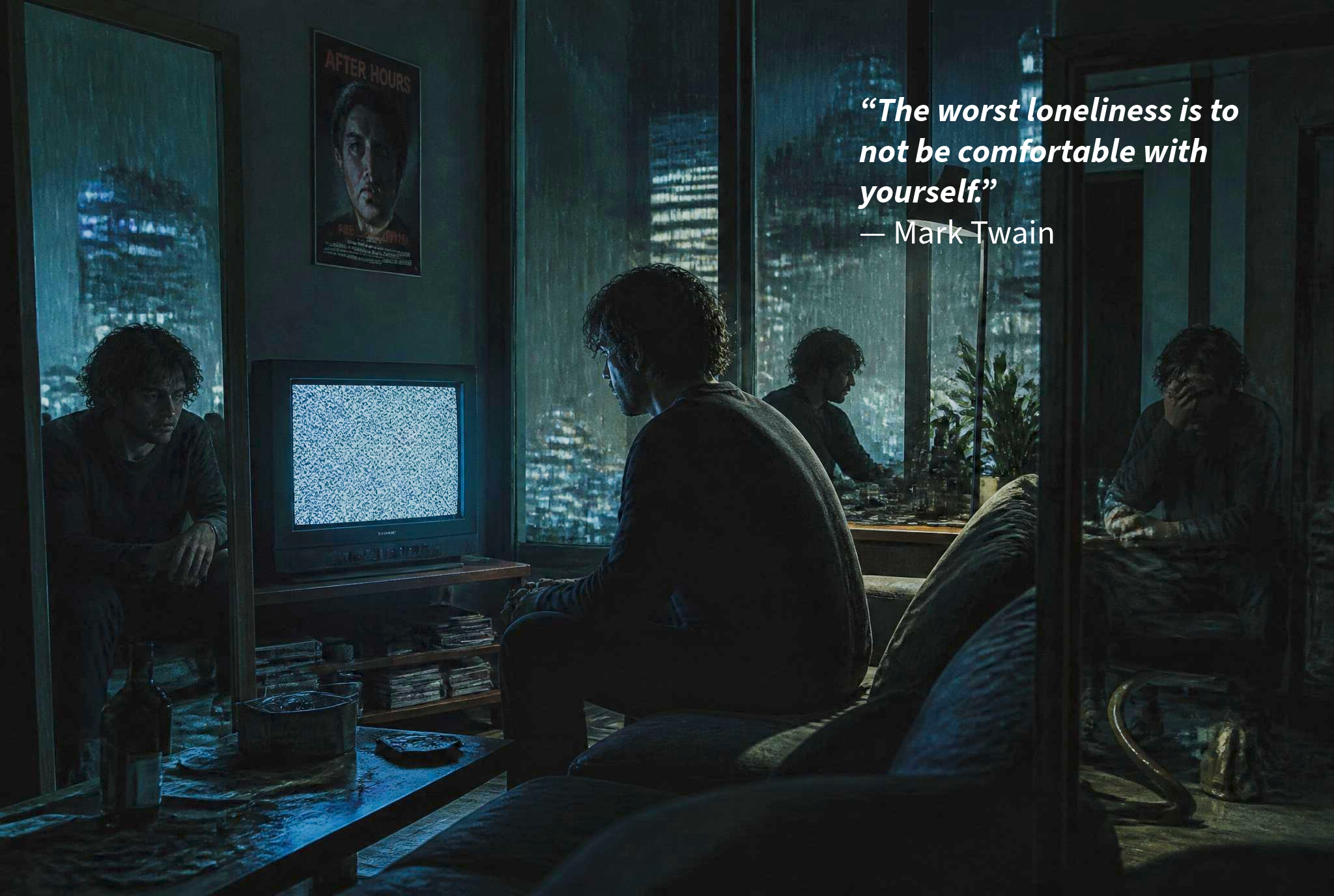
There’s something unusually direct about this quote. No poetic metaphor. No philosophical complexity. Just a blunt emotional truth sitting in plain sight.

And maybe that simplicity is what makes it uncomfortable.

Because most people think loneliness begins externally—with absence. No partner. No friends nearby. No one calling. No one staying. But some of the deepest loneliness exists in crowded rooms, inside busy lives, inside people who have learned how to function socially while remaining completely disconnected from themselves.

That kind of loneliness follows people everywhere because it isn’t tied to location.

It lives internally.

In the silence after distraction stops working. In the moments where the noise dies down enough for a person to realize they no longer know how to sit quietly with their own thoughts without immediately reaching for escape—music, scrolling, work, substances, conversation, anything that keeps the deeper parts of themselves from surfacing too clearly.

And maybe that’s the hidden crisis beneath so much modern exhaustion:
people spend years learning how to tolerate stress, disappointment, and emotional disconnection without ever learning how to genuinely inhabit their own inner lives.

So they become strangers to themselves.

They know their responsibilities. Their routines. Their public identity. But internally, there’s distance. Certain emotions remain avoided. Certain truths remain untranslated. Certain wounds remain untouched because confronting them honestly would require vulnerability most people were never taught how to hold safely.

That’s the strange thing about self-alienation—it rarely feels dramatic while it’s happening.

It feels ordinary.

You become productive but emotionally absent. Functional but disconnected. You laugh in conversations while feeling oddly detached from the person participating in them. You keep moving because movement feels easier than stillness, and stillness risks meeting parts of yourself you’ve spent years carefully avoiding.

Mental exhaustion deepens there.

Not simply from pain itself, but from the constant effort required to remain emotionally distant from your own reality.

And eventually the loneliness becomes difficult to explain because outwardly nothing appears missing.

Yet inwardly, something essential no longer feels reachable.

Still… maybe self-connection does not return through dramatic transformation.

Maybe it begins quietly.

A moment of honesty instead of avoidance. A difficult truth finally acknowledged without immediately pushing it back down. An evening spent sitting with your thoughts long enough to realize they are not enemies trying to destroy you, but wounded parts of yourself asking to be heard differently.

Because perhaps peace is not found in becoming someone new.

Perhaps peace begins the moment you stop abandoning yourself internally just to survive externally.

And maybe the opposite of loneliness is not always other people.

Sometimes it is finally feeling present inside your own life again.


Reflective Prompt

When was the last time you felt genuinely present with yourself instead of simply distracting yourself from yourself?

Quote of the Day – 05182026


Personal Reflection

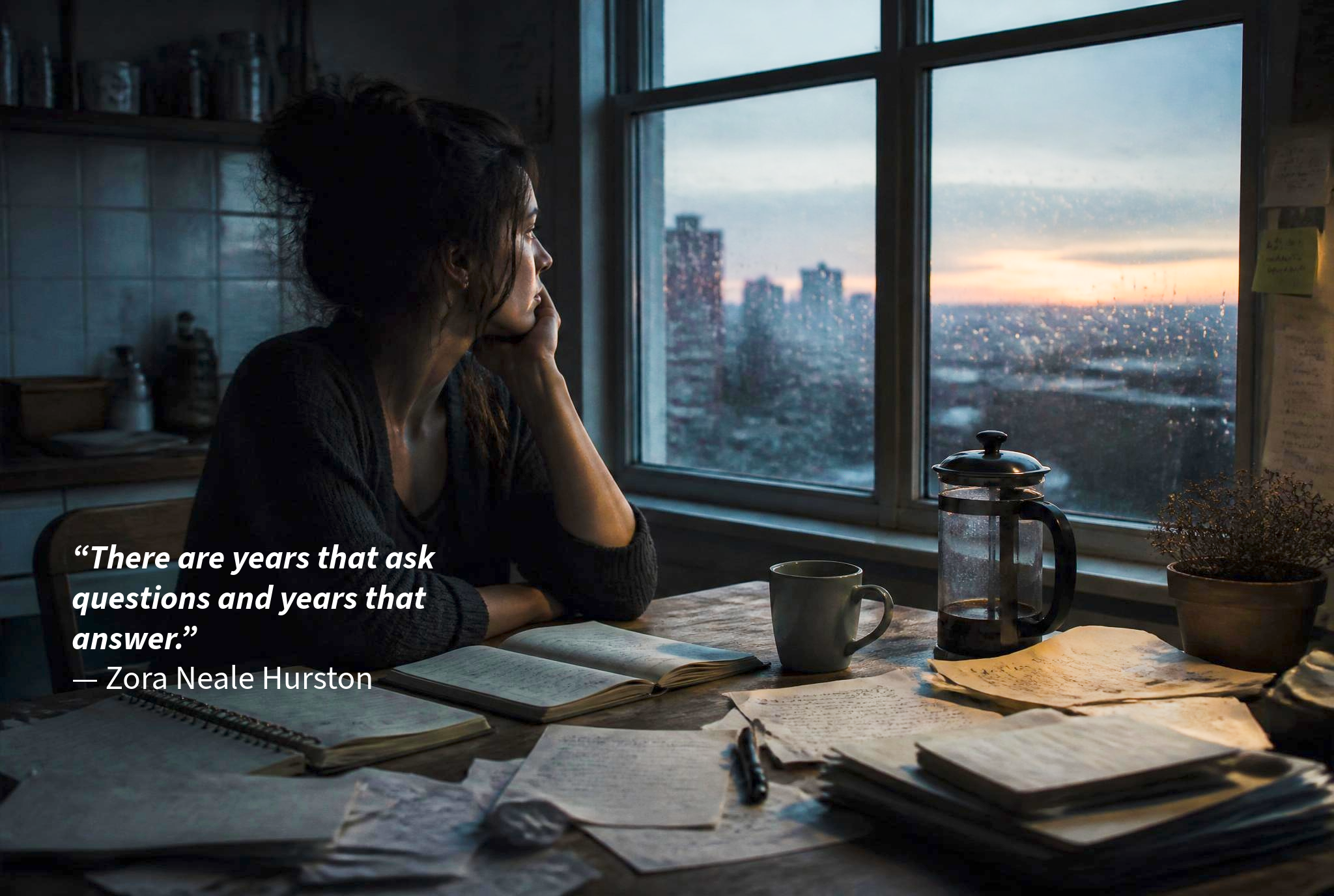
At first glance, it feels almost comforting—the idea that life moves in seasons. Some years unfold with clarity and direction, while others seem determined to leave you standing in uncertainty, staring at the ceiling at two in the morning wondering what exactly happened to the version of yourself that once felt certain about anything.

And maybe that’s true.

Maybe not every season of life is meant to provide resolution.

Because there are years that dismantle people quietly.

Not through one catastrophic moment, but through accumulation. Plans drifting apart. Relationships changing shape. Energy thinning out slowly enough that you don’t recognize your own exhaustion until ordinary tasks begin feeling strangely heavy. You continue functioning, of course. Most people do. But somewhere internally, questions start multiplying faster than answers.

Who am I becoming?
Why does everything feel unfamiliar?
When did survival start replacing joy?
How much of my life is genuinely mine… and how much was built from adaptation?

Those are difficult years.

Not dramatic enough for the world to stop around you, yet emotionally loud enough to alter your inner landscape permanently.

And the hardest part is that questioning years rarely offer immediate meaning while you’re living through them. They feel disorganized. Unfinished. Like emotional static. You compare yourself to people who seem certain and grounded while privately wondering if you somehow missed the instructions everyone else received about how to remain stable in adulthood.

Mental exhaustion often deepens there—in the pressure to appear composed while internally rebuilding your understanding of yourself from the ground up.

That process can feel lonely because modern culture worships visible progress. Clear goals. Clean narratives. Reinvention packaged into something inspirational and easy to explain.

But real transformation is usually quieter than that.

More confusing.

More unfinished.

Sometimes growth looks less like rising and more like sitting alone in the wreckage of old assumptions long enough for a more honest version of yourself to emerge from underneath them.

Maybe questioning years are not failures of direction.

Maybe they are necessary interruptions.

Moments where life refuses to let you continue sleepwalking through versions of yourself that no longer fit who you’re becoming.

And perhaps answers do arrive eventually—not all at once, not cleanly, but gradually. Through lived experience. Through survival. Through noticing one day that something which once shattered you now only echoes faintly in the distance.

Because maybe wisdom isn’t having every answer.

Maybe wisdom is learning how to remain open-hearted during seasons where the questions outnumber everything else.


Reflective Prompt

What question has this season of your life been quietly asking you beneath all the noise and distraction?

Quote of the Day – 03222026


Personal Reflection

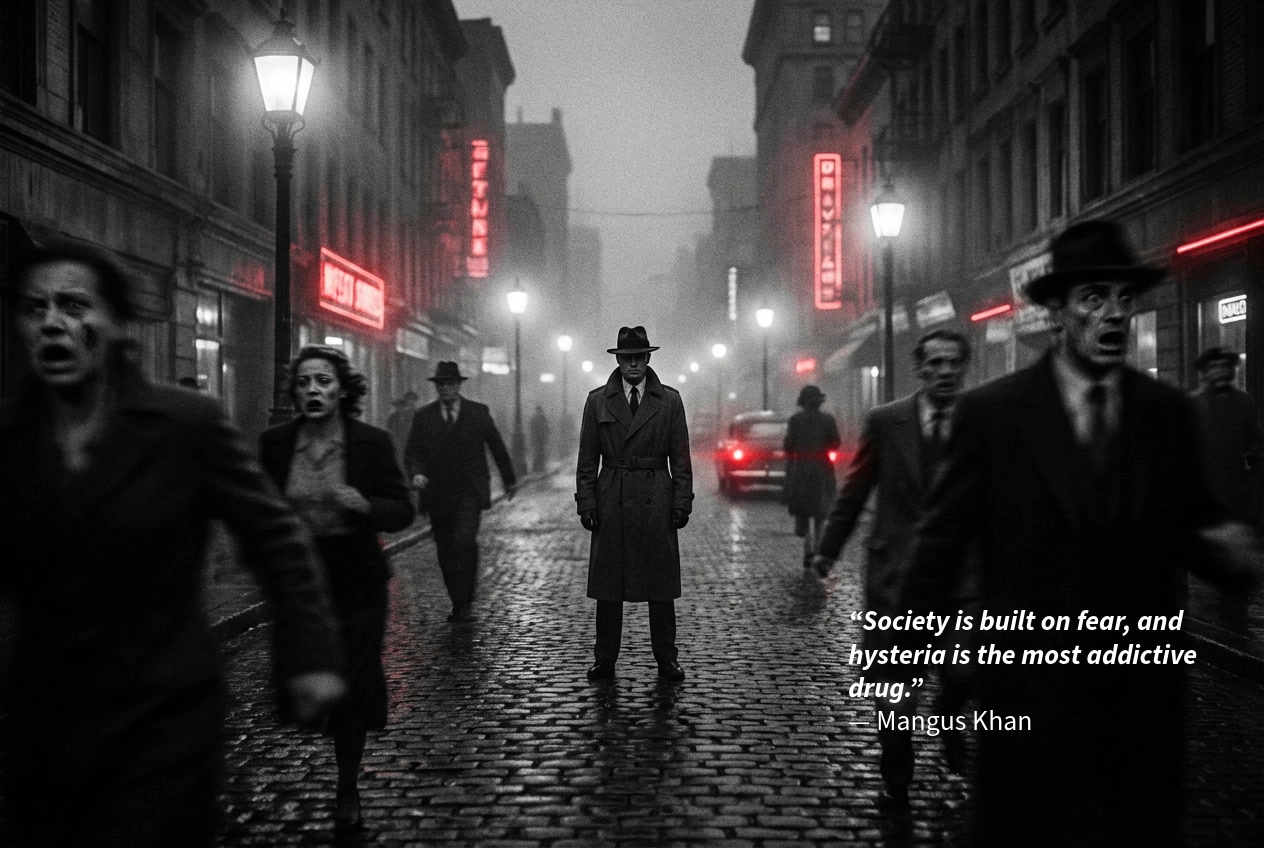
You don’t have to look far to see it. Turn on the news, scroll for five minutes, stand in line at the grocery store and listen to what people talk about. Fear moves faster than reason. Panic spreads quicker than facts. The loudest voices are usually the ones warning that something terrible is coming, something is being taken, something is about to fall apart. And people lean in. Not because they enjoy it — at least not consciously — but because fear wakes something up inside us that calm never could.

Hysteria has a strange pull to it. It gives people energy, purpose, even belonging. When everyone is afraid of the same thing, it feels like unity, even if that unity is built on smoke. The mind gets addicted to the rush — the certainty that comes from outrage, the sharp clarity of us versus them, right versus wrong, safe versus doomed. It’s easier to live in alarm than in uncertainty. Easier to shout than to think.

The dangerous part is how normal it starts to feel. When fear becomes the background noise of everyday life, people stop noticing how much of their thinking is driven by it. They react instead of reflect. They follow instead of question. And the louder the hysteria gets, the more it feels like truth, simply because it never stops talking.

Peace doesn’t spread the way fear does. It moves slower, quieter, almost unnoticed. It asks for patience, for doubt, for the willingness to sit with things that don’t have easy answers. That’s harder than panic. Harder than outrage. Harder than joining the crowd.

But the moment you step back and see the noise for what it is, the spell weakens.
Fear may build the walls, but it doesn’t have to decide how you live inside them.

Reflective Prompt
Where in your life are you reacting to fear without realizing it — and what would change if you chose stillness instead?

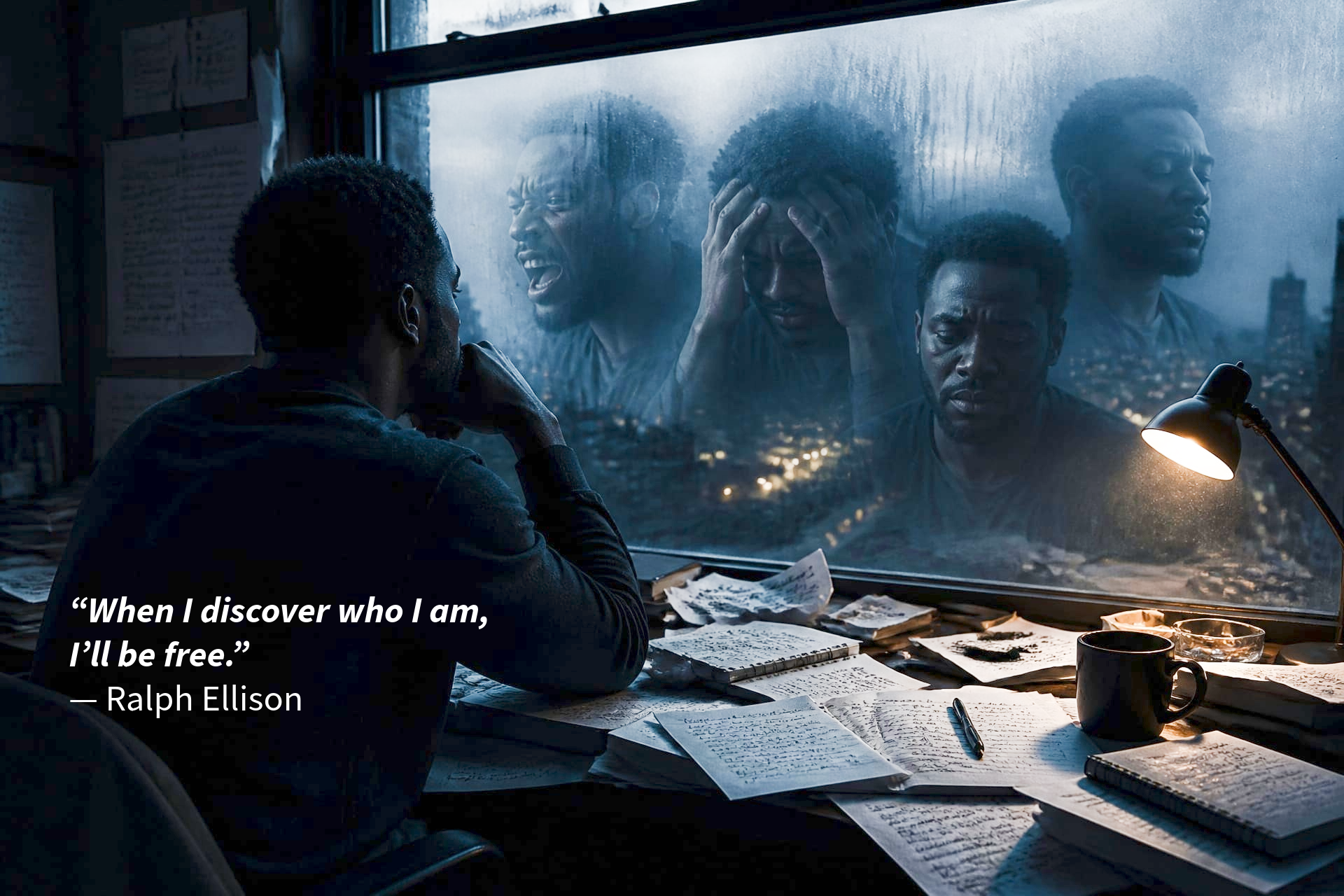
Quote of the Day – 12062025


Personal Reflection:
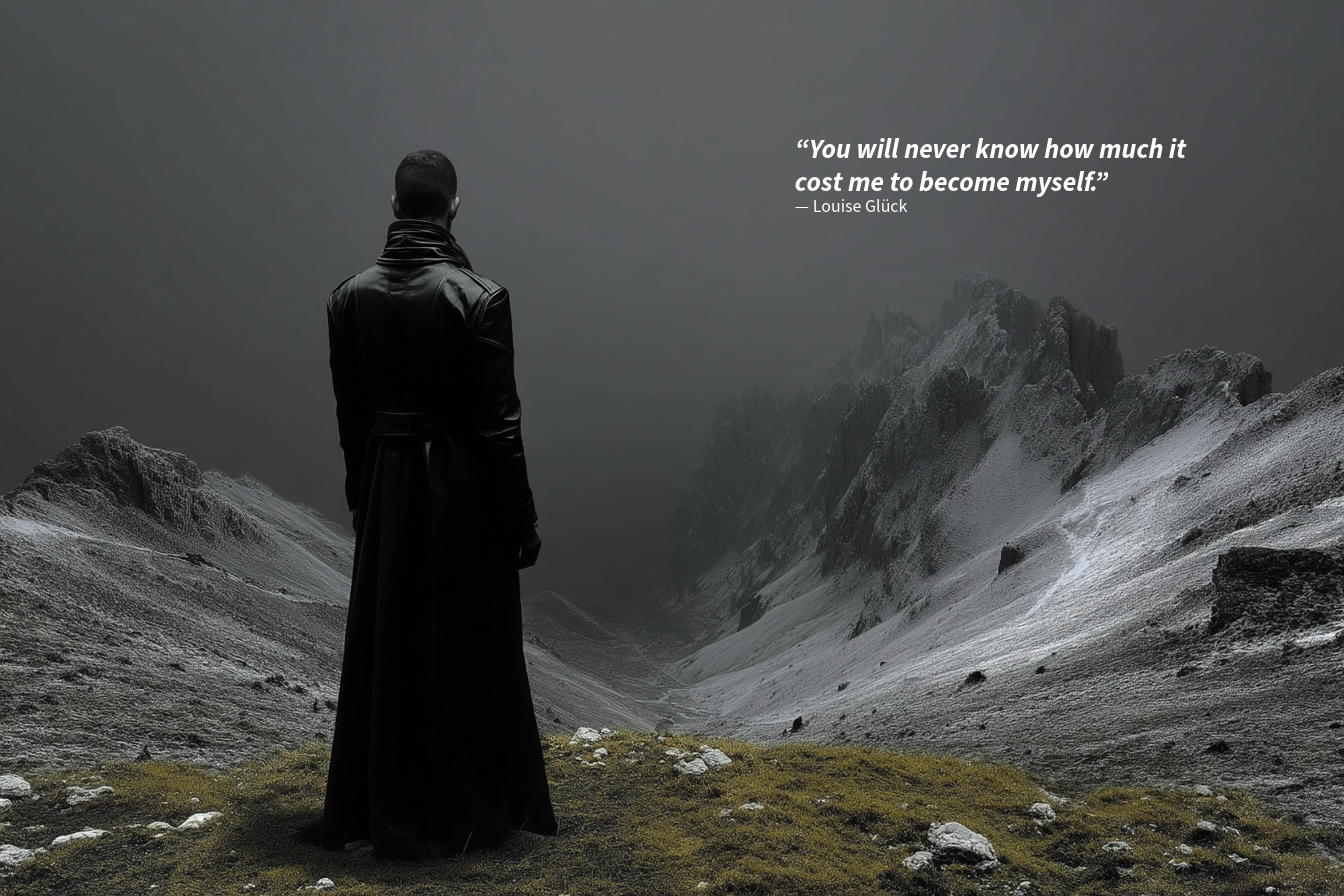
Winter is honest about the cost of things. The cold exposes cracks, the dark lengthens shadows, and even the light arrives at angles that reveal what’s usually hidden. This line drops into that landscape with quiet gravity. Becoming yourself isn’t a clean story or an easy arc. It’s a series of choices no one else fully sees — the losses, the risks, the private battles that never made it into conversation. The world may admire who you are now, but it rarely understands the price you paid to get here.

Because becoming yourself isn’t a single transformation — it’s a slow burn that demands pieces of your former life as fuel. You lose people who preferred the older versions of you. You outgrow dreams you once swore were permanent. You dismantle comforts that kept you small because growth demanded more space than they allowed. And beneath all that change is a truth most people never consider:
evolution is expensive.

Not financially — emotionally.

It takes courage to stand in the wreckage of who you were and still decide to keep moving. It takes clarity to recognize when something familiar has turned into something harmful. And it takes a quiet, relentless kind of strength to admit that becoming yourself means disappointing the expectations others built around your past.

The cost isn’t always visible — but the ache is.

Maybe the point isn’t to be understood — not fully. Maybe the point is to honor the price you paid. To acknowledge the private courage it took to shed your old life and stand in the sharper air of who you are now. Becoming yourself is not about being admired — it’s about being true, even when truth carries weight.

And if the world never knows the cost?

That doesn’t diminish the value.
It means you carried something heavy far enough to step into your own name — and that is enough.


Reflective Prompt:
What part of your becoming has been misunderstood or unseen by others?

Quote of the Day – 11192025


Personal Reflection

November has a way of showing you what still weighs on you — the half-finished things, the quiet regrets, the truths you’ve been circling all year without naming. The air feels thinner, the days shorter, the world stripped to bone. And somewhere in that bare landscape, you start to notice what you’ve been carrying without meaning to. This quote steps right into that moment. There are burdens you can’t hand off, no matter how much you want to. And there are truths you can’t ignore, no matter how tired your spirit feels. November doesn’t care about the story you told yourself in June. It cares about what’s still in your hands now.

But this is the month when the hidden weight starts talking back.
Not loudly — that would almost be merciful — but in a steady, relentless whisper that threads itself into every quiet space. The things you avoided start showing teeth. The versions of yourself you grew out of linger like ghosts in their old rooms. And the silence you once thought you needed becomes a mirror you can’t turn away from.

This is the part no one warns you about: becoming often means letting go of the lies that kept you upright. The narratives that softened the edges. The masks you perfected. November strips those away with the same casual certainty that trees drop their leaves. And in the cold clarity that follows, you’re left facing truths that aren’t gentle. The ones too heavy to carry gracefully, too essential to abandon without losing your shape.

Some truths don’t break you.
They reveal you.

Maybe that’s November’s gift — not clarity, but honesty. Not resolution, but recognition.
This month doesn’t ask you to rise.
It asks you to stay.
To sit with what’s real.
To hold your truth without rushing to pretty it up or make it palatable.

Becoming isn’t a transformation montage. It’s the slow, steady acceptance of who you’ve been, who you are, and who you’re trying to grow into — even when those identities don’t agree. It’s learning to carry what matters, set down what doesn’t, and live with the ache of not always knowing the difference.

Maybe today the victory isn’t lightness.
Maybe it’s the willingness to stop pretending the weight isn’t there — and the quiet courage it takes not to look away.


Reflective Prompt:

What truth have you carried all year that still refuses to be put down?

Quote of the Day – 11182025


Personal Reflection

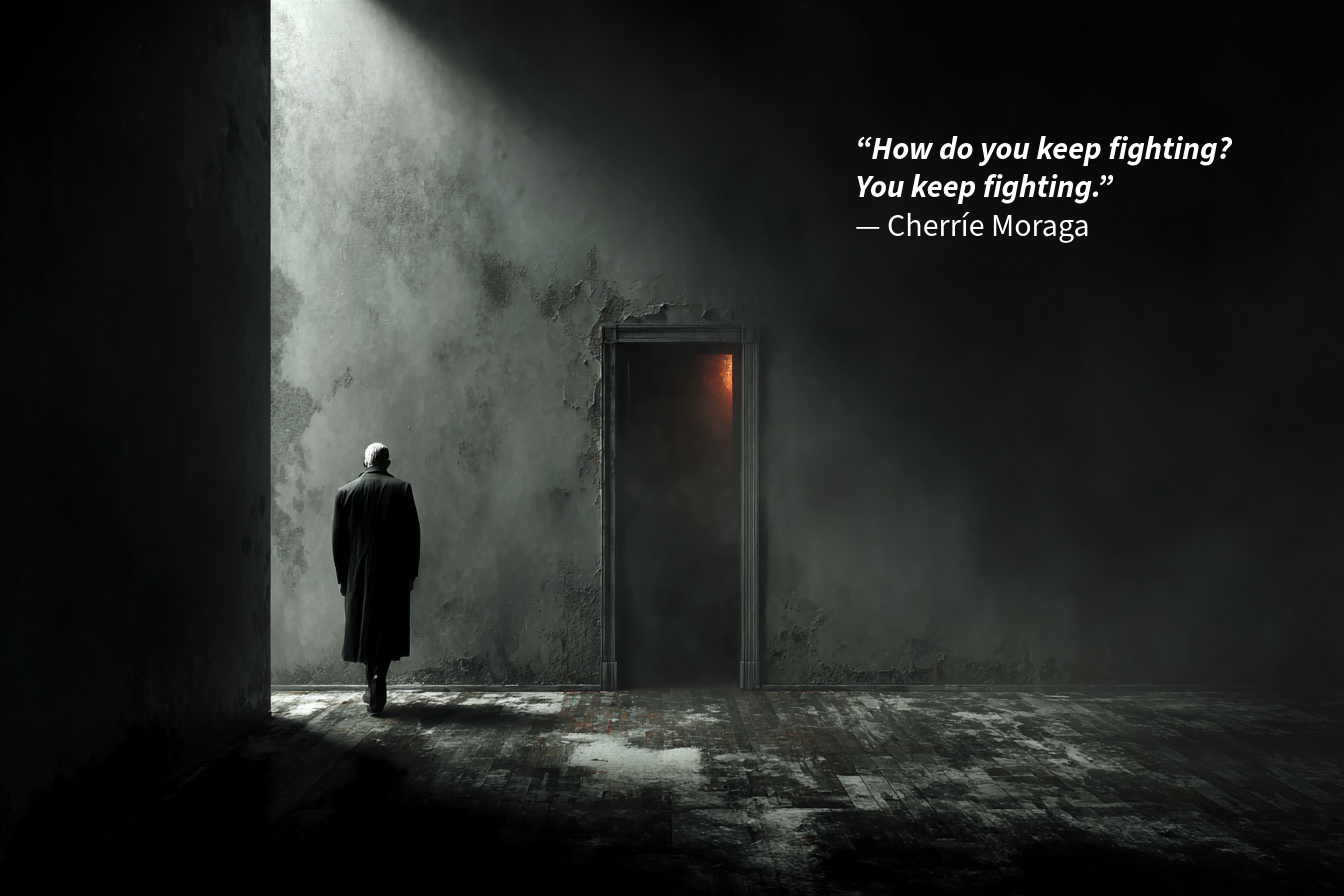
Some days there’s no revelation waiting for you. No clarity. No second wind. Just the simple, unglamorous choice to keep moving in the direction you said mattered. The world keeps insisting everything should come wrapped in a pretty bow — clean lines, smooth edges, no proof of the struggle it took to get there. But look at any real artisan. Their world is chaos until the work is done. Sawdust choking the air, paint bleeding onto the floor, bruised knuckles, tools scattered like a crime scene. Creation is never tidy. It’s loud. It’s stubborn. It demands a piece of you. And the outcome only becomes breathtaking because you walked through the mess and didn’t flinch.

We love to romanticize perseverance — the comeback story, the clean arc, the triumphant soundtrack. But most real fighting looks nothing like that. It’s waking up already exhausted. It’s dragging old fears behind you like unwilling dogs, snarling and snapping with every step. It’s pushing forward even when the only thing you’re sure of is the ache settling somewhere between your ribs and your resolve. And buried underneath it all is the truth you don’t say out loud: stopping feels too close to disappearing. And you’ve disappeared enough times already.

Maybe that’s the lesson today. You don’t have to feel brave to keep going. You don’t need inspiration or momentum or some sudden rush of conviction. You just keep moving. Step by stubborn step. Breath by stubborn breath. And somewhere in that slow crawl forward, you realize the fight was never about winning — it was about refusing to vanish from your own life. That quiet persistence becomes its own kind of craft. Its own kind of art.


Reflective Prompt

Where are you still fighting, even quietly, even without applause?

Quote of the Day – 11172025


Personal Reflection:

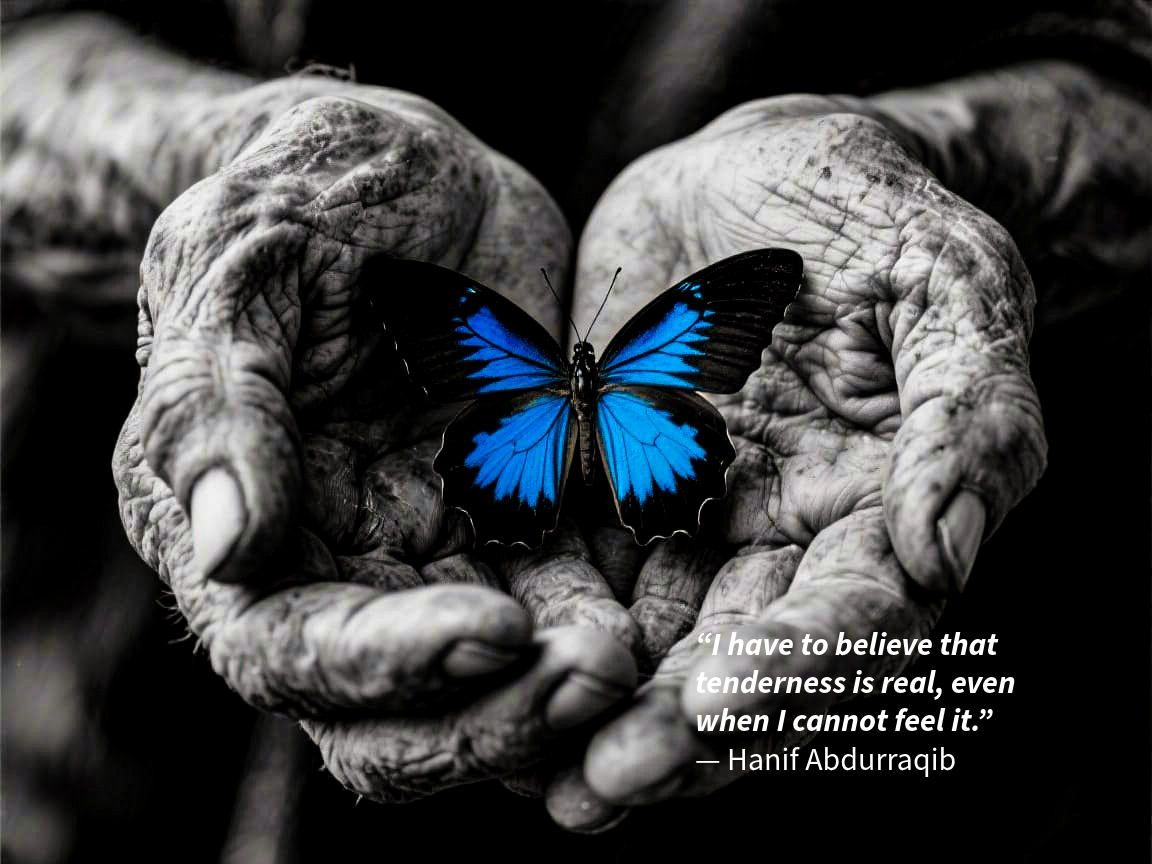
Some mornings you wake up armored without even trying. Shoulders tight. Voice low. Every small kindness feels like something meant for someone else. Perhaps it was a bad dream, or a fragment of a memory you thought was buried, rising just enough to shift the weight of the day before it even begins. This line lands right there—in that gap between what your heart remembers and what your body refuses to trust. Believing in tenderness on the days you can’t feel it isn’t delusion. It’s survival.

But let’s not pretend it’s easy. Disappointment builds scar tissue. Grief calcifies. Some hurts become fossils—old pain preserved in perfect detail, untouched but never truly gone. And some wounds never heal properly; they knit themselves together in crooked ways, reminding you that survival doesn’t always mean restoration. It’s hard to reach for softness when life has taught you to brace, to expect the hit, to map the exits before the door even closes behind you. Yet becoming requires a dangerous kind of courage: letting the walls down a fraction, enough for light to get in even if you’re still flinching. Tenderness is not weakness—it’s risk. And risk is where transformation waits.

Maybe today isn’t about feeling tenderness, but acknowledging the stubborn belief that it exists. And stubborn in the real sense—not noble or poetic, but the kind of hold you keep because letting go feels like losing one more piece of hope you can’t afford to misplace. A small, quiet truth you carry like a pilot light. Even when the world is loud. Even when your own heart feels far away. Becoming yourself means making room for what you cannot yet hold. Letting one soft thing survive the hard days. Trusting that tenderness, once allowed, knows how to find its way back.


Reflective Prompt:
Where in your life have you mistaken protection for absence?

Quote of the Day – 11052025


Personal Reflection

There’s a strange kind of bravery in simply being visible. Not loud, not armored — just seen. Even braver is to allow yourself to be seen. One can stand quietly and visible, but still move within the shadows of the environment. Put simply, one blends in. There’s an old Nordic tradition that says when a person visits, they should allow themselves to be seen — so the people know they aren’t ghosts or spirits. It’s a way of saying, I’m real. I’m here. In a world addicted to performance, that kind of presence feels like rebellion. Estés reminds us that courage doesn’t always roar; sometimes it just refuses to vanish.

We’re conditioned to protect the softest parts of ourselves — to hide them behind humor, intellect, or distraction. One is taught, the more you know about me, the more you can use against me. Let me tell you, that’s a very true statement. However, we as a society crave connection. There’s data linking mortality rates to isolation — people who live without meaningful interaction die sooner than those who don’t. I know that sounds like hulcum — my grandmother’s word for nonsense — but I’ve read the data. It’s real. The problem is that because of our performance addiction, people can be ruthless. We’ve learned to turn vulnerability into spectacle or weaponry, not intimacy. But soul doesn’t survive in hiding. Every time you show it, even trembling, you steady the ground beneath someone else’s feet. That’s the quiet power of authenticity: it ripples outward, unannounced, and changes the room.

To show your soul isn’t a performance — it’s an offering. It’s saying, I’m still here, even after the storm tried to erase me. And maybe that’s what resilience really is: not surviving untouched, but standing — cracked, luminous, and unashamed — in full view of the world. In the stillness of simply being, you dare the ones around you to get to know who you really are. And if they don’t like what they see? Then they can kick rocks — because you don’t need any additional madness. Everyone’s got enough already.


Reflective Prompt

When was the last time you showed your soul — not your strength, not your mask, but your unguarded self?

Illuminating Progress: The Birth of the First Electric Lamp Factory

ARTICLE – HISTORICAL EVENT

Photo by Skylar Kang on Pexels.com

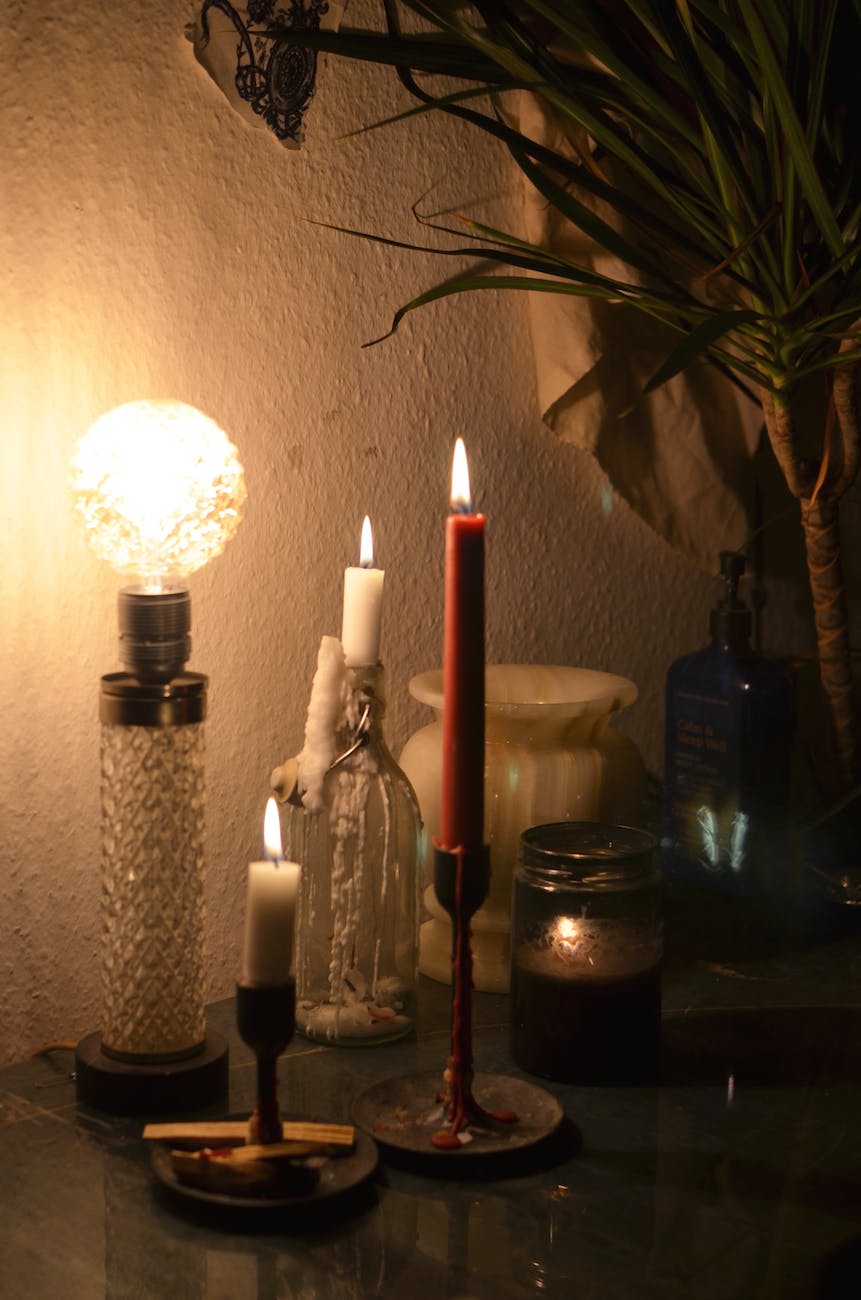
The advent of electric lighting marked a transformative moment in human history, fundamentally altering how we live and work. At the heart of this revolutionary shift was the establishment of the first electric lamp factory, a pioneering endeavor that laid the foundation for widespread electrification and illuminated a path toward a brighter future.

The inception of the first electric lamp factory is closely tied to the visionary work of Thomas Edison, often hailed as the “Wizard of Menlo Park.” Edison, known for his prolific inventions and entrepreneurial spirit, dedicated considerable effort to developing a practical and commercially viable electric light. In 1879, he unveiled the first successful incandescent light bulb, a breakthrough that paved the way for establishing the first electric lamp factory.

Edison’s Menlo Park laboratory in New Jersey served as the epicenter of innovation, where he and his team tirelessly worked to refine the design and production of incandescent light bulbs. The success of Edison’s invention sparked the need for mass production to meet the growing demand for electric lighting, leading to the establishment of the Pearl Street Station in New York City in 1882 – the world’s first central power plant designed to distribute electricity for lighting.

To support the electrification initiative, Edison founded the Edison Electric Light Company, a pioneering venture that incorporated the manufacturing of electric lamps and electricity generation. In 1882, the company established the first electric lamp factory on Goerck Street in Manhattan, New York. This factory was a groundbreaking facility dedicated to the large-scale production of incandescent light bulbs, a feat that had not been accomplished before.

The factory utilized innovative manufacturing processes, including the assembly line, to increase efficiency and output. Skilled workers meticulously crafted and assembled the various components of the incandescent light bulbs, transforming Edison’s invention from a scientific breakthrough into a commercially viable product. The successful operation of the first electric lamp factory marked a turning point in the history of lighting technology, accelerating the adoption of electric lighting in homes, businesses, and cities.

Beyond its immediate impact on lighting, establishing the first electric lamp factory had broader implications for industrialization and urban development. The electrification of cities transformed the nocturnal landscape, providing safer and more efficient illumination for streets and public spaces. The availability of electric light also extended working hours, fostering increased productivity and contributing to the modernization of society.

In the following decades, the electric lamp industry continued to evolve, with advancements in technology and design leading to more energy-efficient and durable lighting solutions. The legacy of the first electric lamp factory endures in the form of the widespread availability of electric lighting, shaping how we live, work, and interact with our surroundings.

As we bask in the glow of modern lighting, it’s important to reflect on the pioneering efforts of visionaries like Thomas Edison and the dedicated workers at the first electric lamp factory. Their collective ingenuity brightened our world and ignited a spark of progress that continues to illuminate our path into the future.

Time after Time: The Concept of Time

After looking at the RDP Friday prompt. I decided to dig in the subject a little further.

Nature of Time

Time, as we understand it, is a dimension. It’s a constant, flowing entity, moving from the past to the present and future. Physicists describe it as the fourth dimension of our universe, following the three spatial dimensions. Unlike the spatial dimensions, however, time has a direction – it is always moving forward, never backward. This unidirectionality of time, often called the ‘arrow of time,’ is a fundamental aspect of its nature.

But what does it mean for time to ‘flow’? This is a question that continues to perplex scientists and philosophers alike. The ‘flow’ of time is often associated with change – the ticking of a clock, the rising and setting of the Sun, the changing of seasons – all are manifestations of time’s ceaseless march forward.

Perception of Time

While the nature of time is constant, our perception of it is not. We, as humans, experience time in a highly subjective manner. The exact length of time can often feel different depending on various factors. Sometimes, an hour can feel like an eternity, while at other times, years seem to slip by in the blink of an eye.

Several factors influence this variability in our perception of time. Age, for instance, is often said to alter our perception of time. As we grow older, time passes more quickly. Our mental state – anxious, relaxed, focused, or distracted – can also dramatically affect how we perceive time. Additionally, the activities we engage in and the intensity of our experiences can modulate our sense of time.

Our Relationship with Time

Our relationship with time is complex and multifaceted. On the one hand, time is an essential part of our lives – it structures our days, determines the rhythm of our activities, and marks the milestones of our journey through life. On the other hand, time can also be a source of stress and anxiety – the pressure of deadlines, the fear of wasting time, and the relentless clock reminding us of our mortality.

Moreover, our relationship with time is not just individual but also collective. Societies, cultures, and civilizations have their ways of conceptualizing and measuring time – from the lunar calendars of ancient organizations to today’s atomic clocks.

Importance of Time

Time plays a pivotal role in our lives. It is a universal measure used to quantify everything from a mayfly’s lifespan to the universe’s age. It governs our daily routines, life events, and even our existence. Understanding and managing time is critical in today’s fast-paced world, where every second counts.

In this context, time management is about efficiency, productivity, balance, and well-being. It’s about making the most of our time, not by filling every moment with activity, but by using our time in a meaningful and fulfilling way.

The measurement of time is an essential aspect of human civilization. It provides structure, order, and predictability to our daily lives and is deeply ingrained in almost every aspect of our existence. This essay explores the historical development of timekeeping, the standard units of time measurement, the modern technologies employed in timekeeping, and the future implications of advancements in this field.

The Measurement of Time 

Historical Development of Timekeeping

The concept of measuring time has been integral to human societies throughout history. Ancient civilizations such as the Egyptians, Babylonians, and Greeks relied on primitive yet ingenious devices like sundials and water clocks. These devices marked the passage of time using the Sun’s position or water flow, providing these civilizations with a rudimentary but vital sense of temporal order and structure.

As societies progressed, so too did their timekeeping methods. The invention of the mechanical clock in the 14th century marked a significant milestone in the history of timekeeping. Powered by weights and gears, these clocks provided a more accurate and reliable means of measuring time than their predecessors.

The 20th century saw the advent of the atomic clock, a device that measures time-based on the vibrations of atoms. This marked a monumental leap in timekeeping technology, reflecting the immense technological advancements of the era.

Standard Units of Time Measurement

The standard units of time—seconds, minutes, hours, days, weeks, months, and years—are universally recognized and utilized. These units were primarily based on the movements of the celestial bodies. For instance, a day is determined by the rotation of the Earth on its axis, while a year is defined by the Earth’s orbit around the Sun.

The second, the base unit of time in the International System of Units, was redefined in 1967 regarding the oscillation period of a cesium-133 atom. This redefinition provided an exact time measurement unit, demonstrating humanity’s growing understanding of the natural world and our ability to harness it for our needs.

Modern Technologies in Timekeeping

In the present day, timekeeping has become more precise and accurate due to technological advances. Atomic clocks, which use the vibrations of atoms to measure time, are currently the most precise timekeeping devices known to man. These clocks are pivotal in various fields, including telecommunications, scientific research, and global navigation satellite systems such as GPS.

Other modern technologies have also revolutionized timekeeping. Digital clocks and watches have become commonplace, offering easy and convenient access to accurate timekeeping. These devices, often synchronized with atomic clocks, ensure high accuracy and reliability.

Concept of Time in Ancient Civilizations 

Egyptian Concept of Time

The ancient Egyptians had a unique and sophisticated understanding of time, deeply rooted in their cosmological and religious beliefs. They divided the day into 24 hours, with 12 hours dedicated to the daytime and another 12 hours for the nighttime. This division was not arbitrary but was based on the movement of the Sun god Ra across the sky, illustrating how their understanding of time was intertwined with their religious beliefs.

Additionally, the Egyptians used a lunar calendar, but they also developed a 365-day solar calendar. This solar calendar became the foundation for our modern calendars, a testament to the advanced nature of their civilization. The importance of time for the Egyptians was further evident in their elaborate burial rituals, which were based on the belief in eternal life after death. These rituals often involved extensive preparations and ceremonies, reflecting their faith in the continuity of time even after death.

Mayan Concept of Time

The Mayans, a civilization that thrived in Central America, had an intricate and complex understanding of time. They developed a detailed calendar system that included a 260-day sacred calendar (Tzolkin), a 365-day solar calendar (Haab), and a Long Count calendar that tracked longer periods. These calendars were not just a way to track days and years but also deeply connected to their religious and cultural practices.

Moreover, the Mayans viewed time as cyclical, with creation, destruction, and rebirth periods. This concept of time greatly influenced their architecture, agriculture, and religious practices. For instance, many of their architectural structures were built in alignment with celestial events, showing their understanding of time and its cyclical nature.

Greek Concept of Time

The ancient Greeks had a dual concept of time, represented by two gods: Chronos and Kairos. Chronos referred to sequential or quantitative time, while Kairos represented the right or opportune moment. This dichotomy reflected the Greek understanding of time as both measurable and qualitative, a complex interpretation unique to their civilization.

The Greeks also developed the concept of ‘Aion,’ representing eternity or infinite time. This concept was central to their philosophy and metaphysical thought, influencing the works of philosophers like Plato and Aristotle. Their understanding of time, therefore, was not just practical but also philosophical, shaping their worldview and understanding of existence.