Can You Read a Person’s Soul in Five Seconds?

Daily writing prompt
What’s the first impression you want to give people?

When I was young, they drilled it into us: “First impressions are lasting impressions.”
Dress right, talk right, act right.
Show people the best version of yourself and they’ll treat you accordingly.

Then I stepped into the world as a Black man in America and learned the fine print they never bothered to mention:
some folks made their impressions before I even opened my mouth.
They’d look at me and decide who I was, what I was, and where I belonged.
Then came the compliments disguised as praise—“articulate”—like I’d crawled out of the woods dragging a club and a grunt.

I wish I could say that nonsense is ancient history.
That we’ve evolved past it.
But I’ve lived long enough to know you can pull down statues, rename buildings, and rewrite curriculum, and still never undo the generational damage.
When I was a kid, history class felt like a bragging session: Look what we did to these people.
The day I discovered the truth about President Lincoln—his contradictions, his motives, the myth vs. the man—I blew up in class and got tossed out.
Didn’t help my GPA, but it sure helped my clarity.

Funny thing is, I didn’t let that anger harden me.
I kept reading.
And the more I learned, the more Lincoln felt like someone I could actually respect—someone I could sit down and have coffee with, contradictions and all.

Years later, my daughter came home with a school assignment about Lincoln, and I saw my opening. I had the knowledge. I had the books. I had the truth.
But something said, Slow down.
So I asked her, “Do you want the truth, or what they teach you in school?”
She chose school.
And I understood.
The whitewashing had already reached her generation.
Her innocence was intact.
Her hope was intact.
And I wasn’t ready to be the one to crack it.

That same daughter once refused to watch movies about racism.
Hands on her hips, chin up, she said, “It isn’t like that anymore.”
A moment of pride mixed with dread.
Because I knew she was wrong—not out of foolishness, but out of youth.
I knew one day the world would show her its teeth.
And the worst part?
There wasn’t a damn thing I could do to stop it.

Eventually, she came back to me with another assignment—Malcolm X this time.
She knew exactly what she was doing.
The moment she said his name, I switched on like a breaker panel.
I dragged out every book I had. I told her everything school would never teach her.
That kid didn’t lift a finger for that assignment.
I did the whole damn thing.
Yep—she played me.
I still tease her about it.

But I’d be lying if I said I don’t make snap judgments of my own.
When you’ve lived long enough, patterns get etched into you.
But every now and then, life steps in and reminds me I don’t know everything either.

Once, in Wyoming, I’d forgotten my shower kit and wandered into a general store expecting the usual sideways looks.
Instead, the woman at the register glanced at my items and said, “Honey, you forgot…”
She pointed out what I missed, sent me back for it, and checked everything again when I returned.
“Now you’re ready,” she said.
Simple kindness.
Caught me off guard.
Still makes me smile.

Another time, in Montana, a freak storm trapped us in a Chinese restaurant. Power went out, candles came on, and the kitchen kept rolling like it was nothing new.
I went to the bathroom, and an older gentleman nearly jumped out of his skin when he saw me.
I said, “Hell, I’m not gonna cook you and eat you.”
Let it hang there.
He burst out laughing. We walked out with nods of mutual respect—two strangers caught in something human.

Later that same night, a man walked up to my table—me and my biracial friend—and asked, “You having fun?”
Same words, twice.
Same smile that doesn’t smile.
My friend tensed. I put a hand on him to settle him.
Storm wasn’t going anywhere.
No point making our own.

And here’s the thing:
When America talks race, everything gets framed as Black vs. White.
Two sides. One battlefield.
But history wasn’t that small.

Black folks and White folks just had better publicists.

Because while America was glued to civil rights marches on TV, every marginalized group in this country was fighting their own battles:

Asian immigrants finally broke through racist immigration quotas with the 1965 Immigration and Nationality Act.
The Chicano Movement reshaped labor rights, education, and political identity.
Native activists occupied Alcatraz, formed AIM, and demanded sovereignty.
In 1969, N. Scott Momaday became the first Native American to win the Pulitzer for Fiction.
Japanese Americans were fighting for redress after internment.
Filipino farmworkers sparked the grape strike.
And the Stonewall uprising ignited the modern LGBTQ+ movement.

Everyone was fighting.
Everyone was changing the country.
But America prefers a tidy narrative.
Reality never asked for one.

So let me be clear before someone tries to twist my words:
This isn’t a Black vs. White essay.
Not even close.

Because hate?
Hate is colorblind.

It doesn’t care about race, religion, gender, sexual orientation, or whatever else we invent to justify cruelty.
I learned that the hard way.

I was overseas once—a situation that turned violent fast.
Not combat the way we trained for.
Not patriotic speeches or heroic music.
Just raw hate aimed at a group of Americans who looked like the whole world shrunk into one squad.
Black, white, brown—none of it mattered.
They didn’t hate our skin.
They hated our nationality.
And they came at us like it was sport.

We came home bonded by survival, only to step back into a country where the old assumptions waited like unpaid bills.

These days, I laugh—but not because any of it is funny.
I laugh out of frustration and exhaustion.
Because sometimes that’s the only release valve a man’s got.

So first impressions…
they have their uses, I suppose.
But I’ve seen them lie, and I’ve seen them reveal the whole damn soul of a person.
Sometimes they’re nothing but noise.
Sometimes they expose the heart.
You learn to pay attention—not to the surface, but to the truth leaking around the edges.

And while folks are busy misjudging me on sight, I remind myself of one truth:

We fought to protect “God and Country.”
So if you’re out here treating me falsely,
just remember—
I defended your right to do it.

Damn, I’m good at my job.

I Didn’t Grow Up — I Got Drafted

Daily writing prompt
When was the first time you really felt like a grown up (if ever)?

Some people swear I was never a child. They talk about me like I came out of the womb already irritated with humanity—scowl pre-installed, voice warmed up and ready to yell at strangers. And honestly? I get it. I spent over twenty years raising my voice for a living. Hard to picture a guy like that in a onesie, getting hyped over stickers and suckers.

But I remember it.
I remember rolling my eyes with the kids and grandkids—performing the whole too cool for this act—but also hoping, in that quiet place you don’t admit out loud, that nobody ever broke their hearts or stole their joy. There’s something about watching innocence that makes you want to stand guard, even if you pretend you’re above it.

Still, none of that made me feel grown.
Not the early milestones everyone swears matter. Not the first kiss, the first heartbreak, or the first time I put on a uniform and pretended I knew what I was doing. I hit all the checkpoints without crossing the threshold.

Adulthood didn’t sneak up gently.
It came as a year—a tight, unrelenting twelve months—where mortality stopped being philosophical and started breathing down my neck. I remember one night in particular: stepping outside after an incident, dust still floating in the air, adrenaline refusing to let my hands settle. That was the moment I understood life wasn’t theoretical. It could vanish, just like that.

And somewhere in that stretch, something inside me shifted. Not a big, cinematic revelation. More like an internal fracture you can’t ignore once you hear it.

The kid in me didn’t disappear; he just stopped driving. Maybe he stepped back. Maybe he grew quiet. Maybe he finally understood the stakes.

Because once I walked onto a battlefield, I knew I wasn’t a kid anymore.
You feel the ground vibrating under your boots, and it rearranges something in you. Permanently. After that, youth stops being a phase and becomes a memory.

People love to believe adulthood is a choice—something you claim, or celebrate, or ease into with birthdays and responsibilities.

For me, it arrived in the dirt and the dust and the dark.
A draft notice I never signed, delivered on a day I can’t forget.

I didn’t grow up.
I got drafted.

What I Found, What I Kept, What I Became


A simple sewing kit, a lifetime of inherited rhythm.


I ended up with my mother’s sewing kit after she crossed over, though “kit” might be too generous a word. It was a simple plastic box the color of old Tupperware, caked in decades of dirt and lint and whatever life had rubbed off on it. I emptied the contents, cleaned it, and put everything back the way I remembered. Funny thing is, I didn’t think I remembered much—until I did. Muscle memory is honest like that.

She used to have me sit beside her while she ran her old Singer like it was a locomotive. Heat built up around that machine. The motor would hum, fabric would spark with static, and the whole room felt charged—like electricity and summer trapped in a small space. My job was simple: keep the needles threaded and the bobbins loaded. I’d keep a couple wound and ready so she’d never have to stop. Every time she hit her groove, something new for my room came out of it. I didn’t buy store-bought sheets until I got married.

I learned to sew, knit, crochet—“girlie things,” the world called them. I say that with a smirk because later, when I had daughters, I taught them the same skills I wasn’t “supposed” to know. Nothing shuts down a stereotype quicker than a man who can backstitch better than you.

After she passed, I didn’t want to use her kit. That box felt like sacred ground. I told myself I’d build my own—fresh basket, fresh tools, fresh start. I even wrote out a supply list. But finding the right basket turned into a ridiculous odyssey. I mentioned the problem to a friend, and she told me, “You know, it’s okay to use your mom’s.”

I refused without thinking.

She didn’t push. She just said softly, “She wouldn’t mind.”

But that was the thing—I minded.

The kit sat there for years. Cleaned, restored, untouched.

The turning point came the day I wandered into a store to look at sewing machines. I wanted something that felt close to her old Singer, though I knew nothing like it existed anymore. The man behind the counter didn’t ask what kind of stitch work I did or what machine I learned on. Didn’t ask about thread tension or feed dogs or bobbin types. He just talked price.
Over and over.
Like money was the point.

I walked out without saying much. If the first thing you bring to me is cost instead of purpose, we have nothing to talk about.

I went home and opened her kit again. Those old Singer needles were still inside—delicate, outdated, impossible to replace. I picked one up and threaded it without thinking, the way she taught me. When I pricked my finger, I could practically hear her: “Where’s your thimble?” The kind of thing she’d say with half-exasperation, half-love. I stuck my finger in my mouth like a kid, and for the first time since she crossed the veil, I smiled.

She once told me, “I’m teaching you all this stuff because knowing you, you’ll marry a woman who doesn’t know how to do anything.” She said it with affection, the way mothers do when they’ve already figured you out.
She was wrong, of course. I didn’t marry a woman like that.

I remember a visit where Mom and my late wife argued—good-natured but firm—about who spoiled me the most. According to them, I was spoiled rotten. According to me, I’m just a man who thinks things ought to be done a certain way.

Hell, right is right, right?

You know, the precision of that first stitch—after all those years—hit me harder than I expected. Something about it was too perfect, too familiar, like my hands remembered a language my mind forgot. And now that I’m older, I find myself full of questions I’d ask my mother and my late wife if the veil worked both ways. It never does. There’s always a million things you want to say to someone once they’re gone.

Looking back, I think teaching me all that sewing and knitting wasn’t just about preparing me for some imaginary woman who couldn’t thread a needle. I think she was keeping my hands busy, slowing down a mind that ran too hot, too fast. At the time, I didn’t believe there was a woman on this planet who couldn’t sew, stitch, or fix something. Then I dated one. Funny thing—I even thought about marrying her. Maybe my mother knew something I didn’t.

There’s something about using my hands that stills me. Crafting, repairing, working with tools—it forces my mind to slow down and focus in a way nothing else does. Writing pulls me outward into worlds that don’t exist yet, chasing the unknown. But when I sew, or mend, or make something real, the world narrows to the size of the task. It started with that old sewing kit on the shelf. But it grew into something much larger. Using her tools isn’t about the past anymore.
It’s how I keep my hands steady enough to build the future


Daily writing prompt
What’s the coolest thing you’ve ever found (and kept)?

Confessions of a Horrible Student II: The Connie Winford Diabolical

Daily writing prompt
What was your favorite subject in school?

“Because sometimes the lessons that shape you come folded, ink-stained, and intercepted by your parents.”

The last time we talked, I narrowly escaped the fallout from The Battle.
I still don’t know why my father even put up a fight. In situations like that, Mom wins—she always wins.

Dinner was late that night, and Dad’s last nerve; frayed. He moped around the house like a rejected understudy in his own life. Mom chuckled every time she passed him—quietly, of course, out of his line of sight.

But enough about The Battle. I’m here today to tell you about my next misadventure: The Connie Winford Diabolical.


Suppose you’ve ever been twelve and suddenly realized that girls weren’t carriers of incurable cooties but mysterious, magnificent creatures who smelled like shampoo and danger. In that case, you already know where this story begins. And what were those bumps on their chest? Some mysterious growth? Were they dying? Nope—they were boobs. The downfall of man.

Middle School.
The arena of hormonal confusions, bad decisions, Grey Flannel, and Drakkar. The mixture alone was enough to make anyone hurl. But back then, we had the constitution of gods—right up until alcohol got involved. That’s a story for another day.

By then, I’d graduated from class clown to romantic visionary. English was still my thing, which meant I’d discovered a weapon far more dangerous than spitballs—words.

I started writing notes. Not just any notes. Masterpieces. Folded with precision, tight enough to survive the perilous journey across the classroom. Each one a mini-drama of doodled hearts, overwrought metaphors, and shamelessly borrowed Hallmark poetry.

Shakespeare would have been proud.

However, evidence suggested otherwise.

Then came The Note.

She was new—a transfer student, with curly hair, a smile like she’d been warned not to use it in public. Connie Winford. A name that still sounds like a trap.

I slipped her my finest work: a declaration of eternal middle-school devotion written in purple ink. It included the words destiny, soul connection, and—God help me—forever.

She giggled. I took that as a victory. But she showed her best friend, who showed another, and by lunch, the entire cafeteria knew I’d pledged undying love. They had thoughts. Loud ones.

I tried to play it cool. That lasted six minutes. Then, in a fit of damage control, I wrote a second note claiming it was all a joke. She didn’t buy it. My teacher, who intercepted note number three, definitely didn’t buy it.

By 2:15, I was in the principal’s office. By 3:00, my parents had been called.


Home.

My father was furious. “No man in this family conducts himself like this,” he said.

Mom countered, “What about Uncle Butch?”

My father popped, “You think this is a laughing matter?”

I braced myself for the usual surrender—Mom softening, saying something like, Of course not, dear.

But not my mama. No way.

“Yep, freaking hilarious,” she said. “You act like you didn’t pass me notes in school. If I recall, your note was worse than his. Plus, your folding was terrible. Everyone knows it’s about the presentation. Eat your peas.”

Dad said nothing. Just stabbed at his plate, probably reconsidering all his life choices.


That night, I did what any self-respecting, lovesick fool would do: I called her. The house phone was mounted on the kitchen wall—the kind with a coiled cord long enough to lasso a small horse. I dragged it down the hallway into my room and whispered my apology, voice trembling like it carried state secrets.

Things were going well—until I heard it.

A click.

The quiet death of privacy.

My parents were listening in.

Mother’s voice came first: “That’s a mighty long cord for a short conversation.”

Then Father, dry as ever: “Son, next time you write a love note, use better paper. That cheap stuff smears.”

This from a man who knew his folding game was subpar.
Was I adopted?

They tag-teamed me. There was no escape.

I hung up the phone, face burning, dignity in ruins.

The next day, my teacher sentenced me to read from the dictionary during lunch. I didn’t mind. It felt poetic somehow.

That’s the day I learned two things:

  1. Love makes geniuses stupid.
  2. Parents have a sixth sense for dial tones. Some may even say, they feel a disturbance in the Force.

And maybe—just maybe—that’s when I became a writer. Because if you’re going to get in trouble for your words, they might as well be worth reading.
Until you get in trouble saying nothing. Again, a story for another day.

No Cheap Shit

The Lab’s gone quiet tonight. Just me, a dead desktop, and the taste of old regret. Turns out, every shortcut comes with a bill — and this time, I paid in time I can’t get back.

Daily writing prompt
What’s something you believe everyone should know.

NO CHEAP SHIT.
That’s my one rule in the Lab — the hill I’ll die on — and the one I just broke.

The glow of the screen paints my hands in soft blue light. LibreOffice hums open, and for a second it’s like stepping through time. The last time I used this suite, it was still called OpenOffice — back when nobody could afford Microsoft, and we were all running on hope and cracked CDs. I remember the word-processor wars: Lotus 1-2-3, WordPerfect, Microsoft Word. That was the golden age of making do, when half the job was convincing old machines not to die mid-save.

I’ve been thinking about all that because today I pulled a machine out of rotation. She’s sitting on the shelf now, waiting to be stripped for parts — fans still warm, power light still pulsing like a heartbeat. She’s only a few years old, but she never earned her keep. Truth is, I knew better the day I bought her.

I broke my own rule.

See, when it comes to my Lab, I don’t buy cheap — I buy right. I wait. I build machines meant to last longer than the mood I’m in. Every four or five years, I rebuild. Every eight, I start from scratch. Even the retired ones still hum like old blues records — tired but proud. One of my boys calls dibs early every cycle. Says, “Your shit be like new.”

But this one? I knew she was weak from the start. My editor warned me, and I said the four dumbest words in my vocabulary: “It’ll get me by.” She sighed — that kind of sigh that comes from knowing a man who refuses to learn the easy way. My late wife used to give me the same look.

She’d drag me through electronics aisles, make me put back laptops like they were bad decisions with price tags. “You don’t buy tools,” she’d say. “You buy time.” And she was right.

Cutting corners never saves you anything — not in money, not in effort, not in peace. It just delays the reckoning.

That off-the-rack desktop was only the second prebuilt I’d owned in forty years. First night I had it, I was already cussing under my breath. Adobe CC lagged, the fan howled, and I called tech support just to have someone to blame. Yeah — I was that guy.

Now here I am, working on a ten-year-old laptop running Linux, and she’s humming like a jazz trio at midnight. Ten years old and still moving smooth because I built her right, upgraded her right, respected her limits. Forty-eight hours into a fresh burn-in and not a single stutter.

So here’s what I believe everyone should know: don’t cut corners.
Not on your machines. Not on your craft. Not on your life.

The easy route always comes back around to collect its fee.
Because the hardest thing you’ll ever have to do in life — is the right thing.
And doing the right thing almost always takes longer, costs more, and hurts like hell in the moment.

But it lasts.

Nothing worth a damn comes easy.

Buy the right tools. Take the time to build things that endure.
Because when you cheat the process, you’re not saving time — you’re stealing it from your future self.

And time’s the only thing the Lab can’t rebuild.

By Its Light

We learn to live with death the same way we read by firelight—slowly, painfully, beautifully.


No one prepares you for the feeling of loving something that Death has touched.

I sit here looking around his cabin—now mine. The air smells of pine sap, old smoke, and the faint tang of whiskey soaked into the floorboards. Dust floats through the thin light that leaks between the curtains. Each corner is stacked with books—subjects as varied as anatomy and jazz theory. A shelf of vinyl lines the far wall: Coltrane, Bessie Smith, Robert Johnson. Then, tucked behind them, a few heavy metal records—Sabbath, Maiden, Priest. My father, it seems, was a closet metalhead. I smile at that. Maybe I inherited more from him than just a pulse: the music, the books, the need to understand the noise inside.

Warmth slides down my cheeks before I realize I’m crying. The tears catch the scent of dust and woodsmoke, grounding me. I never knew him growing up. He and my mother had a moment in their teens—one of those sparks people mistake for destiny before life smothers it with reason. She was in law school; he was home on leave from the Army. They met at a party through a mutual friend, made promises under a drunk moon, and a week later, he shipped out. Nine months later—technically ten, if you’re counting the way we do in obstetrics—I arrived.

I became a doctor partly to make sense of what my mother wouldn’t talk about: biology, infection, the way life insists on being messy no matter how sterile you keep your hands. That’s where I met my father—though I didn’t know it then.

He came into the ER after an accident. I was covering trauma, running late for my weekly lunch with Mom. She’s a federal judge now, but every Thursday we make time—just an hour to remember we’re still mother and daughter, not just professionals orbiting duty.

When I finally reached the ER, Mom was already there. She’d come looking for me, irritation etched into her face. But as I began to explain, she froze. Her gaze fixed on the patient lying in bed—multiple fractures, head laceration, vitals unstable but holding. The antiseptic smell and hum of monitors felt suddenly foreign, like I’d stepped out of my own body.

“Mom?” I asked.

She stepped closer to the bed. Her hand rose to her mouth, and for the first time in my life, I saw her cry. Real tears—silent, unstoppable. She reached out, caressed the man’s forehead, her fingers trembling like someone touching a ghost.

“Mom, what’s going on? Do you know him?”

She didn’t answer. Just kept tracing the lines of his face, as if memory might come alive under her touch.

“Mom!”

Finally, she turned toward me, her voice steady but low.
“He’s your father.”

Then she pulled a chair to his bedside, sat down, and called her clerk to clear her docket.


My chest tightened. My legs went weak. I recognized the physiology even as it overtook me—tachycardia, dizziness, shallow breath. I nearly hit the floor before someone caught me.
Carol—my charge nurse, my right hand for ten years. A skinny little thing, but deceptively strong.

We weren’t just colleagues. We were friends.

“Sue, what’s going on?” she asked, her voice sharp with command. I heard her barking orders, but the words blurred into static. The next thing I knew, I was staring at a white ceiling, the steady beep of a monitor tracing the edge of my humiliation.

I tried to sit up—irritated beyond measure—but Carol pushed me back down with one hand. For such a small woman, she was a brick wall.

“Pilates?” I asked, breathless, trying to find my bearings.

She grinned, pouring me a cup of water. “The Judge filled me in. Your dad’s a hottie, by the way. Banged up and all.”

I snorted. Of course, she’d say something like that. That was Carol—always trying to make me laugh when she knew I was about to unravel. The water tasted metallic from the cup, cold against the desert of my throat.

She stood beside me, one hand resting over mine, thumb tracing small circles like she was smoothing out the tremors beneath my skin. Neither of us spoke for a while. The monitors filled the silence. Somewhere down the hall, a code was called, and the world kept spinning as if mine hadn’t just tilted off its axis.


After a few minutes, I was steady enough to stand. Carol and I walked back to my father’s room. The corridor smelled faintly of disinfectant and rain-soaked concrete from the ambulance bay. Mom sat beside his bed, holding his hand. The look on her face—devastation mixed with fierce worry—nearly broke me. When she saw me, she stood and came toward me, wrapping me in a soft and trembling hug.

“You okay? I know it’s a lot,” she said.

“It must’ve been one hell of a week,” I quipped.

To my surprise, she roared with laughter—real, unrestrained laughter. I didn’t think it was funny, but she lost it in the middle of the ER.

“It was, actually,” she said, still smiling. “We made you.”

Her eyes drifted off somewhere far beyond the fluorescent lights. It’s strange how memory works—how it lets you step back in time, not just to see it, but to feel it, every heartbeat replaying as if the past were still happening right now.


I had two years with him. Two years I’ll never trade for anything. I’d never seen my mother happier. Watching them together, I understood their brief story hadn’t been some teenage fling—it was a spark that waited decades to breathe again. For a while, it felt like the world had given us a second chance.

Then the disease came, and everything changed.
Nothing was ever the same after that.


So far, the disease had cropped up in five different towns, ravaging everyone and everything in its wake. My father was one of them.

I begged my mother to leave the area, but her stubborn ass wouldn’t budge.

“I won’t hear of it! Nothing’s running me from my home,” she snapped.

I couldn’t believe people actually said that kind of thing outside of old movies. I figured it was one of those lines characters use when they’ve already decided they’re not going anywhere.

Then she gave me that look—sharp, deliberate—and sighed.
“Okay,” she said finally, downing her afternoon scotch. “When are we leaving?”

“I have patients, Mom,” I replied.

She smirked faintly, that judge’s confidence slipping through the exhaustion. “So do I, honey. Mine just happen to sit in courtrooms instead of hospital beds.”

“We just lost Albie to this shit. I won’t risk you as well,” she said.

That stopped me cold. Mom never swore. That was Dad’s thing. Hearing it from her snapped something loose inside me. I looked at her, really looked, and saw the fear beneath all that steel.

We stood there in silence, and in that silence we understood what needed to be done. If it was going to end, let it end like this—on our feet, fighting.

“Sue, honey, you die with your boots on,” my father had told me when he first started showing symptoms. He’d been delivering meds to the infected zones, refusing to stay home. I begged him to stop, but a daughter’s love isn’t enough to turn a man away from his calling.

I wish it were.


Back at the cabin, the world felt smaller, quieter. The disease had moved on, taking what it wanted and leaving the rest of us to sort through the ruins.

I sat in Dad’s old rocker, which creaked like it still remembered his rhythm. The fire popped softly in the hearth, smoke curling through the faint scent of pine and old varnish. A book lay on the end table—Judas, My Brother. Of course. Trust Dad to pick something that questioned everything. I turned it over, thumbed through the pages soft from use, and slipped on his glasses. The prescription was surprisingly close to mine. The world blurred for a heartbeat, then settled into focus—clearer, heavier.

Mom had built the fire and sat on the couch with her usual scotch, watching the flames without speaking. The glass glinted amber in her hand. She didn’t have to say anything. The silence between us said everything—loss, endurance, maybe even grace.

I read a few lines, hearing his voice in the space between words. Then I closed the book, leaned back in his chair, and let the rocker creak like it was breathing for him.

No one prepares you for the feeling of loving something that Death has touched.
But you learn.
You learn to read by its light.


Author’s Note:
Inspired by Fandango’s Story Starter #223.
Thank you, Fandango, for the spark — this one burned quietly but deep.
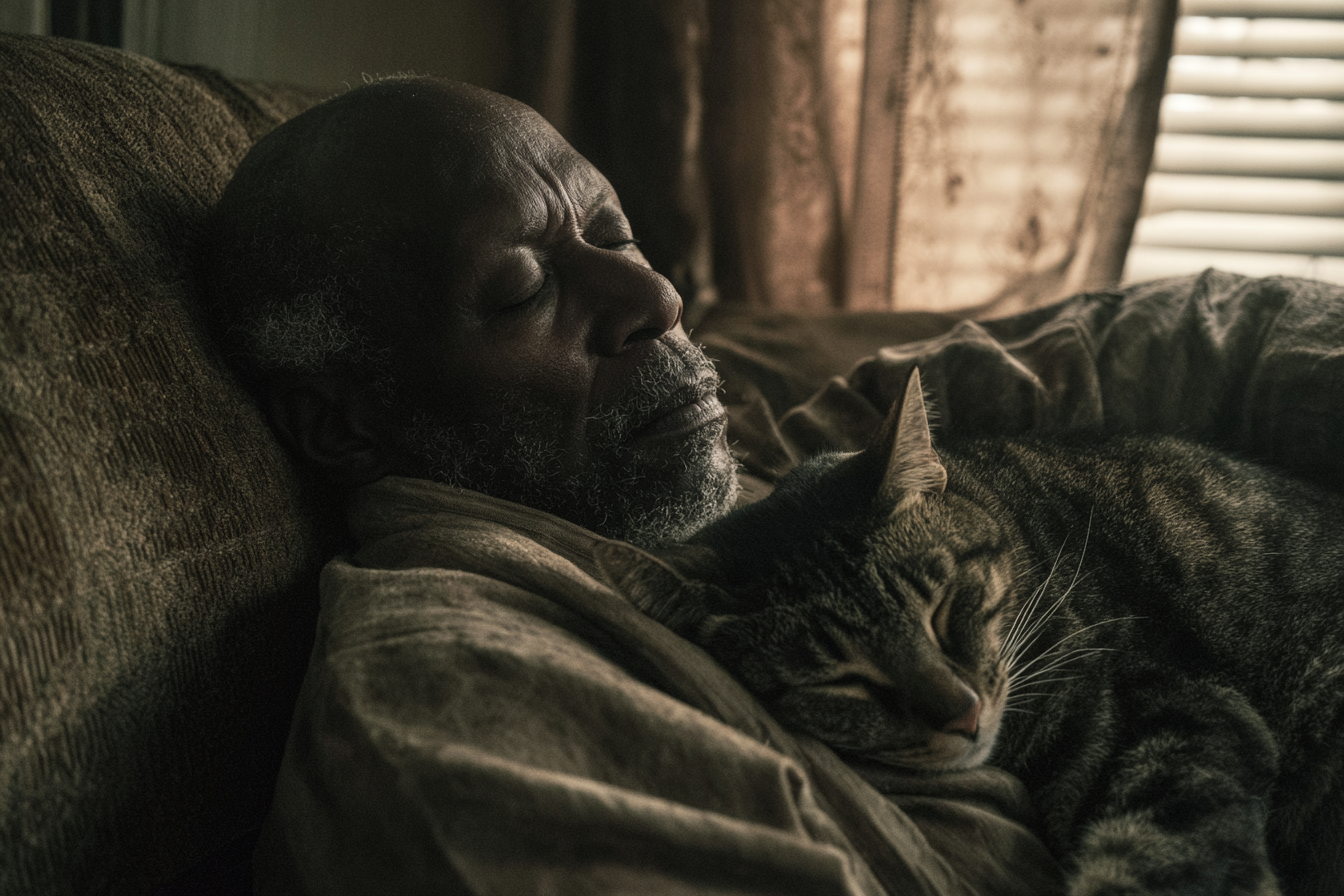
MiMi, the Jedi Master

What TV shows did you watch as a kid?


When I was a kid, I wanted to be a Jedi.
Broomsticks hacked down to lightsaber length, me out in the yard defending the galaxy one swing at a time. I even convinced a few gullible friends I had “the Force.” That lasted until we were broke and couldn’t afford to go to the movies. Then reality slammed shut like a door, and I was trapped in the living room with MiMi, who wasn’t buying my space-wizard nonsense.

She only perked up when I mentioned Billy Dee Williams was in the films — Lando Calrissian with a Colt 45 smile. That got her attention. But her television kingdom was a dictatorship. For years, I was the remote — standing up, twisting dials, flipping channels on command. Then one day we got a “clicker,” and it was like technology had finally crawled into our living room just to save my legs.

So instead of saving the galaxy, I was watching Lawrence Welk with bubbles and bad tuxedos. Johnny Carson telling jokes I didn’t get. Tom Snyder talking late into the night with that weird, hypnotic voice. If I even thought about running in and out the doors, I got drafted into her soaps — General Hospital, Luke and Laura making love and betrayal look like Olympic events. Sometimes she’d hit me with Donahue, which I considered cruel and unusual punishment.

Still, if I played the good grandson, MiMi threw me a bone: The Midnight Special, late-night bands that felt like pure rebellion, or Benny Hill, which I didn’t really understand but knew was deliciously wrong. Benny led me to Monty Python’s Flying Circus — people with funny accents and even funnier logic. I didn’t know they were British. I just knew they made chaos look like art.

In between MiMi’s programming, the house ran on a steady diet of sitcoms that said more about America than any textbook: Good Times, All in the Family, The Jeffersons, Sanford & Son. Those shows were a crash course in race, class, family, and why the laugh track always sounded a little too eager. On the fringes came Chico and the Man, Barney Miller, WKRP in Cincinnati, Taxi, Rhoda, Alice, Lou Grant — each one another set of rules about how adults were supposed to live, fail, and get back up again.

Sometimes we veered rural with Hee Haw, Green Acres, Grand Ole Opry, or A Family Affair. They weren’t staples in the house, but they stuck, like songs you never wanted to learn but somehow knew all the words to.

But my true obsession was space. If MiMi let me touch the dial, I went searching for galaxies: Lost in Space, The Jetsons, Battlestar Galactica, and Star Trek. I never loved Star Trek the way I loved Star Wars, but Uhura’s poise and Spock’s cool logic dug under my skin. They felt like glimpses of who I might be if I could escape gravity — balanced, unshaken, speaking a language that made sense.

So yeah, I grew up with Jedi broomsticks and MiMi’s soap operas, Benny Hill’s chaos and Red Foxx’s side-eye, Donahue’s earnestness and Carson’s smirk. Somewhere in that mess was me, caught between galaxies and daytime TV, learning that the Force was real — but only if MiMi said so.


Author’s Note:
Looking back, I think MiMi & crew were the original Jedi. I’m convinced all the Grandmas, Moms, and Aunts were the bones from which Jedi were born. Their Jedi Mind Tricks got medicine swallowed, chores finished, and strange vegetables eaten — usually under the illusion of baked goods or a shiny quarter. In other words: Grandmas invented Jedi Mind Tricks, and we never stood a chance.

Convoys, Replicants, and a Lady Who Sings the Blues

Daily writing prompt
What are your top ten favorite movies?

When I was a kid, I wore out VHS tapes like other kids wore out sneakers. I’d rewind, replay, and rewind again until my mother finally snapped, “Lord, not this one again!” We laughed about it years later when my grandkids started doing the same thing — watching the same cartoon on loop until it could play without the TV being on. Obsession runs deep in this family.

Here are the ten films that got under my skin, refused to let go, and still pull me in every time I hit play.


Convoy (1978)

Kris Kristofferson, Ali MacGraw, and a convoy of truckers rolling across America, flipping the bird at authority with CB slang I barely understood.

I couldn’t tell you what hooked me harder — the radios, the semis, or the rebellion. I memorized lines, stomped around the house calling myself Rubber Duck, and believed a convoy of eighteen-wheelers could change the world. It’s not a cinema classic, but it speaks to the part of me that refuses to follow rules, even now.


A Piece of the Action (1977)

Sidney Poitier and Bill Cosby playing con men forced to do some good — crime with a conscience, swagger with a side of redemption.

I worshipped Poitier, and seeing him in a lighter role felt like catching your dad cracking a joke when you weren’t supposed to. Cosby was a bonus — I’d worn out Himself on cassette a thousand times, so seeing him on screen was like déjà vu with moving pictures. Add James Earl Jones’s voice booming through the mix and Denise Nicholas as Poitier’s love interest, and I was sold. I didn’t see the social commentary back then — I was too busy grinning. Now, I see it plain as day.


The Chinese Connection (Fist of Fury, 1972)

Bruce Lee tearing through colonial arrogance, fists and fury flying like scripture.

My friends split down the middle: you were either the Six Million Dollar Man or Bruce Lee. I chose Lee every time. We practiced the moves, clumsy imitations in the yard, convinced we were dangerous. Only a handful of us ever stepped foot in a dojo, but the code, the discipline, the honor — that film planted it in me. I still practice martial arts, decades later, because of Bruce.


Blade Runner (1982)

Neon rain, broken people, and machines chasing something like a soul.

I shouldn’t have even been there. Bought a ticket to the godawful Gymkata, slid into Blade Runner like a thief. My first R-rated film on the big screen, and I was gone the second Deckard lit his cigarette. This wasn’t a movie — it was a world. I force-fed it to my kids like vegetables disguised as candy. Years later, one of my daughters called me the week 2049 dropped: “Dad, you ready?” You’re damn right I was. Some obsessions don’t fade. They get inherited.


Excalibur (1981)

Fog, blood, betrayal, and the gleam of steel. John Boorman’s fever dream of Arthurian legend.

This was my first taste of King Arthur, and it sunk deep. I’ve hunted down every Arthurian film since, stacked books on the legends in my house. But it wasn’t the spectacle that stuck — it was the idea of honor, devotion, and duty. It shaped how I thought a man was supposed to be. For better or worse, that sword still gleams in my head.


The Outlaw Josey Wales (1976)

Clint Eastwood spitting tobacco juice and cutting his way through the wreckage of the Civil War.

This wasn’t just my favorite Western — it became mine and my wife’s. We’d sit glued to the TV, watching it over and over until the dialogue was part of our marriage. Because of her, I learned to love Westerns in general. And every time I watch one now, I smile at the memory of her beside me. Clint Eastwood was a badass, sure — but she made the movie matter more.


Cooley High (1975)

Friendship, heartbreak, betrayal — and a Motown soundtrack to drown in.

This wasn’t just a movie; it was my life in another time and place. The music, the teenage angst, the betrayals that cut deeper than any knife — all of it felt too close to home. Even though it was set in the ’60s, it mirrored the world around me. It became a staple in the Black community, right up there with Shaft. And it still hits today, just as hard.


FM (1978)

DJs fighting corporate suits with nothing but vinyl and attitude.

I found this one through my mother’s soundtrack, then realized there was a whole movie attached. For a kid glued to the radio, it felt like God had delivered it straight to my TV. My buddy and I even launched a pirate station we called Q-Sky Radio. He didn’t know where I got the name. I smiled and let him think it was his idea. That love of music never left, and I’d argue FM is part of why House of Tunage even exists today. This movie is my jam, then and now.


The Wanderers (1979)

Bronx gangs, doo-wop on the jukebox, swagger and fists flying at the edge of an era.

Everyone around me worshipped The Warriors — and I did too — but The Wanderers dug under my skin in a different way. Maybe it was the sense of a world dying, of everything you know mutating into something unfamiliar and scary. It taught me that you either shrink back or walk forward into the unknown. I chose forward. I’ve read the book five times at least, and it still hits differently than the film, but just as hard.


Lady Sings the Blues (1972)

Diana Ross as Billie Holiday, Billy Dee Williams smooth as glass, Richard Pryor burning in every scene.

My mom loved Diana Ross, so I sat through this film with her more times than I can count. I didn’t share her love for Ross, but Billie Holiday got her hooks in me. Later, I told that story to my wife, and she showed up with two CDs: Lady Sings Jazz and Blues by Diana Ross and a Billie Holiday collection. She knew me better than I knew myself sometimes. Man, I loved that woman.


Closing Reflection

These weren’t just movies. They were obsessions. They taught me about rebellion, loyalty, heartbreak, and survival before I even had the language for it. My mom teased me for playing them to death, but when I watch my grandchildren loop the same film until it frays, I can’t help but smile. The cycle continues. Different movies, same obsession. And maybe that’s what cinema really is — a mirror we pass down, cracked and glowing, frame by frame.

Smoke, Mirrors, and Monkey-Poop Coffee

Daily writing prompt
What’s the most money you’ve ever spent on a meal? Was it worth it?

This is what I talked about the first time I answered this question:

I’ve dropped stupid money on “fine dining” more than once, usually to be served food that looks like it belongs in a museum instead of my stomach. But the one that sticks with me? The night I took my late wife to that steakhouse she wouldn’t stop talking about. She made me dress up—tie, polished shoes, the whole bit—like we were going to meet royalty.

The place was gorgeous, sure. Atmosphere dripping in class. The kind of joint where they pull out your chair for you and whisper when they ask for your order. But the food? Overpriced mediocrity on a porcelain plate. I sat there chewing, thinking about how many actual cows must’ve died in vain for that bland cut of steak.

She smiled through it, pretending it was everything she’d hoped for. I stayed quiet, pretending right along with her. We drove home, still dressed to the nines, and the first thing she did was pull ground beef from the fridge. Buttered buns, sizzling patties, a dusting of garlic salt. Her famous cheeseburgers hit the table ten minutes later.

She took a bite, lit a cigarette, and said, “That place was sure nice, but the food was horrible.”

I laughed, halfway through my own burger, grease running down my fingers. “Yeah,” I said, deadpan, “but you’re sure wearing that dress.”

She gave me that mischievous grin that meant the night wasn’t a total loss.

So no, the meal wasn’t worth it. But sitting in our kitchen, sharing those burgers, talking like the world didn’t exist outside those four walls? That was priceless. And no five-star restaurant has ever come close.

“Fine Cuisine,” scoffs. I’ve been dragged to a few more of these temples of pretension since my wife passed, and it’s always the same circus act: menus written like bad poetry, plates dressed up like runway models, and food that couldn’t fight its way out of a paper bag flavor-wise. Then, some slick-haired waiter wants to tell me about coffee made from monkey poop like it’s the gospel of good taste. Stop for a second and consider: Why in all that is holy and suspect would anyone want to drink monkey poop coffee? Maybe I missed my calling as a food critic. I’ve got the palate, the sarcasm, and enough bad meals under my belt to write a horror anthology. I just stare and think, Does your Mama know you talk like that? Don’t you lie to me! Whew, were you about to lie on your mama? Let me slap you for her. Come on now, take this. Over here, lying on your mama. Just shame. Because here’s the truth: half these places are selling smoke and mirrors, not meals. And most nights, I walk out thinking, I could’ve stayed home, cooked a real burger, and saved myself the insult and the bill.

Kindness Shouldn’t Have a Name

Some lessons in decency don’t need applause—they just need doing.

Daily writing prompt
Write about a random act of kindness you’ve done for someone.

When we were kids, life taught us early how far a nickel could stretch—and how often it didn’t. We’d walk the streets collecting bottles and cans, hoping to scrape enough together for a sugar rush at the corner store. Back then, they were Mom-and-Pop joints, the kind where everyone knew your name and your running tab of trouble. We’d stand at the candy rack, counting and recounting our coins, trying to game the system and get the most candy for the least cash. Never worked out like we wanted. Especially when a new treat hit the shelf, shiny and out of reach.

Fast forward a few decades. I’m in one of those little grocery stores that somehow survived the big-box purge. I catch sight of two kids doing that same math on the floor, coins spread out like a desperate poker hand. Something about it yanked me backward in time, to the weight of nickels in a sweaty palm and the taste of wanting more than you could buy.

So I slid the cashier a few bills and told her to make sure those kids didn’t have to choose between sour worms and chocolate that day. The store owner, in his well-meaning way, pointed me out like some small-town hero. The kids lit up, grinning at me like I’d handed them the moon.

And that’s the part I hated. Not the kids’ smiles—hell, that’s the good stuff—but the fact that it wasn’t supposed to have my name on it. My father brought strangers home, gave them a meal, a place to sleep for the night, and never said a word about it. My stepmom told me those stories later, like family lore whispered over coffee. I grew up believing you do what’s right, no matter the cost. I didn’t understand this then, but as I got older, it began to resonate.

Kindness, the way I learned it, is quiet. It’s supposed to slip in, do its work, and leave without a sound. That day, the sound of my name broke the rule I was raised on.

The Tradition I Refused to Keep

Daily writing prompt
What traditions have you not kept that your parents had?

Traditions? We didn’t have those. What we had was the grind—long hours, picket lines, busted knuckles, and dreams that never quite made it past the kitchen table. That’s what I grew up with. That’s what I walked away from.

My Ma worked her ass off every damn day. She never made speeches about doing it for me—she just got up, got dressed, and kept food in my mouth. I spent time on picket lines with her, too young to know what we were fighting for but old enough to feel the solidarity—cookies, soda, and snacks passed my way no matter the weather. Years later, sitting in thirty-below weather on my own grind, I thought, so this is how it feels. Some lessons don’t come wrapped in wisdom—you learn them the hard way.

My father’s grind was a different verse to the same song. He and my stepmom worked long hours, no safety nets. Dad taught me how to fix things with lines like, “Boy, grab me this,” or my favorite, “Fix this—it better be done by the time I get back.” He never yelled. There was a rare calm in him when he was fixing something, like bringing broken things back to life was his way of breathing. That stuck with me. Eventually, I learned not just to fix things but to make them better. Maybe that was his version of a tradition.

Retirement was the myth in my family, whispered about like a holy grail no one ever reached. My dad swore he’d finally read when he retired. He never got there. My ma hit semi-retirement only to take extra shifts to keep the lights on. My stepmom? She made it, still kicking, still talking smack.

And me? I’ve retired twice now, younger than they ever did. When I visit my stepmom, I tease my older brothers about it with gusto, like it’s my life’s calling. She just smiles and finally says, “Leave your brothers alone.” But I don’t. I earned this one.

I read every damn day. I smile. I exhale. That’s the tradition I refused to keep—the one where you grind yourself to dust chasing a finish line you never reach. I broke the cycle. I fought like hell so I could finally breathe.

Typical? Not Even Close.

Daily writing prompt
Was today typical?

If you asked me this morning, I’d have said yeah, just another day in the trenches. But now? Sitting in a half-dismantled lab, my old Mac humming like it’s judging me for abandoning it years ago, and my desktop sulking in the corner after another crash-fest—I’m not so sure.

Today was supposed to be simple: get the other MKU sites moving, feed the beast, keep the universe spinning. Instead, my main machine decided to reenact a demolition derby every time I opened a design file. After the fourth hard reboot, I did what any sane person would do—I shut the whole thing down, stared at the chaos, and muttered a few choice words about technology that I won’t repeat here.

Reorganizing the lab felt like a hostage negotiation with my own mess. Cables everywhere, notes buried under old coffee cups, and me wondering if “organized chaos” is just code for “I gave up.” Eventually, I gave in and switched to the Mac. It felt weird, like moving back into your childhood bedroom—familiar walls, but you don’t quite fit anymore.

And because I never know when to leave well enough alone, I decided an active series needed a complete rewrite. Not a tweak, not a tidy edit—a tear-it-down, salt-the-earth, start-from-scratch rewrite. Why? Because “active” doesn’t mean “good,” and I’m done posting just to keep the lights on. If it doesn’t hit the mark, it burns. That’s the rule.

So, was today typical? In some ways, yeah—just another battle between me, my machines, and the madness of trying to build something bigger than myself. But in other ways, no. Today came with surprises: chaos, frustration, a few muttered expletives, and one revelation worth keeping—this Mac keyboard? Absolute magic. The rest of my machines are getting one whether they like it or not.

Maybe that’s how most days really are in this line of work: half plan, half fire drill, always one keystroke away from starting over.

Red, White, and Boom (Also Vomit)

FLASH FICTION – FRIDAY FAITHFULS


“Grandpa, I need a real story for my history project. Something about America, or the Fourth of July, or whatever.”

The old man scratched his chin, leaned back in the squeaky recliner, and smirked.

“Alright, kid. Lemme tell you how your grandma and I met. It was the Fourth of July, 1978. I was 19, dumb as bricks, and full of patriotic stupidity.”

From the kitchen, a voice called out: “Oh, this again. You gonna tell the real version this time, or your usual nonsense?”

Grandpa rolled his eyes. “It’s all true. Just maybe… slightly singed around the edges.”

It started with an idea. Not a good one. My Uncle Tommy, our genius friend “Meatball,” and I decided to put on our own fireworks show. We didn’t have proper fireworks. We had two crates of off-brand bottle rockets, a metal garbage can, a stolen traffic cone, and a six-pack of warm root beer.

Tommy swore the garbage can would “amplify” the fireworks. Meatball called it “fire science.” I just lit the fuse.

Boom.

The garbage can launched thirty feet in the air like a missile. One rocket shot sideways and hit a mailbox. Another bounced off my forehead. And one, God help me, flew straight down my pants.

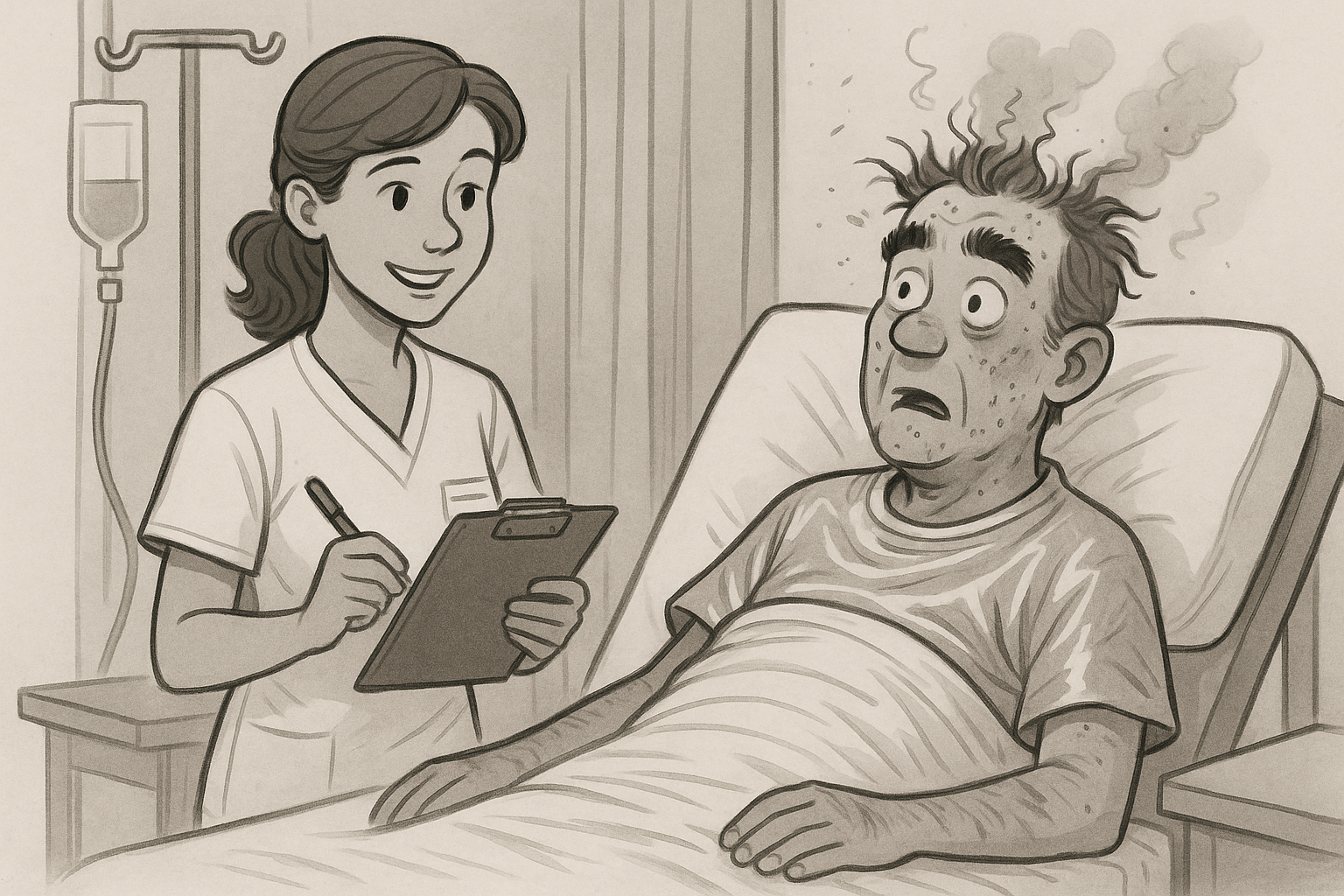
I panicked. I ran in circles. My shorts were smoking. I stopped, dropped, rolled, and screamed. At some point, my eyebrows gave up and disappeared.

Next thing I know, I’m in the ER, wrapped in silver burn cream, looking like a baked potato with no dignity.

That’s when your grandma walks in. Nurse training student. Bright smile. Clipboard. Smelled like lavender and antiseptic. She looked at me, this smoldering idiot, and said, “So… was it worth it for freedom?”

From the kitchen again: “And what did you say next, hotshot?”

“I said she looked like a very clean angel. Then I threw up on her shoes.”

“Mm-hmm. Romantic.”

“Did you ask her out?”

Are you kidding? I tried. But the morphine was kicking in. I told her she looked “like a floating disinfected goddess” and then passed out while apologizing to the IV pole.

Still—she didn’t run. That’s how I knew she was special.

We kept in touch. She came to my follow-ups. I wrote her letters. She eventually forgave the vomit. We got married two years later. She even let me light sparklers at the wedding. Supervised, of course.

“Wow. That’s kinda romantic… in a flammable way.”

Exactly. So you tell your teacher this: Freedom’s messy. Fireworks are dangerous. But love? Sometimes, it starts with a bang. Just don’t put bottle rockets in garbage cans.

From the kitchen: “And tell him about the park ban!”

“That’s not relevant to the assignment.”

Late Night Grooves #158

WHOT Episode 158 – “On and On” by Curtis Harding

Hosted by Mangus Khan

[The bassline curls in warm and lazy. The drums hit like heartbeats. Then that voice—cool, confident, and full of earned wisdom.]

“This is Late Night Grooves.
WHOT.

Episode 158.

I’m Mangus Khan.

And tonight… we’re still carrying the weight.

But now?
We’re carrying it with rhythm.

Because healing doesn’t always show up loud.

Sometimes it shows up with a slow strut and a bassline that tells you:

You’re still here.

So keep going.

Tonight’s sermon:
Curtis Harding – “On and On.”

This is the sound of surviving with soul.

Not perfect. Not untouched.
But alive.

“I keep on loving you / On and on…”

He’s not just talking about a person.

He’s talking about life.

Loving it. Fighting with it.
Holding it like something sacred even when it’s cutting you up.

Curtis sings like someone who’s seen too much to lie—
But still finds a reason to show up with love anyway.

The horns come in like sunlight through a cracked window.

The drums move like breath.

The vibe says:
You made it through the dark.
So now let’s move.

This isn’t about erasing the pain.
It’s about dancing with it.

Because grief doesn’t disappear.

But joy can sit beside it.

And Curtis Harding?
He’s your reminder that both can exist at once.

Episode 158.
Curtis Harding.
On and On.

This is Late Night Grooves.
WHOT.

And I’m Mangus Khan—
Still here.
Still grooving.
Still choosing joy even when the beat slows down.

And if you’re out there tonight, thinking you can’t keep going—

Play this track again.

Let it remind you:

You already are.”


Diet Be Damned: A Pie Worth Fighting For

Daily writing prompt
What’s the most delicious thing you’ve ever eaten?

Pie, Memory, and a Whole Lot of Butter

By the size of my waistline, it’s clear I’ve enjoyed several delicious things over the years. I’m not shy about my love for food—comfort food, street food, grandma’s Sunday roasts, and that one time I accidentally stumbled into a Michelin-starred bistro thinking it was a diner (don’t ask).
But today, let’s zero in on a single dish. Not the most expensive, not the fanciest, and certainly not the healthiest. But maybe—just maybe-the most soul-hugging, tastebud-dancing, eye-closing bite of heaven I’ve ever had.
We’re talking nostalgia. Flavor. A moment in time where everything felt just right.

Let me take you there.

The most delicious thing I’ve ever eaten? That honor belongs to my mother-in-law’s Chess Pie.
Who knew eggs, butter, and sugar could transform into something so profoundly magical? No fancy ingredients. No secret spice blend stolen from an old monk in the mountains. Just pantry staples and a woman who understood what it meant to cook with heart.

When she made them—and I happened to be in town—she’d always bake one just for me. No slice, no dainty plate. I’d grab a fork and go in straight from the tin like a man possessed. I didn’t have time for pretense or politeness when it came to that pie.

My brothers-in-law and I used to laugh about it later—how they’d try to fight me for my special pie. They always lost. Bitterly. They’d grumble and sulk, but we all knew the truth: that pie had my name baked right into it.

She’s gone now. The oven’s long since cooled, but the memory of that pie clings to me like a warm quilt. Others have tried to replicate it. Good intentions, decent efforts… but no one’s even come close. Maybe they’re missing the butter. Maybe they’re missing the touch. But I think—more than anything—they’re just missing her.

Now, I’ve gone on many rants about that pie. My poor stepmom has heard them all. She’s a legend in her own right—her baked goods could have their own chapter in the “Food That’ll Ruin Your Diet (and You Won’t Care)” section of my memoirs.

One night, after listening to yet another pie lament, she leaned back with a smile and said, “I can make that pie. Matter of fact, mine’ll be your new favorite.”
Challenge accepted.

I went to the store like I had a hundred times before, rattling off that recipe list I had memorized more by heart than by paper. She worked her magic, put her spin on it, and soon her version of the legendary Chess Pie was cooling on the counter.

I dug in—fork first, as always. No formality. No mercy. The pie was incredible. Creamy, buttery, with that perfect caramelized top and a sweet, silky center. She beamed.

“It’s good, ain’t it?” she asked. “Better than hers, huh?”

Without skipping a beat, I said, “No.”

She looked at me like I’d just cussed in the middle of a sermon. And let me be clear—I’ve actually cussed in church before. I know that look.

“No ma’am,” I said. “It’s not hers. You added coconut. But listen—every time I visit, I’m gonna need this pie. That’s a fact.”

Her smile returned, full and wide. And when my brother took me to my mother-in-law’s funeral, there it was—my stepmom’s pie, waiting for me. A tribute. A comfort. A bridge between what was and what still remains.

I was blessed—richly blessed—to have three mother figures in my life. Each of them different. Each of them fierce in their love and quiet in their sacrifices. My stepmom is the only one who remains, and I don’t take that for granted.

So the next time I visit? I’ll be grubbing, fork in hand, diet be damned. That pie—her pie—now carries more than flavor. It carries memory, resilience, grief, love, and a whole lot of butter.

See, the most delicious thing I’ve ever eaten wasn’t just about taste. It was about connection. About the sacred ritual of someone baking just for you. About loss and legacy, and how sometimes, healing shows up in a crust that cracks just right.

Food has a funny way of holding memory, doesn’t it? And if you’re lucky—really lucky—it’ll also hold the people you’ve loved, the ones who made the world feel safe, sweet, and whole.

Einstein, My Daughters, and the Great Color Uprising

A dad’s lifelong devotion to black tees, military logic, and resisting floral print tyranny.

Daily writing prompt
If you were forced to wear one outfit over and over again, what would it be?

Wearing the same outfit every day? That’s not a hypothetical for me — that was life.
I spent most of my adult years in the military, where your uniform isn’t just clothing — it’s a routine, a mindset, and a welcome escape from the exhausting question of “What should I wear today?” Back then, getting dressed wasn’t a choice. It was automatic. Simple. Efficient. Honestly? That was one of the easiest parts of life. The uniform taught me that identity isn’t stitched into fabric — it’s how you carry yourself in it.

Meanwhile, back home, a very different clothing crisis was unfolding.

While I was out there in my neatly pressed gear, my daughters were launching daily fashion battles. I’m talking full-on wardrobe wars. Drama over shoes. Tears over tops. Shouting matches with closets that had more options than a department store. Watching them choose an outfit was like witnessing a live episode of Project Runway, with less time and more screaming.

One’s yelling, “I have nothing to wear!” while standing in front of a closet that could clothe a small army. The other’s pairing leopard print with glitter unicorns like she’s auditioning for a circus-themed fashion show. And don’t even get me started on the hair. The hair was its own saga. Bows, buns, braids, total breakdowns. It was like a reality show challenge: Can this ponytail survive until school drop-off?

In a moment of what I thought was parenting genius, I offered them a solution: shave your heads. Just like Dad. Minimalism at its finest. No combs, no tangles, no problem.

They were horrified. Naturally, they tattled to their mom within seconds.
She was… not amused.

I calmly explained that I was just trying to be helpful. I even showed them photos of me rocking the shaved look — clean, confident, streamlined. But no one was buying it. Not my wife, not my daughters, and definitely not the household consensus on “acceptable hair decisions.” Still, to this day, I stand by that suggestion. Bald is bold. Bald is practical. Bald would’ve solved a lot of tears.

Now that I’m out of uniform, my outfit hasn’t changed much. These days, it’s all about t-shirt, jeans, and boots. That’s it. Always has been. Always will be. My color palette? Black and blue. It’s simple, functional, and most importantly — mine.

But my daughters? Oh, they’ve got opinions. Suddenly they’re fashion consultants, calling me “boring,” offering unsolicited advice, and trying to inject color into my life like I’m a walking grayscale emergency. And yet — every time I dress up for a formal event in a sharp suit and tie — they light up. “Ooooh Dad! You look good!” Yeah. I know. My suit game is elite.

Still, the color crusade never ends. They’ll toss me a lime green shirt and say, “Dad, it looks good on you!” I answer with my world-renowned and often-lamented scowl. Doesn’t stop them one bit. They just keep up their absurd banter and — as if it couldn’t get any more dramatic — they now rope in my granddaughters for backup. It’s a full-on fashion intervention squad.

My response? Calm. Stoic. “That’s adorable.”

At one point, I even brought science into the mix. Told them Albert Einstein wore the same outfit every day to avoid wasting mental energy on small decisions. Genius, right?

Their response: “Einstein is stupid.”

Einstein. The father of relativity. Disrespected in my own kitchen.

Ever since, the care packages have started. Random boxes show up with shirts in every color of the rainbow — sunburst orange, flamingo pink, Caribbean teal — loud enough to disrupt air traffic. Their mission is clear: convert Dad.

I never wear them… unless I’m visiting. Then I throw one on, smile for the selfies, and play along. But the moment I’m back home? It’s straight back to black and blue. Reliable. Timeless. Unbothered.

Because when it comes to choosing one outfit to wear forever?


I already made that choice a long time ago.
And until Einstein gets his fashion redemption, I’ll be right here — black tee, boots, and unbothered.

The Pain in My Ass I’d Never Trade

Who would you like to talk to soon?

DAILY PROMPT RESPONSE

My stepmom has been a pain in my ass for over forty years. Don’t judge me — the feeling’s mutual, and we both know it. That’s just how we operate. Call it our version of a love language: blunt, sarcastic, no sugarcoating.

When I was younger, I used to wonder what my dad saw in her. Later, after spending enough time dealing with him, I started wondering how she managed to put up with him. She’s one of the toughest women I’ve ever met — sharp-tongued, unfiltered, impossible to rattle.

And if I’m being honest, she’s guided me through some very rough situations over the years. I’ve learned to appreciate her wisdom — the kind that comes from experience, not books. I’m grateful she cares enough to speak up, to give input even when I act like I don’t want it. But she’ll never hear me say that. It’s not what we do.

Her birthday’s coming up, and I plan to surprise her. We’ll end up having one of our signature conversations — no niceties, just raw honesty and sideways affection. My older brother will give me that look he always does, like Can you two not do this right now? And I’ll fire back with my classic Don’t make me punch you glare. He knows better.

What blows my mind is that she’s pushing ninety. Ninety. She’s lived through things I’ve only read about in history books or faked authority on in college essays. And yet she’s still sharp, still fierce, still calling it like she sees it.

That’s her. That’s us. Messy, loud, brutally real — and somehow, it works.

The Stuff They Give Up (So the Rest of Us Don’t Have To)

Daily writing prompt
What sacrifices have you made in life?

DAILY PROMPT RESPONSE

Everyone makes sacrifices. That’s just part of being an adult—along with bills, back pain, and pretending to understand how taxes work. But some sacrifices don’t get enough credit. They’re quiet, constant, and totally underappreciated. Let’s start with parents.

Parents: The Masters of Silent Sacrifice

Sure, everyone knows parenting is hard. But it’s not just about surviving diaper blowouts or sitting through 300 replays of Frozen. It’s about the real, behind-the-scenes sacrifices. Like the mom who takes a job she doesn’t love just because it comes with decent health insurance. Or the dad who eats the last two bites of crusty mac and cheese instead of cooking himself dinner—again.

Parents give up more than time and money. They give up peace and privacy. They trade dreams for dental plans. And let’s not forget sleep. You could power a small city on the energy parents lose just trying to get a toddler to bed. It’s not glamorous. No one hands out medals for making it through a meltdown in Target. But these sacrifices shape lives. Quietly. Powerfully.

First Responders: Showing Up When It Counts

Then there are first responders—firefighters, EMTs, police officers—the folks who run toward danger while the rest of us are Googling “how to escape a burning building.” These people give up a lot too.

They miss holidays, birthdays, sleep… you know, all the fun stuff. And what do they get in return? Stress, trauma, and the joy of paperwork. Lots of paperwork. Plus, they carry memories most of us couldn’t handle—gritty, painful, unforgettable moments that stay long after the sirens stop.

And yet, they keep showing up. Not for glory. Not for a gold star. Just because someone has to—and they’ve decided it’ll be them.

The Sacrifices We Don’t See—But Should

Here’s the thing: whether it’s a parent sacrificing their sanity during a four-hour kindergarten play, or a paramedic showing up at 3 a.m. because someone else’s world just fell apart—these acts deserve more than a passing “thanks.” They deserve to be seen. Respected. Remembered.

Because at the end of the day, sacrifice isn’t always some big, dramatic gesture. Most of the time, it’s a thousand small decisions made out of love, duty, or just sheer stubborn commitment to doing what’s right.

And maybe a little caffeine.

Corner Wisdom

Daily writing prompt
List the people you admire and look to for advice…

DAILY PROMPT RESPONSE

There have been plenty of people in my life I’ve admired and turned to for advice—too many to name, if I’m being honest. So instead of listing names, I’ll talk about a time in my life.

When I was a young buck, there were a few older gentlemen who used to hang out by the market. These cats preached—not religion, but life. No dogma, just wisdom. I’d stop by with a bag of penny candy and listen in.

Some of them also posted up at the barbershop, dropping the same kind of knowledge. I always wanted to be that cool—calm, sharp, and respected, with something real to say.

I’d go home and tell my auntie and MiMi about those guys. They’d tell me to stay out of grown folks’ business—and let me know which ones to steer clear of. But most of those men knew MiMi, so I was safe. Nobody messed with MiMi’s kinfolk.

Looking back, I probably wasn’t getting the full picture—just a watered-down version of what they were really saying. But I appreciated every bit I was able to soak up. It stuck with me.

Though I admired those men and wanted to be like them, I never thought I’d get there. Then one day, at my niece’s wedding, I was cutting up with my brothers, just talking mess, making people laugh. This young lady nearby was cracking up at us. Then she said, “I hope I’m this cool when I get old.”

We were floored. We’re a lot of things—but cool? That one caught us off guard.

But I’ll always remember this: people will remember your example more than your advice.

Strategic Withdrawal

Daily writing prompt
What makes you nervous?

DAILY PROMPT RESPONSE – FICTION

I never meant for things to turn out like this. Not that I had a plan—God forbid I be that organized. Life just… happened. Like a lopsided bundt cake with all the chocolate chips sunk to the bottom. Turns out you’re supposed to mix them into the batter. Would’ve been good to know before I tried to impress Rachel Largo—the most beautiful girl in three counties, maybe the entire eastern seaboard under the right lighting.

I didn’t check the expiration dates either. The cake tasted like regret and powdered disappointment. Rachel smiled and said it was “very creative,” which is high school girl code for this is awful, but I admire the attempt. She took one bite, chewed like she was processing trauma, and excused herself to “call her mom”—translation: you’ll never see me again.

I stood there in my mom’s kitchen, holding a dented bundt pan, wondering what exactly had led me to that moment. And I realized maybe I was just that guy. Not the one who gets the girl—just the one who learns not to bake without instructions.

Most of my life’s been like that. Spent in service to others. Not because I’m noble. I wasn’t raised by monks. No lightning bolt of altruism hit me over a bowl of cereal. If anything, I swore I wouldn’t end up outside a convenience store with a paper bag and a cigarette, crashing on my mother’s couch.

Spoiler: I did. More than once.

But service? That just kind of… happened. One favor turned into another. One crisis became two. Suddenly people were looking at me like I had answers. Like I was someone you could lean on. A functional adult. Which was optimistic, honestly.

Do I regret it? No. Do I feel good about it? Also no. I made mistakes—some loud and theatrical, others slow and corrosive. The loud ones make for stories. The quiet ones wear you down. And despite my best efforts and my many failures—usually delivered in the same week—it all still feels like it adds up to… nothing.

And that’s the part that really sticks. I might be the only one who thinks that. Everyone else moved on. I’m still here, counting ghosts.

I was in the Philly airport once when I saw her. The girl in uniform. Back then we traveled in dress—polished boots, pressed collars, trying to look like recruitment posters. She had that look: sharp, composed, untouchable. Every guy nearby tried to catch her attention. I didn’t bother. I wasn’t nervous—I was realistic. Women like her didn’t talk to guys like me. We carried bags. Maybe threw a punch if needed. But conversation? That wasn’t in the playbook.

Then the flight got canceled.

Instead of sleeping on a chair under fluorescent lights, they put us up in a hotel. Which meant one thing: party. Some guy who needed attention like oxygen threw a room bash together. I wasn’t old enough to buy beer, but I’d been doing it long enough to qualify as a supplier. I grabbed a few six-packs and slipped outside to the pool, which was closed for the season—quiet, gated, empty.

That’s where she found me.

Out of uniform, hoodie up, hair tied back. She looked more real than before. She spotted me, gave a half-smile, and walked over.

“You hiding too?” she asked.

“Strategic withdrawal,” I said.

She laughed. Sat down next to me. I handed her a beer.

We didn’t talk about much—music, food, home. No names. No stories. Just two strangers in the quiet, trading small things. But for the first time in a long time, I didn’t feel like background noise. I felt seen.

That should’ve been it. A memory, sealed off and fading. But a few years later, after deployment, I was sitting on an exam table at the clinic, in a paper gown, waiting for some overworked doc to clear me.

The door opened.

Rachel walked in.

Yes, that Rachel. Bundt cake Rachel.

And behind her? The nurse?

The girl from the pool.

I didn’t know whether to laugh, panic, or check if I was still in the desert hallucinating. Rachel was flipping through my chart. The nurse was wrapping a cuff around my arm like this was just another Tuesday.

And then she asked, casually, “How’ve you been sleeping?”

Like we hadn’t shared a beer under dead stars. Like we hadn’t sat together in silence while the world spun out behind us.

I opened my mouth. Lied like I’d been trained to.

“Sleeping fine,” I said.

But the truth?

I would never sleep again.

What My Mother Taught Me, What My Family Gave Me

Daily writing prompt
Describe a positive thing a family member has done for you.

DAILY PROMPT RESPONSE

“Do as I say, not as I do,” the classic parental phrase, never touched my mother’s lips. However, “Because I said so,” not only repeated — it seemed like it should be on a plaque above the door. I even used it with my children, and they used it with theirs. However, this isn’t the most important lesson she gave me. What she demonstrated my entire life is how to be steady, even in the most challenging situations life has to offer.

She raised me by herself, so every bump, scrape, and broken bone — she was steady. Honestly, I don’t know how she did it. I remember being on the verge of losing it with my own kids, and I had a wife to back me up. To do it all alone? I don’t have the words.

That steadiness she showed me has served me well throughout my entire life. No matter what, I stay steady. I might be pissed off while I’m doing it — that trait definitely comes from my father. He had two modes: super cool or absolute death. Nothing in between. He kept people guessing because you never knew how he’d react. People say I do that too. I always swore I’d never be anything like him… well, oops.

It’s said that in life you have two families: the one you’re born into and the one you choose. My mother gave me the tools to build both. Her steadiness became my anchor, and whether I was dealing with work, parenting, or just the everyday chaos of life, I leaned on what she taught me — stay calm, handle your business, don’t fall apart.

And yeah, maybe I inherited some of my dad’s unpredictability too. But thanks to her, the foundation underneath is solid. That balance — between calm and chaos, between knowing when to hold it together and when to let it fly — that’s something I’ve carried into every relationship I’ve built, chosen or otherwise.

My chosen family has shown up for me in ways I never could’ve imagined. I’m truly blessed to have them in my life. Like all my family, they’ve been incredibly patient with me. I can be a lot sometimes — I know that. But they hang in there.

The challenges in life never really stop coming. But when you’ve got people who stick with you, who steady you, who love you even when you’re not at your best — you can get through anything.

In life, we have two families: the one we’re born into and the one we choose. I’m grateful for both.

Top 5 Ways to Ask a Girl Out: Rule #4

FICTION – SHORT STORY SERIES


Top 5 Ways to Ask a Girl Out: Rule #4
If she says “this isn’t a date,” it’s 100% a date. Don’t ruin it.


“So,” she said, tossing her greasy rag in the toolbox like a boss, “I owe you dinner.”

I tried to play it cool, even though my brain immediately burst into a confetti cannon. “You don’t owe me anything,” I said, knowing full well that yes, yes she absolutely did and dinner sounded like a dream.

“Okay, but I’m still getting you dinner. Not as a thank-you. Just… you know. Casual. Like friends.”

There it was. The dagger.

“Right. Totally. Friend dinner. My favorite kind of dinner,” I said, with the emotional grace of a man trying to pretend pizza doesn’t taste better when it comes with romantic tension.

She smiled like she could see straight through me. “Cool. There’s this taco truck I like. Cheap. Questionably licensed. But amazing.”

“Perfect,” I said. “Nothing says ‘healthy bonding’ like eating meat from a vehicle.”

An hour later, we were sitting on a curb, elbows bumping, holding greasy foil-wrapped masterpieces. She was already two tacos in. I was still trying to figure out how to bite mine without it completely disintegrating into my lap.

“You always eat this slow?” she asked, watching me with mild concern.

“I’m being strategic,” I said. “Every bite is a structural risk.”

She laughed. “You’re weird.”

I paused. “In a bad way?”

She tilted her head. “In a taco-anxious, coffee-faking, car-fixing kind of way.”

“So… like a charming disaster?”

“Exactly,” she said, raising her bottle of Jarritos. “To charming disasters.”

We clinked bottles. Mine fizzed over and spilled down my hand. Of course.

I wiped it on my jeans. “Classic me. Keeping the bar low, so I’m always exceeding expectations.”

She grinned. “You know this is kind of a date, right?”

My brain blue-screened.

“I mean,” she continued, casually licking hot sauce off her thumb, “you offered free labor, let me serve you questionable coffee, survived my car, and now you’re sitting on a curb eating tacos with me like it’s totally normal. You passed the test.”

“There was a test?”

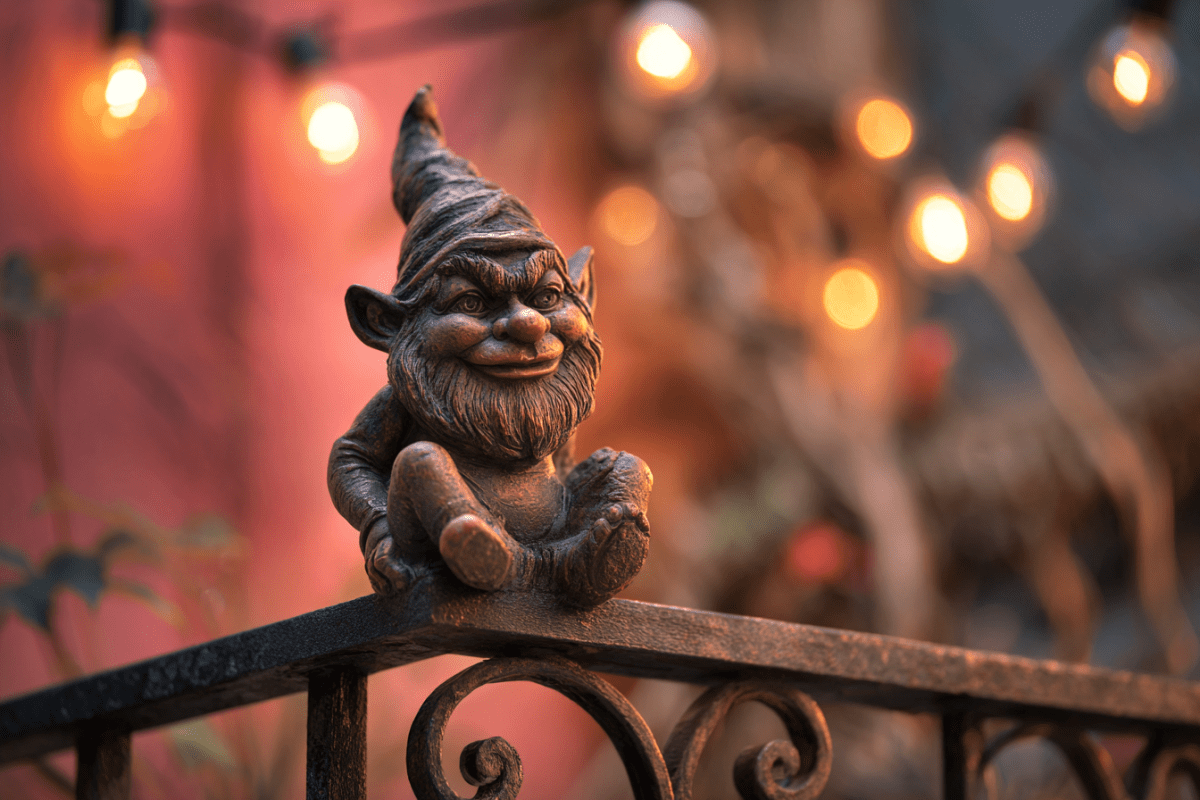
“Oh yeah. The gnome was part of it.”

I blinked. “The gnome was a test?”

She nodded seriously. “He only approves of guys with good intentions and strong emotional stamina.”

“Well. That explains the pressure I’ve been feeling in my soul.”

She laughed again, and I swear it hit me harder than the tacos. It was like someone had tugged a thread that ran straight through me — tight, impossible to ignore.

I looked at her, trying to decide if this was the moment. The moment to claim some free will, throw caution to the wind, and say it.

But she beat me to it.

“So,” she said, “if we do this again, maybe we pick somewhere that doesn’t cause gastrointestinal roulette?”

“Are you asking me out?” I asked.

She raised an eyebrow. “Would that freak you out?”

“Only in the best way.”

“Well, then.” She stood and offered me her hand. “Let’s call it a soft launch.”

I took it, still sitting. “Wait. Was that a farewell to the taco truck?”

“Oh, definitely not,” she said, pulling me up. “We’re just giving it a rest before we end up in a hospital.”

We walked back toward the cars in a quiet little row of footsteps, hers just ahead of mine. And yeah, maybe it wasn’t official. Maybe it was just tacos and teasing.

But this time, I didn’t pretend. It was a date.

Still Flying

Daily writing prompt
When you were five, what did you want to be when you grew up?

DAILY PROMPT RESPONSE

When you’re five, everything feels big.
The world, your dreams, your backpack.

But as you get older, you can’t always hold onto things without a little help.

That’s what happened when I found it—
a flash of memory caught in an old photo,
a school project that somehow survived.
Battered, scarred, but solid.
Like the dreams taped inside it.

I just wanted to fly.
I couldn’t explain why, not then.
I just did.

To see the world.
The wonders from our primers,
the postcard places that looked too perfect to be real.

Maybe I’d discover new lands,
find cool toys, read comics in French.
Were mummies scary? I needed to know.

Was riding a motorcycle as cool as it looked in the movies?
Could I jump cars like Evel Knievel?
Would I one day ride with a girl on the back,
smiling like it was the best thing ever?

I knew I wasn’t old enough for that part.
Maybe when I get big.

Would I be able to sing and dance?
Be cool like Elvis?
Tough like G.I. Joe?
Stretch like Stretch Armstrong?
Or maybe I’d just build the wild stuff I made with my Legos.

But mostly…
Mostly, I wanted to make my mom proud.

And now—
I did fly.

France, Italy, Spain, Japan—majestic in ways no book ever captured.
There’s nothing like flying over treetops with the chopper doors open.
Heart racing.
Then pounding.
Blood surging through my veins.
I felt something I still can’t describe with words.

I never jumped cars,
but I had that girl on the back.
Her arms around me,
her heartbeat against mine,
that sharp little yelp when things got wild.
Yeah, that was something.

I don’t sing, but boy, did I dance.
And when I stopped… I got fat.

Some say I was tougher than G.I. Joe.
And somehow, my influence stretched across the globe.
But no one will ever know my name.

What I remember most—
Mom’s smile as she talked about “the grands,”
each one certain they were her favorite.
Each one knowing they were loved.

As for me…
Did I make her proud?

God, I hope so.

Boy, you part squirrel?

Daily writing prompt
What’s the most delicious thing you’ve ever eaten?

DAILY PROMPT RESPONSE

As a kid, my idea of fresh fruit came from the market on a white tray wrapped in Saran Wrap. Of course, I ate apples from apple trees and stuff. However, I ran into many apples that needed to be ripe more or were too ripe. So, to solve this problem, the stuff on the tray was always right—well, at least of the time.

I married a southern woman, where dinner was a specific time and all that. I always looked at her strangely because I was hungry when I was hungry. One day, we were at her mother’s for dinner. Of course, my wife and her sisters had to show up early to assist in preparing the meal. The “men folk” had to sit on the carport until they sent for us. I was the youngest and the newest in the group. I sat there listening to garbage that older men sling at younger ones.

Suddenly, I was starving, so I went to tell my wife I would get something to eat while waiting for them to finish. You would think I had committed a cardinal sin or something. All my sister-inlaws started having a conniption about what I just said. Now, I was newly married, and my sister – inlaw’s had absolutely no sway. However, my mother-in-law made a sound in a tone that I recognized from my own mother. Quickly, I prepared myself for an exit. However, I came to my rescue, seeing my death was imminent. I didn’t know. I swear. How dare I walk into a kitchen of southern women cooking dinner and announce I was getting food from someplace. I want to point out here that making this announcement in any kitchen, anywhere in the world, most likely will have the same effect. Let’s just chalk this mistake to youthful ignorance.

My wife matched right outside, past the “men folk” laughing about something. I was hungry, and I got mean when I got hungry. There was a peach tree at the end of the driveway. My wife suggested I eat a few peaches to hold me over.

“From where?” I asked, looking confused and worried at once.

My wife returned my look. “The tree babe,” she said, pointing at the tree with several peaches on the ground around the trunk. I looked at my wife sternly.
“I’m not eating those,” I said firmly and began walking away, muttering over my shoulder, ” I only eat fresh peaches, you know, the ones on the white tray!” I had the classic duh expression on my face. It was something I used regularly back then.

My wife stood shaking her head and started laughing. She was holding her side and everything. I know I could occasionally be the source of extreme levity, and I didn’t feel this was one of those moments.

“They don’t get any fresher than these, hun, right off the tree,” she continued as she walked away. So, I tasted a peach. I was fully prepared to render I proper, “Woman, I told you.” However, I needed to be corrected. Those peaches were the best thing I had ever tasted. I ate one, then another, and another. Suddenly, I snapped out of my euphoric bliss.

“Boy, get down from there!” I hear a voice shout as I’m continuing stuffing more peaches down my throat.

“Girl, get your husband!” my mother-in-law told her daughter and looked back up at me. Boy, you part squirrel?”

MLMM Photo Challenge – 05302024

FICTION – PHOTO CHALLENGE RESPONSE

Here is my response to MLMM Photo Challenge

Image credit Sarah Whiley

I surveyed my kingdom and the lush gardens before me from my perch on the railing. There’s a sign by the gate with a picture of me. It says something below it. They call me Stanley. I wonder which one came up with that name. The humans often walked these paths, marveling at the beauty of nature, but none could truly appreciate it as I did. I am the peacock, the jewel of this realm, and my feathers are the crown jewels.

I strut through the gardens daily, tail feathers trailing behind me like a royal train. The sun catches the iridescent blues and greens, making them shimmer like the waters of a hidden lagoon. Today, I decided to take a break and observe my domain from this higher vantage point.

The air was fresh with the scent of blooming flowers, and the trees whispered secrets to each other in the gentle breeze. I watched as a family strolled by, their eyes widening in awe as they noticed me. The little ones pointed and gasped, tugging at their parents’ sleeves to share their discovery. I preened, feeling a surge of pride. Even the youngest humans recognized my magnificence.

Beyond the garden’s edge, the world seemed a distant dream. Within the bounds of my green paradise, life moved peacefully. Birds flitted from tree to tree, and the occasional squirrel scurried past, always keeping a respectful distance. They knew, without a doubt, who reigned here.

The sun began to dip lower in the sky as the day wore on, casting a golden glow over the garden. I could hear the murmurs of the visitors growing softer as they made their way to the exits, reluctant to leave this haven of beauty. Soon, the garden would be mine again, a quiet sanctuary where I could rest and dream of new ways to dazzle my audience come morning.

For now, I stood still, a statue of elegance and grace, soaking in the admiration of those who lingered. I am the peacock, guardian of this garden, and in my feathers, the world sees the magic of nature.