Skills from a Graduate of the School of Hard Knocks

If I’m being honest, the things I’m good at didn’t come from any classroom with fluorescent lights and tidy rows. They came from life pulling me aside, usually at the worst possible moment, and saying, “Pay attention—this part matters.” Most of what I know was earned the long way: scraped knuckles, late nights, and a few seasons where survival wasn’t guaranteed but somehow still happened. These skills didn’t unfold gently. They arrived as consequences, as revelations, as the quiet clarity that follows a storm.

One thing I’ve learned is that I’m better at creating a feeling than I am at delivering a finished product. I don’t sit down to produce anything polished or algorithm-friendly. I write to capture a moment’s temperature—the hush before a confession, the weight of a truth someone’s been carrying too long, the strange peace that settles in when you finally stop pretending everything is fine. I follow the line that tightens my chest because that’s where the real story is hiding. Atmosphere isn’t decoration; it’s the closest thing I have to honesty. And if someone walks into that space and feels seen, then the work did what it was supposed to.

I’ve also learned how to make complicated emotions legible—not tidy, not simple, but real. The heavy stuff never hands you clean language. Grief has its own dialect. Shame speaks in whispers. Loneliness shows up wearing someone else’s coat. Most people run from these things because they think naming them will make them bigger. But I sit with them long enough to understand their shape. Not because I’m brave—because I don’t know how else to move through the world. If I can translate that heaviness into a line that makes someone pause and think, “Yeah… me too,” then maybe the weight becomes shareable.

Another skill I’ve picked up is the ability to hold a ridiculous number of moving parts without letting the whole structure collapse. MKU. MoM. HoT. Fiction arcs. Art projects. QOTD. Image collections. The universe I’m building is messy, sprawling, and sometimes bigger than I intended. But even in the chaos, there’s a thread running through it—something emotional, instinctive, connective. I don’t always know where the thread is leading, but I know when I’ve lost it. And I know how to find my way back by listening to what the work is trying to become. People mistake this for multitasking; it’s really just surviving the storm with both hands open.

I’ve stopped worshipping the first draft. If a piece doesn’t feel right, I tear it apart, not out of self-doubt but out of loyalty—to the truth, to the reader, to the version of myself that refuses to settle for the easy version of anything. Revision is where the honesty happens. It’s where the mask slips. It’s where I notice the lines I wrote to protect myself instead of reveal something. I’ve rebuilt myself enough times to know that tearing something down is just another form of creation.

And finally, I adapt. Quickly. Quietly. Often without applause or acknowledgment. Life didn’t give me the privilege of staying the same for long. Every year demanded a new version of me—some built by choice, others by necessity. Adaptation isn’t a talent; it’s a scar that learned how to walk. When something breaks, I adjust. When something shifts beneath my feet, I move. Reinvention stopped feeling dramatic years ago; now it’s just how I breathe.

These are the skills I’ve gathered on my way through the wreckage. Not glamorous. Not marketable. But real. They weren’t taught—they were carved. And maybe that’s the mark of a true education in the school of hard knocks: you don’t graduate with honors. You graduate with perspective. With endurance. With stories you didn’t ask for but somehow needed.

And when someone asks what you’re good at, you finally have the language to answer—not with pride, but with truth.


When the Room Goes Quiet

“Fear doesn’t always mean run. Sometimes it means you’ve finally cornered the truth.”


Let’s start with an admission: I’ve never liked the sound of my own voice.
Not the way it cracks when I speak too quickly, or how it forgets itself halfway through a thought. Writing has always been safer — the words obey there. They arrive dressed and deliberate. Out loud, they stumble.

Before I speak, my body stages a small rebellion. My pulse climbs. My jaw tightens. The air feels heavy, as if the room is waiting to see what kind of fraud I’ll turn out to be. That’s what fear does — it turns attention into judgment, curiosity into threat. Only when I’m speaking about my writing does this happen — as if some inner voice hisses, “How dare you think your work is worthy of commentary?”

Yet outside the creative world, I’ve never hesitated to speak. Giving orders? No problem. I did it unapologetically. If someone broke down or got their feelings hurt, my answer was simple: “It’s not my fault your parents raised you to be a pansy.” Was that wrong? Of course. But it was effective — more often than not. That’s why the transition to civilian life hit me like a slow collapse. You can’t bark your way through vulnerability. You can’t command creativity. It doesn’t answer to rank.

But it isn’t really the audience I fear. It’s exposure.
Writing lets me curate my confessions, polish the edges, make the mess beautiful. Speaking strips that away. It demands the raw version — the one that still shakes. And people are strange — sometimes cruel. Some need to be publicly flogged for how they treat others. I laugh when life gives them a taste of their own medicine. Not because two wrongs make a right — they don’t — but because it’s human to feel that flicker of satisfaction when justice shows up wearing irony’s grin. What always gets me, though, is how quickly the guilty feign ignorance. “I’ve done nothing,” they say. Or worse, “All I did was…” as if cruelty came with a receipt and a refund policy.

Sometimes I wonder if the page has made me soft. Soft in that pansy way I used to mock. Where are the tissues? Did you just hand me the cheap stuff? Man, you better give me the Puffs if we’re gonna do this right.
Thank you.
Where was I?
Right — softness. I can write about grief, about love, about the parts of me that never healed. It’s almost easy to do so from the shadows, where no one sees your face or knows your name. A brave soul or a coward? Maybe both.

What do I look like without my mask? Will it fall away, or do I have to peel it off piece by piece? It’s okay to be frightened by what you see. It’s okay to scream aloud as you stare at the stranger in front of you — until you realize it isn’t a stranger at all.
It’s you.
And that’s the moment the voice in your head mutters, “The shit just got real. Damn it, man.”

Could I say these things out loud without flinching? Could I bear the sound of my truth without a backspace key to hide behind?

Maybe that’s what this season of my life is about — learning to live without the safety of revision. To understand that fear, pain, and uncertainty aren’t evidence of weakness, but proof that I’m alive — proof that I matter. The pounding of my heart, the sweat along my brow, the tingling at my edges — they’re all part of it. Then somewhere amidst all of this, I clear the mechanism. Serenity appears. It doesn’t replace the fear, pain, or uncertainty; it listens to them. They have a conversation while I exhale.

I don’t know if I’ll ever love the microphone. But I’m starting to think the page and the stage aren’t enemies. They’re just two mirrors — one for the voice, one for the soul — and I’m standing between them, trying to recognize my own reflection.


Reflective Prompt

What would your truth sound like if you stopped editing it mid-sentence?
Say it out loud — even if your voice shakes.


Author’s Note

Sometimes honesty is a fistfight between who we were and who we’re trying to be. This one left a few bruises — the good kind.
Now, if anyone knows where I left the ice packs… or hell, even a bag of frozen peas — I’m open to suggestions.
Where’s the love, people? Where’s the love?

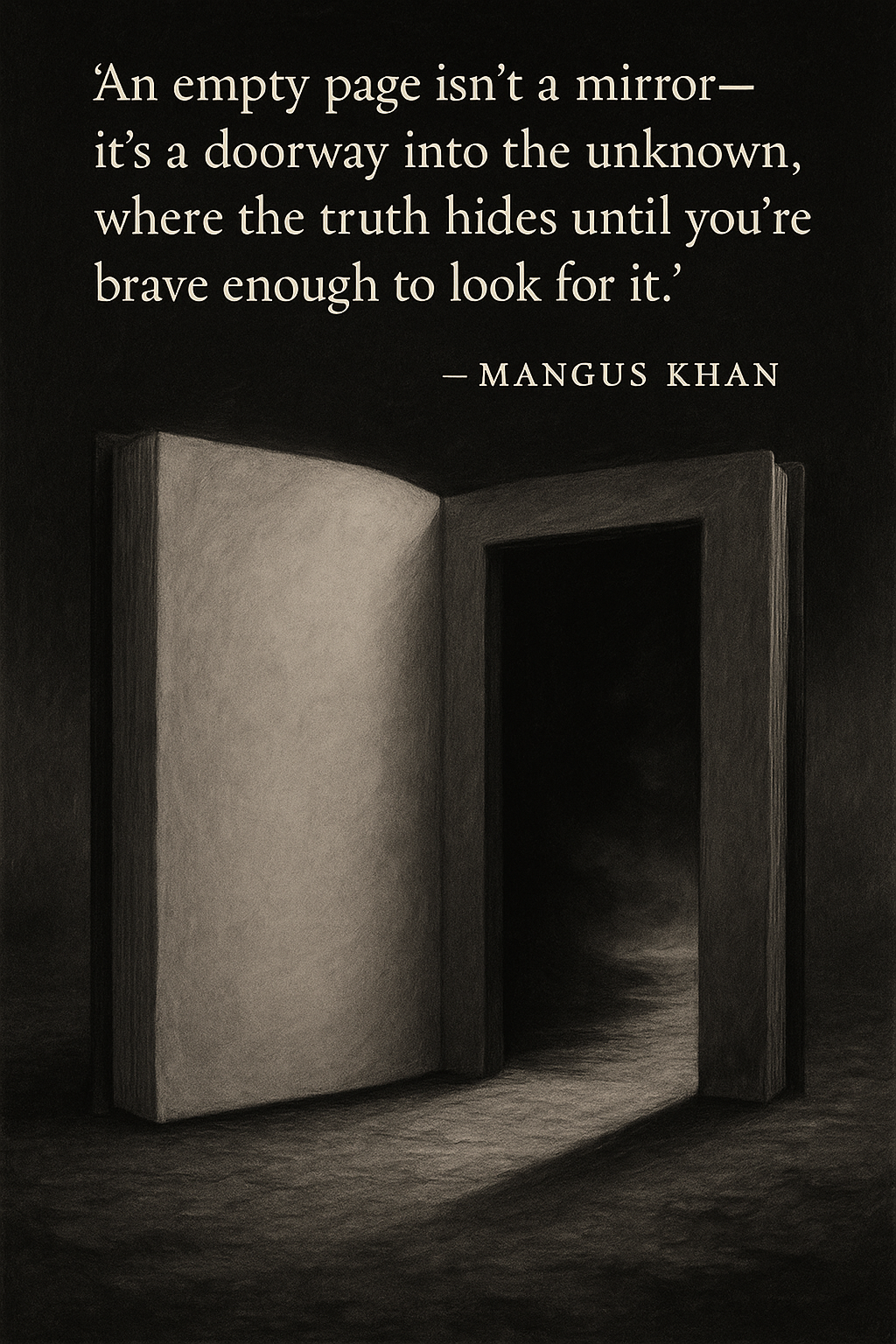
Quote of the Day – 10082025


Personal Reflection:
We like to believe we know ourselves, but the page has a cruel way of proving otherwise. It strips away the rehearsed versions—the masks we polish for public view—and leaves us standing there, naked with the truth we almost buried. Writing doesn’t always heal; sometimes it exposes the wound we’ve been pretending isn’t there.
Yet, that’s the beauty of it. The page doesn’t demand perfection, only presence. Each sentence becomes an act of courage, a conversation between who we think we are and who we’re becoming. It’s not the ink that transforms us—it’s the willingness to face what the ink reveals.


Reflective Prompt:
When was the last time your writing surprised you?
What truth emerged from your words that you didn’t know you were ready to face?

The Stories That Yearn to Be Told

Daily writing prompt
What is your favorite hobby or pastime?

I didn’t set out to be a writer. It happened by accident, somewhere between a half-finished sketch and a notebook full of half-thought ideas. Back then, I was a teenager with more curiosity than direction, filling pages because it felt like the only way to keep my thoughts from spilling everywhere else. One of my oldest friends likes to remind me he can’t remember a time I didn’t have a notebook in my hand. He says I was always scribbling or sketching, usually both.

It was at his house, during one of those long afternoons that used to stretch forever, when someone suggested I could write and illustrate my own book. I never did—but the idea never left. Over the years I’ve written stories inspired by other people’s art, and drawn illustrations for stories that weren’t mine. Maybe that’s the closest I’ve come to answering that old dare.

These days, my rituals are quieter, more deliberate. I start with coffee, smokes, and a notebook—that’s the constant. The rest depends on mood. Sometimes I need silence; other times, I scroll through playlists until I find something that matches the weather inside my head. The room is dimly lit, Guppy purring on the desk, both of us waiting for my next move. It’s not glamorous, but it’s home—the small ritual that turns chaos into coherence.

I don’t consider writing a hobby. But apparently, some people around me do. They say it like it’s harmless, even complimentary, as if writing were just another way to pass the time. Most days, it pisses me off—not because I crave validation, but because it ignores the time, discipline, and mental excavation it takes to build worlds, shape characters, or research a single line that rings true.

I’ve spent weeks turning over ideas before I ever write a word, sometimes months just mapping the geography of a story or tracing the emotional logic of a character. That’s not leisure; that’s labor—creative, invisible, and deeply consuming. Yet somehow, the work only “counts” if it’s published, printed, or profitable. Maybe that’s the illusion people live by: that creation isn’t real until it leaves your desk.

I’ve read the books. I’ve done the study. I’m not waiting for a permission slip to call myself a writer. Still, I can admit that sometimes fresh eyes help—someone catching a rhythm I missed, a sentence that stumbles, or an idea that needs to breathe differently. But that’s collaboration, not validation. The work itself has always been serious enough.

I remember the first time I saw my name in print. I was just a kid then, with childish dreams about becoming something I didn’t fully understand. But even at that age, I knew it was the only thing that gave me genuine joy and peace. It felt right. Like I’d found the one place where my head and my heart could finally speak the same language.

Even when I draw, I’m still telling stories. Sometimes, when I get it right, a single sketch can hold the whole narrative—the emotion, the silence between moments, the pulse of something unfinished but alive.

As an adult, that sense of wonder changed shape. I never thought my writing would go anywhere; most of it was just stories I’d tell my wife over coffee or late-night laughter. When she smiled, I’d rewrite. When she made that face—the one that said, “you’ve hit something”—I’d dig deeper. For a long time, I was defensive about my writing, too fragile to take a critique, too unsure to trust my own voice.

But somewhere along the way, I stopped chasing perfection and started writing from that place where the magic happens. I write from the soul, not the head. It took me forever to realize that for myself, even though I’d taught it a thousand times in workshops. Funny how the truths we teach others take the longest to reach home.

So maybe my favorite pastime isn’t writing itself, at least not in the way people imagine. It’s telling the stories that insist on being told—the ones that show up uninvited and refuse to leave quietly. Not the planned ones or the well-outlined projects, but the whispers that come when I’m half-awake, the flickers that make me reach for a pen even when I swore I was done for the night.

Those are the stories that remind me why I started. They aren’t about publishing or approval or anyone’s idea of success. They’re about listening—to memory, to imagination, to the things that ache to take shape. I suppose that’s what writing has always been for me: not a hobby, not even work, but a kind of surrender.
A way of being in conversation with something larger than myself.

Quote of the Day – 10072025


Personal Reflection (Memoirs of Madness Edition)

We like to think writing is an act of control — that we build worlds one word at a time, bending them to our will. But the truth is far less divine. Sometimes we stumble into a story by accident, and other times it drags us down a flight of stairs just to show us who’s really in charge.

That’s the part no one warns you about — the loss of authorship. The realization that the page doesn’t belong to you once the ink starts moving. You can’t force honesty; it bleeds out when it’s ready.

Maybe the act of falling — of tripping over what we meant to write — is where the real work begins. That’s when the masks crack, when the ghosts step forward, when the story stops pretending to be art and starts confessing its truth.

The best stories don’t wait for our permission. They just want us to be brave enough to stay on the floor long enough to listen.


Reflective Prompt for Readers

What stories have you stumbled into — the ones that weren’t part of the plan but somehow revealed a truth you didn’t know you were carrying?

Burnt Coffee & Time Machines

Daily writing prompt
List three jobs you’d consider pursuing if money didn’t matter.

When I first answered this question years ago, I leaned into time travel, jukeboxes, and 24-hour diners. Those images still live in me—they always will—but retirement has shifted my perspective. Now it isn’t about dreaming up another job so much as embracing what I already do: writing, creating art, and taking pictures.

People love to say, “If you do something you love, you never work a day in your life.” I’ve always liked the sound of that, though I know now it isn’t quite true. Writing and art have been part of me most of my life, and while I love them, they demand work—grinding, detailed, sometimes thankless work. The pride comes not from sidestepping that effort, but from doing it anyway and still loving the process enough to come back the next day. That’s the real magic.

Although I’m still tinkering with my time machine in the basement, for now, time travel lives inside my stories. That’s the gift of the page: step through, and suddenly you’re anywhere. And while the dream of owning a 24-hour diner never happened, I still sometimes write in one. The booths are cracked, the coffee burnt, and the danish usually stale—but if you show up before the morning rush, you might catch a fresh pastry and, better yet, a pocket of quiet. The hum of neon, the shuffle of strangers, and the early-morning stillness create a kind of portal of their own.

So maybe I never needed to own the diner. Perhaps it was always enough to sit in the corner with a notebook, bad coffee, and the ache of possibility in the air—time traveling in my own way.


Author’s Note:
The older I get, the more I realize it’s not about finding the perfect job, but finding the space where your imagination can keep breathing. Whether it’s a chipped mug in a half-empty diner, or the quiet corner of your own basement where “impossible” machines get built, what matters is the work you return to—the thing that keeps you curious. For me, that’s the page, the image, the story. The grind and the magic are inseparable.

Reflective Prompt:
Where do you find your own “time machine”—the place, habit, or ritual that lets you slip out of ordinary time and into the work (or play) you love, even when it demands effort?

The Streets Breathe, the Shadows Crawl

Daily writing prompt
What do you enjoy most about writing?

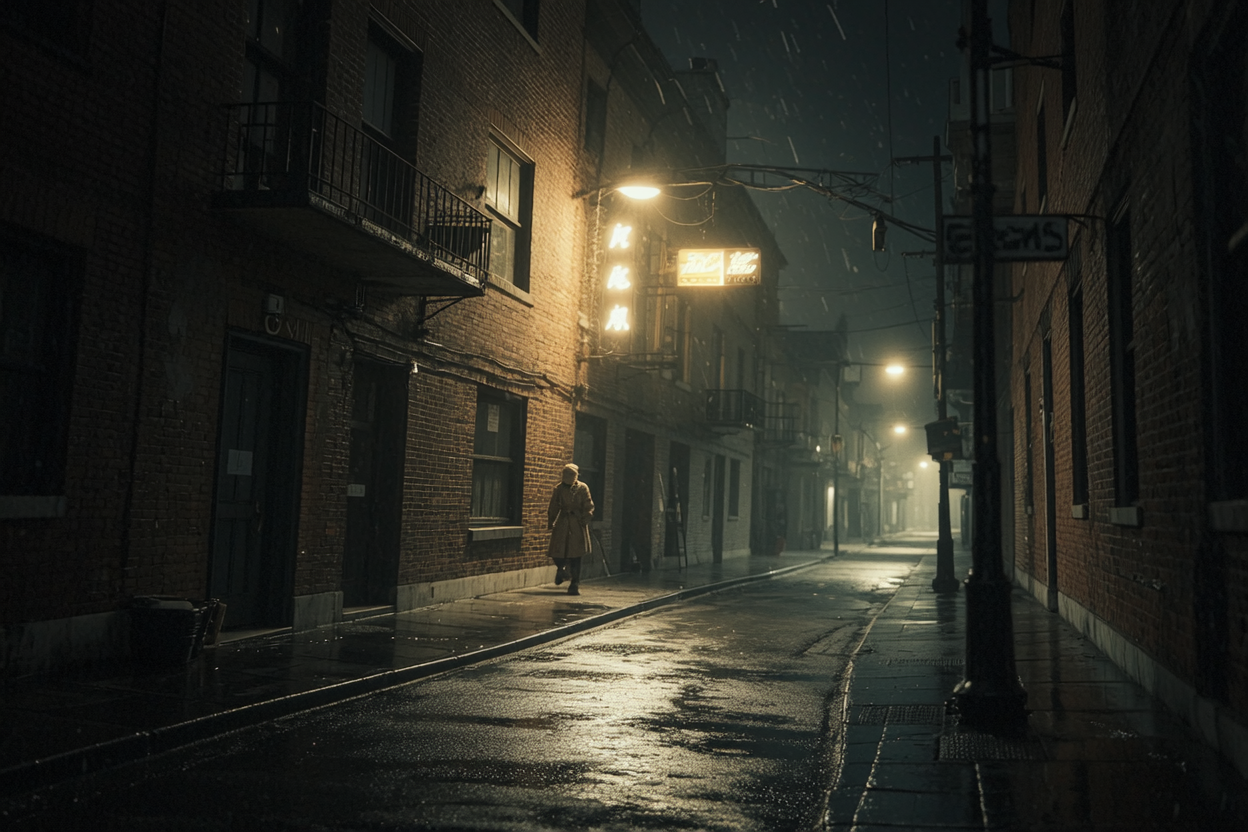
I used to treat setting like an afterthought—slap a name on a town, maybe add a landmark, and call it done. But by accident, I stumbled into a book on worldbuilding, and it flipped something in me. Now I see the world itself as a character, one that presses against the protagonist and antagonist alike. The streets breathe. The shadows crawl. The town isn’t just where the story happens—it is the story. Almost like the place itself is the boogeyman lurking in the dark. And honestly, that’s what I enjoy most right now: shaping a world that fights back.

I didn’t just sit at a desk and invent details out of thin air. I pulled out a notebook, stacked up the photos from my travels, and let the world start whispering. I’ve crossed oceans, driven the continental United States, and every stop—whether a dusty diner, a half-broken neon sign, or a small-town mural—carries something worth keeping. This time, instead of pushing the idea of “place” aside, I leaned into it. Notes piled up. History mixed with imagination. Articles, old texts, even scraps of folklore—they all became raw material. Slowly, the world started to take on a pulse of its own.

The most interesting part of my travels has never been the landmarks—it’s the people. Their traits, the way they speak, even the rhythm of how they move through the world—all of it has the potential to slip into one of my characters. The world itself is beautiful, yes, but it’s the hidden histories that take my breath away. I don’t announce my sources, but my binders are crammed with notes—detailed, cited, cross-referenced, tabbed like I’m building my own private archive. The research takes longer than the writing, and I don’t mind. Once I get my hands on a piece of history, I can twist it, bend it, or use it in ways it was never meant to be used. That’s the thrill—watching a small discovery push a story into a direction I never planned.

What I’ve discovered is that if you build a world properly, it doesn’t just hold one story—it can hold a whole series of them. A single town, mapped and breathing, can stretch into multiple narratives, each pulling from the same veins of history, rumor, and atmosphere. That’s the real joy for me right now: knowing the work I put into one world can echo across stories, creating a place readers can return to, and a place I never quite finish exploring myself.

Scarred, Still Writing

About Things Faith Ignored

Daily writing prompt
What bothers you and why?

It’s not like I haven’t given workshops before. I have. I’ve stood in front of rooms, talked craft, told stories, helped shape sentences and spark ideas. But this time feels different.

Maybe it’s because I haven’t done this since I got gut-punched over a decade ago—since the ground gave out, and I had to relearn how to stand. Since pain stopped being something I processed and started being something I wore. Somewhere along the line, I started using it like a mask. And the thing about masks is, after a while, they stop feeling like something you’re wearing. They start feeling like skin.

It became comfortable. Familiar. I could hide in it. Feel the illusion of security it gave me. But now I’m being asked to step forward again—to speak to young writers about the craft I’ve spent a lifetime practicing. And I’m wondering: am I ready to take that mask off?

What bothers me is the doubt. Not about the knowledge—I have that. Not about the experience—I’ve lived it. What bothers me is the fear that what I carry now might come through in ways I can’t control. That my jaded, scarred, honest soul might discourage someone before they even start. That I’ll slip into some surrealist rant about how writing is both a gift and a curse, a duty and a burden. That I’ll tell the truth too plainly, and it’ll scare them.

Or maybe worse: that I’ll freeze. Go silent. Stage fright. Blank mind. That I’ll stand there with nothing to give.

But the deeper fear—the one that really digs—is this: what if I’ve forgotten how to speak as the person I’ve become? Not the one I used to be. Not the one who was broken. But the one who crawled through it all and still believes in words.

Because truth matters. Even when it hurts. Especially when it hurts. And writing—that strange, beautiful, brutal act—is built on truth. Our words tell who we are. They don’t lie. And if I show up and speak honestly—about the process, the pain, the doubt, the moments of fire—then maybe that’s enough.

What bothers me isn’t the fear of failure. It’s the responsibility. The weight of standing in front of new voices and showing them not just how to write, but how to be a writer. To give them not comfort, but clarity. Not perfection, but presence.

So yes, I’m nervous. Yes, I feel exposed. But maybe that’s exactly where I need to be. Maybe the only way to teach this craft is to live it—right there, in real time, with all the scars showing.

I reach out into the darkness—and find myself.
Doubt courses through my blood.
The writer within whispers: Please don’t forget me.

Though doubt chills me, I won’t surrender to its might.
I lift my head and know—I don’t walk alone.
I whisper back, “I won’t forget you, because you are me… and I am you.”

No more wasting time. I must prepare.

I’ll see you after the ink dries.

How Not to Lose My Mind by 6 A.M.

Daily writing prompt
What are your morning rituals? What does the first hour of your day look like?

DAILY PROMPT RESPONSE

My cat is my alarm clock. Not metaphorically — literally. She’s the first thing I hear every morning, howling like she’s been abandoned in a void, despite living a life of uninterrupted luxury.

There’s no snooze button, no soft chime, no graceful start. Just claws on the floor, judgment in her eyes, and a relentless demand for breakfast.

So I get up. Not because I’m ready to greet the day, but because feline terrorism leaves no room for negotiation.

I feed her. I grind the coffee. These are the sacred rites of passage — the steps that transform me from a disoriented gremlin into someone who can form sentences.

If anything delays this ritual, I take it personally.
Why are you playing with my emotions? Who told you this was cool?

Once caffeine levels are in the green and nicotine’s holding the line — check, check — and the cat has retreated to whatever sun-drenched corner she’s claimed, I begin the real work: protecting my peace.

And look — I didn’t arrive at this approach because I’m naturally serene or some monk-in-disguise.

I got here because of the life I’ve lived. Because of the dents.
Because there are days when my mind goes rogue and starts offering me metaphorical jackets with buckles on the back.

“Give that a new coat,” it says. “It’s very nice. Leather straps. Fastens in the back. Do you want a new coat, Mr. Khan?”

And I answer like I’m seriously weighing the options.

“If you’re good, we’ve got lime Jello for you… You like lime, don’t you?”

And lime Jello is the truth. You don’t mess with lime.
Last time I cut up? They gave me lemon. No one likes lemon Jello.

That’s just mean. Downright mean.

So yeah, I’ve had to learn how to manage my mind, not just for peace — but for survival.

Calm isn’t some Instagram aesthetic for me. It’s a lifeline.
A way to keep the louder voices quiet and the darkness at bay.

That’s why I keep close something Alan Watts once said:

“Muddy water is best cleared by leaving it alone.
What we see as a clear mind is not the result of frantic activity.
It is clear as the morning, not because we scrubbed the sky, but because we left it alone.”

That line sticks with me because it echoes something ancient — something every major religion or philosophy seems to touch on:

The idea of inner stillness.
Of knowing yourself before engaging with the noise of the world.

In Sufism, Rumi wrote:

“There is a voice that doesn’t use words. Listen.”

In Buddhism, from the Dhammapada:

“Better than a thousand hollow words is one word that brings peace.”

And from the Bible, in Psalms:

“Be still, and know that I am God.” (Psalm 46:10)

Different traditions. Same thread.
Peace isn’t something you chase. It’s something you uncover — when you get quiet enough.

That’s what I’m after each morning.

Some days it’s just coffee and silence.
Other days, a bit of journaling or staring into the void like it owes me money.

The practice doesn’t matter as much as the pause. The space.
The reminder that I get to choose how I show up — even if some days, that choice takes everything I’ve got.


But some mornings, I skip it.
The ritual. The silence. The pause.

Maybe I oversleep.
Maybe I pick up my phone before I breathe.
Maybe I think, “I’m fine, I don’t need it today.”

That’s the trap.
(Cue Admiral Ackbar voice: “It’s a trap!” — and yes, it absolutely plays in my head every time I skip my rituals like I’m going to be fine.)

Because when I skip my rituals, life turns to quicksand.
And no one’s coming to save me.

There’s no helpful rope, no dramatic movie rescue.
Just me, slowly sinking, pretending I can claw my way out of the churn.

I’m three seconds from a panic attack — except it doesn’t always look like panic.

Sometimes it’s quiet.
Like holding your breath without realizing it.
Like being trapped inside a breathless gasp, chained in place by something invisible.

A prison with no walls, but no doors either.

The anxiety doesn’t fade. It just lingers. Constant hum, just under the skin.
Everything feels urgent. Every noise too loud. Every thought too fast.

I forget what I was doing mid-sentence. I lose time. I react instead of respond.

And the worst part?
I can’t tell if it’s me or the world — and at that point, it doesn’t matter.


But I have to remember — the power to escape is within.

Not in some motivational-poster way.
Not in the “just breathe and manifest your peace” kind of way.

I mean that literally.

The same rituals I sometimes skip — the breath, the stillness, the silence, the coffee, the pause — they’re the tools.

The rope in the quicksand.
The key to the prison that looks like it has no door.

I have to choose to reach for them. Even when I don’t feel like it.
Especially then.

It’s not about fixing everything in that moment.

It’s about reclaiming one inch of space.
One breath. One clear thought.

Enough to remind myself that I’m not just a body riding out the chaos —
I’m a person with the ability to shift, to respond, to say:
“Not today. We’re not drowning today.”


A new pot sputters.
Serenity in a sip.

The cat breathes easy on her perch beside me, no longer screaming like the world’s on fire.
She’s fed. I’m fed — in my own way.

My eyes open each day at 5 a.m. Not by choice, but by necessity.
That’s when the mind starts. That’s when the first storm rolls in from the backcountry of my brain.

I wade through the madness in the regions of my mind, step by step, breath by breath.
No armor. Just ritual.

This — the coffee, the quiet, the stillness — this is how I survive myself.

I use these rituals to breathe.
To feel.
To live.

It’s 6 a.m.


Mangus Unplugged

Peering at the surface of my mind

PROSE – Straight talk

This is a response to a writing prompt I found on Medium. I thought it would be a good opportunity to slow down and examine what I’m doing and why? In the following few lines, perhaps, you will be able to better understand the writer known as Mangus Khan. So, I will put down the mask and speak to you plainly.

This has been sitting in my drafts for months. I forgot about it. So here it is …

When did you start writing? Is there a specific story?

I started writing when I was young. I can remember a specific age, but people’s opinions of me really mattered at the time. Shakespearean Psychobabble sticks out as an early work. I recall it fondly.

Do you have rituals in writing? If yes, then please share them with us.

No rituals per se, but nothing gets written without a cup of coffee. I’m afraid of what might come from my mind without my fix. I jot down anything in my head when I first wake up. Writing down the raw idea is essential for me. This way, I have an untainted version of the concept. Next, depending on what kind of mood I’m in that day; I might play a little music. I typically don’t write poetry to music, but it has inspired several poems. When I’m writing longer works, I find music drives the emotion I’m conveying rather well. However, it depends on my mood or what I’m writing.

The ugliest monster that writers are afraid of is writer’s block. If you have a recipe to deal with it, kindly share it with us.

Writer’s block has never been an issue for me. I think it is nothing more than a myth constructed by some writer during a particular undefined period. However, my constant monster or crippling demon is self-doubt. For me, it’s like Doubt lurks in the shadows of every corner. However, journaling is what keeps me sane. Not everything I write gets posted.

Describe the process of finding ideas for your stories. Please elaborate.

There is no set process. Nothing like step 1. I do this or Step 2. I do that. That might be nice or maddening. I let things flow to me, how they are supposed to. If I remember, I was meant to. If I wasn’t, I don’t. However, I often get gentle reminders and other times they aren’t so gentle.

As humans, we suffer without knowing it by choosing not to move outside our comfort zone. Do you have a “comfort zone” in writing (i.e., a topic that you always like to write about)? Have you tried to step outside your comfort zone and write something drastically different?

Typically, I can write just about anything. Of course, there are genres I’m better at than others.

Besides Medium, do you use other writing platforms? Please share our experiences.

I run a blog about my work and a writer’s workshop website. Both of these sites are hosted on WordPress. Both are relatively new, but there is a direct correlation to the work I put into them.

Have you published a book? If yes, how and where…etc. Plz, feel free to share your links with us.

No

You write because writing provides you with something special. Could you share your experience?

Writing, for me, is cheaper than a shrink. It’s my state of calm, my safety blanket, or my church. When writing, I have the ability to be myself. I can say all the things I wanted to say but couldn’t. I get to stare my demons in the face and tell them to “KICK ROCKS,” whether they leave or not is another matter entirely. However, I find peace within the moments I can write these lines.

Do you write a paragraph, a chapter, or a story with the end in mind or not? plz explain

I get several ideas throughout the day. However, the ones I pay the most attention to come in the morning. They are mainly fragments of something. Sometimes it’s the beginning, while others, it’s the middle, and of course. Example: Once, I wrote an entire novella around a single scene in an alley.

Every writer has an idol. Who is yours? And what do you find inspiring in her or his trajectory?

There have been several writers over the years who stuck out to me. There have written something that spoke to the soul.

Does being on a writing platform like Medium help your writing plans? Plz, elaborate.

No, my writing plans are completely independent of Medium. However, I found my Medium experience to be beneficial in regaining my confidence in my writing ability. Medium has also broadened my creative abilities in storytelling. Since, I have started writing here, I’ve explored my talents in photography and rediscovered cinematography.

A Book a Day Keeps Madness Away

What do you listen to while you work?

PROSE – CHALLENGE RANT

Typically, while working at my day job. I listen to a book whether it be a short story, novel, or essay. I do this to assist in practicing my active listening skills. I listen to both fiction and non-fiction. I pay attention to the story, plot, and structure.

This habit also assists in writing. On breaks I sit and close my eyes. I try to create an image in my mind. I’ve found in incidents where I can’t create in my mind. I stopped the book and tried to create the scene on paper. This is a writing exercise I’ve found useful in my own writing.

I read somewhere if you can’t see; delete it. Since I started working on screenplays several years, I found advice to be quite accurate. Happy writing everyone. If you’re a different sort of creative type leave your techniques in the comments below. I’m interested in learning new things.

~thank you for reading~