Litany in Black 3


Chapter 3

Eli’s fingers hammered the Underwood, the platen ratcheting like a drumbeat inside his chest. Words crashed onto the page raw and unprocessed, each keystroke sharp as broken glass. He didn’t try to catch his thoughts; they lagged behind anyway, always scrambling, always too late. Second-guessing was for people with softer bones.

The typewriter filled the basement like a predator pacing. The ding of the carriage bell jolted him at every line, each return snap a small guillotine. He welcomed the violence. As long as the machine roared, the silence couldn’t close in and strangle him.

Behind him, Iris moved. He didn’t look—didn’t dare. He knew the sound of her presence: drawers opening, papers shifting, the glide of her feet across concrete. She spoke sometimes, soft nothings that dissolved into the cinderblock walls, too sweet to be trusted. He kept his eyes forward, certain that if he broke rhythm the spell would snap and something worse would rise.

She spoke in platitudes—surface shit that didn’t mean a damn thing, not even to the person saying it. She knew I hated them. She knew I’d rather choke on silence than fill it with low-grade noise. And after everything, don’t I rate the premium line of bull? Instead—clichés. Cheap ones. Wrong on too many levels.

The words poured, jagged and necessary. He bent closer to the keys, fingers aching, shoulders burning. The smell of paper and machine oil clogged his sinuses. His job was to write. One job. Write.

Then—click. Whirr. The clatter of vinyl.

His trance shattered. Eli shot up from the desk. “NNNNNOOOOOOO!”

The speakers coughed dust. A warped guitar riff crawled from the jukebox.

Arnold Layne had a strange hobby…

The lyric nailed him to the chair. His body froze, his heart battering too fast against his ribs. A high metallic screech tore through his skull. Somewhere in the sound he swore he heard a howl, long and low, as if the memory itself had found a voice.

The world went black.

He blinked awake in a different room. Bare bulb. Cracked mirror. The stink of disinfectant.

In the glass, Iris stared back—hair damp, eyes too wide, skin gone bare and bloodless.

Jonquil’s shape coalesced behind her, a figure lit by candlelight. She smiled, but her mouth never moved.

“You had one job,” Jonquil said, velvet over stone. “Keep him writing. Don’t let the memory in.”

Iris clutched the sink, knuckles white. Words failed her.

Jonquil’s gaze sharpened. “You know what happens to leaky vessels.”

The memory ripped through Iris: a Guild meeting, Uncle Bug tearing into a junior agent, the sudden hush, then the impossible sight of Bug blowing softly in the man’s direction. The agent’s outline wavered—and collapsed into vapor. The smell of iron had clung to her clothes for days.

Iris trembled. If Jonquil told Uncle, she’d be next.

The bar hit him like a punch—heat, smoke, neon fractured on dirty glass. Bodies surged to the music, sweat and whiskey thick in the air. Eli stood in the middle, drowning in it.

Onstage, a woman with cropped hair and a voice like gravel tore through Dead and Bloated. She wasn’t covering the song; she was burning it down and rebuilding it from ash.

Her eyes found his. She grinned, stepped off the stage, and cut through the crowd like she owned it. Her hand snared the back of his neck. She kissed him hard, tasting of blood and whiskey, breath hot with hunger.

The taste hit him like déjà vu—sharp and sweet, like a kiss he’d lived before in another life, though he had no memory of whose lips had given it.

Then she pulled back, lips almost brushing his ear. “You don’t belong here. Go back. Now.”

She shoved him. The bar collapsed, light and shadow swallowing the floor. Eli fell.

He jolted awake at his desk, lungs empty, head pounding. The Underwood sat waiting, a fresh sheet rolled in.

On the corner of the desk, a tabby cat licked her paw. She froze mid-motion and fixed him with a single stare.

“Meow,” she said, clipped and final, before resuming her grooming.

Eli’s hands shook as he reached forward. Beside the typewriter, on a square of yellow paper, a single word was scrawled in black ink:

Frog Creek.

The letters burned into him. His stomach turned cold.

He remembered.

Something he had sworn never to speak of again. Something only he had survived.

The typewriter, the cat, even the walls felt suddenly foreign—no shelter at all, just a trap waiting to close.

Why was it surfacing now?


Author’s Note

When I released Litany in Black, my editor didn’t mince words. The call was short and sharp: “I want more.” So here it is—the next chapter, pulled from the dark seam where memory, myth, and madness overlap.

This piece draws on three of my favorite community sparks: FOWC, RDP, and Word of the Day. Those prompts slip into the prose the way shadows slide into corners, sometimes obvious, sometimes hidden in plain sight. If you caught them, you’re paying attention. If not, maybe the story is working on you the way it should—sly, unsettling, creeping in under the skin.

Chapter 3 is about fracture—Eli caught between the rush of creation and the trap of memory, Iris learning that mistakes echo louder than excuses, Jonquil tightening her grip on both. Frog Creek has finally bled through the page, and with it, the reminder that some stories don’t just haunt you; they claim you.

To those following along, thank you for walking with me into the dark. The deeper we go, the less clear the ground beneath us becomes—but that’s the only way to find out what’s waiting on the other side.

Litany in Black


Rain glazed the neon crescent above Second Moon Books until it gleamed like a razor’s edge slicing through the night. Elias Moreau’s fingers trembled as he flipped the weathered placard to CLOSED. The paint on the letters bled, fading faster every September—as though some unseen smart-ass on the other side of the door was trying to erase the word before last call.

Inside, the air carried the sour bite of old glue and the metallic tang that seeped up from the subway grates. A crooked chalkboard behind the register wore last week’s proclamation in smudged white chalk:
BIRTHDAY BLOWOUT – A FULL WEEK OF HORROR & HOPEFUL DREAD
A Tribute to Stephen King

Eli’s pulse ticked in time with the neon strobe outside. Every year he staged this seven-day ritual for King, the undisputed monarch of macabre wonder. King’s uncanny magic felt almost domestic, like discovering an old friend hiding in the crawlspace. But Gordon Weaver—now that was a different kind of haunt. Weaver carved the American family like a butcher who’d gone to seminary, exposing grudges and betrayals with a quiet precision that left scar tissue. Friends nodded politely at Eli’s King obsession but flinched at Weaver’s hushed horrors, as if the silence of a fractured household couldn’t follow them home harder than a demon ever could.

Counting bills at the till, Eli listened to the upstairs dehumidifier hum and a distant patrol siren wail. The shop was empty—until the door chime rang.
One polite jingle.
He froze, chest tightening, waiting for the echo that never came.

A damp breath rose from the basement stairs. Twelve years of half-formed chapters and midnight revisions leaned against a dented Underwood down there, sulking. He’d promised himself an extra hour—maybe two—before trudging home. Perhaps he’d finally finish the scene about a stranger who knocks after hours, demanding a book that doesn’t exist.

The bell chimed again, louder this time.

He jerked his head toward the door. Beyond the glass, a wet silhouette lingered: coat collar turned up, hat brim low—someone who moved like yesterday’s regret. A third jangle, brittle and hollow, and the lock clicked itself open. A gust of rain-scented air swept in, carrying a soft undercurrent of cedar. Then she stepped across the threshold.

She was impeccable, as if traced by a meticulous pen. Mid-forties maybe, but she wore her age like a tailored alibi—each line on her face an elegant footnote. Dark hair, slick with rain, clung to the sharp planes of her cheeks. Her long coat shimmered under the flickering fluorescents. But it was her eyes—gray, or green, the light shifting like a flame—that snagged him and refused to let go.

A needle-sharp ache blossomed beneath his sternum, radiating into his left arm. Heart attack, his mind hissed. He slammed a hand on the counter, breathing ragged, every inhale a serrated blade.

She paused just inside the door, lips curving in a small, almost tender smile. He didn’t know her—he was sure of that—but some buried page of his past fluttered to life. Familiar and impossible in the same breath.

“You okay?” Her voice was low, calm—the kind you’d use to coax a frightened animal out of traffic.

He nodded too fast. “ I-I’m fine. Long day. Sale week.” The words tasted like he’d chewed them wrong.

Her smile deepened, unreadable. She turned toward the chalkboard, fingertips trailing through the chalk dust. BIRTHDAY BLOWOUT – A FULL WEEK OF HORROR & HOPEFUL DREAD…

“Do you still read Gordon Weaver?” she asked, voice soft as velvet smoke.

The name hit him like a dropped stone. Weaver wasn’t on the board. He hadn’t said that name aloud in months.

“How… how do you know about Weaver?” he stammered.

Her eyes glinted with something not quite amusement. “Oh, Eli,” she breathed. “You always did love a good story.”

Weaver: Count a Lonely Cadence, the battered paperback he’d rescued at a college sale, pages yellowed and reeking of cigarettes. Weaver peeled back the American family like skin from bone—quiet betrayals, unsaid resentments, love rotting in plain sight. Then Such Waltzing Was Not Easy dragged him deeper, mapping small domestic wars in brutal intimacy. No demons, no ghosts, just everyday hauntings that never left his marrow.

Now this rain-soaked stranger spoke Weaver’s name as though she’d plucked it from the private margins of his soul.

“Have we… met?” he asked, voice smaller than he felt.

“Not in the way you mean.” She stepped closer, eyes roving the shop’s towers of paperbacks and the narrow aisles of hardcovers balanced like drunk skyscrapers. “You look familiar.”

He swallowed. “Or maybe you’re a character I’ve been writing for years.”

Her smile flickered—a blade wrapped in silk. His chest flared, nerves taut with something like fear or longing or the first line of a story he couldn’t put down.

An echo of his own unfinished draft whispered through his mind: She enters like a paragraph he rewrote a hundred times and could never perfect. Named only by his yearning for her to hurt him.

The shop inhaled. Somewhere beneath their feet, the basement typewriter began to tap—slow, deliberate keystrokes spelling out a narrative Eli no longer commanded.

She gestured toward the narrow stairwell. “Shall we?”


The basement smelled of damp brick and stubborn paper. She eased into the swivel chair beside his desk and crossed one elegant leg over the other. From some unseen pocket, she produced a long cigarette holder—old Hollywood glamour in a room that smelled like busted neon dreams. She slid a thin cigarette into the mouthpiece, fingers steady, and lit it with a soft gesture. Smoke curled around her like a velvet sermon.

Above them, the Underwood sprang to life, keys clattering in a jagged, confident rhythm. Each strike was a heartbeat in steel. The carriage dinged, bright and final. With every mechanical echo, the vise around Eli’s ribcage loosened, the stabbing ache receding to a dull throb. He inhaled freely at last.

“Iris Devine,” he whispered—the name he’d once given a character who refused to stay on the page.

She watched through the smoke, eyes glimmering with triumph. “Have you figured it out yet?”

The typing slowed. A new line appeared:

The writer clutched his chest as the pain returned, sharp as a rusted nail. Would the story kill him before the final word?

Eli’s breath caught. His knees trembled. Darkness edged in.

“Oh, Eli… darling, you can stop this. You know,” Iris whispered, leaning close, breath a warm brush against his ear.

Keys clattered again—then the ding of the carriage returned, harsh as a gavel.

“Eli,” she said, voice closer still, “I know who you are.”

The typewriter fell silent.

“Who am I?” she asked, tilting her head.

“You’re… a character. You can’t be real. This must be a delusion—right?”

Her smile sharpened, sudden and fierce. “Then why are you bleeding inside one?”

She pressed a soft kiss to his cheek, then a slow, deliberate lick that left warm proof on his skin.

“You feel that? Real enough for you, darling? Be a dear and fetch me something to drink—bourbon, if you have it.”


He stumbled toward the stairs—and above him, glass shattered.
He wheeled around. The chair was empty. In its place, a ghost of smoke curled where she’d sat.

“Darling, you need to come upstairs—hurry,” her voice drifted down from the shop above.

He climbed into the main room to find broken glass strewn across the floor. A lone policeman stood by the register, uniform soaked, cap pulled low.

“Elias Moreau?” The officer’s voice was soft, almost uncertain.

“Can I help you, officer?” Eli’s hand dove beneath the counter, grasping the cold comfort of an old revolver. He cleared his throat, voice steady. “Step back.”

The man froze, rain dripping from his shoulders. Eli’s finger curled on the trigger—then he exhaled and let the gun clatter onto the countertop. Instead, his hand found something heavier: the knowledge that stories kill cleaner than bullets.

The shop flickered—
And when he blinked, everything was normal.
No broken glass.
No officer.
Only a dark, wet outline on the floorboards where the stranger had stood.

A single ding drifted up from below.


Eli descended again.
Iris sat beside the desk, sipping bourbon, a neat stack of crisp pages at her elbow. A half-empty tumbler caught the amber light. She raised it in a silent toast.

“Welcome back, darling.”

He slid a fresh sheet into the typewriter. The carriage clicked forward, awaiting his command. His fingers hovered—then struck, each letter unfolding with deliberate clarity.

CHAPTER 1

Writing has always been bigger than the writer and the story.
A kind of theology.
The religion between the writer and the story is a spell cast upon them.
The reader sits back and deciphers this literary kung fu.

Writing is a living theology.
A way of life, not just an ideal misunderstood by its practitioners.
Something real, and genuine. Something absolute.
The page is a pulpit, the keys a busted rosary, each prayer hammered out like it owes you rent.

Iris placed her hand on Eli’s arm, warm and insistent.
“Do you know,” she said softly, “that a marmot will chew through its own trap rather than stay caged? Writers should do the same.”

Her thumb traced a slow circle on his sleeve.
“Don’t be the marmot that gnaws in silence. Write until the steel bends for you.”

The typewriter answered with a single, eager ding.

Eli exhaled, a small, resolute smile breaking through the shadows on his face.
“This is where I belong.”

She rose with unhurried grace, smoke trailing like a benediction.

“I’ll put on the coffee,” she said.

The Underwood offered one final, gentle ding—a promise, not an ending.


Author’s Note

Today is Stephen King’s birthday, so I decided to play around with the supernatural and other weird stuff.
The prompt words used today were theology, marmot, and literacy.
Again, as always, thank you, FOWC, RDP, and Word of the Day for your inspiration.

Delores the Detour

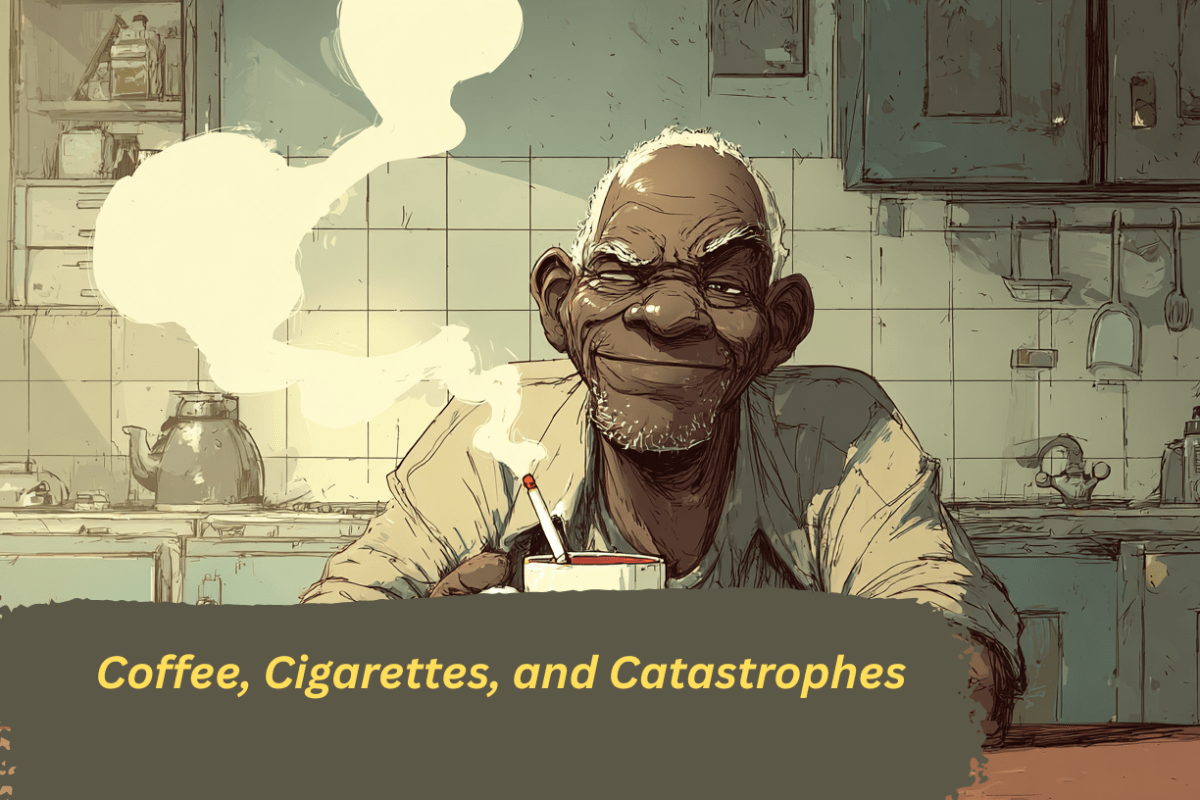
Episode 2: Coffee, Cigarettes, and Catastrophes

The morning coffee tastes like wet asphalt today, bitter and a little metallic, which feels right because Delores was the human embodiment of a detour sign—bright, tempting, and guaranteed to land you somewhere you didn’t plan on going.

We met outside a dive bar that smelled of stale gin and Monday failures. I was waving for a cab, she was leaning against one—hair slick with streetlight, cigarette ember pulsing like a tiny warning flare. Delores fixed one eye on me through the smoke and said, “Get in if you’re brave or drunk enough.”
I was both, and apparently suicidal enough to think that sounded like romance.

Her cab smelled of gasoline and fading leather, the heater coughing a lukewarm breath that carried the ghost of every passenger before me. Delores drove like the city owed her a favor and she meant to collect, slicing through alleys slick with last night’s rain. Each turn came with a commentary delivered in that dulcet rasp of hers—soft velvet laid over broken glass—that made even a near-miss feel like a bedtime story.

Dinner was a mushroom pizza balanced on the hood at three a.m., steam rising into the amber glow of streetlamps. Sirens wailed in the distance, a crooked lullaby. She’d gesture at the skyline with a grease-stained hand and tell me where she’d hide when the world finally caught fire. I believed her. There was already a bunker behind her smile.

Our nights blurred into an integrated system of near-misses: her ex calling mid-shift to harass her over some ancient grudge, my wallet sliding between cracked seats, the sudden realization that her idea of commitment was showing up before dawn. Every mile carried the taste of exhaust and the thrill of maybe not making it home.

I loved the motion more than the woman, though I didn’t admit it then. The rush of wet tires on pavement, the neon flicker on her cheekbones—it all made me feel like my own stillness might finally shake loose. Trouble is, you can’t build a life at thirty miles over the limit. Motion only disguises the void; it doesn’t fill it.

The night it ended, we hit a traffic circle she called “The Bermuda Triangle of Bad Decisions.” She didn’t slow down. I grabbed the dash, she grabbed my knee, and whispered, “You ever wonder if we keep driving fast enough, maybe the past can’t catch us?”
Her words slid into me like smoke through a cracked window—seductive, poisonous, and half-true.

I stepped out at the next red light and let the cold air slap me awake. Behind me, the cab’s taillights smeared into the wet dark, a pair of crimson commas on the sentence we’d never finish.

Moral of the story? Detours thrill the blood, but every one of them bends back to the same brutal truth: you can outrun traffic, but not yourself.


Author’s Note

This late-night joyride is fueled by the unholy trinity of prompts—FOWC, RDP, and the Word of the Day—each one a pothole I was happy to hit. The required troublemakers—eye, dulcet, and harass—slipped into the story like sirens in the distance: sharp, unavoidable, and just loud enough to make you check your rearview.

Writing Delores the Detour reminded me how motion can masquerade as meaning. It’s easy to chase neon streets and mistake adrenaline for affection; harder to admit that speed only hides the quiet parts of ourselves we’d rather not patrol. Consider this your friendly warning from the passenger seat: detours are thrilling, but the bill always comes due—usually in gas fumes and unanswered questions.

Nineteen and Nowhere

Stories from the Edge of Change – Volume 2, Part 1

“They said the system lost track of him. But he was never theirs to keep.”


The morning rain didn’t bother Ren. He’d learned that water was gentler than people.

He crouched beside the alley dumpster behind the drop-in center, shoulders hunched under a threadbare hoodie two sizes too big, sleeves eaten at the cuffs. His shoes—untied and uneven—squished when he shifted his weight. Rain pooled around the soles, but he stayed put, drawing loops on a soggy intake form with a chewed Bic pen. The form was from three weeks ago. He didn’t remember if he ever turned it in. Didn’t matter.

It was quiet this early. The kind of quiet that makes everything louder. His breath. His heartbeat. The clack of metal shutters two streets over. His fingers trembled, but not from cold.

He hadn’t slept inside in nine days.
But he knew where the cameras were, where the streetlights stopped working. Which stairs stayed dry?

He used to think that was survival. Now it just felt like memorizing a test he’d never pass.

A city bus hissed to a stop up the block, brakes squealing like something in pain. He looked up for a second, then back down. He’d been in those buses, once. With trash bags full of his stuff. Being transferred. “Transitioned.” “Placed.” Words that meant temporary. Always.

The folder in his backpack held every proof of his existence that the county ever gave him:

  • Two expired Medicaid cards
  • A GED prep schedule with coffee stains
  • A letter saying he was denied transitional housing
  • A single photograph, sun-bleached and wrinkled: him and Miss Tanner, his last foster placement, grinning with sparkler smoke behind them

He’d never shown that picture to anyone. He wasn’t even sure if the smile was his.
Sometimes he felt like that photo was the only place he still left a fingerprint.


Inside the drop-in center, they’d already started handing out coffee and hygiene kits. Ren didn’t go in. Not yet. He didn’t want to be seen with wet hair and a panic attack crawling just beneath the skin.

He’d been in a group home once that called itself “trauma-informed.” They still lock the bathroom at night.
He’d rather piss in the alley than ask permission again.

A man passed by, muttering to himself, trailing a shopping cart full of pillows and clinking bottles. Ren didn’t flinch. The cart guy nodded, as if he knew him. Maybe he did.

He did know the feeling: You’re alone but not exempt. Not from the weather. Not from the noise. Not from the memory of being fifteen, hands shaking as a caseworker said, “We’re placing you in a new home.” She said it like it was an opportunity, not another stab wound in a file no one would read.


The sky split open with a gust of cold air, and Ren finally stood. Pulled his hoodie tighter. Slipped the intake form into his back pocket. It had his name spelled wrong anyway.

He stepped out from behind the dumpster, not into confidence or comfort, but into motion. He moved the way you do when no one’s expecting you—not slow, not rushed, just enough to stay above notice.

As he passed the shelter entrance, he saw a boy younger than him sitting on the stoop, wrapped in a trash bag and drawing in the condensation on the glass door.

They didn’t speak. Just exchanged a glance. The kind that said: Yeah, I see you. No, I won’t say your name.

Ren knew that sometimes a glance was the only shield you had left.


He kept walking toward the corner, toward the same coffee shop he never entered, where the manager never made eye contact and the workers tossed day-old bagels out at 11:00. He’d wait nearby. Not to beg. Just to exist adjacent to someone else’s comfort.

This was the work.
Not recovery.
Not healing.
Just… enduring without disappearing.


He passed a torn flyer taped to a lamppost—one of those mental health outreach posters that still had a suicide hotline and a QR code for free therapy that didn’t exist anymore.
Someone had scrawled across the bottom in Sharpie:

“Hope is just the thing they say when they have nothing left to offer.”

Ren stopped.

He stared at that line for a long time.
Then smiled, just barely.

Not because it was funny.
But because he’d believed in hope once—and he’d watched it falter in real time.


Author’s Note

Written for Stories from the Edge of Change – Volume 2.
This piece responds to today’s word prompts:

Ren is fictional, but his story is rooted in reality—lived, endured, and too often ignored.
This piece isn’t about rescue or redemption. It’s about what it costs to keep going when the world has already filed you away.

Some people carry their past in manila folders.
Some names vanish before they’re ever called.
And some stories live in silence until someone listens.

Thank you for reading. Let me know if you’re ready to meet the others.

The Corner Again

MoM Series: Stories from the Edge of Change – Part 5

Jake slipped back to Maple and 9th, just before the day’s first sirens.
The sky was a cold bruise overhead—indigo leaking toward gray, the city below still sullen and half-swallowed by fog. Jake’s route here was always the same: the recycled bus air, the smell of new concrete and old bleach at the transfer station, the long walk down streets that still remembered him in all the wrong ways.

He’d liked it better in the days when a hangover let you lie to yourself.
Being sober meant memory was out to get you, every hour of the day.

He hadn’t told anyone he was coming, and wasn’t sure anyone would care. Maple/9th wasn’t home, not really, but the corner had a way of calling him back when the rest of the world got too bright and too loud. Where everything had fractured. Where, by some backwards logic, something like a beginning had managed to dig in and take root, though even now Jake couldn’t explain why.

He stepped off the curb, the city unspooling around him in the blue-tinted hush of pre-dawn. Chains of streetlights blinked uncertainly overhead, fighting the thick mist that made them look like distant, drowned stars. Gutter water gurgled past slumped trash bags, and a wind—sharp and chemical, the kind you only got east of the river—whipped Jake’s soaked collar tight against his throat.

It had rained all night, the kind of slow, pounding storm that got past old window seals and filled alleys with shallow, fast-moving currents.
His boots were soggy from the first block, each step a cold squelch that made him feel both present and exposed.

He carried a dented thermos of black coffee in one fist, and two foil-wrapped breakfast sandwiches in the other. Not an offering; nothing so grand. More like insurance, or ballast, a way to keep his hands busy while waiting for the morning to decide what kind of day it wanted to be.

Jake found his bench across from the bus stop, same warped planks as always, streaked deep with mildew and the ink of other people’s initials. He sat with a practiced slouch, elbows braced on thighs, letting the bench’s damp give him a chill. The wood was beaten soft by years of sun and rain and the pressure of bodies like his—bent, but holding.

The crust of the world here was thin. Every sound cut through.
The city at this hour was a hungover beast, makeshift and miraculous: somewhere a dog barked in warning, a power transformer hummed in gradual crescendo, and a garbage truck, like the planet’s own heartbeat, thudded trash cans up and down the block.

Jake finished his first sandwich in three bites, washing it down with coffee so bitter it felt like punishment. He watched steam coil off the thermos and disappear.

He’d been clean for 343 days—he counted, because not counting was the first step to failure in his book—but the mornings punched hardest. Not cravings, exactly, but the thin, raw quiet where the old engine used to run. The ache was in the absence now, the stretches of time where nothing screamed at you from the inside.

He wondered if he was the only one who found the lack scarier than the compulsion.

People talk about recovery like it’s a sunrise, he’d heard at every group and meeting and shelter table in the city, but that was a lie.
Recovery was more like hitting bottom, and instead of dying, realizing you were still clutching the shovel.

The old-timers called it “the work.” Jake wasn’t sure he believed in the work, but he did believe in gravity, and he knew how easy it was to fall back down the hole.

He wiped rain off his forehead and stared at the bus stop across the street.
The city here was built in layers, old and new pressed together without much logic: a granite Gothic church wedged between a vape shop and an all-night copy center, tenements with windows starting to glow against the gray, stairwells already moving with the first shift crowds.

The light grew by inches. Jake’s eyes stung; he blinked, forcing himself to watch the street, not the rearview movie in his head.

A figure emerged from the alley behind the liquor store, hood low, gait ragged.
Jake tensed—still, after all this time, the old alarms worked.
Then he recognized the walk. Shoes caked in mud, chin up, hands buried deep in a jacket two sizes too big: Angel.

Angel had been a regular at the shelter through four of Jake’s own city-sponsored relapses, which made him family, or as close as anyone got these days. Compared to the Angel of last summer, this version moved with more purpose—less side-to-side drift, no fresh scabs or glassy stare. Angel’s jaw was bruised, but healing. The eyes were alert, focused, like he’d learned to see himself again.

They shared a nod—the kind that says, I see you and I know what you’ve been through, and also, let’s not make this a big deal.
Angel slid onto the bench beside him, landed hard, and let his backpack fall at his feet. Water pooled around their boots, the surface speckled with cigarette ends, leaves, and plastic fork tines.

Neither of them spoke for a stretch.
Jake thought about the time, months ago, when a rehab flyer had drifted down onto his lap from a passing outreach worker. He’d already been clean then—technically, anyway.

Time had a way of flattening out, making you forget how long you’d actually been at it. The city kept its own clock, indifferent to anniversaries.
Some mornings, like this one, Jake felt it pressing in, the weight of nothing left to want except to stay above water.

Angel broke the silence first. “You been coming here a lot?” His voice was hoarse, wary, but there was something sturdy in it, too.

Jake shrugged, tracing a finger along the bench’s warped grain. “Now and then. Corner doesn’t judge.”

Angel pulled a sandwich from the foil and bit in, chewing slowly. “Doesn’t judge—but it remembers,” he said, mouth half-full.
The words hung in the fog, true in a way that made Jake’s teeth ache.

They watched the city wake up.
A woman jogged by—neon sneakers, rain-spattered leggings, earbuds locked into some other world. Down the block, a man in grimy overalls hosed vomit from the stoop of a shuttered bar, his movements quick and practiced.
A bus hissed to a stop, doors gasping open. Nobody got on or off.

Jake passed the thermos to Angel, who sipped and grimaced.
“You still at the center?” Angel asked.

Jake nodded toward the east, where the sunrise was starting to show. “Nights only. Fewer ghosts after midnight.”

Angel wiped his mouth with the back of a sleeve. “Heard you made it eleven months,” he said.
Jake didn’t correct him; time was a rumor on the street.
“I’m two months today,” Angel added, voice almost too soft to carry.

Jake tipped the thermos, spilling out a little coffee to mark the moment.
“That’s something,” he said.

Angel stared out at the rising light, sandwich forgotten in his hand.
“It feels like it could vanish any second,” he said. “Like, if I turn around too fast, it’ll all come back.”

Jake leaned back, the bench groaning under his weight.
He studied the old traffic light—still stuck on red, despite the empty streets.
“Sometimes it does,” he said, “but you don’t.”

The words were barely a whisper, but Angel nodded.
They both knew the math: most of the people who made it this far didn’t stay far for long.
The city was littered with their ghosts—names Jake remembered from the group, faces half-blurred by time and by the drugs that used to be his only way to see clearly.

Angel finished the sandwich and wiped his hands on his jeans. “Ever think about running?” he asked, eyes fixed on the pale clouds.

Jake didn’t have to ask where. “All the time.” He closed his eyes, felt the rain seep through his sleeves, and pictured a map with every city crossed out except this one.

Angel laughed, short and sharp—almost a bark. “I dream of a boat, man. Offshore. No laws, no meetings, nobody waiting to see if you fuck it up again.”
There was a wildness in his voice, but also a kind of longing.
Jake recognized it: the fantasy of disappearance, of finally outpacing your own story.

“You take yourself with you,” Jake said.

Angel let out a breath, not quite a sigh. “Yeah. That’s the problem.”

Across the street, a man in a threadbare hoodie sorted through a heap of cardboard, folding it into a sign.
His hands shook just enough to notice. The buses kept rolling by, ignoring him.
Jake watched as the man scrawled something—maybe a prayer, maybe a joke—across the cardboard and propped it up for the world to see.

Angel noticed, too. “You going to say something?” he asked.

Jake shook his head. “Not yet.”

“Why not?”

He thought about it. “First time, nobody listens. You wait until they look up without asking. That’s when they’re ready.”

Angel stared at the man for a long time. “And if he never looks up?”

Jake pressed his boots flat against the concrete, feeling the water squish beneath the sole.

“Then we stay,” he said. “Until he does. Or until someone else comes along who knows how to wait.”

Angel didn’t answer. But he didn’t move either. That was enough.


There were mornings when Jake imagined leaving—not running, just… slipping away. Boarding a train headed somewhere nameless, getting on a boat, disappearing into the haze like an offshore storm no one tracks.
But he never moved. Never packed. The fantasy was like a scar: it only hurt when you pressed.

He stayed because someone had once stayed for him.
That’s all it had ever taken.

The bench creaked beneath his shifting weight.
The corner, as always, said nothing.
But it remembered.

And Jake—sober, scarred, still learning—remembered too.


🖋️ Final Author’s Note:

Today’s story incorporates the prompt words offshore, downpour, and creed from FOWC, RDP, and Word of the Day.

This marks the final chapter in the first arc of Stories from the Edge of Change, a MoM original series about survival without spectacle.

Jake didn’t get a miracle. He didn’t get closure. He got a bench, a corner, and a reason to stay long enough to matter.

Sometimes, that’s all we get.
And sometimes, it’s enough.

The Elevator to Nowhere

Forecast: Regret – Episode 3

Julian had been through storms before. But this one wasn’t weather—it was a squall of circumstance, and it smelled like old whiskey and bad intentions.

He leaned against the chipped brick of the ancient building, rain dripping off the brim of his hat like the world couldn’t stop reminding him of its bad mood. The sign above the doorway read: “Elysium Apartments”, letters half burned out, as if hope had checked out decades ago. Somewhere inside, a tip waited. Or maybe another mistake he’d put on his tab.

He stepped in, shoes squelching with every move, the kind of soundtrack that reminded a man of all the dignity he’d lost along the way. The lobby was empty except for a single elevator whose doors looked like they hadn’t closed properly since Prohibition.

The button flickered weakly when pressed. The elevator groaned like it was waking from an ancient sleep, chains rattling in protest, before the doors lurched open.

“Going up?” asked a voice from inside.

Julian squinted. A man in a bellhop uniform leaned casually on the railing, smiling like someone who knew where all the bodies were buried—and probably where they were rented out on weekends.

Julian hesitated. Everything about the moment screamed nope. But his life had been one long argument with common sense.

He stepped inside. The doors screeched shut with a sound that could file your teeth for you.

“Top floor?” the bellhop asked, already pulling the lever.

Okey dokey,” Julian said, because sometimes sarcasm was the only shield a man had left.

The elevator jolted violently. Numbers on the panel blinked, but not in order—3, 7, 2, basement, 99, question mark. Rainwater dripped down his neck as the cage rattled. For a second, Julian wondered if this was it—if all his choices were finally cashing out in a metal box headed somewhere past destiny’s curbside.

Then the bellhop grinned wider, showing teeth that were far too sharp for customer service. “Relax,” he said. “Everyone’s going up eventually.”

Stories from the Edge of Change III

Chapter 3

Finch

Jake hadn’t meant to come back.

He told himself it was a supply run—donate some canned goods to the church pantry, maybe check on a guy from group. But his body betrayed him. It always did when he got too quiet. So instead of downtown, he found himself standing at the edge of the block he’d avoided for almost four years.

Same cracked sidewalks. Same rust-colored brick and crooked porch rails. It smelled like last night’s rain and rotting leaves and fried onions from the corner store. The same ghost-town warmth that made the cold worse.

Finch had lived longer than expected.

Mrs. Eldridge had kept him alive. A neighbor. Not a friend. She never offered forgiveness, just water bowls and unspoken understanding. Jake had overdosed two rooms away from where Finch used to sleep. The paramedics saved Jake, but left the dog pacing in circles around a pile of vomit and needle caps. Mrs. Eldridge took him in after that. No speech. No fanfare.

Now, Finch lay curled in a fleece blanket on her enclosed porch, his gray snout twitching in sleep, ribs pressing against skin like old bones trying to escape.

Jake crouched in the doorway.

“Hey, boy.”

Finch opened his eyes slowly. The gaze wasn’t surprised. It was tired. Familiar. He blinked once, let out a rattling sigh, and put his chin back down like, Oh. It’s you.


The porch smelled like cedar planks, sour dog breath, and dust. A cracked radio whispered gospel from another room. Jake sat with his knees pulled up, feeling the wood grain bite into his back.

He had spent so many nights talking to this dog, when words failed around people, when dope blurred the edges of memory. Finch never barked. Just stared at him like he understood too much.

Jake rubbed his temples. His fingertips felt greasy with sweat and guilt.

“I thought you’d be gone by now,” he said quietly. “Guess we’re both too stubborn.”

Finch let out a half-sigh, half-snore. The kind of sound that made you ache behind the ribs.

Jake remembered the last night. The screaming. Dani in the hallway, crying, holding her son with one arm and blocking the door with the other. Jake had tried to push past her. Not with violence, just desperation. That’s the problem—desperation doesn’t always care about the difference.

Micah, barely seven, had clutched Finch’s leash and screamed, “Don’t hurt Mommy!”

Jake hadn’t. Not really. But the way he grabbed the leash—hard, clumsy—made the boy scream louder. Jake saw his own reflection in a hallway mirror in that moment, and it scared him more than anything. The wildness in his face. The failure.

He ran. It didn’t feel brave. It felt like a retreat. Like every other time, he’d chosen the exit over the consequence.


The air smelled of impending rain—ozone and something metallic. A low rumble rolled across the sky. Jake reached down and brushed his knuckles against Finch’s paw. The pads were rougher now. Cracked. Familiar.

He’d read once in a recovery forum about how animals mourn. How they carry memory in ways we don’t understand. He believed it. Finch had always known things Jake never said.

“I’m sorry,” Jake whispered.

It wasn’t just for the dog.


Mrs. Eldridge came out with a bowl of water and a towel. She looked like she hadn’t aged, just weathered down into something harder. Not brittle—stone.

“He’s not eating,” she said. “Won’t last the night.”

Jake nodded.

“Can I stay?”

“You should’ve never had to ask.”


He stayed.

All night. The porch grew colder. The rain finally came, misty at first, then steady, like it meant something. Jake didn’t talk much. Just sat with Finch under the dim porch light, watching shadows shift and windows glow in the distance.

He thought about all the ways he’d tried to escape himself. Pills, powders, rage, silence. But Finch had always brought him back—anchored him when he floated too close to the edge.

Finch died an hour before dawn. No drama. No sound. Just one last slow breath, and stillness.

Jake buried him in the alley garden, near the back fence where Finch used to bark at raccoons. He dug with his hands. Let the mud ruin his jeans. Let the wet earth crawl under his nails and the blisters stab open without complaint.

He didn’t want gloves. He wanted it to hurt.

He wrapped Finch in the towel and laid him down gently, like the way you close a book you’re not ready to finish. On impulse, he cut a strip from the leash and buried it with him.

No stone. No cross. Just the dirt and the sky and the silence.


Before leaving, Jake walked to Dani’s building. Same rusted mailbox. Same flickering porch bulb. He paused at the door, soaked and shivering. Thought about knocking.

Didn’t.

Instead, he slid a letter under the door. It wasn’t long. Just honest.

I buried him. He waited longer than I deserved.

He stood there a moment, listening.

Nothing.

Jake turned and walked into the soft gray morning, the rain trailing behind him like a prayer left unfinished.


Author’s Note:

This piece was written for today’s FOWC, RDP, and Word of the Day prompts.

Stories from the Edge of Change is a quiet fiction series about reckoning, recovery, and the long, uneven road back to ourselves. This one is for the ghosts we leave behind—and the ones who wait anyway.

Stories from the Edge of Change II

Chapter 2

The One Who Stayed

They called him Angel. Not because he was good—he wasn’t. But because that was the name his mother had scrawled on the back of a birth certificate before vanishing into whatever hole the meth and the men had dug. That’s what the caseworker said, anyway. He never knew if it was meant as a blessing or a dare.

Maple Street didn’t care what your name was. It didn’t give a damn about backstory or trauma files. It just asked if you had something worth trading—dignity, a story, sometimes blood. If not, it lets you rot in its shadow. Cold. Dirty. Forgettable.

Angel’s coat smelled like salt and mildew. His jeans were stiff with city grime and sweat. He kept his hoodie pulled low and his mouth shut. That was his trick—if you kept your eyes on the pavement, people passed by faster. If you sat still enough, maybe the shame wouldn’t boil over.

He didn’t want sympathy. He wanted protein. He wanted socks. He wanted to fall asleep without twitching awake to sirens or wet cardboard collapsing under him.

And maybe—though he’d never say it out loud—he wanted someone to call him by his name without checking a clipboard first.


The man who sat next to him that day didn’t look like much. Worn hoodie, creased face, tired eyes. Same as the rest. But he didn’t try to hawk salvation. Didn’t flash a business card or mutter some rehab mantra through a forced smile. He just lowered himself down, exhaled like it hurt, and offered a protein bar.

“You don’t gotta stay here.”

That was all he said.

Angel didn’t answer. But the words landed anyway, quiet as dust, sharp as memory. There was no lecture in the tone, no brag in his posture. Just something steady. Like a man who knew what a long fall looked like and still chose to climb anyway.

Angel watched him walk away. There was a patience to his stride, not fast, not dragging, more like a hawk circling something that hadn’t happened yet.

The protein bar felt heavy in his hand. Real. He unwrapped it hours later behind the train station, fingers cracked and trembling from the cold. It tasted like chocolate and chalk. Like something that might matter.


That night, he couldn’t sleep.

Not because of the cold—he was used to that—but because of the quiet. Something inside him had shifted, and he didn’t like it. He wanted the usual numbness back, the hollow where hope had once lived.

He kept hearing that sentence. You don’t gotta stay here.
It scraped against the walls of his skull.

Because what if the here wasn’t just the corner? What if it was his skin? His blood? His whole damn life?

The wind picked up and pushed trash through the alley. A soda can clattered down the curb like it was running from something. He pulled the hoodie tighter. Even wrapped in layers, he couldn’t shake the chill. It wasn’t just cold—it was recognition.

He thought about every report, every meeting, every incident on file. His whole existence was a debt—an account he didn’t remember opening but kept getting billed for. A chain of overdrafts, each mistake compounded by the last. And the thing about that kind of debt is, no one wants to co-sign your recovery.


The flyer was still there in the bench slat. Creased and slightly damp, but readable. The rehab center’s logo had a bird on it—a dove, maybe, or a pigeon pretending. “Supportive, Long-Term Recovery,” it said in round, hopeful font, like a band-aid on a bullet wound.

Angel stared at it for a long time. Then shoved it in his pocket.

He didn’t go in. Not that day.

Instead, he drifted. Three more nights outside. Two sober. One was so drunk he pissed himself in his sleep and woke up shaking. He thought about mugging someone at the red line platform. Didn’t. Thought about calling Marcus—his old foster brother, who once tried to stab him with a pencil during a group home fight. Didn’t.


Then, one morning, he was there.

Just standing outside the center like a sleepwalker. He didn’t remember making the decision. His feet had dragged him there like they were on auto-pilot. He kept his hands in his pockets and stared across the street.

A nurse with dreadlocks carried a cardboard box of snacks through the door. A man with sunken cheeks and a twitch stood outside arguing with security, begging for one more chance. A woman in pajama pants and slippers stormed out, phone in hand, yelling at her sponsor that she was done doing this bullshit.

It was clear enough—nobody was exempt from the wreckage. No matter how clean you looked walking in, the ghosts still followed.

Angel lit a cigarette. Took slow, deliberate drags. He didn’t cross the street. But he didn’t walk away either.

And somehow, that felt like the start of something he didn’t yet have the words for.


Author’s Note:

Written for today’s FOWC, RDP, and Word of the Day prompts.

Stories from the Edge of Change is a slow-burn series about survival without spectacle. It’s for those caught in between the ones who haven’t crossed the threshold, but also haven’t run. This story belongs to the uncertain, the reluctant, the almost ready. We see you.

Stories from the Edge of Change

Chapter 1

The Corner Knows

Jake had a name once. Not the kind of people muttered when they passed him on the corner—junkie, beggar, waste. He had a name that once meant something. It was stitched onto a work jacket once. It was on birthday cards, driver’s licenses, and bank forms. But time has a way of chewing the edges off a man until even he forgets what he started as.

Maple Street didn’t ask questions. It didn’t brag about what it took. It just waited—like a dog in the rain. Took your warmth in winter, your pride in spring, and your last dollar in the fall. Jake used to think the city was cruel. Now he wasn’t so sure. Maybe it was just tired.

The slab of concrete on the corner became a sort of confession booth. You sat there long enough, and the sidewalk started remembering for you. Jake’s cardboard sign said, “Anything helps,” but that was a lie. It was a cover-up. What he wanted was for someone to look at him and not flinch.

He remembered the last time Dani, his sister, saw him. Her kid, Micah, clung to her leg, watching Jake wipe blood off his arm in the hallway. The forty bucks he’d taken from her purse sat folded in his sock. That money bought him silence for a night. It cost him her voice for three years.

He told himself he didn’t blame her. But in the quiet—when even the street was empty—he hated how much he missed being loved.

Then came the flyer. Wind-blown, smeared, half-crumpled trash. A rehab center. Big blue letters promising dignity, as if it could be laminated and handed back to you. Jake picked it up because it was the only thing around that looked more beaten than he felt.

He walked to the center wearing a loaner hoodie from the shelter bin, pockets frayed like open wounds. The front desk didn’t blink when he gave his name. That undid him more than judgment would have. Kindness, he realized, cuts deeper when you know you don’t deserve it.

Rehab wasn’t a clean arc. It was tremors and teeth-grinding nights, screaming into pillows, praying to a god he didn’t believe in just to shut off the screaming in his spine.

Then there was Pete.

Gruff, scabbed-over, loud. “You think surviving means you’ve earned something?” he growled one day after Jake mumbled about being ready to try. “You haven’t even apologized to the mirror yet.”

Jake almost left that night. Got as far as the lobby. But there was a vending machine in there—half-lit, full of stale snacks. He stood staring at it for thirty minutes, realizing he didn’t want chips. He wanted a reason to not disappear.

He stayed.

Progress didn’t feel like progress. No one clapped when he made his bed. No one wrote a headline when he chose water over whiskey-flavored mouthwash. But he kept showing up. He kept writing Dani letters. First few ended up in the trash. Then he mailed one.

The reply came weeks later. Just a text: Still clean?

That was all. But it didn’t sound angry. It didn’t sound like goodbye either.

When they handed him his discharge folder, he stared at it for a long time. He didn’t feel done. He didn’t feel new. He felt like wet clay. Still soft. Still shaping.

He passed by Maple Street that afternoon. Same corner. Same stains on the sidewalk. But now someone else was sitting there—a kid, maybe twenty. Hoodie pulled low, cardboard sign shaking in his grip.

Jake didn’t stop with a speech. He didn’t have one. He sat next to him. Quiet. Like the way an old scar settles under your skin.

Pulled a protein bar out of his pocket.

“You know,” he said, voice low, “you don’t gotta stay here.”

The kid didn’t look up. But he took the bar. Hid it fast, like it might be stolen. Jake nodded, stood up.

He wasn’t saved. He wasn’t clean in the way people brag about. He still had nights where the dark got too loud and the past whispered things in voices that sounded like his own. But he hadn’t used. He’d stayed.

The sidewalk didn’t cheer. It just stayed where it was. Cold. Unforgiving. Familiar.

But this time, it didn’t hold him down.


Author’s Note:

This piece was written in response to today’s prompts from FOWC, and Word of the Day. Sometimes, the words given feel random—until they don’t. Until they crack open something real.

The Corner Knows is the first in a quiet series about what it means to crawl back from the edge without knowing if you’ll be welcomed. No heroes here. Just people trying not to vanish. The street remembers. So do we.

I Scream Every Time I’m Asked to Compromise


I scream every time I’m asked to compromise who I am, what I believe.
There are days I walk through this like a ghost—quiet, invisible, barely tethered to the world. I’ve worn this skin too long to pretend anymore. I’ve learned that silence is never neutral. It collects. It bruises. It builds a coffin for the self.

How long did I expect integrity to outweigh ignorance?

The shame cuts deepest when I remember the things I was asked to do to be accepted. Asked to perform, asked to mute the fire, asked to shrink for the comfort of others who never deserved my story in the first place. And like a fool, I tried. I polished my voice. I spoke in softened syllables. I tiptoed like I was walking on eggshells—not to protect myself, but to protect their illusion of safety.

But here’s the truth:
Their comfort was never my duty.

This world has corrupted too much, taken too many of us who had something real to say. It props up empty vessels and paints them gold, calls it culture, calls it “marketable.” Meanwhile, those of us who bleed truth are told we’re too much, too raw, too difficult to brand.

They wanted me to smile like some hollow doll—something quiet, something that won’t fight back when they put words in my mouth. But I’m not plastic. I’m not hollow. I don’t bend like that anymore.

I carry my scars with intention now.

Let them call it anger. Let them call it ungrateful. I call it knowing. Knowing that every time I was asked to “adjust,” they weren’t asking for kindness—they were asking for obedience.

I’m done apologizing for the shape my soul takes.


Author’s Note

This piece was inspired in part by prompts from FOWC, RDP, and WOTD. Thank you all for the sparks you give. Your work matters.

The Unwritten Standard

SHORT FICTION – WORD OF THE DAY CHALLENGE

She walked the shoreline like a fading echo, her reflection trailing behind her in the shallow water, unsure if it still qualified to be hers. Time had stretched her thin. Not just in years, but in identity—pulled apart by choices she had to make, and those made for her.

Everyone said she wasn’t eligible.

Not for the kind of life that lives in whispers and instinct. Not for the kind of happiness you don’t need to prove. They said you need a plan, a structure, a timeline, a box. Dreams, they told her, had to fit within a budget—not just of money, but of reason, of patience, of what the world deems acceptable.

But deep down, she knew the rules they played by weren’t written for her.

There had always been this undercurrent—soft, persistent, impossible to ignore—that tugged at her ribs like tidewater. A voice not quite hers, but always with her. A silent, steady reminder that she came from something more than survival. That she wasn’t lost; she was just unclaimed.

It wasn’t ambition she was chasing.

It was the prophecy of her becoming.

Not some ancient foretelling, but the quiet, sacred promise she made to herself when she was younger: that she would not shrink. She would not trade her fire for comfort. She would not let her story be rewritten just to make others feel safe.

She had tried being the replacement—fitting into other people’s molds, echoing voices that weren’t hers. But there was always a price. Always a fracture. Always a hunger that imitation couldn’t fill.

Now, walking into the pale light where sky and sea dissolved into one another, she realized: she had nothing left to prove.

She didn’t need to qualify.

She already did.

RDP Monday: Women with Grit

CHALLENGE RESPONSE – PROSE: RDP/WORD OF THE DAY

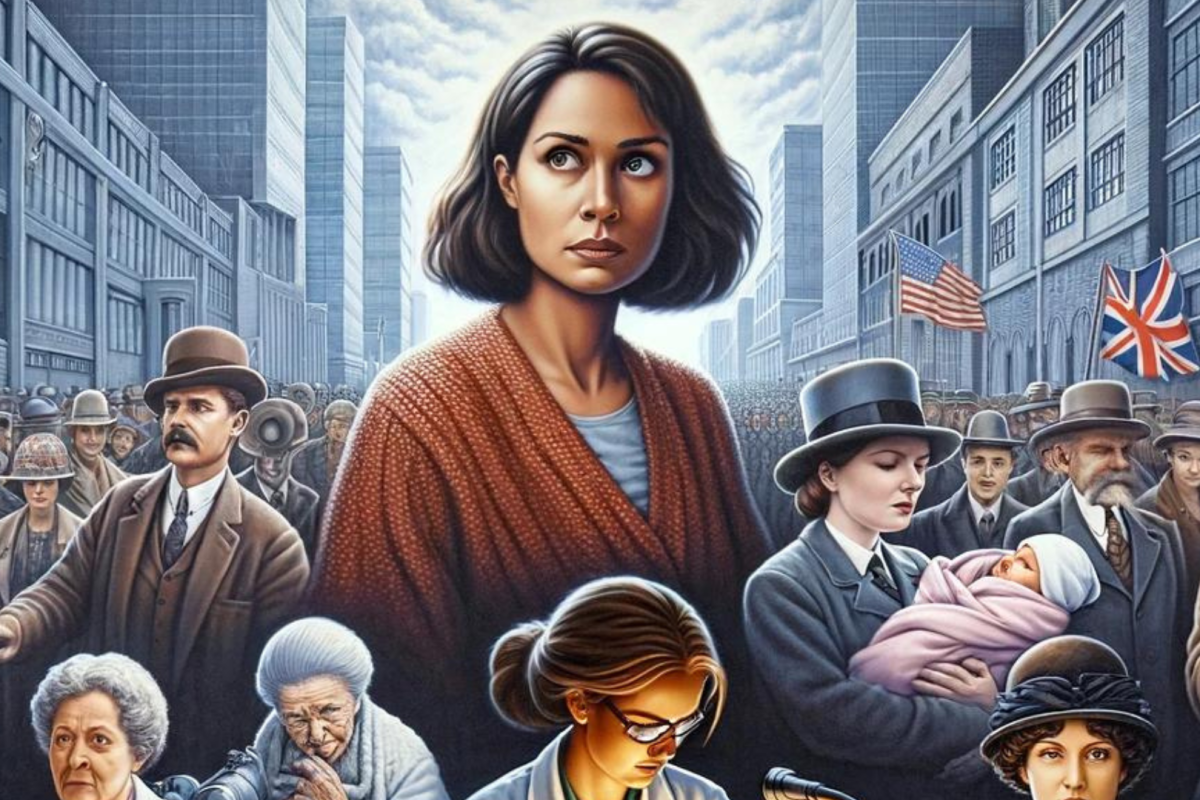
In the tapestry of human endeavor, threads shimmer with unyielding tenacity woven from the fiber of women with grit. These women, from varied walks of life and corners of the earth, share a common trait—a relentless fortitude that propels them through adversity, enabling them to emerge not only unscathed but stronger and more resolute.

Consider the woman who rises before dawn, her day stretching ahead like an uncharted expanse, demanding her sweat, intellect, and care. Yet, she meets each challenge undaunted, fueled by an inner fire that refuses to be extinguished. She could be the single mother who juggles multiple jobs to provide for her children, ensuring they receive the opportunities she never had. Or the scientist in a lab, her eyes alight with the spark of discovery, tirelessly pushing against the frontiers of knowledge despite the voices questioning her place in such a world.

Reflect on the women in history who stood firm against the gales of their times, refusing to bend. They are the suffragettes who endured mockery and imprisonment, their eyes fixed on the horizon of equality. They are the trailblazers in arts, sciences, politics, and activism who dismantled barriers and defied conventions to etch their indelible marks on the annals of time.

Women with grit embody resilience, a quality that resonates through their every action, a silent strength that speaks louder than words. They navigate life’s storms with a steely grace, their resolve a beacon for others to follow. In their perseverance, they weave a legacy of inspiration, a call to each of us to harness our own potential, face our battles with courage, and emerge not just enduring but triumphant.

In celebrating these women, we recognize the grit within ourselves, a testament to the enduring power of the human spirit embodied in the resilience and determination of women across ages and the world.

My mother was such a woman. She had grit, but she referred to it as gumption. I’ve always liked that word. Despite the challenges of raising me on her own, she refused to surrender the chaos surrounding us, no matter how tempting it had been. She remained steady in all that we faced. A lesson I tried to demonstrate to her grandchildren and great-grandchildren. I’m honored to be a steward of her legacy. No different than the others who have courageous women in their lives.