Unapologetically Unedited


Is it hard to be a beautiful woman? People think you have the world at your feet. They think doors open for you, heads turn for you, and life bends around your presence. But they don’t see the trade. They don’t see the constant calibration—how much of yourself you shave off each day to fit into someone else’s frame. Beauty is not freedom. It’s exposure. A spotlight you didn’t ask for, that you can’t turn off.

You’re seen before you’re heard. Assumed before you’re known. People don’t meet you—they meet the idea of you. Their version. Their fantasy. Their fear. And if you don’t match it? You become a threat. A disappointment. A target. It’s not just tiring—it’s erasure in slow motion.

So you patch yourself together—smile here, soften there, silence the part that wants to speak too loudly. Over time, your identity becomes a kind of repair job. You keep the strongest parts in storage, hidden from view, waiting for a time when it might be safe to bring them out. You begin to wonder: Who am I without all the edits? What’s left when I’m not translating myself for someone else’s comfort?

You learn to play roles just to survive. To be warm but not inviting. Assertive, but not “difficult.” Intelligent, but never intimidating. Every room becomes a stage. Every glance is a calculation. When will it be okay for you to step out from behind their idea of you, letting you be who you are, not who they’ve imagined or prefer? How many masks do you have to wear before one of them finally feels like skin?

The tension doesn’t just live in your body—it rewires it. It clutches your voice before you speak. It lingers in your posture, in your smile that’s a little too careful, in your silence that’s mistaken for grace. They don’t see the moments when you swallow yourself to keep the peace. When you feel the full ache of being looked at but never seen.

Every day, you make choices that feel small but cost you something: how to walk into a room, how to hold your face, when to speak, and when to stay quiet. You tell yourself it’s just for now. Just until it’s safe. Just until they see you for real. But how long can you stay edited before you forget the uncut version?

The woman in the photo is not just posing; she’s done shrinking. Her posture is not elegance—it’s exhaustion turned into boundary. It’s defiance without apology. It’s a question you can’t ignore anymore: What happens when a woman stops choosing what’s expected, and finally chooses herself?

Not your version of her. Not the one that plays nice. Just her. Fully, freely, finally.


Author’s Note
This piece was written for Esther’s Weekly Writing Prompt, with a word prompt from Fandango’s FOWC.
Big thanks to all of you for keeping the creative fire lit week after week, day after day. These prompts aren’t just words—they’re jumping-off points, gut checks, and sometimes lifelines. Appreciate what you do more than you know. Keep ‘em coming.

How Not to Lose My Mind by 6 A.M.

Daily writing prompt
What are your morning rituals? What does the first hour of your day look like?

DAILY PROMPT RESPONSE

My cat is my alarm clock. Not metaphorically — literally. She’s the first thing I hear every morning, howling like she’s been abandoned in a void, despite living a life of uninterrupted luxury.

There’s no snooze button, no soft chime, no graceful start. Just claws on the floor, judgment in her eyes, and a relentless demand for breakfast.

So I get up. Not because I’m ready to greet the day, but because feline terrorism leaves no room for negotiation.

I feed her. I grind the coffee. These are the sacred rites of passage — the steps that transform me from a disoriented gremlin into someone who can form sentences.

If anything delays this ritual, I take it personally.
Why are you playing with my emotions? Who told you this was cool?

Once caffeine levels are in the green and nicotine’s holding the line — check, check — and the cat has retreated to whatever sun-drenched corner she’s claimed, I begin the real work: protecting my peace.

And look — I didn’t arrive at this approach because I’m naturally serene or some monk-in-disguise.

I got here because of the life I’ve lived. Because of the dents.
Because there are days when my mind goes rogue and starts offering me metaphorical jackets with buckles on the back.

“Give that a new coat,” it says. “It’s very nice. Leather straps. Fastens in the back. Do you want a new coat, Mr. Khan?”

And I answer like I’m seriously weighing the options.

“If you’re good, we’ve got lime Jello for you… You like lime, don’t you?”

And lime Jello is the truth. You don’t mess with lime.
Last time I cut up? They gave me lemon. No one likes lemon Jello.

That’s just mean. Downright mean.

So yeah, I’ve had to learn how to manage my mind, not just for peace — but for survival.

Calm isn’t some Instagram aesthetic for me. It’s a lifeline.
A way to keep the louder voices quiet and the darkness at bay.

That’s why I keep close something Alan Watts once said:

“Muddy water is best cleared by leaving it alone.
What we see as a clear mind is not the result of frantic activity.
It is clear as the morning, not because we scrubbed the sky, but because we left it alone.”

That line sticks with me because it echoes something ancient — something every major religion or philosophy seems to touch on:

The idea of inner stillness.
Of knowing yourself before engaging with the noise of the world.

In Sufism, Rumi wrote:

“There is a voice that doesn’t use words. Listen.”

In Buddhism, from the Dhammapada:

“Better than a thousand hollow words is one word that brings peace.”

And from the Bible, in Psalms:

“Be still, and know that I am God.” (Psalm 46:10)

Different traditions. Same thread.
Peace isn’t something you chase. It’s something you uncover — when you get quiet enough.

That’s what I’m after each morning.

Some days it’s just coffee and silence.
Other days, a bit of journaling or staring into the void like it owes me money.

The practice doesn’t matter as much as the pause. The space.
The reminder that I get to choose how I show up — even if some days, that choice takes everything I’ve got.


But some mornings, I skip it.
The ritual. The silence. The pause.

Maybe I oversleep.
Maybe I pick up my phone before I breathe.
Maybe I think, “I’m fine, I don’t need it today.”

That’s the trap.
(Cue Admiral Ackbar voice: “It’s a trap!” — and yes, it absolutely plays in my head every time I skip my rituals like I’m going to be fine.)

Because when I skip my rituals, life turns to quicksand.
And no one’s coming to save me.

There’s no helpful rope, no dramatic movie rescue.
Just me, slowly sinking, pretending I can claw my way out of the churn.

I’m three seconds from a panic attack — except it doesn’t always look like panic.

Sometimes it’s quiet.
Like holding your breath without realizing it.
Like being trapped inside a breathless gasp, chained in place by something invisible.

A prison with no walls, but no doors either.

The anxiety doesn’t fade. It just lingers. Constant hum, just under the skin.
Everything feels urgent. Every noise too loud. Every thought too fast.

I forget what I was doing mid-sentence. I lose time. I react instead of respond.

And the worst part?
I can’t tell if it’s me or the world — and at that point, it doesn’t matter.


But I have to remember — the power to escape is within.

Not in some motivational-poster way.
Not in the “just breathe and manifest your peace” kind of way.

I mean that literally.

The same rituals I sometimes skip — the breath, the stillness, the silence, the coffee, the pause — they’re the tools.

The rope in the quicksand.
The key to the prison that looks like it has no door.

I have to choose to reach for them. Even when I don’t feel like it.
Especially then.

It’s not about fixing everything in that moment.

It’s about reclaiming one inch of space.
One breath. One clear thought.

Enough to remind myself that I’m not just a body riding out the chaos —
I’m a person with the ability to shift, to respond, to say:
“Not today. We’re not drowning today.”


A new pot sputters.
Serenity in a sip.

The cat breathes easy on her perch beside me, no longer screaming like the world’s on fire.
She’s fed. I’m fed — in my own way.

My eyes open each day at 5 a.m. Not by choice, but by necessity.
That’s when the mind starts. That’s when the first storm rolls in from the backcountry of my brain.

I wade through the madness in the regions of my mind, step by step, breath by breath.
No armor. Just ritual.

This — the coffee, the quiet, the stillness — this is how I survive myself.

I use these rituals to breathe.
To feel.
To live.

It’s 6 a.m.


You’re Not Just One Thing

Daily writing prompt
Which aspects do you think makes a person unique?

DAILY PROMPT RESPONSE

We hear it all the time—be yourself, own your story, embrace what makes you different. But underneath all the self-help slogans lies a tougher set of questions:

What actually makes a person unique?
Do we truly want to be different—or has “being unique” just become another trend to follow?

In a world where authenticity is marketed, curated, and hashtagged, it’s easy to confuse standing out with just fitting into a different mold. Sometimes, the pressure to be different starts to feel like pressure to be the same kind of different as everyone else.

And if your values or beliefs don’t match the current narrative? Suddenly, you’re not seen as “authentic”—you’re outdated. It’s become almost unpopular to carry forward ideas from previous generations, even if they still ring true for you.

So maybe the better question is this: What genuinely sets someone apart—not just on the surface, but underneath?

Let’s break it down.


It’s Not Just Traits—It’s the Mix

We like to think people are unique because of specific traits—talent, personality, interests, quirks. But that’s only part of the story. Lots of people are funny. Lots of people are driven. Lots of people love photography, or books, or fitness, or whatever else fills their feed.

What actually makes someone unique isn’t what they have—it’s how it all comes together.

Think about it—we’ve got all these phrases and ideals that define what’s considered attractive or impressive: “She’s out of my league,” “He’s the total package,” “Tall, dark, and yummy.” But what makes someone stand out isn’t universal. It’s a matter of perspective—and perspective is as unique as the person doing the observing.

Two women can look at the same man and see completely different things. One might be drawn to his confidence. The other might notice the way he listens. Sure, they might agree on some traits, but certain qualities hit differently for each of them. The same goes for men looking at women. It’s not just about who someone is, but how they’re seen.

That’s the thing about uniqueness—it’s not just defined by the individual. It’s also shaped by how others experience them.


What Actually Makes Someone Unique?

If it’s not just traits or appearances, then what does shape a person’s uniqueness?

Here’s the real mix:


1. Life Experiences
Where you’ve been and what you’ve been through leaves a mark. Not just the big, dramatic moments—but the subtle stuff, too. The way you were raised, the schools you went to, the losses you’ve dealt with, the opportunities you got—or didn’t get. Two people can share the same background on paper and still have completely different stories because the details matter. How you felt in those moments, what you took from them—that’s what shapes you.

“We are not the same person we were a year ago, a month ago, or a week ago. We’re constantly evolving.” – Bob Dylan


2. Values and Beliefs
What do you care about? What would you stand up for—or walk away from? Your internal compass, even if it evolves over time, sets you apart. Especially when you’re not afraid to hold onto a belief that’s no longer trendy or socially rewarded.

But here’s the thing—our values don’t come out of thin air. They’re shaped by what we’ve lived through. The hard lessons, the turning points, the people who’ve impacted us (for better or worse)—they all influence what we believe is right, what we think matters, and what we refuse to compromise on.

“Don’t let the noise of others’ opinions drown out your own inner voice.” – Steve Jobs


3. Perspective
You and someone else could be in the same room, hearing the same words, living through the same event—and walk away with two completely different takeaways. That’s perspective. It’s built on your experiences, your beliefs, and your personality. It’s what makes your voice different when you tell a story, give advice, or solve a problem. It’s the lens through which you see the world, and no one else has that exact lens.

“We don’t see things as they are, we see them as we are.” – Anaïs Nin


4. Habits and Patterns
It’s easy to overlook, but the way you move through daily life says a lot. How you react to stress. How you celebrate wins. Whether you overthink or dive in headfirst. How you communicate. How you rest. These patterns—formed over time through repetition, trauma, trial and error—become part of your personal rhythm. And even if they seem small, they help define how others experience you.

“First we make our habits, then our habits make us.” – Charles C. Noble


5. Choices
This is where it all comes together. Every day, you make choices—what to do with your time, who to keep close, what to speak up about, what to ignore. And over time, those decisions stack up and start to shape the path you’re on. Some people let life decide for them. Others step in and make intentional moves. Either way, your choices are the clearest expression of who you are—and who you’re becoming.

“You are free to choose, but you are not free from the consequences of your choice.” – Anonymous


The Myth of a Fixed Identity

We act like identity is something you’re born with. Like it’s a fixed list of traits you carry for life: shy or outgoing, creative or logical, introvert or extrovert. But real life doesn’t work like that.

People change.

And not just in surface-level ways. The core of who you are—your beliefs, your boundaries, your goals—can shift over time. Sometimes because of trauma. Sometimes because of growth. Sometimes because you simply outgrow the story you’ve been telling yourself.

The idea that there’s one “real you” hiding somewhere, waiting to be discovered, is a nice thought. But it’s not that simple. You don’t find yourself—you build yourself. Bit by bit. Choice by choice. Day by day.

“The self is not something ready-made, but something in continuous formation through choice of action.” – John Dewey

So if you feel like you’re changing, evolving, rethinking things—that’s not a crisis of identity. That’s you becoming more you.


Why This Matters in Real Life

All this talk about uniqueness isn’t just for introspection or personality quizzes. It has real weight in how you live.

Knowing what makes you unique helps you stop chasing someone else’s version of success. You stop comparing yourself to people who are on completely different paths. You start making decisions that actually align with you—not just what looks good on paper or plays well on social media.

It also changes how you connect with others. When you understand that everyone’s shaped by a different mix of experience, values, and perspective, you build empathy. You listen differently. You judge less. You become more curious and less quick to assume.

And here’s the kicker: knowing your own uniqueness helps you spot your strengths—even the ones you didn’t know you had. The way you solve problems. The way you see people. The way you stay calm under pressure. These things might feel ordinary to you, but they’re often what make you valuable to others.

“Too many people overvalue what they are not and undervalue what they are.” – Malcolm Forbes

So this isn’t just about self-discovery—it’s about self-awareness that leads to better choices, stronger relationships, and a life that feels more like yours.


Final Thoughts

All of this is easier said than done. Truth is, no matter how open-minded we are or how willing we are to stand out from the crowd, life has a way of pulling us back into old habits. Not because we’re ignorant. Not because we think those habits are right. We go back because they feel safe.

Comfort is familiar. Change isn’t.

And sometimes, even the most self-aware people still choose the version of themselves that feels known—even if it’s smaller than who they’re becoming.

“Consistency is the last refuge of the unimaginative.” – Oscar Wilde

So yes, being unique takes effort. It takes intention. But the point isn’t to be different for the sake of it—it’s to be honest about who you are, even when it’s inconvenient, even when it’s uncomfortable.

That’s what makes someone truly stand out.
But, Of Course

Daily writing prompt
Do you have any collections?

DAILY PROMPT RESPONSE

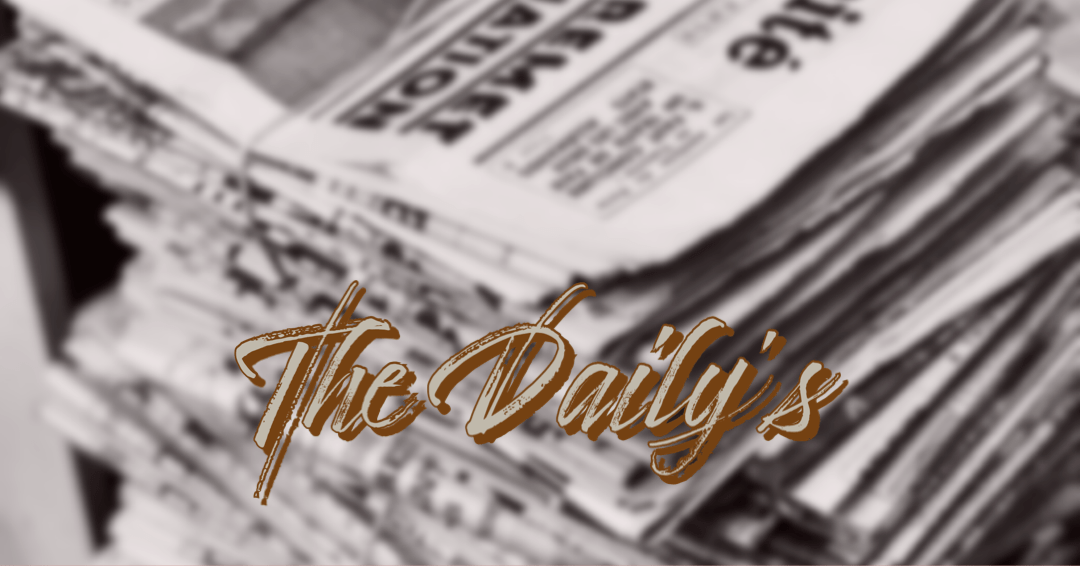
I have several collections of various things that captured my interest over the years. I could go on about my book, music, or my hard drives filled with unsorted data to be used at some unspecified time. No data is bad data. However, I have a collection that may be a tad unusual. To the point of interesting in a peculiar way.

Unintentionally, I began to collect unused journals. There are of various sizes and types. This collection started by accident. One of those collections that just appear, and you don’t realize you started until you do.

If you ask me there something with each of these journals. Either it’s the binding, the paper, the size, or a combination of everything. I’ve actually found a few of these journals that could work in a pinch, but they didn’t work with my pen rotation. Now, I when hear a writer begin discussing pen and paper combinations, they have a became a pretentious dick. I’m fully aware that I fit this category. I’m okay with it. I’ve even this excuse for not writing. Yep, I’m that guy.

However, because of my oddity, I learned how to make own journals. Just when you think it can’t get any worse. I can’t write on anything lighter than 24lbs paper. Don’t let me get started on the proper pen rotation. We don’t have enough time for the rant that ensue from my dissatisfaction of inferior writing instruments of today. I find myself pondering with the following query “why?”

Enough of that, I have another collection I’d like to share this evening. I’ve been painstakingly assembling for decades. It’s my annuals of “Weak Ass Excuses for not Writing.” I assure you it is quite impressive. There are several volumes of horseshit. I thump through from time to time for giggles.