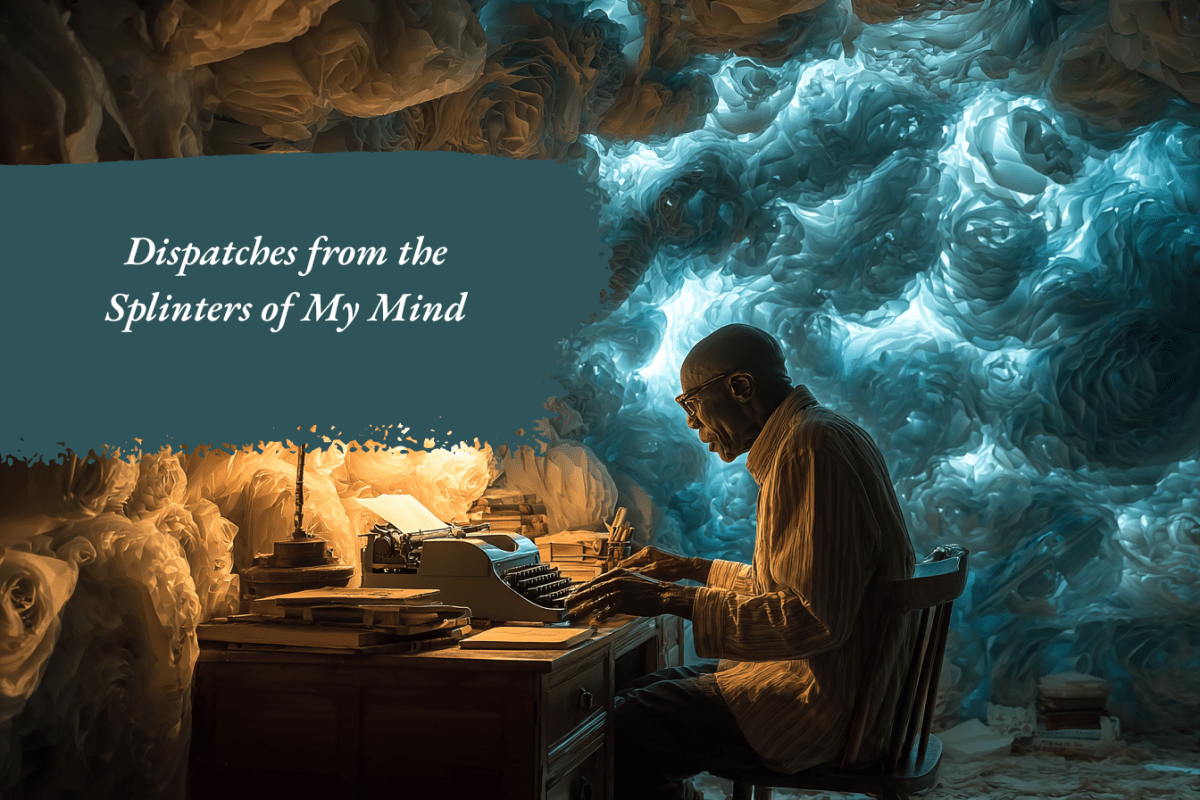

Dispatches of Splinters of My Mind: Entry 18
There are days when you wake already arranged.
Before your feet touch the floor, before thought fully forms, some invisible machinery has already begun its work. It hands you the proper face, the acceptable pace, the tone required for public weather. It lays out your responses like pressed clothes: I’m fine. Busy. Getting there. Can’t complain. You put them on because they fit, and because mornings are hard enough without negotiating authenticity before coffee.
By the time you enter the world, the line is already moving.
You notice it first in small ways. The synchronized urgency in parking lots. The shared exhaustion worn like a badge. The identical complaints traded as intimacy between strangers. Everyone rushing somewhere they resent, everyone defending schedules that are slowly eating them alive. The strange pride people take in being depleted. The quiet panic that surfaces whenever stillness enters the room.
Movement has become morality.
To pause is suspicious.
To question is inefficient.
To step aside is interpreted as failure.
So the line moves, and most of us move with it long before we decide to.
That is how systems survive—not through chains, but through rhythm. Through repetition so ordinary it stops looking chosen. Through rewards small enough to feel reasonable and punishments subtle enough to be denied. Approval. Access. Inclusion. The soft narcotic of belonging. The colder sting of being looked at too long when you fail to mirror the expected mood.
None of this requires villains.
That is the uncomfortable part.
Most structures are maintained by tired people trying to make it through the week.
The man in front of you is not your oppressor. He is late on rent. The woman behind you is not enforcing doctrine. She is scared and calls it practicality. The supervisor repeating dead language about synergy and culture may secretly hate the script more than you do. Even the loudest defenders of nonsense are often protecting themselves from what would happen if they admitted they’ve given years to something hollow.
Complicity is frequently dressed as necessity.
Sometimes it is.
Sometimes it isn’t.
That ambiguity is where people go to sleep.
The corridor is bright overhead and dim at eye level. That’s how many institutions are designed. Plenty of light for procedure. Very little for reflection. Enough visibility to keep order, not enough clarity to see the whole arrangement. Faces become silhouettes. Individuals become functions. You can feel this happening in your own body when you’ve lived inside systems too long. Your language narrows. Your gestures become efficient. Your laughter arrives on delay. You begin describing yourself in terms of output.
I handle.
I manage.
I deliver.
I perform.
Verbs of utility replacing nouns of identity.
What are you?
Useful, mostly.
And usefulness can be addictive because it earns praise faster than wholeness ever will.
Wholeness is inconvenient. It asks for rest when deadlines loom. It wants grief acknowledged during productive quarters. It questions whether ambition is yours or inherited. It asks why your jaw hurts every Sunday night. It notices how often you say “have to” when you mean “have agreed to.” It remembers that you once loved things with no measurable outcome.
Useful people get promoted.
Whole people ask dangerous questions.
So many choose usefulness until they can no longer remember the trade.
The line moved before I did.
That realization comes late for most of us. Usually during a pause we did not schedule: illness, loss, burnout, betrayal, age, a child asking a clean question with no respect for your rationalizations. Something interrupts momentum long enough for you to hear the machinery underneath it.
You listen.
You realize you’ve been calling compulsion discipline.
You’ve been calling fear ambition.
You’ve been calling numbness maturity.
You’ve been calling imitation professionalism.
And because honesty often arrives carrying a knife, it cuts more than one thing at once.
You begin to see how often you laughed when you wanted to object. How many rooms improved after you made yourself smaller. How often exhaustion was praised while joy was treated as unserious. How many people introduced themselves through titles because they no longer trusted anything less official.
You see your own reflection in all of it.
That part matters.
It is easy to condemn the line from outside language while secretly craving its protections. Easy to sneer at conformity while enjoying the convenience of being understood quickly. Easy to romanticize rebellion when rent is paid and loneliness hypothetical. The line offers real things: structure, income, companionship, direction, relief from constant self-invention.
Chaos is expensive.
Freedom can be isolating.
Not everyone refusing the line is brave. Some are simply allergic to responsibility. Some confuse contrarianism with depth. Some reject all structure because they cannot bear mirrors.
Truth rarely flatters any side for long.
Still, there comes a moment when remaining asleep costs more than waking.
For some it is physical: the body refusing one more year of swallowed tension. Shoulders turned to stone. Teeth ground thin. Breath shallow as apology.
For others it is spiritual: success arriving empty. The promotion that feels like inheritance of a nicer cage. The applause that lands on someone you no longer recognize.
For others it is relational: discovering that the people who love you know your role better than your interior life.
That one leaves marks.
So what then?
You do not need to burn down the corridor in a dramatic fit of late-stage enlightenment. Most people who announce liberation are selling a new uniform by Thursday. Grand gestures are often vanity wearing revolutionary cologne.
Sometimes the real act is smaller.
You stop speaking borrowed phrases.
You decline one unnecessary obligation.
You admit fatigue without dressing it as humor.
You sit in silence long enough to hear what rises.
You ask whether your schedule reflects your values or merely your conditioning.
You become slightly harder to automate.
This will annoy people.
Especially those whose peace depends on your predictability.
Expect resistance disguised as concern.
Expect invitations back into the line framed as opportunities.
Expect some relationships to reveal they were built around your compliance.
This is not tragedy.
It is information.
The first steps out feel awkward because autonomy uses underdeveloped muscles. You will mistake uncertainty for failure. You will romanticize the old numbness on difficult days. You may even step back in temporarily. Many do. Familiar prisons feel merciful when weather turns.
But once you have heard the machinery, it never sounds like music again.
Eventually you learn a quieter rhythm.
One set by breath instead of alarms.
By attention instead of urgency.
By enough instead of more.
You begin to recognize people who have stepped out too. They are not always glamorous. Often they look ordinary, a little less hurried, strangely present. Their eyes meet yours fully. Their laughter is not transactional. They seem to occupy time rather than chase it.
You envy them at first.
Then you understand.
They did not find a shortcut.
They paid the price of waking.
The line still moves. It always will. Corridors are eternal in one form or another. New systems replace old ones and call themselves liberation until they develop their own fluorescent hum.
So the goal is not permanent escape.
It is remembrance.
To keep noticing when motion becomes mindless.
To keep asking who benefits from your exhaustion.
To keep protecting the small interior country where no manager, ideology, market, or crowd gets final say.
And on mornings when the machinery reaches for you before consciousness does, when the old phrases line up neatly by the bed, when your hand almost reaches for the face they prefer—
pause.
Just long enough to know the difference.
Then move, if you choose.
Not because the line did.
Discover more from Memoirs of Madness
Subscribe to get the latest posts sent to your email.


Love this
LikeLike
Goodness, this made my mind go in so many directions. Sadness, self-reflection, acceptance, and understanding. So many times I wanted to argue, and then thought, wow that’s so true. Well done, love… hugs
LikeLike