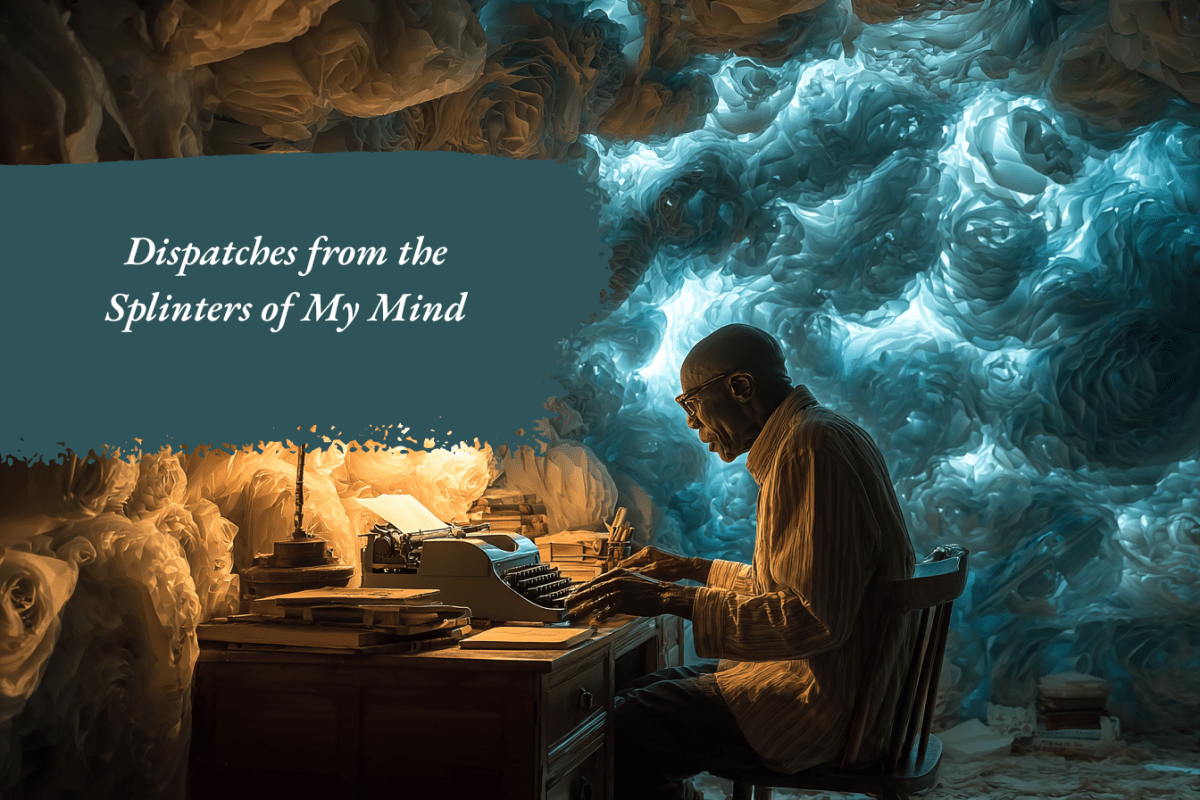
Dispatches of Splinters of My Mind: Entry 22
The house did not appear abandoned when I first arrived.
That would have been easier.
Abandoned places announce themselves honestly. Dust thick on the banisters. Wallpaper collapsing in long yellow strips. The sour odor of standing water and forgotten rooms. But Blackthorne Manor still behaved like a living thing. The fireplaces remained warm despite no visible staff tending them. Fresh flowers appeared each morning in narrow silver vases along the eastern corridor, though I never once saw anyone replace them. Even the grandfather clocks continued ticking in perfect synchronization, each pendulum swinging with the same slow, deliberate rhythm, as though the entire house possessed a single shared heartbeat.
That was the first thing that unsettled me.
Not the silence.
The coordination.
Silence can feel natural in old places. But harmony—especially forced harmony—suggests intention.
And intention implies awareness.
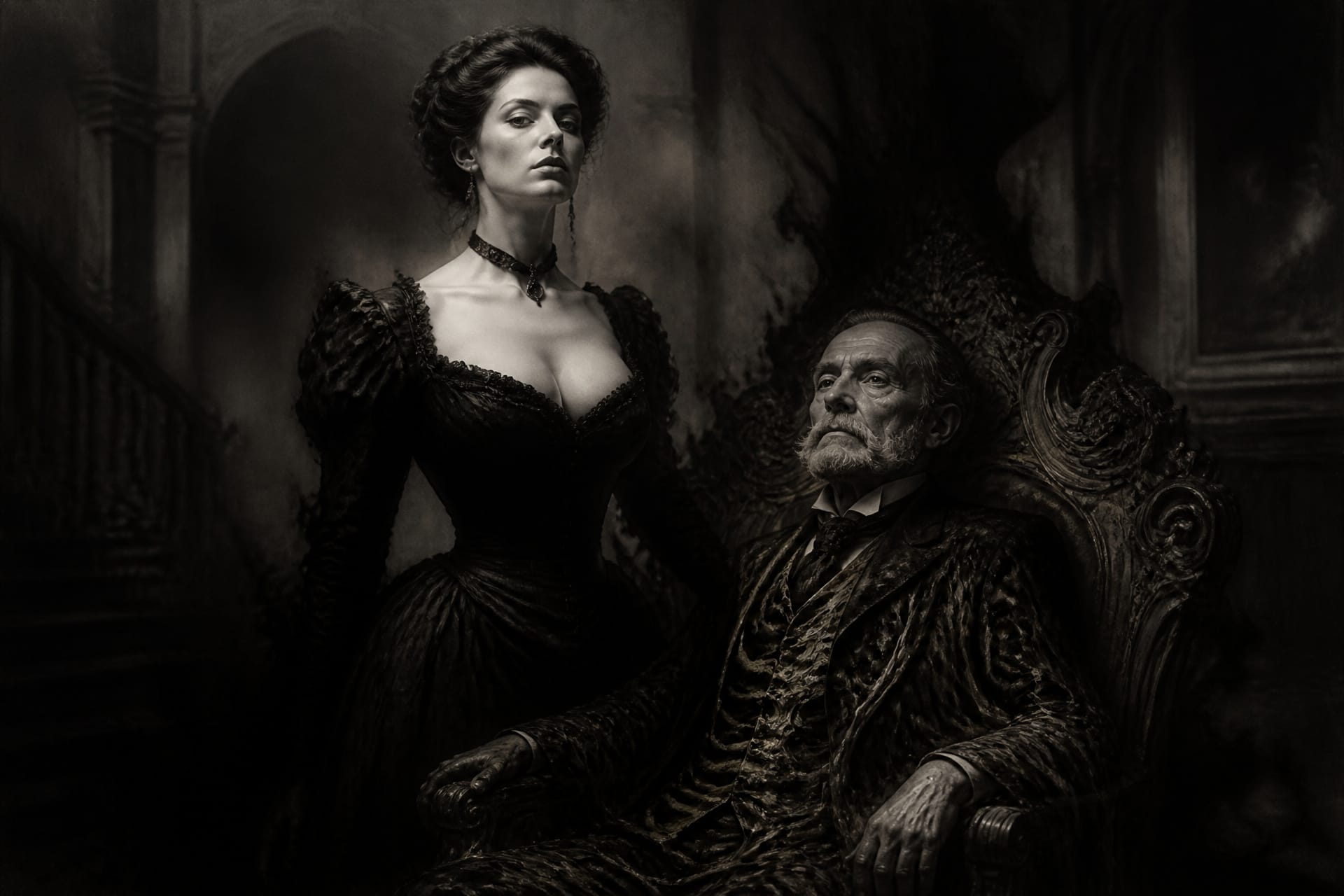
Lady Vale met me at the entrance hall wearing a black dress severe enough to resemble mourning attire, though no funeral had been announced. The fabric moved strangely when she walked, as though the darkness of it lagged half a second behind her body. Her face was pale without appearing fragile, sharp in the way statues are sharp—beautiful, but with no warmth beneath the symmetry. She extended one gloved hand toward me, and when our fingers touched, I experienced the distinct sensation that she had mistaken me for someone else.
Not metaphorically.
Truly.
Like a person recognizing an old acquaintance in poor lighting.
“You took longer this time,” she said quietly.
I laughed because people laugh when frightened in subtle ways.
“I’m sorry?”
But she only smiled.
Not warmly.
Knowingly.
The manor smelled faintly of candle wax, wet stone, and something older beneath both—something organic hidden under layers of perfume and smoke. Not rot exactly. Closer to the smell of books left sealed too long in damp conditions. Memory decomposing slowly.
Lord Vale remained seated when I entered the drawing room. His chair was positioned near the fireplace, though the flames cast surprisingly little warmth. He looked ancient in the particular way certain wealthy men age: preserved rather than alive. His skin seemed stretched thin over his bones, his eyes too alert for someone whose body appeared so exhausted. When he looked at me, I had the uncomfortable sensation of being measured against an expectation I could not remember agreeing to fulfill.
Neither of them asked why I had come.
That should have mattered more to me than it did.
Instead, I became distracted by the paintings lining the walls.
Portraits, mostly.
Generations of the Vale family rendered in thick oils so dark the figures appeared half-swallowed by shadow. But the longer I studied them, the stranger they became. Faces repeated across centuries with only minor variations. A woman from 1841 possessed Lady Vale’s exact eyes. A man painted beside a hunting rifle in 1910 wore my expression—not similar, not reminiscent. Mine.
I stepped closer to the canvas until my breath fogged the varnish.
The painted man’s lips seemed slightly parted, as if interrupted mid-thought.
Behind me, Lord Vale said softly, “Most people notice eventually.”
The room suddenly felt too narrow.
I asked how long the portrait had been there.
He answered, “Longer than you.”
Then smiled with gums instead of teeth.
That night I could not sleep.
The bedroom prepared for me was enormous, cathedral-like in scale, with ceilings high enough to disappear into darkness beyond candlelight. Heavy curtains sealed the windows shut, but I could still hear wind outside—or something imitating wind. Around three in the morning, I became aware of another sound beneath it.
Breathing.
Slow.
Measured.
Close.
I sat upright immediately, pulse hammering hard enough to blur my vision for a moment. The room appeared empty at first glance. Moonlight leaked through a slit in the curtains, silvering the edge of furniture into vague skeletal shapes.
Then I noticed the wardrobe.
The doors stood slightly open.
Not enough to reveal the interior.
Just enough to suggest invitation.
The breathing stopped the moment I looked directly at it.
I remember the texture of the carpet beneath my bare feet as I crossed the room. Thick. Damp. The air grew colder near the wardrobe, carrying the same scent that lingered beneath the rest of the house—that old, wet smell of sealed memory. My hand hesitated before touching the handle.
Something inside shifted.
Not violently.
Subtly.
Like someone adjusting posture after standing too long.
I should have left then.
Instead, I opened it.
There were no clothes inside.
Only portraits.
Hundreds of them stacked against the back wall, some cracked with age, others disturbingly recent. Faces blurred together in the dim light until one near the front caught my attention.
A woman.
Dark hair.
Sharp eyes.
Paint still glossy.
I recognized her instantly.
Not because I knew her.
Because I had seen her earlier that evening reflected briefly in a hallway mirror behind Lady Vale.
Except when I turned around, no one had been there.
My fingers trembled as I lifted the portrait.
The canvas was wet.
Fresh.
And beneath the woman’s face, written in delicate script, was a name I recognized immediately.
Mine.
The breathing resumed behind me.
Not from the wardrobe.
From the room itself.
The walls.
The ceiling.
The floorboards.
Every part of the manor inhaling together in one long, impossible breath.
I turned too quickly and nearly fell. The candles had gone out without smoke or sound. Darkness filled the room unevenly, thickening in corners like spilled ink. And inside that darkness, shapes had begun forming—not fully human, not fully separate from the walls surrounding them.
Faces.
Dozens.
Watching silently.
Some weeping black streaks from hollow eyes.
Some smiling.
Some mouthing words without sound.
The manor was not haunted.
That realization arrived with horrifying clarity.
Haunted places contain ghosts.
Ghosts imply the dead remain trapped.
But these faces did not feel trapped.
They felt absorbed.
Integrated.
Digested.
The house had not collected them.
It had consumed them.
And somewhere beneath the terror, beneath the instinct screaming for me to run, another feeling surfaced—smaller but infinitely worse.
Recognition.
Not of the house.
Of belonging to it.
Fragments of memory moved at the edges of my mind like shapes beneath black water. Hallways I somehow knew before walking them. Conversations repeating with slight variations. The strange familiarity in Lady Vale’s gaze. The portrait upstairs bearing my face decades before my birth.
“You remember now,” Lady Vale whispered from the doorway.
I had not heard her enter.
She stood motionless in the dark, hands folded calmly before her, the black fabric of her dress dissolving into the shadows around her body.
“What is this place?” I asked, though part of me already understood.
Her expression softened then—not kindly, but sympathetically, the way one mourns an animal caught in a trap too old to escape.
“It is hunger,” she said.
Lord Vale appeared behind her slowly, one trembling hand sliding along the wall for support.
“And hunger,” he added, “must repeat itself.”
The walls creaked around us.
No.
Not creaking.
Breathing.
I suddenly understood why the clocks moved together.
Why the flowers never died.
Why the portraits multiplied.
The house preserved itself by preserving them.
Over and over.
Generation after generation.
Not immortality.
Recurrence.
Identity reduced to pattern.
Souls flattened into architecture.
And somewhere deep beneath the manor, beneath the stone foundations and wet earth and centuries of swallowed names, something vast shifted in its sleep.
Waiting for me to remember enough
to stop resisting.
Or worse—
to stay willingly.
Discover more from Memoirs of Madness
Subscribe to get the latest posts sent to your email.


Awesomesauce!!!!!!!!!!!!! 💚💚💚💚💚💚💚💚
LikeLike
RUN !!!!!!!
LikeLike