Personal Reflection
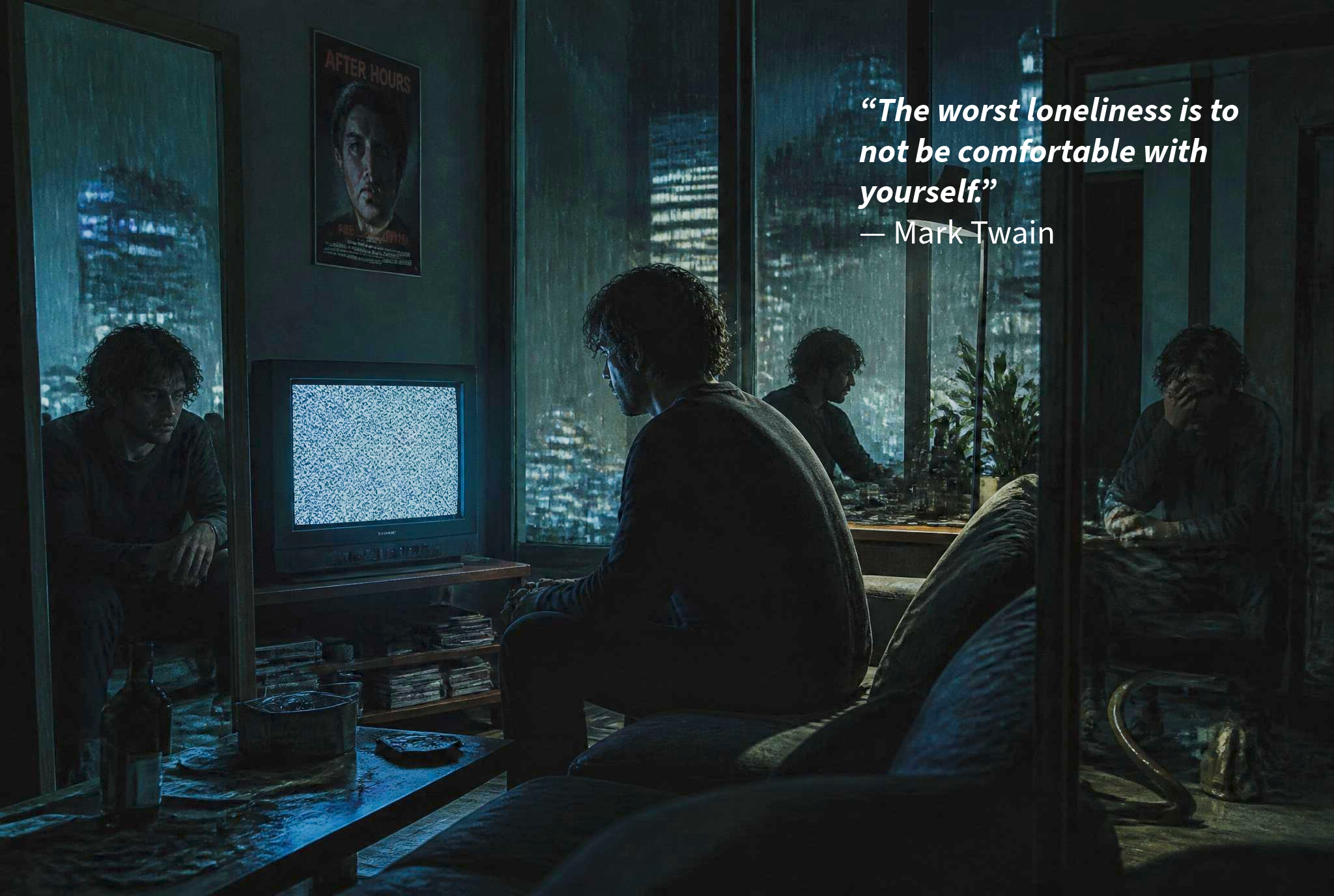
There’s something unusually direct about this quote. No poetic metaphor. No philosophical complexity. Just a blunt emotional truth sitting in plain sight.
And maybe that simplicity is what makes it uncomfortable.
Because most people think loneliness begins externally—with absence. No partner. No friends nearby. No one calling. No one staying. But some of the deepest loneliness exists in crowded rooms, inside busy lives, inside people who have learned how to function socially while remaining completely disconnected from themselves.
That kind of loneliness follows people everywhere because it isn’t tied to location.
It lives internally.
In the silence after distraction stops working. In the moments where the noise dies down enough for a person to realize they no longer know how to sit quietly with their own thoughts without immediately reaching for escape—music, scrolling, work, substances, conversation, anything that keeps the deeper parts of themselves from surfacing too clearly.
And maybe that’s the hidden crisis beneath so much modern exhaustion:
people spend years learning how to tolerate stress, disappointment, and emotional disconnection without ever learning how to genuinely inhabit their own inner lives.
So they become strangers to themselves.
They know their responsibilities. Their routines. Their public identity. But internally, there’s distance. Certain emotions remain avoided. Certain truths remain untranslated. Certain wounds remain untouched because confronting them honestly would require vulnerability most people were never taught how to hold safely.
That’s the strange thing about self-alienation—it rarely feels dramatic while it’s happening.
It feels ordinary.
You become productive but emotionally absent. Functional but disconnected. You laugh in conversations while feeling oddly detached from the person participating in them. You keep moving because movement feels easier than stillness, and stillness risks meeting parts of yourself you’ve spent years carefully avoiding.
Mental exhaustion deepens there.
Not simply from pain itself, but from the constant effort required to remain emotionally distant from your own reality.
And eventually the loneliness becomes difficult to explain because outwardly nothing appears missing.
Yet inwardly, something essential no longer feels reachable.
Still… maybe self-connection does not return through dramatic transformation.
Maybe it begins quietly.
A moment of honesty instead of avoidance. A difficult truth finally acknowledged without immediately pushing it back down. An evening spent sitting with your thoughts long enough to realize they are not enemies trying to destroy you, but wounded parts of yourself asking to be heard differently.
Because perhaps peace is not found in becoming someone new.
Perhaps peace begins the moment you stop abandoning yourself internally just to survive externally.
And maybe the opposite of loneliness is not always other people.
Sometimes it is finally feeling present inside your own life again.
Reflective Prompt
When was the last time you felt genuinely present with yourself instead of simply distracting yourself from yourself?