

Darth Vader. No hesitation. Luke Skywalker was a wimp.
There, I said it.
I know Luke was supposed to be the hero. I understood that even when I first watched Star Wars. He was the young man staring toward the horizon, dreaming about something larger than the life he had been given. He wanted adventure, purpose, something beyond moisture farming on Tatooine. All perfectly reasonable ambitions.
But damn, did he whine about everything.
We used to ask someone if they wanted some cheese with that whine. However, it isn’t responsible conduct to waste good cheese.
Then Darth Vader walked through that doorway.
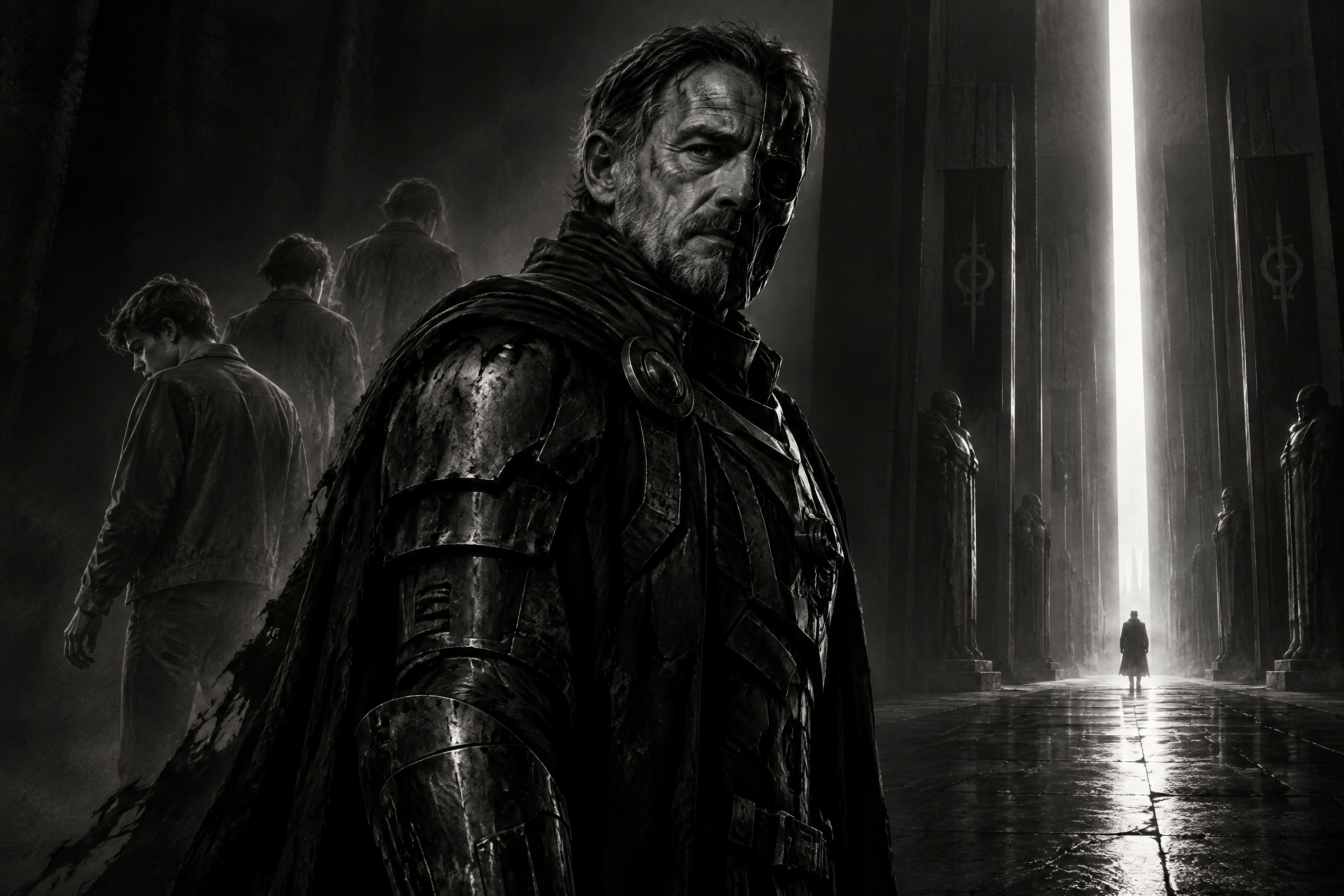
He did not need an introduction. He did not need to explain himself. Hell, he barely needed dialogue. Black armor, cape, that mechanical breathing, and everybody around him suddenly understood that the temperature in the room had changed. Vader had presence. Luke wanted to become somebody. Vader walked into the story already knowing exactly who he was.
At least, that was what I thought.
That distinction matters because I suspect part of what attracted me to Vader had less to do with good and evil than certainty. Luke was uncertain about nearly everything. He questioned himself, questioned Obi-Wan, questioned what was happening around him, and occasionally seemed one inconvenience away from complaining to somebody’s manager. Vader appeared to possess none of those weaknesses. He moved deliberately. He spoke deliberately. When someone challenged him, he did not spend fifteen minutes discussing his feelings about it.
He simply started choking people.
Not exactly a healthy conflict-resolution strategy, but undeniably efficient.
By the end of that first movie, folks were wondering whether they wanted to be a Jedi Master or a Sith Lord. Light side or dark side. Hero or villain. Maybe that is a question we spend much of our lives asking ourselves. We just use different names for it.
Most of us are never going to carry a lightsaber, blow up a Death Star, or choke an irritating coworker from across the conference room—HR tends to frown on that sort of thing—but we still encounter versions of the choice. Who are we going to be when we are angry? What do we do with power when we have it? What happens when fear gets hold of us? How much of ourselves are we willing to surrender to get what we believe we deserve?
Jedi Master or Sith Lord sounds considerably cooler, but perhaps the question underneath has always been the same.
Of course, getting older complicated my opinion.
Luke was supposed to be unfinished. That was the entire point. He was a young man trying to discover who he was while circumstances kept ripping pieces from the world he understood. His uncertainty was not a failure of the character; it was the foundation of him. Heroes rarely begin as heroes. Usually they begin confused, frightened, arrogant, naive, or standing somewhere staring into the distance because they believe the answer to their life must exist somewhere beyond the horizon.
Vader, meanwhile, only appeared finished.
His armor and manner were not who he was. They were who he had to become in order to survive his choices.
I think that distinction matters. Sometimes we imagine consequences as something that happens to us, but some consequences become things we have to carry. We build armor around them. We learn how to walk differently beneath their weight. Eventually, if we wear that armor long enough, other people may stop remembering there was ever somebody underneath it.
Maybe we do, too.
Once we learn who Darth Vader actually is, that black armor starts looking different. The certainty I admired becomes something closer to imprisonment. Anakin Skywalker did not wake up one morning and decide to become one of cinema’s great villains. He arrived there through fear, love, arrogance, manipulation, anger, terrible decisions, and the stubborn human tendency to keep walking down the wrong road because admitting we took the wrong turn would require us to confront everything we have already done.
That makes Vader far more interesting to me than a villain who is simply evil.
There is still a man inside that armor.
That may be what ultimately separates a memorable villain from somebody who merely gives the hero something to fight. The best villains contain enough humanity that we can recognize the road leading toward them, even when we would never excuse where that road ends. We understand something about their anger. Their fear makes sense. Their wounds make sense. Sometimes even their reasoning makes uncomfortable sense right up until the moment they cross a line we cannot follow them across.
Vader crossed plenty of those lines.
Yet, when the moment finally came, the man inside the armor was still capable of making another choice.
Maybe that is why, after all these years, my answer remains Darth Vader.
Luke Skywalker became the hero he needed to become, and I appreciate his journey more now than I did when I first encountered him. Age has a funny way of making you more patient with people who are still trying to figure themselves out.
But if you ask me who I would rather watch walk into a room?
Come on.
You already know the answer.
Breathing intensifies.