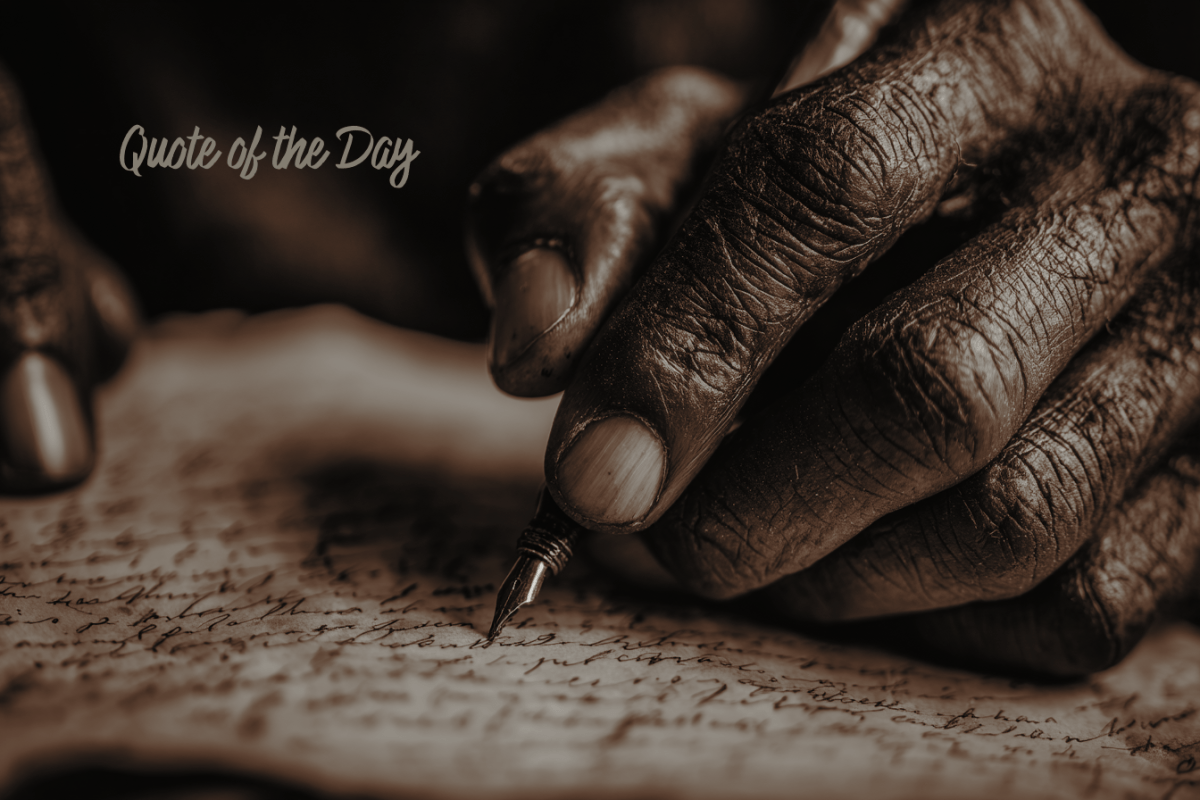
Quote of the Day – 07092026


Personal Reflection

Not every piece of work arrives to explain itself.

Some stories linger long after the last sentence because they refuse to answer every question. A painting may reveal something different each time you stand before it. A song you’ve heard a hundred times suddenly means something entirely new after a season of loss. The work hasn’t changed.

You have.

That’s the quiet miracle Picasso hints at.

Art doesn’t exist to confirm what we already know. It interrupts the ordinary. It clears away the fine layer of routine that settles over us day after day until we begin mistaking survival for living. We become efficient but less observant. Connected but less present. Busy enough that wonder slowly gathers dust in forgotten corners of the mind.

Then something honest reaches us.

A paragraph.

A photograph.

A melody.

A brushstroke.

For a moment, the world pauses. We notice the light falling through the kitchen window. We hear the tremble in someone’s laugh. We remember a conversation we thought we’d forgotten. Nothing outside has changed, yet everything feels slightly more alive because the work has gently cleaned the lens through which we see.

That is a strange responsibility for an artist.

Not to provide answers.

Not to persuade.

Not even to be universally understood.

The responsibility is to create something honest enough that another human being recognizes a piece of themselves inside it.

The work leaves the room carrying your fingerprints.

It returns carrying someone else’s memories.

That exchange is impossible to measure. You won’t always know whose burden became lighter because of a sentence you wrote or whose loneliness softened because of an image you created. Most of those stories will remain invisible.

Perhaps they were never yours to witness.

Your task was simply to make the work.

Its task is to keep traveling.


Reflective Prompt

When was the last time a piece of art quietly changed the way you looked at an ordinary day?
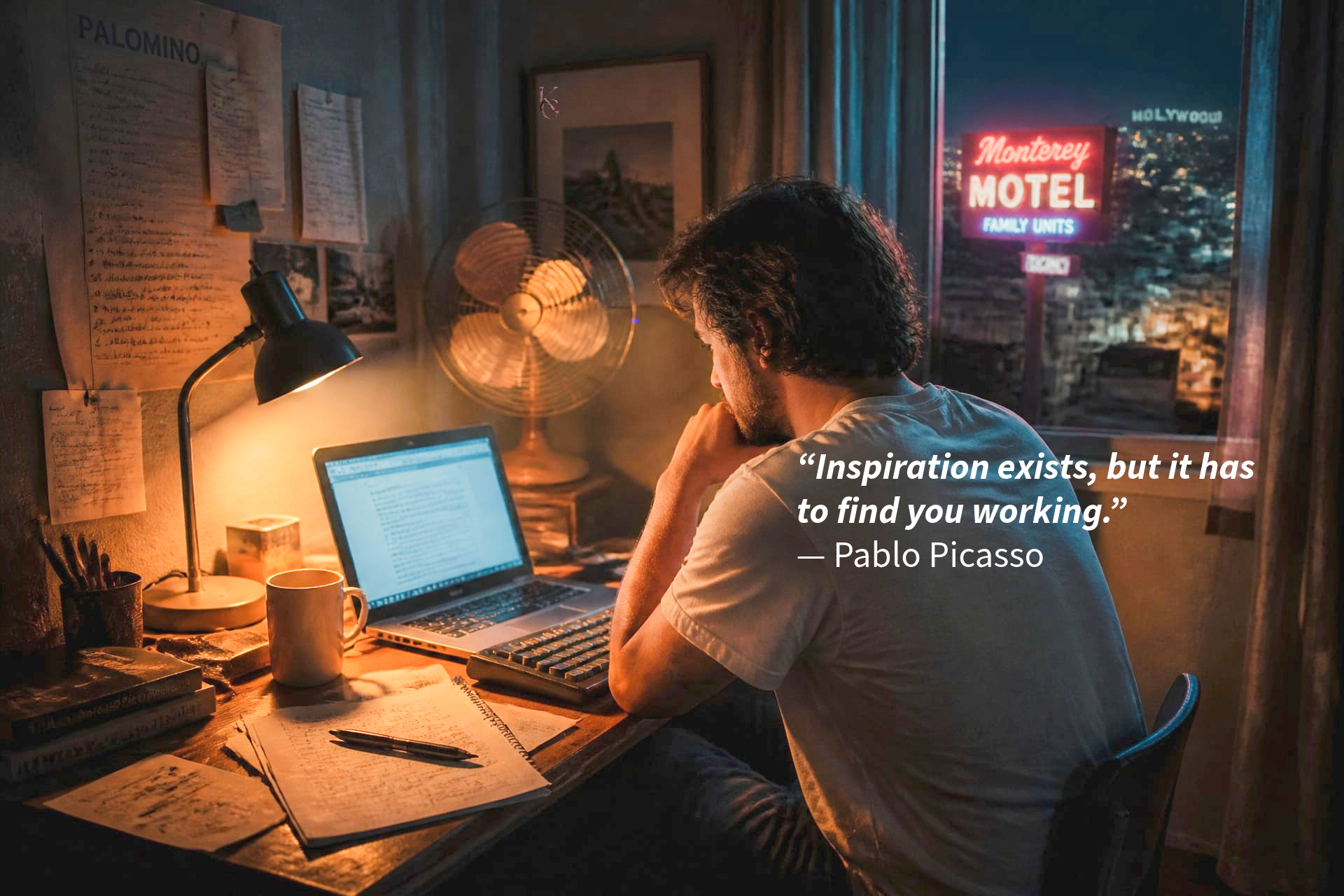
Quote of the Day – 07012026


Personal Reflection

July begins with the lights already on.

Not with thunder. Not with a perfect sentence descending from some merciful sky. Not with the clean cinematic arrival of the muse wearing perfume and certainty.

It begins with the chair pulled out, the document open, the studio floor warm beneath tired feet, the fan turning slowly in the corner while the city outside keeps pretending urgency is the same thing as purpose.

That is the first private room of July.

The room where nobody applauds because nothing has happened yet. The room where the work is still shapeless enough to embarrass you. The room where every excuse sounds reasonable because no one else can see whether you showed up.

Picasso’s line is useful because it does not flatter the fantasy of waiting.

Inspiration exists, yes. But it is not a chauffeur. It does not pull up outside your doubt and honk until you feel ready. It is more like a stray signal moving through the heat, looking for somewhere with power still running.

Work is how we keep the lights on.

That sounds less romantic than waiting for lightning, but it is more faithful to the way most meaningful work actually begins. Not in certainty. Not in emotional weather that finally cooperates. Not because the mind has cleared every obstacle and arranged the perfect hour like a clean table.

Most work begins while something else is still inconvenient.

The sink is full. The inbox is loud. The body is tired. The confidence is late. The world has not softened itself into a studio. And still, the page waits with that terrible patience only blank things possess.

This is where discipline gets misunderstood.

People hear the word and imagine punishment. Teeth clenched. Joy removed. A hard little system built to shame the softer parts of the self into productivity. But real creative discipline is not cruelty. It is a form of devotion. It is the decision to return before the feeling returns. It is the artist saying, “I will be here when the signal passes through.”

That return changes the room.

A desk used once is furniture. A desk returned to again and again becomes an altar, a workbench, a witness stand. The private room begins remembering you. The chair knows your hesitation. The notebook knows your evasions. The open file knows how many times you promised tomorrow would be different.

And then one night, without ceremony, something opens.

Not because you forced it. Because you were present when it arrived.

That is the quiet bargain July begins with: show up before the blessing, before the clarity, before the applause, before the sentence proves it deserves you. Let the work find you in motion. Let the muse catch you with your hands dirty.

The work leaves the room eventually.

But first, it has to find you there.

Reflective Prompt

Where are you waiting for inspiration when the deeper invitation may be to begin working anyway?

Quote of the Day – 06282026


Personal Reflection

Daily life leaves residue.

Not all at once. Not dramatically. It gathers quietly in the corners of the spirit. A thin gray film made of obligations, errands, deadlines, unanswered messages, small disappointments, and the thousand little compromises required to keep moving through the day.

You wake up already calculating what must be done. You answer before you feel ready. You smile when you are tired. You complete the practical rituals of survival until the inner life starts sounding far away, like music coming from another apartment through old walls.

That is where art finds us.

Not always as escape. Sometimes as return.

A song catches you at a red light and suddenly some buried part of yourself starts breathing again. A painting stops you in a museum hallway because it understands a loneliness you never explained aloud. A poem finds the exact shape of a feeling you had been carrying for years without language.

The dust lifts for a moment.

Not because life has changed.

Because you have remembered how to feel it.

That is the mercy Picasso was pointing toward. Art does not remove the bills from the table or undo the damage of ordinary exhaustion. It does not erase grief, fix the body, repair the relationship, or make the world gentler overnight.

But it rinses something from the soul that daily life keeps layering on.

It reminds us we are more than our tasks. More than our inboxes. More than the exhausted version of ourselves that moves from one responsibility to the next trying not to fall apart in public.

Art interrupts the machinery.

It says: stop. Look. Listen. Feel this before the world convinces you numbness is maturity.

That interruption matters because the soul does not usually collapse in one dramatic moment. It dulls by accumulation. One ignored feeling. One postponed dream. One evening lost to exhaustion. One small beauty overlooked because urgency kept shouting louder.

Then suddenly a piece of art finds its way in.

A lyric. A photograph. A film scene. A paragraph. A color you did not know you needed until it moved something beneath your ribs.

For a few seconds, the daily dust stops winning.

You remember the inner room is still there.

Maybe that is why art keeps mattering, even when life feels too crowded for beauty.

Because beauty is not decorative.

Sometimes it is how the soul remembers it was never meant to live covered in dust.

Reflective Prompt

What piece of art has helped you feel human again when daily life had left