What We Pretend Not to See

Daily writing prompt
What book are you reading right now?

It’s never as simple as answering, “What book are you reading right now?” I usually have four or five going at once — most of them nonfiction. Histories, craft books, philosophy, the “how did this happen and why does it still matter?” kind of material. Somewhere along the way, I forgot how to read purely for pleasure. Training does that. Once you learn to take stories apart, you stop seeing them as entertainment and start seeing them as machines.

Even when a novel doesn’t fully work, I still take a wrench to it.
I listen for the knock in the engine, the missed beat in a line of dialogue, the moment the writer blinked instead of pushing through. I can enjoy a book, absolutely — but I enjoy it like a mechanic listening to an engine idling just a little rough.

And here’s the part I’m almost embarrassed to admit: I can’t bring myself to write in books. Feels like a cardinal sin. So instead I’ve got notebooks scattered all over the house — pages filled with scribbles, arrows, fragments, arguments I’m having with an author who isn’t in the room. I finally gave in and bought one of those e-reader gizmos that lets you highlight the digital version. It feels like cheating, but at least I’m not defacing paper. A technicality, but I’ll take the loophole.

So when someone asks what I’m reading, they expect a title.
But the truth is, I’m running an autopsy.

And the books on my desk right now — Under the Dome by Stephen King and L.A. Confidential by James Ellroy — are the kind that don’t give up their secrets easily. Which is exactly why they matter.

Stephen King gets labeled “the Master of Horror,” but that’s just a convenience for the shelf. King’s real mastery is building pressure systems — closed environments where the air tightens and ordinary people start showing their real faces. In Under the Dome, the dome could be aliens, magic, or a freak atmospheric event; it doesn’t matter. It’s a magnifying glass. It forces truth to the surface.

King understands that people don’t transform under pressure — they’re revealed. Chester’s Mill doesn’t turn violent because of the dome. The dome just takes away the freedom to pretend.

And that’s where the cognitive dissonance hits.
You read something wild — a man electrocuted by an invisible barrier, the town fracturing into fear and paranoia — and your mind rejects it. “People aren’t like this,” you think. But rewind thirty seconds. You heard a crash outside your window, put the book down, checked it out, and watched your neighbor scream at a trash can like it betrayed him. You shook your head at the nonsense, then came back to a fictional scene that suddenly feels easier to believe than real life.

That’s King’s trick.
He shows you something unbelievable so you finally acknowledge the truth you’ve been ignoring.

Ellroy, on the other hand, doesn’t need supernatural pressure.
He starts inside the rot.

In L.A. Confidential, corruption isn’t a plot device — it’s oxygen. The moral decay isn’t creeping in; it’s already soaked into every wall, badge, and handshake. His characters don’t break down over time. They begin the story already fractured, already bent by pressures they barely acknowledge. Ellroy’s cognitive dissonance comes from the reader wanting to believe people aren’t this cruel, this compromised, this hungry for power and absolution.

But then your phone buzzes with a news alert and disproves that hope in under four seconds.

Ellroy doesn’t distort reality.
He removes the polite language that keeps us comfortable.

King writes about what happens when the walls close in.
Ellroy writes about what happens when the walls never existed in the first place.

King exposes human nature by turning up the pressure.
Ellroy exposes human nature by turning off the excuses.

One town collapses because the dome forces truth to the surface.
The other city collapses because truth was never allowed to stand upright.

Both men understand something we work very hard to avoid:

The unbelievable is always happening.
The unbelievable has always been happening.
We just prefer to call it fiction.

So when someone asks what I’m reading, the short answer is Under the Dome and L.A. Confidential.

But the real answer is: I’m reading two authors who drag the human condition out into the open, each in their own way — King through the surreal, Ellroy through the hyperreal. Both force you to look at the reflection, even when you’d rather look away.

And maybe that’s the part we pretend not to see —
the truth isn’t hiding from us.
We’re hiding from it.

Into the Khanverse: Rebuilding, Reshaping, and Saying Thanks

A vintage typewriter on a cluttered desk, exploding into birds as books tower around it—chaos and creativity in motion.

PUBLIC SERVICE ANNOUNCEMENT

As April wraps up, I just want to say: thank you.

This past month has been one of the best yet for the blog — new readers discovering the space, longtime followers sticking around and engaging more than ever. Your support, feedback, and energy mean a lot.

What’s Changing Moving Forward
I want to keep the momentum going and make things even better. Here’s what’s coming:

  • New Posting Schedule: I’ll be posting regularly to keep things consistent.
  • Expanded Topics: While writing stays front and center, I’ll add [new topics, if any, time travel].
  • Reader Spotlights: Once a month, I’ll feature a reader’s story, feedback, or question to keep the conversation two-way.

The Bigger Picture: Rebuilding the Khanverse
2025 is my year to rebuild and organize my online world. Over time, I’ve created a lot, and it’s gotten a little chaotic. My PTSD and OCD aren’t exactly helping, so it’s time to bring some order to the madness.

And yeah — I know “the Khanverse” sounds pretentious and extra. But if you’ve been reading me for a while, you already know… sometimes I’m both.

I’ve collected several domain names over the years (and kept paying for them), and it’s time to actually use them. Some content from this blog will shift to new homes:

  • The Howlin’ Inkwell: Home for The Knucklehead Report, From the Stoop, and other essays.
  • House of Tunage: Everything music-related — including responses to musical challenges. (If you spot a strange new face in your challenge, it’s probably me.)
  • Memoirs of Madness: A space for creative writing — fiction, poetry, prose, and writing challenge responses. Some visual art will eventually move to another site, but I’ll share my favorites here, like Wordless Wednesday.

I’m excited — and honestly relieved — to start untangling the web I’ve built. Thanks again for sticking with me through this ride. I think it’s going to make everything better for all of us.

See you soon,
Mangus

Fold Theory & Fiction: Confessions of a Rereader

Daily writing prompt
What book could you read over and over again?

DAILY PROMPT RESPONSE

Plenty of books fall into this category. I’d love to say I have a strict system for what earns a reread, but let’s be honest: the rules shift every time. Sometimes it’s the writing, sometimes it’s a character who won’t shut up in my head, and other times it’s because the book whispered something suspicious from the shelf—like it knows things. Rereading isn’t a choice at that point. It’s a compulsion. Like the story implanted a post-hypnotic trigger in my brain that activates randomly. And when it does, I drop everything—sleep, obligations, dignity—and reread. Again.

Now, my particular brand of obsession comes with a twist: time travel. I don’t just read about it—I research it. Because yes, I’m building a time machine in my basement. And no, I’m not joking. I know what you’re thinking. This person is completely unhinged. Stop looking at me in that tone of voice. Don’t judge me—I’m backed by science.

Stephen Hawking once said, “Time travel used to be thought of as just science fiction, but Einstein’s theory of general relativity allows for the possibility that we could warp space-time so much that you could go off in a rocket and return before you set out.” So, technically, I’m not crazy—I’m just early.

And Einstein himself—our time-bending MVP—once said, “The distinction between past, present, and future is only a stubbornly persistent illusion.” That quote haunts me. Because if time really is just an illusion, then maybe my late-night diagrams and basement scribbles aren’t completely absurd. Maybe I’m just trying to see through the illusion. With tools. And snacks.

Some books feel like accomplices in this mission. Einstein’s Dreams is one of them. It’s not a novel in the traditional sense—it’s more like a collection of speculative time experiments disguised as dreams. Time slows, speeds up, loops, fractures. Each version reveals how fragile we are, how much we lean on the idea that time is stable. It made me wonder if I want to manipulate time or if I just want to understand why it controls me so completely.

Then there’s The Psychology of Time Travel, which sounds quirky but plays out like a cautionary tale. It’s brilliant, and it doesn’t flinch. Time travel in that book isn’t just a shiny toy—it messes with identity, memory, and even reality. It shows the mental strain of knowing too much about your own timeline. Honestly, it made me stop mid-chapter and ask, Do I actually want to succeed at this, or do I just like the chase?

This is probably why I’ve started keeping my own book—a messy, ever-growing volume of experiments, part science, part psychology. Charts, notes, theories, emotional meltdowns—it’s all in there. It’s not publishable (yet), but it’s real. And it’s mine. Some people journal. I document the potential collapse of linear time. To each their own.

And then there’s the part no one wants to discuss—the mythic weight of time. The ancient beings who ruled it long before clocks or quantum theory. Chronos, the Greek god who devoured his children just to keep time moving in his favor. The Moirai, weaving destinies and snipping threads when they feel like it. Kāla, the Hindu personification of time, is both destroyer and renewer. Even the Norse Norns, sitting beneath the world tree, are casually deciding fates like it’s a hobby. These entities weren’t just metaphors—they were warnings. Time is power, and it doesn’t like to be tampered with.

The more I study, the more I feel like time isn’t linear—it’s layered. Some theorists say time can fold over itself like a sheet of paper, bringing two distant moments into contact. Others call it fluid, a river that bends, swells, evaporates, and returns in strange new forms. Honestly, I’ve felt both. There are days where the past bleeds into the present like ink on wet paper. There are moments I swear I’ve already lived. Maybe I’m stuck in a fold. Maybe I’m just bad at time management. Either way, I write it all down.¹

And Then She Vanished wasn’t just another trip down the wormhole—it rerouted my entire approach. The way it plays with memory, causality, and the emotional cost of screwing with time? It hit differently. I went in looking for narrative patterns, maybe a clever paradox or two. What I got was a punch to the gut and a blueprint for moral consequences. The book didn’t just mess with time—it made me rethink why I want to.

And maybe that’s the real loop. Because every time I pick up a pen, I feel it. Writing bends time, too. It stretches memory, warps emotion, and compresses decades into a sentence. Every time we write, are we building new worlds, or are we just reconstructing something we have already lived? Maybe stories are our version of time machines. Just paper ones. Slightly safer than the one in my basement.


¹ Excerpt from my “Working Theories of Time” notebook, vol. 3:

  • Time is a crumpled map, not a straight road. Folds = déjà vu. Rips = blackout years.
  • Fluid time isn’t just poetic—it leaks. Time gets messy around emotional events—breakups, funerals, weird Tuesdays.
  • The body remembers time differently than the mind. Proof: muscle memory, grief anniversaries, and spontaneous panic attacks for no logical reason.
  • Clocks lie. This isn’t a theory. Just a fact.

This is why I track time like a conspiracy theorist with a mood disorder. It’s all connected. Probably.

Writing for Nothing and Ink Stains for Free

Daily writing prompt
What job would you do for free?

DAILY PROMPT RESPONSE – FICTION

Writing was never the plan. I wanted something stable, normal—not this chaotic urge to bleed words onto a page. But here I am—caught off guard, and strangely okay with it.

You know that stability that gets beaten into your brain by your parents? The same folks who told you to follow your dreams? Yeah. I believed them—probably because they said it a few thousand times during my childhood with very sincere faces. But every time I actually tried to chase something I loved, it turned into: “Boy, you better get your head out of the clouds,” or “Son, you better get back into the real world.”

I worked a thousand jobs before I ever called myself a writer. The blame for all this goes squarely to Cheryl Whitmore. She gave me a journal when we graduated high school. Then, she sent me one every year for my birthday—for ten years—like she knew something I didn’t.

Since she kept sending the journals, I thought maybe Cheryl was into me. Like… romantically. But it turned out she’d had her heart broken and took a vow of celibacy. I wasn’t even sure she was serious. For a while, I figured it was just a clever way of shooting me down.

Years later, right after I published my first novel, I ran into her again, and she was still celibate. Like, the one person on earth not ruled by sex. She was kind of my hero after that, in a way I don’t really have the words for. Just… grounded. Steady. A rare person who didn’t want anything from me but gave me everything.

Now, I write in those journals every day. Or in ones that sort of look like them, depending on Amazon’s mood. You know how it goes—they’re out of stock when you actually need them and drowning in inventory when you don’t. I swear they do that on purpose.

Anyway, even if I hadn’t become a writer for real, I probably would’ve ended up working at the plant next to my dad, scribbling stories on the side for free.

Oh—and by the way, my parents? Yeah, they’ve read all my books. Twice. Now they hound me for the next one like it’s a Netflix series. But on weekends, Dad and I still tinker in the garage on his F-1 Ford pickup like nothing ever changed.

There’s nothing like being a writer. Honestly, why wouldn’t someone do it for free? We’re sorcerers—wielding words like spells, hoping each one leaves a mark. Our journals are ad-hoc grimoires, crammed with half-formed ideas, emotional incantations, and messy blue ink that somehow becomes meaning. We build memories out of language, wrap feelings in sentences, and send them into the world like bottled lightning. If even one of them sticks—if one person feels something they didn’t before—then the magic worked. And that’s the job.

The Coffee List

Daily writing prompt
If you could meet a historical figure, who would it be and why?

DAILY PROMPT RESPONSE

When I was younger, I made two lists. One was famous people I would have a conversation with over a cup of coffee. The other list of historical people that I thought needed to be throat punched. Now, my wife wasn’t a fan of either list. In fact, every time she caught me making an entry, she gave me something to do. Sighs, the misplaced passion of youth. Where would we be without it?

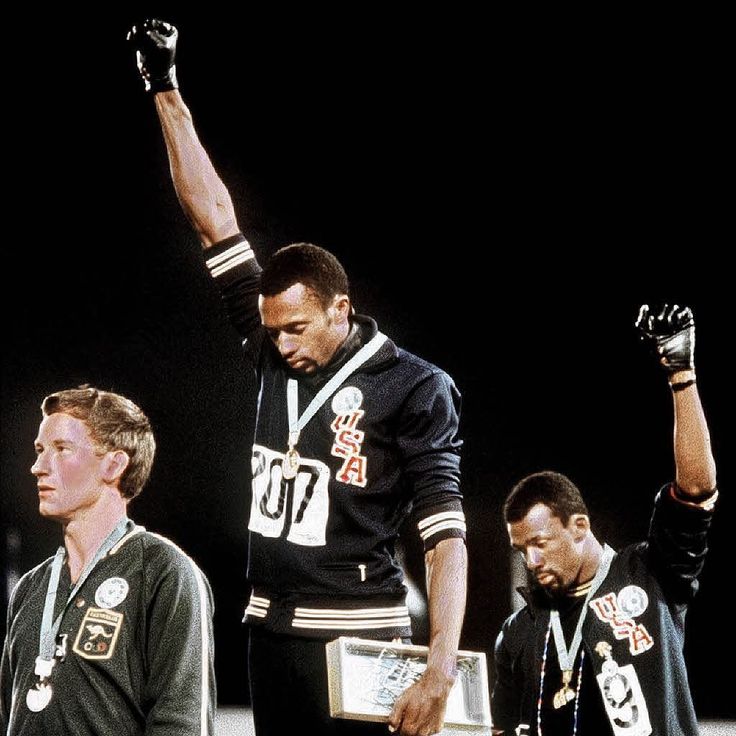
As a track & field athlete, this photo meant a great deal to me.

The establishment of my era still turned their noses up each time they saw this photo. This photo and others were considered taboo, or if I use the phrase I heard the most, they were “troublemakers.” Martin Luther King, Jesus, or “The Last Supper” in most of my friends’ homes. However, I spent most of my time reading about people who stood against injustice. This was the beginning of the coffee list.

Recently, I had the pleasure of rehashing the glory days with some old friends. The above came up. We all were athletes, and it was important to us. However, I didn’t care much for it, but I understood its significance in the movement. We discussed the civil rights movement at length that day, even though none of us were alive to participate during critical periods. We talked about what we were doing to fulfill MLK’s dream. We questioned whether how our sacrifices would benefit our children and grandchildren. As you can imagine, this was a very long conversation and was getting heavier by the second. So, I decided to lighten the mood.

I held up my phone with the above photo and asked, “Who’s the white guy?” None of us knew, but of course, we had the guy that sputters

“Oh man, I can’t remember his name…Damn!”

We have two of these individuals in our group, and they take turns uttering that phrase. Once, I wanted to see which one said it the most. After several months of observing, it was a tie, and I figured the game was rigged just to skew my data. Yes, I’m the guy who always gathers data.

Well, the gentleman’s name was Peter Norman. Here are a few facts about him.


Peter George Norman was an Australian track athlete born in Melbourne, Australia, on June 15, 1942. He grew up in a devout Salvation Army family and worked as an apprentice butcher before becoming a physical education teacher.

Norman’s athletic career began when he joined the Melbourne Harriers, and he won his first major title, the Victoria junior 200m championship, in 1960. He excelled in sprinting, becoming a five-time national 200-meter champion and representing Australia at the 1966 Commonwealth Games in Jamaica, where he won bronze medals in the 220-yard and 4×110-yard relay.

The defining moment of Norman’s career came at the 1968 Summer Olympics in Mexico City. In the 200-metre final, he stunned everyone by claiming the silver medal with a personal best time of 20.06 seconds, setting an Oceanic record that still stands today. However, the events that followed on the medal podium would forever change Norman’s life and cement his place in history.

As Norman stood on the podium alongside gold medalist Tommie Smith and bronze medalist John Carlos, the two American athletes raised their black-gloved fists in a Black Power salute while playing the U.S. national anthem. This powerful gesture was intended to highlight systemic segregation and racism in the United States. Though not raising his fist, Norman chose to stand in solidarity with Smith and Carlos by wearing an Olympic Project for Human Rights badge on his jacket.

Norman’s decision to support the protest was not without consequences. Upon returning to Australia, he faced unofficial sanctions and was ridiculed as the “forgotten man” of the Black Power salute. Despite qualifying for the 1972 Munich Olympics, Norman was not selected to represent Australia and never competed in the Olympics again.

Throughout his life, Norman remained committed to his beliefs in human rights and never regretted his actions on the podium. He continued to be involved in athletics administration and Olympic fundraising and even worked on organizing the 2000 Sydney Olympics.

Norman passed away on October 3, 2006, at the age of 64, due to a heart attack. In a poignant tribute, Smith and Carlos served as pallbearers at his funeral.

In the years following his death, Norman’s role in the historic protest has gained increased recognition. In 2012, the Australian Parliament formally apologized for the treatment he received after the 1968 Olympics. In 2019, a statue of Norman was unveiled in Albert Park, Melbourne, honoring his athletic achievements and his stand for human rights.

Peter Norman’s legacy extends far beyond his athletic accomplishments. His courageous decision to stand in solidarity with Smith and Carlos during a pivotal moment in the civil rights movement demonstrates the power of allyship and the importance of standing up for one’s beliefs, even in the face of adversity. Norman’s story serves as a reminder that sometimes, the most significant acts of bravery occur not in the spotlight but in quiet moments of support and solidarity.


After reading articles about Mr. Norman, I wondered how I missed him. Better yet, why was his namen’t mentioned like everyone else’s? At any rate, Peter Norman makes The Coffee List.

Ask me a Real Question

Daily writing prompt
Who is your favorite historical figure?

DAILY PROMPT RESPONSE

When it comes to historical figures, there are too many people to name. That’s just the people we know all about. This doesn’t include the people who conveniently wrote out the annuals of history. I once met a man who worked as an engineer at NASA during the space race. I’ve never heard or read his name anywhere, but he was there. I saw the pictures and remembered the stories. Stories that were confirmed years later in books and motion pictures. But to ask someone about their favorite historical figure? Oh, come on, ask me a real question.

Who decided who is historic anyway? Who makes that determination? I don’t know them, do you know them? You pick up five different history books and have five different accounts of an event or person. Who knows the real truth. However, I love the journey of discovering more information about a person or a topic. There is nothing better for me. Well, until I incorporate that information into one of my stories and sit back, waiting for a local know-it-all to tell me I got my facts wrong. It’s always a pleasure to watch their forehead crinkle and their bunk. Then, they clear their throat to inform me of my error. Followed by this now historical line of conjecture.

“Hmm… this isn’t really historically accurate, but since it’s fiction, I’ll give it a pass.”

Like I give a flying f_ [beep]!


The history taught in schools makes me shudder. I remember asking one of my granddaughters about the history of the computer. Their response “Why does that matter?” I thought I was going to blow a gasket. Neither my children nor grandchildren understood my reaction. Which just increased my fury. They certainly didn’t have a problem. “Peepaw, I need a new laptop.”, “Peepaw, my laptop broke. Can you fix it?” How could something so instrumental to our existence not be taught in schools? They were still teaching Colonial America and the people who shaped it but weren’t teaching about the people who created the instrument they used to teach it.

Ada Lovelace isn’t taught in the history books. If it wasn’t for figuring out that computers could be used for more than calculations, we as a society wouldn’t be where we are now. Lovelace algorithm was built by countless inventors. So when I tell Alexa to play a playlist or ask Siri to set a reminder, perhaps they should have been Ada. Why not? I’m listening to a lecture on physics as I write this post on a pair of Bluetooth headphones. Thank god for Bluetooth; I could never find a pair of headphones with a long enough cord. Well, you can thank Hedy Lamarr for the algorithm. Yep, the beauty queen and movie star from back in the day.

Lamarr co-invented a frequency-hopping torpedo for the Allied forces during WWII, but it was never used. However, Lamarr’s frequency-hopping technology was later used throughout the U.S. military. I had used the tech for years before I knew Lamarr had a hand in its development. I was researching the Olympic games for a post and discovered something interesting. We have heard of Jesse Owens’s legendary exploits during the 1936 Olympics. He won four gold medals during the event and pissed off Hilter for good measure. So, he is always a cool person in history. However, have you heard of Cornelius Johnson?

Cornelius Johnson won the gold medal in the high jump, setting the record. Johnson was 23 years old when he accomplished this feat. Unfortunately, Johnson died in 1946, six months before his 33rd birthday. The United States did a podium sweep that day, meaning the gold, silver, and bronze were won by U.S. athletes. Dave Albritton, silver medalist, and Delos Thurber, bronze medalist, both outlived Johnson but were also left out of the history books.

We are who we are because of history, whether it be good, bad, or ugly. Each known or unknown event has helped you develop, no matter where you form. We need to appreciate what we can and learn from all of it.

Why do the simplest things mean so much?

How do you know when it’s time to unplug? What do you do to make it happen?

Typically, in conversations like these, I have a long, drawn out story. However, today there is no need for a long bowl when a short one will do.

I can’t imagine a day without reading. Yeah, it’s just that simple. I’ve traveled through time, been around the world, and fell in love without leaving my home office. If I couldn’t write another word, I would just pick up a book. The ability to walk away from a world filled with hollow sentiments and plastic smiles feels amazing. In the words of Tina Turner, “Simply the Best.” To feel that , even if for a little while, means so much.