Common Sense: Missing. Presumed Ghosting.

RANDOM THOUGHTS – SUNDAY POSER #236

Do most people possess common sense? Technically, yes — in the same way most people technically have a brain. It’s there, but how often it’s used is another conversation. Do we have enough time for that conversation? Absolutely. Will it change anything? Highly doubtful.

See, Voltaire wasn’t just tossing out a witty one-liner when he said, “Common sense is not so common.” He was diagnosing a condition that, centuries later, still plagues society like an expired meme.

Common sense, by definition, should be the basic ability to make sound judgments. Simple, right? But here’s the catch: what counts as “sound judgment” depends on where you grew up, what you’ve lived through, and whether you think TikTok life hacks are a credible source of advice.

And let’s not kid ourselves — emotions are the silent saboteurs. Stress, pride, laziness — they hijack reason faster than you can say “bad idea.” It’s not that people can’t be rational; it’s that they often choose not to be. Rationality takes effort. Effort is wildly overrated these days.

Plus, humans come preloaded with some lovely mental software bugs. Take overconfidence bias — the tendency to think we’re way smarter and more capable than we really are. It’s why your coworker with a GED believes he’s a financial genius after one good week in the stock market. Or why Karen from Facebook suddenly feels qualified to rewrite the CDC guidelines after reading one half-baked blog post. Overconfidence blinds people to their own poor judgment, rendering common sense optional, such as using a turn signal.

Then there’s normalcy bias — our charming ability to assume that because things have been fine, they will be fine. It’s the psychological equivalent of whistling past the graveyard. People often ignore flashing warning signs — both figurative and literal — because facing reality would require them to take uncomfortable action. Why evacuate when you can assume the hurricane will magically change course? Why stop texting while driving when you’ve never crashed before? Common sense doesn’t stand a chance against that kind of wishful thinking.

Even Oliver Wendell Holmes Jr., one of the sharpest legal minds in American history, saw through the myth of pure rationality. Holmes didn’t believe the law was built on logic — he famously wrote, “The life of the law has not been logic; it has been experience.” And when courts invoke the “reasonable man” to judge behavior, they’re really invoking a legal unicorn — an imaginary figure of perfect average judgment. Spoiler: that person does not exist.

Reality? The reasonable man would be rear-ended by someone arguing with their GPS, and then sued for “stopping too suddenly.”

So no, common sense isn’t common. It’s a delicate, context-riddled figment of collective imagination, constantly trampled by human bias and stubbornness. Expecting it from everyone is like expecting a glitch-free Zoom call: a beautiful dream, consistently crushed by reality.

Common sense isn’t dead — it’s just ghosting us. I feel disrespected.
How to Fall Apart (and Call It Progress)

Daily writing prompt
What does freedom mean to you?

DAILY PROMPT RESPONSE


A discussion about becoming unraveled, unburdened

What does freedom even mean? It’s like one of those made-up words everyone thinks they understand, but no one actually does. We toss it around in debates, slap it on bumper stickers, or turn it into a hashtag. Then we try to sound deep by asking, “In what sense do you mean — philosophical, political, personal?” But let’s be honest: most of that is just smoke to dodge the real answer. Which is, simply: I don’t have a clue.

We often treat freedom like a buzzword—something we claim, defend, hashtag, or stick on the back of a truck. It’s sold as autonomy, choice, and the sacred right to do whatever we want whenever we want. But real freedom? It’s not that flashy. It’s quieter, more internal, often inconvenient, and much harder to define. You don’t notice it on a billboard, and it won’t trend for long. It might even be harder to see, because it begins not with what we do, but with how we perceive—how we see ourselves, others, and what we think life owes us.

Across spiritual traditions—Buddhism, Taoism, Sufism, Christianity, Judaism, Islam—a pattern emerges: we are not free by default. We’re born into inherited scripts, societal myths, and a mess of cravings, fears, and projections. Most of our lives are spent reacting to things we don’t even understand. It’s like trying to win a board game where the rules are vague, the instructions are missing, and someone keeps changing the goalposts when you’re not looking. No wonder we’re tired.

Freedom, in the deeper sense, isn’t about getting our way. It’s about seeing clearly enough that we’re no longer at the mercy of every craving, trigger, or existential itch. In Buddhism, this means recognizing dukkha (suffering) and its cause, tanhā (craving). Sufism centers on taming the nafs — the unrestrained, insatiable ego. Taoism discusses abandoning the exhausting need to force outcomes and instead moving with the current.

Christianity points us to the idea that freedom comes not through control but through the purification of the heart. “Blessed are the pure in heart, for they shall see God.” Not “they shall win,” not “they shall be promoted,” but see. It’s not exactly the promise of a six-figure salary, but it might be worth more. Judaism and Islam also make it clear that freedom is not about breaking the rules, but living in alignment with something truer and eternal. In other words, you’re not the center of the universe — and that might be the best news you’ll hear all day.

This challenges our cultural obsession with control. As Ishmael shows us, modern civilization has wrapped freedom in the myth of domination. We think freedom means being the boss—of nature, of time, of each other. But domination isn’t freedom. It’s just anxiety in a power suit. The more we try to force the world to match our expectations, the more we suffer when it doesn’t.

And yet, even when we “get it,” the work is anything but linear. Sometimes, the path to freedom involves breaking down. Not the tidy kind of unraveling you read about in memoirs, but the ugly, confusing, no-GPS type of collapse. And oddly enough, that might be necessary. Because falling apart can strip away what was never really you. It can expose what’s underneath the performance, the control, the coping. You meditate one morning and snap at someone by lunch. You let go of a toxic habit, then dream about it for a week.

That’s because fundamental transformation creates cognitive dissonance—the friction between the polished self we’ve been taught to perform and the inconvenient truths trying to surface, like realizing that your definition of success might be making you miserable, or that the life you built isn’t the one you actually want. The system shakes when what we’ve believed can no longer hold up to what we’re beginning to feel. It’s disorienting. But that disorientation is a gift. It’s how the mind makes space for something more honest.

That’s not regression. It’s evidence you’re alive and paying attention — maybe even transforming.

Absolute freedom isn’t being untouchable. It’s being touchable without falling apart. It’s having enough self-awareness to recognize when you’re being hijacked by old stories, and enough stillness to pause before you reenact them. Learning to laugh at your own nonsense is key before it convinces you it’s the voice of God. You don’t destroy the ego; you learn not to take it so seriously.

And here’s the kicker: understanding isn’t the end of the journey—it is the journey. Freedom begins the moment you start to see differently: when the illusion cracks just enough to let in the light, or, just as often, when the darkness teaches you to feel your way through. The dark isn’t the enemy; it’s where the roots grow, where silence speaks, where real seeing begins. Understanding doesn’t guarantee peace but gets you in the room with it. And that, on most days, is freedom enough.

Perhaps today marks the opening of a much deeper conversation—scary, uncomfortable, and sometimes downright mean. A conversation that shakes the foundation of who we think we are, or who we’ve been told to be. It may challenge the ideals we’ve long held sacred. My question is this:

Do we need that kind of disruption to be free?

I know I do. Yeah, I’m scared. I’m frustrated. I’m pissed off. But I also know it’s necessary—because this discomfort is where I grow into the man I actually want to be.

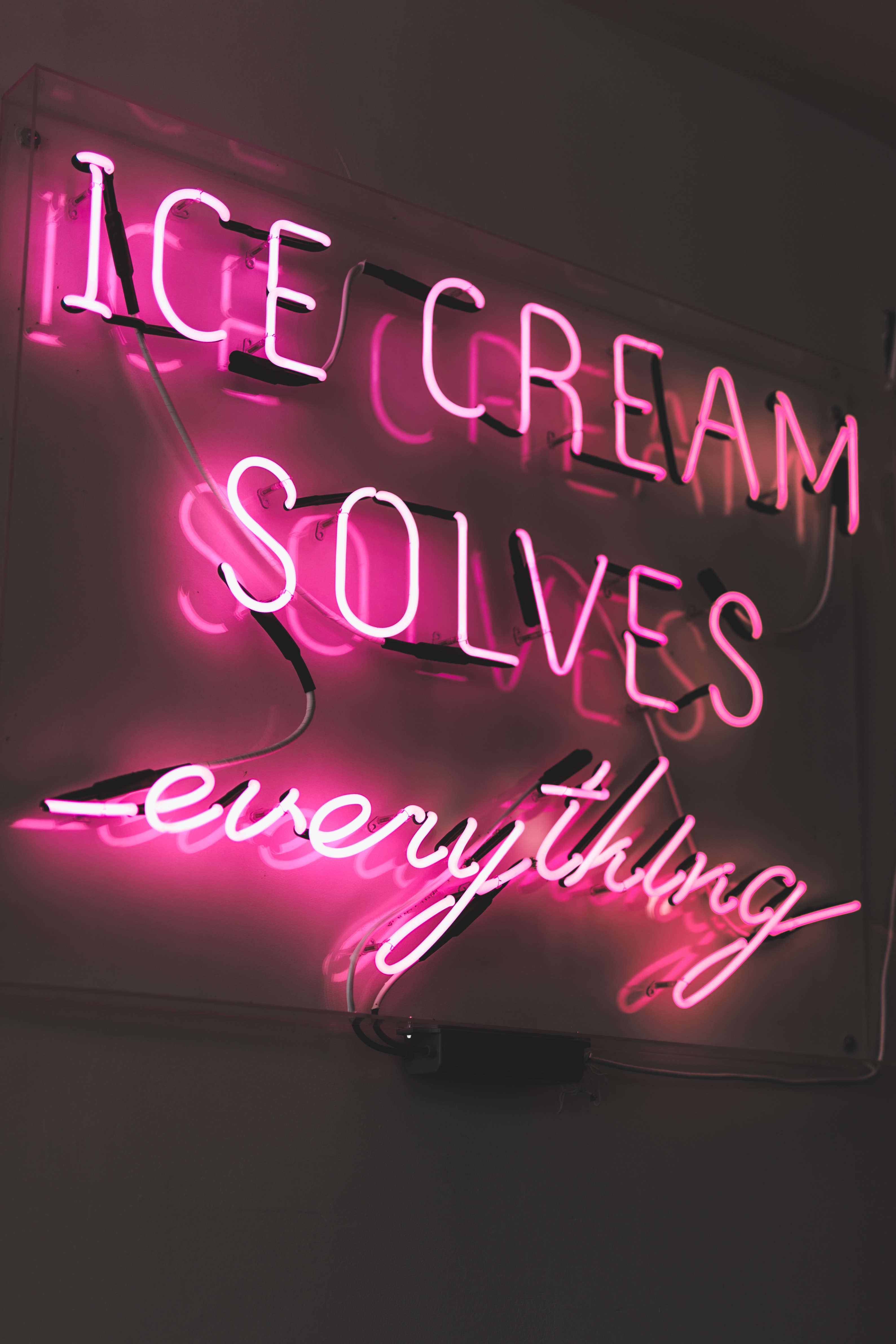
Ice Cream Solves Everything

Daily writing prompt
Do you spend more time thinking about the future or the past? Why?

DAILY PROMPT RESPONSE

The last time I approached this topic, I spoke about using the past from a writer’s perspective. This still remains true, but things are a little different this year. Here are my thoughts from last year.

Sometimes, it seems like my characters learn from my triumphs and follies. I try not to push my opinions on the characters I create. I try to let them live their own lives independently. To be free of my prejudices, quirks, and code. Honestly, I think there is a part of us in the characters we create, whether it’s the protagonist, antagonist, or supporting character. This upsets me now and again because I try so hard not to do this. It is an unrealistic endeavor, perhaps, but one I need to work towards. I think of this when frustration gets the better of me.

“The world is full of magic things, patiently waiting for our senses to grow sharper.”
— W.B. Yeats

I think about what Yeats is talking about, more precisely, what it means to me and how it can be applied. As I age, I repeatedly find that my opinion about certain things has changed drastically. I’m not a different person at the core, but I have definitely evolved. Whether better or worse, it is too early to say. I think that determination is what’s important. Yet, awareness of the evolution and acceptance are crucial for growth and understanding.

This quote comes to mind when thinking about the past or the future.

“Learn from yesterday, live for today, hope for tomorrow. The important thing is not to stop questioning.”
— Albert Einstein

I love this quote because life lessons shape our current lives, and I hope we can pass on the wisdom. I suppose it’s a part of our legacy—the things we have discovered along the way. Some may say it’s our duty to share this wisdom. I see the truth in that opinion. We watch others stumble about trying to accomplish something, and we have a different approach to assist them in completing their task. However, let’s take a moment to consider this: each person’s path to personal growth is, in fact, personal. We can advise them, not lead them. Also, Buddha advises us on the following:

“Do not dwell in the past, do not dream of the future, concentrate the mind on the present moment.”
— Buddha

If we spend too much time passing on the wisdom of our lessons learned, we are trying to fulfill our dreams of a brighter future—not only for ourselves but also for the person we pass on the knowledge to. By doing so, we aren’t concentrating on the most important period: the present.

My final thoughts: Our past, present, and future are contained in each breath. Our past has made us the people we are in this moment. It lays the foundation for the pathway of our future. Every breath is the catalyst for our evolution; don’t fight it. Remember, the difference between life and death is a single breath; don’t waste it.

Excuse me while I get coffee and an ice cream sandwich because ice cream solves everything.