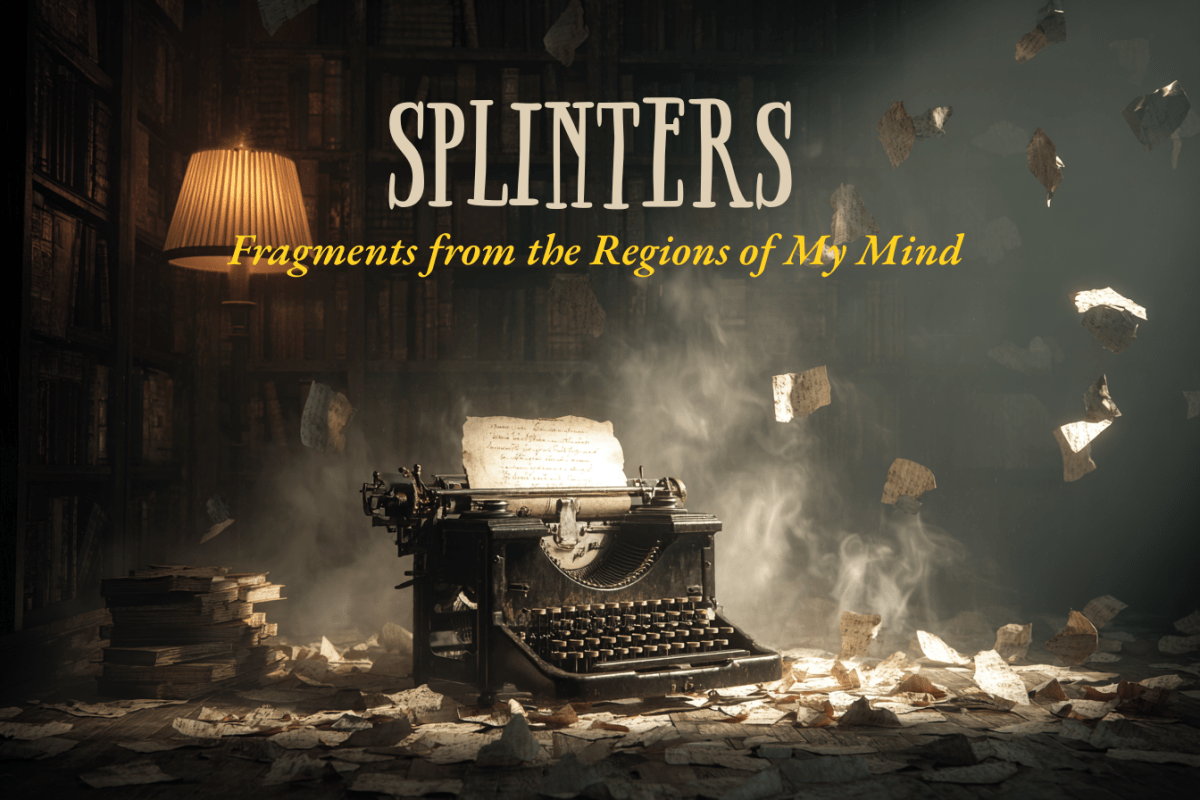
The Draft (working title)

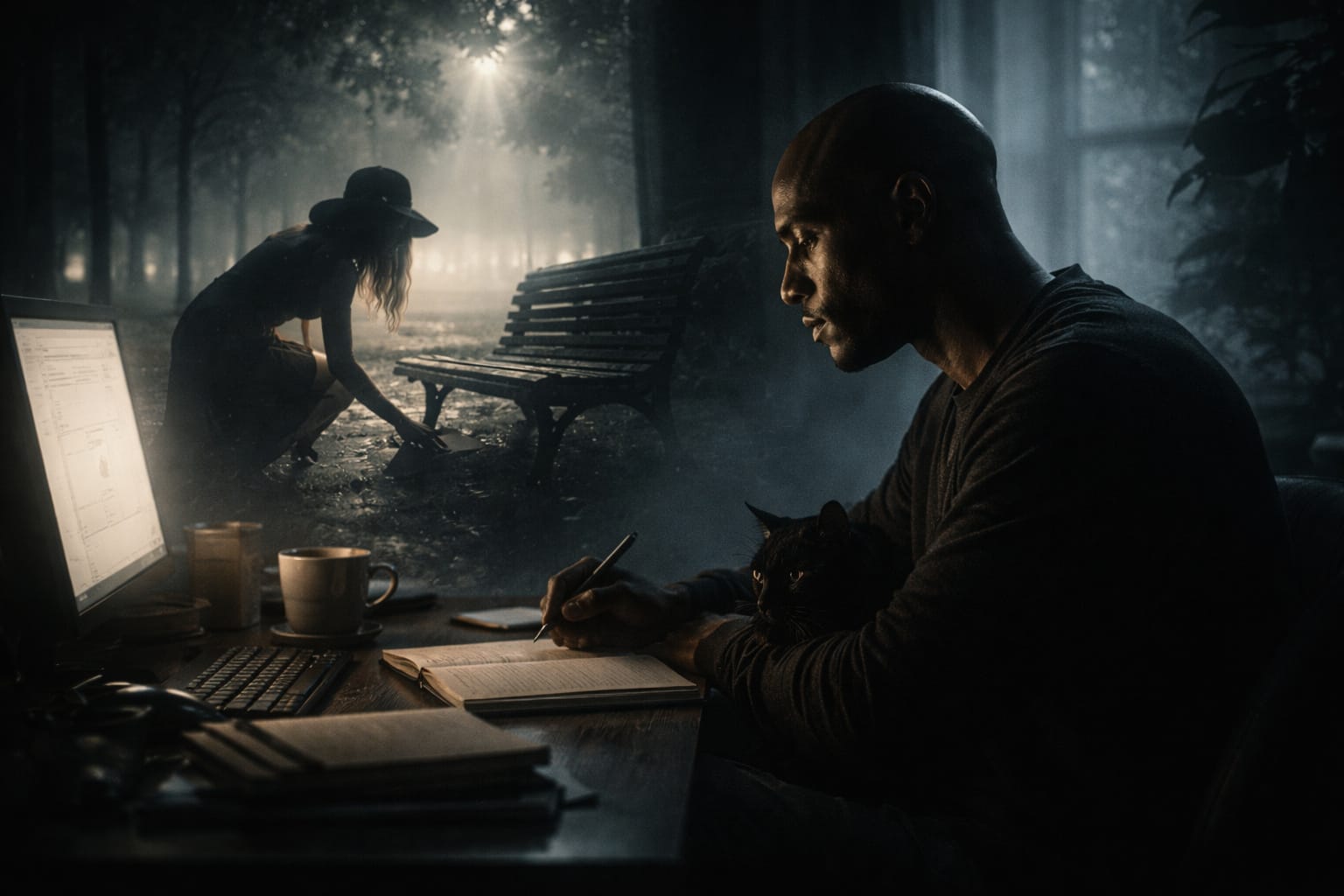
The ticking from the clock on the wall beat like a hammer against a concrete block—dust and debris flying, and every now and again a spark. That was my writing tonight. I had a head full of ideas but nothing with any heat. Then I heard something slide under the door. I froze for a second, thinking it might be the landlord bringing that “good news”—you know, thirty days and then it’s the bricks. But I remembered I’d caught that gig upstate with those high-class folks who wouldn’t know the blues if it hit them in the face, so I was good.

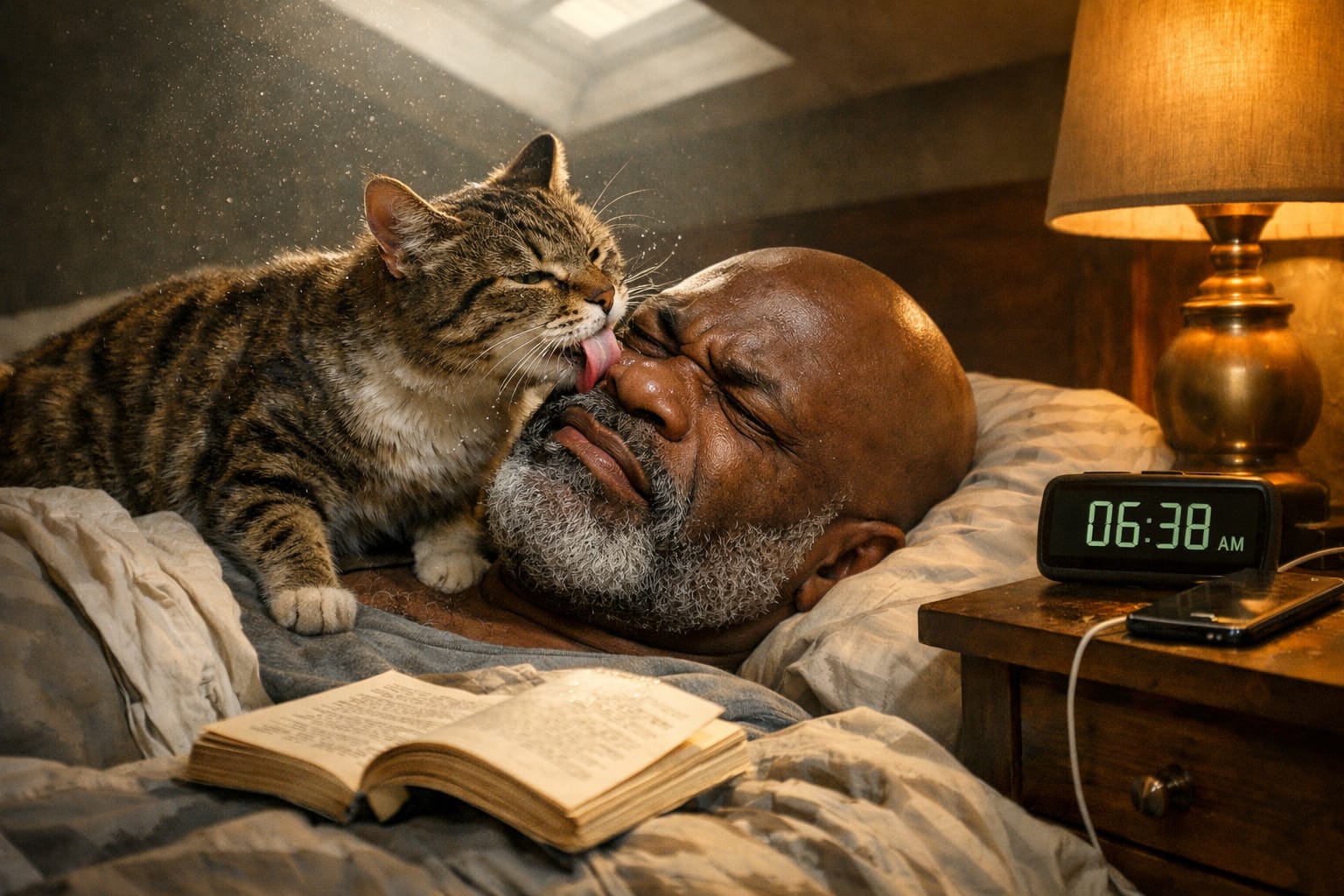
I walked to the door and looked down the hallway. Nothing. Then I saw Woodrow—the rat—gnawing on something. He paused long enough to size me up, then went back to work. I didn’t have the energy to do anything about it, and he knew it. Ms. Pearl, the neighbor’s tabby, slipped in through the gap and rubbed against my leg. I let her stay. Gave her some kibble, then hopped up on the edge of my desk. The page sat there, daring me to write something.

Someone once told me that’s how it starts: just sit in front of the typewriter and speak. Never worry about what you’re going to say; that part works itself out. Just don’t bitch out and you’ll be fine. Lamont Norman said that the day I bought his suitcase Royal typewriter. I laughed, thought he was kidding. He didn’t even smile. “I bitched out,” he said. “Good luck.” That was years ago. The typewriter’s still here—metal scarred, keys sticking like old grudges. I keep waiting for it to start talking first.

That’s when I noticed the envelope. Plain white. No stamp, no handwriting—just my name in black ink that bled a little, like the paper had been sweating. Inside: You are invited to The Draft. Midnight. The Double Down Tavern. That was it. No signature. No RSVP.

I laughed anyway. It sounded like something a drunk poet would dream up at closing time, but I stared at it longer than I should’ve. By eleven-thirty, I was tuning the Gibson, putting on the least-dirty shirt I owned, telling myself I wasn’t going. By midnight, I was already halfway there.


The Double Down? I’d heard of the place, but no one I knew had ever been there, and certainly nobody knew how to get there. It was one of those names that floated around in late-night stories—half joke, half rumor—always mentioned right before the bottle ran dry. I went down to the bodega on the corner for a pack of Luckies and to ask Mr. Park about it. Mr. Park knew everything worth knowing in this neighborhood: who owed rent, who got locked up, who was sleeping with whom.

But tonight he wasn’t there.

I can’t remember the last time I’d walked into that store and not seen him behind the counter, sitting on his stool, eyes glued to that little portable TV wrapped in enough tin foil to bake a potato. When the picture went fuzzy, he’d rap the side with his knuckles, nod, and mutter, “Everything just needs a good tap now and then.” The sound of that tap was part of the neighborhood’s heartbeat. Without it, the place felt wrong, too quiet, like the air had skipped a beat.

There was this strange woman behind the counter, somebody I’d never seen before, popping her gum slow. Who the hell pops gum slow? She didn’t even look at me when I asked for a pack of Luckies. Just slid them across the counter like she was bored of gravity. I decided to go for broke.

“Hey, you wouldn’t know how to get to the Double Down, by chance?”

She didn’t answer, just stepped out of sight for a second. When she came back, she slid a folded piece of paper across the counter. No words, no smile.

I opened it. It was an address. Nothing else.

I turned and walked out of the store, paper in one hand, cigarettes in the other. Halfway through the door, I looked back to thank her. She nodded without looking up, eyes still fixed on something only she could see. But in the glass of the door, I caught her reflection—and for half a heartbeat, I could swear her eyes were sparkling. Not with light. With recognition.


The address on the paper looked ordinary enough—just a number, a street I didn’t recognize. I lit a Lucky, watched the smoke coil off the end, and decided to walk. It wasn’t far, according to the city grid, but the grid had a habit of lying after midnight.

The streets were half empty, half asleep. A drunk kid laughed at a joke nobody told. A siren moaned somewhere uptown, fading slow like a horn section dying out. My shoes echoed too loud on the sidewalk; even the sound seemed to flinch.

I passed storefronts I swear I’d never seen before: a pawnshop that sold only typewriters, a record store where every sleeve in the window was blank white, a barber shop with a red neon sign that read OPEN but no reflection in the mirror.

The farther I went, the fewer streetlights there were. The city felt like it was backing away, leaving me to walk inside its ribs. I checked the paper again. The ink shimmered faintly, as if wet, and I realized I wasn’t reading a map—I was being led.

As I got close to the address, a drunk staggered out of the shadows and poked me in the chest. “Whatcha doin’?” he slurred, eyes glassy and mean. “You think you ready?”

I didn’t answer.

“You?” he barked again, then broke into laughter—loud, jagged, wrong. I pushed past him and kept walking, but when I looked back, the sidewalk was empty. The laughter stayed, close, right beside my ear.

I stopped cold, heart hammering. Took another drag of my straight, exhaled slow. When the smoke cleared, I turned toward the street—and there it was, standing where the map said nothing should be.

The Double Down.


The door didn’t look like much—just wood and paint tired of each other—but the air around it hummed like a bass string. I could feel the groove before I heard it. Slow twelve-bar, heavy on the bottom end, something that could drag your sins across the floor till they begged for mercy.

I grabbed the handle. The damn thing was warm. When it opened, the sound hit me full in the chest—smoke, whiskey, perfume, electricity—all of it moving to the same beat. The door sighed shut behind me like it had been waiting to breathe again.

Inside, the room stretched wider than geometry allows. Corners bent. Shadows leaned the wrong way. Tables sweated rings from drinks poured before I was born. Every light was gold, every bottle looked like it had a soul trapped inside praying for one last round.

The crowd was a mix of then and now: drunks in denim, poets in funeral suits, a few specters in clothes older than jazz. One cat had a typewriter balanced on his knees, keys twitching on their own. Another wore a fedora that flickered in and out like a bad reception. Every time I looked straight at him, the air shimmered.

Behind the bar stood a woman with silver hair and a stare that could sand wood. She polished a glass that was already clean. The jukebox switched gears—Howlin’ Wolf growling through busted speakers—and the floorboards started to tap back.

I took a seat near the door, playing it cool. The bartender poured something the color of regret and set it in front of me.

“On the house,” she said, voice smooth as gin and twice as dangerous.

I looked around. At the back, a stage the size of a confession booth glowed red. A man sat there, guitar in his lap, fingers resting easy like he’d been born holding it. He didn’t play; he just watched me. Smile sharp enough to slice a chord.

“Place got a name?” I asked.

She half-smiled. “You tell me.”

The drink burned good going down—smoke and sugar and bad decisions. I blinked, and the room changed. Every face turned my way. No talking, no movement, just the weight of attention pressing down.

Then a man in a white suit stood by the jukebox and tapped his glass. The sound cracked the silence like a snare drum.

“Welcome,” he said, voice rolling through the room slow and mean. “Welcome to the Draft.”

The crowd answered with a low hum that crawled up my spine.

I could see there were a few guys like me who didn’t have a clue what the hell was going on. Then there were the ones who thought they did—scribblers with confidence and cologne, already imagining the book deals. I knew that breed. They never last. If it wasn’t so funny, it would’ve been tragic, but instead it was just pathetic.


The muses began to move—slow, gliding, half smoke, half skin. Each one shined in its own color. The room buzzed like a hive. They touched foreheads, whispered, and kissed some poor souls right on the mouth. Wherever they touched, something happened: laughter, sobbing, a glow under the skin.

Names were called. Not mine.

One by one, the seats around me emptied. The writers who’d been chosen vanished, or maybe just slipped sideways out of time. The unlucky ones sat frozen, pretending it didn’t matter, staring into their drinks like they could find meaning in the ice.

I kept my eyes down. The drink had gone warm.

A man near the jukebox started laughing too loudly. “Didn’t get the call, did ya?” he said to no one. “Guess you’ll be writing grocery lists now.” His laughter spread, nervous, contagious.

I waited. Nothing. No muse came my way.

The smug ones still sat upright, chins lifted, waiting to be crowned. I’d seen that look before at open mics and literary festivals—the face of somebody convinced the universe owed them a round of applause.

If it hadn’t been so funny, it would’ve been tragic. But right then, it just felt pathetic.

A thin, cold panic crawled up my spine. I was the last fool at the table. The muses had moved on. The man in white was clinking his glass again, ready to close the show.

I told myself I didn’t care. I told myself I’d been through worse. But I felt hollow—like a joke everyone else was in on.

I couldn’t believe this shit. I didn’t even know what The Draft was until an hour ago, and now it was already over. I didn’t get picked. Harry Lucas gets the nod? What the hell is going on?

To add insult to injury—Terry Best. Terry damn Best. Man hasn’t written a line worth reading since the Carter administration, and suddenly he’s chosen? Harry and I carried that sorry bastard for years. I’m jealous, sure. Harry’s good—better than I’ll ever admit out loud—but still, it stings.

“Congrats, you lucky fuck,” I muttered, raising my glass to no one. The drink burned all the way down, a reminder that some fires don’t keep you warm; they just scar you.

The room was thinning out. The chosen ones disappeared into the smoke with their shiny new partners. The rest sat there staring at the bar like it might offer consolation. Nobody spoke. The music died, the hum faded. For the first time all night, the silence had weight.

That’s when the folded piece of paper slid across the counter, slow and deliberate.

No one was near me. Nobody close enough to reach.

I hesitated, then picked it up. The paper smelled faintly of cigar smoke and cheap lipstick.

I unfolded it. Two words written in lipstick.


END

Mercy Street

A Seven Day Mile Story

Neon hummed like a migraine that wouldn’t quit, the kind that sits behind your eyes and waits for you to flinch. Rain slicked the street in lazy sheets, turning the city into a mirror that didn’t want to see itself.

He sat in the car, engine off, watching moths bump into the streetlights over and over—addicted to pain or maybe just tormented by the routine. They couldn’t help it. Neither could he. The radio crackled; he’d forgotten it was even on.

He waited for the speakers to spit louder. Voices chased one another, desperation disguised as competence. No one was fooled, but they were all too polite to say otherwise—the kind of manners born of dread and regret. He popped a couple of Rolaids into his mouth, chewed, then swallowed without a chaser.

The moths chased one another. Were they playing? Children, maybe—the streetlamp their merry-go-round. The thought made him laugh once, sharp and dry, before the static swallowed it.

A mess of transmissions blurred together, dispatch calls bleeding into the wheeze of cheap speakers. Mostly noise: arguments, false alarms, ghosts trying to sound important. Then one word cut through the distortion—Rogue.

He didn’t move. Just reached for the half-crushed pack in the cup holder, thumbed a smoke free, and watched the rain carve faint scars across the glass. He flicked his thumbnail against the wooden match, let the light burn a moment before touching it to the cigarette. The first drag went deep; he held it there, letting the nicotine do its job.

“Always the good ones that break first,” he muttered, though he wasn’t sure if he meant her or himself.

The cigarette burned low, ash clinging stubbornly to the tip. He cracked the window just enough for the wind to take it. The rain had slowed to a drizzle, leaving the air thick with metal and wet concrete.
Raindrops caught the streetlight like cheap diamonds. Down the street, a siren came to life, and a dog sounded its alarm on the opposite side. Windows lit up—shadows of witnesses who’d never seen a thing. It was safer that way. They just let the Night play.

He turned the key halfway and let the dashboard flicker to life. The radio hissed again—fragments this time, coordinates maybe, or names swallowed by static.

“Thunder Island” perforated the silence. He wondered if a place like that even existed. He turned down the car radio and turned up the police band. Nothing is more dangerous than being the target of someone looking for something. They rush in, do things they can’t take back. Then they have the nerve to say they’re sorry—and worse, there are tears. Even worse, they actually mean it, and spend the rest of their lives shattered.

He didn’t bother writing anything down. Whoever was still talking wasn’t talking to him.

He leaned back, the seat creaking under his weight, and watched smoke crawl toward the open window. He told himself it was time to move, but his body didn’t buy it. There was a comfort in the stall, in pretending the world would wait for him to catch up.

When the transmission finally cleared, the voice was colder, official—clipped consonants, no room for mercy. A woman’s voice, maybe. The kind that used to mean something.

“Target confirmed. Proceed with caution.”

He took one last drag, killed the radio. The smoke burned; his eyes began to water as he started the vehicle. That deep rumble of the police interceptor always brought him joy. Agents were supposed to turn in the old cars years ago, but he and the motor sergeant had history—the kind that stands a lifetime without a single word needing to be said. The kind no one questions, because you wouldn’t like the answers.

He let the engine idle a moment, lights off, watching the rain bead and slide down the hood. Then he shifted into gear and rolled into the dark.

The rain washed the streets, but they’d never come clean. Too much poverty in the cracks, too much sorrow in the gutters, and just enough hope to make it cruel. Everyone still wanted everything—guilt, happiness, grace.

At a red light he watched a man curse his demons. He didn’t see them, but he knew they were there all the same. His own had a permanent seat beside him, rain or shine.

At the next light, a woman staggered down the block, stopped, and threw up her dinner—or breakfast, hard to tell at this hour. She braced herself on her knees, took a breath, and sat right there on the sidewalk. Wiped her mouth with her sleeve like it was just another thing to get through.

The wipers dragged across the glass with the sound of bones under cloth. He kept the lights off until he turned onto a narrower road, the kind the city forgot about except when it needed somewhere to dump its secrets.

The address came from memory. He didn’t need to check it; some places get branded into you like scars. The building looked smaller now, windows boarded up, the brick dark with age and rain. A single light glowed in the hallway upstairs—thin, yellow, and nervous.

He parked across the street, engine idling low. The smell of exhaust and damp asphalt mixed with whatever passed for courage. He sat there a long moment, thumb worrying the cigarette burn in the steering wheel, thinking about the last time he’d seen her face.

Not that it mattered. The past was a closed room; this was just cleanup duty.

He slipped the car into park, checked the glove box for the piece he never quite admitted carrying. He never liked the man he needed to be when he carried. There was a click as he fastened the sidearm in its holster. His boots and the wet pavement had a brief disagreement.

The rain had started again, softer now, whispering against his collar.

By the time he reached the door, the light upstairs was gone.

The hallway reeked of urine, stale beer, and mildew—the ghosts of the unspoken past everyone tries to forget but never does. The farther he went down the corridor, the more the aroma changed. He wished it hadn’t.

Wallpaper peeled in long curls like it was trying to escape the situation. The ceiling light flickered, revealing the old scabs beneath the peels. Even the walls were wounded.

He moved slowly, letting his boots announce him—no point sneaking when everyone in the building already knew the sound of trouble. He hoped these ghosts and his demons would play nice. He hoped he wasn’t too late, but he feared the damage had already been done. The only thing left was to manage it.

A door creaked somewhere up ahead. He stopped, listened. Nothing but the groan of pipes and the faint hum of rain slipping through the ceiling. Then a floorboard gave—deliberate, weighted.

He slid along the wall until the narrow window gave him a slice of the alley out back. A figure stood there, half in shadow, a hood pulled low. Not moving, just waiting.

He exhaled through his nose. Always the same dance—the waiting, the pretending nobody had to bleed tonight.

The back door stuck before it opened, metal swollen from the damp. He stepped out into the alley, smelling of trash and rain thick as old coffee. The figure turned, slow and calm, hands visible but empty.

“You came alone,” the voice said.

He almost smiled. “That’s what I do best.”

The silence stretched, tight enough to hum.

Rain hissed against the dumpster, each drop a small explosion in the puddles. The alley light above them buzzed and died, leaving the world painted in shadow and breath.

He kept his hands visible. No need to startle a ghost with old habits. The figure’s hood fell back just enough for him to see the face—tired, older, eyes like a mirror that didn’t want to reflect him.

“You shouldn’t have come,” the voice said.

“Maybe not,” he answered. “But I never was good at staying gone.”

She—or maybe it was just the shape of what she’d become—tilted her head, rain streaking down her cheek like sweat.

“They said you sold me out.”

He took a slow breath, the kind meant to buy time, not truth.
“You know better.”

She stepped closer. Close enough for him to smell the rain in her hair, the metal tang of adrenaline.

“Tell me it’s not true.”

He looked past her, at the alley mouth where light threatened to crawl in.
“Seriously? When did you start believing dumbshit?”

The silence that followed was heavier than the rain. She didn’t lower the gun, but her hand shook just enough to show the years between them.

“You always did know how to ruin a moment,” she said.

He almost smiled. “Guess some things don’t fade.”

The safety clicked off—soft, final.


Author’s Note:
Today’s plan is simple — celebrate a friend who’s been the steady hand behind the chaos.
It’s my editor’s birthday (yeah, a little late — story of my life), and she’s the reason this machine keeps running when I’m ready to set it on fire.

She spent her day listening to me whining about rebuilding the Lab, cleaning up code, catching my typos, and quietly holding everything together. That’s how she works — no spotlight, no noise, just precision and patience.

So this one’s for her. She hasn’t read Mercy Street yet — but she’s in it. Not by name, but in every line that holds restraint where rage should be, in every small mercy that refuses to die.

And since it’s her birthday, I’ll be posting a few extra stories — wouldn’t want her thinking she’s getting off easy or anything.

Happy belated birthday, Editor Extraordinaire.
Here’s to late nights, clean drafts, and the kind of loyalty that never asks for applause.

By Its Light

We learn to live with death the same way we read by firelight—slowly, painfully, beautifully.


No one prepares you for the feeling of loving something that Death has touched.

I sit here looking around his cabin—now mine. The air smells of pine sap, old smoke, and the faint tang of whiskey soaked into the floorboards. Dust floats through the thin light that leaks between the curtains. Each corner is stacked with books—subjects as varied as anatomy and jazz theory. A shelf of vinyl lines the far wall: Coltrane, Bessie Smith, Robert Johnson. Then, tucked behind them, a few heavy metal records—Sabbath, Maiden, Priest. My father, it seems, was a closet metalhead. I smile at that. Maybe I inherited more from him than just a pulse: the music, the books, the need to understand the noise inside.

Warmth slides down my cheeks before I realize I’m crying. The tears catch the scent of dust and woodsmoke, grounding me. I never knew him growing up. He and my mother had a moment in their teens—one of those sparks people mistake for destiny before life smothers it with reason. She was in law school; he was home on leave from the Army. They met at a party through a mutual friend, made promises under a drunk moon, and a week later, he shipped out. Nine months later—technically ten, if you’re counting the way we do in obstetrics—I arrived.

I became a doctor partly to make sense of what my mother wouldn’t talk about: biology, infection, the way life insists on being messy no matter how sterile you keep your hands. That’s where I met my father—though I didn’t know it then.

He came into the ER after an accident. I was covering trauma, running late for my weekly lunch with Mom. She’s a federal judge now, but every Thursday we make time—just an hour to remember we’re still mother and daughter, not just professionals orbiting duty.

When I finally reached the ER, Mom was already there. She’d come looking for me, irritation etched into her face. But as I began to explain, she froze. Her gaze fixed on the patient lying in bed—multiple fractures, head laceration, vitals unstable but holding. The antiseptic smell and hum of monitors felt suddenly foreign, like I’d stepped out of my own body.

“Mom?” I asked.

She stepped closer to the bed. Her hand rose to her mouth, and for the first time in my life, I saw her cry. Real tears—silent, unstoppable. She reached out, caressed the man’s forehead, her fingers trembling like someone touching a ghost.

“Mom, what’s going on? Do you know him?”

She didn’t answer. Just kept tracing the lines of his face, as if memory might come alive under her touch.

“Mom!”

Finally, she turned toward me, her voice steady but low.
“He’s your father.”

Then she pulled a chair to his bedside, sat down, and called her clerk to clear her docket.


My chest tightened. My legs went weak. I recognized the physiology even as it overtook me—tachycardia, dizziness, shallow breath. I nearly hit the floor before someone caught me.
Carol—my charge nurse, my right hand for ten years. A skinny little thing, but deceptively strong.

We weren’t just colleagues. We were friends.

“Sue, what’s going on?” she asked, her voice sharp with command. I heard her barking orders, but the words blurred into static. The next thing I knew, I was staring at a white ceiling, the steady beep of a monitor tracing the edge of my humiliation.

I tried to sit up—irritated beyond measure—but Carol pushed me back down with one hand. For such a small woman, she was a brick wall.

“Pilates?” I asked, breathless, trying to find my bearings.

She grinned, pouring me a cup of water. “The Judge filled me in. Your dad’s a hottie, by the way. Banged up and all.”

I snorted. Of course, she’d say something like that. That was Carol—always trying to make me laugh when she knew I was about to unravel. The water tasted metallic from the cup, cold against the desert of my throat.

She stood beside me, one hand resting over mine, thumb tracing small circles like she was smoothing out the tremors beneath my skin. Neither of us spoke for a while. The monitors filled the silence. Somewhere down the hall, a code was called, and the world kept spinning as if mine hadn’t just tilted off its axis.


After a few minutes, I was steady enough to stand. Carol and I walked back to my father’s room. The corridor smelled faintly of disinfectant and rain-soaked concrete from the ambulance bay. Mom sat beside his bed, holding his hand. The look on her face—devastation mixed with fierce worry—nearly broke me. When she saw me, she stood and came toward me, wrapping me in a soft and trembling hug.

“You okay? I know it’s a lot,” she said.

“It must’ve been one hell of a week,” I quipped.

To my surprise, she roared with laughter—real, unrestrained laughter. I didn’t think it was funny, but she lost it in the middle of the ER.

“It was, actually,” she said, still smiling. “We made you.”

Her eyes drifted off somewhere far beyond the fluorescent lights. It’s strange how memory works—how it lets you step back in time, not just to see it, but to feel it, every heartbeat replaying as if the past were still happening right now.


I had two years with him. Two years I’ll never trade for anything. I’d never seen my mother happier. Watching them together, I understood their brief story hadn’t been some teenage fling—it was a spark that waited decades to breathe again. For a while, it felt like the world had given us a second chance.

Then the disease came, and everything changed.
Nothing was ever the same after that.


So far, the disease had cropped up in five different towns, ravaging everyone and everything in its wake. My father was one of them.

I begged my mother to leave the area, but her stubborn ass wouldn’t budge.

“I won’t hear of it! Nothing’s running me from my home,” she snapped.

I couldn’t believe people actually said that kind of thing outside of old movies. I figured it was one of those lines characters use when they’ve already decided they’re not going anywhere.

Then she gave me that look—sharp, deliberate—and sighed.
“Okay,” she said finally, downing her afternoon scotch. “When are we leaving?”

“I have patients, Mom,” I replied.

She smirked faintly, that judge’s confidence slipping through the exhaustion. “So do I, honey. Mine just happen to sit in courtrooms instead of hospital beds.”

“We just lost Albie to this shit. I won’t risk you as well,” she said.

That stopped me cold. Mom never swore. That was Dad’s thing. Hearing it from her snapped something loose inside me. I looked at her, really looked, and saw the fear beneath all that steel.

We stood there in silence, and in that silence we understood what needed to be done. If it was going to end, let it end like this—on our feet, fighting.

“Sue, honey, you die with your boots on,” my father had told me when he first started showing symptoms. He’d been delivering meds to the infected zones, refusing to stay home. I begged him to stop, but a daughter’s love isn’t enough to turn a man away from his calling.

I wish it were.


Back at the cabin, the world felt smaller, quieter. The disease had moved on, taking what it wanted and leaving the rest of us to sort through the ruins.

I sat in Dad’s old rocker, which creaked like it still remembered his rhythm. The fire popped softly in the hearth, smoke curling through the faint scent of pine and old varnish. A book lay on the end table—Judas, My Brother. Of course. Trust Dad to pick something that questioned everything. I turned it over, thumbed through the pages soft from use, and slipped on his glasses. The prescription was surprisingly close to mine. The world blurred for a heartbeat, then settled into focus—clearer, heavier.

Mom had built the fire and sat on the couch with her usual scotch, watching the flames without speaking. The glass glinted amber in her hand. She didn’t have to say anything. The silence between us said everything—loss, endurance, maybe even grace.

I read a few lines, hearing his voice in the space between words. Then I closed the book, leaned back in his chair, and let the rocker creak like it was breathing for him.

No one prepares you for the feeling of loving something that Death has touched.
But you learn.
You learn to read by its light.


Author’s Note:
Inspired by Fandango’s Story Starter #223.
Thank you, Fandango, for the spark — this one burned quietly but deep.

Litany in Black 3


Chapter 3

Eli’s fingers hammered the Underwood, the platen ratcheting like a drumbeat inside his chest. Words crashed onto the page raw and unprocessed, each keystroke sharp as broken glass. He didn’t try to catch his thoughts; they lagged behind anyway, always scrambling, always too late. Second-guessing was for people with softer bones.

The typewriter filled the basement like a predator pacing. The ding of the carriage bell jolted him at every line, each return snap a small guillotine. He welcomed the violence. As long as the machine roared, the silence couldn’t close in and strangle him.

Behind him, Iris moved. He didn’t look—didn’t dare. He knew the sound of her presence: drawers opening, papers shifting, the glide of her feet across concrete. She spoke sometimes, soft nothings that dissolved into the cinderblock walls, too sweet to be trusted. He kept his eyes forward, certain that if he broke rhythm the spell would snap and something worse would rise.

She spoke in platitudes—surface shit that didn’t mean a damn thing, not even to the person saying it. She knew I hated them. She knew I’d rather choke on silence than fill it with low-grade noise. And after everything, don’t I rate the premium line of bull? Instead—clichés. Cheap ones. Wrong on too many levels.

The words poured, jagged and necessary. He bent closer to the keys, fingers aching, shoulders burning. The smell of paper and machine oil clogged his sinuses. His job was to write. One job. Write.

Then—click. Whirr. The clatter of vinyl.

His trance shattered. Eli shot up from the desk. “NNNNNOOOOOOO!”

The speakers coughed dust. A warped guitar riff crawled from the jukebox.

Arnold Layne had a strange hobby…

The lyric nailed him to the chair. His body froze, his heart battering too fast against his ribs. A high metallic screech tore through his skull. Somewhere in the sound he swore he heard a howl, long and low, as if the memory itself had found a voice.

The world went black.

He blinked awake in a different room. Bare bulb. Cracked mirror. The stink of disinfectant.

In the glass, Iris stared back—hair damp, eyes too wide, skin gone bare and bloodless.

Jonquil’s shape coalesced behind her, a figure lit by candlelight. She smiled, but her mouth never moved.

“You had one job,” Jonquil said, velvet over stone. “Keep him writing. Don’t let the memory in.”

Iris clutched the sink, knuckles white. Words failed her.

Jonquil’s gaze sharpened. “You know what happens to leaky vessels.”

The memory ripped through Iris: a Guild meeting, Uncle Bug tearing into a junior agent, the sudden hush, then the impossible sight of Bug blowing softly in the man’s direction. The agent’s outline wavered—and collapsed into vapor. The smell of iron had clung to her clothes for days.

Iris trembled. If Jonquil told Uncle, she’d be next.

The bar hit him like a punch—heat, smoke, neon fractured on dirty glass. Bodies surged to the music, sweat and whiskey thick in the air. Eli stood in the middle, drowning in it.

Onstage, a woman with cropped hair and a voice like gravel tore through Dead and Bloated. She wasn’t covering the song; she was burning it down and rebuilding it from ash.

Her eyes found his. She grinned, stepped off the stage, and cut through the crowd like she owned it. Her hand snared the back of his neck. She kissed him hard, tasting of blood and whiskey, breath hot with hunger.

The taste hit him like déjà vu—sharp and sweet, like a kiss he’d lived before in another life, though he had no memory of whose lips had given it.

Then she pulled back, lips almost brushing his ear. “You don’t belong here. Go back. Now.”

She shoved him. The bar collapsed, light and shadow swallowing the floor. Eli fell.

He jolted awake at his desk, lungs empty, head pounding. The Underwood sat waiting, a fresh sheet rolled in.

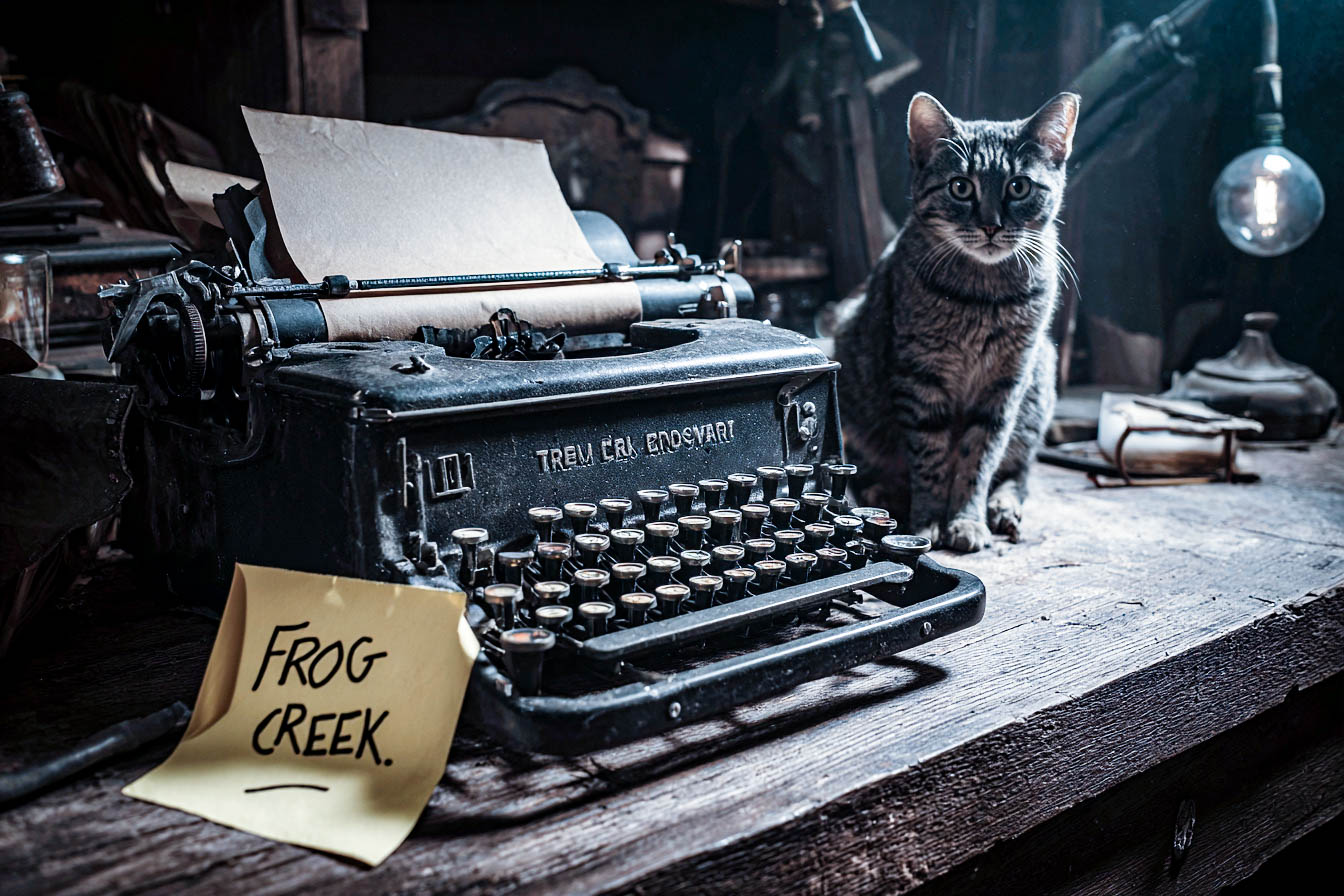
On the corner of the desk, a tabby cat licked her paw. She froze mid-motion and fixed him with a single stare.

“Meow,” she said, clipped and final, before resuming her grooming.

Eli’s hands shook as he reached forward. Beside the typewriter, on a square of yellow paper, a single word was scrawled in black ink:

Frog Creek.

The letters burned into him. His stomach turned cold.

He remembered.

Something he had sworn never to speak of again. Something only he had survived.

The typewriter, the cat, even the walls felt suddenly foreign—no shelter at all, just a trap waiting to close.

Why was it surfacing now?


Author’s Note

When I released Litany in Black, my editor didn’t mince words. The call was short and sharp: “I want more.” So here it is—the next chapter, pulled from the dark seam where memory, myth, and madness overlap.

This piece draws on three of my favorite community sparks: FOWC, RDP, and Word of the Day. Those prompts slip into the prose the way shadows slide into corners, sometimes obvious, sometimes hidden in plain sight. If you caught them, you’re paying attention. If not, maybe the story is working on you the way it should—sly, unsettling, creeping in under the skin.

Chapter 3 is about fracture—Eli caught between the rush of creation and the trap of memory, Iris learning that mistakes echo louder than excuses, Jonquil tightening her grip on both. Frog Creek has finally bled through the page, and with it, the reminder that some stories don’t just haunt you; they claim you.

To those following along, thank you for walking with me into the dark. The deeper we go, the less clear the ground beneath us becomes—but that’s the only way to find out what’s waiting on the other side.

The Inkwell Rider


The pounding at the front door began long after midnight. Each blow was deliberate and unhurried, like the careful stroke of a sculptor’s chisel against glass. Not a summons but a demand. Brazen. Insistent.

He didn’t rise. He lay still in the attic room, letting the sound seep into him, inevitable as tide against stone. He counted the interval between strikes until his heartbeat followed the rhythm. The house trembled. Thunder muttered beyond the horizon, folding the knock into something larger—an unmeasured tide, washing through the marrow of his bones.

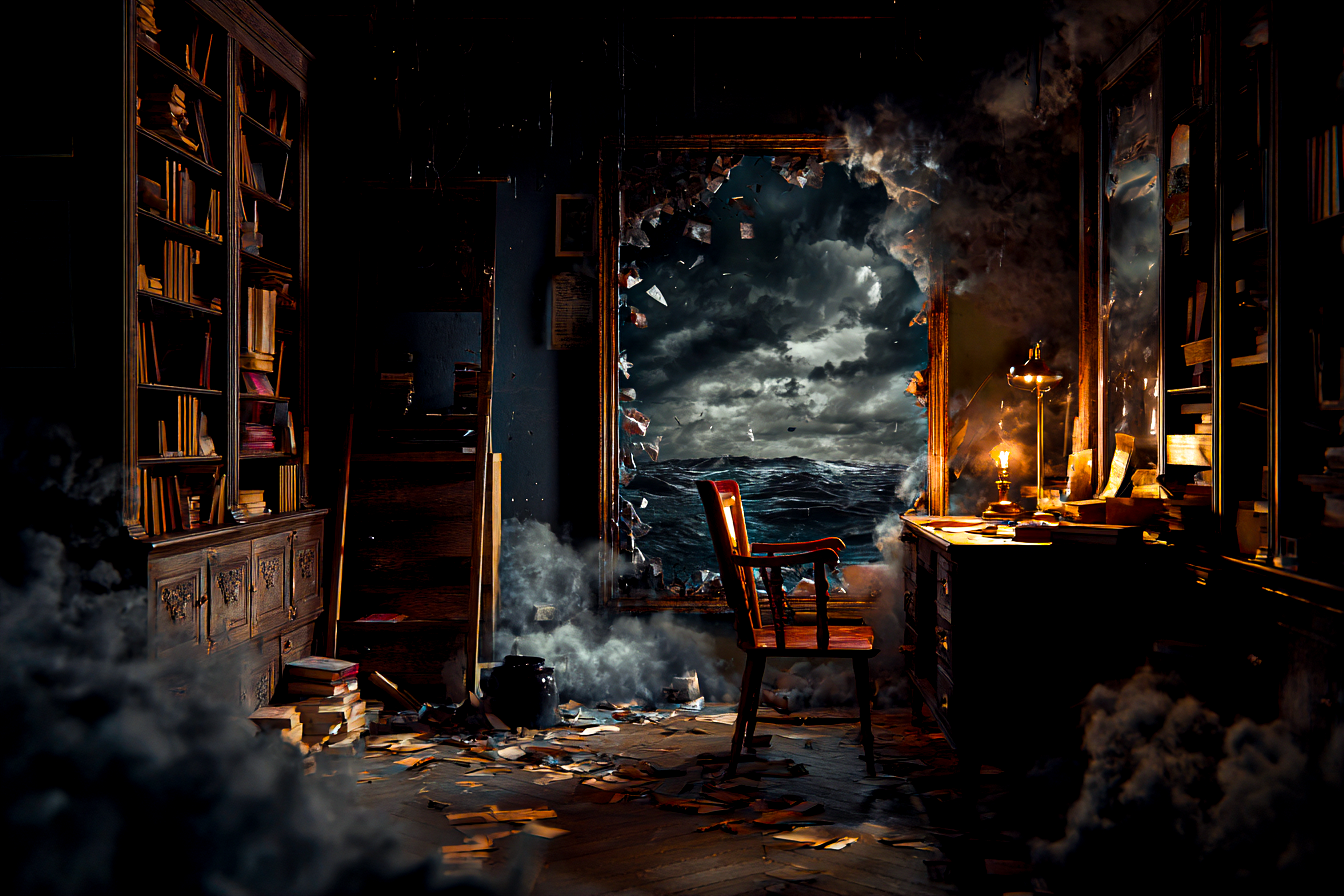
Then the room split open. He stood on a windswept shore. Salt spray stung his lips; the wind tasted of copper and regret. Mist curled along the sea, thin as gauze, trembling as if it hid another world.

A horse exhaled. Its breath rolled heavy as storm clouds, hooves thudding like a buried drum. Damp wool and brine clung to the air. He tasted fear, sharp and metallic, like sucking a coin.

Through the haze came a glint of battered armor—silver rubbed to pewter, seams cracked, catching light from a sun that didn’t exist. The rider’s silhouette wavered, impossibly tall, visor down, face unreadable.

The pounding at the door merged with hoofbeats. Frost rimed his lashes. His boots sank into sand that softened into ink, black and iridescent as beetle shell. The rider advanced, and with each step the sea receded, exposing bones and wire in the seabed’s muck. The air stank of rot and possibility.

A question swelled in his throat, too heavy to voice. Another strike at the door—and the dream collapsed.

He jolted upright at his desk. Shelves stood skeletal, spines stripped bare. Dust clung stubbornly to the air, as if the room refused to surrender its memories.

Only the inkwell remained. Obsidian glass, gleaming like a pool of midnight.

It spoke—not in words but as a tremor in his bones: You are the one I belong to.

Ink leapt upward, coiling into the suggestion of a figure, a face more idea than flesh. Its eyes were ancient and exact, pinning him to his chair.

Are you the writer? The question was absurd and infinite.

The shelves rattled as though books clawed to return. Each knock at the door struck like a punctuation mark, vibrating his jaw.

The room thinned. Corners bent inward. He clapped his hands to his ears, but the pounding only burrowed deeper, lodging itself behind his temples, merging with the pulse behind his eyes.

He tried to stand but found himself rooted. The ink-figure grew, head brushing the ceiling, mouth curling in some half-expression—amusement, hunger, pity.

In the mirror above the desk, his reflection wept. Ink streamed from its sockets, streaking cheeks until the face dissolved into a blur.

The whisper gained teeth. Are you the writer? Answer. Answer. ANSWER.

His tongue flooded with ink, bitter as spoiled wine. He gagged, then finally let the words tumble out, steady as confession:
“Yes. I am the writer. I am the Muse.”

For an instant, silence. The sea stilled. The door hushed. The world held its breath.

But silence bears weight. And weight cracks.

The pounding resumed—faster, furious, like a heart hammering against bone. Shelves pitched forward, gnashing their empty spines. The rider’s visor leaked tar; waves behind him thickened into oil. Seafoam crawled across the rug.

The lamp shrank to a pinprick. Walls bowed outward, then snapped back, leaving him gasping.

He clutched the inkwell. Its glass was fever-hot, pulsing like it contained a second heart. Each knock rattled his skull, more intimate now, less house than body.

He tried to scream, but ink poured out, running down his chin, soaking his shirt. The inkwell slipped and shattered. The spill spread, black and inexorable, birthing the rider whole, towering, boots leaving prints that hissed as they seared into the rug.

He dropped to his knees. Through the cracks between floorboards, he glimpsed writhing shadows—half-finished stories, worlds waiting for permission. The window rattled behind him, panes shaking like teeth in a jaw.

The pounding stopped.

Silence swallowed the room. Every particle of air strained toward the door. A gauntleted hand hovered just beyond the wood. The whisper softened, almost tender: Are you the writer?

He staggered forward, each step leaving an ink-black footprint. His hand shook on the knob, slick with sweat. The ceiling sagged, the house groaning as if it would collapse if he refused.

He swallowed fear and turned the handle.

No pounding. Only the slow, splintering sigh of wood.

The door was not being knocked upon.

It was being opened.


Author’s Note:
Thanks to Fandango for another amazing Fandango’s Story Starter #218 (FSS) prompt. Some doors you knock on, others knock on you. This one wouldn’t stop pounding until I opened it. Funny how a single line can spiral into something that feels less like a story and more like a confession in ink. Appreciate the spark, Fandango — and the reminder that prompts aren’t just exercises; sometimes they’re invitations we can’t ignore.

Litany in Black 2


Chapter 2

The bed had held her like a warm conspiracy—pillows swallowing her shoulders with their downy weight, linen softened by last night’s restless turns. Lantern light pooled in amber halos on the walls, quivering against damp wood. Four hours of sleep after eighteen-hour days should have grounded her for a week, but her body insisted on rebellion. Awake again, she sat upright, toes grazing the cool floorboards, eyes blinking against the dim glow. The tang of office coffee still clung to her tongue: a bitter echo of burnt midnight oil and water-thin sludge, the kind that left her stomach knotted but kept her nerves humming like exposed wiring.

She dragged a chair across the cabin with deliberate care—the legs scraping in protest—and perched at the balcony’s edge. The night air bit her bare arms, each shiver sharpening her senses. Beyond the railing, the mountains stood silent, dark ridges pressed like secrets into the horizon. The lake lay flat as polished obsidian, mirroring bruised clouds of early dawn. Across the glassy water, an old man in a faded plaid shirt painted the silence. His brush moved in slow, patient arcs, each stroke less about color than stitching the world back together, as if he fought gravity and time with bristles and oil.

“Are you just going to sit there, peeking out the window? That’s rude, you know?” A voice cracked through the quiet like a shot glass on stone. Jonquil’s heart jerked—her pulse thundering behind her ribs. For a moment, she blamed the sleepless haze—too many nights hunched over microfiche, eyes stinging under the sterile hum of library projectors, chasing Frog Creek’s ghosts through brittle ’30s newsprint. Dead ends, coy smiles from locals who treated the story like a campfire riddle.

“Bring some coffee and a glass of water while you’re at it,” the voice added, dry as driftwood.

Her gaze flicked back to the painter. He hadn’t paused, but she was certain the brim of his floppy hat dipped—a slow, knowing nod cast in shadow. Words felt heavy, too sluggish to catch. She slipped off the chair, the floorboards groaning like reluctant witnesses, and padded to the kitchenette. She measured the coffee grounds by instinct, water steaming in two battered mugs. She filled two slender glasses with cool spring water. Even before she carried the tray back, the earthy tang of brewed coffee rose to meet her, promising clarity.

As she stepped into the painting’s quiet domain, the tray trembling slightly in her hands, a thought flared: What the hell am I doing? She set the tray on a rough-hewn table beside the painter and stepped back into the flicker of lantern light.

“What took you so long?” he muttered around a sip, not looking up—then slowly raised his head and found himself staring down the barrel of her .40-caliber Smith & Wesson. The metal gleamed silver in the lamplight.

He froze. Recognition bloomed in his eyes, calm as a breeze off the lake. He tilted his head, then—deliberately—brought the coffee cup to his lips. The steam curled around his weathered face before he met her gaze.

“Jonquil! You old firebrand—you scared the hell out of me!”

Her chest unclenched in one rush of relief, fury, and love warring beneath her ribs. She lowered the gun with a shaky exhale, the weight of it receding like a tide.

“Are you gonna give me a hug,” he drawled, “or should I start feeling offended?”

“Offended, of course,” she muttered, stepping forward.

He rose with a groan of old joints, arms outstretched. His paint-stained palms smelled of turpentine and lake mist. She hesitated a heartbeat—then melted into the solid warmth of his embrace. His arms were rough bark, familiar and unyielding.

They held each other while the mountains bore silent witness. Bug kissed her temple, then eased back to study her face under the brim of his hat.

“Tell me about the writer,” he said, voice low. “Is he writing?”

“I made contact,” Jonquil replied, voice soft with pride. “It’s begun.”

“Good. How long before he’s ready?” Bug asked, tone businesslike as he sipped his coffee.

“I’m not rushing him. He’ll be ready when he’s ready,” she snapped, the heat in her words betraying more than she intended.

Bug spread his paint-stained hands in mock surrender, a crooked smile flickering at his beard’s edge.

“Actually, Uncle…I’m glad you’re here,” she added, calmer now, raising her mug. The coffee was strong, bitter—and it steadied her pulse.

They fell into silence, watching dawn bleed into the sky while the lake held its reflection like a promise.

“Tell me about Frog Creek,” she said finally.

Bug jolted, coffee sloshing against his knuckles. His eyes sharpened, horror and determination flickering in the same breath.

“Don’t ask questions that need answers, Jonquil,” he growled, the words rough as gravel.

She swallowed the last of her coffee without flinching, letting his warning sink deep. A faint smile ghosted across her lips. “That’s it,” she said, each word measured. “We’re getting to it.”

Bug’s jaw flexed, unease rippling beneath weathered skin. The lake’s hush pressed in on them, but between the two of them, the silence crackled.

“Did you make contact personally, or one of your people?” Bug asked.

“My agent in the city,” Jonquil replied, cool and distant as gathered smoke.

Bug’s eyes narrowed. “Not Iris, I hope? That woman’ll have you jumping around barking like a dog for sport!”

Jonquil snorted, a half-laugh. She risked a glance at him, the corner of her mouth twitching with reluctant agreement.


In the bookstore’s basement, Iris leaned against a battered jukebox, fingertip tracing dusty chrome. The air was thick with mildew, ink, and the metallic tang of old wiring. Fluorescent bulbs flickered overhead, humming like restless spirits.

“I wonder if this thing still works,” she murmured, voice low. A manicured nail tapped a faded title card: Arnold Layne. A slow smile curled her lips as she mouthed the name, eyes bright.

She pressed a button. A dull click echoed, gears whirring beneath the dust. Vinyl clattered into place.

“Don’t—don’t you dare—” Eli’s voice shredded the gloom. Boots scuffed concrete as he lunged from the shadows, sweat beading his forehead under the dim light.

Iris turned, cool as midnight, watching him approach. She let the speakers crackle to life, a warped guitar riff slicing through the air like a knife.

Eli halted, breath caught in his throat. The sound held him hostage, every nerve taut as a plucked wire.

“Arnold Layne had a strange hobby…” The lyric spilled from the small speakers, tinny and inevitable. Dust motes swirled in the beam of flickering light, drifting like lost memories.

Iris tilted her head, eyes never leaving his face—waiting for the moment the past would snap into focus.


On the far side of the lake, Jonquil froze mid-sip. At first she thought it was the scrape of dawn against stone, but then—faint, distorted, impossible—the opening riff of Arnold Layne crawled through the air like static on a dying radio.

Her hand tightened on the mug, knuckles whitening. Goosebumps blossomed along her arms as the melody haunted the silent morning.

“Way too soon, Iris,” she breathed.

Bug’s brush scratched canvas in steady strokes, oblivious—or willfully blind—to the tremor in her voice.

But the song lingered, a ghost bridging two worlds, threading Jonquil’s dread to Eli’s terror. The mountains exhaled around them, and the lake held its breath.


Author’s Note:
My editor called me after I released Litany in Black and simply said, “I want more!” So here’s the next chapter. I drew from Sadje’s WDYS #307 for the scenery and Fandango’s Story Starter #217 for inspiration.

As always, prompts like these push the story into corners I might not explore alone. Noir breathes in silence, in warnings half-heard, in the places where memory and dread overlap. That’s where Jonquil, Bug, Iris, and Eli are circling now.

If you’re new here, Litany in Black is part experiment, part confession: prompts, noir atmosphere, and a little madness stitched into something ongoing. If you’ve been here before, you know the deal—the coffee’s bitter, the ghosts don’t rest, and the story is never safe.

Thanks to Sadje and Fandango for throwing fuel on the fire. And thanks to you for reading, following the litany deeper.

Safe Word: Bibliography

Becca only meant to peek at Advanced Thermodynamics for People Who Hate Numbers.
Page twelve snapped shut like a mousetrap—whump—and the textbook flopped over her like an ambush blanket.

The velvet sofa wheezed under the impact. Its cushions smelled of mothballs and forgotten tea, a floral musk that clung to her sweater like an old rumor.
“Great,” she muttered. “Death by glossary.”

Heat pulsed from the radiator in damp, metallic breaths. Pipes ticked like a patient metronome, marking every minute she wasn’t studying. Somewhere near her ankle, a silverfish scuttled a neat little patrol.

A soft rustle drew her eye to the far arm of the couch.
A gerbil—plump, cinnamon-colored, eyes like polished seeds—sat upright, paws folded as if grading her performance. Its nose twitched with microscopic authority.

“You ever feel like life is just one long footnote?” Becca asked.
The gerbil twitched.
“Like we keep collecting facts, but the story keeps editing itself?”
More twitching.
“Do you think entropy is personal? Because I feel personally attacked.”

The gerbil blinked once, whiskers vibrating like tuning forks.

“Fine,” she said, curling deeper beneath the book’s heavy cover. “Stay silent. Let the human do all the emotional labor.”

A dulcet, throat-lozenge cough broke the hush.
“Ma’am,” said the custodian, leaning on his mop like a philosopher king, “are you being… harassed by the literature?”

Becca peeked out, hair static-frizzed into a purple-green mushroom cloud.
“It’s consensual,” she deadpanned. “We’re workshopping an integrated learning experience.”

The custodian squinted. “Book club gone feral, huh?”

“Yeah. Safe word is bibliography.”

He gave a solemn nod and shuffled off, his squeaky shoes fading into the oak-paneled quiet.

Becca settled back, feeling the papery heartbeat of a thousand unread pages press against her ribs. Maybe surrender was just another kind of study session.

Somewhere in the folds, the book rustled and whispered,
“Shh. Plot twist incoming.”