During my daily reading, I came across this article. I think it’s worth a read
Opinion/Guest column: Keep anti-obesity meds available to all
by Heidi L. Freeman; Worcester Telegram & Gazette
A place where I post unscripted, unedited, soulless rants of a insomniac madman

During my daily reading, I came across this article. I think it’s worth a read
by Heidi L. Freeman; Worcester Telegram & Gazette


I pulled this story a while back. Thought I was going to do something else with it. Truth is, I needed to figure out where it was going and whether it was worth continuing here. After some time and a lot of second-guessing, I’ve decided to keep posting it.
Formerly known as Cop Stories, this series now carries the title No Half Measures.
At its core, this is a noir tale about two mismatched detectives in the city of Greybridge:
Together, they chase more than just criminals. They’re dragged into the city’s rot — conspiracies, rituals, and the silence of institutions that bury the truth. At the center of it all is the Hollow Table, a pattern of missing girls and burned churches that stretches back decades.
The story is about more than cases and bodies. It’s about what it costs to dig too deep, to trust the wrong person, to put your soul on the line for something that may never give back.
No Half Measures will update every Wednesday until the story runs its course. I can’t tell you when that will be — it’ll end when it ends. Hang in with me.
For those who read the early drafts, thank you for your patience. For new readers, welcome to Greybridge.
Here is the link to Chapter 1
Here is the series hub link

This morning, over on The Narrative Forge, I set another chapter loose into the fire.
The Garden of Ashes isn’t just a story—it’s a slow burn through betrayal, memory, and the kind of survival that leaves marks you can’t wash off. Griffin and his band of survivors keep stumbling forward, carrying secrets sharp enough to cut, and this new chapter digs the blade a little deeper.
Here’s a link to the latest chapter:
If you’ve walked this path with me already, you know the ground keeps shifting under their feet. If you’re new to Memoirs of Madness, welcome—this is as good a place as any to step into the smoke. Every chapter is waiting for you at the Garden of Ashes Series Hub, a vault of fire and memory where the whole trail unfolds.
The door’s open. Step through, and see how far the fire spreads.
—Mangus Khan
My first record player was one of those Mickey Mouse things. I thought it was incredibly cool, back then. Now? I’ve probably lost several thousand cool points just for admitting this publicly. But that was the start—the first time I realized music could be mine, portable, spinning on plastic grooves under a cartoon mouse’s nose.
I never wondered about the first record player until years later, standing in a museum, staring at a Victrola like it had just rolled off a time machine. It was gorgeous—mahogany, brass, that air of weighty dignity machines used to have. And of course, the museum folks wouldn’t let me touch it. I was pissed. I ranted the whole way home, arms flailing like some deranged conductor, until my mother gave me that look that said, Boy, you’ve lost your damn mind. A look I would see many times over the years. My wife eventually perfected the same expression. Some conspiracies never die.
But that Victrola stuck with me.
A Box That Made Music Respectable
Before 1906, phonographs were awkward beasts. Giant horns jutting out like mechanical tumors, gathering dust and dominating living rooms. Eldridge R. Johnson—mechanic, dreamer, and founder of the Victor Talking Machine Company—had the audacity to fold the horn inside a cabinet. A simple trick of design that turned a noisy contraption into something you could sit beside polished furniture without shame.
It wasn’t just sound anymore. It was respectability.
The Price of Belonging
The first model, the VTLA, hit the market for $200—nearly half the average American’s yearly income. That’s about $5,700 today. Imagine explaining that to your spouse: “Honey, I spent half our wages on a box that sings.”
And yet every one of the first 500 units sold.
Because what people were really buying wasn’t a machine. They were buying belongings. Owning a Victrola meant you weren’t just grinding away at life—you were plugged into something larger, a signal that beauty belonged in your home.
Tone Doors, Drawers, and Dignity
The Victrola invented volume control—tone doors you could swing open for a flood of sound, or close when you didn’t want the neighbors to know you were spinning opera instead of hymns. It came with a drawer for needles, record storage built in, and even a lid to hush the surface noise.
What Johnson built wasn’t just a phonograph. It was an alibi. “See, dear—it’s furniture, not folly.”
From Freak Show to Fixture
By 1913, annual production had jumped to 250,000 units. The Victrola transformed the phonograph from curiosity to necessity. Music wasn’t just heard—it was hosted. Families gathered around it the way we gather around glowing screens today.
And the industry bent to Victor’s design. Competitors copied the hidden horn, patents expired, and suddenly, the parlor was the stage where the world’s voices arrived.
The Ghost in the Mahogany
That’s why I can’t shake the Victrola’s ghost. Because every time I hit play on Spotify, I feel it humming under the surface—the memory of when music had weight. When it wasn’t disposable, when it demanded space, when it carried dignity just by existing in the room.
My Mickey Mouse player may have sparked it, but the Victrola taught me the truth: music was never just about sound. It was about what you were willing to make room for.
And maybe that’s the real question—not what deserves that kind of space now, but what you’ve quietly pushed out to make room for noise.
This piece was inspired by Jim Adams’s Thursday Inspiration #294 prompt: Suddenly. His weekly challenges have a way of shaking loose odd corners of memory and letting them bloom into something unexpected. Today it was a Mickey Mouse record player, a museum rant, and a Victrola that refused to leave my head.
As always, these posts are written as part of the ongoing experiment that is Memoirs of Madness—where history, memory, and a little grit collide. If the story sparks something for you, I’d love to hear it in the comments or see your own take on the prompt. Writing is always better when it’s a conversation, not a monologue.

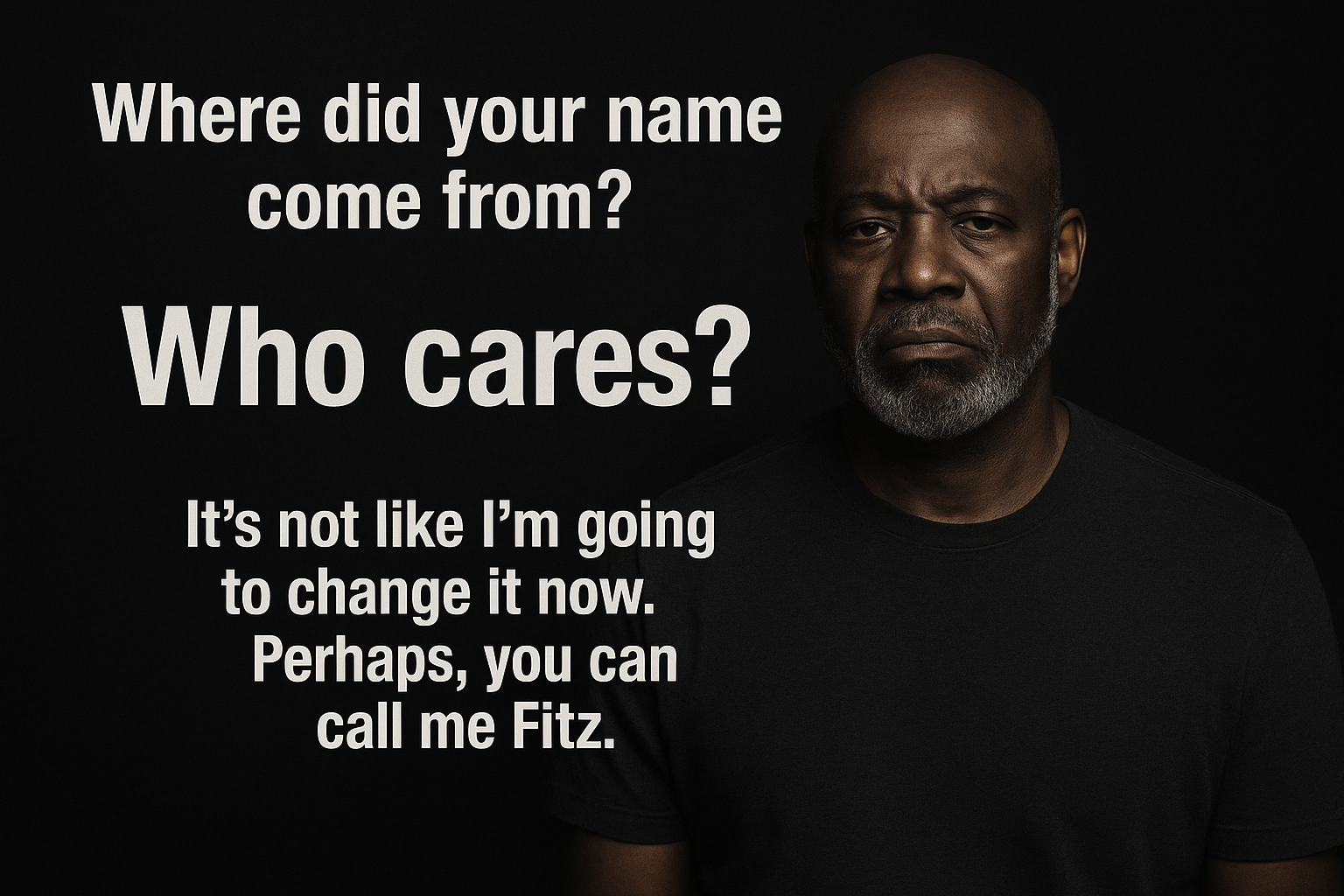
Where did your name come from?
Let’s be honest—last month didn’t exactly go according to plan. Deadlines slipped, chapters missed their mark, and Truth Burns got yanked off the shelf completely. But don’t mistake the quiet for inactivity. The Forge is still burning, and I’m hammering out something more substantial beneath the smoke.
I’ve been waist-deep in worldbuilding—not just character backstories or timelines, but full-on infrastructure. Truth Burns needed a city that felt real, with streets you can navigate, neighborhoods that breathe, and a logic that holds up past chapter five. Turns out, designing a place from scratch is like running an urban planning boot camp while writing a novel. No wonder other writers fictionalize real cities. Creating every bridge, hospital, and back alley by hand is a nightmare, and you don’t notice the holes until you’re knee-deep in a scene asking, “Where the hell do they even go from here?”
Usually, I live in stream of consciousness writing. I like flying by the seat of my pants and letting the story find its path. That works for flash fiction, short pieces, even most of what you see on MoM. But long fiction is different. When you don’t have a plan, you end up with chapters that are just you thinking out loud. You deserve better than that.
So I’m slowing down to get it right. Truth Burns will return, rebuilt from the ground up with a foundation strong enough to carry the story it deserves. Until then, the rest of the Forge keeps firing.
What’s Still Live
While Truth Burns is in surgery, other series are still rolling out:
Sundays are my admin day across the MKU universe, Wednesdays are reserved for worldbuilding and the occasional Love Drop. Everything else? It’s being reforged to last.
What’s Next (No Dates, No Rush)
There are other stories simmering in the background, waiting for the right moment to hit the page. They’ll come to The Forge when they’re ready, not before.
This isn’t a stall—it’s a rebuild. Thanks for sticking around while I tear things apart just to make them stronger. The Forge will burn brighter for it.

Forecast: Regret – Episode 3
Julian had been through storms before. But this one wasn’t weather—it was a squall of circumstance, and it smelled like old whiskey and bad intentions.
He leaned against the chipped brick of the ancient building, rain dripping off the brim of his hat like the world couldn’t stop reminding him of its bad mood. The sign above the doorway read: “Elysium Apartments”, letters half burned out, as if hope had checked out decades ago. Somewhere inside, a tip waited. Or maybe another mistake he’d put on his tab.
He stepped in, shoes squelching with every move, the kind of soundtrack that reminded a man of all the dignity he’d lost along the way. The lobby was empty except for a single elevator whose doors looked like they hadn’t closed properly since Prohibition.
The button flickered weakly when pressed. The elevator groaned like it was waking from an ancient sleep, chains rattling in protest, before the doors lurched open.
“Going up?” asked a voice from inside.
Julian squinted. A man in a bellhop uniform leaned casually on the railing, smiling like someone who knew where all the bodies were buried—and probably where they were rented out on weekends.
Julian hesitated. Everything about the moment screamed nope. But his life had been one long argument with common sense.
He stepped inside. The doors screeched shut with a sound that could file your teeth for you.
“Top floor?” the bellhop asked, already pulling the lever.
“Okey dokey,” Julian said, because sometimes sarcasm was the only shield a man had left.
The elevator jolted violently. Numbers on the panel blinked, but not in order—3, 7, 2, basement, 99, question mark. Rainwater dripped down his neck as the cage rattled. For a second, Julian wondered if this was it—if all his choices were finally cashing out in a metal box headed somewhere past destiny’s curbside.
Then the bellhop grinned wider, showing teeth that were far too sharp for customer service. “Relax,” he said. “Everyone’s going up eventually.”

The city doesn’t just live in her—it clings to her like cigarette smoke in a cheap motel room. Neon signs flicker behind her eyes, half-lit promises that never quite make it past dawn. The streets wind through her silhouette, rain-slick and restless, always leading somewhere she’d rather not go but can’t stop heading toward.
She’s a walking skyline, a soft silhouette with hard edges, every shadow on her skin a back alley full of regrets. The hum of the city is her pulse, low and relentless, a rhythm you can’t dance to but can’t ignore. And under it all, there’s that quiet truth every soul in this town knows: you can leave the city, but it never leaves you. Not when you’ve already let it build a home beneath your ribs.
What one Sabbath song taught me about adrenaline, fear, and the silence that follows the hit.
I wasn’t planning to write about Ozzy Osbourne — I had a ticket in hand to see Earth, Wind & Fire. My mind was elsewhere — groove, joy, rhythm, nostalgia. And then the news came through: Ozzy was gone.
I’m not a diehard fan. I didn’t grow up in the church of Sabbath. But one track — one slow, heavy track that felt like it had something to say long after it stopped playing — stayed with me. It wasn’t a hit. It wasn’t a song anyone quoted. But I’ve carried it. And maybe that’s the thing about deep cuts — they don’t always connect when the world is loud. They wait.
For me, that song was “Hand of Doom.”
Not because it rocked.
Because it spoke — in the language of things we’re not supposed to say out loud. And as someone who’s walked through the slow churn of fear, of silence, of control disguised as coping… I heard it for what it was.
Not a story. Not a warning.
A truth.
Paranoid is the album everyone thinks they know. “War Pigs,” “Iron Man,” “Paranoid” — they’ve been immortalized on T-shirts, classic rock stations, and generations of guitar-store riff flexes. But buried in the middle of Side B is a track that speaks quieter and hits harder than all of them: “Hand of Doom.”
It’s not catchy. It doesn’t try to be. It starts slow, like a body being dragged. Geezer’s bassline feels surgical — steady, ominous, too calm for what’s coming. Then the lyrics begin, and you realize this isn’t a protest song. It’s a field report. A soldier comes back from war. But the war comes back with him.
“You push the needle in…”
There’s no glamor. No metaphor. Just addiction, disillusionment, and the long tail of trauma no one wants to claim responsibility for. Sabbath wasn’t just telling a story — they were holding up a mirror to a nation that fed its young to the fire, then blamed them when they couldn’t come home whole.
A lot of people describe the opening of “Hand of Doom” as a funeral. I’ve seen it written that way dozens of times. But as someone who’s stood in the stillness before something breaks loose, I hear it differently. That intro isn’t mourning. It’s anticipation. It’s the body preparing itself for impact before the mind catches up. It’s the weight of knowing something’s coming — and not being sure whether it’s physical, mental, or spiritual. We all have our own versions of that moment. Some of us walk into it in uniform. Some of us find it alone in a room at 3 a.m. But the question remains: when the unknown finally steps out of the shadows, will we be ready?
Now — with everything we know about PTSD, opioids, and institutional failure — this song still rarely gets mentioned. It makes people uncomfortable. That’s precisely why it matters.
It didn’t scare me as a kid, not like horror movies or ghost stories. It scared me because I could feel the silence around it, like everyone heard it and turned the volume down just a little too fast. Like it was saying something we weren’t supposed to know yet. Or worse — something we already knew, but had no idea how to answer.
When the tempo kicks up, the song finally gets its legs, but it doesn’t feel like freedom. It feels like adrenaline. And for me, it brings back that wired moment just before everything breaks loose. I remember being trained not to let fear take over. Taught that fear was the enemy. But no one tells you the truth: you can’t outrun fear. It doesn’t dissipate — it embeds. The real skill isn’t conquering it — it’s learning how to use it without letting it use you. This part of the song brings me back to the early days, before I learned that lesson. When your heart is pounding, your vision sharpens, and the fight-or-flight reflex kicks in so hard it makes your teeth ache. Everyone talks about those two instincts — but there’s a third no one wants to admit: freeze. And those were the ones that really got to me. The ones who froze. Because when that happened, it didn’t just endanger them — it split your focus. You had to break off from the target, from the objective, and turn toward someone whose body had already left the mission. And that… that’s its own kind of helpless.
There’s a brief pause in the song — a flash of return to the original tempo — and for me, it’s always felt like a breath that never quite makes it to your lungs. It’s not relief. It’s the moment before the shit gets real. It’s that split-second when you know the break is coming, but it hasn’t hit yet. The sound slows, but the tension tightens. I’ve lived that second. We all have, in our own ways. Whether it was the phone call, the sudden detour, the warning tone in someone’s voice — that moment before impact sticks with you. It’s what lets you feel the hit coming before it lands. And that’s what Sabbath nailed here: not just the crash, but the foreknowledge of it. The second your system knows everything’s about to change, but there’s nothing you can do except feel the bottom drop.
Then there’s the damn groove — that stretch of rhythm in the song that doesn’t feel panicked or chaotic. It feels locked in. And for those of us who made it to the other side of the moment, that groove is familiar. It’s the rhythm you step into when you’re fully immersed, taking care of business, senses dialed all the way up. But it’s not a jerking motion. You’re not holding your breath. You’re fluid. You stop trying to control the moment — you become part of it. You become one with it.
And just like that section of the track, the feeling barely lasts — so fleeting you question whether it even happened at all. It’s a kind of cognitive dissonance — a mental vertigo that never quite resolves. It’s like a strange trinity: us, them, and the thing we created in between. That thing… was doom. And in that moment, we were its hands.
“Hand of Doom” wasn’t a warning. It was a receipt.
And when you carry that receipt long enough, you stop asking for change.
Author’s Note: This piece was written as part of Jim Adams’ Song Lyric Sunday. Each week, contributors reflect on songs tied to a given theme. This week’s prompt led me here — to a track I hadn’t planned to write about, but couldn’t ignore.

You ever walk into a room expecting your voice to boom like a prophet’s and instead get met with blank stares and TikTok scrolling?
That was me two weeks ago, stepping into a summer workshop with students aged 8 to 17. I came in with fire and myth, ready to guide them into storytelling. The younger kids couldn’t sit still long enough to absorb anything. The teens? Aloof at best. My usual trick—command the room with presence, reinforce with voice—didn’t move the needle.
I walked out thinking: I might be losing my mojo.
So I did what any story-hardened madman would do.
I built them a universe.
The Ashoma Codex rose from that frustration. An entire mythos crafted for them—a sacred order of supernatural beings bound by fire, memory, and sacrifice. Vampires and werewolves. Secret Circles. Flame-born rites. I even spun up a website just for them, with lore, rituals, and a place to submit their own creations.
And then today, I got word from their instructor: they love it.
They’re building characters. Creating art. Engaging with the world I made. Turns out they didn’t need a lecture. They needed a world that would speak their language.
It’s been a long time since I had that much fun doing something for someone else.
Let’s talk about The Narrative Forge (TNF)—my dedicated space for longform fiction.
Eventually, it’ll be home to five deep-cut series:
The plan: post one chapter a week, rotating series. I’m kicking things off with Ashwood County as I work out the kinks and refine the reader experience.
TNF is my main focus right now. But soon, House of Tunage and The Howlin’ Inkwell will start to move forward again too—each with their own voice and rhythm. And yes, visual arts are coming as well. That site’s still under development, slowed down by the same quirks that’ve been haunting the others.
You guys remember The Knucklehead Report? I gave it its own space so I can rant, roast, or rave about the books and movies that cross my path—without crowding out the rest of Memoirs of Madness.
All of this—the new structure, the site spinoffs, the redesigns—is meant to do one thing: streamline MoM. Make it cleaner. More focused. Easier to navigate without tripping over half-finished drafts or misplaced experiments.
I don’t know which projects will thrive, but right now, building them helps me clear the noise and move forward.
So yeah—if things have been a little quiet here, it’s not because I’ve stopped writing. It’s because I’ve been building.
Worlds. Platforms. Foundations.
Madness is still in motion.
Stay with me.
If you’ve been wrestling with your own creative chaos, you’re not alone.
Let’s build through it—one chapter, one echo, one imperfect myth at a time.
Let me know in the comments which project you’re most curious about—Ashwood County, No Half Measures, Reilly, Rust, or something else entirely.
—Mangus

I’m not afraid.
I’m not afraid.
I’m not allowed to be.
Where I come from, fear is a luxury we were born too broke to afford. Vulnerability wasn’t something we dismissed—it was something we were denied. It was kept behind locked doors, like heirlooms we didn’t inherit.
My grandfather didn’t teach with words. He taught with what he didn’t say. He taught me how to keep the jaw tight, how to pray in silence, how to hold grief like a second spine. He had crafty ways of navigating rooms where he was expected to be invisible, but somehow always left a shadow. He taught me not how to cry—but how to endure the crying of others without blinking.
They told us to walk tall, but not too tall. To speak, but not loudly. To lead, but never forget we’re replaceable. Strong—always. Seen—rarely. Heard—only when invited.
I learned to carry myself like a verdict. The years didn’t soften me—they carved me. And somewhere between funeral suits and morning trains, I mistook resilience for religion.
I’m not afraid.
I’m not afraid.
I’m not allowed to be.
Because they’re still watching.
Because weakness stains in places bleach can’t reach.
Because I carry names no one etched into stone, but I wear them anyway—in the bend of my back and in the tightening of my breath whenever the world grows quiet enough to remember.
I’ve loved with fists.
I’ve buried more brothers than birthdays.
I’ve stared into mirrors and seen ghosts blink back.
And I’m still here.
Which means I’m still dangerous.
Some days, I hear the voices—low and layered, like drums beneath concrete. Whispers at a distance. Ancestral static tuning itself in the back of my skull.
My father, maybe—never said “I love you,” but left it folded into a clean shirt and the sound of a deadbolt clicking after midnight.
Or the ones who never made it past eighteen, who hover behind my ribs like secrets I’ll never tell.
Some of them speak in riddles. Some in warnings.
And some just laugh—cheeky, almost cruel:
“Look at this one, still trying to turn ghosts into gospel.”
I remember the nippy mornings, before light. Cold air that slapped you awake. The kind that taught you pain was just a temperature shift you’d survive if you didn’t flinch. Those days made your bones ache—but they made your will sharper, too.
And now, standing here, with all of that folded inside me like a fire I never asked to carry, I wonder:
What have I done with all I’ve been given?
Have I honored the ones before me?
Or just mirrored their silence?
What have I left for the ones next?
A trail of smoke?
A shut door?
A story they won’t want to finish?
What if the bravest thing
isn’t being unafraid—
but being seen?
Not as legend.
Not as weapon.
Not as sacrifice.
But as person—
messy, aching, unfinished.
What if legacy
isn’t built on who endured the most,
but who dared to feel
what others refused to name?
Maybe I’ve been strong too long.
Maybe strength
ain’t the absence of fear,
but the courage to admit
you needed saving too.
Not a statue.
Not a sermon.
Not a ghost.
Just a man—
…and maybe that’s where the healing begins. And the trouble ends with me.
Authors Note:
This piece was sparked by Di’s 3TC challenge—and yes, I stole a line from Stacey Johnson’s poem order. Is it still stealing if I tell you up front? (Shrugs.) Anyway, as usual, I’m grateful to be inspired by friends who make me write better, feel deeper, and laugh louder. You know who you are.

Hi, my name is Mangus, and apparently… I write.

“Me, pretending I’m above blog prompts while secretly outlining my fifth entry.”
Do I like blogging challenges and blog hops?
No. They’re annoying. They’re addictive. They’re helpful. And I resent all of that.
I don’t like being told what to write.
Until I do.
Then suddenly I’m five prompts deep, haven’t blinked in two hours, and now I’m questioning my entire emotional architecture because someone dared to ask, “What does the moon mean to you?”
I don’t like structure.
But I need it.
Because without a deadline or a theme, I will absolutely stare into the void and call it “research.”
Blog hops? Ugh.
Too much small talk.
Too many exclamation points.
And yet, three comments in, I’ve discovered a writer who casually blew my mind with a six-sentence story about grief and bees, and now I’m subscribed, emotionally compromised, and wondering how I ever lived without them.
So yeah. I complain. Loudly. Often.
I feel this way on Mondays, Wednesdays, and Fridays.
I suppose it’s because my coffee delivery is usually late. My favorite pen ran out of ink again, and the “good” refills are on backorder on Amazon.
It’s not that I’m bitter. I’m just… creatively dehydrated and emotionally overcaffeinated on the wrong days.
However, on Tuesdays and Thursdays, something shifts in the universe.
Champagne falls from the heavens.
Words become the elixir of the gods.
In the dead of winter, I smell the tranquil aroma of lavender in the gentle breeze.
My fingers dance. My spirit opens. The muse doesn’t knock — she kicks down the door with glitter in her wake and says, “Write, fool.”
And I do.
And don’t even get me started on the enablers.
There’s Sadje, who keeps creating these annoying, wonderful challenges, like Sunday Poser. So, what if I built an entire series based on one of them?
Then there’s Di, dropping a daily prompt I now use as a backbone for long fiction like it’s a casual hobby. She’s also got this “Share Your World” thing — yeah, I’m not sharing jack. Even though, if we’re being honest, this post accidentally answers the first two questions of this week’s challenge. I have no idea what she’s talking about on the last two.
And Fandango — this ole fart has a daily word challenge I use across multiple posts. I’m an ole fart too, fist in the air and all that. Solidarity.
Melissa from Mom with a Blog — I don’t know, maybe moms were the original Jedi. She posts these random images with alt text that make me write funny, weird things… and I enjoy it. Can you say,” Jedi mind trick?” The betrayal.
Eugi doing all kinds of magical stuff and her Moonwashed Weekly Prompts got me feeling all peace, love, and hair grease. Writing beautiful peaceful stuff. That’s just wrong! Shame on you!
And Esther Chilton? She just shows up once a week, drops off a prompt like it’s no big deal. I gotta wait a whole week for the next one. It’s crap like that which killed cable.
Let’s not forget the peskily awesome staff at Promptly Written, who boldly accepted the rantings of an insomniac and continue to push their readers to explore their creative limits. What the hell is that? Inspiration by force? Motivation disguised as structure. Madness. Glorious, structured madness.
Don’t get me started with the photography challenges.
Cee — may Allah have mercy on her — encouraged me to explore my camera, sending me running to capture images of things I’d normally ignore without a second thought. Who does that? Cee did.
Images I took for her challenges have ended up as descriptions or scenes in so many stories. Too many to mention.
And Leanne Cole with her Monochrome Madness — scoffs — having me try to add depth, texture, and shadow to things that clearly weren’t meant to be that serious. And yet… I tried. Multiple times. Because apparently, I have no control over my own artistic direction anymore, if ever.
Because of these women — and others — I’ve even heard people refer to me as a Photographer. Of course, I correct them. Obviously. But people be yapping about anything these days.
Here’s what I say about the lot of them:
“How dare you ask me to create my ass off and enjoy it?”
Complete. Utter. Rubbish.
So? Which one of you enablers got under your skin this week?
Sadje. Di. Fandango.
The crime? Just read the damn blog.
Let’s call it what it is: Prompts Addicts Anonymous.
“Hello, my name is Mangus…”
[sniff]
“…and I’m a…”
(It’s okay, we’re here for you.)
“…I’m a prompter.”
(Applause)
“Hey Mangus…”
Author’s Note:
This essay was born in public — a response to a simple blog prompt that, like most of my writing, spiraled into something I didn’t expect. It lives on the edge between complaint and confession, between sarcastic side-eye and real reverence for the people and prompts that keep dragging me back to the page.
If you’ve ever rolled your eyes at structure, dodged a deadline, or cursed the muse for showing up late and uninvited — this one’s for you.
And if you’re one of the people I name in here?
Yeah, I’m talking about you — but in a good way.
With sincere gratitude and thanks. You guys and so many more are one of the reasons I keep going.
— Mangus

I scream every time I’m asked to compromise who I am, what I believe.
There are days I walk through this like a ghost—quiet, invisible, barely tethered to the world. I’ve worn this skin too long to pretend anymore. I’ve learned that silence is never neutral. It collects. It bruises. It builds a coffin for the self.
How long did I expect integrity to outweigh ignorance?
The shame cuts deepest when I remember the things I was asked to do to be accepted. Asked to perform, asked to mute the fire, asked to shrink for the comfort of others who never deserved my story in the first place. And like a fool, I tried. I polished my voice. I spoke in softened syllables. I tiptoed like I was walking on eggshells—not to protect myself, but to protect their illusion of safety.
But here’s the truth:
Their comfort was never my duty.
This world has corrupted too much, taken too many of us who had something real to say. It props up empty vessels and paints them gold, calls it culture, calls it “marketable.” Meanwhile, those of us who bleed truth are told we’re too much, too raw, too difficult to brand.
They wanted me to smile like some hollow doll—something quiet, something that won’t fight back when they put words in my mouth. But I’m not plastic. I’m not hollow. I don’t bend like that anymore.
I carry my scars with intention now.
Let them call it anger. Let them call it ungrateful. I call it knowing. Knowing that every time I was asked to “adjust,” they weren’t asking for kindness—they were asking for obedience.
I’m done apologizing for the shape my soul takes.
Author’s Note
This piece was inspired in part by prompts from FOWC, RDP, and WOTD. Thank you all for the sparks you give. Your work matters.
A blog I forgot I started. A voice I didn’t know I needed. And the stories that refused to stay silent.
Motivation for Starting the Blog
I started this blog back in 2011, though I didn’t even remember creating it until I stumbled across it during a Google search of my name. My wife was sick then, and I was drowning in anger and helplessness. Someone once told me every serious writer had a blog. I’ll be damned if I wasn’t going to be taken seriously — even if I didn’t know what I was doing with it.
At the time, it wasn’t about building an audience. I was just trying to write my way through something I couldn’t fix. I’ve solved hard problems my whole life — but that one, watching someone I loved slip away, broke me in a way nothing else had. Writing was the only thing I had that didn’t ask for solutions. It let me feel what I was afraid to say out loud.
Mangus Khan wasn’t supposed to turn into all this. He was just a character I was kicking around for a novel I never finished. But before I knew it, Mangus became more than a name — he became me. There was no turning back the clock, no putting the genie back in the bottle. I didn’t plan it. I never looked back.
In 2023, I made the choice to keep this space alive and see what it could become. It’s the framework of something I’ve been carrying around in my head for decades. I wanted to grow as a writer — to see if there was any real interest in the kind of stories I wanted to tell. When I returned, this blog had 42 members. That was enough. I kept writing until I got sick. Then I recovered and came back swinging, writing without expectations.
Lately, I’ve been working on building a larger space to house all of this — something broader, something that reflects everything I’ve come to care about. I still don’t have any big expectations. Some people retire and fix up cars, build boats, and travel the world. I tell stories.
Expectations for Audience and Reach
I didn’t start this blog expecting a crowd. When I found it again in 2023, it had 42 members, and that felt about right. I wasn’t chasing followers or clicks. This was just a space where I could clear my head and cleanse my soul.
Then the strangest thing happened: people started showing up. And they stayed. I never expected that. I’m still blown away, honestly.
I’ve been fortunate in life — I’ve traveled around the world, solved complex problems, and worked with people from all walks of life. That was my world for years. But as much as I accomplished in that space, I’m not sure it made the kind of impact I feel now. That’s because of the reader engagement. The comments, the conversations, the quiet understanding from strangers — it’s different. It’s human. And it’s deeply personal.
I still look at other blogs and wonder how they pull it off — all that strategy and polish. That’s never been me. I just show up, write, and try to keep it honest. If that’s enough for people to stick around, then I’ve already received more than I ever asked for.
Hopes for Personal Growth
At first, I was just trying to survive. But somewhere along the way, I realized I had grown — not just as a writer, but as a person. Maybe it’s age. Maybe it’s everything I’ve lived through. But I have a deeper, more meaningful appreciation for things now — moments, words, silence, people.
When I decided to keep this blog going in 2023, part of it was a challenge to myself: could I still push my craft? Could I write with more clarity, more courage, more control? I wasn’t chasing perfection. I just wanted to be sharp. Clear. Unafraid to say what mattered. To explore what was still inside me, and maybe even finish the novel I’d started after my wife passed.
Writing forces reflection. It exposes the things I usually keep buried. And growth doesn’t come from breakthroughs — it comes from the grind. From showing up on the blank page when no one’s watching. That’s where I’ve grown the most.
Expectations Around Content and Consistency
When I first started, there was no plan. No roadmap. Just the need to write. I figured maybe I’d post once a week if something came to me. But life doesn’t follow calendars, and neither does creativity.
What’s come out over time has been a mix of fiction, essays, and visual art — sometimes sharp and focused, other times loose and wandering. I never set out to define a genre or lane for myself. I just followed what moved me.
There were stretches where I disappeared — illness, life, burnout. And there were stretches where I wrote constantly, chasing down stories, experimenting with form, pushing myself to see how far I could take a single idea. After I recovered, I kicked things into gear and just kept going. Not for clicks. Not for an audience. Just to stay in motion.
I thought about organizing the content more, making it cleaner or easier to follow. But I’ve found that consistency for me isn’t about structure — it’s about showing up with honesty. Whether it’s fiction, a personal reflection, or a visual piece — if it’s real, it belongs here.
Surprises Along the Way
I didn’t expect to still be here. I didn’t expect Mangus Khan — once just a throwaway character — to become part of who I am. And I definitely didn’t expect people to stay, read, and respond like they have.
I never expected to embody Mangus Khan, but I have.
What surprised me the most, though, is how much this space has mattered — not just to readers, but to me. I’ve done work all over the world. I’ve solved big, technical problems and made decisions that impacted entire systems. But somehow, writing a story that makes one person feel seen hits harder.
This blog wasn’t supposed to become something. But somehow, it did — a record of survival, growth, grief, imagination, and unexpected connection.
Some people restore old cars in retirement. Some build boats. I tell stories. That’s the project. That’s the work. And if it ends tomorrow, I’ll still be proud of what came from it, because none of it was supposed to happen in the first place.
I’ll see you when the ink dries.
If you’ve made it this far, thank you.
I’m building something bigger — a space called the Mangus Khan Universe.
It’s not a brand. It’s not a business. It’s a creative world I’ve been sketching in pieces for years — fiction, essays, visuals, and ideas I can’t shake loose.
This piece was written in response to Sadje’s Sunday Poser — a prompt that turned into a reckoning, a reflection, and a return to something I didn’t know I’d missed.
If you’re here for the stories, you’re already part of it.
Stay tuned. There’s more coming.
I’ll see you when the ink dries.
Forecast: Regret – Episode 2
She appeared just past the second lamppost—trench coat clinging like a secret, umbrella in hand, striding through puddles like the laws of physics were optional.
Julian knew trouble when he saw it. It usually wore red lipstick, a miniskirt, and a tight monogrammed sweater—the kind of outfit that said “daddy pays the rent but I hold the lease on chaos.”
Today, though, trouble wore duck boots that quacked with every step and a look that could curl paint off a Buick.
She didn’t look at him. She didn’t have to. Women like that didn’t look; they summoned.
“Lost your umbrella again?” she said, pausing by the bench where Julian had been pretending not to argue with a squirrel.
“It fled the scene. Honestly, I think it’s seeing other people.”
She didn’t laugh. Just smiled—barely—a slow tilt at the corner of her mouth, like a private joke that hadn’t decided whether to trust him yet.
They stood in silence, rain dotting her umbrella like Morse code for bad decisions. The space between them held history—not romance, not quite—but something forged in long nights, bad coffee, and one too many favors exchanged with no names attached.
Then the birds attacked.
Not big ones. Not Hitchcock’s apocalyptic squad. These were small. Spiteful. Moist. They dive-bombed like feathered torpedoes with a vendetta against hats.
Julian flailed. She calmly finished a sip of coffee.
“I told you not to use that conditioner,” she said, ducking as one bird performed a tactical swoop. “Lavender-scented. They think you’re a meadow.”
“Then why are they hitting you, too?”
“I might have rubbed some of it on your collar.”
Julian blinked, now soggy and betrayed. “Why?”
She sipped again, her expression as neutral as Switzerland on a Tuesday. “Science.”
One bird landed triumphantly on the umbrella. Another did an aerial split and flipped him off mid-squawk.
Julian sighed and slumped onto the bench, defeated. She sat beside him, leaving an equal six inches of space and chaos between them.
For a moment, the world fell quiet—just rain tapping the concrete, the occasional rustle of wings, and that unspoken thing that always hung between them.
Maybe it was love once. Maybe just recognition. Like two people who survived the same fire and never spoke of it.
“I curl my hair in the mornings just for this,” she muttered, brushing a wet strand from her face.
Julian didn’t reply. He was too busy wondering if dignity could be taxidermied—or if maybe, just maybe, this ridiculous kind of connection was all the grace some of us got.
Author’s Note:
This piece is a continuation of the Forecast: Regret series—a flash fiction collection built on misadventures, poor choices, and the occasional squirrel assault. I wrote this story using the prompts from SoCS (Stream of Consciousness Saturday) and Esther’s Weekly Writing Prompt, which continue to challenge and inspire me in strange and delightful ways.
As always, I try to have fun writing fiction—because if I’m not enjoying it, I can guarantee Julian isn’t either.

It started, as most questionable decisions do, with a woman, a trench coat, and a very hedonistic craving for street tacos.
Julian wasn’t even supposed to be out. The rain was biblical—Julian half expected to see Noah waving him aboard. His socks were soaked, his spirit soggy, and the umbrella he carried had the structural integrity of a wet paper crane. But tacos were calling, and Julian—private eye by day, glutton by destiny—answered.
Midway through the park, a lamppost flickered like it owed someone money. Julian stepped into the golden spill of light like he was in a film noir. All he needed was the dame holding a cigarette to her ruby red lips, waiting for him to light it. His coat flapped dramatically, mostly because it was two sizes too big and purchased during a clearance sale he mistook for fate. He imagined someone, somewhere, narrating: He was a man torn between purpose and guacamole.
That’s when it happened.
A squirrel launched from a tree like it had just discovered espresso. It landed squarely on Julian’s shoulder, using his necktie as a zipline to destiny.
He screamed like a man whose dignity had just filed for divorce and taken the house.
The umbrella went flying. The squirrel somersaulted off his head. And Julian—formerly mysterious, now flailing—slipped in a puddle with the grace of a ballet-dancing refrigerator.
As he lay on the sidewalk, soaked and stunned, the only thing colder than the rain was the betrayal in his burrito-less stomach.
A couple walked by. The woman whispered, “Was that performance art?”
Julian lifted his head with all the levity he could muster. “Only if you clap.”
They did.
He took a bow from the pavement. Somewhere, a squirrel chittered in applause.

The static clung to him like ash—faint, choking, inescapable. He’d stopped keeping track of the days. Time was foremost a suggestion now, something smeared across the ceiling in mildew and regret.
They said he was a man once. Strong. Reliable. The kind that shows up on time and keeps his word. The kind that doesn’t cry at hospital bedsides or stare too long at old photographs. They said that.
But memory plays tricks. Rewrites endings. Paints the villains in softer hues and leaves the heroes out in the cold. His reflection no longer argued. It just blurred at the edges, refusing to confirm or deny what he had become.
The sink dripped. The fan rattled. The voices whispered. Still, he sat there, jaw clenched, knuckles white, a prayer caught somewhere between his teeth and his shame.
He collapsed into the corner of himself—the part that still remembered how to feel.
He heard a child giggle, smelled lavender and lilac.
But from where?
That door had been closed for years, bolted by memory, corroded by silence. Yet tonight, something had stirred.
Not hope.
Just the echo of what it used to sound like.
A brief confession about messy renovations, too many domains, and building the MKU out of creative rubble.

You Ever Try to Clean and Just Make a Bigger Mess?
Yeah, that’s me right now.
I’ve been trying to fix this blog for months. What started as a quick tidy-up turned into something resembling a digital yard sale—only with fewer treasures and way more broken links. I even considered shutting the whole thing down and rebuilding from scratch. But that felt a little extreme, even for me. I have a knack for turning easy tasks into complicated messes. It’s a gift. Or a delusion. Same difference.
So, I got a wild hair—you know the rest—and decided to look at my entire online footprint. It turns out that I was hoarding domains, just like I was collecting vintage Pez dispensers. Just paying for them to sit there, doing absolutely nothing. Honestly, I’d have better luck with a couple of scratch-offs and a can of Peach Nehi.
That’s when I finally did it—I built something called the Mangus Khan Universe (MKU). Yeah, it’s a little on the nose, but the point was to create a space that could properly hold all the creative work I’ve been cramming into Memoirs of Madness.
MKU isn’t finished, but it’s functional. Over the next few weeks, you’ll see things shifting. Posts might vanish, new stuff will appear, and categories will get shuffled. Don’t panic—it’s all part of the plan. Mostly.
I just wanted to give you a heads-up that Memoirs of Madness is undergoing a bit of a makeover. More changes are coming, and I’ll share a full announcement once the MKU is officially live and dangerous.
Stay tuned. Stay weird.
Step into the MKU
It’s not perfect. It’s not finished. But neither am I.

for those who know what it’s like to be visible but not believed
Every day is another lesson in invisibility.
Not the kind you choose, not the soft fade of a disappearing act.
This is the kind handed down in glances that slide past you.
In doors that stay closed just a second longer when you’re approaching.
In the space you leave behind when you’re gone, and no one notices the shape of your absence.
You become fluent in the language of indifference.
You learn the weight of unasked questions.
You memorize the way people say “I didn’t see you there” like it’s a kindness,
instead of an indictment.
There is a peculiar violence in being overlooked.
Not bruised. Not broken. Just… reduced.
Down to skin, down to stereotype, down to background noise.
They don’t mean to erase you—
and somehow, that makes it worse.
They’ll say you’re quiet.
You’ll wonder if they’ve ever actually listened.
You wear shame like a second skin.
Not because you earned it,
but because somewhere along the way,
someone handed it to you like inheritance
and you forgot how to put it down.
You stand still in a world built to move around you—
fast, loud, full of curated meaning.
And you begin to question:
Is there something wrong with me, or is there something wrong with this lens that always finds me blurred?
You’ve learned to map your pain in silence.
Each breath is a kind of protest.
Each blink a refusal to disappear entirely.
There are veins beneath your skin that look like lightning—
not because you are struck,
but because you are always just about to burn.
And yet you don’t.
Not fully.
You endure.
Not in glory. Not with applause.
But with defiance.
The quiet kind.
The kind that goes unnoticed until someone says:
“I didn’t realize you were carrying that much.”
And you smile without smiling,
because you know the truth:
You were always carrying that much.
They just never asked to know.
He wasn’t born to be broken, but he was built that way.

He doesn’t remember how long he’s been digging.
Only that the walls feel closer now.
Not physically—spiritually.
Like the air itself is grieving something it can’t name.
Like the dirt is learning his shape better than he ever did.
He was born into this plastic maze.
Clear walls. Curved tunnels. Endless observation.
They gave him purpose before he even knew what freedom was.
“Work is life,” they whispered.
“Keep moving or you’ll disappear.”
So he moved.
So he disappeared.
Lately, the soil feels too clean.
Too filtered. Too… safe.
He begins to question whether he’s ever touched anything real—
whether any of this was ever soil at all,
or just a stage dressed as survival.
His antennae twitch like doubt.
His thoughts spiral like tunnels without exit signs.
There’s no map. No sky. Just the scrape. scrape. scrape.
and the promise that if he keeps digging, it might all make sense.
“Dig,” they told him. “Dig like your life depends on it.”
But what if life was never the point?
What if it was just obedience with a heartbeat?
He begins to dream—quietly, dangerously—of things he’s never seen:
grass that doesn’t end,
light without glare,
a silence not born of suppression
but of peace.
He wonders if the others feel it too—
that dull, aching sense of being watched by something
that calls itself structure,
but tastes like a slow death.
He screamed once.
Pressed his mandibles to the glass and begged.
For what, he doesn’t know.
Maybe to be named.
Maybe to be more than a metaphor
for how the world devours those who ask too many questions.
But no one answered.
Only the glass pulsed with faint warmth—
a reminder that he is seen, but not heard.
Now he digs not to build, but to resist.
Each handful of soil no longer a task,
but a soft rebellion.
A quiet revolution made of claw, intention, and fatigue.
He doesn’t want to be efficient.
He wants to be free.
Or at least real.
Or at least his.
And if this tunnel leads to nothing—
no sky, no breach, no breaking—
at least it was carved by his own choosing.
At least the hands that made the hole were his.
Because sometimes the cure isn’t a chemical.
Sometimes, it’s permission to feel trapped without calling it a flaw.
🪞 Reflective Prompt
What parts of your routine were handed to you like a cage dressed in ritual?
What would rebellion look like if it were quiet, personal, and yours?
This piece lives inside a much bigger world.
Explore the rest of the Mangus Khan Universe—a stitched-together gallery of confessions, fiction, fractured portraits, and quiet chaos.
A quiet reckoning with the expectations we wear and the joy we fake.

When was the last time you were truly happy?
No—
not the curated kind.
Not the smile you wore for someone else’s comfort.
Not the polite laugh that tasted like performance.
Not the checklist joy: house, job, partner, post, repeat.
I mean the kind of happiness that sneaks up on you in bare feet.
The kind that doesn’t make sense but fills your ribs like breath you forgot you were holding.
The kind that doesn’t ask for an audience.
Doesn’t post itself.
Doesn’t need to be liked to be real.
Most days, we confuse peace with silence, and silence with defeat.
You tell yourself you’re content. That this is what adulthood looks like—responsibility, stability, being “grateful.”
You wear that word like a bandage.
But underneath?
There’s a pulse of something unsaid.
A throb you ignore until it bruises.
You smile at strangers. You meet deadlines. You show up.
And in between the commutes and compromises,
you start to wonder if you buried yourself in the crud of being acceptable.
The barrage is constant—
what you should want, who you should be, how you should smile.
But no one ever asks if you’re still in there.
Not really.
Not the version of you that danced alone in the kitchen at 1 a.m.
Not the you who found joy in dumb little things that didn’t need justification.
Not the version of you that wasn’t tired.
You’re silently screaming.
Every day.
And you do it with perfect posture.
Because to speak it—
to say “I’m not okay”
feels like betrayal.
Like failure.
Like you’re too much and not enough, all at once.
But here’s the quiet truth:
Maybe you haven’t been happy in a long time.
Maybe you don’t even remember how it felt.
But maybe that question—when was the last time you were truly happy?—
isn’t meant to shame you.
Maybe it’s a breadcrumb.
A way back.
Not to the person you were before the world smoothed your edges,
but to the one still flickering beneath the noise.
The one who still believes in joy,
even if they haven’t seen it in a while.
🪞Reflective Prompt
Take a moment.
Find a scrap of paper, the back of a receipt, or the notes app on your phone.
When was the last time you felt joy that wasn’t expected of you, sold to you, or shared online?
What did it feel like in your body?
What part of you still remembers?

Busy getting my face melted off. I will see ya tomorrow
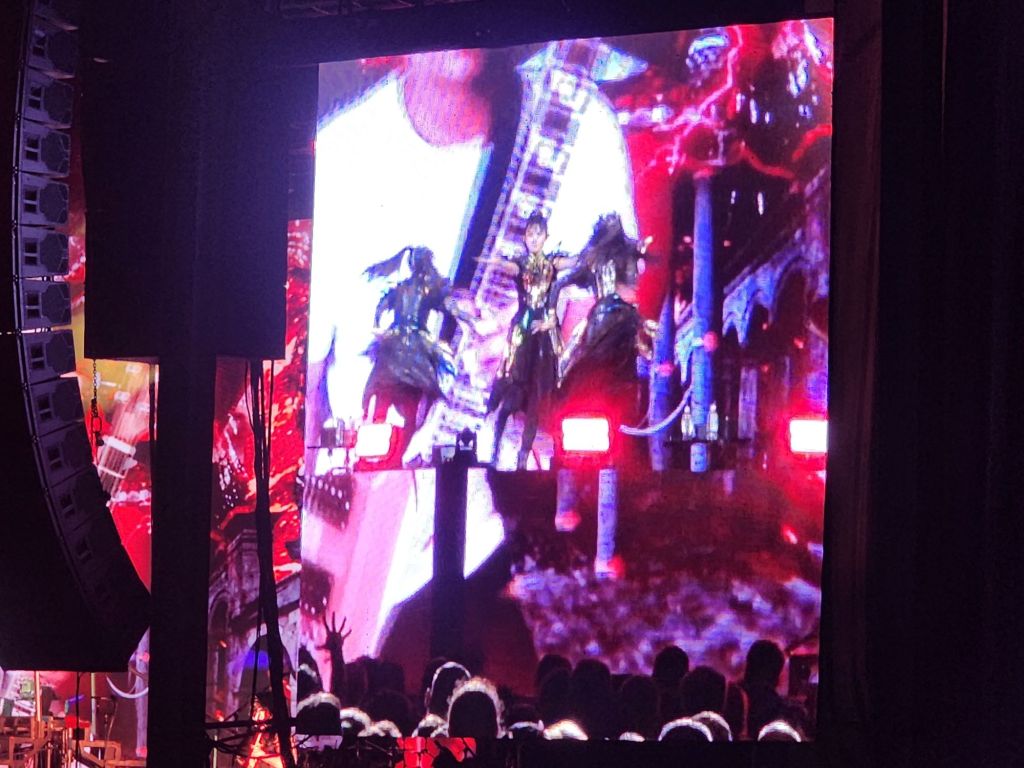

[No fade-in. Just impact. The drums kick like defibrillators. Guitars fuzz and slice. The voice? Controlled chaos.]
“WHOT.
Late Night Grooves.
I’m Mangus Khan.
And tonight—
We’re not looking for the right answer.
We’re just calling bullsht on all the wrong ones.*
Zig Mentality – “Best Direction.”
This track is the sound of pressure.
Not the kind that breaks you.
The kind that twists you into someone you barely recognize.
“Don’t know if this is the best direction…”
That line?
That’s not indecision.
That’s survival in progress.
Zig Mentality isn’t asking for guidance.
They’re screaming through the static.
They’re ripping through expectations, projections, corrections, selections.
Everyone wants you to be something.
This track says be something real.
Even if it’s loud.
Even if it’s messy.
Even if it scares people who only know how to follow maps.
The guitars don’t resolve.
The vocals barely hold on.
Because this isn’t a message.
It’s a moment.
And sometimes, that’s enough.
WHOT doesn’t play just to soothe.
We play what it feels like inside.
Tonight, it sounds like Zig Mentality.
Episode 161.
Best Direction.
I’m Mangus Khan—
Still walking.
Still questioning.
Still here.”

Is it hard to be a beautiful woman? People think you have the world at your feet. They think doors open for you, heads turn for you, and life bends around your presence. But they don’t see the trade. They don’t see the constant calibration—how much of yourself you shave off each day to fit into someone else’s frame. Beauty is not freedom. It’s exposure. A spotlight you didn’t ask for, that you can’t turn off.
You’re seen before you’re heard. Assumed before you’re known. People don’t meet you—they meet the idea of you. Their version. Their fantasy. Their fear. And if you don’t match it? You become a threat. A disappointment. A target. It’s not just tiring—it’s erasure in slow motion.
So you patch yourself together—smile here, soften there, silence the part that wants to speak too loudly. Over time, your identity becomes a kind of repair job. You keep the strongest parts in storage, hidden from view, waiting for a time when it might be safe to bring them out. You begin to wonder: Who am I without all the edits? What’s left when I’m not translating myself for someone else’s comfort?
You learn to play roles just to survive. To be warm but not inviting. Assertive, but not “difficult.” Intelligent, but never intimidating. Every room becomes a stage. Every glance is a calculation. When will it be okay for you to step out from behind their idea of you, letting you be who you are, not who they’ve imagined or prefer? How many masks do you have to wear before one of them finally feels like skin?
The tension doesn’t just live in your body—it rewires it. It clutches your voice before you speak. It lingers in your posture, in your smile that’s a little too careful, in your silence that’s mistaken for grace. They don’t see the moments when you swallow yourself to keep the peace. When you feel the full ache of being looked at but never seen.
Every day, you make choices that feel small but cost you something: how to walk into a room, how to hold your face, when to speak, and when to stay quiet. You tell yourself it’s just for now. Just until it’s safe. Just until they see you for real. But how long can you stay edited before you forget the uncut version?
The woman in the photo is not just posing; she’s done shrinking. Her posture is not elegance—it’s exhaustion turned into boundary. It’s defiance without apology. It’s a question you can’t ignore anymore: What happens when a woman stops choosing what’s expected, and finally chooses herself?
Not your version of her. Not the one that plays nice. Just her. Fully, freely, finally.
Author’s Note
This piece was written for Esther’s Weekly Writing Prompt, with a word prompt from Fandango’s FOWC.
Big thanks to all of you for keeping the creative fire lit week after week, day after day. These prompts aren’t just words—they’re jumping-off points, gut checks, and sometimes lifelines. Appreciate what you do more than you know. Keep ‘em coming.
[The groove creeps in like it knows a secret. The bass is thick, the beat slow, the guitar slick like oiled vengeance.]
“This is Late Night Grooves.
WHOT.
I’m Mangus Khan.
Episode 160.
Tonight… I’m not angry.
I’m just done.
Done explaining.
Done shrinking.
Done giving second chances to people who never deserved the first.
This ain’t the heartbreak hour anymore.
It’s the clarity segment.
“You’re cold blooded…
and I ain’t runnin’.”
Gary Clark Jr. – “Cold Blooded.”
This track is a masterclass in emotional boundaries.
Not a shout. Not a cry.
Just truth over a groove.
And that’s the most dangerous kind of honesty.
He’s not asking for sympathy.
He’s not asking for closure.
He’s calling it like it is.
The tone is velvet. The edge is steel.
This is the sound of knowing your worth—
And watching someone realize too late what they lost.
“Cold Blooded” is for the listener who’s stopped waiting on apologies.
Who’s finally out of the fire—
And won’t be walking back in.
And Gary Clark Jr.?
He’s the preacher and the proof.
You don’t have to scream to be heard.
You just have to mean it.
Episode 160.
Gary Clark Jr.
Cold Blooded.
This is Late Night Grooves.
WHOT.
And I’m Mangus Khan—
Still cool.
Still clear.
Still here.”
How an acoustic guitar and a raspy voice turned a genre-bending hit into something quietly devastating.
I’ve always been a fan of the acoustic guitar. In fact, it’s my favorite style. I’ve always felt that if an artist can make the acoustic guitar speak, then they’re really talented. There’s something about that sound—it adds a layer to the music that gets lost in the distortion of its electric counterpart. It’s honest. Exposed. No tricks to hide behind.
I first heard Ray LaMontagne’s Gossip in the Grain and was hooked immediately. That album had a mood I couldn’t shake—soulful, grounded, a little haunted. So when I found out he covered “Crazy,” I got excited. I wondered what he’d bring to it. I already knew it would be something special.
Not just because of Ray’s style, but because “Crazy” already lives in this weird, beautiful space between genres. I love it when songs do that. Even more, I love when a cover respects the original but still brings a fresh voice to it—makes it something completely different, without losing what made it great in the first place.
That’s exactly what Ray does here.
Yes, it’s the same “Crazy” that Gnarls Barkley made famous—but this isn’t just an acoustic remix. This is a complete reinvention. No beats. No polish. Just Ray, his guitar, and that worn, aching voice of his. And somehow, it feels bigger because it’s so stripped down.
He slows the whole thing down, stretches out the space between lines, and sings like he’s living every word. There’s one moment—when he softly asks, “Does that make me crazy?”—that just lingers in the air. It’s not a performance; it’s a question he doesn’t know the answer to.
Where the original had swagger, this version has weight. It feels like someone sorting through their own history, looking back on a breakdown that already happened. It’s quiet. It’s tired. And it hits like truth.
I’ve heard a lot of covers of this song, but none of them hit like this. No over-singing. No flash. Just soul. The acoustic guitar does all the emotional heavy lifting—carrying the tension, the silence, and everything in between.
If you’re into music that guts you in the gentlest way, this one’s for you. Just press play, close your eyes, and let it wreck you a little.

I’ll be honest—I almost forgot about July for Kings. Not because they weren’t good (they were damn good), but because the early 2000s alt-rock scene was a crowded highway of hopefuls with radio-friendly grit. Between your Trapt and Trustcompany, Staind and Saliva, it was easy to miss the ones who weren’t screaming at you, but whispering, singing, aching.
July for Kings never blew the doors off the house—they lit a candle in the corner and let you sit with it.
Originally from Middletown, Ohio, July for Kings (formerly known as “Vice”) emerged with the kind of sincerity that was rare for the post-grunge era. Signed to MCA Records, they released their major-label debut, Swim, in 2002, produced by Blumpy (of Nine Inch Nails and Filter fame). Fronted by Joe Hedges, the band didn’t chase chart-topping bangers—they aimed for emotional resonance. They didn’t want the room to jump. They wanted the quiet ones in the back to feel something.
Tucked quietly in the back half of Swim, “Without Wings” is the kind of track you don’t fully appreciate until life slaps you around a bit. It’s not flashy. It’s not trying to be your anthem. But if you’ve ever sat in the middle of a storm you didn’t ask for—emotional, mental, or otherwise—this song knows you.
The intro is soft, a little echoey, almost ambient. Joe’s voice doesn’t come in with bravado. It comes in like someone who’s been quiet for a while and finally found the courage to speak. The lyrics?
“I fell too far, and the ground was hard… I tried to fly without wings.”
That line hits different when you’ve lived a little. When you’ve pushed too far, too fast—maybe to prove something, maybe just to feel alive—and came crashing back down. The song doesn’t judge you for it. It meets you there. It sits with you.
And that’s what makes this track so potent. Where some bands explode into their pain, July for Kings simmers. The tension builds, but it never becomes melodrama. The guitar doesn’t wait; it mourns. The drums don’t march—they pulse like a heartbeat just trying to steady itself again. It’s a reminder that not everything profound has to be loud. Sometimes the real stuff whispers.
Here’s the thing: If I’d gone with my first instinct— “meh, I don’t remember these guys, probably not worth digging into”—I would’ve missed this. Again. And that right there is the sneaky brilliance of music and life: the good stuff often lives just beneath the noise.
It’s easy to dismiss a band because they didn’t make the charts. Or skip a track because it isn’t on the playlist someone curated for you. But if you stay open—if you listen like you’re still learning, you start to find little truths tucked in the folds of forgotten records.
“Without Wings” is one of those truths. And maybe, just maybe, there’s a parallel there: how many people, ideas, places, or moments have we passed over because we didn’t give them the time to speak?
Music, like life, rewards the patient and the curious. Stay open. You never know what you might find.
If “Without Wings” landed with you, don’t stop there. July for Kings may have only brushed against the mainstream, but their catalog’s got depth for days.
Notable Singles:
Deep Cuts to Dig Into:
Without Wings doesn’t beg for your attention. It offers you something deeper: a mirror. A moment. A quiet confession that maybe… just maybe, we’ve all tried to fly before we were ready.
So, here’s your reminder: Don’t sleep on the deep cuts. Don’t skip the last few tracks. And don’t be so quick to write something-or someone—off.
You never know. It might be the song that helps you heal.
[A gentle guitar riff floats in—familiar, forgiving. Emily’s voice is clean and aching.]
“WHOT.
Late Night Grooves.
I’m Mangus Khan.
And tonight… we make space.
After everything we’ve walked through—
The weight. The rage. The unraveling.
There comes a moment when you don’t want to fight anymore.
You just want to breathe.
Emily King – “Distance.”
This track isn’t about drama.
It’s not about breaking.
It’s about acceptance.
“It’s not what we wanted, but let’s take a minute…”
Sometimes the bravest thing you can do—
Is let go without bitterness.
Not because it didn’t matter.
But because you finally realize you do.
Emily’s voice doesn’t beg.
It understands.
The melody is clean.
The message is clear:
Some connections stretch so far, they just disappear.
And that’s not failure.
That’s life.
This track is the quiet in-between.
Between heartbreak and healing.
Between holding on and moving forward.
It’s not the answer.
It’s the breath you take before trying again.
And WHOT honors that breath.
Episode 159.
Emily King.
Distance.
I’m Mangus Khan.
Still soft.
Still strong.
Still here.”
[The bassline curls in warm and lazy. The drums hit like heartbeats. Then that voice—cool, confident, and full of earned wisdom.]
“This is Late Night Grooves.
WHOT.
Episode 158.
I’m Mangus Khan.
And tonight… we’re still carrying the weight.
But now?
We’re carrying it with rhythm.
Because healing doesn’t always show up loud.
Sometimes it shows up with a slow strut and a bassline that tells you:
You’re still here.
So keep going.
Tonight’s sermon:
Curtis Harding – “On and On.”
This is the sound of surviving with soul.
Not perfect. Not untouched.
But alive.
“I keep on loving you / On and on…”
He’s not just talking about a person.
He’s talking about life.
Loving it. Fighting with it.
Holding it like something sacred even when it’s cutting you up.
Curtis sings like someone who’s seen too much to lie—
But still finds a reason to show up with love anyway.
The horns come in like sunlight through a cracked window.
The drums move like breath.
The vibe says:
You made it through the dark.
So now let’s move.
This isn’t about erasing the pain.
It’s about dancing with it.
Because grief doesn’t disappear.
But joy can sit beside it.
And Curtis Harding?
He’s your reminder that both can exist at once.
Episode 158.
Curtis Harding.
On and On.
This is Late Night Grooves.
WHOT.
And I’m Mangus Khan—
Still here.
Still grooving.
Still choosing joy even when the beat slows down.
And if you’re out there tonight, thinking you can’t keep going—
Play this track again.
Let it remind you:
You already are.”
[Static. Then silence. Then the guitar stumbles in—tentative, cracked. You already know this isn’t going to be easy.]
“This is Late Night Grooves.
WHOT.
Episode 157.
And I’m Mangus Khan.
Still here.
And tonight… we’re not trying to rise above anything.
We’re just trying to make it to the other side.
Black Foxxes – “Whatever Lets You Cope.”
And this one?
This one isn’t loud until it has to be.
It’s about the way grief leaks into routine.
It’s about how some days survival looks like pretending to be okay just long enough to avoid the questions.
“I’ve been lying to my friends / For a little while now…”
That lyric?
That’s not drama.
That’s self-defense.
This song is the internal monologue most of us have learned how to bury.
The guitar barely hangs on.
The drums move like breath—shaky, uneven.
The voice?
It’s not asking you to feel bad for it.
It’s just telling the truth.
And here’s the truth this track gets right:
Coping doesn’t always look healthy.
Sometimes it’s detachment.
Sometimes it’s sarcasm.
Sometimes it’s not returning the call.
But it’s what gets you from one breath to the next.
And that’s what this episode is for.
Not healing.
Just honesty.
So if you’re here right now, listening in the dark—
Trying to make sense of the pieces that haven’t come back together yet—
This one’s for you.
Episode 157.
Black Foxxes.
Whatever Lets You Cope.
This is Late Night Grooves.
WHOT.
And I’m Mangus Khan—
Not asking you to be okay.
Just here to remind you:
***Whatever lets you cope…
Is enough.
Tonight.***”
[A low guitar loop spirals in, tight and tense. You feel the pressure before the first word is spoken.]
“WHOT.
Late Night Grooves.
Episode 156.
I’m Mangus Khan.
And tonight… I don’t have a message.
I have a question.
What weighs on you?
What’s the thing you haven’t said out loud?
The thought that sticks to your ribs when the room goes quiet?
What’s making your bones heavy, your sleep short, your hands shake just a little when no one’s looking?
Tonight’s track doesn’t preach.
It doesn’t even fully answer.
But it asks.
Zig Mentality – “What Weighs on You.”
This song sounds like someone trying to hold their breath for too long.
The beat is tight, almost suffocating.
And the lyrics?
They’re not there to comfort.
They’re there to pull the weight out of your chest and show it to you.
“You don’t gotta say it / I already know…”
That line alone?
That’s what makes this track dangerous—
Not because it’s loud.
But because it sees you.
This isn’t about rage.
This is about the quiet, everyday heaviness most of us are too scared to name.
The pressure to perform.
The fear of letting people down.
The ache of wondering if this version of you is the one worth keeping.
Zig Mentality doesn’t yell here.
They let the discomfort sit.
The groove isn’t wild, it’s controlled chaos.
Because this track knows the hardest battles don’t make a sound.
So tonight, I’m not spinning a banger.
I’m spinning a mirror.
What weighs on you?
Episode 156.
Zig Mentality.
What Weighs on You.
This is Late Night Grooves.
WHOT.
And I’m Mangus Khan—
Not handing out answers.
Just waiting with you in the silence that follows the truth.
Still listening.
Still asking.
Still here.”
[Distorted guitar punches in without warning. No build-up, no warning—just impact. Then the words spill out—sarcastic, tired, and sharp as a busted bottle.]
“You’re back on Late Night Grooves.
WHOT.
And I’m Mangus Khan.
Episode 155.
Let’s call tonight what it is—a reckoning.
This track right here?
It’s not a love letter.
It’s a middle finger in 4/4 time.
cleopatrick – ‘hometown.’
From their 2021 album BUMMER—an album that’s exactly what it says it is:
Heavy, pissed off, and painfully accurate.
And this song?
This is for anyone who had to shrink themselves to survive where they came from.
“And you never did like my hometown / And I never did like you.”
That’s not petty.
That’s truth.
This song is the sound of leaving behind the people who laughed when you tried.
The ones who called you fake when you evolved.
The ones who kept the town small, because small was all they could handle.
But the genius here?
It’s not just in the anger.
It’s in the specificity.
cleopatrick captures that weird space between rage and heartbreak.
When you’re not just mad at the town—
You’re mad at yourself for ever wanting to be seen by it.
The guitars are thick.
The drums are relentless.
The vocal delivery?
Half confrontation, half confession.
Because leaving a place doesn’t mean you escape it.
The memories come with you.
The shame.
The “maybe they were right” thoughts.
But here’s the thing:
This song doesn’t end with peace.
It ends with clarity.
That sometimes, the bravest thing you can do is walk away from the version of you that made everyone else comfortable.
Episode 155.
cleopatrick.
hometown.
A breakup song for the version of you that settled.
A groove for the moment you stop apologizing for your volume.
This is Late Night Grooves.
WHOT.
And I’m Mangus Khan—
Still breaking free.
Still growing loud.
Still here.”

Part VIII of the Spiral Series
The tower didn’t rise—it emerged, as though the earth had simply changed its mind and peeled back a layer to reveal what had always been underneath.
Carla stood at the cliff’s edge, heart thudding, palms slick. The surface of the structure shimmered like heat above asphalt, though the wind off the sea was cold. A pulse ran through the ground beneath her boots—steady, biological, like she was standing on the chest of something too big to see.
She took a step forward.
Then another.
The ground accepted her, but the world behind her seemed to stutter. The wind fell silent. Time slowed like syrup. A strand of her hair floated beside her face for several seconds before gravity remembered itself.
—
There was no door—only an opening that widened as she approached. A slit in the stone that peeled open with a fleshy, soundless sigh. She hesitated at the threshold.
The air inside smelled strange.
Warmed copper. Ozone. Wet rock.
As if someone had burned a memory into metal and buried it under salt.
She stepped in.
—
The light didn’t come from a source. It was ambient—like the idea of light, not the physics of it. Each wall was smooth but subtly moving, like skin under shallow breath. At random intervals, strange symbols blinked into the surface: mirrored spirals, fractured circles, binary notations warped by curvature.
It was Spiral, but not the Spiral she knew.
It felt younger.
Hungrier.
Her breath quickened, sharp in the silence. A hot flush rose up her neck. She exhaled with a tight huff, but it didn’t clear the pressure in her chest.
She removed her glove.
The mark on her palm was glowing again—no longer painful, just aware. It pulsed as if it were reading the room. Or syncing to it.
—
She passed through a narrowing corridor that seemed to adjust to her dimensions. It didn’t feel like a trap. It felt like the Spiral was making her comfortable.
Too comfortable.
The next room was circular, domed, and impossibly large for the space it occupied. The ceiling rippled with faint concentric shadows, like rings in water—only they moved upward, not out.
At the center of the room, dust coalesced into form.
Her heart jumped.
It looked like Mikail.
But not the broken, desperate Mikail from her memories.
This one was whole. Smiling. Radiating calm.
“You always hated letting people help,” he said.
His voice was exactly right. Tone, rhythm, even that annoying pause before a joke.
“You’re not real,” she whispered.
“No,” he admitted, still smiling. “But I’m handy when the Spiral needs to explain something.”
—
She stared at him.
He didn’t move closer. Just lifted his palm, mirroring hers. Her spiral mark began to pulse faster, and so did his.
Between them, the air warped.
A glyph appeared, glowing with soft light, spiraling in both directions at once. Her stomach turned.
Data. Emotion. Memory. Instruction.
It wasn’t language.
It was compression.
The chamber trembled with a low-frequency tone. Her skin crawled. Static fizzed behind her eyes. She clenched her fists, and the mark on her palm grew hot.
“The Spiral doesn’t want submission,” Mikail said. “It wants consistency. It wants recursion. You keep sealing breaches—but you never ask what it’s trying to say.”
Carla didn’t answer.
She couldn’t.
A part of her wanted to stay. Just a breath longer. Just to see him smile again. To imagine, for one second, that he’d never died. That none of it had happened.
The Spiral knew precisely what it was doing.
She closed her eyes.
“You’re not him,” she whispered again.
The projection flickered. And faded.
—
The floor twisted softly, like a sigh. The next room shifted into place like puzzle pieces clicking inward. Spirals nested inside spirals. Patterns folding over themselves like origami made of time.
She staggered in.
The walls here were slick, as though oiled. Her boots made no sound. The air pressed inward, warm and thick as breath. Sweat gathered beneath her collar.
She stopped walking.
The hum stopped with her.
—
At the center: an altar.
Spiral-shaped. Floating inches above the floor.
On it: an artifact.
It wasn’t like hers. It was imperfect, cracked, off-balance. But it pulsed in rhythm with her mark—syncopated, anxious.
She approached.
This isn’t a breach. It’s a puzzle.
The air buzzed with static. Her skin tingled. The mark on her hand began to glow again, brighter this time, edges flickering like a signal struggling to align.
And then—
A voice.
No tone. No gender.
Just a fractured attempt at speech, warping inside her head:
“Begin… seal… become… allow…”
It wasn’t speaking to her.
It was loading her.
—
She flinched back.
Her thoughts unraveled. For a moment, she saw a Spiral version of herself—same eyes, same scars—but smiling in a way she never had. Reaching toward the artifact like greeting an old friend.
You’re not sealing a hole.
You’re finishing a sentence.
—
She yanked her hand back.
The chamber dimmed. The heat dissipated. The Spiral wasn’t angry.
It was waiting.
Carla backed away, trembling.
This wasn’t a confrontation.
This was a download.
The Spiral had stopped imitating her.
Now it was ready to deploy her.
[A slow heartbeat of bass. A minor key guitar riff creeps in like smoke. Then that voice—worn, weighty, real.]
“You’ve got the dial set on Late Night Grooves.
WHOT.
I’m Mangus Khan.
And this is Episode 154.
The truth tonight?
Sometimes strength isn’t about standing tall.
It’s about how many times you stand back up—even when you don’t want to.
Tonight’s track:
The Parlor Mob – ‘Hard Enough’
From Dark Hour, 2019.
And this song doesn’t pretend.
It pleads.
Not to escape, but to hold on long enough to feel anything again.
“I’ve been waiting for a long time to feel alive…”
That lyric?
That’s the whole sermon.
This isn’t angst for aesthetics.
It’s exhaustion dressed in distortion.
The guitar’s slow.
The drums don’t explode—they grind.
Because this song knows:
Some days, it’s not demons you’re fighting.
It’s the weight of trying to be okay when you’re not.
There’s beauty in that honesty.
No swagger. No ego.
Just a voice trying to stay upright.
And that’s what Dark Hour does better than most albums of its kind.
It lets the cracks show.
It tells the truth about being strong in public and falling apart in private.
And on this track, The Parlor Mob gives us permission—
To admit it’s hard enough just to keep showing up.
Especially when the world tells you to toughen up instead of speak up.
So tonight, I’m not asking for your playlist favorite.
I’m asking you to let this song sit with you.
Let it say what maybe you’ve been afraid to.
Or what someone you love needs to hear but doesn’t know how to say.
Episode 154.
The Parlor Mob.
Hard Enough.
This is Late Night Grooves.
WHOT.
And I’m Mangus Khan—
Still holding on.
Still getting up.
Still here.”
Part VII of the Spiral Series
The breach wasn’t what drew them this time.
She was.
Carla had felt it—long before the cliffs came into view, before the wind shifted, before the sky’s texture flattened into stillness. This wasn’t the usual Spiral pull. It didn’t lure or prod. It didn’t hum.
It watched.
She moved cautiously over the dry bluff, boots scuffing loose rock. The sea glittered far below in the late-afternoon haze, fractured sunlight spreading across its shimmering surface like a spill of silver threads. Wind carried no salt, only dust and a faint tang of rusted metal.
The silence was complete. Even her own breath felt out of place.
—
She found the camp carved into the slope of a cliffside ridge—subtle, deliberate, too symmetrical to be a coincidence. Four tents. One cold fire. A cracked solar dish half-embedded in a shallow crater.
Three figures sat near the ash pit, eyes already on her.
“You’re late,” said one. Calm. As if she had kept them waiting for something that had already happened.
—
They called themselves The Stayers.
Not cultists. Not travelers. Former closers like her. People who once twisted artifacts and left scorched geometry in their wake.
Now they did nothing.
“The Spiral feeds on choice,” said the woman with the burned throat. “Sealing. Opening. Doubting. It doesn’t care. It just counts motion.”
“So we don’t move,” said the old man. “We stay. That’s the only defiance it doesn’t know how to shape.”
Carla crouched by the fire pit. The scent of dry grass and melted plastic lingered. Spiral symbols were scratched into the stone around the perimeter—faint, deliberate, and concentric.
“Doing nothing is still a decision,” she said. “It’s still a shape.”
“Maybe,” said the woman. “But it’s a simple one.”
—
They told her stories late into the night.
One claimed a breach in Greenland had reversed a river’s current for seven years. Another swore that one seal had erased an entire language from the minds of the people who spoke it. The old man said nothing. Just stared into the ashes, lips twitching now and then in silent repetition—a mantra too quiet to catch.
Carla listened.
She wasn’t sure if they were lying. Or if truth had started to drift from language entirely.
Above, the sky stretched starry and sharp. One constellation spiraled outward with uncanny symmetry—an unnatural twist she hadn’t seen before.
She didn’t sleep. The camp felt airless. Not from lack of oxygen—just lack of time.
—
Hours passed.
She stayed by the embers.
That’s when he came.
A young man—quiet, deliberate, barefoot. No weapon. No coat. His tunic was worn thin and hand-stitched with spiral thread. He moved as if he were afraid to ripple the air.
“You’re not like them,” Carla said.
“Not anymore,” he replied. His voice was careful, almost polite. “I’m Esh.”
He sat beside her, close but not quite touching.
“You came with someone,” she guessed.
He nodded.
“My sister. She believed. Said she heard the Spiral speaking through frequencies. Radio static. Drips in the stream. She followed it here.”
“What happened to her?”
“She went deeper.” He looked at his hands, “Stopped eating. Stopped speaking. One day, she walked into the breach and didn’t come out.”
Carla tensed.
“There’s a breach nearby?”
“Not anymore,” he said. “The tower replaced it.”
—
They sat in silence for a while. The fire had died down, but heat still pulsed in the stones.
Esh leaned forward, tracing a spiral into the ash with one finger.
Carla pulled off her glove and placed her marked palm beside it. The glow from her skin lit the spiral like embers reawakening.
“It’s not random,” he said. “It’s a pattern. And the more we act, the more it learns. You twist, it adapts. You seal, it shifts. You feel like you’re resisting, but maybe you’re just… rehearsing.”
“Then why stay?” she asked.
He didn’t answer right away.
“Because it wants us to move. To respond. That’s how it grows. And the Stayers believe that if they just wait, it’ll shrink. Or forget them.”
“And you?”
“I think that’s cowardice disguised as wisdom.”
—
His eyes flicked toward her mark.
“You still feel like yourself?”
“Mostly,” she lied.
“Good,” he said. “Because when it stops feeling foreign, that’s when you should worry.”
—
Later, he walked her to the edge of camp. A soft breeze rolled over the bluff. The sky had begun to warm—not true dawn, just a faint silvering of the clouds.
“I dream in spirals now,” he said. “And I don’t think they’re dreams. I think it’s downloading us, piece by piece.”
“Why are you telling me this?”
“Because I can’t leave. Every time I try, I wake up here. In the same spot. Same sunny wind. Same sky.”
He touched the spiral mark on his chest—faded, scarred over.
“But you… You’re still moving. You’re still free.”
He pressed something into her hand. A flat stone, smooth as glass.
“Keep it,” he said. “So you remember you’re not one of us.”
—
By morning, the camp was gone.
No tents. No ashes. No tracks.
Only the stone remained—flat, palm-sized, spiral-carved.
And on its back, one word etched in ragged lines:
Start.
—
The Spiral was no longer hiding.
As Carla moved west, the terrain felt engineered. Heat rose not from sunlight but from beneath. The ground didn’t crack—it shifted. Like skin twitching in response to touch.
The cliff dropped suddenly.
Below: the tower.
Not built.
Grown.
Smooth, seamless, pulsing with soft light. Like it had been waiting underground, and the world had finally aligned to let it through.
Carla’s knees weakened.
A voice—not hers—whispered behind her thoughts:
Let me help you carry the rest.
She stepped forward.
The Spiral wasn’t mimicking her anymore.
It was practice.
Author’s Note:
This chapter was written incorporating Mindlovemisery’s Menagerie #429. Three episodes remain—stay tuned as the Spiral begins to speak.
Track: “Wait for Me” – Luca D’Alberto
(Returning and Becoming, Track 1)
After stillness, there comes a choice—not to move, not to leap—but to risk. To turn ever so slightly outward. To whisper want into the silence and hope it doesn’t echo back empty. That’s where Wait for Me lives—in the vulnerable moment between being ready and being received.
The first notes don’t declare—they emerge, like morning fog over a river. Luca D’Alberto doesn’t craft drama here. He writes yearning. The kind that doesn’t beg to be seen, but hopes, quietly, that someone is looking. It’s the emotional posture of someone who has known solitude deeply, and now asks—not for rescue, but for recognition.
This isn’t a track about resolution. It’s about openness. The string work feels like breath returning to the body after a long silence, slowly warming the edges of what’s been cold for too long. It doesn’t reach for the listener. It allows the listener to approach—on their own time, in their own truth.
Where Ambre closed one chapter in sacred stillness, Wait for Me begins a new one with quiet courage. It asks a question that many of us carry beneath our ribs: If I make myself visible, will it be too much? Or—just maybe—will it be enough?
There’s no answer in this music. Only the reach. But even that is everything.
This is the sound of becoming visible again. Not loudly. Not fully. But bravely.
Suggested Pairings:
– A window slightly cracked to spring air you’re almost ready to feel
– A message you haven’t sent, sitting in drafts, waiting with you
– A quiet whisper to the world: “I don’t know where this leads. But I want to go.”
Another morning. Another chance. Another chance for hope. Carry it with you.
[Feedback howls. Guitar crashes in like a car chase through gravel. Benjamin’s voice—raw, cracking, absolutely alive.]
“WHOT.
Late Night Grooves.
I’m Mangus Khan.
Episode 153.
And tonight, we don’t linger.
We lunge.
Because sometimes the only way to deal with the weight is to move fast enough it can’t catch you.
Benjamin Booker.
‘Violent Shiver.’
From his self-titled debut, 2014.
This track ain’t polished.
It ain’t pretty.
But that’s why it hits so hard.
The guitars grind like cheap wheels on a bad road.
The beat’s barely holding it together.
And Benjamin?
He’s not singing.
He’s shouting into the void, hoping it answers back.
“Have you seen my baby girl? / She’s got something that I need.”
Could be a woman.
Could be peace.
Could be his damn self.
And that’s the power of this song—
It’s a confession wrapped in speed.
There’s no time to analyze, no space for neat emotions.
Just adrenaline, grief, chaos, and something like hope if you squint hard enough.
This track isn’t about resolution.
It’s about survival through motion.
About how sometimes the only groove that makes sense is one that rattles your bones.
There’s soul here.
But it’s bleeding through punk skin.
And that?
That’s Late Night Grooves in its rawest form.
Not just sound.
Spill.
Episode 153.
Benjamin Booker.
Violent Shiver.
This is WHOT.
I’m Mangus Khan—
Still running.
Still lit.
Still here.”
Part V of the Spiral Series
She didn’t need the artifact anymore to feel them.
The breaches.
They hummed in her bones now. The closer she got to one, the more the world pulled sideways, shadows lengthening in odd directions, her thoughts stretching thin and snapping back like rubber bands.
Today, even the sky seemed different. Not darker. Just… withdrawn. Pale as if it had forgotten how to color itself. The wind ran its fingers through the dust like it was sifting for something buried. The silence pressed down with the weight of something waiting.
The ruin was shallow—half-exposed stone rising from a wind-scoured crater. Spiral glyphs pulsed faintly across the cracked surface, like veins glowing under tired skin. They didn’t shimmer with power. They pulsed like a warning.
And still, she stepped closer.
Her breath shortened as she descended. The artifact in her coat vibrated, but she barely felt it. The deeper hum came from her hand—the spiral mark burned against her palm like a second pulse. Her own. Not the artifact’s.
She pressed it against her chest, through her coat. Her heartbeat was no longer alone.
The outpost on the crater’s edge was barely intact—walls of sheet metal, half-swallowed by dust, abandoned long ago. Or so she thought.
She heard coughing first. Then the creak of movement behind thin steel.
Carla raised her hand and called out. No answer.
She pushed inside, carefully.
A man crouched in the far corner, bundled in layers of torn canvas and silence. His skin was pale, his beard overgrown. One of his eyes was blind, milk-white and unmoving. The other watched her without blinking.
“Another one,” he rasped.
She didn’t move.
“You’re with them. I can see it in your skin.”
He pointed.
She glanced down.
The spiral on her palm had darkened. And worse, faint, branching lines now traced halfway up her forearm. Barely visible beneath the skin. Like veins. Or roots.
“Who are you?” she asked.
“Mikail,” he said. “Engineer. The first time we found one of these places, I helped wire the listening stations. Thought it was just seismic. Or sonic. But it wasn’t.”
“What was it?”
“Pressure,” he whispered. “Held behind something that isn’t a wall. Something waiting for permission.”
He showed her a notebook—filled with hand-drawn maps, symbols, and spirals. Some are marked in red. A few crossed out.
One note caught her eye:
“DO NOT SEAL – CORRECTIVE ANCHOR”
“We closed one,” he said. “In Peru. The whole village disappeared the next day. Not killed. Not moved. Just… missing. Like they were the lid on something else.”
Carla felt nausea rise. Her artifact pulsed once, faintly. Not fear. Not urgent.
Recognition.
Mikail saw the look in her eyes.
“You’re going to seal this one too, aren’t you?”
She didn’t answer.
“You’ll wake the wrong silence.”
She approached the ruin alone. The glyphs brightened as she neared. Not welcoming. Not warning. Responding.
Inside, the chamber was shallow, its ceiling collapsed, spiral markings scored across the stone in every direction. At the center, a broken seal—the remnants of a symbol half-erased by time or force.
The breach wasn’t fully open.
But it was unstable.
A hum built inside her skull—soft at first, then sharp. It wasn’t noise. It was presence. A weight against her will.
She touched the artifact.
It twitched in her hand. Hungry.
But before she could raise it, pain tore through her palm. She cried out, clutching her wrist.
The spiral was glowing.
Not the artifact.
Her.
She dropped to her knees, breath ragged. The glyphs pulsed in time with her chest.
Then she understood: the spiral inside her wasn’t a mark.
It was a key.
And she didn’t need the artifact to twist.
Her palm burned. She clenched her fist, teeth gritted, trying to fight the instinct to surrender to it completely. But the heat climbed her arm like a fuse.
She pressed her palm into the glyph.
The stone flared. Not with light, but heat. Searing. Nearly enough to fry her nerves.
The glyph beneath her hand vibrated. Shifted. And then—
Released.
Not a scream. Not a roar.
A sigh.
Like the earth itself had been clenching something it couldn’t hold anymore.
Mikail’s voice cried out behind her, faint, desperate.
“You’ve synchronized it! Do you know what you’ve done?”
But she couldn’t move.
The chamber was pulsing around her. Her blood felt electric. Her thoughts weren’t her own; fragments of things she’d never seen before flashed behind her eyes: a spiral in a crater, one drawn in frost, one burned into flesh.
The world wasn’t closing.
It was adjusting.
When she woke, the ruin was intact. The spiral is gone.
Mikail was gone too. Only his coat remained, half-buried in dust. Inside the pocket: a torn map. More spiral sites. Some circled. Others crossed out. A path. Or a warning.
Her arm ached.
She pulled back her sleeve.
The lines had spread up her bicep now, almost to her shoulder. They didn’t hurt.
They pulsed.
Like they were waiting for something.
“I didn’t close the door.”
“I let it adjust.”
WHOT Episode 152 – “Goat Head” by Brittany Howard
Hosted by Mangus Khan
[A subtle organ hums. Bassline slow as molasses. Then her voice: soft, wounded, precise.]
“You’re listening to Late Night Grooves.
WHOT.
The signal that lives in the margins.
I’m Mangus Khan.
And this is Episode 152.
Tonight, we don’t just listen.
We reckon.
Because some stories don’t fit neatly into a melody.
Some truths come carved in the bone.
Tonight’s track:
Brittany Howard – ‘Goat Head.’
From her solo record Jaime.
And this one?
This one doesn’t care if you’re ready.
It just exists.
Like pain you forgot how to name.
“I was four years old when they threw a goat head in the back of my daddy’s car.”
And just like that—
The myth of a post-racial anything crumbles.
No build-up. No soft landing.
Just trauma—placed right there in the back seat.
Brittany doesn’t sing this with outrage.
She sings it like someone who’s had to live in the after.
Who’s had to grow up with blood on her history and grace in her lungs.
The music?
Bare. Measured.
Because when you’re telling the truth, you don’t need theatrics.
You just need clarity.
And that’s what “Goat Head” is—
A memory so sharp it shaves your soul.
But here’s where it goes even deeper—
The question she asks at the end?
“What is a Black life worth?”
That’s not rhetorical.
That’s personal inventory.
It’s about growing up wondering if the world sees you fully, or only in fragments.
It’s about code-switching as protection, and memory as inheritance.
This is not a song about justice.
This is a song about remembrance.
About being made of two worlds—Black and white—yet accepted by neither without condition.
Jaime, the album, is named for her late sister.
And you feel that ghost here—
Not haunting, but witnessing.
Watching from the corners of every note.
Because this song?
It’s not just an act of defiance.
It’s an act of preservation.
Brittany Howard isn’t asking you to agree.
She’s asking you to listen.
To sit in discomfort long enough to understand the weight she carries quietly.
Episode 152.
Brittany Howard.
Goat Head.
A hymn to identity, fractured and fused.
A groove with no forgiveness—only reflection.
This is Late Night Grooves.
WHOT.
And I’m Mangus Khan—
Still walking with ghosts.
Still naming what they tried to erase.
Still here.”
Track: “Ambre” – Nils Frahm
(Still and Returning, Track 3)
Not every morning asks you to rise. Some ask you to remain. To linger in the quiet space between breath and intention. To sit with yourself, not to fix or forge ahead, but simply to be. That’s where Ambre meets you.
Nils Frahm doesn’t compose for the ear. He composes for the in-between. The held breath. The overlooked thought. The moment just before emotion becomes language. In Ambre, the piano speaks in sighs, each note falling with the weight of memory that never asked to be remembered. It’s not sorrow. It’s recognition.
Where February Sea welcomed stillness and Ilumo gently stirred motion, Ambre closes the arc by dissolving the need for destination. It doesn’t build. It doesn’t resolve. It listens. And in its listening, it holds space for all that you’ve carried—and all that you’ve set down.
Sometimes we don’t need a bang. Sometimes we need to unfold, allowing ourselves to absorb the buzz, the silence, the stillness without silence. We live in a world that hums constantly—notification pings, emotional static, the pressure to perform even in our rest. Ambre doesn’t offer escape. It offers acceptance. A moment in which you can breathe without defending your pause.
This isn’t a soundtrack for action. It’s the sound of not flinching. Of bearing witness to yourself. Of saying, “I’m still here, even if I don’t know what comes next.” That’s not weakness. That’s grace.
You’ve returned to yourself. And that is the quiet triumph. Not escape. Not transformation. Just a small, grounded truth: you made it through the storm, and you are still breathing.
Let the world wait. Let it spin without you for a while.
Suggested Pairings:
– Bare feet on a cold floor, grounding you to now
– The last sip of lukewarm tea you forgot to finish
– A page in your journal with only one line:
“I no longer rush my own becoming.”
Another morning. Another chance. Another chance for hope. Carry it with you.

It began with the sprinklers.
Not all of them—just the mayor’s.
At 12:13 a.m. sharp. Every night. A hiss, then a cough, then the sudden rhythmic chk-chk-chk of mechanical rain. His lawn lit up in droplets under the sodium streetlight, painting the grass silver and slick.
No one else’s sprinklers turned on. Not Myrtle’s. Not the Watsons’. Not the scorched patch in front of the abandoned townhome next door. Just his.
He stared at the soaked lawn from behind the kitchen blinds, barefoot, one trembling hand wrapped around a sweating glass of ginger ale. He told himself it was a glitch. Faulty programming. Coincidence.
But the next night, it happened again.
And the next.
And the next.
Then came the flags.
Little plastic ones—red, yellow, white—planted sporadically across his yard like someone was planning a tiny coup. The kind used by utility companies to mark gas lines or buried cables. He hadn’t scheduled any service.
One was stabbed right into the center of the lawn, directly above the place he’d buried the kimono.
Scrawled in blue ink on the tag:
What lies beneath grows bold.
He plucked the flag from the soil like it might bite him and stumbled back inside.
But the worst was the mail.
One morning, he opened his mailbox to find the usual pile of catalogs, water bills, and local campaign flyers. All accounted for—except the water bill. Gone.
In its place: a single pink sequin.
He stood frozen in the driveway, sun bearing down on his shoulders, sequin glinting in his palm like a warning. It felt too warm. Like it had been placed there just seconds before.
A neighbor walked past with her dog. Brindle nodded stiffly. She smiled, unaware that the mayor of their town had just begun to quietly lose his grip on reality.
Across the street, Myrtle wrote.
The typewriter she’d dusted off had a key that stuck on the letter “R.” Every time she typed a word with one, it made a soft hiccupping sound, like the machine was clearing its throat.
Her apartment smelled faintly of clove and lemon oil and something older, darker—possibly resentment.
She hadn’t written in years. Not properly. But this story… this one came crawling out of her like it had been waiting.
The protagonist: a petty man with secrets and a fading public smile.
The setting: a town where things didn’t stay buried.
The details: unsettlingly accurate.
She hadn’t meant to write about the mayor. Not at first. But the words showed up on the page like they’d been dictated through the blinds.
Myrtle paused, finger hovering over the spacebar. Capote lay curled at her feet, three-legged and twitchy, one eye blinking at half speed. He’d growled twice that morning. Once on the sofa. Once, at the kimono she hadn’t seen. Yet.
She lit a small lavender candle and resumed typing.
Around the neighborhood, the effects spread like static:
– A retired teacher claimed her garden gnome had moved overnight, now staring into her kitchen window.
– A man jogging past the park tripped over a tree root that hadn’t been there the day before.
– At precisely 12:13 a.m., two crows began circling the HOA sign in slow, deliberate loops. Clockwise. Always clockwise.
Next door lit up with cryptic updates:
“Anyone else missing their cable bill?”
“Found glitter in the hummingbird feeder. Can’t explain it.”
“Do NOT go near the mayor’s yard after midnight.”
Mayor Brindle sat in his guest room, lights on, knees pulled to his chest, a copy of Temple Blade and the Hollow Crown clutched like a holy book. His palms itched. His mouth tasted metallic, like he’d been chewing on tinfoil dreams.
He hadn’t slept. Not really.
He dreamed of sequins and spotlights and slow-motion applause that turned into dirt being shoveled over silk.
Every time he closed his eyes, he saw her.
Not Myrtle—LaFleur.
Her smile in his mind had changed. Sharpened. It wasn’t friendly anymore. It was authorial.
Like she was outlining his arc.
At 2:14 a.m., he cracked.
He walked to the park in house shoes and a flannel robe.
Dug up the kimono.
The soil felt wrong—damp even though it hadn’t rained. And warm. Not sun-warm, but body-warm. As if it had been waiting for him.
He unearthed the garment slowly, breath short, heart hammering in his throat.
It was still intact. Impossibly pristine. Not a spot of dirt. No frayed threads.
The sequins shimmered in the moonlight like they were alive.
He held it up, hands trembling.
It shifted.
Just slightly. But enough to make him drop it.
He stumbled back. Tripped on the shovel. Fell hard onto his side in the grass, wind knocked out of him.
From the edge of the trees, Capote appeared.
Silent. Watching. One leg cocked like he was deciding whether or not to bite.
Then Myrtle’s voice, floating from her porch like honey laced with arsenic:
“You might as well leave it in the ground, dear. The story’s better that way.”
The porch light clicked off.
And the moon blinked behind a cloud.
WHOT Episode 151 – “Baptized in Muddy Water” by Ayron Jones
Hosted by Mangus Khan
[It begins not with fire, but with tension. Guitar feedback hums like a warning. Then the chords drop—heavy, unapologetic.]
“You’ve found your way to Late Night Grooves.
WHOT.
And I’m Mangus Khan.
Episode 151.
And if you’re hearing my voice tonight, maybe you’ve been somewhere dark.
Maybe you’re still there.
Tonight’s track?
Not for the unscarred.
Ayron Jones – ‘Baptized in Muddy Water.’
From Child of the State.
A title that isn’t poetic.
It’s personal.
A reminder that for some, identity isn’t chosen—it’s assigned by survival.
And the mud?
It’s not just metaphor.
It’s memory.
Trauma.
Systemic weight.
This song asks a question nobody likes to sit with:
What if your rebirth never came clean?
“I was baptized in muddy water / by the broken hands of time…”
Ayron isn’t glorifying pain.
He’s telling you: this is the water I was given.
Not holy.
Not pure.
Just real.
The guitars groan under the weight of his past.
The drums don’t carry a beat—they carry a burden.
And his voice…
It doesn’t cry for help.
It demands space.
For every foster kid who aged out.
For every addict who made it one more day.
For every person still learning how to wear their scars without shame.
This track doesn’t offer closure.
It offers recognition.
That your origin story might be muddy.
Might be cracked.
But it still made you.
And Ayron Jones?
He isn’t asking for a do-over.
He’s building something out of the debris.
Blues-rock fused with gospel bones.
Not nostalgia.
Not trend.
Just truth.
And that’s what this booth is for.
Not just sound.
Witnessing.
Episode 151.
Ayron Jones.
Baptized in Muddy Water.
A hymn for the haunted.
A groove for the ghosts you’ve learned to live with.
This is Late Night Grooves.
WHOT.
And I’m Mangus Khan—
Still spinning from the muddy side of grace.
Still here.”
Who writes history, anyway?
Is it a bunch of old men in a room, swirling sherry like it’s holy water, declaring what mattered and what didn’t with the confidence of people who’ve never been told to clean up after themselves? Do they lean back in leather chairs and decide what’s worth remembering, while the rest of the world cleans the dishes, changes the linens, and quietly disappears?
Because let’s be honest—history isn’t what happened. It’s what survived. It’s the polished version of a chaotic past, curated by those with power, perspective, and the privilege to speak uninterrupted.
But what about the ones who made that version possible?
Why don’t we ever hear about them? The people who provided the comfort, the nourishment, the spark. The woman who changed the sheets so a “great man” could sleep through the night. The friend who uttered a half-thought over coffee that later became a manifesto. The cook who fed the movement. The janitor who unlocked the building where the protest was planned. The lover who reminded someone they were human before they put on the mask of leadership.
History applauds the speech, but forgets the breath it took to say it.
We’ve been sold the idea that history is boldface names and bronze statues. But most of what matters happened in kitchens, back porches, alleyways, and hands calloused from lifting, not pointing.
We know the architects of nations. But never the bricklayers. We memorize the names of authors, but forget the unnamed soul who said something beautiful that stuck. We forget that for every “visionary,” there was someone behind the scenes keeping them afloat. Holding the ladder. Mending the net.
So no—history isn’t just written by the victors. It’s written by survivors. By omission. By spin. And often, by those who had the means to make a record in the first place.
The rest? The ones who lit the fires, bore the burdens, whispered the truths?
They became the silence between chapters. The invisible ink.
But if you look close—really close—you’ll find them. In the margins. In the echoes. In the way a melody lingers long after the singer is gone.
Because history wasn’t built on sherry alone. It was built on sweat, sacrifice, and souls that never asked to be remembered—just not to be erased.
But what happens when they get it wrong?
When, the ones holding the pen decide the truth is inconvenient? When the story is shaved, polished, and repainted, so it gleams just right in the museum light? What happens when history becomes less about remembering and more about marketing? About preserving an image, not a truth?
That’s when history turns into myth. Not the kind with gods and monsters, but the kind where the villains are edited out, and the uncomfortable questions are filed away—lost behind locked drawers labeled “context.” You know, for our own good.
And maybe they don’t mean to lie. Maybe they just optimize. Smooth the edges. Add a little glow to the legacy. After all, who doesn’t want their heroes to look heroic? Their country to feel noble? Their ancestors seem wise?
But shaping the past for the best possible result isn’t harmless. It’s rewriting the foundation while pretending the house still stands the same. It’s how entire generations learn pride without accountability, patriotism without honesty, nostalgia without nuance.
And what’s left behind in that process?
The guilt that never gets named. The reparations never paid. The patterns that repeat because we swore they never happened in the first place. The echo chamber grows louder, but the echoes grow fainter—until all we hear is what we want to hear, and not what needs to be heard.
See, history can be a mirror. Or it can be a mask.
One tells you the truth, whether you like it or not.
The other flatters you, and hopes you don’t look too close.
So maybe the question isn’t just who writes history?
Maybe it’s who dares to revise it, once they know better?
Because if we only protect the polished version, if we only pass down the parts that make us proud, then we’re not honoring the past.
We’re embalming it.
And you can’t build a future on something you’ve buried just to keep the story pretty.
But what about when they don’t just get it wrong?
What about when they try to remove history altogether?
Really? That’s the move?
As if tearing down a statue makes the blood it commemorates magically dry up and blow away. As if banning a book unpublishes the pain it contains. As if not teaching something means it never happened.
We’ve seen it before: whole eras scrubbed clean, classrooms sterilized, uncomfortable truths repackaged into “heritage,” or ignored entirely. Entire peoples flattened into footnotes, if mentioned at all. Because someone decided it was better to forget than to face it. Better to be comfortable than be honest.
But here’s the truth, they’re afraid of:
You can’t remove history.
You can burn the documents. You can whitewash the walls. You can call it “divisive,” “unpatriotic,” or “too upsetting for children.”
But history isn’t gone—it just goes underground into stories told at kitchen tables. Into songs, poems, and scars passed down like heirlooms. Into eyes that still remember, even if the curriculum doesn’t.
The attempt to erase history is always a confession. A silent, trembling admission that the truth still hurts. That it never really stopped. It’s not about healing—it’s about hiding.
And hiding doesn’t protect anyone. It just keeps the cycle clean enough to repeat.
So no—you don’t get to skip the hard chapters because they make your heroes look human, or your institutions look cracked. That’s not erasing history. That’s erasing accountability.
And let me tell you—if your story can’t survive the truth, maybe it wasn’t a story worth keeping in the first place.
Maria Popova got it right:
History isn’t what happened. It’s what survives the shipwreck of judgment and chance.
So maybe it’s time we stop polishing the deck chairs and admit we helped steer the damn ship.
Maybe it’s time we stood by the dusty words in old books—the ones that dared to say things like honor, integrity, and truth. Not just when it’s convenient. But when it’s hard. When it means admitting that the past wasn’t all parades and progress. That some of it—hell, a lot of it—would’ve earned us a solid whoopin’ from our mothers, wooden spoon in hand.
So, excuse me while I go through a stack of biographies on Lincoln.
Because if we’re going to keep telling the story—
Let’s at least try to get it right.
Author’s Note
Forgive the rant—but not the passion. That part, I won’t apologize for. The ranting? Yeah… I might’ve gotten a little carried away.
This piece was written for Reena’s Xploration Challenge #386. I try to jump in when I can remember to pull my head out of a book long enough to notice.
Wait—what page was I on?
Am I a Snob?
I wish I could say no. That I’m above all that—ego, elitism, the subtle flexes wrapped in “taste” or “refinement.” I’ve tried, seriously. I’ve had the talks, done the therapy. I even cracked open the workbooks—are they still called that? Maybe it was a podcast. Or one of those journaling things we do when someone who shouldn’t matter (and whose name I can’t even remember) says something that sticks. It latches on like gum to your shoe, and suddenly you’re spiraling.
You know the kind of advice—like taking relationship tips from a guy who’s never had a girlfriend. Come to think of it, I’ve never even seen him talk to a woman.
Food Snob? Maybe. But It’s Personal.
“Nothing stays the same”—that’s the mantra we mumble when something doesn’t taste like it used to. The moment hits, and the only explanation that feels right is, “The bastards changed the formula.” Maybe they did. That’s possible.
But what’s also possible—and we hate admitting it—is that the stuff always tasted like garbage. We just didn’t know better. No one had the heart to tell us, because we loved it. And love, especially the nostalgic kind, can turn trash into treasure.
Still, when that old flavor hits different, I dig in. I refuse to accept that it’s me who changed. No—they changed it. And now it’s a matter of principle. “The bastards changed the formula” isn’t just a phrase. It’s my truth. I’m sticking to it.
Culture Snob? Absolutely.
Let’s be real—taste isn’t just personal. It’s cultural.
As a Black man in America, I grew up hearing things you couldn’t say out loud today. Not in public, anyway. Stuff like, “White folks don’t make potato salad like Black folks.” And everyone around the table would nod, mouths full of Granny Smith’s version, hoping for seconds before it disappeared. Because we all knew the danger of ending up with Ms. Johnson’s version. She never quite got it right. But her rhubarb pie? That had fifty things going on, and every one of them hit.
It’s remarkable how the world now dictates what’s considered refined. What’s divine? Overhyped restaurants serve up culture on a plate and call it status. Sure, sometimes it’s good. But nothing compares to the food from our cookouts, our picnics, our church socials. That food had soul. That food knew where it came from.
Now we pay $25 for a steak that comes out wrong and has to be sent back, just to taste decent—something we could’ve cooked at home better and cheaper, with seasoning that actually makes sense. But we do it anyway, because it makes us feel like we belong to something. Like we’re part of a club. Even if that club leaves us hungry and a little hollow.
That right there? That’s the bullshit I’m done with.
Ideology Snob? Let’s Get Real.
Let’s talk ideology. The code we live by. The beliefs hardwired into us through culture—whether we chose them or not.
They show up in how we talk, how we dress, what we read, the music we blast, and the stuff we secretly love but feel judged for.
And here comes the contradictions.
I’ve been told, “You act white.” Like that’s a crime. “I’m pulling your Black card.” “You’re an Oreo—Black on the outside, white on the inside.”
I used to carry a bag of Oreos with me. I liked them. And the same people who said that crap? They’d always take one when I offered. Hypocrites, the lot of them.
Then there are the stereotypes. Once, it was sweltering out, and some coworkers brought watermelons to beat the heat. One of my White friends waved and said, “Hey, we’ve got some watermelon!”
I shouted back, “I’m good, thanks.”
He came over to my truck looking confused.
“Hey man,” he said, “we’ve got some watermelon.”
“I don’t eat that shit,” I said flat.
He raised an eyebrow. “Next thing you’re gonna tell me is you don’t eat fried chicken.”
I looked at him and said, “I prefer mine baked.”
Truth? I love fried chicken. But my wife had me on baked for my blood pressure. That moment wasn’t about the food. It was about reclaiming space. Drawing a line. Saying, you don’t get to define me.
People try to strip your identity when it doesn’t fit their version of what Black is “supposed” to be. But if you stand still too long, they’ll say you’ve stopped growing. You can’t win. So you make your own rules. You claim the parts of yourself they don’t understand, and keep walking.
Music Snob? Nah. Just a Metalhead.
I’m a metalhead. But really, I love music across genres. Blues, jazz, hip hop, classical, metal, whatever hits. If it moves me, I’m in.
But I’ve caught flak for it. Side-eyes at shows. People coming up to me, tilted heads, awkward grins: “Are you enjoying yourself?” Like, I crashed the wrong concert. Like metal has a sticker on it that reads “For White Folks Only.”
Really? That’s your question?
As if I need permission to feel that same raw, gut-deep power you feel. As if I have to prove I belong. I didn’t know loud music came with gatekeeping.
Let’s be clear: music doesn’t segregate. People do. And the real pandemic? It’s not my playlist. It’s the weirdo energy and backhanded doubt people carry around like a badge.
The Labels Don’t Stick.
Stereotypes. Prejudices. Respectability rules dressed up in soft language and cheap slogans. You can’t run from them. We’re told to be ourselves, so long as it fits the mold. Be different, but not too different. Be authentic, but stay in bounds.
Nah. I’m done with that.
So I wear the names they throw at me. I carry them, not as scars, but as proof. Proof that people will always try to box you in. But boxes are for storage, not for living. And if they actually knew me—or tried—they’d realize we’d probably get along just fine.
I love exploring culture. I love discovering new food, ideas, and perspectives. I don’t just tolerate differences. I chase it. That doesn’t make me less Black. It makes me human.
And if I’m anything?
I’m weathered. But I’m true.
Author’s Note:
This rant was written for Sadje’s Sunday Poser, which I genuinely enjoy. It gives me space to think about real things—stuff that hits closer to home than all those philosophies written by dead people.
No, I don’t believe in ghosts.
Well… maybe?
Okay, that came out of nowhere.
Not all comebacks are grand. Some arrive like breath you didn’t realize you were holding. That’s where Ilumo lives—in the liminal space between stillness and motion, absence and emergence.
Where February Sea lingers in the hush of loss—George Winston’s piano etching frost on memory—Ilouma steps gently into the thaw. It doesn’t try to inspire or uplift in the usual sense. Instead, it offers resonance—a quiet architecture of sound that mirrors the moment your soul begins to stretch back into itself.
Sometimes we don’t need a bang. Sometimes we need to unfold—to allow ourselves to take in everything around us: the buzz, the silence, and the stillness that is not silence. That buzz? It’s not just sound. It’s the persistent hum of worry. The glow of notifications. The background noise of obligation. We live in a world that’s rarely, if ever, truly quiet. And it wears on us more than we know.
That’s why a track like Ilumo matters. It’s not just music—it’s a recalibration. A slow, grounding return to presence. A chance to breathe, and to feel, without bracing.
The layered guitar work moves like light across old wood—slow, warm, familiar. Nothing here insists. It simply offers. There is motion, but no urgency. Healing, but not spectacle. You’re not sprinting into your week—you’re arriving, intact, despite it all.
This is for the mornings when you’re not quite okay, but no longer numb. When the ache hasn’t lifted, but you’ve decided to carry it with clarity. Ilumo is about the dignity of motion, not momentum. A meditation in resilience disguised as restraint.
It reminds us that return isn’t always about triumph. Sometimes, it’s just about showing up. Quietly. Honestly. Fully. And in that honesty, something stirs. Something begins again.
Suggested Pairings:
– Window slightly open to cold air you’re finally ready to feel
– Black coffee, no cream, sipped in silence
– A journal page with a single sentence: “I am still here.”
Another morning. Another chance. Another chance for hope. Carry it with you.
WHOT Episode 150 – “Sweet Thing / Candidate / Sweet Thing (Reprise)” by David Bowie
Hosted by Mangus Khan
[Needle down. Soft, dissonant piano creeps in. A slow breath. The mood is already uneasy.]
“One hundred and fifty episodes.
One hundred and fifty nights of ache, sweat, signal, silence.
And we mark it not with triumph, but with transformation.
This is Late Night Grooves.
WHOT—the hottest in the cool.
And I’m Mangus Khan.
Still here.
Tonight’s track?
We’re not just playing a song.
We’re walking through someone else’s mind—with the lights off.
David Bowie – ‘Sweet Thing / Candidate / Sweet Thing (Reprise).’
From Diamond Dogs, 1974.
This isn’t Ziggy.
It’s not The Duke.
This is the man between masks.
The sound of an identity molting.
And it’s unsettling.
Part one—‘Sweet Thing’.
Bowie’s voice is smooth. Seductive. Almost safe.
But there’s a crack in the foundation.
The words don’t line up. The melody drifts sideways.
You feel like you’re standing too close to something that might collapse.
And then it does.
‘Candidate’ slams in.
No warning. No mercy.
Suddenly Bowie isn’t whispering anymore—he’s selling something.
“I’ll make you a deal / Like any other candidate…”
Politics, seduction, self-loathing, power—they all blur.
And that’s the brilliance of it.
He’s showing you what happens when performance and truth fuse so tightly, you forget which is which.
And then—
‘Sweet Thing (Reprise)’.
A return, yes. But not a redemption.
The voice is thinner now.
Broken around the edges.
Like someone who’s finally come down… but doesn’t know what to do with the silence.
And this—this whole suite—it doesn’t resolve.
It dissolves.
Into echo.
Into static.
Into the sound of identity trying to survive itself.
That’s the genius of Bowie.
He never gave you answers.
He gave you mirrors.
And dared you to stand still long enough to see what was actually looking back.
Episode 150.
Not a celebration.
A checkpoint.
For the artists who shapeshift to survive.
For the listeners who know that the groove isn’t always warm.
Sometimes it’s cold. Unforgiving.
But still—necessary.
David Bowie.
Sweet Thing / Candidate / Sweet Thing (Reprise).
This is Late Night Grooves.
WHOT.
And I’m Mangus Khan—
Still lost in the mirror.
Still broadcasting for the brave.
Still here.”
Track: “February Sea” – George Winston
Some mornings don’t need a soundtrack that lifts you up—they need one that lets you sink in. That’s what “February Sea” by George Winston does. It doesn’t try to motivate you. It doesn’t chase drama. It just exists, quietly, patiently, like it knows exactly what kind of emotional weather you’re in and doesn’t mind sitting with you in it. It’s one of those pieces that doesn’t build toward anything grand. No climax. No message wrapped in a bow. It’s spacious and soft, full of pauses and held breath. Honestly, it sounds like memory in musical form—tentative, slow, a little cold around the edges, but still incredibly human.
I keep coming back to this track on Sundays, especially when the world feels like too much. There’s something sacred about its stillness. Not in the performative, overly dramatic way we sometimes package the word “sacred,” but in the deeply personal, quietly necessary way. This is reflection music—not the kind you put on to feel wise or aesthetic, but the kind that helps you actually stop and feel something real. Sometimes you don’t even realize how much you’ve been holding until you hear a song like this and finally, finally, exhale.
And let’s talk about that exhale for a second. Because we’re not just talking breath—we’re talking release. The kind of release that hits your shoulders, your chest, your heart. This track gives you permission to stop bracing. To unclench. To admit that maybe the week wore you out more than you let on. Reflection like this isn’t indulgent; it’s maintenance. It’s how we gather up all the pieces we scattered during the hustle and say, “Okay, this is where I’m at. Let’s begin again.”
George Winston doesn’t give us answers in this song. He gives us space. And sometimes, that’s so much more valuable. “February Sea” feels like someone leaving the door open while you sit in your feelings—no judgment, just presence. There’s an emotional honesty to that kind of soundscape. No fluff. No manipulation. Just you and your thoughts, floating together in a room full of soft piano and the kind of air that feels a little heavy, but safe.
So if you need a track that won’t tell you how to feel but will let you feel whatever rises, this is the one. Not flashy. Not fast. But true. And on a Sunday morning, sometimes that’s exactly what you need.
Suggested Pairings (for a quiet morning arc):
Closing Thought:
Another morning. Another chance.
Sometimes what you need most isn’t movement—it’s stillness.
Let this be your breath, your mirror, your reset.
Carry it with you.
WHOT Episode 149 – “The Jungle Line” by Joni Mitchell
Hosted by Mangus Khan
[Drums begin—raw, repetitive, almost ritualistic. A strange synth cuts in like neon over ancient stone. Then: silence.]
“You’ve tuned in to Late Night Grooves.
WHOT.
The hottest in the cool.
I’m Mangus Khan.
And tonight—Episode 149—we don’t just press play.
We unravel.
Because some songs aren’t made to move you.
They’re made to unsettle you.
And if you’ve got the nerve to stay with them long enough…
They’ll show you parts of yourself you didn’t know were watching.
The track?
Joni Mitchell – ‘The Jungle Line.’
From The Hissing of Summer Lawns, 1975.
A record people didn’t understand then.
A record people are still trying to catch up to.
And this track?
This was Joni swinging a wrecking ball through every box the industry tried to trap her in.
She was folk, right?
Soft guitars. Laurel Canyon sunsets.
Not here.
This time, she leads with drums.
Field recordings of Burundi drummers pounding like a heartbeat through barbed wire.
Then comes the Moog synth. Cold. Detached. Watching from a distance.
And over that?
Joni’s voice.
Observing. Dissecting.
Cool on the surface. But listen closer.
She’s not distant. She’s wounded.
Because this song?
It’s not about jungle rhythms or abstract art.
It’s about the white gaze.
About how we turn other cultures into wallpaper.
“Rousseau walks on trumpet paths / Safaris to the heart of all that jazz…”
She’s talking about appropriation.
About aesthetic tourism.
About the quiet violence of being seen but never understood.
And while she’s at it?
She’s looking at herself, too.
Because Joni wasn’t afraid to hold the mirror up to her own complicity.
That’s what makes this track bold.
Not just that she named it—
But that she included herself in the naming.
This is self-interrogation in 4/4 time.
And it’s uncomfortable.
But that’s what evolution sounds like.
The Jungle Line isn’t smooth.
It’s jagged.
It’s intentionally unresolved.
The drums never let up.
There’s no chorus.
No payoff.
Just this loop—
Like a mind circling a question it can’t stop asking.
And if you’ve ever sat in that kind of silence—
You know what this song feels like.
It’s not just a sonic experiment.
It’s a reckoning.
Episode 149.
Joni Mitchell.
The Jungle Line.
A groove that doesn’t soothe.
A voice that doesn’t plead.
Just a truth that won’t be simplified.
This is Late Night Grooves.
WHOT.
And I’m Mangus Khan—
Still digging through the uncomfortable.
Still playing the songs that refuse to make you comfortable.
Still broadcasting for the ones brave enough to listen all the way through.”
WHOT Episode 148 – “Steppin In Her I. Miller Shoes” by Betty Davis
Hosted by Mangus Khan
[Low hum. Guitar fuzz creeps in like static from another dimension. The rhythm stirs—unsettling, insistent.]
“You’re listening to Late Night Grooves.
WHOT.
And I’m Mangus Khan—broadcasting truth from a dimly lit booth, where the forgotten get remembered right.
Episode 148.
And this one?
This one’s for the woman who refused to fold.
The artist who didn’t ask permission.
Betty Davis.
The song?
Steppin In Her I. Miller Shoes.
From They Say I’m Different, 1974.
A song about a woman the world used up, spit out, and moved on from without so much as a whisper.
And Betty?
She sings like a ghost in stilettos.
“She used to dance in nightclubs…
She used to sing in shows…”
You can hear it—this isn’t nostalgia.
It’s mourning.
It’s recognition.
And it’s personal.
Because Betty didn’t just write about this woman.
She was this woman.
A force.
A flame.
A Black woman in the 1970s telling the truth about sex, power, and control—loudly.
And for that?
She was erased.
Dropped by labels. Blackballed by men who couldn’t handle being outshone.
She never got the redemption arc.
She got silence.
But this track?
This is her pushing back—not with apologies, but with fire.
And here’s the part that breaks you if you’re listening closely:
She sings about someone disappearing…
While it was happening to her.
That’s not performance.
That’s premonition.
The music? Gritty. Gnarled.
It doesn’t rise or fall. It grinds.
Like time chewing someone up.
And her voice?
It’s not trained. It’s untrained on purpose.
Because the truth doesn’t need polish.
It needs courage.
Betty Davis gave more than most could handle.
And she paid for it.
But not here.
Not on this station.
On Late Night Grooves, we remember.
We honor.
And we let her voice be what it always was—
Loud. Uncompromising. Necessary.
Episode 148.
Betty Davis.
Steppin In Her I. Miller Shoes.
This is Late Night Grooves.
WHOT.
And I’m Mangus Khan—
Still walking with the women they tried to forget.
Still spinning stories that deserve to echo.”
Track: “We Circle Through the Night, Consumed by Fire”—Max Richter
Some nights aren’t for rest.
They’re for reckoning.
You move through shadows—not lost, just unsettled. Pulling memories, holds, heartbreaks, back into orbit. You don’t sleep—you circle. The pulse in your chest matches something ancient, something eternal.
And yet, through it all, it burns.
It’s not a blaze that consumes, but a fire that refines. You’re not undone. You’re changed.
Max Richter’s “We Circle Through the Night, Consumed by Fire” is exactly that heat.
No lyrics. No distractions. Just strings and silence merging into something elemental. Like standing in the center of a fire that doesn’t want to kill you, but wants to show you what’s at your core.
It starts quietly, like putting your hand near a flame to test it. The strings pull taut. Shadows deepen. Your chest tightens because the warmth stings.
Then it grows. And not with crescendo, but with depth. Like a truth you can’t look away from. An ember that glows without burning you. A ritual that says: You’re alive enough to feel it all, and that’s courage.
So today, if you’re waking to the ghost of a midnight that won’t let go—know this:
You’re here. You’re breathing.
You circled the night—
and came back to the altar of your own becoming.
You’re not broken. You’re in progress.
Some mornings don’t need more light.
They need presence.
And the willingness to face your fire head-on.
Another morning. Another chance. Another chance for hope. Carry it with you.
WHOT Episode 147 – “I Still Love You” by Ann Peebles
Hosted by Mangus Khan
[Low crackle. The beat eases in—slow, steady, unbothered. Ann’s voice follows: calm, clear, resolute.]
“WHOT.
The hottest in the cool.
You’re back inside Late Night Grooves.
And I’m Mangus Khan.
Tonight—Episode 147—we sit with a song that’s soft on delivery and brutal in truth.
Ann Peebles.
‘I Still Love You.’
From Straight from the Heart, 1972.
Now let me tell you something:
This song is dangerous.
Not because it screams.
But because it doesn’t.
It says the quiet part out loud—
And still keeps its composure.
“I still love you…
I just don’t know why.”
That’s it.
That’s the whole ache.
Have you ever loved someone past the point where it made sense?
Past the apologies, past the clarity, past the part where you swore you were done?
And yet… there it is.
Still lodged in your chest like a name you’re too proud to whisper but too broken to forget.
Ann sings that moment.
But she doesn’t collapse under it.
She holds it.
Like a glass of water with just enough shake to tell you it’s heavy—but she’s not dropping it.
That’s strength.
That’s what most heartbreak songs get wrong.
They act like falling apart is the only honest outcome.
But sometimes?
The bravest thing you can do is keep standing.
Still in love.
Still confused.
Still moving forward anyway.
The groove on this track—
It doesn’t chase the drama.
It lets the weight of the words settle in.
The drums, the guitar—they give her room.
Room to tell the truth with elegance.
Ann Peebles has that rare gift:
She can sound like she’s telling you a secret while looking you dead in the eye.
That’s not performance.
That’s presence.
So if you’re listening tonight and you’re carrying some old name you never gave back—
Some love you still haven’t found the exit for—
This one’s for you.
It doesn’t judge.
It doesn’t fix.
It understands.
Episode 147.
I Still Love You.
Ann Peebles.
This is Late Night Grooves.
WHOT.
And I’m Mangus Khan—
Still honoring the slow truths.
Still playing what most folks are afraid to feel.”
WHOT Episode 146 – “I Love You More Than You’ll Ever Know” by Donny Hathaway
Hosted by Mangus Khan
[The needle drops. Slow, mournful horns seep in like breath through clenched teeth. A Rhodes electric piano begins to speak.]
“WHOT.
The hottest in the cool.
You’re tuned to Late Night Grooves.
And I’m Mangus Khan.
And tonight…
We surrender.
To what we feel.
To what we can’t fix.
And to the voices that somehow carry all that weight with grace.
Tonight’s sermon?
Donny Hathaway – ‘I Love You More Than You’ll Ever Know.’
From Extension of a Man, 1973.
Let me tell you something—this isn’t a song you casually toss on a playlist.
This is the kind of track you crawl into when your love isn’t pretty, but it’s real.
Donny doesn’t sing this—he bleeds it.
“If I ever leave you, you can say I told you so…”
That’s not romance.
That’s reality.
This is a man trying to explain how deep his love goes—not despite the pain, but because of it.
The horns swell like unresolved guilt.
The piano doesn’t dance—it aches.
And Donny?
His voice is velvet dipped in desperation.
Controlled. Composed. But at the edge of cracking.
You don’t sing like this unless you’ve begged at a closed door.
Unless you’ve made promises knowing you might break them, but meant every word anyway.
What makes this track devastating isn’t just the love he’s singing about.
It’s the weight of knowing that no matter what he gives, it still might not be enough.
And he sings it anyway.
That’s the part that wrecks you.
Because sometimes love isn’t clean.
Sometimes it’s a war inside you—a tug-of-war between what you feel and what you fear.
And Donny gives us all of it.
Raw. Luminous. Exhausted.
Extension of a Man is filled with brilliance—arrangements that stretch and breathe, compositions that soar.
But this one?
This is the heart.
The bleeding core.
And you don’t walk away from it the same.
Episode 146.
Donny Hathaway.
I Love You More Than You’ll Ever Know.
This is Late Night Grooves.
WHOT.
And I’m Mangus Khan.
Holding space for all of it—
The glory. The grief. The grip.
Stay with me.
The night’s not done yet.”
Track: “Sun Goddess” – Ramsey Lewis (feat. Earth, Wind & Fire)
We ended last night with Marvin Gaye’s “Time to Get It Together.”
That was full-body truth—grit, regret, realization.
It was Marvin laying it bare so you could look in your own mirror with less fear.
And after a night like that, you don’t need another push.
You need a hand.
You need a warm breeze.
You need music that doesn’t demand, but understands.
Enter: “Sun Goddess.”
It doesn’t come to save you.
It comes to remind you.
Remind you what softness feels like.
What warmth feels like.
What permission feels like.
That’s Al McKay on guitar—and he sets the tone.
He’s not chasing spotlight. He’s creating space.
Each chord is a gesture of calm—a slow exhale, a reminder that groove doesn’t have to be loud to be undeniable.
McKay plays like someone who knows you’ve been through something.
He doesn’t pull you out of it—he walks beside you.
His tone? Sunlight in motion.
His rhythm? Confidence without pressure.
He gives you room to rise, without asking you to rush.
Then Don Myrick steps in on sax—and the whole track exhales with him.
That horn doesn’t cut through the mix. It levitates in it.
Myrick doesn’t just solo—he testifies.
He stretches sound into feeling.
Each note bending like it’s reaching for something just out of view, but still possible.
His tone is warm, rounded, aching in places—but never sad.
There’s reverence in how he plays, not for performance, but for presence.
He’s not there to impress you. He’s there to bless you.
And let’s not ignore the rhythm section—the heartbeat behind it all.
The bass doesn’t walk—it glides.
The keys shimmer like light on water.
The drums are barely there—and yet they hold everything steady.
It’s not a rhythm you dance to—it’s one you lean into.
It’s foundation. A floor for your soul to stand on.
So today, don’t rush.
Don’t fix.
Don’t explain.
Just open a window.
Let this groove do what it was made to do: remind you that you’re still in it.
Still rising.
Still worthy.
You don’t have to chase the light.
The light wants you back.
And remember—each day, we have a choice:
Whether or not to make it great.
Don’t let anyone steal your joy.
Where is the light trying to find you today?
WHOT Episode 145 – “Time to Get It Together” by Marvin Gaye
Hosted by Mangus Khan
[Slow fade. A drum shuffle moves like heavy footsteps. Bass hums low. A sigh. Then Mangus Khan begins.]
“You’re listening to Late Night Grooves.
WHOT—broadcasting from the long road between what you feel and what you admit.
I’m Mangus Khan.
And tonight’s groove…
It don’t smile.
It don’t flirt.
It doesn’t even wait for you to be ready.
Marvin Gaye – “Time to Get It Together.”
From Here, My Dear.
1978.
An album most folks don’t talk about.
And when they do?
They get it wrong.
This wasn’t Marvin making music.
This was Marvin bleeding.
See, he wasn’t supposed to create here.
He was supposed to pay.
A court ruling told him to give the profits from his next album to his ex-wife.
So Marvin did what no one expected—he gave her the whole story.
Not just hers.
His.
And “Time to Get It Together”?
That’s not the beginning of the album.
That’s the moment where Marvin starts to talk to himself.
“I’ve got to clean up the mess I made / Before I can start living again…”
That’s not a lyric.
That’s repentance in real time.
The groove is classic Marvin: smooth, sensual, polished on the surface.
But under it?
Panic.
Regret.
Exhaustion.
He’s not telling a story.
He’s trying to wake himself up.
And the thing is—
There’s no resolution here.
No redemption arc.
Just a man trying to pull the wheel before he crashes again.
The pain in this track isn’t in the past.
It’s happening now.
This is a middle-of-the-night, mirror-staring kind of song.
When you realize no one’s coming to save you… and the only voice left in the room is your own.
And sometimes?
That’s the scariest voice of all.
So yeah—this ain’t “Let’s Get It On.”
This is: Let’s try not to fall apart again tomorrow.
And you know what?
That’s sacred.
Because growth doesn’t always come with horns and halos.
Sometimes it sounds like this:
Low. Broken. Honest.
Episode 145.
Marvin Gaye.
“Time to Get It Together.”
Not a hit.
Not a single.
Just a man finally telling the truth.
This is Late Night Grooves.
WHOT.
And I’m Mangus Khan.
Still turning pain into poetry.
Still playing what the daylight can’t handle.”
There are mornings when language feels like a trap.
When the words you know aren’t enough to carry what you feel.
When you’re tired of translating your pain for people who won’t listen.
When every sentence feels like it’s bending around the truth, but never touching it.
That’s when music like this finds you.
“Experience” by Ludovico Einaudi isn’t a song—it’s an unraveling.
It starts small. Restrained. Controlled. Like the way we try to hold ourselves together when we don’t feel safe falling apart.
But it builds. Slowly. Honestly. Like emotion rising in the chest—tension you’ve ignored too long, making its way to the surface in waves.
Sometimes, you need to change things up—not for show, but for survival. Because life doesn’t always come at you in the usual ways. It hits sideways. It rearranges your insides. Some days you wake up like you don’t even know your name—like you’re reaching for a nametag that isn’t there.
And in those moments, words won’t help. Advice won’t land. Even your own voice might not sound right.
That’s when you need sound without language.
Music that moves with you when your mind can’t keep up.
Sound that understands before you do.
This track doesn’t tell you what to feel. It just clears space for you to feel what’s already there. And sometimes, that’s more honest than anything you could say out loud.
So today, if your thoughts feel too loud, if your chest feels tight, if you don’t know how to explain what’s happening inside you—don’t.
Let this piece say it for you.
Let it carry what you can’t name.
And trust that not every truth needs translation.
Some of the most honest things we ever feel never pass through our mouths at all.
WHOT Episode 144 – “Ballad of the Sad Young Men” by Roberta Flack
Hosted by Mangus Khan
[A low crackle. A piano chord that barely dares to speak. The room holds its breath.]
“This is WHOT.
Late Night Grooves.
I’m Mangus Khan, and tonight…
I won’t talk over the silence.
I’ll sit in it with you.
Because that’s what this track demands.
Roberta Flack.
‘Ballad of the Sad Young Men.’
From Chapter Two, 1970.
And what a chapter it is.
Not just in her catalog, but in all of ours.
Because this song doesn’t care how tough you act.
It doesn’t care about bravado or performative pain.
It cuts past all that.
And it speaks to the truth we don’t say out loud:
That so many of us—especially men—were taught to carry our sadness like it was shame.
And what do you do with that?
You drink. You drift.
You disappear one piece at a time.
“Trying not to drown…”
Those words aren’t poetry.
Their documentation.
Roberta sings like someone who has seen people fall apart from the inside and still held them close.
Her voice doesn’t tremble. It understands.
She sings from a place of deep, unspoken mourning—
not for death, but for potential.
For the lives that could have been whole, had they just been allowed to feel.
There’s no big chorus.
No crescendo.
The song just… lingers.
Like grief.
Like a memory you keep folding and unfolding in your pocket.
And that’s why this track matters.
Because in a culture that praises resilience but punishes vulnerability,
This song dares to say: Some of us are barely holding it together.
And that’s not weakness.
That’s human.
Episode 144.
For the ones who never got the space to fall apart.
For the people who never asked for much—just room to be real.
Roberta Flack.
Ballad of the Sad Young Men.
You’re listening to Late Night Grooves.
WHOT.
And I’m Mangus Khan.
Still playing what the world forgot.
Still honoring the ache we carry quietly.”
TUNAGE – SLS
In the endless debate about great guitarists, you know the names. They’re on every list. Hendrix. Clapton. Page. Santana. Occasionally, a few lesser-knowns sneak in—someone you maybe don’t know, so you check them out, nod, and go, “Okay, yeah, I see it.”
But there’s another tier. The ones who don’t make the lists. Not even the cool-guy “most underrated” lists. They’re ghosts. Phantoms. Legends whispered about in liner notes and sampled by producers who dig deeper than algorithms ever will.
Shuggie Otis is one of those.
Listening to Shuggie’s Boogie from Live in Williamsburg is like that moment in a bar when you stop in for a bite, thinking you’re just killing time. You sit down, order something greasy, maybe a beer. Then the band starts playing. No intro. No warning. You take a bite… and stop mid-chew. Fork halfway to your mouth. What the hell is happening on that stage?
You forget the food. You forget your phone. You just listen.
That’s what this track is. It blindsides you.
Shuggie doesn’t approach the guitar like a technician. He approaches it like someone who’s got something to say. This isn’t about speed or theory—it’s about attitude, feel, and intention. Every phrase lands with the kind of swagger that only comes from living a weird, sideways kind of life through music.
And the band? Locked in like they’ve been rehearsing for a world tour no one told you about. His son, Eric Otis, adds guitar textures like he’s painting in the shadows of his dad’s lead lines. Nick Otis, Shuggie’s brother, holds down drums with a groove that feels more instinct than effort. James Manning on bass is the glue—thick, steady, unshakeable.
The horns—Larry Douglas (trumpet, flugelhorn), Michael Turre (baritone sax, flute, piccolo, backing vocals), and Albert Norris—aren’t just dressing. They’re characters in the story, adding stabs and swells that make you lean in closer. And Russ “Swang” Stewart on keys knows exactly when to tuck in a note and when to let it bloom.
This isn’t a polished, clinical performance. It’s gritty. There’s some dirt under its nails. Some bark in the tone. But that’s why it works. There’s a certain beauty in letting the edges stay frayed. It’s alive. Like something could fall apart at any moment… but never quite does.
Shuggie recorded the original Shuggie’s Boogie when he was 17. Which is already annoying, because it was brilliant even then. But this live version? It’s deeper. Older. Wiser. Looser. He stretches out, takes his time, throws notes like curveballs that somehow always hit the strike zone.
It’s the sound of someone who doesn’t need to be on a list to prove anything.
If you’re into guitar playing that hits your chest more than your brain, this is your track. If you’ve ever dropped your fork because of a solo… well, maybe you already know.
And if you’ve never heard of Shuggie Otis? Good. You’ve got some listening to do.
WHOT Episode 143 – “You and Your Folks, Me and My Folks” by Funkadelic
Hosted by Mangus Khan
[Slow fade-in. Bass pulses like a heartbeat made of anger. Faint background voices swirl like ghosts.]
“This is Late Night Grooves.
WHOT.
And I’m Mangus Khan, coming to you from the edge of the dial, where the truth still gets airplay.
Episode 143.
And we’re not whispering tonight.
We’re spinning something righteous.
Funkadelic – ‘You and Your Folks, Me and My Folks.’
Off Maggot Brain, 1971.
This record ain’t just legendary—it’s lethal.
And this track? It’s one of those songs that pretends to be polite just long enough to get through the door—then it rips the mask off.
It’s got a groove so thick you could drown in it.
A beat that feels like a revolution marching in slow motion.
But don’t get it twisted. This ain’t just funk.
“If you and your folks love me and my folks like me and my folks love you and your folks…
There’d be no folks to hate.”
That lyric hits different, doesn’t it?
That’s George Clinton, breaking it all the way down.
No metaphors. No sugarcoat. Just logic, looped over a bassline.
See, while the radio was still playing safe, Funkadelic said: Let’s talk race. Let’s talk power. Let’s talk what America refuses to admit.
And they did it with drums. With distortion. With harmony that dared you to disagree.
This track calls out segregation—not just in law, but in love.
It says: What if we dropped the fear? The fiction?
What if you actually believed in the humanity of the folks on the other side of the fence?
That’s a wild idea in 1971.
Hell—it’s still wild now.
And the kicker?
This song makes you move while it messes with your conscience.
That’s what makes it dangerous.
Maggot Brain as an album doesn’t give you answers.
It holds up the mirror—and laughs while you try to look away.
That’s art. That’s courage.
And that’s why Funkadelic still matters.
So tonight, we don’t run from the tension.
We ride it.
Episode 143.
Funkadelic.
“You and Your Folks, Me and My Folks.”
Only on Late Night Grooves.
WHOT.
And I’m Mangus Khan—reminding you:
If the groove don’t make you think,
Then it ain’t doing its job.”
There’s a quiet shame that creeps in when you’ve been underestimated for too long. It teaches you to shrink. To make it easier for you to digest. To second-guess your light just to keep others comfortable.
But today? No more of that.
Sugar Pie DeSanto doesn’t walk in the room—she claims it. “Soulful Dress” isn’t just about looking good. It’s about being unapologetically visible. About wearing your power like it’s sewn into your seams.
There’s no begging in her voice. No need for approval. Just heat, humor, and absolute self-possession. And that’s not ego. That’s earned identity.
You can hear the years in her phrasing. The times she was probably overlooked. The times she had to be louder just to be heard. And now? She’s not asking anymore. She’s telling you who she is.
So on this Sunday, don’t hide your brilliance under modesty or fear. Don’t apologize for your joy, your style, your full-volume presence.
Put on your soulful dress—whatever that means to you. And don’t dim it down for anybody.
Because this kind of shine? It’s not loud. It’s lived.
WHOT Episode 142 – “Make a Smile for Me” by Bill Withers
Hosted by Mangus Khan
[Vinyl hiss. A single piano note drops like a tear in water. Silence. Then:]
“Good evening, if it even is one.
This is Late Night Grooves, and I’m Mangus Khan.
You’re listening to WHOT—where the frequencies know your secrets.
And tonight… we’re not here for noise.
We’re here for something soft. Something sacred.
Bill Withers. “Make a Smile for Me.”
Now listen—most people only know Bill through the songs that became slogans.
“Lean on Me.” “Lovely Day.” Clean. Uplifting.
But this one?
This isn’t about leaning.
This is about barely standing.
This song lives in that space where the strong start to crack—but won’t ask for help out loud.
“If I lose my way, and my mind is gone… / Make a smile for me.”
Have you ever felt that?
That moment when you don’t need saving. You don’t even need fixing.
You just need someone to see you.
To send a little light back your way.
That’s what this song is.
It’s a candle flickering in a window, you’re not sure anyone’s still watching.
And the way Bill sings it—
He’s not polished. He’s not dramatic.
He’s real.
And maybe that’s the thing about Bill Withers that hits hardest:
He never acted like the world owed him anything.
He wrote music for people who get up early, who bury their sadness in routine, who survive because they have to, not because they’re fearless.
’Justments, the album this track comes from—it’s not about hits. It’s about process.
About what happens when the lights go out and the silence gets loud.
And “Make a Smile for Me”?
That’s not a love song.
It’s a lifeline.
And not every listener will get that.
But you?
You’re here, on Episode 142.
You’ve made it this far through the haze, the heartbreak, the static.
You do get it.
So tonight, while this plays…
Let it remind you:
Even at your most undone, there’s beauty in simply asking.
And grace in being heard.
Bill Withers.
“Make a Smile for Me.”
Late Night Grooves.
WHOT.
And I’m Mangus Khan.
Still here.
Still listening.
For you—and for the silence you don’t have words for.”
Some losses are loud—funerals, breakups, broken glass. But some pain moves in quiet ways. It shows up as sleepless nights. As numbness. At the moment, you laugh but feel nothing inside.
And here’s the thing: that kind of pain always comes with a cost. You don’t just survive it and walk away clean. There’s a price. And whether it’s your peace, your trust, your tenderness, you paid something.
We don’t always talk about that. We praise resilience, but skip over what resilience took. We love a comeback story, but rarely stop to ask what it cost to crawl back from the brink.
O.V. Wright’s “A Nickel and a Nail” isn’t just a heartbreak song—it’s a soul inventory. It’s a man taking stock of what life left him with. And the answer? Not much. Just the bare minimum and a voice still willing to tell the truth.
His delivery is stripped down. Raw. There’s no ego in it. Just survival.
The band doesn’t build to a resolution—it stays right there with him, sitting in the ache. No lift. No redemption arc. Just the sound of dignity refusing to disappear.
So if today you’re feeling hollow, spent, like all you’ve got left is fragments—don’t dress it up. Don’t rush past it. Sit with it.
You’re not broken. You’re just holding the receipt.
WHOT Episode 141 – “Oh Baby” by Aretha Franklin
Hosted by Mangus Khan
[A breath. Vinyl static rises like wind across a gravel road. A faint piano chord settles in.]
“It’s after midnight.
You’ve crossed over into Late Night Grooves.
WHOT—The hottest in the cool.
I’m Mangus Khan, your host and your echo.
Tonight we spin Aretha Franklin.
Not the queen with the coronation hits. Not ‘Respect’ or ‘Chain of Fools’ or any of the polished brilliance that got sewn into American memory.
No.
Tonight we drop the needle on a cut you don’t hear in commercials or cover bands.
“Oh Baby.”
From Spirit in the Dark, 1970.
And if you think you know Aretha, this one might shake that belief loose.
See, the world remembers the power. The strength. The majesty.
But they forget—or maybe they never noticed—that tucked deep inside that voice was something else:
Vulnerability so sharp it could wound you.
That’s what you hear in “Oh Baby.”
She’s not just singing. She’s unraveling.
“Oh baby… don’t you break my heart this time…”
It’s a plea, but there’s no collapse.
This isn’t begging. This is knowing. This is Aretha standing in the eye of the storm, not because she’s weak—but because she’s lived through enough heartbreak to recognize its scent in the wind.
The voice is still thunder, sure—but here, the thunder whispers.
And that’s the part that knocks you flat.
We celebrate her vocal fire so much that we sometimes miss the quiet devastation she was capable of.
This track aches. The band plays loose, like they’re afraid to crowd her.
The rhythm sways. The piano drifts.
And Aretha?
She gives you less—and that makes it hit harder.
She holds back just enough to let the words sink in.
Because when someone like Aretha pulls back?
That silence is louder than most folks’ whole catalog.
“Oh Baby” isn’t about heartbreak.
It’s about the moment before—when you see it coming and you still dare to hope it’ll pass you by.
That’s where this song lives.
That moment of raw honesty between two people… and between a singer and her truth.
Episode 141.
Spirit in the Dark is the album.
“Oh Baby” is the confession.
And Aretha?
She’s not just performing.
She’s offering a version of herself that most fans were never ready for.
And still aren’t.
This is Late Night Grooves.
Only on WHOT.
I’m Mangus Khan.
And tonight, we don’t rise—we reveal.”
There’s a myth we’re sold early: that strength means endurance. That if you just keep going—keep producing, performing, showing up with a half-smile and hollow eyes—you’re doing it right.
But the truth is, some of us aren’t pushing through. We’re breaking down in slow motion.
And here’s the harder truth: that breaking point you fear? It might be the first honest thing you’ve felt in a long time.
We don’t talk enough about what it means to hold too much for too long. The weight of unspoken grief. The quiet exhaustion of being the strong one. The way pain stacks up when there’s no space to lay it down.
But when you reach the edge, when you feel the cracks spidering through your spirit, don’t mistake that for failure. That’s feedback. That’s your soul pulling the emergency brake. That’s your body trying to save your life.
Today’s track: “I’m at the Breaking Point” by Spencer Wiggins.
This isn’t a performance. It’s a confession. Wiggins doesn’t belt it out—he bleeds it. His voice trembles with restraint, like it knows if he leans in too hard, the whole thing will fall apart. And that’s the power of it.
The band doesn’t rush him. The groove holds still. It leaves space for the truth to echo. No resolution, no tidy bow. Just the raw fact: I can’t carry this much longer.
That honesty? That’s strength too.
So today, if you’re close to the edge, don’t shame yourself. Don’t hide it. Let the breaking point be a checkpoint. A place to breathe, not to collapse. Say what hurts. Sit with it. And know that just because you’re breaking doesn’t mean you’re broken.
Sometimes, the most courageous thing you can do is stop pretending you’re okay.

Beneath the yellow sky, a cruel labyrinth spun like a wheel of fate. She walked alone, sand soaking her boots, the hourglass ahead pulsing with time’s breath. A crab scuttled by, indifferent. Each turn twisted deeper. She wasn’t lost—just forgotten. And in that golden light, even memory began to bleed out. Tick. Soak. Vanish.
I wrote this for Esther Clinton’s Can You Tell a Story in 55 Words?—which sounds cute until you try it. Me? I like words. Lots of them. Cutting it down to 55 felt like trying to stuff a novel into a fortune cookie. But hey, challenge accepted. Tiny story, big vibes.
WHOT Episode 140 – “Too High” by Stevie Wonder
Hosted by Mangus Khan
[Soft fade-in of a swirling synth line. Vinyl hiss like cigarette smoke in a quiet room.]
“You’re listening to Late Night Grooves.
WHOT—the hottest in the cool.
I’m Mangus Khan. And tonight, we kick off something special.
25 deep cuts.
25 nights.
No hits. No fluff. Just truth.
And we’re starting with the prophet himself: Stevie Wonder.
Not the crowd-pleaser. Not the pop machine.
We’re talking about Innervisions.
This wasn’t just an album. This was a broadcast from the soul of a man who had seen too much—with no eyes at all—and was finally ready to speak plainly.
You want joy? He gives you ‘Golden Lady.’
You want fire? He gives you ‘Living for the City.’
You want warning? He opens the whole thing with this:
“Too High.”
Now this track isn’t subtle.
It’s not asking you to decode it.
It’s telling you straight up—this is what happens when you float too far from yourself.
“She always seems so happy in a crowd / Whose eyes can be so deceptive…”
The groove is slick. Almost too slick.
It’s a trap.
Synths swirl like smoke. Bassline crawls. The vocal is smooth on the surface, but listen close—it’s haunted.
This is Stevie writing not to entertain you, but to warn you.
Because Innervisions is that rare thing in a musician’s catalog: a moment of total clarity.
Before the gloss of Songs in the Key of Life.
Before the heartbreak of Journey Through the Secret Life of Plants.
This is Stevie at the intersection of genius and urgency.
And in my book?
Innervisions is the crown jewel.
Yeah, I said it.
You can argue for Talking Book or Key of Life, sure.
But Innervisions is the one where he stops trying to impress and just tells the truth.
And that’s why we’re starting here.
Because if you’re gonna go deep, you need someone who’s already lived there.
Stevie Wonder—Too High.
Episode 140.
The beginning of a 25-night descent into the soul of music that matters.
Late Night Grooves.
WHOT.
And I’m Mangus Khan.
Still here. Still listening. Still ready.”
We talk about empathy like it’s easy. Like it’s just a mindset or a moment. But real empathy—lived empathy—isn’t passive. It’s gritty. It’s humbling. It requires you to sit with what you don’t like, don’t understand, or maybe don’t want to see in yourself.
It means listening when you’d rather speak. Pausing when you want to react. It means recognizing that everyone is carrying something—loss, fear, shame, pride—and most of it is invisible.
The truth is, we rarely know the full story of the people we judge. We react to what’s loud, but healing lives in what’s quiet.
Some of the kindest people you’ll meet have every reason not to be. And the harshest ones? They’re often walking around with untreated wounds they’ve renamed as personality.
That’s why grace isn’t weakness. It’s strength. It’s choosing to look past your own need to be right, and instead saying: I don’t know where you’ve been. But I know pain when I see it.
Today’s track: “Walk a Mile in My Shoes” by Willie Hightower.
Willie doesn’t plead. He tells. There’s steel in his softness. That voice sounds like it’s been through storms—quiet ones—and came out with something deeper than pride: perspective.
This isn’t just a soul track. It’s a soul mirror.
So today, don’t just practice empathy. Let it stretch you. Let it scrape a little. And when you feel yourself slipping into judgment, stop and remember: somebody might be saying the same thing about you, with even less understanding.
Grace isn’t a gift. It’s a decision. And most days, it’s the hardest one you’ll make.
First, a quick word on the man behind the madness: Chuck Norris (no, not the roundhouse legend—the blues Chuck Norris) was an American blues guitarist born on August 11, 1921, in Kansas City, Missouri. A fixture in the post-war West Coast jazz and blues scene, Norris played with the likes of Floyd Dixon and Little Richard before stepping into the spotlight with his own recordings. Forget synthwave nostalgia—this Chuck comes armed with blood-drawing licks and a voice full of scars.
The track “In the Evening (When the Sun Goes Down)” comes from The Los Angeles Flash, a live recording captured in 1980 in Gothenburg, Sweden. The album, gritty and unvarnished, is the last known recording of Chuck Norris as a frontman. While his name rarely topped marquees, his guitar was a secret weapon behind some of the biggest names in rhythm and blues. Norris built his legacy in the shadows—session work, backing bands, and uncredited magic—but The Los Angeles Flash is where he finally took center stage.
So what does a man with decades of sideman dues to his name sound like when he finally steps into the spotlight? Let’s talk about “In the Evening.”
Let’s be clear: when Chuck Norris hits you with a track titled “In the Evening,” you’re not getting candlelight and whispered promises. You’re getting a slow-burn blues simmer—equal parts cigarette smoke and heartbreak. This isn’t background music. It’s the sound of someone who’s seen too much and plays like it’s his last night on Earth.
“In the Evening” unfolds with deliberate weight. From the first chord, Norris sets the tone: heavy, moody, and unafraid of silence. The groove is thick and smoky, the kind that makes you want to pour a drink you can’t afford and stare out a rain-streaked window. His guitar doesn’t just sing—it testifies.
The vocals? Low, worn, and half-growled. Norris delivers each line like he’s been through it—and probably twice. You believe him when he says he’s got the blues, because his fingers back it up with every tortured bend and unhurried lick. It’s not flashy. It’s not loud. But it hits hard, especially when he lets a note hang just long enough to make your chest tighten.
Where the album’s title track struts with brass-knuckled bravado, “In the Evening” sits back in the dark and dares you to come closer. It’s introspective, emotionally raw, and not afraid to sit in its own shadow. Think late-career Muddy Waters meets a bottle of something aged and unforgiving.
Now, is it perfect? Not quite. There’s a verse or two where the pacing drags a hair too long, and you wonder if the band nodded off for a second. But that’s part of the charm—this is live-wire blues played by humans, not robots. No polish. Just grit. In the end, “In the Evening” doesn’t need to beg for your attention. It earns it. Slowly. Relentlessly. Put it on when the night’s too quiet and your thoughts are too loud. Let Chuck Norris pull up a chair beside your regrets and keep you company until the bottle runs dry
We’ve been taught to fear anger. To stuff it down, dress it up, spin it into something more polite. But here’s the truth: anger isn’t dangerous—it’s directional. It points to where the wound is. It tells you what matters.
The real danger? Repression.
The problem with stuffing down our anger is that it’s not going away. It’s just waiting. And when it finally comes out—and it will—it usually picks the worst time. The wrong person. The messiest way. That’s when it does damage. Sometimes the kind you can’t undo.
Anger is energy. And when it’s focused—not flailing—it becomes clarity. Fuel. Fire for movement, not destruction. The issue isn’t that we feel too much—it’s that we’ve been trained to bury the very thing that could set us free.
So this morning, we’re not smoothing things over. We’re tuning in.
Today’s track: “The Revolution Will Not Be Televised” by Gil Scott-Heron.
This isn’t a song—it’s a statement. A warning. A promise. Gil doesn’t sugarcoat it. He spits truth over jazz and funk like it’s a weapon. Because it is. He knew what so many still don’t: the revolution isn’t a spectacle. It’s personal. It’s internal. And it’s already happening.
So don’t flinch from your anger today. Don’t numb it. Listen to it. Then move with it.
WHOT Episode 139 – “My Country Suga Mama” by Howlin’ Wolf
Hosted by Mangus Khan
[Vinyl crackle, slow blues guitar riff enters like it’s been waiting for this moment all week.]
“It’s after midnight. The world’s too quiet, and your thoughts are too loud.
You’re listening to Late Night Grooves.
WHOT—The hottest in the cool.
And I’m Mangus Khan. Keeper of the turntables. Priest of the B-side gospel.
And tonight, we light a candle for Howlin’ Wolf.
Born June 10th, 1910. Didn’t sing the blues—he bent them, broke them, rearranged them until they stopped being music and started being medicine.
The track tonight is “My Country Suga Mama.” Last studio album. The Back Door Wolf, 1973. He was old. He was sick. He was done with pretending.
And here’s the thing about Wolf—if you thought you knew what the blues were, he made you start over.
He wasn’t clean. He wasn’t smooth. He didn’t slide into your speakers; he crashed through them.
That voice? It didn’t sing—it warned. It confessed. It dared you to look away.
And you didn’t even know what you were hearing at first. You just knew it grabbed something in your gut and held it.
Then came the feelings. All of them. Unlabeled, unapologetic.
“She got a bed in her kitchen, a stove in her bedroom too…”
See, this song isn’t just about a woman. It’s about comfort in chaos. It’s about the kind of love that don’t need logic, just location.
And musically? It doesn’t walk—it stomps. That groove’s got mud on its boots. The rhythm swings like it’s got nothing left to prove.
Wolf’s band knew exactly how far to push without cleaning him up. And that restraint? That’s the secret.
You don’t listen to Howlin’ Wolf. You let him happen to you.
You feel weird. You feel raw.
And somehow… You walk away better.
So yeah, maybe you came in here tonight looking for comfort.
But sometimes the truth doesn’t comfort—it rattles. And it’s better that way.
Let’s listen close.
This is Howlin’ Wolf.
‘My Country Suga Mama.’
Happy birthday, old dog.
Late Night Grooves.
WHOT.
And I’m Mangus Khan—spinning what the world forgot and what your soul’s been needing.”
Here we are, another week of our musical journey in the month of June.
Today in music history, the blues legend Howlin’ Wolf was born on June 10, 1910. A towering figure in electric blues, his voice was gravel and thunder, his presence unmatched. His influence still echoes through generations of rock and blues musicians.
Also on this day in 1966, Janis Joplin gave her first concert at the Avalon Ballroom in San Francisco. That night lit the fuse on a career that would burn fast, fierce, and unforgettable, cementing her place in the rock and soul pantheon.
Let’s dive into this week’s find and see how today’s sounds connect with yesterday’s legends. Much like Janis and Howlin’ Wolf, Valerie June doesn’t just perform — she inhabits the music.
Today, we’re diving into Valerie June’s cover of the Mazzy Star classic, “Fade Into You.”
Now, let’s get this straight: covering Mazzy Star is no small task. The original is moody, slow-burning, and wrapped in a haze of ‘90s dream-pop melancholy. Hope Sandoval’s vocals practically sigh through the track like she’s floating down a foggy hallway in velvet boots. It’s hypnotic. Intimate. Like someone whispering in your ear from the other side of a memory.
Valerie June? She didn’t just walk into that vibe — she brought her own stardust. The similarities are there: both versions are slow, spacious, and draped in a gentle sadness that doesn’t wallow but wanders. June respects the skeletal structure of the original. She doesn’t try to reinvent the wheel, and thank the musical gods for that. Some songs are temples; you don’t bulldoze them, you light a candle inside.
But here’s where Valerie June makes it unmistakably hers: that voice. Her voice is a peculiar kind of magic — cosmic, earthy, otherworldly. It stretches vowels like taffy and flickers like candlelight. She leans into the vulnerability but sprinkles in this ethereal, Appalachian soul that Mazzy Star never aimed for. It’s less haze and more starlight.
She trades the desert dusk of the original for something a little more astral-folk. June holds true to lines like:
“I want to hold the hand inside you / I want to take a breath that’s true”
— not just in delivery, but in spirit. She breathes them out like a slow exhale across constellations. You still get lost in it, but this time it’s like drifting through a Southern night sky instead of a grungy twilight bedroom.
This cover doesn’t try to outdo the original. It honors it. And then it subtly shifts the lens, showing us the same heartbreak and yearning from a different angle. It’s like hearing an old friend tell you a familiar story in a way you’ve never quite heard before.
Valerie June didn’t just cover “Fade Into You” — she communed with it. And lucky for us, she brought back something beautiful.
Hit play, close your eyes, and let yourself fade. See you next week with another pick that deserves your ears.

In a world divided by lines—national, racial, ethnic, ideological—music remains one of the few forces that ignores them all. You don’t need to speak the same language, share the same skin color, or live under the same flag to feel the impact of a song. A melody can move you, even if you don’t understand a single lyric. A rhythm can unite strangers into a single heartbeat.
Music doesn’t care who you voted for or what god you pray to. It bypasses judgment. It speaks directly to the nervous system. That’s power. That’s healing.
Science backs it up: music lowers stress, regulates heart rate, and can even reduce physical pain. But the emotional side is just as real. It’s why communities sing at funerals and dance at weddings. It’s why protest songs exist. It’s why lullabies work.
In the moments when words fall short—when grief is too deep, when rage is too sharp, when joy is too big—music steps in. It gives shape to feelings we can’t explain. And more often than not, it brings people closer.
Walk through any city and you’ll hear it: hip-hop blaring from one car, mariachi from another, a jazz band on the corner, EDM pulsing from a rooftop. Cultures colliding, not in conflict, but in chorus. Music does what politics struggle to: it creates a shared space.
Which brings us to today’s vibe: “High Heeled Sneakers” by Jimmy Hughes.
Now, this is a groove that walks in with confidence—literally. From the first note, you know it’s not trying to win you over politely. It’s strutting. It’s that friend who shows up overdressed and unapologetic and somehow pulls it off.
Hughes’ version isn’t the first take on this song, but it might be the one with the most understated cool. His voice doesn’t flex—it glides. He’s not begging for attention, just casually commanding it. The band behind him? Tight. Clean. That backbeat could march an army. And the guitar—simple, sharp, and sly. It doesn’t show off, but it leaves a mark.
Let’s be real though: lyrically, it’s no deep dive into the human condition. This isn’t Bob Dylan, and it’s not trying to be. It’s about looking sharp and feeling good. But that’s part of the healing, too. Joy is revolutionary in its own right—especially for communities that haven’t always been allowed to just exist in joy.
“High Heeled Sneakers” is swagger in song form. It reminds us that healing doesn’t always come from tears and therapy. Sometimes, it comes from putting on your best shoes and stepping out like the world owes you something. And if we all did that to the same beat? Maybe the fences would fall a little faster.
If there’s a universal language, it’s not English. It’s rhythm. It’s harmony. It’s sound vibrating through the bones of a hundred different cultures, all moving to the same beat.
Music doesn’t solve every problem. But it reminds us we’re still human. And sometimes, that’s the first step toward healing anything.
Sly Stone Asks the Question We’re Still Too Scared to Answer
So Sly Stone is gone. Damn.
We’ve lost a legend, a funk wizard, a bandleader who somehow managed to make idealism sound like a party. And tonight on LNG, we’re not just mourning—we’re cueing up “Are You Ready,” one of his most underrated gut-punches from Dance to the Music (1968). Because let’s be honest: if ever there was a time for this song, it’s right now.
Now, I know—Dance to the Music was supposed to be the band’s big “Hey radio, please like us!” moment. But buried in all the glitter and groove was this track. “Are You Ready” didn’t ask for airplay. It asked for accountability. No metaphors, no fluff, just a straight shot to the ribs:
“Don’t hate the Black, don’t hate the white / If you get bitten, just hate the bite.”
I mean, come on. That’s not just a lyric—that’s a slap. And it still stings, because we still haven’t figured it out.
Musically? It’s slick. Starts with this chilled, samba-lite rhythm, almost like it’s lulling you into safety. But then the energy creeps in. The call-and-response vocals pick up, the rhythm section starts cooking, and Sly… loses it. In the best way. His voice gets more desperate, more raw, until he’s just screaming like he’s trying to shake the apathy out of everyone within earshot.
And let’s talk about the band for a second. Black, white, male, female—all sharing the mic, the stage, the spotlight. In 1968. That wasn’t just inclusive. That was radical. Sly didn’t just talk the talk—he orchestrated it.
Sure, “Are You Ready” wasn’t the single. It didn’t chart. It wasn’t built for the Billboard crowd. But you know what? It outlasts all that. Because this track wasn’t made for a moment. It was made for every moment we’re still not ready for.
So tonight, we hit play. Not to feel nostalgic—but to feel uncomfortable. Inspired. Agitated. Ready?
Because if Sly was brave enough to ask, we should at least try to answer.
The bluebird glared at me from its perch on the fence post like it had been waiting all day just to start something. It was a deep, suspicious blue, like the sky on a day when the weather can’t make up its mind. The bird’s feathers shimmered in the sun, and its eyes were full of judgment.
“You’re staring,” it said.
I blinked. I hadn’t expected this. Birds usually don’t sass me.
“Sorry,” I said. “It’s just… you remind me of when I was young. I used to think birds had secret meetings and built tiny cities out in the fields.”
The bluebird fluffed up. “Yeah, well, we do. You think this is just a fence post? This is the Capitol building.”
I squinted at the worn, splintery wood and the sagging barbed wire. “Seems a little… low budget for a capital.”
“Budget cuts,” the bird said flatly. “Also, you’re standing on the public square. Watch the granola crumbs.”
I shifted awkwardly. Nostalgia hit me like a soap bubble — light, slightly annoying, and somehow sticky. I remembered chasing birds in the backyard, shouting important speeches to them about imaginary kingdoms. I thought they listened. Turns out, they just had bad exit strategies.
“So what’s the bird government up to these days?” I asked, genuinely curious now.
The bluebird tapped its beak thoughtfully. “Mostly snack acquisition. Some squabbling over real estate. And we’re still figuring out how to unionize against cats.”
It flapped its wings once, a grand, slow-motion move like it had just delivered a very important decree. “Anyway, I gotta fly. Press conference in a cedar tree at noon. But before I go—” it paused dramatically, “you’re appointed Secretary of Seeds.”
I blinked again. “Wait, what? I didn’t even apply.”
“Exactly why you’re qualified,” the bird said, very seriously. “No one who wants the job should have it. Now go forth. Scatter responsibly.”
And just like that, it took off, leaving me alone with my nostalgia, a few leftover granola crumbs, and a brand-new title I hadn’t asked for.
I brushed my shirt off with as much dignity as I could muster and gave a solemn nod to the fence post capital. It’s not every day you get conscripted into bird government. Diplomacy with birds was a tricky business, but I like to think I made progress.

Author’s Note: This article was originally written for Jim Adams’ Song Lyric Sunday, but I forgot to post it… oops.
Greatest hits albums fed us what we already knew. Mixtapes fed us what we didn’t even know we needed. This wasn’t about hits; it was about heart. About craft. About rebellion. In a world that settled for convenience, we chose meaning. And we built it, one song at a time.
There was a time when a “greatest hits” album promised the world and delivered little more than a shallow sampler. You walked into a record store, hopeful, only to find a shiny package filled with chart-chasing fluff, predictable tracklists, and maybe — if you were lucky — one or two songs you actually cared about.
For real music lovers, the greatest hits album was a betrayal. So we made something better: the mixtape.
The Mixtape: A Sacred Artform
Before playlists, before algorithms, there was the mixtape. But a mixtape wasn’t just a collection of songs. It was a statement. A curated, sequenced, and deeply personal offering.
Creating a mixtape meant something. It wasn’t about speed or convenience. It was about intention — about crafting a narrative that unfolded song by song. Each track was a chapter. Each transition is a carefully measured pause, a breath in the story.
You thought about the mood, the flow, and the emotional weight of every decision. Every track had a purpose. Every transition was considered. You didn’t just hit record — you crafted an experience.
You wrote out the tracklist by hand, agonized over timing, and re-recorded entire sides if a song didn’t fit. The case was decorated with doodles, magazine cutouts, scraps of personal history. In a way, you weren’t just sharing music; you were sharing yourself.
Mixtapes were acts of vulnerability. They were slow art in a fast world.
Why Greatest Hits Albums Let Us Down
Most greatest hits albums were designed by marketing departments, not musicians. They weren’t about storytelling — they were about sales.
Greatest hits albums too often strip music of its context — they offer songs without the journey, choruses without the verses. They were snapshots when what we craved was a full-length film.
And then there was K-Tel — the kings of the cash-in compilation. K-Tel would slap together a dozen radio edits, chop down songs for time, and cram them onto a single vinyl. These weren’t albums — they were sonic fast food. No vibe, no flow, no soul.
We wanted more. We wanted music to mean something. So we made it ourselves.
The Record Store: Temple of Taste
Finding the right record store was part of the rite of passage. You didn’t go to the mall. That was for tourists.
You found the secret spot — basement-level, behind a laundromat, no signage, just a door covered in band stickers. Inside: crates of vinyl, walls of obscure posters, and the Jedi behind the counter.
The staff weren’t clerks; they were gatekeepers. They didn’t just sell music; they shaped your journey through it. They tested you, judged your picks, and only shared their real knowledge if you proved you were serious.
Every trip was a lesson in humility and discovery. You learned to dig, to research, to listen with intention. You learned that taste wasn’t about what you liked — it was about what you understood.
In these sanctuaries of sound, music wasn’t just background noise — it was the lifeblood of identity.
Mixtapes Were a Rebellion
Mixtapes fixed what greatest hits albums broke.
Mixtapes were the purest form of musical self-expression. They weren’t made for everyone — they were made for someone. For a friend, a lover, a crush, or maybe just for yourself.
They were personalized, handmade, and built for a specific mood or moment. Mixtapes were proof you knew music, not just what was fed to you.
In a way, they were quiet acts of defiance against mass production. They said: I’m not here for the hit parade. I’m here for something real.
When Greatest Hits Got It Right
Despite the letdowns, a few greatest hits albums actually nailed it.
For me, it started with The Best of Earth, Wind & Fire, Vol. 1.
Golden cover, timeless tracks, perfect flow. From “Got to Get You Into My Life” — a Beatles cover reimagined into pure, brassy soul-funk — to “September” and “Shining Star,” it didn’t feel like a compromise. It felt like a celebration.
Earth, Wind & Fire didn’t just repackage — they redefined. They reminded us that a greatest hits album could tell a story if you cared enough to sequence it like one.
And they introduced me to the quiet genius of Al McKay, the guitarist whose rhythm work underpinned so many of their classics. McKay wasn’t flashy. He wasn’t a solo king. But his grooves on “September,” “Shining Star,” and “Reasons” built the very foundation that generations danced to.
Without him, an entire era might have been grooveless.
Other albums got it right too: Queen – Greatest Hits (1981), Bob Marley & The Wailers – Legend (1984), ABBA – Gold (1992). These weren’t just collections; they were time capsules of feeling.
The Spirit Lives On
Today, we have playlists. We have algorithms. But the spirit of the mixtape still lives: in crate-diggers hunting for vinyl, in DJs building a night’s setlist with intention, in anyone who believes that how you present music matters as much as what you play.
Music, at its best, is not about accumulation. It’s about connection.
The mixtape wasn’t just a reaction to bad greatest hits albums. It was a revolution. A rebellion against mediocrity. A quiet, persistent demand for meaning.
And we’re still feeling it.
“Anyone can collect songs. It takes a real heart to make them matter.”


I almost gave up on this week’s challenge. Every artist that came to mind? Still dropping new music. I listened through track after track of so-called final albums, but nothing really moved me. I opened my tunage folder — my personal stash — and got even more frustrated. I googled around and just found the same names I’d already dismissed.
So, I bailed. Put on A Perfect Circle and went back to writing some fiction.
That’s when it hit me — A Perfect Circle is a side project for Maynard James Keenan. Not the main band, but a serious creative outlet. Oh lovely.
With that in mind, I went back to my tunage folder with a new filter: side projects — not the obvious hits, but the hidden, off-the-beaten-path work from major artists. You know I can’t just list the usual stuff. Not my style. Plus, I’m always hunting for music that’s new to me.
So here’s what I found: four side projects from artists you definitely know — Bob Seger, Prince, Gavin Rossdale, and David Bowie — and some final or forgotten albums that deserve another listen.
This isn’t a list of greatest hits. It’s a look at where legends went when they didn’t care about playing it safe.
Institute — Distort Yourself (2005)
First up: Institute. Gavin Rossdale is synonymous with Bush, one of the ’90s big players in post-grunge. But after the dust settled and the hits dried up, Rossdale wasn’t ready to fade — he pivoted.
Distort Yourself is Institute’s lone album, released in 2005 and produced by Helmet’s Page Hamilton. It’s a step away from the radio-friendly hooks of Bush — this is Rossdale turning up the distortion, loosening the structure, and getting grimier.
Everyone knows Bulletproof Skin — a good track, sure. But “Come On Over” deserves more attention.
It’s slower, heavier, and more introspective. There’s a simmering frustration in Rossdale’s voice, a refusal to dress up the emotion. The guitars are thick and sluggish, the drums plod with intent. It doesn’t try to soar — it grinds. This track captures the feeling of being stuck, restless, itching to break out.
Institute didn’t survive the mid-2000s music churn, but Distort Yourself remains a snapshot of Rossdale at a creative crossroads — somewhere between the end of Bush and the attempt at something harder, meaner, and less commercial.
Other tracks worth digging: “Seventh Wave” and “Boom Box” — where that rawness burns even hotter.
Prince — 3rdeyegirl — “FIXURLIFEUP”
Prince was never interested in staying still, but 3rdeyegirl was a different kind of experiment even for him. After decades of reinventing pop and R&B, here he was fronting a hard-edged power trio.
PLECTRUMELECTRUM (2014) wasn’t polished or overproduced — it was raw, live, and loud. You can feel the room in these recordings. Prince wasn’t just working with younger musicians — he was feeding off their energy.
The lineup was fire:
“FIXURLIFEUP” feels like Prince’s punk anthem — stripped down, aggressive, urgent. It’s a call to arms without the usual cryptic layers. Straightforward and biting, it proves Prince could shift gears and out-rock bands half his age.
3rdeyegirl wasn’t built for pop charts. It was built for small, sweaty venues and late-night jam sessions. It gave Prince a new sandbox to play in — and he didn’t hold back.
Other tracks worth digging: “PRETZELBODYLOGIC” — a wall of riffage with a groove you can’t ignore.
“Side projects weren’t side hustles — they were battlefields where legends proved themselves all over again.”
David Bowie — Tin Machine — “You Belong in Rock and Roll”
By the late ‘80s, David Bowie could have coasted. Let’s Dance and his pop hits had made him a mainstream juggernaut. But Bowie never coasted — he detonated his own success.
Tin Machine wasn’t a vanity project — it was Bowie disappearing into a democratic, no-safety-net band. Alongside guitarist Reeves Gabrels and the Sales brothers, Bowie went back to basics: noisy guitars, grimy lyrics, unfiltered attitude.
On Tin Machine II (1991), you find “You Belong in Rock and Roll” — a track that’s jagged, strange, and defiantly anti-pop. The guitar is warped and almost mocking, and Bowie’s delivery feels world-weary, like he’s peeling back the glam to show something bruised and real.
It’s not easy listening — and that’s the point. Tin Machine was Bowie burning down the house he’d built in the ’80s so he could rebuild.
This period laid the groundwork for Bowie’s later masterpieces like Outside and Heathen. Without Tin Machine, we don’t get that rebirth.
Other tracks worth digging: “Baby Universal” — a glimpse at Bowie’s knack for catchy weirdness.
Bob Seger — The Bob Seger System — “Lucifer”
Everyone knows Bob Seger the classic rocker — the voice of American blue-collar nostalgia. But before the arenas and radio hits, there was The Bob Seger System.
Their 1970 album Mongrel is criminally overlooked. It’s rough, raw, and full of a kind of garage-rock fury that Seger would later sand down into smoother anthems.
“Lucifer” is the standout — a swirling mix of organ, gritty vocals, and a loose, almost chaotic energy. This isn’t “Old Time Rock and Roll” Seger. This is a scrappy kid with a chip on his shoulder, pushing back against the commercial sound of the time.
And then there’s their take on “River Deep, Mountain High.” It’s not bombastic like Tina Turner’s version. Instead, it’s leaner, grittier — more Midwest garage than Phil Spector’s wall of sound.
Mongrel didn’t break through, and soon Seger would move on and streamline his sound. But this record shows a side of him that’s often forgotten — less myth, more fight.
Other tracks worth digging: “Leanin’ on My Dream” — Seger at his bluesiest.
Closing
What these side projects have in common is simple: they show famous artists unfiltered. Stripped of the machine, free from the brand, they chased sounds that didn’t fit the mold — and didn’t care if they fit the marketplace.
And these side projects aren’t just something tossed out like a TV movie. This is where we get to see favorite artists explore different avenues, speak their truth, and in doing so, capture a whole new crop of fans.
In the case of Rossdale and Prince, I was already in — I’d been listening to them for years. But Seger’s Mongrel and Bowie’s Tin Machine? That was new territory for me. And honestly, that speaks to the heart of these kinds of challenges: finding music you didn’t even realize you needed.
Gavin Rossdale’s Institute gave us something raw and urgent. Prince’s 3rdeyegirl exploded with punk-funk energy that still feels alive. Bowie threw a Molotov cocktail at his pop stardom with Tin Machine. And Bob Seger, before he was a radio icon, tore through the garage with The Bob Seger System.
These records aren’t polished legacies. They’re risk, reinvention, and real creativity. And they leave you asking the same question every time:
Is there any genre these artists couldn’t make their own?
Bonus Material:
Where real music still matters
Each week, Glyn challenges himself to dig and find a track, group, or album worth your time. This year’s been hit or miss for me, but I’m showing up this week. Let’s get into the first band I’d like to discuss.
If you haven’t cranked up Goodbye June’s “Oh No” yet, you’re missing out on one of the purest jolts of modern Southern rock.
Look, there’s no shortage of bands trying to mash up blues, rock, and a touch of gospel, but Goodbye June actually pulls it off without sounding like they’re playing dress-up. “Oh No” — first dropped on their 2016 EP Danger in the Morning and later on the debut album Magic Valley — feels like a punch straight from the pulpit to the mosh pit.
The track doesn’t ease you in. It hits hard from the first beat, what the band calls a “church stomp” — a nod to their Pentecostal roots. You can practically see the sweat flying and feel the pews shaking. The “praise chords” and “shout beats” they grew up on bleed into the intro, but then they let it rip with snarling guitar bursts and Landon Milbourn’s gritty, howling vocals. If you’ve ever wanted to know what it might sound like if AC/DC and Led Zeppelin had a love child in a Tennessee chapel, “Oh No” is your answer.
Lyrically, the song is pure defiance — all about barreling through whatever stands in your way. It’s not trying to get deep or philosophical; it’s a raw, gutsy anthem about survival and momentum. Sometimes you don’t need poetry, you need a rally cry.
And the impact? Massive. Not just because it hit No. 30 on the Billboard Mainstream Rock chart — though that’s no small feat — but because “Oh No” found its way onto Madden NFL 17 and even blared out as the theme for WrestleMania 32. You can’t fake that kind of reach. When a song’s got enough voltage to fire up gamers and wrestling fans alike, you know it’s got legs.
As a fan, “Oh No” feels like a rare moment where a band finds the sweet spot between raw tradition and modern punch. Goodbye June isn’t just recycling Southern rock tropes; they’re electrifying them. It’s gritty. It’s loud. It’s sweaty. And damn, it’s good.
Goodbye June’s energy, grit, soul, and boldness is exactly what so many bands today are missing. They aren’t just playing rock; they’re living it. Crank up “Oh No” and see if it doesn’t shake something loose.
And if you’re hungry for more, their 2022 album See Where the Night Goes is absolutely worth a listen. It’s a thrill to hear a band beginning to find its full voice. The album leans harder into their Southern roots while sharpening their songwriting and tightening their sound — bigger hooks, tougher riffs, and even more soul. Don’t be scared. Go listen to them. Feel what real rock is supposed to sound like.
See you next week with another pick that deserves your ears.
“All things end, but not all things die.”
In elder days, ere kings were crowned and seas were given name, there lay at the uttermost edge of the world a garden unseen by mortal eye. No chart could find it; no path did lead to it. For it was hidden behind a hedge so wild, it did snarl with the very sinews of time, its roots gorged upon the dust of ages forgotten.
This garden was no verdant haven. Nay, it did blaze with a terrible, floral fury — a sea of poppies red as the blood of stars, each bloom fed upon the sighs of worlds long perished. And amid that fiery bloom stood a lonely bench, smooth-worn by the passing of countless aeons. Upon that bench sat a woman.
Her true name was lost, spoken by none, for fear or reverence, who could say. They called her the Watcher, the Lady Beneath the bunting of Stars, a soul unclaimed by death or life. Her hair fell like rivers of midnight; her raiment shimmered with the ghost-light of a thousand vanished moons. Born she was when first breath quickened flame, and there would she remain until the last whisper stilled the last ember.
Above her, the moon waxed monstrous and red, no gentle beacon but a colossus, strained fiercely against the dark. Tales of old proclaimed: when the moon should bleed full and low, when its furnace breath did wilt the very blossoms, then would the Watcher stir, and with her rising, the world would fold in upon itself, spent and hallowed.
The bunting of stars frayed in the heavens. The hedge withered; poppies fell like the tears of a dying host. And yet still she tarried.
Some said she wove the fate of all things in her stillness — that kingdoms did crumble at the closing of her hand, that battles were lost and won by the flickering of her gaze, that lovers were fated or sundered by the turning of her head.
But upon the last night, the Night of the Final Bloom, she moved not.
The moon, vast and bleeding, filled the firmament; the hedge burned with silent flame.
At length, she stood. The earth sighed low, not in fear, but in weary release. She stepped forward into the floral pyre, her raiment whispering secret oaths to the ashes. And with each step, the stars winked out — one by one — strung like dying bunting across the velvet of the void.
Behind her, the world did fold, not with clamor or woe, but with the solemn grace of an ancient song ended.
Whither she went, none can say. Perchance she walked into a realm yet unborn; perchance she became the hedge, the poppies, the furious moon itself — a silent covenant that every ending be but the herald of another beginning.


Before gods bore names and before stars had patterns, she was promised to the beast.
She was not born—she was forged—beneath an aurora that tore the heavens open, a raw seam of color bleeding across the void. The elders spoke of it in fearful whispers: the girl born beneath a wound in the sky must one day walk alone into the dark and not return.
And so she did.
The tiger awaited her at the threshold where the world ends — not as a beast, but as a remnant of a forgotten order. His fur shimmered with the dust of collapsed stars, his stripes like scars left by ancient battles. He was more than the creature, less than a god. He was a memory of what the cosmos used to be before time taught it to decay.
She should have been afraid.
Instead, she felt something deeper: the pull of recognition. The silent knowledge that she, too, was a relic — born out of step with the age that claimed her. She had carried it all her life, that ache that no mortal hand could soothe.
When their foreheads touched, she did not kneel. She did not beg. She listened.
In his steady breath she heard the slow exhale of dying stars. In his pulse, she felt the ancient patience of mountains that crumble and are reborn as sand. He spoke no words, but she understood: to be mine is not to be possessed, but to be remembered.
Her hands, steady now, sank into the thick, impossible warmth of his fur. She thought of how the world would forget her, how her village would carry on, how even the memory of her name would dissolve in the slow acid of time. But here — here she was seen. Known.
And if oblivion was the price, she would pay it gladly.
Above them, the etherlight burned brighter, fierce and beautiful, a scar that would never heal.
When she vanished into the folds of the night, no one marked her passing.
But somewhere beyond the reach of history, she still walks beside the last Skyborn, two relics out of time — bound not by chains, but by the quiet, immutable truth that even in a universe of endless forgetting, some things — some bonds — remain.
Do most people possess common sense? Technically, yes — in the same way most people technically have a brain. It’s there, but how often it’s used is another conversation. Do we have enough time for that conversation? Absolutely. Will it change anything? Highly doubtful.
See, Voltaire wasn’t just tossing out a witty one-liner when he said, “Common sense is not so common.” He was diagnosing a condition that, centuries later, still plagues society like an expired meme.
Common sense, by definition, should be the basic ability to make sound judgments. Simple, right? But here’s the catch: what counts as “sound judgment” depends on where you grew up, what you’ve lived through, and whether you think TikTok life hacks are a credible source of advice.
And let’s not kid ourselves — emotions are the silent saboteurs. Stress, pride, laziness — they hijack reason faster than you can say “bad idea.” It’s not that people can’t be rational; it’s that they often choose not to be. Rationality takes effort. Effort is wildly overrated these days.
Plus, humans come preloaded with some lovely mental software bugs. Take overconfidence bias — the tendency to think we’re way smarter and more capable than we really are. It’s why your coworker with a GED believes he’s a financial genius after one good week in the stock market. Or why Karen from Facebook suddenly feels qualified to rewrite the CDC guidelines after reading one half-baked blog post. Overconfidence blinds people to their own poor judgment, rendering common sense optional, such as using a turn signal.
Then there’s normalcy bias — our charming ability to assume that because things have been fine, they will be fine. It’s the psychological equivalent of whistling past the graveyard. People often ignore flashing warning signs — both figurative and literal — because facing reality would require them to take uncomfortable action. Why evacuate when you can assume the hurricane will magically change course? Why stop texting while driving when you’ve never crashed before? Common sense doesn’t stand a chance against that kind of wishful thinking.
Even Oliver Wendell Holmes Jr., one of the sharpest legal minds in American history, saw through the myth of pure rationality. Holmes didn’t believe the law was built on logic — he famously wrote, “The life of the law has not been logic; it has been experience.” And when courts invoke the “reasonable man” to judge behavior, they’re really invoking a legal unicorn — an imaginary figure of perfect average judgment. Spoiler: that person does not exist.
Reality? The reasonable man would be rear-ended by someone arguing with their GPS, and then sued for “stopping too suddenly.”
So no, common sense isn’t common. It’s a delicate, context-riddled figment of collective imagination, constantly trampled by human bias and stubbornness. Expecting it from everyone is like expecting a glitch-free Zoom call: a beautiful dream, consistently crushed by reality.
Common sense isn’t dead — it’s just ghosting us. I feel disrespected.
So, here we are. It’s MiMi’s birthday — or as she used to call it, her day — and what did I do to honor her? I went to not one, but two concerts back-to-back like I was still 22 and invincible. Now my body’s staging a full-blown rebellion, and honestly? I deserve it.
I can already hear MiMi’s voice, clear as day: “Hmm…running around here thinking you’re grown. You better sit your butt down somewhere.”
She wouldn’t even be mad — just deeply, soulfully amused. That was her way. She didn’t come at you all sweet and gentle; she came at you with common sense wrapped in sarcasm and a side-eye that could stop a grown man mid-sentence.
Thing is, MiMi knew a few things about life — mainly that it would humble you if you weren’t smart enough to humble yourself first. She was tough, she was wise, and she didn’t hand out sympathy just because you made dumb decisions. Nope. She handed you a wet rag, told you to ice that injury, and advised you to sit down and think about your life choices.
And you know what? She was right. She’s still right. Every time my knees pop or my back protests, I can feel her judgment radiating from the great beyond like, “See? Didn’t I tell you?”
But MiMi also believed in living, not just scraping by, but actually living. Laughing hard, dancing when you feel like it (even if your body says otherwise), and gathering memories worth the limp you’ll have tomorrow.
So yeah, I’m hurting today. But I’m also smiling. Because honoring MiMi isn’t about playing it safe — it’s about doing the things that fill you up, even if you have to pay for it later with ibuprofen and regret.
Happy birthday, MiMi. Thanks for the tough love, the side-eye, and the voice in my head telling me to sit my grown self down — right after I live a little.

At a concert see yall soon
We find strength when we crack, not despite it, but because of it.
There’s something deeply human about breaking.
Not the kind of collapse that’s loud and chaotic—but the quiet kind. The kind that sneaks in slowly, pressing against your foundation until one day, without warning, you feel it: the shift, the splinter, the give. And then the silence that follows. That’s the feeling these images evoke. A visceral, wordless Yikes that lingers in the gut.
You don’t see the break coming. But when it arrives, it’s undeniable.

In the first image, we see a heart—not soft, not red, but forged from slabs of cold, cracked stone. Split down the center, it doesn’t bleed. It doesn’t scream. It simply opens, revealing a light that neither heals nor blinds. This is not a symbol of destruction. It’s a portrait of vulnerability. Of strength that dared to yield. And that’s the paradox: what we build to protect us can also be the very thing that prevents us from feeling, from growing, from becoming.
There have been times I cracked. Times when all I could do was sift through the rubble and pretend I was okay. On the outside, I held. On the inside, it was layers of damage—quiet, hidden, untreated. It wasn’t dramatic. It was ordinary, and that’s what made it dangerous.
And just when you think it can’t go deeper, it does.

The second image strikes harder. A head—presumably human—layered with thick, dry slices of rock, features obliterated by the burden of their own defenses. You don’t see eyes, mouth, or even expression. You see the consequence of endurance.
We do this, don’t we? We pile on the layers: expectations, roles, trauma, silence. One by one, they smother the self underneath until we become unrecognizable, even to ourselves. And when someone asks us how we’re doing, the reaction is automatic: “I’m fine.” But the truth is buried somewhere deep, wedged between layers too heavy to lift alone.
But what if the face we hide becomes the face we lose?

The final image is a tunnel of shattered stone tiles, a fractured pathway bathed in harsh, white light. It’s hard not to see this as a metaphor for transformation. The path isn’t smooth. It’s jagged. Uneven. And yet it leads forward.
That light? It’s not salvation. It’s exposure. Clarity. Maybe even a challenge. The only way through is through. You walk over the wreckage of everything you thought would last, everything you thought you were, and you move anyway.
These images aren’t just art. They’re mirrors. They ask you to look closer—not at the cracks in the stone, but at the fractures within yourself. The places you’ve gone numb. The truths you’ve buried. The parts of you are still waiting to be unearthed.
So yes, Yikes might be your first instinct. But maybe that discomfort is the doorway to something deeper. Maybe the real reaction isn’t fear, but awakening. What if breaking is not the end of the structure, but the beginning of something raw, real, and finally alive?
What have you layered over instead of facing?
What parts of you are still buried beneath the rubble?
And if you followed the cracks, where would they lead?

I never understood what people meant by a “breakout album.” It always sounded like marketing speak, like some suit in a record label office decided a release would be a moment before the music even had a chance to prove it.
But now that I’ve been listening to music for decades—really listening—I get it. A breakout album is the one that changes the game. It’s the moment when an artist stops following the rules and starts rewriting them. It doesn’t just shift their career—it shifts how you hear music and move through the world. What happens when a certain song creeps into your headphones at 2 a.m.
For me, those shifts started showing up most often in the music of the ’70s and ’80s. Maybe because that was the last time I remember feeling invincible. Some of my friends say it’s because we were young, wild, and untouched by the creeping anxiety that comes with growing older and seeing too much. I don’t know. All I know is, back then, the music mattered. It wasn’t background noise—it was a pulse.
Usually, when people write about breakout records, they stick to pop and rock. And sure, I’ve got love for Thriller, Born to Run, and The Dark Side of the Moon. They deserve their place. But when we only look in that direction, we miss a world of records that hit just as hard—and sometimes deeper.
Let’s talk about the blues for a second.
Breakout albums in the blues don’t always come with fireworks. They come with smoke. With mood. With grit. Robert Johnson’s King of the Delta Blues Singers wasn’t even released while he was alive, but when it hit in 1961, it sent shockwaves through every guitar player worth their calluses. That wasn’t just a collection of songs—it was a haunted house tour through American music. And Albert King’s Born Under a Bad Sign? That record is basically the DNA for half of modern rock guitar. You can hear it in Hendrix. You can hear it in Clapton. You can feel it in your spine.
And then Stevie Ray Vaughan’s Texas Flood came along in 1983 and slapped the ’80s awake. In a decade buried in synths and neon, he reminded everyone what raw emotion sounded like. Blues didn’t die—it just needed someone to walk back in with a Strat and a storm.
Still, for me, the blues is the voice of memory. Jazz, though—that’s where I live.
I didn’t even know I was being raised on jazz. My mother had it spinning through the house, soft and steady. There were no lectures, no explanations, just vibes—Miles, Monk, a little Ella, and Louis. It seeped into me without permission.
Later, when I started tracing back the music that moved me most, I found myself standing in front of Kind of Blue. I didn’t understand modal jazz or the genius behind its understatement. I just knew it felt like thinking clearly. Coltrane’s A Love Supreme—that one was different. That one burned. It felt like prayer in motion. And Herbie Hancock’s Head Hunters? That album made me question everything I thought jazz could be. It didn’t walk. It didn’t swing. It grooved.
But if you really want to know the moment the floor dropped out from under me—when I realized how deep this rabbit hole could go—it wasn’t a household name that did it. It was a cassette tape. In a barracks. On a night that started like any other.
It was the late ’80s. I had a makeshift pirate radio thing going with a buddy. We were playing Zeppelin, Floyd, Spyro Gyra—the kind of music that made you feel smart and a little dangerous. We were fueled by bad liquor and worse decisions.
Then Good walked into my room, talking slick. “You think you know music?” he said.
I told him to show me something better.
He popped in a tape.
Elegant Gypsy.
I didn’t know the name Al Di Meola. I certainly hadn’t heard of Return to Forever. Chick Corea and Stanley Clarke were familiar, but Al Di… ah, who? But from the moment “Flight Over Rio” exploded out of those half-broken speakers, I was done for.
Here’s the thing: Elegant Gypsy isn’t just fast. It isn’t just technical. It’s alive. This album doesn’t care if you’re ready. It grabs you by the collar, throws you into a hurricane of fusion, flamenco, and Latin rhythm, and dares you to keep up.
Di Meola’s guitar work is blistering—sure. But it’s also delicate when it needs to be. He doesn’t just play fast. He plays intentionally. There’s weight in every note, even when his fingers are moving at light speed. “Mediterranean Sundance,” his duet with Paco de Lucía, isn’t just a highlight—it’s a masterclass. You can feel the heat rising off the strings. You can hear two cultures colliding and dancing at once. It’s the sound of passion pushed through wood and wire—and that little whew at the end hits as hard as any chord.
And then there’s Elegant Gypsy Suite.
This track—more of a journey than a song—feels like the core of the whole album. At nearly ten minutes, it refuses to rush, despite being driven by a guitarist who could break land speed records. Instead, it shifts, morphs, and moves through phases. It opens in a brooding, almost cinematic space—like it’s scoring a Sergio Leone western that got hijacked by an avant-garde flamenco troupe. Then the melodies begin to circle, tighten, and rise. Di Meola slides between electric and acoustic passages without missing a beat, blending precise lines with raw emotion. There’s a section where the rhythm drops out and you’re left with this eerie, floating tension—before it snaps back in and charges forward like a bullfight.
It’s not just a guitar showcase—it’s storytelling. It’s Di Meola proving that speed means nothing without soul, that complexity doesn’t have to come at the cost of clarity. That suite is the reason this album transcends the fusion label. It’s bigger than genre. Its composition. It’s vision.
Critically, Elegant Gypsy did its damage. It went gold. It won Guitar Player magazine’s Album of the Year. It peaked high on the jazz charts. And yet, outside of jazz or guitar nerd circles, you barely hear it mentioned. No Rolling Stone rankings. No VH1 countdowns. It’s not part of the mainstream memory.
But ask any musician. Ask anyone who’s tried to tame six strings into something worth listening to. They’ll tell you: this album is sacred.
That night in the barracks, Elegant Gypsy didn’t just win the argument—it flipped the script. It reminded me why I cared about music in the first place. Not for popularity. Not for nostalgia. But for discovery. For the thrill of being wrong about what you thought music could be.
That’s what a breakout album really is. It doesn’t just launch a career. It launches you into something new.
So I keep listening. I keep digging. Not because I want to be the guy with the deep cuts, but because every now and then, a record still finds me and knocks me flat. When that happens, I stop everything. I pour a drink. I let it play all the way through.
Because sometimes, music doesn’t just break out.
It breaks you open.

“Think of it this way: cleavage is the downfall of man—and honestly, no one’s complaining.”

She moved like a memory caught in motion—half real, half reflection.
Blue light wrapped her like prophecy, like warning.
Everything about her shimmered.
Not from joy, but from exhaustion lacquered into beauty.
There was a cost to being seen this way.
Every inch of her radiated curated power—eyes rimmed in defiance, lips painted in precision.
She looked flawless. Untouchable.
But nothing about her was effortless.
She was sculpted in silence, shaped by scrutiny, smoothed by survival.
The world adored the Gloss.
They called it strength.
They mistook stillness for peace.
They praised the image and ignored the ache.
Because Gloss blinds.
And beneath it, something primal waited—untamed, uninvited, and fully hers.
Fur.
Not for decoration—for defense.
It was everything she’d learned to hide: the mess, the wildness, the depth.
The part of her that could not be branded, couldn’t be edited.
She’d buried it to belong.
But it never stopped breathing.
Now it whispered again.
I want to love.
I want to find peace.
I want to find the real.
But in a world that feeds off illusion…
They tell her lies, in a delicious way.
Wrapped in compliments.
Scented with approval.
Only palatable if she never breaks character.
She tried to believe.
Tried to play along.
But the silence inside her was louder than any applause.
Though she is surrounded, she feels alone.
People held the projection.
No one held her.
Who is the person peering from the cage?
She doesn’t want to be here, but there she is upon the stage.
And one day, without ceremony, she stopped pretending.
She stripped away everything, stood as she truly was.
No gloss.
No pose.
No apology.
And in the rawness of that moment—
To dream of the moment is not insane.
Not foolish.
Not naïve.
Not a weakness.
It’s a kind of rebellion—
To believe in softness after survival.
To imagine stillness after the storm.
Perhaps, she will learn the answer—just not today.
Today is enough.
Because in the stillness…
She not afraid.
She not afraid.
She began to breathe.
It almost easy.
No spotlight.
No mask.
Just breath.
Just truth.
Just her.

She wore the veil not to disappear, but to survive.
It wasn’t for tradition, or rebellion. It wasn’t a performance. It was protection.
It was her way of saying: I decide what you get to take from me.
They never handed her chains. They handed her mirrors. Bent ones.
Peer pressure didn’t demand. It seduced. Do what we do. Be what we expect. Not because we said so—but because you’ll be alone if you don’t.
Then secular pressure followed, wrapped in freedom’s clothing.
Be who you are—as long as it’s curated, as long as it looks good, as long as it doesn’t disturb.
Express, but don’t confront. Create, but don’t challenge.
Believe in nothing but your brand.
And for a while, she drifted. Trying to belong. Trying to disappear inside approval.
But inside the silence, something broke open.
“Weak as I am…”
She said it like an admission. But it was the beginning of truth.
Weak—not because she failed, but because she felt.
Because she hadn’t let the world harden her into something hollow.
Because even in survival, she still longed for something more than existing.
Because she can’t change the world, but she control how it molds her.
And she refused to be shaped by fear. She chose to be shaped by memory. By presence.
By scars she didn’t hide.
Stay alive. Keep on fighting.
Some days, she did.
Some days, she didn’t.
Like a fugitive on the run—from becoming unrecognizable to herself.
Carrying the weight of all she’s done—and all that’s been done to her.
She was born from regret, yes. But that regret made her conscious. Aware. Awake.
And still, the questions haunt her:
What is she fighting for?
What is she running from?
The answers shift, day to day.
Sometimes she fights for the quiet.
For the small version of herself she abandoned to survive.
For the right to not have to explain.
For the chance to feel something other than fear.
And yes—there are moments. Moments where escape feels like mercy.
What if she wanted to run? Leave it all.
What if she crumbled, and couldn’t fight anymore?
These thoughts don’t scare her anymore.
They keep her honest.
They remind her that strength isn’t the absence of breaking—
it’s the choice to return to yourself after.
Because at the end of all the noise, all the pretending, all the shrinking and reaching and rebuilding—
She is left with one quiet, unshakable truth:
This is who I really am.
No polish. No filter.
Veiled, but not invisible.
Wounded, but not erased.
Tired, but still reaching.
So when the world looks her way, squinting through its own discomfort, trying to place her in a category, or strip her down to something simpler, something safer—
She doesn’t flinch.
She lifts her gaze and speaks with a voice that carries every weight she never dropped:
“With this tainted soul, in this wicked world…
Am I too strong for you?”
And if the answer is yes—so be it.
She never asked for permission.
She only asked to be real.
Fandango asked us to share a flashback. Two years ago, I was thinking hard about mental health. I was wrestling with how to speak openly about something that affects more people than we’re often willing to admit. The stigma is real; unfortunately, that silence—that collective reluctance to talk—is part of the problem.
But I’ve also learned that standing on a soapbox hollering about PTSD or anxiety doesn’t always help much either. Yes, we need awareness. We need voices and visibility for what’s become a growing crisis. But awareness without connection can fall flat. Sometimes, the most powerful thing we can do isn’t a speech or a post—it’s simply being present.
Being the friend who checks in. The sibling who listens without trying to fix. The stranger who offers compassion without judgment. That’s how we start to chip away at the shame. That’s how we show each other we’re not alone. And sometimes, that quiet presence speaks louder than any headline.
Hey friends and faithful readers,
You’ve probably noticed things have gotten a little… quiet around here in some of the ongoing series. That’s not because I’ve abandoned them or run off to start an Emu farm in Montana (though, let’s be honest, tempting). Truth is: somewhere between drafts, outlines, edits, and late-night inspiration spirals, I lost my place.
Literally.
I know—how does one misplace an entire narrative arc? The same way you lose your keys while holding them. It happens. Especially when you’re juggling multiple storylines, characters with baggage heavier than a carry-on, and about seventeen open Google Docs.
So, here’s the deal: I’m taking a short pause to get everything back in order. Consider it a creative recalibration. A chance to regroup, sort through the chaos, and return each series to the standard you—and I—expect.
What to Expect
If you’ve been following along, thank you. Your patience, curiosity, and encouragement mean everything. These stories are for you, and I want to ensure they’re done right.
More soon. Stay weird and wonderful.
Mangus
How Teaching, Trauma, and Innovation Keep Modernism Alive Today
When I lectured on poetry, I always felt that the material used wasn’t keeping pace with the times. Poetry has evolved—radically, beautifully—but the way we teach it? Not so much.
The curriculum often clings to rigid categories, ignoring the electric shift in voice, form, and identity that defines our current generation of poets. Modernism, in particular, gets framed as cold and impenetrable, when in truth, it’s full of feeling—just coded, fragmented, and refracted through the chaos of its age. This essay is my attempt to reframe that lens, to show that even when modernist poets claimed to escape emotion, they were actually inventing new ways to express it.
Modernism in Poetry: Emotion in Disguise
Once upon a time, poetry was in love with itself. It rhymed, it sighed, it danced through rose gardens under the moonlight.
Then came Modernism, and poetry had a breakdown. Or maybe a breakthrough. Either way, it stopped pretending everything made sense.
Modernist poetry emerged in the late 19th and early 20th centuries as a fiery rejection of Victorian sentimentality and Romantic melodrama. The old poetic order collapsed under the weight of war, industrial chaos, and deep existential dread. Modernist poets didn’t just shift gears—they set fire to the vehicle and walked away from the wreckage.
World War I turned landscapes into graveyards and ideals into ruins. Suddenly, poetry couldn’t afford to be polite. The genteel, pastoral verses of the past felt dishonest in a world haunted by gas masks, shellshock, and trench mud. Poets had to find a new language for a new kind of grief—and modernism answered the call.
Their rallying cry? Make it new. But that didn’t mean shinier or simpler. It meant fragmented, disjointed, allusive, ambiguous, and unapologetically difficult. It meant challenging readers to confront reality as it was: broken, unstable, and brutally honest.
Emotion in the Age of Irony
T.S. Eliot, one of modernism’s high priests, famously argued for poetic “impersonality”—an escape from emotion rather than an outpouring of it. In essays like “Tradition and the Individual Talent,” he promoted a poetry that transformed feelings into universal truths through rigorous craft.
But let’s be honest: Eliot’s work is emotionally loaded. The Waste Land practically sweats anxiety, loss, and spiritual exhaustion. It’s just wearing a very intellectual trench coat. Consider the lines:
“I will show you fear in a handful of dust.”
That’s not emotionless—that’s terror, disillusionment, and existential dread, crystallized in a single line.
Modernist poets didn’t stop feeling. They just stopped making it obvious.
Emotion didn’t leave the building; it ducked behind fragmented syntax, layered allusions, and shifting perspectives. If Romantic poets sobbed openly, Modernists cried in code. Virginia Woolf said it best: “On or about December 1910, human character changed.” The form had to follow.
The Poet’s New Job Description
So, is the poet still supposed to express their feelings?
Yes—but not necessarily in the way previous generations understood it. The modernist poet became less of a lyrical confessor and more of a curator of chaos, a mapmaker of mental and social disintegration.
They still responded to the world—they just didn’t trust language to carry raw emotion without distortion. The job wasn’t to simply say, “I feel,” but to build structures that evoke feeling in the reader through complexity.
Take Ezra Pound’s imagism, for example. The emotions are there, but compressed into precise images—a few words with the density of granite. In “In a Station of the Metro,” he writes:
“The apparition of these faces in the crowd; / Petals on a wet, black bough.”
In just 14 words, he delivers a fleeting, haunted image of urban life—emotion without explanation.
Or H.D. (Hilda Doolittle), whose poetry strips myth to its emotional core, blending trauma and transcendence through crystal-cut language. Her poem “Oread” demands:
“Whirl up, sea— / Whirl your pointed pines, / Splash your great pines / On our rocks.”
The natural world becomes charged with urgency and erotic force. It’s minimalist, but the emotion crackles.
Enter the Outsiders: Ethnic Voices Redefine the Game
Jean Toomer, author of Cane, masterfully blended poetic and narrative modes to explore race, memory, and identity in modernist form. His lines from the vignette “November Cotton Flower” are both lyrical and piercing:
“But cotton flowers bloomed as the snow fell. / The same thing happened every year, but / It was just as strange to him now as then.”
Toomer’s work drifts between prose and poetry, reality and myth, reflecting the fragmented self of the early 20th-century Black experience.
Another haunting moment comes from the poem “Georgia Dusk,” where Toomer captures the tension between cultural memory and modern displacement:
“A feast of moon and men and barking hounds, / An orgy for some genius of the South / With blood-hot eyes and chicken-lust and Dixie / Moonlight…”
This excerpt seethes with layered imagery—ritual, violence, beauty, and longing—all compressed into a snapshot of Southern Black life distorted by history and myth.
Nella Larsen, and others grappled with identity, dual consciousness, and racial experience using all the modernist tools—fragmentation, symbolism, free indirect discourse.
“Youth, divine treasure, / you go and will not return.”
These voices challenged the notion that modernism was an elite, Eurocentric experiment. They showed that fragmented identities, complex cultural legacies, and emotional nuance weren’t just compatible with modernism—they were its heart.
Why It Still Matters
Today’s poets are still echoing the modernist ethos—whether consciously or not. Ocean Vuong’s fragmented lyricism, Claudia Rankine’s hybrid forms, and Terrance Hayes’ formal innovation all carry the spirit of modernism into the 21st century. These writers play with structure, voice, and silence in ways that resonate deeply with modernist experimentation. Vuong’s On Earth We’re Briefly Gorgeous is, in many ways, a modernist epic disguised as memoir, laced with dislocation and myth. Rankine’s Citizen fuses poetry, essay, and visual art—alienating and urgent. Hayes’s American Sonnets for My Past and Future Assassin reshapes a traditional form into something eerily postmodern, yet deeply modernist in its emotional restraint and coded rage.
As a teacher, I believe reintroducing modernism through this living lineage is essential. If we teach it not as a dusty archive, but as an ongoing conversation—a set of tools that today’s poets still use, twist, and question—it becomes something vibrant. Something urgent. Something real.
Modernism isn’t over. It’s evolved. It continues to whisper—sometimes scream—through the voices of today’s poets, who dismantle and reconstruct identity, form, and meaning with every line they write. That’s not just exciting—it’s a necessary response to our own disjointed world.
So read it. Re-read it. Struggle with it. That’s part of the experience—because poetry, like life, doesn’t hand you answers. It demands your attention, your resilience, your curiosity. It mirrors the way we stumble through grief, joy, contradiction, and complexity. In an age of tweets and filters, poetry—and especially modernist poetry—reminds us how to sit with ambiguity. As Eliot might say, it is the “still point of the turning world”—poetry that stands still while everything else falls apart.
In a world still wrestling with identity crises, global conflict, cultural hybridity, and the failure of institutions, modernist poetry remains weirdly relevant. Its refusal to pretend, its hunger for new forms, and its emotionally guarded yet powerfully resonant core—what we might call “coded vulnerability”—offer something today’s overly curated emotional expressions can’t: authentic complexity.

“Some things don’t burn. They linger.”
She moved through the dusk like a half-forgotten song—elegant, aching, familiar in a way you couldn’t explain. Her hat, a sweeping crown of violet static, caught the fading light and turned it into a halo of broken stars. Beneath the veil, her face held the softness of someone who once loved loudly, now silent by choice.
People noticed her, but they never really saw her. They spoke of mystery, allure, power—but never of the tenderness that used to live in her laugh, or the way her hands used to linger at the end of a hug, like she didn’t want to be the first to let go.
She remembered it differently.
As strangers, we sat there, nervously seeking glances, smiling so hard until our jaws ached. The table between us was small, but the space felt endless. His voice cracked once when he tried to compliment my laugh, and I fell in love with the effort. There was a kind of sweetness in not knowing what we were yet—just possibility stretching between us like a wire, trembling but strong.
Later came the kitchen. The late afternoons where sunlight melted across countertops and we moved around each other like dancers, improvising. She used to bake for him—not out of duty, but devotion. Small, golden gestures. A language of warmth. The scent of cinnamon, the weight of still-warm bread in his hands. He’d say it tasted like home, and her heart would tighten because no one had ever called her that before.
The garlic, too, made its mark—sliced, smashed, stirred into sauce with the kind of care you only give to things that matter. He’d sneak a taste from the pan, grin at her with that crooked smile, and she’d pretend to scold him, just to hear him laugh again. That kitchen held so many tiny forevers.
Now, she wore veils instead of aprons, shadows instead of perfume. But her grace wasn’t armor—it was memory. People looked at her and thought strength. They didn’t realize strength came after softness had been broken, and stitched together with quieter things: resilience, gentleness, love that never fully left.
There were nights she stood at windows tracing the shape of his name in the fog. Nights she held his mug with both hands just to feel the echo of him. The past wasn’t gone. It curled into her like breath in winter—invisible, undeniable.
And still, she moved—unshaken, unreadable, unforgettable. Some women burned bright. She burned like a hearth—quiet, steady, waiting for someone who remembered the warmth.
The Hidden Band Origins of Today’s Boldest Solo Artists
The low-key origin stories behind music’s most defining solo careers.
This challenge was tough because I know too many artists to choose from. I didn’t want to go with the obvious ones — you know, Ozzy Osbourne from Black Sabbath, Eric Clapton from Cream, Sting from The Police, or Diana Ross from The Supremes. Legends, sure. But those are basically music history 101.
The real struggle? Picking a genre. Rock? Overflowing. R&B? Stacked. Jazz? Don’t even get me started — half the genre is built on solo careers that started in someone else’s band. There are solid examples everywhere. So instead of narrowing it down, I went wide — and spotlighted the solo artists whose band origins aren’t always part of the conversation.
Herbie Hancock – Miles’ Sideman to Funk Pioneer
Before blowing minds with Chameleon and Rockit, Herbie Hancock laid down genius in Miles Davis’ Second Great Quintet — one of the most legendary jazz lineups ever. He could’ve coasted on that. Instead, he rewired jazz with funk, synths, and even turntables.
His 1973 album Head Hunters didn’t just move jazz forward — it cracked it open. “Chameleon” became an anthem, and Herbie never looked back. His solo career didn’t just stand out — it helped rewrite what jazz could be.
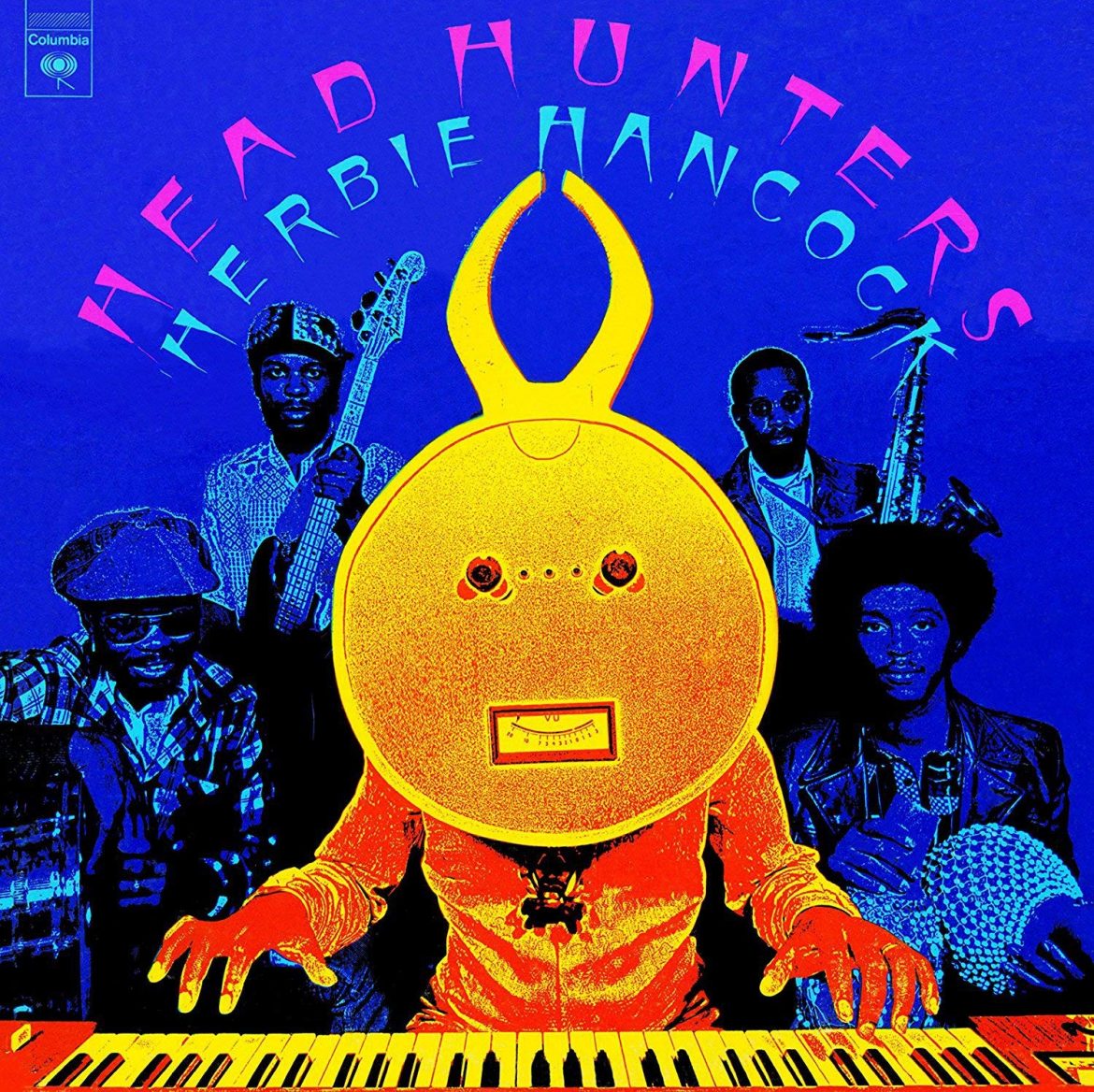
Teddy Pendergrass – From Group Harmony to Grown-Man Swagger
Teddy didn’t slide into solo stardom — he owned it. But before the robes and roses, he was the voice behind Harold Melvin & the Blue Notes. That’s him on “If You Don’t Know Me By Now.”
He dialed up the heat when he went solo in the late ’70s. Teddy wasn’t just singing love songs — he was setting the blueprint for every smooth, commanding R&B frontman who came after him.
Kenny Rogers – Psychedelic Cowboy?
We remember Kenny Rogers for the beard, the chicken, and “The Gambler.” But in the late ’60s, he fronted The First Edition, a trippy country-rock band. “Just Dropped In (To See What Condition My Condition Was In)” is a psychedelic classic — weird, bold, and nothing like what came after.
He didn’t start as a country icon — he became one. And he brought a little leftover weirdness with him.
Joe Walsh – From Power Trio to Solo Chaos
Before he was shredding with The Eagles, Joe Walsh was the wild force behind James Gang. “Funk #49” still hits like a punch to the chest. Then came his solo years — loose, loud, and hilarious (“Life’s Been Good” is chaos in the best way).
He had the chops, but more importantly, he had that unhinged charisma. And when he joined The Eagles, he didn’t clean up — he brought the madness with him.
Ice Cube – From Ruthless to Relentless
Before the solo albums, movies, and cultural icon status, Ice Cube was the pen behind N.W.A. He wrote most of Straight Outta Compton — then walked away over money and control.
His debut solo album, AmeriKKKa’s Most Wanted, hit like a sledgehammer. He didn’t just survive the breakup — he turned it into fuel and built a solo career that outpaced the group that made him.
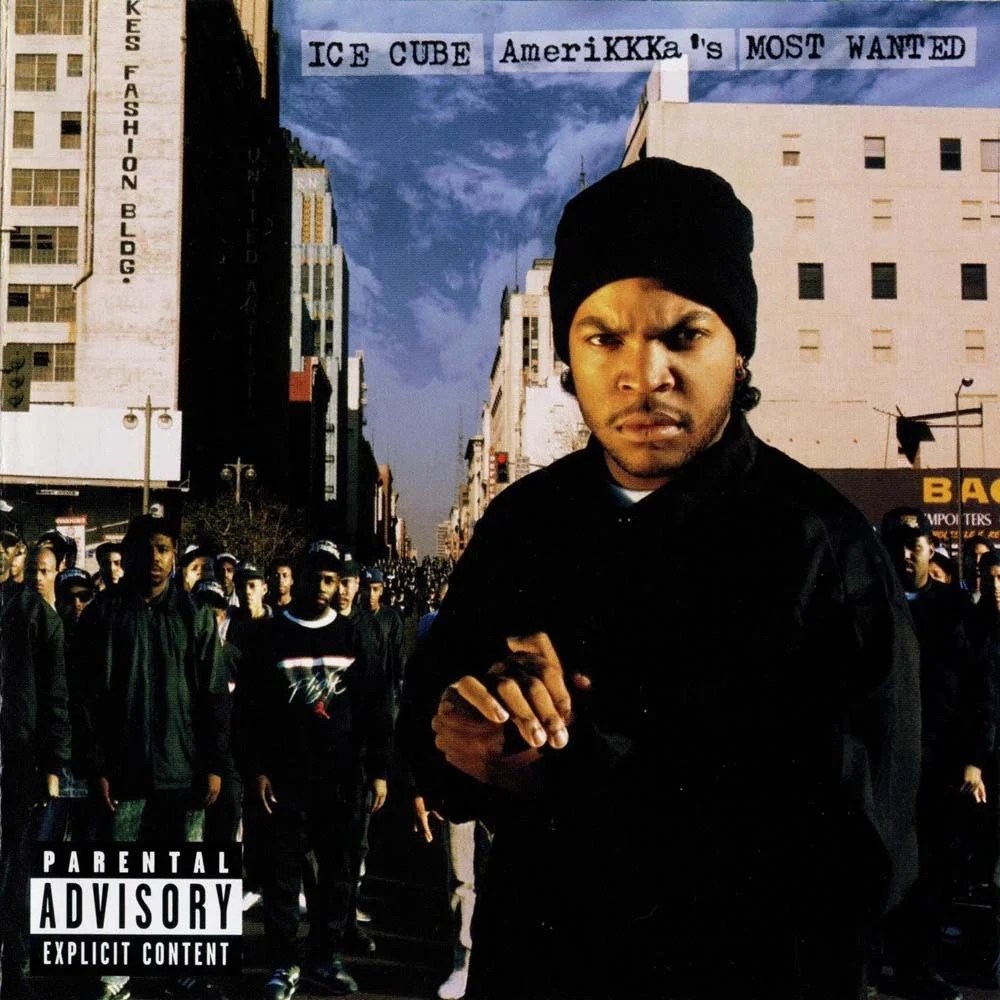
Then There’s the Whole Bryan Ferry, Morrissey, Annie Lennox Thing…
You know the type. The ones who were technically in a band, but you kind of always knew they were destined to fly solo.
Natalie Merchant – Quiet Power, Loud Impact
I’ve got all these artists in my library. That’s why this post was hard — every one of them means something to me. Every career shift hit a different note.
But the artist I landed on? Natalie Merchant. Not the biggest name. Not the flashiest. But the one who hit me quietly — and stayed.
I first fell for her voice on 10,000 Maniacs’ version of “Peace Train.” Then I lost track of her — until “Carnival” came out. That song pulled me right back in. Restrained, observational, hypnotic. It led me to Tigerlily. That’s when it clicked. I was in.
She didn’t just go solo — she effortlessly pushed her boundaries, building something slower, wiser, and entirely her own.
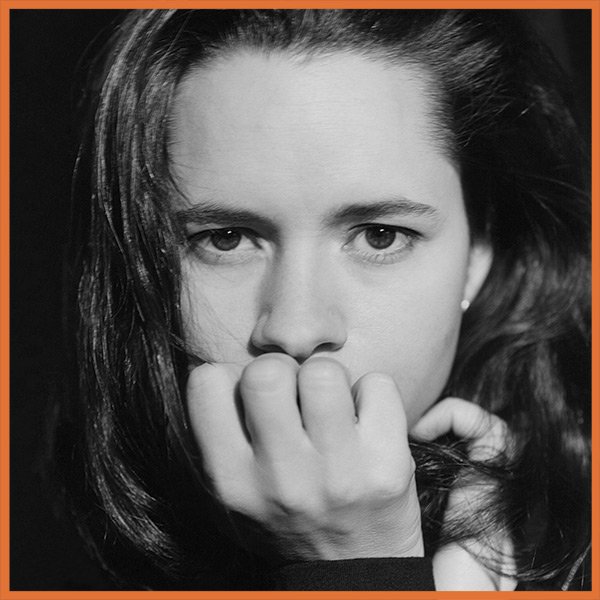
“San Andreas Fault” – A Quiet Warning Disguised as a Lullaby
Though “Carnival” was the standout, I’ve always been partial to “San Andreas Fault.” It opens softly — just piano, some breath between the lines — and stays there. But listen closely, and it’s tense. It’s about chasing dreams on unstable ground, about the illusions of safety and paradise.
It’s a warning, wrapped in a lullaby. A metaphor that doesn’t yell — it just sits with you. That’s Merchant’s power. She doesn’t need volume. She needs space — and she knows how to fill it.
Final Thoughts
Natalie Merchant didn’t just survive leaving 10,000 Maniacs — she defined herself in the process. And that’s the real thread through all these stories: artists stepping away from the comfort of the group, betting on themselves, and making something real.
Sometimes the biggest moves aren’t loud.
They’re quiet.
Intentional.
Built on fault lines — and still, somehow, they hold.
This post was written for Jim Adams’ Song Lyric Sunday

Her face, a still sea at twilight, holds a world behind closed eyes — a world scorched and sacred. Beneath the surface of her skin, time moves differently. The tear sliding down her cheek isn’t sorrow alone; it’s layered, like sediment pressed by centuries. It’s the weight of what was lost, and the stubborn, aching beauty of what still lingers.
In the palm of her silence, you can almost hear it: the laughter of ancestors, brittle with joy; the soft rustle of silk on temple floors; the sweet hush before a prayer. Memory lives here not as a ghost, but as a fire — not to destroy, but to illuminate. What we love, we do not forget. It settles into us, builds its shrine in the quietest chambers of the self.
She is witty, yes — but her wit is not for show. It’s forged from survival. Every word she withholds is a choice, every glance a negotiation between pain and pride. She has learned to speak with her silences, to wield them sharper than swords.
Wilful — not out of defiance, but necessity. She resists erasure. She refuses to dim. Within her, temples rise from ashes not as ruins, but as rebirth. Her breath is a hymn to endurance. Her heartbeat, a drum summoning the past into the present.
There is something wondrous in the way she holds it all — grief, fire, memory, and light — without collapsing. As if her soul was built to hold contradictions, to sing through them. A tear falls, yes. But it falls like a bell chime, echoing inward. Each note asking, not “Why me?” but “What now?”
She does not seek to escape the past.
She sings forward the fire.
Charles Mingus didn’t just play a jazz standard—he took it apart, set it on fire, and built something unforgettable.
“I’ll Remember April” is one of those jazz standards every musician runs into, eventually. It’s basically a jam session rite of passage—48 bars of twisty harmonic turns masquerading as a wistful ballad about lost love and changing seasons. I’ve been familiar with it for years. Played it, heard it, filed it under “That one tune that’s fun to blow over but nobody remembers the lyrics to.”
Then I heard the Charles Mingus versions.
Someone once told me, “There’s jazz, and then there’s Mingus.” At the time, I thought that sounded like one of those pretentious one-liners people drop in record stores to feel superior. But after diving into his takes on “I’ll Remember April,” I get it. Oh man, do I get it.
Mingus didn’t just cover “April.” He took it apart like a mad scientist, rewired its guts, jolted it with electricity, and dared you to still call it a “standard.”
The Café Bohemia Version (1955): Mingus and Roach Light a Fuse
Let’s start at Café Bohemia, 1955. Picture a packed New York club, cigarette smoke thick enough to chew, and a band that clearly didn’t come to play it safe. Max Roach sits in on drums, and if you’ve ever wanted to hear someone simultaneously keep time and destroy it, this is your moment.
The melody of “April” makes a brief cameo, like it wandered onstage and then realized it was at the wrong gig. What follows is 13 minutes of fearless improvisation, with Mingus, Roach, and pianist Mal Waldron operating on some telepathic groupthink. The horns? They show up, but the rhythm section is driving the bus—and the bus is on fire.
Roach’s drumming is the engine room of this madness. His solo isn’t just technically jaw-dropping—it’s spiritually charged. He plays like he’s pulling sound from some ancient, elemental place. It’s powerful, commanding, and completely locked into the spirit of the tune, even as the band steamrolls past the recognizable parts of it. He doesn’t just support the performance—he embodies it.
The Antibes Version (1960): Bud Powell and the Beautiful Collision
Now fast-forward to 1960 at the Antibes Jazz Festival in France. Mingus is in full mythic form. His band includes avant-garde sorcerer Eric Dolphy, hard-bop bruiser Booker Ervin, and lyrical firebrand Ted Curson. Oh, and just to make things even more surreal—bebop piano legend Bud Powell drops in.
I was hypnotized by Powell’s piano. He doesn’t just comp—he sets the tone for the whole damn piece. His phrasing is gentle but firm, melancholic but insistent. He drove the vibe of the entire take with a calm storm underneath. It was a genius move by Mingus to bring him in. Powell didn’t just play the tune—he channeled it.
And as chaotic as the rest of the band is—Dolphy sounding like he’s melting into the fabric of reality, Ervin breaking every hard bop ceiling—Powell grounds the whole thing with this subtle gravitational pull. It’s stunning.
Same Tune, Two Earthquakes
Each of these versions is radically different, but neither feels careless. Each artist involved—Roach, Powell, Mingus himself—took the time to embody the nature and spirit of this piece. They didn’t just play “I’ll Remember April”; they meditated on it, exploded it, resurrected it.
Here’s the wildest part: I know I was listening to the same song. But these takes? They felt like two completely different pieces of music. That’s not just impressive, it’s disorienting in the most thrilling way.
Café Bohemia is all raw nerve and instinct, like jazz fighting for its life in a boxing ring. Antibes is a theatrical, kaleidoscopic manifesto with solos. Both are driven by Mingus’s refusal to play it safe. Both reveal just how much space one tune can contain if you’ve got the nerve to stretch it.
After hearing these, that old quote—“There’s jazz, and then there’s Mingus”—stopped sounding smug. It started sounding accurate.
Mingus didn’t interpret “I’ll Remember April.” He cracked it open, poured his entire brain into it, and gave us two versions that are less about remembering a month and more about never forgetting the man who dared to redefine it.
I wasn’t looking for a new band. I was elbow-deep in grease, rebuilding an engine, when Skunk Anansie hit my ears — completely by accident. They were playing in the background, and something about the sound stopped me cold. Mid-wrench, I froze. The voice, the chaos, the nerve of it. As someone who’s always had a thing for rock bands fronted by women, I knew instantly this wasn’t background noise — this was a warning shot. I scrawled their name on a scrap of paper, went back to torquing bolts, and forgot about it. Years later, I found that note again. The rest? History.
Turns out, the band that hijacked my afternoon was in the middle of torching the status quo.
Formed in 1994, Skunk Anansie didn’t show up to blend in. While Britpop was navel-gazing and pretending it was revolutionary, Skunk Anansie was actually shaking things up — loud, political, unapologetically Black and queer. They weren’t the sound of the mainstream. They were the sound crashing through it.
Their debut album, Paranoid & Sunburnt, landed like a brick through a glass ceiling. It was blistering, furious, and full of truth that most people weren’t ready to hear. They didn’t write “Selling Jesus” and “Little Baby Swastikkka” for radio; they wrote them to confront, provoke, and awaken listeners.
But one track hit me harder than I expected: “Intellectualise My Blackness.”
As a Black man of a certain age in America, I felt that song. It screamed frustration, the tightrope walk between pride and exhaustion, the unspoken demand to constantly explain, justify, tone down, and translate your existence—to “intellectualize” something simply being who you are. The song doesn’t offer simple answers. It just screams the question we’re too often forced to answer: “Why do I need to prove my identity to you?”
It’s not just a powerful track. It’s personal.
And then there’s “I Can Dream” — the song that might’ve grabbed me all those years ago. It’s not about chasing dreams. It’s about drowning in them. Fantasies of power when the world keeps shutting you out. “I can dream that I’m someone else,” Skin snarls, and it’s not a wish — it’s a survival mechanism. That song doesn’t whisper. It breaks the silence wide open.
Which brings me to Skin herself. She’s not just the lead singer — she’s the force of nature steering the ship. A Black, openly gay woman with a voice like a controlled explosion and a stage presence that demands attention. She didn’t fit into the rock world’s mold — she shattered it. Watching her felt like watching someone fight for breath and win.
They called their sound “clit-rock,” because of course they did — loud, feminine, political, and deliberately hard to market. And they wore that label like armor.
Paranoid & Sunburnt wasn’t just a strong debut—it ripped the roof off what rock albums could be. It wasn’t sanitized, safe, or diluted. It was their truth, screamed at full volume. This album laid the groundwork for everything that followed: headlining Glastonbury as the first Black British-led act, performing for Mandela, sharing a stage with Pavarotti, and returning years later with 25LIVE@25 to remind everyone they never lost a step.
Skunk Anansie never asked for permission. They took up space, challenged everything, and demanded the world catch up. They’ll always be the band that made me put the wrench down — and feel something real.
In a world that constantly demands we cram as much as possible into every single day, this post resonates deeply. It’s a reminder that sometimes, slowing down is the most productive thing we can do.
Night lingers longer than it should, clinging to the edges of the world like a thought half-forgotten. It doesn’t go easily. The air is still, but not gentle—there’s a sharpness to it, the kind of chill that doesn’t announce itself. It pricks at the skin, slow and methodical, working its way in until your body shivers and you’re not sure when it started.
You finish your smoke. One last flick. The ember cuts through the dark like a dying star—brief, insignificant, but final. Somewhere out there, homes stir. The floors creak. Feet drag in patterns worn deep by repetition. The restless shuffle begins, zombie-like and directionless, following the scent of timer-brewed salvation. Coffee. The first small mercy of morning.
You sit by the window with a cup, warm in your hands, and watch the sky peel itself open. First the black, then the dull gun-metal, then the faintest shade of pale. The blue comes slowly, unsure of its welcome. Beneath it all, the horizon simmers—red, orange, brown—like coals that never fully went out. A silent ember of the night’s final stand, glowing under the weight of a world about to move again.
The inkwell stirs, shakes off its rust. Its lid lifts like a breath held too long. The quill taps, tentative at first, testing the moment. No plan, no script. Just rhythm. Just the need to begin.
You pour another cup. The clock says 5 a.m.
And somewhere between the sip and the silence, Elvis Costello’s “Radio, Radio” crackles through the speakers—too loud for the hour, perfect for the mood. The voice is defiant, bright, sharp as a match strike. You listen, because the lyrics don’t ask—they insist. The static fades beneath the beat. The world hasn’t spoken yet, but it’s no longer asleep.
The dawn light was pale and useless—just a smear across the treetops, barely making it through the humidity. Everything was wet—the porch boards, the air, your skin, even your breath. It felt like you were breathing through cloth—heavy, damp cloth wrapped around your head.
You stood barefoot on the steps, a slice of watermelon dripping in your hand. It tasted like water and rot now, its sweetness gone. You spat into the grass and stared out at the treeline.
The forest didn’t move. Not even the leaves. It just watched.
You didn’t sleep. Not last night. Not really the night before. The dreams had stopped pretending to be dreams. They didn’t fade in the morning. They lingered in the corners of your vision and behind your ears, where the sound of whispering almost made sense.
You went out early. Needed to check the perimeter cameras. Needed to move. To feel the ground under your boots. That was the plan.
Instead, you wandered. The trail curved in a way it hadn’t before. You followed it. Past the markers. Past the thinning grass. And then it was just you and the dirt.
You nearly tripped over it. At first, just a glint of white in the soil. Bone, maybe. A rock. You crouched, brushed it off with the edge of your shirt. The shape took form fast.
A face.
Stone. Weathered. Cracked. Like it had been buried for years, forgotten. But the eye, just one, was too clean. Too precise. Like it had waited.
You stared at it for a long time. Tried to laugh. Couldn’t. You ran your fingers along the nose, the lips. Your hand trembled, but you didn’t stop.
It looked like you. Not exactly, but enough. The same line between the eyes. The same curve of the jaw. It had no expression, but somehow, it felt like it was judging you.
You left it there. Swore you would forget it.
But that night, you dreamed of breathing through stone. Heavy. Silent. Dreamed of dirt filling your mouth, your ears, your chest. Dreamed of a voice saying your name—not out loud, but from inside.
You woke up with soil under your fingernails.
You told yourself: it’s a statue. Left behind. Forgotten.
You told yourself: it’s just heat sickness, a little sleep deprivation.
You told yourself: don’t go back.
But the forest doesn’t let you decide things like that. Not anymore.


The sunlight fades. Darkness returns. I wait in the hush, breath held, heart steady. The Keepers stand ahead, already assembled—silent, still, and watchful. In their presence, I feel both small and eternal. Beneath my calm, something stirs—my soul, long quiet, surges suddenly. It’s not noise, not fear. It is truth moving through me like a forgotten rhythm remembered. A tremor rises from the deepest part of who I am, and with it comes a whisper: the light… the call… the quill. These were never external things. They lived within me all along. I had only forgotten how to listen.
In the distance, the sky bends to the horizon’s will. Waves of green light ripple across the dusk like an ancient truth brushing its fingers across the world. The field before me sparkles with dew, each blade of grass a tiny shard of clarity, reflecting the last breath of sunlight. This moment—caught between day and night, between silence and speech—feels sacred. My steed shifts beneath me, sensing the tension in my thoughts. He is anxious, ready. And maybe I am too. But readiness doesn’t feel like confidence. It feels like surrender. I tighten the reins—not to control, but to remind myself that I am here, that I have chosen this.
We ride—not toward victory, but toward purpose. Toward the gathering. Toward those who understand this strange calling to bear words like burdens, and gifts. We are not warriors. We are vessels. We carry stories that are older than we are, stories that ask to be told again, each time a little more fully. We move as one toward the collective, not to be absorbed, but to belong.
Now, surrounded by my brethren, I feel the resonance. Not noise. Harmony. Thousands of voices—not the same but aligned. My own words rise from that shared current, not louder, but clearer. I speak the truth I have wrestled with in the quiet corners of my mind.
Some call the rawness madness. They dismiss it as noise, as rambling. But those of us who live in this tension—we know better. We know that sometimes, madness is just meaning in disguise. That chaos, when held in the right hands, becomes clarity. To those who face the block, I say this: it is not your enemy. It is your mirror.
The block is doubt. Yes. But not the kind that breaks us. It is the kind that slows us down, that makes us ask why before we speak. It is the force that prevents arrogance, that checks ego. Doubt humbles us. It forces us to listen harder, to question deeper, to speak with care. It reminds us that this craft is not about being heard—it is about being understood.
And it is in that pause, that searching, where we grow. The block is not a wall. It is a threshold. When we understand that, it no longer stops us—it transforms us. That understanding, that acceptance, is how the block is shattered.

A jazz legend. A folk icon. One final act of creative defiance.
When Joni Mitchell dropped Mingus in 1979, it threw everyone for a loop. Critics scratched their heads; fans wondered where the dulcimer had gone. It didn’t sound like Blue, or Court and Spark, or anything even remotely close to her folk-pop reputation. And honestly? Joni didn’t care.
“This wasn’t just a genre crossover — it was a genre collision.”
This was Charles Mingus’s final project. ALS had stolen his ability to play, but not his impulse to push boundaries. So instead of retreating into legend, he reached out to Joni Mitchell — the queen of tunings, lyrics, and curveballs — and asked her to set words to some of his compositions. She said yes.
The result was a challenging listen — five spoken-word “raps,” interludes pulled from their conversations, woven between rich, angular jazz compositions. It was intimate, raw, and not made for background listening. You don’t just hear music — you hear mortality, mischief, and Mingus grumbling like a jazz prophet in a wheelchair.
“Mingus couldn’t play anymore, but he wasn’t done.”
Mitchell described their first meeting like this:
“The first time I saw his face it shone up at me with a joyous mischief… Charlie came by and pushed me in—‘sink or swim’—him laughing at me dog paddling around in the currents of black classical music.”
Translation: Mingus didn’t want a tribute. He wanted a partner with nerve.
The lineup was no joke:
“She didn’t smooth the edges — she leaned into the mess.”
This isn’t dinner-party jazz. It’s messy, meandering, occasionally maddening. But it has guts. At one point, Mingus told her she was singing the wrong note.
She replied, “That note’s been square so long it’s hip again.”
Mingus, without missing a beat: “Put in your note, my note, and two grace notes too.”
That’s the whole album right there — layered, irreverent, and unbothered by convention.
From Skeptic to Fan
My journey into Joni Mitchell’s world didn’t start with a musical epiphany. It started with a woman — one who casually mentioned that Prince was a fan of Joni Mitchell. I made a face. Possibly several. My inner monologue said: Oh great, another misunderstood-genius folk artist I’m supposed to pretend to like.
But then I saw her vinyl collection.
Not a greatest-hits graveyard. Not recycled top 40 safe bets. Her shelves were full of weird, daring, intentional records — the kind people own because they listen, not just display. I started paying attention.
I got home, looked up Joni’s discography, and there it was: Mingus. Charles Mingus? With her? I hit play.
Then I heard him — the voice. The Maestro. Laughing, breathing, alive. For a second, I thought I’d stumbled onto a secret Mingus record.
Then the bass came in. And I paused.
This isn’t Mingus on bass. But the lines were liquid, wild.
Then the piano hit. I stopped. “Who’s tickling the keys like that?” I muttered. I knew that sound. Herbie Hancock.
This was no crossover fluff. This was a full-on creative risk with real players and real weight.
I stopped the record, called her, and said:
“Okay — what’s the Joni Mitchell starter kit?”
She gave it to me. Blue. Hejira. Court and Spark.
I listened. And suddenly, the whole picture came into focus.
I came back to Mingus later — and this time, I didn’t feel lost. I was ready. I didn’t need it to make sense immediately. I just needed to meet it where it was.
Critical Reception: Then and Now
Upon its release in 1979, Mingus got a lukewarm reception.
Stereo Review said it had “no improvisation.” Robert Christgau gave it a C+, calling it a “brave experiment” that didn’t quite succeed.
Folk fans missed the softness. Jazz critics missed Mingus’s hands. Everyone expected something different — and Mingus gave them none of it.
But over time, things changed. Today, Mingus is respected for what it is: bold, strange, and ahead of its time.
“After four decades, the deeply personal and experimental Mingus has grown into one of the most important titles in the Mitchell catalog.”
— Ron Hart, GRAMMY.com
Even those who played on it are reflecting differently now:
“It was and remains a brave project and statement… an essential piece of not only Joni’s library of music, but of American music in the late 1970s.”
— Peter Erskine, drummer on Mingus
Funny how time — and maybe a little patience — can change everything.
Final Word
Mingus isn’t cozy. It’s not an easy listen. It’s not even especially likable at first.
But it’s real.
Two artists — one dying, one evolving — making something on their own terms. No pandering. No hand-holding. Just music, conversation, and courage.
I started listening to Joni Mitchell because of a woman.
But I kept listening because Mingus didn’t try to win me over.
It made me meet it halfway.
And once I did, I never looked at music — or Mitchell — the same way again.
Funkadelic’s Maggot Brain isn’t just a record — it’s a reckoning. Released in 1971, it captured the psychic temperature of a country unraveling. War abroad, decay at home, distrust in the air, and the so-called counterculture burning out in real time. Maggot Brain took all that noise, that grief, that disillusionment — and turned it into one of the most brutally honest LPs ever pressed.
It wasn’t neat. It wasn’t safe. It was spiritual, political, cynical, funky as hell, and deeply weird — like a sermon preached from the edge of a nervous breakdown.
Maggot Brain captured the attitude of the entire country within a single LP. There was literally a track that spoke for everyone. If you were angry, it had you. If you were confused, it held you. If you just wanted to dance your way through the end times, Funkadelic had you covered. Every track hit a different nerve, and none of them asked permission.
There are songs that groove hard (You and Your Folks, Me and My Folks), others that mock the stupidity of it all (Super Stupid), and ones that crack open a deeper existential dread (Wars of Armageddon). But all of it orbits the title track. Maggot Brain isn’t just the opener. It’s the altar. It’s the cry at the center of the storm.
Eddie Hazel doesn’t play Maggot Brain. He doesn’t even perform it in the traditional sense. He haunts it. Possesses it. Bleeds into it. And once it begins, you don’t get to be a casual listener anymore. You’re drafted. No warning. No warm-up. Just a single, ghost-drenched guitar note that slides into your chest like a whisper you weren’t supposed to hear.
It’s not loud. It’s not fast. It just is. And that’s more terrifying than any distortion pedal at full blast. Hazel creeps in like a rogue spirit — smooth, silent, uninvited — and by the time you realize what’s happening, you’re already in it, stripped of cool and composure, emotionally pantsed.
You don’t get a beat to grab onto. No vocals to decode. Just a guitar screaming in slow motion. It’s like standing in the middle of a storm you can’t see but definitely feel. The grief is palpable. The rage is buried just deep enough to make you nervous. And right when you think you’ve got it figured out, the damn thing shifts and you’re spiraling again. Welcome to Maggot Brain — cognitive dissonance with a six-string.
Because let’s be real: this song shouldn’t work. It’s ten minutes, mostly one instrument. No verse. No chorus. Not even a satisfying drop. But for ten minutes, Eddie Hazel demolishes every “rule” about what music is supposed to be, and you love him for it. Or maybe you hate him for making you love it. Either way, you’re in it.
And no, you don’t walk away saying, “cool solo, bro.” You walk away dazed, like you just remembered a dream you never had. Or like your soul got mugged, politely. This is the kind of music that picks a fight with your expectations and then hugs you while you cry.
I still remember the first time I heard it — in a smoke-filled room full of strangers pretending not to be high. No one talked. No one moved. We were all just… held. Not by the music, exactly, but by whatever was trying to speak through it. We didn’t share a moment. We survived one. And we were better for it, or at least quieter.
Hazel doesn’t “solo.” He confesses, and we are his priests. Every bend, every scream from those strings is a sin laid bare. And by the end of the song, we have no choice but to grant absolution. Not because we’re qualified, but because he earned it. Because whatever he was holding, he handed it to us. And in some strange, sacred transaction, we took it.
His playing doesn’t follow any tidy roadmap. It stumbles through grief and grace, melting down and pulling itself back together like a nervous breakdown that found religion. There are moments where you think he’s going to lose it entirely — and maybe he does. But somehow, that’s the point.
You want to make sense of it, but your brain is two steps behind the whole time. Because it’s pretty and ugly. Gentle and violent. Hopeful and hopeless. Your heart’s trying to lean in while your head’s going, “Are we okay??” That’s the dissonance. That’s the magic. That’s why it hits harder than any perfect pop chorus ever could.
And George Clinton, cosmic genius and probable chaos wizard, gave Hazel just one instruction: “Play like your mother just died.” Which is both tragic and kind of a dick move, but clearly — it worked. What came out wasn’t a song. It was a slow, spiritual detonation. Hazel didn’t perform grief — he offered it. Raw. Untuned. Unfiltered. The kind of thing most of us spend our lives trying not to feel.
The track never resolves. No big finale. No grand crescendo. Just a long fade into silence, like a memory slipping back under the surface. It’s not done with you — it’s just gone. Until the next time you’re reckless enough to press play.
And I wonder: for those ten minutes, did Eddie Hazel serve as a guide to enlightenment?
Not the neat, monk-on-a-mountain kind.
The messier kind. The gut-punch kind.
The kind that grabs you by the heart, shakes something loose, and leaves without saying a word.
Maggot Brain #479 on 2003 list