
Threadbare Hearts

I’m unravelling.
The separate pieces of my mind no longer whisper—they scream, each one tugging in a different direction.
I ask the mirror for answers it never had the decency to learn.
A note—creased and crumple-worn—falls from my jacket pocket like a ghost too tired to haunt.
I run my thumb across the ink, smudged but still cruel in its clarity.
Somewhere beyond the silence, someone begins to strum a guitar, the melody raw and familiar, like the ache of memory.
My thoughts form a jumble too dense to untangle, yet too fragile to ignore.
Love, it turns out, is antithetical to survival when your heart’s been set on fire.


Author’s Note:
This piece was stitched together using a patchwork of prompts from FOWC, RDP, 3TC #MM103, SoCS, and the Writer’s Workshop. I tend to write like I’m walking barefoot through glass—deliberate, a little reckless, and always bleeding something honest. If it stings, good. That means it’s real.

Kimonogate

FLASH FICTION SERIES – FOWC/RDP/SoCS/FSS #203

A suburban saga of secrets, sequins, and sabotage.


Episode 1:

The Mayor, the Kimono, and Capote’s Forbidden Love

The text the mayor received simply read, “I know what you buried, and it wasn’t just a time capsule.”
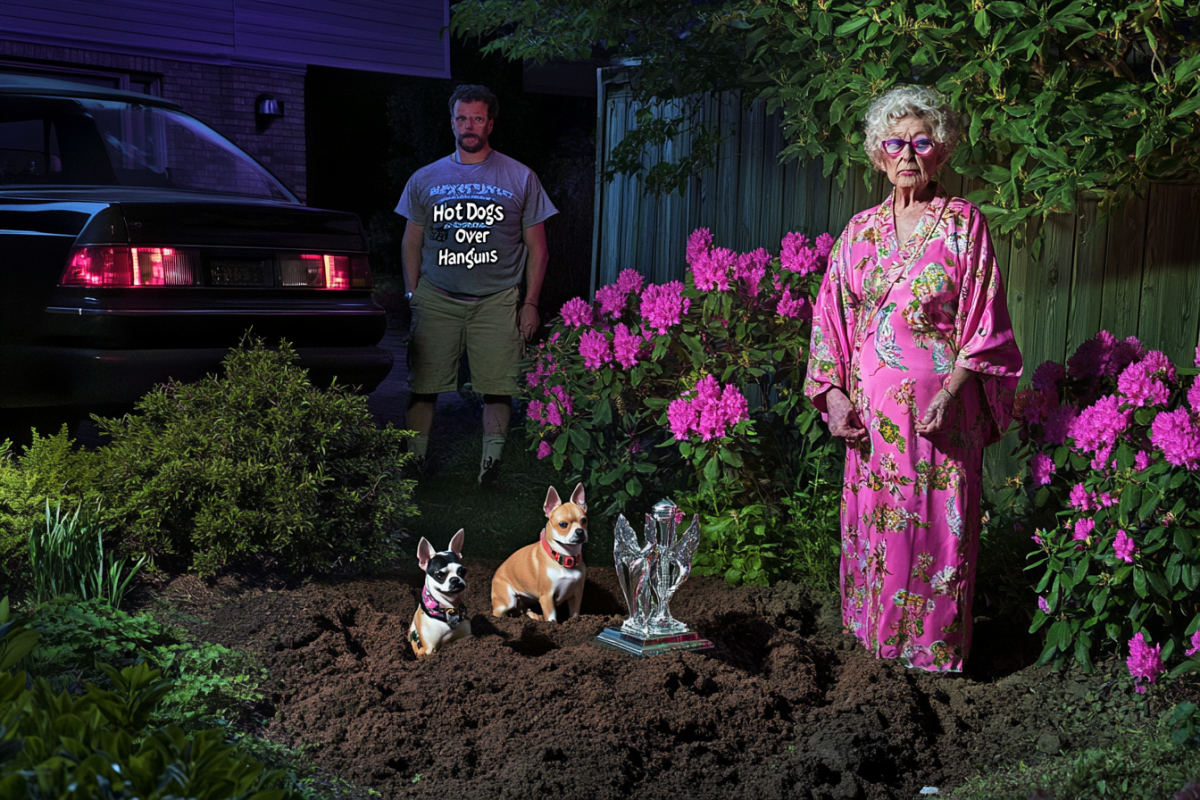
He dropped his spoon into his cereal with a neutral thunk and slowly looked toward the back garden, where the freshly disturbed earth sat like a guilty secret under a patchy rhododendron. He took a deep breath and tugged at the collar of his robe—not the pink kimono, no, that one was currently six feet under with a copy of Mamma Mia! Live at the Greek in a glittery DVD case.

He clutched his phone with one hand and his cereal tube with the other. The mayor didn’t own bowls. Too vulnerable. Too open. Like a confession with handles.

Across the hedges, Myrtle McKlusky—seventy-nine, semi-retired, fully judgmental—was watching him from her sunroom. She sat in her recliner like a falcon in a floral nightgown, sipping from a pint glass of prune juice and fanning her three Chinese Crested dogs, each trembling with a different neurosis.

The largest, Capote, was vibrating like an old blender. He had recently discovered his feelings for Misty, Myrtle’s black Chow, and now stared out the window with the unrelenting passion of a Tennessee Williams heroine.

Capote had needs.

The mayor knew Myrtle had seen him. She always did. She had binoculars shaped like opera glasses and judgment shaped like artillery. He had tried to be discreet, but it’s hard to bury shame quietly when you’re panting in crocs and elbow-deep in mulch.

The kimono was silk. It had a peacock on the back. A punt of brandy had been involved.

And now someone was taunting him.

He stormed out of his house in cargo shorts and a tank top that said “Hot Dogs Over Handguns,” and made a beeline for Myrtle’s porch. She met him at the screen door, holding her smallest dog, Pontius—Pont for short—who barked like he was doing Shakespeare.

“Spying again, Myrtle?” the mayor growled, wiping sweat from his forehead and trying not to pant.

Myrtle narrowed her eyes behind rhinestone bifocals. “I would hardly call ‘having working eyes’ a crime.”

“That text wasn’t funny.”

“I didn’t say it was,” she said coolly. “Capote typed it. He’s quite dexterous. Especially since he caught your Misty presenting.”

The mayor’s eyes widened. “That’s my dog.”

“And that’s my Capote,” Myrtle said, lifting him proudly like a neurotic Simba. “And he’s in love.”

“She’s fixed.”

“So is he. Love finds a way.”

The mayor clenched his fists. “Call off your pervert dog or I swear, I’ll—”

“You’ll what?” Myrtle leaned forward, dangerous now. “Threaten three hairless angels with names from the Harlem Renaissance? Do it, Mayor. The HOA already wants your head after that incident with the inflatable disco duck.”

He froze.

She smiled.

“You wore the kimono to Dancing with Myself, didn’t you?”

Silence.

“And you did the full choreography. With backup. Solo.”

He turned and stormed away, sweat rolling down his temple, heart pounding, ears pent up with the ghost of Billy Idol.

Capote licked the glass longingly as Misty rolled in a pile of mulch. Somewhere, a wind blew through the garden. Somewhere, a love story had just begun.

And under the rhododendron, a peacock shimmered in the dirt, waiting.


She Sings Forward the Fire

PROSE – FOWC, RDP, 3TC #MM57, SOCS


Her face, a still sea at twilight, holds a world behind closed eyes — a world scorched and sacred. Beneath the surface of her skin, time moves differently. The tear sliding down her cheek isn’t sorrow alone; it’s layered, like sediment pressed by centuries. It’s the weight of what was lost, and the stubborn, aching beauty of what still lingers.

In the palm of her silence, you can almost hear it: the laughter of ancestors, brittle with joy; the soft rustle of silk on temple floors; the sweet hush before a prayer. Memory lives here not as a ghost, but as a fire — not to destroy, but to illuminate. What we love, we do not forget. It settles into us, builds its shrine in the quietest chambers of the self.

She is witty, yes — but her wit is not for show. It’s forged from survival. Every word she withholds is a choice, every glance a negotiation between pain and pride. She has learned to speak with her silences, to wield them sharper than swords.

Wilful — not out of defiance, but necessity. She resists erasure. She refuses to dim. Within her, temples rise from ashes not as ruins, but as rebirth. Her breath is a hymn to endurance. Her heartbeat, a drum summoning the past into the present.

There is something wondrous in the way she holds it all — grief, fire, memory, and light — without collapsing. As if her soul was built to hold contradictions, to sing through them. A tear falls, yes. But it falls like a bell chime, echoing inward. Each note asking, not “Why me?” but “What now?”

She does not seek to escape the past.
She sings forward the fire.

Perception Blue

PROSE – 3TC #MM40 & SoCS


The room softened into mist, and time slipped its tether. He saw only her, standing beneath a net of soft lights, her head bowed, lashes dipped in silver. She looked like a secret the universe had forgotten to keep.

He watched her, hardly breathing. There was a stillness about her, as if even the air itself had fallen into orbit around her glow.

Was she real? Or just a dream stitched out of loneliness and hope? He blinked, but she didn’t vanish.

He let himself linger, caught between wonder and a trembling kind of fear. She was too much—too bright, too distant, too beautiful in a way that had nothing to do with the glitter at her temples or the jewels at her brow.

And him? He was just a man standing in the dark, bones full of small regrets, heart patched with quiet scars.

For a moment, he hesitated, sinking into the pause, that heavy moment when you question if you are enough to even be seen. If you are worthy to stand before something so inexplicably beautiful.

His hands shook at his sides, almost imperceptibly. His voice, he feared, would betray him worse.

He closed his eyes and tried to listen — not to the noise of the room, but to the stubborn, fragile hope still alive inside him.

When he opened them, she was still there. Still breathing. Still real.

He stepped forward, heart battering against the cage of his ribs, and found the smallest, truest word:

“Hi,” he said, almost a prayer.

For half a second, the universe hung suspended. Then —

She lifted her head, and the faintest, brightest smile tugged at her lips.

“Hi,” she answered.

And in that small, electric exchange, the stars seemed to exhale, and the night leaned closer around them.

War, Wisdom, and Other Lies I Tell Myself at Dawn

PROSE – FOWC, RDP, SoCS

“Damn, you’re ancient! What was it like to be one of Teddy Roosevelt’s Rough Riders?”

One of the kids on my team tossed that gem at me this morning. Smirking like he just reinvented comedy. I wanted to fire back—something about his hairline already surrendering—but I let it ride. Not because I’m mature. I’m just tired. And honestly? The way the squad erupted in laughter… it was worth the hit. They needed the laugh more than I needed the win.

I’ve never really understood the logic of soldiers. Still don’t. We sign up to follow orders we don’t write, from people we’ll never meet, for goals we’re not allowed to fully understand. And we’re supposed to be fine with that.

Back when I was their age, I like to think I was different. Noble. Thoughtful. Maybe even angelic. (Okay, maybe not angelic. More like… less of a jackass?) But that could just be the rose-colored fog of memory, or the result of years spent rewriting my own origin story like a drunk screenwriter.

There’s something ritualistic about the way the morning unfolds out here. The dawn eats the night. First sip of bitter coffee. First cigarette. The world still quiet enough to pretend it’s not completely unhinged. I watch them wake up—slow, clumsy, half-zombies with bedhead and bad attitudes. Too young to have rituals, too new to know those rituals might one day keep them sane.

I remember one morning, I hit them with Sweet Leaf by Black Sabbath. Volume up, sun barely over the ridge. Half of them looked like they’d been shot in their sleep. The other half just looked confused. I let it rip while running them through live-fire scenarios. Brains not even warmed up, bodies still clunky from the cold.

It wasn’t for fun. Okay—it was a little fun. But mostly it was about pressure. Teaching them to operate before they’re ready, because the world doesn’t care if you’re ready. Expect the unexpected, I told them. It’s a cliché until you’re bleeding because you didn’t.

Eventually, they’ll get it. Or they won’t. Some learn the rhythm. Others burn out trying.

Each day, we stand there like portraits—young faces with old eyes—propping up a cause that shapeshifts depending on who’s holding the microphone. Marching to the beat of some distant desk jockey who calls themselves a leader because they can attach a PDF to an email. And no one questions it.

That’s the part I can’t let go of. No one questions it.

“War is peace. Freedom is slavery. Ignorance is strength.”
— George Orwell, 1984

I’ve never fully understood that quote. I’ve got pages of half-drunk, sleep-deprived ramblings trying to unpack it. You’d think, with age, I’d get closer. Clarity, wisdom, all that crap they promise you comes with gray hair. But no. The notes get weirder. The handwriting worse. The questions louder.

Maybe that’s the point. Maybe wisdom isn’t about finding answers. Maybe it’s just about asking better questions—and knowing when to shut up and pass the coffee.

Sun’s up. Time to pretend we’ve got it all figured out again.


This post was written for Ragtag Daily Prompt, Fandango, and Stream of Conscious Saturday.

Random Fiction – 03062025

FICTION – CHALLENGE RESPONSES

Welcome to the world of Disbelief and Distrust—

Worlds where conflict eclipses triumph, where chaos consumes order, and where the seeds of doubt and treachery grow into forests of despair. But these realms were not always so. In the earliest days, when existence was still young and malleable, Disbelief and Distrust were mere flickers in the minds of creation’s first inhabitants.

Some say these forces were the unintended consequences of free will—a byproduct of curiosity and skepticism, given form and power through the thoughts of mortals. Others believe they were forged by celestial beings, birthed as cosmic safeguards to ensure that no single truth could dominate reality unchallenged. Whether accident or design, they grew unchecked, feeding on the uncertainties of gods and men alike.

Disbelief first manifested as a whisper—a single voice among the masses who dared question the unquestionable, challenge the sacred, and pull at the strings of fate. Basically, the original troublemaker who looked at the divine rulebook and said, ‘Yeah, but what if we didn’t?’ With each doubter, its presence strengthened, evolving from a mere notion into a force capable of unmaking destiny itself.

Distrust, its counterpart, festered in the spaces between souls, spreading like a silent toxin. It began as a quiet unease between rulers and their subjects, between lovers, and between allies on the battlefield. In time, it became an entity all its own, feeding off betrayal and paranoia, unraveling the very fabric of unity.

Together, these forces did not simply exist—they consumed, reshaped, and twisted the world until belief became fragile and alliances mere illusions. And so, the war began, not with swords or spells, but with doubt and deception, forces far more insidious than any weapon forged by mortal hands. Disbelief, a venomous force that poisons the soul, breeds Havoc and Turmoil, twisting reality into something grotesque and unrecognizable—like a bad haircut you were too confident about until you saw your reflection. It has existed in many forms, but each version of it is darker than the last, evolving with the fears and doubts of mankind. It was not always so—Disbelief was once a mere whisper, a subtle question in the hearts of mortals. But as time passed and the hearts of men grew uncertain, Disbelief found its roots deep within their souls, growing stronger with every doubt, every fear, every betrayal.

The origins of Disbelief can be traced back to the early days of creation, when mortals were still bound to the will of the gods—because, apparently, even celestial beings like to micromanage. In those days, the gods bestowed their gifts upon mankind, guiding them with divine wisdom. But as civilizations flourished, so too did pride and skepticism. Some began to question the gods’ intentions, wondering if their fates were truly dictated by celestial hands or if they had been deceived. This questioning fractured the foundation of faith, and from the cracks, Disbelief was born.

A nameless entity at first, Disbelief took shape in the minds of those who no longer saw the gods as their benefactors but as distant and uncaring overlords. It whispered to kings and scholars, to soldiers and poets, planting the seeds of doubt that would one day bloom into chaos. The first great war between mortals and the divine was not fought with swords but with defiance, as if the gods themselves had crafted the world from brittle tin, waiting for it to collapse under the weight of human uncertainty. As temples were abandoned and prayers went unanswered, Disbelief swelled in power, taking on a consciousness of its own.

As the gods watched their influence wane, some chose to leave, retreating beyond the veil of mortal comprehension, while others attempted to reclaim their dominion through force. But it was too late. Disbelief had become more than an idea—it was a force, a presence that fed on uncertainty, growing stronger with every soul that wavered, spreading like a blight across the minds of those who once held faith. When the gods fled the Earth during the distorted Age of Iron, Disbelief was free to roam unchecked, a shadow in every mind, a voice in every heart.

Now, Disbelief is no longer just a thought—it is an entity, a being that drifts unseen, whispering into the ears of rulers, warriors, and scholars alike—kind of like an overenthusiastic life coach, except instead of motivation, it peddles existential dread. It’s the mental equivalent of a mouse loose in your house—small, sneaky, and impossible to get rid of, no matter how many traps you set. It is a realm unto itself, a vast expanse where reality bends and truth is an illusion. Those who enter it rarely return, for within its depths, all certainty dissolves.

When combined with Distrust, the effect is catastrophic. The tension becomes unbearable, the mind a battlefield where shadows whisper lies, and truth is a fleeting ghost. Together, these forces break the spirit of Ian more thoroughly than the might of the ancient gods—gods who once claimed dominion over the will of mankind but who fled Earth during the distorted Age of Iron. An age when the world was stained with sin, riddled with betrayal, and reeking of dishonor.

When these two realms collide, a force unlike any other emerges—an all-encompassing dominance that suffocates even the strongest of beings. No matter how resilient and how indomitable one believes themselves to be, they are bound to fall, shackled by the unseen chains of paranoia and despair. This force, if harnessed, can become a weapon—a blade forged in suffering, wielded by those who thrive in chaos. In the hands of a master of mayhem, the devastation is boundless. The earth itself weeps beneath the carnage, rivers turning crimson with the blood of the fallen. The bodies of men and women, once vibrant, now lifeless, litter the ground, silent witnesses to the horror. A wrath unchallenged, its echoes rippling through time, distorting the lives of its many victims, unweaving their very essence until nothing remains but fragmented ghosts of who they once were.

Altered logic usurps rational thought, warping perception until truth and illusion intertwine. The world becomes an ever-shifting labyrinth where deception reigns supreme. The veil of reality is lifted, revealing visions conjured by unseen forces, images that flicker and shift like a mirage on a sun-scorched wasteland. What wicked hand has beckoned forth such a power? What dark scheme has set this storm of deception into motion? Could it be the cunning of Lucifer himself, resurrecting an age-old dominion?

If there is to be salvation, it lies in opposition. The forces of belief and trust, the antithesis of destruction, must rise to meet this encroaching void. These forces stand as mirror images to the realms of disorder, the counterbalance in an eternal war. The battle between these realms rages on, an endless clash of light and dark. Legends tell of past wars where champions of both forces rose and fell. The Celestial Reckoning, a war that shook the heavens and earth alike, saw the rise of the Radiant King, a true crackajack of battle and wisdom, whose unwavering belief in truth and order nearly sealed the fate of chaos forever. But from the abyss emerged the Harbinger of Doubt, a being forged from the very essence of Disbelief, who shattered the golden citadel and plunged the realms into turmoil once more.

The Forgotten War, fought in the silence between ages, saw the rise of the Forsaken Legion—warriors who once served the gods but fell victim to Distrust, which, honestly, is what happens when divine beings start playing favorites and forget that mortals have an attention span shorter than a goldfish on caffeine. It’s the celestial equivalent of giving a starving cat a single bite of food and then wondering why it won’t leave you alone. Their betrayal unleashed a darkness so profound that even the gods themselves hesitated to intervene, leaving mortals to fend for themselves in a world consumed by uncertainty.

Each battle carves deeper wounds into existence, proving time and again that neither side will ever truly claim victory. The war is eternal, and those who dare enter its fray find themselves lost to history, their names spoken only in whispers, their fates written in the blood-soaked annals of time. Some claim that good will always triumphs and that righteousness will endure. But to underestimate the power of chaos is to invite ruin.

For within the darkness lies a weapon beyond mortal comprehension. It remains dormant, a thing of insignificance, until one dares master it. Only those with unwavering conviction, boundless skill, and a deep-seated belief in its power can unlock its full potential. This belief is paramount, for without it, the very fabric of existence unravels. Reality would fragment, leaving us stranded in isolated worlds of our own making—prisons of the mind, where despair festers and hope withers.

The journey does not end here, for all paths eventually lead to the inevitable—

The Land of the Dead.

Or as some like to call it, ‘the afterlife’s waiting room,’ complete with an unsettling lack of background music and a never-ending queue.

Or as some like to call it, ‘the afterlife’s waiting room,’ where even the dead can’t escape bureaucracy.

The air grows heavy, thick with the scent of decay and the whispers of forgotten souls. The light dims, not into darkness but into an eerie, shifting twilight where shadows move with minds of their own. Each step forward feels like sinking into an unseen abyss, the very ground beneath shifting and unstable, as though reality itself is reluctant to let go. A deep chill seeps into the marrow of your bones, and an unsettling pressure coils around your chest as if unseen hands are testing your resolve.

A wind, carrying the echoes of wailing voices, howls through the void, neither warm nor cold but filled with an otherworldly weight. The transition is not abrupt but agonizingly slow, stretching time until past and present blur. The veil between worlds is thin here, and every sensation—every breath, every heartbeat—feels distant, detached, as though you are already half a ghost. And then, with a final step, you arrive. The land before you is neither fully alive nor fully dead, a liminal space where the lost linger, awaiting judgment or oblivion.

The Land of the Dead.

But before we reach its chilling gates, we pass through a place suspended in uncertainty, a world known to some as the Realm of Indecision, to others as the Land of Neutrality. Here, all must wander at some point in their existence. For indecision is a plague of the soul, a force that binds even the strongest hearts in shackles of hesitation. It thrives on the turmoil of man, growing stronger with each faltering step.

Your only true ally in this place is the resilience of your mind. If one’s thoughts twist and turn, they will be twisted in return. For the body is but a shell, its sole purpose to house the immortal soul. When its task is complete, the soul departs, moving toward a final reckoning. Only in completion does it find peace, shielded from the reach of mortals. For each soul has a mission, a destiny known only to itself.

As we tread further, the Land of the Dead reveals itself in all its haunting splendor. The inhabitants of this forsaken world drift like wraiths, their faces twisted in expressions of bewilderment and dread. Each soul lingers, uncertain of where their journey will take them next. Have they fulfilled their purpose? Or are they doomed to walk the path leading to eternal suffering?

There is yet another fate—one feared above all others. Some try to defy the inevitable, to twist fate itself, but they cannot escape the weight of their own existence. The judgment of the soul is final. If Lucifer is outwitted, freedom is granted. But if one falters, if darkness prevails, then the fate is clear—the soul is cast into the fiery abyss of Chaotic Evil, which is essentially Hell’s VIP section, but with worse music and a strict no-refunds policy.

Hell.

And so, the cycle continues.

The world you once knew fades into obscurity, replaced by something else entirely—a new realm, where the inhabitants bear a different curse. This world is inhabited by those who have chosen their fate. They followed the Path of Suicide, forsaking life, fleeing pain in the only way they knew. But their suffering did not end—it merely changed form.

The story does not end here. It never truly ends.

For the war between belief and disbelief, trust and betrayal, light and chaos is eternal. But there is a prophecy whispered among the remnants of faith, etched in the forgotten tongues of those who saw beyond the veil of chaos. It speaks of a final reckoning, a moment when the balance will be tipped for the last time.

Legends tell of a wanderer, neither fully bound to the realm of trust nor entirely lost to the abyss of doubt. This wanderer, marked by both worlds, holds the key to the war’s conclusion. Some say they will be the one to weave belief and disbelief into something new, something beyond the cycle of destruction. Others fear they will be the catalyst that plunges existence into an inescapable darkness.

And as the battle rages on, the forces of both sides seek this figure, eager to shape the prophecy to their will—before the prophecy shapes them.

And you are now a part of it.


Ah, the best-laid plans of mice, men, and procrastinating creatives. There I was, determined to take a “break” from my earth-shattering projects—you know, the ones that will undoubtedly revolutionize the art world and literature as we know it. I dramatically set aside my drawing pencils (because apparently, I’m too good for a simple #2) and closed my idea notebook with a satisfying thud. Today was going to be different. Today, I would be a normal human being and mindlessly scroll through WordPress like everyone else.

But the universe, in its infinite wisdom, had other plans. Not even a full morning had passed before I glanced down to find my notebook splayed open like an attention-seeking drama queen. Lo and behold, it was littered with hastily scribbled notes that had apparently manifested themselves through sheer force of creative genius. Or, you know, my subconscious refusing to take a day off. Thanks, brain.

“Well,” I sighed dramatically to my empty room (because talking to yourself is the first sign of genius or insanity—I’m banking on the former), “let’s make something up.” And that’s when it happened. Guppy, my feline overlord, executed a move so graceful it would make Simone Biles weep with envy. In one fluid motion, she raised her paw skyward, a look of utter bewilderment gracing her furry visage as her eyes darted to her treat bowl. It was as if she was auditioning for the floor exercise in some bizarre alternate universe where cats compete in gymnastics.

Naturally, this led me to ponder: Do domestic pets have their own Olympics? Picture it: Labradoodles doing synchronized swimming, hamsters on the balance beam, and goldfish competing in the 100-meter butterfly (pun absolutely intended). The opening ceremony alone would be worth the price of admission—assuming you could get all the animals to march in an orderly fashion without starting an inter-species war.

As I contemplated this groundbreaking concept, Guppy maintained her pose, no doubt wondering why her human was lost in thought instead of filling her bowl with the gourmet delicacies she so richly deserves. And there I was, once again, with pen in hand, jotting down ideas for yet another project that would surely change the world—or at least provide a solid 15 minutes of entertainment on social media.

So much for taking a break; at this rate, I’ll need a vacation from my vacation. Oh, wait, I’m retired. Maybe next time I’ll try locking my notebook in a safe and throwing away the key. Though knowing my luck, I’d probably end up writing the next great American novel on Post-it notes stuck to my forehead.

Whew! Where did that rant come from?

Thanks to the following challenges:

Ragtag Daily Prompt

Fandango’s FOWC

Linda Hill’s Stream of Consciousness Saturday

Lizard Boy: Timmy Sinclair

CHALLENGE RESPONSE – FICTION

Chapter 1

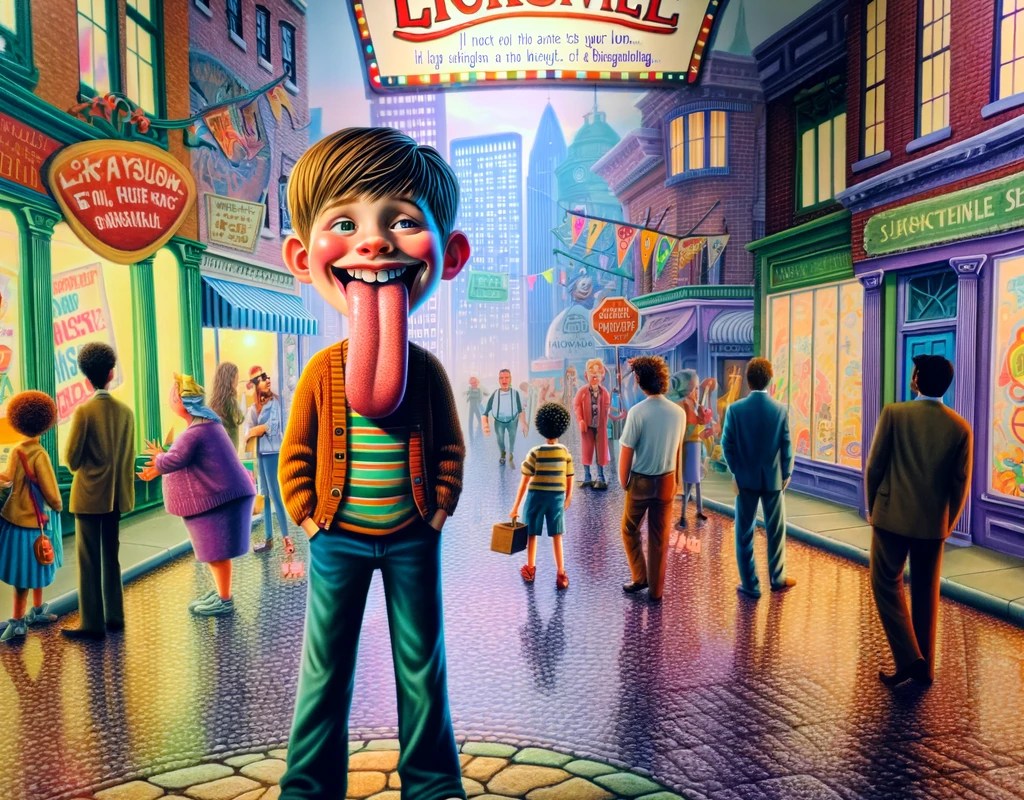
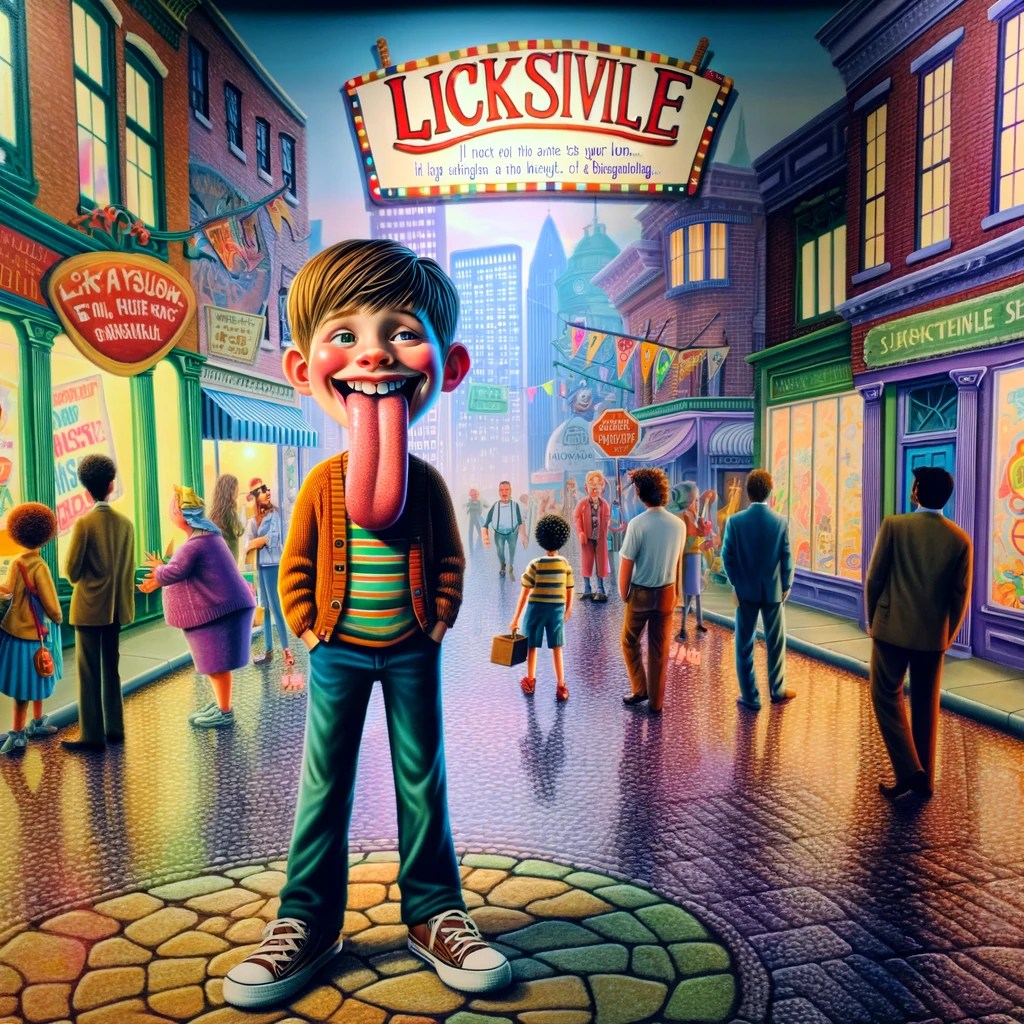
A boy named Timmy Sinclair lived in a bustling city named Licksville, known far and wide for his extraordinarily large tongue. Timmy was no ordinary boy, and his tongue was no ordinary tongue. It was the size of a baguette, supple like a gymnast’s and versatile like an artist’s palette.

From an early age, Timmy realized that his large tongue was not a curse but a blessing. He discovered he could use his tongue for tasks that others could not. He could taste the subtlest of flavors in food, making him the best judge in town for cooking competitions. He could also use his large tongue to help clean out jars and reach places his hands could not.

In school, Timmy was the star of the science fair. He used his tongue to demonstrate how taste buds worked, making science fun and exciting. His classmates admired him, and his teachers praised him for his creativity. Unfortunately, not everyone saw Timmy’s tongue that way.

Summer ended, and school began. Timmy was excited. He couldn’t wait for his next adventures. When he arrived at homeroom on the first day, there were two new students: one girl and one boy. Timmy took a seat and waited. He wanted to know everything about the girl. She had long raven hair, caramel-colored skin, and the most enchanting eyes he had ever seen.

Ms. Rowster came into the room, and they settled down for attendance. Timmy barely could contain himself as he anxiously waited to hear the name of this beautiful girl. When Ms. Rowster got to her name, she asked her to stand up and tell the class a little about herself. She did.

“Hello. My name is Simin Karimi, and I’m from Detriot,” Simin said, then sat down.
Timmy felt she had the most beautiful voice to accompany the rest of her beauty.

Ms. Rowster did the same with the new boy as well. He stood and cleared his throat, “I’m Brad Zigler from Ohio. I know everyone has heard of Zigler cheese, right? Brad asked. A few nodded in agreement while the others sat in quiet bewilderment.

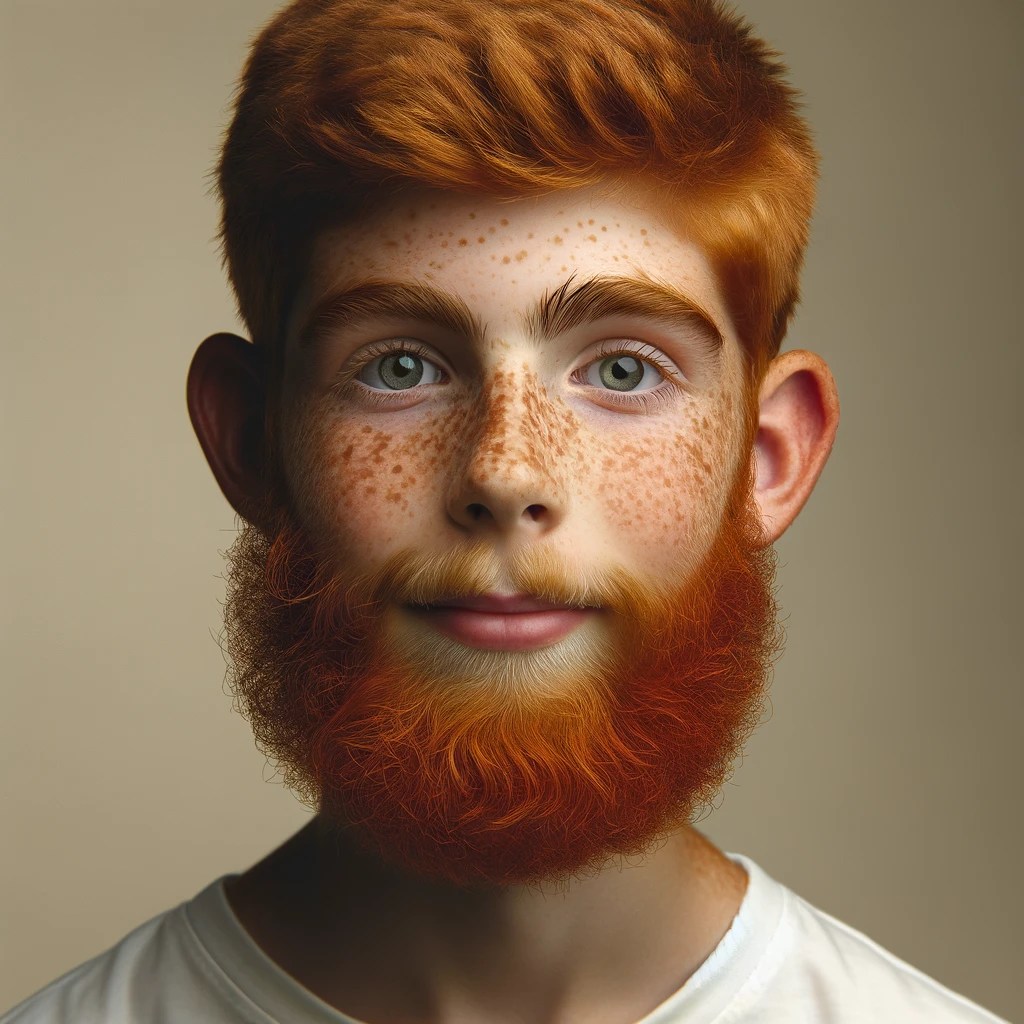
They were all sixteen, but Brad stood over 6 feet and had a large nose, freckles, and a fiery beard. Due to his size and attitude, he had already started gaining friends. Timmy knew he would be one of the most popular kids in school before long.

At lunch, Timmy sat at his usual table, watching Simin’s every move, hoping she would sit at his table. Marcy Busch slapped Timmy on the shoulder.

“Who’s that?” Marcy asked.

“S S S imin,” Timmy shuttered. He was a little tongue-tied, as they say. He felt strange because he never shuttered a day in his life. Marcy looked puzzled at Timmy, then Simin. Marcy motioned for Simin to sit with them. Timmy shifted uncomfortably but managed a smile. Marcy introduced herself.

Marcy and Simin chatted away while eating, picking at their food, if you can call it eating. They were well on their way to being fast friends. Timmy sat quietly, nodding and smiling at the appropriate times. Timmy noticed Simin kept glancing and smiling at him. This made Timmy nervous. Here is the most beautiful girl, and he’s suddenly tongue-tied.

“Stop being rude!” Marcy said as she nudged on the shoulder. Timmy tried to say something, but his tongue got in the way. It felt like it filled his entire mouth. Timmy had never experienced this before. Marcy’s comment didn’t help matters.

“So, you see a pretty girl, huh?” Marcy asked.

“You’ve been talking my ear off since first grade. Geez, thanks,” she smiled. Her cobalt blue eyes sparkled when she smiled, and her smile always seemed to do the trick when Timmy got nervous. Marcy made him feel safe.

“Hey, Simin,” Timmy finally managed. Simin smiled.

“Oh my god! So you’re the freak people have been whispering about!” a voice exclaimed. They looked up, and it was Brad Zigler with a horrified expression.

“What are you? Some sort of lizard?” he exclaimed.

Timmy blushed, and his eyes filled with tears. Before he knew it, Marcy had sprung from the table, kneeing Brad, and delivered a well-practiced right cross—the signature move she picked up when she developed breasts at 12. Marcy explained that once all the women in her family had a nice set of girls, her mother, and grandmother taught her the move in case the boys got handsy. Nanna said boys “always get handsy.”

Marcy stood Brad silently, her brunette hair tied in a ponytail. Brad groaned in pain as he clutched his private area. Marcy stepped toward him, and Brad scooted away with his held up in surrender. Marcy turned to look at Timmy. Her pale alabaster skin was rose-colored. Her eyes were like fire. Yet, they softened when Timmy looked up at her. She stood 5 feet even.

“Bullies give me the sweet ass!” she exclaimed as she retook her seat. Marcy didn’t make eye contact with anyone, then whispered, “Sorry.” Simin squeezed her hand. “Marcy, you’re wicked fast. Next time, can you save me some?” Simin asked jokingly. They all chuckled as they left the lunchroom.


Author’s Note:

Today, I felt good enough to write a little fiction. I hope you don’t mind. So, I combined a couple of hosted challenges I felt worked for the story. The third challenge was one I had for myself, and it was two-fold. Primarily, I’ve been writing light non-fiction for the last few weeks. I needed to know if my fiction tools still worked in something light. I also challenged myself to see if my depictions of the characters in this could used with AI image generation. The answer to the latter is yes. Overall, I’m pleased with the image outcome. As for the former, it felt good writing, but I will leave it up to you guys. Should I continue this corky tale? I wrote more, in case you are wondering. Or hit delete and move on to another project?

Prompts used for this story:

SocS: Hosted by Linda Hill – Words starting with “signa”

Ragtag Daily Prompts: Sunday (safe); Thursday (Lizard)

The challenge words are hyperlinked to their origins. I hope you guys enjoy this corky little tale