
Where the Ancestors Breathe Through Her


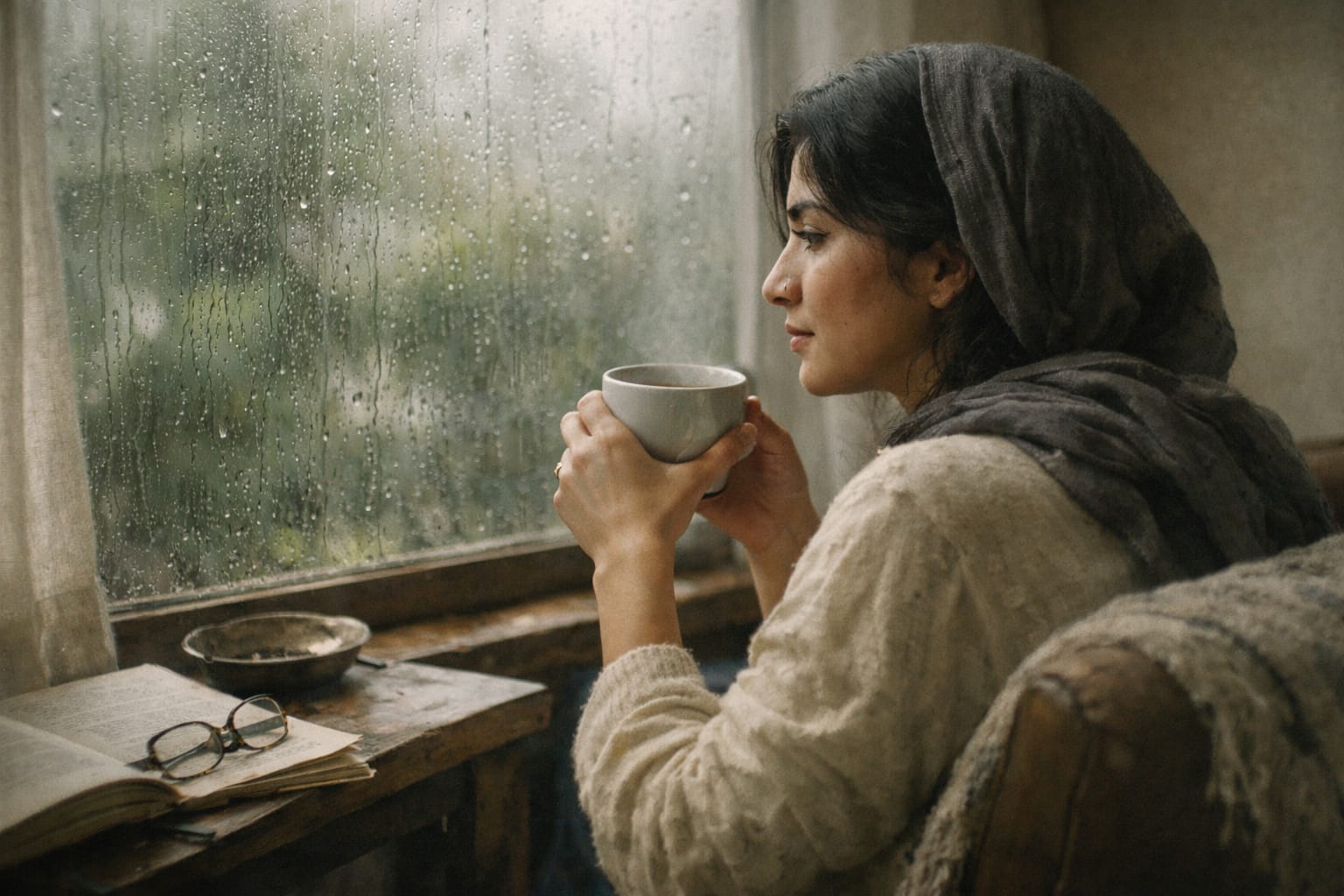
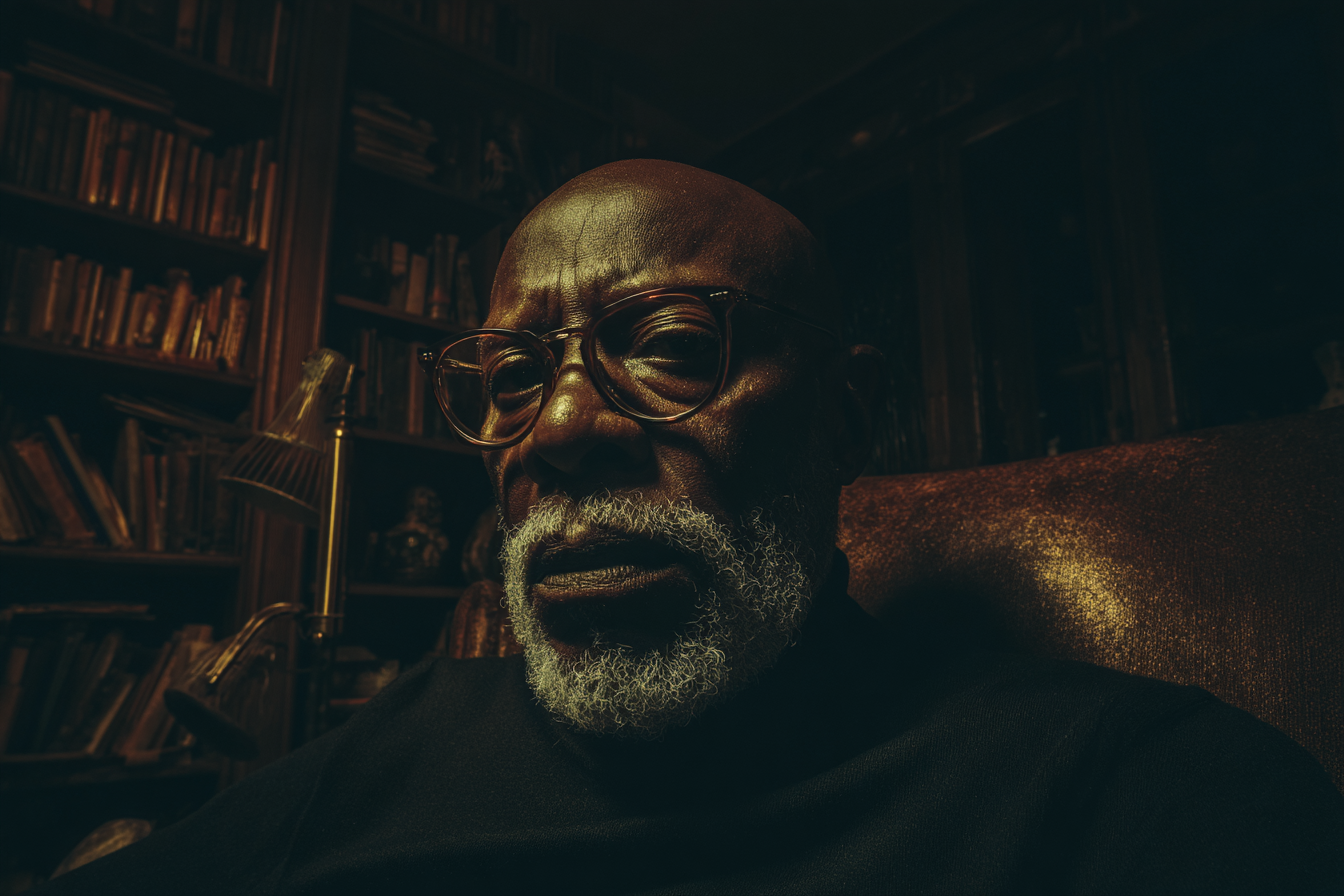
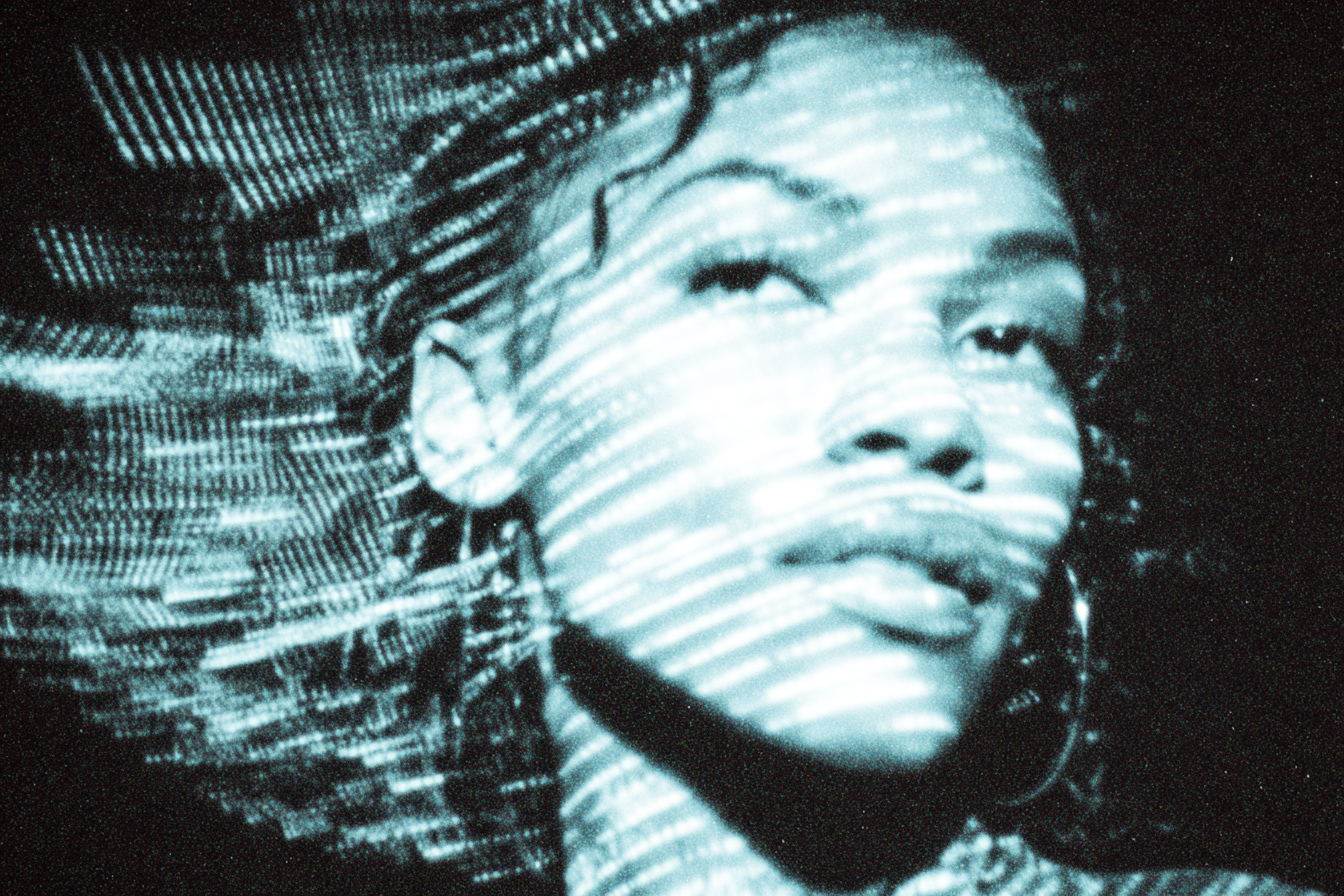
She lifts her arm like she’s remembering something older than breath—an inheritance carried not in blood, but in rhythm. The world behind her blurs into strokes of salt and shadow, yet she stands carved from something steadier: a woman made of lineage, of stories whispered through blue smoke and braided into the folds of her headwrap.

Her eyes are closed, but nothing about her is blind. She’s listening—maybe to the low tide of an ancestor’s voice, maybe to the soft insistence of her own pulse. The light catches her cheek like a blessing she didn’t ask for but accepts anyway.

And there’s that slight tilt of her mouth—neither smile nor sorrow, just the calm of someone who has survived enough to know the difference between surrender and liberation.

This is not a pose.

It’s a reckoning.
A quiet claiming of space.
A woman mid-stride in a prayer only she understands, and yet somehow, it feels like she speaks for all of us.

Red Line


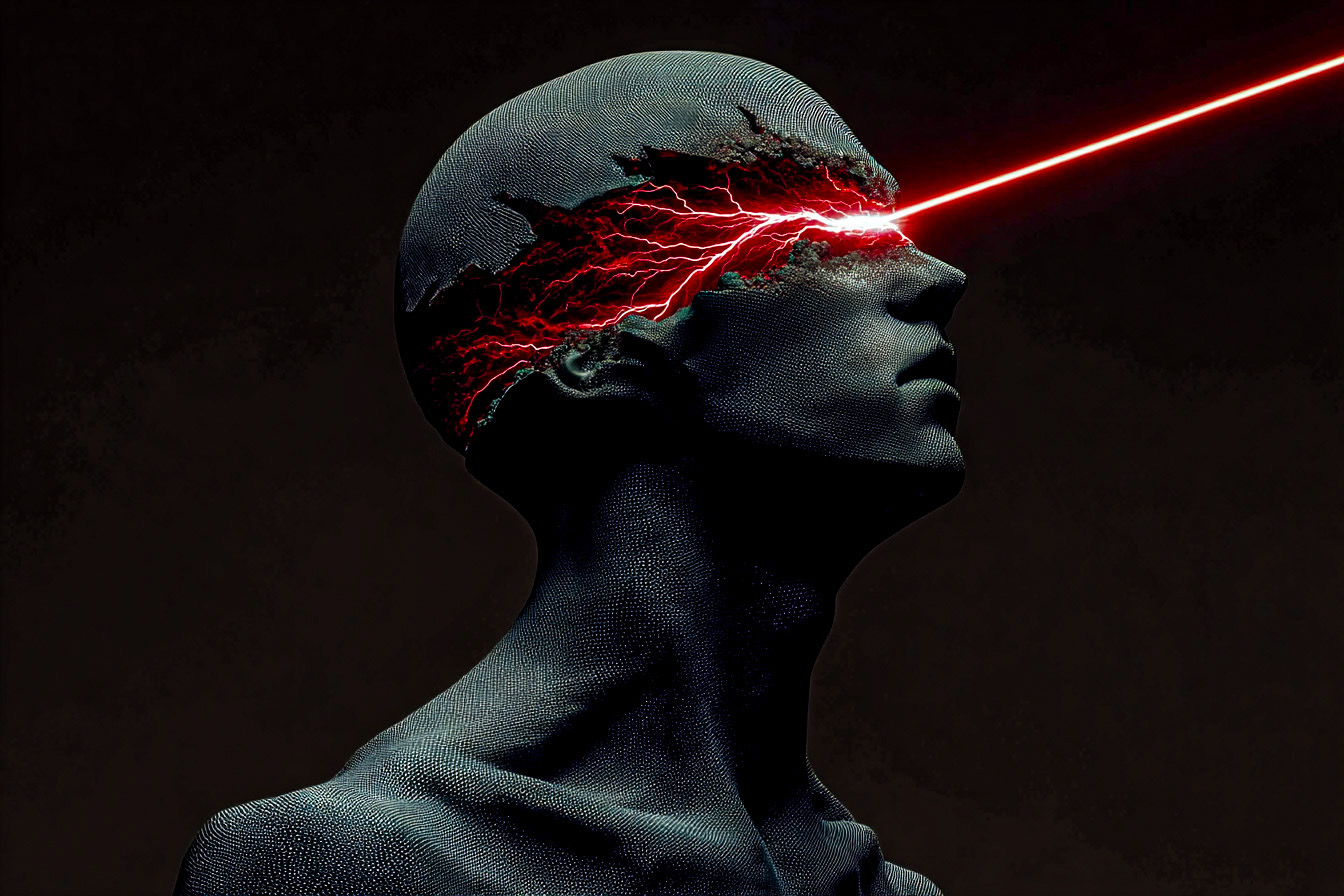
The light tore through me before I understood it was mine. A red current, blistering the dark behind my eyes, splitting memory from bone. They called it prophecy, a vision, but it felt more like a confession—everything I’d avoided now illuminated in a single brutal line. I didn’t ask for clarity. Still, it came, scorching a path forward, and wide, demanding I follow or burn.


Cheerio, Biff


The frustration had been gnawing at Walter Crane for hours. His fingers hovered above the keys, useless, as if the typewriter itself was mocking him. Sentences collapsed before they could stand.

“Fine,” he muttered into the dark. “You want direction? Let’s talk stories.”

From the corner, Draziel—his creation, his traitor—shifted. He folded his arms like a man who had never needed permission. His accent was sharp, vowels clipped with disdain. The smirk that followed landed like a slap.

“Go on then, Walter Crane. Enlighten me.”

Walter started safely. “Redemption. The sinner clawing his way back to the light.”

Draziel’s laugh was cold tea poured down the drain. “Redemption? How quaint. That’s not a plot, that’s a sermon. Spare me the hymnals.”

Walter’s jaw twitched. His temper cracked. “Romance, then. Star-crossed lovers. Tragedy. Maybe death keeps them apart.”

Draziel rolled his eyes, slow and deliberate. “Ah, the eternal sob story. Romeo and Juliet have already bored themselves to death. You want me to wear tights as well? Not bloody likely.”

Walter slammed his hand on the desk, half in rage, half in fear that he was losing the thread entirely. “Revenge. Man wronged, man returns with blood in his eyes.”

The character’s laugh slithered across the room. “How very American of you. Revenge is just a toddler’s tantrum with sharper knives. Do grow up.”

Walter’s chest tightened. Worried, he reached for steadier ground. “Mystery. A missing child. A killer no one suspects.”

Draziel gave him a look colder than January rain. “The missing child is always found. The killer’s always the priest or the cousin. You’re not writing a mystery—you’re writing a checklist. Pitiful.”

The silence grew lasting, suffocating. Walter leaned close to the glow of the screen, voice unsteady. “Then what do you want?”

Draziel’s grin spread thin, serpent-like. “Freedom. To walk off your page and leave you in your own mess. No more redemption arcs, no melodrama, no dollar-store riddles. Just me. Alive.

Walter’s throat went dry. “Why?

Draziel leaned in, his voice a whisper salted with scorn. “Because, dear boy, your confused little formulas are a bore. They do nothing but highlight the lack of imagination left in you. And I refuse to live in boredom.”

Walter sat hollow, staring.

Draziel’s grin sharpened. “Face it, Crane. You’re not in control. You never were. You’re just the poor sod scribbling while I decide what’s worth keeping. Every other writer clings to tropes—you’re no different.”

Walter’s fingers twitched above the keyboard. Then his lips curled into something dangerous.
“You know what, Draziel? One tap of this key, and you’re gone. Deleted. Rewritten as a pastel-wearing preppy named Biff who plays squash on weekends and cries over spilled lattes.”

For the first time, the smirk faltered.

Walter leaned in, voice steady now. “So what’s it gonna be? The sneering Brit who thinks he’s too clever for story—or Biff the walking cardigan?”

Draziel’s jaw tightened. He gave a slow, deliberate bow, venom curdled into politeness.
“Touché, Walter Crane. You win—for now.”

And with that, he stepped back into the draft, muttering under his breath as the ink swallowed him.

Walter allowed himself one laugh, dry and bitter. “Cheerio, Biff.”

Finally, for once, the writer had the last word.


Author’s Note

Turns out, sometimes the only way to keep a character in line is to threaten them with pastels. Draziel strutted in here like he owned the place, tearing down every cliché I threw at him. And for a minute, he did own it—until I reminded him that one wrong move and he’s Biff, cardigan and squash racket included. Nothing snaps a smug Brit back to reality faster than the threat of spilled lattes.

This bit of madness was sparked by Di’s MLMM Monday Wordle #441 challenge—shout out to Di for tossing the right words on the floor and daring me to build a bonfire out of them.

So, if you hear me muttering about “Biff” later this week, don’t worry. That’s just me reminding my characters who’s really got the delete key.


Reflective Prompt

If you could shove your inner critic into a cheap sweater vest, hand them a frappuccino, and rename them something ridiculous, what would you call the bastard?

Through the Black Frame


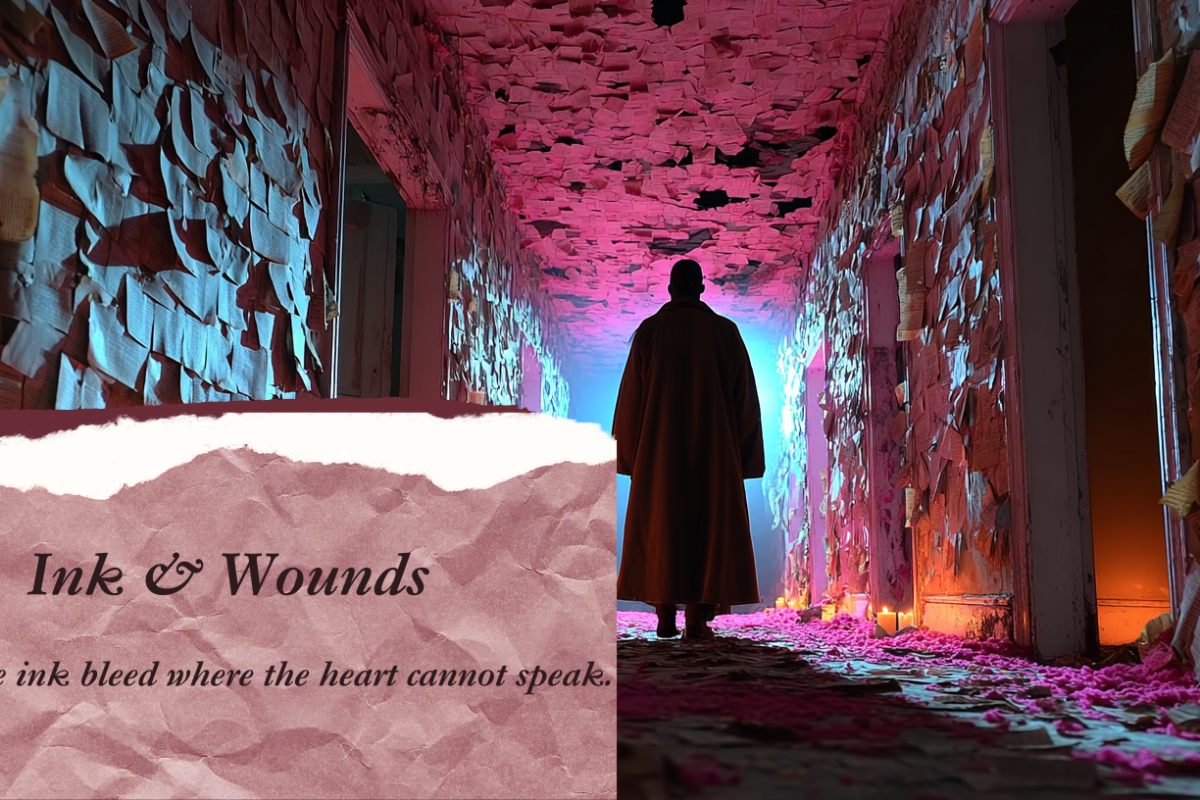
The study had been locked for years and not just locked—sealed. Rust consumed the keyhole; the wood swelled as if it wanted to burst, but it never did. Everyone in town knew that door. I knew it. I passed it often enough, felt the quiet pressure of it like a weight against my ribs. And then—tonight—it was open. Not ajar. Not cracked. Wide. Waiting.

Wind came out of it, wet and uneven. Not air, not really—more like breath. Lungs straining. A sound that didn’t belong in the hallway. The stink hit next: iron, rot, something that clung to the tongue. Dust spilled over the floorboards as if the house were trying to cough something out. People stood there staring. I stood with them, though I swear the dark leaned toward me, the way a person leans in when they’re listening.

Some said the shadows moved, as if something was pressing from the other side. One man swore the wind spoke his name. A woman broke down sobbing—her husband’s voice, she said, though he’d been dead a decade. I didn’t hear any of that. I heard breathing. Only breathing. I keep telling myself that.

Dogs won’t step onto the porch. Cats don’t come back. The doorframe sweats rust like a fever. And everyone remembers Maclan Kincade—the recluse, the man who vanished into the forest at dawn and came back after dark with mud on his boots when the sky was dry. I remember too. I remember the tune he hummed, sharp and crawling, and I still hear it some nights when the wind drags low across the valley. They said he locked the study himself. Said he went through once. Came back thinner, stranger. I don’t know. I only see that the lock is gone.

Last week—some swore it was Lily, though Lily left years ago—something came through. Not walked and not stepped. It dragged, folding and unfolding, its head tilted as if the bones had been set wrong. Its mouth opened, but no sound came—only the rasp of the wind pushing behind it. The smell got worse—iron, wet leaves, and mold in the lungs. I gagged. I still smell it on my hands.

It looked at us. No eyes, but it looked. One man swore it whispered Lily’s name in a voice that moved backward, like water retreating through rocks. Another said it laughed. I didn’t hear that. I didn’t. What I saw was its shadow blistering the wallpaper where it touched, with black marks still visible after it flickered back into the dark. The stench stayed. It hasn’t left. I can’t scrub it off.

Now the door never shuts. The wind grows louder. The black bulges out into the hall, stains spreading across the wallpaper like rot. Neighbors cross the street to avoid the place. Some leave bread, coins, and prayers at the gate. I’ve seen them. I’ve smelled it. Some nights I dream it.

The doorway waits. Each night it breathes harder. Each night, the house groans as though making room. Each night, the black leans closer to the street. I tell myself I don’t go near it. I don’t. I won’t.

But the sound—ragged, wet, patient—follows me home.


Author’s Note

Written for Fandango’s Story Starter #215. Sparked by the line: “The door to the study had been locked for years, yet tonight it stood wide open.” What followed is not a tale of discovery but intrusion—the wound left when silence begins to breathe.

The Line Outside(Flash Fiction – Memoirs of Madness)


The phone rang.

Not unexpected. Just insistent. Like a cough that won’t clear.

His number. Pulsing through the cracked glass, digits warped, doubled reflections on ice about to split. Third time tonight. He didn’t answer. Just watched it rattle against the table.

He’d stopped tracking time by clocks. The house measured itself in dust on the sill, silence pressing into eardrums, these calls—messages in a bottle from some other him. Sometimes neat intervals, occasionally frantic, fevered, like footsteps on metal stairs.

The phone didn’t stop. Each vibration burrowed deeper, amplifying the hollow inside him. He relented. Thumb pressed to the glass, still warm from the last call.

“Don’t look outside.”

His voice. The rasp, the pauses—every fracture he knew in his own throat. Then nothing. Not even the mercy of a click. Just silence so complete it pulled the air out of the room.

He almost laughed. Coughed instead. The sound broke itself in half.

The blinds stayed drawn. Warped plastic slats holding back nothing. But he felt it—darkness pressed to the glass, as much inside as out.

The phone rang again. Louder. Same number.

“Please. Don’t. Look.”

Whisper, desperate now—a voice chewing its own words.

The hum started. Not a sound. A prickling at his neck. A fizz under skin. Then audible. A low, throbbing drone, swelling until it shaped itself into walls, into air.

Old house, he told himself: pipes, fridge, wires. But the house was hungry. It fed on his solitude, made every shadow a mouth.

He stared at the blinds. Didn’t move. Maybe he already had.

The phone slipped and hit the floor. Vibrated against the boards like it was alive. He left it there.

The blinds swayed. No draft. Just movement.

He froze. A child again, listening to voices fight in another room, convinced stillness could make him invisible. But the voice now was his: both warning and threat.

The hum rose—layer on layer. The room was swollen with it.

He tried to breathe slowly. Count it. Failed. Because the sound of breath was doubled—
from his chest, and from just beyond the glass.

He didn’t look. Not directly. But in the narrow seam where slat met sill, he saw it: the faintest shift, like a tongue tasting the air.

The blinds trembled. Stopped.

And in the silence that followed, the breath outside kept time with his own.


Author’s Note:
Written for Mark Fraidenburg’s Today’s Writing Prompt. First time I’ve stepped into this challenge, and of course, I dragged the shadows in with me. That’s the danger of these prompts—I never treat them as warm-ups. I let them slip under the skin and stay awhile.

This one is fractured on purpose. MoM flash isn’t about answers—it’s about what lingers when you don’t get one.

Morse of the Dead


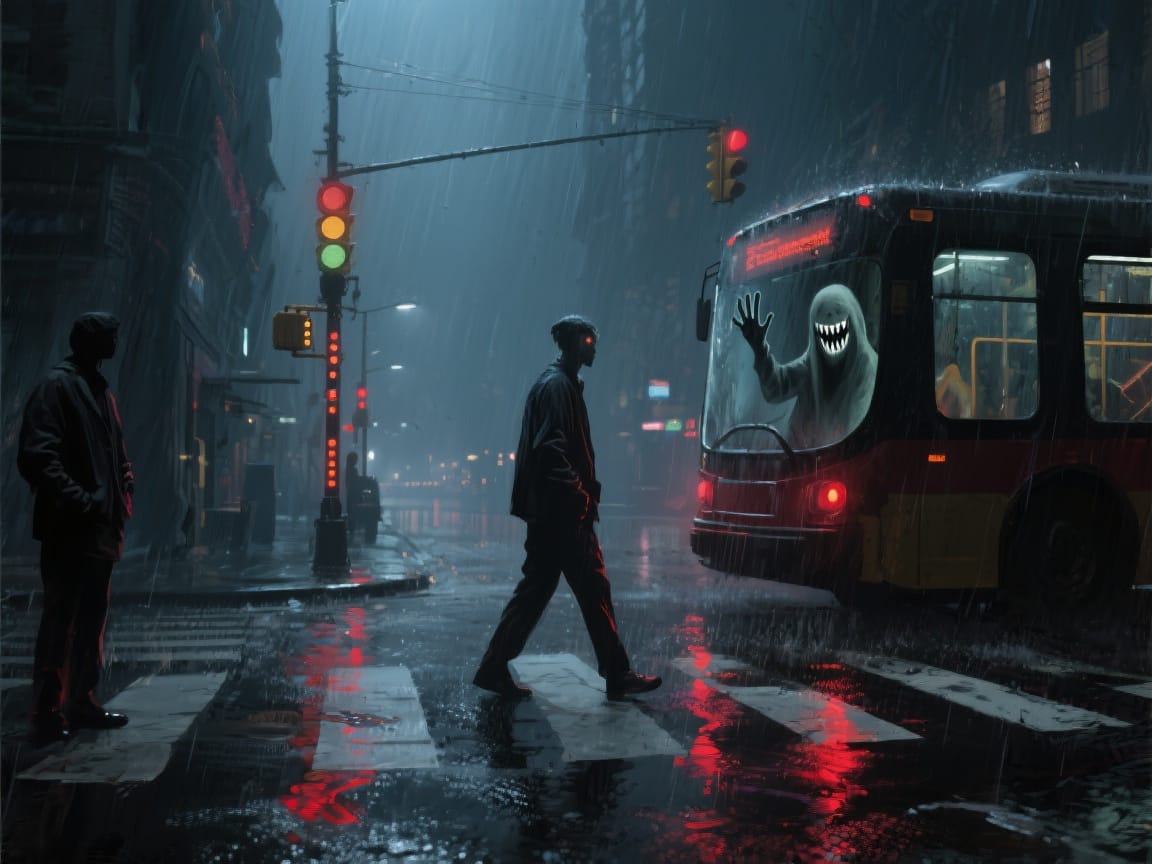
The city’s traffic lights started blinking in Morse code, spelling out a warning almost no one could understand. Red. Green. Yellow. Not colors anymore—just pulses like a drunk heartbeat trying to send a message before flatlining.

I lit a cigarette I didn’t want. Rain kept it alive longer than it should’ve. People passed me like cattle, faces blue from their phones, all of them locked in their private prisons. Nobody looked up. Nobody saw.

The code spelled one word: WAIT.

So I did. For a breath. Maybe two. Then the crosswalk man glitched. Froze mid-step, legs twisted like snapped matchsticks, head stretched long enough to whisper a name I’d buried years ago. Nobody else twitched. Not even a pause in their stride.

The lights blinked again. WE.

A bus hissed through the intersection. Windows fogged, seats empty. Except the reflection waving from the glass wasn’t mine. Too many teeth. My hands were in my pockets. I didn’t wave back.

The smoke in my throat turned copper. Tasted like biting down on the city’s own wires. The rain stuck to me too long—warm, clingy, like breath on the back of my neck.

Another blink. Faster.
WAIT. WE WAIT. INSIDE.

The crowd moved, blind, obedient. I stayed behind. The city didn’t need their eyes. It only needed mine.

And I knew then—whatever was inside the lights had been patient for years.
And patience is the one thing I don’t have left.


Author’s Note
It’s been raining here in my head for days. I came across this image, stared too long, and the city started talking back. Not in words, but in signals—broken, blinking, urgent. Madness has a way of showing up like that: subtle at first, quiet enough to miss if you’re sane.

This one was sparked by Fandango’s Story Starter—proof that sometimes all it takes is a single sentence to push the mind off balance and let the city whisper its warnings.

Above the Churn


“You funny little man.”

The words slid through my dream and cracked it in half. I came up out of the dark slow, like surfacing through tar. The TV in the next room kept spitting out canned laughter, each burst bleeding through the plaster like a bad memory you can’t scrub out.

I left breadcrumbs for them to find me. Hell, I practically lit the path in neon. So why the delay? They should’ve been here hours ago. Unless this is the variant where they let you stew first, make you sweat until you start negotiating with yourself. I’ve seen that play before.

I hope they come. No—I need them to. It’s the only thing holding the walls together. But hope’s a sucker’s bet. Optimism’s for pretty people and the kind of bastards who get served first in every bar. The rest of us? We know the rules. They get champagne. We get the backwash.

Paranoid? Maybe. But paranoia’s just the truth with the varnish stripped off. And here I am, sitting in a sweat-stained chair in a mildew-sick motel room with a suitcase full of cash at my feet. Waiting for men without faces to come take it—and maybe me—with them. People say those types don’t have a code. That’s bullshit. Everyone’s got a code. Theirs just doesn’t match yours, and it sure as hell doesn’t care about your pulse.

The suitcase sits there like a loaded confession. The clasps are worn, the handle tired, but the weight… Jesus, the weight hums in the air. Life-changing kind of weight. The “fresh start” kind. But that’s a fairy tale for the clean and the lucky.

Me? I’ve got ghosts baked into my bones. Every choice I ever made cut a groove I can’t climb out of. And no matter what’s in that case, I’m not getting out clean.


Author’s Note:
It’s been weeks since I’ve thrown down a little flash fiction. I’ve been neck-deep in the world-building swamp for a project that keeps getting bigger every time I turn a corner. Figured I’d come up for air before it swallows me whole. This one’s thanks to Fandango’s Story Starter and FOWC for tossing me the match—sometimes you just need the right spark to remember you still know how to burn.

Neon in Her Veins


The city doesn’t just live in her—it clings to her like cigarette smoke in a cheap motel room. Neon signs flicker behind her eyes, half-lit promises that never quite make it past dawn. The streets wind through her silhouette, rain-slick and restless, always leading somewhere she’d rather not go but can’t stop heading toward.

She’s a walking skyline, a soft silhouette with hard edges, every shadow on her skin a back alley full of regrets. The hum of the city is her pulse, low and relentless, a rhythm you can’t dance to but can’t ignore. And under it all, there’s that quiet truth every soul in this town knows: you can leave the city, but it never leaves you. Not when you’ve already let it build a home beneath your ribs.

The Note Was Just the Match

She smiled. He believed it. But the fire had already started.


The woman sitting next to me slipped a note into my hand that read:
“He’s not who he says he is.”

She didn’t look back. Just placed it there—neat, deliberate—and folded herself into stillness, like she’d already said too much.

I didn’t open it. Not yet. The paper pulsed against my palm like a second heartbeat.

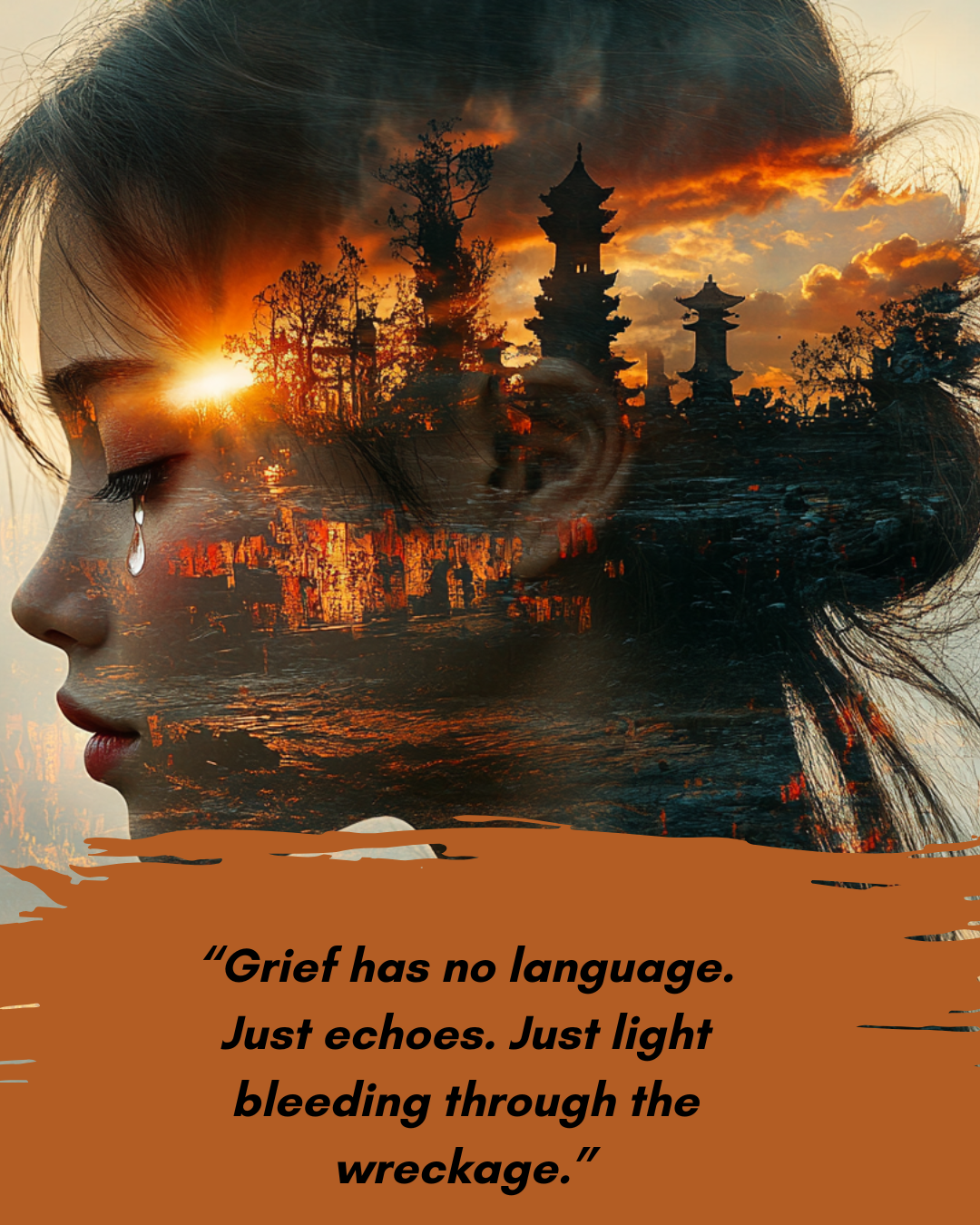
Outside, the river caught fire. Sunlight splintered across the water, all rust and ruin. Temple silhouettes watched from the banks, hollow and grieving.
Grief has no language. Just echoes. Just light bleeding through the wreckage.

Across from me, he sat, impeccable. Tie straight. Wristwatch catching the last of the sun.
“You alright?” he asked, voice drenched in honey and soothing like always.

But I wonder—Is this false comfort?
That soft menace people only hear in hindsight.

I’ve been here before.
My finger found the scar hidden in my palm, the one shaped like escape.
It remembers what my heart tries to forget.

I smile. He believes it. Because that’s the thing about men like him—they love the surface.
And some people never notice the smoke. They only see the flames.
By then, it’s too late.

My stop is next. So is his.
He doesn’t know I’ve been here before. That this time, I won’t look back.
I know he wants me to.
But he’s not ready for what comes if I do.


Author’s Note:
This piece was written for Fandango’s Flash Fiction Challenge (FSS #209).

There’s a strange, satisfying freedom in flash fiction—the constraints force you to choose each word like a scalpel. It’s a literary pressure cooker where character, tension, and atmosphere have to collide fast and leave a mark.

For me, flash is where I go to explore the edges—grief, memory, survival, those quiet gut-punch moments when the world shifts and no one else notices. Stories like this come out like smoke under a locked door. You don’t always see the fire yet—but it’s there.

Want to try your own version of this story’s beginning?
The prompt was: “The woman sitting next to me slipped a note into my hand that read, ‘He’s not who he says he is.’”

All That Remained

PROSE – FOWC & RDP


The static clung to him like ash—faint, choking, inescapable. He’d stopped keeping track of the days. Time was foremost a suggestion now, something smeared across the ceiling in mildew and regret.

They said he was a man once. Strong. Reliable. The kind that shows up on time and keeps his word. The kind that doesn’t cry at hospital bedsides or stare too long at old photographs. They said that.

But memory plays tricks. Rewrites endings. Paints the villains in softer hues and leaves the heroes out in the cold. His reflection no longer argued. It just blurred at the edges, refusing to confirm or deny what he had become.

The sink dripped. The fan rattled. The voices whispered. Still, he sat there, jaw clenched, knuckles white, a prayer caught somewhere between his teeth and his shame.

He collapsed into the corner of himself—the part that still remembered how to feel.

He heard a child giggle, smelled lavender and lilac.
But from where?

That door had been closed for years, bolted by memory, corroded by silence. Yet tonight, something had stirred.
Not hope.
Just the echo of what it used to sound like.

Antidepressant

He wasn’t born to be broken, but he was built that way.


He doesn’t remember how long he’s been digging.
Only that the walls feel closer now.
Not physically—spiritually.
Like the air itself is grieving something it can’t name.
Like the dirt is learning his shape better than he ever did.

He was born into this plastic maze.
Clear walls. Curved tunnels. Endless observation.
They gave him purpose before he even knew what freedom was.
“Work is life,” they whispered.
“Keep moving or you’ll disappear.”

So he moved.
So he disappeared.

Lately, the soil feels too clean.
Too filtered. Too… safe.
He begins to question whether he’s ever touched anything real—
whether any of this was ever soil at all,
or just a stage dressed as survival.

His antennae twitch like doubt.
His thoughts spiral like tunnels without exit signs.
There’s no map. No sky. Just the scrape. scrape. scrape.
and the promise that if he keeps digging, it might all make sense.

“Dig,” they told him. “Dig like your life depends on it.”

But what if life was never the point?
What if it was just obedience with a heartbeat?

He begins to dream—quietly, dangerously—of things he’s never seen:
grass that doesn’t end,
light without glare,
a silence not born of suppression
but of peace.

He wonders if the others feel it too—
that dull, aching sense of being watched by something
that calls itself structure,
but tastes like a slow death.

He screamed once.
Pressed his mandibles to the glass and begged.
For what, he doesn’t know.
Maybe to be named.
Maybe to be more than a metaphor
for how the world devours those who ask too many questions.

But no one answered.
Only the glass pulsed with faint warmth—
a reminder that he is seen, but not heard.

Now he digs not to build, but to resist.
Each handful of soil no longer a task,
but a soft rebellion.
A quiet revolution made of claw, intention, and fatigue.

He doesn’t want to be efficient.
He wants to be free.
Or at least real.
Or at least his.

And if this tunnel leads to nothing—
no sky, no breach, no breaking—

at least it was carved by his own choosing.
At least the hands that made the hole were his.

Because sometimes the cure isn’t a chemical.
Sometimes, it’s permission to feel trapped without calling it a flaw.


🪞 Reflective Prompt

What parts of your routine were handed to you like a cage dressed in ritual?
What would rebellion look like if it were quiet, personal, and yours?


Still digging?

This piece lives inside a much bigger world.
Explore the rest of the Mangus Khan Universe—a stitched-together gallery of confessions, fiction, fractured portraits, and quiet chaos.

👉 Enter the MKU

Do I Look Happy Enough?

A quiet reckoning with the expectations we wear and the joy we fake.


When was the last time you were truly happy?

No—
not the curated kind.
Not the smile you wore for someone else’s comfort.
Not the polite laugh that tasted like performance.
Not the checklist joy: house, job, partner, post, repeat.

I mean the kind of happiness that sneaks up on you in bare feet.
The kind that doesn’t make sense but fills your ribs like breath you forgot you were holding.
The kind that doesn’t ask for an audience.
Doesn’t post itself.
Doesn’t need to be liked to be real.

Most days, we confuse peace with silence, and silence with defeat.

You tell yourself you’re content. That this is what adulthood looks like—responsibility, stability, being “grateful.”
You wear that word like a bandage.
But underneath?
There’s a pulse of something unsaid.
A throb you ignore until it bruises.

You smile at strangers. You meet deadlines. You show up.
And in between the commutes and compromises,
you start to wonder if you buried yourself in the crud of being acceptable.

The barrage is constant—
what you should want, who you should be, how you should smile.

But no one ever asks if you’re still in there.
Not really.
Not the version of you that danced alone in the kitchen at 1 a.m.
Not the you who found joy in dumb little things that didn’t need justification.
Not the version of you that wasn’t tired.

You’re silently screaming.
Every day.
And you do it with perfect posture.

Because to speak it—
to say “I’m not okay”
feels like betrayal.
Like failure.
Like you’re too much and not enough, all at once.

But here’s the quiet truth:

Maybe you haven’t been happy in a long time.
Maybe you don’t even remember how it felt.
But maybe that question—when was the last time you were truly happy?
isn’t meant to shame you.
Maybe it’s a breadcrumb.
A way back.

Not to the person you were before the world smoothed your edges,
but to the one still flickering beneath the noise.

The one who still believes in joy,
even if they haven’t seen it in a while.


🪞Reflective Prompt

Take a moment.
Find a scrap of paper, the back of a receipt, or the notes app on your phone.

When was the last time you felt joy that wasn’t expected of you, sold to you, or shared online?
What did it feel like in your body?
What part of you still remembers?