Personal Reflection
Depression rarely looks like the grand collapse we see in films—it’s slower, quieter, a kind of suffocating monotony. Yet, it is very real. It’s not the dramatic breakdown in a rain-soaked street; it’s the heavy silence that lingers in the kitchen at 2 a.m. It’s the untouched dishes, the stalled conversation, the way light feels thinner when it slips through the blinds. It’s the boredom that corrodes everything, the dull ache of simply existing.
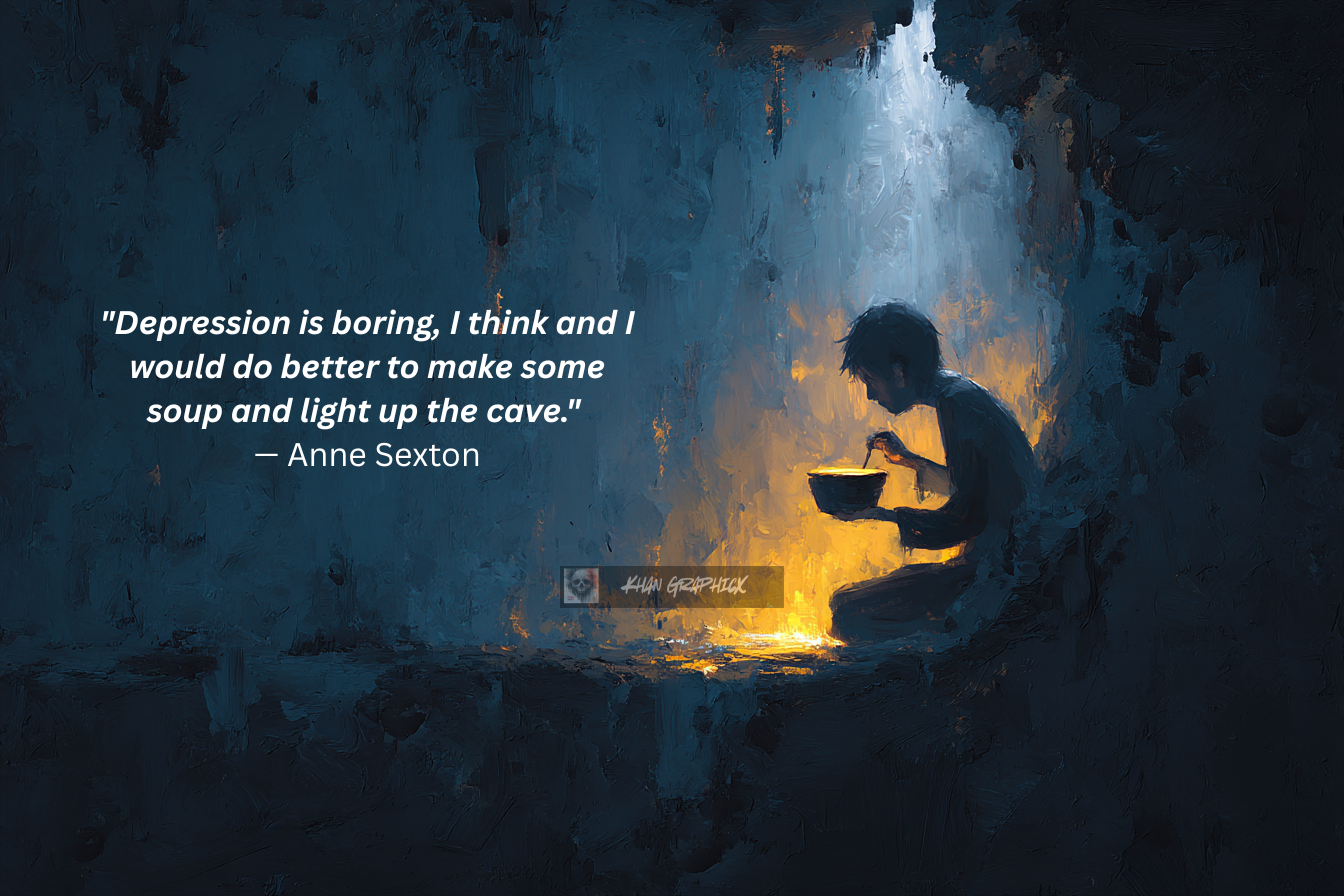
Anne Sexton strips the monster of its glamour. She reminds us that depression isn’t always a tragedy to be performed; sometimes it’s just…boring. And maybe that’s its cruelest trick—it convinces us that even our suffering has become ordinary. Sexton’s defiance is in the small things: soup, light, fire in the cave. Not grand gestures, not a cure, but a refusal to let the dark have all the power.
It’s not about pretending the cave isn’t real—it’s about refusing to let it stay pitch-black. Small rituals—heat, nourishment, a flicker of flame—don’t erase the cave, but they carve out enough space to breathe inside it. Sometimes survival isn’t about escape—it’s about claiming one corner of the darkness and saying, this part is mine, and I will not let it go out.
Reflective Prompt for Readers
When the cave closes in, what’s the one small act that keeps you from going under completely?
Not the big, polished answers—the raw, ordinary thing. The soup. The match. The flicker that proves you’re still here.
What is it for you, and when was the last time you reached for it?



 Memoirs of Madness