Chapter Two
A Roberta “Bobbie” Packard Mystery
Chicago, Illinois — October 11, 1956
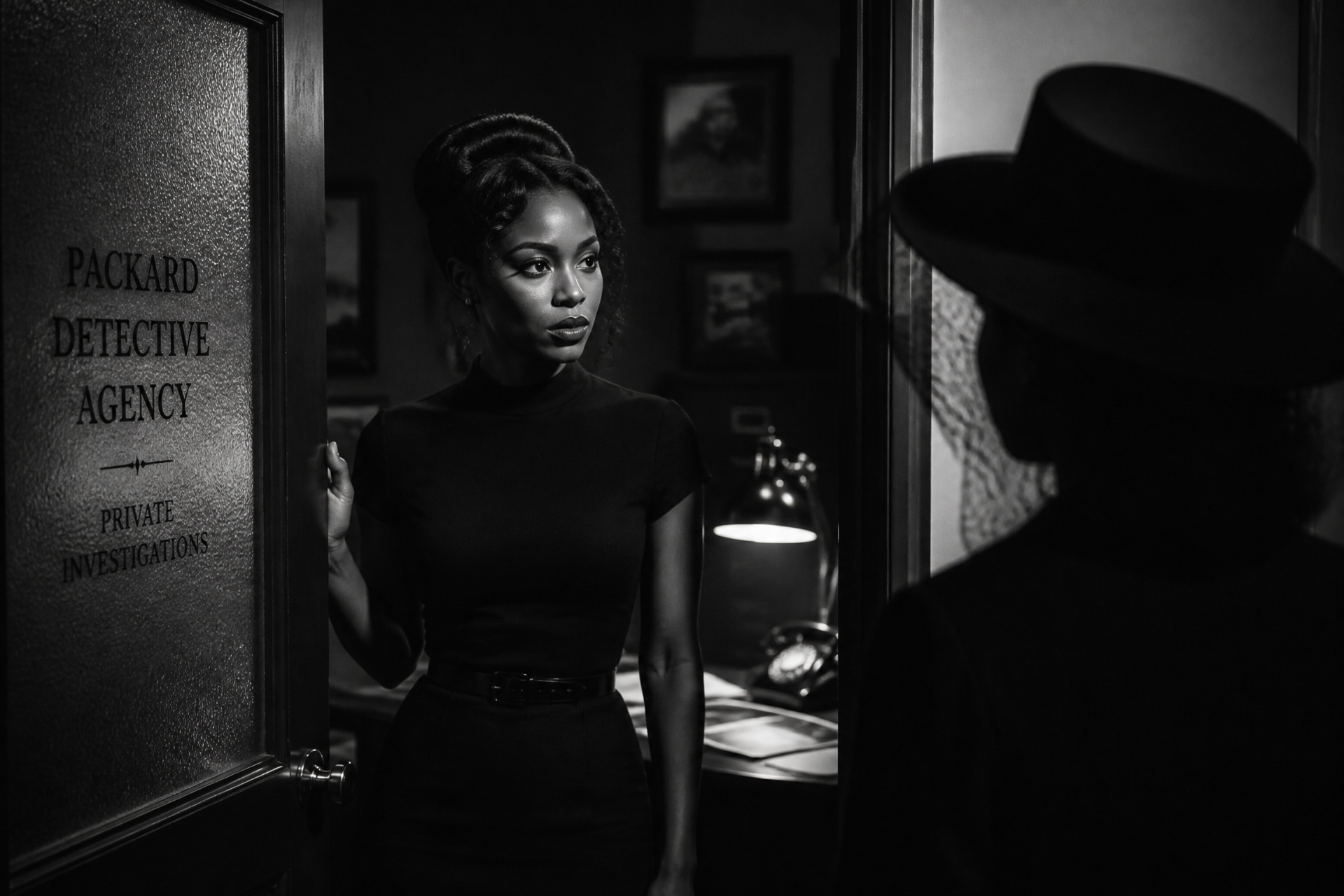
Roberta Packard had encountered enough unpleasant people in her twenty-nine years to recognize that the most dangerous ones rarely bothered raising their voices. They spoke softly, smiled when the occasion demanded it, and generally conducted themselves with the sort of impeccable manners that made their eventual arrest something of a disappointment to their neighbors. The woman standing on the other side of the frosted-glass door appeared to belong to that particular breed, although Bobbie had never before encountered one who announced her intention to commit murder quite so politely.
The hallway smelled of damp plaster, old tobacco, and the faint medicinal odor of the disinfectant Mr. Kowalski, the building superintendent, insisted on using every Thursday evening. Somewhere downstairs, a radiator knocked against its pipes with the persistence of a drunk demanding another drink, while the rain continued its steady assault against the windows overlooking South Wabash Avenue.
Bobbie kept her hand against the doorframe, studying the visitor through the narrow opening. The woman wore a broad-brimmed black hat with a veil that concealed most of her face, and beneath a tailored wool coat, the suggestion of an expensive dress was visible whenever she shifted her weight. Her gloves were black leather, her shoes immaculate despite the weather, and a small handbag hung from her left wrist.
It was the handbag that concerned Bobbie.
A woman who arrived after midnight threatening to kill someone generally carried more than lipstick and a powder compact.
“Mrs. Doyle,” Bobbie said, allowing her gaze to settle briefly on the woman’s gloved hands, “I believe we have ourselves a misunderstanding.”
“Do we?”
“Well, I certainly hope so, because I haven’t had my sandwich yet, and I’d hate to see a perfectly good roast beef go to waste on account of a homicide.”
The woman tilted her head.
“You’re Roberta Packard.”
“Depends who’s asking.”
“I know who you are.”
“Then we’ve already established something useful.”
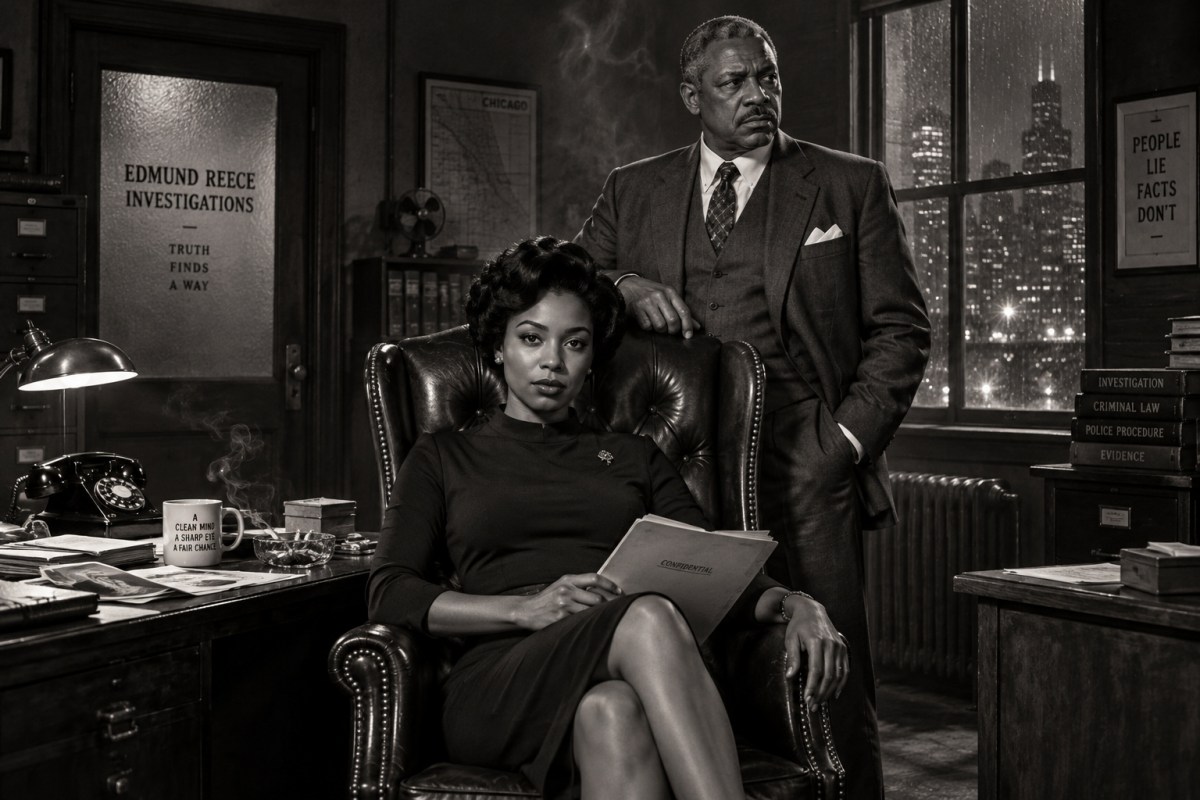
Behind her, Edmund Reece remained seated at his desk, the revolver resting against his thigh. Bobbie could see him in the reflection of the glass, his face pale beneath the yellow glow of the desk lamp. He had not moved since whispering the name Josephine, and that troubled her considerably more than the possibility of a pistol concealed in the visitor’s handbag.
Edmund Reece was not a man easily frightened. He had spent seventeen years with the Chicago Police Department before resigning under circumstances he described as a difference of professional opinion, although Bobbie suspected the difference had involved considerably more than opinion. He had worked homicide, vice, and occasionally the sort of assignments nobody wanted recorded in an official ledger. She had seen him confront armed men, crooked politicians, and a particularly disagreeable bookmaker who once threatened to remove his kneecaps with a carpenter’s hammer.
Through all of it, Reece had maintained the same expression of weary irritation.
Tonight, he looked as though someone had opened a grave and invited him to inspect the contents.
“Edmund,” Bobbie said without turning around, “would you care to explain why our guest seems to know you better than I do?”
Reece swallowed.
“Close the door, Bobbie.”
“That’s rather difficult when there’s a woman standing in it.”
“Close the goddamn door.”
The sharpness in his voice surprised her.
The visitor laughed softly.
“Still giving orders, Edmund? Some things never change.”
Bobbie looked from the woman to Reece.
“Well, isn’t this cozy.”
“Bobbie—”
“No, Edmund. You don’t get to start issuing instructions now. Not after somebody walks into my office threatening to kill you.”
“Your office?” the woman asked.
“Half the rent,” Bobbie replied. “It’s a complicated arrangement.”
For the first time, the visitor appeared genuinely amused.
Then she raised her right hand.
Bobbie tensed.
But instead of producing a weapon, the woman slowly lifted her veil.
She was older than Bobbie had expected, perhaps forty-five, with a handsome face that retained traces of considerable beauty. Fine lines framed her eyes, and there was a small scar near the corner of her mouth, the kind that might have resulted from an accident or an argument that had gone terribly wrong. Her complexion was warm brown, her lipstick dark, and her expression carried the exhaustion of someone who had spent too many years remembering something she desperately wanted to forget.
“Josephine Carter,” the woman said. “Although I suppose you know me as Evelyn Doyle.”
Bobbie studied her.
“Which name do you prefer?”
“Neither.”
“That’s unfortunate. I generally like to know what to call people before they start shooting.”
Josephine’s smile disappeared.
“I’m not here to shoot anyone, Miss Packard.”
“That’s encouraging.”
“Not tonight.”
“Less encouraging.”
Behind them, Reece exhaled.
“Let her in, Bobbie.”
She stepped aside, although she did not remove her hand from the door until Josephine had crossed the threshold. The woman entered without hesitation, surveying the cramped office with the detached interest of someone inspecting a property she had once owned.
Her eyes passed over the filing cabinets, the photographs scattered across the desk, and the battered leather chair where Reece conducted most of his interviews. When she noticed the hundred-dollar bill, she stopped.
“So you received my package.”
Bobbie closed the door.
“That depends. Are you responsible for the photographs or the hundred dollars?”
“Both.”
“Then yes, we received your package. Although I must say, your choice of delivery service leaves something to be desired.”
Josephine turned toward her.
“The boy was reliable.”
“He was twelve.”
“Thirteen.”
“That makes all the difference.”
Reece placed his revolver inside the desk drawer.
“Enough, Bobbie.”
She looked at him.
“Edmund, if you tell me to be quiet one more time, I’m going to start charging you for the privilege.”
Josephine laughed.
It was a genuine laugh this time, brief but unexpected, and something in her expression softened as she regarded Bobbie.
“I like her.”
“She’s an acquired taste,” Reece muttered.
“Funny,” Bobbie said. “That’s what your second wife told me.”
Reece gave her a murderous look.
Josephine’s amusement vanished as quickly as it had appeared.
“Edmund, we don’t have much time.”
“Then you’d better start talking.”
She removed her gloves, folding them carefully before placing them on the desk. Bobbie noticed a pale indentation around the fourth finger of her left hand, where a wedding ring had recently been removed.
“My husband is dead.”
“So we’ve heard,” Reece said.
“No, Edmund. You haven’t.”
Josephine looked toward the photographs.
“The man they found at the Wexler wasn’t Michael Doyle.”
Bobbie moved closer to the desk.
“Then who was he?”
Josephine hesitated.
“His name was Thomas Bell.”
Reece closed his eyes.
Bobbie noticed.
There it was again, that peculiar reaction whenever the conversation wandered too close to something buried in his past.
“Thomas Bell,” she repeated. “Should that name mean something to me?”
“No,” Reece answered.
Josephine looked at him.
“It should mean something to you.”
“Josephine.”
“Don’t.”
The single word carried enough bitterness to silence him.
Bobbie pulled a chair away from the wall and placed it opposite Reece’s desk.
“Mrs. Doyle, why don’t you sit down and tell me what happened?”
Josephine remained standing.
“Because if I sit down, Miss Packard, I might not get up again.”
Bobbie studied her more carefully.
The woman’s composure was beginning to fracture. Her hands trembled slightly, and the color had drained from her face. Beneath the expensive coat, she appeared exhausted, almost ill.
“Are you hurt?”
“No.”
“Are you certain?”
Josephine looked at her.
“Not all wounds bleed, Miss Packard.”
Bobbie disliked statements like that. They sounded impressive, but generally concealed information that would have been considerably more useful stated plainly.
“Well, the ones that do tend to make a mess of my carpet, so I’d appreciate knowing whether we’re dealing with something that requires a doctor.”
Josephine smiled faintly.
Then she reached into her handbag.
Reece moved.
“Don’t!”
The word cracked through the office.
Josephine froze.
For several seconds, nobody spoke.
Bobbie watched Reece’s hand hovering above the desk drawer.
“Edmund,” she said quietly, “I believe our guest is trying to show us something.”
“Keep your hands where I can see them, Josephine.”
The woman looked at him with an expression of profound disappointment.
“You really haven’t changed.”
Slowly, she withdrew a small envelope from her handbag and placed it on the desk.
It was yellowed with age, its edges softened by handling, and the flap had been sealed with dark red wax.
Bobbie leaned forward.
Pressed into the wax was a familiar symbol.
A key crossed by a feather.
The Black Feather Society.
She looked toward Reece.
His face had gone completely still.
“Where did you get that?” he asked.
Josephine did not answer.
Instead, she turned toward Bobbie.
“How long have you worked for him?”
“Three years.”
“And in all that time, has he ever told you why he left the police department?”
Bobbie glanced at Reece.
“He told me there was a disagreement.”
Josephine smiled without humor.
“That’s one way of describing it.”
“Josephine,” Reece warned.
“Did he tell you about the warehouse fire?”
Bobbie folded her arms.
“Only that your husband was supposed to have died in it.”
“Did he tell you about the other body?”
“No.”
“Or the missing evidence?”
“No.”
“Or the six men who disappeared afterward?”
Bobbie turned toward Reece.
“Six?”
He said nothing.
Josephine stepped closer.
“Did he tell you that he was the last person seen entering that warehouse before it burned?”
The silence that followed seemed to swallow every sound in the room.
Even the radiator had stopped knocking.
Bobbie looked at Edmund Reece, searching his face for the familiar irritation, the dismissive wave of his hand, or one of those colorful explanations he employed whenever circumstances became inconvenient.
There was nothing.
He sat motionless, staring at the envelope.
“Edmund?”
He rubbed his face.
“Things weren’t that simple.”
“They never are,” Josephine replied.
Bobbie pulled the chair toward herself and sat down.
“Well, somebody had better start making them simple, because I’m beginning to suspect that the two of you have been conducting a conversation for the last ten minutes without bothering to include me.”
Reece looked at her.
“Bobbie, there are things you don’t understand.”
“Then explain them.”
“I can’t.”
“Can’t or won’t?”
He looked away.
That answered her question.
For three years, Bobbie had worked beside Edmund Reece, trusting him with her livelihood, her reputation, and occasionally her life. She knew his habits, his weaknesses, and the particular expression he wore when attempting to conceal a losing hand. She had defended him against policemen who regarded a Black detective agency as an affront to their authority, and against clients who assumed that the woman answering the telephone could not possibly understand the business being conducted.
She had believed their partnership was built upon mutual respect.
Now she was beginning to wonder whether Edmund had simply found someone intelligent enough to do the work and sufficiently trusting not to ask the wrong questions.
The thought angered her more than she cared to admit.
Josephine watched the exchange with quiet interest.
“You’re beginning to understand, Miss Packard.”
Bobbie turned toward her.
“No, Mrs. Doyle. I’m beginning to get irritated. There’s a difference.”
She reached for the envelope.
Reece caught her wrist.
“Don’t open that.”
Bobbie looked down at his hand.
Then she looked at him.
“Take your hand off me, Edmund.”
He released her immediately.
She opened the envelope.
Inside was a single photograph, considerably older than the others. Its corners were curled, and the image had faded to a muddy gray.
Five men stood outside a brick warehouse, dressed in dark suits and overcoats. Behind them, a delivery truck waited beneath a loading platform.
Bobbie recognized one of the men immediately.
Edmund Reece.
Younger, thinner, and wearing the unmistakable expression of someone who had not yet learned how expensive certain decisions could become.
Beside him stood Michael Doyle.
The third man was unfamiliar, as were the fourth and fifth.
But someone had drawn a circle around the face of the man standing at the far right.
Beneath the photograph, written in blue ink, were four words.
He knows where she is.
Bobbie turned the photograph over.
A date had been stamped on the back.
November 3, 1953.
She frowned.
“That’s three years ago.”
Josephine nodded.
“Two days before the fire.”
Bobbie examined the photograph again.
“Who is she?”
Neither answered.
“Edmund?”
Reece stared at the floor.
Josephine moved toward the window, pulling aside the curtain just enough to look into the street below.
“Her name was Sarah.”
Bobbie waited.
“Sarah who?”
Josephine turned around.
“Sarah Reece.”
Bobbie looked toward Edmund.
He had lowered his head into his hands.
For the first time that evening, she understood that the fear she had seen in his face was not simply fear of dying.
It was the fear of remembering.
“Your daughter?” she asked.
Reece nodded.
Bobbie felt something tighten in her chest.
In three years, Edmund had never mentioned having a daughter.
Not once.
“Where is she?”
He looked up.
His eyes were wet.
“I don’t know.”
Josephine approached the desk.
“That’s why I’m here.”
Bobbie stared at her.
“You said you came to collect.”
“I did.”
“Collect what?”
Josephine looked at Reece.
“A debt.”
The telephone rang.
All three turned toward it.
The sound was startling in the silence, its metallic insistence cutting through the room like an accusation.
Bobbie reached for the receiver.
“Edmund Reece Investigations.”
For a moment, there was nothing but static.
Then a man’s voice spoke.
“Miss Packard?”
“Speaking.”
“You don’t know me.”
“That seems to be a popular condition tonight.”
The man ignored her.
“Tell Edmund that Josephine Carter isn’t who she says she is.”
Bobbie slowly turned toward the woman standing beside the desk.
Josephine had gone rigid.
“Who is this?”
“That doesn’t matter.”
“It matters to me.”
“Then listen carefully.”
The voice lowered.
“The woman standing in your office died in 1953.”
Bobbie looked at Josephine.
The woman was staring at the telephone with an expression of unmistakable terror.
“That’s impossible,” Bobbie said.
“Is it?”
A faint clicking sounded over the line, followed by what might have been a match being struck.
“Ask Edmund what happened to the real Josephine Carter.”
The line went dead.
Bobbie remained seated, holding the receiver against her ear.
She could hear her own breathing.
Outside, somewhere along Wabash Avenue, an automobile horn sounded twice before fading into the rain.
She replaced the receiver.
Then she looked at Reece.
“Edmund.”
He didn’t answer.
“Edmund, I need you to look at me.”
Slowly, he raised his head.
Bobbie glanced toward Josephine, who had begun backing toward the office door.
“Someone just called,” she said.
Reece swallowed.
“And?”
“They said Josephine Carter died three years ago.”
His expression changed.
Not surprise.
Recognition.
Bobbie stood.
“Edmund, who the hell is this woman?”
Josephine reached for the doorknob.
Reece opened his mouth, but whatever he intended to say was lost beneath the sudden explosion of breaking glass.
The office window shattered inward.
Bobbie felt something strike the wall beside her head, showering her with plaster and fragments of glass.
Reece shouted.
She dropped behind the desk as another shot tore through the room, splintering the wooden frame of the office door.
Josephine screamed.
The desk lamp toppled, plunging half the office into darkness.
Bobbie reached beneath her jacket.
Her fingers closed around the small Colt Detective Special she carried in a shoulder holster.
She had never particularly liked guns.
She liked being shot at considerably less.
“Edmund!” she shouted.
“I’m here!”
“Where’s Josephine?”
No answer.
Bobbie risked a glance toward the door.
It stood open.
The hallway beyond was empty.
Josephine Carter, Evelyn Doyle, or whoever the hell she happened to be had disappeared.
Bobbie looked toward the shattered window.
Across the street, a dark automobile pulled away from the curb, its tires hissing against the rain-soaked pavement.
She caught a glimpse of the rear license plate.
Illinois.
The first three characters were 4K7.
Then the car turned the corner and vanished.
Bobbie remained crouched behind the desk for several seconds, listening for another shot.
None came.
Finally, she stood.
Reece was sitting against the wall, one hand pressed against his shoulder.
Blood seeped between his fingers.
“Jesus, Edmund.”
“It’s nothing.”
“Of course it isn’t. You’re only bleeding all over my carpet.”
She hurried toward him, pulling a clean handkerchief from her pocket.
“Let me see.”
He tried to wave her away.
“Bobbie—”
“Don’t start.”
She pulled his hand aside and examined the wound.
The bullet had grazed his upper arm, tearing through the sleeve of his shirt and leaving an ugly furrow in the flesh.
Painful, certainly.
But survivable.
She pressed the handkerchief against it.
“Hold that.”
He obeyed.
For several moments, neither spoke.
Then Reece looked up at her.
“Bobbie, there’s something I need to tell you.”
She stared at him.
“Edmund, at this point, I believe there’s a considerable amount you need to tell me.”
He nodded.
She helped him into his chair.
Then she crossed the office, retrieved the fallen photograph, and placed it carefully on the desk.
Five men.
A warehouse.
A missing daughter.
And a woman who might have been dead for three years.
Bobbie looked toward the broken window, where the rain had begun creeping across the sill.
Somewhere in Chicago, someone had decided that Edmund Reece knew too much.
Someone else believed he knew too little.
And Bobbie Packard had the distinct impression that both parties were prepared to kill him before either discovered the difference.
She picked up the telephone and began dialing for help.
“Edmund?”
“Yeah?”
“When we get you patched up, we’re going to have ourselves a conversation.”
He sighed.
“About what?”
Bobbie looked at the bloodstained handkerchief, the shattered window, and the photographs scattered across the floor.
Then she smiled.
It was not a particularly pleasant smile.
“About why the hell I’m still working for you.”
Outside, the rain continued falling over Chicago, washing the streets clean of everything except the things that mattered.
And somewhere beyond the reach of the streetlights, a woman who had been dead for three years was running for her life.
To be continued.
Discover more from Memoirs of Madness
Subscribe to get the latest posts sent to your email.


Oh wow……………………………………………………………….
LikeLike