PROSE – FOWC & RDP
We find strength when we crack, not despite it, but because of it.
There’s something deeply human about breaking.
Not the kind of collapse that’s loud and chaotic—but the quiet kind. The kind that sneaks in slowly, pressing against your foundation until one day, without warning, you feel it: the shift, the splinter, the give. And then the silence that follows. That’s the feeling these images evoke. A visceral, wordless Yikes that lingers in the gut.
You don’t see the break coming. But when it arrives, it’s undeniable.
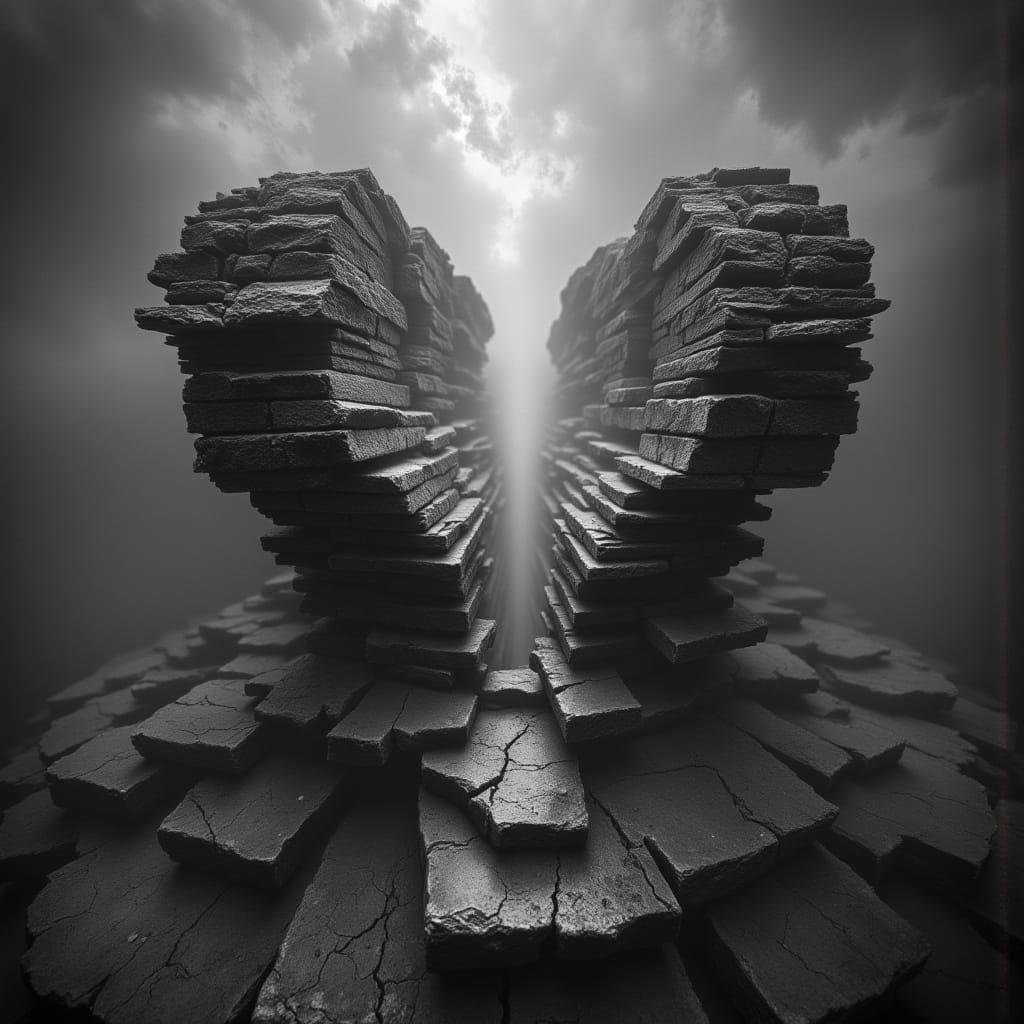
In the first image, we see a heart—not soft, not red, but forged from slabs of cold, cracked stone. Split down the center, it doesn’t bleed. It doesn’t scream. It simply opens, revealing a light that neither heals nor blinds. This is not a symbol of destruction. It’s a portrait of vulnerability. Of strength that dared to yield. And that’s the paradox: what we build to protect us can also be the very thing that prevents us from feeling, from growing, from becoming.
There have been times I cracked. Times when all I could do was sift through the rubble and pretend I was okay. On the outside, I held. On the inside, it was layers of damage—quiet, hidden, untreated. It wasn’t dramatic. It was ordinary, and that’s what made it dangerous.
And just when you think it can’t go deeper, it does.
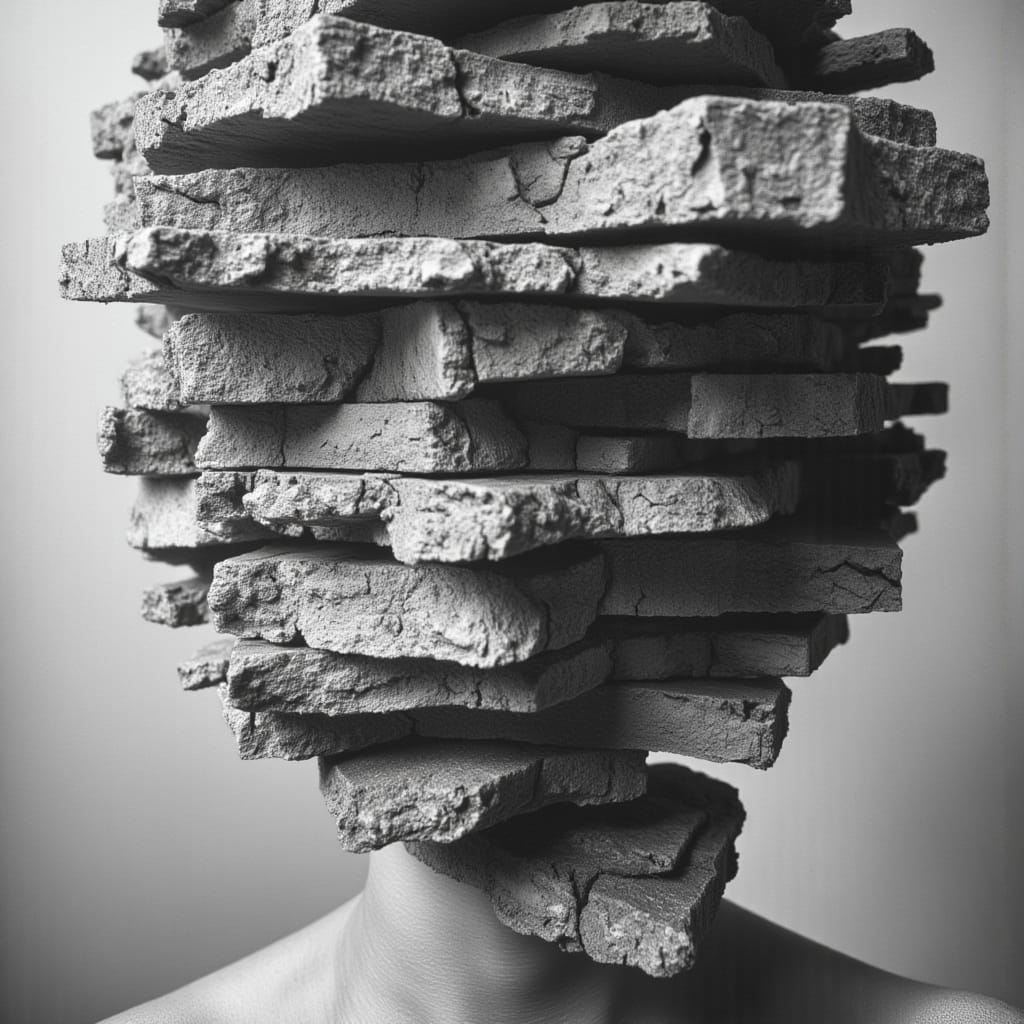
The second image strikes harder. A head—presumably human—layered with thick, dry slices of rock, features obliterated by the burden of their own defenses. You don’t see eyes, mouth, or even expression. You see the consequence of endurance.
We do this, don’t we? We pile on the layers: expectations, roles, trauma, silence. One by one, they smother the self underneath until we become unrecognizable, even to ourselves. And when someone asks us how we’re doing, the reaction is automatic: “I’m fine.” But the truth is buried somewhere deep, wedged between layers too heavy to lift alone.
But what if the face we hide becomes the face we lose?
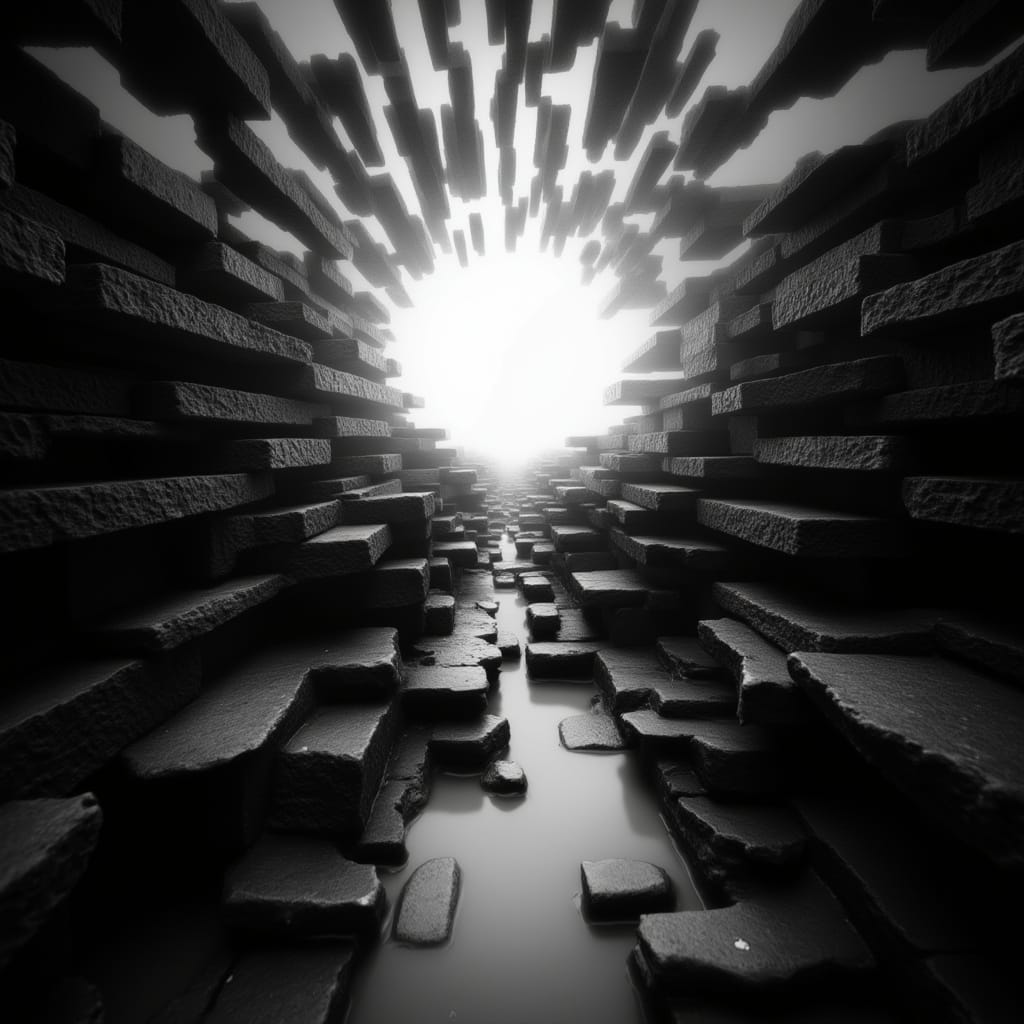
The final image is a tunnel of shattered stone tiles, a fractured pathway bathed in harsh, white light. It’s hard not to see this as a metaphor for transformation. The path isn’t smooth. It’s jagged. Uneven. And yet it leads forward.
That light? It’s not salvation. It’s exposure. Clarity. Maybe even a challenge. The only way through is through. You walk over the wreckage of everything you thought would last, everything you thought you were, and you move anyway.
These images aren’t just art. They’re mirrors. They ask you to look closer—not at the cracks in the stone, but at the fractures within yourself. The places you’ve gone numb. The truths you’ve buried. The parts of you are still waiting to be unearthed.
So yes, Yikes might be your first instinct. But maybe that discomfort is the doorway to something deeper. Maybe the real reaction isn’t fear, but awakening. What if breaking is not the end of the structure, but the beginning of something raw, real, and finally alive?
What have you layered over instead of facing?
What parts of you are still buried beneath the rubble?
And if you followed the cracks, where would they lead?
Discover more from Memoirs of Madness
Subscribe to get the latest posts sent to your email.
 Memoirs of Madness
Indeed a provocative post to which my reaction was, indeed, Yikes!
LikeLiked by 1 person
lol … thanks Fandango
LikeLiked by 1 person