The Stories That Yearn to Be Told

Daily writing prompt
What is your favorite hobby or pastime?

I didn’t set out to be a writer. It happened by accident, somewhere between a half-finished sketch and a notebook full of half-thought ideas. Back then, I was a teenager with more curiosity than direction, filling pages because it felt like the only way to keep my thoughts from spilling everywhere else. One of my oldest friends likes to remind me he can’t remember a time I didn’t have a notebook in my hand. He says I was always scribbling or sketching, usually both.

It was at his house, during one of those long afternoons that used to stretch forever, when someone suggested I could write and illustrate my own book. I never did—but the idea never left. Over the years I’ve written stories inspired by other people’s art, and drawn illustrations for stories that weren’t mine. Maybe that’s the closest I’ve come to answering that old dare.

These days, my rituals are quieter, more deliberate. I start with coffee, smokes, and a notebook—that’s the constant. The rest depends on mood. Sometimes I need silence; other times, I scroll through playlists until I find something that matches the weather inside my head. The room is dimly lit, Guppy purring on the desk, both of us waiting for my next move. It’s not glamorous, but it’s home—the small ritual that turns chaos into coherence.

I don’t consider writing a hobby. But apparently, some people around me do. They say it like it’s harmless, even complimentary, as if writing were just another way to pass the time. Most days, it pisses me off—not because I crave validation, but because it ignores the time, discipline, and mental excavation it takes to build worlds, shape characters, or research a single line that rings true.

I’ve spent weeks turning over ideas before I ever write a word, sometimes months just mapping the geography of a story or tracing the emotional logic of a character. That’s not leisure; that’s labor—creative, invisible, and deeply consuming. Yet somehow, the work only “counts” if it’s published, printed, or profitable. Maybe that’s the illusion people live by: that creation isn’t real until it leaves your desk.

I’ve read the books. I’ve done the study. I’m not waiting for a permission slip to call myself a writer. Still, I can admit that sometimes fresh eyes help—someone catching a rhythm I missed, a sentence that stumbles, or an idea that needs to breathe differently. But that’s collaboration, not validation. The work itself has always been serious enough.

I remember the first time I saw my name in print. I was just a kid then, with childish dreams about becoming something I didn’t fully understand. But even at that age, I knew it was the only thing that gave me genuine joy and peace. It felt right. Like I’d found the one place where my head and my heart could finally speak the same language.

Even when I draw, I’m still telling stories. Sometimes, when I get it right, a single sketch can hold the whole narrative—the emotion, the silence between moments, the pulse of something unfinished but alive.

As an adult, that sense of wonder changed shape. I never thought my writing would go anywhere; most of it was just stories I’d tell my wife over coffee or late-night laughter. When she smiled, I’d rewrite. When she made that face—the one that said, “you’ve hit something”—I’d dig deeper. For a long time, I was defensive about my writing, too fragile to take a critique, too unsure to trust my own voice.

But somewhere along the way, I stopped chasing perfection and started writing from that place where the magic happens. I write from the soul, not the head. It took me forever to realize that for myself, even though I’d taught it a thousand times in workshops. Funny how the truths we teach others take the longest to reach home.

So maybe my favorite pastime isn’t writing itself, at least not in the way people imagine. It’s telling the stories that insist on being told—the ones that show up uninvited and refuse to leave quietly. Not the planned ones or the well-outlined projects, but the whispers that come when I’m half-awake, the flickers that make me reach for a pen even when I swore I was done for the night.

Those are the stories that remind me why I started. They aren’t about publishing or approval or anyone’s idea of success. They’re about listening—to memory, to imagination, to the things that ache to take shape. I suppose that’s what writing has always been for me: not a hobby, not even work, but a kind of surrender.
A way of being in conversation with something larger than myself.

The Streets Breathe, the Shadows Crawl

Daily writing prompt
What do you enjoy most about writing?

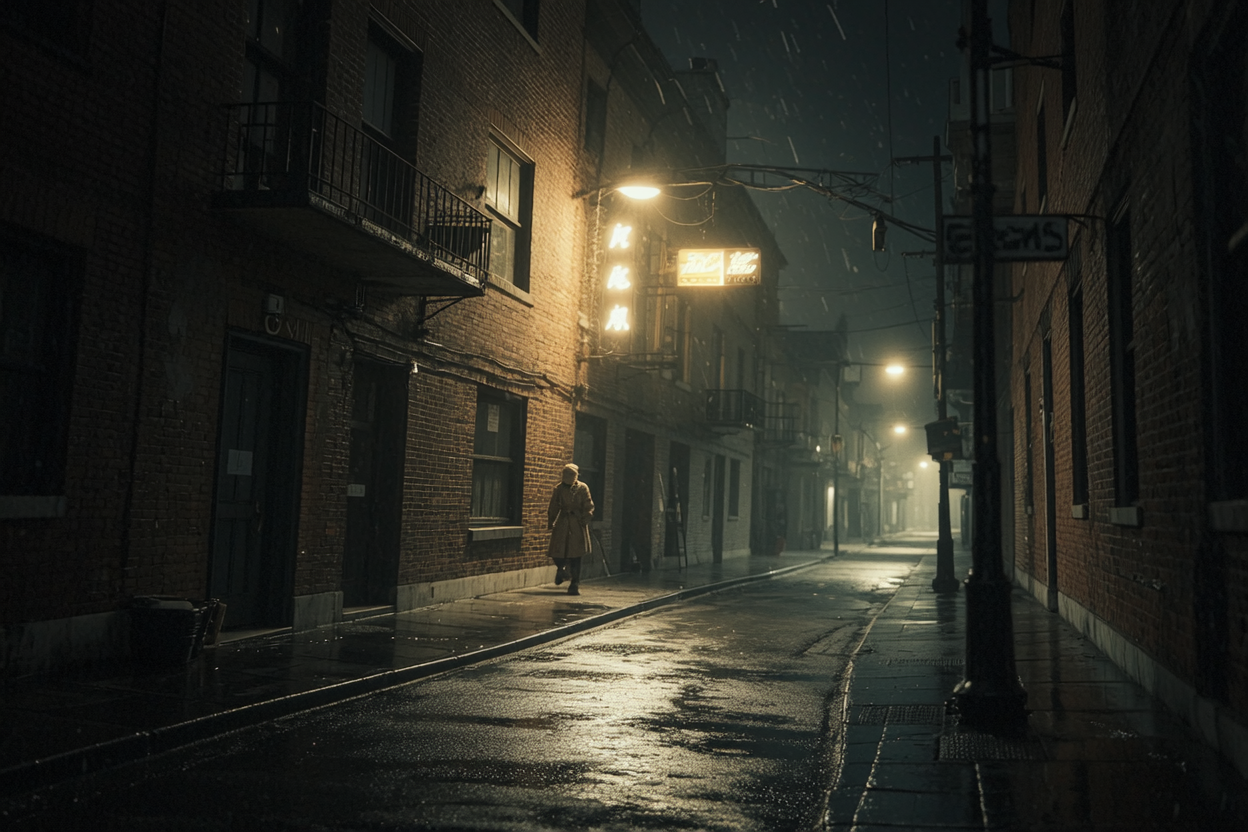
I used to treat setting like an afterthought—slap a name on a town, maybe add a landmark, and call it done. But by accident, I stumbled into a book on worldbuilding, and it flipped something in me. Now I see the world itself as a character, one that presses against the protagonist and antagonist alike. The streets breathe. The shadows crawl. The town isn’t just where the story happens—it is the story. Almost like the place itself is the boogeyman lurking in the dark. And honestly, that’s what I enjoy most right now: shaping a world that fights back.

I didn’t just sit at a desk and invent details out of thin air. I pulled out a notebook, stacked up the photos from my travels, and let the world start whispering. I’ve crossed oceans, driven the continental United States, and every stop—whether a dusty diner, a half-broken neon sign, or a small-town mural—carries something worth keeping. This time, instead of pushing the idea of “place” aside, I leaned into it. Notes piled up. History mixed with imagination. Articles, old texts, even scraps of folklore—they all became raw material. Slowly, the world started to take on a pulse of its own.

The most interesting part of my travels has never been the landmarks—it’s the people. Their traits, the way they speak, even the rhythm of how they move through the world—all of it has the potential to slip into one of my characters. The world itself is beautiful, yes, but it’s the hidden histories that take my breath away. I don’t announce my sources, but my binders are crammed with notes—detailed, cited, cross-referenced, tabbed like I’m building my own private archive. The research takes longer than the writing, and I don’t mind. Once I get my hands on a piece of history, I can twist it, bend it, or use it in ways it was never meant to be used. That’s the thrill—watching a small discovery push a story into a direction I never planned.

What I’ve discovered is that if you build a world properly, it doesn’t just hold one story—it can hold a whole series of them. A single town, mapped and breathing, can stretch into multiple narratives, each pulling from the same veins of history, rumor, and atmosphere. That’s the real joy for me right now: knowing the work I put into one world can echo across stories, creating a place readers can return to, and a place I never quite finish exploring myself.

Scarred, Still Writing

About Things Faith Ignored

Daily writing prompt
What bothers you and why?

It’s not like I haven’t given workshops before. I have. I’ve stood in front of rooms, talked craft, told stories, helped shape sentences and spark ideas. But this time feels different.

Maybe it’s because I haven’t done this since I got gut-punched over a decade ago—since the ground gave out, and I had to relearn how to stand. Since pain stopped being something I processed and started being something I wore. Somewhere along the line, I started using it like a mask. And the thing about masks is, after a while, they stop feeling like something you’re wearing. They start feeling like skin.

It became comfortable. Familiar. I could hide in it. Feel the illusion of security it gave me. But now I’m being asked to step forward again—to speak to young writers about the craft I’ve spent a lifetime practicing. And I’m wondering: am I ready to take that mask off?

What bothers me is the doubt. Not about the knowledge—I have that. Not about the experience—I’ve lived it. What bothers me is the fear that what I carry now might come through in ways I can’t control. That my jaded, scarred, honest soul might discourage someone before they even start. That I’ll slip into some surrealist rant about how writing is both a gift and a curse, a duty and a burden. That I’ll tell the truth too plainly, and it’ll scare them.

Or maybe worse: that I’ll freeze. Go silent. Stage fright. Blank mind. That I’ll stand there with nothing to give.

But the deeper fear—the one that really digs—is this: what if I’ve forgotten how to speak as the person I’ve become? Not the one I used to be. Not the one who was broken. But the one who crawled through it all and still believes in words.

Because truth matters. Even when it hurts. Especially when it hurts. And writing—that strange, beautiful, brutal act—is built on truth. Our words tell who we are. They don’t lie. And if I show up and speak honestly—about the process, the pain, the doubt, the moments of fire—then maybe that’s enough.

What bothers me isn’t the fear of failure. It’s the responsibility. The weight of standing in front of new voices and showing them not just how to write, but how to be a writer. To give them not comfort, but clarity. Not perfection, but presence.

So yes, I’m nervous. Yes, I feel exposed. But maybe that’s exactly where I need to be. Maybe the only way to teach this craft is to live it—right there, in real time, with all the scars showing.

I reach out into the darkness—and find myself.
Doubt courses through my blood.
The writer within whispers: Please don’t forget me.

Though doubt chills me, I won’t surrender to its might.
I lift my head and know—I don’t walk alone.
I whisper back, “I won’t forget you, because you are me… and I am you.”

No more wasting time. I must prepare.

I’ll see you after the ink dries.