Alcoholism: The Drug Hiding in Plain Sight

It’s not always the staggering drunk on a sidewalk.
Sometimes, it’s the friend who always shows up, the parent who keeps it together, or the coworker who “just likes to unwind.”

But behind closed doors, they’re shrinking. Fighting. Breaking.

Alcoholism doesn’t always look like what we expect. And that’s the problem.


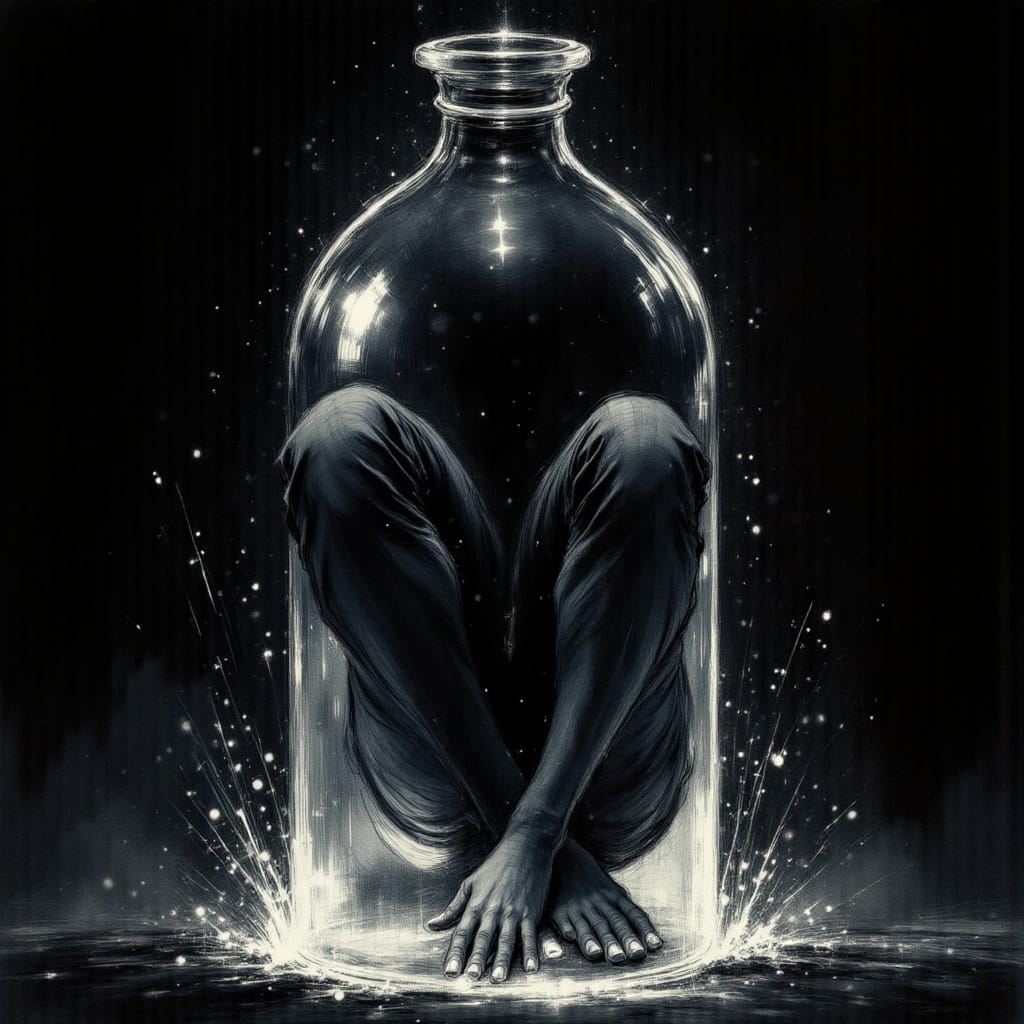
Folded into himself. Silent. Alone. Crushed under the pressure of needing something he hates needing.

We call it “just a drink.”
But alcohol is the most lethal drug in the world—more deadly than opioids, meth, or cocaine.

And yet… it’s everywhere.
It’s legal.
It’s glorified.
It’s handed out at every wedding, every weekend, every wound.


Not a habit. A fight. Against himself. Against the silence. Against the pressure to act like everything’s fine.

Addiction doesn’t start with rock bottom.
It often begins with social acceptance.
A drink to relax. A drink to celebrate. A drink to cope.
Until the bottle isn’t an option—it’s a cage.


Even the strong get trapped. Alcohol doesn’t care how tough you are.

What makes alcohol so dangerous isn’t just the physical toll.
It’s the silence.
The shame.
The way we minimize it, laugh it off, ignore the signs.


This is what addiction feels like. Rage, regret, and no way out. But always another drink.

The Truth:

  • Alcohol kills more than 3 million people globally each year.
  • Withdrawal from alcohol can be fatal.
  • It destroys bodies, families, and lives—and we rarely talk about it.

If you or someone you know is struggling:

You are not alone.
There is help.
There is life outside the bottle.


CTA (Call to Action):

📞 [Insert helpline or resource link – e.g., SAMHSA’s National Helpline: 1-800-662-HELP]
💬 Share this post. You never know who needs to see it.

Complementary Therapies

Complementary therapies have been used for centuries to help manage various health conditions, and their popularity has increased significantly in recent years. Traditional medicine often uses these therapies to help manage symptoms and improve overall well-being. Complementary therapies aim to treat the whole person, not just the symptoms of a particular condition.

Some examples of complementary therapies include:

  • Acupuncture: This involves the use of thin needles inserted into specific points on the body to stimulate the body’s natural healing processes.
  • Massage therapy involves manipulating soft tissues in the body to help reduce muscle tension, improve circulation, and promote relaxation.
  • Herbal medicine: This involves the use of plants or plant extracts to help treat various health conditions.
  • Meditation: This involves the practice of focusing the mind on a particular object, thought, or activity to promote relaxation and reduce stress.

While some complementary therapies have been extensively studied and are supported by scientific evidence, others are not. It’s important to talk to a healthcare professional before trying new treatments to ensure they are safe and appropriate for your specific situation.

One of the benefits of complementary therapies is that they can help manage symptoms and improve overall well-being without medication or invasive procedures. For example, massage therapy can help reduce muscle tension and improve circulation, while meditation can help reduce stress and promote relaxation.

Complementary therapies can be a valuable addition to a comprehensive healthcare plan. However, it’s important to approach them cautiously and do your research before trying new treatments. Some complementary therapies may interact with medications or have side effects, so talking to a healthcare professional before incorporating them into your healthcare plan is important.

In summary, complementary therapies can be a helpful tool in managing various health conditions and improving overall well-being. However, it’s important to approach them cautiously, talk to a healthcare professional before trying new treatments, and do your research to ensure that they are safe and appropriate for your specific situation.

~thank you for reading~

Yeah, I heard you, but what is CBT?

Introduction

When I first started therapy, my therapist began discussing the different courses of treatment. Then she mentioned we would be starting with CBT. Now, I always enjoy when experts talk to you using their jargon as if the entire world speaks this way. My therapist must have noticed my expression and immediately clarified things by stating, “Cognitive Behavioral Therapy.” I nodded, reassuring her I understood what she was referring to. However, in mind, a mini-rant formed.

“What? Is talking about mind control?”

“Hold on, I don’t quake like a duck for nobody!”

“Nah, ya’ll ain’t getting me with MK-Ultran, secret squirrel, CIA guinea pig … bullshit! Fuck that!”

As I stood up, preparing to walk out, she stared at me momentarily and asked, “MK-Ultra? or “Vulcan mind meld?” and pointed at the chair, inviting me to sit.

I assure you it’s nothing like that at all. Below I’ve provided some general information about the treatment.

Let’s take a look, shall we?

Cognitive Behavioral Therapy (CBT)

Mental health issues are a common occurrence in today’s world, and they can manifest in a variety of ways. Fortunately, there are effective methods to manage these conditions, one of which is cognitive-behavioral therapy (CBT). CBT is a therapeutic approach that focuses on the connection between our thoughts, behaviors, and emotions and how changing them can positively impact our mental health.

Understanding CBT

CBT is a talk therapy that aims to help individuals identify and modify negative thought patterns and behaviors that contribute to mental health problems such as anxiety, depression, and PTSD. It is a short-term treatment option typically done in weekly sessions with a licensed therapist. During these sessions, the therapist works with the patient to identify negative thought patterns and behaviors and develop strategies to overcome them.

One of the fundamental principles of CBT is that our thoughts and beliefs have a powerful impact on our emotions and behaviors. This principle is based on the idea that our thoughts create our reality, and by changing our thoughts and beliefs, we can change how we feel and behave in various situations. CBT also emphasizes the development of practical coping strategies that patients can use to manage their symptoms outside of therapy sessions.

Benefits of CBT

There are many benefits to using CBT to manage mental health issues. One of the main advantages is that it can be highly effective in helping patients overcome negative thought patterns and behaviors. Studies have shown that CBT can be just as effective as medication in treating conditions like anxiety and depression and more effective in the long term.

Another benefit of CBT is that it is a relatively short-term treatment option. While some other forms of therapy can take years to complete, most patients can complete a course of CBT in just a few months. This can make it a more practical option for people who are looking for a quick and effective way to manage their mental health.

CBT is also a versatile therapy that can be used to treat a variety of mental health conditions. In addition to anxiety, depression, and PTSD, CBT has been shown to be effective in treating conditions like obsessive-compulsive disorder (OCD), eating disorders, and substance abuse.

The Bottom Line

If you are struggling with mental health issues like anxiety, depression, or PTSD, CBT can effectively manage your symptoms and improve your overall well-being. By working with a licensed therapist, you can learn to identify and change negative thought patterns and behaviors, develop practical coping strategies, and achieve greater control over your emotions and behaviors.

It is important to note that CBT may not be the best option for everyone. Some people may benefit more from other types of therapy or a combination of treatments. However, CBT is definitely worth considering if you are looking for a proven and practical way to improve your mental health.

Conclusion

CBT is a powerful tool to help people overcome negative thought patterns and behaviors contributing to mental health issues. By working with a licensed therapist, patients can develop practical coping strategies and achieve greater control over their emotions and behaviors. If you are looking for a proven and practical way to improve your mental health, CBT may be the right choice for you.

Mental health issues are a common occurrence in today’s world, and they can manifest in a variety of ways. Fortunately, there are effective methods to manage these conditions, one of which is cognitive-behavioral therapy (CBT). CBT is a therapeutic approach that focuses on the connection between our thoughts, behaviors, and emotions and how changing them can positively impact our mental health.

This is hard work. You have to face things you would rather forget but in the long run. I believe you be the better for it. I know I have been.

~thank you for reading~
PTSD is Wicked Scary

Introduction

Post-traumatic Stress Disorder (PTSD) is a mental health condition that can occur after going through or witnessing a traumatic event. PTSD can have a significant impact on a person’s daily life, relationships, and overall well-being. However, there are many effective treatments available for PTSD, that actually help. I know its scary and you probably have been through a few therapies treatments that didn’t help or made things worse. Please don’t give up. Recovery is a real possibility.

After, my diagnosis, I didn’t know what to do. I knew I didn’t want to stigmatized or labeled. So, I tried to hide it. Of course, that didn’t help, but the following are methods I used to assist in moving forward with the condition.

Psychotherapy

Psychotherapy, also known as talk therapy, is a widely used and effective treatment for PTSD. It involves speaking with a mental health professional about your thoughts, feelings, and experiences related to the traumatic event. There are several types of psychotherapy that are effective for treating PTSD, including cognitive behavioral therapy (CBT) and Eye Movement Desensitization and Reprocessing (EMDR).

Cognitive behavioral therapy (CBT) is a type of therapy that helps individuals identify and change negative thought patterns and behaviors that are associated with PTSD. CBT focuses on helping the individual become more aware of the thoughts and feelings that contribute to their PTSD symptoms and teaches them how to challenge and change those thoughts and behaviors.

Eye Movement Desensitization and Reprocessing (EMDR) is another type of psychotherapy that uses eye movements to help individuals process traumatic memories and reduce the severity of PTSD symptoms. During EMDR therapy, the individual is asked to recall the traumatic event and then follow a therapist’s hand movements with their eyes. This process is believed to help the individual process and reframe the traumatic memory in a less distressing way.

Medications

Medications can also be helpful in treating PTSD symptoms. Antidepressants are commonly prescribed to individuals with PTSD. They can help reduce symptoms such as anxiety, depression, and insomnia. Selective serotonin reuptake inhibitors (SSRIs) and serotonin-norepinephrine reuptake inhibitors (SNRIs) are the most commonly prescribed antidepressants for PTSD.

Other medications such as anti-anxiety medications and sleep aids may also be prescribed to individuals with PTSD. These medications can help individuals manage symptoms such as anxiety, nightmares, and sleep disturbances.

It is important to note that while medications can be helpful in managing PTSD symptoms, they should always be used in conjunction with psychotherapy.

Complementary Therapies

Complementary therapies, such as yoga, meditation, and acupuncture, can be valuable tools in managing and reducing symptoms of post-traumatic stress disorder (PTSD). While psychotherapy and medication are considered the most effective treatments, these alternative therapies can provide additional benefits to individuals struggling with PTSD.

For instance, yoga has been shown to reduce stress and anxiety, which are common symptoms of PTSD. It can also improve sleep quality and increase feelings of relaxation and well-being. Meditation, on the other hand, can help individuals develop mindfulness, which can be helpful in managing intrusive thoughts and memories associated with traumatic experiences. Similarly, acupuncture has been found to reduce symptoms of anxiety and depression, as well as improve sleep quality.

While these complementary therapies may not be as effective as psychotherapy or medication, they can be used in conjunction with other treatments to help individuals better manage their symptoms. It is important to note that these therapies should only be used under the guidance of a qualified healthcare professional and should not be used as a substitute for evidence-based treatments.

Conclusion

PTSD can be a debilitating condition, but there are many effective treatments available. Seeking help from a mental health professional is the first step towards recovery. Psychotherapy, medications, and complementary therapies are all effective treatments that can help individuals manage their symptoms and improve their overall quality of life. If you or someone you know is struggling with PTSD, do not hesitate to seek help. Remember, recovery is possible.

~thank you for reading~