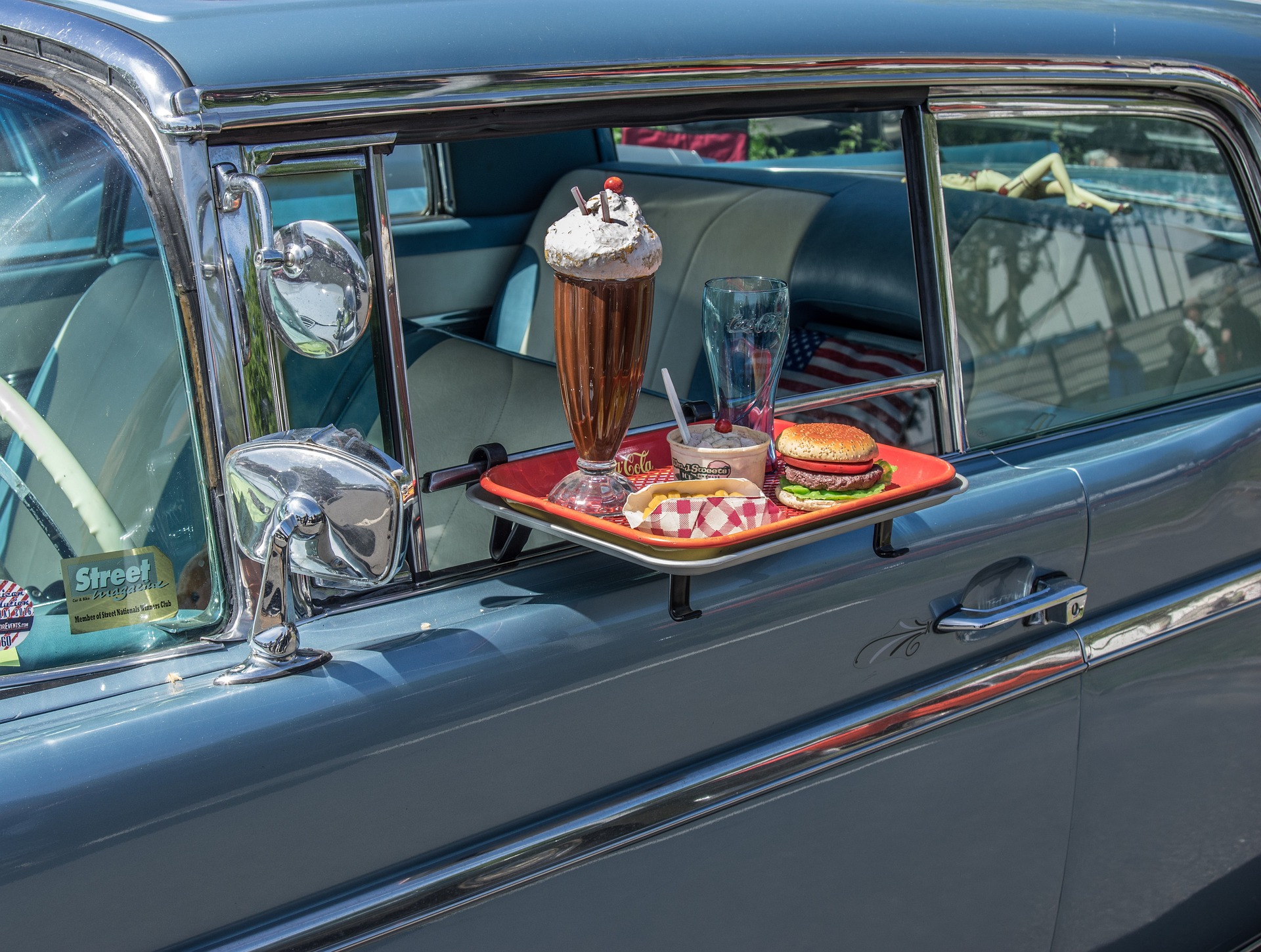
Pandora’s Return


Today was her first day at her new job and she thought she was prepared.

They had given her instructions. Rituals. Words that felt like passwords more than prayers. But no one told her about the chest. No one warned her it would breathe.

It rose from the stone floor like a relic of a forgotten age, its surface alive with shifting constellations that seemed to map a sky she had never seen. The air around it vibrated, as though the chest itself was holding back a storm.

When she touched the lid, her pulse staggered. Not from fear. From recognition.

The chest opened and she saw herself — not as she was, but as she would be. Hooded. Infinite. A figure draped in shadows stitched with starlight. Galaxies smoldered in her skin as though she were made of the night sky itself.

“You thought you were prepared,” the figure said. The voice was hers, but unfinished, jagged, as if carved in haste. “The job isn’t to open the chest. It’s to be the chest. To carry what others cannot.”

And suddenly, she understood: this was not just a job. This was release. She had been trapped too long in the shadows — between this world and the next, bound to silence, bound to waiting. She never imagined becoming free. Free to walk the streets, to breathe among the living, to leave footprints that didn’t vanish at dawn.

Because of her time in the shadows, she had learned something the living never could: how to exist in both worlds.

She sat in her room, watching the picture box, and it was wonderful and scary all at once. The moving images reminded her of the endless worlds she had observed from the shadows while she was in the chest — glimpses of lives she could never touch, stories she could never enter. Now, they flickered in front of her as if daring her to join.

She studied the pattern of speech. She mimicked smiles, frowns, laughter, and silence.

On Wednesdays, Monica arrived. She was never just Monica — not really. Her questions were too sharp, her gaze too steady. She tested, corrected, reminded. Showed her how to pass unnoticed. How to apply what she had learned. Monica’s voice was kind, but her eyes never betrayed surprise. It was as if she had seen countless others crawl from the chest before.

This time, as Monica adjusted the blinds and set her notes down, she paused. “Remember,” she said softly, “freedom doesn’t mean you’re unbound. It only means you’ve been given longer chains.”

Every lesson pressed her further into this world, though the shadows still whispered her name.

Her hands trembled, but she didn’t step back. She stepped closer.

The figure smiled.

The lid slammed shut.

The room fell silent, except for the faint glow bleeding from the chest’s seams — a light that pulsed like a heartbeat, or a warning.


Author’s Note
This piece grew out of Esther’s Writing Prompt and Fandango’s Story Starter — a simple line about being prepared for the first day at a new job. On the surface, that sounds ordinary, but in my head it twisted into something mythic: a chest that breathes, shadows that teach survival, and a figure learning how to pass in a world that was never built for her.

As always, thank you for reading, for wandering into these strange corners with me. Stories like this sit between myth and memory, control and survival. Your presence reminds me the lantern light isn’t wasted — even when the chest closes and the room goes dark.

Red, White, and Boom (Also Vomit)

FLASH FICTION – FRIDAY FAITHFULS


“Grandpa, I need a real story for my history project. Something about America, or the Fourth of July, or whatever.”

The old man scratched his chin, leaned back in the squeaky recliner, and smirked.

“Alright, kid. Lemme tell you how your grandma and I met. It was the Fourth of July, 1978. I was 19, dumb as bricks, and full of patriotic stupidity.”

From the kitchen, a voice called out: “Oh, this again. You gonna tell the real version this time, or your usual nonsense?”

Grandpa rolled his eyes. “It’s all true. Just maybe… slightly singed around the edges.”

It started with an idea. Not a good one. My Uncle Tommy, our genius friend “Meatball,” and I decided to put on our own fireworks show. We didn’t have proper fireworks. We had two crates of off-brand bottle rockets, a metal garbage can, a stolen traffic cone, and a six-pack of warm root beer.

Tommy swore the garbage can would “amplify” the fireworks. Meatball called it “fire science.” I just lit the fuse.

Boom.

The garbage can launched thirty feet in the air like a missile. One rocket shot sideways and hit a mailbox. Another bounced off my forehead. And one, God help me, flew straight down my pants.

I panicked. I ran in circles. My shorts were smoking. I stopped, dropped, rolled, and screamed. At some point, my eyebrows gave up and disappeared.

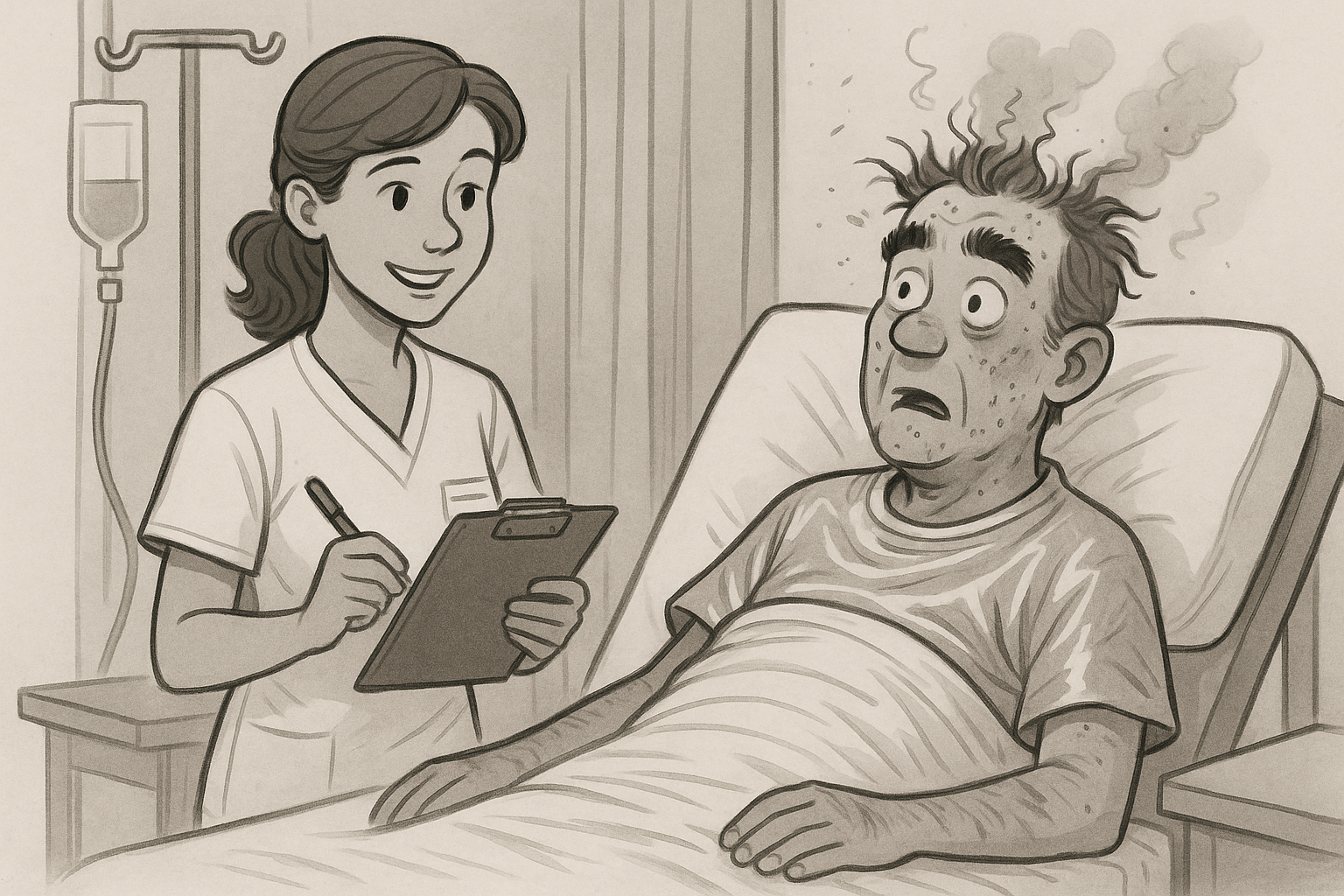
Next thing I know, I’m in the ER, wrapped in silver burn cream, looking like a baked potato with no dignity.

That’s when your grandma walks in. Nurse training student. Bright smile. Clipboard. Smelled like lavender and antiseptic. She looked at me, this smoldering idiot, and said, “So… was it worth it for freedom?”

From the kitchen again: “And what did you say next, hotshot?”

“I said she looked like a very clean angel. Then I threw up on her shoes.”

“Mm-hmm. Romantic.”

“Did you ask her out?”

Are you kidding? I tried. But the morphine was kicking in. I told her she looked “like a floating disinfected goddess” and then passed out while apologizing to the IV pole.

Still—she didn’t run. That’s how I knew she was special.

We kept in touch. She came to my follow-ups. I wrote her letters. She eventually forgave the vomit. We got married two years later. She even let me light sparklers at the wedding. Supervised, of course.

“Wow. That’s kinda romantic… in a flammable way.”

Exactly. So you tell your teacher this: Freedom’s messy. Fireworks are dangerous. But love? Sometimes, it starts with a bang. Just don’t put bottle rockets in garbage cans.

From the kitchen: “And tell him about the park ban!”

“That’s not relevant to the assignment.”

The Feathered Ones

FLASH FICTION – FOWC & RDP

Every morning, she wrote to keep the birds at bay.

They came with the light—first as shadows dragging themselves across the windows, then as a rustle, low and persistent, like wind thinking too hard. Doves mostly, though wrong somehow. Their eyes were too still, their feathers too quiet. Occasionally, darker birds arrived—sleek as oil, with glints in their beaks like pins. They didn’t chirp or coo. They watched.

She used to think they were hallucinations, symptoms of grief. Her brother had drowned in the river five years ago. No body, no real goodbye. After that, the house changed. Or maybe she did.

The birds began showing up shortly after the funeral. Perched on curtain rods. Nested in the corners of the ceiling where cobwebs once clung. They moved like smoke. Never flapping, just shifting, gliding, like time with feathers.

She had never written a word before he died.

Now, she couldn’t stop.

At first, it felt like a compulsion. Survival. Write or unravel. But soon, the stories took on a shape of their own. They came through her fingers in long, fevered bursts—narratives that looped and twisted and whispered through the typewriter-like incantations. Whenever she paused, the birds stirred. Paper fluttered. Air thickened.

One morning, she stayed in bed. Her arms wouldn’t move. Grief sat on her chest like a second ribcage.

By mid-afternoon, the house was breathing.

Not creaking—breathing. The walls rose and fell in slow, silent exhales. Books slumped off shelves. The floorboards quivered like violin strings underfoot. And the birds—dozens, maybe hundreds—lined the walls, all facing her. Eyes like eclipse moons. Waiting.

She crawled to the desk. Typed three words: He was lost.

The air calmed. The birds blinked once. Vanished.

After that, she understood.

They weren’t punishing her. They were pushing her. Urging the story out. She didn’t know why. She didn’t know what for. But she knew the birds were part of it. Maybe even keepers of it. Strange, spectral editors in feathered cloaks.

The typewriter, an old rusted Royal, began to type without her. At night. Quiet, rhythmic, like a heartbeat. She woke to new pages. Pages she didn’t remember writing. One had a map scrawled on the back—inked in spirals and loops. Another contained a letter addressed to her in her brother’s handwriting.

I saw the ice crack. I saw the light inside it. I’m not afraid.

She burned that one. She burned the next three as well. But they always came back. Not charred. Not even creased. Just waiting on the desk like polite ghosts.

The stories that came through her grew stranger. Boys who vanished into mirrors. Houses that forgot how to hold their shape. Rivers that swallowed memories and returned them in riddles. Always, always, a boy at the center. Sometimes drowned. Sometimes glowing. Sometimes stitched together from stars.

She never gave him her brother’s name. But the birds knew.

They began bringing her things. A button she remembered from his jacket. A library card he’d lost in third grade. A page from a notebook she hadn’t seen since they were children, filled with a crude comic he’d drawn—“Captain Birdbrain and the Time Vultures.”

She laughed. She cried. She kept writing.

She began to understand the birds weren’t birds at all. Not really.

One blinked at her one morning, and she swore she saw an entire galaxy in its eye—planets spinning, stories coalescing, a thousand unnamed lives passing through. Another unfurled its wings, and letters spilled from its feathers, fluttering like snow, dissolving on contact.

She no longer felt afraid. Not exactly.

They were eerie, yes. But so is truth when you haven’t looked at it in a while.

The house shifted in small ways. The closet no longer opened to coats but to mist. The attic smelled of saltwater. She didn’t question it. She followed the thread.

She wrote not to escape grief but to appease it. To make it into something legible. Something she could carry. Each word formed a tiny act of negotiation between what was gone and what remained.

One night, she fell asleep at the desk. When she woke, a new story was finished—clean, structured, heartbreakingly beautiful. The final line read:

“And when she opened the door, there he was—smiling, whole, and made entirely of light.”

The birds were utterly still.

One—larger than the rest, with a sheen-like moonlight on bone—landed on her shoulder. Its weight was real. Solid. She reached up gently, and it leaned into her touch.

There was no song. Just presence.

She folded the page and placed it in an envelope marked For Him.

The next morning, the birds didn’t come.

The house was quiet in a way it hadn’t been in years. She waited. She made coffee. Nothing stirred. For a long time, she thought they were gone.

Then, around dusk, the light shifted. Just slightly. The world outside the window tilted toward a kind of blue she’d never seen. Deeper than twilight, warmer than dawn. The birds returned—not many, just a few. But they glowed now. Dimly. Like coals before fire.

They perched around the room. Silent. Peaceful.

The largest one dropped a page at her feet. It held only a title:

Chapter One.

She smiled.

She had learned to write not to fight chaos, but to give it order.

And the story was just beginning.

Laced with Lies

FLASH FICTION – OMIMM


They called it The Chuck Stop—a hidden clubhouse inside a size 11 Converse, where miniature musicians jammed and cobblers tinkered. By night, it buzzed with chords, caffeine, and secrets.

Last Thursday, the music stopped.

Jazzman Jordan, the harmonica king, was found lifeless in the toe box, crushed beneath a sewing needle. At first glance, an accident. But Doc Stan Smith said otherwise: “Needle was planted. Jordan never sewed a day in his life.”

Suspicions spiraled like a frayed shoelace.

Vans, the bass player, had motive—Jordan stole her solo. Reebok, the sound guy, hated how Jordan chewed his chords flat. Even Granny Asics, who ran the espresso drip from the heel, had once vowed he’d “choke on a bad note.”

Detective Huarache, a former eyelet inspector, examined the scene. No thread out of place—except one. A single shoelace looped wrong over the third hole. Inside the knot? A trace of resin. Yeezy’s bowstring resin.

By sundown, Yeezy was zipped inside a Ziplock, cursing his luck.

Music returned to The Chuck Stop. But now, every note trembled just a bit. Because in a shoe-sized speakeasy, even the softest step could hide a stomp of murder.

Threadbare Hearts

I’m unravelling.
The separate pieces of my mind no longer whisper—they scream, each one tugging in a different direction.
I ask the mirror for answers it never had the decency to learn.
A note—creased and crumple-worn—falls from my jacket pocket like a ghost too tired to haunt.
I run my thumb across the ink, smudged but still cruel in its clarity.
Somewhere beyond the silence, someone begins to strum a guitar, the melody raw and familiar, like the ache of memory.
My thoughts form a jumble too dense to untangle, yet too fragile to ignore.
Love, it turns out, is antithetical to survival when your heart’s been set on fire.


Author’s Note:
This piece was stitched together using a patchwork of prompts from FOWC, RDP, 3TC #MM103, SoCS, and the Writer’s Workshop. I tend to write like I’m walking barefoot through glass—deliberate, a little reckless, and always bleeding something honest. If it stings, good. That means it’s real.

Entangled Contradictions

FICTION – REENA CHALLENGE #385

by Julia Drake (and someone else entirely)

Dr. Eugene Irving Krane did not believe in metaphor, which was why he used it constantly in his head.

Standing before a lecture hall of half-conscious undergrads, chalk raised like a scalpel, he dissected equations with clinical precision. “Symmetry,” he said, “is not about aesthetics. It’s a constraint. A system obeys certain laws until one of them breaks. And that break is where the interesting physics begins.”

Behind him, the whiteboard bloomed with the Higgs mechanism—perfect arcs, cold beauty, tension contained.

Krane saw what his students did not. The math wasn’t sterile. It was tragic. Elegant. Alive.

He was an odd man, even by faculty standards. He collected things. Not stamps or coins—ideas. He had an entire drawer in his office dedicated to obsolete words, sorted by emotional tone: “Words That Die Alone,” “Words That Bleed Nicely,” “Words With No Home.” He took long walks at dawn to photograph patterns of fractured light in puddles and alleyways. And he kept what he privately called an “emotional landfill” — a file full of discarded breakup letters, apologies never sent, and confessions overheard in stairwells. He said they helped him write with precision.

These collections weren’t academic. They were scaffolding for something else—a hidden voice, one that poured all that silent debris into fiction.

From the front row, Tess Ramírez scribbled something in the margin of her notebook and suppressed a grin. She was in her forties, finishing a long-delayed PhD, and possibly the only person alive who would one day use the phrase “quantum betrayal” in casual conversation.

She respected Krane. She also suspected he had no idea how visible his loneliness was.

When class ended, Krane retreated behind his desk, where a stack of problem sets sat dangerously close to a notepad filled with scribbles. Not physics. Fiction. The bones of a scene for Julia: entanglement as metaphor, two characters locked in orbit, never quite in sync. He’d been shaping it since 3 a.m.

He tugged down his sleeves and nudged the pile toward Tess.

“If you could… the thing.”

She blinked. “You’re a world-class communicator, you know that?”

He blinked back. “That was implied.”

Tess rolled her eyes and scooped up the stack, including—unbeknownst to him—a handful of Julia’s latest pages.

Later that night, she was grading on her couch, jazz humming from the speakers, half a glass of Malbec on the coffee table. And then she saw it.

A page that didn’t belong.

“They spoke like electrons entangled: each word collapsing a possibility in the other. He didn’t touch her hand, but the air around it bent.”

Tess froze. Her wine glass stopped midair.

Her heart did a weird thing, like an extra beat—or maybe a skipped one.

She flipped to the next page.

“Lina stood in the field, symmetry broken, heart split by the simplest law of decay: what once was held cannot always stay.”

And at the bottom, tight and unmistakable: 
–J. Drake

Her pulse kicked.

No. Impossible.

She’d read every Julia Drake novel twice — dog-eared, underlined, whole chapters bookmarked for reasons she couldn’t explain. Not because they were romantic. Because they were honest. No one in Drake’s stories ever got rescued cleanly. They hurt each other. They tried. They failed better. It wasn’t fantasy. It was familiar.

Tess had never known who Julia Drake really was — just that she’d been through the shit. You couldn’t write emotional wreckage that clearly unless you’d lived inside it.

And now here it was. 
On paper. 
In Krane’s handwriting.

Her first instinct was disbelief. Her second was awe. 
Her third was: Does he even know how hot this stuff is?

Tess barely slept. She kept rereading the pages, flipping between disbelief and adrenaline. The idea of confronting Eugene left her nauseous—what if she embarrassed him? What if she was wrong? What if she ruined something by naming it? But the words wouldn’t let her sleep. They weren’t just good. They were true. And she couldn’t unknow that truth now.

The next morning, she didn’t knock. She barged in.

Eugene looked up, mid-sip of coffee, and nearly dropped the mug.

“You’re Julia Drake.”

He froze. Opened his mouth. Closed it.

“You are,” she said. “You’re my favorite author of all time. I thought you were dead. Or French. Or a collective of lesbians.”

Eugene stared at her like she’d just accused him of arson.

“You’re serious,” he managed.

“I’ve read everything,” Tess said, waving the pages. “Twice. I memorized half of A Constant Craving like it was scripture. You made me cry in a Denny’s, Eugene.”

He looked absolutely horrified.

“I was under the impression,” he said slowly, “that my prose was… categorically sentimental.”

“It’s not,” she snapped. “It’s vulnerable. And tight. And unbearably good. God, no wonder you hate small talk—your soul is in six mass market paperbacks and nobody knows.”

Krane went pink. Pink.

“I don’t—it’s not—people in the department wouldn’t understand.”

Tess softened. “I understand. I just didn’t expect my emotionally unavailable science mentor to be moonlighting as the poet laureate of romantic ache.”

Eugene rubbed his forehead. “Please never say that out loud again.”

She grinned. “No promises.”

They sat in silence for a moment, the weight of the secret between them now less like lead and more like gravity—still heavy, but pulling them into orbit.

For Tess, something shifted. She’d always seen Krane as brilliant but unreachable, like a locked cabinet full of equations and rules. But now, she saw the tenderness behind the rigidity. The collector of discarded feelings. The man who couldn’t say what he felt unless it was fictionalized. And somehow, that made her respect him more, not less.

“You ever think,” Tess said quietly, “maybe fiction is the only way people like us know how to feel?”

He looked at her, and for once, didn’t look away.

“All the time,” he said.

That night, Julia Drake began a new manuscript. As Eugene typed, he paused over one line and rewrote it three times—not for clarity, but for care.

The main character’s first real moment of connection came in a cluttered office, after a truth slipped out by accident. The other character didn’t flinch. She saw him. Not just the polished surface, but the hoarder of obsolete words, the photographer of lost light, the emotional archivist in disguise. Her name was Teresa.

It opened with a woman named Teresa. Sharp. Unafraid. The first character Eugene had ever written did not need rescuing or permission. She met the main character’s silence with curiosity, not pity.

And for the first time, Julia Drake wrote a love story that didn’t end in silence.

It ended in symmetry.

The Twist

FLASH FICTION – FOWC/RDP/FSS #204

Carla sprinted from the archaeological site, clutching an artifact that could either save or destroy the world.

The desert wind tore at her coat, slicing her cheeks with grit and heat. Behind her, the canyon bellowed—low, deep, the sound of stone waking from sleep. She didn’t look back.

The artifact pulsed in her palm—black stone, veined with silver that moved like quicksilver, coiling and recoiling. Cold as ice, yet burning her skin. It didn’t make a sound, but its pressure settled in her jaw and spine, like a voice she couldn’t quite hear. A warning. A dare.

She had read the glyphs. Scratched into bone, buried beneath layers of false chambers and cursed earth. Left twist: seal. Right twist: release. A simple choice.

Until it wasn’t.

A sound cracked the sky—a roar too wide to come from a throat. Carla reached the ridge and turned.

The site had vanished. In its place stood a figure made of shadow and ruin, shrouded in strips of black that bled smoke. It held a scythe that scraped the air, hissing with each movement like it sliced through time. Beneath its feet: a field of skulls. Beyond it, the expedition fortress, aflame, its banners melting mid-flap.

Her legs went numb. Her breath caught in smoke. She wanted to run. To cower. To vanish. But the heat from the artifact anchored her. Reminded her: she had opened the door.

She had let it out.

The spirals on the artifact shifted. A recess opened. The mechanism waited. Her thumb hovered over it, trembling.

It was her sister’s voice she heard next. Not real. A memory, maybe. Or a trick.
“The world’s been broken before, Carla. Someone always seals it shut again. Someone just like you.”

The creature stepped forward. The ground cracked. A second sun burned in its wake.

She twisted left.

The silence after was total. Not peace. Something worse.

Then, screaming. From the air itself. The creature reared back as spears of molten light stabbed down from the clouds. Chains wrapped its limbs. It shrieked, stumbling, clawing at the sky—but the light yanked it downward, tearing the world around it like cloth.

Then—nothing.

Carla collapsed to her knees, chest heaving. The artifact lay in her hand, cracked down the center, the silver threads gone dark. The sky was still red. The smoke still stung. But the screaming had stopped.

She stood, slowly, scanning the charred remains of the site. The fortress. Her team.

Gone.

She was lost now. A savior with no witnesses, no one left to remember the choice she’d made.

And just as she turned to leave, the wind shifted. Cold, sharp.
Somewhere far off, something laughed.

Closet Quest: A Steampunk Sock Saga

FLASH FICTION – FOWC & RDP

In the heart of a creaky old workshop, Reginald the Raccoon, steampunk engineer extraordinaire, adjusted his brass goggles and stared at his latest invention: the Interdimensional Sock Locator 3000. His mission was clear and absurd — recover The Sock. Not just any sock. The one embroidered with tiny mechanical gears and the words “Wrench It Like You Mean It.”

But the sock had vanished into the most feared place in the entire workshop — The Closet.

The Closet wasn’t just a closet. It was a legendary abyss, sealed with a handwritten warning: “ENTER AT OWN RISK — MAY CONTAIN WILD TOASTERS”. Inside were decades of misplaced inventions, rogue gadgets, and sandwiches from questionable eras.

Reginald wasn’t afraid. He was prepared.

He packed his essentials: a grappling hook, a glowing morale-boosting lightbulb, a peanut butter sandwich (for negotiations — mayonnaise had backfired last time), and his trusty spanner. Thus began The Closet Quest.

With a deep breath, he cracked open the door. The closet sucked him in with a WHOOOOOMP — the kind of sound a vacuum cleaner would make if it suddenly gained ambition.

Inside was chaos: umbrellas lunged like javelins, toasters flung shuriken-bread, and an especially grumpy bagpipe band oozed around, playing nothing but angry honks. Reginald ducked and weaved, narrowly avoiding a spatula attack.

Halfway in, he encountered the sandwich kingpin — a towering club sandwich wearing a tiny crown of pickle slices.

“I demand mustard!” it bellowed.

Reginald, calm as ever, offered a jar of peanut butter. The sandwich sniffed, grumbled, and waved him through with a soggy lettuce leaf.

After what felt like three Tuesdays and one awkward staring contest with a unicycle, Reginald spotted it — his sock, perched on the back of a six-legged chair scuttling like a nervous crab.

With a battle cry that sounded suspiciously like “FOR SOCK AND GLORY!” Reginald launched himself through the air, snagging the sock mid-tumble while the chair skittered away, squealing in defeat.

Victorious, Reginald emerged from the closet, slightly scorched, moderately crumbed, but grinning wildly. He slid the sock onto his paw like a puppet and proclaimed, “No sock left behind!”

He celebrated by installing three more clocks — all wrong — and scribbling a new warning on the closet door: “STILL HUNGRY.”

Just as he was polishing his spanner, a tiny scroll slipped out from under the door. It was a ransom note, scrawled in mustard:

“Next time… Dijon. – Sandwich King”

Worse yet, the new clocks he’d installed began to tick backward, forward, and sideways. Time hiccupped, and a second Reginald — equally confused but holding a jelly jar — blinked into existence.

Reginald sighed. “Guess it’s Tuesday again.”


Glossary of Reginald’s Workshop Essentials (coming soon):

  • Spanner of Questionable Durability — works until it doesn’t.
  • Sock Locator 3000 — still missing a “find” function.
  • Emergency Sandwiches — one per dimension.

Shred for Me, Pretty Lady

FLASH FICTION – FOWC & RDP

He heard her riff from the other side of the park — sharp, ragged, alive — and it hooked him deep.

She wore ripped jeans, grease-smeared at the thighs, and a black tank clinging like second skin. Her wedge sandals cracked against the pavement, loud in the dead night air. Neon from the bodega stuttered green and pink across her face. The street smelled like hot concrete, burnt coffee, and metal.

The park was a ghost — limp swings, bleeding graffiti, trash twisting in the wind. She crossed barefoot, her wedges abandoned like broken shells, toes flexing against the grit.

Guitar slung low, she slammed a chord that split the silence.

He was already moving — hoodie up, sneakers scuffing, sweat trickling down his spine. His mouth tasted like rust and cheap beer. His pulse, steady but hard.

She extended an arm, fingers loose, head bobbing deeper into the groove — lost, or somewhere he couldn’t follow. Each beat hollowed out the night until it was just her.

He crossed the street, the music pulling him in.

Two steps. Three.

She hit a final shred — sharp, blistering, reckless — tearing the night wide open. Then she stopped.

Looked straight at him.

For a second, the whole city held its breath.

She smiled first — small, real.

He smiled back.

No words. No need.


Coffee, Heels, Ramen, Commutes, and the End of the World

FICTION – FOWC & RDP

For most people, the holidays are a time for joy, togetherness, family, and other concepts pushed by commercials and overpriced airline tickets. Me? I got a new city, a new job, a new apartment, and not a single damn soul to split a drink with. A festive little cocktail of isolation, garnished with cold floors and ramen noodles.

Warm beer wasn’t a preference. It was apathy in a can. Every dollar was rationed like I was living in a bunker, waiting for a war that already came and went. All in service of building a “normal” life. Whatever that meant. Probably something people posted about with filters and hashtags while wondering how far they could lean out their windows without falling.

I stared out the window, coffee in hand—black, burnt, and bitter, just like me. Outside, the early morning parade of wage slaves stumbled toward their cars, moving like background actors in a post-apocalyptic sitcom. Another day of selling hours they’ll never get back. I lit a cigarette with my Zippo, watching the flame catch like it was lighting a fuse. It usually was.

Then she appeared. A brunette with an athlete’s build and a power suit tailored like a threat. She walked like the world owed her rent—somewhere between courtroom and catwalk. I didn’t know if it was lust, curiosity, or cabin fever talking, but after nine months of social starvation, she might as well have been a hallucination in heels.

I told myself I was meant to be a writer. The kind who bled truth onto paper and didn’t flinch. But instead, I was half-awake, smoking, and objectifying strangers. Not exactly Pulitzer material. So I turned back to my notebook. It was the only thing that didn’t feel fake. Just ink, paper, and whatever was left of my sanity—a loop I couldn’t seem to break.

Every morning, I wrote until 6:30. Then I’d drag myself into the shower and make the fifteen-minute commute that somehow always took an hour. Sixty minutes of bumper-to-bumper hostility. Everyone late, everyone pissed, everyone pretending their playlist made it okay. It was the same ritual every day—wake, write, shower, drive, repeat. Resist the urge to scream, loop through it again tomorrow.

My job? IT guy. The one people called after breaking things they didn’t understand, then blamed me for fixing too slowly. You could tell within thirty seconds I hated it. I didn’t try to hide it. Misery loves company. I hosted parties.

The paycheck kept the lights on, but not much else. I worked for a mid-tier company with big egos and small ideas. But lately, the rumor mill has been grinding overtime. Word was, we were getting bought out by some corporate giant with a thirst for blood and profit margins.

That meant an audit. Cue the chaos. People who spent the last six months tweeting through staff meetings were now sprinting to cover their asses. Watching them panic was the most fun I’d had in weeks. The hammer was coming, and I had the best seat in the house—coffee in hand, notebook open, waiting to see who’d get crushed first.

Random Fiction – 02112025

FICTION – START OF SOMETHING

“You can never trust the things you hear. Blowhards running around spreading rumors like it’s the national pastime – right up there with baseball and avoiding jury duty,” grunted Detective Maclan as he wrestled with an ancient copper kettle that had seen better days, probably during the Roosevelt administration. The first one.

Mac had the droopy eyes of a basset hound that had just been told Christmas was canceled, minus any of the charm that might make you want to pat his head and give him a biscuit. His face was a topographical map of poor life choices, sour mash, and too many late nights chasing leads that went nowhere.

He was from one of those big cities that think they’re God’s gift to civilization – Detroit, New York, Chicago, take your pick, I could never remember which one. You know the type: concrete jungles where dreams are made of, according to the tourism boards, and people who’ve never had to parallel park there in winter. The kind of places that plaster themselves across postcards nobody sends anymore, where the locals wear their area code like a badge of honor and treat their pizza preferences like a religion.

I’d been wondering, if these metropolitan wonderlands were such paradise on Earth, why Mac had spent the last two decades in our little corner of nowhere, where the most exciting thing to happen was that time someone stole the mayor’s garden gnome. Turned out it was the mayor’s wife, but that’s another story.

At least Mac had decent taste in music – Glenn Miller and Count Basie crooned from a dusty record player in the corner. The big band tunes almost made up for his personality, which had all the warmth of a February morning in Minnesota. Almost.


Prompts Used:

Fandango’s FOWC – Kettle

Ragtag Daily Prompt – Rumor

Random Fiction – 02022025

FICTION – HUMOR

When it comes to love, I discovered it arrives in varying shades of peculiar. Initially, I assumed my lady cherished me for the conventional checklist – you know, the usual suspects: ruggedly handsome (if you squint just right), that winning smile (courtesy of years of orthodontic torture), or that ever-reliable “he’s so goofy he’s adorable” card that seems to work for some inexplicable reason. But my lady, bless her arachnophobic heart, marches to the beat of her own peculiar drum. Like every man who’s ever claimed his significant other is “different,” I too fell into that trap – except my situation actually warranted the label.

You see, she loves me for my prowess as an arthropod assassin. I ran through the usual litany of my supposed charms – my wit, my charm, my ability to reach things on high shelves – but she dismissed them with all the interest of a cat watching paint dry. No, my superhero cape, according to her, is a simple flyswatter.

One fateful afternoon, I heard the familiar banshee shriek that had become my bat signal. With the weary resignation of a seasoned veteran, I trudged to my weapon of choice hanging in its place of honor. Entering the living room, I encountered what my lady dramatically declared was “the biggest jumpy spider in the known universe and possibly several parallel dimensions.” Plot twist – it wasn’t flying solo. There were two of these eight-legged terrorists, probably plotting world domination from behind our couch.

A quick flick of the wrist, a satisfying thwack, and the threat to humanity was neutralized. Just another day in the life of your friendly neighborhood spider slayer. As I headed to the kitchen to clean my trusty weapon, I caught my lady staring at me with a look that could only be described as a mixture of relief and unbridled admiration.

“You’re so sexy to me right now. I love you so much,” she breathed, as if I’d just single-handedly saved Earth from an alien invasion rather than squashed a couple of wayward arachnids.

I smiled, finished sanitizing my instrument of justice, and hung it back in its sacred spot. Then, in what might be the most confident decision of my life, I canceled our pest control contract. Who needs professional bug hunters when you’ve got love’s own exterminator on speed dial? Besides, why pay someone else for what’s apparently my most attractive quality? Some men have six-pack abs; I have deadly accurate swatter reflexes. I’ll take it.

Random Fiction – 01182025

FICTION-THIRD PERSON

He sat staring at a blank page, its pristine surface mocking his creative paralysis. The page looked back at him with the same vacant stare, a mirror to his emptiness, reflecting frustration and the void between inspiration and expression. Perhaps it was their shared moment of creative purgatory, each waiting for the other to break first.

He was wrestling with the ethereal image of silhouettes dancing at sunrise, their forms both defined and formless against the awakening sky. The vision burned clear in his mind, yet words slipped through his grasp like morning mist. He just sat there, attempting to mold his scattered thoughts into the precise architecture of verse, trying to conform his words to the image that haunted him, into some sort of perfect form or acceptable stanza that could capture the ephemeral dance he witnessed.

The words began to flow slowly like dawn creeping over the horizon. He formed the stanzas on a whim, yet they fell into the perfect meter as if guided by some hidden hand. It became clear his conformity knew no bounds, yet within those bounds, wild freedom emerged. Line after line, he wrote, as a gentle breeze from a cracked window caressed his face, carrying with it the whispers of dawn.

The morning unveiled itself in layers of sound and sensation. He began hearing the birds chirp their morning song of grace, nature’s poetry accompanying his creation, as the filled pages fluttered to the floor like autumn leaves. The final sputter of the coffee pot signaled a new pot made, a percussion of domestic ritual marking time’s passage. Inhaling deeply, he filled his lungs with the fresh aroma, drawing inspiration with each breath as he walked into the other room to retrieve more paper. He poured a cup, the dark liquid steaming with promise, and returned to his office.

He sat back down, possessed now by the urgency of creation, and finished the screaming tale of his soul. The words poured forth like a confession, raw and honest, each line a revelation. He leaned back in his office chair, serenaded by the creaking leather’s ancient song, a counterpoint to his racing thoughts. He took a sip of coffee, letting its warmth spread through him like liquid courage, and began reading the pages he had just created.

The first page danced with intention’s perfection, each word precisely placed, each phrase carefully crafted. But the remaining pages bellowed from his soul with increasing abandon, breaking free from the constraints of form and structure. It was clear that while he had truly captured the essence of those silhouettes’ dance, conformity only went so far before the truth demanded its own wild choreography. His words had become their own dawn dancers, moving to rhythms beyond his control, and he realized that sometimes the most perfect expression comes not from constraint but from letting go.

6th Avenue Heartbreak

SHORT FICTION

Image by Michael Kauer from Pixabay 

Manu Jenkins and Maury Lawrance faced off back in the 1950s. This face-off changed how things were at The Paradise drive-in. Manu Jenkins, “Jinxy” people called him, and Maury weren’t gang members, just guys who couldn’t back down. Only to find themselves in a situation that lasted a lifetime. This face-off leads to the development of the neutral zone. The neutral zone is no gang activity at the drive-in. Anyone caught fighting at the Paradise was banned for life. That was the law of the land for as long as anyone could remember.

According to Jinxy, “The Paradise” was the only place in town where you could walk around without anyone beating you senseless. Old Lonnie Lawrence, Maury’s father, had everything: swings, slides, cotton candy, and make-out spots. Jinxy nudged me with his elbow, smiling. “That’s where I met my sweet Pearl.” He said, staring off as if trapped inside a memory. Then, finally, he leaned back and smiled. I wondered if he was watching the movie from that night. Praline Madsen “Pearl” was his wife of forty years before going home to glory. Jinxy didn’t make it to the following fall. Jinxy and Pearl, PaPa and Nanna, seemed to me to be a love story, exactly like one that played at “The Paradise.”

Forty years later, My little brother, Trey, wanted to see a double feature playing there this weekend. Bruce Lee’s Chinese Connection and The Game of Death. I was 17, and hanging out with your 12-year-old little brother when you were supposed to be chasing tail wasn’t ideal, but I loved Bruce Lee just as much as he did. To get to the “Paradise,” we had to cross enemy territory. The Paradise may have been the neutral zone, but the surrounding neighborhood wasn’t. I knew the 6th Ave boys owed me a few beatings for jumping a couple of them when they got caught in my neighborhood. Trey didn’t know anything about my part in the beating, but he had witnessed a few as they happened.

“Moe?”

“Yeah, Trey.”

“Why are they beating that man? What did he do?”

“Nothing, Trey … Just in the wrong place; wrong time…you know?”

“No, I don’t….make them stop, Moe!”

“I can’t.”

“Why?”

“It’s the world we know.”

“It doesn’t have to be.”

~thanks for reading~

Shaking of the Rust

FICTION – RANDOM STORY

Daylight slipped into the darkness. The streets have begun to empty. People have started to enter the safety of their homes. A mother is sipping a cup of tea after a hard day’s work. A father making dinner for his children and a sister reading a story to her brother before bedtime.

Hoyt Curtis sits in the dark, staring at nothing in particular. A disassembled .45 ACP on a table in front of him. He and his .45 never met a problem they couldn’t solve. At least, that’s what he would tell himself every time it pointed at its target. However, the truth is it caused far more problems than it ever solved. A picture of his family lay on the window sill. A family that walked away from him 10 years ago. That’s when his wife had reached her limit. The man she loved and became someone else.

Hoyt couldn’t blame her. It was true. The safest thing was for her children to leave. His demons were taking over. They had taken up residence in the front room of his mind. The bastards had the nerve to put their feet on his hand-carved Italian coffee table. He believed his family was better off without him. It was his job to keep them safe, even if it was from him.