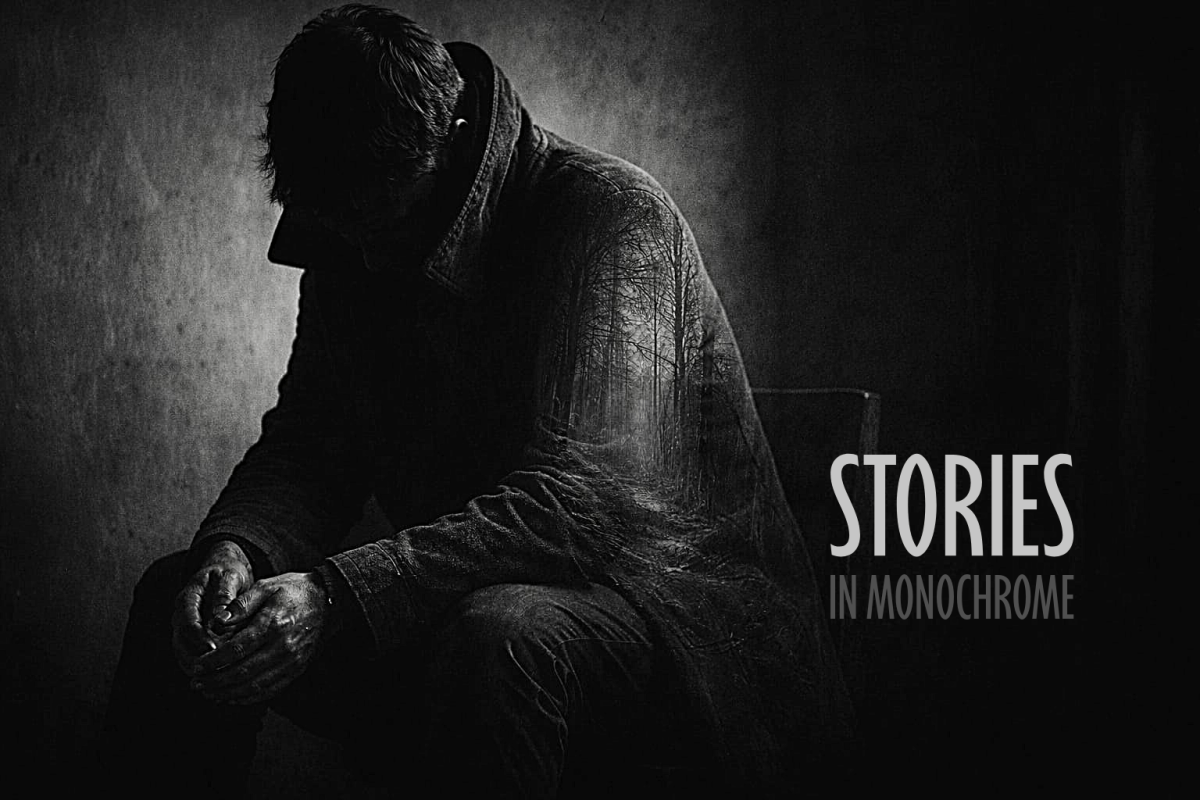

For fifty-three years, Felix Gold had sold other people the news.
He had done it from the same green-painted newsstand on the corner of Mercer and Forty-Second, a narrow metal box wedged between a subway entrance and a building that had changed names so many times Felix had stopped bothering to remember what was written above the revolving doors. When he first opened the stand, newspapers arrived in bundles heavy enough to make his shoulders ache, tied with coarse twine that left red grooves across his fingers in winter. Men bought the morning edition on their way to work and returned for the midday paper because twelve hours was apparently too long to wait for the world to misbehave again. Cigarettes sat behind him in neat rows. Candy bars occupied the counter. Magazines hung from clips overhead, their glossy covers promising beautiful women, faster cars, political scandals, better marriages, and abdominal muscles Felix had never possessed and had managed to live quite happily without.
The city had changed around him while the newsstand remained stubbornly itself.
Buildings rose. Stores disappeared. A coffee shop became a bank, which became a pharmacy, which became an empty storefront with brown paper taped across its windows. Subway tokens vanished. Pay phones vanished. Men who once stopped every morning to complain about the Yankees eventually sent their sons, then their daughters, then nobody at all. People stopped carrying coins. Then cash. Then, increasingly, newspapers. They walked past Felix staring into glowing rectangles held inches from their faces, receiving the world’s disasters before he could cut the twine from the morning bundles.
Felix adapted where he could.
He sold bottled water.
Phone chargers.
Lottery tickets.
Cheap umbrellas that turned inside out whenever the wind developed an attitude.
He even learned how to use the little card reader his granddaughter installed beside the register, though he continued glaring suspiciously at it every time someone paid by tapping a telephone against the machine.
There were limits to progress.
At seventy-eight, Felix had begun discovering limits of another kind.
His knees announced rain before the meteorologists did. His right hand sometimes refused to close completely around a coffee cup until he’d worked the stiffness from his fingers. Carrying the newspaper bundles from the delivery truck had become an exercise in negotiation between pride and vertebrae, and lately the vertebrae had been winning. The six concrete steps from the subway platform felt steeper every evening. His apartment seemed farther from the station than it had ten years earlier, though Felix knew perfectly well the city hadn’t moved his building during the night simply to inconvenience him.
Still, each morning at five-thirty, he lifted the corrugated steel shutter.
The metal screamed along its track.
Felix understood the sentiment.
He brewed coffee on a hot plate older than some of his customers, arranged the papers, checked the lottery display, and settled onto his stool while the city woke around him in layers: garbage trucks grinding their way through intersections, buses exhaling at curbs, delivery carts rattling over pavement, horns beginning their daily arguments, the subway breathing warm metallic air through the stairwell beside him.
And every morning Felix told himself the same thing.
Maybe Christmas.
Christmas became spring.
Spring became his birthday.
His birthday became Labor Day.
There was always another reasonable date upon which a man could stop doing something he’d done for more than half a century.
The problem wasn’t money. Felix had enough, provided he didn’t suddenly develop expensive tastes or decide to buy a racehorse.
The problem was page six.
The first one appeared seventeen years earlier.
Felix remembered the date because Miriam had still been alive.
It had been a Tuesday in February, bitter enough that the wind sliced between buildings and found every opening in a man’s coat. Felix was flipping through the midday edition while eating pastrami on rye when he found a small article halfway down page six.
No headline.
No photograph.
Just four paragraphs describing a freighter trapped in ice somewhere north of Greenland.
Felix almost skipped it.
Then he read the name of the captain.
Samuel Gold.
His father.
Felix stared at the print until mustard slid from the sandwich onto his thumb.
Samuel Gold had never captained a ship. The man sold furniture in Queens and became seasick crossing the Hudson. He had been dead twenty-nine years.
Yet the article described him standing on the deck of the Mercy Bell beneath green northern lights while his crew searched for a passage through ice “older than human sorrow.”
Felix read it three times.
Then he laughed.
A printing error.
Some writer having fun.
Maybe another Samuel Gold.
He brought the paper home anyway.
Miriam read the article after dinner.
She didn’t laugh.
“Your father used to talk about Greenland,” she said.
Felix looked up.
“What?”
“When he was sick. Near the end. He kept saying he dreamed about a green sky.”
Felix felt something cold move beneath his ribs.
The next morning, he checked page six.
Nothing.
Two weeks later another appeared.
A woman named Celia Ramos discovered a staircase beneath her apartment building that descended seventeen floors farther than the building itself.
Three months later, a retired schoolteacher boarded a bus in Brooklyn and arrived in Prague twelve minutes later without crossing an ocean.
Then came the boy who found summer inside an abandoned refrigerator.
The widow whose dead husband telephoned every Thursday at 3:17 but never spoke.
The barber who discovered that one customer’s hair grew backward through time.
They were never more than a few paragraphs.
Never advertised on the front page.
Never mentioned in the table of contents.
Felix began checking other copies.
The stories weren’t there.
Only his.
He tried swapping newspapers before opening them. Tried taking the third copy from a bundle. The seventeenth. Once, feeling particularly clever, he asked a customer to choose one for him.
Page six waited.
He stopped trying to explain it.
Eventually, he stopped wanting an explanation.
The stories became part of his day.
His private adventure.
For seventeen years, Felix traveled farther sitting on a wooden stool inside a six-foot newsstand than most people traveled in a lifetime.
Then Miriam died.
Afterward, page six changed.
The stories became gentler.
A woman discovered that every snowfall contained one memory from someone she had loved.
An old man found his childhood dog waiting outside a grocery store forty years after burying him.
A widower heard his wife’s voice coming from an unplugged radio, complaining that he still hadn’t fixed the kitchen faucet.
Felix laughed so hard at that one he cried.
Miriam had complained about the same damned faucet.
He never told anyone about page six.
Some things became smaller when explained.
Some became ridiculous.
Some belonged only to the person fortunate enough to encounter them.
So Felix kept opening the stand.
Kept selling newspapers.
Kept climbing subway stairs on knees that increasingly objected to the arrangement.
Until Thursday.
The midday edition arrived at eleven-forty.
Felix waited until the lunch rush passed before pulling his copy from the stack. His fingers trembled slightly as he opened it, though whether from age or anticipation he couldn’t say.
Page six contained only one paragraph.
Felix read it.
Then read it again.
For the first time in seventeen years, he wished the page were blank.
After fifty-three years operating a newsstand at Mercer and Forty-Second, Felix Gold closed the steel shutter for the final time at 6:14 p.m. Thursday. He took the downtown train home, fell asleep between stations, and missed his stop.
That was all.
No explanation.
No adventure.
Felix checked the clock.
12:07.
For the rest of the afternoon, he considered leaving early.
At five, he nearly did.
At six, he stood inside the cramped newsstand listening to rain begin tapping against the metal roof. The familiar smells surrounded him: old paper, coffee burned down to tar, wet pavement, tobacco that hadn’t actually been sold there in years but somehow remained embedded in the walls.
At 6:13, Felix placed his hand on the shutter.
He could stay open.
One minute.
That was all it would take.
He almost laughed at himself.
Seventeen years of impossible stories and apparently Felix Gold had learned nothing except how quickly a man could become superstitious.
At 6:14, he pulled the shutter down.
The lock clicked.
The sound felt strangely final.
On the train, Felix chose his usual seat beside the door. Rainwater glistened on his coat. His feet hurt. His knees throbbed. The fluorescent lights hummed overhead while the carriage rocked through darkness with the familiar metallic rhythm he had heard thousands of times.
Felix rested his head against the wall.
Across from him, someone had abandoned a newspaper.
Midday edition.
He smiled.
“Of course.”
He reached for it.
Page six was blank.
Felix stared at the empty paper.
Then the train entered a tunnel.
The lights flickered.
Once.
Twice.
When they returned, Felix was no longer alone.
A woman sat across from him wearing the blue wool coat she had been buried in.
Her hair was pinned the way she wore it when they first met. Her hands rested patiently in her lap. She looked neither young nor old. She simply looked like Miriam, which was somehow more impossible than anything page six had ever shown him.
Felix couldn’t speak.
Miriam smiled.
“You missed your stop.”
His throat tightened.
“I know.”
“You always were stubborn.”
Felix looked toward the dark window. His reflection stared back at him: seventy-eight years, tired eyes, gray stubble, shoulders bent beneath fifty-three years of mornings.
Beside his reflection sat hers.
He closed his eyes.
For the first time in decades, Felix Gold didn’t care where the train was going.
When he opened them again, Miriam was gone.
The carriage was crowded.
Someone stood near the door scrolling through a phone. A woman held a sleeping child. Two teenagers argued quietly through earbuds. The train slowed into a station Felix recognized.
His station.
Felix stepped onto the platform.
In his coat pocket, something crackled.
The newspaper.
He didn’t remember taking it.
Felix opened to page six.
A new sentence waited beneath the first.
Tomorrow morning, Felix Gold slept until nine-thirty.
Felix read it twice.
Then he began laughing.
Not because it was funny.
Because after fifty-three years of selling everybody else’s news, Felix had finally received permission to stop being part of it.
He folded the paper beneath his arm and climbed the stairs toward home.
Tomorrow, he decided, he would sleep late.
After that…
Well.
He’d wait for the midday edition.
Discover more from Memoirs of Madness
Subscribe to get the latest posts sent to your email.


This is great Mangus.
LikeLike
Hiw absolutely 😊 delightful
LikeLike