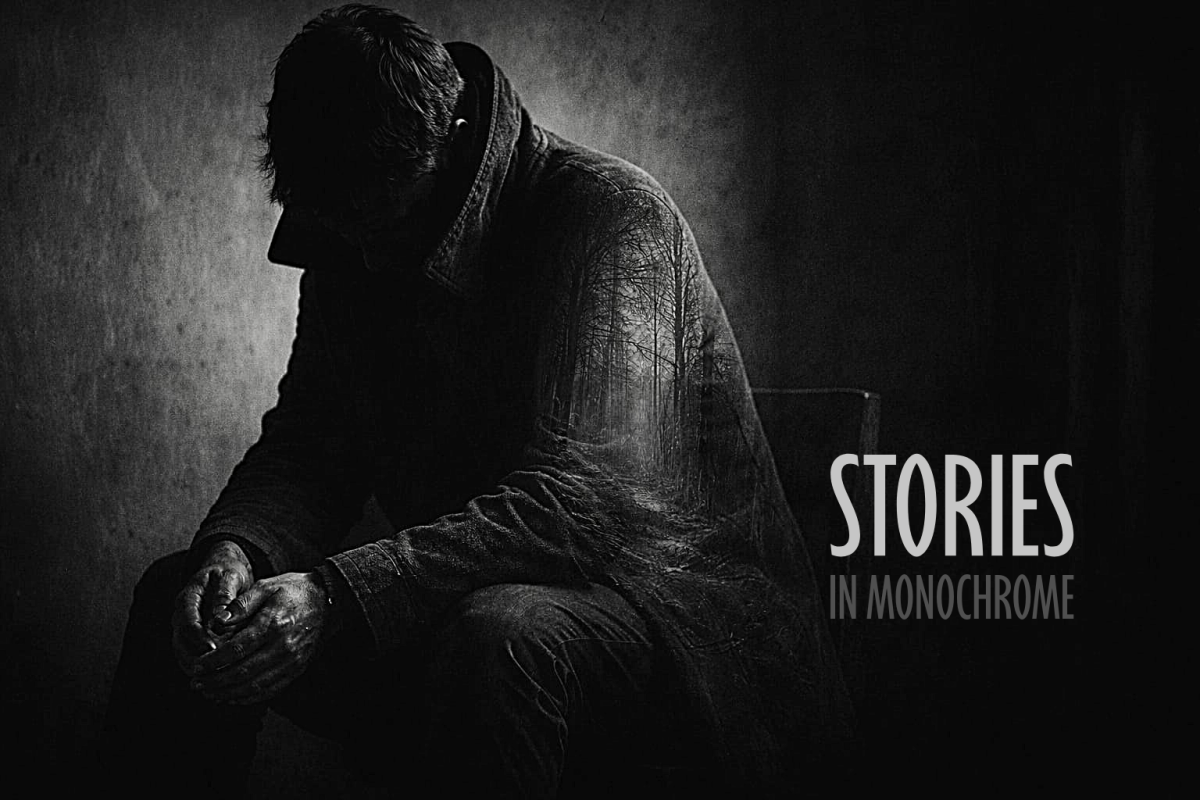

There are libraries built to preserve knowledge. There are archives built to preserve history. Then there are places built for things the world was never meant to remember.
No map marked the entrance.
No government acknowledged its existence.
Even the oldest churches omitted any mention of the stone staircase hidden beneath the city’s oldest cemetery, where weathered headstones leaned toward one another like conspirators sharing secrets older than language. Moss swallowed names that had long ago surrendered to rain, while twisted roots gripped the earth with the stubborn patience of things that had watched civilizations arrive and disappear. Those who wandered too close after midnight occasionally spoke of hearing voices beneath their feet—not loud enough to understand, only enough to convince themselves the wind had learned to imitate grief.
By morning they always dismissed it as imagination.
They never returned after dark.
The Keeper preferred it that way.
He could no longer remember when he had first descended the worn stone steps or whether he had ever climbed back into daylight. Time behaved differently beneath the earth. It pooled instead of flowing, collecting quietly inside endless corridors where candlelight never quite reached the ceiling. The air carried the scent of ancient parchment, damp limestone, beeswax, cedar shelves polished by centuries of careful hands, and something else that no language had ever adequately named. It was the smell left behind when a memory refused to die.
The library stretched beyond sight.
Shelves climbed into darkness like cathedral columns, each one filled not with books but with carefully labeled glass vessels. Thousands upon thousands rested in perfect order, their crystal walls illuminated from within by pale threads of living light. Suspended inside every jar floated a human face, neither entirely flesh nor entirely spirit, formed from luminous strands that drifted like smoke trapped beneath glass. Some faces appeared peaceful, their eyes closed as though dreaming. Others stared outward with quiet sorrow. A few still carried expressions of wonder, terror, forgiveness, or disbelief—as if the final emotion they had ever known had become permanent.
None of them spoke.
Not while they were being watched.
The Keeper moved slowly through the aisles carrying a brass lantern in one hand and a square of linen in the other. His joints protested each step with familiar aches that had become companions long ago. His beard, white as winter ash, spilled across the front of his dark robes, and his fingers bore the permanent stains of ink, candle soot, and time. Every evening, without fail, he polished the glass one vessel at a time, removing dust that somehow settled even in a place untouched by seasons.
He knew every shelf.
Every crack in the stone.
Every flicker of every lantern.
He knew precisely where each vessel belonged.
More importantly…
He knew why they could never be moved.
As his cloth circled the smooth glass of a nearby vessel, the face inside slowly opened its eyes.
The Keeper smiled.
“Good evening, Eleanor.”
The woman looked back at him, her features softening with quiet recognition. She did not speak. None of them ever truly did. Instead, delicate ripples of white light drifted through the vessel like ink dissolving into clear water. The Keeper understood the language instinctively. It was not made of words but of feeling—regret, relief, gratitude, longing—all flowing together until they became something larger than speech.
“You still remember your son,” he whispered. “That’s good.”
The light brightened briefly before settling again.
He carefully returned Eleanor to her place among hundreds of others.
Each vessel held only one thing.
Not a soul.
Not a ghost.
Only the final memory its owner had refused to surrender before death.
Some preserved first loves.
Others contained promises left unfulfilled, songs never finished, children never held, apologies never spoken, names history had erased, and moments of courage witnessed by no one except the dying heart that carried them.
The Keeper had learned long ago that people rarely clung to their happiest memories.
They clung to the unfinished ones.
The ones that still hurt.
Those possessed the strongest roots.
Those were the hardest to release.
Some nights, when the candles burned low and the silence settled heavily between the shelves, the memories shimmered together like distant constellations. Thousands of forgotten lives illuminated the cavern with a pale glow that neither warmed nor chilled the air. The Keeper often stood among them for hours, listening to their quiet radiance, wondering if memory itself had a heartbeat.
Then he reached the northern wall.
His hand froze.
One vessel was missing.
Not shattered.
Not misplaced.
Gone.
The empty space stared back at him like a missing tooth.
The brass plaque beneath the vacant shelf bore no name.
Only a single word engraved so deeply it seemed older than the metal itself.
RETURNED
The linen slipped from his fingers.
For the first time in longer than he could remember…
The Keeper was afraid.
Because vessels did not disappear.
They did not leave.
They did not return.
And if one memory had found its way back into the world above…
Then somewhere beneath the same moon hanging over the city, someone was walking through the streets carrying a memory humanity had buried centuries ago.
Behind him, a single jar chimed softly against its shelf.
Then another.
Then another.
One by one, thousands of vessels awakened.
The Keeper turned slowly.
Every face inside the library had opened its eyes.
And for the first time since he could remember…
They were no longer looking at him.
They were looking toward the staircase.
As though they knew someone was coming.
Discover more from Memoirs of Madness
Subscribe to get the latest posts sent to your email.


This is riveting Mangus.
LikeLike
Fantastic story, Mangus!
LikeLike
Fascinating, enervating, delightful, intriguing, suspenseful, lovely! Well written!
LikeLike