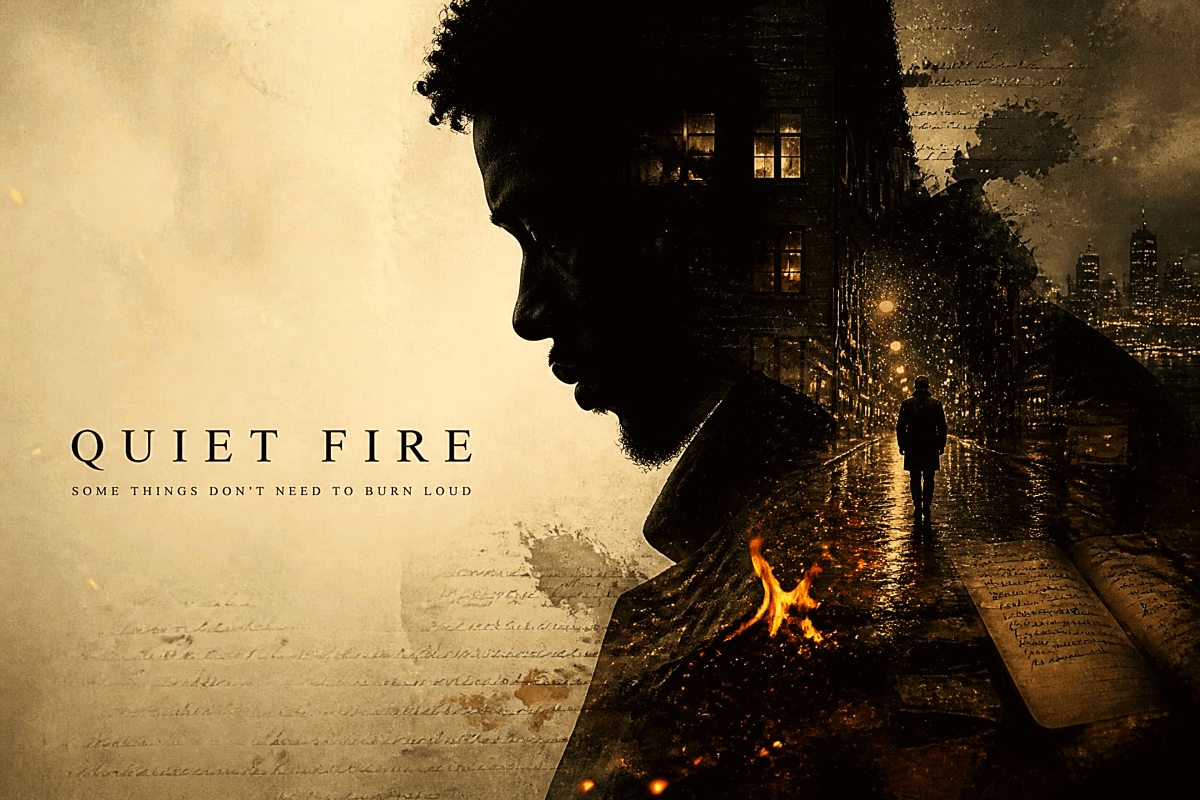
By day fourteen of the contest, the blank screen started feeling personal.
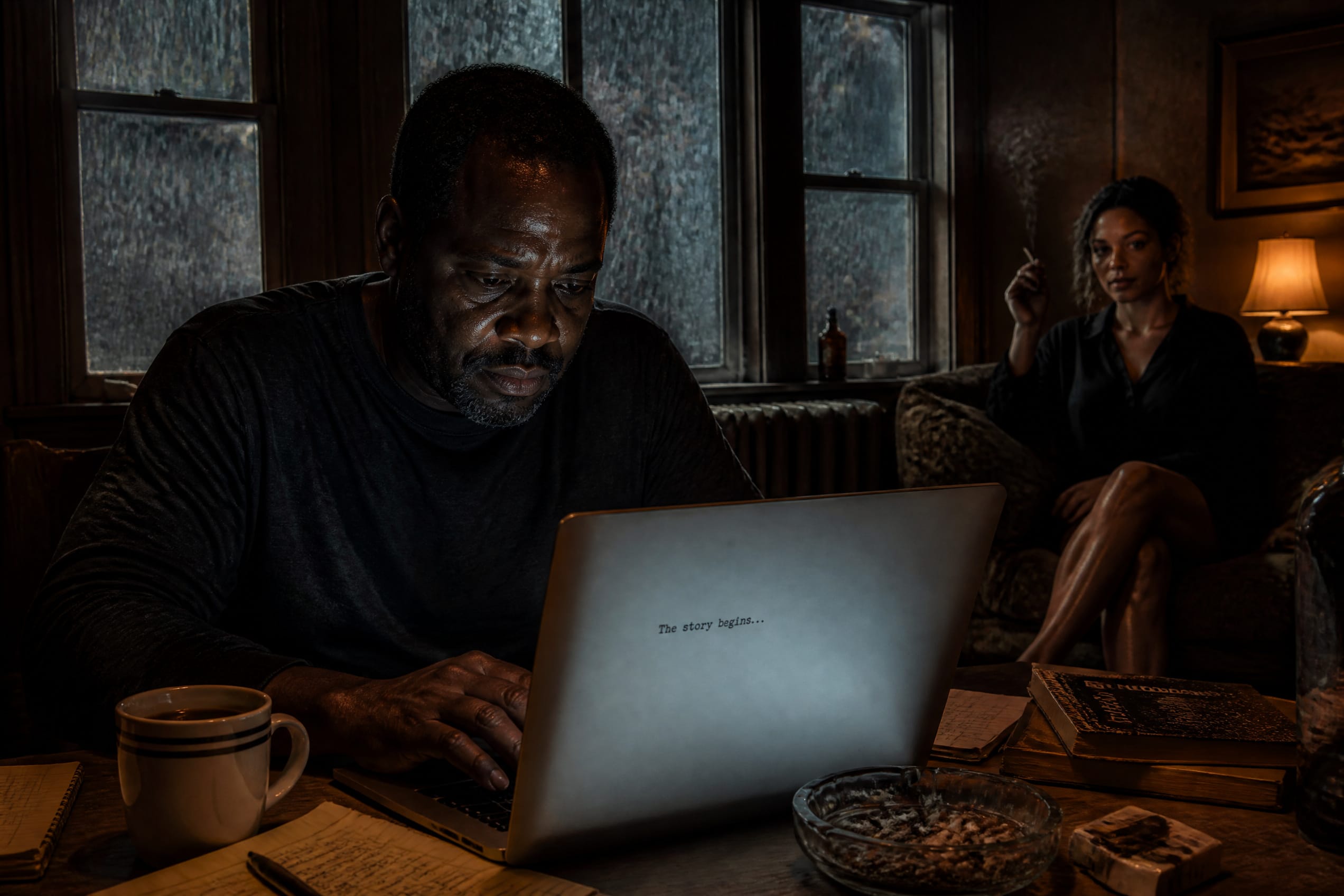
The cursor blinked patiently in the center of the document while rain crawled down the farmhouse windows in slow crooked trails. Somewhere outside, wind dragged dead leaves across the porch with the dry scraping sound of bones shifting beneath dirt.
I stared at the screen.
The screen stared back.
Nothing.
Not a sentence worth saving.
Not a thought worth lying about.
Just me sitting there in an old farmhouse in the middle of nowhere pretending I still knew how to do this.
One thousand words a day.
That had been her idea.
“You need quiet,” she’d said two weeks earlier while stuffing clothes into an overnight bag. “No internet distractions. No people. No noise. Just write.”
At the time, it sounded almost romantic.
Now it felt like court-ordered therapy for a man too stubborn to admit he’d stopped believing in himself years ago.
The house smelled faintly of cedar, old dust, radiator heat, and cigarette smoke baked deep into the walls from people long gone. Every room creaked differently. The kitchen faucet whined whenever the pipes kicked on. At night, the wind slipped through the loose window frames carrying the cold wet smell of rain and dying fields.
I should’ve loved it.
Writers were supposed to love places like this.
Silence.
Isolation.
Rustic charm.
Instead, it just made me aware of every empty room inside my own head.
Seven years.
That was the number I kept trying not to think about.
Seven years since writing stopped feeling alive.
Sure, I still produced things. Articles. Stories. Fragments stitched together well enough to fool readers who wanted to be fooled. Every now and then somebody online still called me brilliant, which mostly made me feel tired now.
People confuse consistency with fire.
They aren’t the same thing.
Behind me, ice clinked softly inside a glass.
I closed my eyes.
Part of me already knew what she was going to say before she said it.
“You’re grinding your teeth again.”
Her voice drifted through the room low and calm.
Familiar enough to hurt.
I turned toward the couch.
She sat sideways beneath the amber glow of an old floor lamp wearing one of my black button-down shirts with the sleeves rolled to her elbows. One bare foot rested beneath her while the other swung slowly over the edge of the cushion. A cigarette burned lazily between her fingers despite the promise she’d made three months ago to quit.
An ashtray overflowing with failed attempts sat beside her knee.
The television flickered silently in the corner playing some old black-and-white detective movie neither of us had been paying attention to for the last hour.
“You haven’t written anything in twenty minutes,” she said.
“I wrote six words.”
“That’s not writing.” She took a sip from her drink. “That’s decorating a hostage situation.”
I laughed harder than the joke deserved.
Mostly because I needed the relief.
She smiled a little when I did, but it faded quickly around the edges.
That was the thing people never tell you about long relationships.
You eventually learn how to recognize each other’s fear even when it’s disguised as patience.
Outside, thunder rolled somewhere far across the fields.
I rubbed both hands over my face. My eyes burned from staring at the screen too long. Cold coffee sat abandoned beside the laptop, thick and bitter enough to strip paint.
“I think I’m out of things to say,” I admitted quietly.
The words settled heavily between us.
She didn’t answer right away.
That scared me more than if she had.
Finally, she stubbed the cigarette into the ashtray and leaned forward, elbows against her knees.
“You know what your problem is?”
“Several therapists failed to narrow that list down.”
A small laugh escaped her nose.
But again, only briefly.
“You keep waiting for writing to feel the way it used to.”
I looked back toward the screen.
Maybe she was right.
Maybe that was the real trap.
I still remembered what the old days felt like — the rush, the obsession, the strange electric moment where the world disappeared and the words arrived faster than my fingers could keep up. Back then writing felt dangerous in the best possible way. Like stepping too close to fire just to prove you could survive the heat.
Now it mostly felt like maintenance.
Like checking emotional smoke detectors in an empty building.
Rain struck harder against the windows.
“You wanna know something awful?” I asked.
“What?”
“I think I miss being miserable enough to write well.”
The silence after that felt older than the farmhouse itself.
She looked down at the drink in her hands before speaking.
“That’s bullshit.”
I frowned slightly.
“You don’t miss misery,” she said softly. “You miss believing the misery meant something.”
That one landed clean.
Straight between the ribs.
I looked away from her because suddenly the room felt too warm.
The radiator hissed softly beside the wall. Somewhere upstairs, old floorboards popped and settled. Wind moved through the trees outside in long restless breaths.
“You know what I think?” she asked.
“What?”
“I think you’re terrified.”
“Of what?”
Her eyes met mine then.
Not dramatic.
Not seductive.
Just tired and honest.
“That if you stop writing,” she said quietly, “there won’t be enough left of you for either of us.”
Something inside me shifted painfully at that.
Because the worst part was…
I’d been thinking the exact same thing for years.
I watched her reach for another cigarette before stopping herself halfway. Her hand hovered there awkwardly for a second before falling back into her lap.
Tiny moment.
Human moment.
For some reason, that nearly destroyed me.
The room suddenly felt unbearably intimate.
The old farmhouse.
The rain.
The silence.
The years between us.
All of it sitting there exposed beneath cheap yellow lamplight.
“I’m trying,” I said finally.
“I know.”
And she did.
That was the problem.
She knew exactly how hard I was trying to hold together the version of myself we both missed.
The wind rattled the windows again.
Then she stood up quietly and crossed the room barefoot.
The floor creaked beneath her weight.
She stopped beside my chair and rested her hand gently against the back of my neck.
Not seductive.
Not manipulative.
Just there.
Warm.
Human.
Real.
“You don’t need a masterpiece tonight,” she murmured. “You just need one honest sentence.”
I swallowed hard.
The cursor still blinked patiently against the empty page.
Waiting.
Outside, leaves spiraled wildly across the porch beneath the storm winds.
Inside, I placed my hands back on the keyboard while her fingers rested lightly against my skin.
Then finally—
the words came.
Not fast.
Not violent.
Not magical.
Just honest.
And maybe that was enough.
Discover more from Memoirs of Madness
Subscribe to get the latest posts sent to your email.


This is beautifully restrained and emotionally sharp. The silence almost becomes a character in itself. The blinking cursor, the farmhouse, the rain, all reflecting that internal standoff between burnout and belief. Great work Mangus!
LikeLike
By day fourteen of the contest, the blank screen started feeling personal Instead, it just made me aware of every empty room inside my own head. You made this so very real, I loved the screen reference….It’s true in my experience. 🙂 just saying.
LikeLike