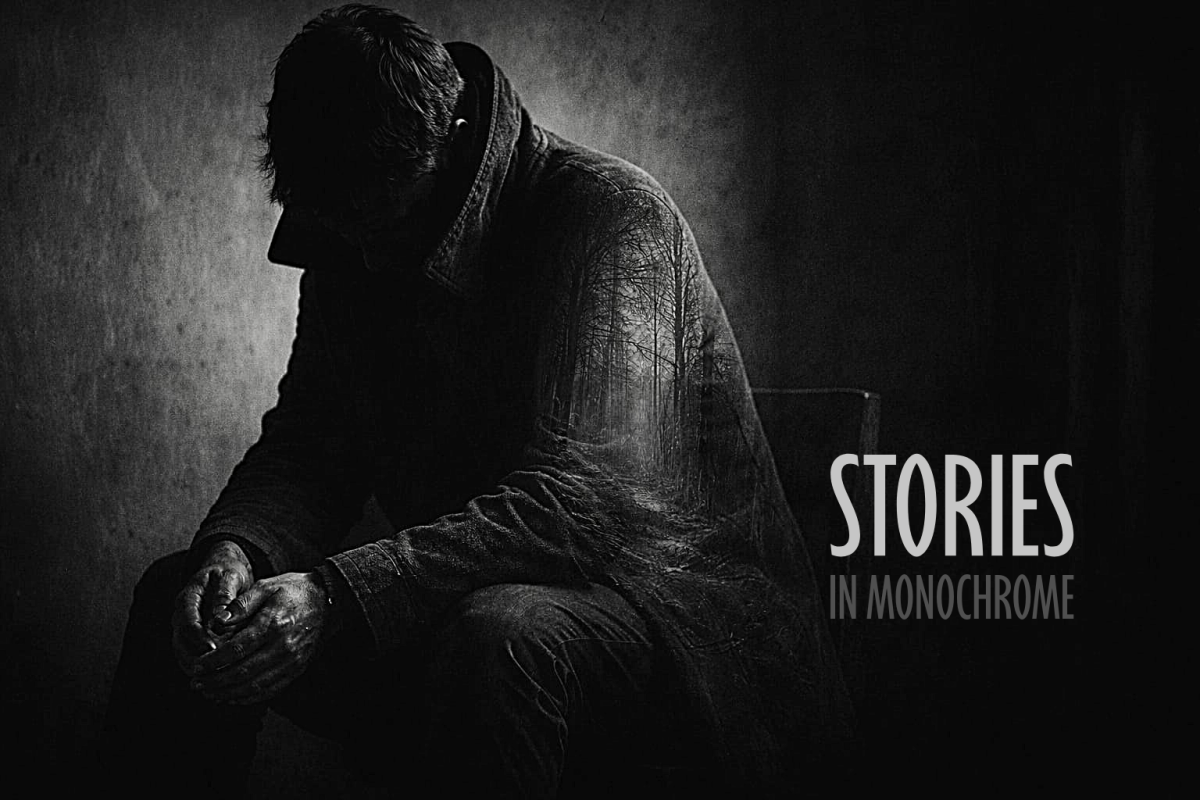

The city looked softer in black and white.
That was the lie movies told.
Rain blurred the edges. Cigarette smoke drifted through jazz clubs like memory trying to become visible. Moonlight polished the streets silver and turned loneliness into something almost elegant. In old films, people suffered beautifully. Their heartbreak arrived beneath orchestras and perfect lighting. Even despair looked rehearsed.
Real despair smelled like wet wool and old cigarettes.
Real loneliness sounded like radiators knocking inside empty apartments at three in the morning.
The city was not soft.
It was sharp.
Sharp enough to carve years out of people without leaving visible wounds.
She learned that young.
Back when men stopped talking when she entered rooms. Back when photographers asked her to tilt her chin toward the light because sorrow seemed to resonate differently in her face. Back when newspapers printed her name beside words like radiant, promising, capable.
Funny how newspapers never print the endings of things.
They never mention the slow erosion afterward. The years that arrive after applause dies. The quiet rituals of removing makeup alone while staring into mirrors that no longer return the same woman.
Rain gathered in the seams of her gloves as she stood beneath the leaking Paramount marquee. Neon buzzed overhead in weak electrical pulses, washing the sidewalk in pale trembling light. Across the street, puddles held fractured reflections of taxis and theater signs like broken pieces of another life.
Somewhere nearby, a saxophone spilled from an open club door.
Slow.
Wounded.
The kind of music that sounded like it already knew how every story ended before the first drink was poured.
She closed her eyes briefly and let it settle into her bones.
There was a time she believed art could rescue people.
Music.
Books.
Movies.
Love.
Back then she thought brokenness was temporary. Something healed cleanly if someone cared enough. She used to sow pieces of herself into every role she played, believing audiences would somehow love the truth buried inside the performance.
But crowds do not love truth.
They love reflection.
They love illusion.
They love beauty until beauty begins reminding them of time.
A man in a gray overcoat passed carrying newspapers beneath his arm. He glanced at her twice—not because he recognized her, but because something about her face stirred an old feeling inside him. Like hearing half of a forgotten song through another room.
That happened more often now.
Recognition without memory.
Echoes without names.
Like film reels left too long in dusty theaters, flickering fragments surviving after the story itself disappeared.
She moved toward the train station slowly, heels clicking against rain-dark pavement. The sound bounced off the buildings and returned smaller each time. The city had a way of reducing everything eventually.
Dreams.
Beauty.
Voices.
Even love.
The station platform waited beneath fluorescent lights humming with exhaustion. Empty except for a sleeping drunk curled around a paper bag and a young soldier staring toward tracks disappearing into fog.
The air smelled of wet concrete, machine oil, cigarette smoke, and rainwater trapped underground for decades.
She sat near the edge of the platform and crossed her legs carefully, smoothing invisible wrinkles from her gloves.
Habit.
Even now, some part of her still tried to restrain the appearance of falling apart.
That was the strange thing about dignity.
People cling to it hardest when life gives them the least reason to.
The soldier glanced over nervously. Young face. Tired eyes. Probably headed toward a war or away from one. Hard to tell anymore. War leaves the same look either direction.
“You waiting on someone?” he asked.
She smiled faintly.
“No,” she said. “I think I’m waiting on a version of myself.”
The young man laughed softly, uncertain whether she meant it.
Most people never know what to do with honesty when it arrives without warning.
Rainwater dripped steadily from the station roof. Somewhere beyond the skyline thunder rolled low enough to feel beneath her ribs. The sound reminded her of old studio backlots where stagehands shook giant sheets of metal to fake storms for romance pictures.
Even thunder used to be pretend once.
She thought about the apartment waiting for her.
If you could call it waiting.
Dust sleeping across piano keys untouched for years.
Old dresses hanging in the closet like ghosts refusing eviction.
Film reels stacked beside the wall in silver canisters slowly gathering rust.
Proof.
That’s all memory becomes eventually.
Proof you once existed differently.
She could still remember the heat of studio lights against her skin. Powder brushes against her cheeks. Directors barking instructions while pretending panic was authority. Men arriving with flowers they never intended to mean sincerely.
Back then people mistook attention for affection.
She did too.
The cruelest thing fame ever taught her was how quickly admiration turns cold once youth stops feeding it.
Outside the station, headlights drifted through rain like tired spirits moving underwater.
The soldier stood as a train emerged faintly through the fog.
“Guess that’s mine,” he said.
She nodded once.
“Good luck.”
He hesitated before boarding.
“You too.”
The doors folded shut behind him with a tired metallic groan. Moments later the train disappeared into darkness, swallowed whole by rain and distance.
She remained seated.
Still waiting.
Not for rescue anymore.
Not for love.
Not even for the past.
Just for the ache inside her to stop sounding like an empty station after midnight.
A moth fluttered near one of the overhead lights, striking the glass again and again until pale dust drifted from its wings.
She understood the instinct.
Some people spend their entire lives flying toward things capable of destroying them simply because the light looked beautiful from far away.
The city breathed around her.
Jazz drifting through wet streets.
Neon trembling against puddles.
Rain tapping softly against iron rails.
And somewhere between memory and shadow, she finally understood something that took her entire life to learn:
People don’t always survive the lives they once dreamed of.
Sometimes they simply learn how to carry the ruins gracefully.
And sometimes, if they are lucky, they learn how to restrain themselves from mistaking survival for living.
Discover more from Memoirs of Madness
Subscribe to get the latest posts sent to your email.


Wonderfully descriptive Mangus. We’ve seen the scene a million times in our own lives
Thanks for joining in RDP, sorry for the delay in replying
LikeLike
Thanks for including the 3TC Mangus. I was on the platform with her. Great piece of writing.
LikeLike
You painted an achingly real and painful moment. One I believe everyone has faced at some time or other. You must have faced it in order to write it. And you must have faced it to understand it.
LikeLike
Another truly compelling story, Mangus.
LikeLiked by 1 person
thanks, Fandango
LikeLike
that pairs well with your piece on the Orwell quote.
LikeLiked by 1 person
thanks, Ted
LikeLiked by 1 person
Very moving story
LikeLike
“Some people spend their entire lives flying toward things capable of destroying them simply because they looked beautiful from far away.” That is a truth and a half! A line that could find its way into every biography.
LikeLike