Why Women’s Day March Matters: A Global Perspective

ARTICLE – MINI BIO

Women’s Day March: More Than Just a Hashtag

Let’s talk about the Women’s Day March. You know, that annual event where millions of people worldwide take to the streets, wave signs, chant slogans, and, if history is any indication, thoroughly annoy certain politicians and social media trolls. But this isn’t just a performative stroll in comfy sneakers—it’s a global movement that has been shaking things up for over a century.

The Origins: From Protests to a Global Holiday

Back in the early 1900s, women weren’t just fighting for a cute photo op; they were demanding the right to work in decent conditions, vote, and hold public office—basic stuff that, shockingly, was considered radical. The first National Women’s Day in the U.S. (1909) was organized by the Socialist Party of America, inspired by the 1908 garment workers’ strike. Then, Clara Zetkin, a German socialist, decided in 1910 that the world needed a dedicated International Women’s Day. Boom—March 8th became the day to make noise. Today, International Women’s Day is observed globally on this date, with some countries even recognizing it as a public holiday, including Russia, China, and several nations across Eastern Europe and Central Asia.

Things escalated quickly. In 1917, women textile workers in Petrograd kicked off protests that led to the Russian Revolution (as one does). By 1975, the United Nations decided to get in on the action, officially recognizing International Women’s Day, probably realizing it wasn’t just going to disappear.

The Evolution: Expanding the Fight

Fast forward to the mid-20th century: the feminist movement expanded beyond suffrage and workplace rights to tackle issues like reproductive freedom, domestic violence, and workplace discrimination. This shift was fueled by legal battles (think Roe v. Wade in the U.S.), cultural shifts (hello, second-wave feminism), and high-profile activism that pushed these issues into the mainstream. Women weren’t just asking nicely anymore—they were suing, protesting, and demanding systemic change. By the late 20th century, marches started embracing an intersectional approach, recognizing that gender inequality doesn’t exist in a vacuum—it intersects with race, class, sexuality, and even environmental justice (hello, ecofeminism!).

Then came 2017. The Women’s March, sparked by the U.S. presidential election, saw millions of people worldwide rallying against threats to reproductive rights, gender equality, LGBTQ+ protections, and racial justice, all while making it clear that misogyny wasn’t going to be tolerated in silence. It reminded everyone that women’s marches weren’t just nostalgic history lessons—they were alive, global, and louder than ever.

Why We Still March

Women’s Day marches are more than just a moment to wear purple and wave a sign. They’re about real issues that persist:

  • Gender-based violence: Because we’re still fighting for a world where “No” actually means “No.”
  • Equal pay: Somehow, decades after “equal pay for equal work” became a slogan, it’s still a debate.
  • Reproductive rights: Because certain lawmakers love to remind us that controlling women’s bodies is apparently their favorite pastime.
  • Workplace rights: Paid maternity leave, fair treatment, and not being harassed in the office—what a concept!
  • Representation: More women in politics and leadership? Groundbreaking, right?

Global Perspectives: Different Marches, Different Struggles

Women’s Day marches aren’t one-size-fits-all. Some places host massive, colorful protests. Others… well, they get government pushback or even outright bans—like in Russia, where feminist activism faces heavy restrictions, or Iran, where women protesting for basic rights risk arrest. In places like Turkey, marches are often met with riot police, and in China, feminist organizers frequently find themselves censored online and monitored by authorities. Clearly, not every government is a fan of gender equality making too much noise.

  • Latin America: These marches are huge and often laser-focused on gender violence (femicide rates there are horrifying). Argentina’s “Ni Una Menos” movement? Game-changing.
  • Europe: Economic rights, work-life balance, and political representation dominate the agenda. Spain has even organized feminist strikes—because why march when you can shut the whole system down?
  • Asia: From Pakistan’s controversial Aurat March to South Korea’s fight against beauty standards, these protests are taking on deeply ingrained cultural norms.
  • Middle East & North Africa: Feminists are up against oppressive laws, but marches still happen in places like Tunisia and Lebanon, where women demand reforms.
  • U.S.: Women’s Day was once overshadowed by its socialist roots (Cold War paranoia, anyone?). Because it was originally championed by socialist and communist movements, many in the U.S. viewed it with suspicion during the height of anti-communist hysteria. But in recent years, it’s grown, often centering around reproductive rights and political representation.

Social Media: Tool or Corporate Gimmick?

Thanks to digital activism, Women’s Day marches now reach millions beyond those physically attending. Hashtags spread messages globally, but there’s a downside: corporate “femvertising.” Yes, we see you, companies posting pink-washed empowerment quotes while paying women less than their male counterparts.

Impact: Does It Actually Change Anything?

Great question. While some argue that marches are just symbolic, history begs to differ. Take the 1913 Women’s Suffrage Parade in Washington, D.C.—a march that helped pave the way for the 19th Amendment, granting women the right to vote. Or consider the protests that fueled the passage of the Violence Against Women Act in 1994, providing protections and resources for survivors of domestic violence. When enough voices demand change, even the most stubborn institutions have to listen. Sure, walking with a sign won’t fix centuries of oppression overnight, but collective action has a way of making power structures nervous. Just ask the suffragettes who marched their way to voting rights, or the activists behind #MeToo, which reshaped workplace policies worldwide. When enough voices demand change, even the most stubborn institutions have to listen. And that’s always a good start.

Conclusion: Keep Marching

Women’s Day marches aren’t just tradition; they’re a battle cry, a demand for justice, and a refusal to stay silent. Until gender equality isn’t just an aspiration but a reality, we’ll keep marching, rallying, and making noise—because the world doesn’t change by waiting politely. Until gender equality is so ingrained that protests become obsolete, we’ll keep marching, raising our voices, and demanding change. So, see you in the streets—or at least online, amplifying the message.
Joy Mangano: The Inventor Who Changed Cleaning Forever

ARTICLE – MINI BIO

If you’ve ever waged war against a kitchen floor, armed with a flimsy, soggy mop that seems more interested in smearing dirt around than cleaning, you’ve probably muttered to yourself: There has to be a better way. Well, Joy Mangano didn’t just mutter—she got to work. She invented the Miracle Mop, a self-wringing, no-hand-dirtying, sanity-saving tool that turned her from a struggling single mom into a business mogul. And let’s be honest: if you’re going to be famous for something, making cleaning suck less is a pretty noble cause.

The Early Years: Before the Miracle Mop

Born on February 1, 1956, in Brooklyn, New York, Joy Mangano spent her childhood in Huntington, Long Island. Even as a teenager, she had a knack for problem-solving. Case in point: while working at an animal hospital, she had the brilliant idea for a fluorescent flea collar to keep pets visible at night. Unfortunately, Hartz beat her to market with something eerily similar. Did that crush her spirit? Nope. It just made her hungrier.

After earning a Business Administration degree from Pace University in 1978, Joy married Anthony Miranne and had three children. But life had other plans, and the marriage ended in divorce, leaving Joy to juggle single parenthood with a carousel of jobs—waitress, airline reservations manager, you name it. It was during this hectic period that her true entrepreneurial spirit took center stage.

The Miracle Mop: A Game-Changer

The legend of the Miracle Mop begins with something many of us know too well: an unholy mess. In 1990, during a dinner party, a guest spilled red wine all over her floor. As Joy wrestled with the sopping-wet, bacteria-breeding disaster that was a standard mop, she hit her breaking point. There had to be a better way.

So, she made one. Using her own savings (and likely a lot of caffeine-fueled nights), she designed the Miracle Mop: a self-wringing mop with a head made from a continuous loop of cotton. It could be wrung out without getting your hands dirty, and for anyone who’s ever gagged while touching old mop water, this was a revolution.

Of course, the road to success wasn’t smooth. Joy invested $100,000—her life savings—to produce her first 1,000 mops. Selling them door-to-door and at trade shows wasn’t exactly a Cinderella story; the response was slow. But Joy wasn’t about to back down. Her break came when she personally convinced QVC to let her demonstrate the mop on air. The result? She sold 18,000 mops in under 20 minutes. That moment didn’t just change her life—it cemented her as a home shopping legend.

From QVC to HSN: Building an Empire

After her smashing QVC debut, Joy became a regular on the Home Shopping Network (HSN). Her natural charisma and infectious enthusiasm made her a powerhouse. In 1999, she sold her company, Ingenious Designs, to USA Networks (HSN’s parent company). By 2000, the Miracle Mop alone was raking in $10 million annually.

But Joy wasn’t a one-hit wonder. She kept churning out wildly successful products, including the Huggable Hangers—yes, the space-saving velvet hangers that have somehow sold over 700 million units. (Seriously, how many closets even exist in the world?)

Her on-air sales? Absurd. At her peak, Joy was moving products at a pace of $1 million per hour. Forget the stock market—if you wanted real action, you tuned in to watch Joy Mangano sell hangers like they were going out of style.

Hollywood Comes Knocking: “Joy”

In 2015, Hollywood took notice. The biographical comedy-drama Joy, starring Jennifer Lawrence, hit the big screen. The film captured the essence of Joy’s relentless drive, though it took some creative liberties (like how she met her ex-husband—Hollywood, of course, had to make it more cinematic).

Regardless, the film highlighted her grit, her struggles, and the absolute circus that is inventing, marketing, and scaling a product. Jennifer Lawrence’s performance was so good that she snagged a Golden Globe and an Oscar nomination. Not bad for a movie about a mop, huh?

Lessons from Joy Mangano

Joy’s story isn’t just inspiring—it’s a masterclass in entrepreneurship. Here’s what we can learn:

  1. Act on Your Ideas – If you’ve ever had a “Why hasn’t anyone invented this?” moment, take a page from Joy’s book and actually do something about it.
  2. Persistence Pays Off – The woman literally went door-to-door to sell her mops. If she had given up at the first sign of rejection, we’d all still be squeezing dirty water out of mop heads like peasants.
  3. Bet on Yourself – She poured her savings into an idea that others doubted. That kind of belief in yourself is what separates dreamers from doers.

Joy Mangano Today: Still Innovating

You’d think after selling millions of products and getting a Hollywood movie, Joy would be kicking back with a cocktail somewhere tropical. Nope. She’s still inventing. In 2021, she launched CleanBoss, a brand focused on next-level cleaning products, and debuted America’s Big Deal, a reality competition show giving other entrepreneurs a shot at success.

Her legacy isn’t just about mops or hangers—it’s about resilience, creativity, and proving that even the most mundane frustrations (looking at you, dirty floors) can lead to something extraordinary.

Conclusion

Joy Mangano’s journey from single mom to self-made millionaire is proof that sometimes, success isn’t about grand, world-changing ideas—it’s about fixing everyday annoyances in a way no one else has. So, the next time you’re battling a stubborn mess, just remember: one woman got so fed up with cleaning that she built an empire.

Now, what are you doing with your frustrations?

Quote of the Day – 03112025

Quote of the Day – 03102025

Image

Quote of the Day – 03102024

Poem of the Day – 03092024

Expect Nothing by Alice Walker

Expect nothing. Live frugally
On surprise.
become a stranger
To need of pity
Or, if compassion be freely
Given out
Take only enough
Stop short of urge to plead
Then purge away the need.

Wish for nothing larger
Than your own small heart
Or greater than a star;
Tame wild disappointment
With caress unmoved and cold
Make of it a parka
For your soul.

Discover the reason why
So tiny human midget
Exists at all
So scared unwise
But expect nothing. Live frugally
On surprise.

Alice Walker

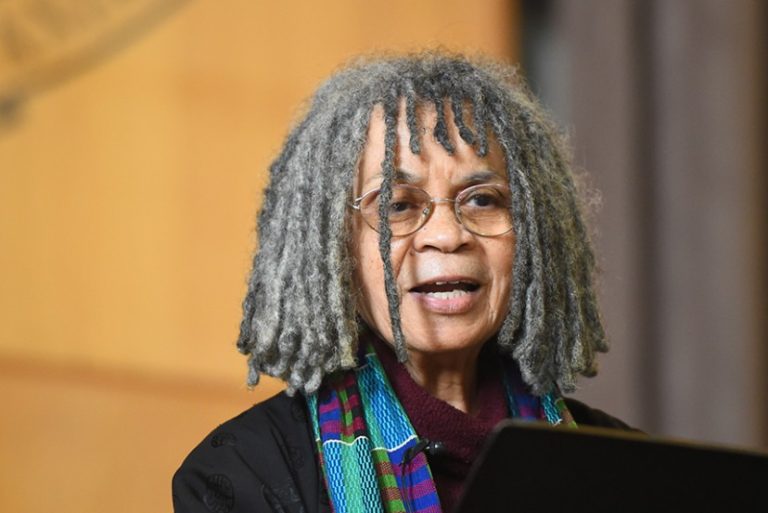
Sonia Sanchez: A Poetic Voice of Resistance and Empowerment

ARTICLE – MINI BIOGRAPHY – POET

When I started studying poetry, I couldn’t fathom its depth or impact. Most of the people I knew consistently named the same poets. The poets named depended on the group of people. Finally, I received my introduction to the Black Arts movement. Being Black, I was told this should be my area of concentration. This advice met my immediate dismissal. I have never liked to be told how or what to study.

As I studied the Black Arts movement, I discovered many of the same names I’ve always heard. Then I found someone seldom talked about. I found Sonia Sanchez. I read most of her work and instantly became a fan. So, ladies and gentlemen, my first profile for Women’s History Month is Sonia Sanchez. 


Sonia Sanchez stands as one of the most influential poets of the 20th and 21st centuries, renowned for her powerful voice, uncompromising activism, and unyielding commitment to social justice. As a leading figure of the Black Arts Movement and a pioneer of African American literature, Sanchez’s poetry transcends mere words, catalyzing change, healing, and transformation. This essay aims to explore the life, works, and enduring legacy of Sonia Sanchez, illuminating her profound impact on literature, activism, and the collective consciousness of humanity.

Early Life and Influences:

Sonia Sanchez was born Wilsonia Benita Driver on September 9, 1934, in Birmingham, Alabama, during a time of deep-seated racial segregation and oppression in the United States. Raised by her maternal grandmother and deeply influenced by her African heritage, Sanchez developed an early appreciation for storytelling, oral traditions, and the power of language to evoke emotion and effect change. Her formative years in the racially charged environment of the Jim Crow South instilled in her a profound sense of social justice and a determination to resist oppression through her art.

Literary Career and Contributions:

Sanchez’s literary career began to flourish in the 1960s amid the backdrop of the Civil Rights Movement and the emergence of the Black Arts Movement. Her early poetry collections, including “Homecoming” (1969) and “We a BaddDDD People” (1970), captured the spirit of resistance and empowerment, celebrating the resilience and beauty of the African American experience. Grounded in the oral tradition of African griots and jazz improvisation, Sanchez’s poetry pulsated with rhythm, imagery, and urgency, challenging readers to confront the realities of racism, sexism, and injustice.

As a prominent voice of the Black Arts Movement, Sanchez used her poetry to advocate for racial equality, gender liberation, and the empowerment of marginalized communities. Her seminal work “Sister Outsider: Essays and Speeches” (1984) explored intersections of race, gender, and sexuality, challenging prevailing norms and fostering solidarity among oppressed peoples. Through her activism and advocacy, Sanchez inspired generations of writers, activists, and artists to use their platforms for social change and cultural transformation.

Themes and Style:

Sanchez’s poetry is characterized by its lyrical intensity, rhythmic cadence, and evocative imagery, drawing on themes of love, identity, memory, and resistance. Her verses pulse with the heartbeat of humanity, weaving together personal and collective narratives to create a tapestry of empowerment and resilience. Whether exploring the legacy of slavery in America, celebrating the beauty of Black womanhood, or lamenting the violence of racism, Sanchez’s poetry radiates with authenticity, empathy, and hope.

Enduring Legacy:

Sonia Sanchez’s impact extends far beyond the realm of literature, encompassing education, activism, and community engagement. As a distinguished English and Women’s Studies professor at Temple University, Sanchez mentored countless students and scholars, instilling a passion for social justice and critical inquiry. Through her workshops, lectures, and performances, she continues to inspire audiences around the world to confront injustice, embrace diversity, and strive for a more just and equitable society.

Conclusion:

In conclusion, Sonia Sanchez’s life and work exemplify the transformative power of poetry to awaken consciousness, ignite change, and foster healing. As a poet, educator, and activist, she has dedicated her life to amplifying the marginalized’s voices, challenging oppression systems, and nurturing the seeds of hope and resilience. Through her unwavering commitment to justice and her profound empathy for the human experience, Sonia Sanchez has left an indelible mark on literature, activism, and the ongoing struggle for freedom and dignity for all.

Java & Verse #1

Gwendolyn Brooks (1917 – 2000)

In honor of the writing community we know and love. I wanted to point out one of its legends for a few moments.

Gwendolyn Brooks in the poetry room at the Library of Congress in November 1985. (Bettmann, Getty Images)

She was the first ethnic minority to win the Pulitzer Prize on May 1, 1950. In school, when it came to black writers, Langston Hughes, Richard Wright, and James Baldwin were familiar names. I can’t say that my school overlooked Brooks, but she seemed overshadowed by more popular poets. I discovered her body of work much later in life after I started attempting to write poetry. After several phone calls to the poetry clan announcing my discovery, most laughed and asked, “What rock did you crawl out from under?” They reminded me that Maya Angelou and Nikki Giovanni were the “really important” African American poets. I couldn’t believe my discovery and continued my research into the body of her work, finally getting my hands on an autographed copy of one of her books. After that, she became one of my literary heroes.

Gwendolyn Brooks was born in 1917 in Topeka, Kansas, and she published her first poem at 13 years old. When I think about what I was doing at 13, though I was writing stories back then, I lacked the courage to publish my work. Brooks has written over twenty books of poetry.

I would have never written a poetic line if it hadn’t been for the work of Gwendolyn Brooks. of course, many could argue that Brooks had nothing to do with my talent or ability. This opinion may be accurate, but the crazy part, I did not know. However, if Brooks hadn’t made her accomplishments within the poetry community and society, she wouldn’t have changed the establishment’s mindset. She made poetry cool. By the time I discovered and understood the magic of her work, a published poet, I also taught workshops. With a blown mind and new respect for writing, I immersed myself in reading everything I could get my hands on.

Here’s an interview I found online that tells an interesting story about when she discovered she had won the Pulitzer Prize.

American poet Gwendolyn Brooks sat down in 1986 to talk with Alan Jabbour, director of the Library of Congress’ American Folklore division.

How remarkable is this woman? I remember staring at the screen, thinking I would never be that good. Forget winning the Pulitzer Prize or any other award. I might as well roll up my quills and clean out my inkwell. Yes, I wrote with a quill and had an inkwell on my writing table. I was feeling myself with a few poems published, and radio shows in the works. I turned down everything and went to my former profession. Then, one day, a former student appeared out of nowhere and asked me a question.

“Are you going to finish what you started?” She asked, straight-faced and unapologetically.

I didn’t answer her at that moment. She turned and walked away, leaving me spellbound and speechless. Then, while preparing dinner, I exclaimed, “How dare she call me out like that? Rolling up on me like I’m soft or something!” The class started in an hour. If I left then, I could make it. Walking into class, I rocked a “Free verse rules!” T-shirt and a raggedy pair of closed-toed Tevas. Absent the salutations and idle chitchat, I launched straight into an analysis of Rilke’s “Faces” with no notes, guide, or any of the traditional materials I usually had for class. I lectured like that for the next six weeks.

I ended that workshop with, “One must be bold to matter, yet humble to make a difference.”

Thank you, Ms. Brooks, for inspiring one of my favorite lines in my career. Teaching that lesson to all the writers I’ve helped has been an absolute honor.

Listen to her legendary poem read by her!.

Thank you for your support I truly appreciate it.