That Grown Folk Shit

Song Lyric Sunday • Theme: Rivers, Streams, Creeks, Brooks

We got those Sunday Jazz Vibes going. It’s never intentional, but it’s always right. The slow grooves of Grover Washington Jr. set the tone before the coffee even cools. The things that man does with a sax ought to be illegal in a few states.

“East River Drive” rolls in like a slow-moving tide — smooth on the surface, dangerous underneath. It’s one of those tracks that pretends to be background sound until you realize you’ve stopped whatever you were doing just to follow the way he bends a note. That sly confidence, that river-road swagger. The rhythm section lays back like it’s got nowhere to be, while Grover glides above it all, mapping the emotional coastline of a Sunday morning.

A subtle deep groove — the kind that whispers instead of shouts, trusting you’ll lean in.

And somewhere between those warm horn lines and the long exhale of morning, my mind drifted downstream. That’s when the tonal shift hit — jarring in the best possible way.

Sliding from Grover into Melody Gardot is like stepping out of warm light into cool river air. Grover softens the room; Gardot sharpens it. His sax gives you glide. Her voice gives you gravity. With Grover, the river moves. With Gardot, the river speaks.

She pulls you in with that first line:
“Love me like a river does.”

On paper, it’s simple.
In her mouth, it’s a philosophy.

The river isn’t passion.
It’s not urgency.
It’s not the cinematic love-story nonsense we were raised on.

A river flows.
A river returns.
A river shapes the land without ever raising its voice.

She’s not asking for fireworks.
She’s asking for endurance.

Then the quiet boundary:
“Baby don’t rush, you’re no waterfall.”

That’s the deal-breaker disguised as tenderness.
The waterfall is the crash, the spectacle, the “falling in love” that feels good until you’re pulling yourself out of the wreckage.

She wants none of that.

Her voice is soft, but the boundaries are steel.

Strip away the romance of rivers and waterfalls and what she’s really saying is:

“If you’re going to love me, do it in a way that won’t break me.”

That’s not fear.
That’s experience.

The next verse shifts from river to sea — steady flow to swirling depth. Not for drama. For honesty. Intimacy always disorients you a little.

But even in that turbulence, she returns to her anchor: no rushing, no crashing, no spectacle. Even the sea has tides. Even passion needs rhythm.

Then the lens widens — earth, sky, rotation, gravity. Love as cycle, not event. Love that keeps you grounded without pinning you down.

And then back to the whisper:
“Love me, that is all.”

Simple words.
Colossal meaning.

What I love about this track is that it refuses to lie.

It doesn’t speak of love the way movies do — all gush, sparks, and declarations nobody could sustain after the credits roll. Gardot isn’t chasing fireworks. She’s not interested in romance that burns hot and disappears just as fast.

She’s talking about grown-folk love.

The kind that shows up.
The kind that lasts.
The kind built on years, not moments.

Her metaphors — river, sea, earth — aren’t poetic decoration. They’re durability tests:

Can your love flow?
Can it deepen?
Can it cycle?
Can it stay?

She’s asking for a love that tends a lifetime, not a scene. A love shaped by presence, not passion; by commitment, not chaos.

The kind you don’t stumble into.
The kind you earn.

And maybe that’s why this one gets me every time — there’s a difference between love that excites you and love that holds you. I’ve lived long enough to know which one matters more.

And let me say this plainly: this track comes from Melody Gardot’s debut album. Worrisome Heart was her first offering to the world, and I’ve rarely seen that kind of sophistication and grace appear so fully formed on a debut. Most artists spend years trying to grow into this kind of emotional control — the restraint, the nuance, the quiet authority. Gardot walked in with it from day one. No hesitation. No warm-up laps. Just a young artist already carrying the poise of someone who’s lived a lifetime and managed to distill it into song. Truly a marvel.

Before you watch the performance below, a quick note:
This reflection is based on the studio version of “Love Me Like a River Does,” from Worrisome Heart — the quiet, intimate rendition where she whispers the philosophy of grown-folk love straight into your chest. But in the live version you’re about to hear, she opens with something unexpected: the first verse of Nina Simone’s “Don’t Explain.” It’s a deliberate nod — smoky, weary, full of Simone’s emotional steel — and Gardot weaves it in so seamlessly you barely notice the transition until it’s done. One moment you’re in Nina’s world of bruised truth; the next, Gardot slips into her own song like it was always meant to follow. It turns the piece from a gentle plea into something closer to a declaration.

What makes the song hit is how Gardot never pushes. The arrangement stays minimal. The room stays dim. Every breath has space around it.

It’s intimacy without intrusion.
Truth without theater.

A quiet manifesto from someone who knows the cost of loving too fast and too violently.

She’s asking for love like water — not the kind that drowns you, but the kind that carries you and keeps coming back.

A grown-folk kind of love.
A river kind of love.
The kind that lasts because two people choose the flow over the fall.

And maybe that’s the real Sunday lesson — some songs don’t need volume to be heard. Some just need stillness.
The Other Woman Was My Wife

What I Learned Too Late and the Two Songs That Explained It


Song Lyric Sunday – Nina Simone, “The Other Woman”

My wife knew more about music than any woman I’ve ever met outside my mother. She couldn’t name artists, albums, or genres. None of that mattered. She just knew what was good. And the shit was spooky.

I learned this slowly, almost reluctantly, because I kept trying to talk to her about favorite artists. She never played that game. Her ear didn’t care about categories. Her heart didn’t negotiate with labels.

The first time she ever caught me off guard was the day I walked in and heard “Changes” by Black Sabbath drifting through the house.
Sabbath.
Black Sabbath.

Not a riff, not a hit — the one track that sounded like someone bottled regret.

It wasn’t that she was listening to Sabbath. It was that she somehow found the exact track I didn’t know I needed. And she did it without ever talking about music the way I did.

That quiet instinct — that sixth sense she carried — is what led her to two Nina Simone songs she treated like confessions. When she listened to Nina, the door stayed closed, the lamp stayed low, and you stayed out unless you were ready to walk into something fragile.

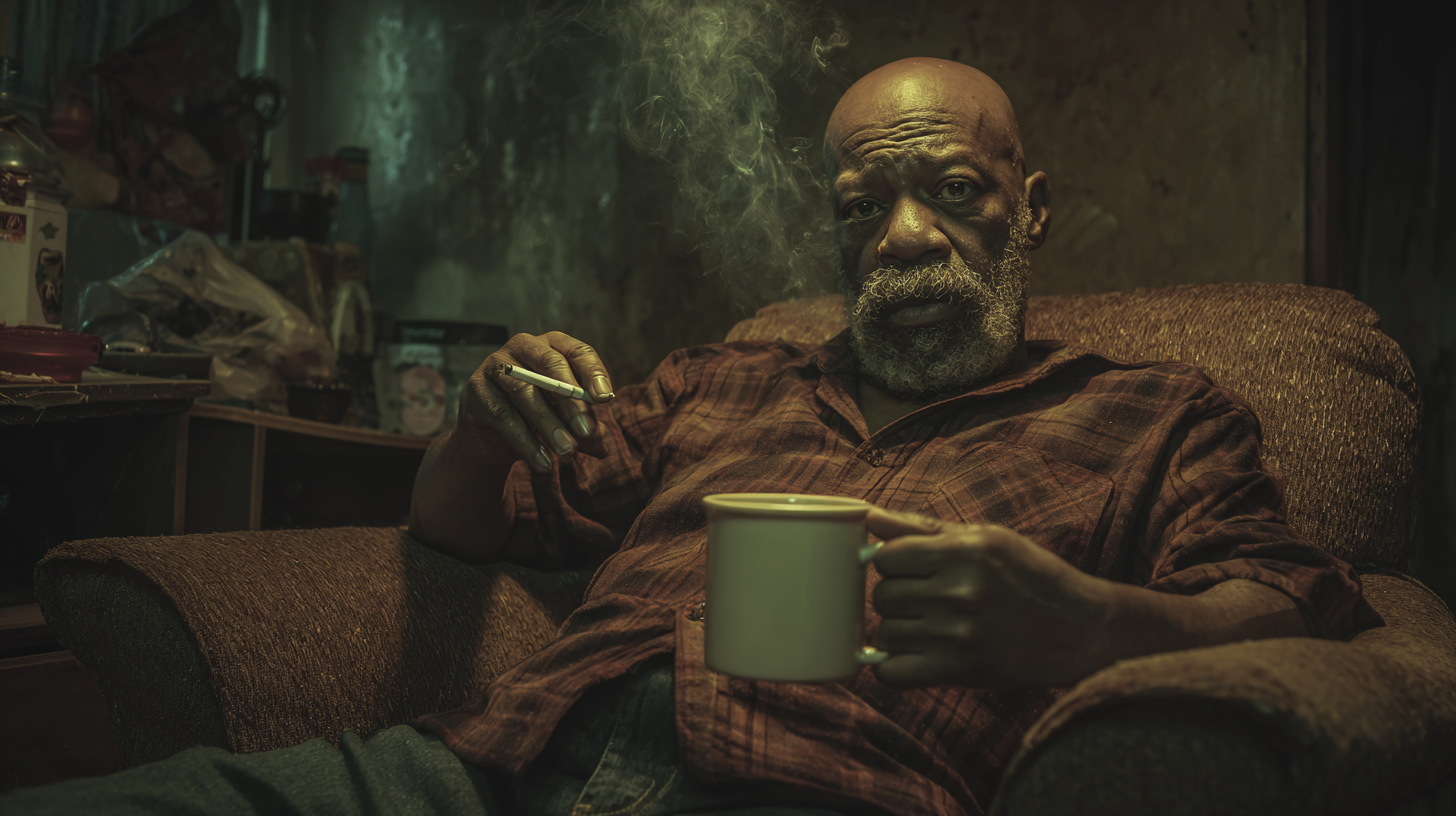
The smoke curled up from the cigarette balanced between her fingers, her hand resting beside a freshly cleaned ashtray. Hazelnut coffee filled the room, and Albert King was somewhere in the background complaining about the rain. I kissed her out of habit and apology — I stank to high heaven after a long day.

While I cleaned up, the music drifted from one blues track to another. I thought about grabbing a nap before the girls came home, when a voice cut through everything — soft, measured, heavy.

…wait. Is that Nina?

Next thing I knew, I was back at the table with a fresh cup of coffee. She didn’t look up, just nodded.

“I figured you’d get a nap before the girls got home,” she said.

I smiled into my cup.
This is why I married her — she got me.
She married me because I could reach the top shelf.
Balance in all things.

She slid the CD case to me and tapped a single track:

“The Other Woman.”

I replayed it a few times — autopsy mode — until she reached over and rested her hand on mine.

“Let it play, baby,” she said softly.

So I did.

“The Other Woman” isn’t loud or dramatic. It’s a truth-teller — the kind of song that doesn’t raise its voice because it doesn’t have to. Nina sings it low and steady, like someone who’s already made peace with the ache she’s naming. The piano stays half-lit, the bass moves like it’s carrying news no one wants to hear, and nothing in the arrangement tries to comfort you.

That’s what hooked my wife.
Not the lyrics.
Not the storyline.
The tone.

The way Nina delivered loneliness without apology.
The way she stood inside the ache without flinching.

My wife knew that tone.
She knew what it felt like to love a man who was half hers and half claimed by something bigger and colder than home.
“The Other Woman” wasn’t a song about cheating to her; it was the shape of a loneliness she never put into words — but Nina named it clean.

Back then, I thought it was a strange song for her to be listening to. I wasn’t stepping out. I felt the loneliness in Nina’s voice, but I didn’t understand the source. Maybe I wasn’t meant to — not then.

Years later, when she got sick — the kind of sick that turns a hospital room into a country of its own — I sat beside her bed with Nina in my headphones while I tried to write. And that’s when it hit me.

My wife knew what it felt like to be the other woman.

Not because of infidelity.
Not because of anything I did wrong.
But because of devotion and duty — the two forces that built our life and carved holes in it at the same time.

She loved a man claimed by an oath he made before he ever met her.
A man whose phone could ring at 2:17 a.m.
A man who packed on short notice and left with even less.

We preached “Family First.”
Said it often.
Said it like it was gospel.

But the truth — the one Nina kept whispering — was “Mission First.”


If “The Other Woman” named the loneliness, then “Tell Me More and Then Some” named the hunger beneath it.

Not desire — presence.
Not passion — time.
Nina sings that second track like a woman reaching out in the dark, asking for just a little more of a man she barely gets to keep.

For a military spouse, that’s the whole gospel:
the hours rationed out,
the moments cut short,
the days borrowed by orders.

You love the man, but the world keeps the schedule.

My wife never said she needed more of me — she never would have — but Nina said it for her.
Together, those two songs held the architecture of her heart:
the ache of being second and the quiet hope that maybe she could still have a little more time before the world claimed me again.


They lived on the same compilation she brought home when the girls were little — After Hours, still my favorite Nina collection. Maybe because it brought her voice into our home. Or maybe because it brought her truth into mine.

Those two tracks weren’t random choices.

They were the language she used to hold the parts of our life that the military kept taking.
The ache she carried quietly.
The hunger she never burdened me with.

Even now, as I write this, another Nina track slips in — “Ain’t No Use.” I didn’t cue it. Didn’t expect it. But there it is, like it wandered in to confirm every word on this page.

Nina always did that in our home — show up when truth was ready.

“The Other Woman” is my official Song Lyric Sunday entry because it appears on the 1969 compilation The Best of Nina Simone, one of her earliest and most enduring collections.

But really?
I’m choosing it because my wife understood this song long before I did. She lived the ache of being second to a calling she never chose, with a grace I still don’t know how to name.

Some songs don’t remind you of a person —
they finish the conversations you didn’t know you were having while they were still here.

This is one of those songs.

Let it play, baby.


Author’s Note:
This piece isn’t about infidelity. It’s about the complicated places where love and duty overlap, and the quiet truths that grow in the spaces no one talks about. My wife and I were both Nina Simone fans, though she understood Nina in ways I didn’t grasp until much later. The songs mentioned here — “The Other Woman” and “Tell Me More and Then Some” — were part of her private rituals, the moments she used to hold what our life couldn’t always name. This essay is my way of honoring the weight she carried with grace. If any part of it resonates with you, let it. That’s Nina’s doing, not mine.


Cigarettes and Coffee: The Sound of Staying Awake 

“It’s early in the morning / About a quarter to three…” 

— Otis Redding 

Nicotine stains my fingers, and there’s a coffee ring bleeding through the corner of my notebook. My shoulders ache — that familiar, loyal pain that’s been with me longer than most people. You get to that stopping point, the one where you promise yourself just one more thing so the mind can shut off without guilt or shame. Not that you’ve done anything wrong; it’s just the brain’s way of punishing ambition. You light up, take a sip, and the room hums like an overworked transformer. No bacon, no eggs — just the stench of being fried. 

I’d been pulling an all-nighter, trying to wrestle systems into order before the next sunrise. Sleep wasn’t an option — at least that’s what I told myself, and once you start believing your own lies, they might as well be true. Somewhere around that blurred hour when the clock forgets which side of midnight it’s on, my wife came in with that look — half worry, half why in the hell aren’t you in bed next to me. The first two parts I could shrug off; the last one carried weight. She stood there, watched me for a moment, then went to put on a pot of coffee. 

She was the wife of a soldier, so she knew the score. She didn’t like it much, but she knew it all the same. She looked at the clock and chuckled, that kind of laugh that carried both resignation and love. 

“This is your theme song, right here,” she said. “Metal something — you’re always going on about it.” 

“It’s Metallica, babe,” I said, “and the track is Am I Evil.” 

She lit her own cigarette, slow and precise, the way she did everything that mattered. The smoke rose along the side of her face, curling like a slow dance with the light. One eye squinted through the haze as she looked my way — then in one easy breath, the smoke was gone. 

“Shit, you say,” she replied, and I laughed — a small, grateful sound. The kind that breaks tension without fixing a thing. I took another sip of coffee. The bitterness hit just right, grounding me in that narrow space between exhaustion and clarity. Otis was still humming through the speakers, like an old friend keeping score of the hours we’d lost. 


Otis Redding’s “Cigarettes and Coffee” came out in 1966, tucked into The Soul Album, a record overshadowed by his bigger hits. No stadium anthem here — just the quiet gospel of survival. The band plays soft, steady, respectful. Al Jackson Jr. keeps the drums whisper-thin, Duck Dunn anchors the bass like a heartbeat, and Steve Cropper’s guitar flickers in and out of the light. 

It’s a sparse room of sound. You can almost smell the studio air — the tape reel humming, the smoke hanging low. Otis isn’t singing to anyone in particular. He’s talking to whoever’s still awake, whoever’s chasing purpose through fatigue. 

“I’m sittin’ here talkin’ with my baby / Over cigarettes and coffee…” 

That’s not romance. That’s ritual. 

It’s the sound of two people trying to stay human when the night’s too long and the world’s too loud. 


People love to say the sixties were a musical revolution. You hear it your whole life, like gospel. But you don’t really understand it until you’ve lived long enough to see how hype survives every generation. They didn’t have social media then, but they had slogans — peace signs, protest anthems, movements branded before they could breathe. 

Today, the noise just comes in technicolor. Everything trending, nothing sticking. But Otis — he stuck. He already had his name etched in wax by the time this song landed, but “Cigarettes and Coffee” wasn’t for the spotlight. It was for the back room, the insomniacs, the men and women sitting at their own breaking points. 

That’s what makes it timeless. It’s still talking about what we’re still living — the quiet wars we fight with ourselves, the long nights spent trying to hold it all together. 


Every time I hear this track, something in me unclenches. It doesn’t lift me up — it settles me. Makes me honest. There’s a weight in Otis’s voice that feels like a man exhaling after carrying the world too long. 

The song doesn’t fix anything; it just reminds you you’re not alone in the fixing. It says peace isn’t about rest — it’s about acceptance. The kind that comes when you’ve worked yourself down to silence and realize the silence feels sacred. 

For a few minutes, I stop fighting the fatigue. My hands ache, my eyes burn, my shoulders protest, and somehow it all feels right. The song gives the exhaustion purpose. It turns the ache into evidence — proof that I’m still in motion. 

That’s what makes it beautiful. Not joy. Recognition. The shared breath of the living tired. 


Music provides the soundtrack of our lives — checkpoints across time, a kind of living mythos. We all move through the same years differently, but the songs mark us just the same. A verse here, a chorus there — little coordinates reminding us who we were before the noise got too loud. 

It’s strange, isn’t it? Two people can walk side by side, hearing the same song, and still be living two entirely different truths. That’s the thing about music — it doesn’t belong to an era; it belongs to the listener. 

That’s why Otis still matters. “Cigarettes and Coffee” isn’t nostalgia — it’s memory work. It’s here to keep us from forgetting what it feels like to be awake in the dark, searching for balance in the hum of a tired world. 

Music is here so you don’t forget — how to feel, how to love, and how to weep. It’s a reminder that even in the long nights of rebuilding, there’s still rhythm left in the wreckage. And if you listen close enough, you might just hear yourself breathing in time with the song. 

Pull Quote: 

“It’s not a love song — it’s a mirror. A hymn for the living tired.” 


Author’s Note:
This piece was written for Jim Adams’ Song Lyric Sunday challenge, where writers and music lovers gather each week to explore songs through memory, meaning, and emotion. This week’s theme — coffee or tea — led me back to one of Otis Redding’s quiet masterpieces, “Cigarettes and Coffee.” What started as a late-night listen turned into something more personal — a reflection on rebuilding, resilience, and the art of staying awake long enough to make sense of it all.

The Moment Was Fluid, Until It Wasn’t

What one Sabbath song taught me about adrenaline, fear, and the silence that follows the hit.

I wasn’t planning to write about Ozzy Osbourne — I had a ticket in hand to see Earth, Wind & Fire. My mind was elsewhere — groove, joy, rhythm, nostalgia. And then the news came through: Ozzy was gone.

I’m not a diehard fan. I didn’t grow up in the church of Sabbath. But one track — one slow, heavy track that felt like it had something to say long after it stopped playing — stayed with me. It wasn’t a hit. It wasn’t a song anyone quoted. But I’ve carried it. And maybe that’s the thing about deep cuts — they don’t always connect when the world is loud. They wait.

For me, that song was “Hand of Doom.”
Not because it rocked.
Because it spoke — in the language of things we’re not supposed to say out loud. And as someone who’s walked through the slow churn of fear, of silence, of control disguised as coping… I heard it for what it was.

Not a story. Not a warning.
A truth.


Paranoid is the album everyone thinks they know. “War Pigs,” “Iron Man,” “Paranoid” — they’ve been immortalized on T-shirts, classic rock stations, and generations of guitar-store riff flexes. But buried in the middle of Side B is a track that speaks quieter and hits harder than all of them: Hand of Doom.

It’s not catchy. It doesn’t try to be. It starts slow, like a body being dragged. Geezer’s bassline feels surgical — steady, ominous, too calm for what’s coming. Then the lyrics begin, and you realize this isn’t a protest song. It’s a field report. A soldier comes back from war. But the war comes back with him.

“You push the needle in…”

There’s no glamor. No metaphor. Just addiction, disillusionment, and the long tail of trauma no one wants to claim responsibility for. Sabbath wasn’t just telling a story — they were holding up a mirror to a nation that fed its young to the fire, then blamed them when they couldn’t come home whole.

A lot of people describe the opening of “Hand of Doom” as a funeral. I’ve seen it written that way dozens of times. But as someone who’s stood in the stillness before something breaks loose, I hear it differently. That intro isn’t mourning. It’s anticipation. It’s the body preparing itself for impact before the mind catches up. It’s the weight of knowing something’s coming — and not being sure whether it’s physical, mental, or spiritual. We all have our own versions of that moment. Some of us walk into it in uniform. Some of us find it alone in a room at 3 a.m. But the question remains: when the unknown finally steps out of the shadows, will we be ready?

Now — with everything we know about PTSD, opioids, and institutional failure — this song still rarely gets mentioned. It makes people uncomfortable. That’s precisely why it matters.

It didn’t scare me as a kid, not like horror movies or ghost stories. It scared me because I could feel the silence around it, like everyone heard it and turned the volume down just a little too fast. Like it was saying something we weren’t supposed to know yet. Or worse — something we already knew, but had no idea how to answer.

When the tempo kicks up, the song finally gets its legs, but it doesn’t feel like freedom. It feels like adrenaline. And for me, it brings back that wired moment just before everything breaks loose. I remember being trained not to let fear take over. Taught that fear was the enemy. But no one tells you the truth: you can’t outrun fear. It doesn’t dissipate — it embeds. The real skill isn’t conquering it — it’s learning how to use it without letting it use you. This part of the song brings me back to the early days, before I learned that lesson. When your heart is pounding, your vision sharpens, and the fight-or-flight reflex kicks in so hard it makes your teeth ache. Everyone talks about those two instincts — but there’s a third no one wants to admit: freeze. And those were the ones that really got to me. The ones who froze. Because when that happened, it didn’t just endanger them — it split your focus. You had to break off from the target, from the objective, and turn toward someone whose body had already left the mission. And that… that’s its own kind of helpless.

There’s a brief pause in the song — a flash of return to the original tempo — and for me, it’s always felt like a breath that never quite makes it to your lungs. It’s not relief. It’s the moment before the shit gets real. It’s that split-second when you know the break is coming, but it hasn’t hit yet. The sound slows, but the tension tightens. I’ve lived that second. We all have, in our own ways. Whether it was the phone call, the sudden detour, the warning tone in someone’s voice — that moment before impact sticks with you. It’s what lets you feel the hit coming before it lands. And that’s what Sabbath nailed here: not just the crash, but the foreknowledge of it. The second your system knows everything’s about to change, but there’s nothing you can do except feel the bottom drop.

Then there’s the damn groove — that stretch of rhythm in the song that doesn’t feel panicked or chaotic. It feels locked in. And for those of us who made it to the other side of the moment, that groove is familiar. It’s the rhythm you step into when you’re fully immersed, taking care of business, senses dialed all the way up. But it’s not a jerking motion. You’re not holding your breath. You’re fluid. You stop trying to control the moment — you become part of it. You become one with it.

And just like that section of the track, the feeling barely lasts — so fleeting you question whether it even happened at all. It’s a kind of cognitive dissonance — a mental vertigo that never quite resolves. It’s like a strange trinity: us, them, and the thing we created in between. That thing… was doom. And in that moment, we were its hands.

“Hand of Doom” wasn’t a warning. It was a receipt.

And when you carry that receipt long enough, you stop asking for change.


Author’s Note: This piece was written as part of Jim Adams’ Song Lyric Sunday. Each week, contributors reflect on songs tied to a given theme. This week’s prompt led me here — to a track I hadn’t planned to write about, but couldn’t ignore.

Stripped Down and Soul-Deep: Ray LaMontagne’s Take on ‘Crazy’

TUNAGE – SLS

How an acoustic guitar and a raspy voice turned a genre-bending hit into something quietly devastating.

I’ve always been a fan of the acoustic guitar. In fact, it’s my favorite style. I’ve always felt that if an artist can make the acoustic guitar speak, then they’re really talented. There’s something about that sound—it adds a layer to the music that gets lost in the distortion of its electric counterpart. It’s honest. Exposed. No tricks to hide behind.

I first heard Ray LaMontagne’s Gossip in the Grain and was hooked immediately. That album had a mood I couldn’t shake—soulful, grounded, a little haunted. So when I found out he covered “Crazy,” I got excited. I wondered what he’d bring to it. I already knew it would be something special.

Not just because of Ray’s style, but because “Crazy” already lives in this weird, beautiful space between genres. I love it when songs do that. Even more, I love when a cover respects the original but still brings a fresh voice to it—makes it something completely different, without losing what made it great in the first place.

That’s exactly what Ray does here.

Yes, it’s the same “Crazy” that Gnarls Barkley made famous—but this isn’t just an acoustic remix. This is a complete reinvention. No beats. No polish. Just Ray, his guitar, and that worn, aching voice of his. And somehow, it feels bigger because it’s so stripped down.

He slows the whole thing down, stretches out the space between lines, and sings like he’s living every word. There’s one moment—when he softly asks, “Does that make me crazy?”—that just lingers in the air. It’s not a performance; it’s a question he doesn’t know the answer to.

Where the original had swagger, this version has weight. It feels like someone sorting through their own history, looking back on a breakdown that already happened. It’s quiet. It’s tired. And it hits like truth.

I’ve heard a lot of covers of this song, but none of them hit like this. No over-singing. No flash. Just soul. The acoustic guitar does all the emotional heavy lifting—carrying the tension, the silence, and everything in between.

If you’re into music that guts you in the gentlest way, this one’s for you. Just press play, close your eyes, and let it wreck you a little.


Shuggie’s Boogie: The Kind of Guitar Playing That Makes You Question Your Life Choices

TUNAGE – SLS

In the endless debate about great guitarists, you know the names. They’re on every list. Hendrix. Clapton. Page. Santana. Occasionally, a few lesser-knowns sneak in—someone you maybe don’t know, so you check them out, nod, and go, “Okay, yeah, I see it.”

But there’s another tier. The ones who don’t make the lists. Not even the cool-guy “most underrated” lists. They’re ghosts. Phantoms. Legends whispered about in liner notes and sampled by producers who dig deeper than algorithms ever will.

Shuggie Otis is one of those.

Listening to Shuggie’s Boogie from Live in Williamsburg is like that moment in a bar when you stop in for a bite, thinking you’re just killing time. You sit down, order something greasy, maybe a beer. Then the band starts playing. No intro. No warning. You take a bite… and stop mid-chew. Fork halfway to your mouth. What the hell is happening on that stage?

You forget the food. You forget your phone. You just listen.

That’s what this track is. It blindsides you.

Shuggie doesn’t approach the guitar like a technician. He approaches it like someone who’s got something to say. This isn’t about speed or theory—it’s about attitude, feel, and intention. Every phrase lands with the kind of swagger that only comes from living a weird, sideways kind of life through music.

And the band? Locked in like they’ve been rehearsing for a world tour no one told you about. His son, Eric Otis, adds guitar textures like he’s painting in the shadows of his dad’s lead lines. Nick Otis, Shuggie’s brother, holds down drums with a groove that feels more instinct than effort. James Manning on bass is the glue—thick, steady, unshakeable.

The horns—Larry Douglas (trumpet, flugelhorn), Michael Turre (baritone sax, flute, piccolo, backing vocals), and Albert Norris—aren’t just dressing. They’re characters in the story, adding stabs and swells that make you lean in closer. And Russ “Swang” Stewart on keys knows exactly when to tuck in a note and when to let it bloom.

This isn’t a polished, clinical performance. It’s gritty. There’s some dirt under its nails. Some bark in the tone. But that’s why it works. There’s a certain beauty in letting the edges stay frayed. It’s alive. Like something could fall apart at any moment… but never quite does.

Shuggie recorded the original Shuggie’s Boogie when he was 17. Which is already annoying, because it was brilliant even then. But this live version? It’s deeper. Older. Wiser. Looser. He stretches out, takes his time, throws notes like curveballs that somehow always hit the strike zone.

It’s the sound of someone who doesn’t need to be on a list to prove anything.

If you’re into guitar playing that hits your chest more than your brain, this is your track. If you’ve ever dropped your fork because of a solo… well, maybe you already know.

And if you’ve never heard of Shuggie Otis? Good. You’ve got some listening to do.


Blues from the Shadows: Chuck Norris and In the Evening

TUNAGE – SLS

First, a quick word on the man behind the madness: Chuck Norris (no, not the roundhouse legend—the blues Chuck Norris) was an American blues guitarist born on August 11, 1921, in Kansas City, Missouri. A fixture in the post-war West Coast jazz and blues scene, Norris played with the likes of Floyd Dixon and Little Richard before stepping into the spotlight with his own recordings. Forget synthwave nostalgia—this Chuck comes armed with blood-drawing licks and a voice full of scars.

The track “In the Evening (When the Sun Goes Down)” comes from The Los Angeles Flash, a live recording captured in 1980 in Gothenburg, Sweden. The album, gritty and unvarnished, is the last known recording of Chuck Norris as a frontman. While his name rarely topped marquees, his guitar was a secret weapon behind some of the biggest names in rhythm and blues. Norris built his legacy in the shadows—session work, backing bands, and uncredited magic—but The Los Angeles Flash is where he finally took center stage.

So what does a man with decades of sideman dues to his name sound like when he finally steps into the spotlight? Let’s talk about “In the Evening.”

Let’s be clear: when Chuck Norris hits you with a track titled “In the Evening,” you’re not getting candlelight and whispered promises. You’re getting a slow-burn blues simmer—equal parts cigarette smoke and heartbreak. This isn’t background music. It’s the sound of someone who’s seen too much and plays like it’s his last night on Earth.

“In the Evening” unfolds with deliberate weight. From the first chord, Norris sets the tone: heavy, moody, and unafraid of silence. The groove is thick and smoky, the kind that makes you want to pour a drink you can’t afford and stare out a rain-streaked window. His guitar doesn’t just sing—it testifies.

The vocals? Low, worn, and half-growled. Norris delivers each line like he’s been through it—and probably twice. You believe him when he says he’s got the blues, because his fingers back it up with every tortured bend and unhurried lick. It’s not flashy. It’s not loud. But it hits hard, especially when he lets a note hang just long enough to make your chest tighten.

Where the album’s title track struts with brass-knuckled bravado, “In the Evening” sits back in the dark and dares you to come closer. It’s introspective, emotionally raw, and not afraid to sit in its own shadow. Think late-career Muddy Waters meets a bottle of something aged and unforgiving.

Now, is it perfect? Not quite. There’s a verse or two where the pacing drags a hair too long, and you wonder if the band nodded off for a second. But that’s part of the charm—this is live-wire blues played by humans, not robots. No polish. Just grit. In the end, “In the Evening” doesn’t need to beg for your attention. It earns it. Slowly. Relentlessly. Put it on when the night’s too quiet and your thoughts are too loud. Let Chuck Norris pull up a chair beside your regrets and keep you company until the bottle runs dry


F**k Top 40: The Mixtape Rebellion

TUNAGE – THROWBACK THURSDAY

Author’s Note: This article was originally written for Jim Adams’ Song Lyric Sunday, but I forgot to post it… oops.

Greatest hits albums fed us what we already knew. Mixtapes fed us what we didn’t even know we needed. This wasn’t about hits; it was about heart. About craft. About rebellion. In a world that settled for convenience, we chose meaning. And we built it, one song at a time.

There was a time when a “greatest hits” album promised the world and delivered little more than a shallow sampler. You walked into a record store, hopeful, only to find a shiny package filled with chart-chasing fluff, predictable tracklists, and maybe — if you were lucky — one or two songs you actually cared about.

For real music lovers, the greatest hits album was a betrayal. So we made something better: the mixtape.


The Mixtape: A Sacred Artform

Before playlists, before algorithms, there was the mixtape. But a mixtape wasn’t just a collection of songs. It was a statement. A curated, sequenced, and deeply personal offering.

Creating a mixtape meant something. It wasn’t about speed or convenience. It was about intention — about crafting a narrative that unfolded song by song. Each track was a chapter. Each transition is a carefully measured pause, a breath in the story.

You thought about the mood, the flow, and the emotional weight of every decision. Every track had a purpose. Every transition was considered. You didn’t just hit record — you crafted an experience.

You wrote out the tracklist by hand, agonized over timing, and re-recorded entire sides if a song didn’t fit. The case was decorated with doodles, magazine cutouts, scraps of personal history. In a way, you weren’t just sharing music; you were sharing yourself.

Mixtapes were acts of vulnerability. They were slow art in a fast world.


Why Greatest Hits Albums Let Us Down

Most greatest hits albums were designed by marketing departments, not musicians. They weren’t about storytelling — they were about sales.

  • They skipped deep cuts that real fans lived for.
  • They threw in new songs no one asked for.
  • They sequenced tracks by chart position, not emotional resonance.

Greatest hits albums too often strip music of its context — they offer songs without the journey, choruses without the verses. They were snapshots when what we craved was a full-length film.

And then there was K-Tel — the kings of the cash-in compilation. K-Tel would slap together a dozen radio edits, chop down songs for time, and cram them onto a single vinyl. These weren’t albums — they were sonic fast food. No vibe, no flow, no soul.

We wanted more. We wanted music to mean something. So we made it ourselves.


The Record Store: Temple of Taste

Finding the right record store was part of the rite of passage. You didn’t go to the mall. That was for tourists.

You found the secret spot — basement-level, behind a laundromat, no signage, just a door covered in band stickers. Inside: crates of vinyl, walls of obscure posters, and the Jedi behind the counter.

The staff weren’t clerks; they were gatekeepers. They didn’t just sell music; they shaped your journey through it. They tested you, judged your picks, and only shared their real knowledge if you proved you were serious.

Every trip was a lesson in humility and discovery. You learned to dig, to research, to listen with intention. You learned that taste wasn’t about what you liked — it was about what you understood.

In these sanctuaries of sound, music wasn’t just background noise — it was the lifeblood of identity.


Mixtapes Were a Rebellion

Mixtapes fixed what greatest hits albums broke.

  • They had a theme.
  • They had emotional sequencing.
  • They combined hits and deep cuts with purpose.

Mixtapes were the purest form of musical self-expression. They weren’t made for everyone — they were made for someone. For a friend, a lover, a crush, or maybe just for yourself.

They were personalized, handmade, and built for a specific mood or moment. Mixtapes were proof you knew music, not just what was fed to you.

In a way, they were quiet acts of defiance against mass production. They said: I’m not here for the hit parade. I’m here for something real.


When Greatest Hits Got It Right

Despite the letdowns, a few greatest hits albums actually nailed it.

For me, it started with The Best of Earth, Wind & Fire, Vol. 1.

Golden cover, timeless tracks, perfect flow. From “Got to Get You Into My Life” — a Beatles cover reimagined into pure, brassy soul-funk — to “September” and “Shining Star,” it didn’t feel like a compromise. It felt like a celebration.

Earth, Wind & Fire didn’t just repackage — they redefined. They reminded us that a greatest hits album could tell a story if you cared enough to sequence it like one.

And they introduced me to the quiet genius of Al McKay, the guitarist whose rhythm work underpinned so many of their classics. McKay wasn’t flashy. He wasn’t a solo king. But his grooves on “September,” “Shining Star,” and “Reasons” built the very foundation that generations danced to.

Without him, an entire era might have been grooveless.

Other albums got it right too: Queen – Greatest Hits (1981), Bob Marley & The Wailers – Legend (1984), ABBA – Gold (1992). These weren’t just collections; they were time capsules of feeling.


The Spirit Lives On

Today, we have playlists. We have algorithms. But the spirit of the mixtape still lives: in crate-diggers hunting for vinyl, in DJs building a night’s setlist with intention, in anyone who believes that how you present music matters as much as what you play.

Music, at its best, is not about accumulation. It’s about connection.

The mixtape wasn’t just a reaction to bad greatest hits albums. It was a revolution. A rebellion against mediocrity. A quiet, persistent demand for meaning.

And we’re still feeling it.

“Anyone can collect songs. It takes a real heart to make them matter.”


The Albums You Forgot — From the Artists You Can’t

TUNAGE – SLS

I almost gave up on this week’s challenge. Every artist that came to mind? Still dropping new music. I listened through track after track of so-called final albums, but nothing really moved me. I opened my tunage folder — my personal stash — and got even more frustrated. I googled around and just found the same names I’d already dismissed.

So, I bailed. Put on A Perfect Circle and went back to writing some fiction.

That’s when it hit me — A Perfect Circle is a side project for Maynard James Keenan. Not the main band, but a serious creative outlet. Oh lovely.

With that in mind, I went back to my tunage folder with a new filter: side projects — not the obvious hits, but the hidden, off-the-beaten-path work from major artists. You know I can’t just list the usual stuff. Not my style. Plus, I’m always hunting for music that’s new to me.

So here’s what I found: four side projects from artists you definitely know — Bob Seger, Prince, Gavin Rossdale, and David Bowie — and some final or forgotten albums that deserve another listen.

This isn’t a list of greatest hits. It’s a look at where legends went when they didn’t care about playing it safe.


Institute — Distort Yourself (2005)

First up: Institute. Gavin Rossdale is synonymous with Bush, one of the ’90s big players in post-grunge. But after the dust settled and the hits dried up, Rossdale wasn’t ready to fade — he pivoted.

Distort Yourself is Institute’s lone album, released in 2005 and produced by Helmet’s Page Hamilton. It’s a step away from the radio-friendly hooks of Bush — this is Rossdale turning up the distortion, loosening the structure, and getting grimier.

Everyone knows Bulletproof Skin — a good track, sure. But “Come On Over” deserves more attention.

It’s slower, heavier, and more introspective. There’s a simmering frustration in Rossdale’s voice, a refusal to dress up the emotion. The guitars are thick and sluggish, the drums plod with intent. It doesn’t try to soar — it grinds. This track captures the feeling of being stuck, restless, itching to break out.

Institute didn’t survive the mid-2000s music churn, but Distort Yourself remains a snapshot of Rossdale at a creative crossroads — somewhere between the end of Bush and the attempt at something harder, meaner, and less commercial.

Other tracks worth digging: “Seventh Wave” and “Boom Box” — where that rawness burns even hotter.


Prince — 3rdeyegirl — “FIXURLIFEUP”

Prince was never interested in staying still, but 3rdeyegirl was a different kind of experiment even for him. After decades of reinventing pop and R&B, here he was fronting a hard-edged power trio.

PLECTRUMELECTRUM (2014) wasn’t polished or overproduced — it was raw, live, and loud. You can feel the room in these recordings. Prince wasn’t just working with younger musicians — he was feeding off their energy.

The lineup was fire:

  • Donna Grantis — shredding on lead guitar, bringing in a jazz fusion sharpness.
  • Ida Nielsen — laying down heavy, funky basslines.
  • Hannah Welton — delivering powerful, locked-in drum grooves.
  • And Prince — guitar, vocals, the mastermind and chaos agent.

“FIXURLIFEUP” feels like Prince’s punk anthem — stripped down, aggressive, urgent. It’s a call to arms without the usual cryptic layers. Straightforward and biting, it proves Prince could shift gears and out-rock bands half his age.

3rdeyegirl wasn’t built for pop charts. It was built for small, sweaty venues and late-night jam sessions. It gave Prince a new sandbox to play in — and he didn’t hold back.

Other tracks worth digging: “PRETZELBODYLOGIC” — a wall of riffage with a groove you can’t ignore.


“Side projects weren’t side hustles — they were battlefields where legends proved themselves all over again.”


David Bowie — Tin Machine — “You Belong in Rock and Roll”

By the late ‘80s, David Bowie could have coasted. Let’s Dance and his pop hits had made him a mainstream juggernaut. But Bowie never coasted — he detonated his own success.

Tin Machine wasn’t a vanity project — it was Bowie disappearing into a democratic, no-safety-net band. Alongside guitarist Reeves Gabrels and the Sales brothers, Bowie went back to basics: noisy guitars, grimy lyrics, unfiltered attitude.

On Tin Machine II (1991), you find “You Belong in Rock and Roll” — a track that’s jagged, strange, and defiantly anti-pop. The guitar is warped and almost mocking, and Bowie’s delivery feels world-weary, like he’s peeling back the glam to show something bruised and real.

It’s not easy listening — and that’s the point. Tin Machine was Bowie burning down the house he’d built in the ’80s so he could rebuild.

This period laid the groundwork for Bowie’s later masterpieces like Outside and Heathen. Without Tin Machine, we don’t get that rebirth.

Other tracks worth digging: “Baby Universal” — a glimpse at Bowie’s knack for catchy weirdness.


Bob Seger — The Bob Seger System — “Lucifer”

Everyone knows Bob Seger the classic rocker — the voice of American blue-collar nostalgia. But before the arenas and radio hits, there was The Bob Seger System.

Their 1970 album Mongrel is criminally overlooked. It’s rough, raw, and full of a kind of garage-rock fury that Seger would later sand down into smoother anthems.

“Lucifer” is the standout — a swirling mix of organ, gritty vocals, and a loose, almost chaotic energy. This isn’t “Old Time Rock and Roll” Seger. This is a scrappy kid with a chip on his shoulder, pushing back against the commercial sound of the time.

And then there’s their take on “River Deep, Mountain High.” It’s not bombastic like Tina Turner’s version. Instead, it’s leaner, grittier — more Midwest garage than Phil Spector’s wall of sound.

Mongrel didn’t break through, and soon Seger would move on and streamline his sound. But this record shows a side of him that’s often forgotten — less myth, more fight.

Other tracks worth digging: “Leanin’ on My Dream” — Seger at his bluesiest.


Closing

What these side projects have in common is simple: they show famous artists unfiltered. Stripped of the machine, free from the brand, they chased sounds that didn’t fit the mold — and didn’t care if they fit the marketplace.

And these side projects aren’t just something tossed out like a TV movie. This is where we get to see favorite artists explore different avenues, speak their truth, and in doing so, capture a whole new crop of fans.

In the case of Rossdale and Prince, I was already in — I’d been listening to them for years. But Seger’s Mongrel and Bowie’s Tin Machine? That was new territory for me. And honestly, that speaks to the heart of these kinds of challenges: finding music you didn’t even realize you needed.

Gavin Rossdale’s Institute gave us something raw and urgent. Prince’s 3rdeyegirl exploded with punk-funk energy that still feels alive. Bowie threw a Molotov cocktail at his pop stardom with Tin Machine. And Bob Seger, before he was a radio icon, tore through the garage with The Bob Seger System.

These records aren’t polished legacies. They’re risk, reinvention, and real creativity. And they leave you asking the same question every time:

Is there any genre these artists couldn’t make their own?


Bonus Material:

What Elegant Gypsy Taught Me About Sound

TUNAGE – SLS

I never understood what people meant by a “breakout album.” It always sounded like marketing speak, like some suit in a record label office decided a release would be a moment before the music even had a chance to prove it.

But now that I’ve been listening to music for decades—really listening—I get it. A breakout album is the one that changes the game. It’s the moment when an artist stops following the rules and starts rewriting them. It doesn’t just shift their career—it shifts how you hear music and move through the world. What happens when a certain song creeps into your headphones at 2 a.m.

For me, those shifts started showing up most often in the music of the ’70s and ’80s. Maybe because that was the last time I remember feeling invincible. Some of my friends say it’s because we were young, wild, and untouched by the creeping anxiety that comes with growing older and seeing too much. I don’t know. All I know is, back then, the music mattered. It wasn’t background noise—it was a pulse.

Usually, when people write about breakout records, they stick to pop and rock. And sure, I’ve got love for Thriller, Born to Run, and The Dark Side of the Moon. They deserve their place. But when we only look in that direction, we miss a world of records that hit just as hard—and sometimes deeper.

Let’s talk about the blues for a second.

Breakout albums in the blues don’t always come with fireworks. They come with smoke. With mood. With grit. Robert Johnson’s King of the Delta Blues Singers wasn’t even released while he was alive, but when it hit in 1961, it sent shockwaves through every guitar player worth their calluses. That wasn’t just a collection of songs—it was a haunted house tour through American music. And Albert King’s Born Under a Bad Sign? That record is basically the DNA for half of modern rock guitar. You can hear it in Hendrix. You can hear it in Clapton. You can feel it in your spine.

And then Stevie Ray Vaughan’s Texas Flood came along in 1983 and slapped the ’80s awake. In a decade buried in synths and neon, he reminded everyone what raw emotion sounded like. Blues didn’t die—it just needed someone to walk back in with a Strat and a storm.

Still, for me, the blues is the voice of memory. Jazz, though—that’s where I live.

I didn’t even know I was being raised on jazz. My mother had it spinning through the house, soft and steady. There were no lectures, no explanations, just vibes—Miles, Monk, a little Ella, and Louis. It seeped into me without permission.

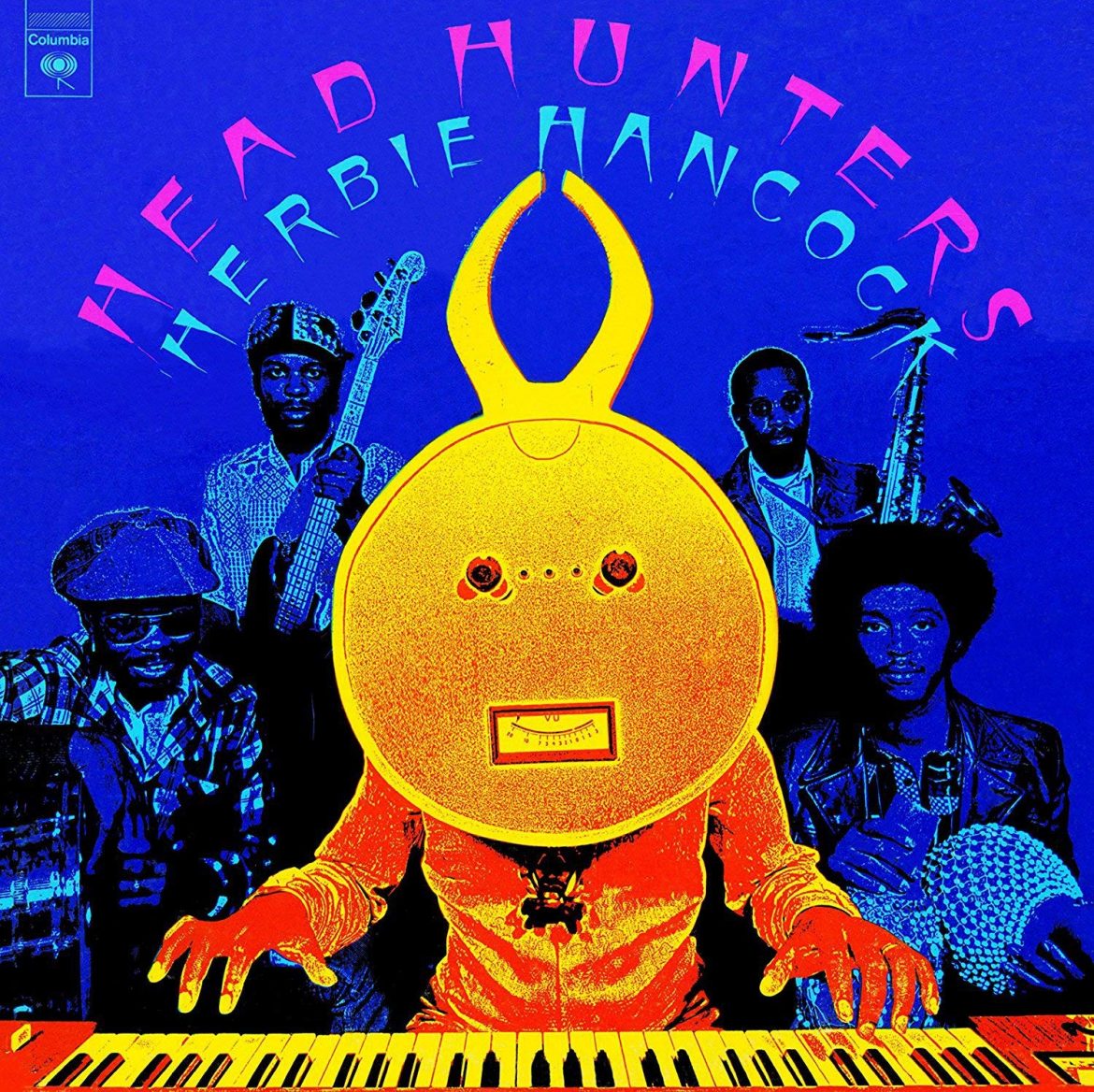
Later, when I started tracing back the music that moved me most, I found myself standing in front of Kind of Blue. I didn’t understand modal jazz or the genius behind its understatement. I just knew it felt like thinking clearly. Coltrane’s A Love Supreme—that one was different. That one burned. It felt like prayer in motion. And Herbie Hancock’s Head Hunters? That album made me question everything I thought jazz could be. It didn’t walk. It didn’t swing. It grooved.

But if you really want to know the moment the floor dropped out from under me—when I realized how deep this rabbit hole could go—it wasn’t a household name that did it. It was a cassette tape. In a barracks. On a night that started like any other.

It was the late ’80s. I had a makeshift pirate radio thing going with a buddy. We were playing Zeppelin, Floyd, Spyro Gyra—the kind of music that made you feel smart and a little dangerous. We were fueled by bad liquor and worse decisions.

Then Good walked into my room, talking slick. “You think you know music?” he said.

I told him to show me something better.

He popped in a tape.

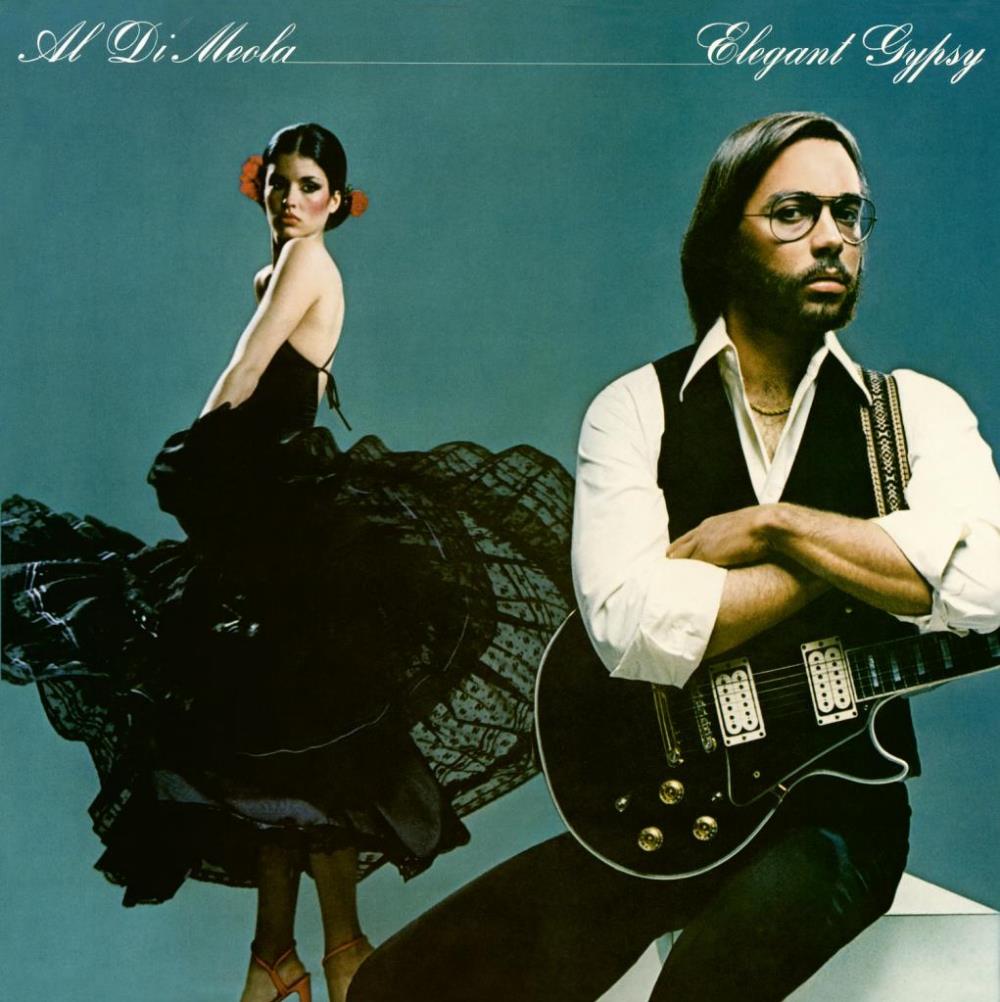
Elegant Gypsy.


I didn’t know the name Al Di Meola. I certainly hadn’t heard of Return to Forever. Chick Corea and Stanley Clarke were familiar, but Al Di… ah, who? But from the moment “Flight Over Rio” exploded out of those half-broken speakers, I was done for.

Here’s the thing: Elegant Gypsy isn’t just fast. It isn’t just technical. It’s alive. This album doesn’t care if you’re ready. It grabs you by the collar, throws you into a hurricane of fusion, flamenco, and Latin rhythm, and dares you to keep up.

Di Meola’s guitar work is blistering—sure. But it’s also delicate when it needs to be. He doesn’t just play fast. He plays intentionally. There’s weight in every note, even when his fingers are moving at light speed. “Mediterranean Sundance,” his duet with Paco de Lucía, isn’t just a highlight—it’s a masterclass. You can feel the heat rising off the strings. You can hear two cultures colliding and dancing at once. It’s the sound of passion pushed through wood and wire—and that little whew at the end hits as hard as any chord.

And then there’s Elegant Gypsy Suite.


This track—more of a journey than a song—feels like the core of the whole album. At nearly ten minutes, it refuses to rush, despite being driven by a guitarist who could break land speed records. Instead, it shifts, morphs, and moves through phases. It opens in a brooding, almost cinematic space—like it’s scoring a Sergio Leone western that got hijacked by an avant-garde flamenco troupe. Then the melodies begin to circle, tighten, and rise. Di Meola slides between electric and acoustic passages without missing a beat, blending precise lines with raw emotion. There’s a section where the rhythm drops out and you’re left with this eerie, floating tension—before it snaps back in and charges forward like a bullfight.

It’s not just a guitar showcase—it’s storytelling. It’s Di Meola proving that speed means nothing without soul, that complexity doesn’t have to come at the cost of clarity. That suite is the reason this album transcends the fusion label. It’s bigger than genre. Its composition. It’s vision.

Critically, Elegant Gypsy did its damage. It went gold. It won Guitar Player magazine’s Album of the Year. It peaked high on the jazz charts. And yet, outside of jazz or guitar nerd circles, you barely hear it mentioned. No Rolling Stone rankings. No VH1 countdowns. It’s not part of the mainstream memory.

But ask any musician. Ask anyone who’s tried to tame six strings into something worth listening to. They’ll tell you: this album is sacred.

That night in the barracks, Elegant Gypsy didn’t just win the argument—it flipped the script. It reminded me why I cared about music in the first place. Not for popularity. Not for nostalgia. But for discovery. For the thrill of being wrong about what you thought music could be.

That’s what a breakout album really is. It doesn’t just launch a career. It launches you into something new.

So I keep listening. I keep digging. Not because I want to be the guy with the deep cuts, but because every now and then, a record still finds me and knocks me flat. When that happens, I stop everything. I pour a drink. I let it play all the way through.

Because sometimes, music doesn’t just break out.

It breaks you open.


Built on Fault Lines

TUNAGE – SLS

The Hidden Band Origins of Today’s Boldest Solo Artists

The low-key origin stories behind music’s most defining solo careers.

This challenge was tough because I know too many artists to choose from. I didn’t want to go with the obvious ones — you know, Ozzy Osbourne from Black Sabbath, Eric Clapton from Cream, Sting from The Police, or Diana Ross from The Supremes. Legends, sure. But those are basically music history 101.

The real struggle? Picking a genre. Rock? Overflowing. R&B? Stacked. Jazz? Don’t even get me started — half the genre is built on solo careers that started in someone else’s band. There are solid examples everywhere. So instead of narrowing it down, I went wide — and spotlighted the solo artists whose band origins aren’t always part of the conversation.


Herbie Hancock – Miles’ Sideman to Funk Pioneer

Before blowing minds with Chameleon and Rockit, Herbie Hancock laid down genius in Miles Davis’ Second Great Quintet — one of the most legendary jazz lineups ever. He could’ve coasted on that. Instead, he rewired jazz with funk, synths, and even turntables.

His 1973 album Head Hunters didn’t just move jazz forward — it cracked it open. “Chameleon” became an anthem, and Herbie never looked back. His solo career didn’t just stand out — it helped rewrite what jazz could be.


Teddy Pendergrass – From Group Harmony to Grown-Man Swagger

Teddy didn’t slide into solo stardom — he owned it. But before the robes and roses, he was the voice behind Harold Melvin & the Blue Notes. That’s him on “If You Don’t Know Me By Now.”

He dialed up the heat when he went solo in the late ’70s. Teddy wasn’t just singing love songs — he was setting the blueprint for every smooth, commanding R&B frontman who came after him.

Kenny Rogers – Psychedelic Cowboy?

We remember Kenny Rogers for the beard, the chicken, and “The Gambler.” But in the late ’60s, he fronted The First Edition, a trippy country-rock band. “Just Dropped In (To See What Condition My Condition Was In)” is a psychedelic classic — weird, bold, and nothing like what came after.

He didn’t start as a country icon — he became one. And he brought a little leftover weirdness with him.


Joe Walsh – From Power Trio to Solo Chaos

Before he was shredding with The Eagles, Joe Walsh was the wild force behind James Gang. “Funk #49” still hits like a punch to the chest. Then came his solo years — loose, loud, and hilarious (“Life’s Been Good” is chaos in the best way).

He had the chops, but more importantly, he had that unhinged charisma. And when he joined The Eagles, he didn’t clean up — he brought the madness with him.

Ice Cube – From Ruthless to Relentless

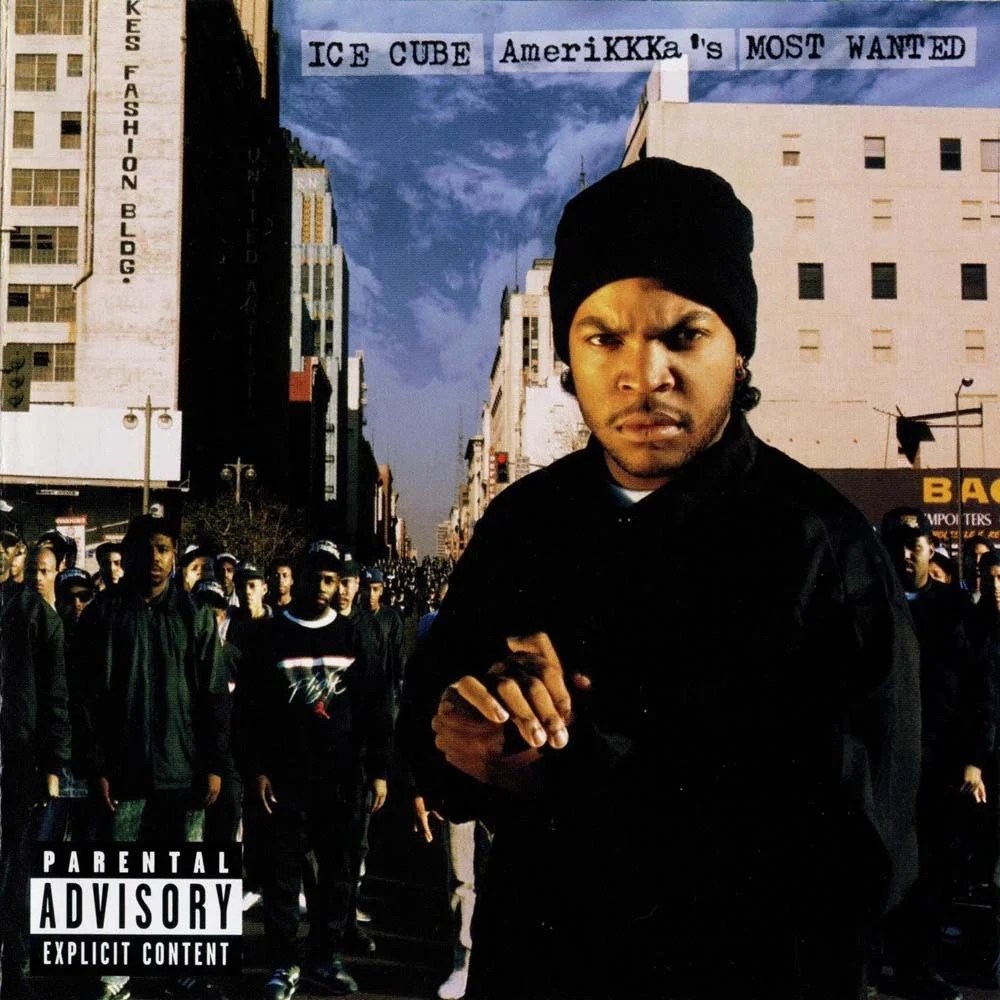
Before the solo albums, movies, and cultural icon status, Ice Cube was the pen behind N.W.A. He wrote most of Straight Outta Compton — then walked away over money and control.

His debut solo album, AmeriKKKa’s Most Wanted, hit like a sledgehammer. He didn’t just survive the breakup — he turned it into fuel and built a solo career that outpaced the group that made him.


Amerikkka’s Most Wanted Album Cover

Then There’s the Whole Bryan Ferry, Morrissey, Annie Lennox Thing…

You know the type. The ones who were technically in a band, but you kind of always knew they were destined to fly solo.

  • Bryan Ferry was Roxy Music—cool, stylish, theatrical. When he went solo, he smoothed out the edges and kept the vibe going with even more elegance.
  • Morrissey? When The Smiths dissolved, he doubled down on his own mythology — neurotic, literary, and unfiltered. Say what you will, but he made being miserable sound iconic.
  • Annie Lennox stepped out of Eurythmics and immediately leveled up. Tracks like “Why” and “No More I Love You’s” didn’t just show off her range — they felt like she was finally making music with no one else in the room.
  • Dave Stewart didn’t vanish. He became a quiet force, producing and writing for legends like Tom Petty and Stevie Nicks. He dropped solo albums, too. No hype, no drama — just intense, melodic work from a guy who knows what to do in a studio.

Natalie Merchant – Quiet Power, Loud Impact

I’ve got all these artists in my library. That’s why this post was hard — every one of them means something to me. Every career shift hit a different note.

But the artist I landed on? Natalie Merchant. Not the biggest name. Not the flashiest. But the one who hit me quietly — and stayed.

I first fell for her voice on 10,000 Maniacs’ version of “Peace Train.” Then I lost track of her — until “Carnival” came out. That song pulled me right back in. Restrained, observational, hypnotic. It led me to Tigerlily. That’s when it clicked. I was in.

She didn’t just go solo — she effortlessly pushed her boundaries, building something slower, wiser, and entirely her own.


Tigerlily Album Cover

 “San Andreas Fault” – A Quiet Warning Disguised as a Lullaby

Though “Carnival” was the standout, I’ve always been partial to “San Andreas Fault.” It opens softly — just piano, some breath between the lines — and stays there. But listen closely, and it’s tense. It’s about chasing dreams on unstable ground, about the illusions of safety and paradise.

It’s a warning, wrapped in a lullaby. A metaphor that doesn’t yell — it just sits with you. That’s Merchant’s power. She doesn’t need volume. She needs space — and she knows how to fill it.


Final Thoughts

Natalie Merchant didn’t just survive leaving 10,000 Maniacs — she defined herself in the process. And that’s the real thread through all these stories: artists stepping away from the comfort of the group, betting on themselves, and making something real.

Sometimes the biggest moves aren’t loud.
They’re quiet.
Intentional.
Built on fault lines — and still, somehow, they hold.


This post was written for Jim Adams’ Song Lyric Sunday

Skunk Anansie: The Band That Kicked Down the Britpop Door

TUNAGE – SLS

I wasn’t looking for a new band. I was elbow-deep in grease, rebuilding an engine, when Skunk Anansie hit my ears — completely by accident. They were playing in the background, and something about the sound stopped me cold. Mid-wrench, I froze. The voice, the chaos, the nerve of it. As someone who’s always had a thing for rock bands fronted by women, I knew instantly this wasn’t background noise — this was a warning shot. I scrawled their name on a scrap of paper, went back to torquing bolts, and forgot about it. Years later, I found that note again. The rest? History.

Turns out, the band that hijacked my afternoon was in the middle of torching the status quo.

Formed in 1994, Skunk Anansie didn’t show up to blend in. While Britpop was navel-gazing and pretending it was revolutionary, Skunk Anansie was actually shaking things up — loud, political, unapologetically Black and queer. They weren’t the sound of the mainstream. They were the sound crashing through it.

Their debut album, Paranoid & Sunburnt, landed like a brick through a glass ceiling. It was blistering, furious, and full of truth that most people weren’t ready to hear. They didn’t write “Selling Jesus” and “Little Baby Swastikkka” for radio; they wrote them to confront, provoke, and awaken listeners.

But one track hit me harder than I expected: Intellectualise My Blackness.”

As a Black man of a certain age in America, I felt that song. It screamed frustration, the tightrope walk between pride and exhaustion, the unspoken demand to constantly explain, justify, tone down, and translate your existence—to “intellectualize” something simply being who you are. The song doesn’t offer simple answers. It just screams the question we’re too often forced to answer: “Why do I need to prove my identity to you?”

It’s not just a powerful track. It’s personal.

And then there’s I Can Dream — the song that might’ve grabbed me all those years ago. It’s not about chasing dreams. It’s about drowning in them. Fantasies of power when the world keeps shutting you out. “I can dream that I’m someone else,” Skin snarls, and it’s not a wish — it’s a survival mechanism. That song doesn’t whisper. It breaks the silence wide open.

Which brings me to Skin herself. She’s not just the lead singer — she’s the force of nature steering the ship. A Black, openly gay woman with a voice like a controlled explosion and a stage presence that demands attention. She didn’t fit into the rock world’s mold — she shattered it. Watching her felt like watching someone fight for breath and win.

They called their sound “clit-rock,” because of course they did — loud, feminine, political, and deliberately hard to market. And they wore that label like armor.

Paranoid & Sunburnt wasn’t just a strong debut—it ripped the roof off what rock albums could be. It wasn’t sanitized, safe, or diluted. It was their truth, screamed at full volume. This album laid the groundwork for everything that followed: headlining Glastonbury as the first Black British-led act, performing for Mandela, sharing a stage with Pavarotti, and returning years later with 25LIVE@25 to remind everyone they never lost a step.

Skunk Anansie never asked for permission. They took up space, challenged everything, and demanded the world catch up. They’ll always be the band that made me put the wrench down — and feel something real.


Maggot Brain: Where Beauty and Despair Collide (and Punch You in the Gut)

TUNAGE – SLS

Funkadelic’s Maggot Brain isn’t just a record — it’s a reckoning. Released in 1971, it captured the psychic temperature of a country unraveling. War abroad, decay at home, distrust in the air, and the so-called counterculture burning out in real time. Maggot Brain took all that noise, that grief, that disillusionment — and turned it into one of the most brutally honest LPs ever pressed.

It wasn’t neat. It wasn’t safe. It was spiritual, political, cynical, funky as hell, and deeply weird — like a sermon preached from the edge of a nervous breakdown.

Maggot Brain captured the attitude of the entire country within a single LP. There was literally a track that spoke for everyone. If you were angry, it had you. If you were confused, it held you. If you just wanted to dance your way through the end times, Funkadelic had you covered. Every track hit a different nerve, and none of them asked permission.

There are songs that groove hard (You and Your Folks, Me and My Folks), others that mock the stupidity of it all (Super Stupid), and ones that crack open a deeper existential dread (Wars of Armageddon). But all of it orbits the title track. Maggot Brain isn’t just the opener. It’s the altar. It’s the cry at the center of the storm.

Eddie Hazel doesn’t play Maggot Brain. He doesn’t even perform it in the traditional sense. He haunts it. Possesses it. Bleeds into it. And once it begins, you don’t get to be a casual listener anymore. You’re drafted. No warning. No warm-up. Just a single, ghost-drenched guitar note that slides into your chest like a whisper you weren’t supposed to hear.

It’s not loud. It’s not fast. It just is. And that’s more terrifying than any distortion pedal at full blast. Hazel creeps in like a rogue spirit — smooth, silent, uninvited — and by the time you realize what’s happening, you’re already in it, stripped of cool and composure, emotionally pantsed.

You don’t get a beat to grab onto. No vocals to decode. Just a guitar screaming in slow motion. It’s like standing in the middle of a storm you can’t see but definitely feel. The grief is palpable. The rage is buried just deep enough to make you nervous. And right when you think you’ve got it figured out, the damn thing shifts and you’re spiraling again. Welcome to Maggot Brain — cognitive dissonance with a six-string.

Because let’s be real: this song shouldn’t work. It’s ten minutes, mostly one instrument. No verse. No chorus. Not even a satisfying drop. But for ten minutes, Eddie Hazel demolishes every “rule” about what music is supposed to be, and you love him for it. Or maybe you hate him for making you love it. Either way, you’re in it.

And no, you don’t walk away saying, “cool solo, bro.” You walk away dazed, like you just remembered a dream you never had. Or like your soul got mugged, politely. This is the kind of music that picks a fight with your expectations and then hugs you while you cry.

I still remember the first time I heard it — in a smoke-filled room full of strangers pretending not to be high. No one talked. No one moved. We were all just… held. Not by the music, exactly, but by whatever was trying to speak through it. We didn’t share a moment. We survived one. And we were better for it, or at least quieter.

Hazel doesn’t “solo.” He confesses, and we are his priests. Every bend, every scream from those strings is a sin laid bare. And by the end of the song, we have no choice but to grant absolution. Not because we’re qualified, but because he earned it. Because whatever he was holding, he handed it to us. And in some strange, sacred transaction, we took it.

His playing doesn’t follow any tidy roadmap. It stumbles through grief and grace, melting down and pulling itself back together like a nervous breakdown that found religion. There are moments where you think he’s going to lose it entirely — and maybe he does. But somehow, that’s the point.

You want to make sense of it, but your brain is two steps behind the whole time. Because it’s pretty and ugly. Gentle and violent. Hopeful and hopeless. Your heart’s trying to lean in while your head’s going, “Are we okay??” That’s the dissonance. That’s the magic. That’s why it hits harder than any perfect pop chorus ever could.

And George Clinton, cosmic genius and probable chaos wizard, gave Hazel just one instruction: “Play like your mother just died.” Which is both tragic and kind of a dick move, but clearly — it worked. What came out wasn’t a song. It was a slow, spiritual detonation. Hazel didn’t perform grief — he offered it. Raw. Untuned. Unfiltered. The kind of thing most of us spend our lives trying not to feel.

The track never resolves. No big finale. No grand crescendo. Just a long fade into silence, like a memory slipping back under the surface. It’s not done with you — it’s just gone. Until the next time you’re reckless enough to press play.

And I wonder: for those ten minutes, did Eddie Hazel serve as a guide to enlightenment?
Not the neat, monk-on-a-mountain kind.
The messier kind. The gut-punch kind.
The kind that grabs you by the heart, shakes something loose, and leaves without saying a word.


Maggot Brain #479 on 2003 list

Song Lyric Sunday – 011152025

MINI BIO – SLS

Immersing myself in the musical offerings of my fellow melody enthusiasts has been an absolute delight. Each shared track opened new doors, introducing me to artists I’d never encountered and fresh interpretations of beloved classics. The experience was a powerful reminder of music’s eternal nature and remarkable ability to mend the soul. As I pondered my contribution to this musical exchange, I drew blanks beyond the familiar territory of standards. Rather than force a conventional choice, I ventured into uncharted waters. Taking a bold step away from my usual selections, I dove deep into my carefully curated blues collection – a genre I rarely explore in these challenges. What I discovered there was nothing short of magical – a hidden treasure patiently waiting for its moment to shine. Like a dusty gem catching the light for the first time, this blues piece emerged from the depths of my collection, ready to share its brilliance.


Let me share with you this incredible musical journey that starts with “Work with Me, Annie,” a deliciously cheeky rhythm and blues gem that burst onto the scene in 1954. Hank Ballard and The Midnighters crafted this irresistible tune with its playful winks and nudges, wrapped in an infectious melody that just makes you want to move. The song’s magic lies in its teasing nature – never crossing the line but dancing right up to it with a mischievous grin.

But here’s where my musical adventure takes an exciting turn. While exploring the blues rabbit hole, I stumbled upon Snooky Pryor’s take on this classic from his 1999 album “Shake My Hand.” Oh, what a discovery! Pryor takes this already spicy number and adds his own special sauce – that soul-stirring harmonica of his weaves through the melody like a river of pure blues feeling. He doesn’t just cover the song; he reimagines it, breathing new life into those suggestive lyrics with his raw, authentic blues voice while his harmonica tells stories of its own.

It’s like finding a cherished vintage photograph that’s been lovingly restored and enhanced, keeping all its original charm while adding new layers of depth and character. Pryor’s version is a beautiful testament to how great music can evolve while staying true to its roots, creating something that feels both wonderfully familiar and excitingly fresh.


Lyrics:

Song by Hank Ballard

(guitar intro)

(Oooh!)
Work with me, Annie
(a-um, a-um, a-um, a-um)
Work with me, Annie
Ooo-wee!
Work with me, Annie
Work with me, Annie

Work with me, Ann-ie-e
Let’s get it while the gettin’ is good

(So good, so good, so good, so good)

Annie, please don’t cheat
(va-oom, va-oom, va-oom, va-oom)
Give me all my meat (ooo!)
Ooo-hoo-wee
So good to me

Work with me Ann-ie-e
Now, let’s get it while the gettin’ is good

(So good, so good, so good, so good)

A-ooo, my-ooo
My-ooo-ooo-wee
Annie, oh how you thrill me
Make my head go round and round
And all my love come dow-ow-own
(Ooo!)

Work with me, Annie
(a-um, a-um, a-um, a-um)
Work with me, Annie
Don’t be ‘shamed
To work with me, Annie
Call my name
Work with me, Annie

A-work with me, Ann-ie-e
Let’s get it while the gettin’ is good

(So good, so good, so good, so good)

So Good!

(guitar & instrumental)

Oh, our hot lips kissing
(a-um, a-um, a-um, a-um)
Girl, I’ll beg mercy
Oh, hugging and more teasing
Don’t want no freezing

A-work with me, Ann-ie-e
Let’s get it while the gettin’ is good

(So good, so good, so good, so good)

Ooo-ooo
Umm-mmm-mmm
Ooo-ooo-ooo

FADES

Ooo-ooo-ooo-ooo.


While treasure hunting in my blues archive, something magical happened – you know how music just grabs you sometimes? There I was, ready to wrap things up, when the blues spirits themselves seemed to whisper, “Hold up now, we’ve got more stories to tell!” And just like that, this hypnotic groove reached out and caught me, channeling the spirit of the legendary John Lee Hooker himself. That unmistakable rhythm, that raw, pulsing energy – it was impossible to resist.

And I wasn’t the only one feeling it! There was Guppy, my faithful furry companion, already swaying to the beat. In a moment of pure joy, I reached for her paws, and we shared this impromptu dance party. Reality (and our respective ages) quickly reminded us to take a seat, but that groove? Oh, it wasn’t letting go! So there we were, two old souls – me in my trusty chair, Guppy on her favorite pillow – still caught up in the rhythm, still moving and grooving, still feeling that blues magic work its way through our bones.

You know those perfect little moments when music just takes over, and age becomes just a number? This was one of those precious times when the blues reached out and reminded us that you’re never too old to feel the rhythm, never too dignified to let loose and wiggle along with the beat. Guppy and I might not be spring chickens anymore, but in that moment, we were timeless dancers in our own little blues club.


Let me tell you about this absolute gem I uncovered – “Got to Have Money” by Luther “Guitar Junior” Johnson. Talk about finding the perfect blues treasure! This piece just oozes that authentic Chicago blues spirit, the kind that grabs you by the soul and doesn’t let go. Johnson doesn’t just play the blues; he lives and breathes it through every note, every guitar lick, every word that flows from his lips.

You know those songs that just tell it like it is? This is one of those honest-to-goodness truth-tellers. Johnson wraps his gritty, soulful voice around a story we all know too well – that endless dance with the almighty dollar. But it’s not just about the message; it’s how he delivers it. Those guitar riffs? Pure magic! They weave through the song like a conversation, sometimes whispering, sometimes crying out, but always speaking straight to the heart.

And that groove! Oh my goodness, that groove! It’s the kind that gets under your skin and makes your feet move whether you want them to or not. Johnson has this incredible way of taking something as universal as money troubles and turning it into this beautiful, moving piece of art that makes you feel less alone in your struggles. It’s like he’s sitting right there with you, nodding his head and saying, “Yeah, I’ve been there too, friend.”

This is exactly why I love diving into these blues archives – you never know when you’ll surface with a piece that speaks such raw truth while making your spirit dance at the same time.


Lyrics:

Yes, a little drive by upon the hill
And this is where It begin to start
Mama told Papa, said “Pack up son!”
“We gonna leave this sow land again”


I was just a little bitty boy
′Bout the age of five
Too much work
Not enough money
This what it’s all about


Got to have money
Got to have some money, y′all
Got to have money
Got to have some money, y’all


Muddy Waters got money
Lightnin’ Hopkins got it too
Tyrone got money
Want me some money too


Got to have money
Can′t get along without it
Got to have some money
Can′t get along without it


I used to have you water
15 bottles
For 15 cents a day
Shame a boy my age
Worked so hard everyday


But now I’m grown
I′m on my own
And this I want you to know
If you want me to work for you, baby
You got to give me big dough


‘Cause I got to have money
Got to have money, y′all
Can’t get along without it
Got to have money, y′all


They say money is a sign for sympathy
The root of all evil
If this is what money really is
Call the Doctor ’cause I got a fever

I got to have money
Got to have money, y’all
Can′t get along without it
Got to have money, y′all

Got to have some money
I got to have some money


Writer(s): John T Williams

Here is the link to the challenge. Thanks Jim for hosting I had blast with one.

Mixed Music Bag and Song Lyric Sunday

TUNAGE ARTICLE

After reading some music posts this morning, I realized I have the opportunity to combine Glyn’s and Jim’s challenges. Let’s get at it…

Here is my response to Glyn’s Mixed Music Bag

In 1998, I was on assignment in Wisconsin, and during my downtime, I attended several music festivals. One night, the fellows and I were captured by a funky bassline. We followed the sound, expecting a black guy jamming on the bass, but that wasn’t what we saw.

We were shocked and later pushed aside our stereotypes and prejudices. We stood listening to a long-haired, tall caucasian male pumping the bass with everything he had. The joyful expression on his face was captivating. Yet, he wasn’t the star of the show. A short-haired woman belted out a bluesy rock rendition of the Aretha Franklin classic Respect.

It was one of the most powerful, energetic, and soulful performances I ever saw from a smaller band. Immediately, I became a fan and grooved the entire set. My musical taste varies depending on my mood, but I wasn’t expecting my companions to enjoy the show. I knew the music they listened to regularly, and it wasn’t anything like this.

“Who are these guys?” we shouted.

They were Tina and the B-Side Movement.

Here are the particulars:

Tina and the B-Side Movement, later known simply as Tina and the B-Sides, emerged as one of Minneapolis’s most influential and beloved rock bands in the late 1980s and 1990s. Led by the charismatic and talented Tina Schlieske, the group carved out a unique space in the Midwest music scene with its blend of bluesy rock, folk-inspired Americana, and raw energy.

Origins and Early Years

The band’s story begins with Tina Schlieske, who caught the music bug early in life. Growing up in the suburb of Apple Valley, Minnesota, Schlieske was drawn to the vibrant Minneapolis music scene of the 1980s. Inspired by a diverse range of artists, including Aretha Franklin, David Bowie, Janis Joplin, and Elvis Presley, Schlieske began sneaking into clubs to perform as early as 1984, well before she was of legal age.

Gradually, Schlieske assembled a band that would become Tina and the B-Side Movement. The group’s name evolved over time, starting as a joke referencing “bowel movement” before settling on the B-Side Movement, a nod to the B-side of records that often contained hidden gems.

Musical Style and Influences

Tina and the B-Sides developed a sound that defied easy categorization. Their music was a tight fusion of bluesy rock, folk-inspired melodies, and roughly hewn Americana[1]. This eclectic mix reflected Schlieske’s diverse musical influences and her desire to avoid being pigeonholed into any one genre.

Schlieske’s powerful vocals were at the heart of the band’s sound. Her sister Laura Schlieske also contributed vocals, creating a dynamic that often evoked the spirit of a tent revival[2]. The band’s lineup evolved over the years but typically included guitars, bass, drums, and keyboards, creating a full, robust sound that could fill any venue, from small clubs to large outdoor amphitheaters.

Rise to Prominence

Tina and the B-Sides built their reputation through relentless touring and energetic live performances. They played every club that would have them, gradually building a devoted following across the Midwest[1]. Their popularity proliferated, particularly in cities like Chicago, Milwaukee, and Madison, as well as throughout their home state of Minnesota.

The band’s DIY ethos was evident in their early releases. Their debut album, “Tina and the B-Side Movement,” was released in 1989 on Schlieske’s own label, Movement Records. This was followed by “Young Americans” in 1992 and “Monster” in 1994, all self-released and promoted through grassroots efforts and constant touring.

Live Performances and Reputation

Throughout the 1990s, Tina and the B-Sides became known for their electrifying live shows. They earned a reputation as one of the best bar bands in America, packing venues wherever they played[2]. The chemistry between band members, particularly between Tina and Laura Schlieske, was a highlight of their performances.

Their popularity in Minneapolis was particularly notable. The band played multiple sold-out shows at the famous First Avenue venue, earning them a coveted star on the club’s exterior wall. This honor placed them alongside Minnesota music legends like Prince, The Replacements, and Hüsker Dü.

Here is one of my favorite tracks…


Song Lyric Sunday

You’re my daughter and my son
You are my chosen one
You will always be
Unconditional love
Lifetime to learn
Maybe somehow
We will learn to love again
You’re my daughter and my son

You’re my daughter and you are my son
Not too hard to understand
You’re my brother and my sister too
All about the point of view
I can see it in your eyes sometimes
You afraid and so am I
Only love will be the only way
One day you will understand
You’re my daughter and my son
We are so out of place
Me you and them
And then all our fears
All hidden tears
Maybe somehow
We will learn to love again
You’re my daughter and my son
You’re my daughter and you are my son
Not too hard to understand
You’re my brother and my sister too
All about the point of view
I can see it in your eyes sometimes
You afraid and so am I
Only love will be the only way
One day you will understand
You’re my daughter and my son
You’re my daughter and you are my son
Not too hard to understand
You’re my brother and my sister too
All about the point of view
I can see it in your eyes sometimes
You afraid and so am I
Only love will be the only way

One day you will understand
You’re my daughter and my son


I’ve hundreds of bands live and witnessed several unforgettable performances. However, I say confidently that Tina and the B-Sides is still one of my favorites.

Song Lyric Sunday – King Diamond’s Abigail

TUNAGE – SLS


This post has been over 30 years in the making. Let me explain with a little back story. So, in 1987, a guy I knew in high school suggested three albums. Over a period of several months, this guy and I had drunken conversations about heavy metal. During this time, I knew hardly anything about the genre beyond the typical bands everyone listened to at the time, Van Halen, Motley Crue, and alike. Plus, I had one huge disadvantage. I was Black.

Today, no one gives two shakes about what music you like, but back then, in my region of the world, it was a big deal. I recall getting flack for my taste in music. However, this one guy would come up to me, and we’d rap about metal and drink beer. So, the last album he suggested I buy was King Diamond’s Abigail. He gave me the rundown on how King Diamond used to be with Mercyful Fate and all that. So, I bought the album without reservations because his previous recommendations were solid. In fact, I still listen to those artists.

I put on this album and was immediately thrown. Yeah, I was mindfucked. There was no one there telling me they loved me. No foreplay or heavy petting. Just take this, and you’re gonna like it; I did. Abigail was nothing like any music I had heard before. I sat for hours trying to figure out what I was listening to. All I knew was that I was drawn to it. None of my friends listened to this style of music, so I couldn’t discuss the album. For years, I’ve tried to find someone I could talk to about this album. Either they couldn’t stand King Diamond or never heard of him. I even had people question why a Black guy was listening to heavy metal. Without further ado or hyperbole, I present King Diamond’s Abigail. This entire album is some eerie shit!


Narrative and Concept

“Abigail” is a concept album that tells a gothic horror story set in 1845. The narrative follows a young couple, Jonathan and Miriam La’Fey, who inherit a mansion. Seven mysterious horsemen warn them about a terrible fate awaiting them if they stay in the house. Ignoring the warning, they encounter the spirit of Abigail, a stillborn child whose spirit possesses Miriam, leading to a tragic and gruesome series of events.

The album’s storytelling is a standout feature, with each song advancing the plot while creating a vivid, eerie atmosphere. The lyrics, written by King Diamond, are rich in detail and character development, immersing the listener in the dark tale. Songs like “Arrival,” “The Family Ghost,” and “Black Horsemen” are essential pieces of the narrative puzzle, each contributing to the unfolding horror.

Musical Composition and Style

Musically, “Abigail” blends heavy metal, speed metal, and progressive elements. Its complex arrangements, technical proficiency, and King Diamond’s distinctive falsetto vocals characterize it. The album showcases the exceptional musicianship of the band members: Andy LaRocque and Michael Denner on guitars, Timi Hansen on bass, and Mikkey Dee on drums.

The guitar work on “Abigail” is particularly noteworthy. It features intricate riffs, harmonized solos, and melodic passages, enhancing the album’s dramatic effect. Andy LaRocque and Michael Denner’s dual guitar interplay is a highlight, providing both aggression and melodic depth. Tracks like “A Mansion in Darkness” and “The 7th Day of July 1777” display their technical prowess and ability to convey the album’s ominous mood.

The rhythm section, with Timi Hansen on bass and Mikkey Dee on drums, provides a solid foundation for the album’s intensity. Dee’s drumming is dynamic and precise, adding to the album’s relentless energy, while Hansen’s bass lines add depth and complexity to the compositions.

Thematic Elements and Atmosphere

“Abigail” is steeped in themes of horror, possession, and the supernatural, drawing heavily from gothic fiction and classic horror films. The album’s lyrics are filled with vivid imagery, creating a cinematic experience for the listener. King Diamond’s theatrical vocal techniques, including his famous high-pitched falsetto and menacing growls, bring the characters and story to life.

The atmosphere of “Abigail” is dark and foreboding, achieved through the music and the production. The album was produced by King Diamond and Roberto Falcao, who crafted a sound that balances clarity with a raw, menacing edge. The production emphasizes the album’s dramatic dynamics, from the quiet, suspenseful moments to the explosive, intense sections.

Keyboards and sound effects further enhance the album’s eerie ambiance. These elements are used sparingly but effectively, adding to the overall sense of dread and tension. For instance, the haunting intro of “The Possession” and the chilling conclusion of “Black Horsemen” feature atmospheric sounds that contribute to the storytelling.

Impact and Legacy

“Abigail” is widely regarded as one of the greatest concept albums in metal history and a defining work in King Diamond’s career. Its success helped establish King Diamond as a solo artist and set a high standard for narrative-driven metal albums. The album’s blend of horror themes, theatricality, and musical complexity has influenced countless metal bands and artists.

The impact of “Abigail” extends beyond its initial release. Many metal musicians have cited it as influencing numerous tribute performances and covers. The album’s storytelling approach has also paved the way for other concept albums in metal, encouraging artists to explore ambitious, narrative-driven projects.

King Diamond’s ability to create a cohesive and compelling story through music is a significant achievement, demonstrating the potential of the concept album format. “Abigail” remains a testament to his creativity and vision, showcasing his unique blend of horror and metal in a way that continues to resonate with fans.

Conclusion

“Abigail” by King Diamond is a masterful album that combines intricate storytelling, exceptional musicianship, and a haunting atmosphere to create a landmark in the metal genre. Its gothic horror narrative, driven by King Diamond’s distinctive vocals and the band’s technical prowess, has left an indelible mark on the world of heavy metal. More than three decades after its release, “Abigail” continues to be celebrated as a classic, influencing new generations of metal artists and captivating listeners with its dark, compelling tale.


Lyrics:

Abigail

Song by

King Diamond

Abigail, I know you’re in control of her brain, Abigail
And I know that you’re the one that’s speaking through her, Abigail
Miriam, can you hear me?

I am alive inside your wife
Miriam’s dead, I am her head

I am alive inside your wife
Miriam’s dead, I am her head

Abigail, don’t you think I know what you’ve done, Abigail
I’ll get a priest
He will know how to get her soul back

Oh, Jonathan, this is Miriam
Our time is out
Remember the stairs, the only way

Abigail, nothing I can do but give in, Abigail
Follow me to the crypt
Abigail, you aught to be reborn where you died, Abigail
Jonathan, I agree, yes, I do

I am alive inside your wife
Miriam’s dead, I am her head
Soon I’ll be free

Songwriters: Kim Bendix Petersen.


Thanks, Jim and Di, for coming up and hosting this theme.

Song Lyric Sunday – Whistling Dixie

TUNAGE – SLS

As a child, I had the hardest time learning to whistle. So, when I saw the theme for this week, I had a nice flashback to that time. Oh yeah, this week’s theme is songs with whistling in them. Thanks to Jim Adams for hosting every week. Here are two of my favorites in this category.

“Raindrops Keep Fallin’ on My Head” by B.J. Thomas

“Raindrops Keep Fallin’ on My Head,” performed by B.J. Thomas, is a classic song that epitomizes the easygoing, optimistic spirit of late 1960s pop music. Written by the legendary songwriting duo Burt Bacharach and Hal David, the song was released in 1969 as part of the soundtrack for the film “Butch Cassidy and the Sundance Kid.”

The song’s light, breezy melody, accompanied by Thomas’s warm and soulful vocals, conveys a sense of resilience and cheerfulness despite life’s inevitable challenges. The lyrics, which speak of a carefree attitude in the face of adversity, perfectly complemented the film’s whimsical tone and became an instant hit.

“Raindrops Keep Fallin’ on My Head” topped the Billboard Hot 100 chart in January 1970 and won an Academy Award for Best Original Song. Its enduring popularity is a testament to its timeless appeal, capturing a universal sentiment of maintaining a positive outlook no matter what obstacles come one’s way. The song remains a beloved classic, frequently covered and featured in various media, bringing listeners a sense of joy and optimism worldwide.

Lyrics:

Raindrops keep fallin’ on my head
And just like the guy
Whose feet are too big for his bed

Nothin’ seems to fit
Those raindrops are fallin’
On my head, they keep fallin’

So, I just did me some talkin’ to the sun
And I said, I didn’t like
The way he got things done

Sleepin’ on the job
Those raindrops are fallin’
On my head, they keep fallin’

But there’s one thing I know
The blues they send
To meet me won’t defeat me (aah)
It won’t be long till
Happiness steps up to greet me

Raindrops keep fallin’ on my head
But that doesn’t mean
My eyes will soon be turnin’ red
Cryin’s not for me ’cause
I’m never gonna stop the rain by complainin’
Because I’m free, nothin’s worryin’ me

It won’t be long till
Happiness steps up to greet me

A raindrops keep fallin’ on my head
But that doesn’t mean
My eyes will soon be turnin’ red
Cryin’s not for me ’cause
I’m never gonna stop the rain by complainin’
Because I’m free, nothin’s worryin’ me

Songwriters: Burt F. Bacharach, Hal David.


“Me and Julio Down by the Schoolyard” by Paul Simon

“Me and Julio Down by the Schoolyard” is a lively and infectious song by Paul Simon, released in 1972 on his self-titled solo album. Known for its upbeat tempo and catchy melody, the song showcases Simon’s distinctive storytelling and musical style, blending elements of folk, rock, and Latin rhythms.

The song narrates the adventures of the narrator and his friend Julio, who get into some unspecified trouble “down by the schoolyard.” The playful and somewhat mysterious lyrics have sparked much curiosity and speculation over the years about the nature of their mischief. Despite the ambiguity, the song’s joyful energy and whistling sections create a carefree and nostalgic atmosphere.

“Me and Julio Down by the Schoolyard” became one of Simon’s early solo hits. It was celebrated for its unique blend of musical influences and whimsical yet relatable narrative. The song remains a favorite in Paul Simon’s extensive catalog, capturing the essence of youthful exuberance and the timeless appeal of friendship and misadventure.

Lyrics:

Mama pajama rolled out of bed, and she ran to the police station
When the papa found out he began to shout
And he started the investigation
It’s against the law, it was against the law
Oh, what the mama saw, it was against the law

Mama looked down and spit on the ground
Every time my name gets mentioned
The papa say, “Oy, if I get that boy
I’m gonna stick him in the house of detention”

Well, I’m on my way
I don’t know where I’m goin’, I’m on my way
I’m takin’ my time, but I don’t know where
Goodbye to Rosie, the Queen of Corona
Seein’ me and Julio down by the schoolyard

Whoa, in a couple of days
They come and take me away
But the press let the story leak
And when the radical priest come to get me released
We was all on the cover of Newsweek

And I’m on my way
I don’t know where I’m goin’, I’m on my way
I’m takin’ my time, but I don’t know where
Goodbye to Rosie, the Queen of Corona
Seein’ me and Julio down by the schoolyard

Songwriters: Paul Simon.

Song Lyric Sunday – The Ohio Players – 04/14/2024

TUNAGE – SLS

I got excited when I saw the prompt for this post. There are so many songs I love that fit the category. I could go on a rant about these songs, but I will behave. Tonight, I will just provide five of my favorites in this category.

2. Disco Inferno – The Trammps (1976)

3. The Roof is on Fire – Rock Master Scott & The Dynamic Three (1984)

4. Beds are Burning – Midnight Oil (1987)

5. Fire Woman – The Cult (1989)

My all-time favorite song is none other than The Ohio Players. I remember sitting in front of my mother’s HiFi, flipping through records. I found this album cover and was mesmerized by it. I listened to this as much as I could. I never understood the meaning of the song until much later in life. Even today, I still enjoy the funk sound of this track. This track was recorded in 1974. Fire reached No. 10 on the disco/dance chart.

Lyrics:

Hey, now, huh-huh
Hey, hey, hey, no, (Ow, now)
Hey, now, huh-huh
Hey, hey, hey, no
Fire (Uh) Fire (Its all about) Fire (Woo, woo, woo)
Fire
The way you walk and talk really sets me off
To a fuller love, child, yes, it does, uh
The way you squeeze and tease, knocks to me my knees
Cause Im smokin’ baby, baby
The way you swerve and curve, really wrecks my nerves
And Im so excited, child, woo, woo
The way you push, push lets me know that you’re good
Oh, yeah
Fire (What I said, child, ow)
Fire (Uh-huh)
Got me burnin’ burnin’ burnin’
Ooh. Ooh, ooh, ooh
Burnin’, burnin’ baby
Oh, baby
When you shake what you got, and girl, you’ve got a lot
You’re really somethin’ child, yes, you are
When you’re hot you’re hot, you really shoot your shot
You’re dyn-o-mite, child, yeah
Well, I can tell by your game, you’re gonna start a flame
Love, baby, baby
I’m not gon’ choke from the smoke, got me tightenin’ up my stroke
Do you feel it, girl, yeah
Songwriters: Clarence Satchell, Marshall Jones, Leroy Bonner, Willie Beck, James L. Williams, Marvin Pierce, Ralph Middlebrooks. For non-commercial use only.


Thank you, Jim, for hosting this challenge. Thank you, Nancy, for suggesting this wonderful theme.

Song Lyric Sunday – The Time

TUNAGE – SLS

When I think about songs with cold in the title, two come to mind immediately: Foreigner’s “Cold as Ice” and Rainbow’s Stone Cold. However, I decided to take things in a different direction for this post. I wanted a track I always considered fun. One of my favorite bands is none other than The Time and their track Ice Cream Castles. Which was the title track from that album.

“Ice Cream Castles” is a funky and playful song by The Time, released in 1984. The track stands out with its whimsical lyrics and a groovy melody that captures the essence of 80s funk and R&B. The song, produced by Prince, features a blend of catchy guitar riffs, vibrant synthesizers, and smooth vocals, creating a lighthearted and danceable vibe. It encapsulates a dreamy, surreal aesthetic, much like the imagery suggested by its title, offering listeners a musical escape into a fantastical world of rhythm and style.

Here are the lyrics:

We are young, we are free on earth together. Let’s fall in love.
You are fine, you are white, I am of color. Let’s fall in love.

Ice cream castles in the summertime.
Ice cream castles in the summer.

I want you, you want me, we want each other. Is that so wrong?
It’s raining. Mad sisters, why can’t they realize, that it won’t be long?

We’re all ice cream castles in the summertime.
Ice cream castles in the summer.
Let’s do something soon.

We are young, we are free. Let’s come together before the end.
I am blue, you are too, what could be better? Let’s make friends.

We’re all ice cream castles in the summertime.
Ice cream castles in the summertime.
We’re all ice cream castles in the sun.
Ice cream castles when we fall.
Ice cream castles in the summertime.
Summertime, summertime, summertime.

Is that what you need?
White girls, black girls, orientals, Jamaican?

Ice cream castles in the summertime.
We’re all ice cream castles in the sun.
Ice cream castles when we fall.
Ice cream castles in the summertime.
Summertime.

White girls, black girls, orientals, jamaican.
I want you, you want me, we want each other.

White girls, black girls.
We are young, we are free on earth together.

Let’s do something, let’s do something soon.

We are young, we are free. Let’s come together.

Thanks, Jim, for hosting, and Nancy, for suggesting this one was fun.

Song Lyric Sunday – Gladys Knight

TUNAGE – SLS

This week’s challenge is a particular favorite of mine. I’m a bit of a soundtrack junkie, so I can ramble all day about the different tracks written for motion pictures. However, I’ll try my best to contain my urge to go into a full rant about this week’s challenge.

I’m a huge fan of the James Bond movies. Yes, the best James Bond was Sean Connery, that’s right, I said it. We all know that the Bond films are known for their theme songs and the Bond Girls. Sorry, I digress, I’m a little taken back by my favorite Bond theme song is for Licence To Kill, which featured Timothy Dalton as 007. I still trying to figure out how that happened. I’m confused because we saw his role in Flash Gordon, whose soundtrack was done by Queen.

The theme song for this film was sung by vocal legend Gladys Knight. It’s definitely one of my favorite songs of all time. The power and passion she brings to this song; I don’t have the words. The track was released in May 1989. This track is another example of the power of the music of the decade.

Lyrics

“Licence To Kill”

Ooooh
Ah-aaah
I need, I need, I’ve got to hold on to your love
Ooooh

Hey baby, thought you were the one who tried to run away
Ohh, baby, wasn’t I the one who made you want to stay?
Please don’t bet that you’ll ever escape me
Once I get my sights on you

I Got a licence to kill (to kill)
And you know I’m going straight for your heart
(Got a licence to kill)
Got a licence to kill (to kill)
Anyone who tries to tear us apart
(Got a licence to kill)
Licence to kill

Hey baby, think you need a friend to stand here by your side?
Yes you do (your side)
Ohh, baby, now you can depend on me to make things right (things right)
Please don’t bet that you’ll ever escape me
Once I get my sights on you

[2x:]
I Got a licence to kill (to kill)
And you know I’m going straight for your heart
(Got a licence to kill)
Got a licence to kill (to kill)
Anyone who tries to tear us apart
(Got a licence to kill)
Licence to kill

Say that somebody tries to make a move on you
In the blink of an eye, I’ll be there too
And they’d better know why I’m gonna make them pay
Till their dying day

[2x:]
Got a licence to kill (to kill)
And you know I’m going straight for your heart
(Got a licence to kill)
Got a licence to kill (to kill)
Anyone who tries to tear us apart
(Got a licence to kill)
Licence to kill

Gotta hold onto your loving
Licence to kill
Ooohooo!
Kill

Thanks Jim and Nancy

Song Lyric Sunday – Going Biblical

CHALLENGE RESPONSE – SLS

Typically, I roll my eyes when I hear the term Christian Rock. It’s not because I don’t believe there could be such a thing, but when I first heard of the genre, the selected tracks presented to them weren’t rock. Not even close. The people presenting the music believed I listened to the “music of the devil.” It didn’t help; I sometimes started the day in the office by blasting Black Sabbath’s Sweet Leaf. Hey, sometimes I need a little kick somedays. There are days when caffeine and nicotine alone just aren’t enough.

Several years later, an NCO was playing some hard driving music from his office one night while we were working on preparing for an inspection. That music turned out to be Creed. I went out and bought the CD and gave it a listen. Immediately, I noticed the spiritual overtones in some of their music. I enjoyed their music, but never really reached the fan level. Even though I have their debut and sophomore albums. So, when I read this prompt, My Own Prison immediately came to mind. Let’s give it a listen.

Creed

LYRICS:

Court is in session, a verdict is in
No appeal on the docket today just my own sin
The walls cold and pale, the cage made of steel
Screams fill the room, alone I drop and kneel
Silence now the sound, my breath the only motion around
Demons cluttering around, my face showing no emotion
Shackled by my sentence, expecting no return
Here there is no penance, my skin begins to burn

(And I said, ohh) So I held my head up high
Hiding hate that burns inside
Which only fuels their selfish pride
(And I said, ohh) All held captive out from the sun
A sun that shines on only some
We the meek are all in one

I hear a thunder in the distance, see a vision of a cross
I feel the pain that was given on that sad day of loss
A lion roars in the darkness, only he holds the key
A light to free me from my burden and grant me life eternally

Should have been dead on a Sunday morning, banging my head
No time for mourning
Ain’t got no time
Should have been dead on a Sunday morning, banging my head
No time for mourning
Ain’t got no time

(And I said, ohh) So I held my head up high
Hiding hate that burns inside
Which only fuels their selfish pride
(And I said, ohh) All held captive out from the sun
A sun that shines on only some
We the meek are all in one

I cry out to God, seeking only His decision
Gabriel stand and confirms, I’ve created my own prison
I cry out to God, seeking only His decision
Gabriel stand and confirms, I’ve created my own prison

(And I said, ohh) So I held my head up high
Hiding hate that burns inside
Which only fuels their selfish pride
(And I said, ohh) All held captive out from the sun
A sun that shines on only some
We the meek are all in one
(And I said, ohh) So I held my head up high
Hiding hate that burns inside
Which only fuels their selfish pride
(And I said, ohh) All held captive out from the sun
A sun that shines on only some
We the meek are all in one

Should have been dead on a Sunday morning, banging my head
No time for mourning
Ain’t got no time


Here is another band whose music fits the parameters of the prompt. I’m providing a detailed article for Mixed Music Bag. So, just give this track a listen.

Flyleaf:

LYRICS:

Circle encircles the earth
Chance and choice break his heart
His innocent arm moves to save me and I am spared
His beautiful arm is bloody and cut off
His heart ripped out to show me he loved me
But I wouldn’t believe him
He did all that he could
I still would not believe him

I left his arms empty and tied outstretched for me until he died
Left his arms empty and tied outstretched for me until he died

No man shows greater love
Than when a man lays down his life
For his beloved

I left his arms empty and tied outstretched for me until he died
Left his arms empty and tied outstretched for me until he died

And here I am alive
And I don’t have the right
And he gives me the right
Costing him his life
New mercy’s in the morning

I believe
What if I believe you now?
Could it ever change this for you?
Forgive me, relieve me
Please come back to life

I believe
What if I believe you now?
Could it ever change this for you?
Forgive me, relieve me
Please come back to life
Come back to my life

I believe
What if I believe now?
Forgive me, relieve me
Please come back to life

Song Lyric Sunday – Children and Families

CHALLENGE RESPONSE – SLS


Nothing More

“Fade In, Fade Out” by Nothing More is a deeply emotional and introspective song that explores the universal themes of time, legacy, and the cyclical nature of life. Released as part of their album “The Stories We Tell Ourselves” (2017), the song delves into the relationship between generations, specifically focusing on the bond between a parent and child. Through its poignant lyrics, “Fade In, Fade Out” reflects on the inevitable passage of time, the experience of watching one’s parents age, and the desire to make the most of the moments shared with loved ones.

The song begins with a perspective that captures the essence of watching one’s child grow up, imparting wisdom, and hoping they find their way in life without losing themselves. As it progresses, the narrative shifts to express the child’s perspective—acknowledging the sacrifices made by the parents, the realization of their mortality, and the deep wish to carry forward their legacy. With its haunting refrain, the chorus emphasizes the transient nature of life, urging listeners to cherish their time with loved ones before it’s too late.

Musically, “Fade In, Fade Out” is marked by its dynamic shifts, moving from softer, reflective verses to powerful, emotionally charged choruses, mirroring the emotional depth and complexity of the subject matter. The song is a testament to Nothing More’s ability to weave intricate narratives through their music, offering listeners not just a song, but a profound emotional experience that resonates with the universal human condition of love, loss, and the hope of legacy. To hear this song preformed live adds another layer to it.

LYRICS:

Just the other day I looked at my father
It was the first time I saw he’d grown old
Canyons through his skin and the rivers that made them
Carve the stories I was told

He said
“Son, I have watched you fade in
You will watch me fade out
I have watched you fade in
You will watch me fade out
When the grip leaves my hand
I know you won’t let me down

Go and find your way
Leave me in your wake
Always push through the pain
And don’t run away from change
Never settle
Make your mark
Hold your head up
Follow your heart
Follow your heart”

Just the other day I stared at the ocean
With every new wave another must go
One day you’ll remember us laughing
One day you’ll remember my passion
One day you’ll have one of your own

And I say
“Son, I have watched you fade in
You will watch me fade out
When the grip leaves my hand
I know you won’t let me down

Go and find your way
Leave me in your wake
Always push through the pain
And don’t run away from change
Never settle
Make your Mark
Hold your head up
Follow your heart
Follow your heart, follow your heart, follow your heart”

We all get lost sometimes
Trying to find what we’re looking for
We all get lost sometimes
Trying to find what we’re looking for
I have watched you fade in
You will watch me fade out
When the grip leaves my hand
I know you won’t let me down

Go and find your way
Leave me in your wake
Always push through the pain
And don’t run away from change
Never settle
Make your Mark
Hold your head up
Follow your heart
Follow your heart, follow your heart”

When the morning comes and takes me
I promise I have taught you everything that you need
In the night you’ll dream of so many things
But find the ones that bring you life and you’ll find me


Thanks to Jim Adams for hosting and another excellent suggestion by Nancy, aka The Sicilian Storyteller

Song Lyric Sunday – War and Peace

CHALLENGE RESPONSE – SLS

Here is my response to SLS, hosted by Jim Adams

“Run to the Hills” by Iron Maiden is a powerful track from their 1982 album, “The Number of the Beast.” The song is renowned for its compelling musicality and thought-provoking lyrics, which offer a critical perspective on the historical conflicts between Native Americans and European settlers. Through its driving riffs supplied by Dave Murray and Adrian Smith and Bruce Dickerson’s dynamic vocal range, “Run to the Hills” tells a story from both viewpoints: the indigenous peoples of America and the invading settlers.

The song’s narrative highlights the violence, exploitation, and injustices faced by Native Americans during the colonization period, emphasizing themes of freedom, survival, and the tragic consequences of imperialism. Iron Maiden uses this track to showcase their musical talent and provoke reflection on a dark chapter in history, making it a memorable and impactful piece in the realm of heavy metal.


Lyrics:

White man came across the sea
He brought us pain and misery
He killed our tribes, he killed our creed
He took our game for his own need

We fought him hard, we fought him well
Out on the plains, we gave him hell
But many came, too much for Cree
Oh, will we ever be set free?

Riding through dust clouds and barren wastes
Galloping hard on the plains
Chasing the redskins back to their holes
Fighting them at their own game
Murder for freedom, a stab in the back
Women and children and cowards attack

Run to the hills
Run for your lives
Run to the hills
Run for your lives

Soldier blue in the barren wastes
Hunting and killing’s a game
Raping the women and wasting the men
The only good Indians are tame
Selling them whiskey and taking their gold
Enslaving the young and destroying the old

Run to the hills
Run for your lives
Run to the hills
Run for your lives

Yeah

Run to the hills
Run for your lives
Run to the hills
Run for your lives

Run to the hills
Run for your lives
Run to the hills
Run for your lives

Song Lyric Sunday: God – 03102024

CHALLENGE RESPONSE – SLS

This challenge was tough for me, not because I didn’t know a song that fit the parameters, but because I knew too many to choose one. So, I decided to cheat a little, just a tad. I’m going to list my Top 3 favorites within the parameters. However, I will only deep drive on the first song. My Top 3 are as follows:

  • God Bless the Child – Billie Holiday
  • God is a Bullet – Concrete Blonde
  • Dear God – XTC

God Bless the Child is my favorite because of the dear memories it holds within the melody and lyrics—memories I rarely recall until I hear the song. Immediately, I’m teleported back into my childhood, listening to my mother playing the track on the HiFi. For the longest time, she only played Diana Ross’s cover of the song. I memorized and sang it along with her. I found the original when I was old enough and brought the 45 for Mom. Here are the particulars about the song.


The Meaning of “God Bless the Child”

“God Bless the Child” is a song that carries profound meanings, intertwining themes of independence, self-reliance, and the harsh realities of inequality and economic disparity. Originating as a jazz standard, it was famously performed by Billie Holiday, who co-wrote the song with Arthur Herzog Jr. in 1939. Through its poignant lyrics and soul-stirring melody, the song delves into the complexities of financial dependency and social stratification, resonating across generations with its timeless relevance.

Interpretation of Lyrics

At its core, “God Bless the Child” emphasizes the value of self-sufficiency. The opening lines, “Them that’s got shall get, Them that’s not shall lose,” reflect a stark observation of societal dynamics, where the rich grow richer and the poor face continual hardship. This sets the stage for the song’s central message, advocating for personal strength and independence in a world rife with inequities.

The chorus, “God bless the child that’s got his own,” underscores the dignity and empowerment found in self-reliance. It suggests a divine favor or resilience bestowed upon those who can stand on their own feet, contrasting the vulnerability of those who depend on the charity or whims of others. This message is particularly poignant, considering Billie Holiday’s own struggles with poverty and racial discrimination, adding a layer of personal testimony to the song’s narrative.

Cultural and Historical Context

“God Bless the Child” emerged during significant social and economic upheaval in the United States, reflecting the hardships of the Great Depression and the subsequent recovery period. Its themes resonated with many who experienced financial insecurity and witnessed the disparities between social classes. Over the decades, the song has been interpreted by numerous artists across various genres, each bringing their own perspective but retaining the core message of autonomy and resilience.

Philosophical and Ethical Considerations

Beyond its commentary on economic issues, “God Bless the Child” also touches on deeper philosophical and ethical questions. It prompts listeners to consider the values of independence versus interdependence and the moral responsibilities of the fortunate towards the less privileged. In this light, the song can be seen as a call to introspection and empathy, encouraging individuals to find their strength while recognizing the interconnectedness of society.

Legacy and Influence

The enduring appeal of “God Bless the Child” lies in its universal message and emotional depth. It has transcended its original context to become an anthem of perseverance and dignity, inspiring listeners to reflect on their circumstances and society. The song’s influence extends beyond music, permeating cultural discussions and academic analyses, attesting to its profound impact and relevance.

In conclusion, “God Bless the Child” is more than a musical composition; it reflects human resilience, social justice, and the quest for dignity. Its message of self-reliance amidst adversity resonates, offering inspiration and insight to each new generation that discovers its timeless verses.

God Bless the Child Lyrics (1956 Version)

Them that’s got shall have
Them that’s not shall lose
So the Bible said and it still is news

Mama may have, Papa may have
But God bless the child that’s got his own, that’s got his own

Yes, the strong get smart
While the weak ones fade
Empty pockets don’t ever make the grade

Mama may have, Papa may have
But God bless the child that’s got his own, that’s got his own

Money, you’ve got lots of friends
They’re crowding around the door
But when you’re gone and spending ends
They don’t come no more
Rich relations give crusts of bread and such
You can help yourself, but don’t take too much

Mama may have, Papa may have
But God bless the child that’s got his own, that’s got his own

Mama may have, Papa may have
But God bless the child that’s got his own, that’s got his own

He just don’t worry ’bout nothing, ’cause he’s got his own


You guys already know how I feel about Concrete Blonde. However, XTC’s Skylarking was packed with amazing songs, and I spent a lot of time listening to it.

Thanks to Jim Andrews for hosting this challenge. Such a fantastic suggestion, Nancy, aka The Sicilian Storyteller.

Song Lyric Sunday – Singled Out

Here is my response to Jim Adams’ SLS

This prompt was a little difficult for me, because I grew up during the time when we collected 12 inch singles. So, after a bit of research, I was surprised to find one of the songs I enjoy fitting the parameters of the challenge.

The Pixies are an influential American alternative rock band formed in 1986 in Boston, Massachusetts. The band consists of Black Francis (vocals, guitar), Joey Santiago (guitar), Kim Deal (bass, vocals), and David Lovering (drums). It is known for its distinctive blend of punk, surf rock, and indie pop elements. The Pixies’ music is characterized by loud-quiet dynamics, catchy hooks, and surreal lyrics exploring themes of surrealism, mythology, and pop culture.

With iconic albums such as “Surfer Rosa” (1988) and “Doolittle” (1989), the Pixies garnered critical acclaim and a dedicated cult following, influencing a generation of alternative rock bands with their innovative sound. Hits like “Where Is My Mind?” and “Debaser” remain staples of the indie rock canon, while the band’s energetic live performances solidify their reputation as one of the most influential acts of the late 20th century. Despite periods of hiatus and lineup changes, the Pixies continue to create music and tour, leaving an indelible mark on the landscape of alternative rock.


Where is my Mind? Lyrics

Ooh
Stop

With your feet on the air
And your head on the ground
Try this trick and spin it, yeah
Your head will collapse
If there’s nothing in it
And you’ll ask yourself

Where is my mind?
Where is my mind?
Where is my mind?

Way out in the water, see it swimmin’

I was swimmin’ in the Caribbean
Animals were hidin’ behind the rocks
Except the little fish, bumped into me
I swear he was trying to talk to me, koi-koi

Where is my mind?
Where is my mind?
Where is my mind?

Way out in the water, see it swimmin’

With your feet on the air
And your head on the ground
Try this trick and spin it, yeah
Your head will collapse
If there’s nothing in it
And you’ll ask yourself

Where is my mind?
Where is my mind?
Where is my mind?

Way out in the water, see it swimmin’

With your feet on the air
And your head on the ground
Try this trick and spin it, yeah

SLS – 03032024 – Bye, Bye Miss American Pie

CHALLENGE RESPONSE – SONG LYRIC SUNDAY

Here is my response to Jim Adams’ Song Lyric Sunday

As a child, I can hardly remember when I listened to the radio and didn’t hear this song at least once. I heard so much I memorized the lyrics and sang right along. Yet, as time went on, I found myself growing tired of hearing this song. I remember wondering what was going to be the next big hit? I didn’t realize the song was already several years old. It’s such a timeless classic I had to take a moment and discuss its meaning. This is what I came up with.


The Layers of Meaning in “American Pie”

Don McLean’s iconic song “American Pie” has captivated audiences for decades with its enigmatic lyrics and haunting melodies. Released in 1971, the eight-and-a-half-minute epic is steeped in cultural references, historical events, and personal reflections, inviting listeners on a journey through the turbulent landscape of American society in the 20th century. As one of the most analyzed and debated songs in popular music history, “American Pie” continues to fascinate and inspire, offering layers of meaning that transcend time and space.

At its core, “American Pie” is a lamentation for the loss of innocence and idealism in American society and a nostalgic homage to the golden era of rock and roll. The song opens with the poignant line, “A long, long time ago, I can still remember how that music used to make me smile,” evoking a longing for the simpler times of youth and the transformative power of music to unite and uplift.

Central to the song’s narrative is the tragic plane crash that claimed the lives of Buddy Holly, Ritchie Valens, and The Big Bopper on February 3, 1959, often referred to as “The Day the Music Died.” This event serves as a metaphor for the loss of innocence and optimism in American society, marking the end of an era of rock and roll idealism and the onset of a more turbulent and uncertain period in history.

McLean weaves a tapestry of cultural references and symbolic imagery throughout the song, drawing on Americana, mythology, and spirituality themes to create a rich and evocative narrative. The lyrics are peppered with allusions to historical figures, events, and symbols, from “the King” (Elvis Presley) to “the jester” (Bob Dylan), from “the sacred store” (the record store) to “the holy dove” (a symbol of peace and spirituality).

One of the most debated aspects of “American Pie” is the interpretation of its cryptic lyrics, which have spawned countless theories and analyses over the years. Some interpretations suggest that the song is a commentary on the decline of American society and the loss of traditional values. In contrast, others see it as reflecting popular culture’s changing landscape and commercialism’s rise.

Yet, amidst the ambiguity and complexity of its lyrics, “American Pie” ultimately serves as a testament to the enduring power of music to transcend boundaries, unite disparate voices, and capture the collective consciousness of a generation. As McLean once said, “American Pie” is “a big song with big themes,” encompassing an entire nation’s hopes, dreams, and aspirations.

In conclusion, “American Pie” is a timeless masterpiece that defies easy categorization and interpretation. Its evocative imagery, poetic lyricism, and haunting melodies resonate with listeners of all ages, inviting them to ponder the mysteries of life, love, and loss. Whether viewed as a nostalgic tribute to the golden age of rock and roll or a poignant lament for the loss of innocence in American society, “American Pie” remains a symbol of hope, resilience, and the enduring power of music to inspire and uplift.


American Pie Lyrics

A long, long time ago
I can still remember how that music
Used to make me smile
And I knew if I had my chance
That I could make those people dance
And maybe they’d be happy for a while

But February made me shiver
With every paper I’d deliver
Bad news on the doorstep
I couldn’t take one more step
I can’t remember if I cried
When I read about his widowed bride
Something touched me deep inside
The day the music died

So, bye-bye, Miss American Pie
Drove my Chevy to the levee, but the levee was dry
And them good ol’ boys were drinkin’ whiskey and rye
Singin’, “This’ll be the day that I die
This’ll be the day that I die”

Did you write the book of love
And do you have faith in God above
If the Bible tells you so?
Now, do you believe in rock ‘n’ roll
Can music save your mortal soul
And can you teach me how to dance real slow?

Well, I know that you’re in love with him
‘Cause I saw you dancin’ in the gym
You both kicked off your shoes
Man, I dig those rhythm and blues
I was a lonely teenage bronckin’ buck
With a pink carnation and a pickup truck
But I knew I was out of luck
The day the music died

I started singin’, bye-bye, Miss American Pie
Drove my Chevy to the levee, but the levee was dry
Them good ol’ boys were drinkin’ whiskey and rye
Singin’, “This’ll be the day that I die
This’ll be the day that I die”

Now, for ten years we’ve been on our own
And moss grows fat on a rollin’ stone
But that’s not how it used to be
When the jester sang for the king and queen
In a coat he borrowed from James Dean
And a voice that came from you and me

Oh, and while the king was looking down
The jester stole his thorny crown
The courtroom was adjourned
No verdict was returned
And while Lenin read a book on Marx
A quartet practiced in the park
And we sang dirges in the dark
The day the music died

We were singin’, bye-bye, Miss American Pie
Drove my Chevy to the levee, but the levee was dry
Them good ol’ boys were drinkin’ whiskey and rye
Singin’, “This’ll be the day that I die
This’ll be the day that I die”

Helter skelter in a summer swelter
The birds flew off with a fallout shelter
Eight miles high and falling fast
It landed foul on the grass
The players tried for a forward pass
With the jester on the sidelines in a cast

Now, the halftime air was sweet perfume
While sergeants played a marching tune
We all got up to dance
Oh, but we never got the chance
‘Cause the players tried to take the field
The marching band refused to yield
Do you recall what was revealed
The day the music died?

We started singin’, bye-bye, Miss American Pie
Drove my Chevy to the levee, but the levee was dry
Them good ol’ boys were drinkin’ whiskey and rye
Singin’, “This’ll be the day that I die
This’ll be the day that I die”

Oh, and there we were all in one place
A generation lost in space
With no time left to start again
So, come on, Jack be nimble, Jack be quick
Jack Flash sat on a candlestick
‘Cause fire is the Devil’s only friend

Oh, and as I watched him on the stage
My hands were clenched in fists of rage
No angel born in Hell
Could break that Satan spell
And as the flames climbed high into the night
To light the sacrificial rite
I saw Satan laughing with delight
The day the music died

He was singin’, bye-bye, Miss American Pie
Drove my Chevy to the levee, but the levee was dry
Them good ol’ boys were drinkin’ whiskey and rye
Singin’, “This’ll be the day that I die
This’ll be the day that I die”

I met a girl who sang the blues
And I asked her for some happy news
But she just smiled and turned away
I went down to the sacred store
Where I’d heard the music years before
But the man there said the music wouldn’t play

And in the streets the children screamed
The lovers cried, and the poets dreamed
But not a word was spoken
The church bells all were broken
And the three men I admire most
The Father, Son and the Holy Ghost
They caught the last train for the coast
The day the music died

And they were singin’, bye-bye, Miss American Pie
Drove my Chevy to the levee, but the levee was dry
And them good ol’ boys were drinkin’ whiskey and rye
Singin’, “This’ll be the day that I die
This’ll be the day that I die”

They were singin’, bye-bye, Miss American Pie
Drove my Chevy to the levee, but the levee was dry
Them good ol’ boys were drinkin’ whiskey and rye
Singin’, “This’ll be the day that I die”