I remember the smell first.
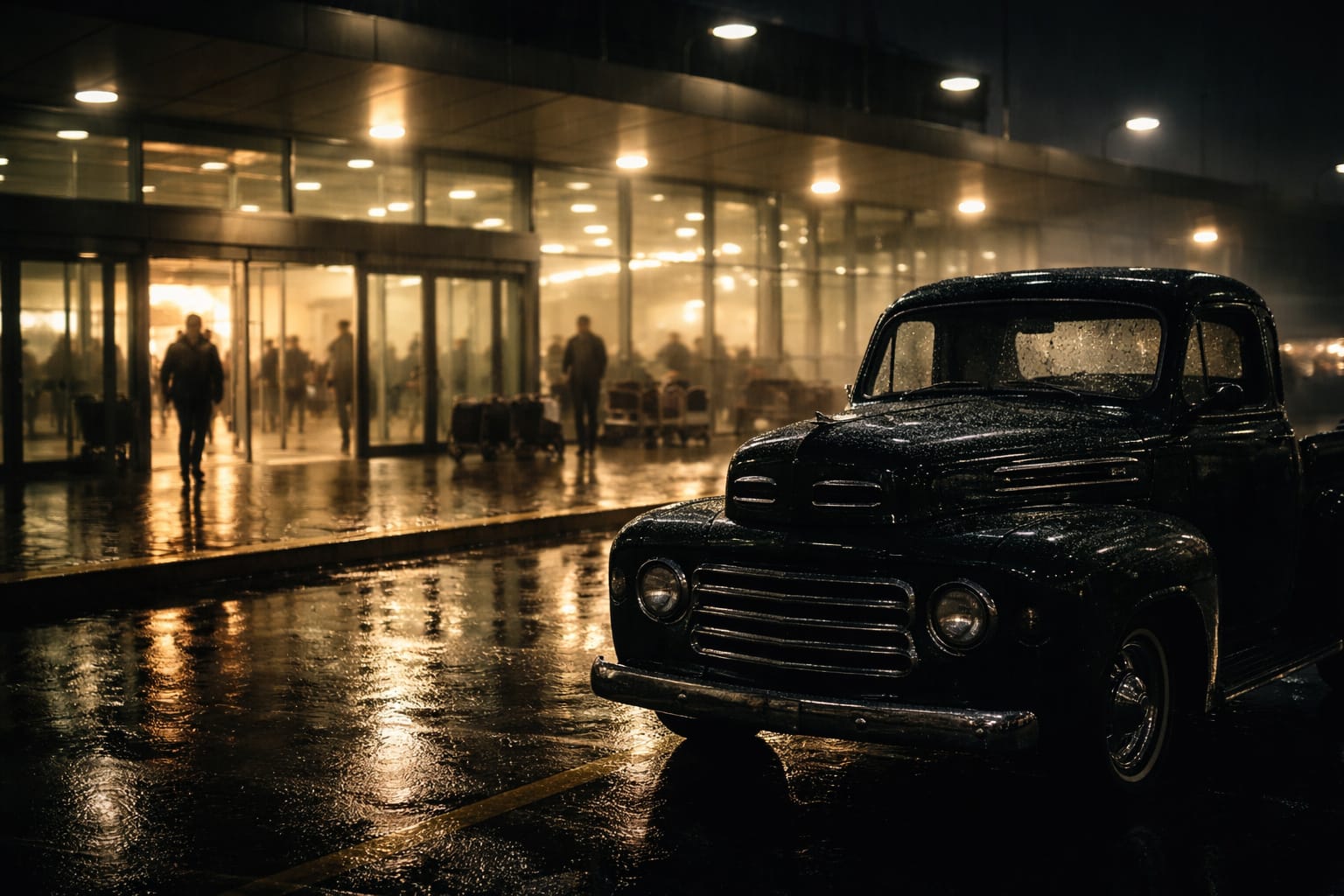
Rain coming in low and metallic, like the sky was holding a secret it didn’t trust the ground with yet. It hovered more than it fell, daring me to move too fast. I stood outside the terminal with my hands in my jacket pockets, watching the clouds bruise darker by the minute.
She was late.
Not late in the way that makes you angry—late in the way that tightens something behind the ribs. Late in the way that invites thoughts you shouldn’t entertain. The kind of waiting where every rational explanation starts to feel hysterical if you let it linger too long.
I leaned against the truck and checked the arrivals board again. Delayed. Still delayed. The Army never seemed interested in giving anything back cleanly.
I kept my eyes on the doors instead of the board. Doors don’t lie the same way screens do.
Funny thing was, I never meant to meet her at all.
A friend introduced us. Said he needed a favor. Said his girlfriend wouldn’t leave him alone about her friend. And when a guy says that, you already know—you’re about to take one for the team. Ugly or crazy. Sometimes both. With my luck, probably both.
She wasn’t.
Unless you count the fact that she joined the military at twenty-two.
Eighteen, I get. Eighteen is impulse. Twenty-two is decision. That told me more about her than anything she said that night.
The Ford sat beside me, patient as an old dog. A ’52 F-1. Steel the color of something that had survived worse weather than this. I rested my hand on the hood, grounding myself. I’d promised I wouldn’t restore it until she was home for good. I broke that promise while she was gone. Fixing things is easier than sitting with what can’t be fixed.
We spent that first night talking. Not flirting. Talking. Crappy movies we loved anyway. Music so bad it circled back around to genius. We didn’t stop until she had to leave to report for her next assignment. No dramatic goodbye. Just a look that said this isn’t over yet.
We traded letters after that. Real ones. Paper. Ink. No emails. No texts. No late-night calls. Just envelopes crossing distance like a quiet agreement. About a year ago, the phone rang and her voice was on the other end. That surprised me. I never gave her my phone number. When I asked how she got it, she laughed and said some things were easier to find than people think.
There are things we don’t ask each other.
I can never tell her what I do for a living. She can never find out. I’ve done my best keeping my world and hers separate. It’s easy, in a way—her job teaches silence. She has her secrets about work, and I let them stay where they belong. Mine just happen to follow me home.
The sliding doors hissed open behind me, releasing small crowds in uneven waves. Families. Lovers. A kid dragging a duffel almost as big as him. Every face felt like a rehearsal for something that might go wrong.
Then she stepped through.
She didn’t rush. She never does. Her eyes swept the space before her feet committed to it. The uniform sat on her shoulders like it knew her weight. She looked sharper than I remembered. Leaner. Like something had been filed down and left harder underneath.
I caught her looking before she saw me.
That moment—right there—when her eyes were still searching. Measuring. Cataloging exits. Old habits don’t turn off just because you cross a threshold.
Then she found me.
She stopped walking.
Just for half a second. Long enough that anyone else might’ve missed it. Her gaze stayed on me a beat too long. Not suspicion. Not fear. Recognition, mixed with something else. Something she didn’t have a name for yet.
I didn’t move.
We’ve learned each other that way—through stillness. Through long looks that say more than questions ever could.
She crossed the distance and set her bag down at her feet. We stood there, rain misting between us, airport noise falling away until it sounded like it was happening underwater.
She studied my face.
Not the way lovers do when they’re memorizing. The way soldiers do when they’re checking for damage.
“You okay?” she asked.
I nodded. Too quickly.
Her eyes narrowed just a fraction. Not distrust. Instinct. She leaned in, resting her forehead against mine. Close enough that I could feel her breath slow, feel the way she grounded herself before she let go.
She pulled back slightly, still holding my arms. Her gaze flicked over my shoulder to the truck, then back to my face.
“You finish the restoration,” she said.
It wasn’t a question.
I shrugged. “Kept busy.”
She watched me another second too long. Not accusing. Curious. Like she’d felt a draft but couldn’t find the open door.
Then she smiled. Small. Careful.
“I’m home,” she said.
I pulled her into me before whatever she was about to ask had a chance to form.
The rain finally made up its mind and started to fall.
Author’s Note:
My thanks to FOWC, RDP, and Word of the Day for the prompts and challenge words that helped shape Things We Don’t Ask. Sometimes constraints don’t limit a story—they reveal where the silence lives.
 Memoirs of Madness