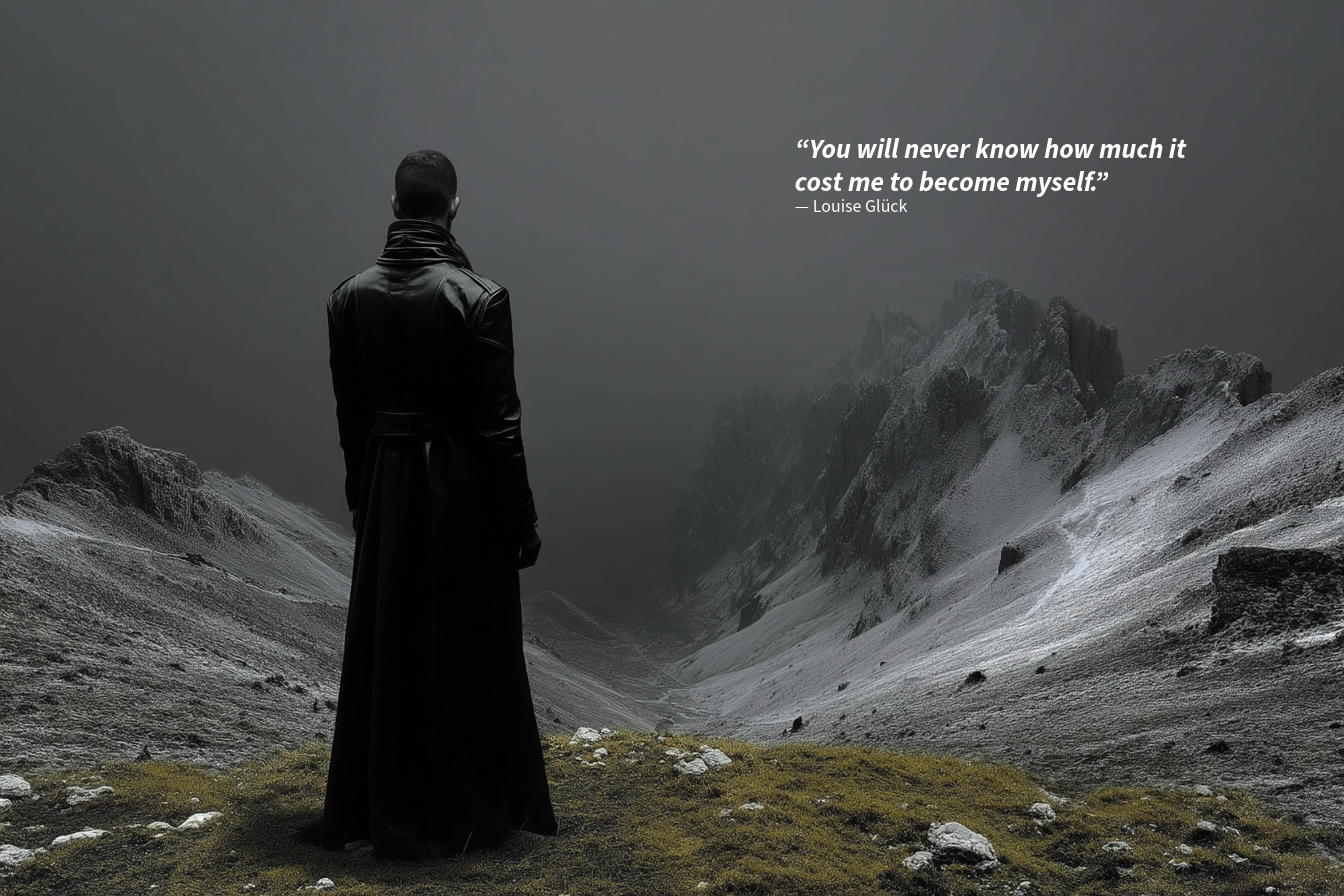
Quote of the Day – 12062025


Personal Reflection:
Winter is honest about the cost of things. The cold exposes cracks, the dark lengthens shadows, and even the light arrives at angles that reveal what’s usually hidden. This line drops into that landscape with quiet gravity. Becoming yourself isn’t a clean story or an easy arc. It’s a series of choices no one else fully sees — the losses, the risks, the private battles that never made it into conversation. The world may admire who you are now, but it rarely understands the price you paid to get here.

Because becoming yourself isn’t a single transformation — it’s a slow burn that demands pieces of your former life as fuel. You lose people who preferred the older versions of you. You outgrow dreams you once swore were permanent. You dismantle comforts that kept you small because growth demanded more space than they allowed. And beneath all that change is a truth most people never consider:
evolution is expensive.

Not financially — emotionally.

It takes courage to stand in the wreckage of who you were and still decide to keep moving. It takes clarity to recognize when something familiar has turned into something harmful. And it takes a quiet, relentless kind of strength to admit that becoming yourself means disappointing the expectations others built around your past.

The cost isn’t always visible — but the ache is.

Maybe the point isn’t to be understood — not fully. Maybe the point is to honor the price you paid. To acknowledge the private courage it took to shed your old life and stand in the sharper air of who you are now. Becoming yourself is not about being admired — it’s about being true, even when truth carries weight.

And if the world never knows the cost?

That doesn’t diminish the value.
It means you carried something heavy far enough to step into your own name — and that is enough.


Reflective Prompt:
What part of your becoming has been misunderstood or unseen by others?

Quote of the Day – 11192025


Personal Reflection

November has a way of showing you what still weighs on you — the half-finished things, the quiet regrets, the truths you’ve been circling all year without naming. The air feels thinner, the days shorter, the world stripped to bone. And somewhere in that bare landscape, you start to notice what you’ve been carrying without meaning to. This quote steps right into that moment. There are burdens you can’t hand off, no matter how much you want to. And there are truths you can’t ignore, no matter how tired your spirit feels. November doesn’t care about the story you told yourself in June. It cares about what’s still in your hands now.

But this is the month when the hidden weight starts talking back.
Not loudly — that would almost be merciful — but in a steady, relentless whisper that threads itself into every quiet space. The things you avoided start showing teeth. The versions of yourself you grew out of linger like ghosts in their old rooms. And the silence you once thought you needed becomes a mirror you can’t turn away from.

This is the part no one warns you about: becoming often means letting go of the lies that kept you upright. The narratives that softened the edges. The masks you perfected. November strips those away with the same casual certainty that trees drop their leaves. And in the cold clarity that follows, you’re left facing truths that aren’t gentle. The ones too heavy to carry gracefully, too essential to abandon without losing your shape.

Some truths don’t break you.
They reveal you.

Maybe that’s November’s gift — not clarity, but honesty. Not resolution, but recognition.
This month doesn’t ask you to rise.
It asks you to stay.
To sit with what’s real.
To hold your truth without rushing to pretty it up or make it palatable.

Becoming isn’t a transformation montage. It’s the slow, steady acceptance of who you’ve been, who you are, and who you’re trying to grow into — even when those identities don’t agree. It’s learning to carry what matters, set down what doesn’t, and live with the ache of not always knowing the difference.

Maybe today the victory isn’t lightness.
Maybe it’s the willingness to stop pretending the weight isn’t there — and the quiet courage it takes not to look away.


Reflective Prompt:

What truth have you carried all year that still refuses to be put down?

Quote of the Day – 11182025


Personal Reflection

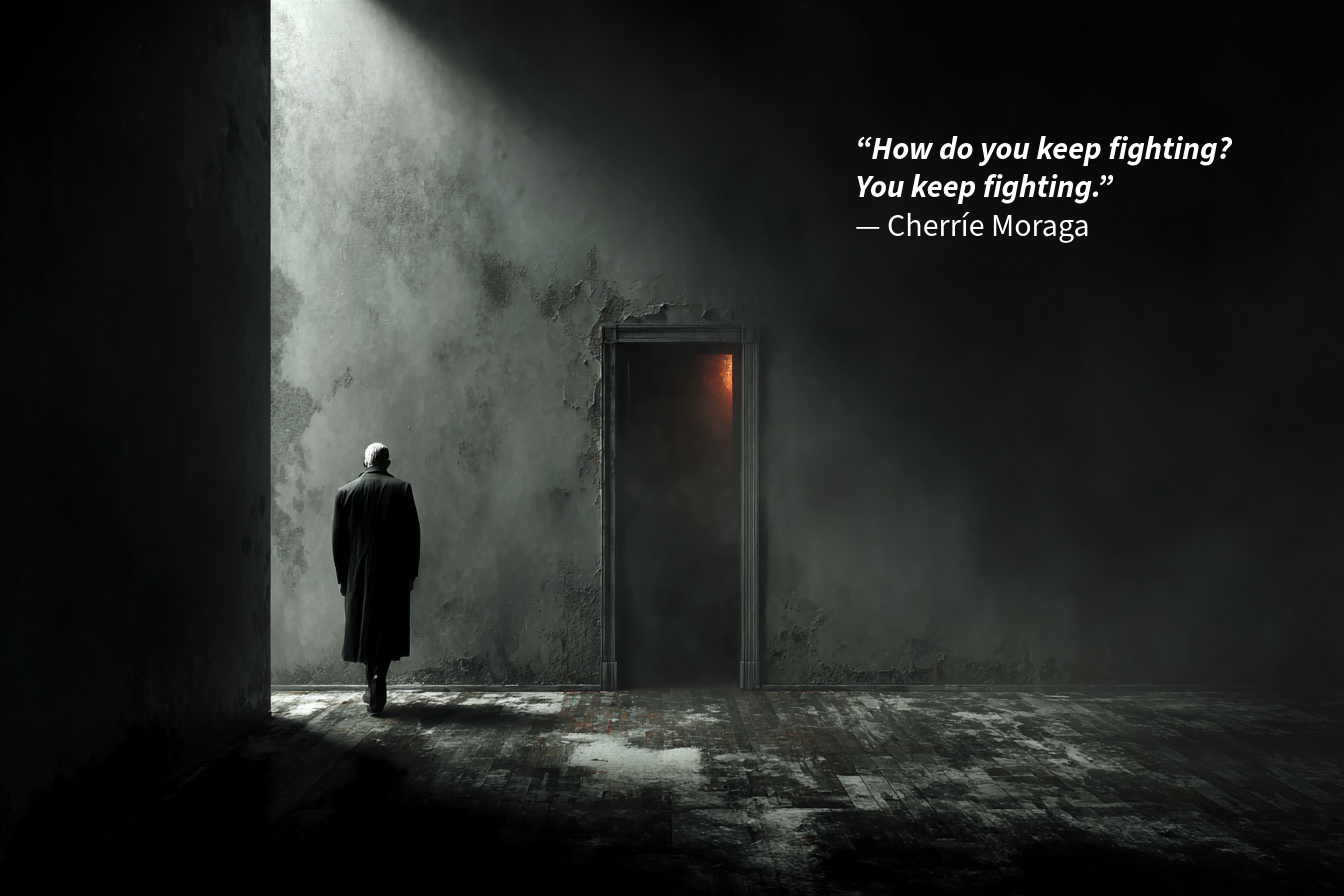
Some days there’s no revelation waiting for you. No clarity. No second wind. Just the simple, unglamorous choice to keep moving in the direction you said mattered. The world keeps insisting everything should come wrapped in a pretty bow — clean lines, smooth edges, no proof of the struggle it took to get there. But look at any real artisan. Their world is chaos until the work is done. Sawdust choking the air, paint bleeding onto the floor, bruised knuckles, tools scattered like a crime scene. Creation is never tidy. It’s loud. It’s stubborn. It demands a piece of you. And the outcome only becomes breathtaking because you walked through the mess and didn’t flinch.

We love to romanticize perseverance — the comeback story, the clean arc, the triumphant soundtrack. But most real fighting looks nothing like that. It’s waking up already exhausted. It’s dragging old fears behind you like unwilling dogs, snarling and snapping with every step. It’s pushing forward even when the only thing you’re sure of is the ache settling somewhere between your ribs and your resolve. And buried underneath it all is the truth you don’t say out loud: stopping feels too close to disappearing. And you’ve disappeared enough times already.

Maybe that’s the lesson today. You don’t have to feel brave to keep going. You don’t need inspiration or momentum or some sudden rush of conviction. You just keep moving. Step by stubborn step. Breath by stubborn breath. And somewhere in that slow crawl forward, you realize the fight was never about winning — it was about refusing to vanish from your own life. That quiet persistence becomes its own kind of craft. Its own kind of art.


Reflective Prompt

Where are you still fighting, even quietly, even without applause?

Quote of the Day – 11172025


Personal Reflection:

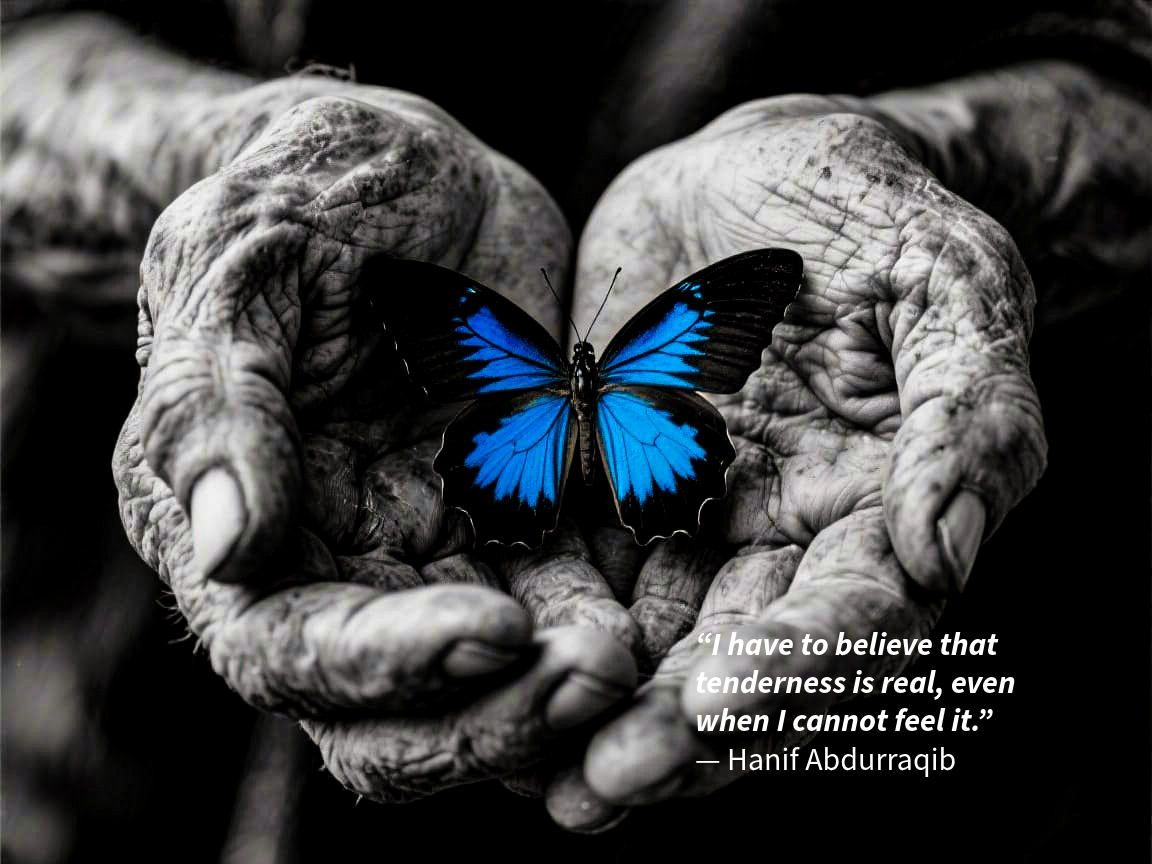
Some mornings you wake up armored without even trying. Shoulders tight. Voice low. Every small kindness feels like something meant for someone else. Perhaps it was a bad dream, or a fragment of a memory you thought was buried, rising just enough to shift the weight of the day before it even begins. This line lands right there—in that gap between what your heart remembers and what your body refuses to trust. Believing in tenderness on the days you can’t feel it isn’t delusion. It’s survival.

But let’s not pretend it’s easy. Disappointment builds scar tissue. Grief calcifies. Some hurts become fossils—old pain preserved in perfect detail, untouched but never truly gone. And some wounds never heal properly; they knit themselves together in crooked ways, reminding you that survival doesn’t always mean restoration. It’s hard to reach for softness when life has taught you to brace, to expect the hit, to map the exits before the door even closes behind you. Yet becoming requires a dangerous kind of courage: letting the walls down a fraction, enough for light to get in even if you’re still flinching. Tenderness is not weakness—it’s risk. And risk is where transformation waits.

Maybe today isn’t about feeling tenderness, but acknowledging the stubborn belief that it exists. And stubborn in the real sense—not noble or poetic, but the kind of hold you keep because letting go feels like losing one more piece of hope you can’t afford to misplace. A small, quiet truth you carry like a pilot light. Even when the world is loud. Even when your own heart feels far away. Becoming yourself means making room for what you cannot yet hold. Letting one soft thing survive the hard days. Trusting that tenderness, once allowed, knows how to find its way back.


Reflective Prompt:
Where in your life have you mistaken protection for absence?

Quote of the Day – 11102025


Personal Reflection:
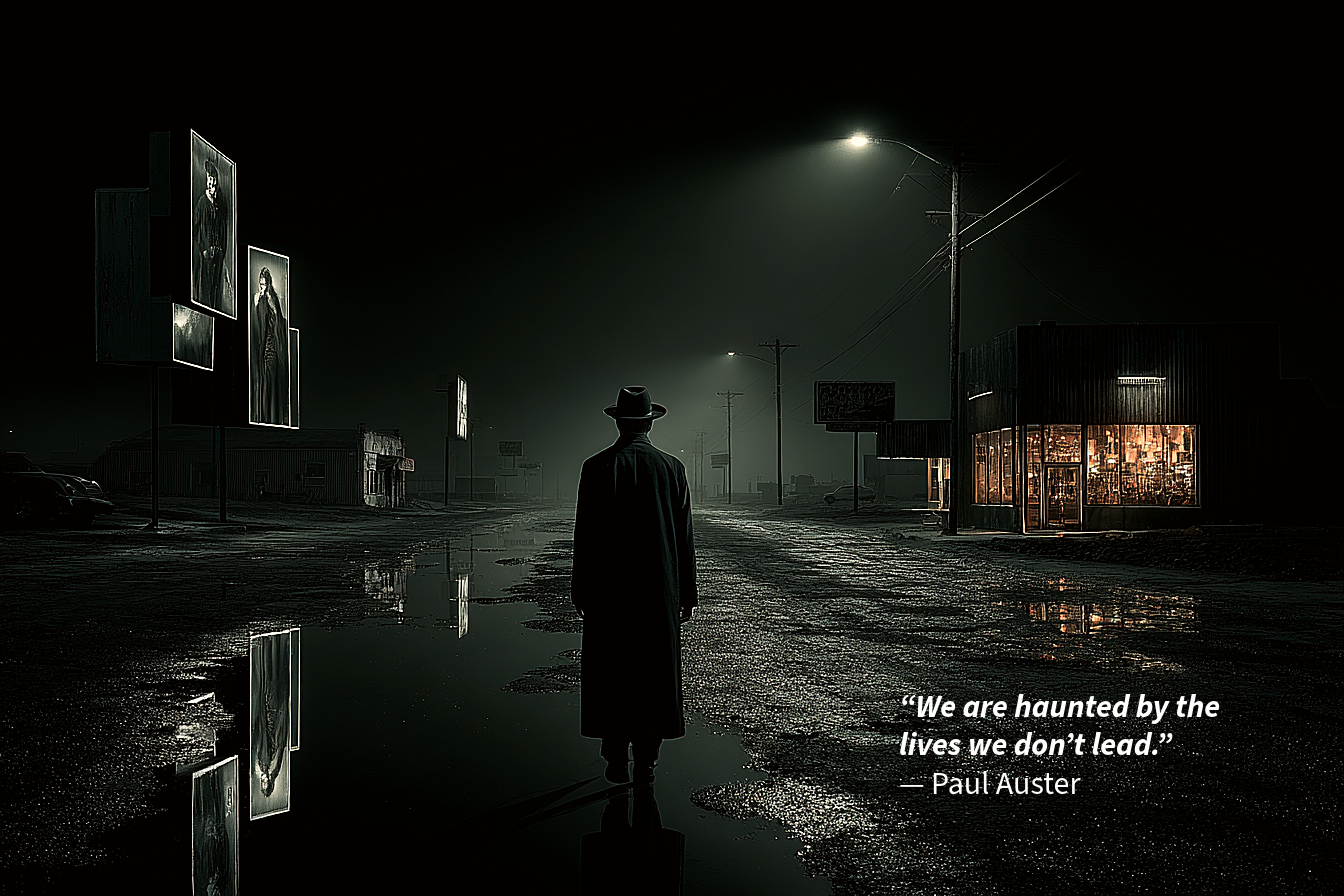
Regret has a peculiar way of lingering — not loud, but constant, like background static. You can’t touch it, but it hums underneath the day. Auster’s words cut close: We are haunted by the lives we don’t lead. The choices we didn’t make, the versions of ourselves we left hanging in the doorway. We tell ourselves we’re fine with how things turned out, but every now and then, something stirs — a half-remembered song, a familiar street, a name we don’t say out loud — and we feel the ghost move again.

We don’t like to admit it, but we build entire lives out of what we didn’t choose. Every decision erases a hundred possibilities, and those absences don’t disappear — they follow quietly behind us, a shadow of what might have been. Maybe that’s what nostalgia really is — the ache of parallel versions of ourselves still trying to be born.

I think about the person I might’ve become if I’d stayed, if I’d gone, if I’d said yes instead of no. But every alternate life has its own price tag. Even the ones that look golden from this side of the glass would’ve demanded a different loss. Maybe the haunting isn’t punishment — maybe it’s memory’s way of reminding us that every path costs something.

And sometimes, the hardest ghosts to face aren’t the lives we never lived — they’re the parts of ourselves we abandoned along the way. The ones we outgrew too fast. The ones we silenced for approval. The ones we dismissed as weakness when they were just unguarded.

We are all haunted, but maybe haunting isn’t a curse — maybe it’s a form of tenderness. Proof that we’ve imagined more than we could live. Proof that somewhere inside us still believes in what’s possible. The trick is not to banish those ghosts, but to listen to what they’re trying to say: that life is not a single straight line, but a chorus of unfinished songs.

You don’t have to live every life to be whole. You just have to make peace with the ones that never happened — to thank them for showing you who you could have been, and then keep walking toward who you still might become.


Reflective Prompt:
What unlived version of yourself still lingers at the edges — and what might happen if you stopped mourning them and started listening to what they’re trying to tell you?