Quote of the Day – 05212026


Personal Reflection

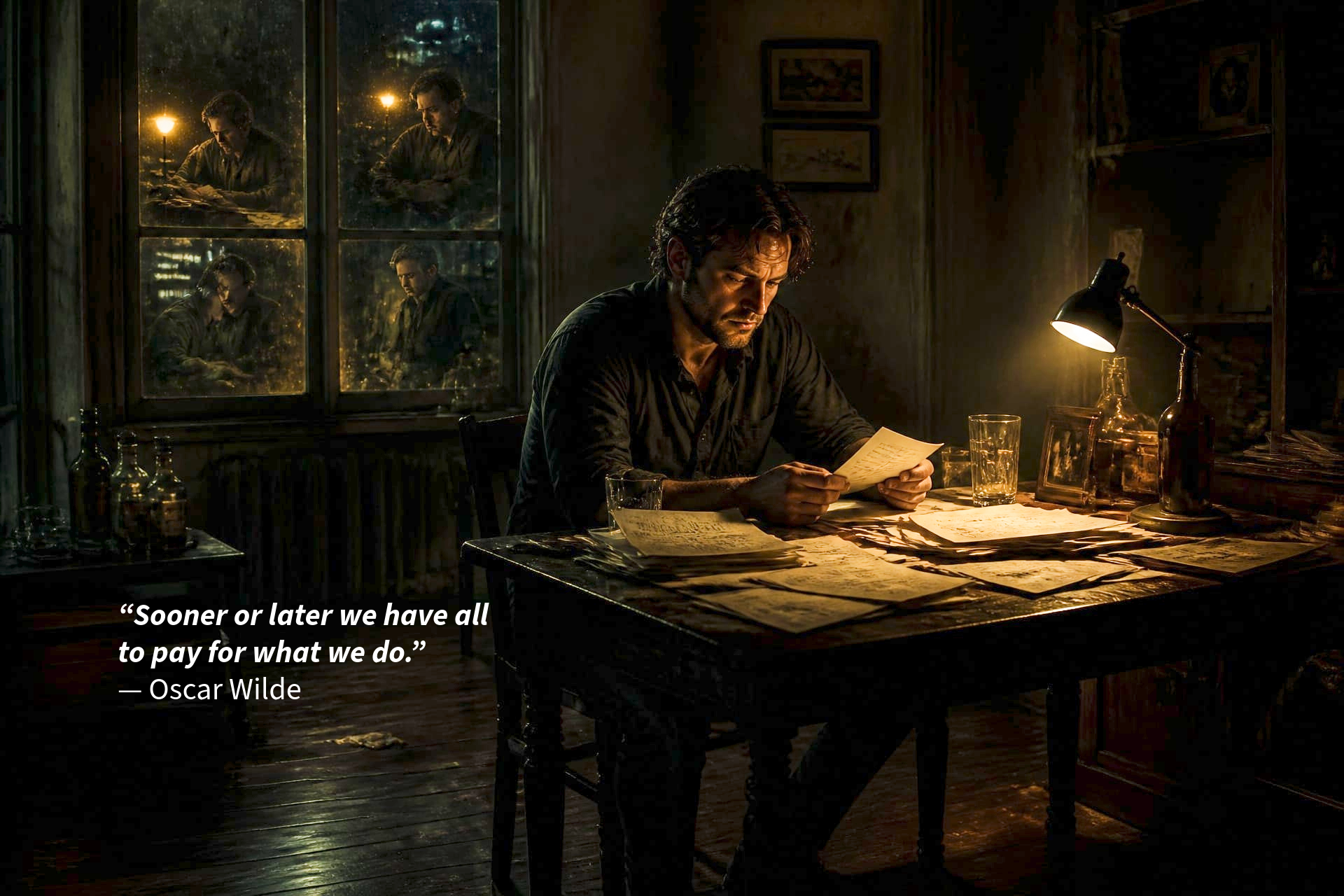
At first glance, it sounds almost like a warning. Cause and effect. Consequences catching up eventually. The kind of line that feels carved into old wood somewhere behind a bar where life has already taught everyone in the room not to confuse escape with freedom.

And maybe that’s part of it.

But the longer you sit with the quote, the more it starts feeling less like punishment… and more like accumulation.

Because human beings pay for things in ways that rarely appear immediately.

Not every cost arrives loudly. Some settle in slowly across years. The things left unsaid. The truths avoided because confronting them would have disrupted comfort. The emotional shortcuts taken in moments where honesty required more courage than we were prepared to offer ourselves or anyone else.

Eventually those choices begin collecting interest.

Not always publicly. Internally.

That’s the unsettling thing about the psyche—it remembers what the conscious mind tries to minimize. A person can convince themselves they’ve moved on while their nervous system quietly carries the tension forward through insomnia, irritability, emotional distance, or the strange heaviness that appears during otherwise ordinary moments.

And sometimes the payment is not guilt.

Sometimes it’s disconnection.

The slow realization that years spent avoiding vulnerability also kept genuine intimacy away. That emotional numbness once used for protection has started dulling joy alongside pain. That the habits developed to survive difficult seasons no longer know when to leave.

Mental exhaustion often grows from these invisible emotional debts. The effort required to outrun unresolved truth eventually drains people more than the truth itself might have.

And perhaps the hardest part is realizing that consequences are not always dramatic enough to force immediate change. Sometimes they arrive quietly through repetition. The same loneliness. The same emotional walls. The same patterns appearing in different faces, different relationships, different chapters of life until something inside finally becomes too tired to ignore what has been asking for attention all along.

Still… there’s something strangely hopeful hidden inside accountability.

Because if our choices shape us over time, then so do our moments of honesty. Our willingness to repair. To apologize. To stop abandoning ourselves emotionally just because vulnerability once felt dangerous.

Maybe paying for what we do is not only punishment.

Maybe it’s proof that our lives carry weight. That what we choose matters deeply enough to leave marks behind—both painful and beautiful.

And perhaps healing begins the moment a person stops asking how to escape consequence…

…and starts asking what kind of life they want their choices to build from this point forward.


Reflective Prompt

What emotional pattern in your life keeps returning because it still carries a lesson you haven’t fully faced?

Quote of the Day – 05162026


Personal Reflection

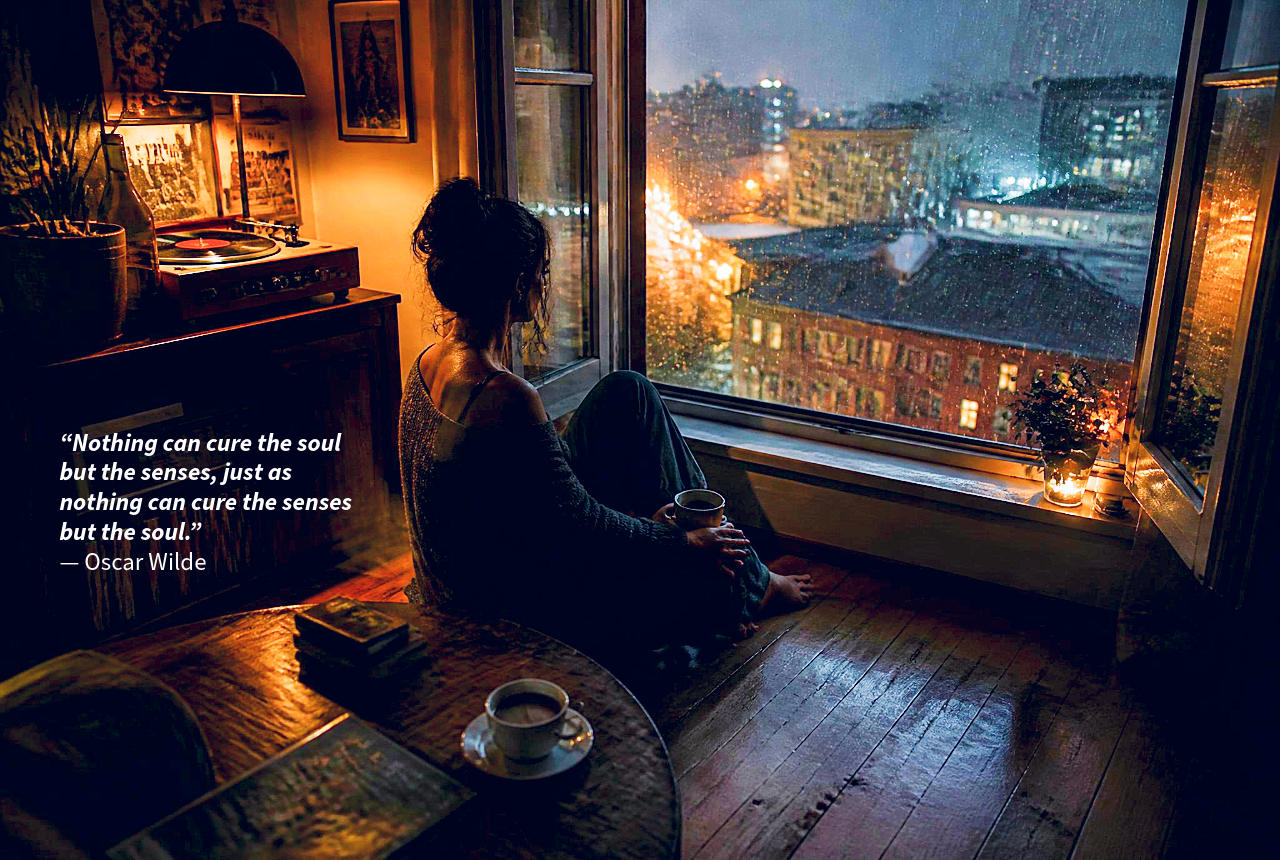
At first glance, it feels romantic in that distinctly Wildean way—elegant, excessive, almost indulgent. The soul and the senses reaching toward one another like two starving things trying to remember they were never meant to live separately.

But beneath the beauty of the sentence is something far more human:
the quiet damage that happens when a person becomes disconnected from both.

Because mental exhaustion rarely stays confined to the mind.

Eventually it settles into the body.

You stop noticing small pleasures. Food becomes fuel instead of experience. Music becomes background noise. Days blur together under artificial light while your nervous system quietly forgets what genuine presence feels like. You move through life overstimulated yet emotionally undernourished—consuming endlessly while feeling almost nothing deeply.

That’s one of the strangest contradictions of modern loneliness:
people are surrounded by sensation but starving for meaning.

And the soul suffers from that imbalance.

Not in some abstract spiritual sense, but in practical ways. You begin feeling detached from your own existence. Conversations become transactional. Rest feels guilty. Silence becomes uncomfortable because the moment things grow quiet, unresolved thoughts begin surfacing from underneath the distraction.

So people stay busy.

Scrolling. Working. Watching. Performing. Filling every inch of stillness because stillness risks confrontation with the parts of themselves they’ve neglected emotionally.

But eventually the body starts keeping score.

Fatigue settles into the bones. Anxiety sharpens the nervous system until ordinary life feels abrasive. Even joy begins arriving dulled around the edges because exhaustion has taught the mind to survive rather than fully inhabit experience.

And maybe that’s what Wilde understood:
human beings cannot remain emotionally alive through intellect alone.

The soul needs texture. Warmth. Beauty. Music. Human touch. Quiet mornings. Honest conversation. The smell of rain drifting through an open window at night. Not as luxury—but as reminder. Reminder that life is supposed to be felt, not merely managed.

Maybe healing begins smaller than people expect.

Not through dramatic reinvention.

But through returning to the senses with intention. Allowing yourself to notice things again instead of merely passing through them half-awake. A song that reaches somewhere guarded. A meal eaten slowly. Sunlight across the floor. The relief of hearing your own laughter arrive naturally instead of forcing it for social survival.

Because perhaps the soul does not recover all at once.

Perhaps it returns gradually—through moments that remind you your life is still capable of presence, connection, and feeling despite everything that tried to numb it.


Reflective Prompt

What simple sensory experience still has the power to make you feel fully present inside your own life again?

Quote of the Day – 09292025


Personal Reflection:
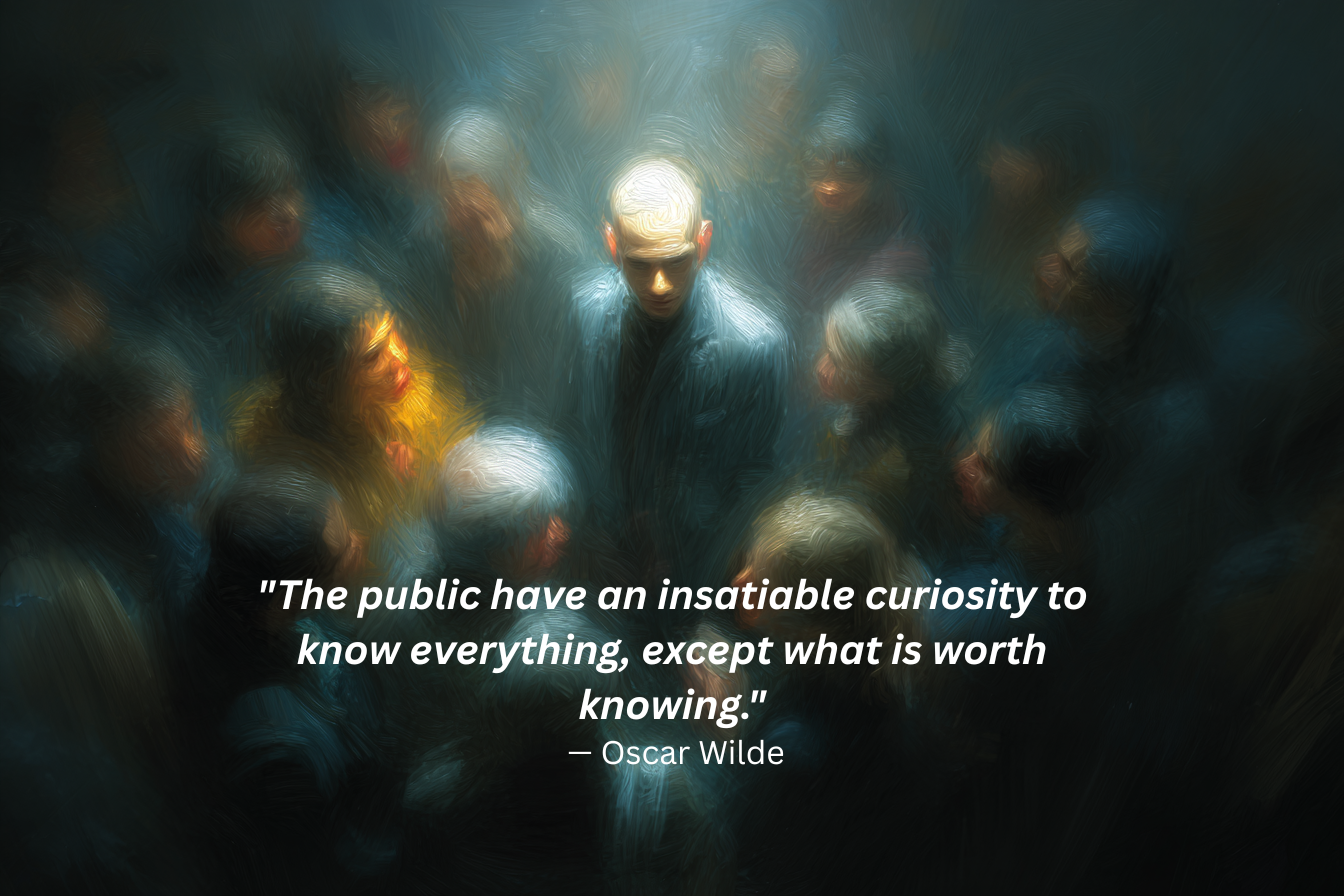
We endlessly scroll on our phones, clawing at lives we’ll never touch—hell, half the time we don’t even like the people we’re obsessed with. It’s easier to stitch ourselves into their noise than to face our own silence. Wilde nailed it: we’ve got an insatiable hunger for everything except the truths that would actually matter. We are so obsessed with chatter that when we finally stumble into silence, it feels disturbing—like a room we’ve been avoiding, thick with dust and mirrors.

But here’s the twist: knowledge itself isn’t the villain. It’s what saves us from rotting out from the inside. Yet so many times we fixate on the pain, the negative edges, that we forget its light. Knowledge shapes, heals, even redeems—if we let it. The real question is what we do with it. Do we boast, turn wisdom into a weapon, another badge to flex? Or do we wear it quietly, let it humble us? Maybe humility has become just another antique word, pressed flat between the pages of old books—respected in theory, ignored in practice.

Wilde’s quote still burns, but maybe the truer madness is this: not that we ignore what’s worth knowing, but that when we finally grasp it, we don’t know how to carry it.

Reflective Prompt for Readers:
When was the last time you let silence speak instead of filling it with chatter?
And when knowledge found you, did you use it to posture, or did you let it humble you?
Sit with the unease: are you chasing noise, or carrying wisdom in a way that matters?